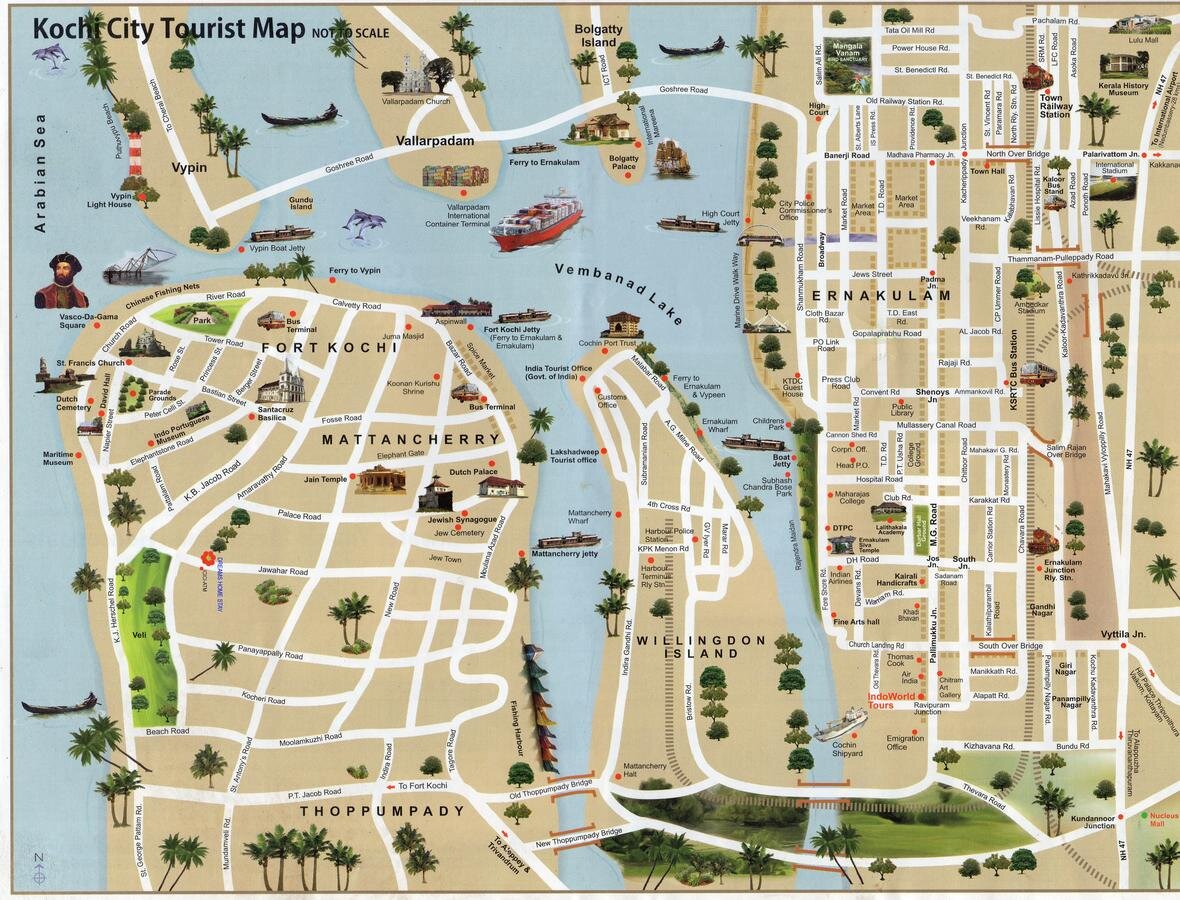

Time is an abstract at Fort Kochi as what we felt even during our earlier visit in 2006. Have only a couple of days at your disposal and see no more beyond Fort Kochi for a quick getaway.  

This lovely charming little town would transport you back to experiencing a perfect myriad confluence of heritage, history and culture. 

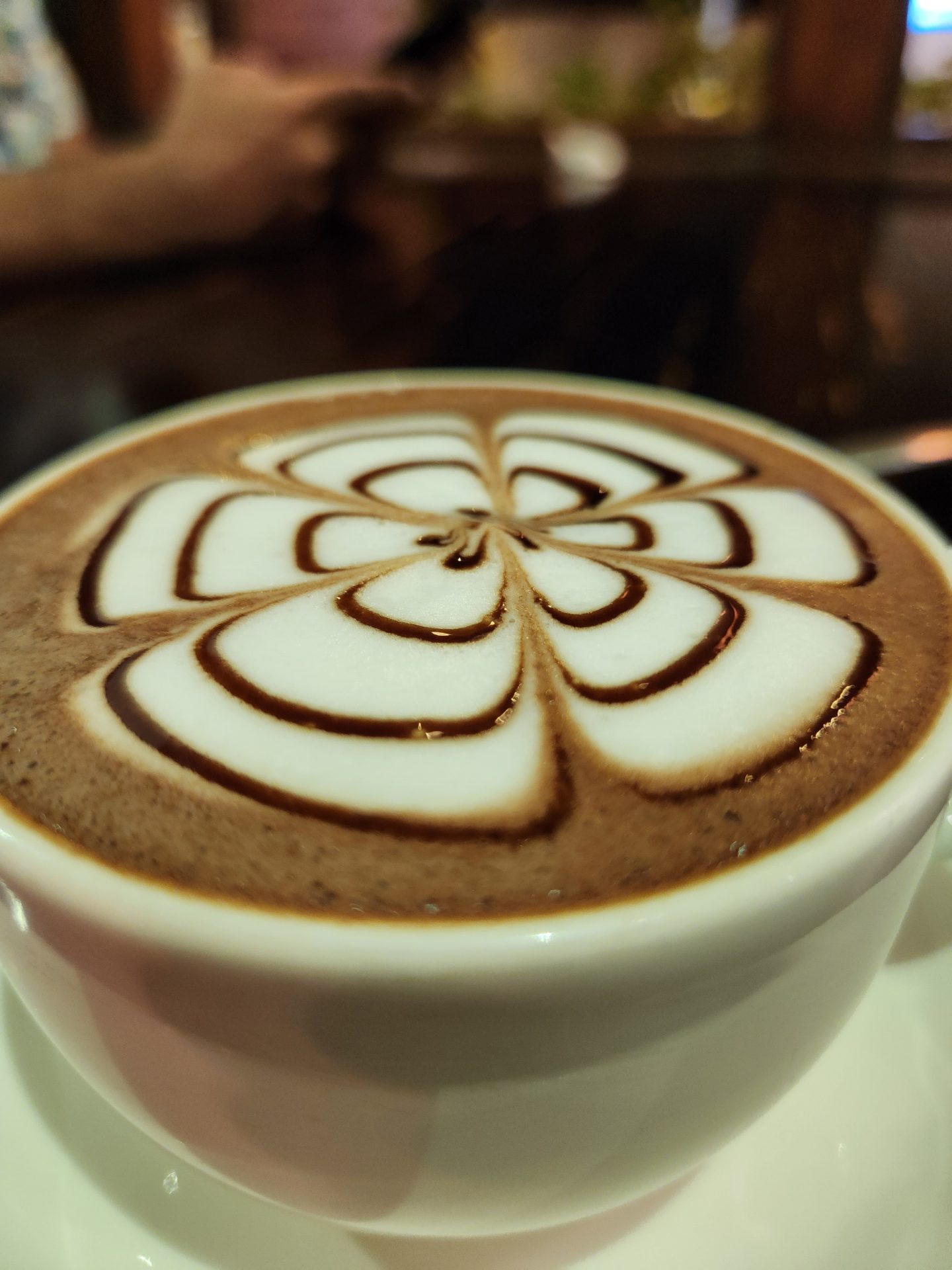
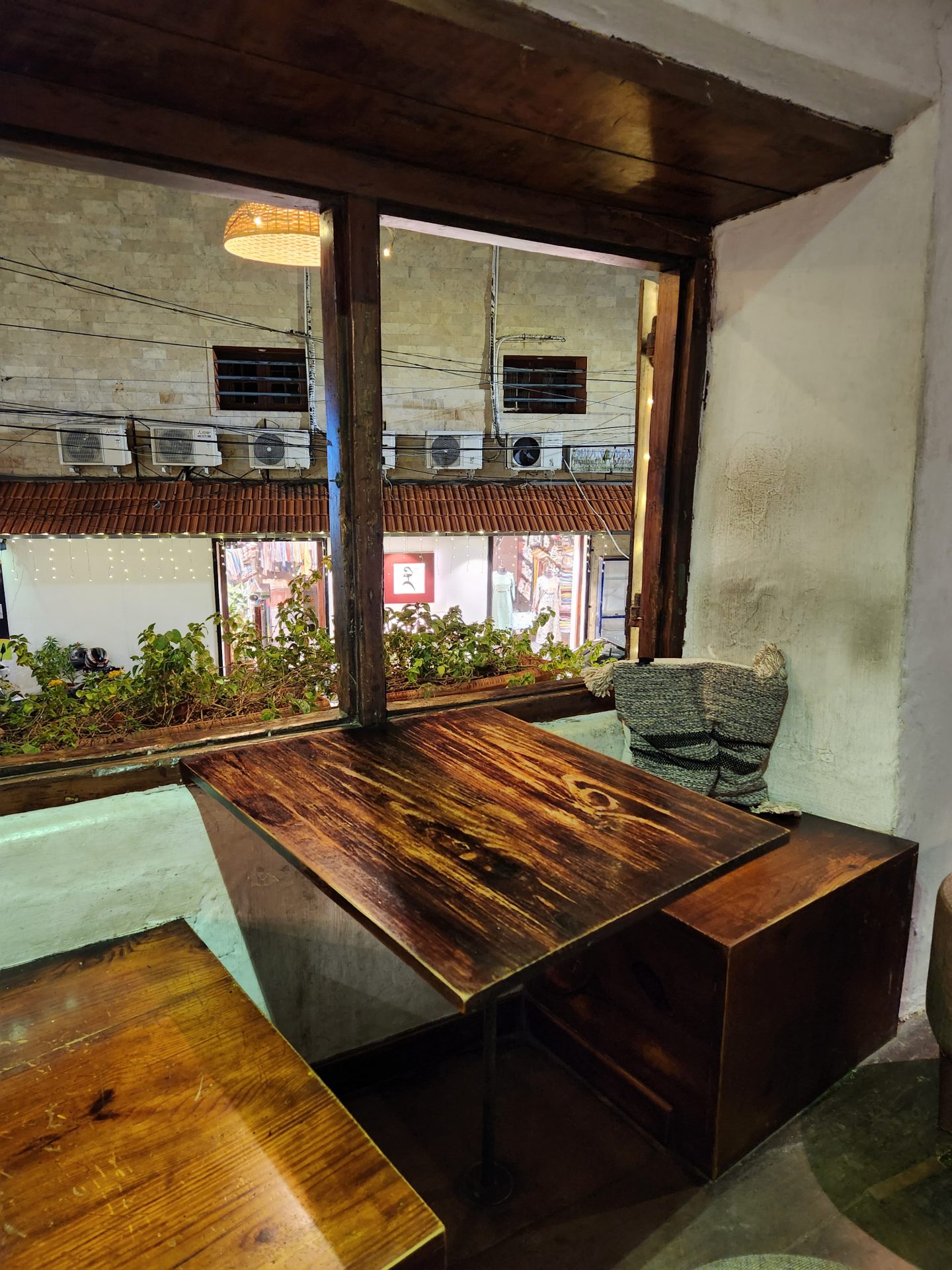
While you could still do away with exploring places if you are not the touristy kind, one could just laze around and chill over a couple of lattes at the number of pretty cafes around or indulge in some street shopping to one’s heart’s content or put your legs up in one of those heritage hotels and sip a glass of wine or beer by the poolside.

AND WHY NOT!!🥰

Table of Contents

How does one reach

One could choose to fly into the Kochi International Airport and hire a cab which would cost you Rs.2,200/- to Rs.2,800/- to reach the city or take a shuttle service from the airport to the Aluva Metro station and hop onto the colourful metro trains available at frequencies of 15 to 20 minutes and get down at the MG Road station which is perhaps the closest transit point to Fort Kochi.

The  other alternate would be to take a train to  the Ernakulam Town or Ernakulam South station and hire a cab or 3 wheeler for Fort Kochi. While we squeezed in Fort Kochi in a day and a half, ideally one would need a couple of days or maybe three to soak in the sights of Fort Kochi and maybe add a little bit of Kochi to that as well.

A little bit on the lineage of Fort Kochi

Before the advent of the Portuguese, Kochi was a thriving port for over 150 years. To negate the threat posed by the Zamorin kings of Calicut, the then king of Kochi  gave away a piece of his land in 1503 to the Portuguese. 

They called the place Cochim, built Fort Immanuel the same year as part of their bastion near the waterfront to protect their commercial interests  and continued to function as it was until it was further fortified in 1538. 

The best months to visit Fort Kochi

Kochi can become unpleasantly hot and humid during the summer months which typically would start by April and continue till June. While you could strike good bargains with the hotels during this season, the sticky weather around would definitely add to one’s discomfort. The onset of the monsoons between July to September mid again render a visit to Kochi unviable as the rains are torrential and continue through the day and night. 

The later half of September right up till  March is perhaps the best time to visit Fort Kochi as the earlier months of rain add a lot to the verdant greenery while the weather remains pleasant for most parts of the day.  While walking around the streets of Fort Kochi become that much more manageable, It would still be recommended to wear light cotton wear.

You can be spoilt for choices of stay

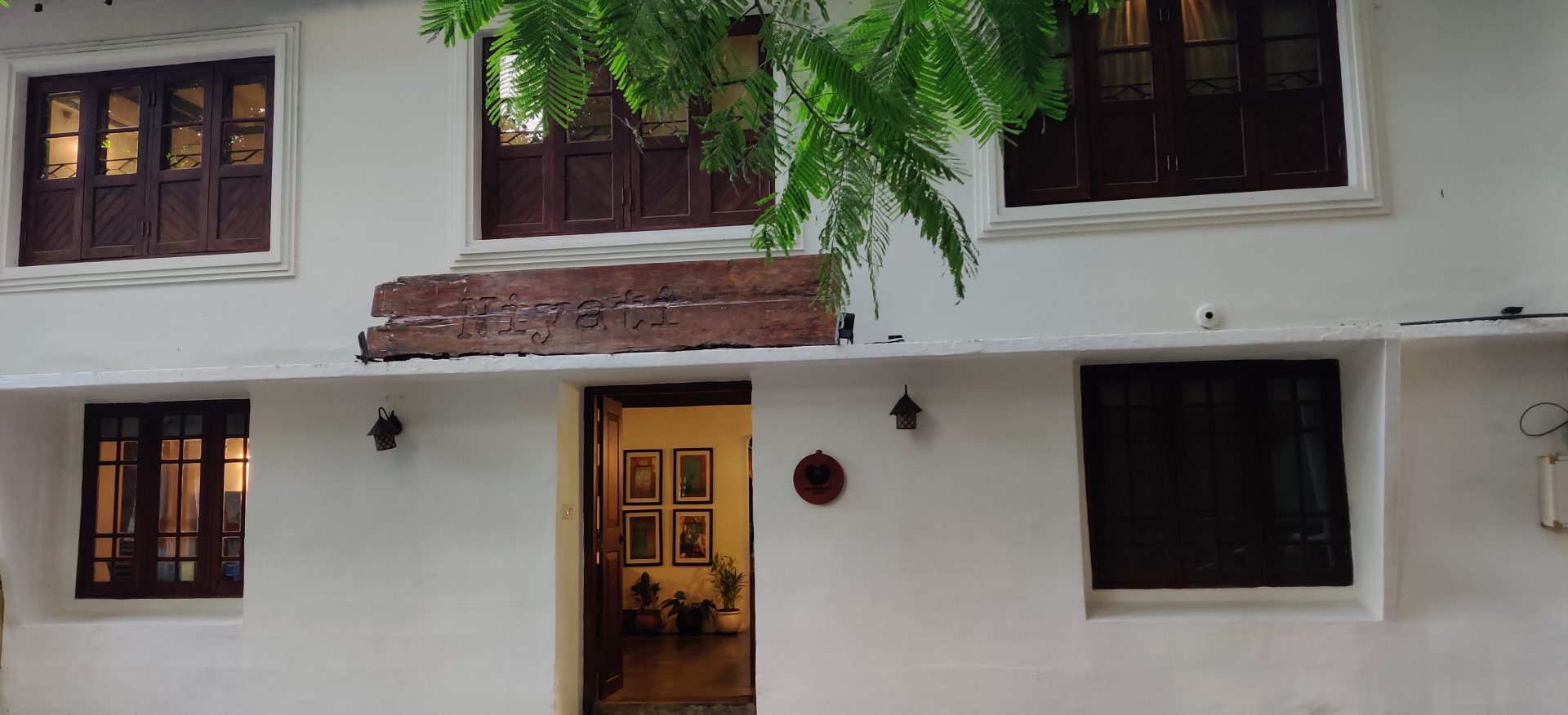
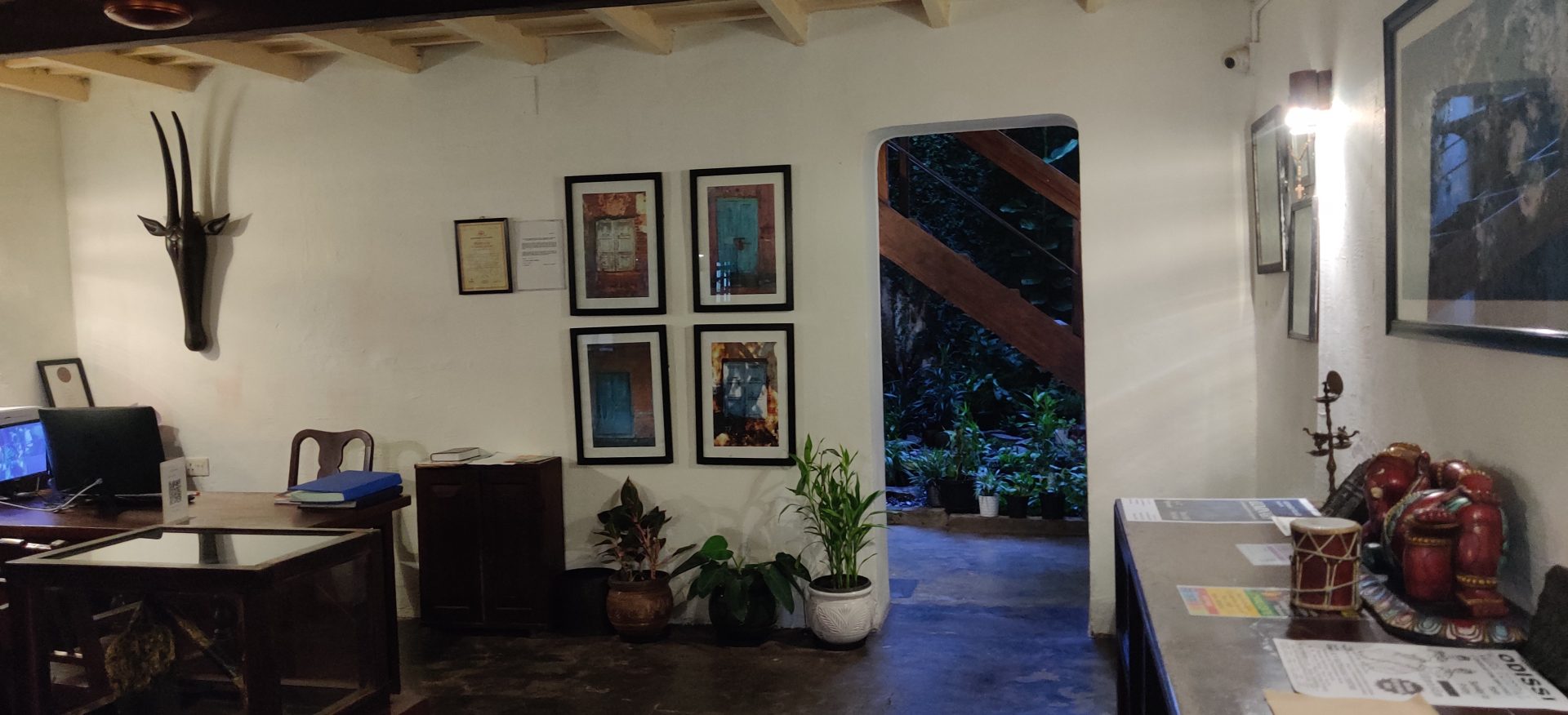
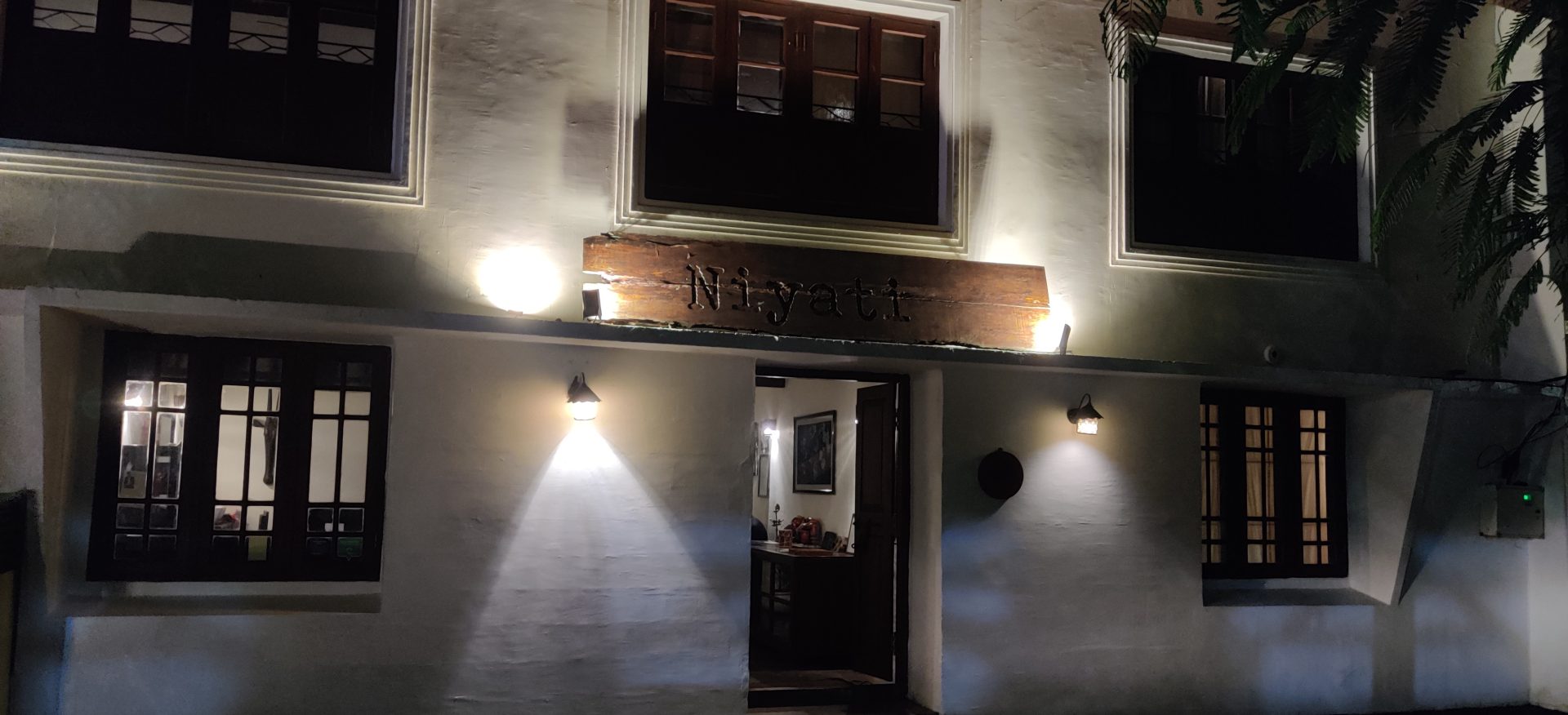
We booked ourselves in a King Suite in a quaint little hotel Niyati Boutique in the heart of Fort Kochi and close to Princess Street, the hub for shopping, This colonial styled hotel, reminiscent of Portuguese buildings had a very charming frontage. The reception was more done up like a Museum with a wide range of curios and wall hangings.

A SERENE 8.30 PM APPEARANCE

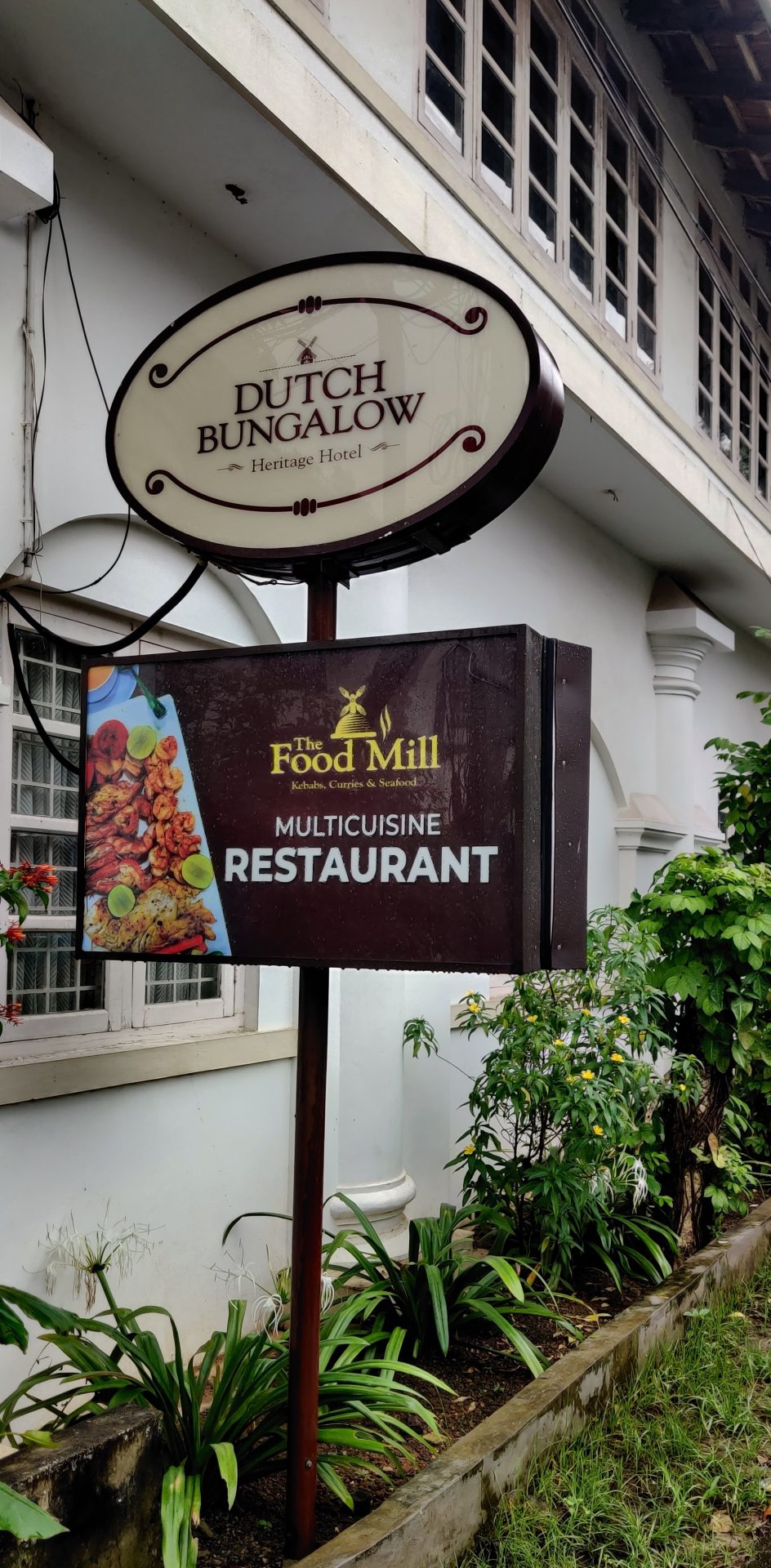
Should your budgets permit and should you want to just chill around and soak in the ambience of the hotel and not be a travel bug like me, there are a few costlier options of stay in and around Princess Street like The Tower House, Forte, the Eighth Bastion owned by CGH Earth and the Old Harbour Hotel and many more luxury and budget hotels. One is actually spoilt for choices in terms of the no. of backpackers hostels & homestays also available. 

A house formerly belonging to singer Yesudas stands converted into a OYO Hotel right on the corner of Princess Street.

Splashes of Graffiti and the Streets of Fort Kochi

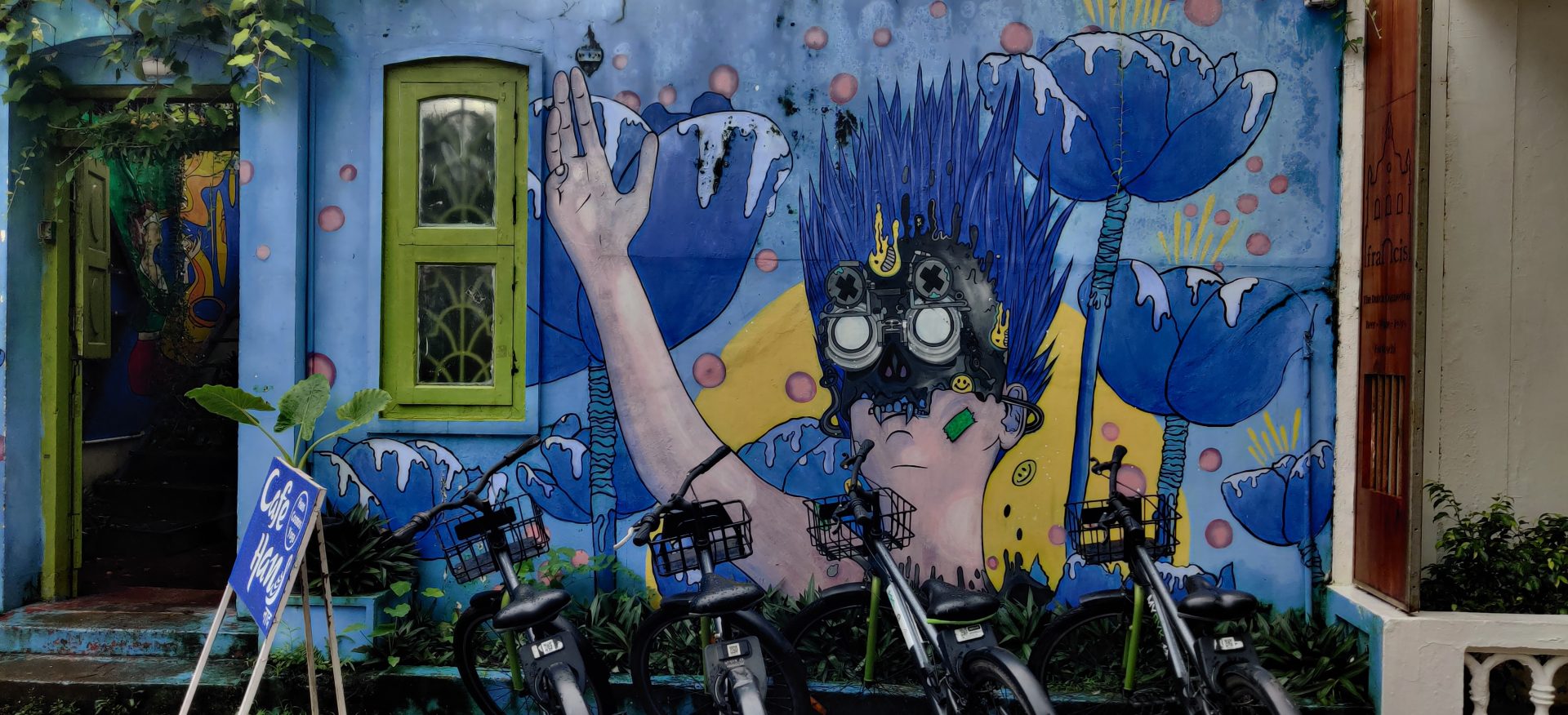
One cannot miss the beauty of the vibrant and lovely murals liberally splashed across the walls of many a building.

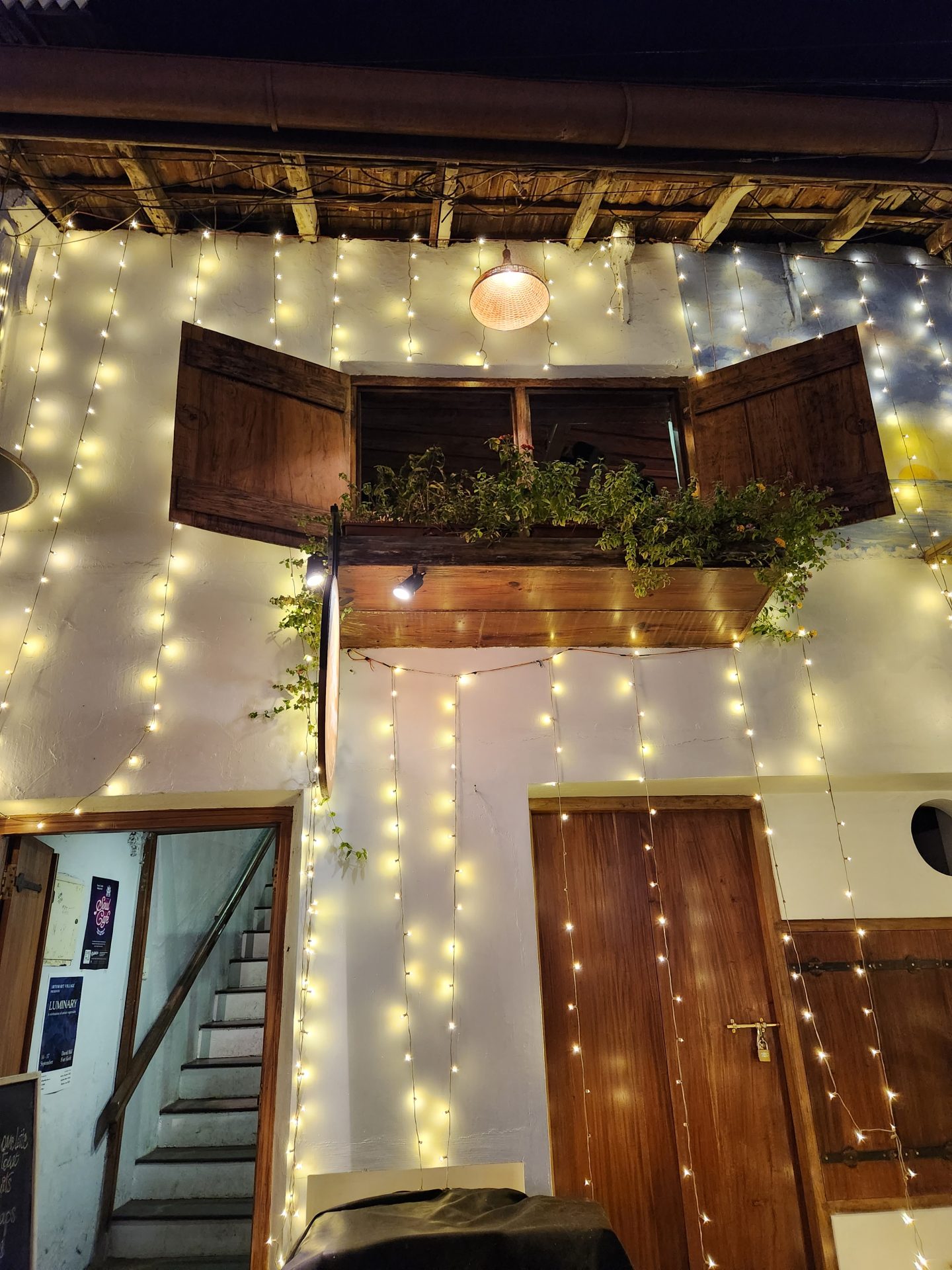
The roads in Fort Kochi were pretty well laid and lined with rain trees. Whitewashed houses with colourful blooms and green plants adorning the frontage renders a picture post card feel.

FULL LENGTH MURALS

Shop till you drop

The Princess Street was located very close to our Hotel.  

One side of the road had a  wide assortment of nicely restored quaint Dutch cottages with split doors and balconies, tall whitewashed British colonial mansions and Portuguese Bungalows which had been converted into heritage and boutique hotels.  

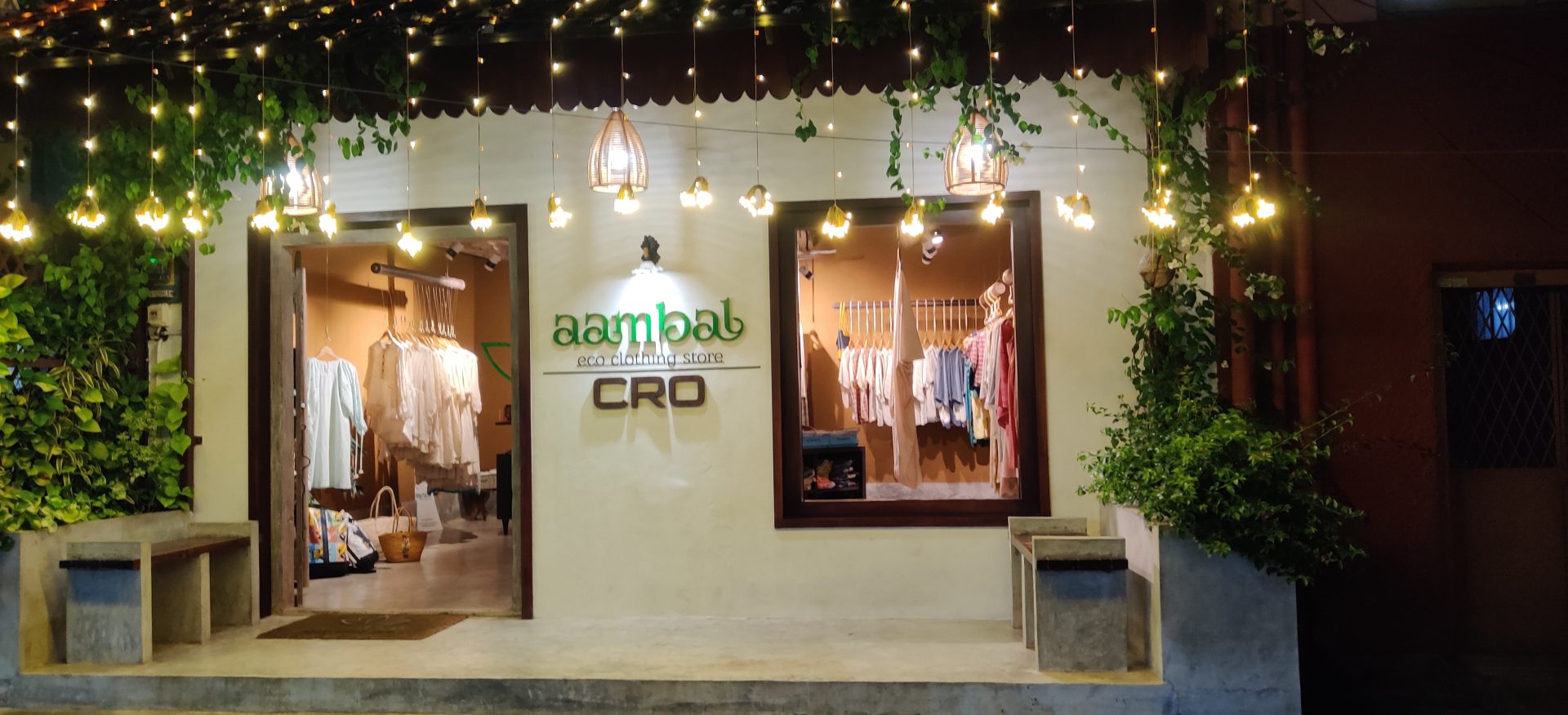
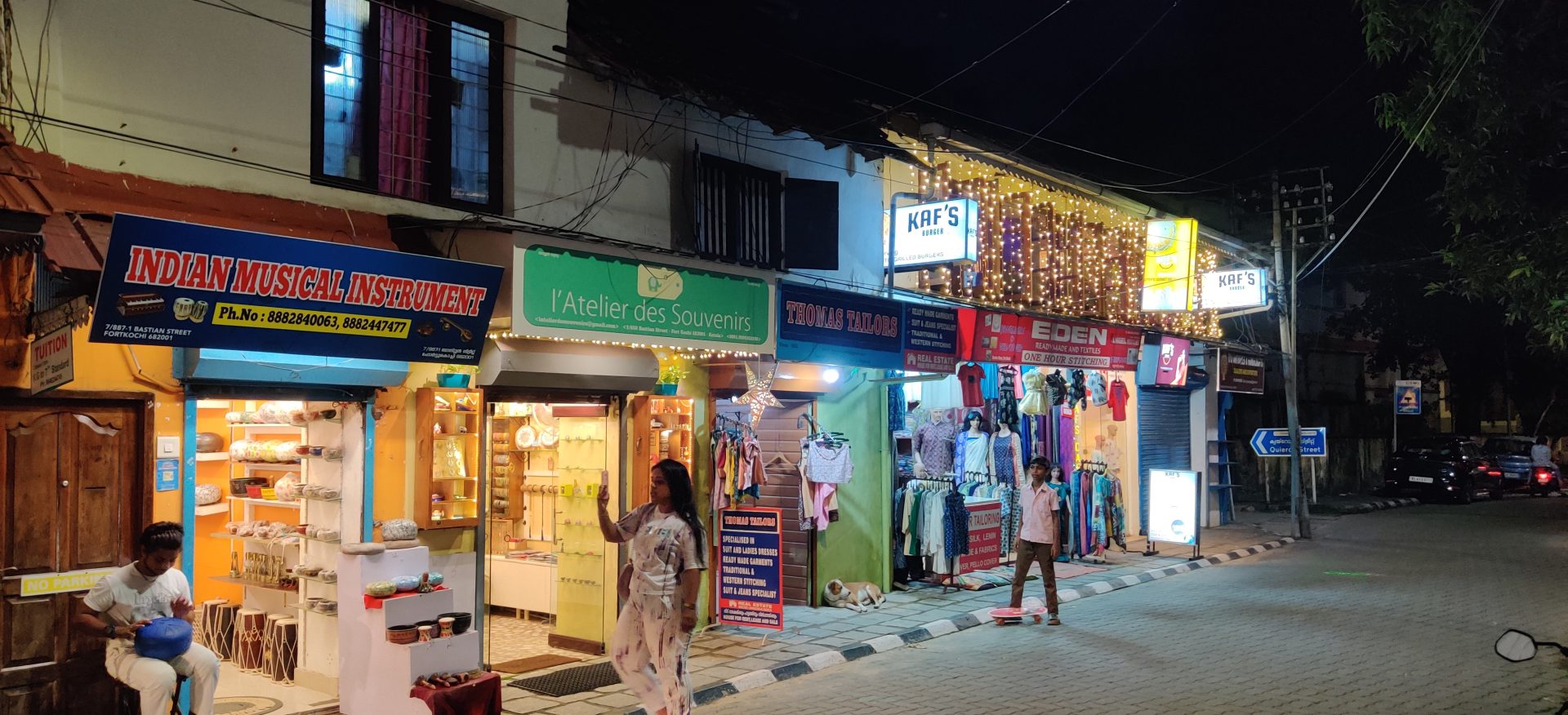
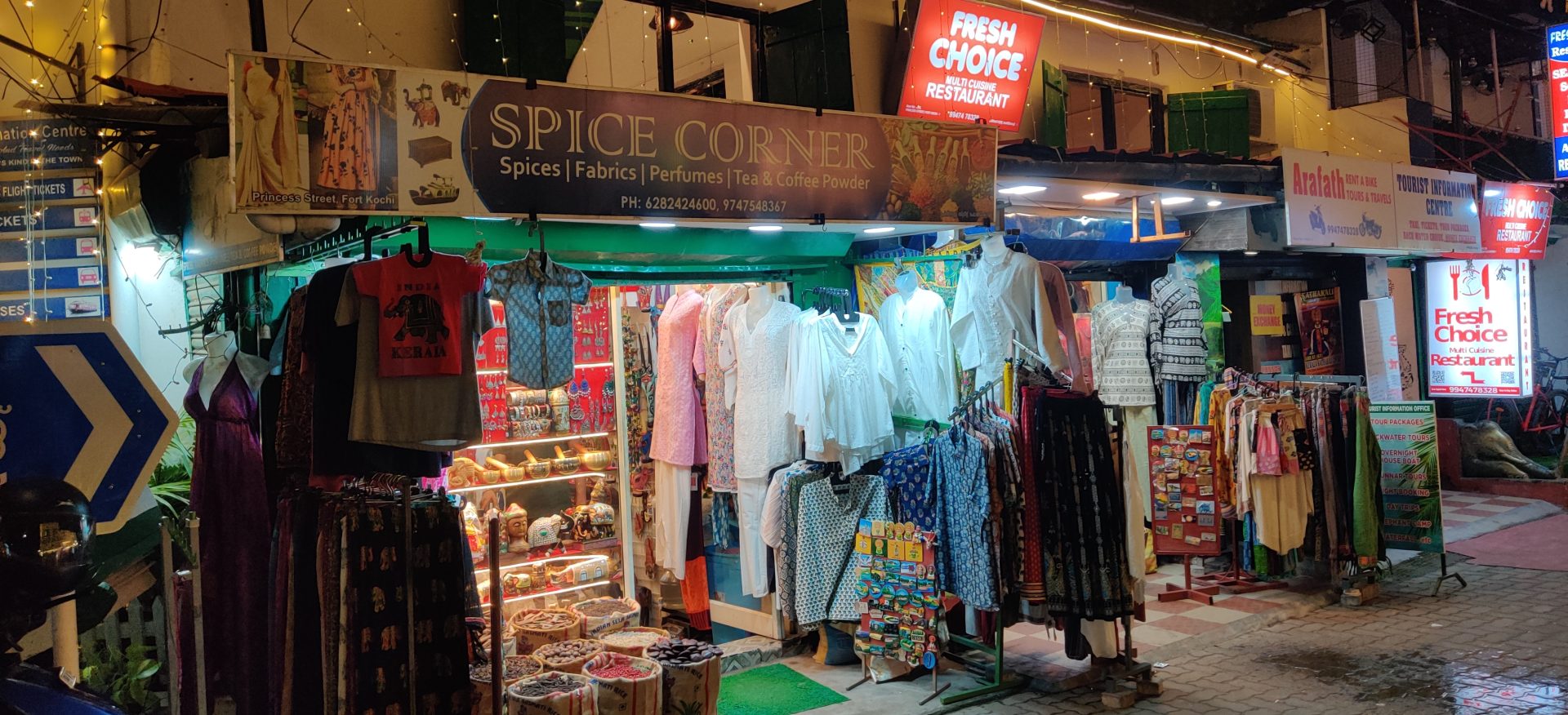
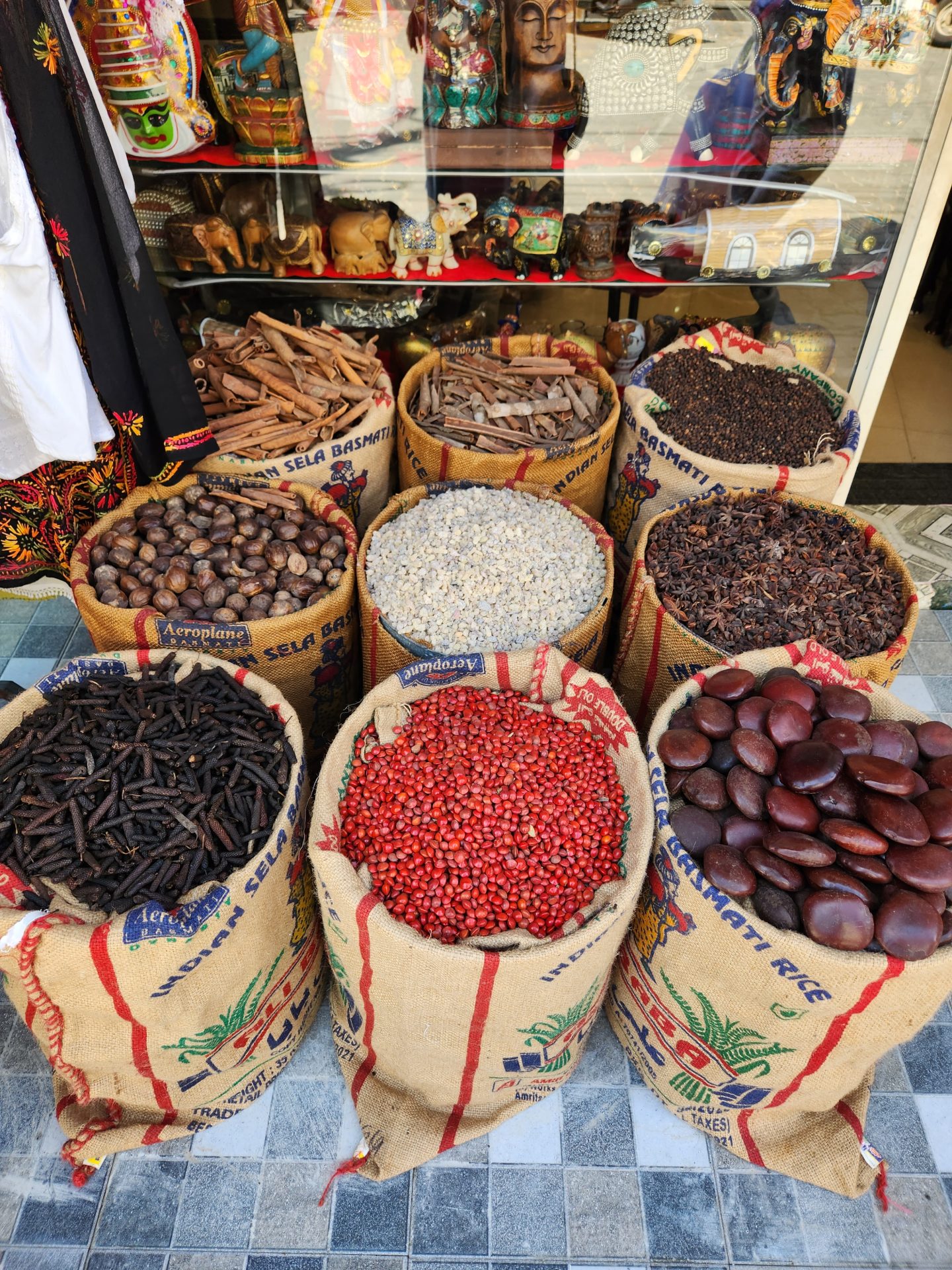
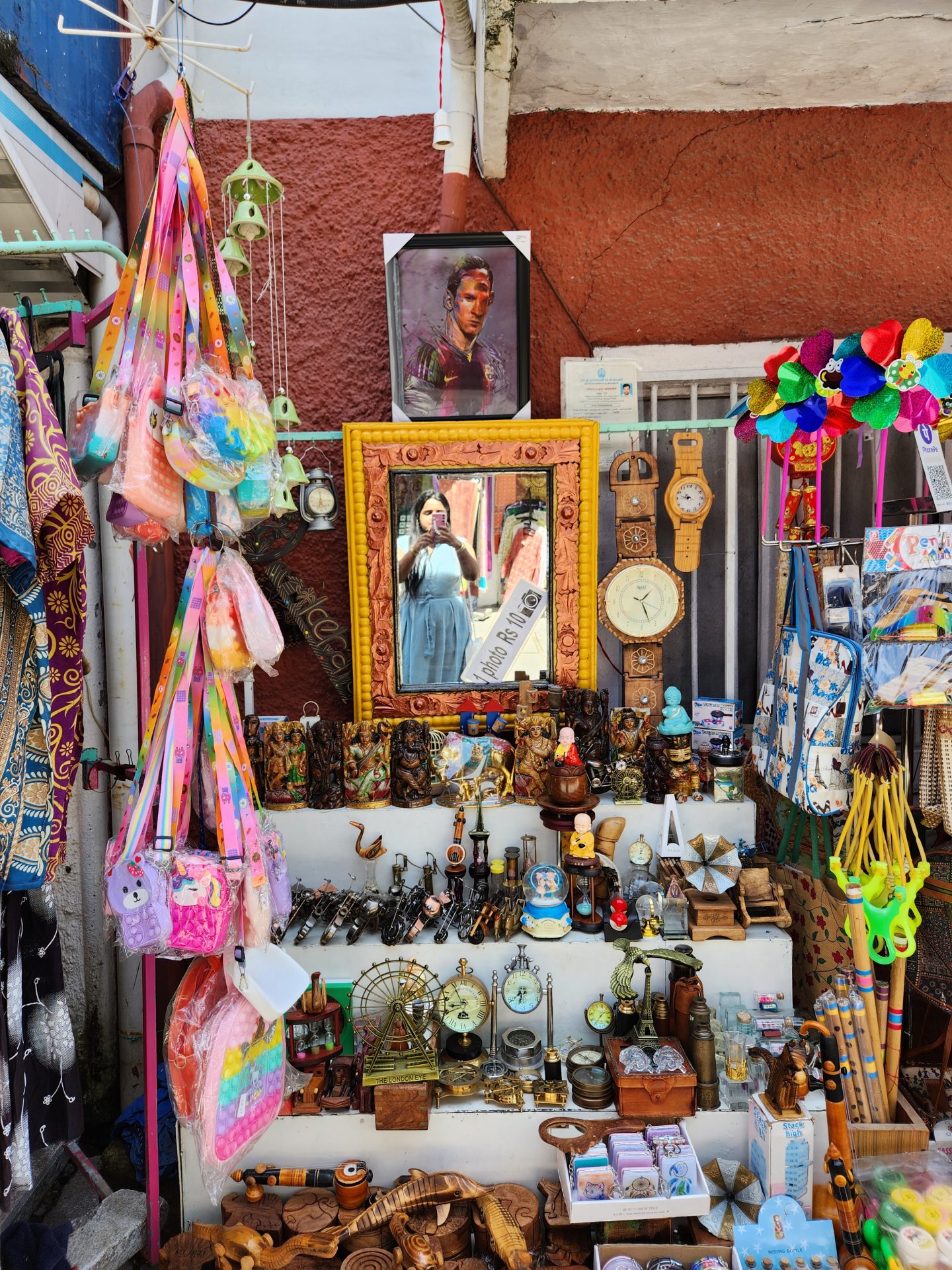
The other side had a multitude of small attractive boutiques selling a wide variety of clothing brands besides a variety of other shops selling Curios, artefacts, spices, collectibles, junk jewellery, magnets and trinkets.


We could also spot a book shop and a shop selling musical instruments besides a toy store. 

The entire area was lit up and the bright neon sign boards gave the entire area a quintessential experience of old world charm while also maintaining the vibrancy  of the place. 

A couple of wine and beer parlours belting out some good music added to the vibrancy of the street. 

One is really spoilt for choices given the variety of stuff on offer but never be scared to negotiate hard on the prices quoted by these shopkeepers.

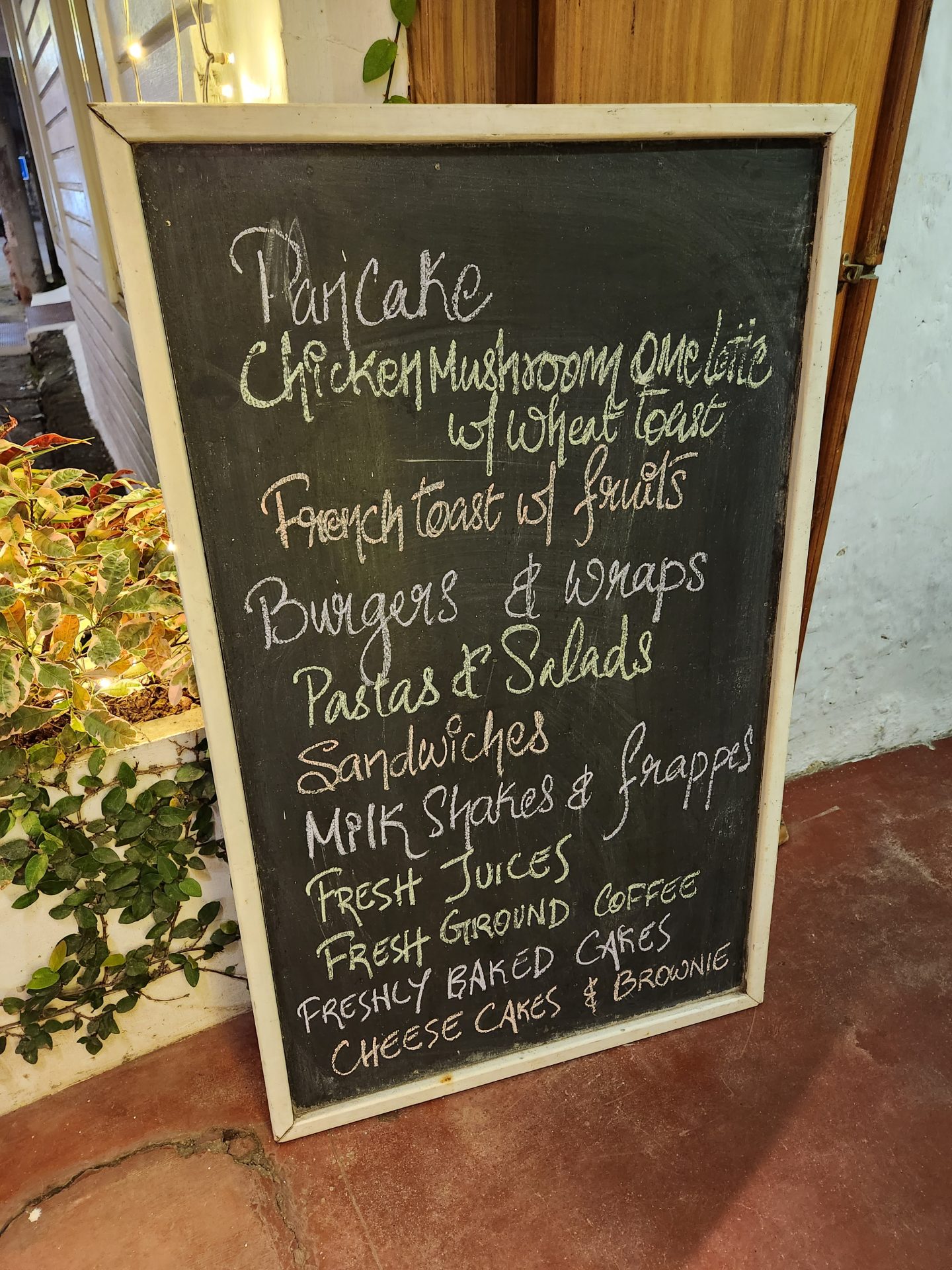
Of Burgers and Shakes @ Loafer’s Cafe

We made our way to Loafer’s Cafe also known as Loafer’s Corner. 

This  was located right at the middle of Princess Street. 

I was intrigued by the name given to the Cafe given the number of derivatives one could infer but all doubts were laid to rest when I was told it was an extension of the word Loaf since most items were freshly baked.

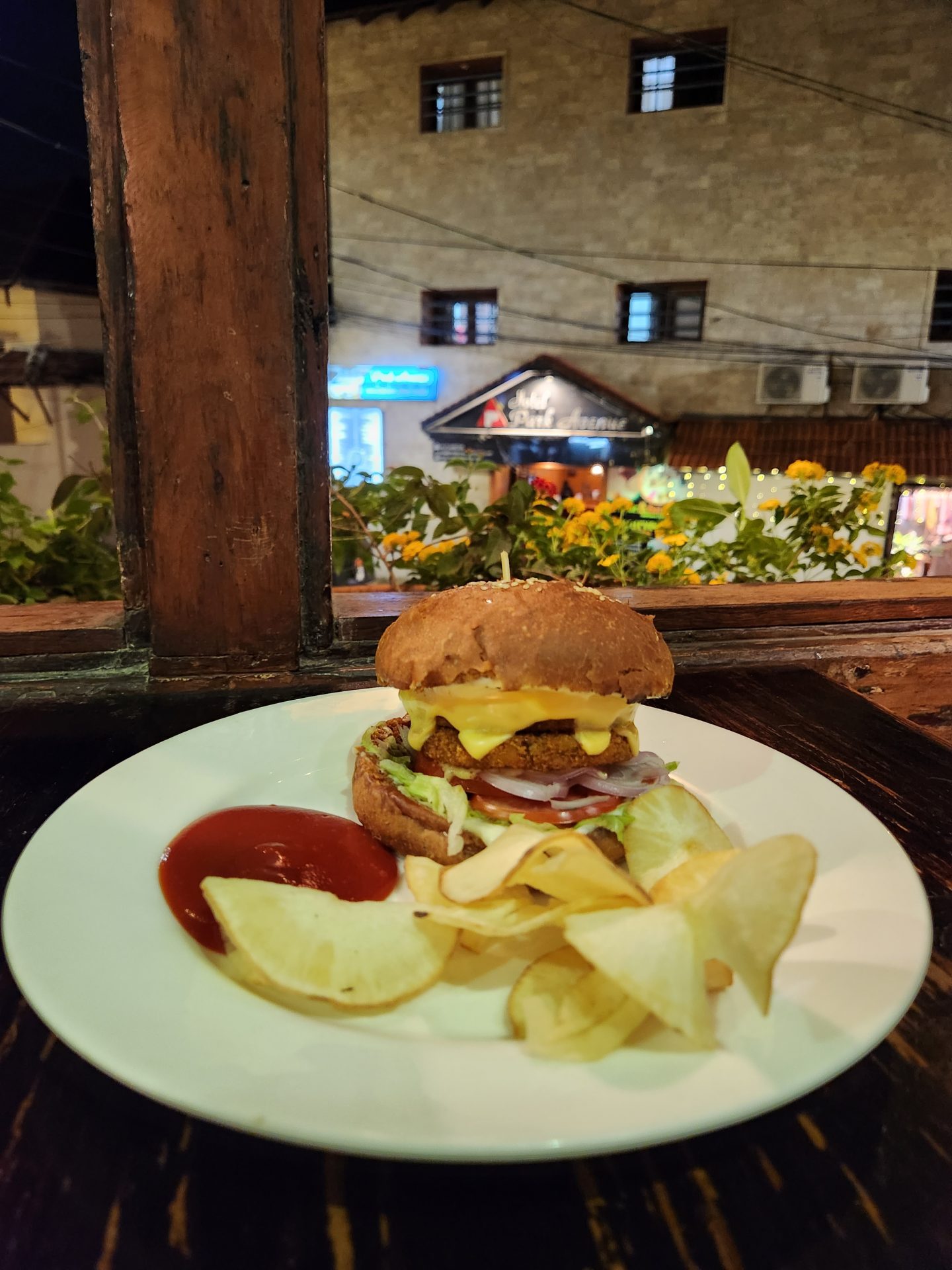
Having missed a proper lunch on account of our travel from Trivandrum, we tucked into the Burgers and wrapped ourselves around the Wraps, washing them down with juices and shakes.

What followed after the repast was some more shopping until the legs could hold on no more and we reached Niyati by around 9 in the night. Got ourselves an Auto booked for sightseeing the next day through the reception desk. 

The Tuk tuk or the Auto is the most convenient way to move around in Fort Kochi with the least of hassles when parking. One could also rent a 2 wheeler or a cycle to move around since most places of interest are within a radius of 3 to 4 kms.

The Day of Sightseeing

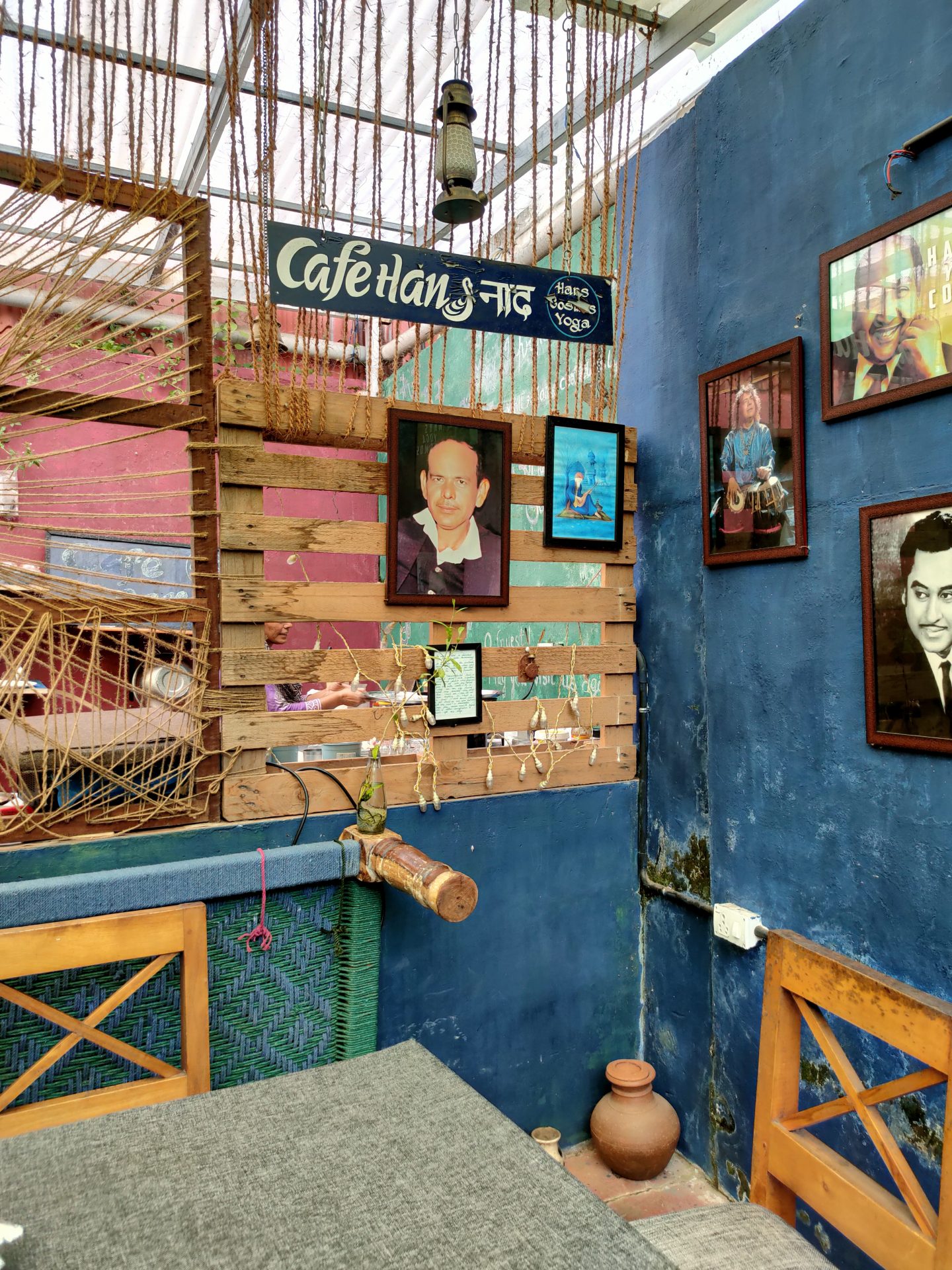
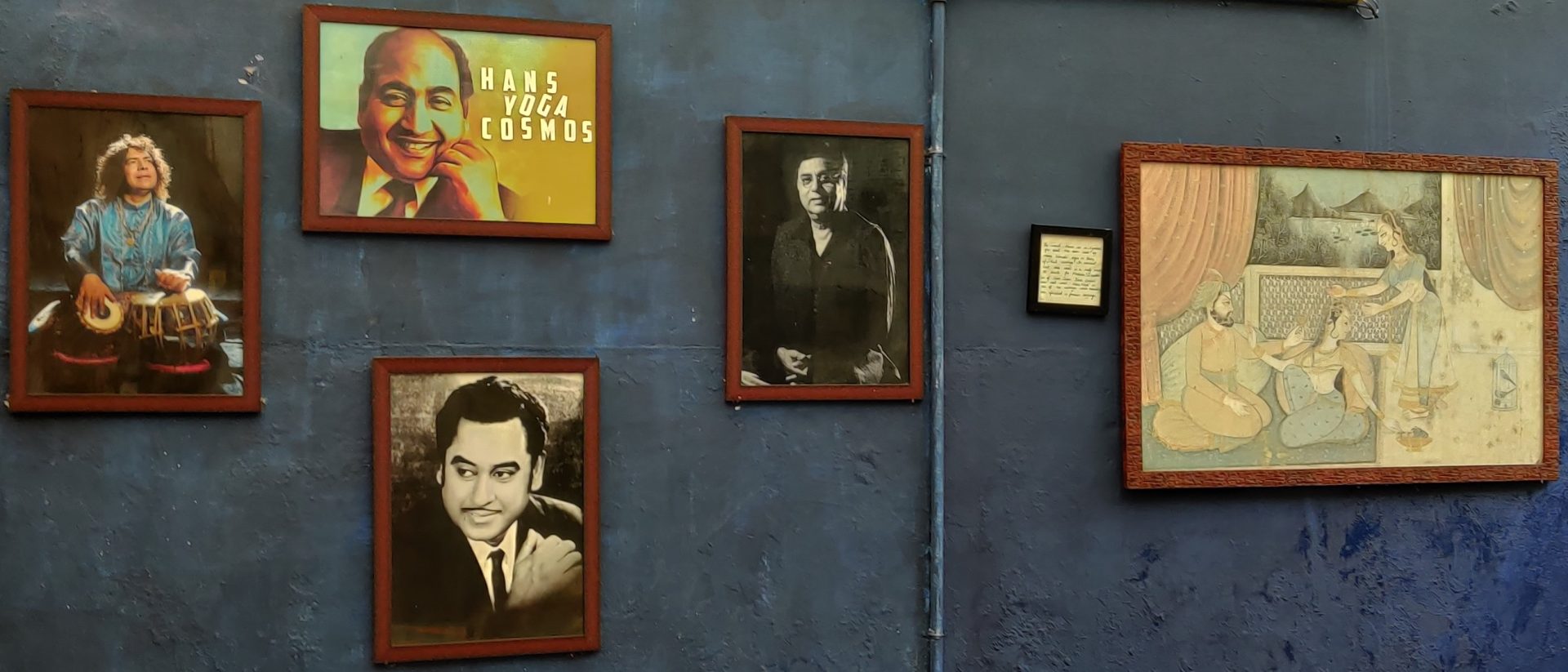
Breakfast was ordered from the adjoining Café Hans as the menu card at our hotel gave us the creeps, looking at the wide array of fishy and beefy stuff on print. 

Run by an enterprising lady Neetu who multitasked between cooking, teaching Yoga and conducting Heritage Walks for select clientele. She can be reached on +91 9846033618.

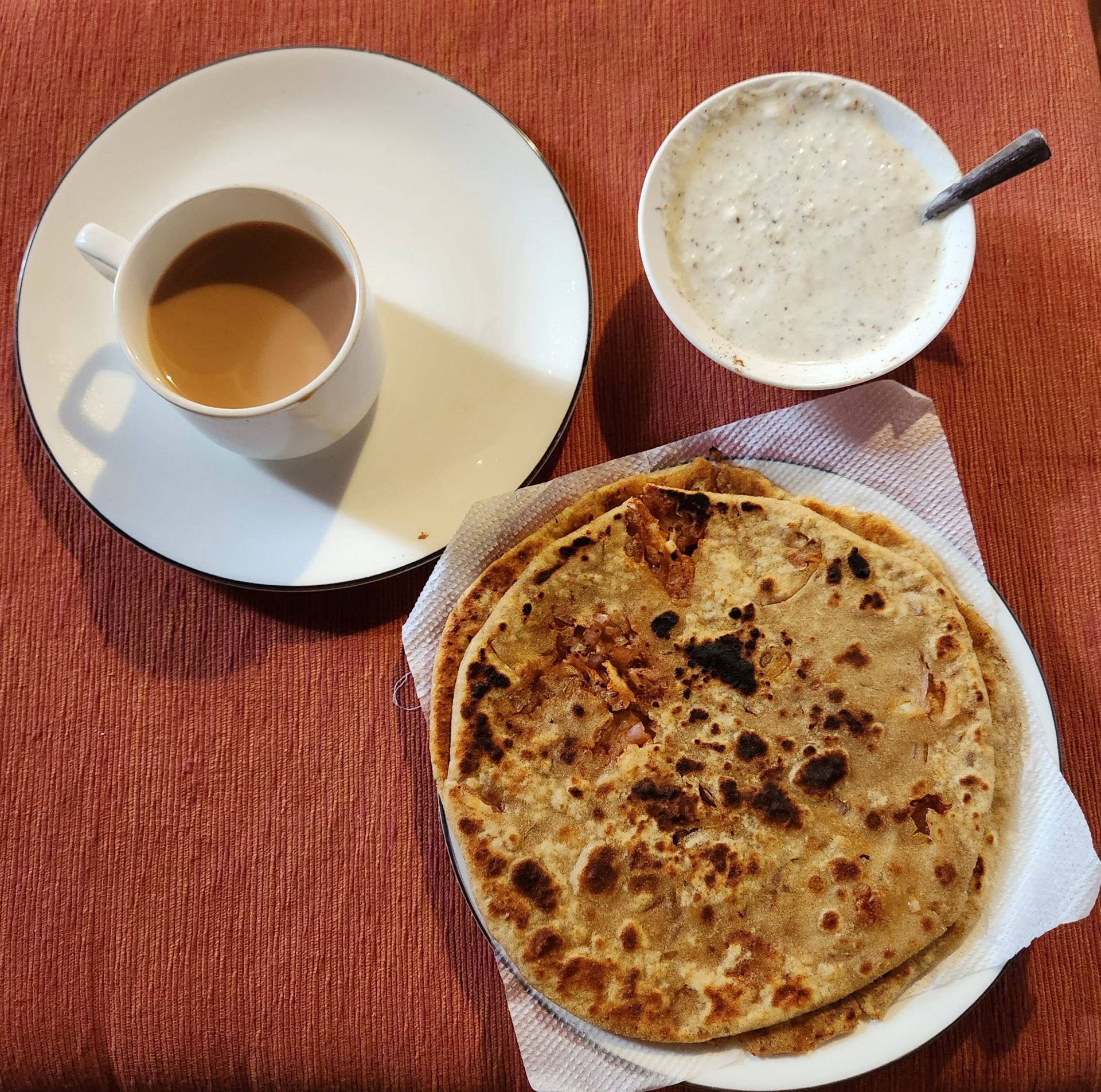
Piping hot delicious and less oily Aloo Parathas with a liberal helping of butter, pickles and curd along with Masala tea were served to us at the Hotel itself while we were getting ready.  

The Auto driver came in by around 9.30 AM armed with a laminated tourist map of places he would cover. It was more or less in line with what I had chalked out as a plan and off we headed for the beach at Fort Kochi as our first halt.

The Fort Kochi Beach

Save for a small stretch of a promenade in front of the PWD Guest House where one could sit down in solitude and look at the waves, the Fort Kochi beach was kind of dirty and inhabitable. 

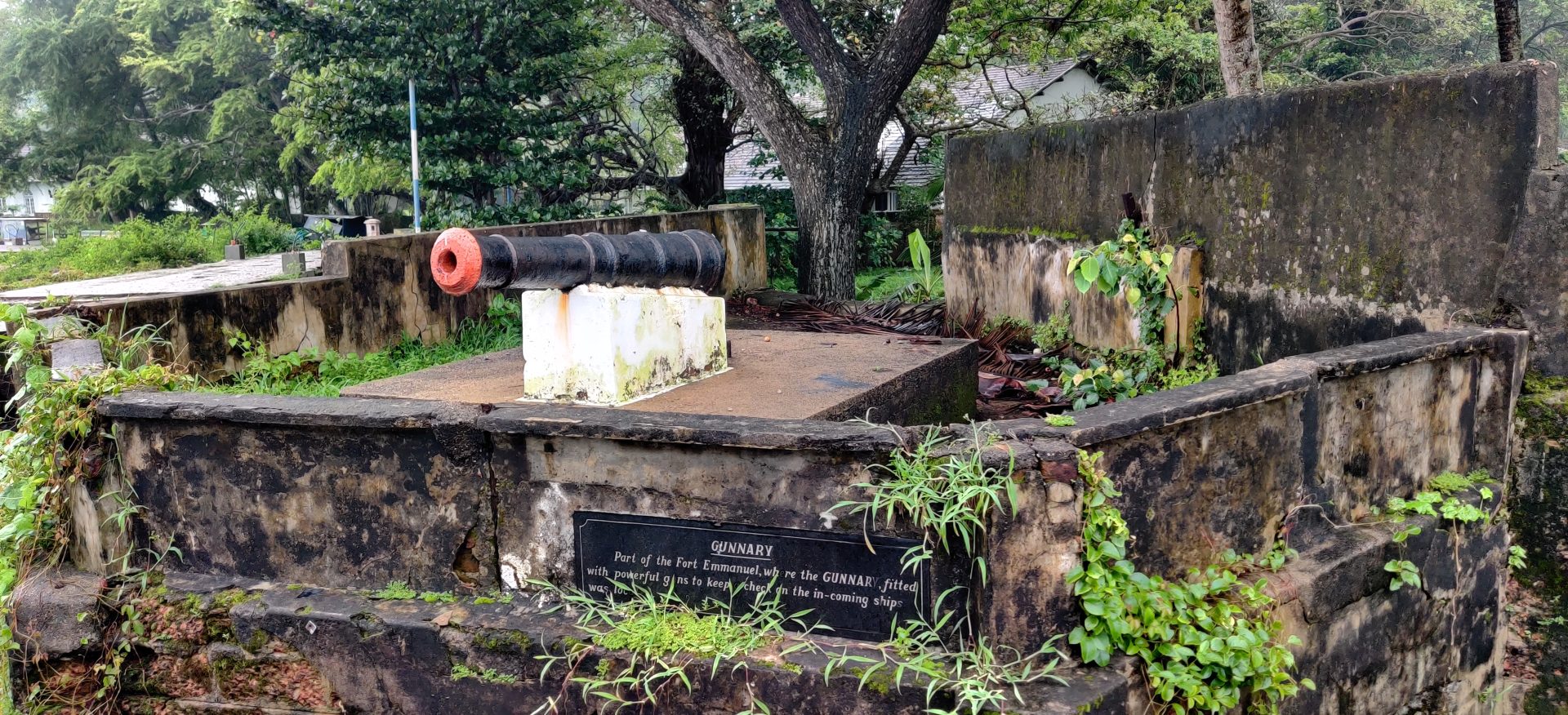
The Chinese Fishing nets were just across the beach. The Remnants of the Gunnery seen as part of the picture below was part of Fort Immanuel. This held lot of historical importance.

Cantilever Fishing

The Chinese Fishing Nets (also known as Cheenavala in Malayalam) are very symbolic of Fort Kochi. 

These are said to have been  introduced by Chinese explorers in the 14th century.

These nets look pretty and picturesque and operate on a cantilever mechanism with the help of 4 to 6 fishermen and begins their descent into the sea when the high tide begins.

Each of these fishing nets are around 10 metres high and have a span of around 20 metres.

These nets are suspended over the sea with large stones used as counterweights and tied to ropes of different lengths at the other end. 

The catch is generally modest comprising of a few fish and crustaceans which get sold off in no time to passers-by.

The eerie Cemetery

The back side of the Promenade built on the Fort Kochi beach led one to the Dutch Cemetery.

This is believed to be the oldest European Cemetery in India and was built in the year 1724. 

The cemetery has been used as the burial place for several known personalities in the past.

 Currently, the Cemetery which lies under the care of the Saint Francis Church has over 100 Tombs. 

The Indo- Portuguese Museum

500 metres ahead of the Cemetery and built atop a small hillock in 1506 was the Bishop’s House. There is an entry fee of Rs.10/- charged per head.

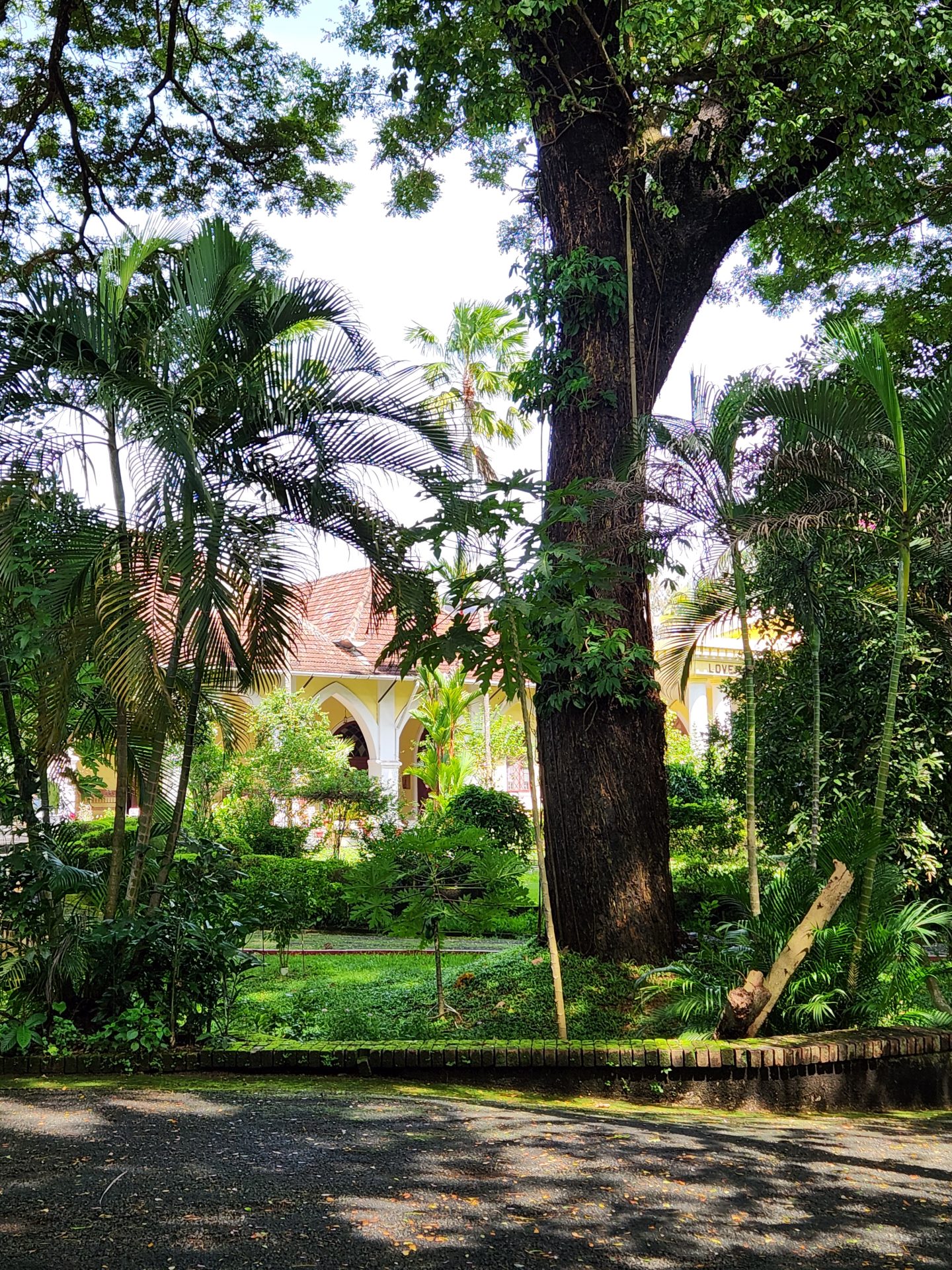
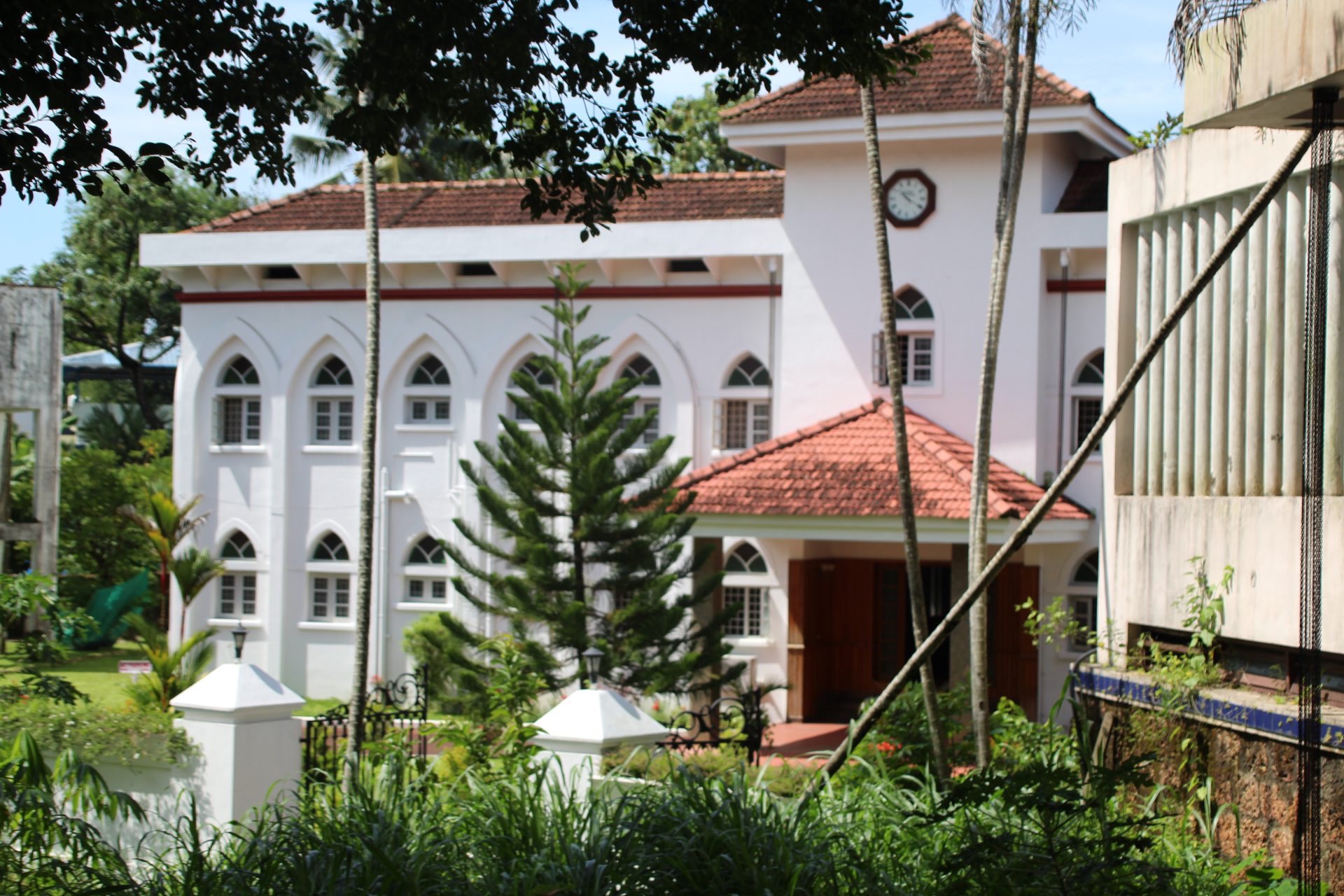
This then served as the residence of the Portuguese Governor. Large Gothic arches form the front façade of the house and there is a nice winding circular path leading up to the main entrance. 

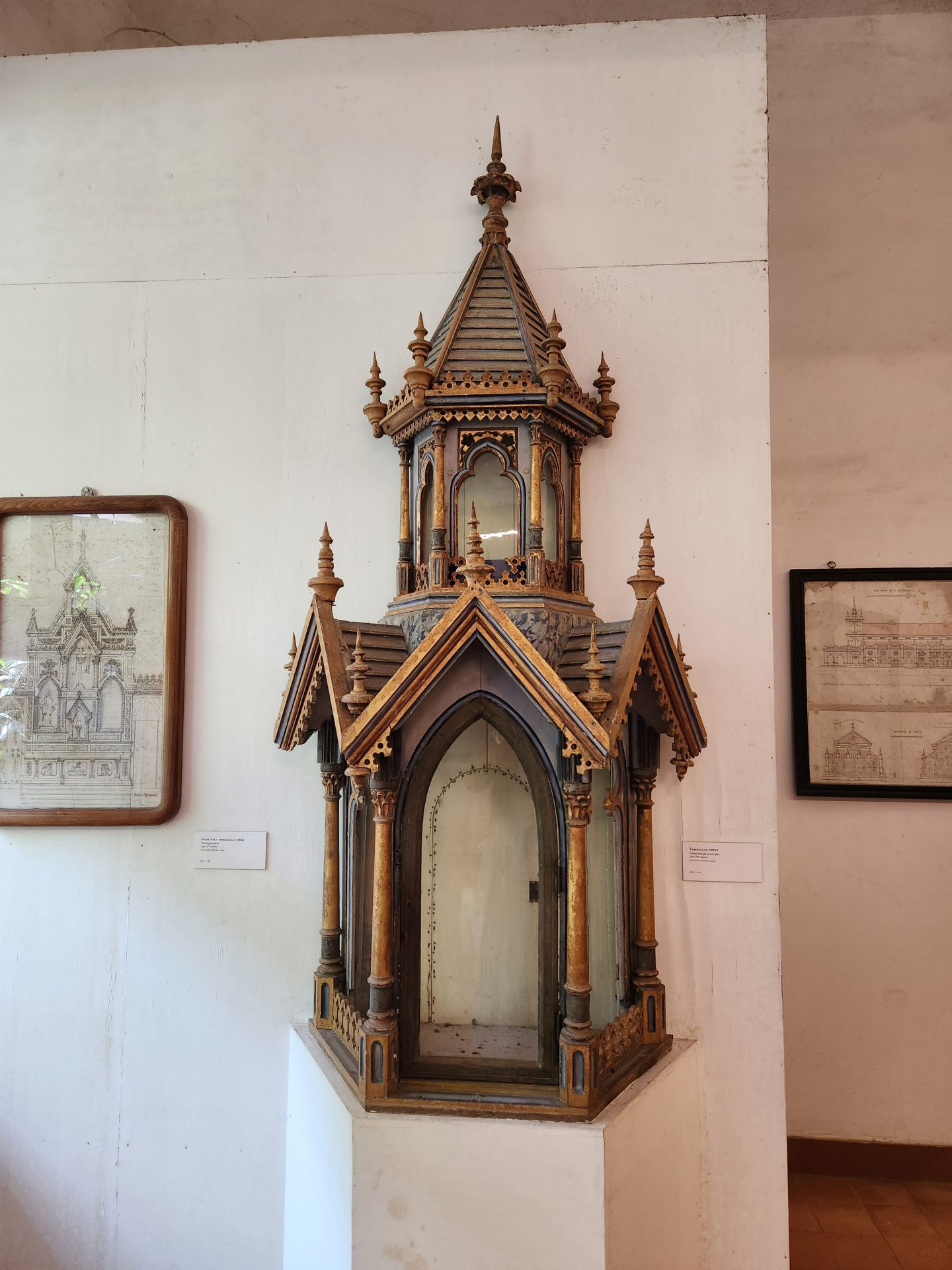
Lying adjacent to the house is the Indo-Portuguese Museum which has a wide range of artefacts collected from various churches under the Kochi diocese. 

The entry fee is waived off on the first Thursday of every month. The visiting hours for the Museum are between 9.00 AM to 1.00 P.M and 2.00 PM to 5.00 PM on all days except Monday.

Ode to the Indian Navy

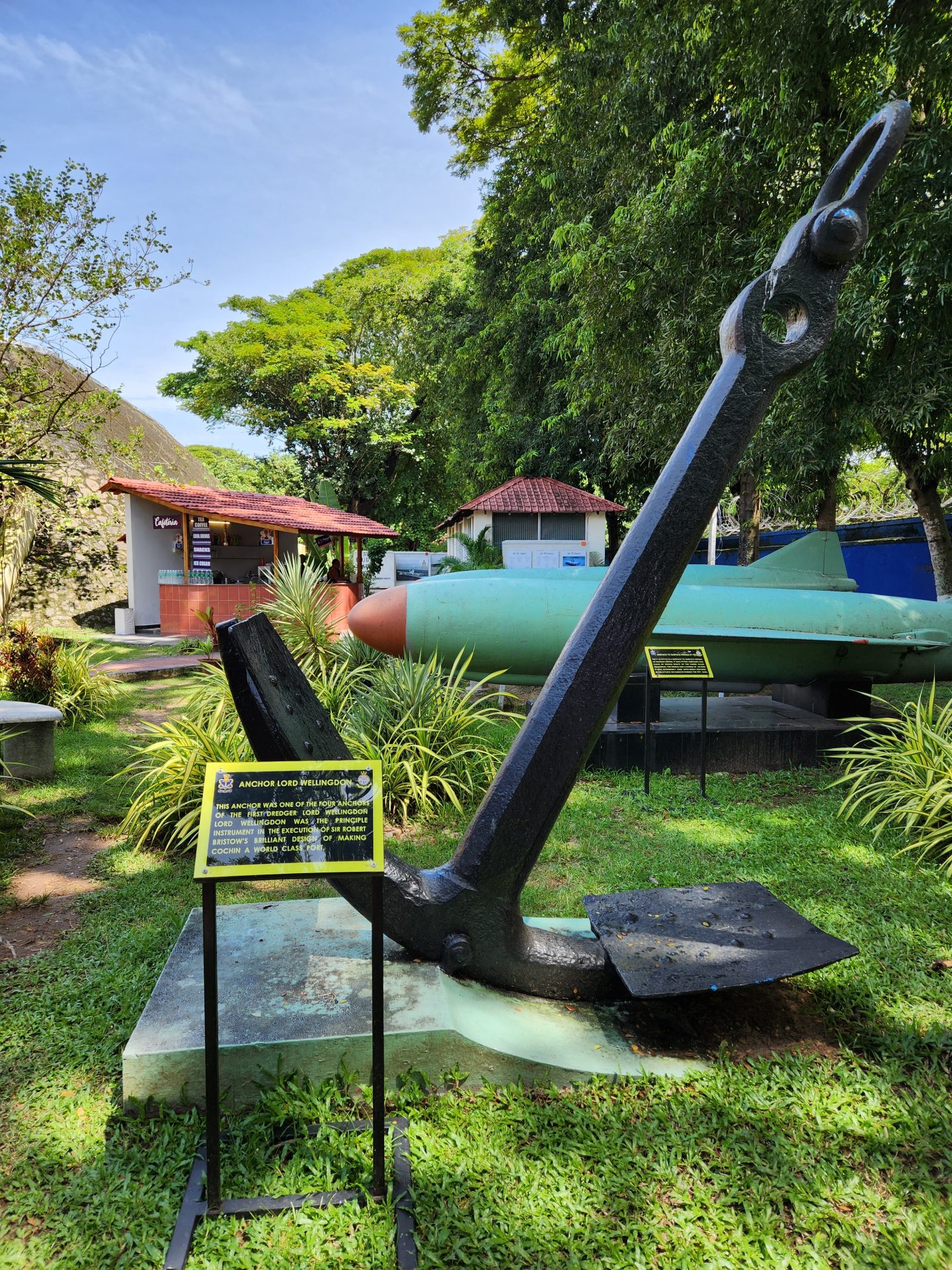
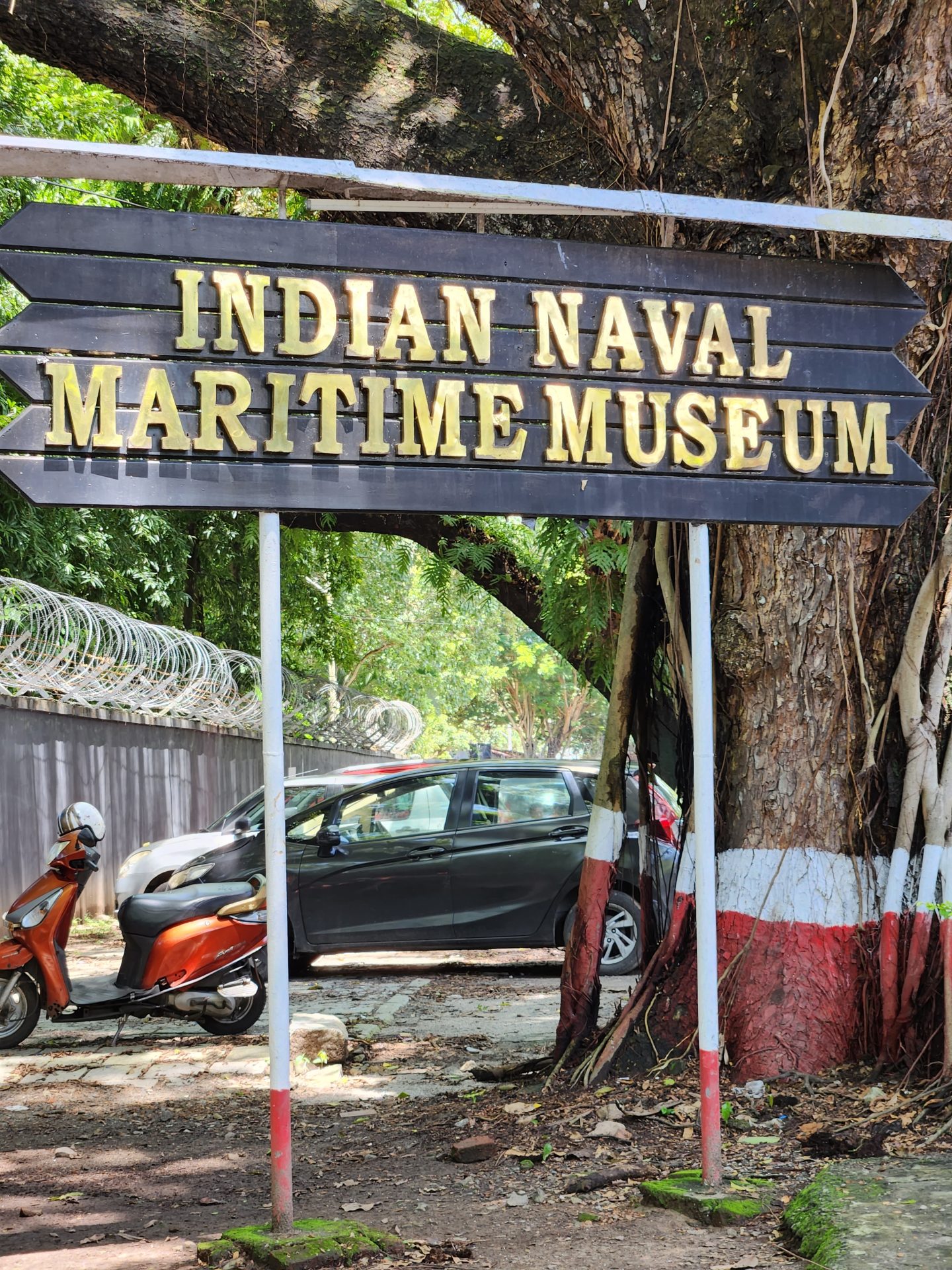
We then drove onto the Indian Naval Maritime Museum on Herschel Road and around a km away. 

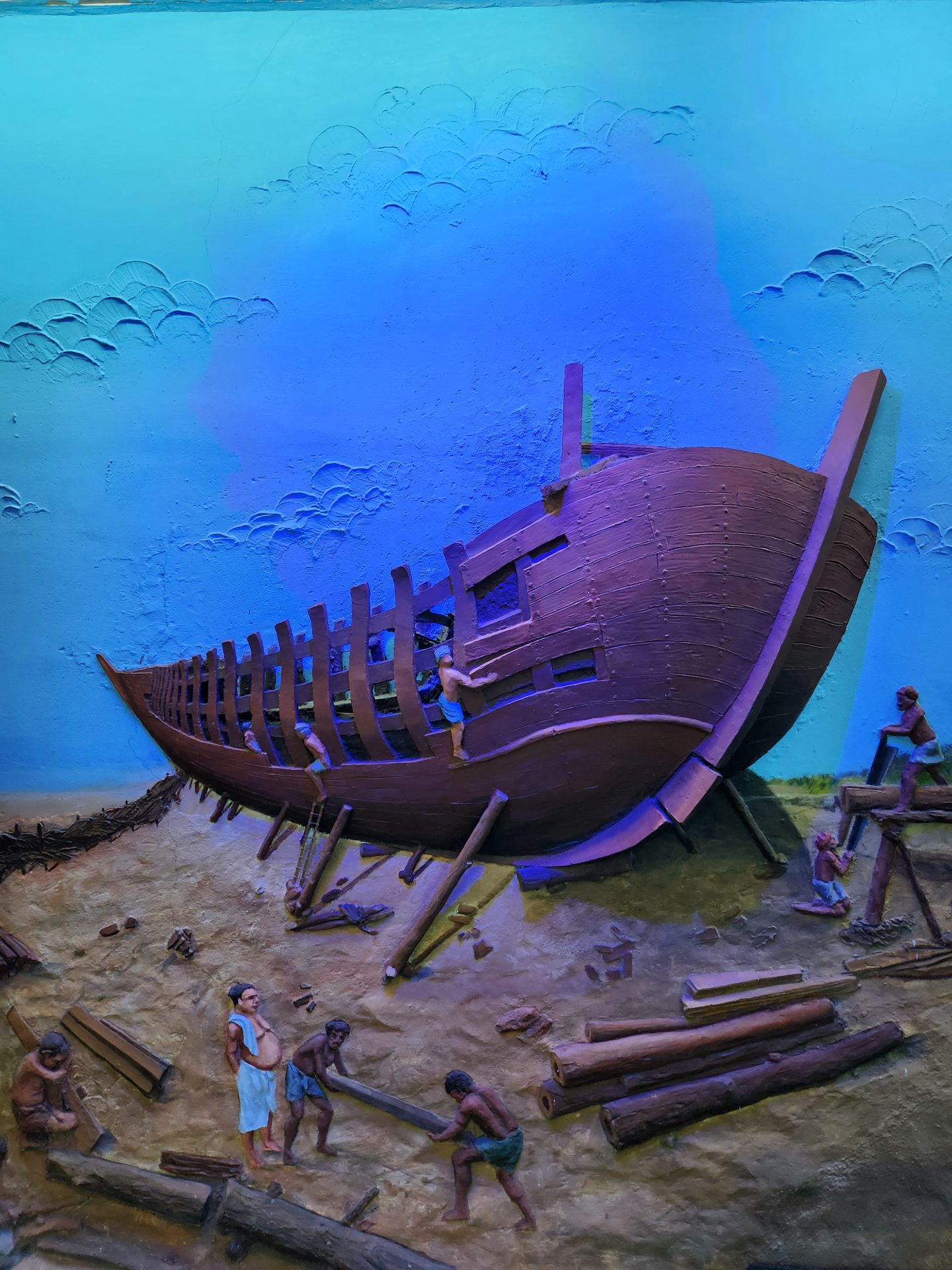
Located on the premises of INS Dronacharya which happens to be the Gunnery School for the folks at the Navy, the Museum helps one understand a lot on our on our country’s maritime heritage and depiction of International Trade Links while a section also pays tribute to major maritime figures.  

Vasco da Gama’s journey from Europe to India and his settlement in the country is featured here while there are maps which trace the journeys of other European maritime travellers while the trade links of the Indus Valley civilization with the Arabs, Portuguese and the Dutch can also be read about

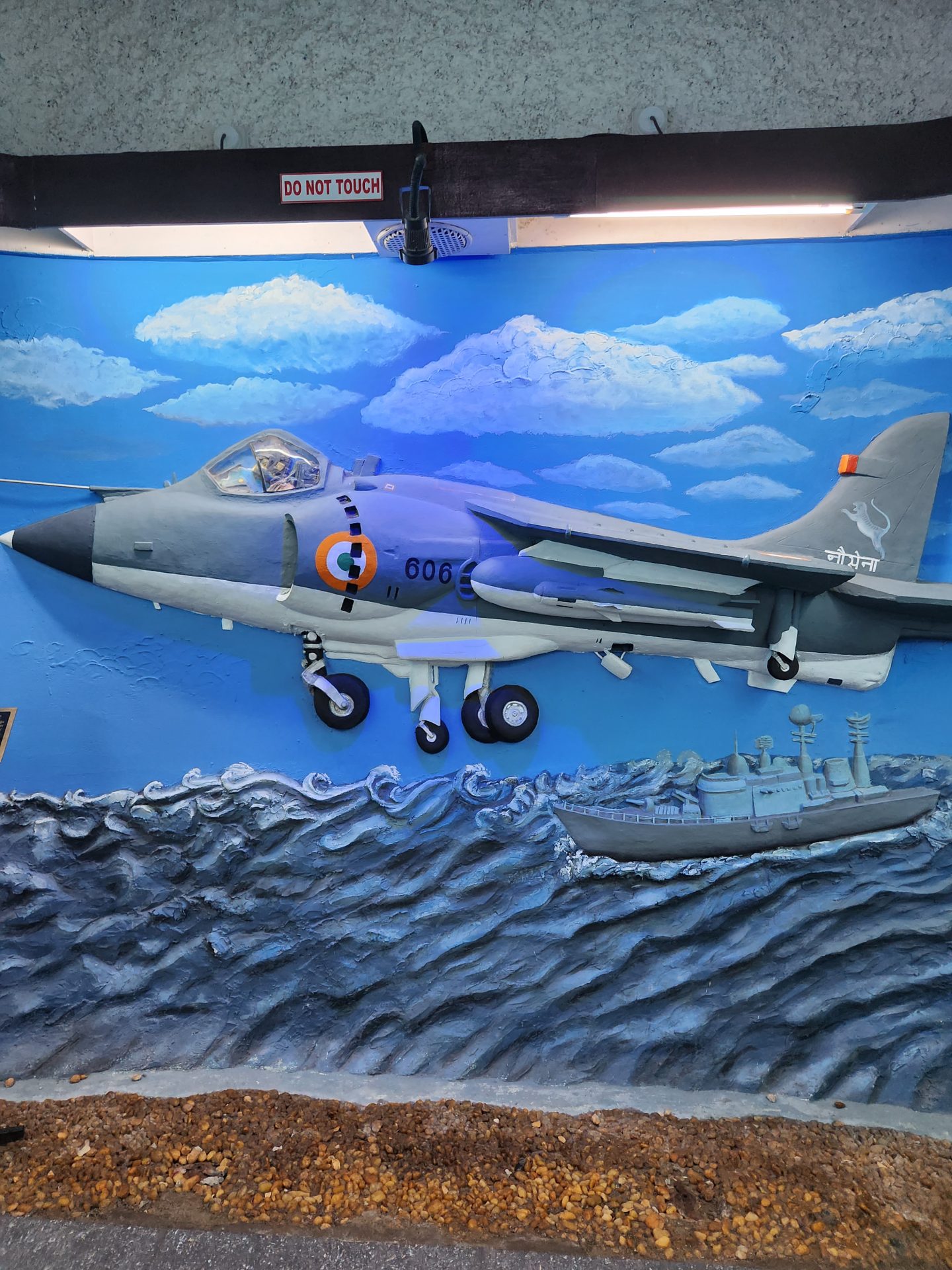
The museum is pretty large and well laid out and while a separate  section outside traces the achievements of the Indian Navy post independence and the subsequent wars with neighbouring countries. 

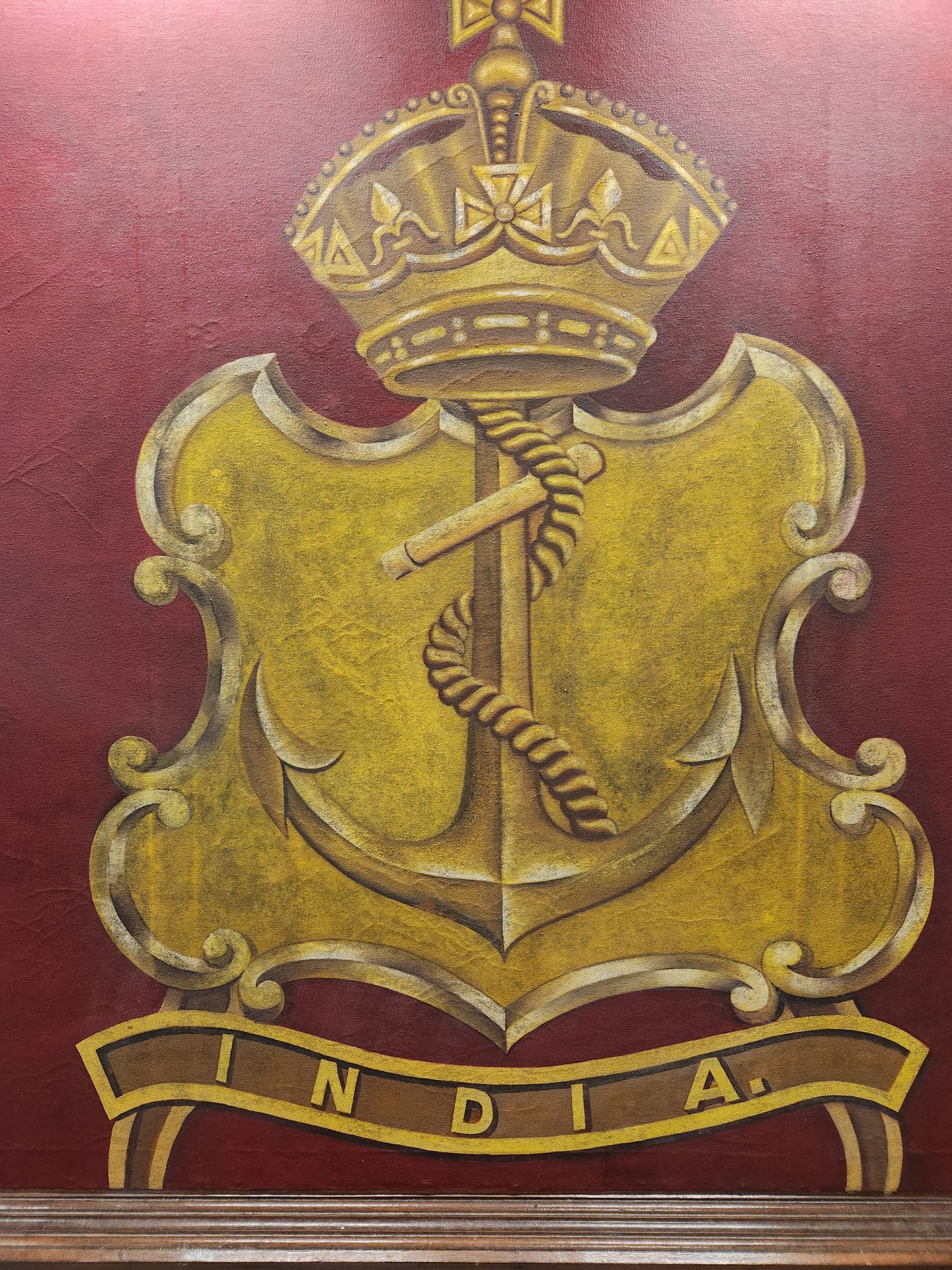
One also gets to see a number of exhibits found on naval ships ranging from flags, naval regalia offered to Indian Navy officers, brass muzzle loading canons, anchors, flags and rank badges While walking around the lawns outside, war memorabilia including rocket launchers, radars, models of warships , torpedoes and even a Seaking Helicopter. 

Tickets are priced at Rs.50/- per head and an additional 100 Rs. Is levied for a camera irrespective of whether it’s a still camera or if one wants to use his mobile. The visiting hours for the museum are between 9.30 AM to 13.30 PM and 14.30 PM to 20.00 PM on all days except Monday.

India's oldest Basilica

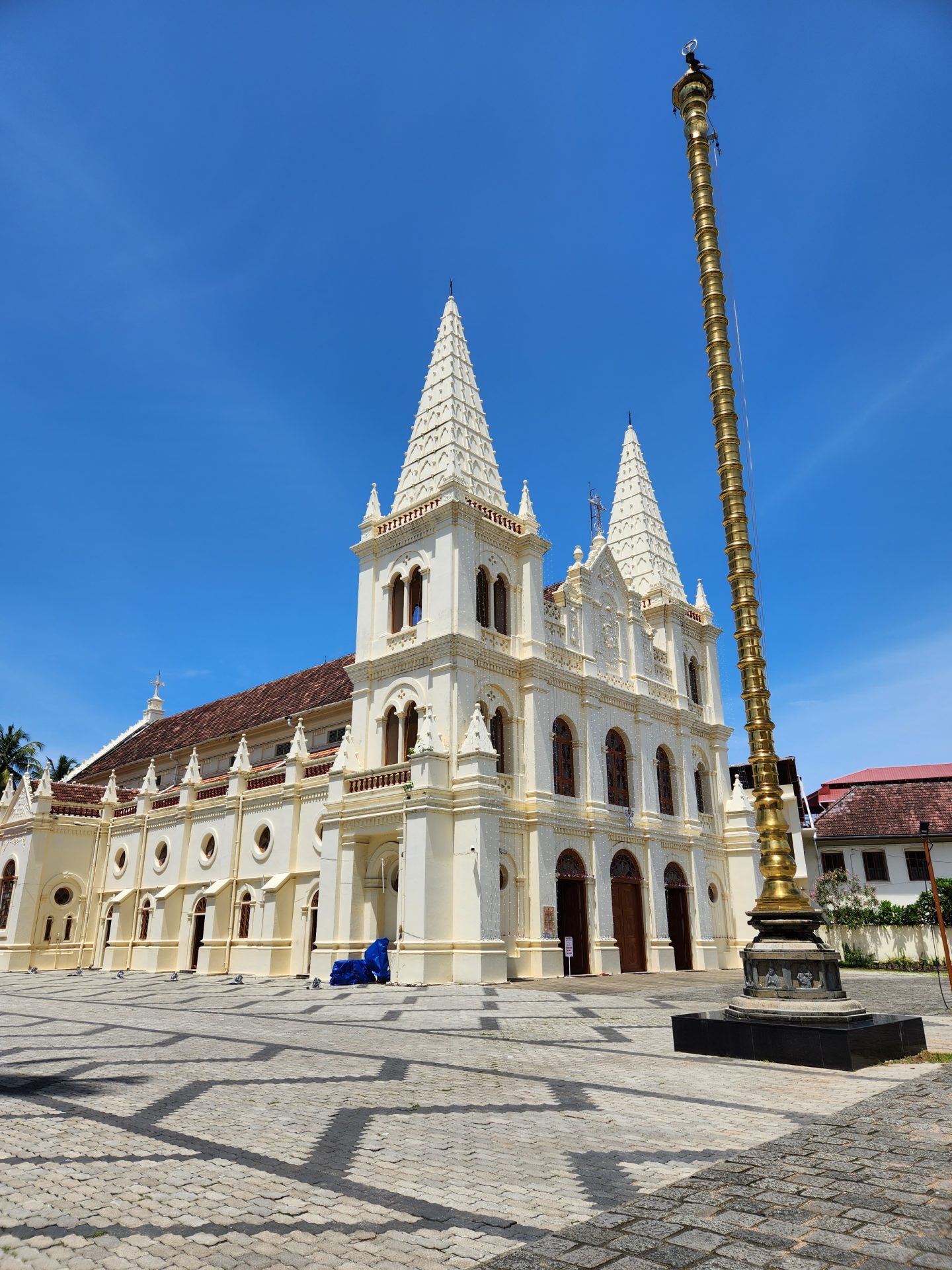
The Santa Cruz Cathedral Basilica stood between us and the Qissa Art Cafe for a coffee break but we decided to first get into the Basilica. Built by the Portuguese in 1505, this is one among the most impressive and finest out of the 9 Basilicas in India and one among the 2 churches which the Dutch did not demolish. This got elevated to the status of a Cathedral in 1558 by Pope Paul IV.

The Britishers renovated it in 1887 and converted it as a grand Gothic structure. The inside walls of the church have lot of intricate and beautiful paintings. 

The Cathedral is open to visitors between 9.00 to 13.00 AM and 14.30 to 17.30 PM between Monday to Saturday and on Sundays its open only between 10.30 to 13.00 hours. There are no entry charges levied for visitors

Lets hear the Qissa

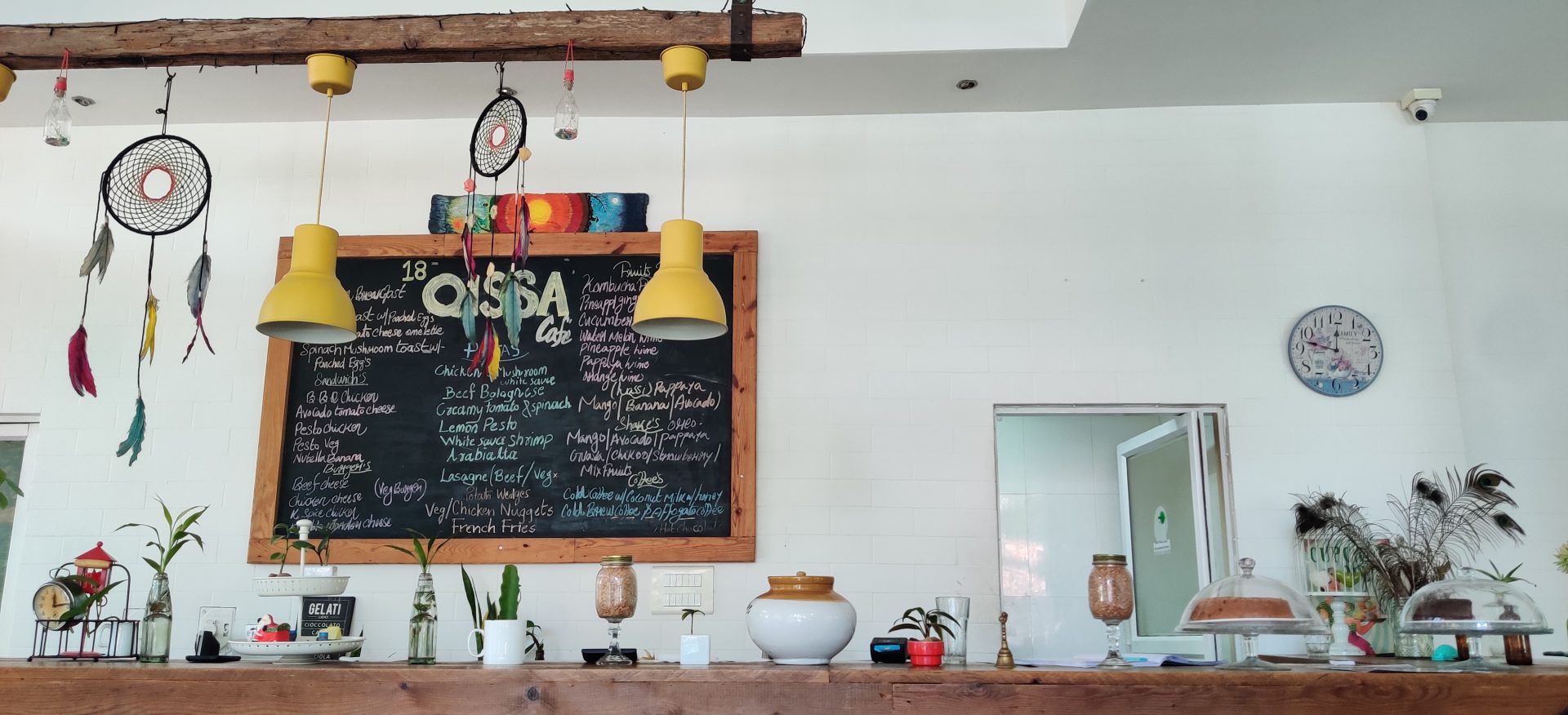
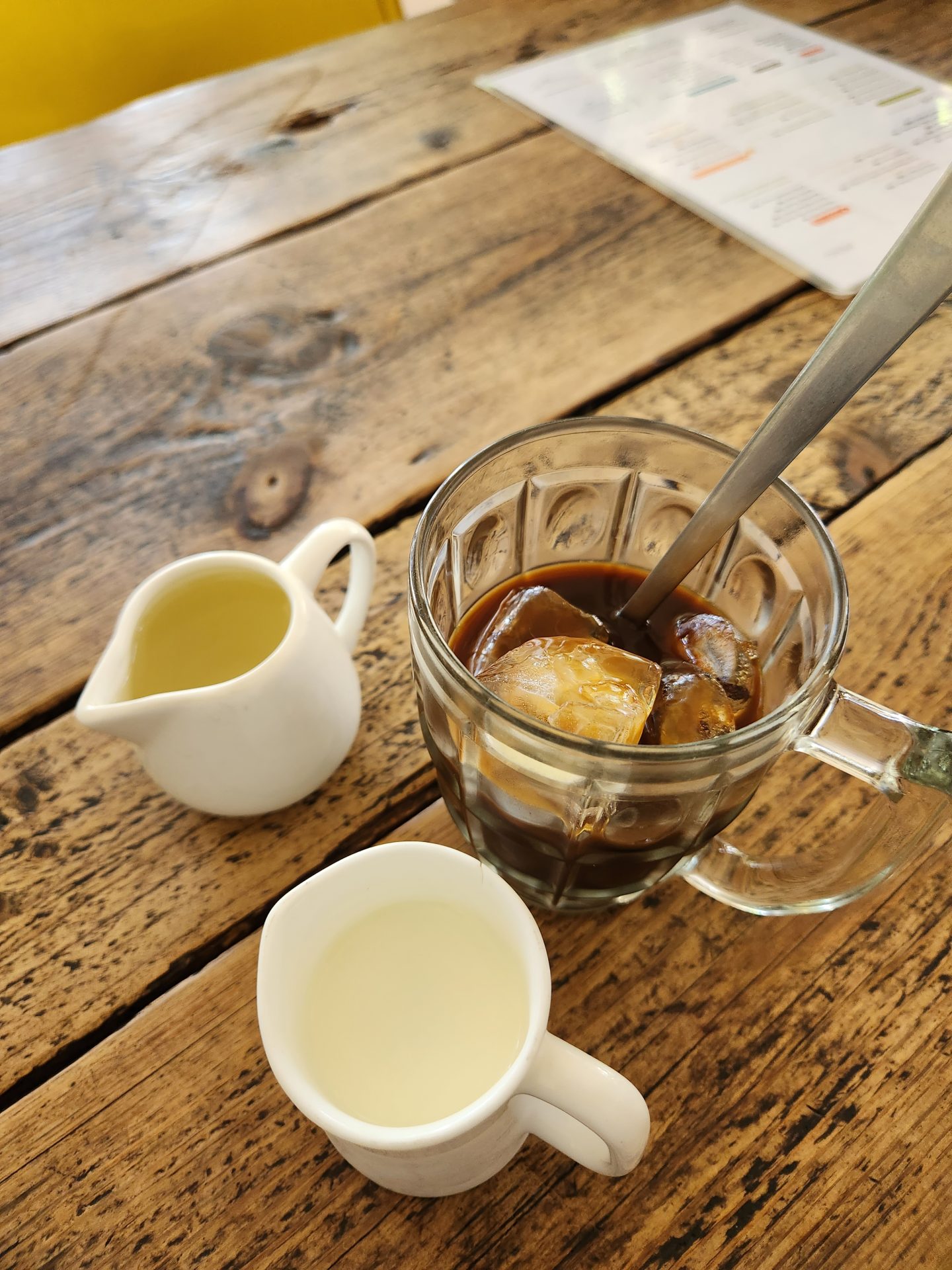
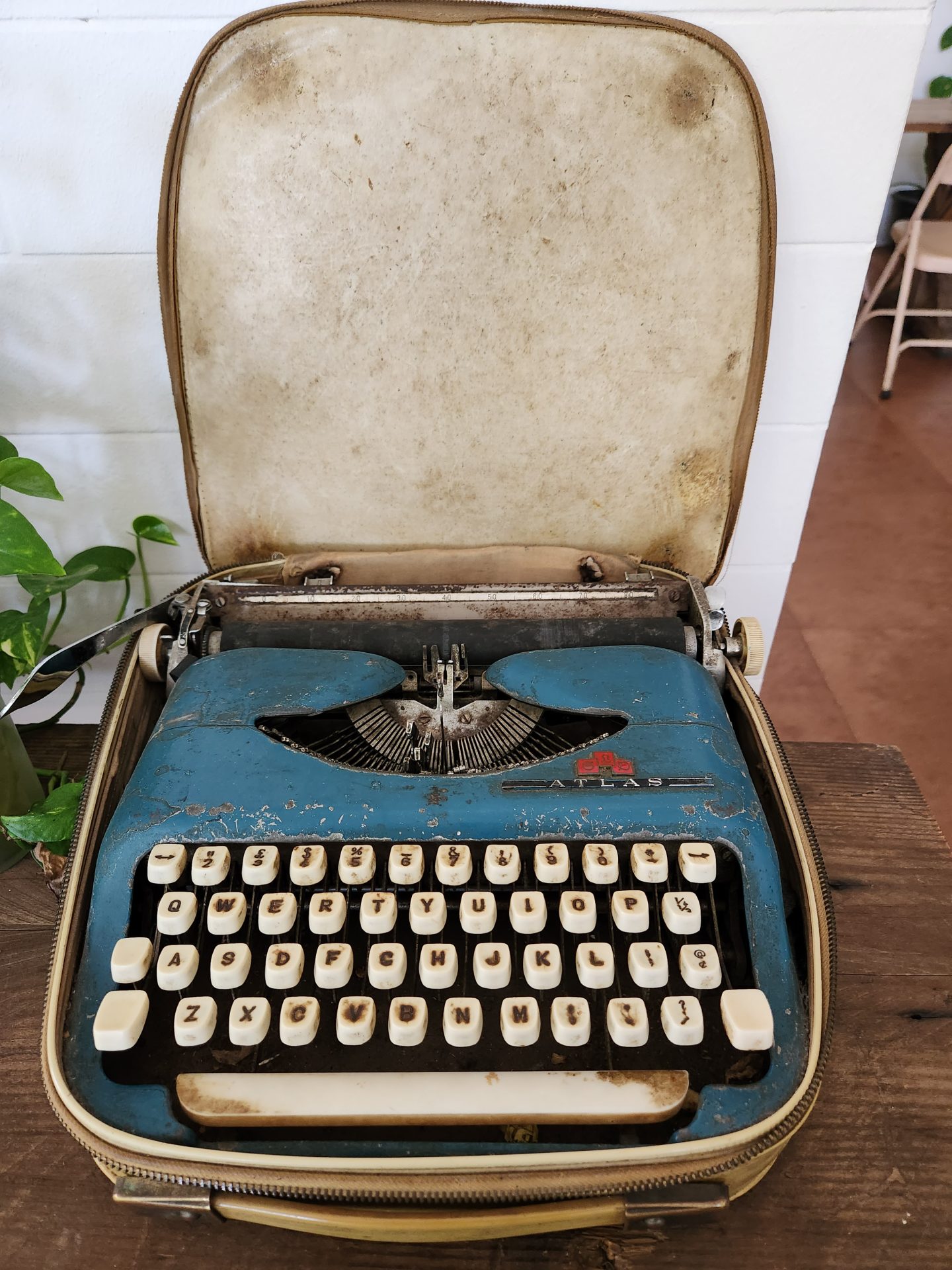
A one minute drive via the K.B.Jacob road brought us to the Qissa Art Café. The auto driver dropped us and went off in his search for  Chaya (the colloquial term for Tea in Kerala) and Pazham Pori (Sweet Banana Fritters) and asked us to call him once we were done. The word Qissa is an Urdu word meaning Fable and what unfolded before us was a quaint, cozy and charming café with a relaxed ambiance and a laid back vibe. 

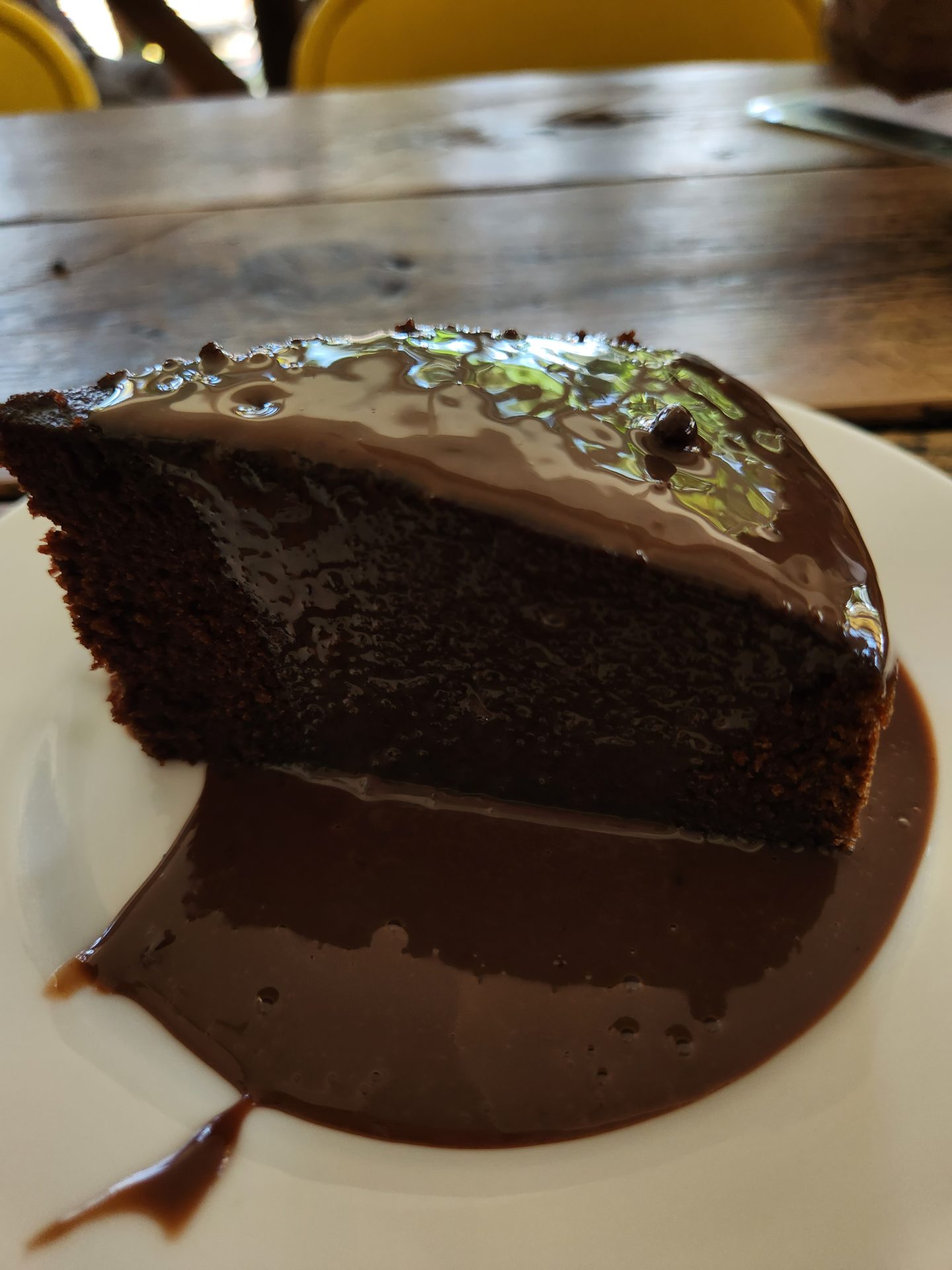
The diverse range of beverages and a choice of delectable cuisine (chosen from their all day breakfast spread) were something worth trying but one mustn’t miss their decadent Chocolate cake coz which is something worth dying  for. There was a section where one could browse books or play board games.

The Overpowering Smell of Spices

We were done with a light meal at the café in around 30 minutes and called the driver over. 

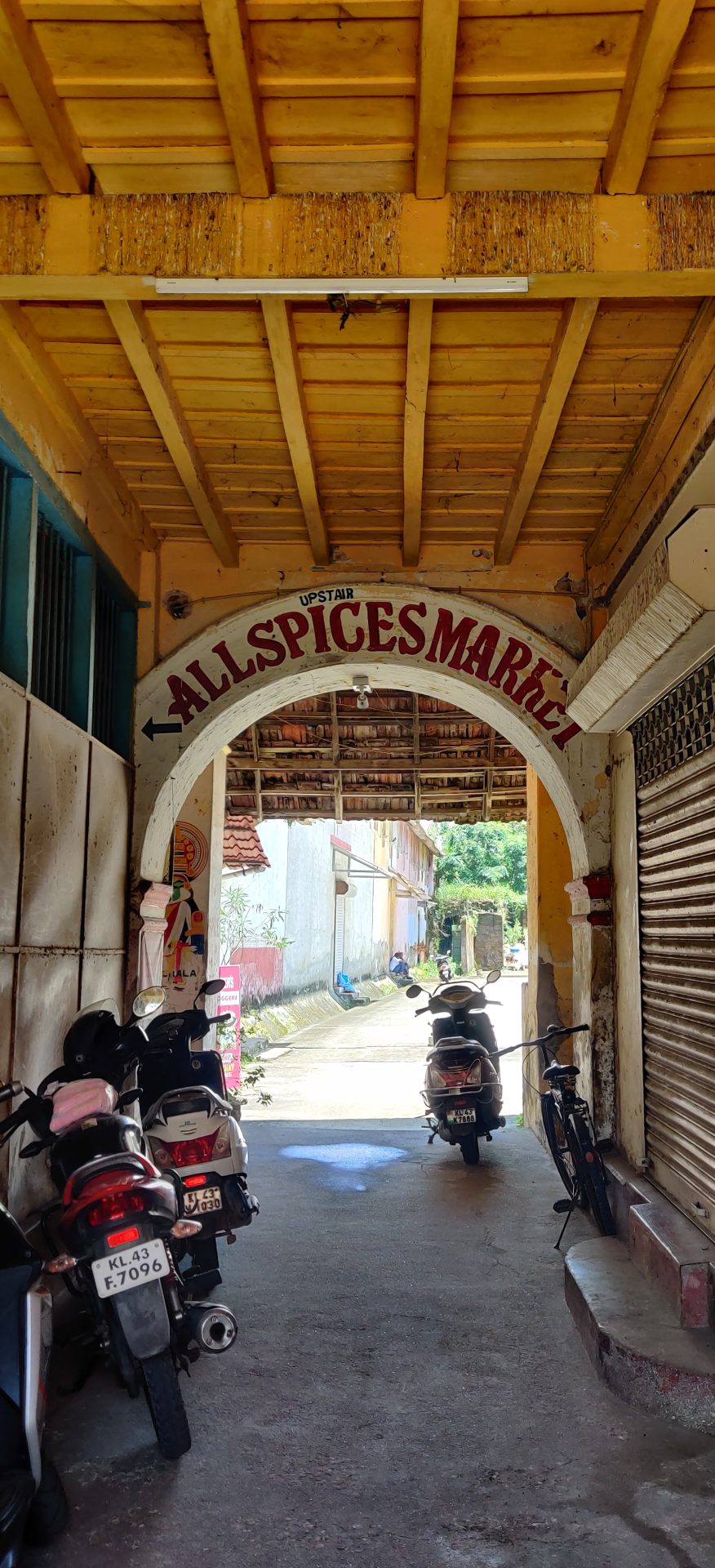
Enroute as we made our way towards the Dutch Palace, the auto driver pulled up at a derelict heritage styled building and asked us to take a quick tour of the All India Spice Mart

The building opened out into a large expanse of courtyard where Ginger was getting sun dried.

 The first floor of the building had a wide variety of spices on display and most of them being sold at reasonable prices. 

We picked up a few of these spice  packets, knowing well that the quality would be good as most of these got exported.

AN ASSORTMENT OF SPICES
GINGER BEING SUN DRIED
LIGHTING UP THE OLFACTORY SENSES

The Mattancherry Palace

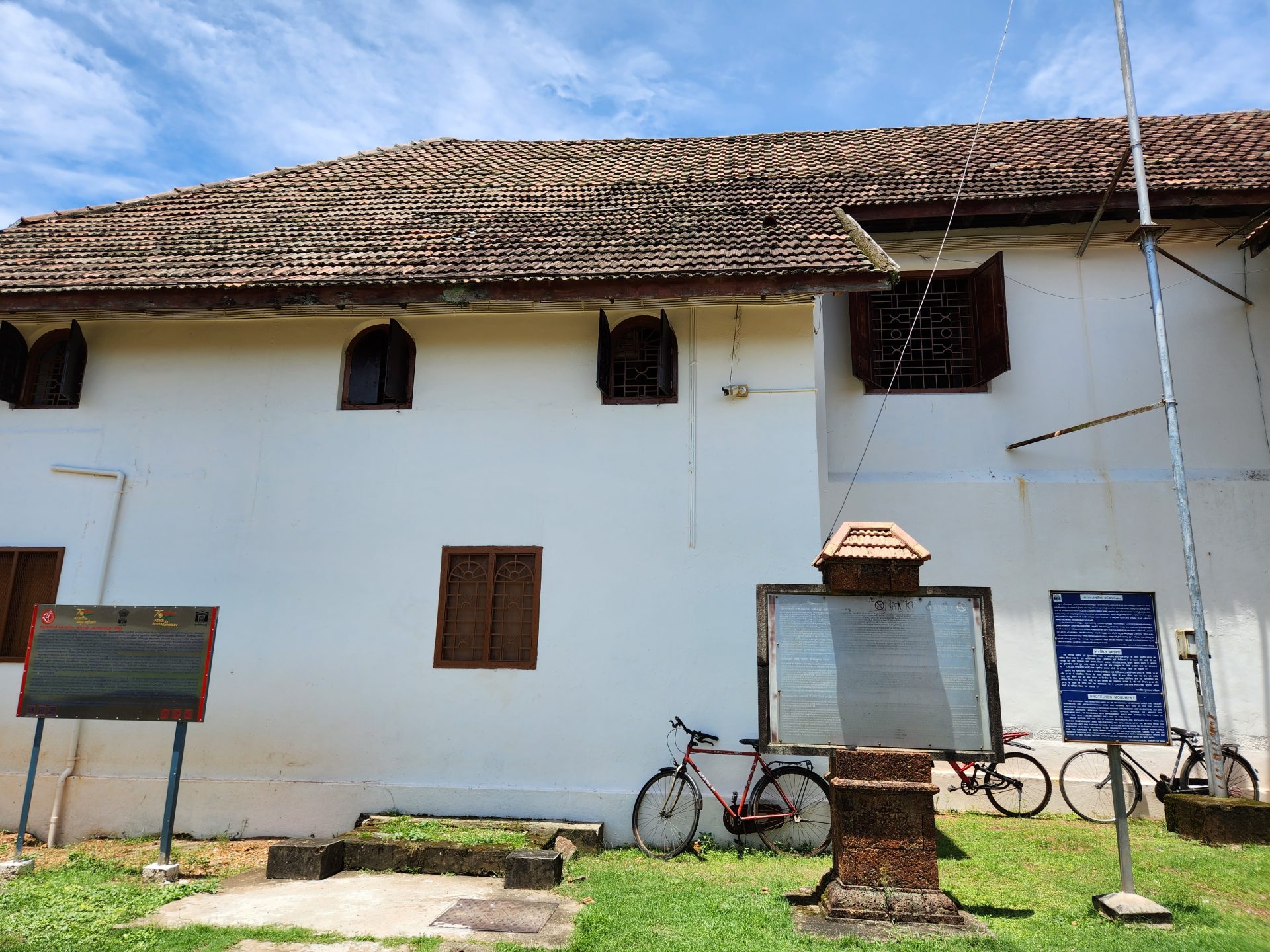
Also known as the Dutch Palace though originally built by the Portuguese, this impressive Palace cum Museum is located in Jew Town which is roughly around 3 kms from Fort Kochi. A very small fee of Rs.2/- is levied per visitor and the palace remains open between 10.00 AM to 17.00 PM on all days except Friday.

A temple existed in the vicinity of the temple which was destroyed by the Portuguese and to appease the then king of Kerala Veera Kerala Varma, the palace came up. 

The Dutch people upon setting Fort in Kochi made lot of changes to the Palace around 1660.

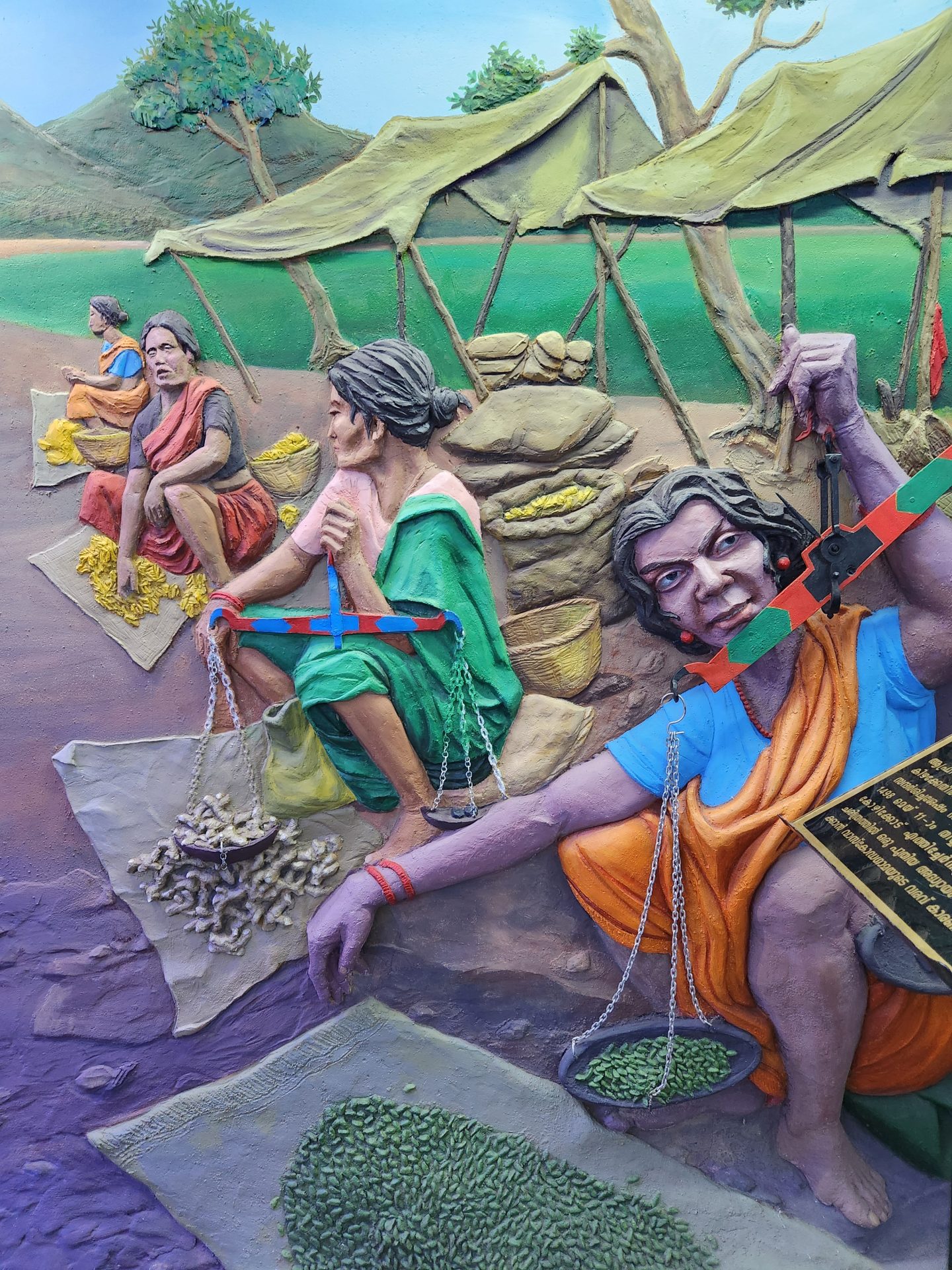
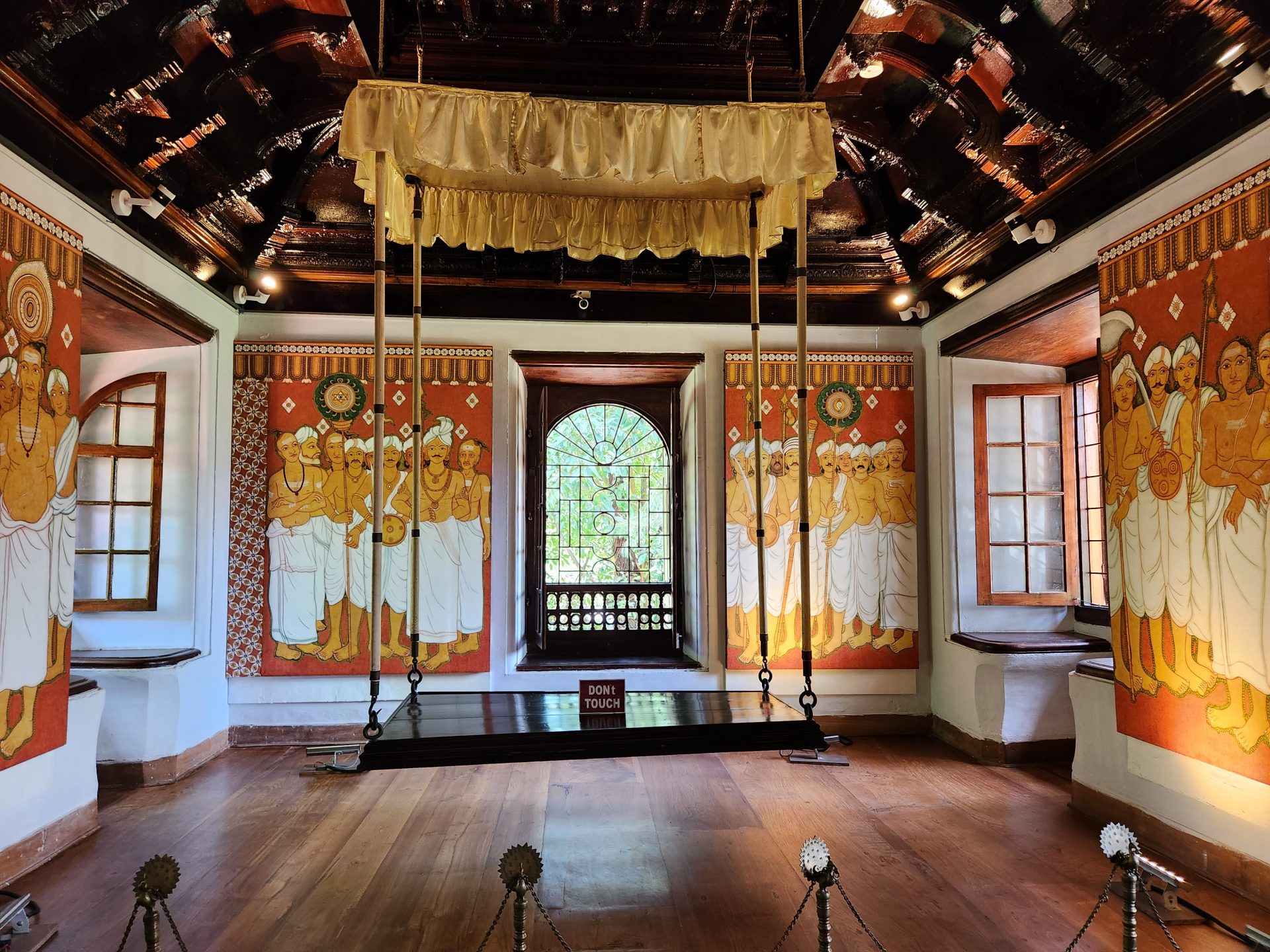
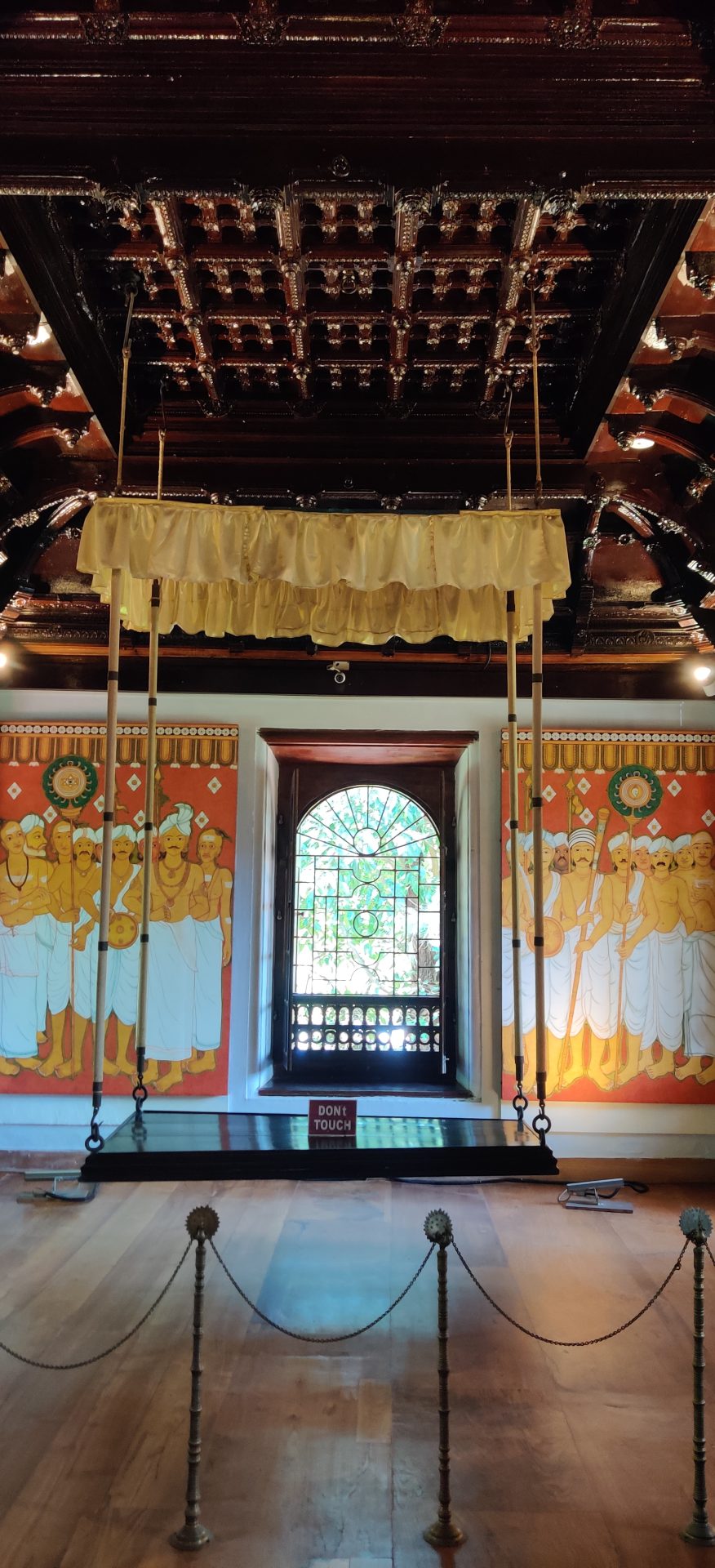
The Palace has a beautiful mix of Kerala, Portuguese and Dutch style architectures. It mainly houses a museum which has over 300 square metres of murals on the walls depicting Indian mythology and epics of the Ramayana and Mahabharata besides folk literature. 

The museum is pretty big and has a ladies room, a Coronation Hall, a dining hall with other rooms and also has a lovely collection of portraits of the Kochi rulers. 

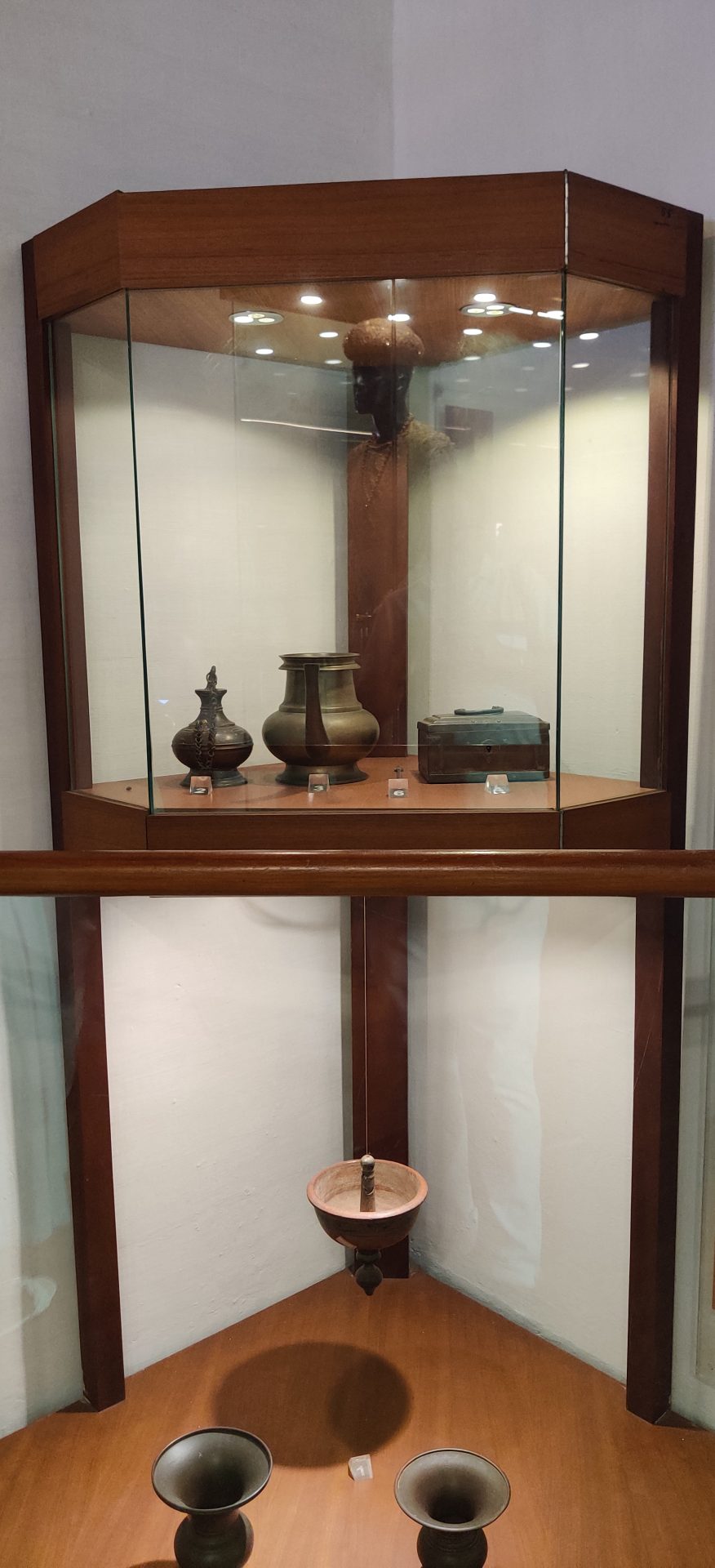
One also gets to see palanquins,  dresses, weapons used during those years, canopies, royal umbrellas, stamps, coins of that era etc. 

The Jewish Prayer House

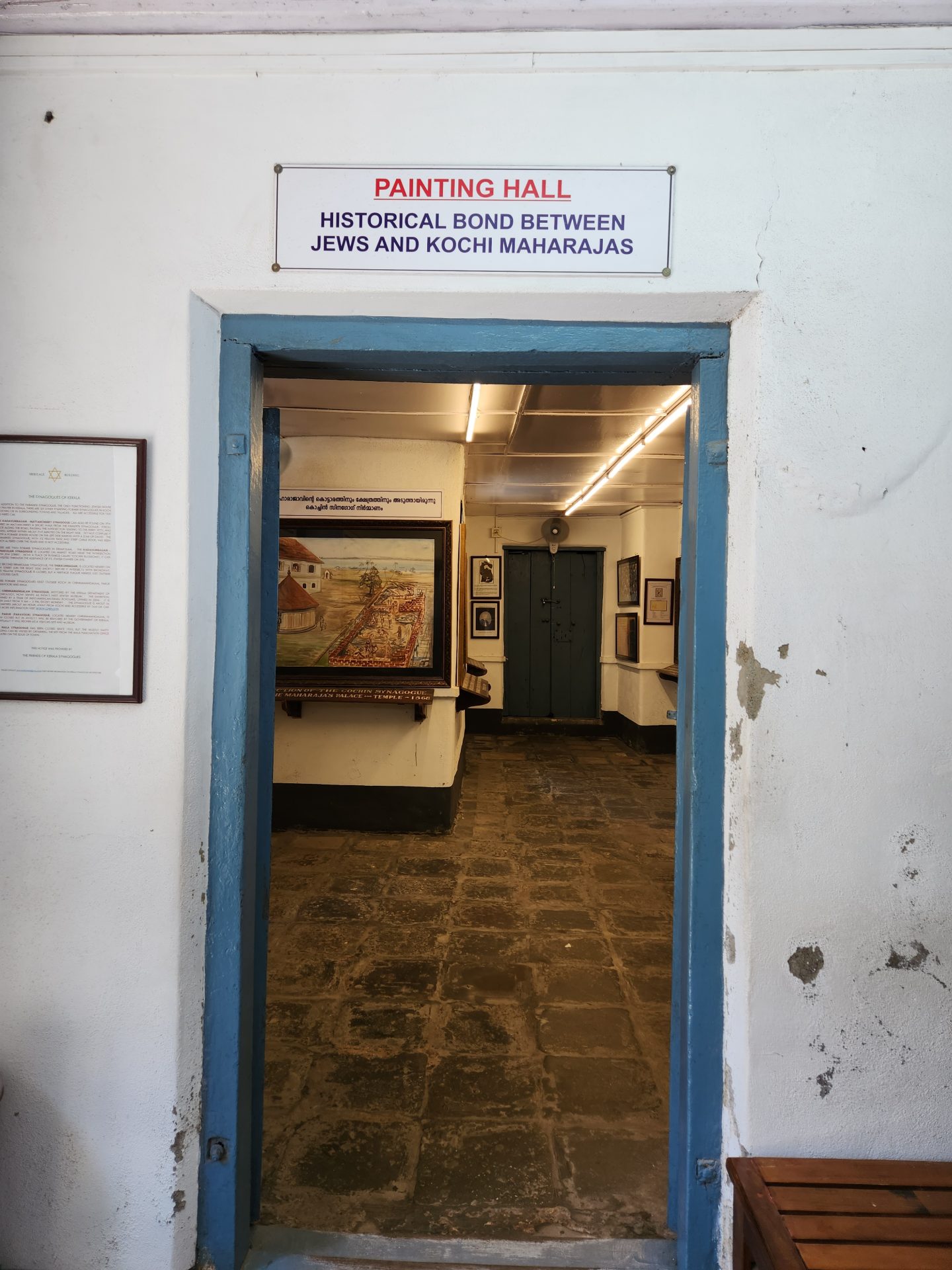
We made our way through the Jew Town market lined up with antique shops on either side to the Pardesi Synagogue which is the Prayer House for the Jews. The Indian Jews settled here are also known as Malabari Jews and since they came in from abroad, they got tagged as Pardesis by the locals.  One among the 7 synagogues on this area which is still in use, the building shares a common wall with the Mattancherry Palace.

Built on a piece of land gifted by the King of Kochi Raja Varma to the Jew Community, this 100 year old structure is believed to the oldest prayer house not only in Kerala and India but also in the British Commonwealth. 

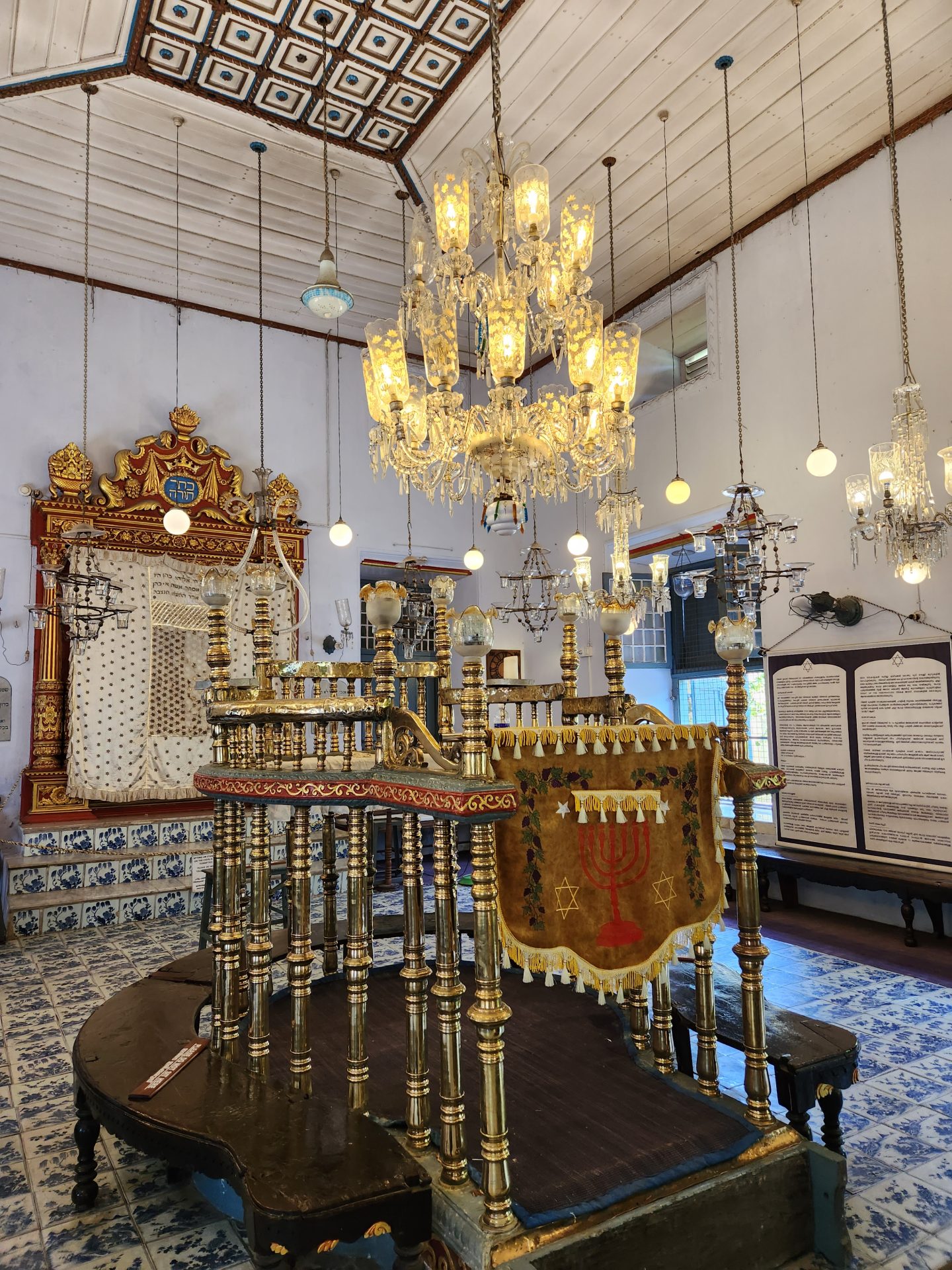
A lavish collection of crystal chandeliers imported from Belgium and  hanging from the high ceiling greets visitors as they enter the prayer hall while the floor is adorned with beautiful hand painted blue willow patterned tiles, said to have been brought from Canton in China by a Jewish business man during the 18th century. 

While the centre of the hall has a pulpit with brass rails on all sides, there are a lot of antique items available for display and is a big crowd puller amongst tourists. 

The synagogue was first constructed in 1568 and then destroyed by the Dutch in 1662 and rebuilt a couple of years later. 

This prayer house opens at 10.00 AM and post noon, there is a break of 3 hours after which it is opened for another 2 hours. 

The  synagogue remains closed on Fridays and Saturdays and all Jewish holidays.

The Markets of Jew Town

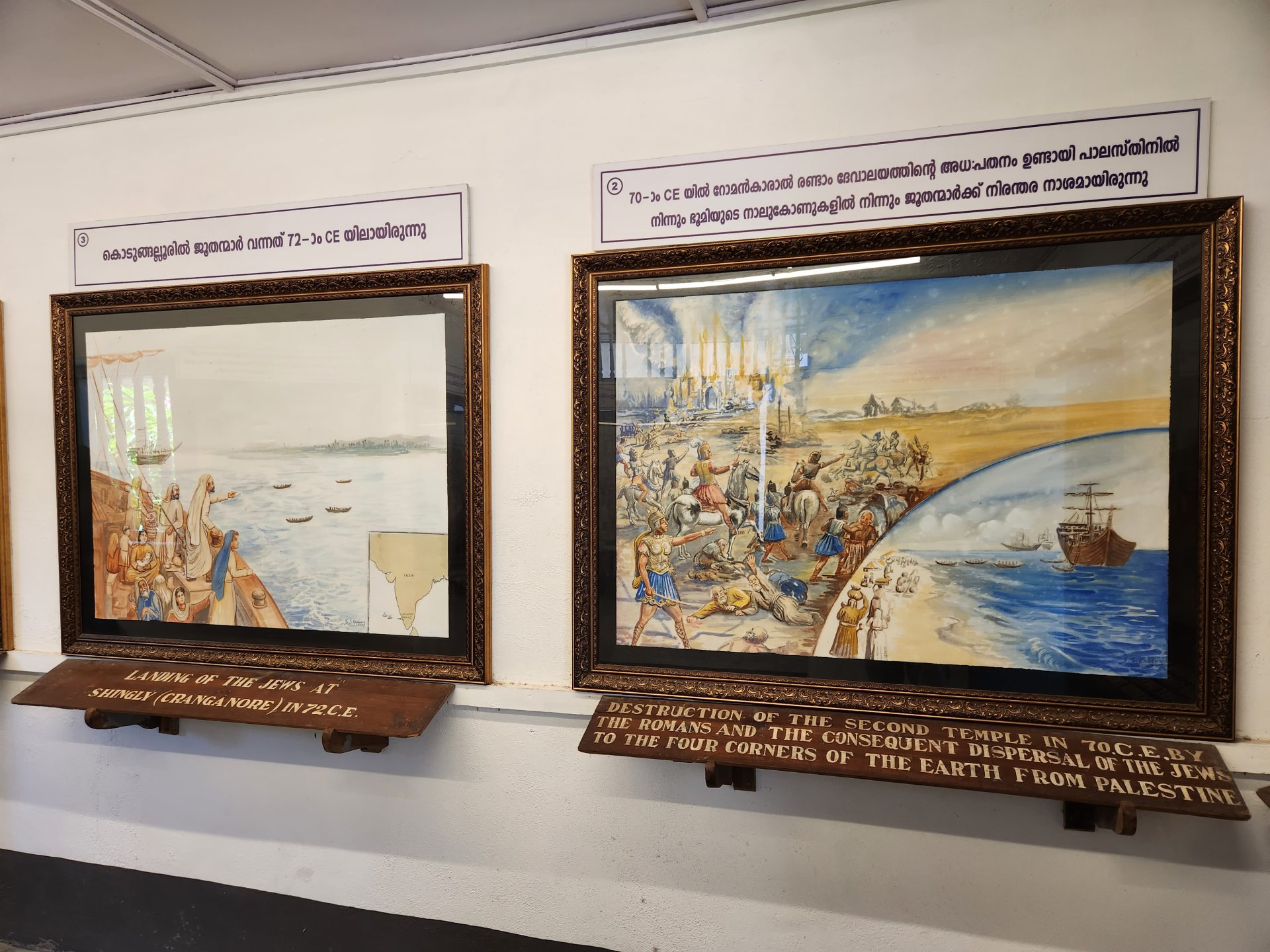
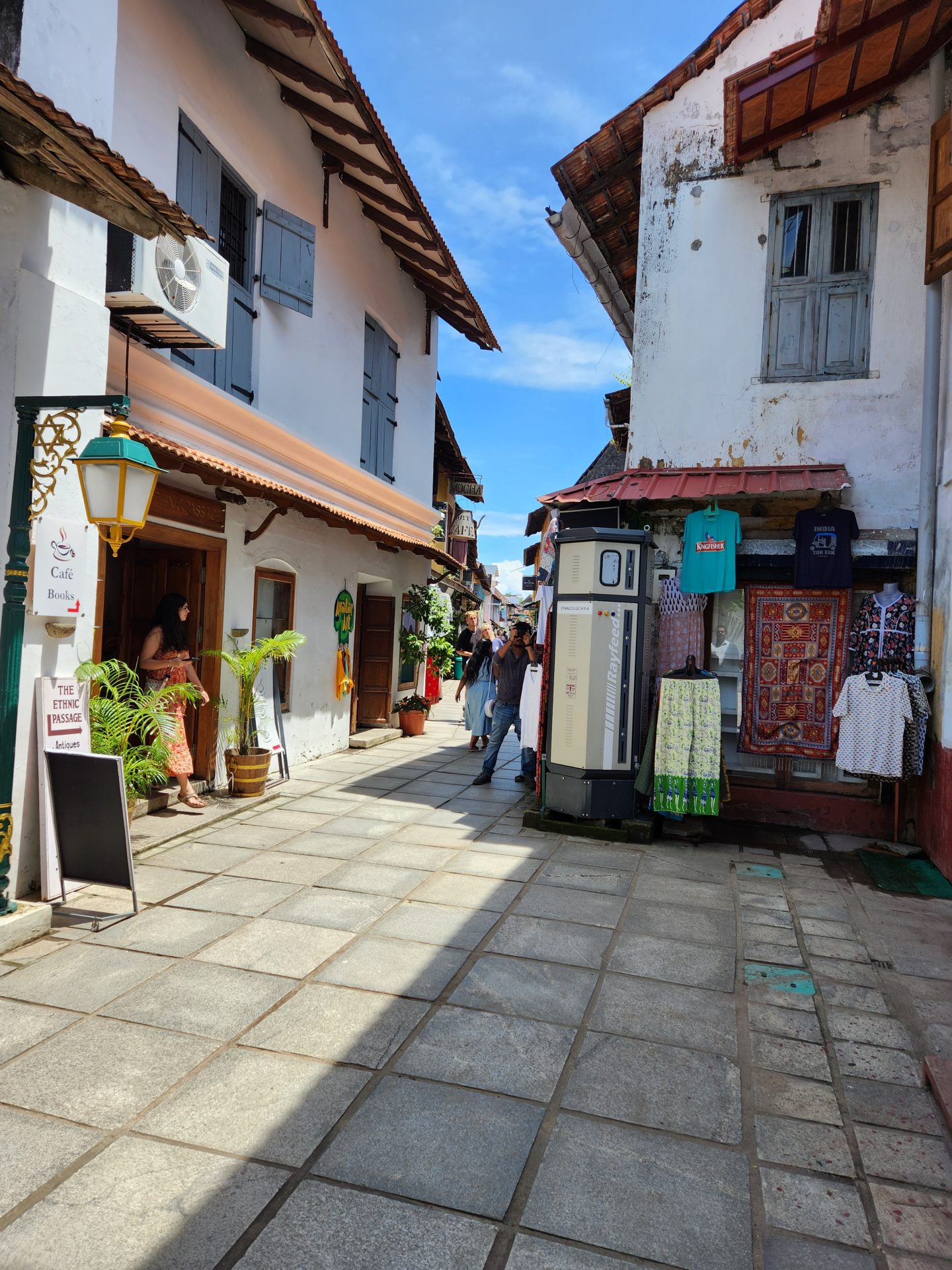
Once we made our way out of the Synagogue, the next 45 minutes or so were sent going through Fort Kochi’s most artistic and colourful street in Jew Town. Either side of Jew Street belongs to descendants of the Jewish community who have settled here in Fort Kochi right from 52 AD.

Most of the shops sell antique pieces of crockery, bronze and brass sculptures, carved wooden furniture, jewellery, curios and spices etc and give the entire area an old world feel. Shopping done to our heart’s content, we finally made our way back to our Hotel and reached by around 3 PM. 

The day’s trip including all the sightseeing and stoppages (waiting Saare in the local parlance of the Auto folks) costed us Rs.800/-.

A quick lunch at Café Hans

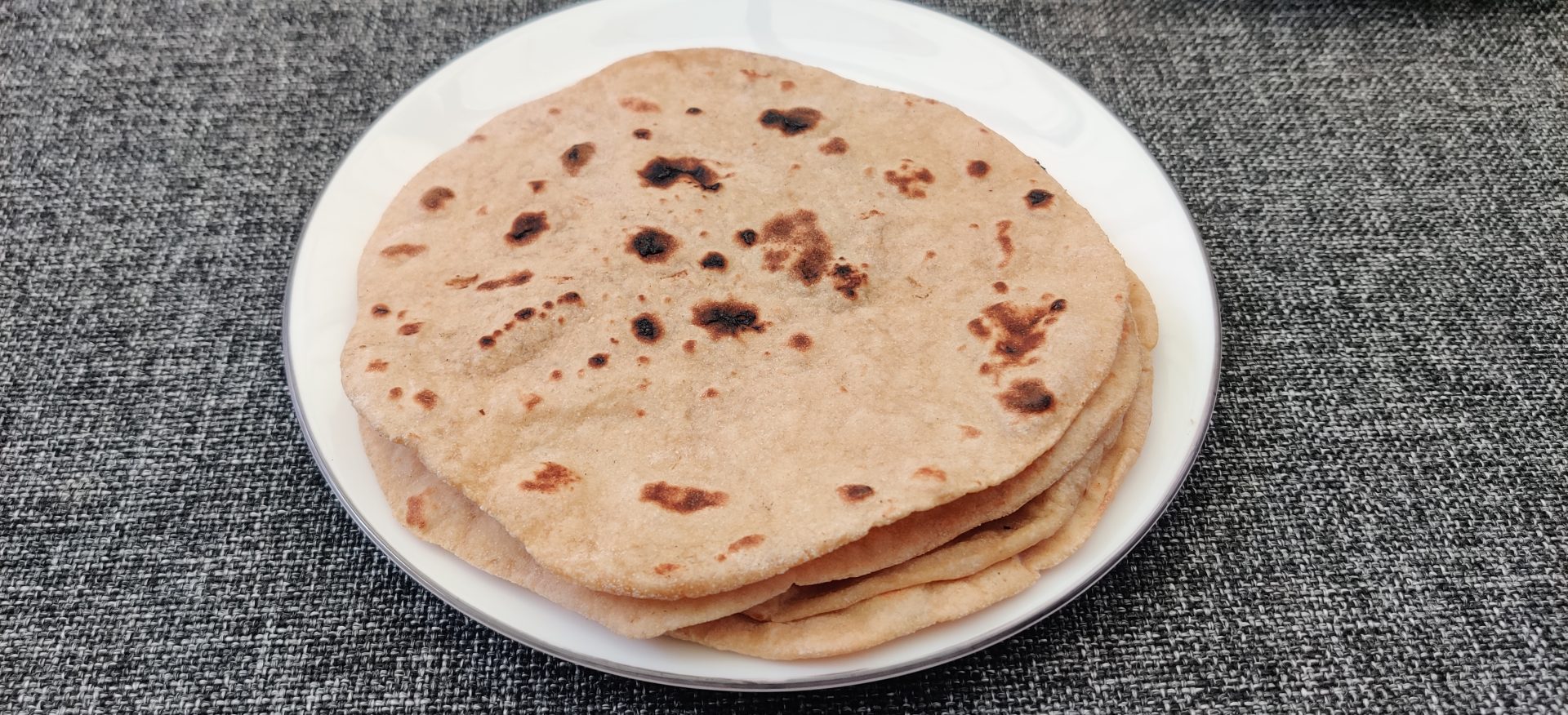
Though it was past 3 PM, Neetu was most obliging in quickly whipping up a meal of piping hot rotis (breads) with dal (lentils) and an assorted vegetable dish. 

While she was cooking our food, made a request to her to make some food for our evening train journey also since we were not sure on what kind of food would be available during the journey. After settling her bills, we left the packed food at our hotel and started off for a couple of sights which we were yet to see. 

THE DAINTILY PAINTED CAFE

The Saint Francis Church

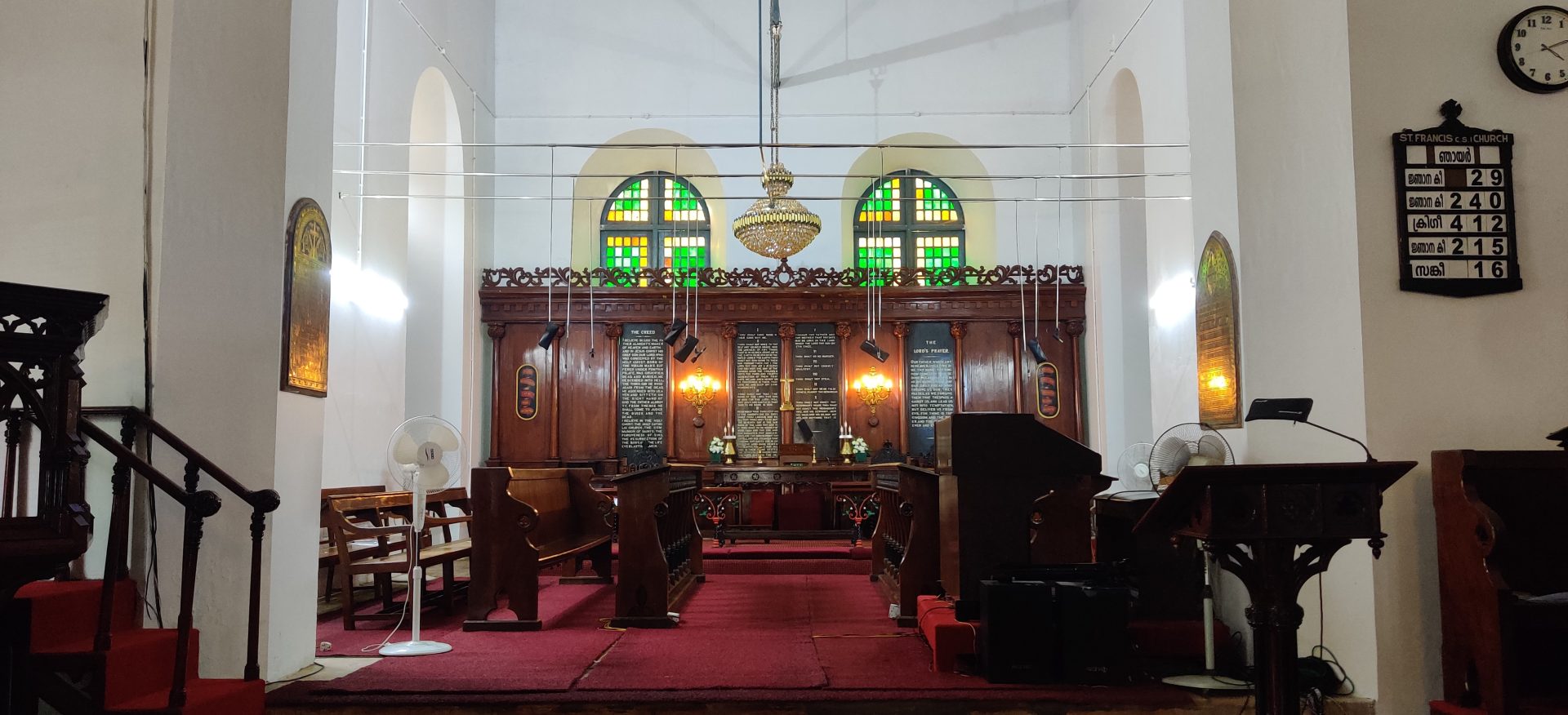
The Saint Francis Church was at a walking distance from our hotel and has a very rich history dating back to 1503 when the Portuguese constructed it. Vasco da Gama was said to have been buried in this church in 1524 during his third visit to India.

14 years later, his remains were carried back to Portugal but his place of burial can still be seen in this church. Subsequent invasions made the church change hands from the Portuguese to the Dutch and then onto the English.The Church of South India (CSI) finally took control of it from 1945 onwards.

There is a street named after Vasco da Gama right next to the church.

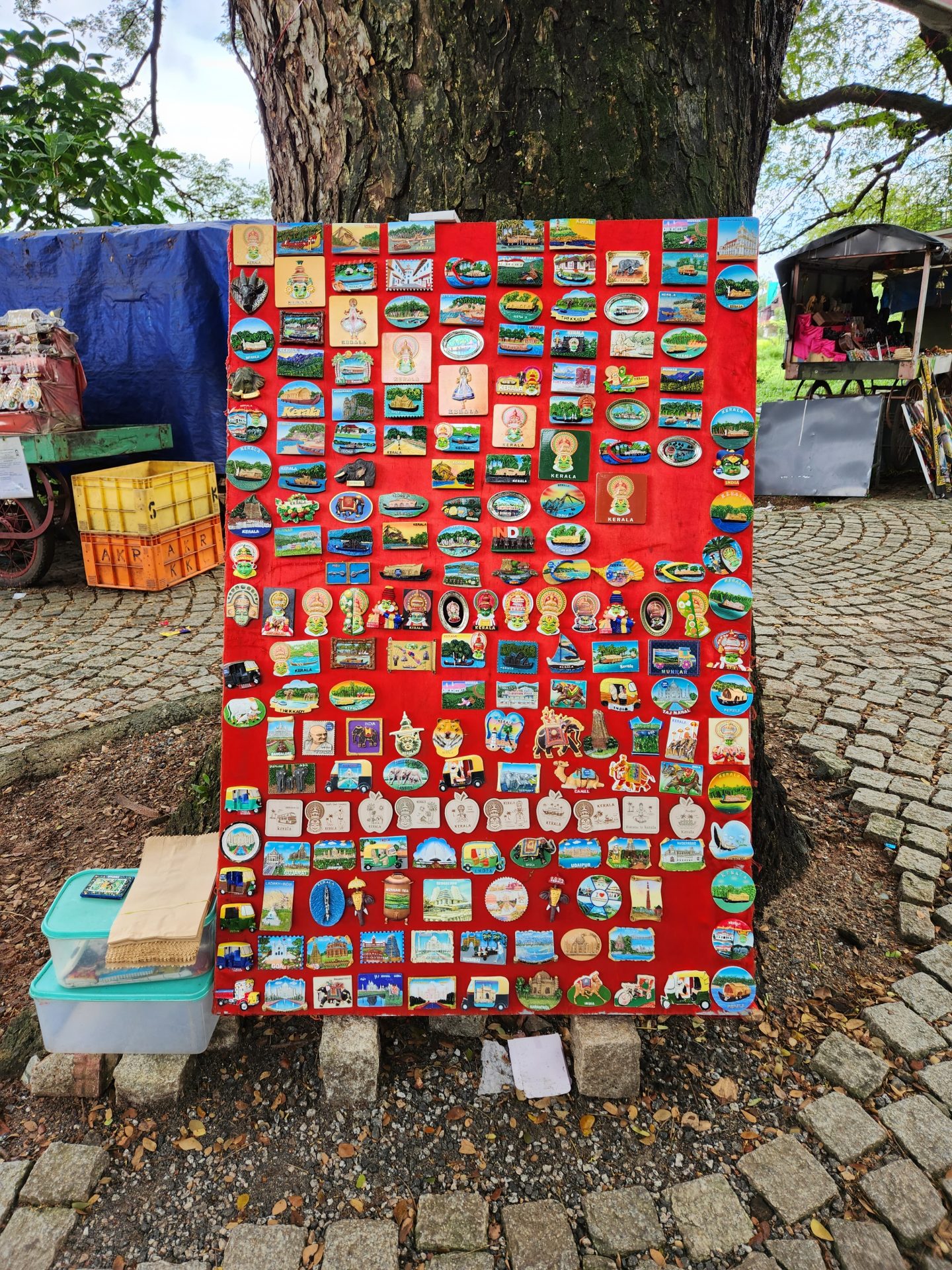
A wide assortment of magnets of all shapes, sizes and representative of  different cities is available at a street shop right outside the church. There are also a few temporary stalls adjoining the church where artefacts, curios and Rajasthani Puppets are sold. 

The Bastian Bungalow

The Bastian Bungalow was located right behind the beach promenade. Built by the Dutch in 1667, this was used by the British as a residential building and currently functions as a Museum.

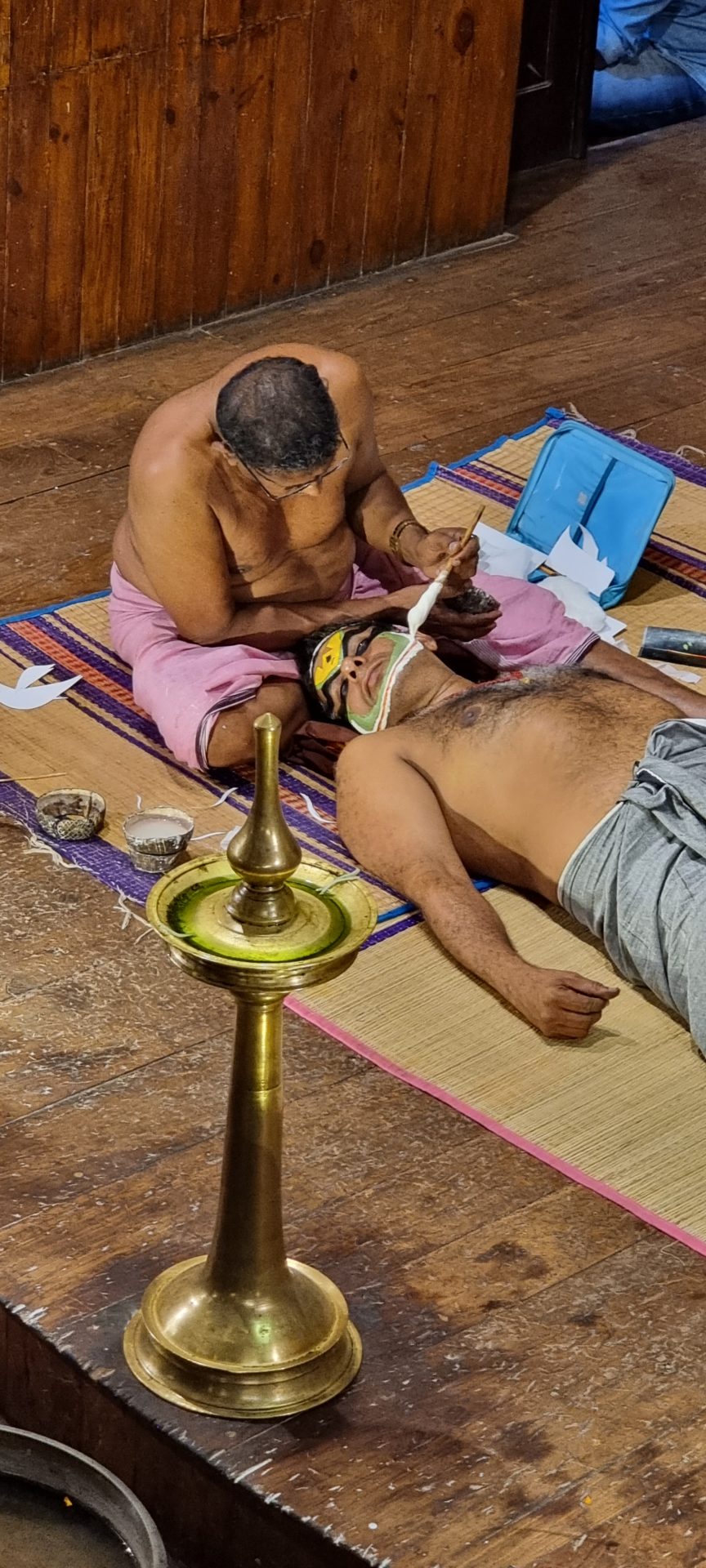
We had to give the Kathakali Dance and the Kalaripayattu (Martial Arts) Shows a miss coz of paucity of time. The above photos are borrowed from my friend who was in Fort Kochi in January this year.

On the way back to our hotel we stopped by at The Cultural Coconut Cafe to have some Pazham Pori (sweet banana fritters) and tea and reached our hotel by around 5.30 PM. We hired a Uber to reach Ernakulam station, well in time for our 7 PM train back t0o Chennai.

A short combined weekend break of Trivandrum and Fort Kochi, so beautifully spent, exploring places of history, ancient temples, museums, beaches and getting to see so much of verdant greenery dotting the  backwaters and more all ended so soon. Kerala not being very far off from Chennai, we ended up with a resolve that we should do this trip once again. Yeh Dil after all  mange more!!

And If you want to catch more details of our journey, read more about the history and immerse yourself in some lovely photographs, do drop in to FORT KOCHI.

Share the Post:

Related Posts

You cannot copy content of this page

Discover more from

Subscribe now to keep reading and get access to the full archive.

Continue reading

wpDiscuz
1
0
Would love your thoughts, please comment.x
()
x
Exit mobile version
%%footer%%