It had been a little close to 10 years since our 25th college reunion and save for the occasional official trips made by folks across the country where we got to see each other a bit, there emerged a cohesive cry to get a meet / get-together organized around a year back.
After floating choices of cities traversing the length and breadth of the country, we zeroed down on Udaipur for our Mini Re-union in December 2022. Dates were cast in stone and rooms booked at a lovely resort The Royal Retreat, with over 100 very well done rooms.
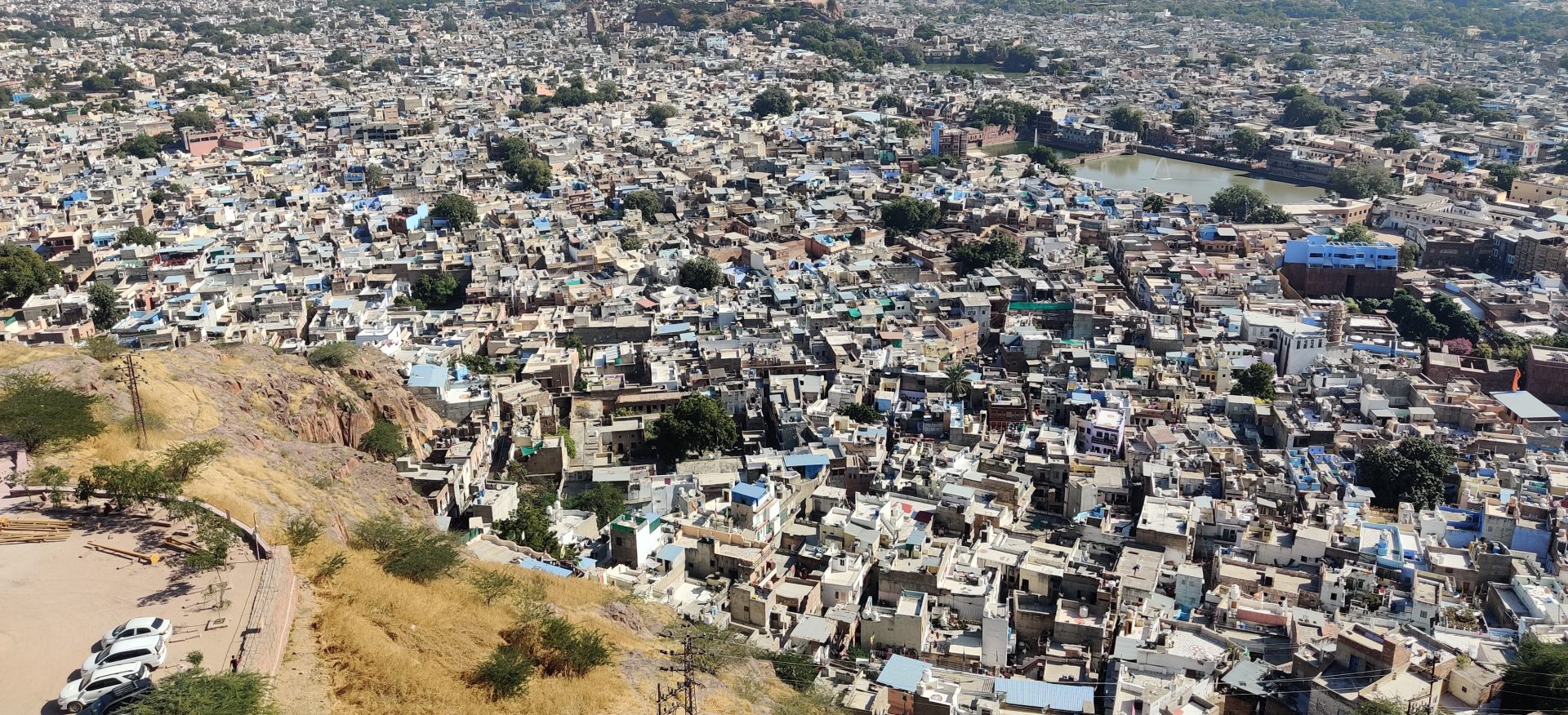
JODHPUR AS SEEN AERIALLY
The very fact that there were no direct flights to Udaipur from Chennai made me think of a way out in reaching somewhere closer to Udaipur where I could get a direct connectivity and also reach a destination, hitherto unexplored.
My friend and college mate suggested adding Ranakpur and Kumbalgarh to my itinerary, a day before we were to congregate for our reunion and I had decided to do Chittorgarh on the day of our checkout as I had a late evening flight to catch back to Chennai.
As luck would have it, found a direct flight from Chennai to Jodhpur and wove my plan to add a couple of days extra in going around a few places in and around Udaipur apart from Jodhpur.
By providence, on the day of my departure, my flight to Jodhpur got preponed by roughly 2 hours which gave me the added time to explore the city in more detail.
Landed on the 15th of December at the Defence Airport of Jodhpur.
Fearing that the weather would be nippy given the proximity of Jodhpur to the desert I was carrying my set of winter clothes but pretty hot weather greeted me when I stepped out of the Airport at 10.15 AM.
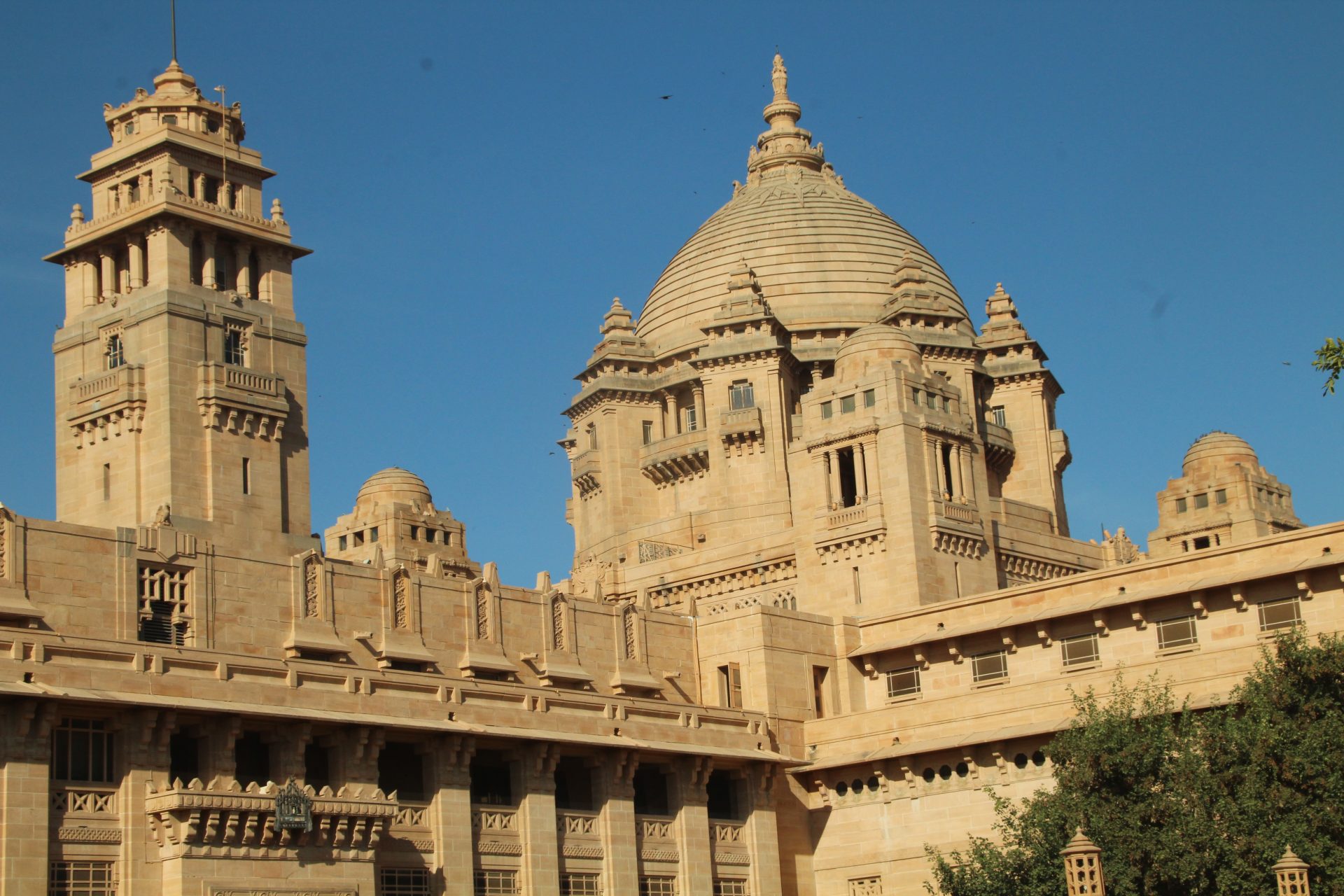
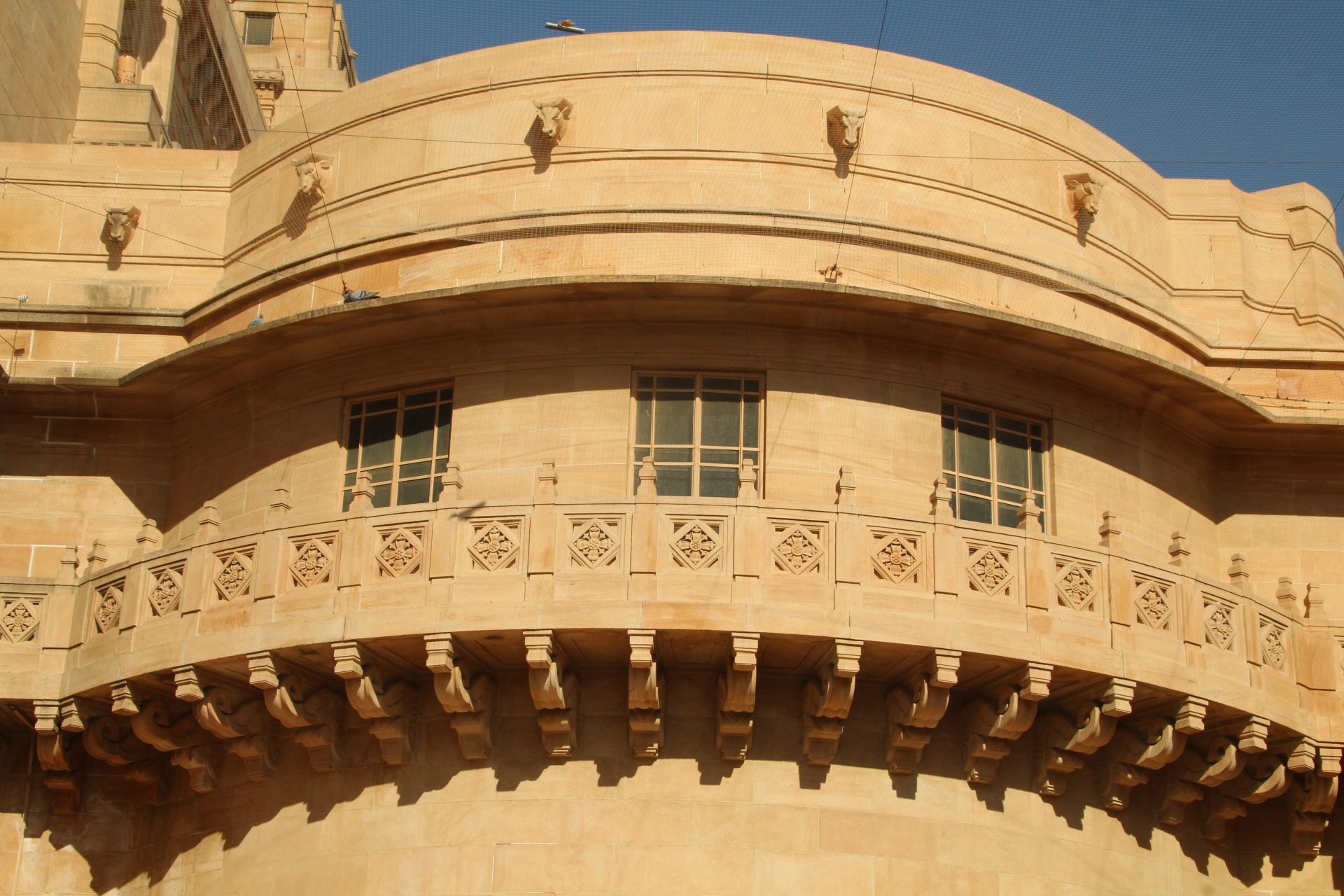
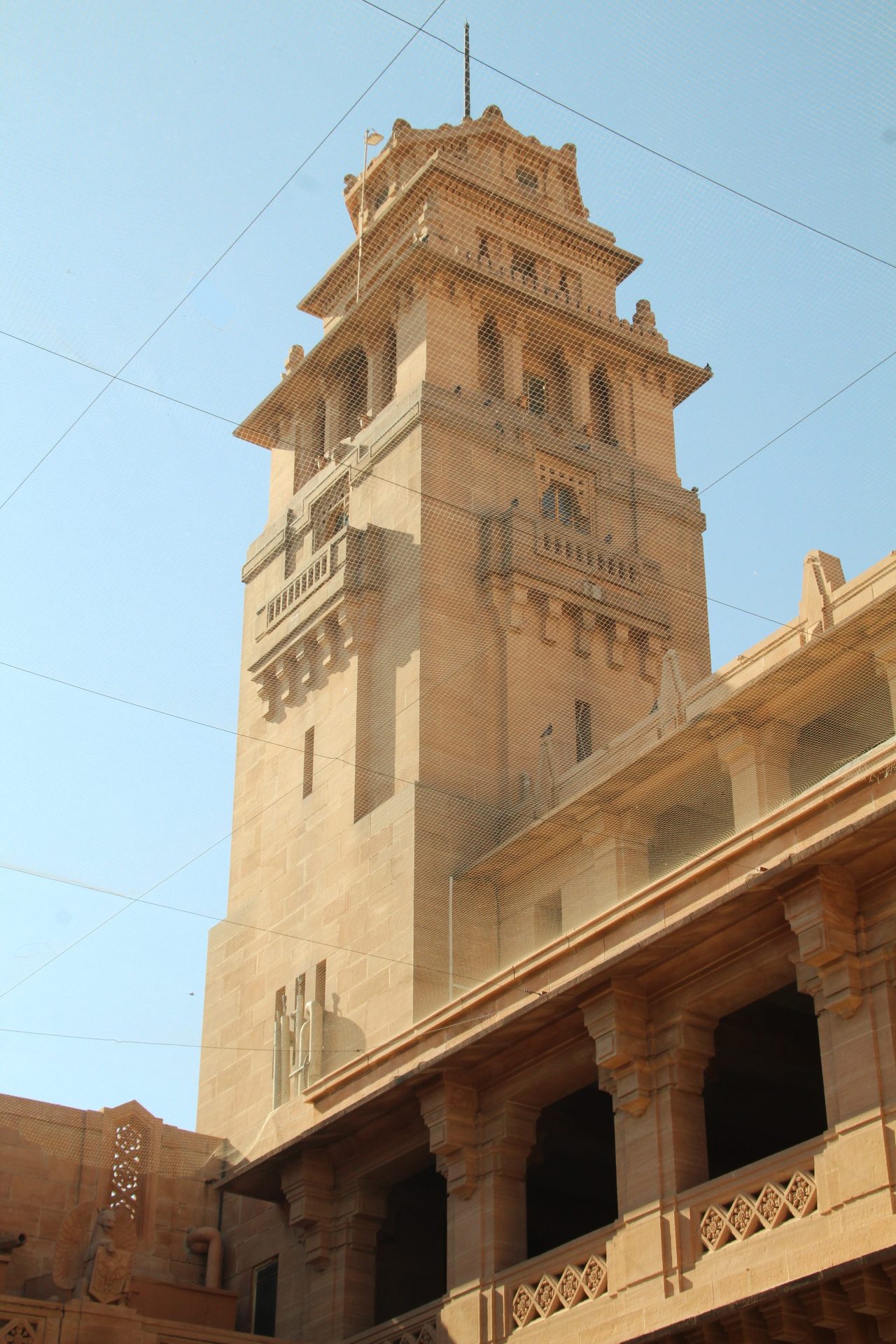
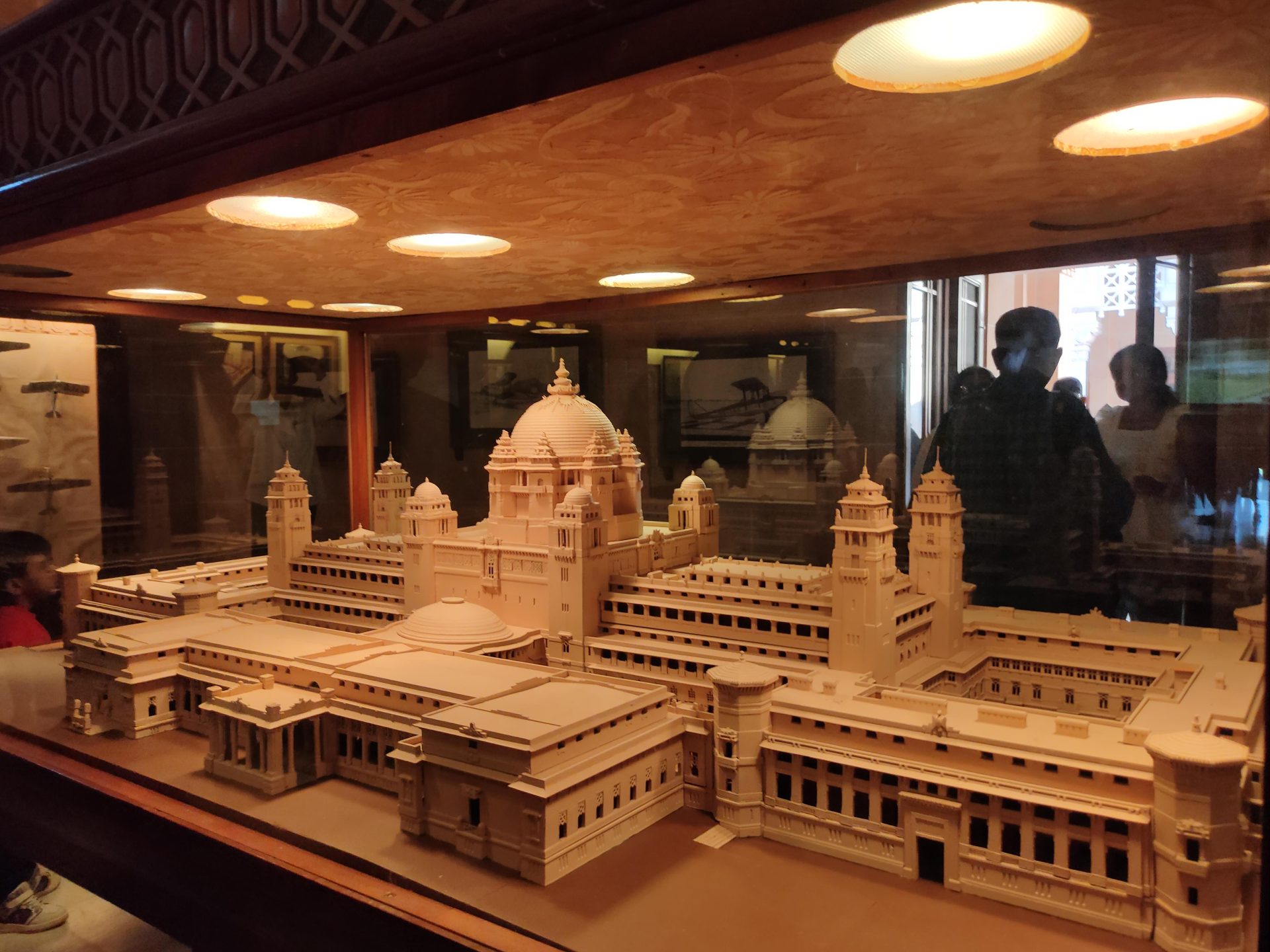
Had my cab booked for the day through Jodhpur Taxi Service who gave me a very reasonable deal for a Sedan for Rs.2,000/- for a pick up from the airport, sightseeing based on the itinerary I had laid out and for a drop back at the bus station from where I was to make my way to Udaipur. In case you want to avail their services, speak to Pappu Singh at +91 9784840053 or the driver Kanwaraj at +91 78518 18881. The cab arrived sharp at the duly appointed time and we drove ontoUmaid Bhawan Palace, located atop the Chittar Hill. Located within a distance of 3 kms from the Airport, this is believed to be one of the largest private residences in the world with around 347 rooms.
THE MAGNIFICENT STRUCTURE OF UMAID BHAWAN
Spread over a sprawling area of 26 acres of which 15 acres comprise of lush greengardens, the entry to the museum in the Palace costs Rs.60/- per head including the camera.
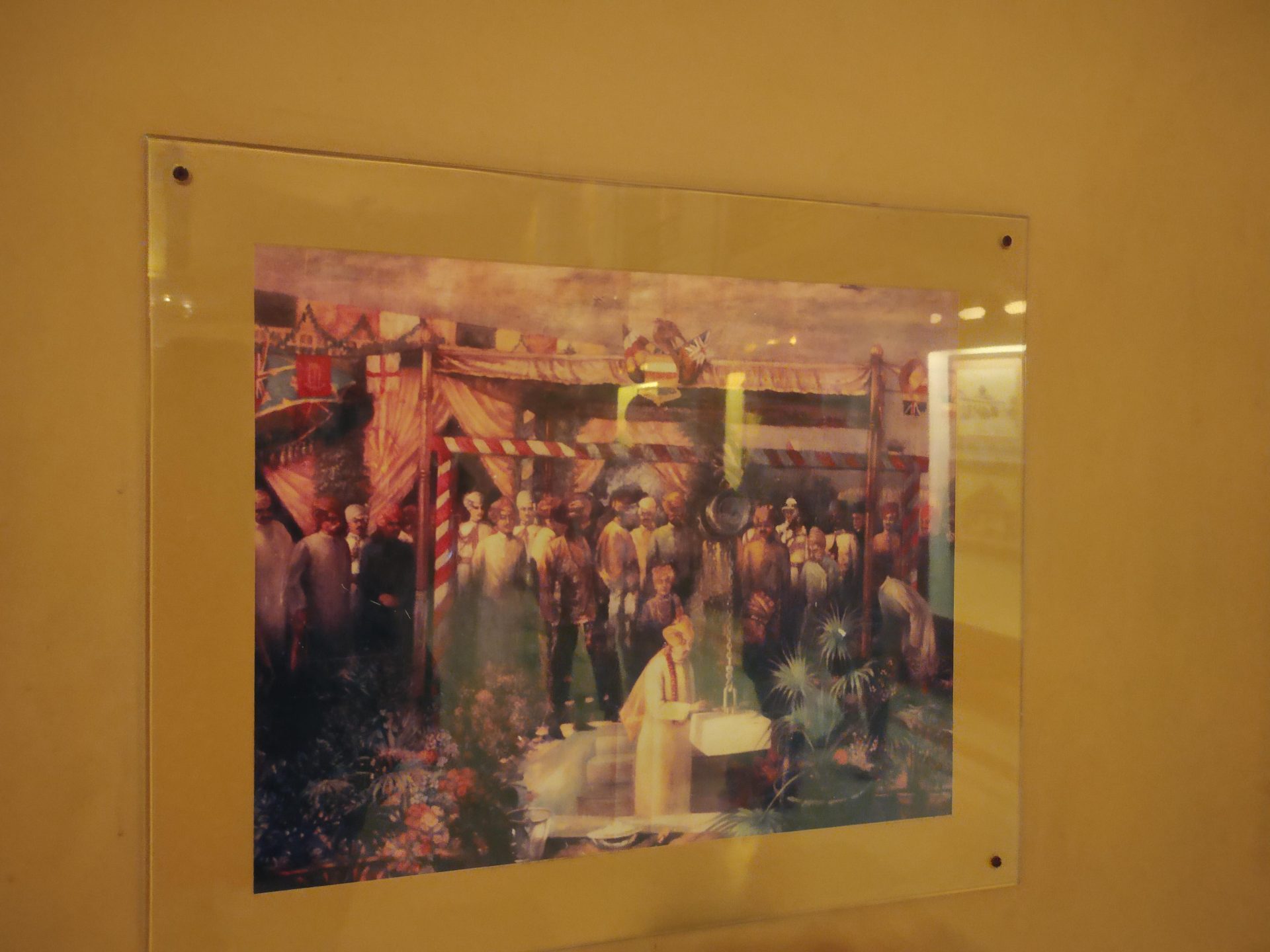
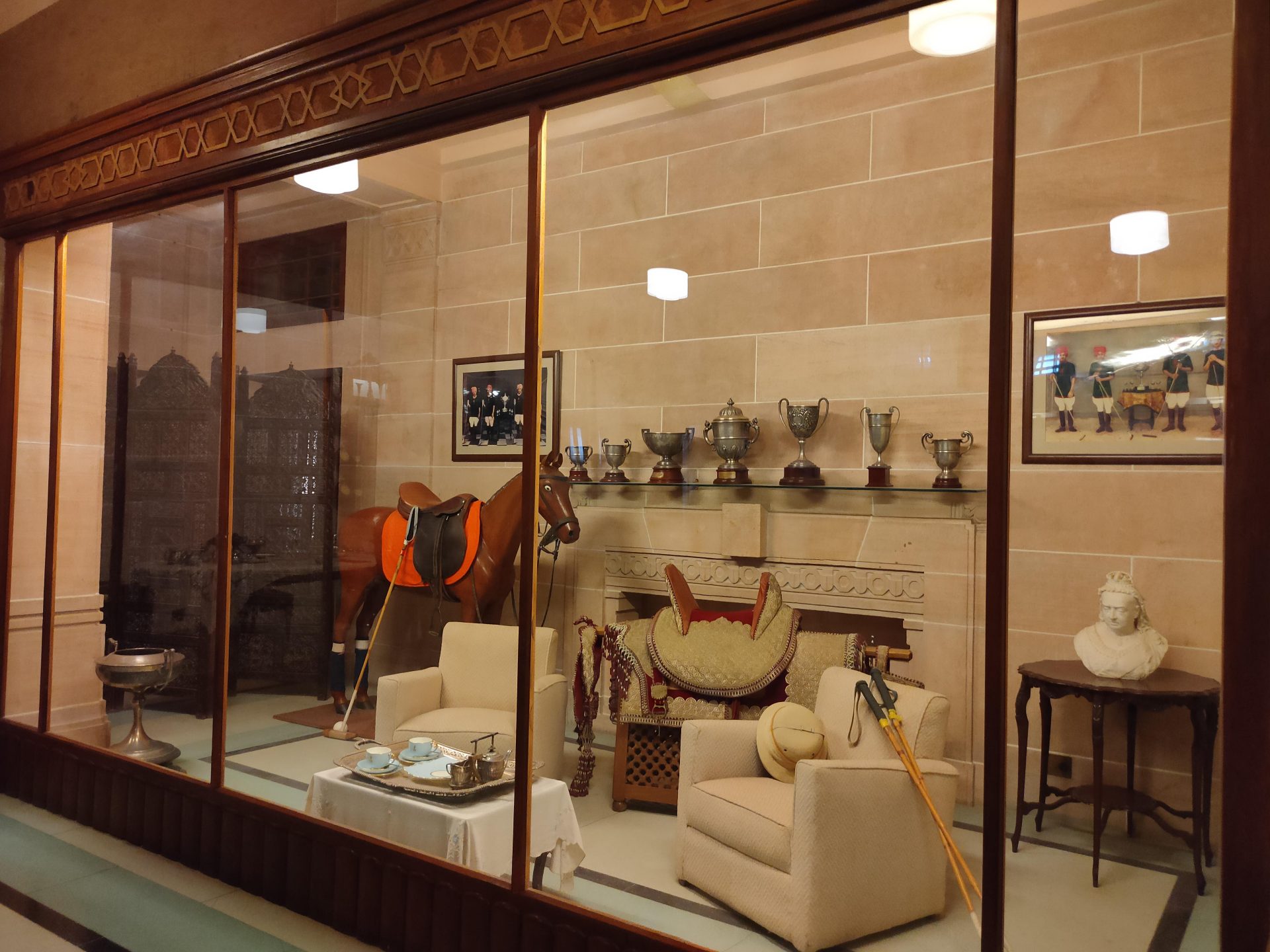
While a portion of the Palace built by Maharaja Umaid Singh is open for public viewing with a museum detailing the 20th century history of the Jodhpur Royal family, the Taj group run a well appointed Art deco styled 70 room hotel at the rear end of the palace while a third portion is used by his grandson Gaj Singh.
Built out of golden sandstone over a period of 14 years between 1929 to 1943, this palace was built to help provide employment to the farmers who were affected by famine, said to have been caused by a statement made by a saint that the good rule of the Rathore dynasty would be followed by a drought.
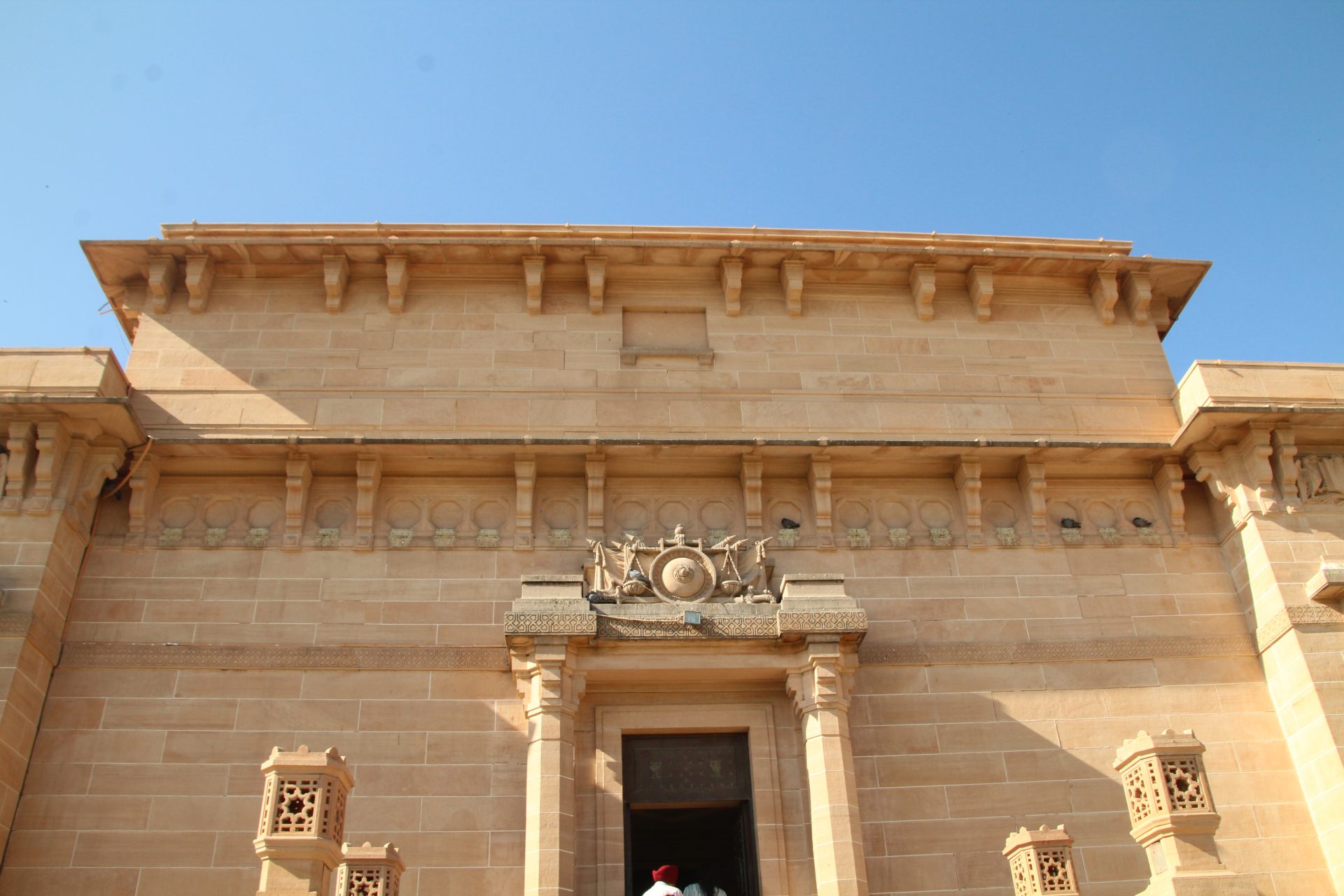
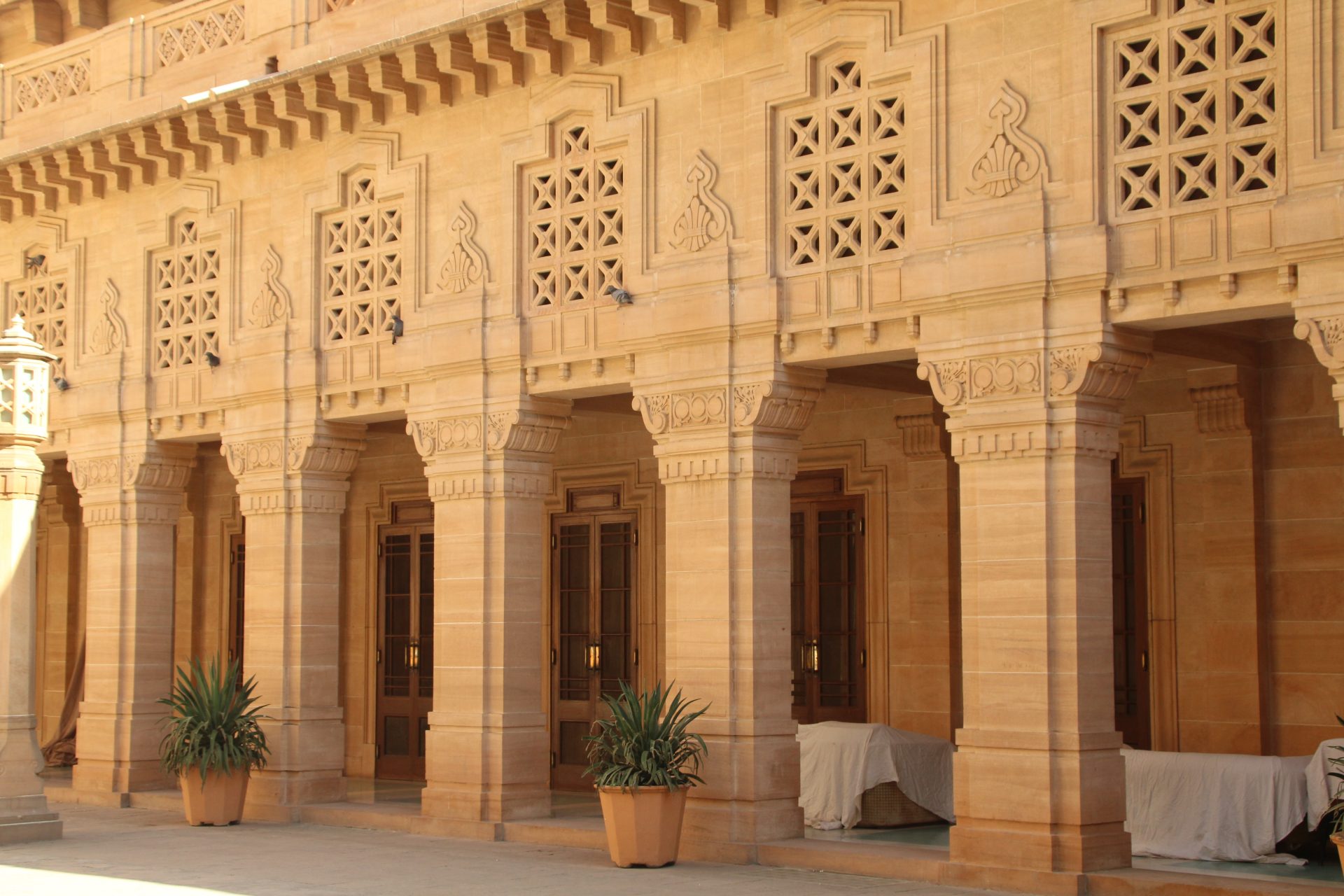
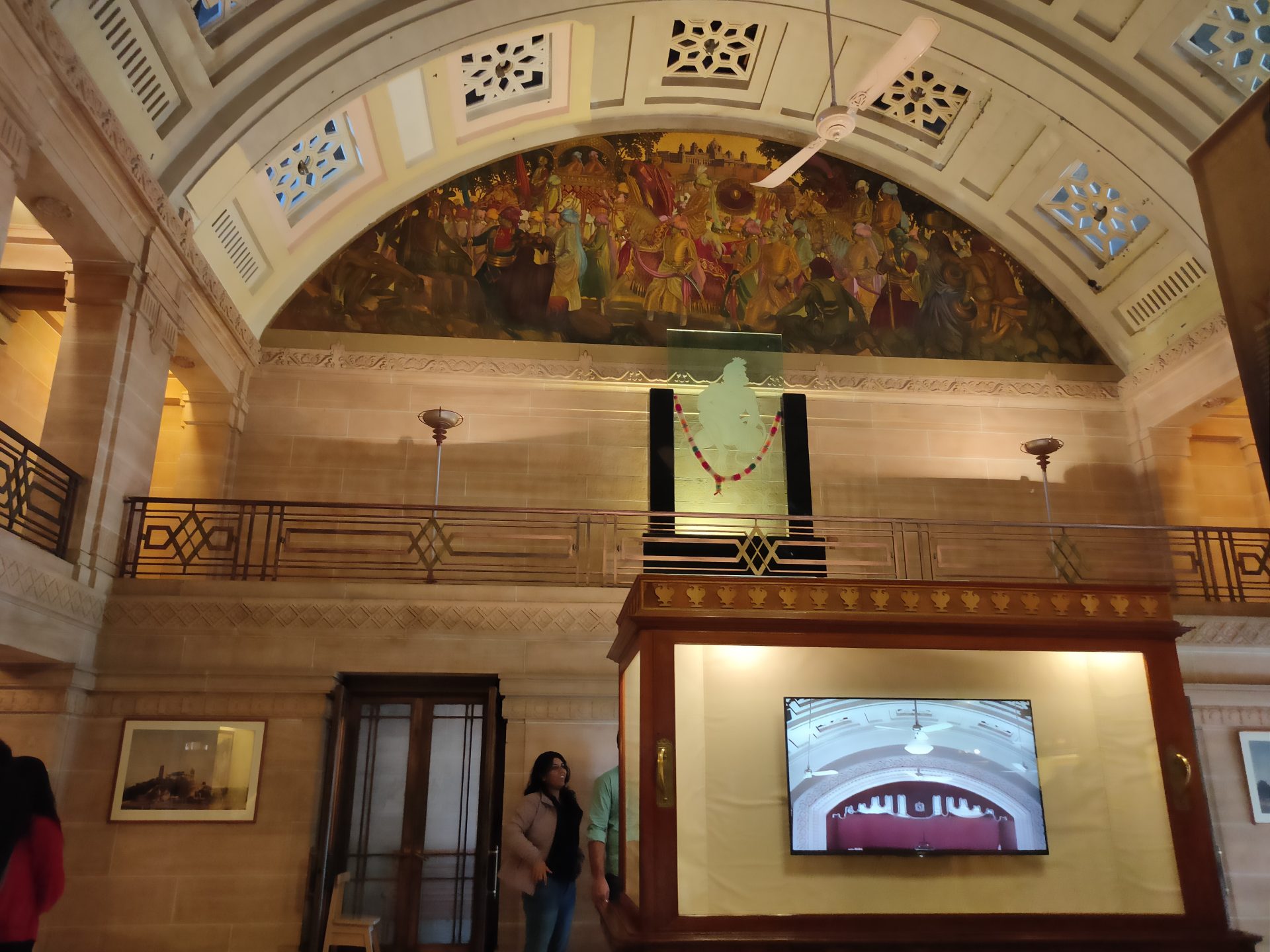
The front façade of the Palace looks very impressive and is a perfect melange of Rajput and Indo Sarcenic architecture and so does the 31 metre high dome shaped hall it opens out into.
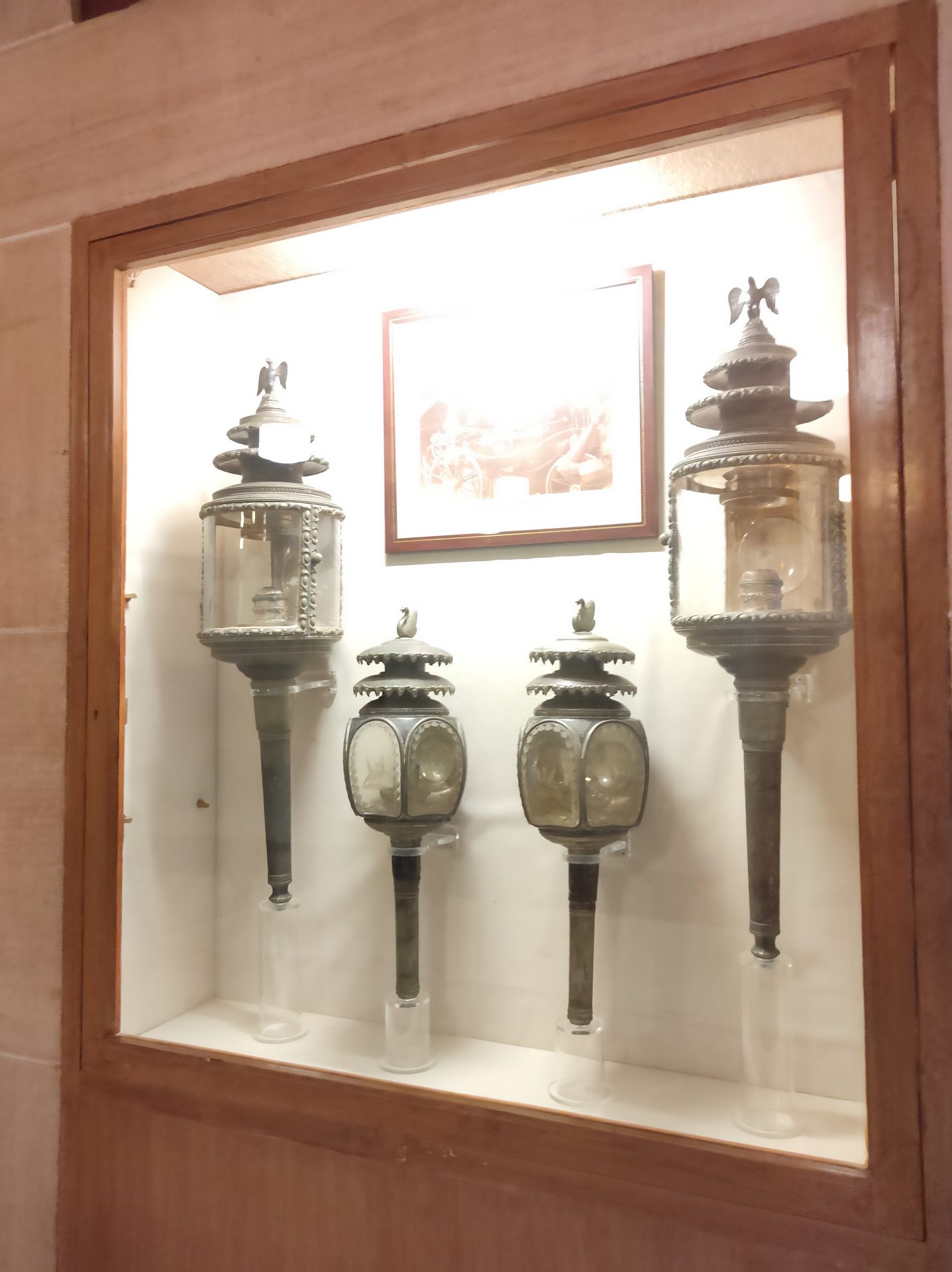
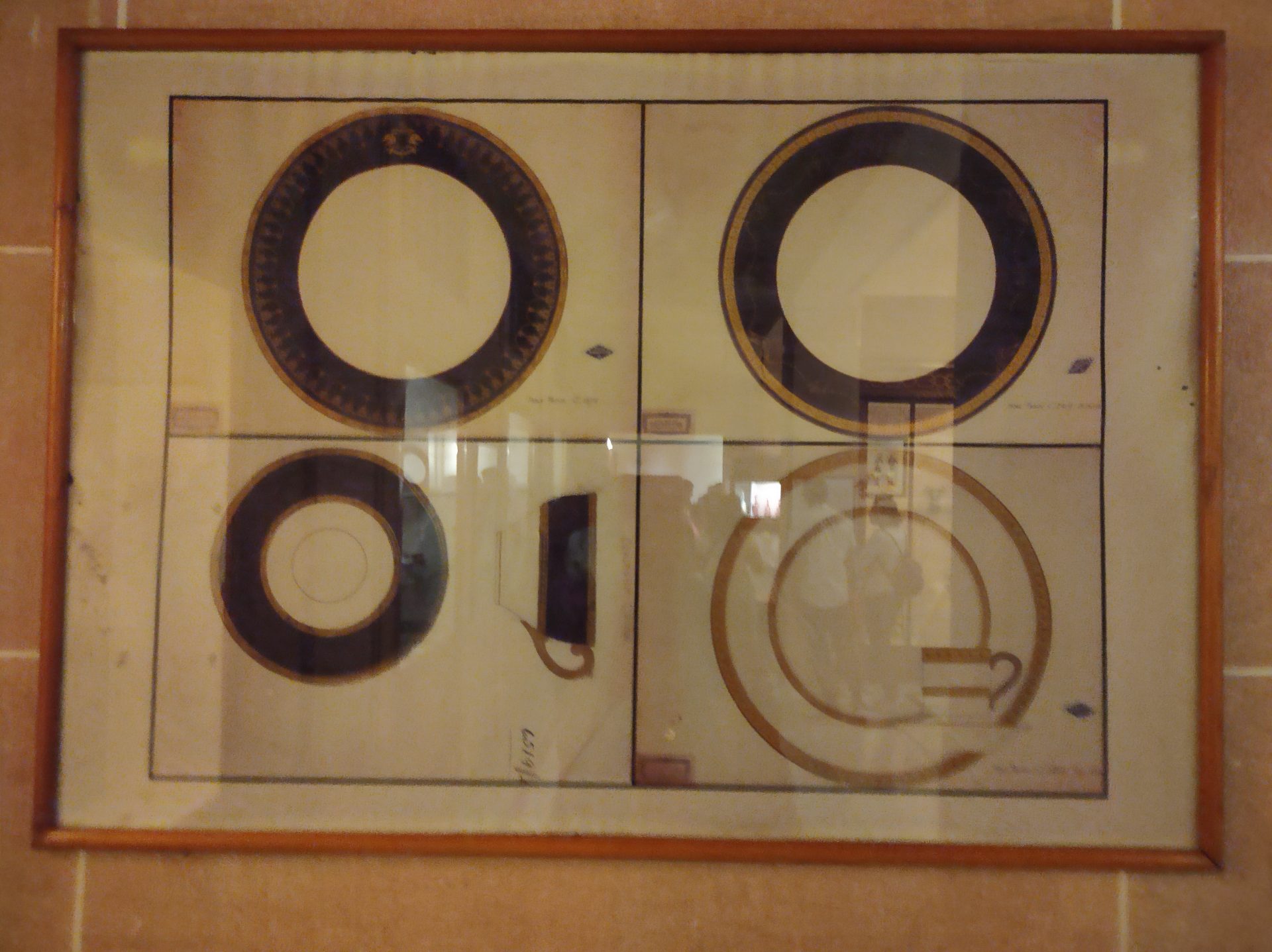
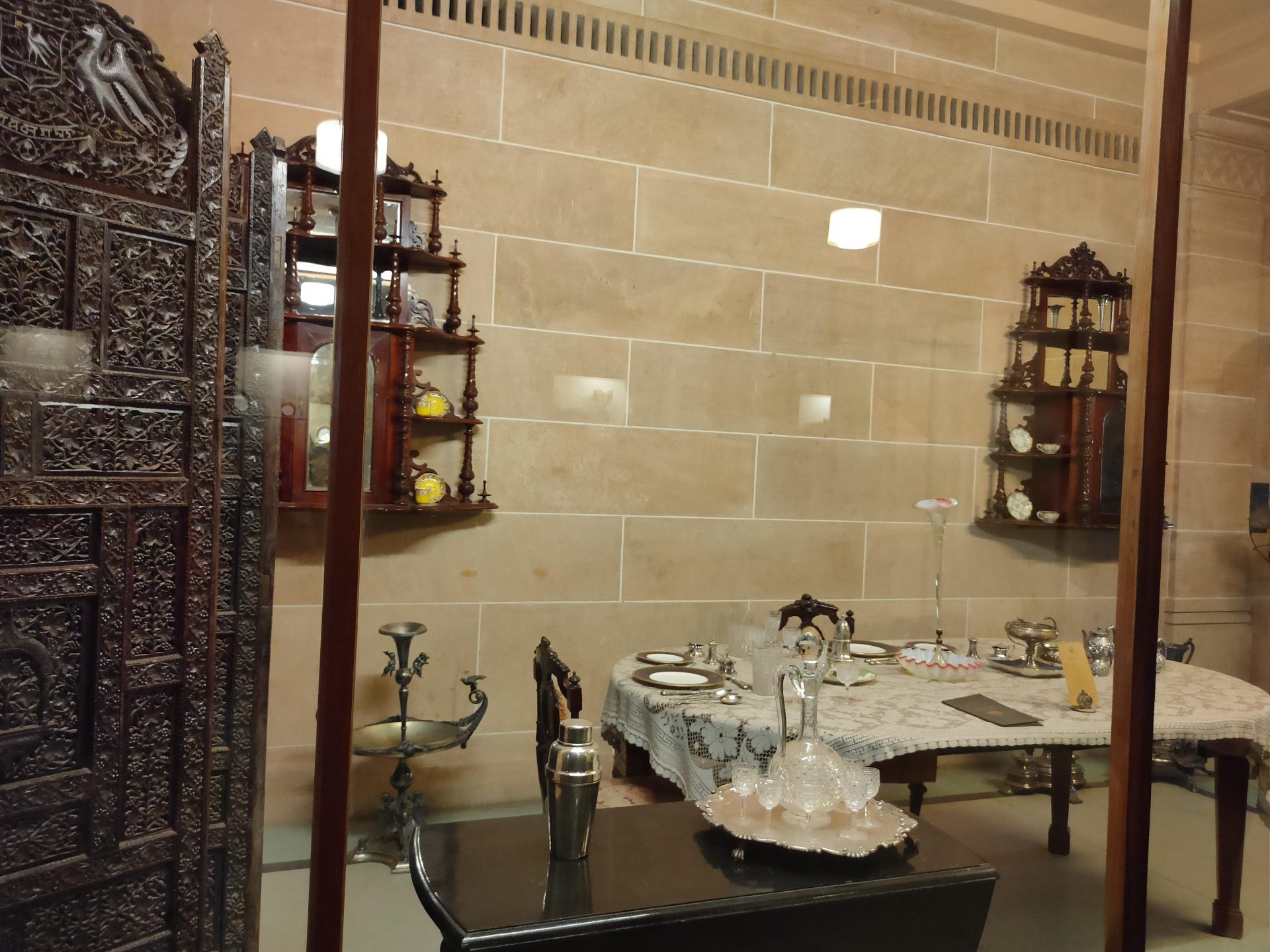
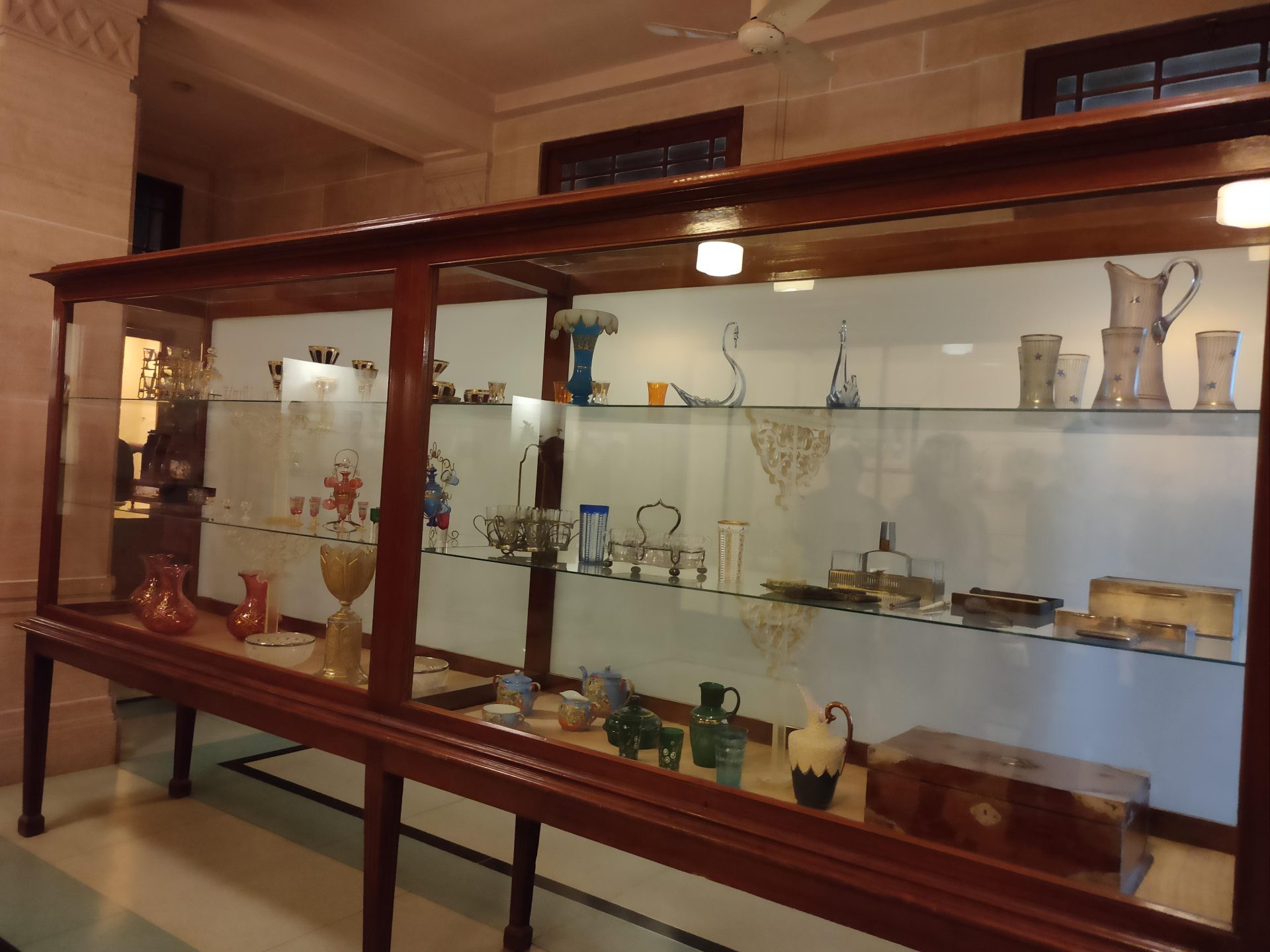
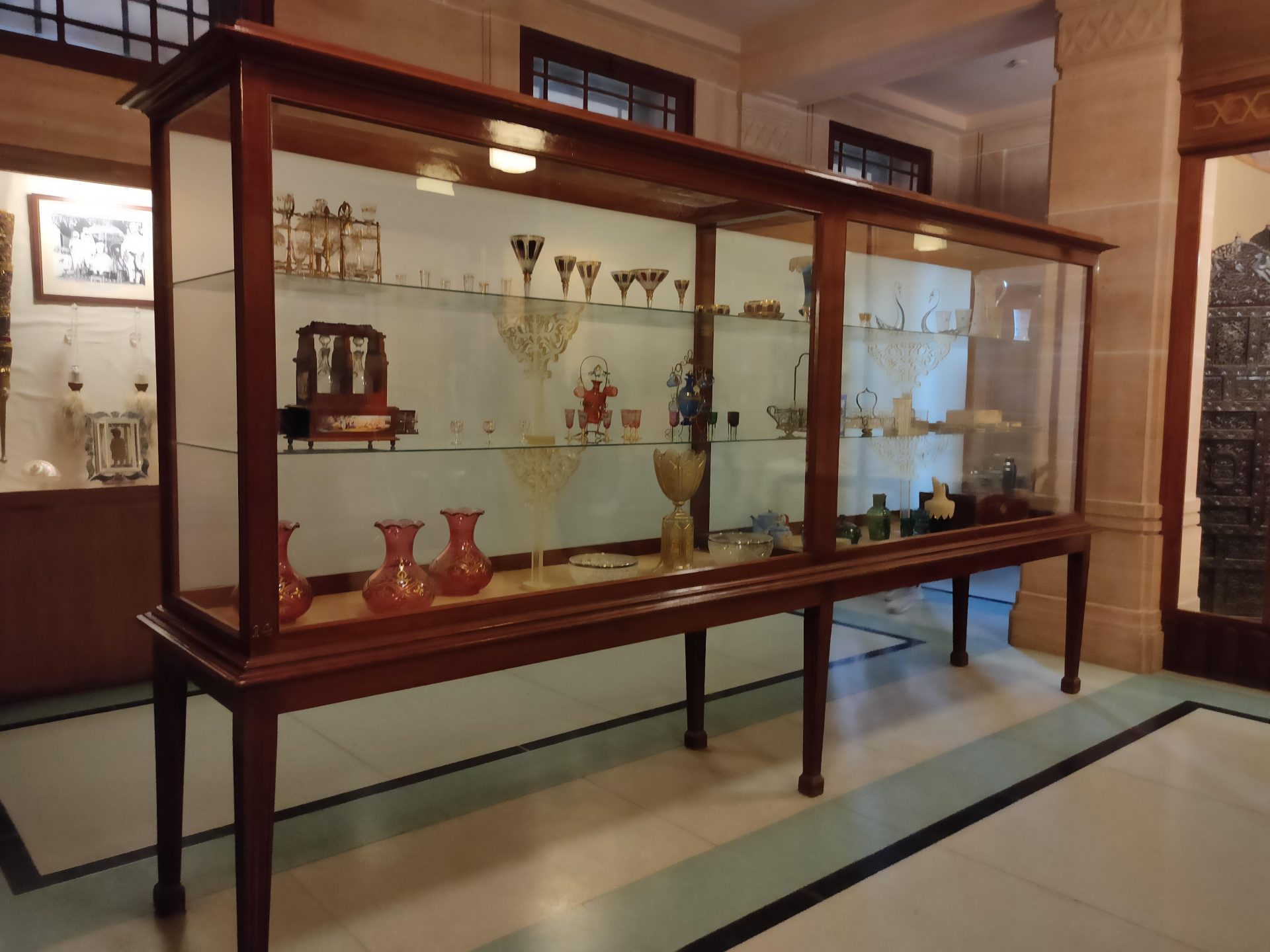
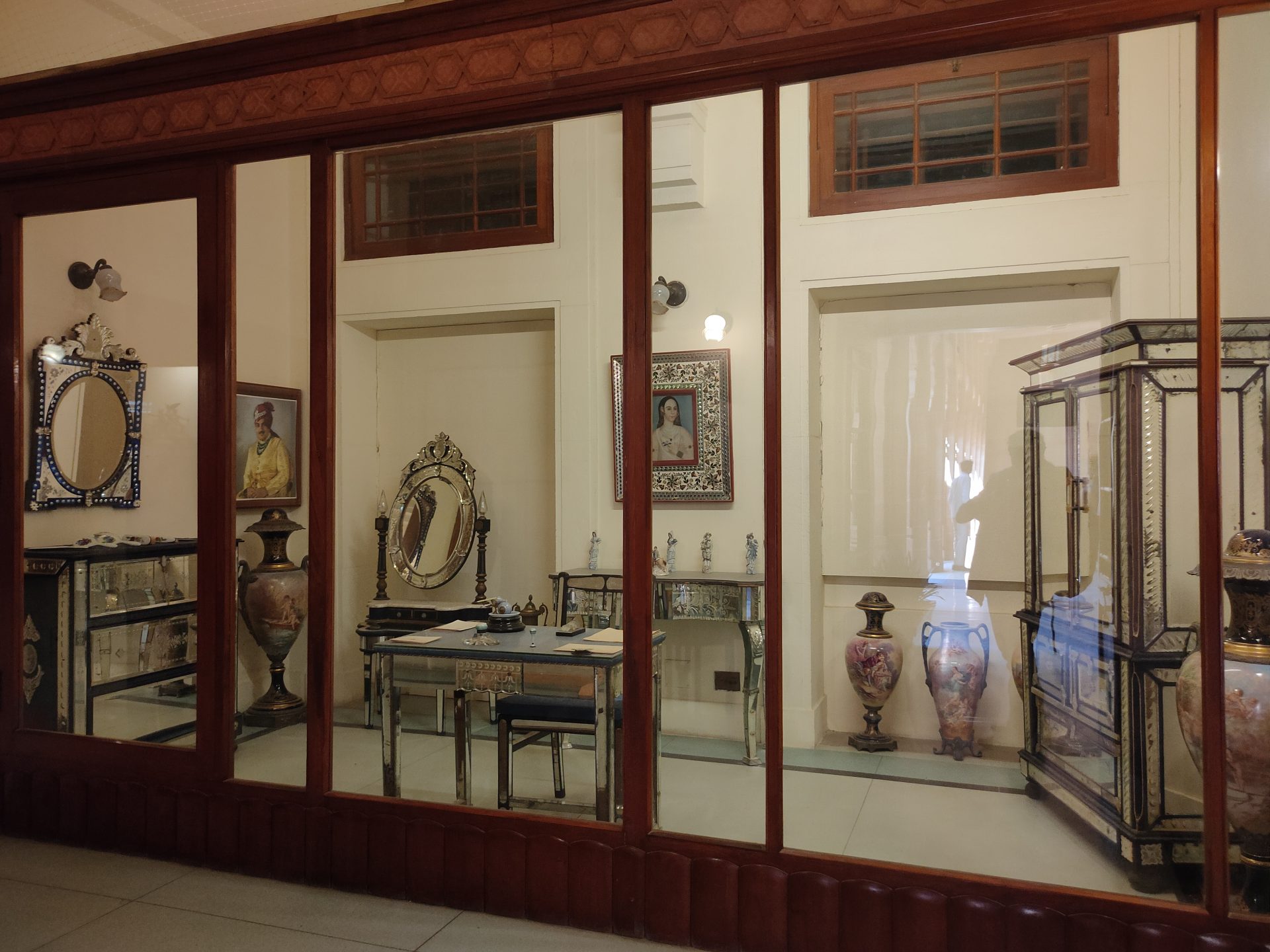
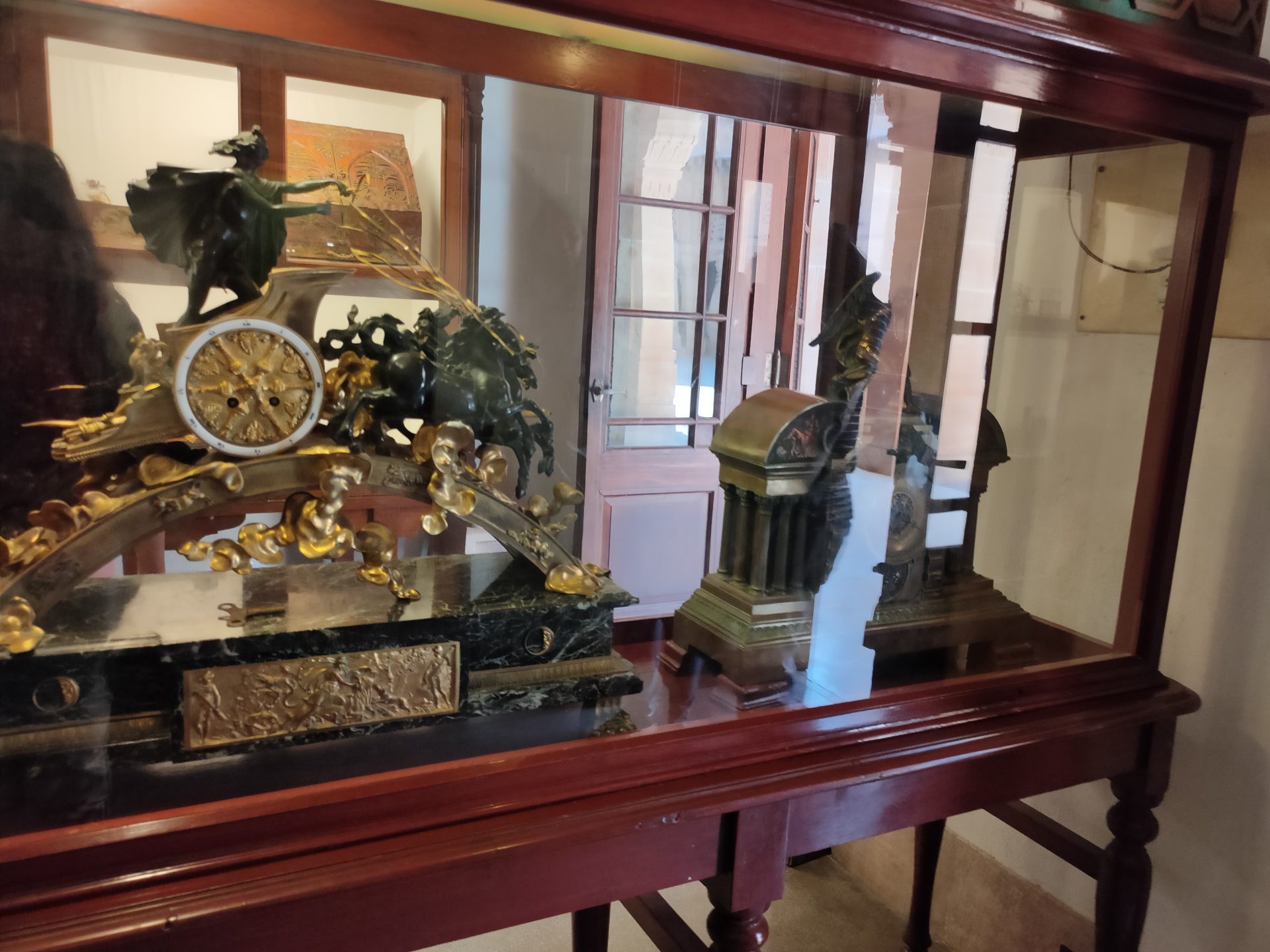
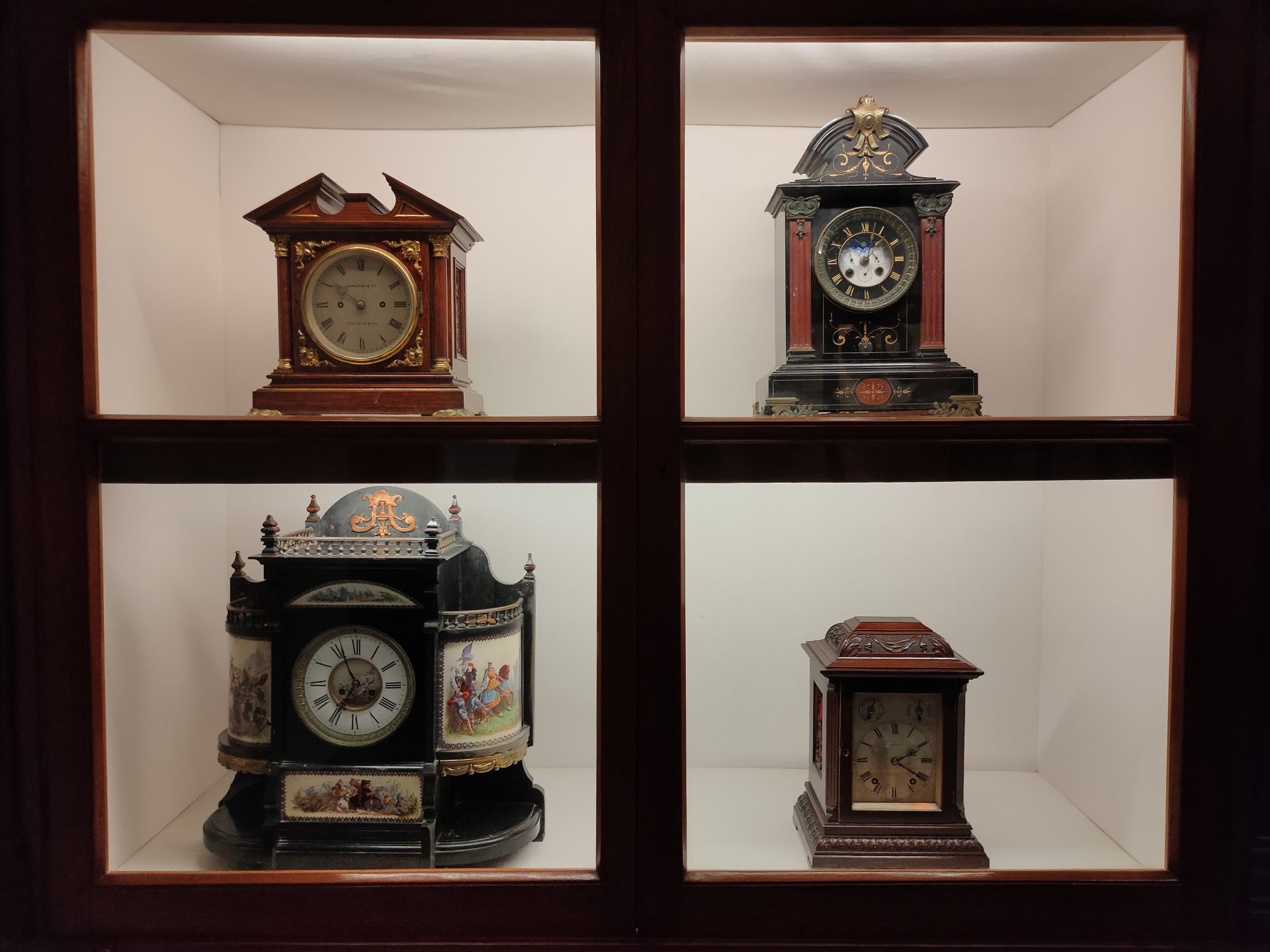
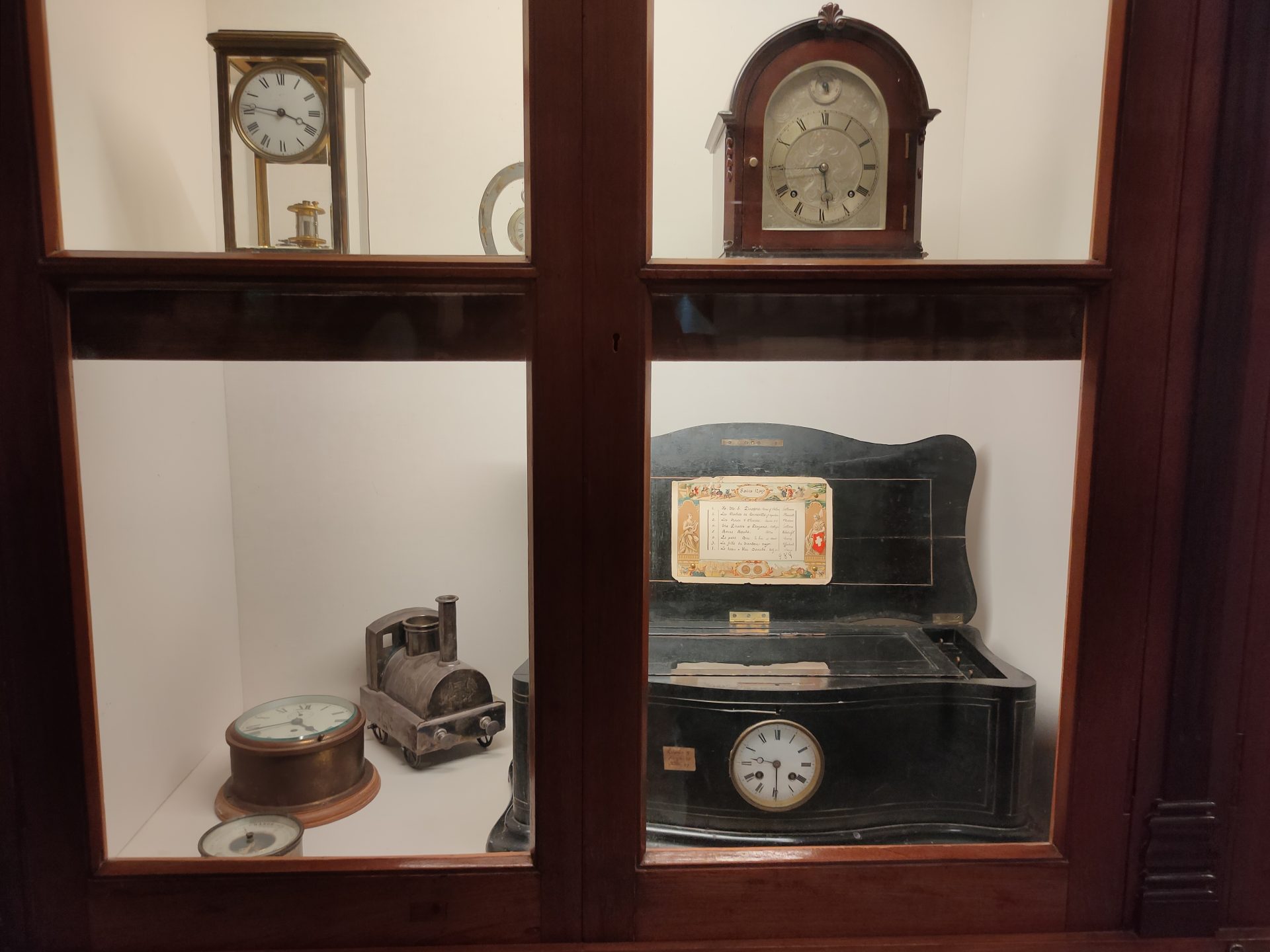
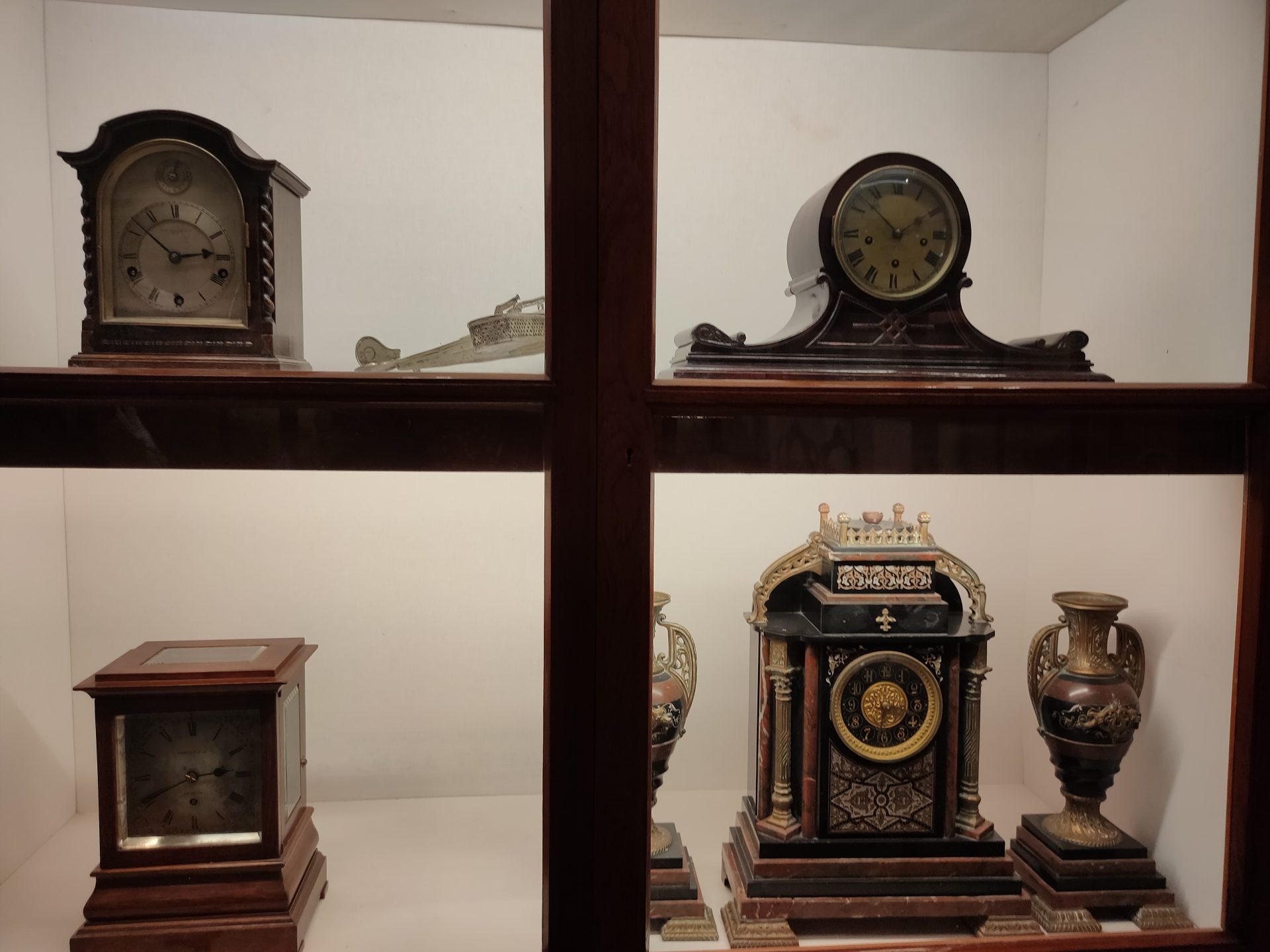
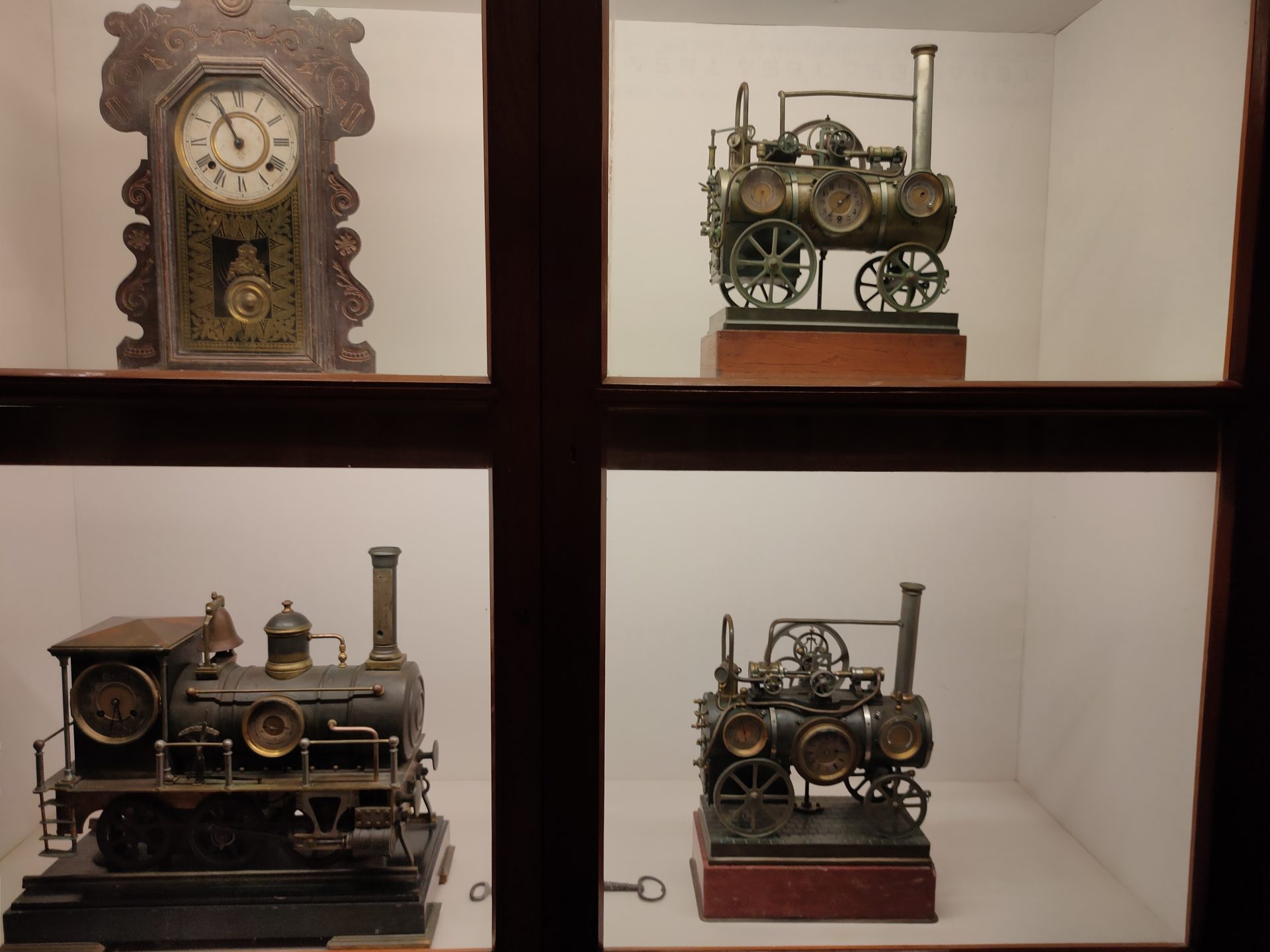
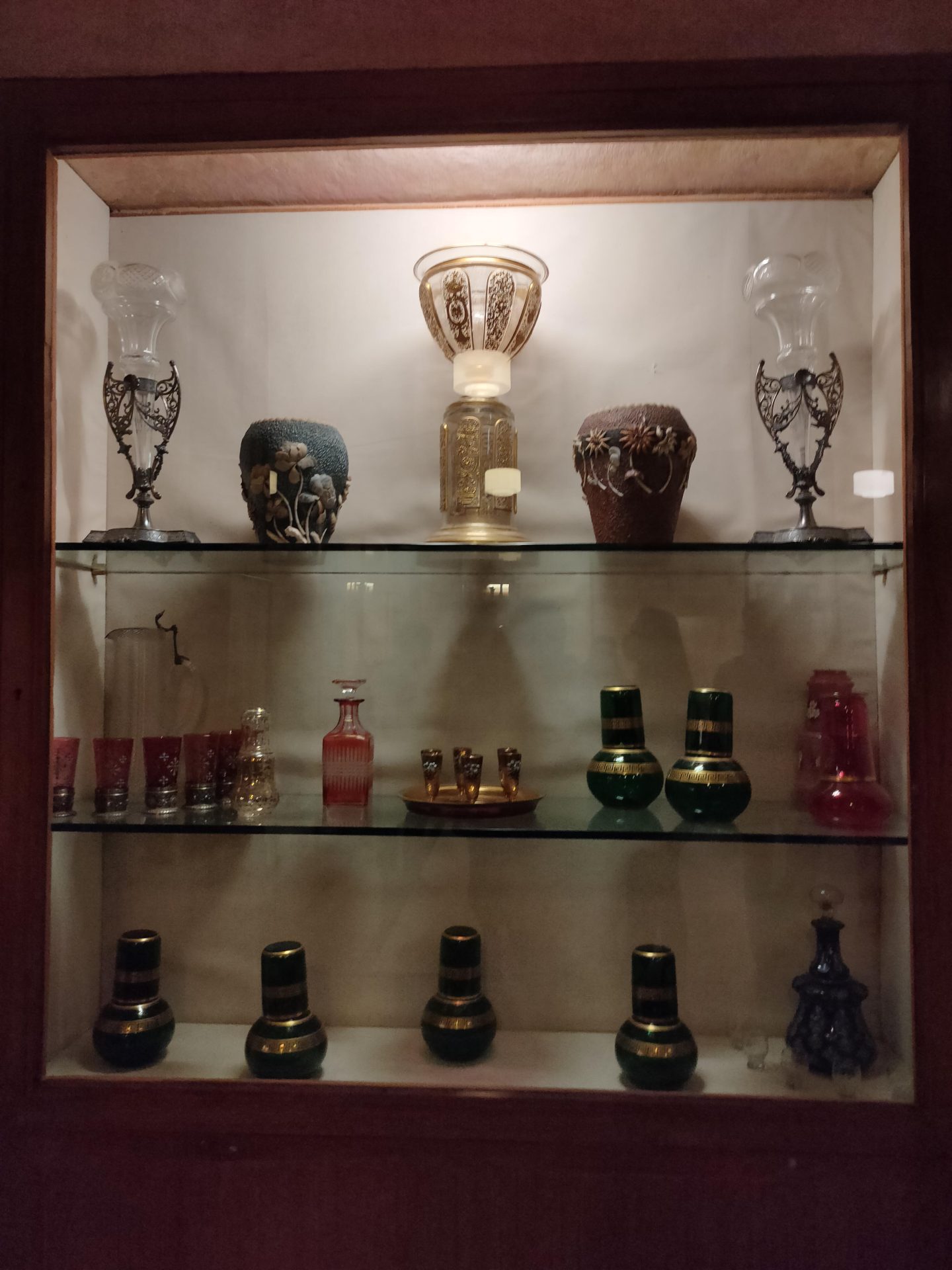
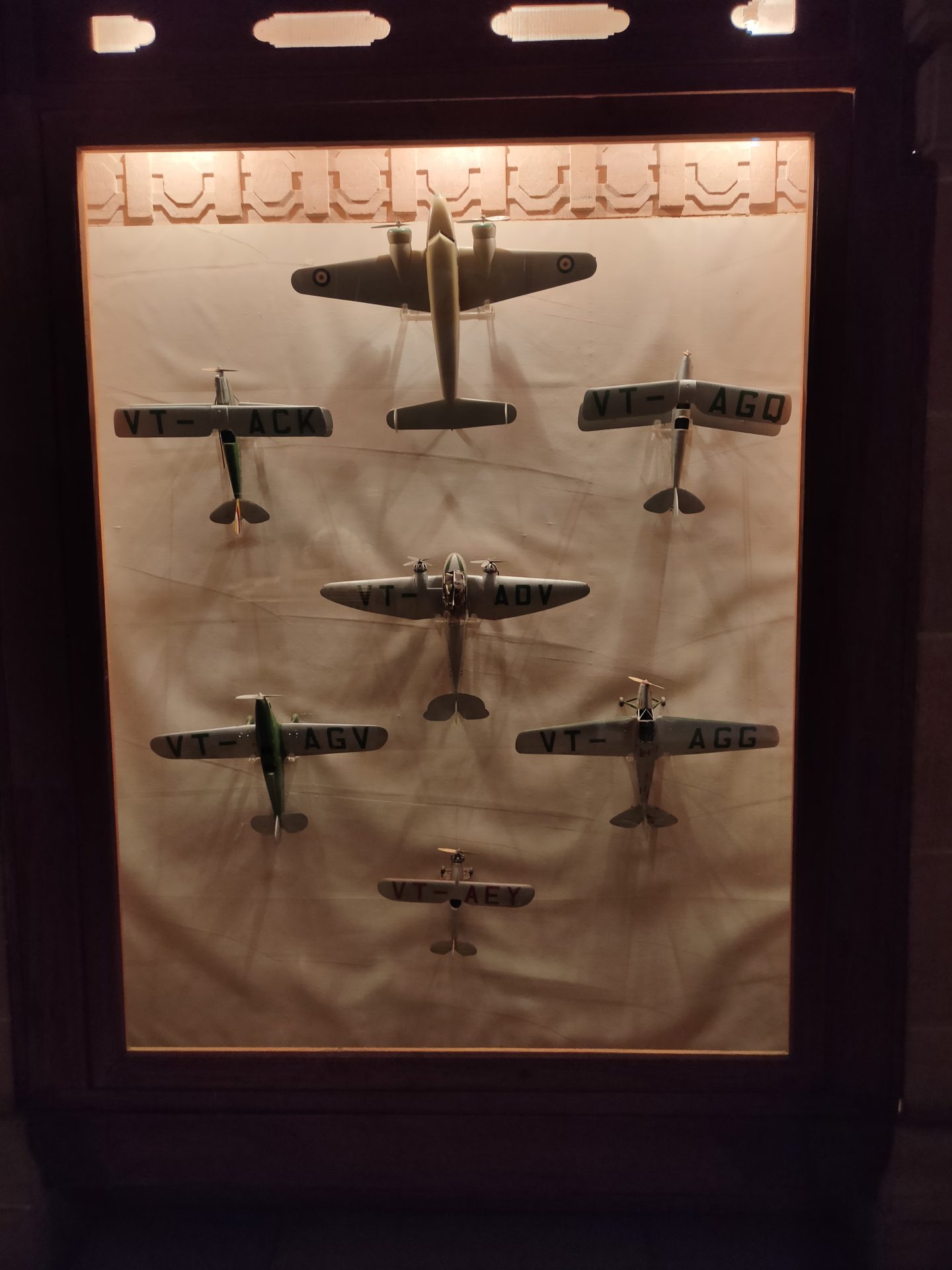
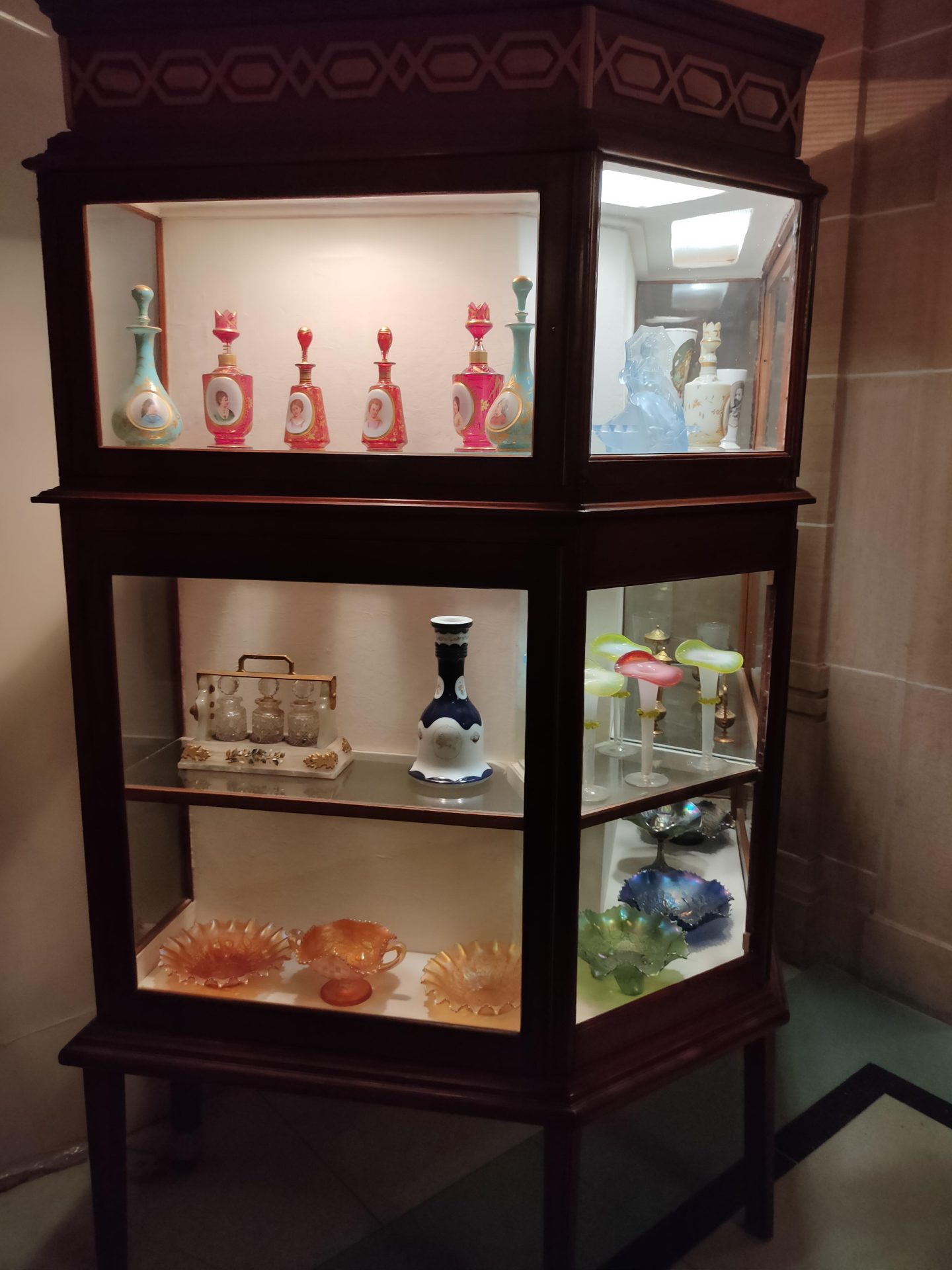
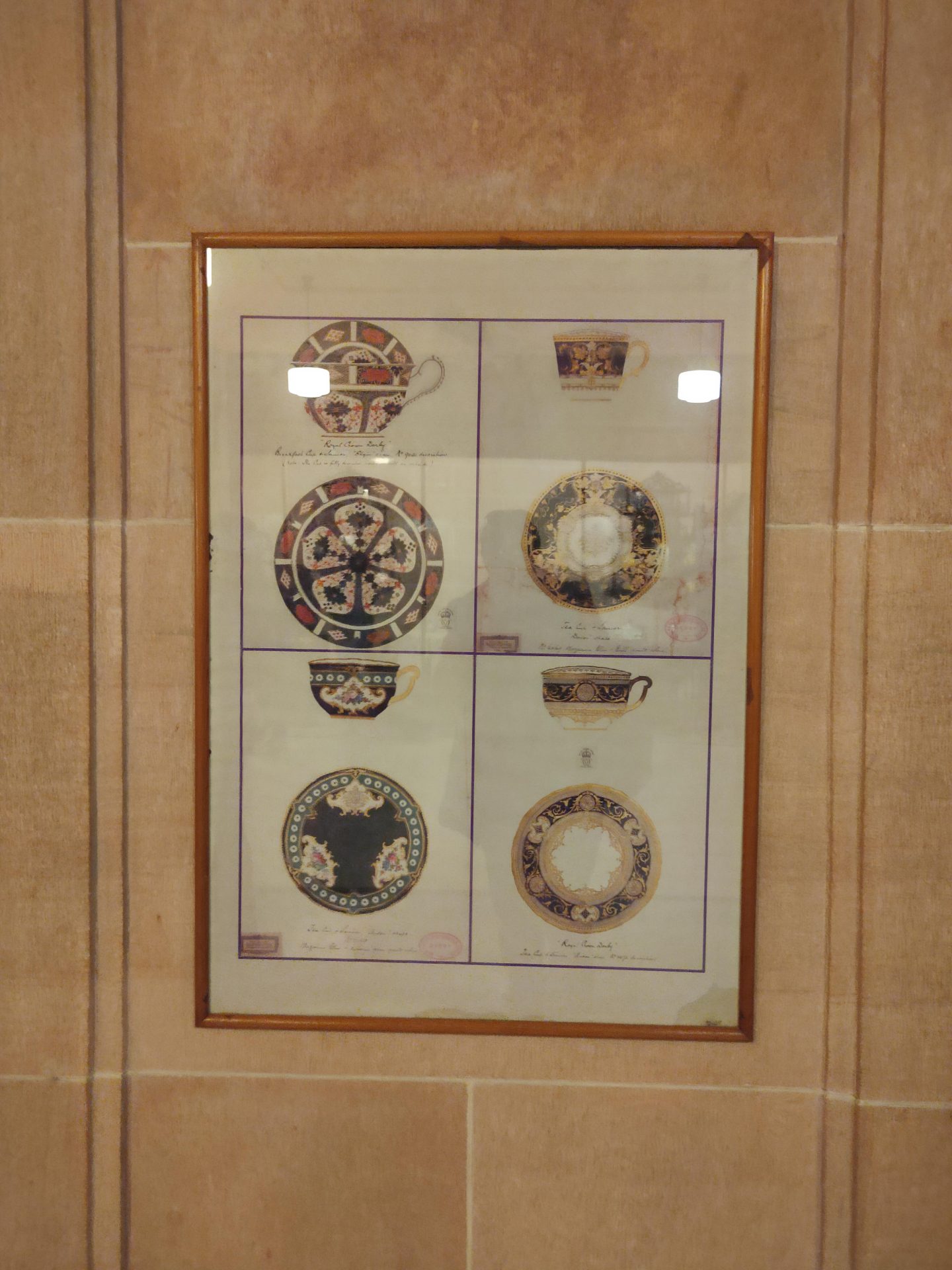
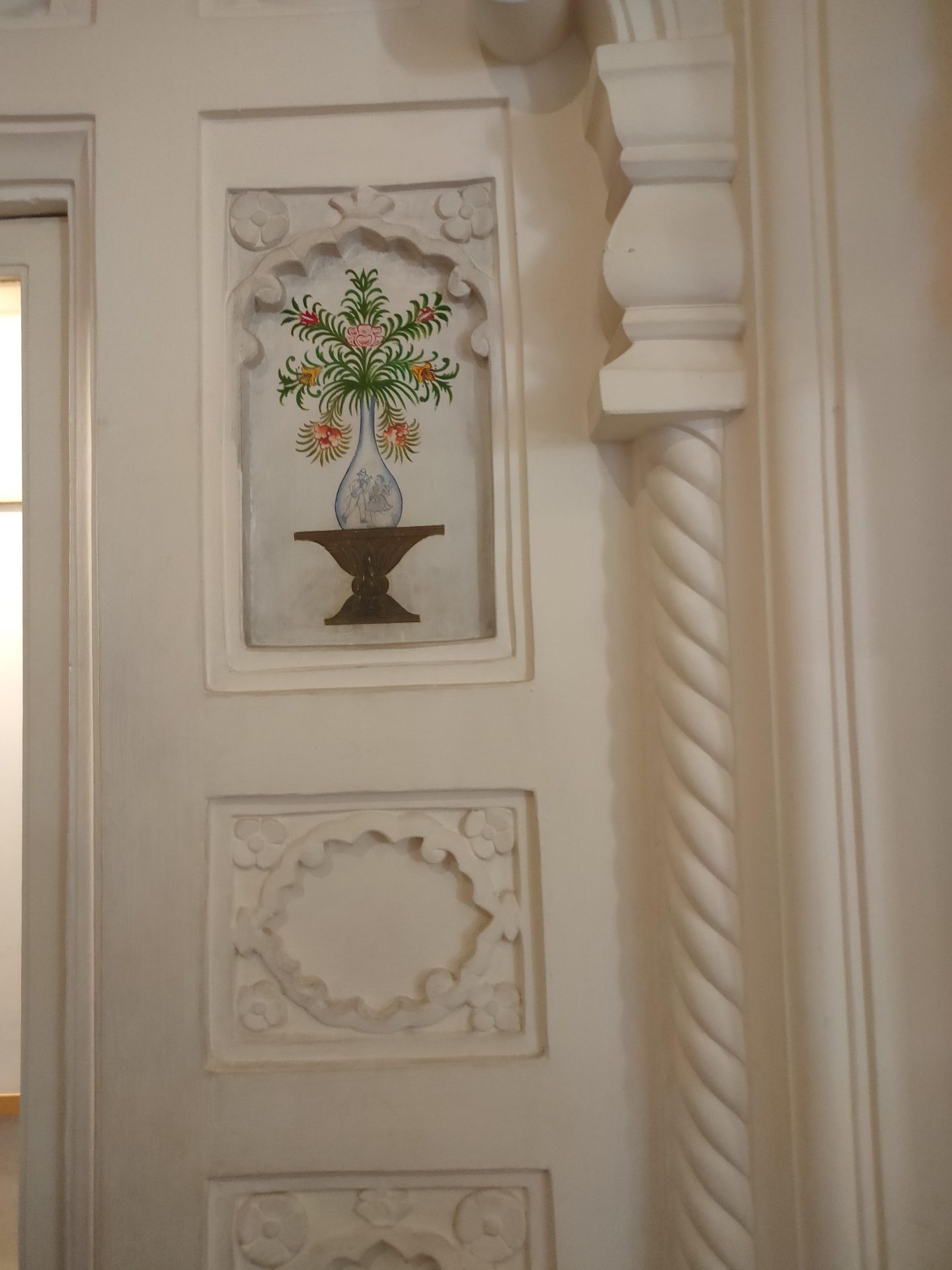
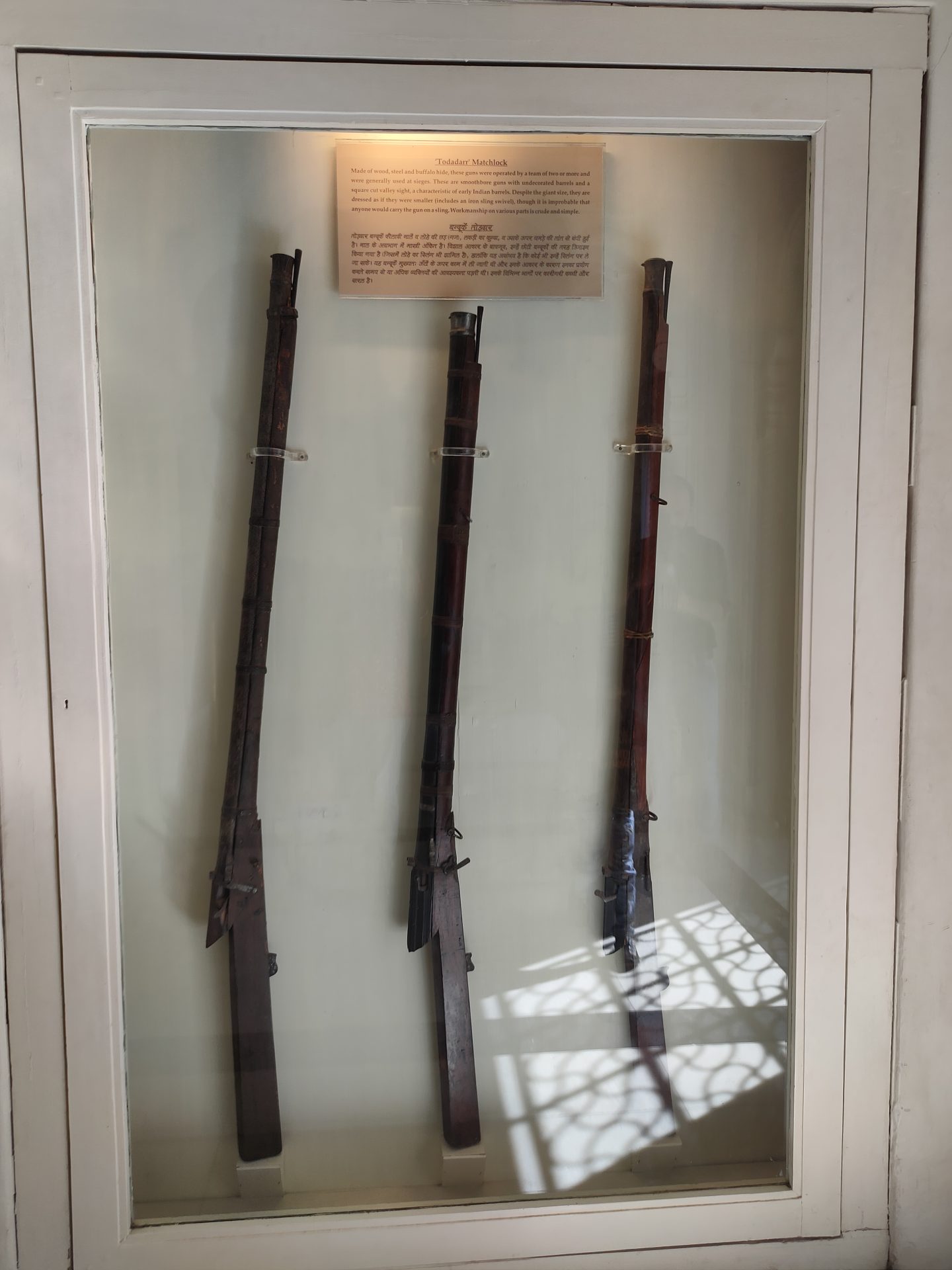
There is a lovely fresco adorning the wall depicting the war waged by the Rajputs against the Mughal emperors with the Mehrangarh fort in the backdrop. The museum houses a unique set of clock collections, murals, firearms, paintings, porcelain and glassware, china vases, lamps, curios and many more.
The wedding of Bollywood fame actress Priyanka Chopra with Nic Jonas took place at this very palace and it is believed that their 3 day wedding affair made up for 3 months of the hotel’s revenues.
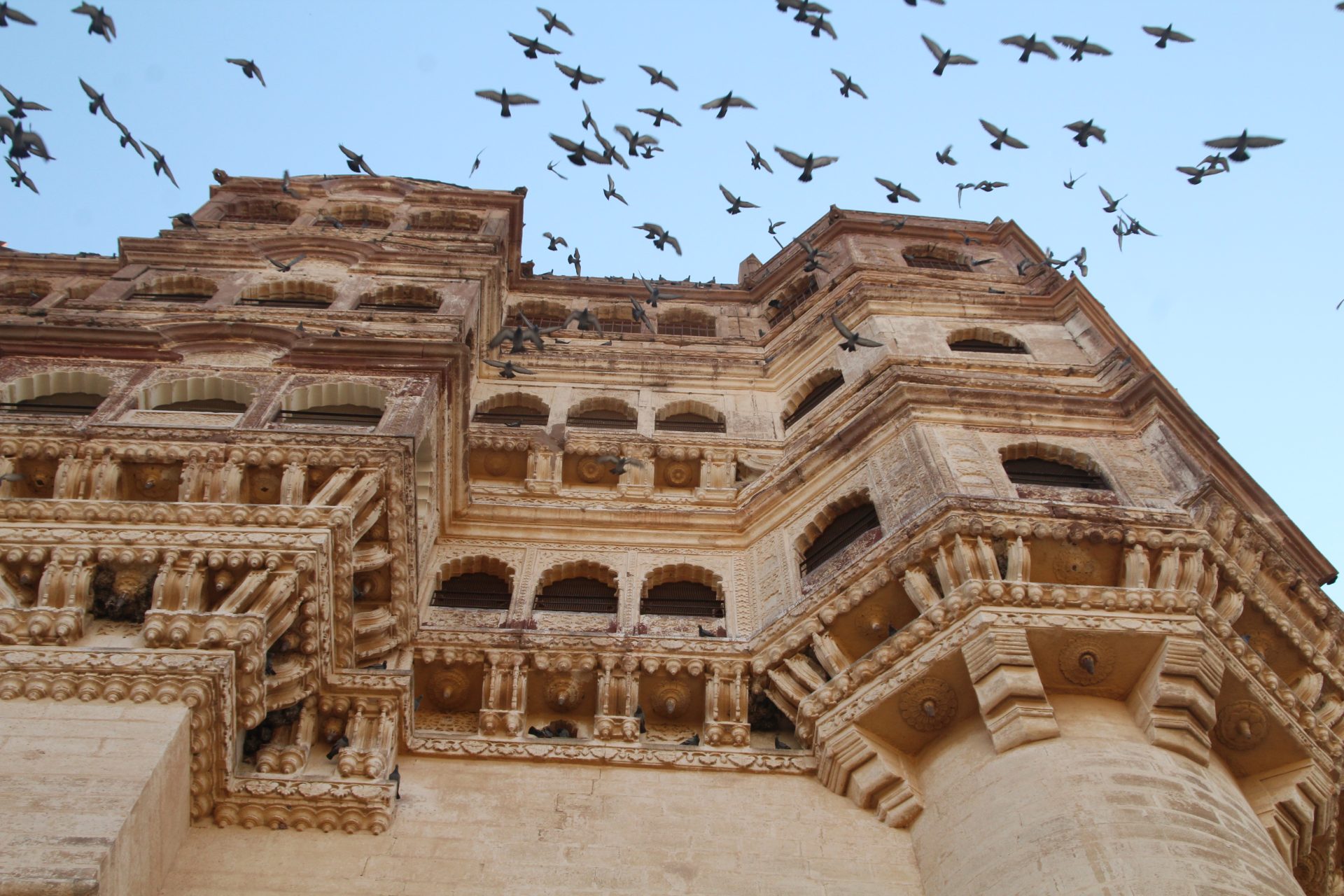
Was out of Umaid Bhawan in around 45 minutes time and a short drive motoring up the Bhakurcheeria (meaning mountain of birds) hill took me to the ramparts of Mehrangarh Fort, one of the largest forts in Rajasthan. Built around 400 metres above the skyline of the Blue city Jodhpur, this imposing and colossal edifice built with burnished red sandstone stands perpendicular and 100 feet tall above a cliff.
THE COLOSSAL FORT BUILT OUT OF RED SANDSTONE
THE CLOCK TOWER AS SIGHTED FROM THE FORT
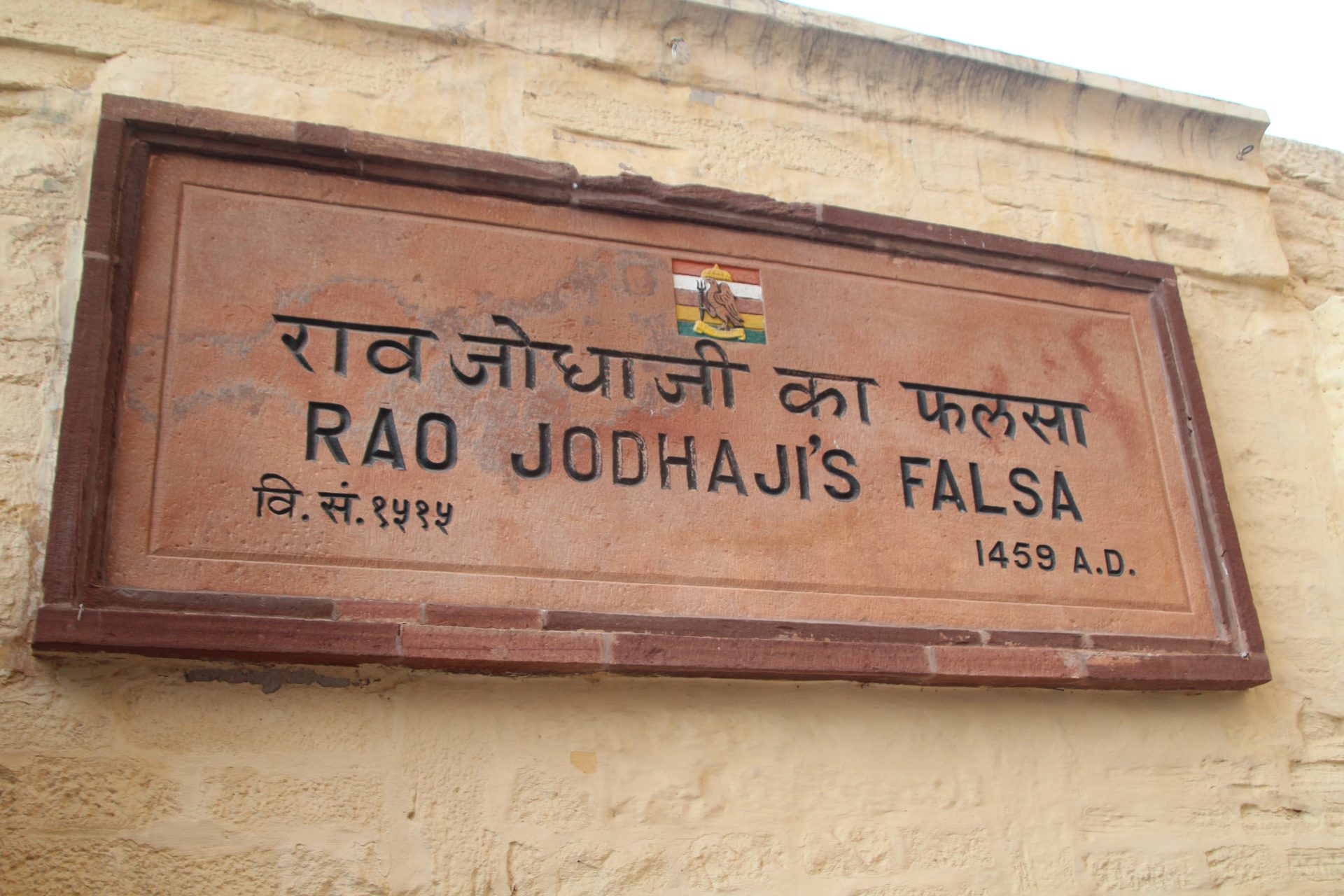
Legend has it that the fort was built under a curse of a saintly person Cheeria Nath ji (watcher of birds) who was the last standing amongst the people dwelling on the hill who had to forcibly evicted to fulfil the king’s dreams of building the fort on the hill. The King came under a curse that the fort and its surroundings would always suffer from an acute scarcity of water and in a bid to appease the saint, he was asked to bury a person alive while laying the foundation. A person by the name Raja Ram Meghwal volunteered to help out the king in an effort to nullify the curse while the king promised to take care of his family throughout their life. The fort got built over a 5 km area by King Jodha Rao, ruler of Mandore and of the Rathore dynasty in 1459 with an intent of keeping him, his loved ones and the people of the kingdom safe from invaders.
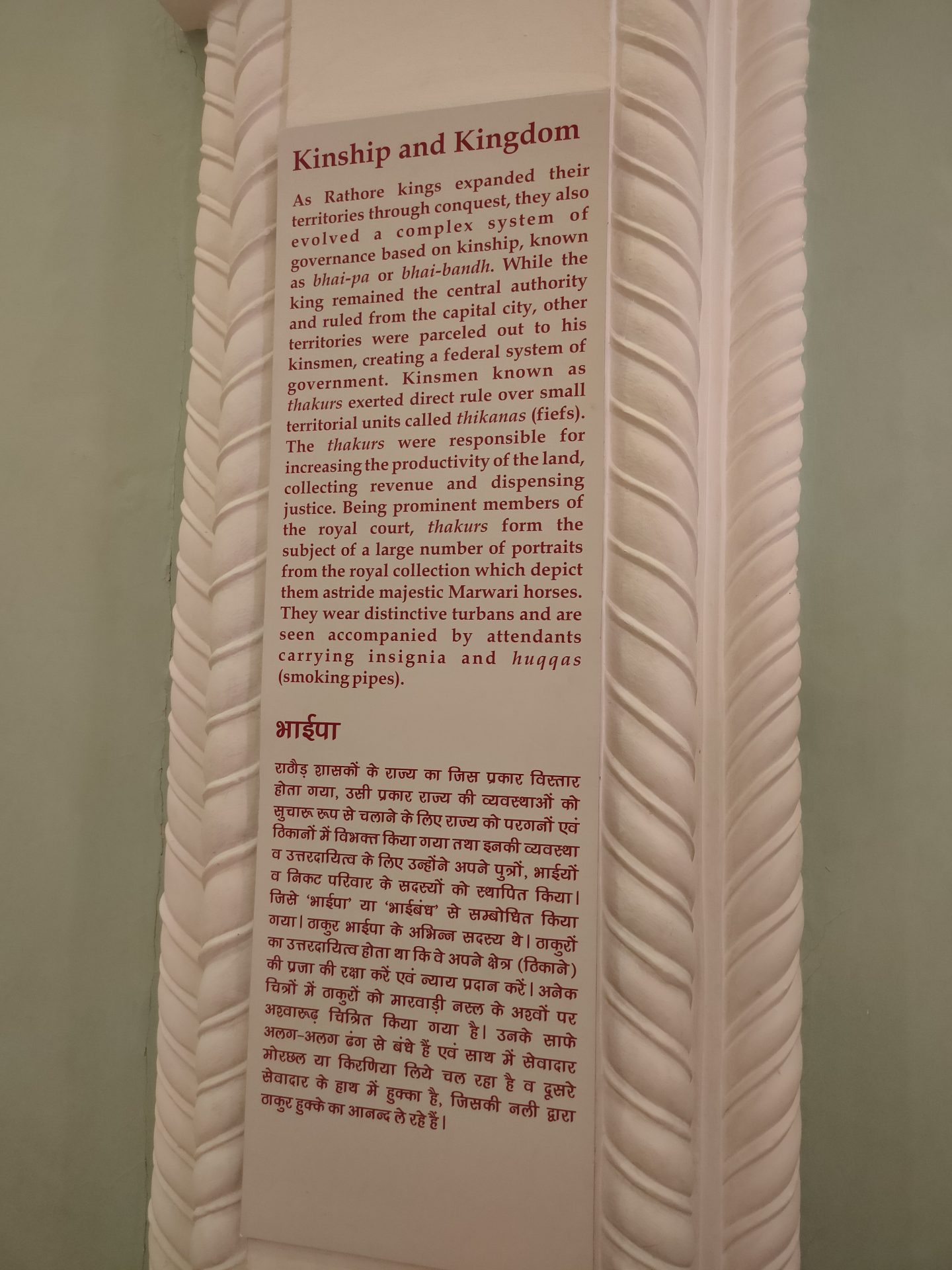
Jodha Rao is also credited to be the founder of the city of Jodhpur. Quite a few of the current existing structures got made in the 17th century only during the regime of different rulers to commemorate their victories over the Bikaner and Jaipur armies.
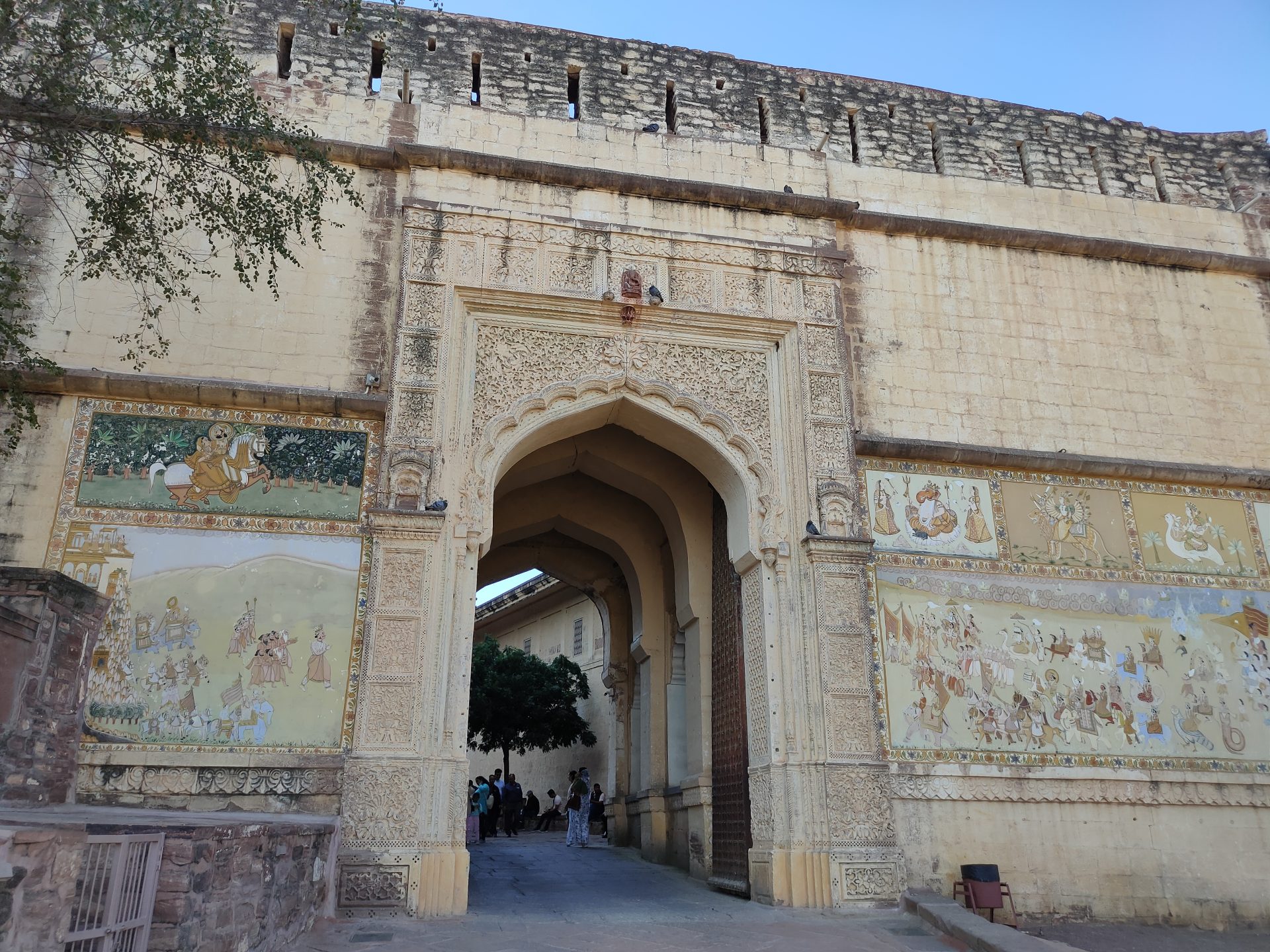
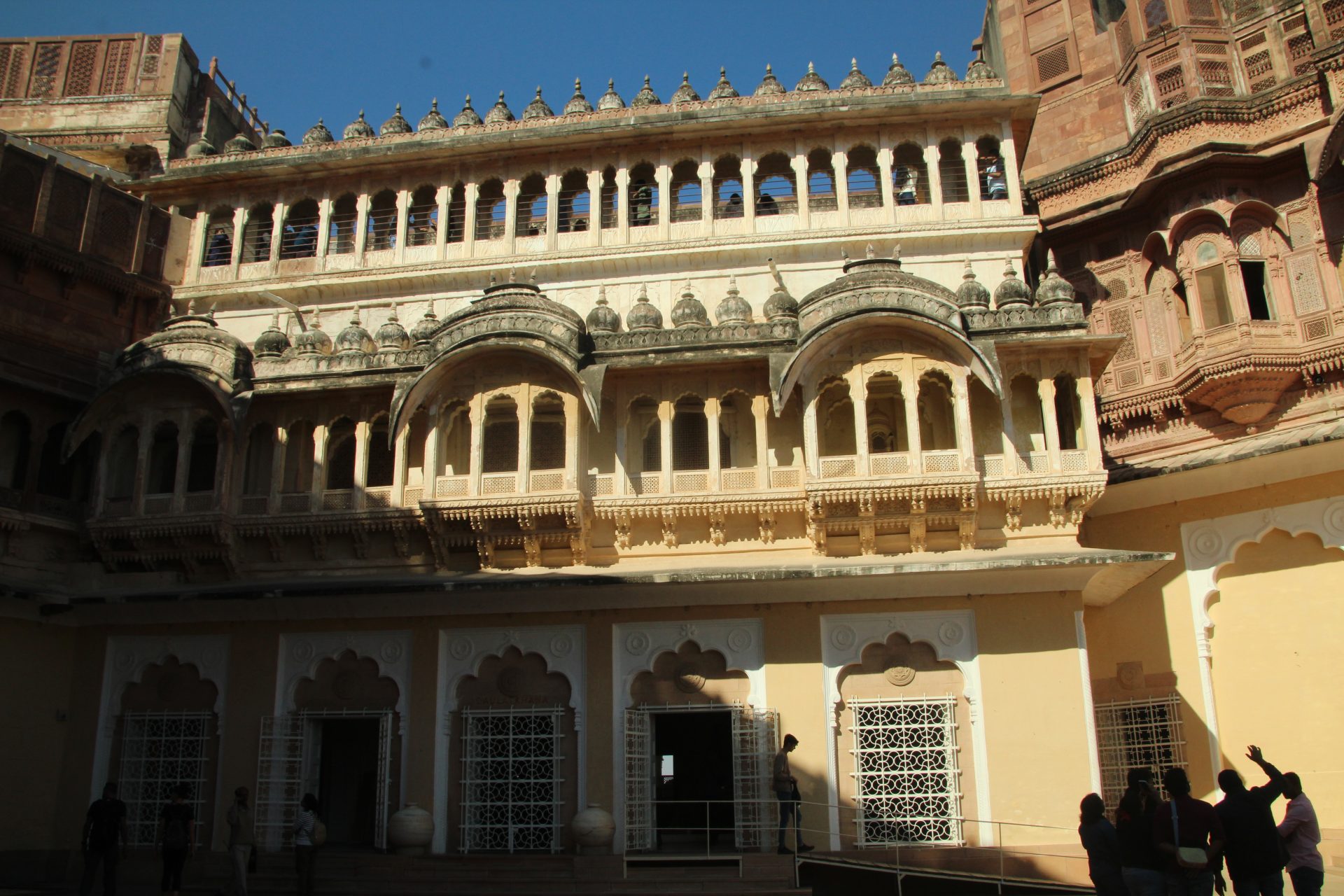
The entire structure of the fort was built by walls which were roughly 120 feet long and 70 feet wide and the entrance to the fort had 7 gates starting with the Jai Pol or the Victory Gate which was built by Maharaja Man Singh to celebrate his victory over the Bikaner and Jaipur armies.
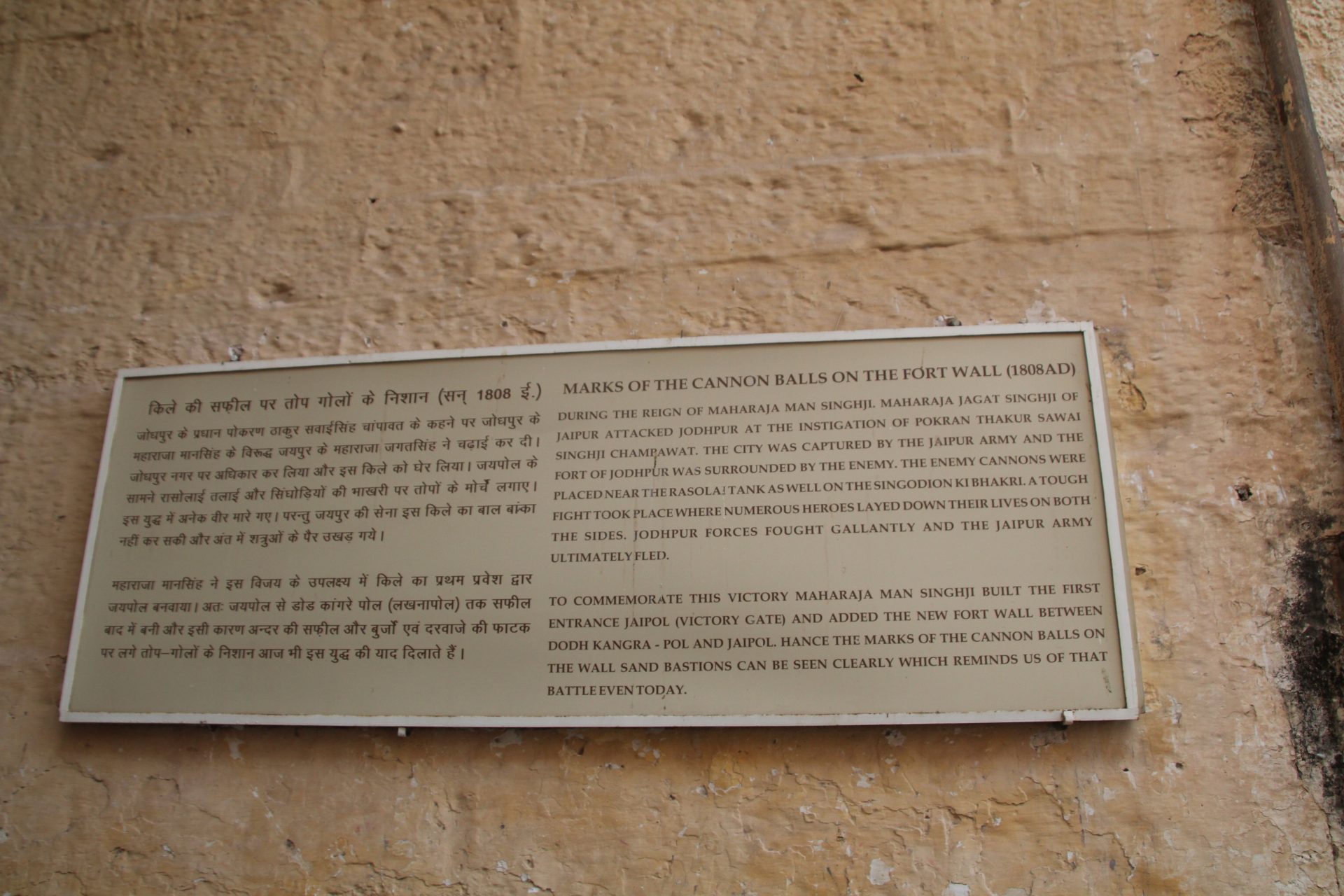
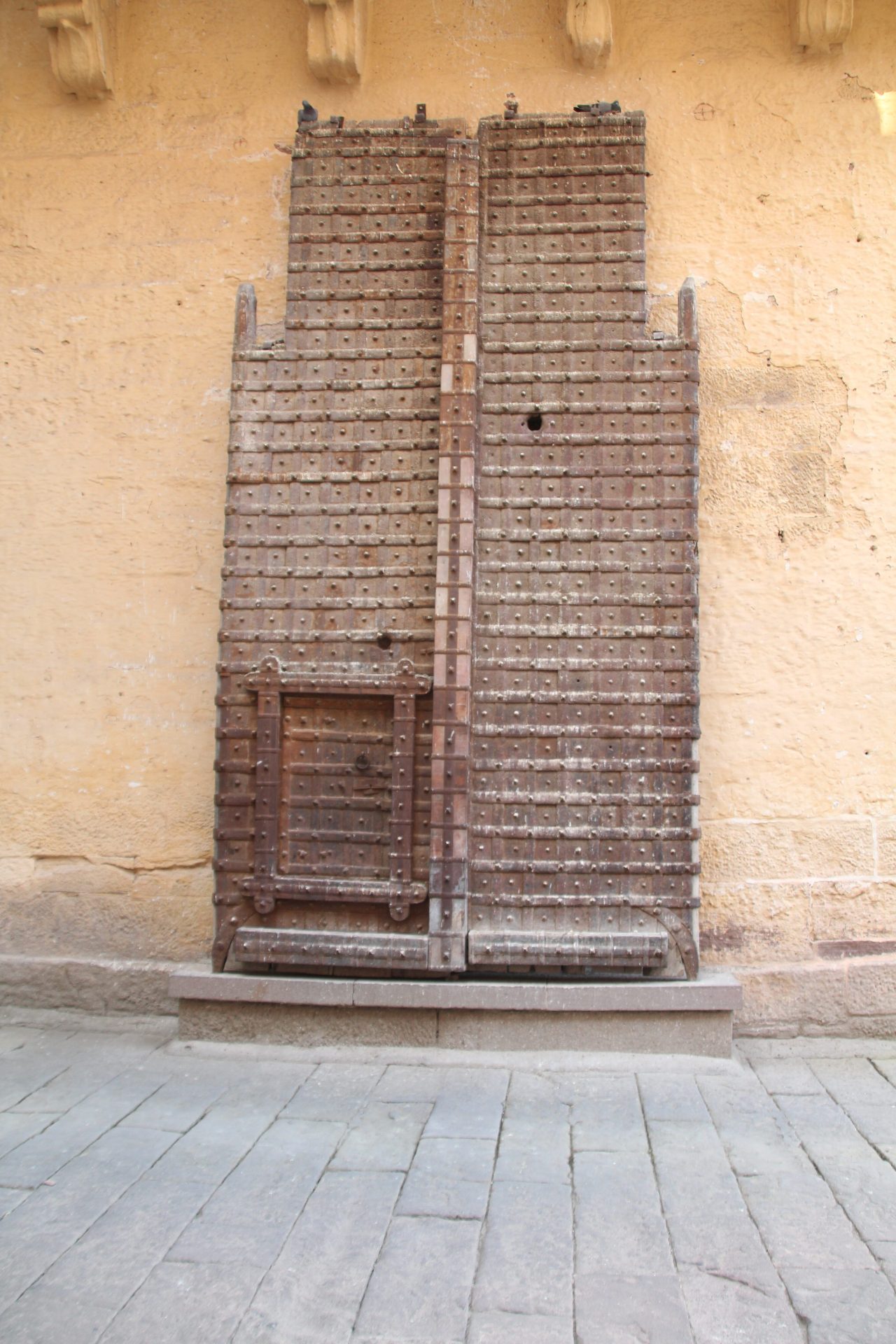
The Fateh Pol was built to commemorate the victory over the Mughals in 1707 followed by the Gopal Pol and the Dodh Kangra Pol which still bears the scars of shelling by cannon balls.
THE JAI POL
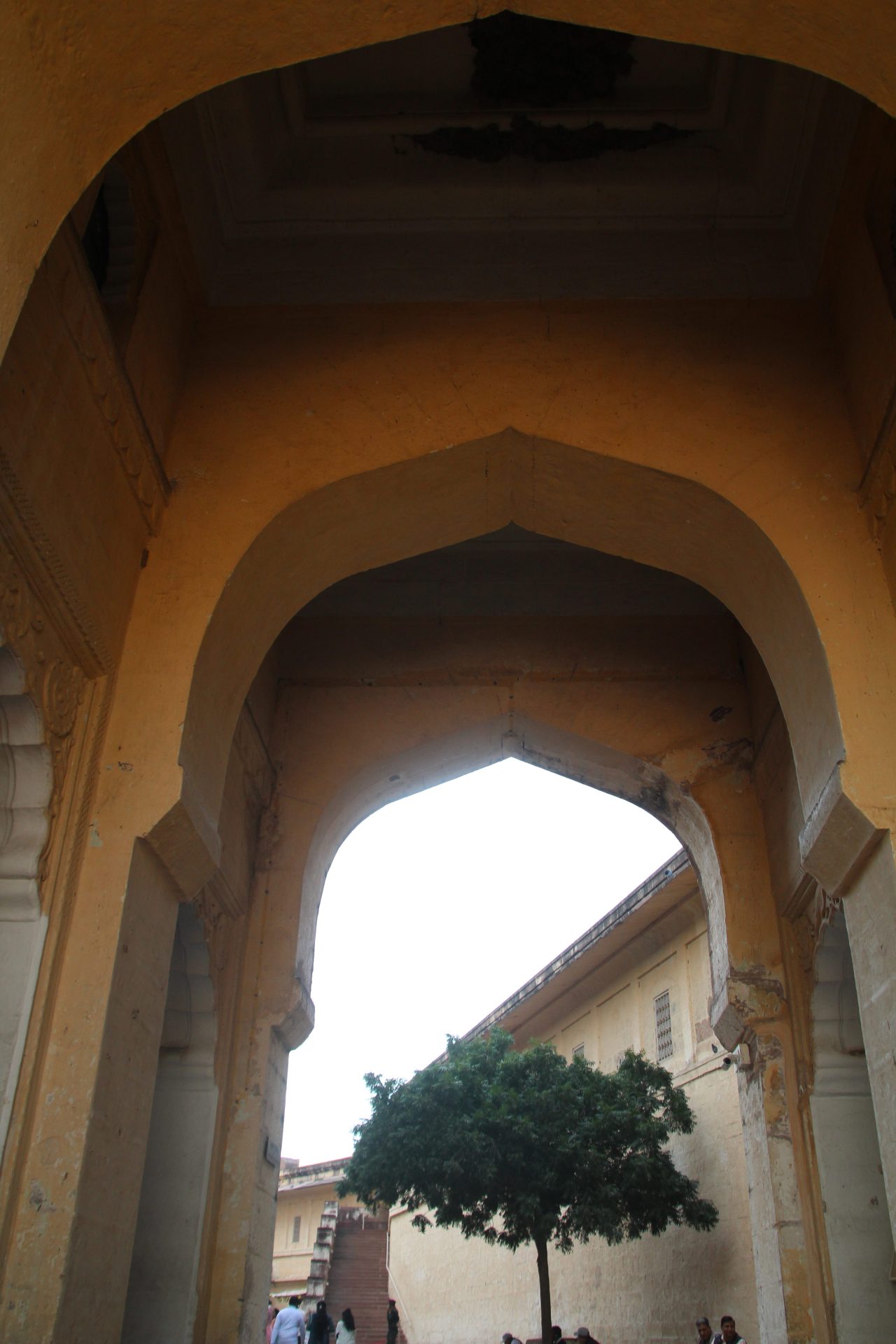
As one then enters through the Amruti Pol, one is led into the final gate through which one enters the main part of the fort complex. This gate is also known as the Loha Pol or the iron gate and one can get to see handprints (sati marks) of the queens and princess who committed Sati after the death of their husbands. The last of the gates, the Suraj Pol is the inner most gate which provides access to the Palace Complex and the Daulat Khana Chowk.
A HUGE PITCHER
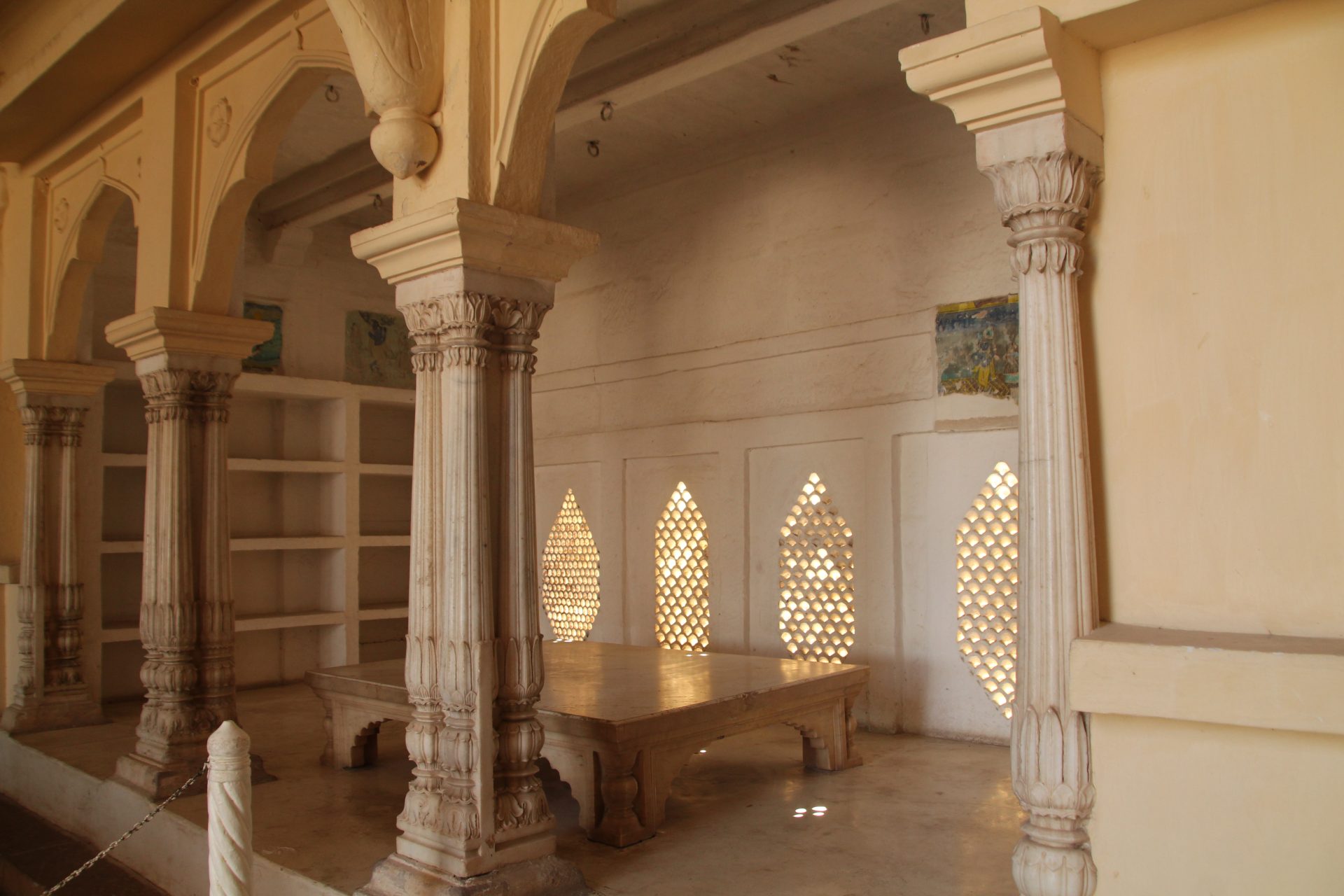
INTRICATELY DESIGNED PILLARS
HANDPRINTS OR SATI MARKS ON THE WALL
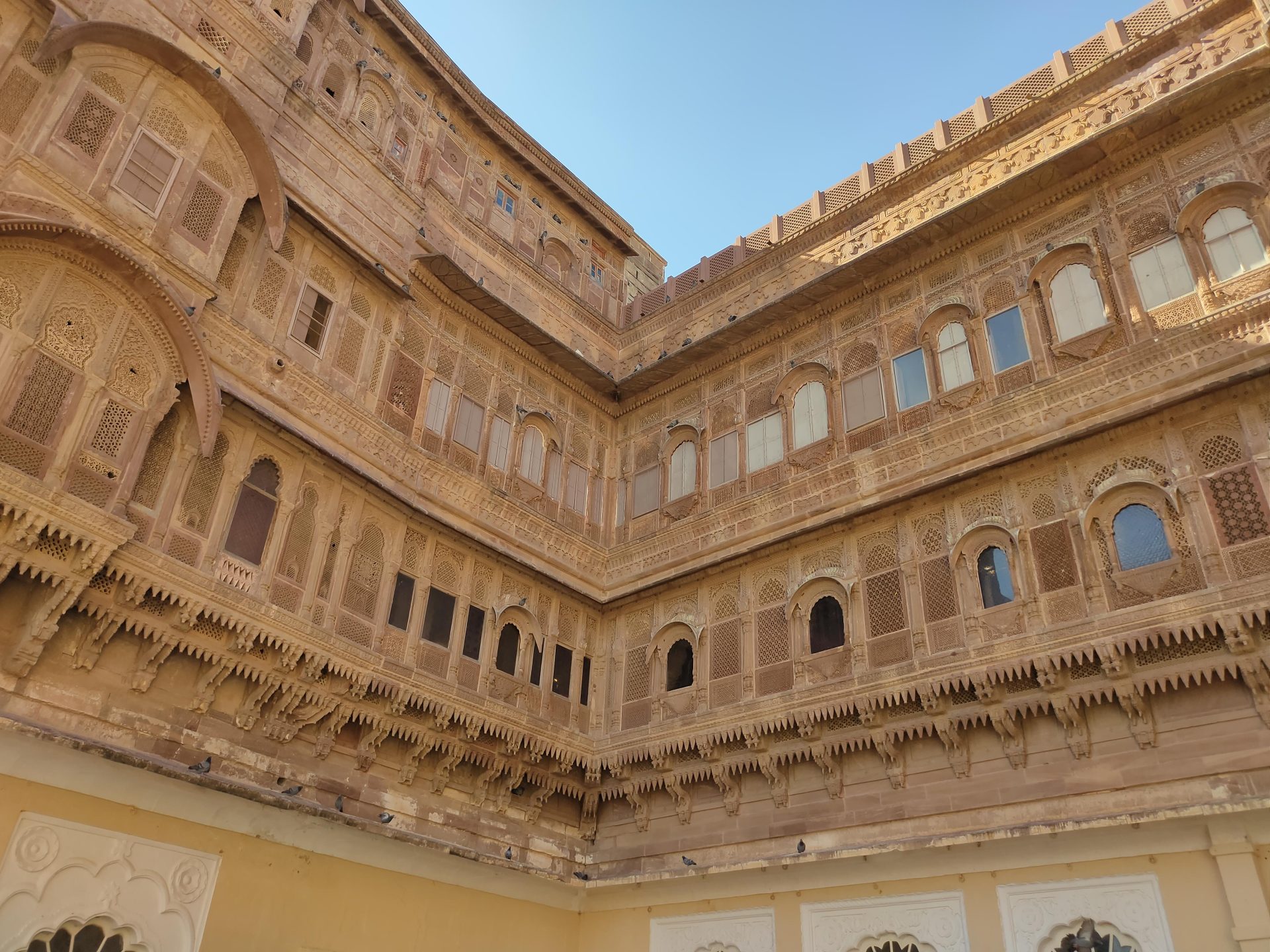
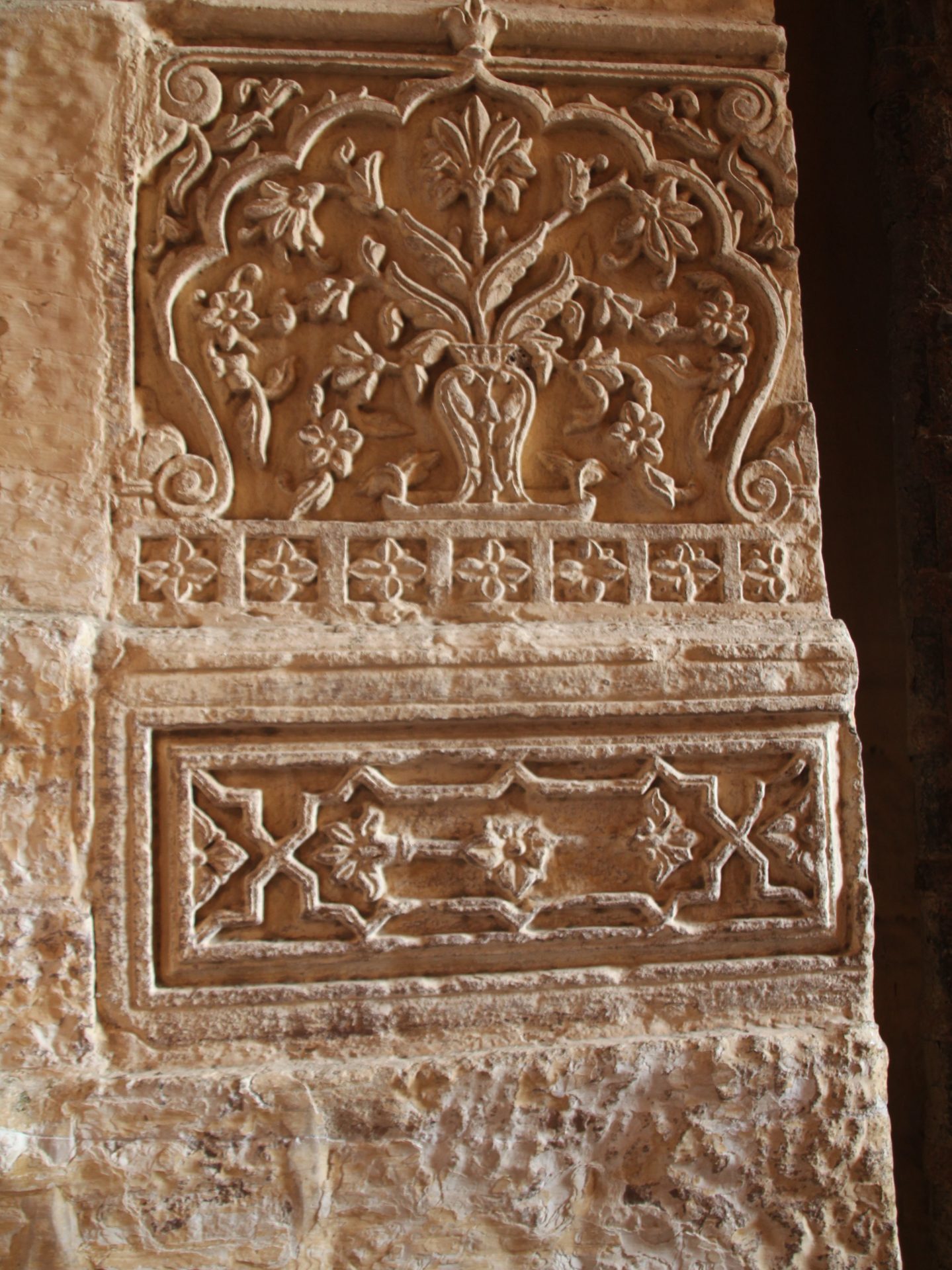
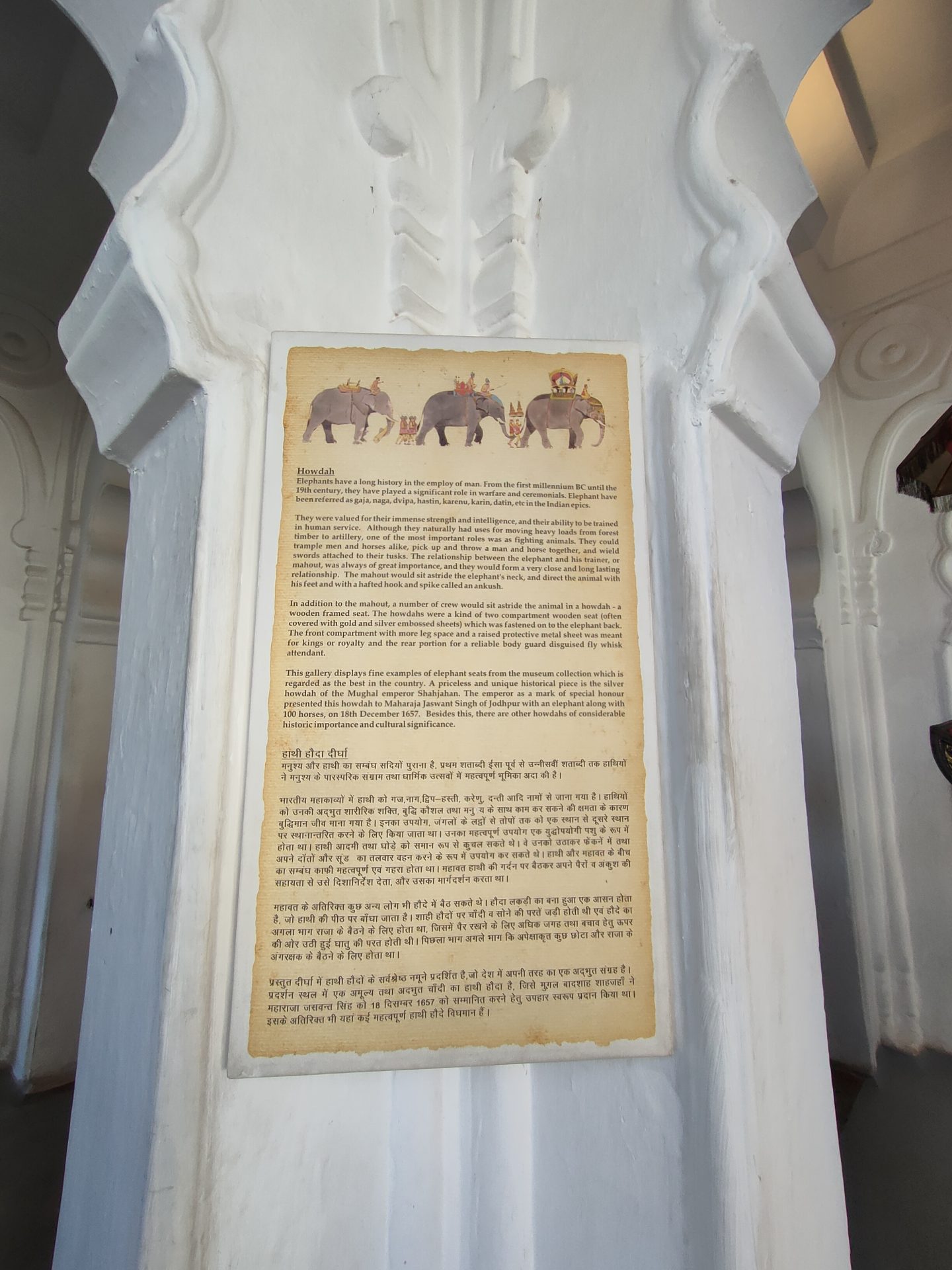
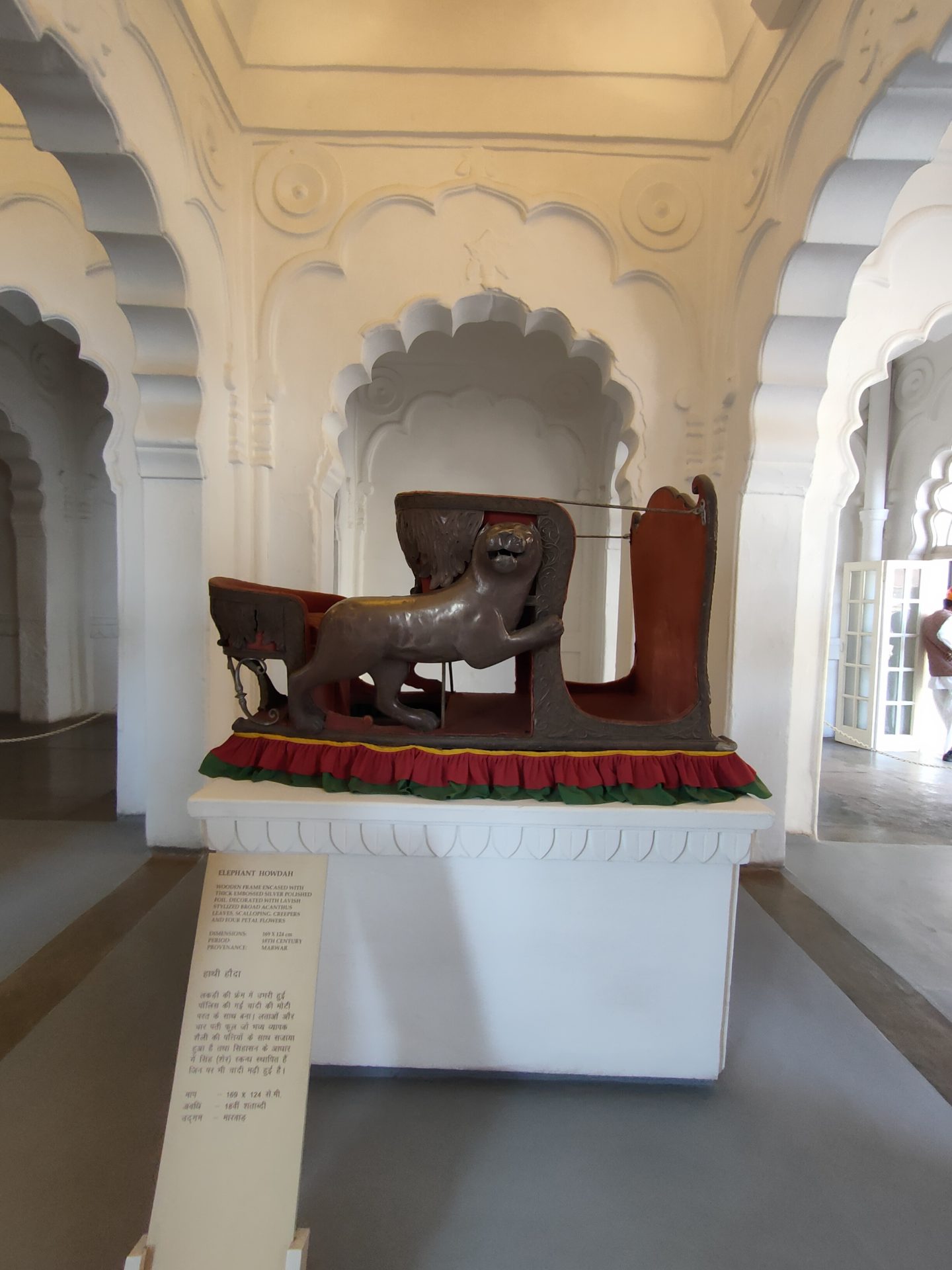
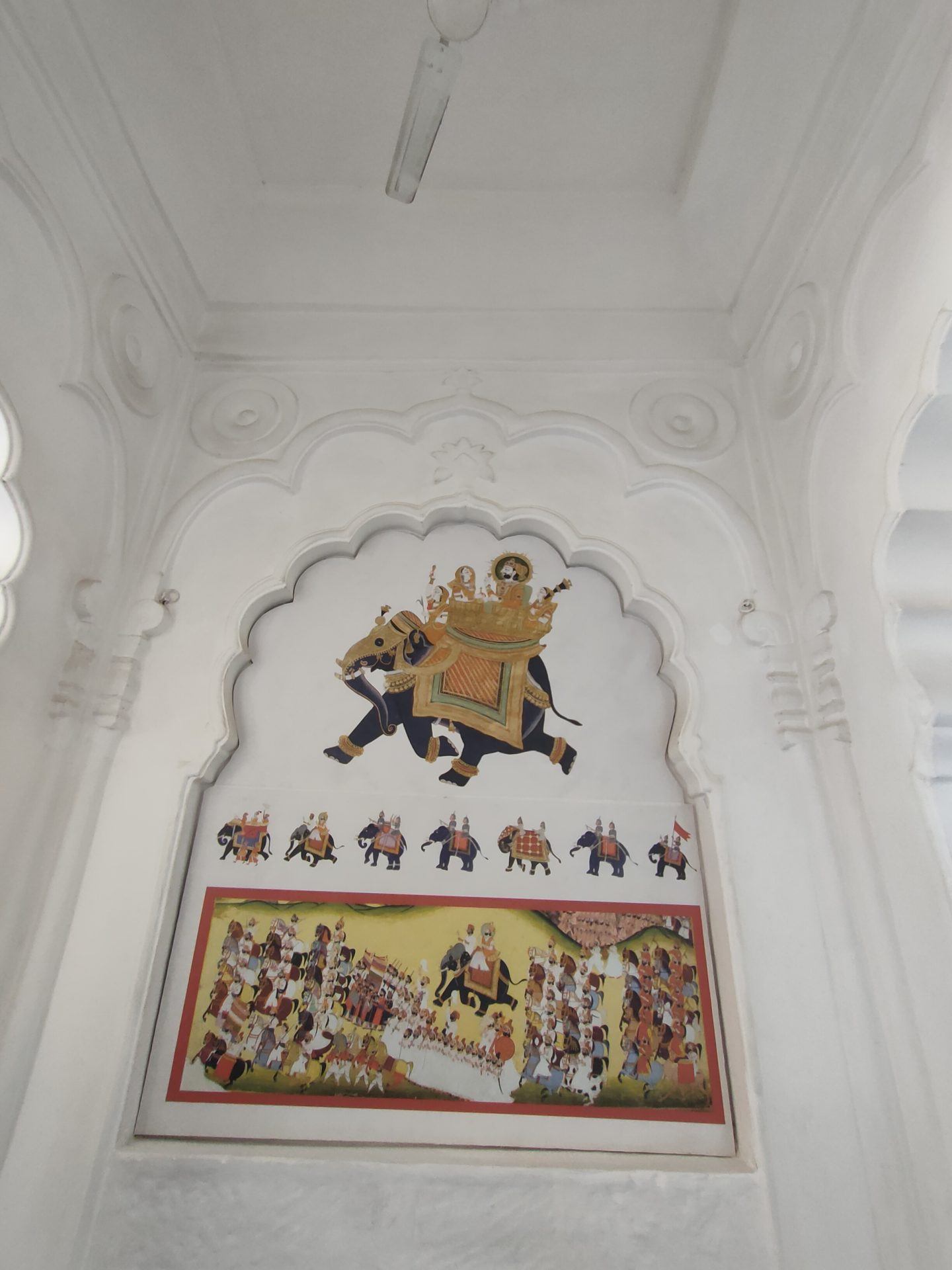
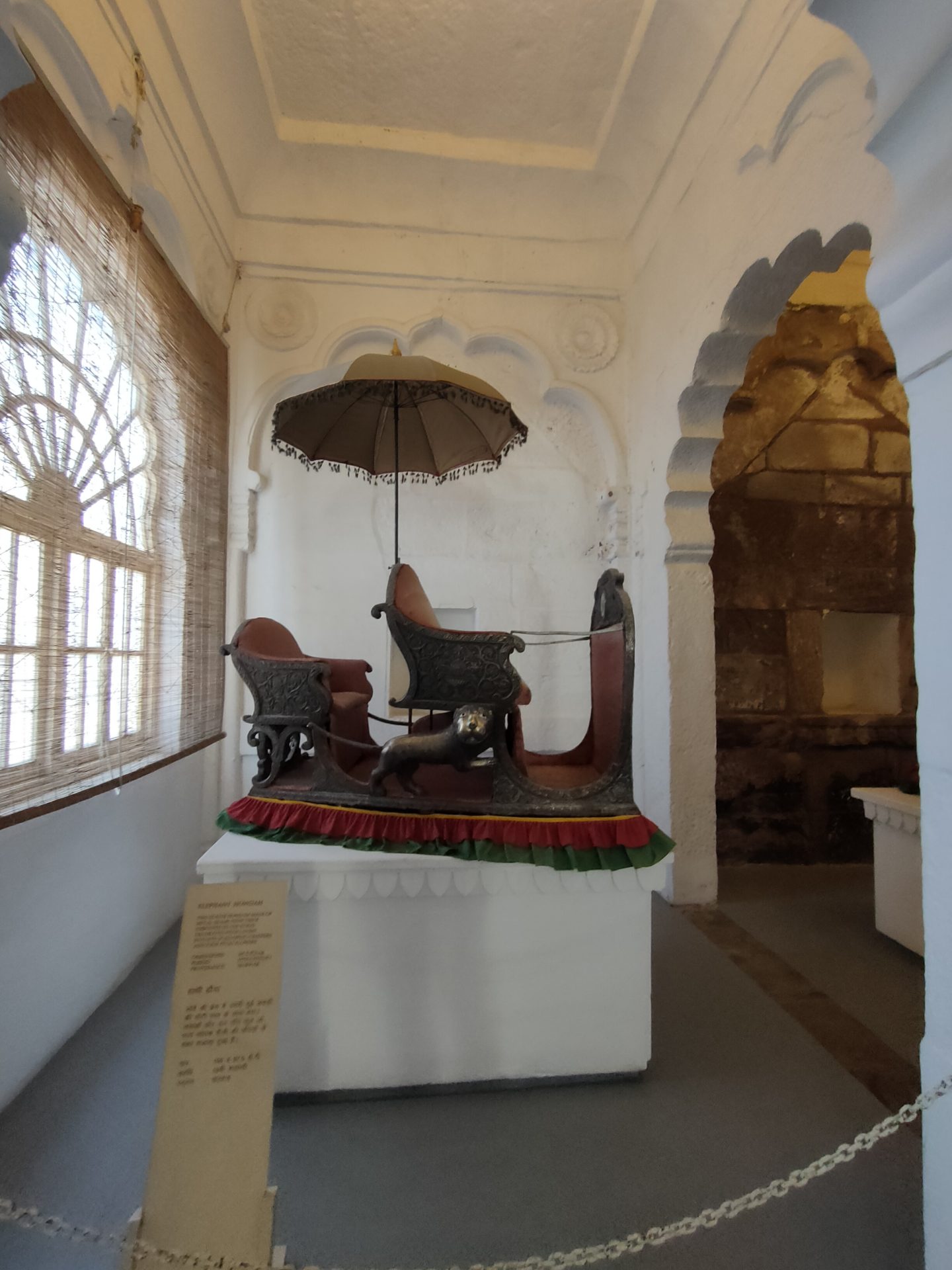
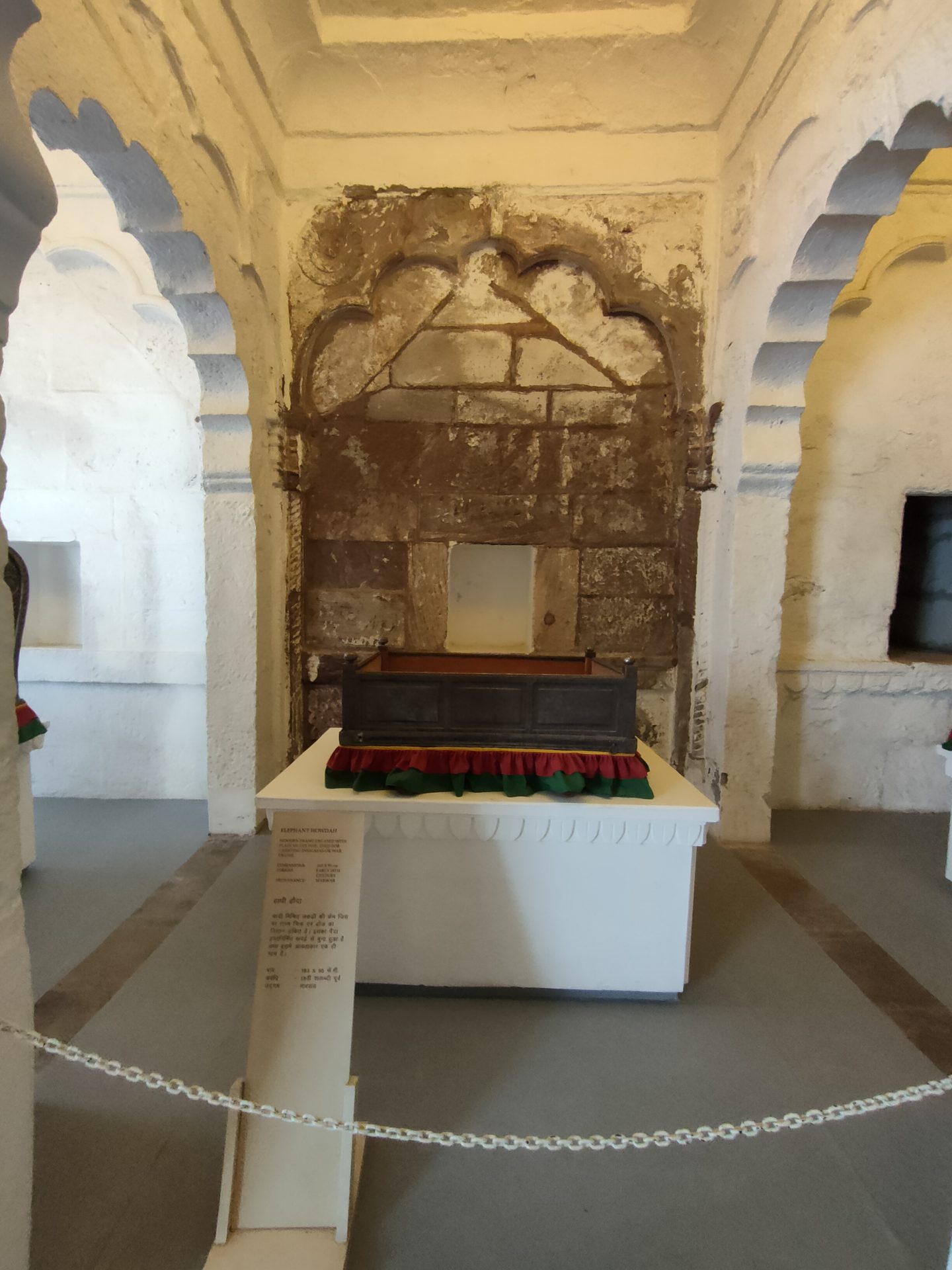
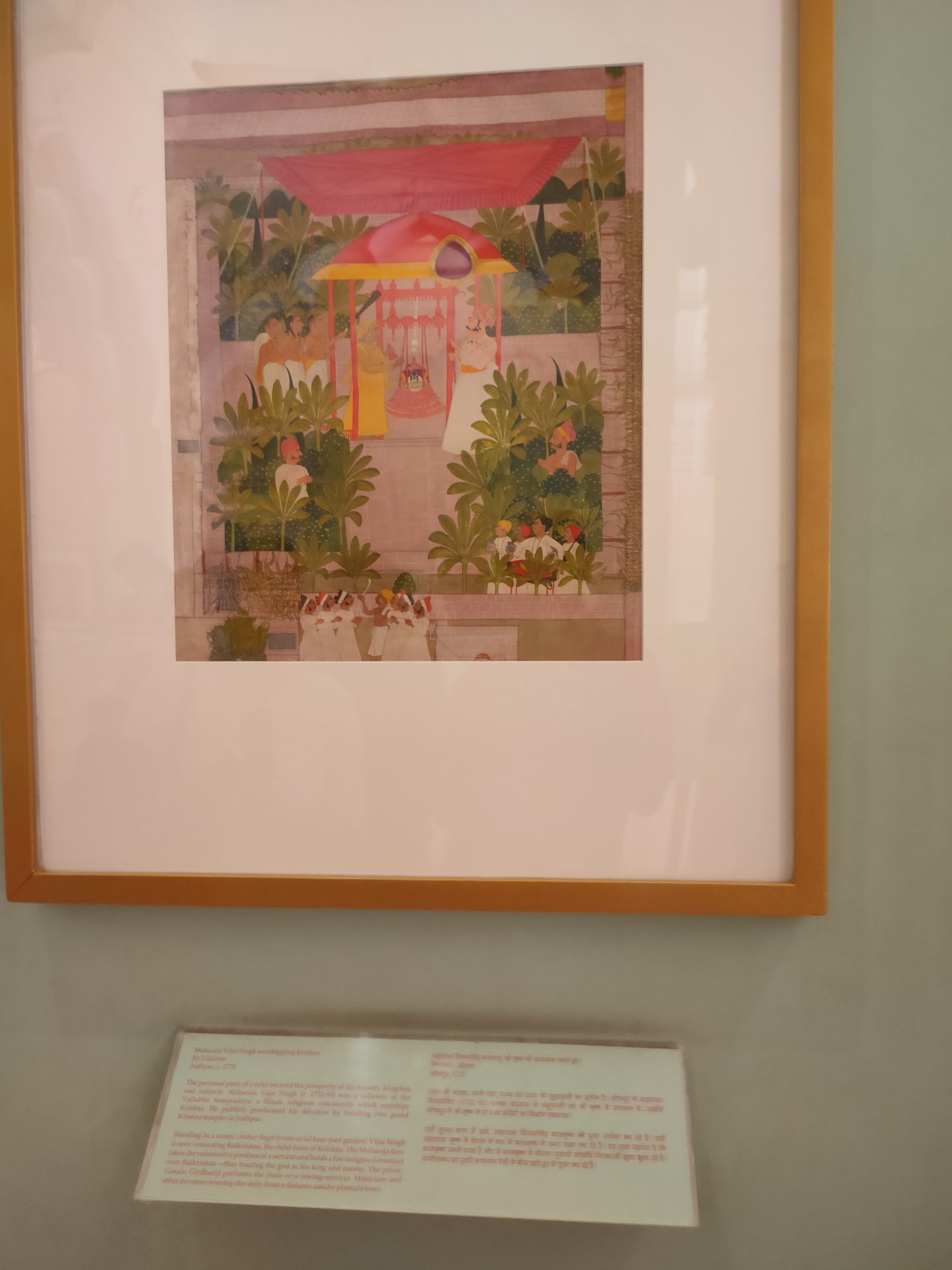
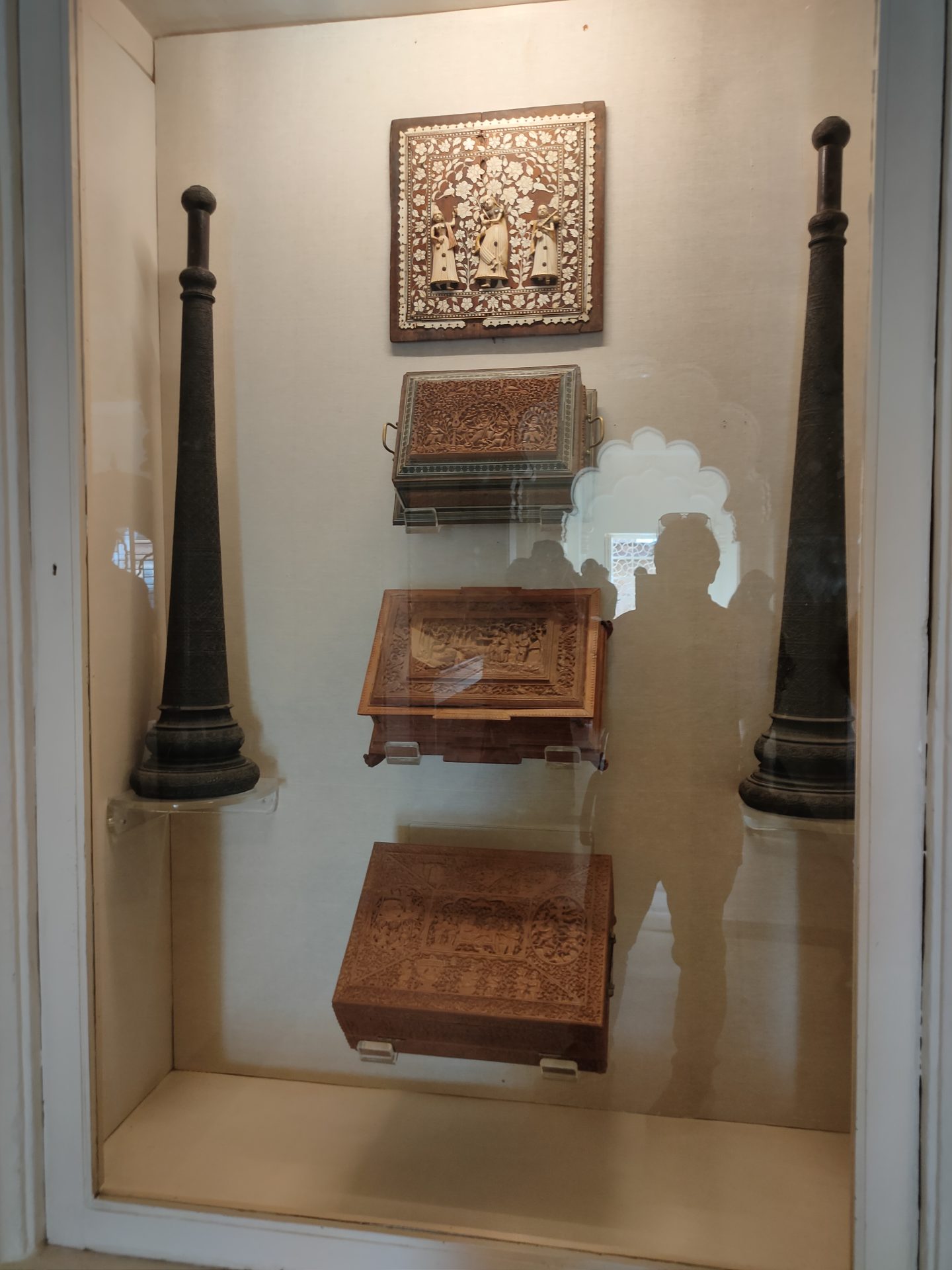
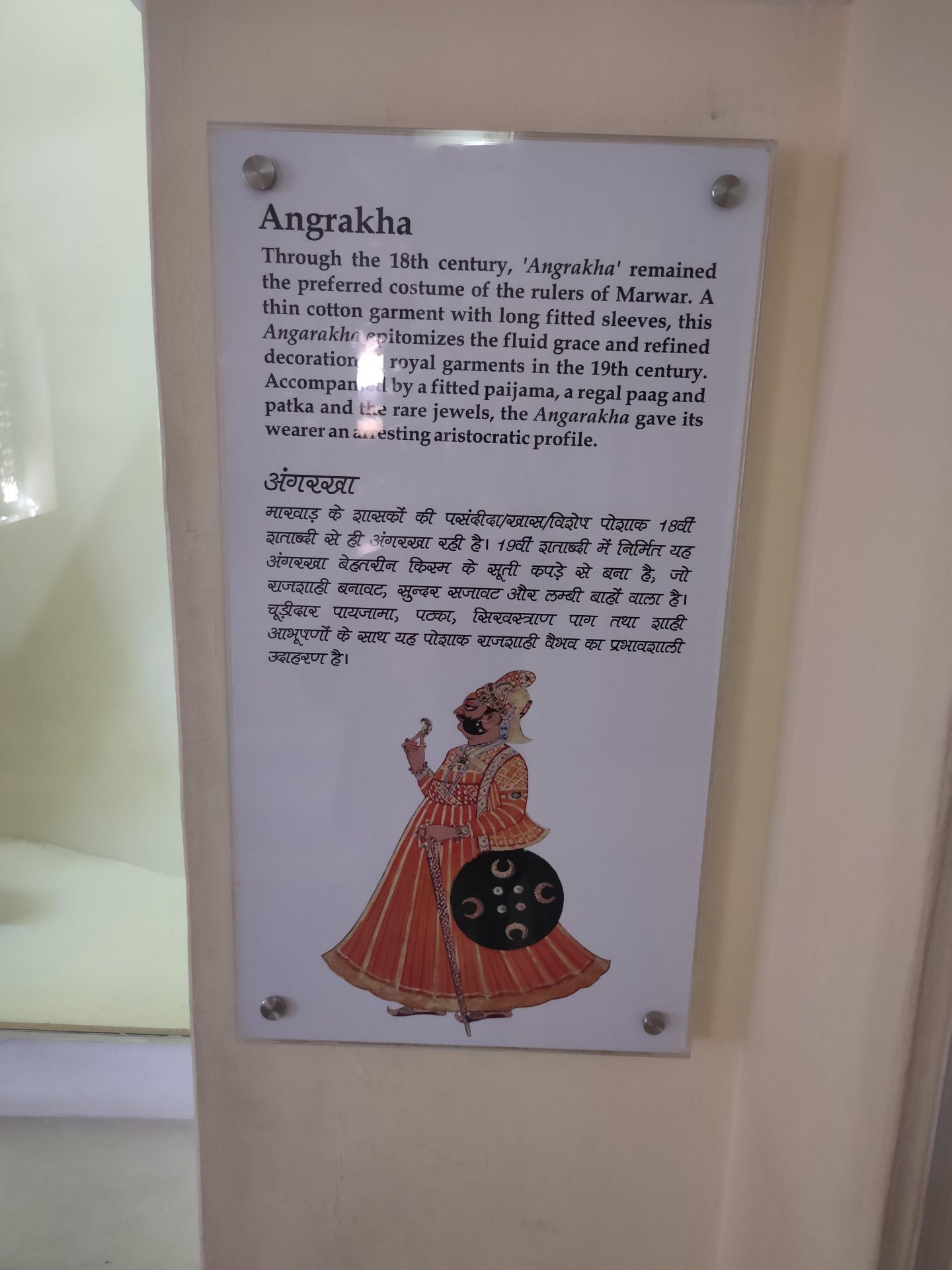
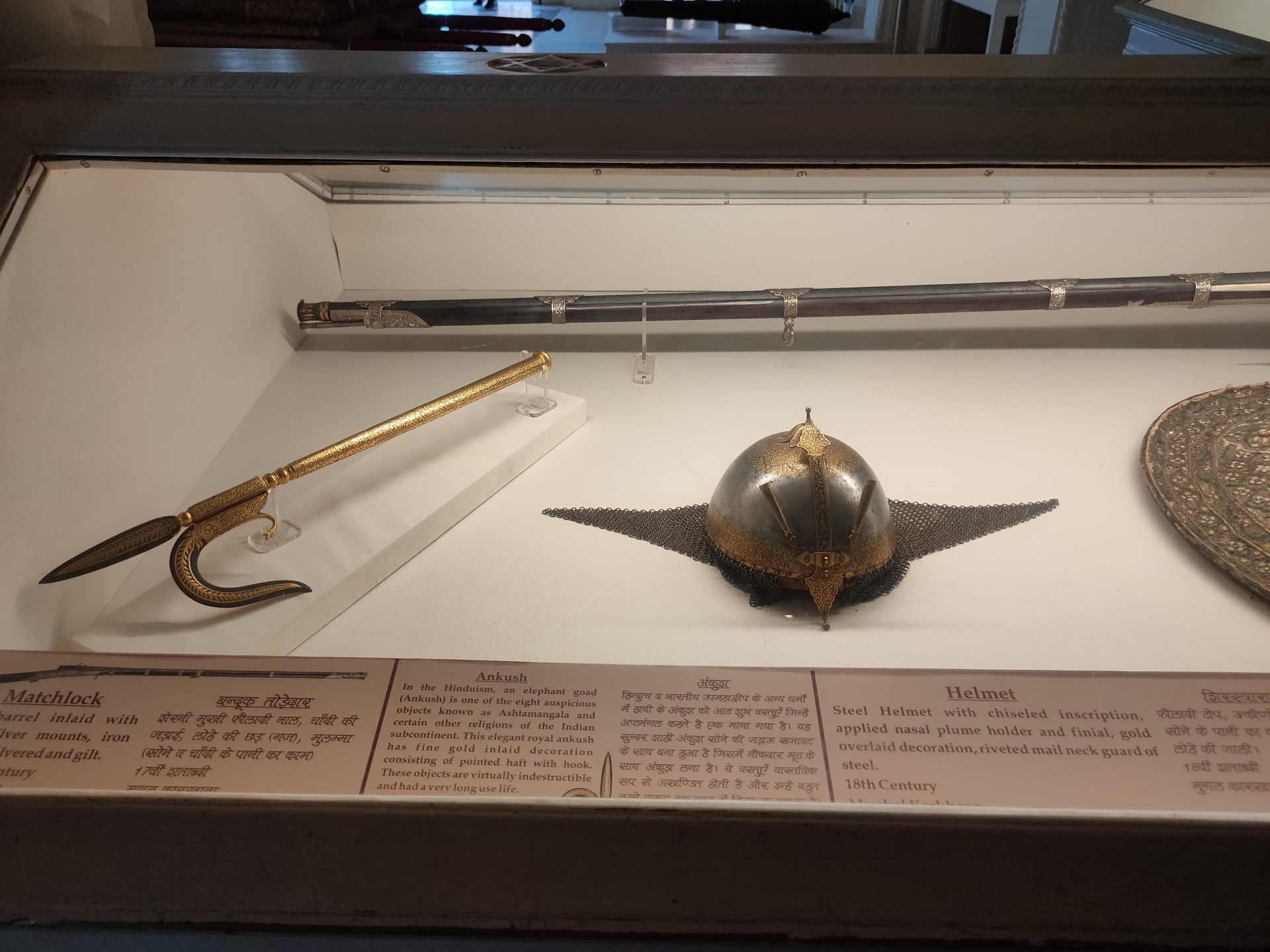
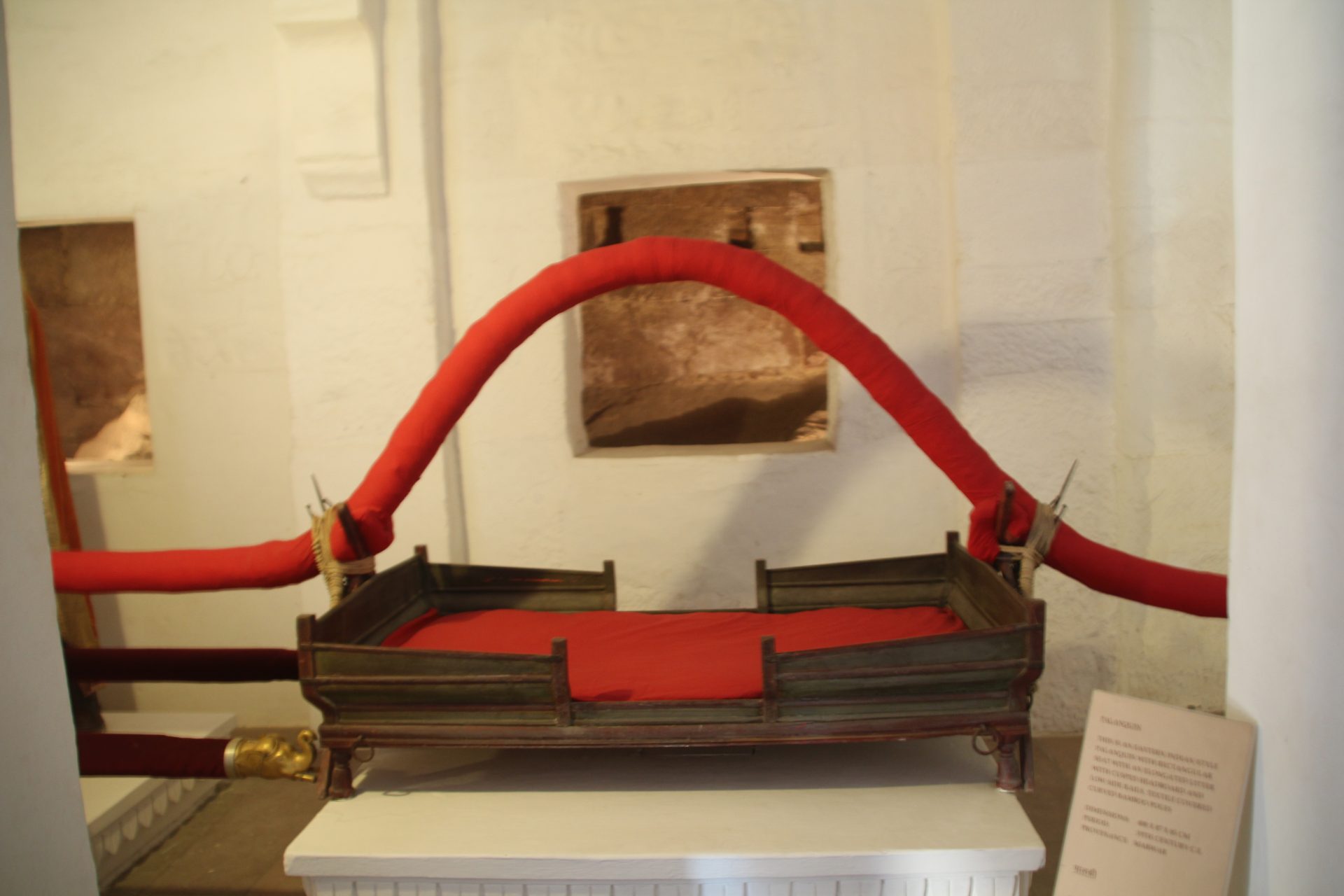
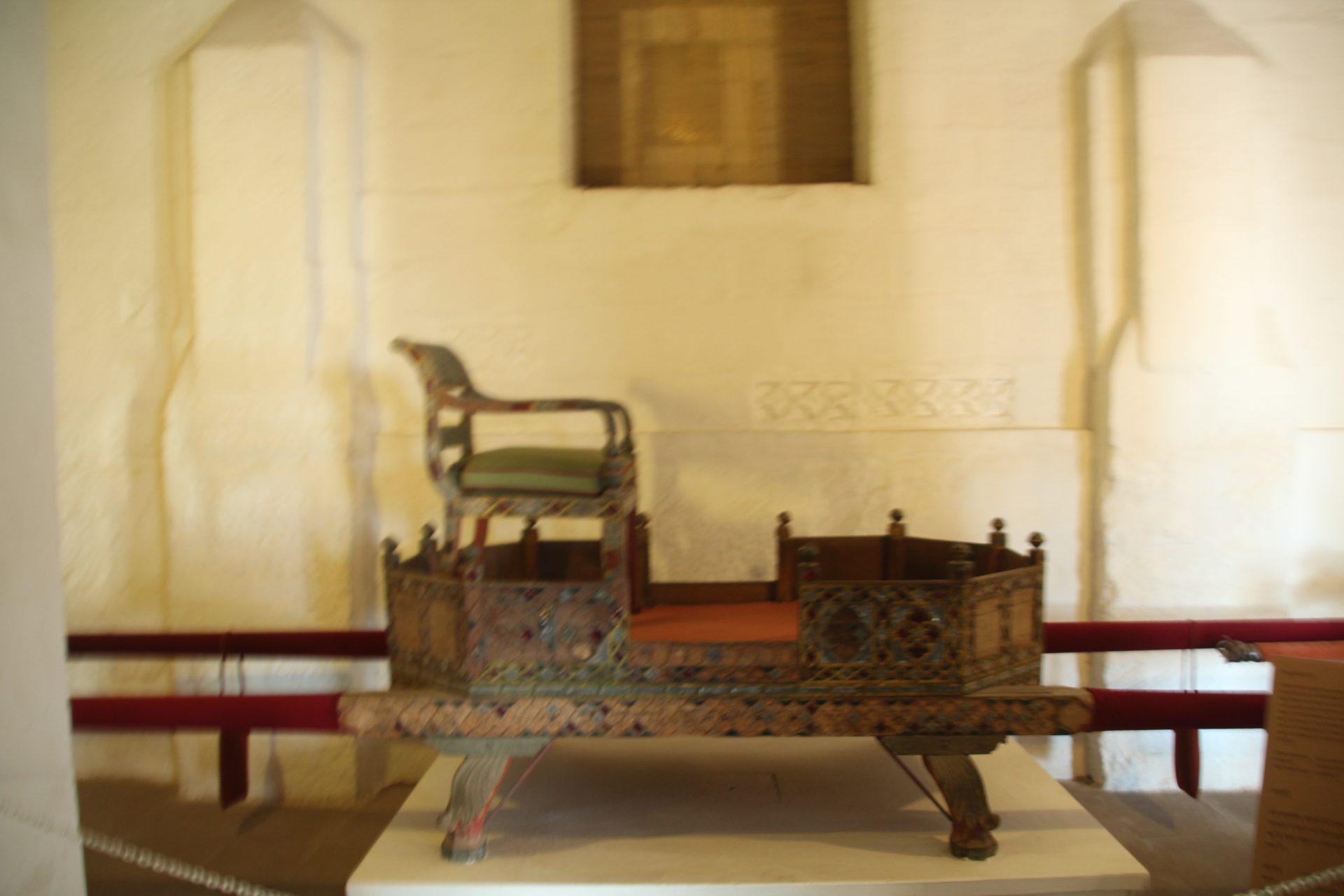
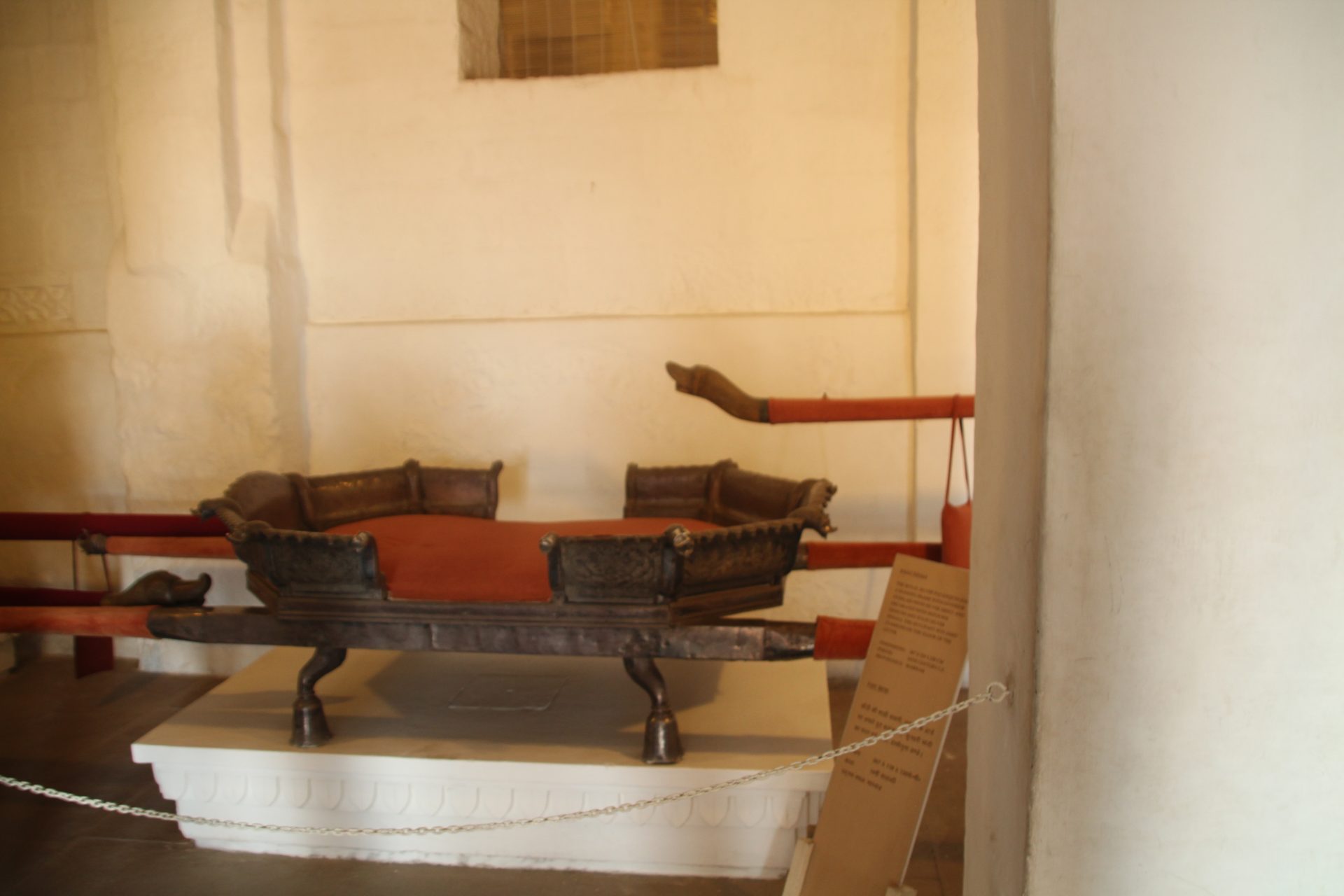
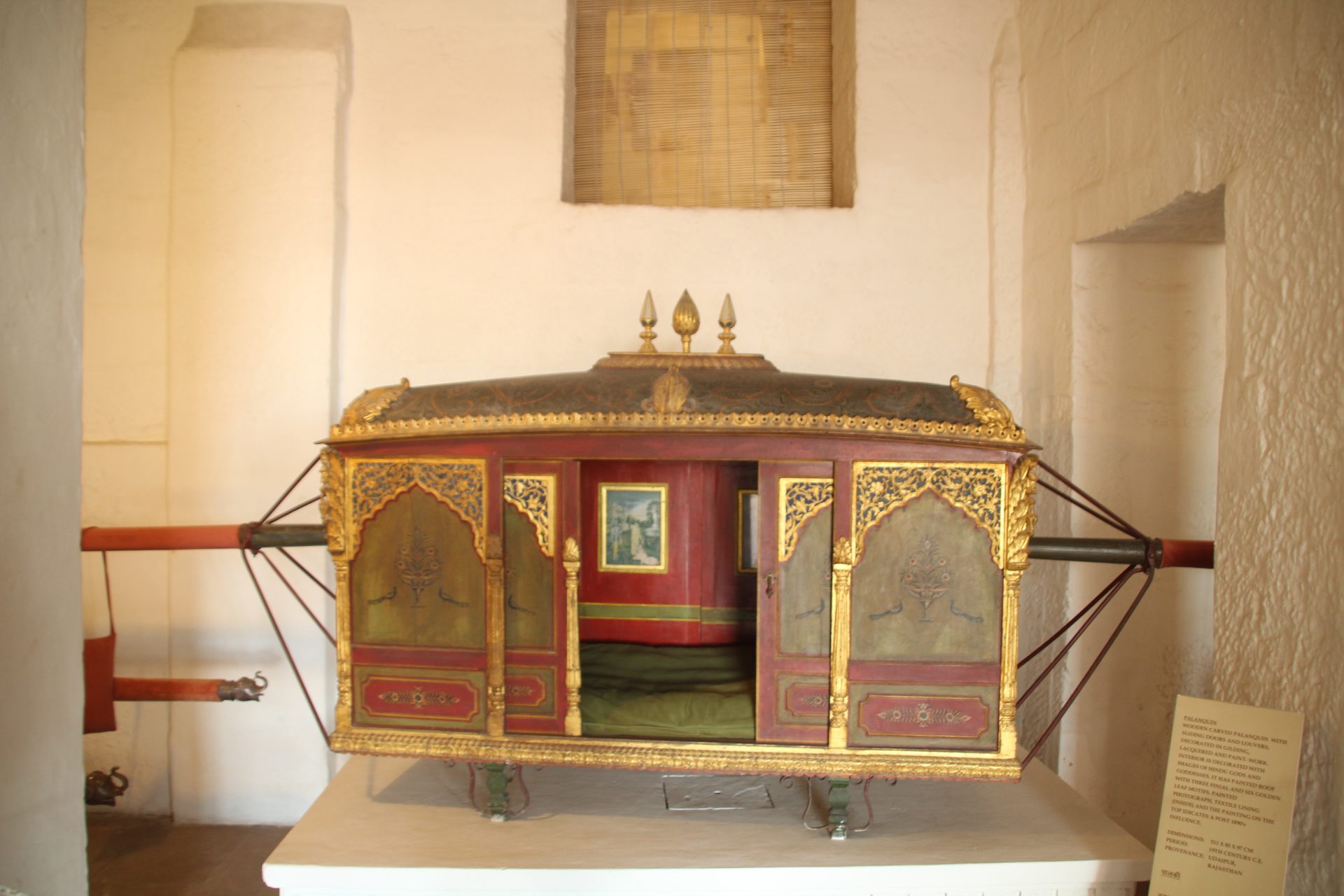
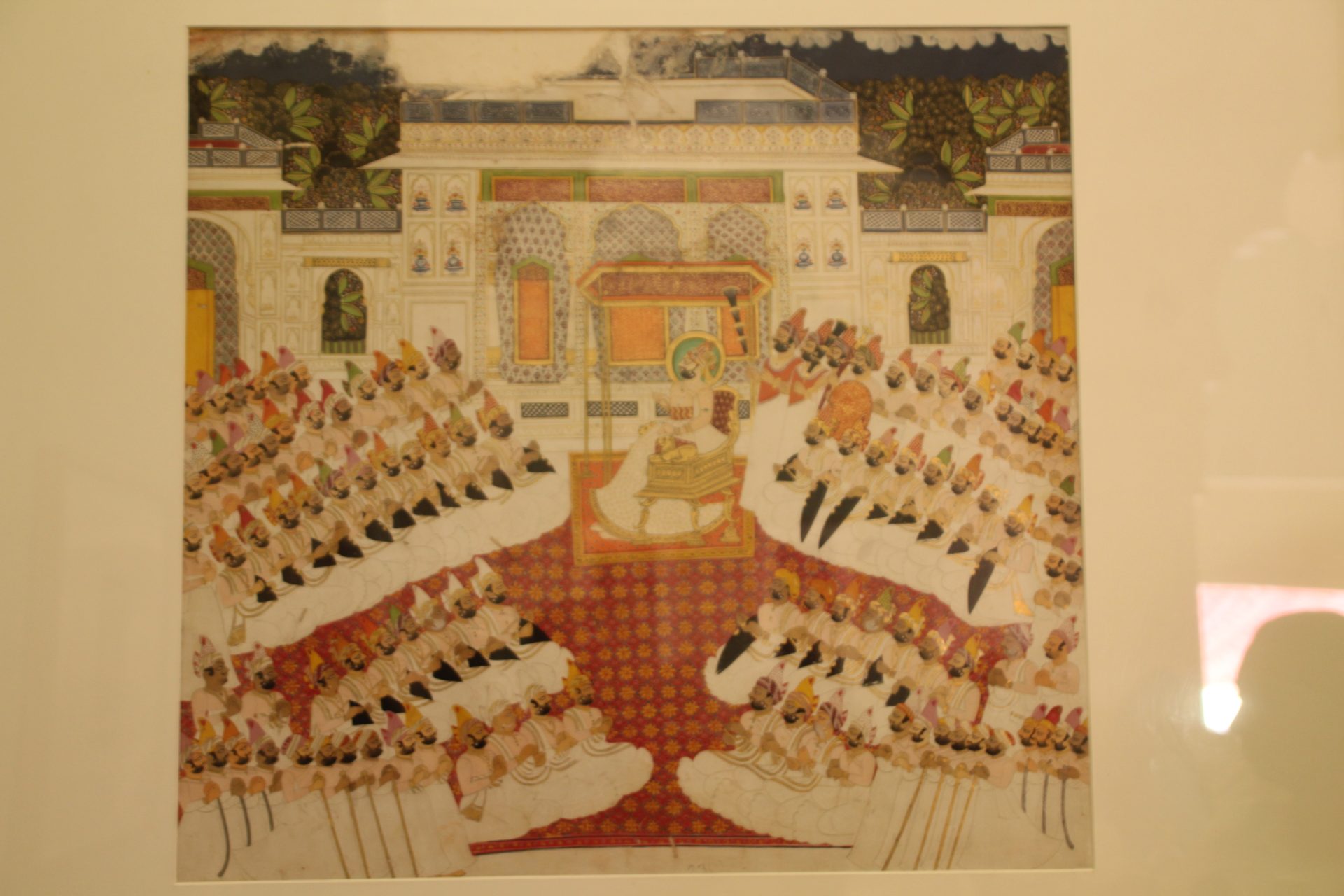
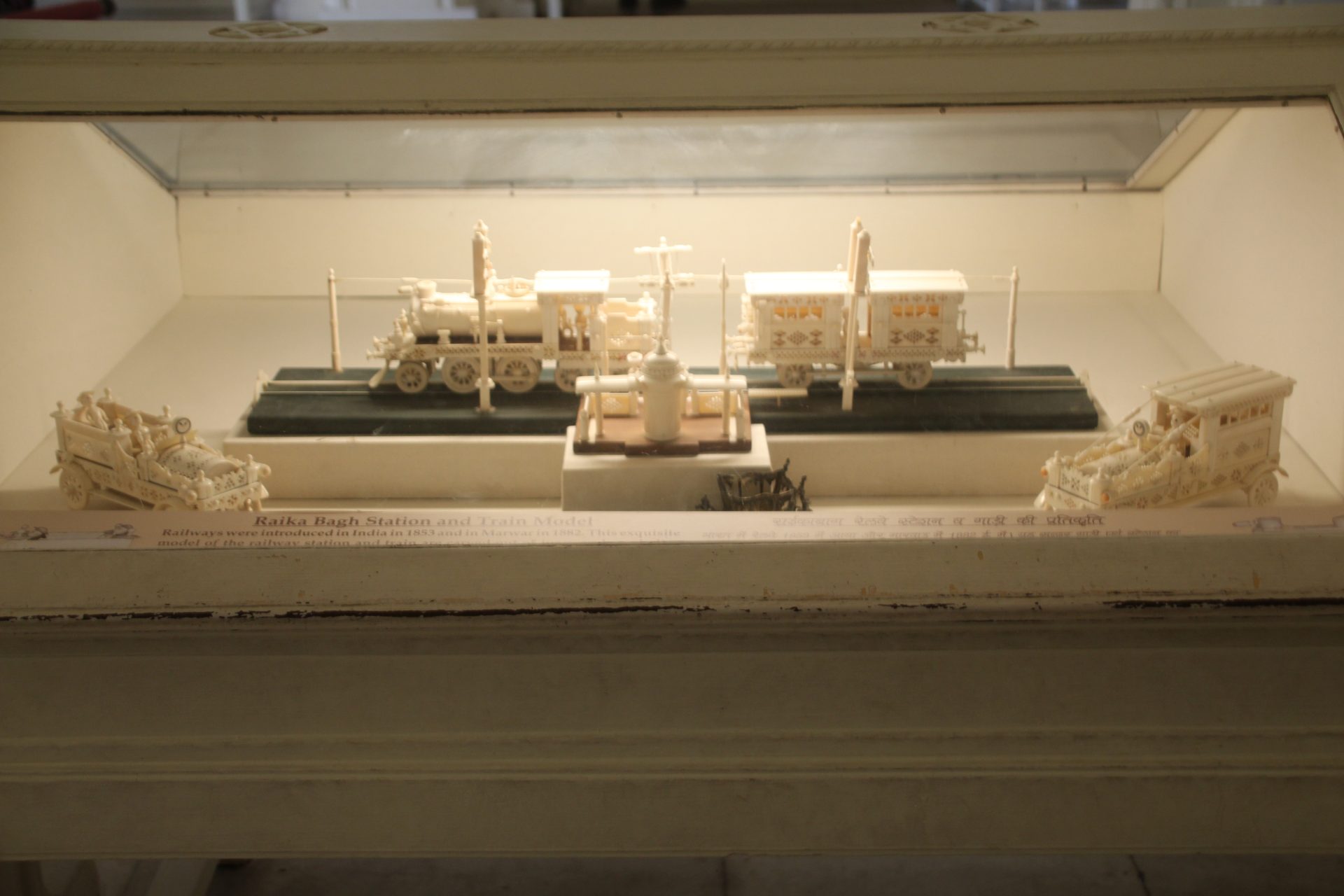
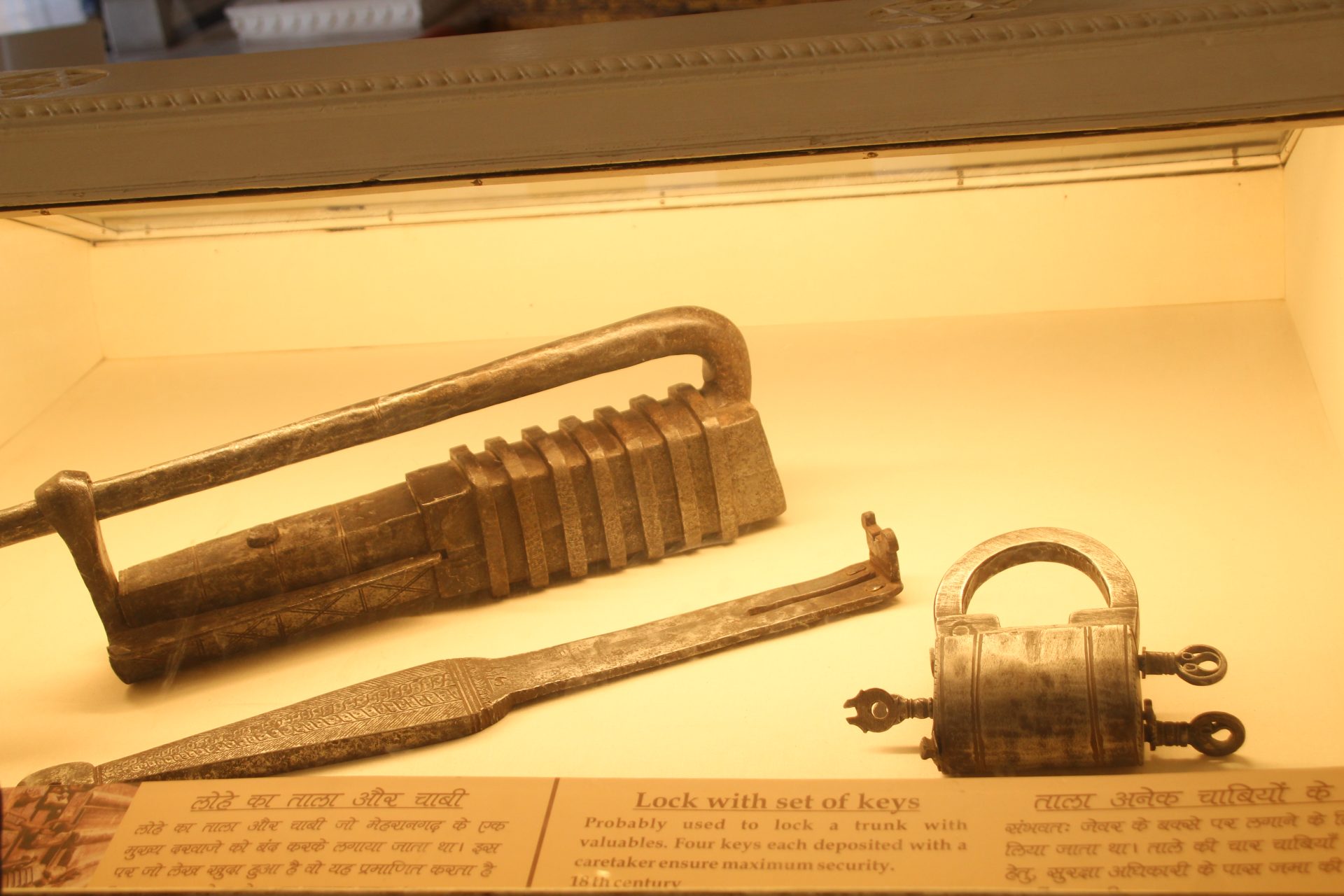
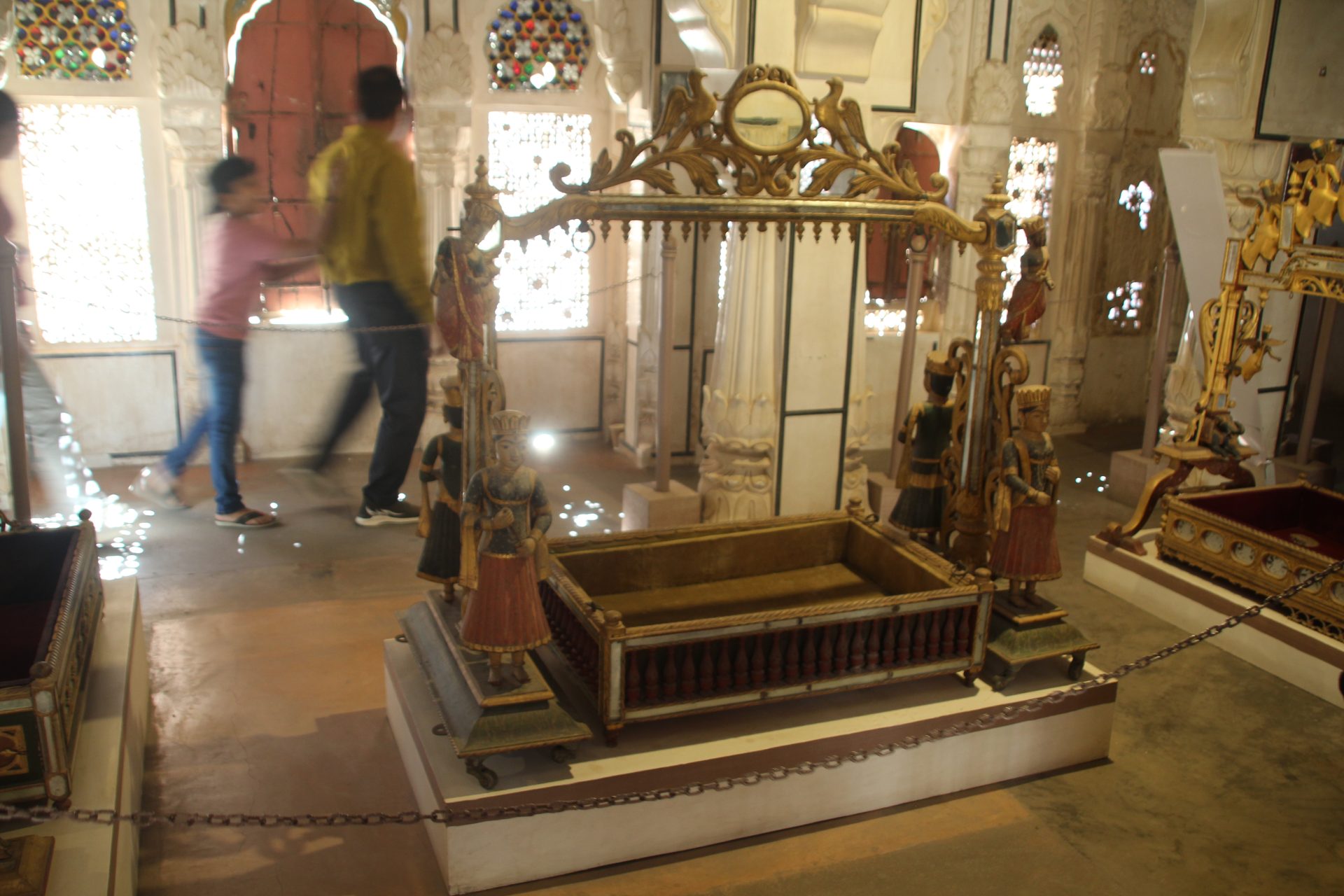
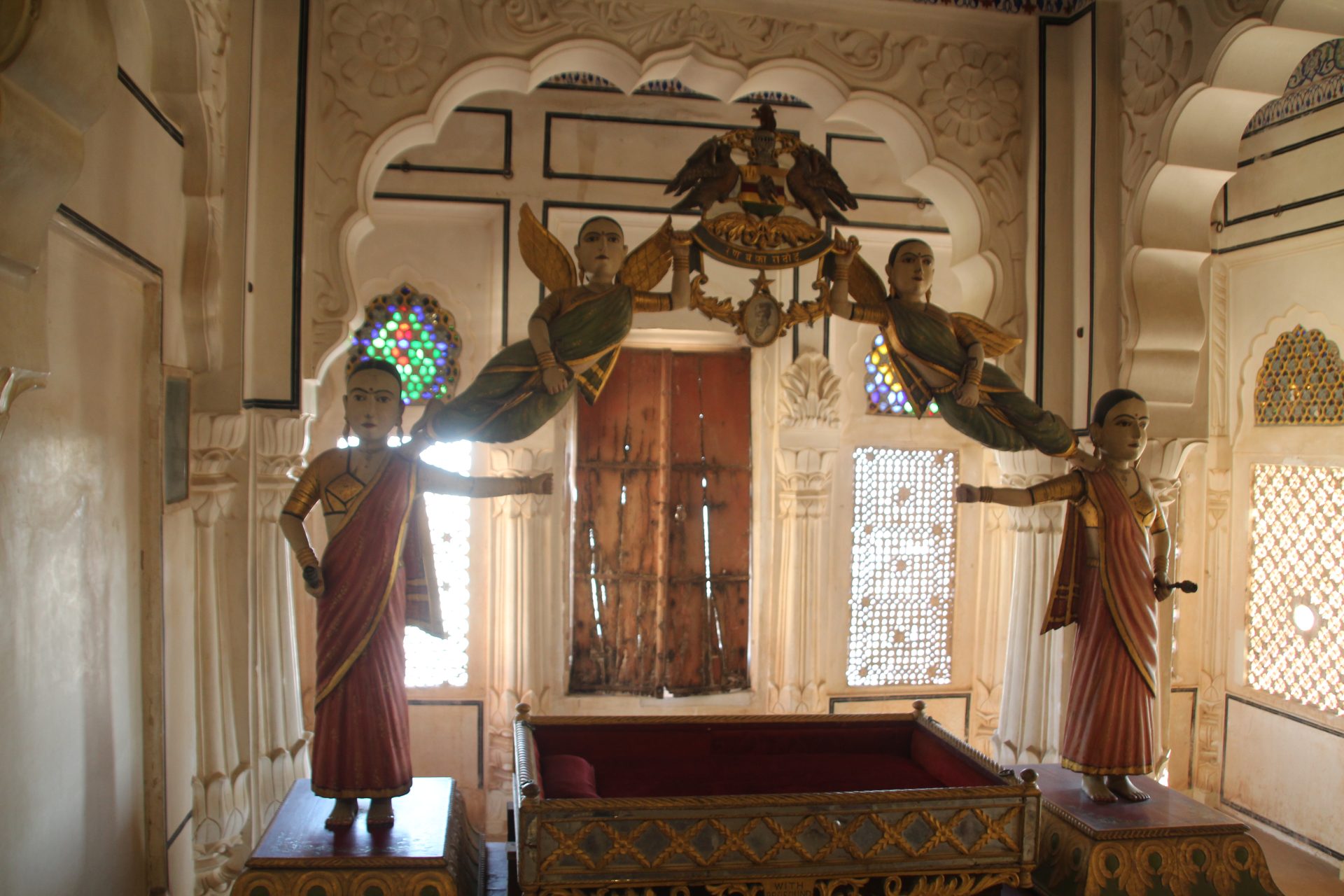
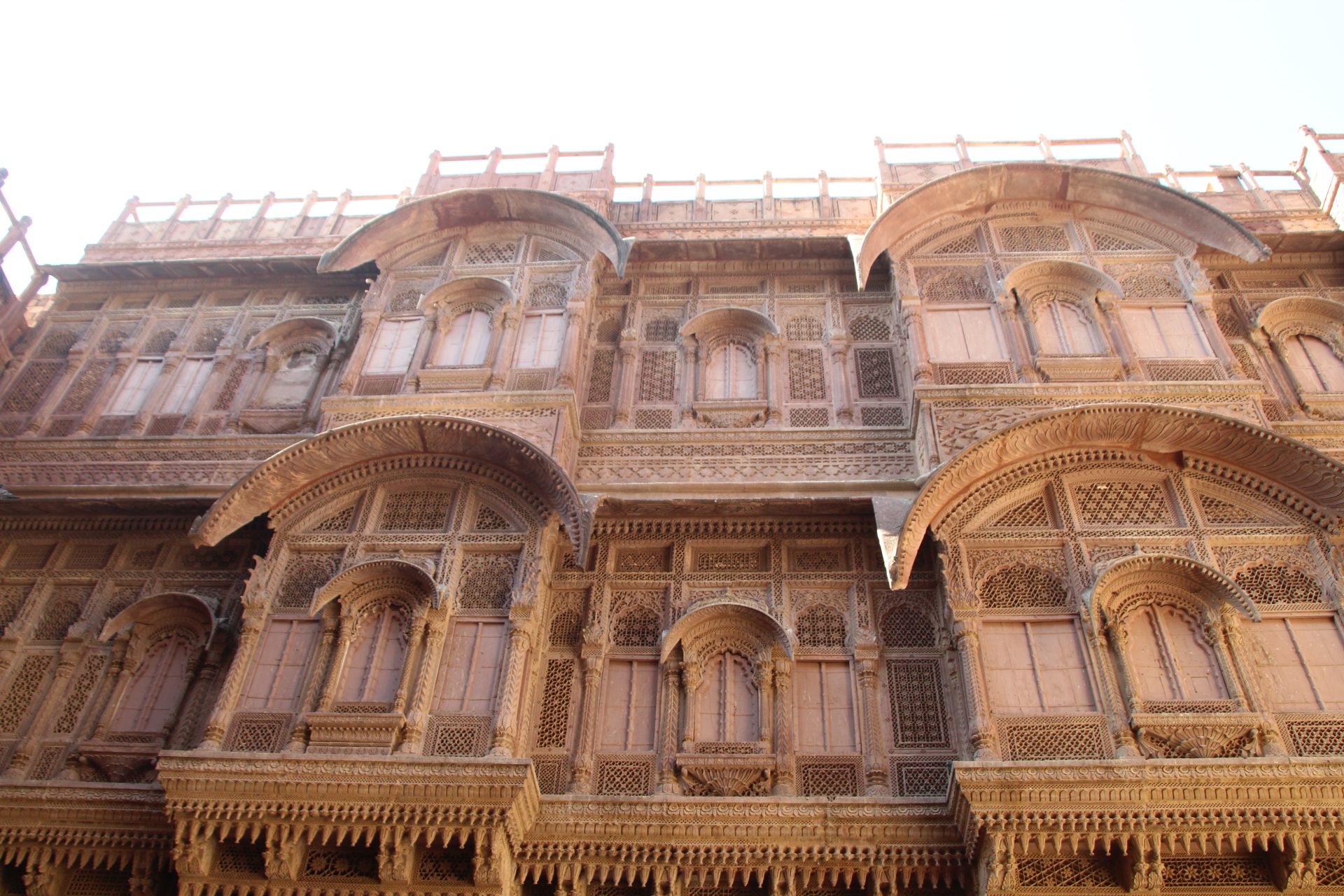
The inside of the Fort has some lovely palaces, all done with intricate carvings and ornate designs. Before one reaches the upper level of the fort where one gets to see the palaces, there is the Mehrangarh Museum where one gets to walk through different chambers which have on display, a rich collection of different types of palanquins, 18th and 19th century Howdahs (wooden seats placed atop an elephant), arms, Marwar paintings, royal cradles, costumes, Tent Walls and artefacts.
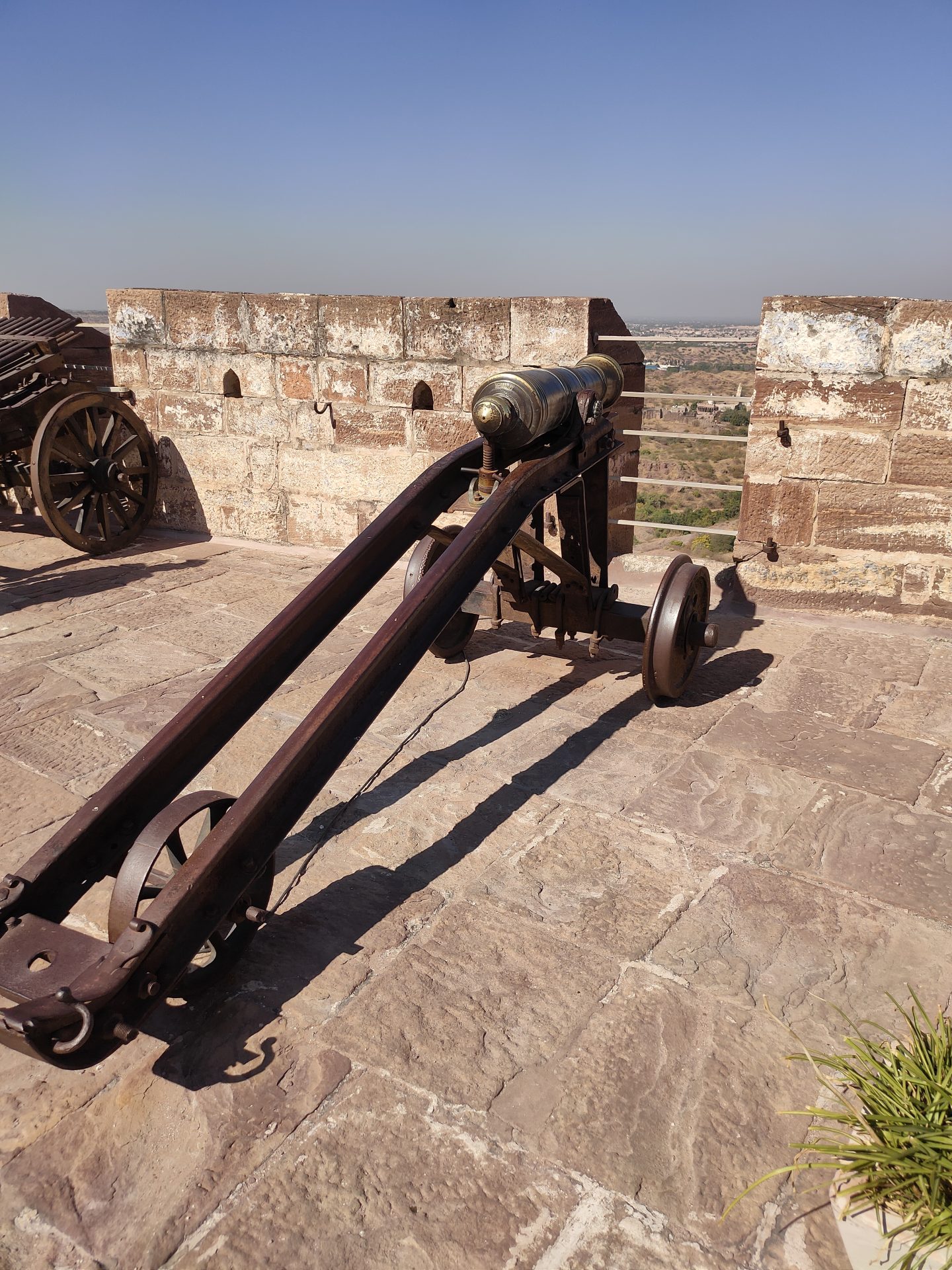
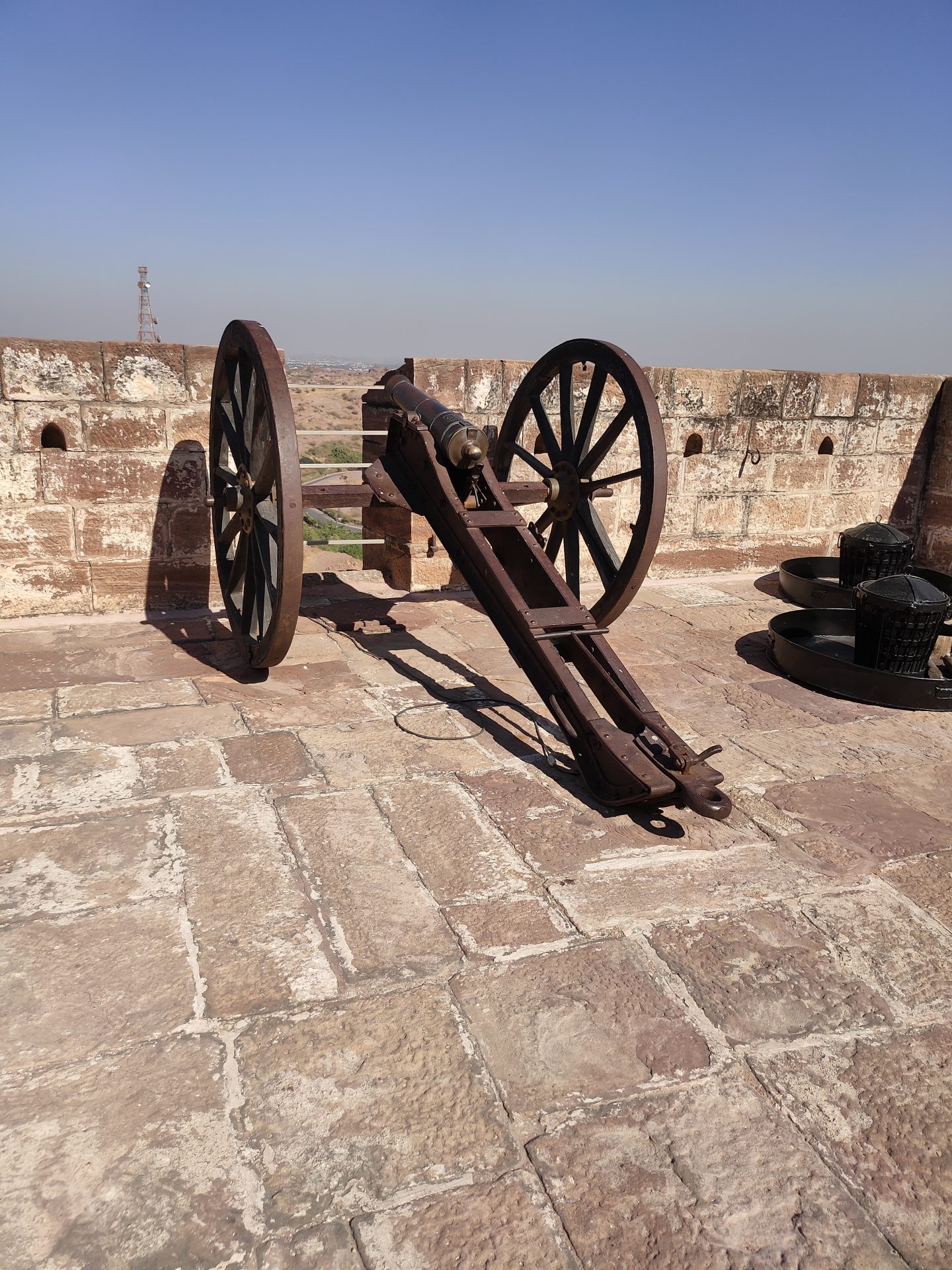
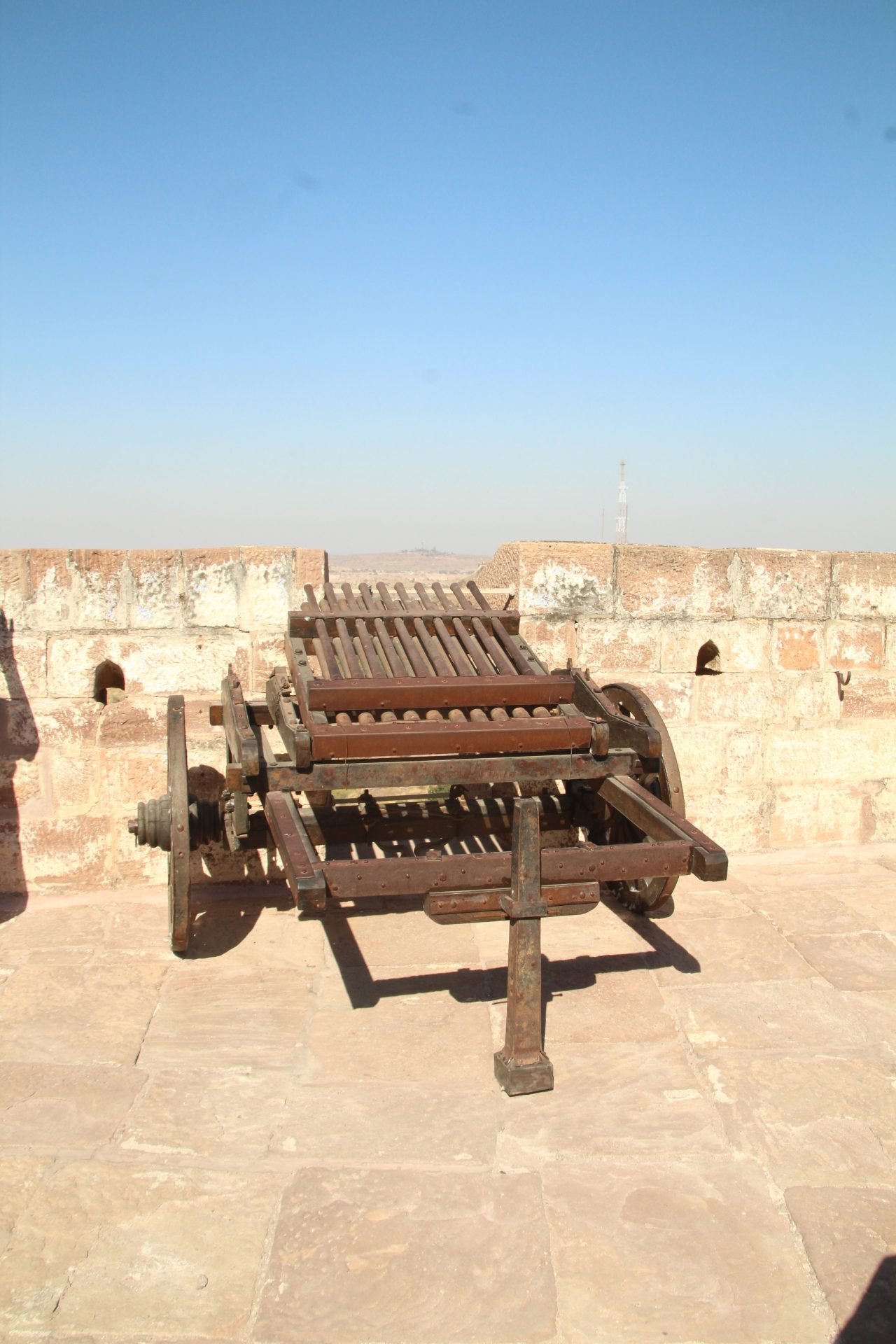
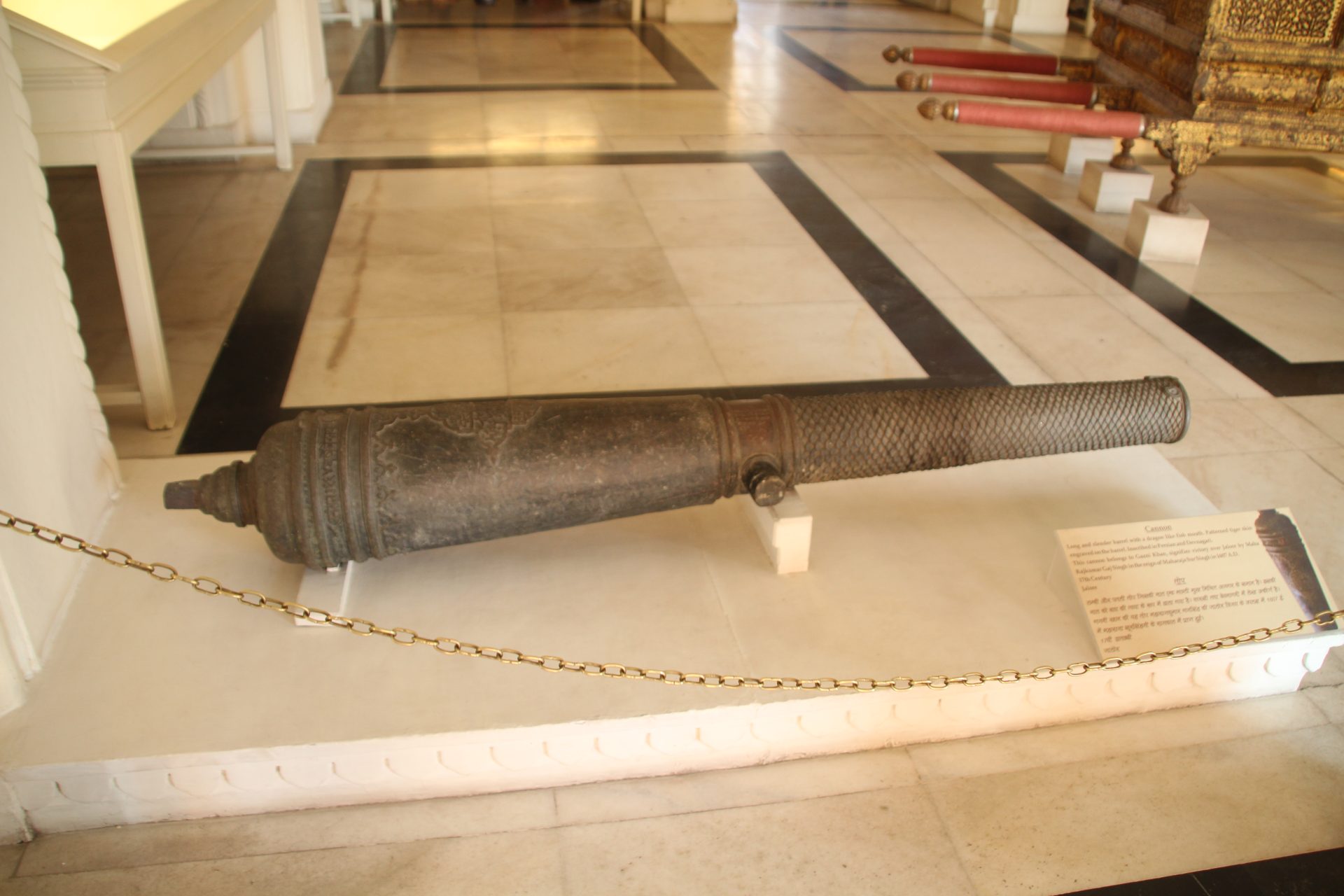
One can see ancient canons atop the fort which were used to guard the fort from enemies.
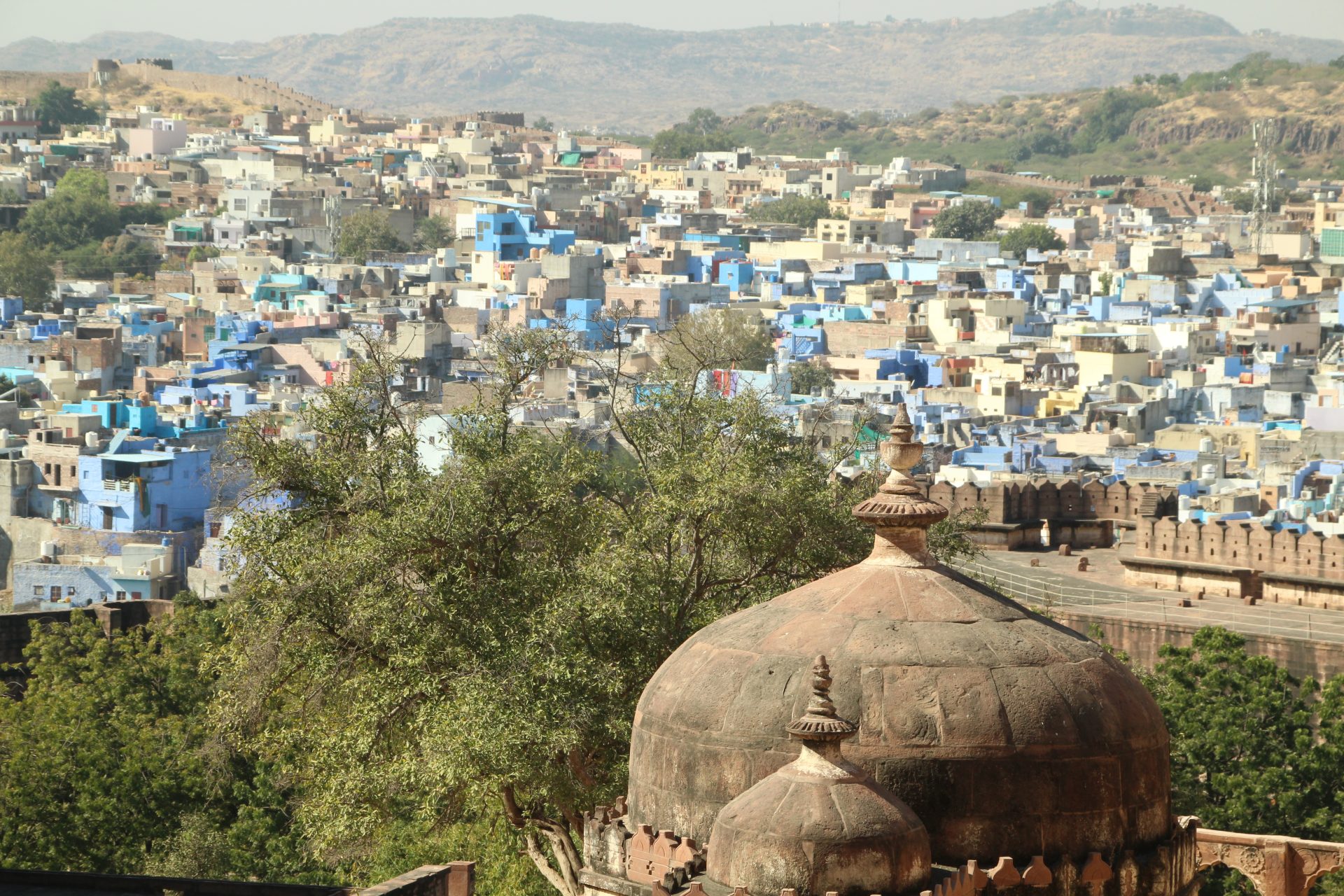
The top ramparts of the fort offer some breath-taking views of the Blue City. Multiple theories abound about why the buildings are painted blue.
One school of thought states that copper sulphate was added to the lime mixture for painting the houses and under certain conditions, it turns blue. Apart from the blue color being a good reflector the sun’s rays in rendering the houses to be cool, it also more effectively doubles up as a termite repellent. Another school of thought states that the blue pigment used on houses primarily indicated that Brahmins resided there and they were the only people who could afford the copper sulphate lime washes. The blue colour also denoted their proximity to the royal families.
The second theory sounds more wishy washy but nevertheless, gives a great backdrop of a sky blue pattern emerging over a vast expanse of arid area.
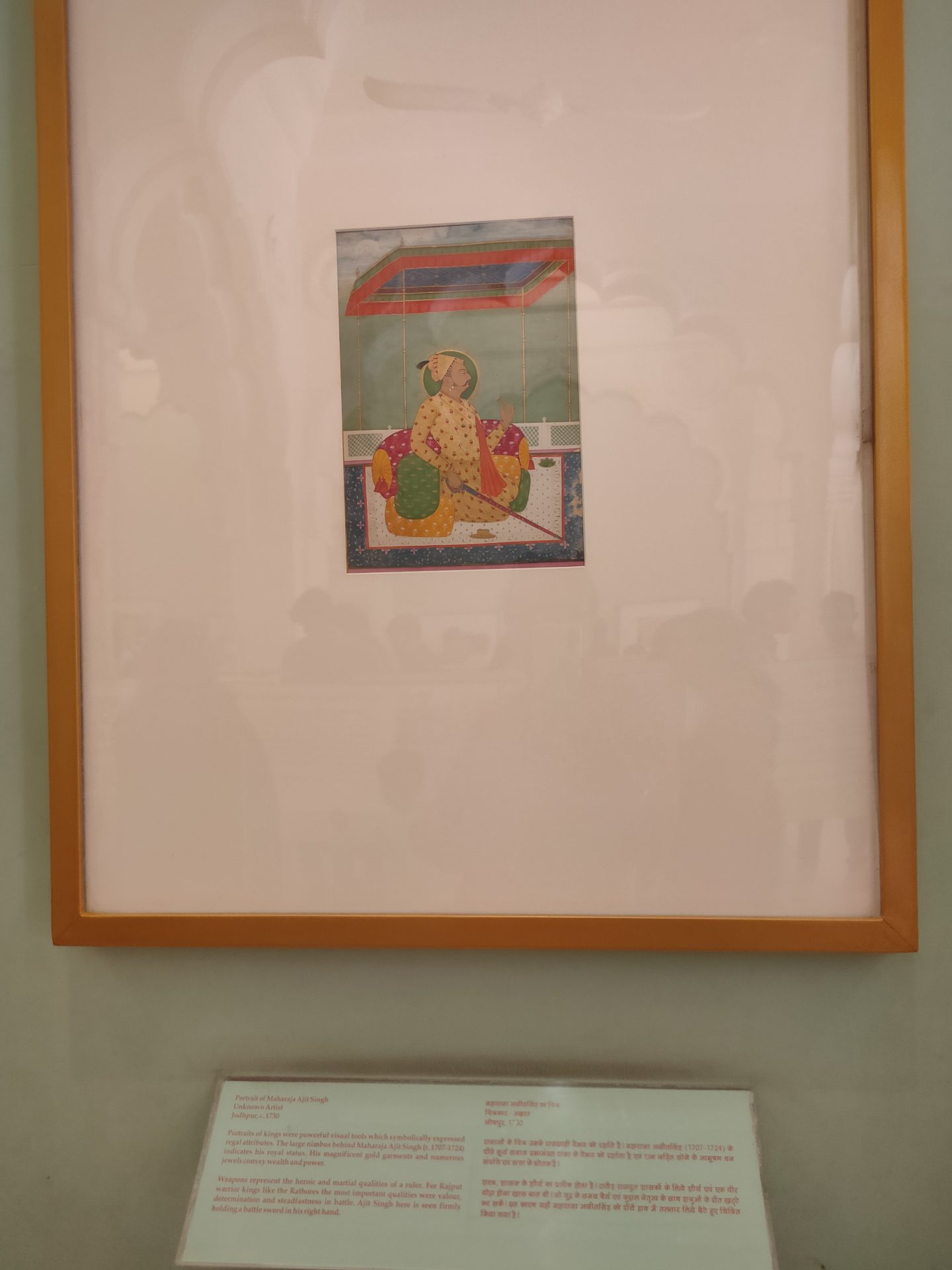
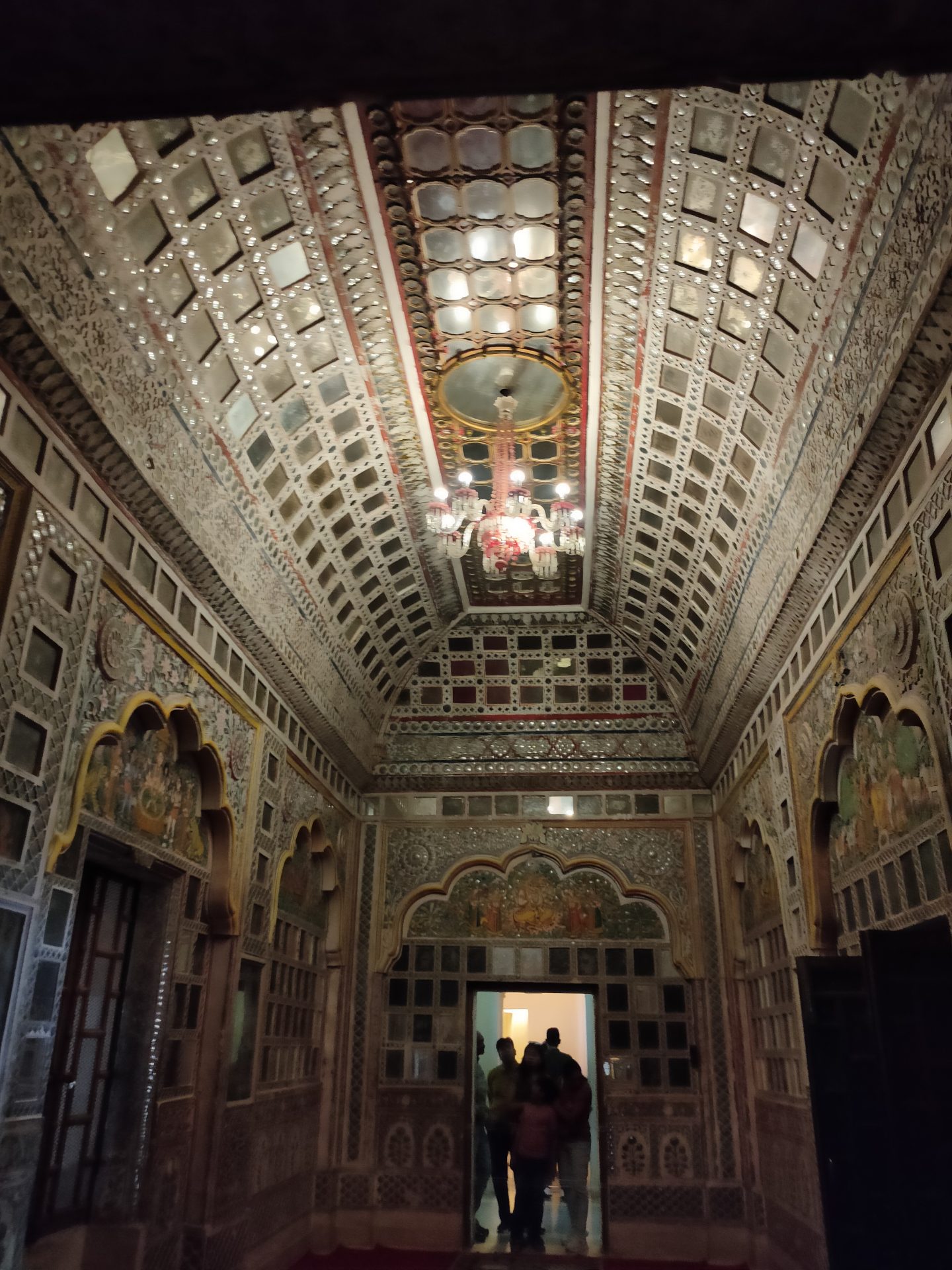
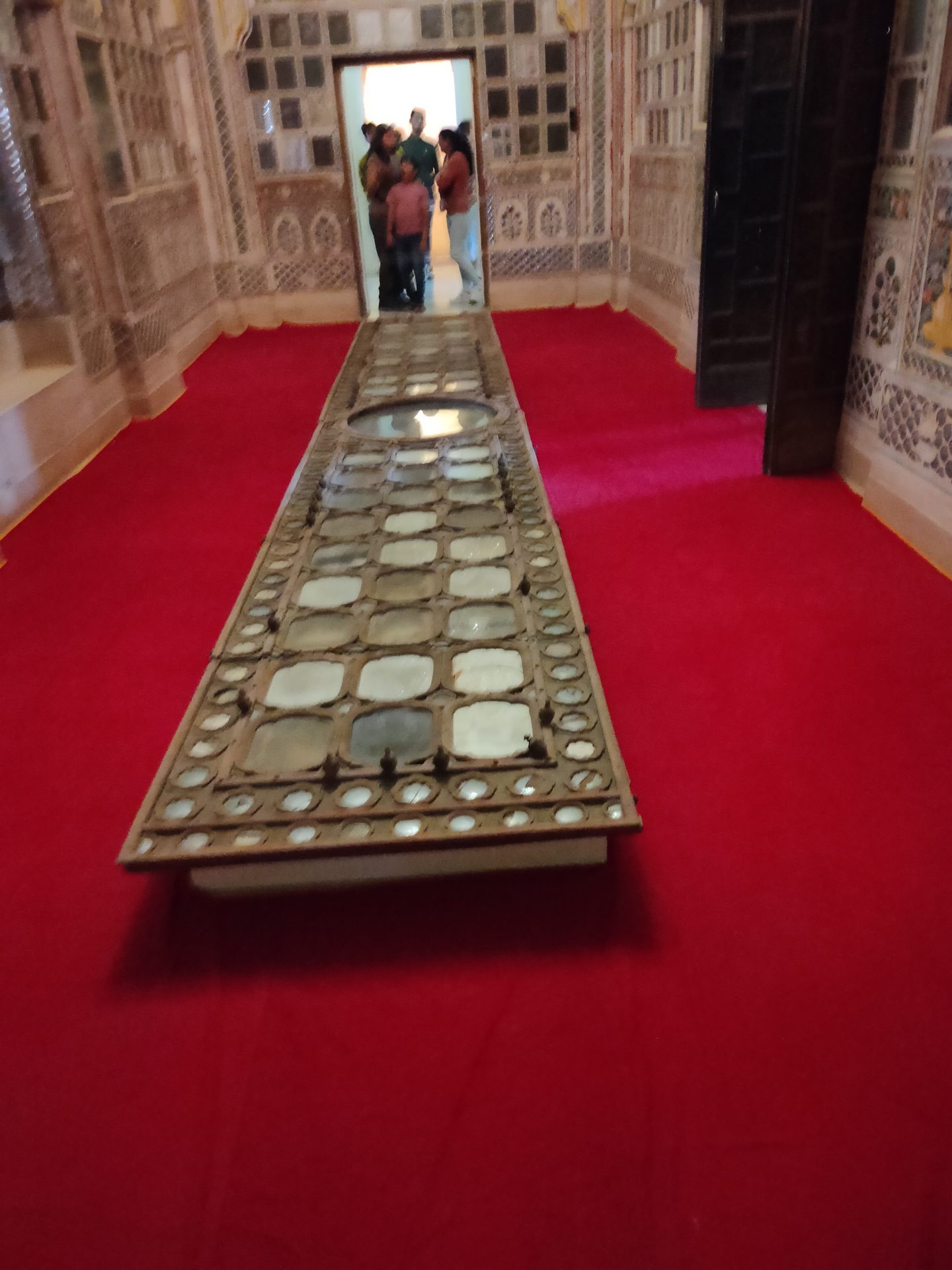
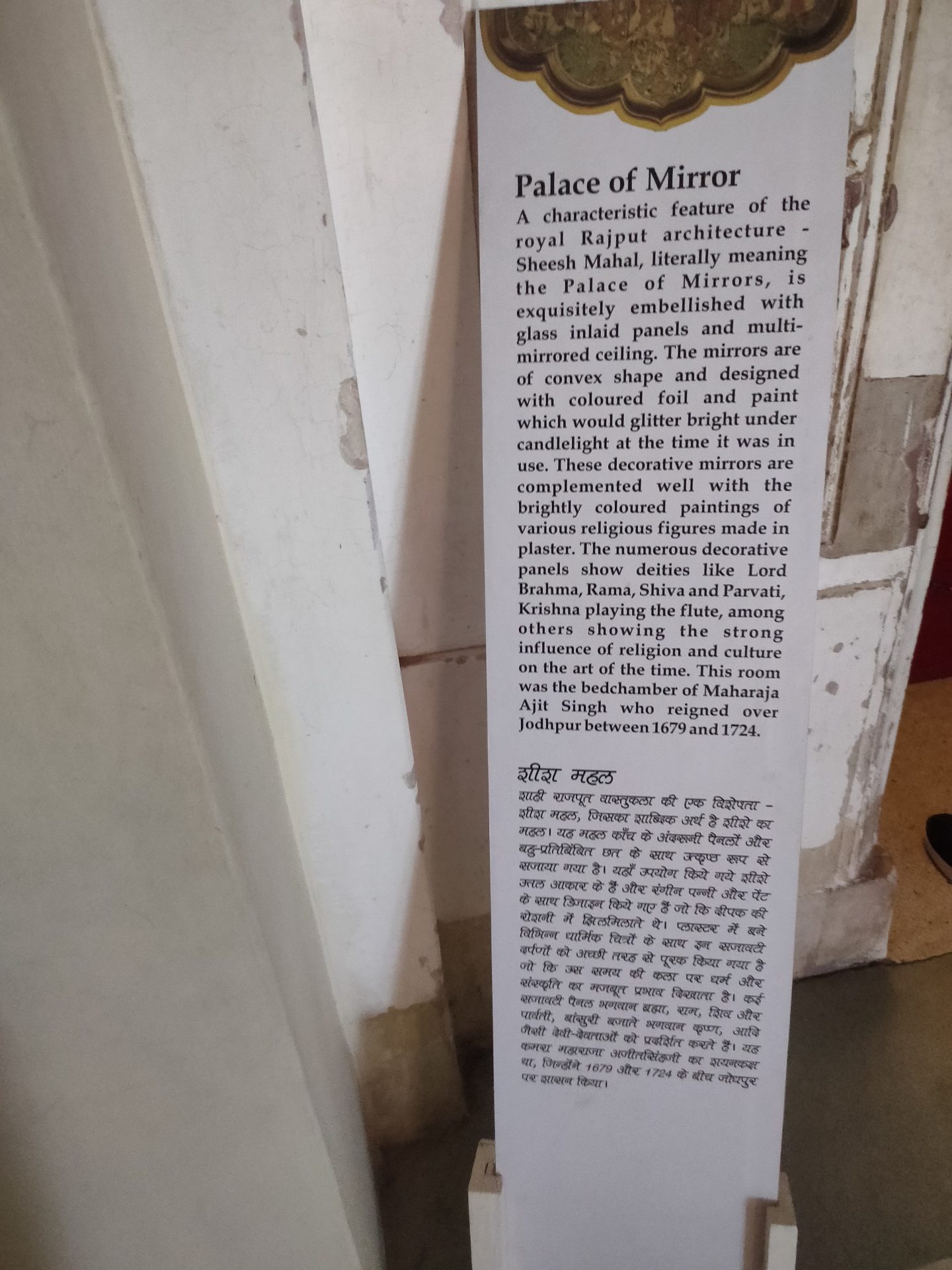
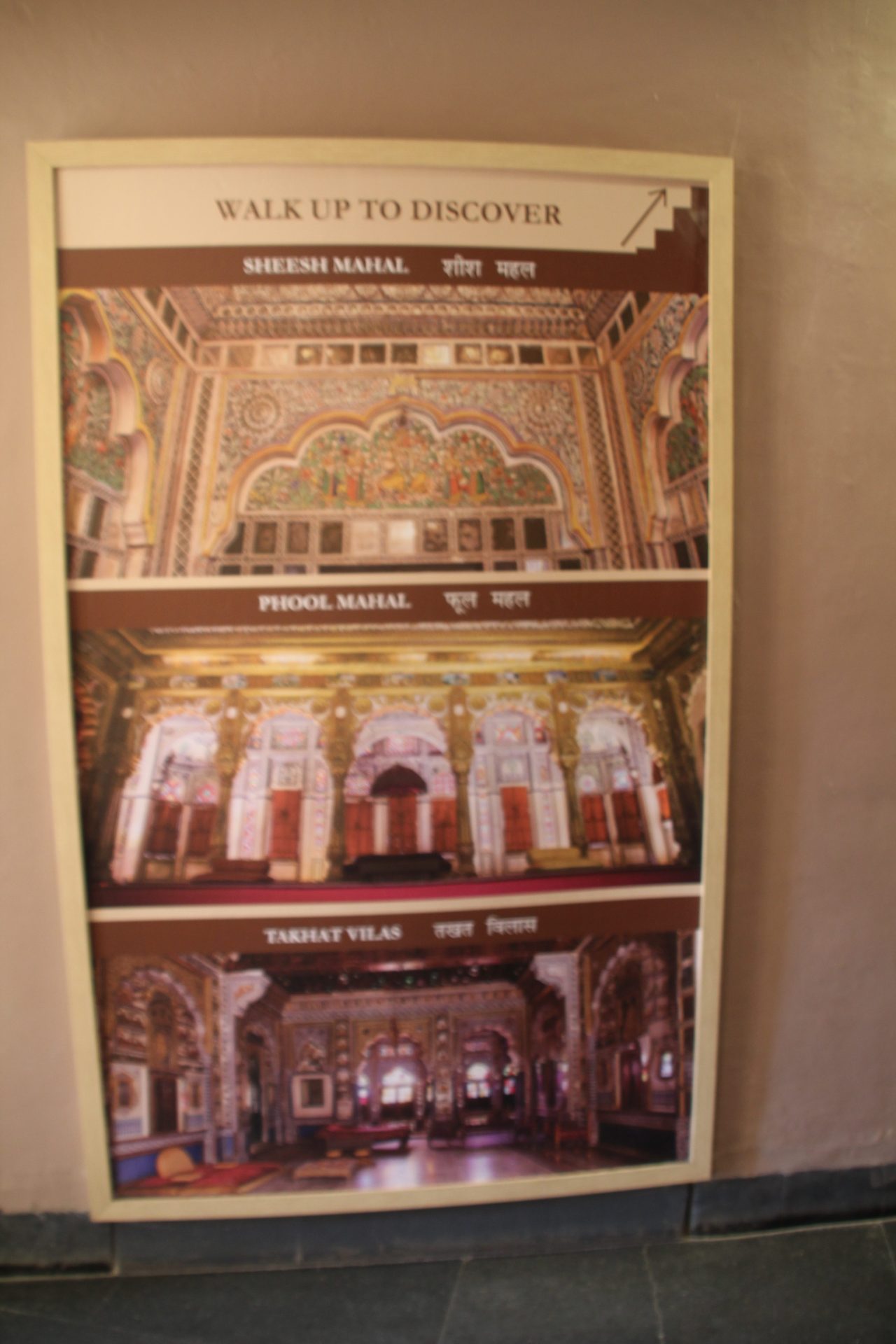
A further climb up takes one to the palaces. Once a part of the private apartment of Maharajah Ajit Singh of Marwar, the Sheesh Mahal or the Palace of Mirrors has painted gesso panels depicting Indian Gods and Goddesses.
While the original 18th century is displayed on the floor, towards the 19th century, the wooden ceiling and European Glass Chandelier got added.
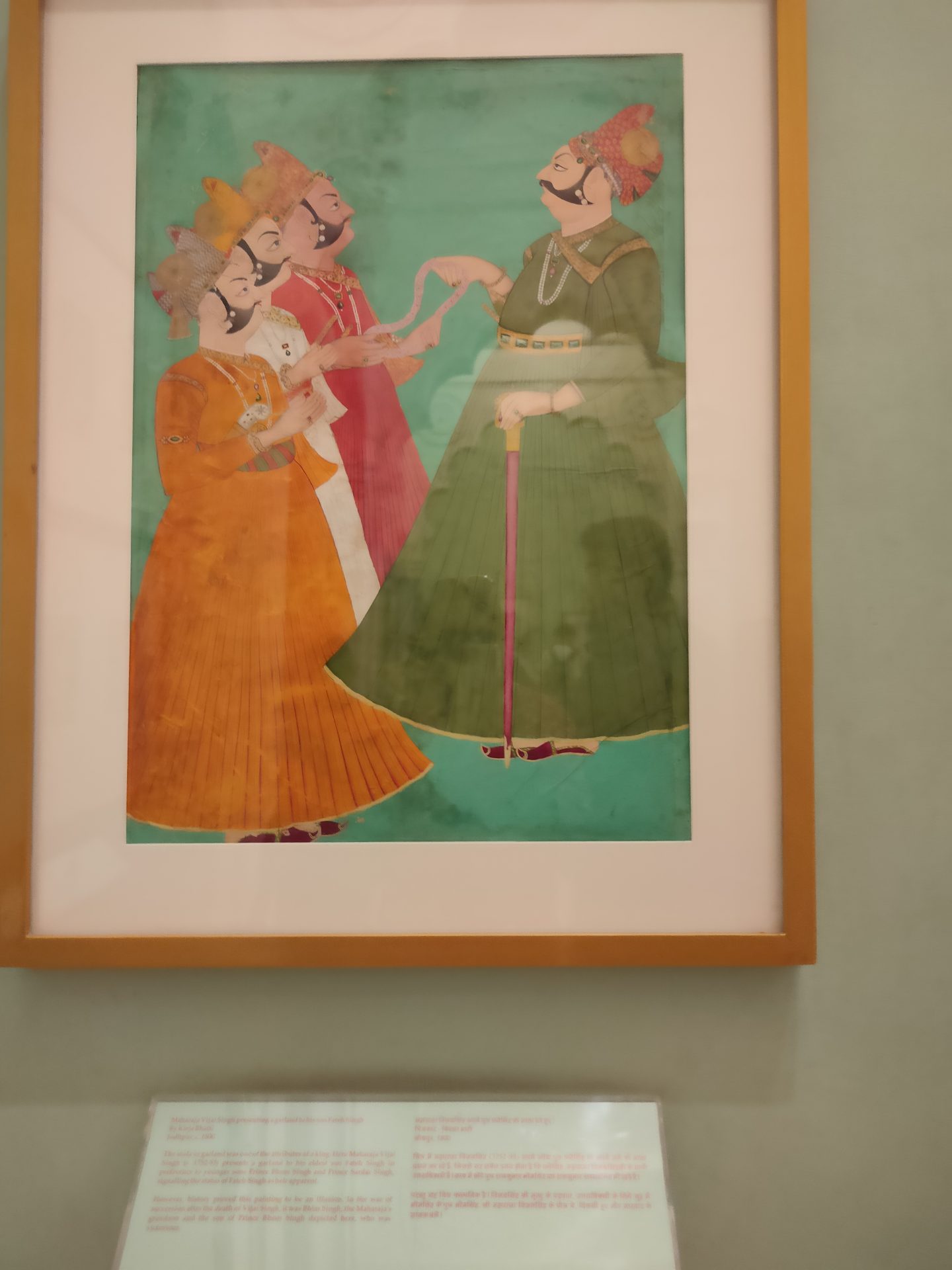
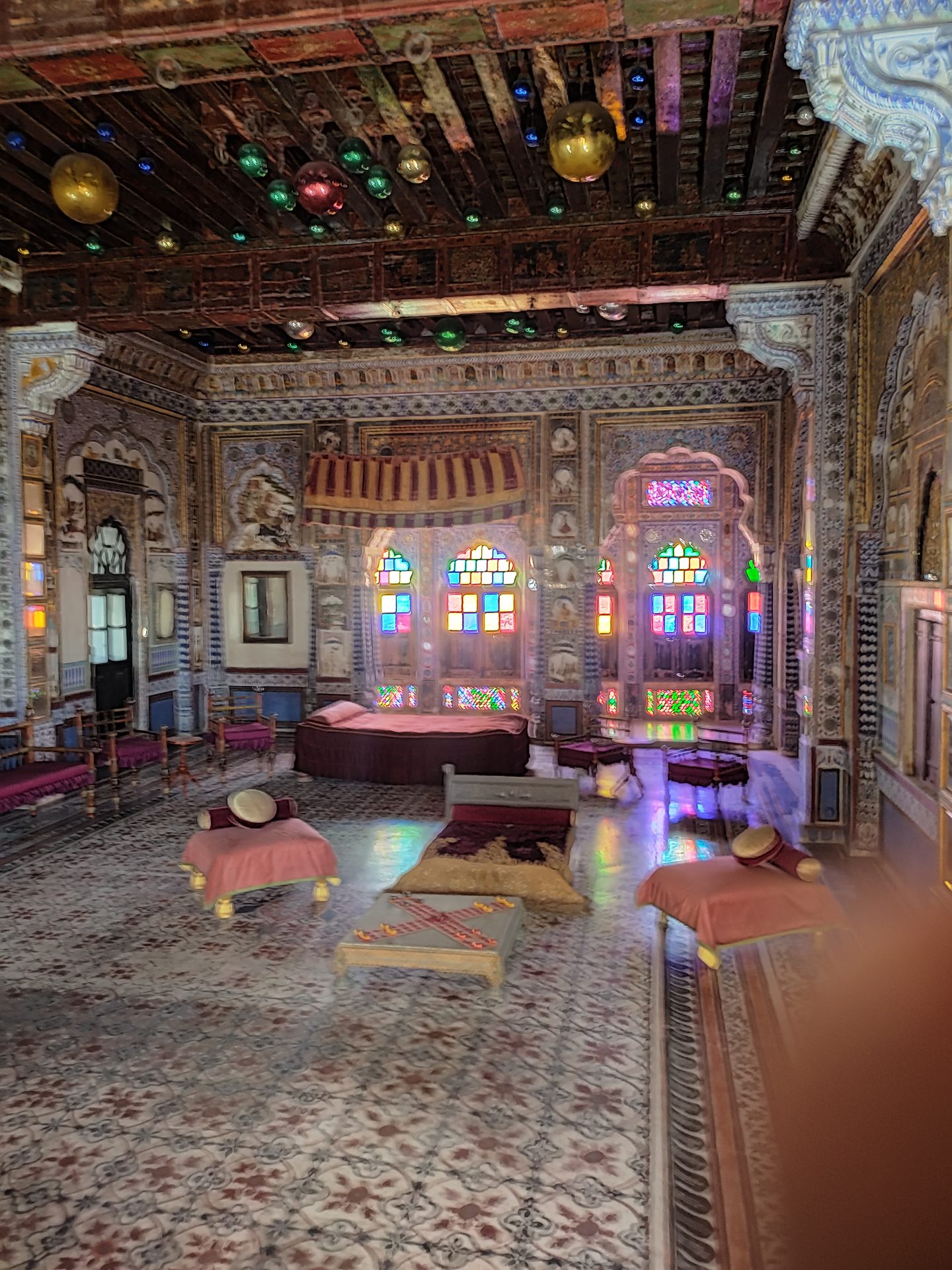
Next on was the Phool Mahal or the Palace of Flowers which was a magnificent 18th century chamber and the grandest period room built by Maharajah Abhay Singh and used as a hall of private audience.
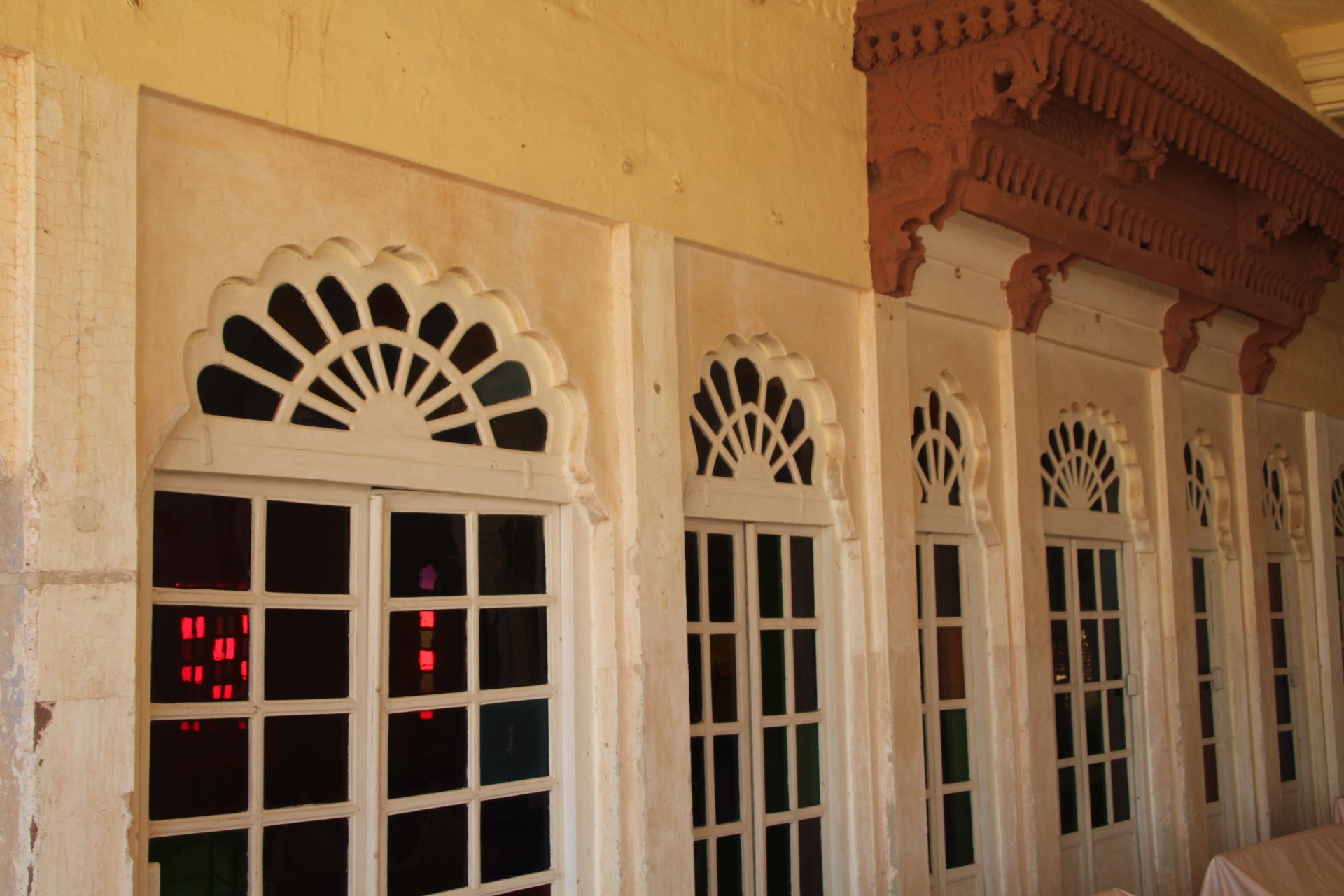
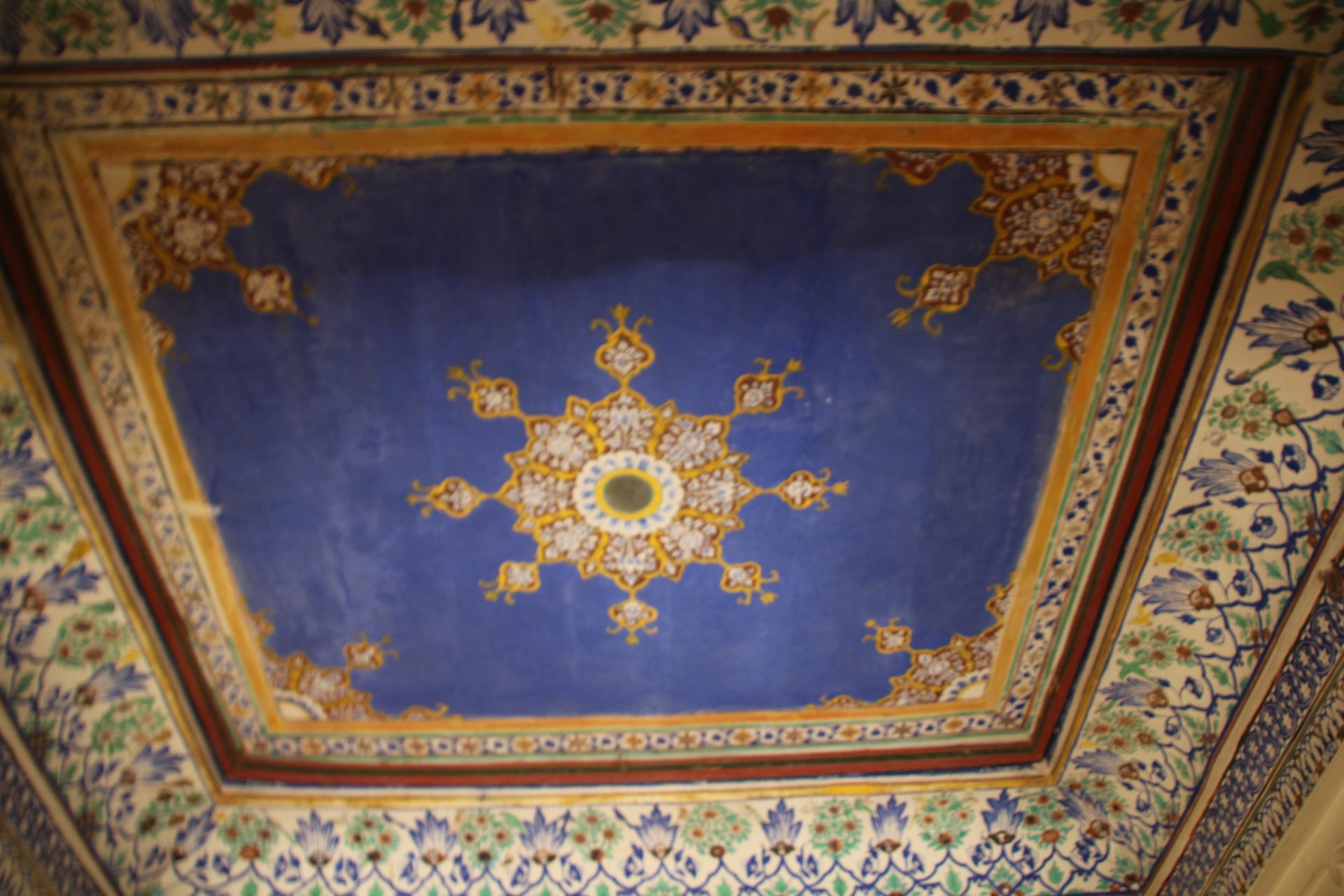
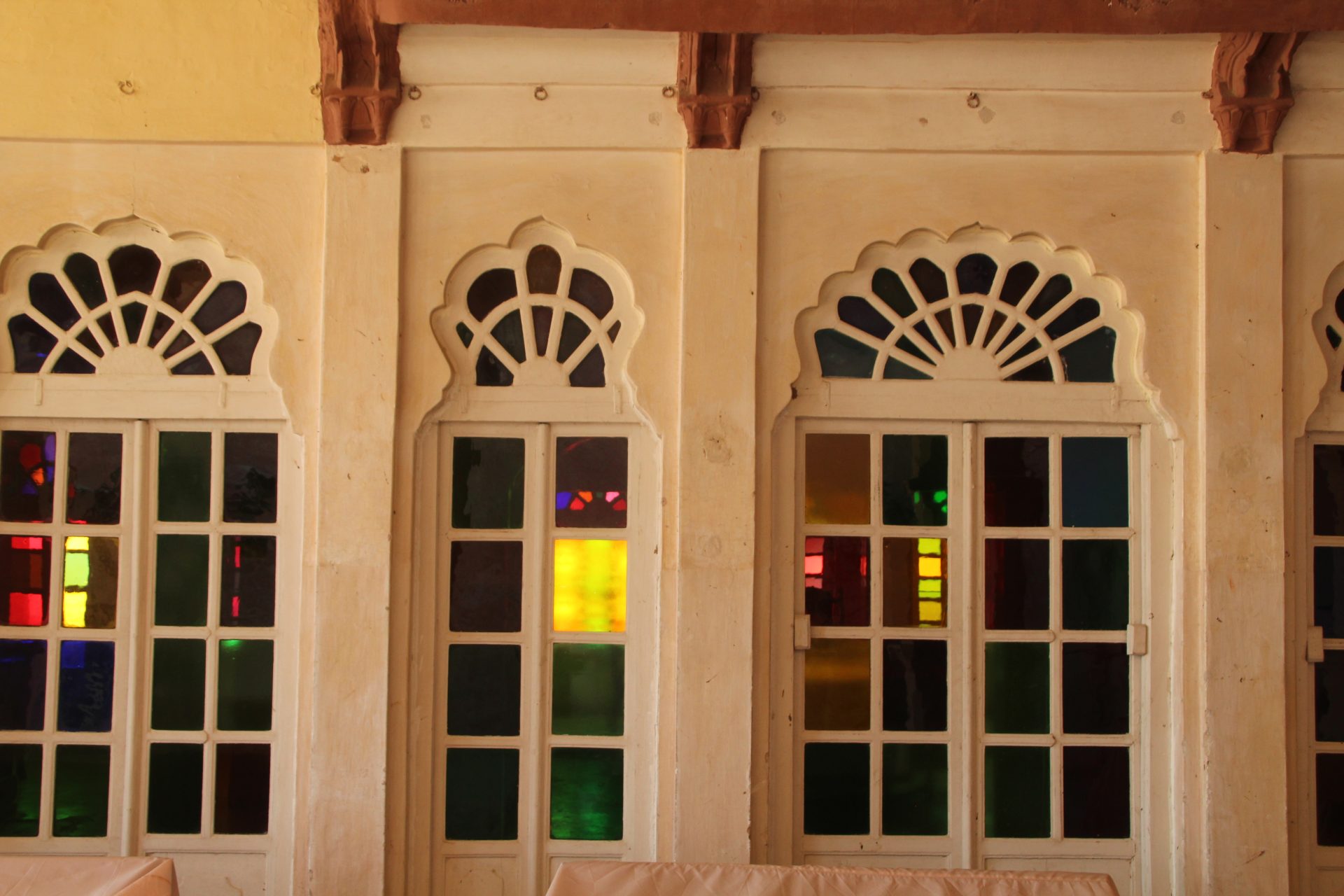
The walls are adorned with paintings of the royal kings besides Indian gods. One gets to see stained glass windows and screens and an intricately designed ceiling with a golden sheen.
Adjacent to this place is the bed chamber of Maharaja Takhat Singh which has a lot of lacquer based paintings on the wooden ceiling.
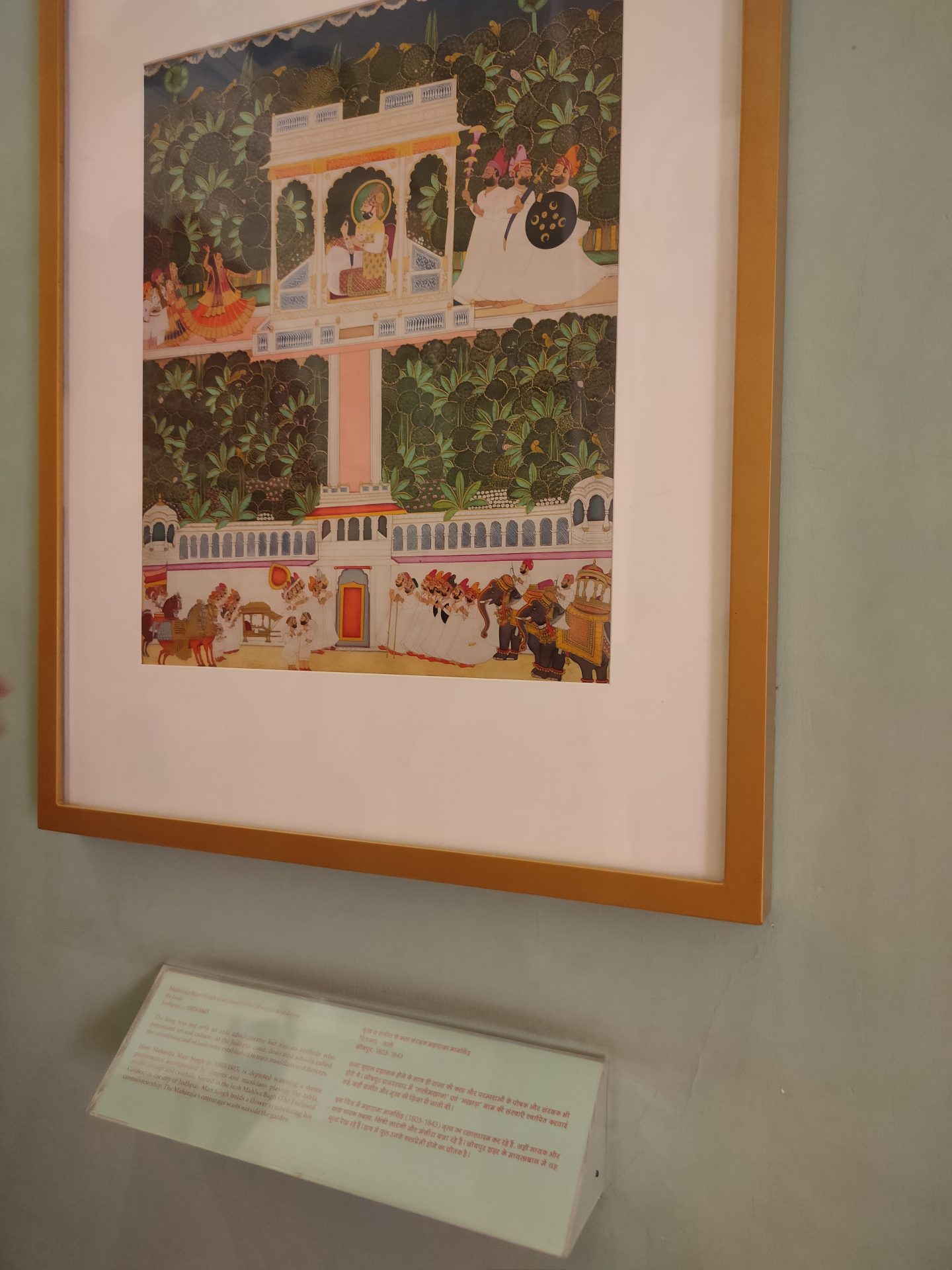
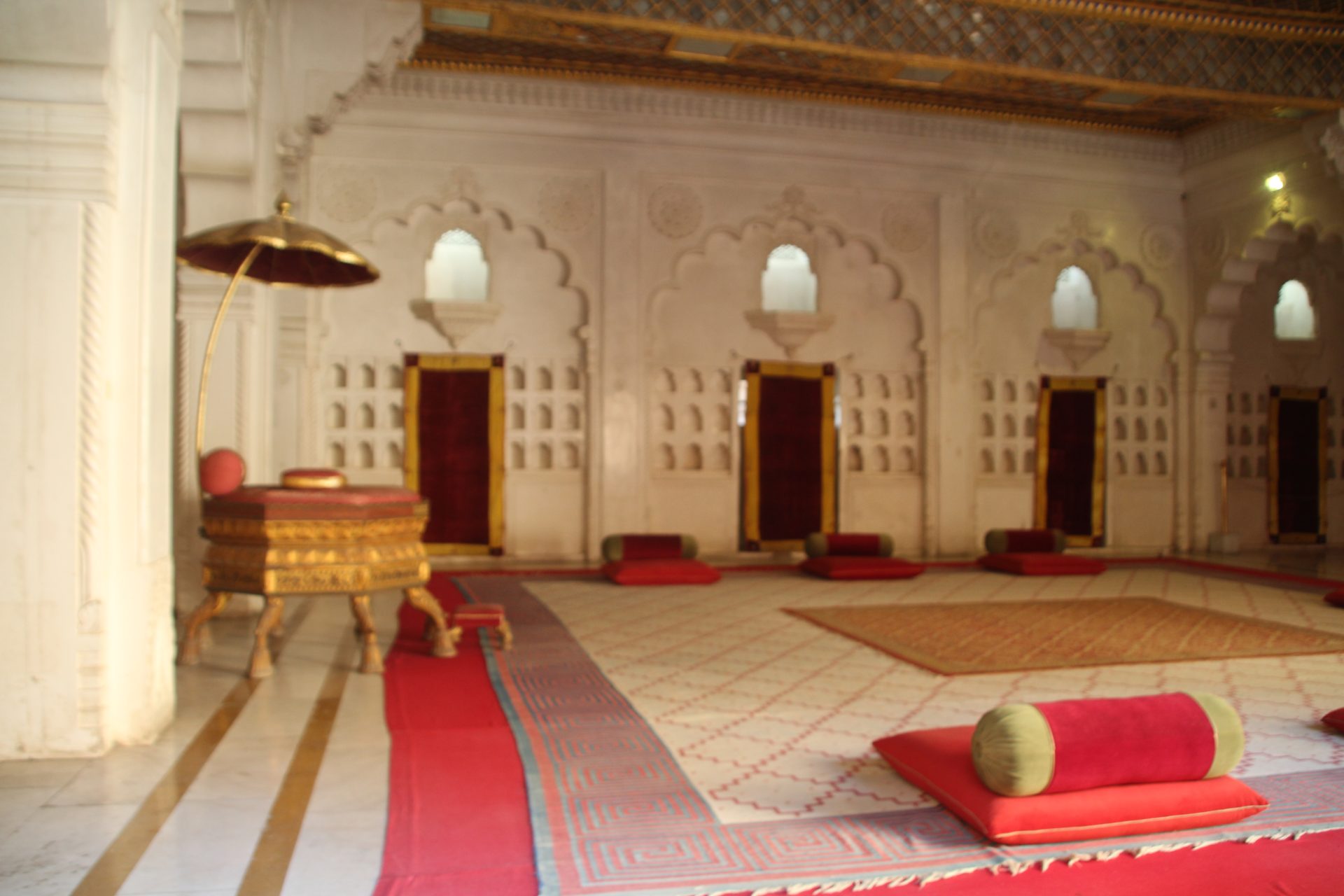
The King being a great patron of arts, the carpet on the floor was also painted and the ceiling to the floor were decorated with a paintings on a wide variety of subjects. The last of the palaces of interest was the Dipak Mahal which served more as an administrative centre.
Apart from a high raise seat where the king sat, there were multiple other seats around where the Diwans or the officials sat. The Fort also houses the Chamunda Devi Temple where the first king Rao Jodha brought the idol of his favorite goddess Chamunda from the original capital Mandore to this fort and built a temple for her.
Huge crowds gather here for worship during the festive Dusshera time.
It is said that in September 2008, a massive stampede occurred at this temple resulting in the loss of lives of over 240 people and injuring over 400.
One can view the Desert Park right from the top of the fort. A trail path through the desert and in the midst of nature is what I could visualize from top but had not energy for a trek of sorts. A fee of Rs.200/- is levied for entry to the Museum.
The fort has also played host as a filming location for many Hollywood and Bollywood movies.
Notable among them being Walt Disney’s The Jungle Book, Christopher Nolan’s The Dark Knight Rises and the Thugs of Hindostan starring Amitabh Bachchan and Amir Khan.
It would easily take a couple of hours to go around the fort and soak in the splendour all around.
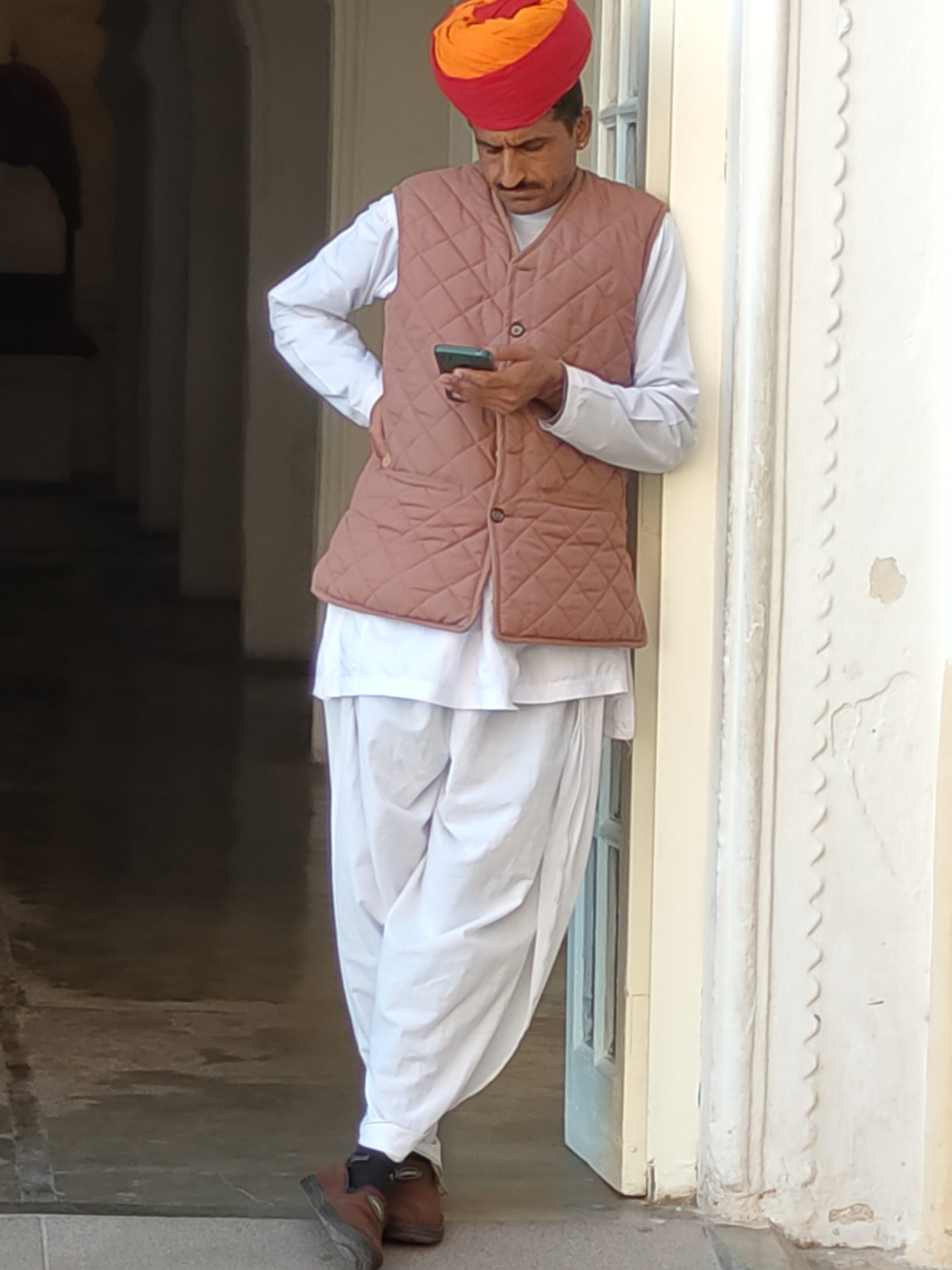
As one comes out of the fort via the garden area, you would not miss the white robed musicians seated below the trees and mellifluously playing the single stringed folk instrument also known as the Ravan Hatta and a precursor to the violin.
Unmute the video alongside to hear this mellifluous song being played. Remains an all time favorite song of mine from the movie Shor.
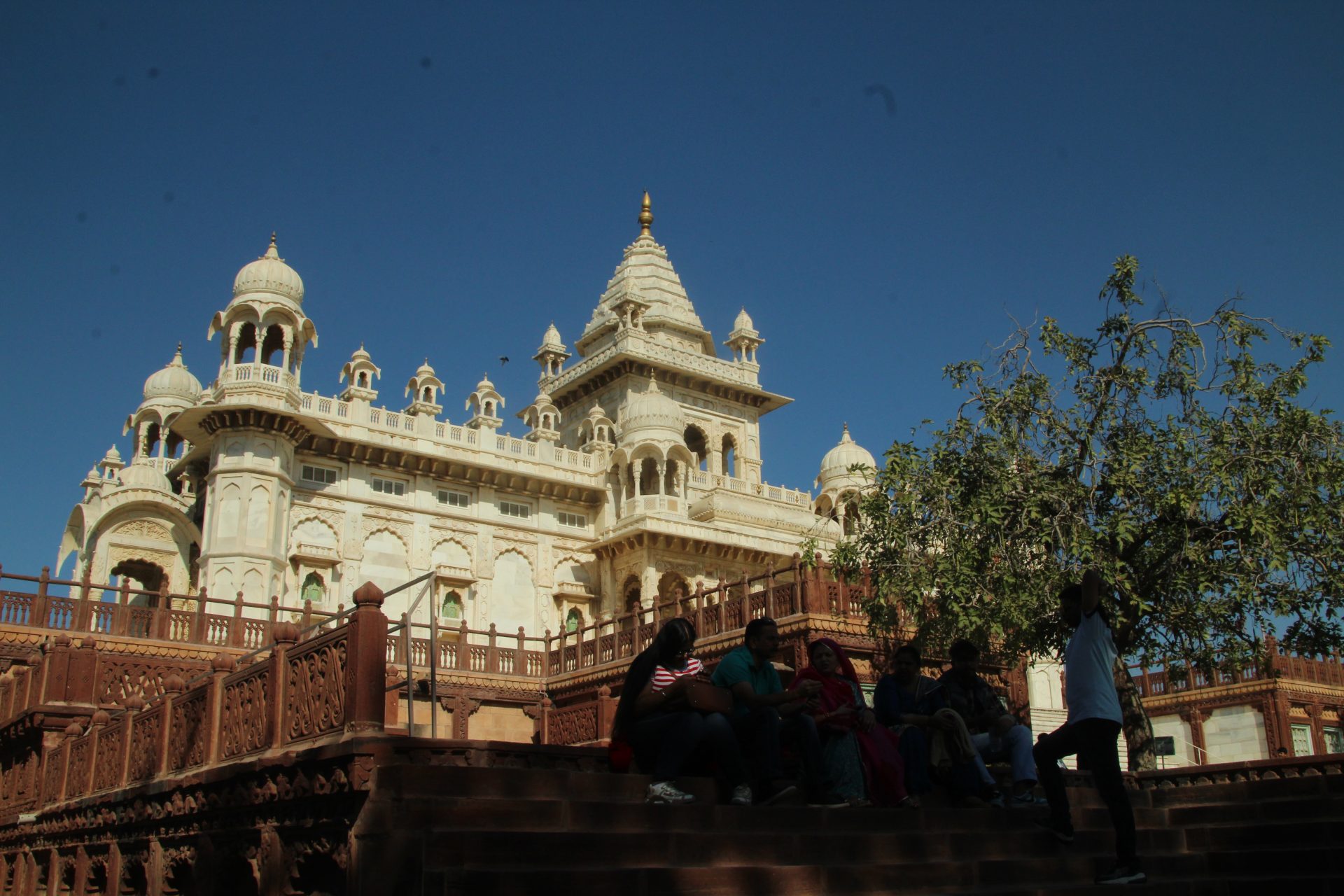
From the top of the fort, the cenotaph built in 1899 in memory of Maharaja Jaswant Singh II by his son Maharaja Sardar singh and also known as the Jaswant Thada can be seen.
VIEW OF JASWANT THADA FROM MEHRANGARH FORT
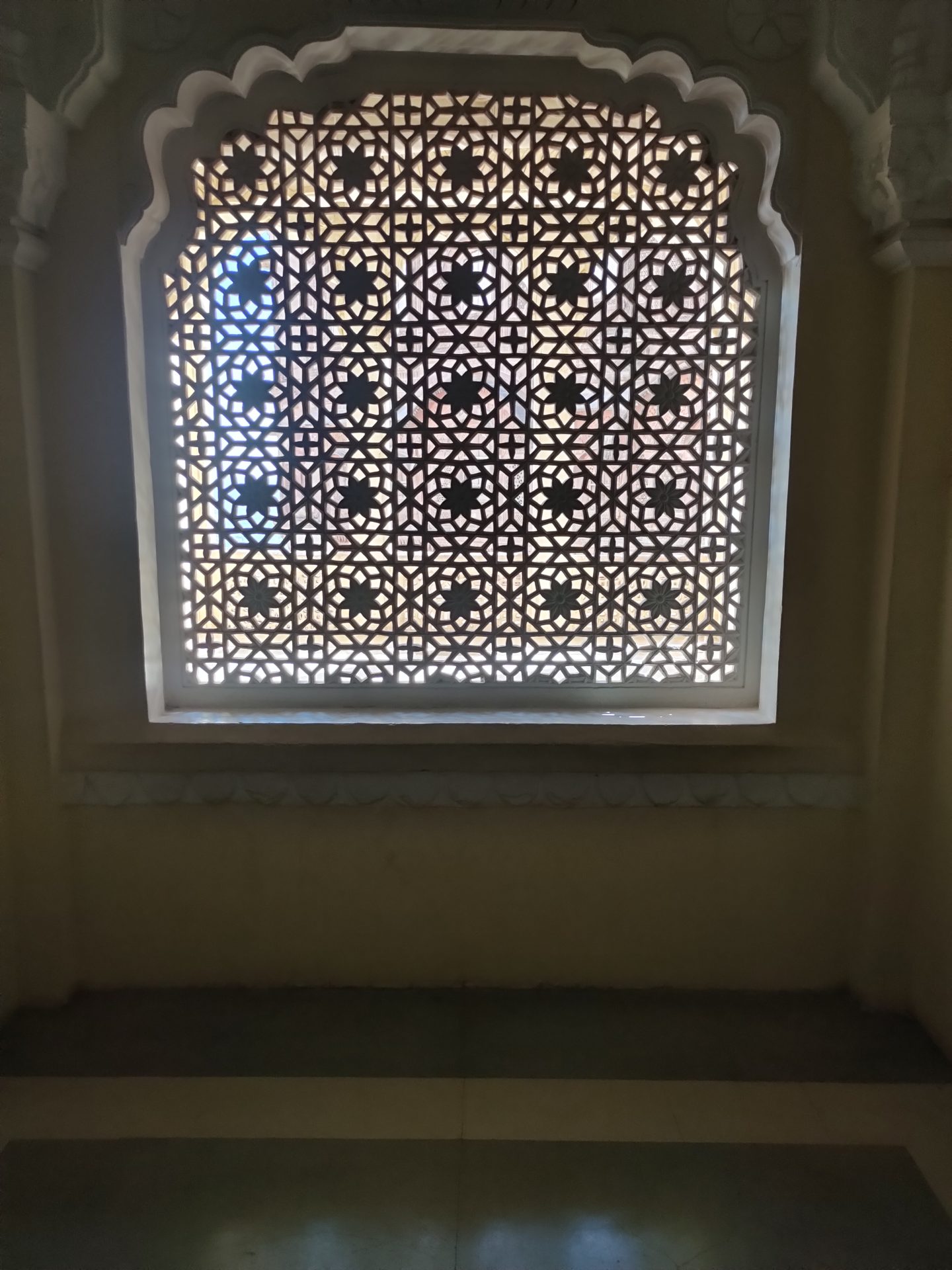
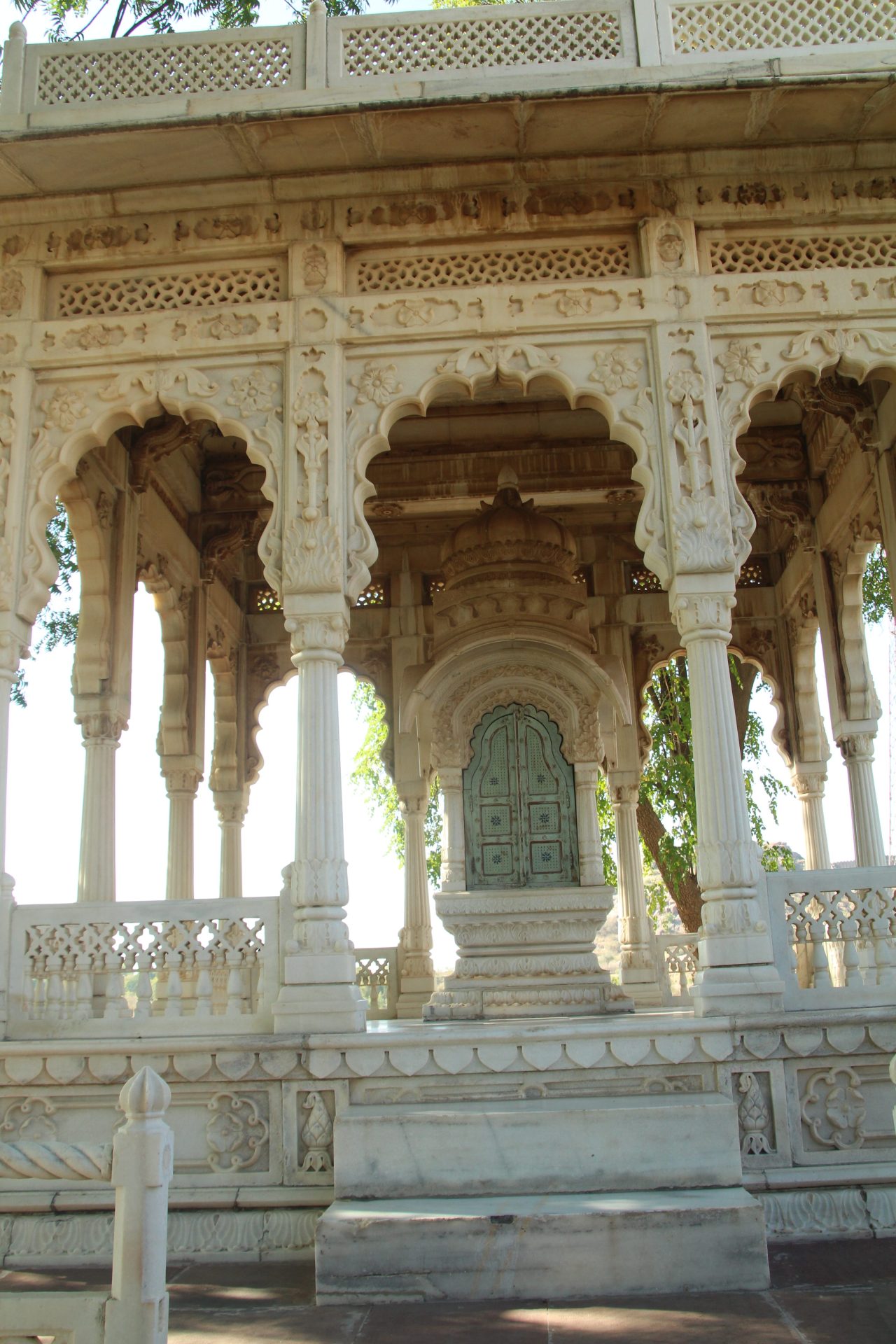
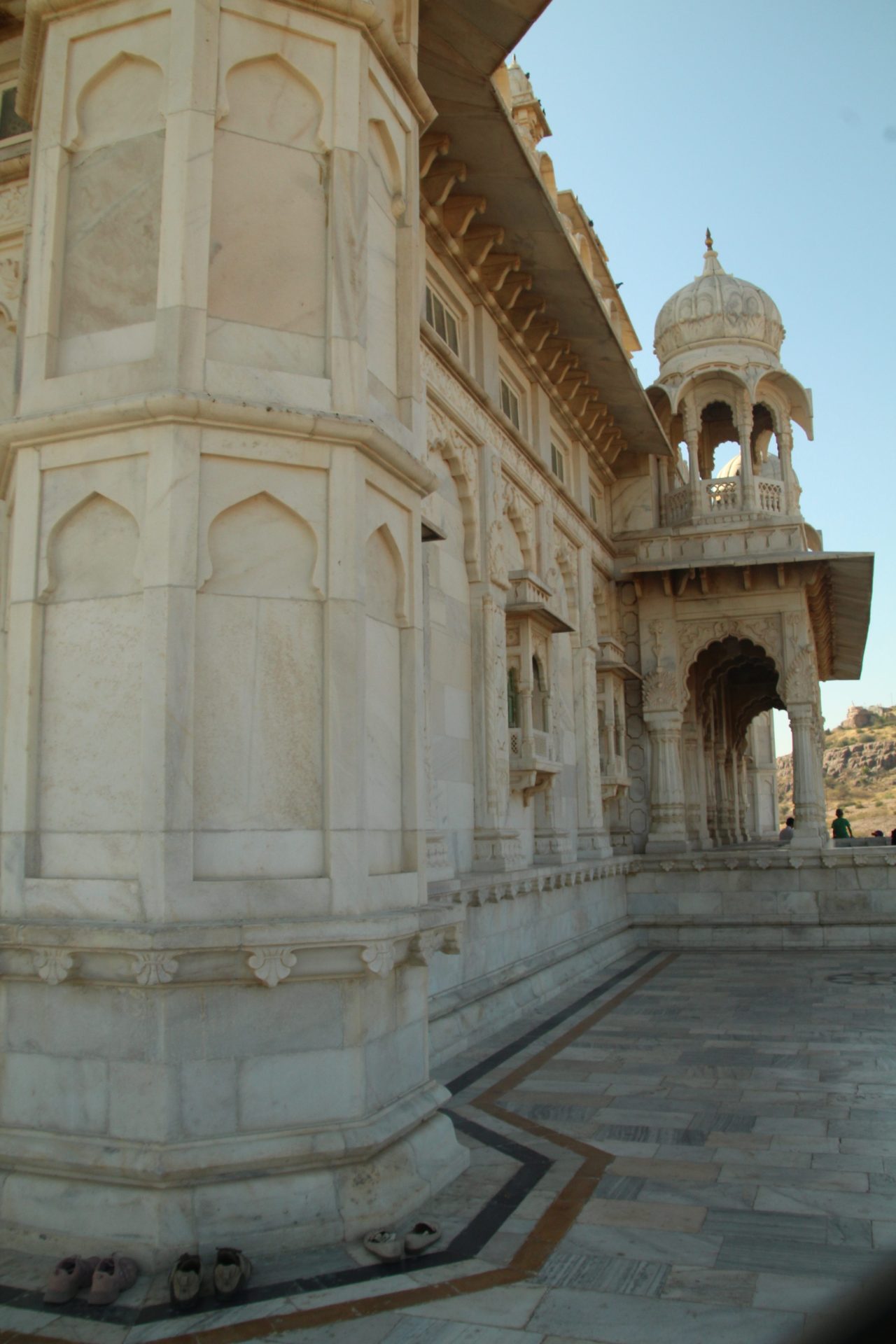
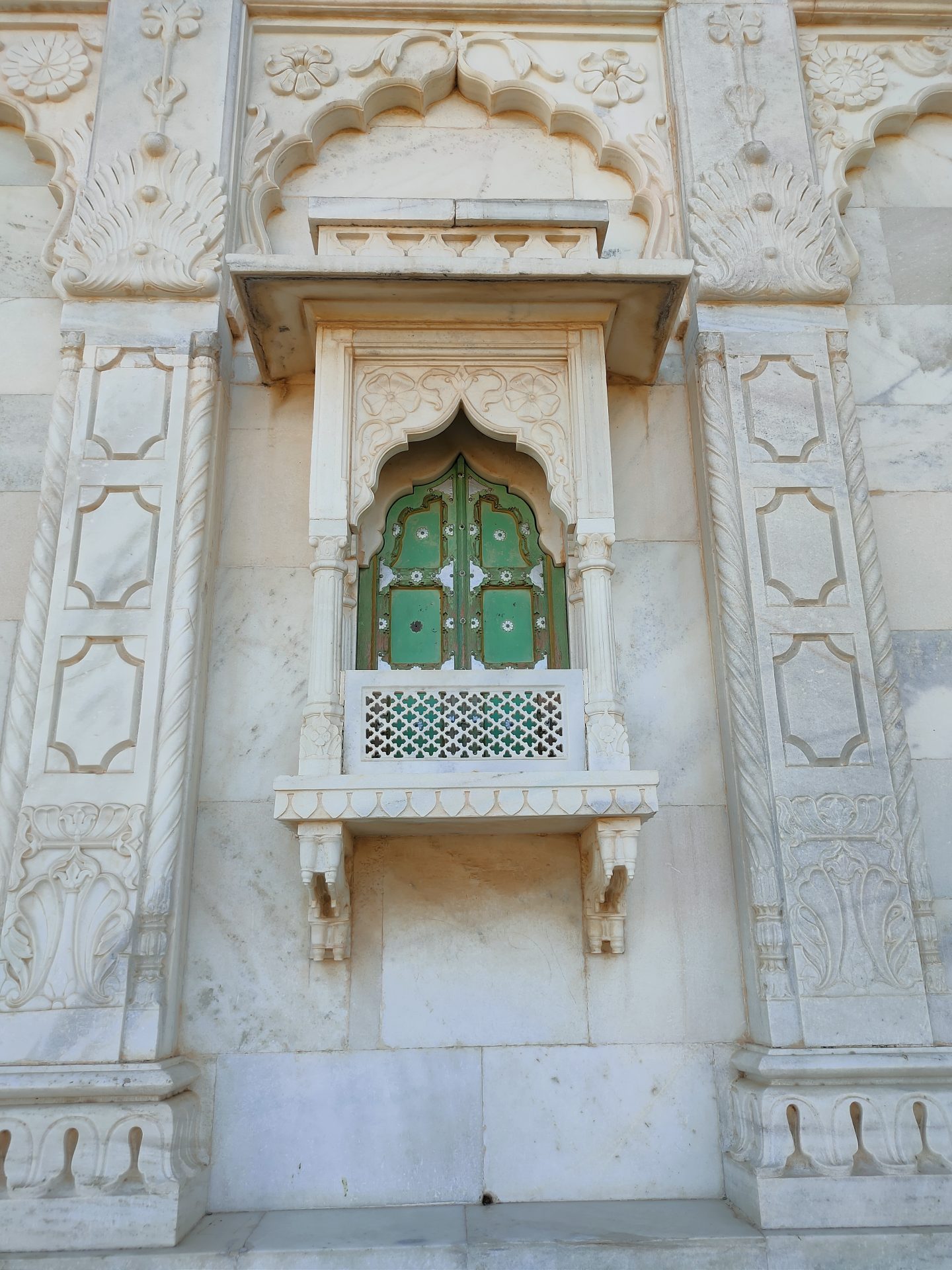
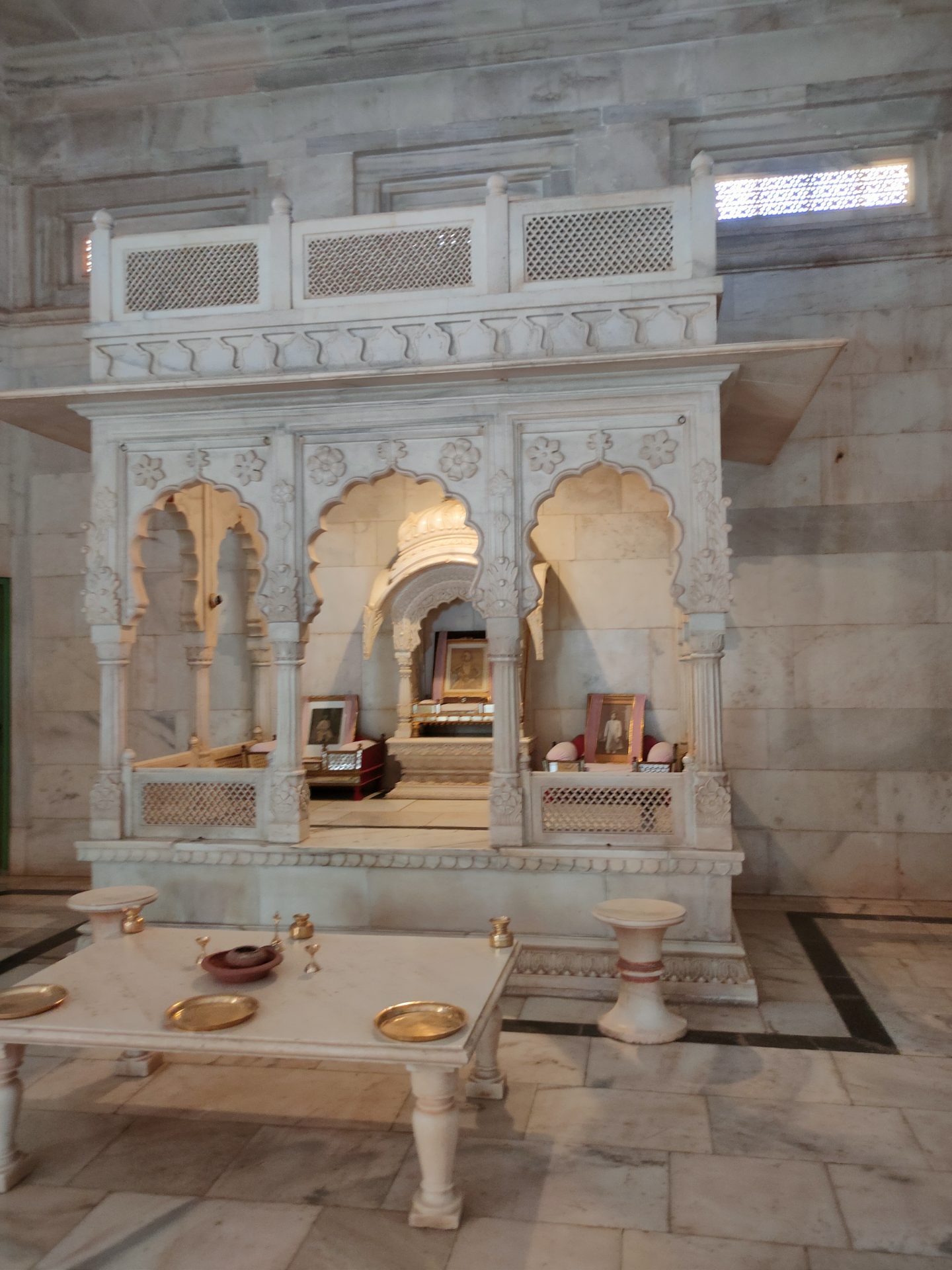
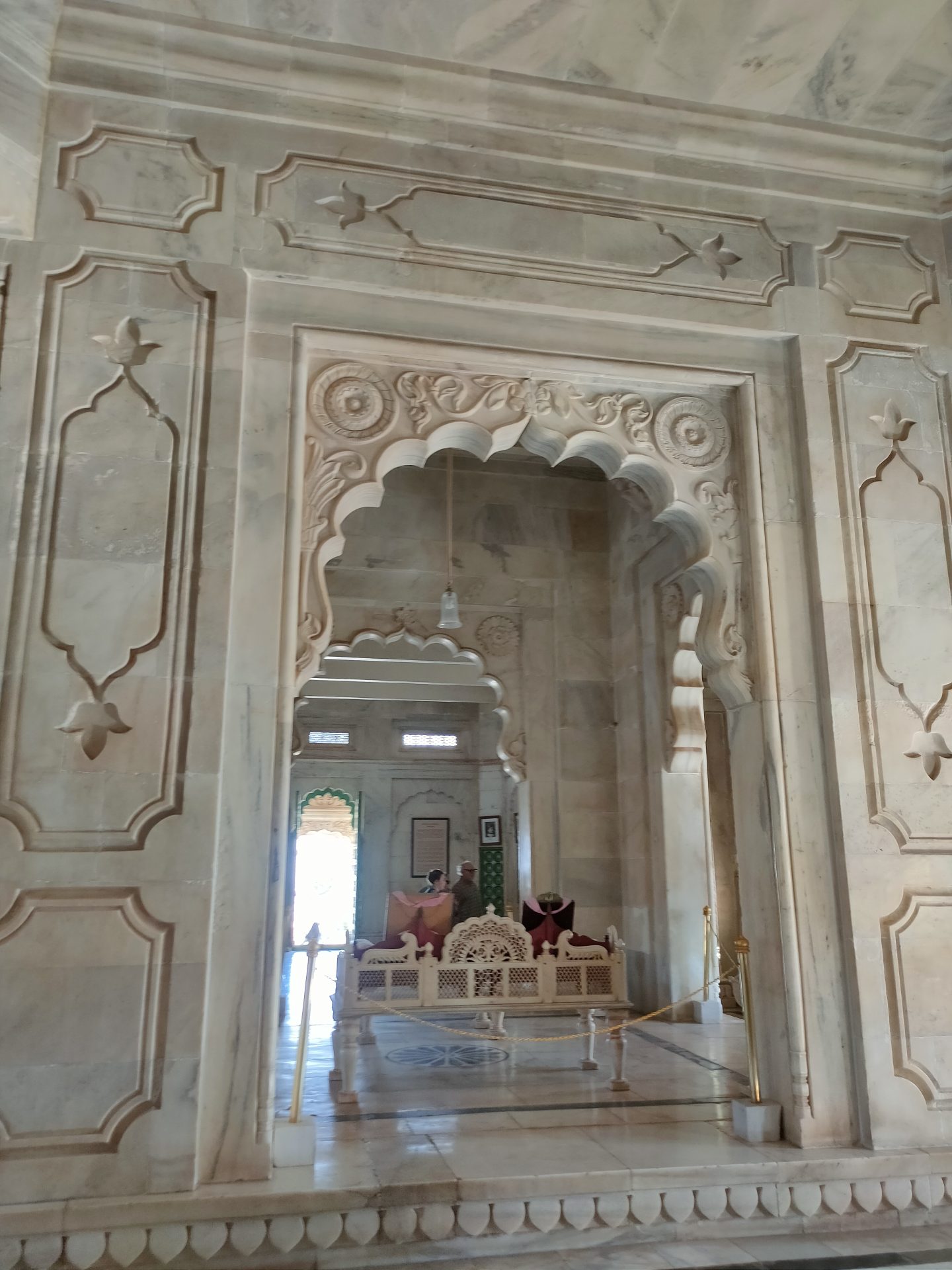
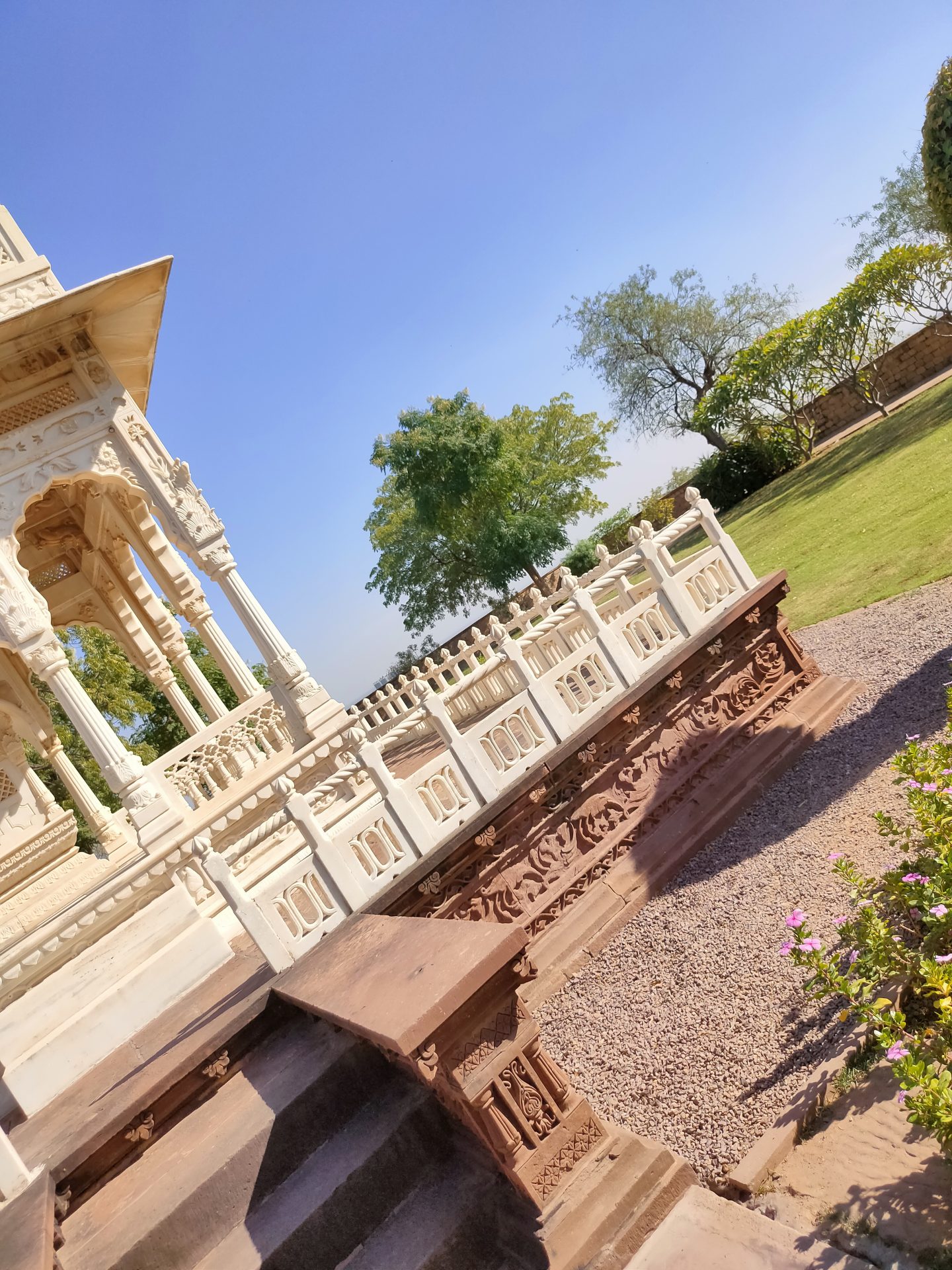
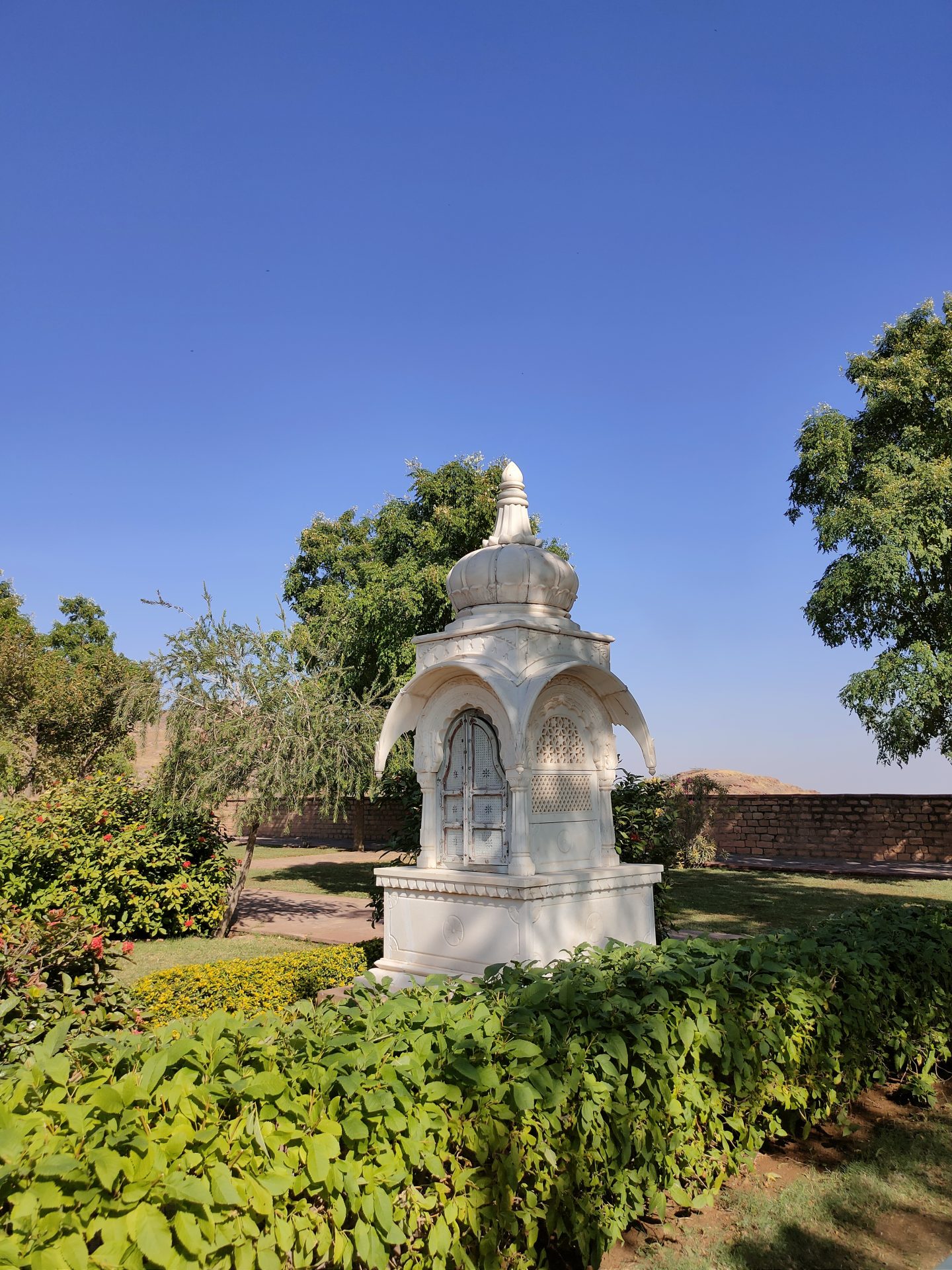
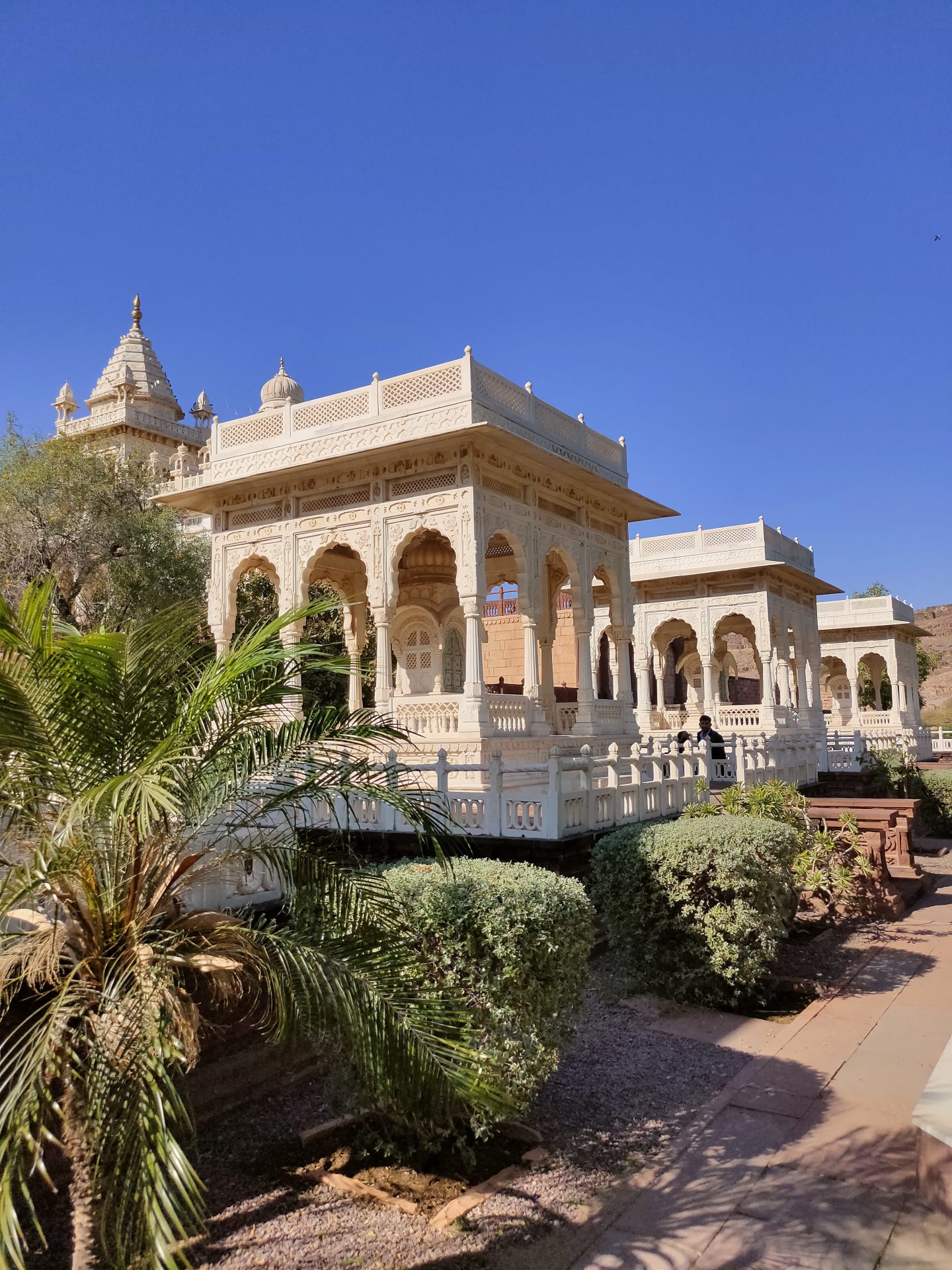
It was around 1.30 in the afternoon and the sun was beating down inspite of it being December and I was starved. We still had the Jaswant Thada to cover before we could settle for lunch and we made a quick dash for it. Popularly known as the Taj Mahal of Mewar, this white memorial stands close to a small lake. This memorial also serves as a cremation ground for the Royal family of Marwar. The cenotaph is built out of intricately carved sheets of marble. These sheets are extremely thin and polished which enable them emit a warm glow when lit by the sun. Apart from 3 other cenotaphs, there are a few gazebos to be seen around the complex. Tickets are priced at Rs.30/- apiece. Was out of this complex in around 45 minutes.
THE TAJ MAHAL OF MEWAR
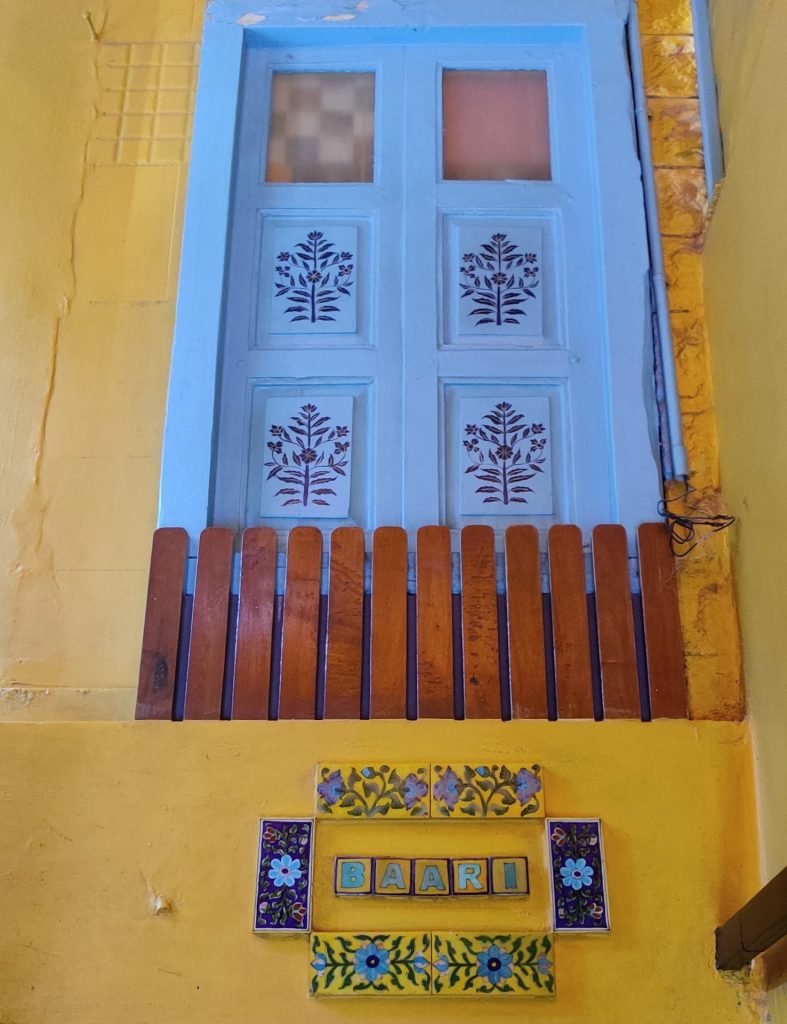
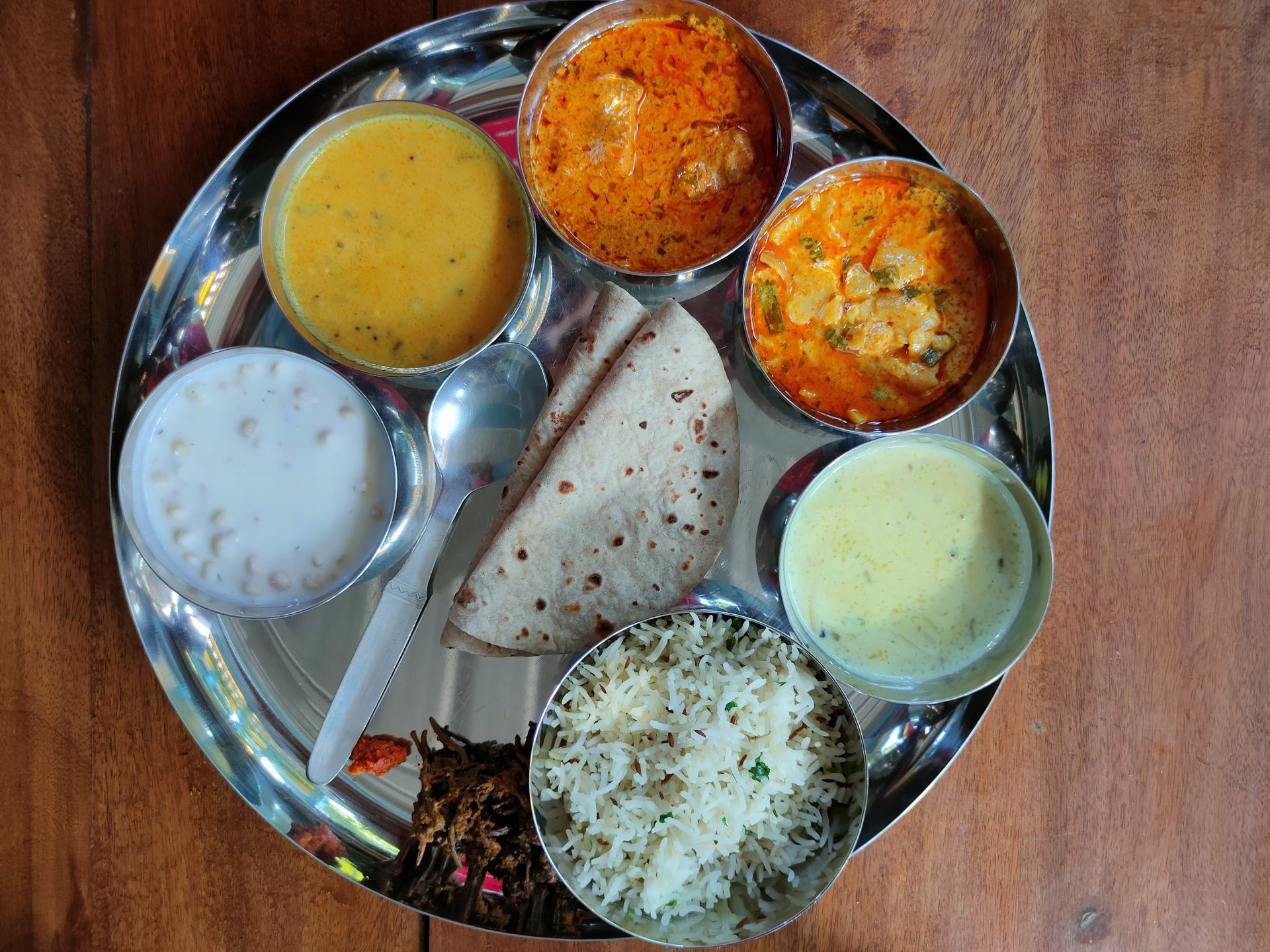
Lunch was definitely next on the cards the Wanted to try out a Jodhpuri Thali and asked my cab driver to take me around to a good restaurant where I could savour an authentic Rajasthani Thali. We drove down to Baari which was a 5 minute drive from Jaswant Thada. A decent thali with limited portions but quite filling and pretty tasty. It costed me around Rs.299/- .
A TYPICAL JODHPURI THALI
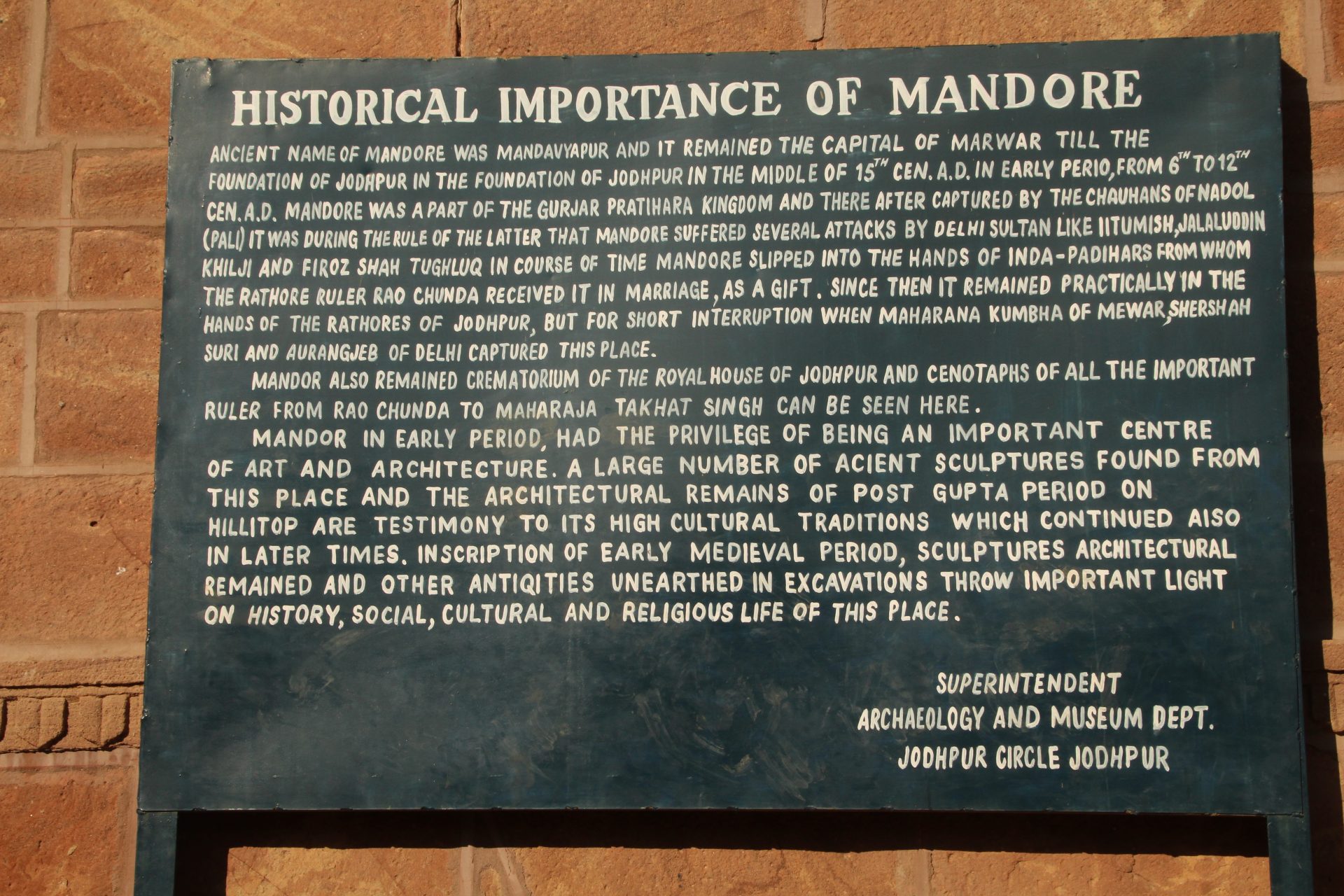
Lunch done, we drove down to the Mandore Gardens. Located around 9 KMs from the city of Jodhpur, this place was once the ruling seat of the Pratihara Dynasty of Mandavyapura in the 6th century AD. Mandore served as the capital of several Jodhpur kings and has also survived multiple invasions from different dynasties including Muslim rulers from the Malwa region and Gujarat.
THE ENTRANCE TO MADORE GARDENS
The Mandore fort with its thick walls stood at one time at this very place and is now in complete ruins. A huge temple now remains as the only remaining highlight of the fort. The Pratiharas formed an alliance with the Rathore Chief Rao Chunda to help defend their chiefdom from the Tughlaq dynasty from Delhi. He was gifted the Mandore fort as dowry for marrying the princess from the Pratihara clan. While he was assassinated in Chittor on account of the power games played by Rana Kumbha, the Mewar chief.
The Rana’s son Rao Jodha managed to flee Mandore with 700 horsemen but suffered huge losses to his small army when purused by the Rana’s men. He had just 7 men left by the time he reached Mandore but sensing that he could be attacked, he hid himself for 15 years and used an opportune moment to recapture Mandore when the Rana was under pressure of attacks from all sides by the Sultans of Gujarat and Malwa. Rao Jodha finally decided to move the capital to Jodhpur where he built the Mehrangarh fort. One cannot miss the army of Langurs roaming around the gardens.
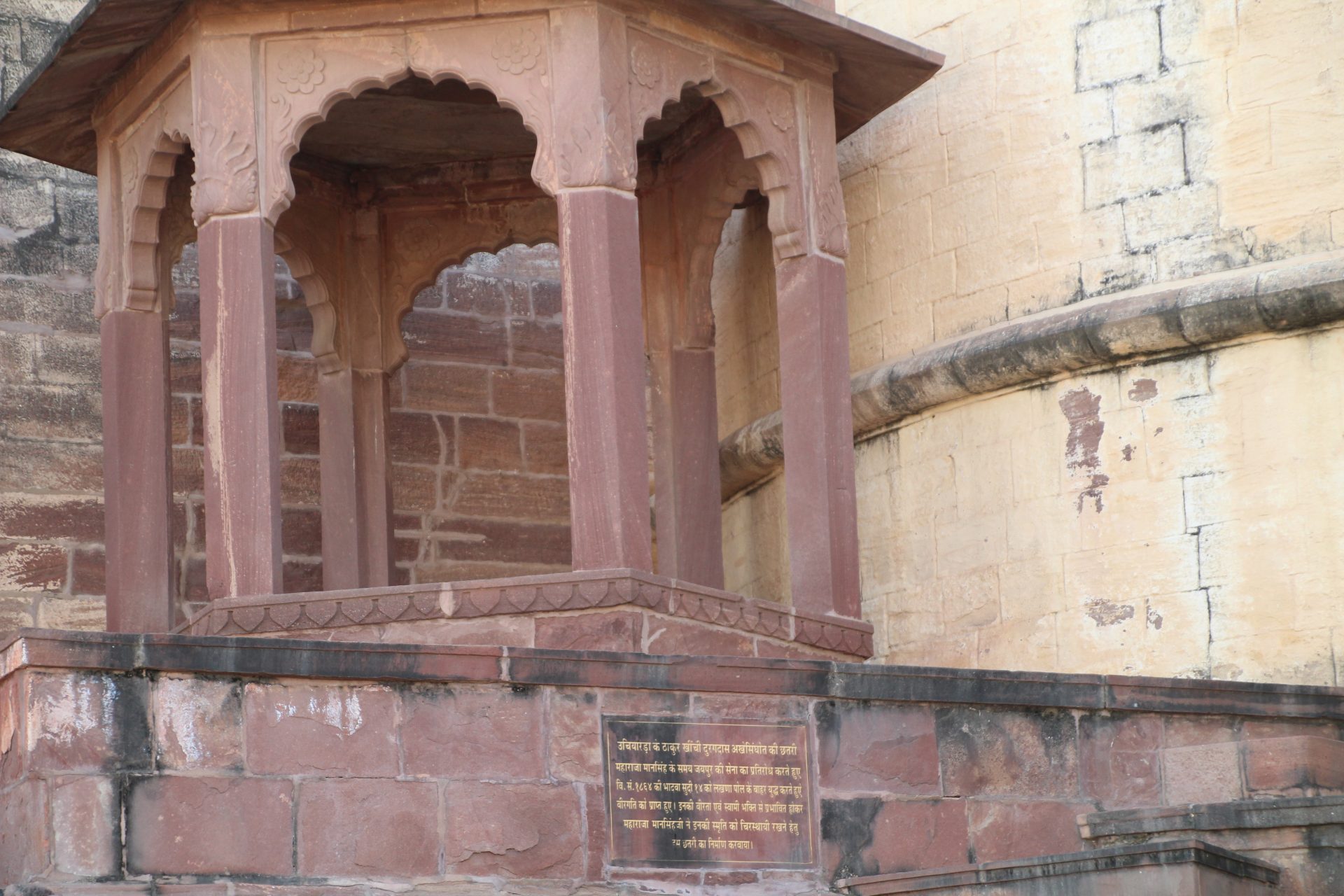
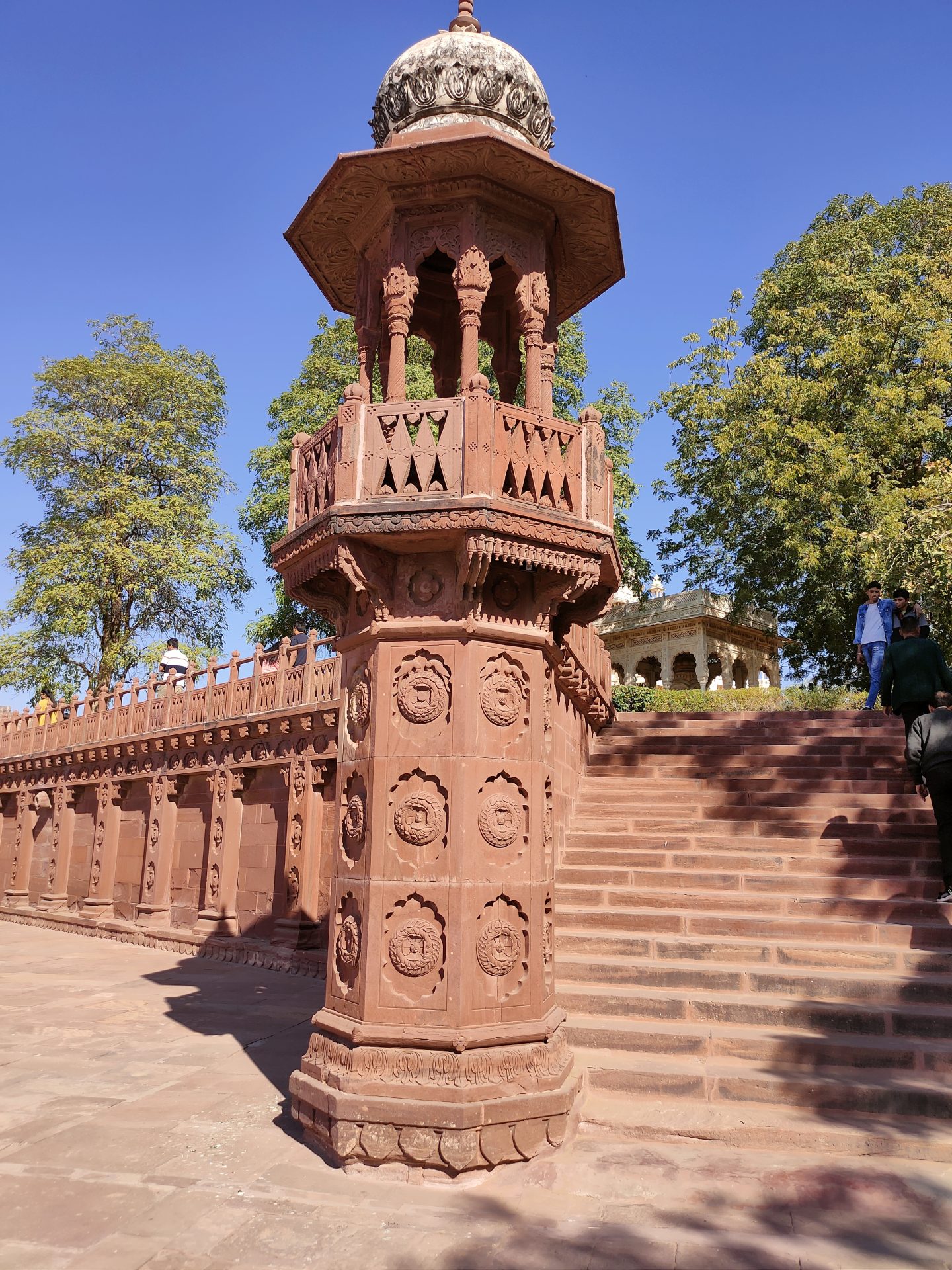
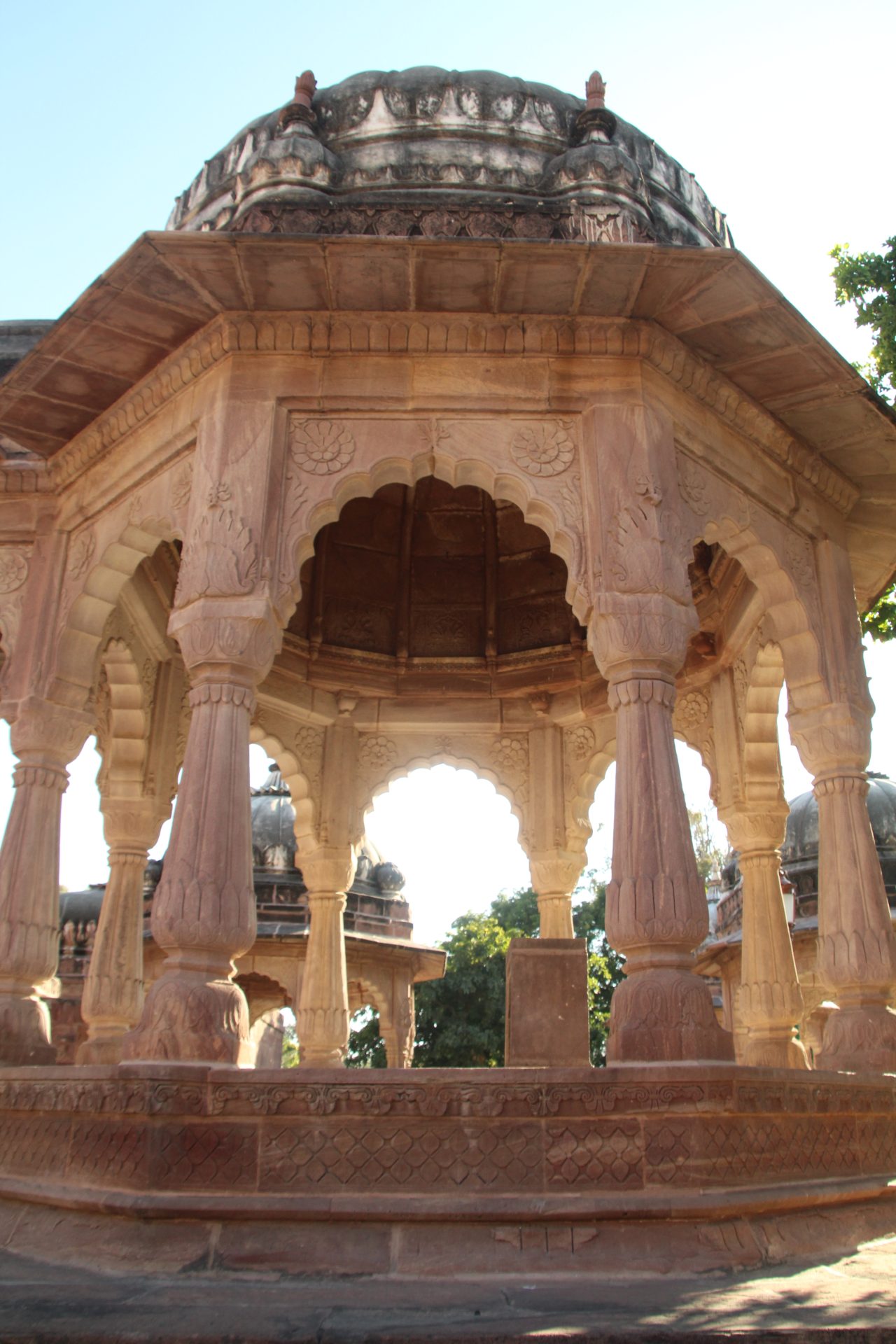
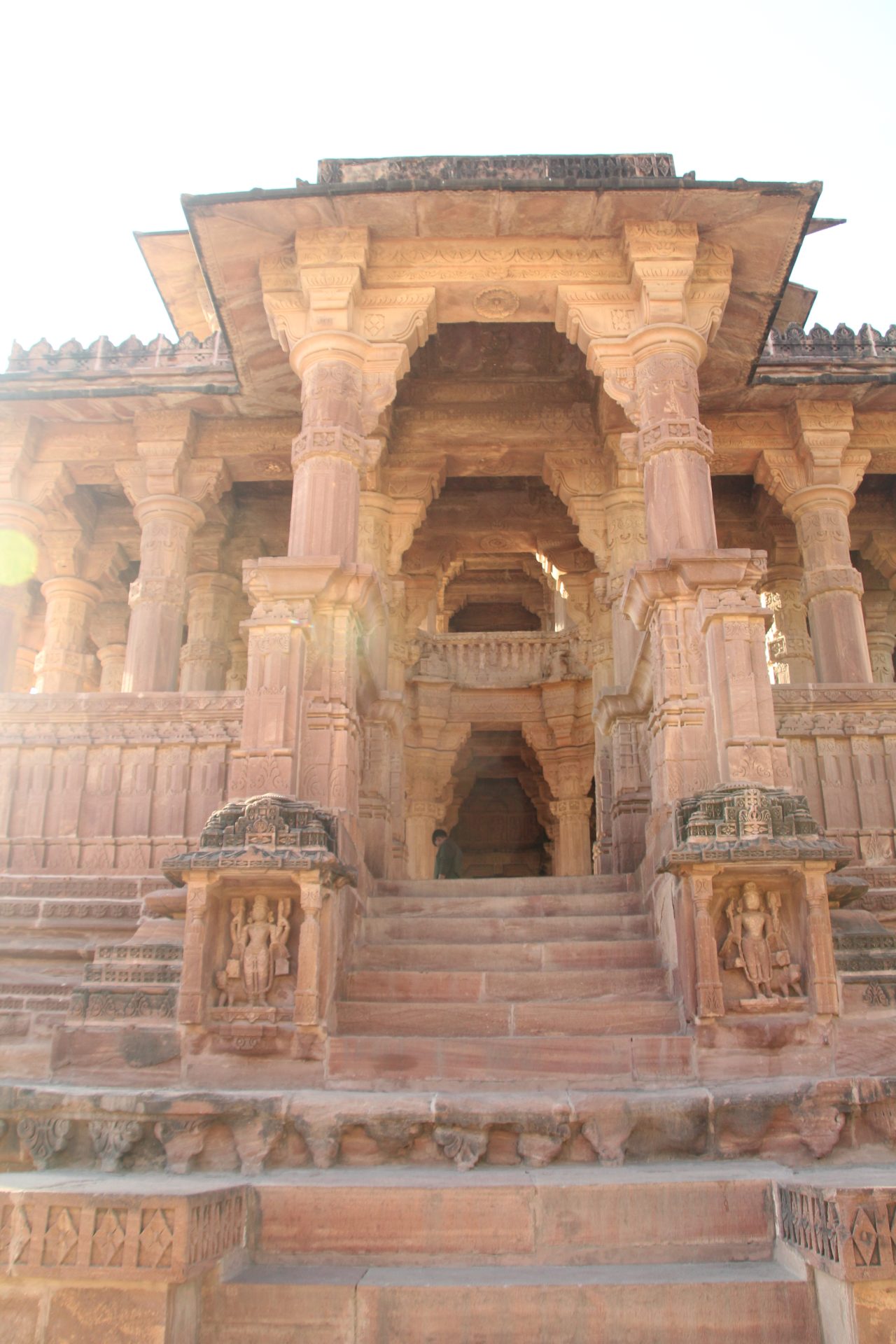
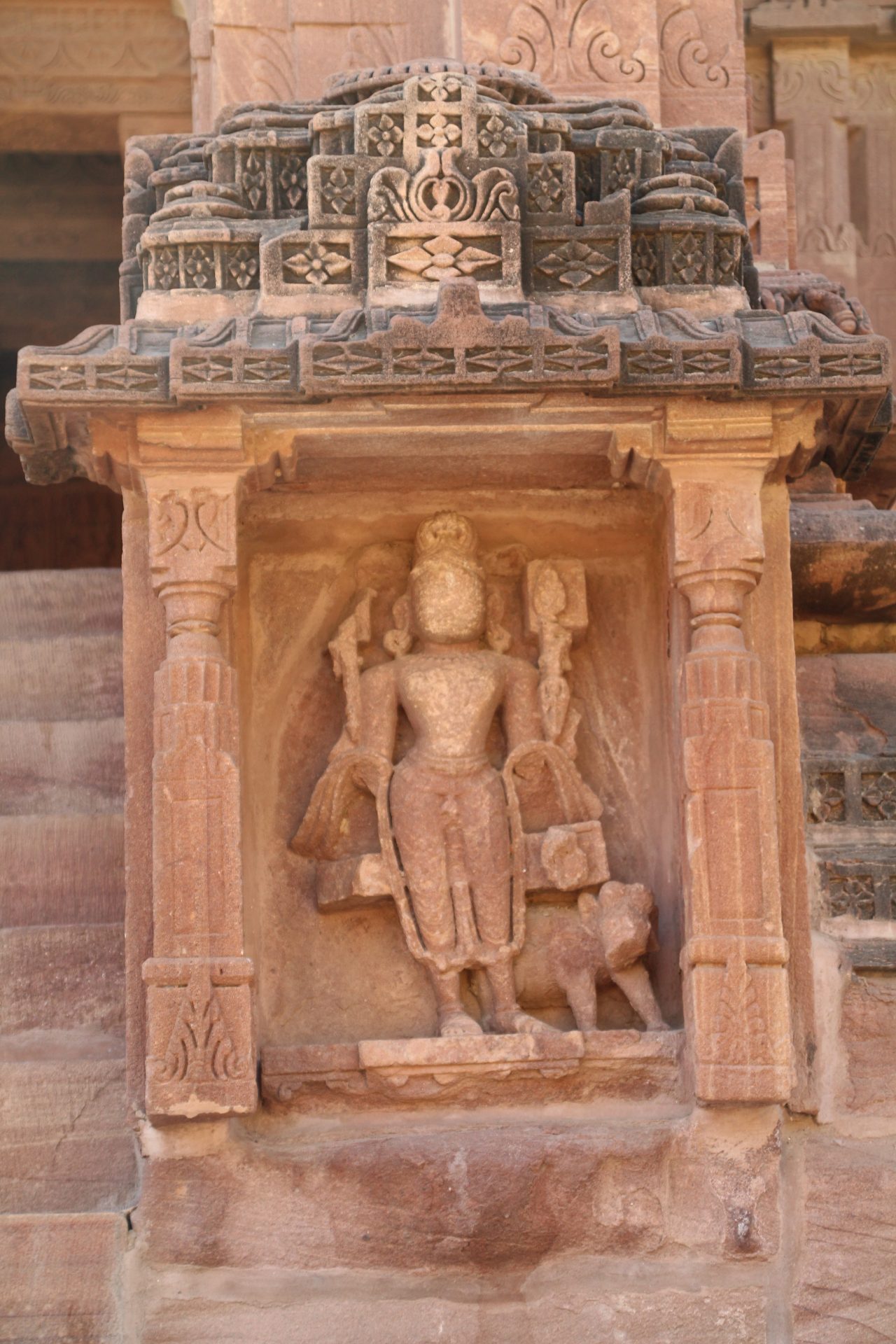
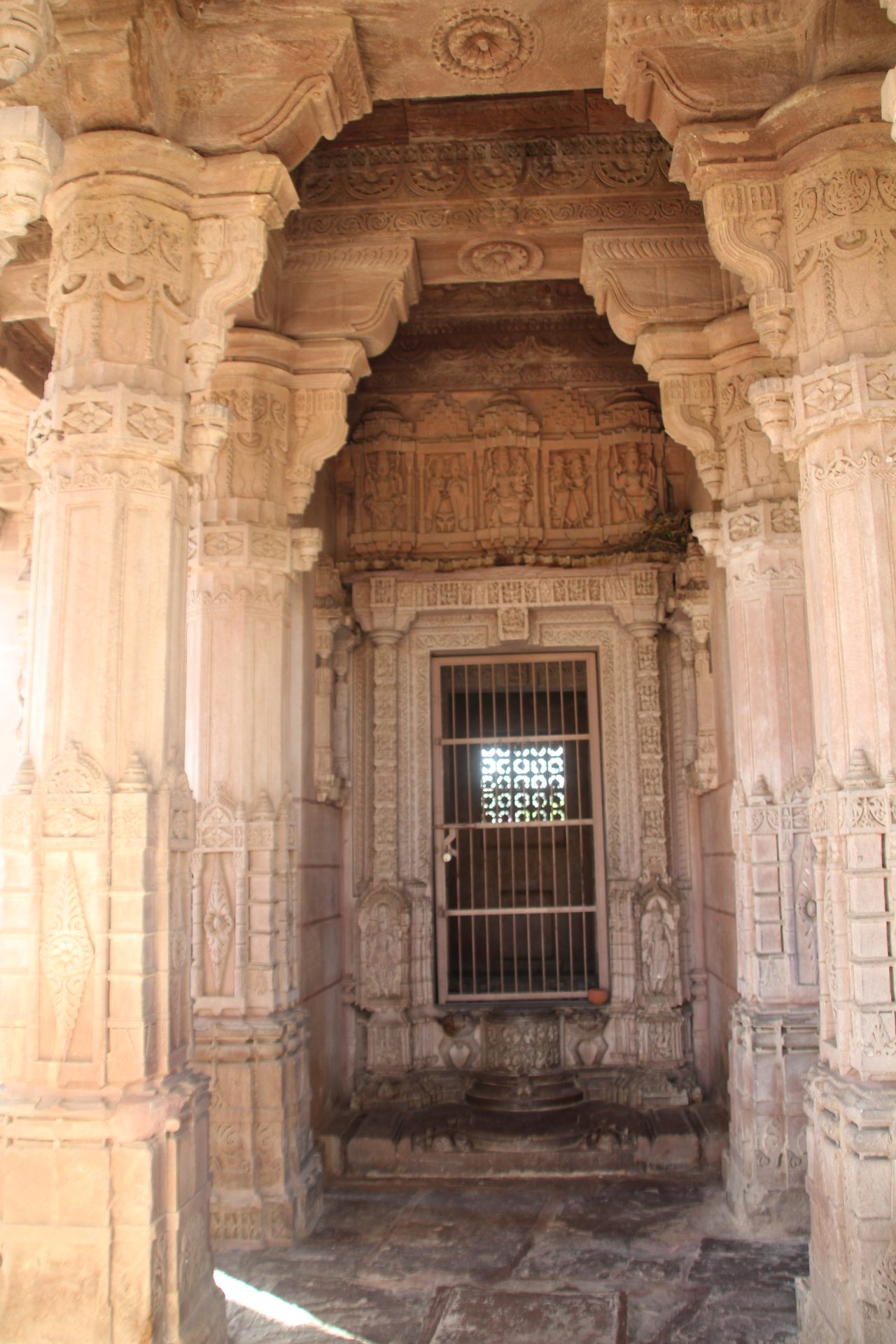
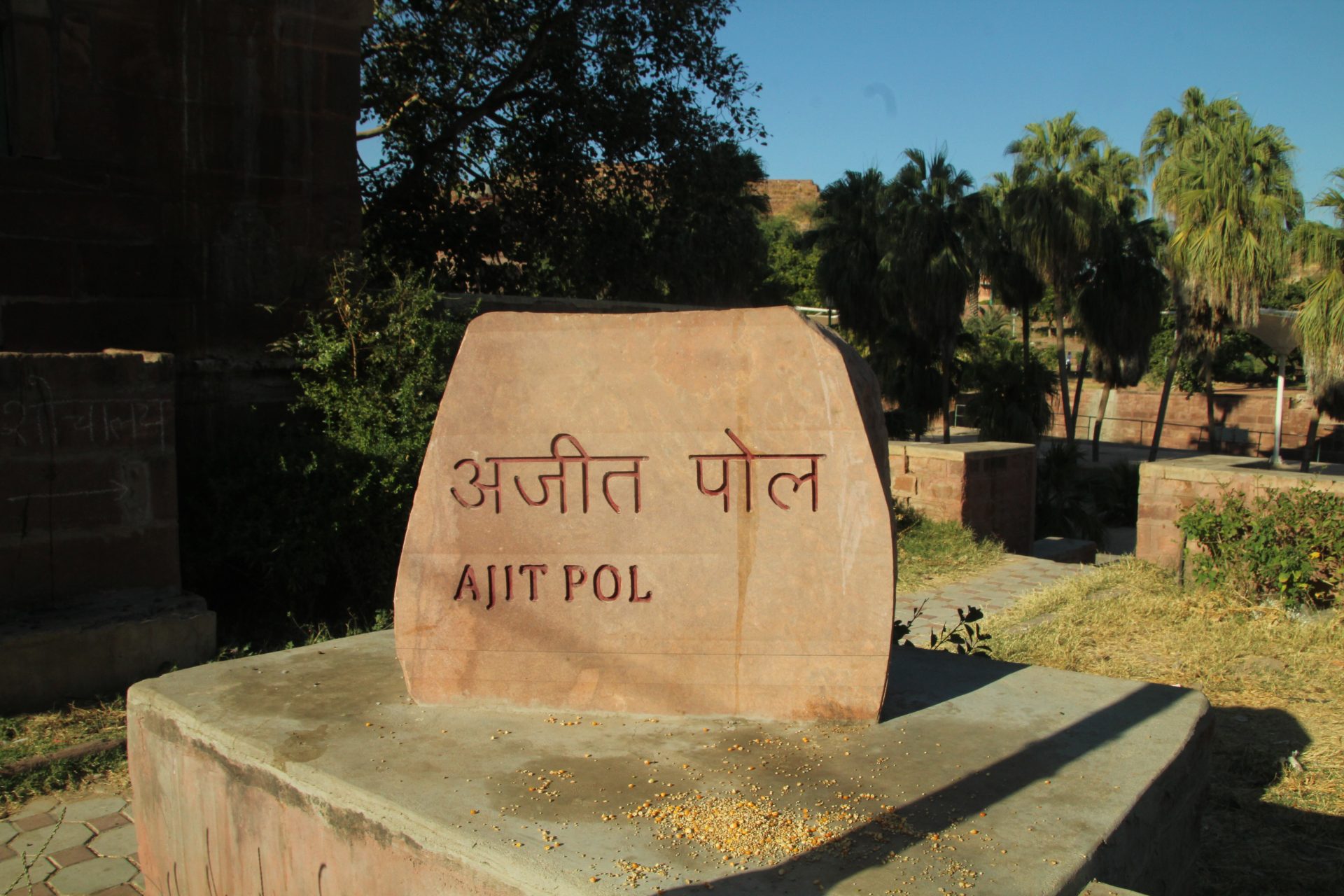
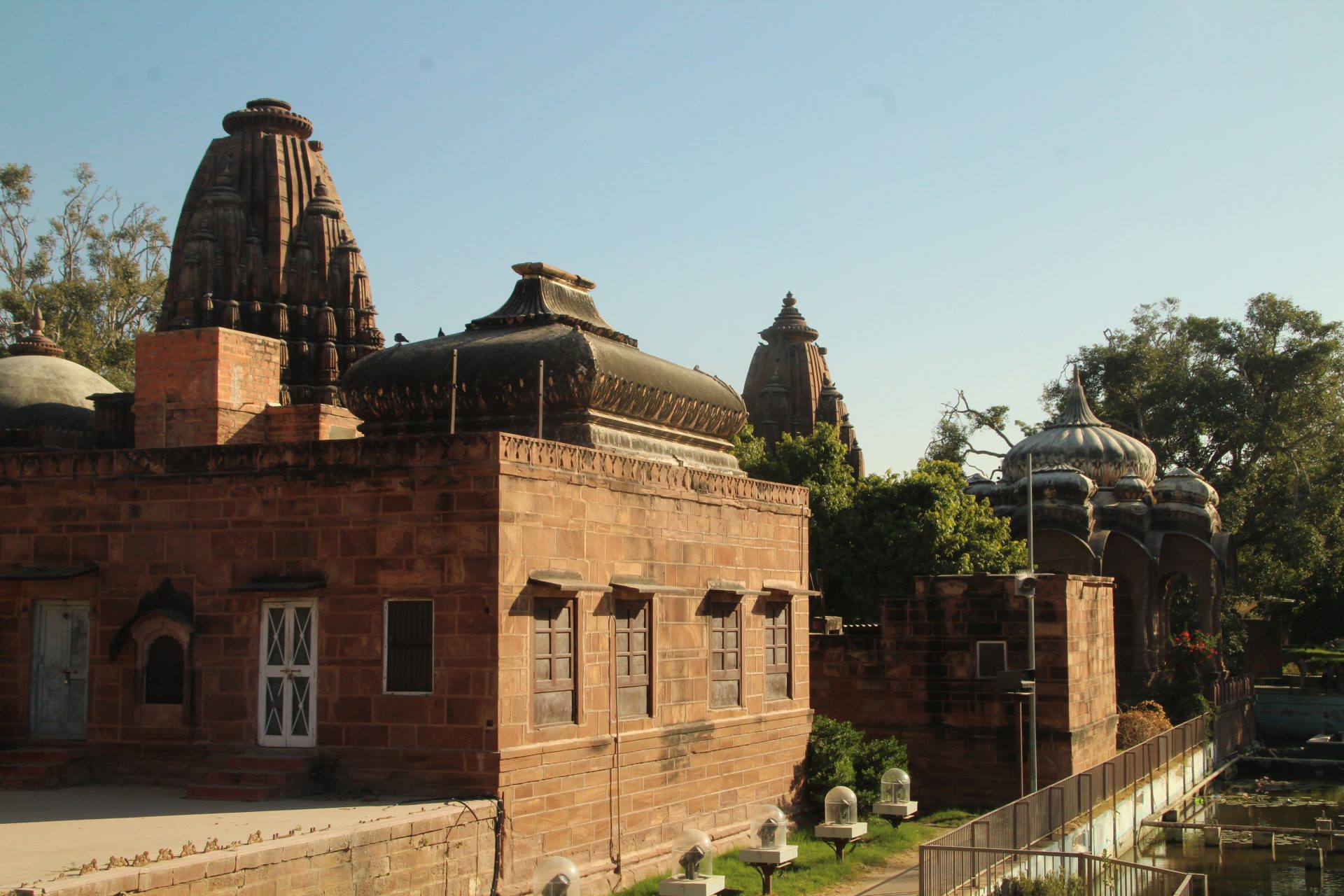
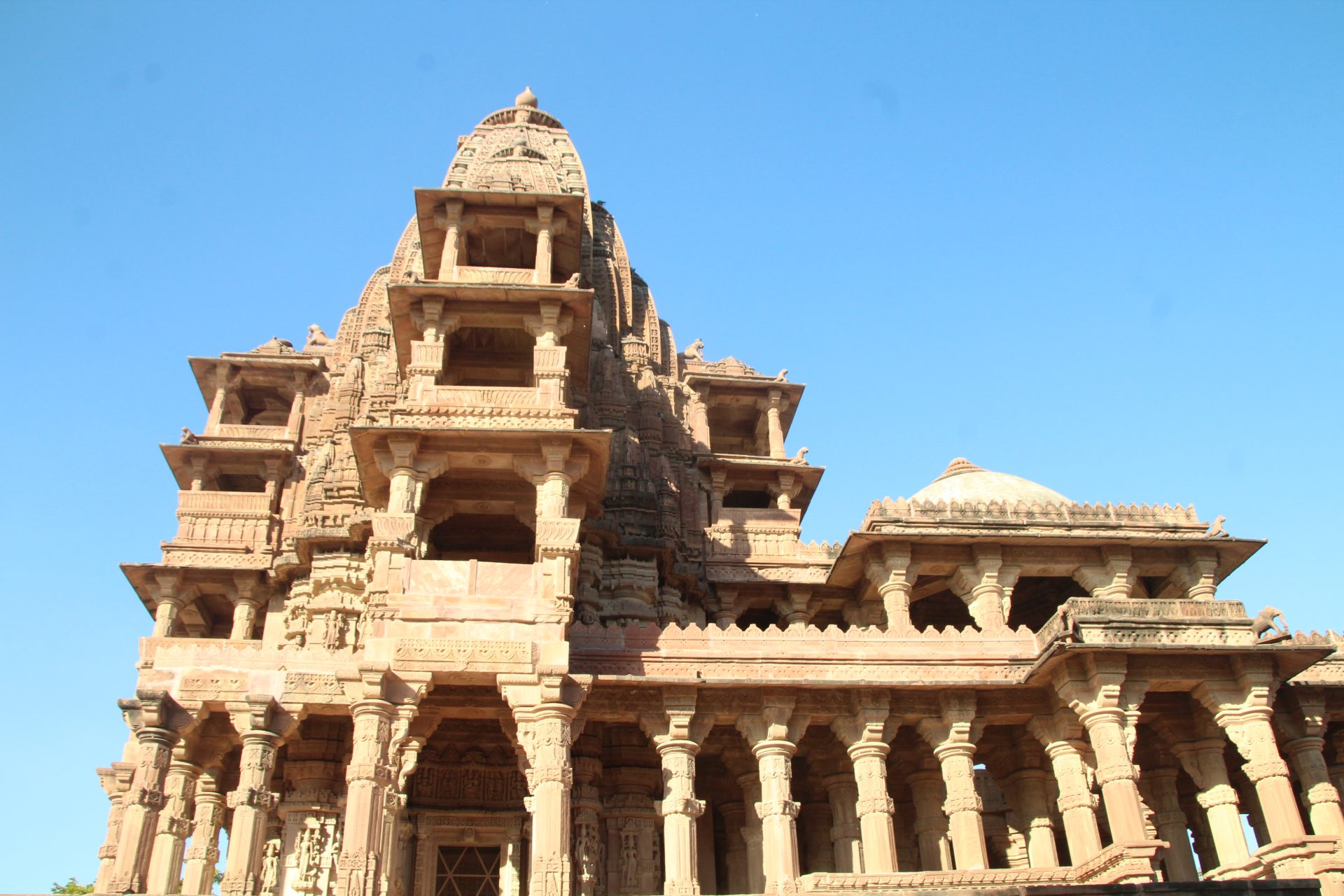
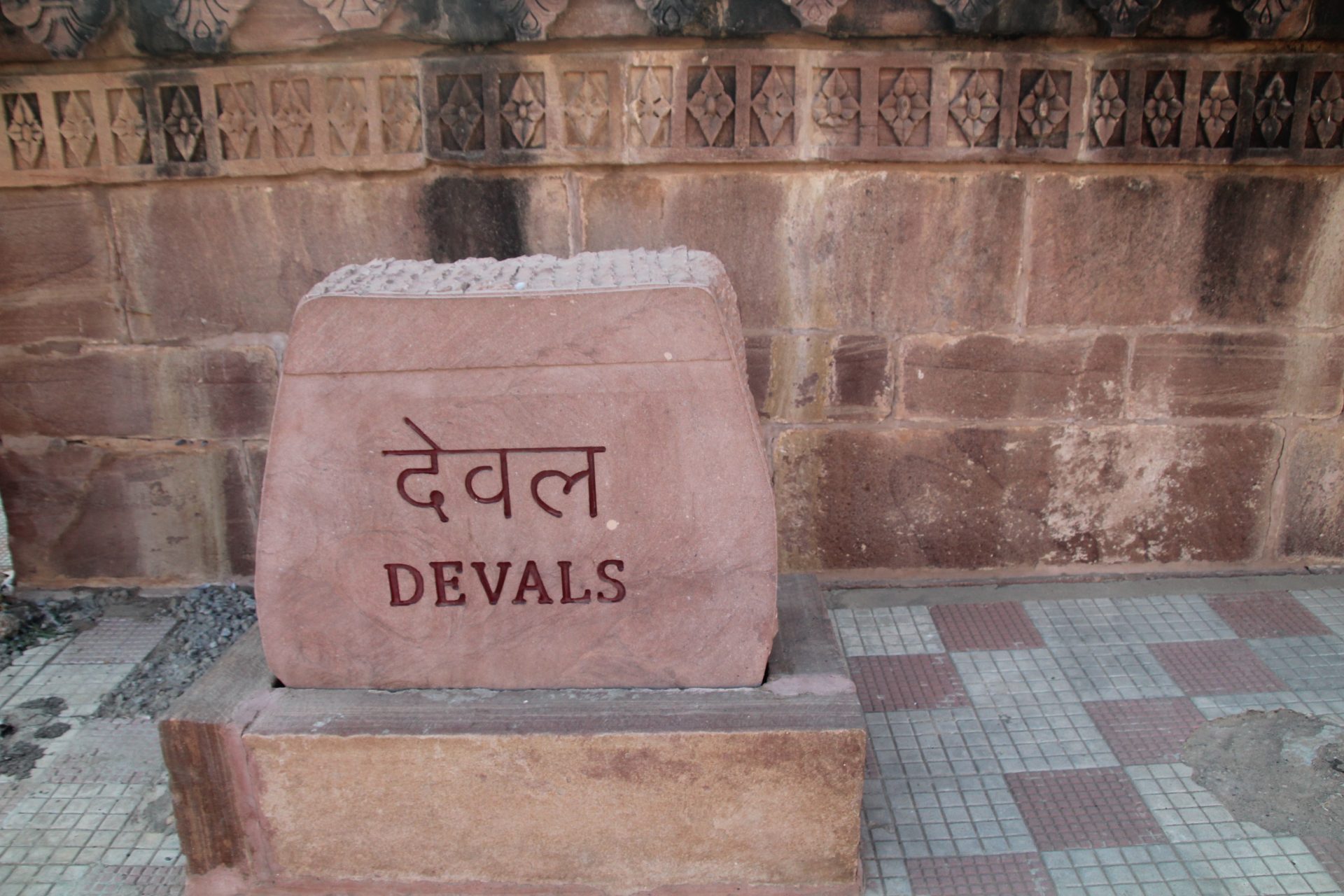
Beautiful Dewals (Chatri shaped Cenotaphs) of different rulers of Jodhpur adorn the gardens. These are built out of red sandstone and are 4 stories tall with an elegantly built spire and fine columns. The most impressive being that of Maharaja Ajit Singh which was built in 1758. These Dewals have been highly influenced by the Hindu temple architecture.
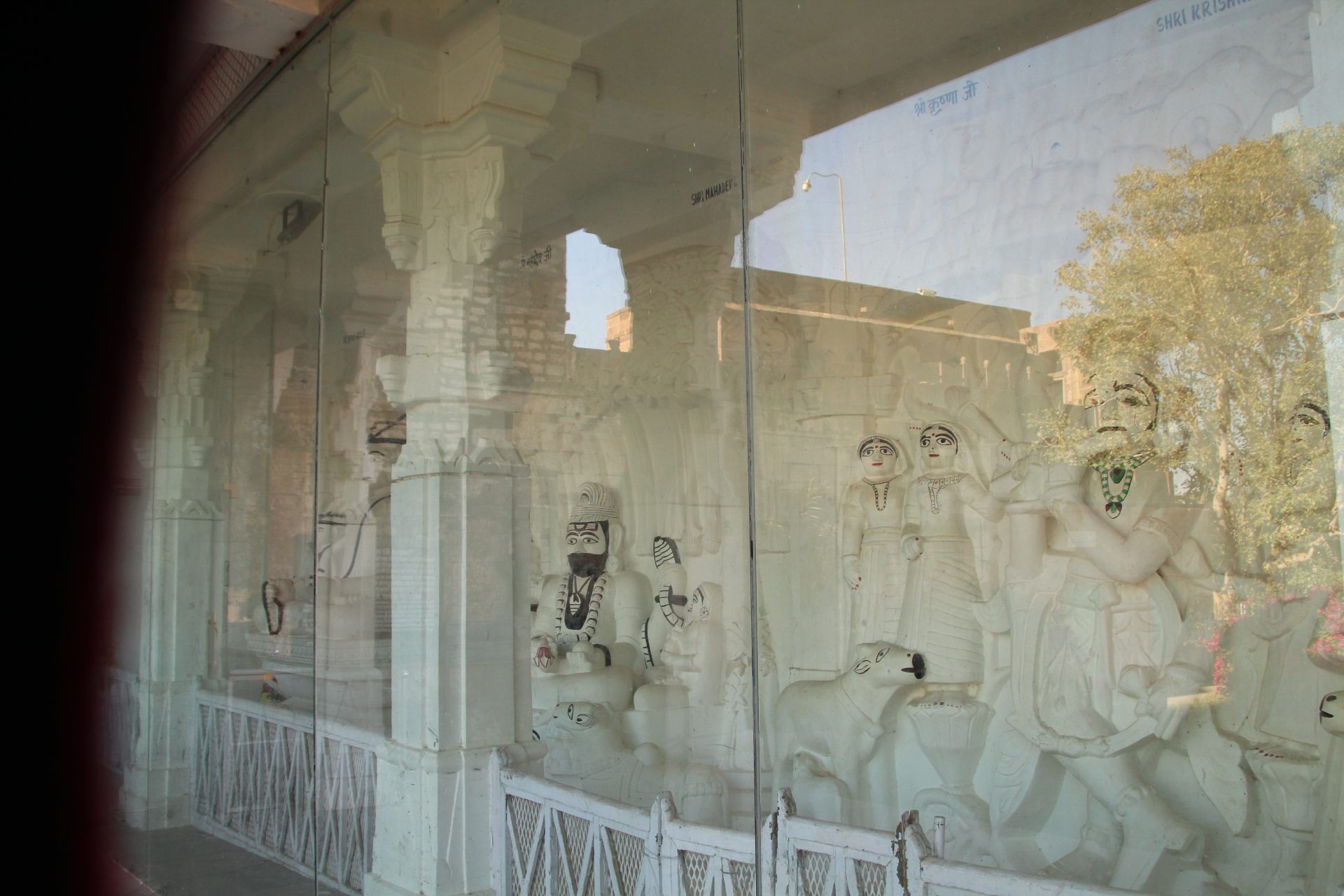
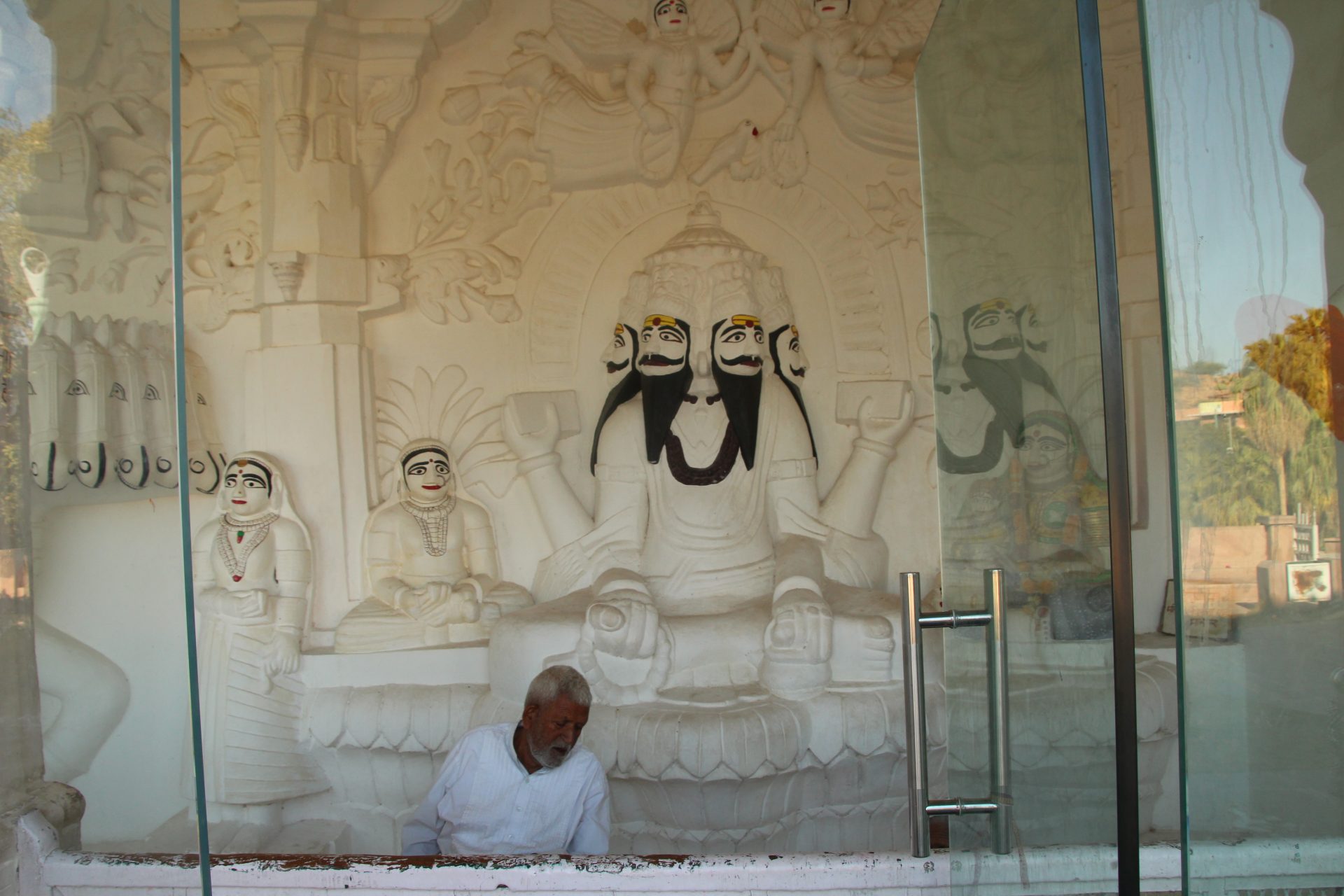
The Garden complex also comprises a Hall of Heroes which has around 15 images of Hindu deities and Rajput heroes carved out on a rock wall. Mandore is believed to be the native place of King Ravan’s wife Mandodari and there is temple within the gardens built for Ravan. Also housed is a temple for 33 crore gods with images of various Hindu deities.
Came out of the Garden complex by around 3.30 and headed for the old city where the Ghanta Ghar (Clock Tower) and the Toorji Stepwell are located. These were to be my last pit stops.
THE GHANTA GHAR OR THE CLOCK TOWER
Had about an hour roughly to complete all this and got dropped by the cab guy near a place called Nai Sarak ( or New Road).
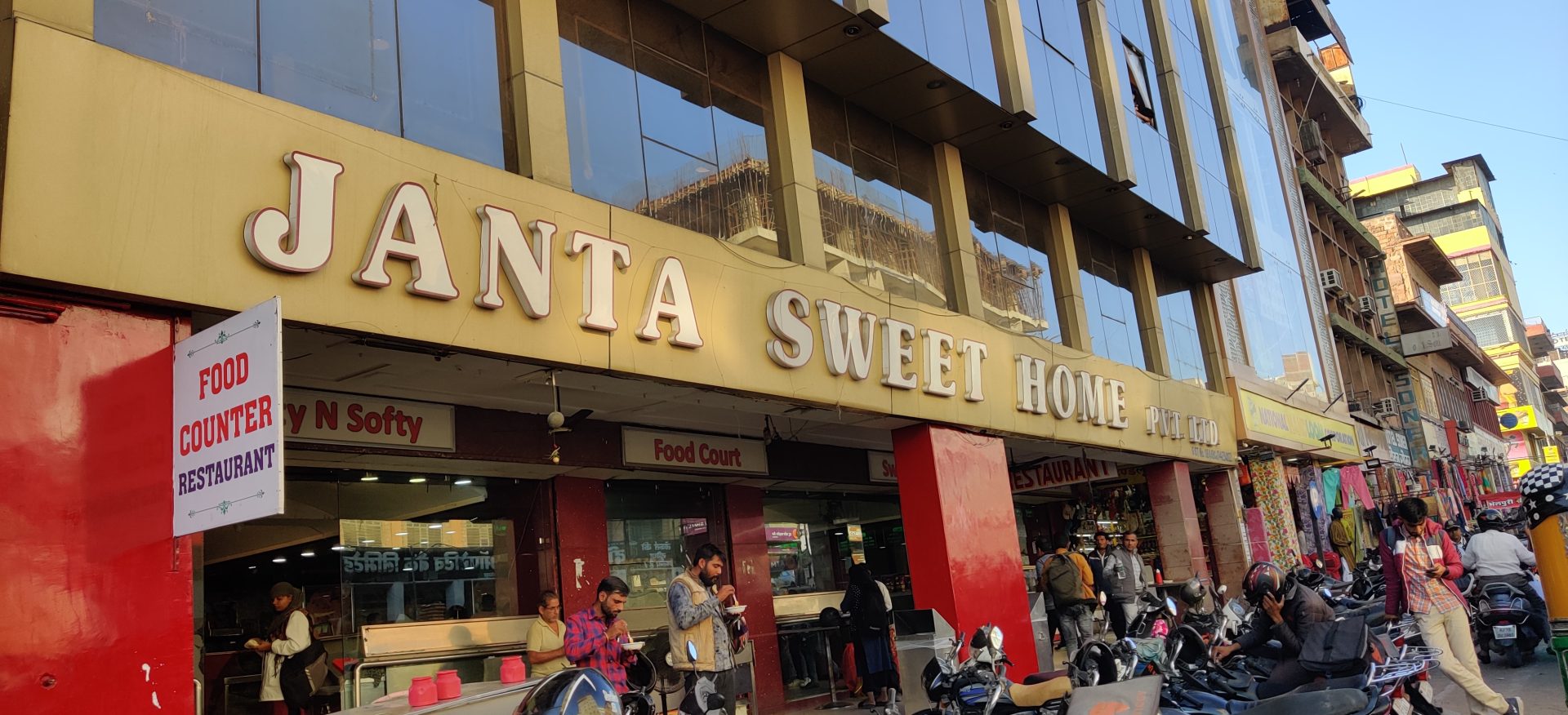
Try out the kachoris at Janta Sweet Home next time you are around in Jodhpur and you would not to stop with just one.
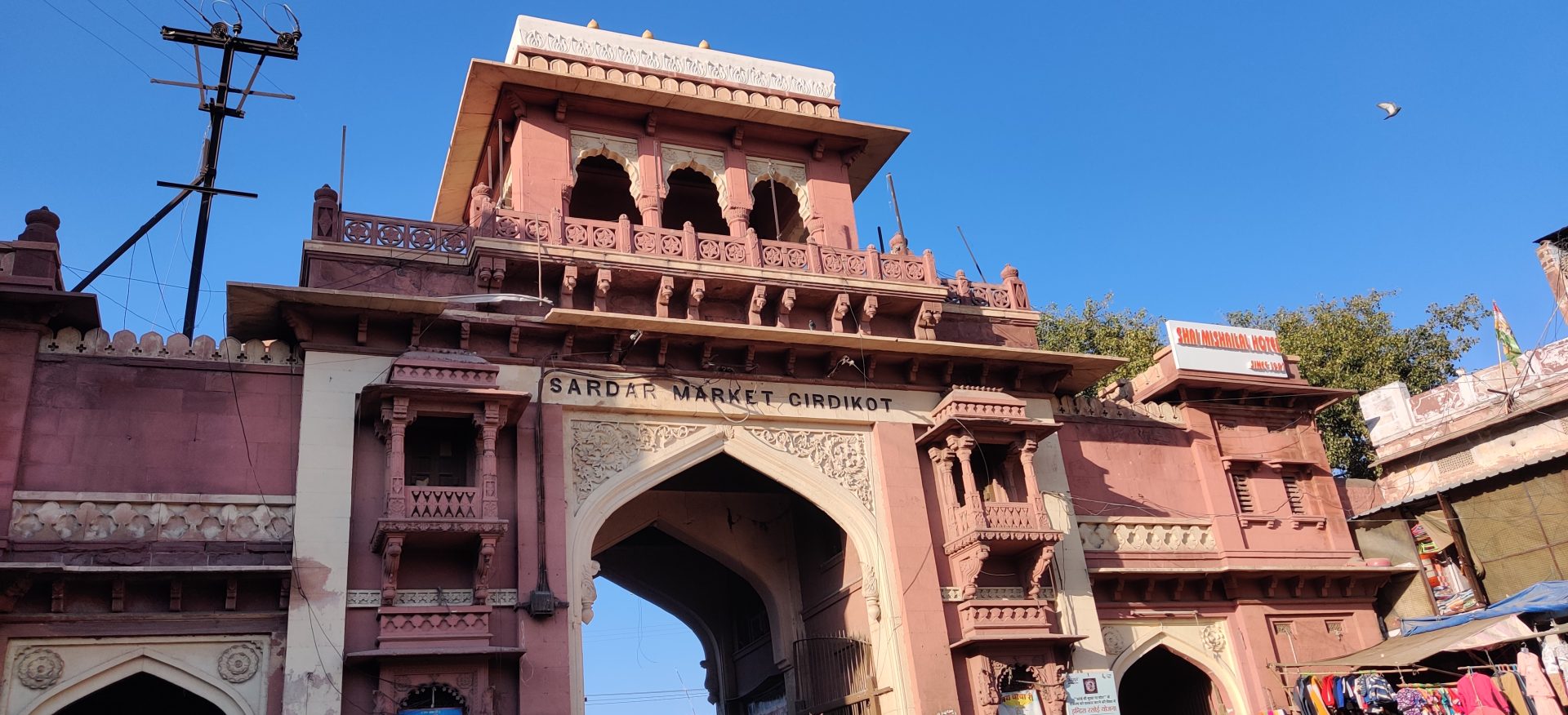
The access to the Nai Sarak and Sardar Markets which are prime shopping areas in Jodhpur and famous for Spices, dresses, tye and dye fabric materials including the famous Bandhini or Banhej is from here. Had to give the shopping a miss cause of paucity of time.
If you want to loosen your purse strings, do take some time out to visit the Tripolia and Sarafa Bazaar where you get to choose from wooden handicrafts, brass items, colourful apparels, metal furniture, marble statues, silver jewellery, and traditional artifacts besides fabrics and antiques.
You also have the Mochi Bazaar for a wide variety of jutis (also known as mojaris) in myriad hues, patterns and range, the Sojati Gate Market and the Kapra Bazaar for traditional fabrics and should you be wanting to buy items for gifting, there are classic antiques available at the Umaid Bhawan Palace Market.
THE SARDAR MARKET GATE
FAMOUS FOR ITS KACHORIS
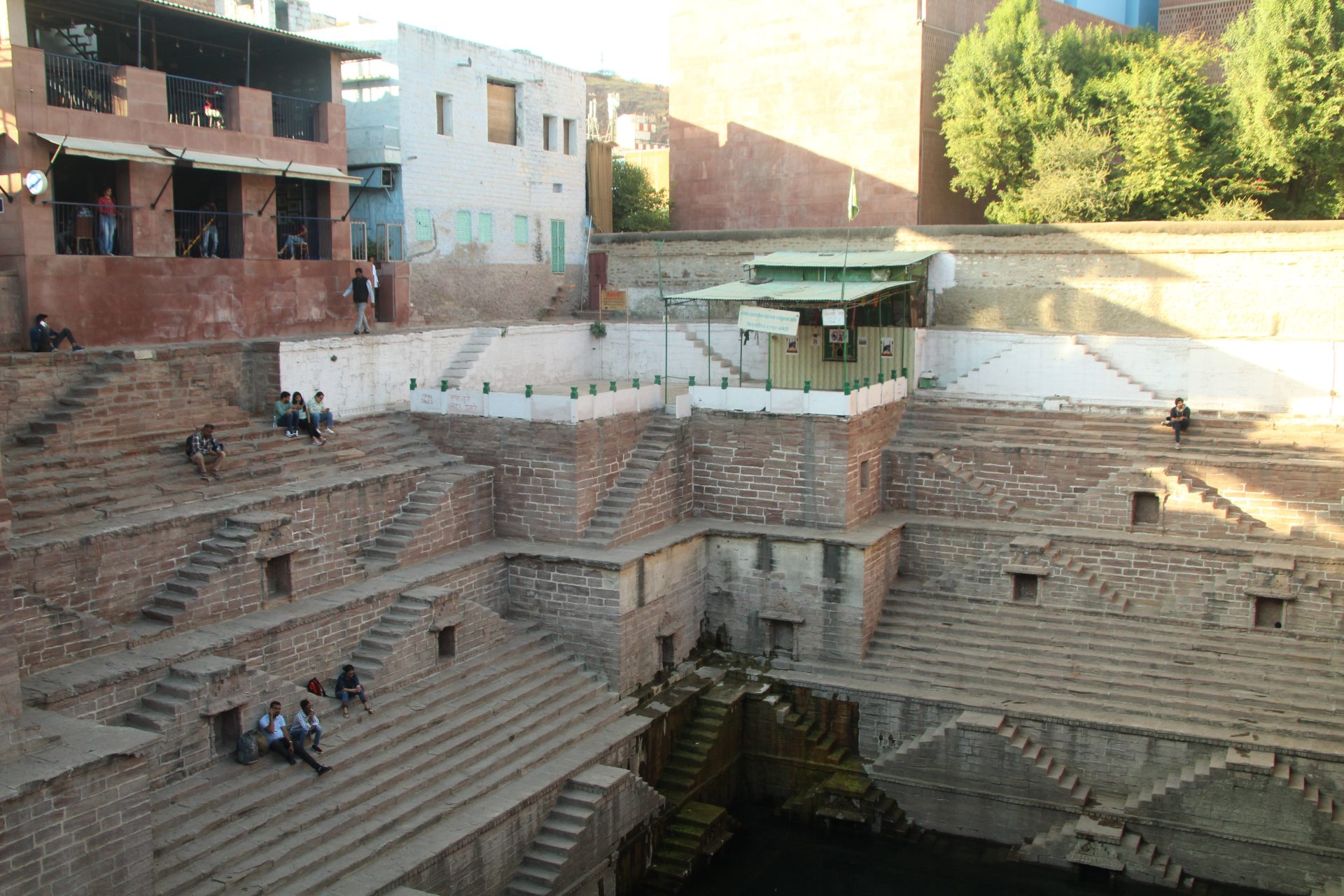
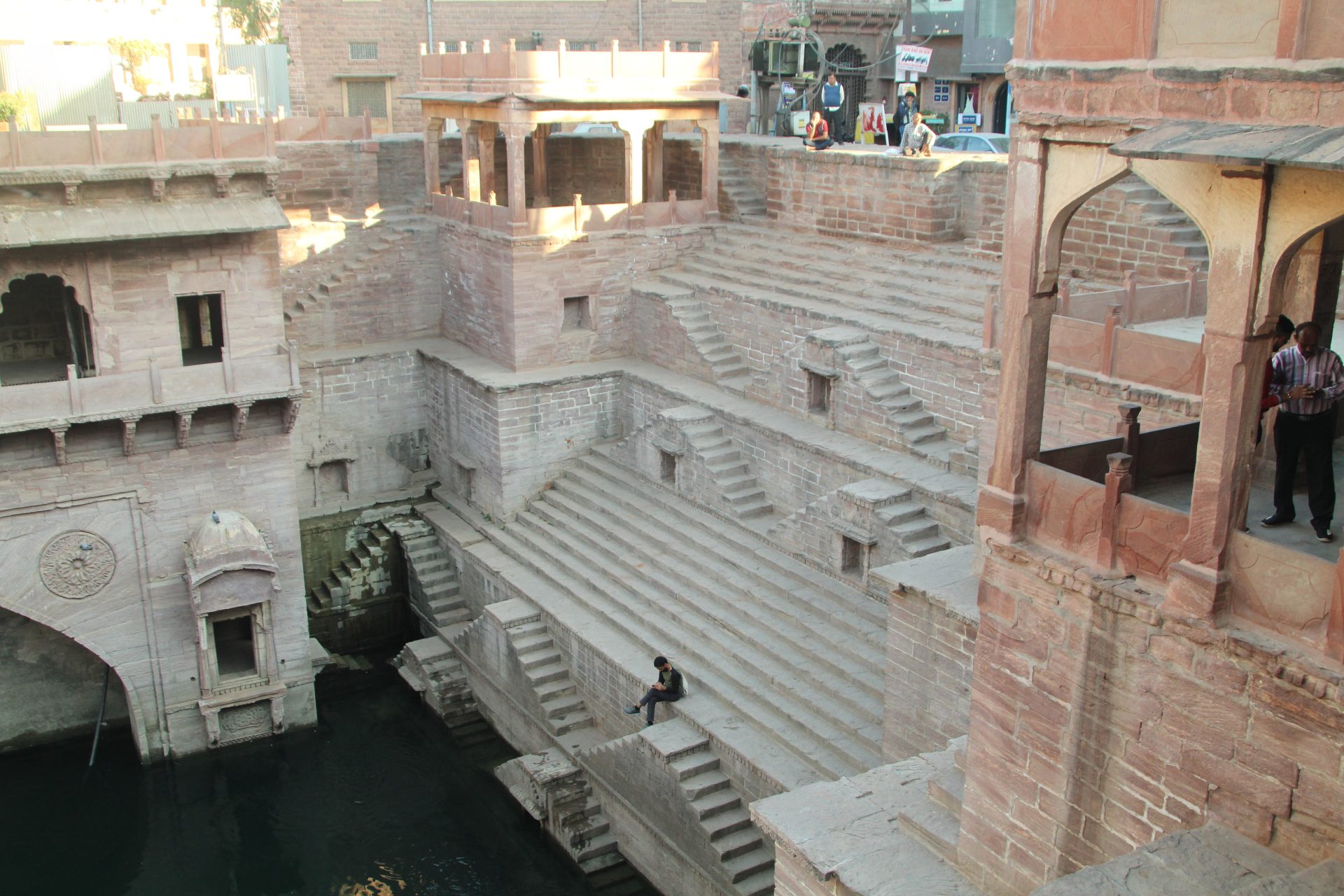
A 10 minute walk from the Nai Sarak round tana where I had promised my cab guy to meet at sharp 5 PM since I had the 5.30 PM bus to catch, took me past the 4 storey Ghanta Ghar and the well Ornated Sardar Market gates to Toorji ka Jhalra (Step Well). This stepwell was built in 1740 and has since then been restored and intricate red sandstone carvings. A relic of Jodhpur’s architectural history, this stepwell was built by Raani Tawarji, Maharajah Abhay Singh’s Consort and Queen, continuing the age old tradition that Royal women would build public water works. The diamond shaped steps lead one right to the well where the water is believed to be 300 feet deep.
Was not sure of which boarding point to choose when booking my bus tickets to Udaipur and chose the one which was the last exit from the city and which suited me in terms of time.
It turned out to be a god forsaken place near the outskirts of the city on the highway and the cab guy was courteous enough to drop me right at the point from where I was to catch my bus, What followed was an uneventful journey in an air conditioned seater bus which was quite comfortable however. Tickets for the bus journey were Rs.500/- per head and it took us almost 5 hours to reach Udaipur.








































































Beautifully explanained with fantastic photos. Great work, Mohan.