30.09.2023 – After a tiring day of roaming around the ruins in Hampi, we were on the way back to Hospet in the Auto when it struck me that I had almost done 70 to 80% of Hampi and maybe would require another half day for the rest of the sights. A sudden thought came in as to why not cover the caves of Badami, Aihole and the temples of Pattadakkal the following day and reserve the first half of the 3rd day when I would be in Hospet, for a little bit more of Hampi again.
Table of Contents
Conjured up a quick plan
As I got chatting with my auto driver, understood that if I could start early for the Matanga Trek, the rest of the places could be done in half a day.
Checked with him if he knew any travel agency and he helped me get connected to an acquaintance of his who worked for Hospet Cab Service. Decided to use Day 2 of my stay to visit Badami and before I reached Hospet, the deal was struck with them for a return trip to Badami for a sum of Rs.4,400/- including all the tolls enroute and also with an understanding that they would show me the other touristy places around Badami.
The cab driver came in the next day at the duly appointed hour of 7.00 AM.
We were good to go for another exciting day of reliving the history of what we had learnt in our text books more than 45 years back.
FIRST OF THE MANY BOARDS ENROUTE
The plan as outlined to me by the driver was to do Aihole, Badami and Pattadakkal in that order and we set off to cover the 125 odd kms journey.
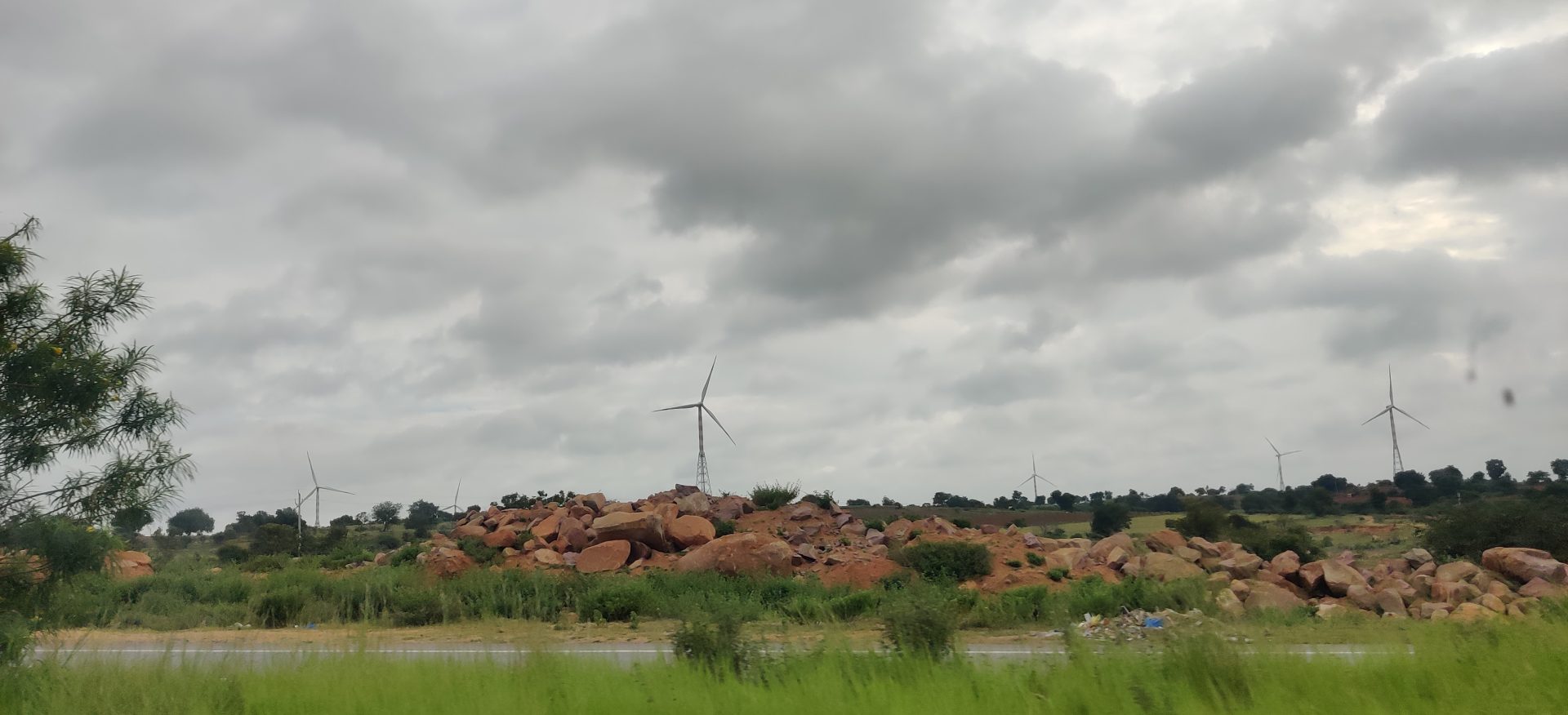
The roads leading to Aihole looked to be very well maintained and for most of the stretches we drove on 6 laned roads.The rust brown rocks amidst some greenery with the tall windmills dotting the landscape was lovely to watch as we cruised along.
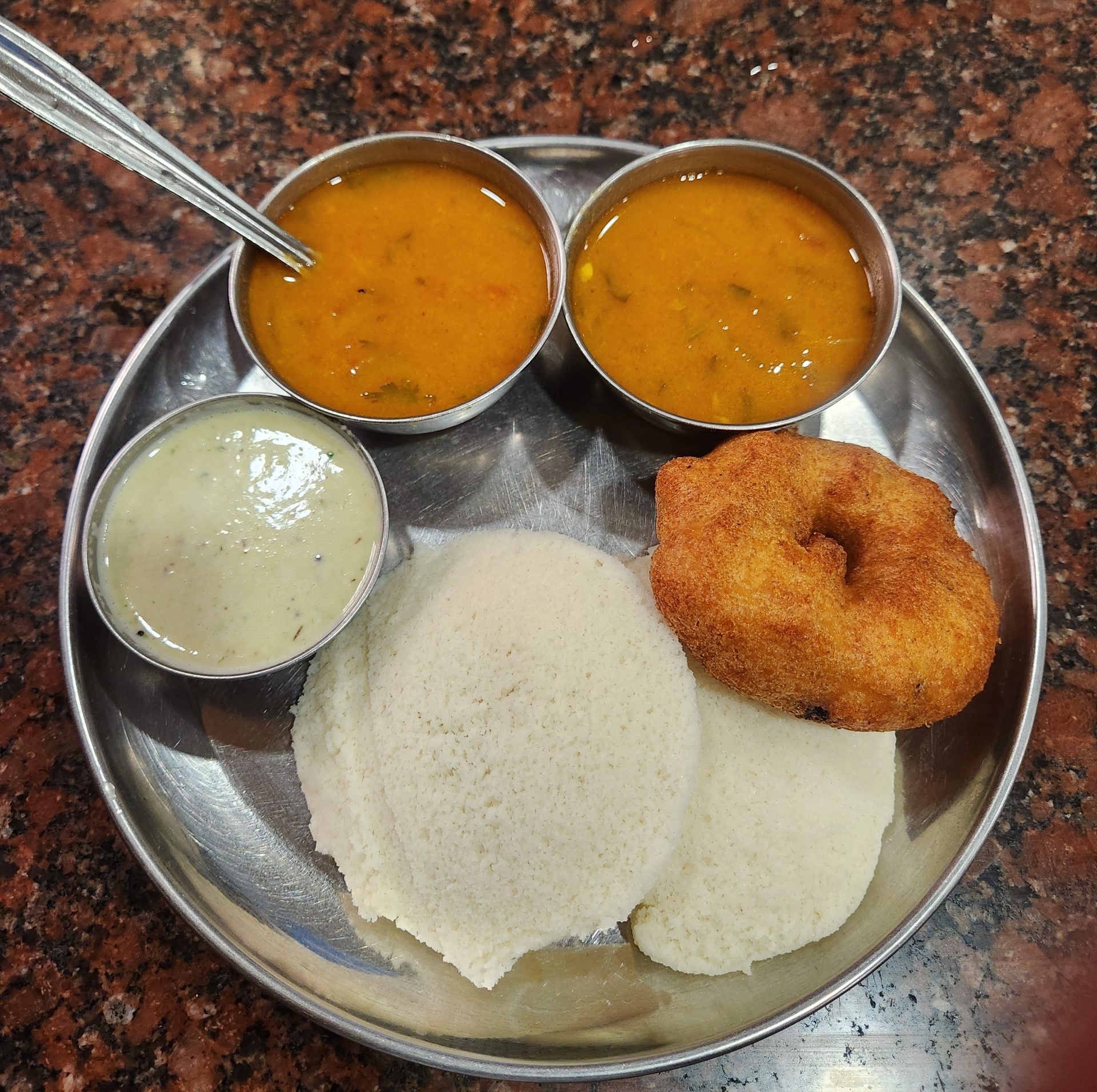
Around 8.45 AM, we entered the town of Ilkal in Bagalkot district and stopped by at Kamat for the driver to have his breakfast while I picked up a filter coffee.
Ilkal town, if one is not aware is very famous for its Hand-loom Sarees which get sold as Ilkal sarees and are pretty popular in the North Karnataka region, Andhra Pradesh and in Maharashtra.
Ilkal is round 85 kms away from Hospet and after a hearty breakfast, we started off for Aihole, located 35 kms away and reached there by around 9.30 AM.
What history tells us about Aihole
Aihole, also known as Ahivolai or Aryapura or Aivalli is a town of historical significance and is also known to be the cradle of Hindu rock architecture.
While traces of a run down fort can be seen on top of a hillock and which dates back to the 6th century, there have been lot of pre-historic sites found in and around this town. Aihole was believed to be the capital of the Chalukyan Dynasty between the 6thand the 8thcentury
A lot of medieval era Hindu, Jain and Buddhist monuments have since been found and most of these date back to periods between the 6th and the 12th century CE apart from over 120 stone cave temples.
There are lots of these lovely exhibits of beautiful stone artwork which can be seen in and around Badami and Aihole and attributable to the Chalukyan style of architecture.
THE BADAMI FORT
A whole scale excavation might lead to more wonders being discovered across large tracts of agricultural lands and paddy fields while most places continue to be inhabited by villagers.
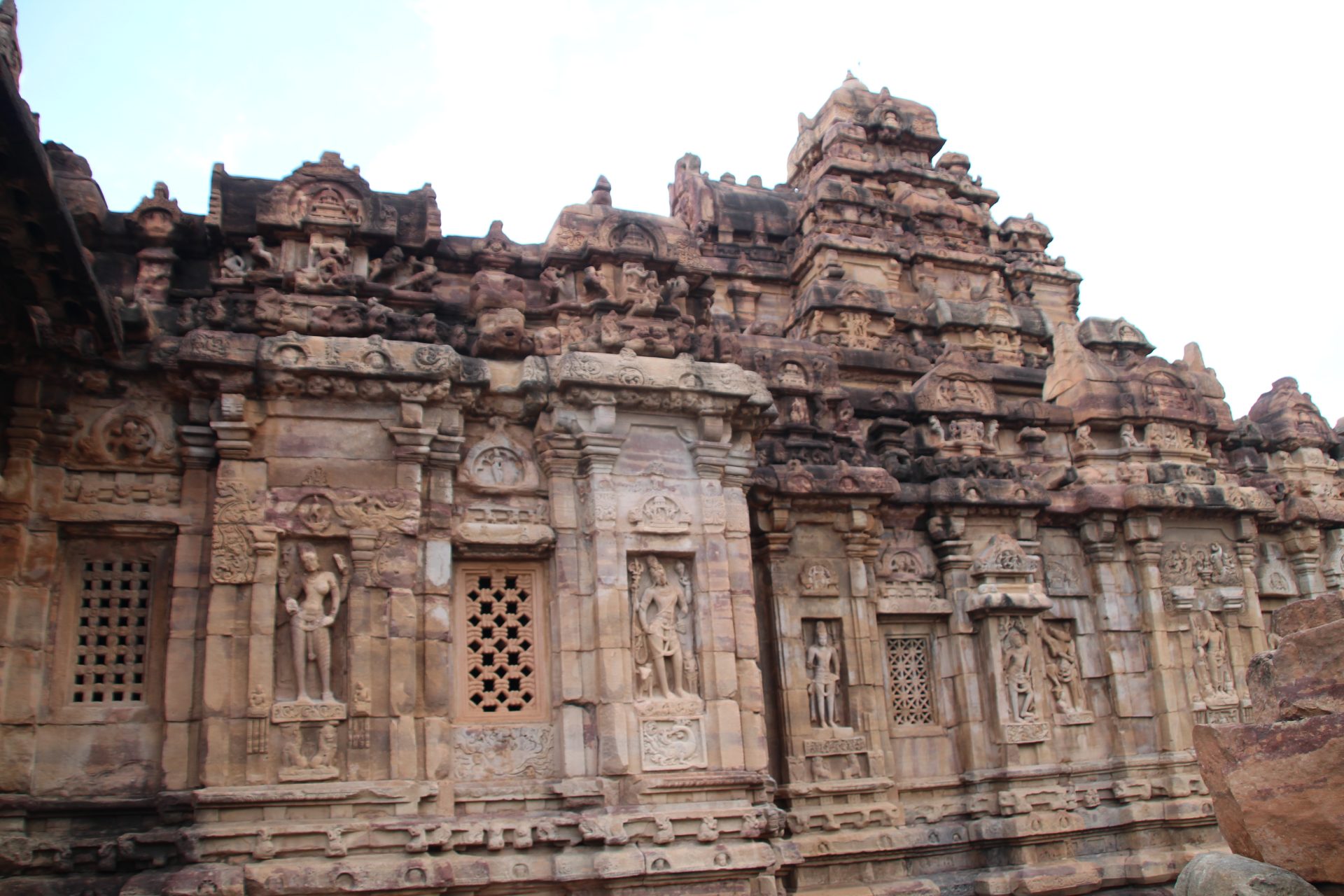
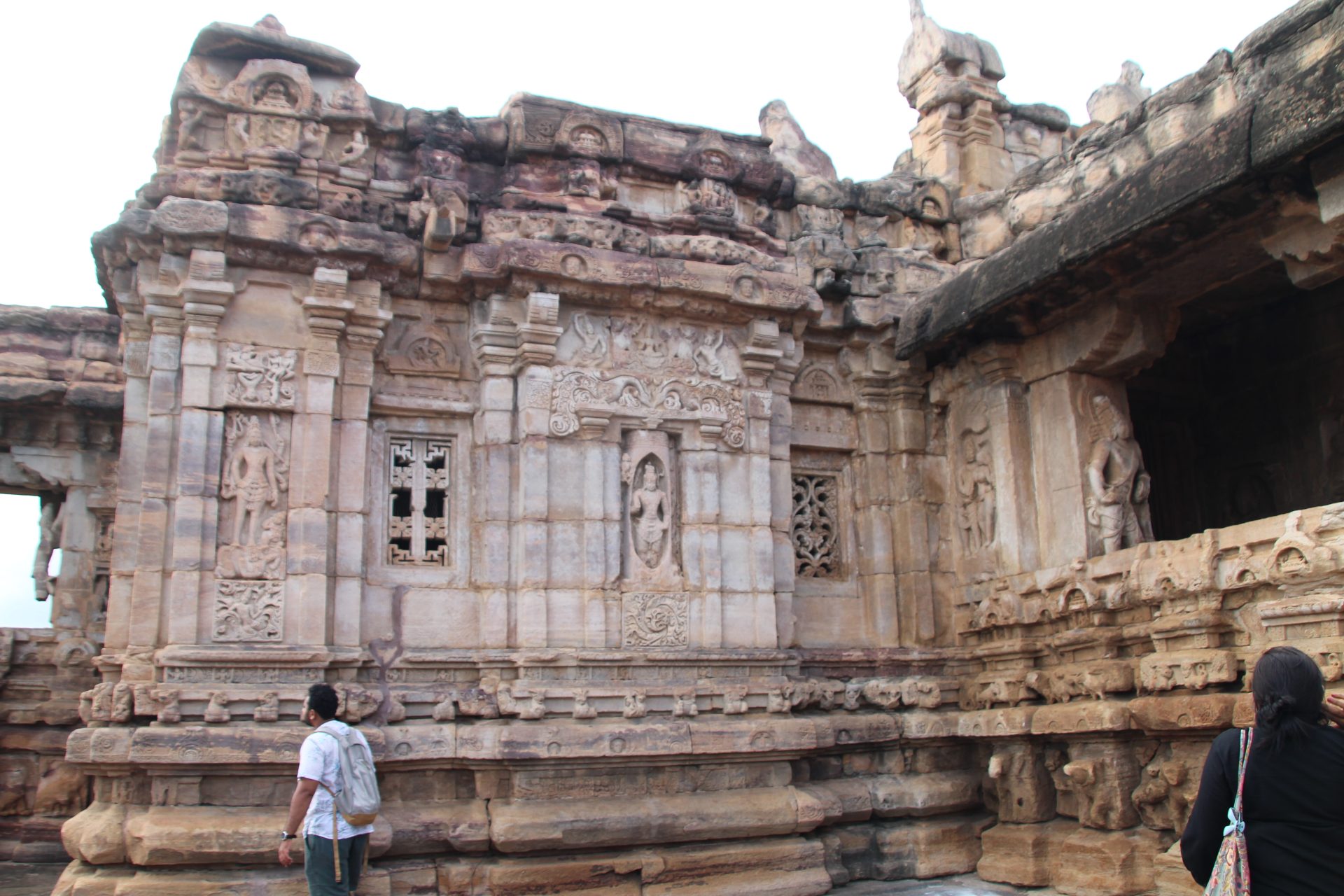
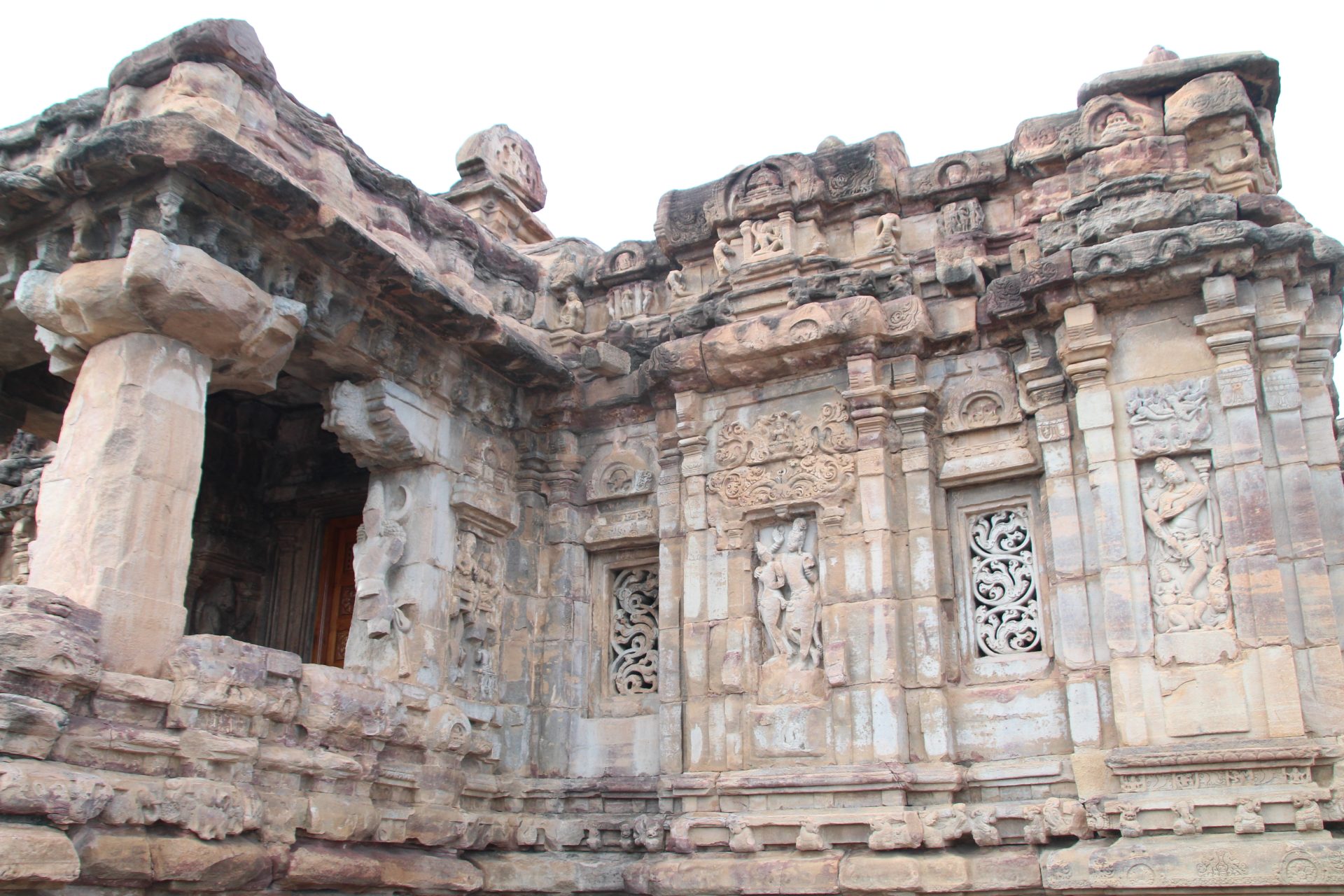
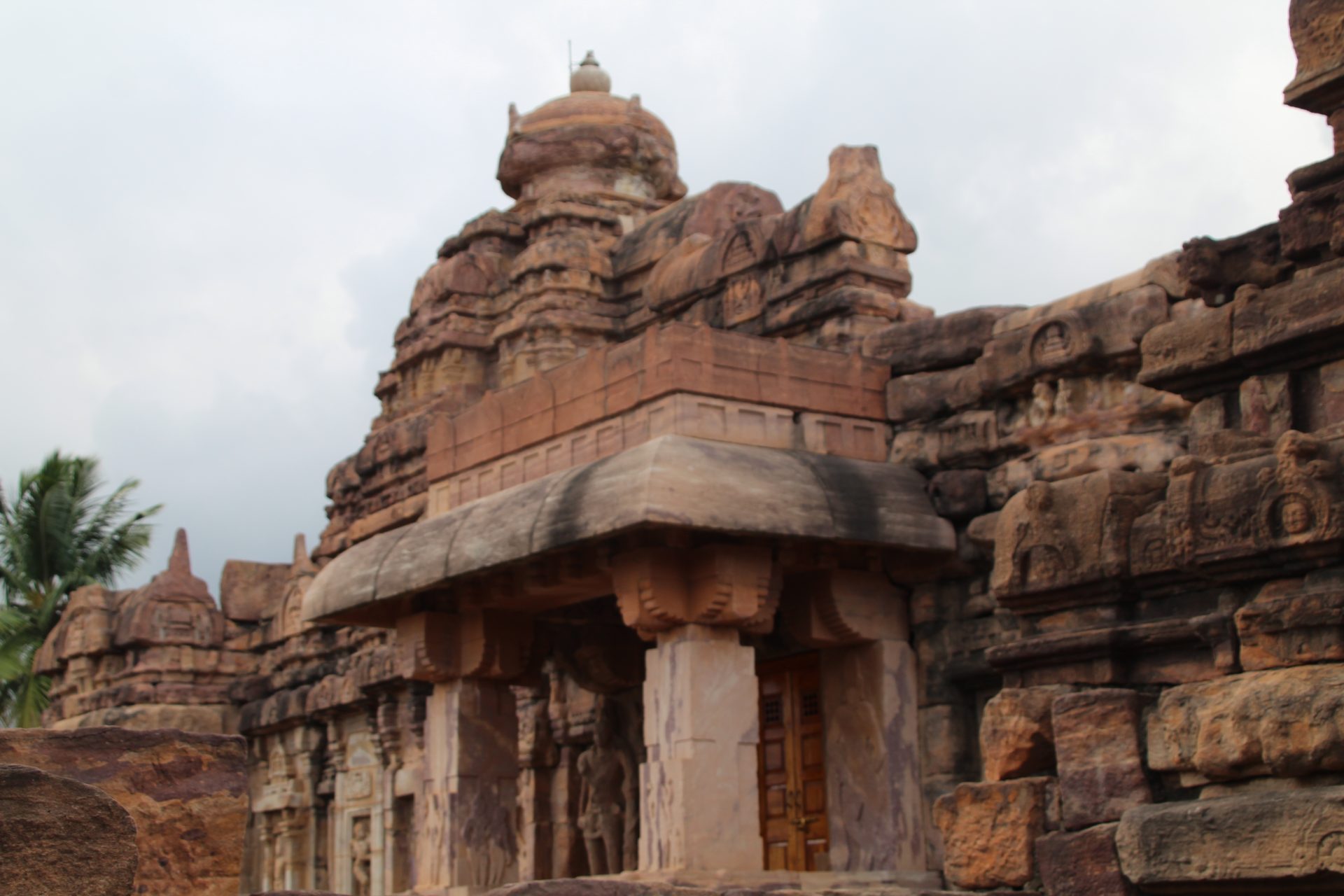
The Rust Brown Durga Temple complex
The first stop was at the Durga Temple Complex which also houses the Archaeological Museum inside it.
There are a wide assortment of different temples within this sprawling complex.
Set aside at least a couple of hours to go through the complete site.
Tickets are priced at Rs.20/- per head while cameras entail a charge of Rs.25/-. The Museum fees are Rs.5/- per head.
As we get to read further down, the names of the temples within this complex have some strange origins attributable to the occupation of villagers residing in these places before the excavations began.
The Durga Temple
Originally dedicated to the Sun God Surya, the Durga temple has some stunning embellished reliefs. These depict the artwork pertaining to Shaktism, Vaishnavism and Shaivism as well as a few Vedic deities.
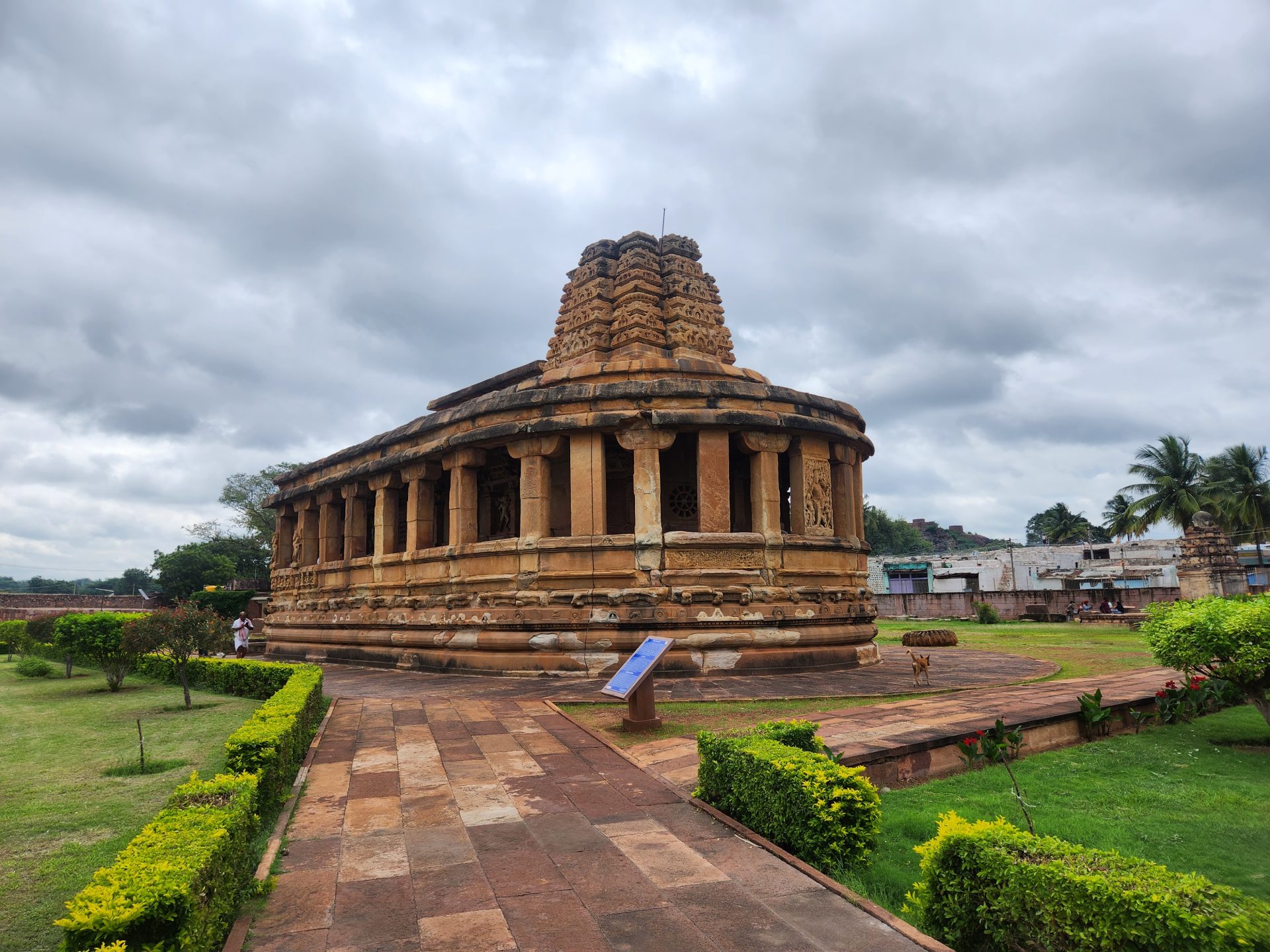
Set against the backdrop of a well manicured lawn, this temple however has a misrepresented fact about not being named after Goddess Durga. Some theories abound on it being located near a Durg (meaning Fort in English) and hence the name.
I read about the design of the temple being Apsidalin nature and finally had to resort to Google to bail me out. Finally understood that the structure has been described as one with a curvilinear semi-circular end for a building while covered on the top with a hemispherical shaped dome. While one side of the temple came close to representing the shape of an elephant’s back, it is said that this shape is similar to the Buddhist Chaitya halls in the Ajanta Caves and related to a period of the 1st or 2nd Century BCE.
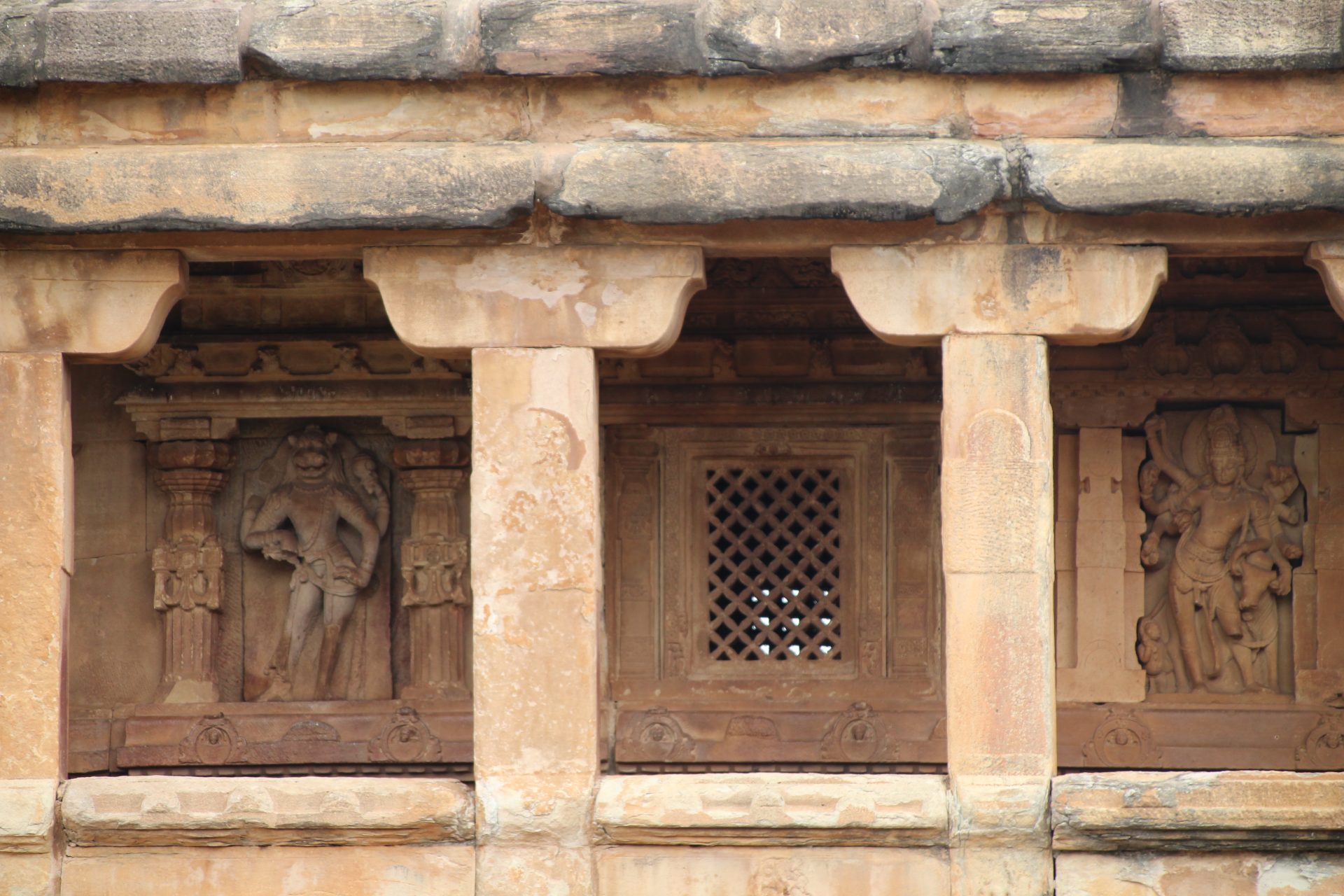
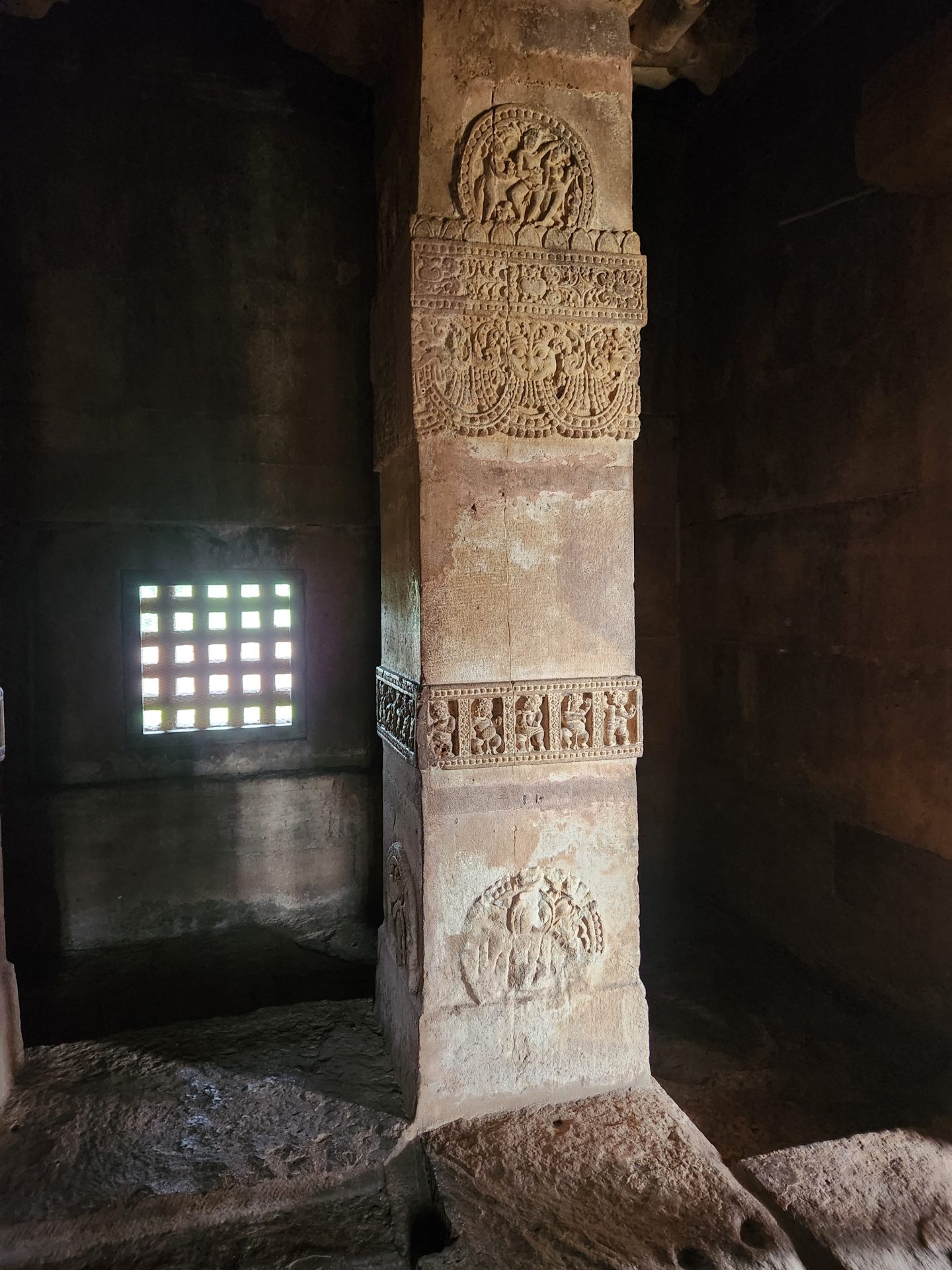
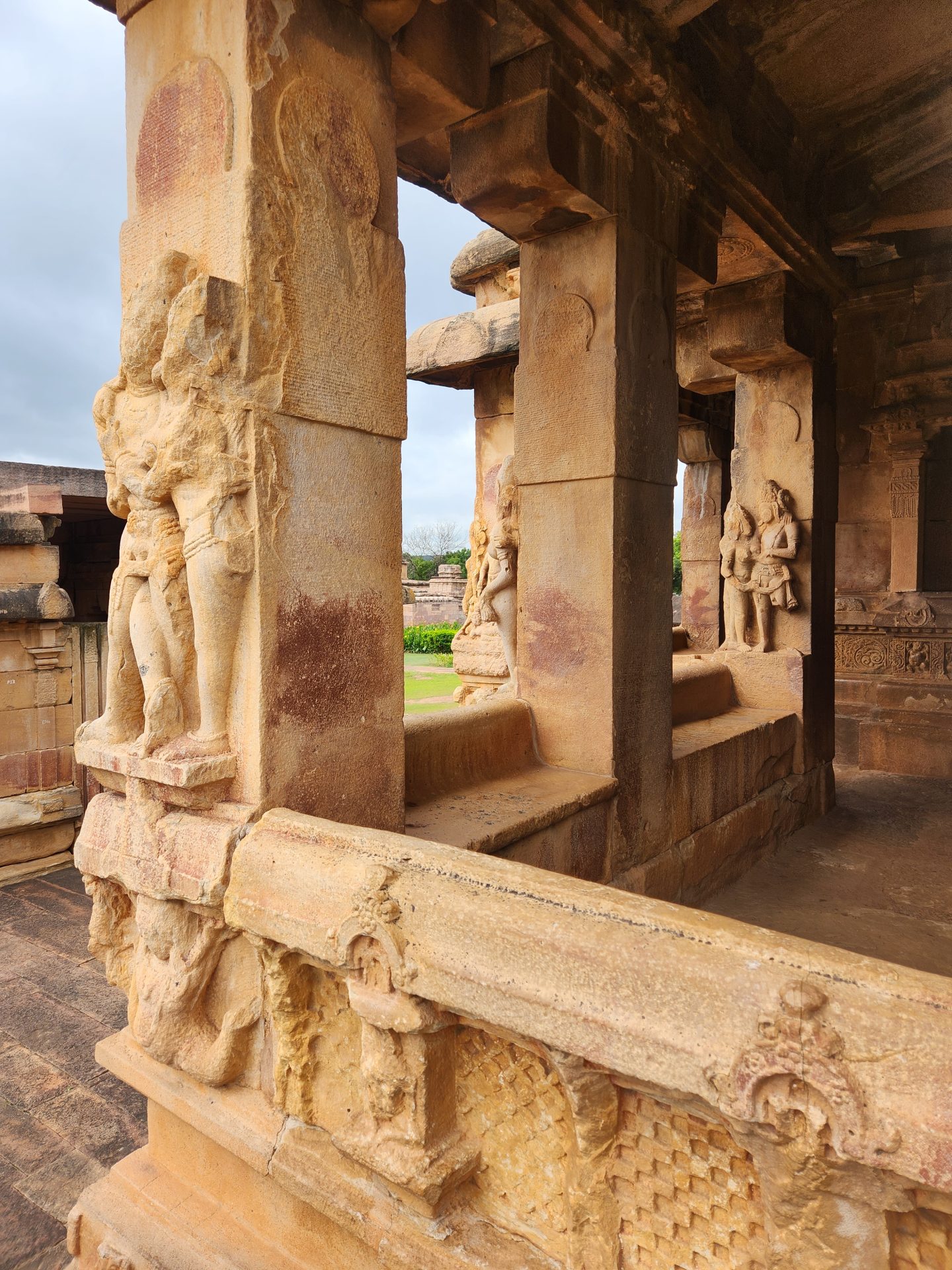
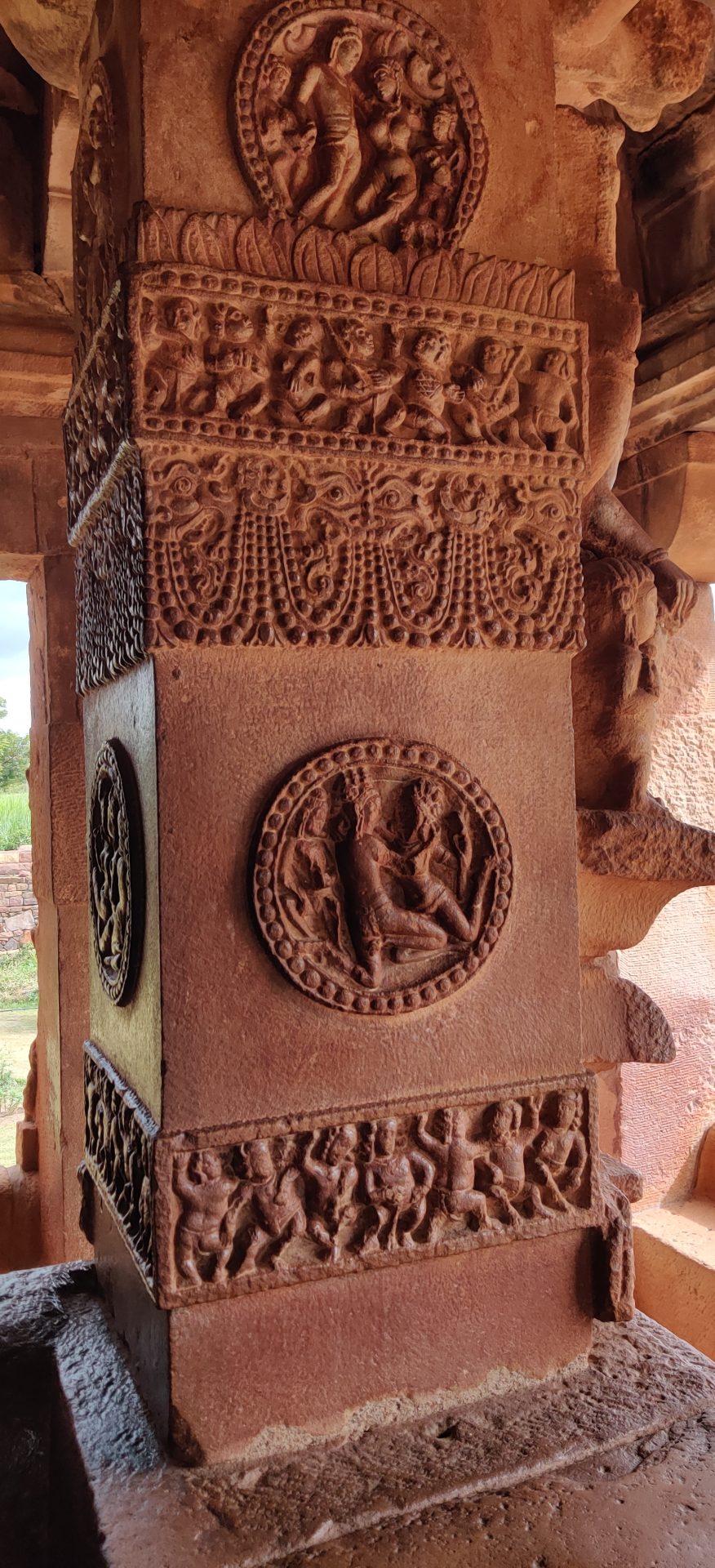
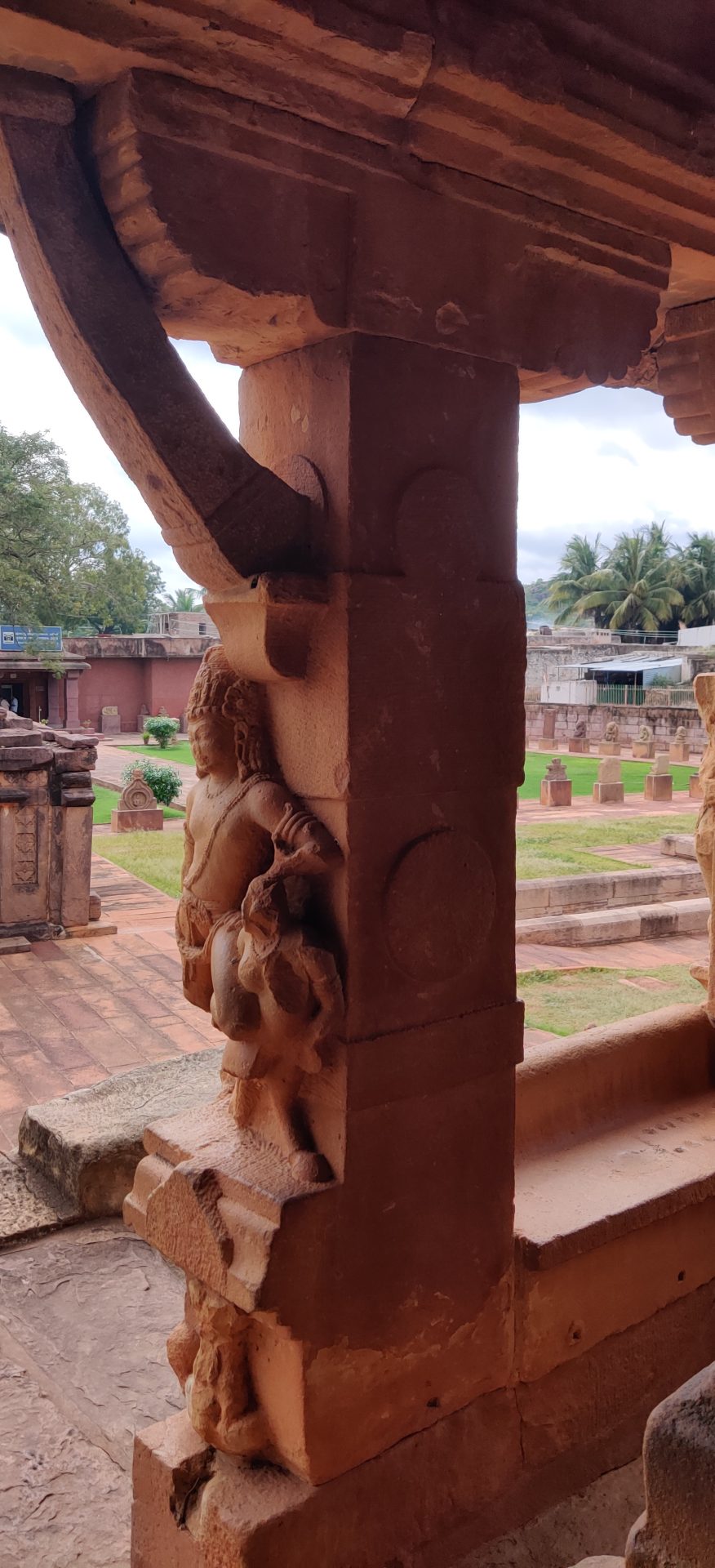
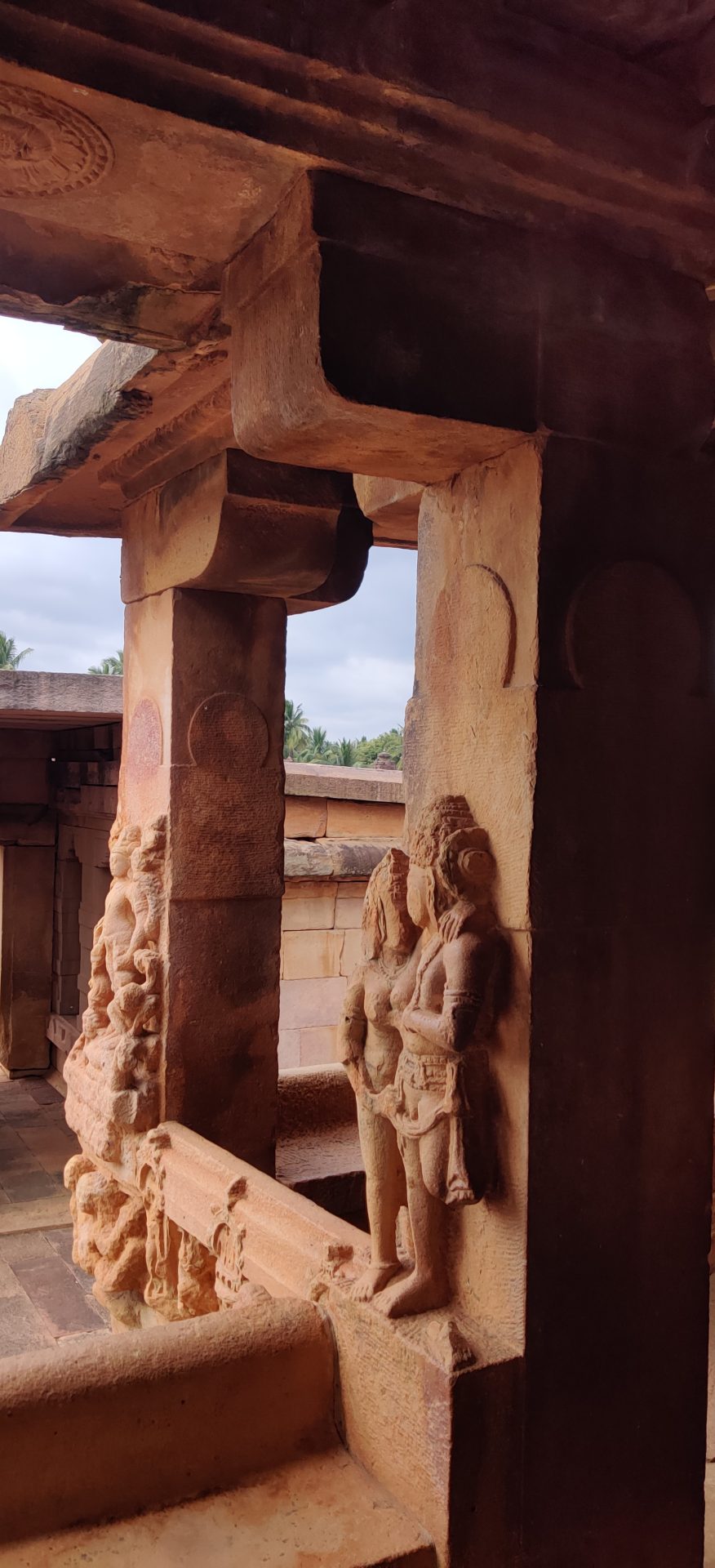
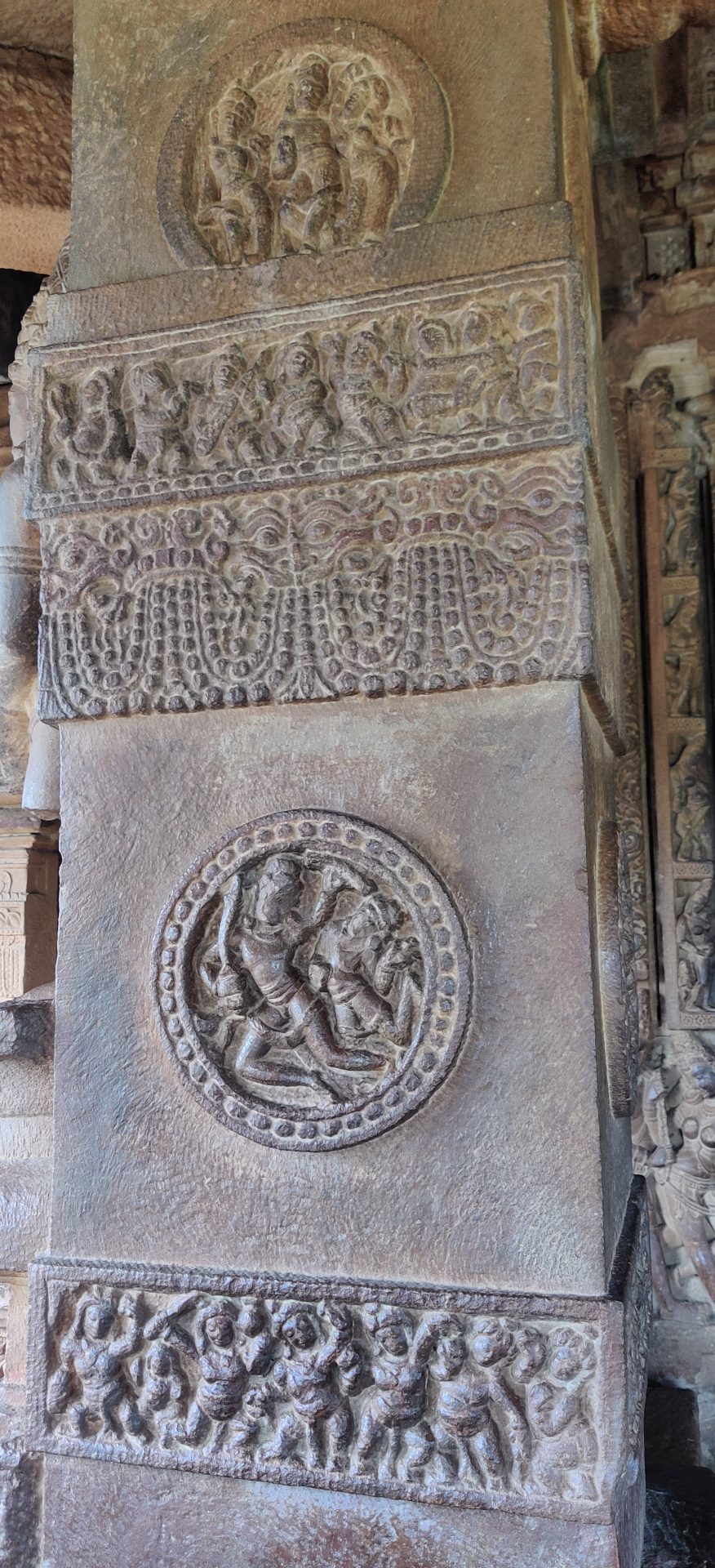
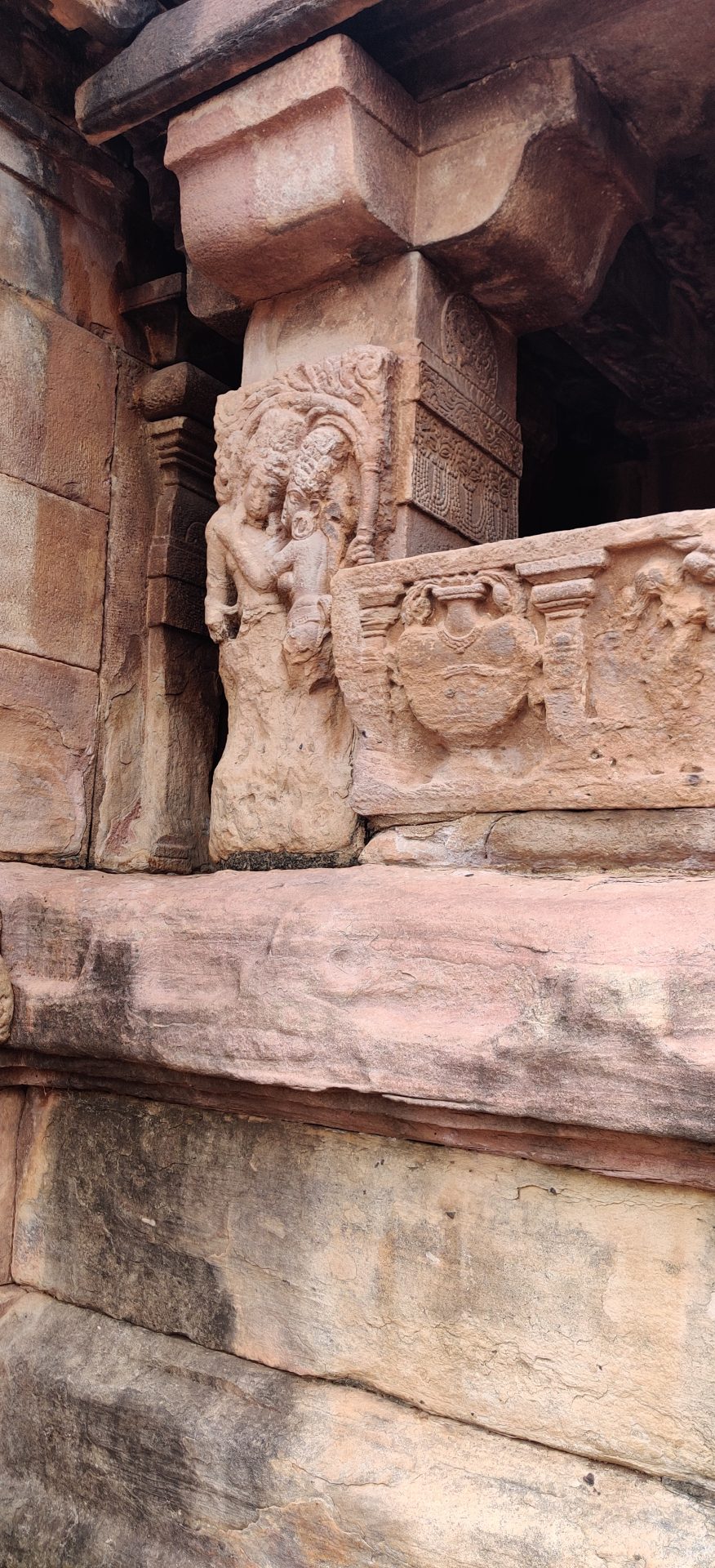
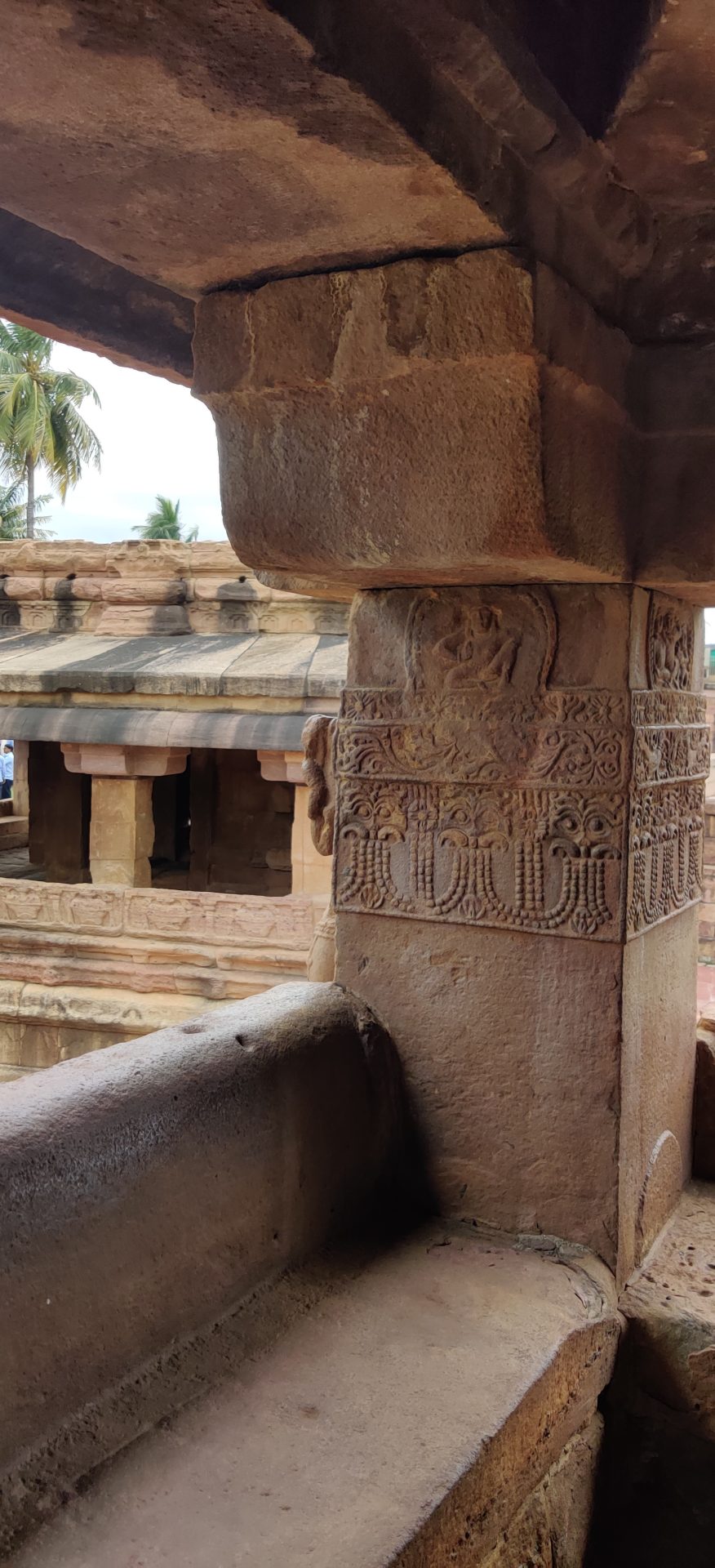
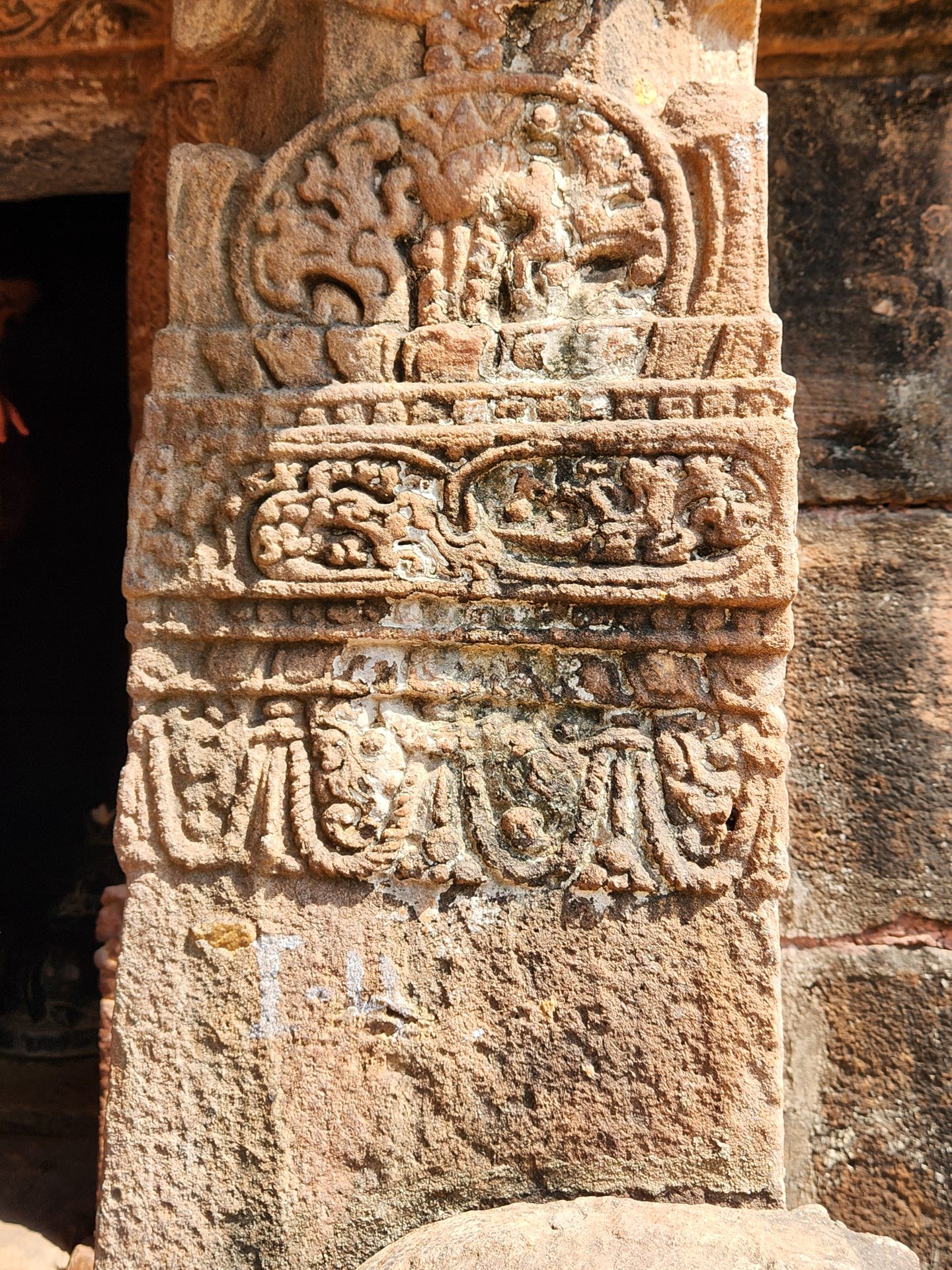
The temple is built atop a small platform and around the sanctum, colonnaded pillars with lot of intricate and beautiful carvings can be seen.
Believed to be dedicated to the Hindu gods Surya and Vishnu, early scholars date the first construction of the temple to be around the 5th century CE and further revisions having done to the complex between the 6th and the 8th century.
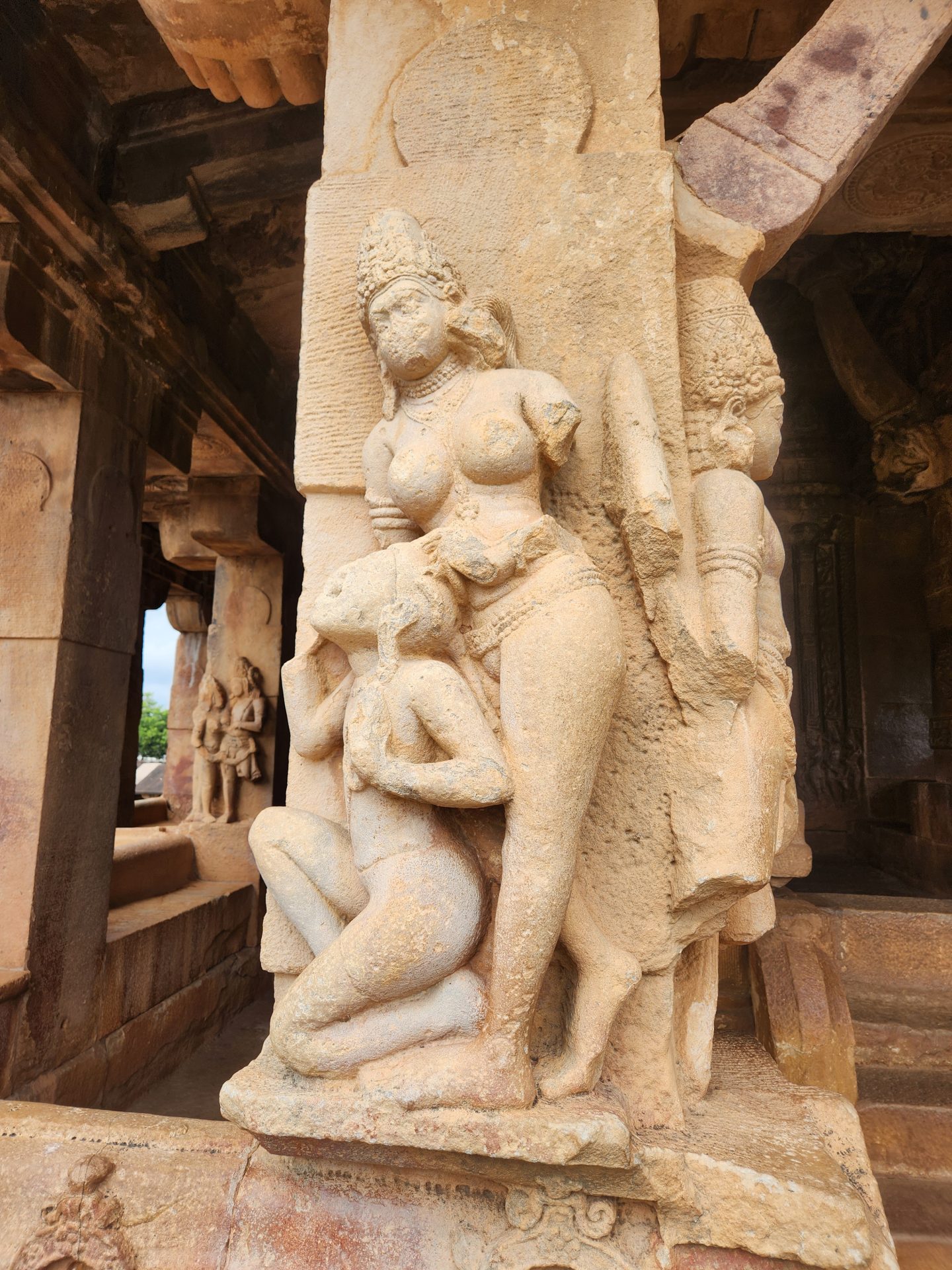
The artwork of this temple varies from depicting various gods and goddesses apart from showing scenes of daily life as well as amorous couples in various stages of courtship.
Not sure if there was any influence of the Chandela dynasty who built the temples in Khajuraho. The video below shows the craftsmanship existent even in those days and the kind of symmetrical patterns, the artisans of that age were able to create.
A unique thing about this temple complex is that each temple looks different from the other which could lead to reasoning on the artisans experimenting a lot with different types of architecture.
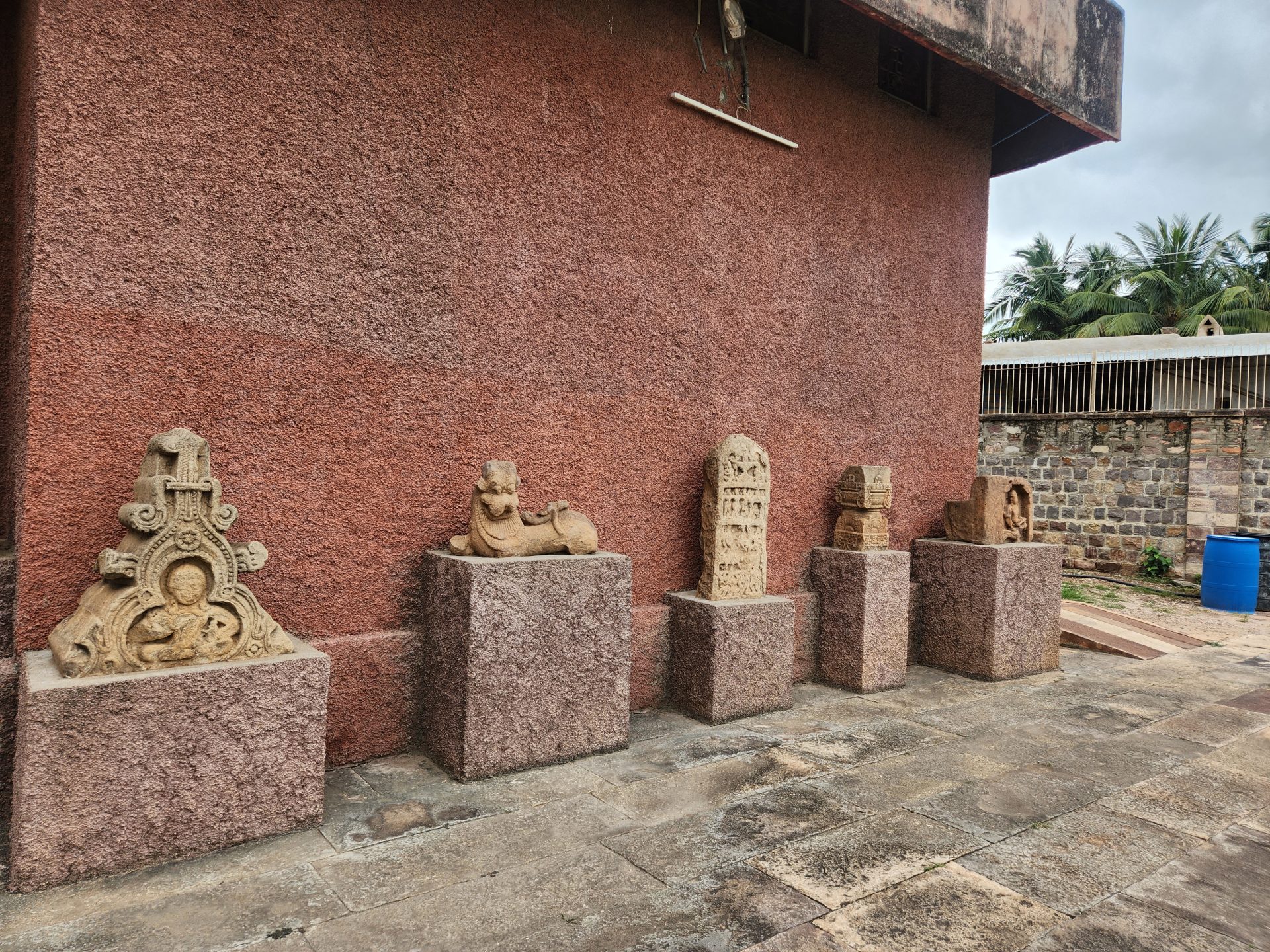
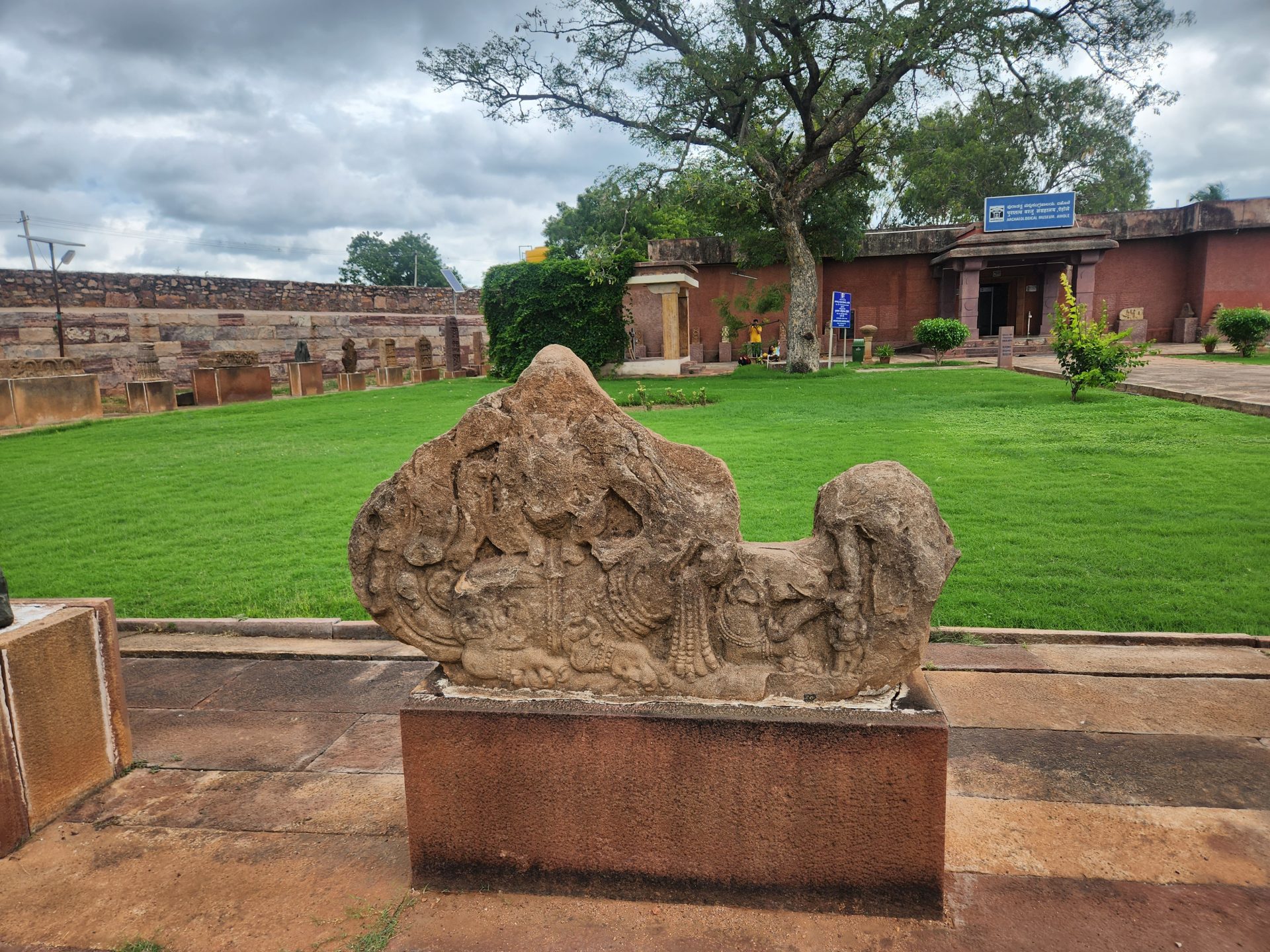
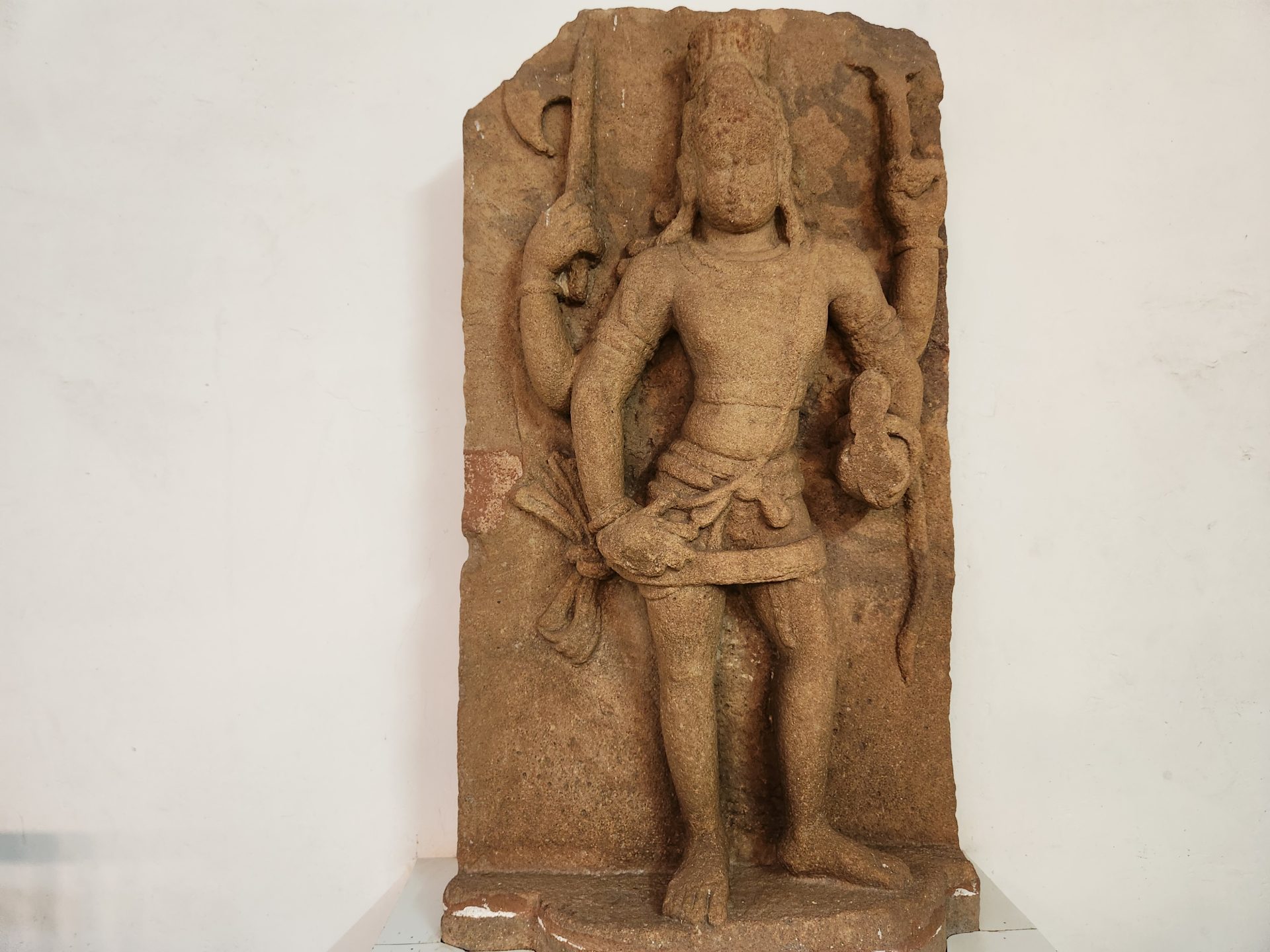
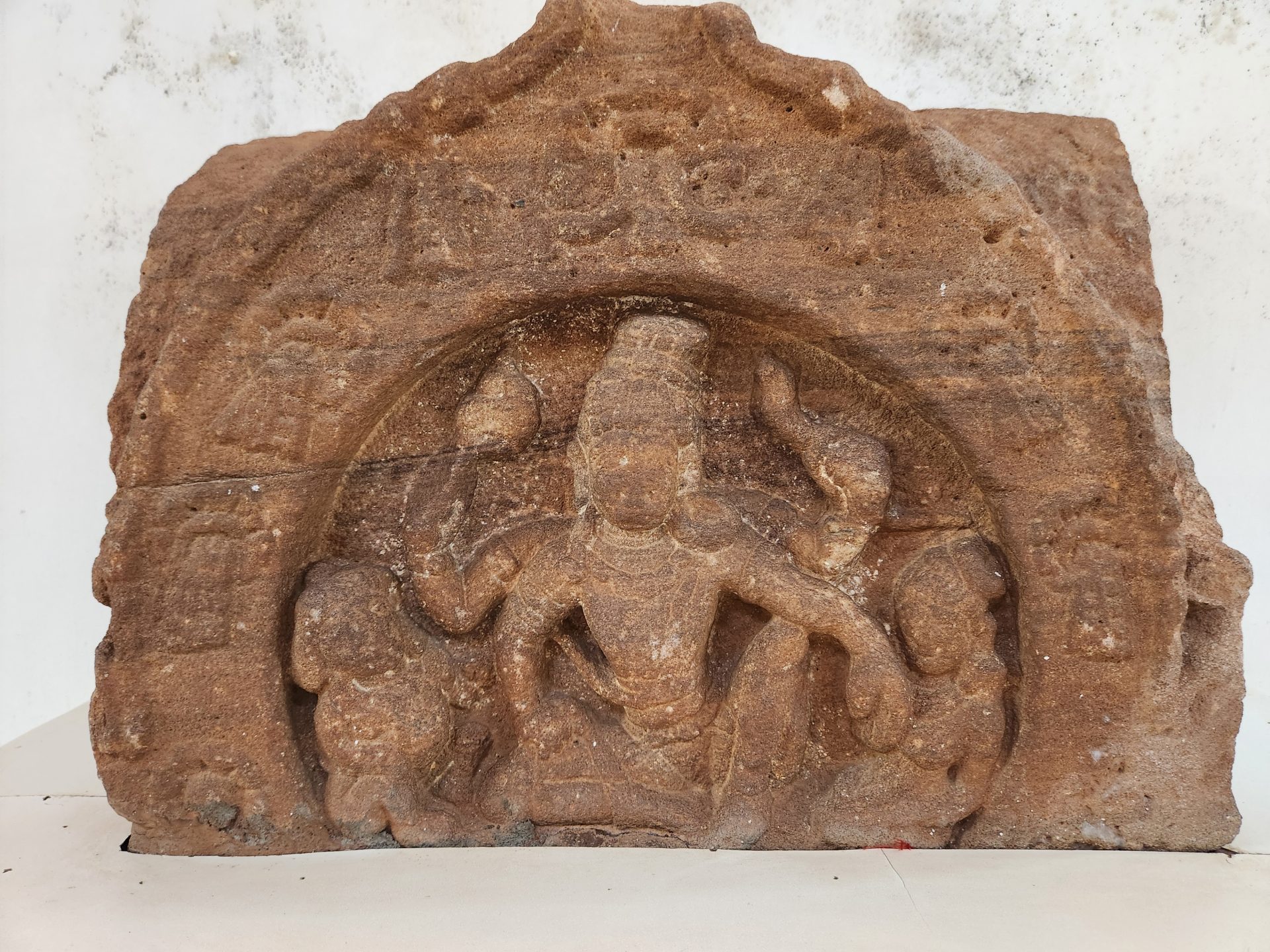
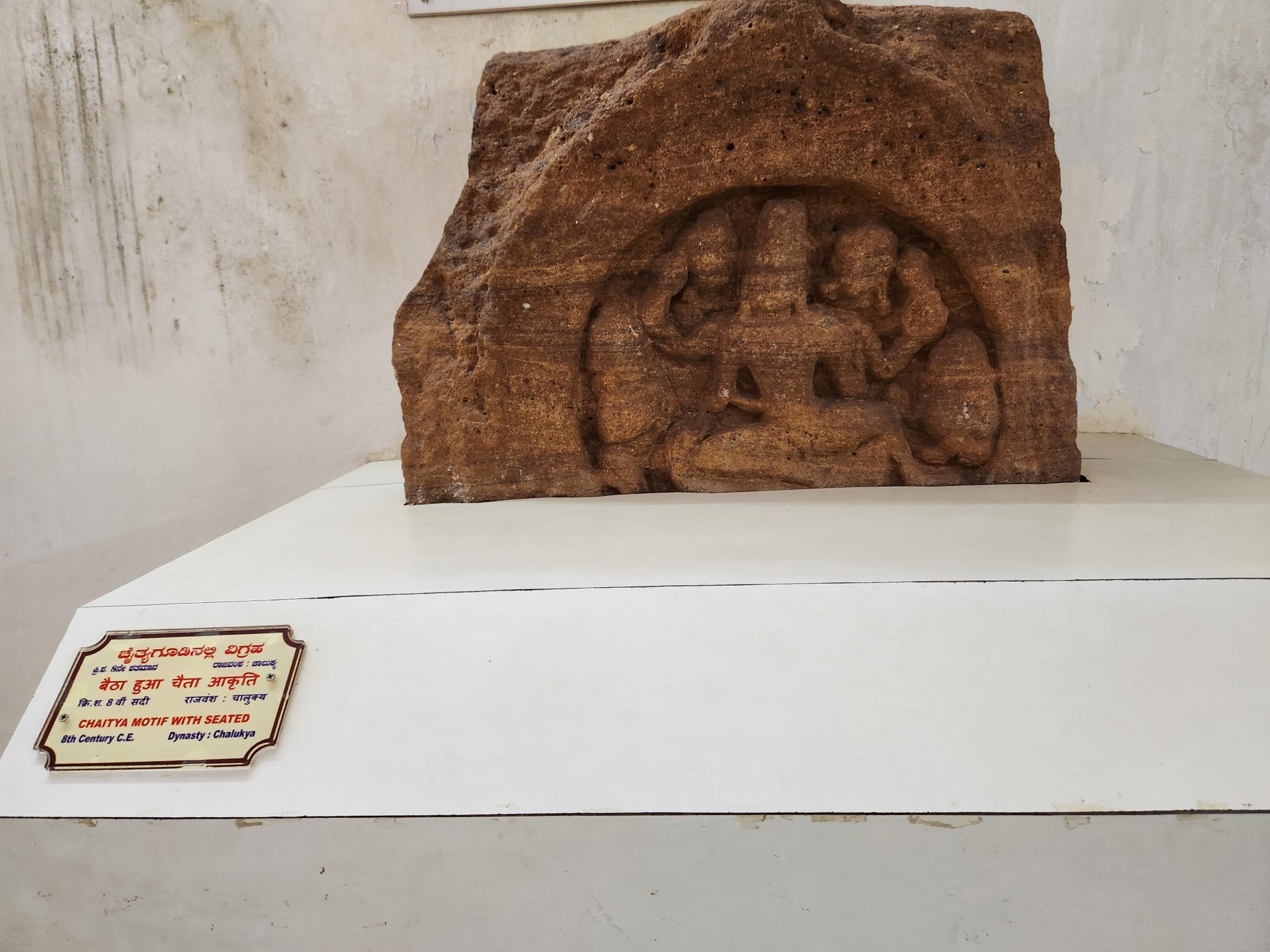
Right in front of the Durga temple lies the Aihole Museum where there are multiple unearthed sculptures on display. While photography was prohibited inside the Museum complex, one could take snaps of some of the stunning pieces of architecture on display outside.
Set up in the year 1987, the Museum has 6 galleries and an open air gallery. The antiquities on display are typical stone sculptures of Jain, Buddhist and Brahmanical faith discovered through scientific exploration and excavation. A bird’s eye view of Aihole and its adjoining environs is on display here.
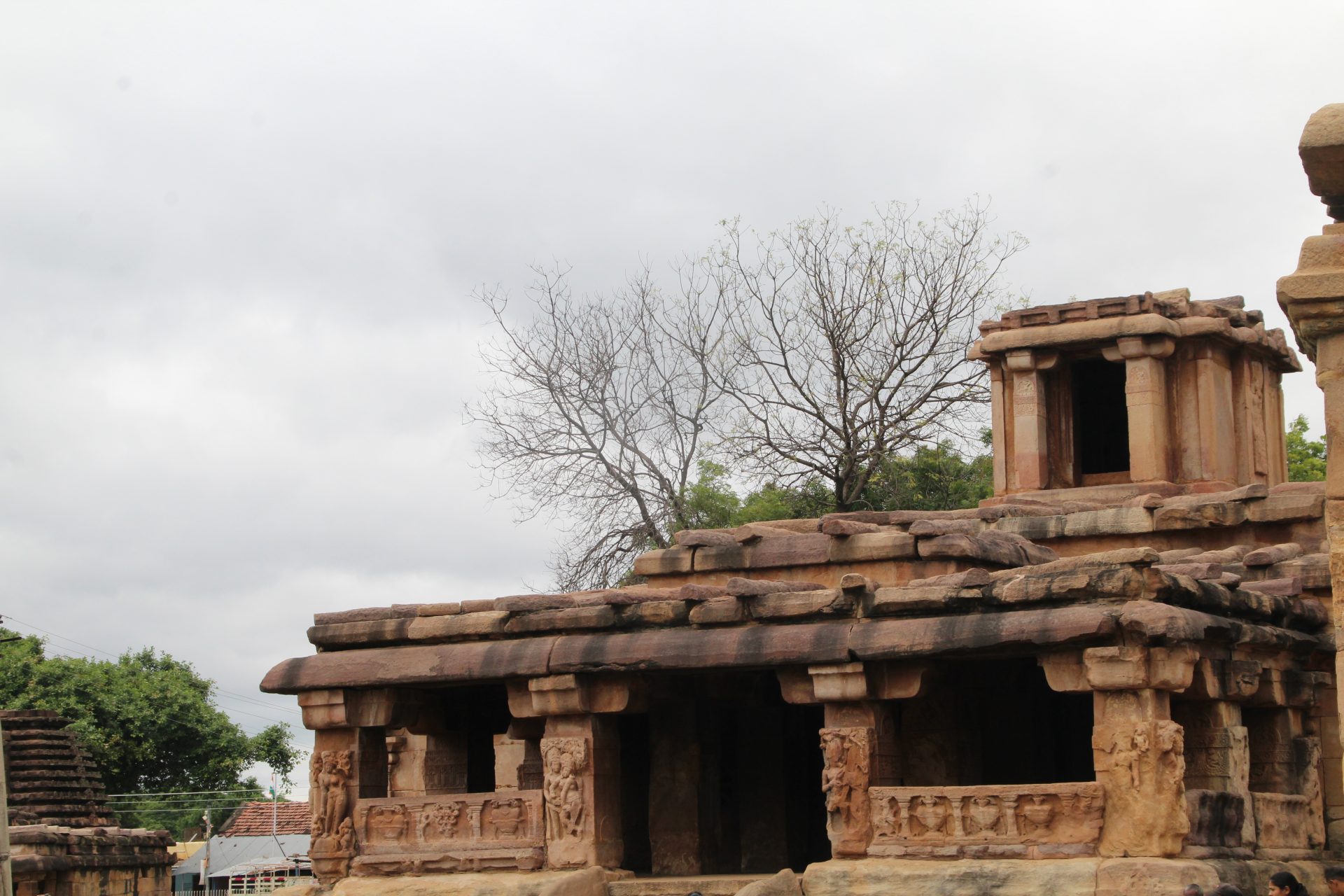
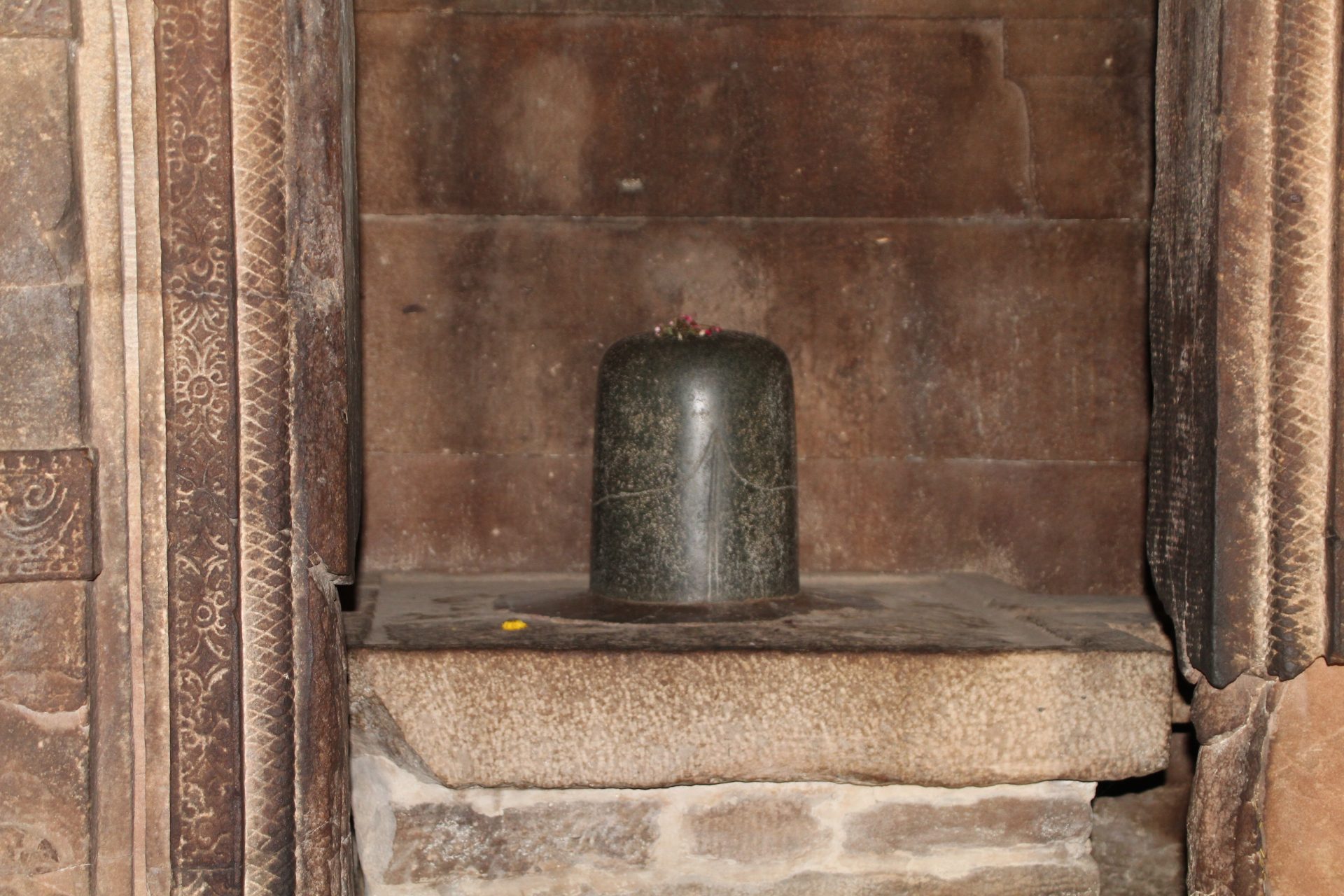
Moved onto the Lad Khan temple next. This was a 8th century Chalukya Shiva temple. The temple has been renamed after a Muslim Commander of Bijapur Sultanate Lad Khan under Adil Shahi Sultan who used this place as his residence. This was one of the oldest temples of Aihole, dating back to the 5th century.
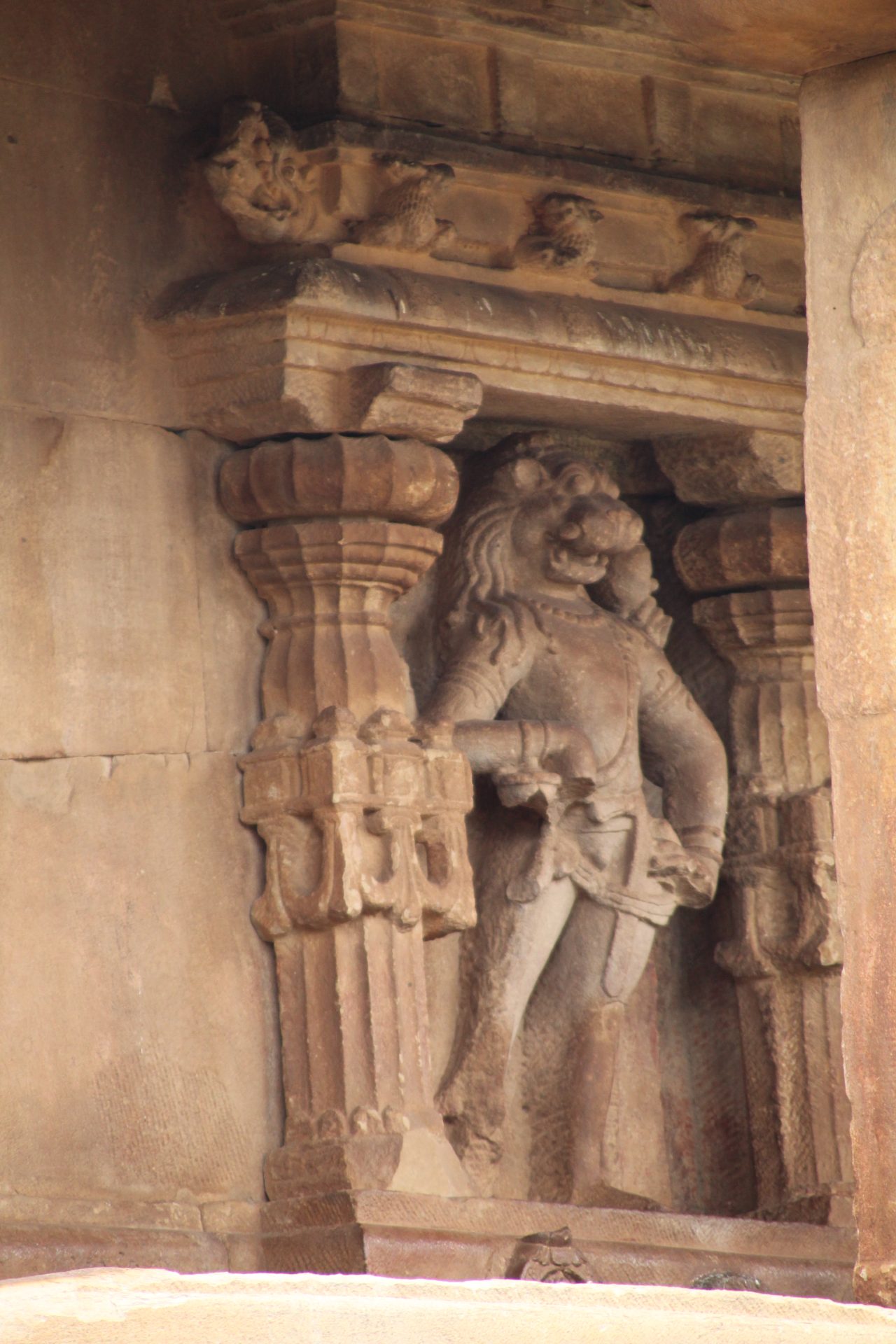
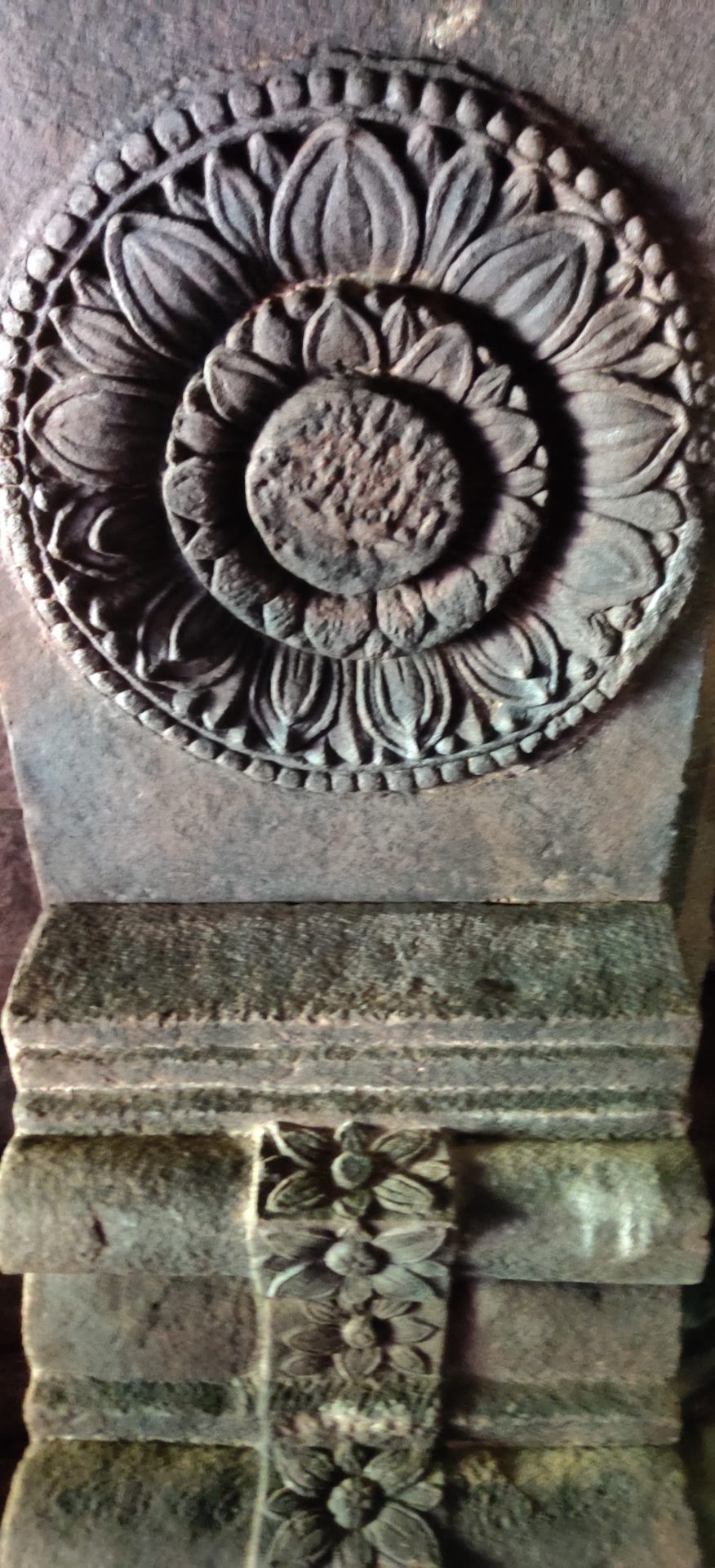
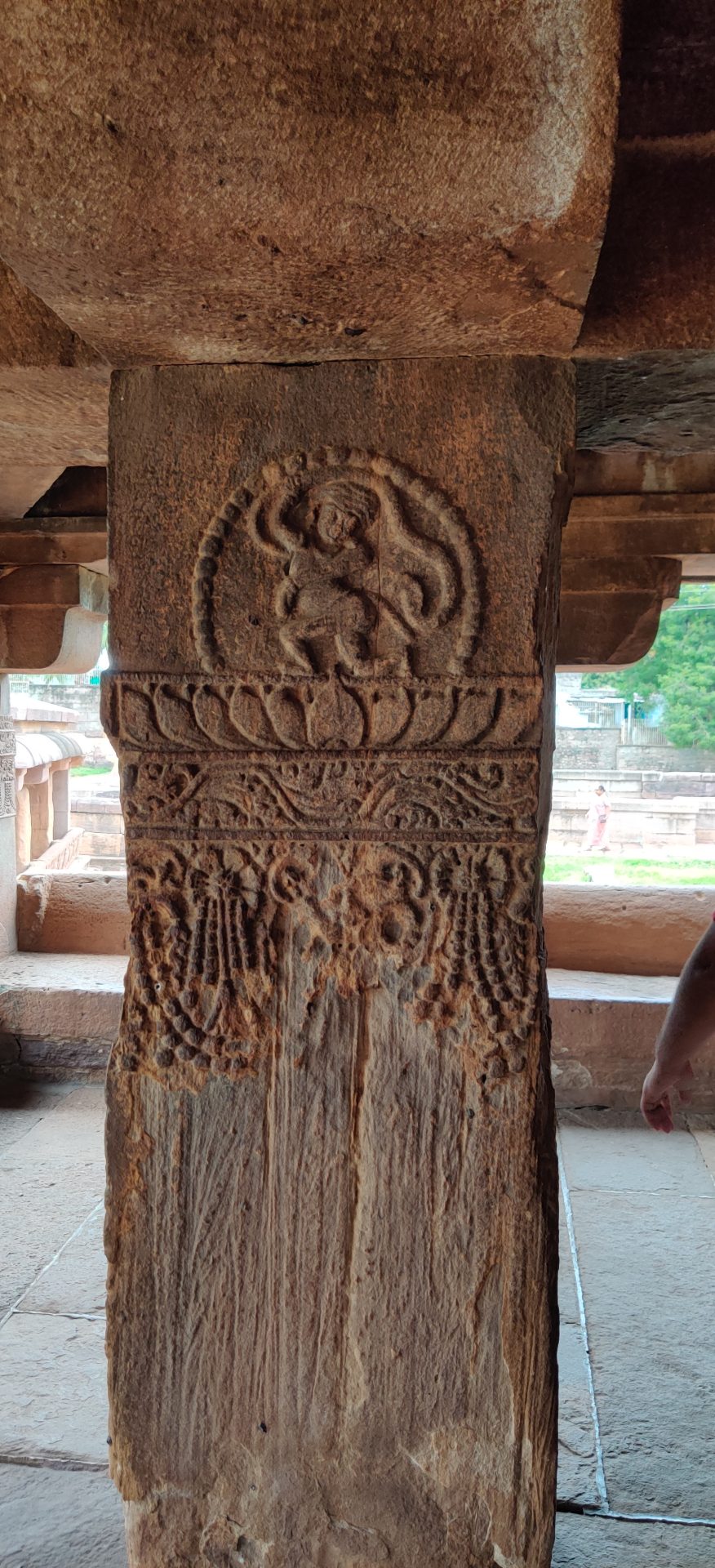
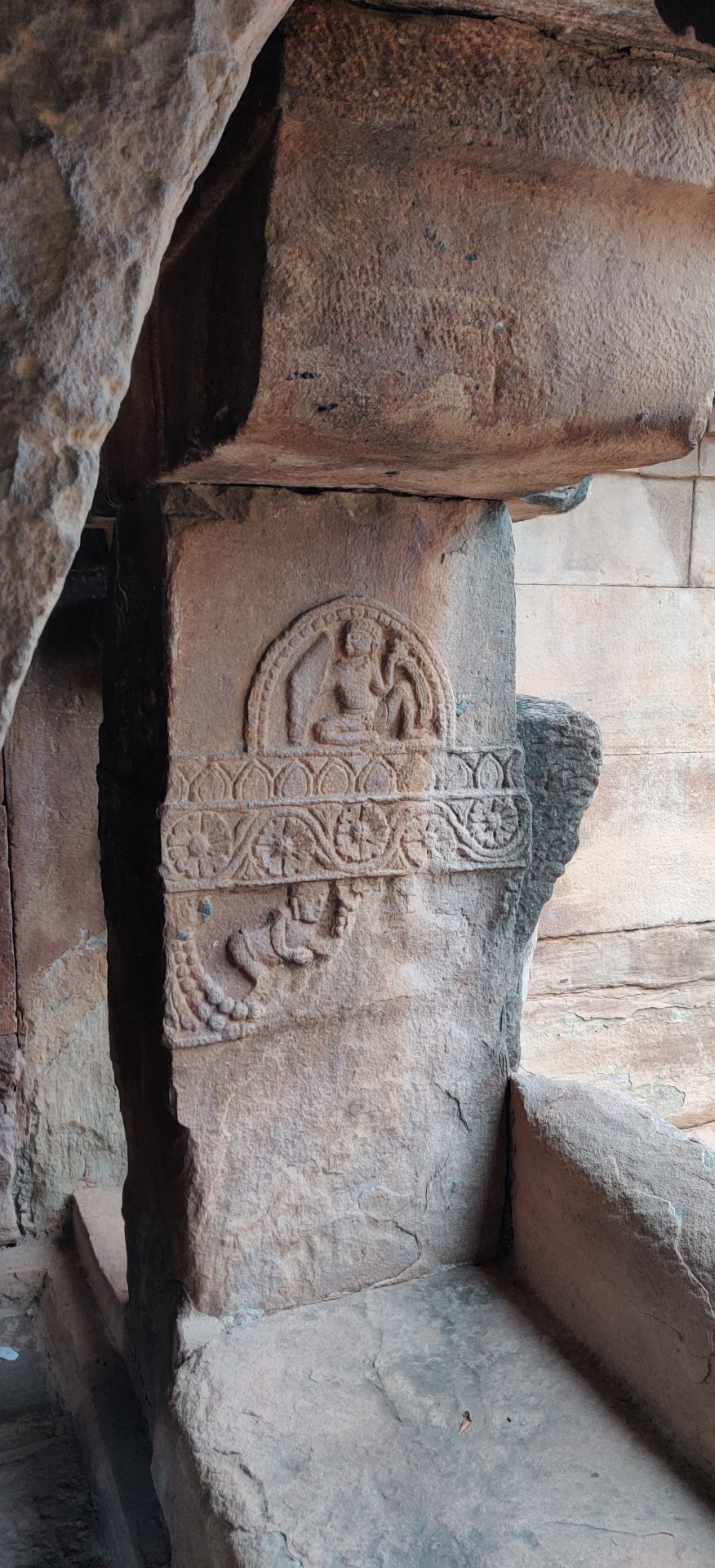
A set of 12 carved pillars can be seen as one enters the Mandap leading to the sanctum where the shrine is housed. Each of these pillars have some lovely carvings which have stood the test of time.
The Suryanarayana Gudi
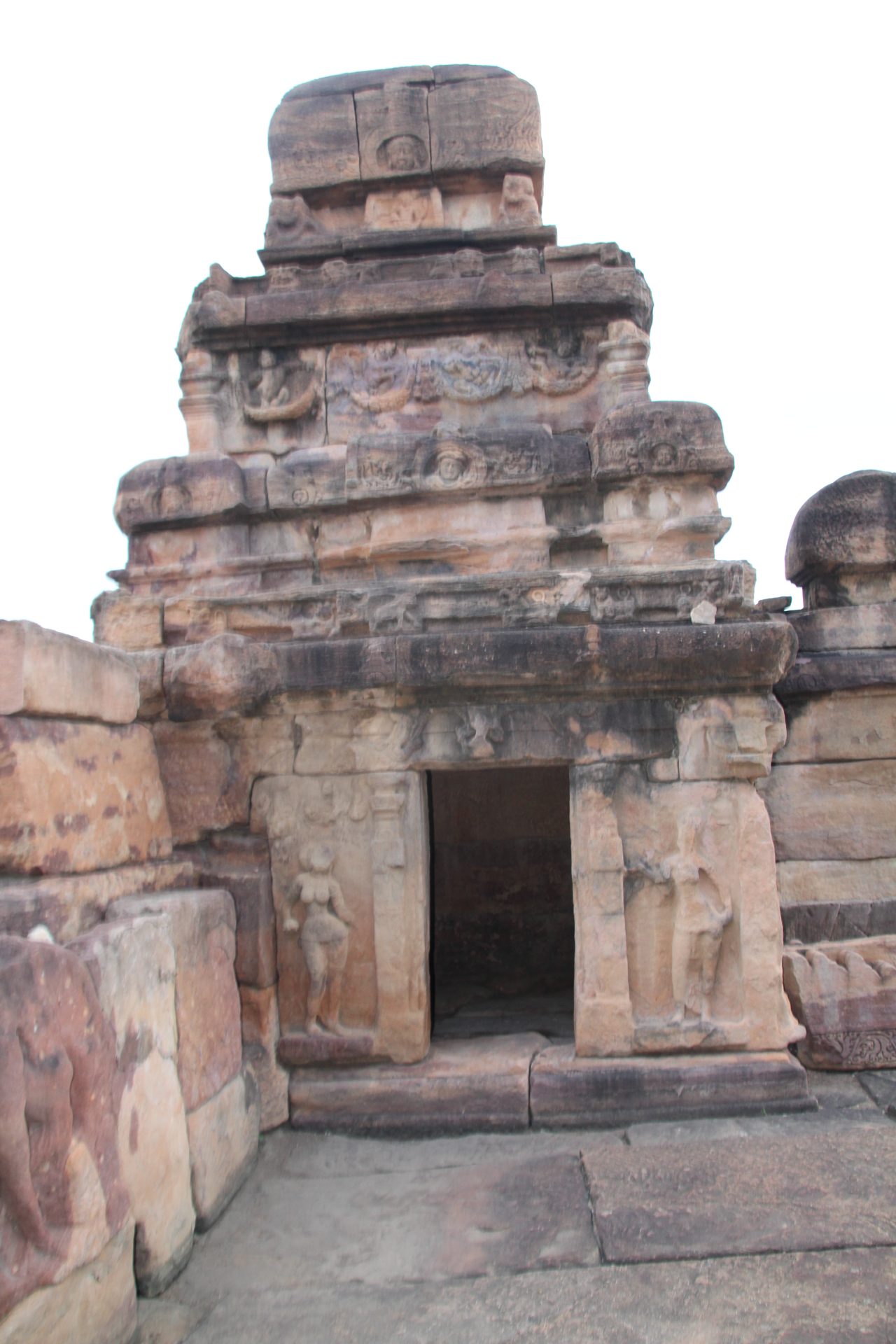
Adjacent to this Shiva temple lies the Suryanarayana Gudi (temple) where the pyramidal shaped Shikhara or tower appears to have been constructed in Rekhanagara (Curvilinear) style with the inner room or sanctum having 4 pillars.
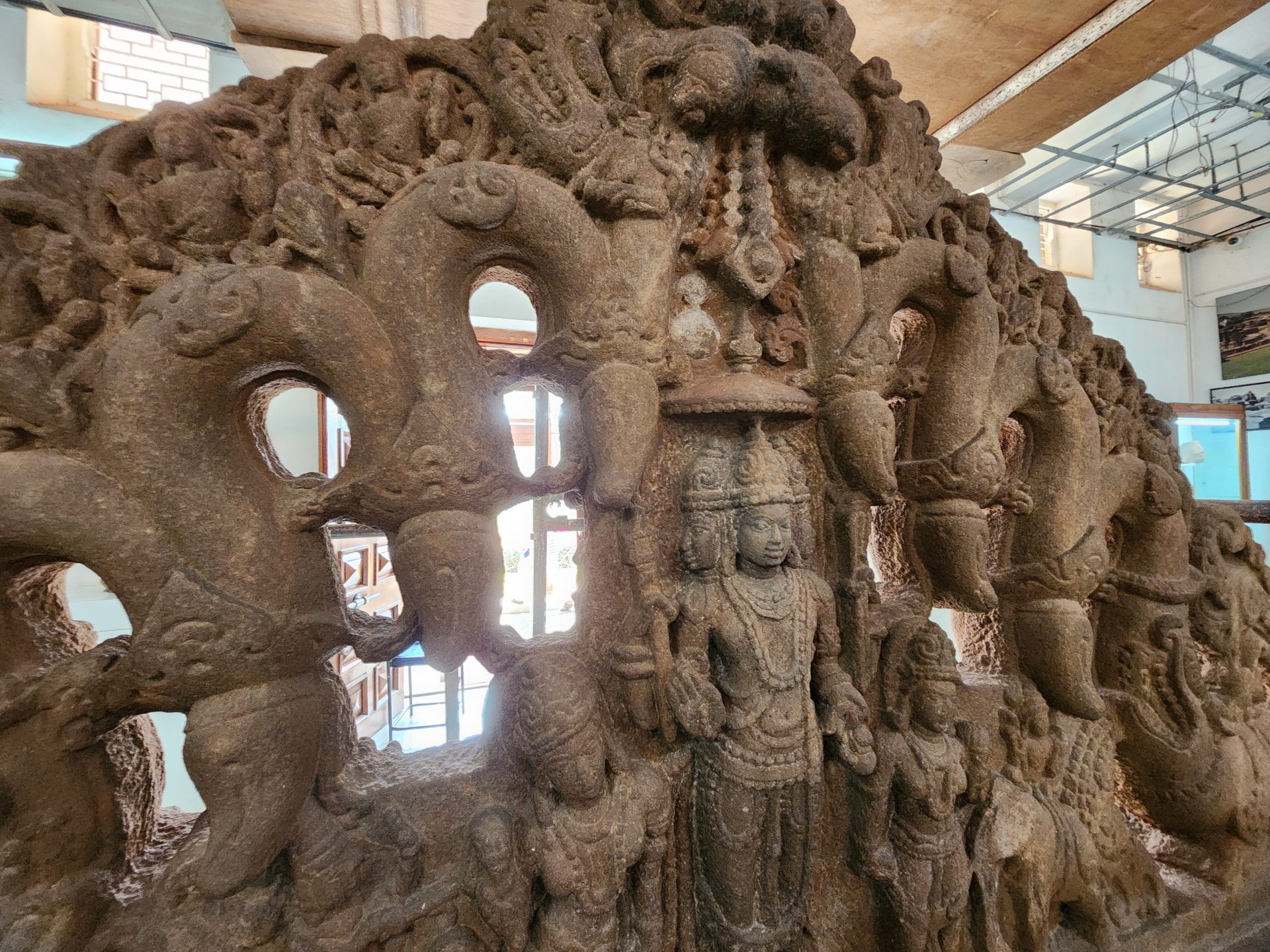
A 2 feet high statue of Lord Surya can be seen in the sanctum with a Lotus flower in each hand, sitting atop a chariot with 7 small horses carved towards the bottom side. There is a pyramidal shaped shikara on the top. Believed to have been constructed in the 7th or 8th century, the deity is represented along with his partners Usha and Sandhya.
The Gaudargudi temple
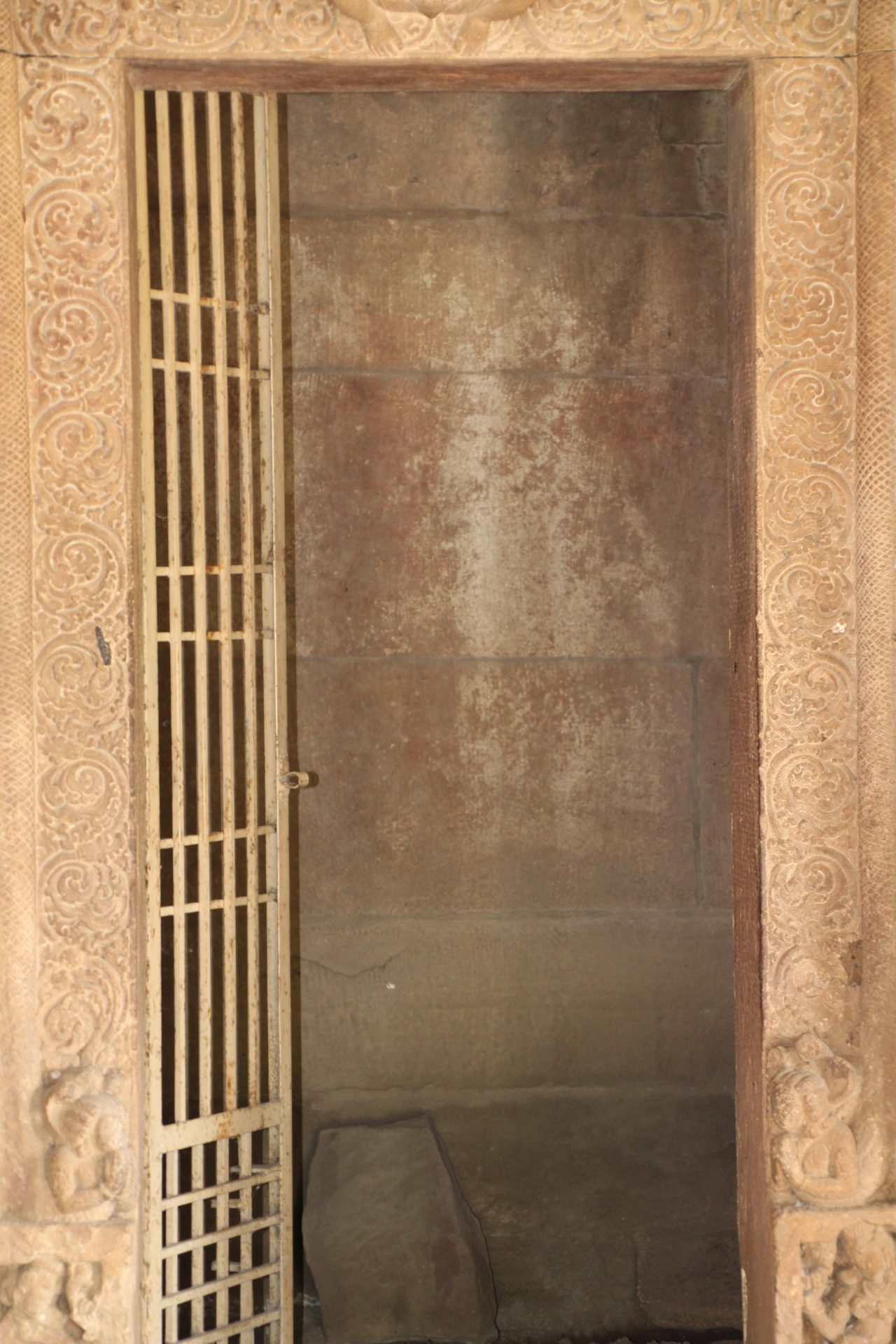
Towards the South East corner of the Ladkhan temple, stands the Gaudargudi temple. This has been built on the same lines as the Ladkhan temple but with more openings from all sides. While this is dated earlier in terms of construction, what stands out common between both these temples are the log shaped stones. Built on an open pedestal, the sanctum is empty but has an inscription of Goddess Gajalakshmi on in its lintel.
The temple has earned its sobriquet from the word Gauda which in Kannada means Village Headman as what one school of thought says. Inscriptions engraved on the lintel ascribe the temple to be dedicated to Goddess Gauri (another name for Goddess Parvati).
The Chakragudi and the Badigargudi temples
A large stepwell appears as one moves left of the Gaudargudi temple and before the Chakragudi temple. Believed to have been a utility for water storage, the walls of the well have ancient carved sculptures and is deemed to have been constructed in the 10th or 11th century.
The Chakragudi temple has a Nagara style tower structure and studies attribute it to have been constructed in the 7th or 8th century. A Mandapa or platform seems to be a later addition to this temple. Towards the South Western side of the Durga temple is the Badigargudi temple, originally believed to be a Surya temple with a Curvilinear shaped tower with shrinking discrete square shaped stones leading to the top. It also contains an icon of the Sun god. Most of the relief work of this temple seemed damaged and eroded.
The name apparently originates from the Kannada word Badigar meaning Carpenter and their family were believed to be occupants of this area before the land was acquired for excavation.
CHAPPARA GUDi
NADYAR GUDI
Ambigera Gudi Complex
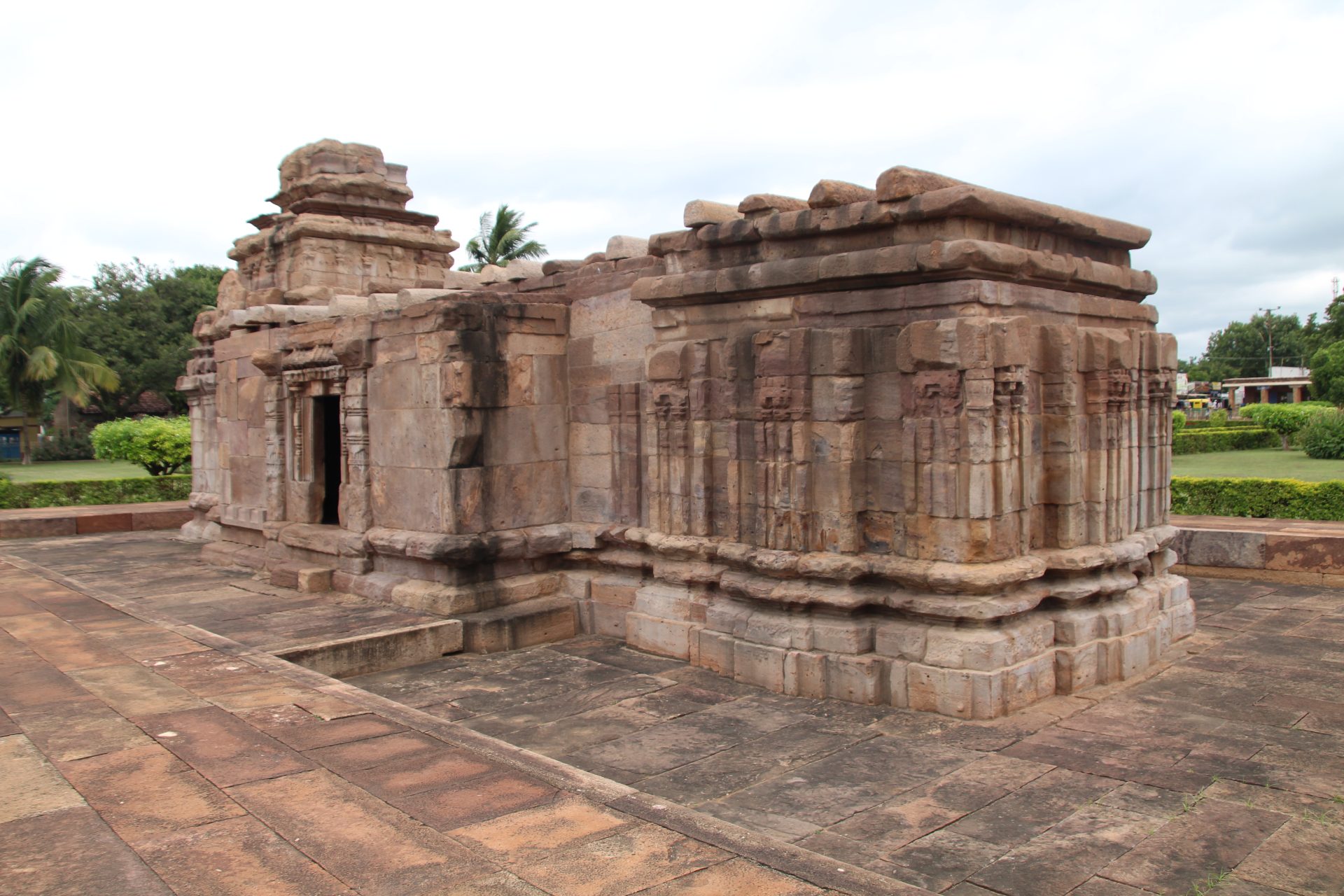
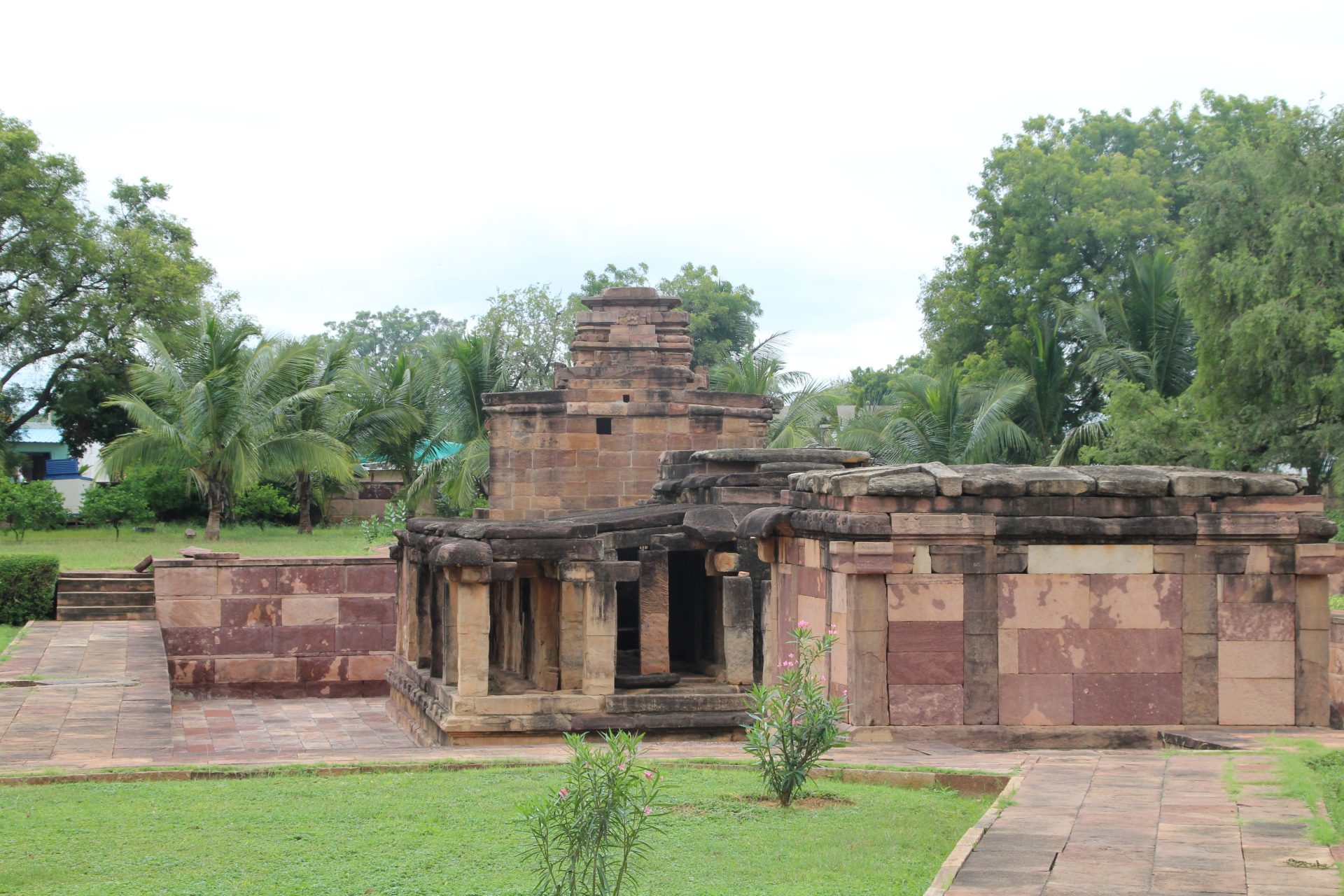
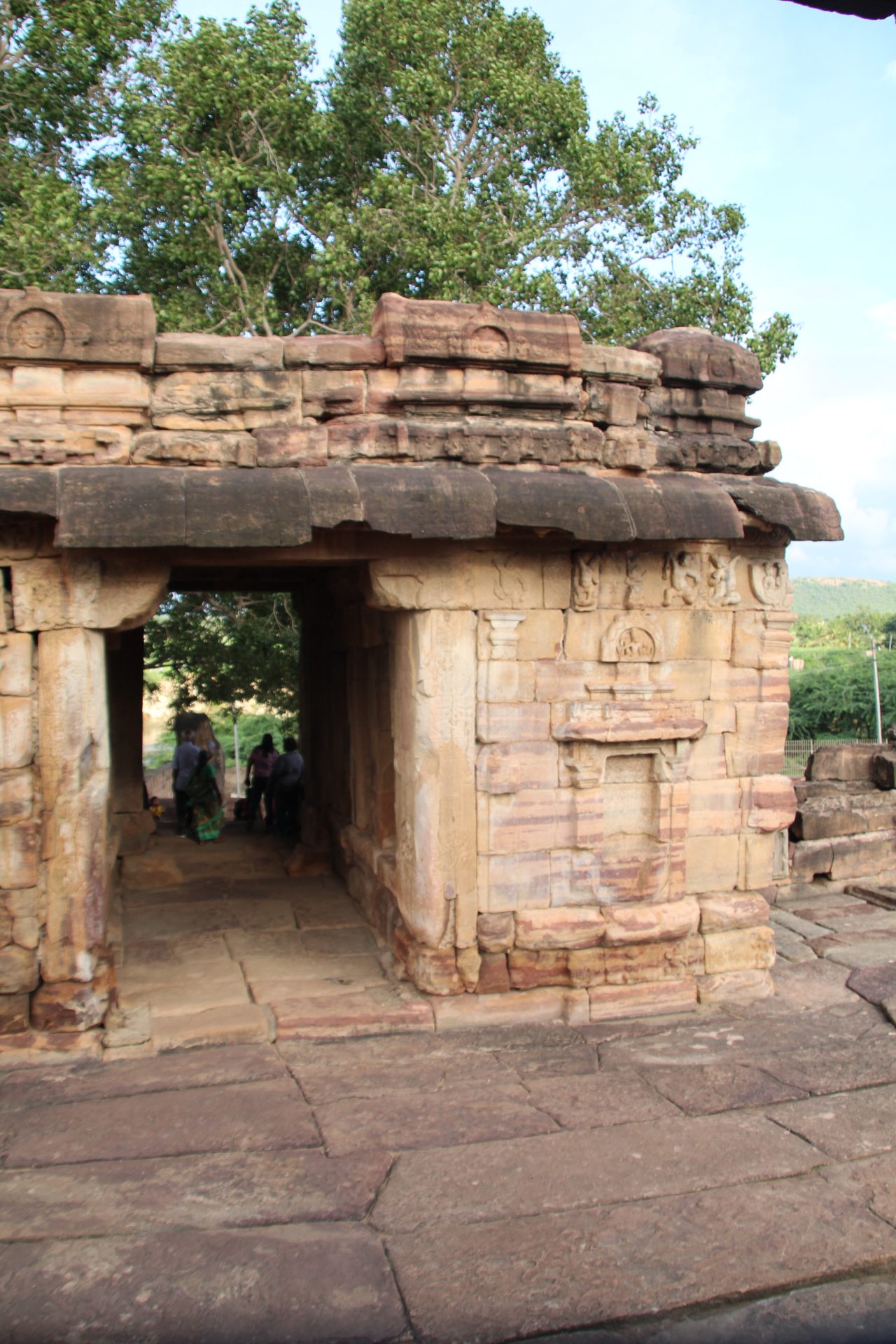
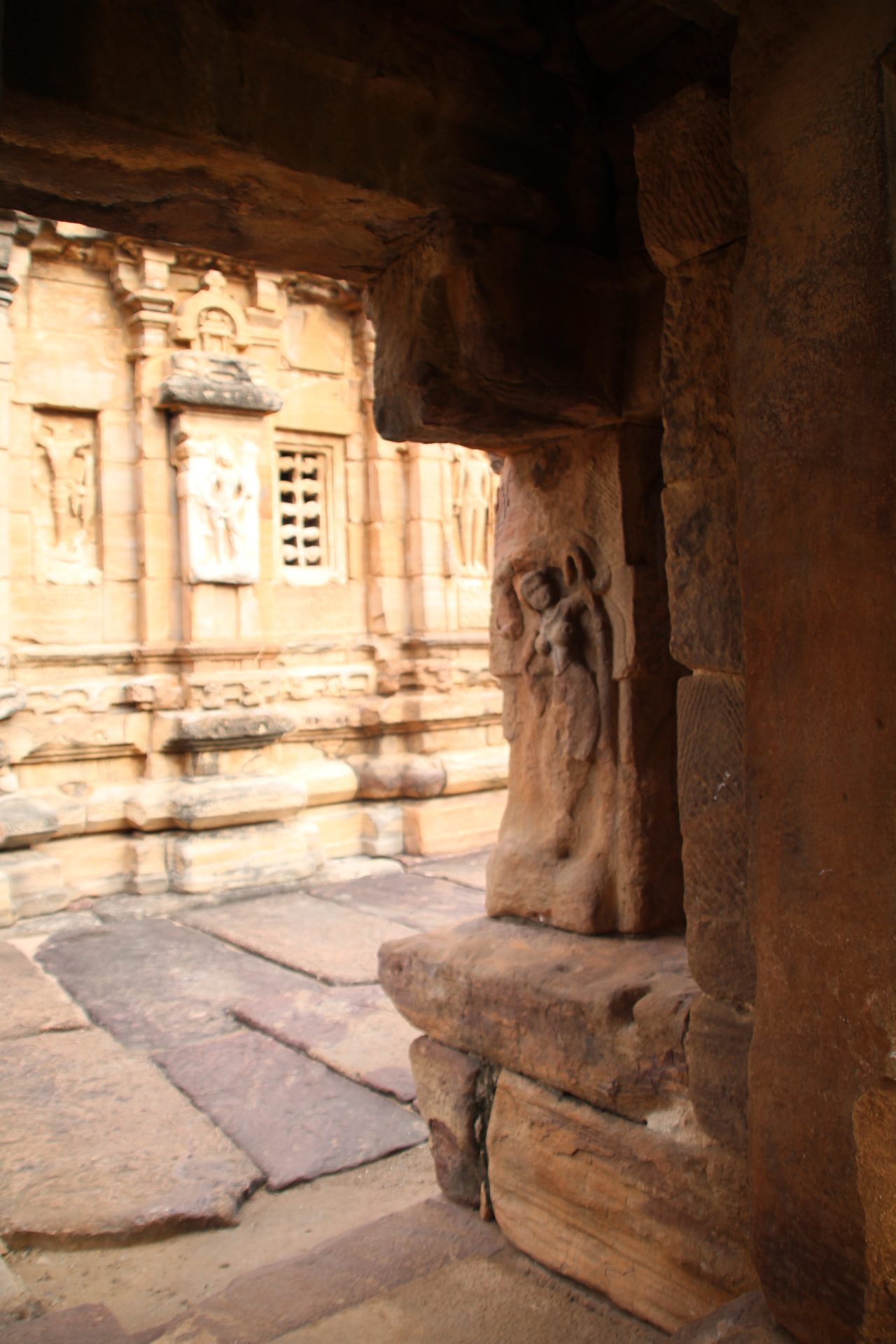
Ambigera in Kannada means boatmen and perhaps the fisherfolk community who leived near the precincts of this place gave this temple its name. This Temple complex lie to the left of the entrance as one steps out of the Durga temple complex. There are 3 monuments all aligned on the same plane. Here the architecture is more experimental towards an open verandah concept with sloping slabs providing part of the roof cover and both these temples date to a period between the 6th and the 8th century.
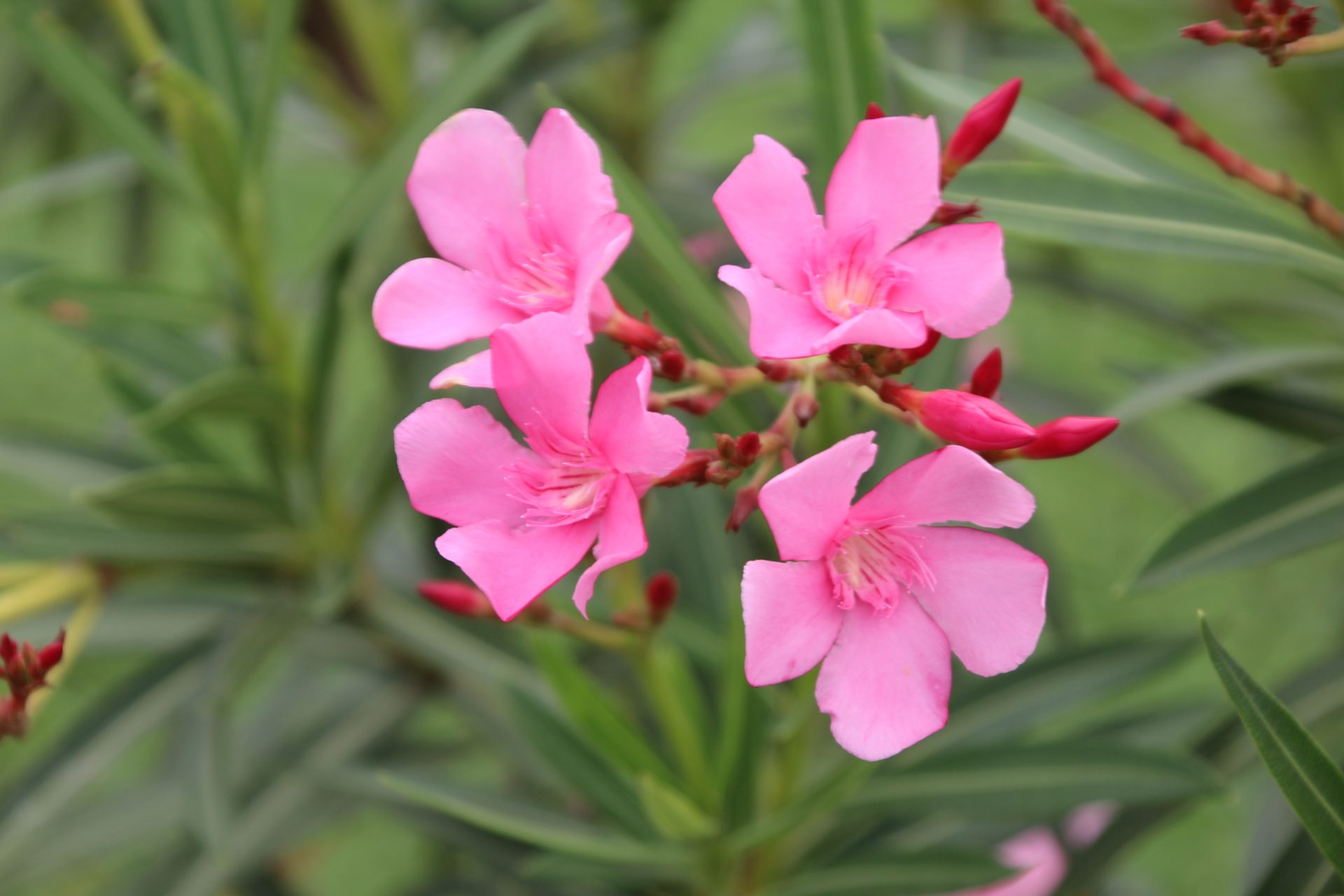
The first monument as you see in the picture above is a square monument walled on 3 sides. It opens out to the monument in the middle which appears as the largest amongst the three. The second monument appears bigger than the other two and is said tp contain broken images of Vishnu and Surya. The third monument which lies in the same East West axis plane is more representative of the Chalukyan design with a square and cuboidal structure jutting out as a tower on top. Was in no mood to go inside each of these derelict monuments and photograph the broken down and defaced structures as I had enough inside the Durga Temple complex. Came out of this place in around 15 minutes. The well laid out garden and the blossoming pink flowers were such a relief to the eyes having seen so much of rusty colour all around.
The Huchimalligudi Temple
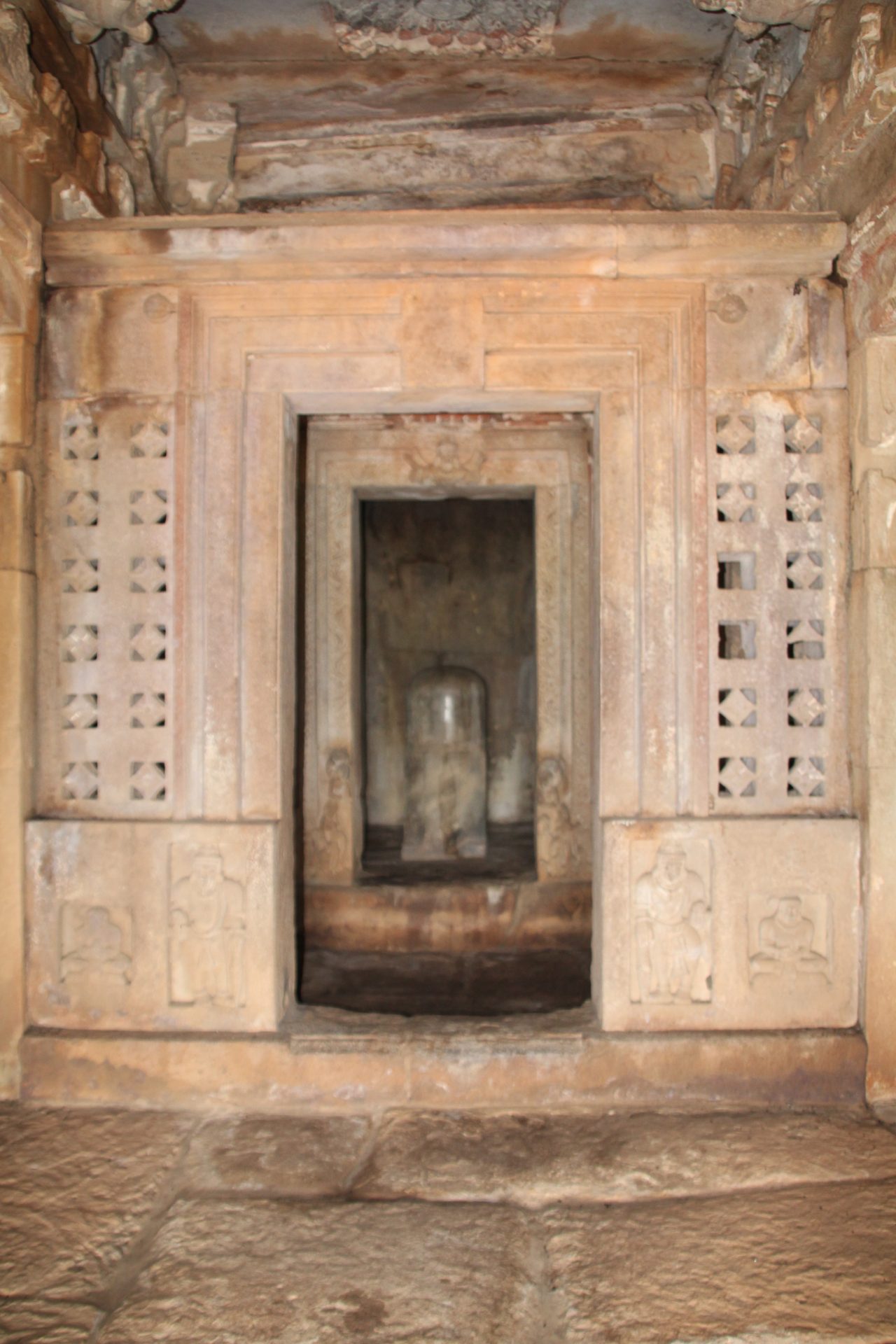
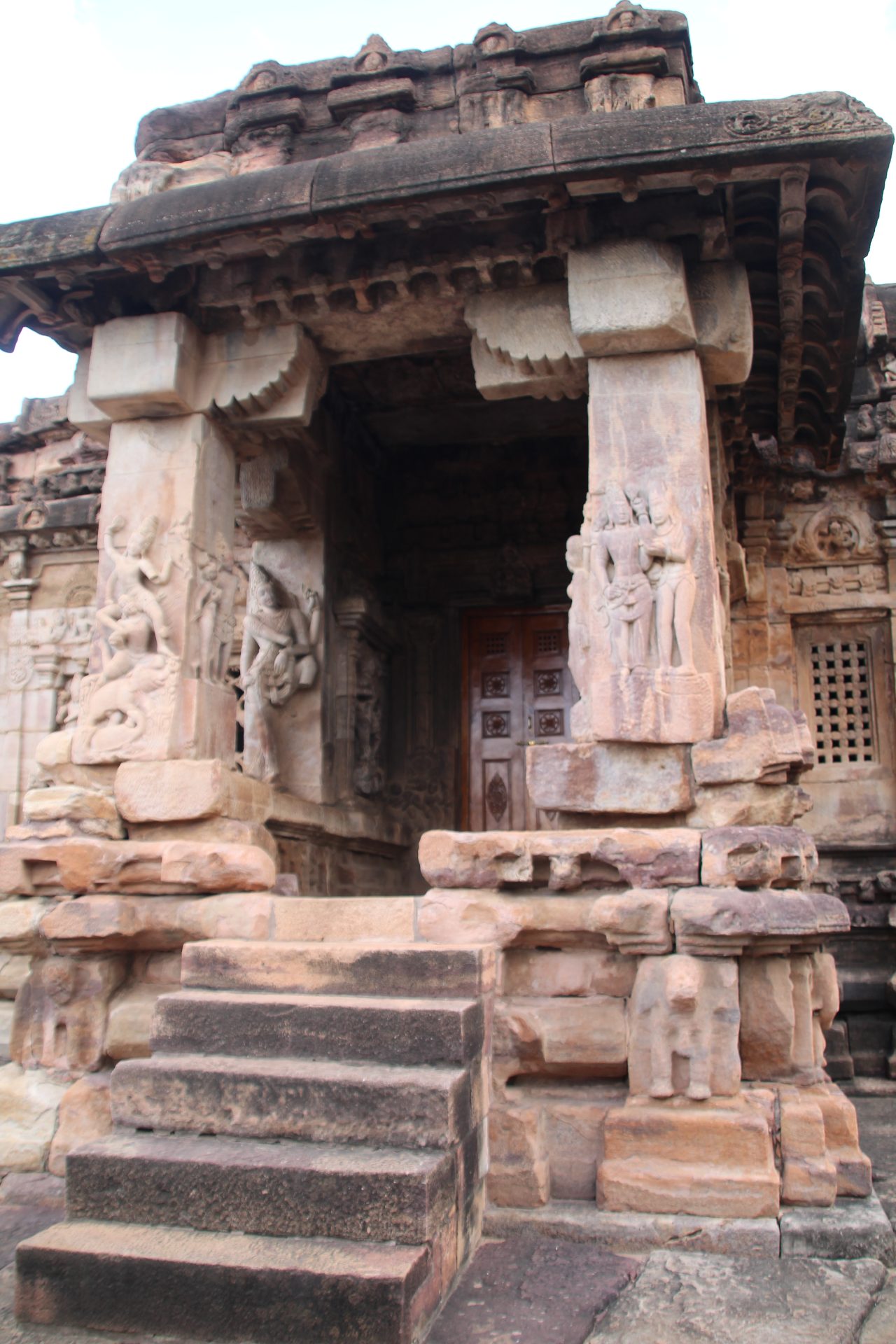
A 5 minute drive from this place brought me to Huchimalligudi temple. Believed to be one of the earliest groups of temples constructed in Aihole, this temple’s origins trace to the the 7th Century. While the temple is dedicated to Lord Shiva, there are shrines for Lord Shiva, Vishnu and Brahma.
A steep water well can be seen right near the entrance and part of the walls of the well retain carvings of the past. Interestingly the introduction of the entrance hall before the sanctum in the design of the temple is supposedly the first of its kinds.
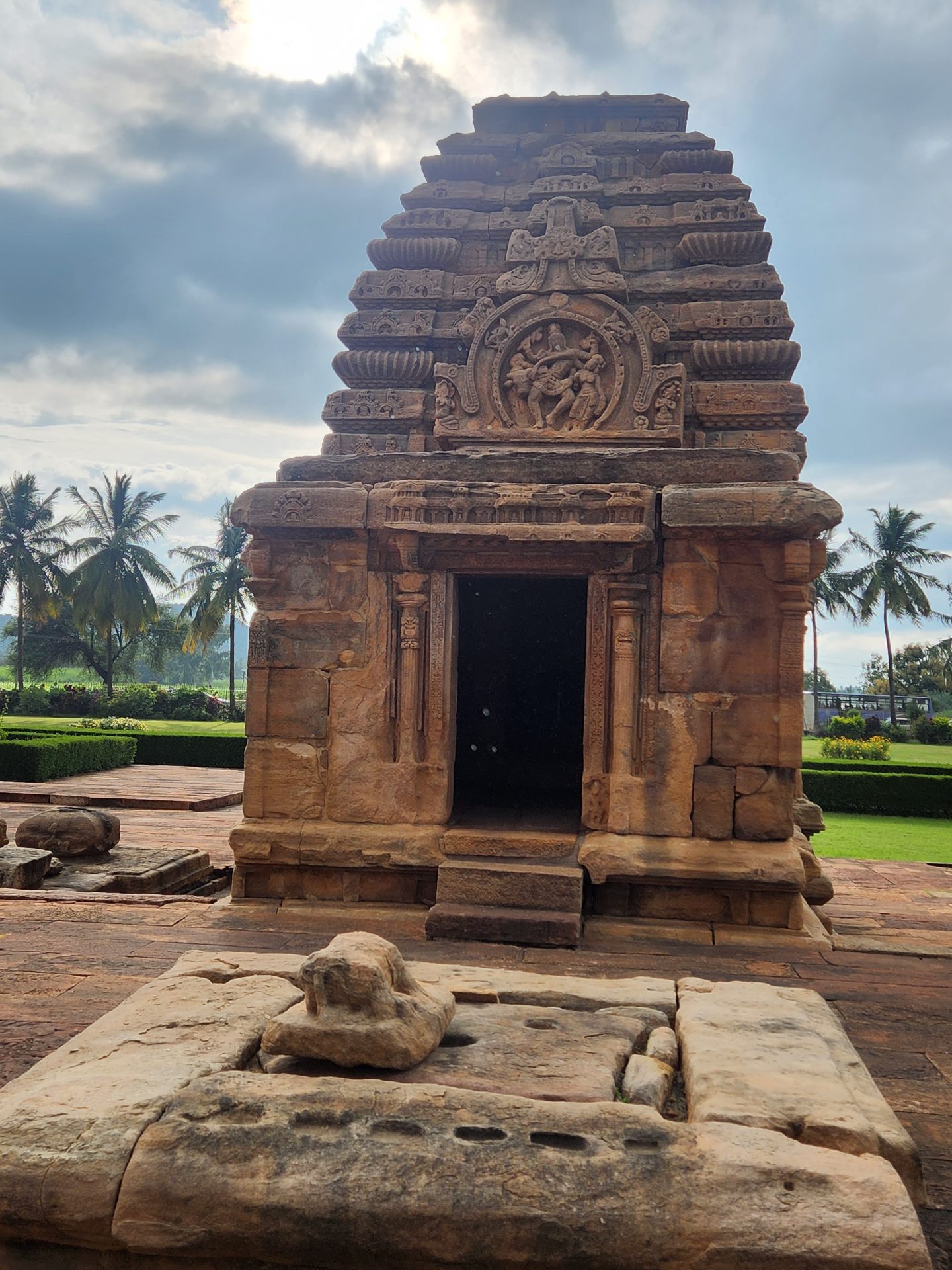
A statue of Nandi can be seen as we walk towards the main temple. The temple stands built on an elevated platform. A couple of other temples can be seen within this complex which remain standing as structures only.
The Ravanaphadi temple
A few 100 metres ahead of this complex lies the famed Ravanaphadi temple.
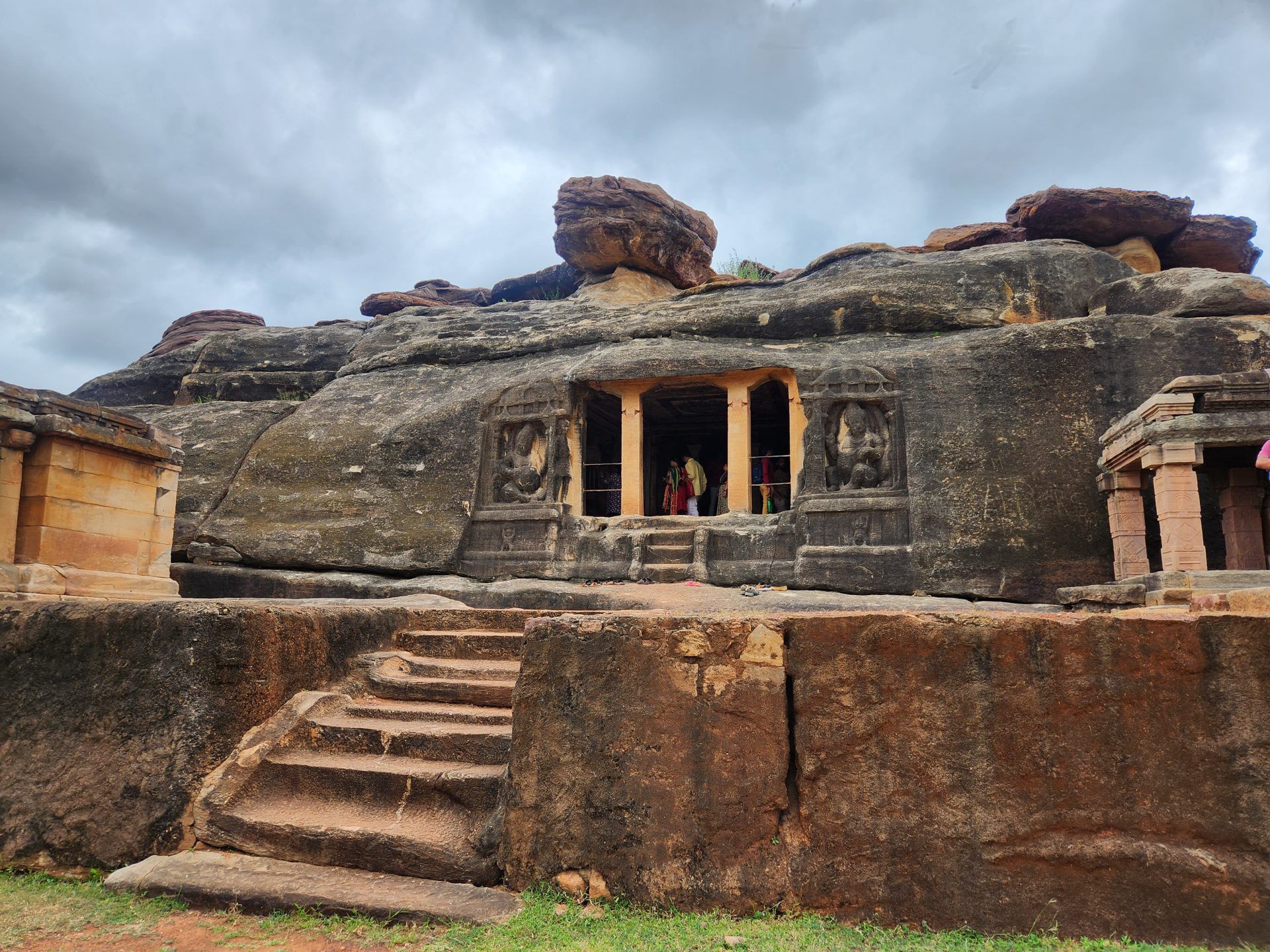
Dating back to the 6th century, this is one of the oldest rock cut cave temples in Aihole.
The temple sanctum has a statue of Nandi right in front and the entrance has eroded fluted columns on display.
There are quite a few monuments exquisitely carved of Ardhanarishvara (a composite deity of Lord Shiva and Goddess Parvati), a dancing Shiva, Ganesha and Karthikeya which can be seen inside the complex and the video below will give one an insight on the grandeur of this temple.
There are 3 square shaped mandapas inside the cave with the innermost one featuring Lord Shiva. A couple of seated guardians appear on each side of the entrance leading to the sanctum.
A tour of Aihole alone would require 2 days in its entirety given the spread of temples across like the Hucchappayya Matha and Gudi, Jyotirlinga temples, the Mallikarjuna temple, the Venyar Shrines, the Ramalinga and Galaganatha temple, the Maddin temples, the Kuntigudi complex and the Triyambakeshvara temples, the Jain Cave temples and many more but paucity of time and the plan to cover Badami and Pattadakkal towards the later part of the day led to our moving on from Aihole towards Banashankari, located around 30 kms away by around 11.15 AM.
It took us nearly 45 minutes to cover this distance and by around noon, we reached the Banashankari Temple located in Cholachagudda near Badami in Bagalkot District.
The Banashankari Temple of Bagalkot
Banashankari is popularly also known as Shakambhari or Vanashankari owing to its location in Tilaakaaranya Forest. The deity in the temple here is an incarnation of Goddess Parvati (consort of Lord Shiva).
The temple was built by the 7th century Badami Chalukya Kings who worshipped Goddess Banashankhari as their tutelary deity and its fame extends to attracting people not only from all over Karnataka but as well as the neighbouring state of Maharashtra.
The Jatre which is an annual festival is celebrated in between January to February of every year.
A lot of Vijayanagara influence happened to this temple originally built in the Dravidian style after which a Maratha Chieftain Parusharam Agale refurbished lots of part of this temple in 1750.
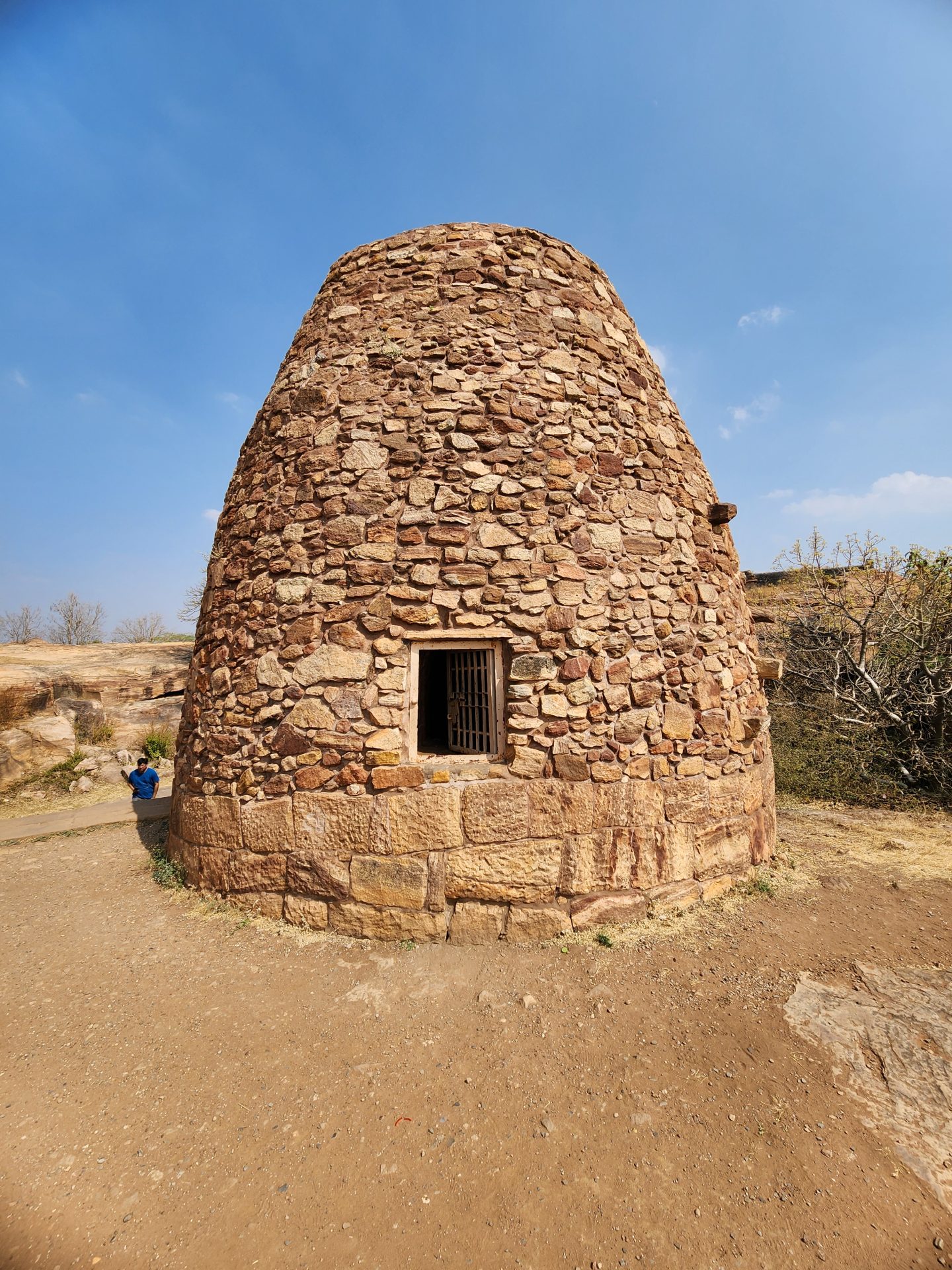
The Guard cum lamp Tower looks quite majestic.
While the queueing system to enter the sanctum through different routes is categorized by different ticket charges, thankfully managed to complete my darshan in 45 minutes and come out of the temple complex.
Fuelling up for the hungry soul
Was feeling hungry and decided to grab a quick bite before visiting the the Badami Caves and its surroundings. Knew that there would be lot of walking to do and hence wanted to be fuelled up for the grind.
The driver took me to the Badami Heritage Resort, located at a distance of around 6 Kms from the Banashankari Temple. Should one want to stay in Badami and move around, this could be a good place to park oneself.
The rooms as per the photos in Booking.com appeared to be well appointed and while I did go around the property a little bit before tucking into the buffet spread for lunch, seemed like a good Value for Money property.
Other hotels in Badami which one could look up through Booking.com or Agoda.com could be Hotel Badami Court, Krishna Heritage, Mayura Chalukya etc. As always read a few reviews before narrowing down on the property.
The food was pretty simple but good and costed me Rs.300/-. Only shortcoming which I could call out for the money being charged could be a slightly wider array of dishes.
Badami and its ancient Red Sandstones
We then drove on from the resort towards the Badami Cave Complex. Historical Texts also refer Badami as Vatapi, Vatapipura, Vatapinagari and Agastya Tirtha. This town served as the capital of the early Chalukya Dynasty.
A heritage town located in the Northern District of Bagalkot, Badami was the capital of the early Chalukyan dynasty who ruled the states of Karnataka and Andhra Pradesh between the 6th and 8th centuries.
Founded in the year 540 CE by Pulakesi, his son Kirthivarman and brother Mangalesha were credited with the construction of the Cave Temples.
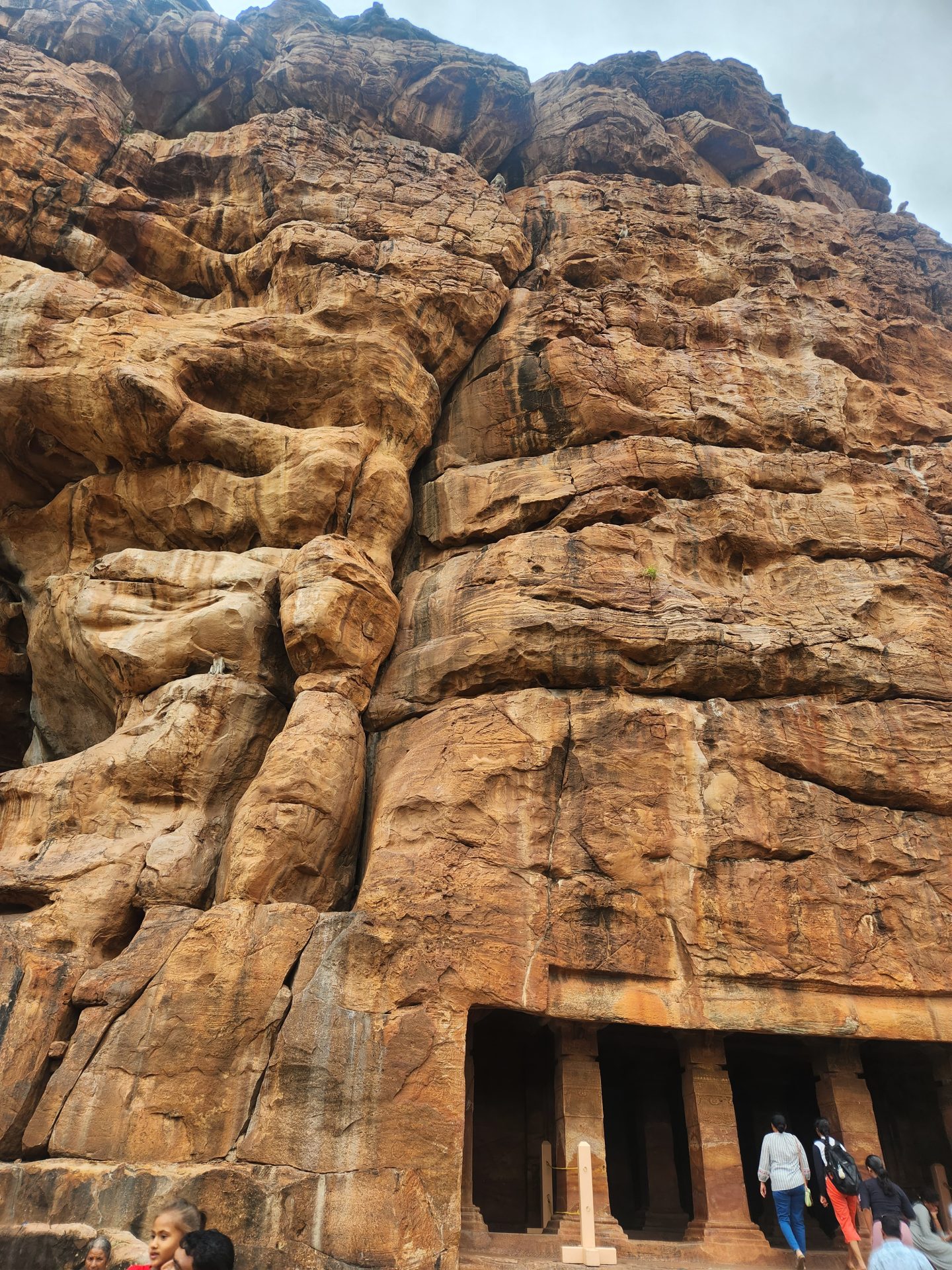
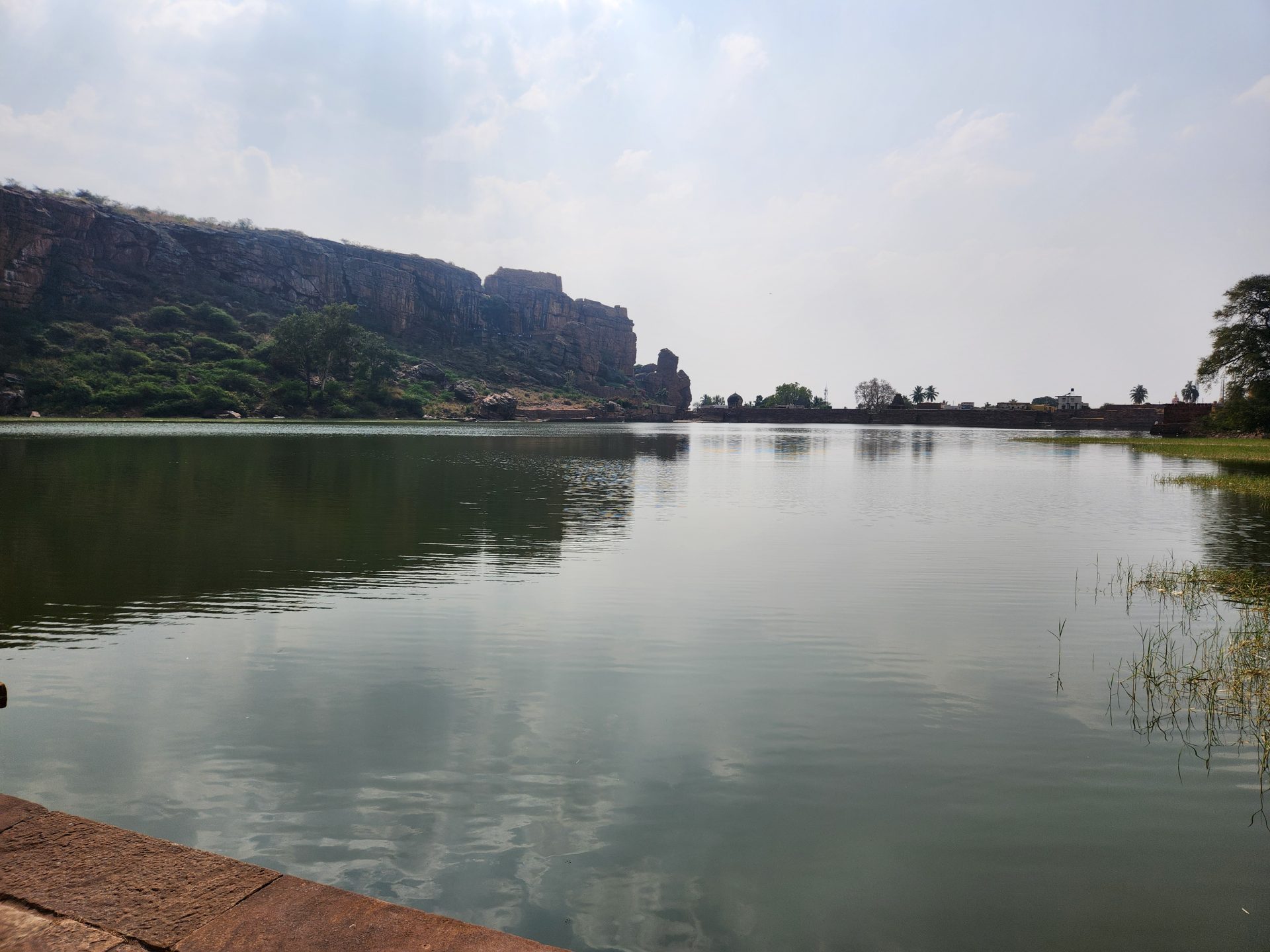
Breath taking rocky terrain featuring sandstone cliffs and rock-cut cave temples overlooking the serene Agastya Lake greets one as we enter the town of Badami.
A legendary business centre at one time, the markets were renowned for their free trade of precious stones and gold.
It was around 2 in the afternoon when I reached the cave complex. The ticket counter luckily was empty and I decided to purchase the tickets (Rs.25/- per head) for visiting the cave temples and visit them last after finishing the Museum, the Fort, the Shivalaya Temples and the Bhootnath temple complex overlooking the Agastya Lake in that order.
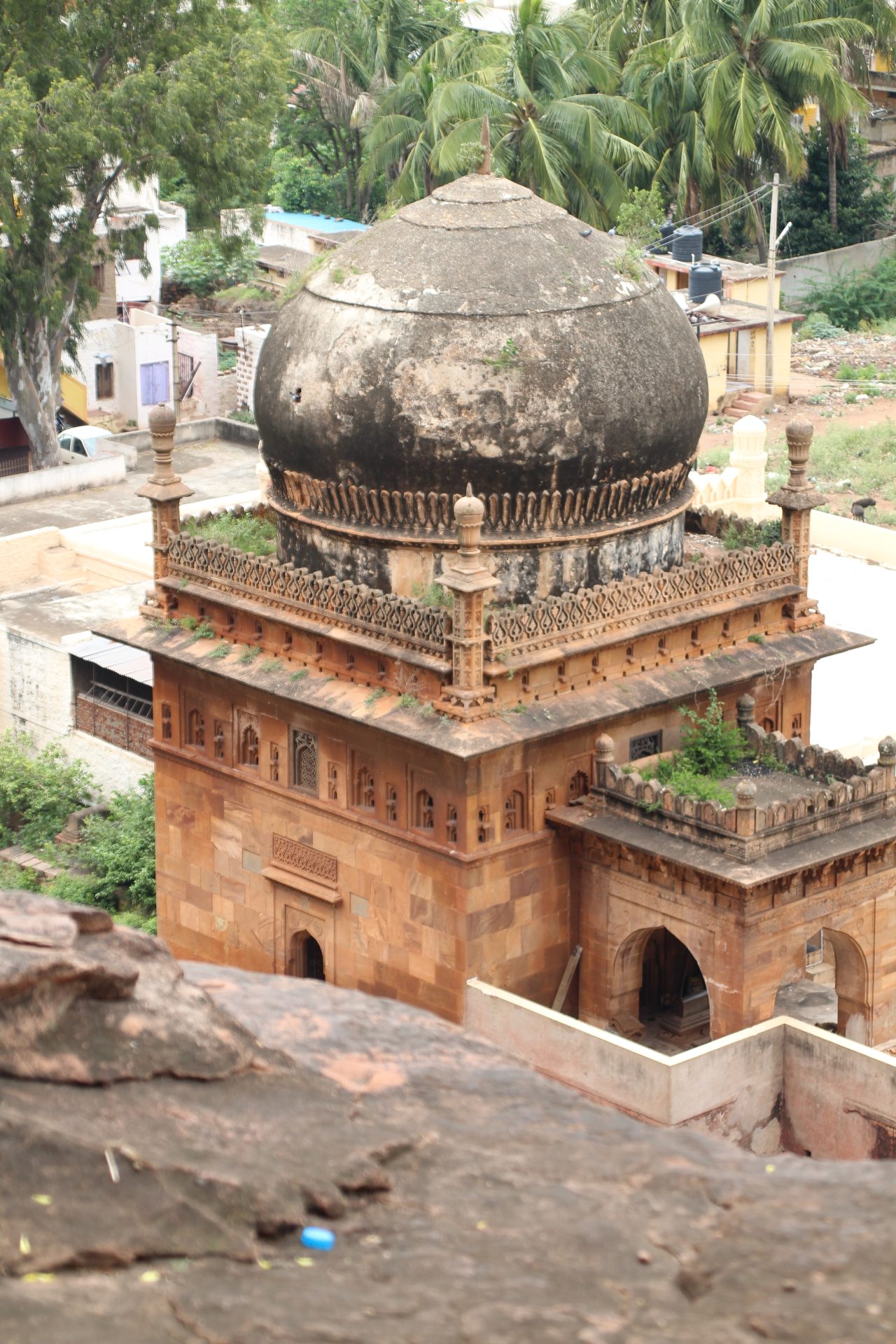
A narrow path towards the left side of the caves and past the Tipu Sultan mosque, a notable 18th century structure leads one to the Archaeological Museum.
The mosque has an impressive dome, built to resemble a miniature version of the Gol Gumbaz in Bijapur.
The Yellamma Gudi Temple
The Western bank of the Agastya Lake had the Yellamma Gudi, a 11th century Chalukyan Architecture temple built in a North Indian style with a curvilinear tower and dedicated to Goddess Yellamma or Renuka, a goddess of fertility.
The Archaeological Museum
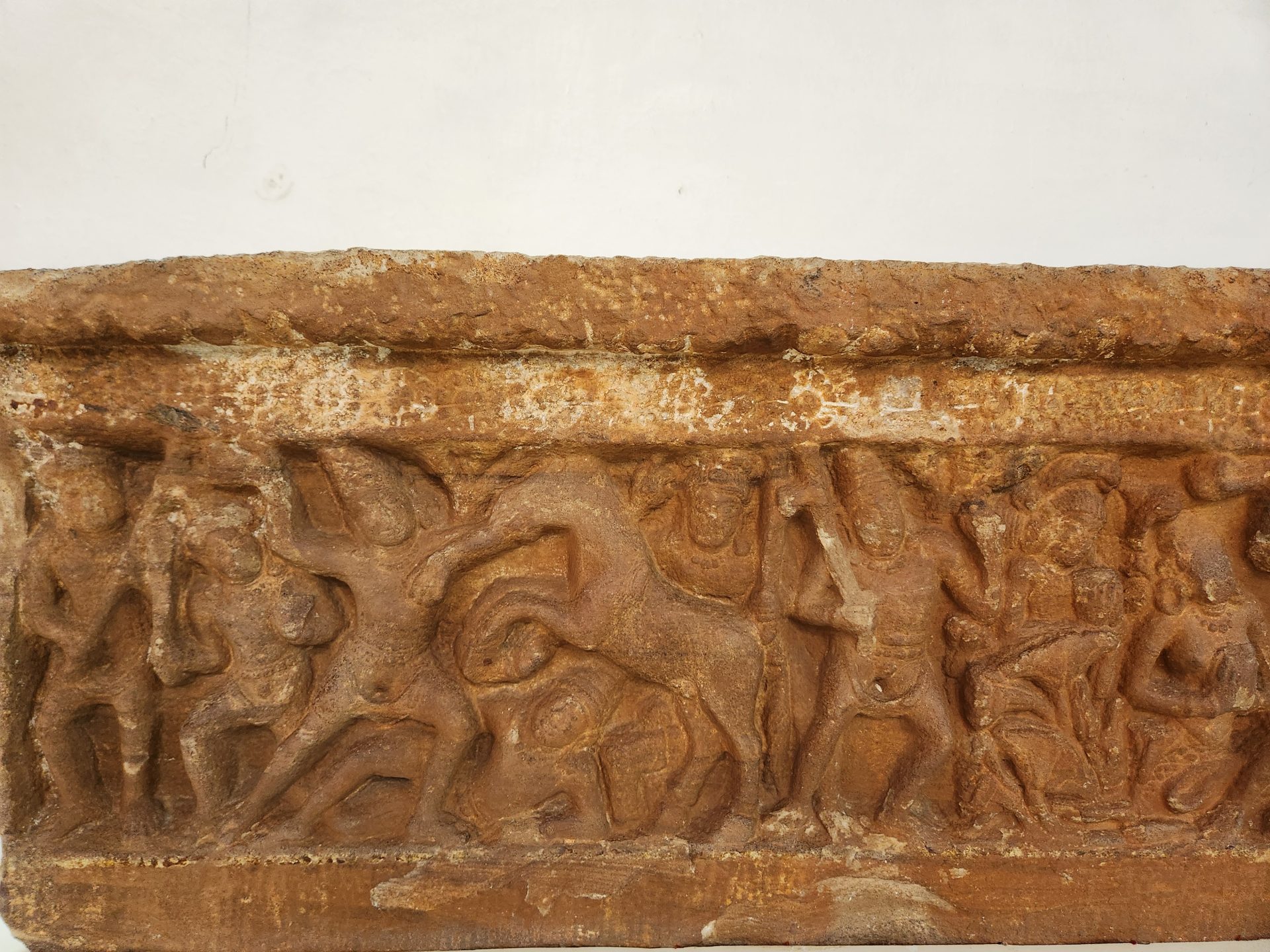
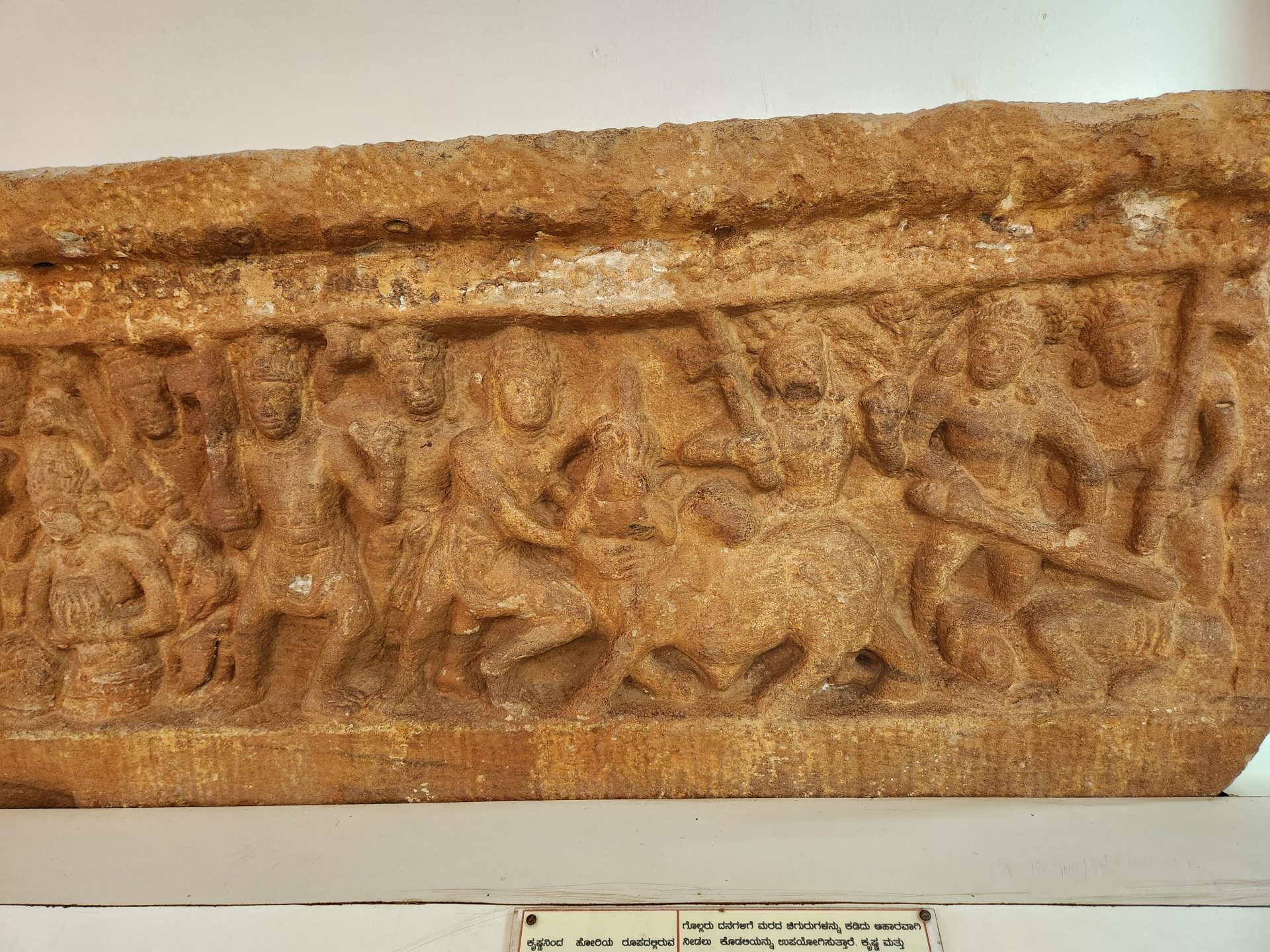
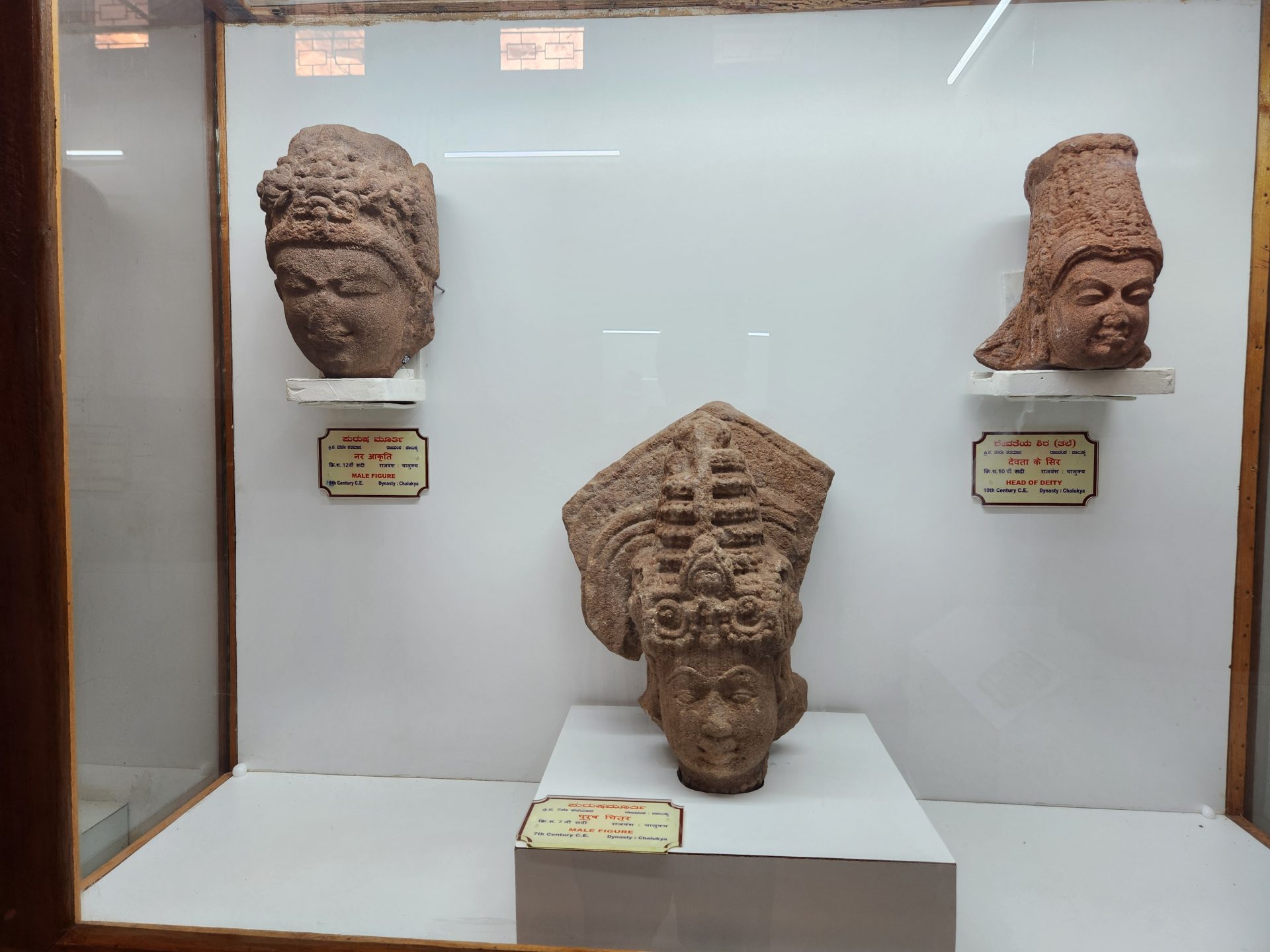
Established in the year 1982 by the ASI, the Museum houses 181 antiquities depicting inscriptions found in and around Badami, sculptures including some rare ones of the Lajja-Gauri image of the Fertility Cult and some pre-historic inscriptions from the 6th to the 16th century.
There are artefacts unearthed from temples and monuments found across the countryside of Badami. There are well curated galleries transporting one to the bygone era. Tickets are Rs.5 apiece.
The Badami Fort
After spending some time at the museum, climbed a flight of 300 + stairs to make my way towards the Badami Fort, founded by Pulakeshin I who ruled Badami from 540 CE to 567 CE.
He had captured the hill of Vatapi (also known as Badami) and later fortified it. His successor Pulakeshin II then continued to build the forts further on the Northern and Southern hills. Perched above a cliff, the Red Sandstone Fort lies across the Badami Caves and while the lower fort at the lake level encompassed the town of Badami the 2 upper forts served as citadels for the kingdom.
Infused with rock cut elements, the fort was designed in a typical Medieval Hill Fort architecture.
Separated by an approximate distance of 300 yards, the Northern Hill Fort was the larger of the two and was called Bavanbande- kote meaning 52 Rocks fort while the Southern Hill Fort was known as the Ranamandala-kote or the Battlefield Fort.
The Shivalaya Temples
The Shivalaya temples are Rock Cut Cave temples carved out of single monolithic rocks and one gets to see towering pillars adorned with intricate carvings and cornices depicting scenes from Hindu mythology including dwarapalas or gatekeepers on each side of the entrance.
While the Lower Shivalaya stands on a rocky terrace, the Upper Shivalaya, believed to be a Vaishnavite temple earlier stands at the summit of the north side of the Fort, overlooking the lake. These probably got erected in the early 7th century.
Apart from a couple of medieval Shiva Shrines (known as the Lower and Upper Shivalaya temples), one gets to see Granaries, Water Reservoirs, Bastions, Observation Posts and Gateways. While successive rulers post the Chalukyan dynasty like the Vijayanagara Kings, the Bahmani and Adi Shah Sultans kept modifying the fort, most of these structures are in a dilapidated condition.
The Bhootnath Temple Complex
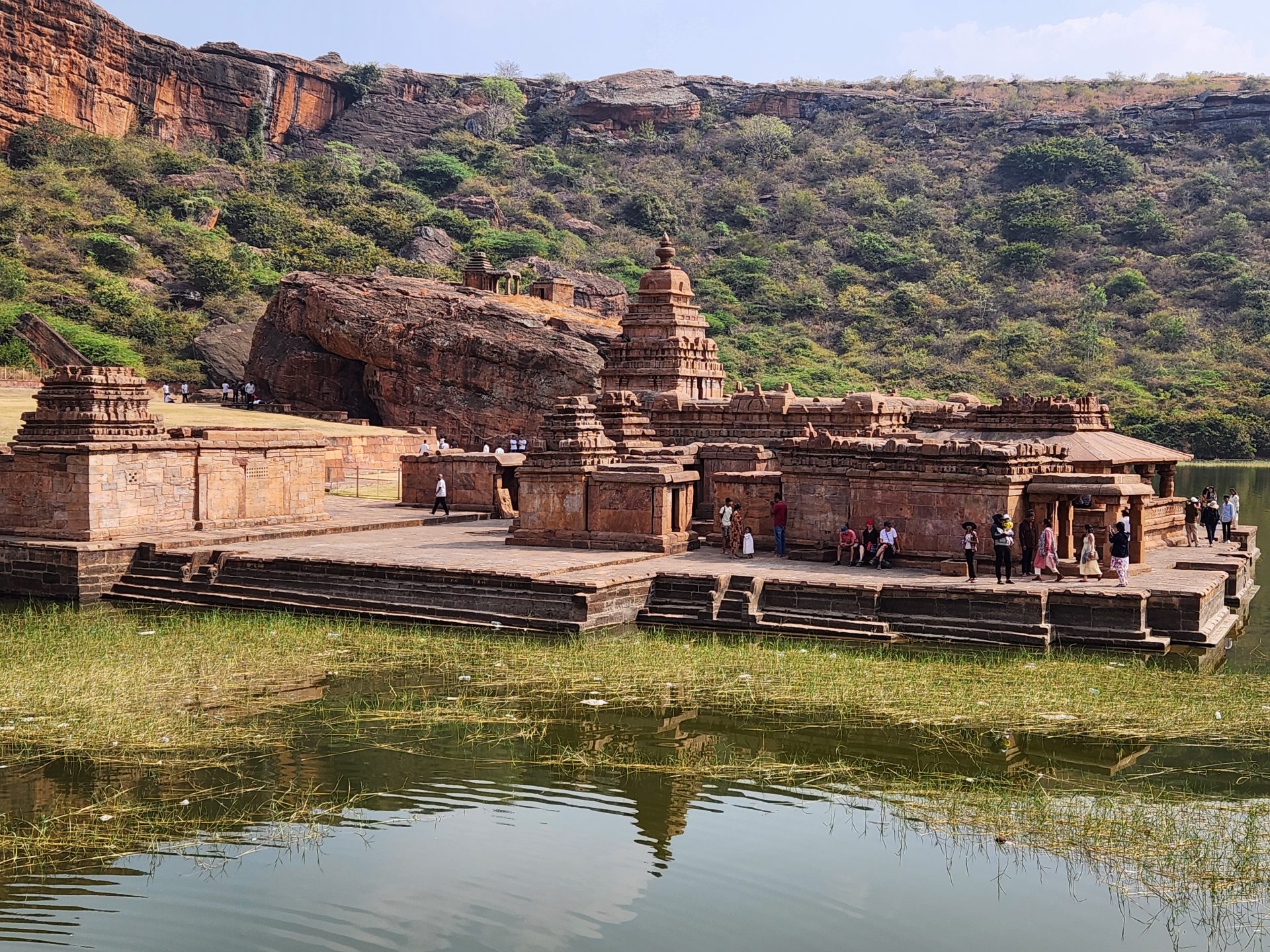
Made my way down the fort and took a left turn towards the Agastya lake where the Bhootnath temple stood. Dating back to the 7th century, this cluster of temples, dedicated to Lord Shiva derives its name from a demon named Bhootha who was vanquished by Shiva. The temple complex consists of 2 main temples and many small ones of which the main temples are the Mallikarjuna and Bhootnath temples.
What distinctively stands out are the intricate carvings of dancing figures and deities around each shrine while the floral carvings, the lattice window designs, the doorframes remain intact and look very appealing.
The locals believe that this temple possesses healing powers.
The Kappe Arabhatta Inscriptions
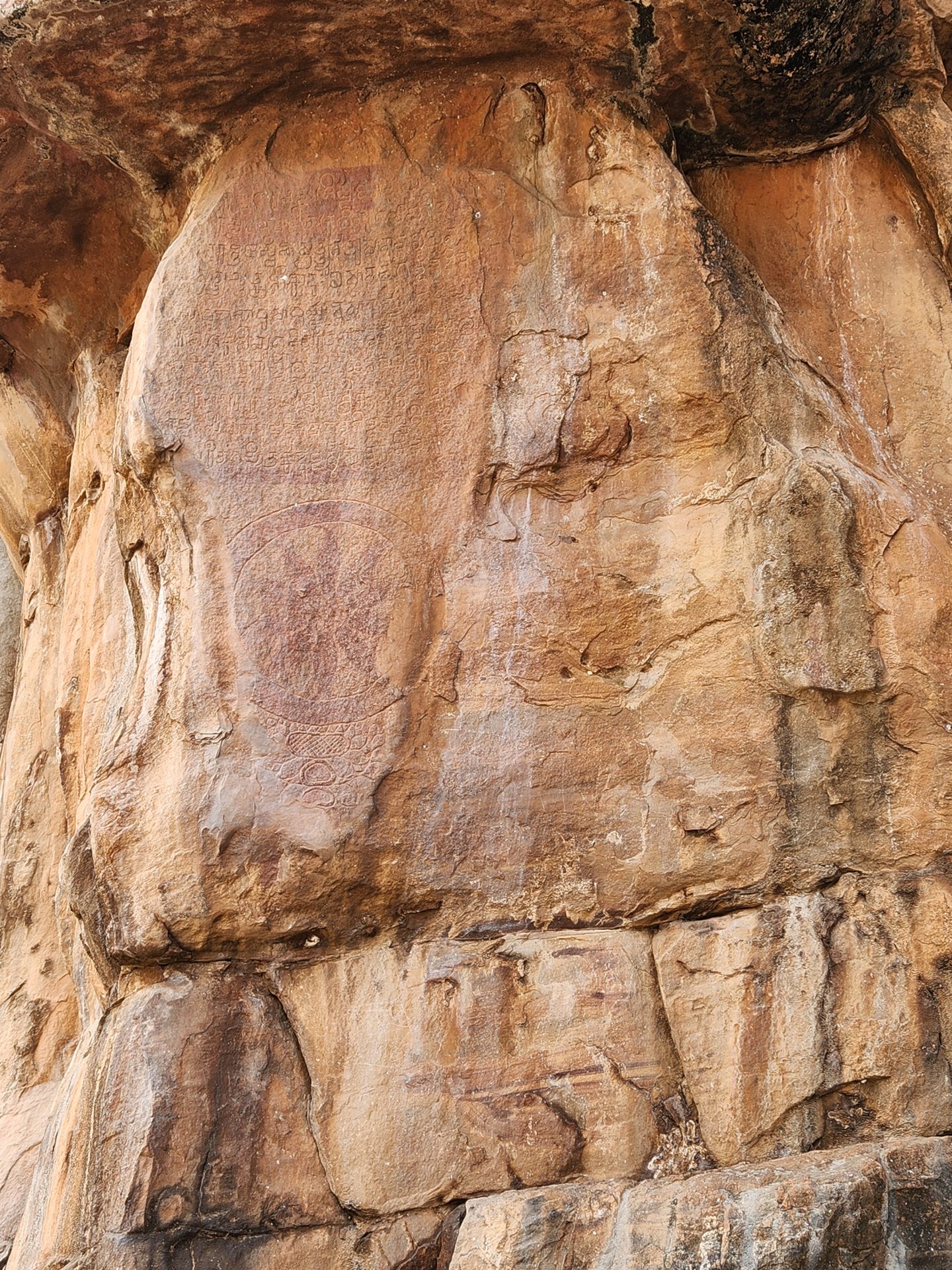
On my way back towards the Badami Caves from the Bhootnath temple complex, noticed a board pointing to some inscriptions written as Kappe Arabhatta. Inquisitiveness got the better of me thinking that it could be something related to the mathematician and astronomer Aryabhatta but then realized that is was a 7th century Kannada inscription located on a cliff, featuring 5 stanzas to celebrate a warrior by that name. A 3 line poetry known as Tripadi was used to glorify him.
Thanks to my backpack being there with me, a change of attire did me good as all the walking in the heat and humidity had soaked me all over, post which I headed for the Badami caves.
The splendour of the Badami Caves
Overlooking the man made greenish tinged Agastya Lake, the Badami Caves spread over 4 levels and built in the Dravidian and Nagara styles stands out in terms of its architectural splendour and were built between the 6th and 8th centuries.
Carved out of an escarpment of sandstone, these cave temples are an assortment of Hindu and Jain temples and are the first exponents of Indian rock-cut architecture. The lake ringed by an earthen wall with stone steps looks very picturesque especially when viewed from the upper levels of the cave temple.
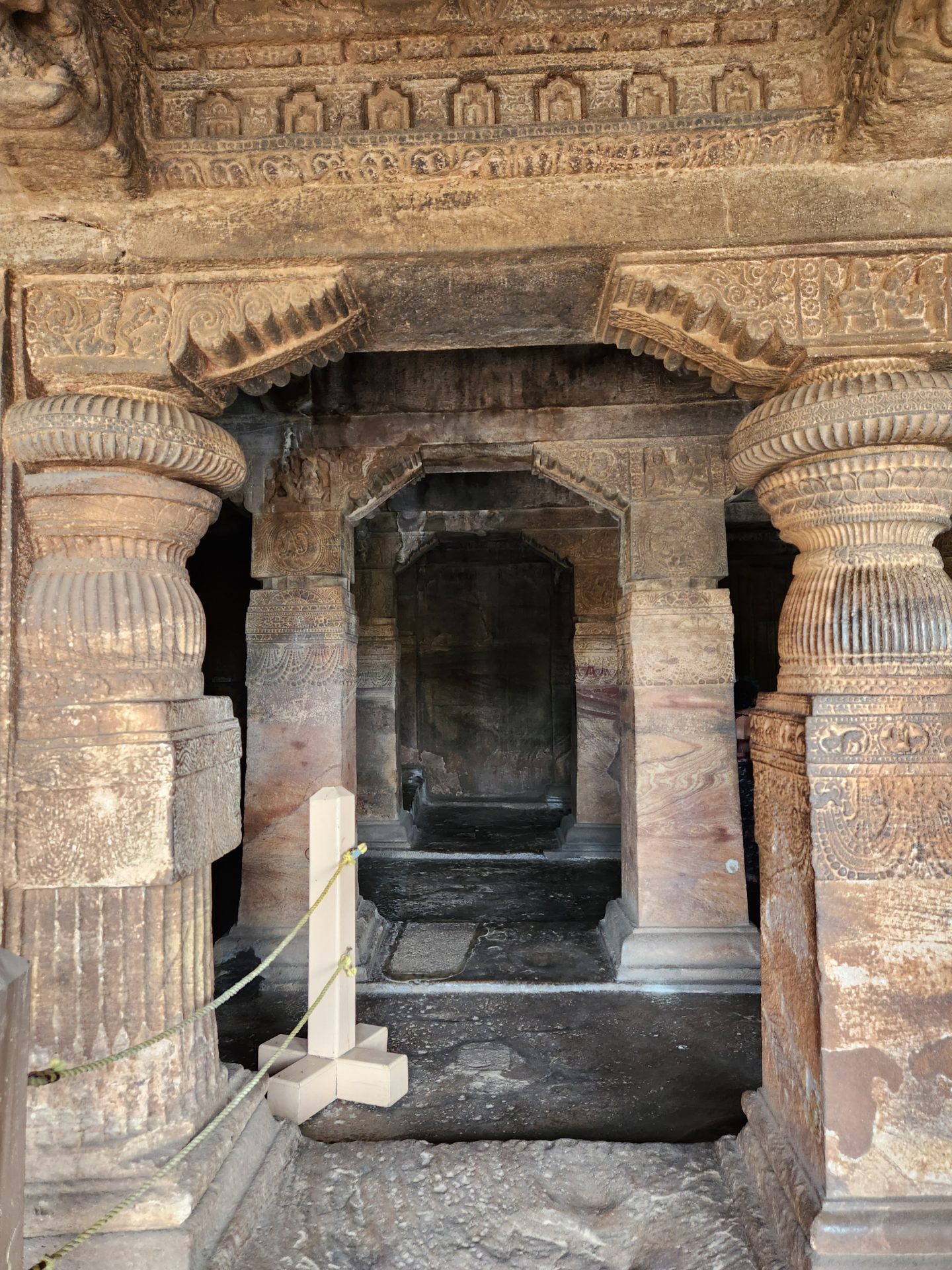
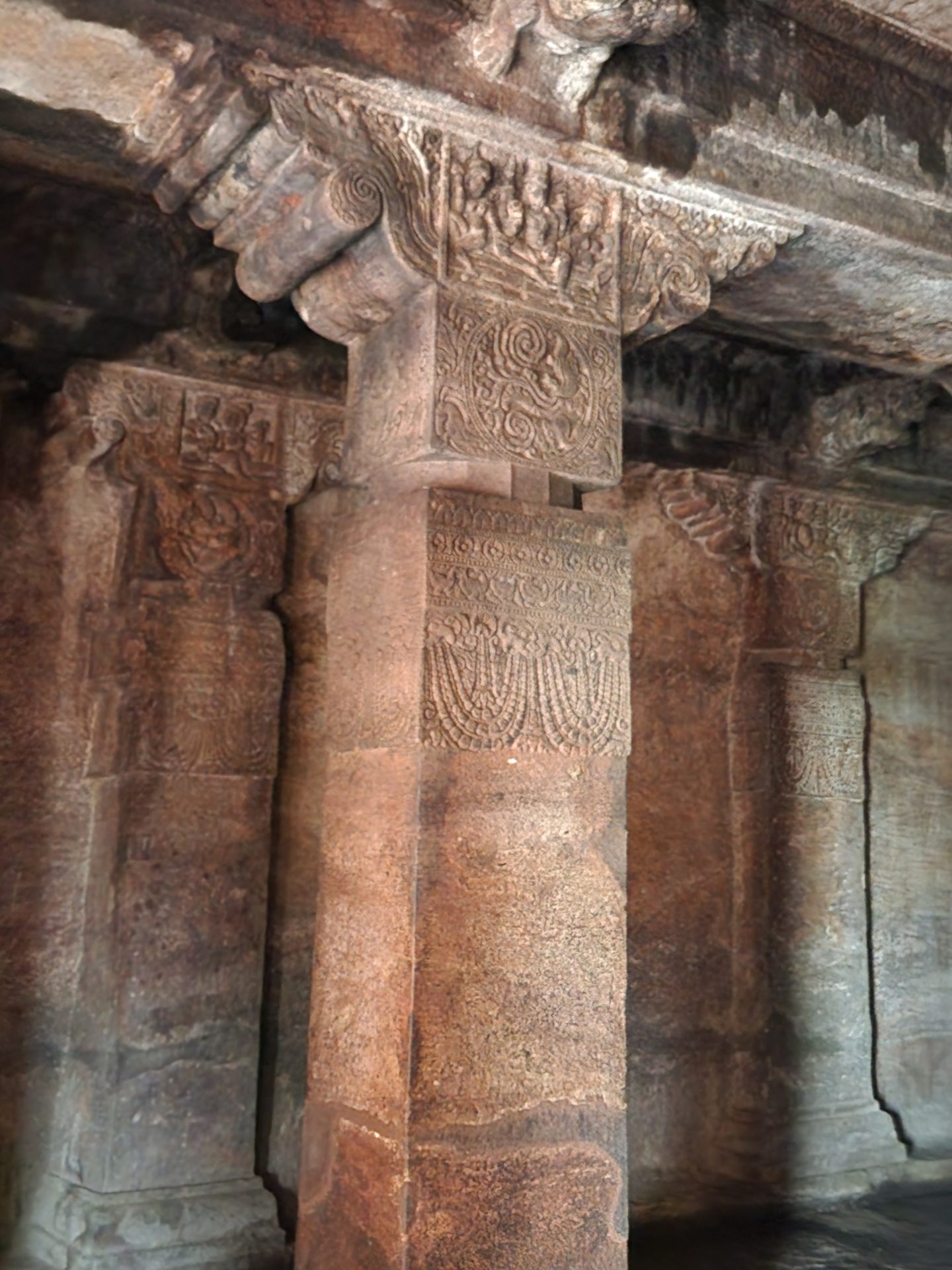
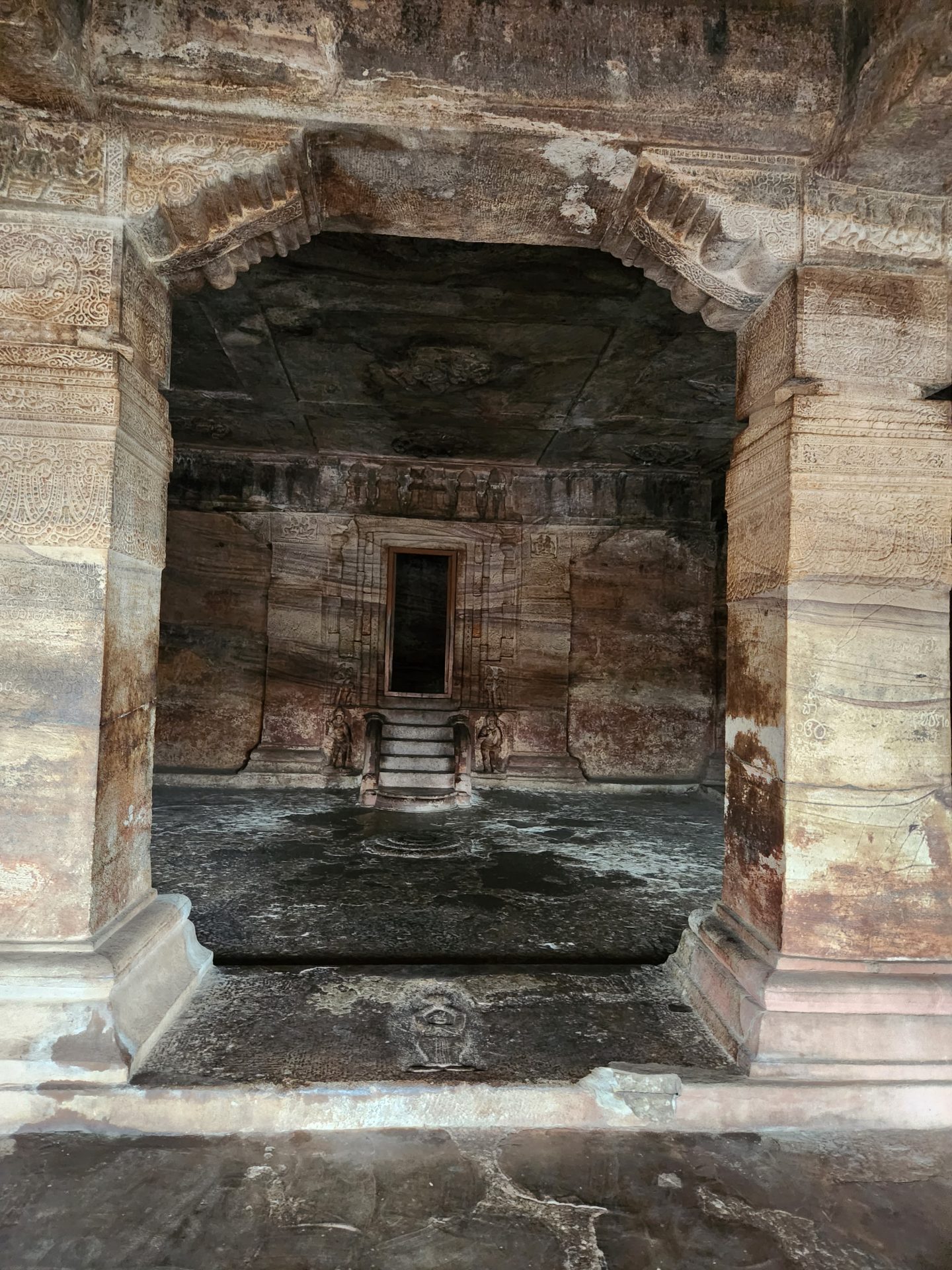
Each of the 4 caves have an entrance with a verandah flanked by stone columns and brackets leading into a main hall with columns supporting it.
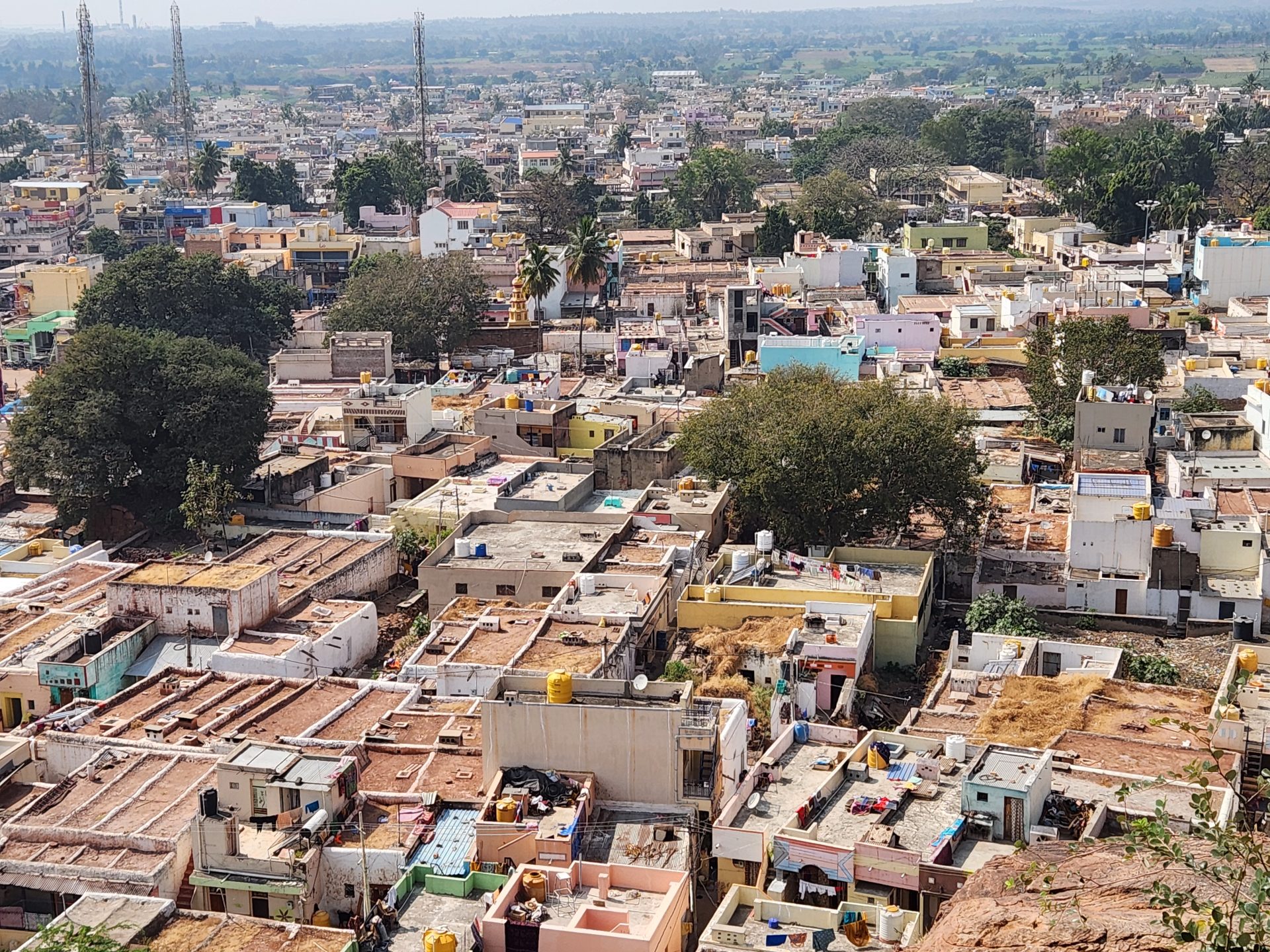
Further behind the hall stands a square shaped sanctum. Each of the levels of the cave are connected through a stepped path which have intermediate terraces overlooking the vast expanse of the lake and the town.
The Cave complex is part of a UNESCO designated World Heritage Site categorized as “Evolution of Temple Architecture” and also includes Aihole and Pattadakal.
This trio popularly forms the cradle of temple architecture for Hindu temples in this region.
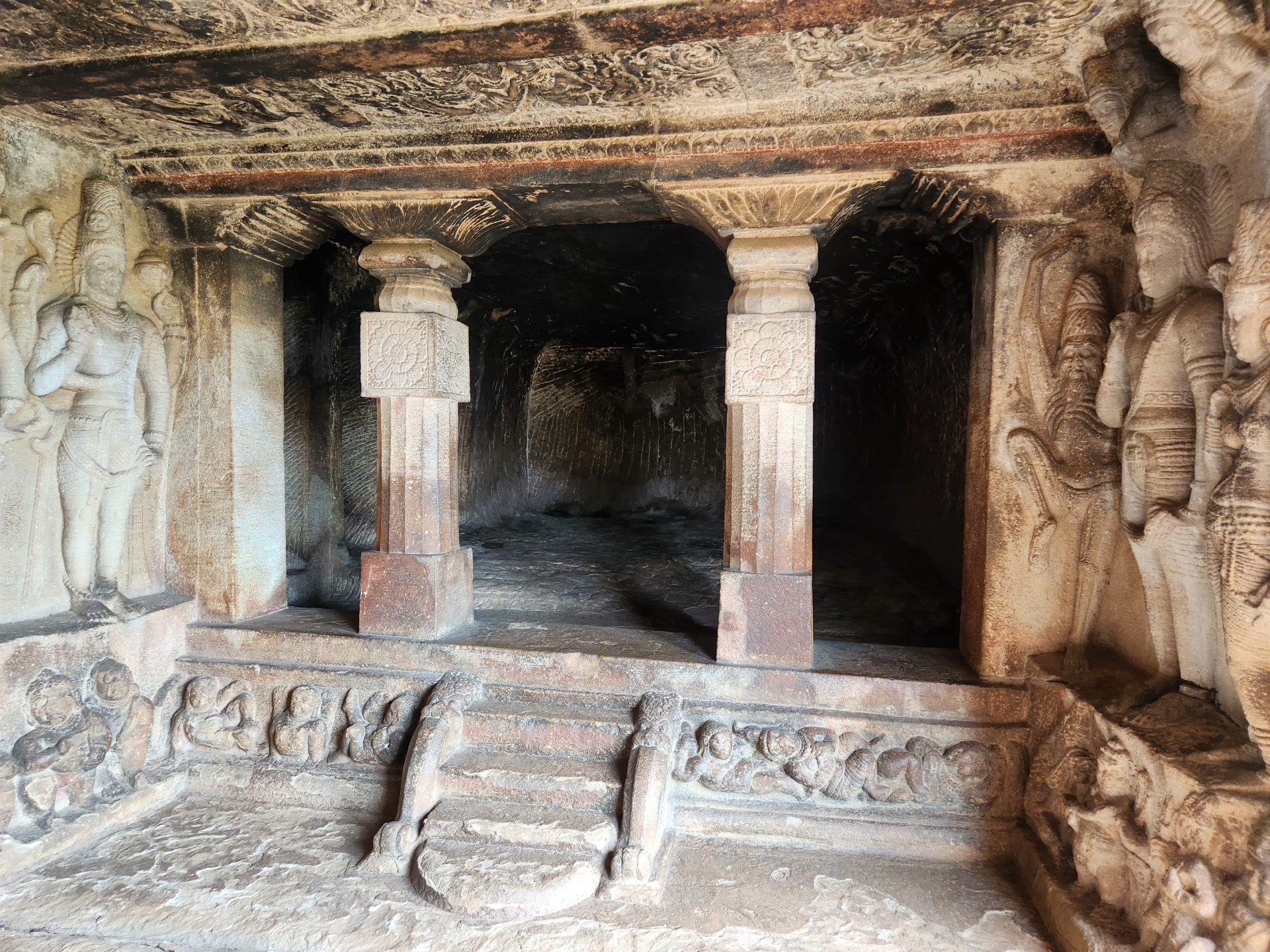
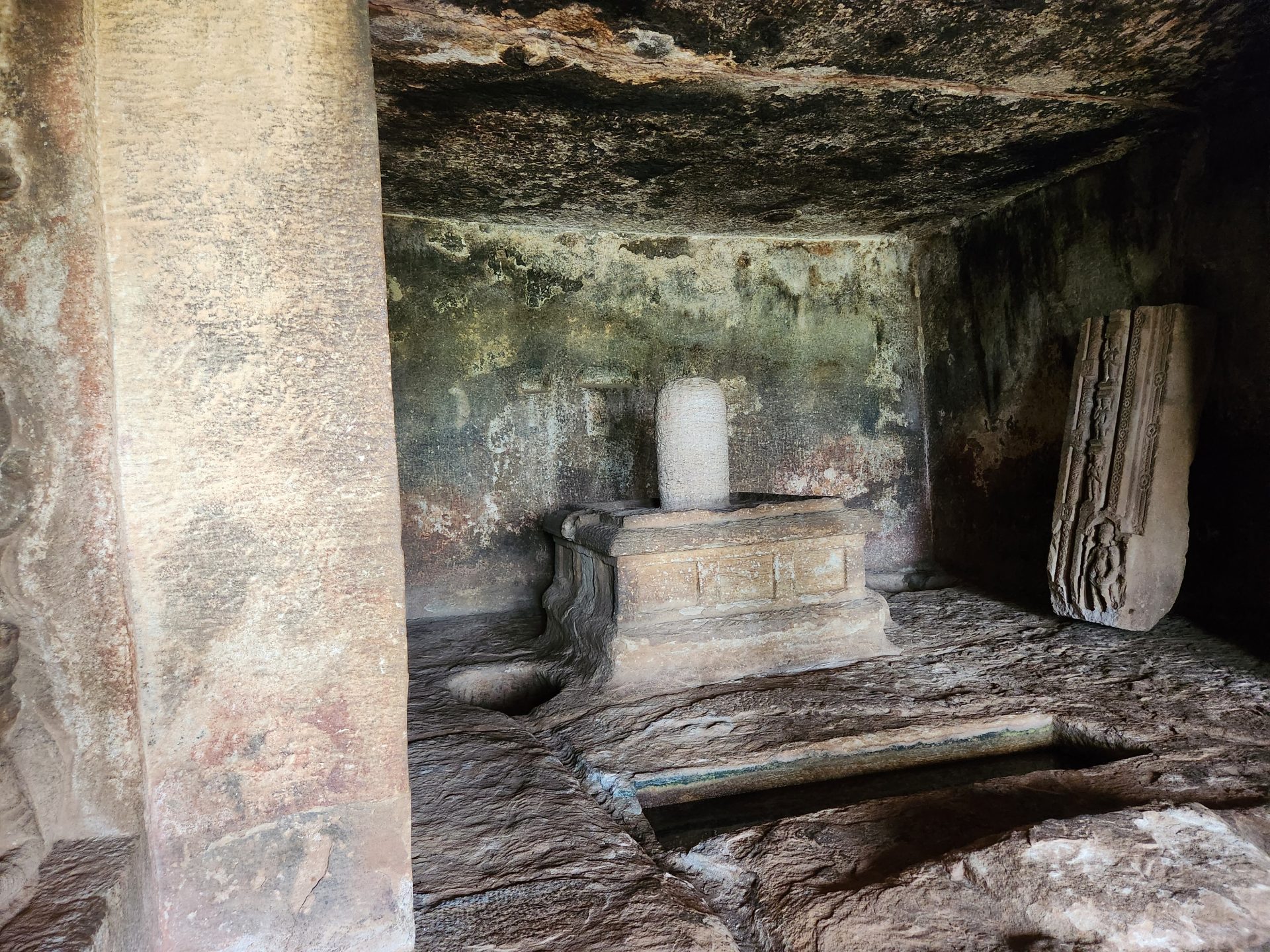
CAVE 1 : Unearthed around 550 CE, the first of the caves is dedicated to Lord Shiva in a Linga form. The cave has an open porch, a pillared hall and a sanctuary excavated into the rear wall.
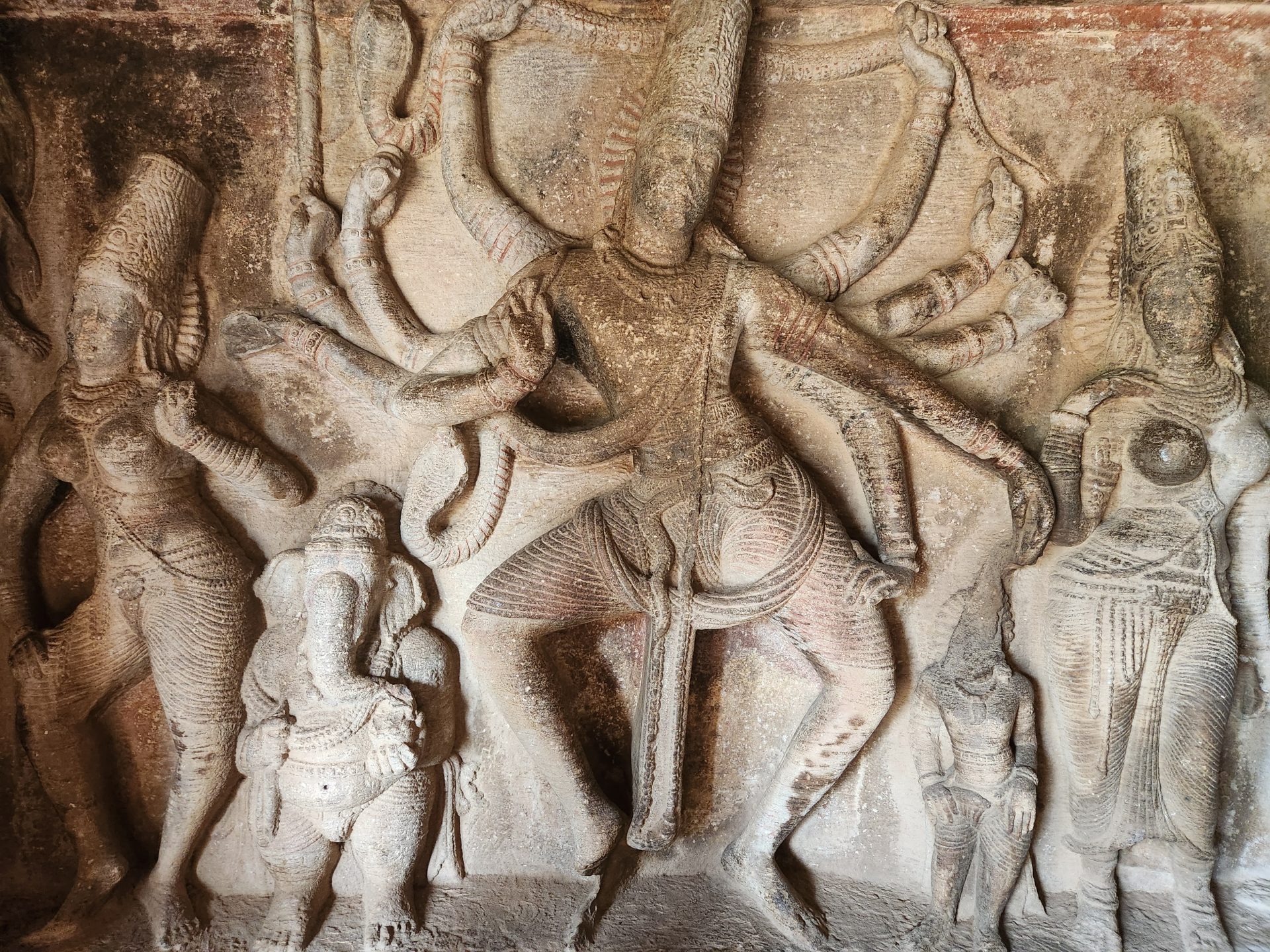
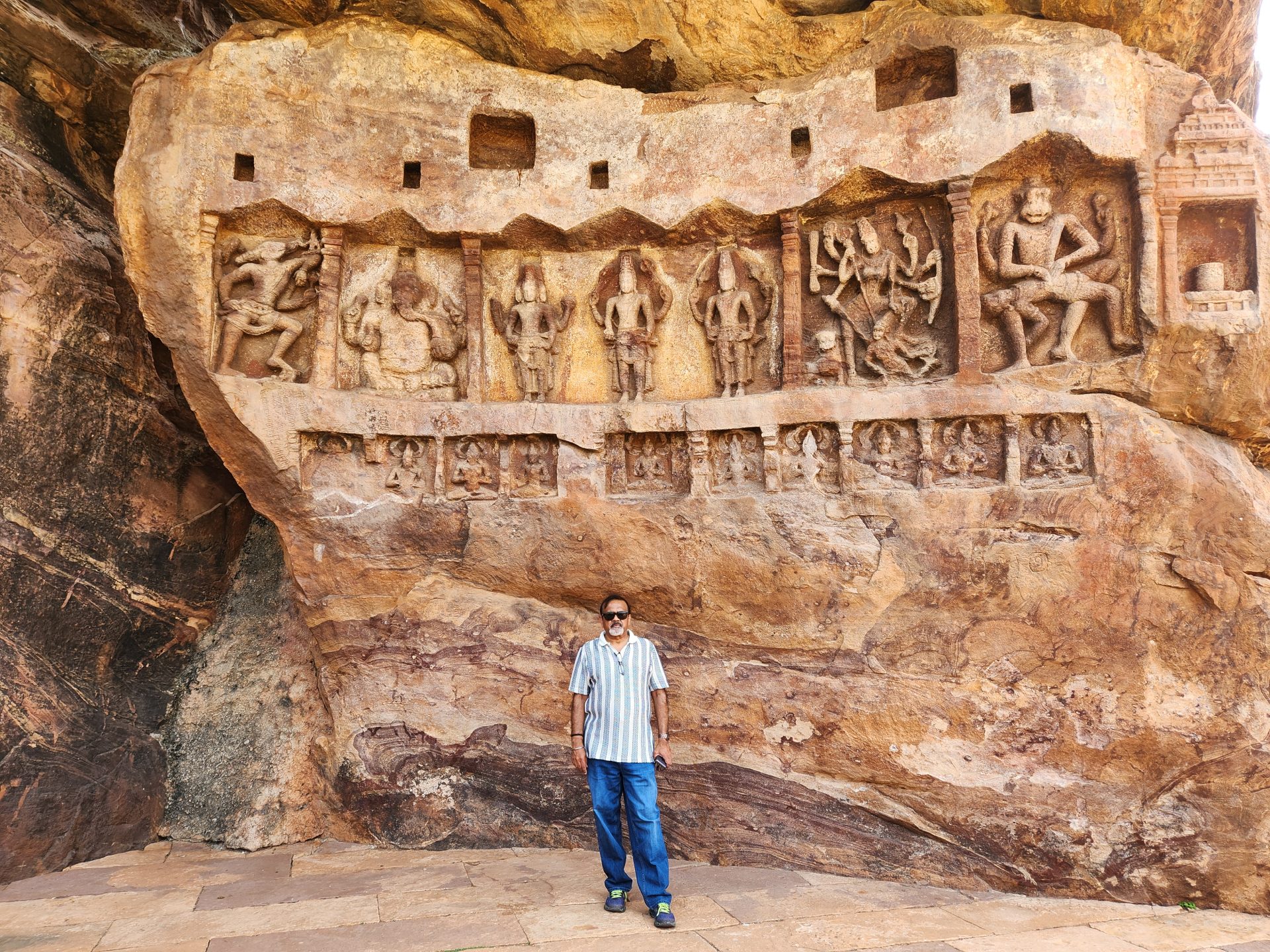
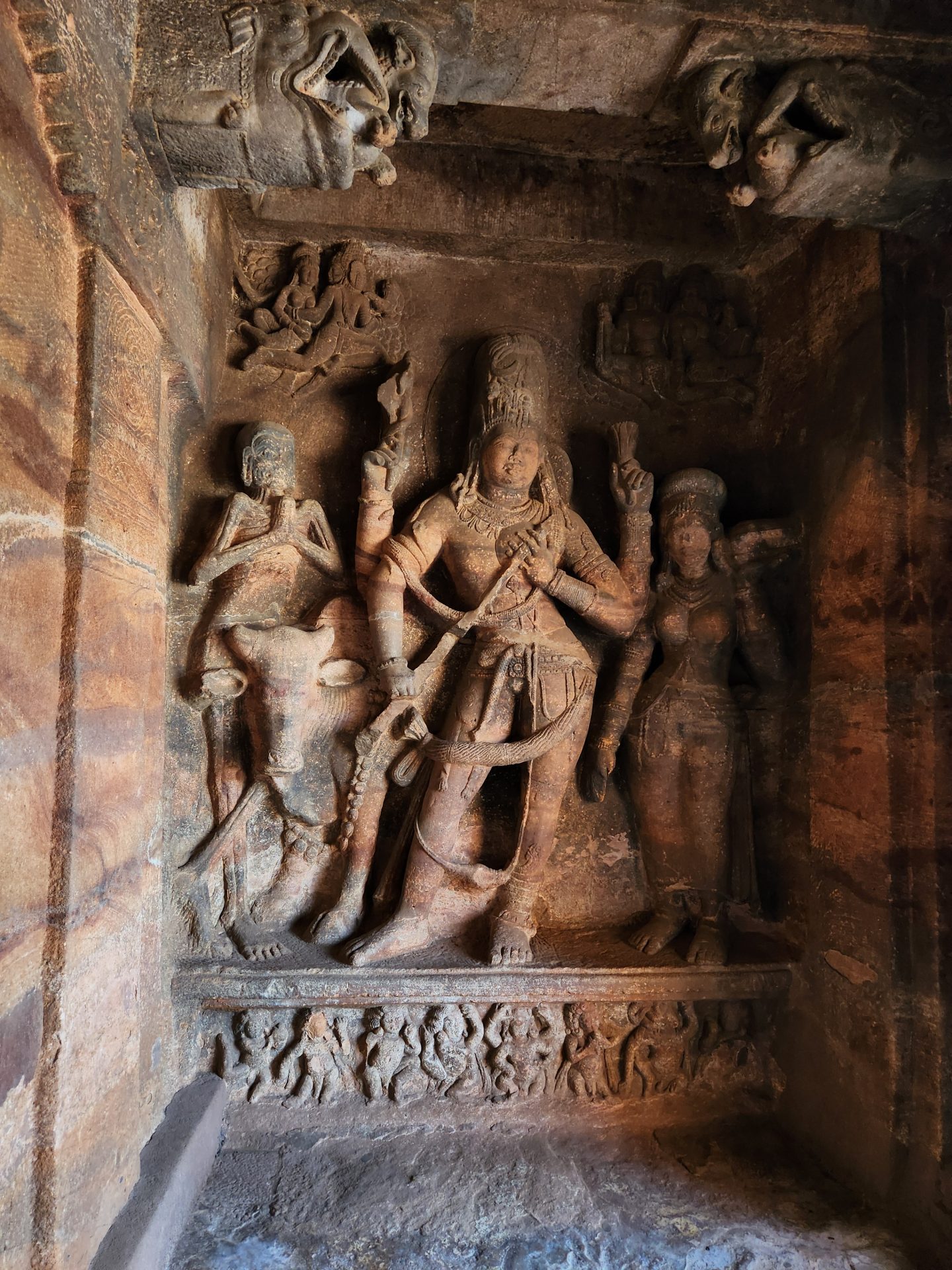
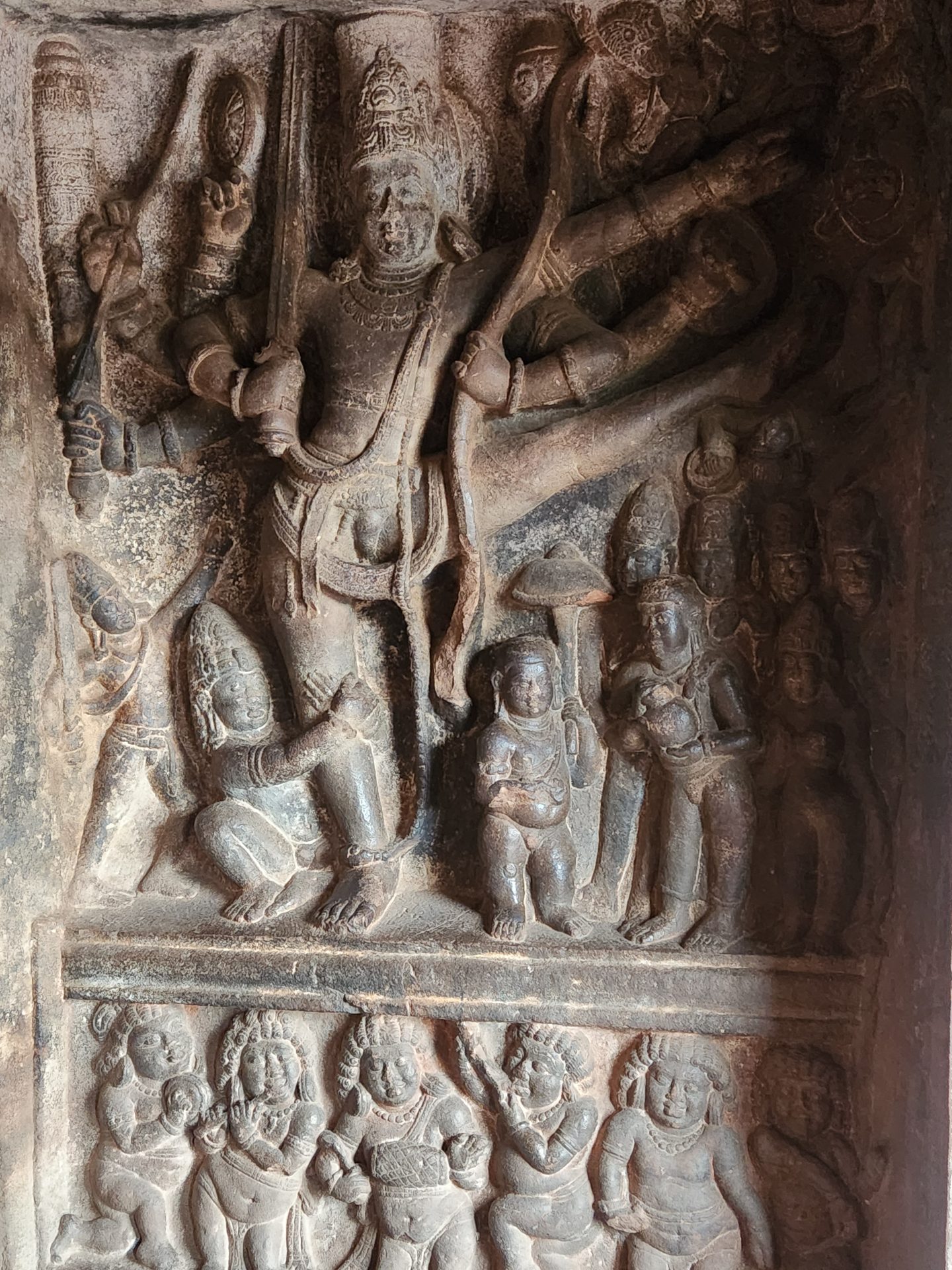
At the right side of the cave entrance, one cannot miss a prominent carving of a 5 Feet high Dancing Lord Shiva, also popularly known as Nataraja.
The geometric patterns around these 18 arms (9 on each side) have had historians equate it to the Cosmic Wheel.
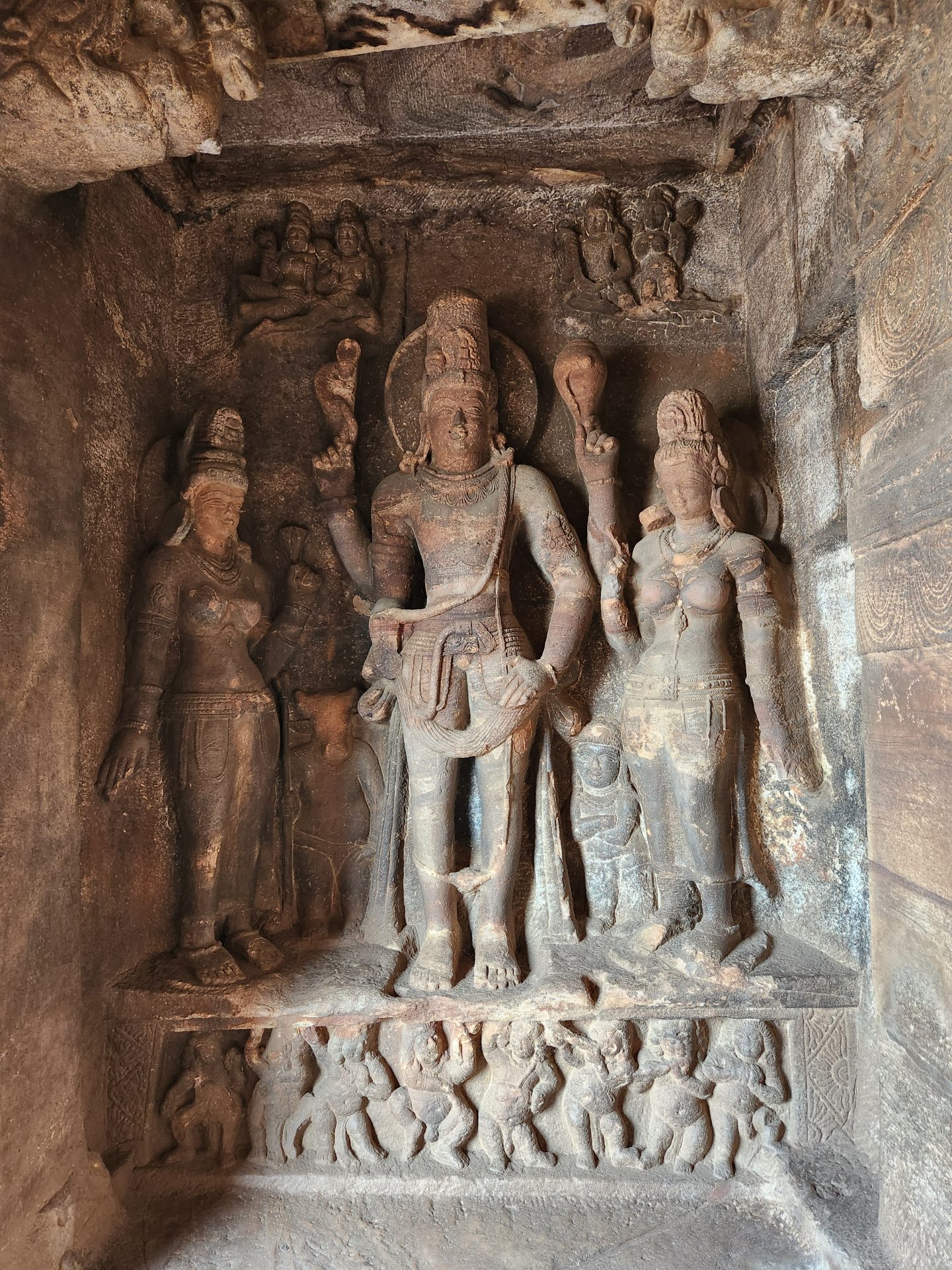
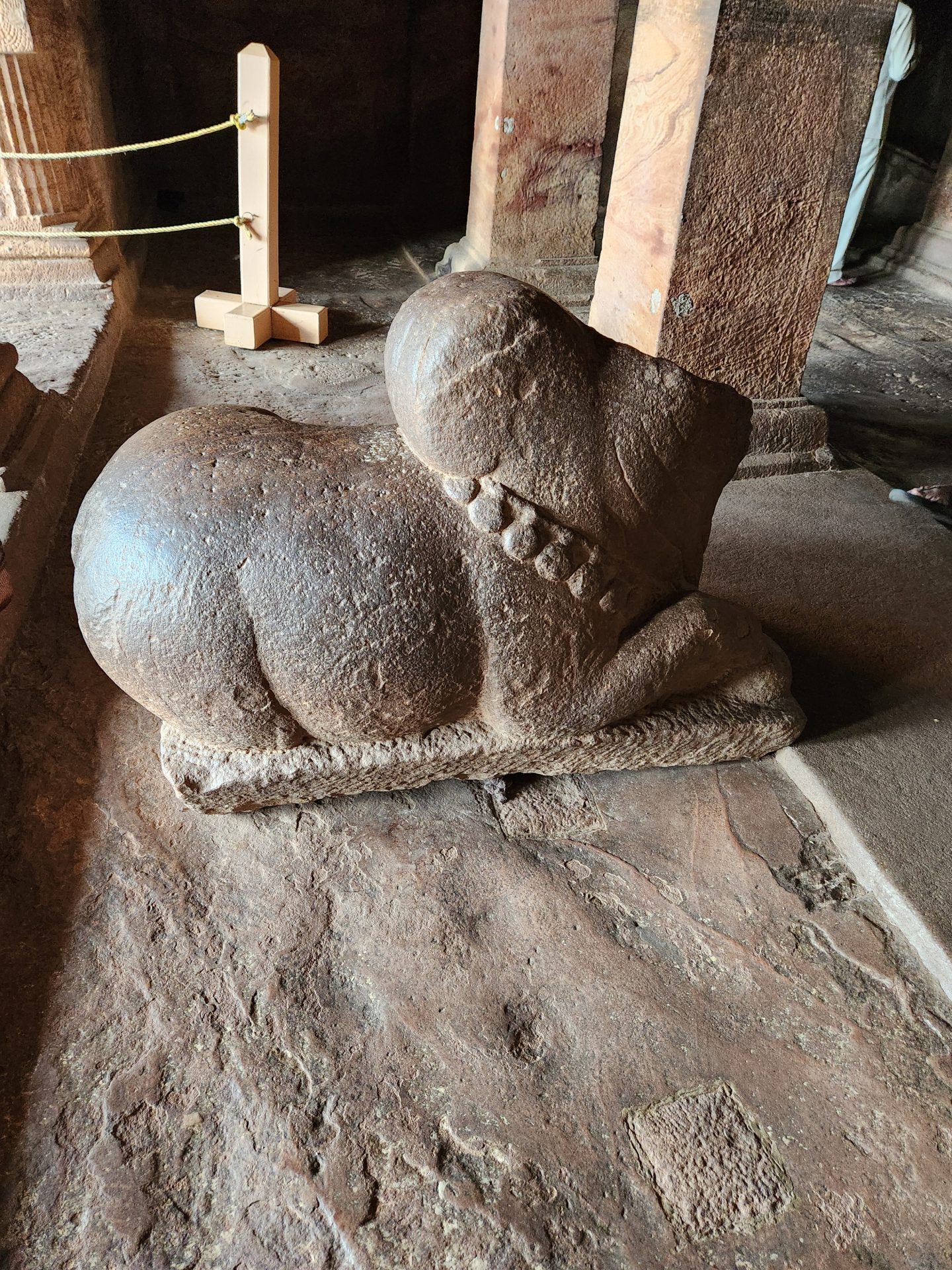
Some of these arms are seen holding an axe, trident, a flame torch, a serpent and drums. Statues of his son Ganesh and Nandi the bull can be seen by the side of Shiva. Other carvings in the cave include that of Mahishasura Mardini depicting Goddess Durga slaying the demon, an almost 8 feet high half Shiva and half Vishnu sculpture of Harihara, a fused image of Lord Shiva and Goddess Parvati called Ardhanarishvara.
Built roughly at a height of 60 feet above ground level with a series of steps providing access, one gets to see a multitude of attendants (also known as Ganas) in different postures who appear to kind of holding the cave floor.
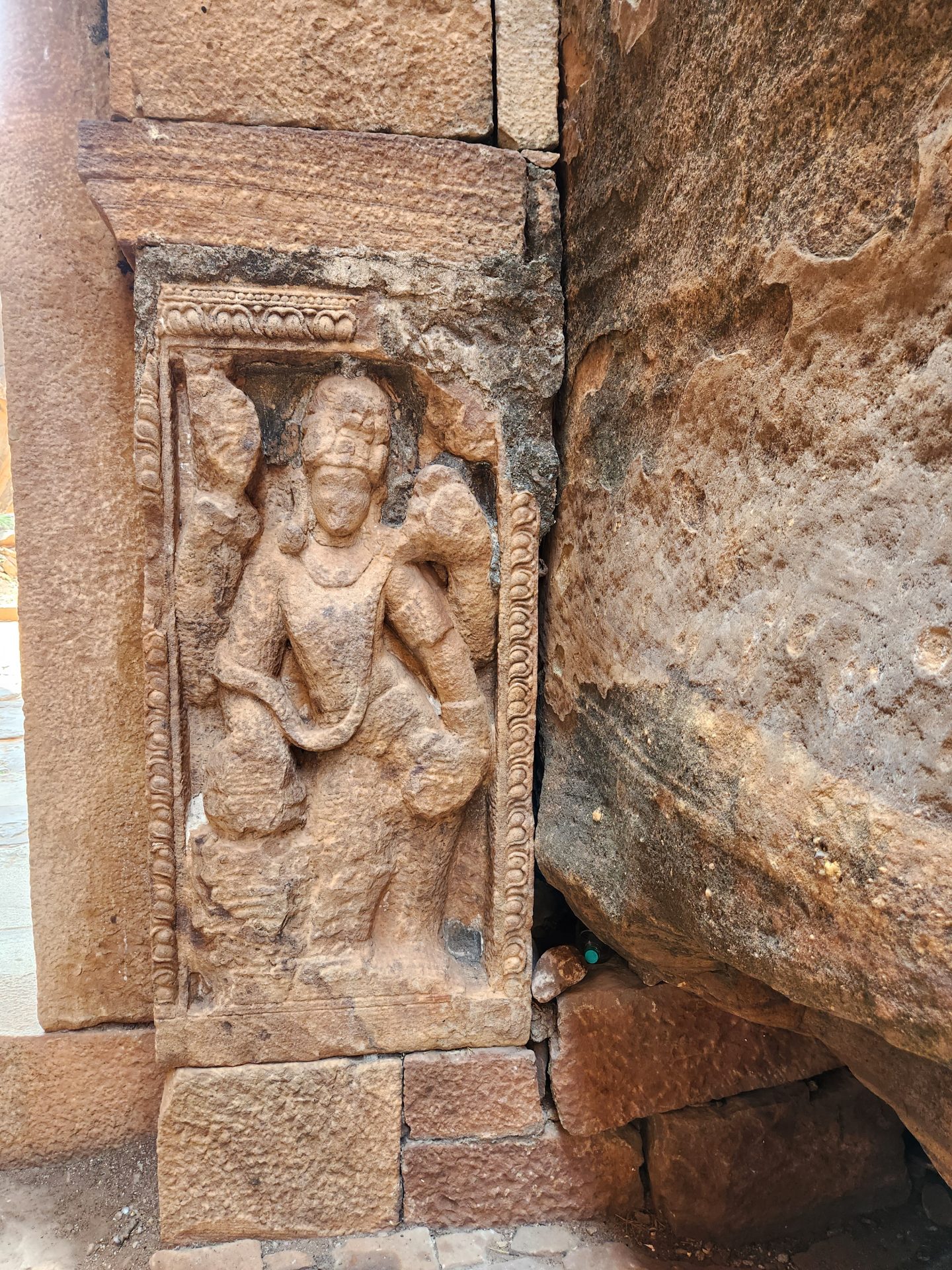
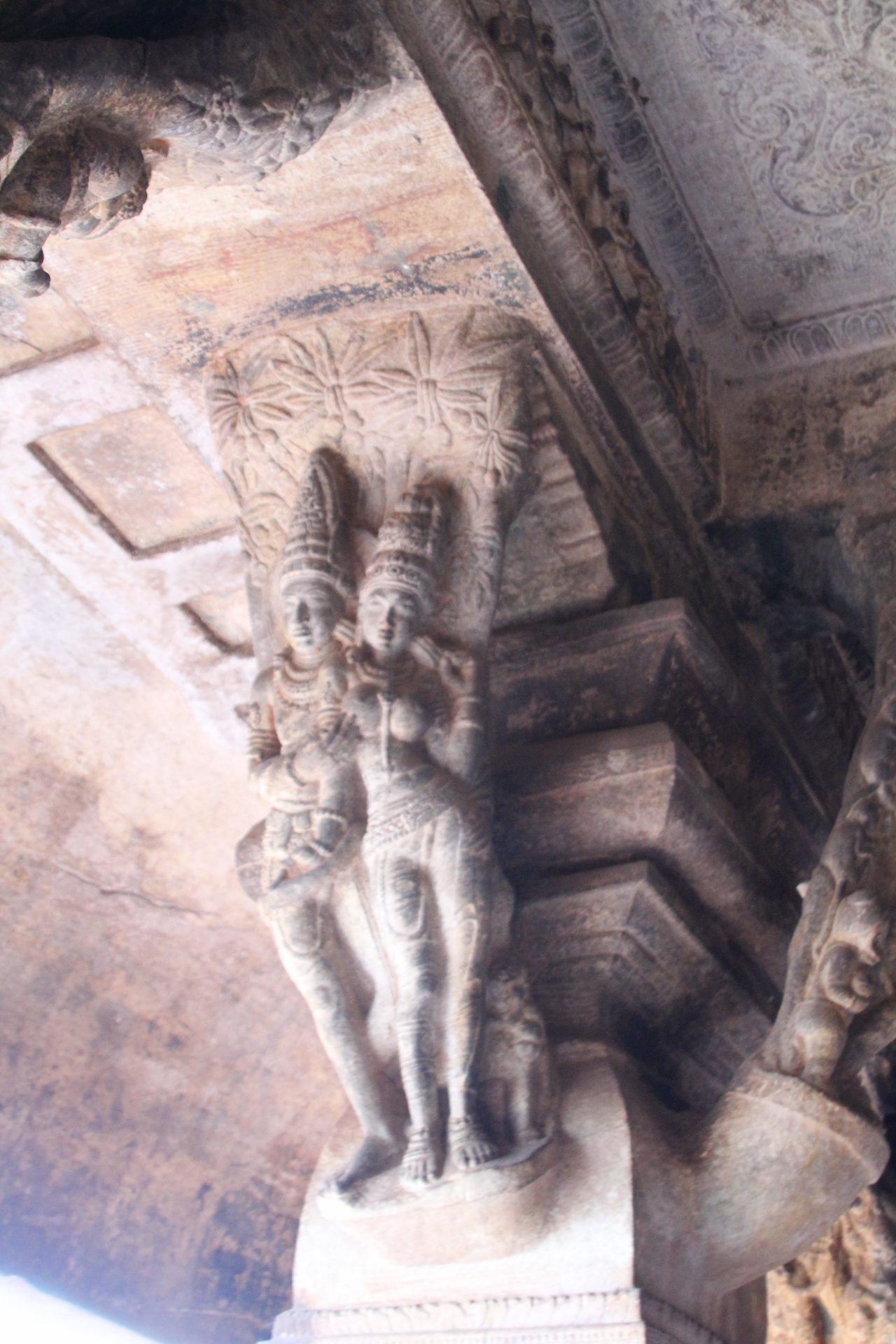
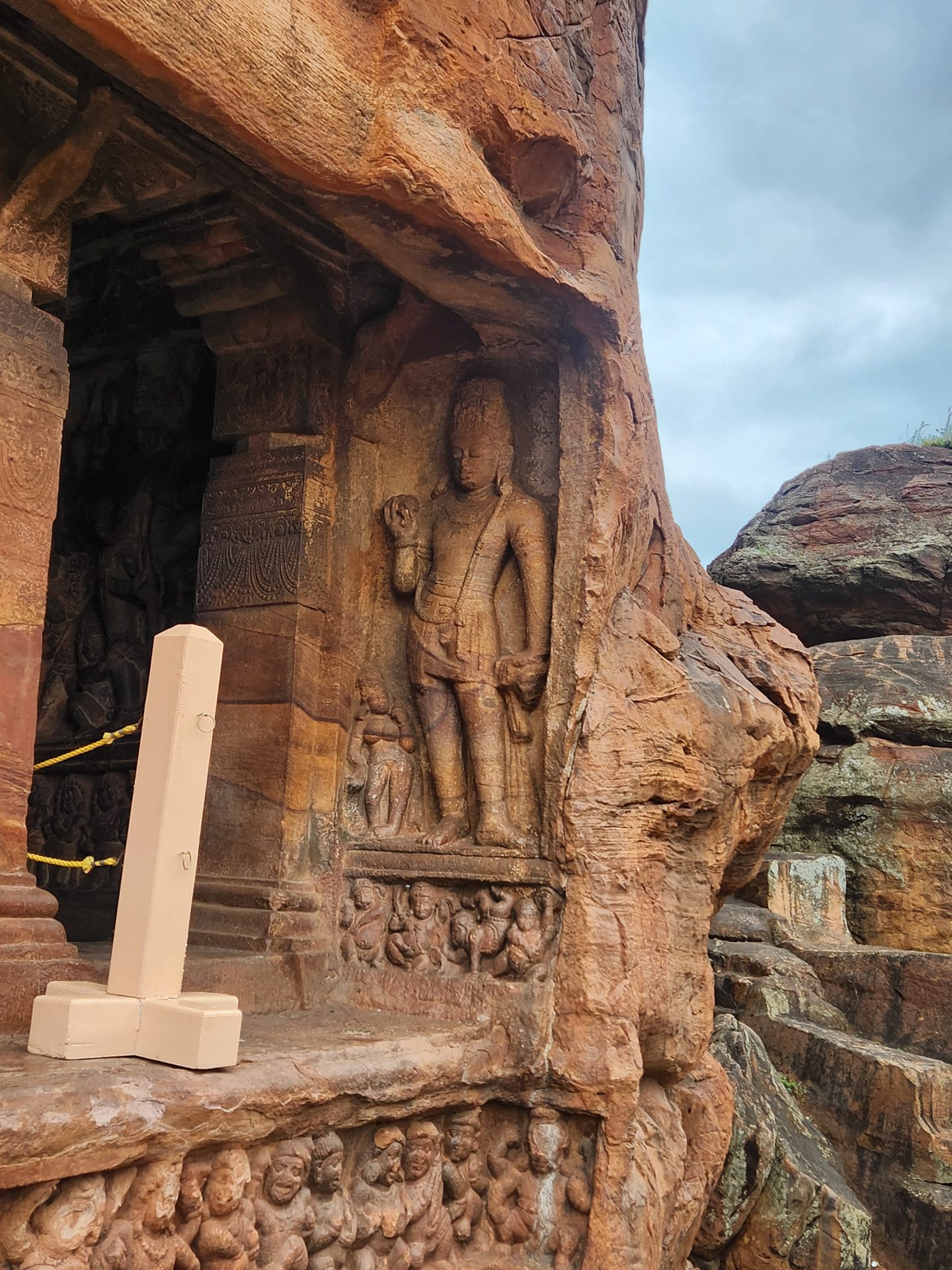
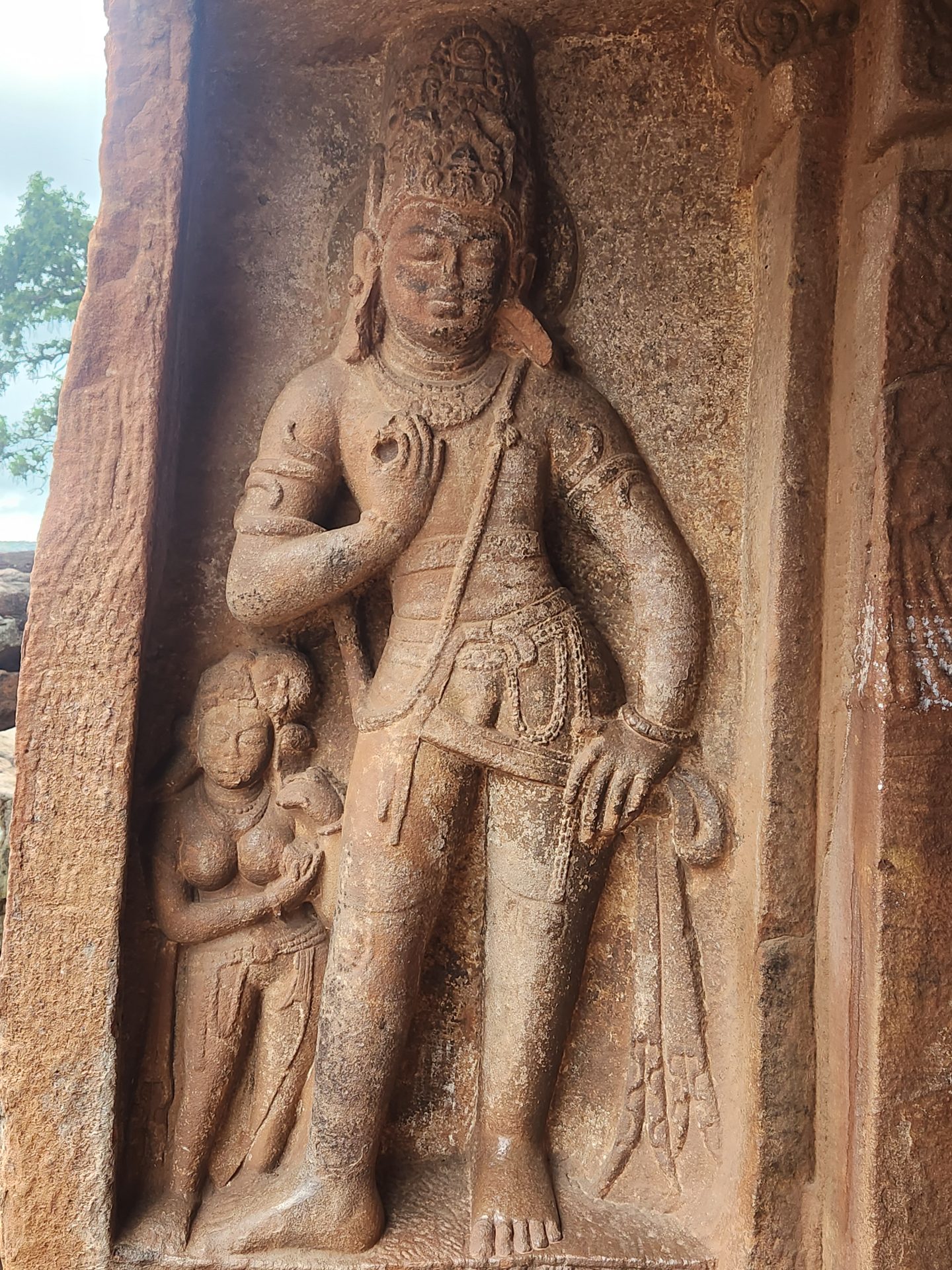
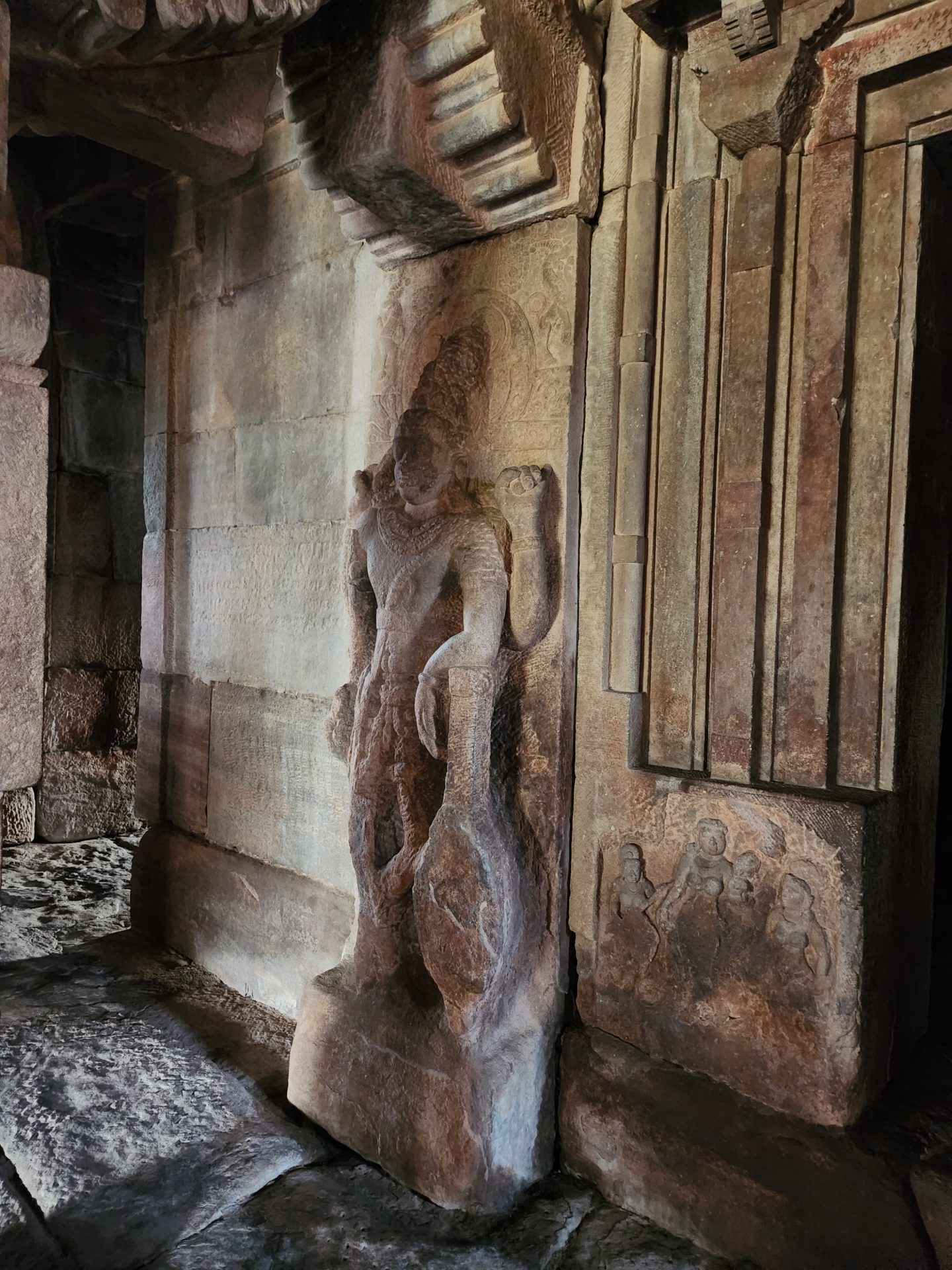
The left side of the entrance of this cave has a carving of a Dvarapala or a bodyguard holding a trident in his hand while near his feet, a fused image of an elephant and a bull can be seen (see image above).The verandah has 5 columns embellished with reliefs of garlands, flowers and foliage and jewellery.
The skillsets and prowess of the artisans of that era is really something to be admired for, given the limitations in terms of tools or technical expertise available those days and there is so much of perfection and symmetry in the work on display.
CAVE 2 : A climb of 64 steps brings one to Cave 2 which is almost a replica of the first cave, not only in terms of its dimensions and layout but also in terms of the similarity in carvings which can be seen here. A large relief of Lord Vishnu as Tirvikrama, Ardhanarishvara, Mahishamardini can be seen here.
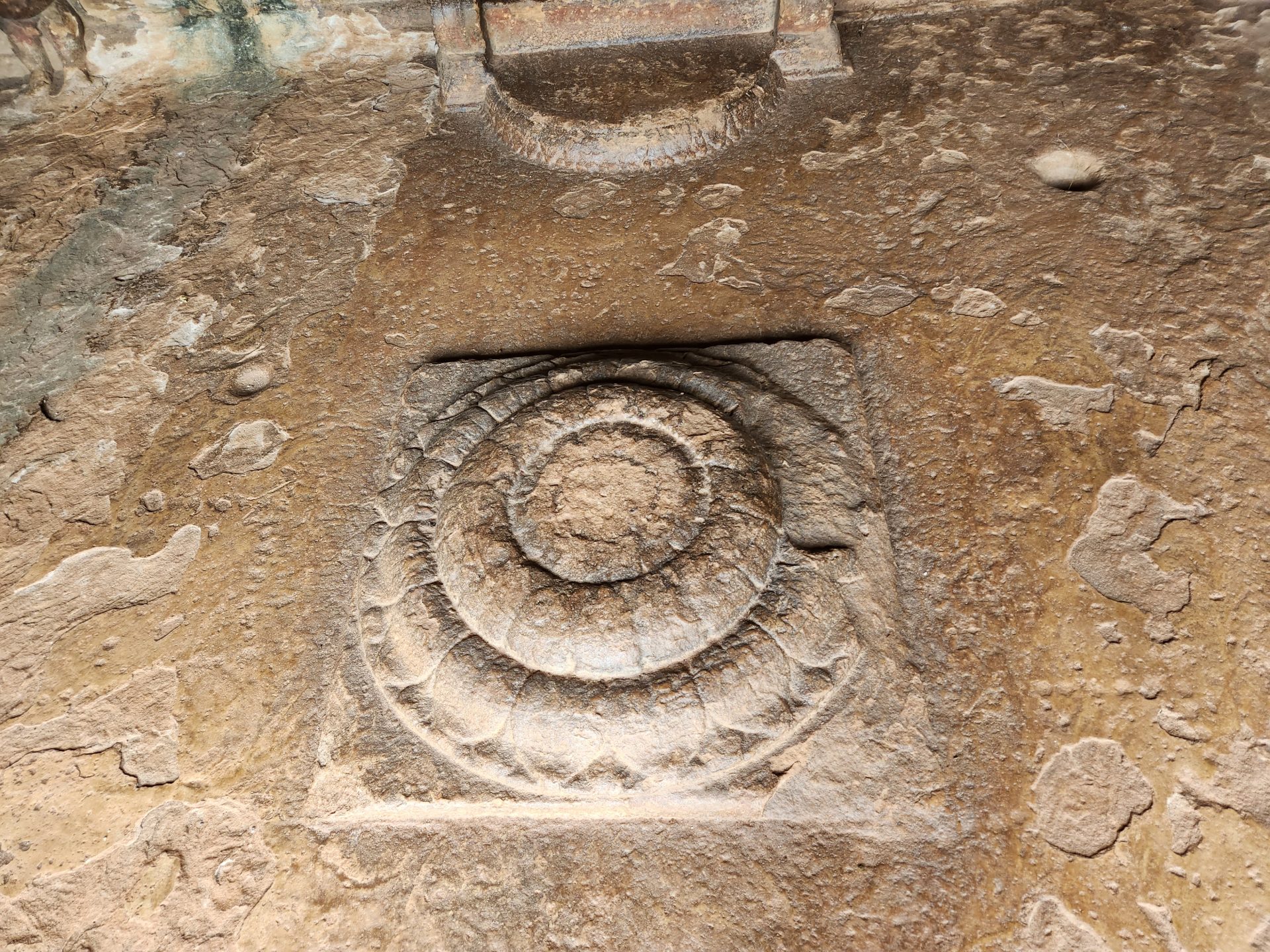
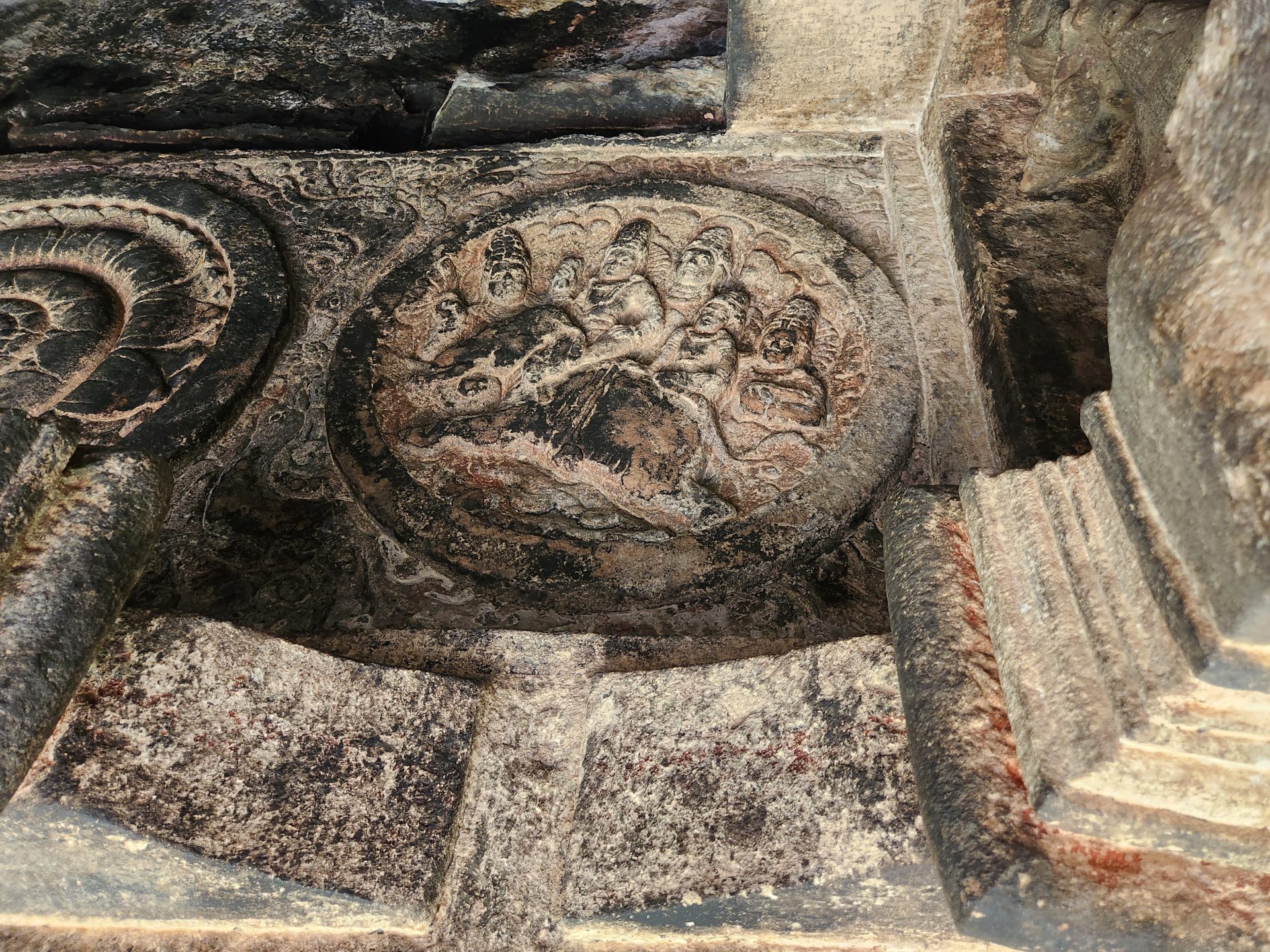
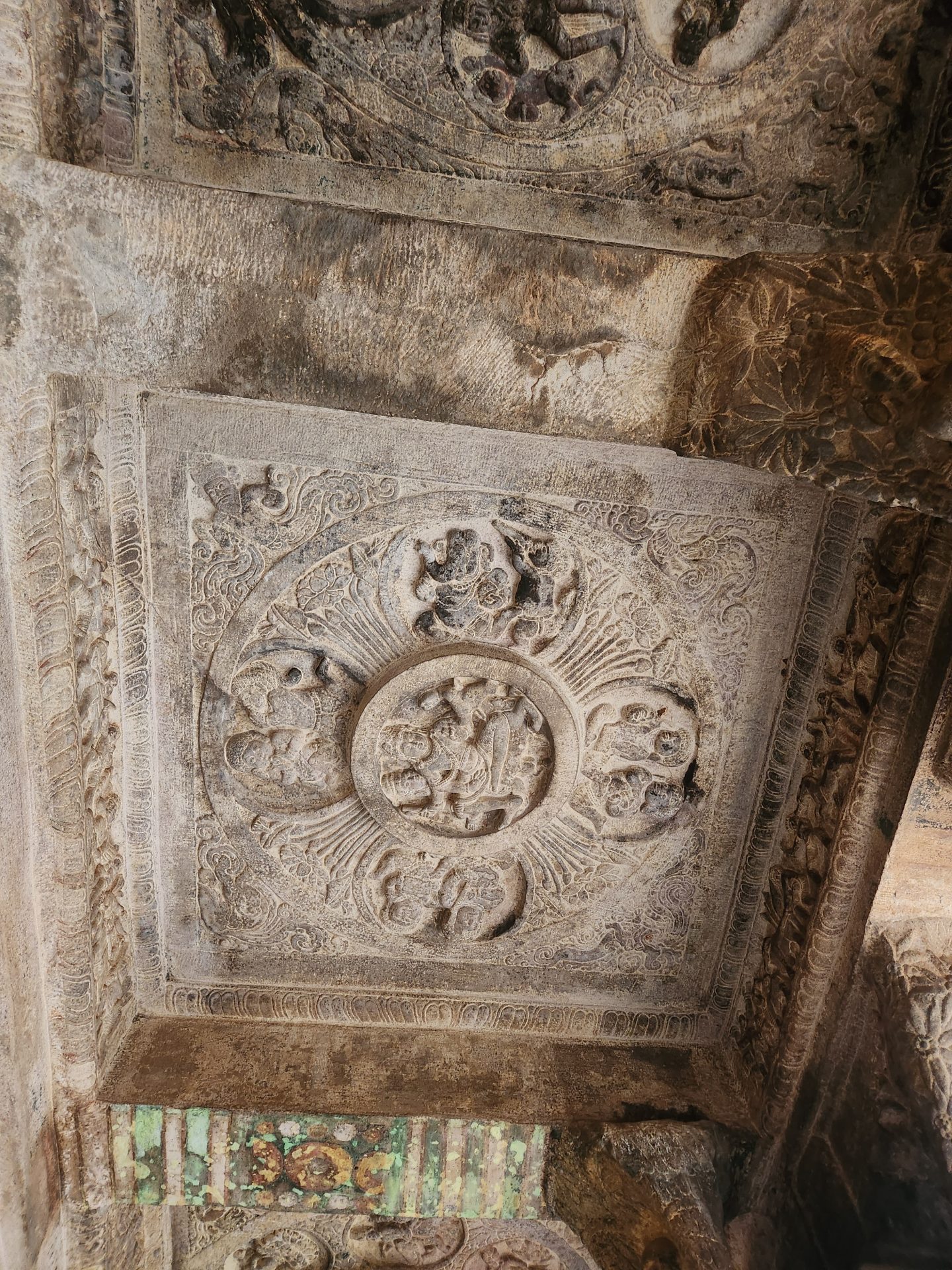
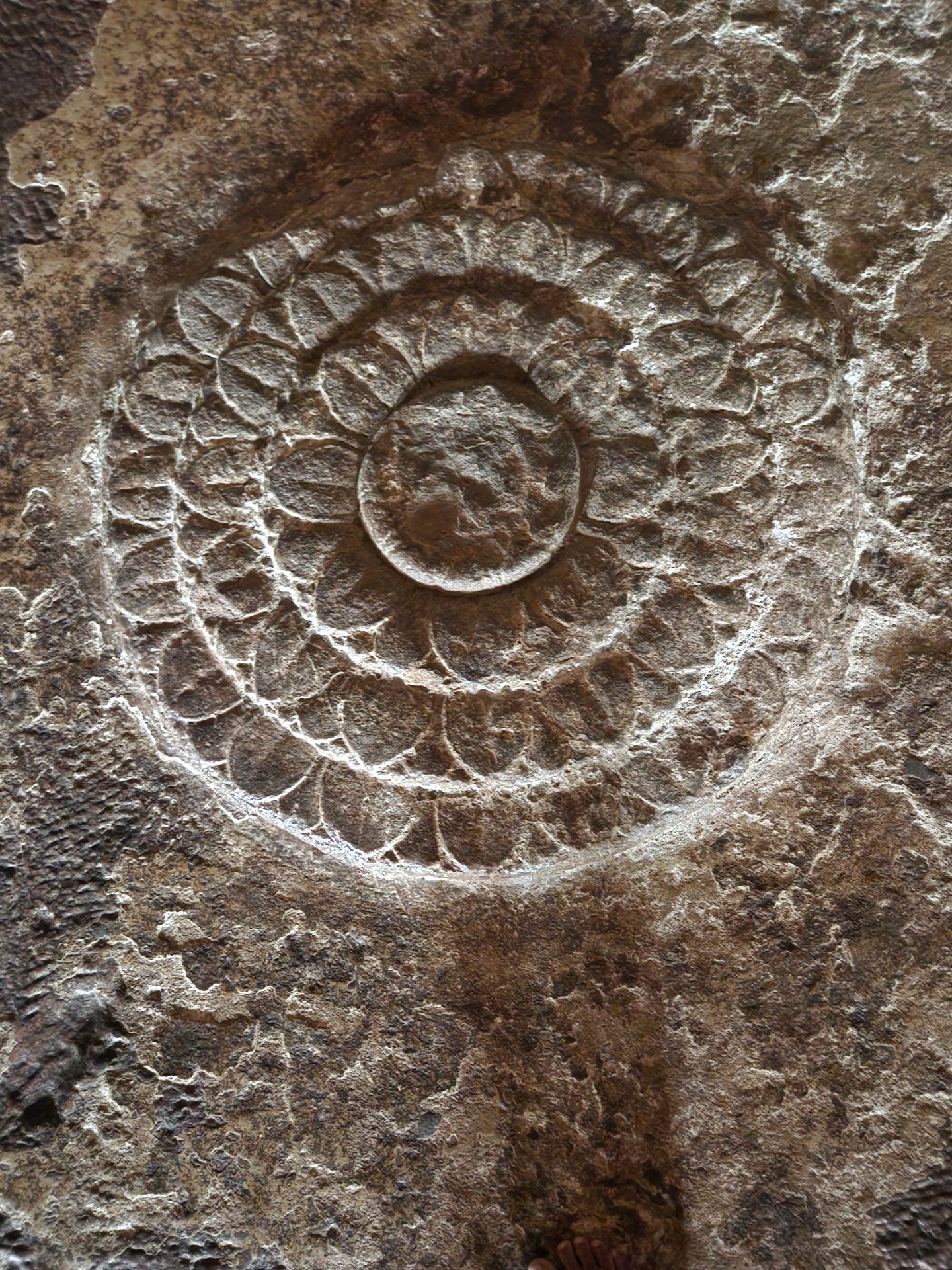
The ceilings have been adorned with some lovely bas relief carvings and what stands out is that of a wheel with sixteen fish spokes in a square frame while the end bays have stuccos of a flying couple and Lord Vishnu on Garuda.
CAVE 3: This is the largest Cave in the Badami Cave Complex amongst the 4 excavated. One has to climb a further 60 steps from Cave 2 to reach this level. The exact dating for the entire cave complex could perhaps be ascertained through some inscription found here where the shrine seems to have been dedicated to Lord Vishnu around 578 / 579 CE.
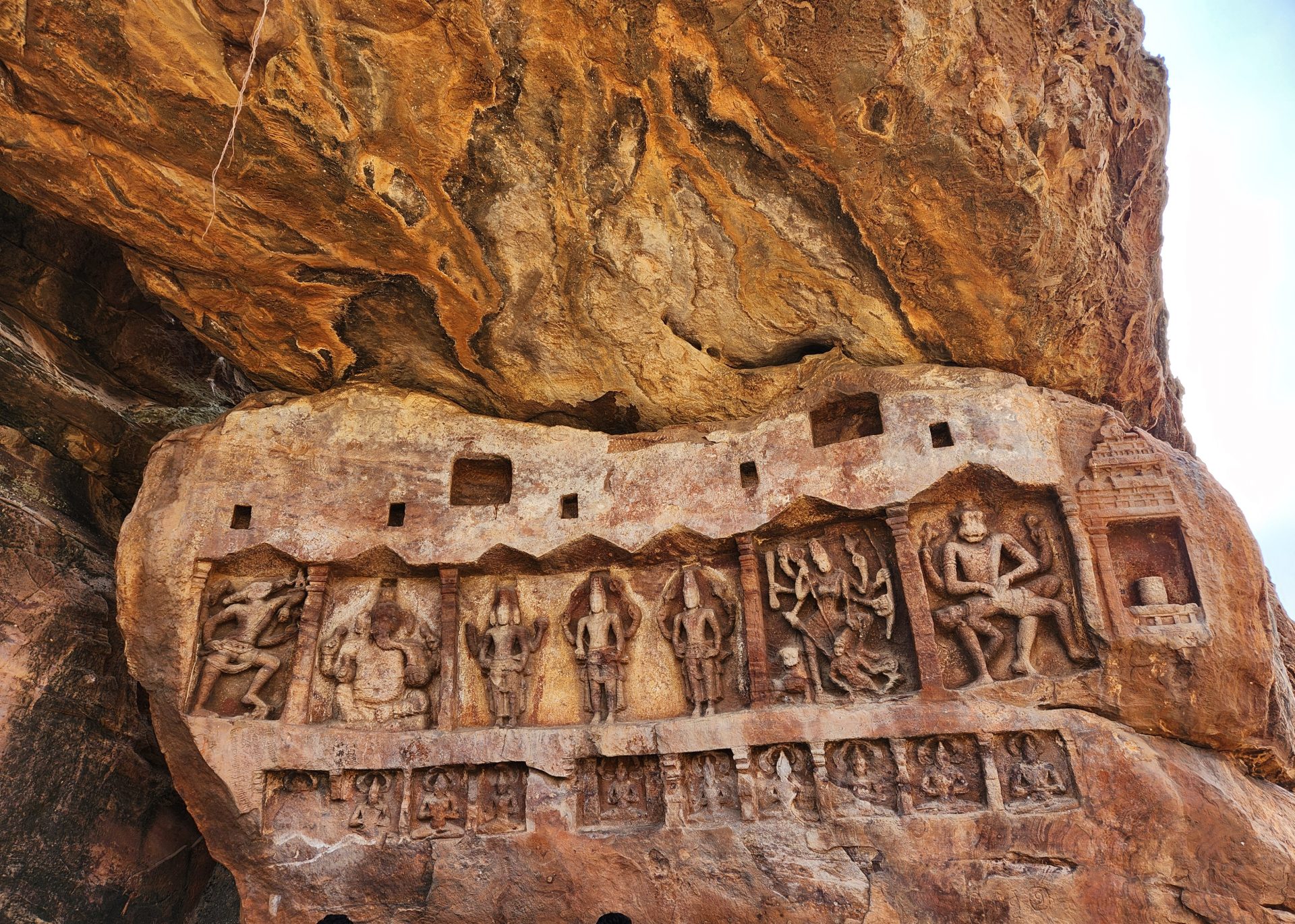
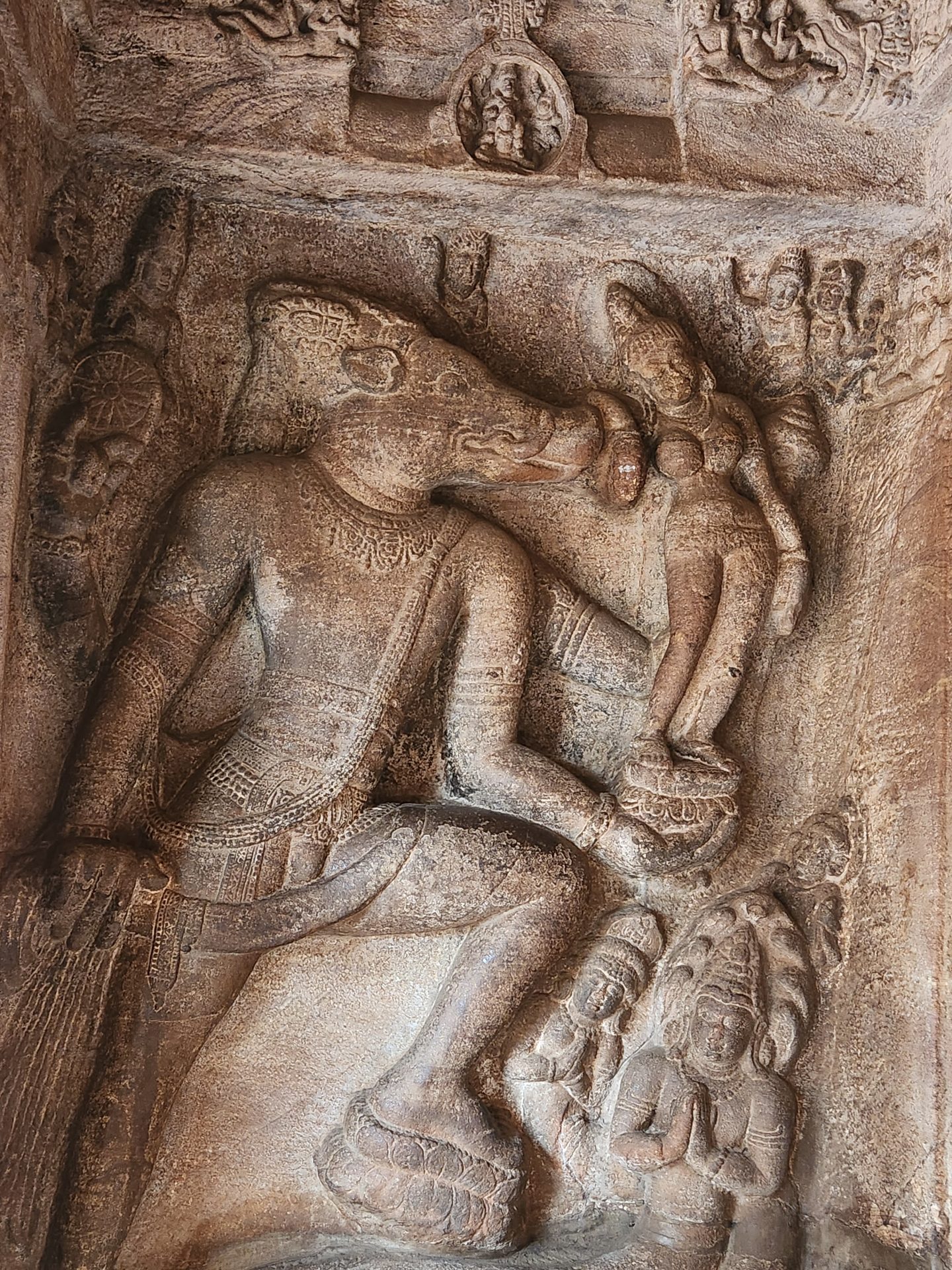
Here the Lord is manifested as Ananta and is found seated on a coiled serpent. A lovely carving of Lord Narasimha (an incarnation of Lord Vishnu and meaning half lion and half man) in a standing position, Varaha with Bhudevi and Harihara can be sighted here. Traces of faded and broken fresco paintings can be seen on the ceiling which dates the existence of this art to the early days.
CAVE 4 :The smallest amongst the 4 caves, this Cave is located further eastwards and is 10 feet lower than the Cave 3 level. Dedicated to revered figures of Jainism also known as Thirthankars, its believed that the Hindu Kings of the 7th century sponsored this cave which has carvings of Bahubali, Parshvanatha and Mahavira majorly while smaller carvings of other Tirthankars can also be seen.
While Parshvanatha cane seen in a standing posture with a 5 headed cobra hood atop him, Mahavira can be seen seated on a throne in a meditative posture. The cave temples are infested with bats and the smell around could be a bit un-bearing for some and it would be prudent to mask up while exploring these ancient caves.
SHOT FROM THE LEVEL OF THE 4TH CAVE
It took me around an hour to go around the caves and see and experience the grandeur around such intrinsically carved statues and stuccos.
The Mahakuta Temple Complex of Badami
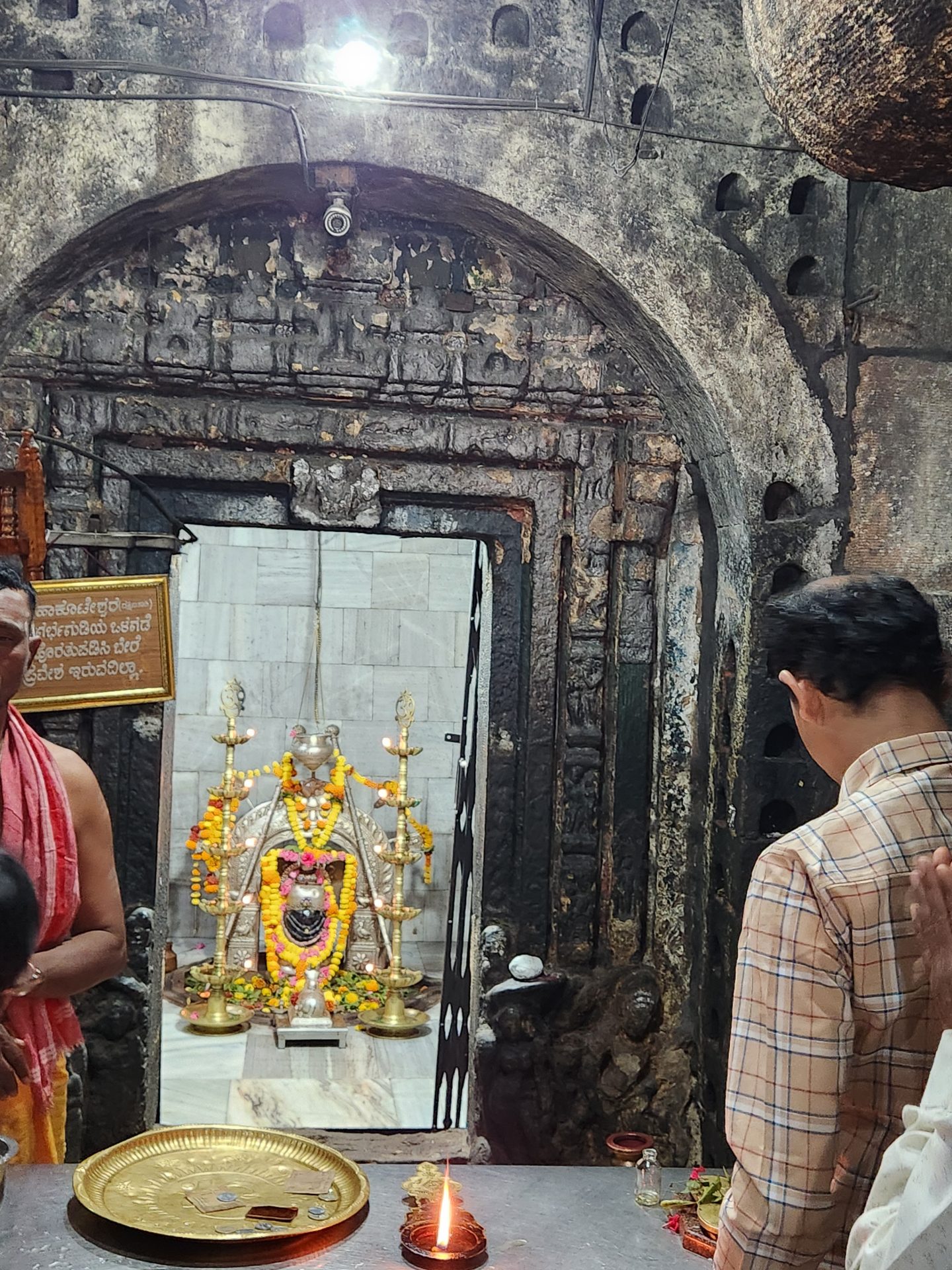
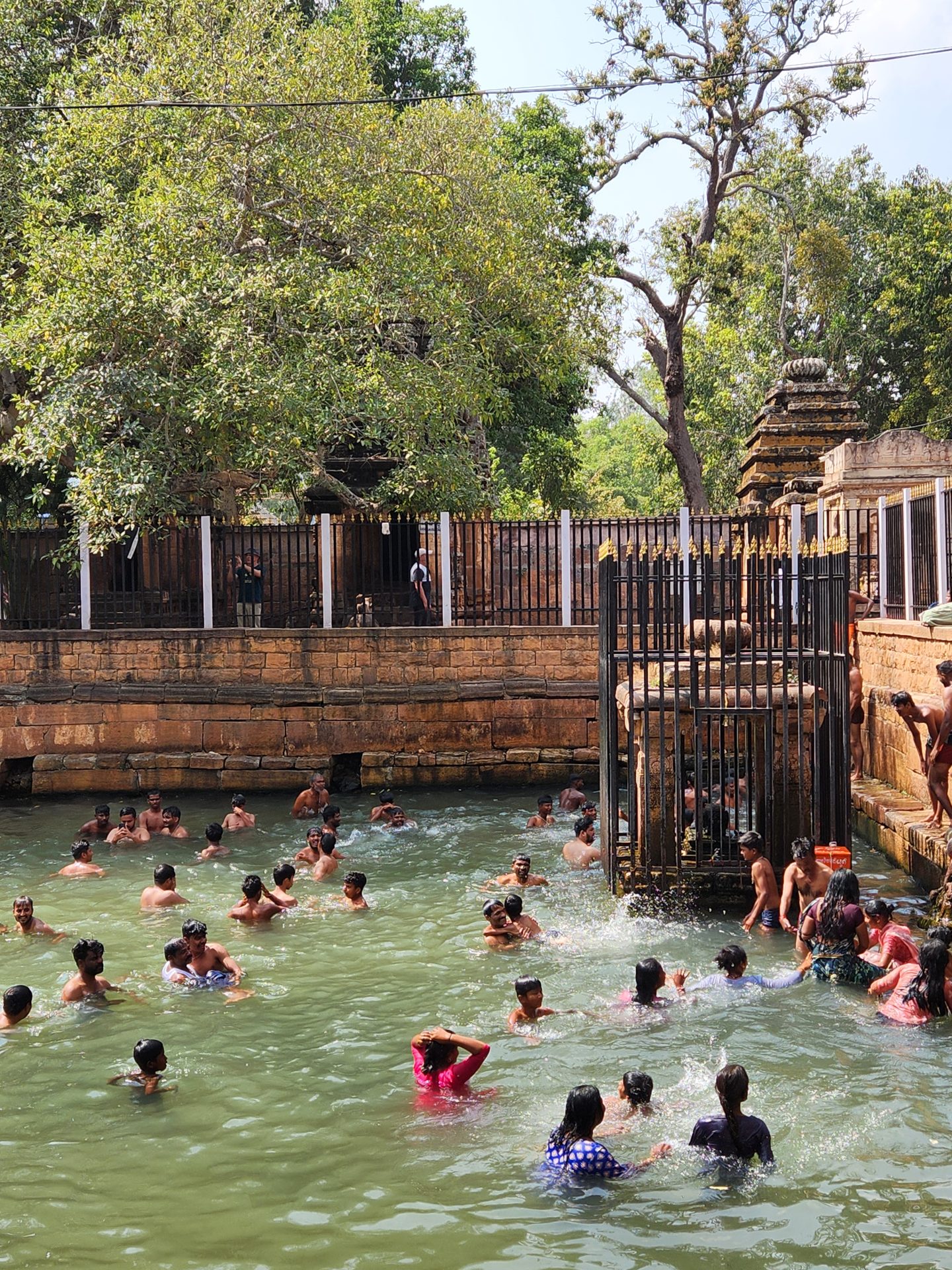
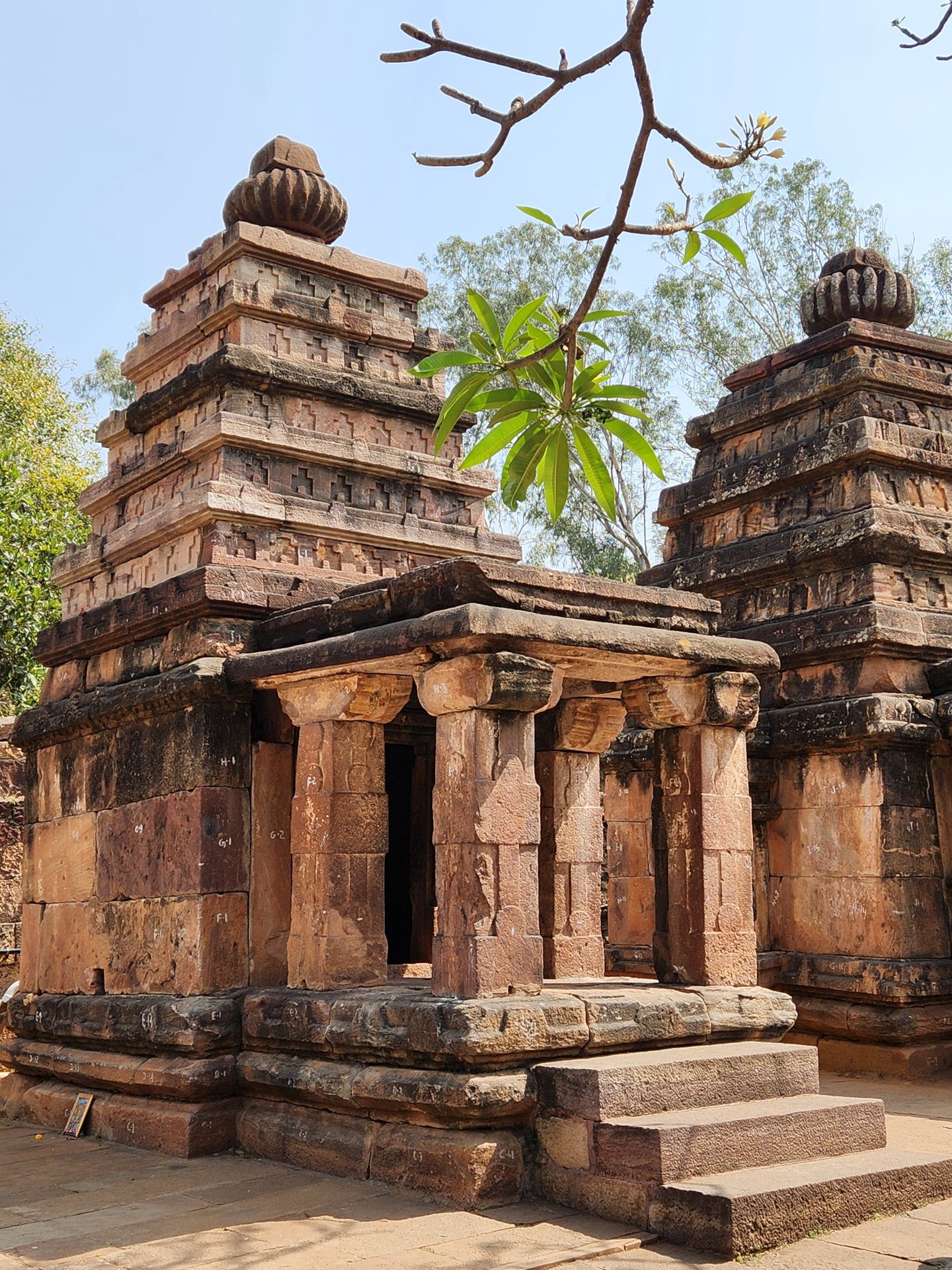
The last pit-stop before going to Pattadakkal was the Mahakua Group of temples, a 6th to 7th century Hindu temple dedicated to Lord Shiva. Built by the early Chalukya kings, this is a significant archaeological site featuring Dravidian and Nagara styles and is also known as Dakshina Kashi or Southern Kashi. There is a natural spring fed tank named Vishnu Pushkarini.
The Marvels of Pattadakal
Pattadakkal was only 11 kms from Mahakuta and we reached by around 5 in the evening.
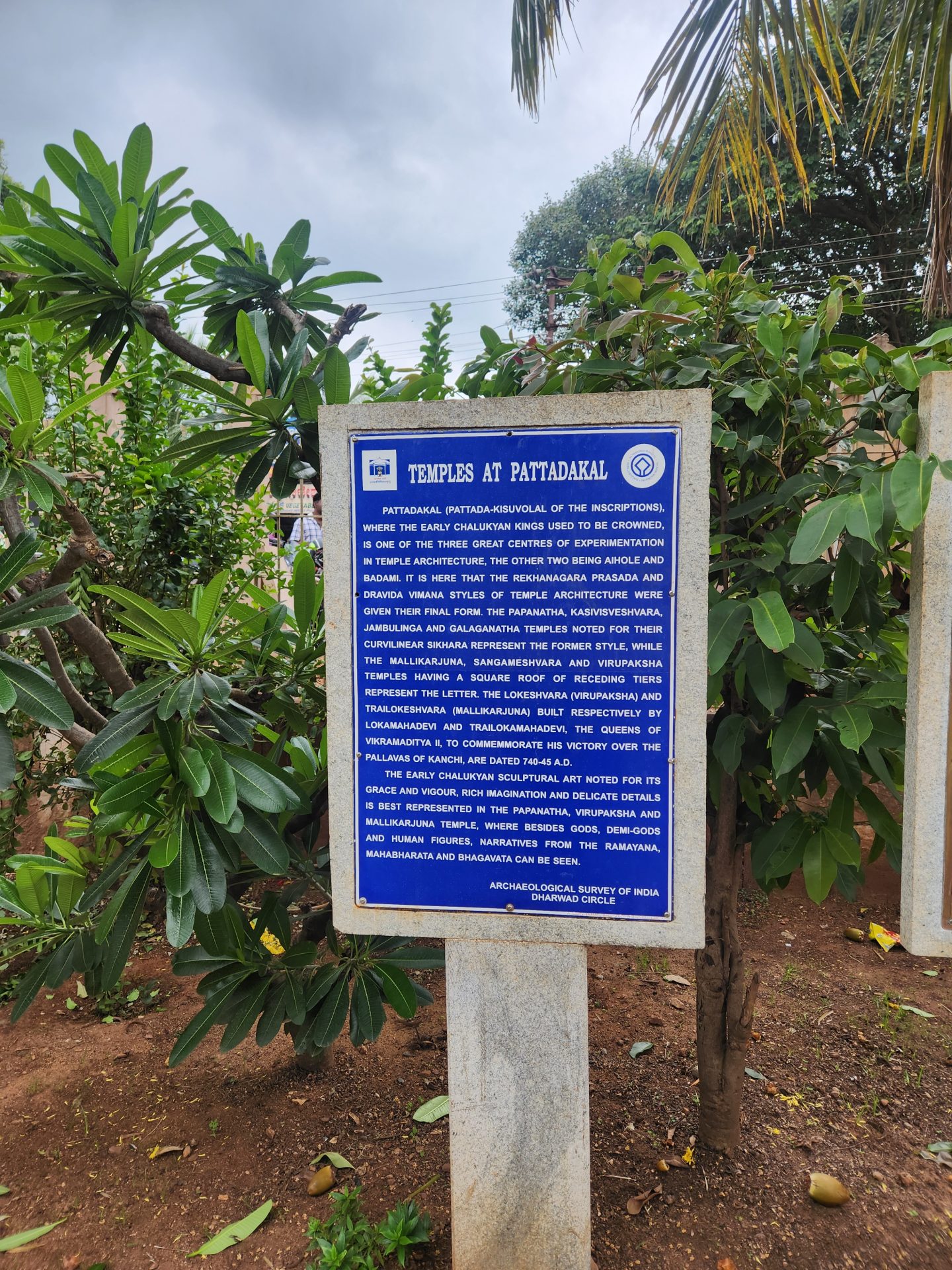
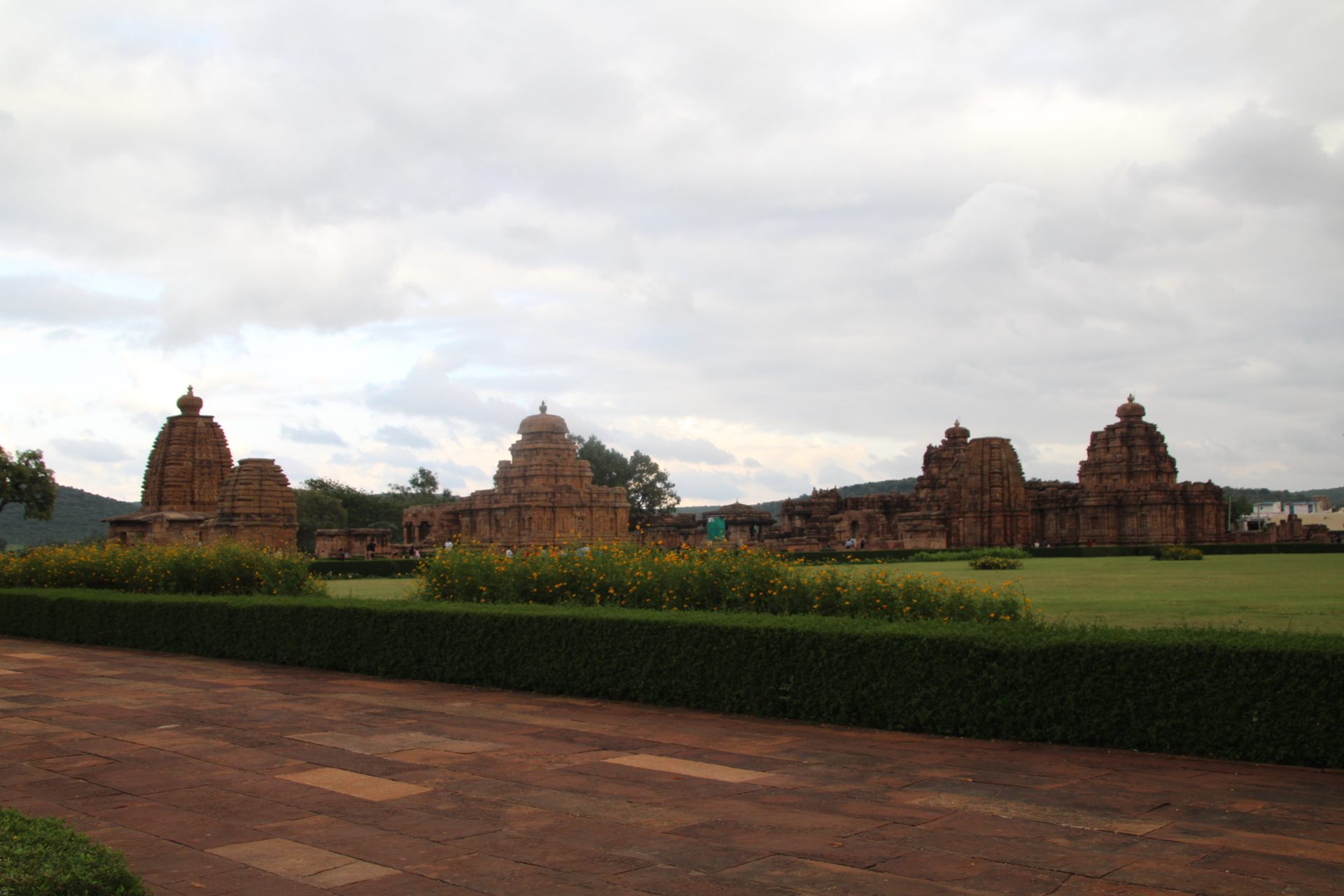
UNESCO describes these temples as “a harmonious blend of architectural forms from Northern and Southern India” and “an illustration of “eclectic art“. Located on the banks of the Malaprabha river, this temple complex is a testimony to the richness of Chalukyan architecture during the 7th and 8th century period.
A ticket for Rs.40/- needs to be purchased at the entrance.There are 10 temples within this vast complex out of which one is a Jain temple while the rest are dedicated to Lord Shiva. Except for one where the lord is worshipped, the rest are deserted though well maintained.
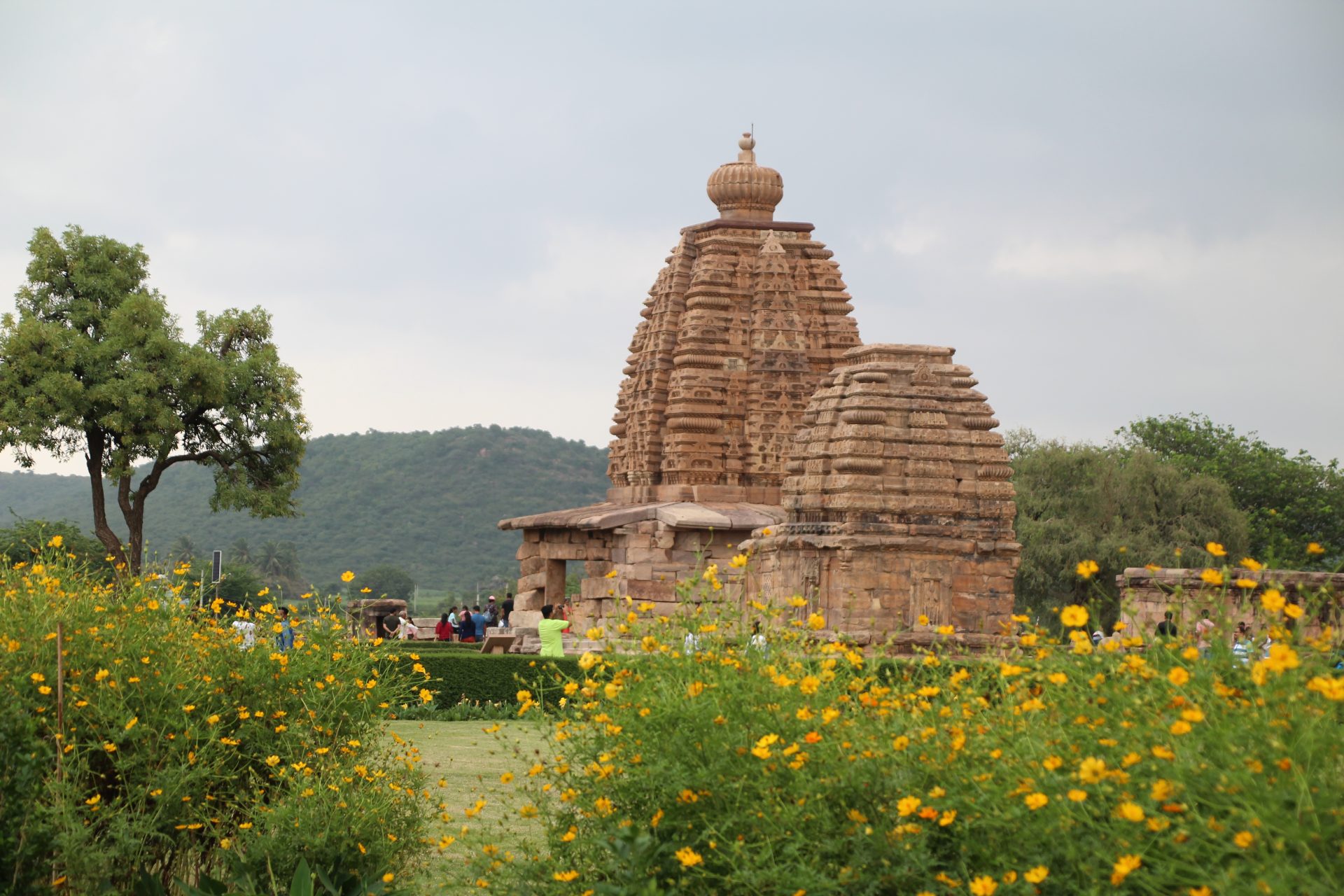
The huge expanse of greenery dotted with these intricately chiselled designs of temples and the lovely yellow flowers dotting the complex make for some beautiful viewing.
Site plan of the Pattadakal Temple Complex (Source : Encyclopaedia of Indian Temple Architecture, South India, Upper Dravidas desa, Early Phase, 1986, OUP, Delhi)
The KadasiddheshwaraTemple
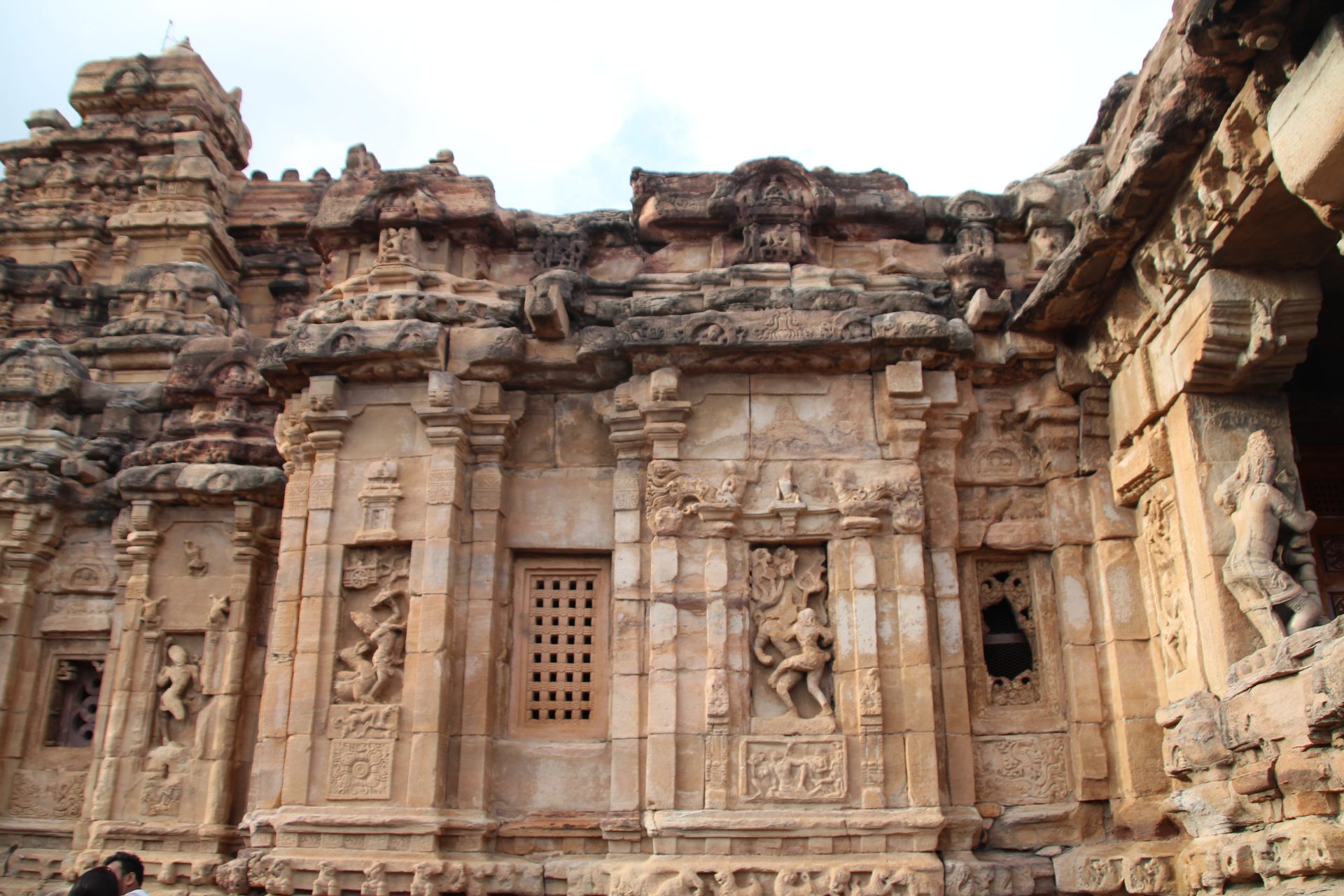
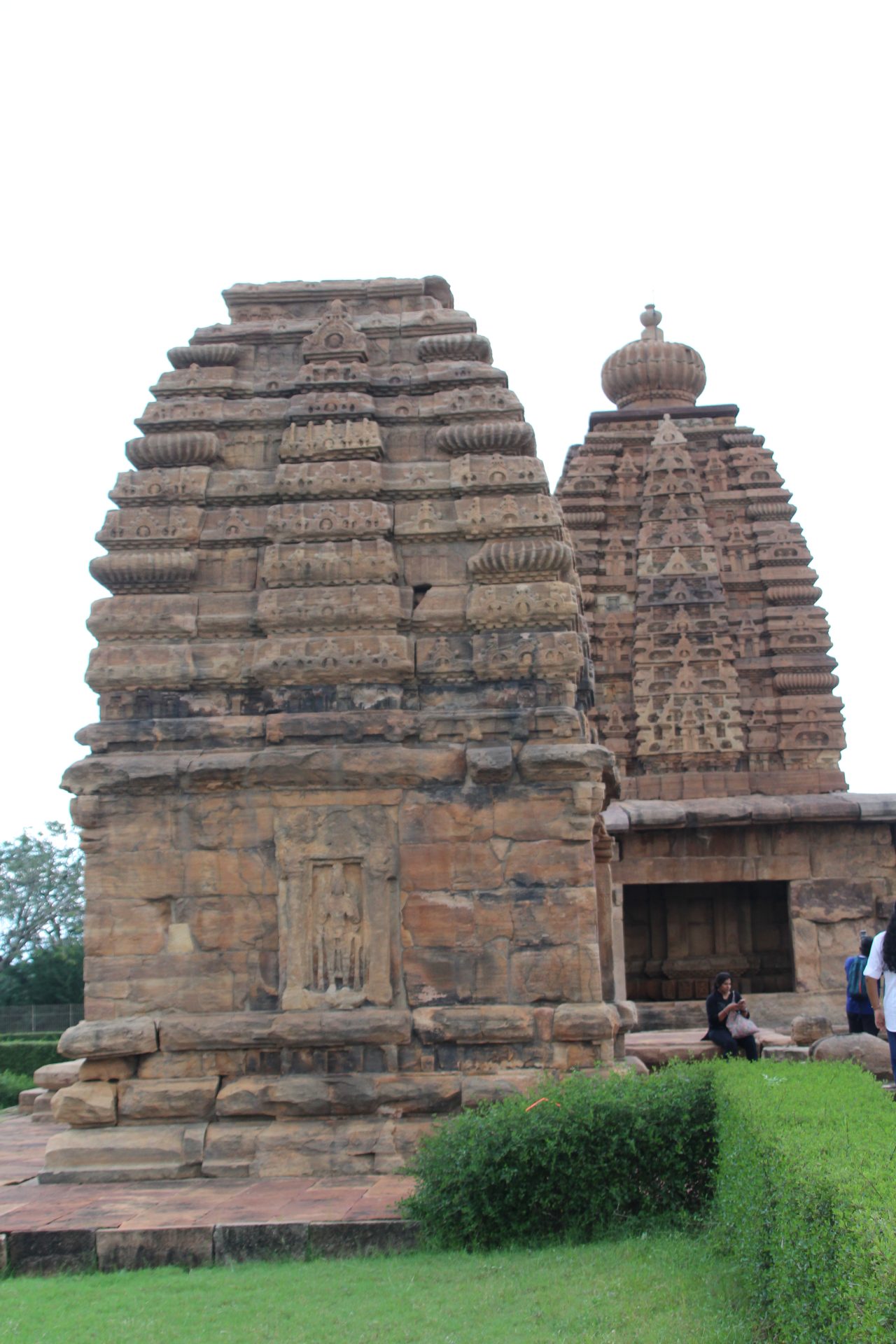
The 8th century Kadasiddeshwara temple and the Galaganatha shrine are amongst the first I came across. Built in Nagara style the Siddesvara temple has a square sanctuary with a linga housed in a hall without pillars. Built on an elevated platform, the temple has a fine sculpture of Lord Shiva and Parvati.
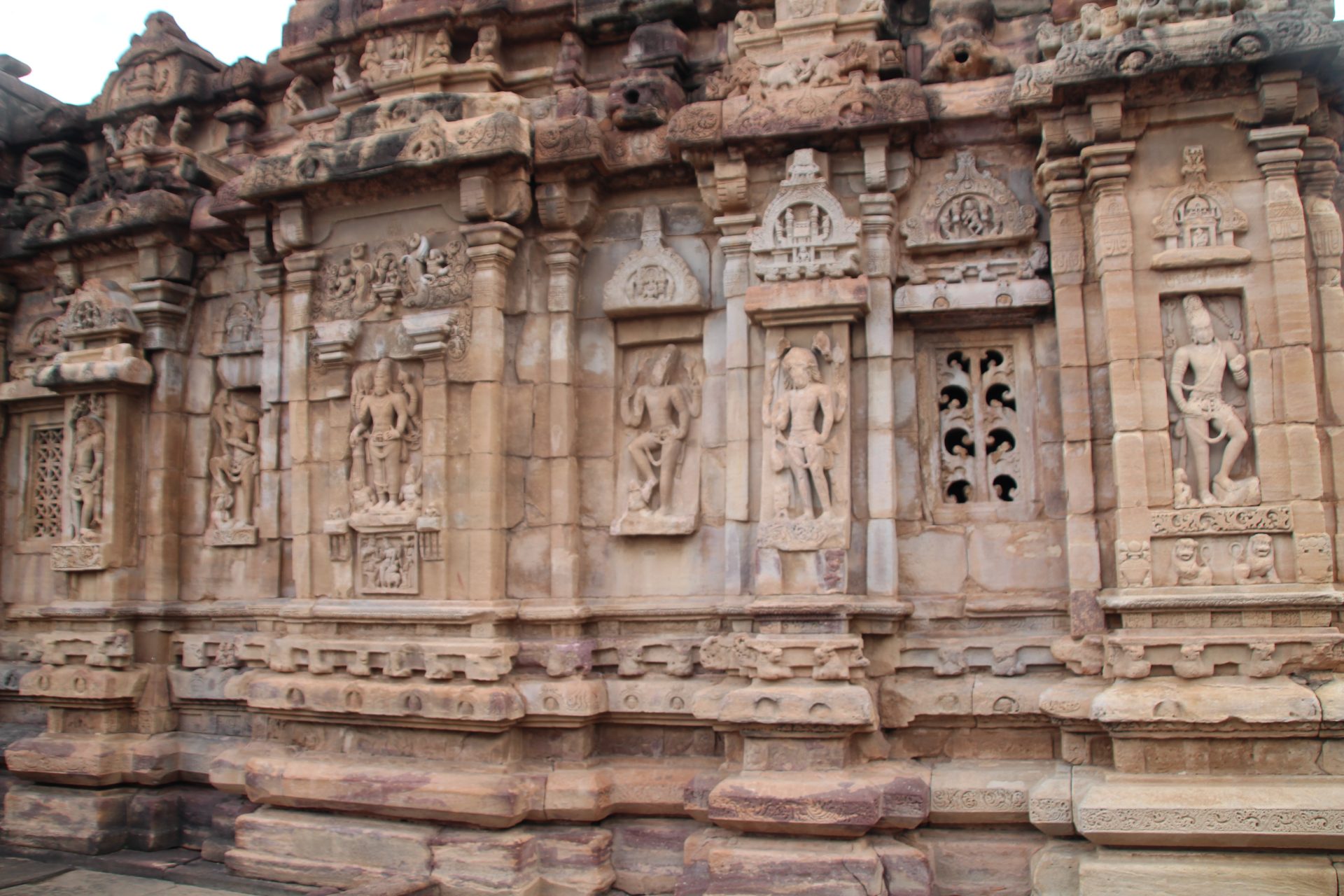
Nicely carved Dwarapalakas or guards adorn the entrance while the upper part of the outer wall has carvings of dwarf figures and birds. The outer wall of the sanctum has lovely sculptures of Shiva, Harihara and Ardhanareesvara.
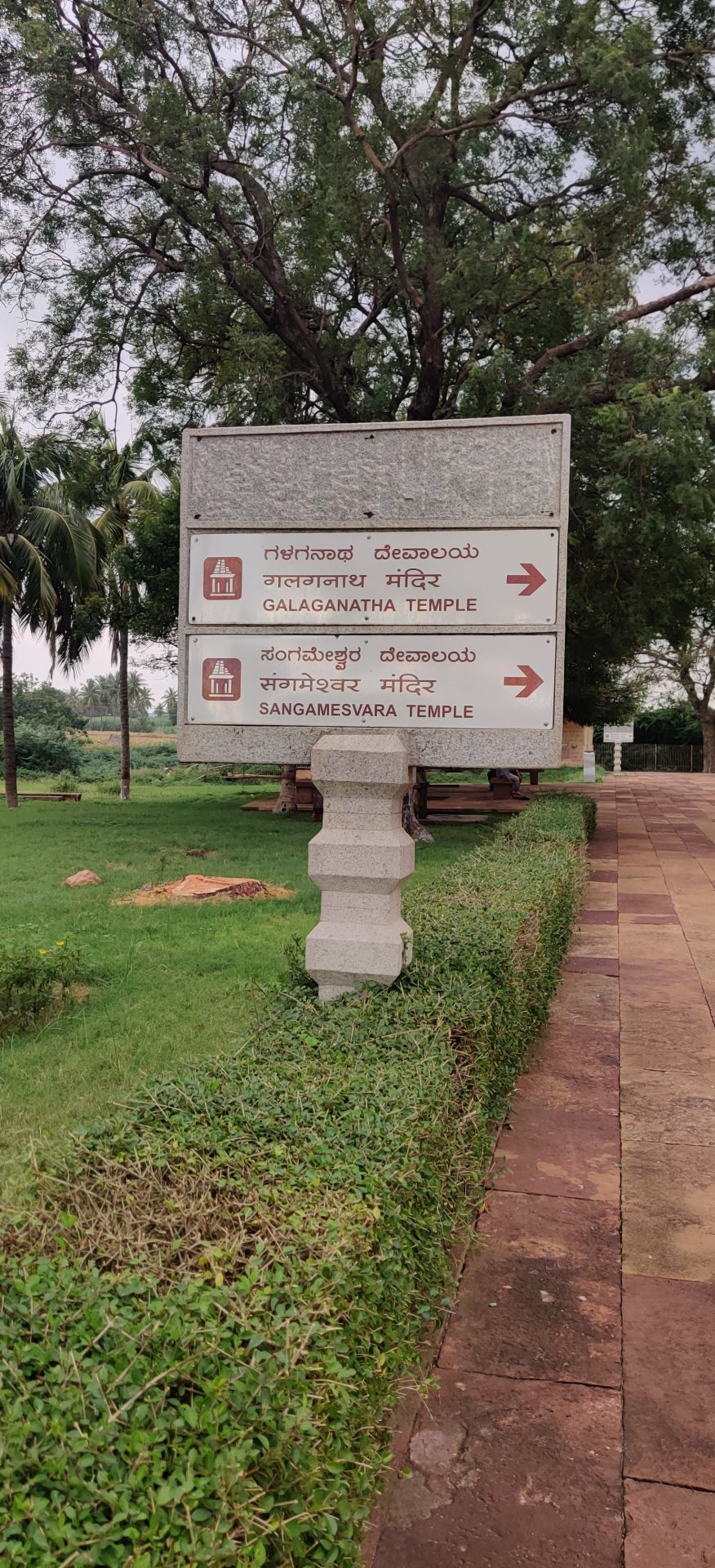
The Galaganatha Shrine
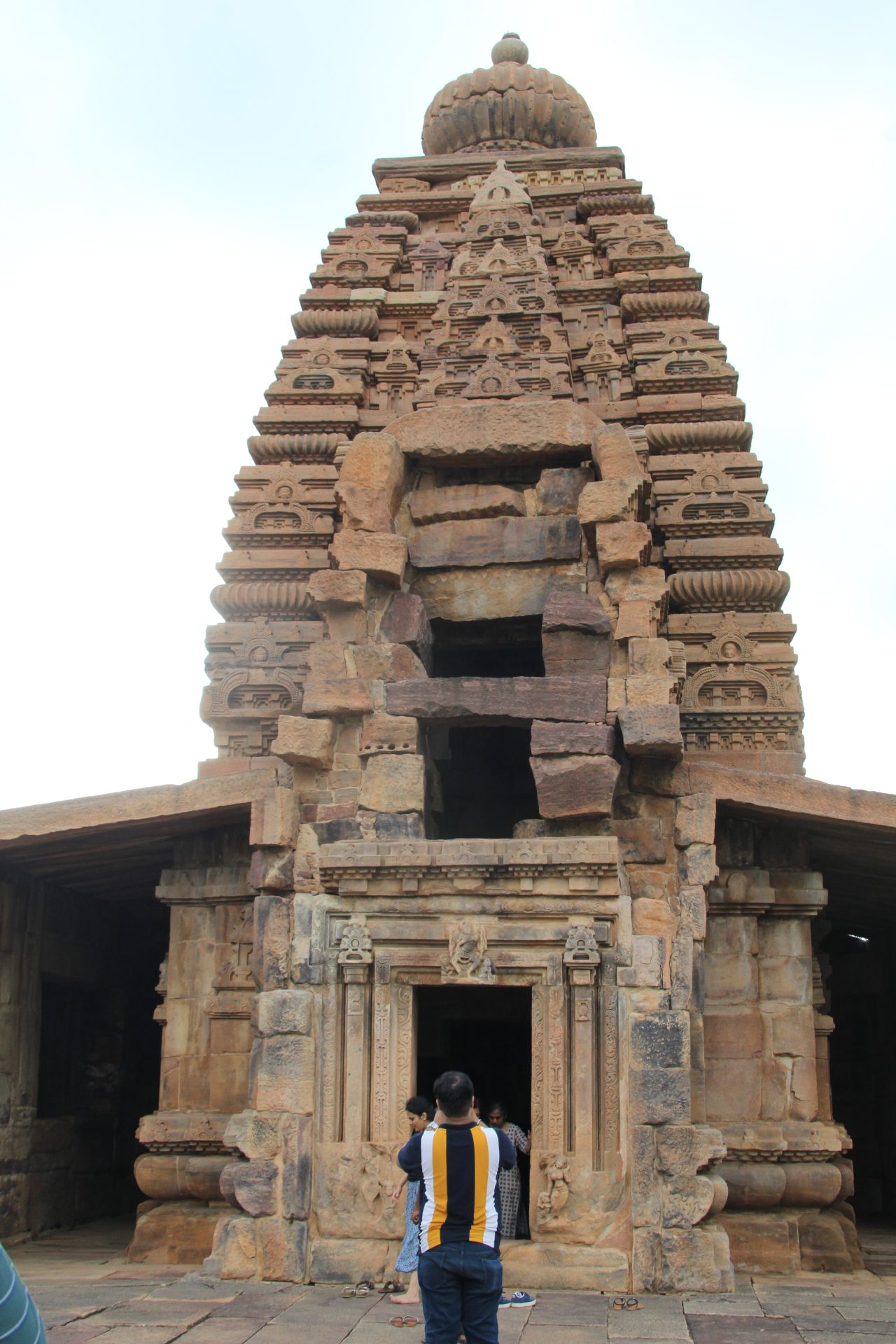
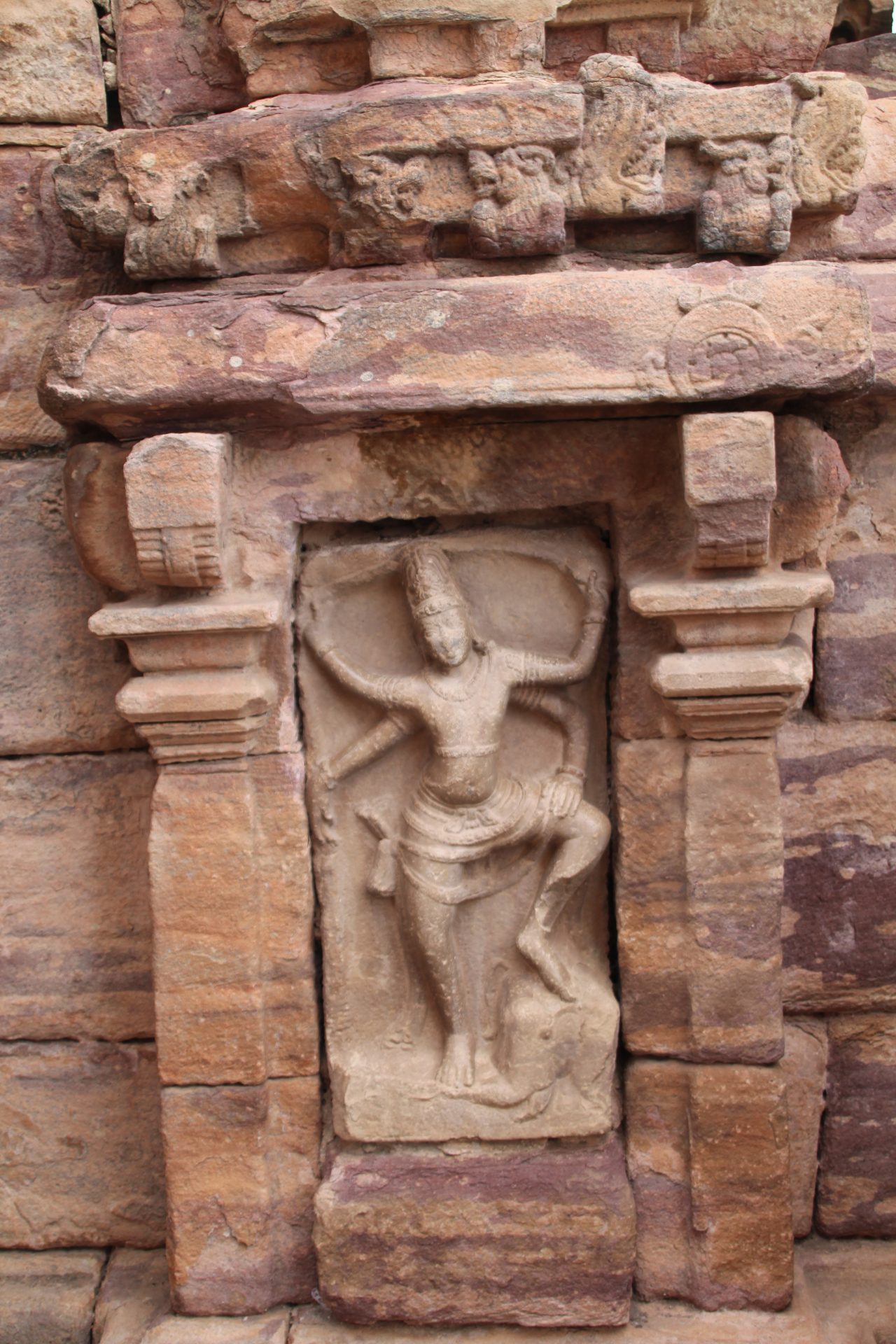
The Galaganatha Temple built in Nagara style has the statues of the river Goddesses Ganga and Yamuna at the entrance while there is a seated Nandi that faces the sanctum. The Southern part of the temple which is mostly in ruins has a carved slab depicting an 8 armed Lord Shiva wearing a garland of skulls as a sacred thread and killing the demon Andhaka
The Chandrasekhara Temple
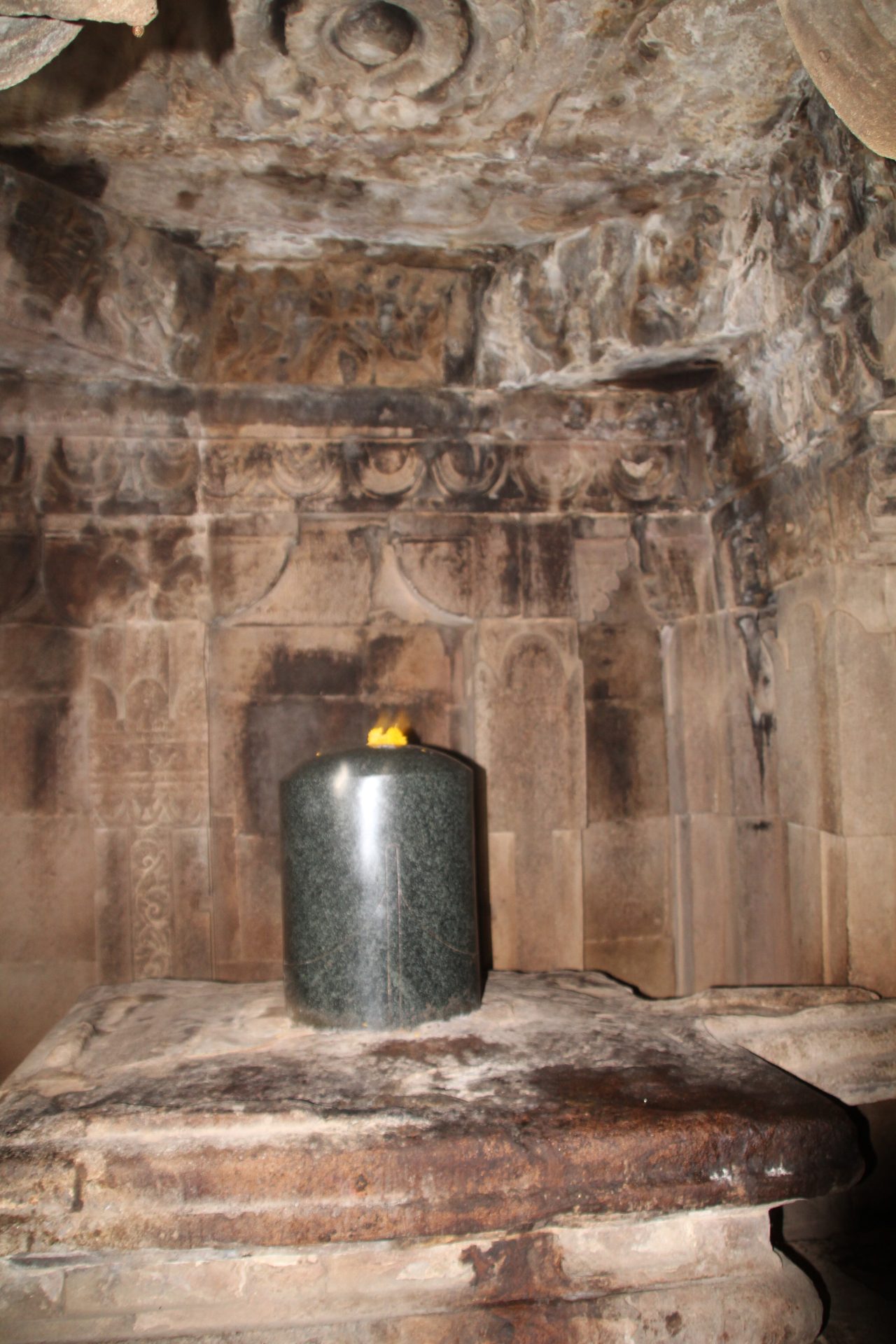
The Chandrasekhara temple built in 750 CE is a small temple with a flat top and without a tower. The walls of this temple lack ornamentation and extensive carvings. The temple is located between the Galaganatha Temple on the North and the Sangamesvara temple on the South. The temple has a small Garbha Griha with a Shiva Linga inside a closed hall while a statue of Nandi sits atop a platform to the East and facing the Linga.
The Jambulinga Temple
Adjacent to this lies the Jambulinga temple whose Shikara or Tower seems to have inspired the design of the tapered Shikaras found is most of the temples in Odhisa. The Makara Torana or the upper column at the entrance has a lovely carving of Shiva in the form of Nataraja. There appears to be a influence of North Indian temple architecture over here.
The Sangameshwara Temple
Located towards the right of this temple was the Sangameshwara Temple built in Dravidian style by King Vijayaditya around the 6th to 7th Century.
Believed to the oldest temple in Pattadakal, this was commissioned by the Chalukyan King Vijayaditya in the year 720 AD but never deemed to have been completed.
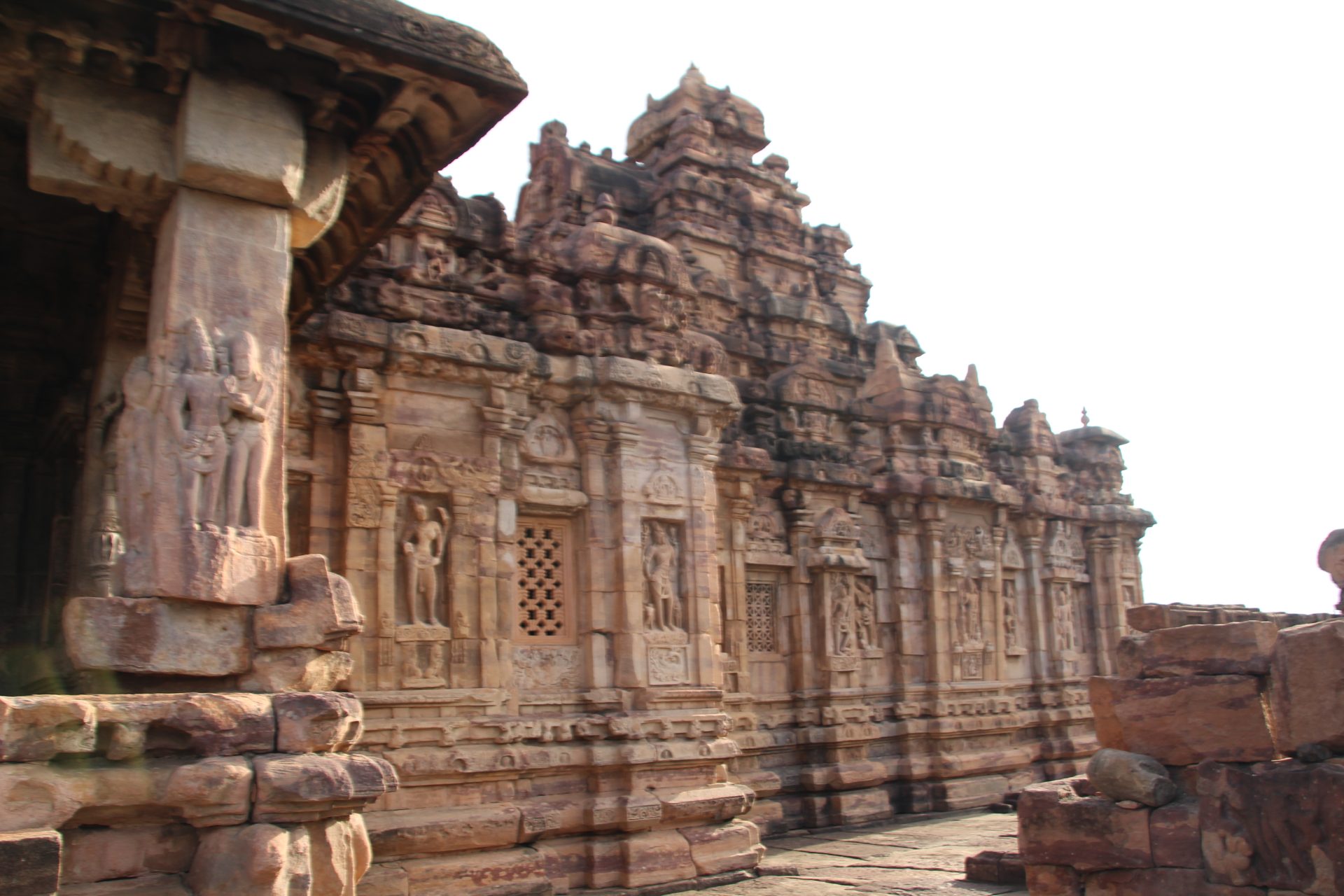
This temple is similar to the Virupaksha temple but smaller in size and dedicated to Lord Shiva. There is a 2 tiered Dravidian type Shikara built here which got adopted as a South Indian temple design. Flanked by 2 entrances in the North and South, the Rangamandapa of the temple is pretty large and supported by 20 pillars which are partially ruined.
2 subshrines for Ganesha and Mahishasura Mardhini can be seen inside while there is a ruined Nandi statue right in front of the temple.
The Virupaksha Temple
The Virupaksha temple adjoining this temple was built in 745 AD by Queen Loka Mahadevi, wife of King Vikramaditya II after he won over the Pallavas in his military campaigns in Kancheepuram.
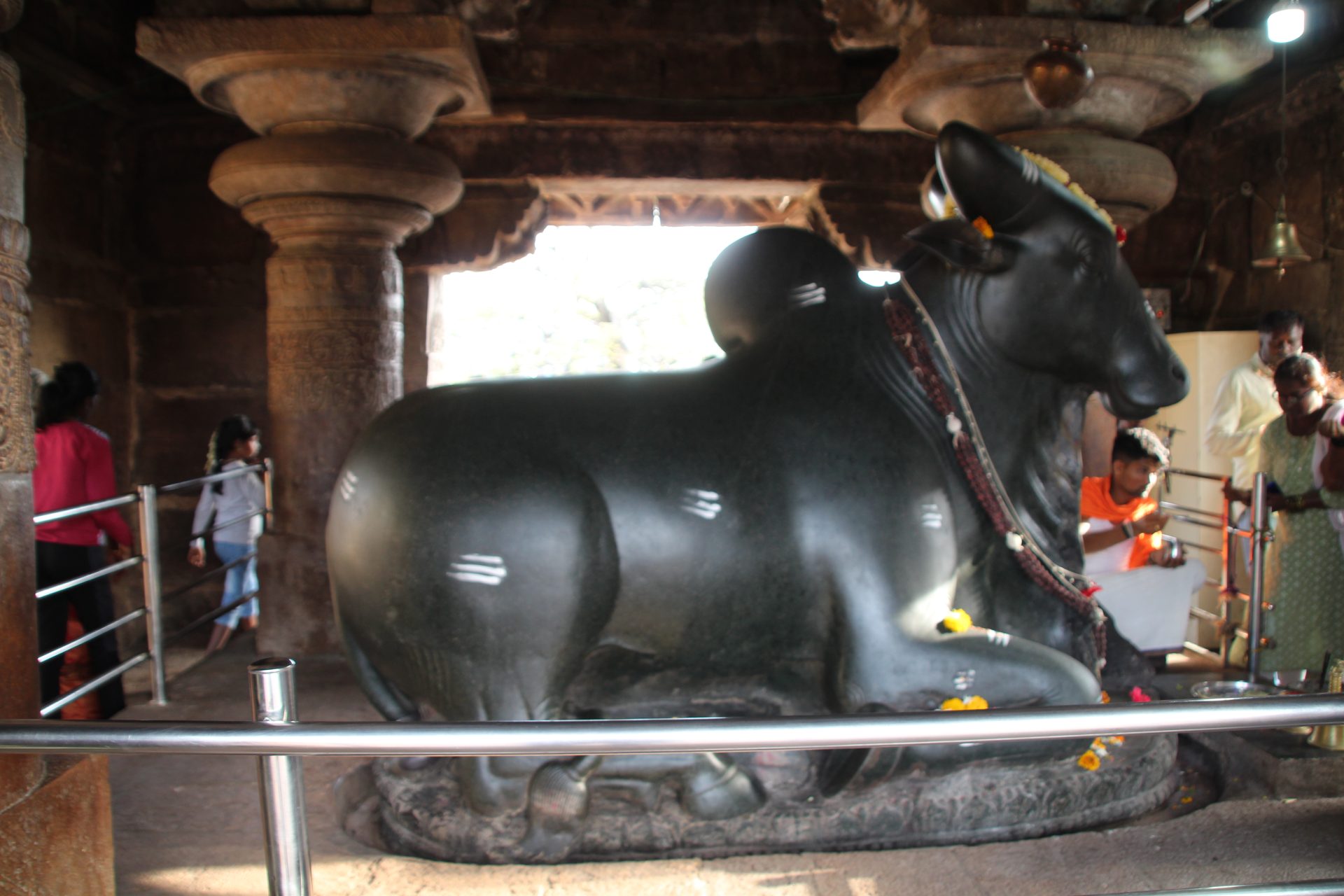
Built in Dravidian architecture, there is a vast quadrangle surrounded by small shrines with a massive gateway and a small gate at the rear. An impressive black monolithic statue of Nandi can be found on the front porch. Dedicated to Lord Shiva, this is the only functioning temple in this complex. The temple has 3 main Mandapas on the 3 sides with a large stone gateway on the East leading towards the Malaprabha river.
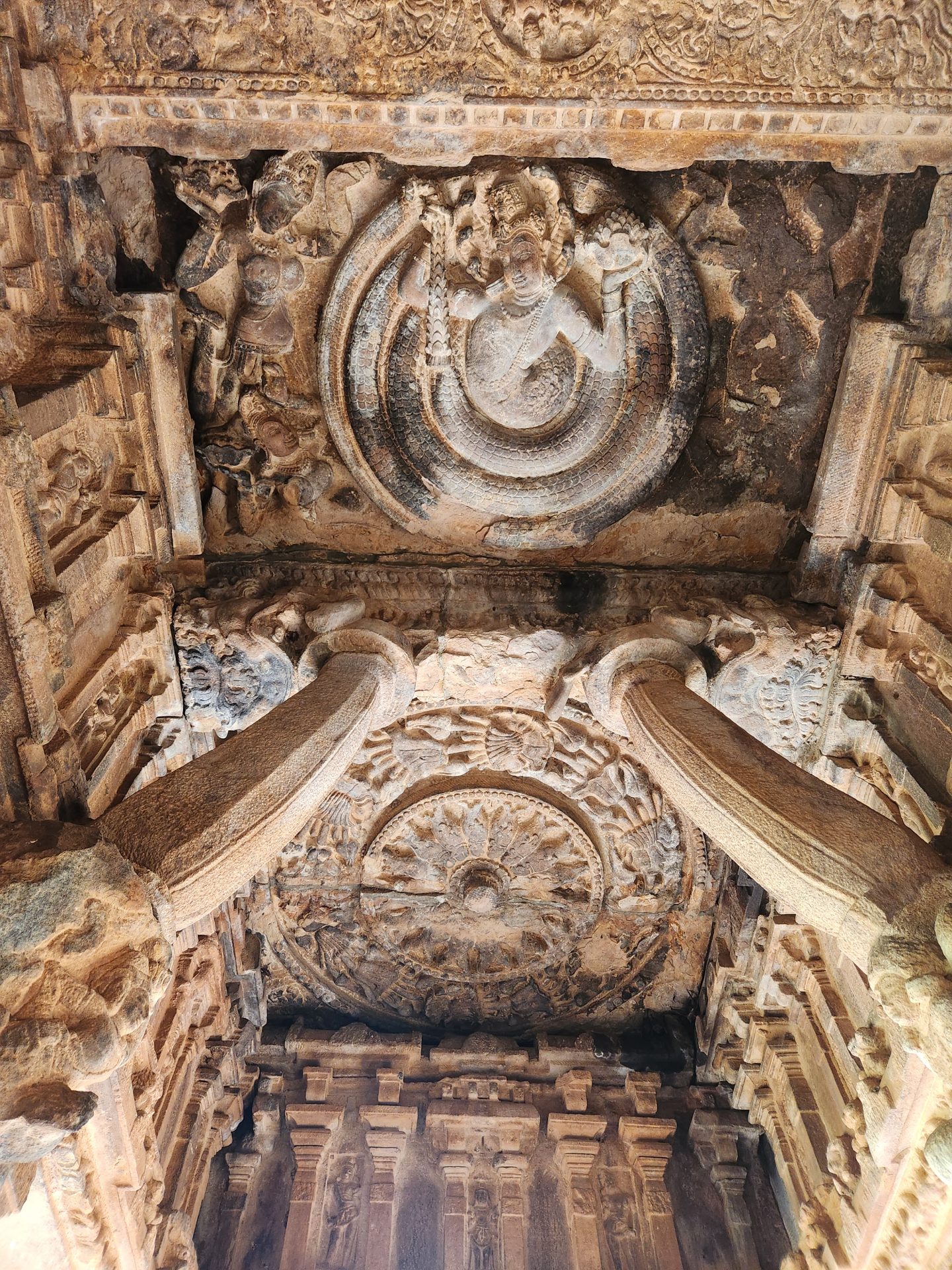
These and the pillars of the hall have lovely carvings of scenes from the epics Mahabharata and Ramayana as well as that of Gods and Goddesses. What stands out in this temple is the sculpture of God Surya atop a chariot with his consorts, carved on the ceiling apart from others of Ravana lifting Mount Kailash, Narasimha killing Hiranyakashpa, war scenes from Kurukshetra, Bheema’s fight with Duryodhana and Goddess Parvati’s marriage scenes.
While the ceiling of the mukhamadapa has a carving of Lord Brahma sitting on a lotus, the outer walls have carvings of Gajendra Moksha, Hanuman carrying the Sanjeevani hill and many more.
The Mallikarjuna Temple
The Trilokeshwara temple, now known as the Mallikarjuna temple adjacent to the Virupaksha temple was built by another queen of Vikramaditya II, Trilokamahadevi. The wall panels of this temple also depict stories from the Ramayana and the Mahabharat. Built in 745 AD in the Dravidian style, this temple has 3 Mukhamandapas on 3 sides and a partially collapsed Nandi mandapa in front of the temple.
The Kasi Vishwanath Temple
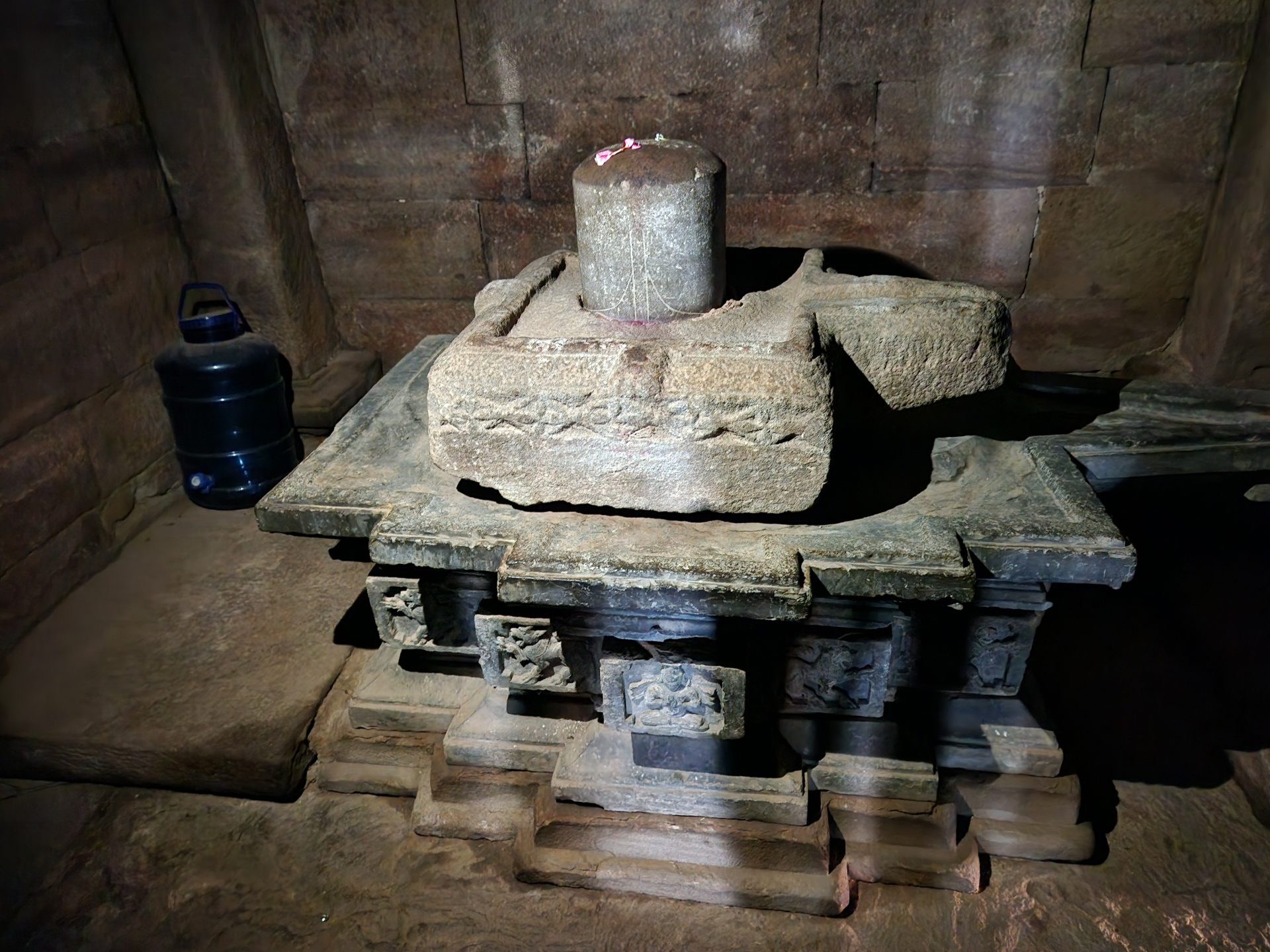
Lying adjacent to this temple was the Kasi Vishwanath temple, believed to the last Hindu temple built here. Most parts of the temple have collapsed except for the Sanctum and the Antarala (the antechamber between the shrine and the mandapa). Two pillars support the temple and a Shivalinga made out of black stone can be seen here.
A few random sightings
Made my way out of the temple complex by around 6.15 PM. A long drive back to Hospet lay ahead.
Based on the cab driver’s recommendation, we stopped at Amingad enroute to buy Karadantu, a local sweet prepared using edible gum, jaggery or and dry fruits. The taste definitely did not disappoint.
While the initial plan was to visit Tungabhadra dam in the evening on the way back, it was almost 8.45 pm when we reached the outskirts of Hospete and the entry to the dam closes by 7.30 pm.
Decided to park it for the following day after completing the early morning trek to Matanga Hill and the visit to the Anjaneyadri temple @ Hampi.
Reached the hotel by around 9.15 PM, finished an early dinner and tucked in early as I had a couple of early back to back treks/climbs, the next day.