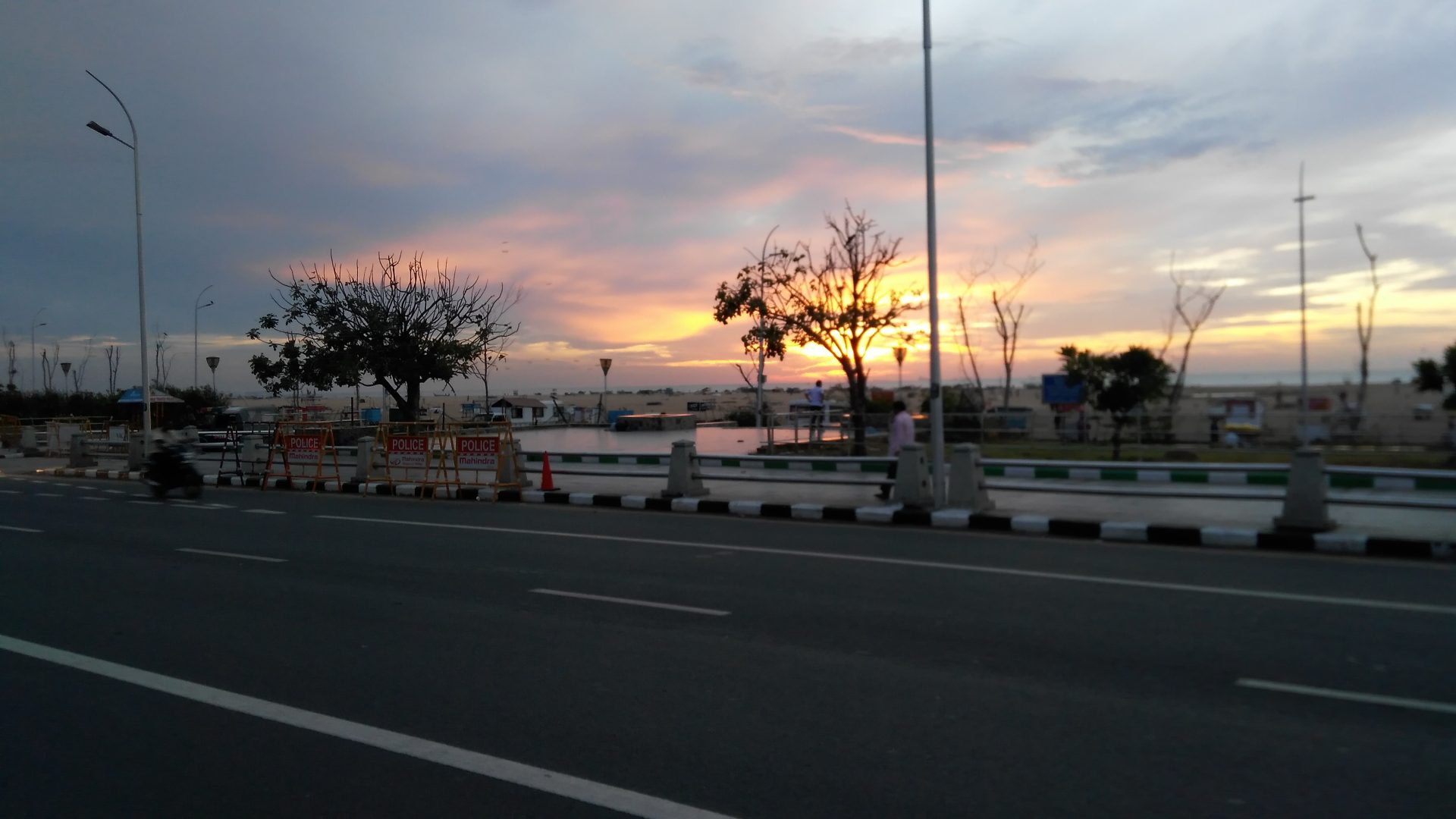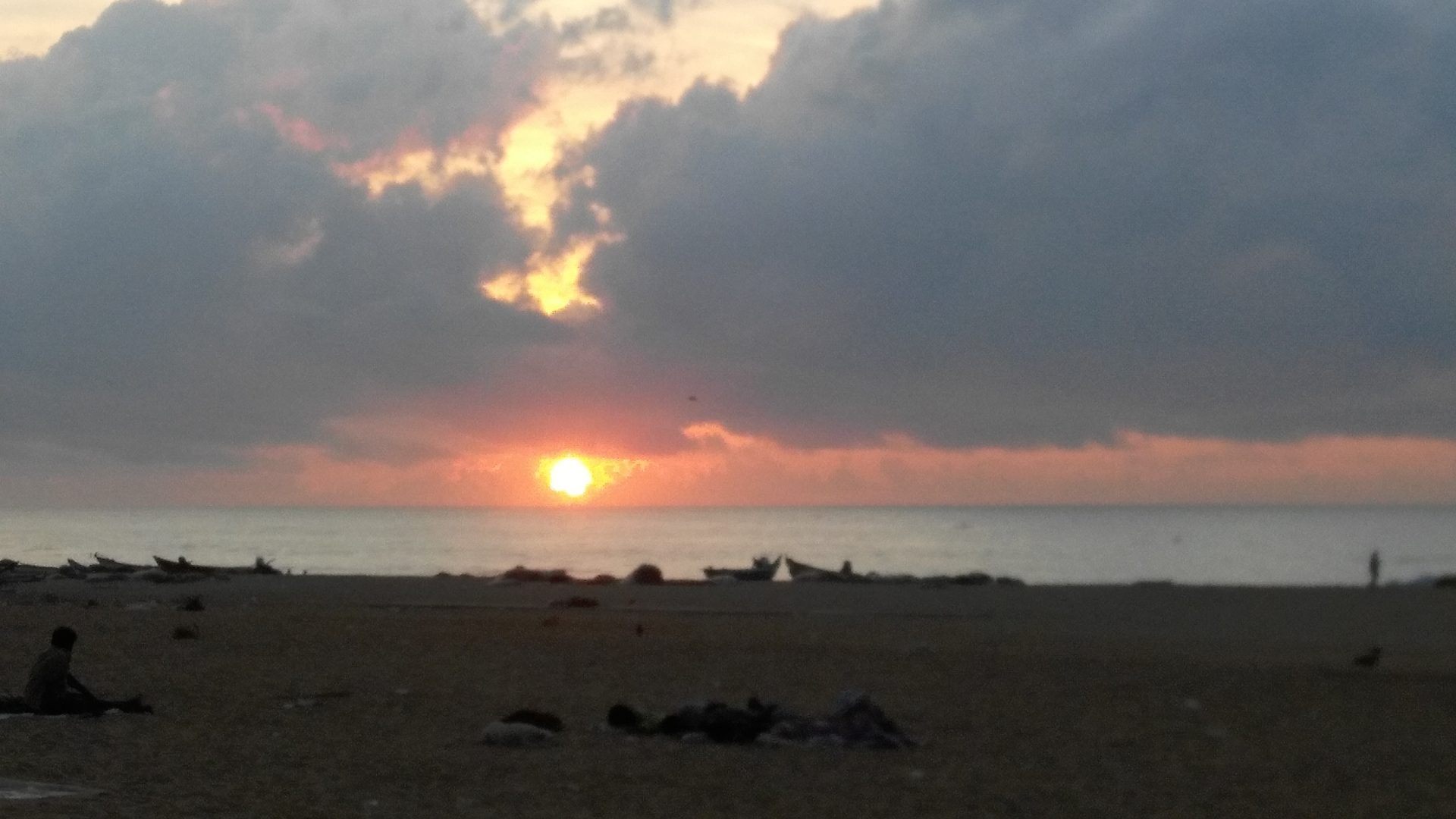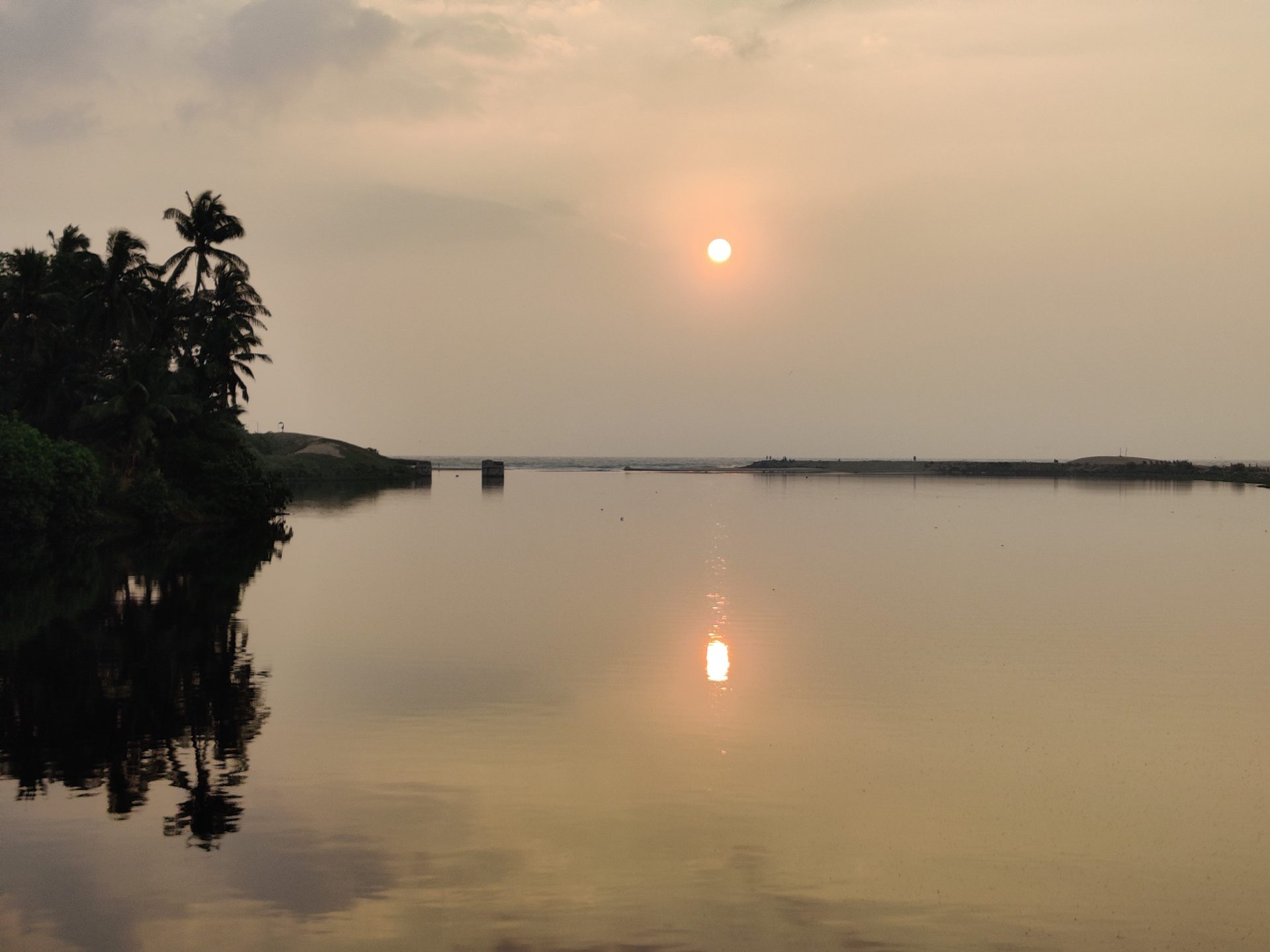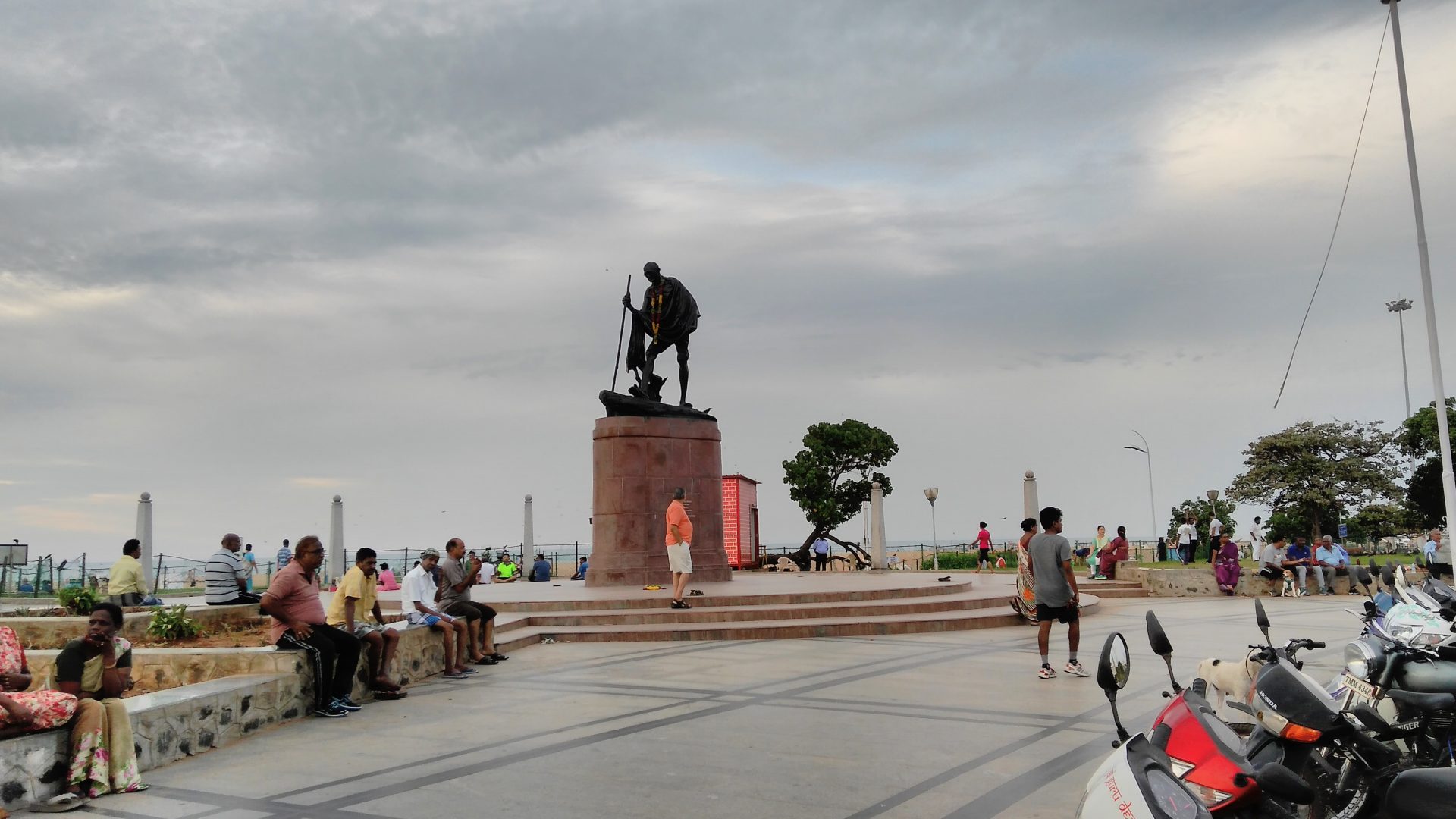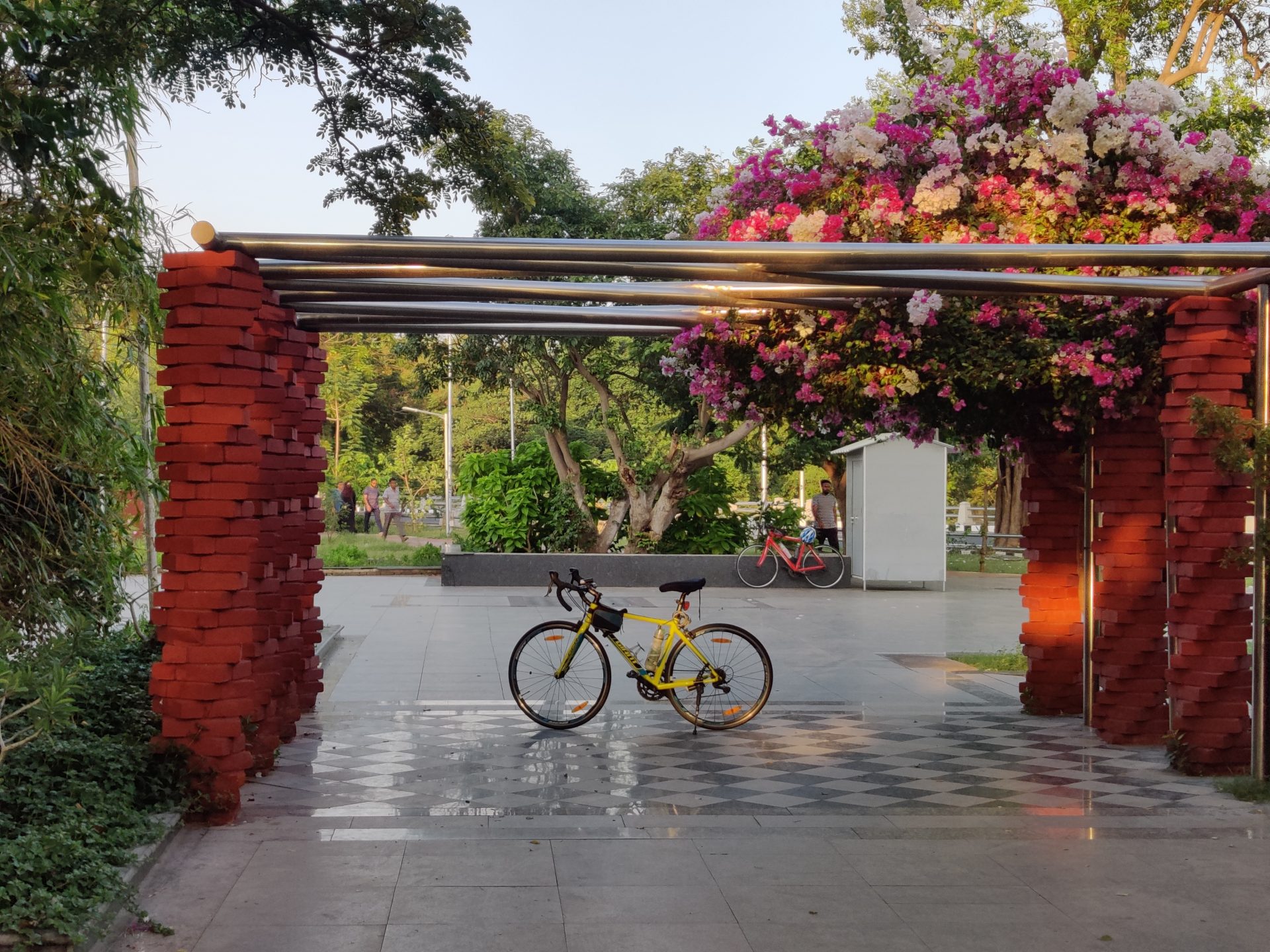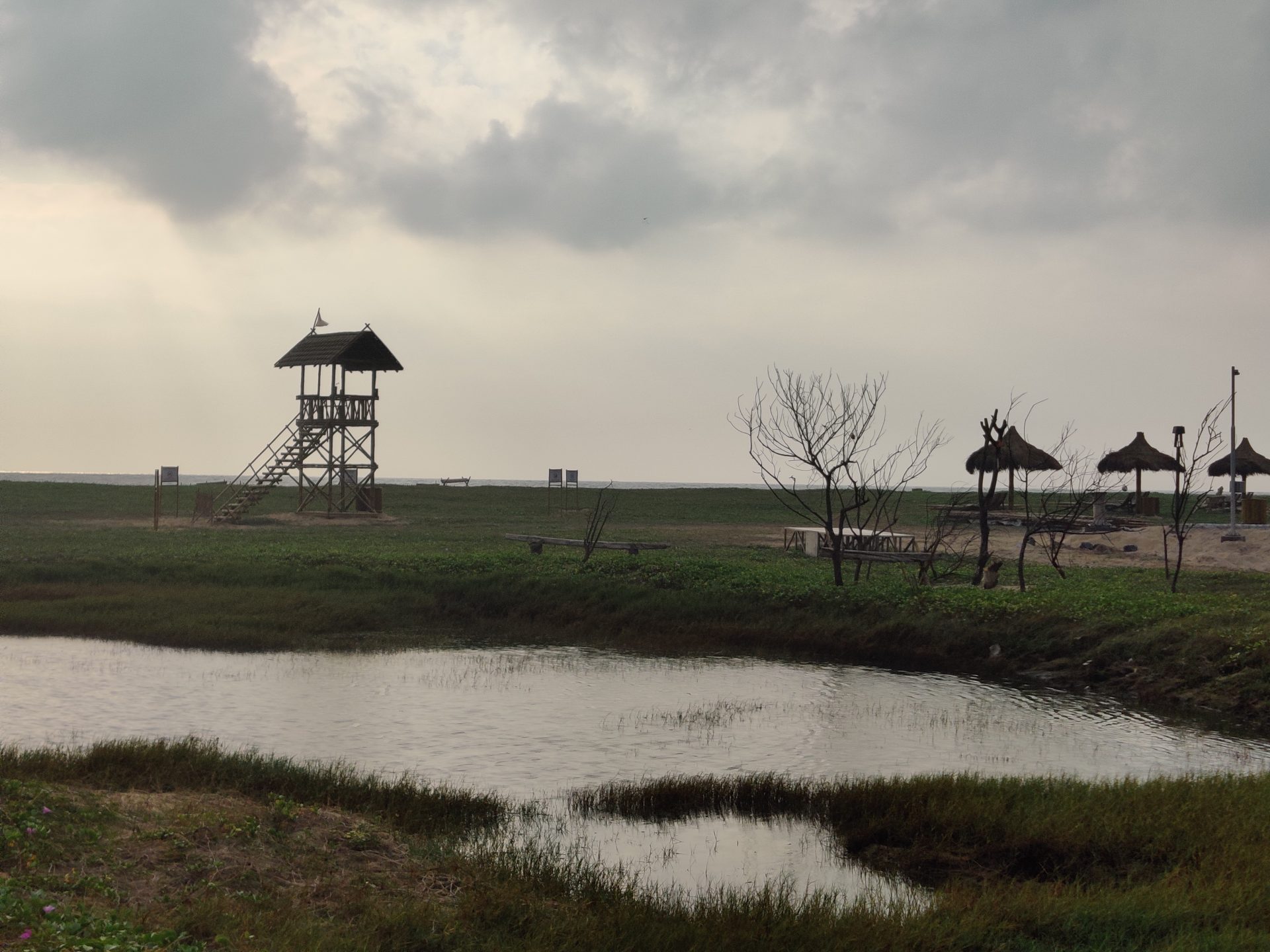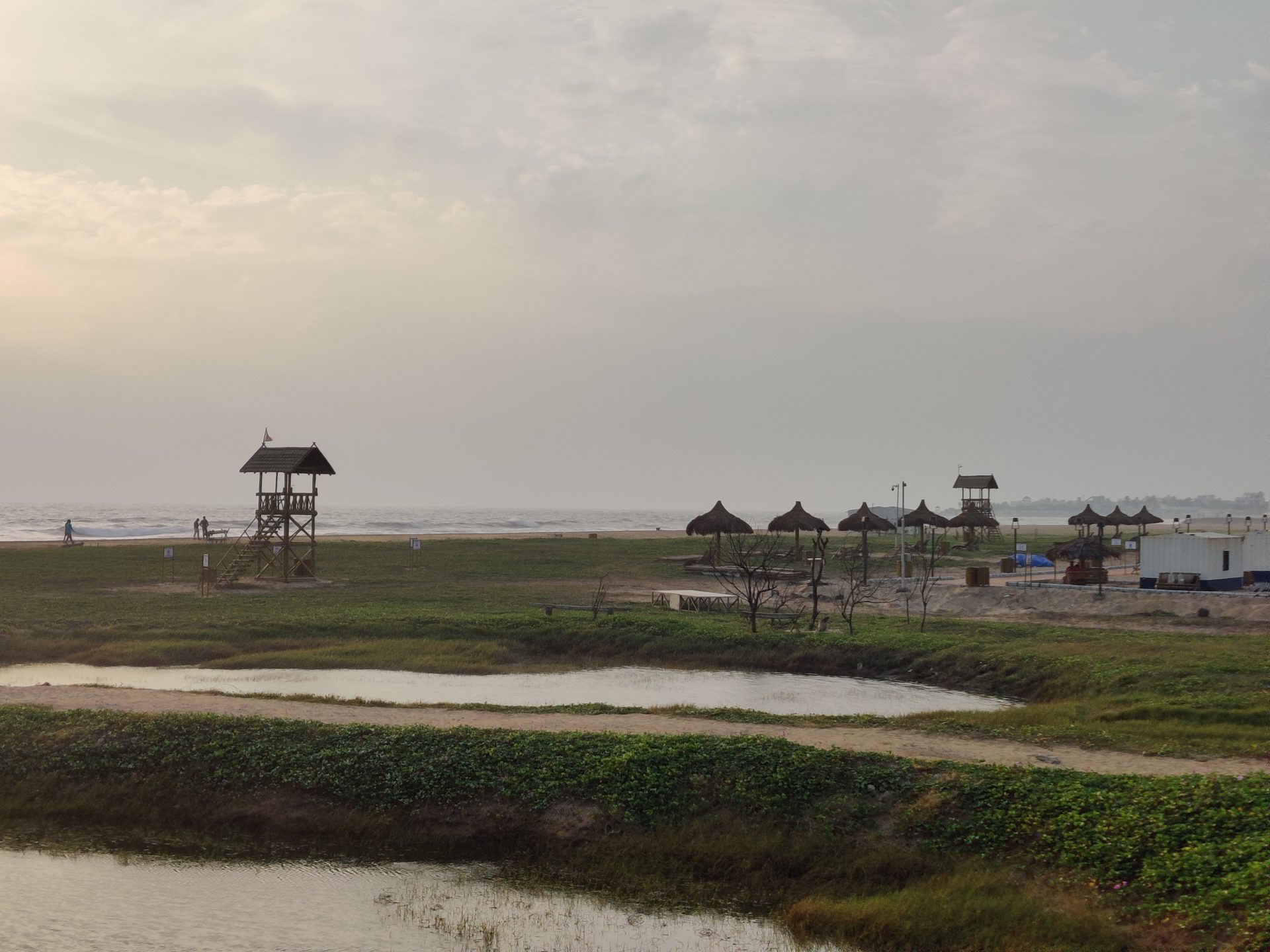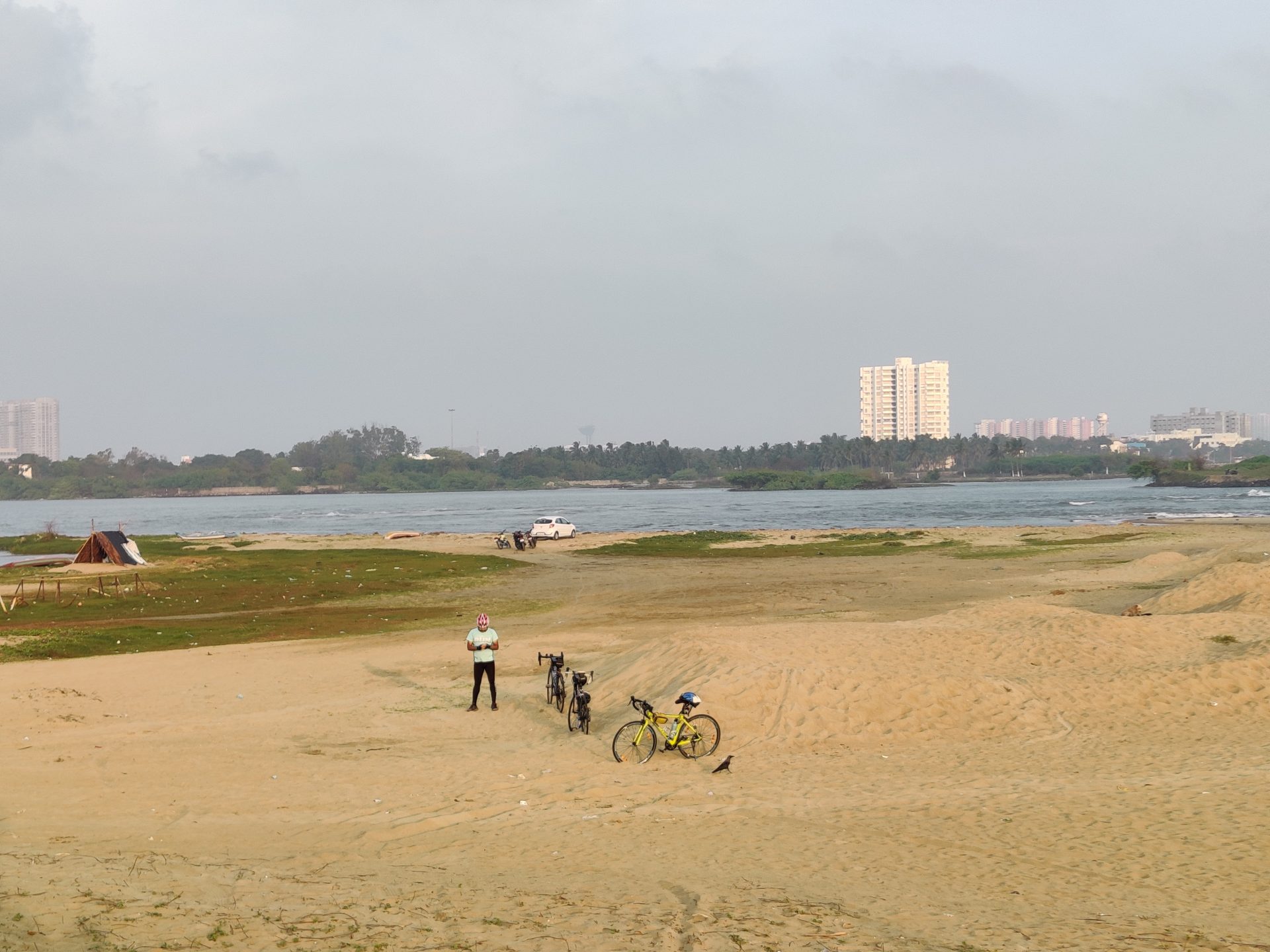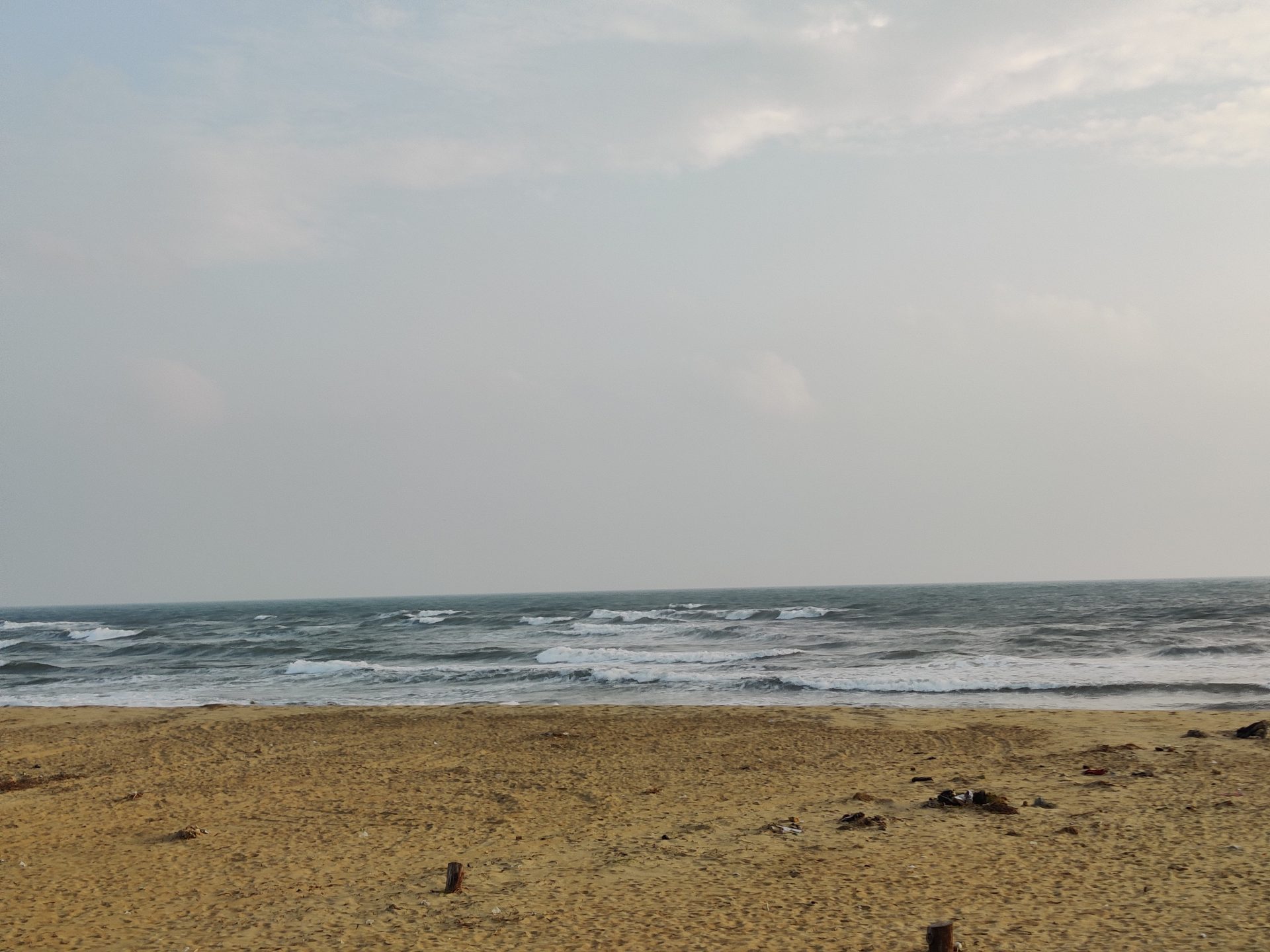
Vanakkam Chennai

As I stood pondering and nonchalantly brooding over my  website over what content next, a thought suddenly struck me saying when I have done so much of Chennai over my cycle and car and  unearthed so many unheard of and less visited places, why not stitch them together.

And thus was born the idea of creating a web page for a city where having spent a good couple of decades, did realize over the last few years that this city was still in discovery mode for me for the locales it did have to offer. The city celebrates its birthday on August 22nd. 

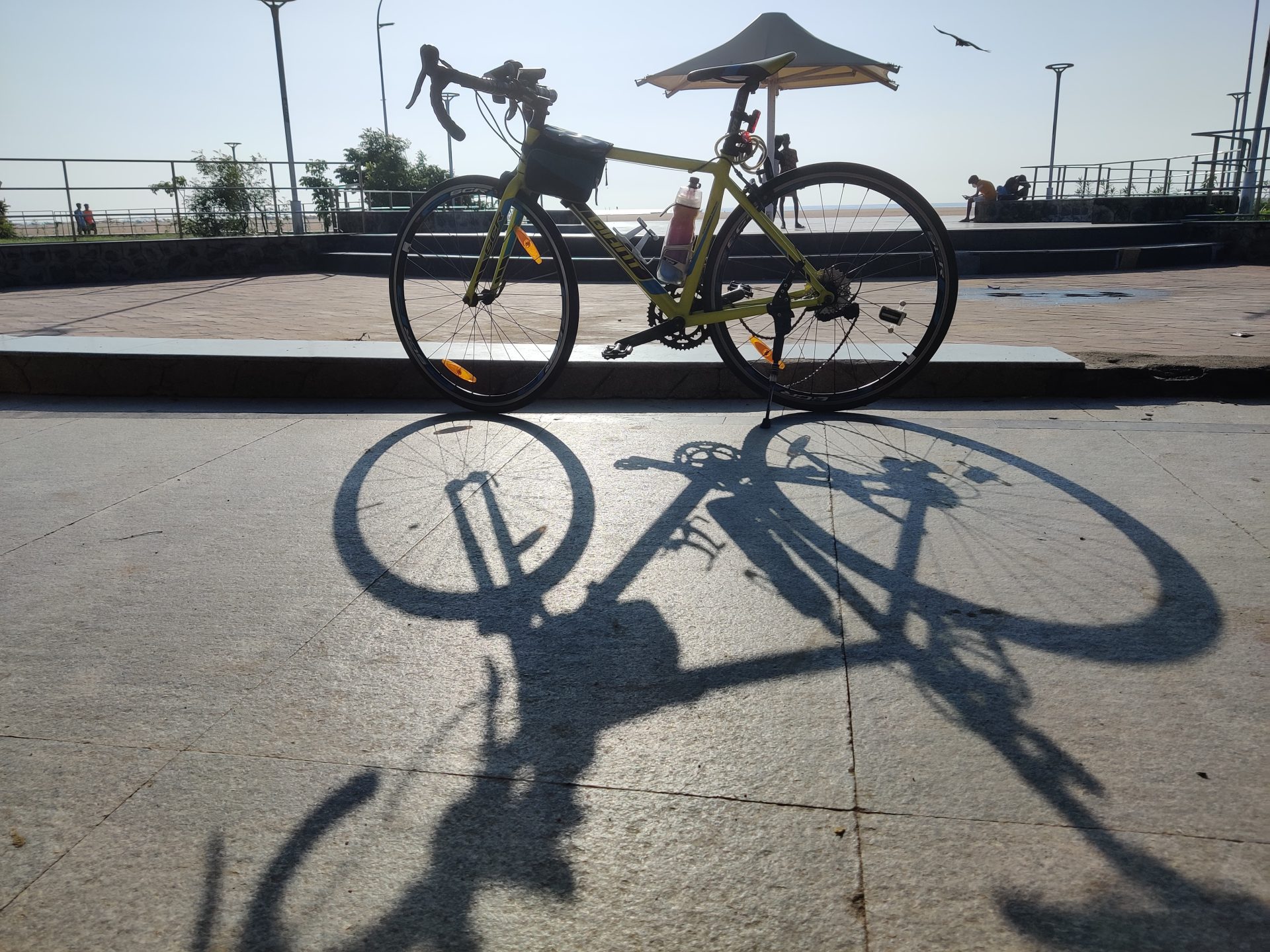
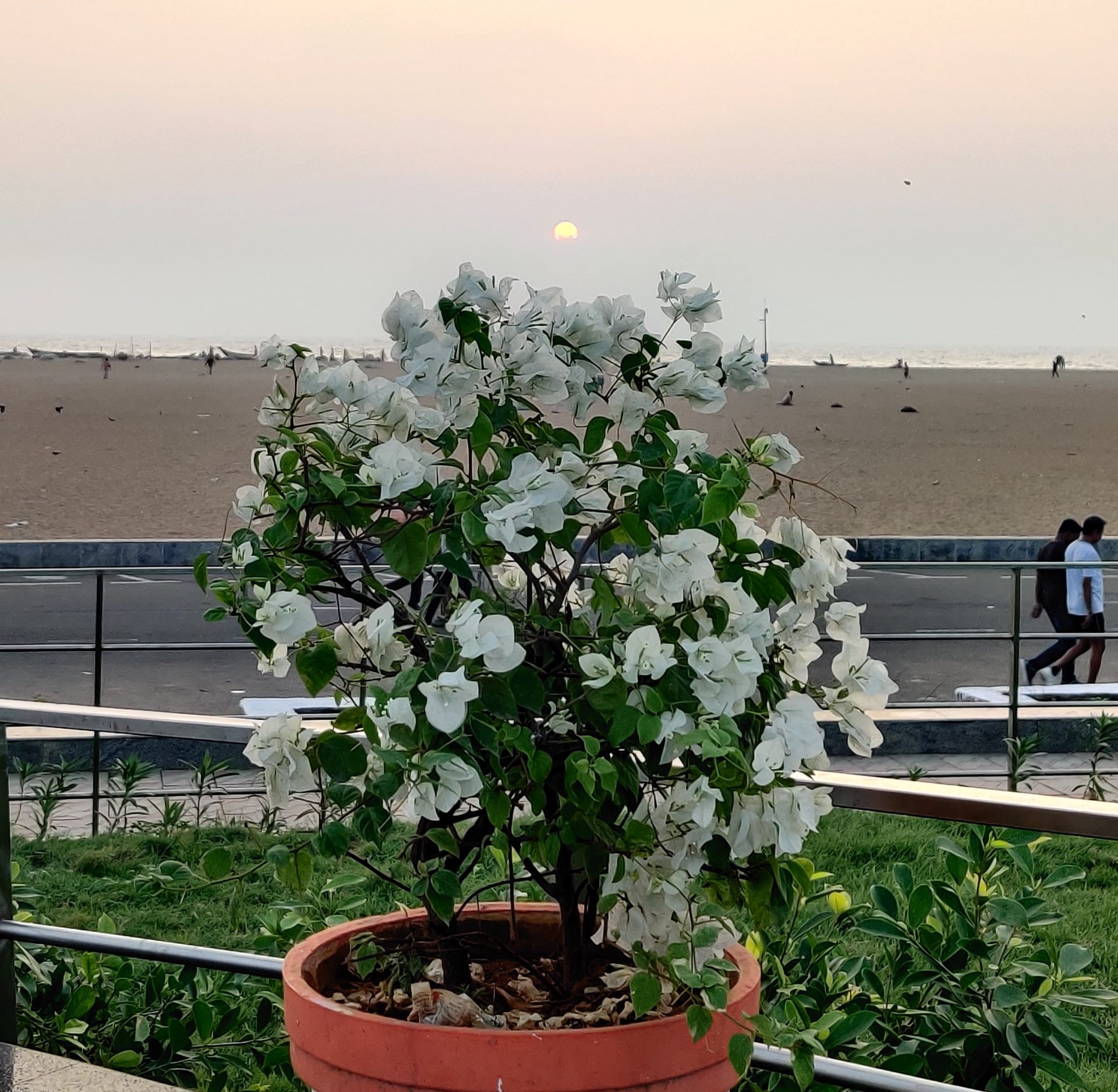
THE FAMOUS SELFIE POINT @ THE MARINA

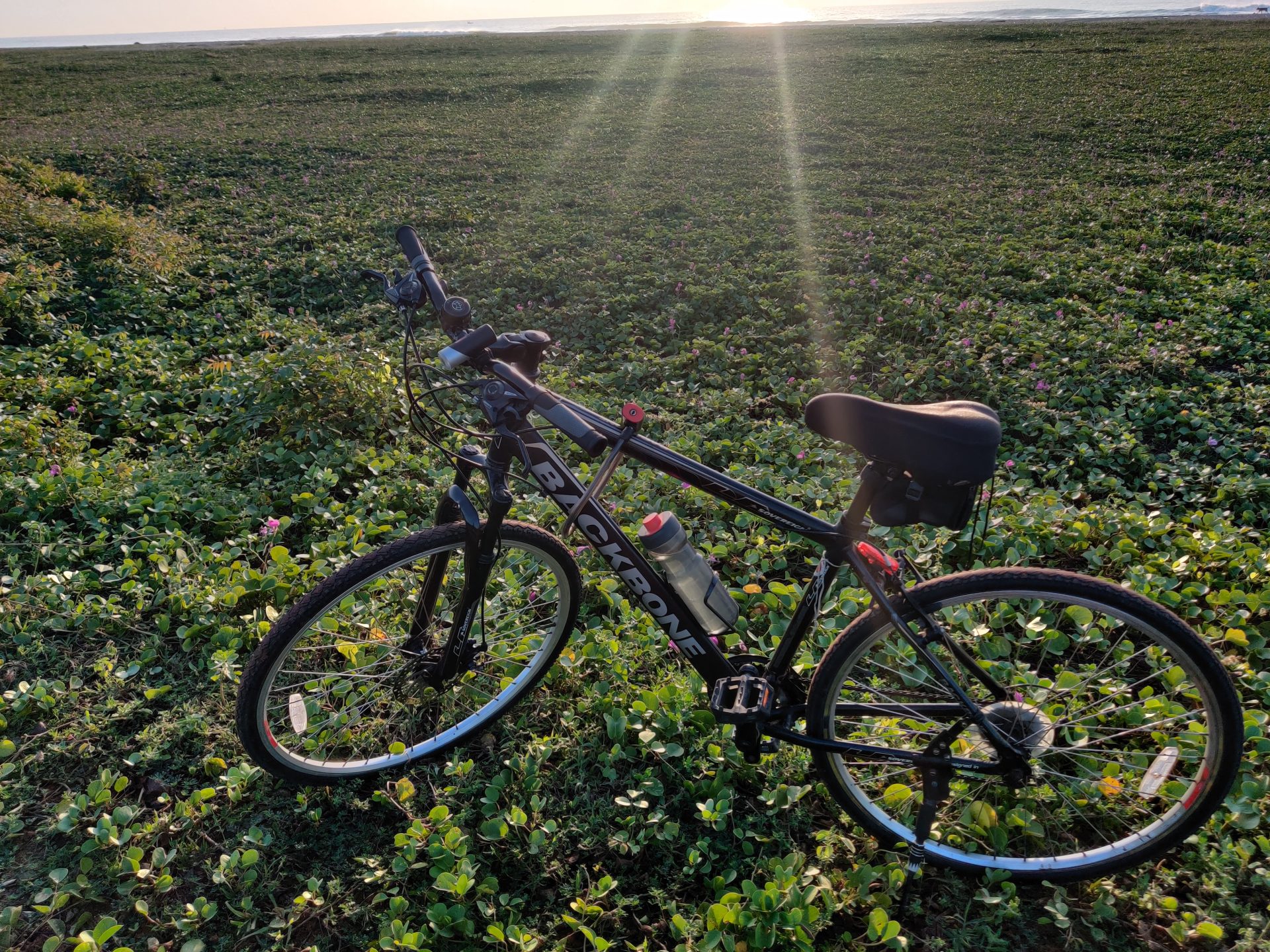
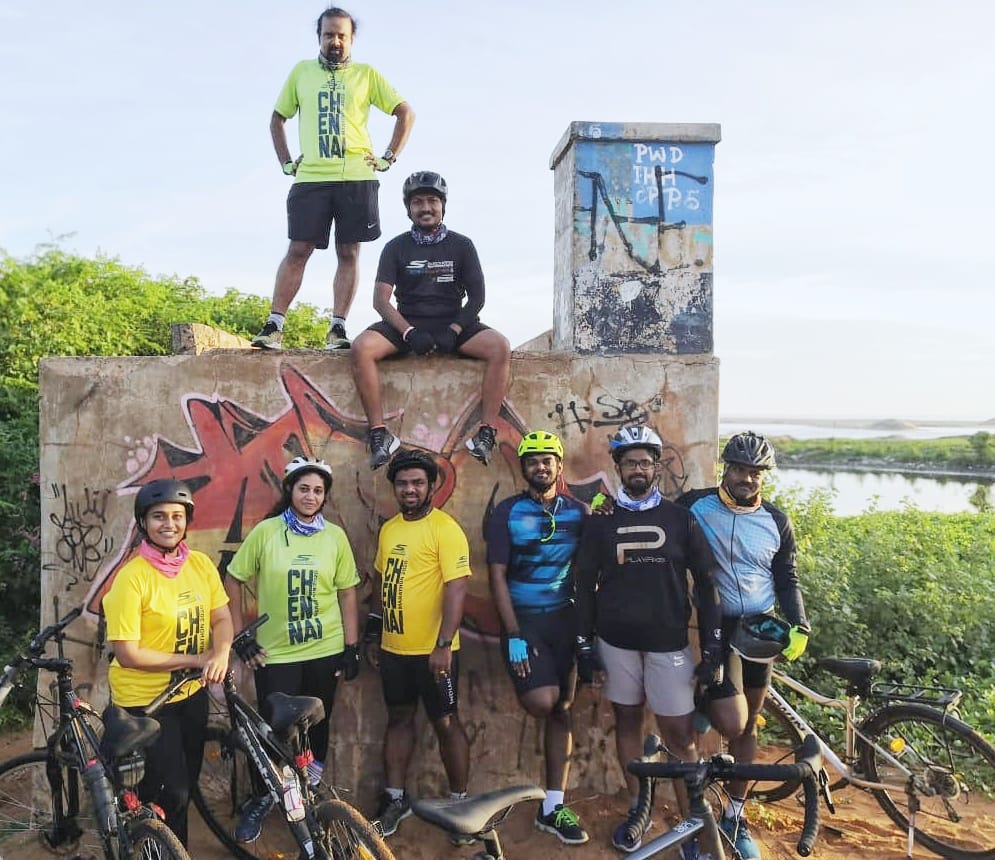
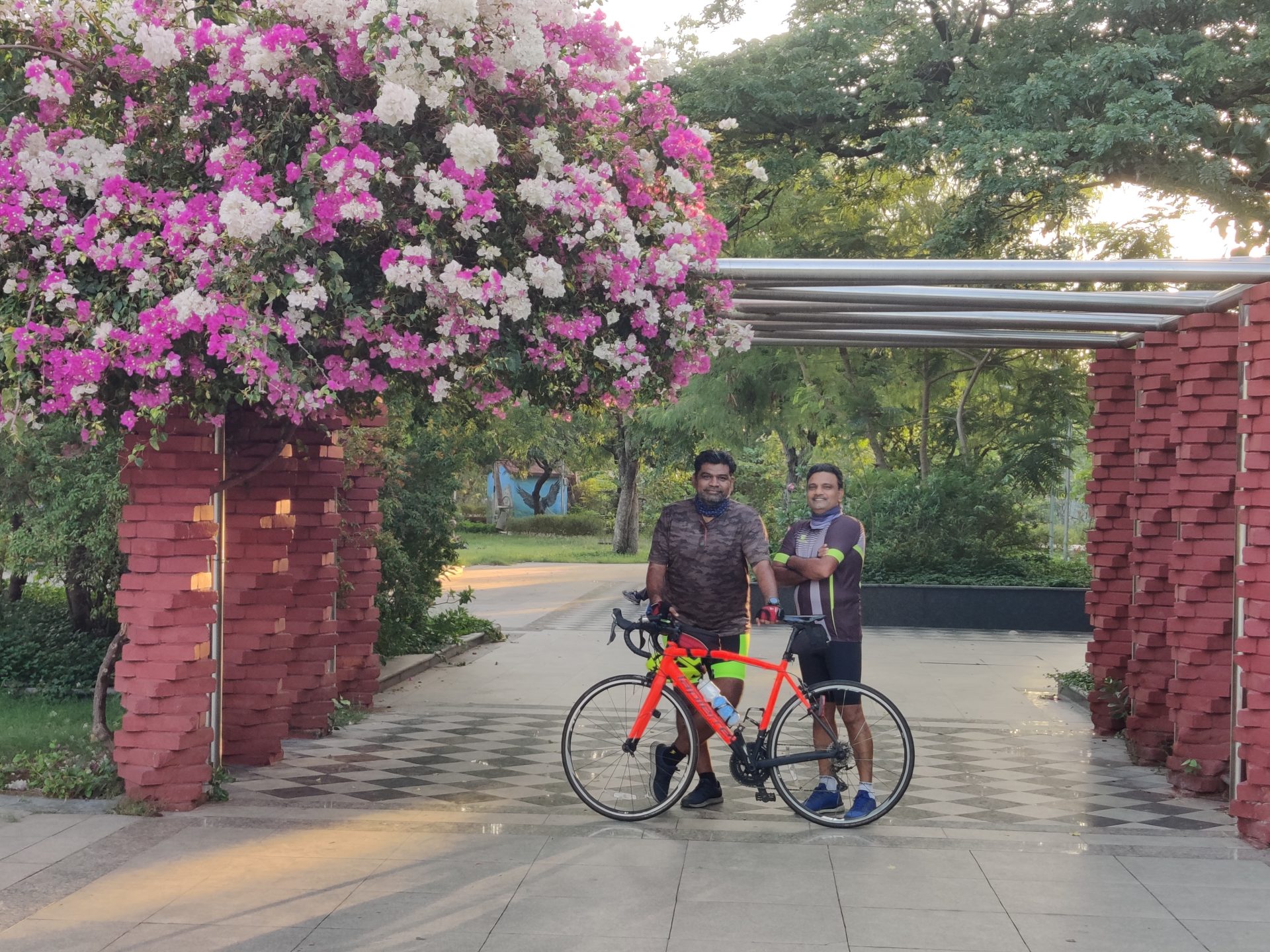
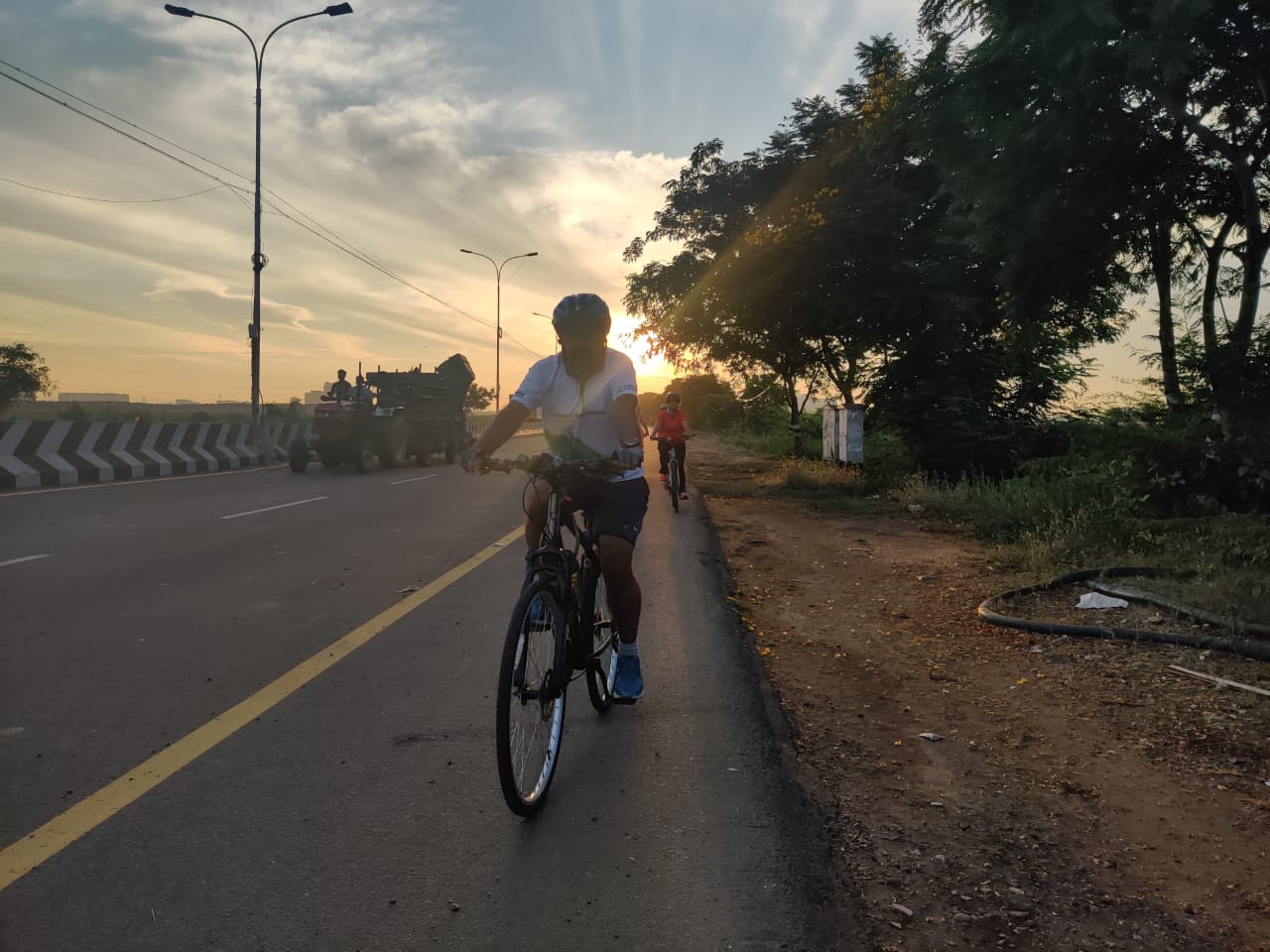
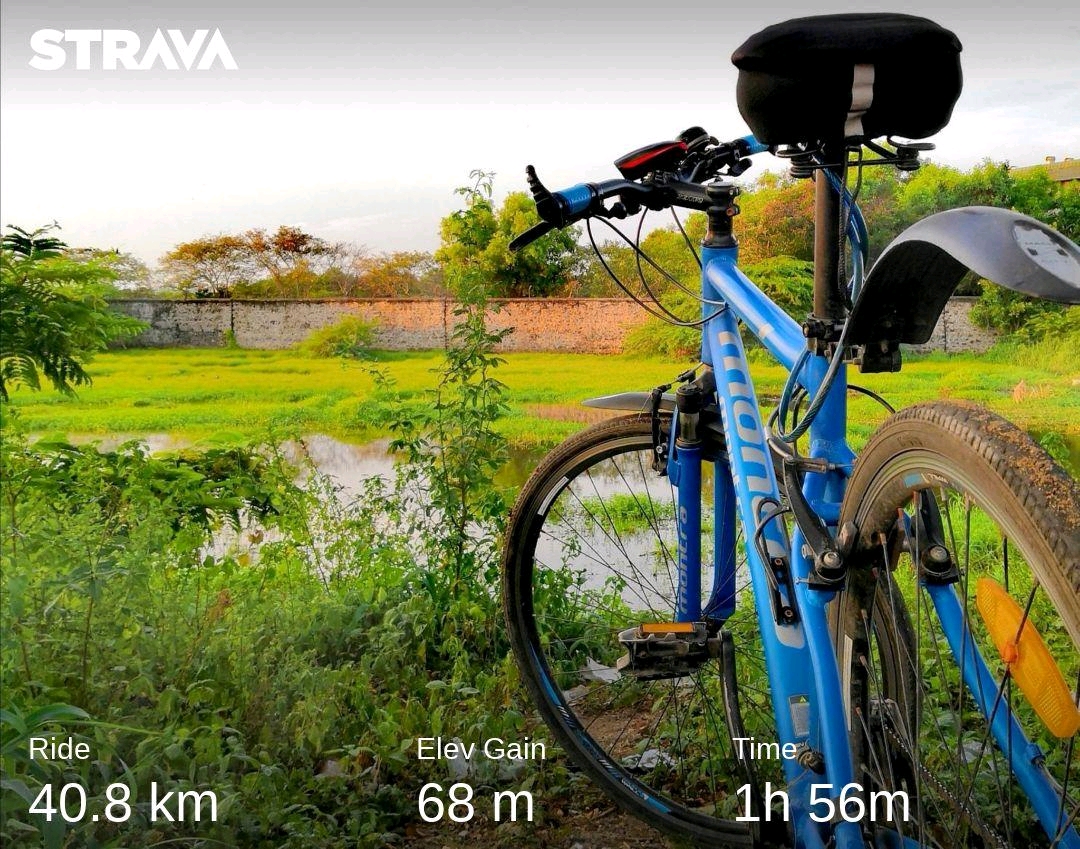
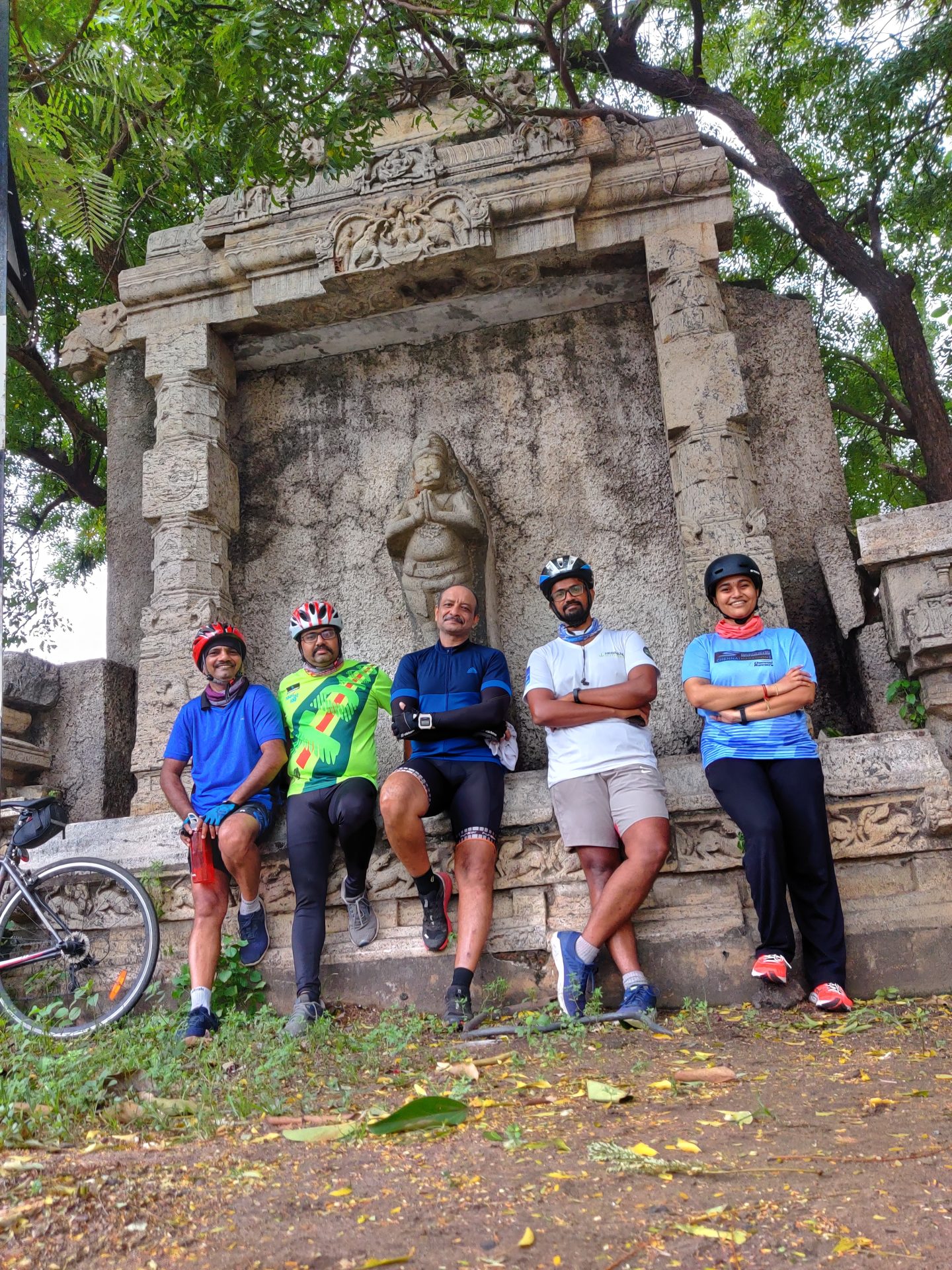
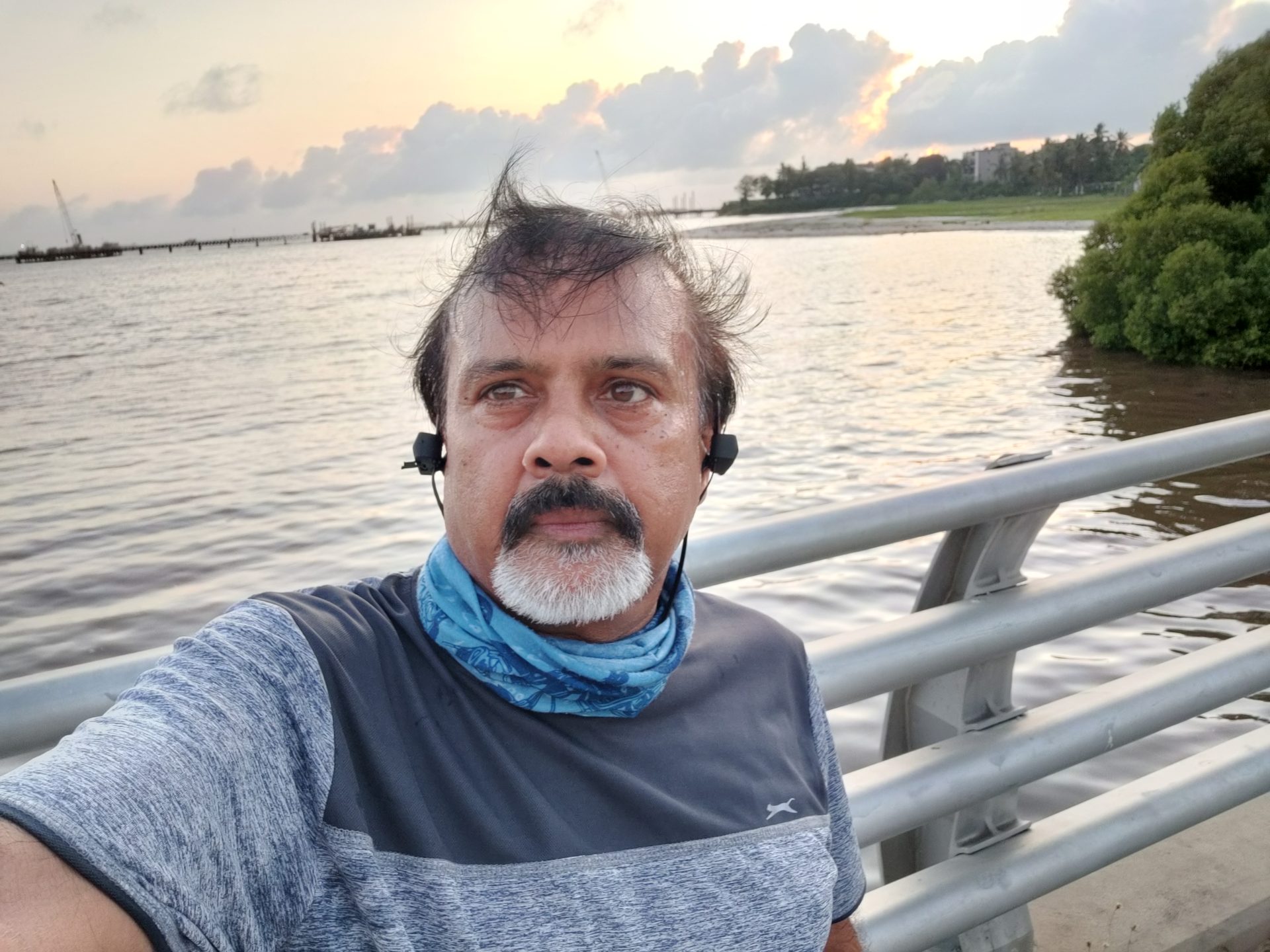
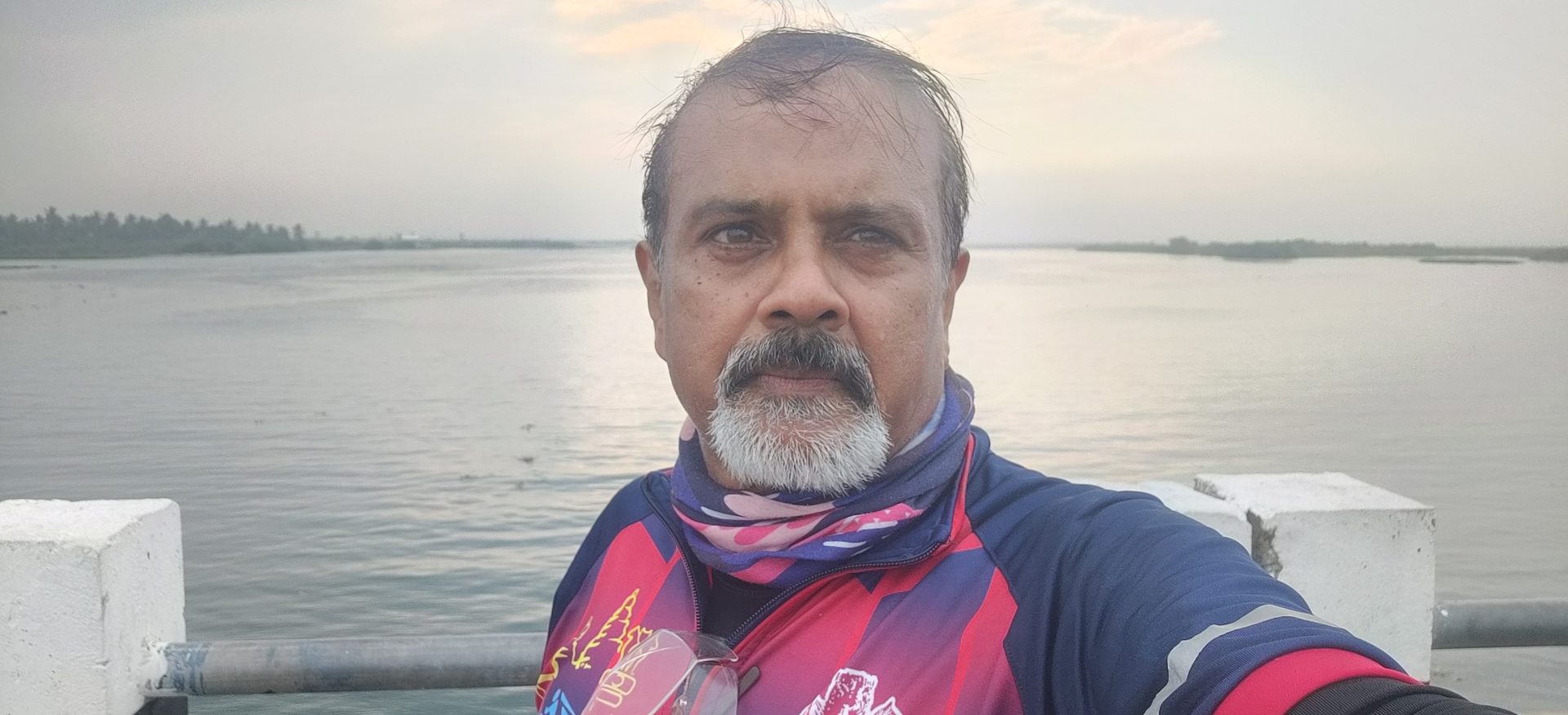
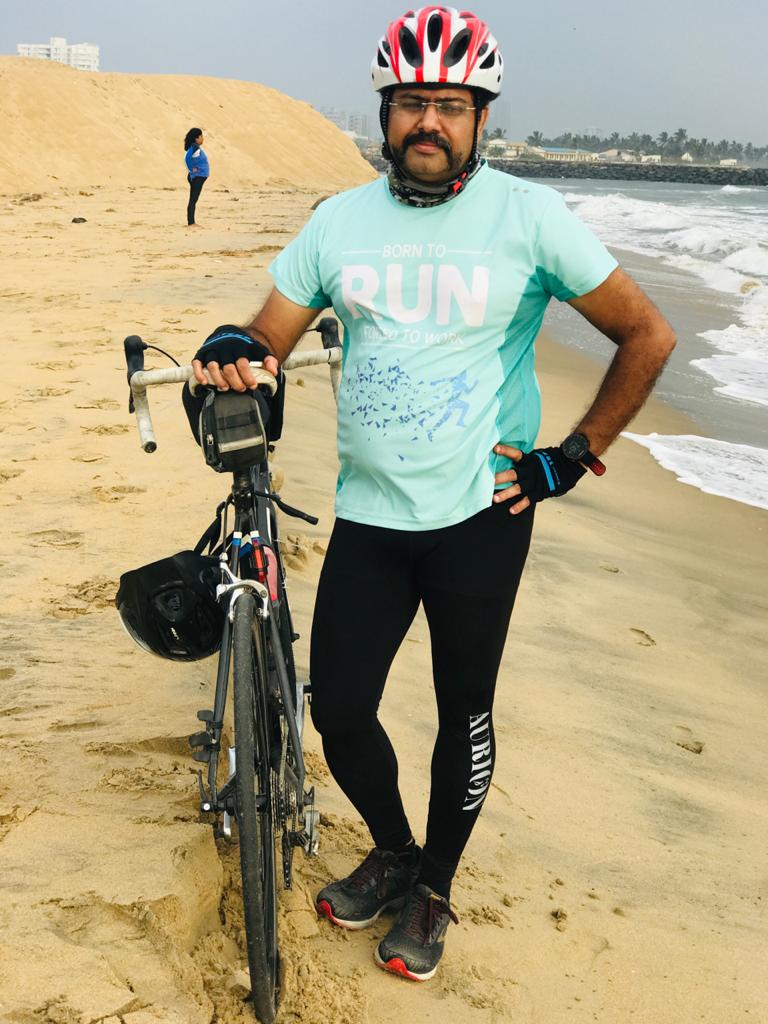
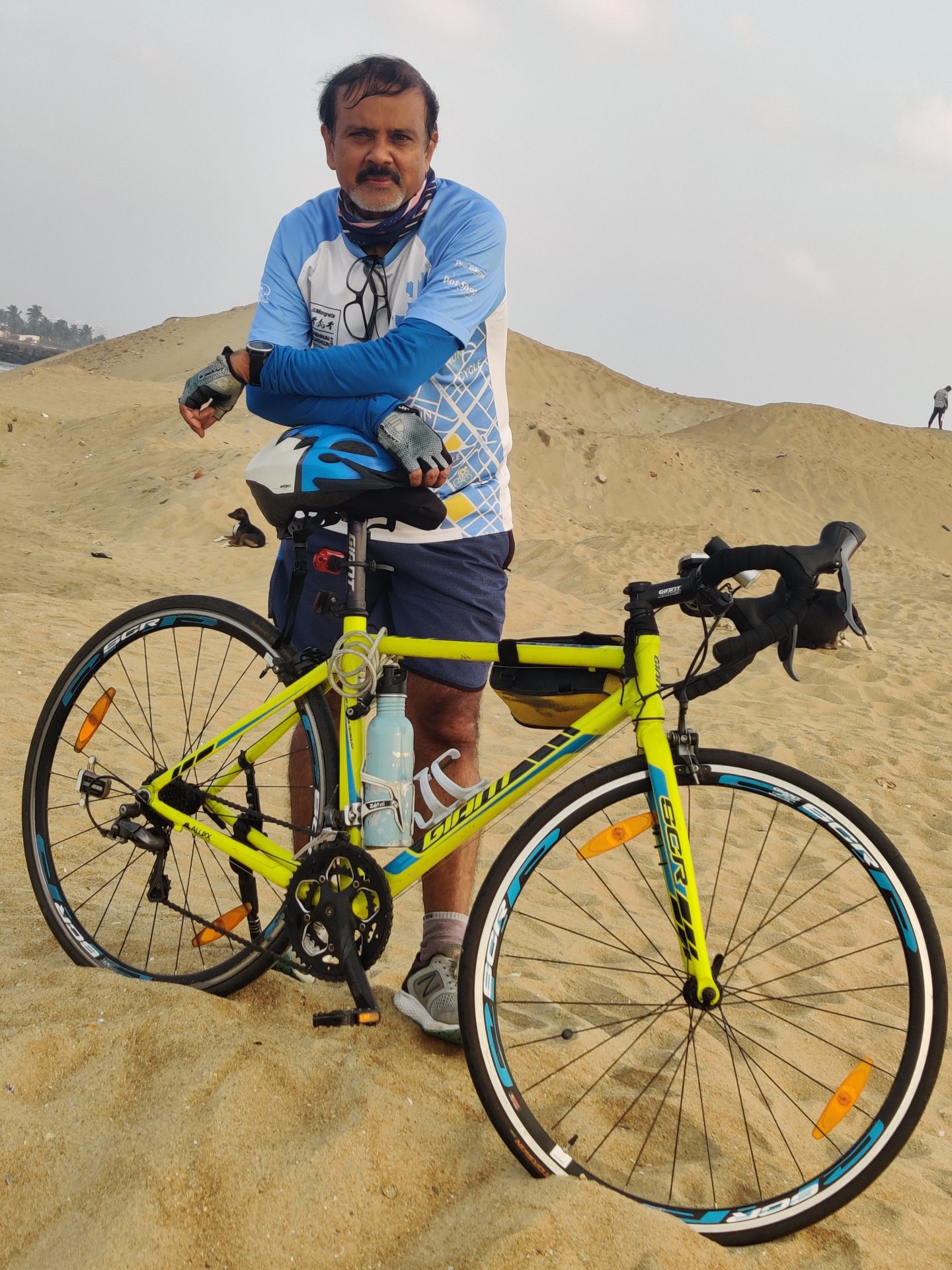
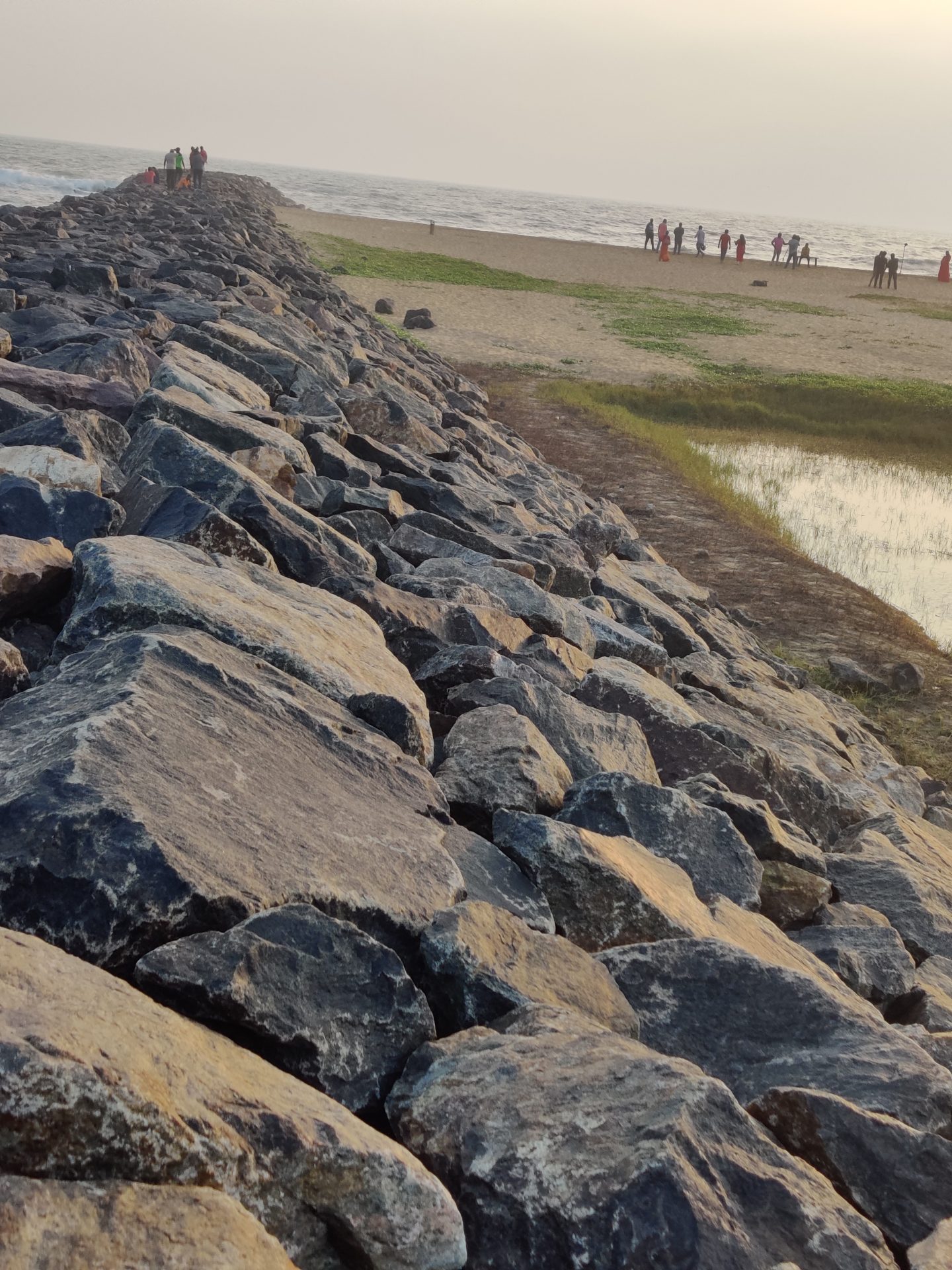
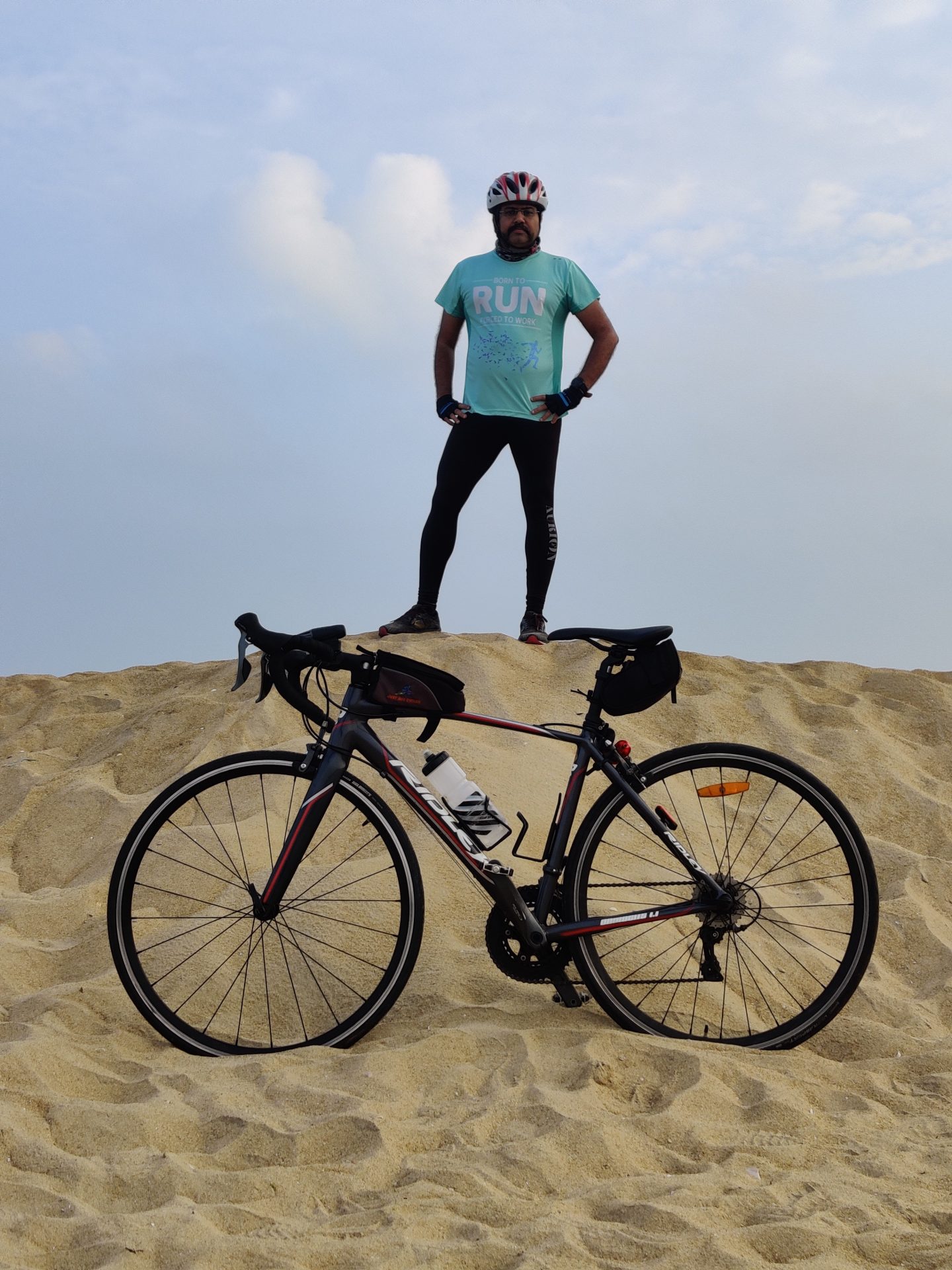
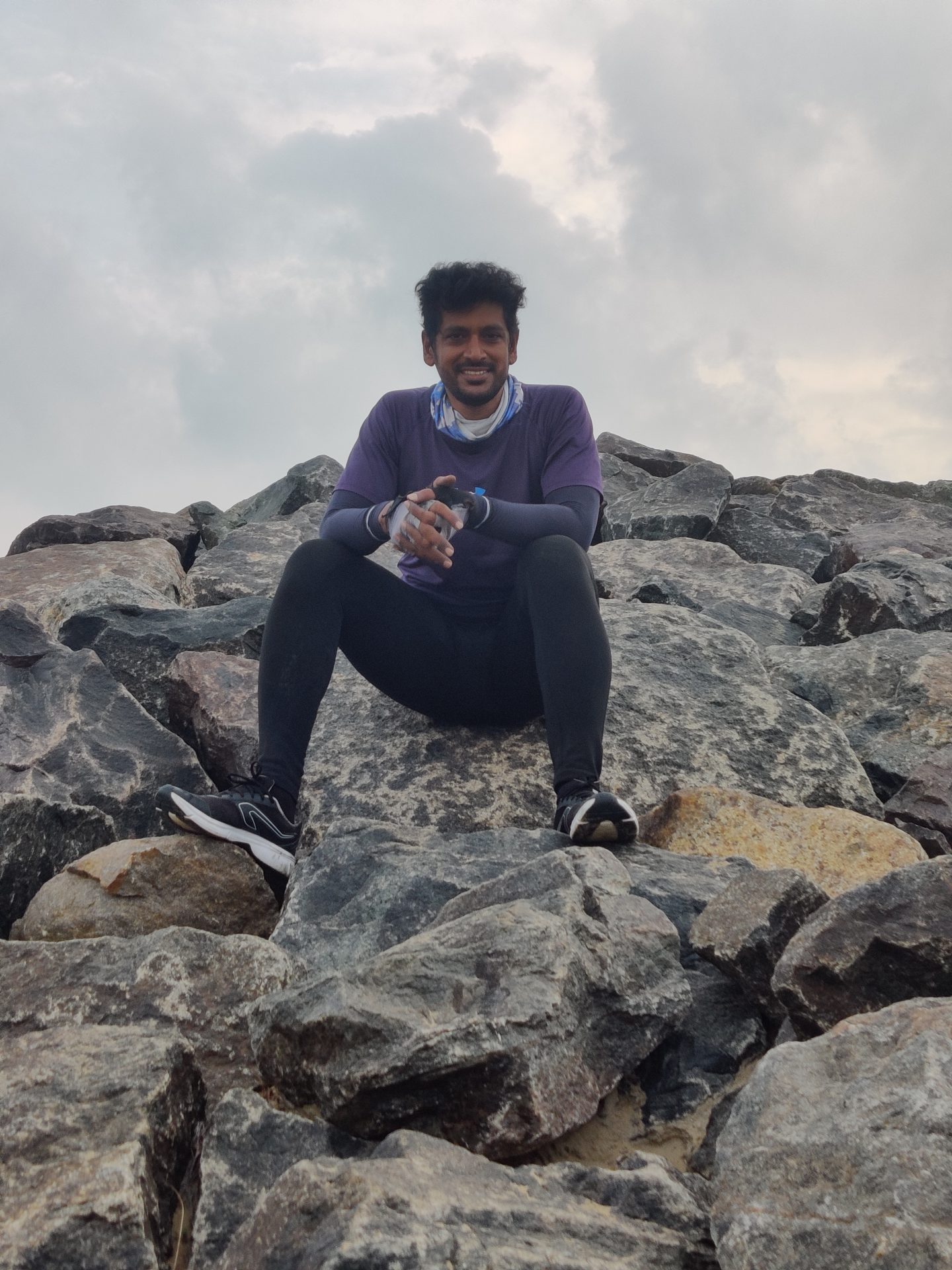
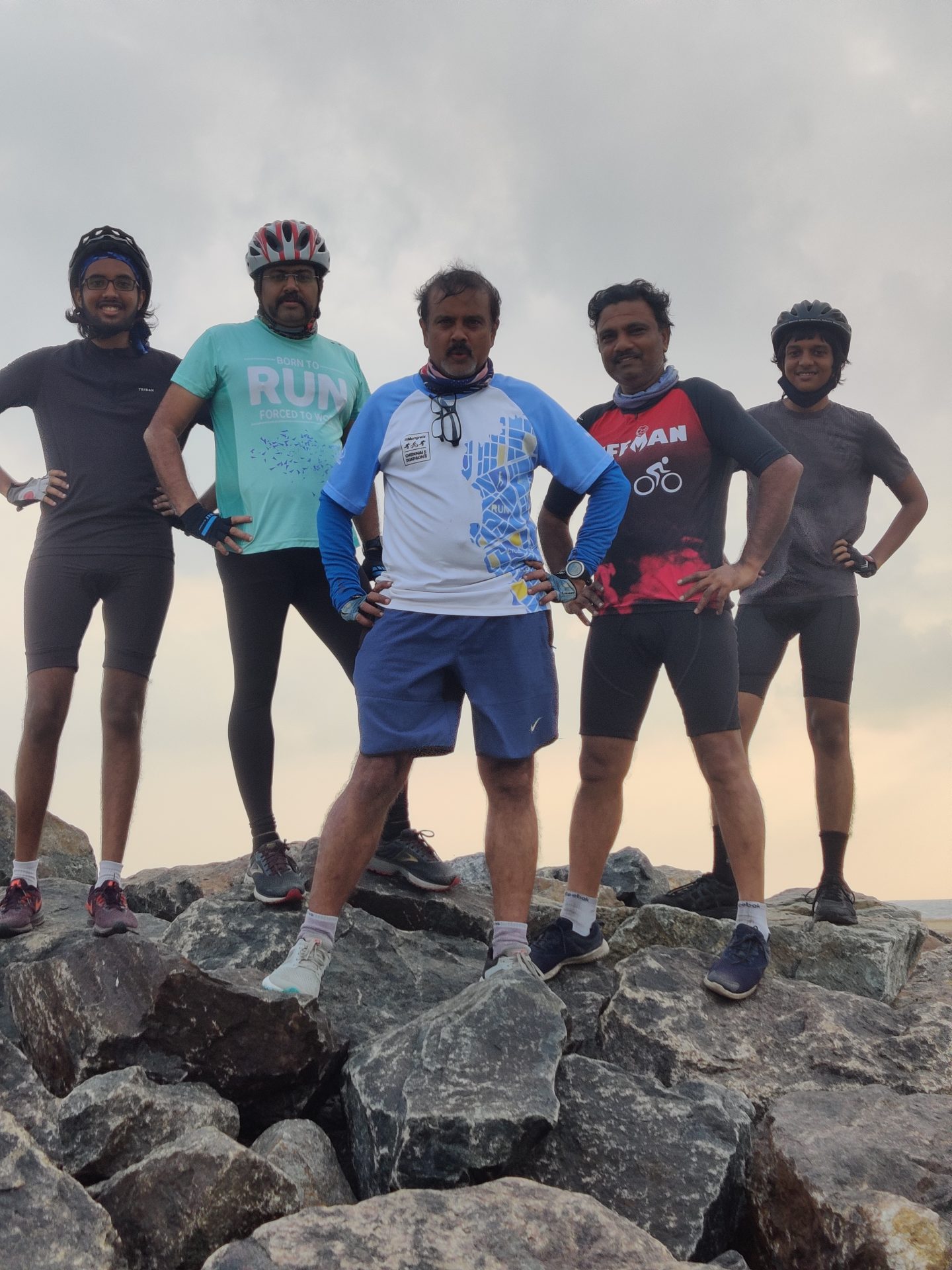
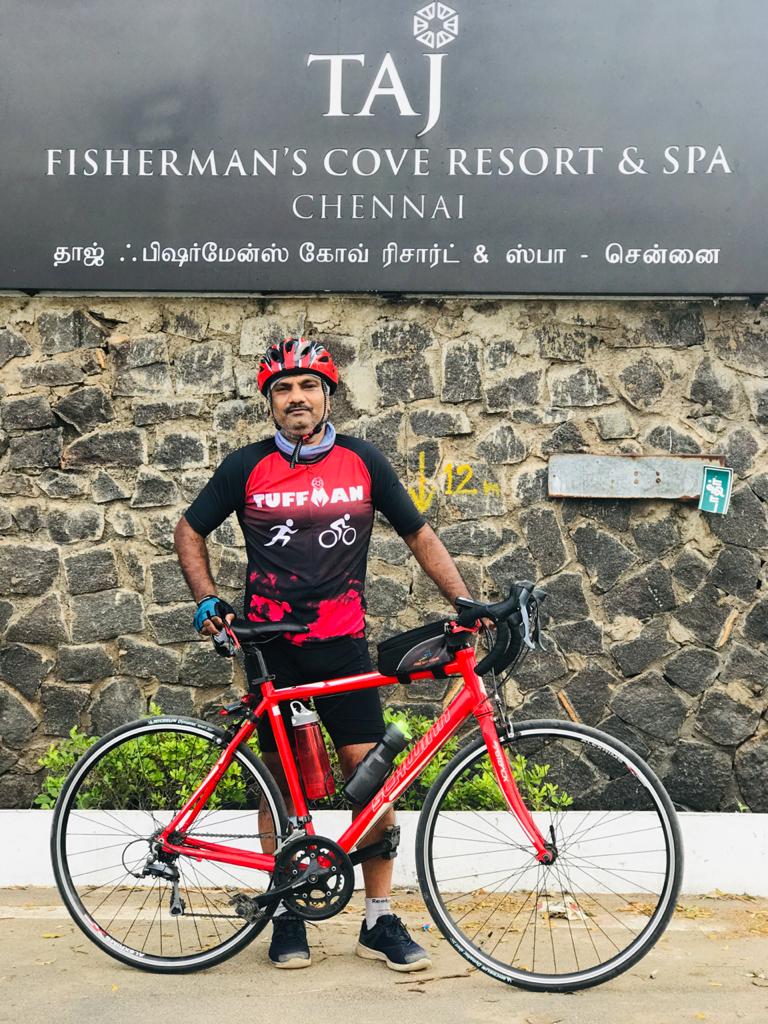
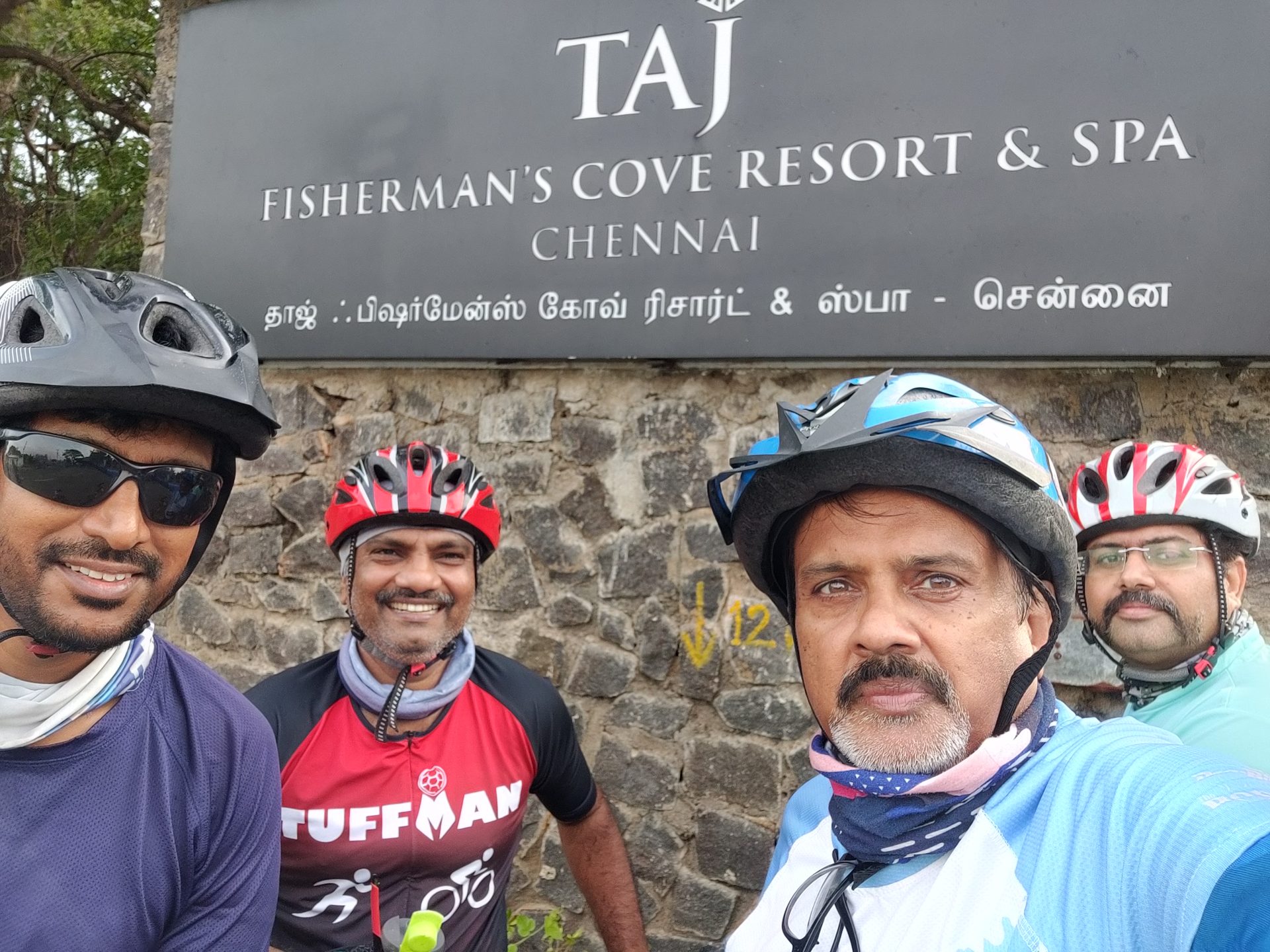
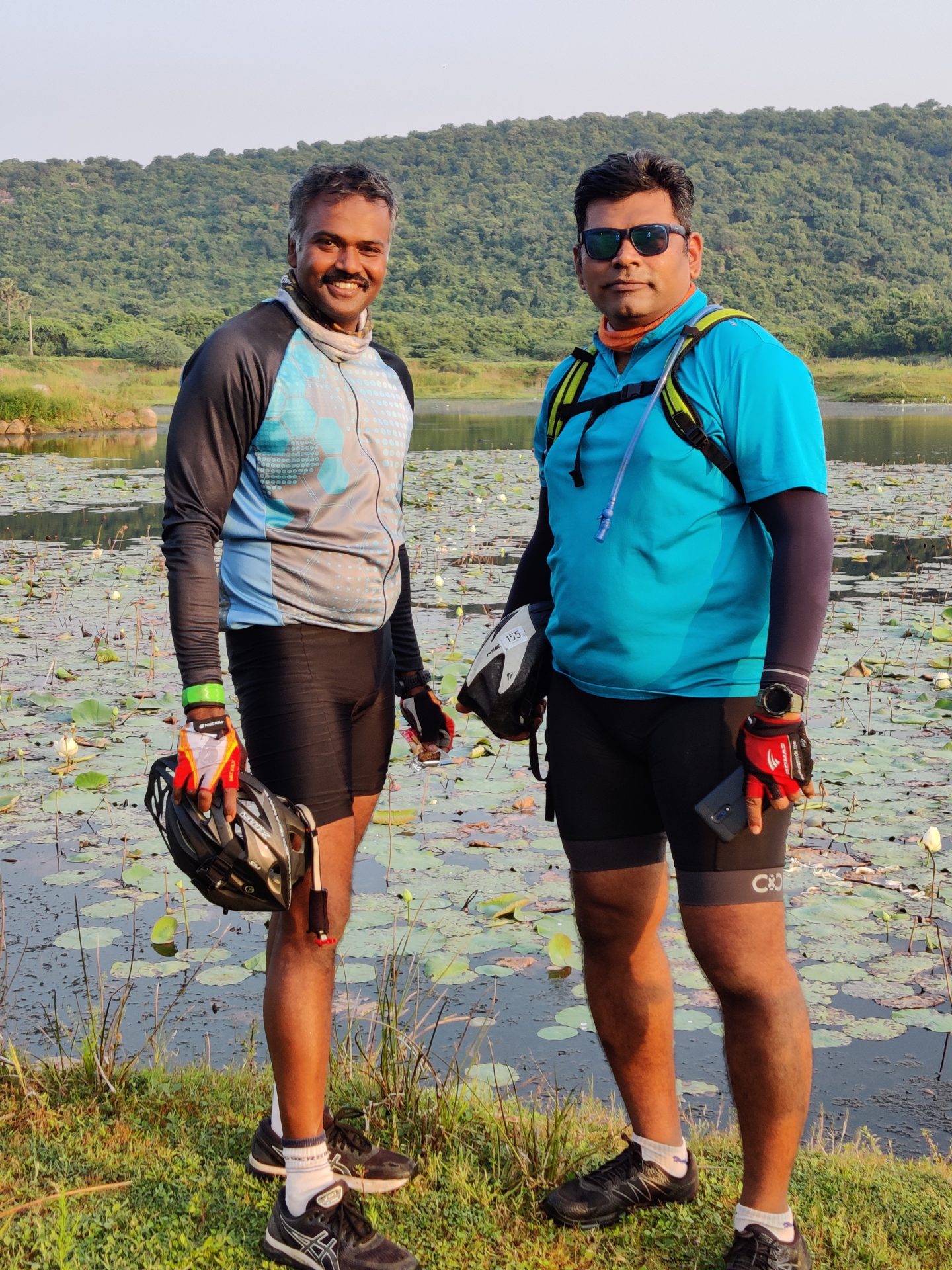
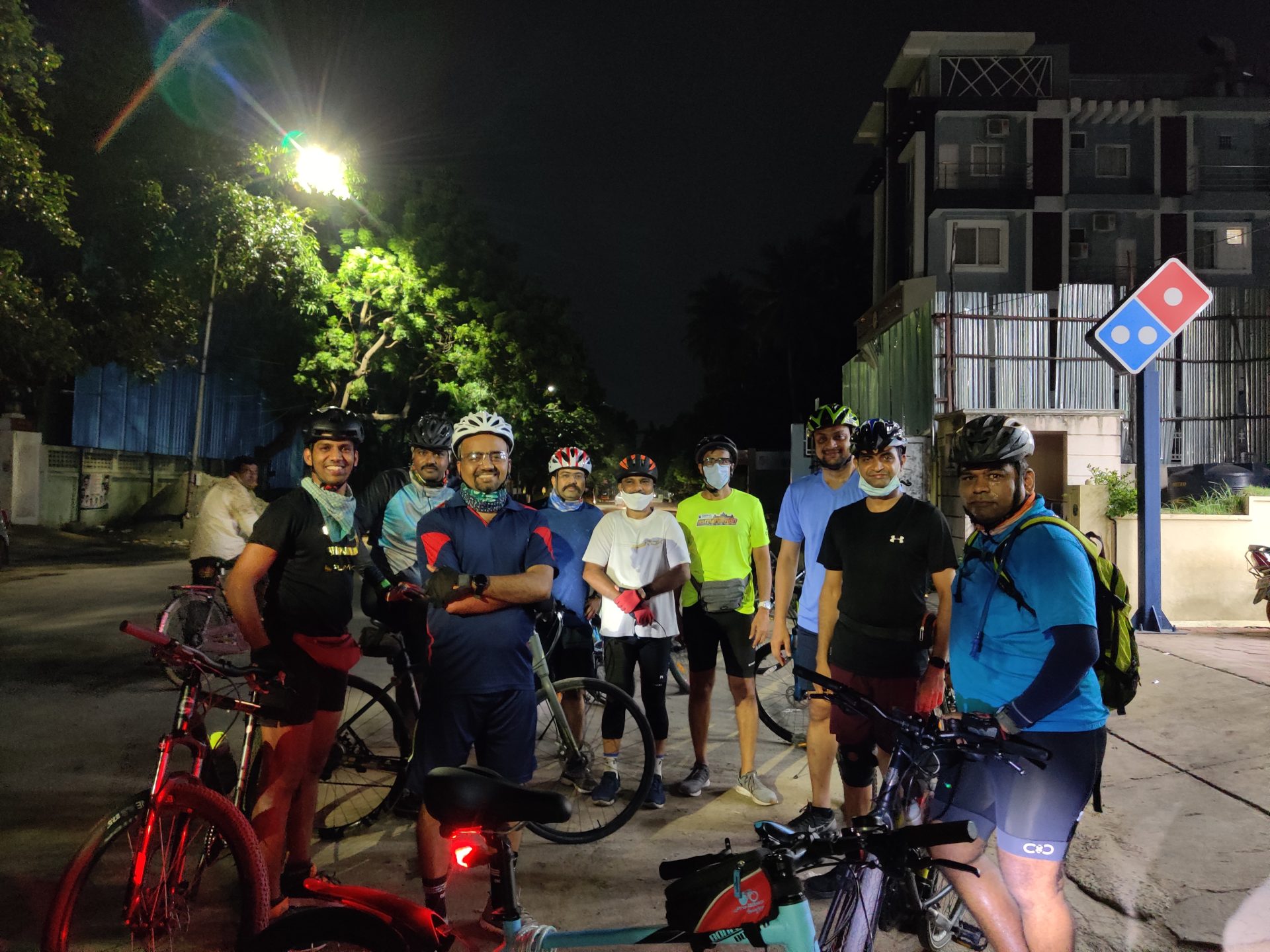
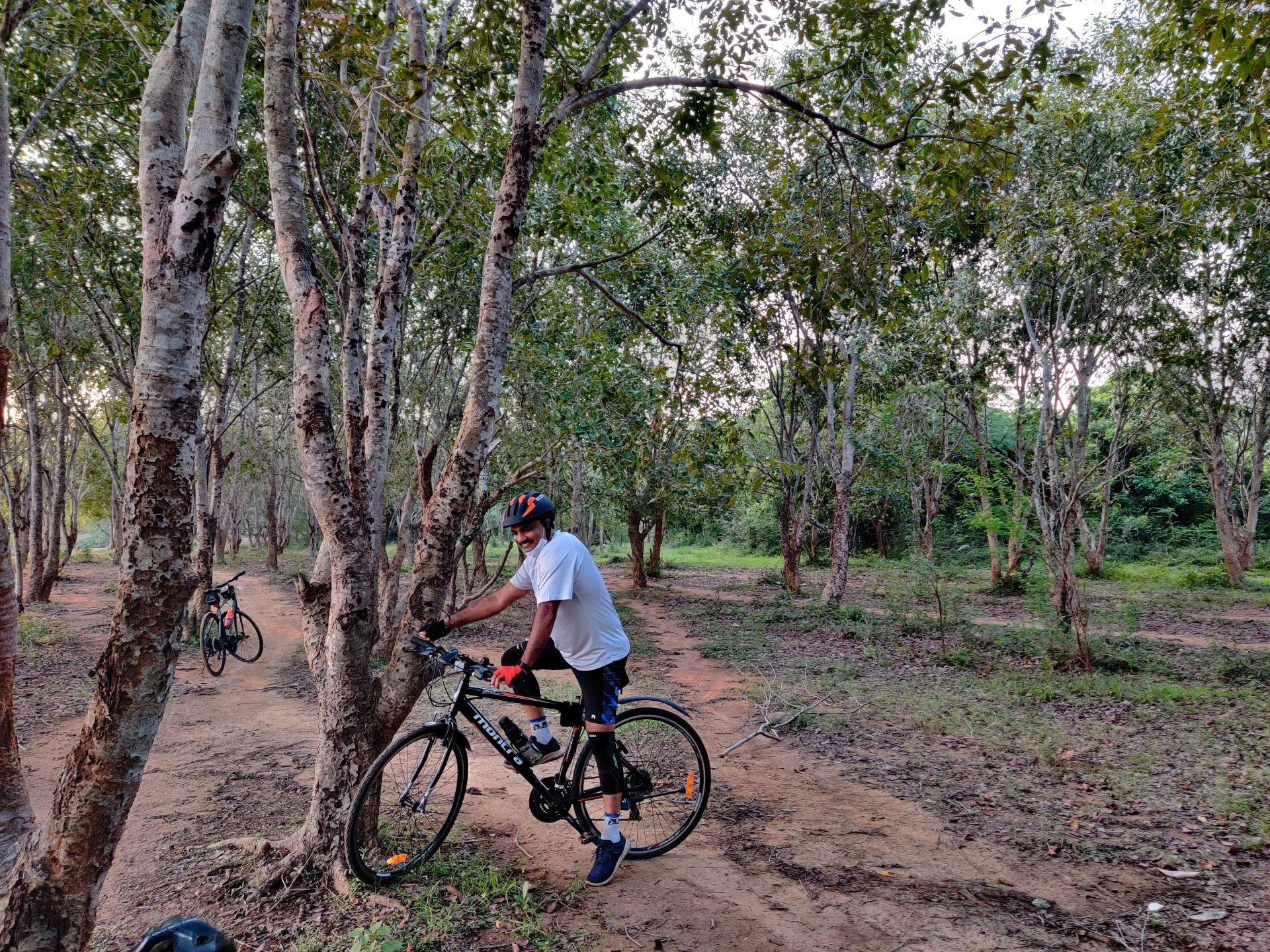
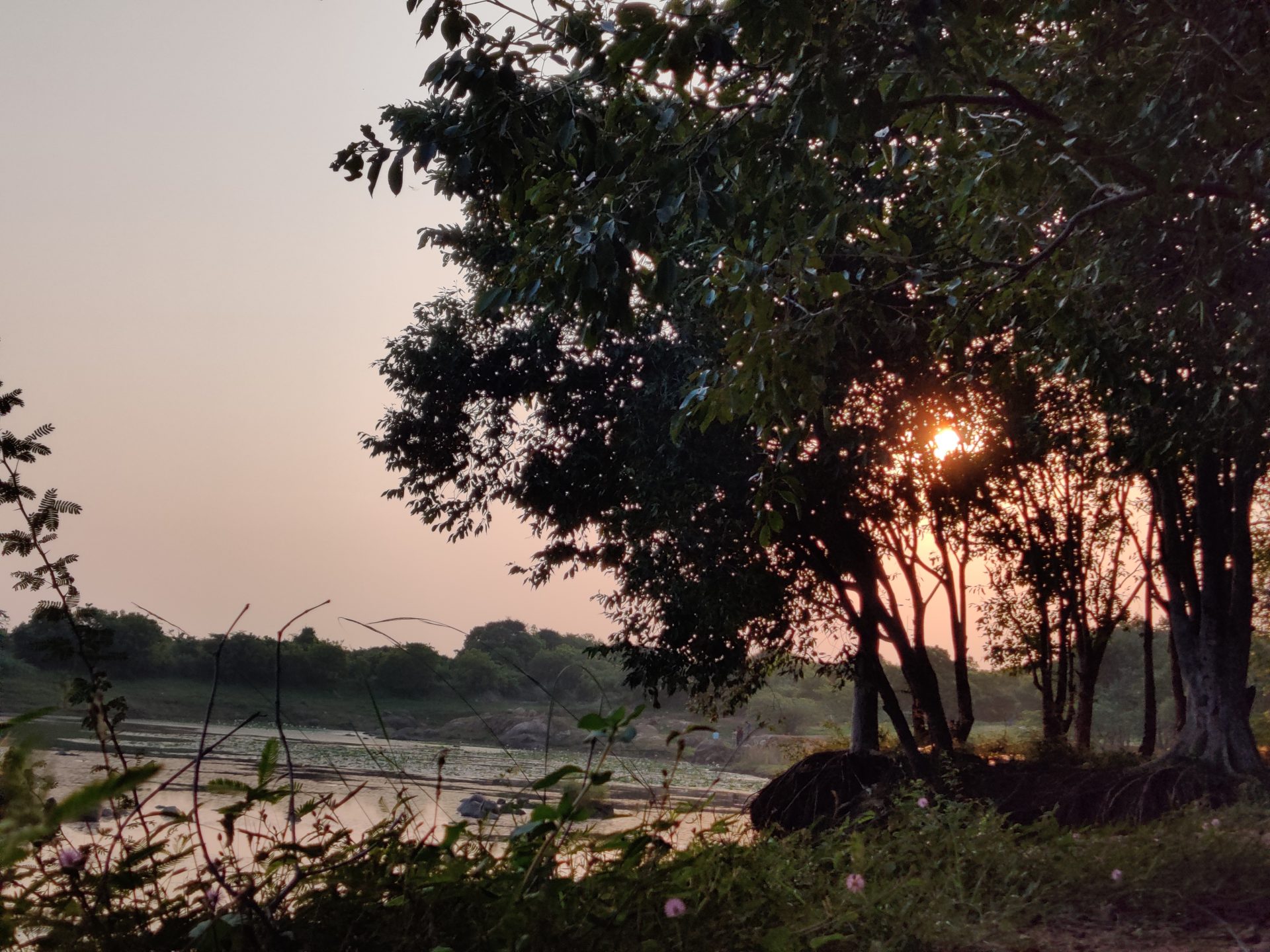
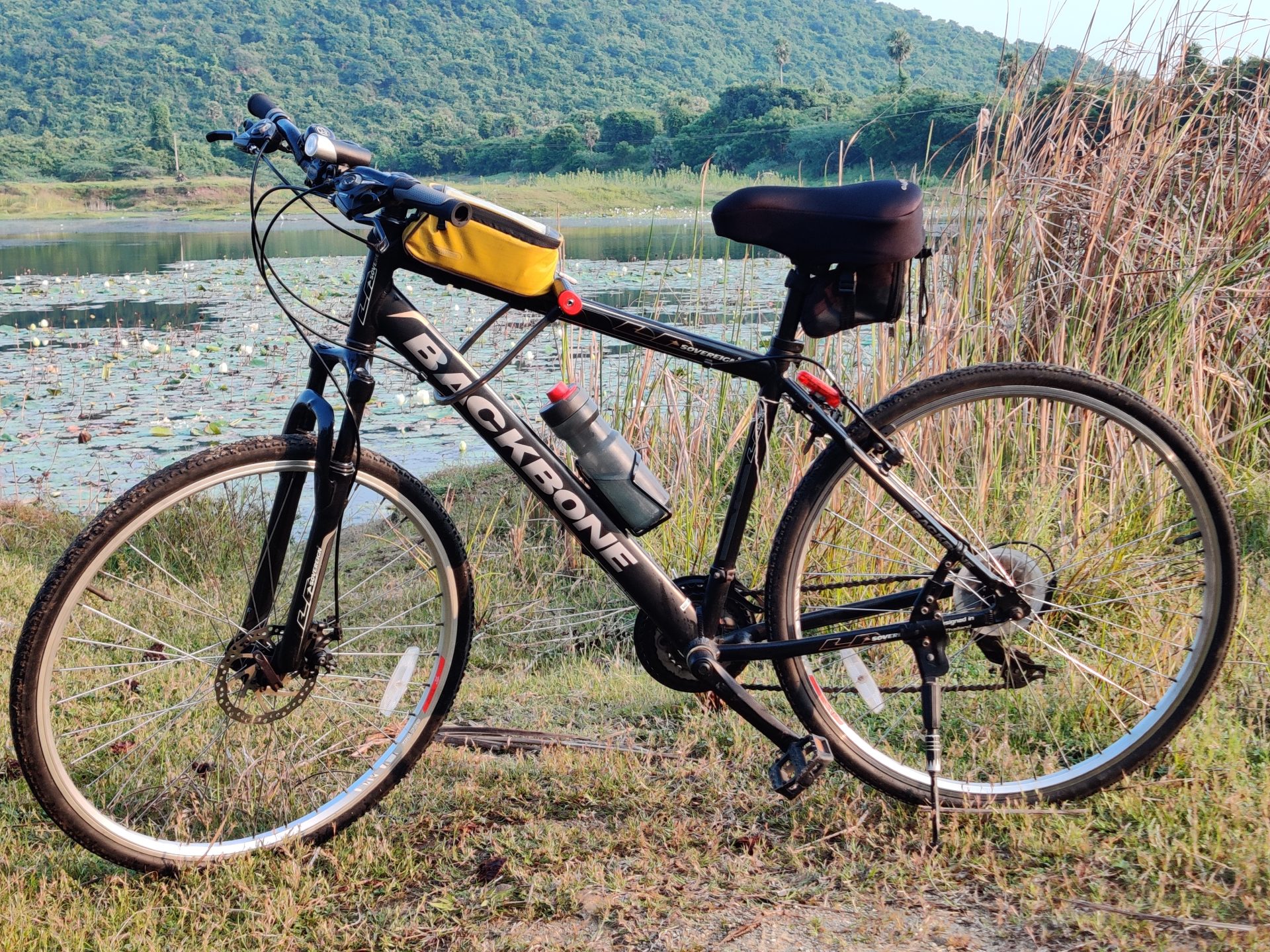
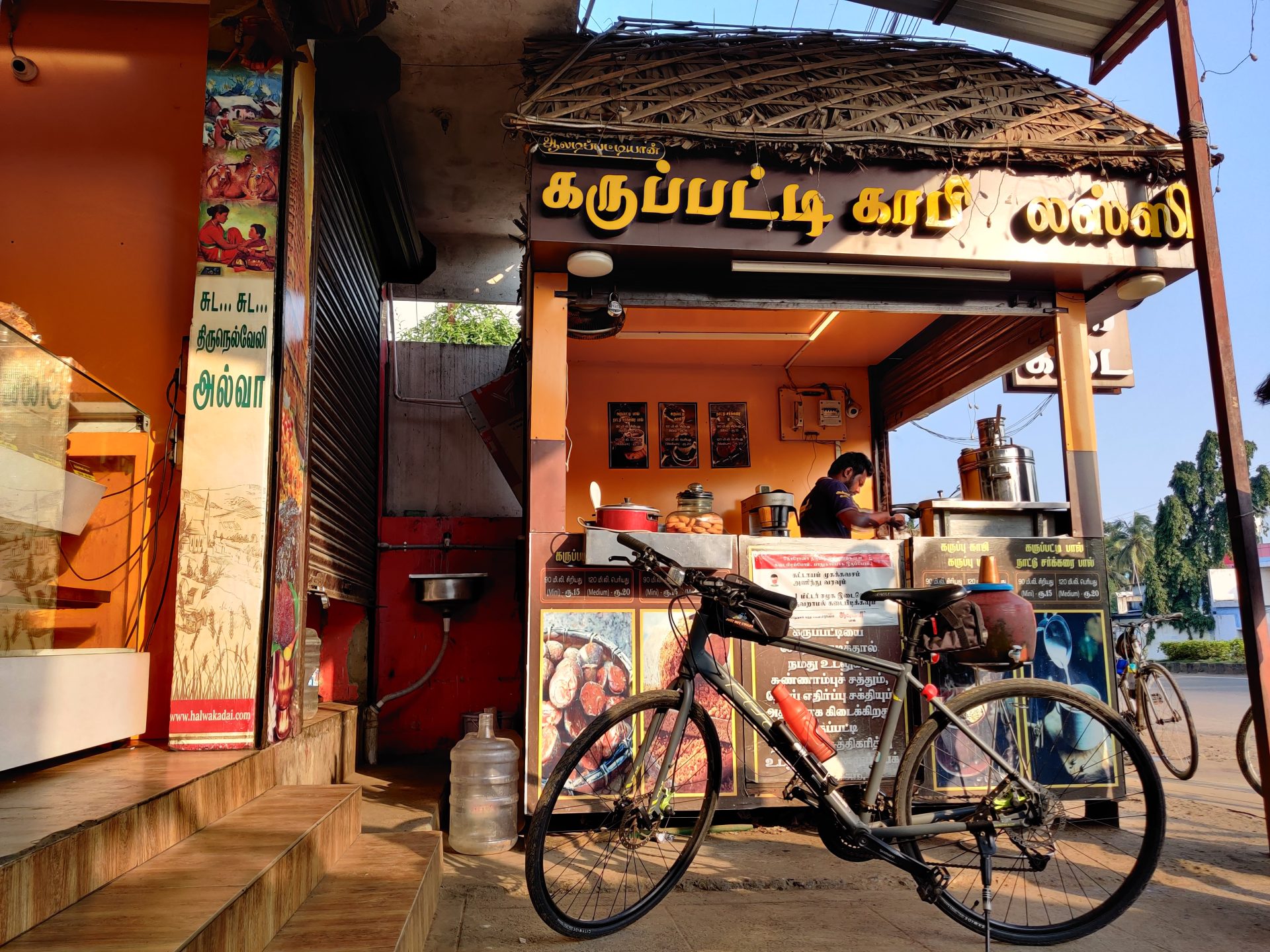
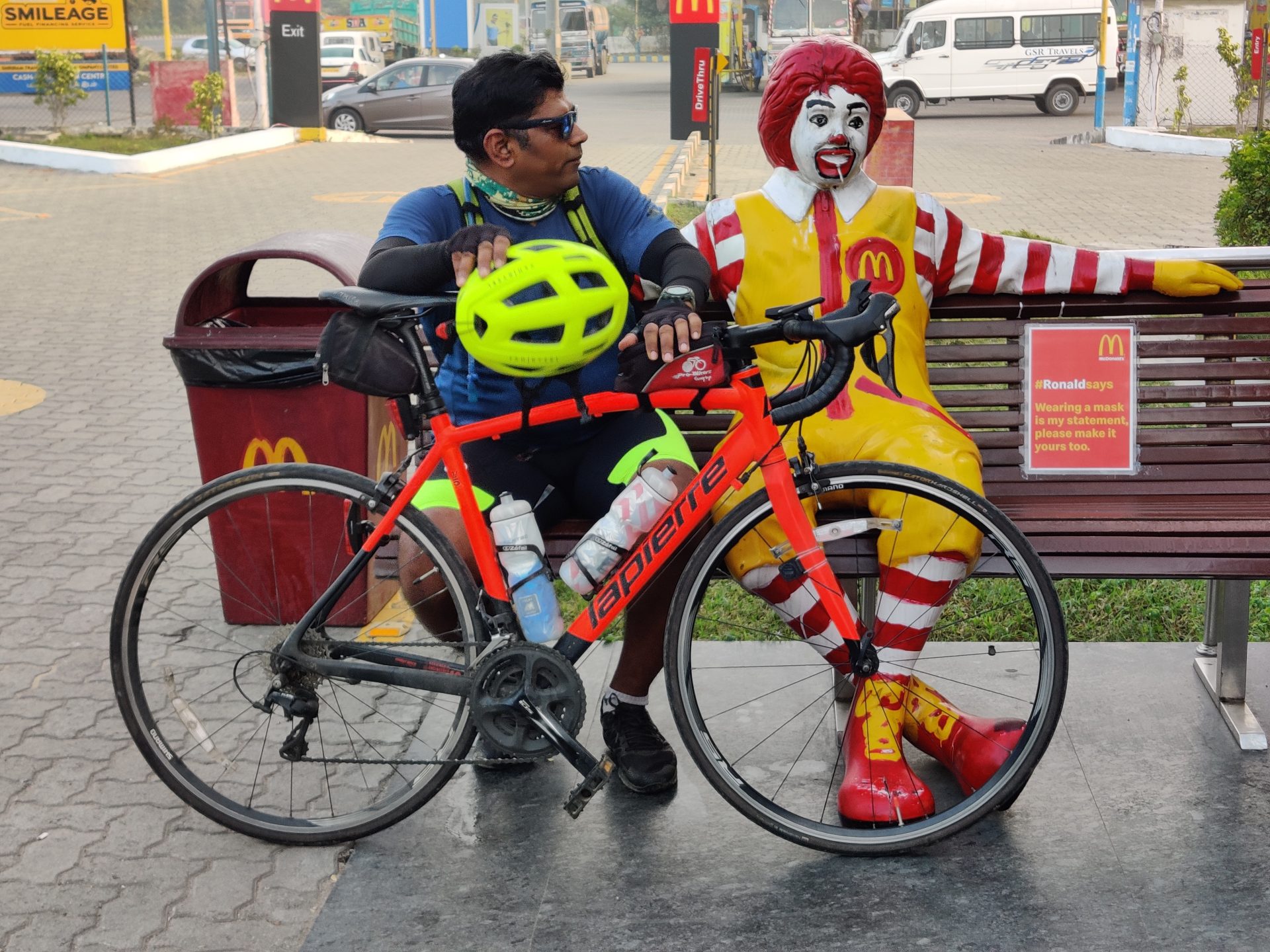
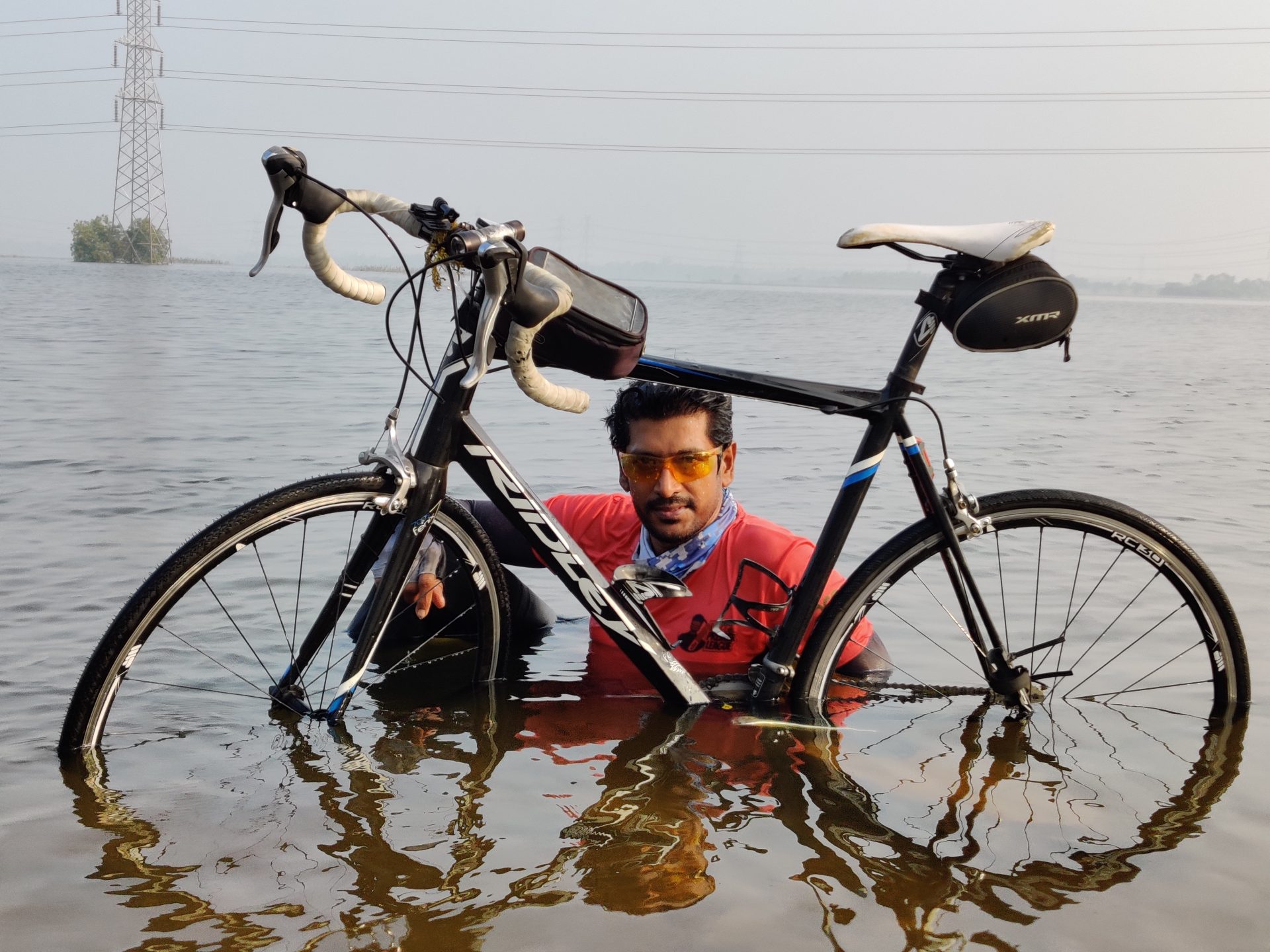
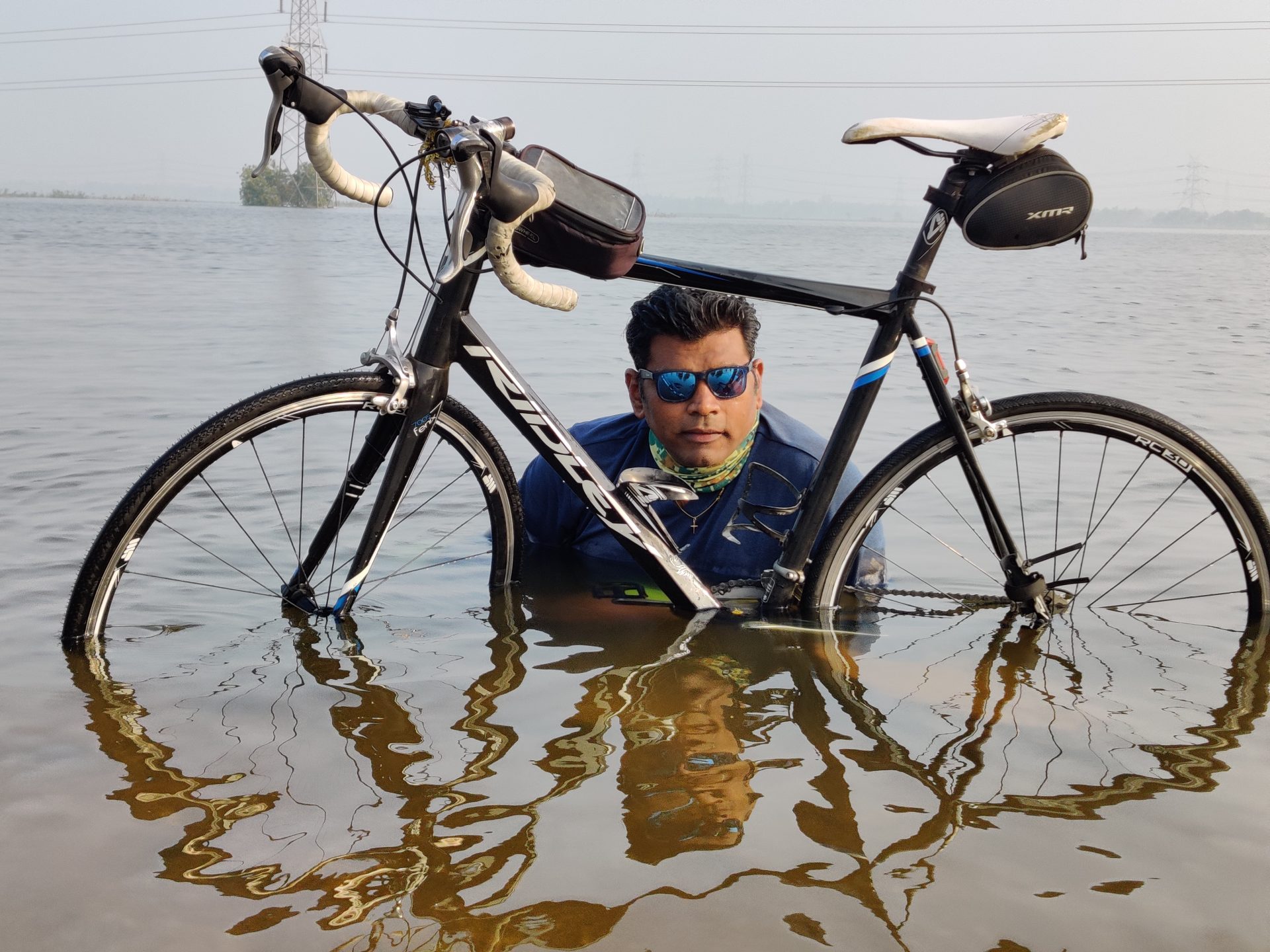
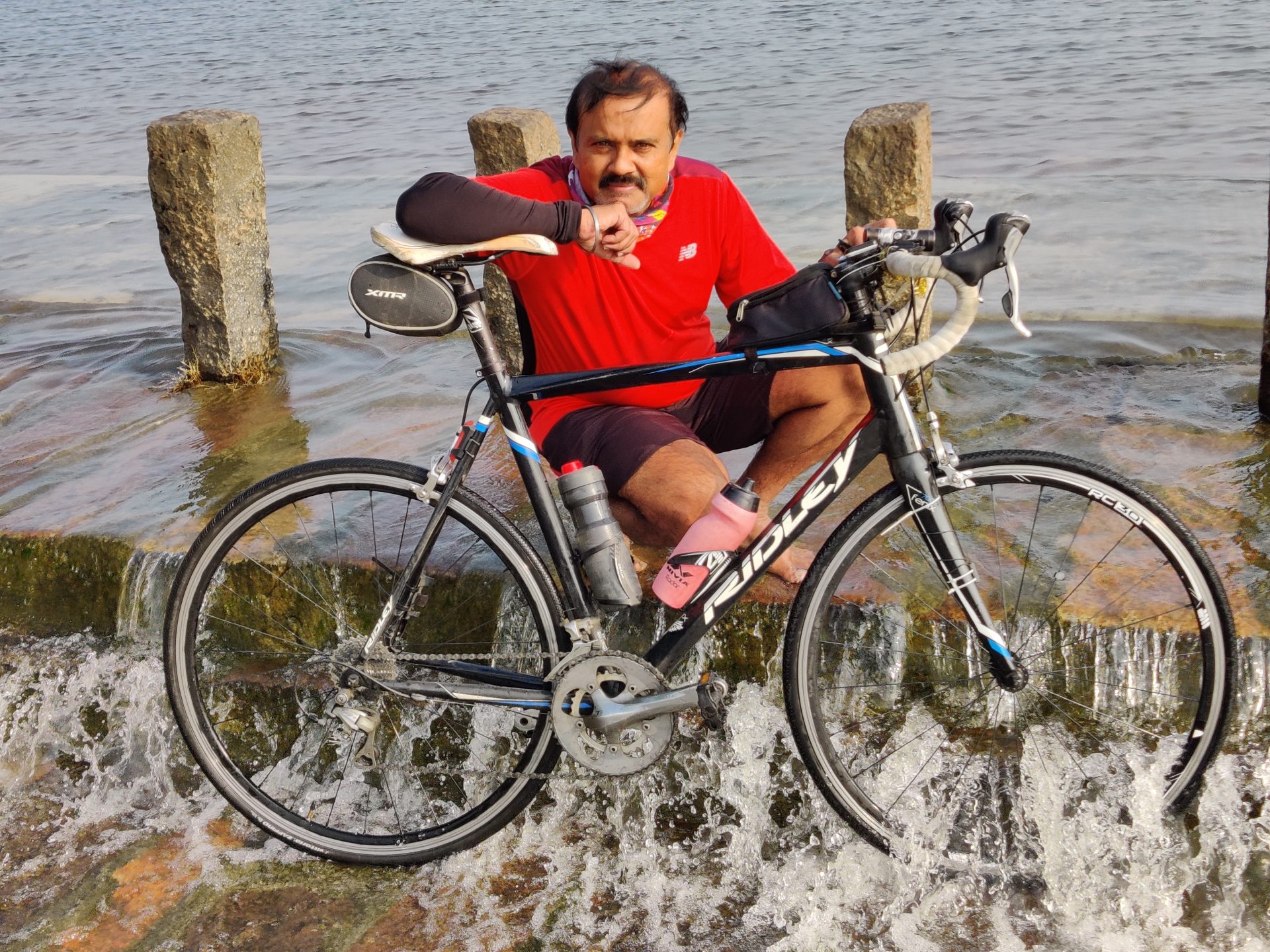
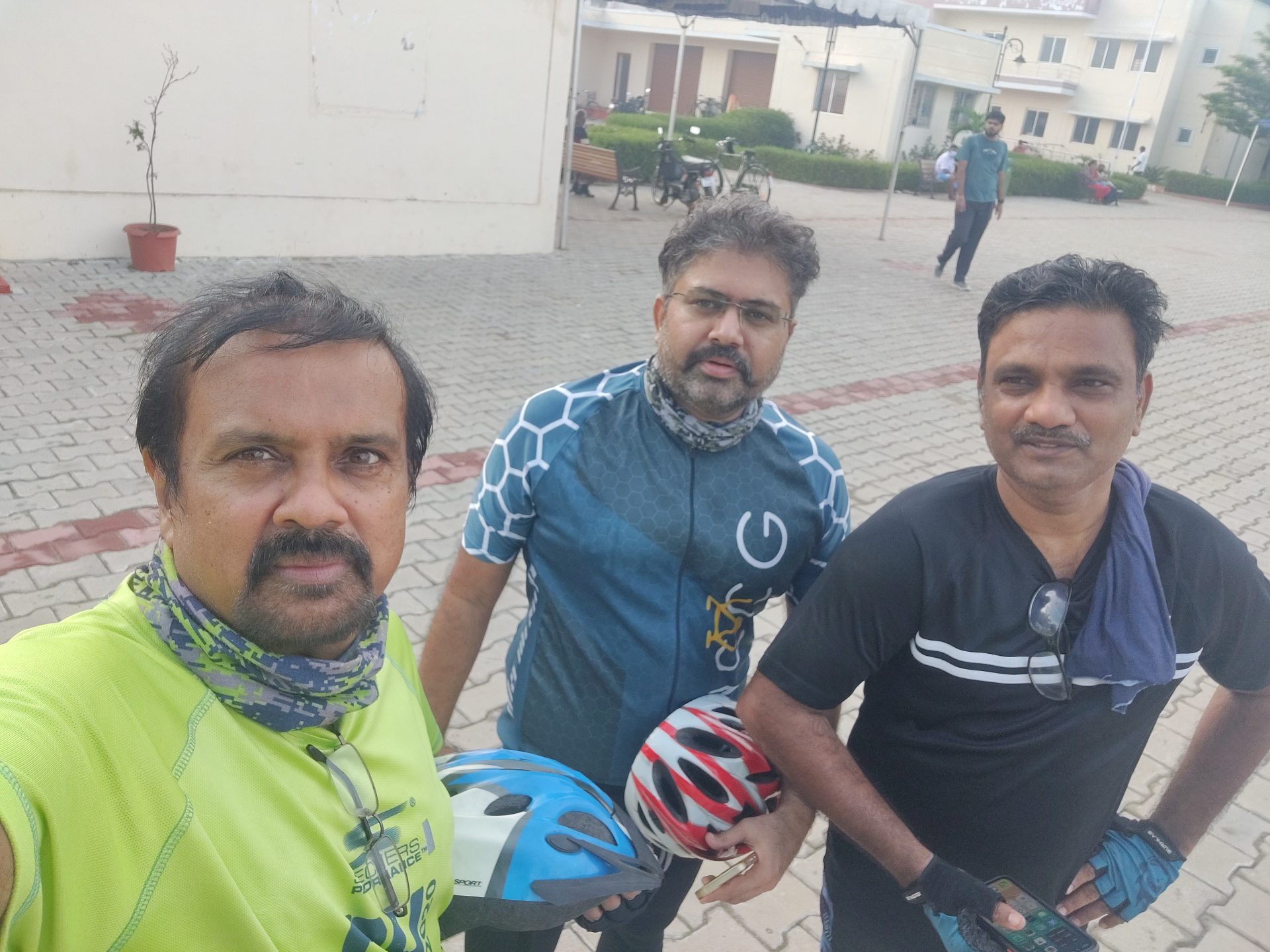
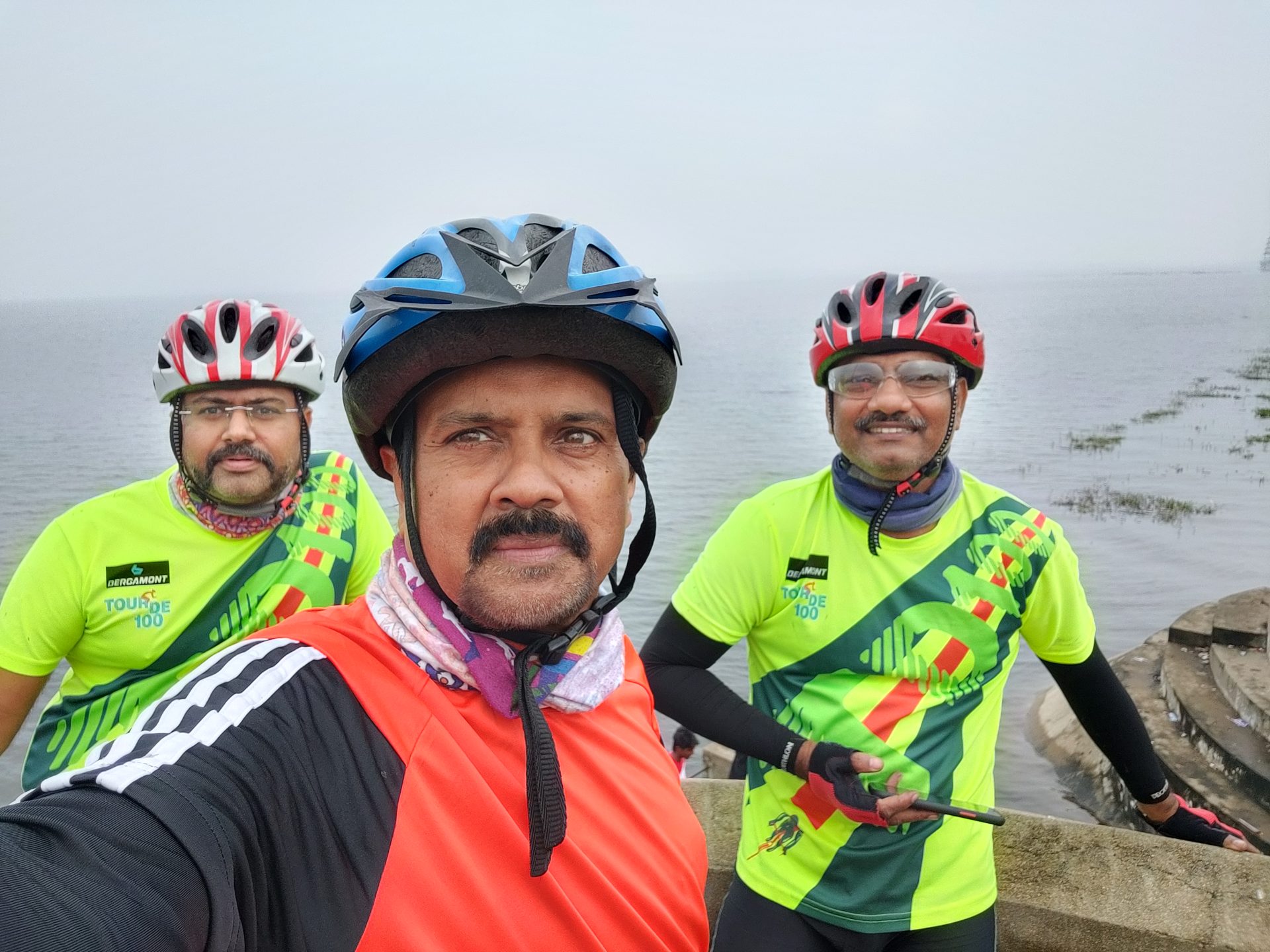
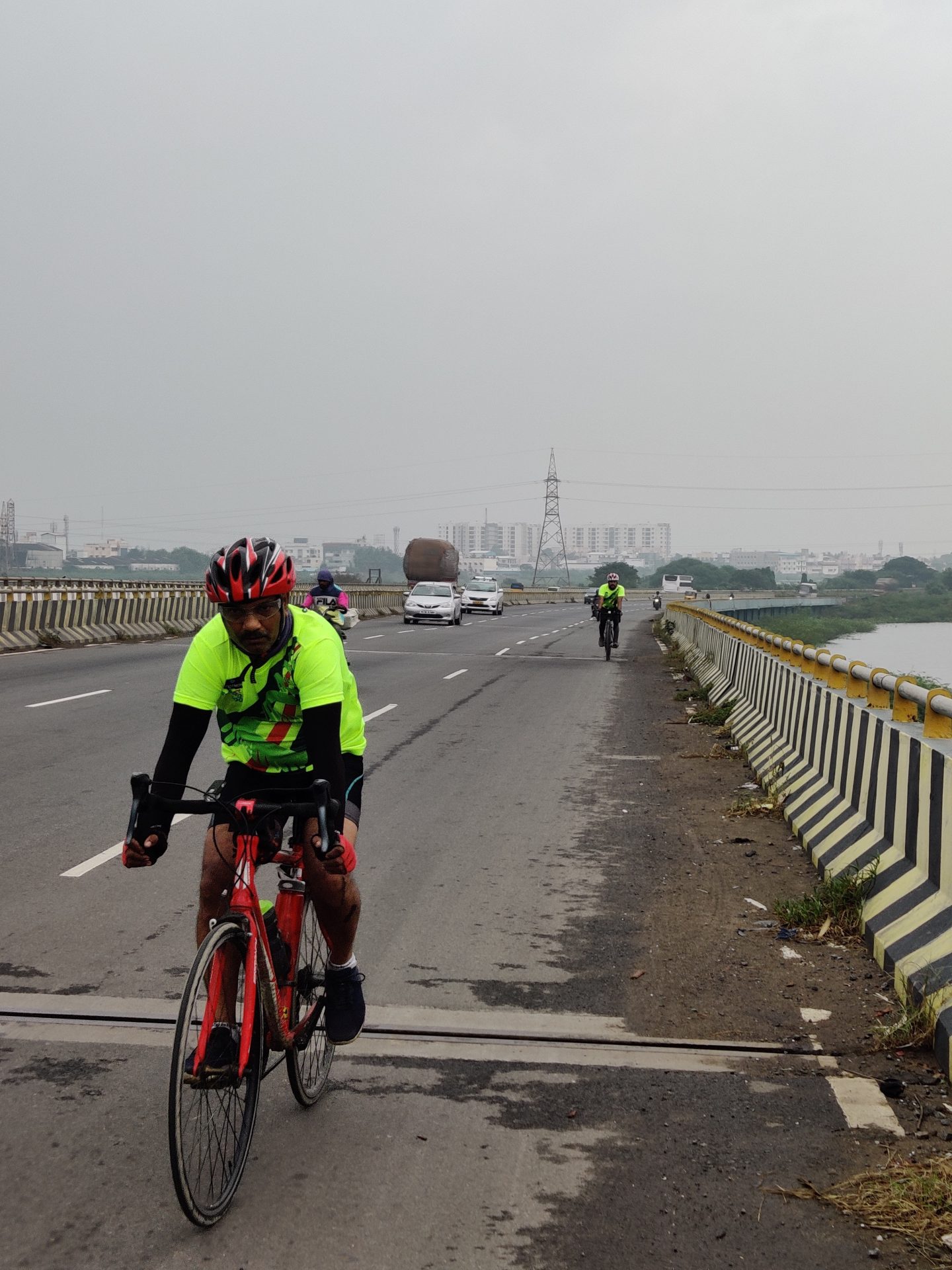
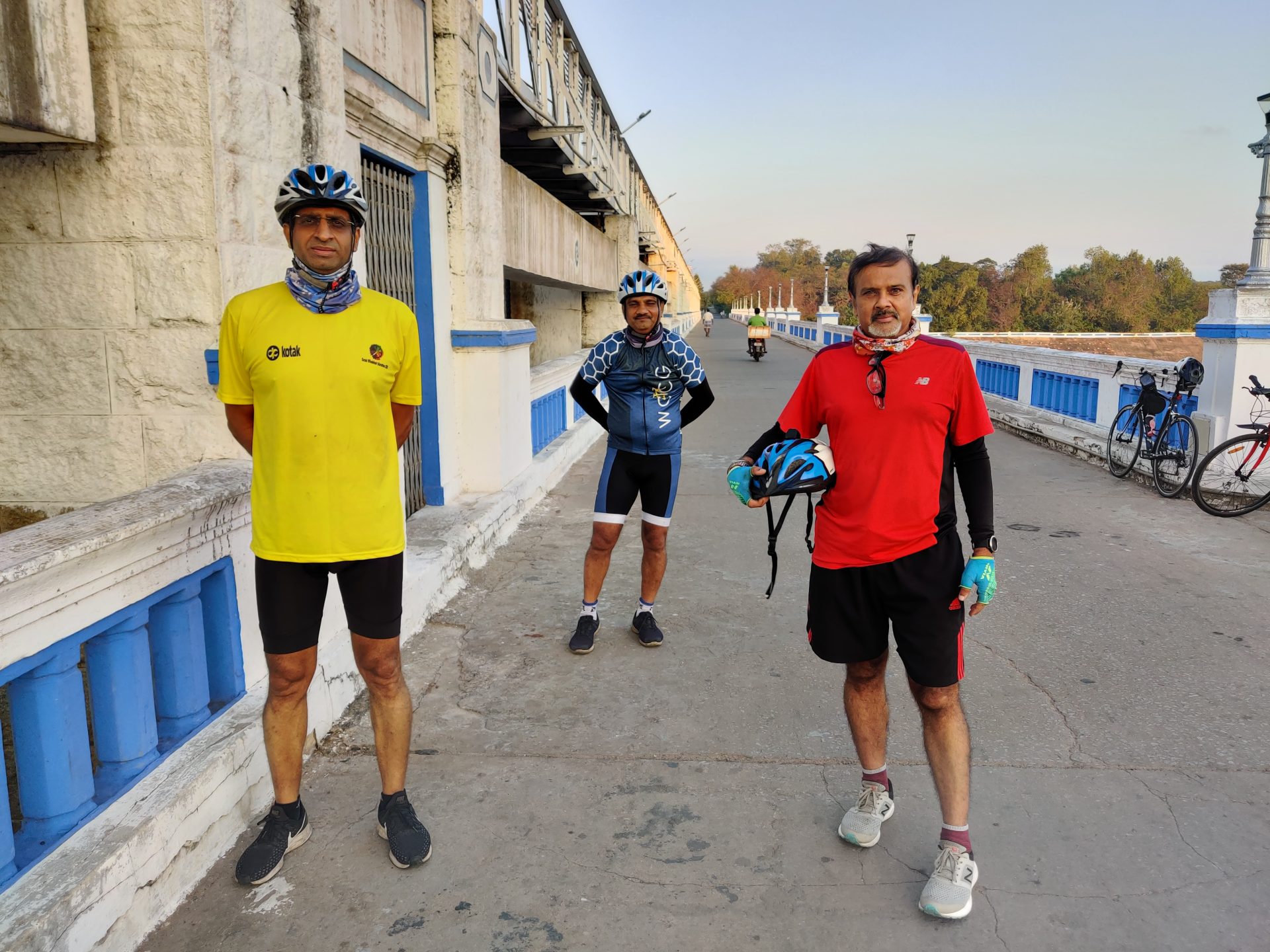
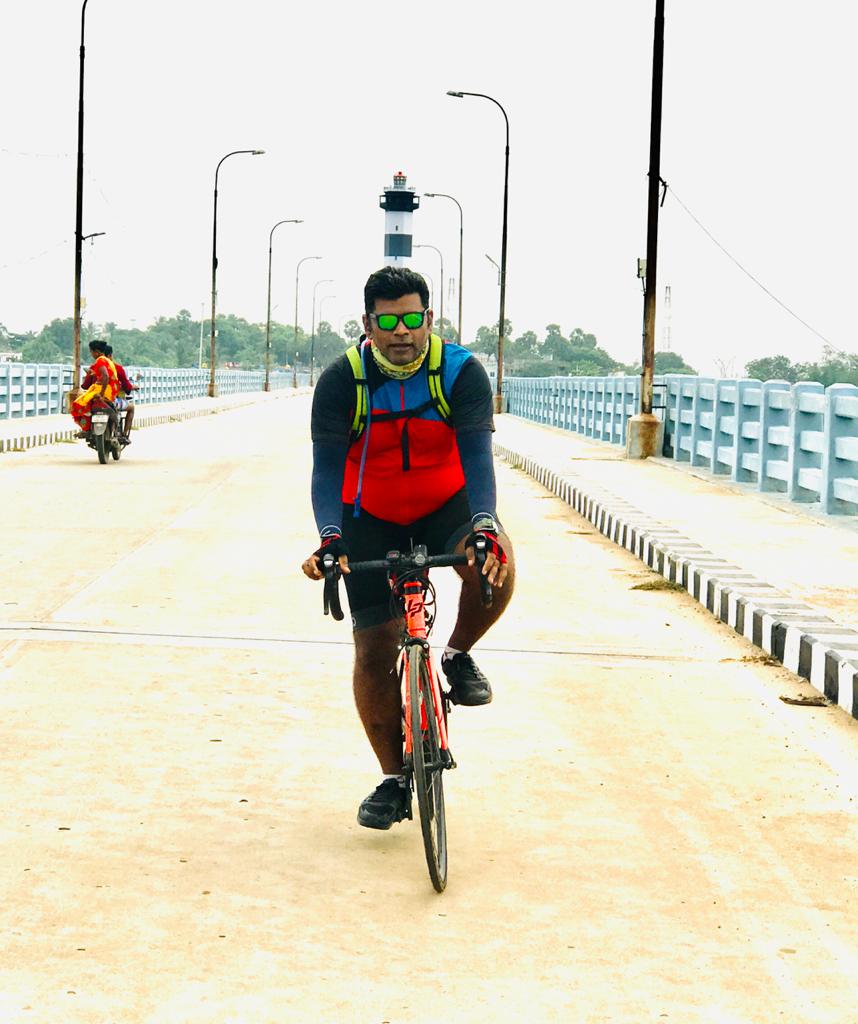
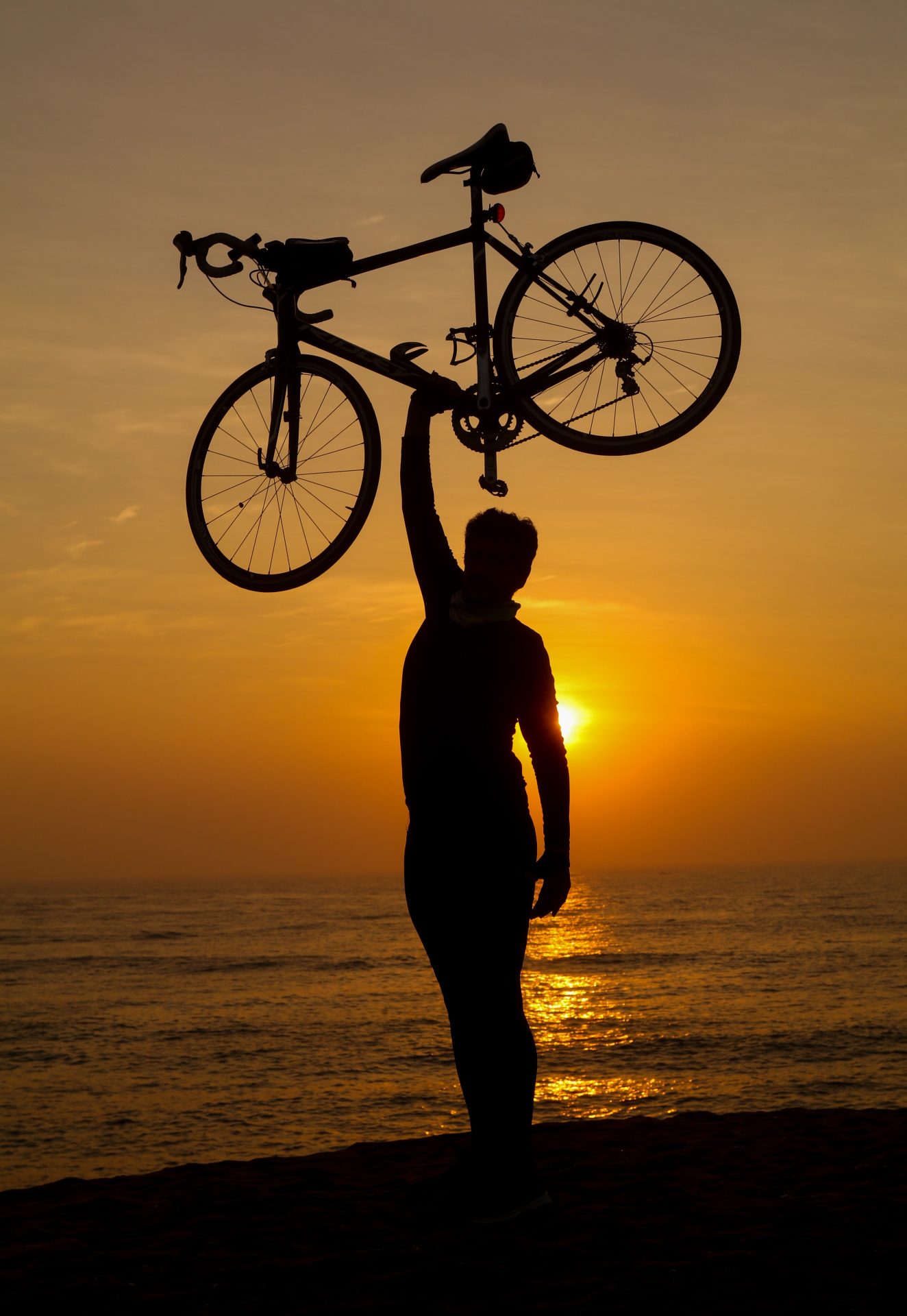
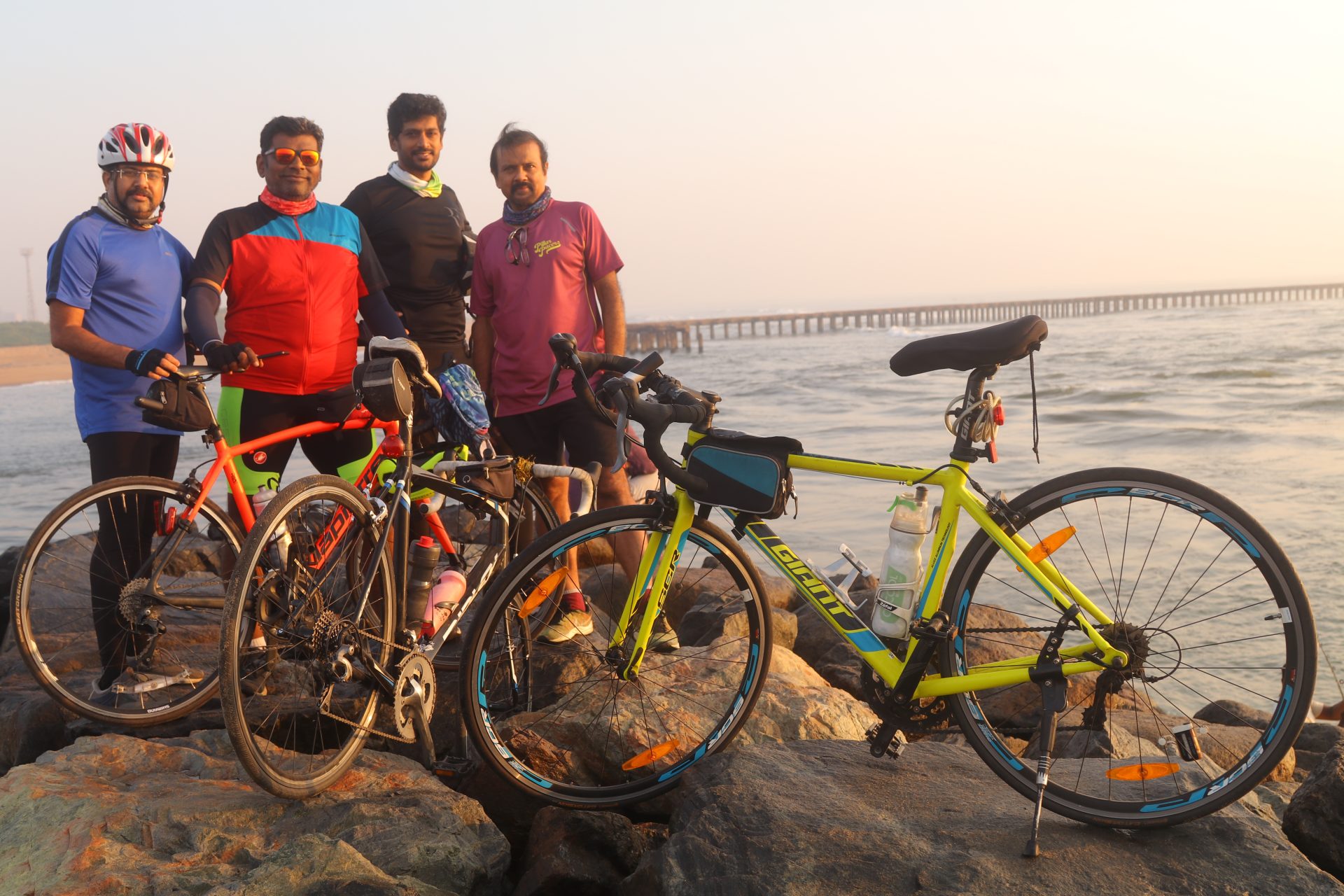
What lies ahead in terms of a read is a visual spectacle crafted in the company of a bunch of like minded good friends whom I would also label as  cyclists with similar tastes for exploring different places, doing the short and long haul over weekdays and weekends, photography, Kaapi and of course food. This page is a tribute to over 75-100 rides which we would have done together across the length and breadth of Chennai during different months (rainy days included), different times of the day and nights included  and the unparalled and unflagging enthusiasm exhibited during each of these rides. A lot of work went in behind the scenes in terms of identifying the place to visit, charting the route map, putting up the plan in the group for whoever wanted to join and of course helping out each other in the rides, be it with a flat which needed to get fixed or a fall or someone ending up with cramps or getting dehydrated.   

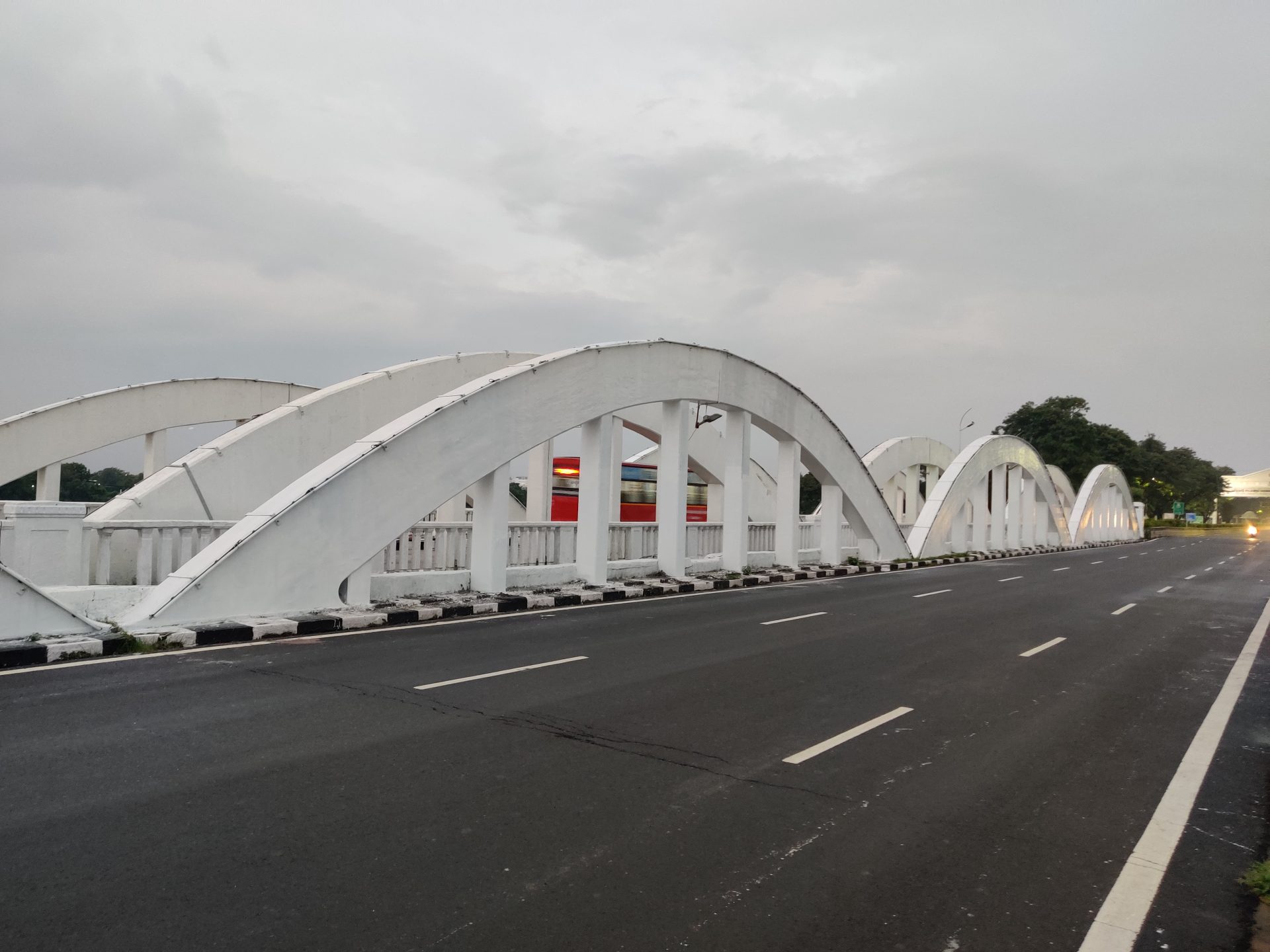
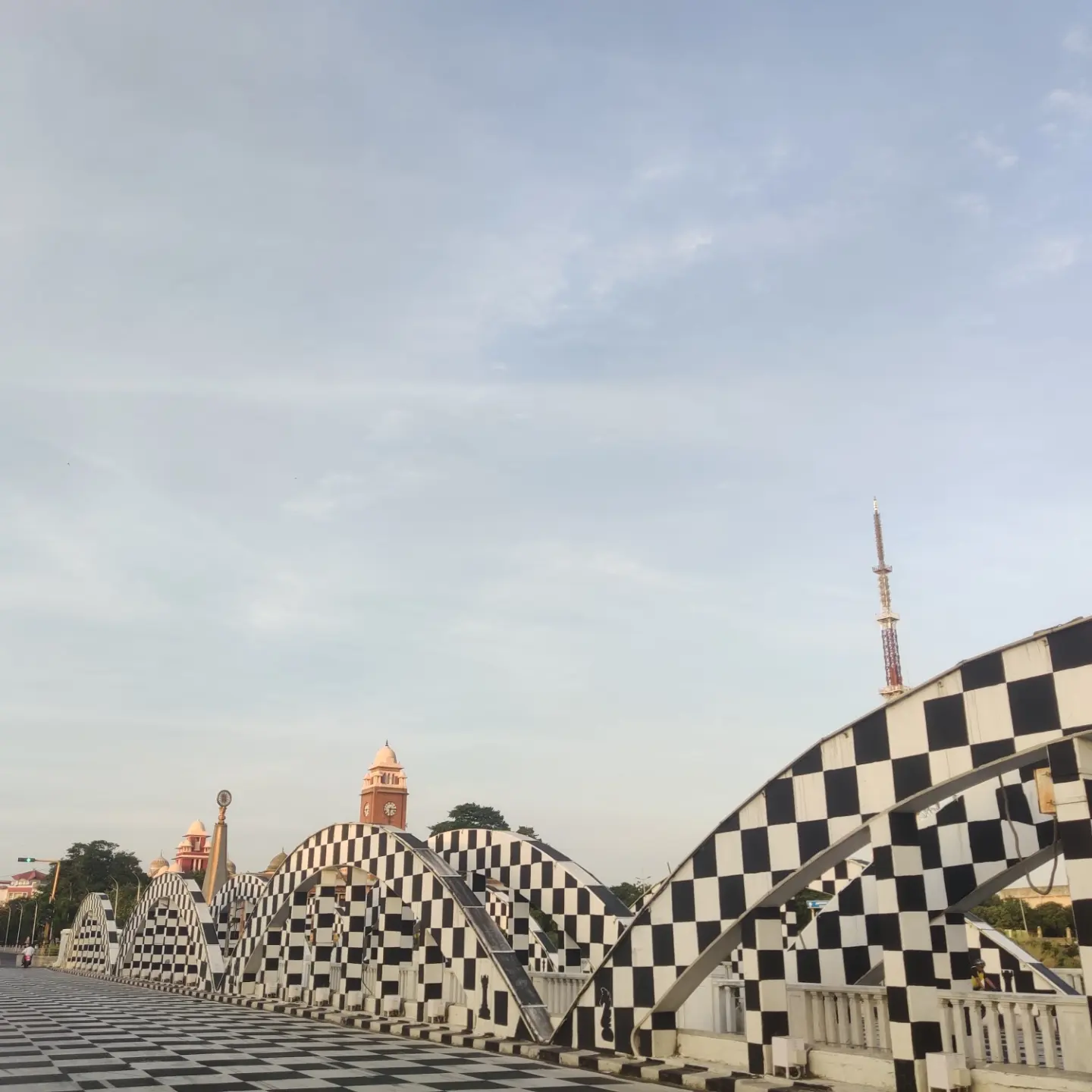
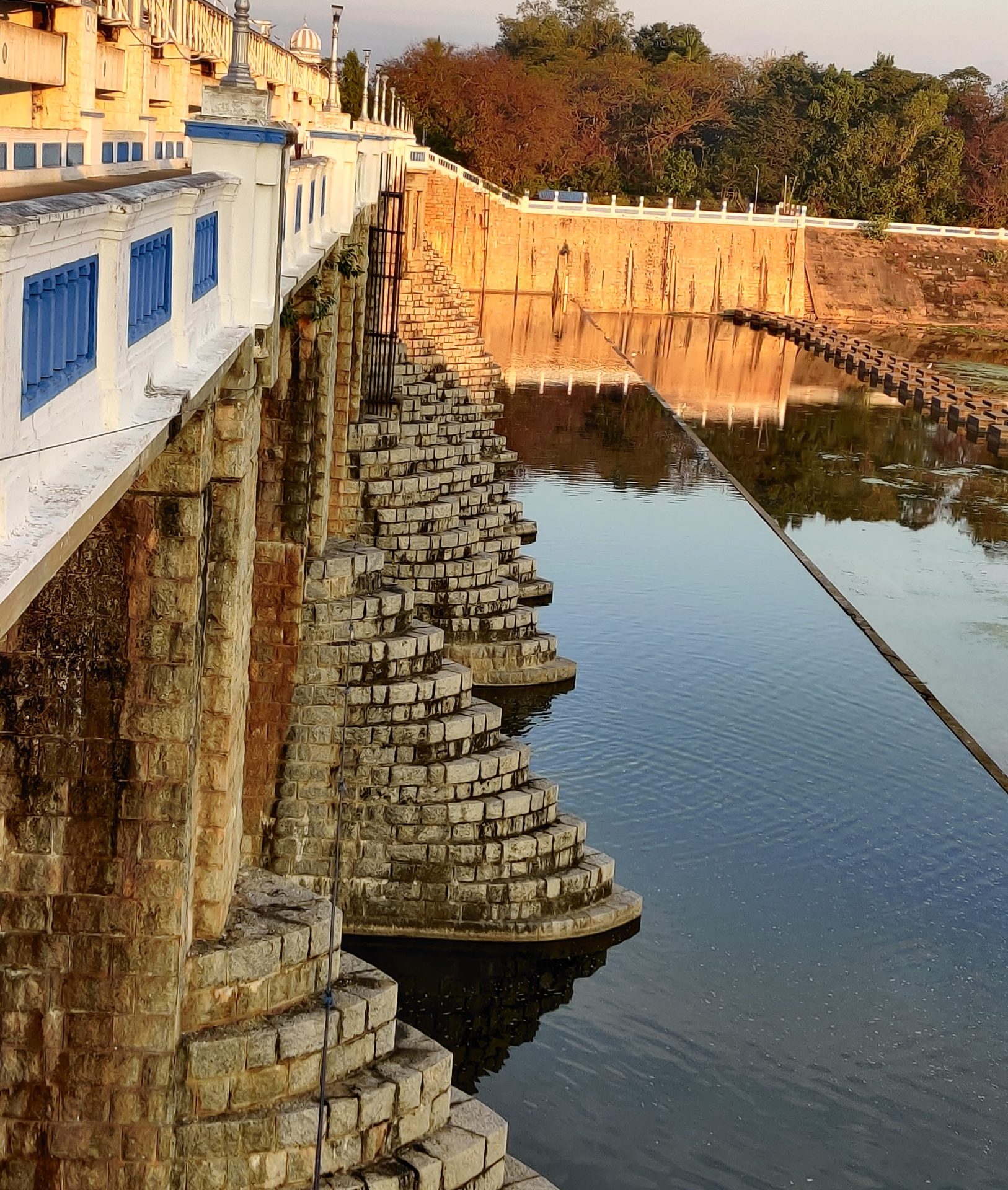
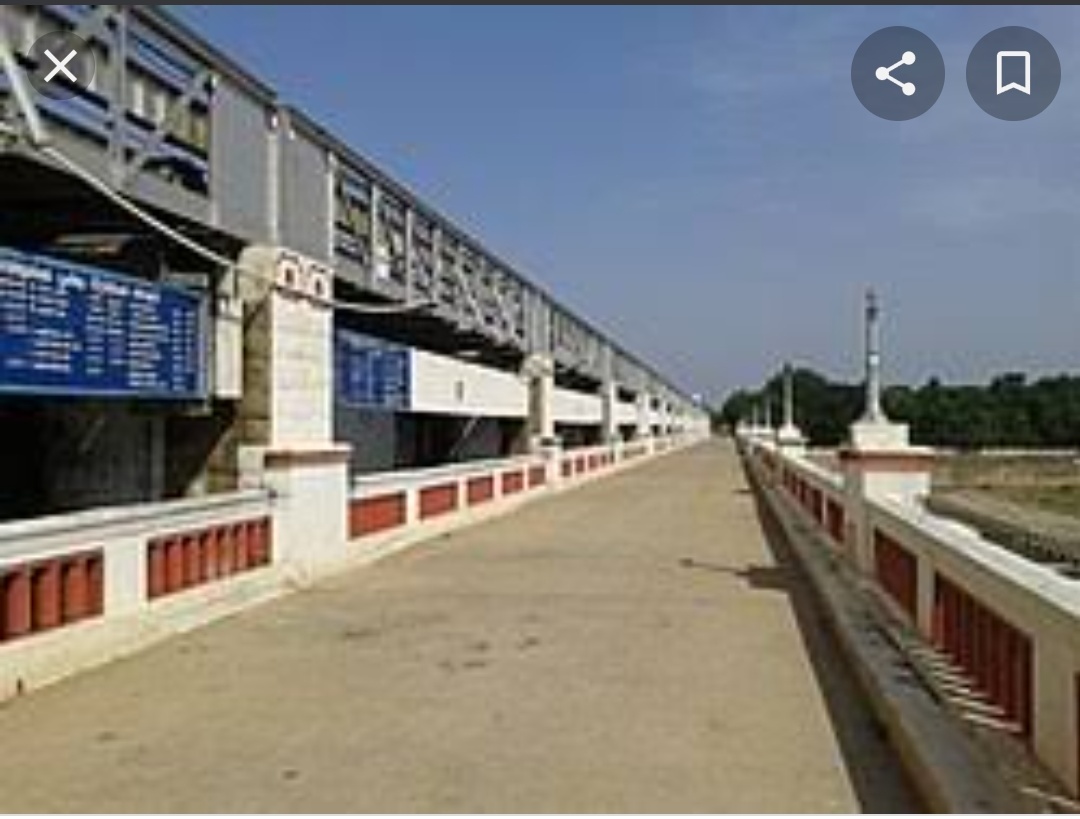
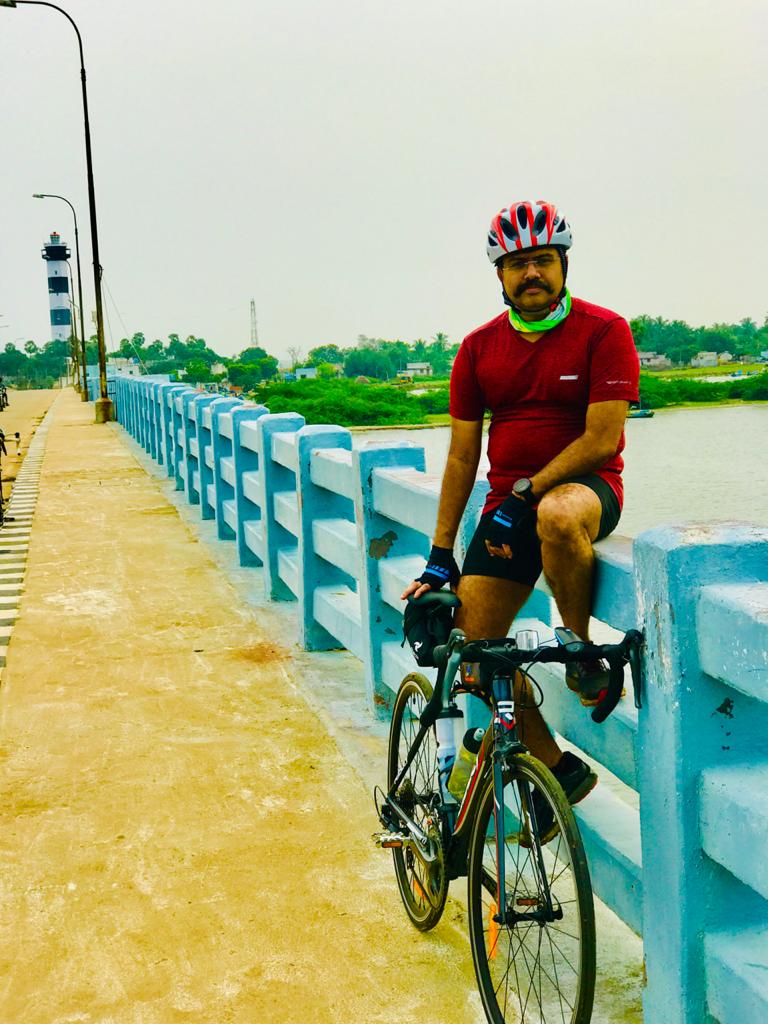
AN EARLY MORNING VIEW OF THE NAPIER BRIDGE
NEVER MISS THE FILTER COFFEE AT HOT CHIPS!!

Table of Contents

How does one reach Chennai

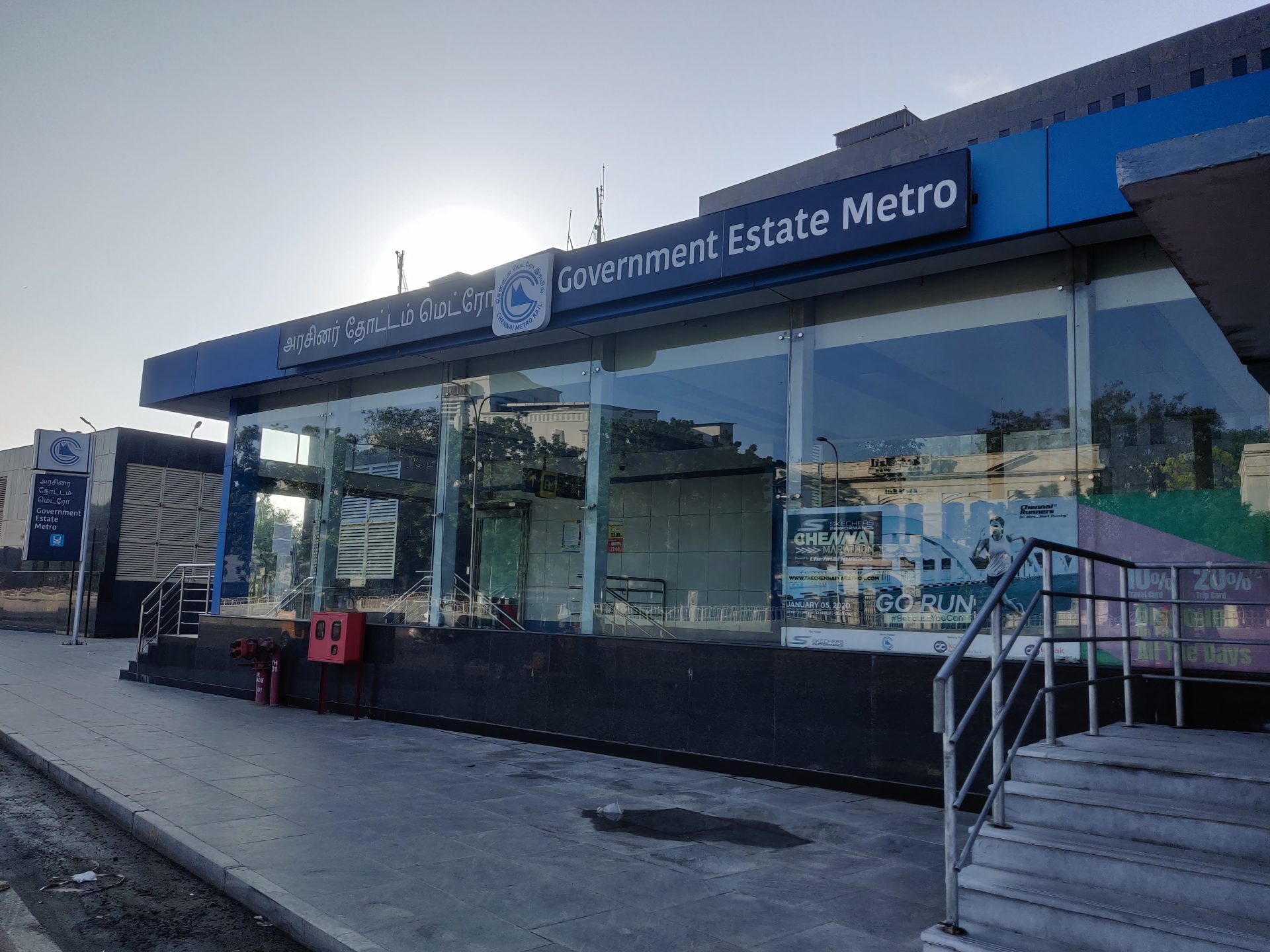
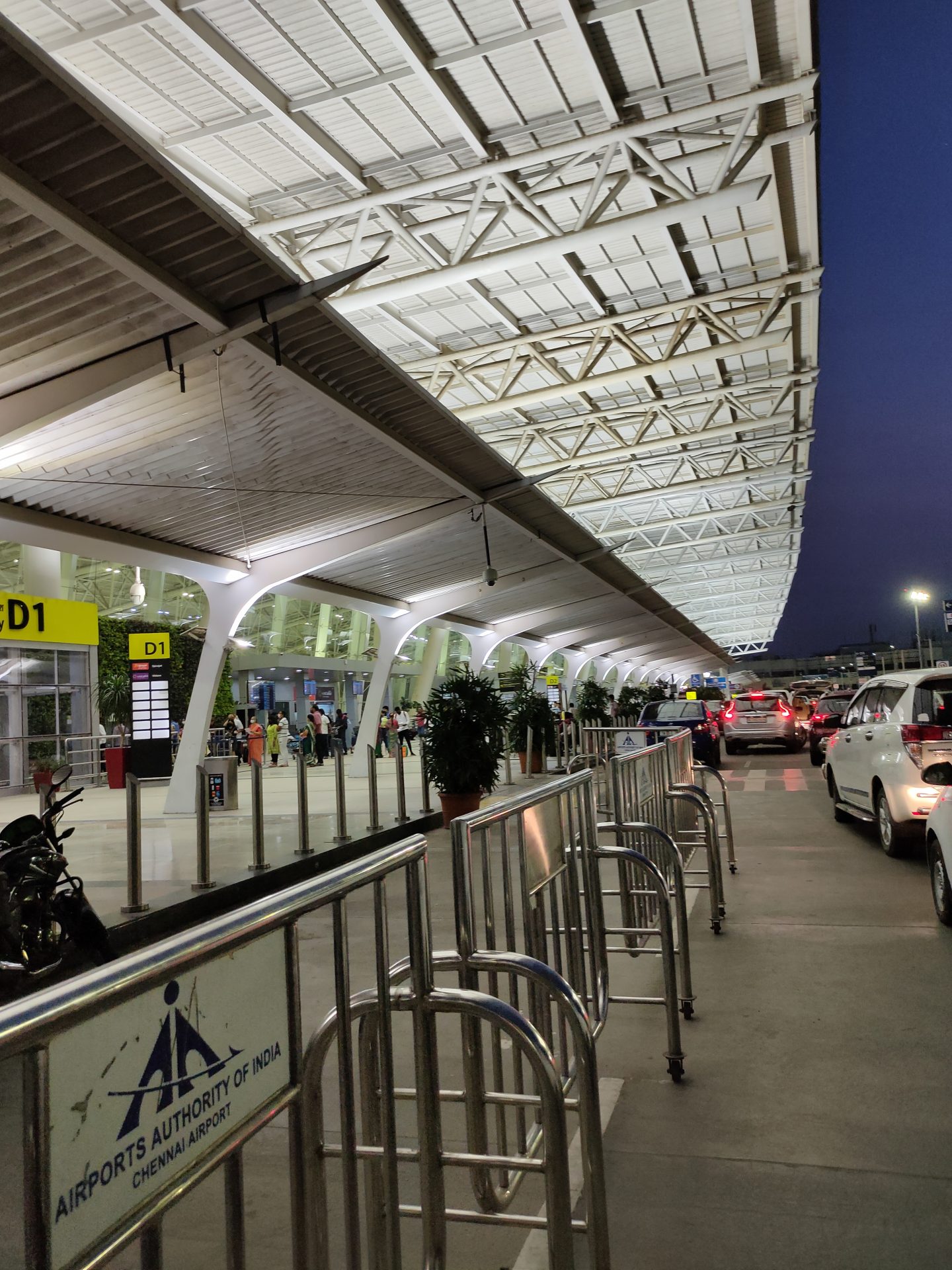
Chennai is well connected to all metros across India. People could look at flying into Chennai’s International Airport at Meenambakkam or doing the short or long haul by Train/Bus depending on where you are planning your travel from. The transport system with the MRTS rail, the suburban lines and the Metro connectivity  across the city, not withstanding what would get rolled in the next couple of years with the 2nd Phase of the Metro makes life a lot easy commuting across. 

You do have the Olas and Ubers of the world also plying besides a plethora of cab operators which makes it quite easy for commuting within and outside the city. And don’t forget to hitch a ride on the famed Chennai Autos who would size you up within minutes and demand all the extra money over the meter. 😂

A little bit of Trivia on Chennai

The city of Madras got renamed to Chennai only over a little over two and a half decades back. And while they say “What’s in a name”, the origins of its name has been a subject of intriguing debate between historians and scholars as well as some sections ascribing it to some  Portuguese lineage. 

Though  its widely believed that Madrasapattinam existed as a port way back in 1367, this was not known until the time the Britishers bought this fishing village from a ruler of the Mudiraj community in 1639. The name Madras is supposedly a derivative from this community name. The Britishers then developed this village to serve as a port. Fort St George got built within the next 5 years and while the current Secretariat got built around it, it still is in existence as a Museum, preserving the lineage of being an East India Company trading outpost and British military garrison.  

The oldest Anglican Church of India and the Wellesley House which has the paintings of officials of the British regime and the Governor of the Fort are housed within this Fort complex.


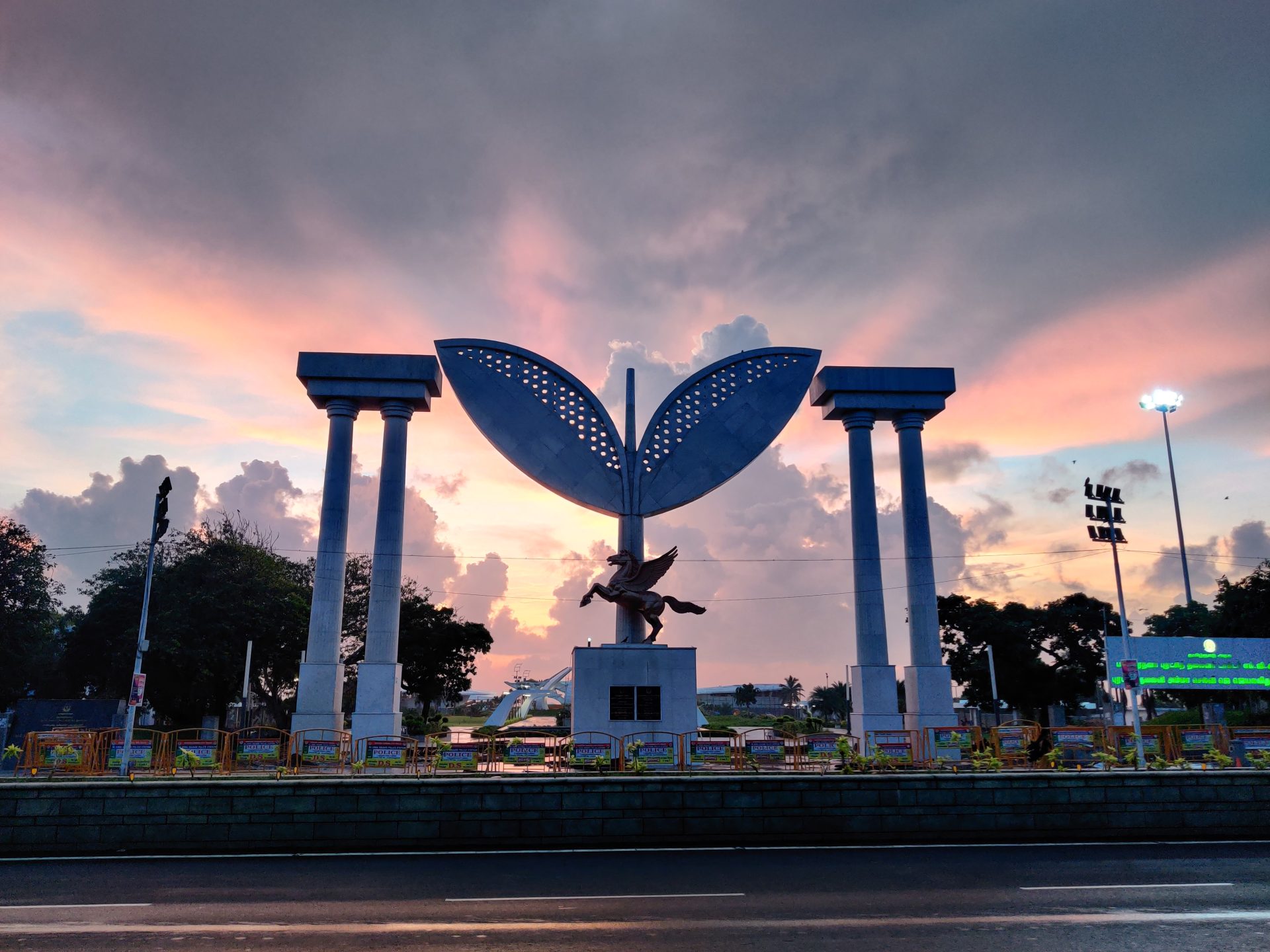
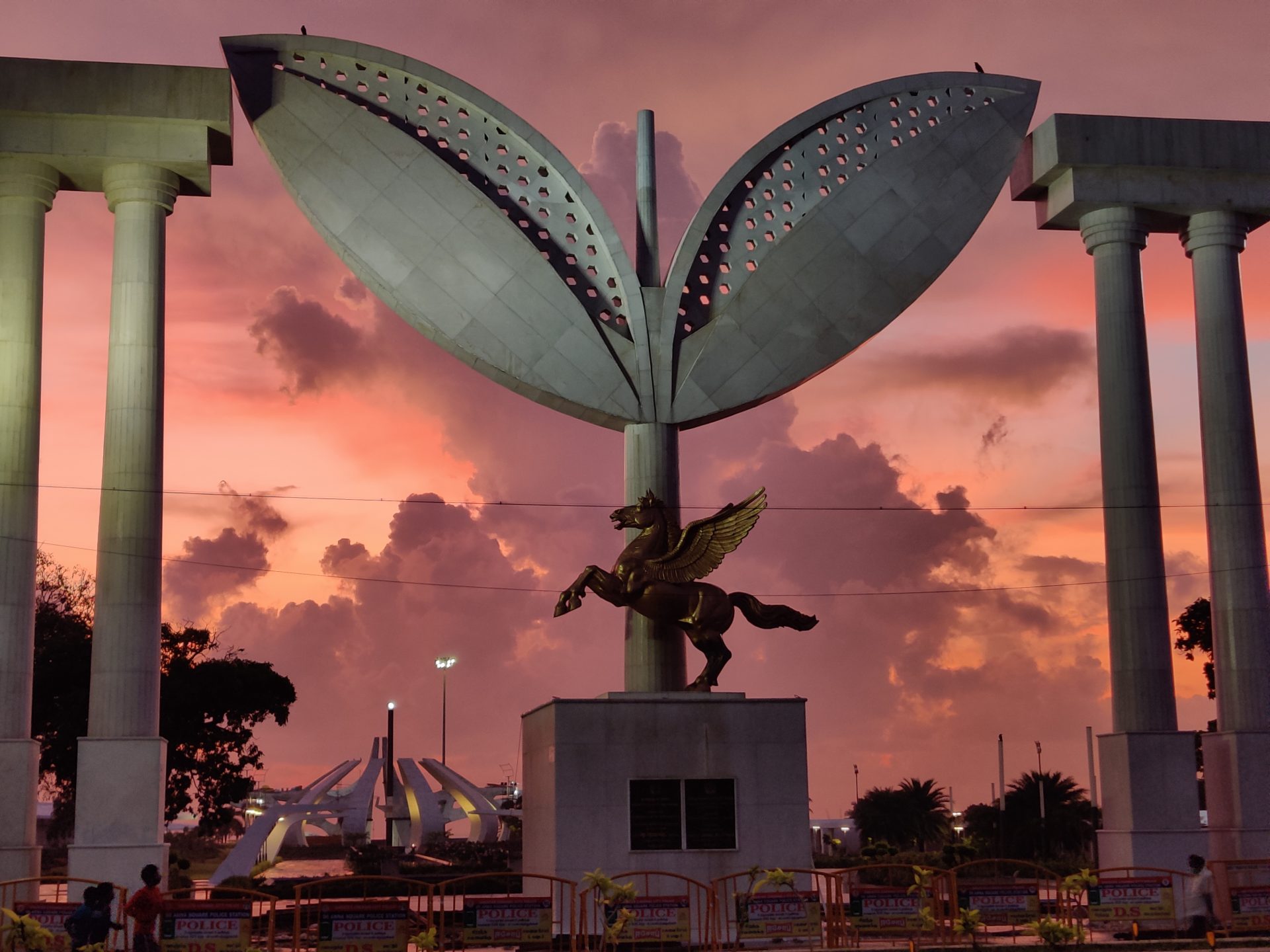
THE MGR MEMORIAL WITH THE PEGASUS

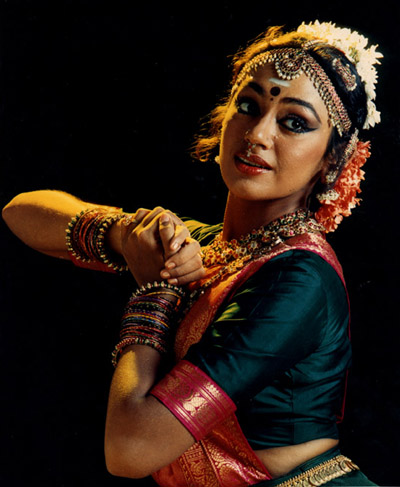
The city is steeped in its traditions of religion, festivals, dance and music while also embracing the paradigm shift which we keep witnessing with the changing mindsets of youth. The city offers a perfect balance of the modern and tradition cultures so very beautifully that there is a feeling that there is always something for everyone to enjoy. 

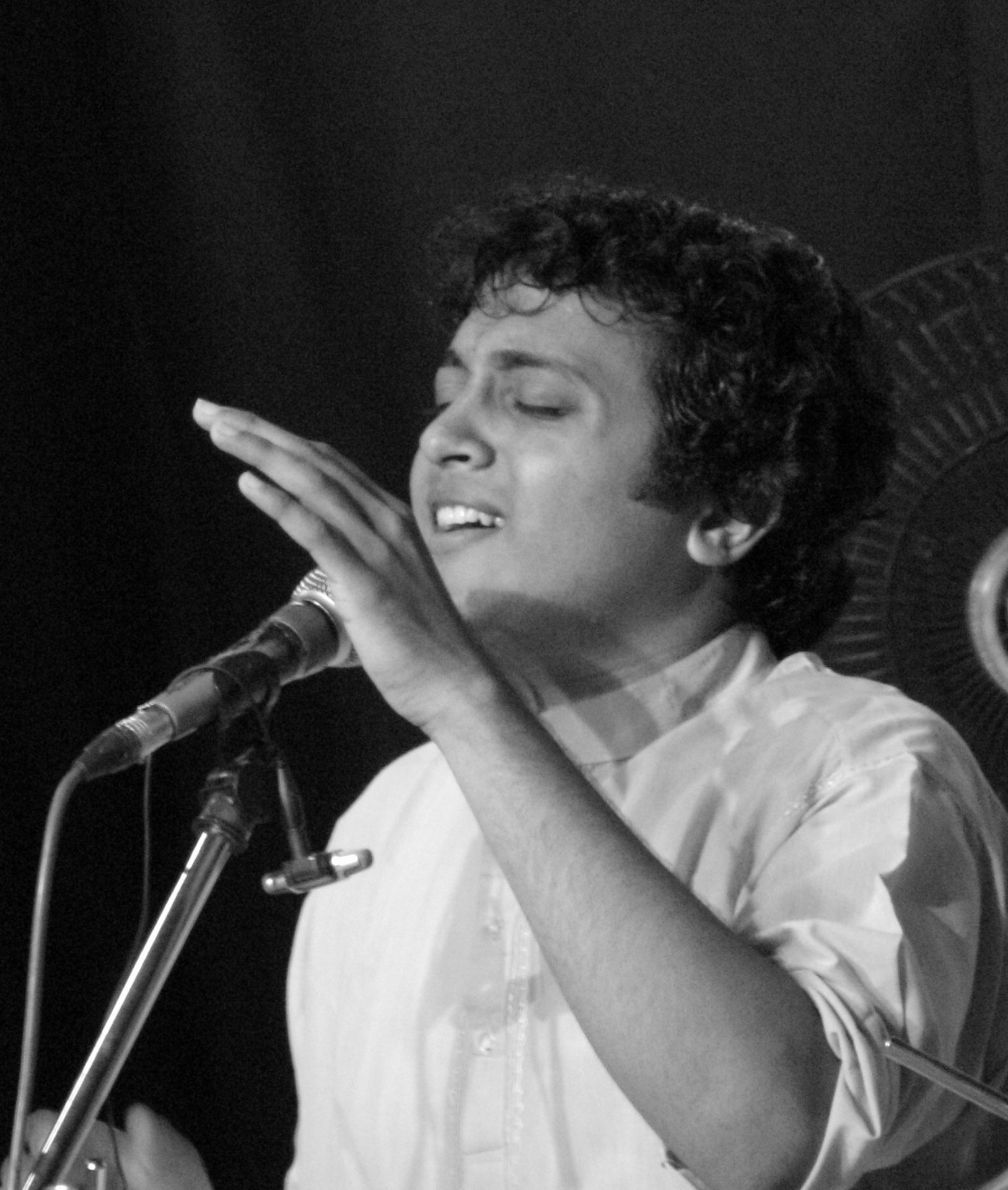
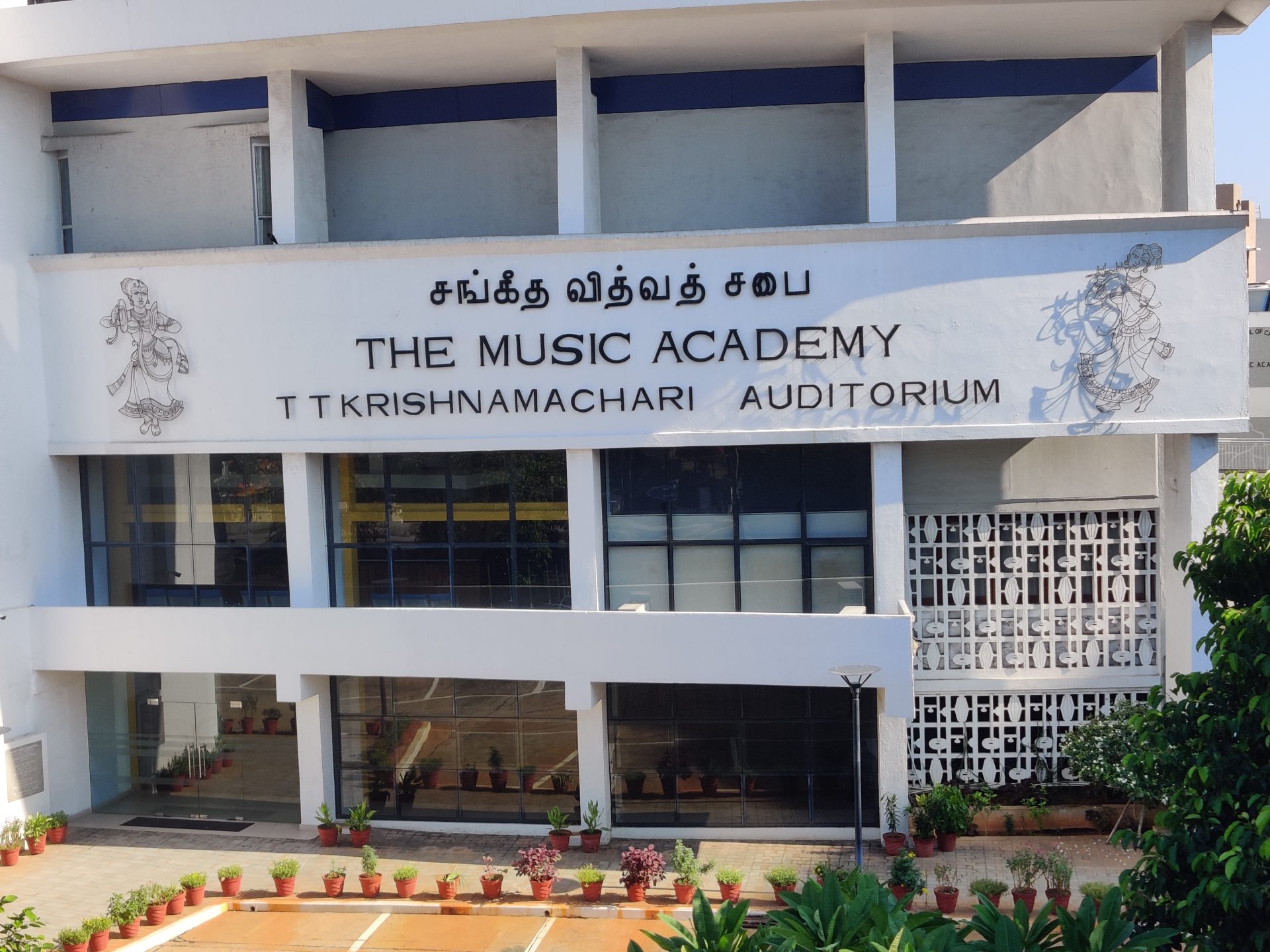
The months of December see a whole lot of  Carnatic Musicians coming together to regale the so called Rasikas through music/dance concerts held throughout the day during the weeks of December and January. During the  course of this music festival, various sabhas have programmes running in different parts of  the city and music aficionados are known for hopping across various halls right from 8 in the morning till about 8 in the night, listening to their favourite artists. All these Sabhas set up Canteens for these 20 odd days from 10th of December at their premises and are run by Chennai’s famous marriage caterers and restauranters.

Chennai has evolved over the years to make it a Cultural capital of the South apart from being a very strong hub for Education and Healthcare. It also remains to be an important Industrial  hub for the Automotive manufacturing sector, thus  earning it the sobriquet of Detroit of India.

On the tourism front, there are lots of attractions to choose from in Chennai starting from the multitude of frequently accessed and the less inhabited beaches, Amusement Parks and Shopping Malls, Ancient and Modern temples, Vast expanses of Lakes, Wildlife Parks, Planetariums, Memorials and Museums and so many more. A gastronomic’s  delight, this city never ceases to throw up surprises in terms of the delightful and range of food on offer starting from the traditional piping hot Dabara Tumbler strong South Indian Filter Coffee being served out of Starbucks to the rich South Indian Thalis. If someone were to come in search of a Bengali or a simple Gujarati meal or even fancy some exquisite Mexican or Mediterranean Cuisine, Chennai is the right place for it. 

The Weatherman's report on Chennai

The people of Chennai are blessed to enjoy 3 seasons  in a year which are the Hot, Hotter and Hottest months. Winter is non existent though you will see people wearing monkey caps and sweaters during the months of December and January. The rainy season is pretty unpredictable but it usually rains during the months between August to November. An ideal time to visit Chennai would be between December to February. The humidity levels are pretty high throughout the year, given the proximity to the sea. Light cotton shades are always the recommended go to wear and do not miss your sunshades.

As one moves outside the City, the coastal stretch of the East Coast Road has lots of touristy attractions and some lovely resorts  for the discerning traveler depending on his palate for adventure, religion, water sports etc and all the way leading him or her to the adjoining town of Mahabalipuram where one can witness some breathtaking sculptures on display. 

The Old Mahabalipuram Road (OMR) remains the favorite destination of most IT companies. 

A 100 Km ride further down would bring one to the coastal city of Pondicherry.

Planning your stay

A plethora of 3 to 5 and even 7 star  hotels and boutique hotels/resorts to choose from depending on your interests.  If you are in for the music season , try Hotel Savera or  New Woodlands, Maris, President, Raj Park which are in the vicinity of most of the sabhas. If you are interested in shopping, chose a place close to T.Nagar like the GRT Grand Days/Residency Towers/Hotel Residency or if you are conscious about budgets , you could opt for Shilton Dee Cee/Raj Palace/S Hotel or Kuber Inn. The entire stretch of Anna Salai has some nice hotels like  ITC Grand Chola/Courtyard Marriot/Rain Tree/Hyatt/Ibis etc while if you want to be closer to the beaches check out the resorts on ECR like VGP Golden Beach/MGM Resorts/Grande Bay Resorts and Spa/Jade Beach/Green Coconut Resort/4 Points Sheraton etc  

Going around Chennai

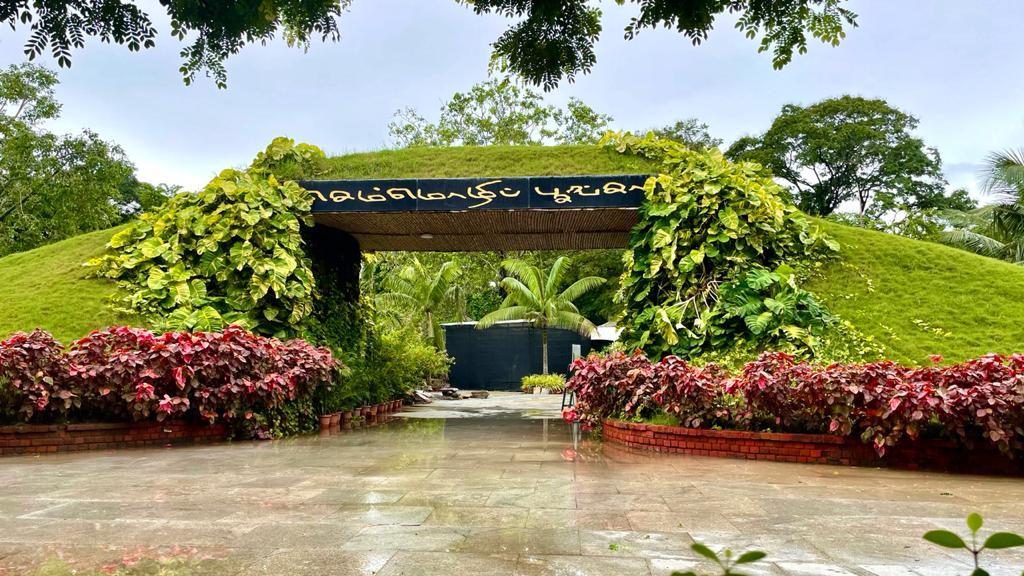
Semmozhi (Botanical Garden)

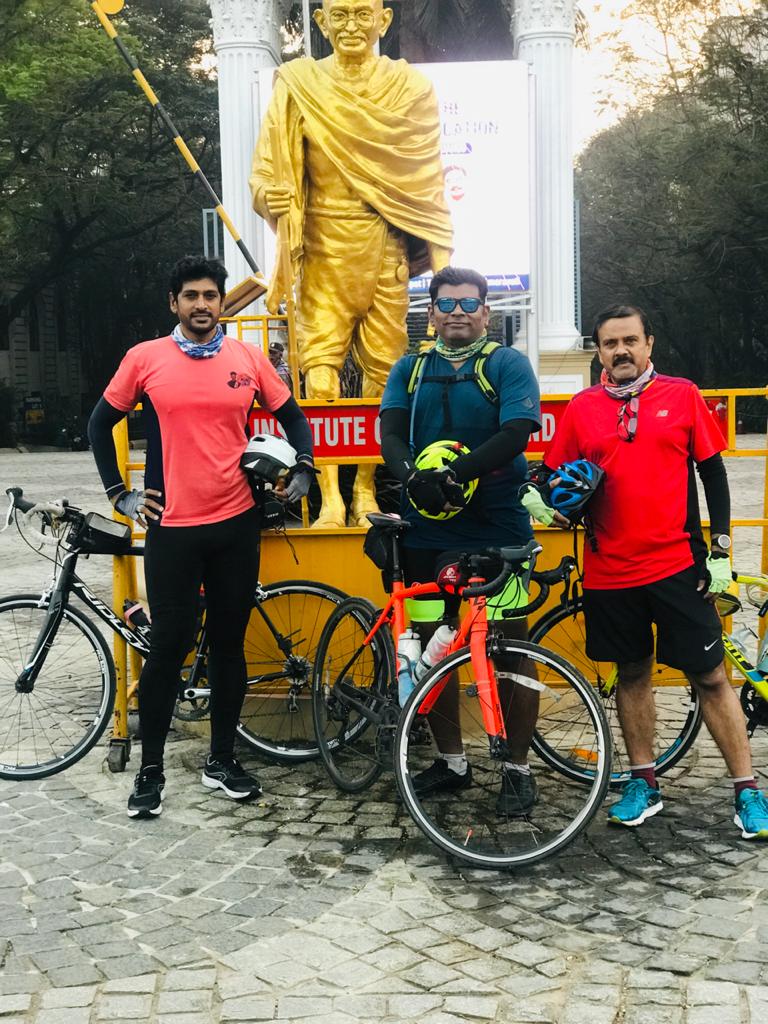
A ride towards the Gandhi statue located near the shores of the Marina beach via the American Consulate has the gorgeous and lush green Botanical garden spread over an area of 20 acres with over 500 different varieties of plants on the right side of the road. This Park came up in 2010 after orders to shut down  the iconic Woodlands restaurant which used to operate from here till 2008 were issued by the High court. A very popular hangout amongst office goers in the afternoon and families in the evening, this was a most often sought out place to carry out a quick review or do a target setting session with teams. 

A regular at Woodlands would probably never have missed the familiar sight of the legendary playback singer and lyricist P.B.Srinivas sitting with his small diary and penning songs over a cuppa coffee.

The Marina and the Elliots Beach

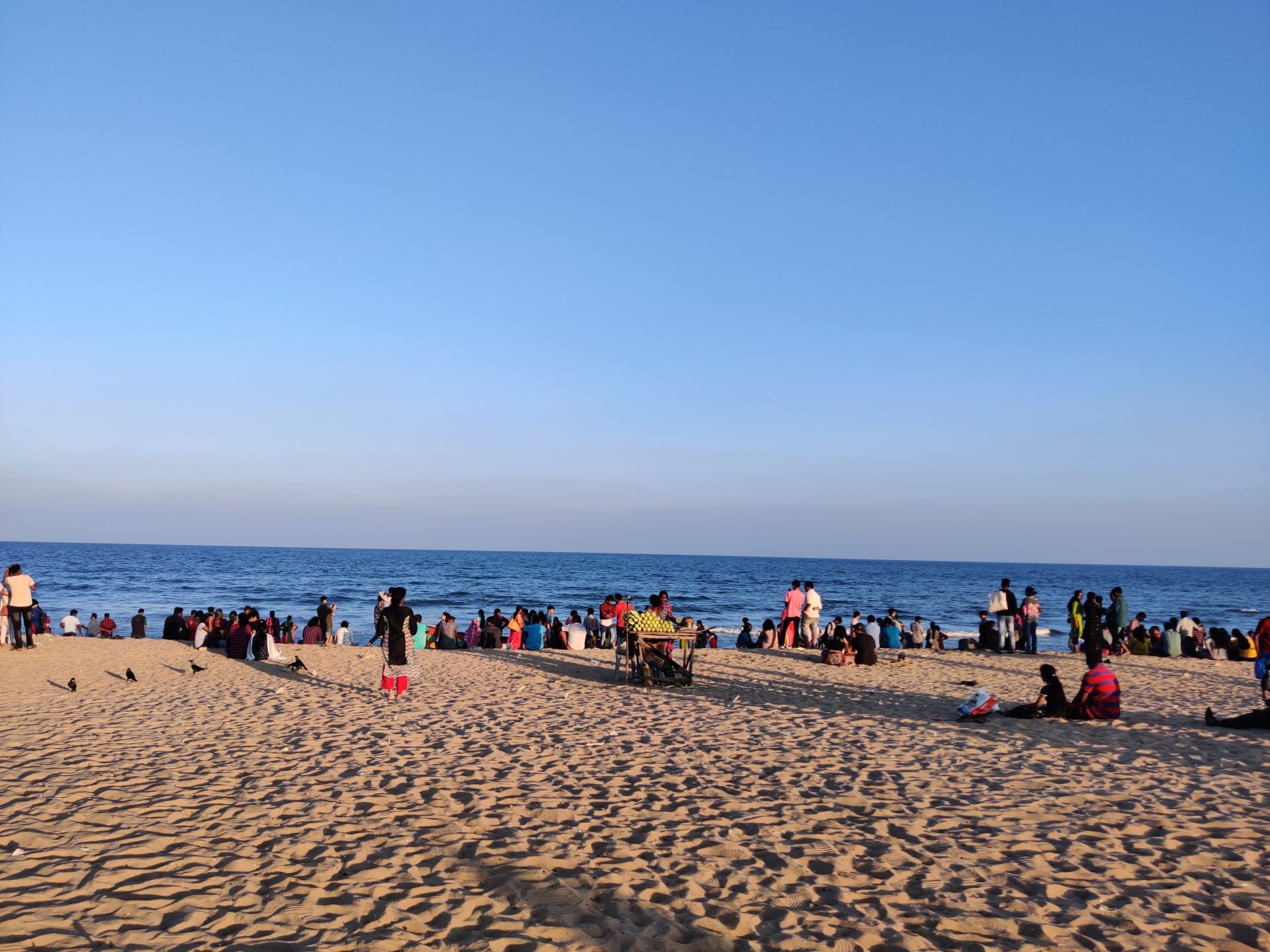
The favorite pit stop for most cyclists irrespective of which part of the city you stay in, is  the Marina, India’s longest urban and natural beachOne amongst the most invigorating landmarks in the city by which Chennai identifies itself,  the beach starts from the Fort St George located in the Northern part of Chennai near the Secretariat all the way to the Foreshore Estate. This 6 Km stretch of sandy shores comes vibrant on weekends and towards the evenings on all weekdays. The beach extends by another 7 kms towards Beasant Nagar where the beach is more popularly known as the Edward Elliots or the Bessie Beach. This 13 km length of shoreline makes it to be the Second Longest beach in the world.  

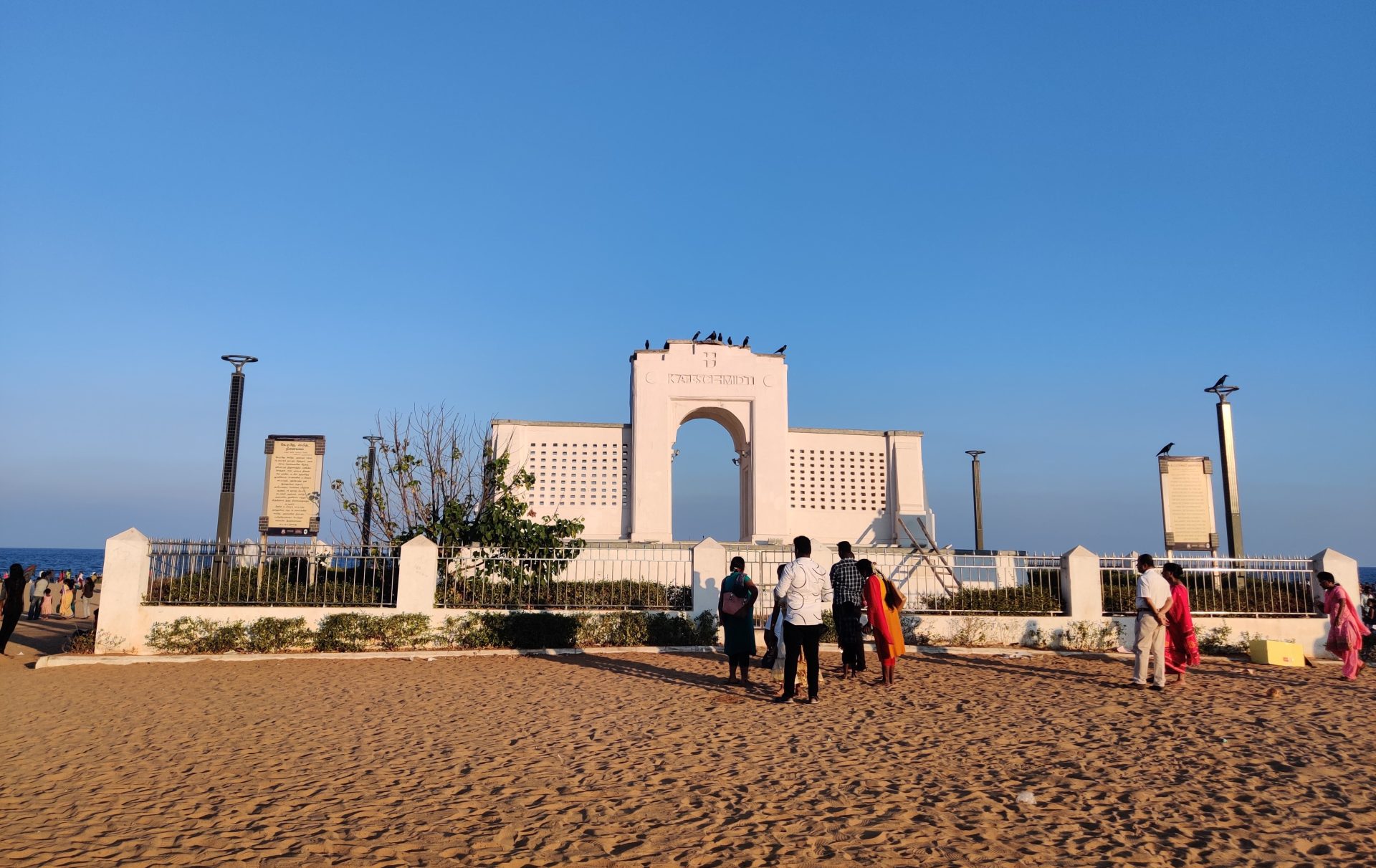
The  Bessie houses a recently restored architectural landmark known as the Karl Schmidt Memorial. his has been built  right at the center of the beach to commemorate a Danish Sailor who drowned in 1930 while trying to save the life of a  girl. 

THE FAMED SELFIE POINT @ THE MARINA
THE KARL SCHMIDT MEMORIAL

The Broken Bridge

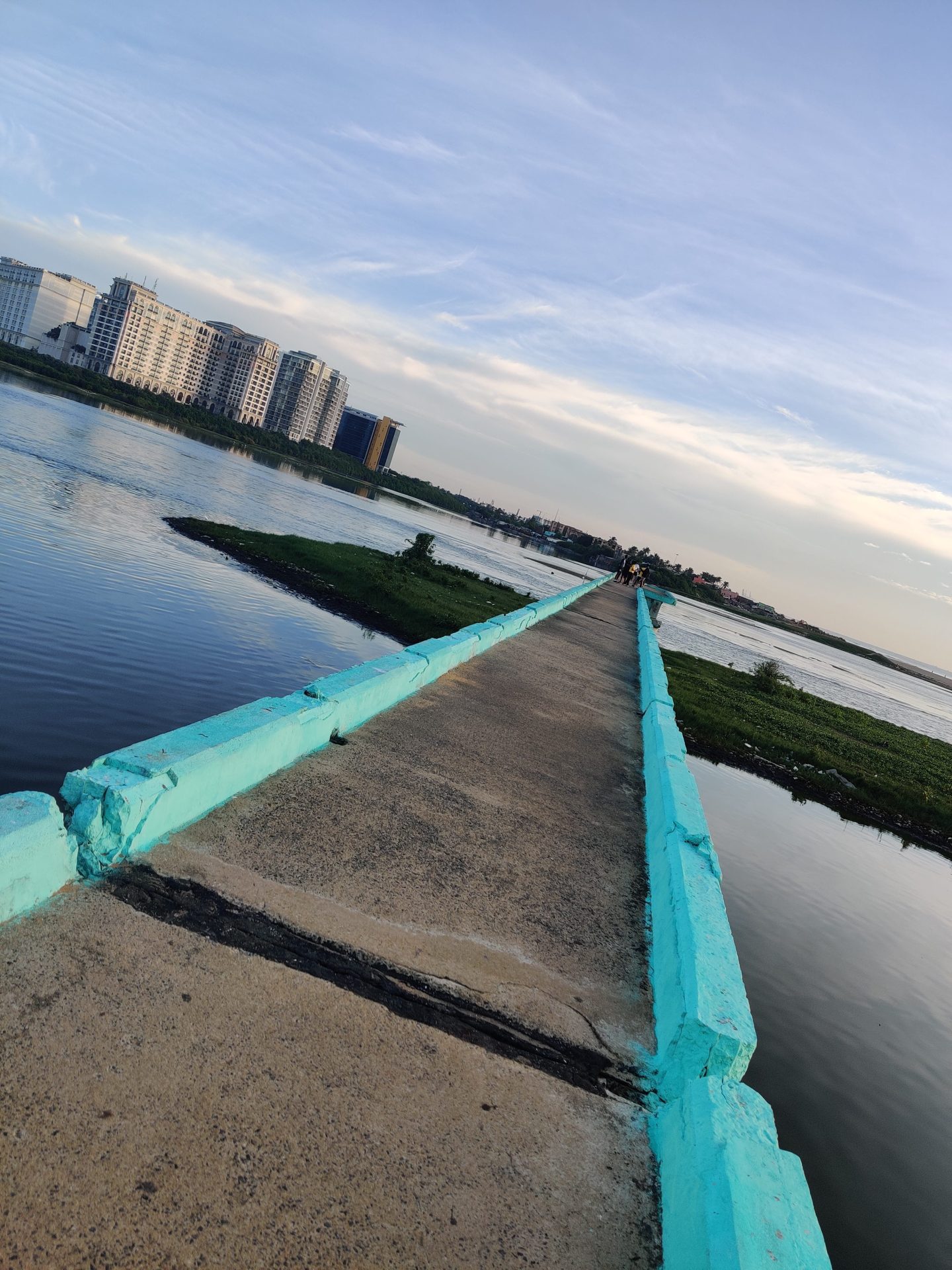
Located close to the Bessie beach is the Broken bridge, also known as the Bridge to Nowhere. Bordering the backend of The Theosophical Society and spanning the Adyar Estuary, this bridge collapsed in 1977 due to strong currents and has since then remained hanging. 

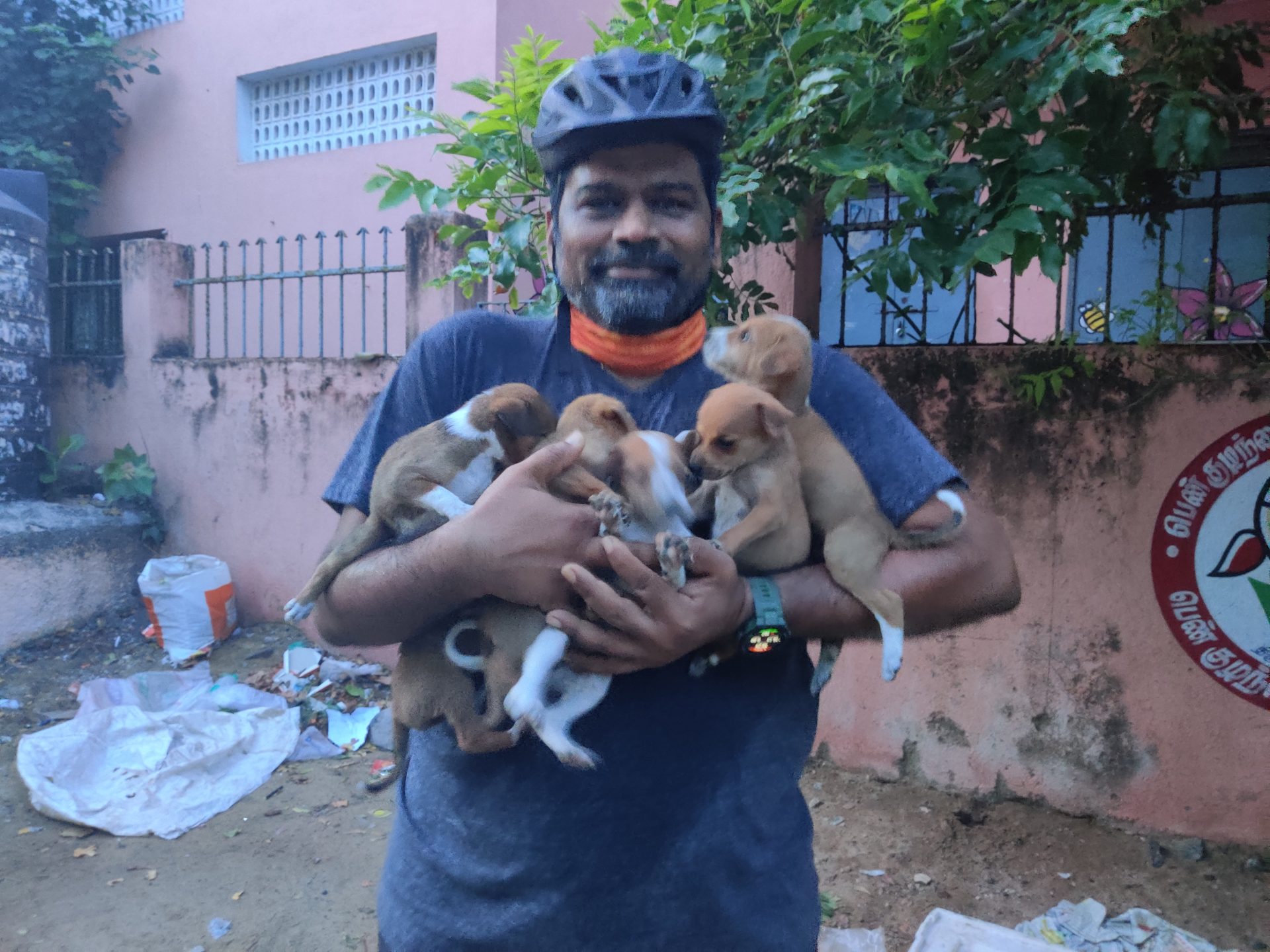
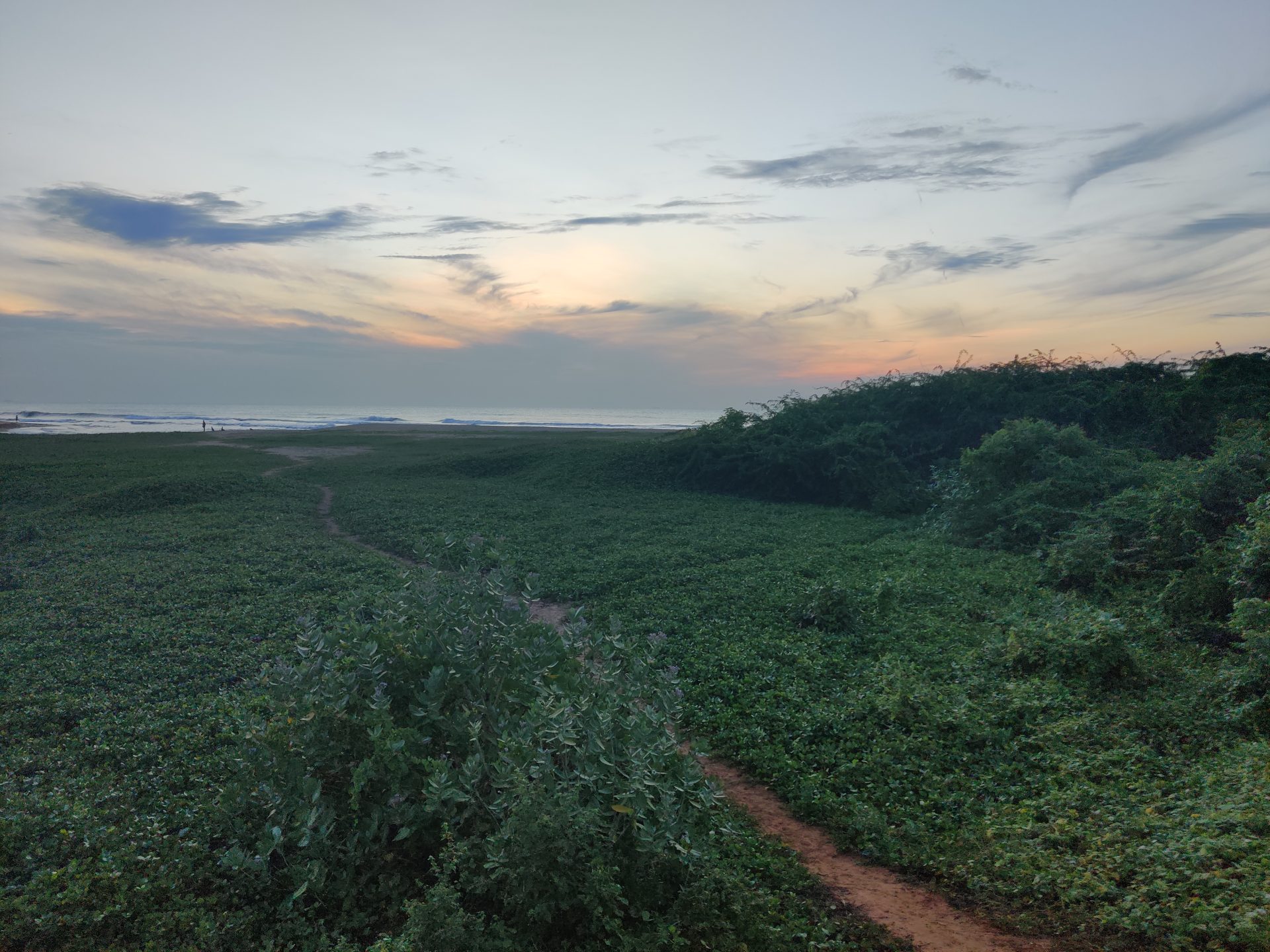
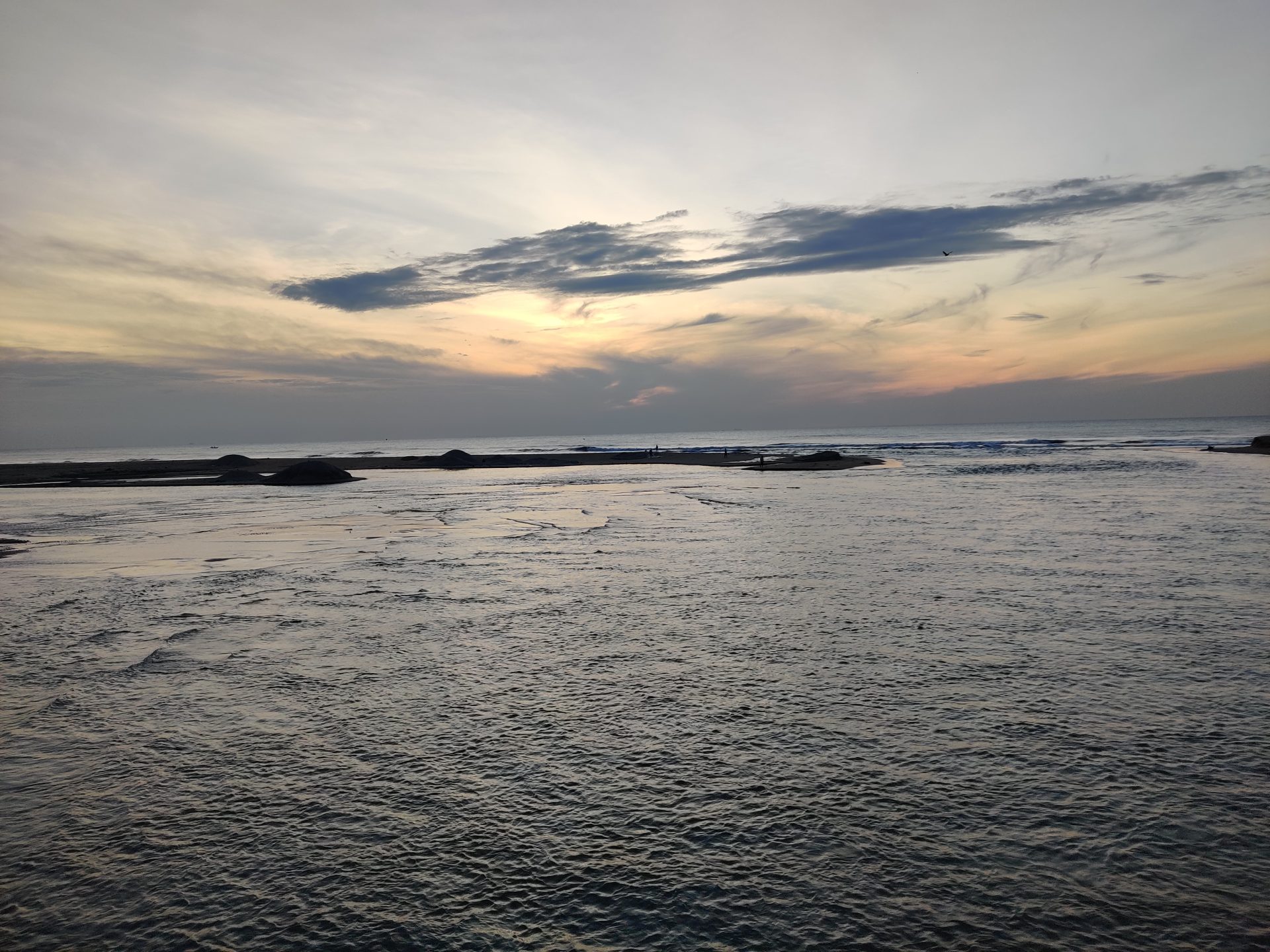
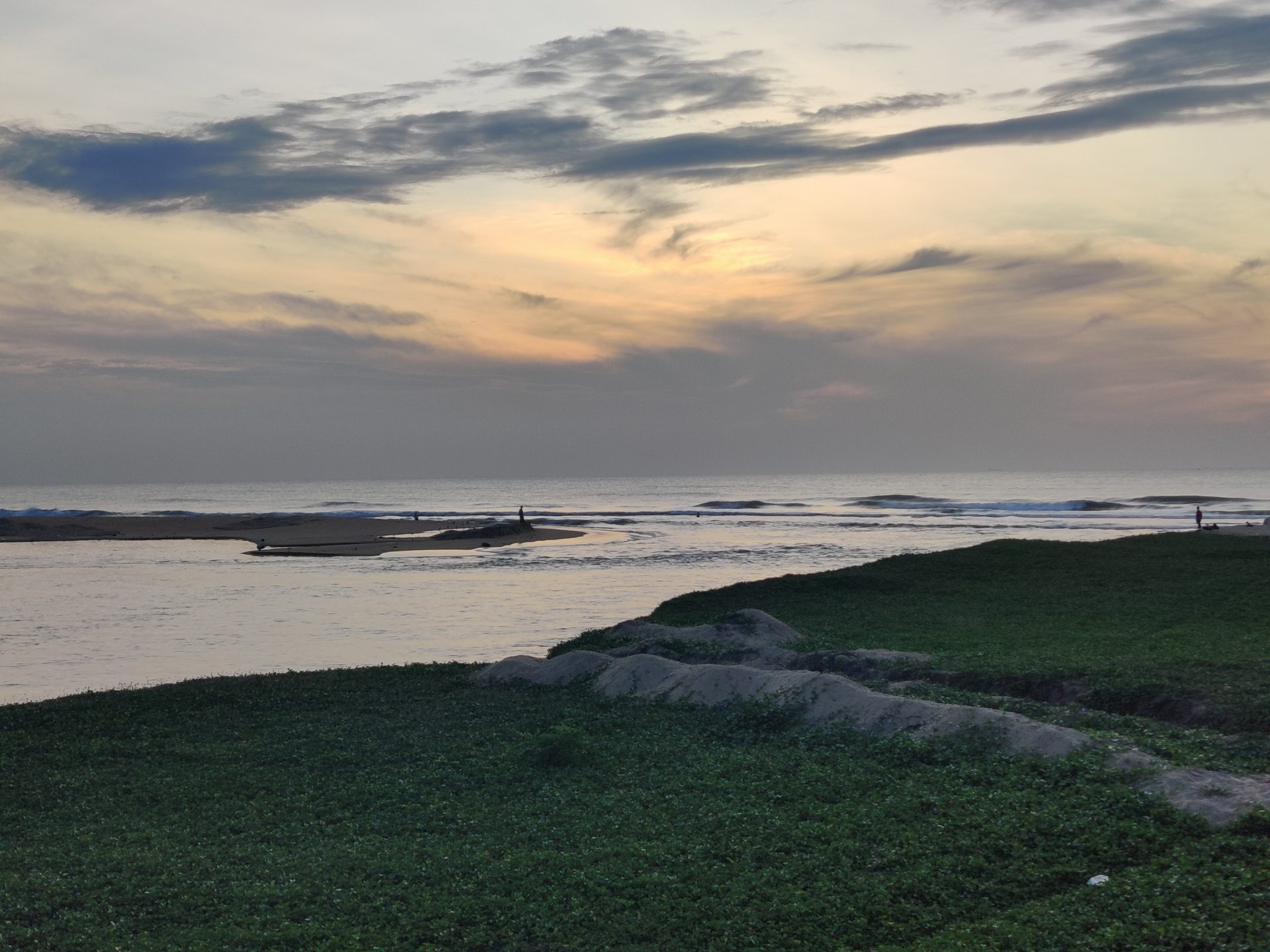
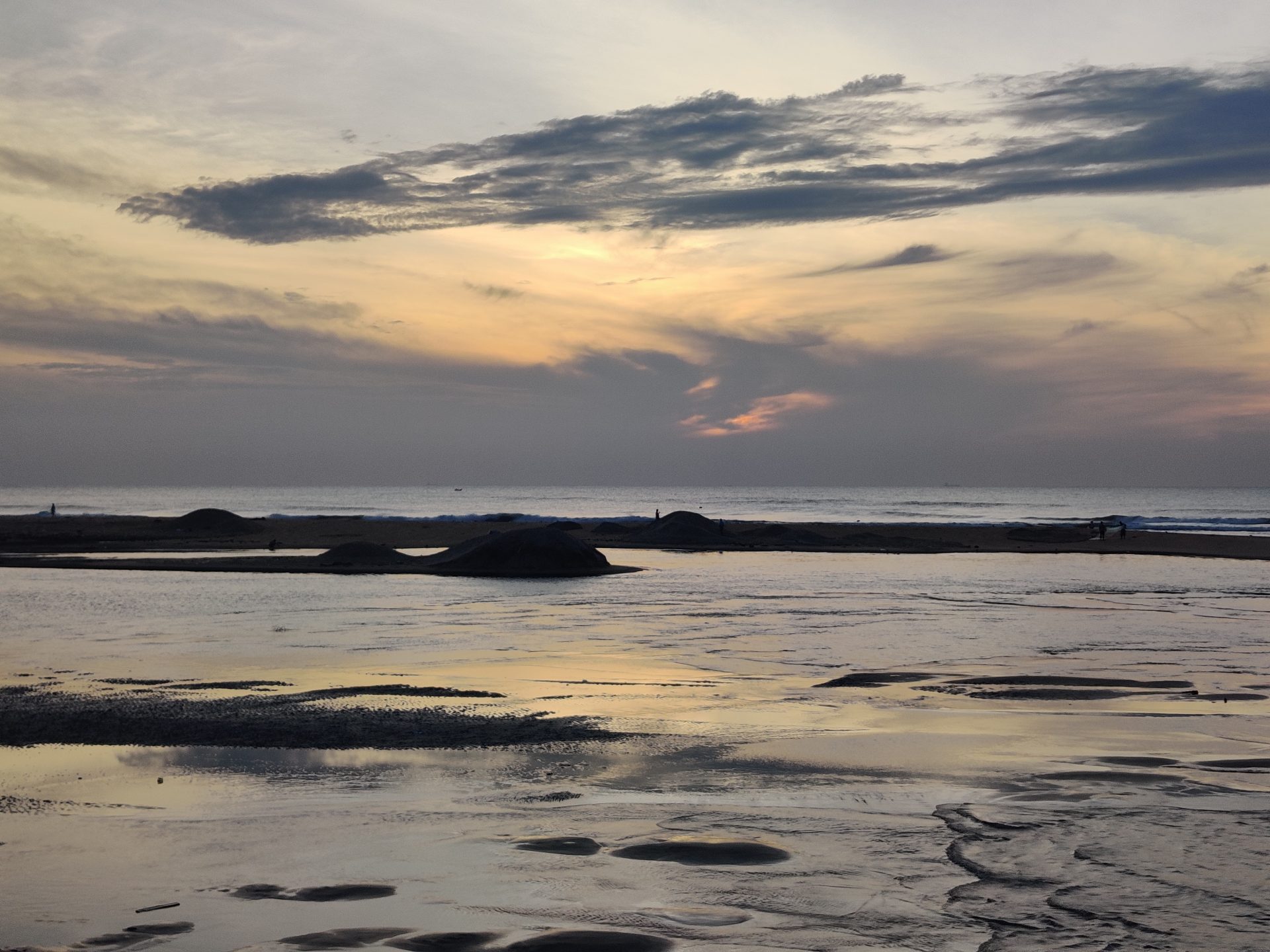
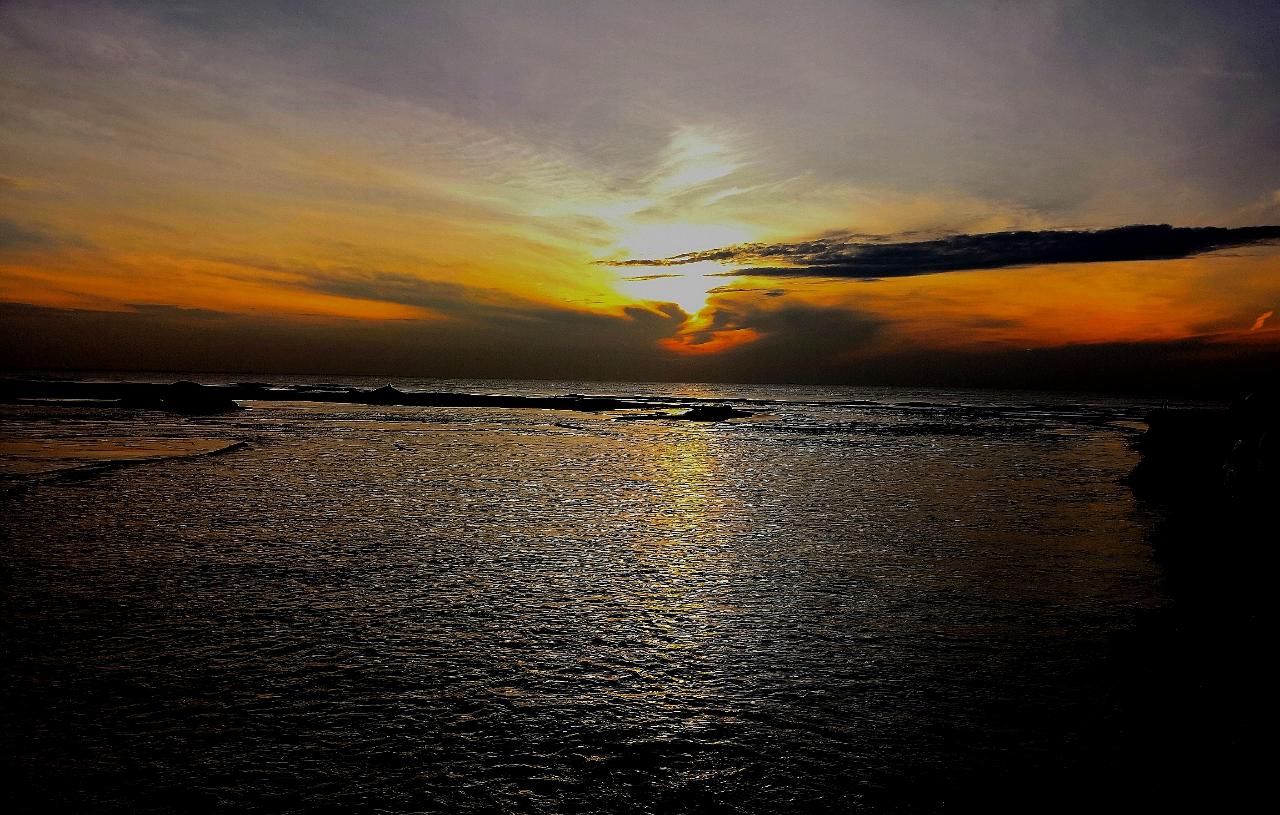
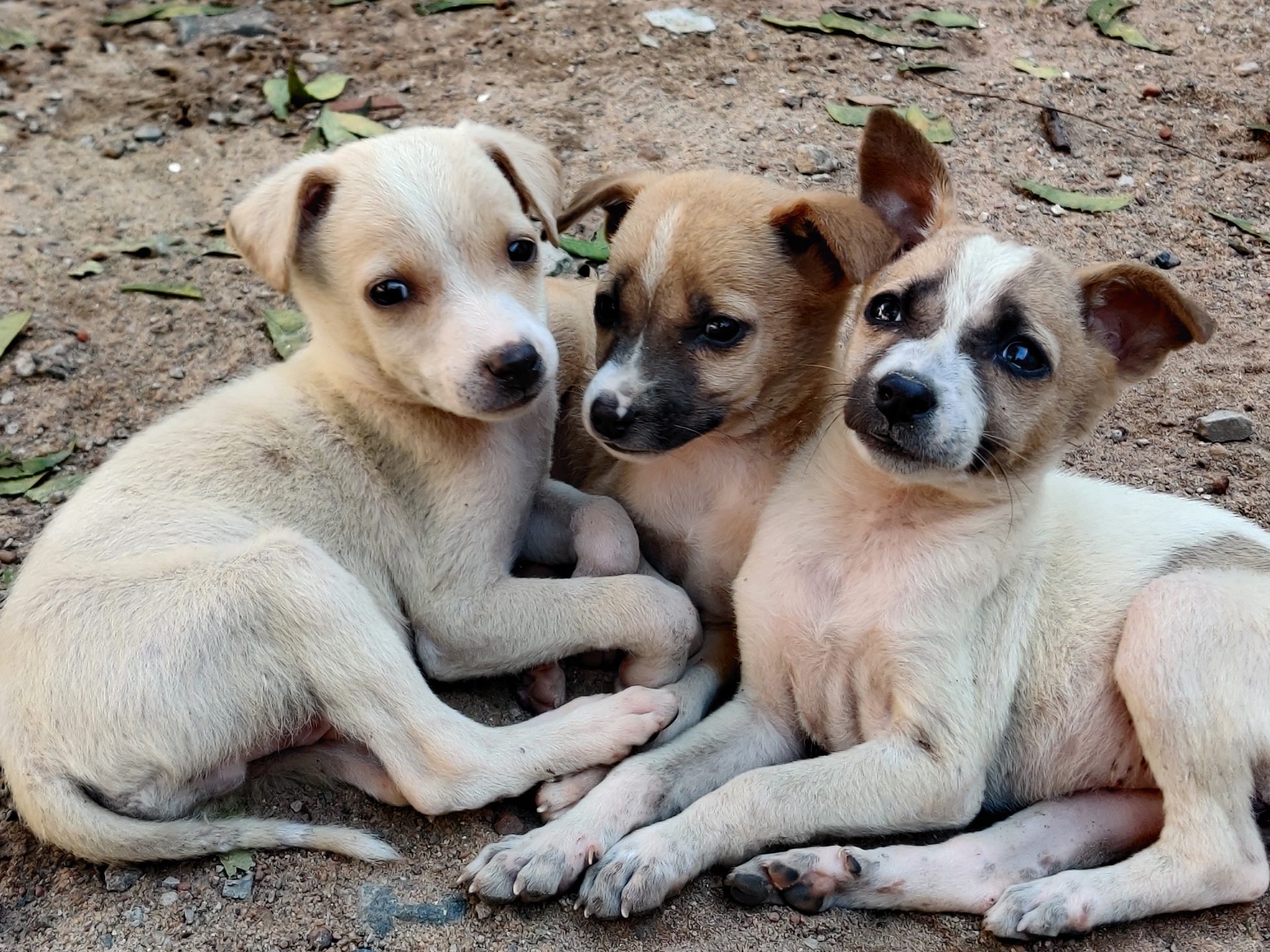
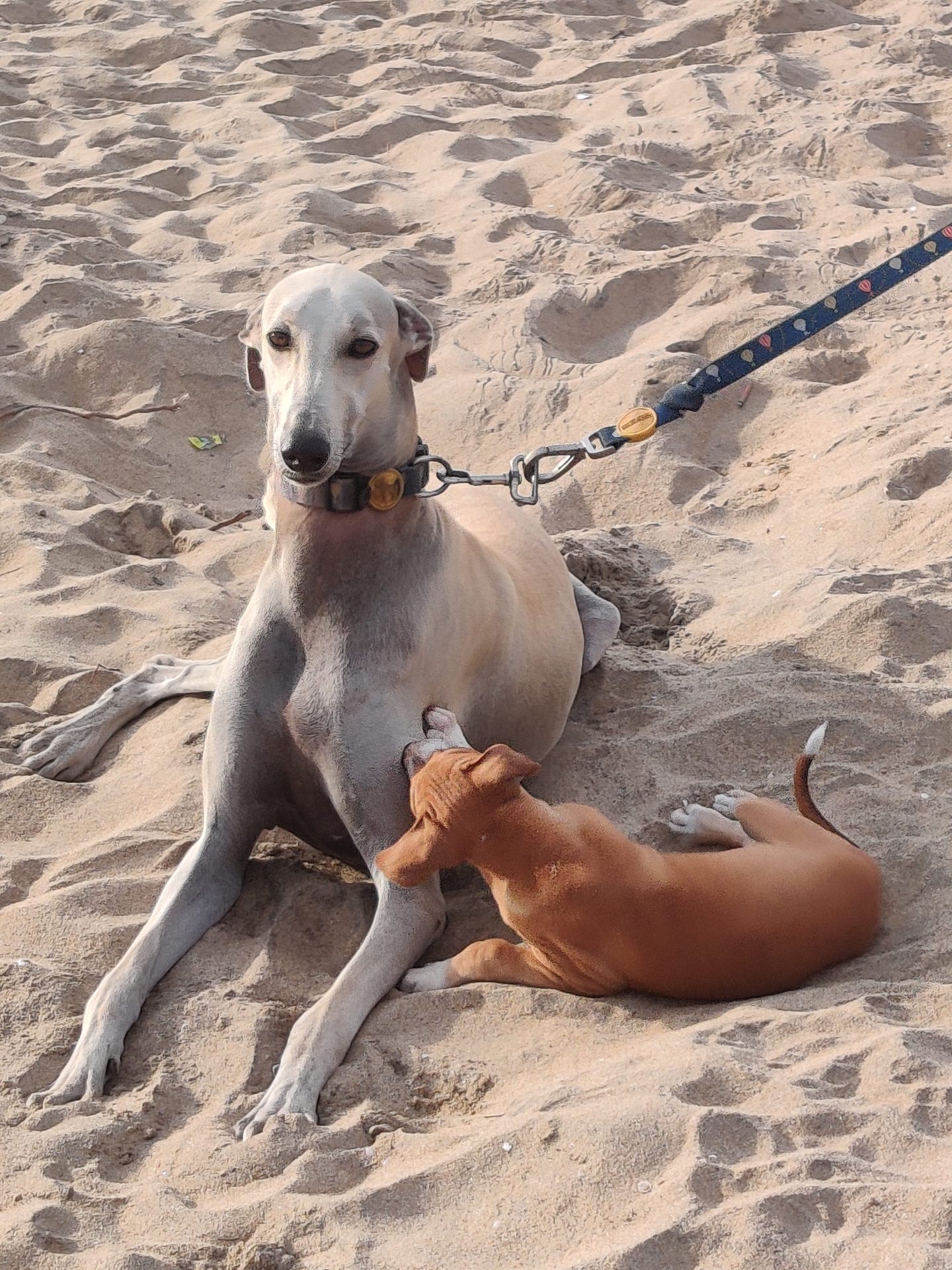
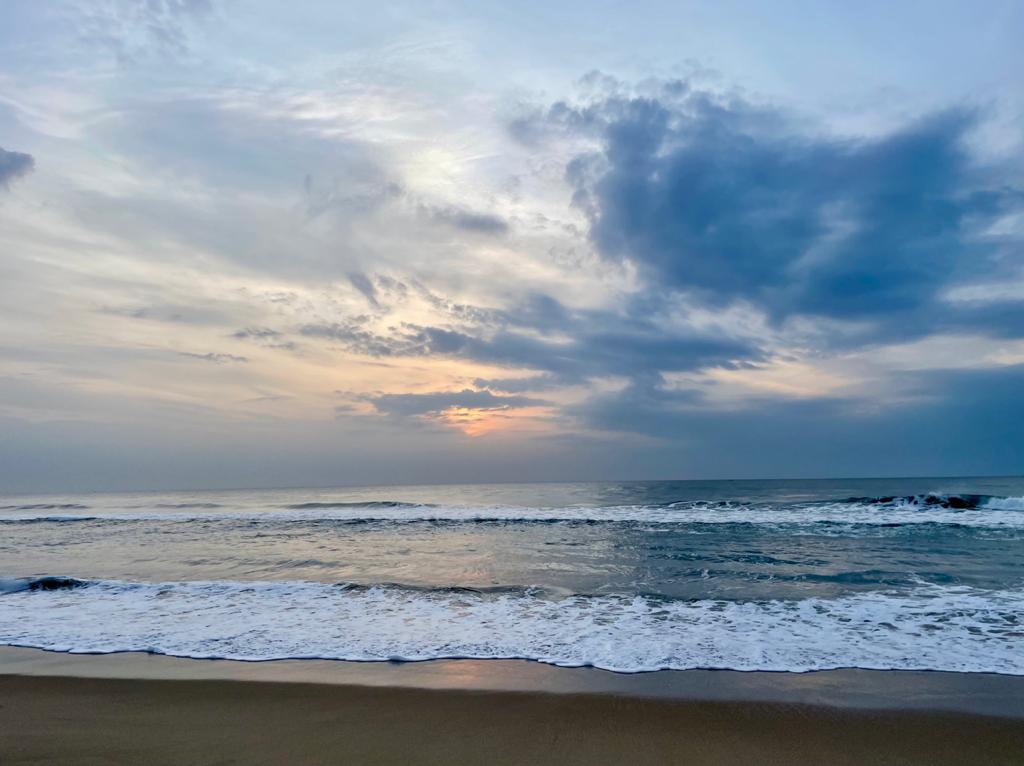
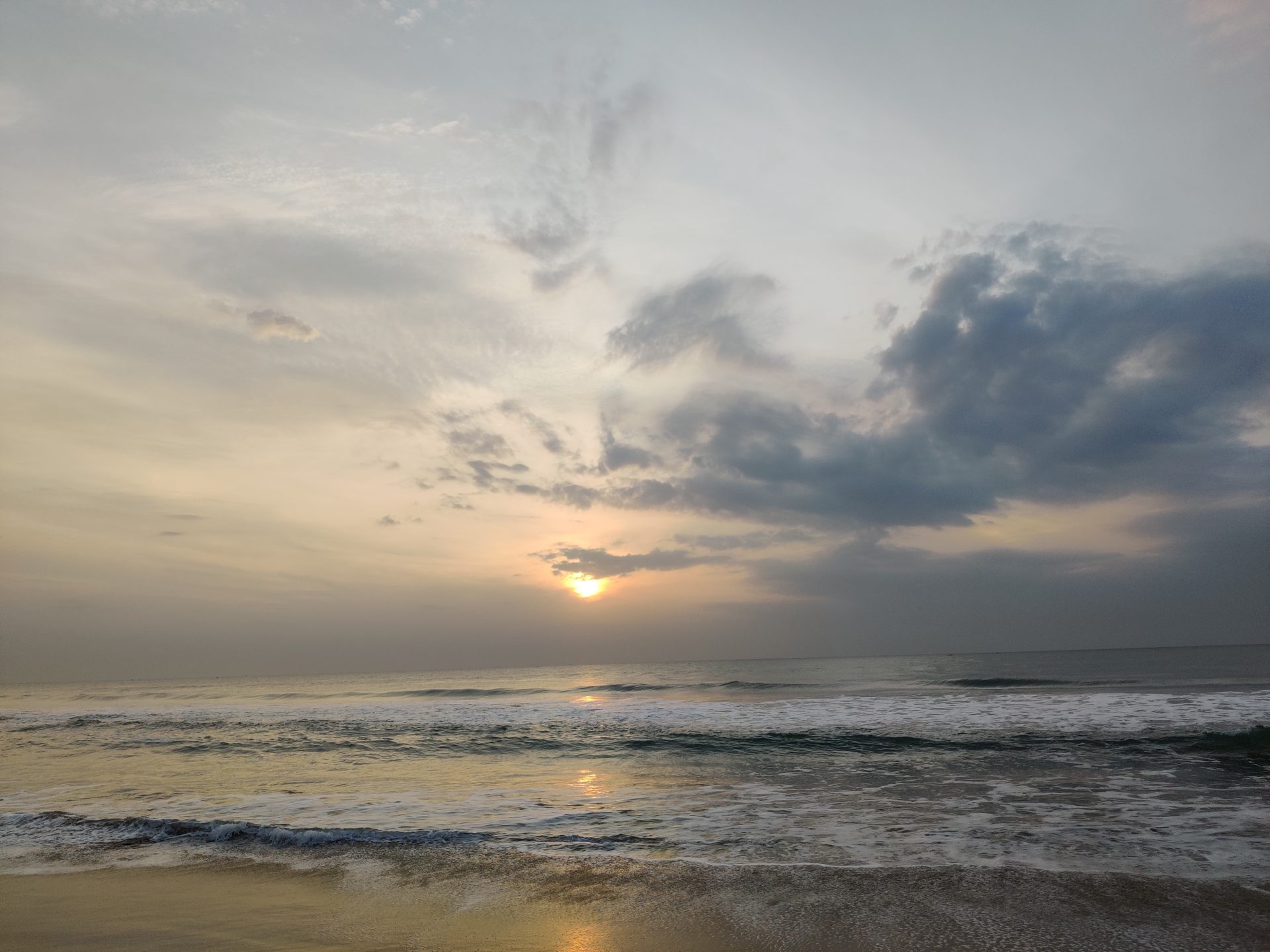
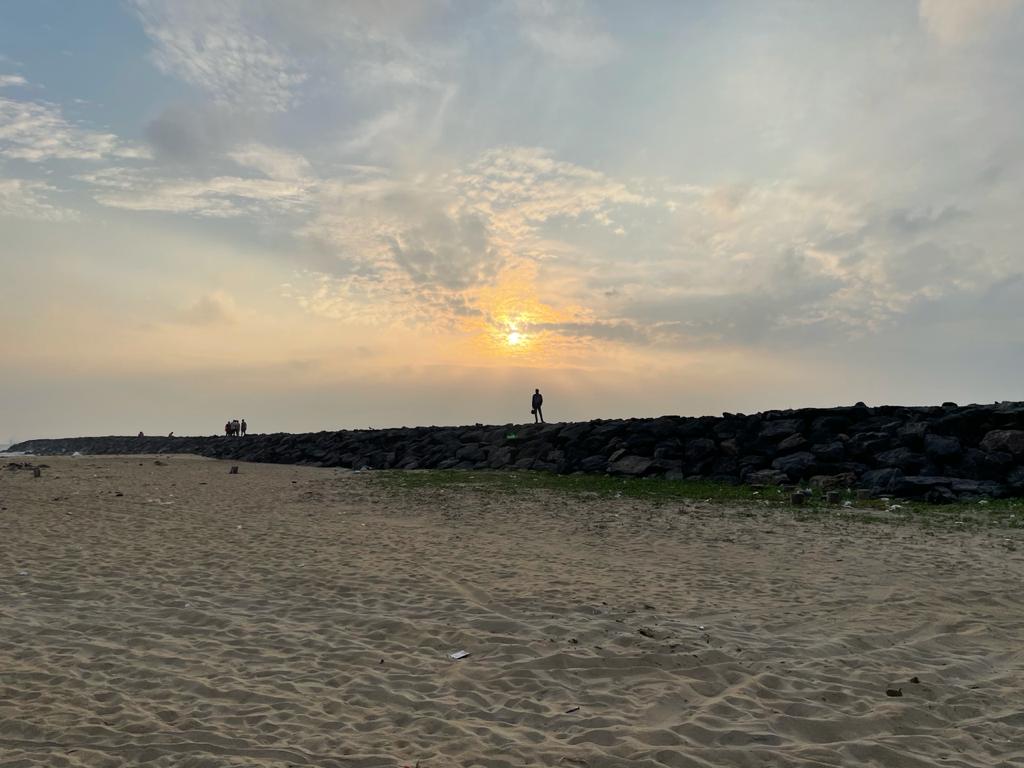
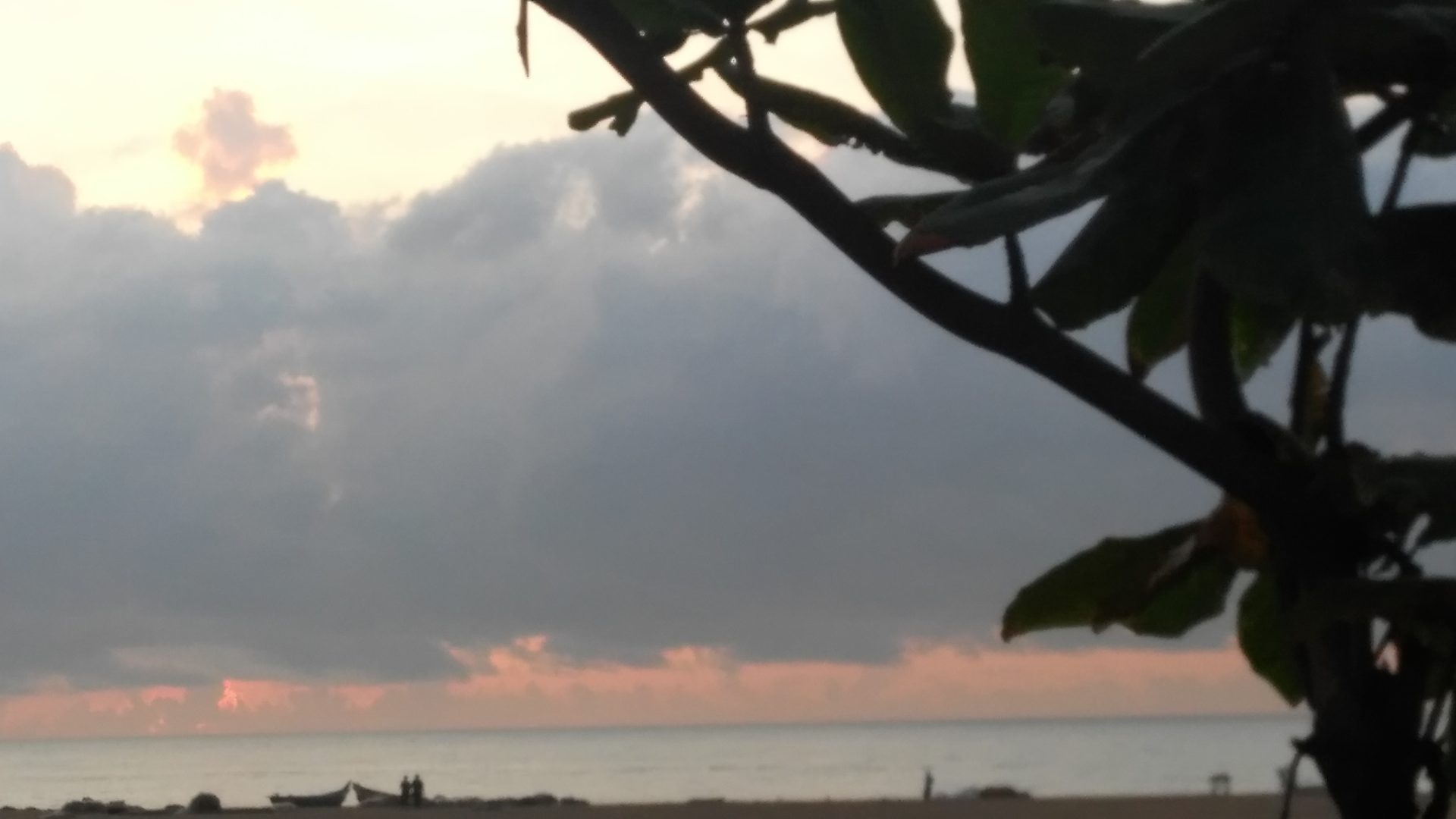
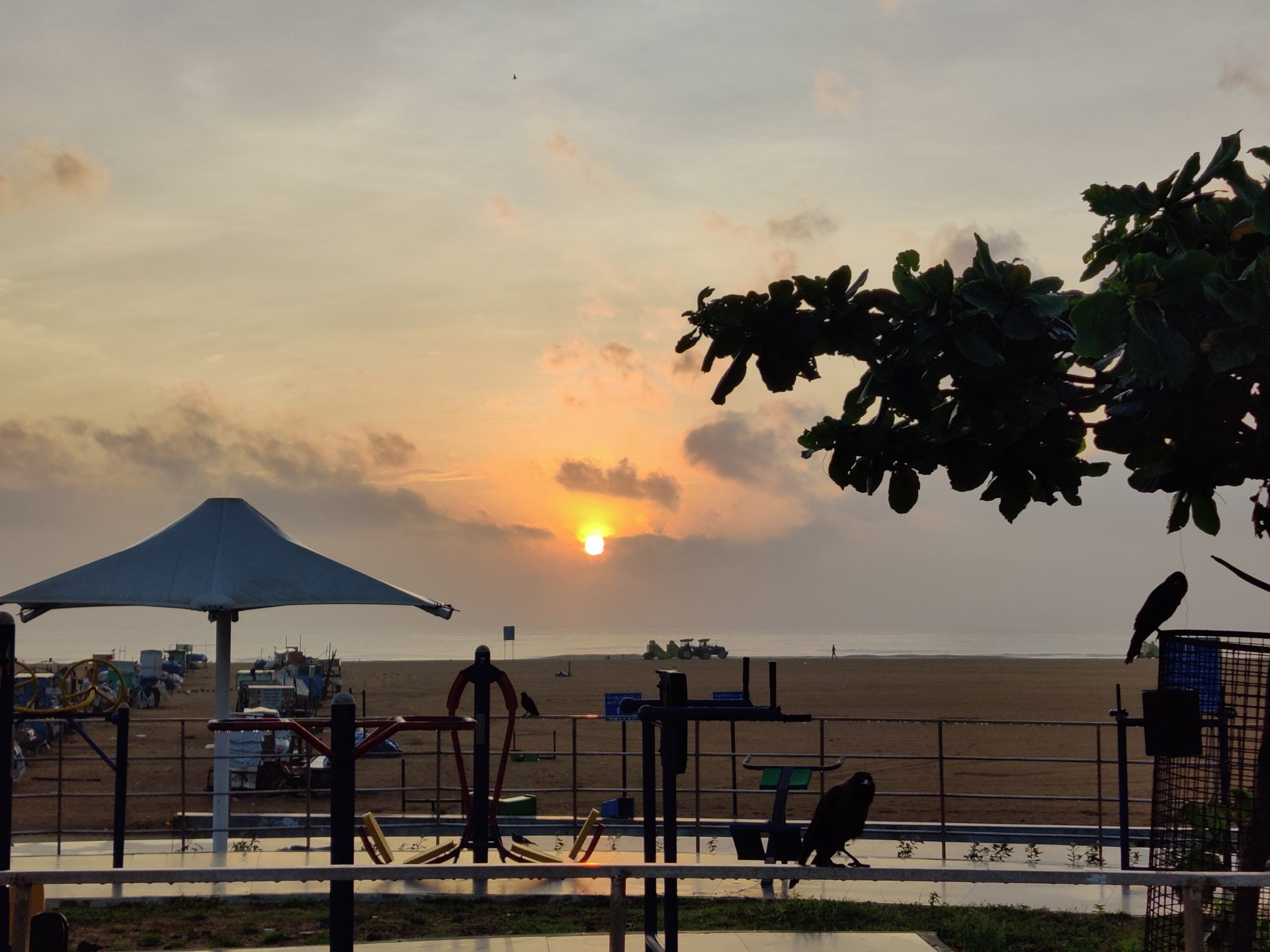
An excellent place for drone photography if one wants to experiment with the colours of the sea with all the greenery around and the orangish blue clouds serving as a backdrop. While we were waiting alongside at Bessie waiting for the sun to come out, we found a litter of very cute puppies left to fend or themselves while their mother had gone out. Made for a great photoshoot with almost 8-10 of them.

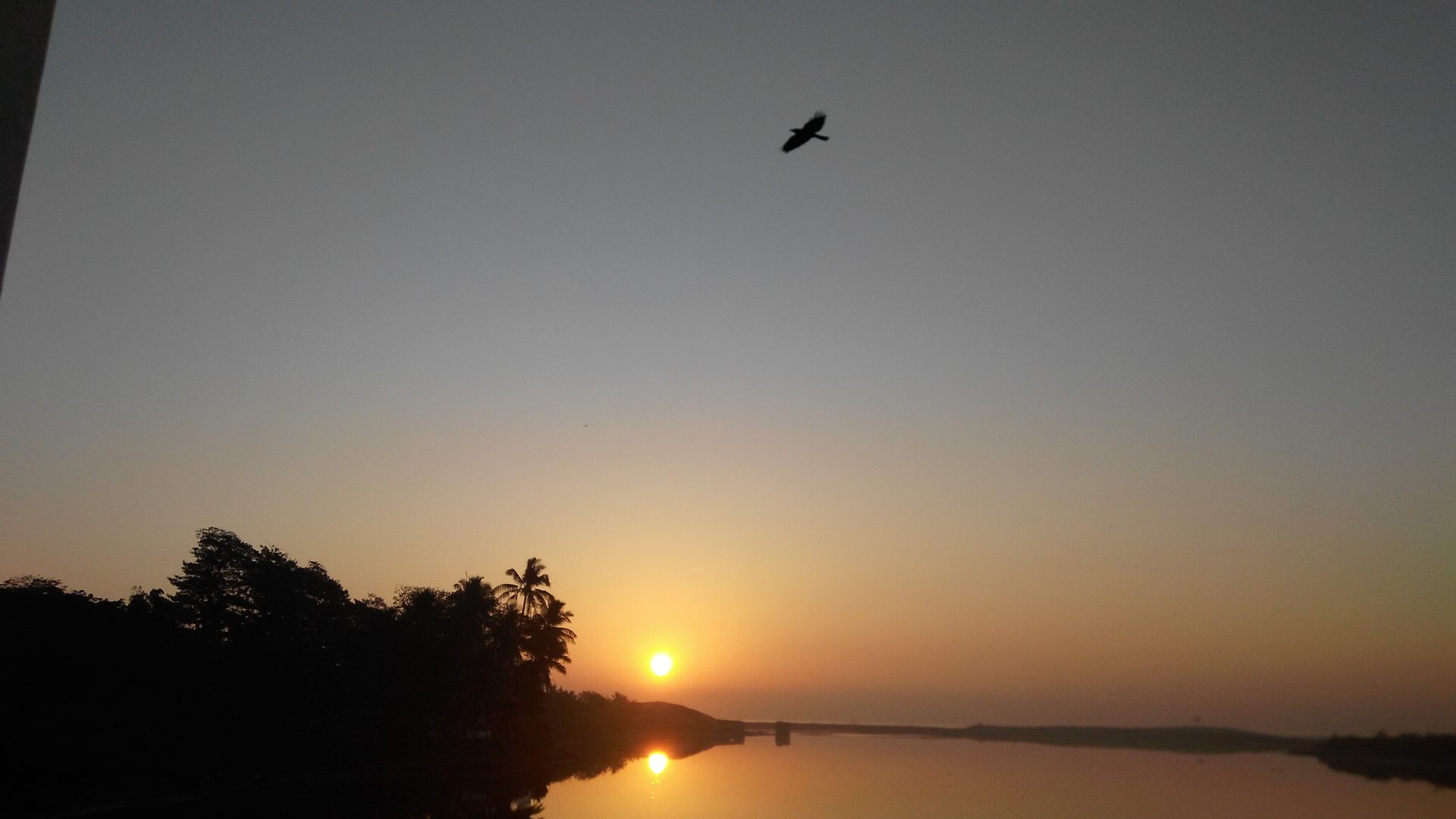
A LOVELY SUNRISE
ALL AT SEA
THE BRIDGE TO NOWHERE
CUTENESS WRITTEN ALL OVER

Santhome Church

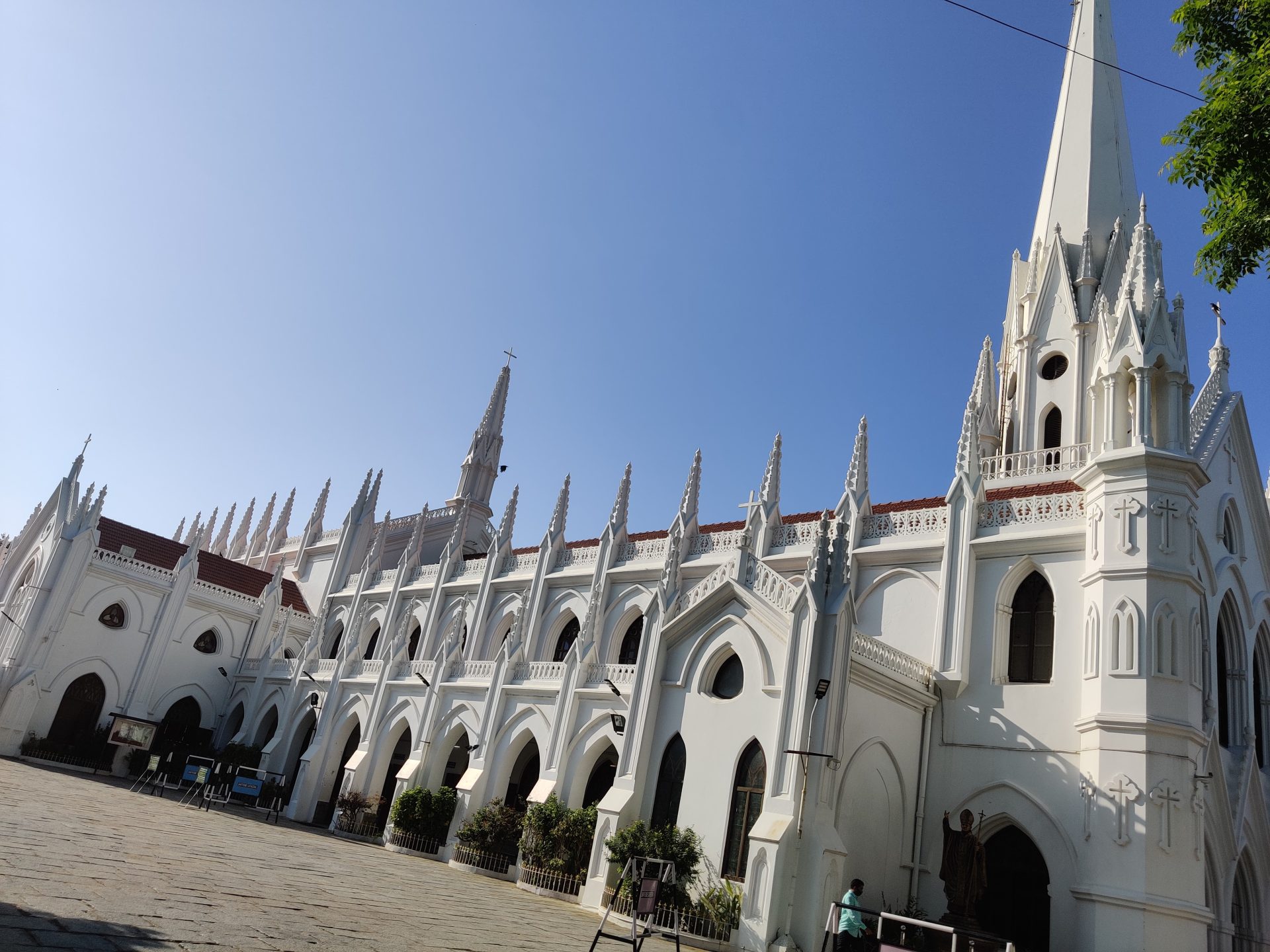
As one drives down from Bessie towards the Marina beach, a magnificent Gothic white structure of the Santhome Church built almost 500 years back appears on the right side of the road. The church houses the tombs of one of the twelve apostles of Jesus Christ Saint Thomas and though it was completed in 1523 by the Portuguese, it got rebuilt in the year 1896 by the Britishers. This Roman Catholic  church stands out for its uniqueness as being one among only three churches world wide to have been built over the tomb of an Apostle, the others being in Italy and Spain.

The Lighthouse

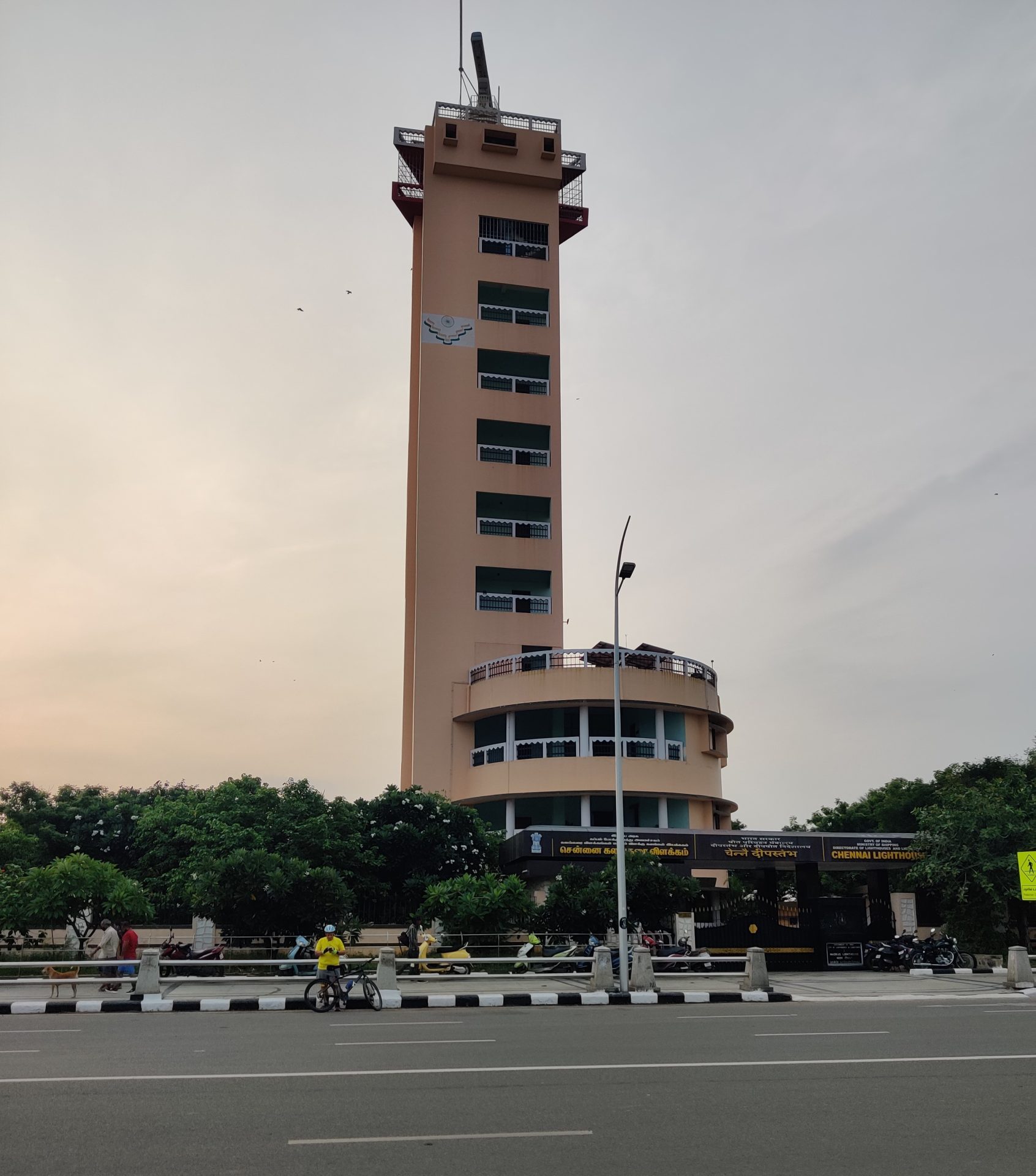
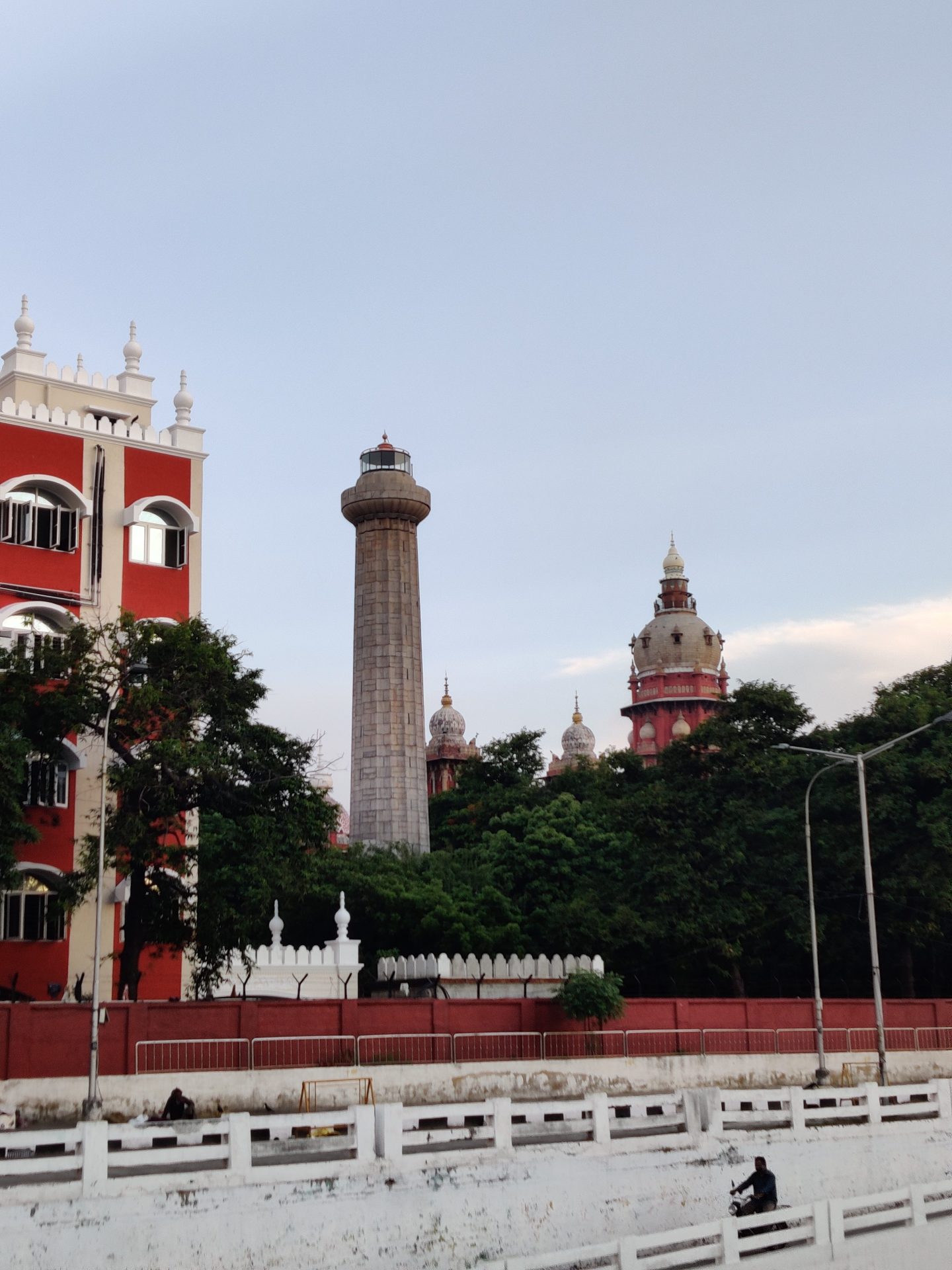
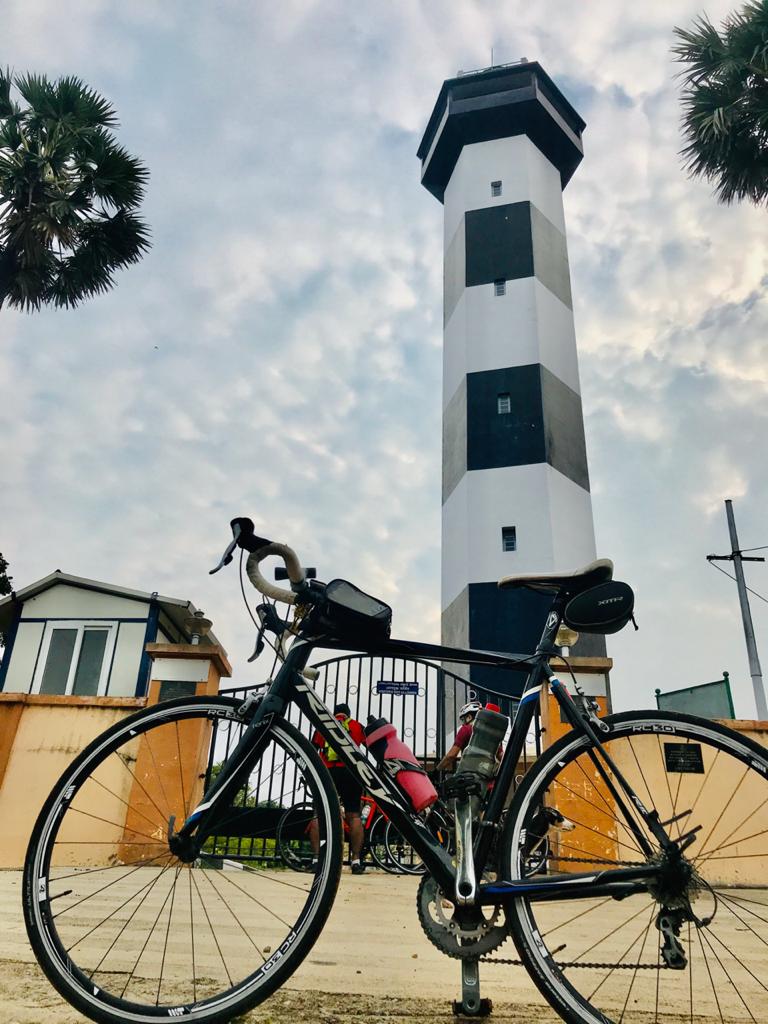
A little ahead of the Church and opposite the white offices of the Police, one gets to see the 45 year old iconic Lighthouse. One would rarely get to miss this while riding along the roads parallel to the beach. This is supposedly the 4th lighthouse to be built in Chennai and  known to be counted amongst the few lighthouses which has an elevator and the only one to be located within the City limits. 

The city of Madras was more of an open seashore where goods used to be loaded and unloaded from boats using the lights from bonfires lit by fisherwomen and this practice continued till almost the end of the 18th century. While the first conventional Lighthouse was proposed in 1795, it did not see light at the end of the day since the plans to use the steeple of St Mary’s church ran aground with the Chaplains. 

Finally the terrace of the present day Fort St George museum was used to guide ships arriving and using conventional large oil wick lanterns. This came into existence in 1796 and continued till 1841. While a second lighthouse came up towards the Northern side of Fort St George and was functional from 1st January 1844 and continued for almost50 years, people felt the height of the tower to be an impediment and thus sprung up a 3rd Lighthouse located within the present day High Court Complex. This did serve its purpose of guiding warships of the Britishers and their allies for the World wars and became defunct from 1977 when the 4th Lighthouse got ready.

CHENNAI'S ONLY FUNCTIONAL LIGHTHOUSE

Its estimated that around 15  to 20,000  people visit these beaches every day. Lot of food stalls spring up towards the evening, offering a wide variety of veg and non veg dishes though one would be advised to exercise caution when eating out at these joints, more from a hygiene perspective.

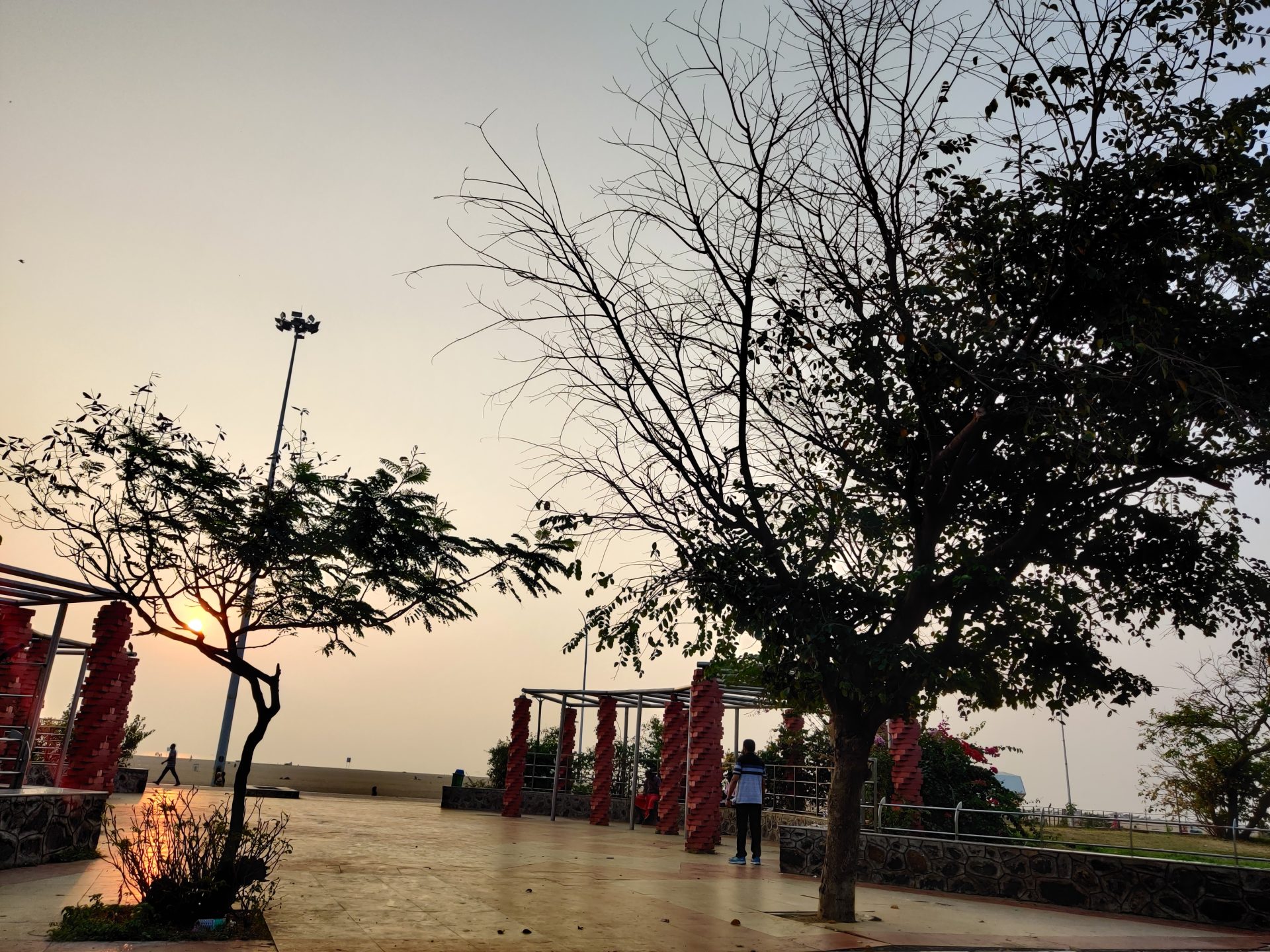
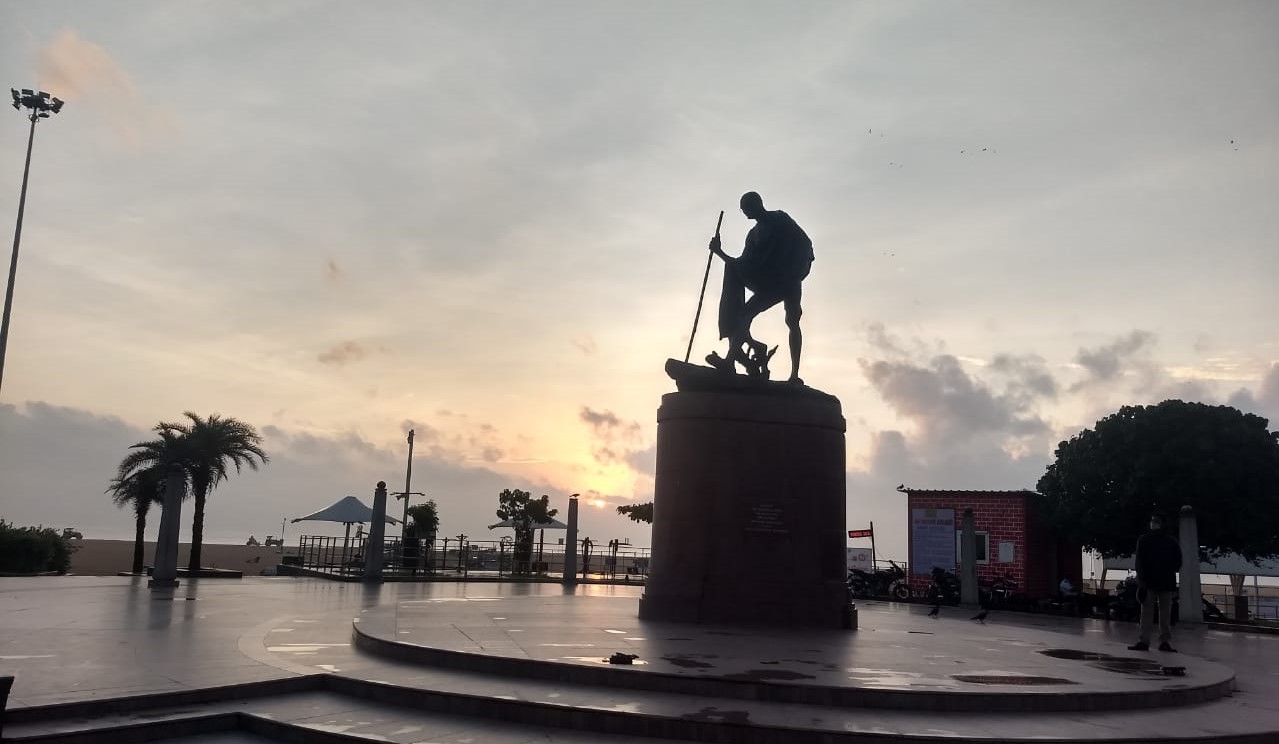
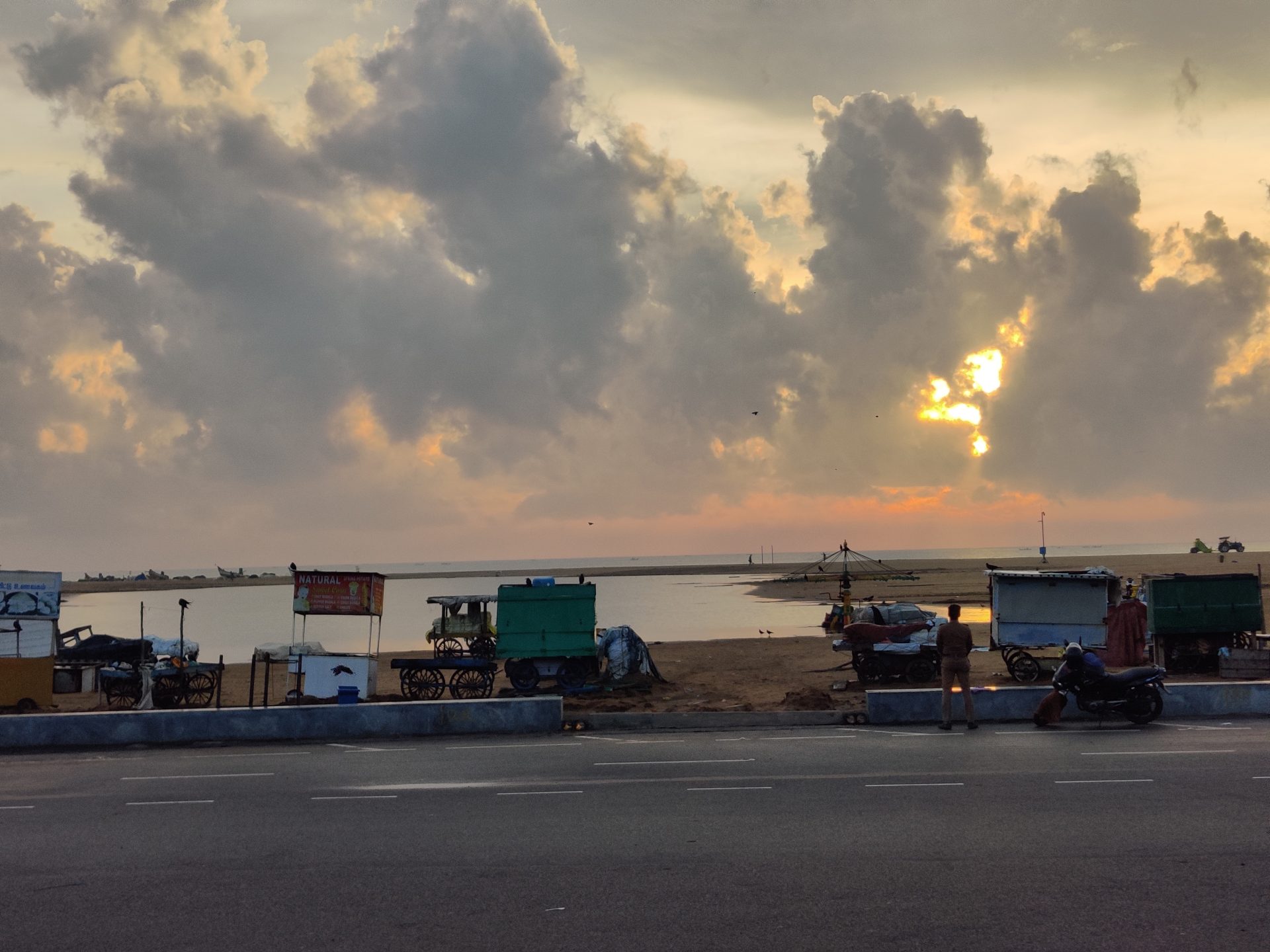
Along the stretch of the Marina is a lovely and well spaced  promenade with memorials on one stretch dedicated to the past leaders and while also housing statues of Gandhiji. Bharatiyar, Kannagi, Thiruvallur etc. An early morning ride towards the Marina gives one an opportunity to get some great captures of the sunrise.

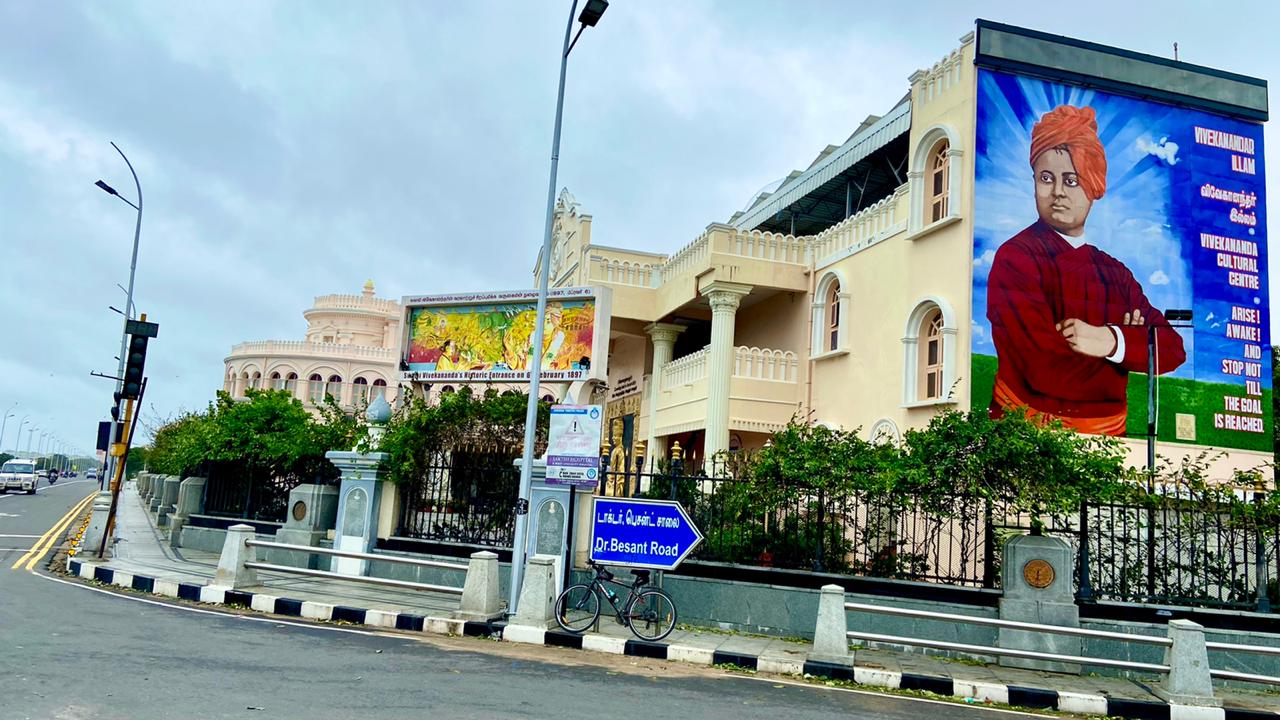
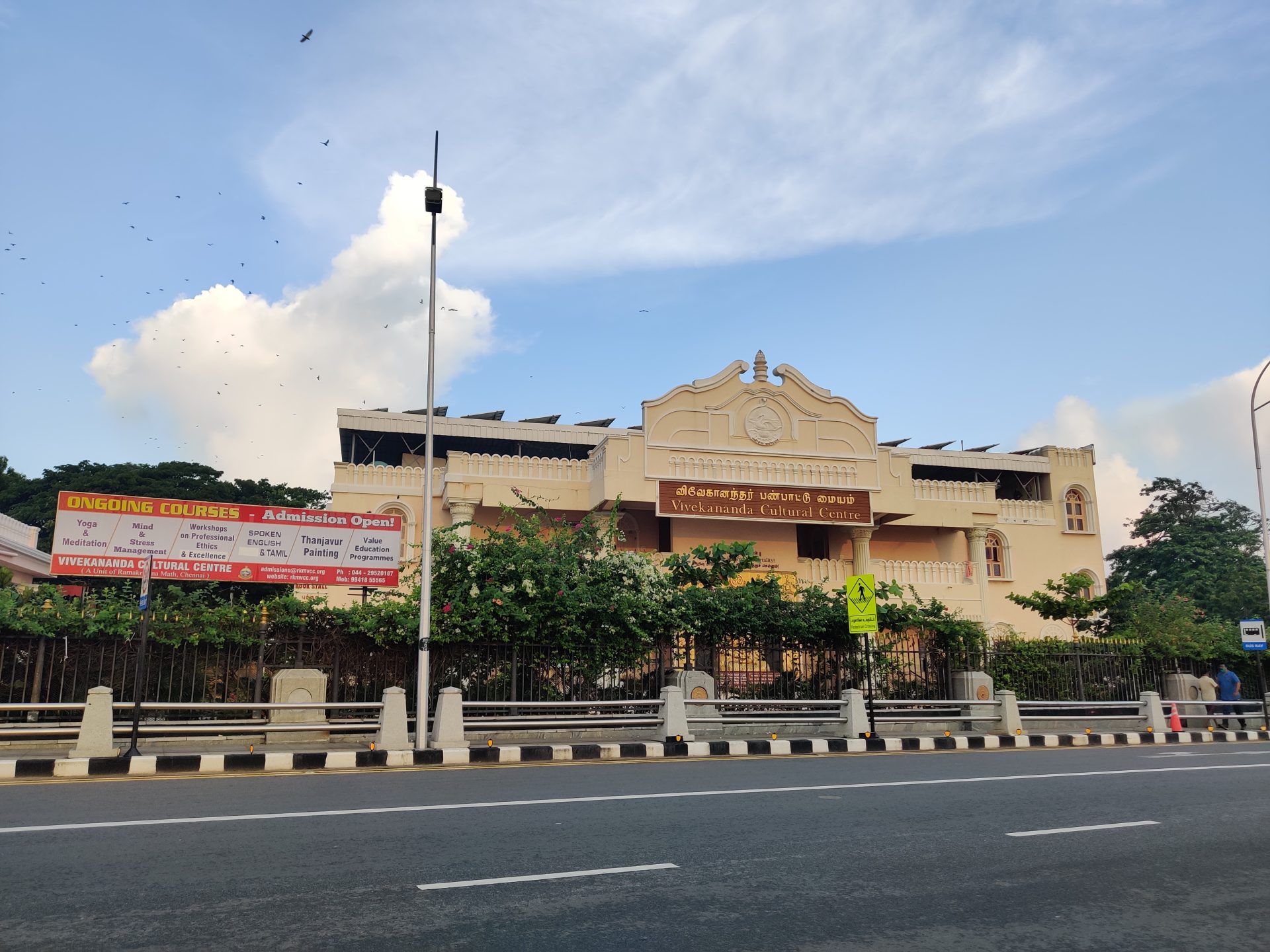
Vivekananda House

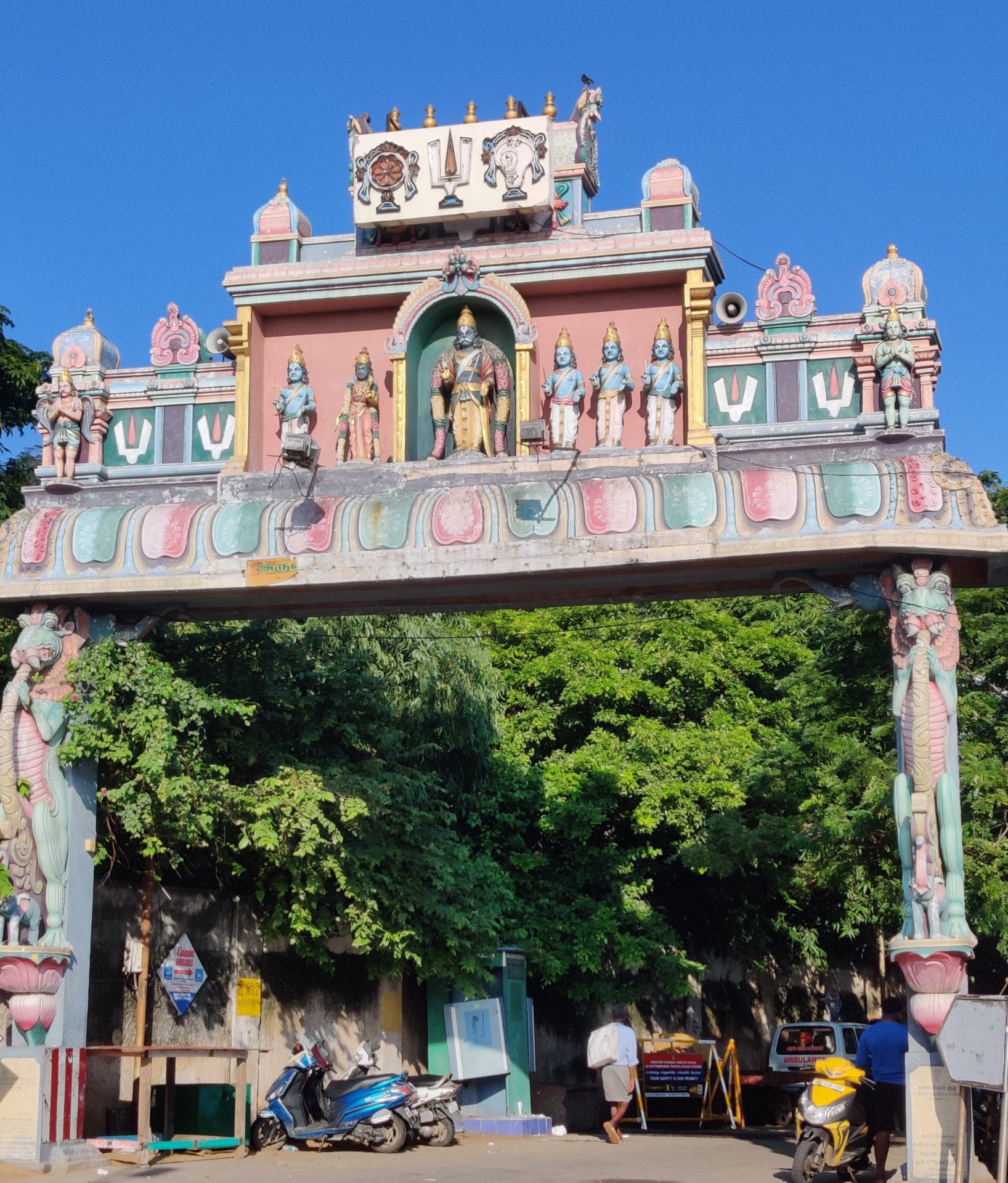
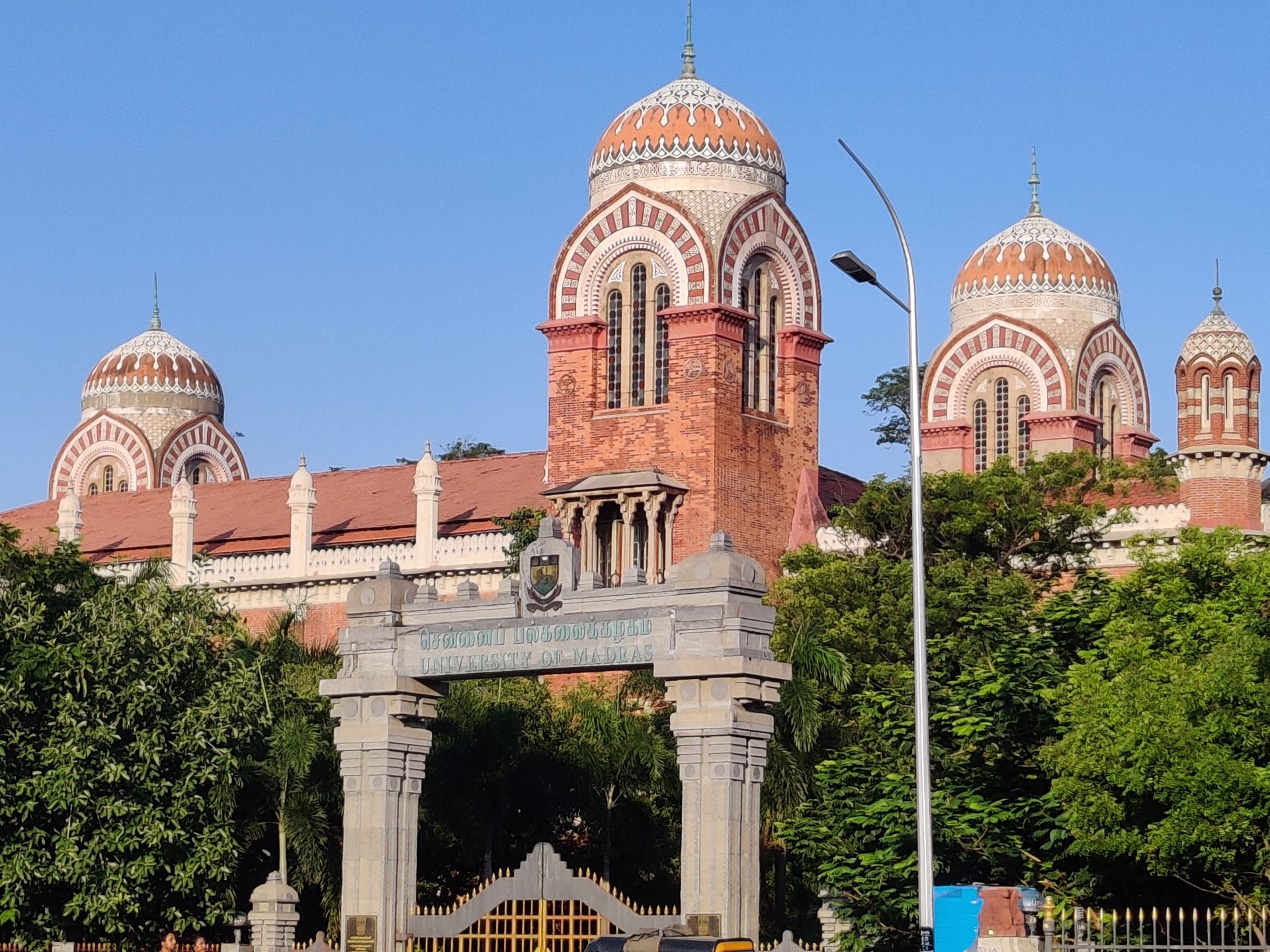
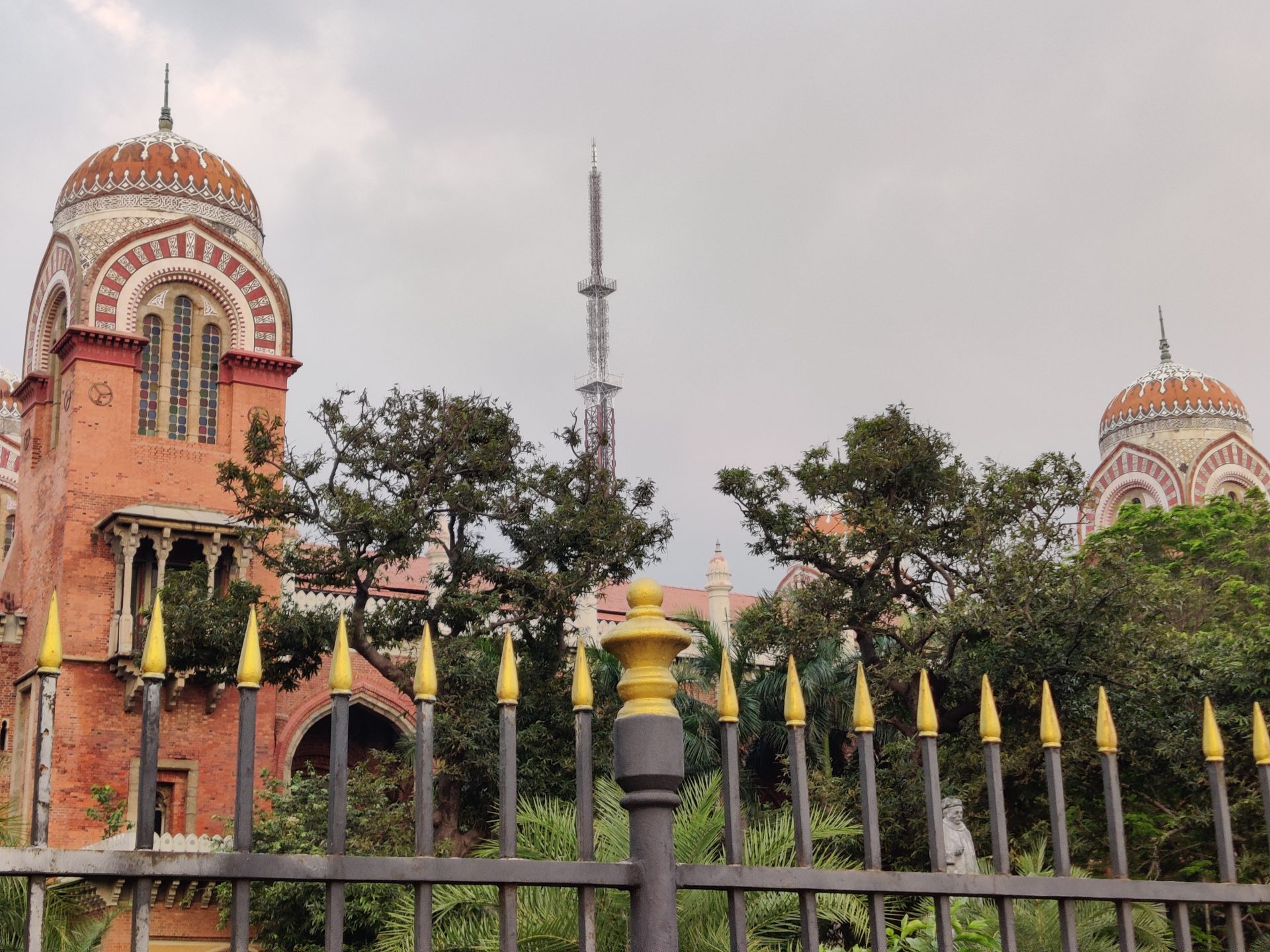
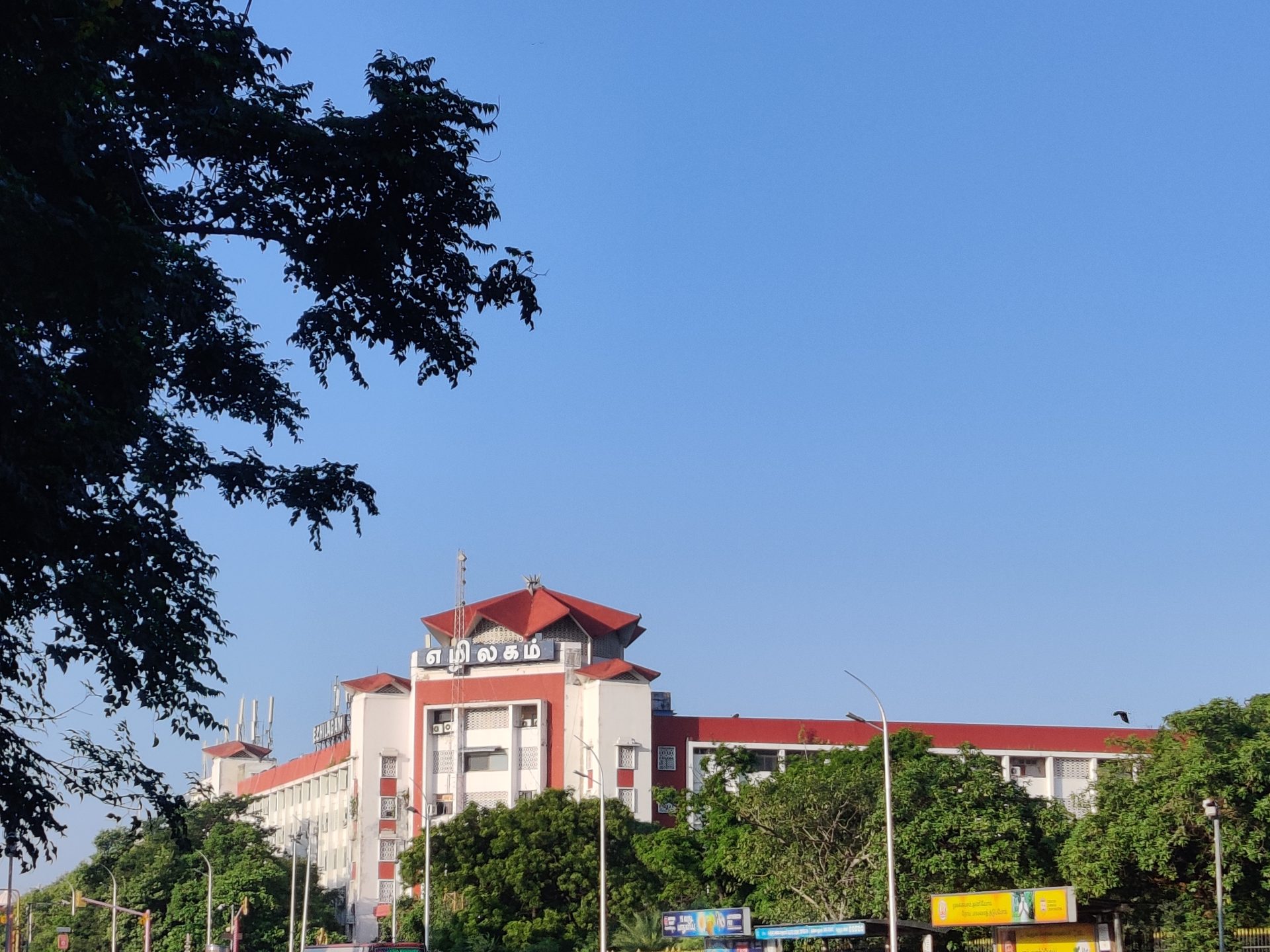
As we move on towards the Secretariat complex from the Lighthouse one gets to see the Vivekananda Illam (House), a few famous college landmarks, the arch of the famed Parthasarathy temple  and a stretch of government departmental buildings.

This was the very same building where Swami Vivekananda stayed in 1897 when he had visited Chennai and it got renamed in his honour. This building was earlier otherwise known as Ice House or Castle Kernan and was built by Frederic Tudor an American Businessman as a facility to store Ice.

From 1897 to 1906, the Ramakrishna Math functioned from this complex and finally in the year 1914, the building was acquired by the Government of Madras and used as a training school and hostel. 

To commemorate the birth centenary of Swami Vivekananda, the Government of Tamil Nadu renamed it as Vivekananda House and leased it to Ramakrishna Math. The building house an exhibition on the life of Swamiji.

THE WAY TO THE PARTHASARATHI TEMPLE
UNIVERSITY OF MADRAS
EZHILAGAM

The Napier Bridge

THE NAPIER BRIDGE DURING THE CHESS OLYMPIAD

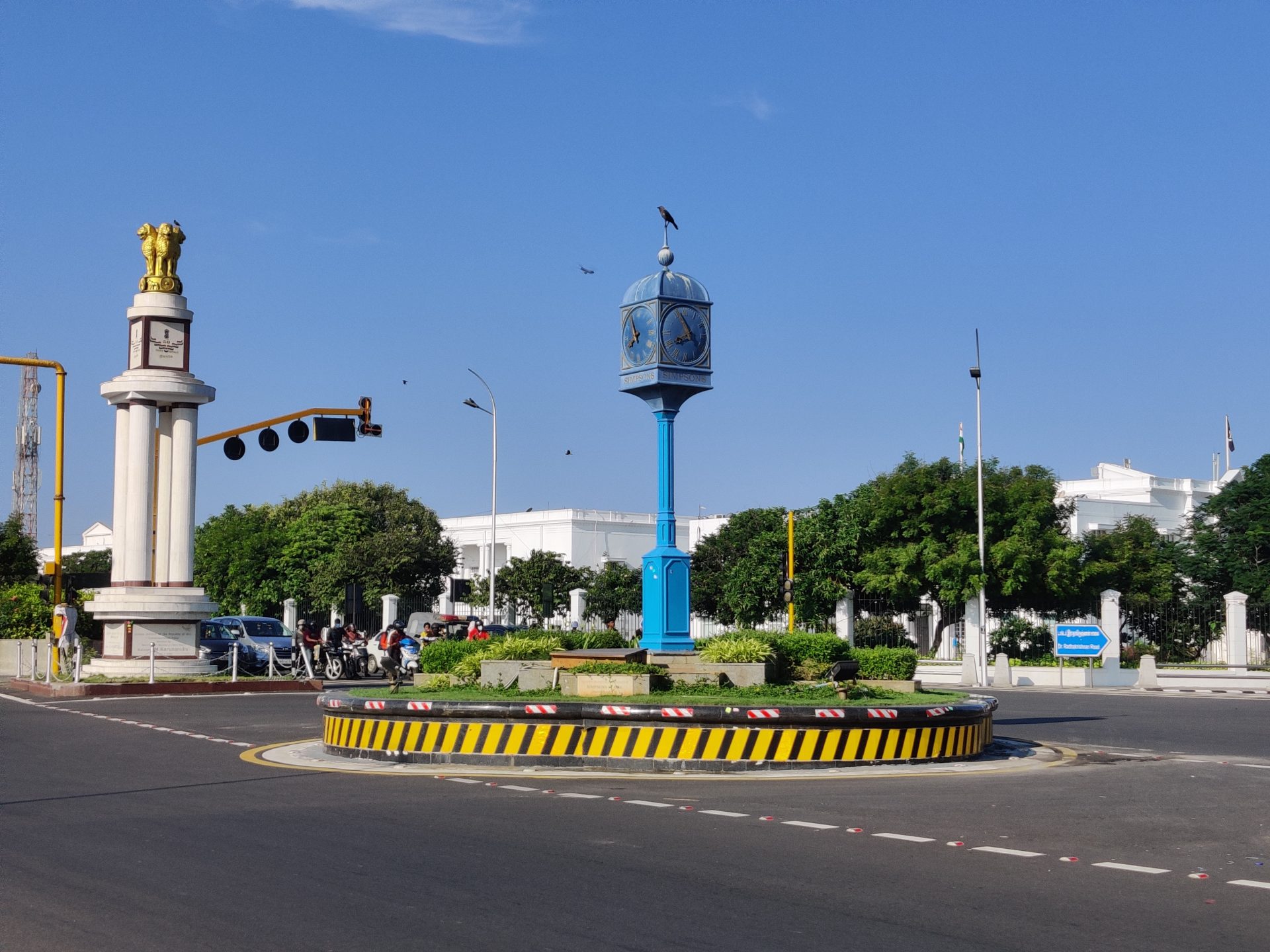
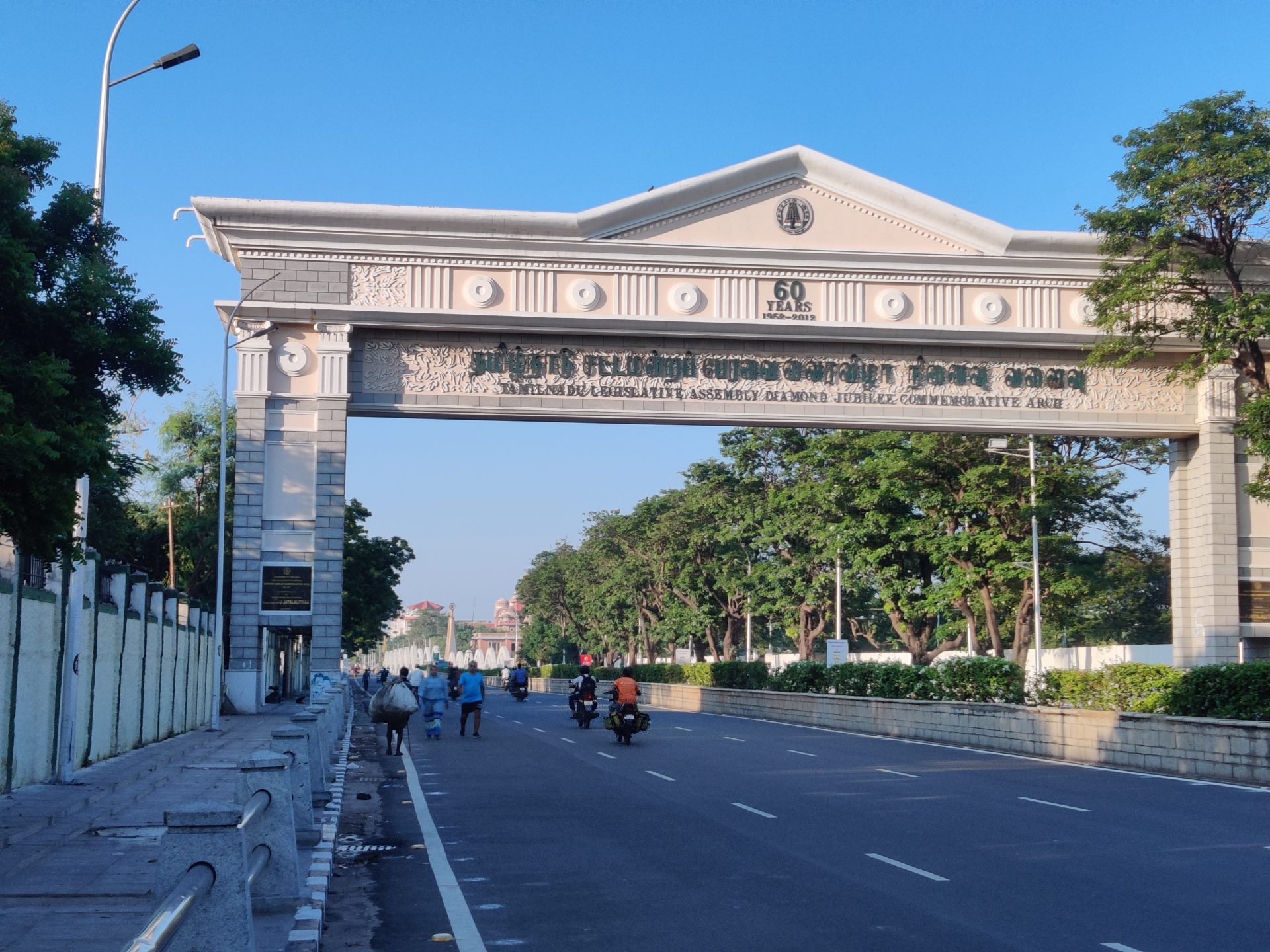
We move on next towards the Napier Bridge, a favourite shooting spot for most movie makers. There are a series of memorials erected in the memory of our past leaders  which we cross on the right side, culminating in the Triumph of Labour statue. The bridge comes alive with vibrant colours during the early hours of the morning and makes for some very compelling photography. Built over the river Coovum river to connect Fort St George with the Marina beach, this bridge was completed in 1869 by then Governor of Madras Francis Napier who served between 1866 to 1872. Before reaching the Napier Bridge, one cannot miss the newly erected 59 feet high Memorial to celebrate 75 years of Independence. 

COMMEMORATING 75 YEARS OF INDEPENDENCE

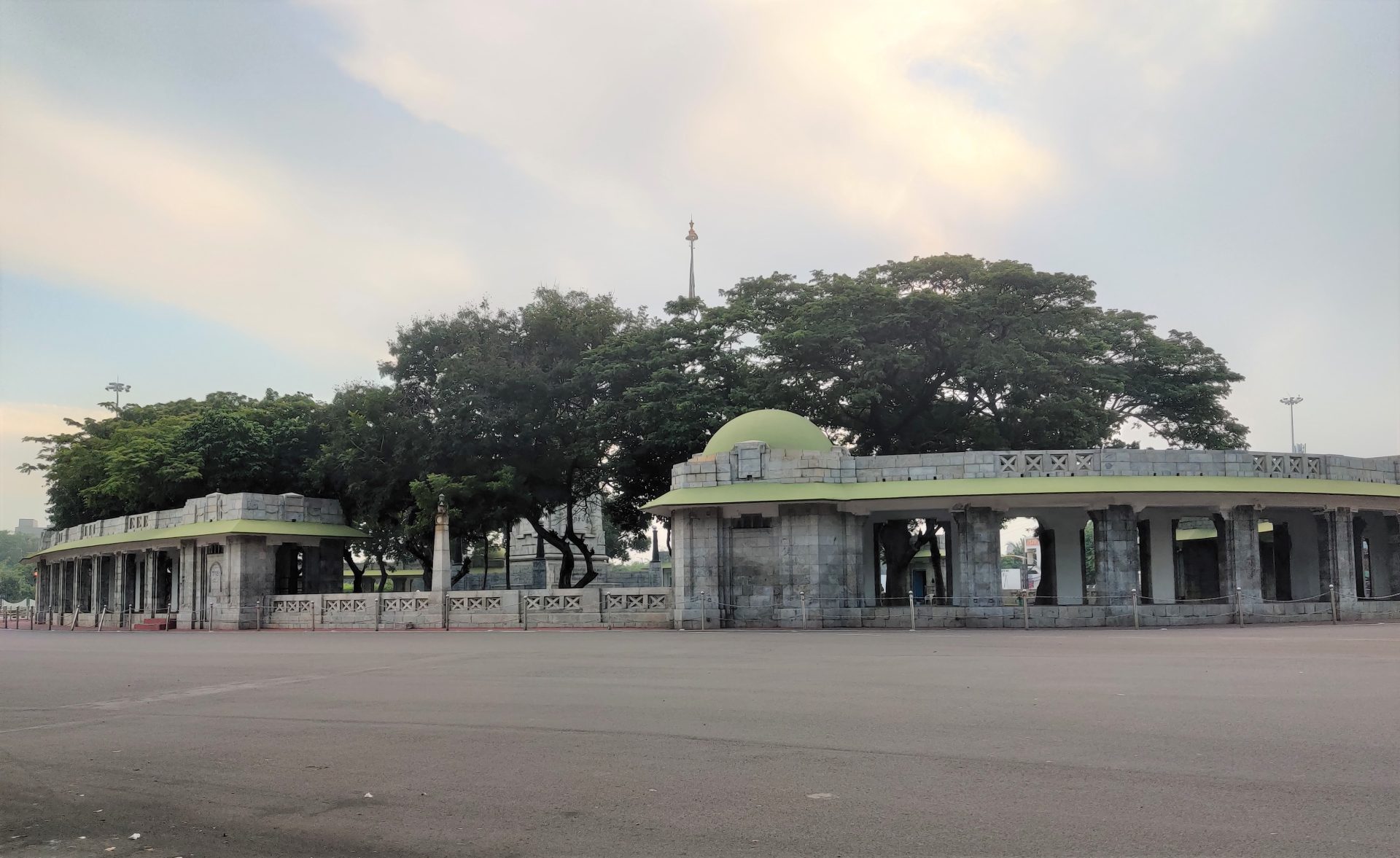
The War Memorial near the Secretariat

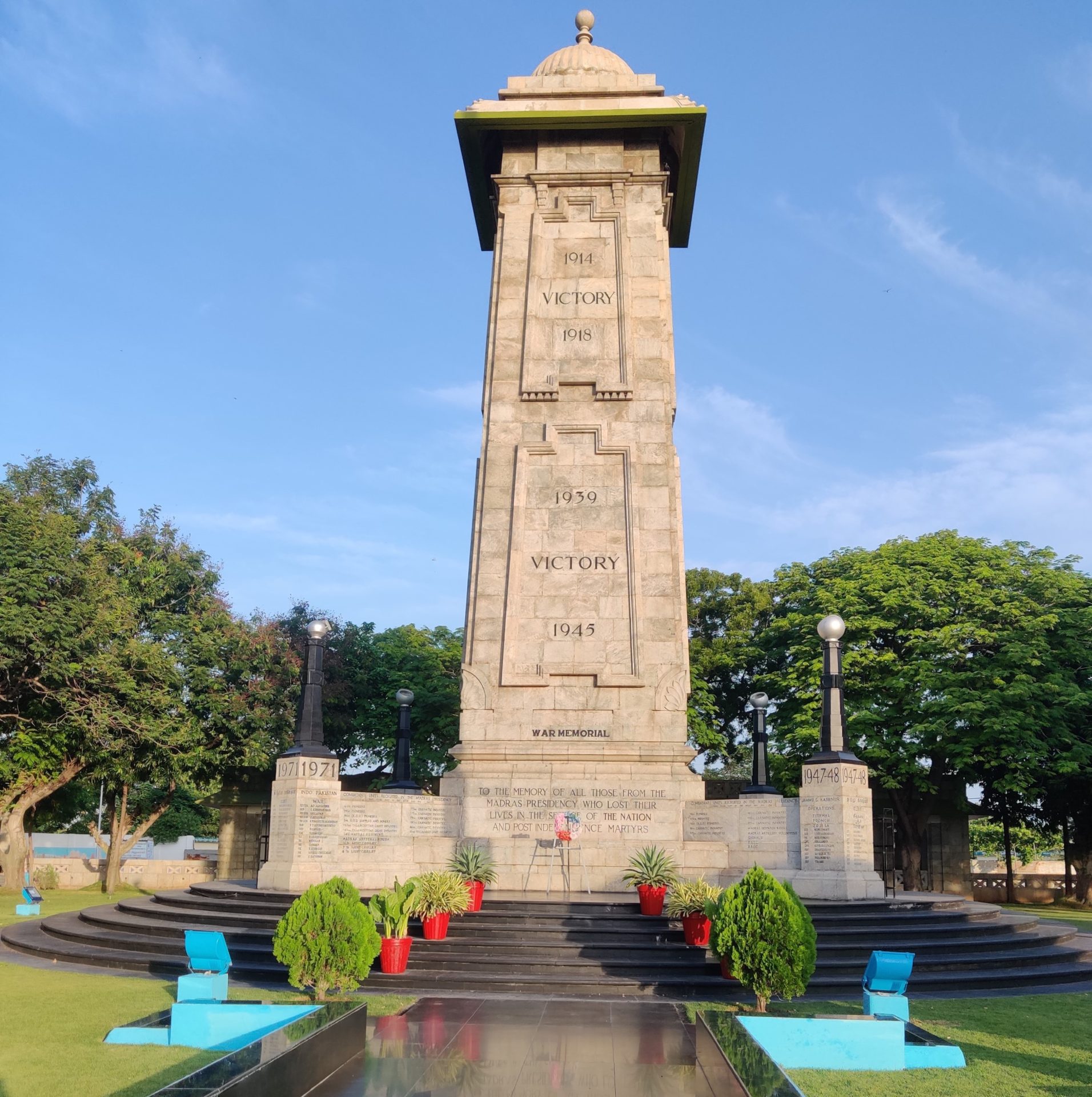
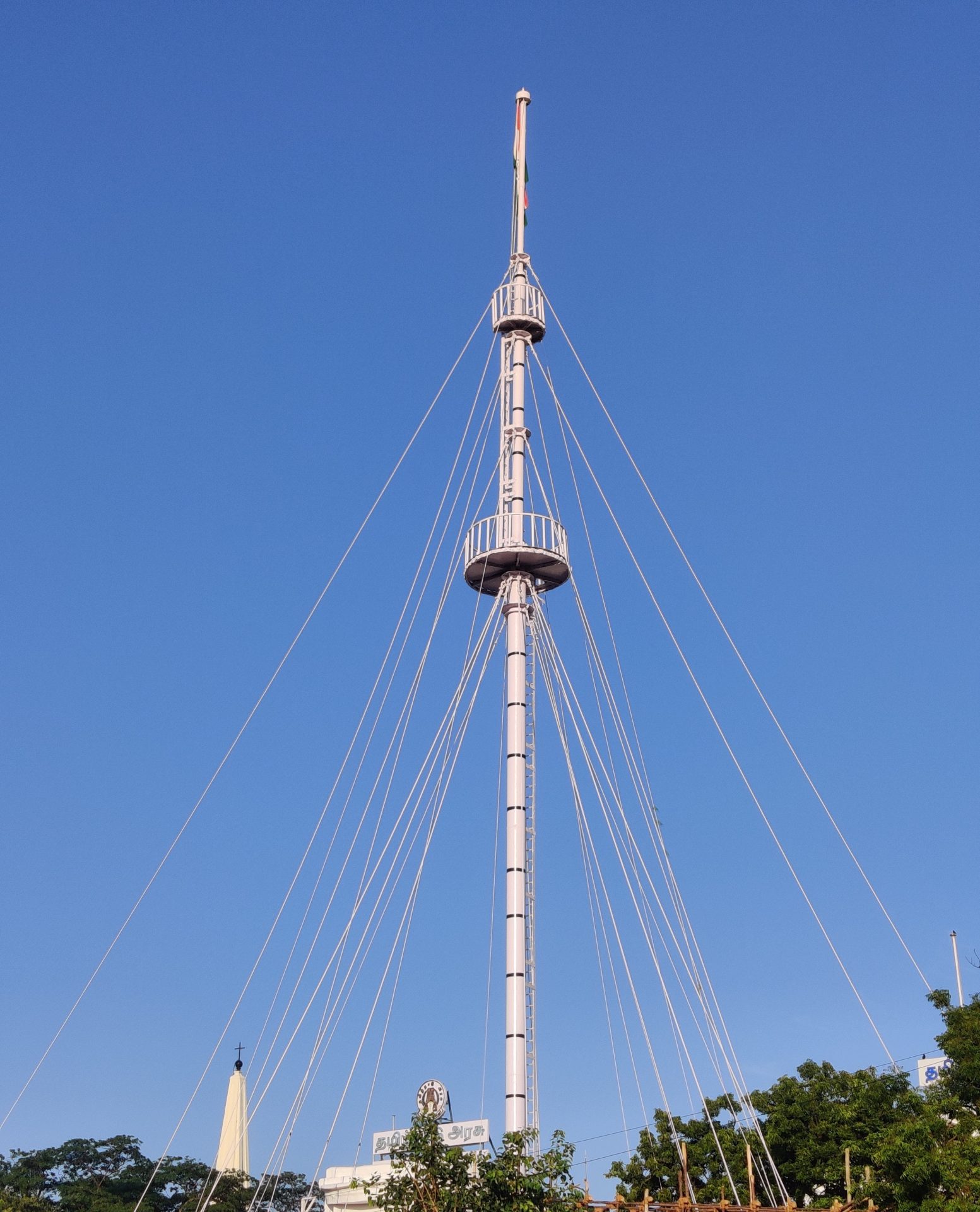
Separately created cycle tracks greet riders as one moves towards the circular shaped War Memorial, formerly known as the Cupid’s bow. Built out of rock and marble, this memorial was constructed to celebrate the victory of the Allied Forces in the World War and later got converted to a Victory War Memorial in memory of soldiers from the Madras Presidency who died in the 2nd World War. Later on, additional inscriptions from the 1948 Kashmir Aggression, the 1962 war with China and the 1971 war with Pakistan got featured here. A 30+ metre high flag mast bearing a 600 square feet sized Tricolour flies aflutter at the same place which was known as The Cupid’s Bow at one time.

THE WAR MEMORIAL

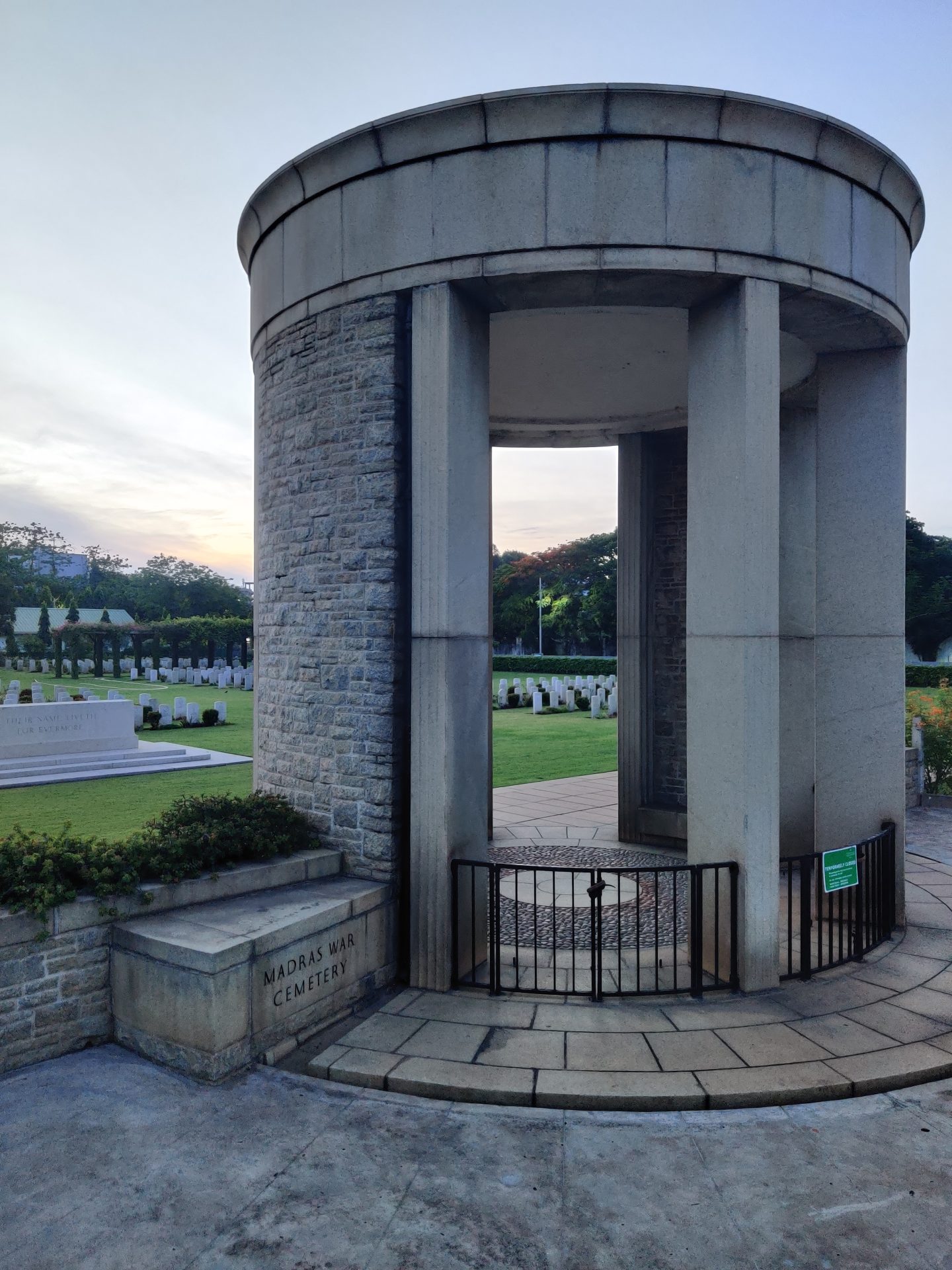
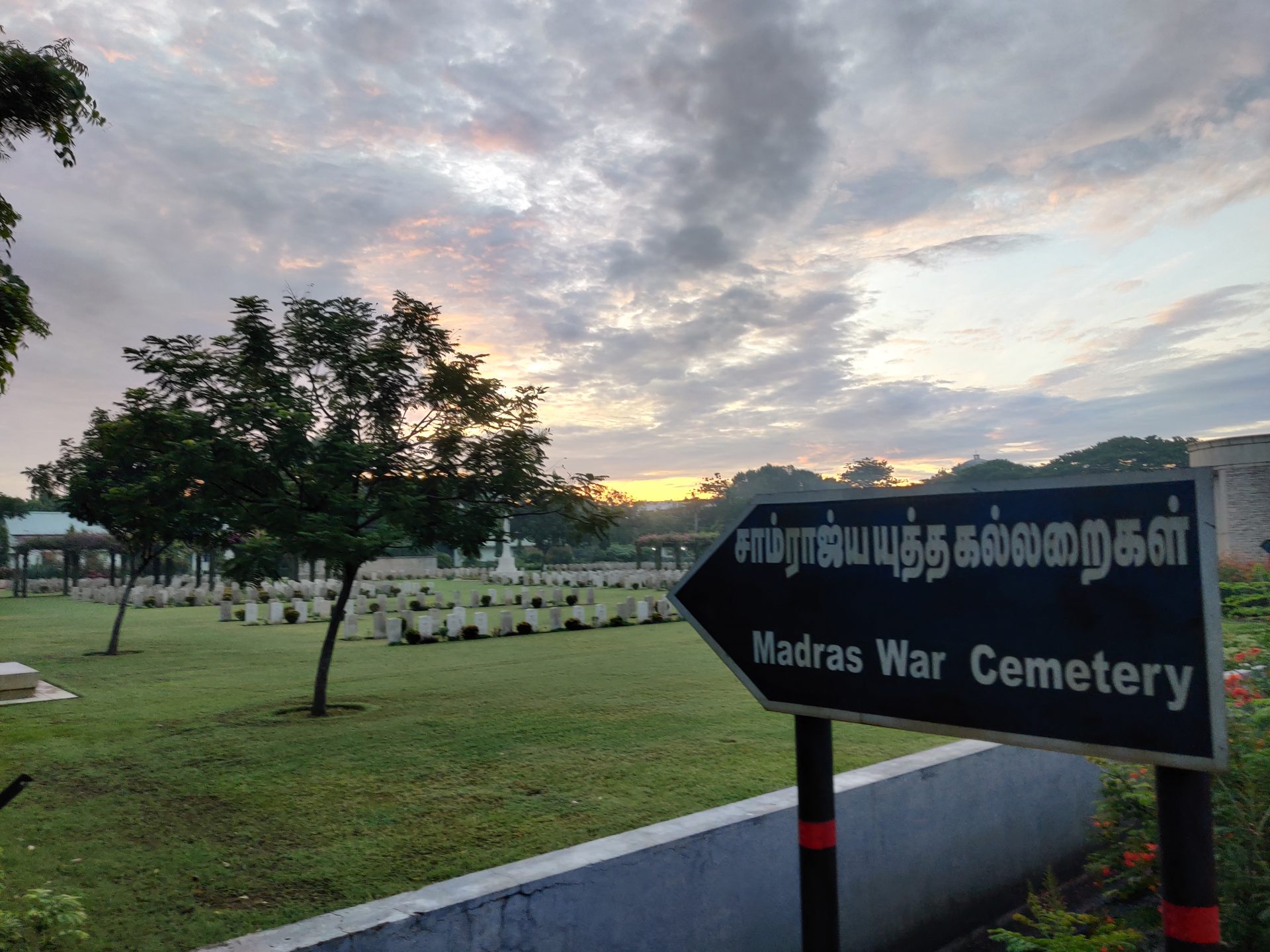
The Madras War Cemetery

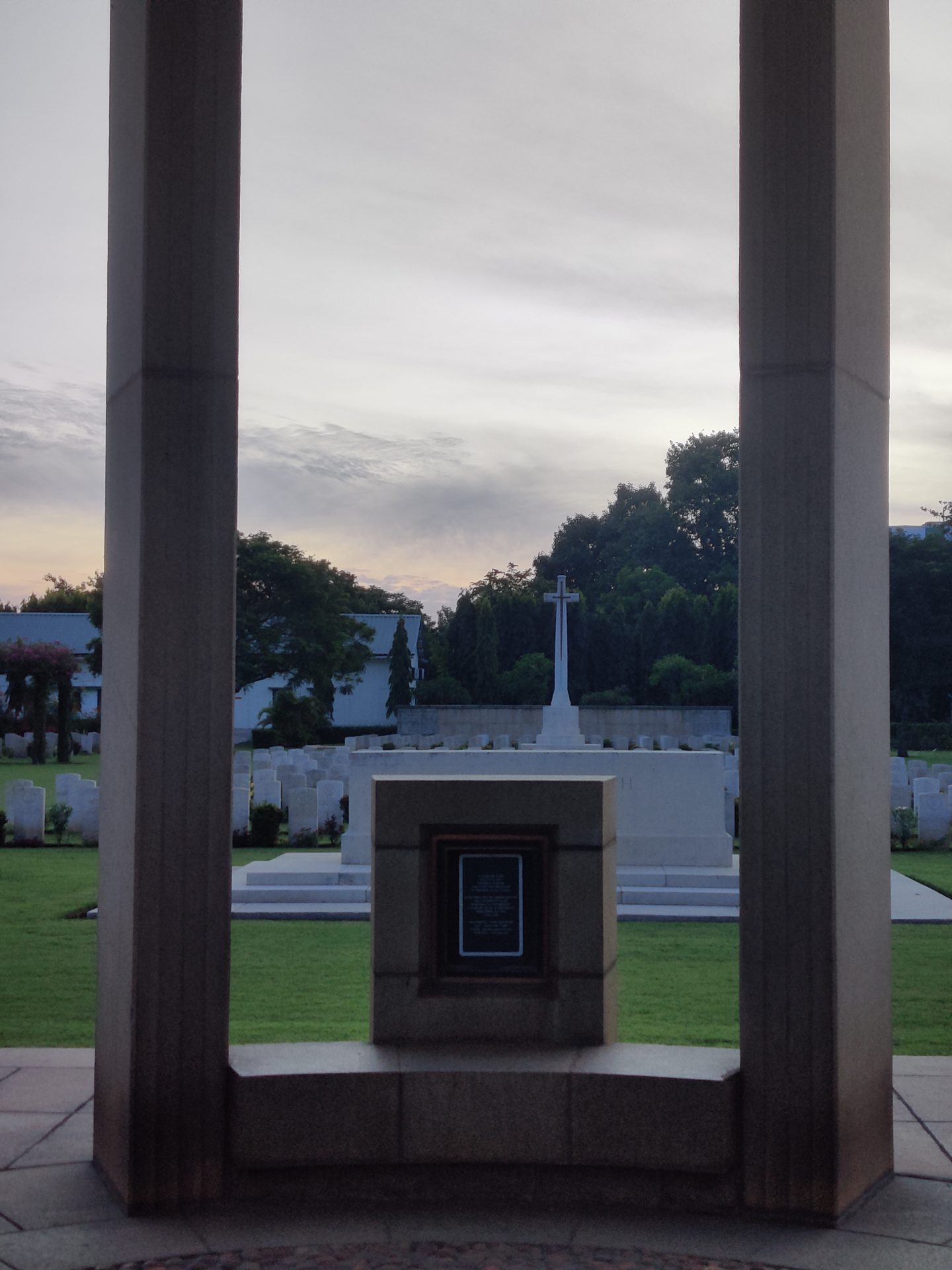
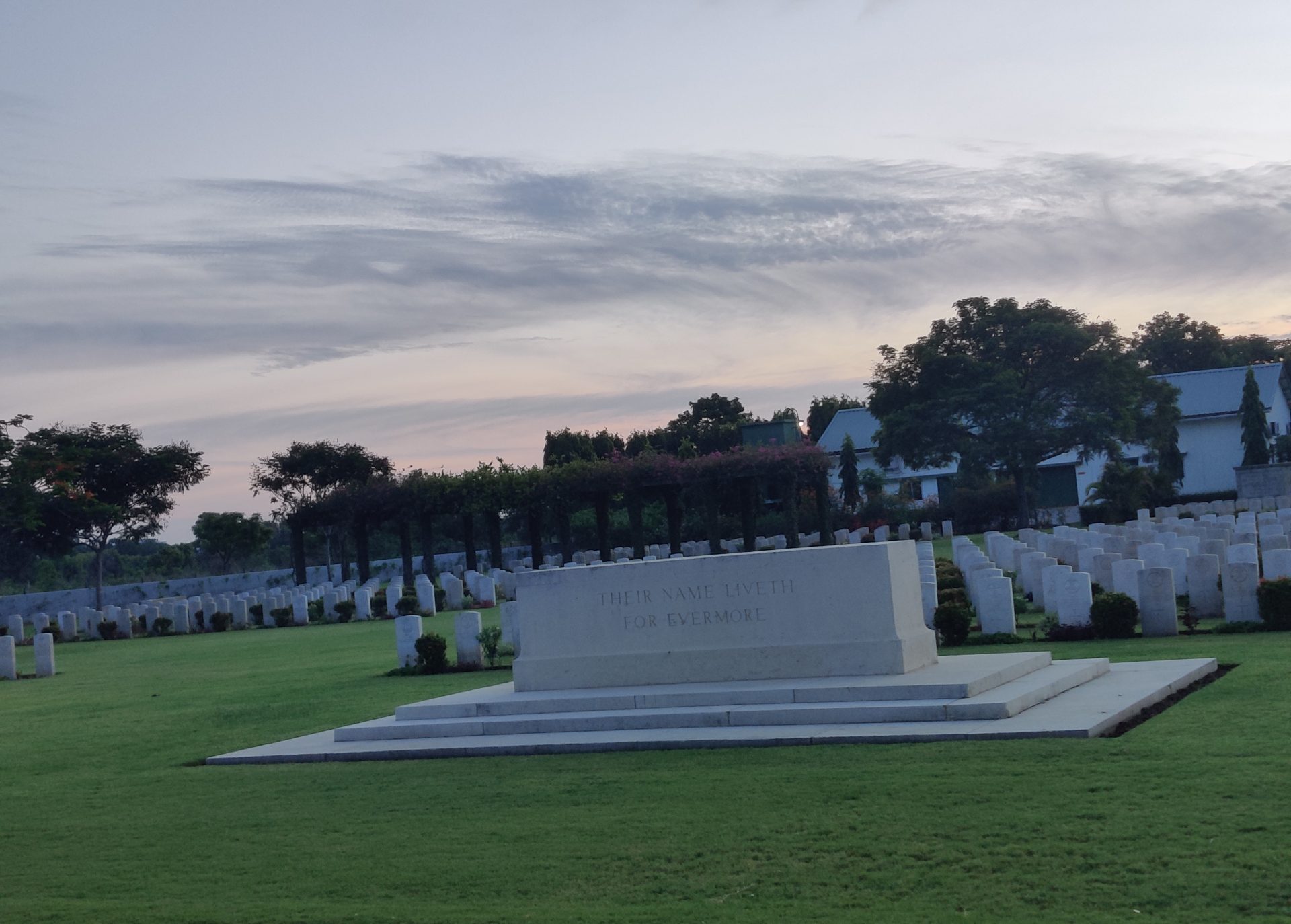
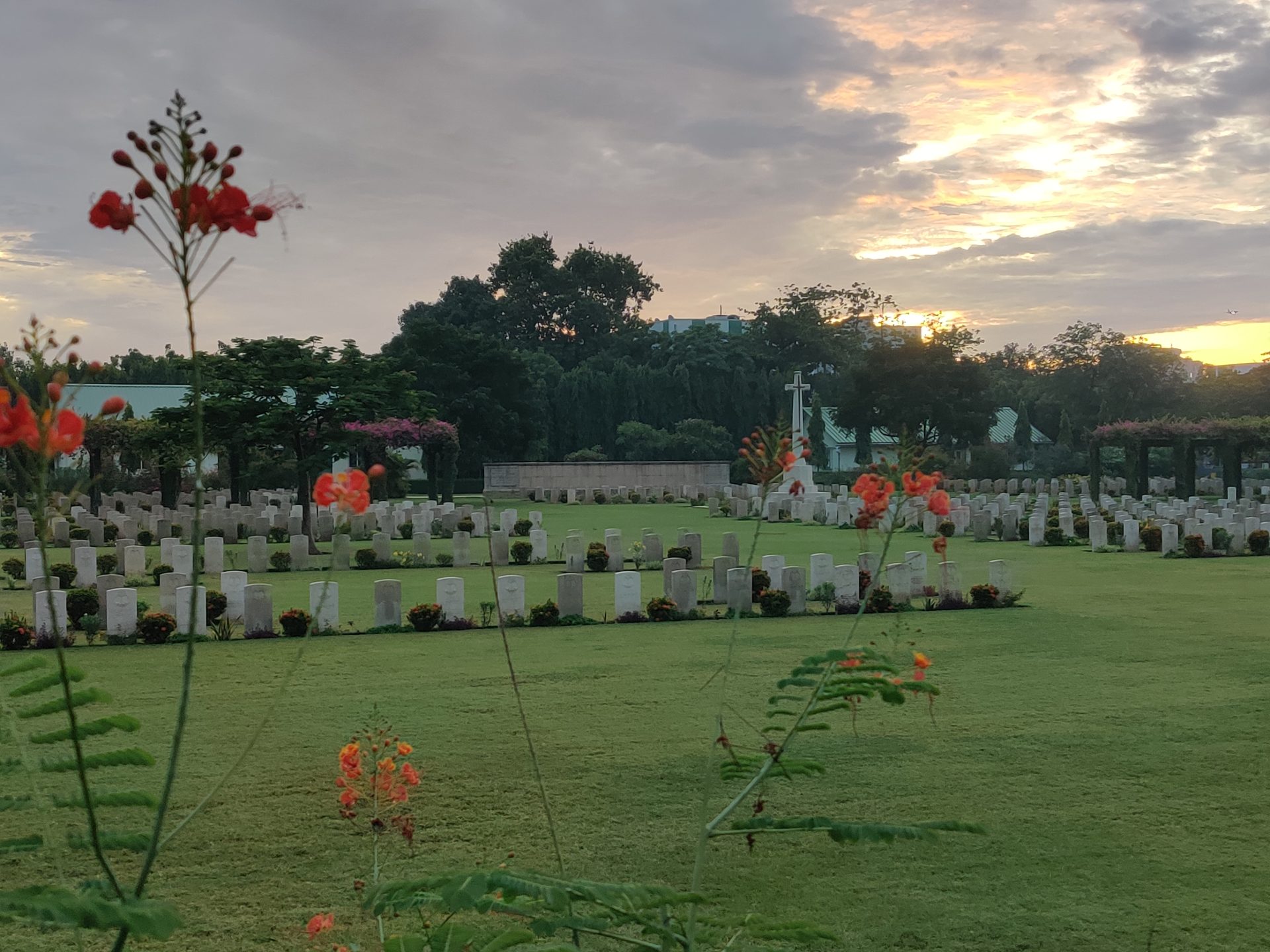
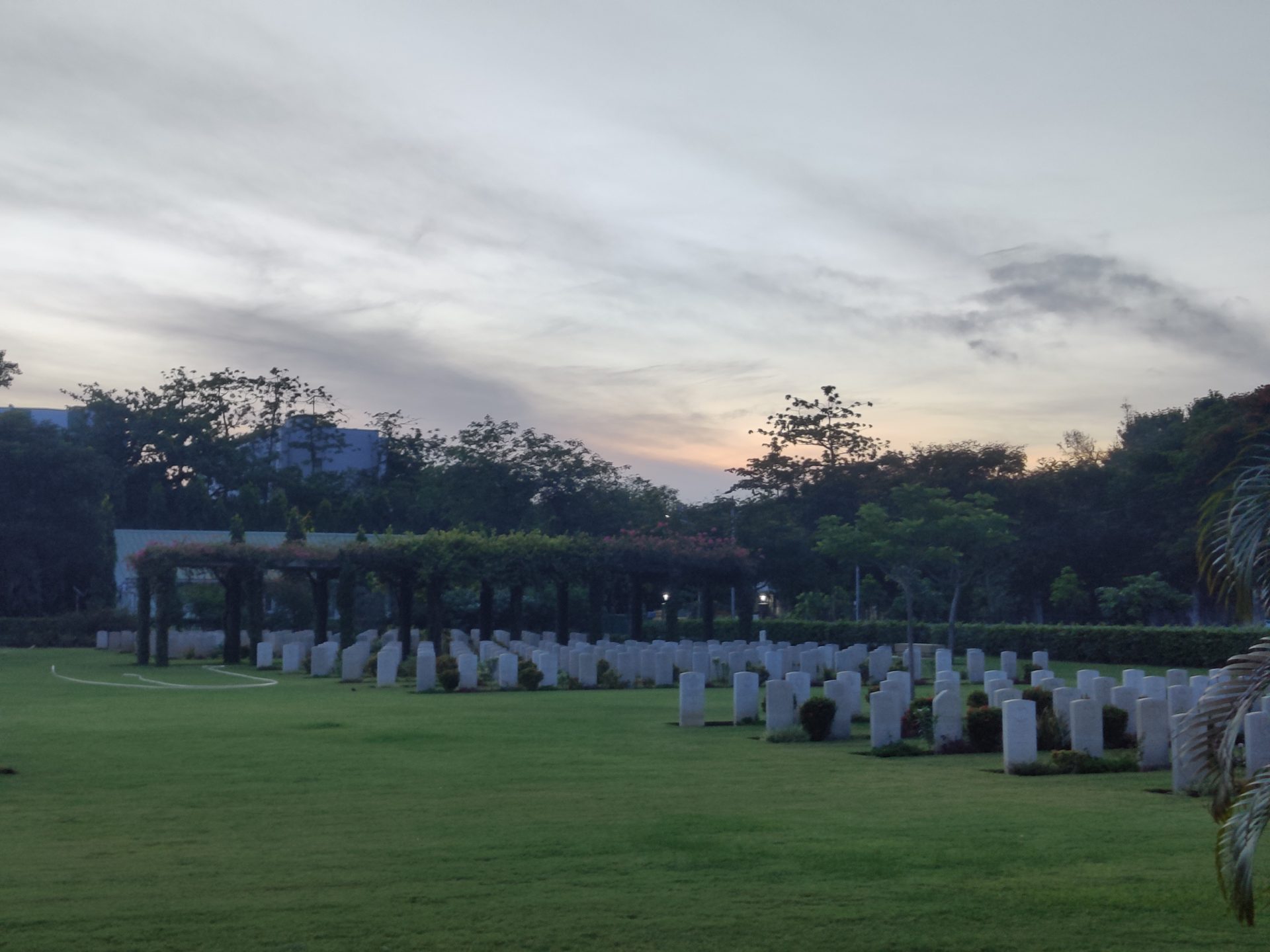
Towards the Southern part of Chennai on the Mount Poonamallee Road in Nandambakkam lies the Madras War Cemetery. Spread across an area of near about 3 acrea, this lawn cemetery contains the graves of 856 Commonwealth Service People who died in World War II. The rear portion of the Cemetery  has the Madras War Memorial (1914-18).

The prestigious Officers Training Academy lies towards the Southern Part of Chennai on the way to the Airport.

Fort St George and buildings around

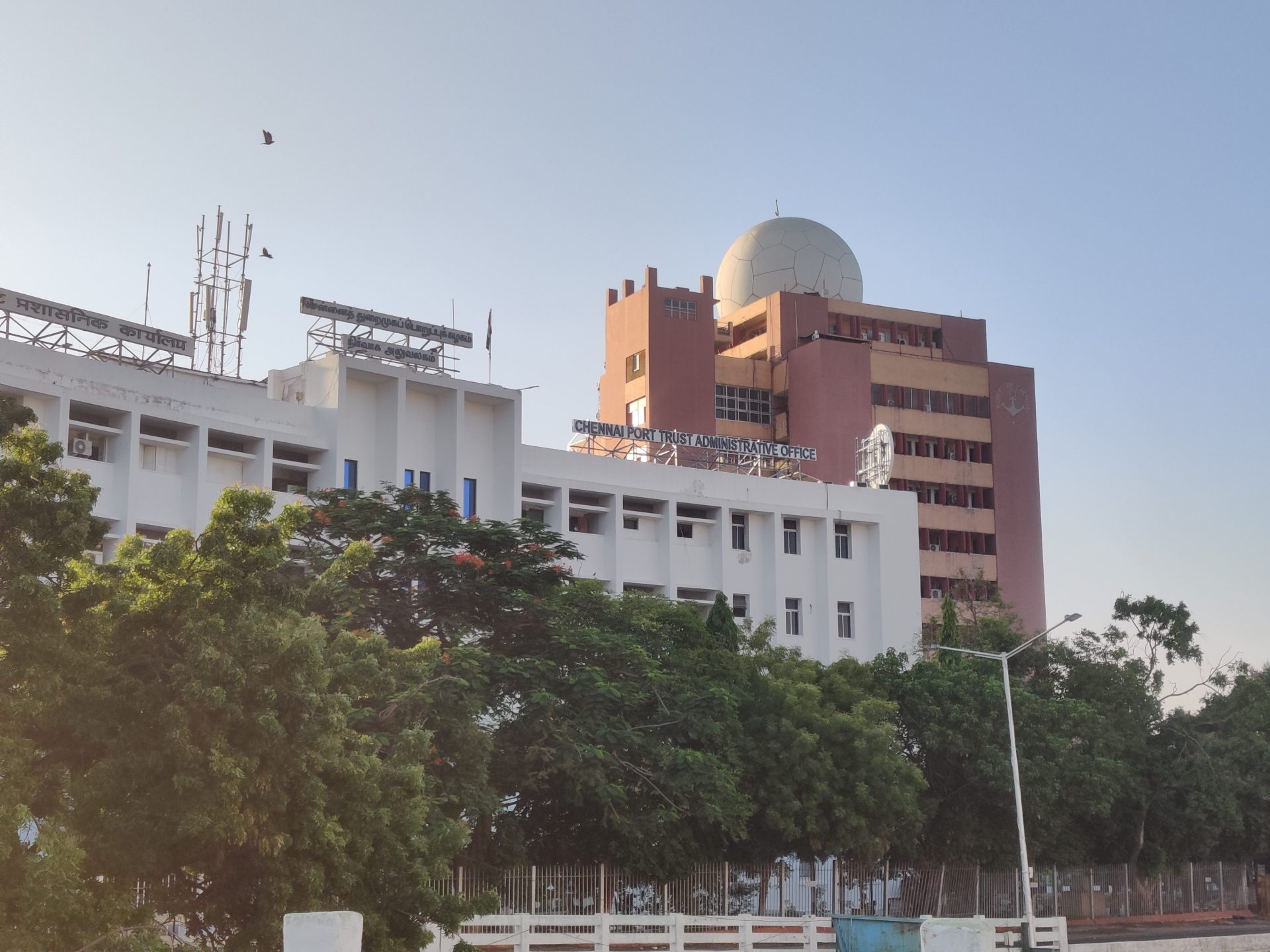
Further down the road from the War Memorial and leading towards the Reserve Bank of India on one side and the Chennai Port Trust on the other is the Secretariat Building which houses the Fort St George, a citadel built by the British East India Company.

Also known as the White House, the Fort houses the St Mary’s Church and a museum which houses British Raj artefacts and  a 150 feet high flag staff mast.


THE 150 FEET HIGH FLAG MAST
THE SECRETARIAT

Right opposite the Secretariat is a nice park where people go for their morning walks. It also serves the purpose of a good photo shoot opportunity.

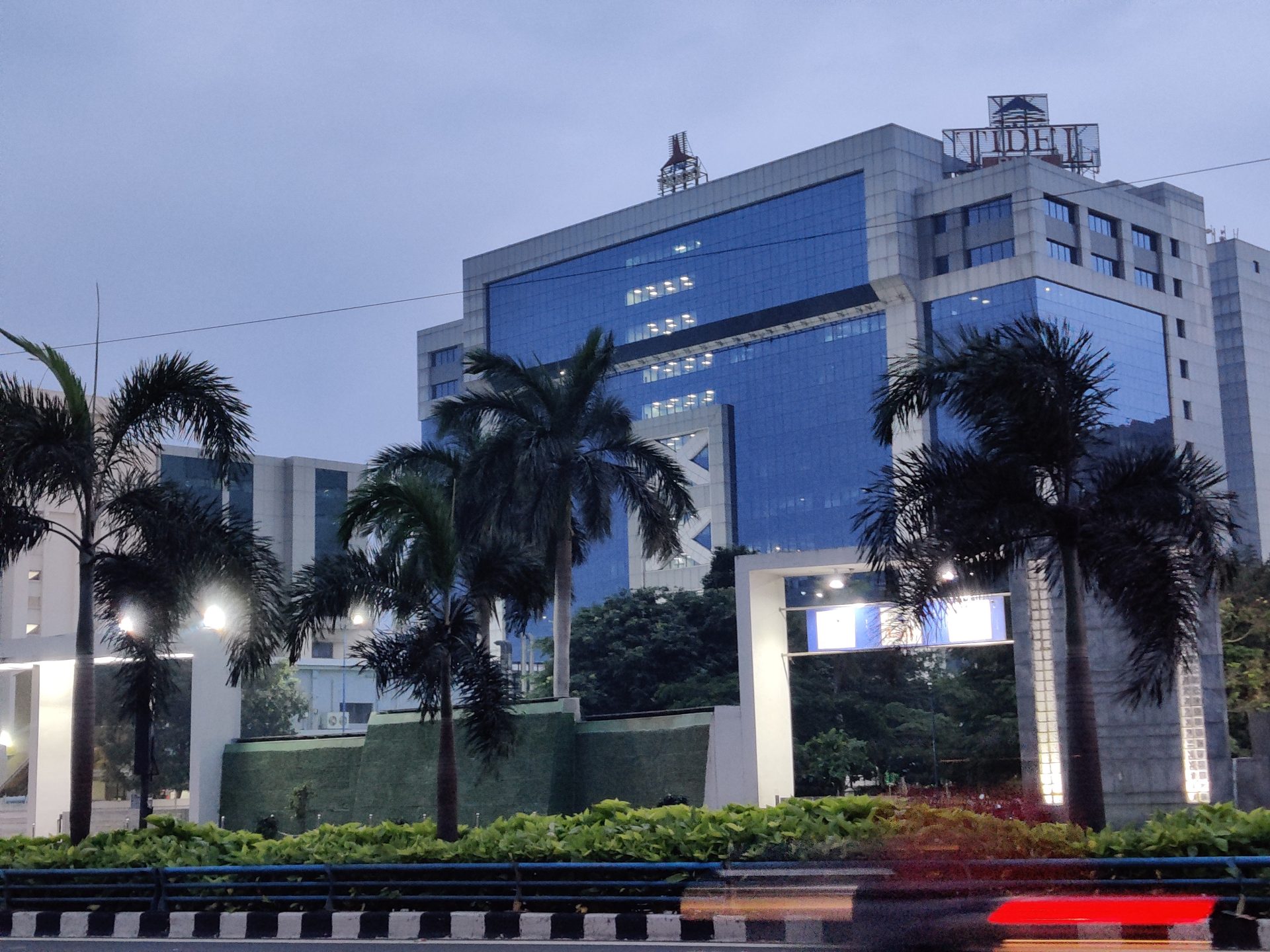
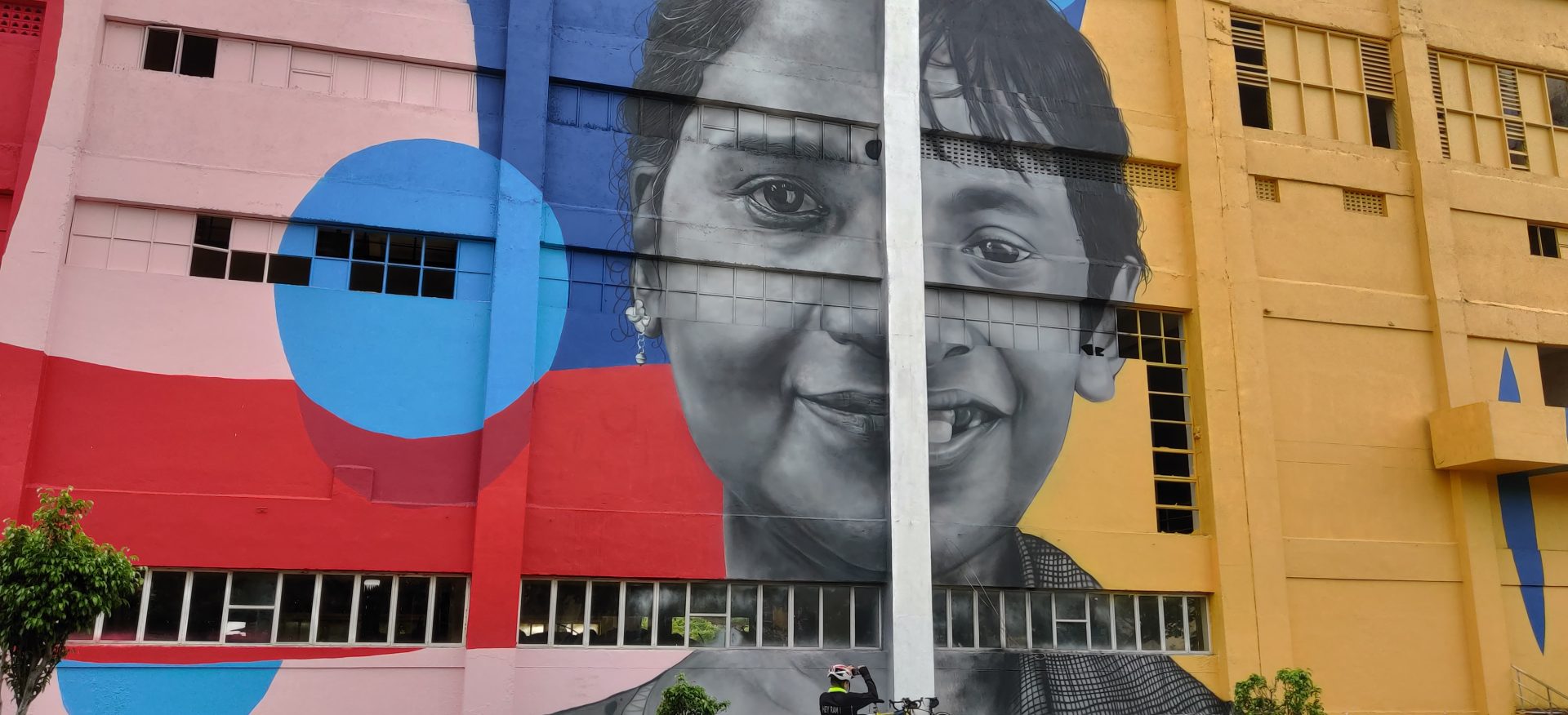
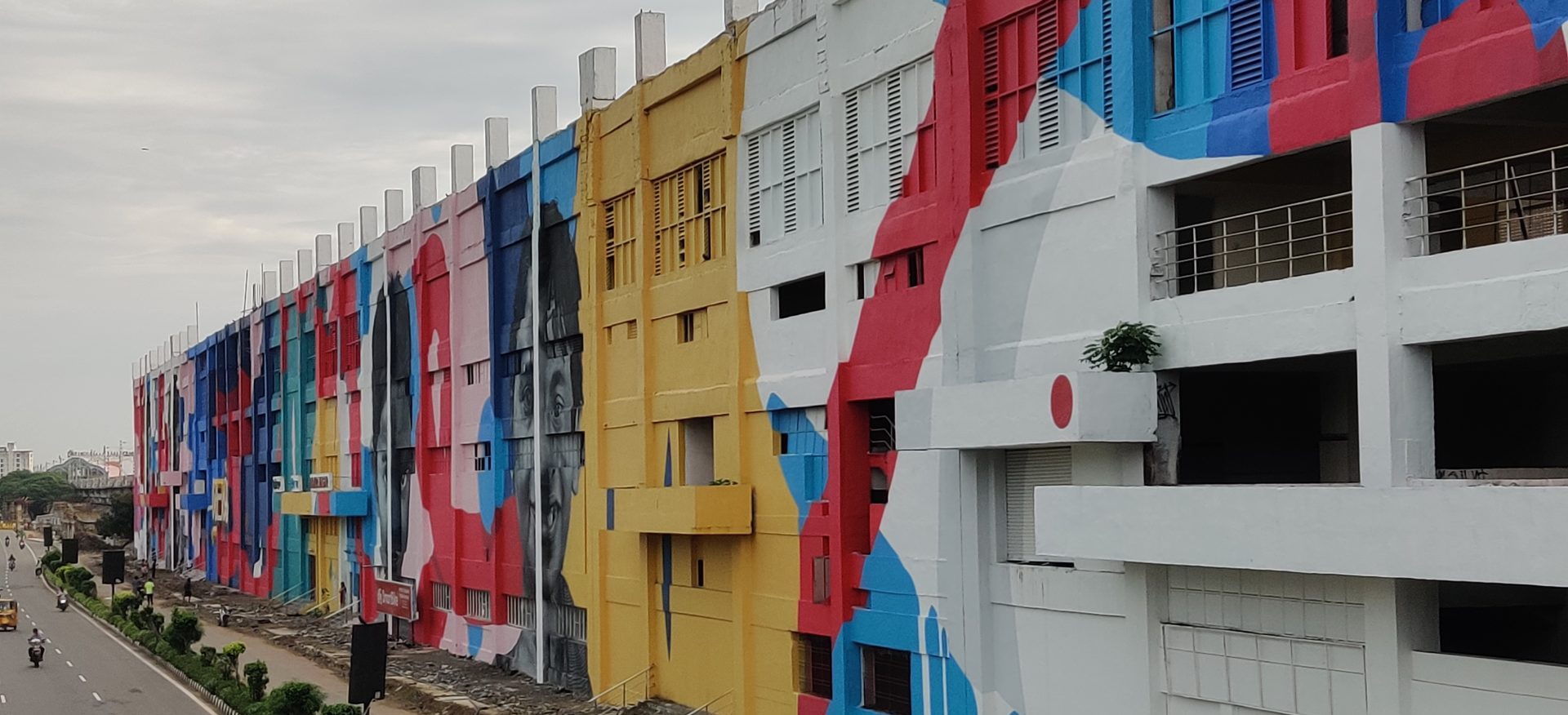
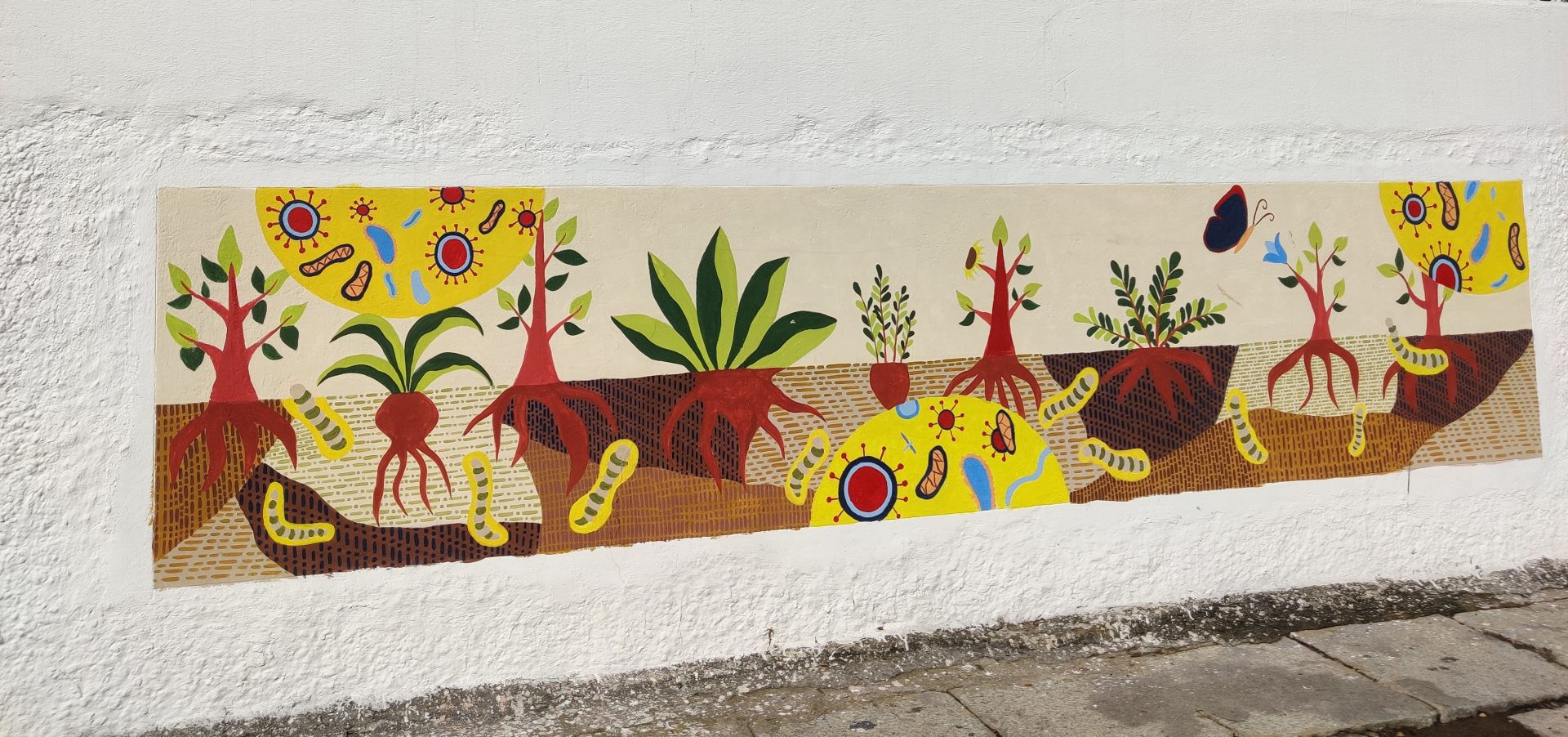
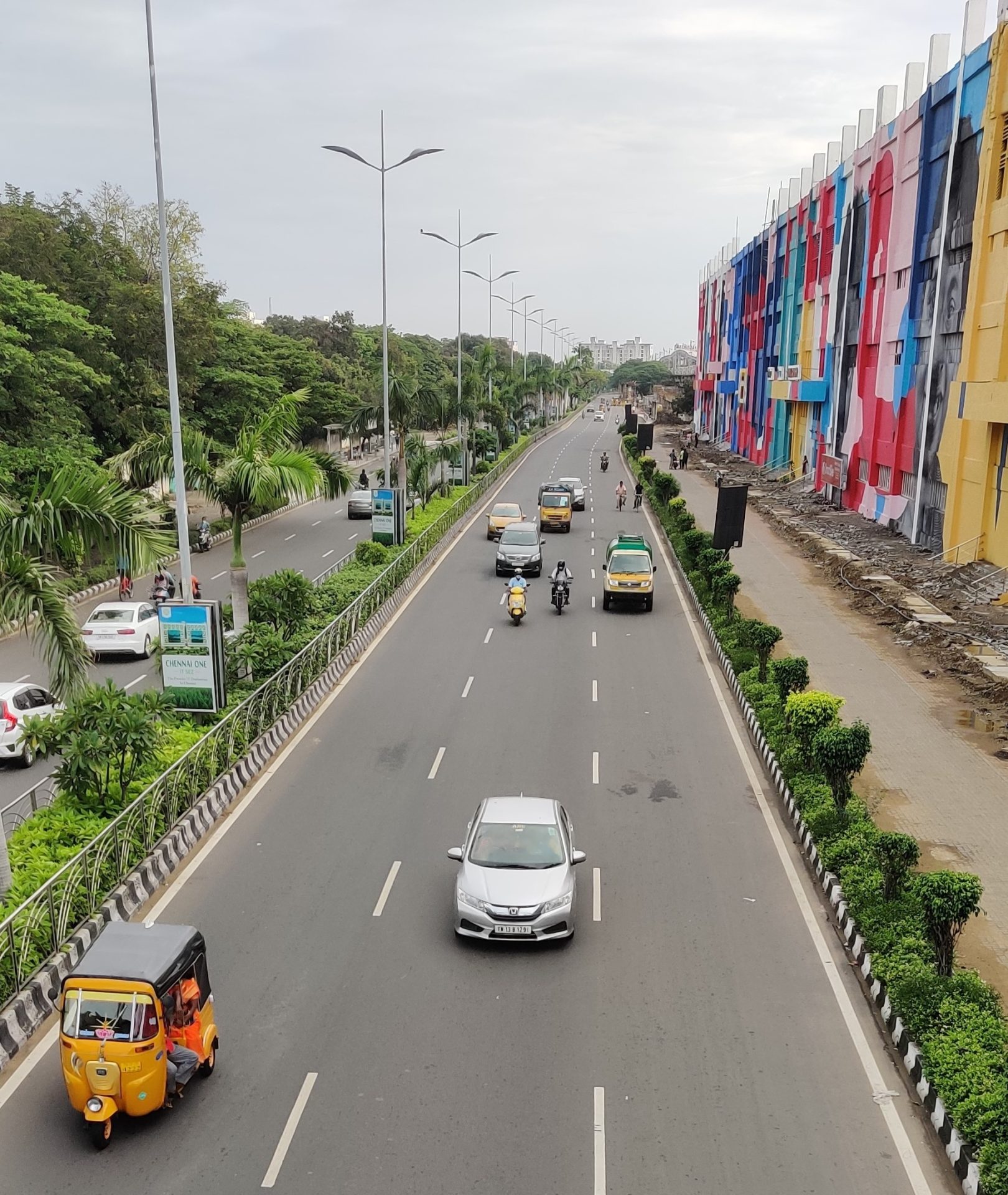
Beautiful murals adorn the walls of the Subway which leads one from RBI towards Parrys Corner  and as has been the trend across the city, one gets to see these half and full height murals adorning the side walls and building facades at lot of prominent places. These murals are done up with bright and vibrant colors and are very pleasing to the eye and can also be seen on the walls of the MRTS stations leading towards Tidel Park side apart from the walls of a few colleges.

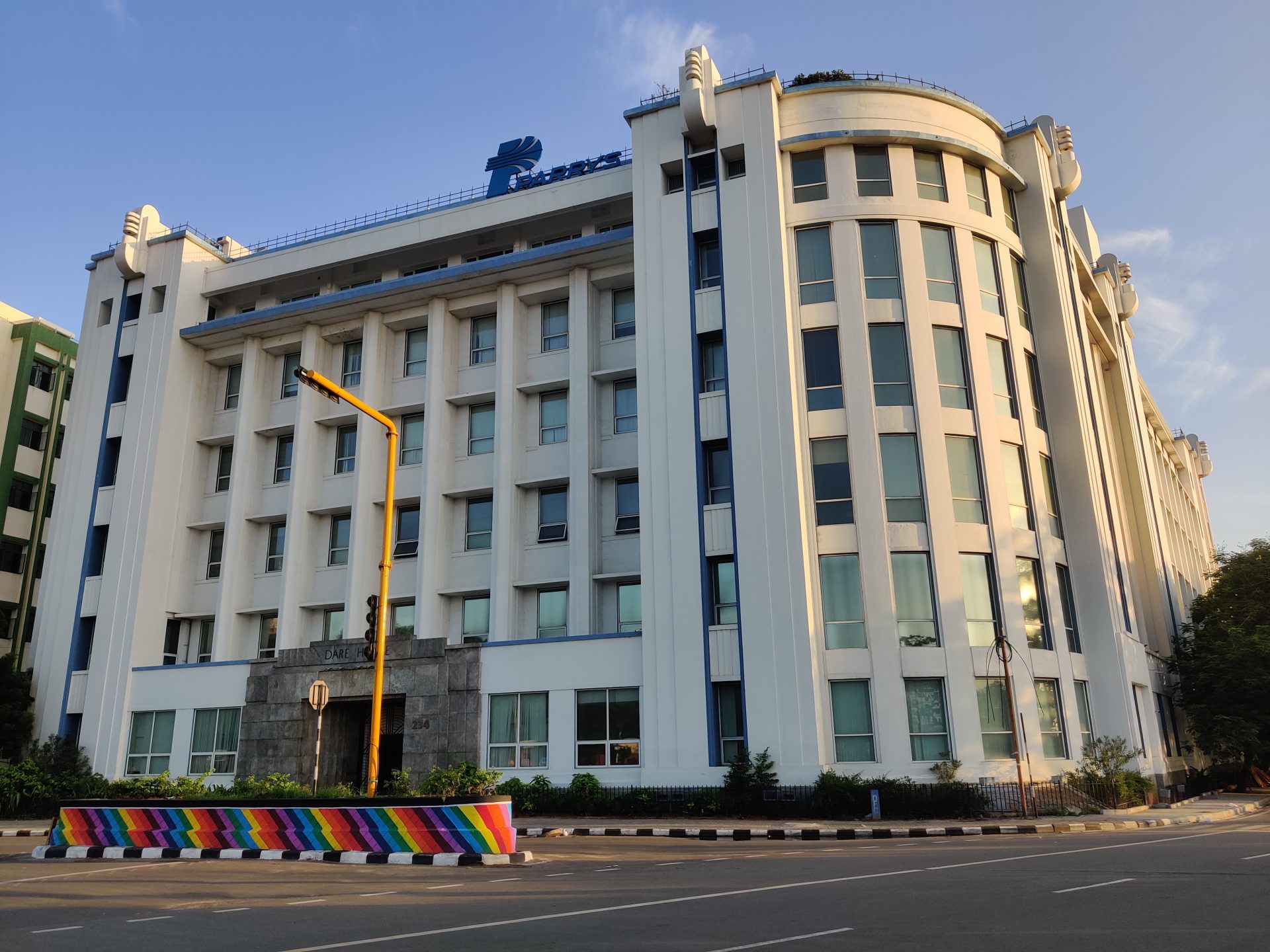
Dare House

The RBI subway leads into Parrys corner which houses the Madras High Court Complex on one side and  the Dare House right at the corner.

This is an art deco building built between 1938 and 1940 and houses the Head quarters of the Chennai Conglomerate, the Murugappa Group which bought over EID Parry and the Dare House. This building initially housed the office of EID Parry and the founder of this Company Thomas Parry named the Dare House after the name of one of his business partner John William Dare.

Parrys Corner is where the city’s centre is construed.

The third Lighthouse which I had mentioned in the Lighthouse Section above is incidentally housed within the Court Complex and located very close to the Dare House (see the below picture).

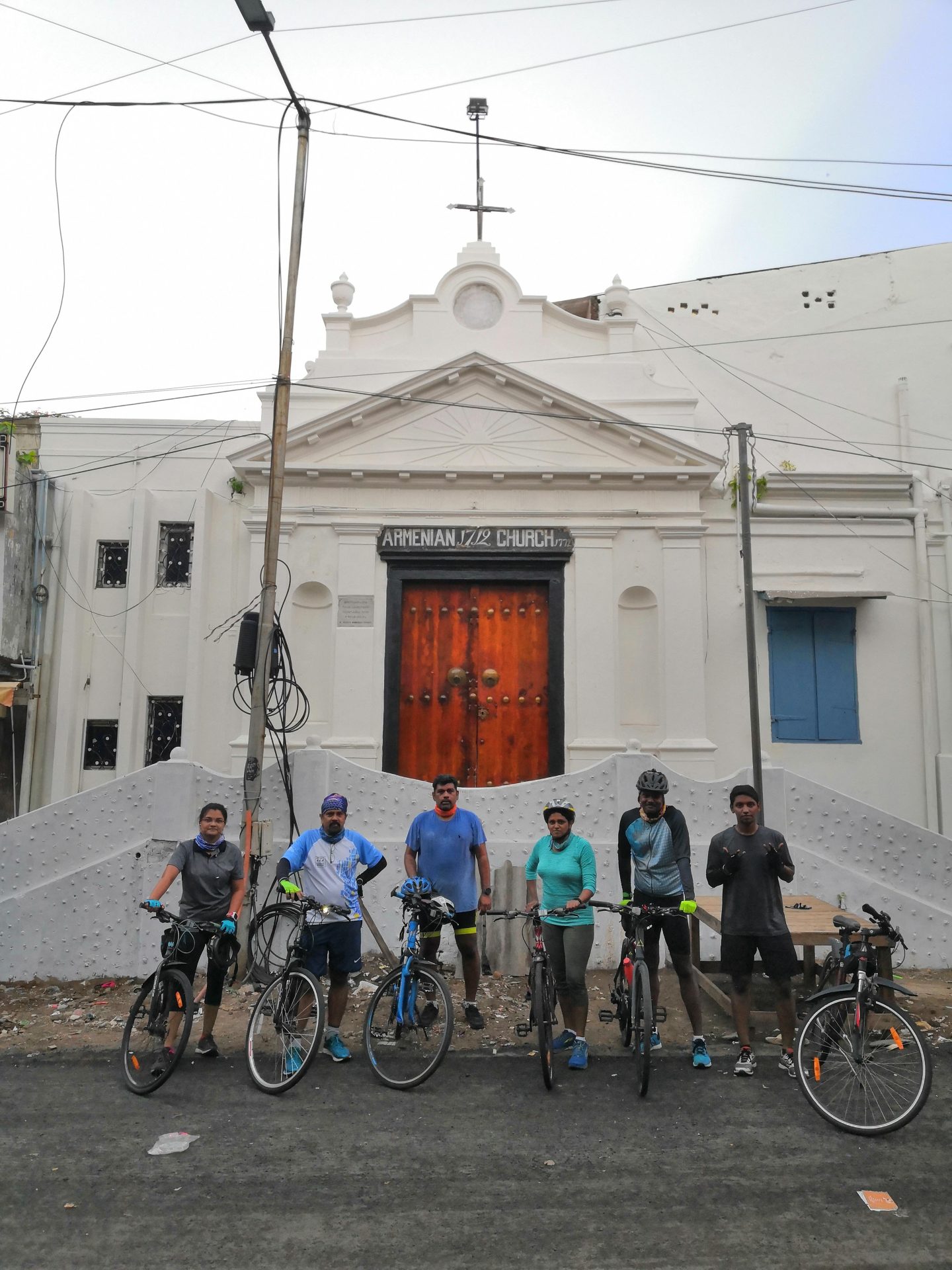
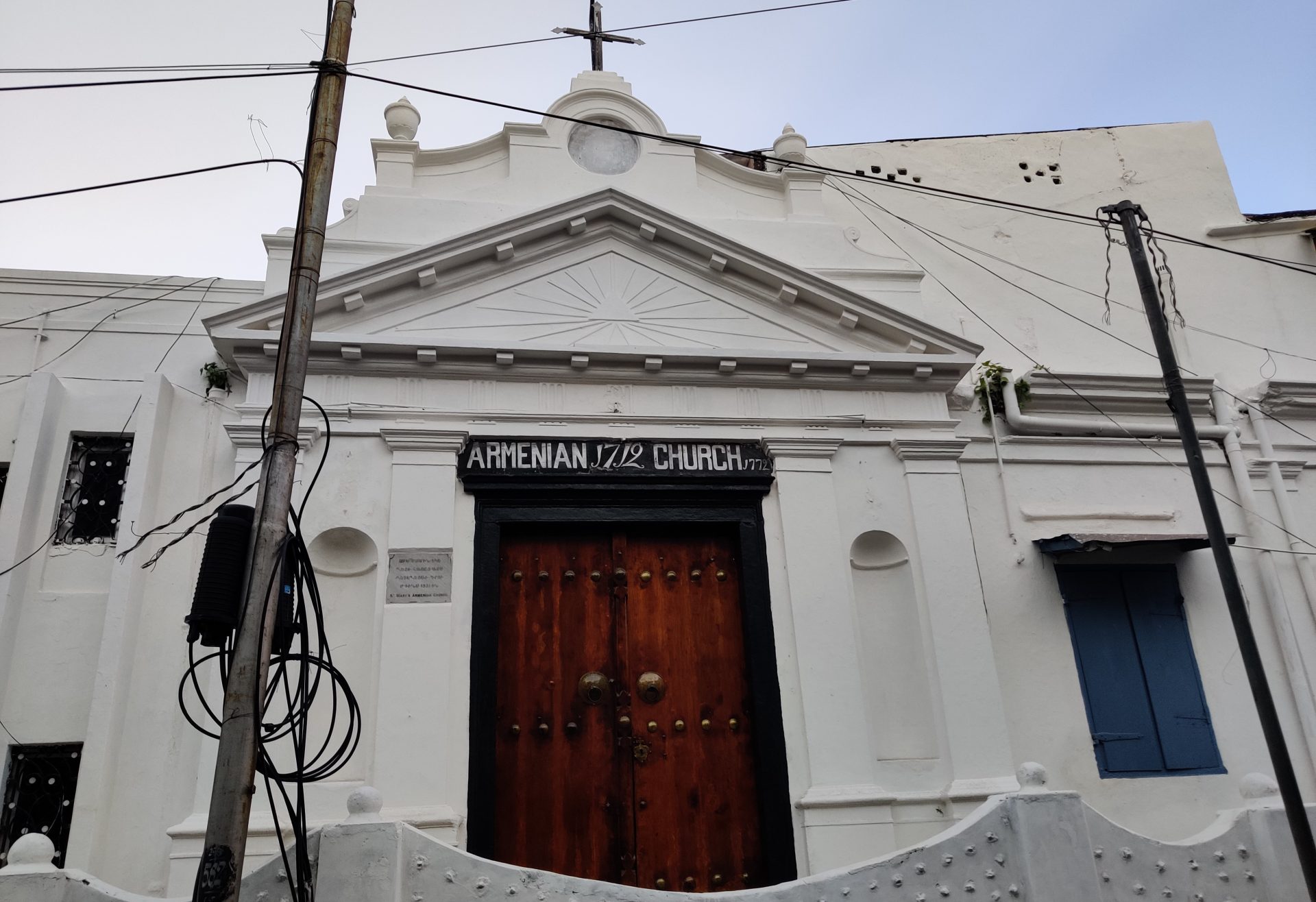
The Armenian Church

History beckons Madras to be earlier having a small but thriving population of Armenian Merchants who are believed to have walked across the Hindukush mountains right from Armenia and settled here.

The St Mary church which exists here is believed to have been constructed in 1712 and reconstructed in 1772 and is the oldest church of the Indian subcontinent. As the name suggests, the church is located on Armenian Street and is very close to the Dare House building.

Famous for its belfry of 6, each of these bells are of different sizes and are believed to be weighing at least 150Kgs.

They are rung every Sunday at 9.30 AM The church continues as a Heritage site and is open from 9.00 am to 2.30 pm.  The church has the graves of around 350 Armenians.

The Nettukuppam Beach

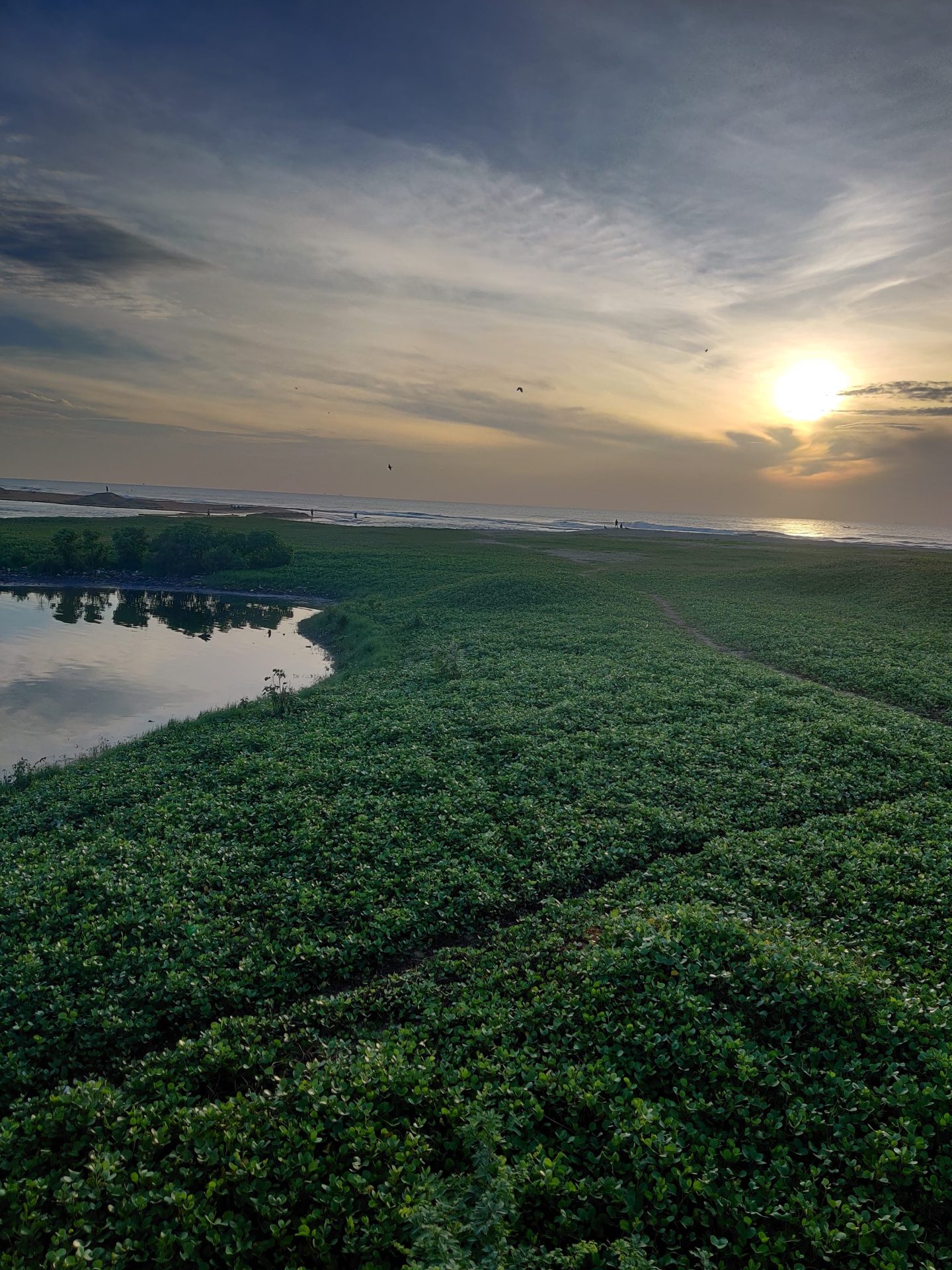
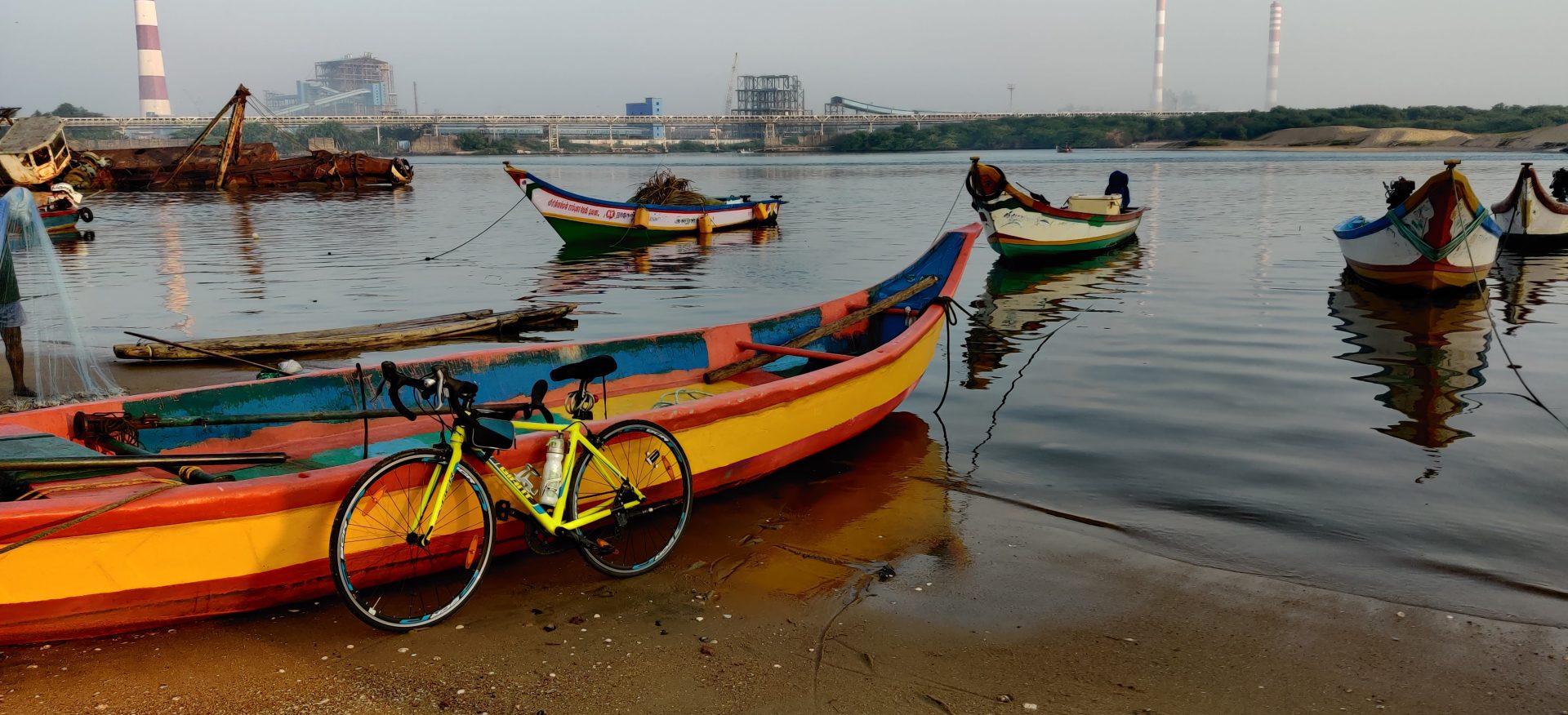
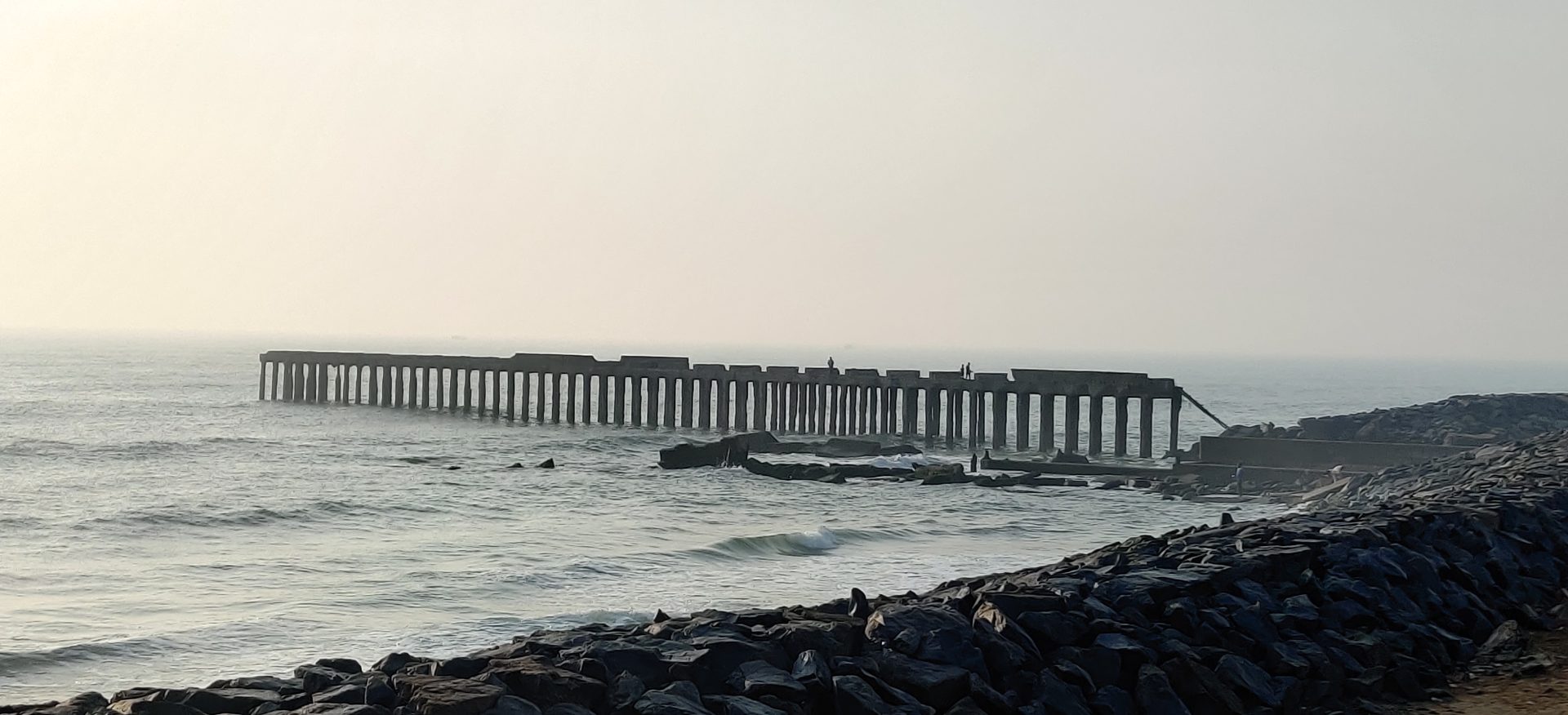
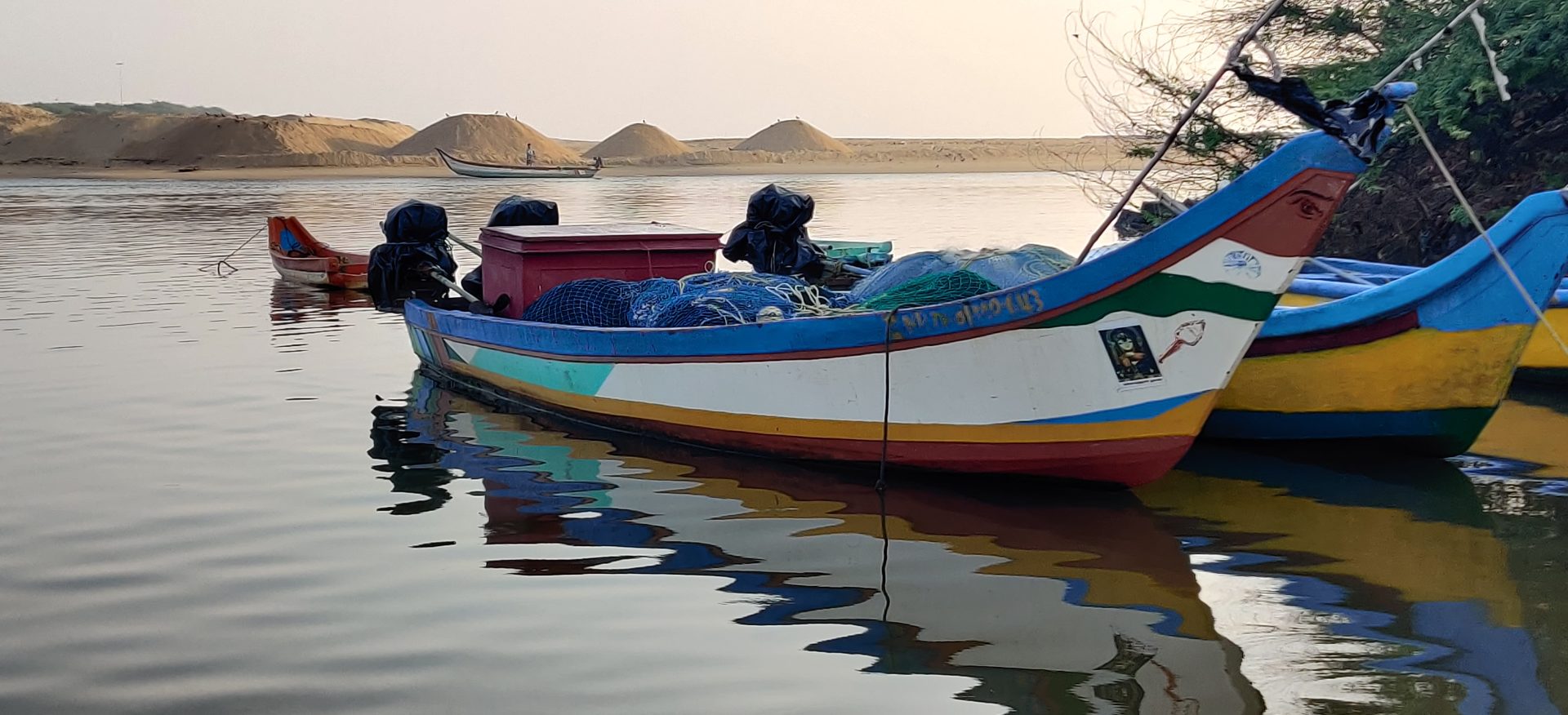
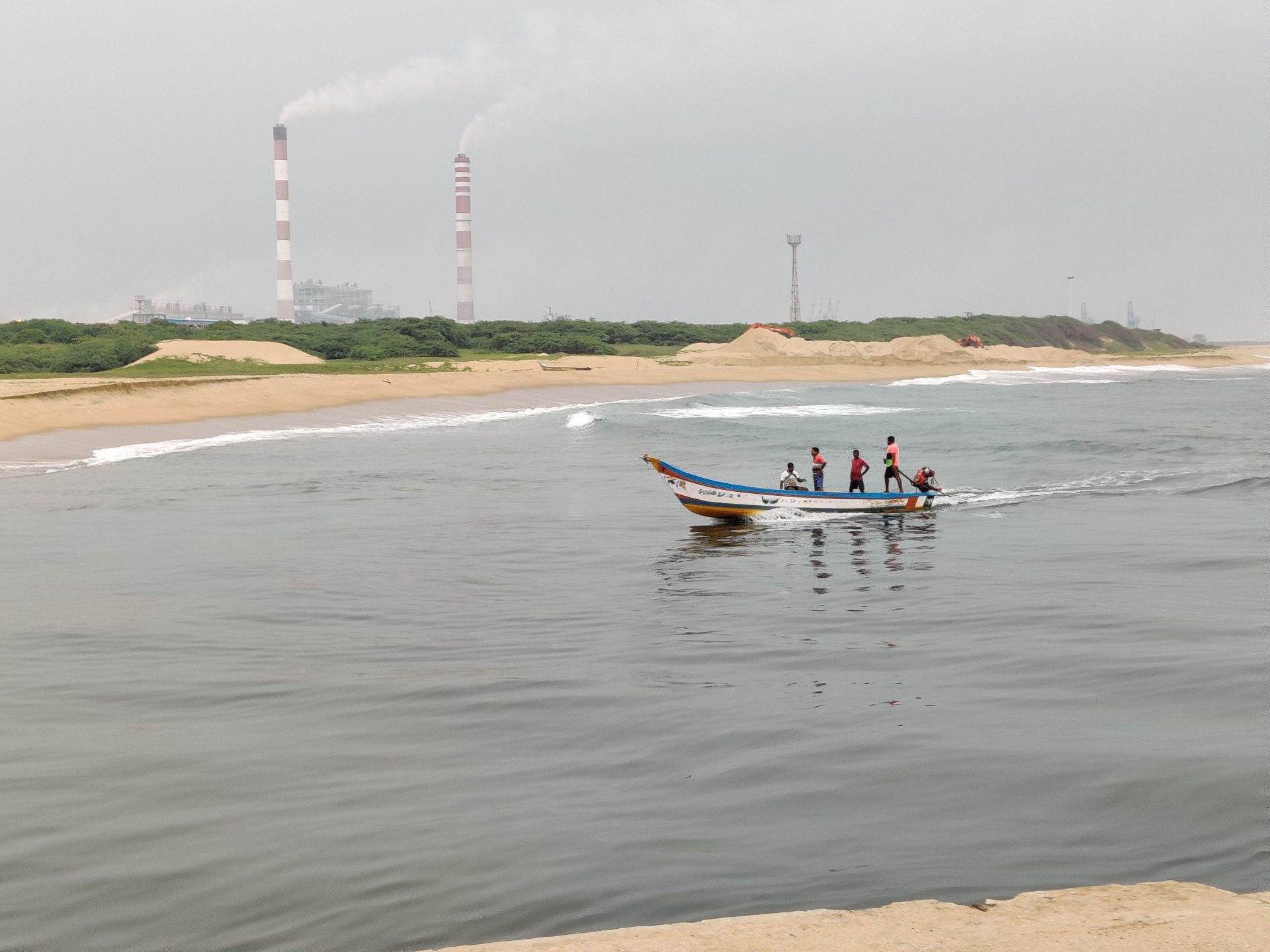
A 17Km drive from Parrys Corner towards the Northern Part of Chennai leading upto the industrial belt of Manali brings one to the Nettukuppam Beach. Situated at the point where the Ennore Creek joins the sea, this less inhabited beach is very picturesque and tranquil. A broken bridge can be found here and the beach offers some spectacular views of the sunrise. There are some nice temples leading upto the beach area for the religious minded.

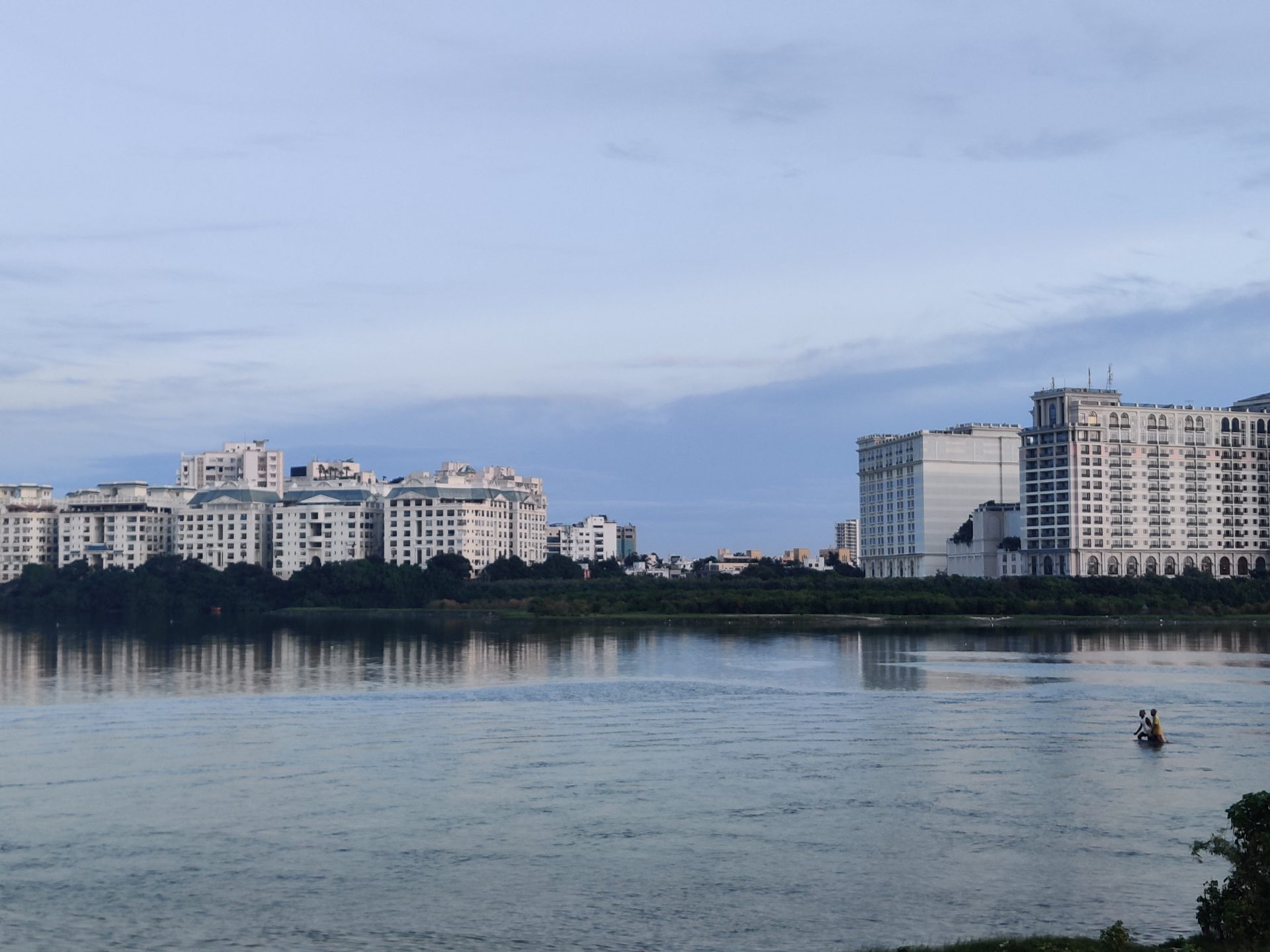
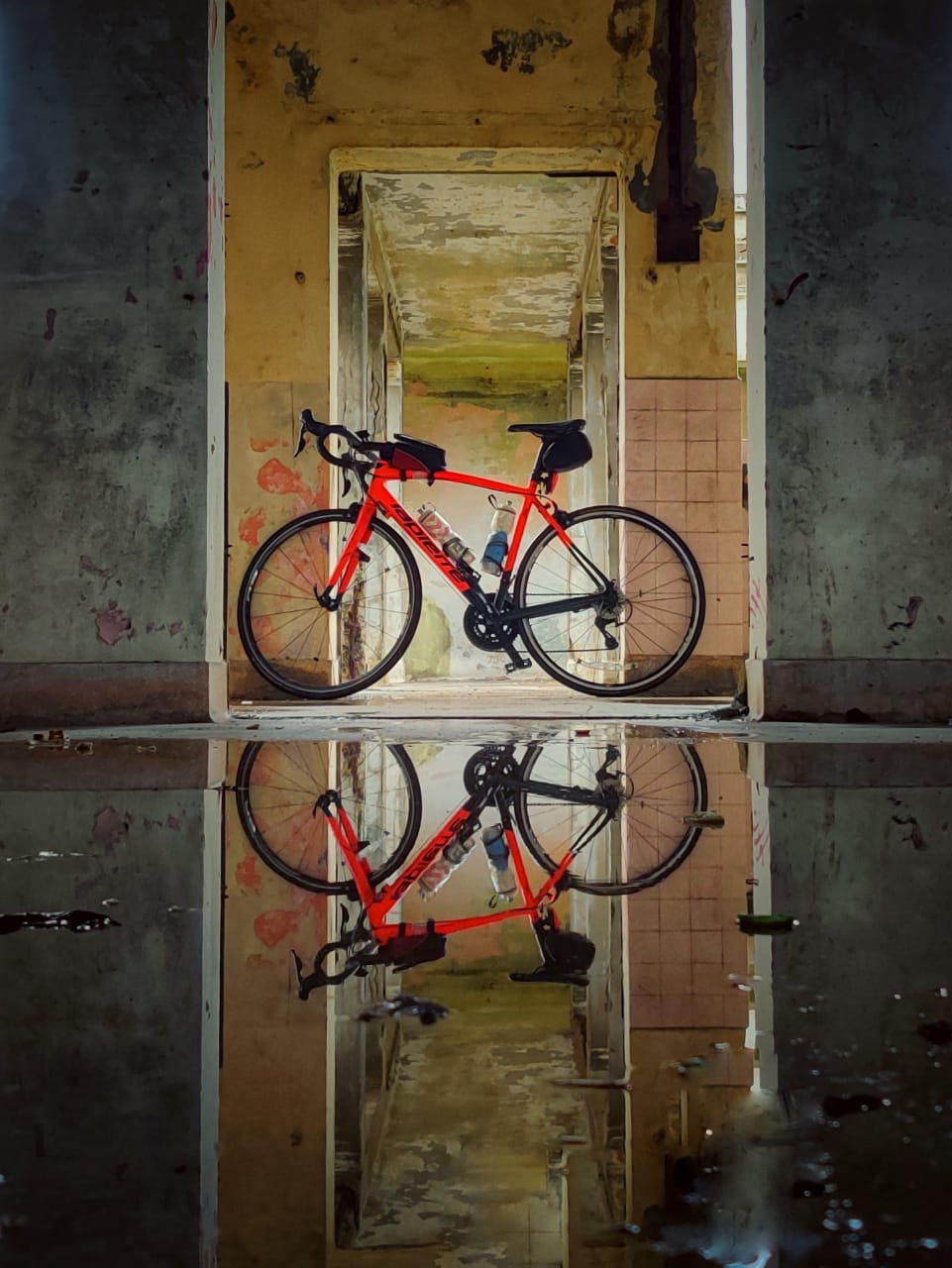
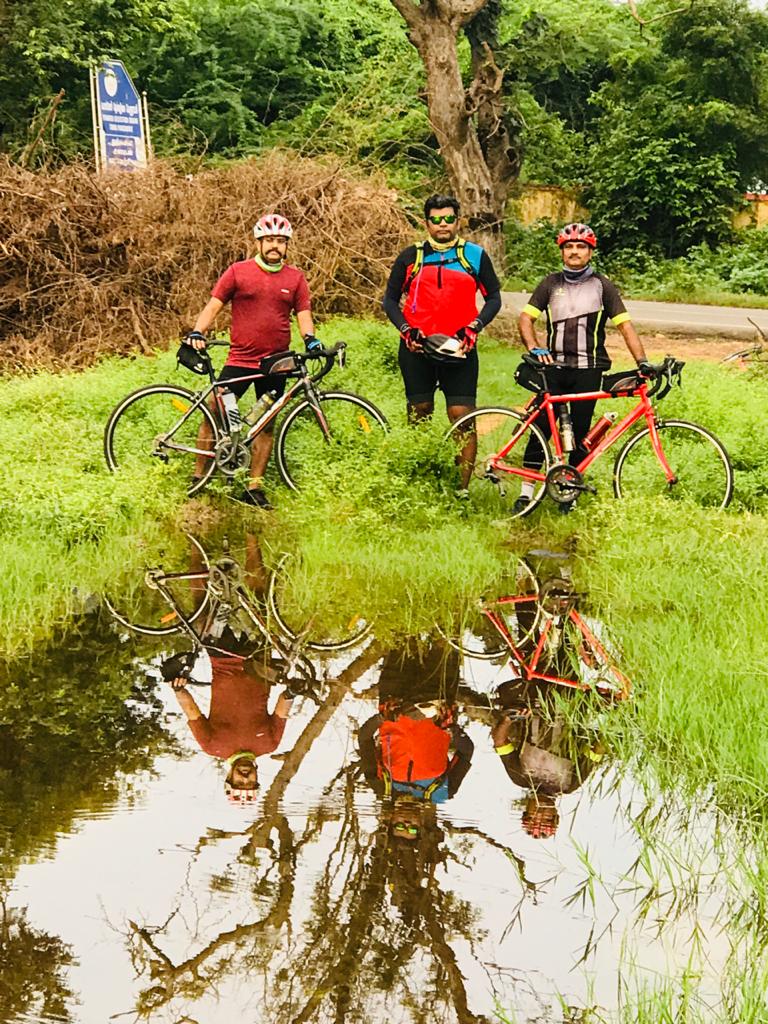
REFLECTIONS

The parallel roads of Mount Road (also known as Anna Salai) and Poonamallee High road and leading upto Parrys Corner offer views of some old and historic buildings and our early morning rides helped capture the beauty of these landmarks and especially  with no crowds around.

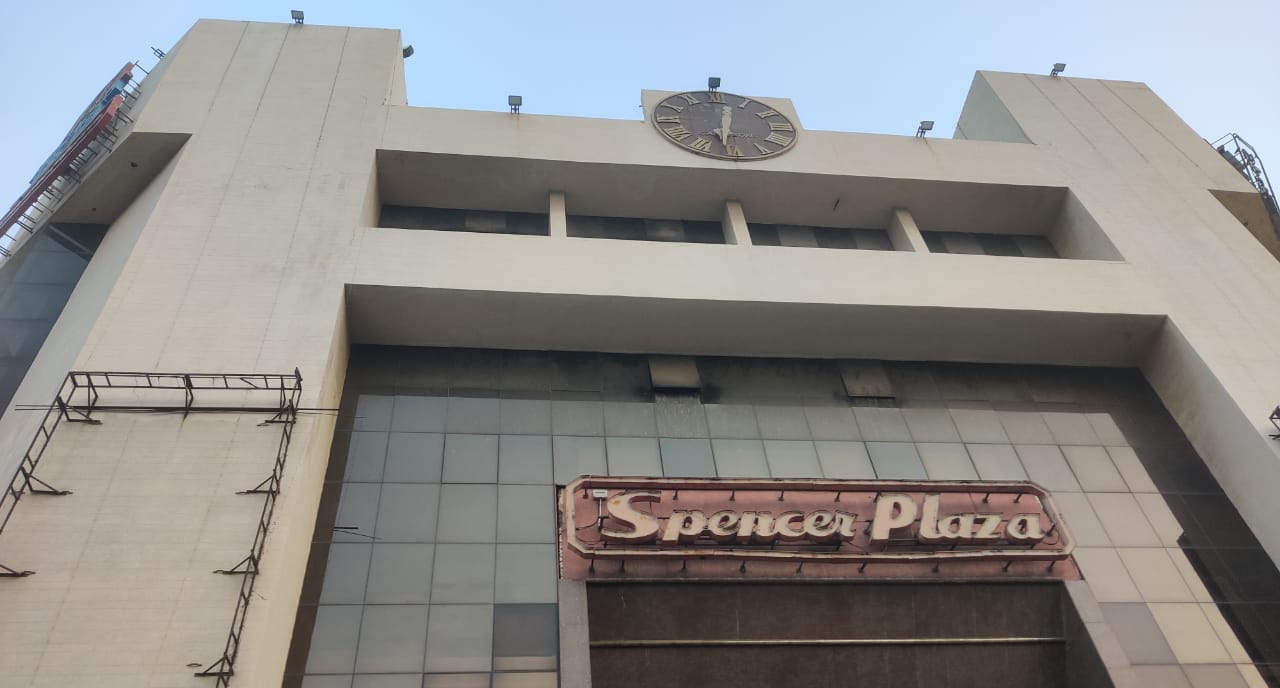
On Anna Salai came up Chennai’s first mall, The Spencer Plaza  which was originally built during the British Raj in 1863-1864 and reconstructed in 1985. It was touted to be the largest shopping mall in South Asia when it was completed. The origins of this mall were from a department store started as  early as 1895 and with over 80 individual departments. 

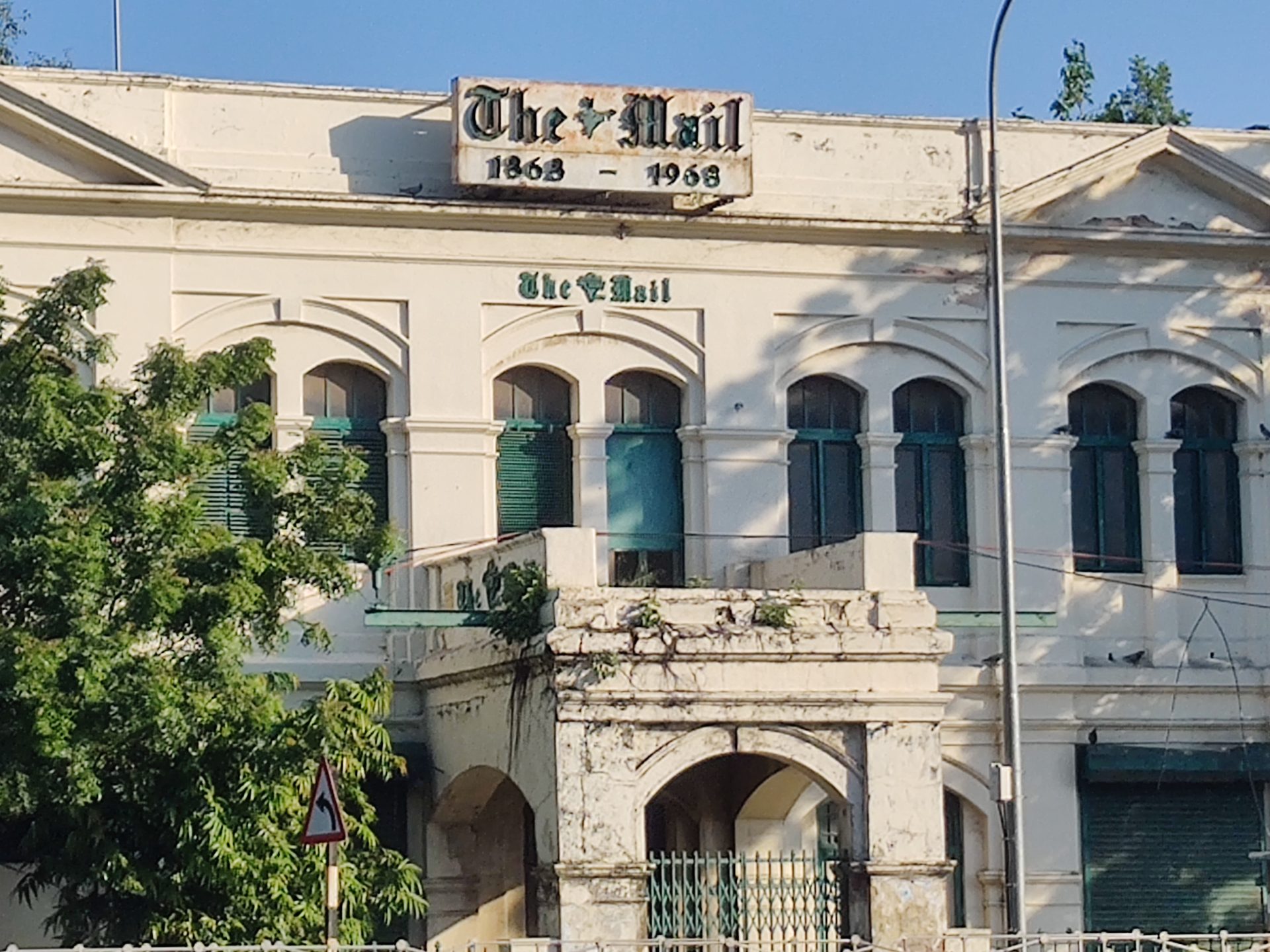
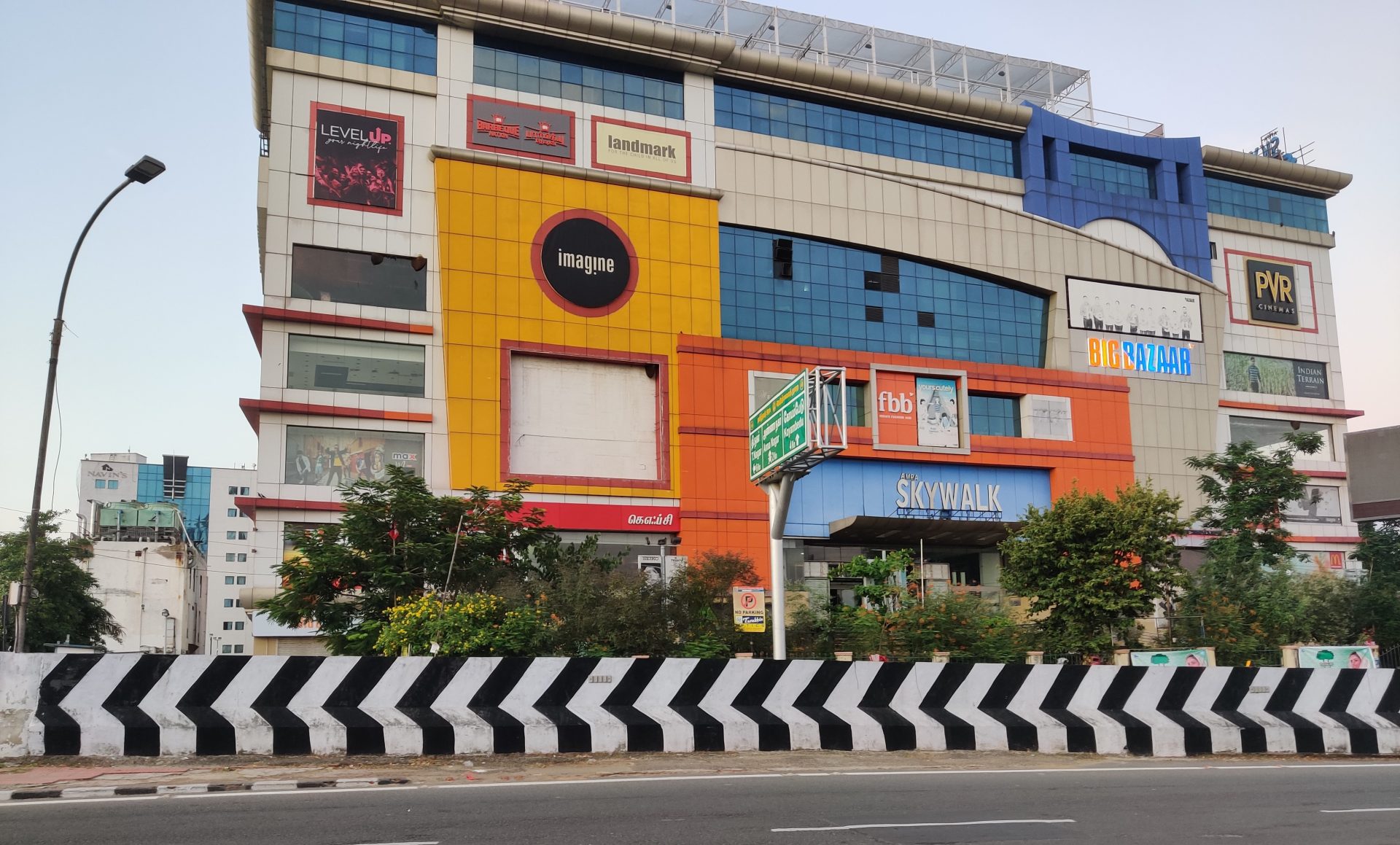
This mall used to be a favorite hangout for most until newer malls sprung up in the city like the Ampa Skywalk, the Express Avenue, the Phoenix Mall, the VR and the Forum Mall which present a much better ambience to walk and shop around than the Spencers. A   little further down the road, brings one to Chennai’s first skyscraper, the LIC Building. Until the mid 90s this 15 storey building remained one of Chennai’s tallest buildings and used to feature in many a movie shot. The plot on which the LIC building came up used to house the country’s first auctioneers The Murray & Company and The Madras Publishing house. This building survived a massive fire which broke out in the year 1975.

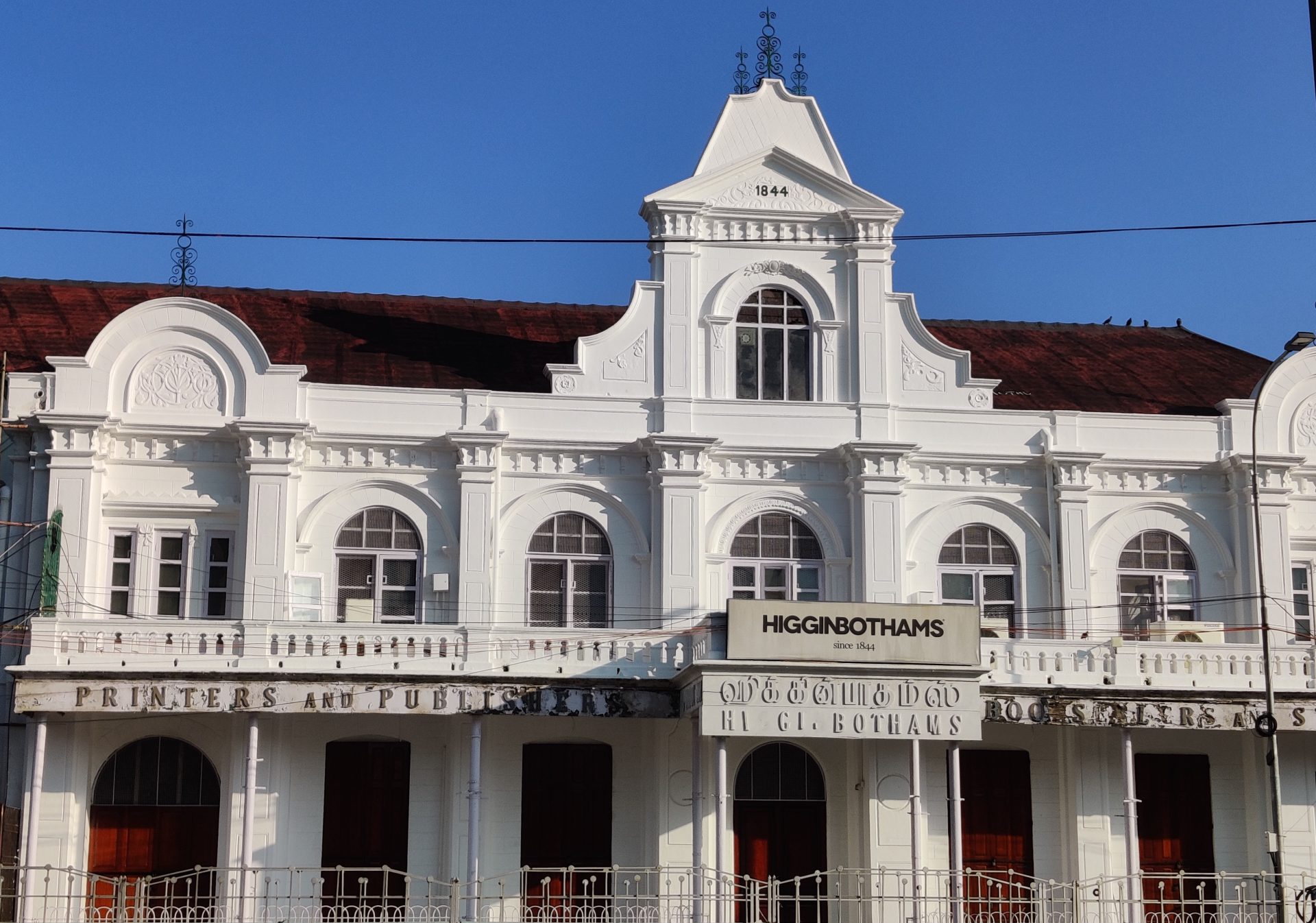
Opposite the LIC, is Chennai’s oldest bookstore The Higginbothams

A bookworm’s delight, this 178 year old landmark and historic building has an amazing array of books catering to every taste and would be a bibliophile’s delight undoubtedly.

Close to the Higginbothams store lies Chennai’s oldest watch showroom P.Orr & Sons. Circa 1879, a Scottish gentleman Peter Orr from whom the name of the store originates started this on Anna Salai in 1879 and with an intent of selling mechanical watches and clocks apart from silver ware, diamonds and guns. 

The store was said to have been inaugurated by King George V and Queen Mary and is classified as a Heritage Building.

Higginbothams has multiple outlets across the state of Tamil Nadu and the Union territory of Pondicherry.

TIMEKEEPERS TO CHENNAI

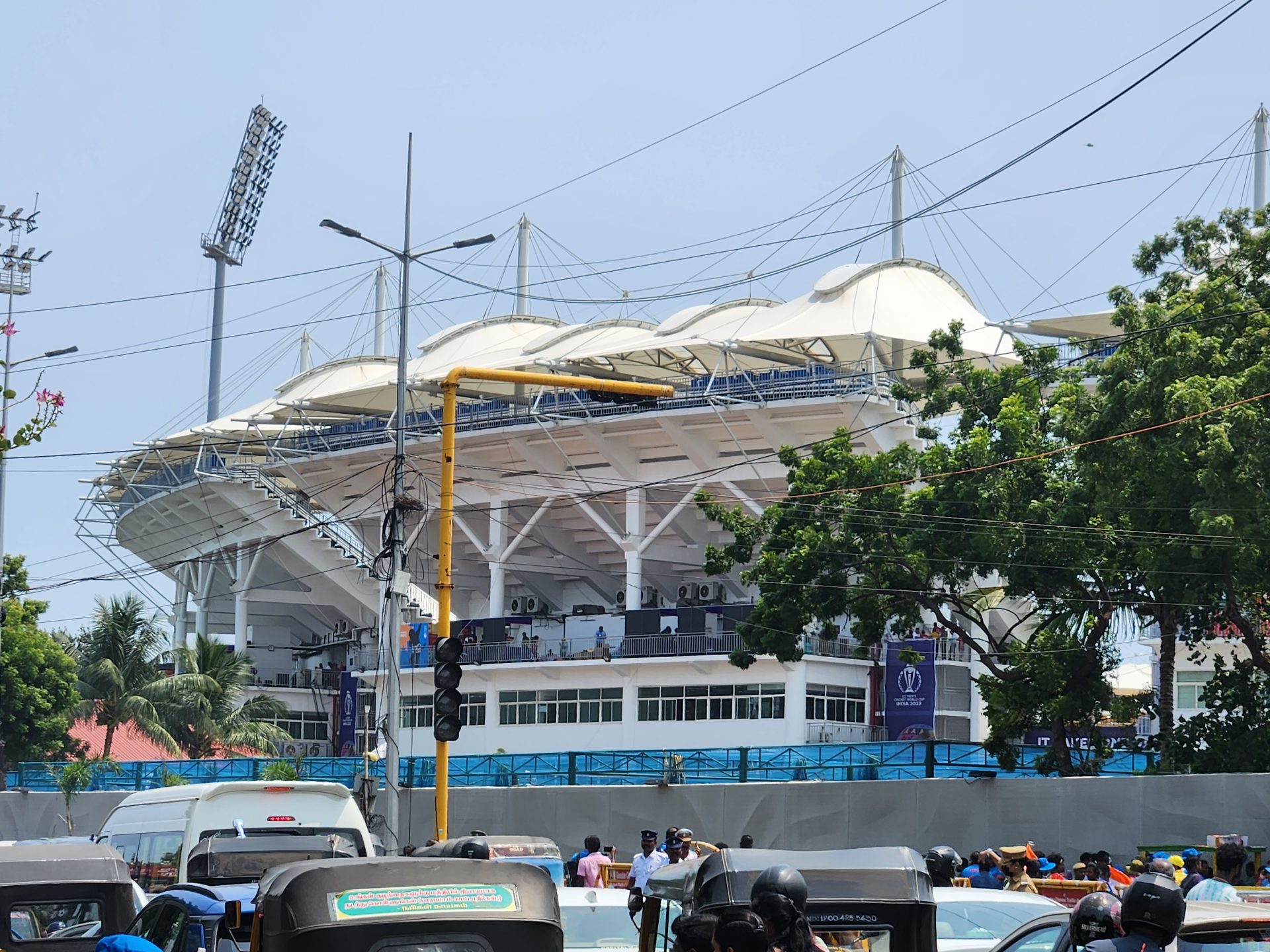
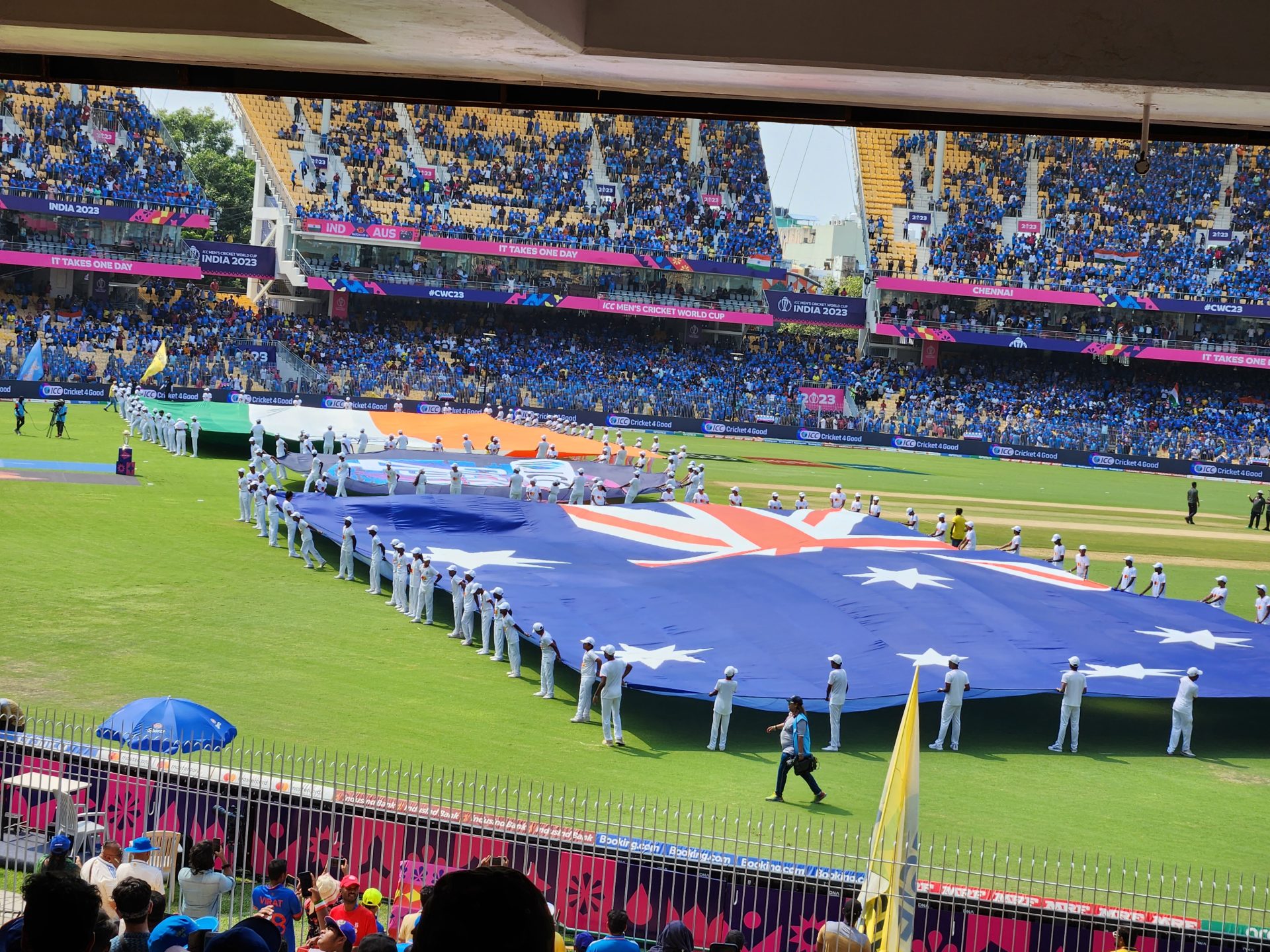
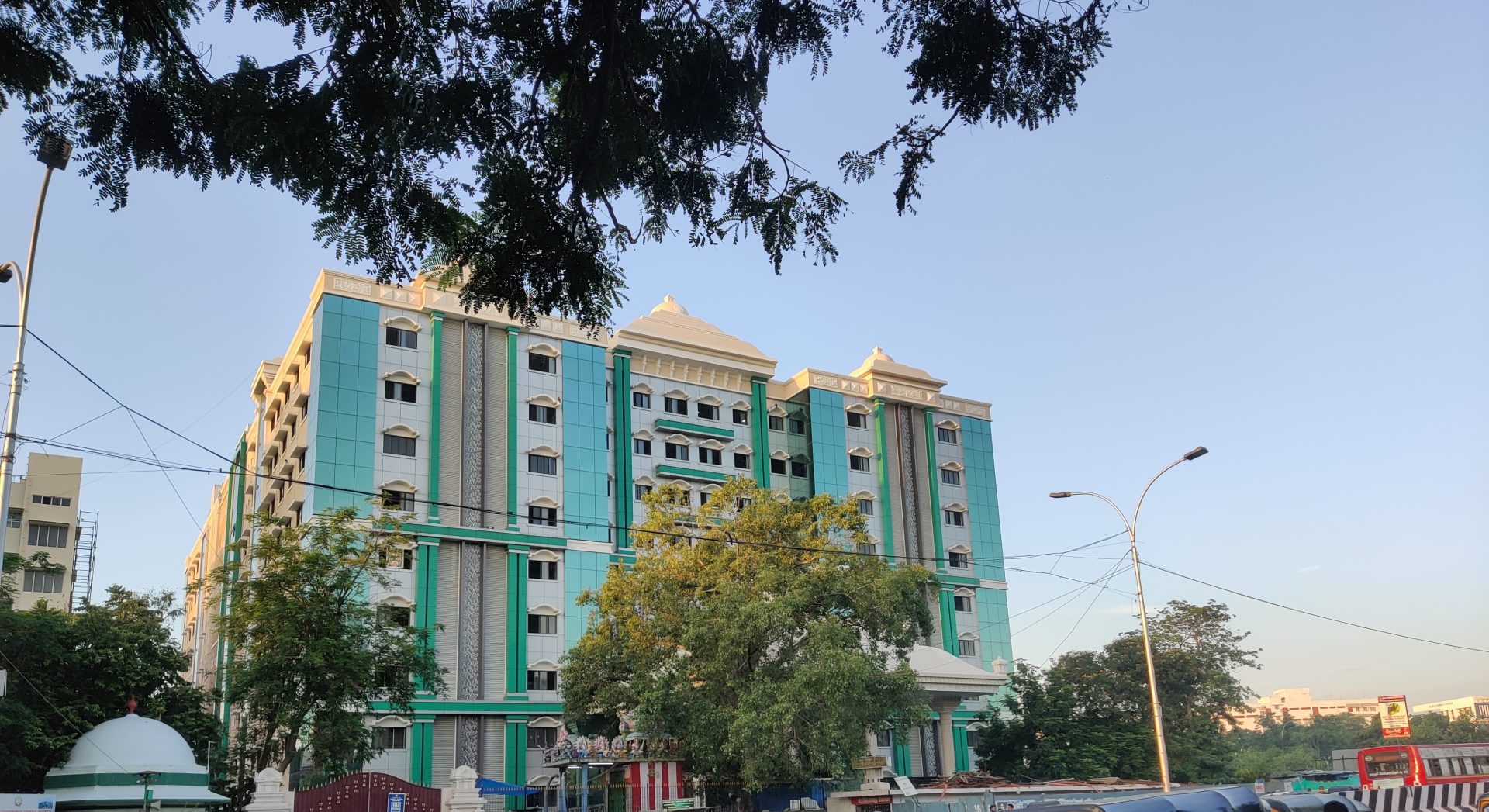
A right from the junction where the Hospitalized Secretariat  building (as I call it and no pun intended) stands leads one to the beautiful M.A.Chidambaram Cricket Stadium, the venue of many an exciting test match and games in the shorter format. The crowds which come to the stadium are very sportive and knowledgeable about the game.

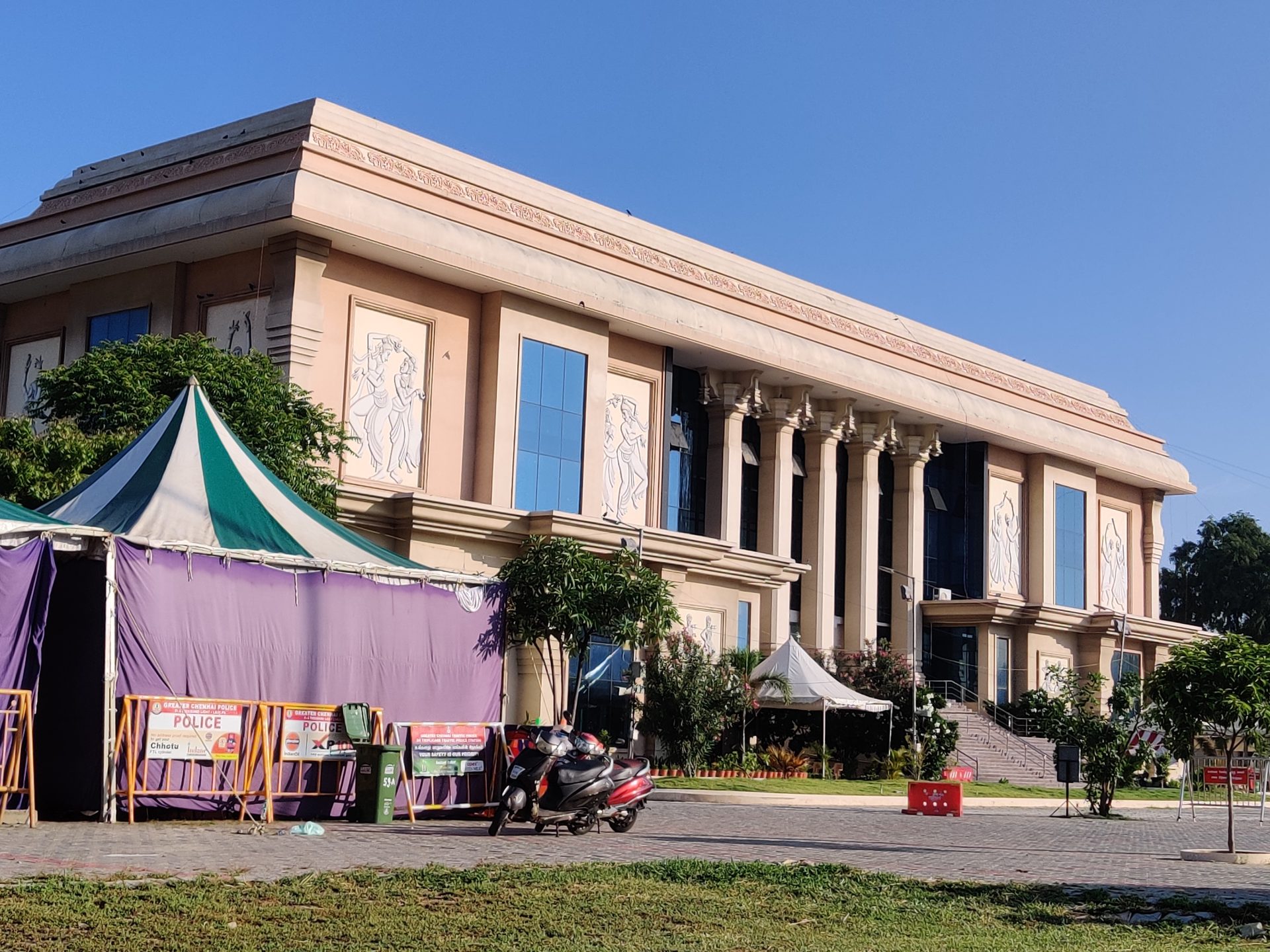
Enroute, one gets to see the Kalaivanar Arangam, an air conditioned auditorium capable of seating around 2000+ people across 3 floors. This has been named as Kalaivanar,  a tribute to the  legendary actor comedian, playback singer and writer  N.S.Krishnan who was also known as the Charlie Chaplin of India.

THE CHILDREN'S HOSPITAL
KALAIVANAR ARANGAM

Chennai Central

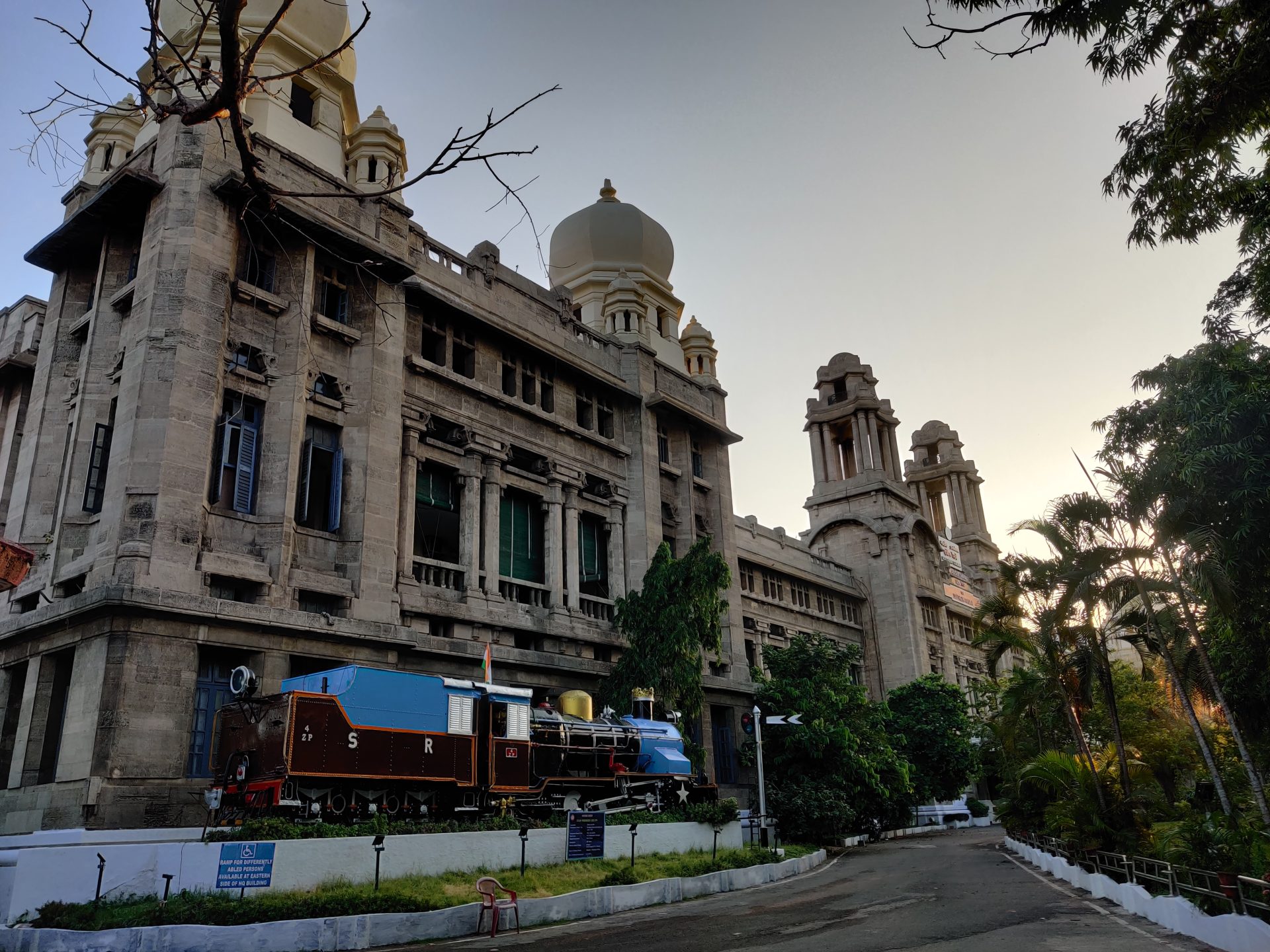
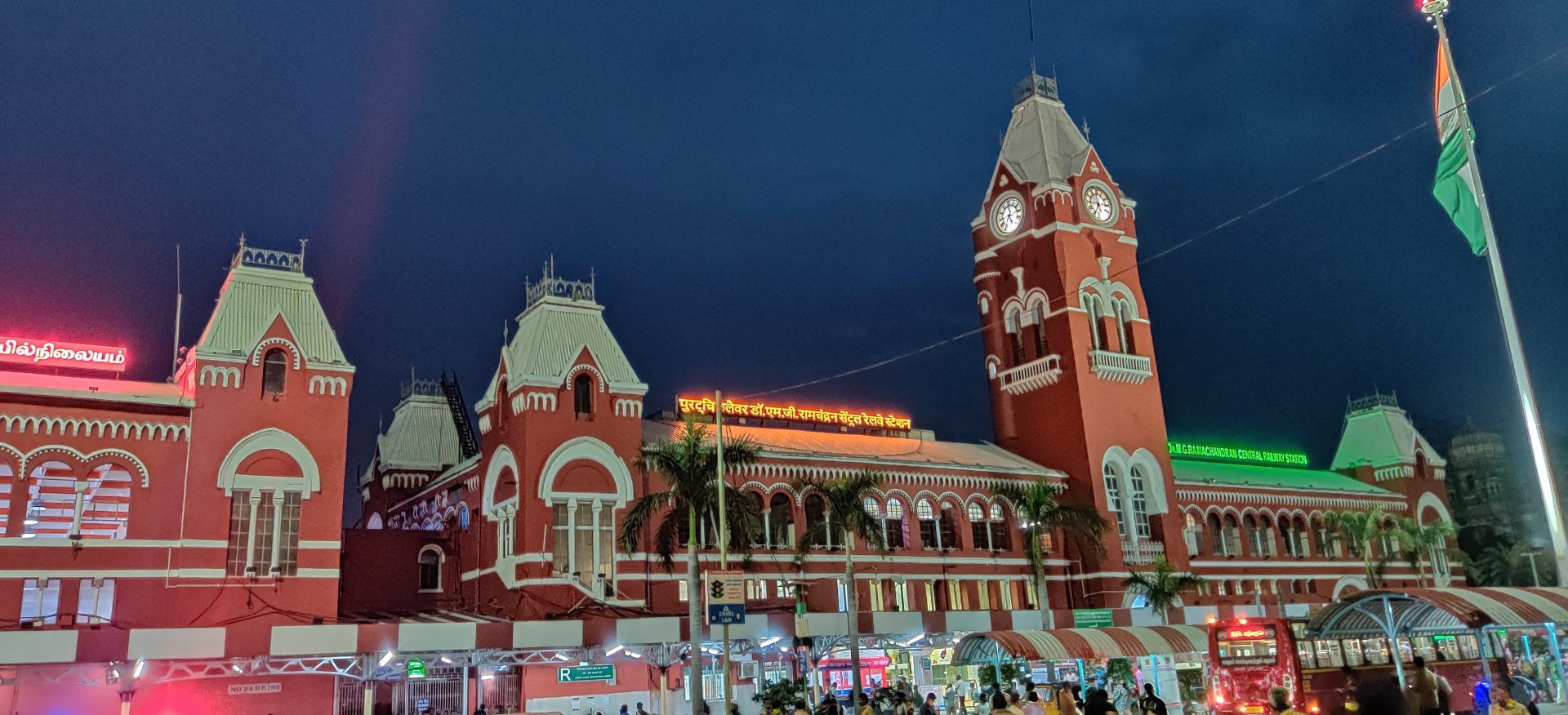
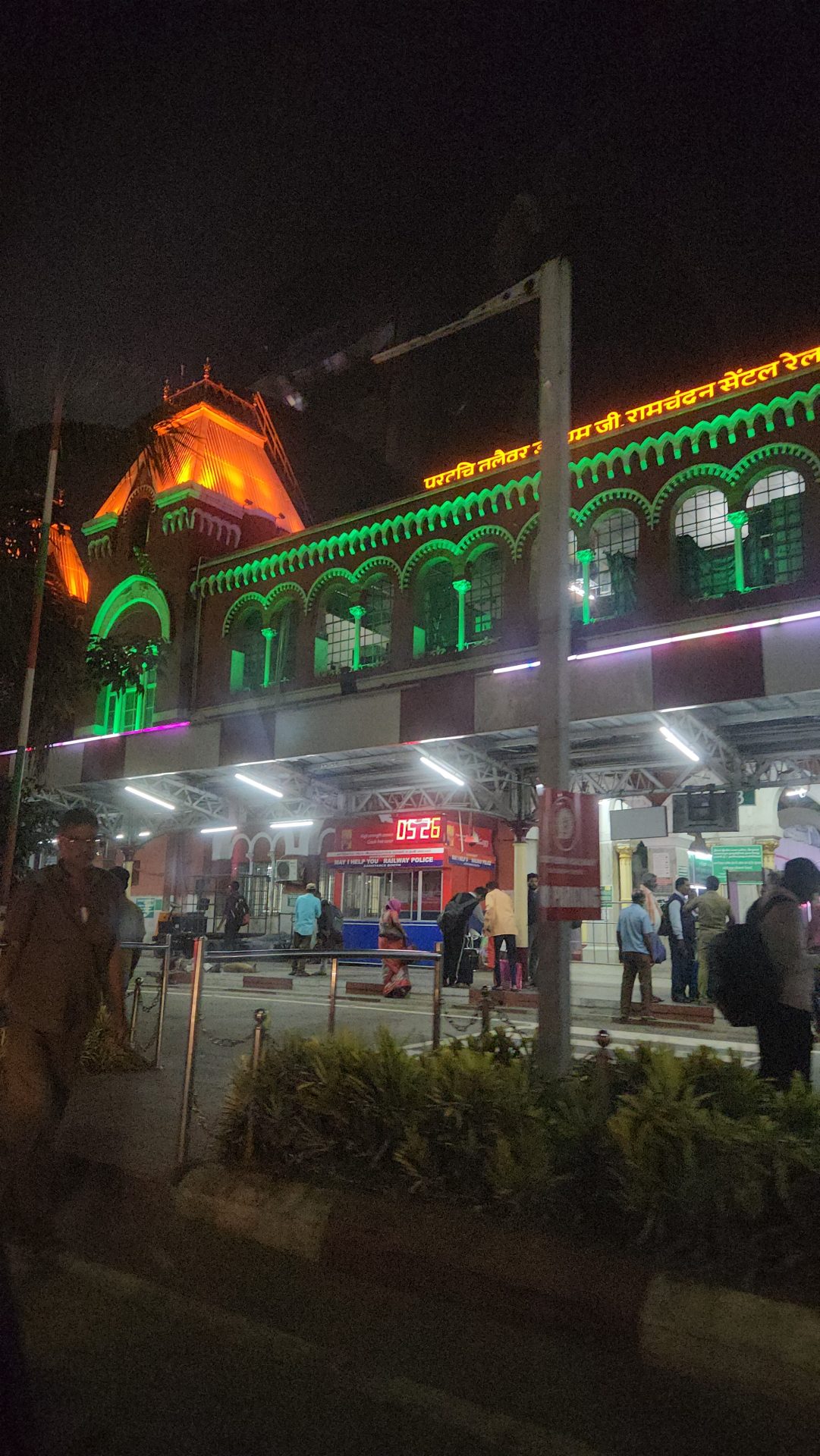
As we turn into the stretch of Poonamallee Road, the first large glass facaded building which greets us is the Rajiv Gandhi General Hospital. The Southern Railways Head quarters and the iconic red structure of the Chennai Central Railway station are on the opposite side of the road.

Early morning views of the Gothic and Romanesque styled Central station with all the lights coming on, make for some compelling photography. Named after a former Chief Minister of Tamil Nadu state, this station is a hub connecting different forms of railways transport right from the spic and span modern Metro to the EMU locals which connect the far flung outer areas of Chennai to the 17 km long elevated Mass Rapid Transport System connecting different parts of Chennai. The Chennai Central station spread across over 10 platforms is one of the busiest stations in South India. 

THE MODERN & SUAVE METRO
THE LOCAL EMUs KEEPING PACE
THE FLYING RAIL AS IS KNOWN IN TAMIL

The Victoria Public Hall

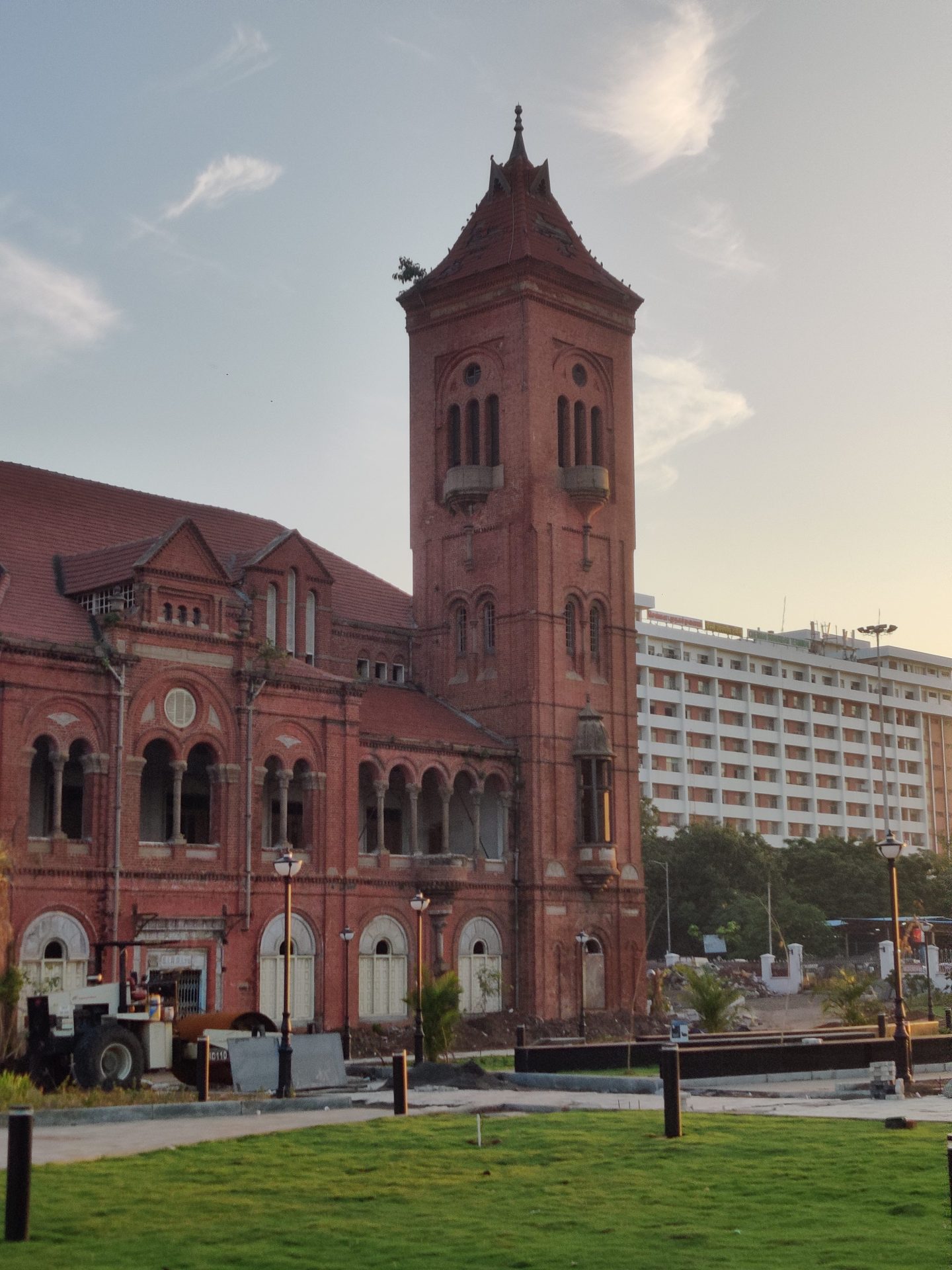
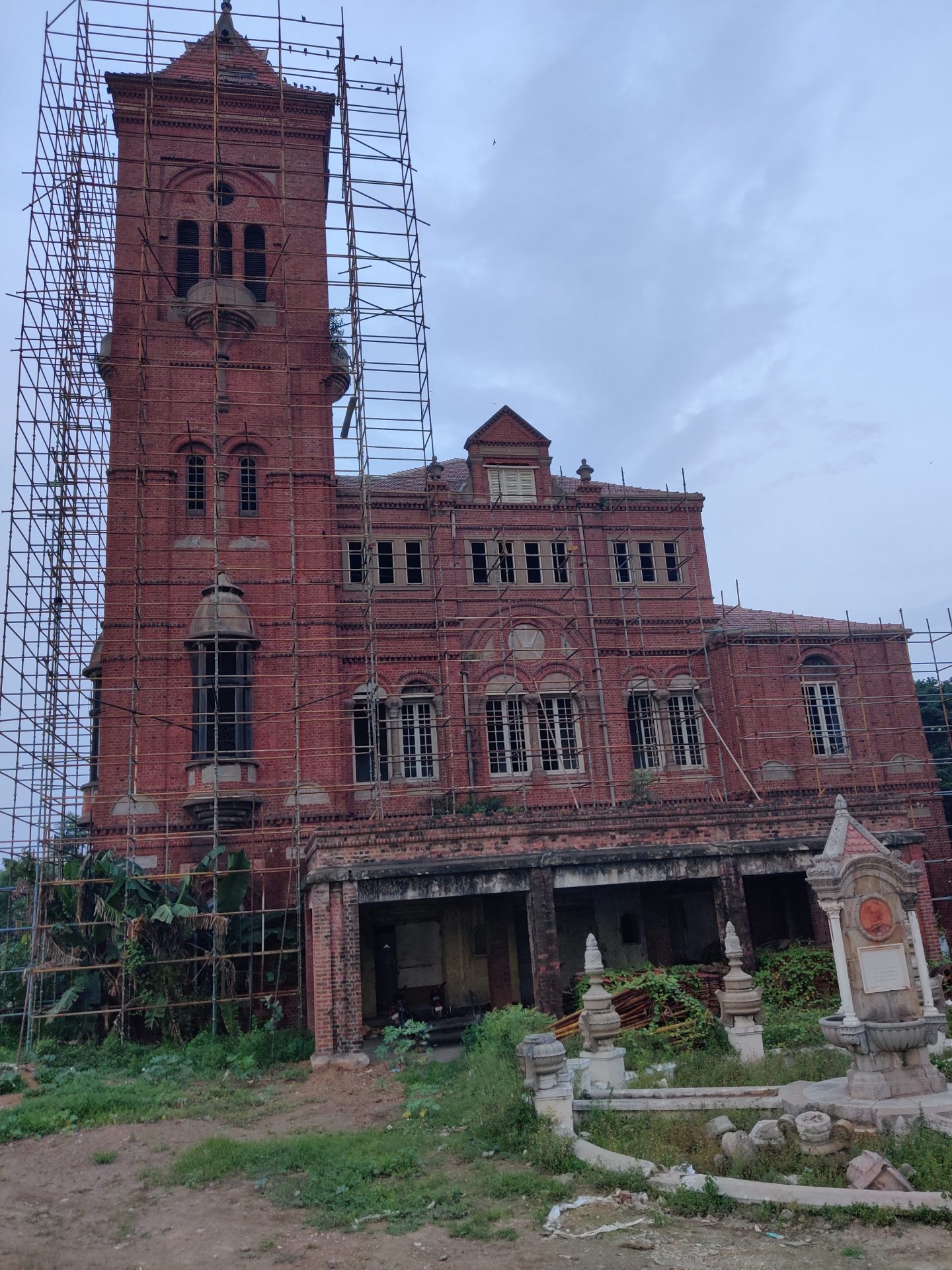
Adjacent to the Chennai Central station lies the Passenger Reservation Centre (PRC) Complex. As one exits the PRC complex, one can’t help but notice an old Red Colored Town Hall kind of building constructed in the year 1887 to celebrate Queen Victoria’s Golden Jubilee. Popularly known as the Victoria Hall, this was built by contributions from a few well to do people and some Maharajahas  in Indo Saracenic architecture. An Italian styled tower with a Travancore designed roof aligns with one side of this rectangular building which has 2 floors with a seating capacity of over 600 people. Apart from the first ever movie which got screened here, the Hall gradually gained in prominence and was used for various social functions and meetings.

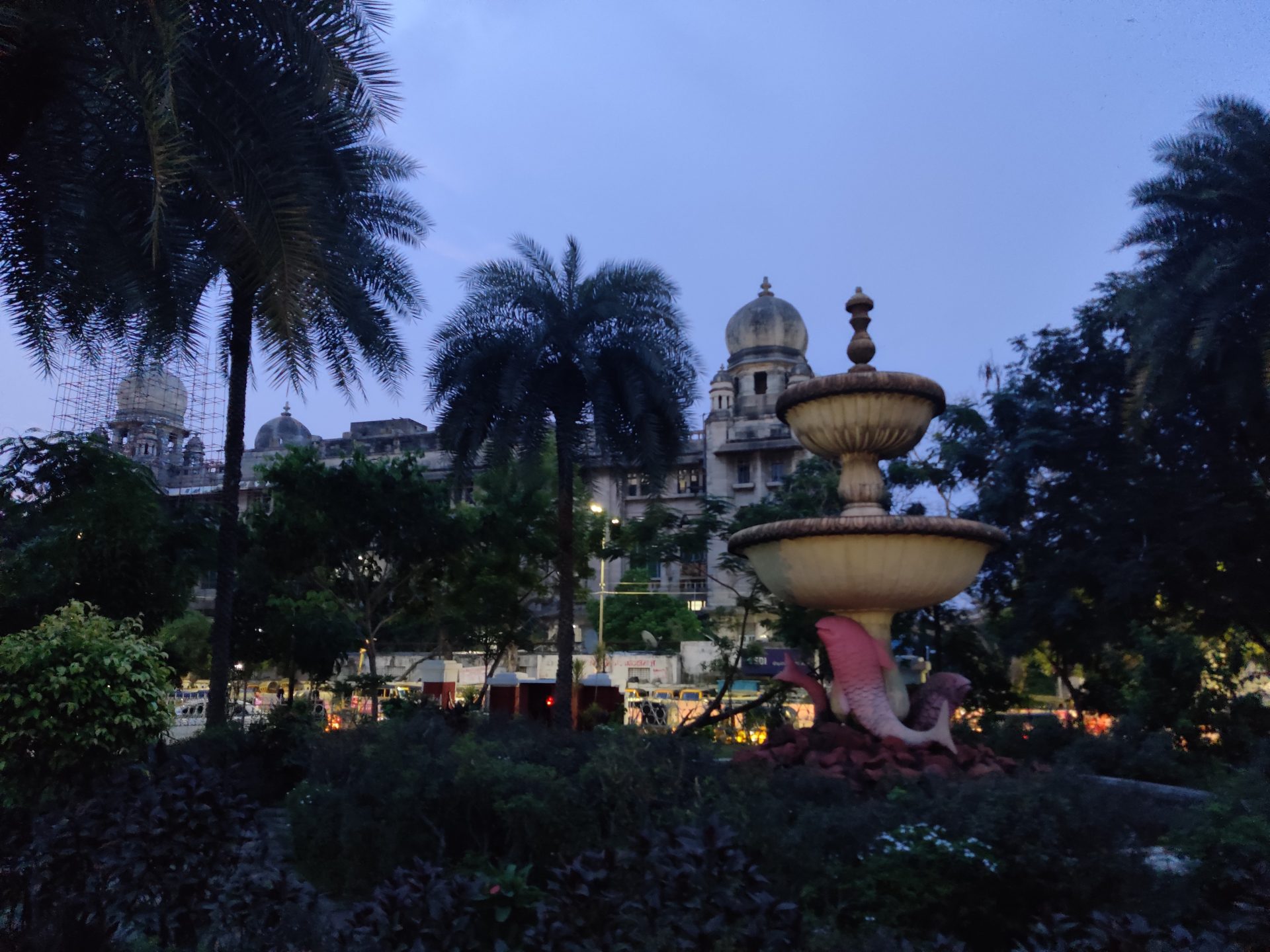
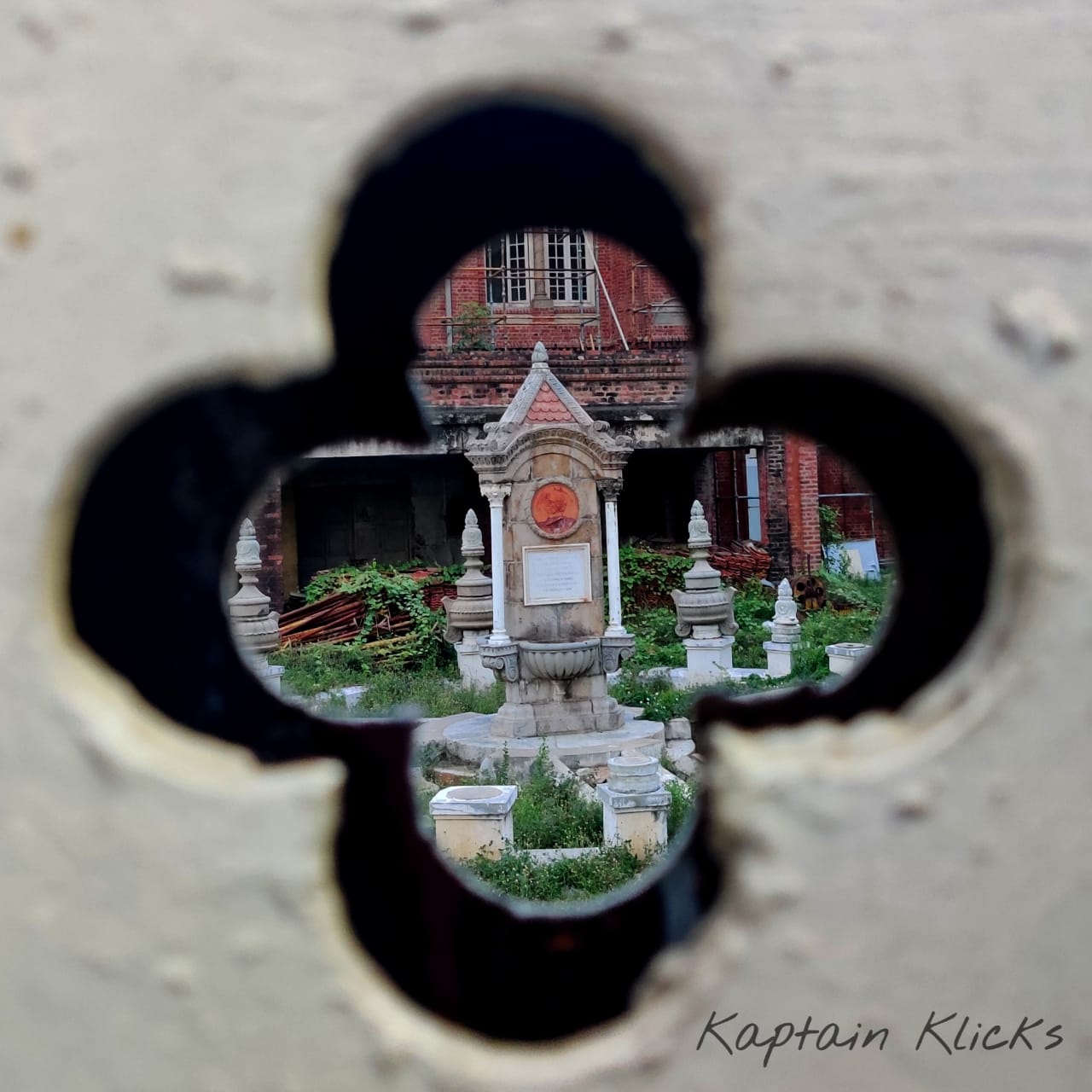
Adjacent to the grounds of the hall lies the Trevelyan Fountain built to recognize the contribution of Charles Trevelyan the then Governor of Madras between 1859 to 1860 towards providing the city of Madras with adequate drinking water.

Ripon Building

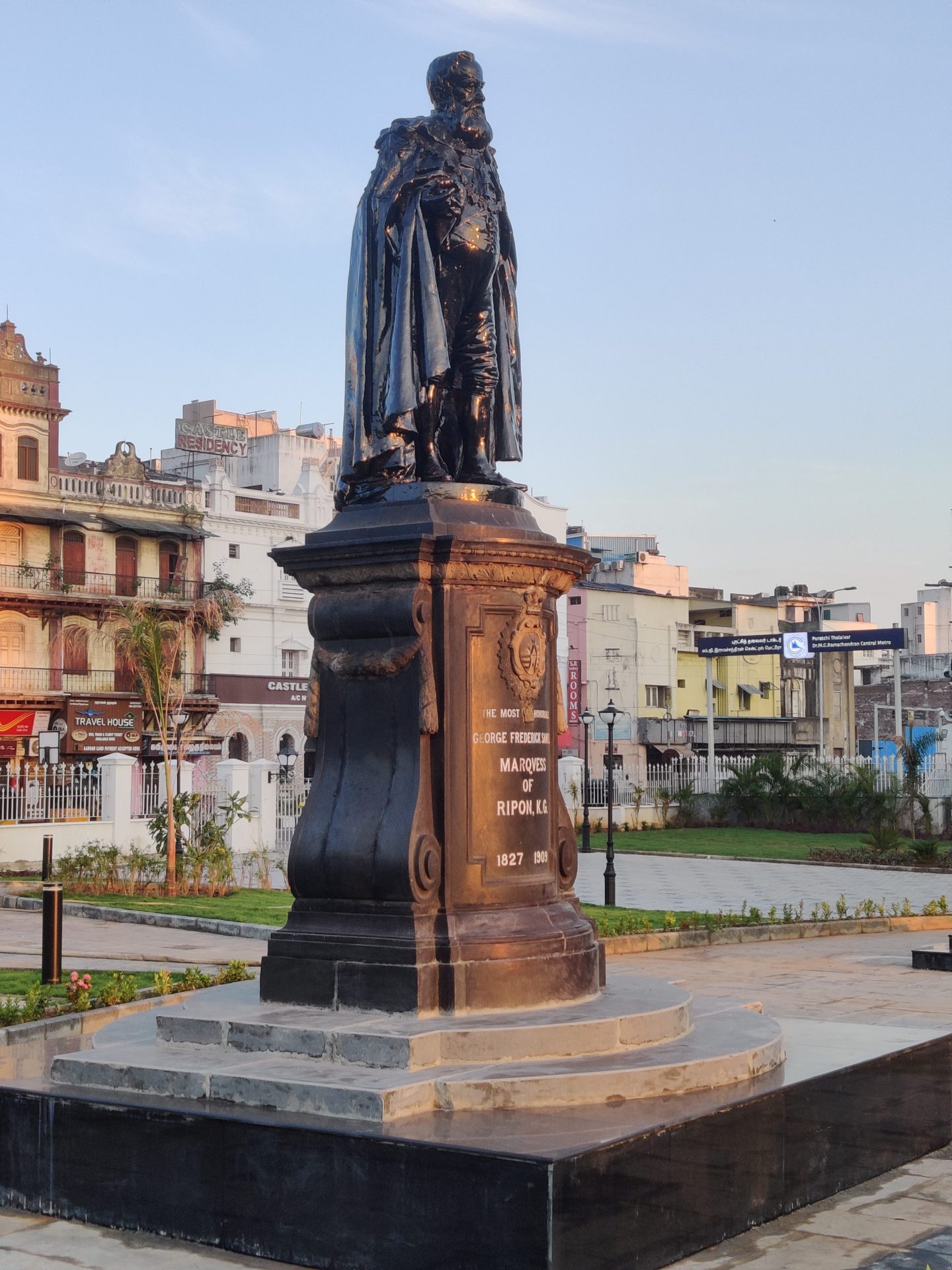
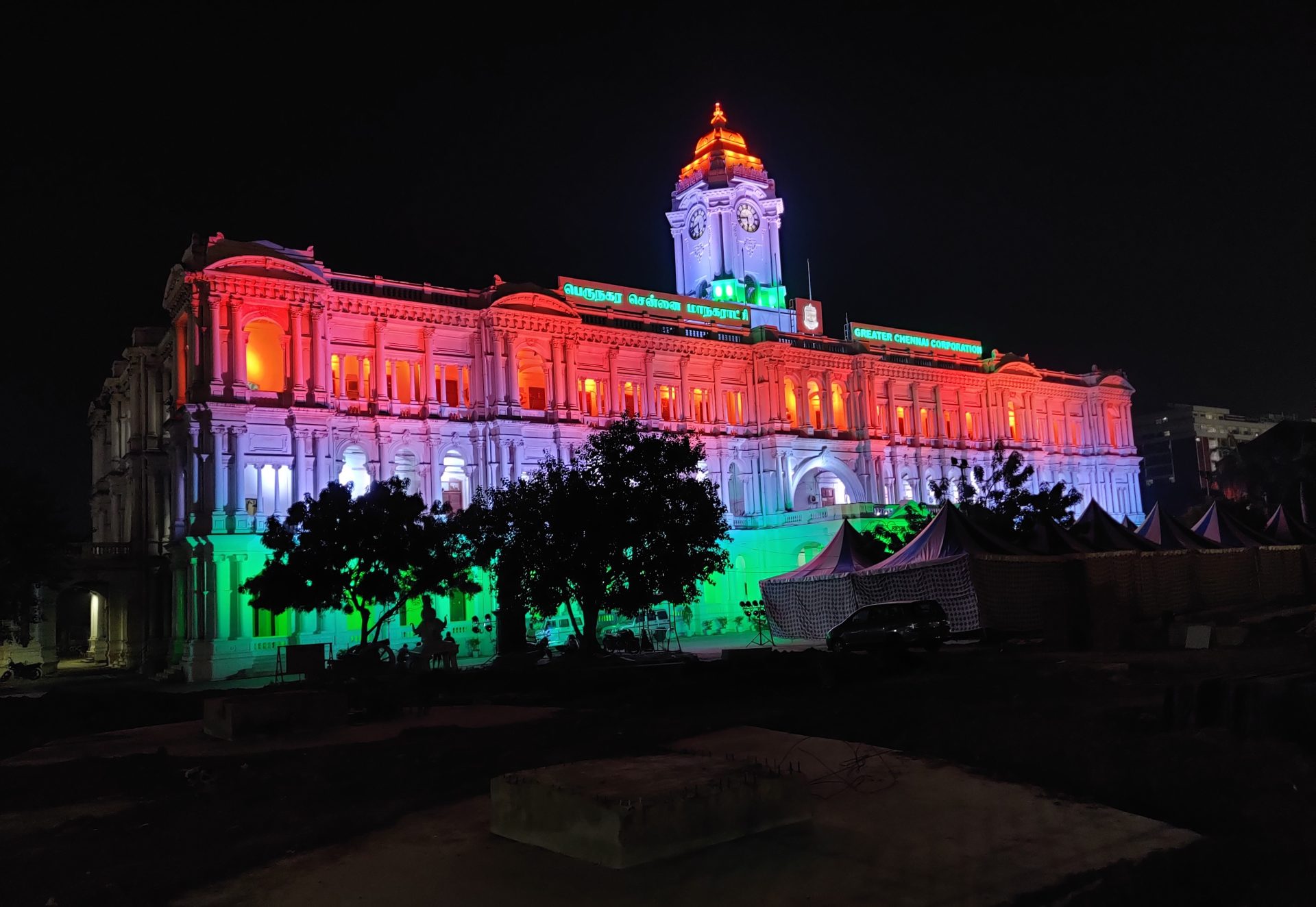
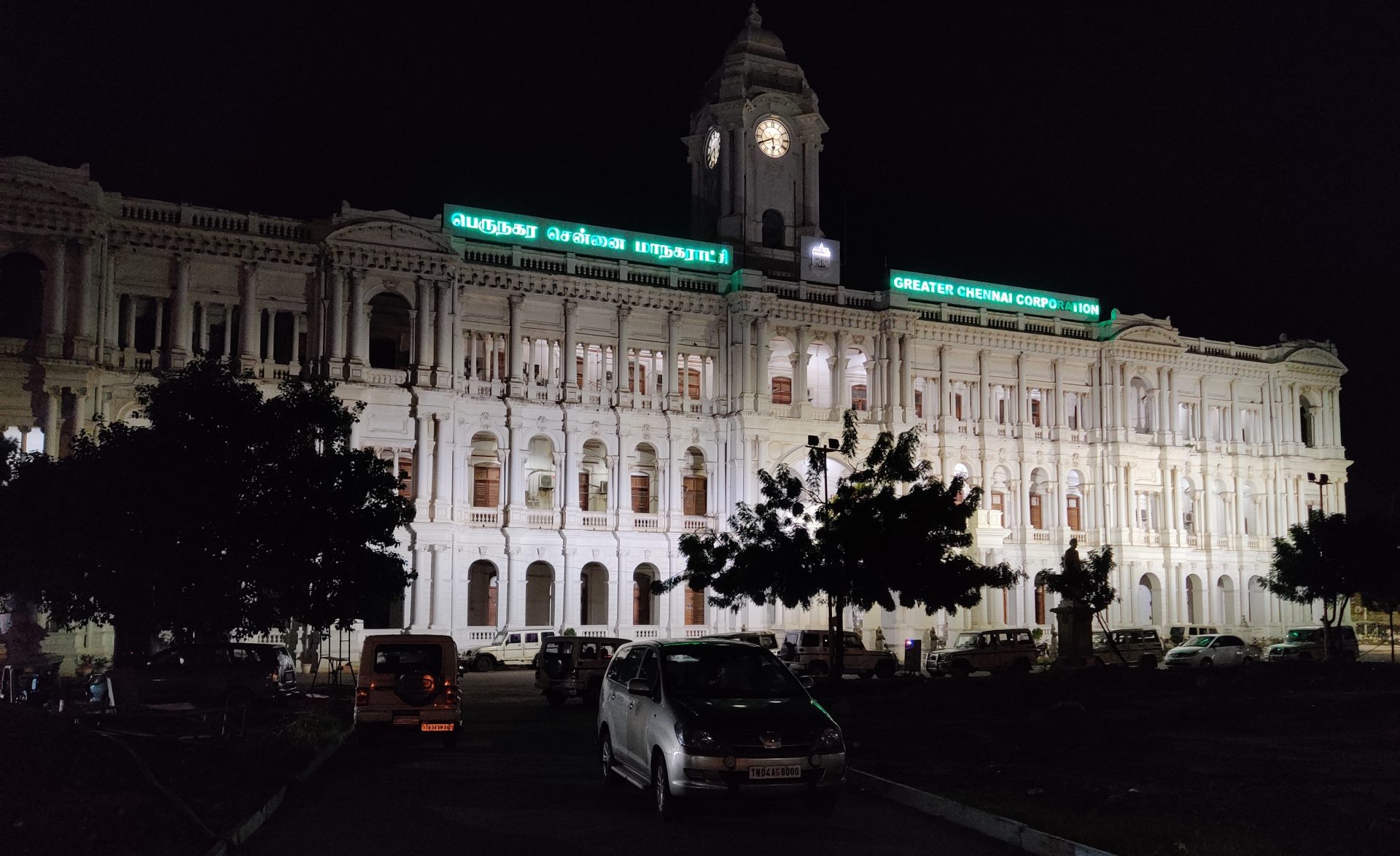
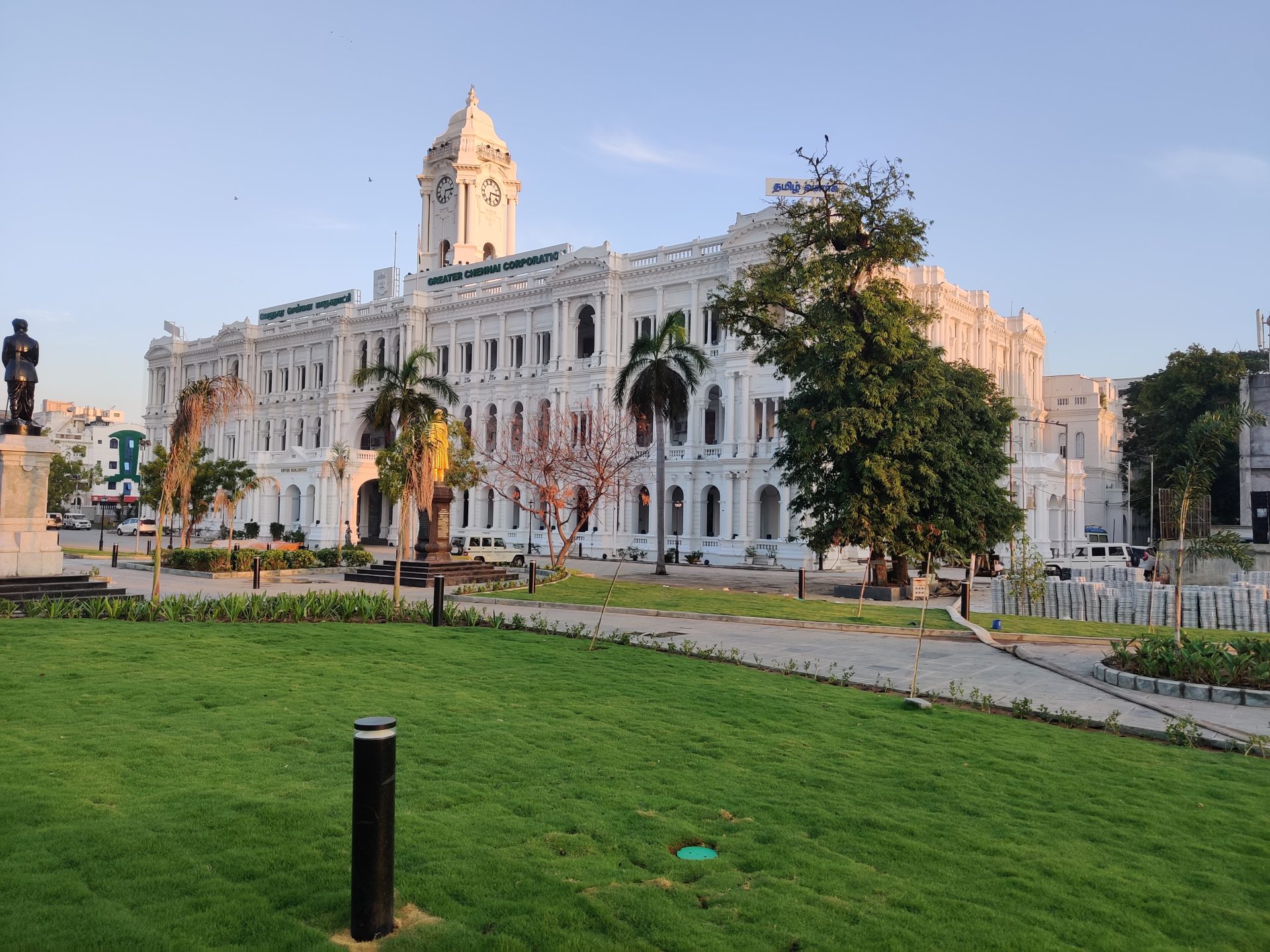
The Victoria Hall shares a common wall with the Ripon Building where the Corporation of Chennai office is located. An All White structure built in Ionic and Cornithian style, this rectangular  building has a high central clock tower at the front with a Westminster Quarter Chiming Clock which is supposedly wound every day. The building is named after Lord Ripon, the then Governor General of Chennai and the father of the local self government.

LORD RIPON LORDS OVER
RIPON BUILDING ON REPUBLIC DAY
THE MAGNIFICENT RIPON BUILDING

Siddique Sarai Mosque

Built as a Rest House for Muslim travellers in the 19th century, this 3 storey building located opposite the Ripon Building has 43 retiring rooms and separate prayer rooms for ladies and gents.

Devadhanam Temple

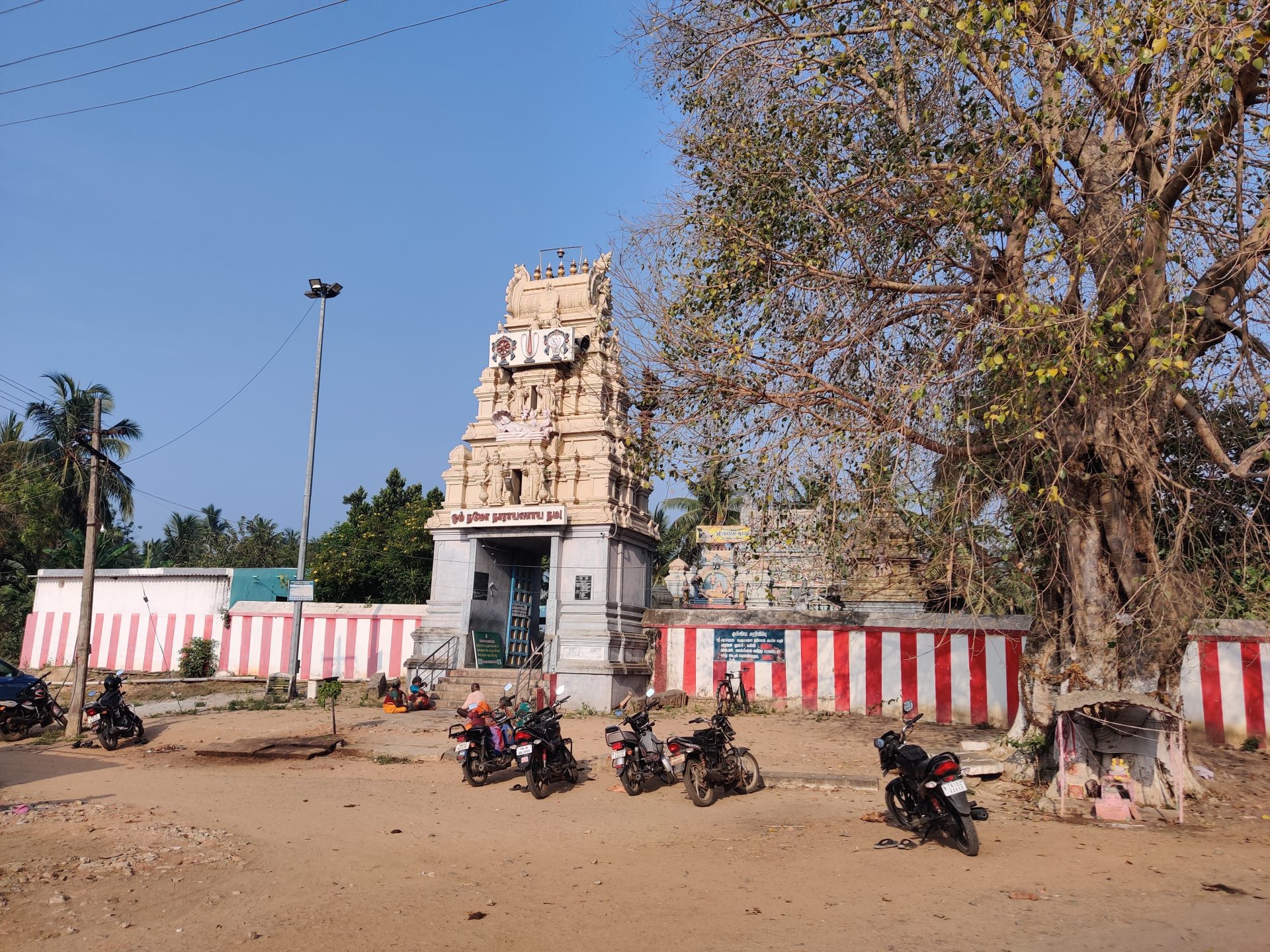
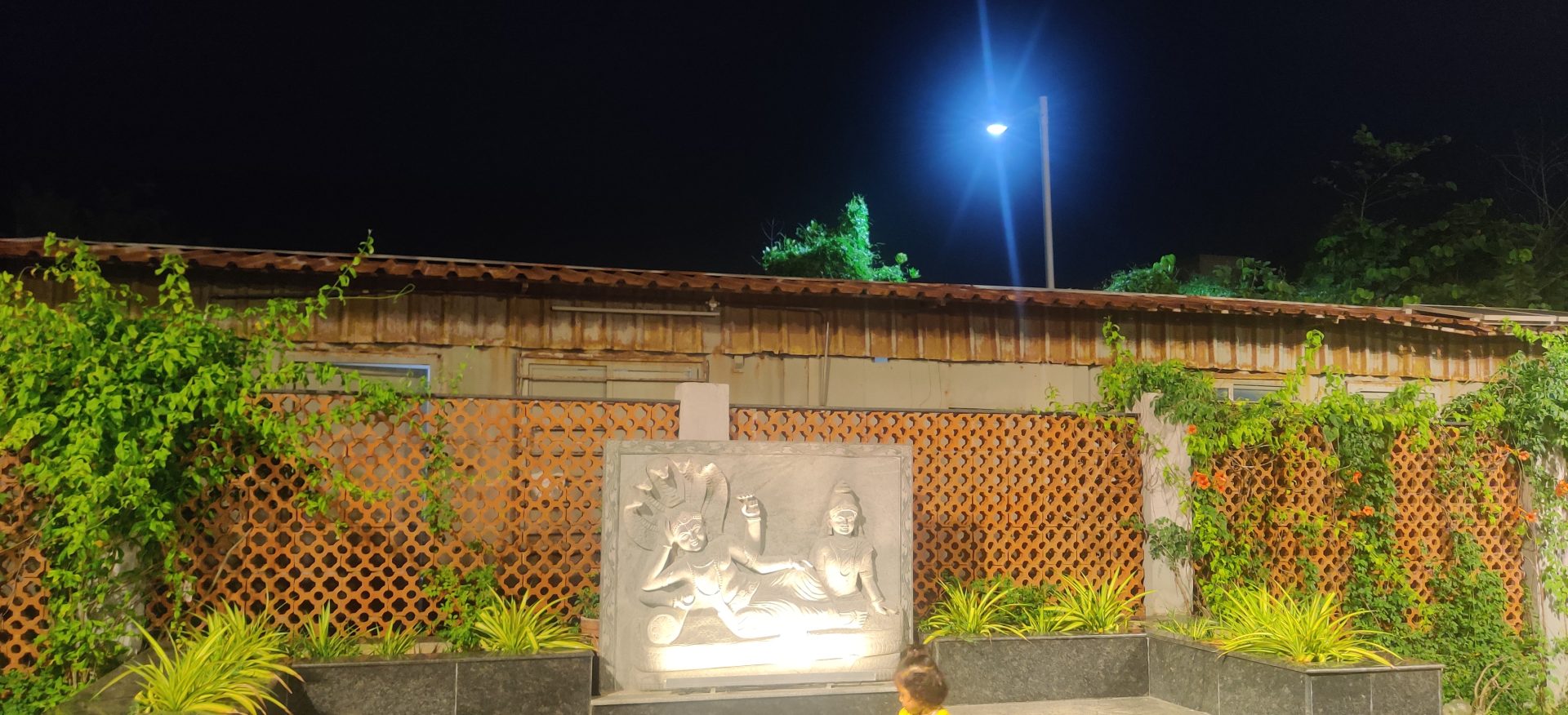
A little over 35 kms towards Ponneri which lies towards the Northern part of Chennai brings one to a 1,000 year old temple built by the Chalukya kings for Sri Ranganathar. Being an ardent devotee of the Lord in Srirangam, he decided to build this temple here in Chennai and thus this place is also known as Uttara Srirangam or North Srirangam. The idol rests on a wooden pillow and is five feet high and eighteen feet in length. It is found  in a sleeping posture under the 5 headed serpent, known as Aadhiseshan and is believed to be longer than the idol found at Srirangam on the outskirts of Trichy which I am sure you would have heard about. You may also visit https://jewelsofasia.in/trichy/ to know more about this temple.

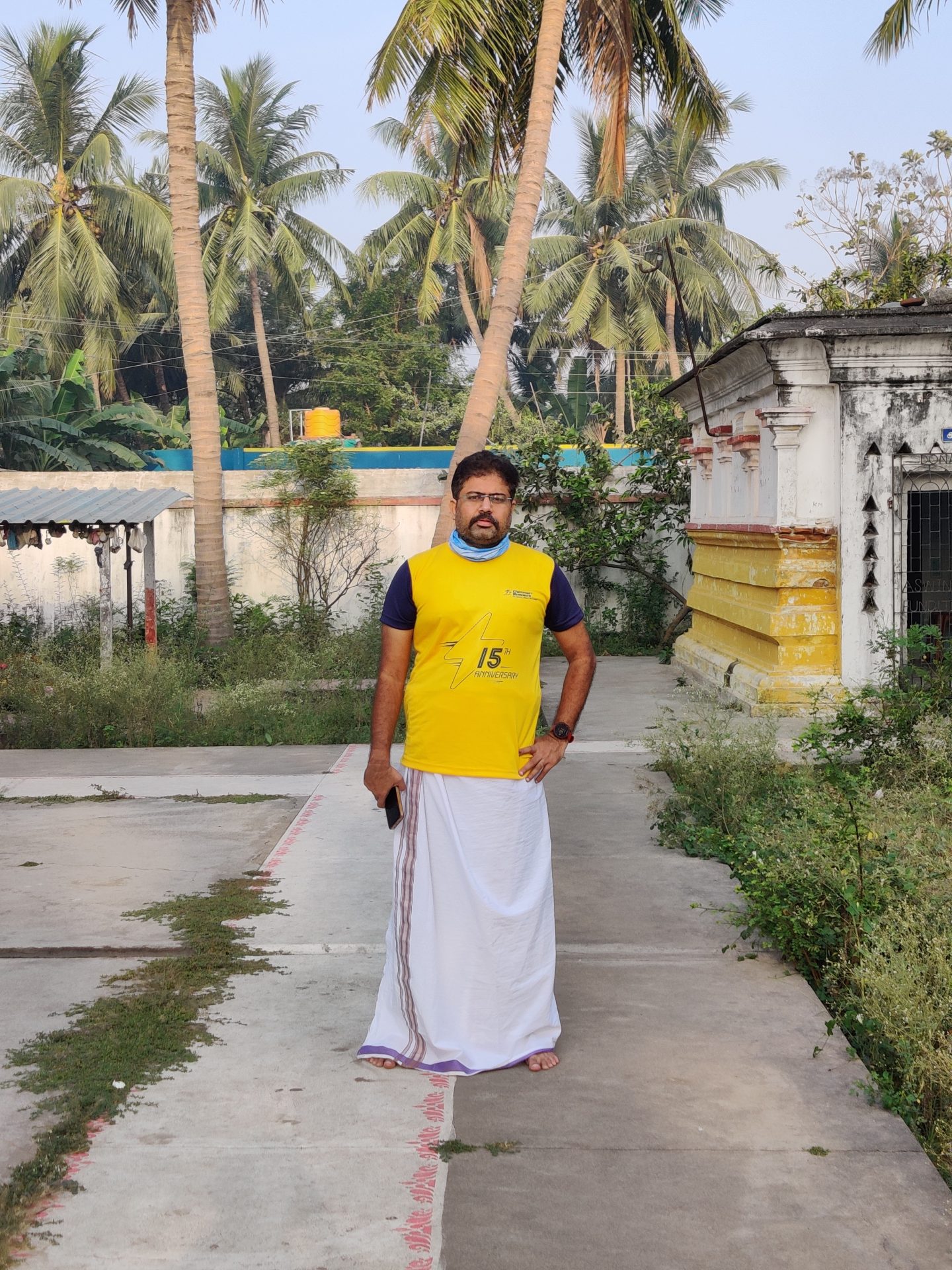
The name originates from a gift (dhanam in Tamil) in the form of a piece of land made  by Lord Indira to the Devas or angels for building this temple. Thankfully, we managed to carry a set of traditional attire on our backpacks while cycling all the way to this temple.

Pallikarnai Marsh Lands

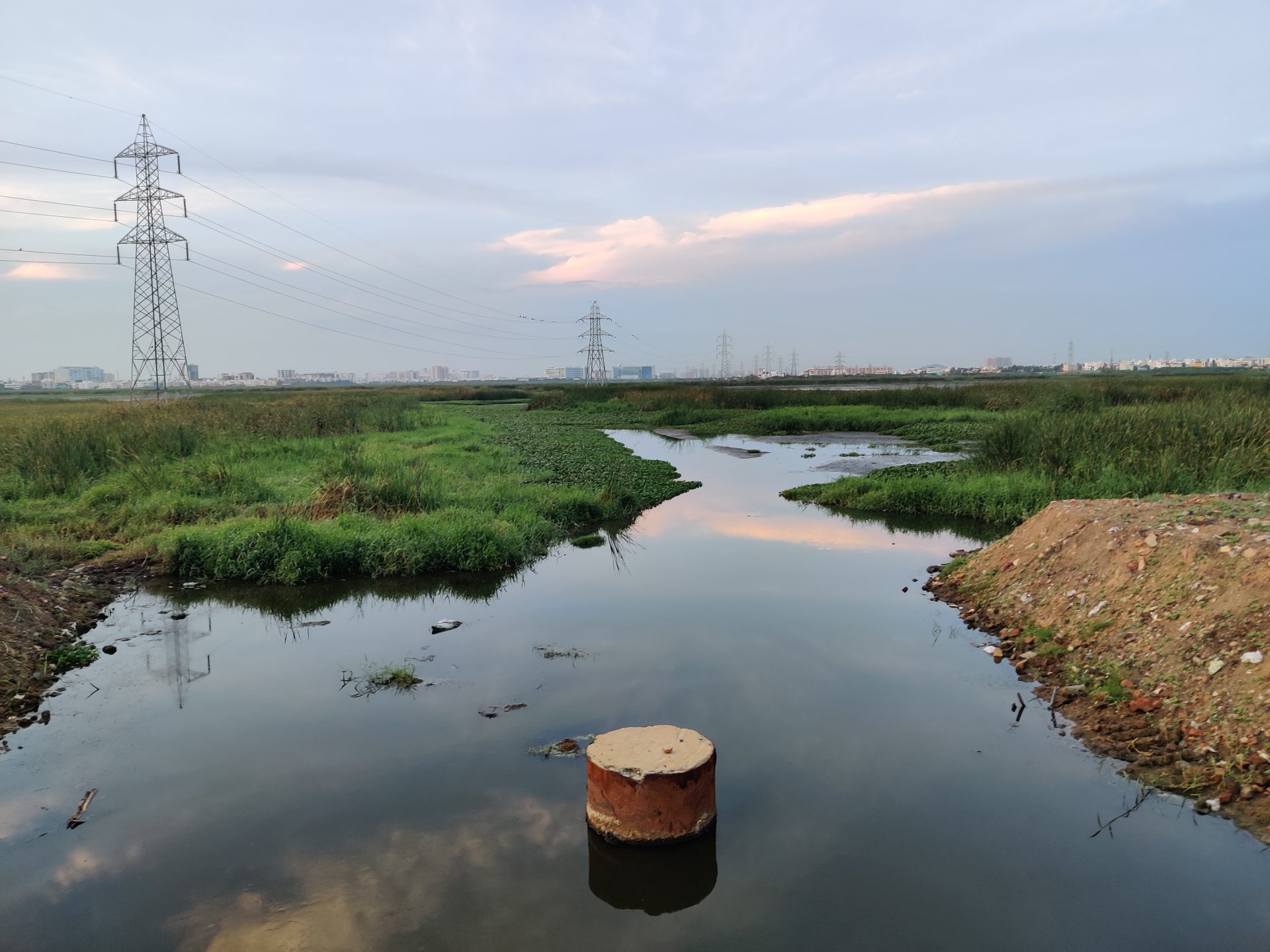
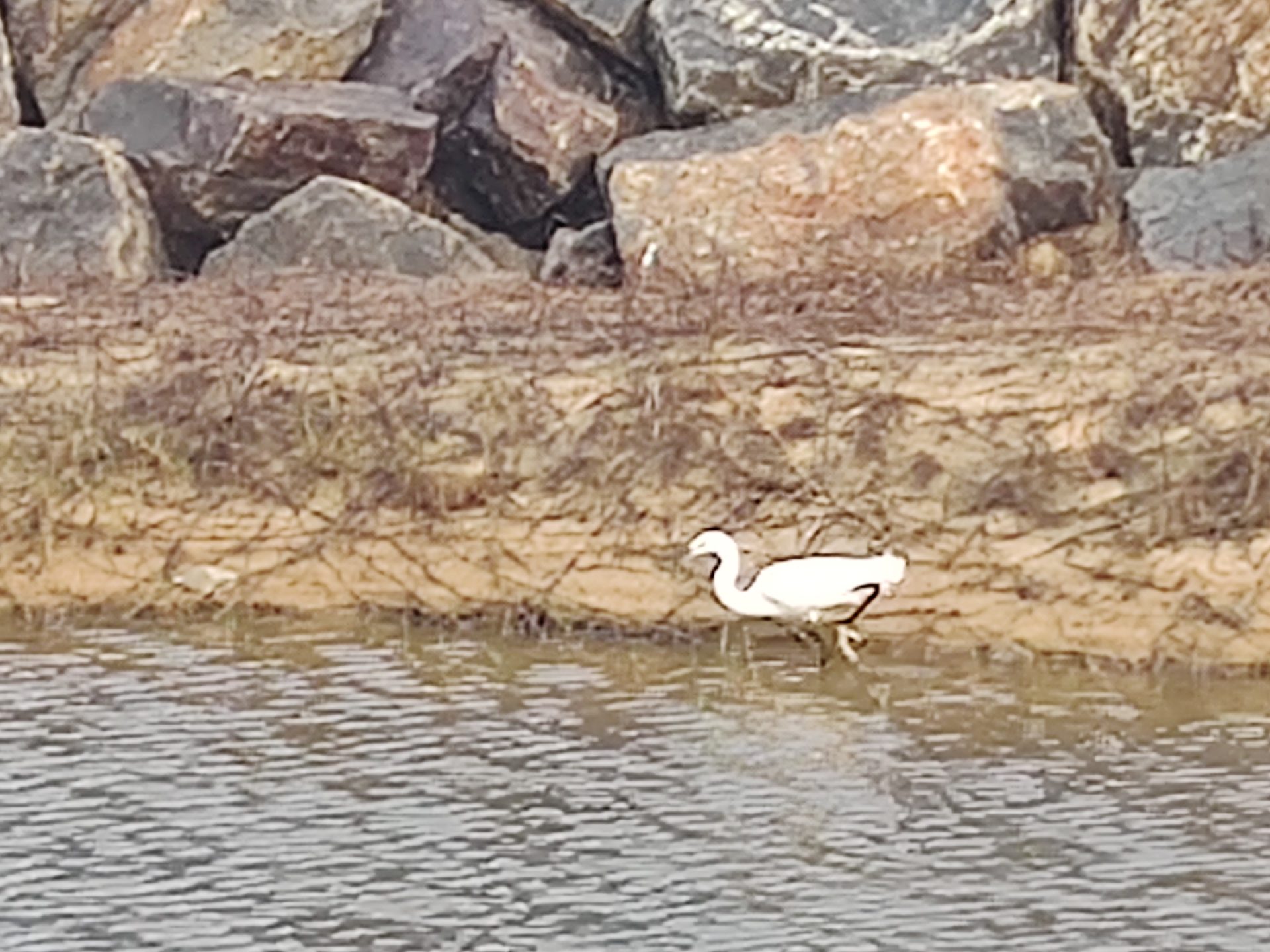
20 Kms South of the city centre and adjacent to the Bay of Bengal lies a 80 sq km  freshwater marshland. Almost 337 species of flora and fauna is supported by this heterogenous ecosystem and during the migratory season, hordes of birds fly in from colder climes and settle down in this habitat. 

One gets to see herons, egrets, flamingoes , spoonbills and many more different varieties of birds. The state government has set up a 2.5 acre ecological park inside the marsh land in December 2021 at a cost of 200 million rupees with a 2 km long walking trail for watching birds.

The East Coast Road, popularly known as the ECR stretch throws up lot of attractions for the discerning tourist and the choices could be as varying as a fun filled day at the amusement parks with some exhilarating rides to some exquisite modern and ancient temples to some high intensity surfing for the adventurous or a quiet boat ride down the backwaters or even lazing out  on the beaches.

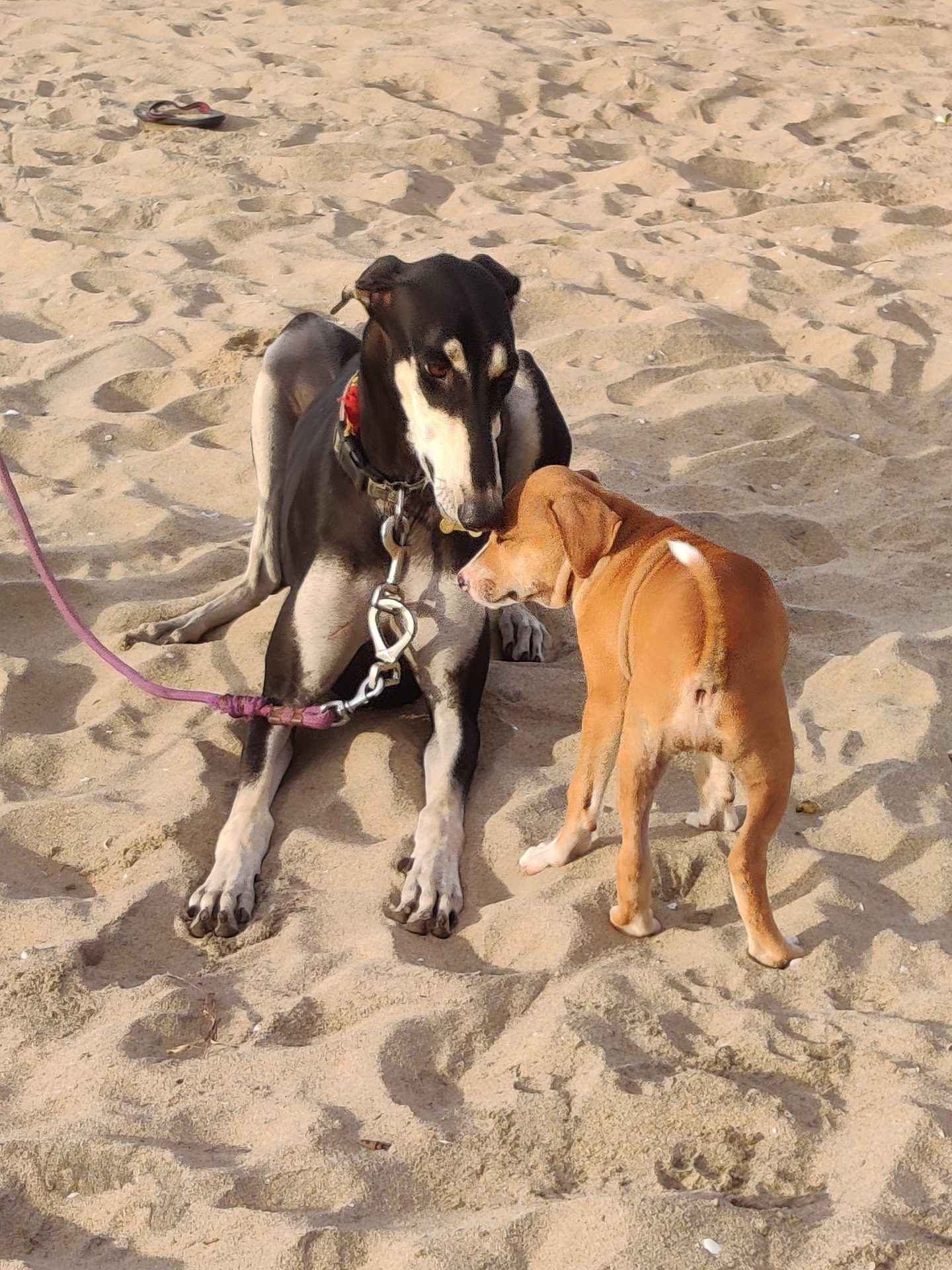
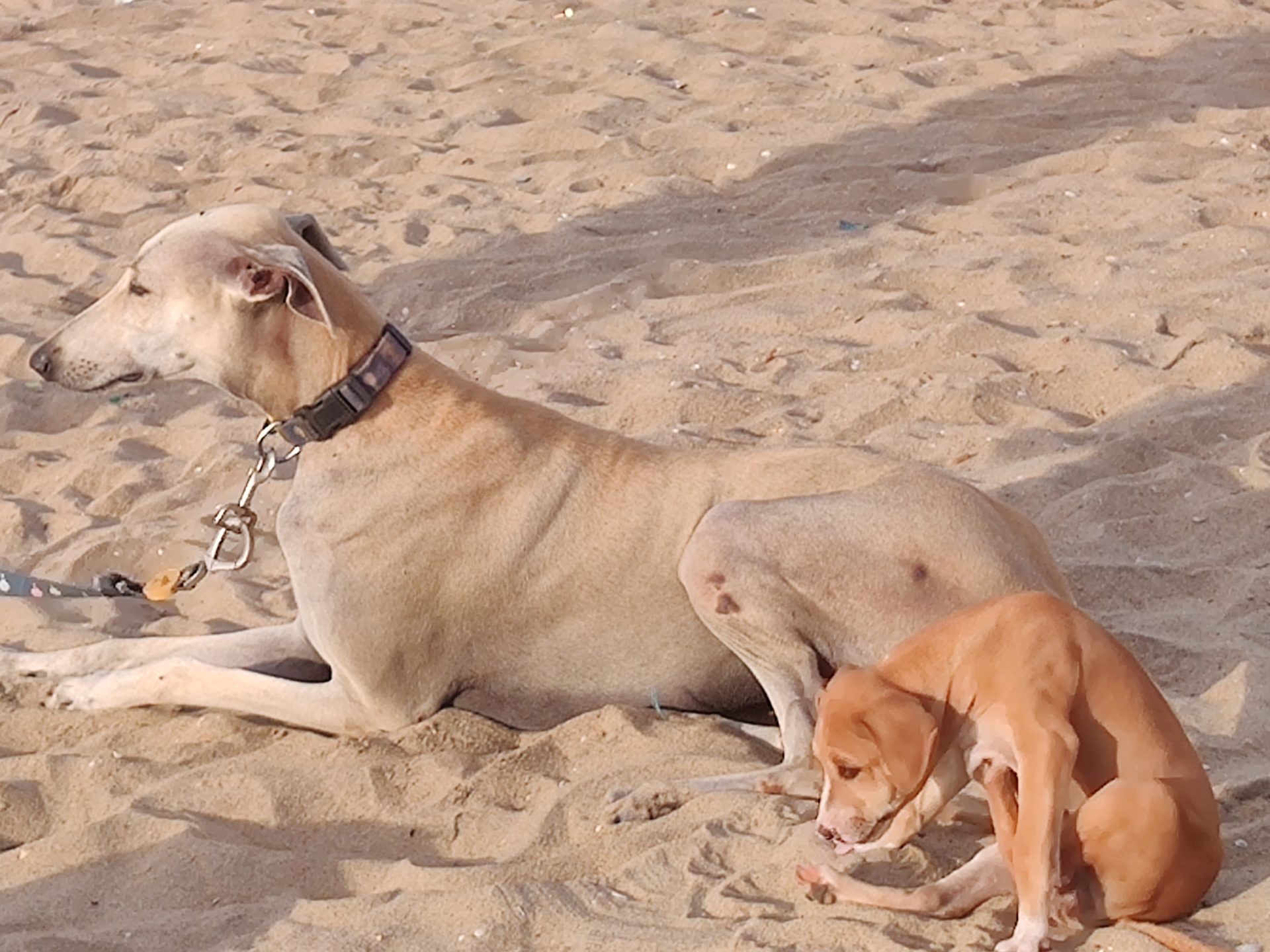
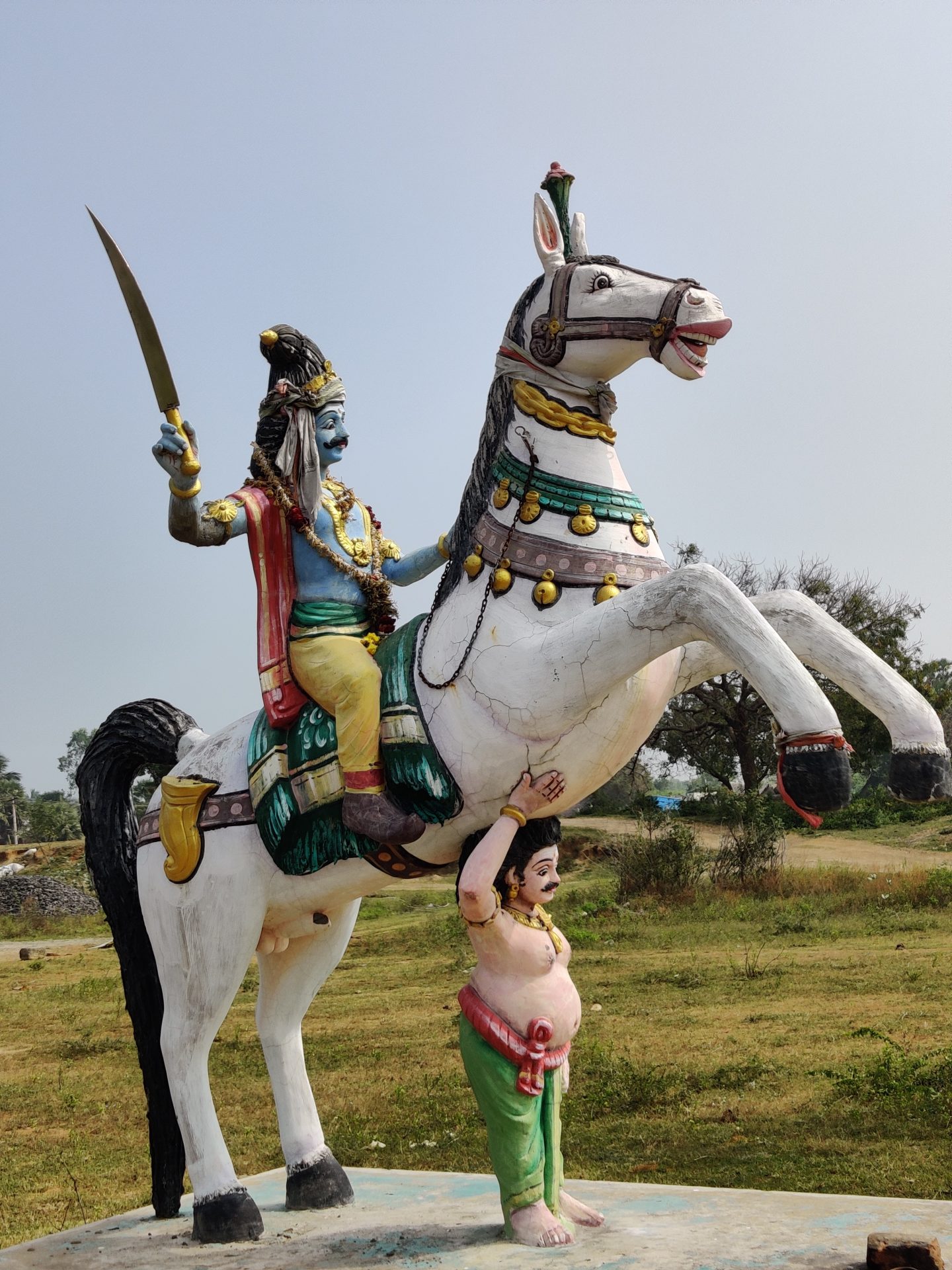
THE CHIPPIPARAI SIGHTHOUND
THE KANNI & THE PLAYFUL PUP

VGP and MGM Amusement Parks

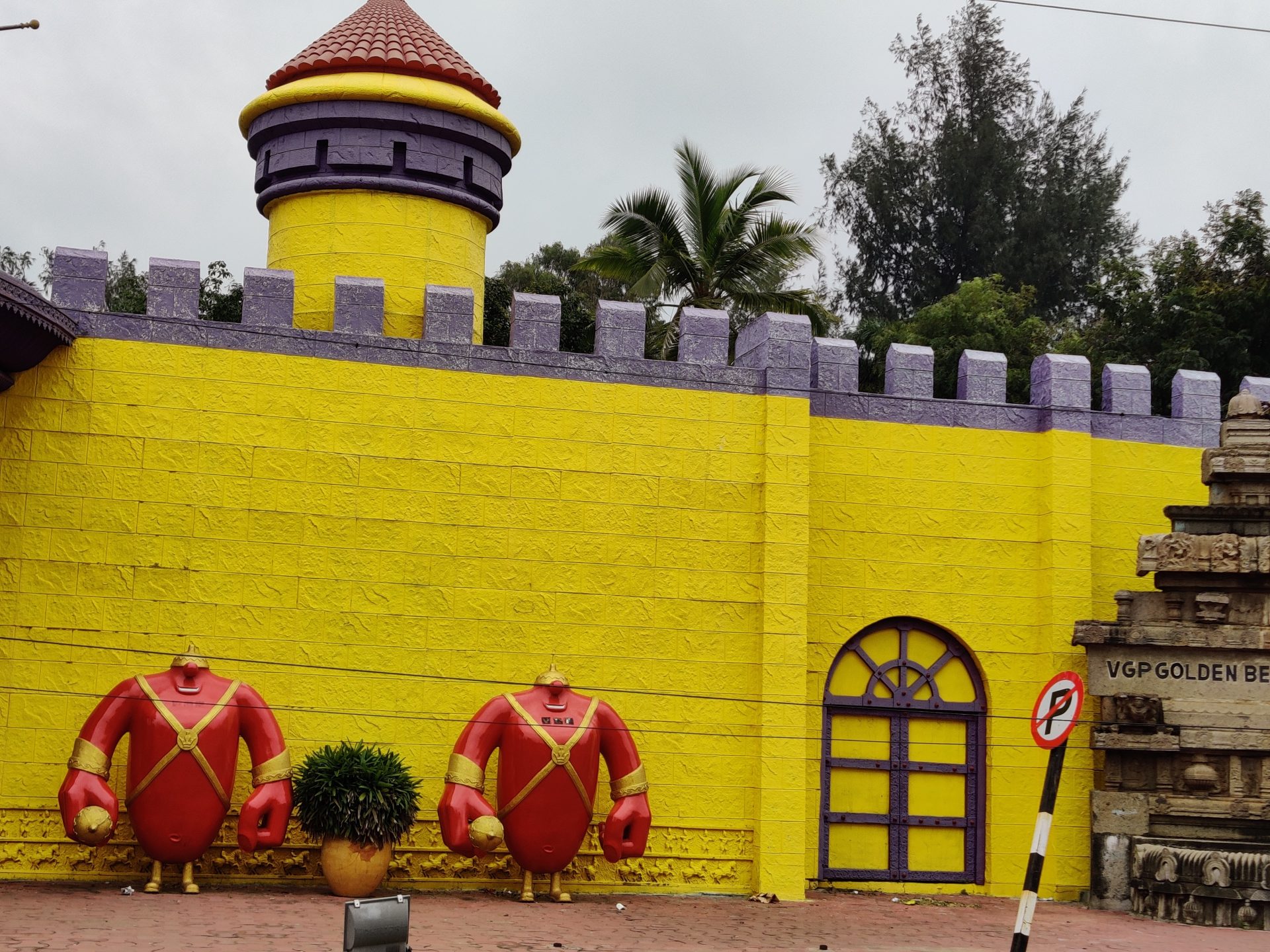
A ride down ECR brings one to the first of the Amusement parks, the VGP Universal Kingdom while the MGM Dizzee World lies 10 kms away. The VGP Amusement Park has had a  recent addition of India’s first walkthrough Aquarium which houses small and big aquatic animals which makes it a big attraction.

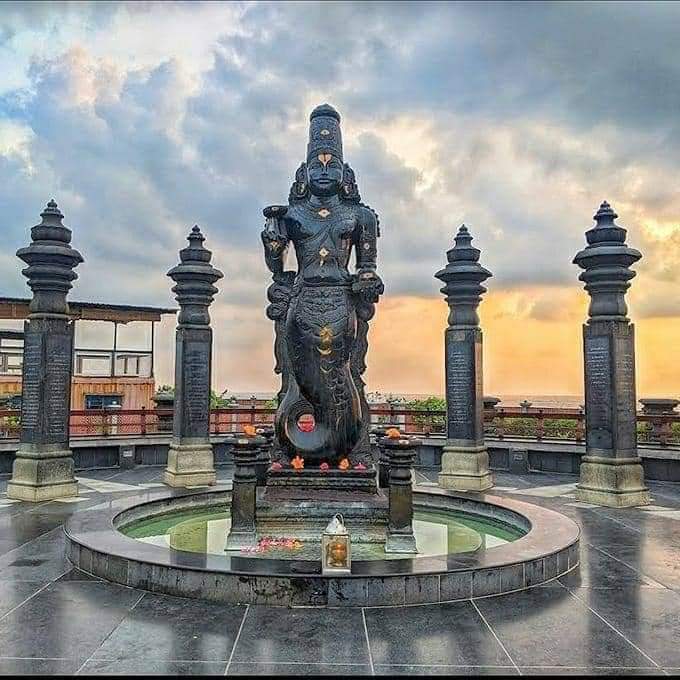
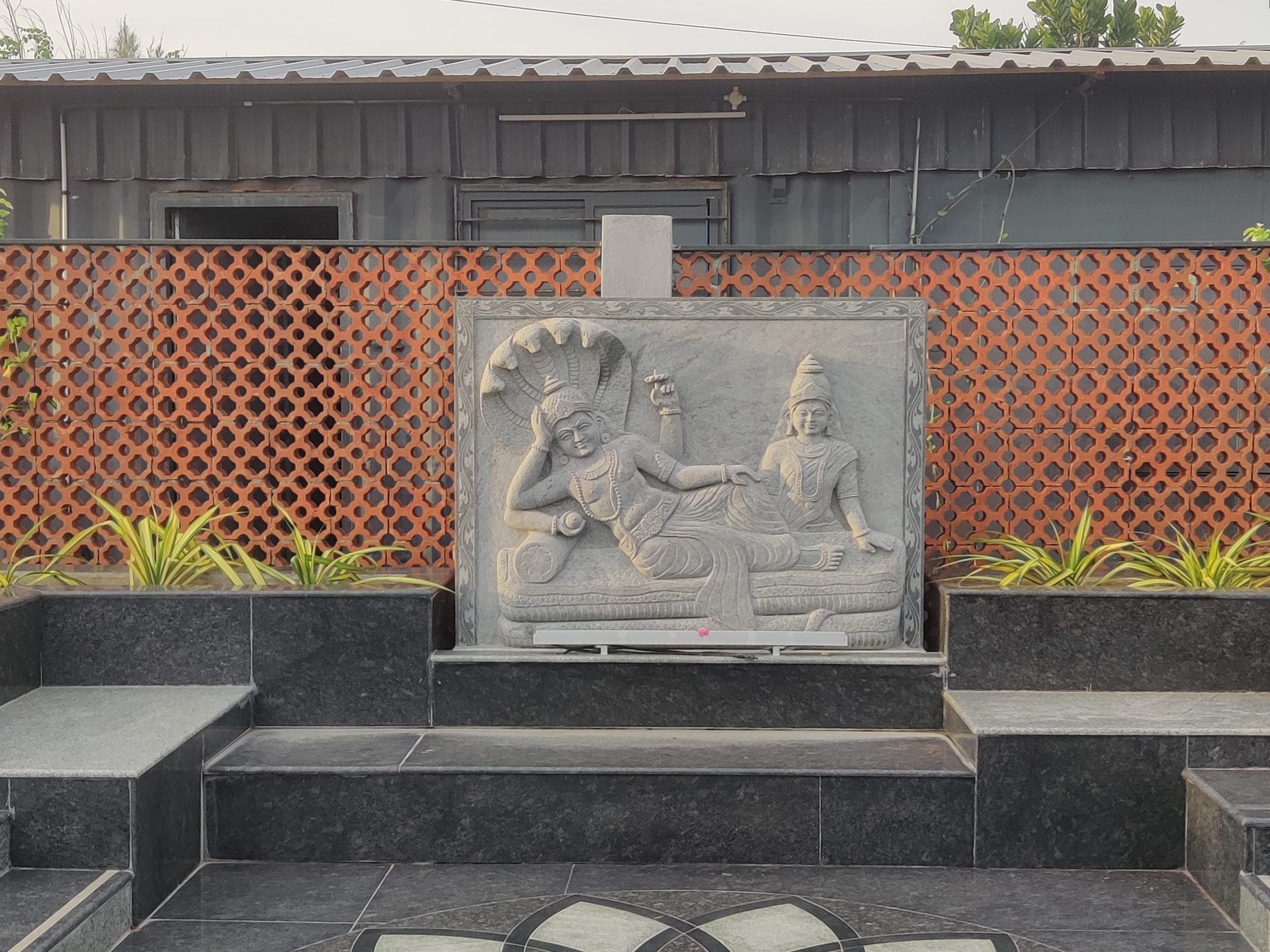
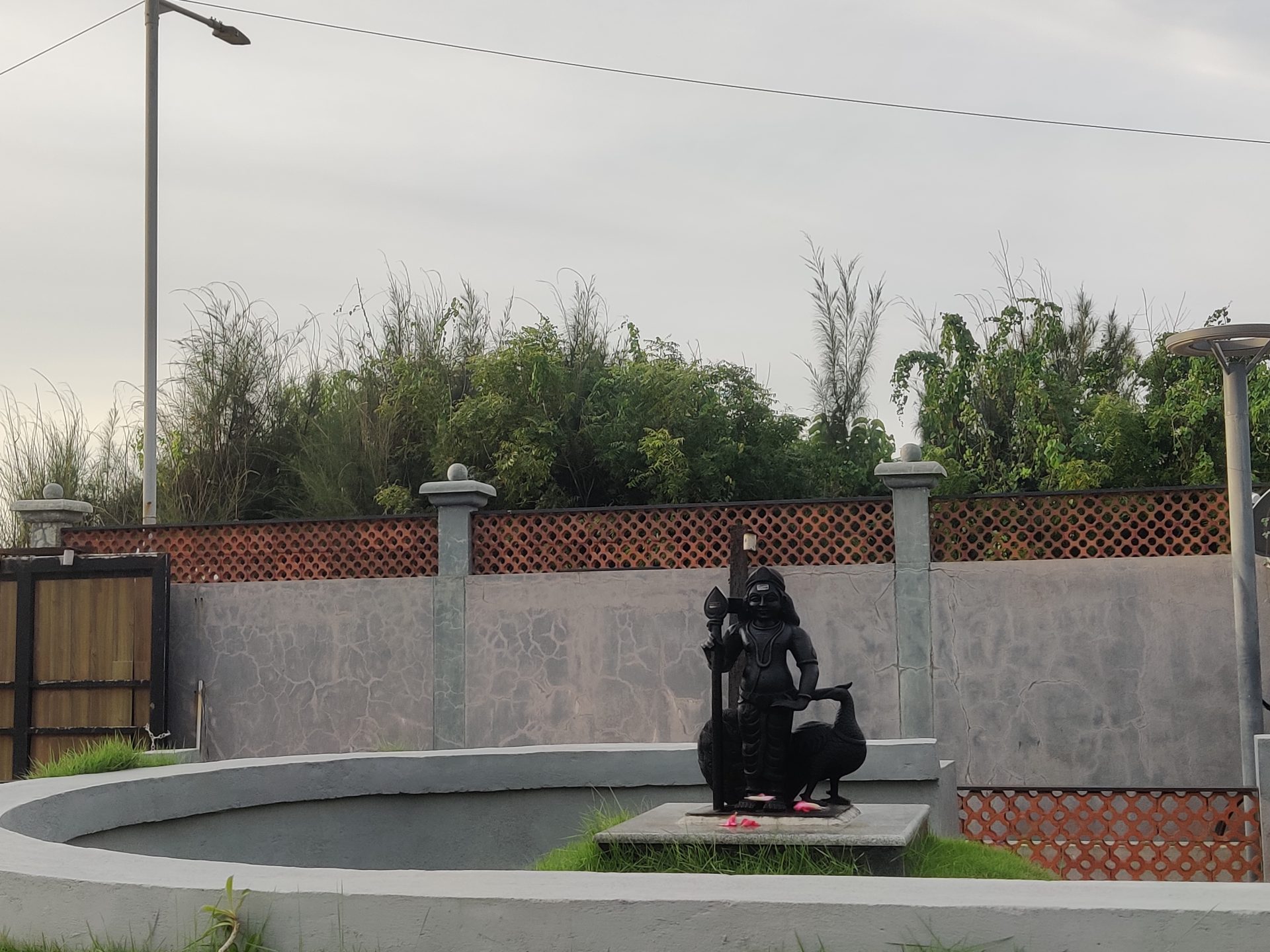
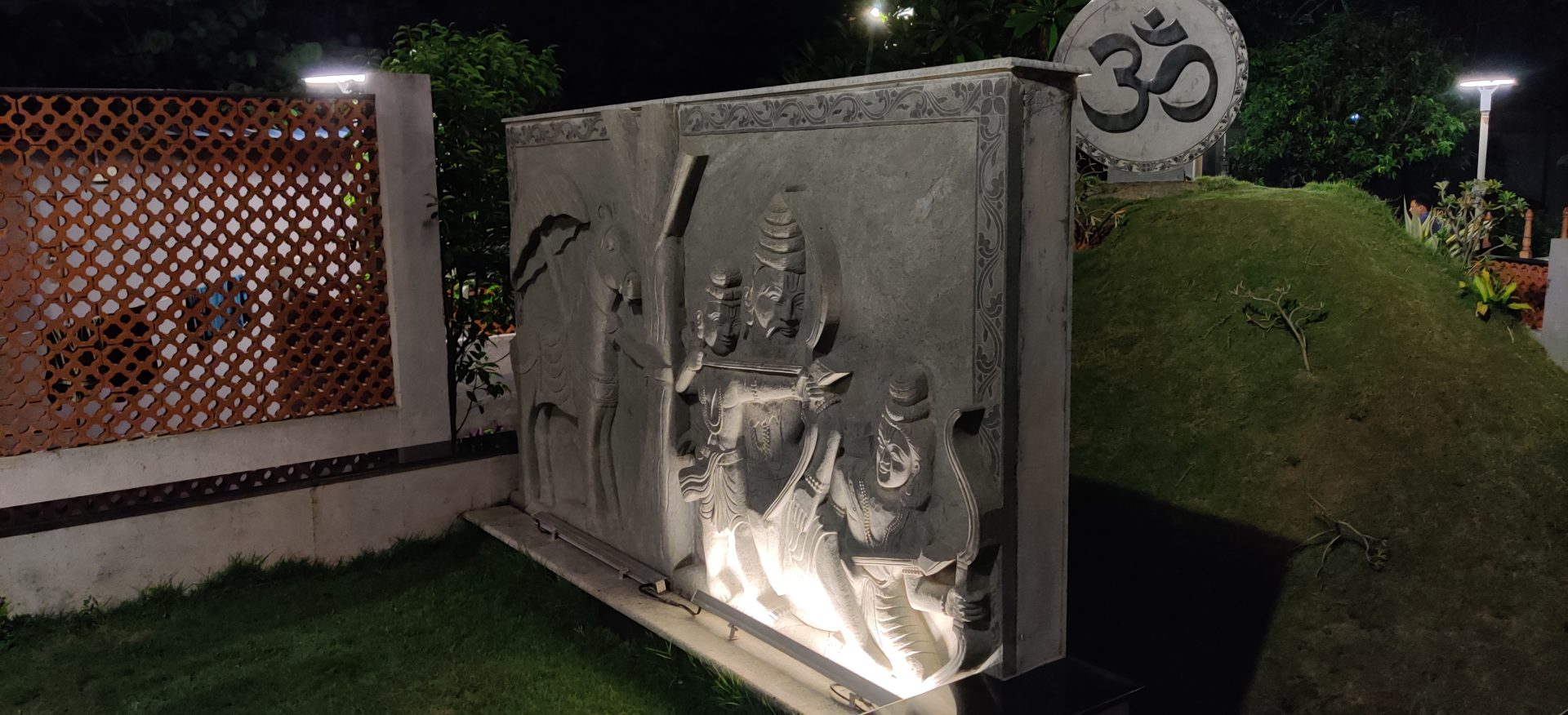
Matsya Narayana Temple

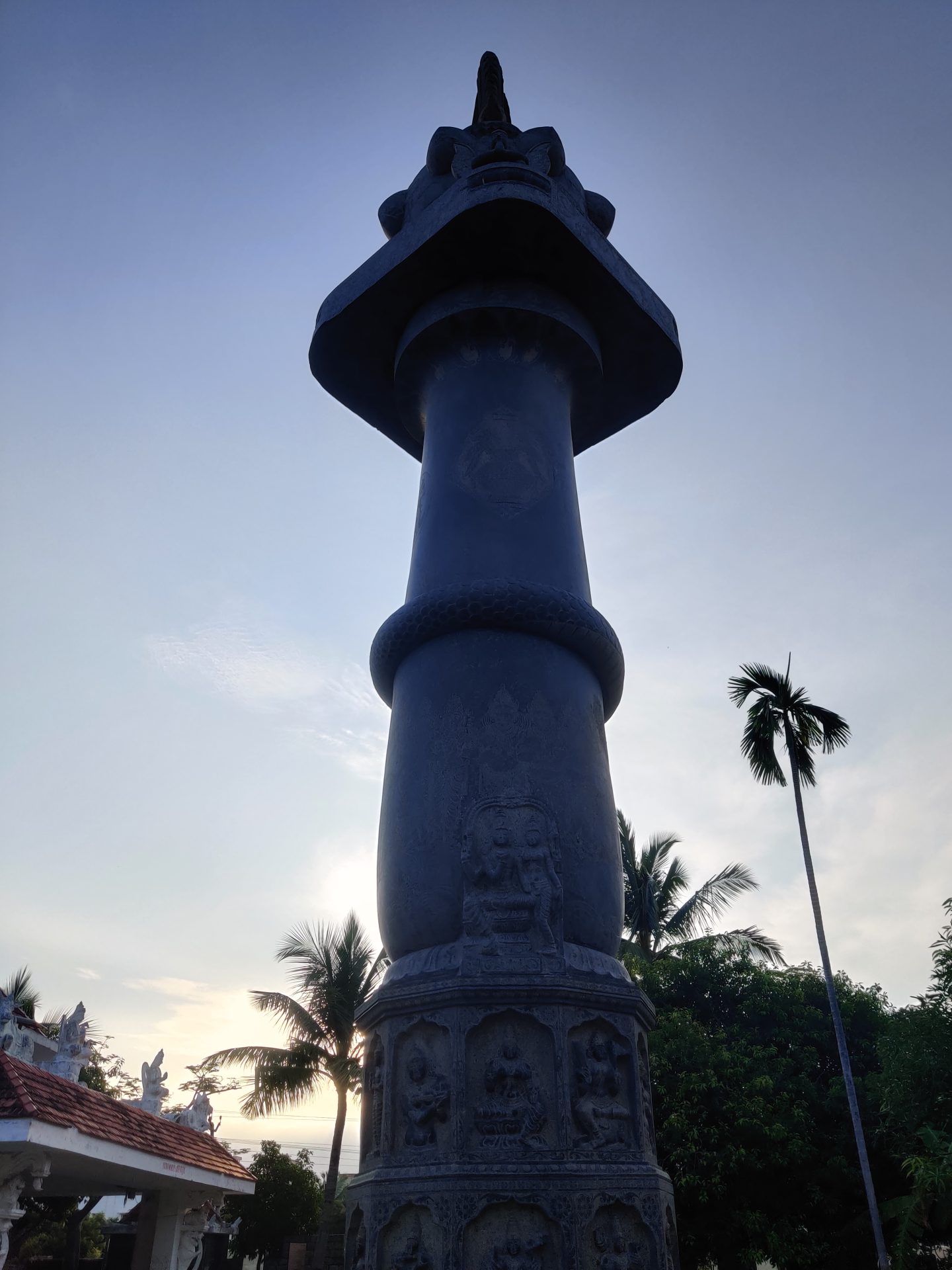
4 Kms further down from the  ECR-OMR link road brings one to the first of its kind open air temple, built by the Chinmaya Mission in 2015.

The main idol here is that of a 12 feet high Lord Vishnu in a reincarnation as a Fish and hence the name Matsya Narayana. Located right at the edge of the beachfront, this temple has 108 Pillars where the entire Vishnu Sahasranaman is inscribed along with its meaning.

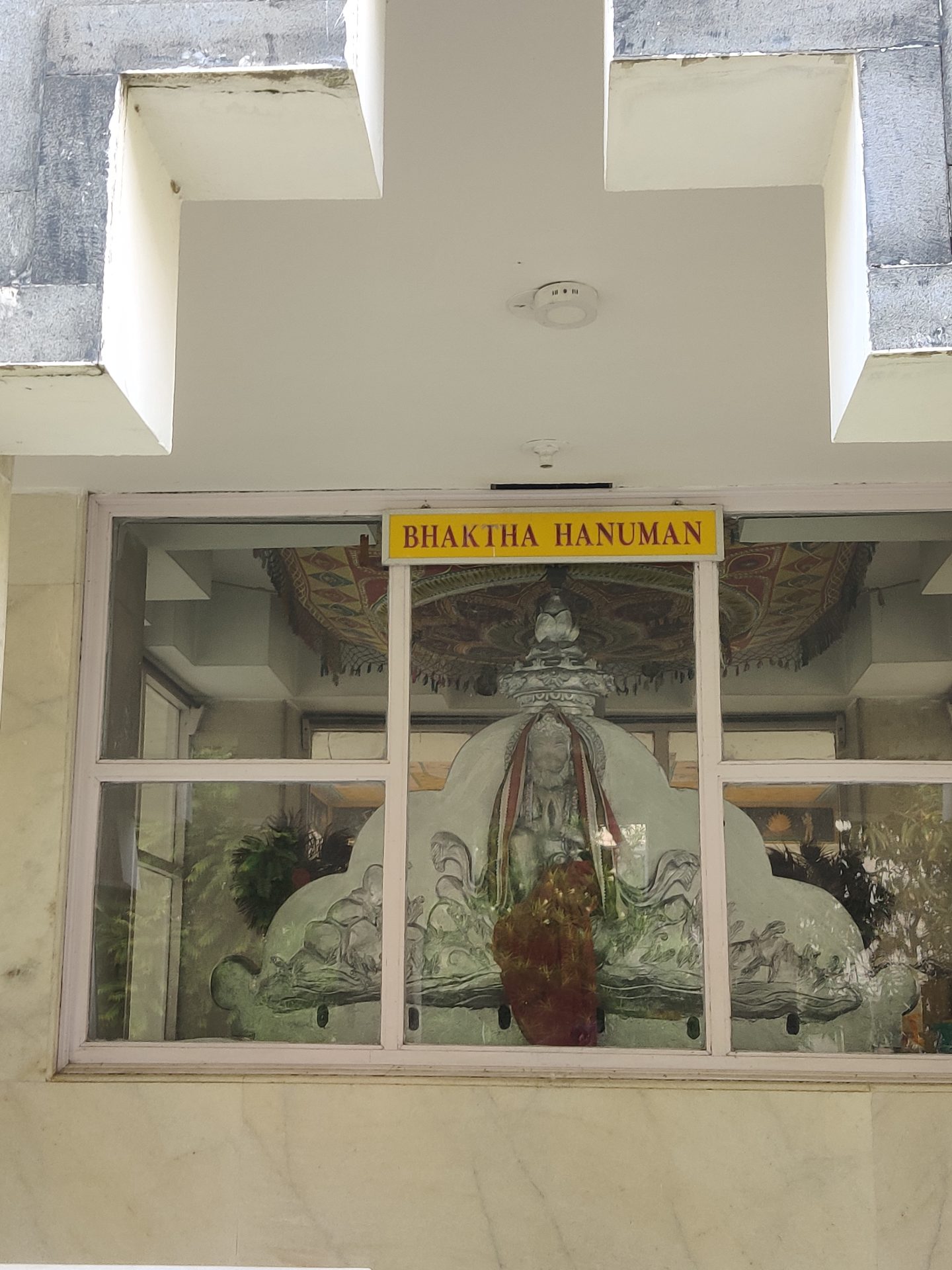
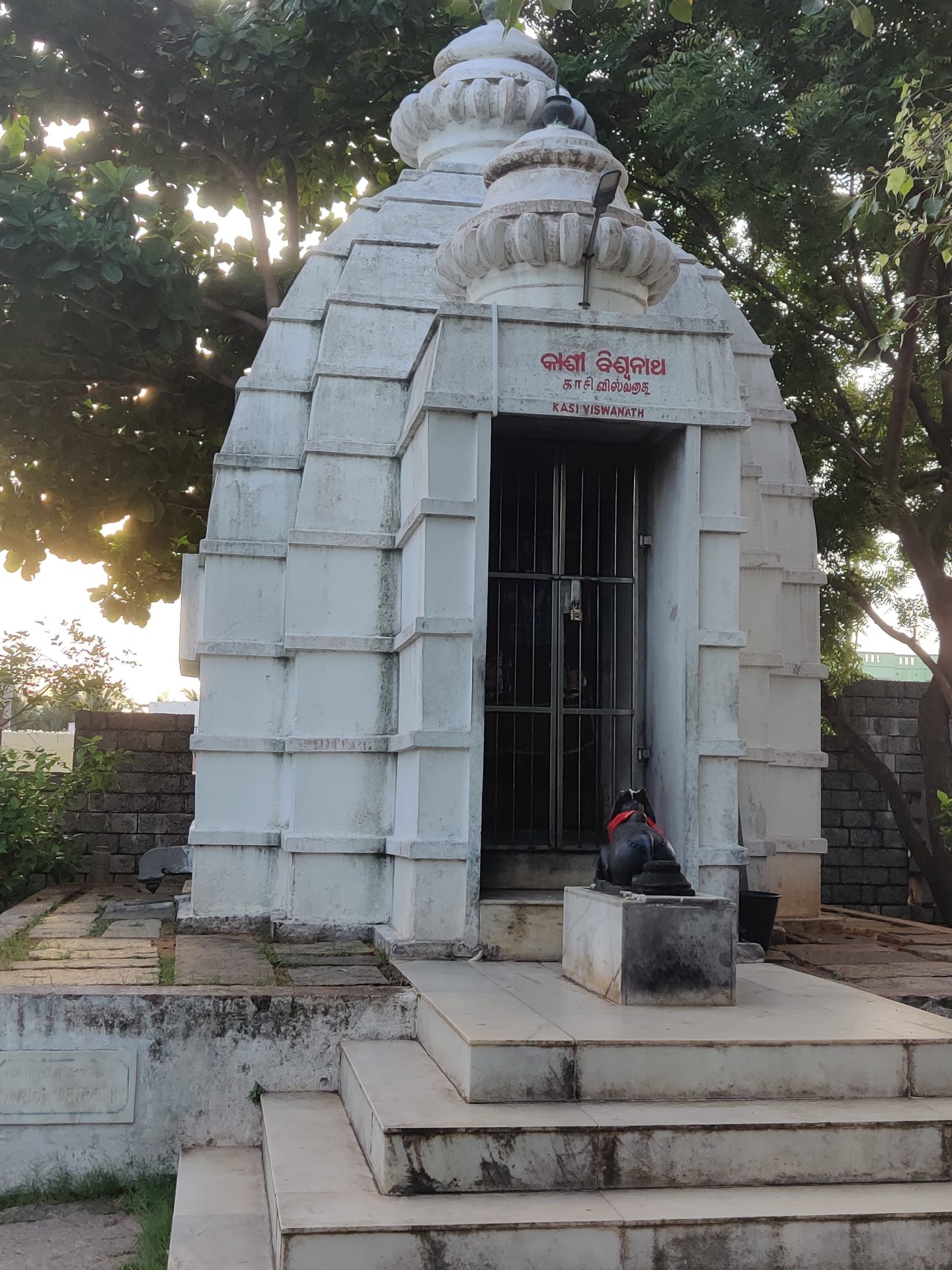
While this is normally not a practice, this is one of those rare temples where you have an altar to Lord Shiva apart from Lord Vishnu apart from Hanuman and Ganesha. 

There is also an exclusive section called Kutty’s Kovil meaning a temple for children.

Juhu Beach

4 kms ahead of the Matsya Narayana temple lies the Juhu beach. While it does get crowded on weekends, the morning times are when one the beach is at its tranquil best with very few visitors. A great place to capture the sunrise over the Bay of Bengal.

The Puri Jagannath Temple on ECR

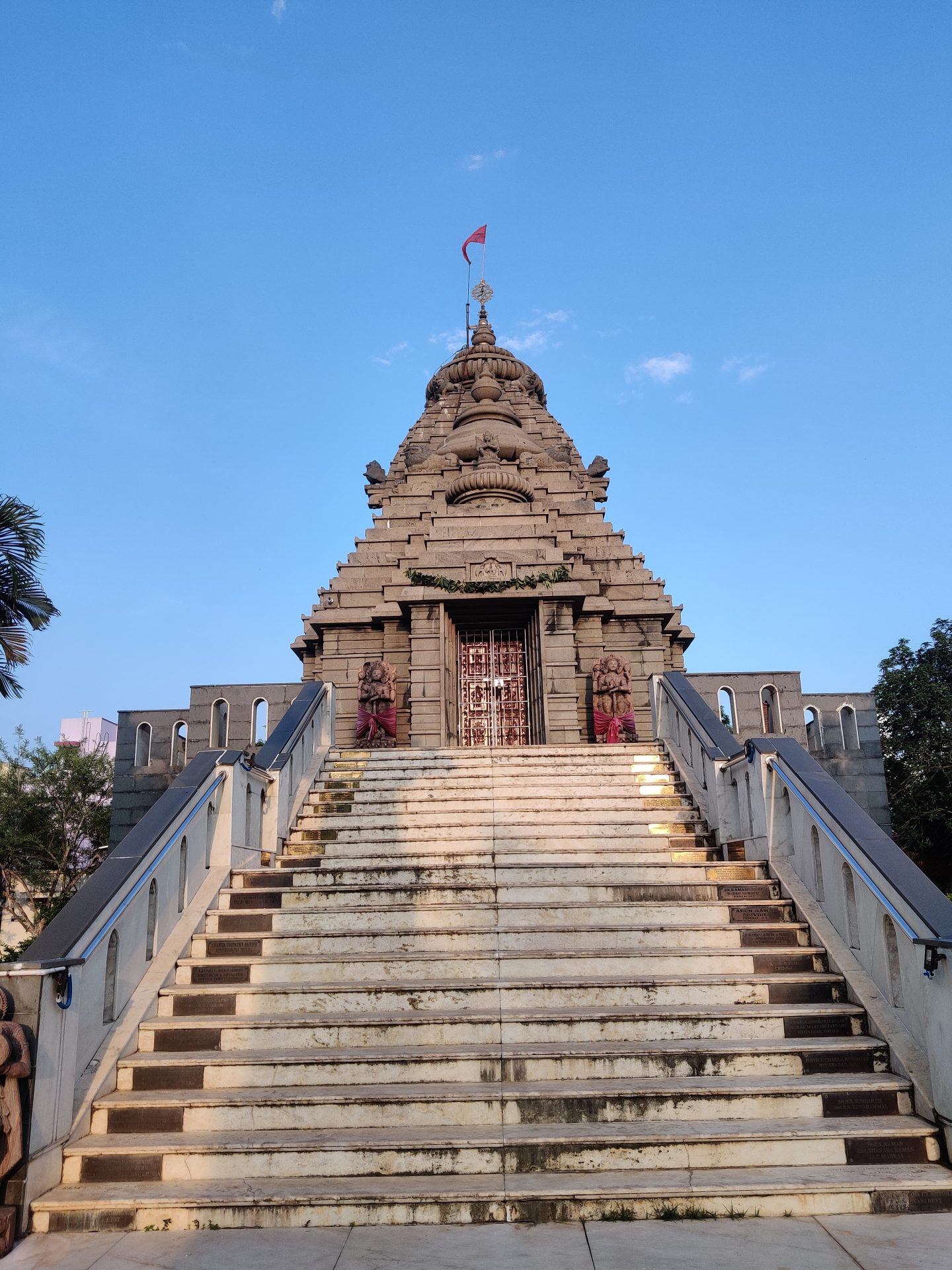
As one rides a further 3 Kms on the ECR stretch towards Kannathur, a road leading to the left brings one to the Puri Jagannath temple. Built out of black granite and white marble and in Kalinga architecture, this temple is very much reminiscent of the Jagannath Temple in Puri in Odhisa.

This Hindu Temple is dedicated to the Divine Trinity of Jagannath, Baladeva and Subahdra and was consecrated on January 26th, 2001.  A short climb of around 20 steps brings one to the sanctum sanctorum where one gets to see the idols here which are built out of Neem wood as is the case in Puri.

Muttukadu Bridge

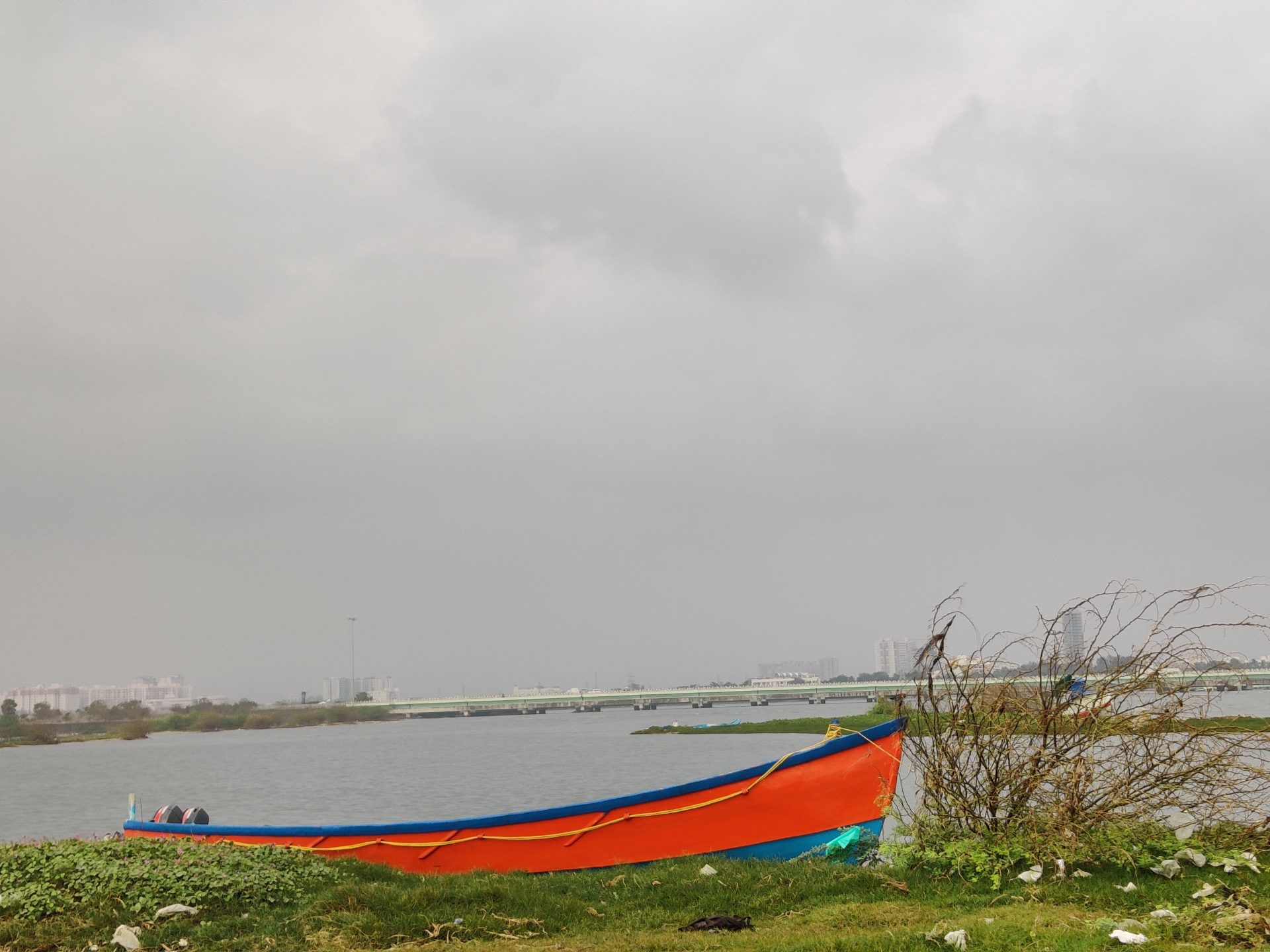
A little further down as one cycles towards Mahabalipuram, we get to cross  the Muttukadu Bridge, a scenic halt for a photoshoot opportunity. With the sea on one side of the bridge and the backwater on the other, fascinating pictures of the early morning sunrise or even migratory birds across the backwaters can be taken here.

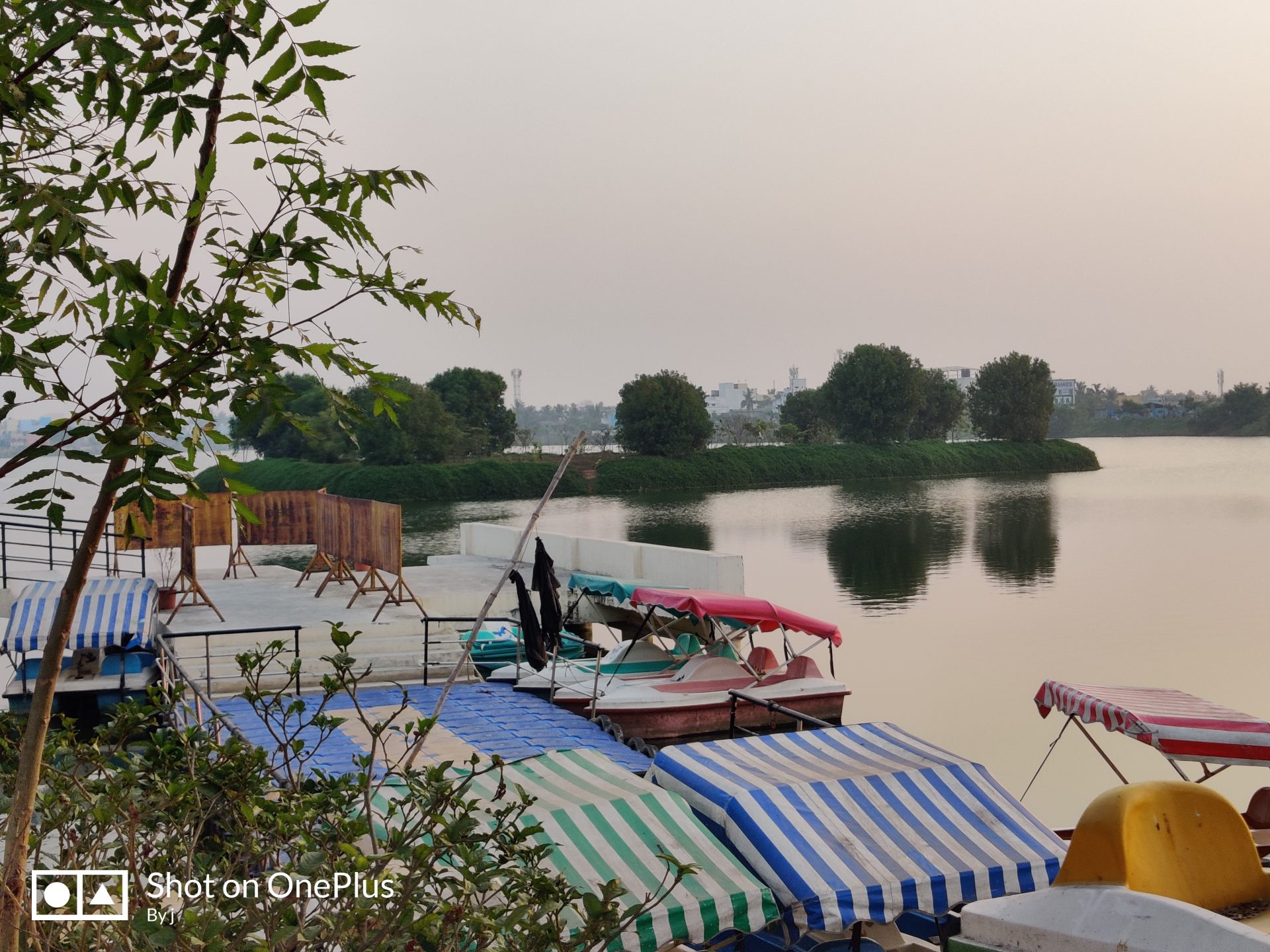
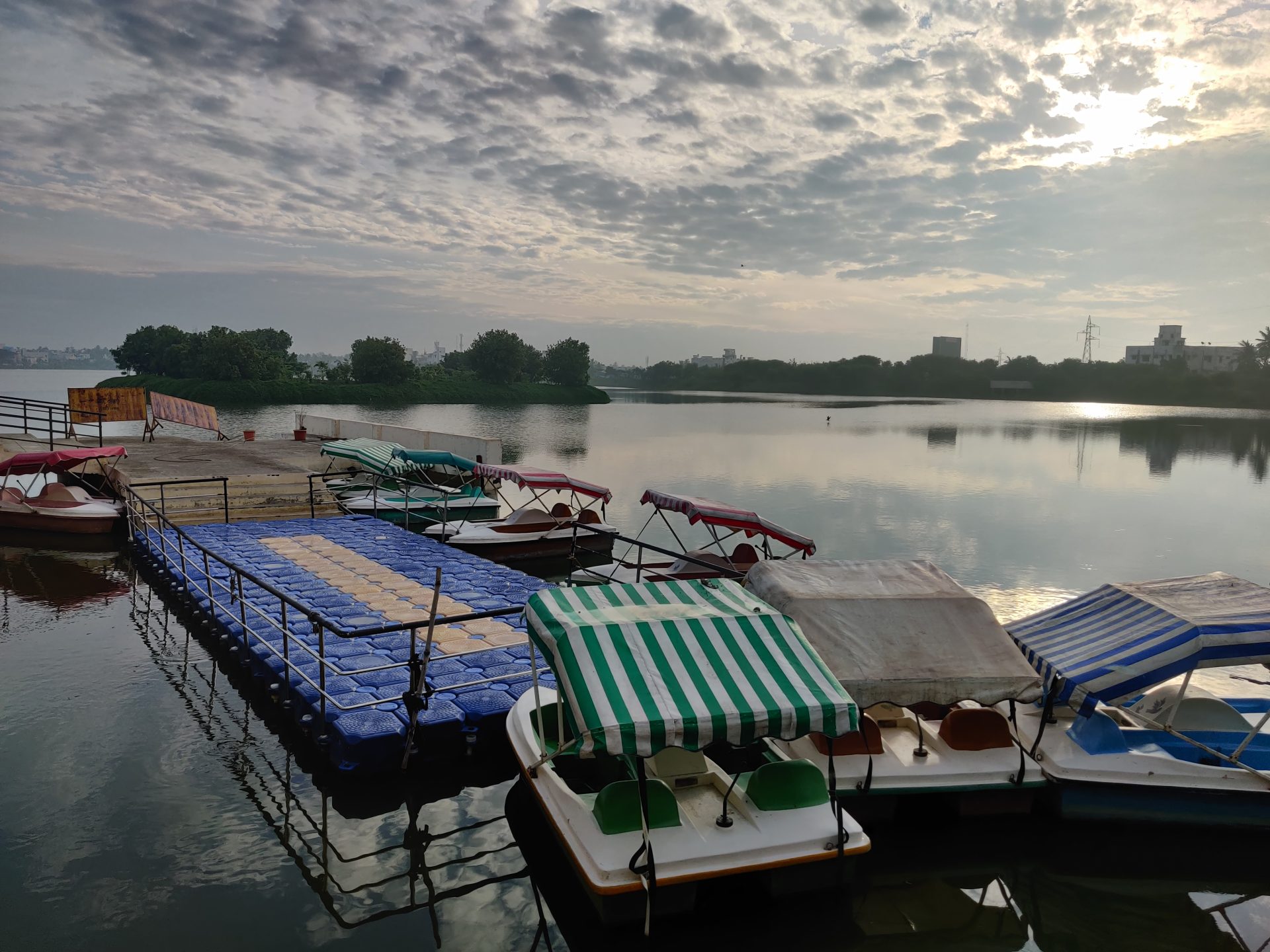
Weekends get crowded towards the evening as lot of families come here to spend time boating in the Muttukadu Lake. A boat house run by the Tamil Nadu Tourism Department since 1984 offers visitors a choice of water sports starting from rowing to speed boats to aqua scooters to pedal boats.

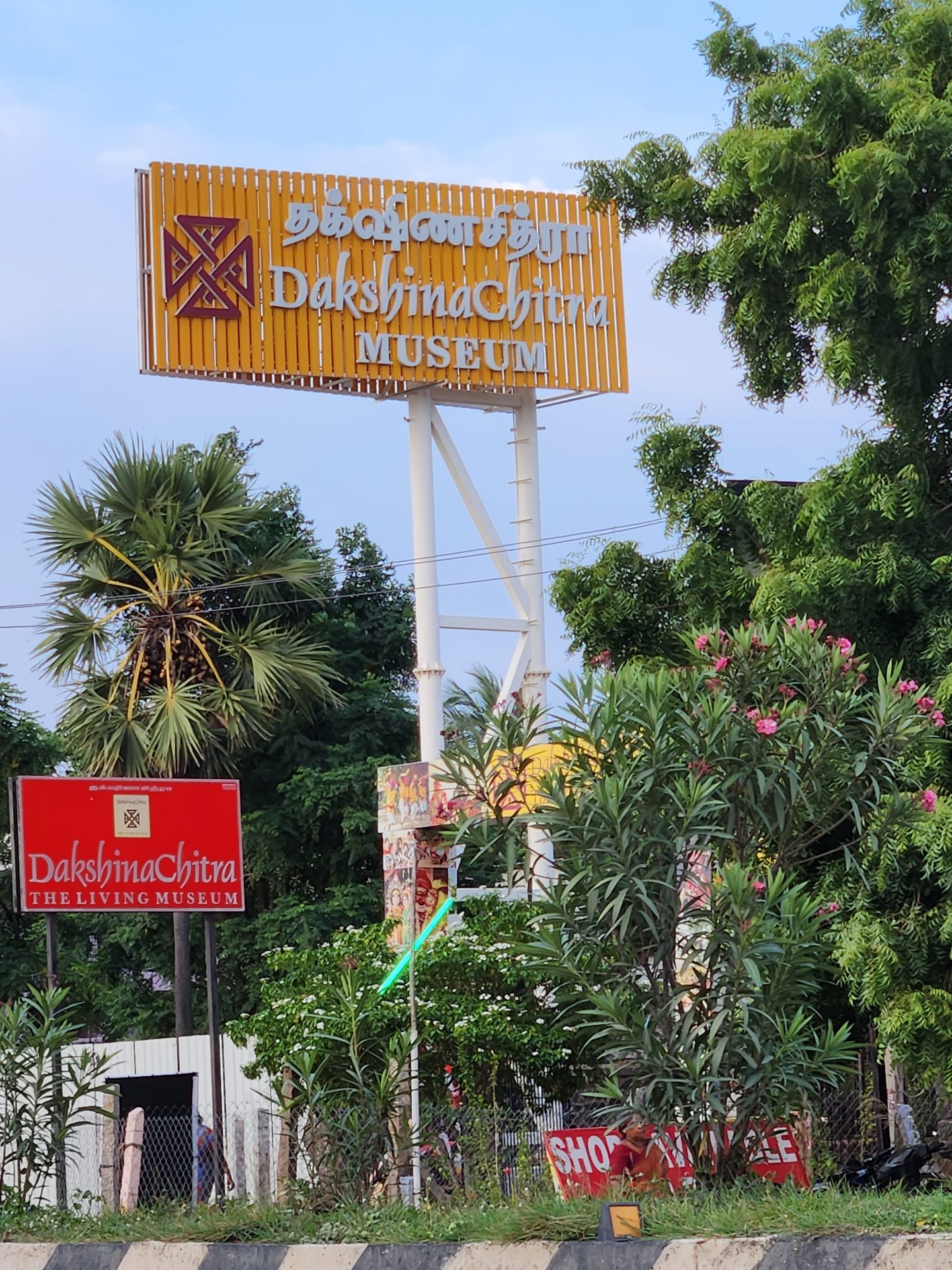
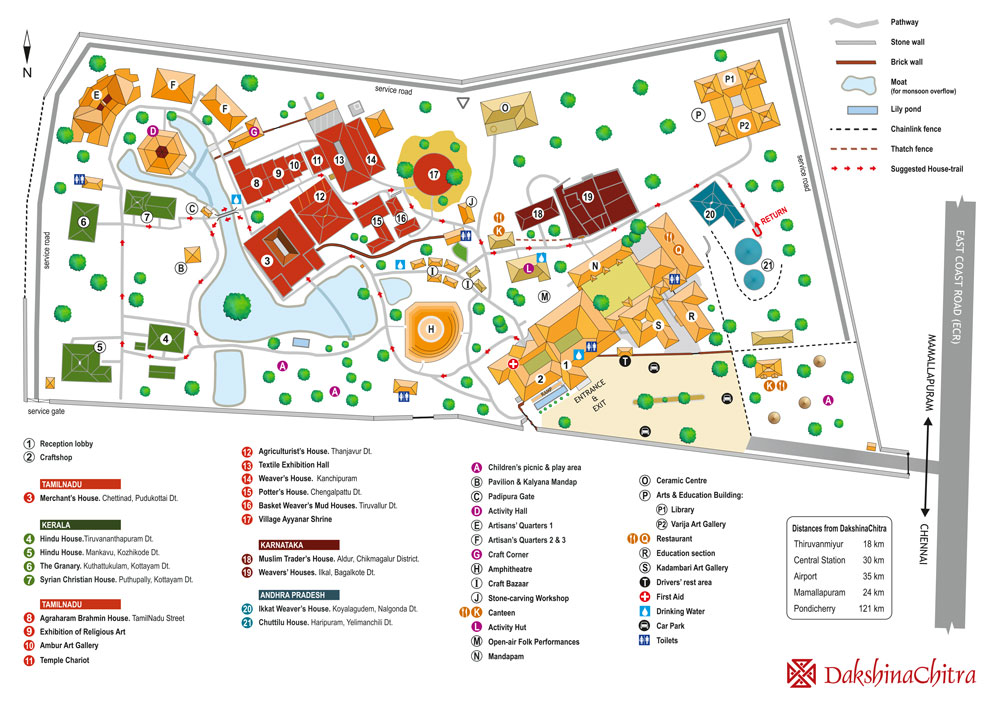
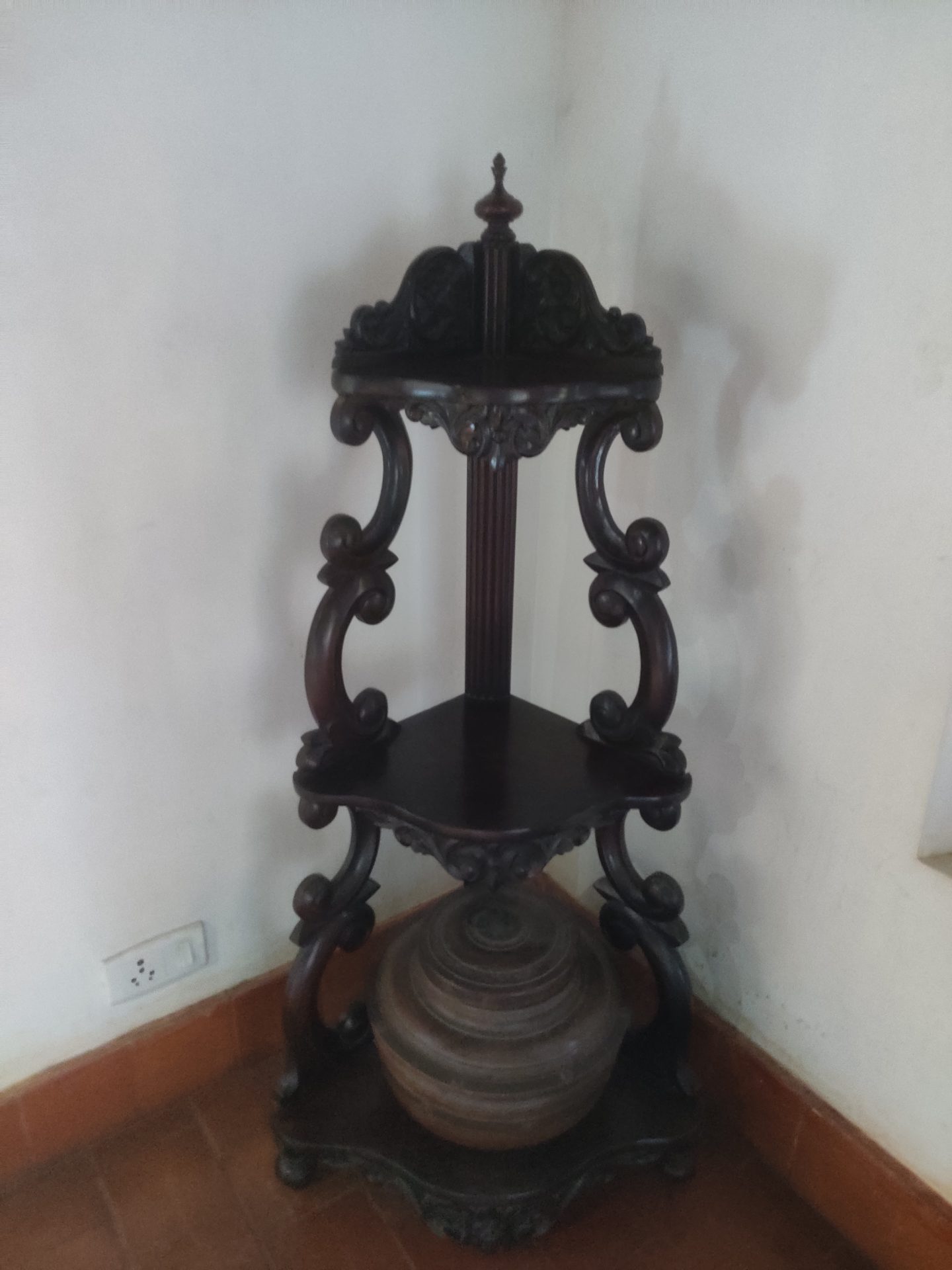
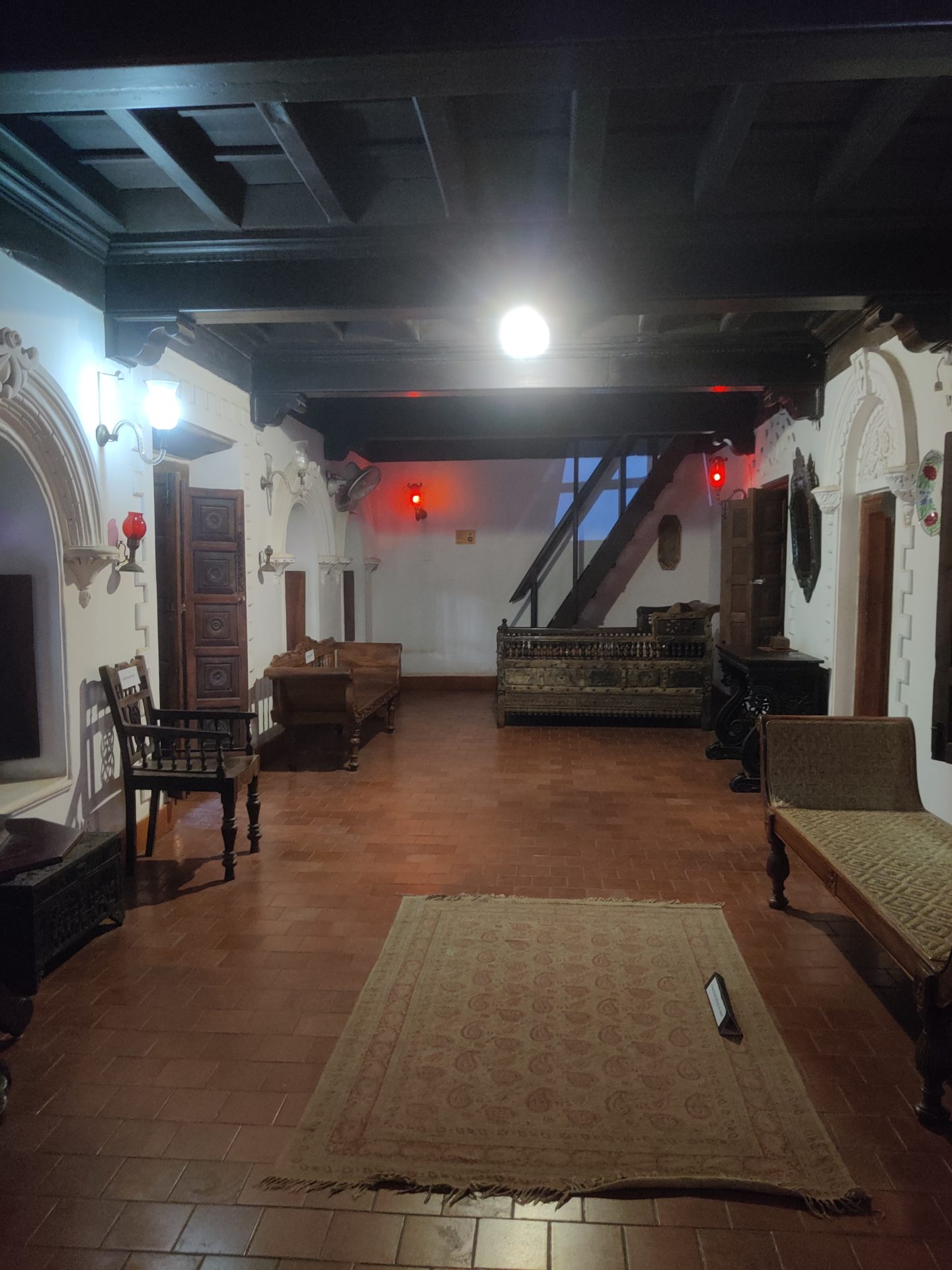
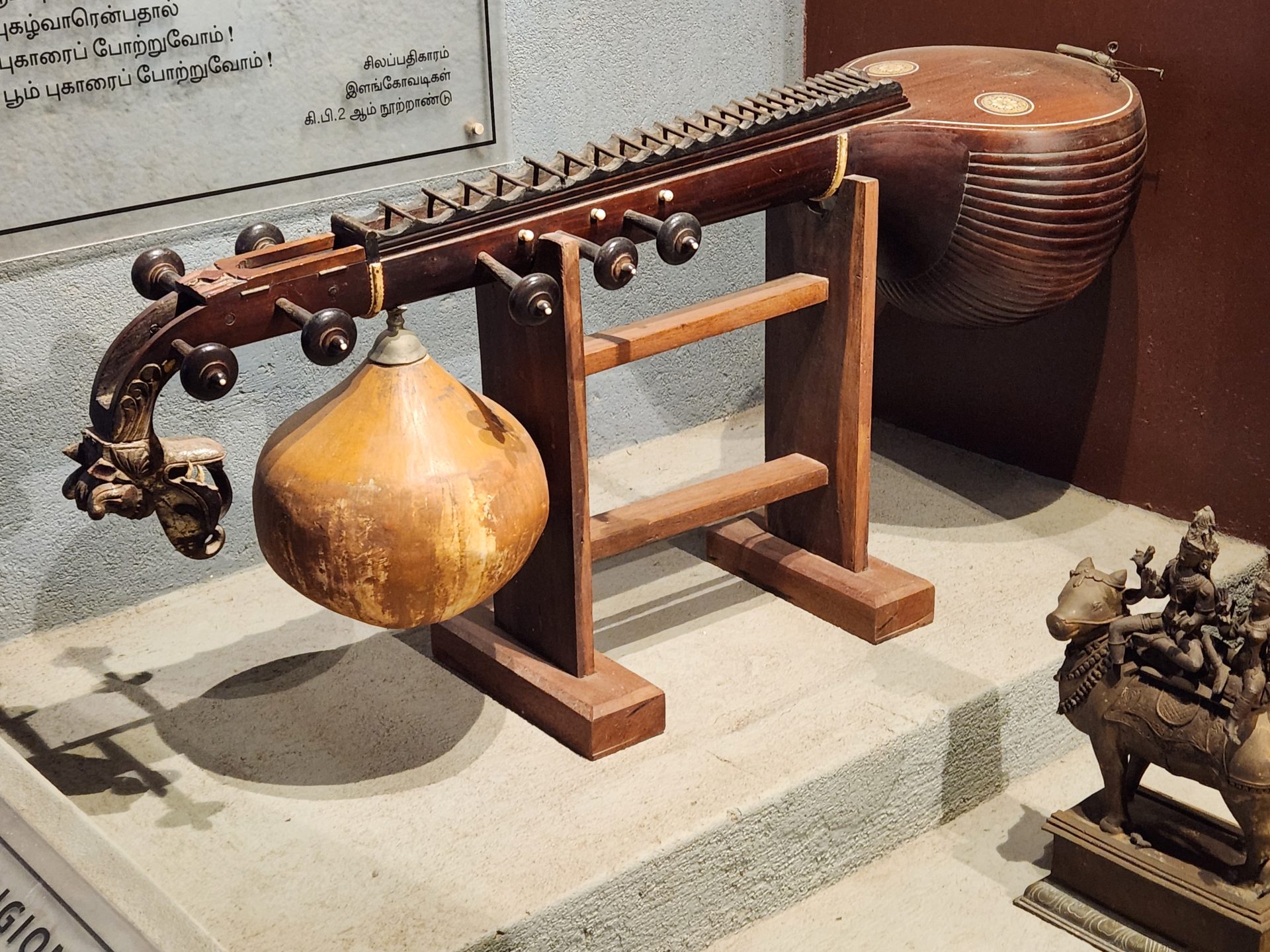
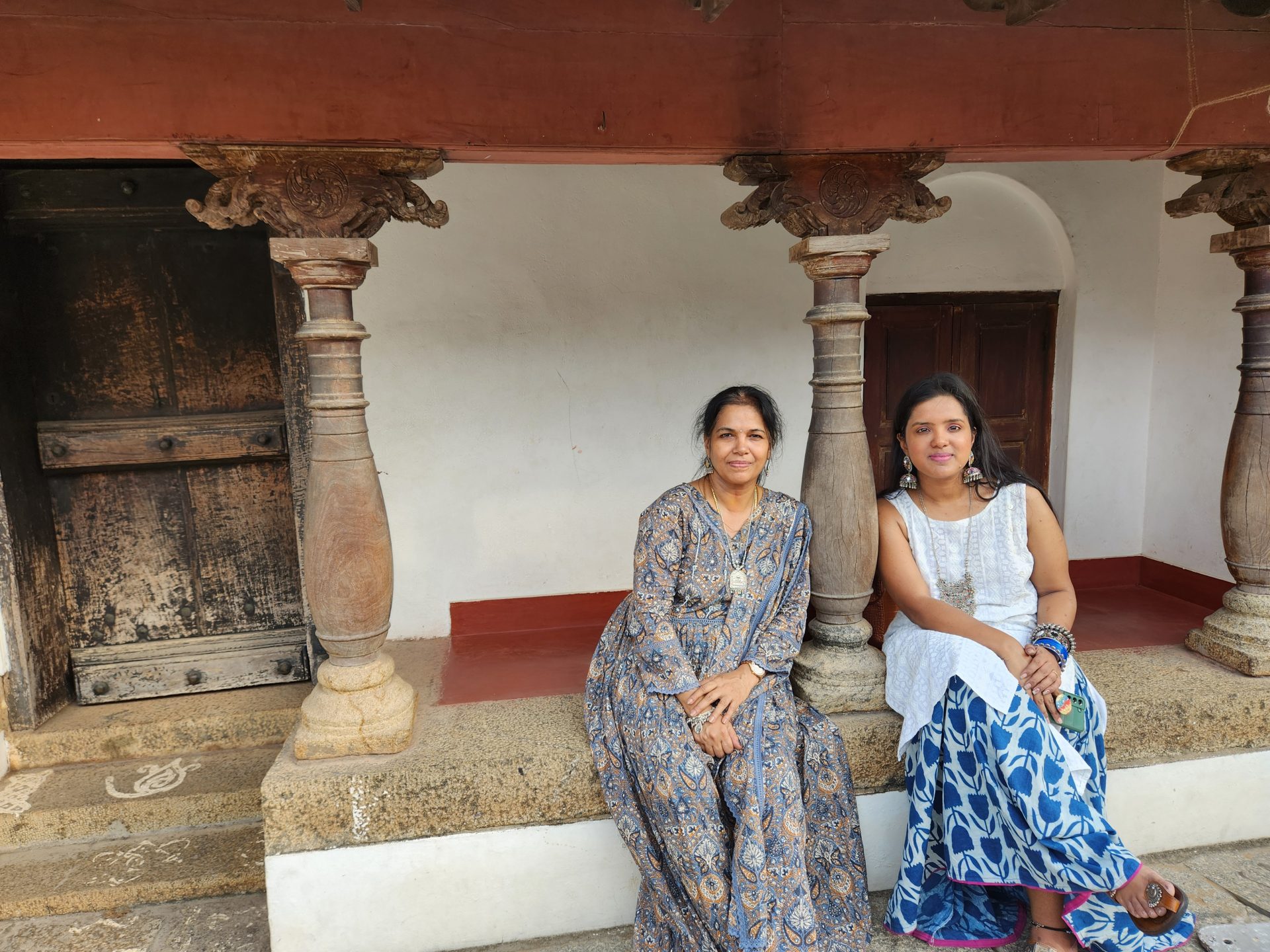
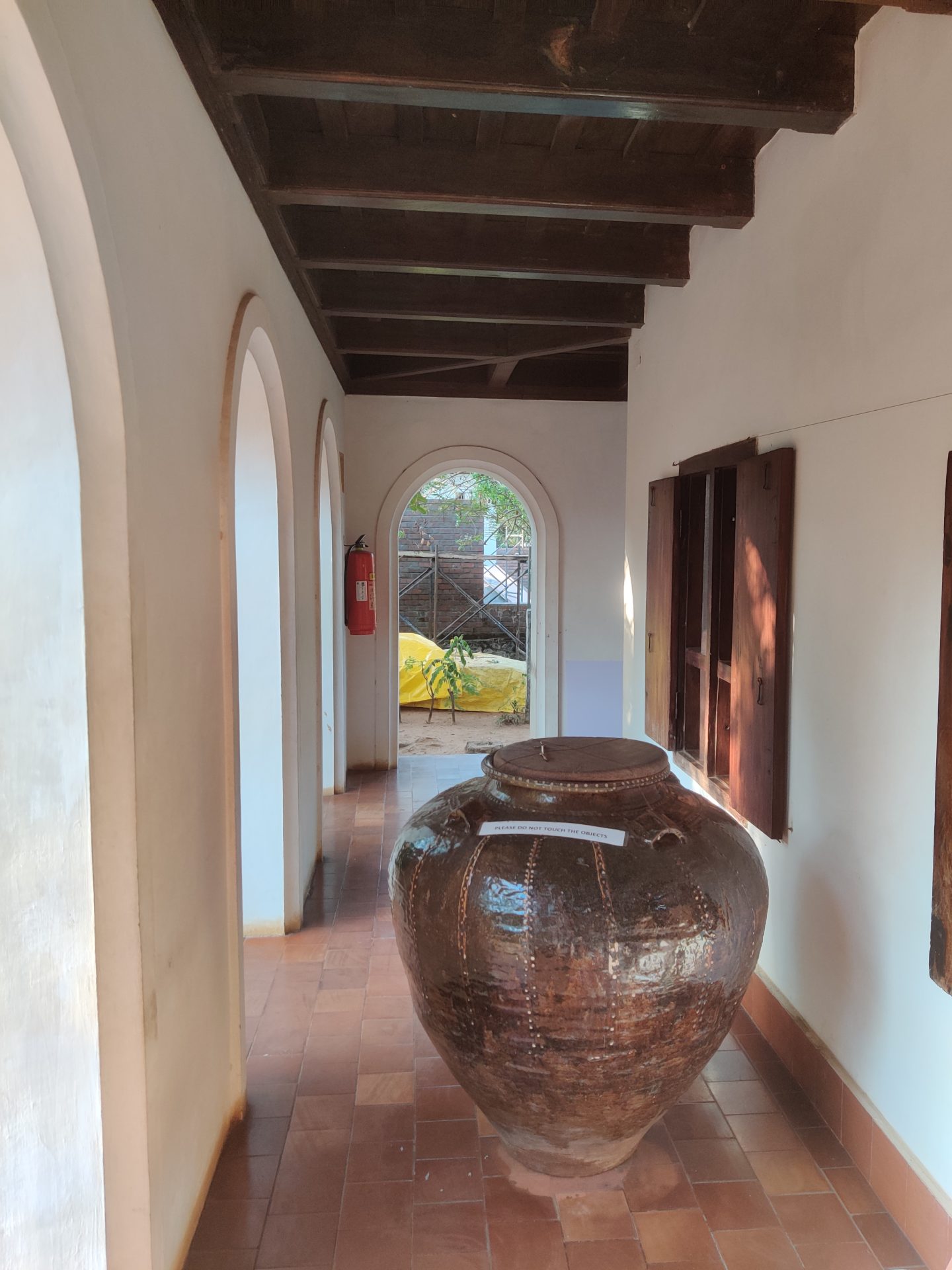
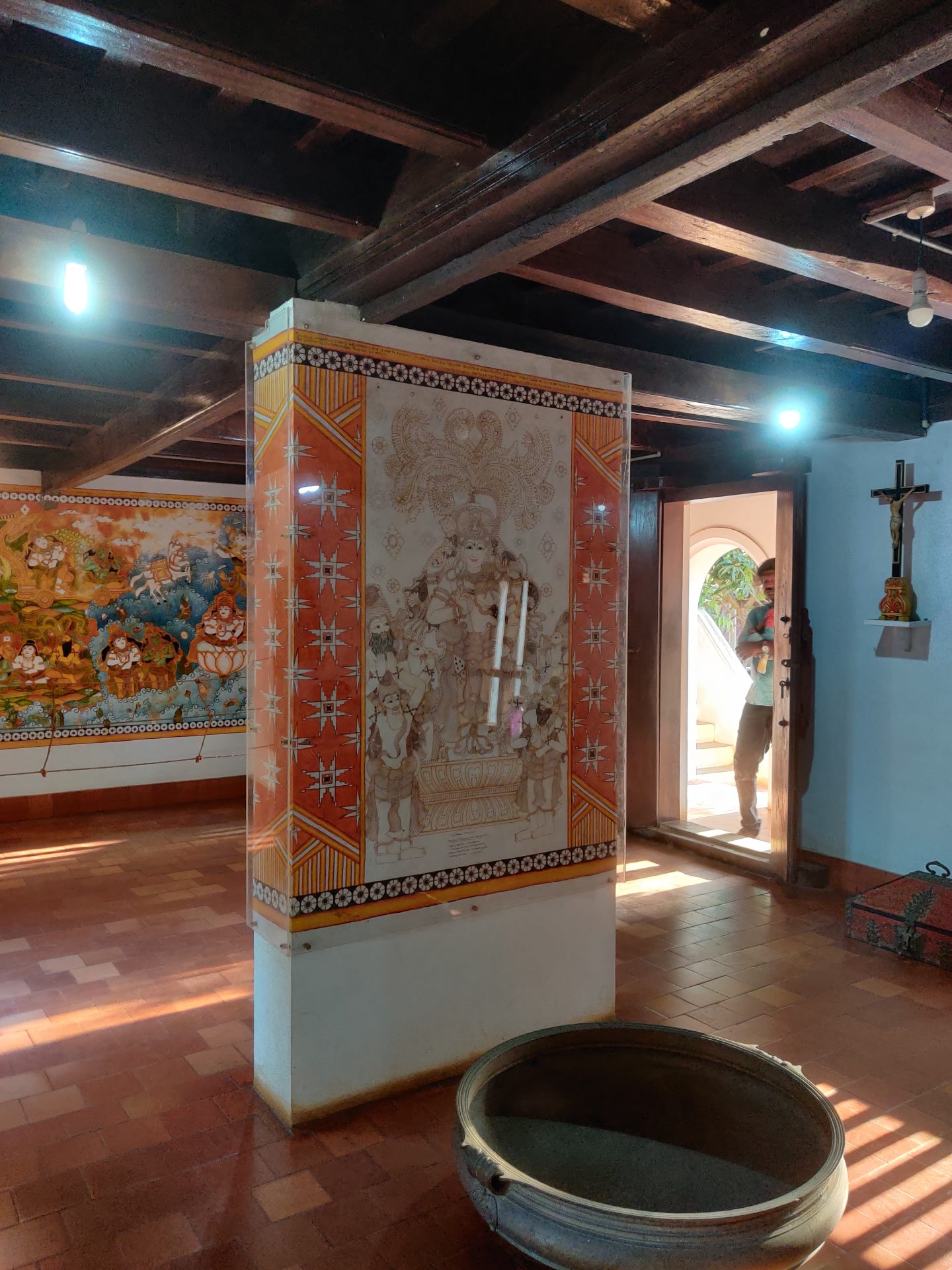
Dakshin Chitra

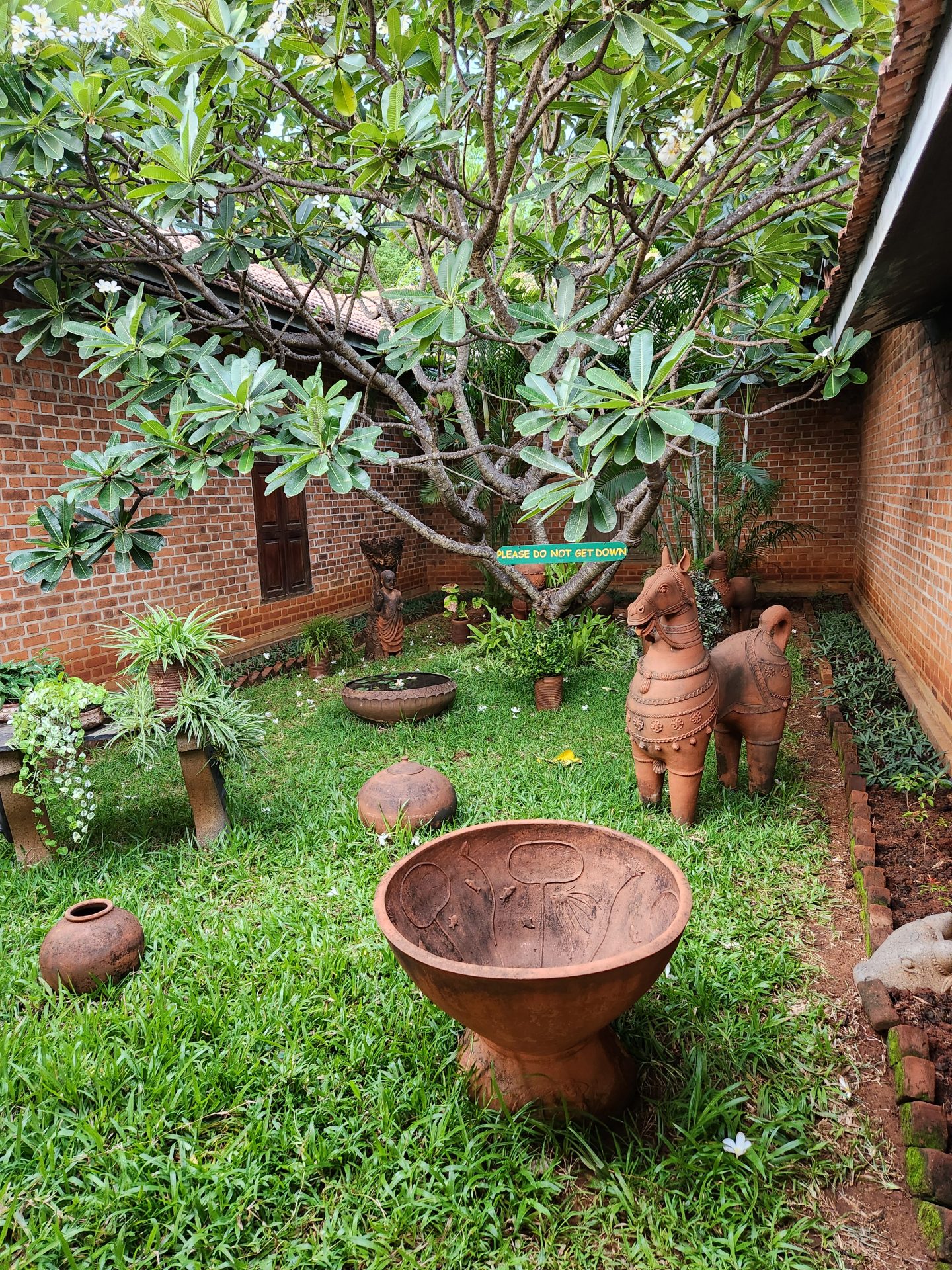
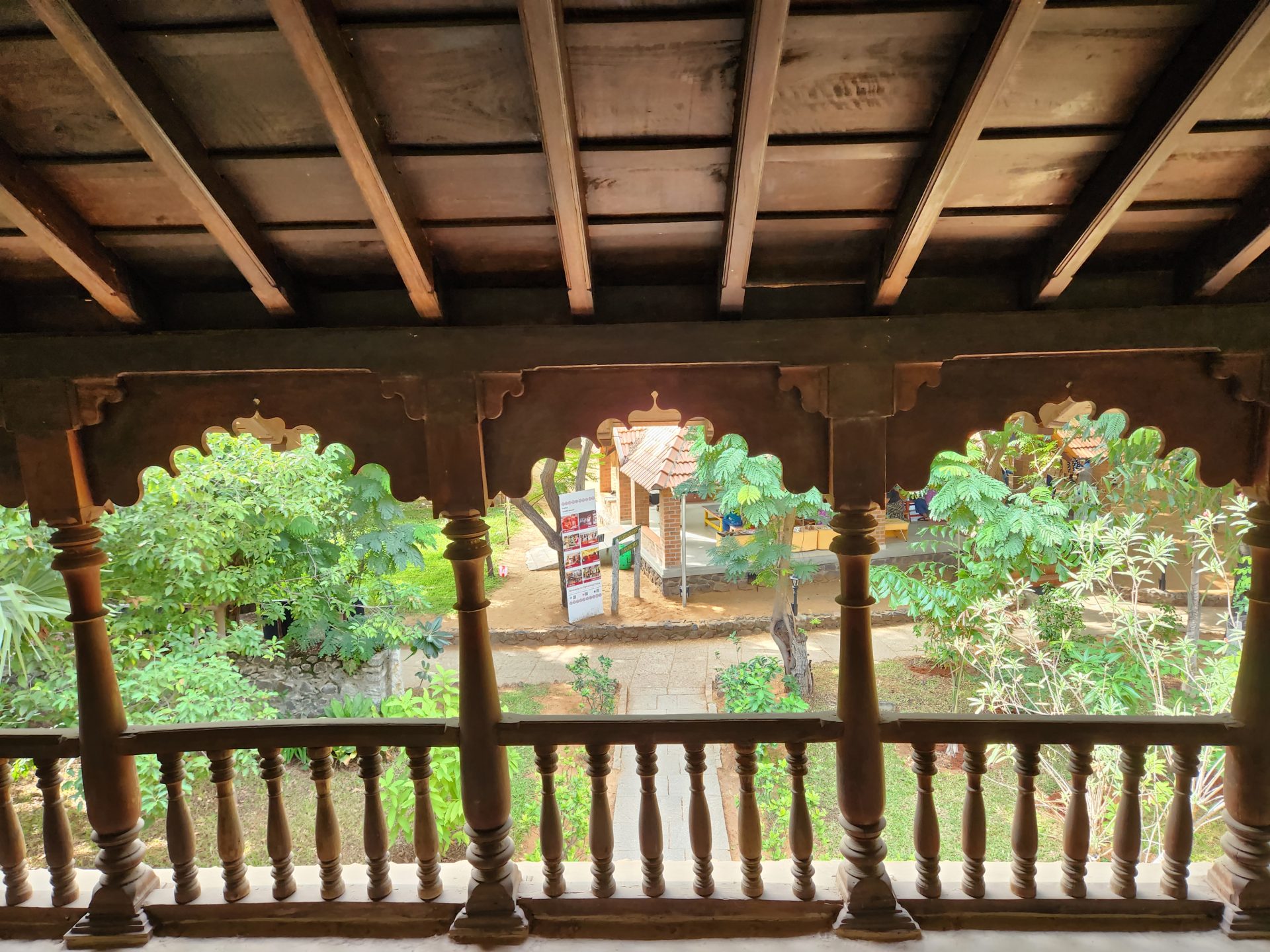
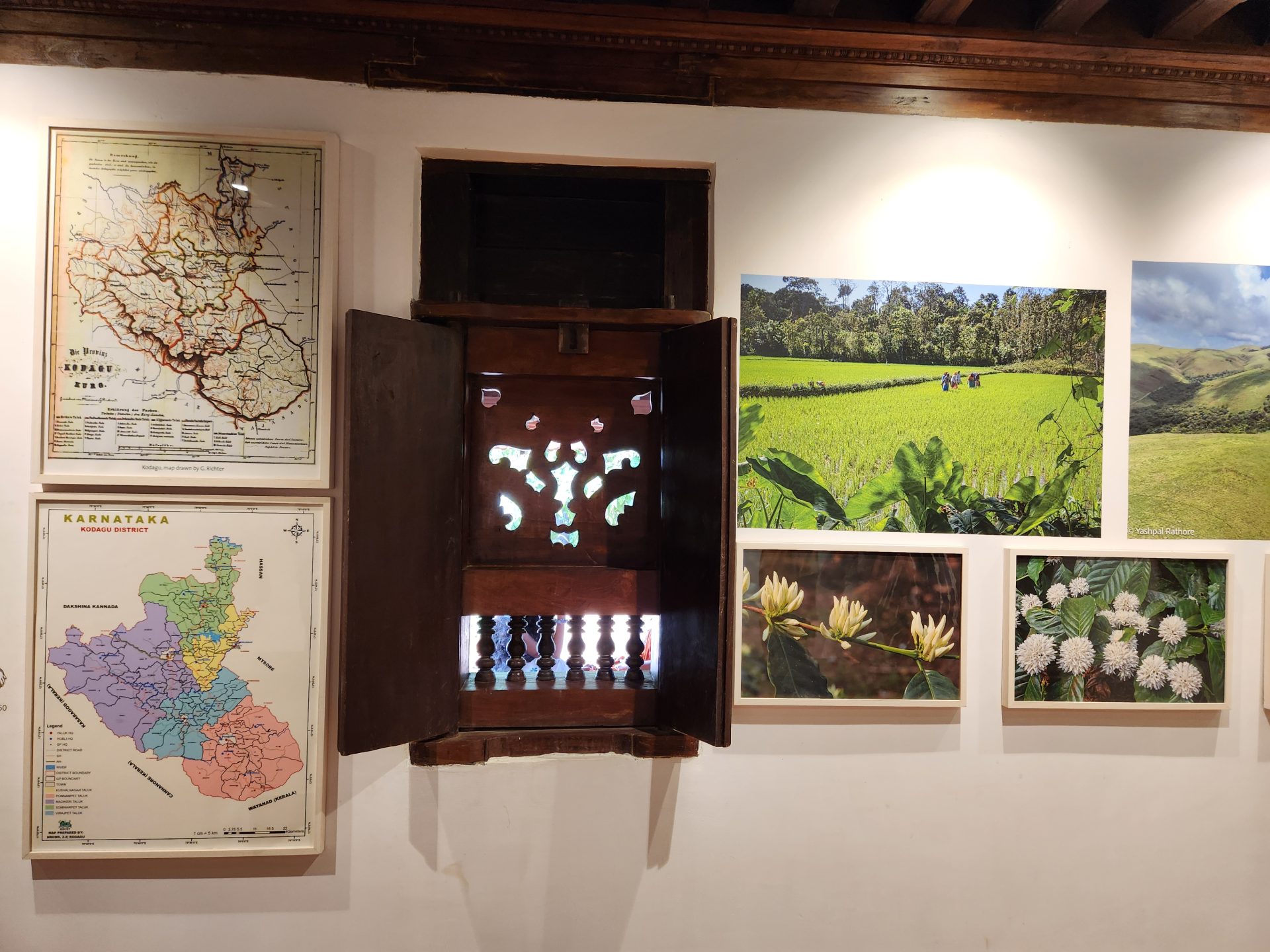
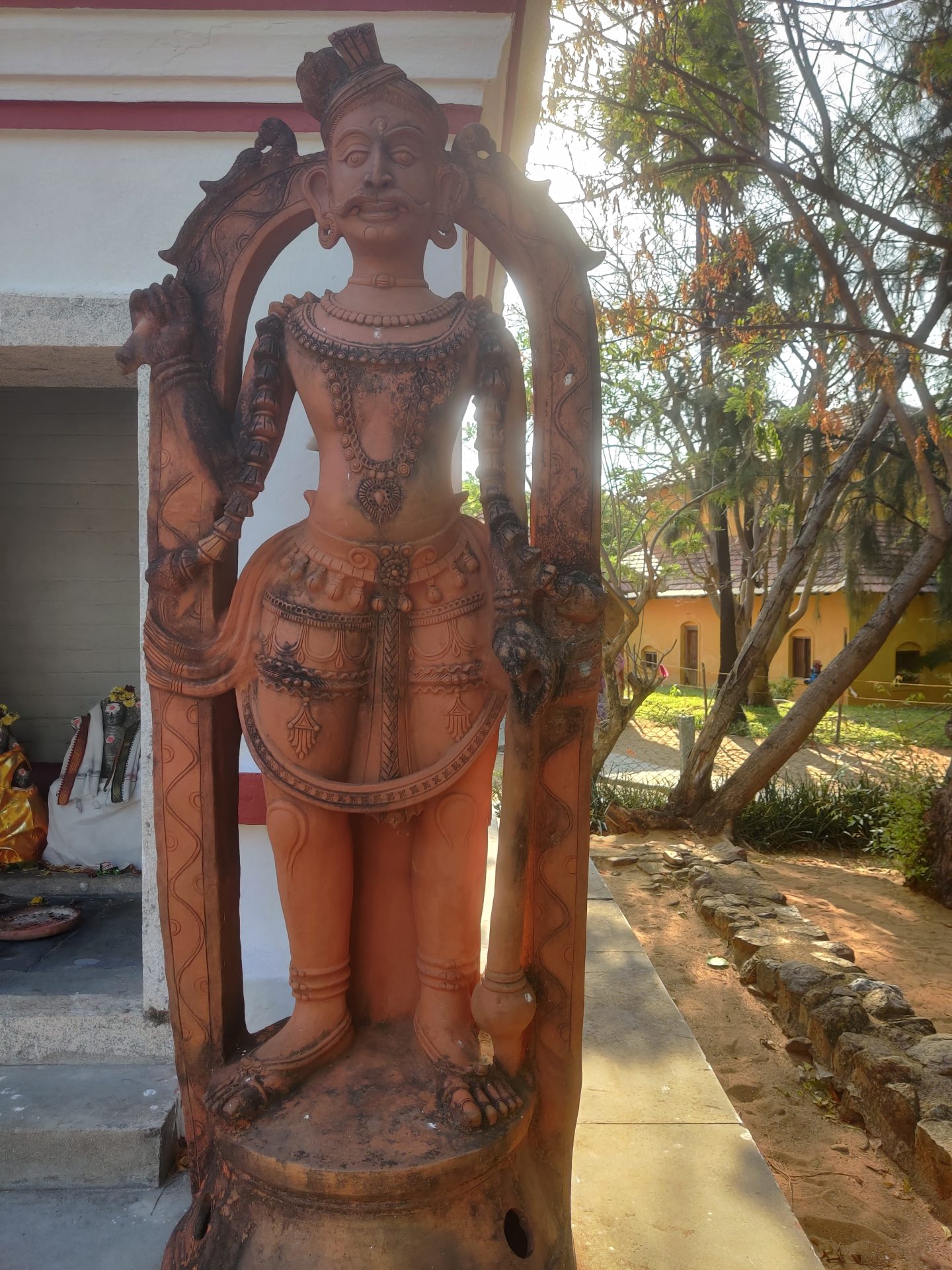
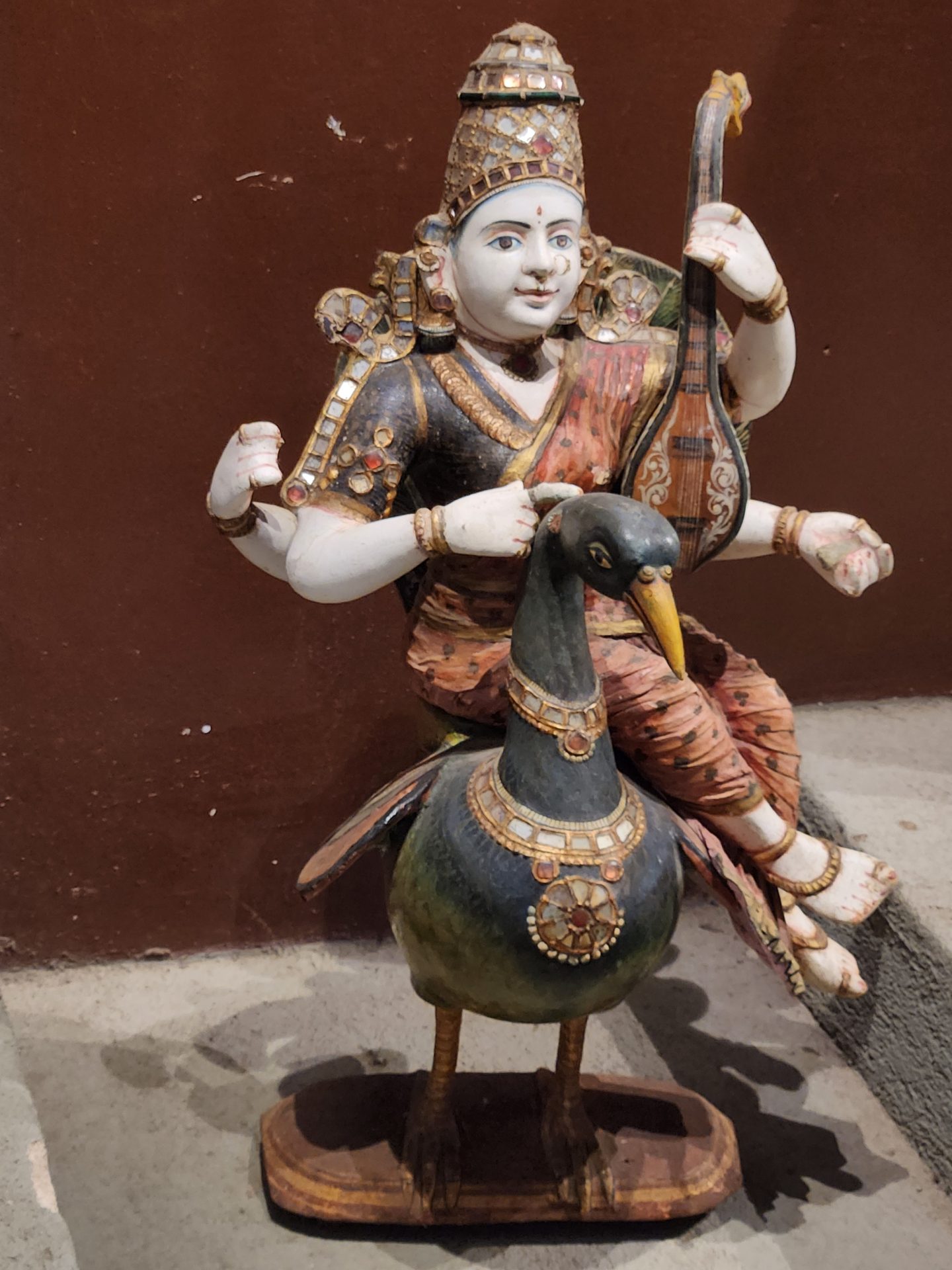
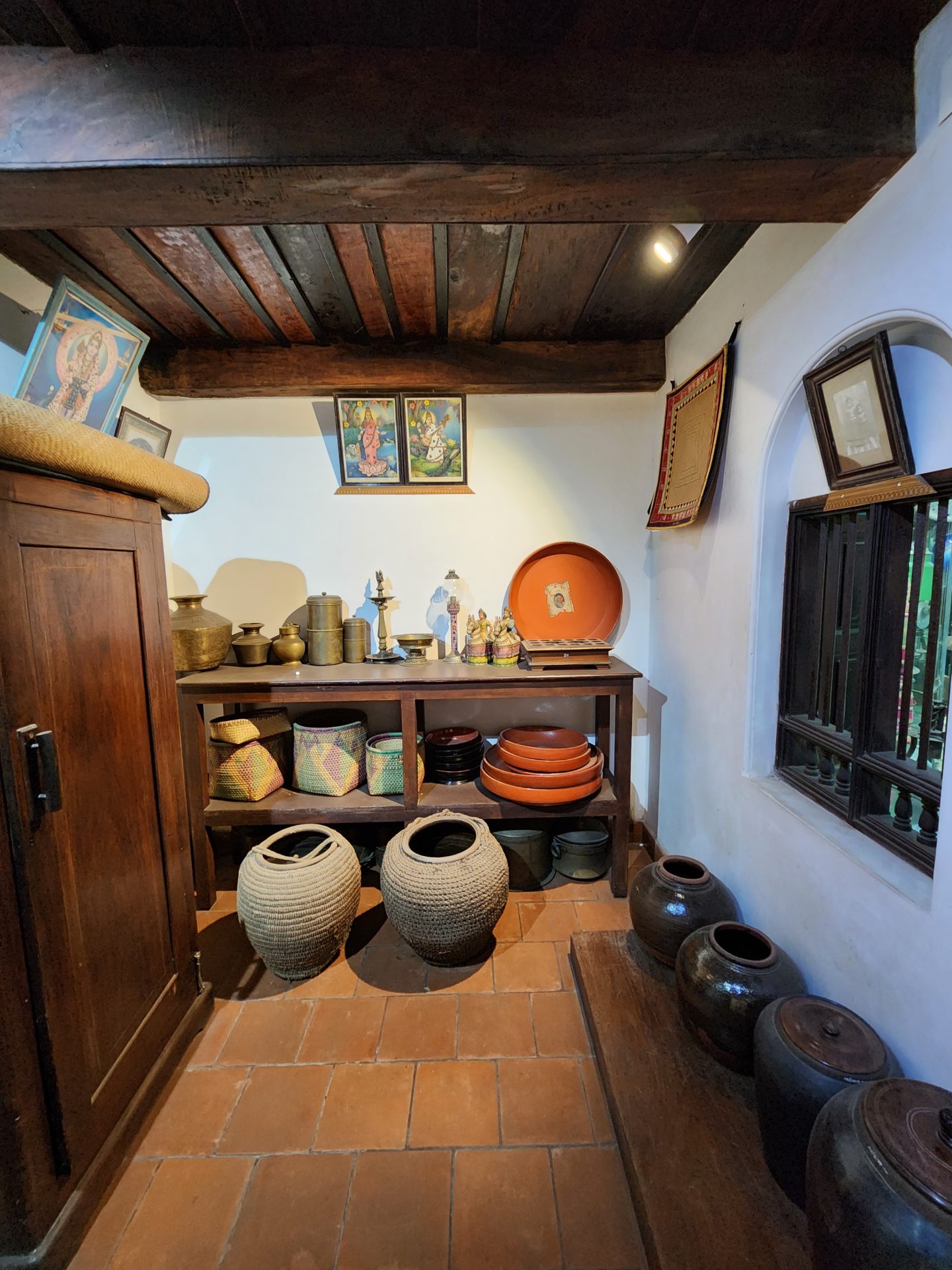
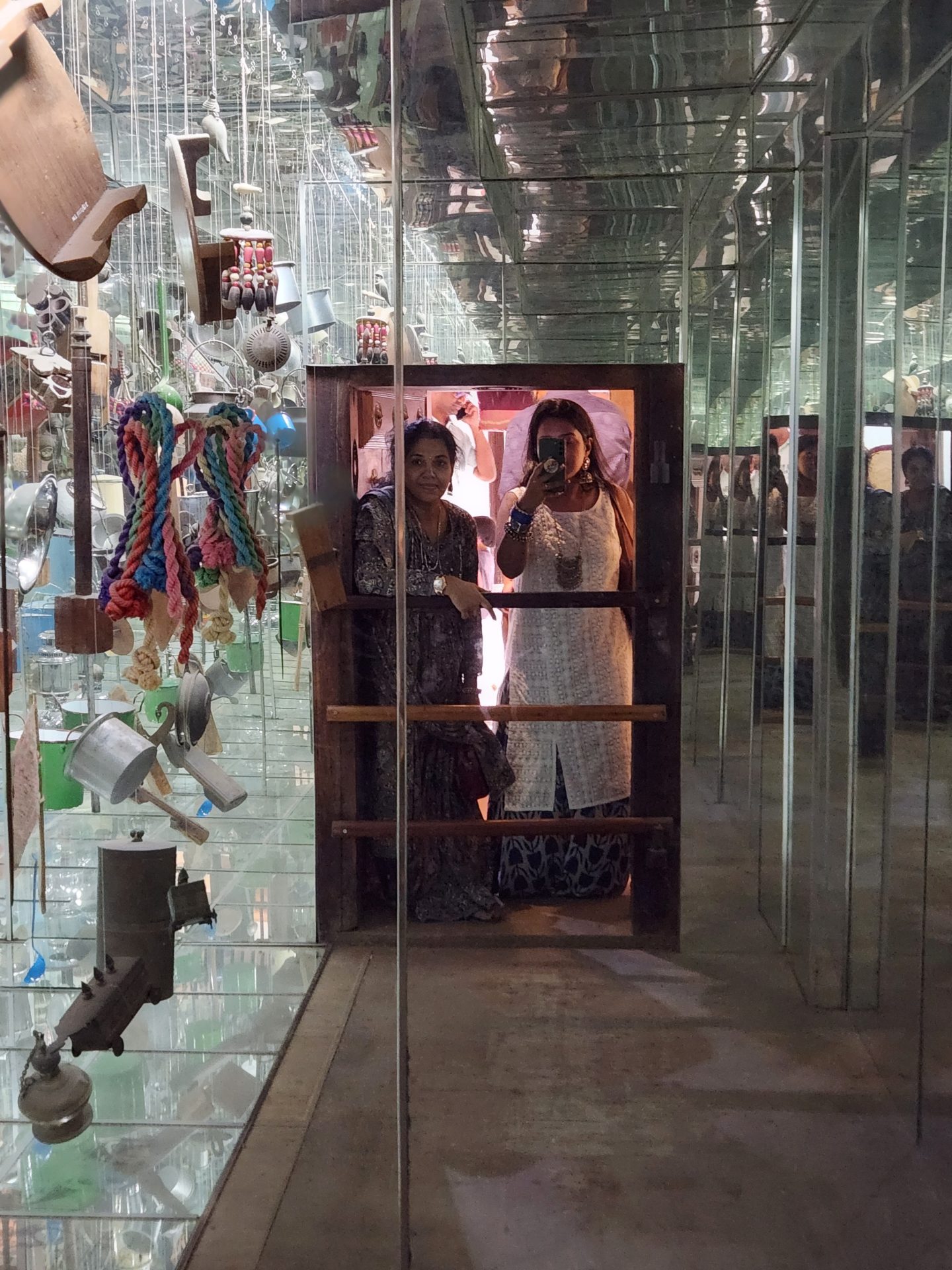
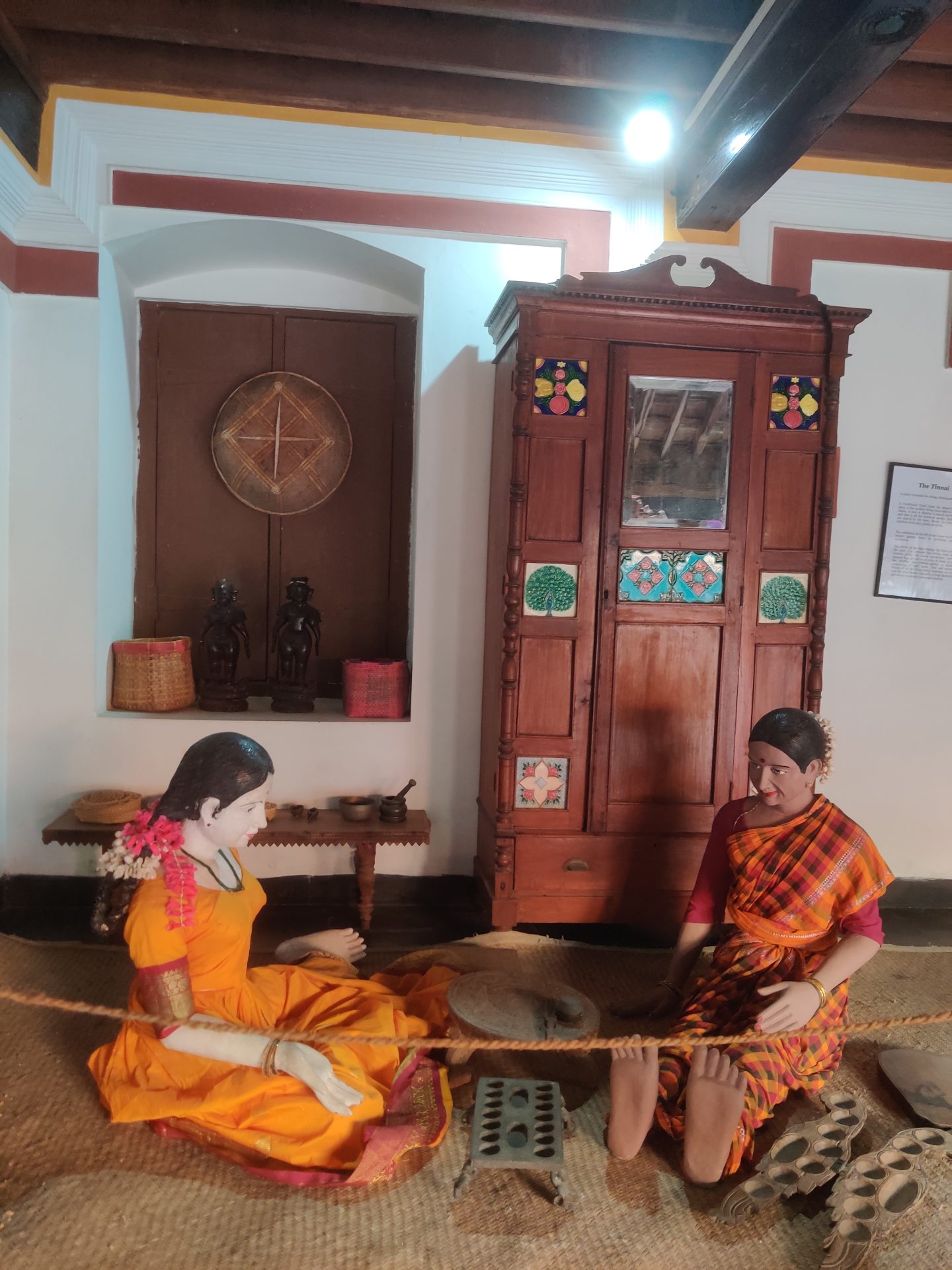
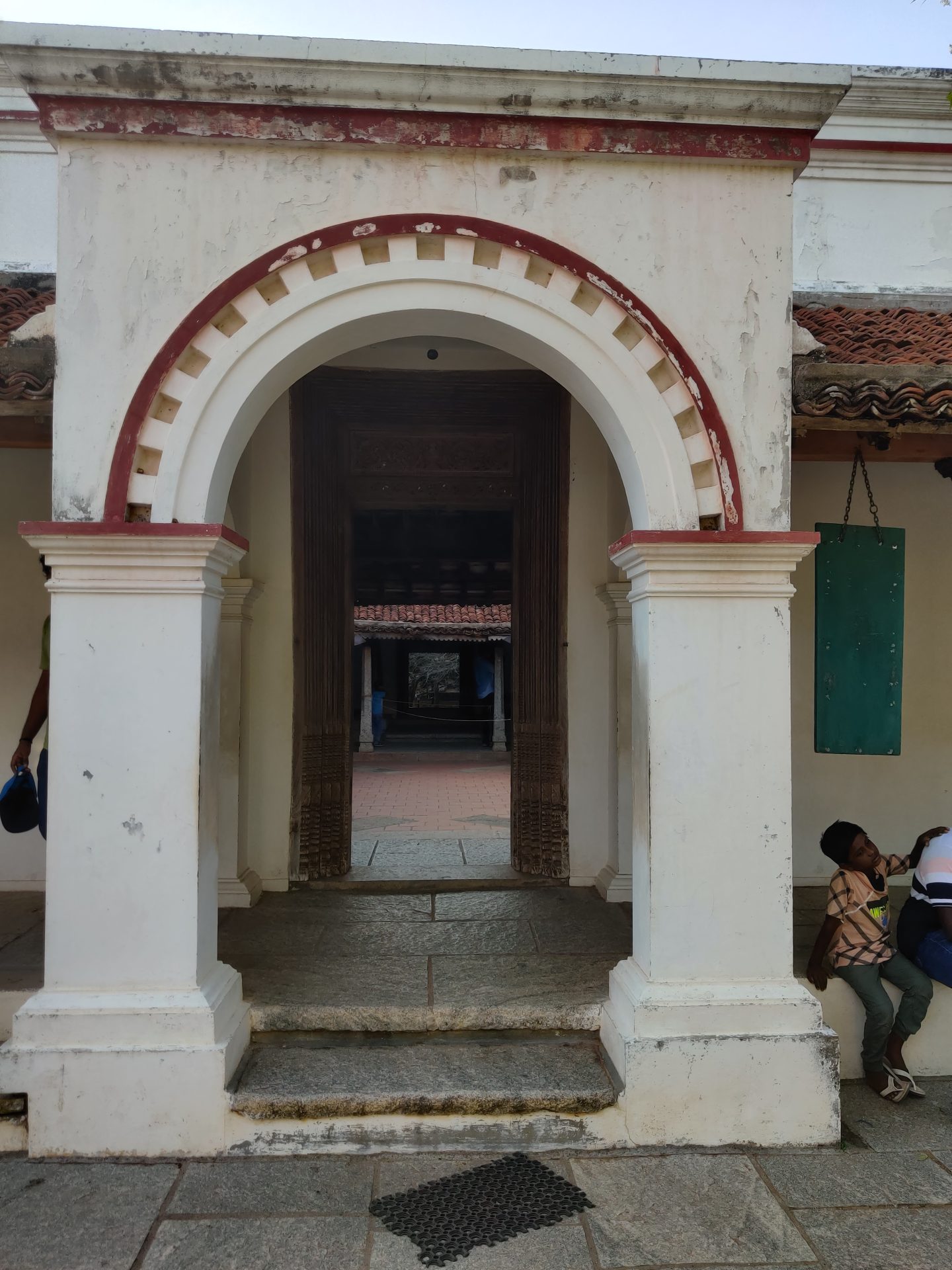
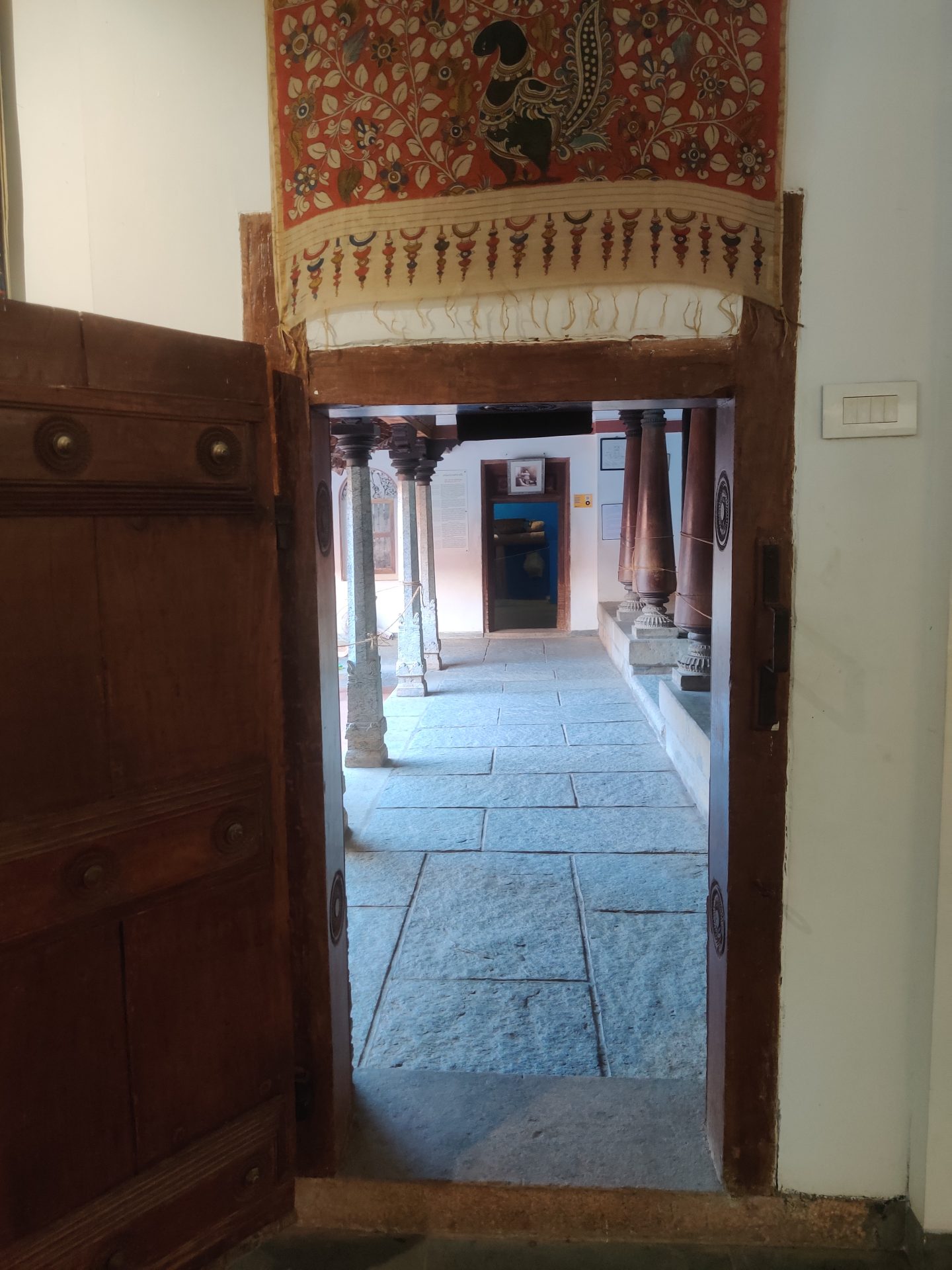
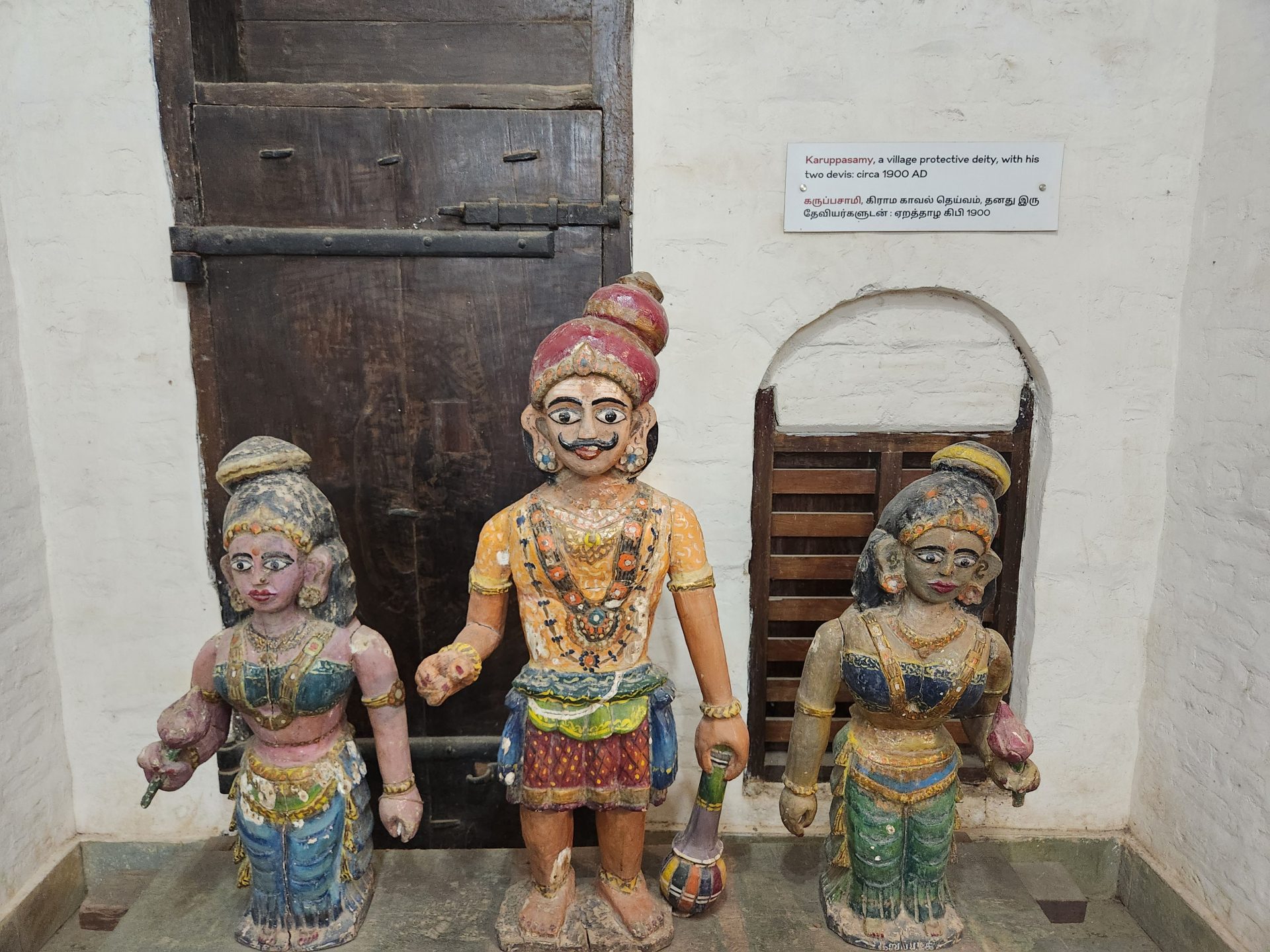
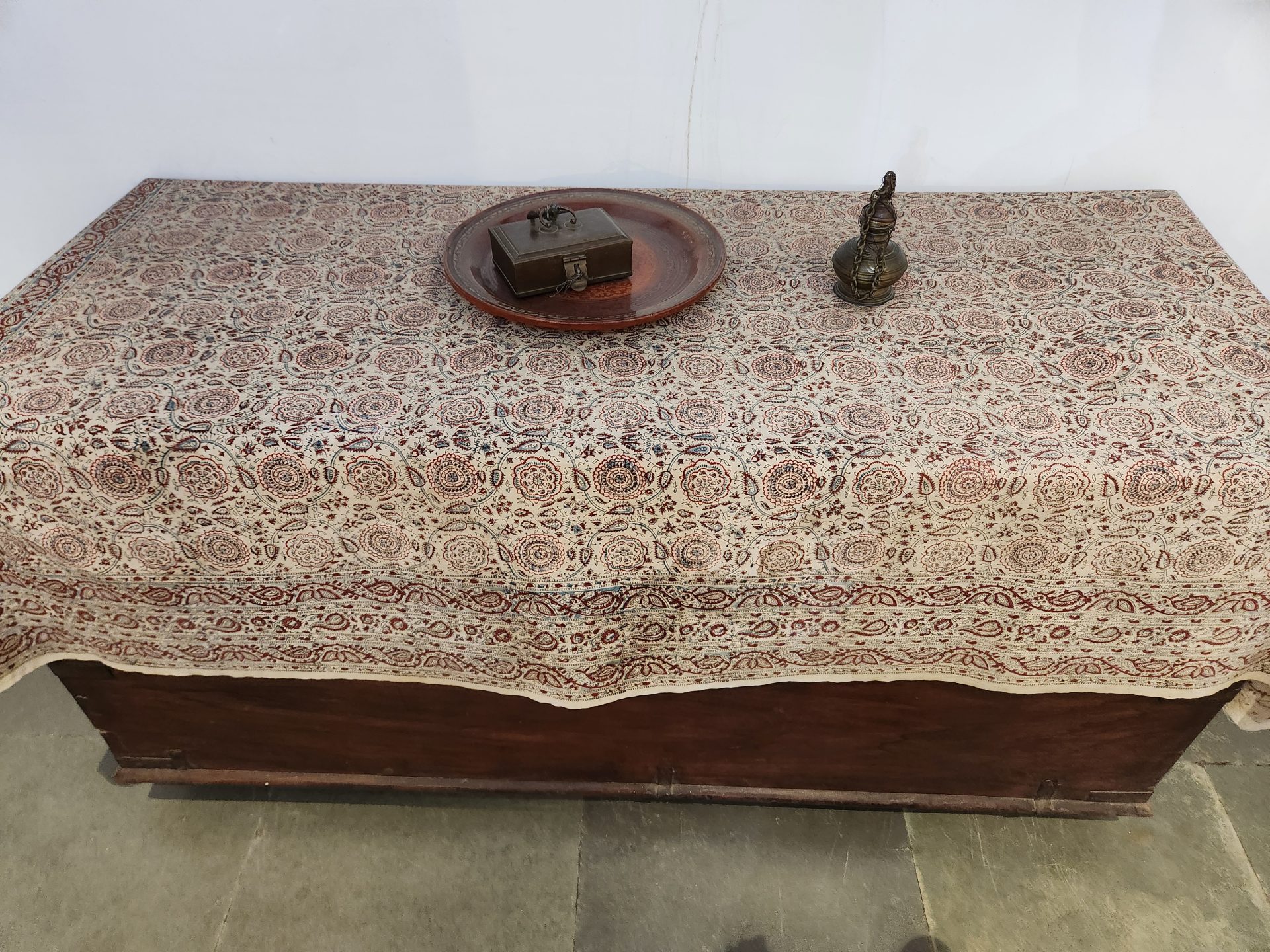
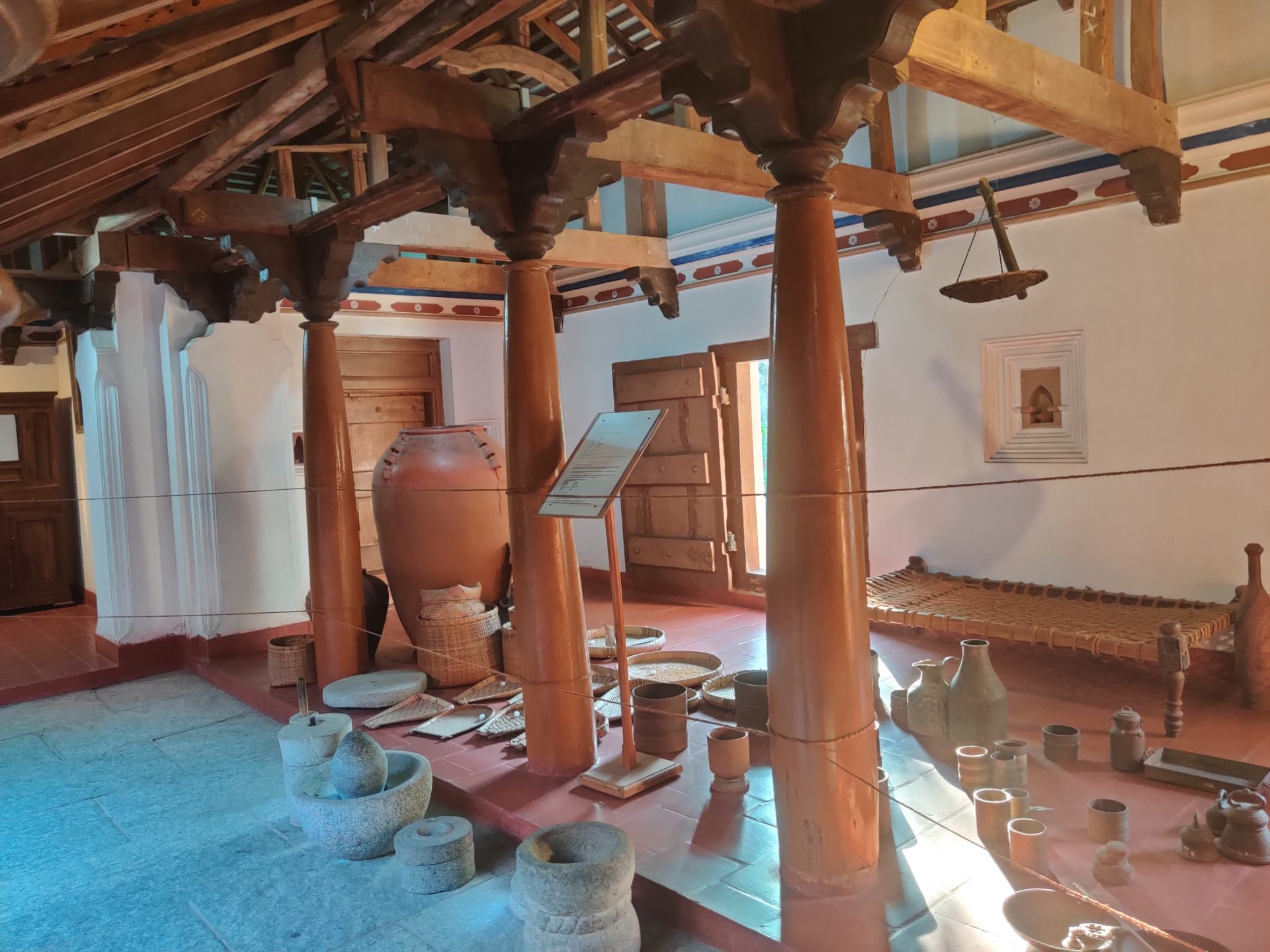
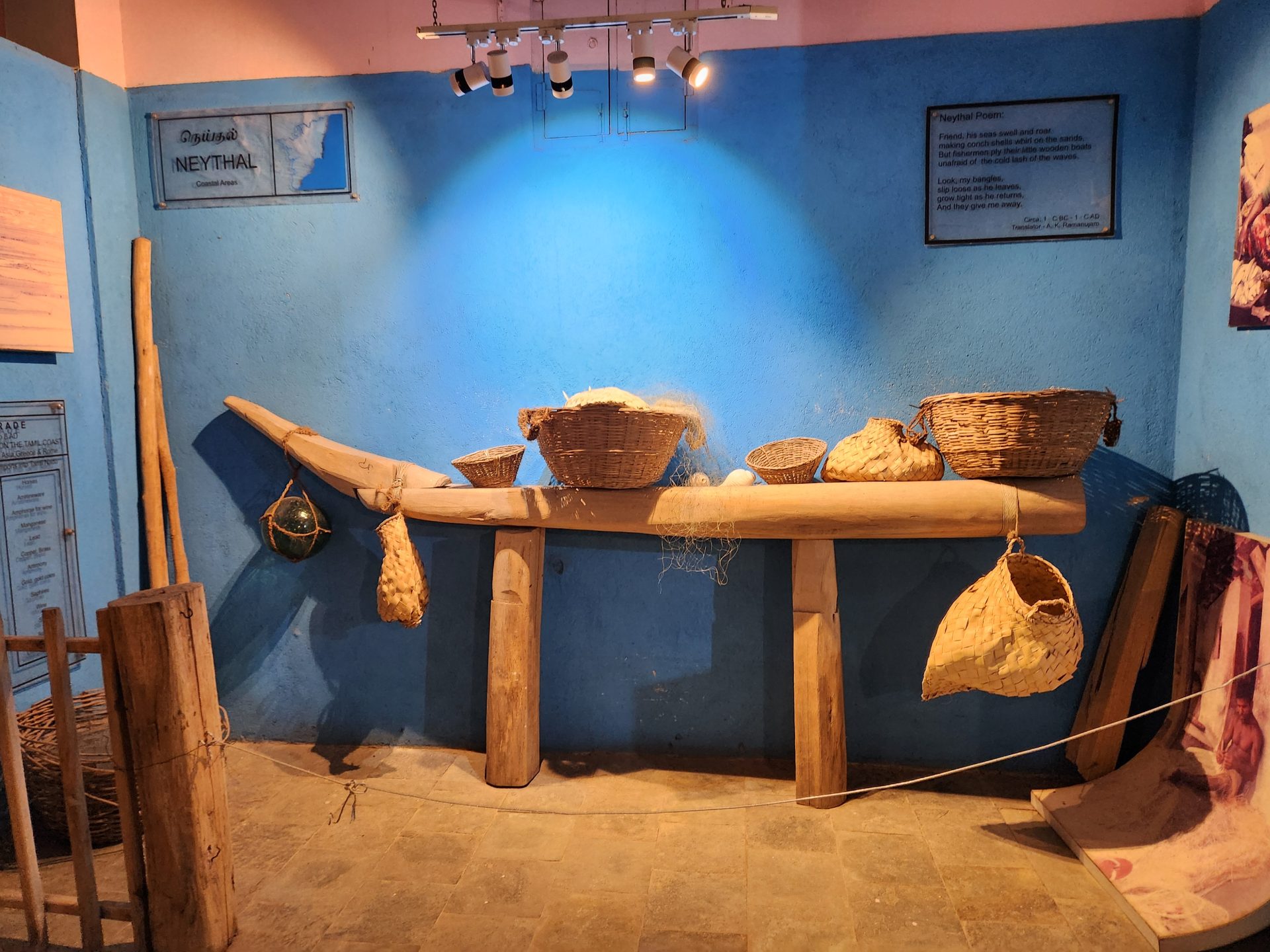
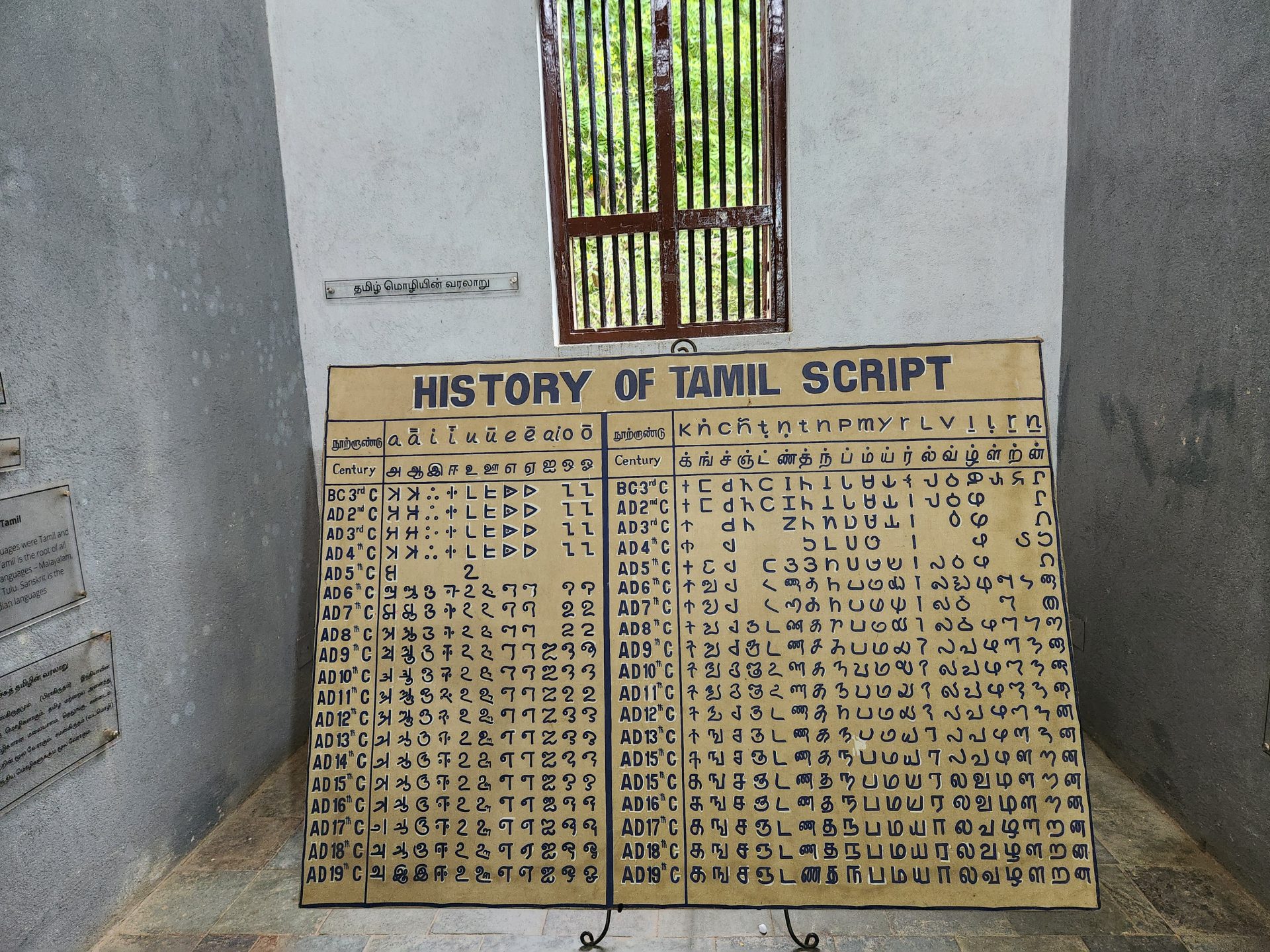
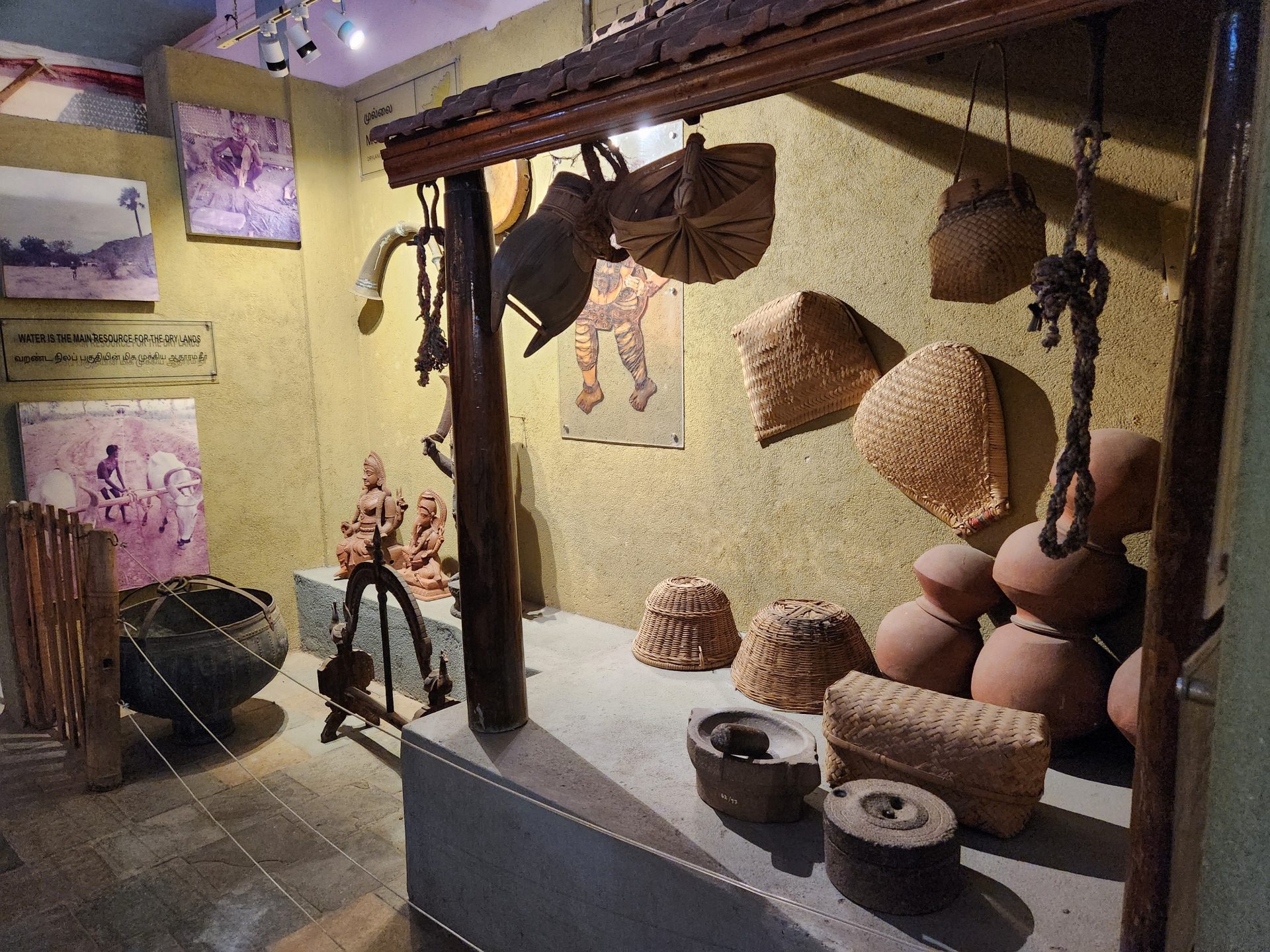
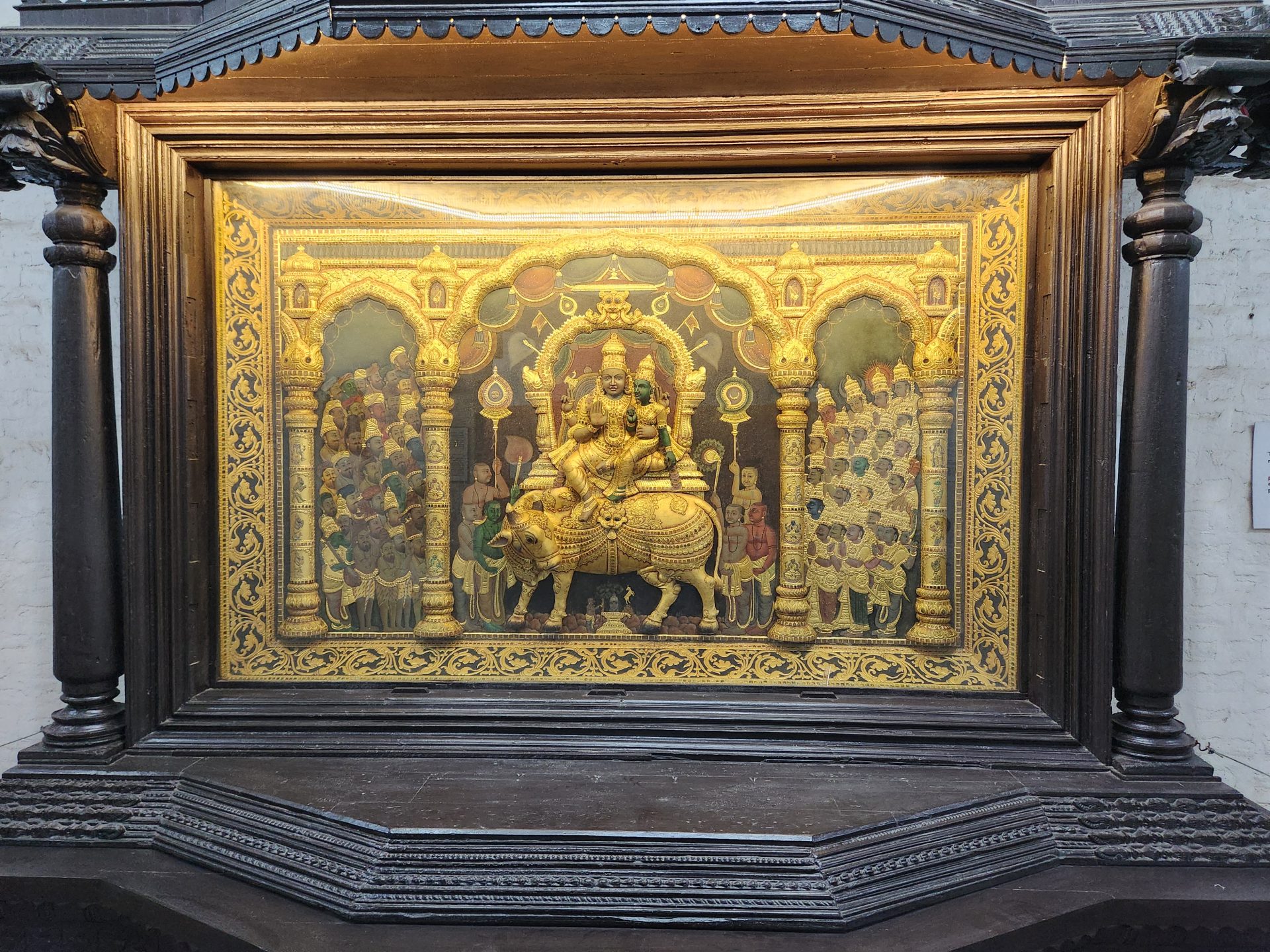
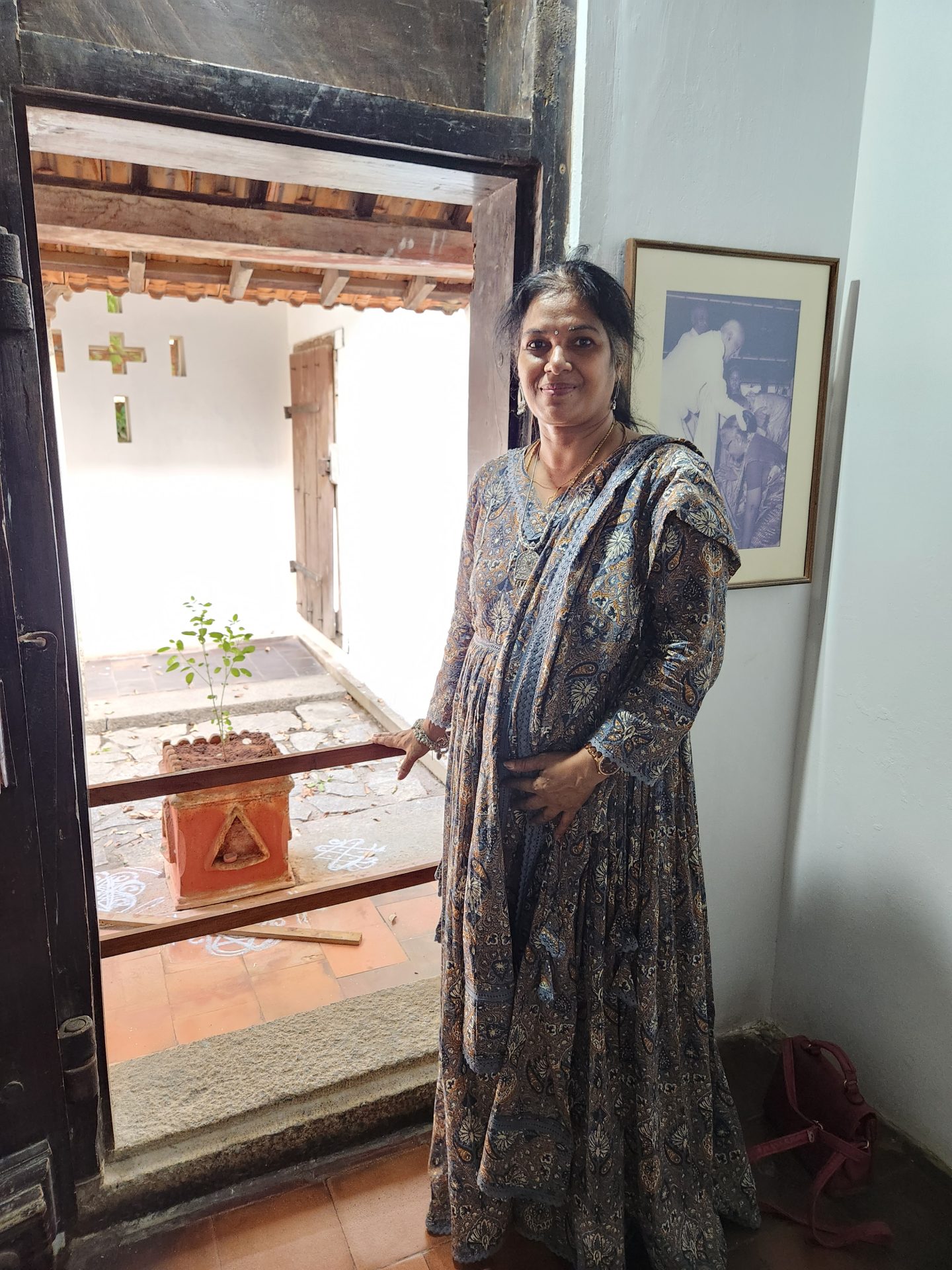
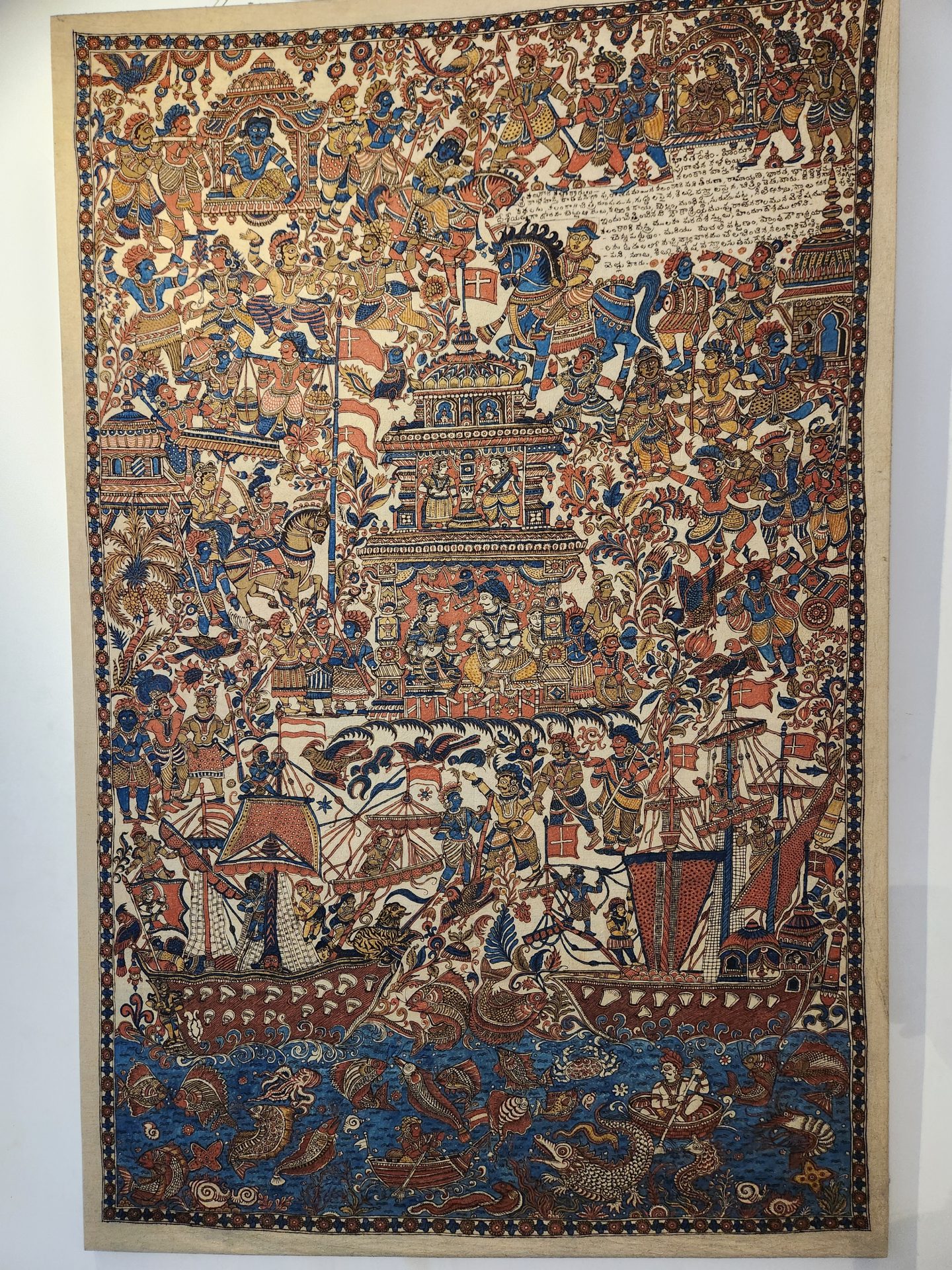
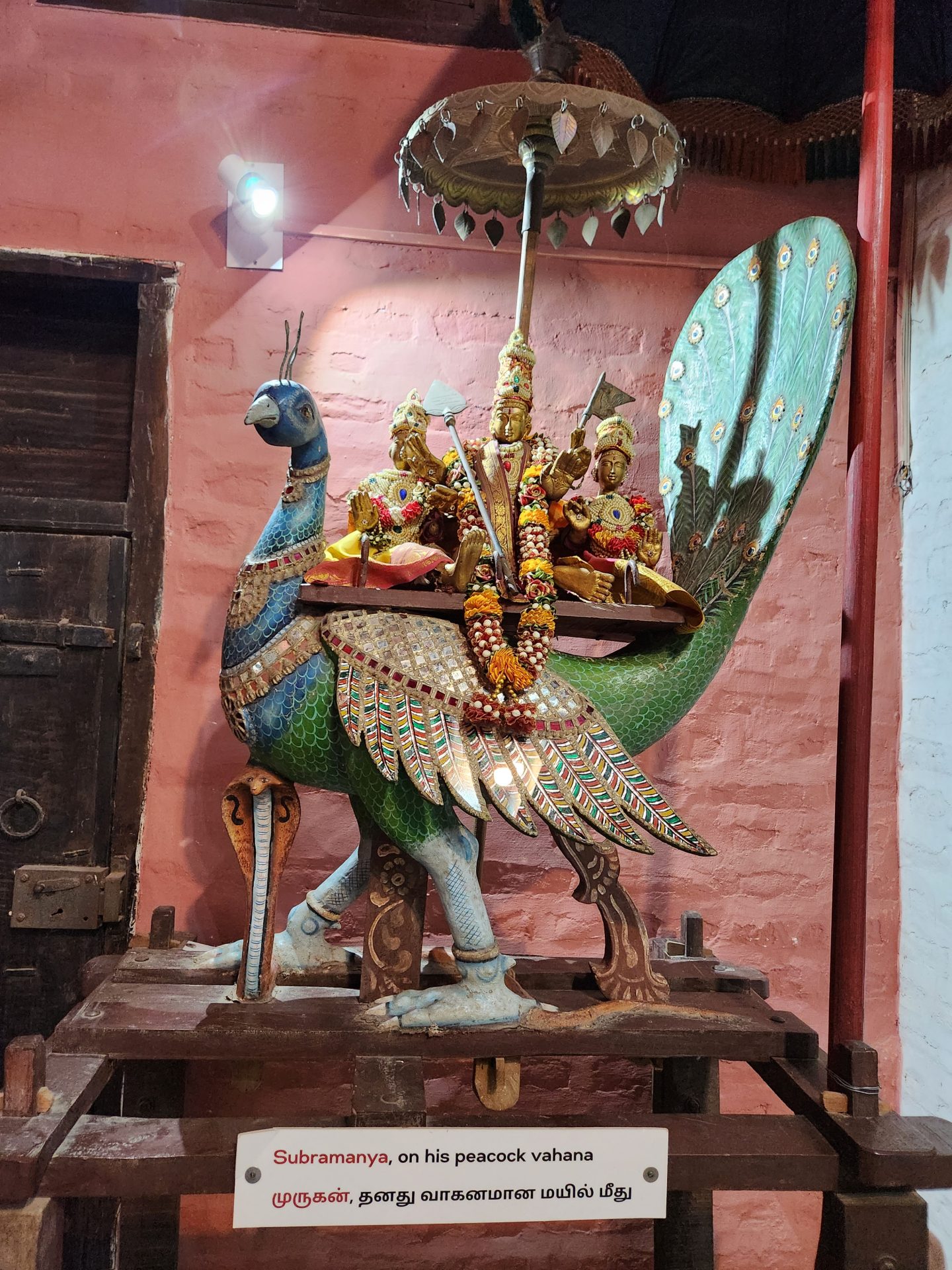
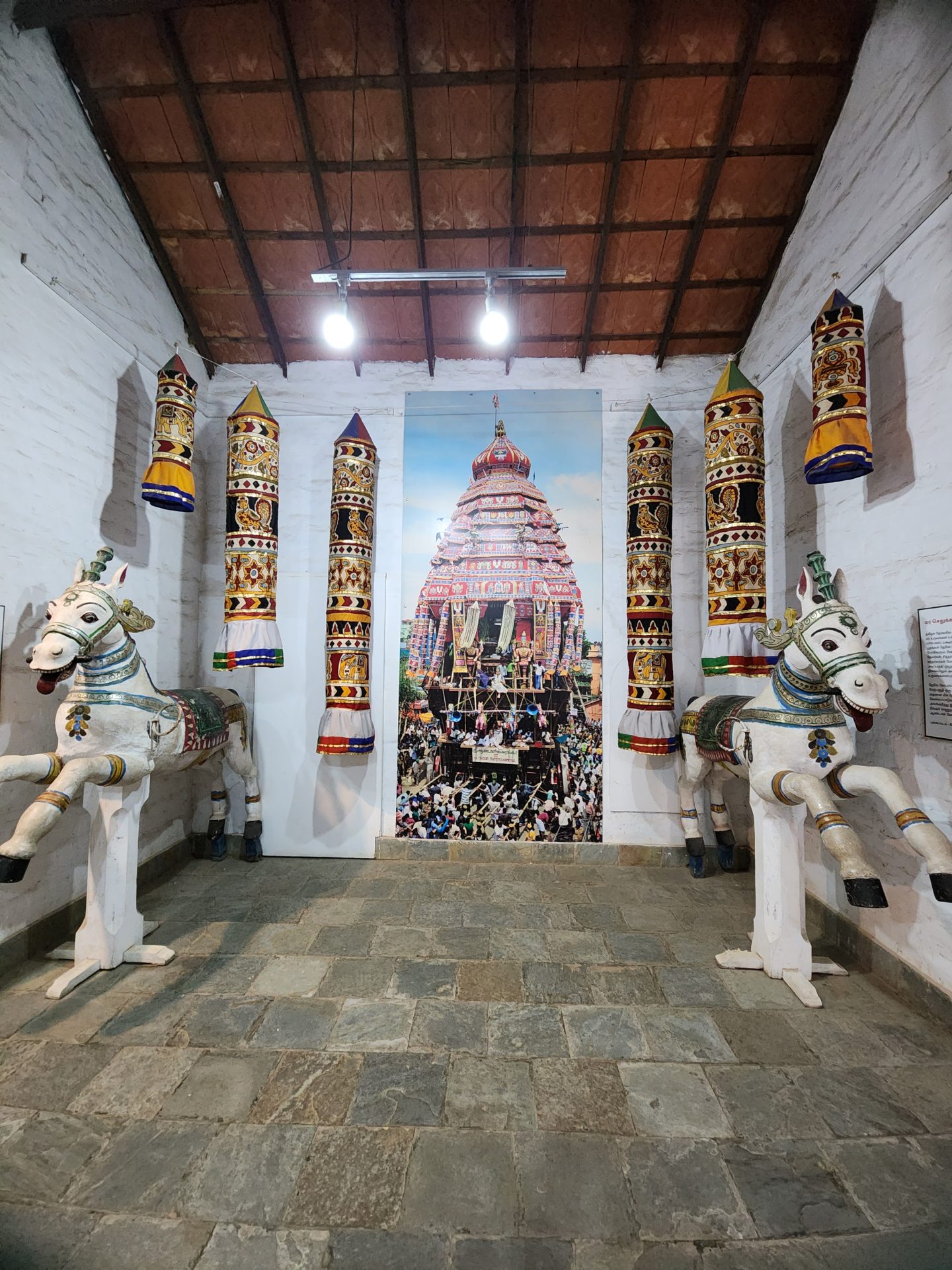
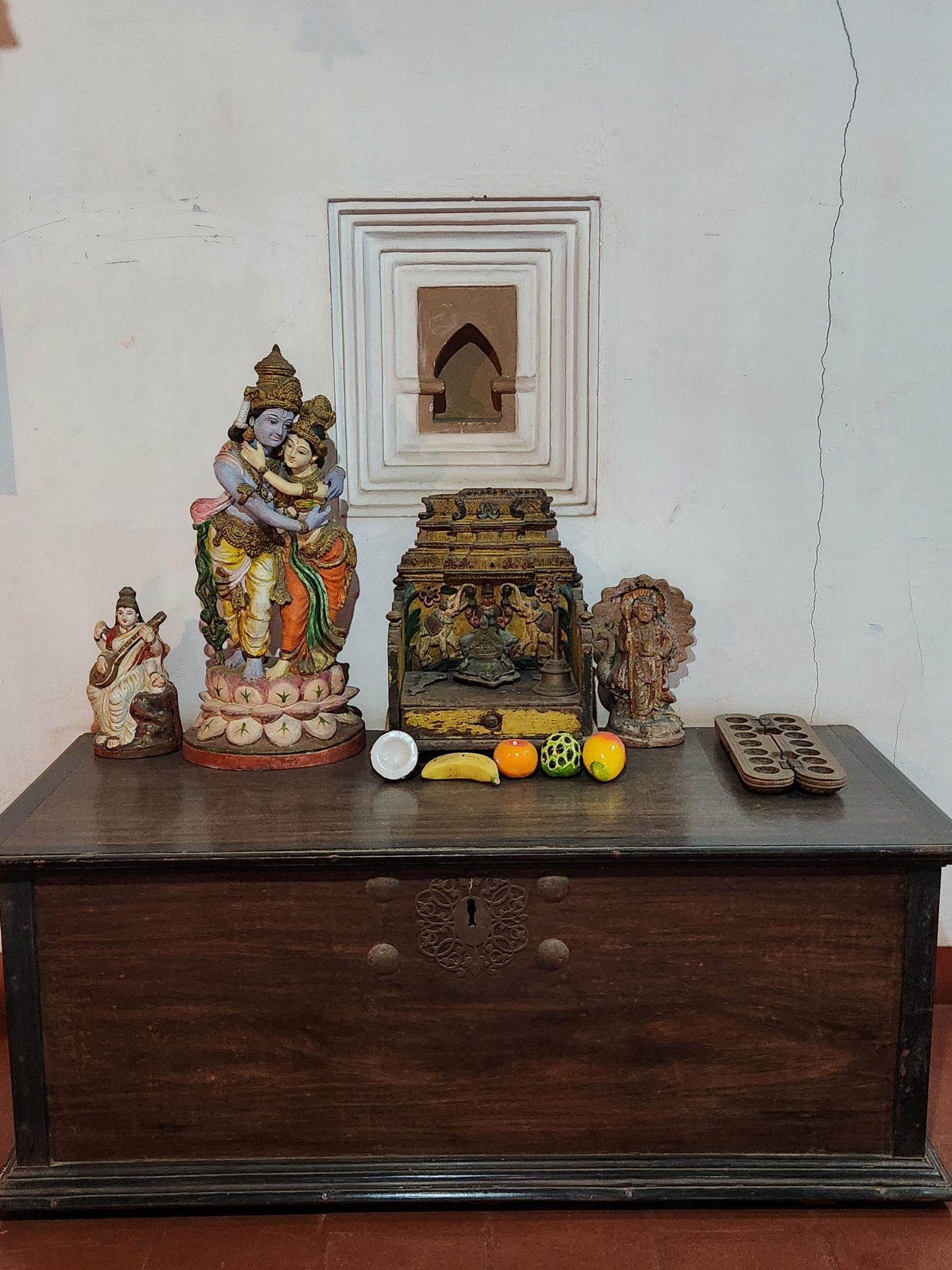
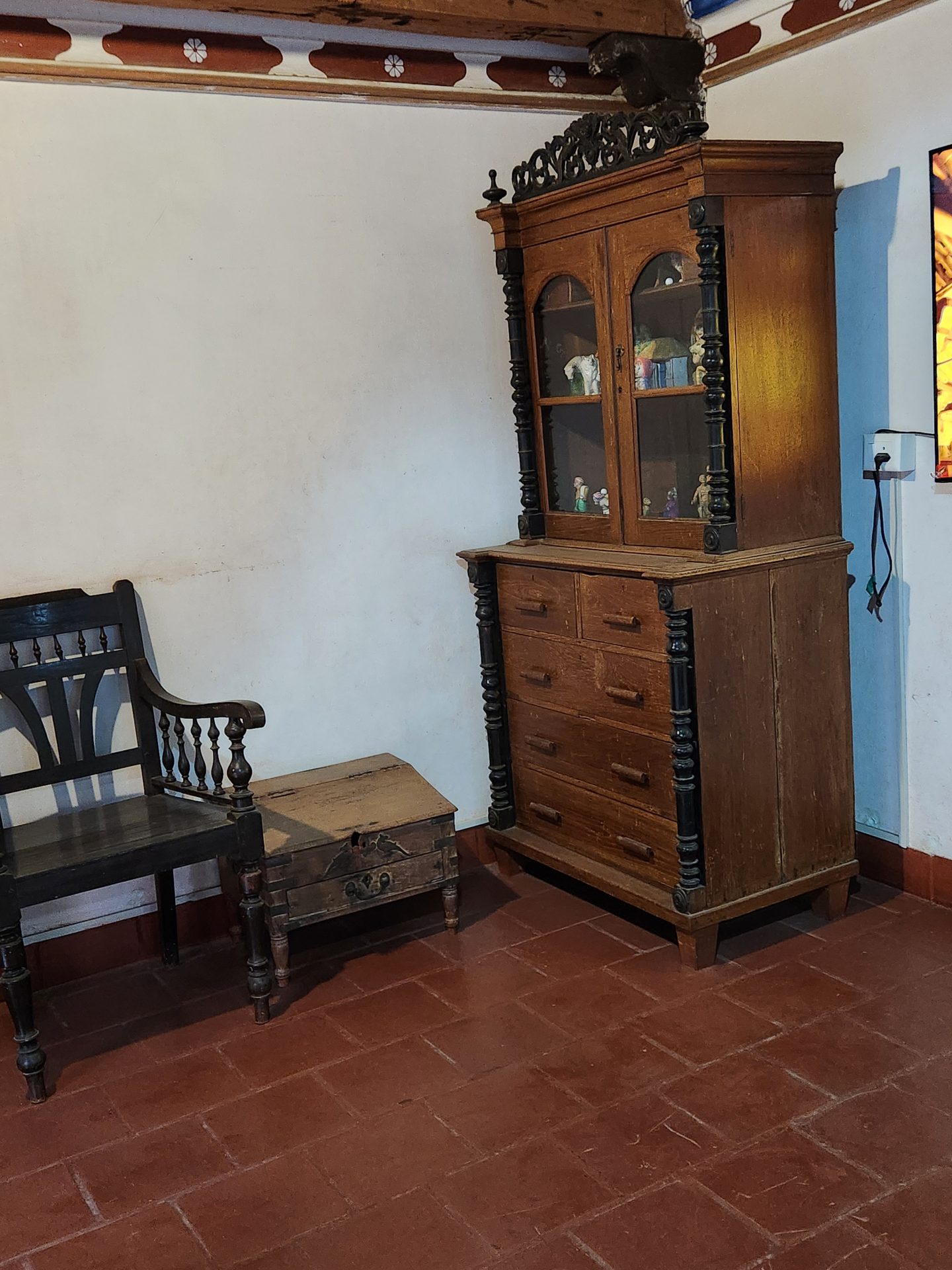
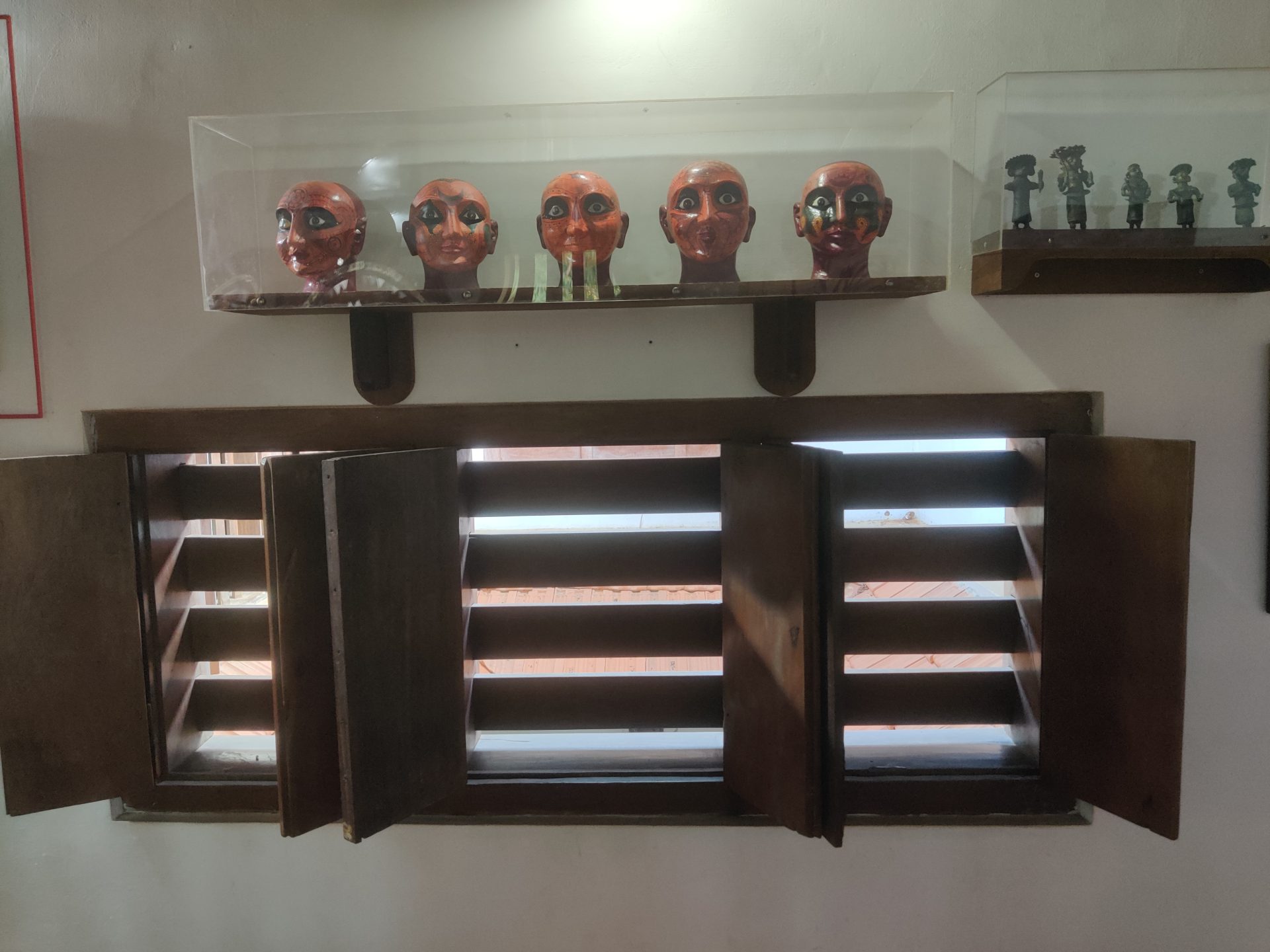
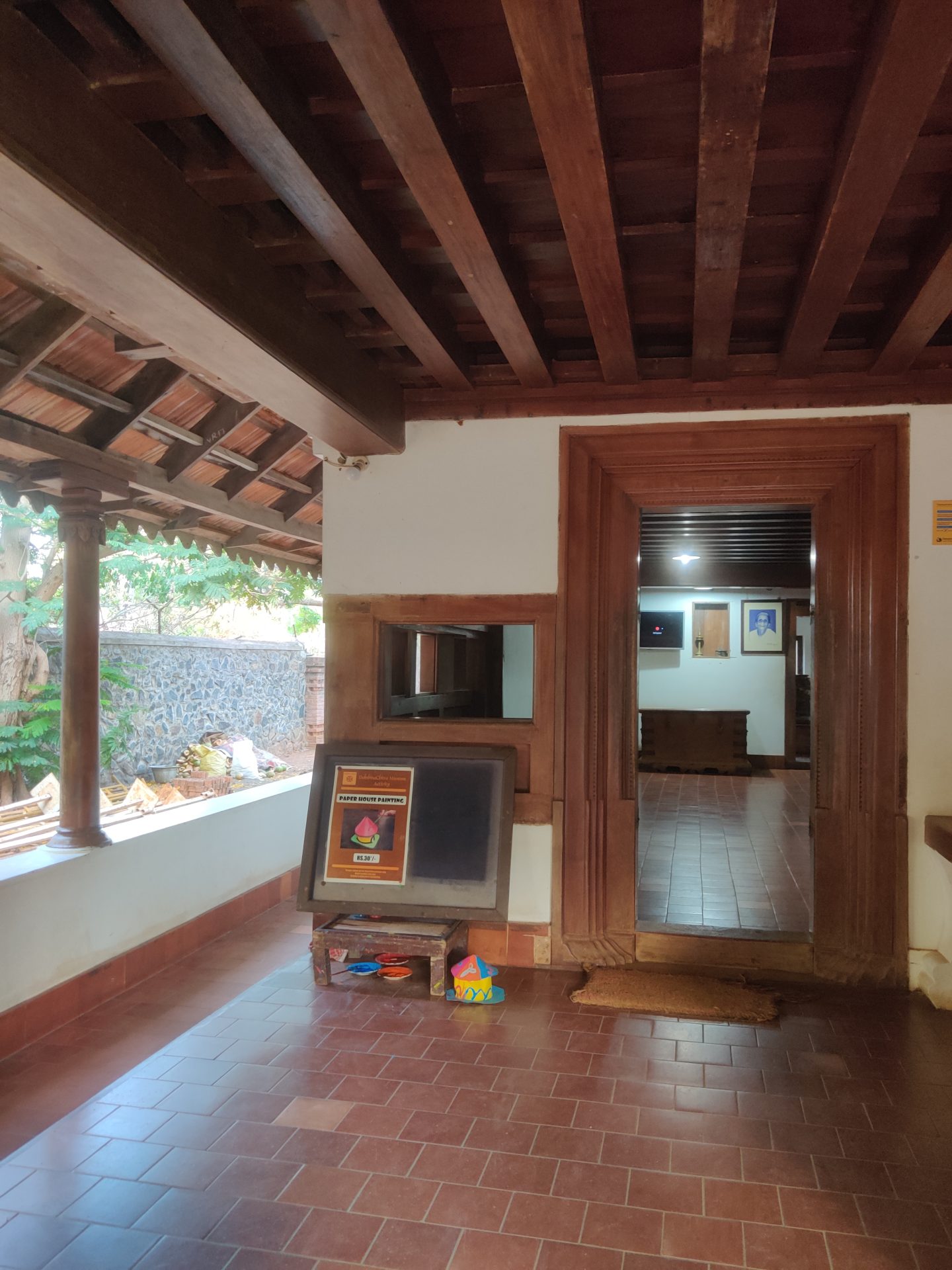
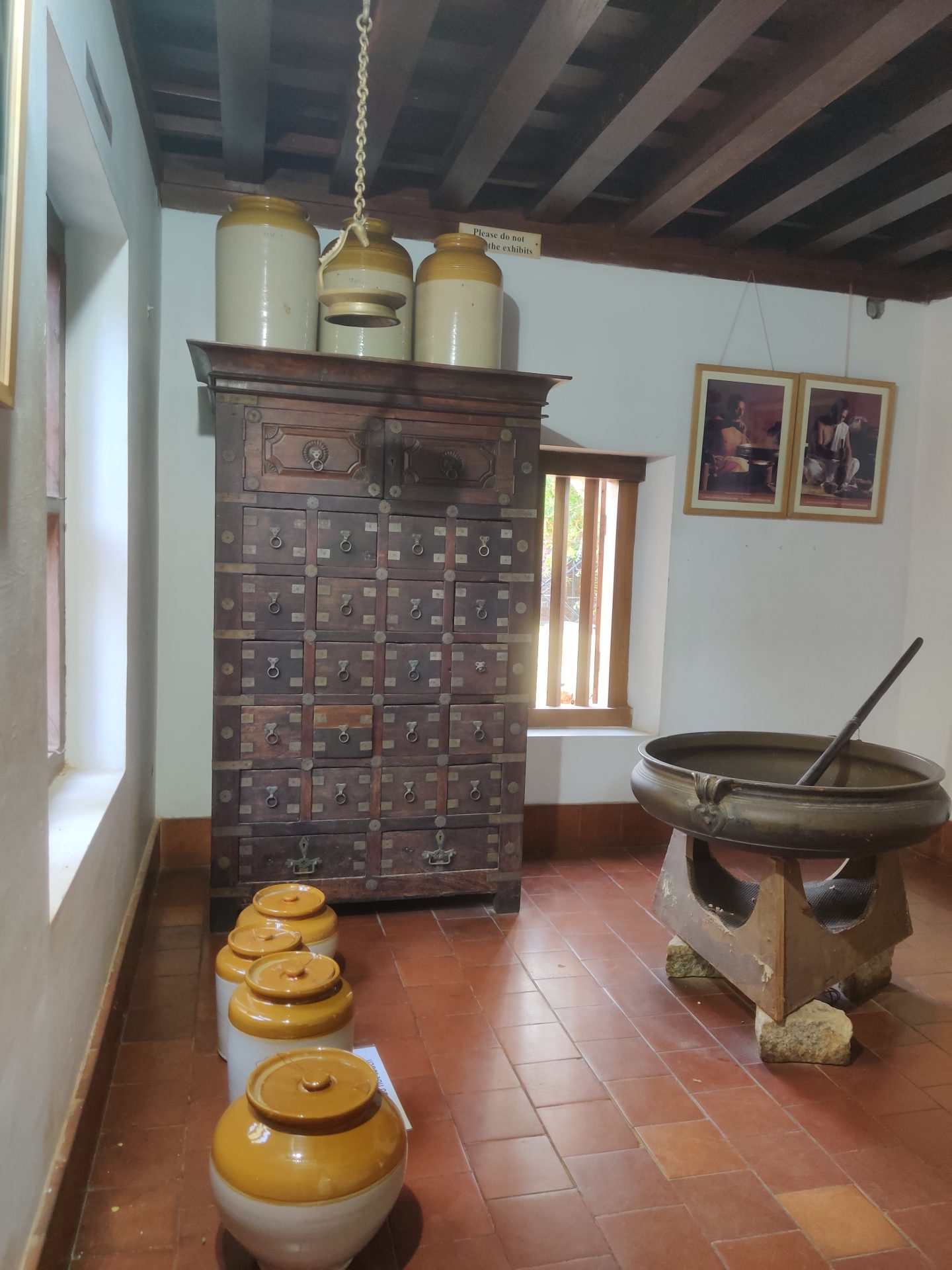
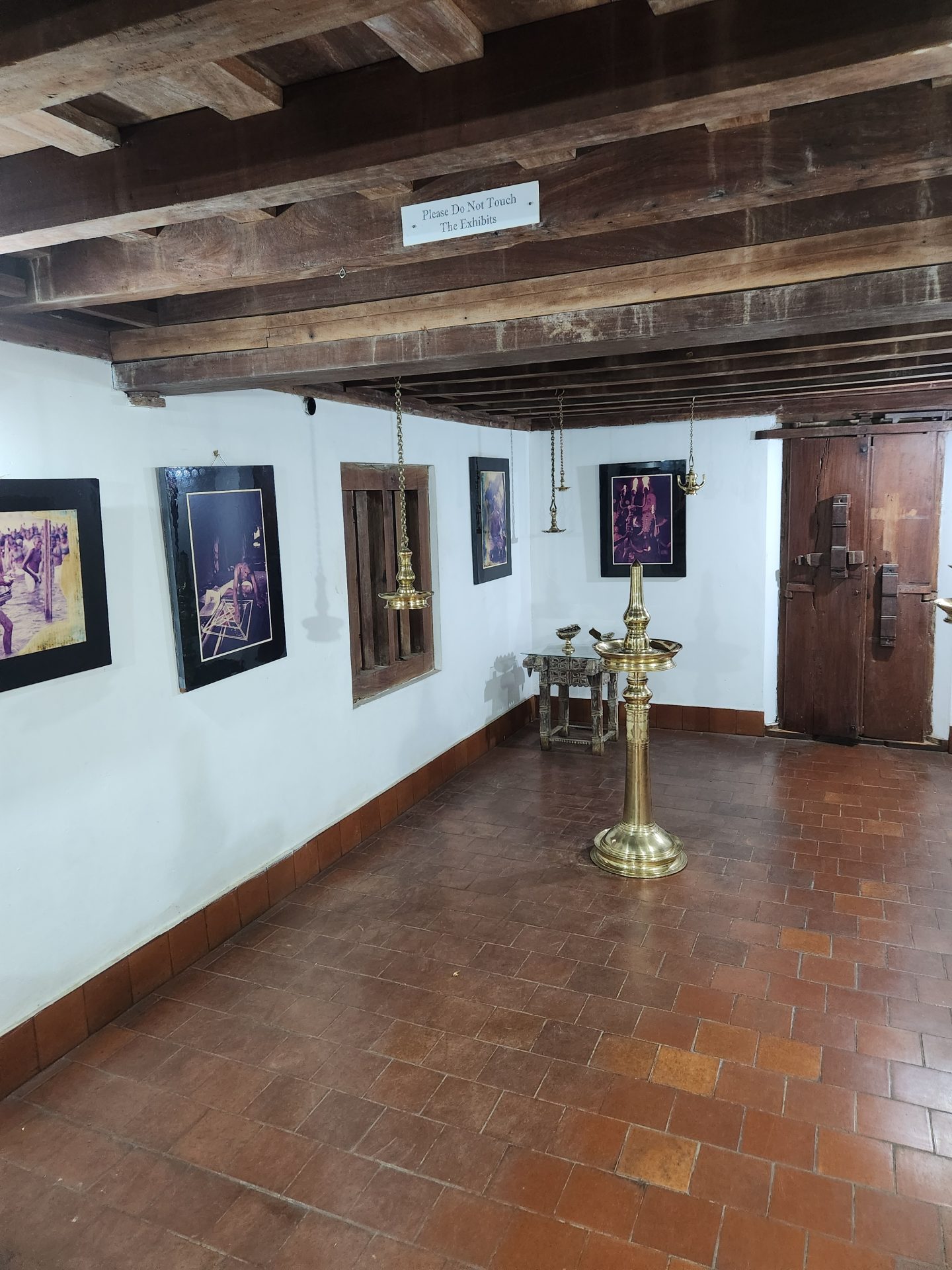
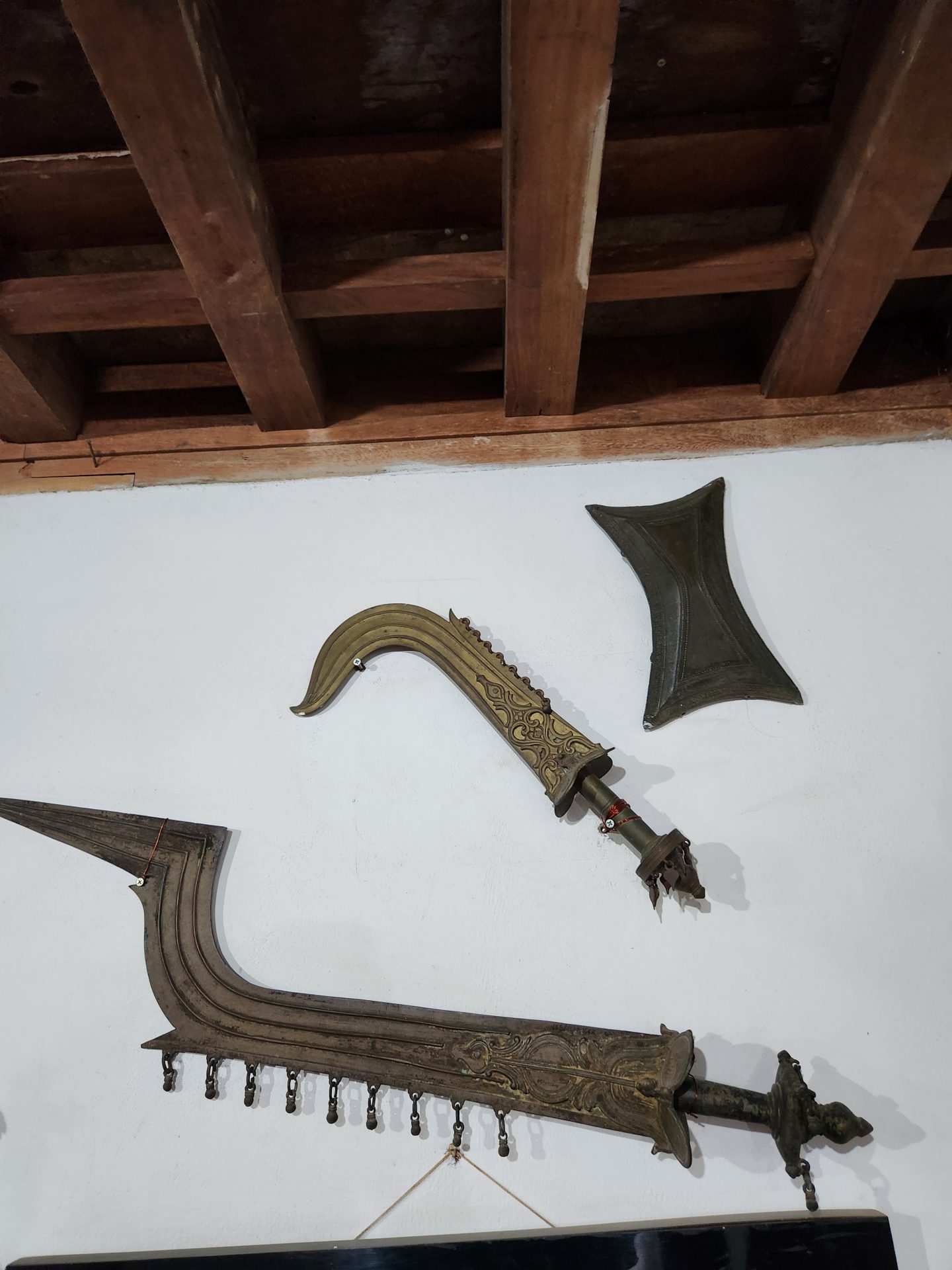
4 kms ahead of the Muttukadu Bridge lies Dakshina Chitra,  a living history museum dedicated to South Indian Culture and Heritage.

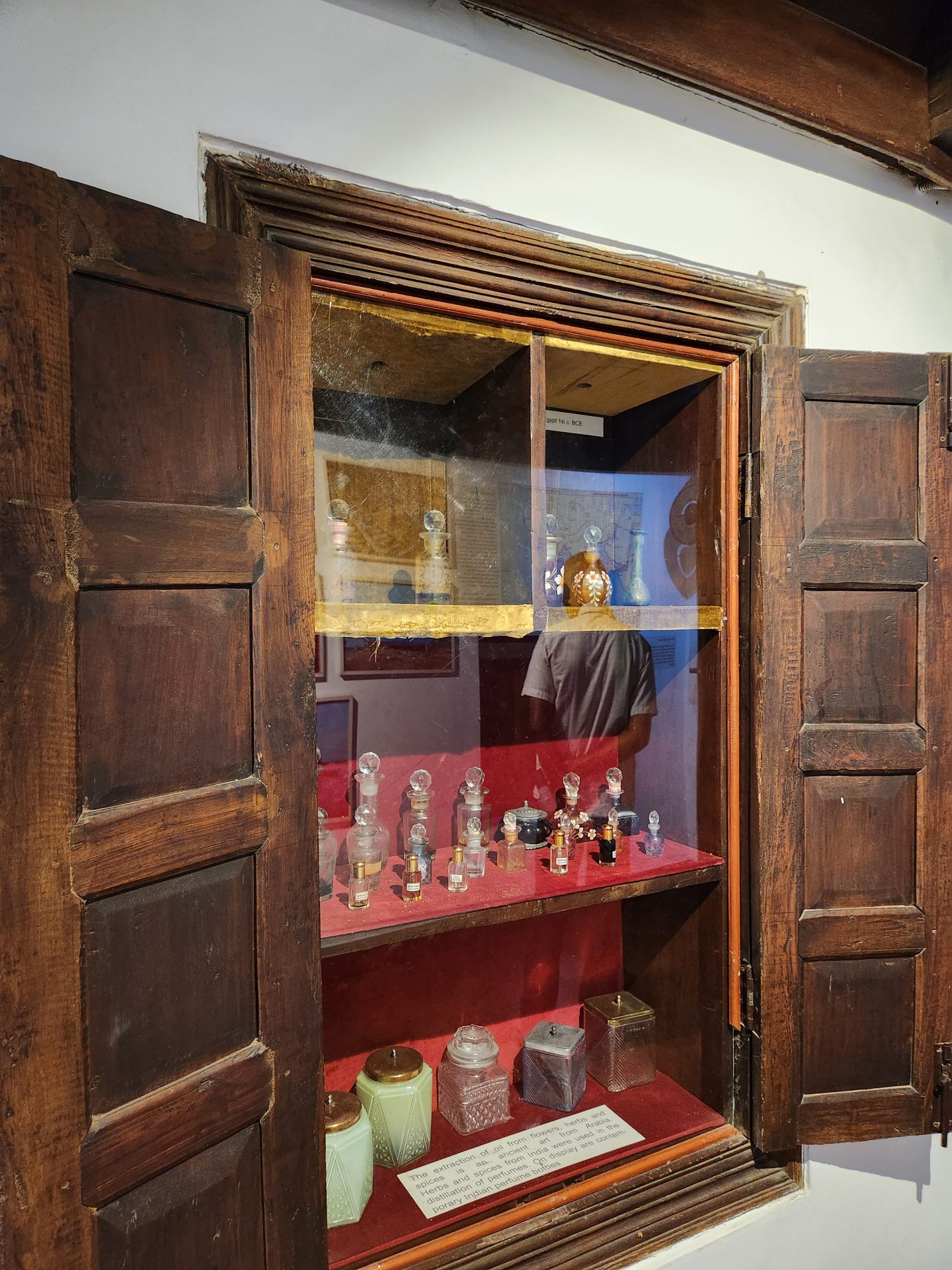
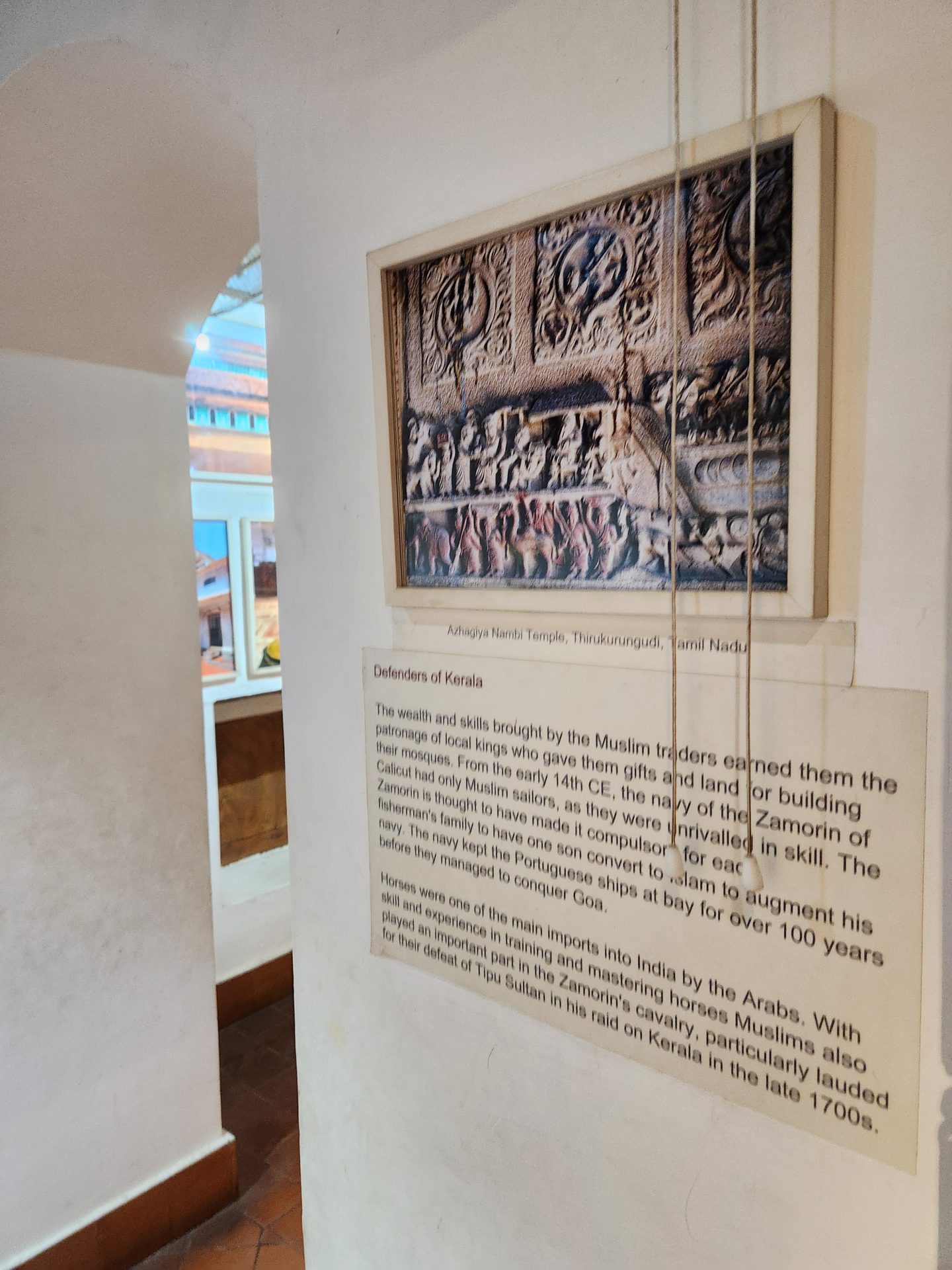
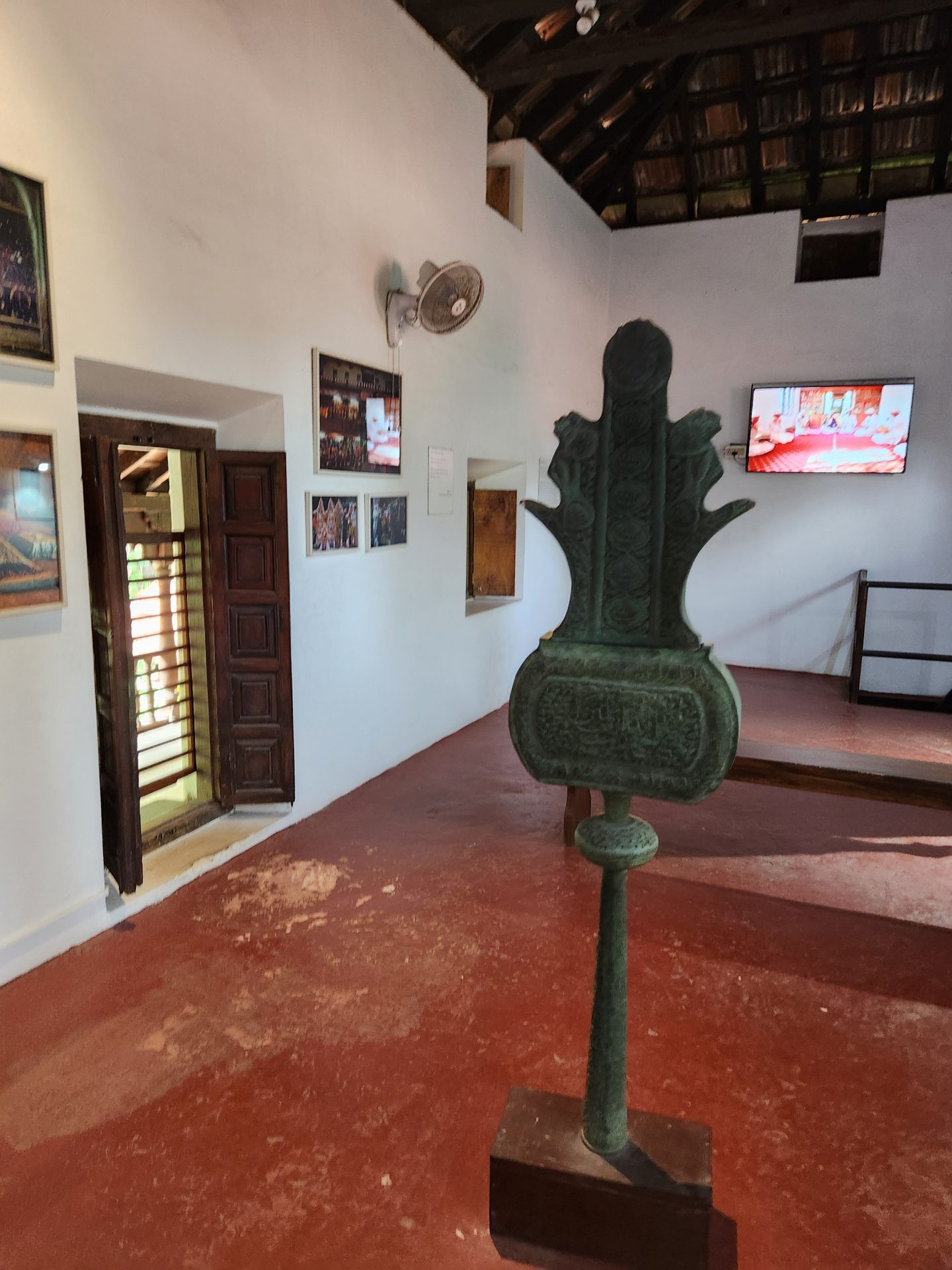
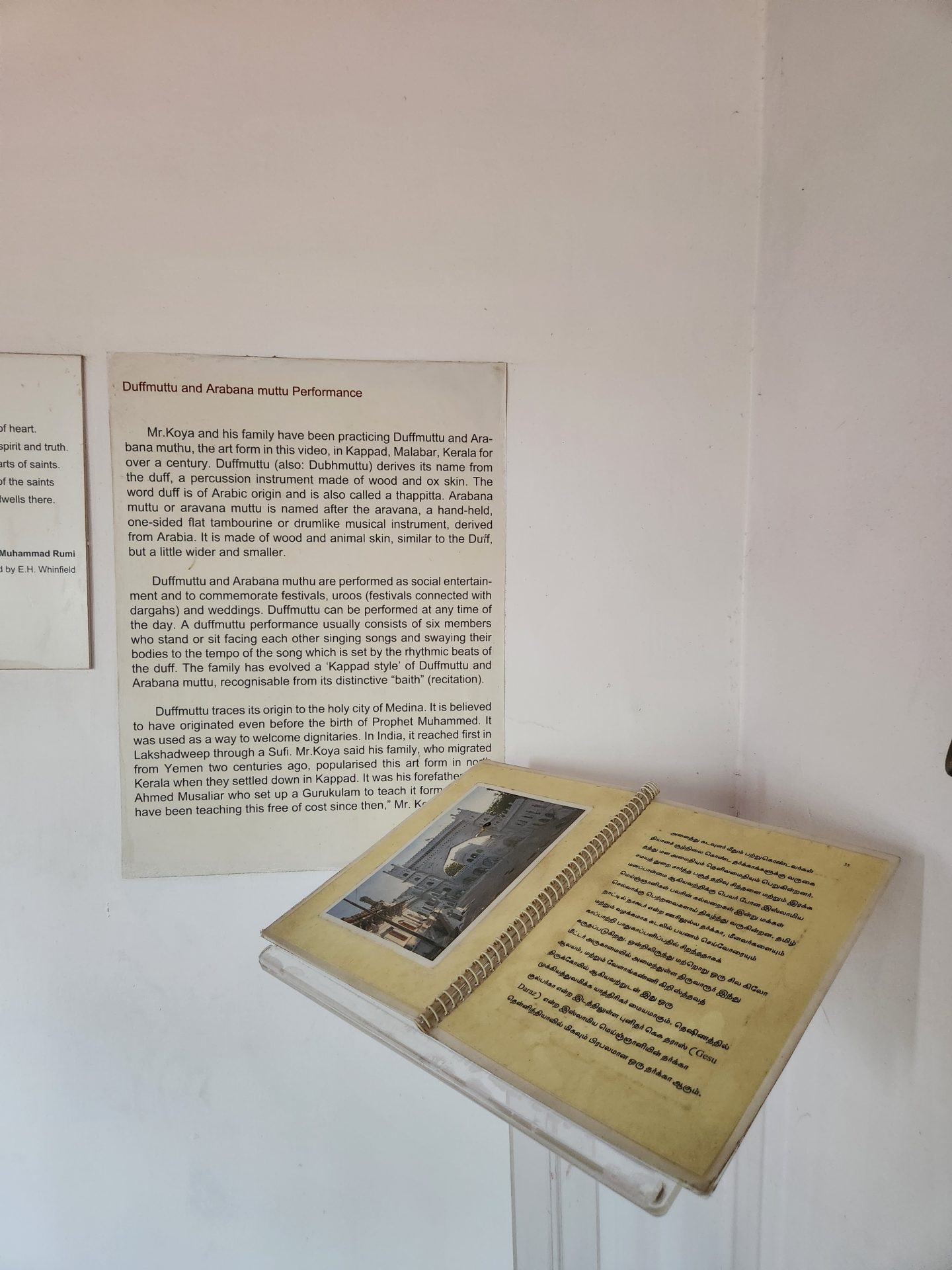
Founded by Madras Craft Foundation and architected by Benny Kuriakose, this Museum featuring 18 Authentic historical houses was established on 14th December, 1996.

Tickets are priced at Rs.200/- apiece on Weekends and Rs.175/- on Weekdays.

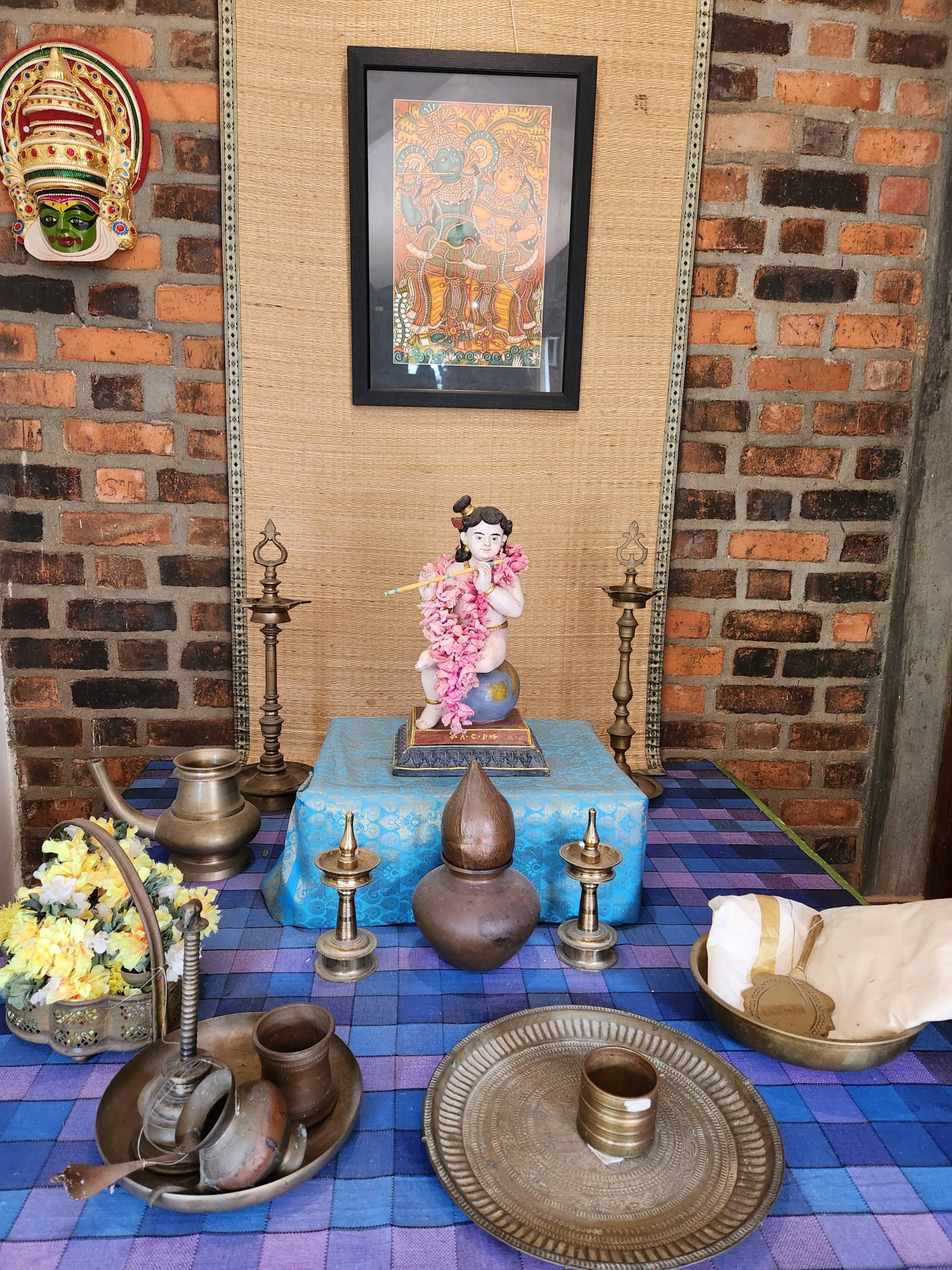
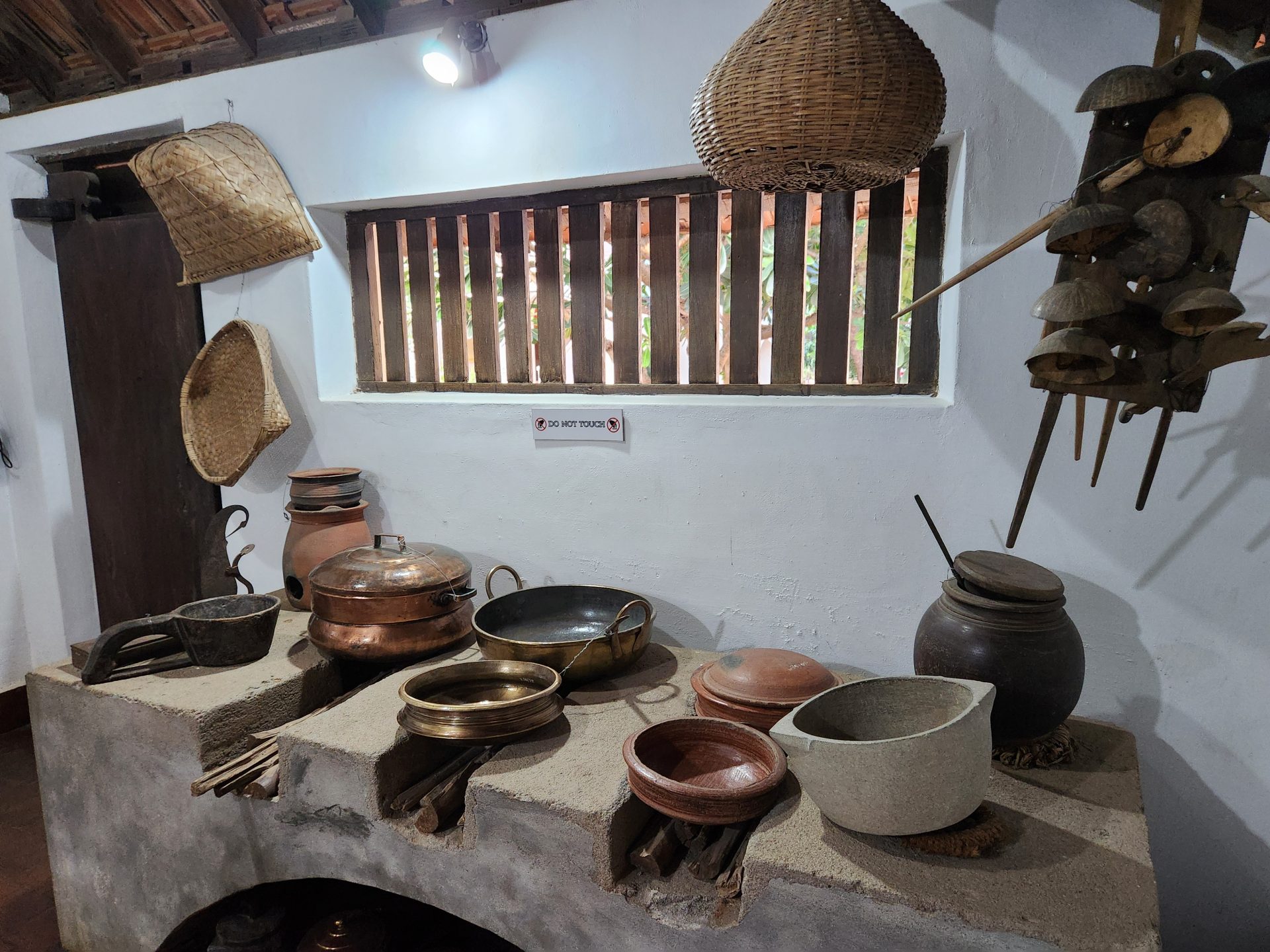
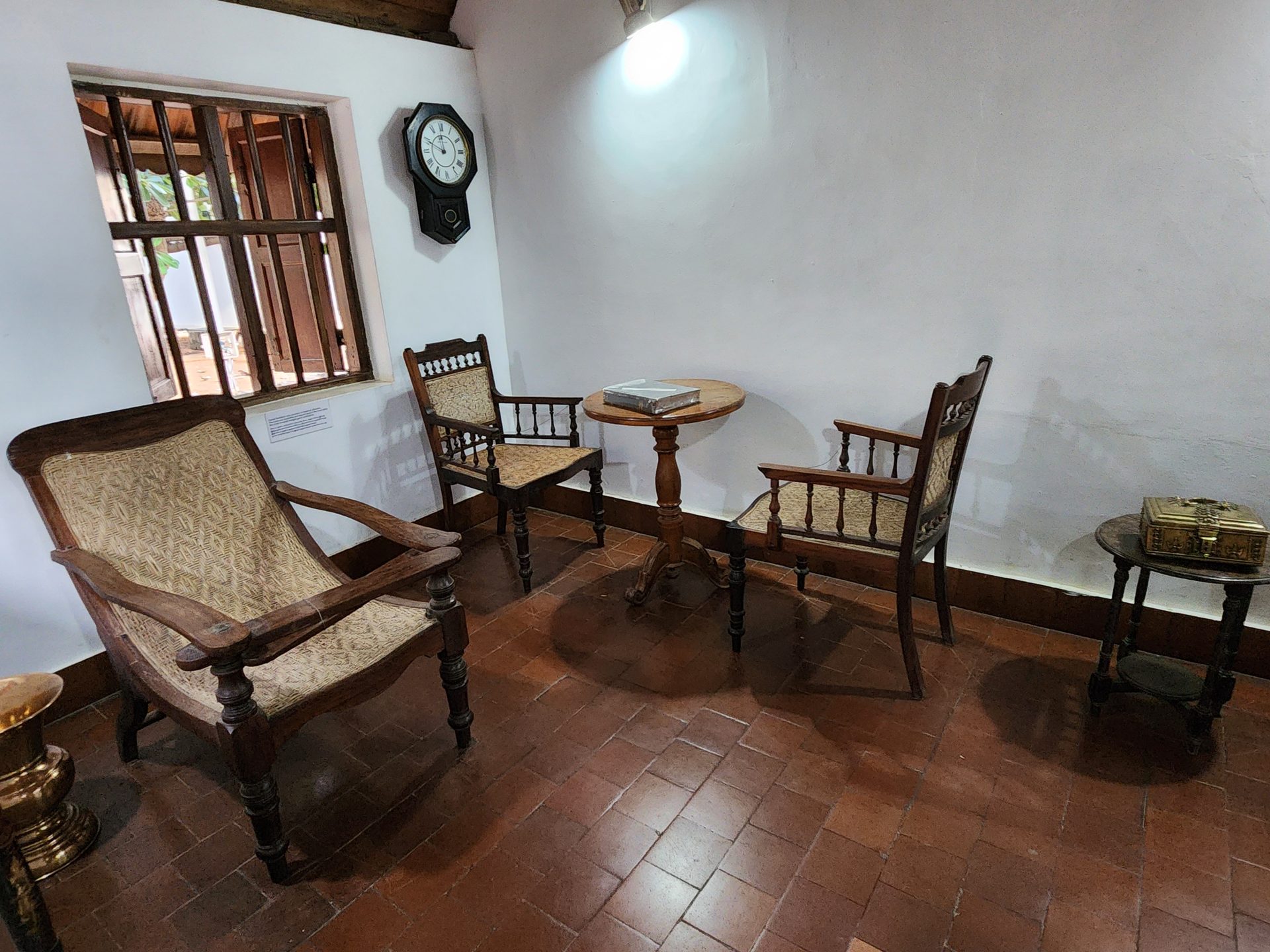
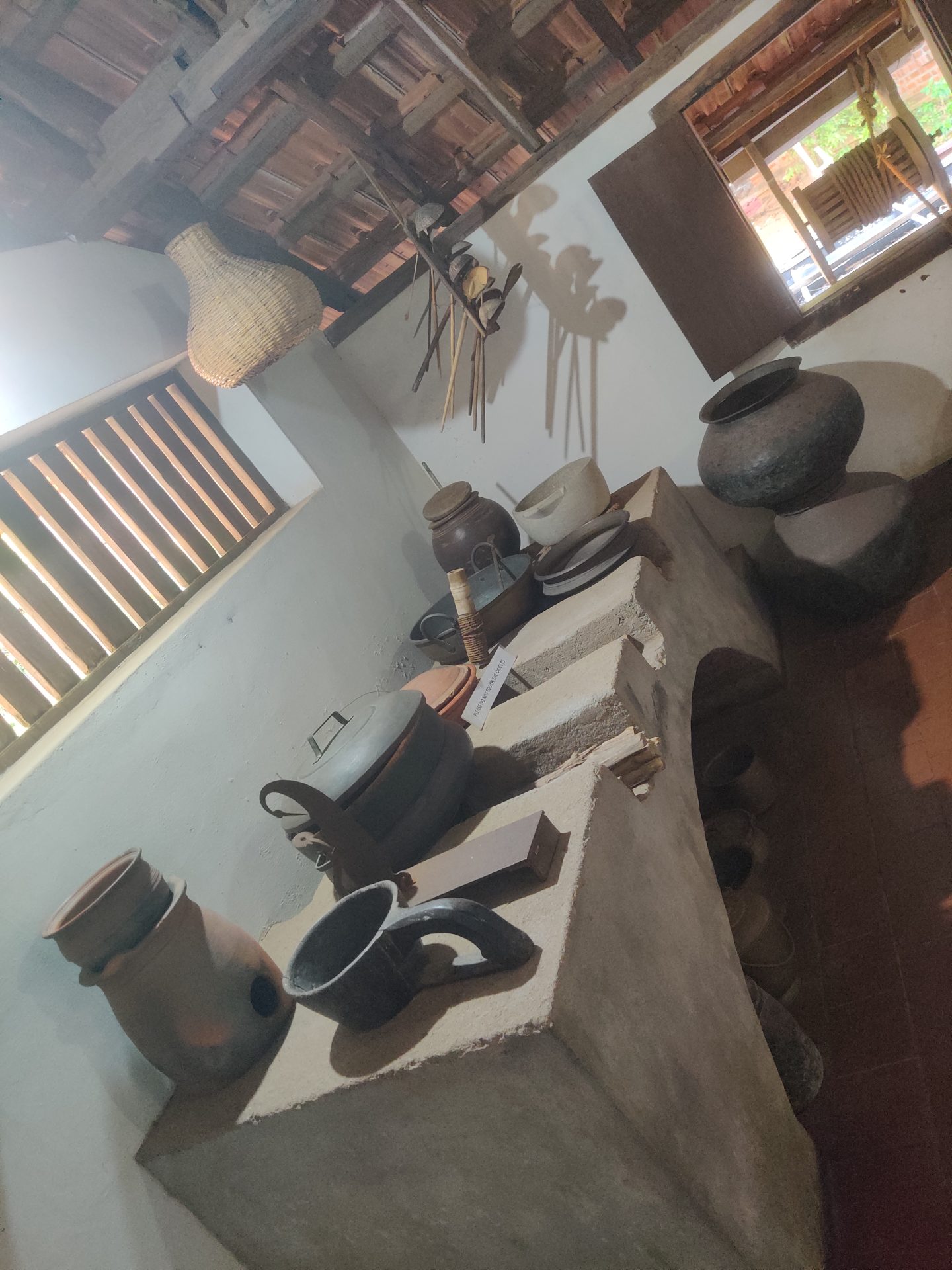
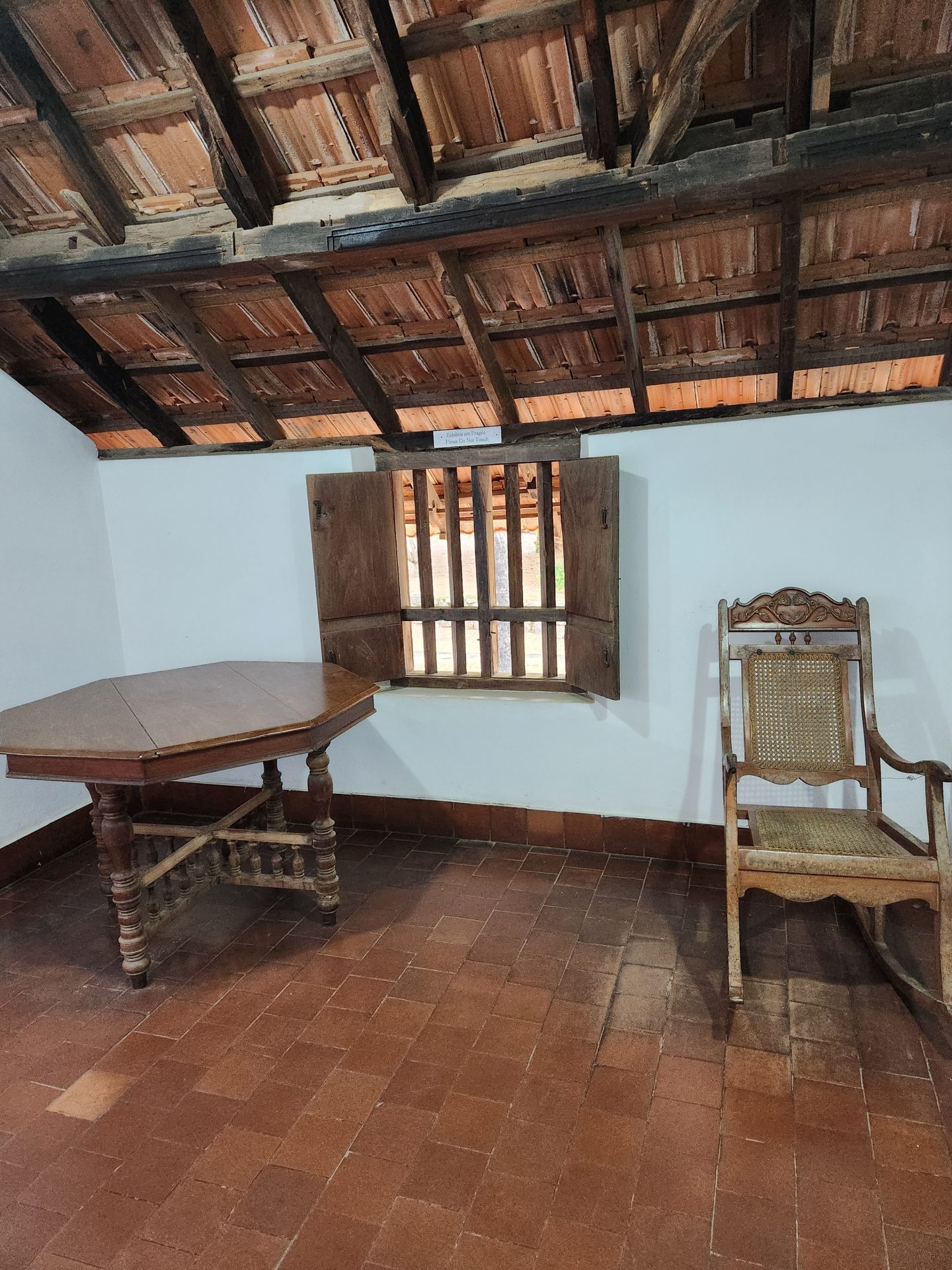
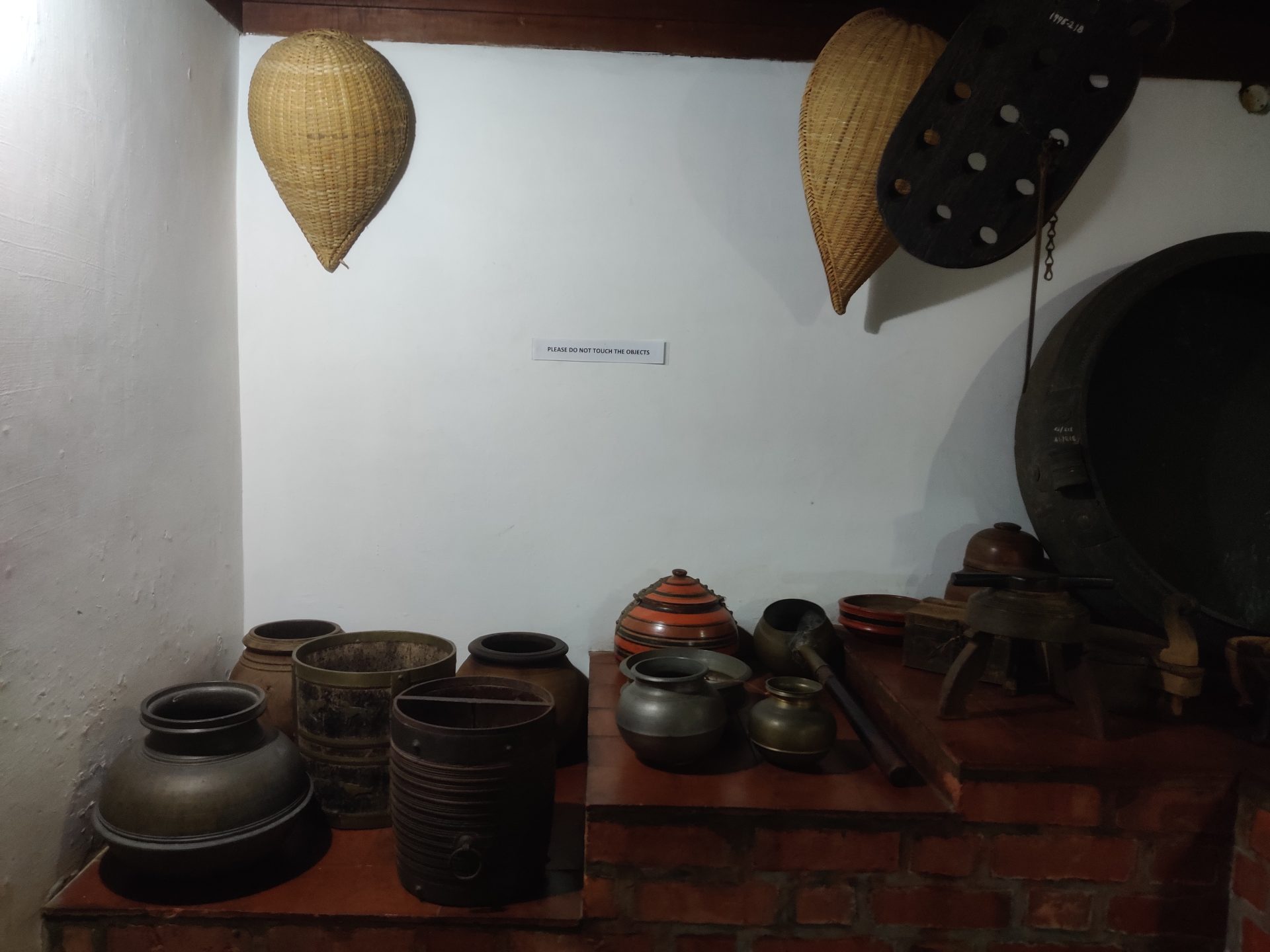
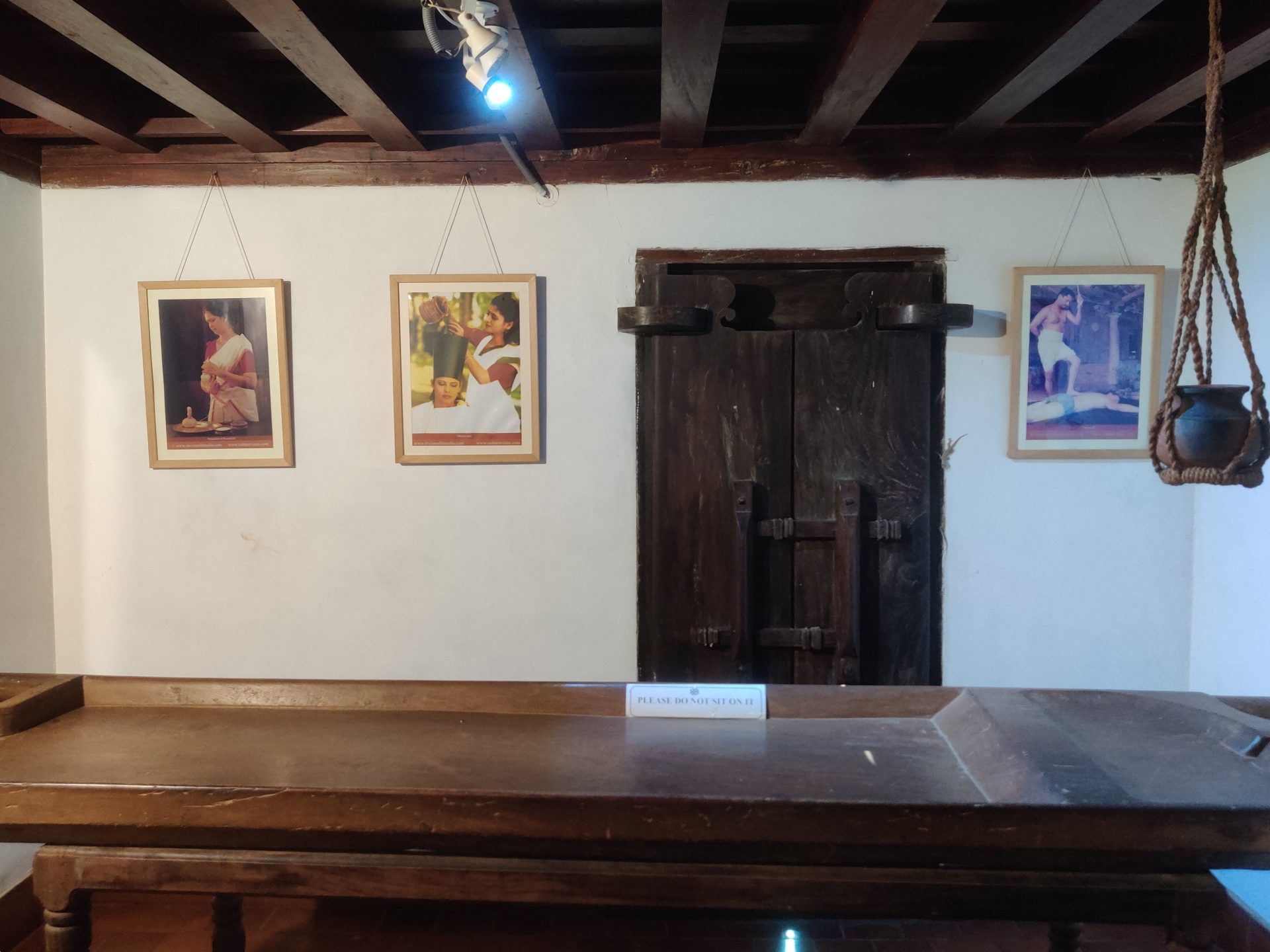
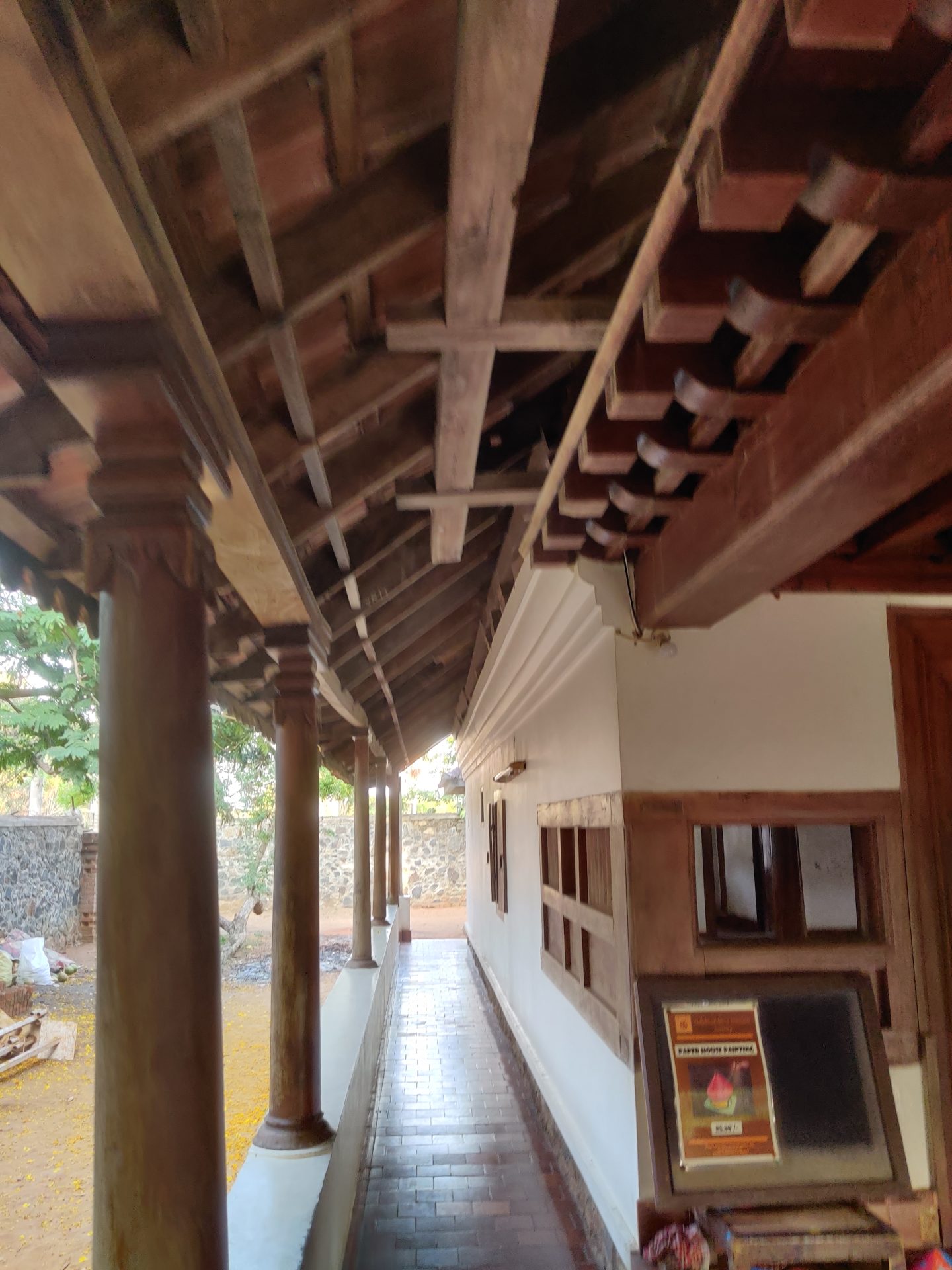
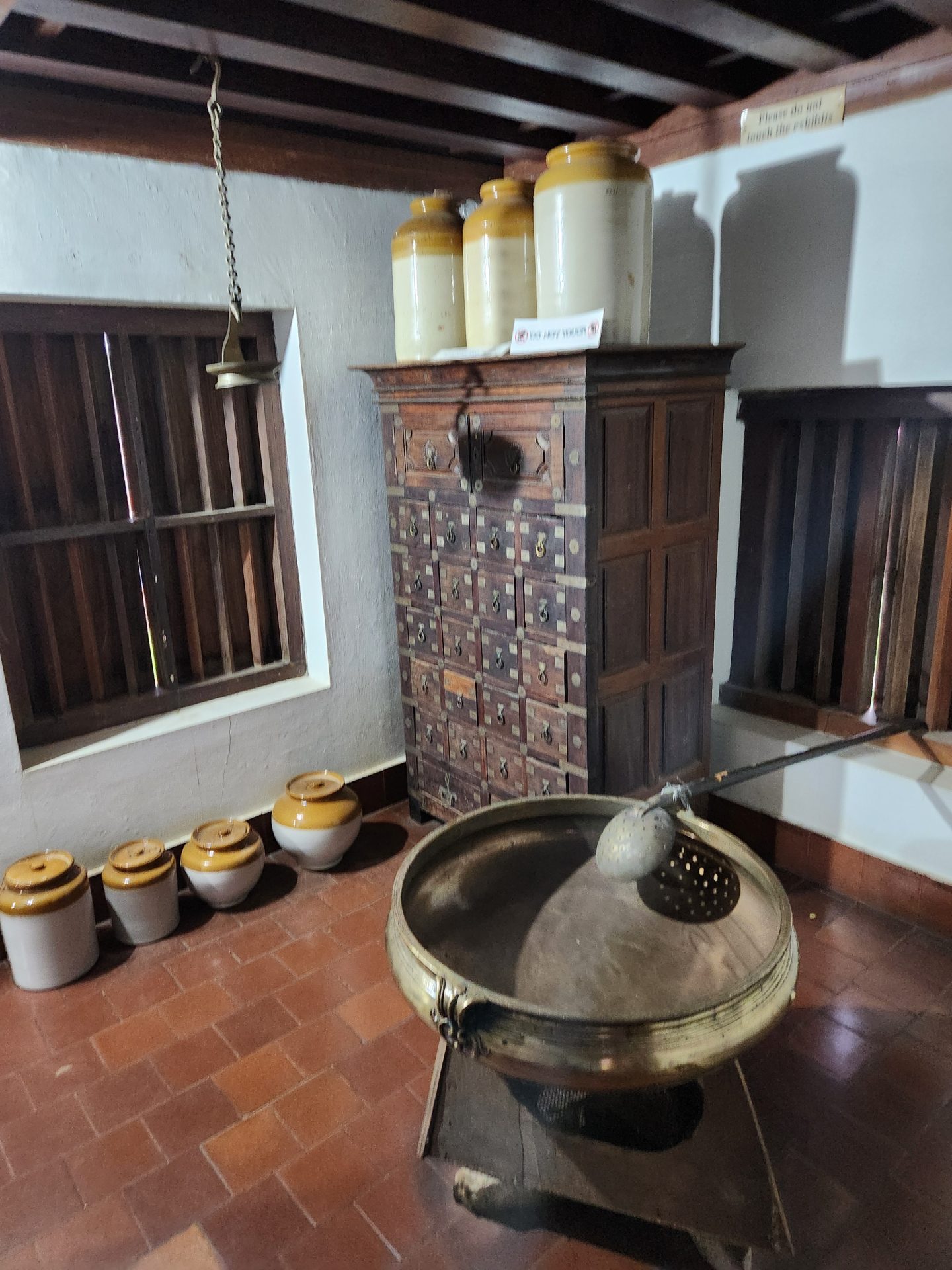
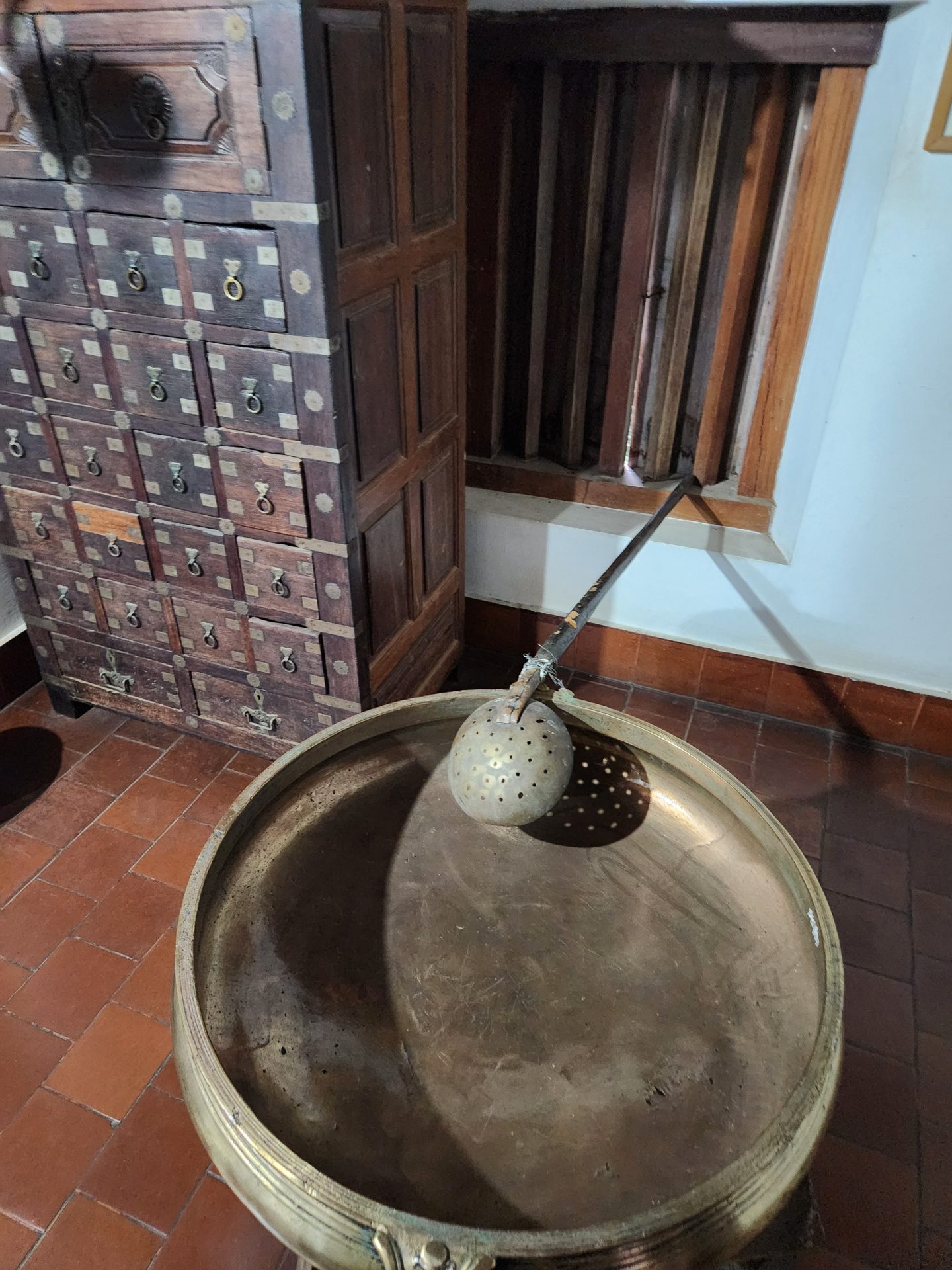
The entire complex has been constructed using old buildings from the 4 Southern states which have been transplanted from other sites to depict the vernacular architecture and forms of community living. 

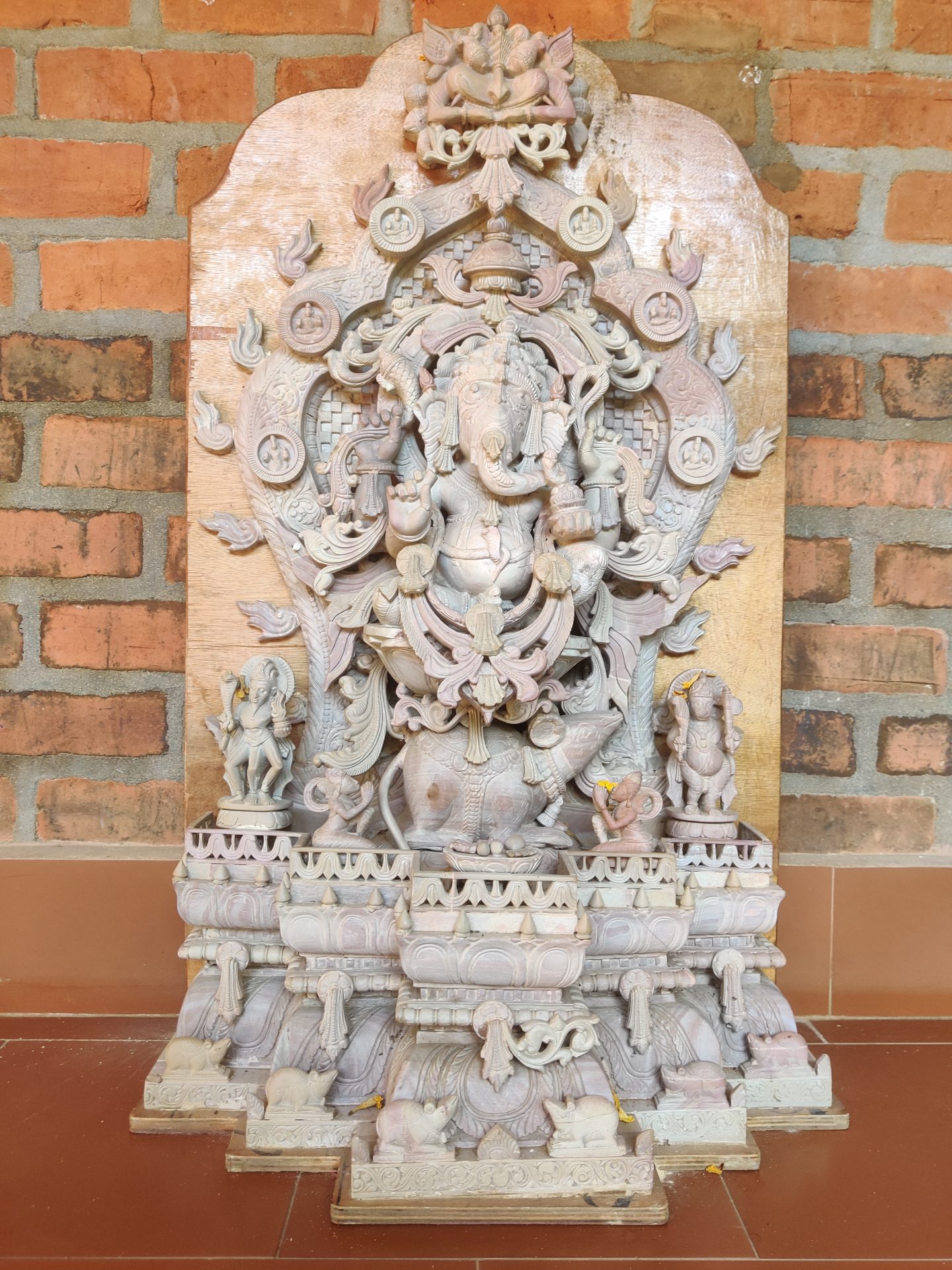
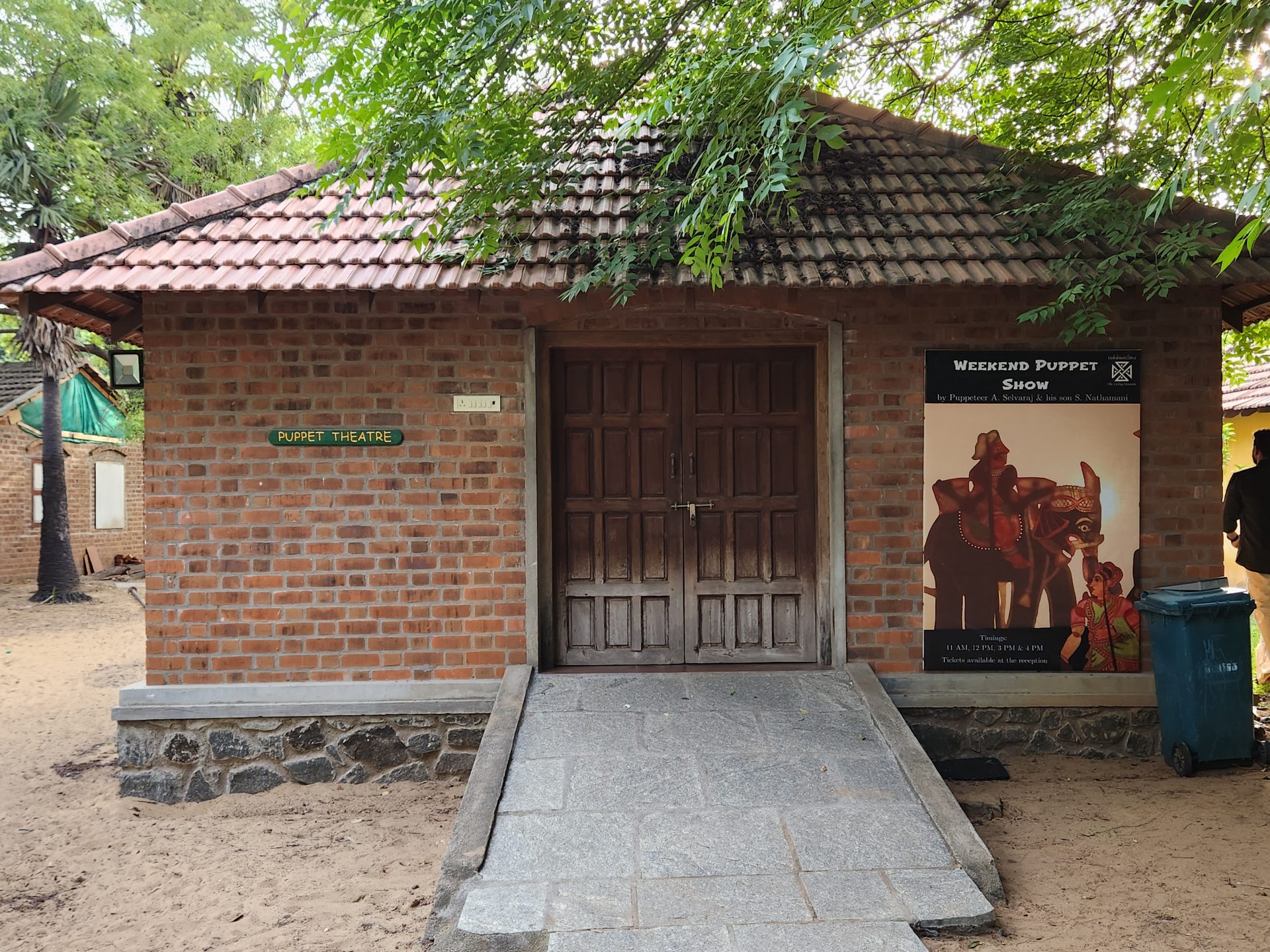
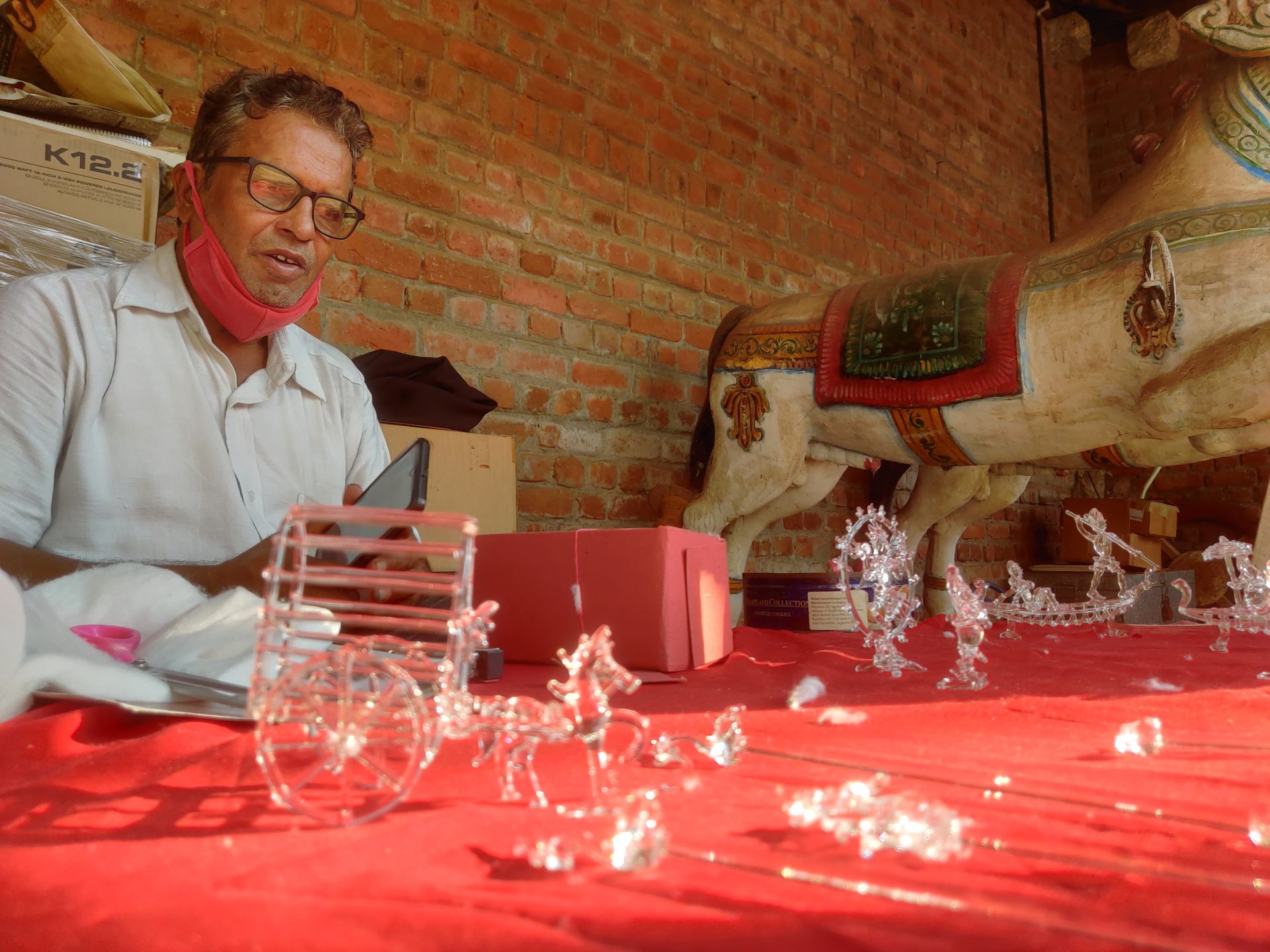
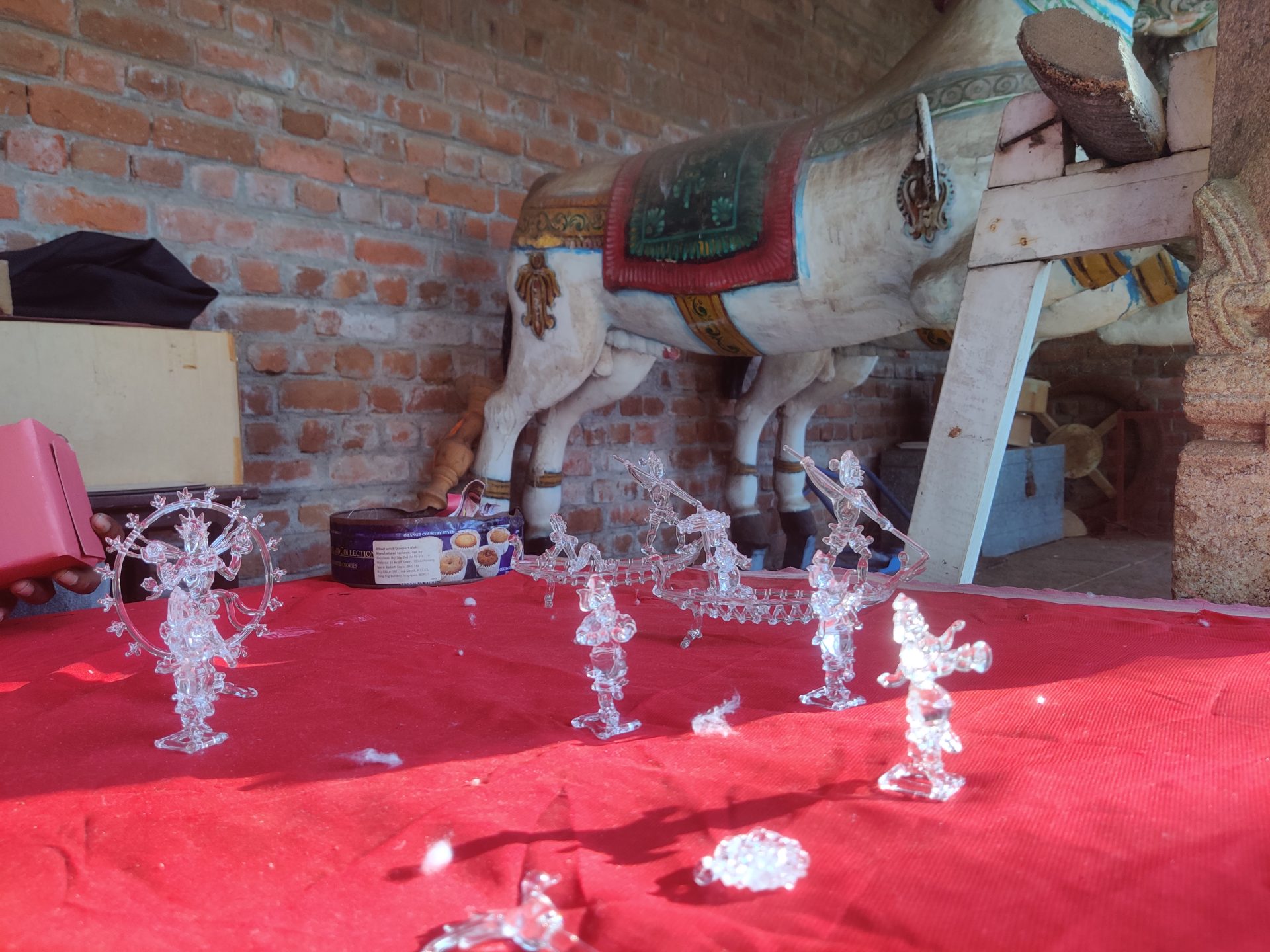
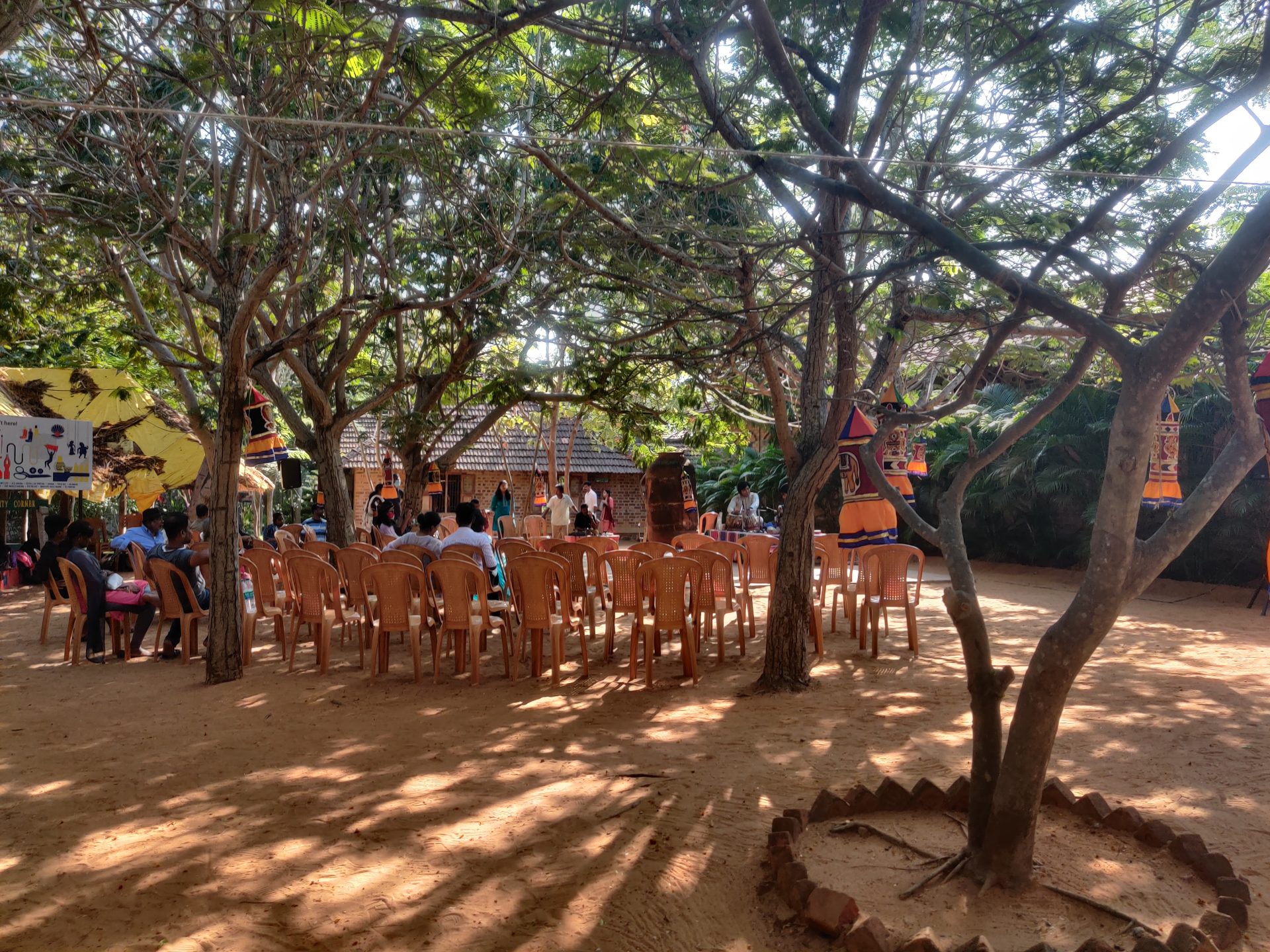
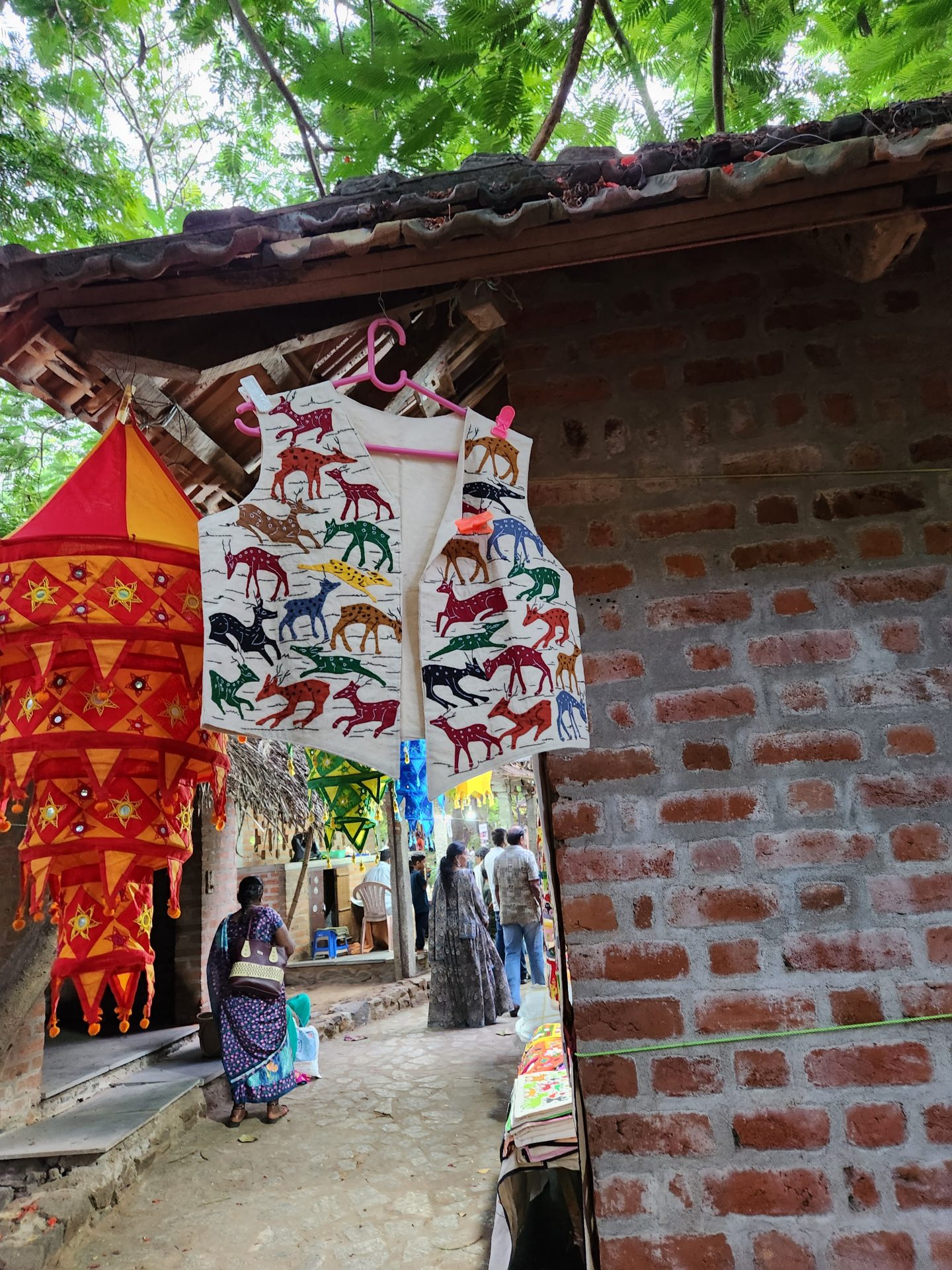
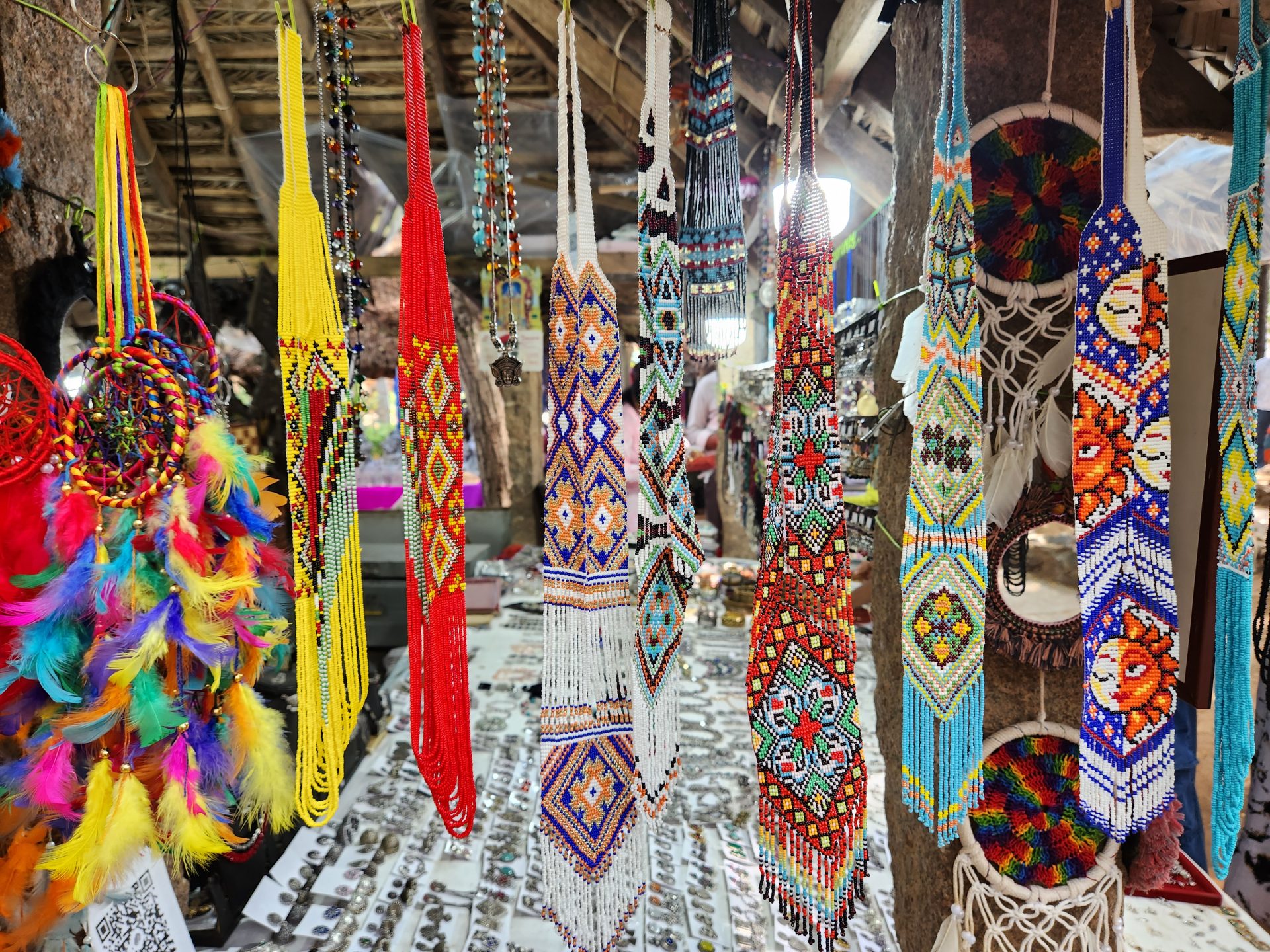
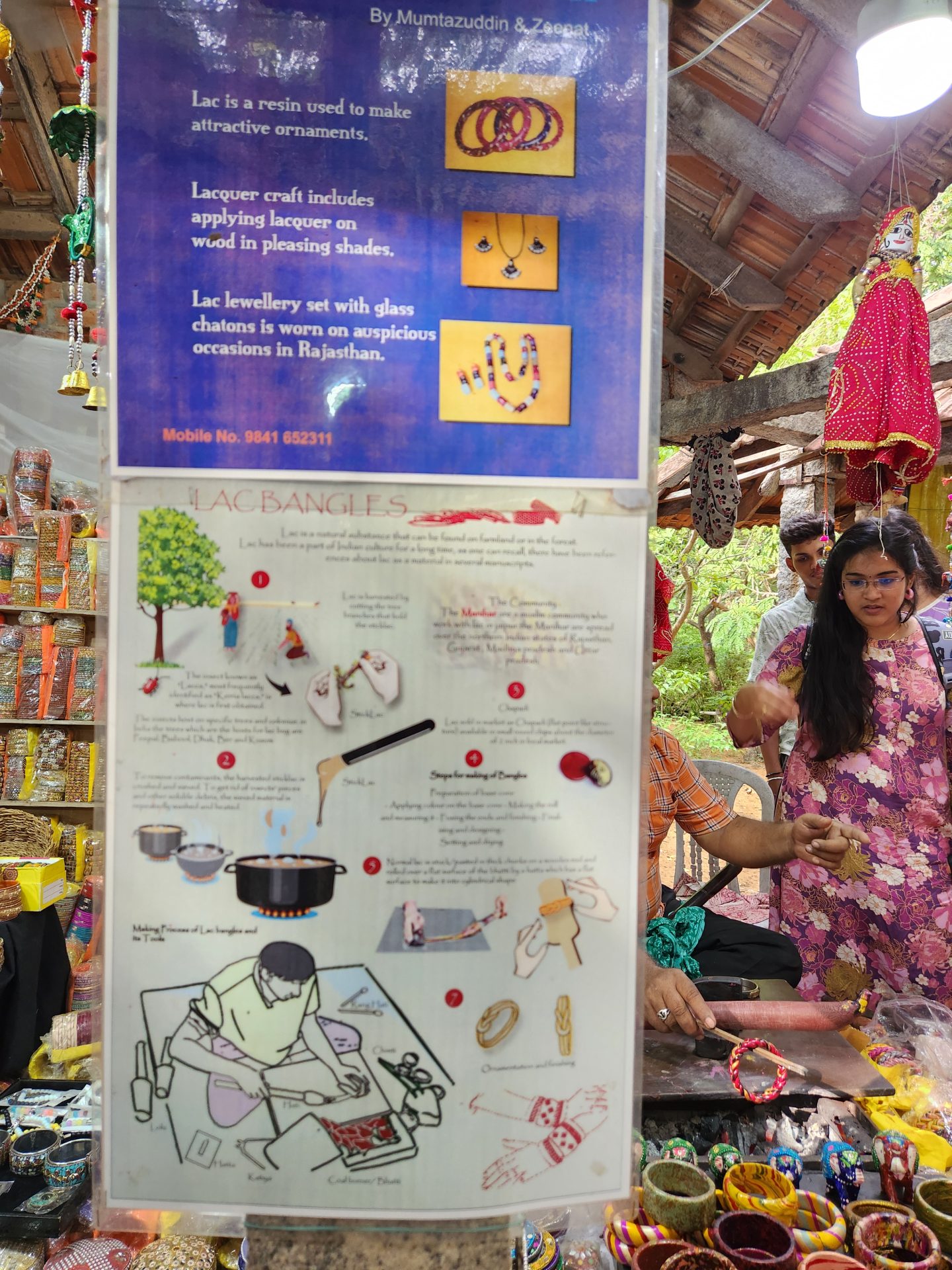
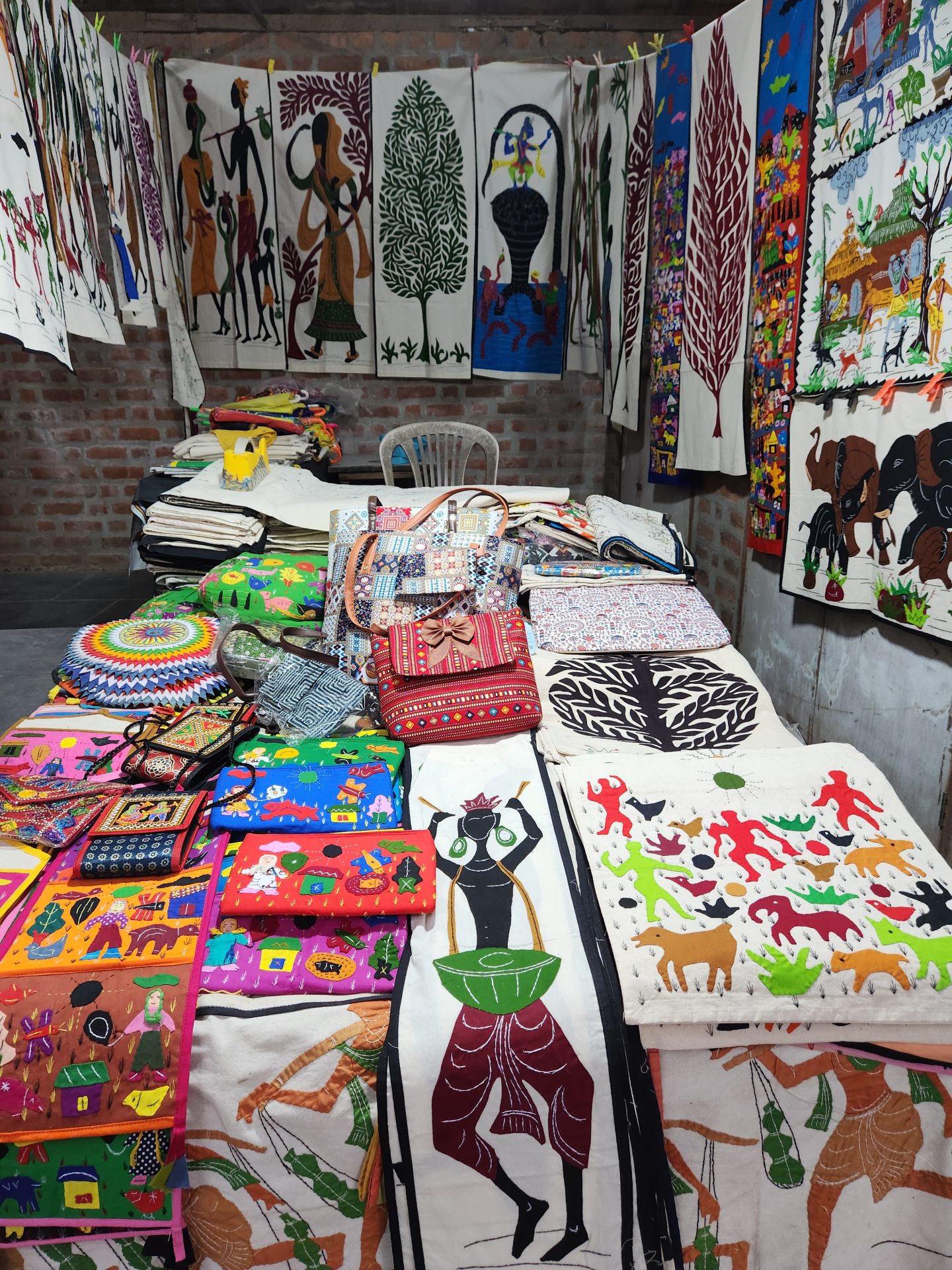
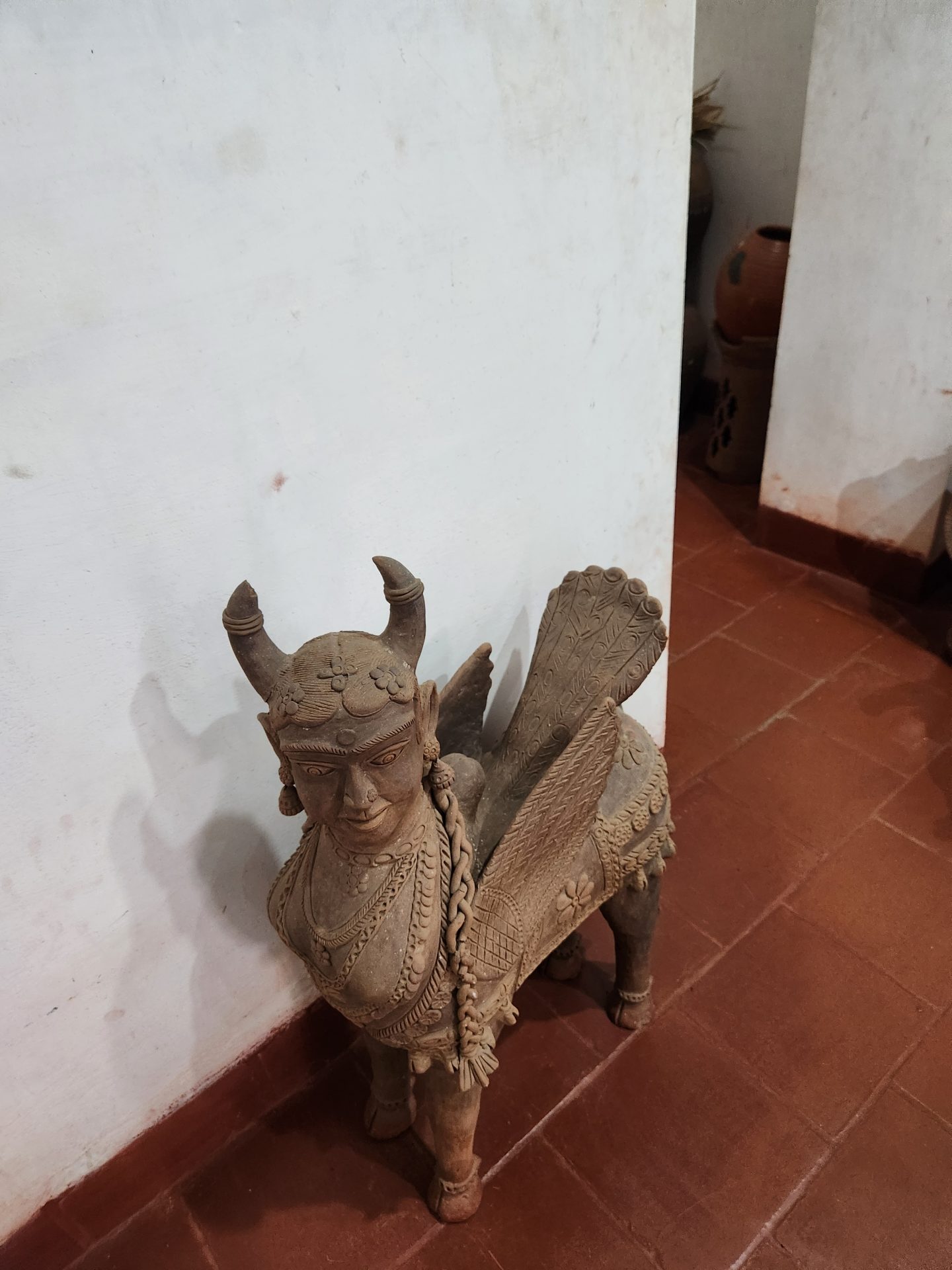
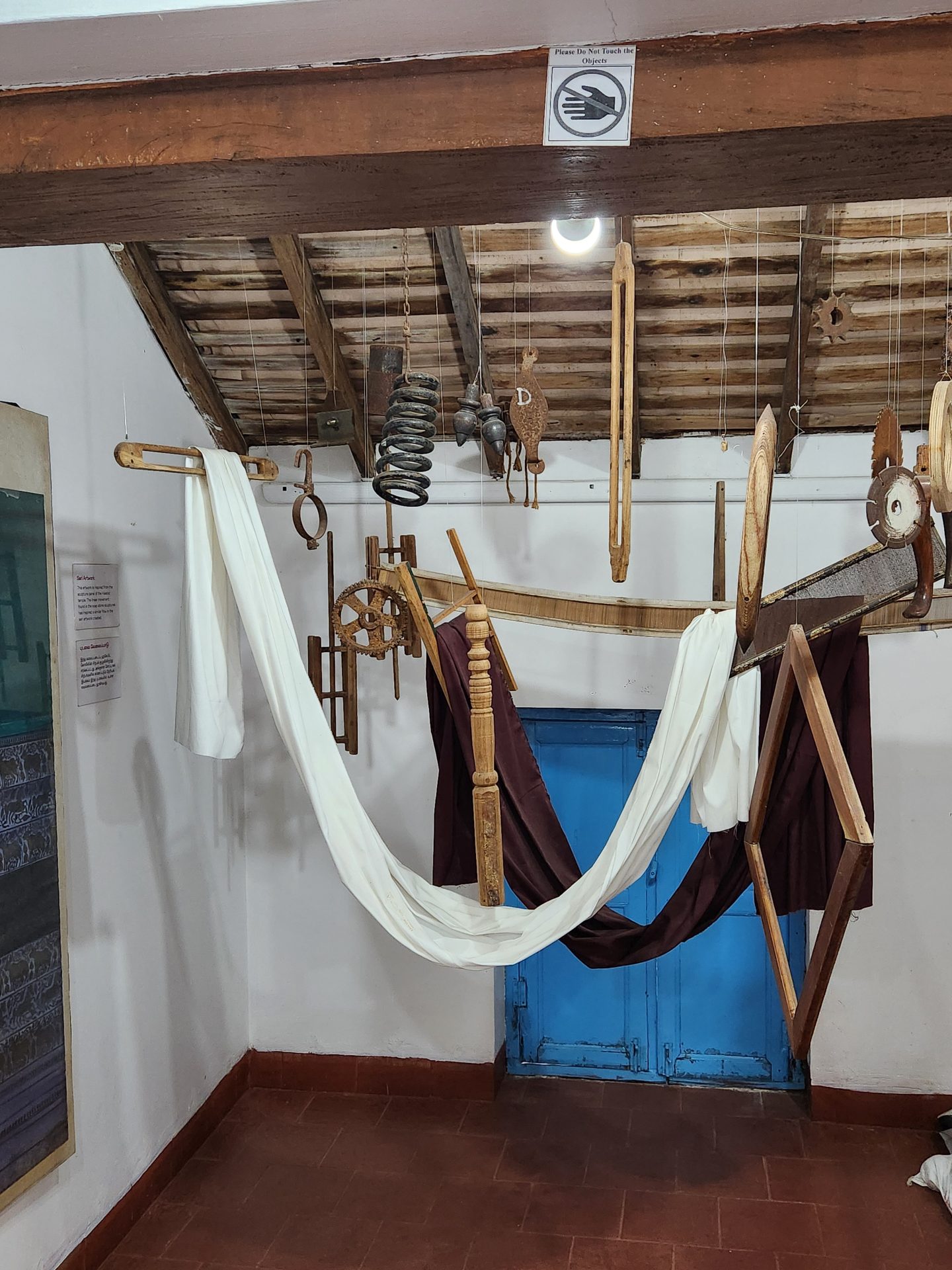
There are Arts and Crafts stalls as well as Live performances like Puppet shows, Glass Blowing demos, Weavers displaying their craft, pottery work, International Folklore Film Festivals, Classical Dance performances etc. 

As we make our way past the reception and a small store on the left and step into the open, the complex opens out to houses from Karnataka and Andhra Pradesh on the right side.


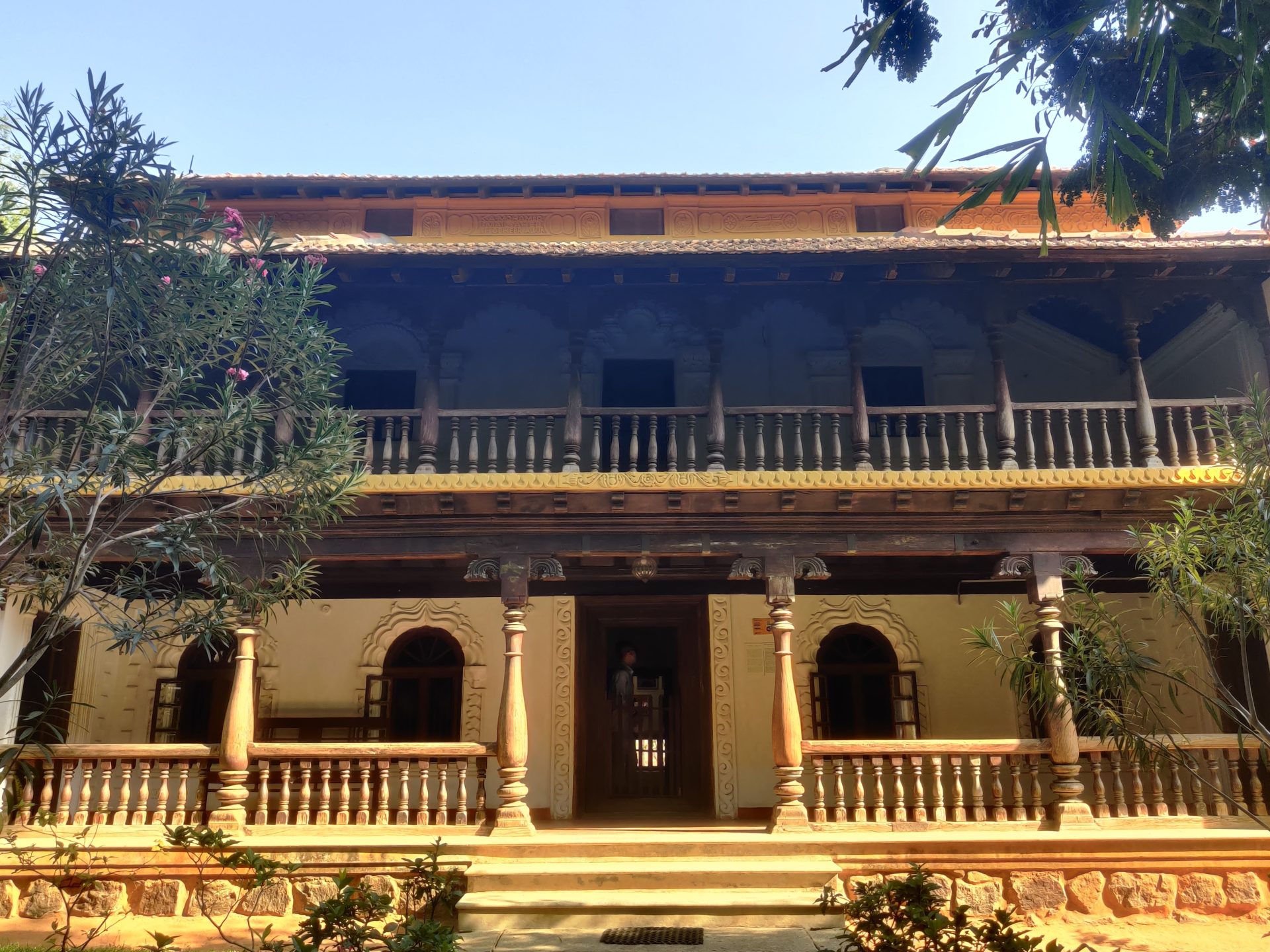
Karnataka - The Chikmagalur House

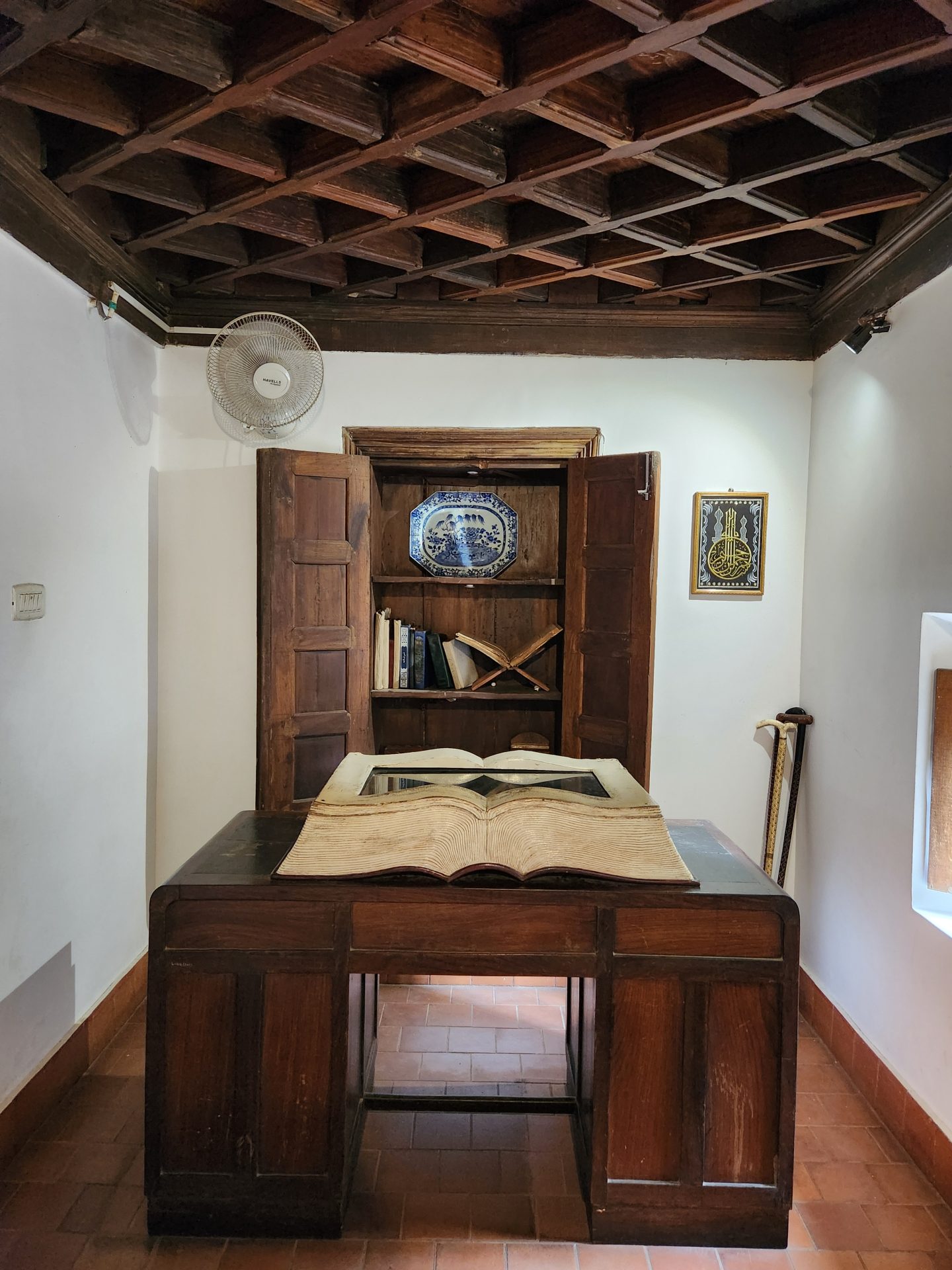
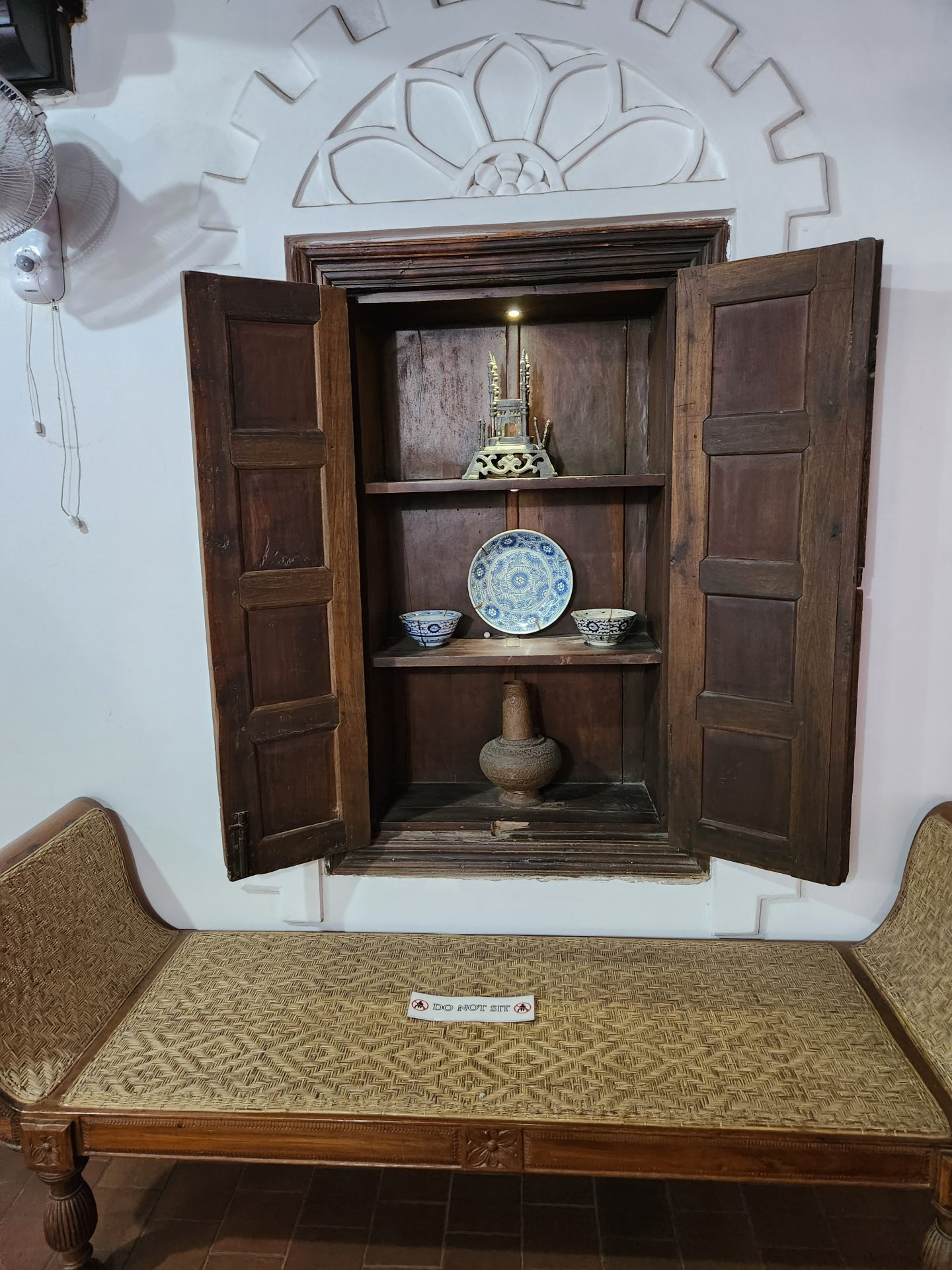
Representative of the Muslim heritage of Karnataka, the Chikmagalur house has been created out of a trader’s house built as early as 1914. A widely travelled person, his house had lot of beautiful porcelain, furniture, lamps and decorative stucco work which has been recreated in lime exactly as it was in his house. 


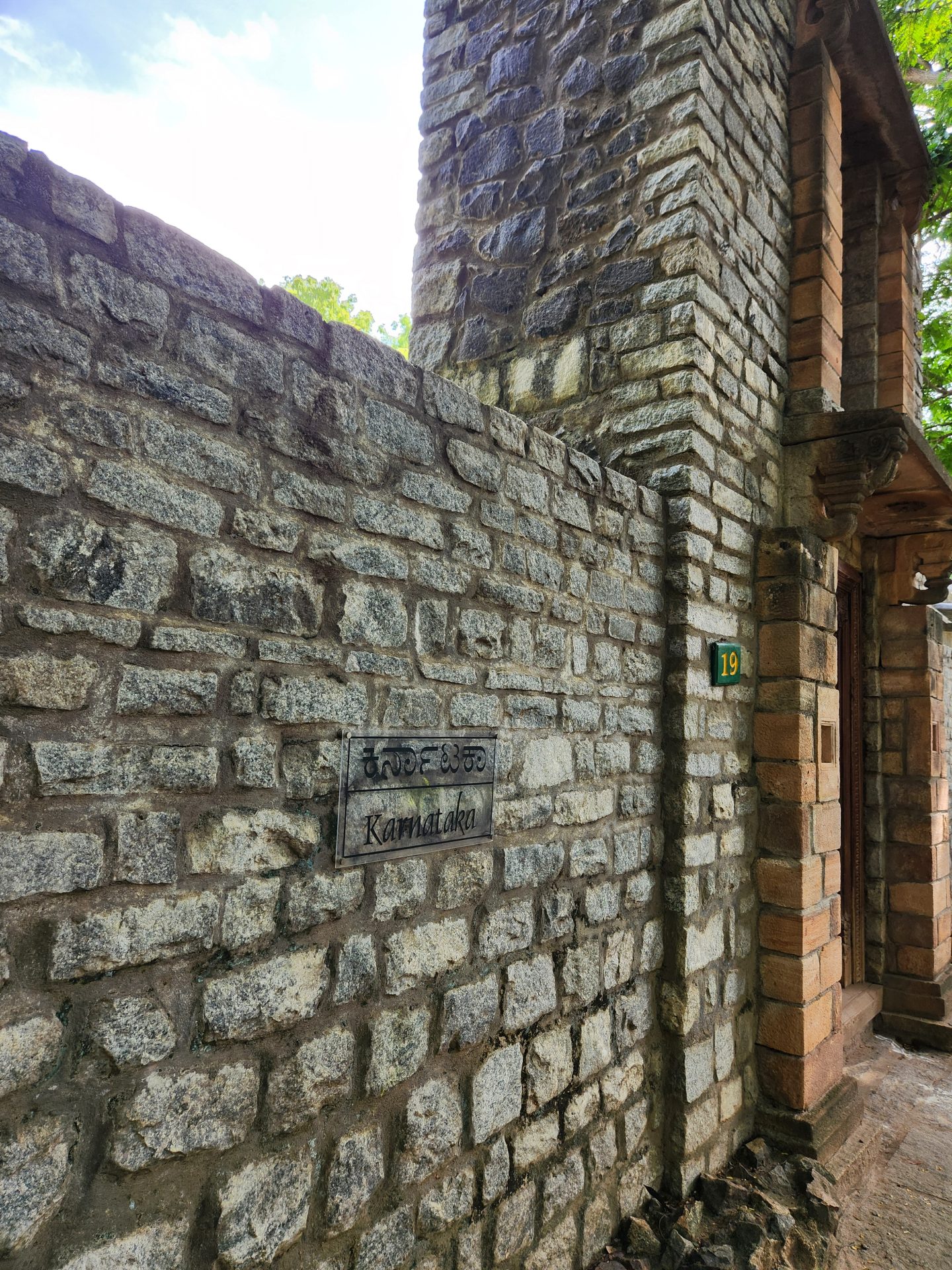
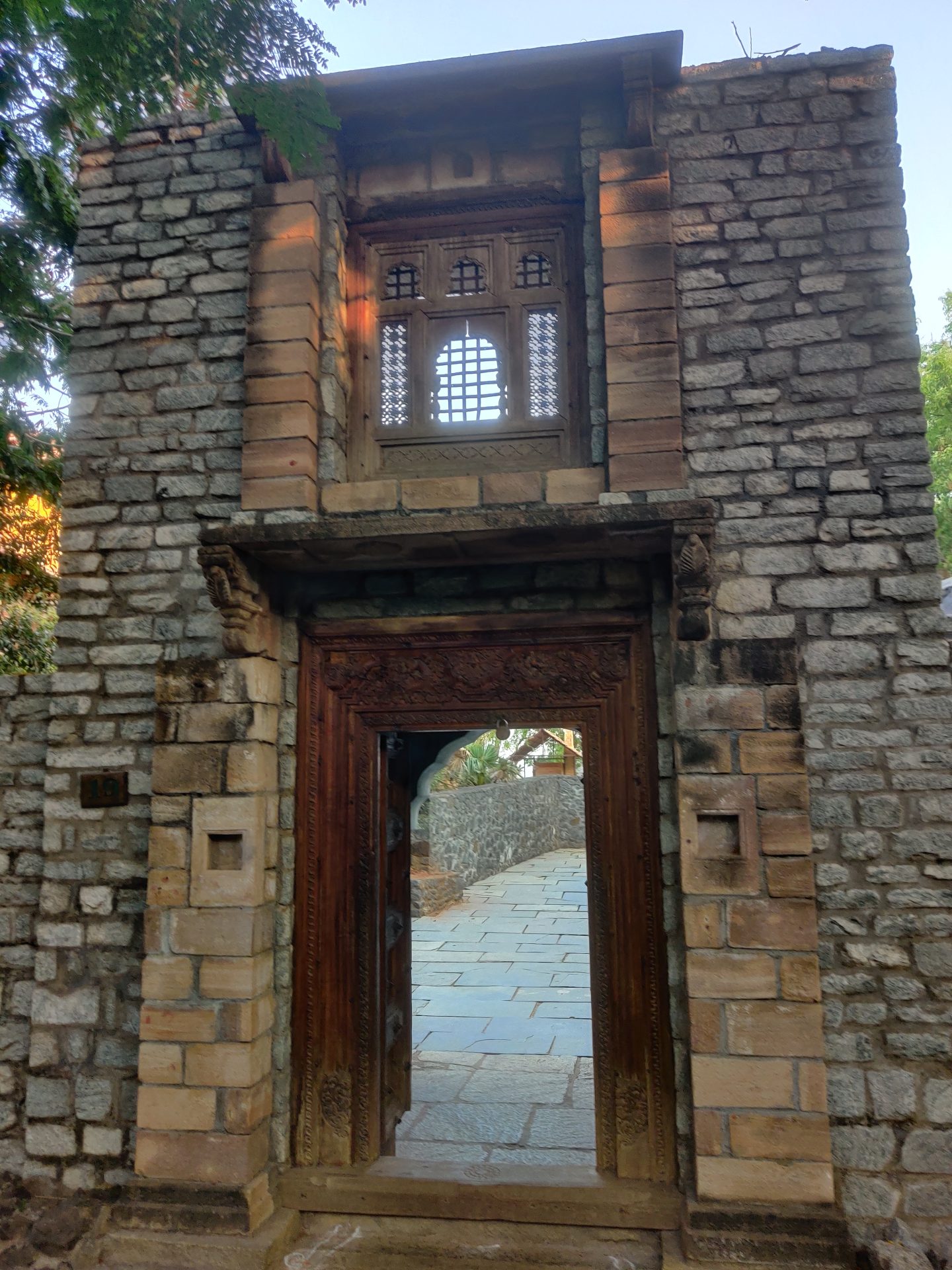
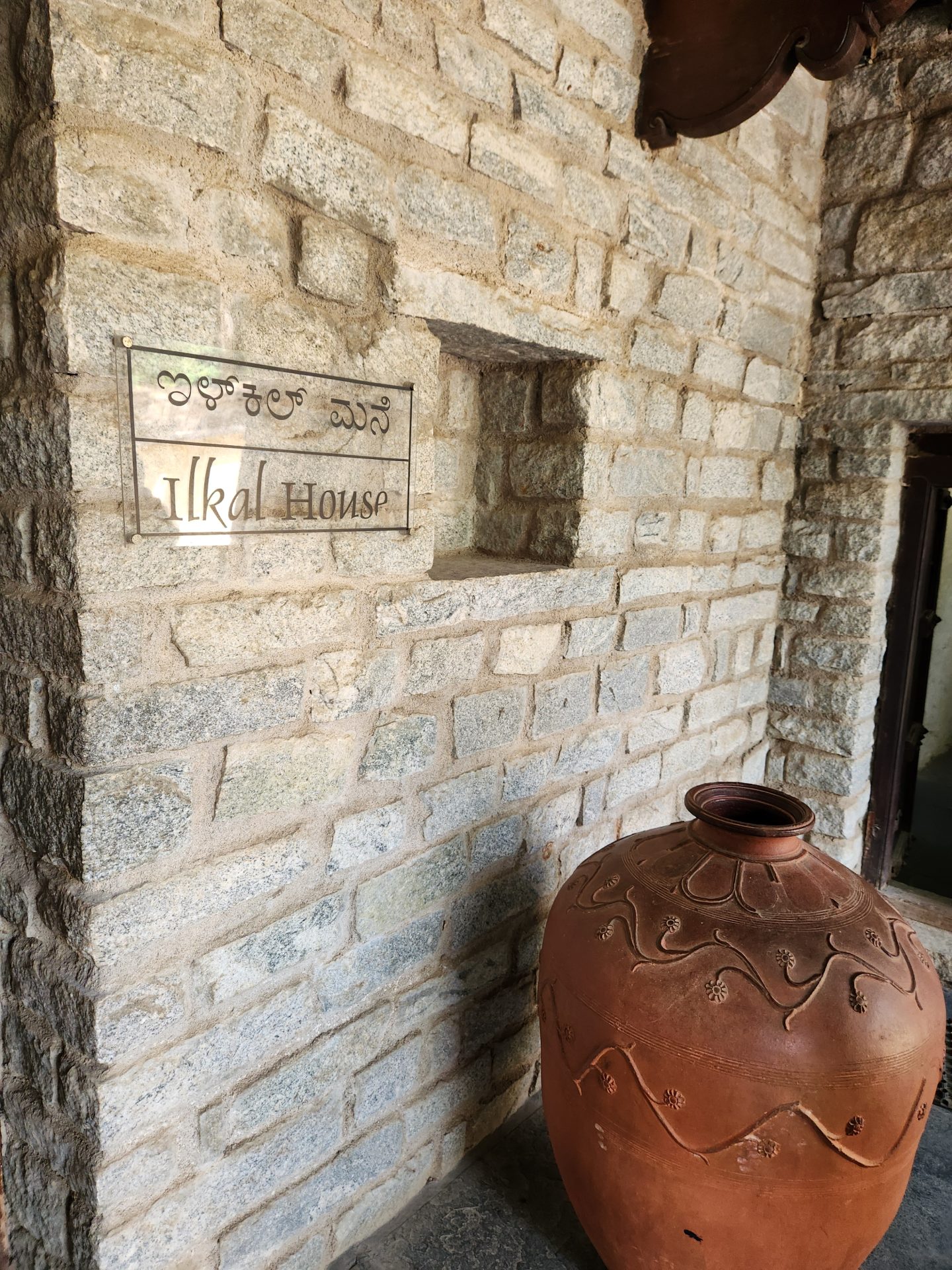
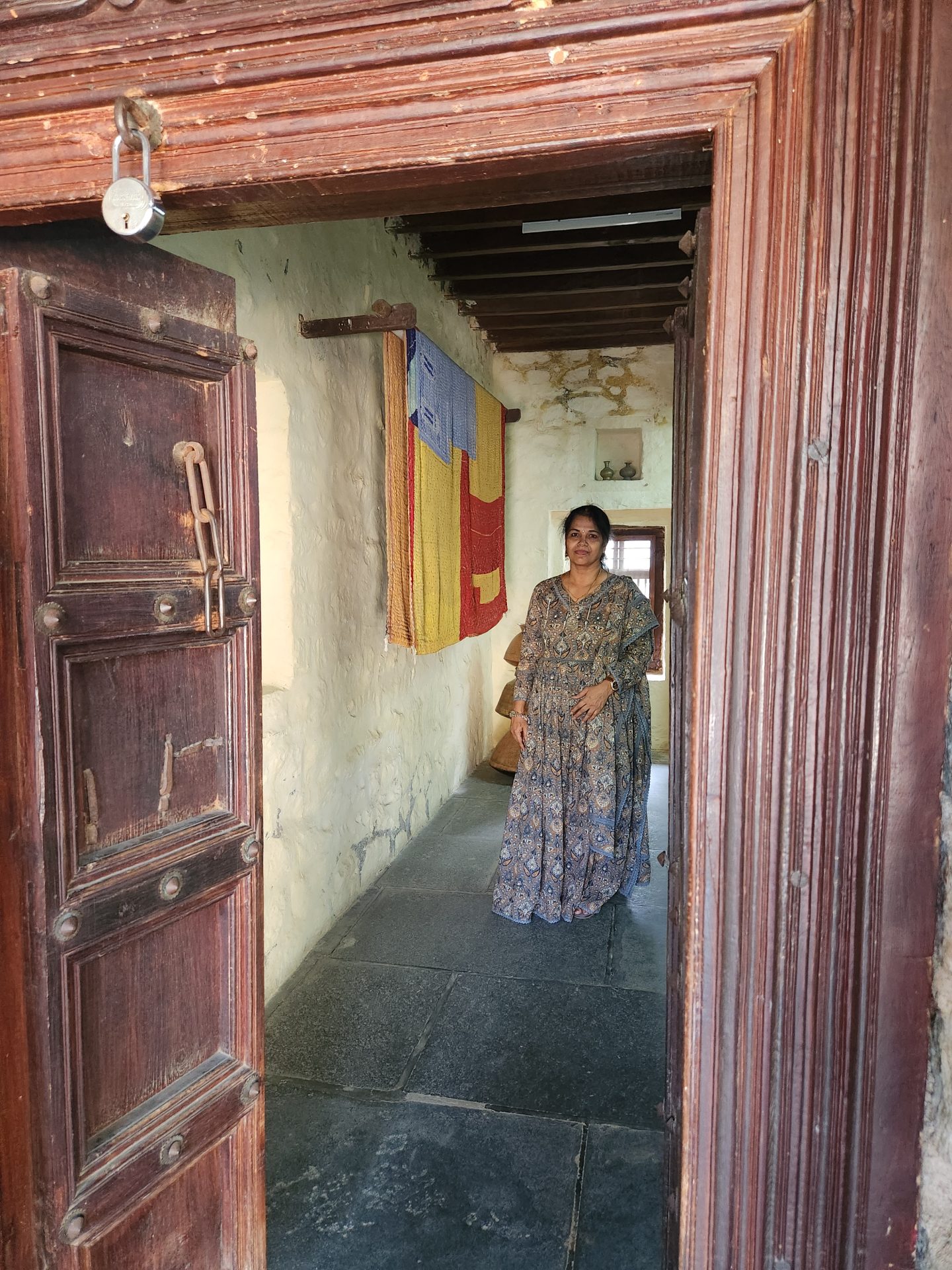
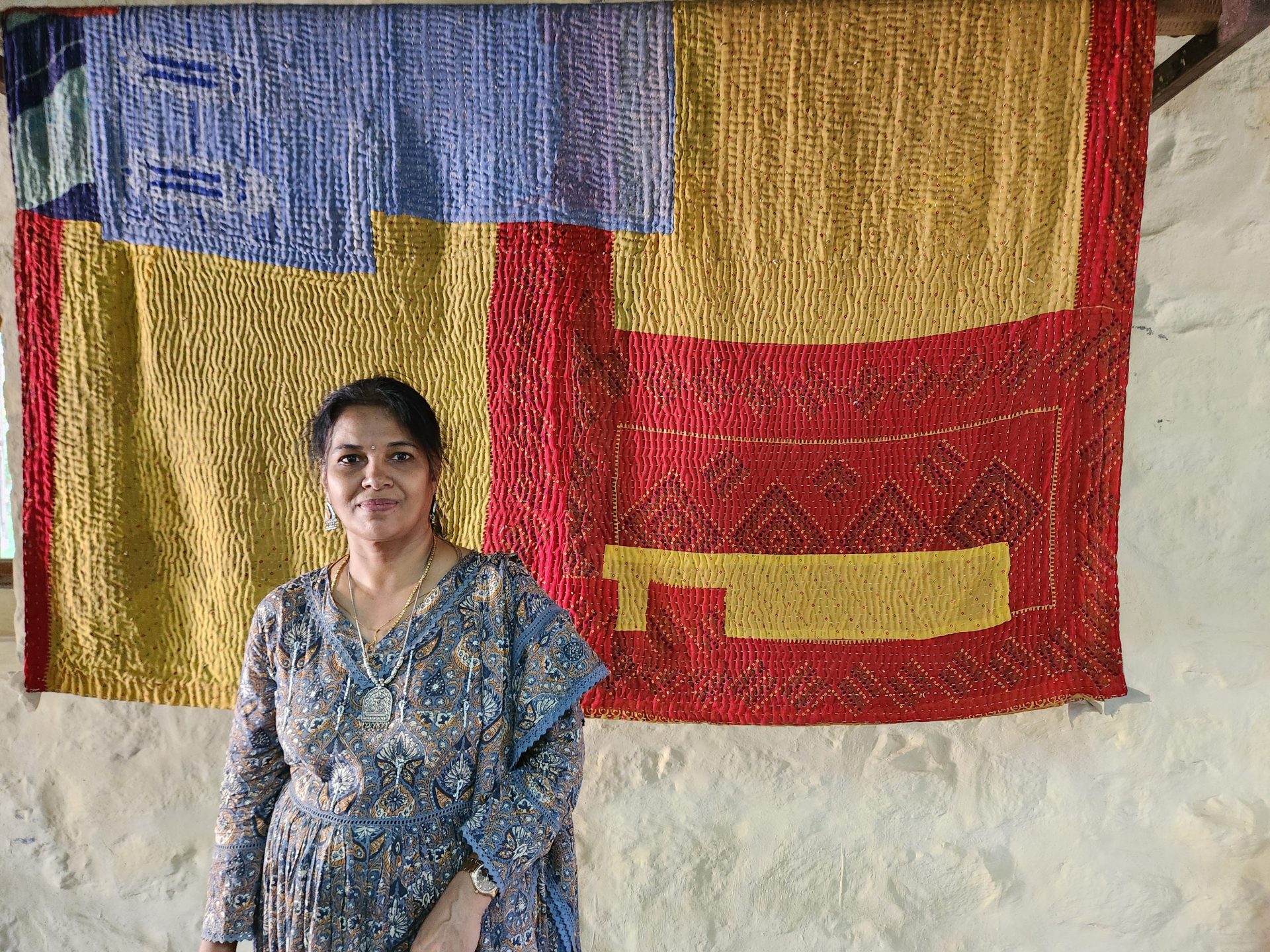
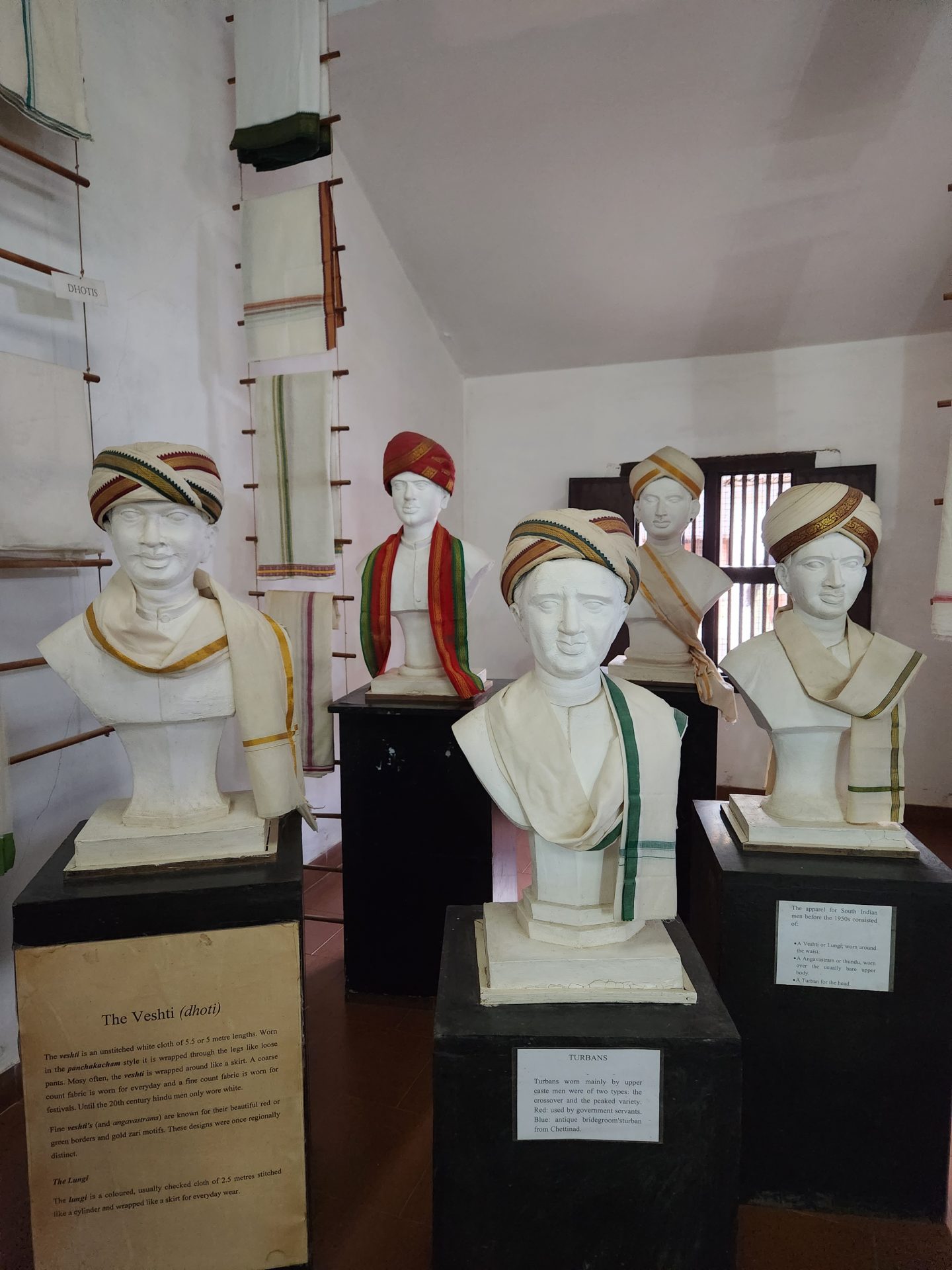
Karnataka - The Ilkal Weaver’s House

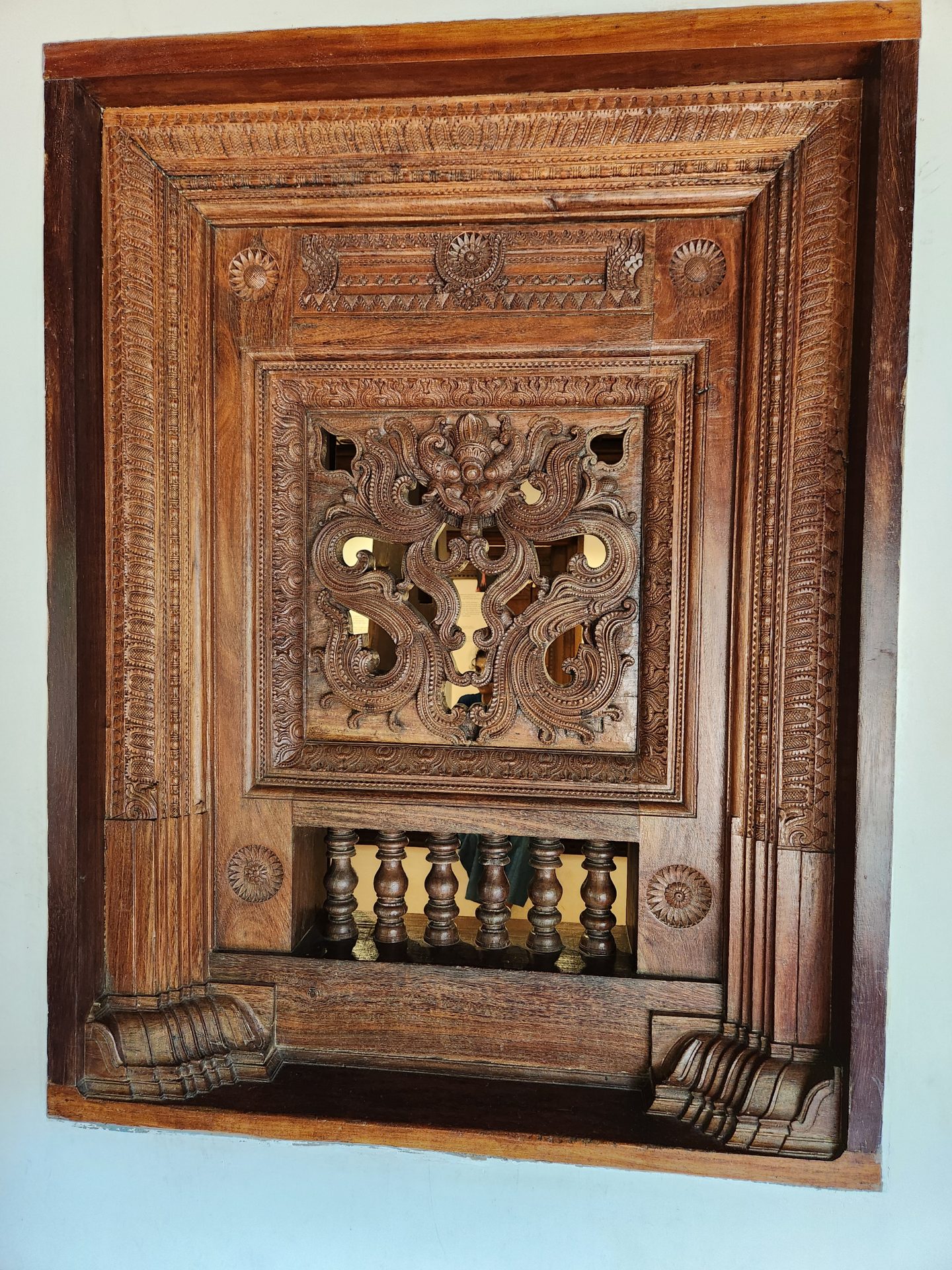
Built around a model after due diligence and research, the Ilkal Weaver’s house uses the wooden gateway, stone and wooden window from the remnants of a house which was known to the oldest in the town of Bagalkote.


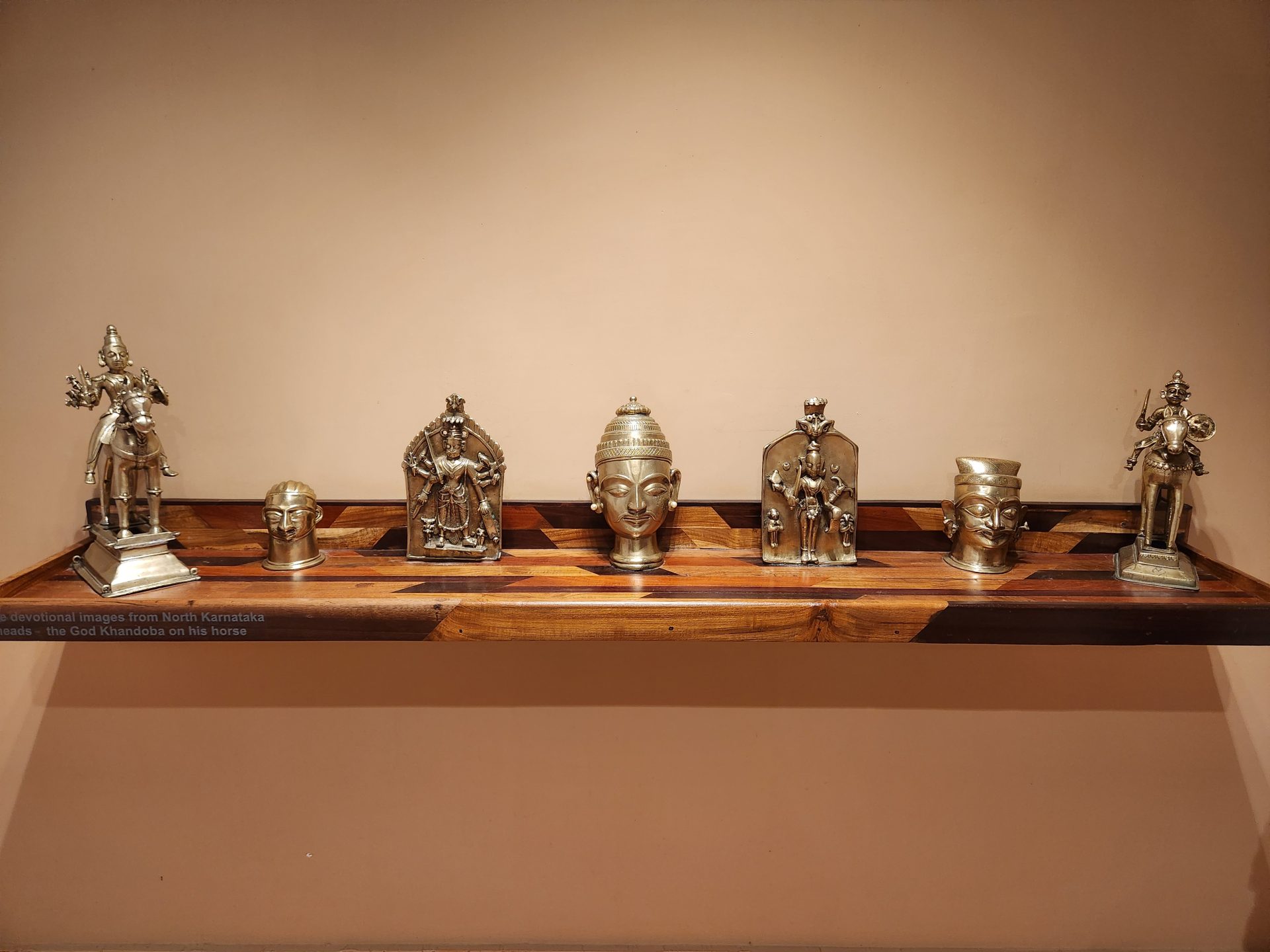
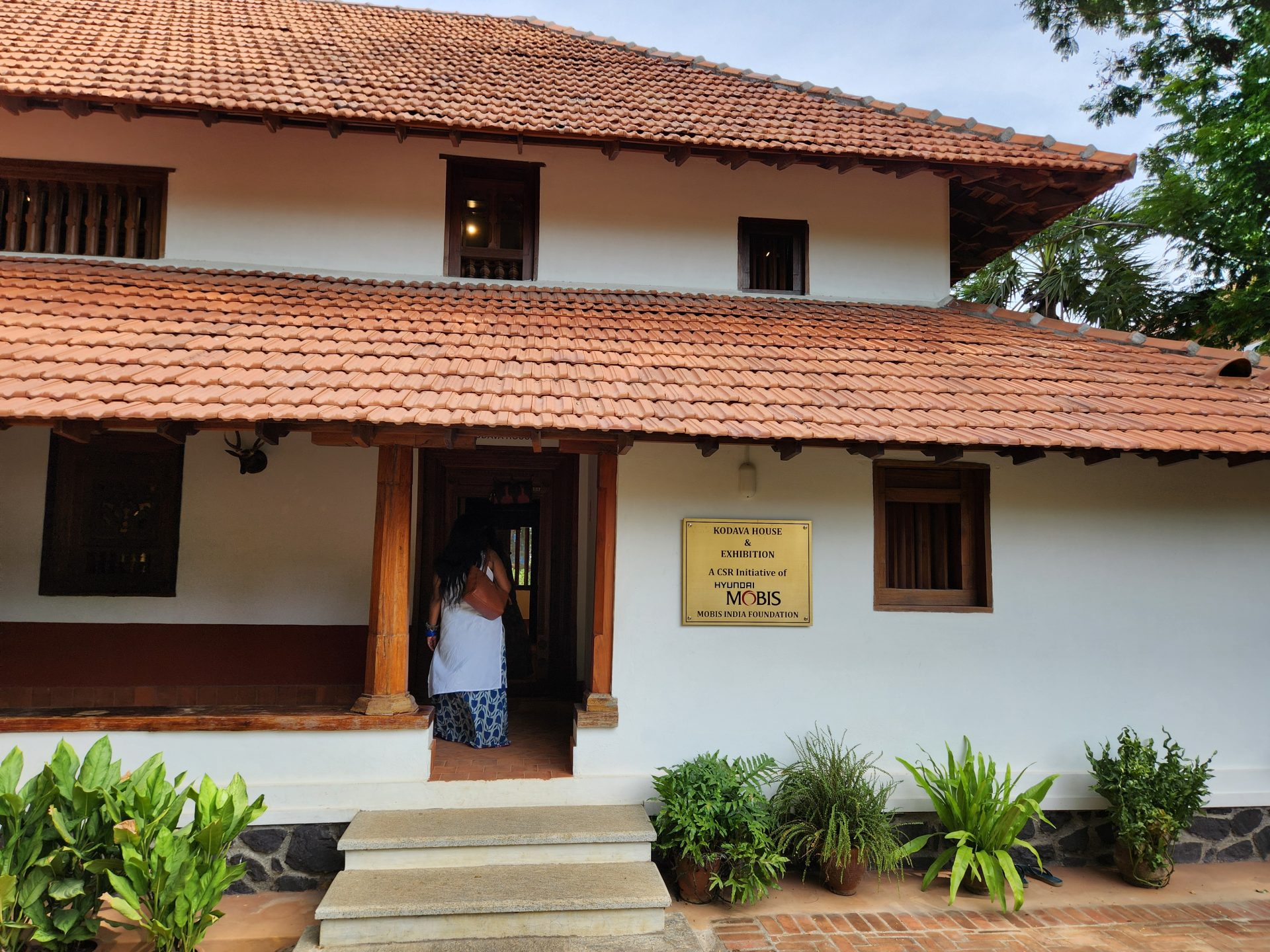
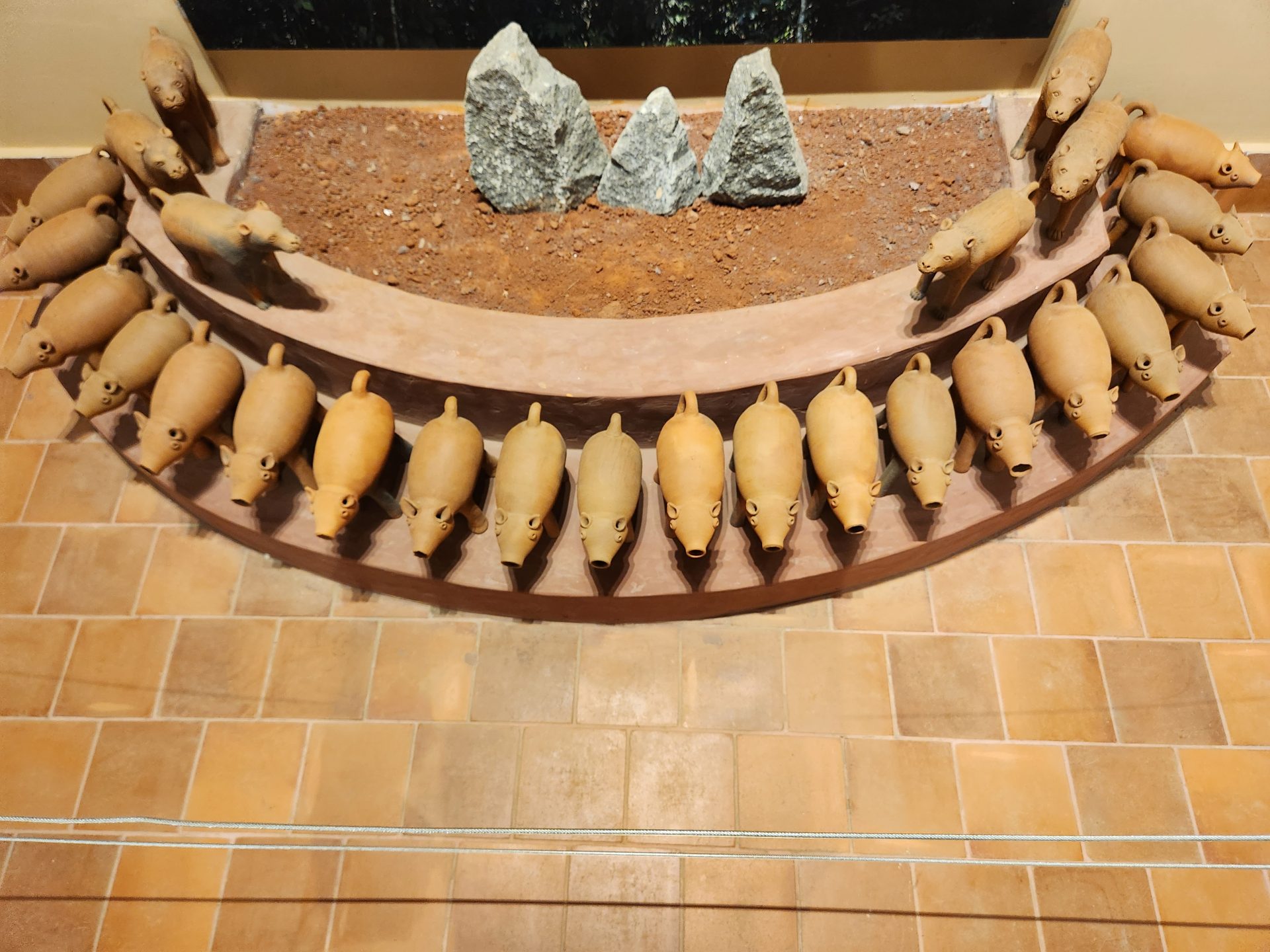
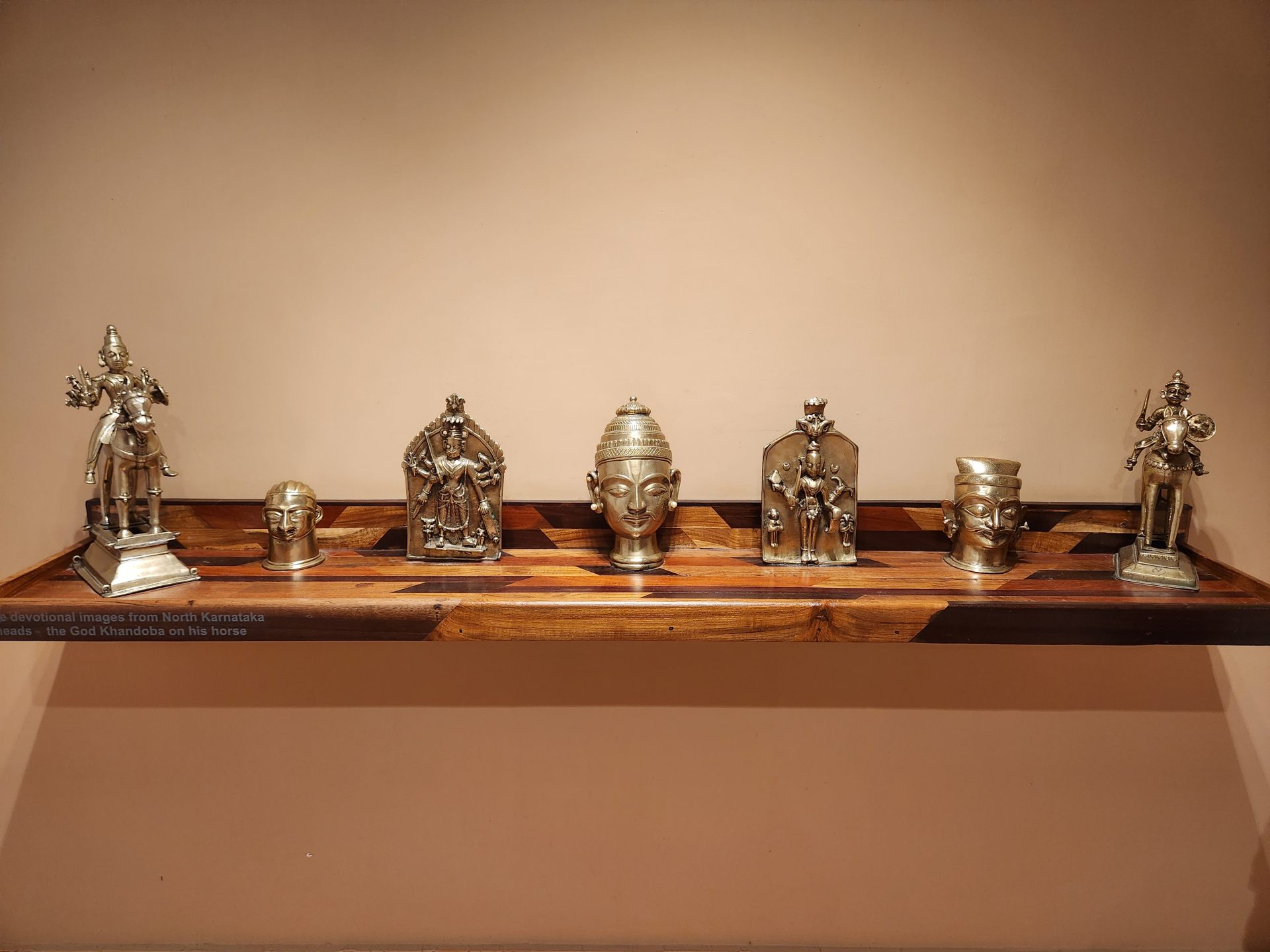
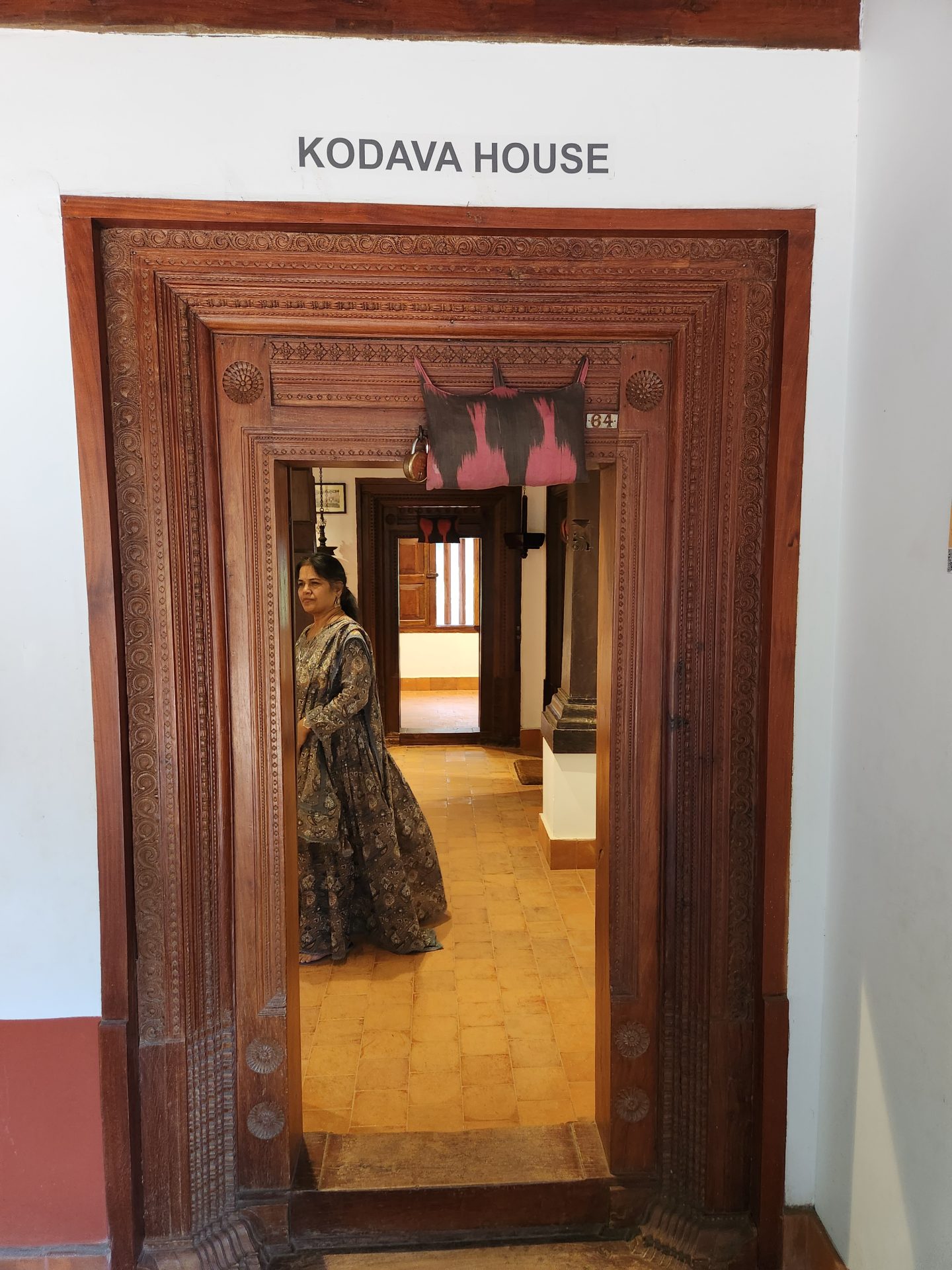
Karnataka - The Koduva’s House

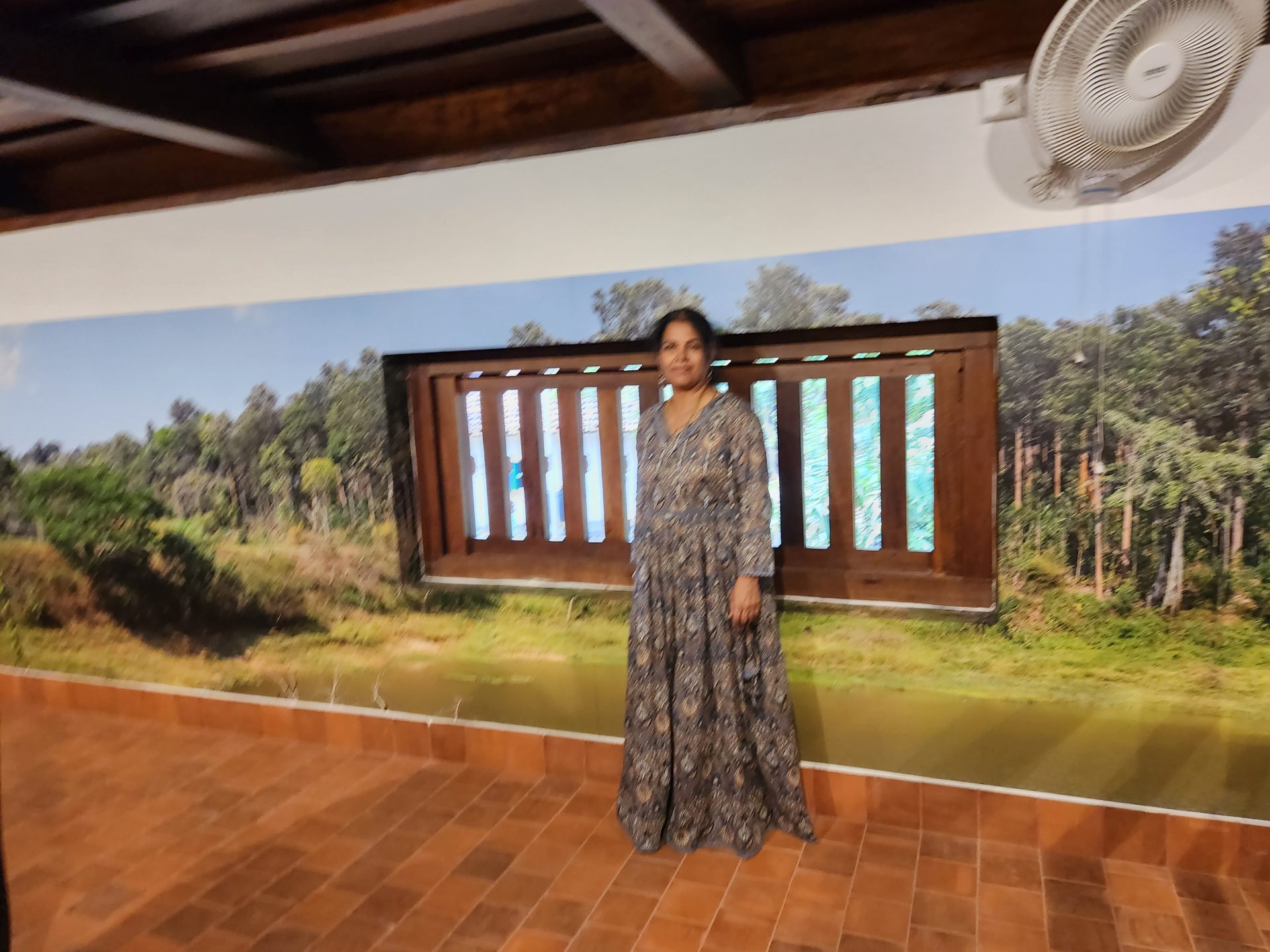
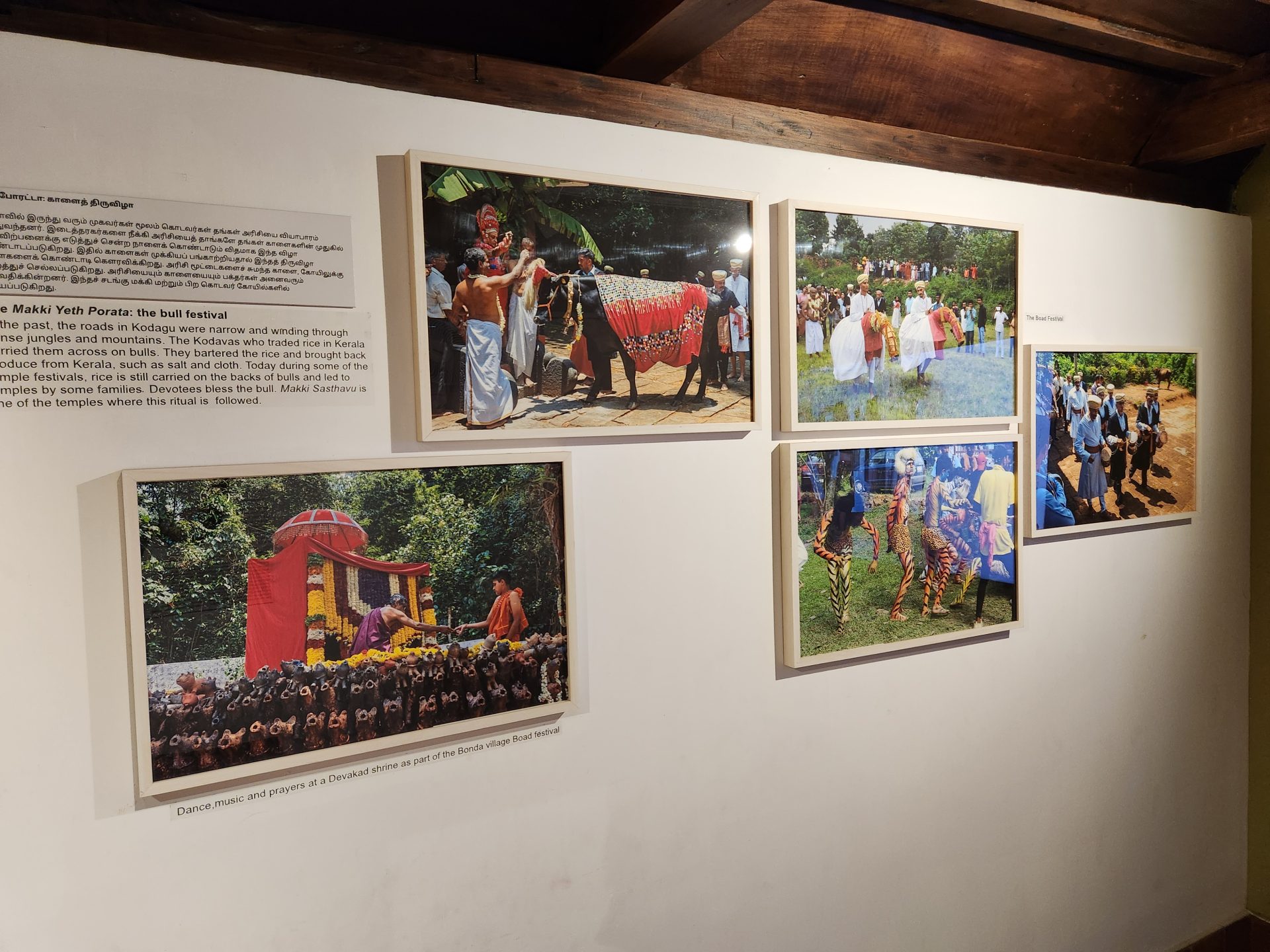
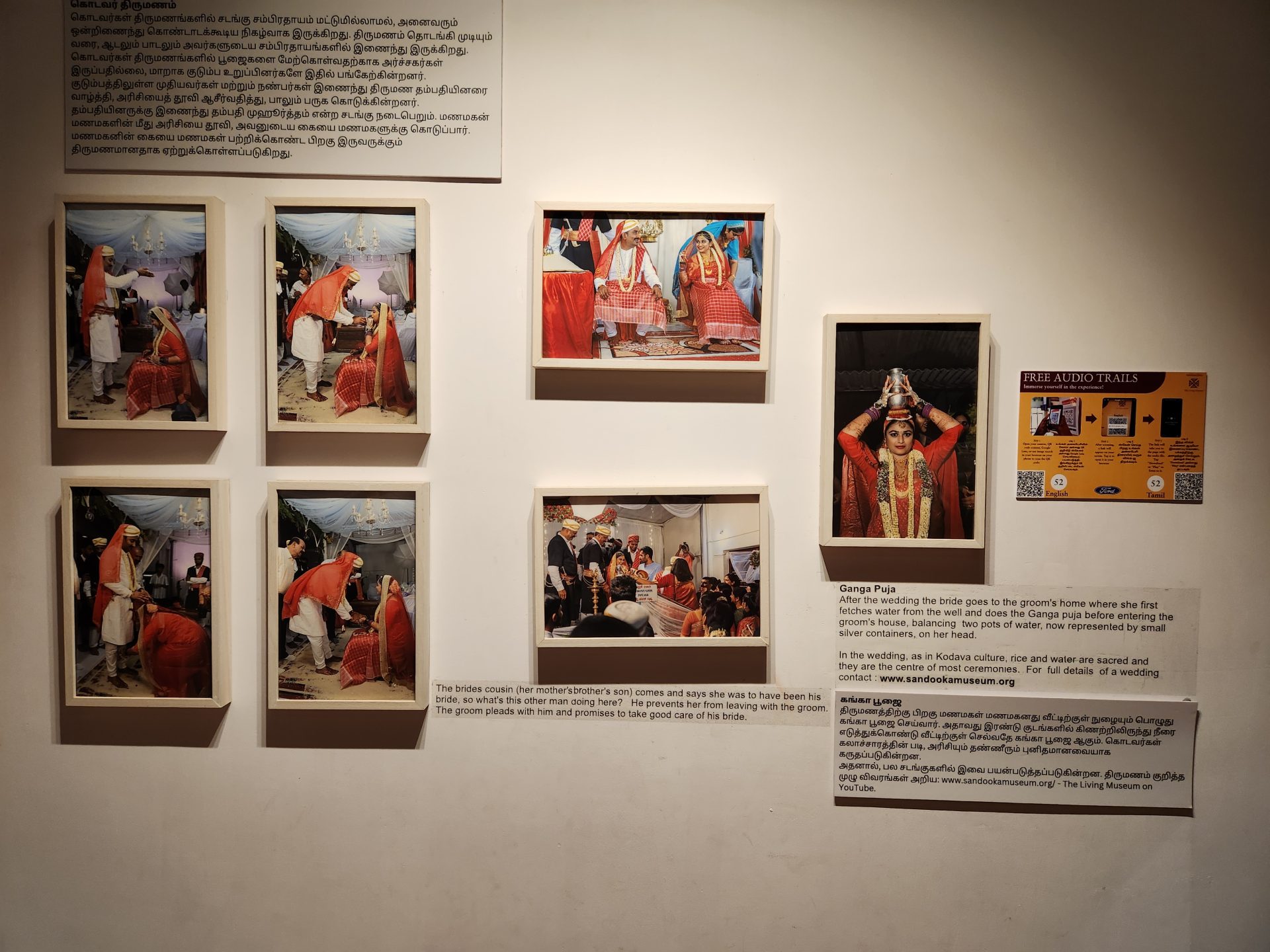
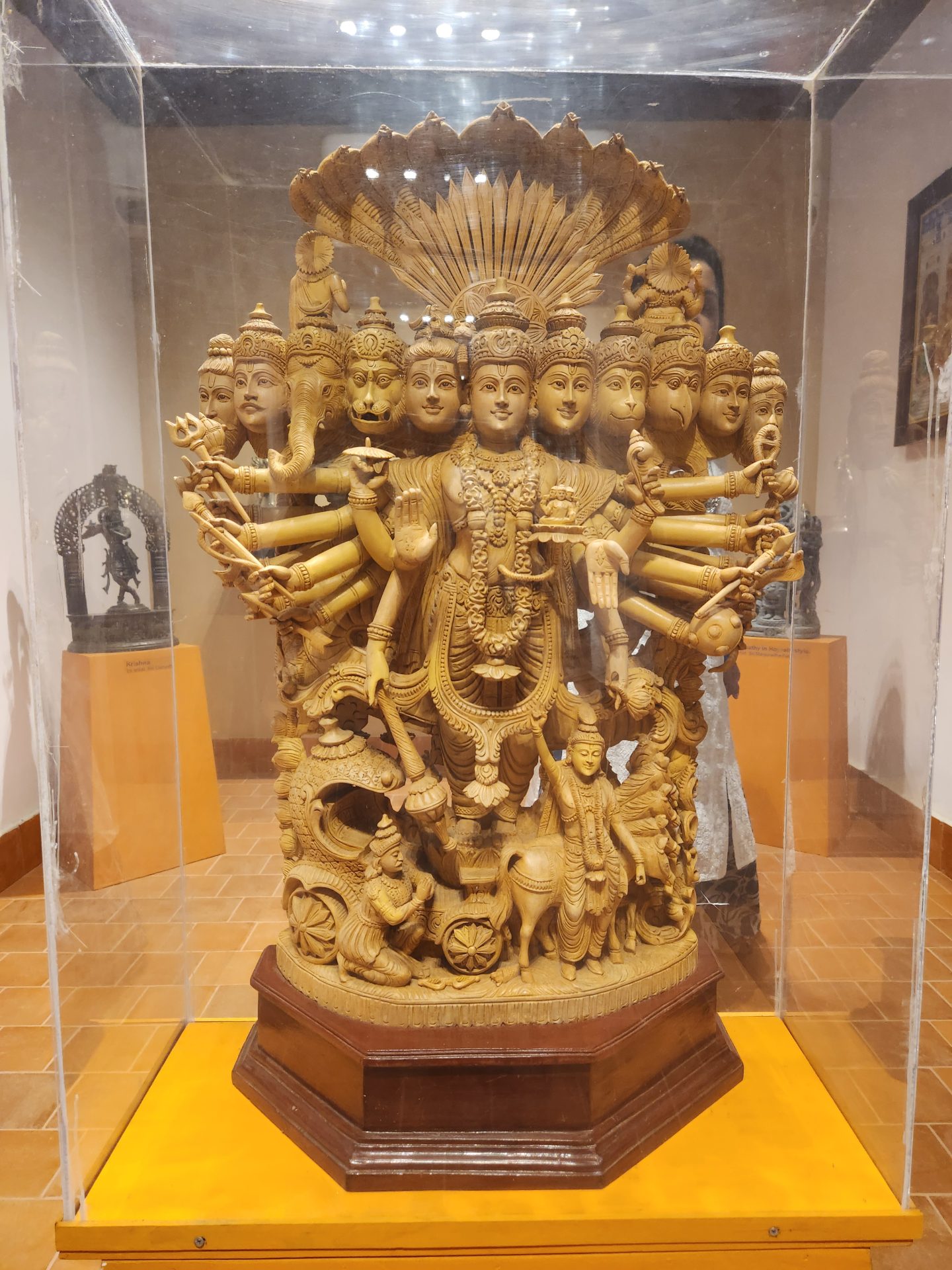
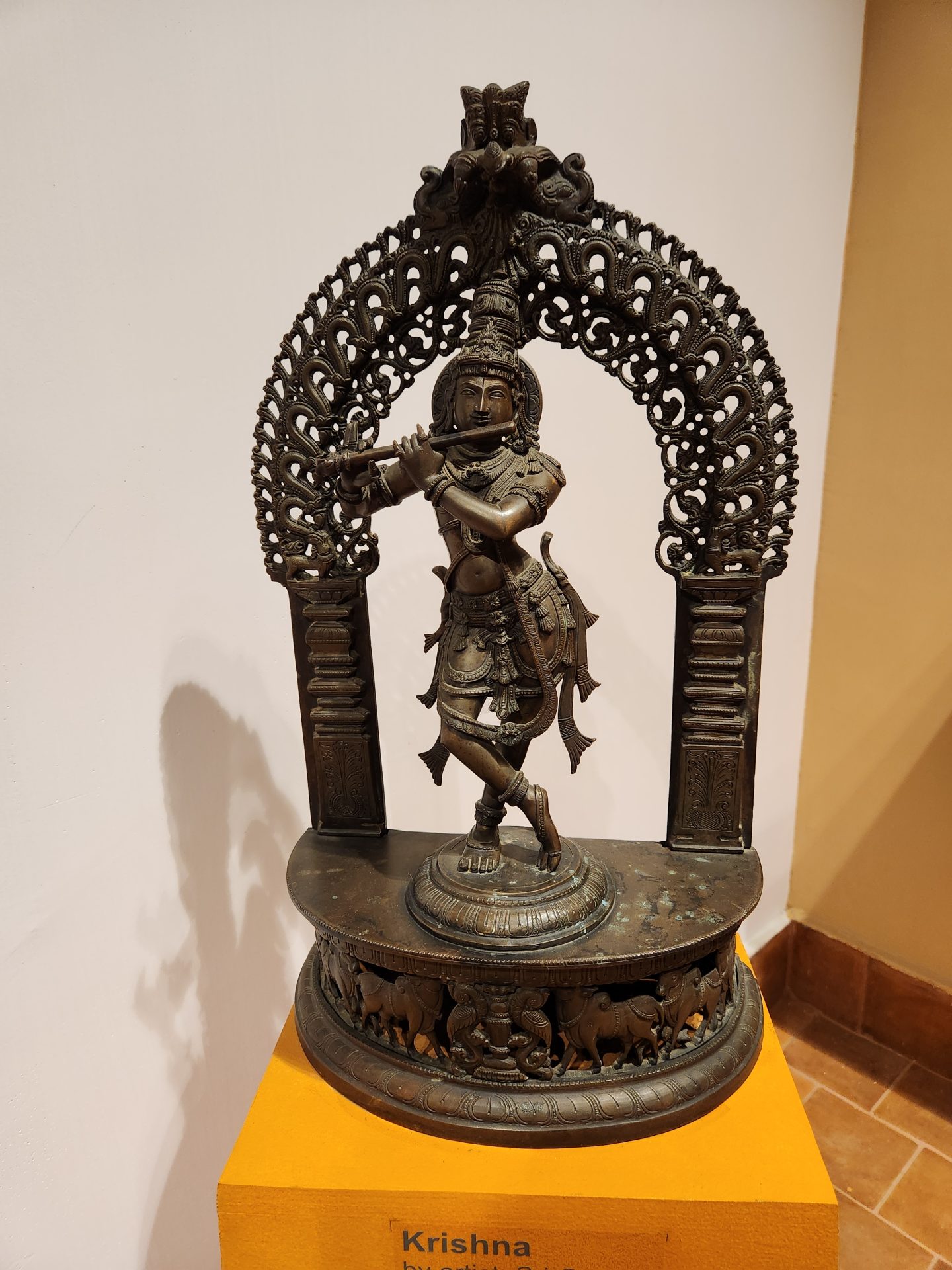
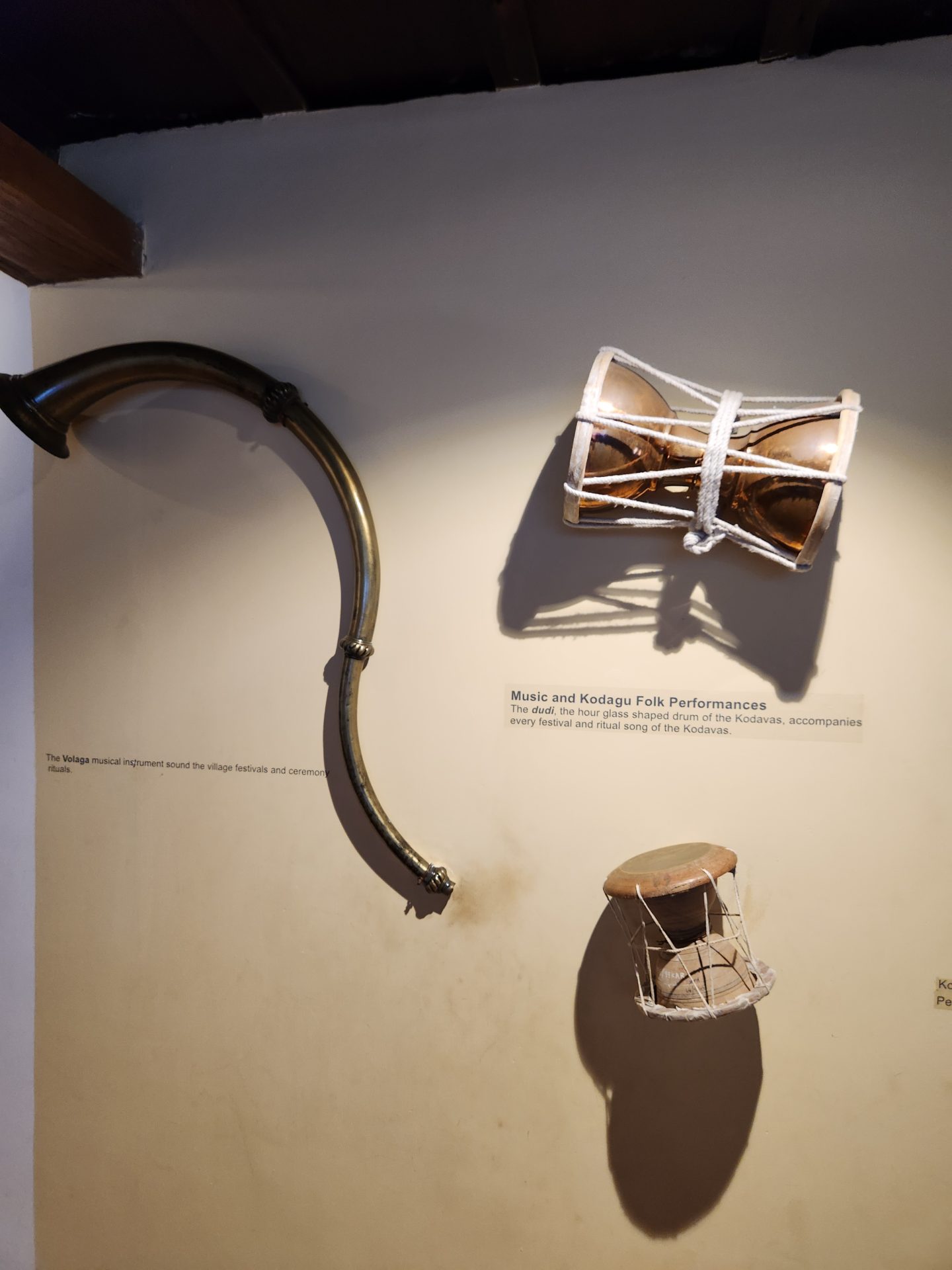
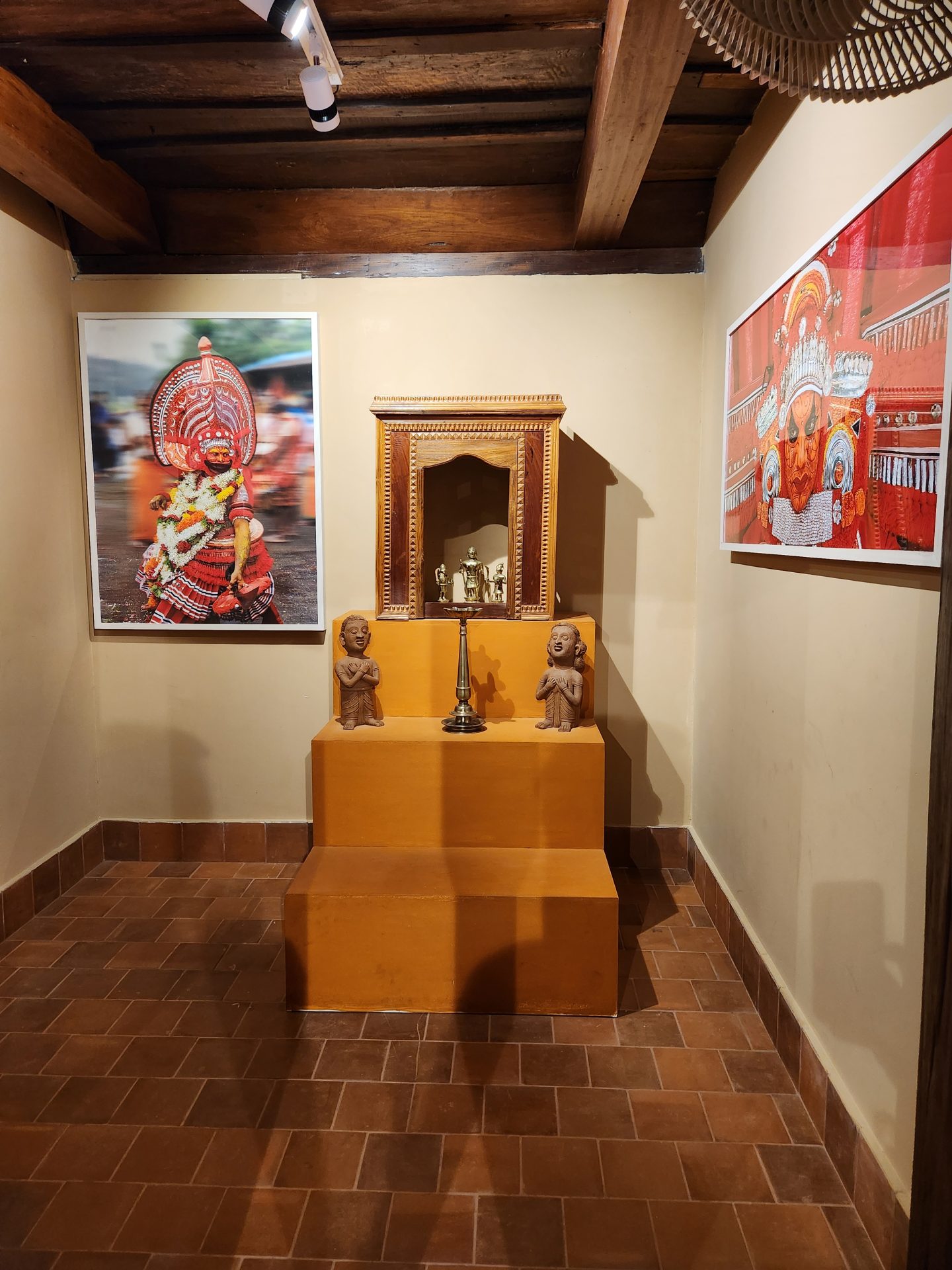
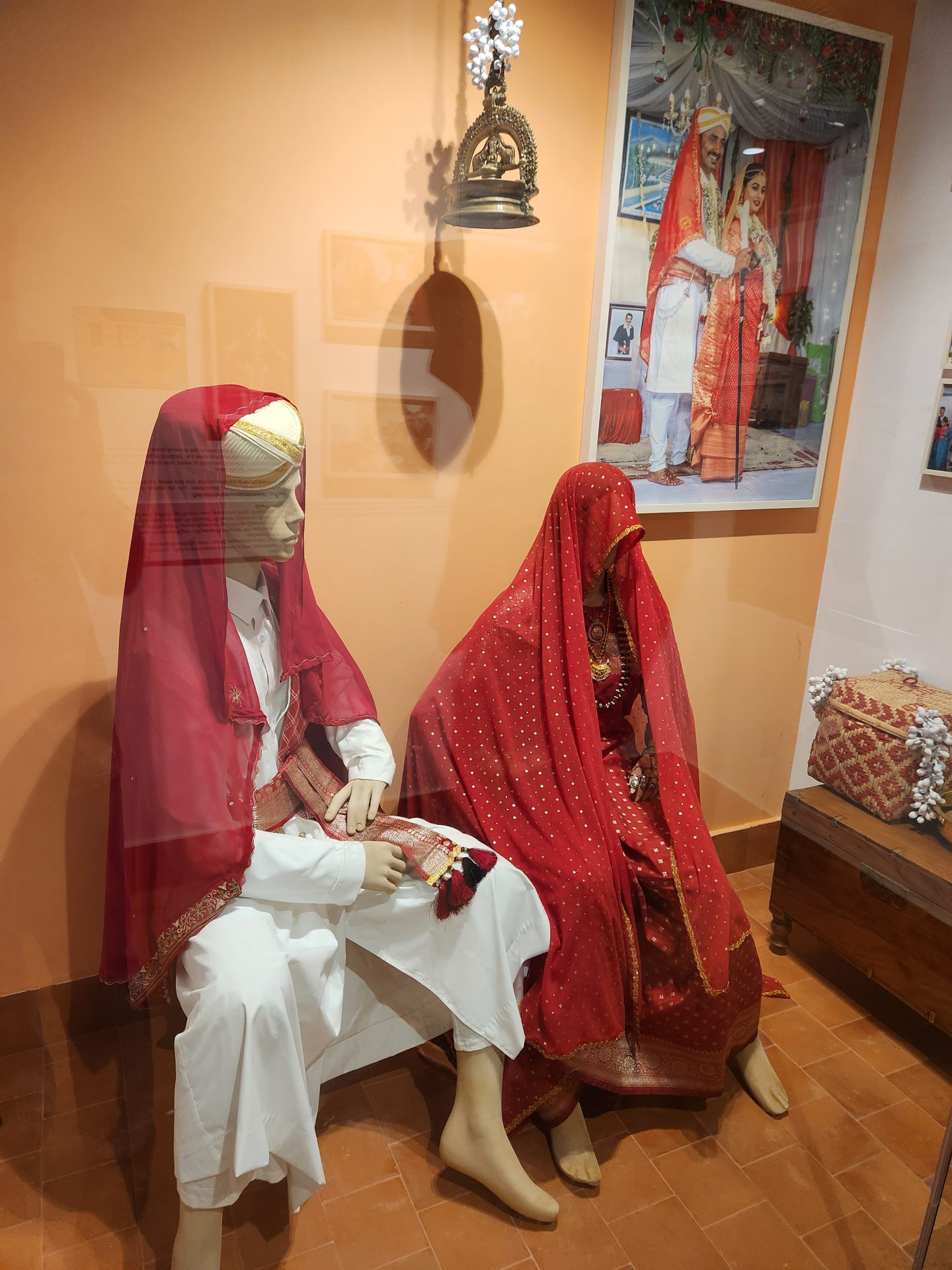
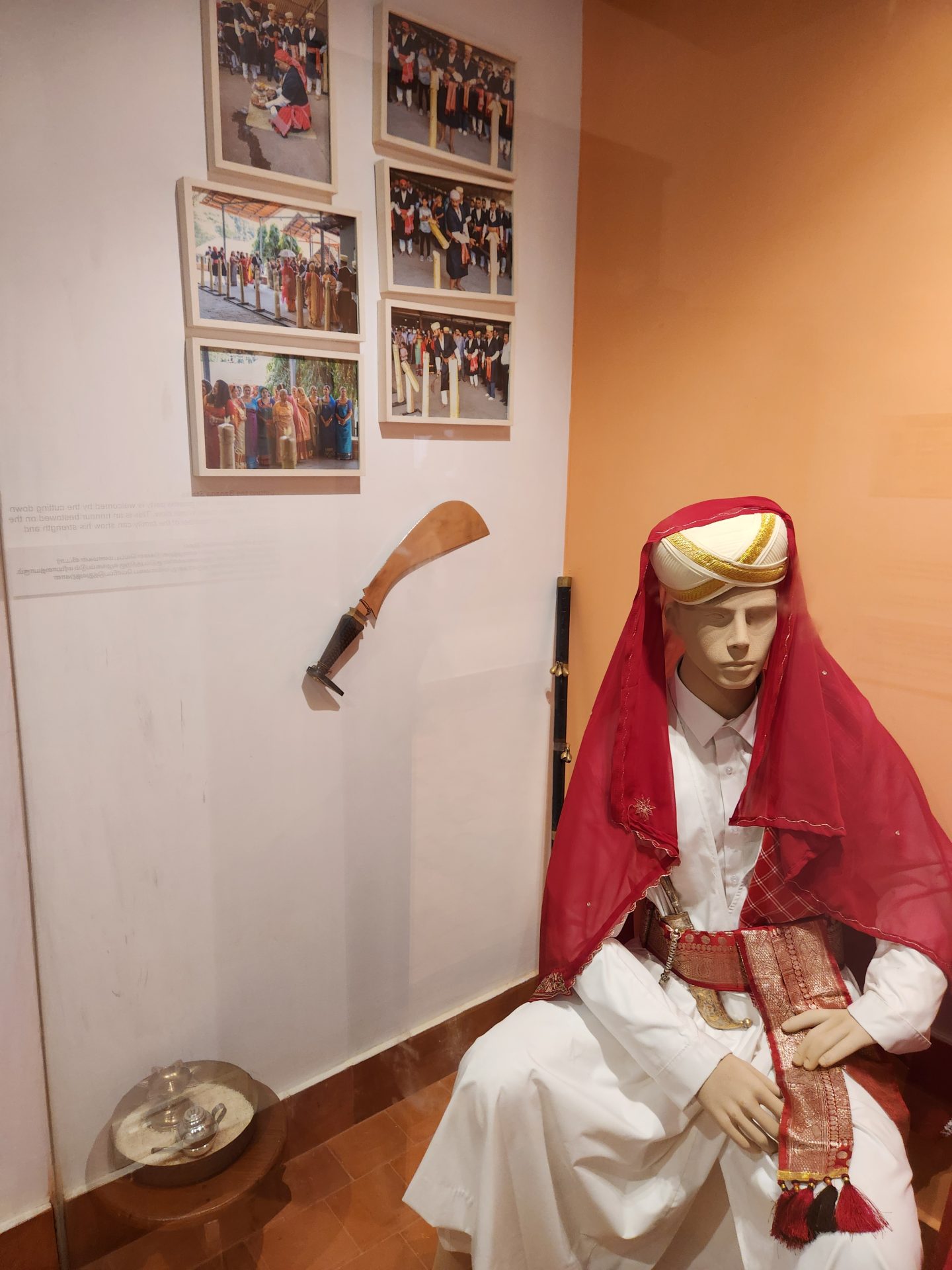
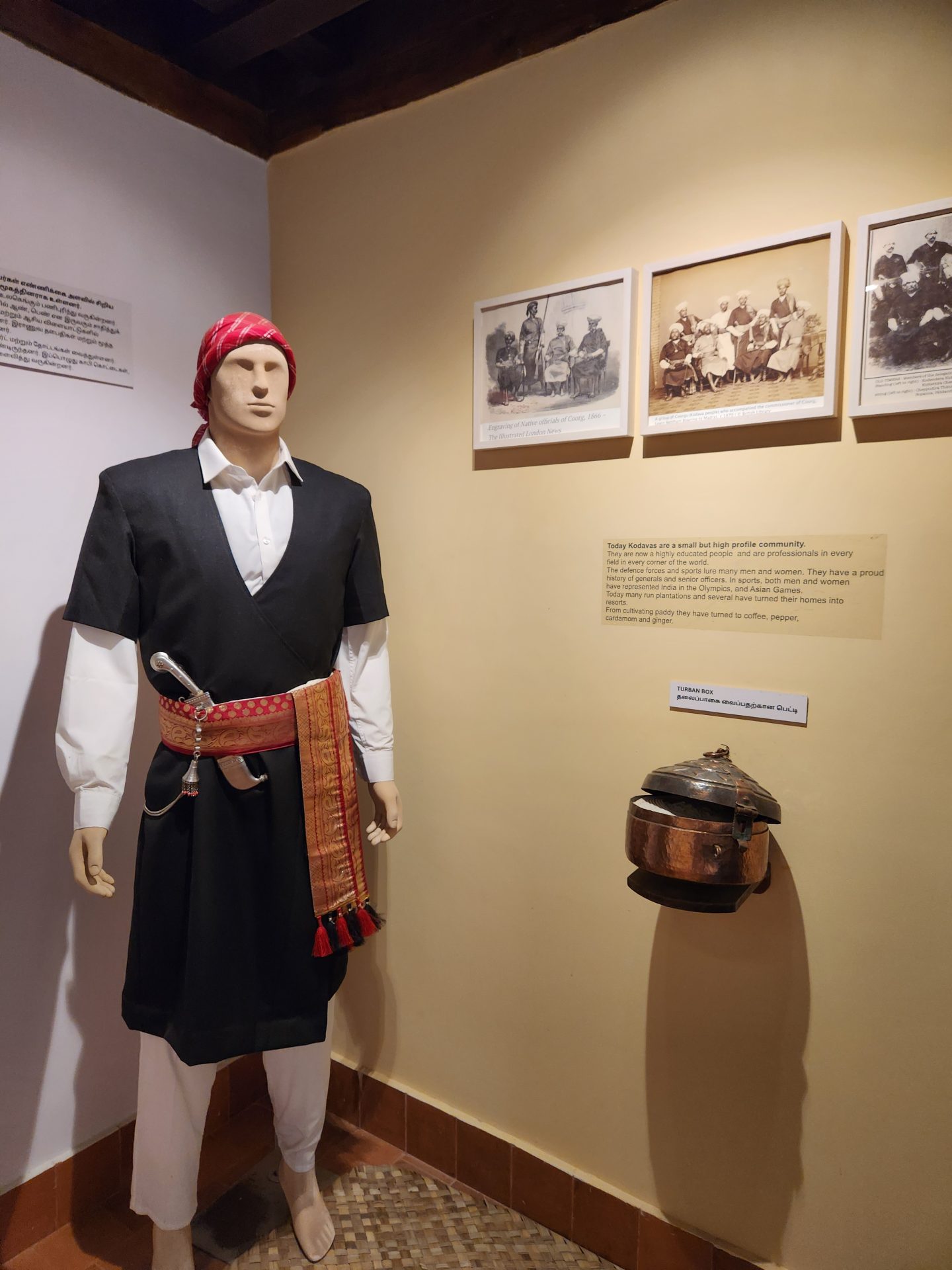
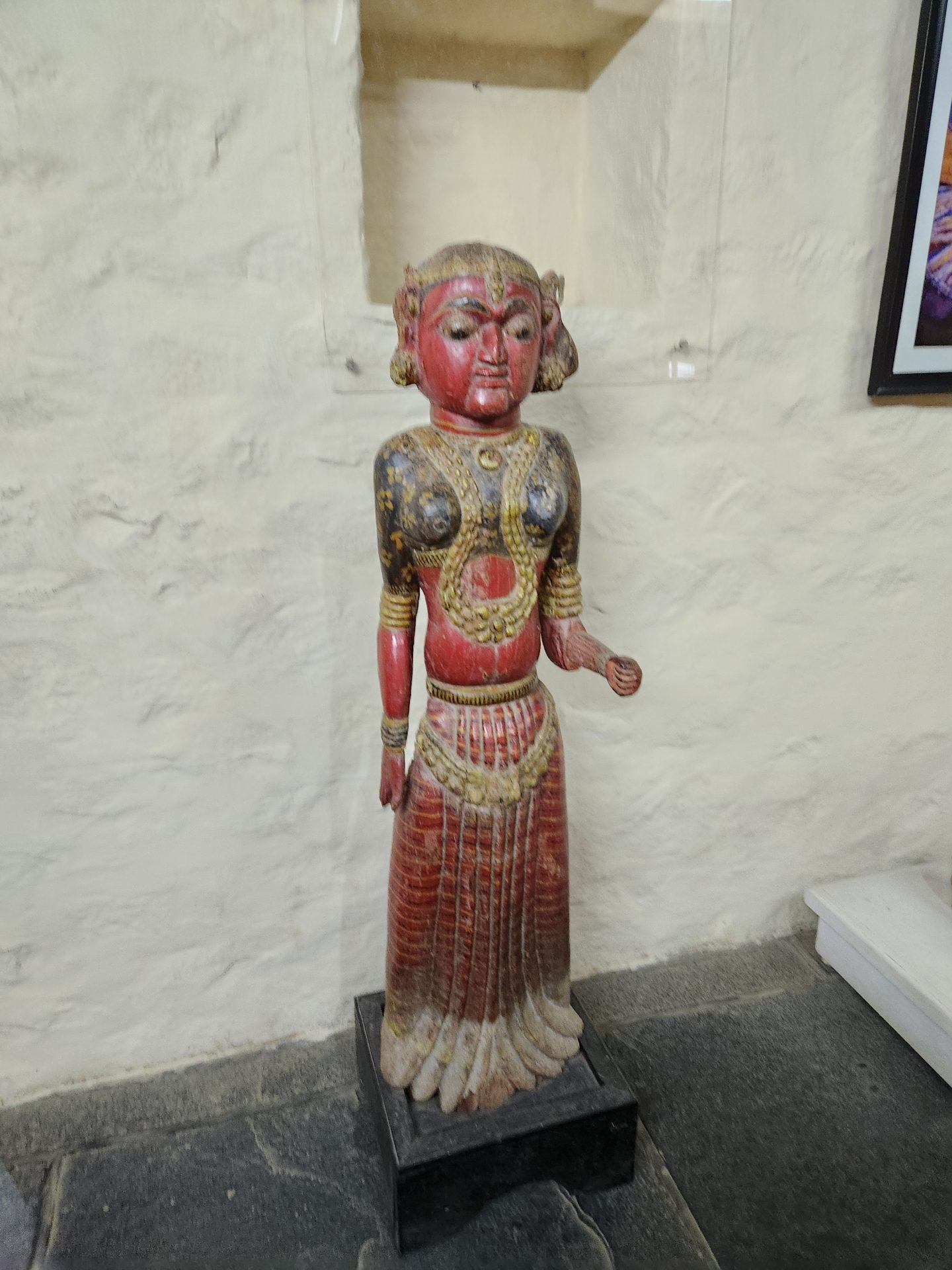
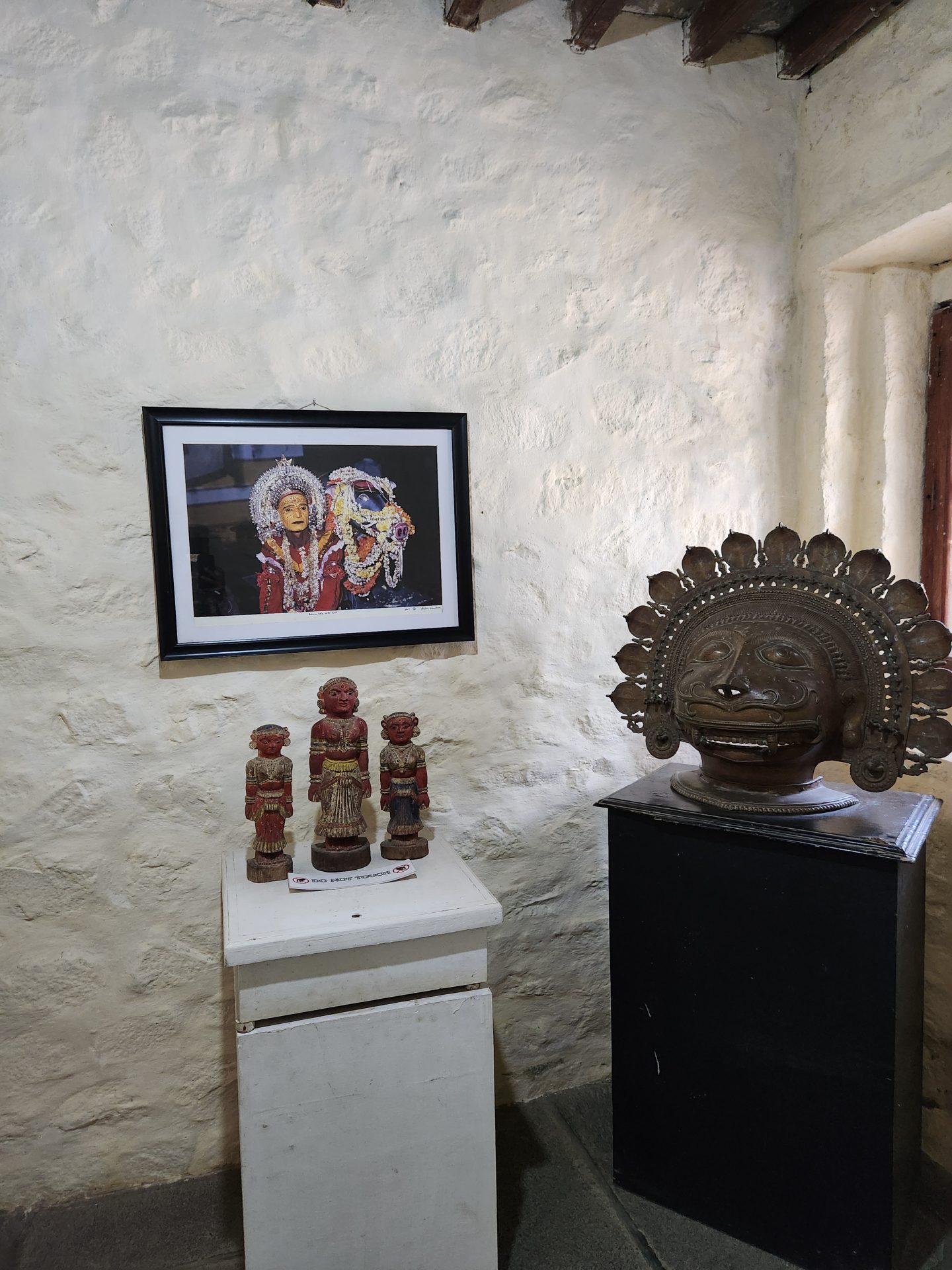
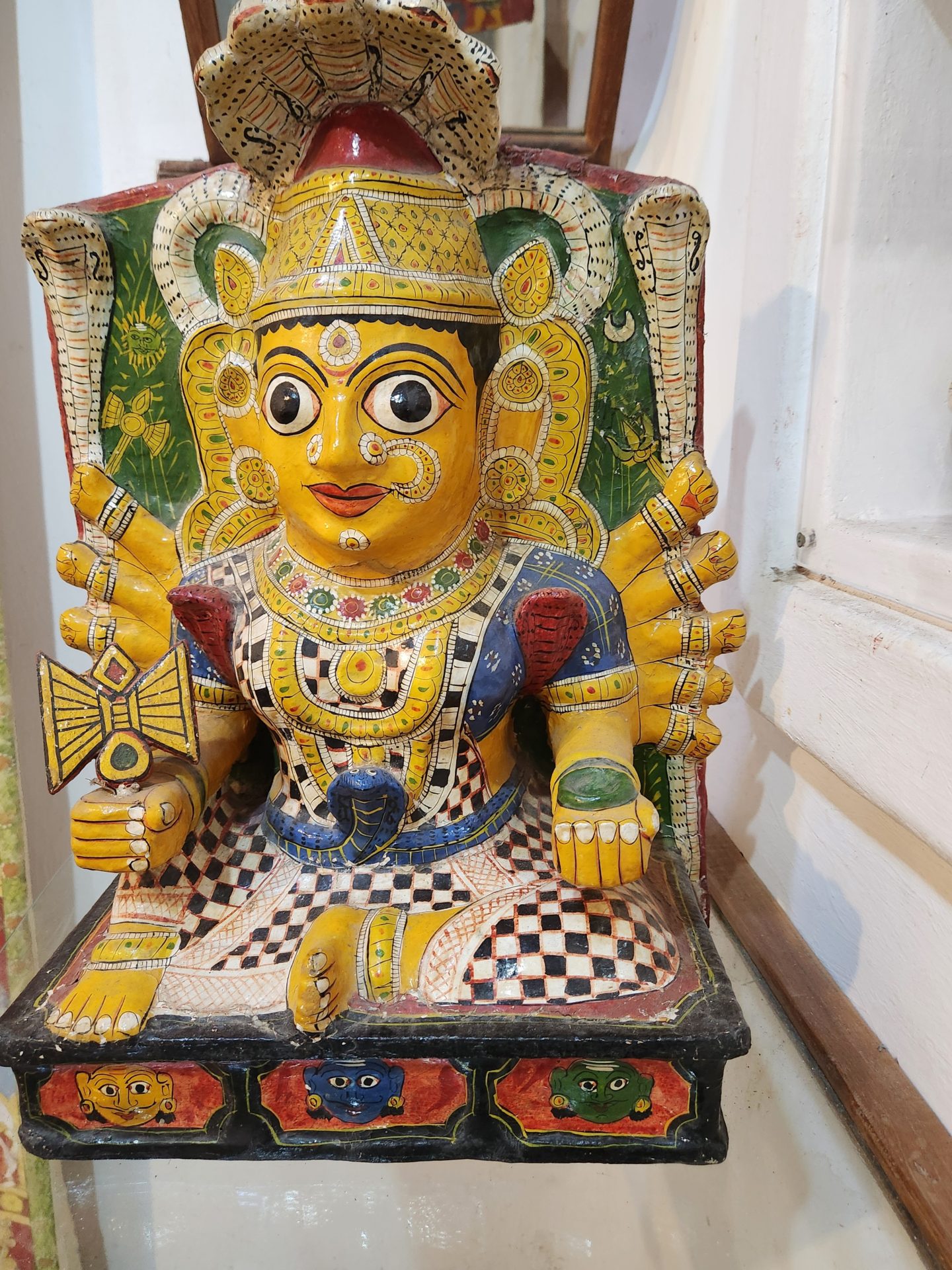
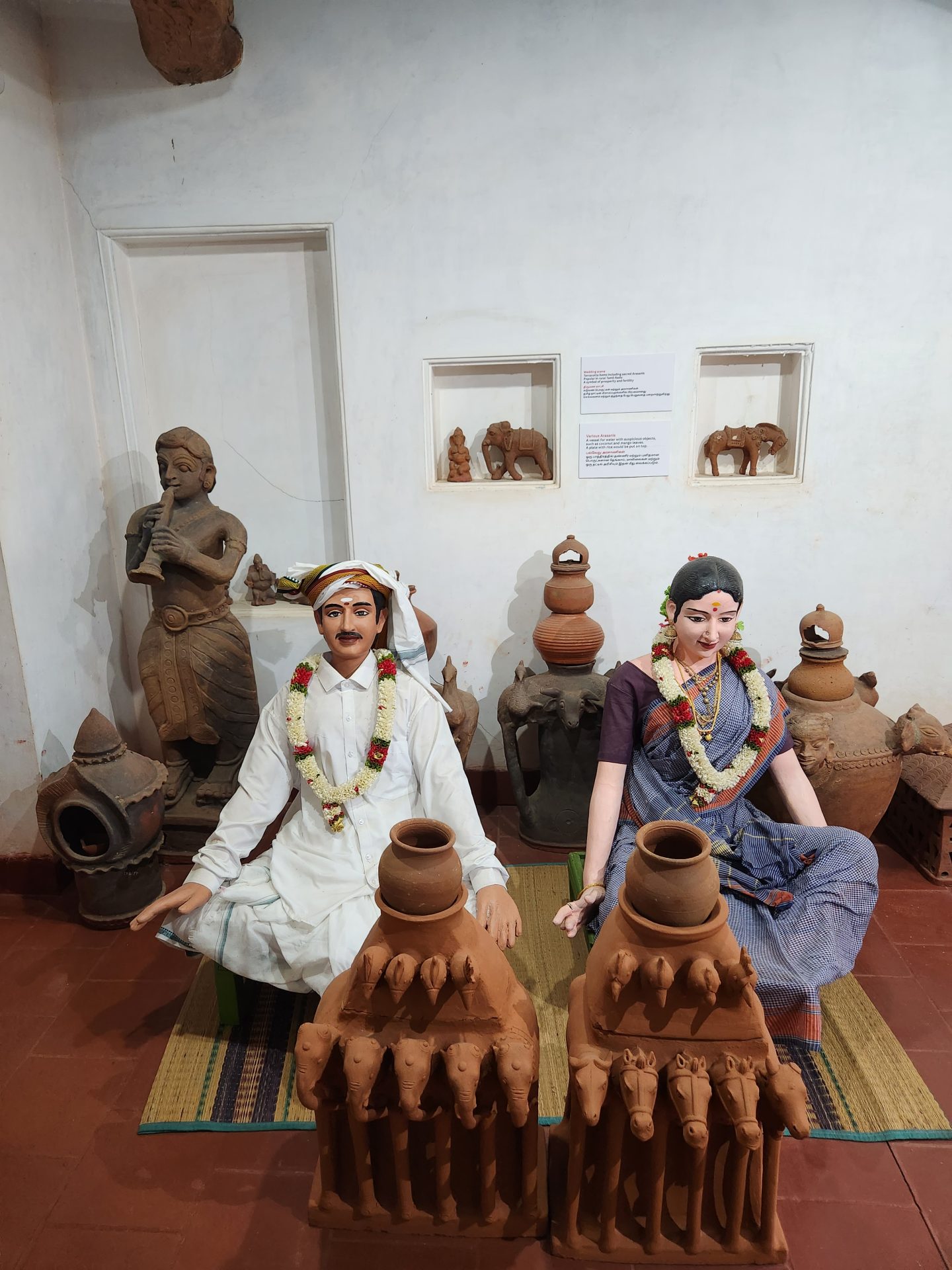
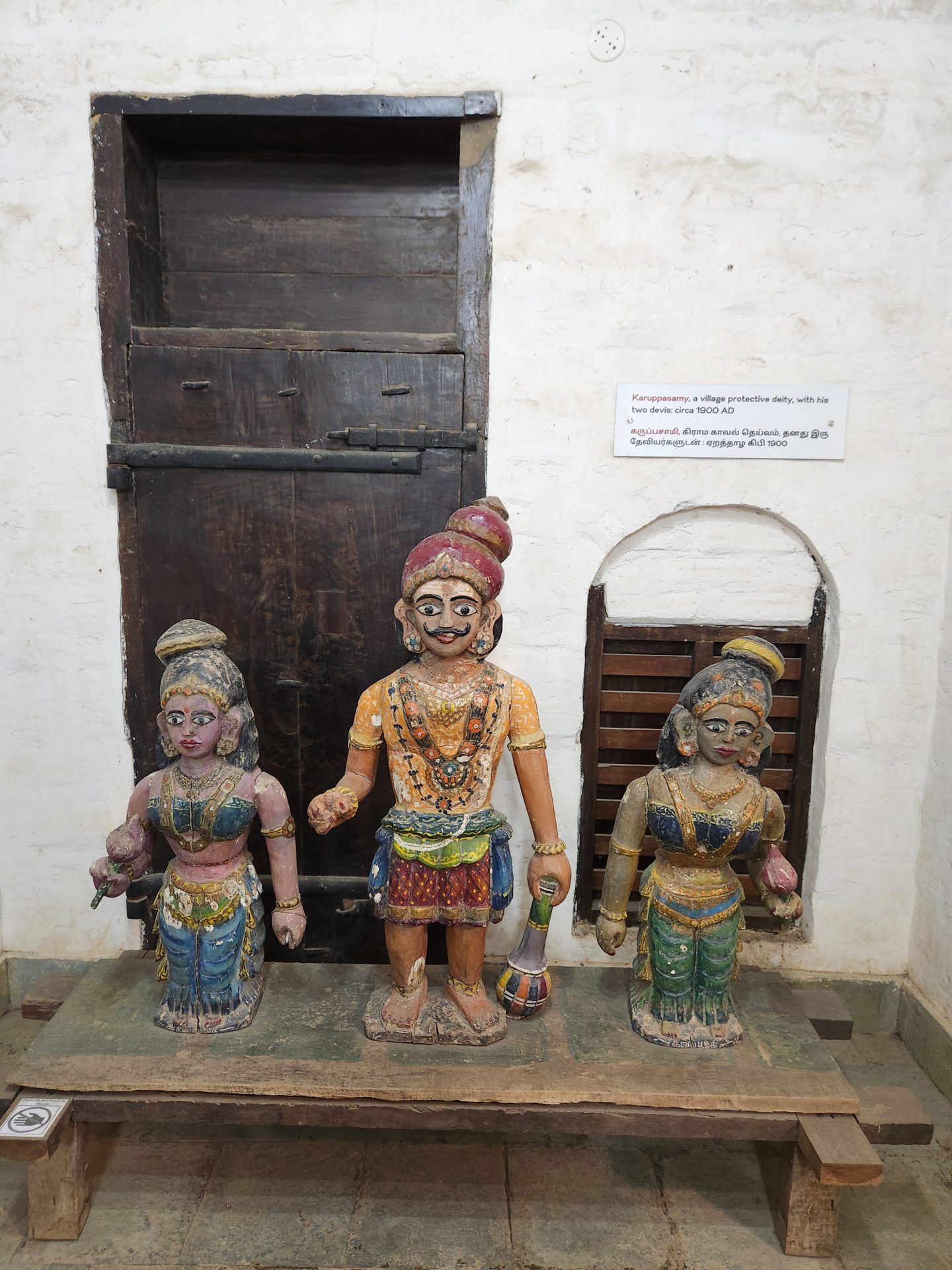
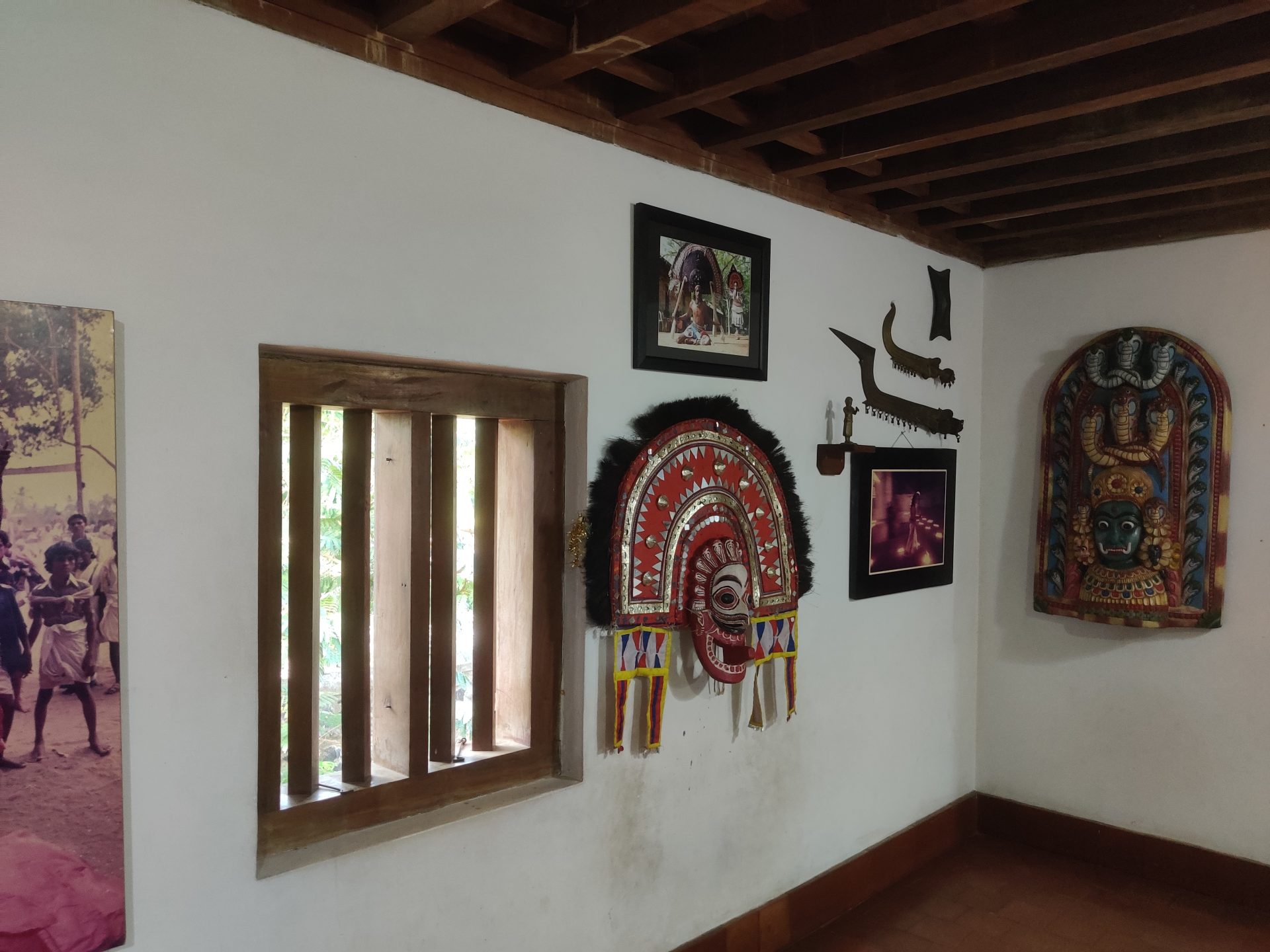
There is also a separate house devoted to the Koduvas where one gets to see figurines of a bride and  a  bridegroom from a Koduva Wedding, dresses and utensils used by them as well as glimpses of their festivals. 

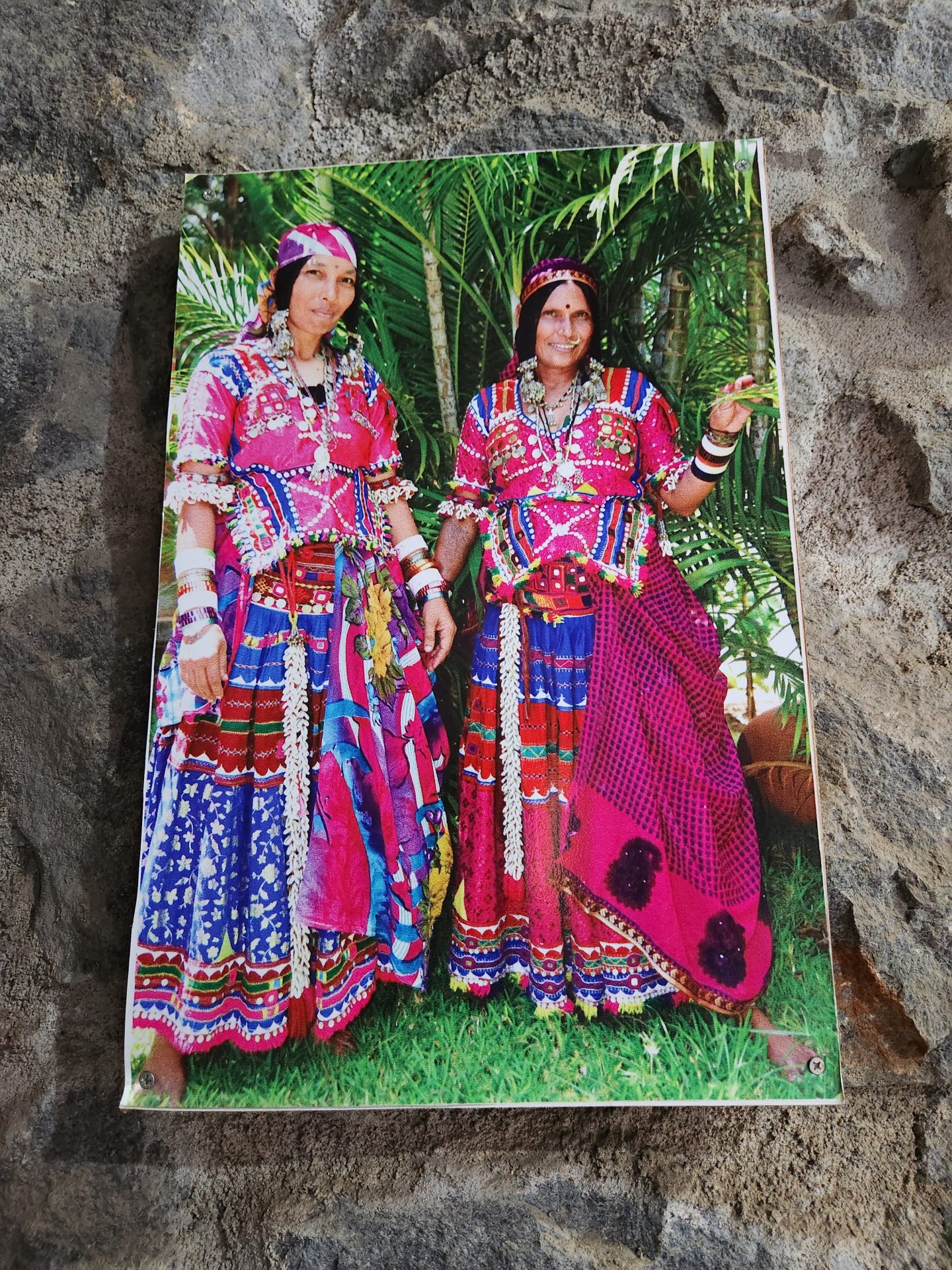
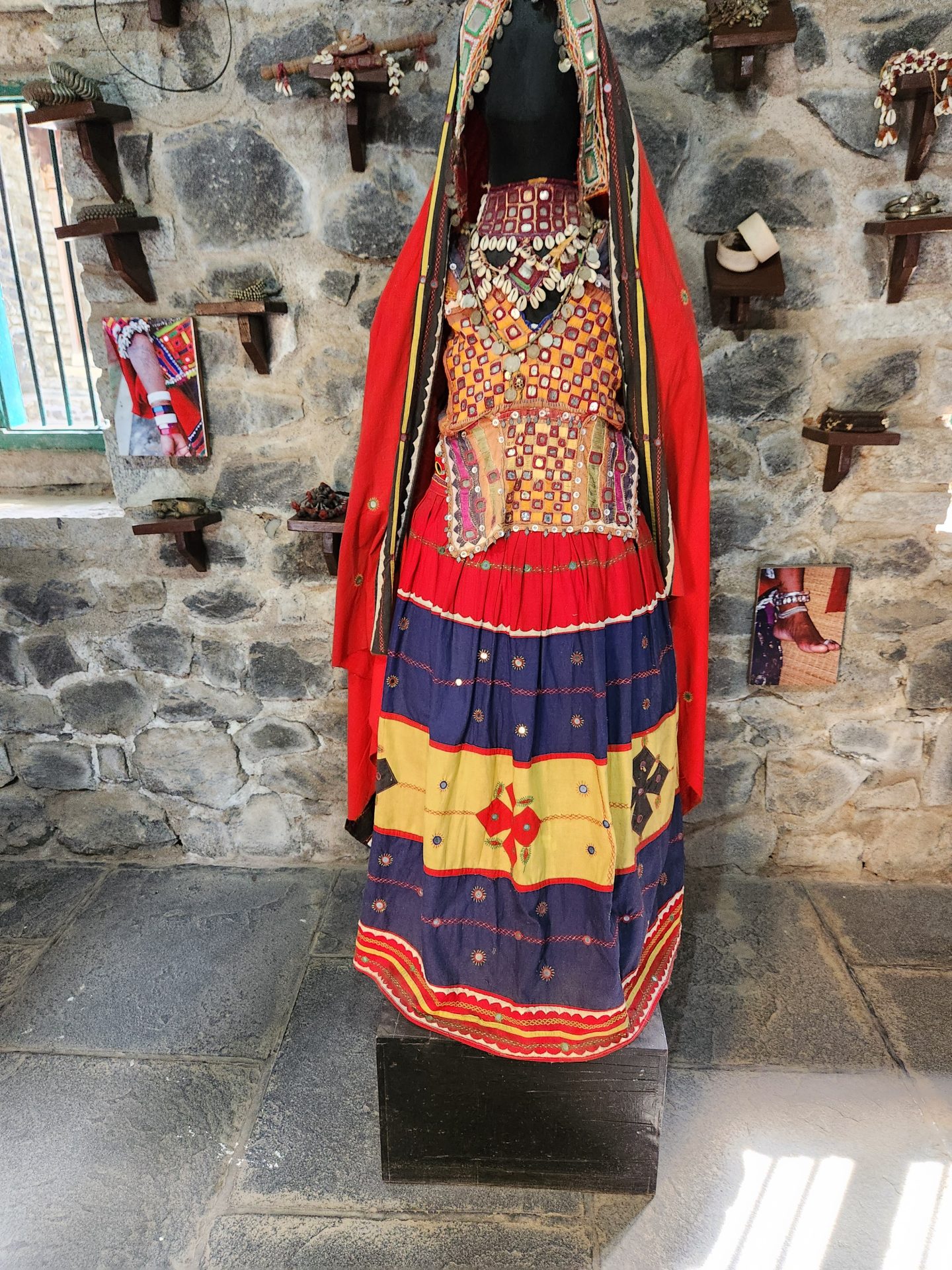
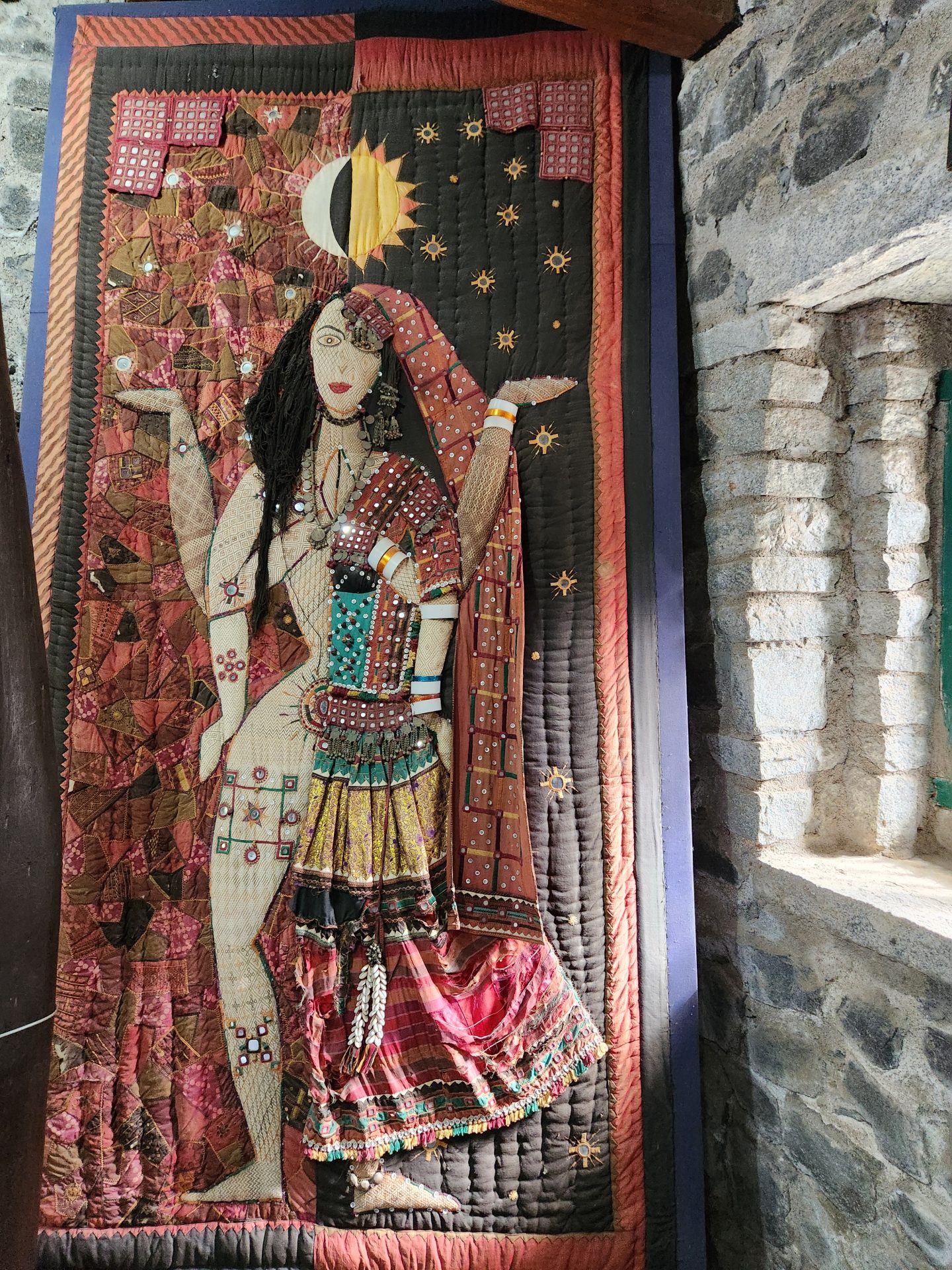
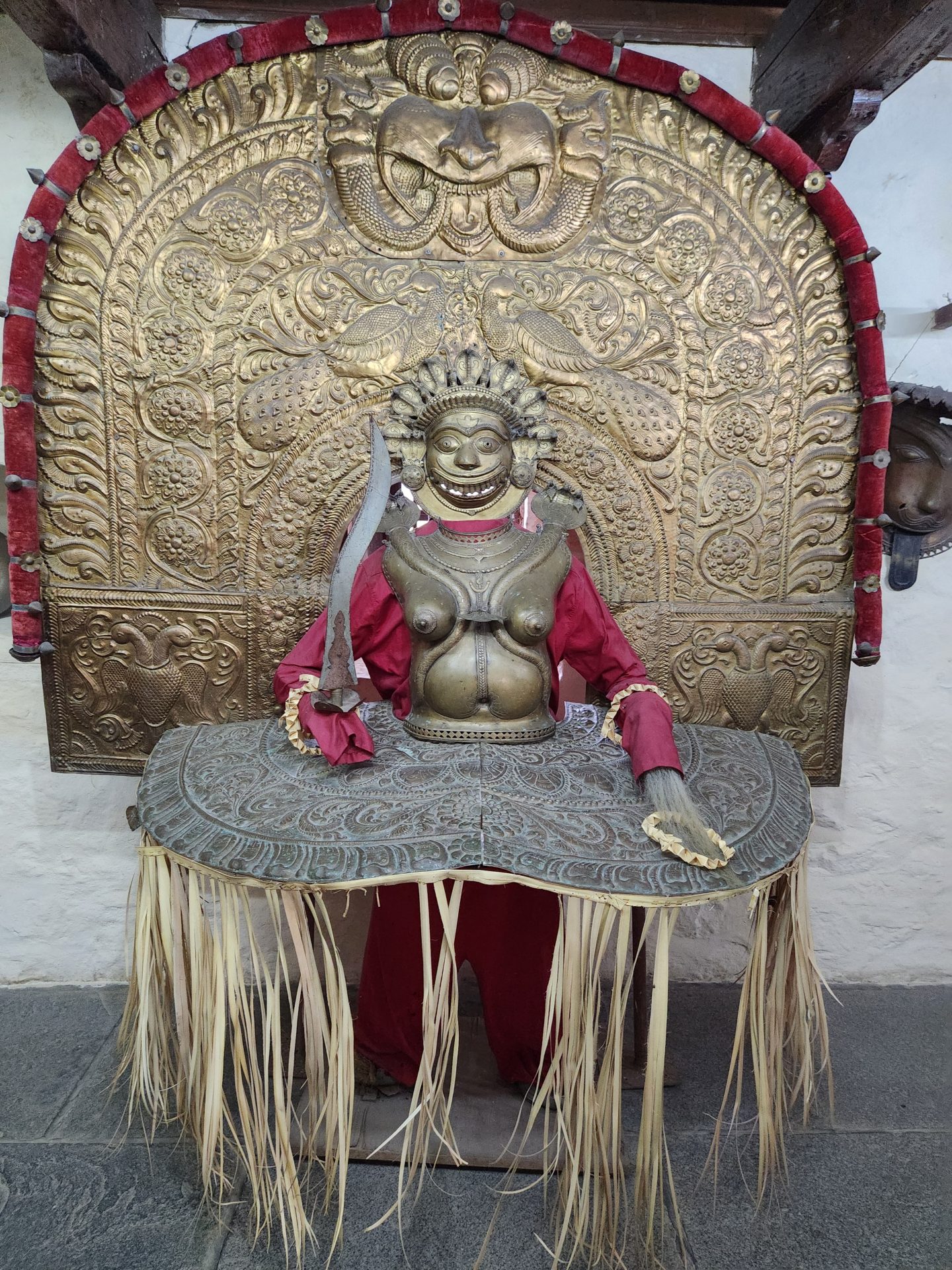
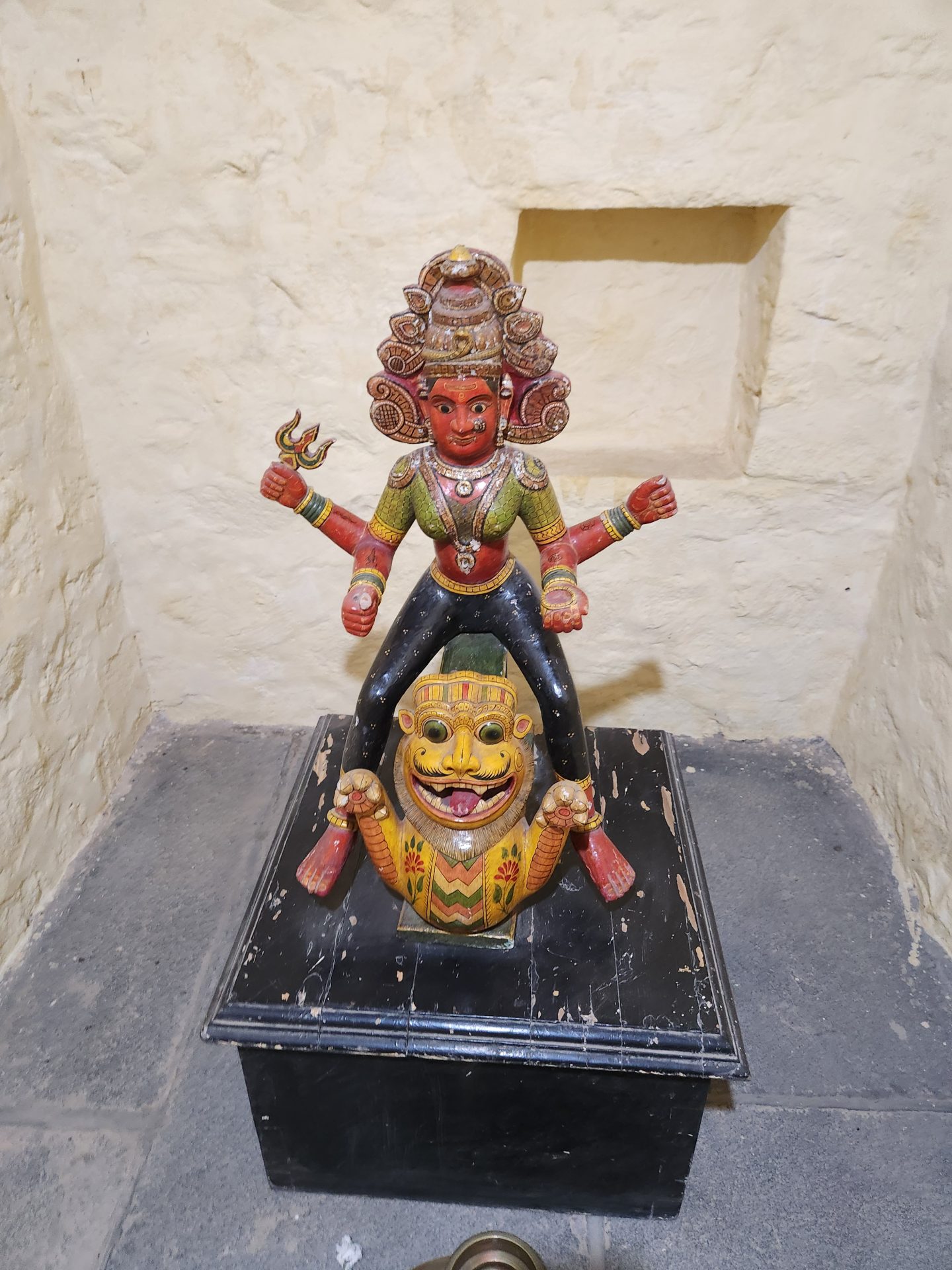
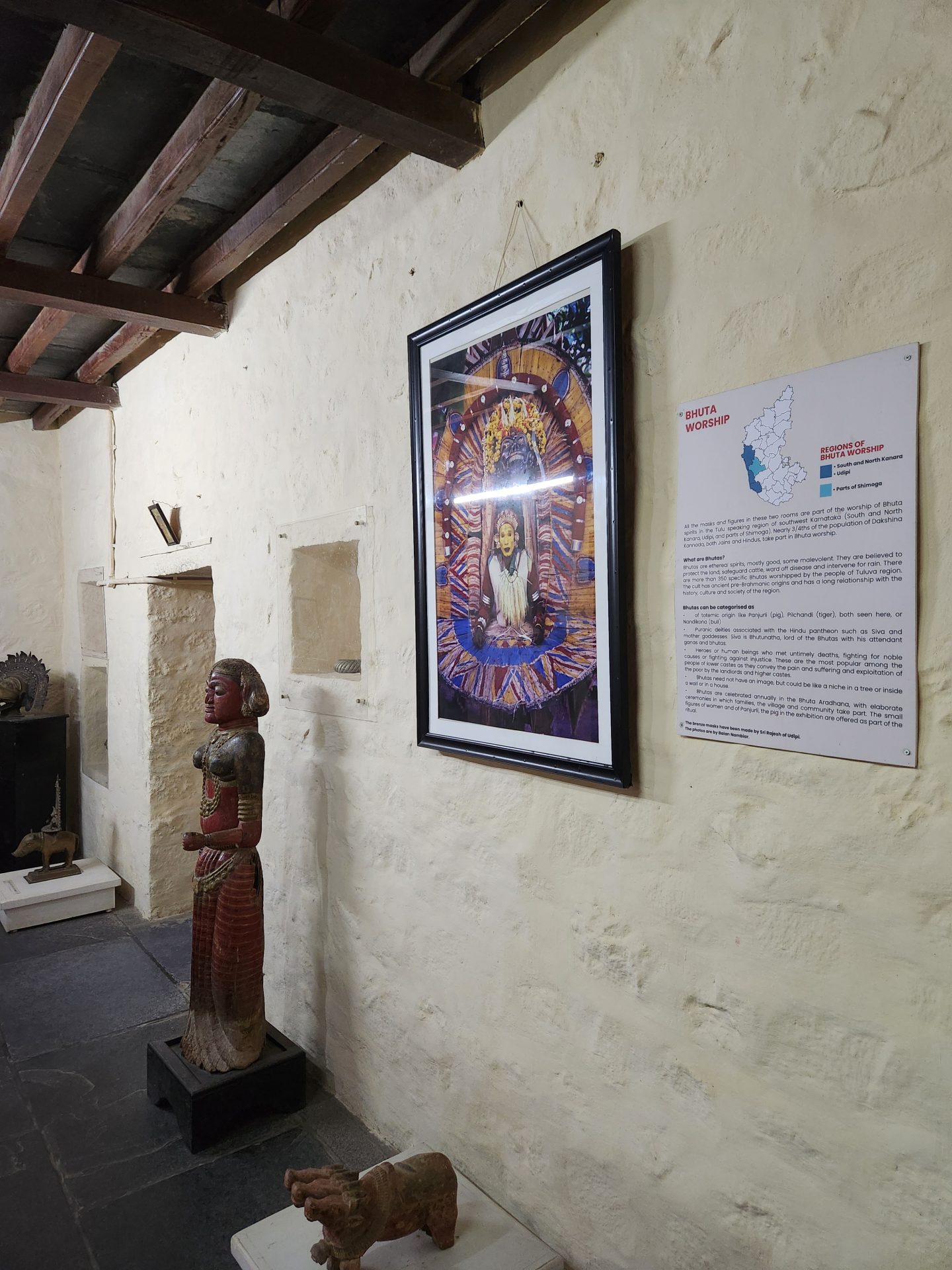
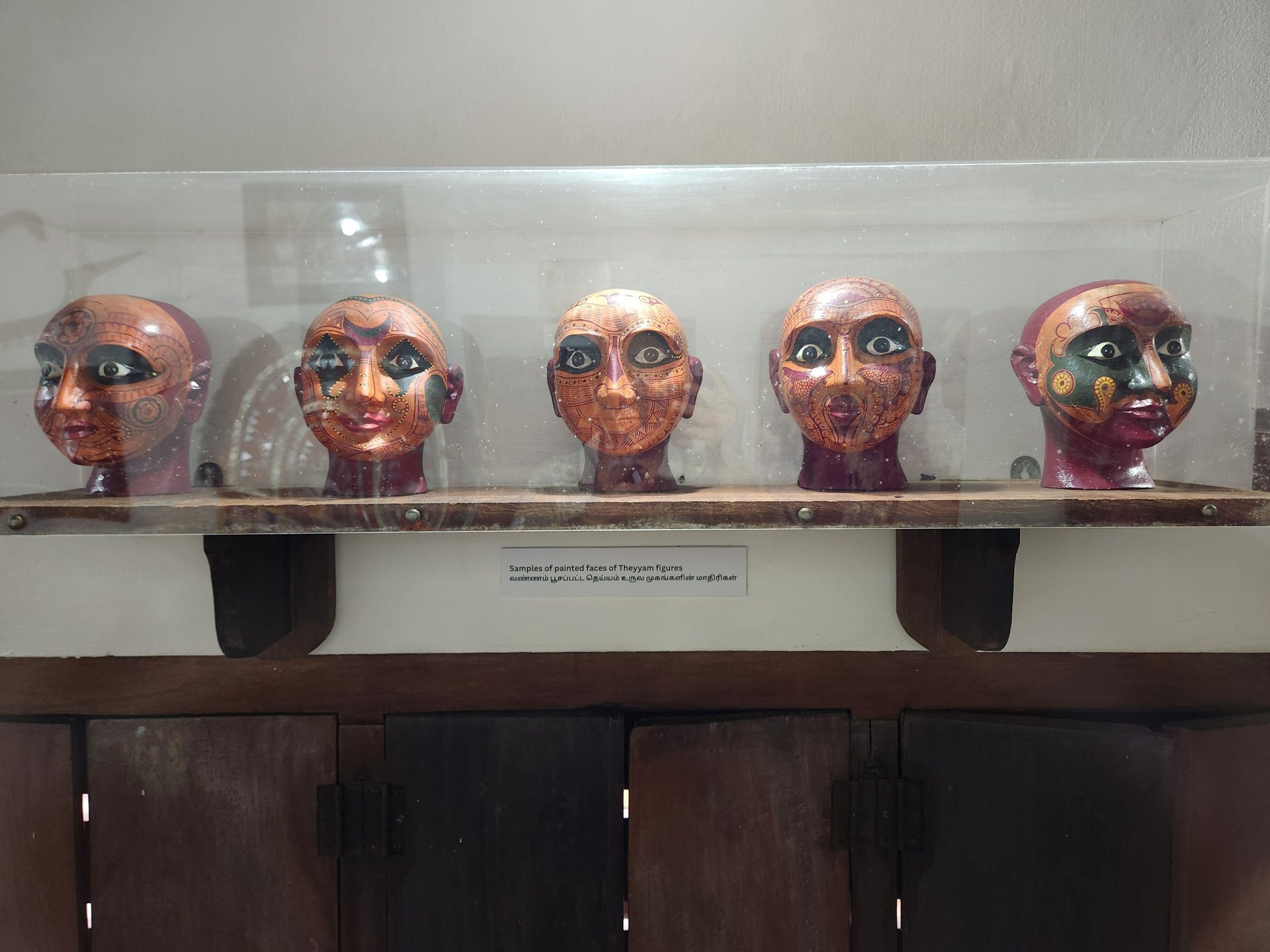
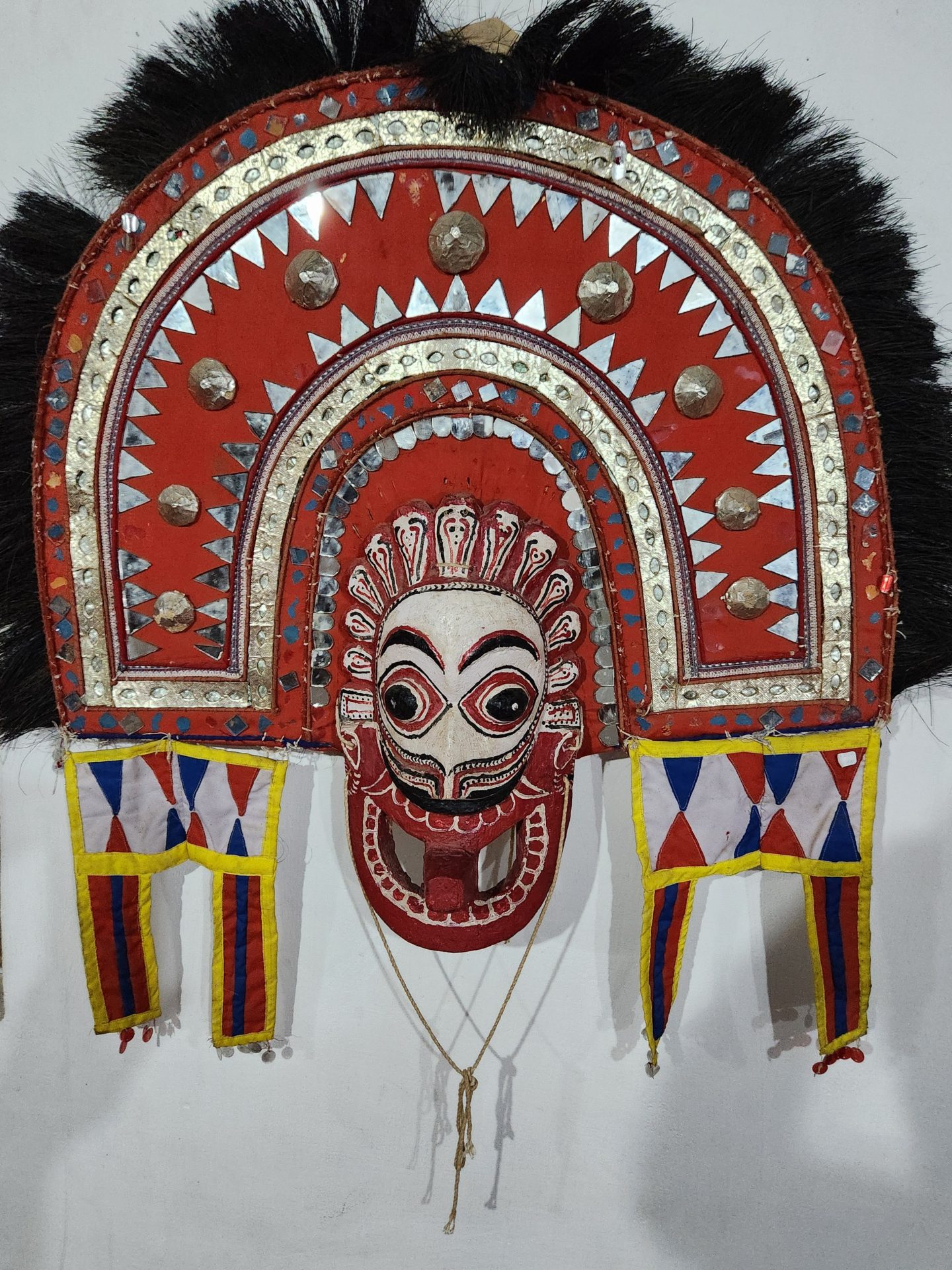
A section of the house has masks and figurines pertaining to Bhuta worship and one for Lambanis, a Nomadic tribe of Karnataka. On display are colorful embroidered dresses with small mirrors stitched onto them.


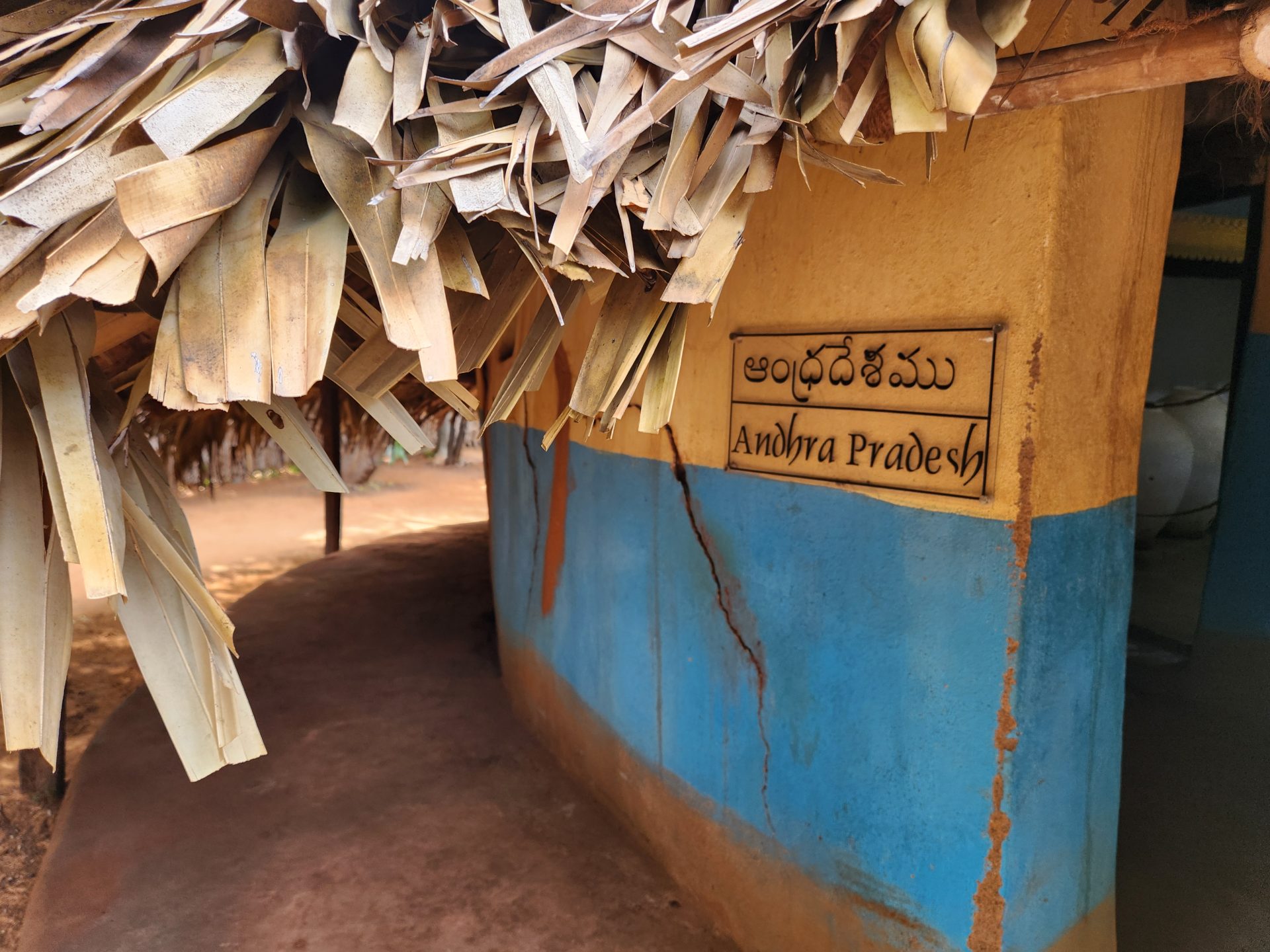
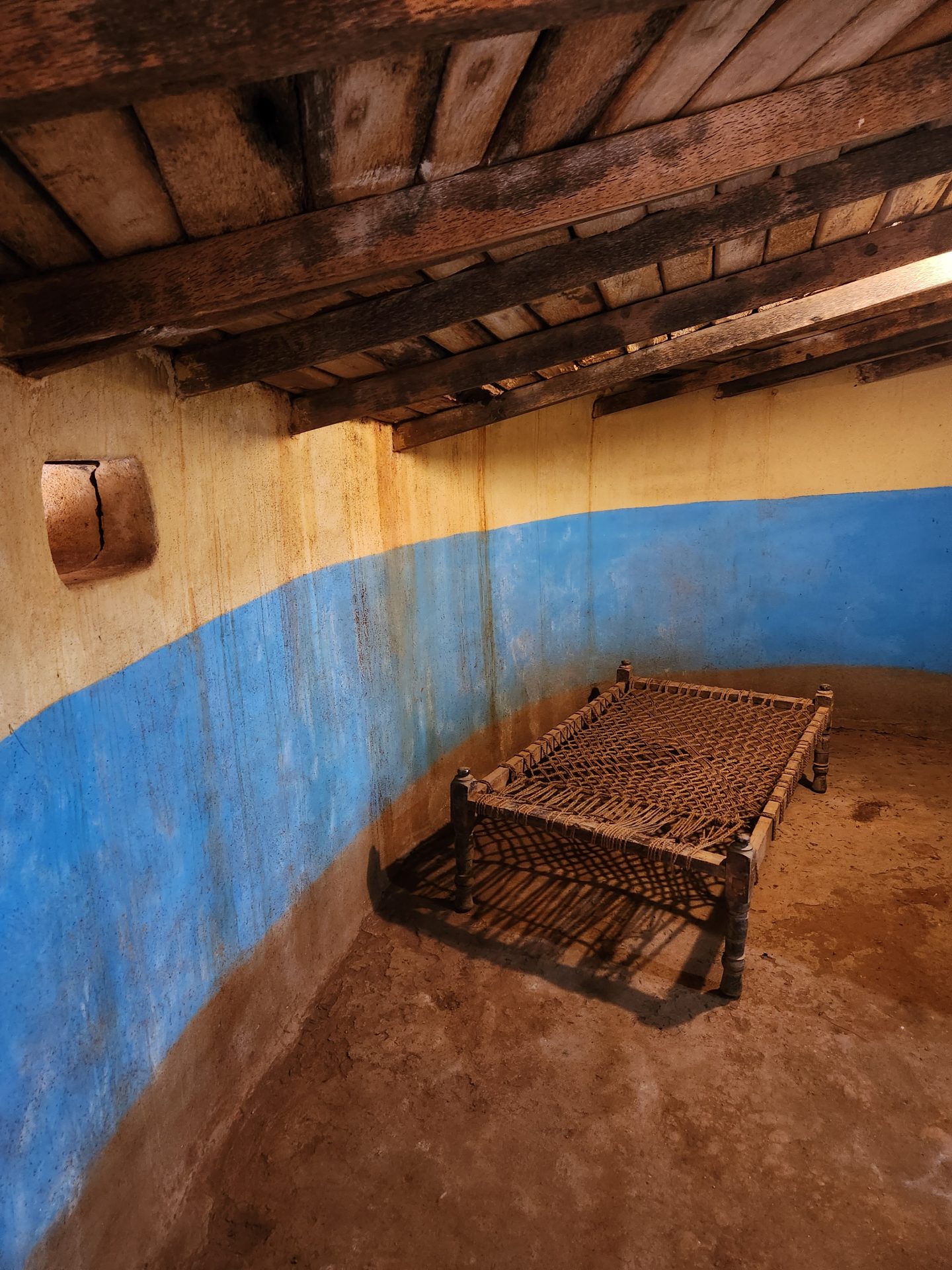
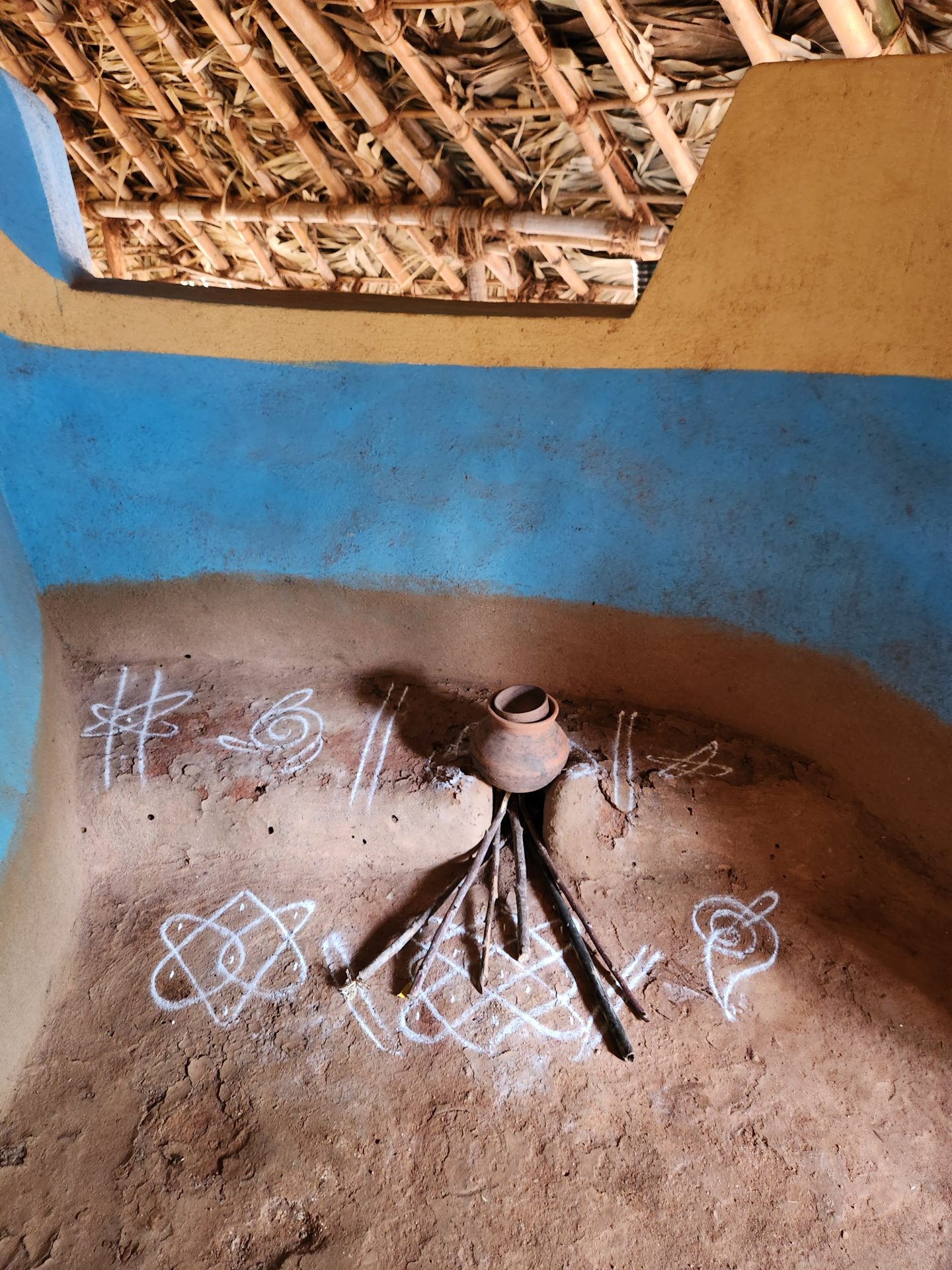
A little ahead of the Chikmagalur House lies Chuttillu,  a Coastal Andhra House  from Yellamachali Mandal of Vizag region. These Circular houses are built using mud and water with the right consistency to withstand the weather conditions, being a cyclone prone area.  Fishermen and Farmers built these houses in clusters to help battle raging winds. 

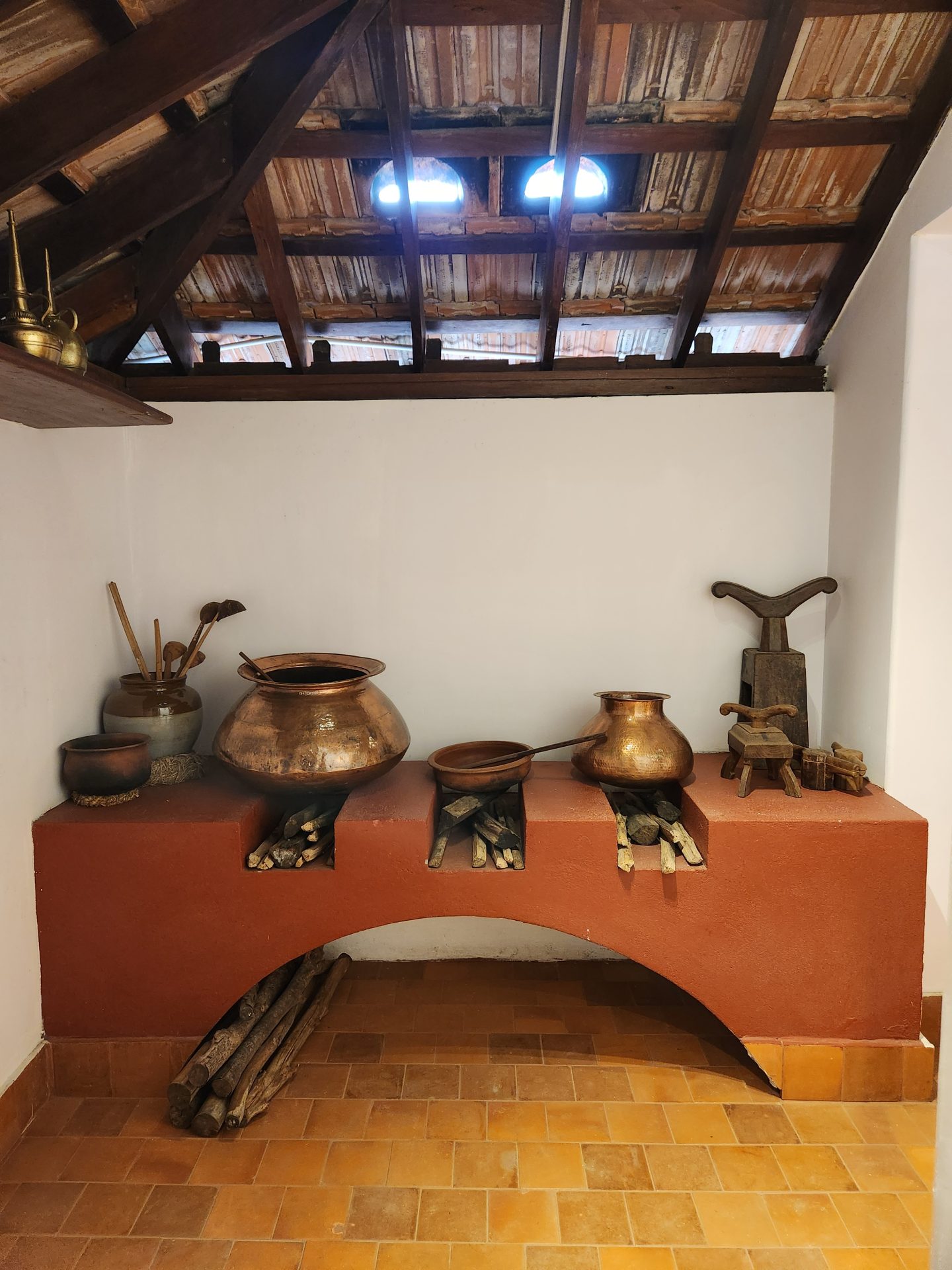
The house has a circular inner room enveloped by another circular space which houses the kitchen and store room. The walls are built 2 feet in a day, allowing lot of time for it to dry before the height is increased.


Andhra Pradesh - A Coastal House

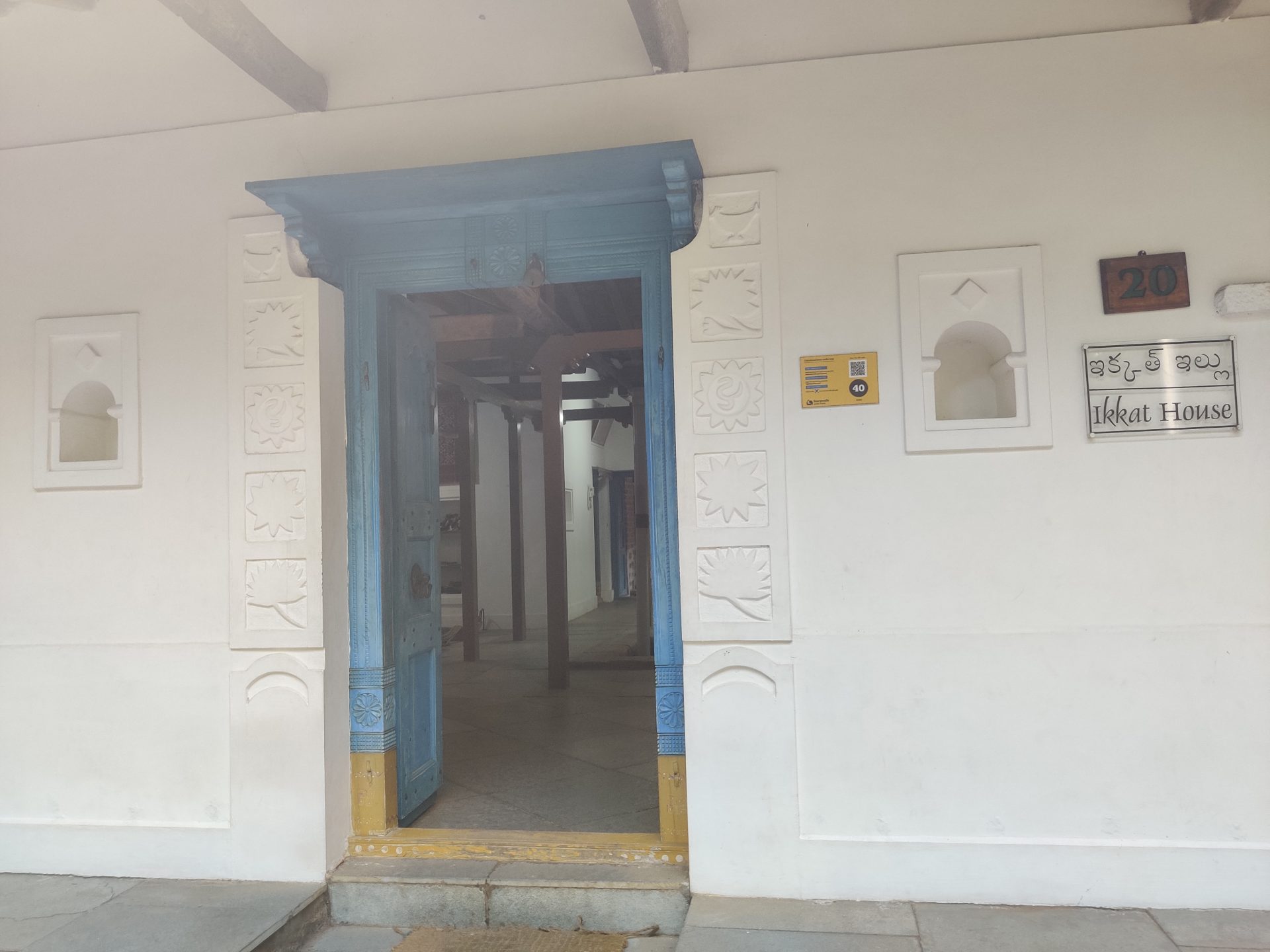
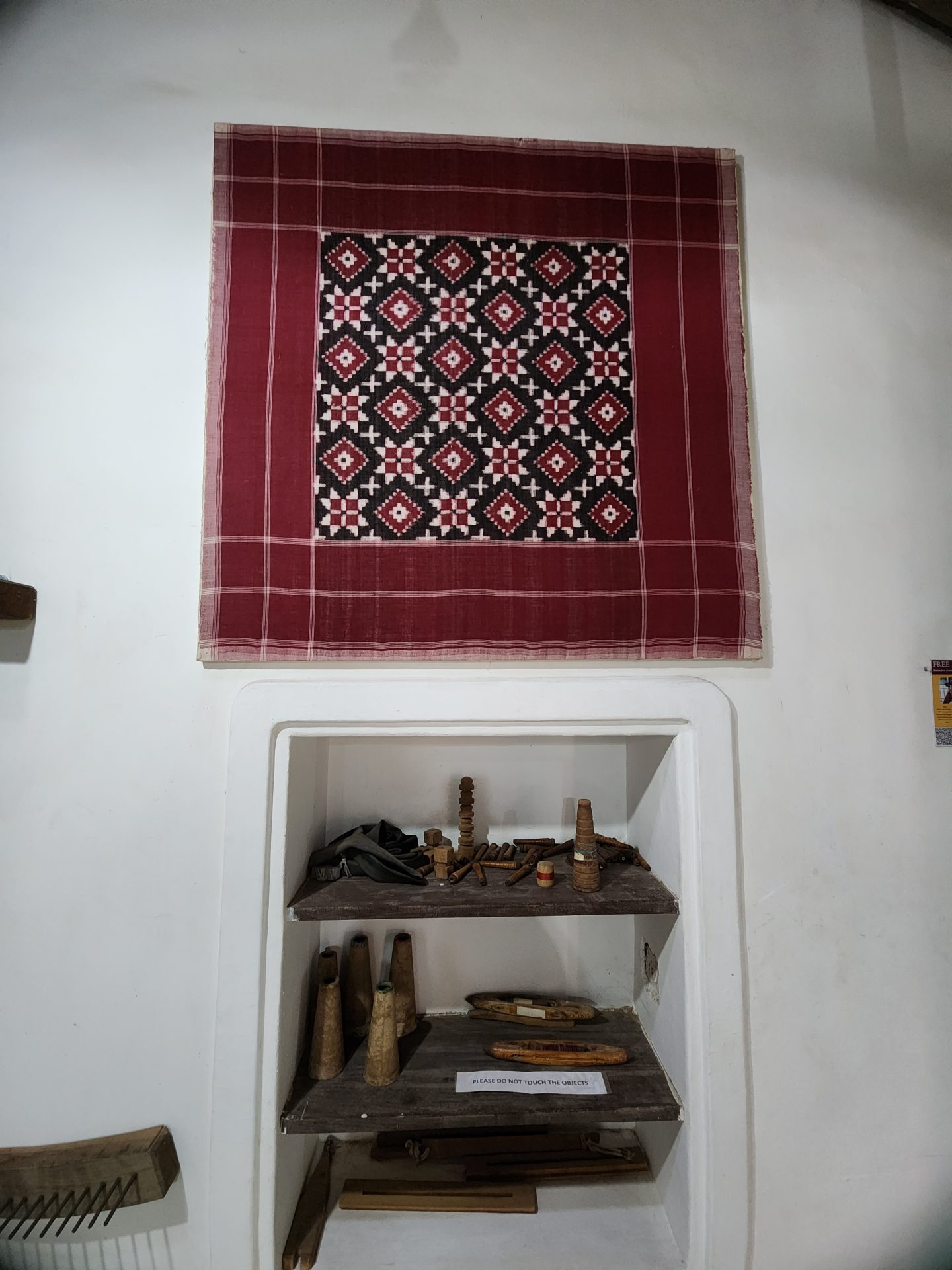
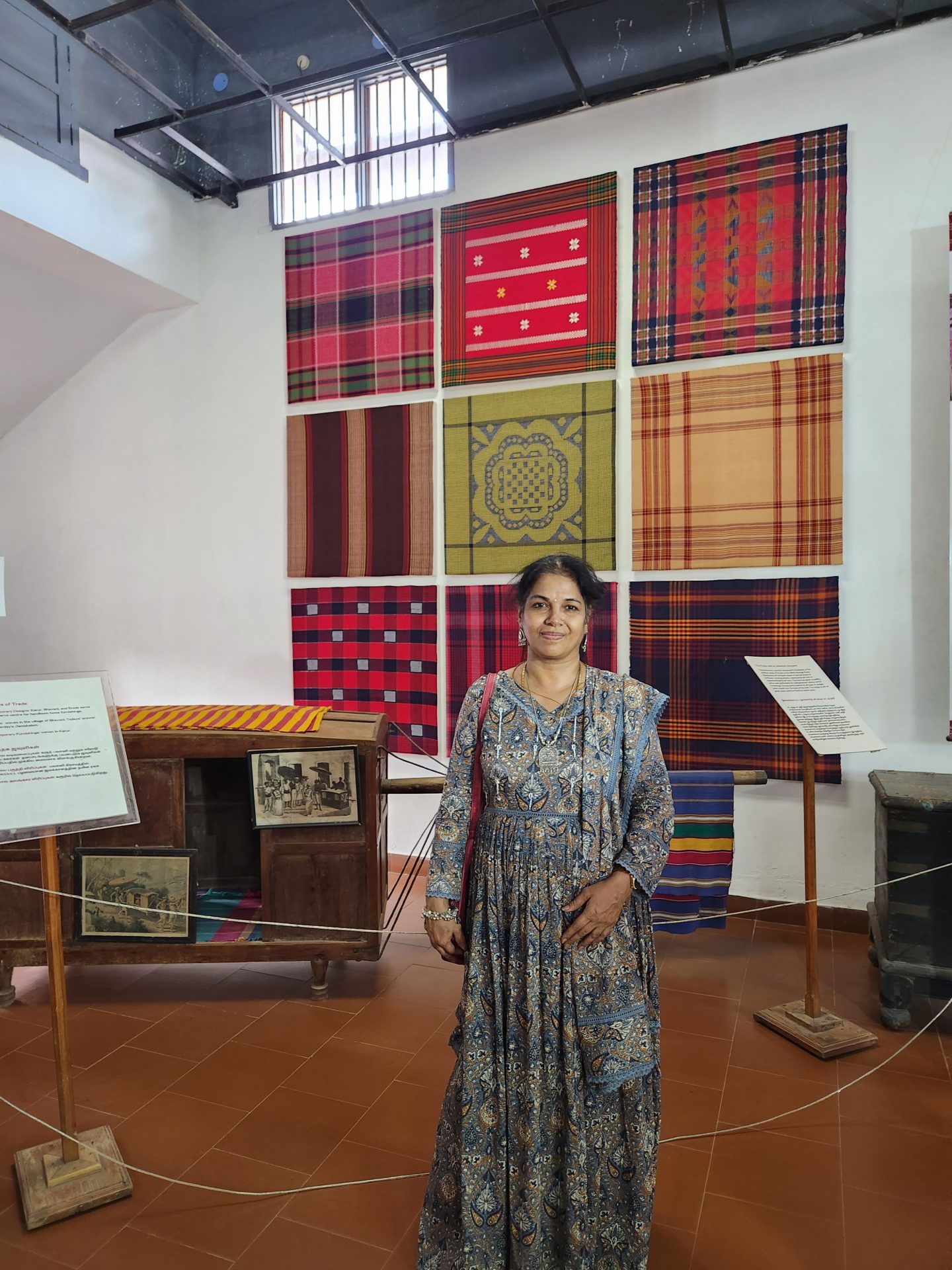
Telengana - The Ikkat Weaver’s House

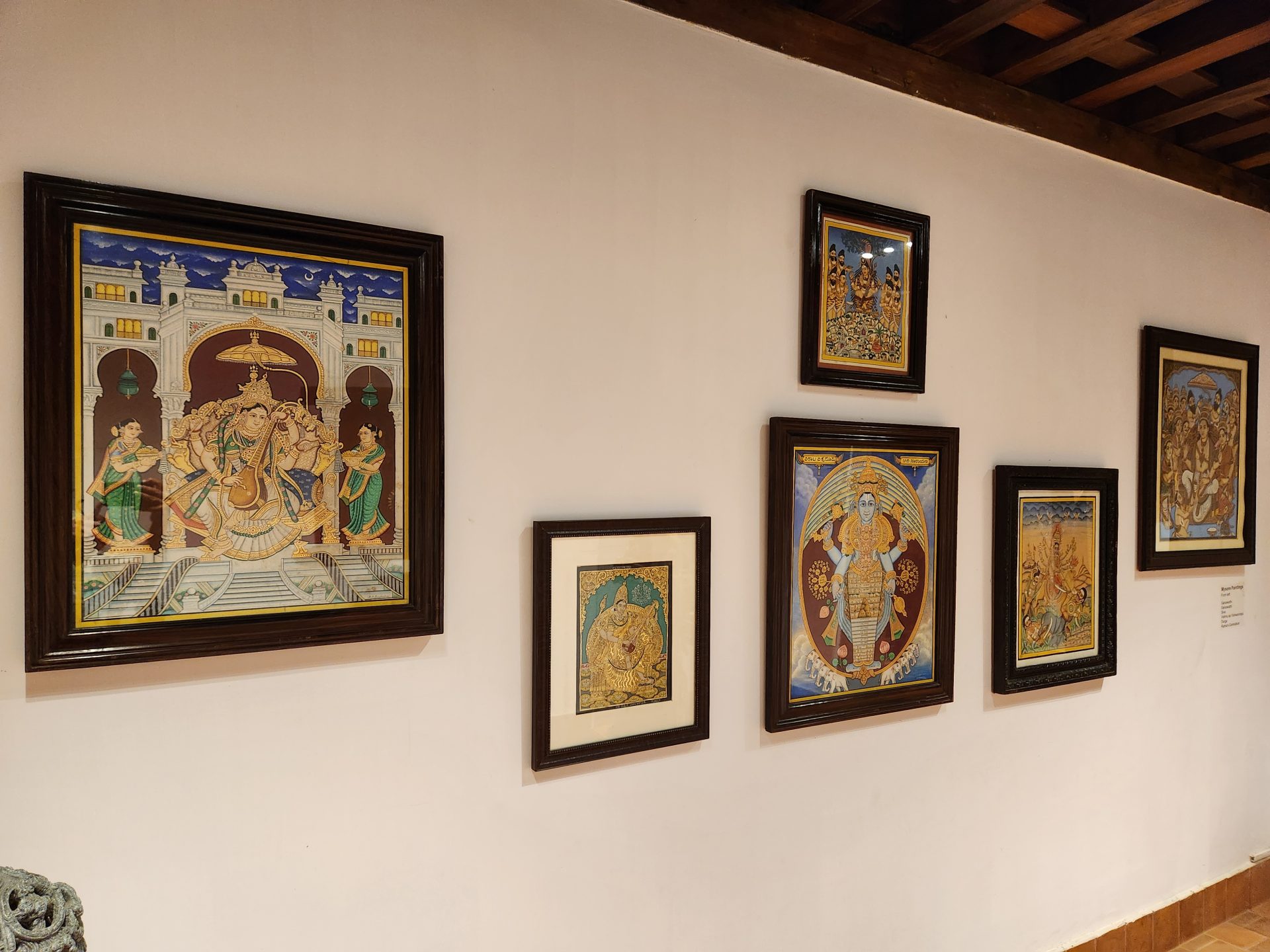
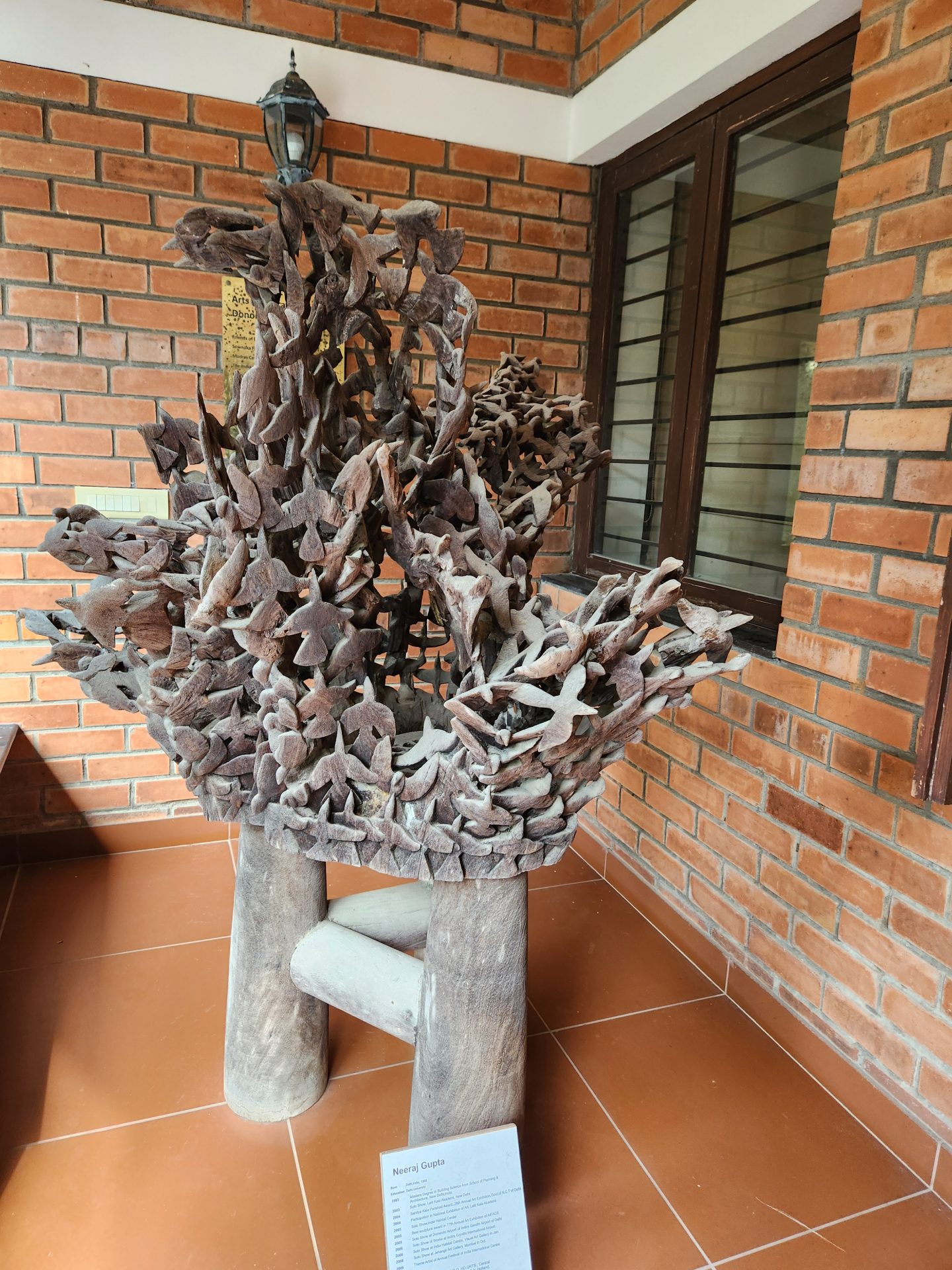
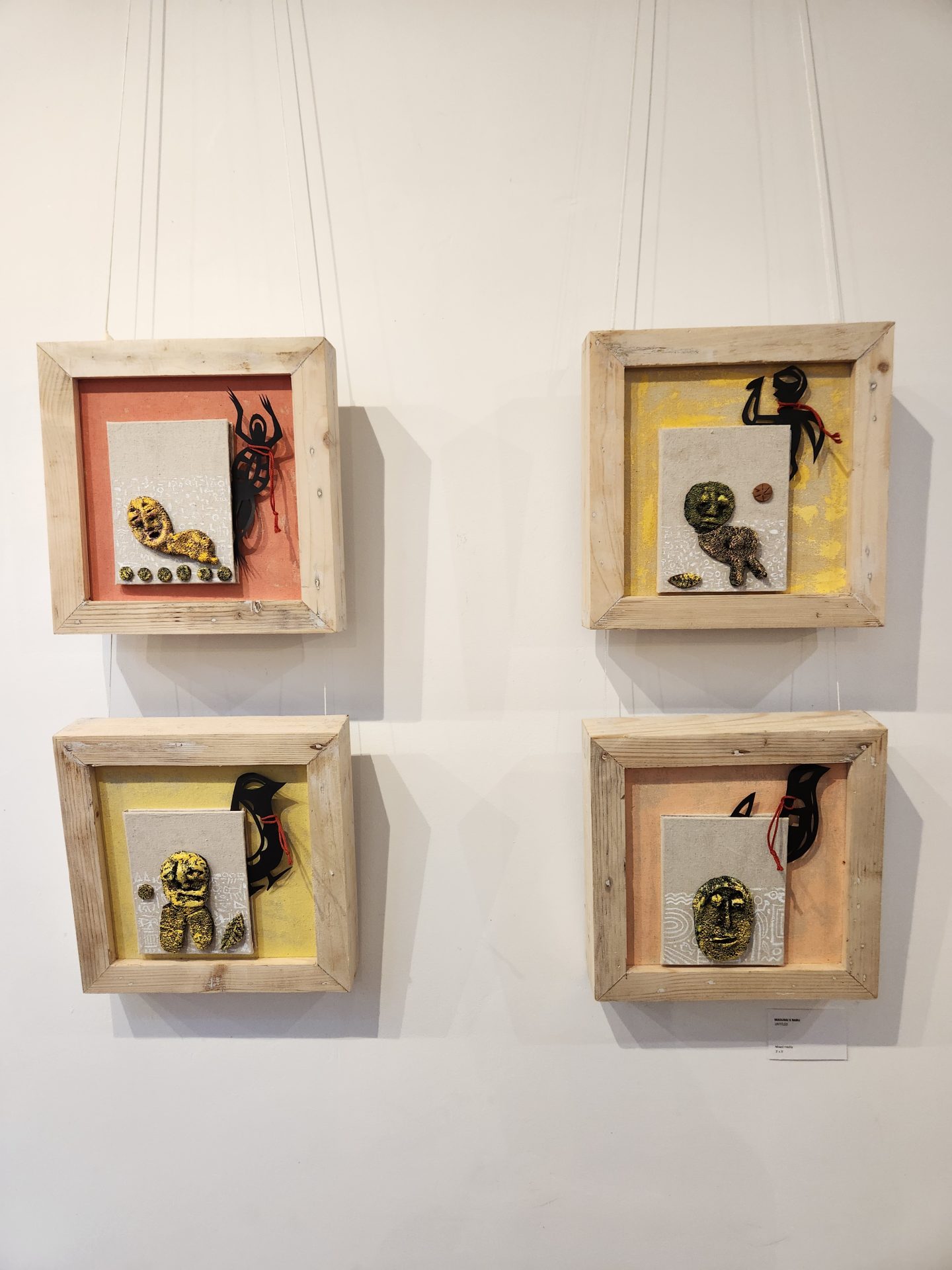
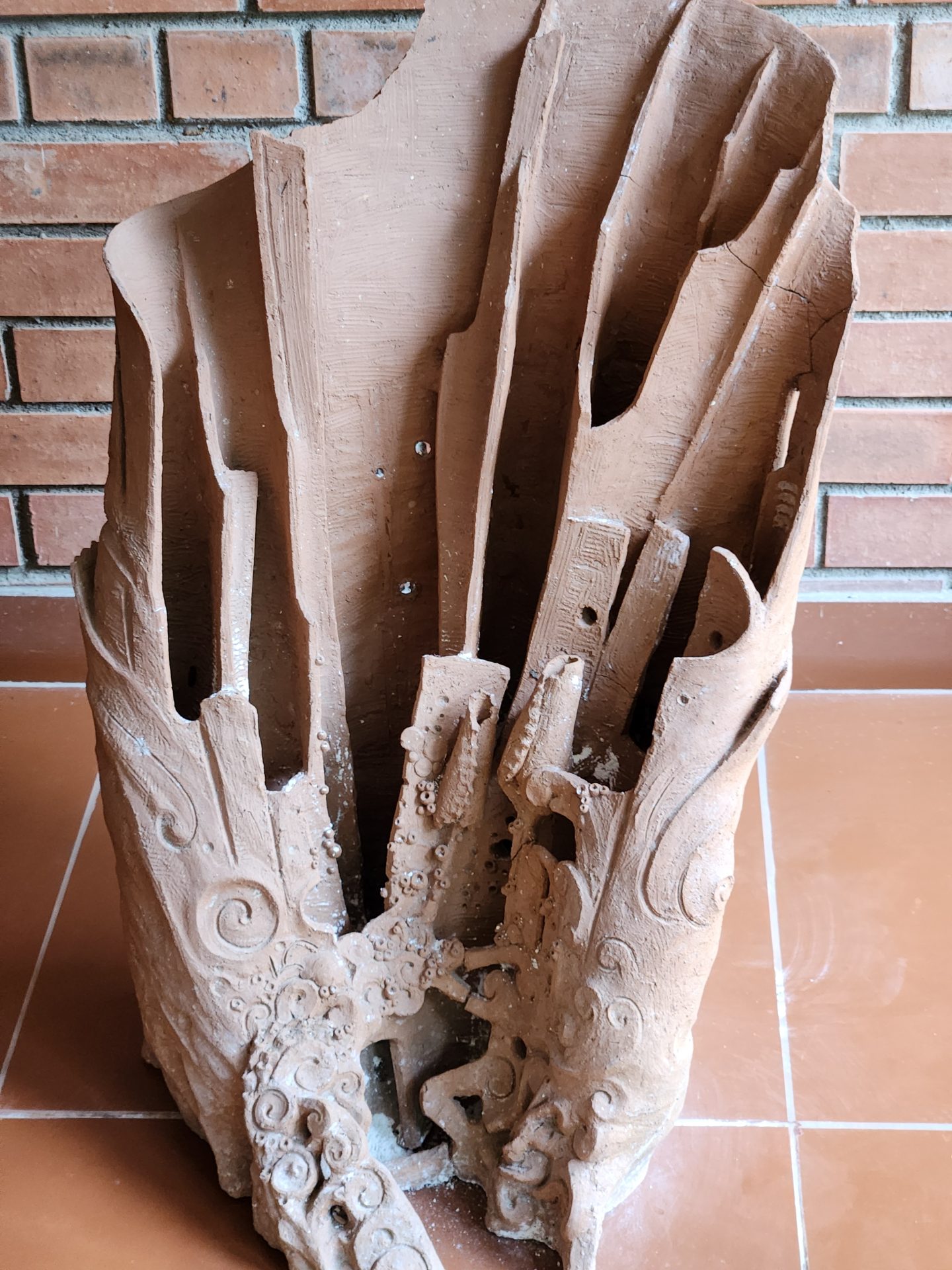
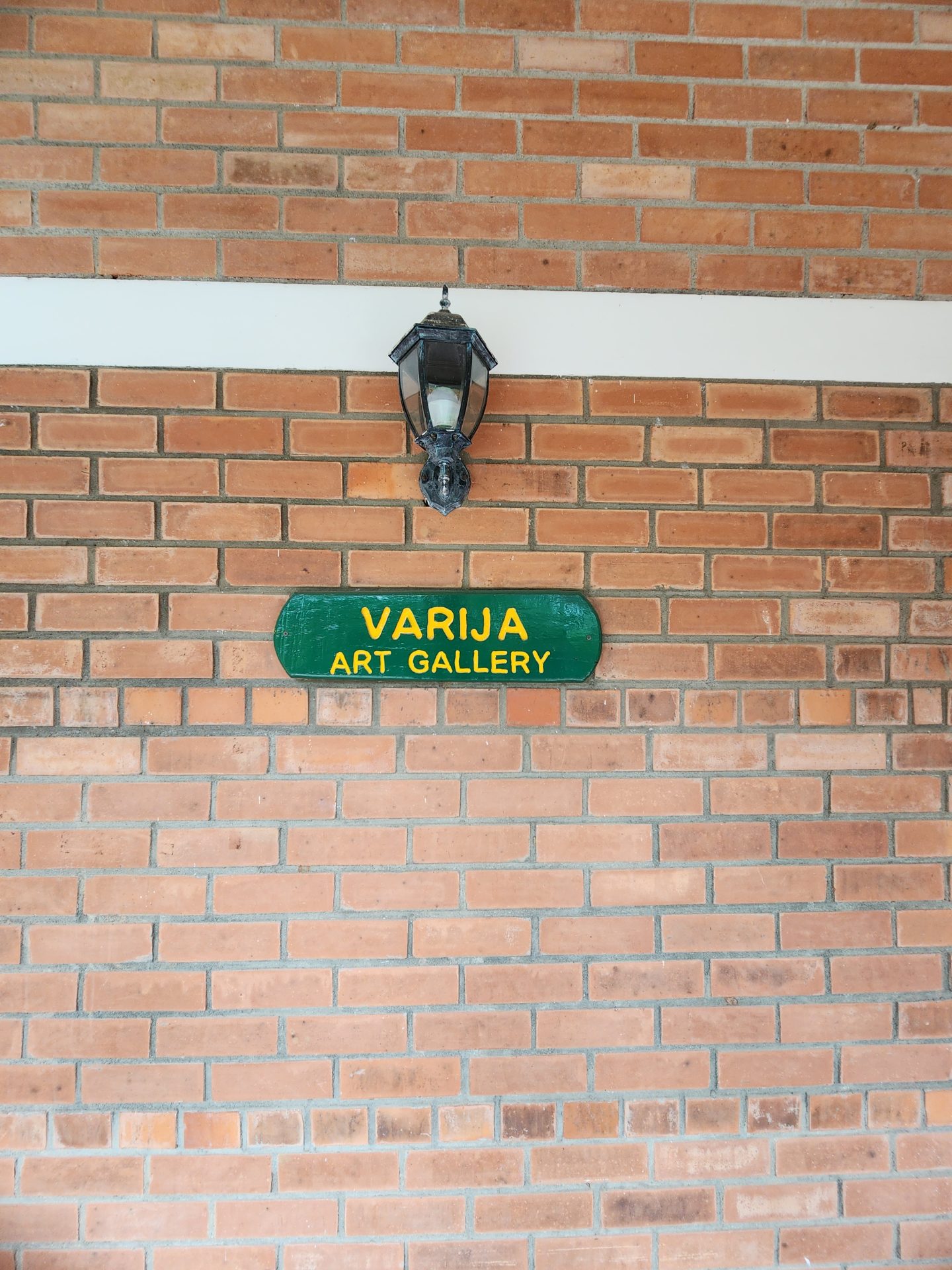
The Varija Art Gallery

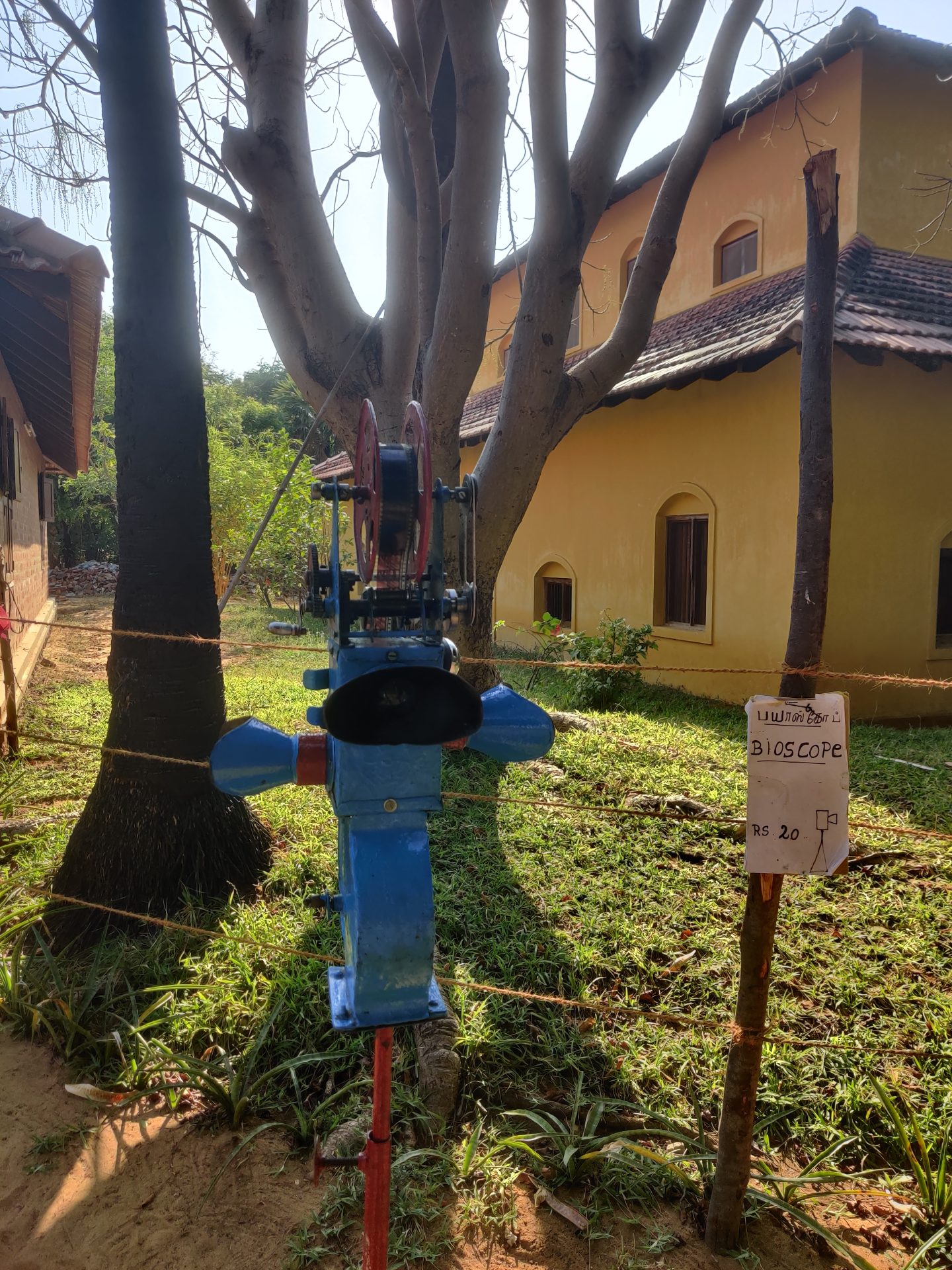
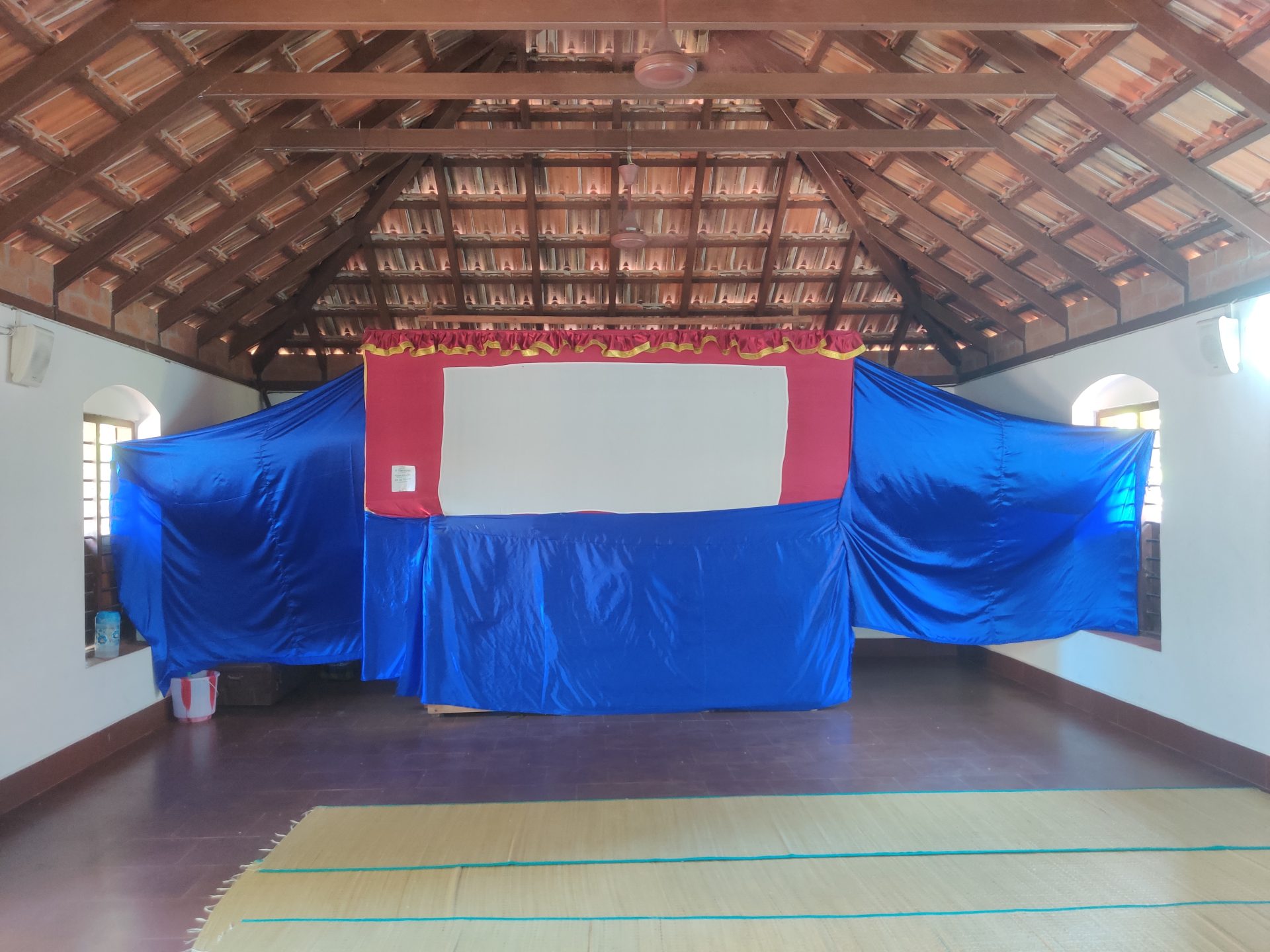
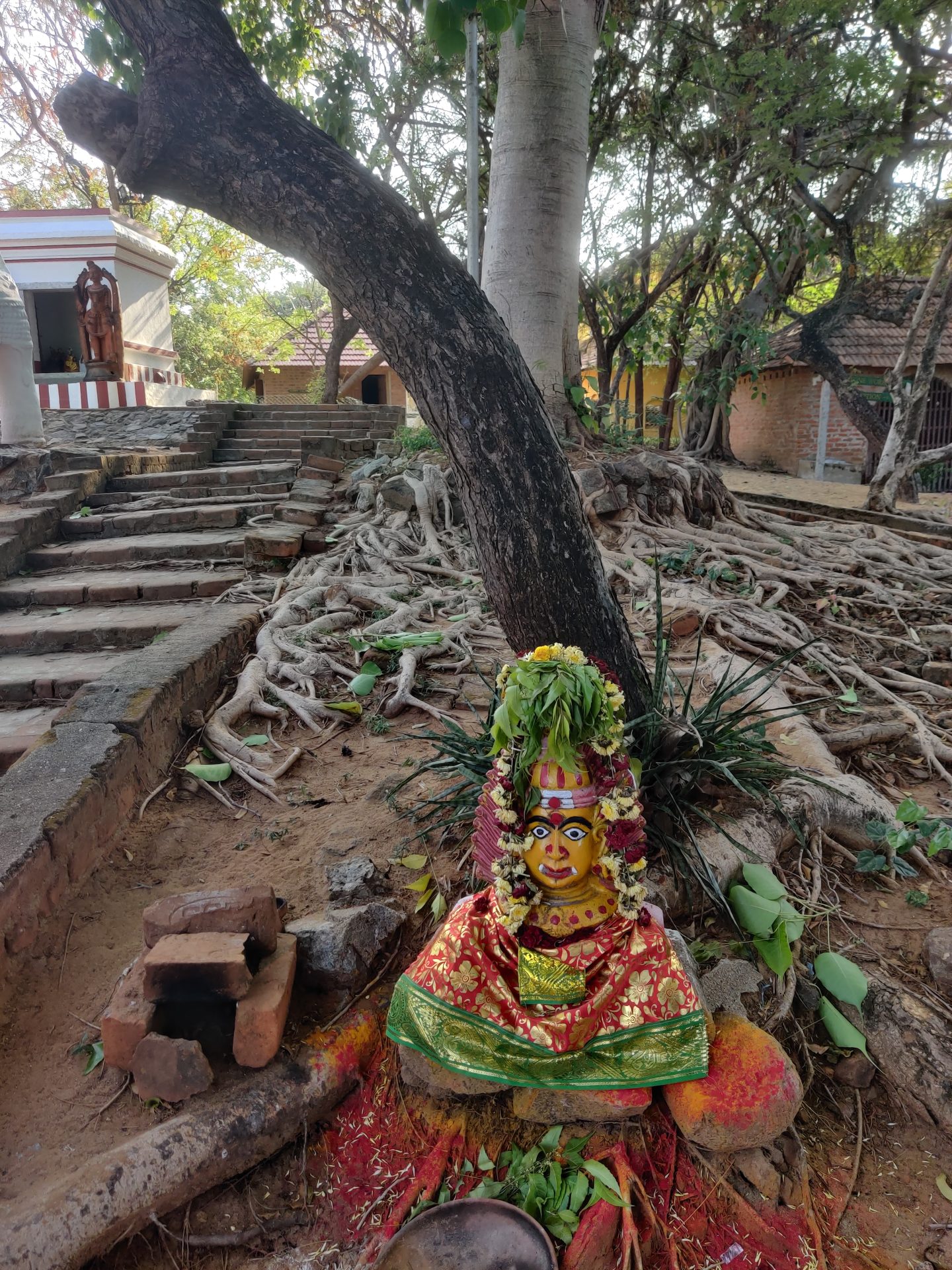
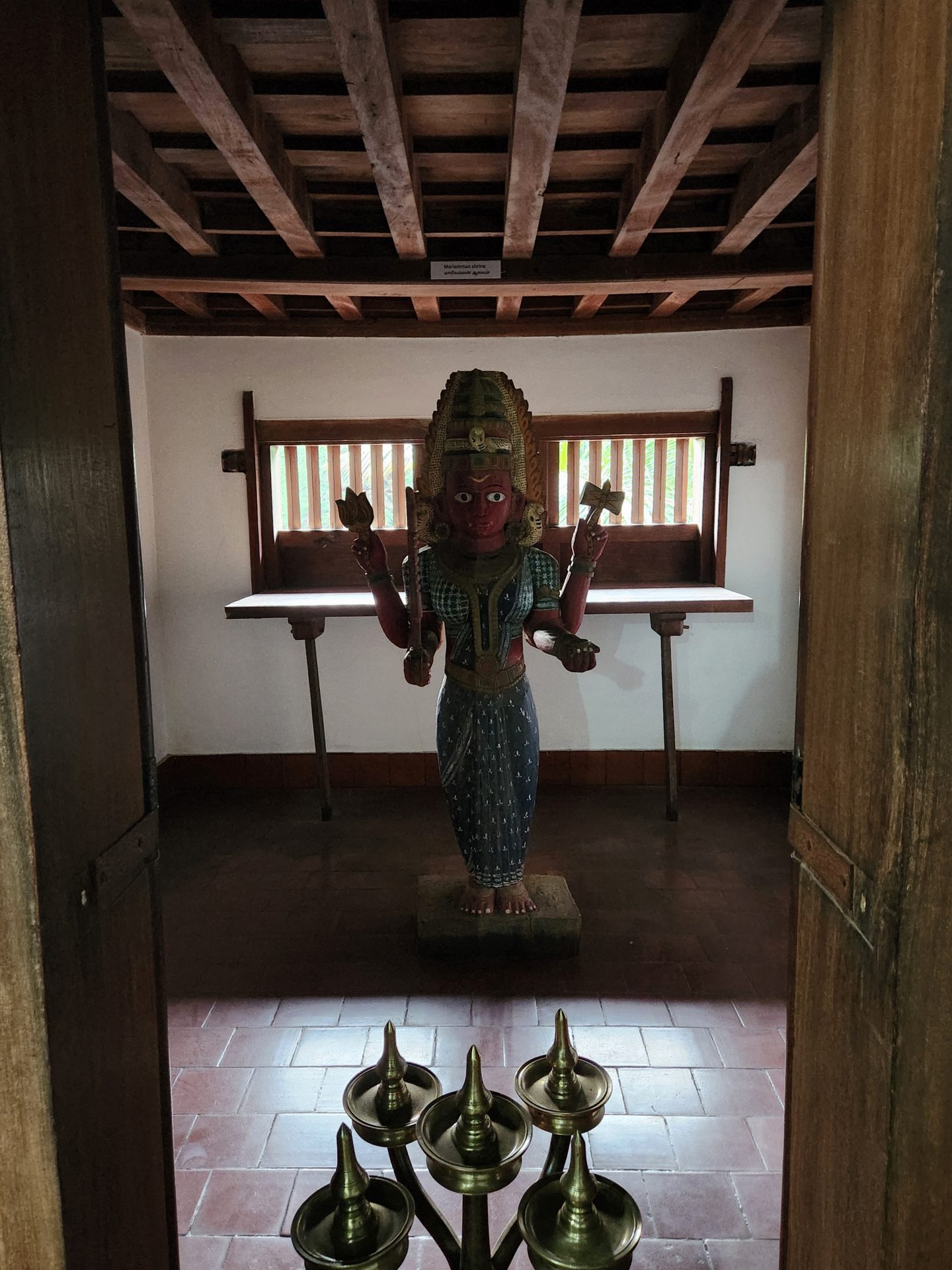
We then walk through an open area before heading to the Tamil Nadu houses where one gets to cross a small dine out and market place where lot of artefacts, toys, trinkets etc are on display. One gets to see a Bioscope and a room where Puppet shows are held periodically. There is also a village temple close by which has been recreated. 

We were lucky to also witness a live puppetry show and a demo of the intricate designs created in glass using a blow flame.


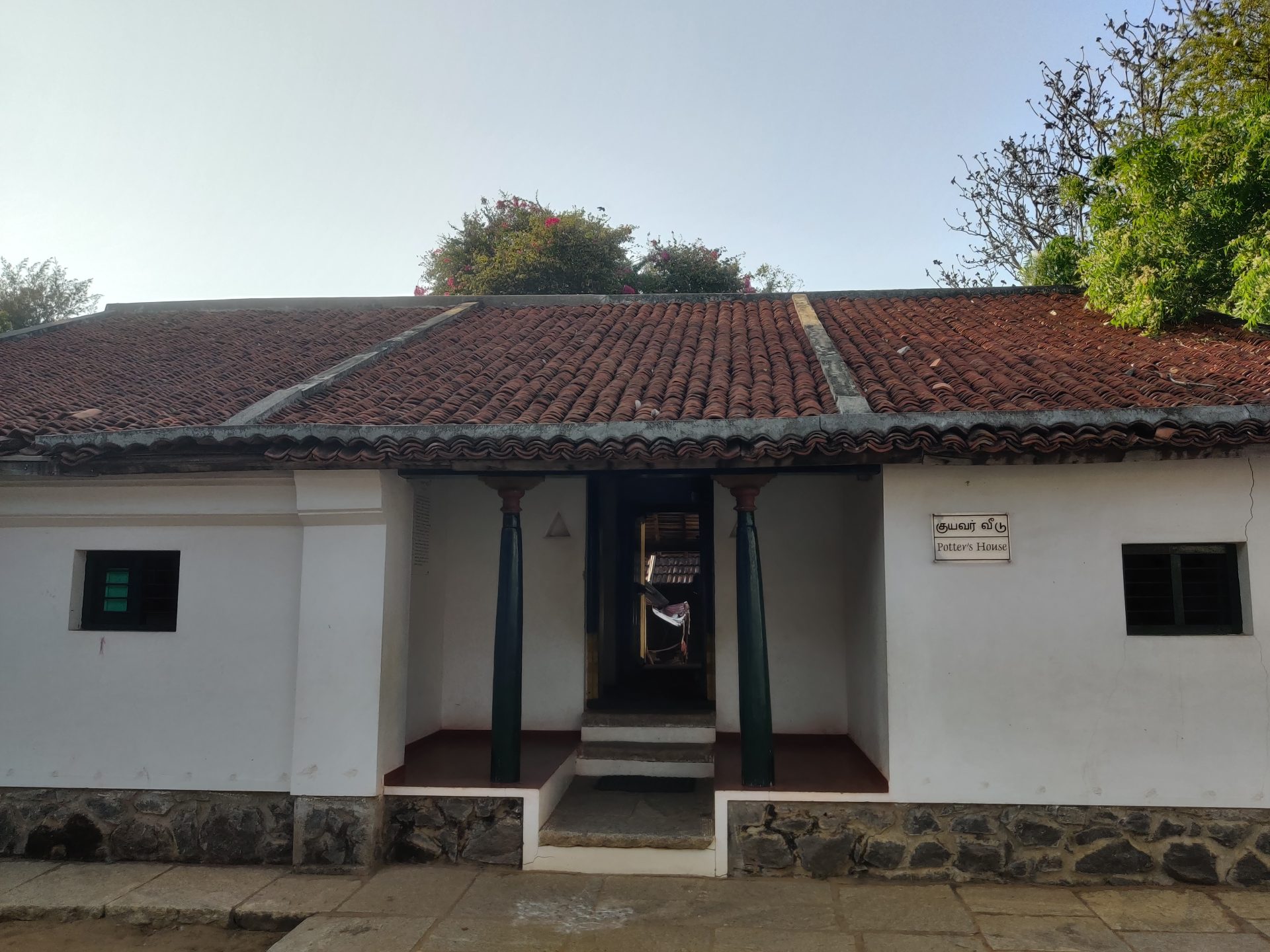
Tamil Nadu - The Potter's House

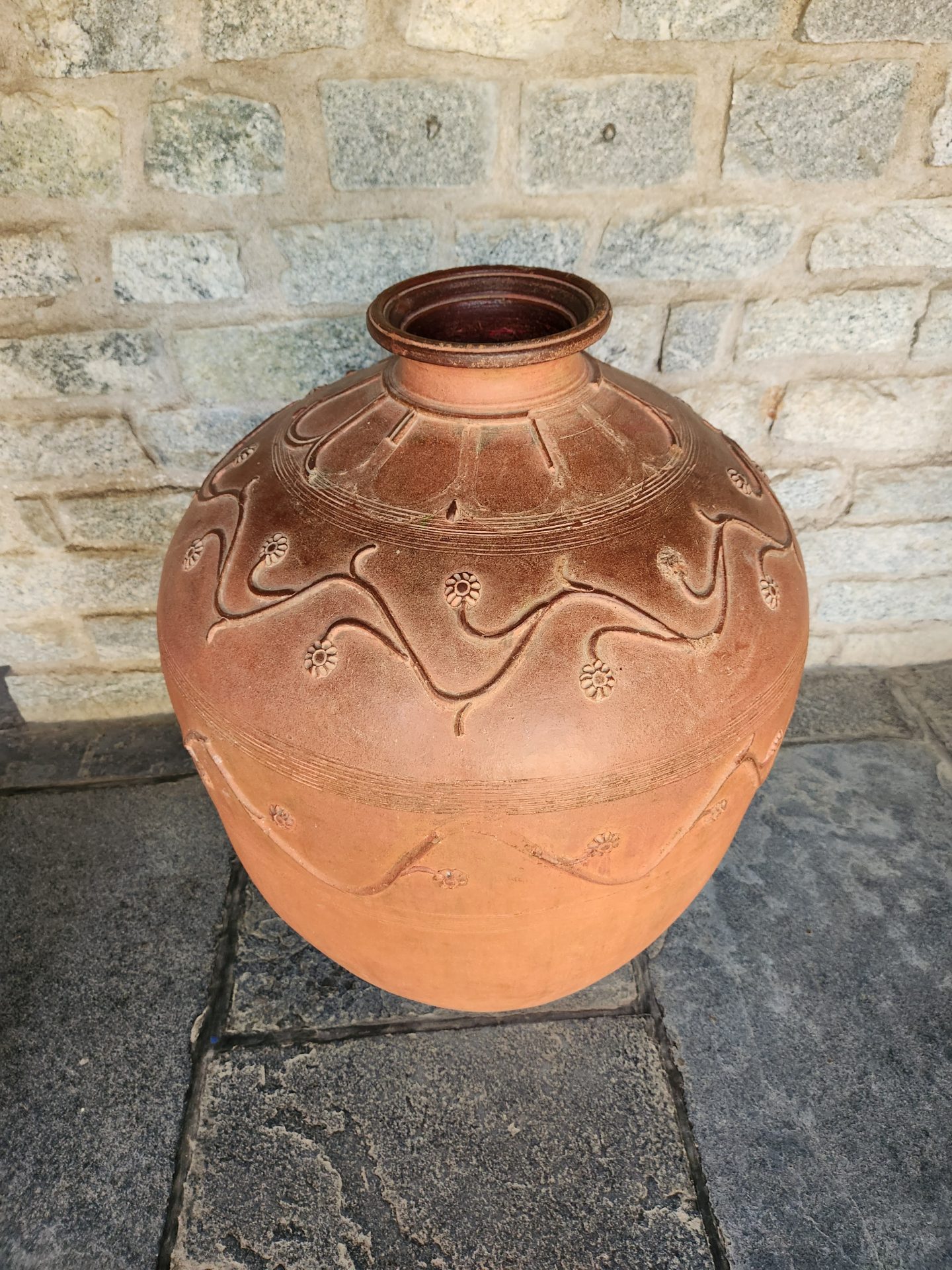
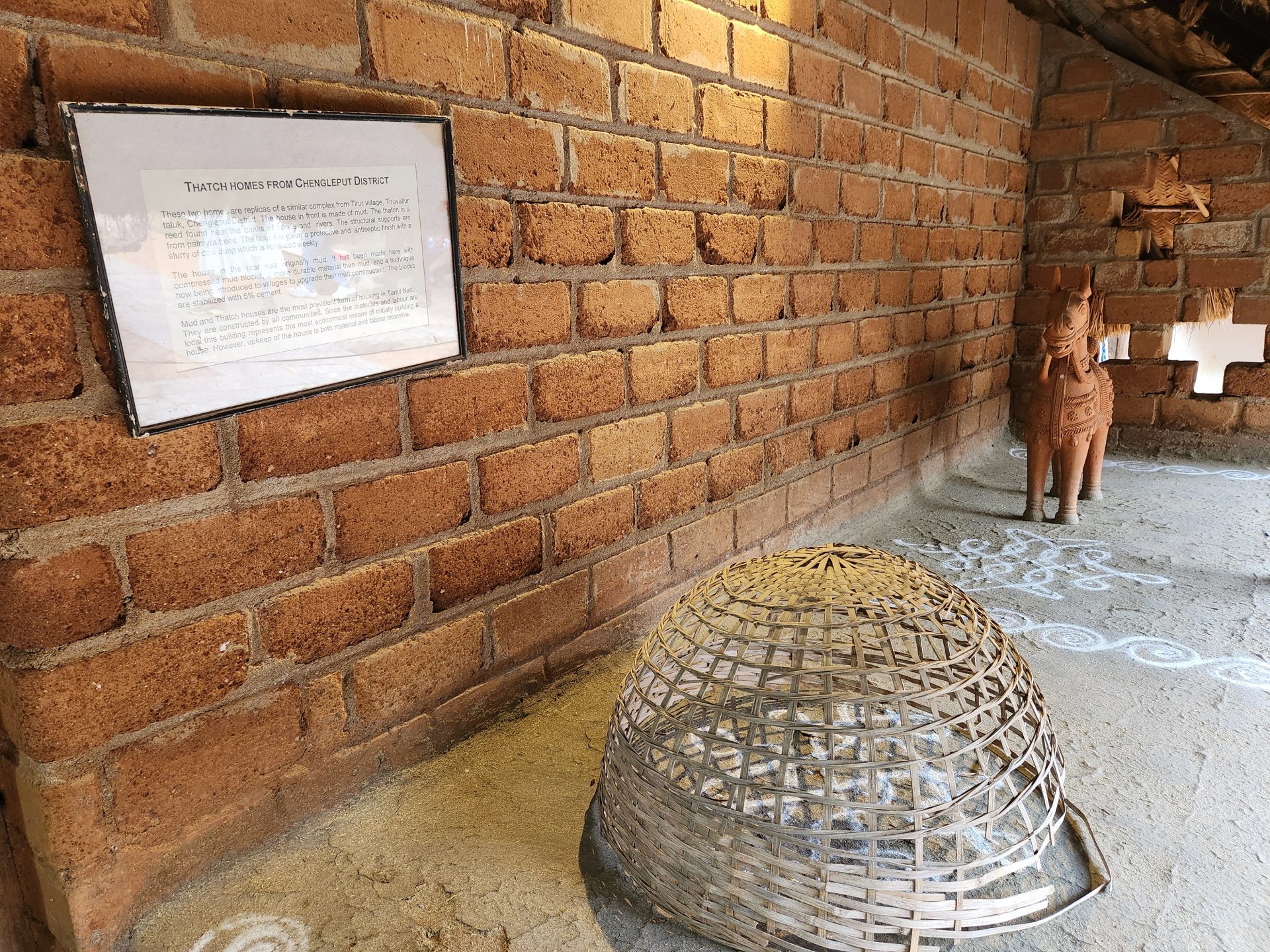
This thatched house has been built using structural supports of Palmyra trees and while the front portion of the house has been made out of mud, the rear part uses compressed mud blocks with a little bit of cement for stabilization which makes it more durable than plain mud. The thatches are primarily reeds found near the banks of rivers and ponds. Cow Dung is intensively used over the mud for the protective and antiseptic finish.


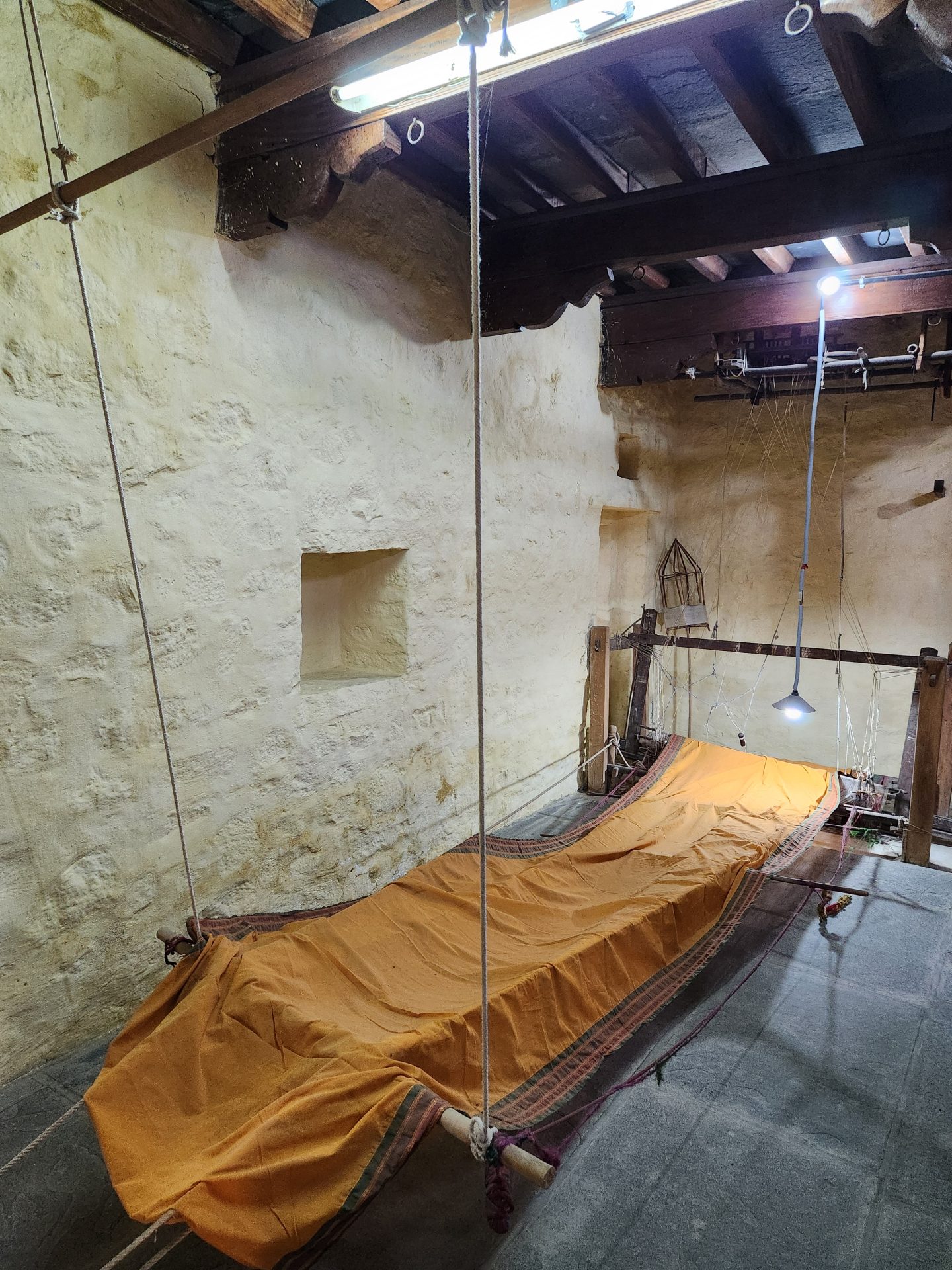
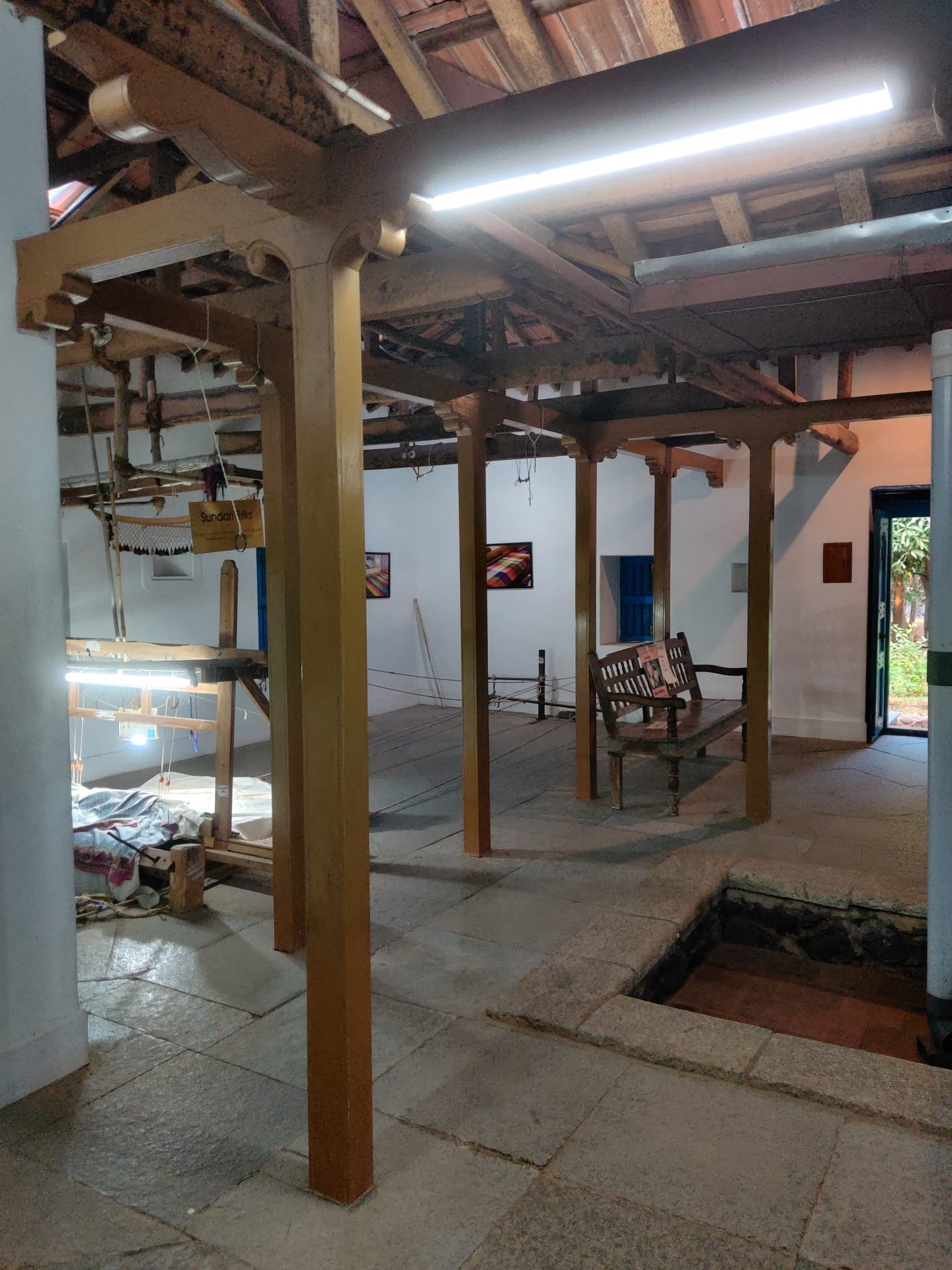
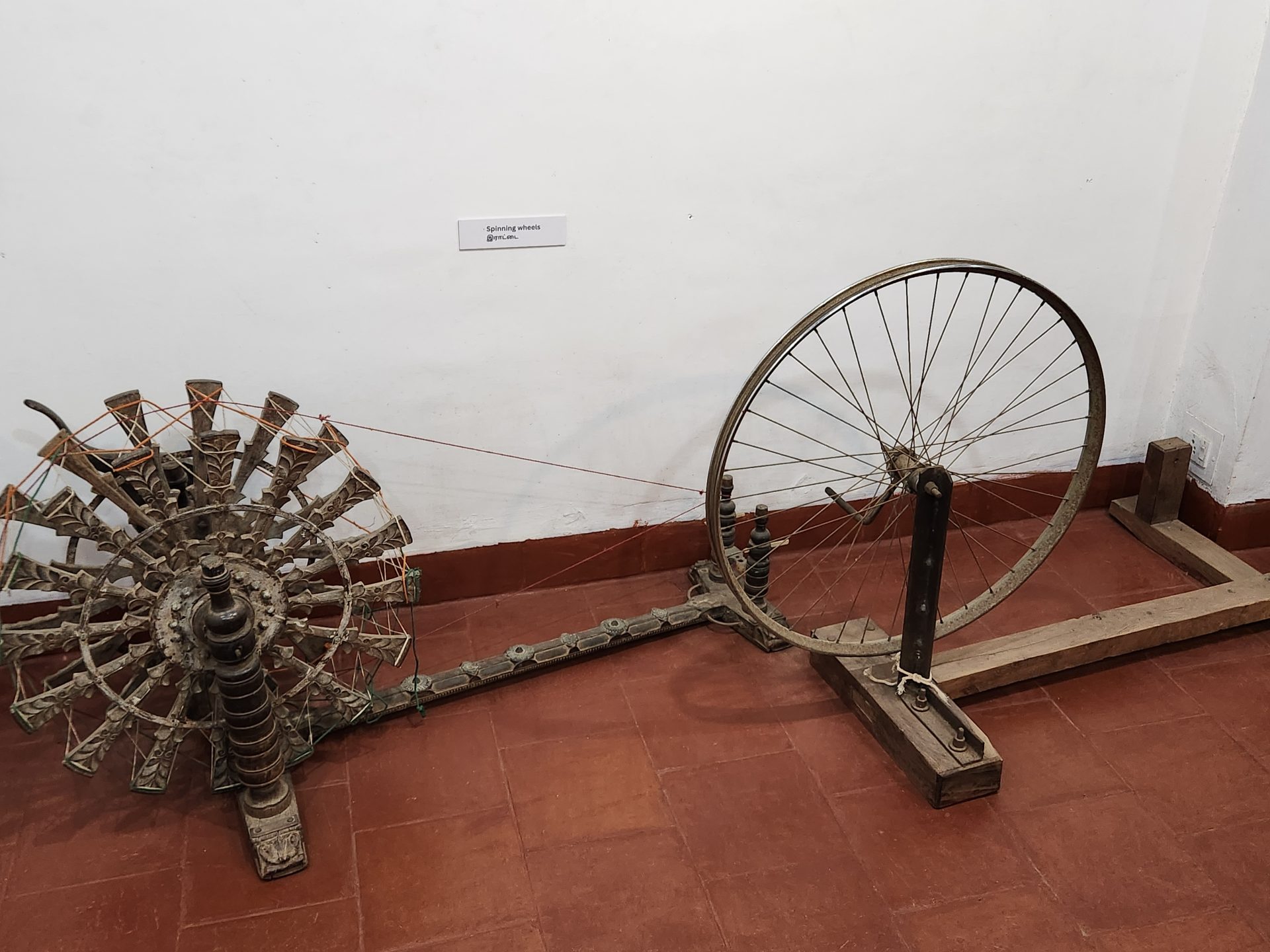
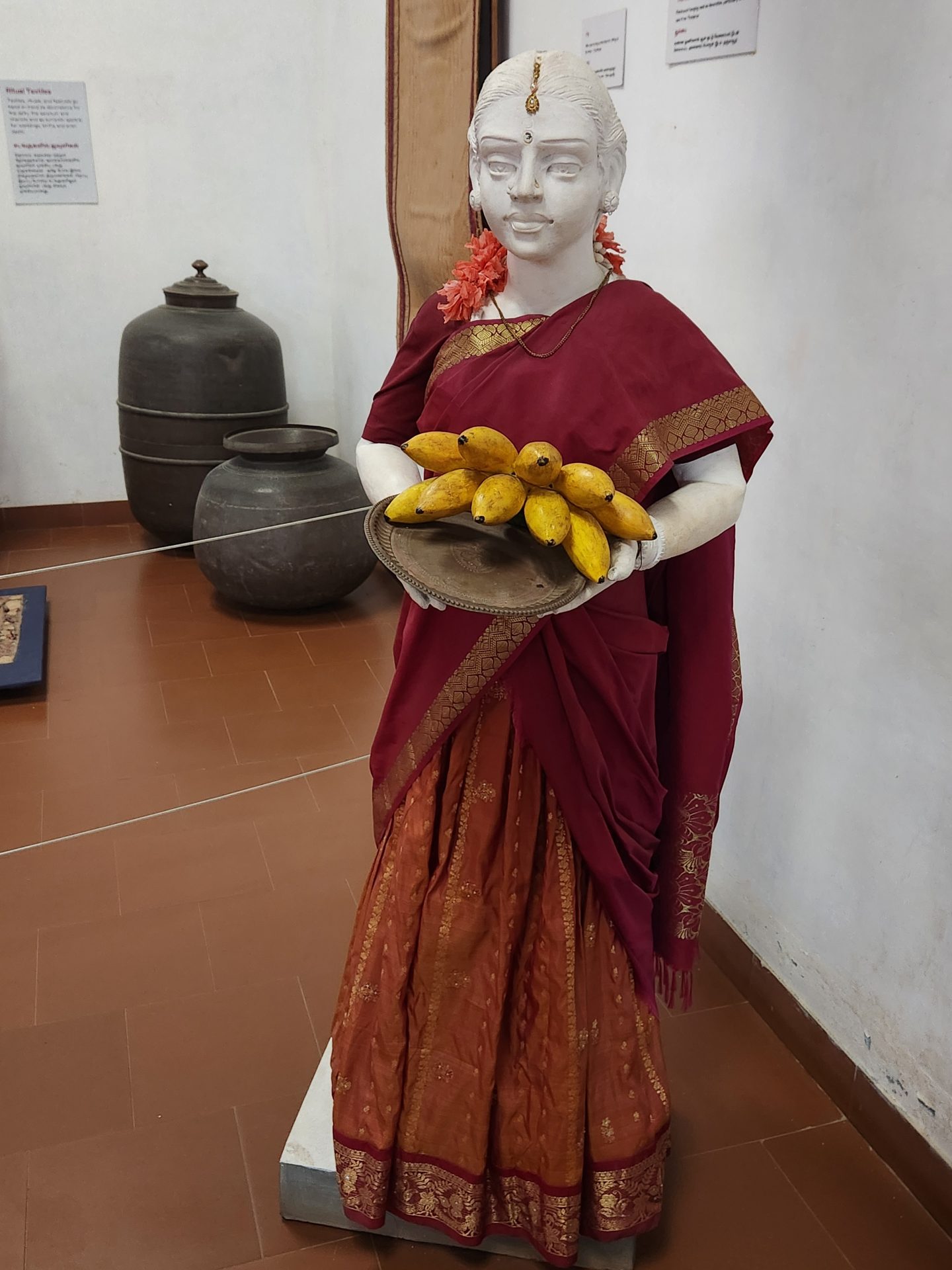
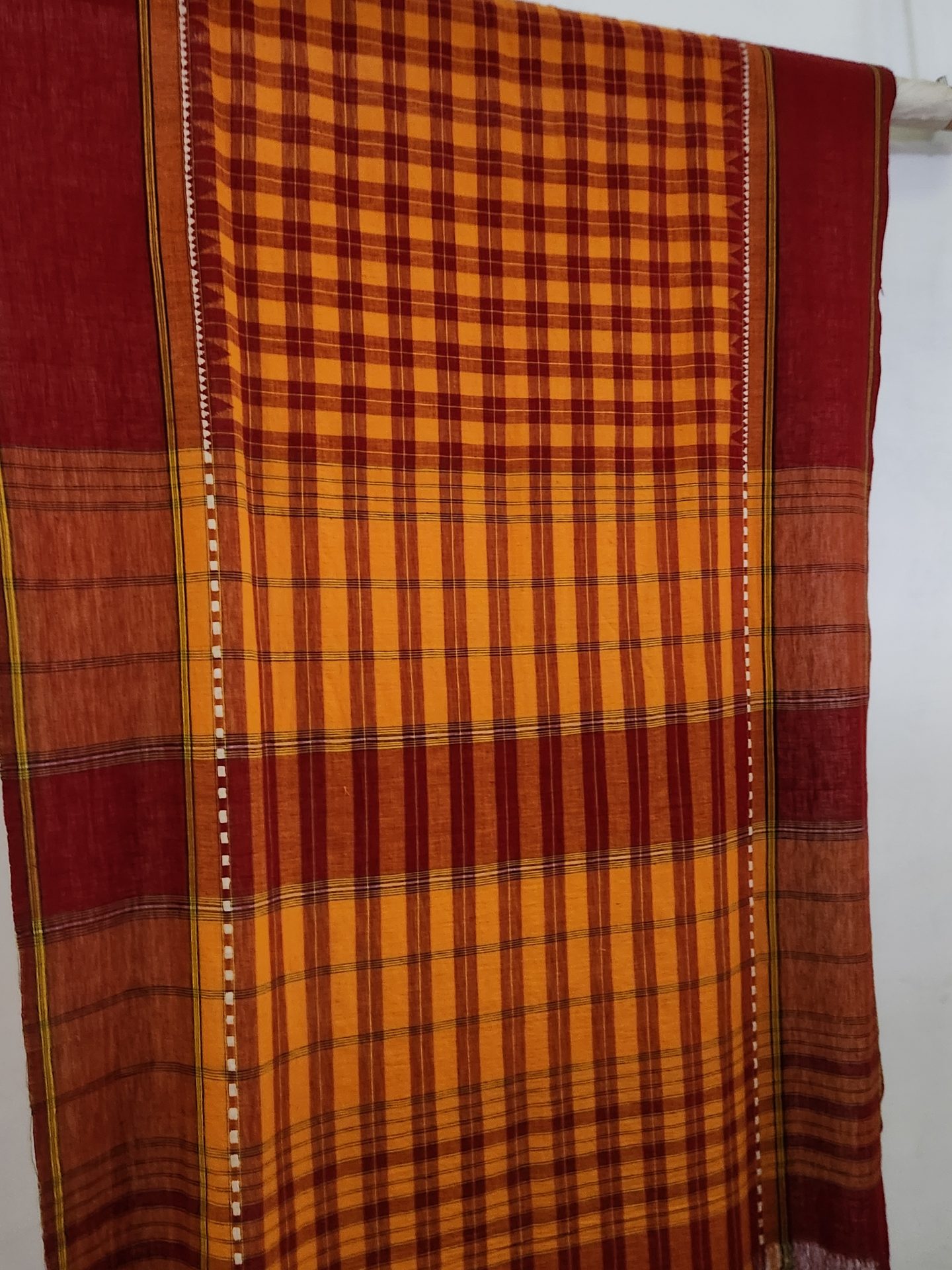
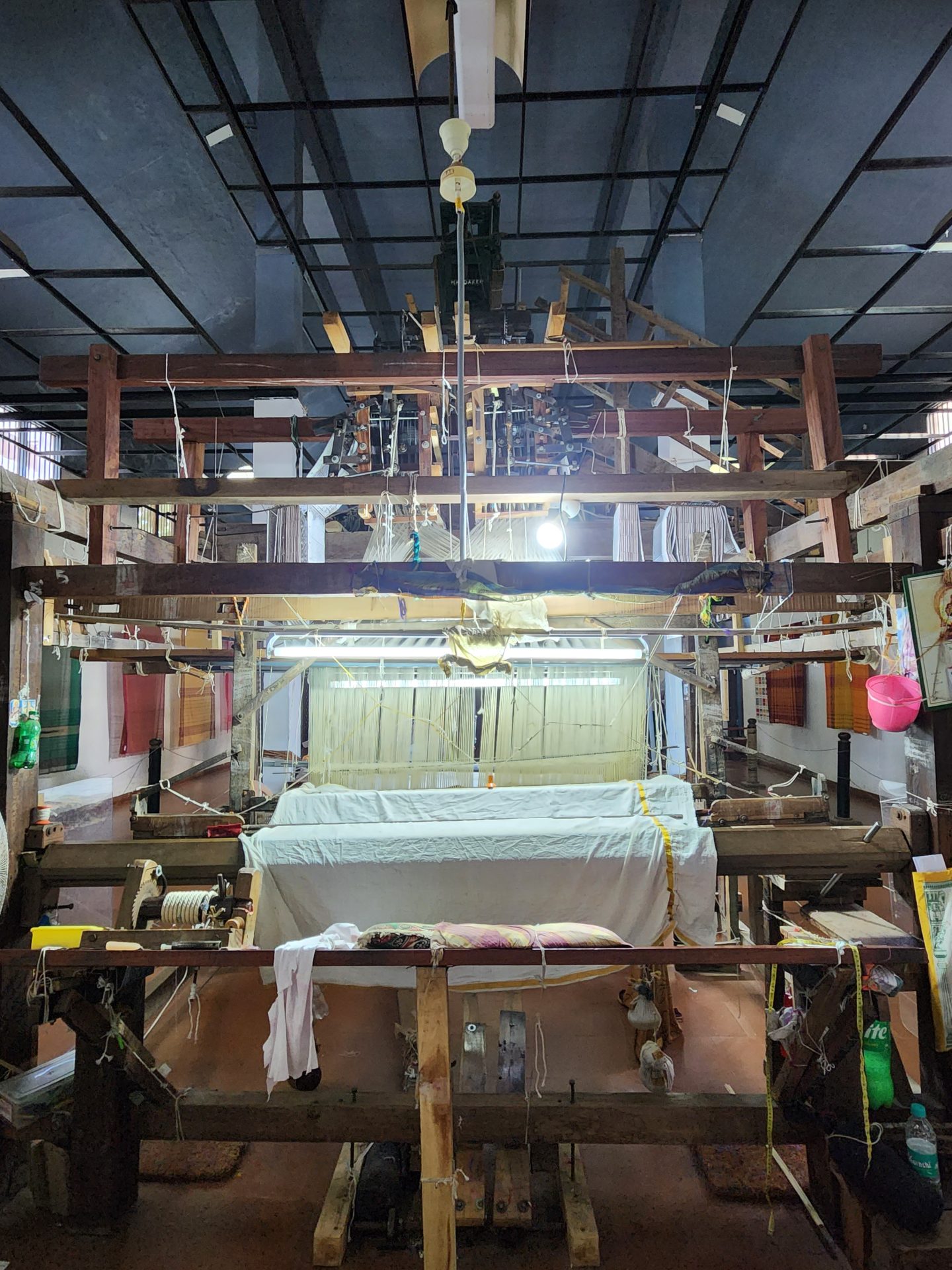
Tamil Nadu - The Weaver's House

For most craftsmen who inhabit these houses, their workspace is within the house itself. The style and built of these houses is very common to many communities throughout Chengalpet district.

The workspace is where the loom and weaving are done including the reeling and twisting of the thread and any ritual, wedding or festivity takes place in the room where the loom is installed and this entails stopping of work activities.


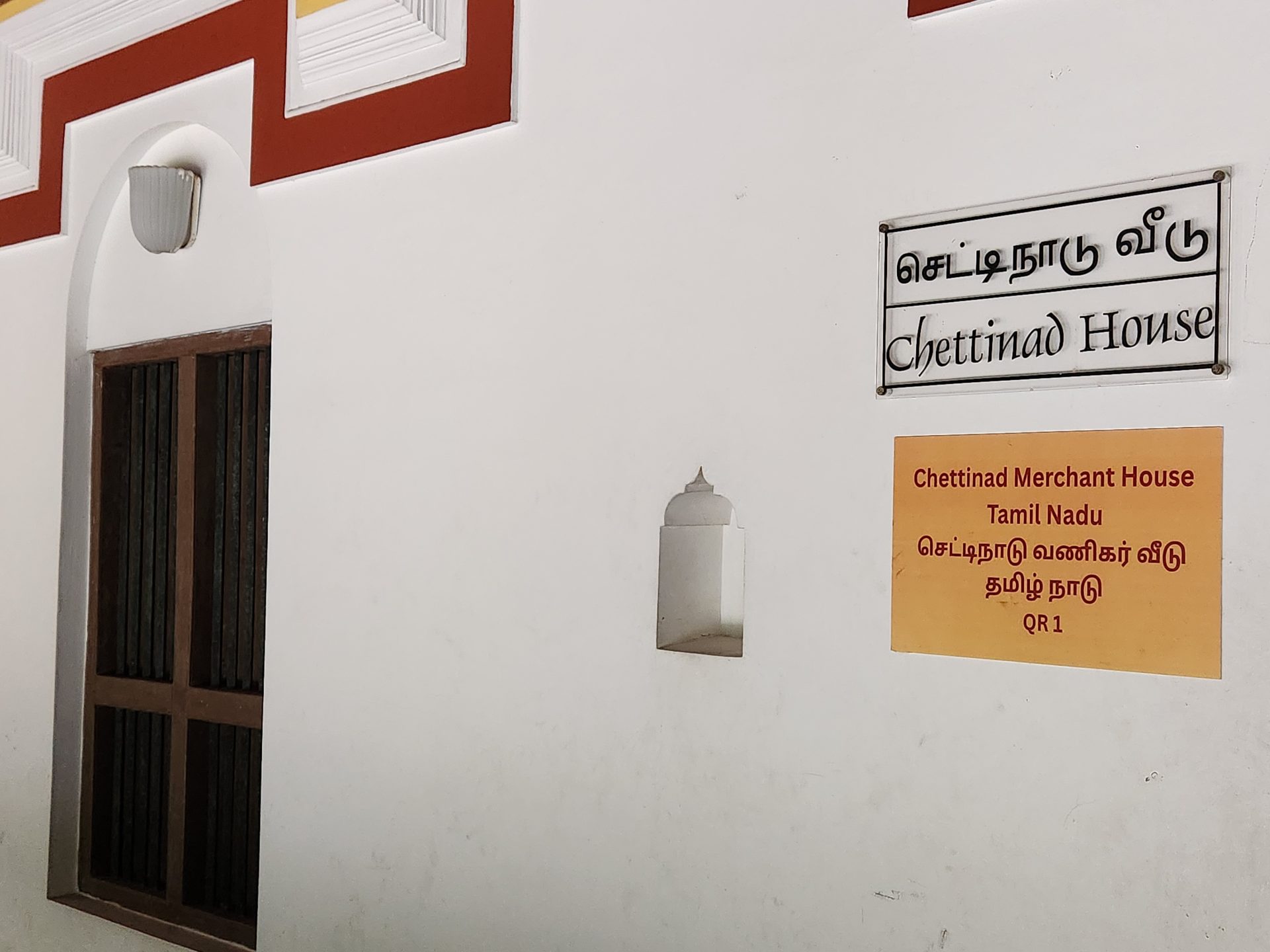
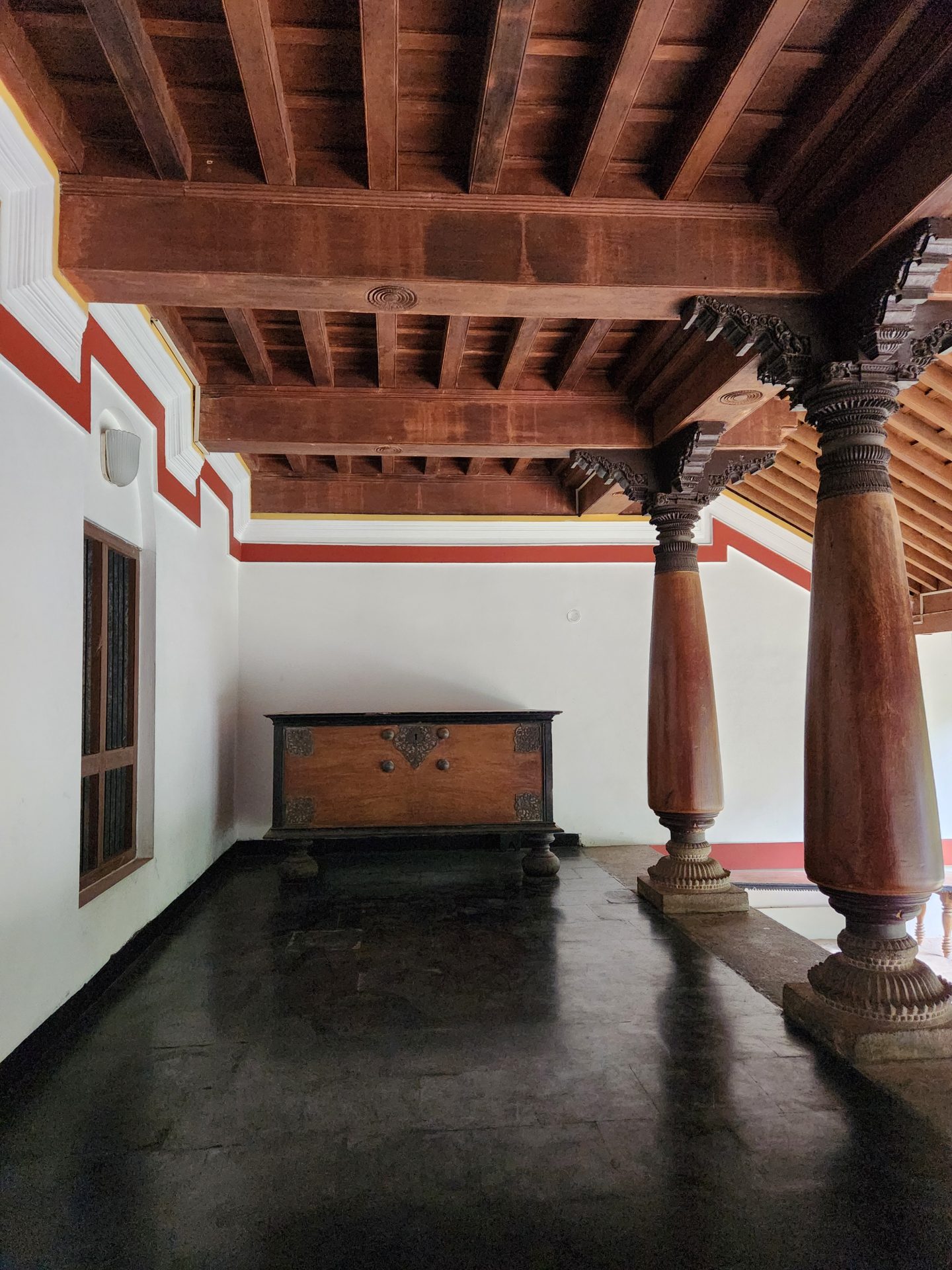
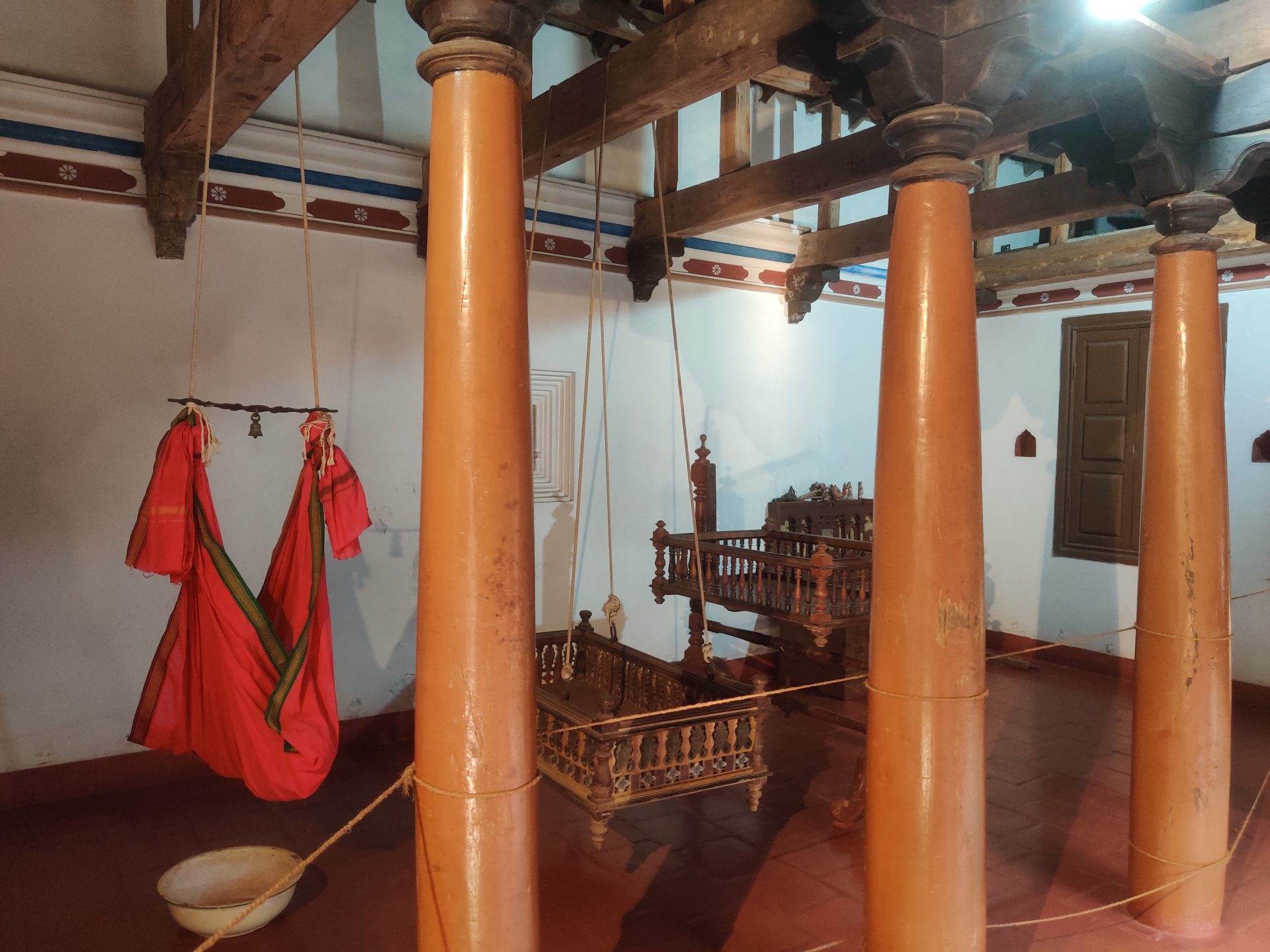
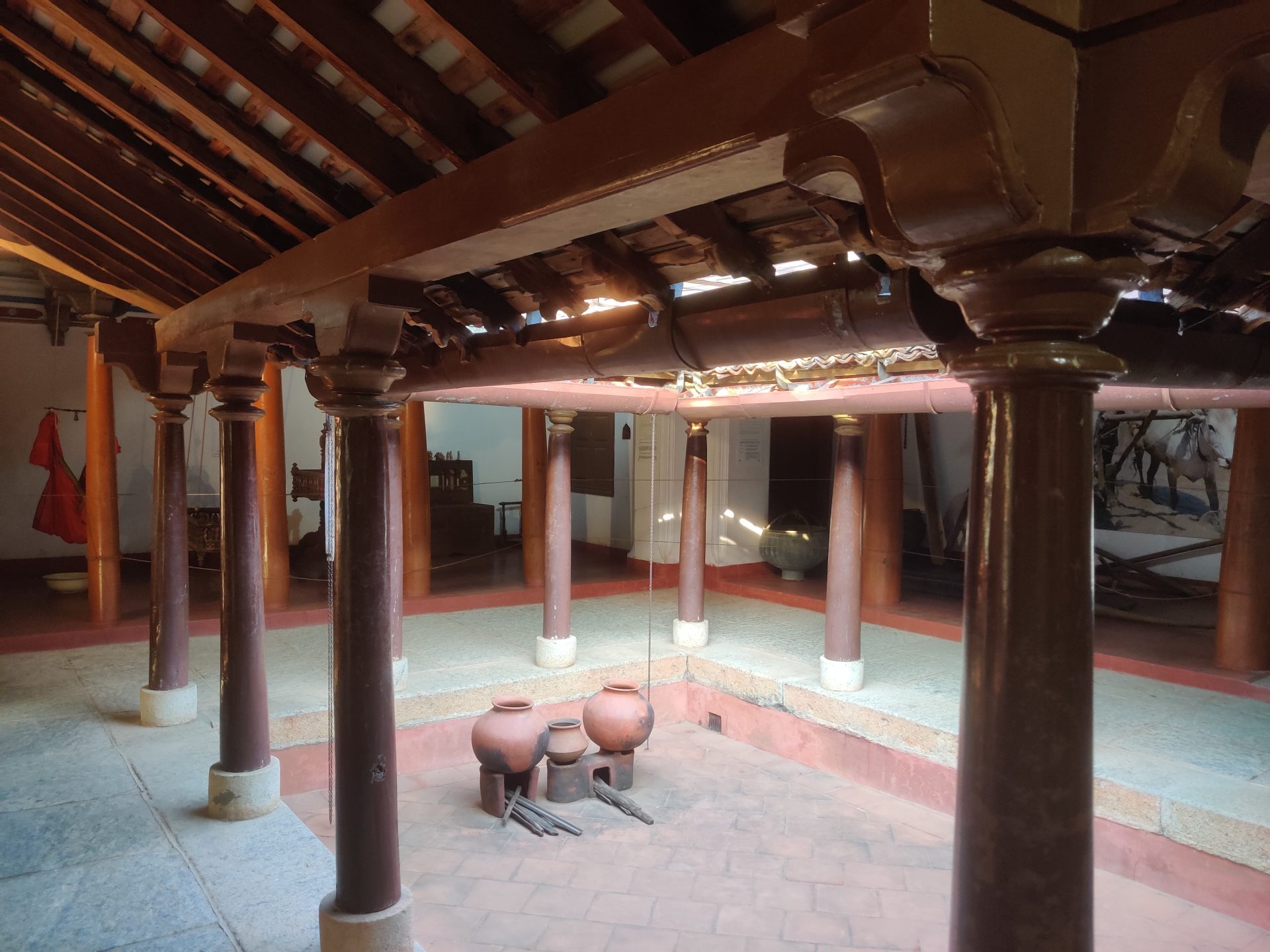
Tamil Nadu - The Chettinad Merchant's House

Scattered across the Chettiar Villages of Sivaganga, Ramnad and Pudukottai, these houses are representative of ancestral houses of Nattukottai Chettiars and is built out a house from Kadanur Village in Ramnad district.

Scattered across the Chettiar Villages of Sivaganga, Ramnad and Pudukottai, these houses are representative of ancestral houses of Nattukottai Chettiars and is built out a house from Kadanur Village in Ramnad district.


Tamil Nadu - The Brahmin's House

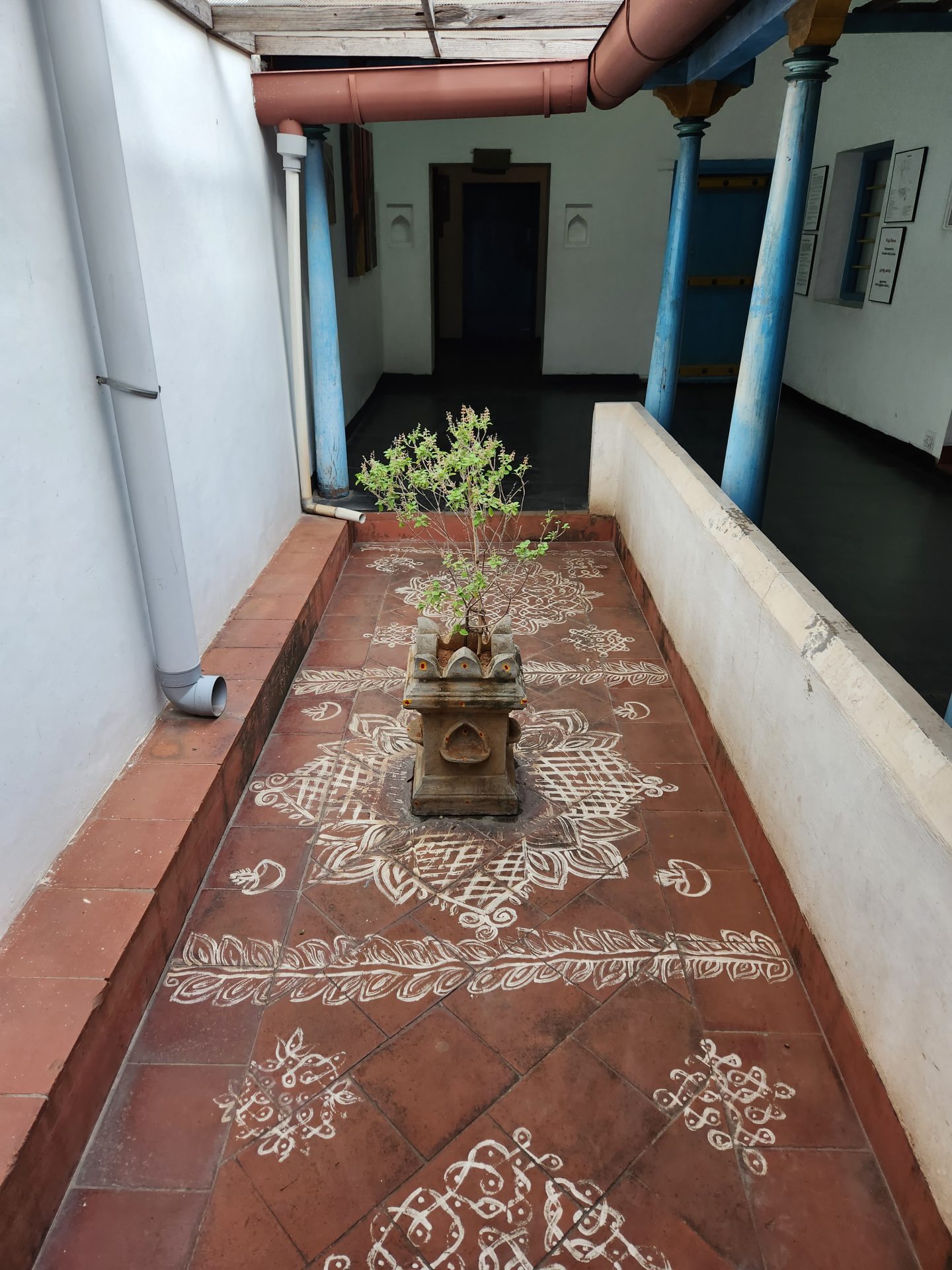
This house has been redone using the material from a Brahmin house in Ambur village, an agricultural village in the South of Tamil Nadu. Most houses appear the same in build and are typically connected by a common wall while appearing to be long and narrow in width.

These houses have open spaces in the back and are often without an interior courtyard and a clear storey on the roof helps provide light and fresh air for most of these kind of houses


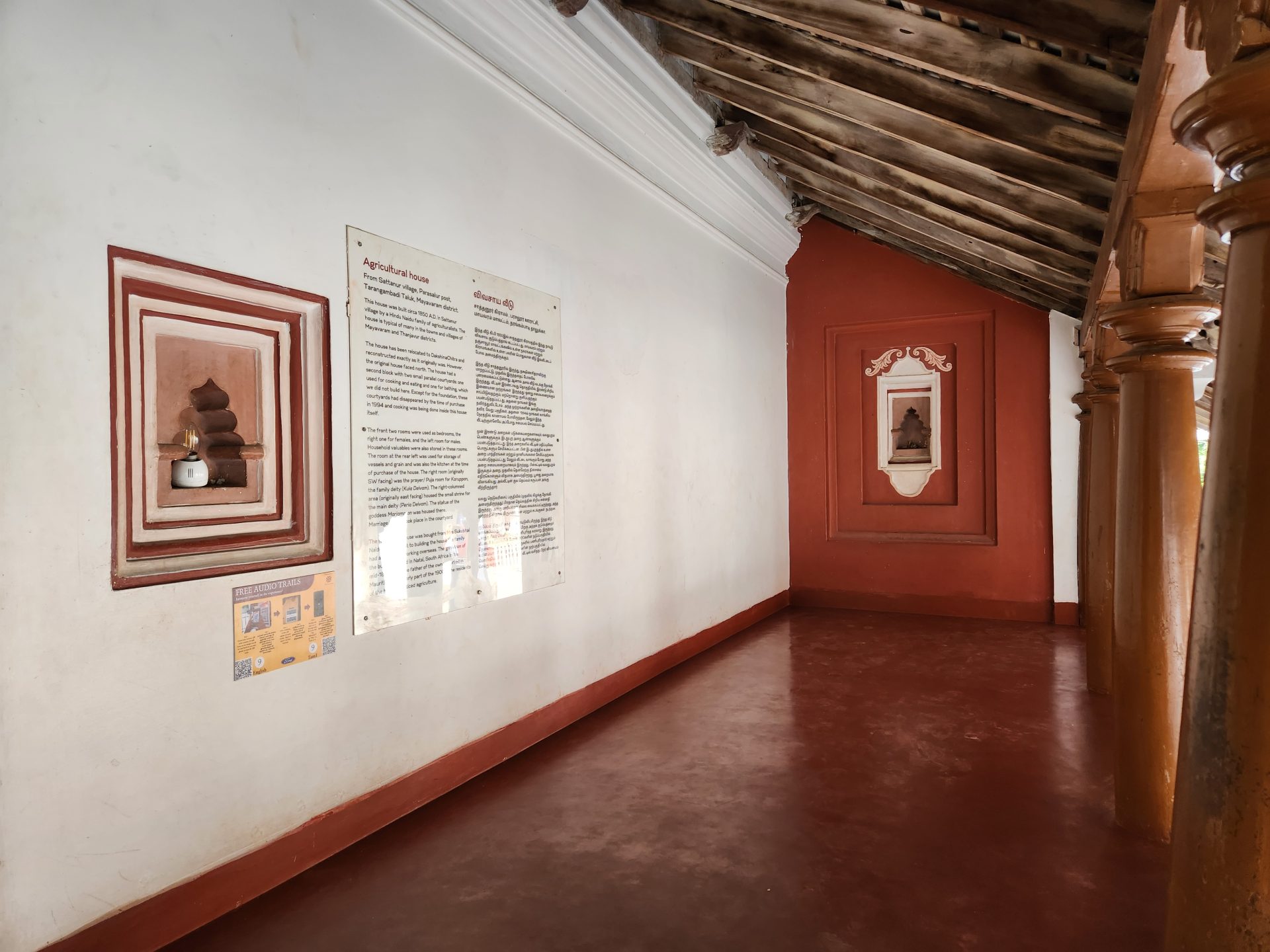
Tamil Nadu -The Farmer's House

Originally built in Sattanur village in 1850 AD  by a Hindu Naidu family of agriculturalists, this house has been recreated here. This is typical of many in the towns and villages of Mayavaram and Thanjavur districts.


Tamil Nadu -The Agraharam Area

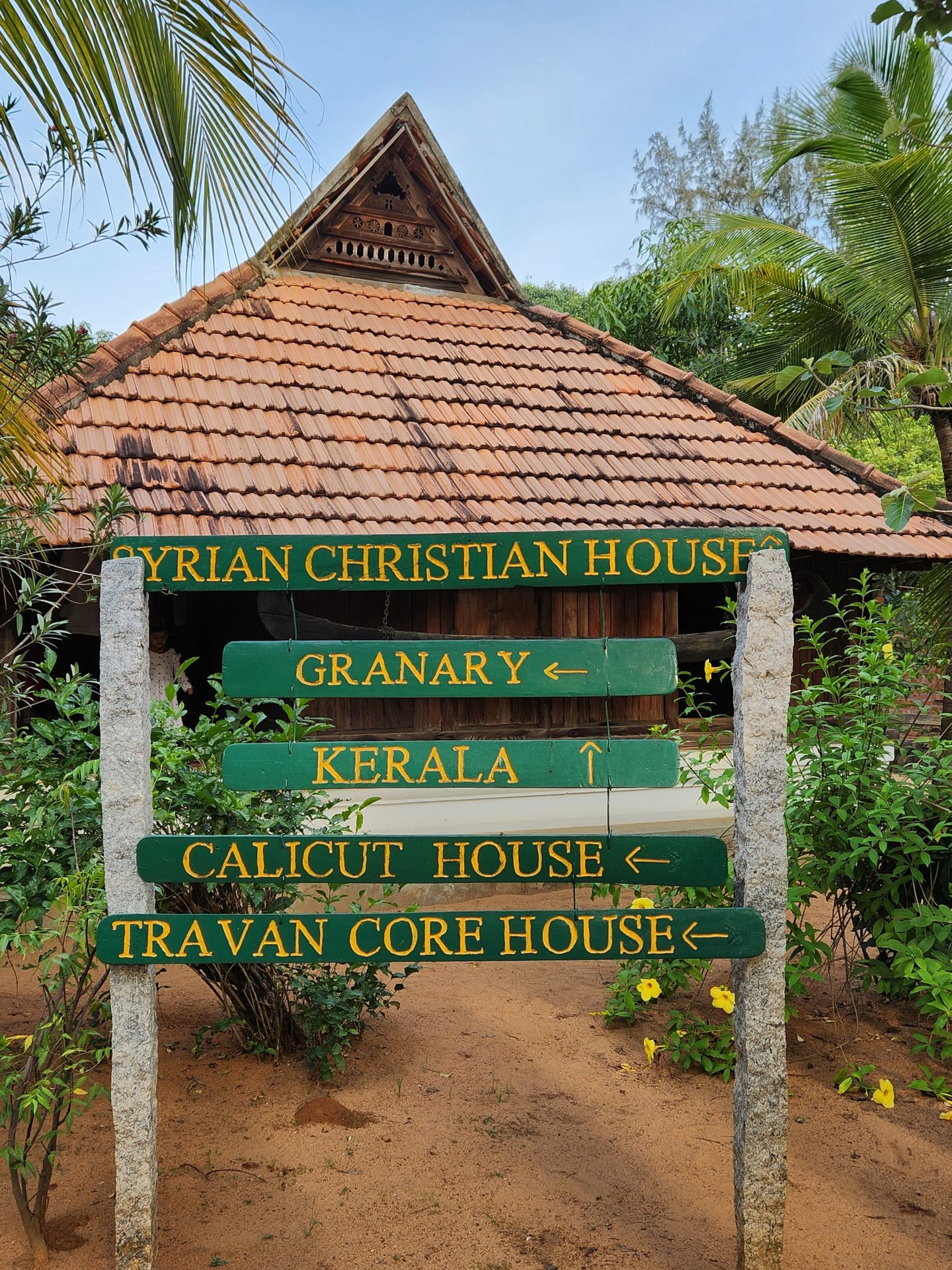
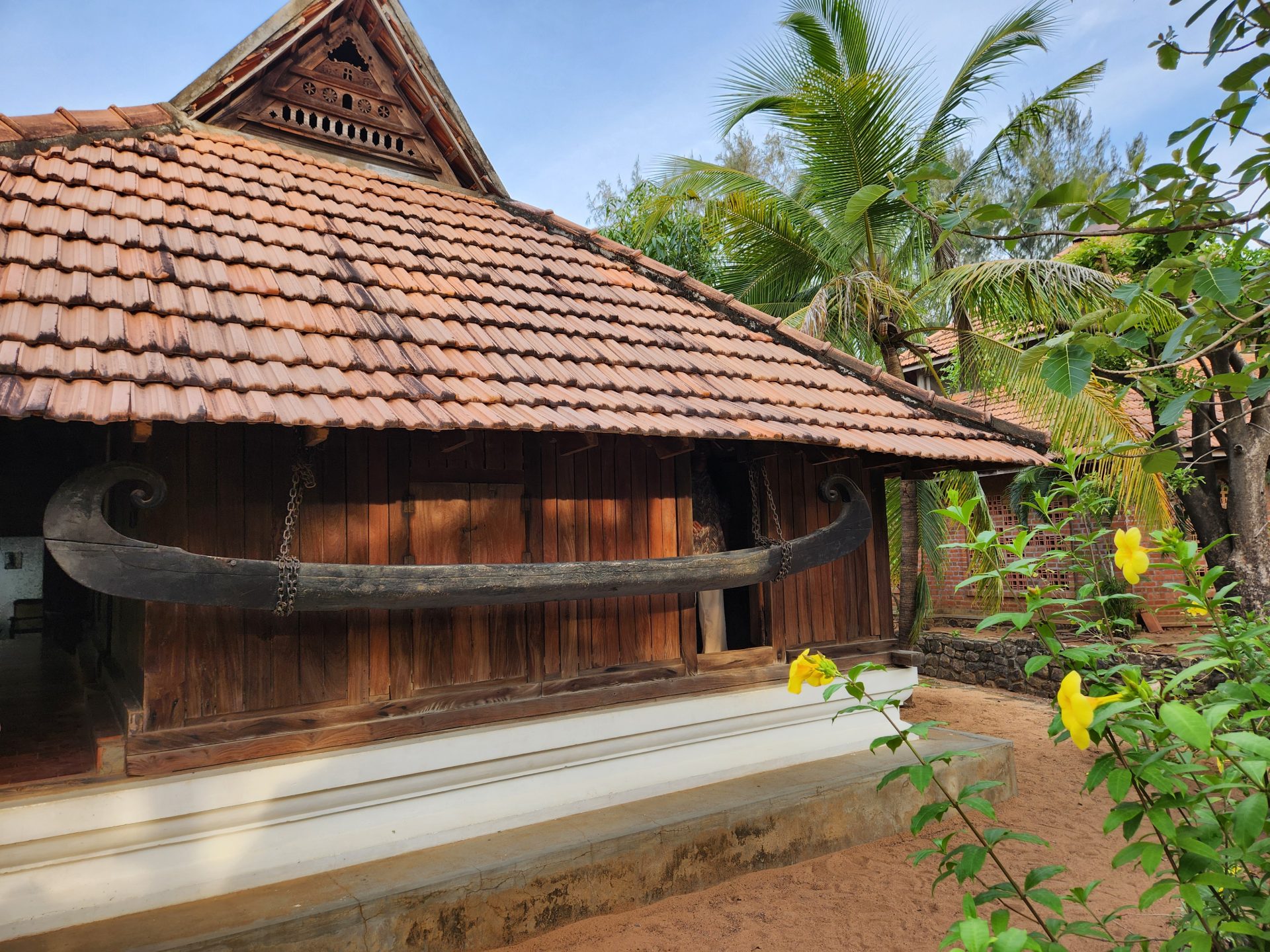
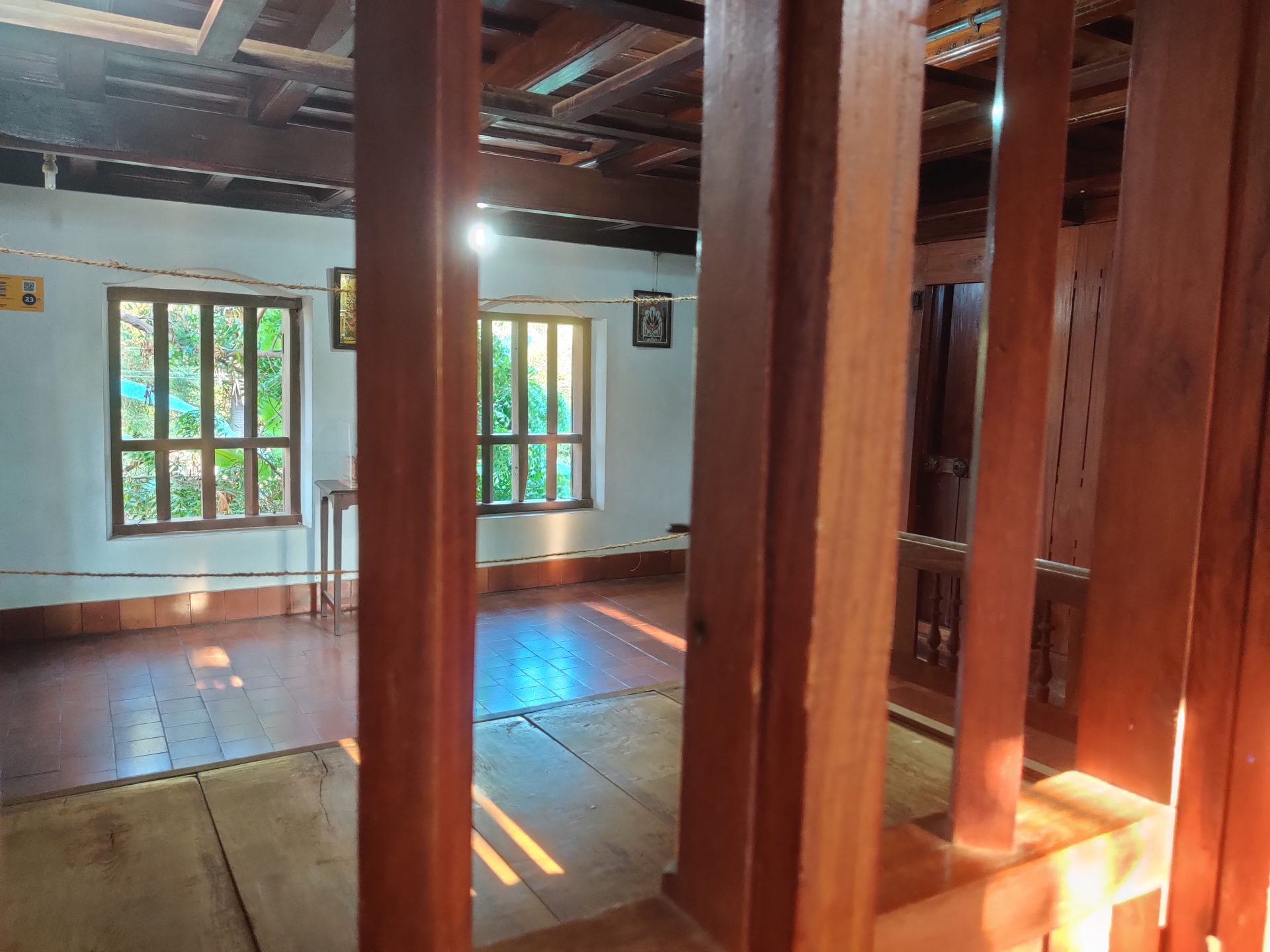
Kerala Syrian Christian House

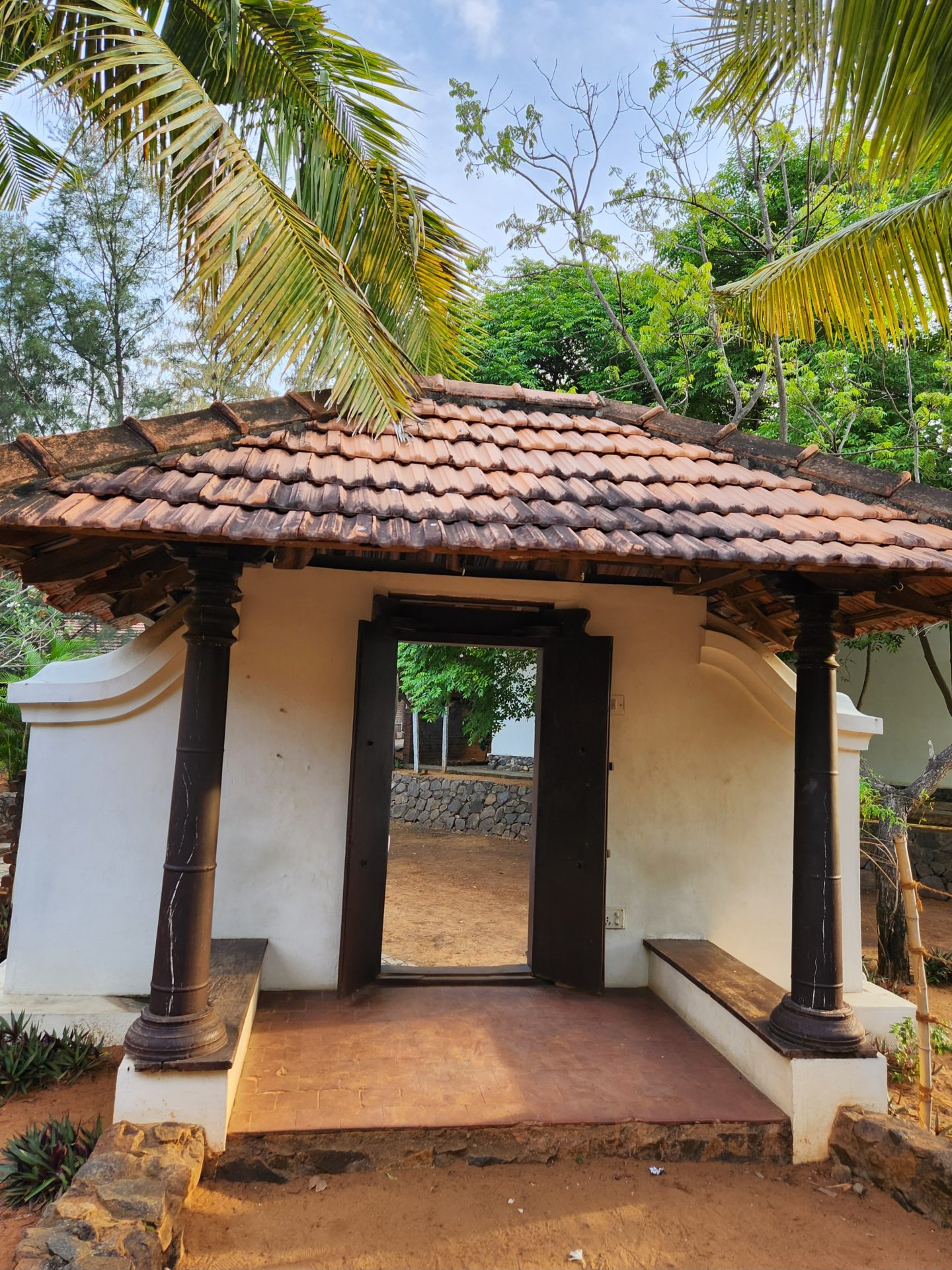
Most houses during this period were single storied and any house expansion occurred by the addition of supplementary buildings: an agricultural house, a cow shed, a separate granary, guest house and an elaborate gate house – Padipura.

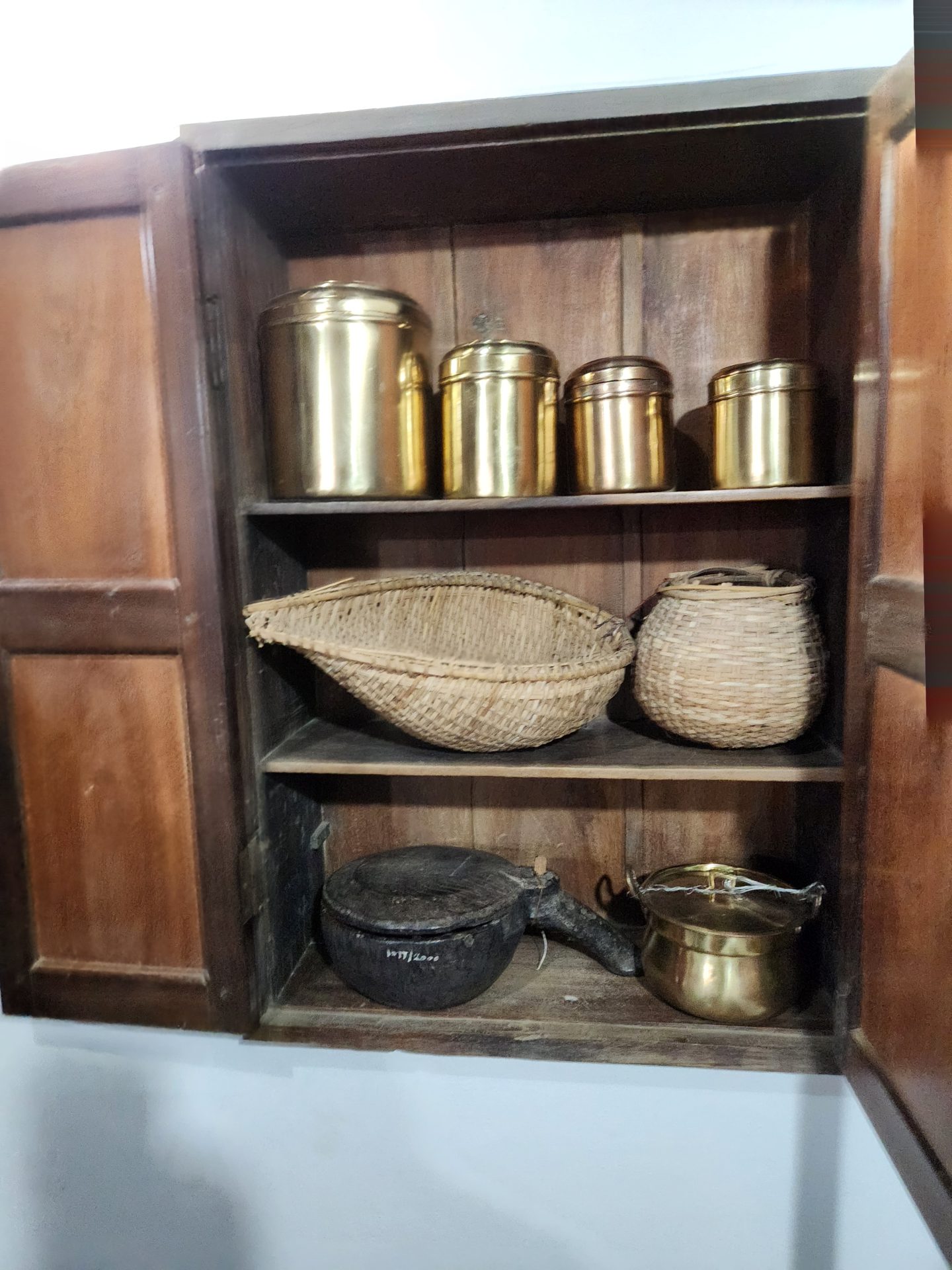
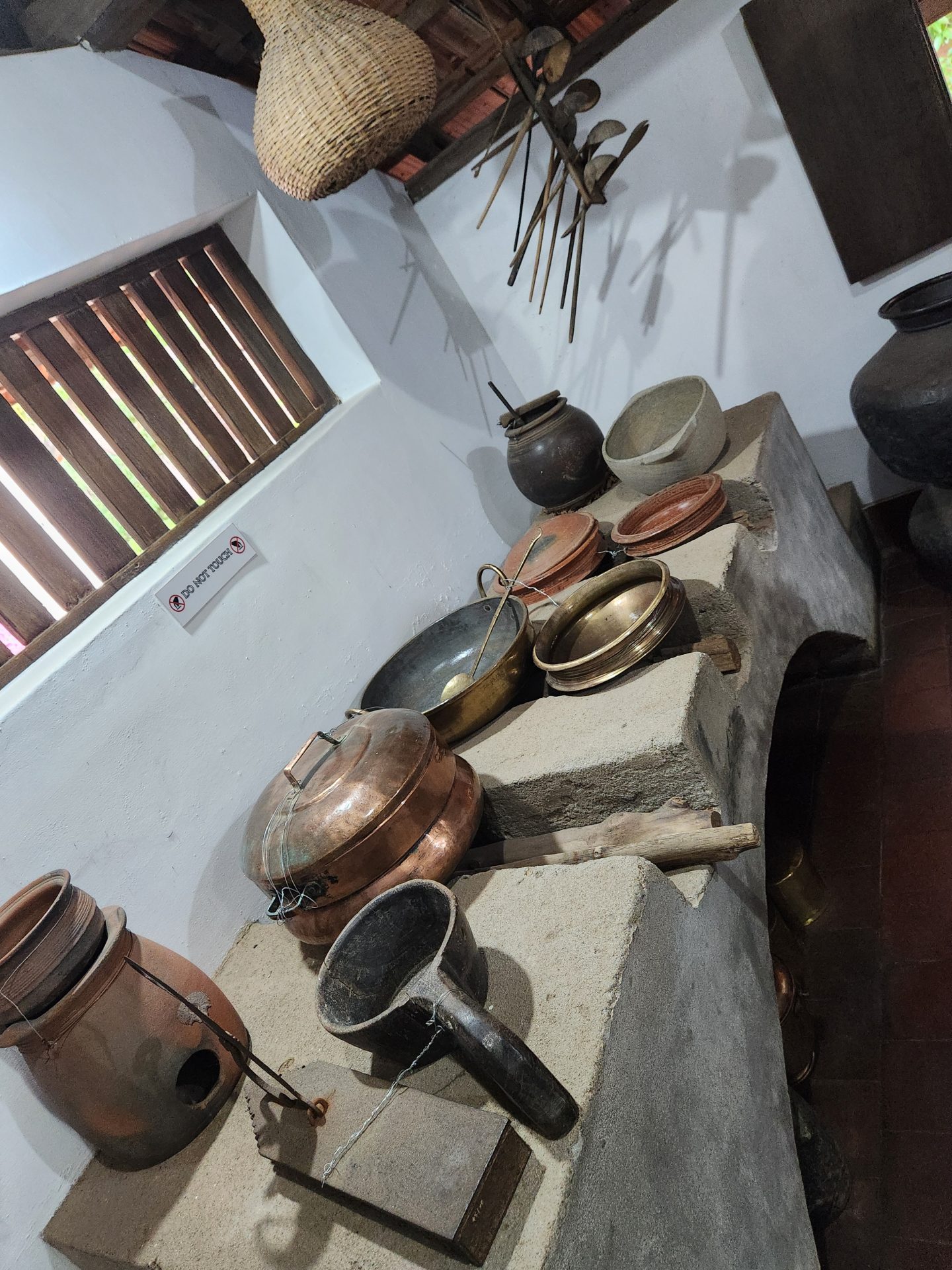
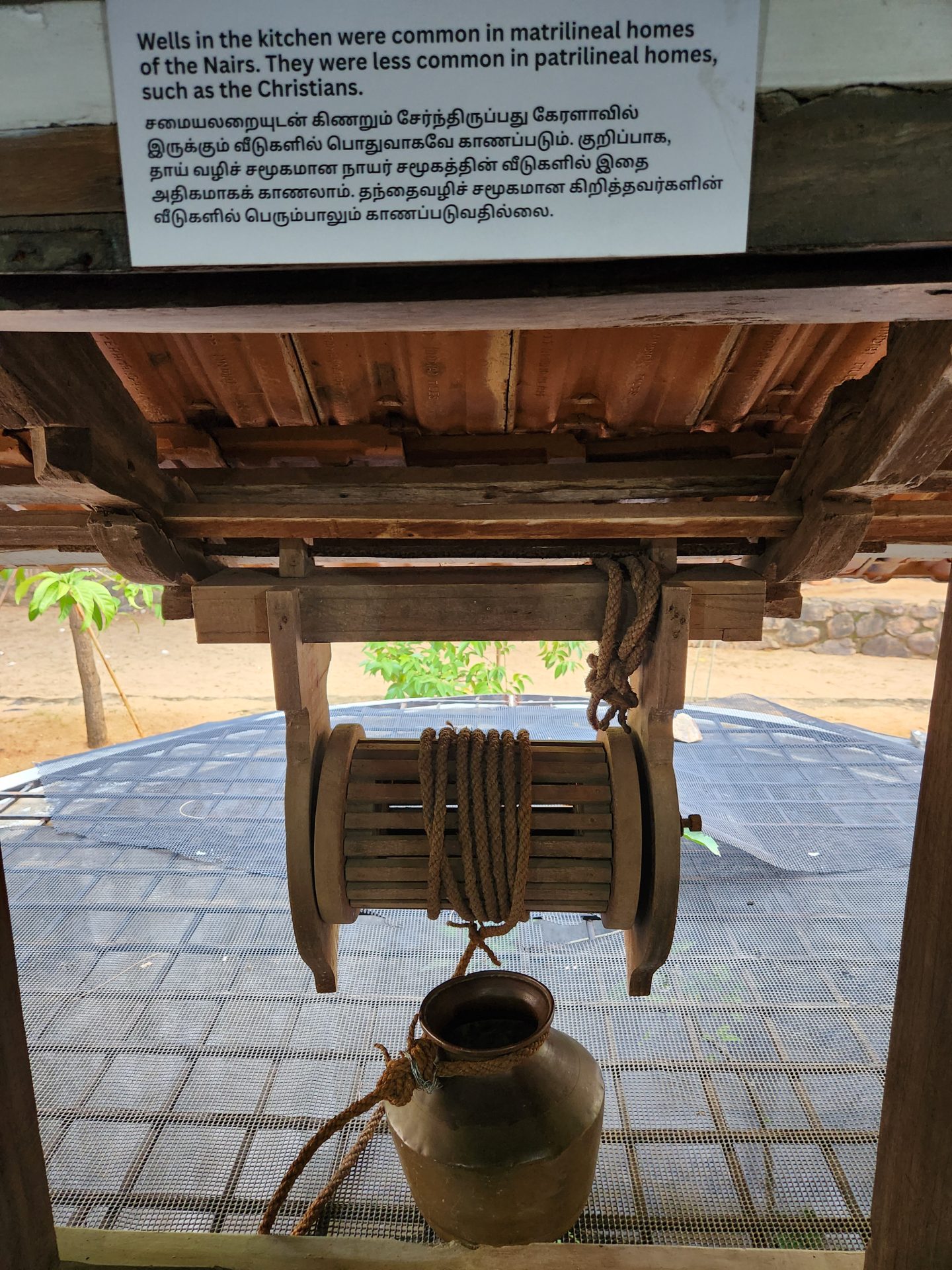
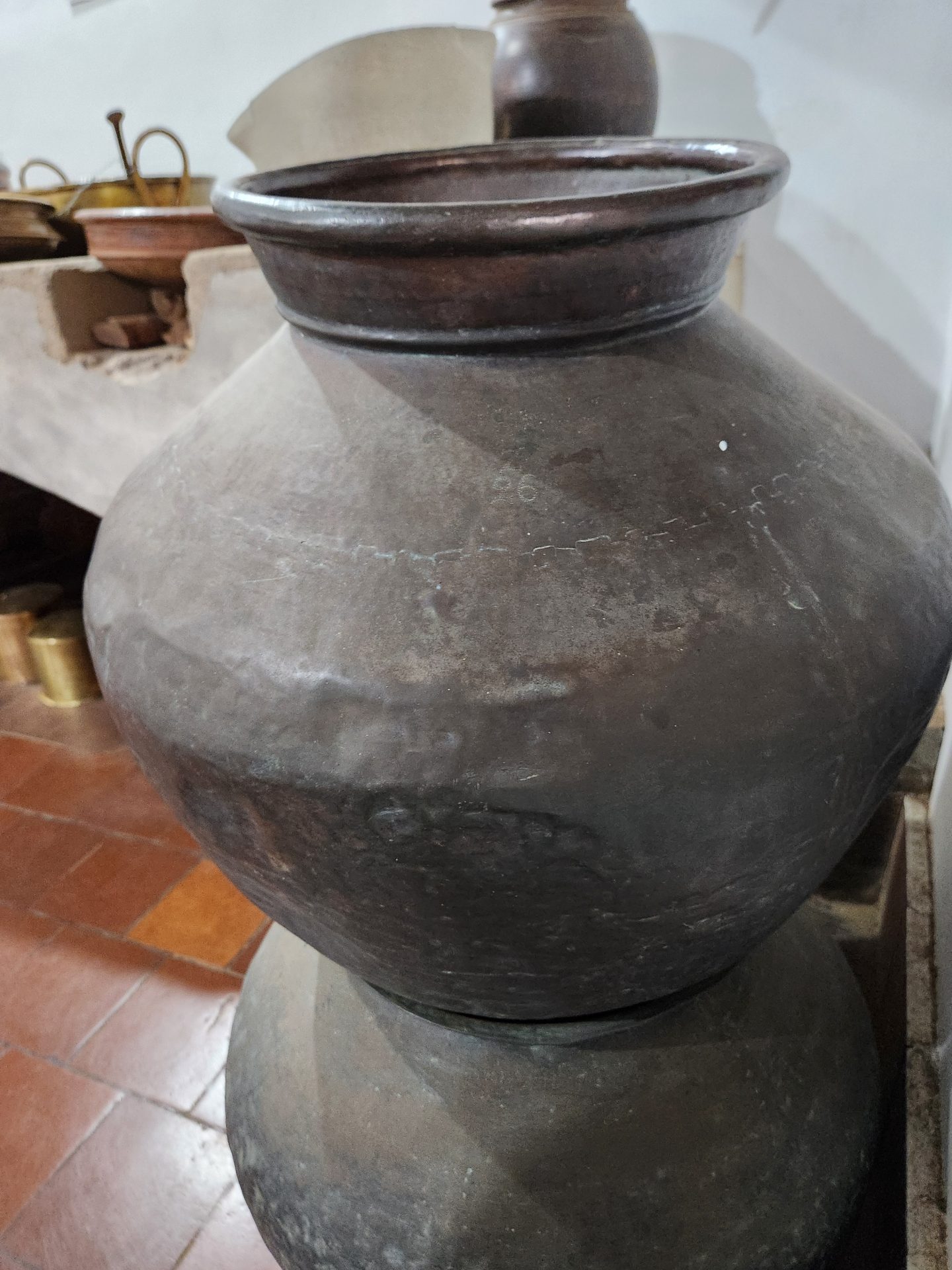
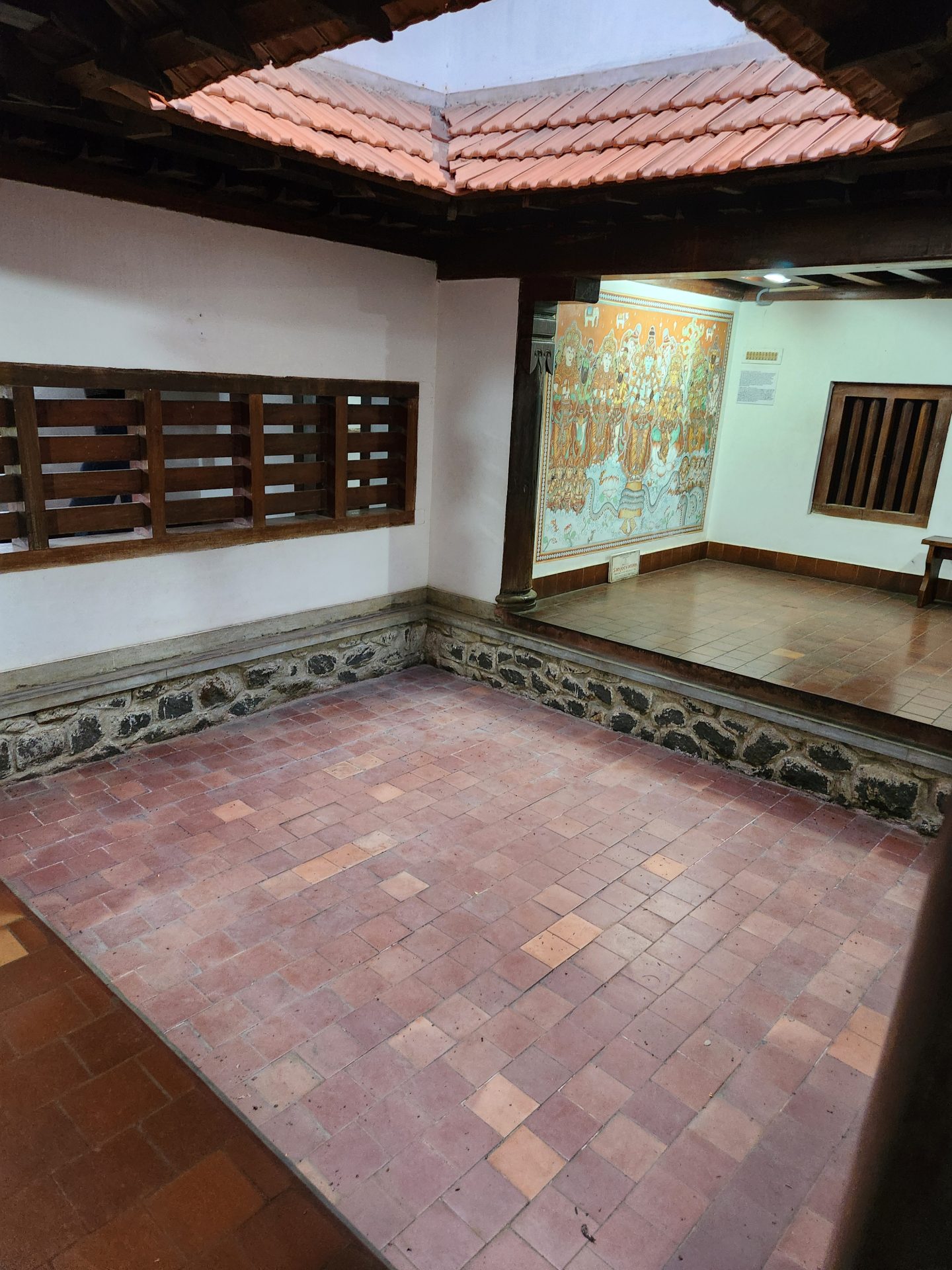
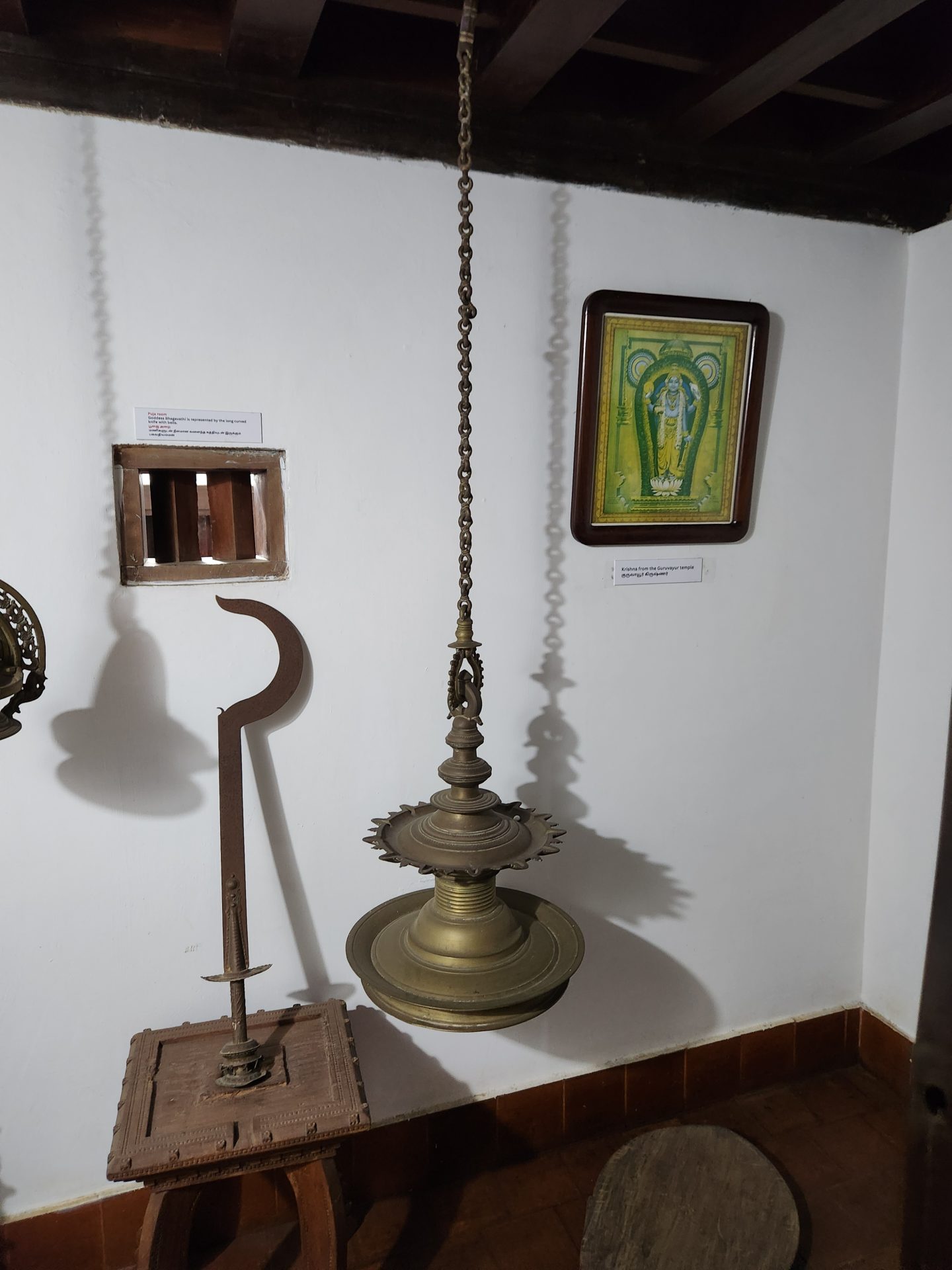
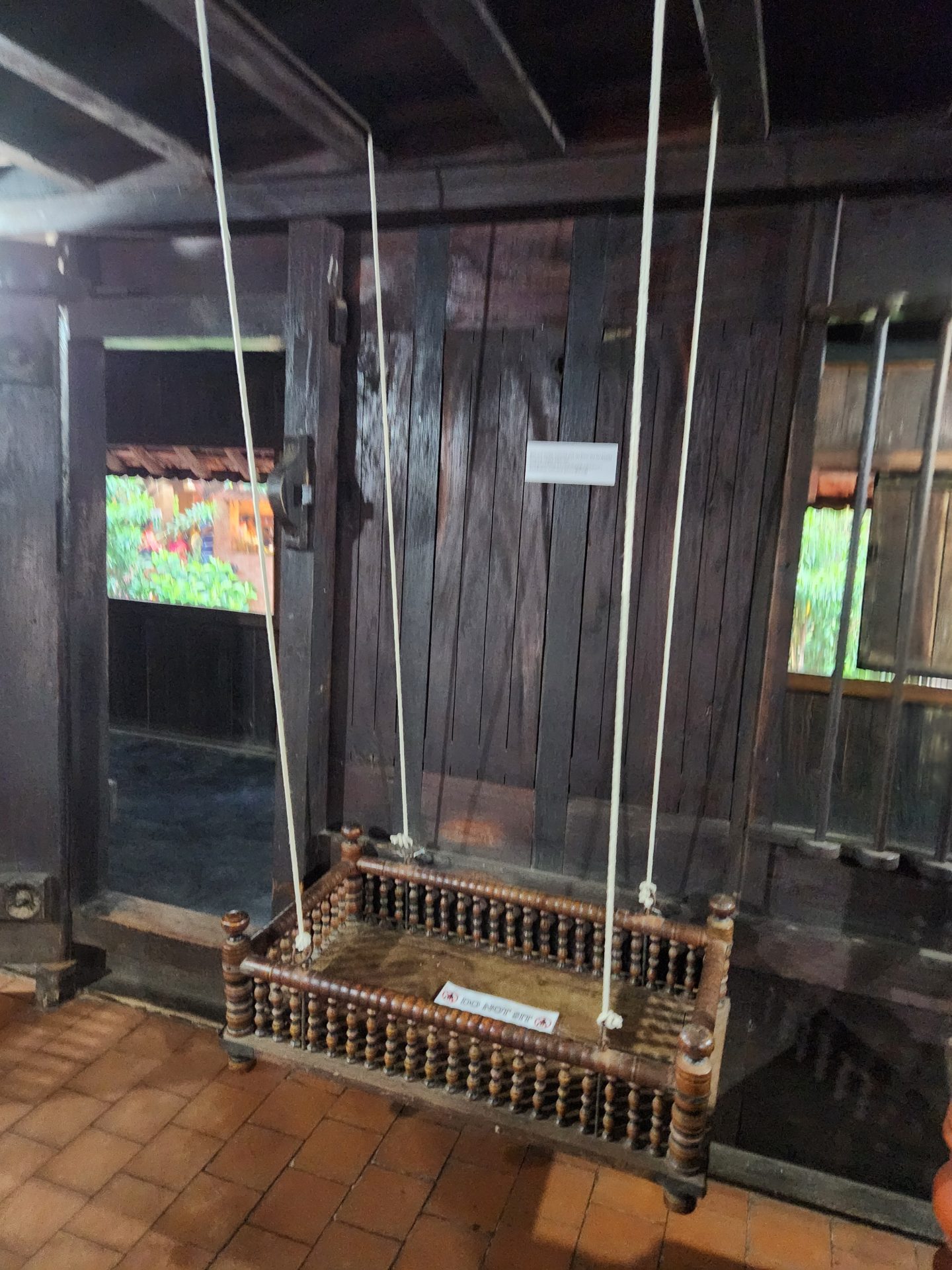
The house built here is from Puthupally in Kottayam District and is typical of the Travancore section of Kerala where the basic features and layout cut across commonly like the wood craft and joinery, the underground storage and general emphasis on storage of food items, the well in the kitchen, the steeped roof and the long verandah

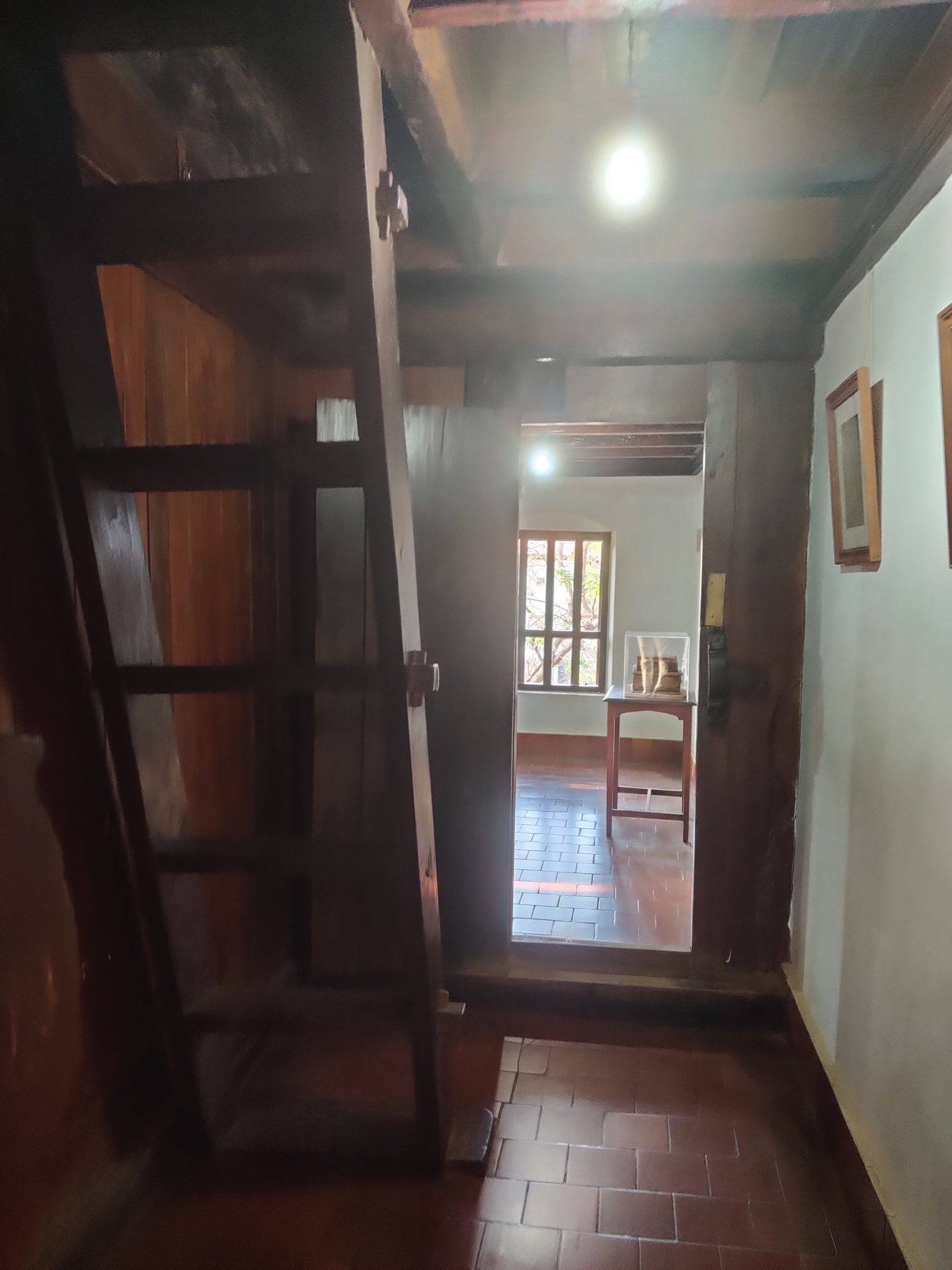
The entrance of the house leads directly into the granary. The prayers in this house were conducted in front of the granary (identified by the small cross above the door). The addition of a masonry structure (c.1910) which includes a living room, a separate dining room and kitchen is a sign of the early westernization of the community and the social trend of entertaining guests in a family house.


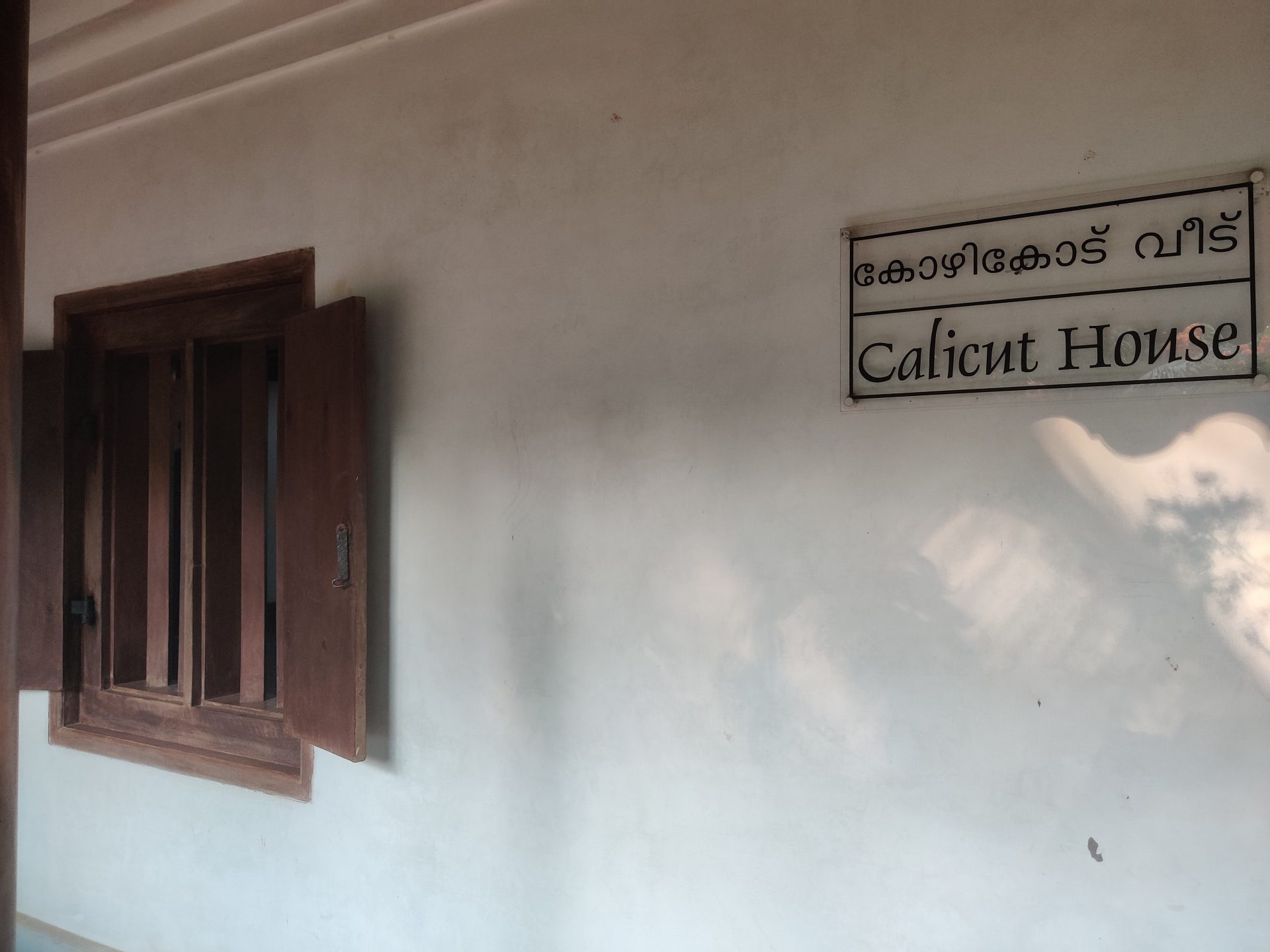
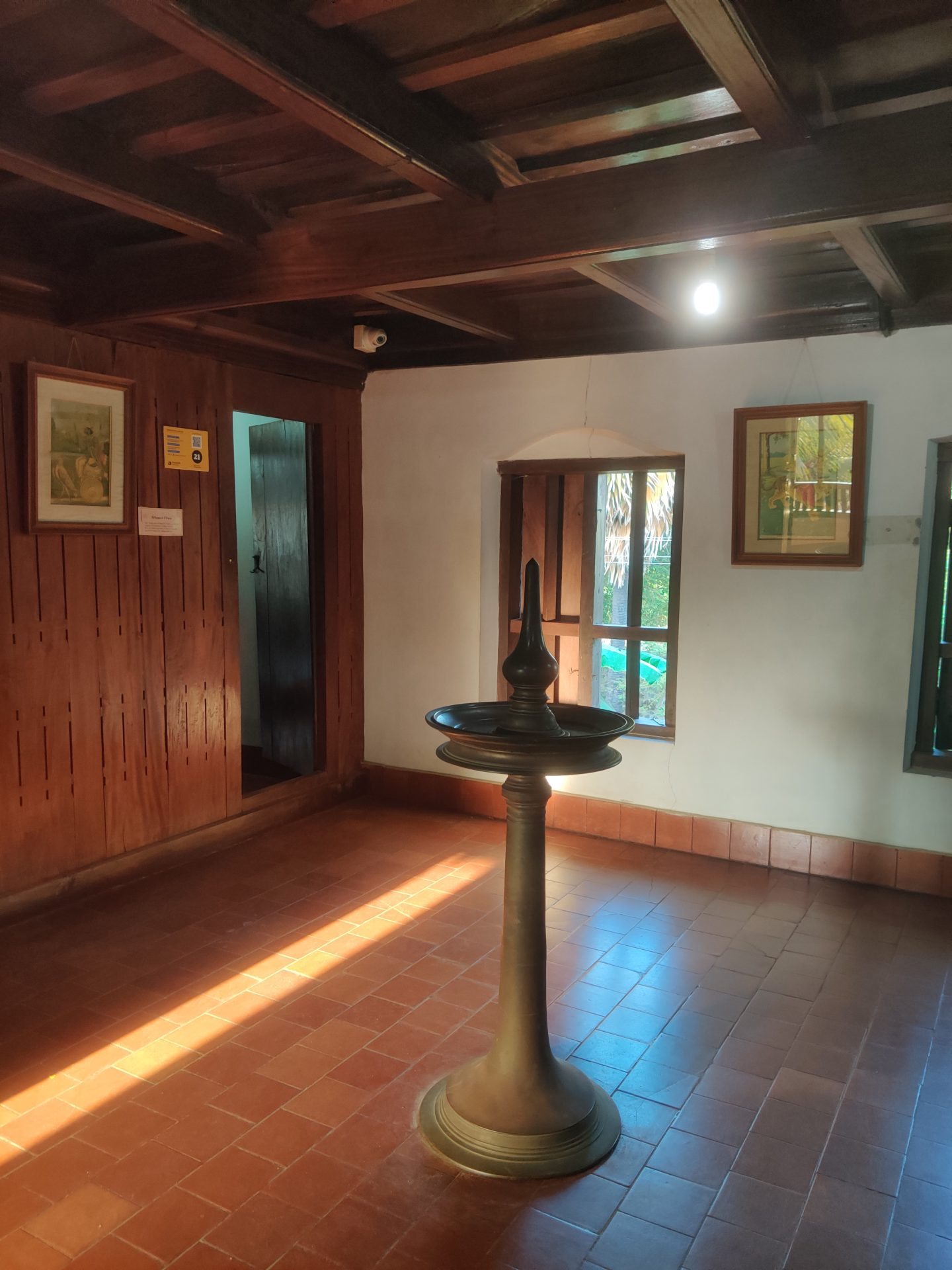
Kerala Calicut House

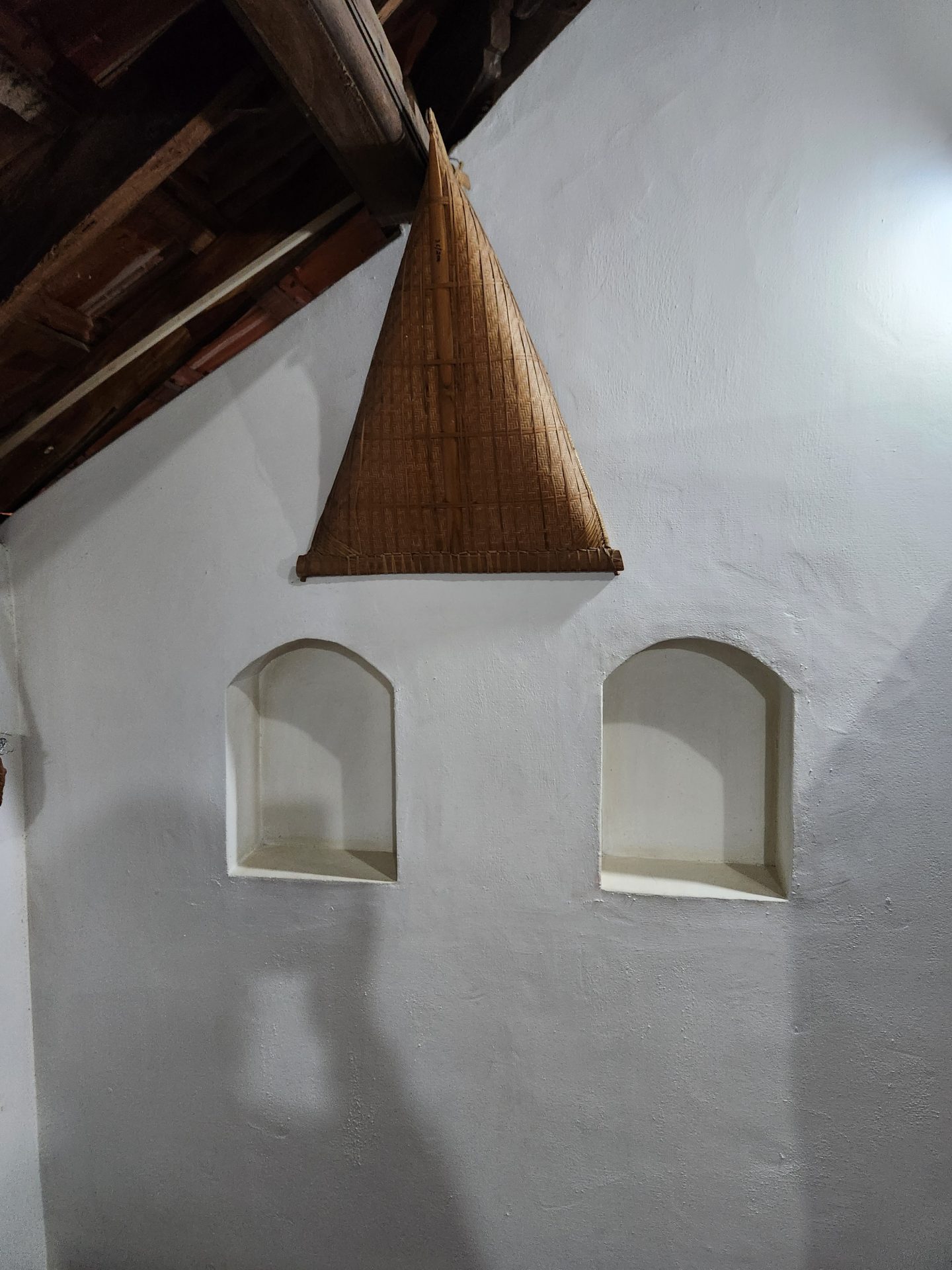
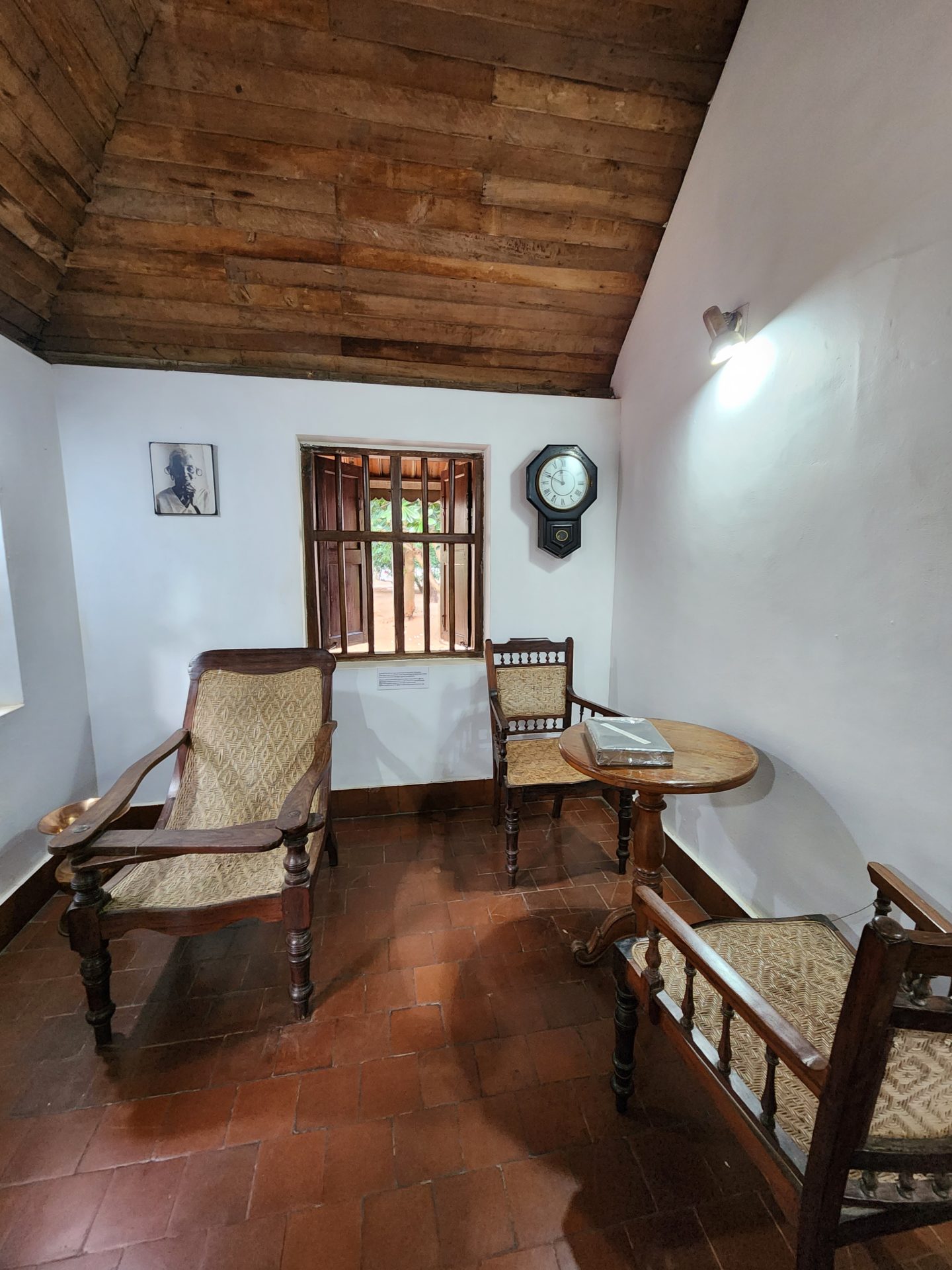
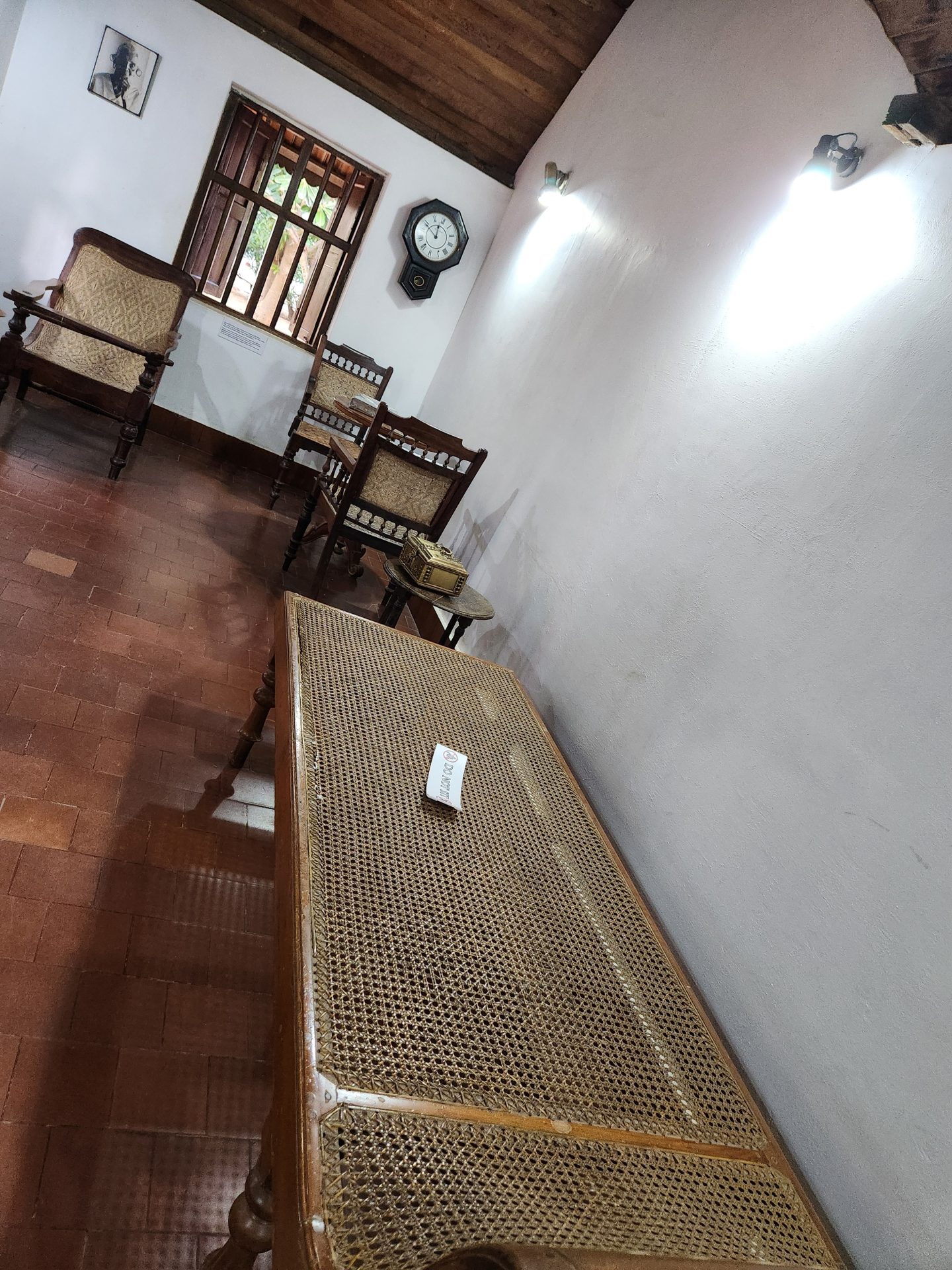
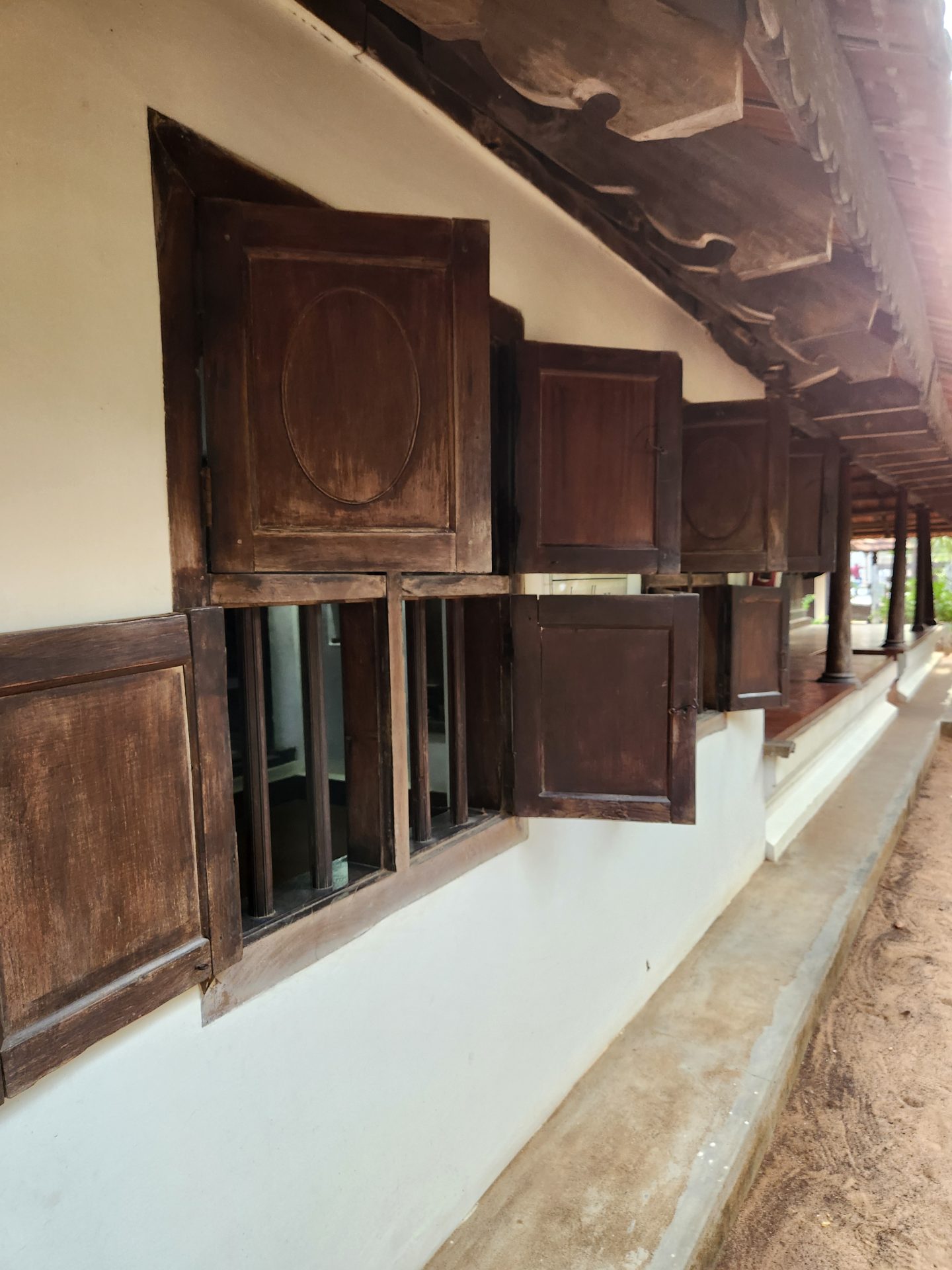
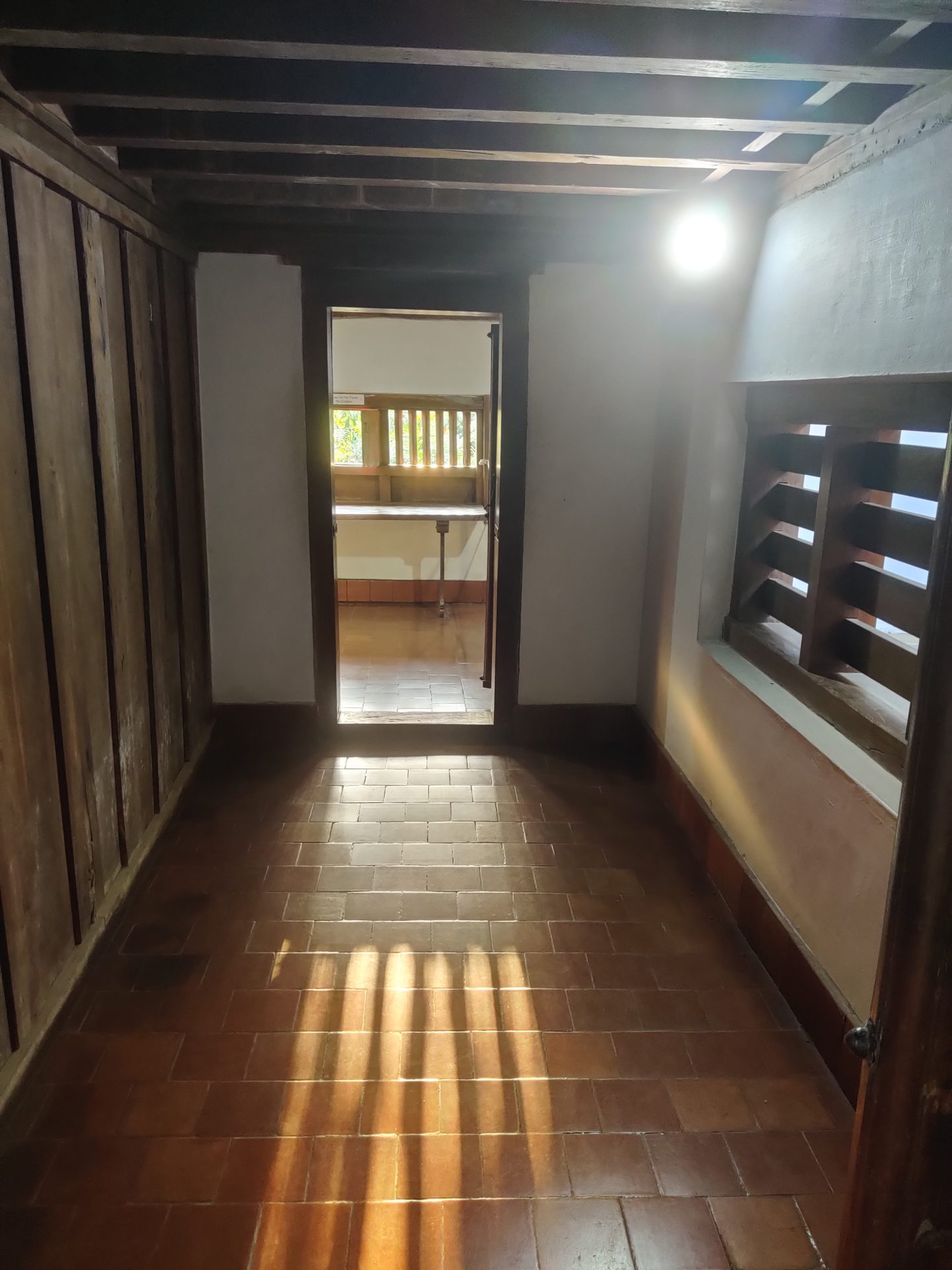
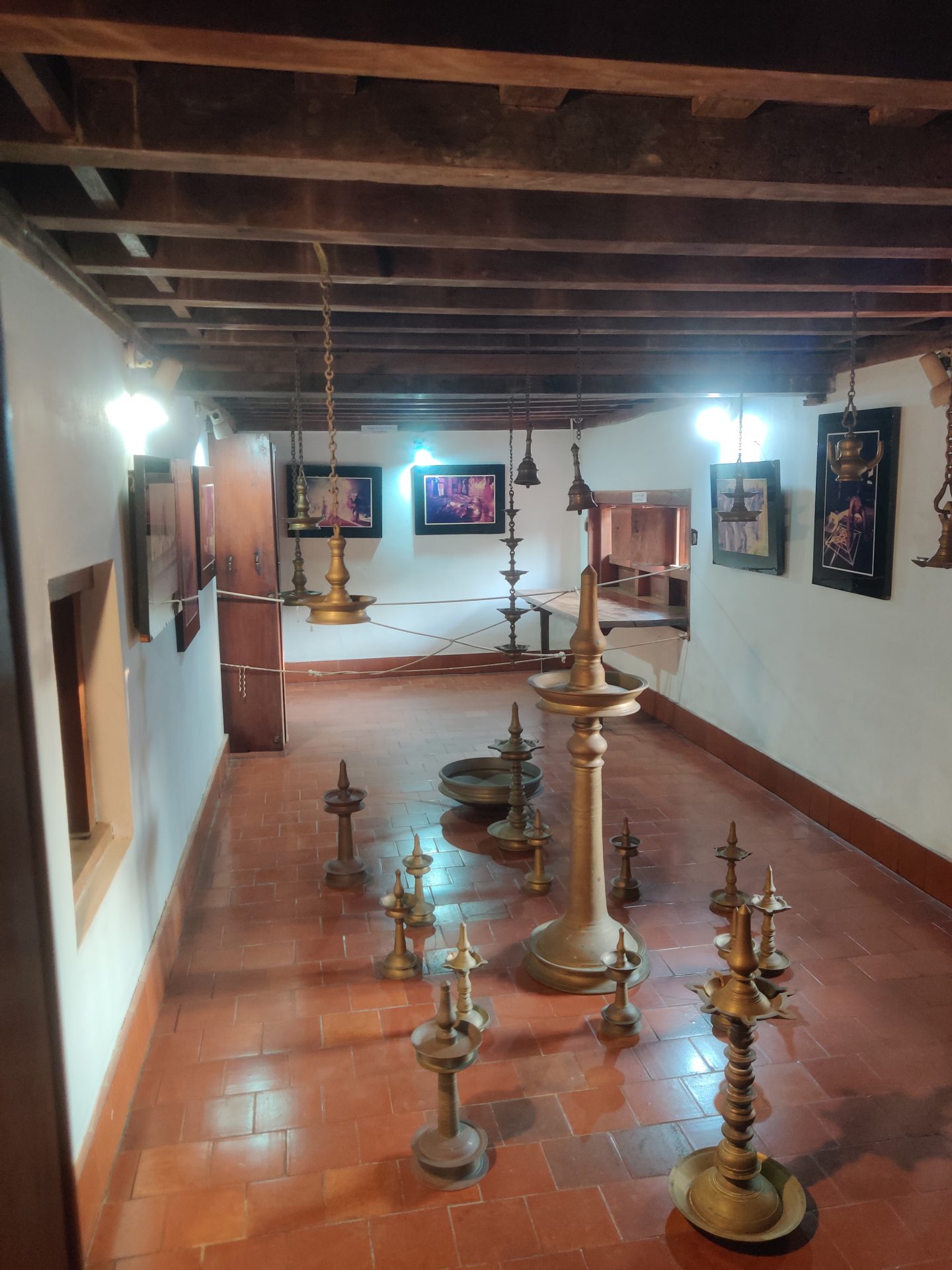
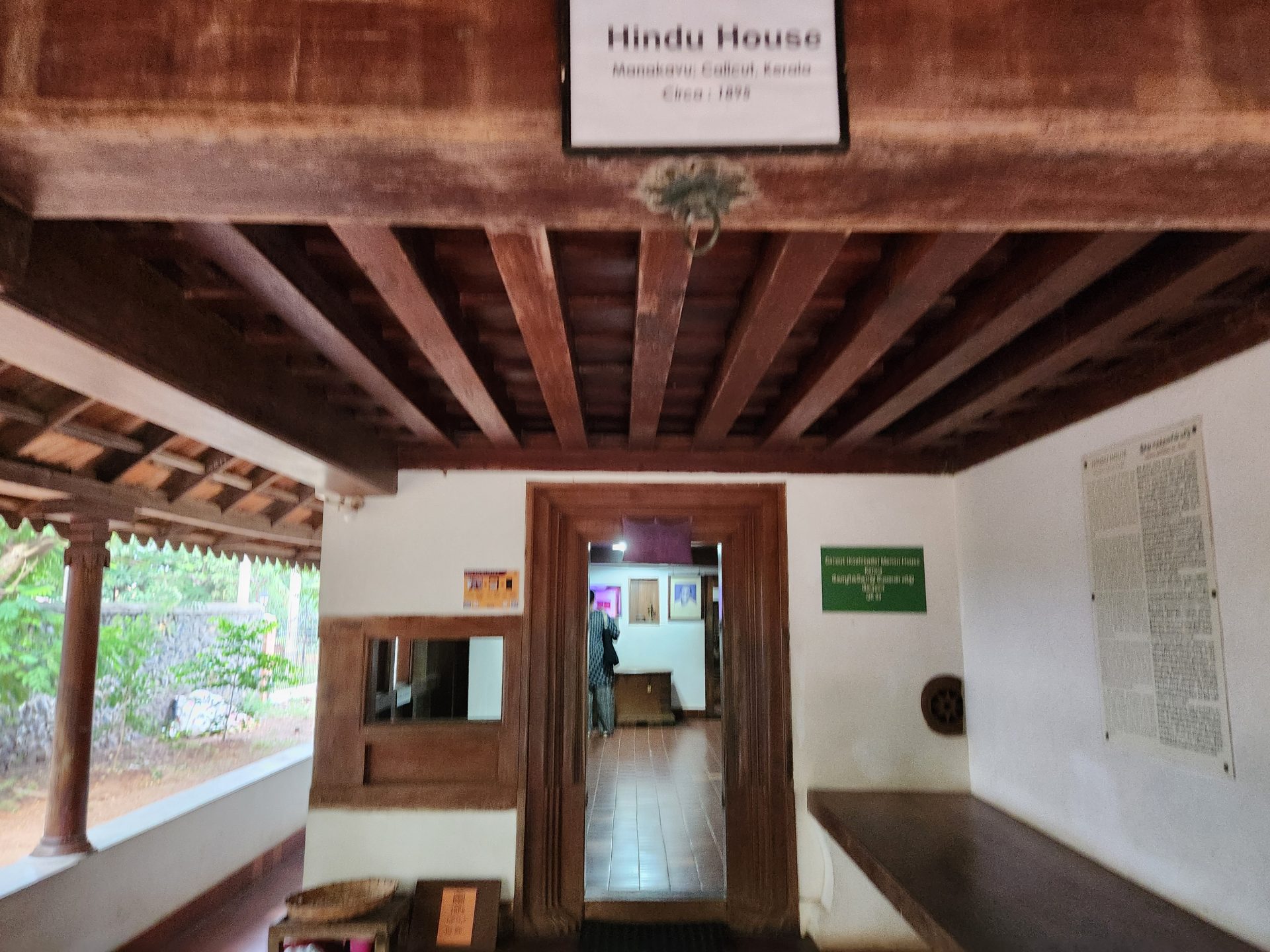
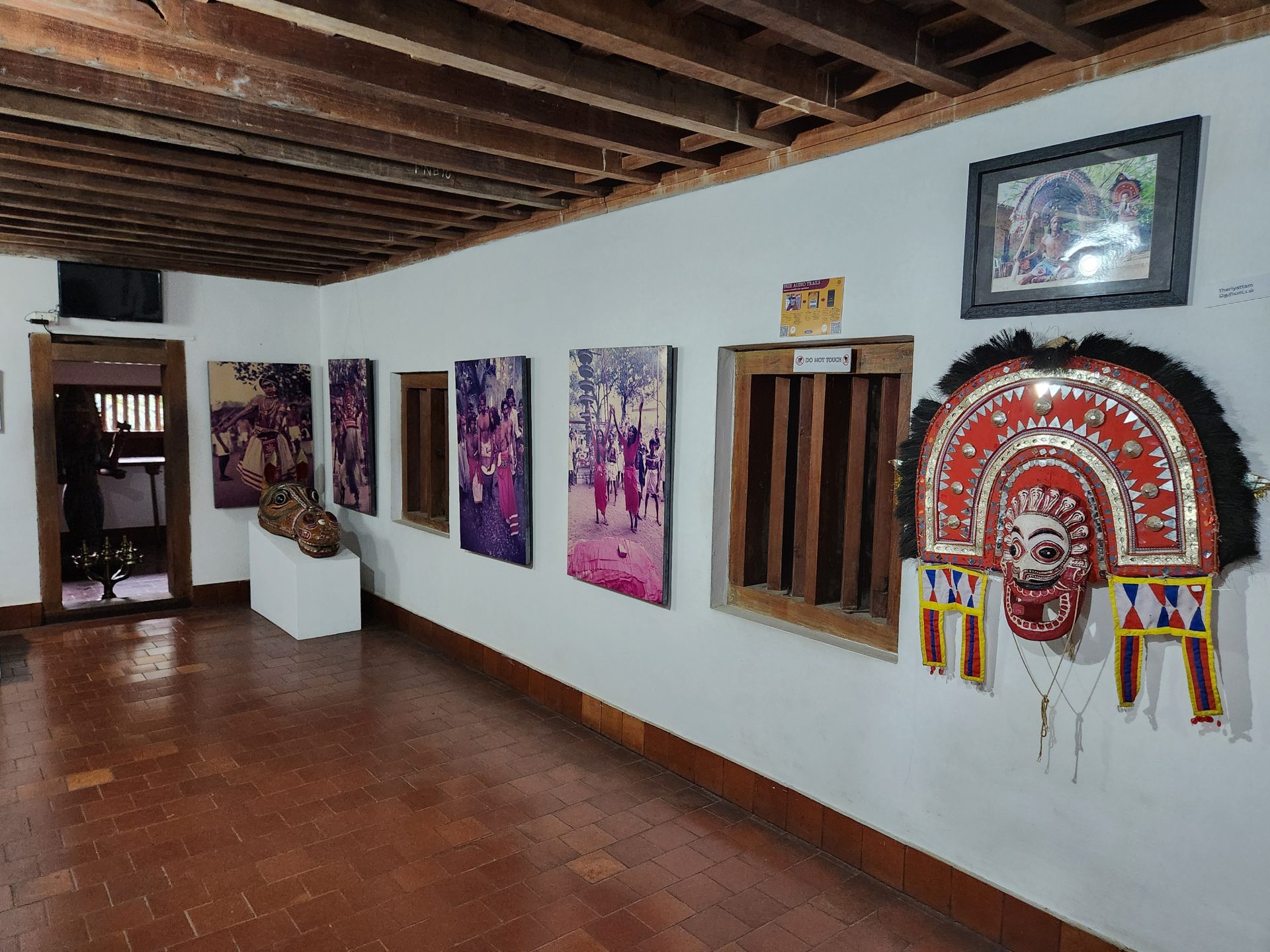
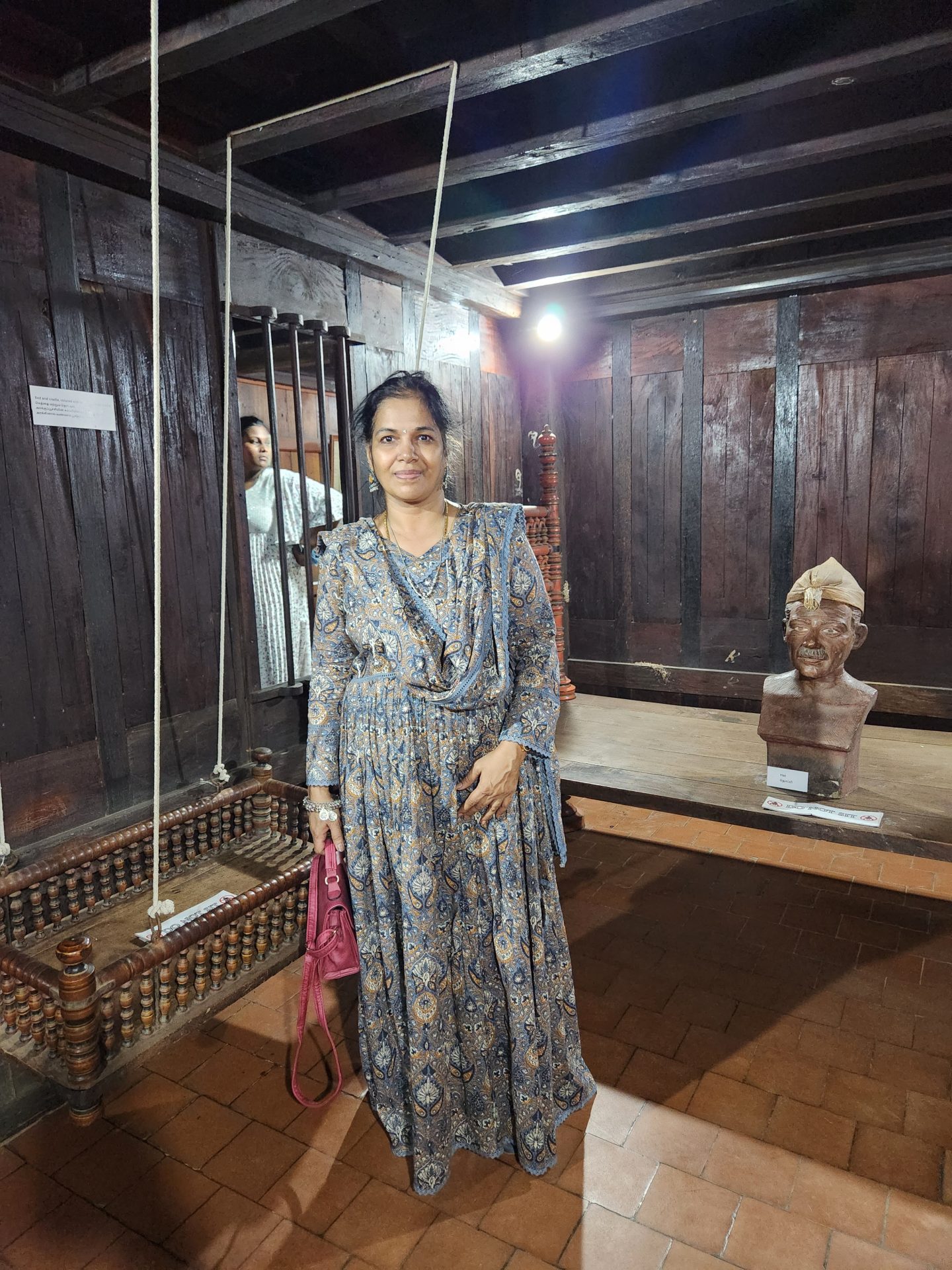
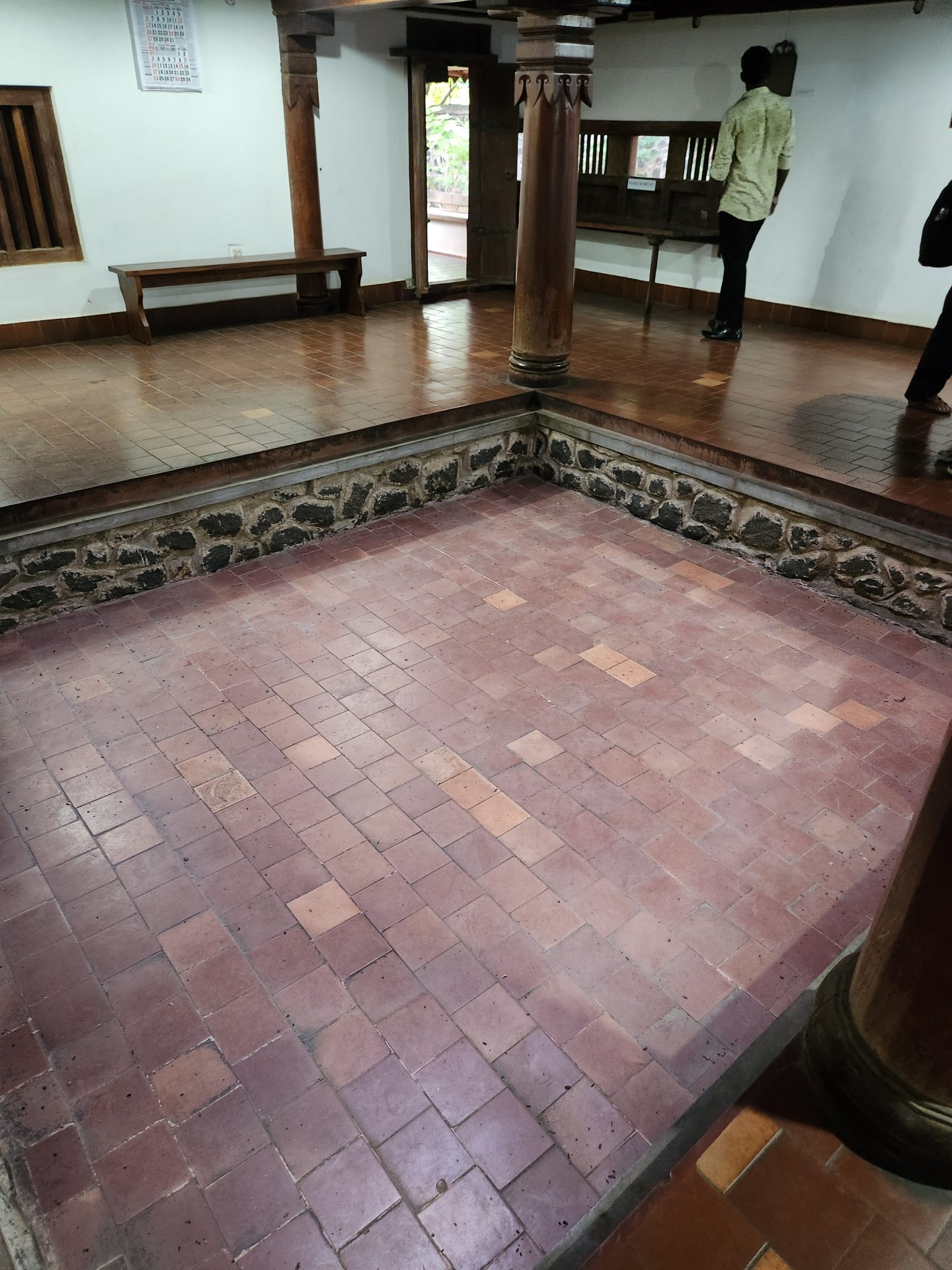
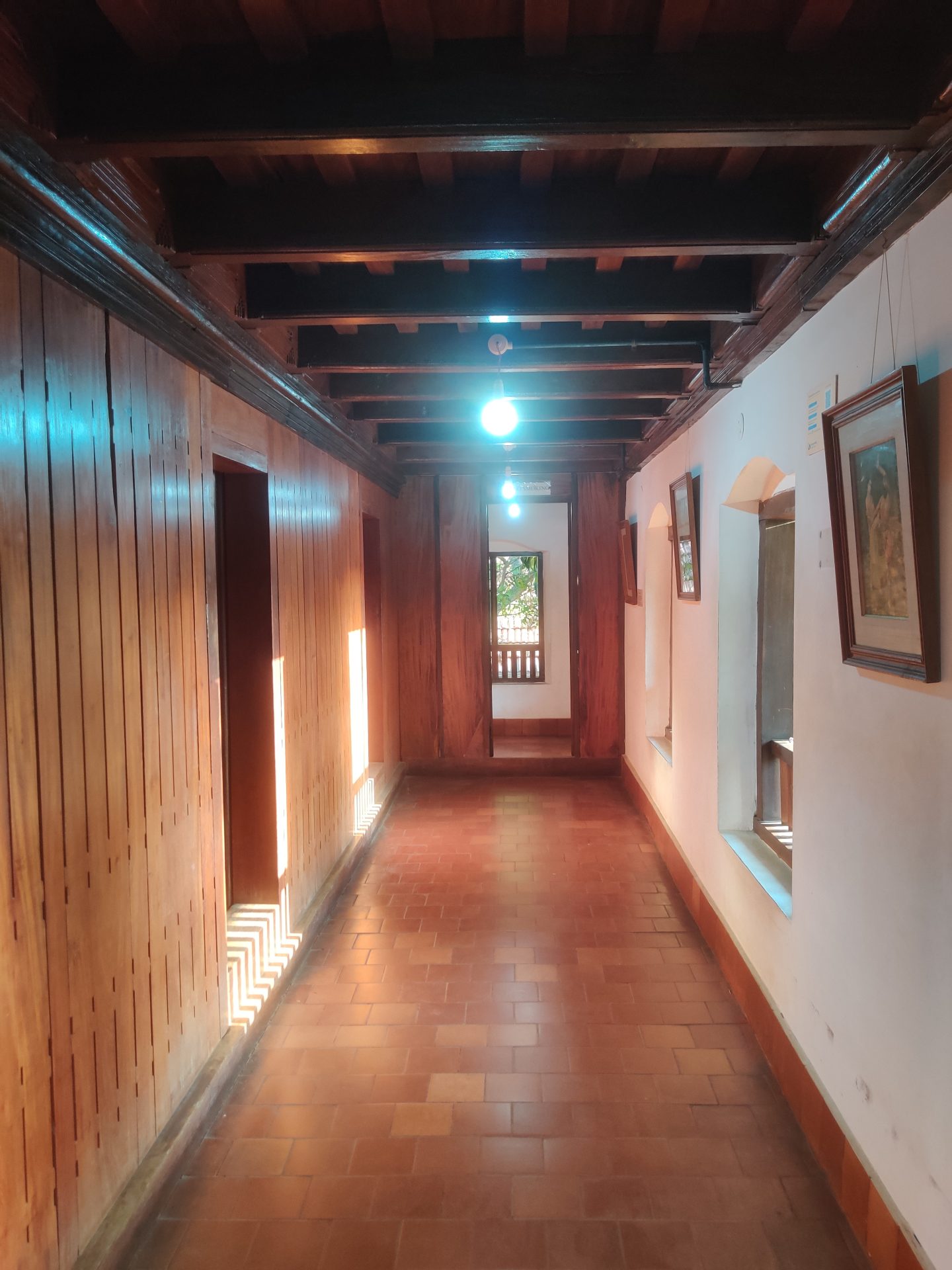
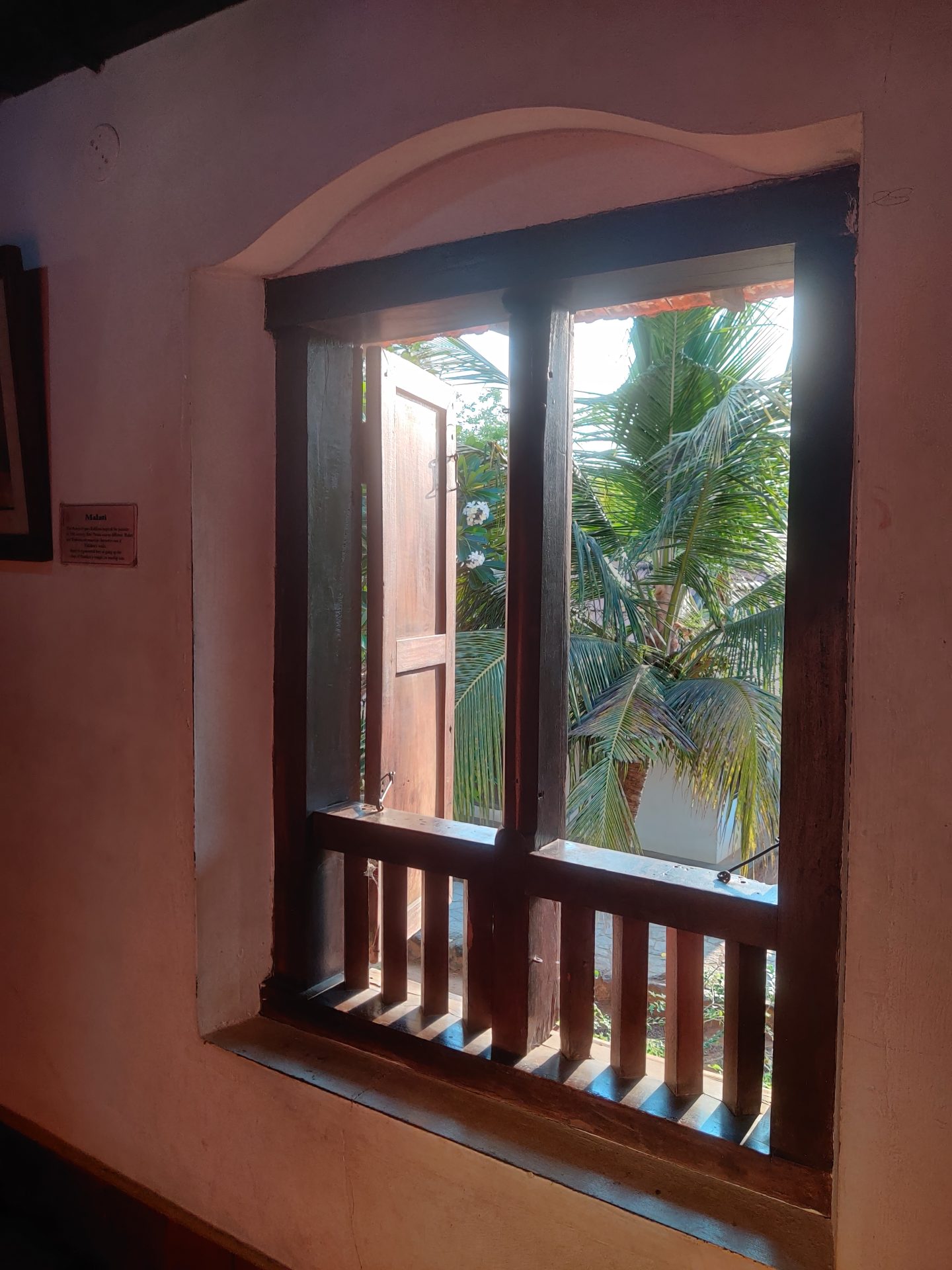
Recreated out of a house owned by a Menon family from Mankavu in Calicut, this two storey house built of laterite and timber is representative of many early 20th century middle class homes throughout the central and northern part of Kerala and is typically characterized by many small rooms within the house.

A clay and pebble substance which is cut into blocks for building and hardens on oxidation has been used for the construction and is the chief building material in this area along with wood.


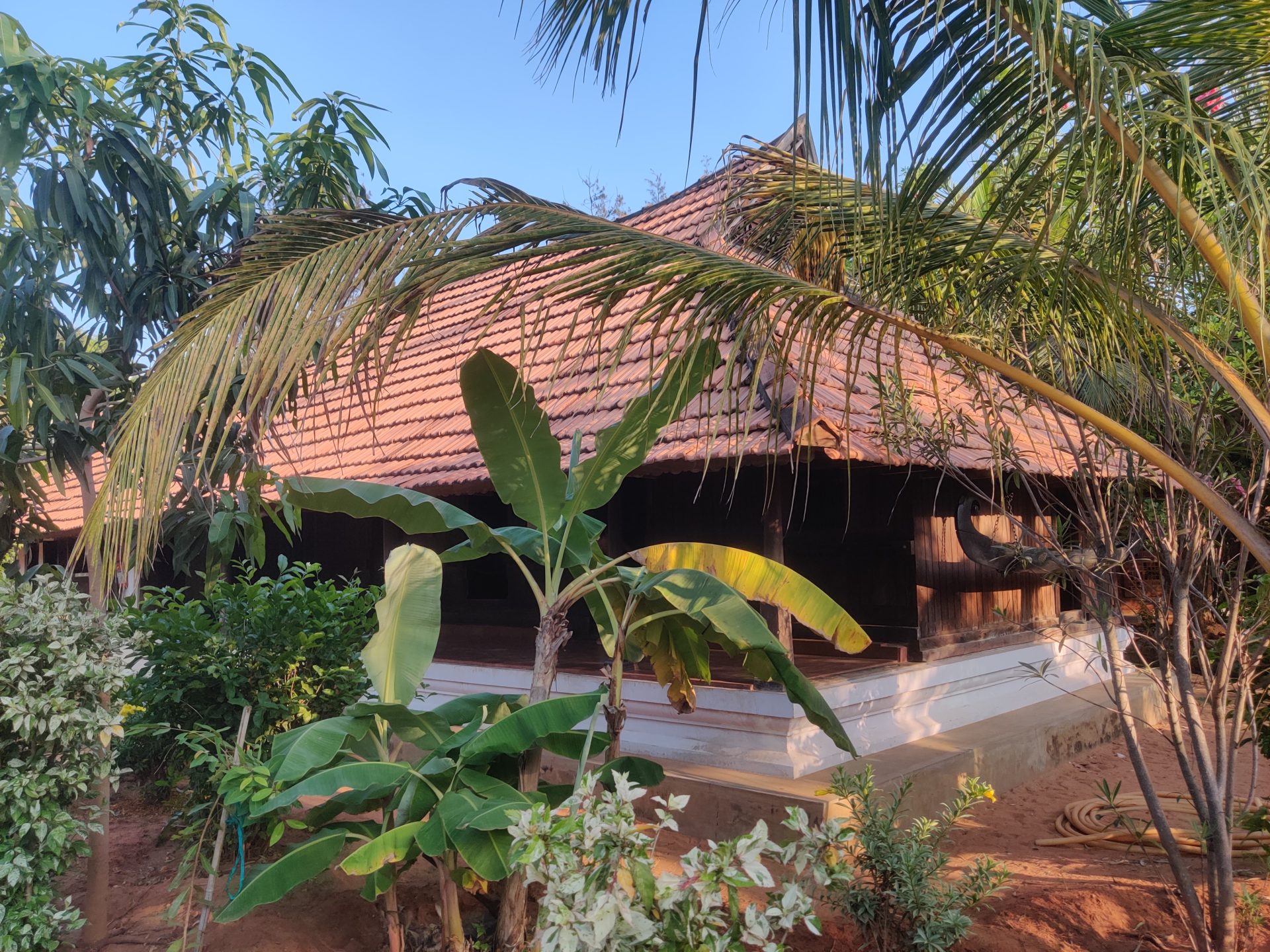
Kerala - Travancore House

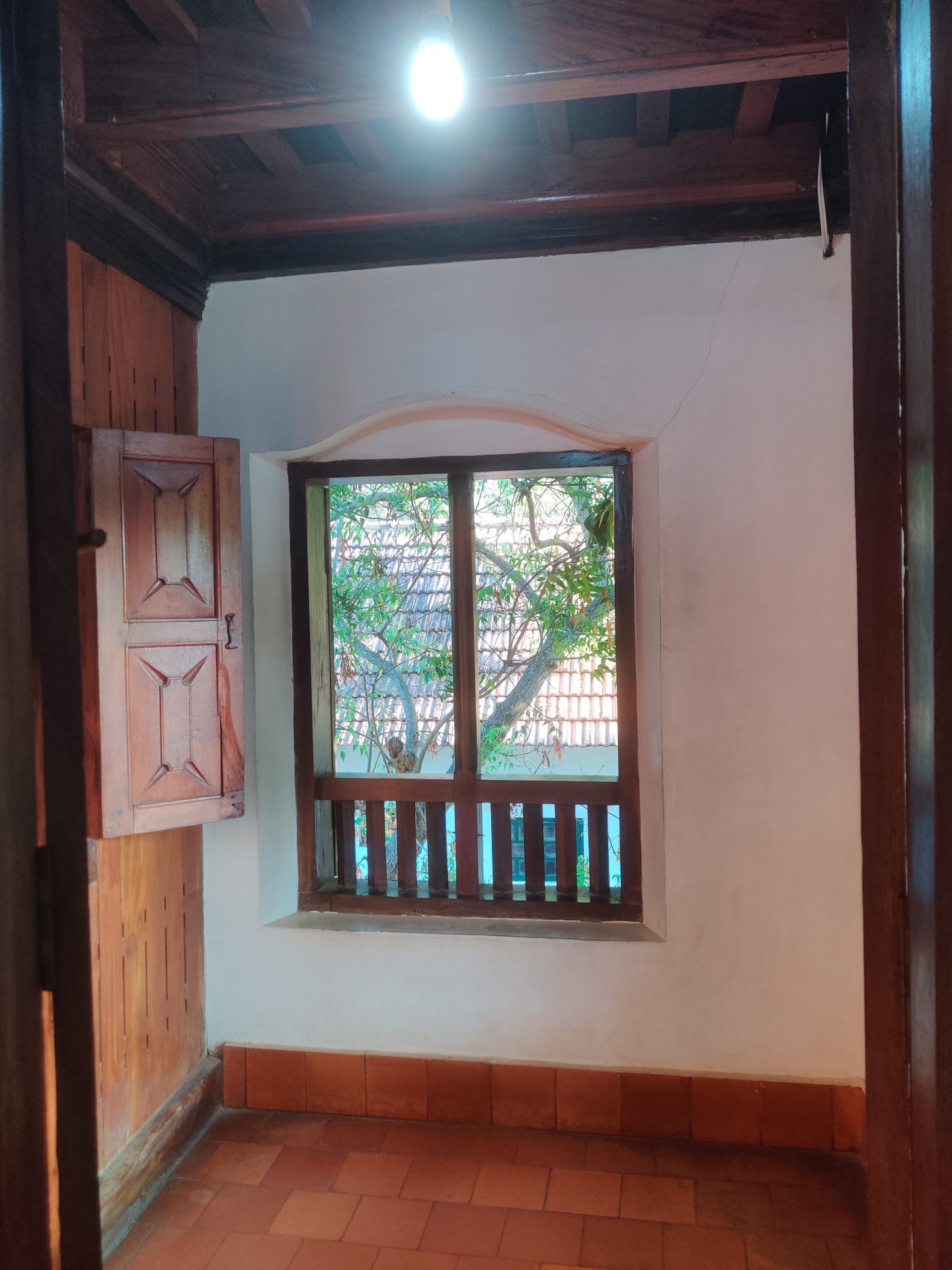
Predominantly made out of timber, this small middle class house from South Kerala belonged to an agricultural Hindu family of Nairs, a popular matrilineal Hindu caste. 

The manner of joinery and wood used (jackfruit wood and palmyra) was standard in southern Kerala for both the rich and middle class.

The carved detailing on the cross boards of this house is of the highest quality. In Kerala, craftsmanship and materials used were the same for the well-to-do and the middle class. 

More affluent families would have added one or even two courtyards in the middle of their wooden structure. 

For other activities they would expand by building separate buildings- a small shrine, a cowshed, an entrance gateway with storage and a small granary. If they were very well to do they may have built a separate guest house. Most traditional houses in Kerala do not have a courtyard.


Kerala - The Granary

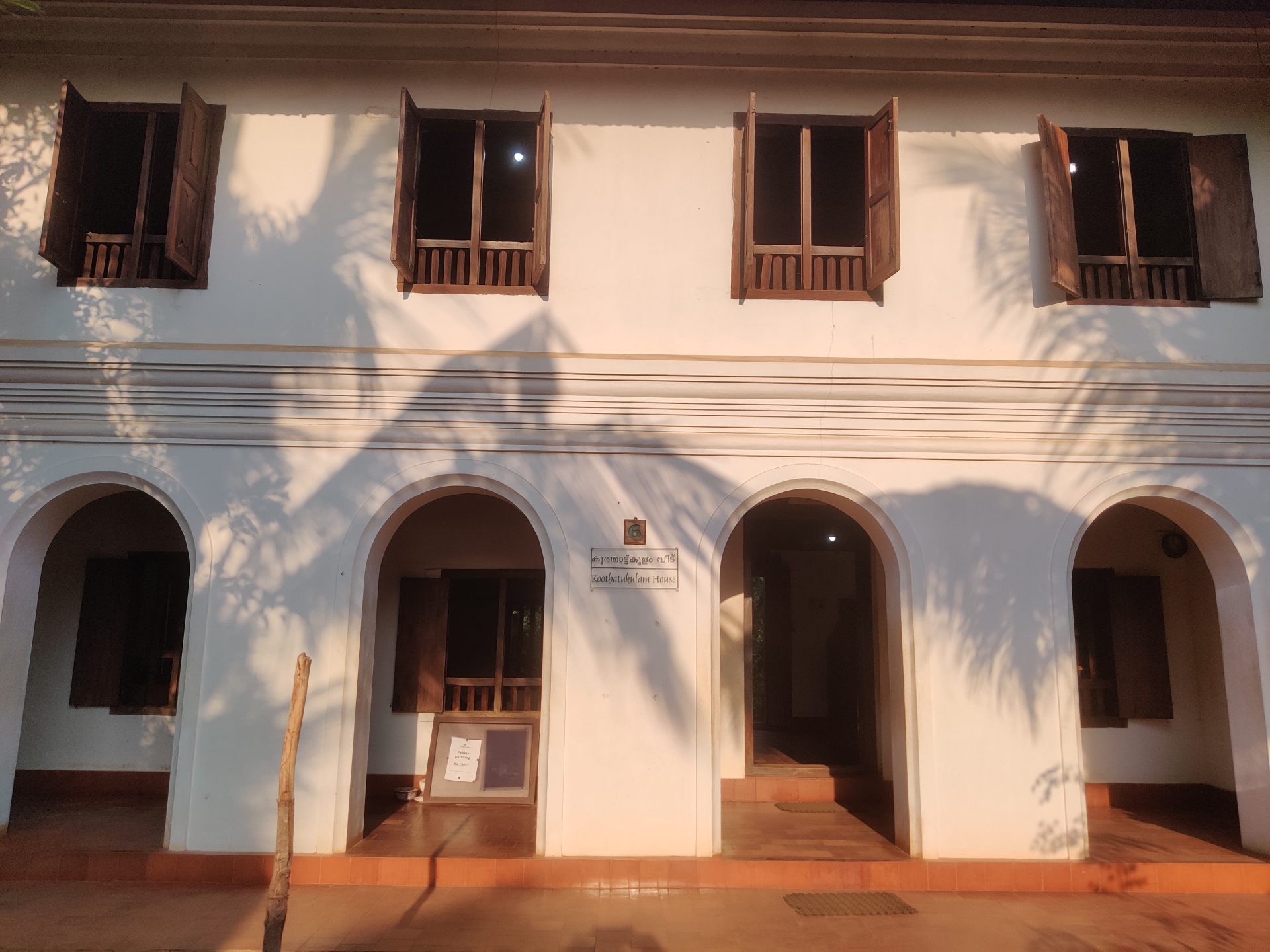
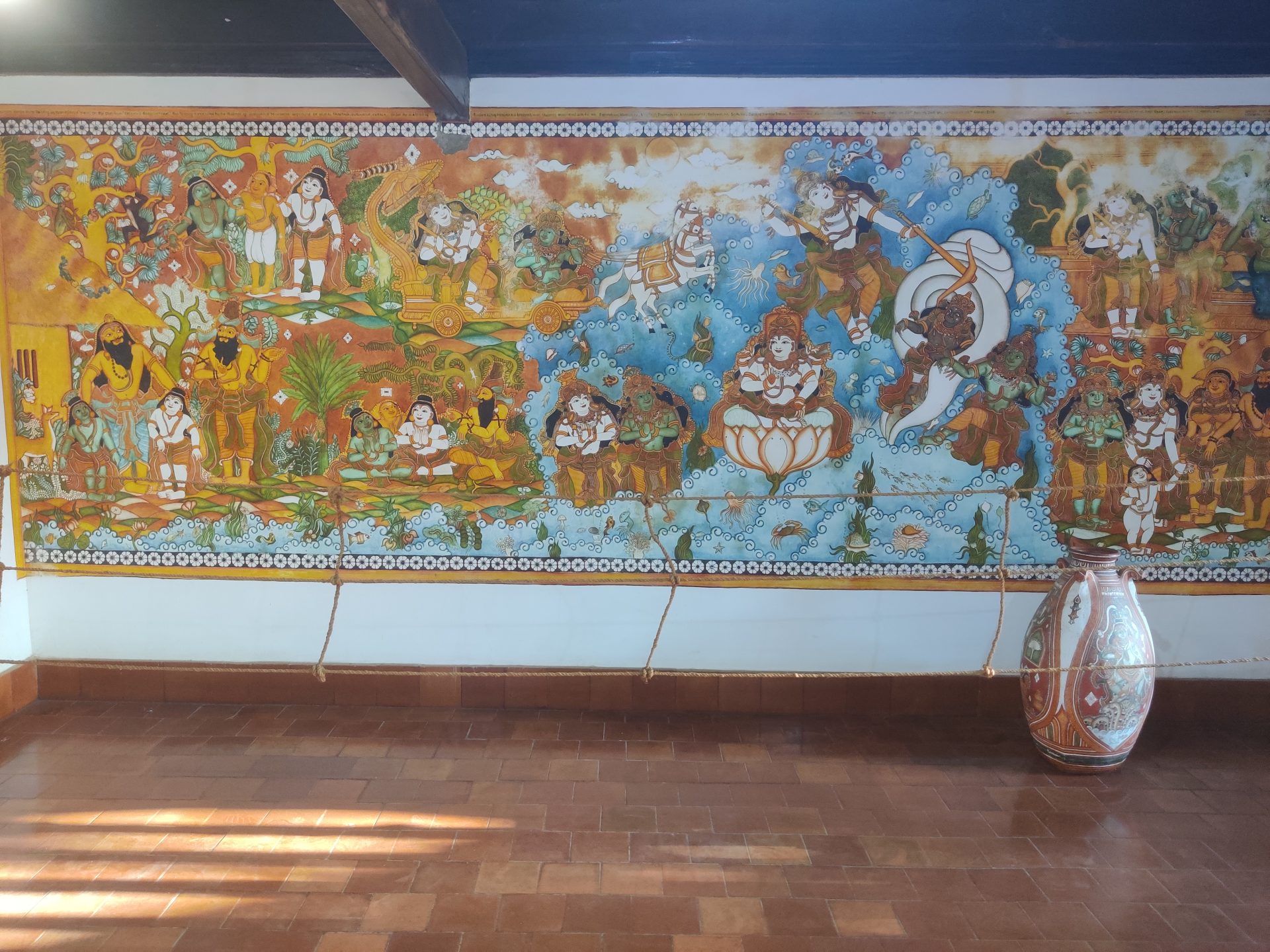
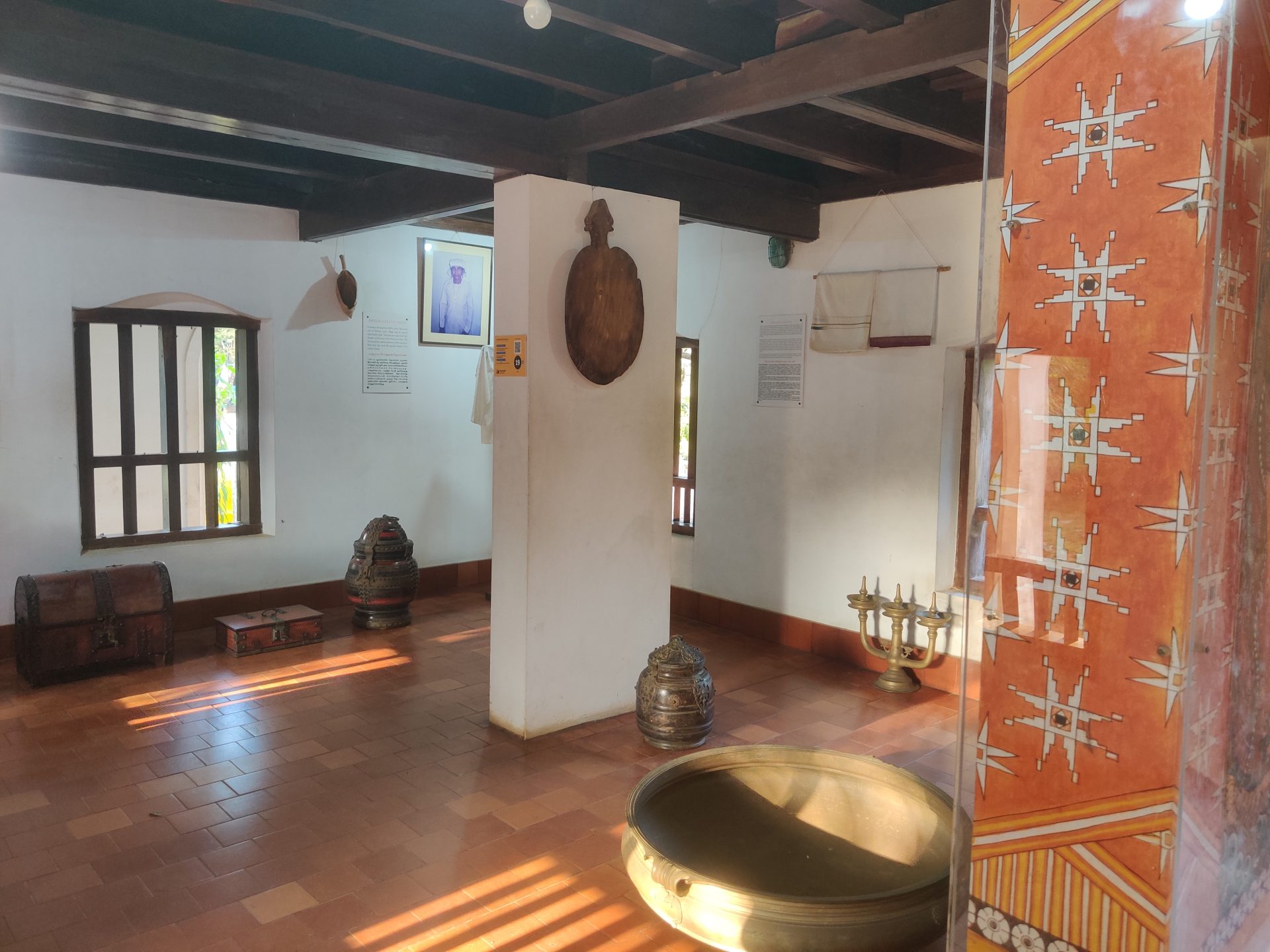
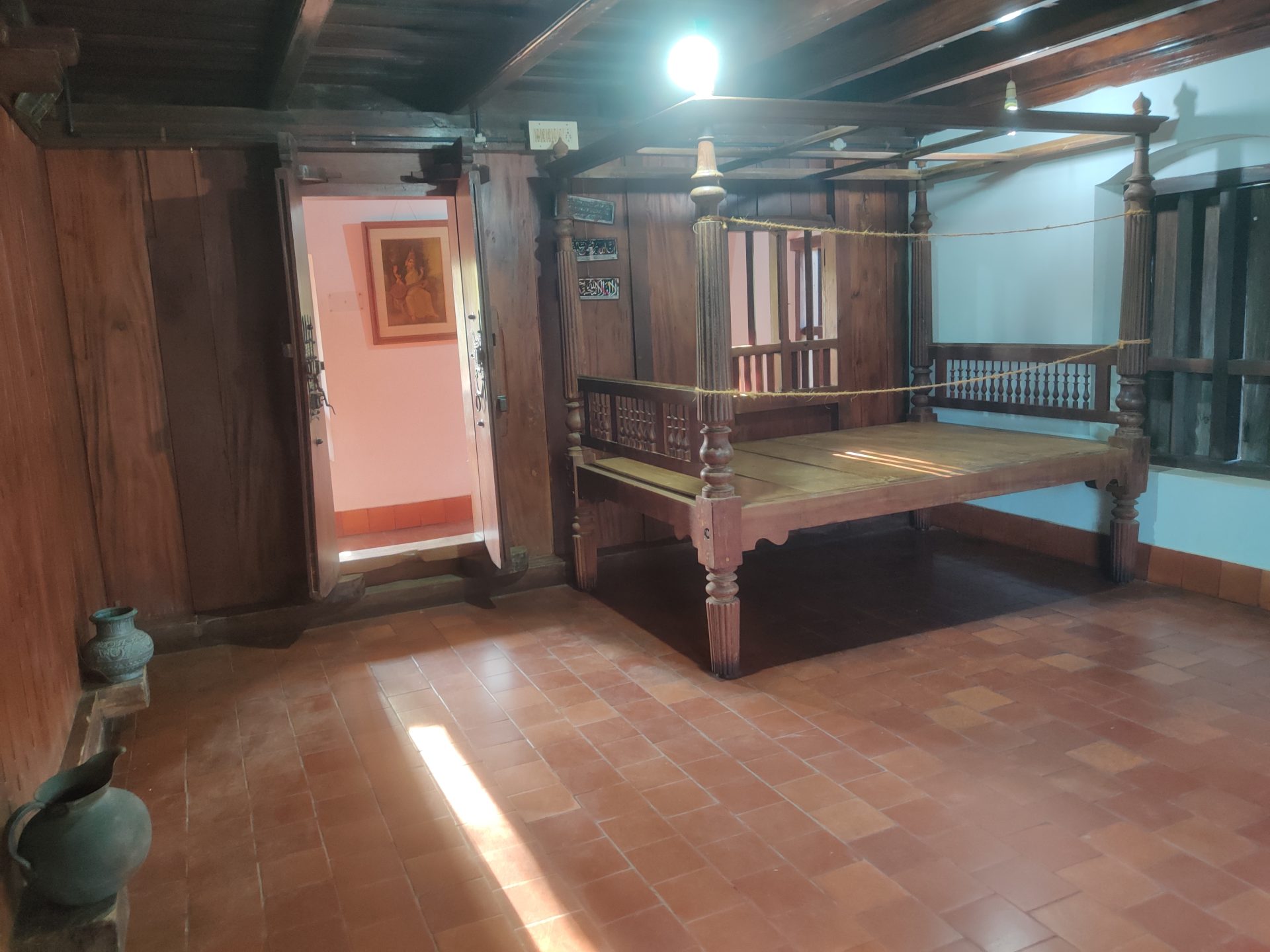
The granary and cowshed at Dakshina Chitra from Kuttattukulam, near Kottayam was part of a larger compound which included a cowshed, gate house and a Syrian Christian house very similar to our Pudupally house. 

The British influence is noticeable in the arched verandah which came to replace the graceful curved slated wooden screens and inside seating which were characteristic of earlier verandahs. The granary was constructed Circa 1910.
While the wooden granary which occupied the downstairs space has been removed, the upstairs with its wooden rooms and central granary remains the same.

Covelong or Kovalam Beach

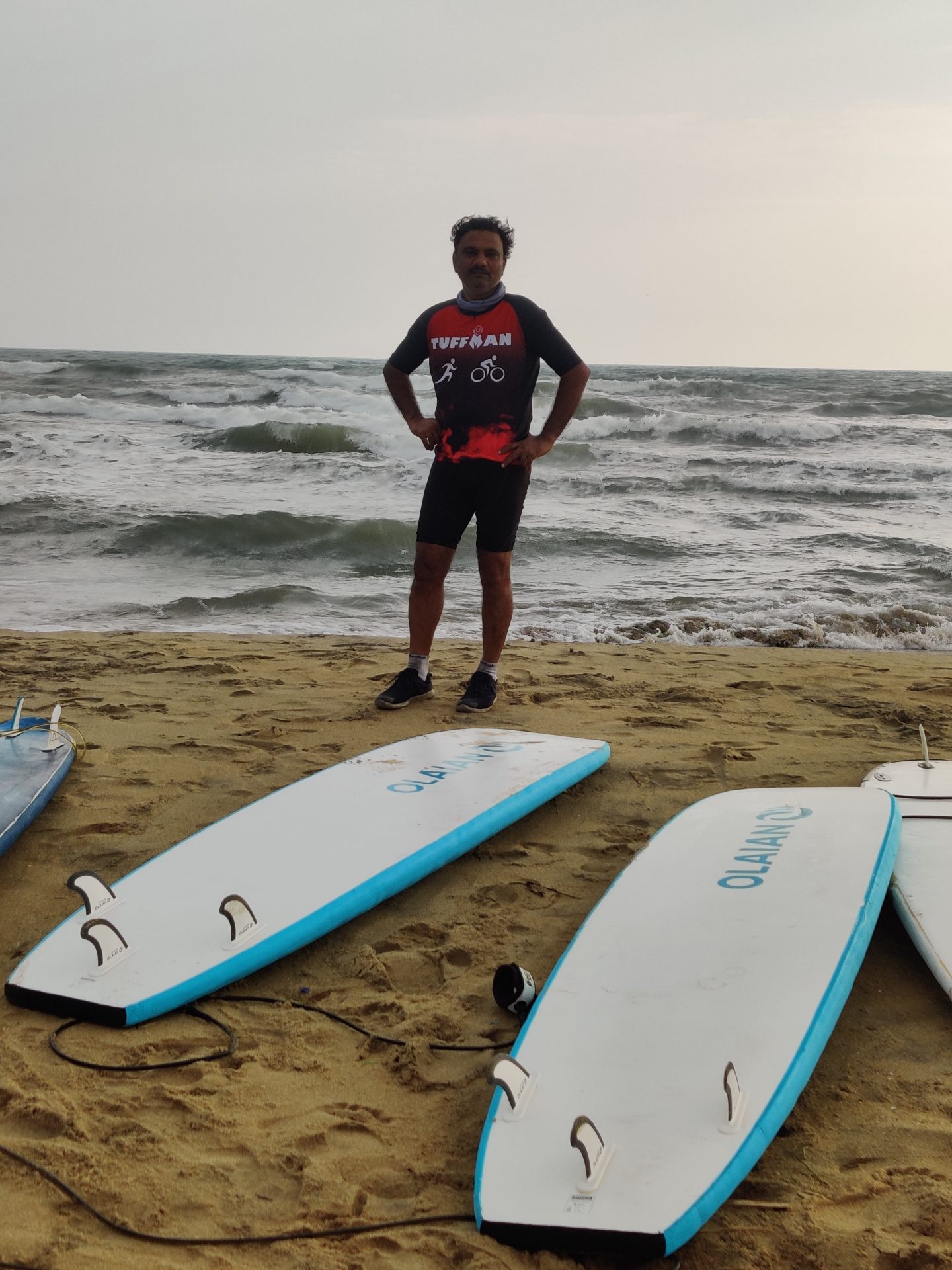
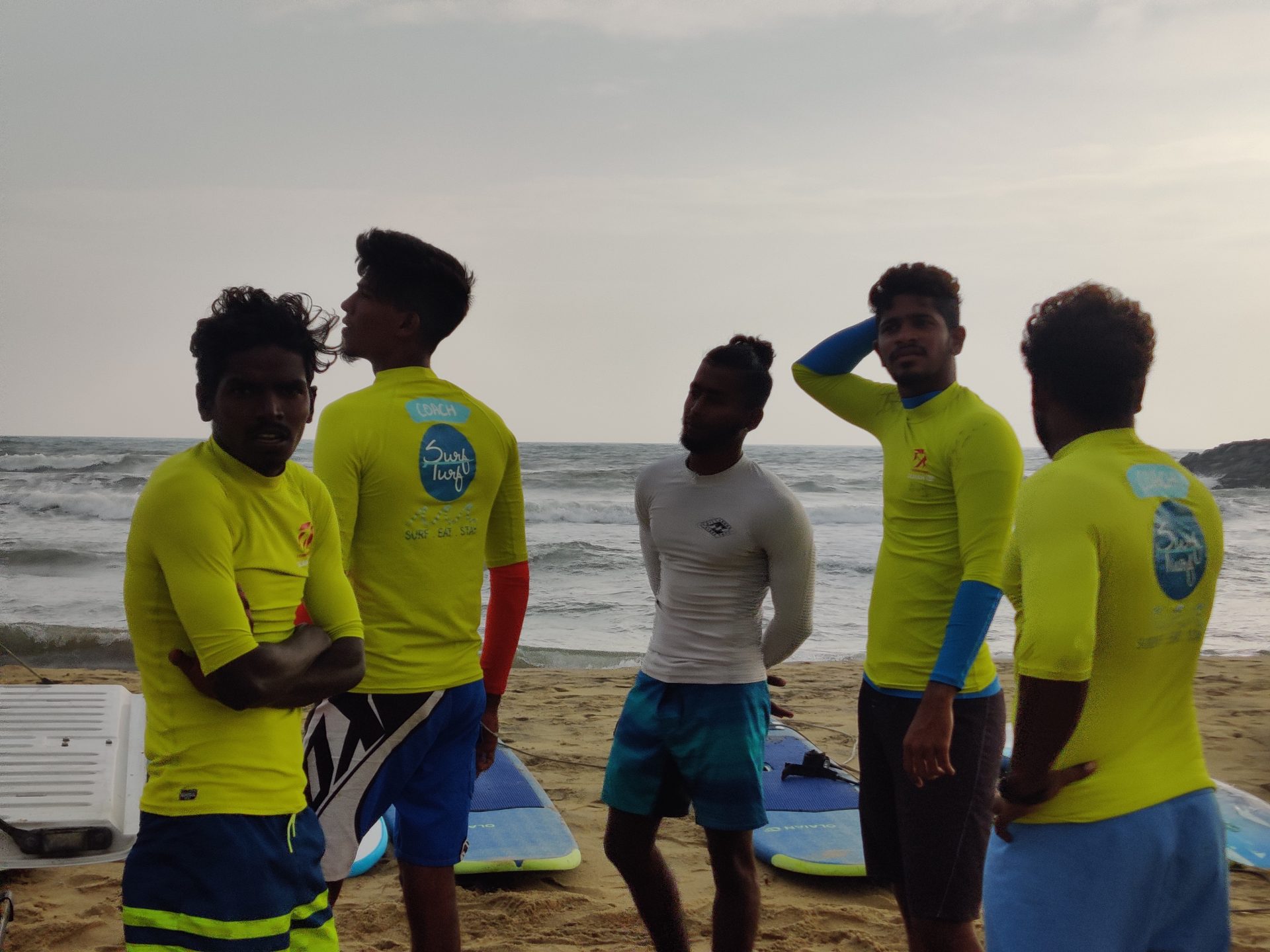
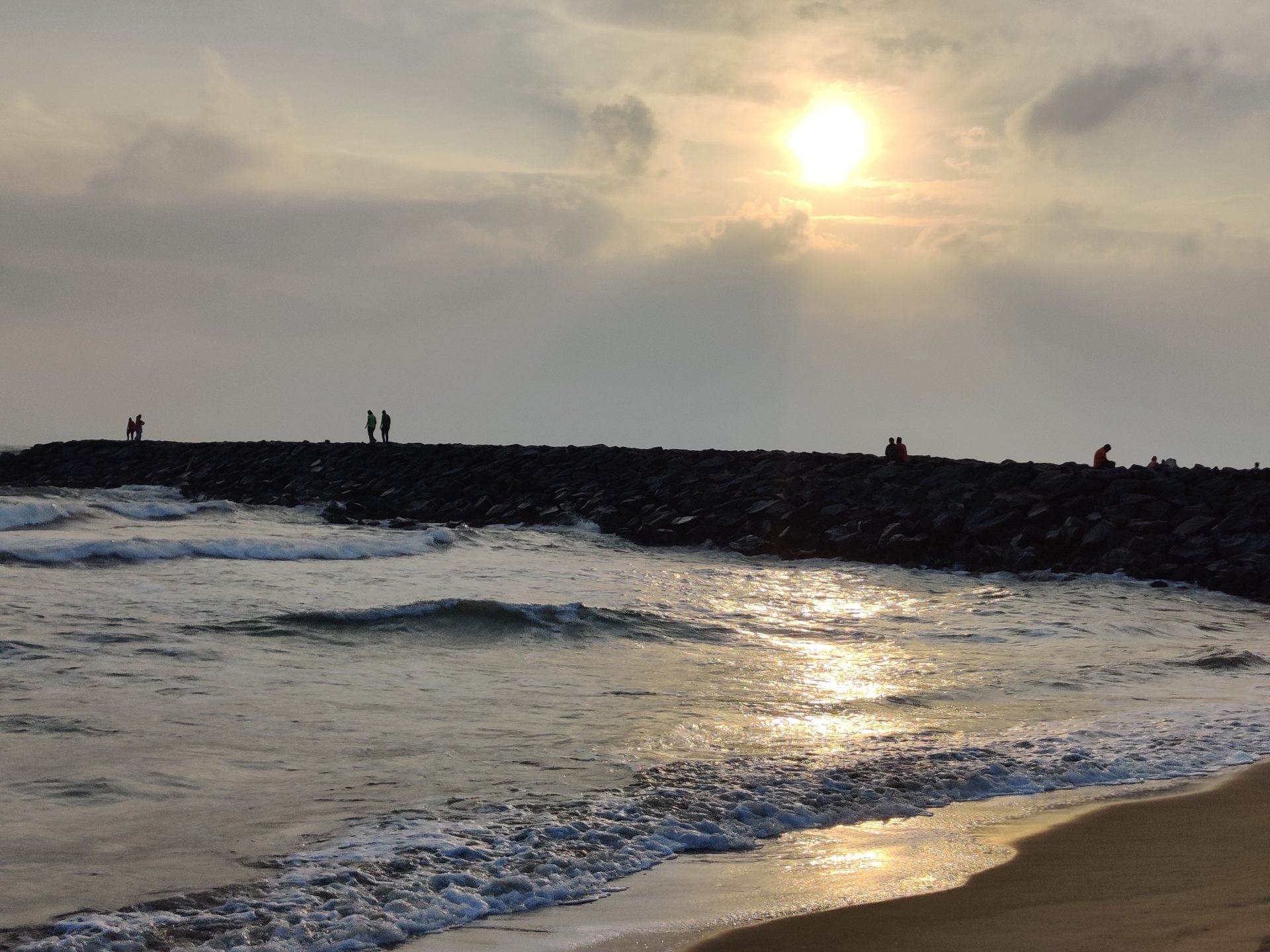
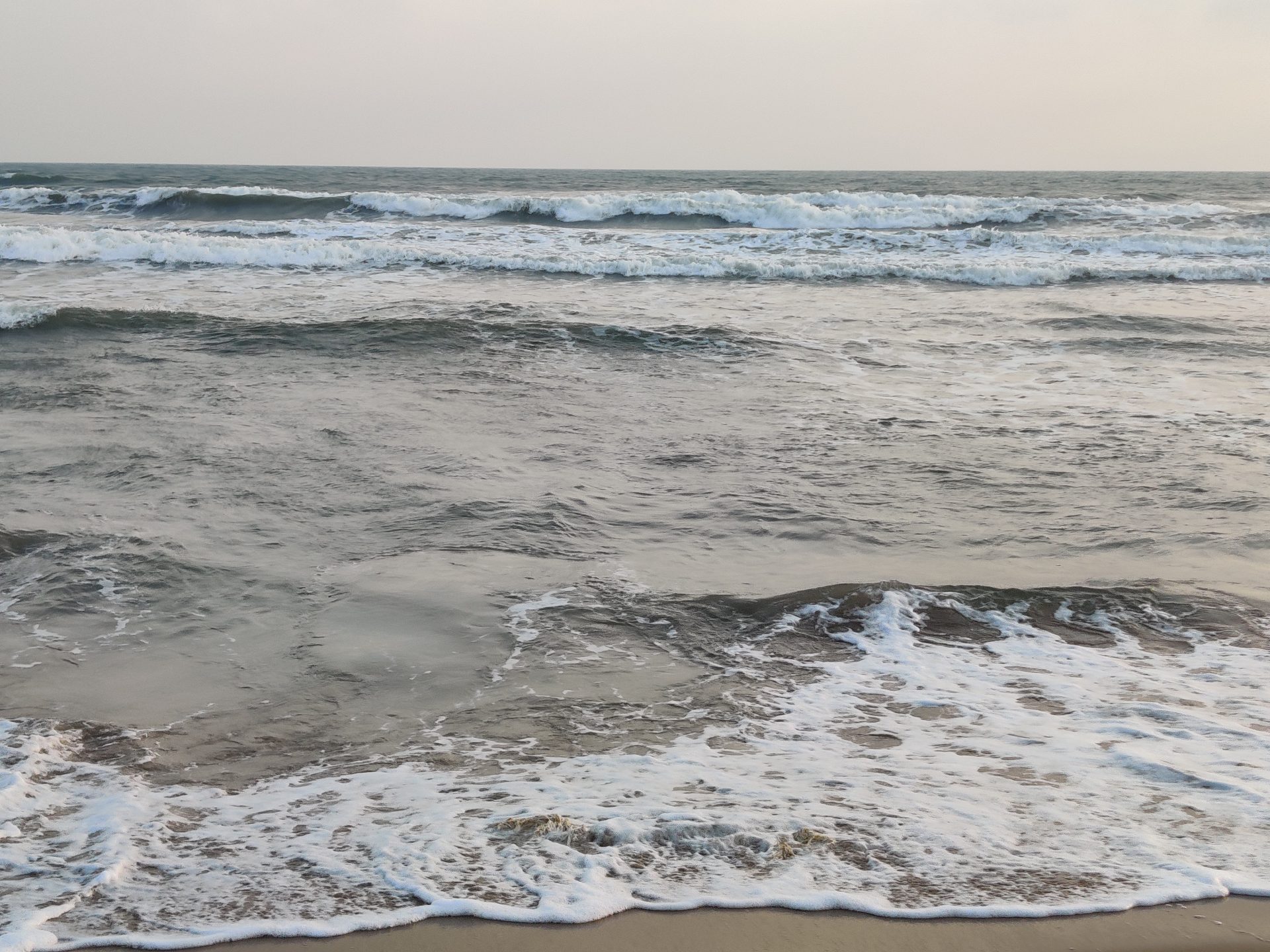
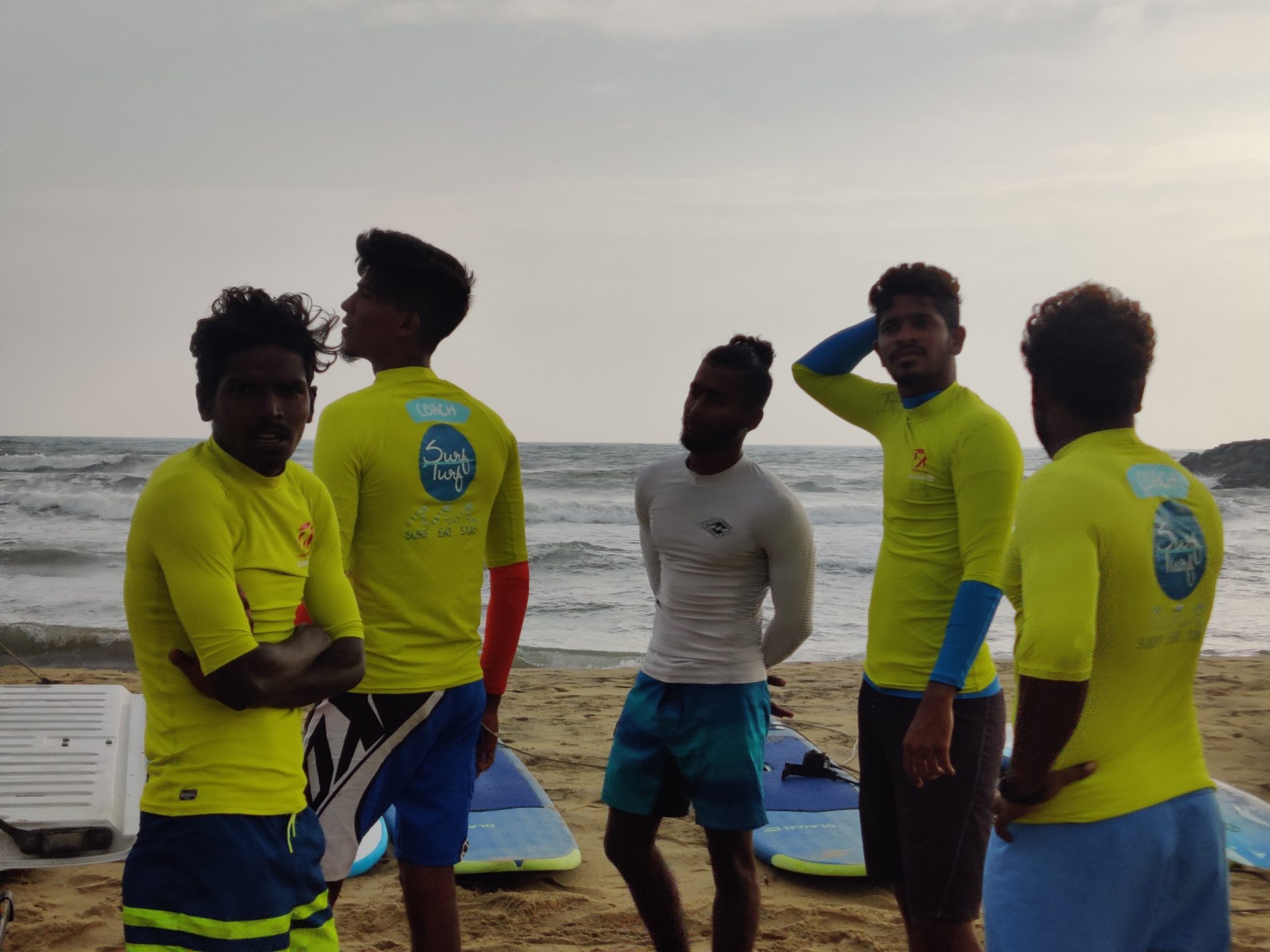
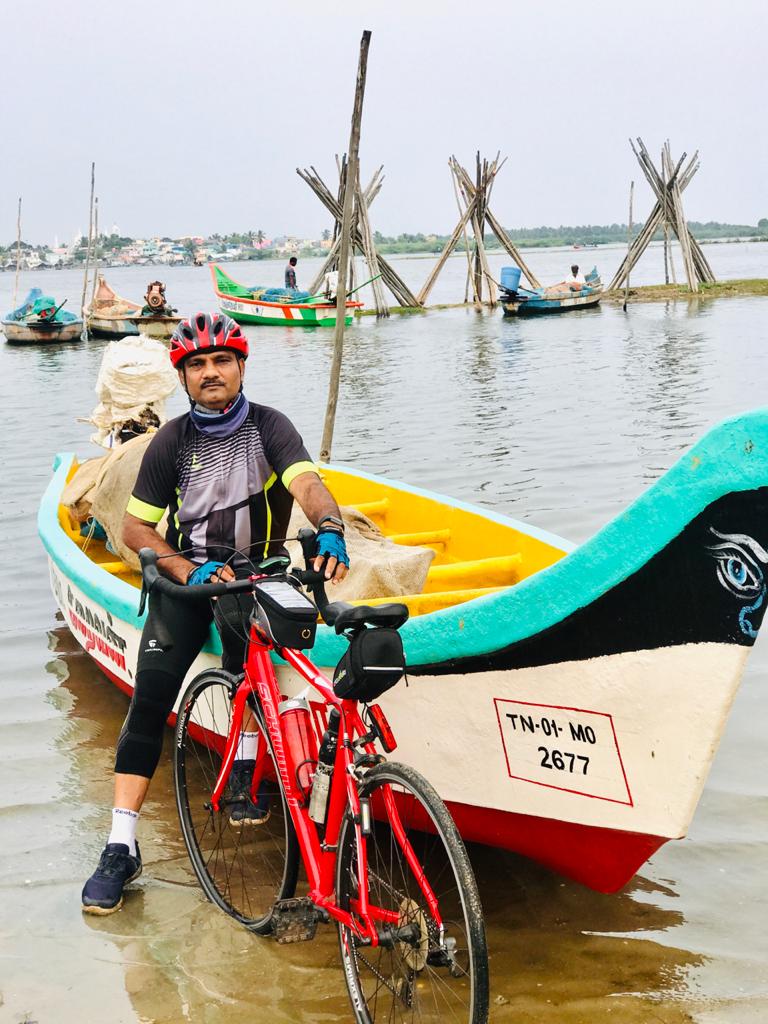
The last of our pit stops before we hit the shores of Mahabalipuram town and which serves as a major tourist attraction is Chennai’s Surfing School located 4 kms ahead of Muttukadu at the Kovalam beach (also known as Covelong beach). The beach remains in pretty pristine condition and is not very crowded in the early mornings. 
Should one want to learn a little bit of surfing, there are instructors available to teach people. Prior to pandemic times, Covelong featured a 3 day  Annual Surfing, Music and Yoga festival with national and international level surfing competitions, yoga, meditation and alternative healing workshops and music programmes.
Vandalur

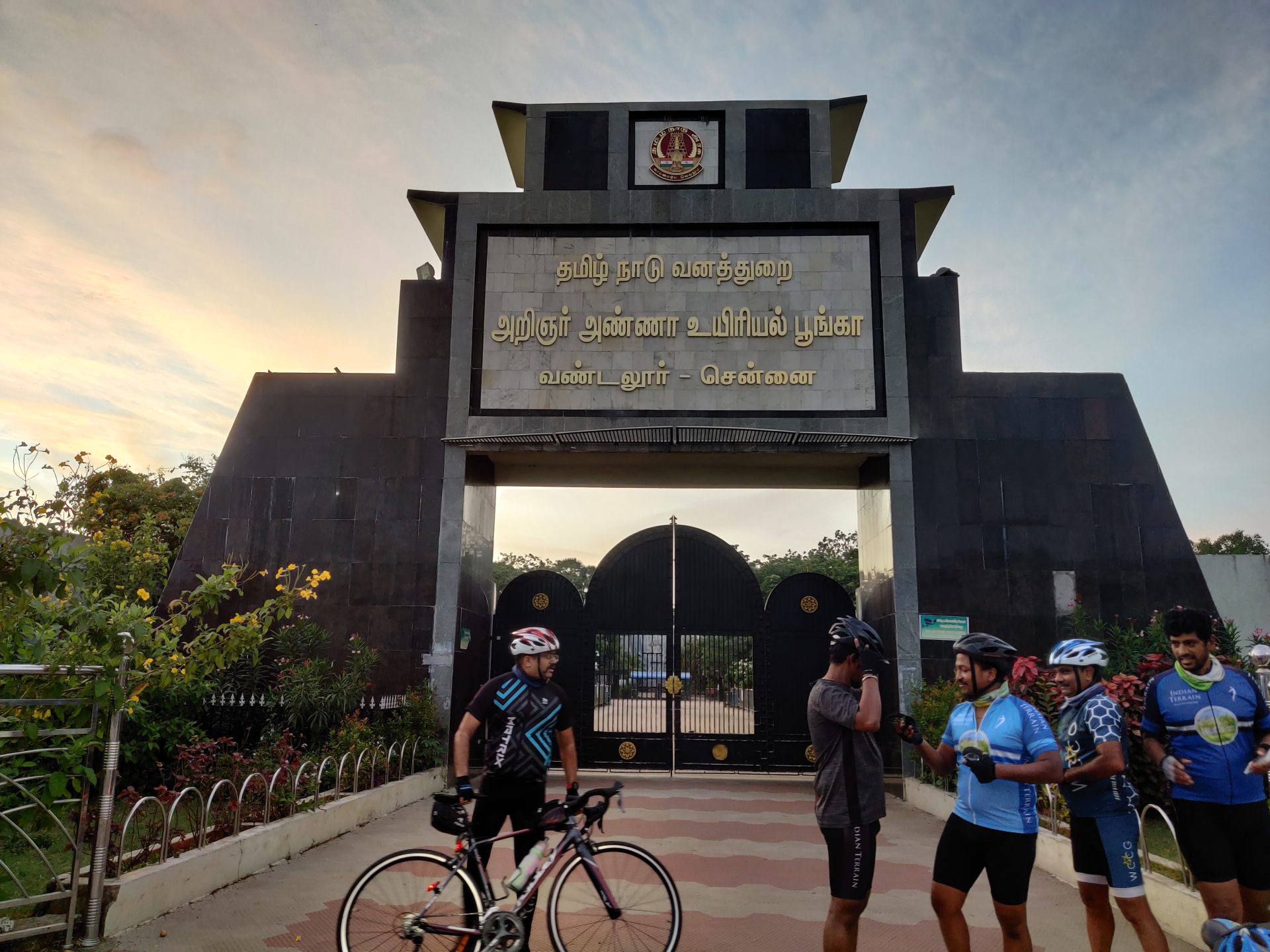
Another favorite route for most cyclists is a drive down Mount Road towards the Southern Part of the city. Once one gets to cross Tambaram, the roads get relatively freer and less congested.  From the outskirts of Tambaram, the Arignar Anna  Zoological Park of Vandalur and home to a wide variety of animals and birds is around 5 kms away.
Kumizhi

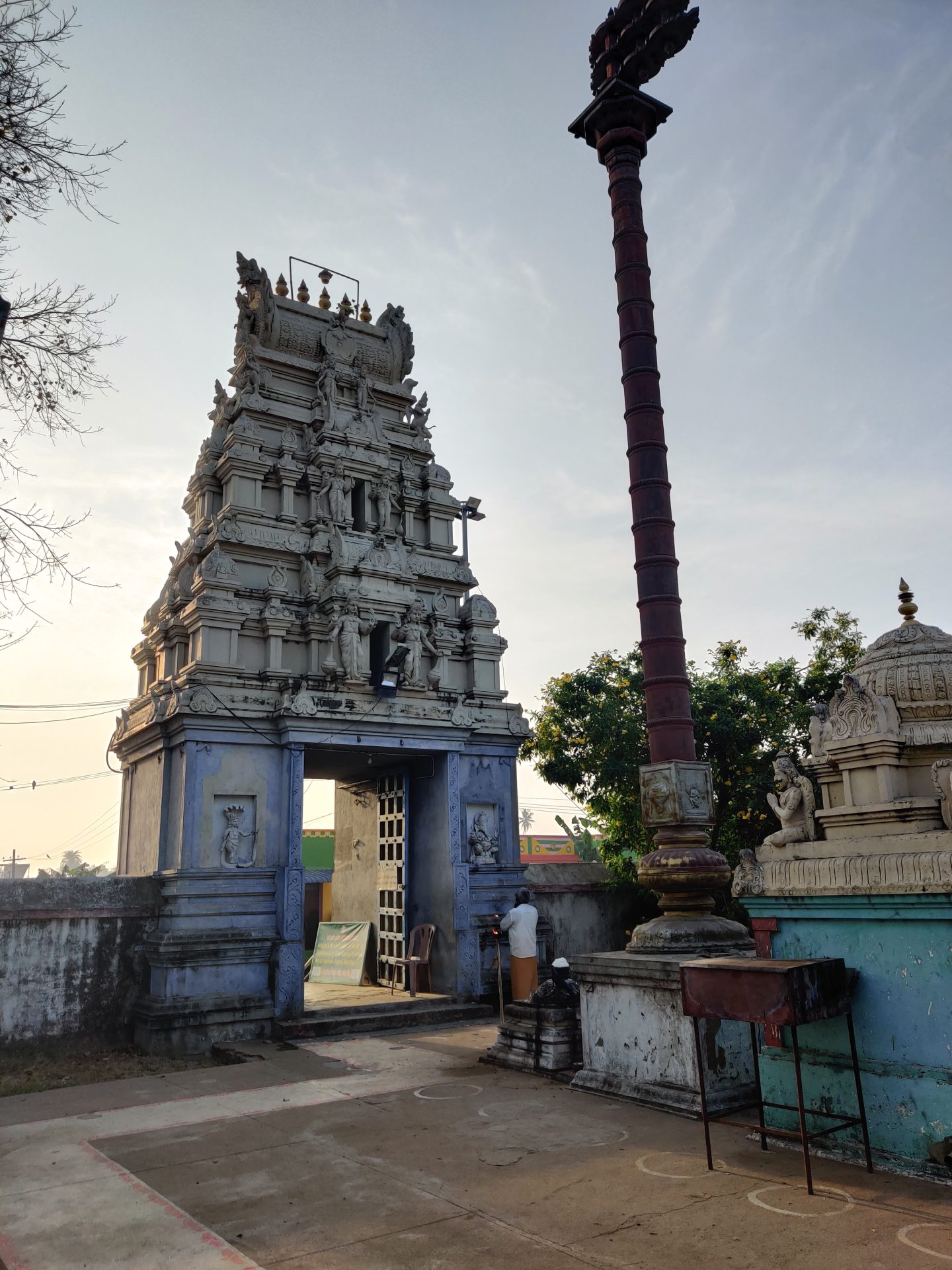
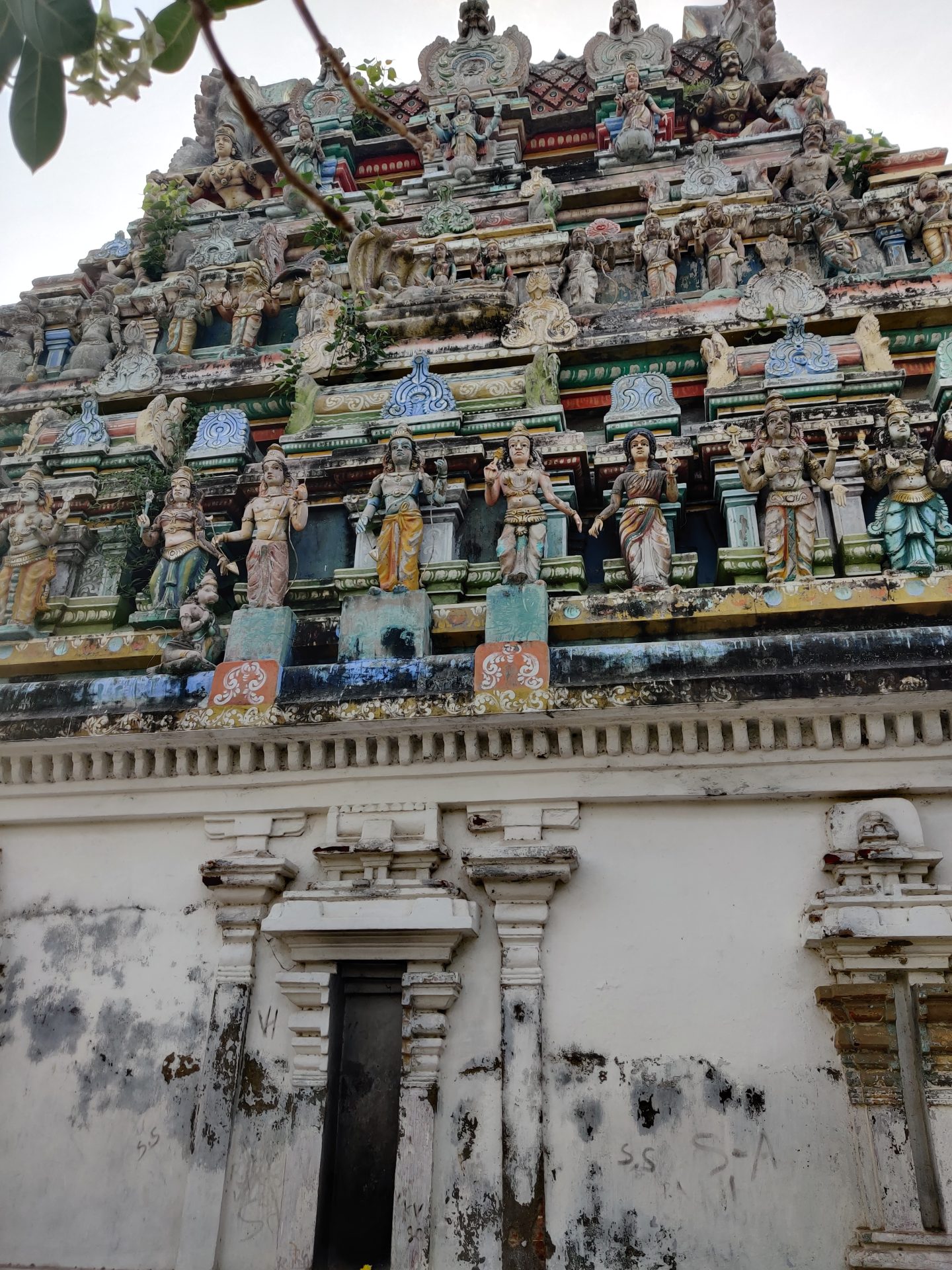
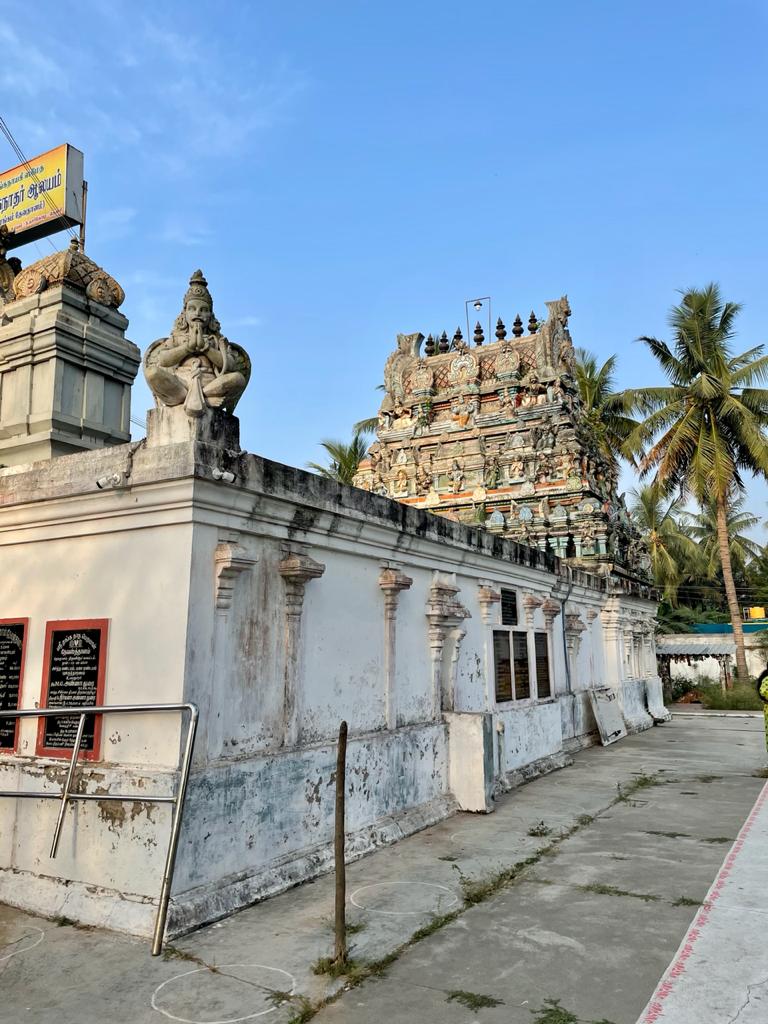
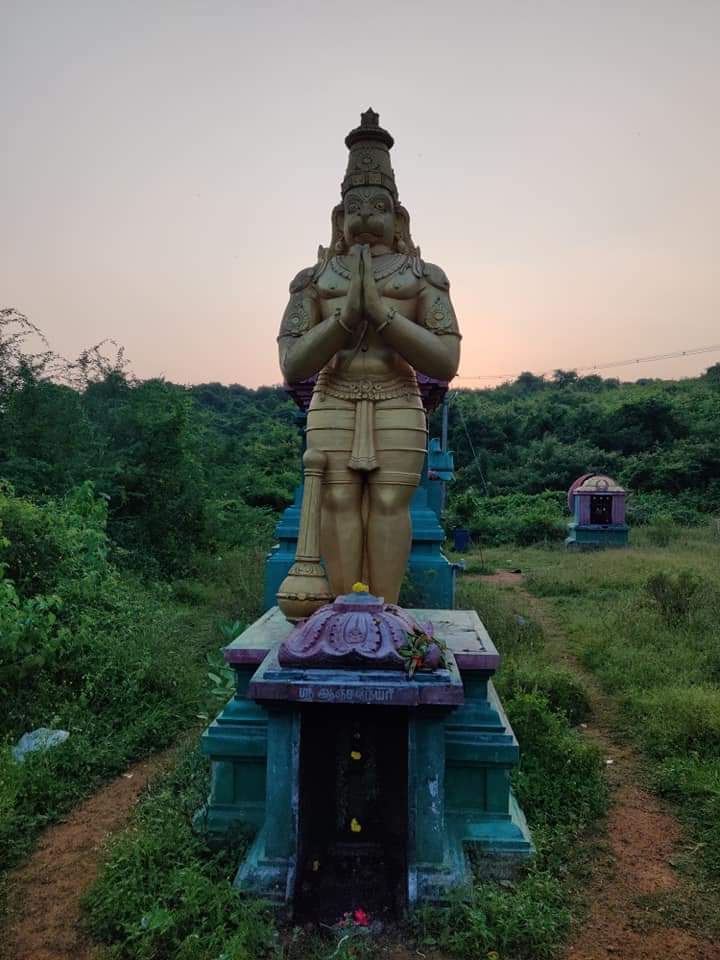
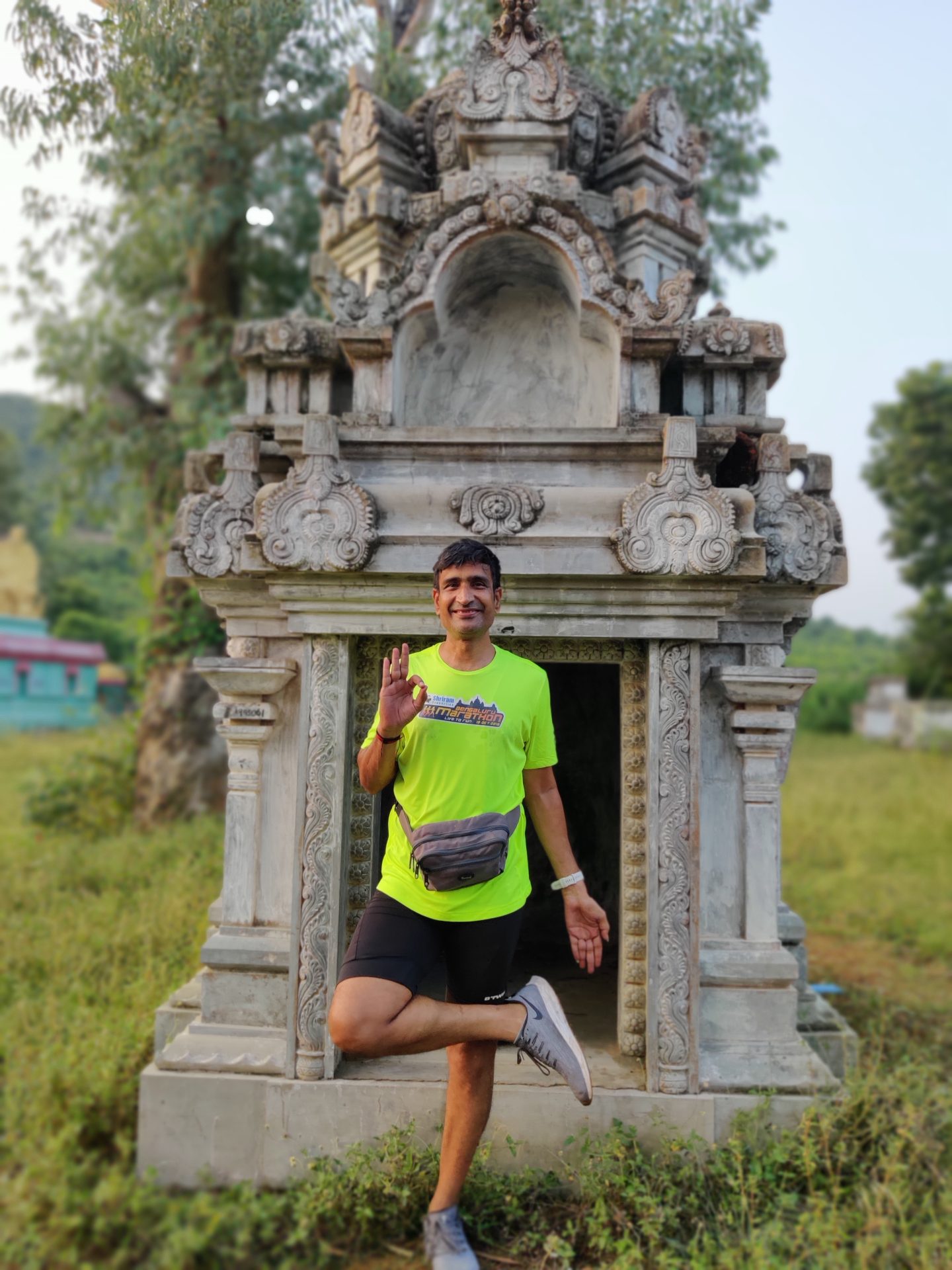
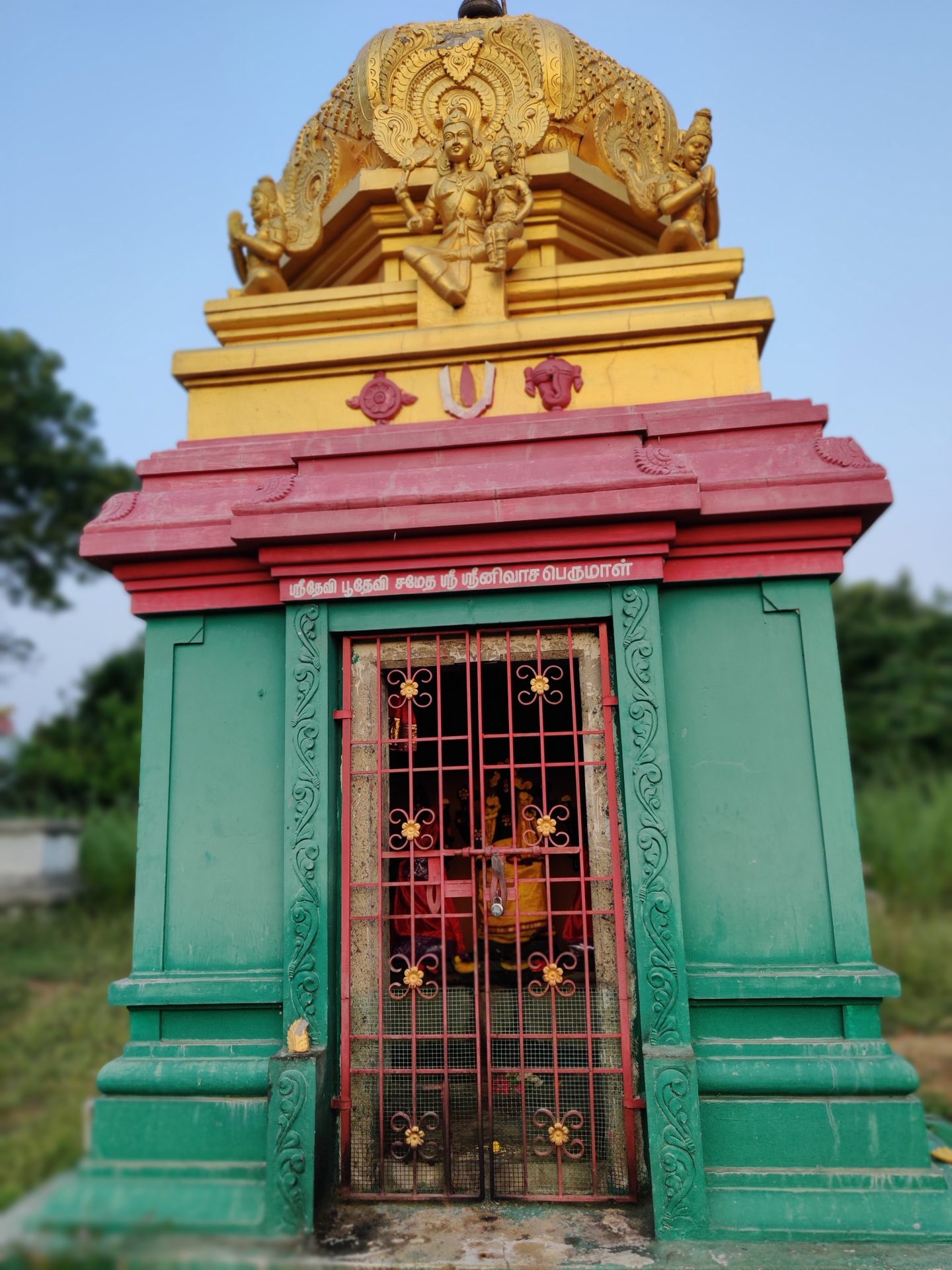
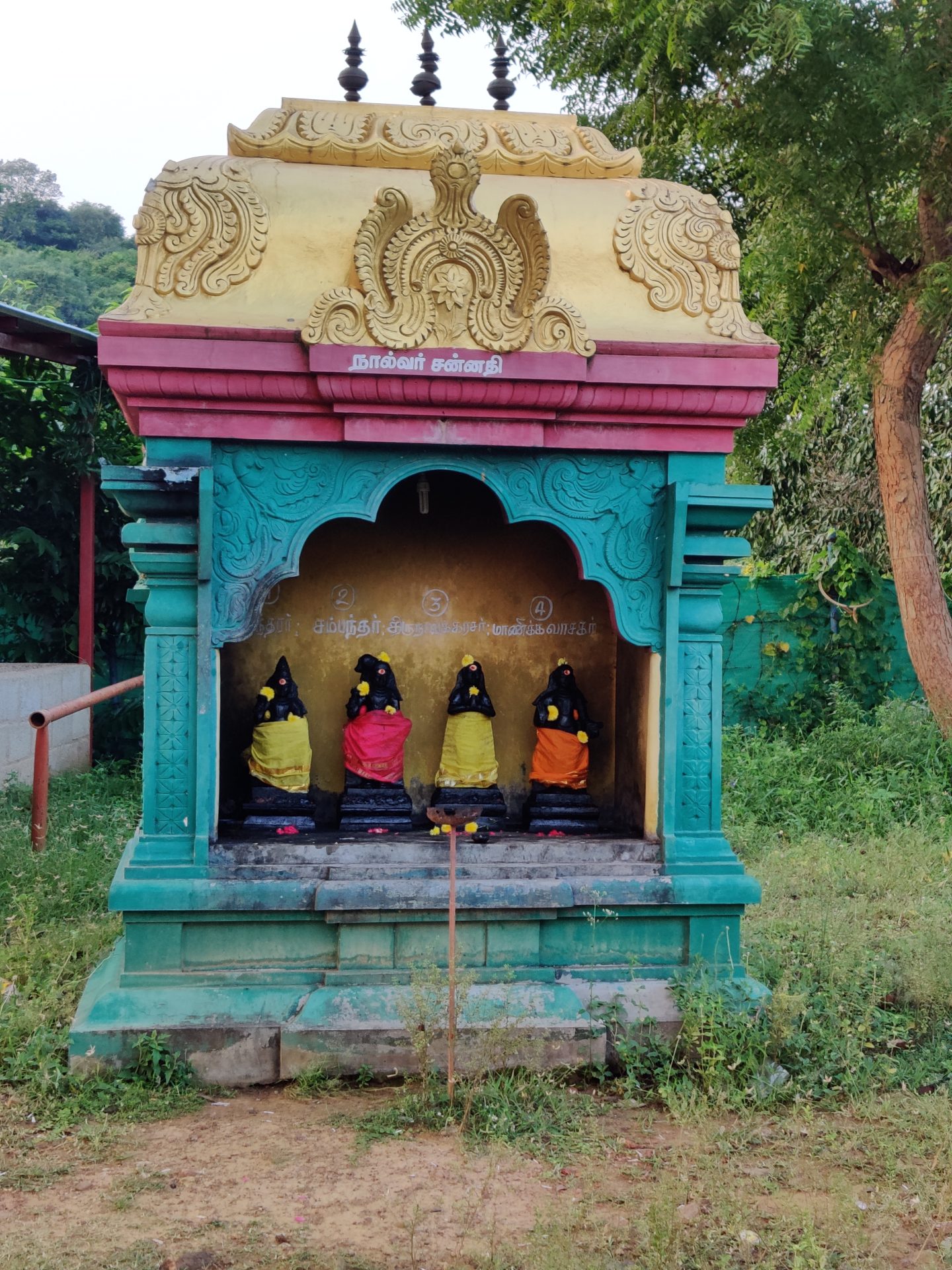
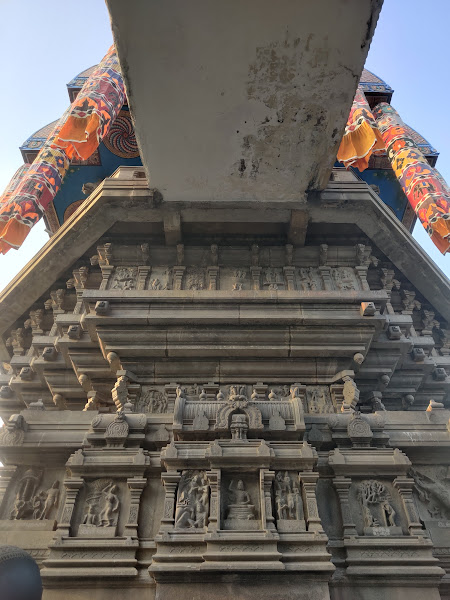
A 12 kms ride after taking the left from Vandalur onto the Kelambakkam Vandalur road brings one to the Nellikuppam Road junction. At this junction one has to take a right and ride for around 6 to 7 kms, the last stretch cutting through paddy fields, a little bit of forest area  and a water body until one reaches the Sri Vedagiriswarar temple, believed to a 1,000 year temple built  by one of the Pallava dynasty kings.

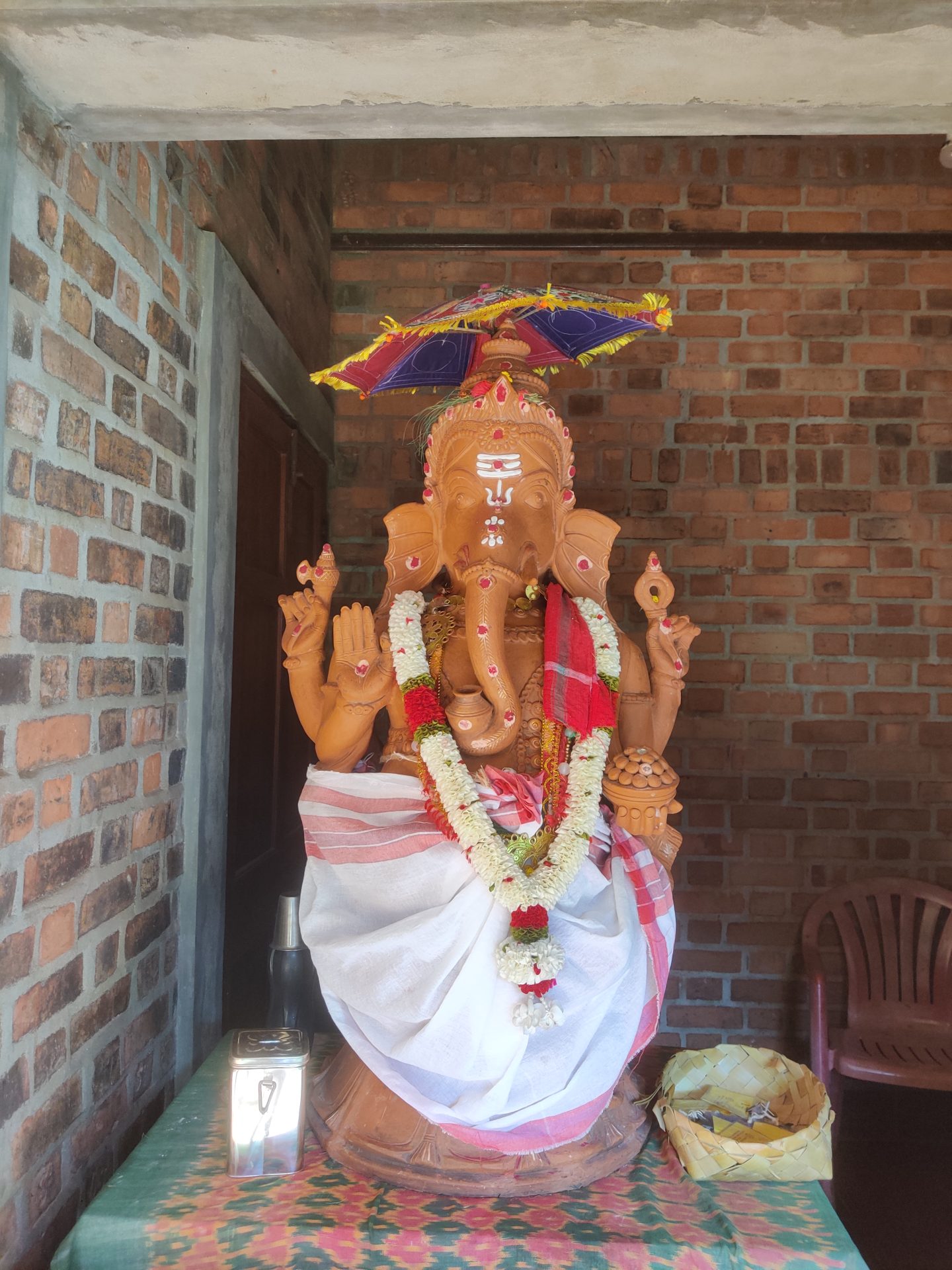
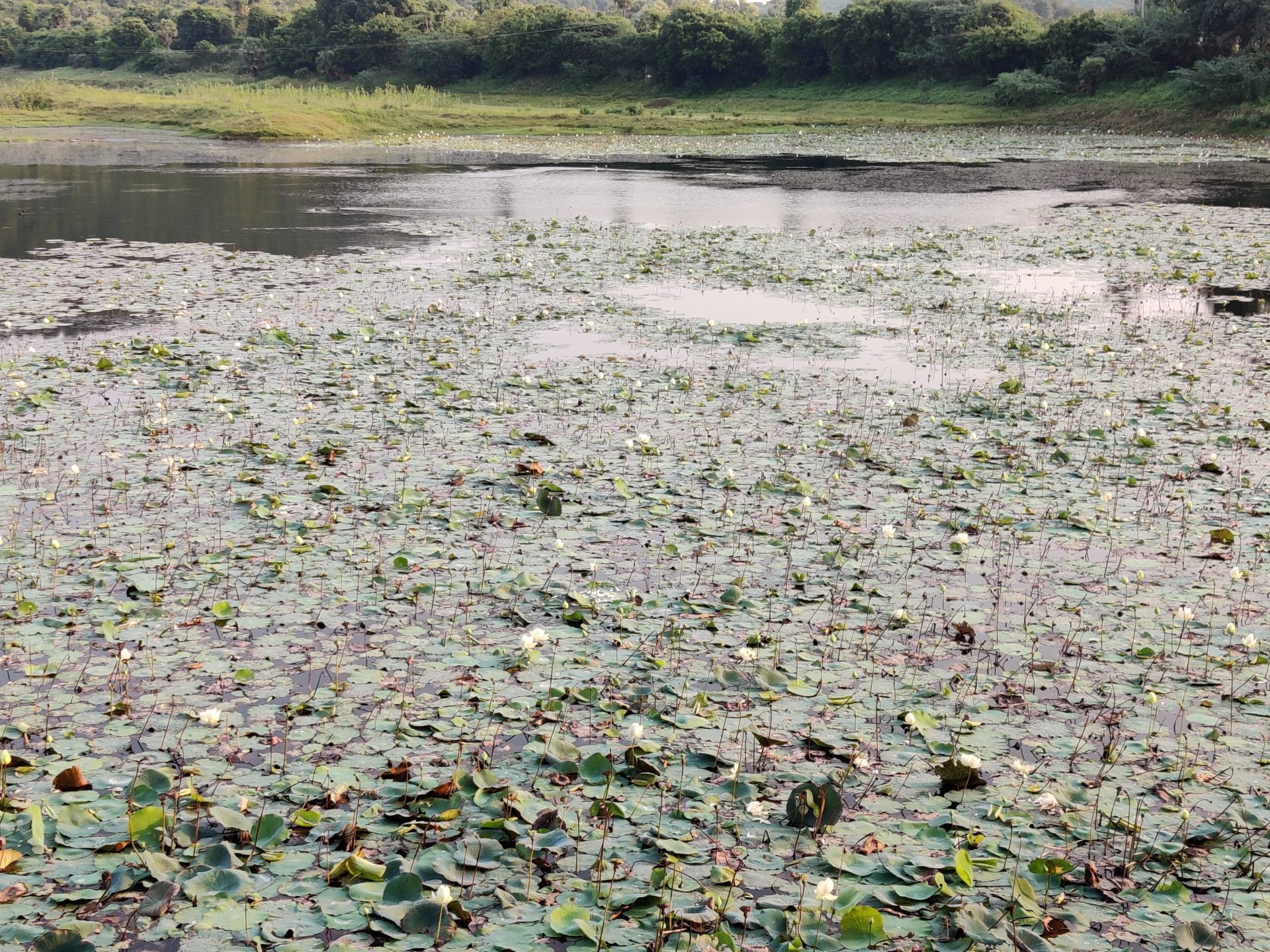
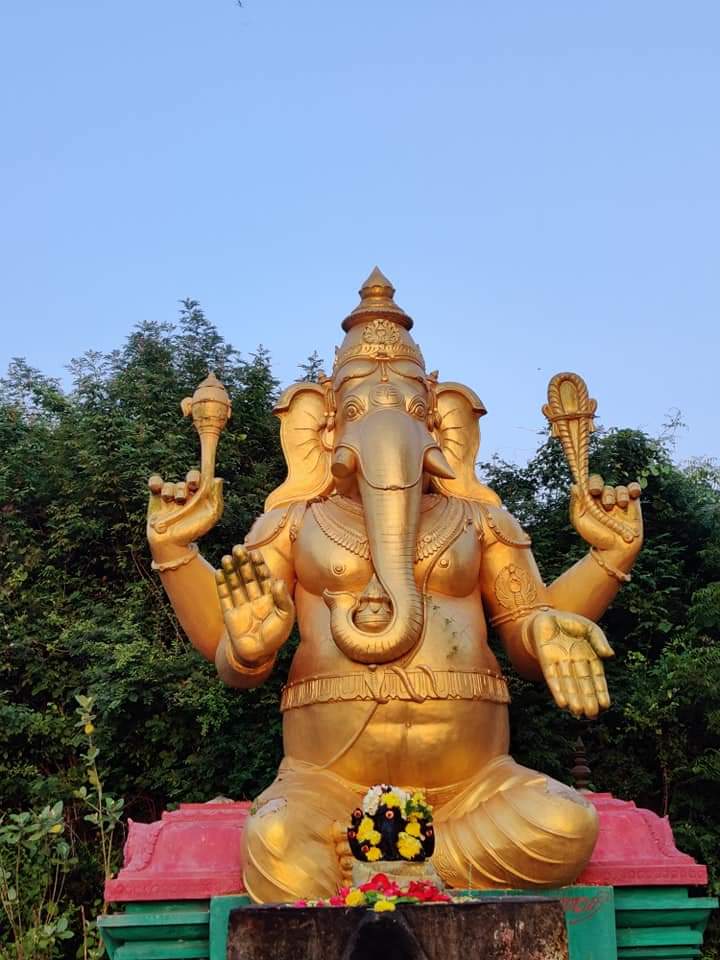
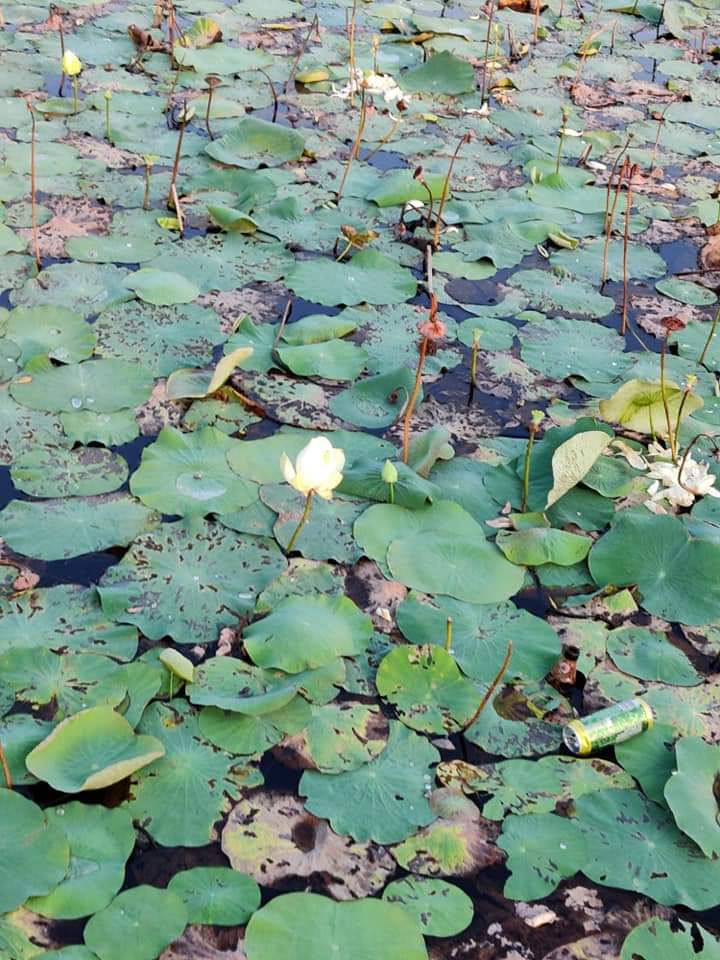
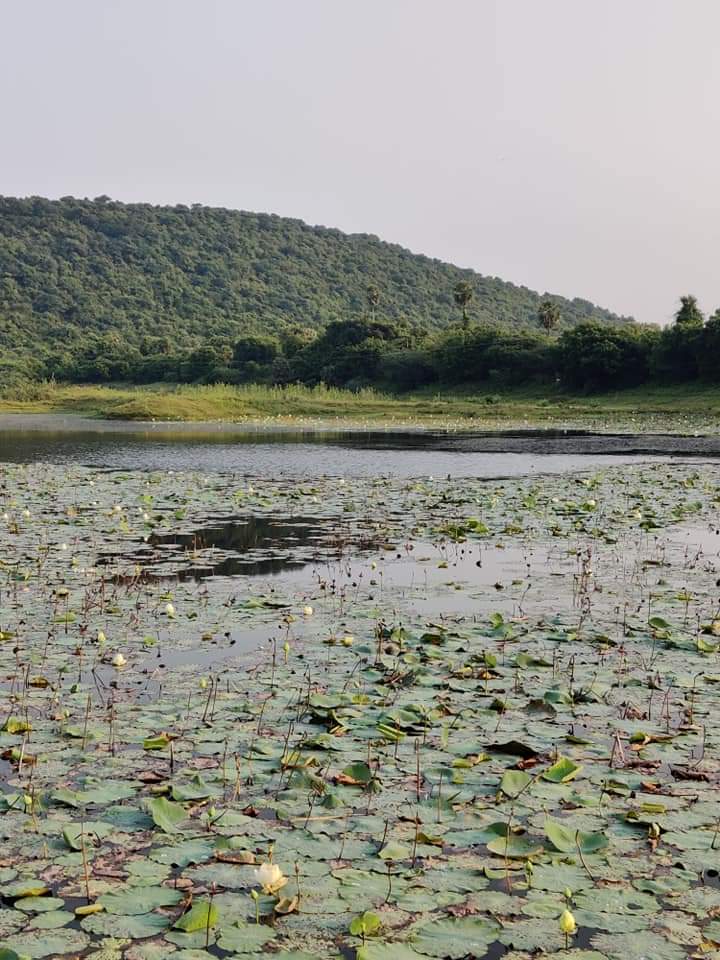
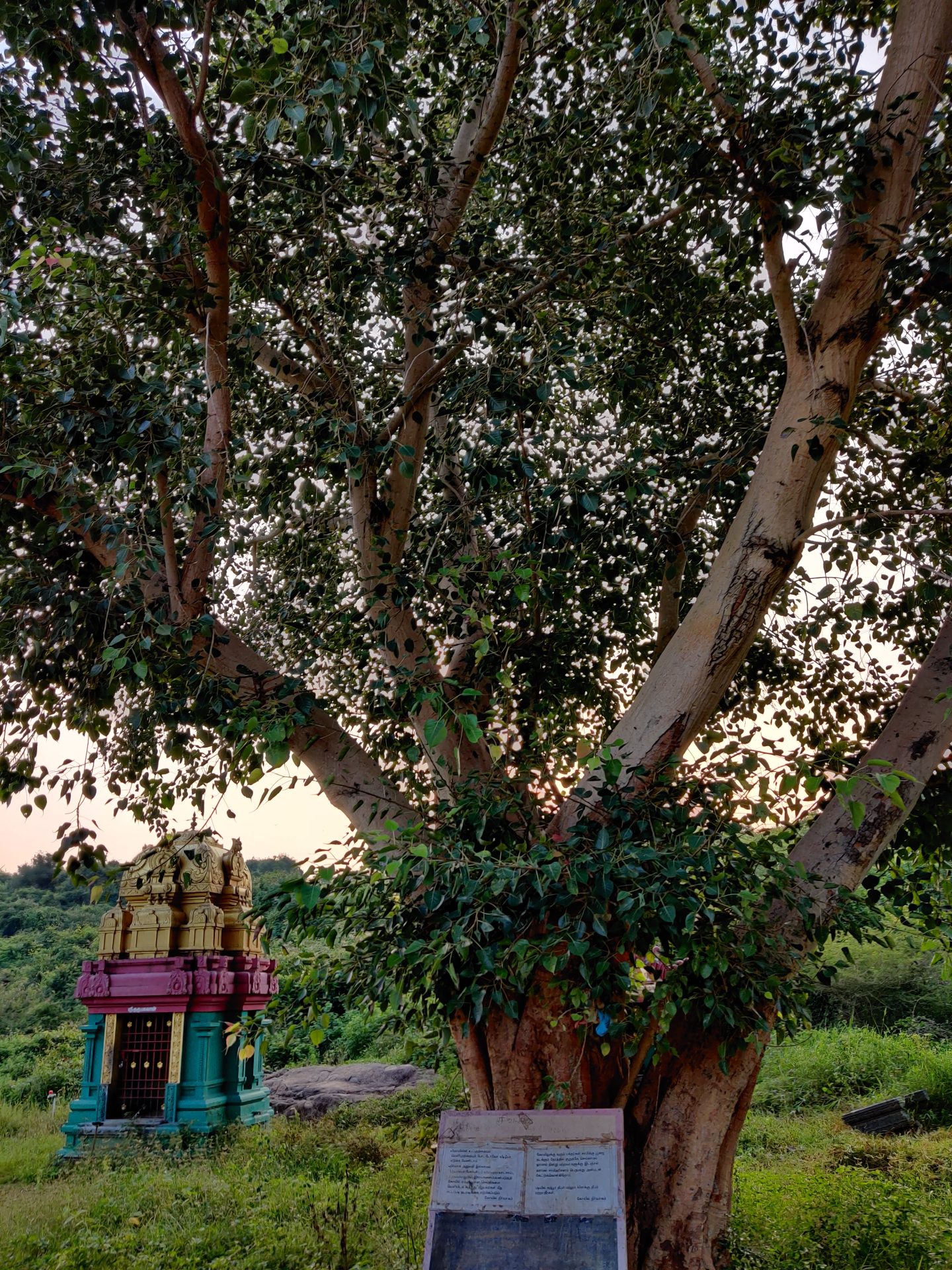
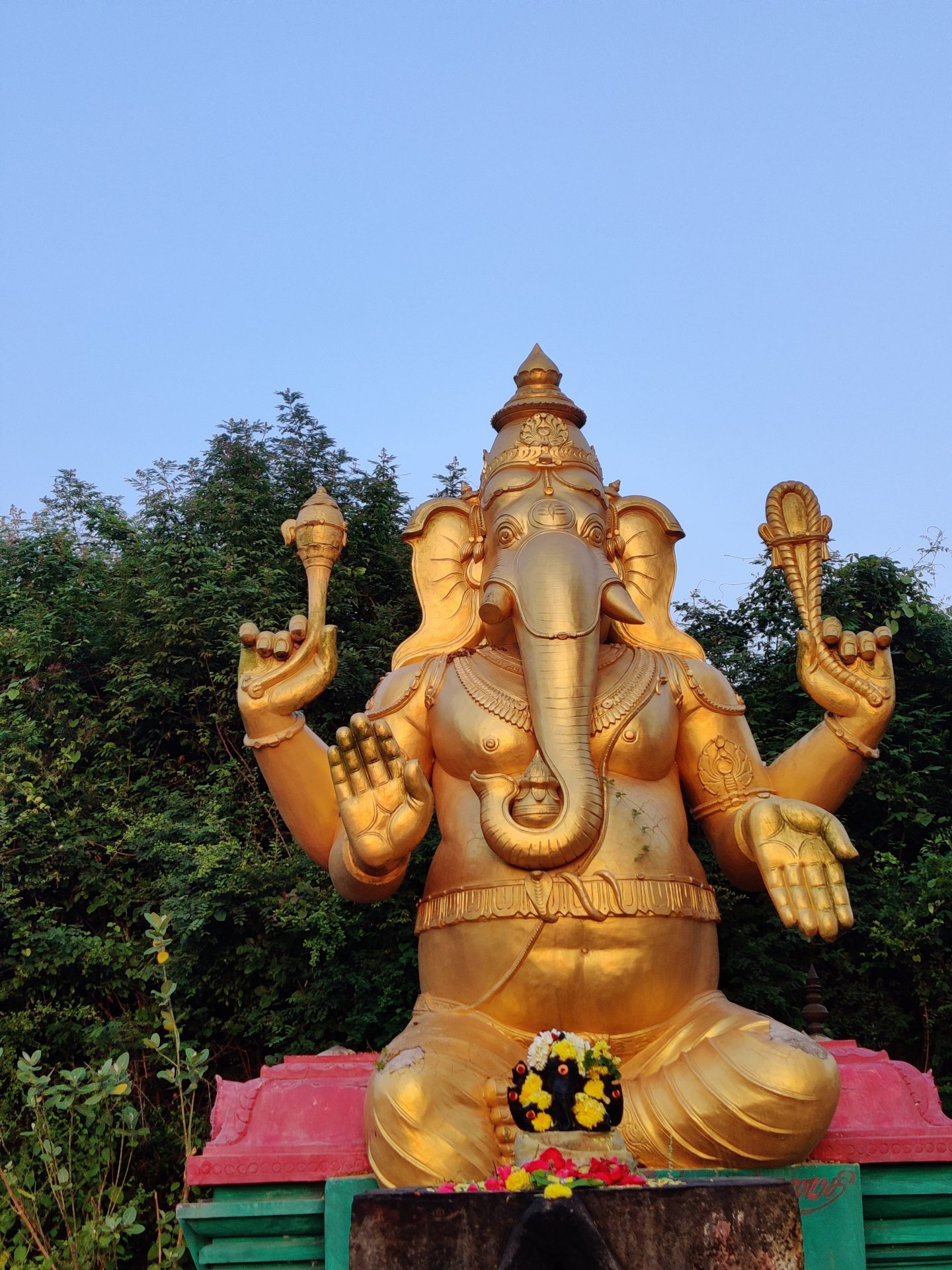
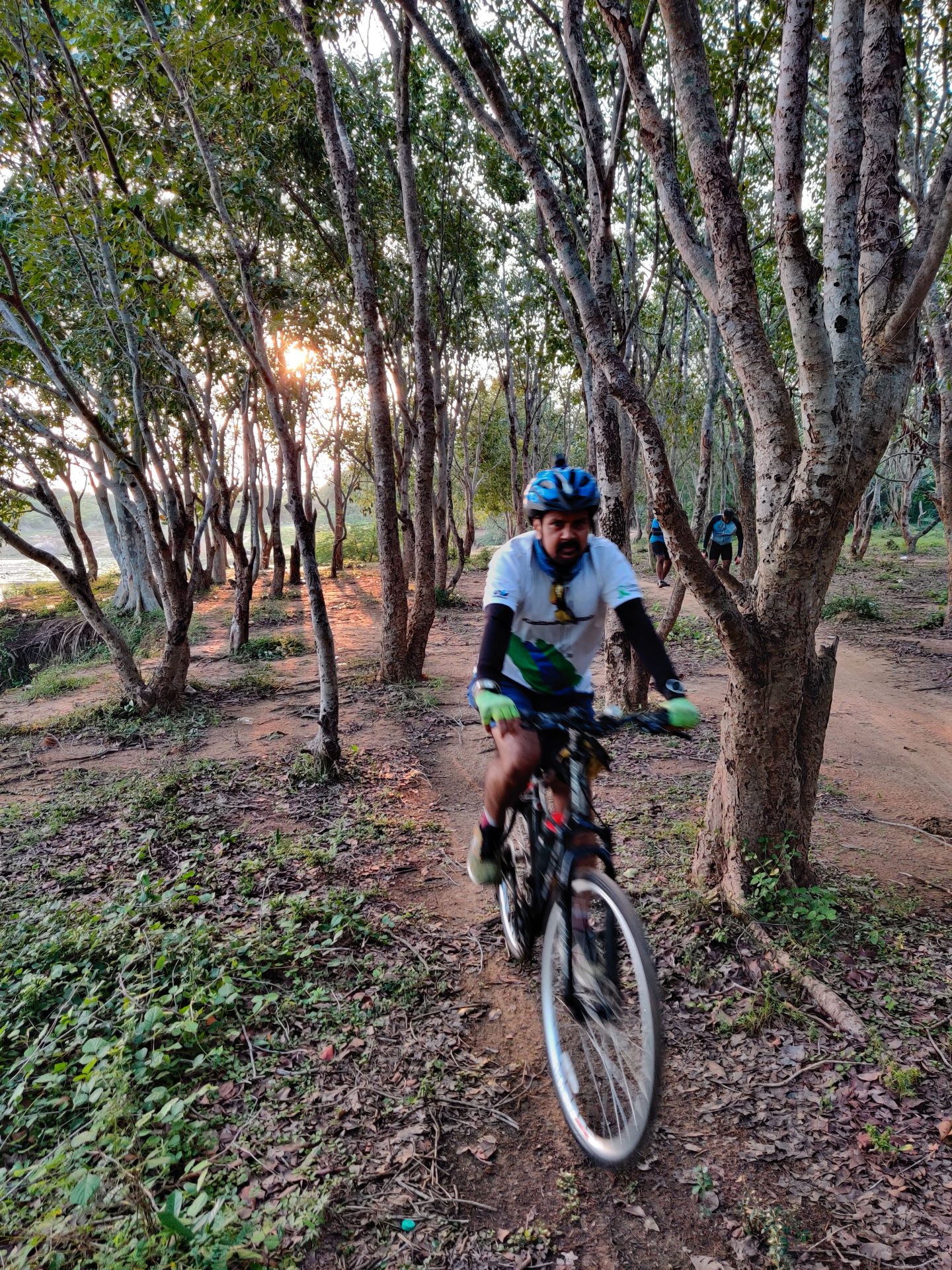
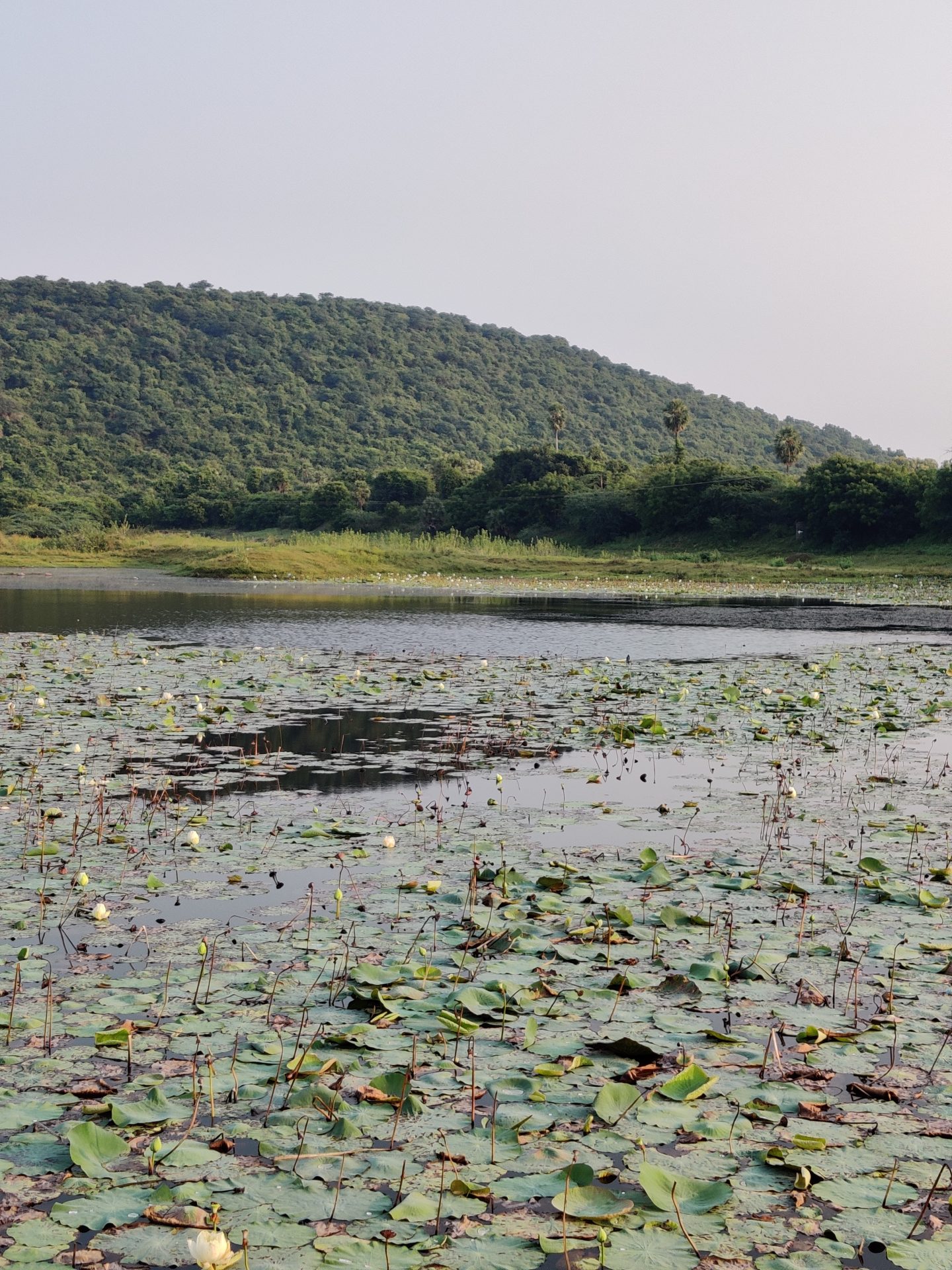
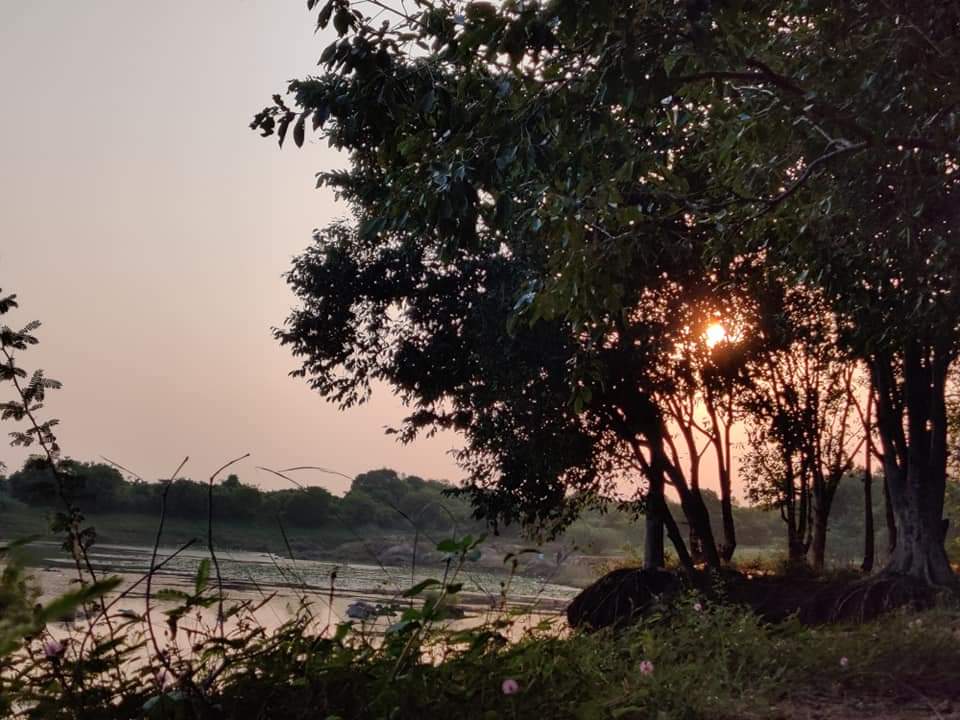
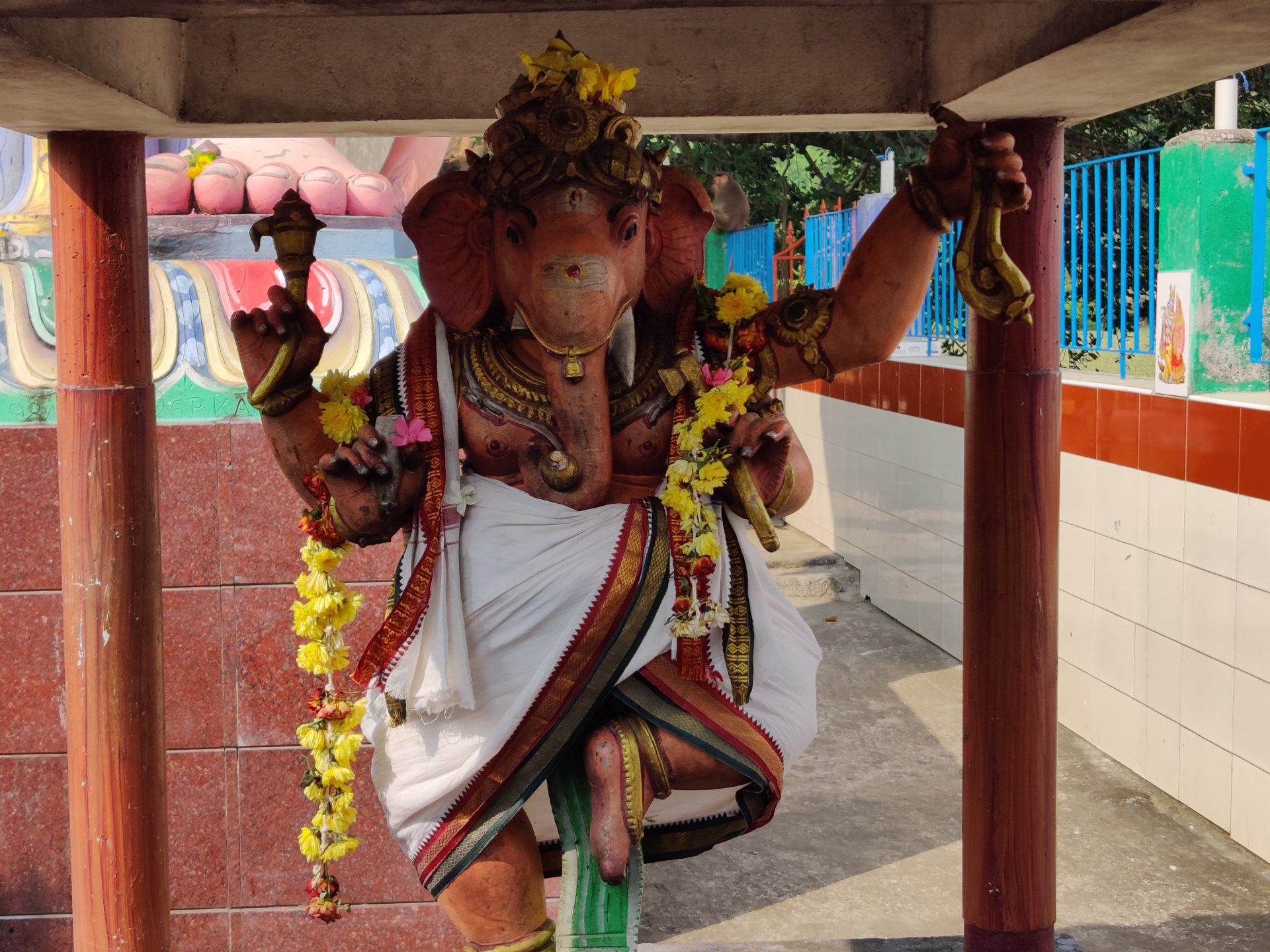
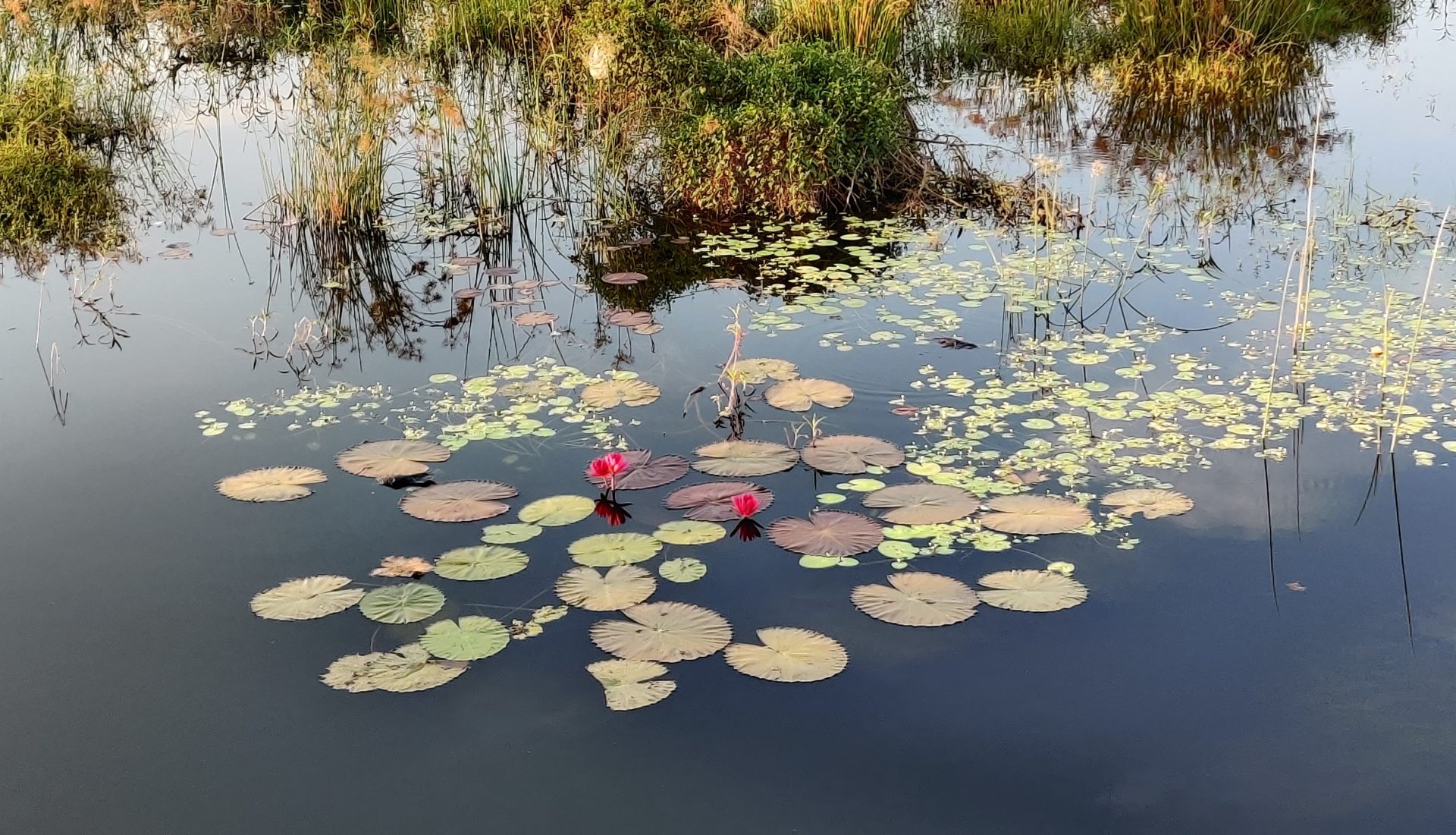
The temple has the idol of Lord Siva in the form of a Siva Lingam apart from a 18 feet high Valampuri Vinayagar (Lord Ganesha) which is there right at the entrance. We were lucky to sight some peacocks and migratory birds during the course of our visit to this uninhabited place. A short distance from the temple lies a lake, filled with lotus flowers and a nice canopy of trees leading upto it if one cares for a bit of off-roading. An excellent place for photo shoots.

A 12 kms ride after taking the left from Vandalur onto the Kelambakkam Vandalur road brings one to the Nellikuppam Road junction.

At this junction one has to take a right and ride for around 6 to 7 kms, the last stretch cutting through paddy fields, a little bit of forest area  and a water body until one reaches the Sri Vedagiriswarar temple, believed to a 1,000 year temple built  by one of the Pallava dynasty kings.

The temple has the idol of Lord Siva in the form of a Siva Lingam apart from a 18 feet high Valampuri Vinayagar (Lord Ganesha) which is there right at the entrance.

We were lucky to sight some peacocks and migratory birds during the course of our visit to this uninhabited place.

A short distance from the temple lies a lake, filled with lotus flowers and a nice canopy of trees leading upto it if one cares for a bit of off-roading. An excellent place for photo shoots.

Kondangi and Thaiyur Lakes

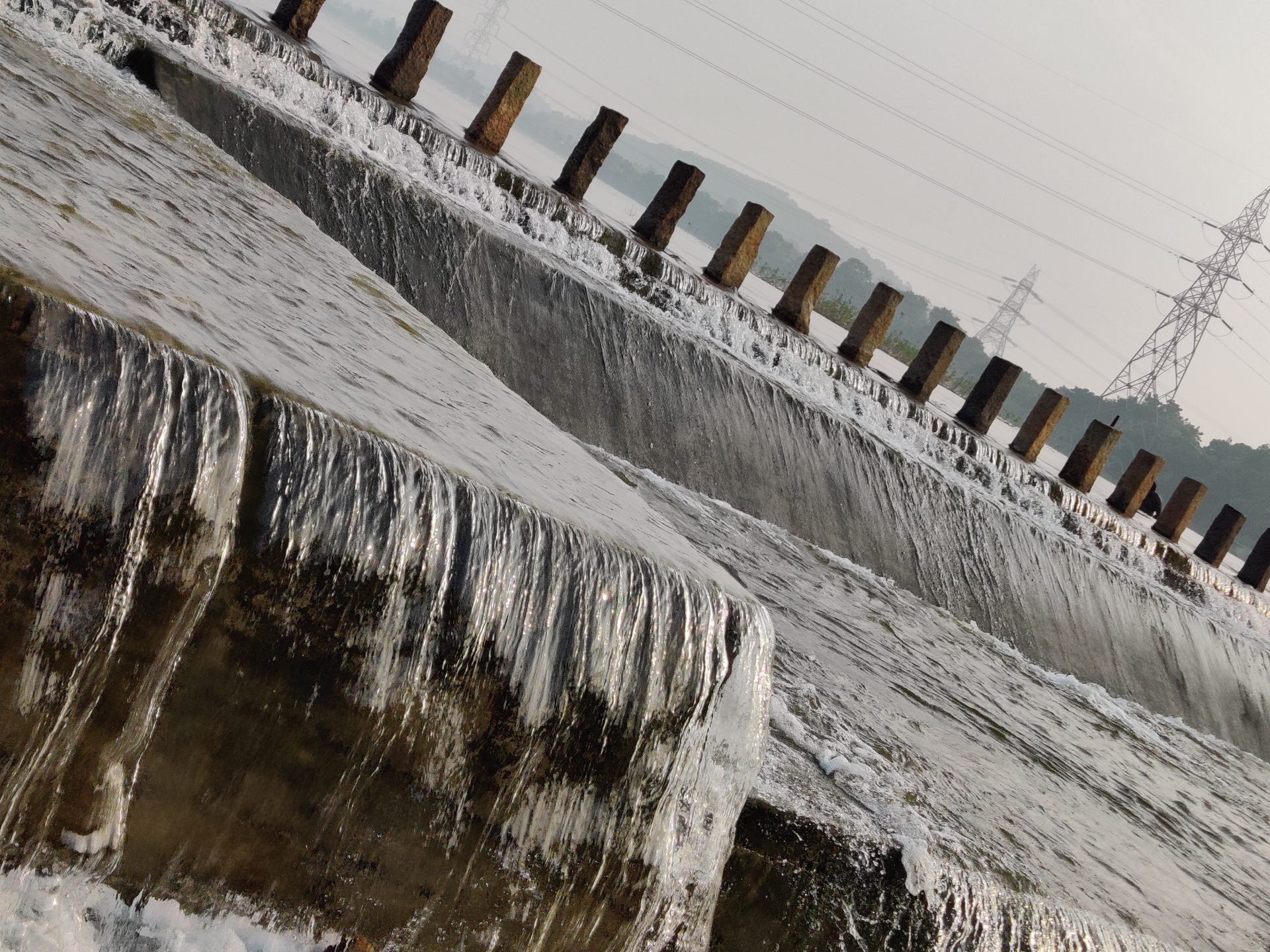
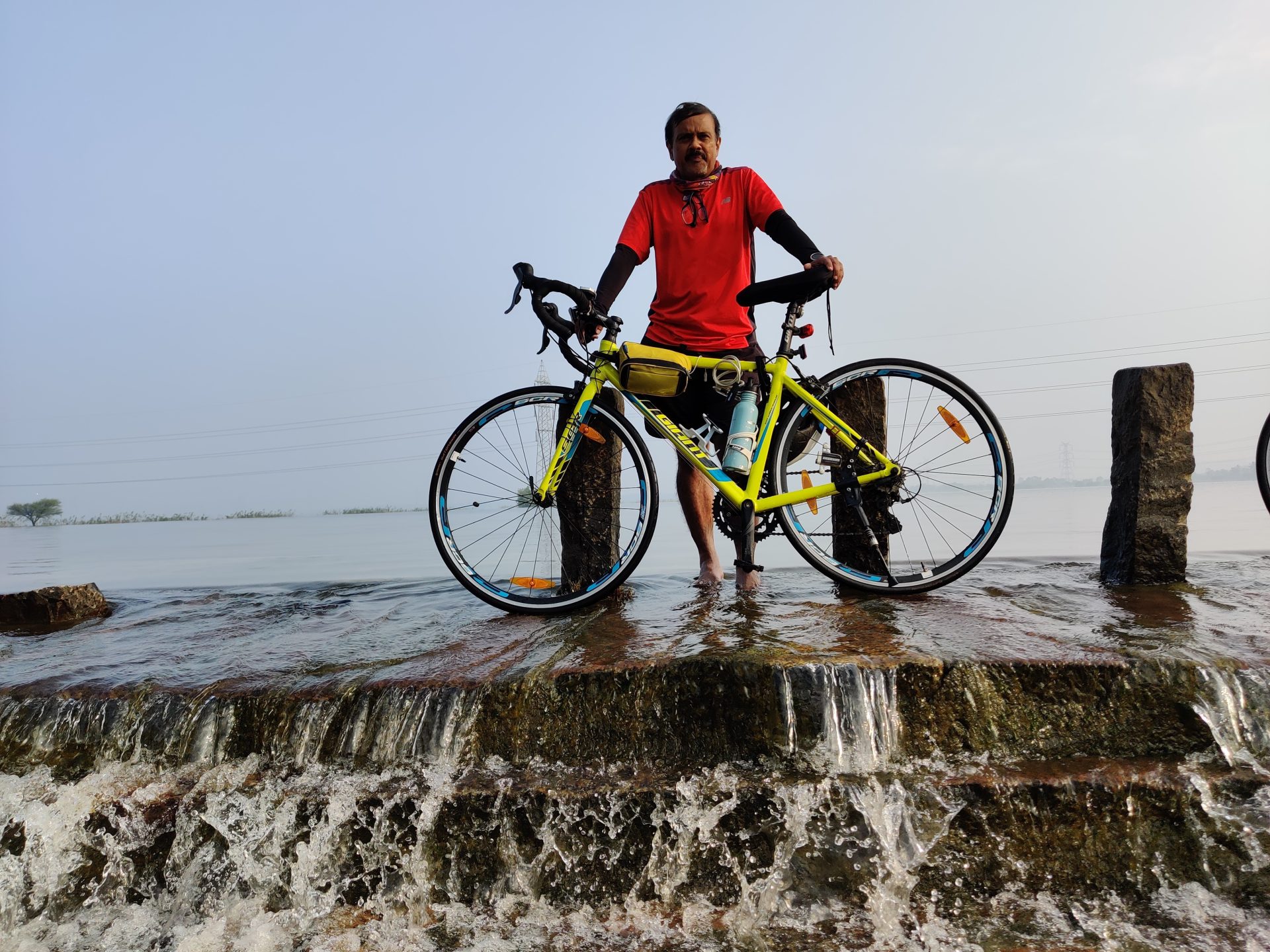
These 2 lakes located on the outskirts of Chennai threw up a real surprise in terms of its natural beauty and is best to visit during or immediately after the monsoons when copious water is found in these water bodies.

There is a  nice temple to visit in the close vicinity of the lake. These Lakes are a big draw for cyclists during the monsoon seasons.

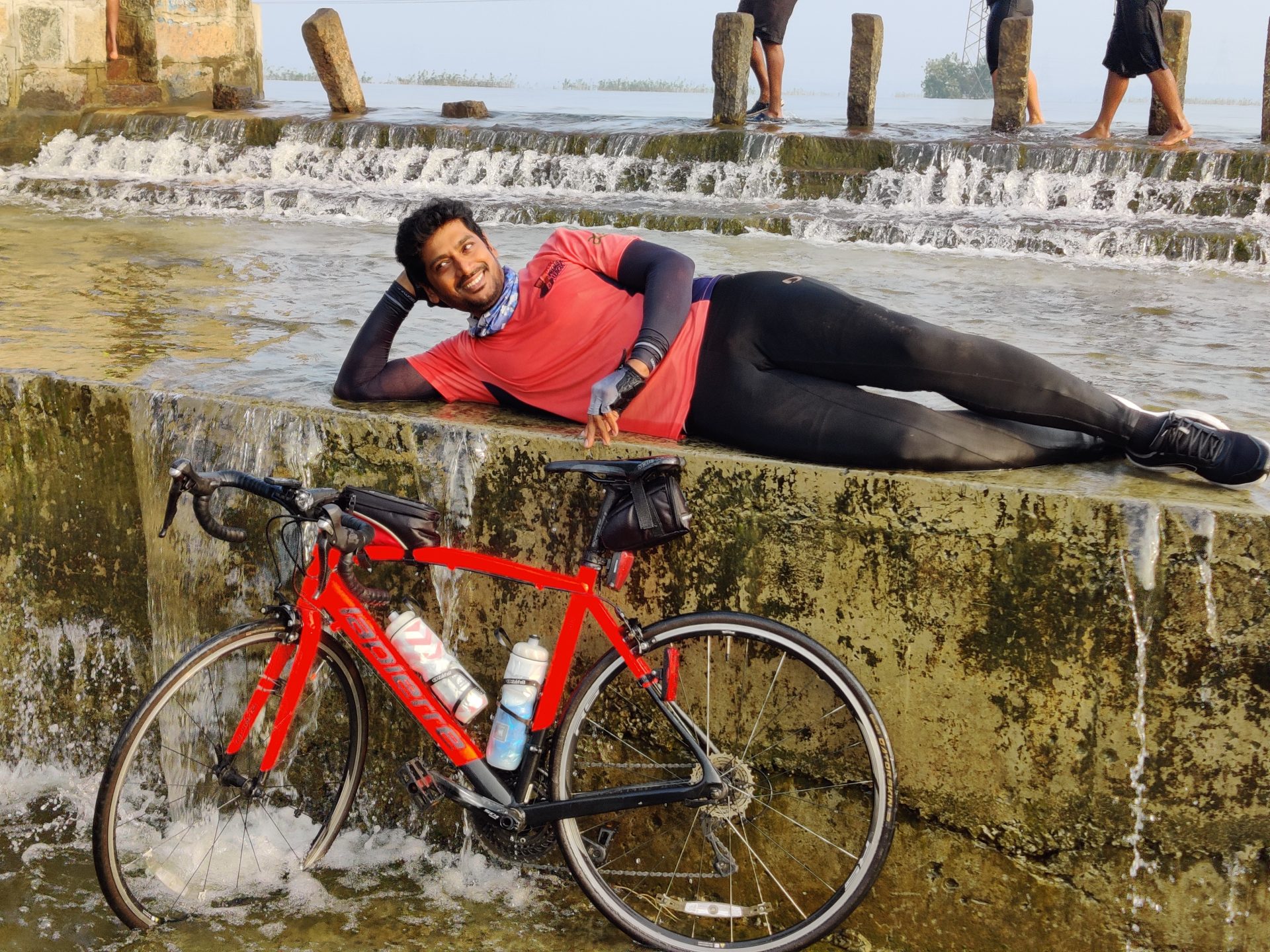
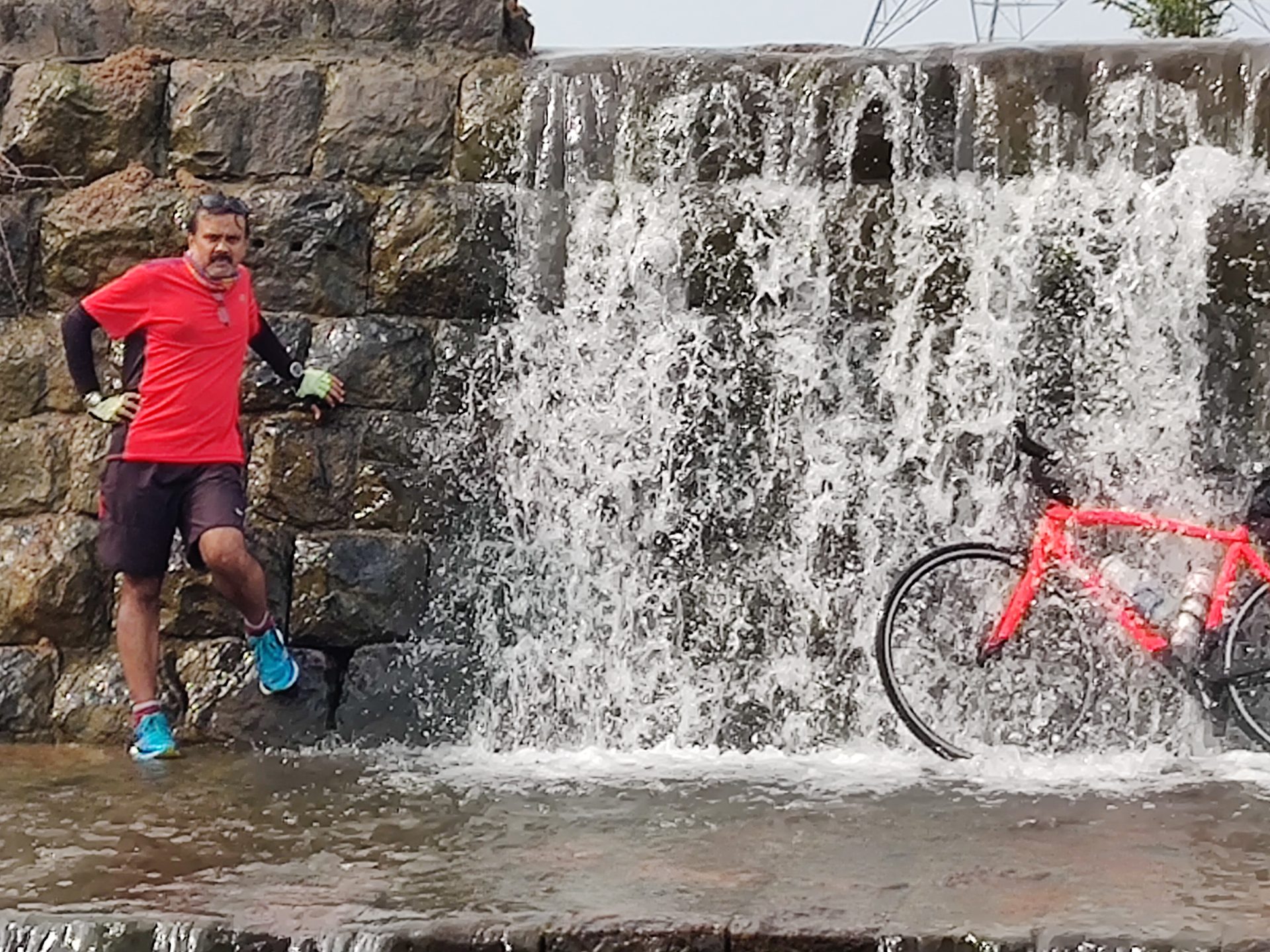
THE HUMAN MERMAID

The Kondangi Lake is around 14 kms ahead of Vandalur where one needs to branch off the GST road after crossing the A2B restaurant on Maraimalai Nagar. 

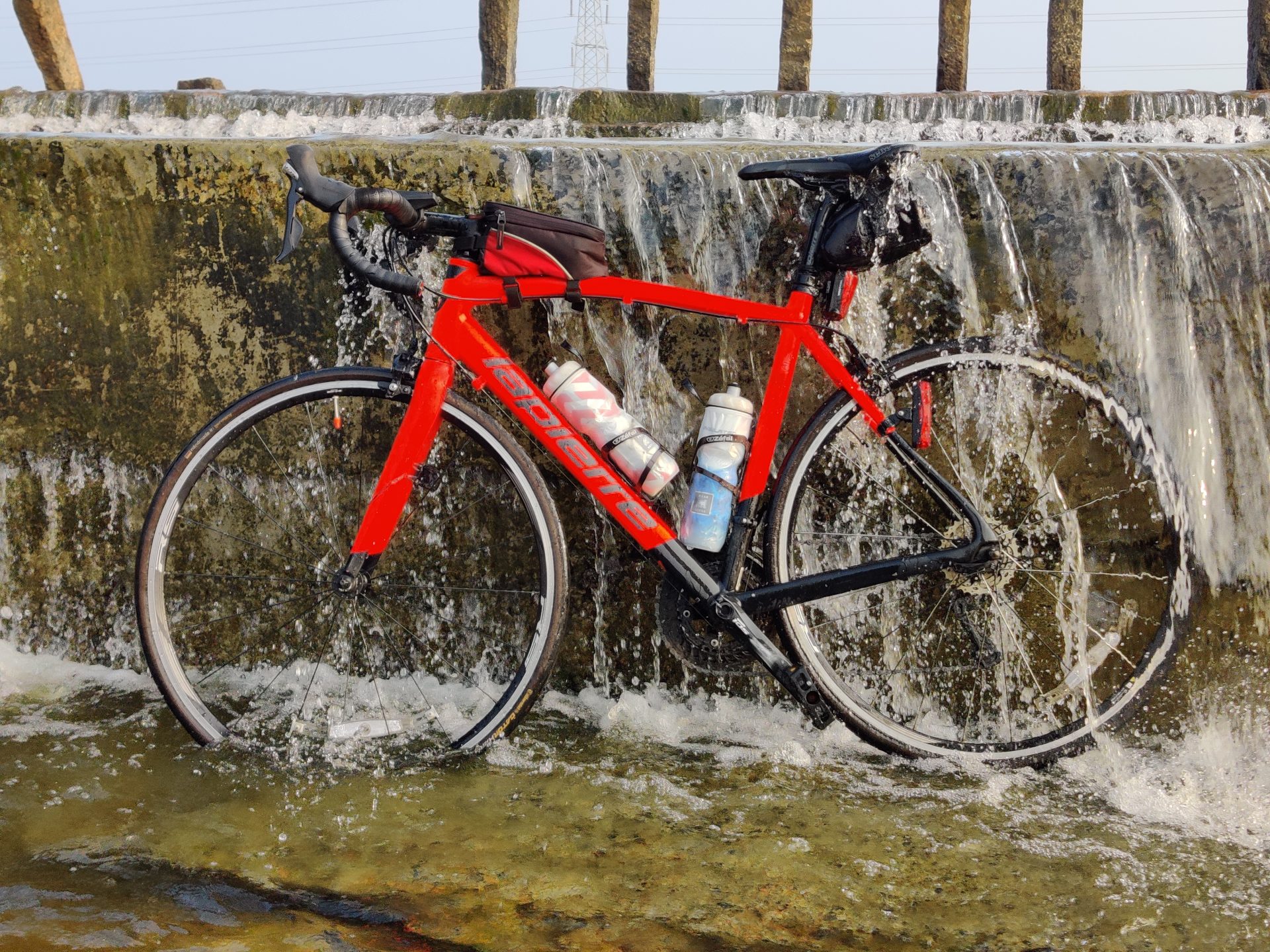
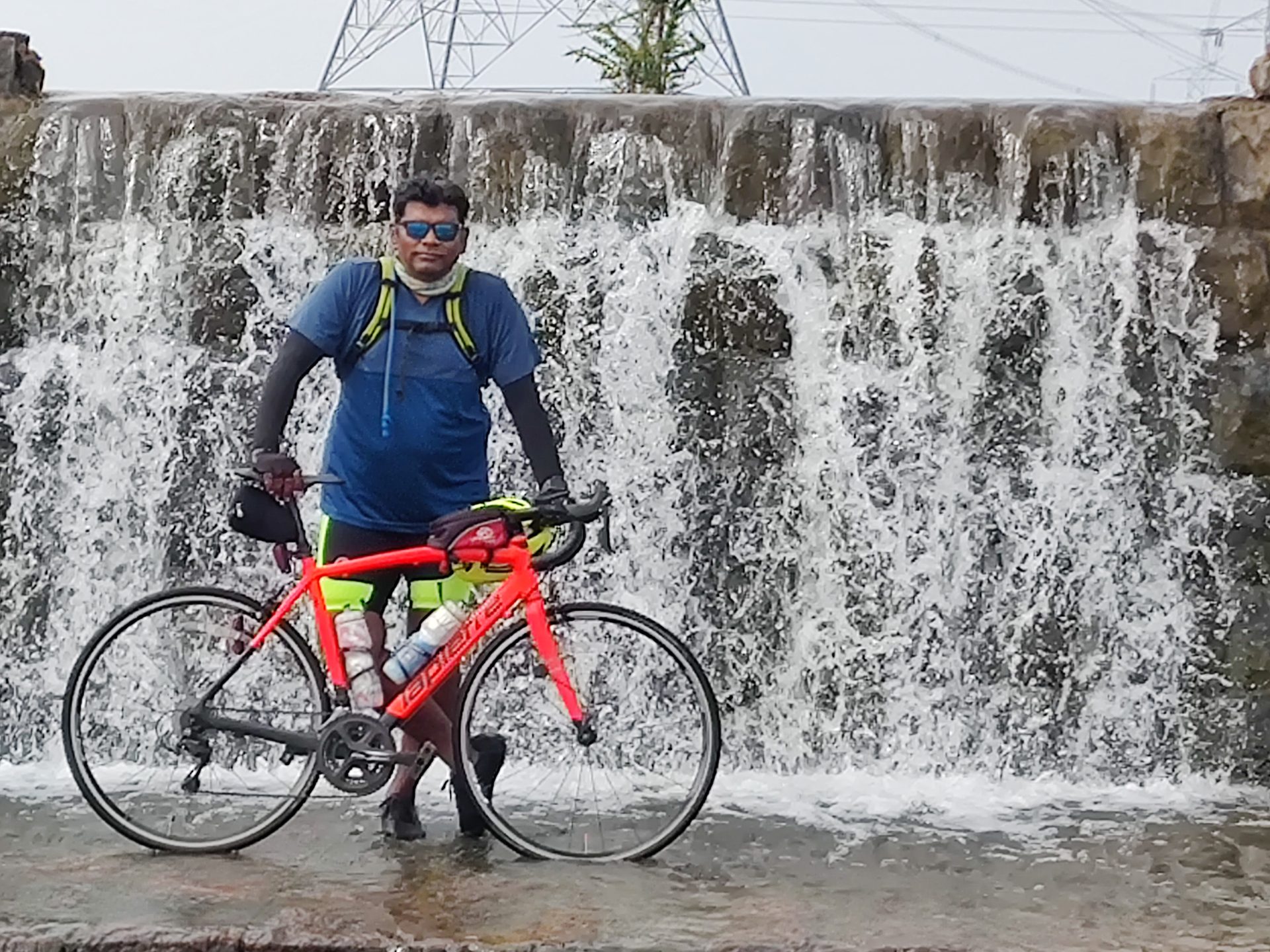
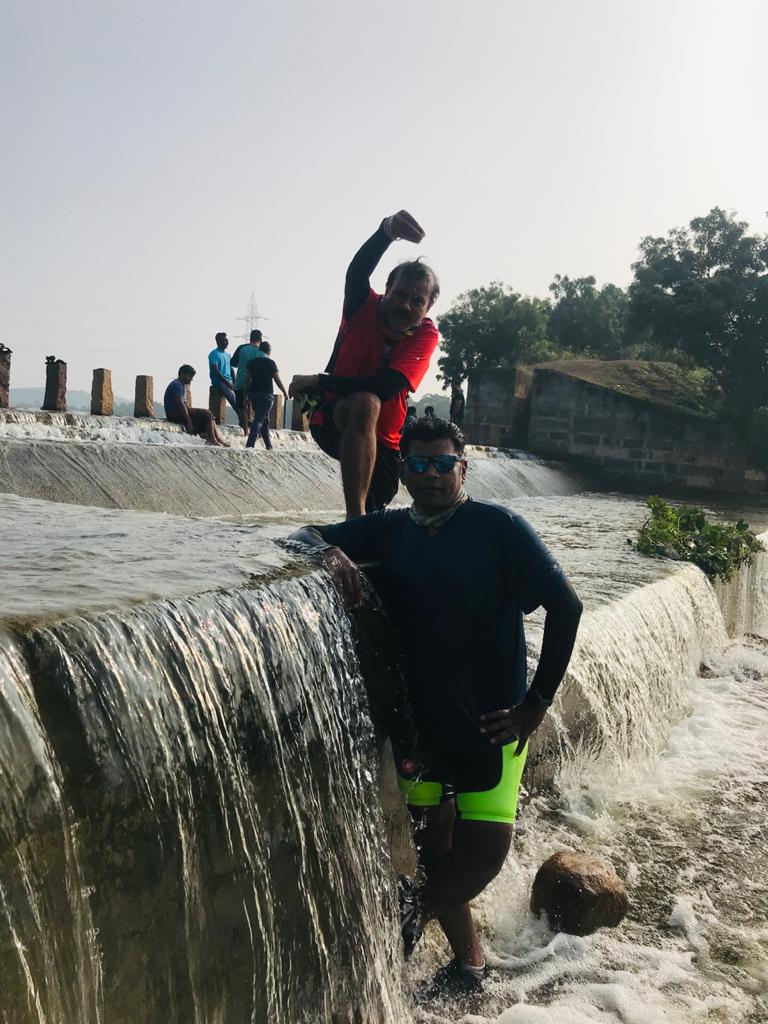
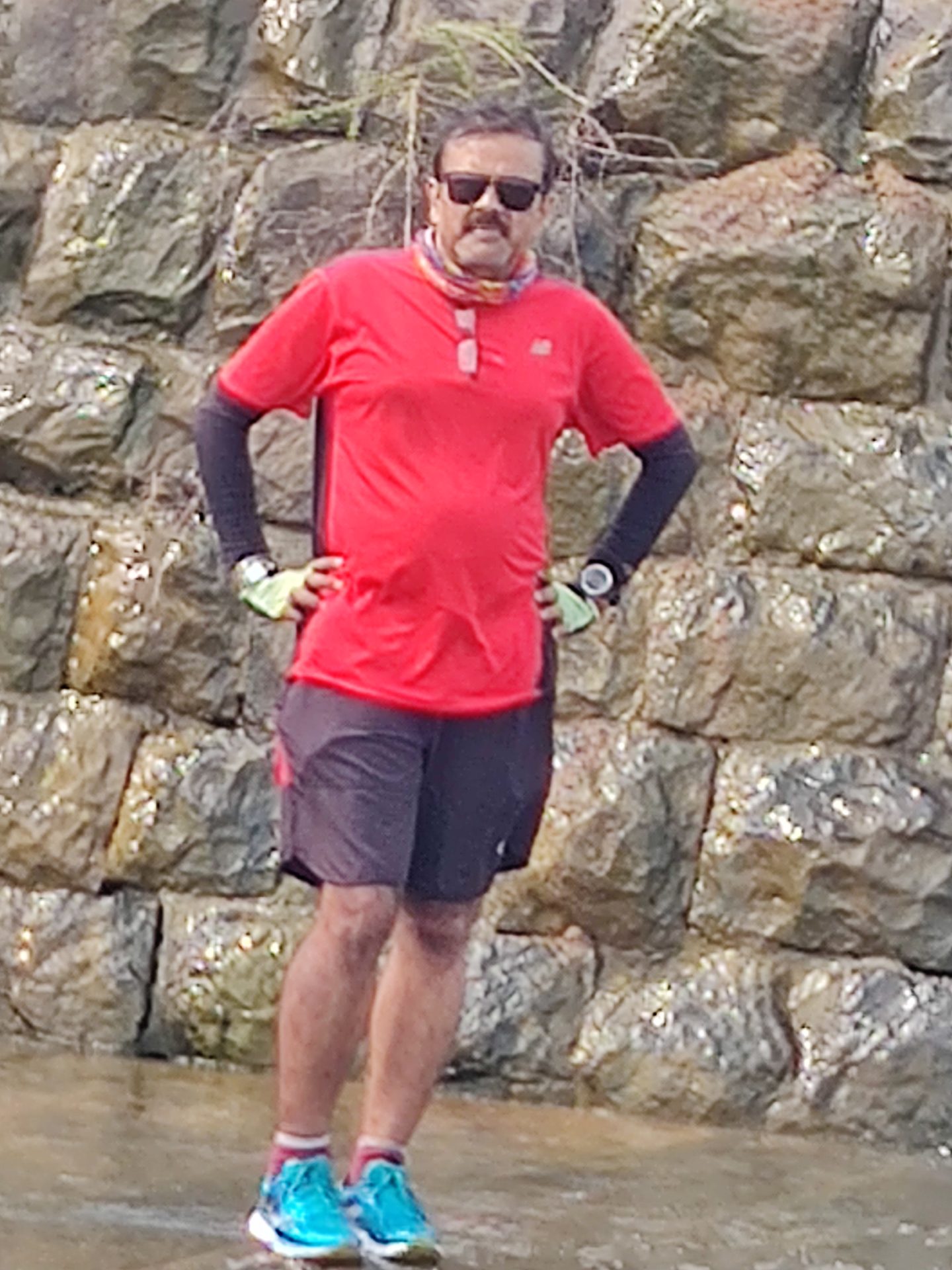
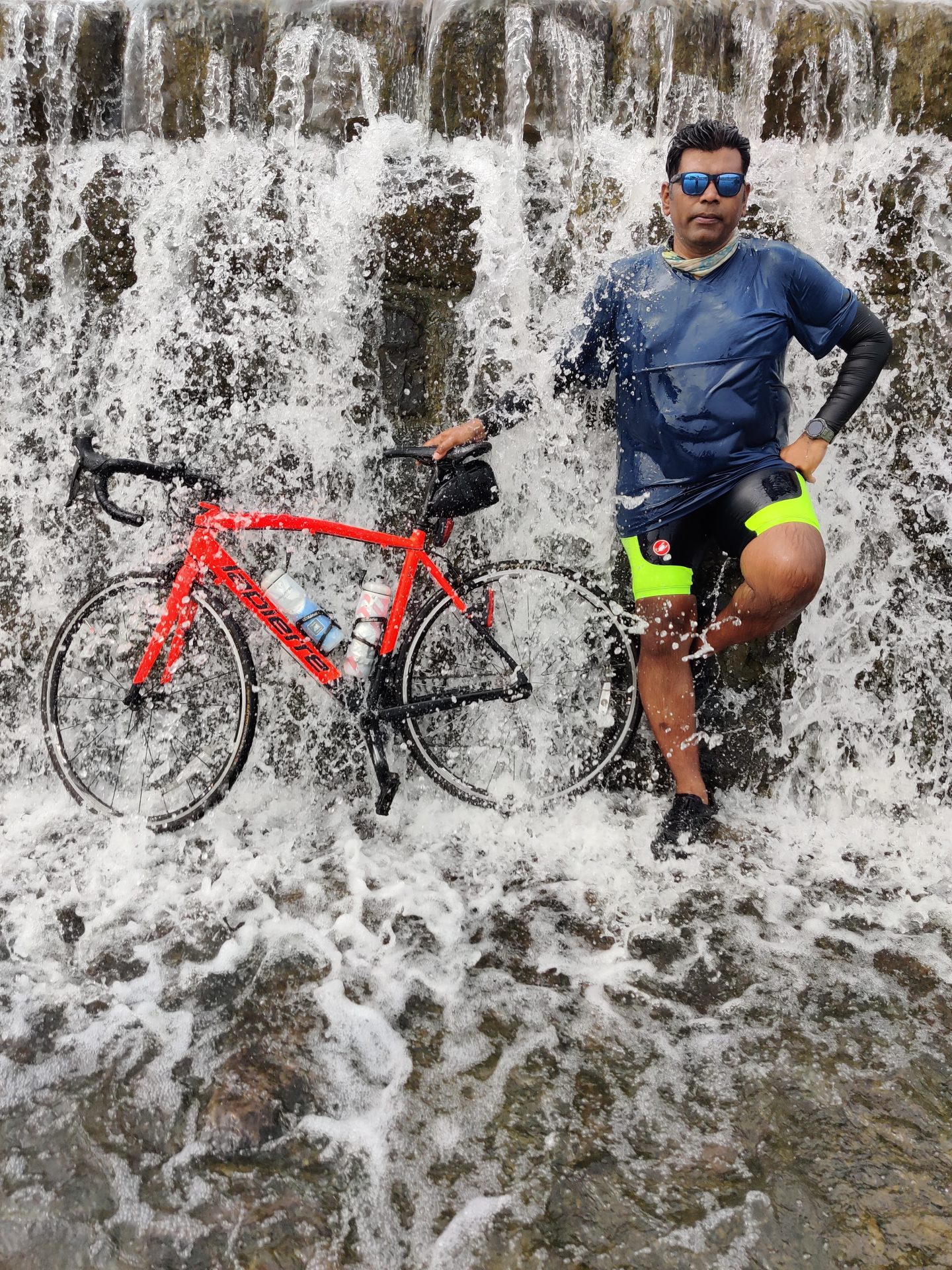
The waters are slightly turbulent and cascade down into a small waterfall and carrying an extra pair of clothes makes the experience of bathing in the lake a surreal experience.

The Thaiyur Lake lies around 16 kms towards the interior while riding towards the Old Mahabalipuram Road (OMR) and can be accessed from the OMR side as well. 

The Avadi Lake

The city’s second eco-park has come up here after the one at Chetpet. From Parrys Corner, this beautiful lake also known as the Paruthipattu Lake  is around 27 odd kms and is located within the precincts of the Avadi Municipality.  While the area around the lake was neglected, post the restoration, the entire area around the lake makes for some lovely views. With a 3 Km walking track around the lake spanning 2.64 kms and spanning around 8 acres, there is a play area for kids and a boat deck also available.

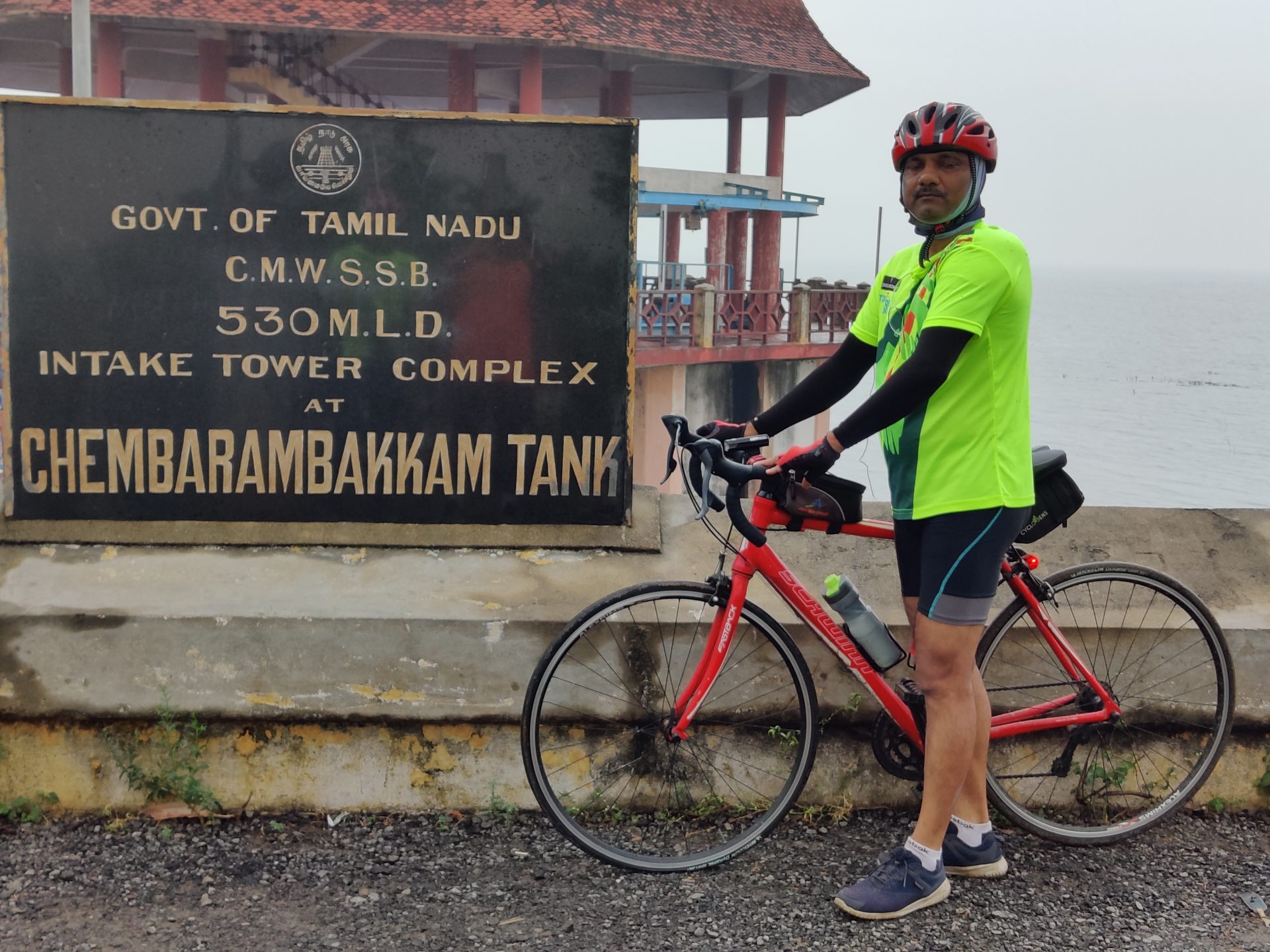
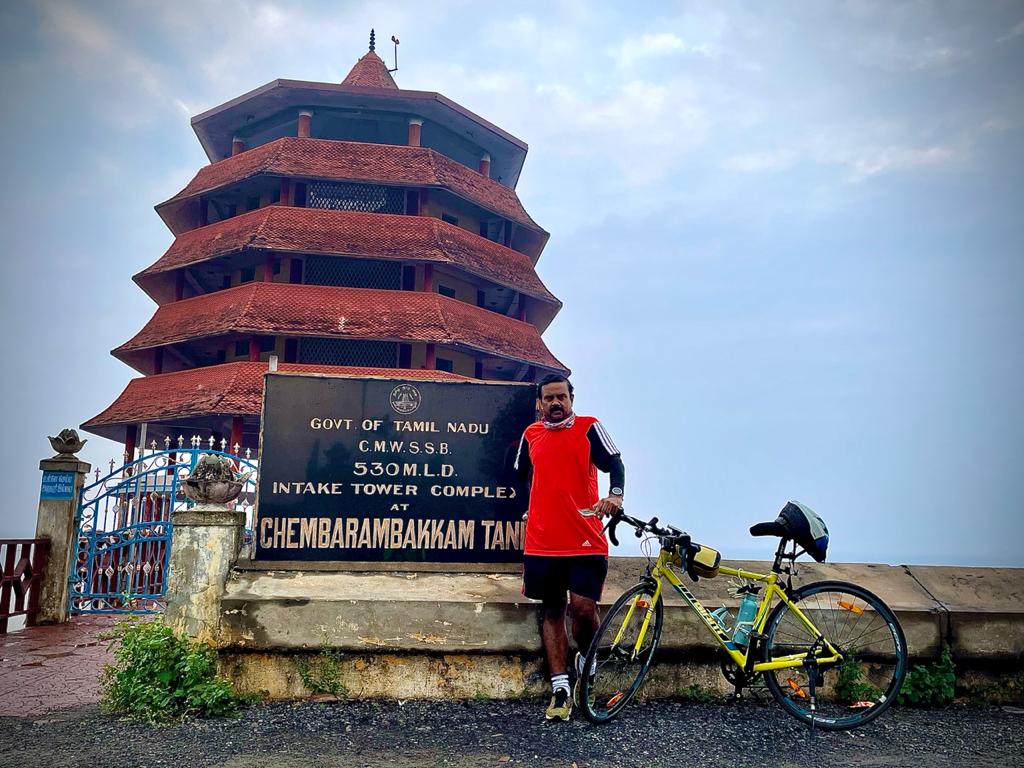
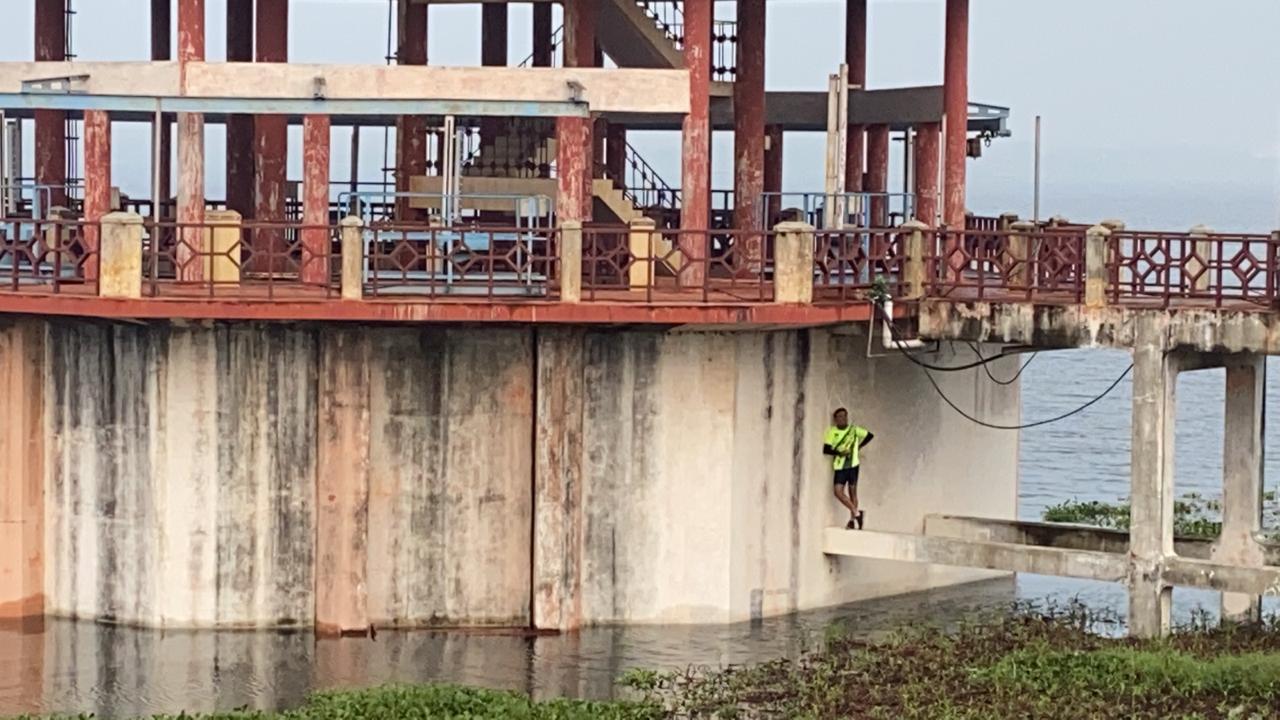
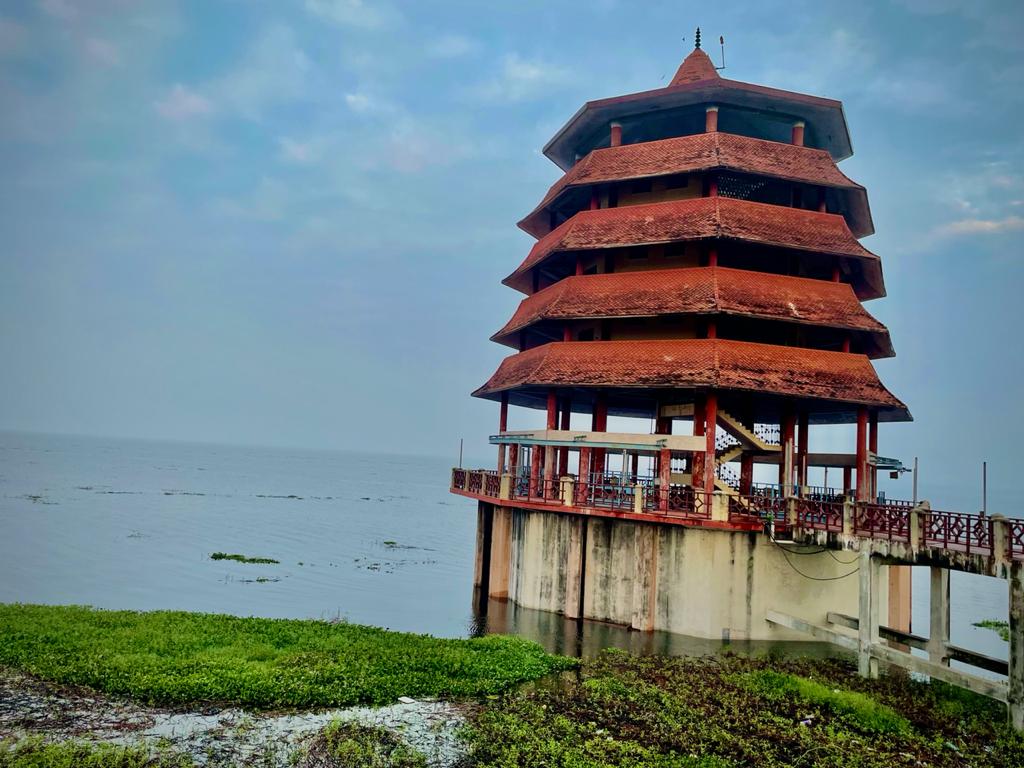
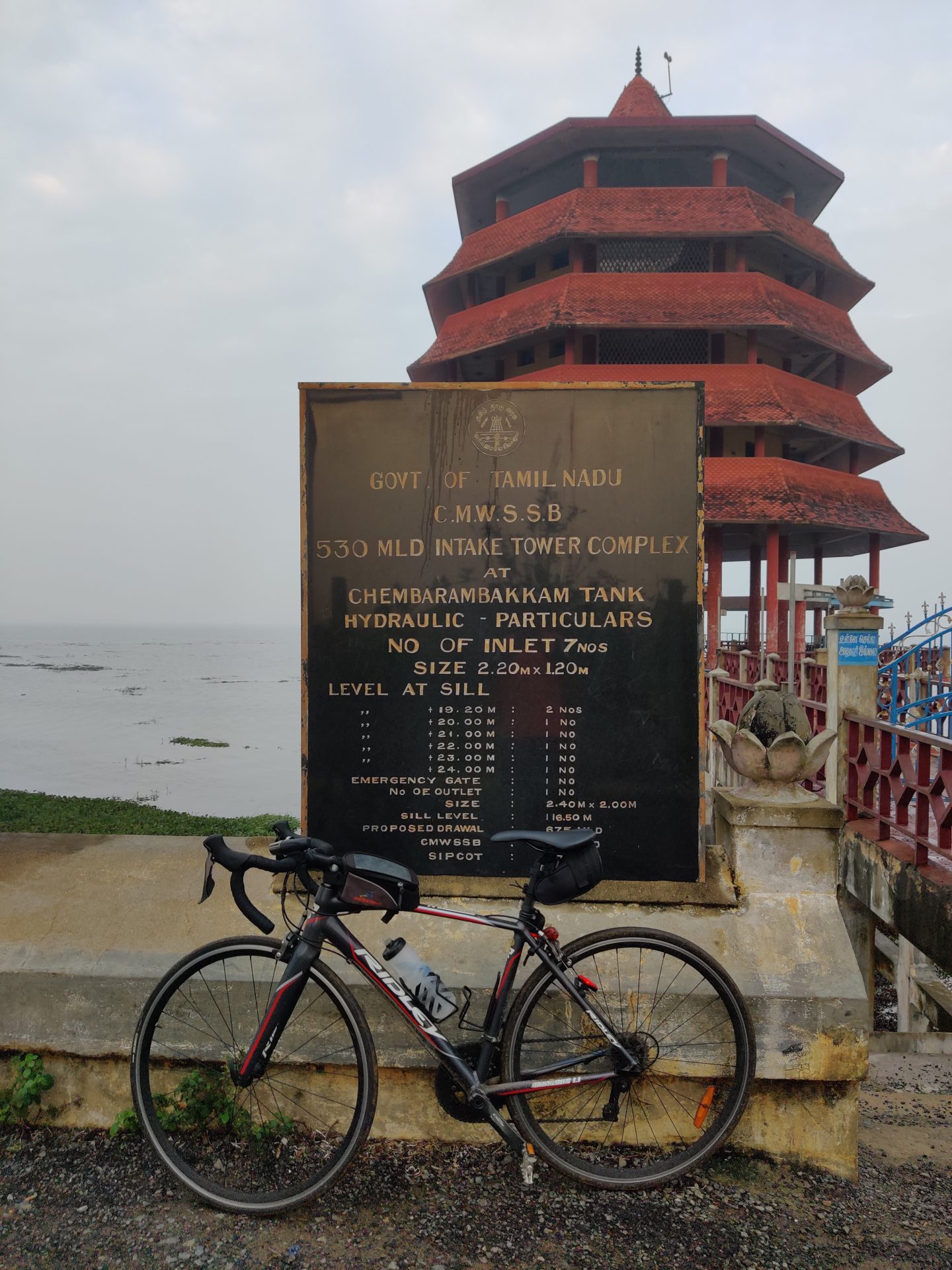
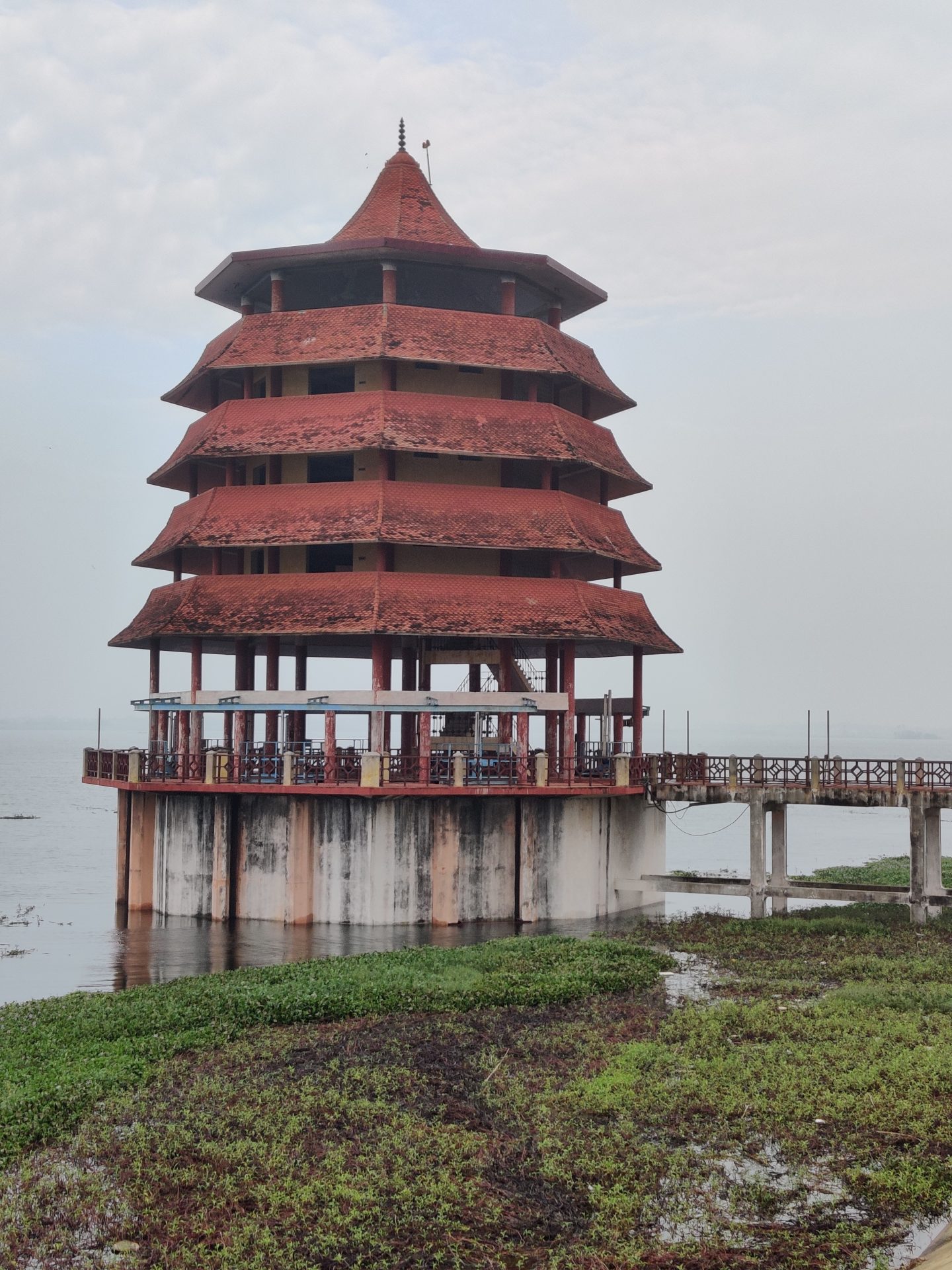
The Chembarabakkam Reservoir

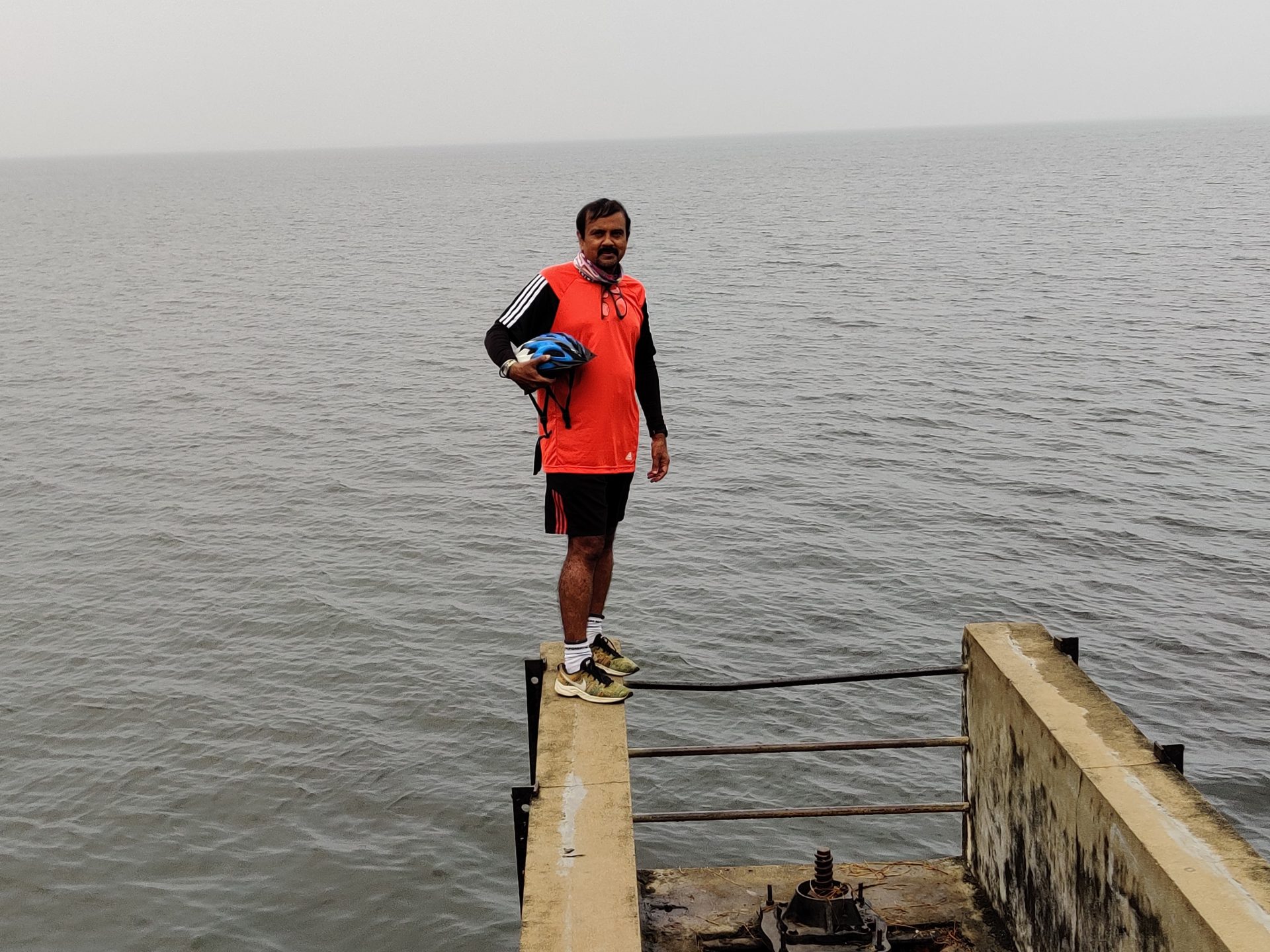
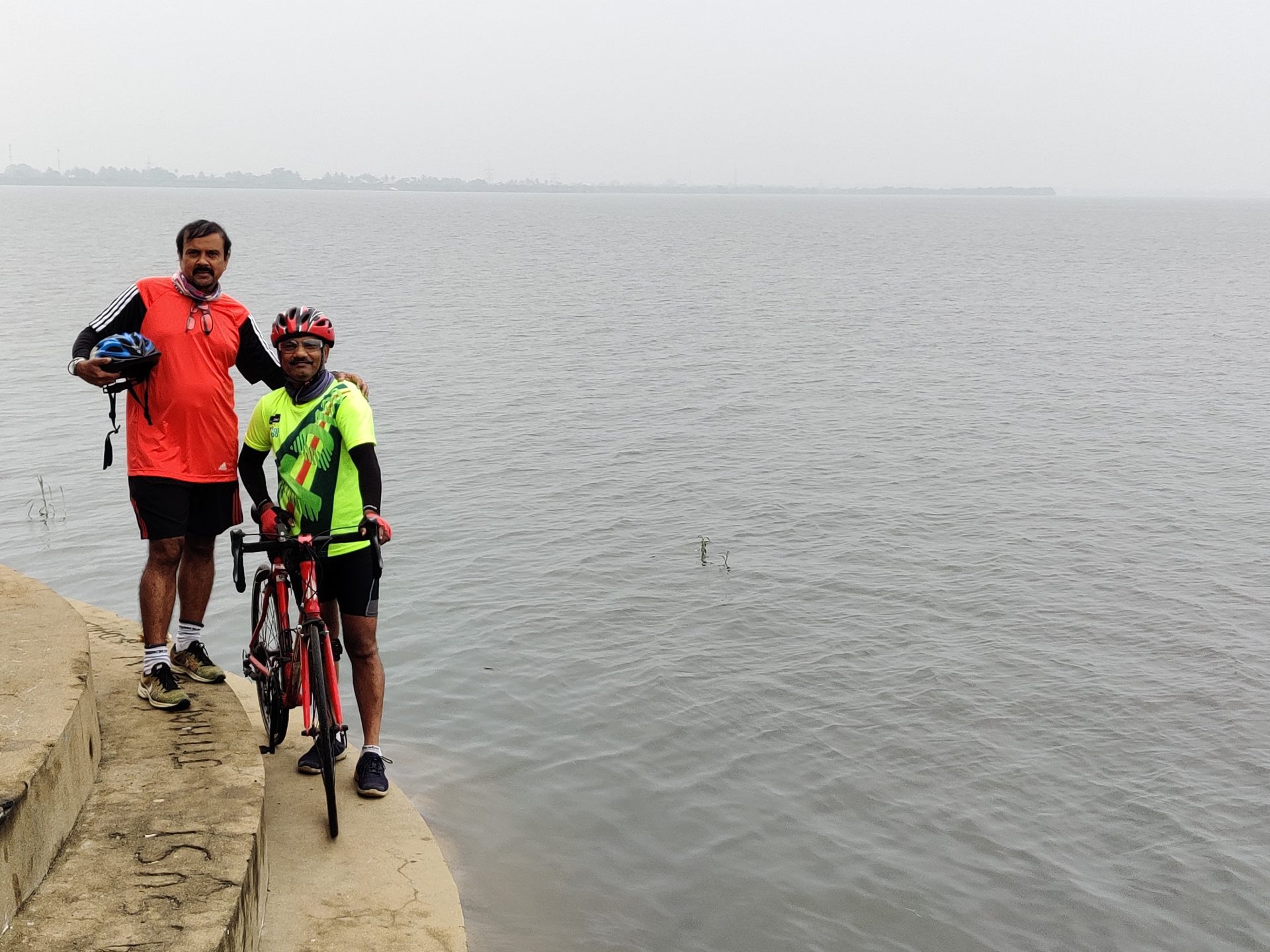
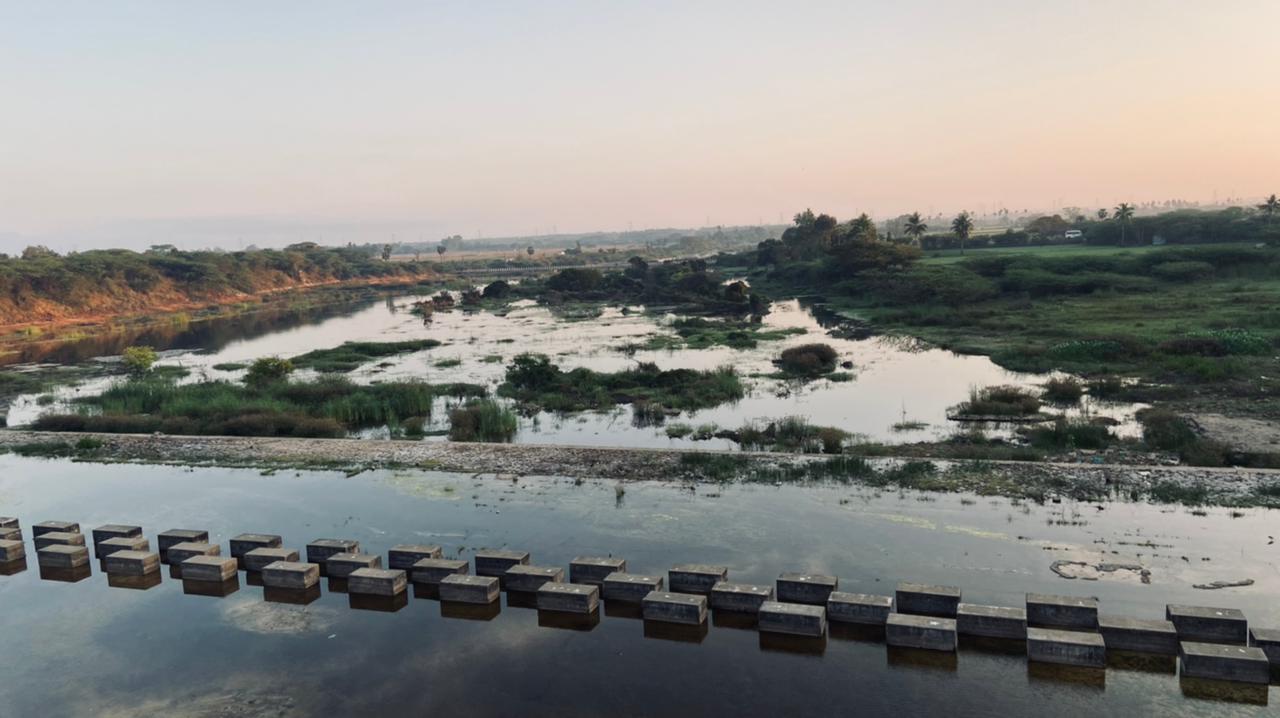
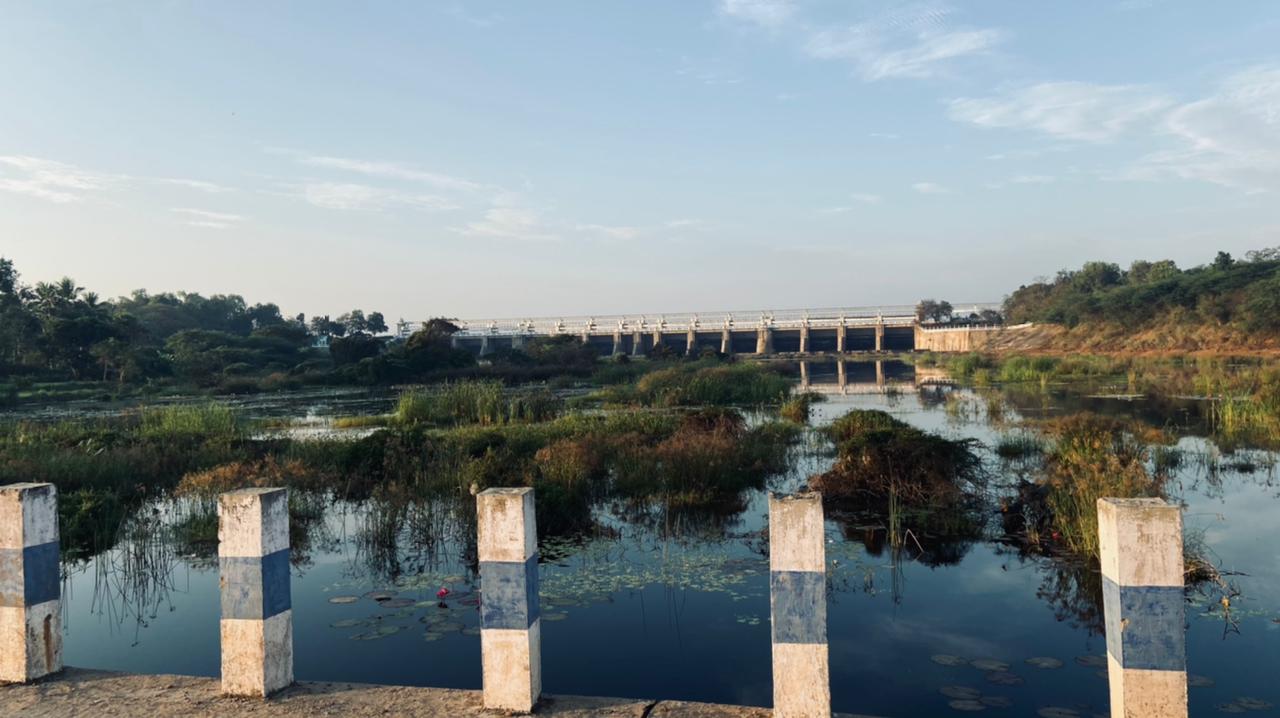
Located around 30 kms towards the Western side of the city lies the Chembarabakkam Reservoir. A second source of water supply to the city of Chennai , the other being the Puzhal Lake, this is largely a rain-fed reservoir. This was the first of the artificial lake built in the city by King Rajendra Chola, son of Raja Raja Chola and the Prince of Kodumbalur, Thiripuvana Mandeviyar.

Poondi reservoir

Located 60 kms from the centre of Chennai towards a little beyond the town of Thiruvallur, the Poondi reservoir also known as the Sathyamoorthy Sagar was constructed in the year 1944 over the Kosthalaiyar river. Surplus water from the river gets intercepted by the Tamaraipakkam Anicut and water from here gets diverted to the Sholavaram and Puzhal lake.

The Pulicat Lake

While  the Chilka lake in Odisha remains India’s largest brackish water lake, the second largest  can be found here in Pulicat.  

A 55+ km ride from the city’s centre towards the Northern part of Chennai via Manali and Kattur road leads one to this place.

The origins of this place trace back to the 16th century when this place was a Dutch colony and even today there exists remains of a Dutch Fort and Cemetery.

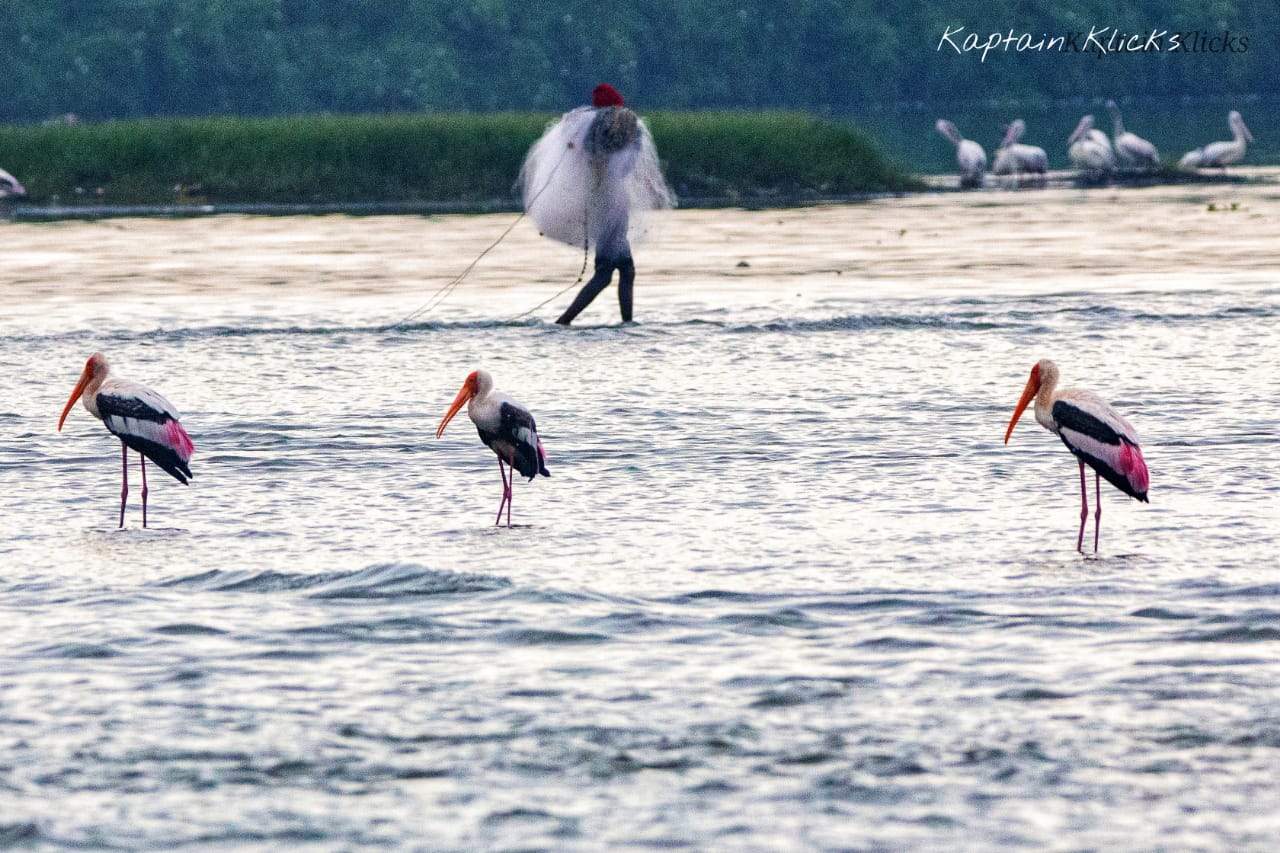
The lake has a facility for boating and is an important stopover for migratory birds and during the months of December to March, one gets to see flamingoes, spoonbills, ducks, painted storks, pelicans, kingfishers and herons.

It is believed that over 15,000 flamingos visit Pulicat lake every year.A lighthouse which remains open towards the evenings can also be seen at Pulicat.

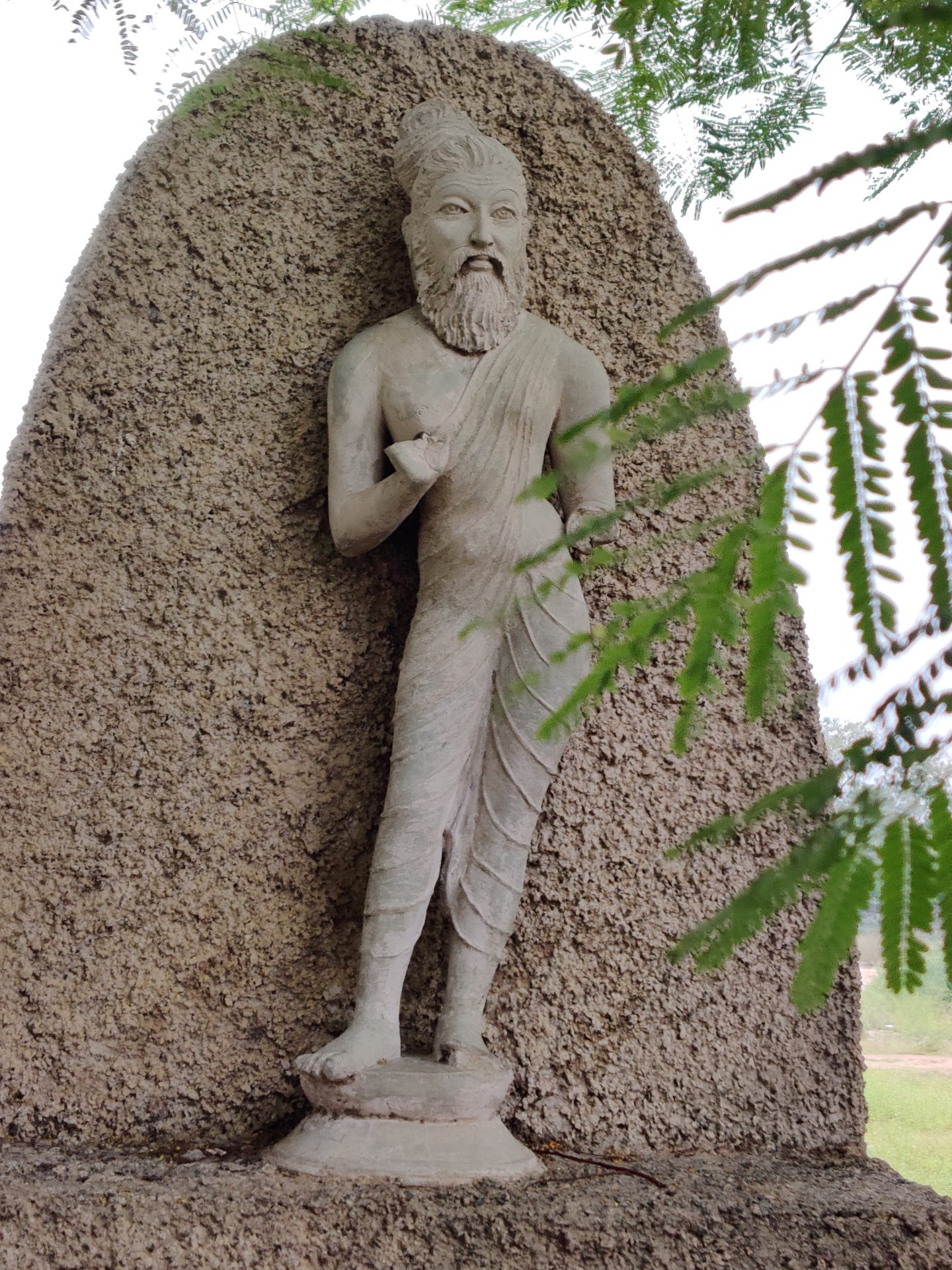
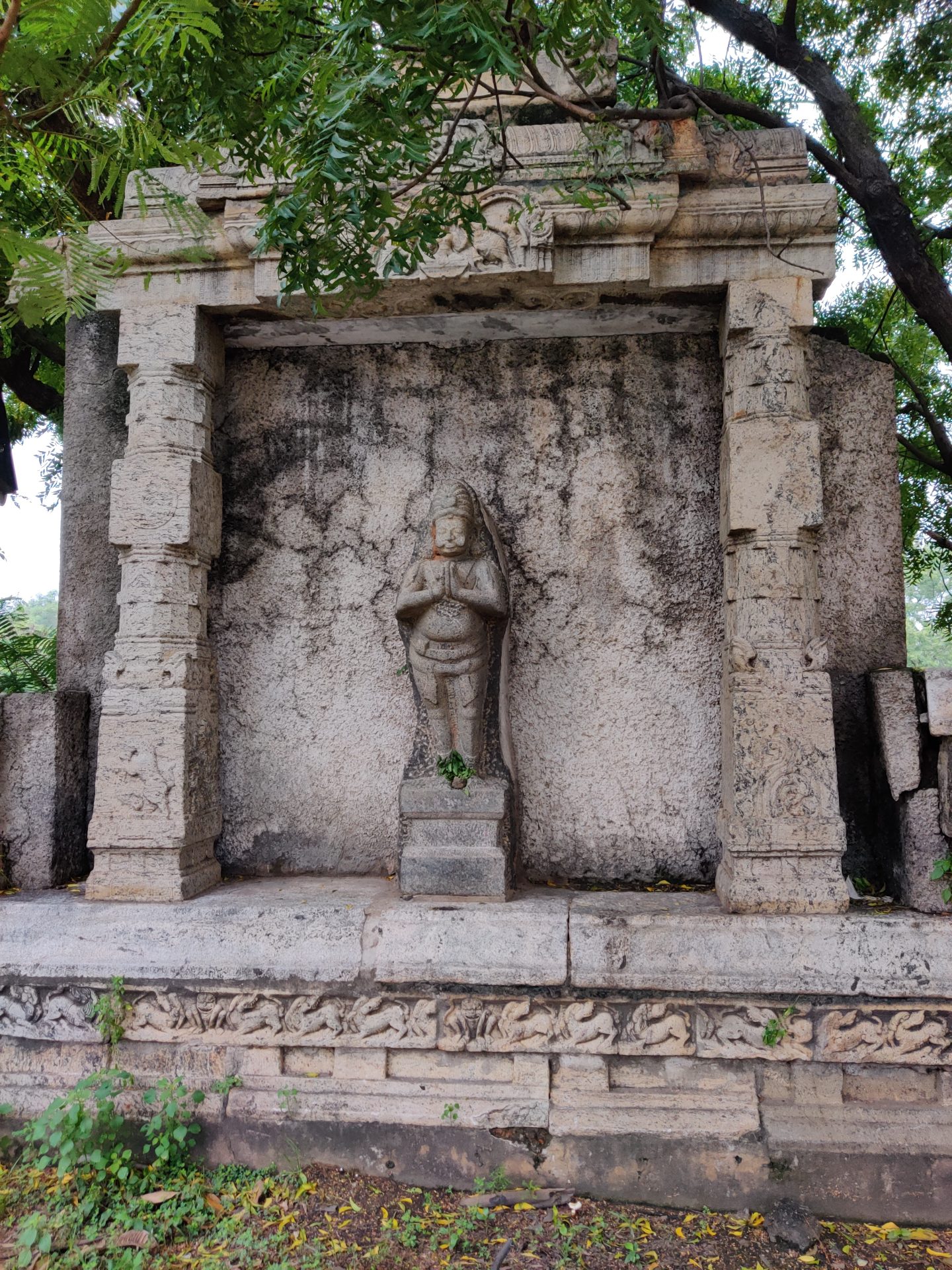
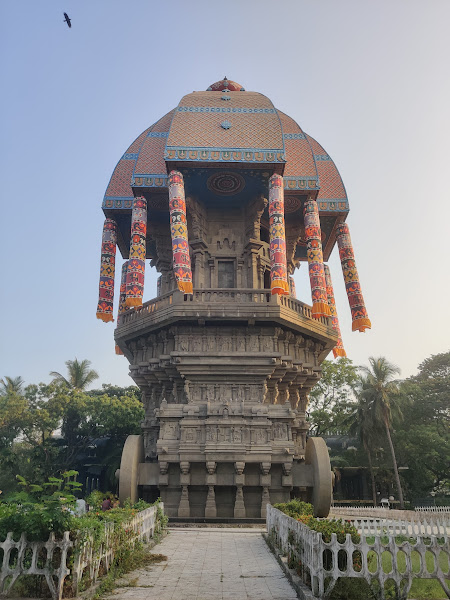
Valluvar Kottam

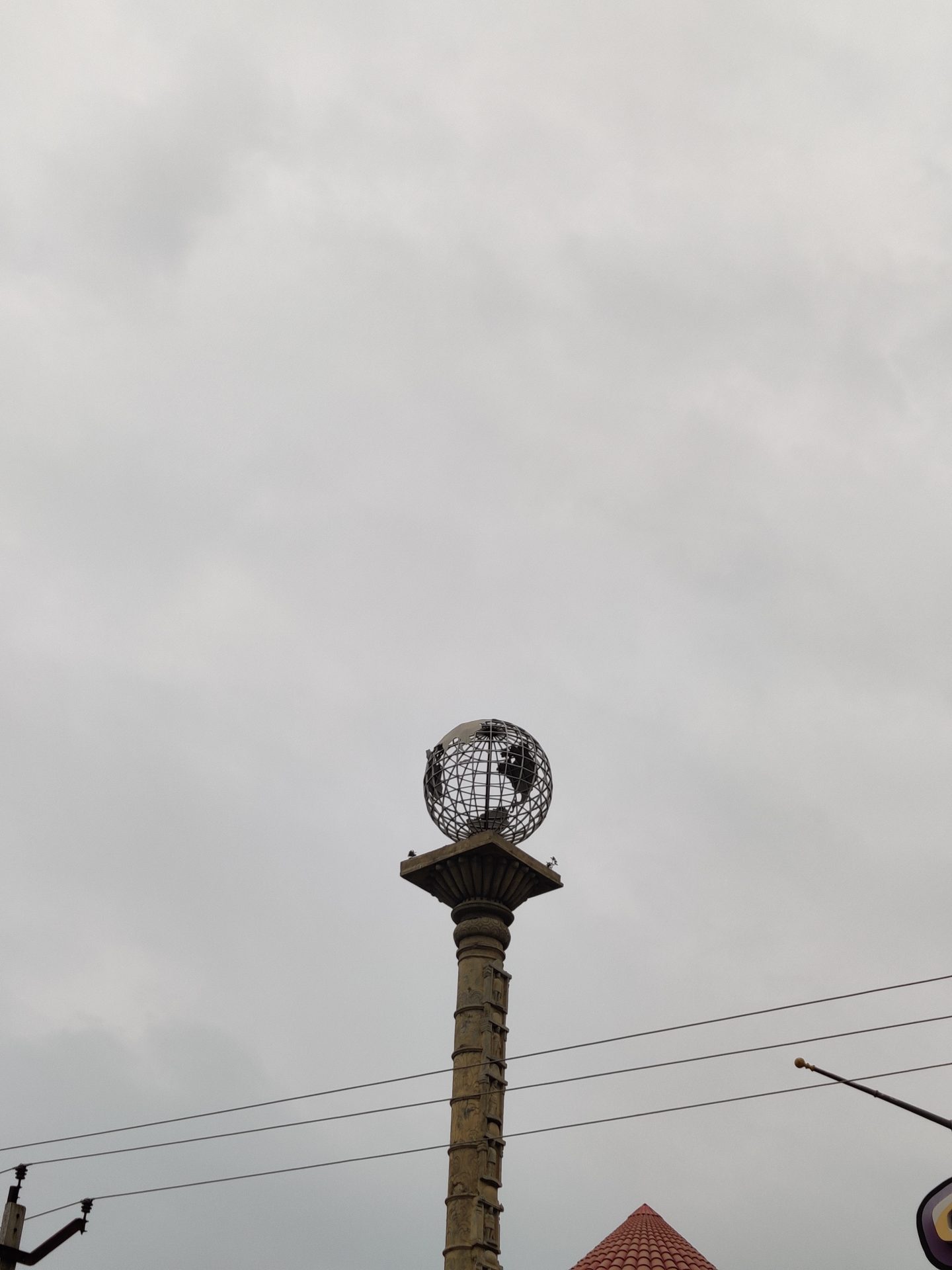
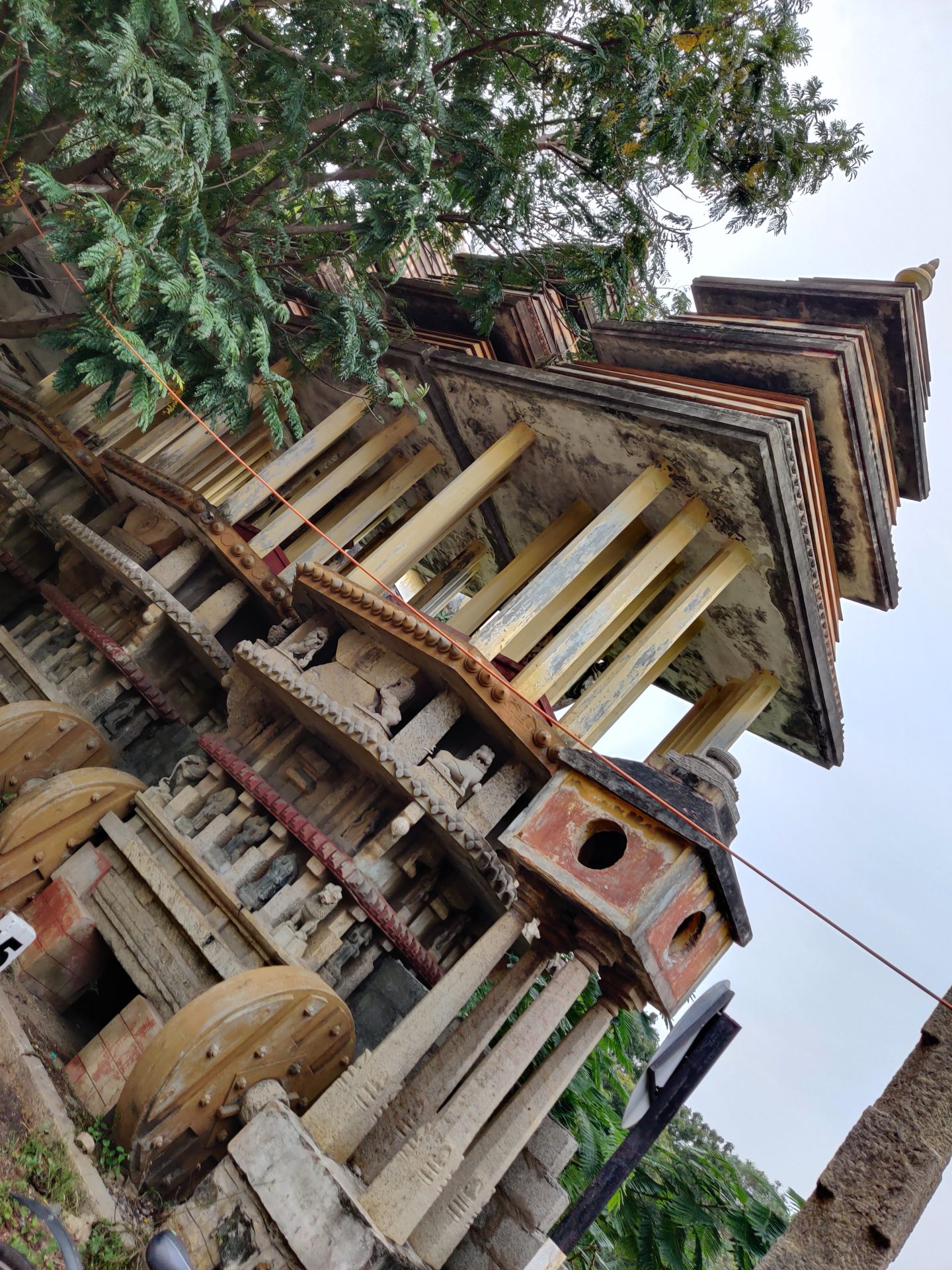
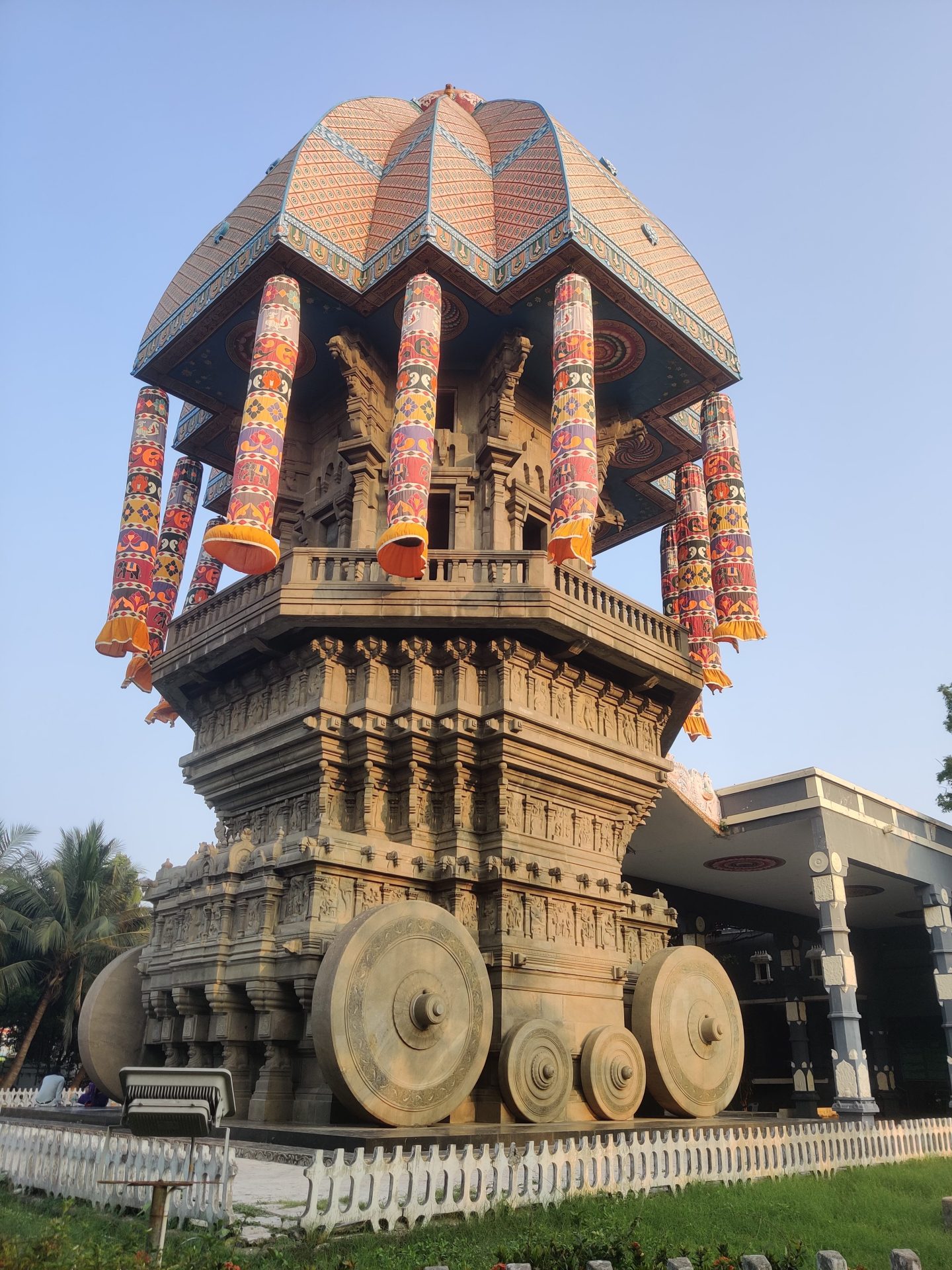
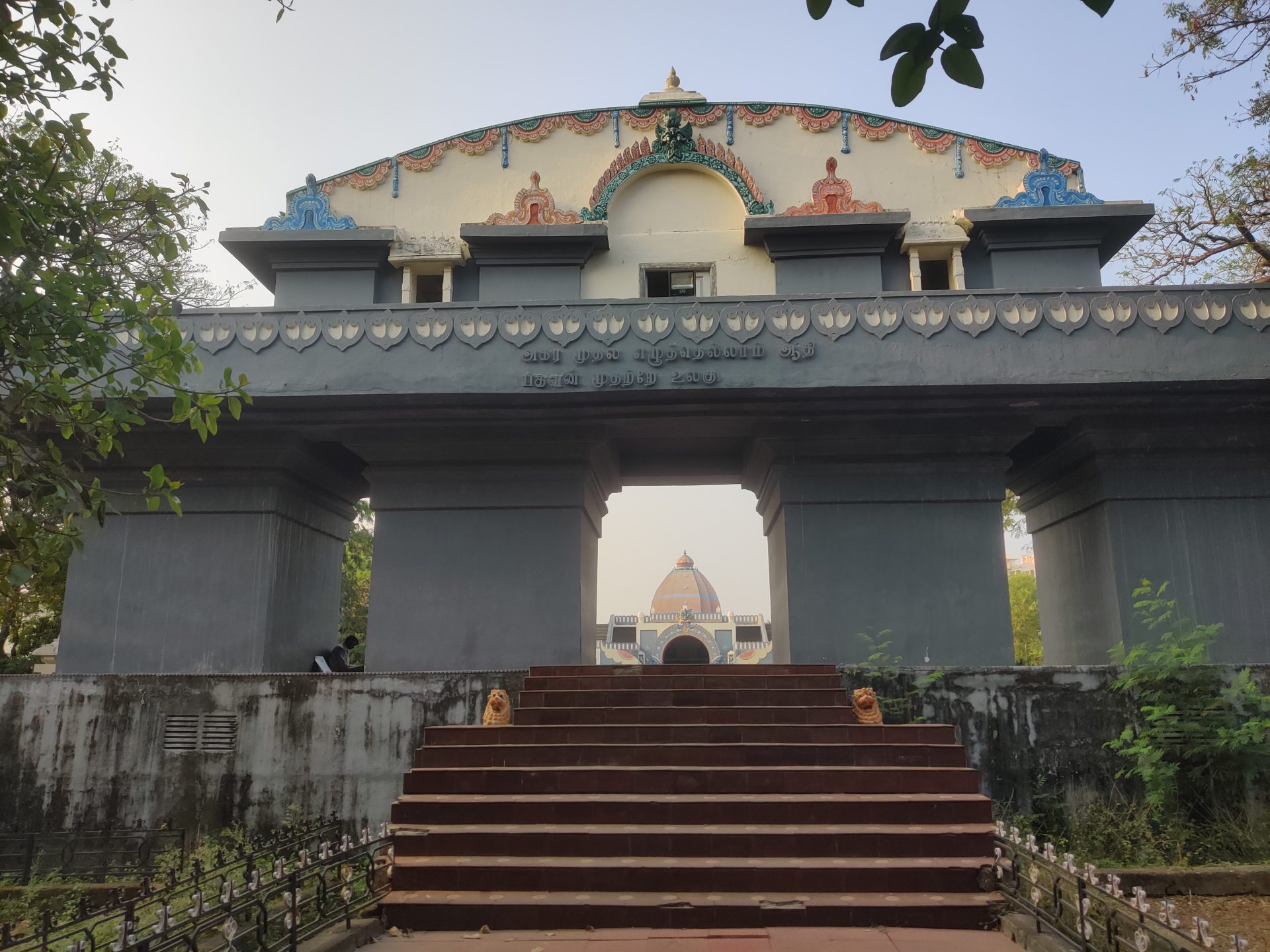
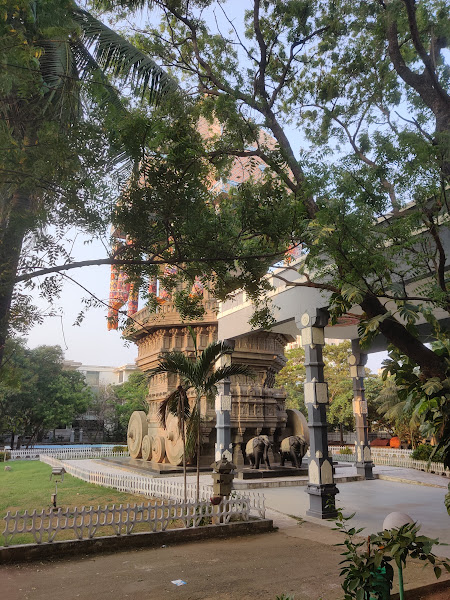
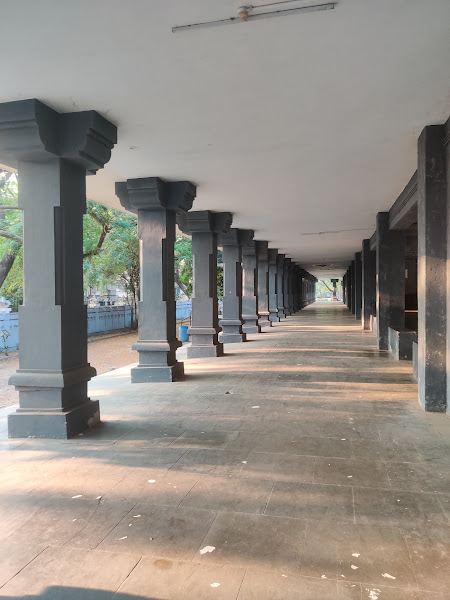
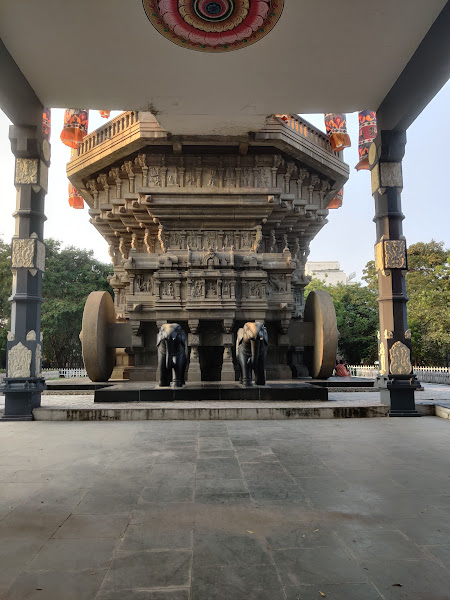
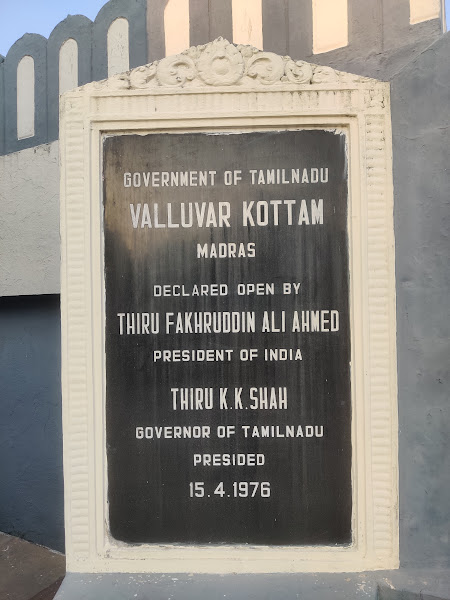
The centre of the City has this 128 feet high chariot and monument Valluvar Kottam dedicated to the poet and philosopher Saint Thiruvallur.  Situated right at the point where the Village Road of Nungambakkam and Kodambakkam High roads intersect, the monument has a decorative arch which greets you as soon as you enter the complex and opens out to a huge auditorium which can seat around 3,500 people. 

A Kural Manimandapam where the 1,330 couplets from all 133 chapters of the Kural literature can be found inscribed on bas relief. 

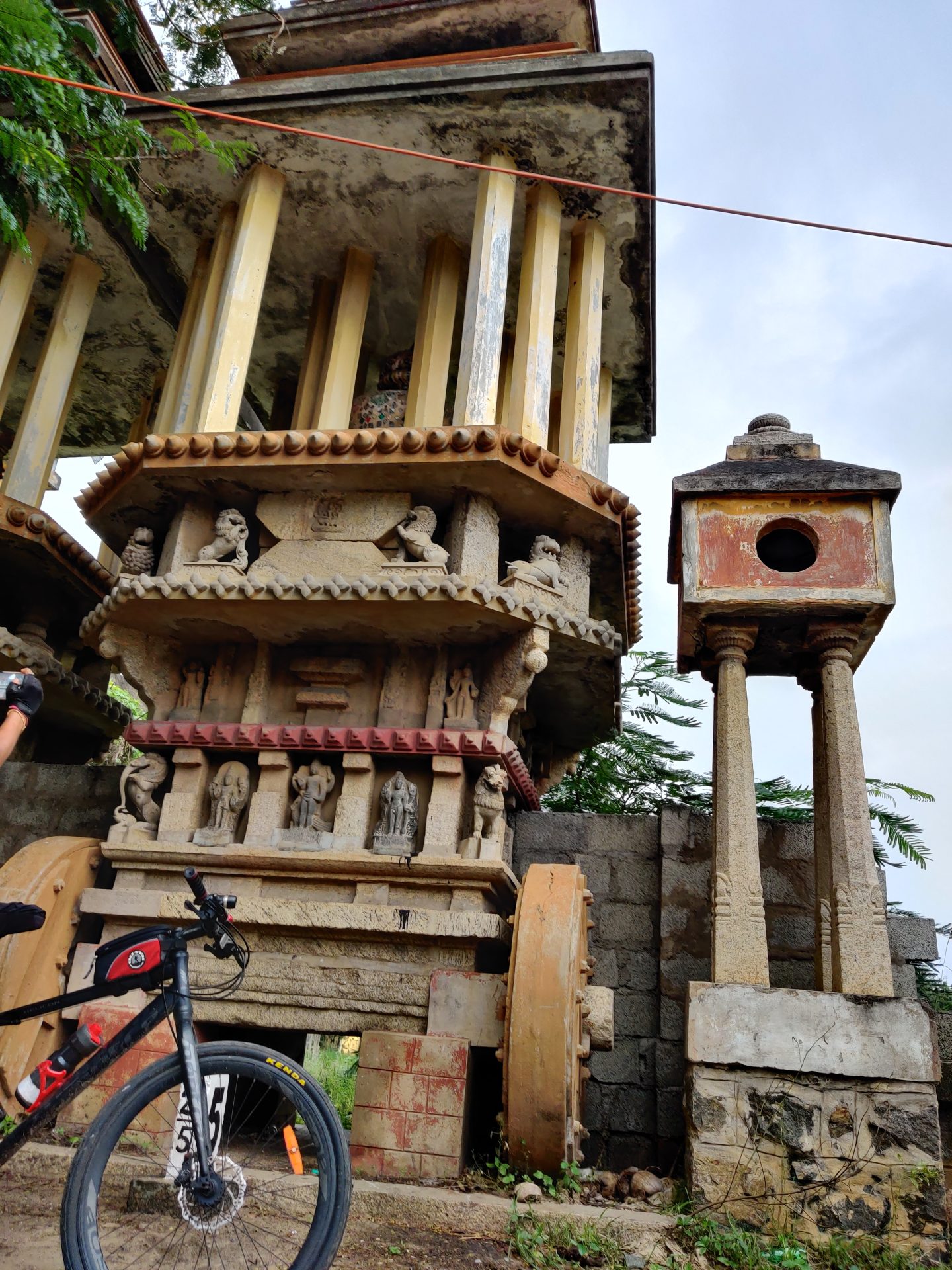
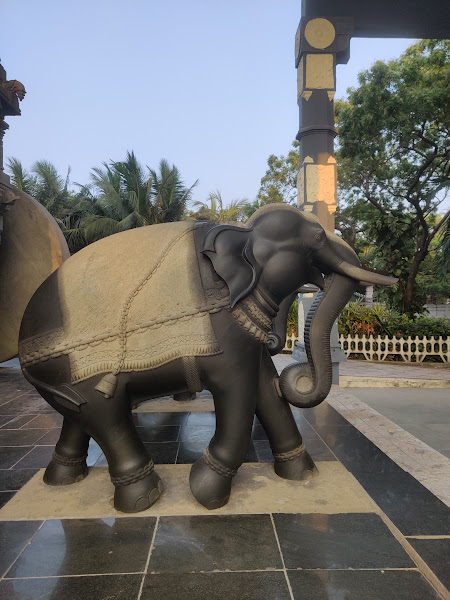
A little further down stands a huge chariot made out of 3000 blocks of granite stone an weighing around 2700 tonnes.  The 4 wheels of the chariot are huge, measuring 11 feet in diameter and 2 feet in thickness. 

The complex remains open on all days from 8 AM to 5.30 PM and one needs to buy an entrance ticket for Rs.5/- to enter this place.

5 3 votes
Article Rating

Leave a ReplyCancel reply

5 Comments
Inline Feedbacks
View all comments
Atul Mathur
3 years ago

Awesome write up and excellent pictures! Very tempted to visit.

Shibam Roy
3 years ago

Excellent write up with photos Mohan. Brought back the memories of the times when I walked around in many of these areas. Chennai / Madras has changed a lot since I visited last in 1992.
A route map with main attractions would be very helpful for the people interested in travelling in and around Chennai.

3 years ago

A really fantastic travel or sight seeing blog. The quality of pictures and photographs are just awesome. Some very good composition of some photos raising them to artistic level of work!

Brief, to the point description of places and historical perspectives. Makes engaging reading. Never knew Chennai had so many wonderful places to see and visit!

It tempts the reader to actually plan a trip to Chennai if outside Chennai or go out over the weekends if already in Chennai! In that regard the blog fulfills it purpose superbly.

This could perhaps be one of the few really comprehensive travel guides for Chennai. Kudos to the author for painstaking research, exquisite pictures and a lot of hardwork and wonderful writing!

Awesome!

Chinmoy
4 months ago

This content has been beautifully sewn together with pictures and your favourite haunts and your journey of all these years. Amazing work.👏👏👏💖💖💖

4 months ago

What a wonderfully articulated travel blog, Mohan! Being from Chennai, I could completely resonate with everything you described — it’s vivid, engaging, and truly impressive. You’ve articulated your experiences beautifully, and I’m super impressed with the efforts and details that’s gone into it. In future, if possible, it would be great if you could also share a generic itinerary based on your trip — maybe include your mode of commute, key stops, and a few travel tips. That would make it even more helpful for readers like me who’d love to try a similar journey. Kudos again on such a well-crafted portal! 👏

You cannot copy content of this page
wpDiscuz
5
0
Would love your thoughts, please comment.x
()
x
Exit mobile version
%%footer%%