Himachal Pradesh continues to remain a favourite destination for travellers across for the wide repertoire of choices it offers to tourists – Spirituality, Adventure, Culture and Nature and all throughout the year. Its beauty lies in its diversity and is definitely a go to tourist place for all seasons and for all the reasons.
One gets spoilt for choices with a wide range of options by way of which one can plan a perfect holiday with a mix of skiing, visiting lakes and walking across lush green valleys, indulging in paragliding and river rafting, trekking across snow capped mountains, toy train rides, visit to temples of spiritual significance or ancient monasteries and so much more. For those of us who reside in the Southern parts of India and especially in Chennai, terms like nippy and foggy weather, icy winds, snowfall, blizzards, vast stretches of snow, glaciers etc etc are not only unheard of but a never experienced phenomenon.
Table of Contents
How does one plan a visit to Himachal
We had done an earlier trip to Kullu/Manali and Shimla in the year 2008 when the kids were smaller and good memories of that place rekindled plans of a revisit including adding a few towns not done earlier. Depending on the time available on hand, one could choose to add Dalhousie, Dharamshala and Kasol in that order or do Himachal in 2 to 3 tranches. Connectivity to Himachal through flights given that there are a couple of Airports at Kangra and Bhuntar, is a tad expensive as there are limited flights to these regions and not many operators. The drives from Delhi again are long and tiring as one has to wind one’s way through tedious journeys around the mountains manoeuvring numerous hair pin bends, overlooking deep gorges. Depending on whether one wants to start from Shimla or Manali/Dalhousie, these drives from Delhi could take anywhere between 8 to 12 hours. We chose to fly in to Delhi, lug it by train to Pathankot and then went along to all places by a cab.
Some triva on Himachal
The best time to be around in Himachal
The months between February to June (Spring and Summer) are perhaps the best months to visit Himachal. Having said that, there is a huge influx of tourists during the winter season to experience the beautiful transformation when it snows pretty heavily between late October to February.
It also is the best time for skiing and ice skating and places like Rohtang Pass, Kufri and Shimla are quite popular tourist destinations. The monsoons usually happen between July to September and given the risk of landslides and cloudbursts, Himachal is avoidable.
The only compelling reason for the folks at home to agree was a plan suggested around the beautiful (as what we perceived then) Rohtang Pass and only because my son had refused to come out of the cab at this very place during our last trip to Shimla and Manali in 2008. He was finding the rarefied air difficult to breathe and missed all the fun we had.
And also enamoured by the lovely photos of Dalhousie and Dharamshala on the internet, we decided to plan a trip around these places and included Manali, Kasol and Chandigarh too in our plans.
So mid June it was when we drew out our itineraries, packed our bags and headed for the supposedly cooler climes of Manali and around.These places are far less crowded and have a unique charm of theirs and depending on the season visited, one would definitely get his or her money’s worth.
June 10th 2022
We chose a simpler option of deciding to keep Dalhousie as our start point and decided to reach it from Sarai Rohilla Railway Station in Delhi.
We landed at Delhi Airport in the morning hours and headed straight to Sarai Rohilla station to dump our luggage so that we could move around a little bit more easily and also do that little bit of intended shopping @ Sarojini Market.
It was tough spotting the Cloak Room at Delhi Sarai Rohilla and with multiple people pointing in different directions including one smart alec who showed us the way to a hotel, we finally found our way through.
Having finished the formalities of checking the stuff in, hailed a cab at around 12.30 noon and headed for theSarojini Nagar Market,a half an hour’s drive away.
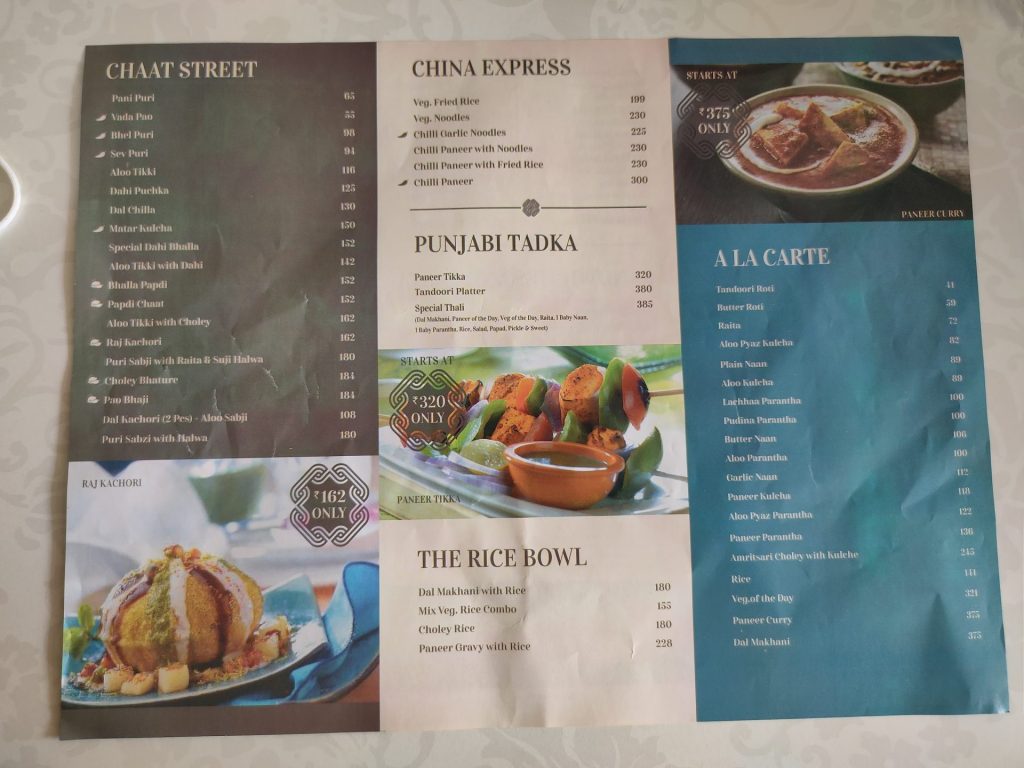
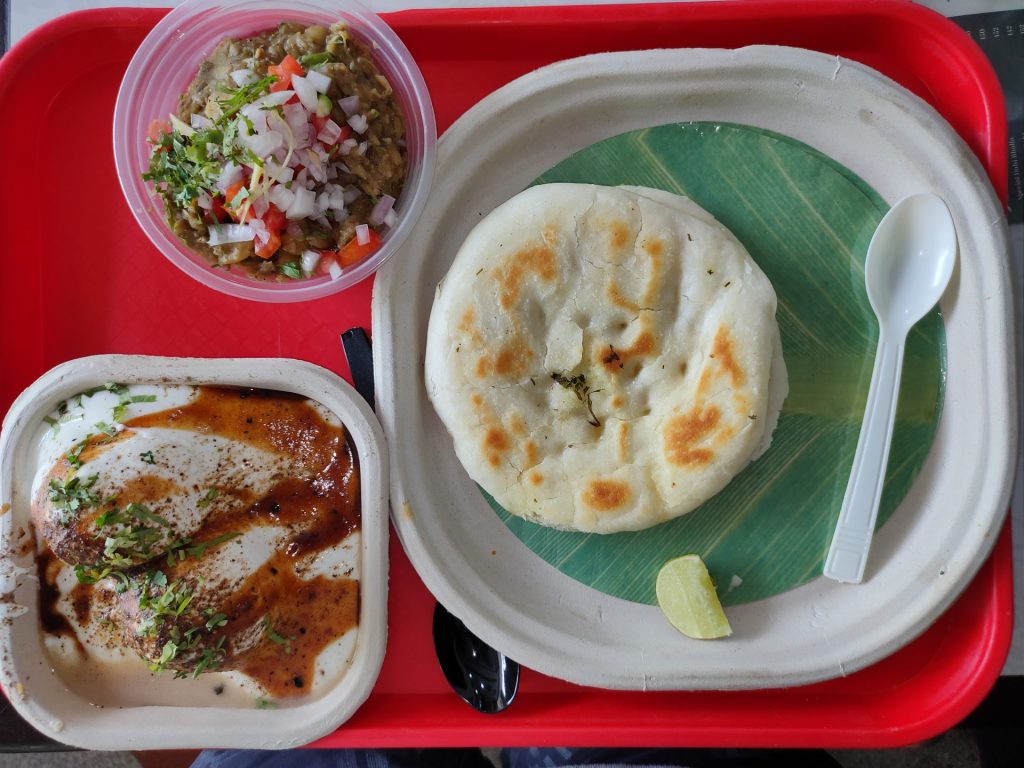
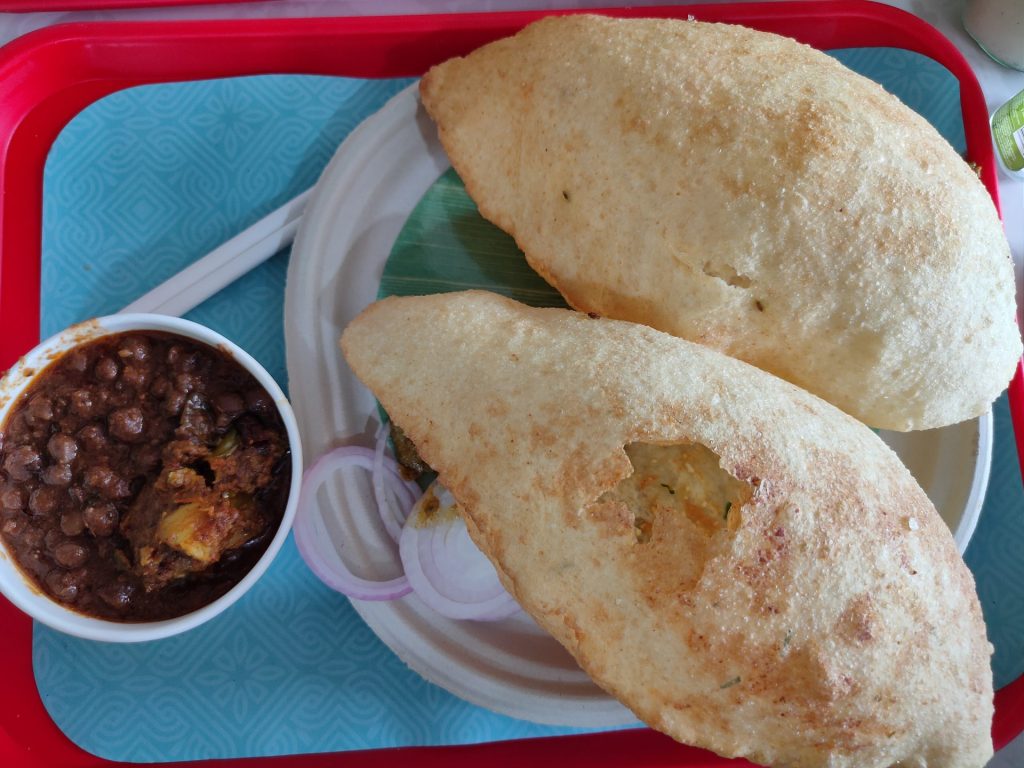
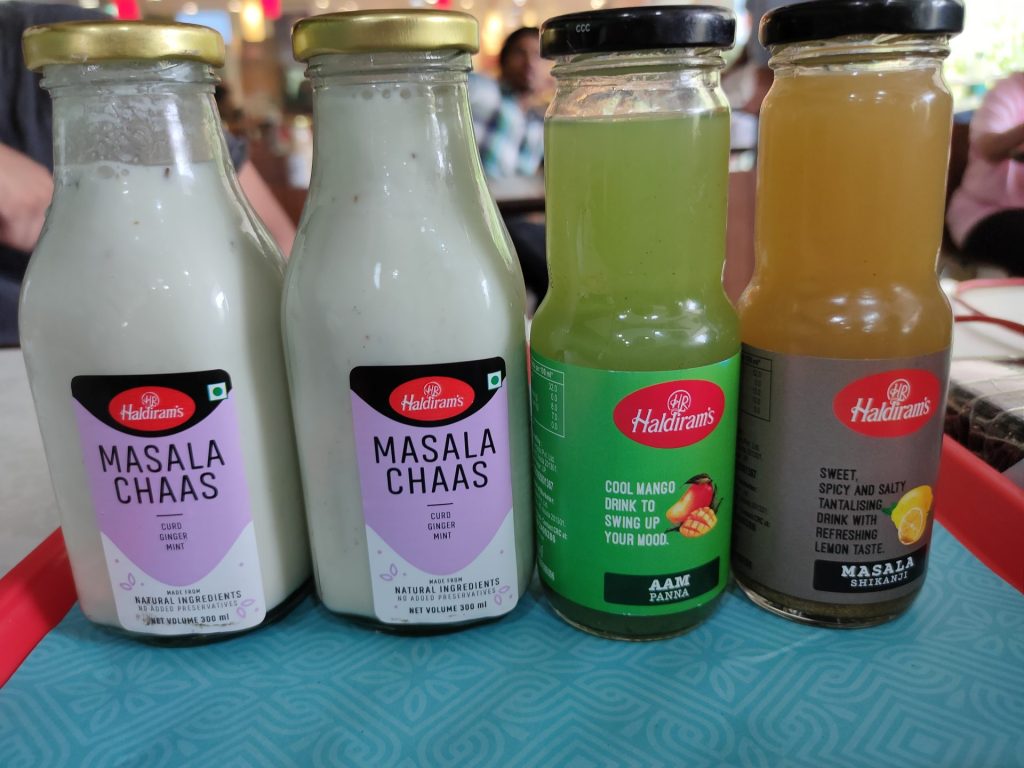
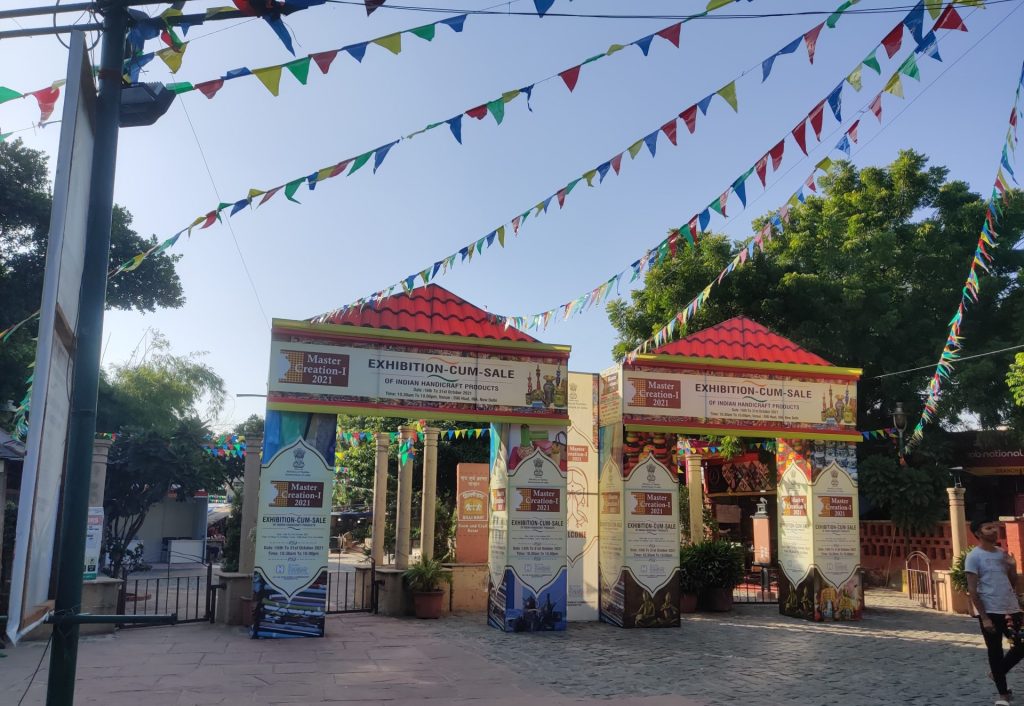
The plan was to finish our lunch early at Haldirams adjacent to the Sarojini Market before the weekend shopping crowd sets in. Delicious Aloo Kulchas and Chole Bhatures disappeared in no time. Lunch done at Haldirams which was adjacent to the Sarojini Nagar Market, the ladies got busy with their shopping and since we still had lot of time to kill and post Round 1, we went across to INA where theDilli Haatis located.
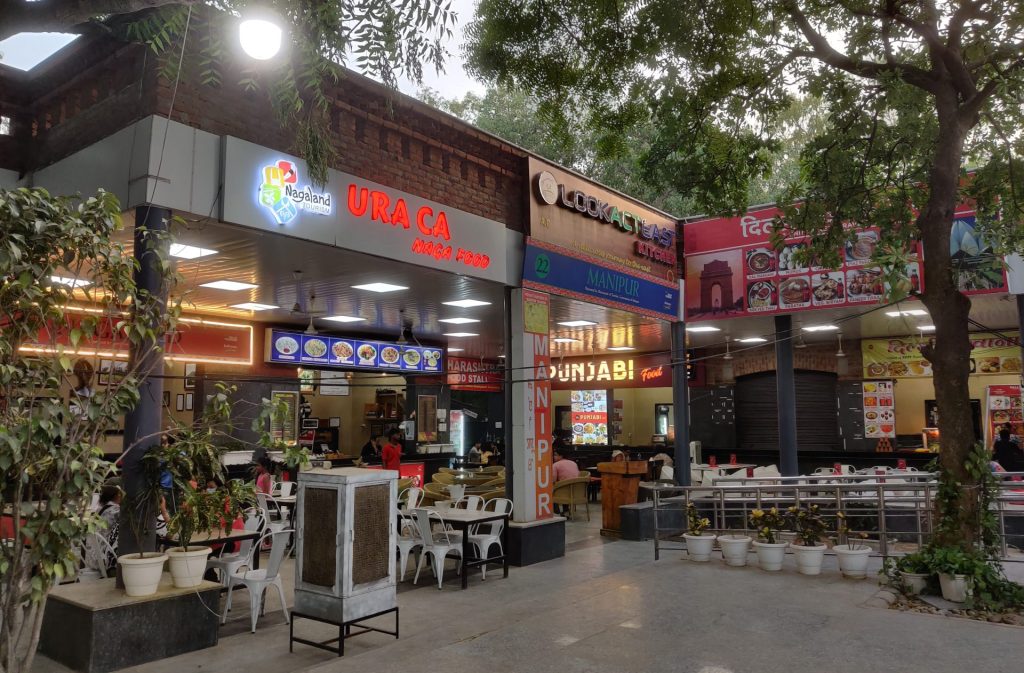
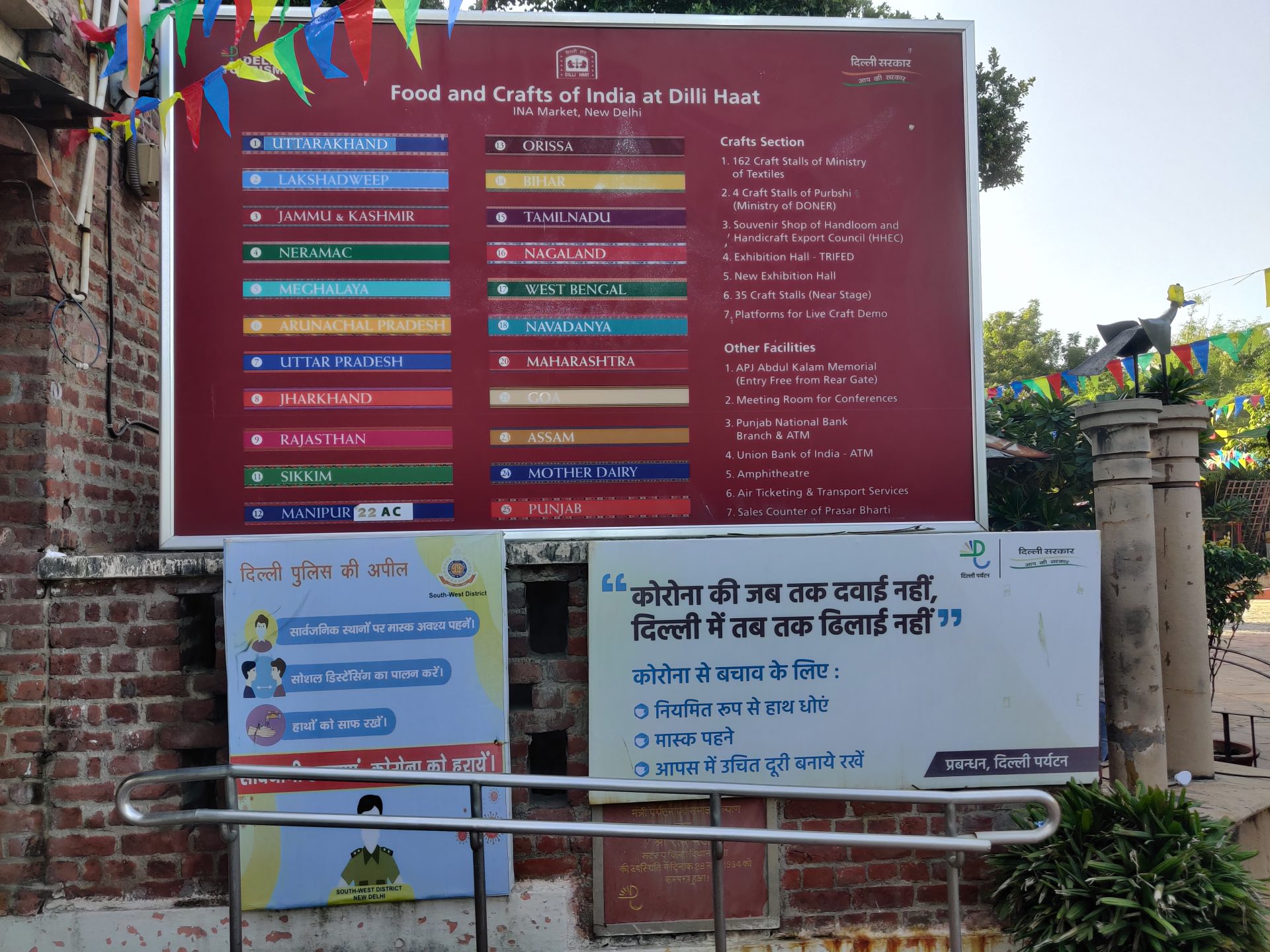
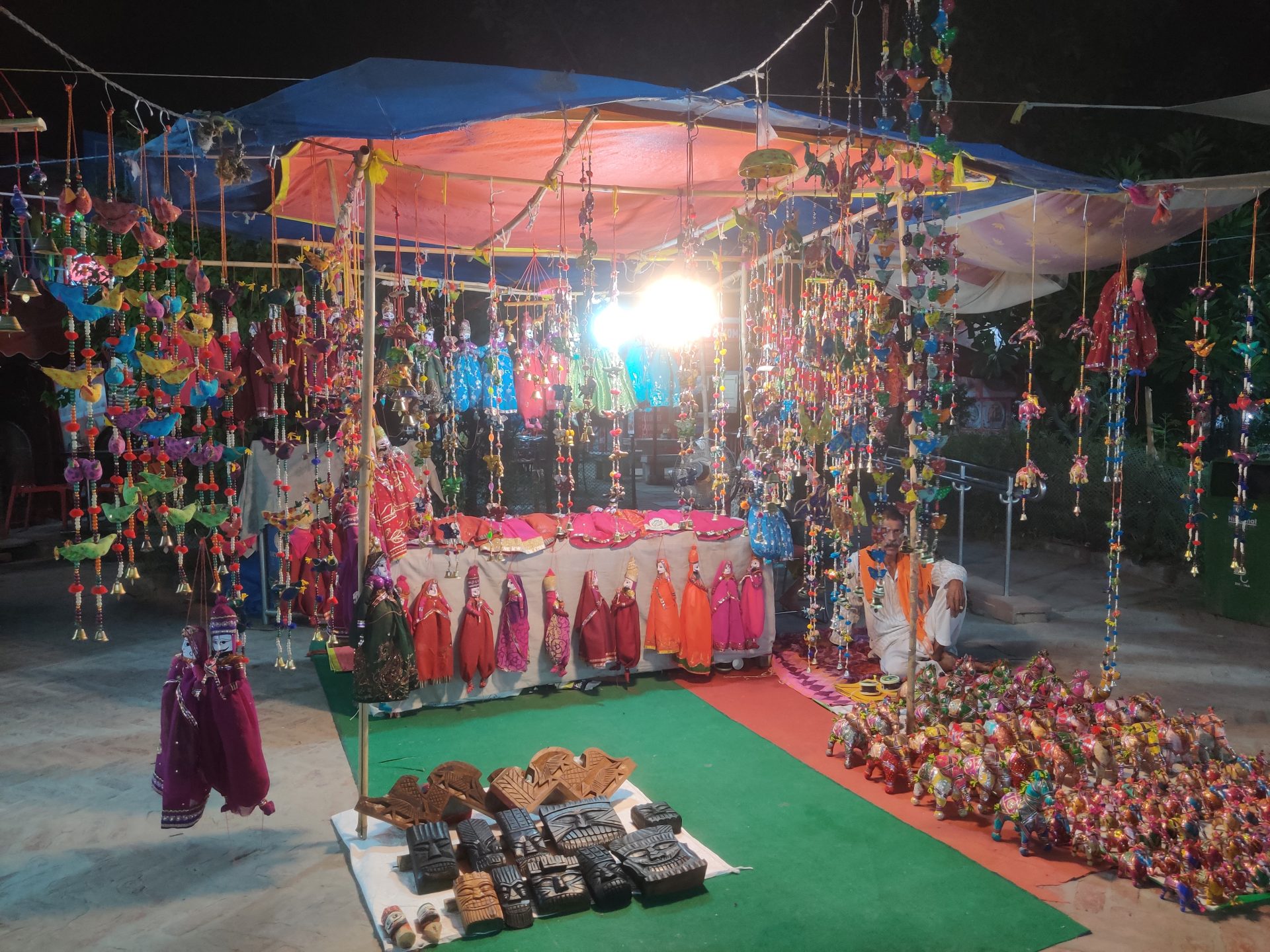
An entrance fee of ₹ 20/- per head paid, we got into an open air market and craft bazaar with lot of options for regional cuisines of food. Artisans from various states of the country set up stalls for a certain period of time and they keep alternating. A great place to hang around especially if you want to kill time and a lovely experience to see lovely craftsmanship and handicrafts from all over India displayed in a very organized way.
Lots of interesting things to keep you absorbed like the way I enjoyed seeing and overhearing the lady Tarot Card reader engaging seriously with the minds of a few young couples who wanted to know what lay ahead of them in the future or the Madhubani painter deftly applying his finishing touches to his set of paintings or even the Iktaara (Single stringed instrument) seller playing some very popular Hindi nos. and so very perfectly.
It was around 9.30 PM by the time we came out of Dilli Haat and while we still had enough time on our hands, we decided to head for the Sarai Rohilla station, located towards the North West part of New Delhi and wait there itself. We were to board Dauladhar Express at night 23.15 which would bring us to Pathankot by around 8 in the morning, the next day.
An eventful journey in the company of a gang of college going kids who kept us awake till almost 1 in the morning inspite of our murmurs and protests brought us to Day 2 where we were to commence our actual holidays in the hills.
June 11th 2022
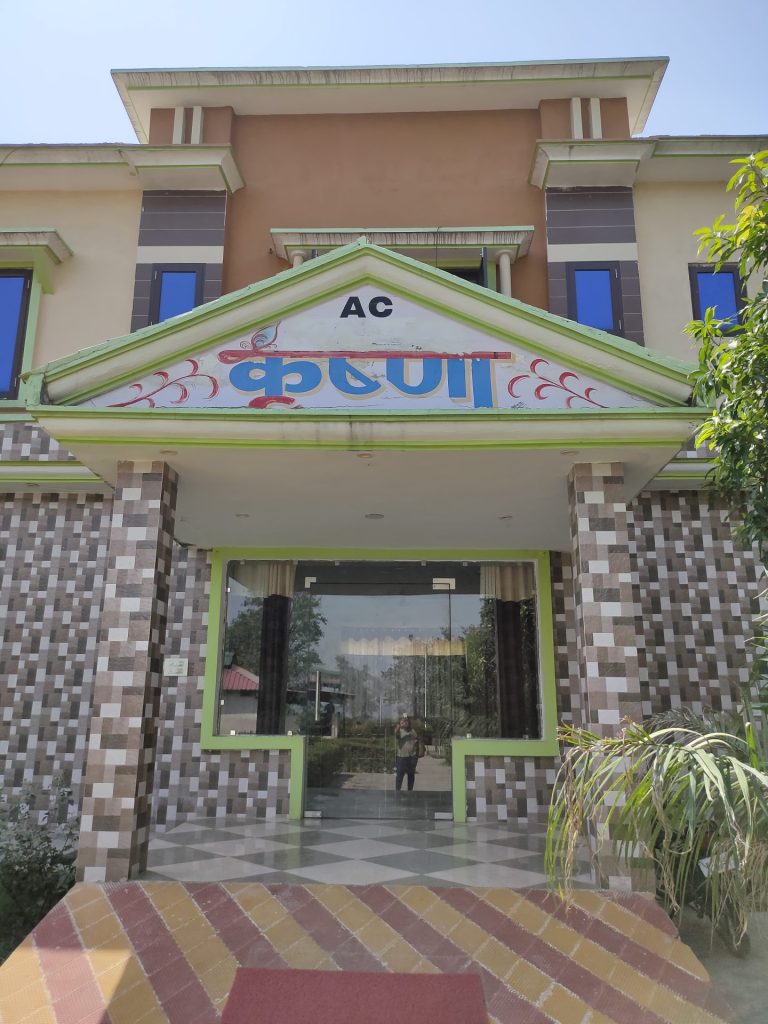
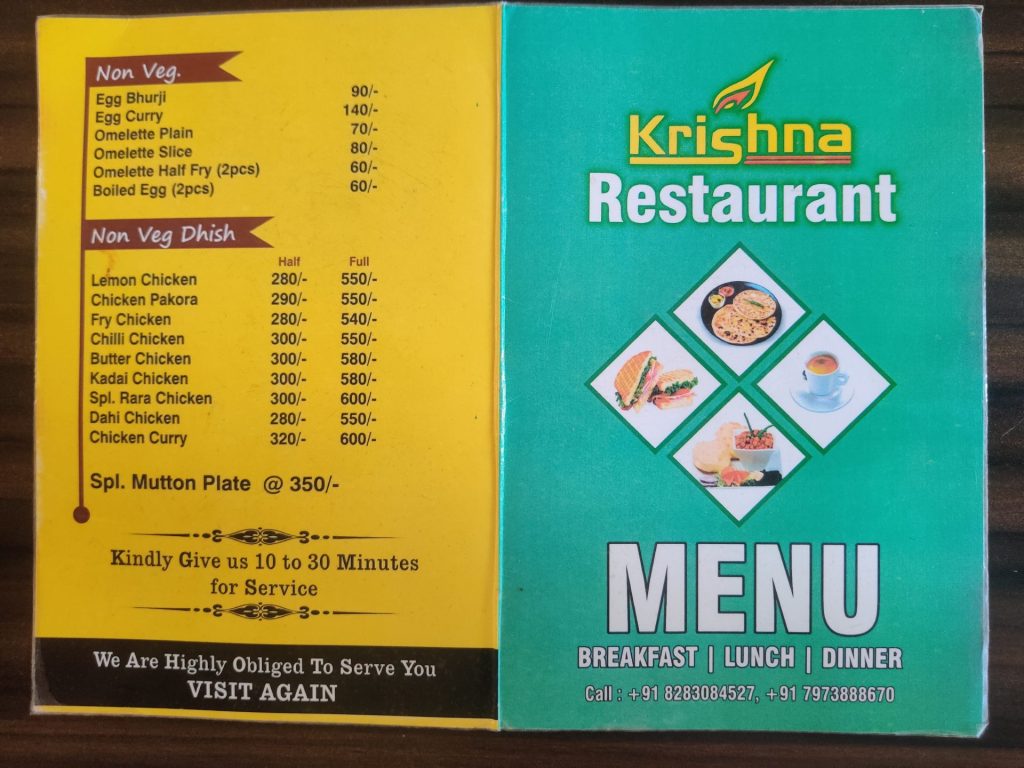
We had our cab guy pick us up at the appointed time from Pathankot station and commenced our drive towards Dalhousie located around 80 kms away by around 9 in the morning. A good 45 kms into the drive, we stopped by at a roadside dhaba Krishna just before the village of Dunera, where we tucked into some steaming hot varieties of parathas with oodles of butter, curd and pickle as accompaniments.
They had an interesting tag line on their menu card which said “The Belly rules the Mind”.Am sure they could not have gone wrong in using this, given the taste of the Aloo (Potato) Parathas and Pooris and the numbers we gorged on.
Breakfast done, we commenced our journey and a little further on, we stopped by at a small town of Dunera to pick up some Aam Papad (dried mango leather as what I learnt Google translates it to in English or maybe easier describable as sun dried mango pulp mixed in a concentrated sugar solution). We were surprised at the variety of shapes and sizes on offer – the sweet and yellow colored ones, the dark brownish ones mixed with masala and the green ones which were sour in taste and rolls and rolls of them.
A favorite for all in the family, we picked up enough and of all varieties to last us beyond our stay in Himachal. We drove on through a few villages here and there but otherwise vast stretches of empty roads until we hit Dalhousie a little past noon.
Dalhousie
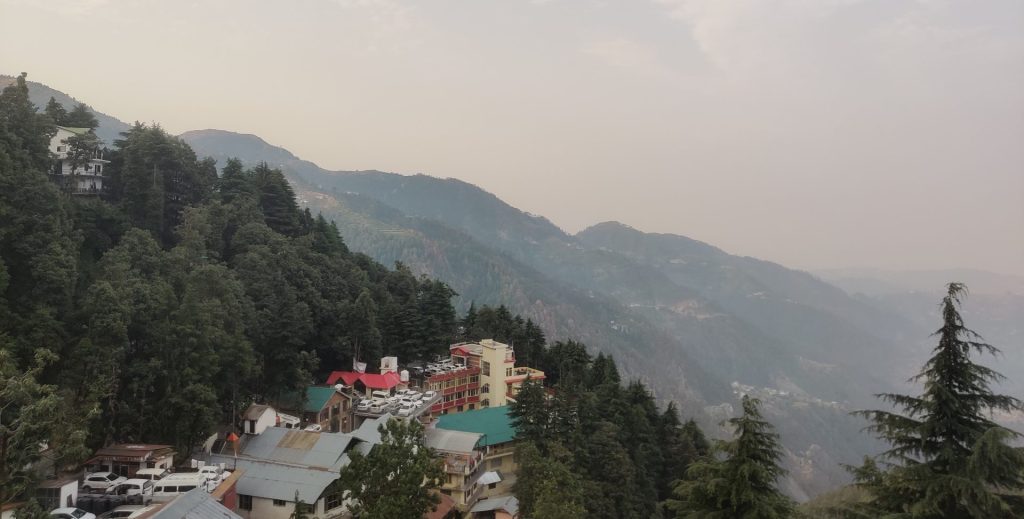
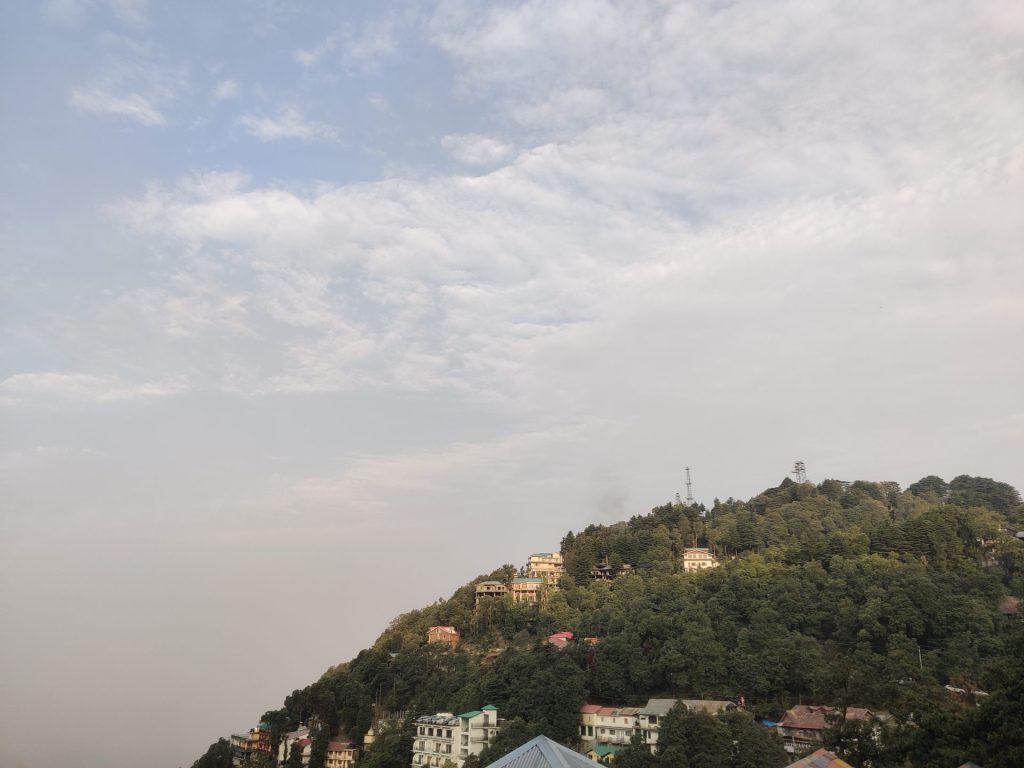
A quaint and charming hill station nestled across 5 hills spanning the range of the Dauladhar mountains, this place situated around 6,500 feet above sea level and in the North Western parts of HP owes it name to a former Viceroy of India, Lord Dalhousie.
Colonial era buildings, ancient churches, trekking paths through dense forests lined with pine, Conifer and Deodhar trees, a Mall road and a few good cafes sum up one’s experience with this 170 year old hill station.
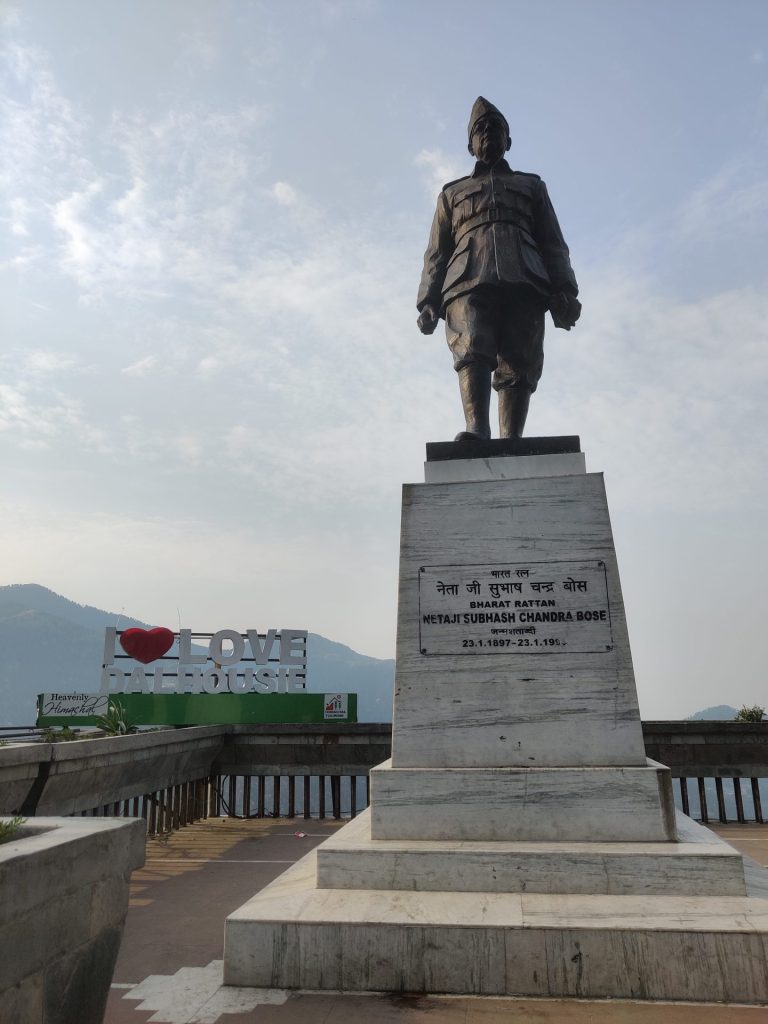
Its also believed that Netaji Subash Chandra Bose spent a few years of his life in hiding from the British in this hill station. A few landmark spots still remain, dedicated to his memory including a nice statue at Subash Chowk.
It is also said that parts of the famous set of poems Gitanjali written by Rabindranath Tagore got written in Dalhousie during the course of his stay here.
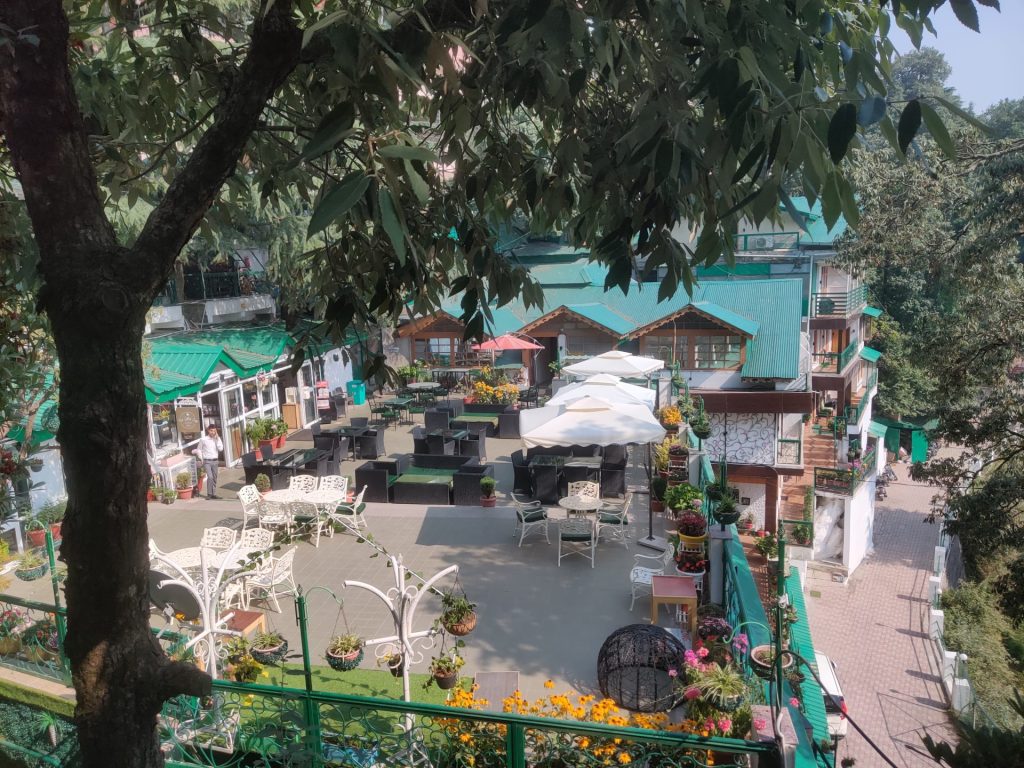
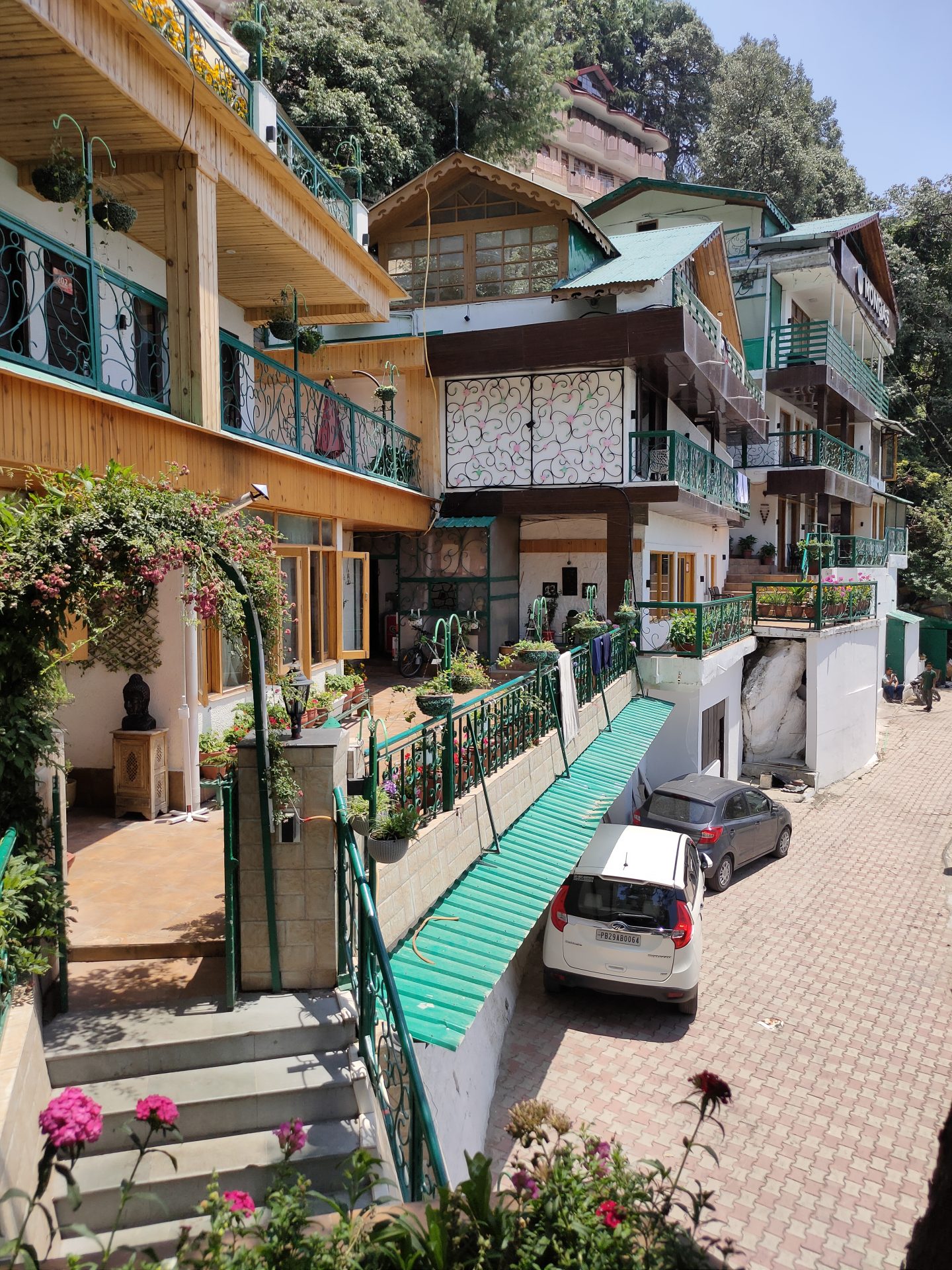
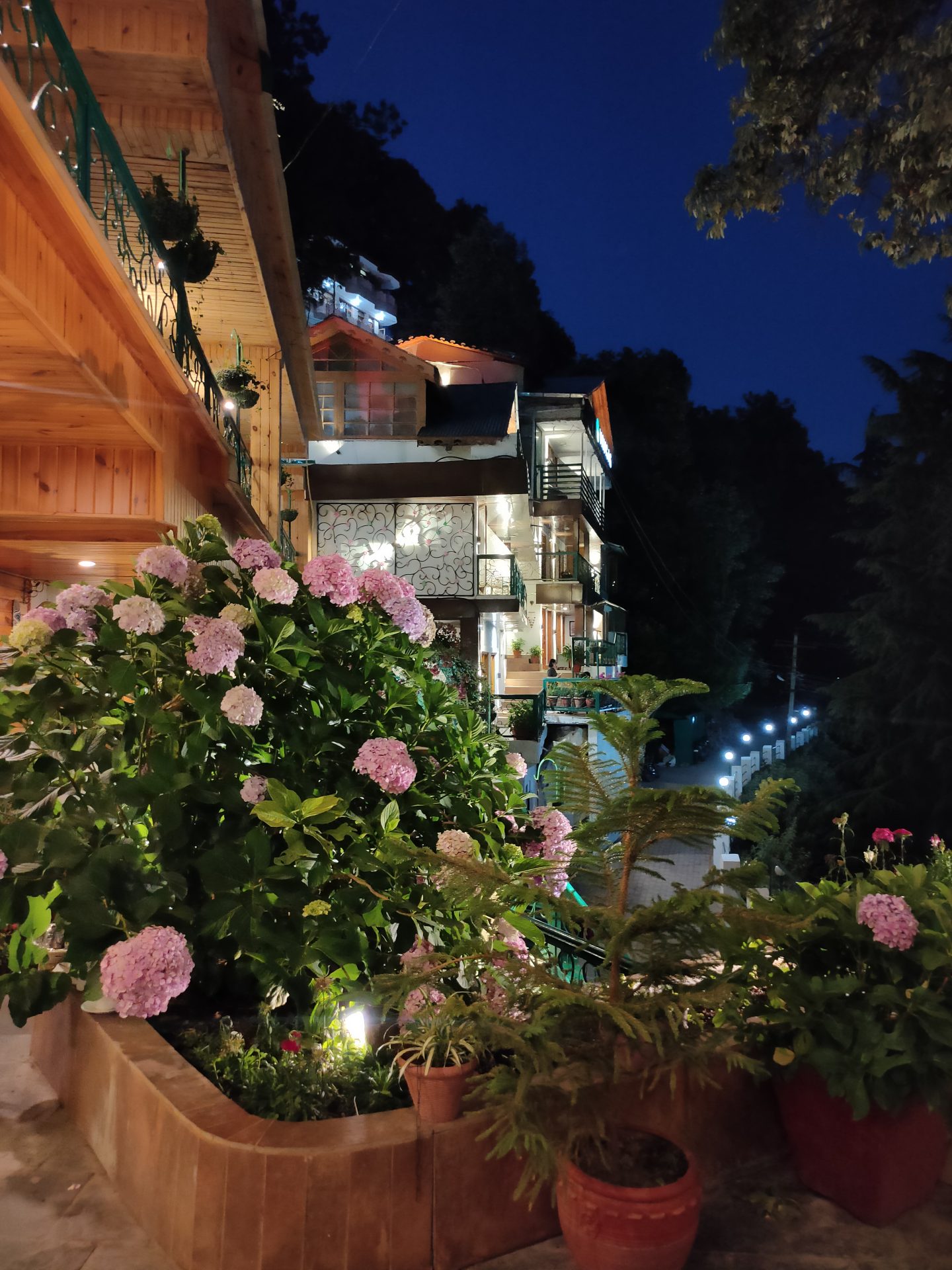
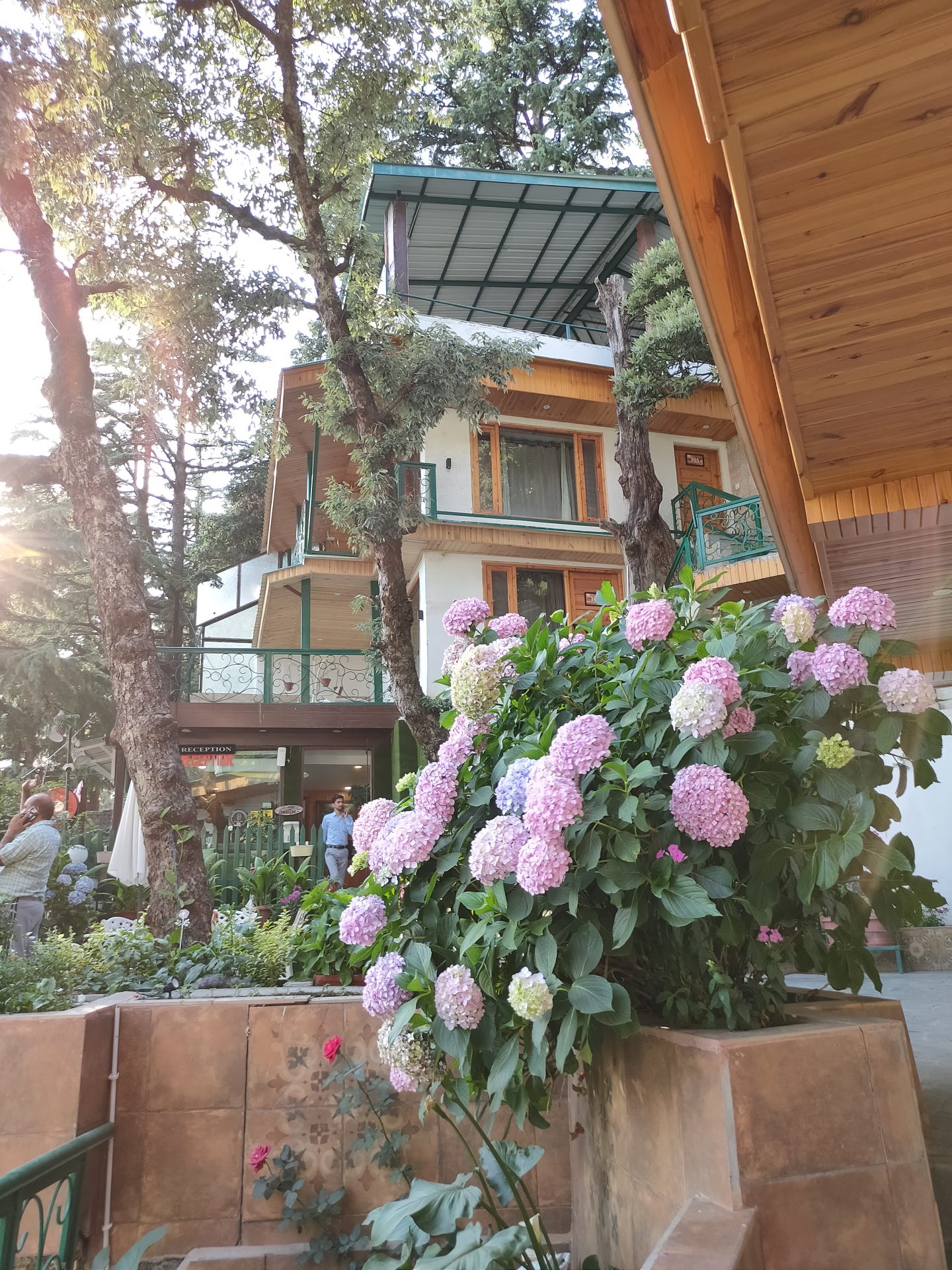
We had done our bookings at Mongas Hotel and Resort, a boutique 3 star resort a little away from the Mall road with around 30 rooms available in different categories. The next 2 nights were to be spent here and our experience if it were to be summed up in one word was PAWSOME.
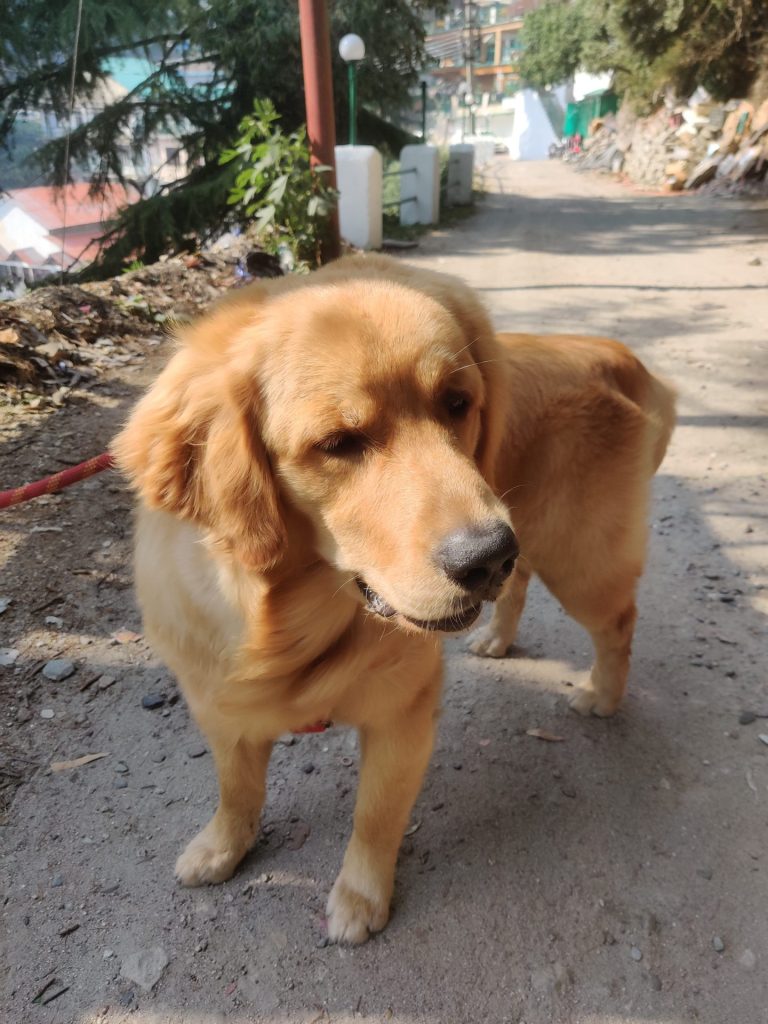
Pawsome (though pets are not allowed in the hotel) coz of our share of fun with James Bond, a Golden Retriever belonging to the owners. This attention seeker was all of less than a year old but had infinite energy around him and was very playful. The rooms in the resort were very comfortable and spacious with all amenities provided for and the food was reasonably priced and excellent to the palate. The nights opened out to some light music wafting through the air from the restaurant area, accompanied by a local lad crooning some old Hindi numbers which were pretty soothing to the ears.
JAMES BOND THY NAME
The Mall Road
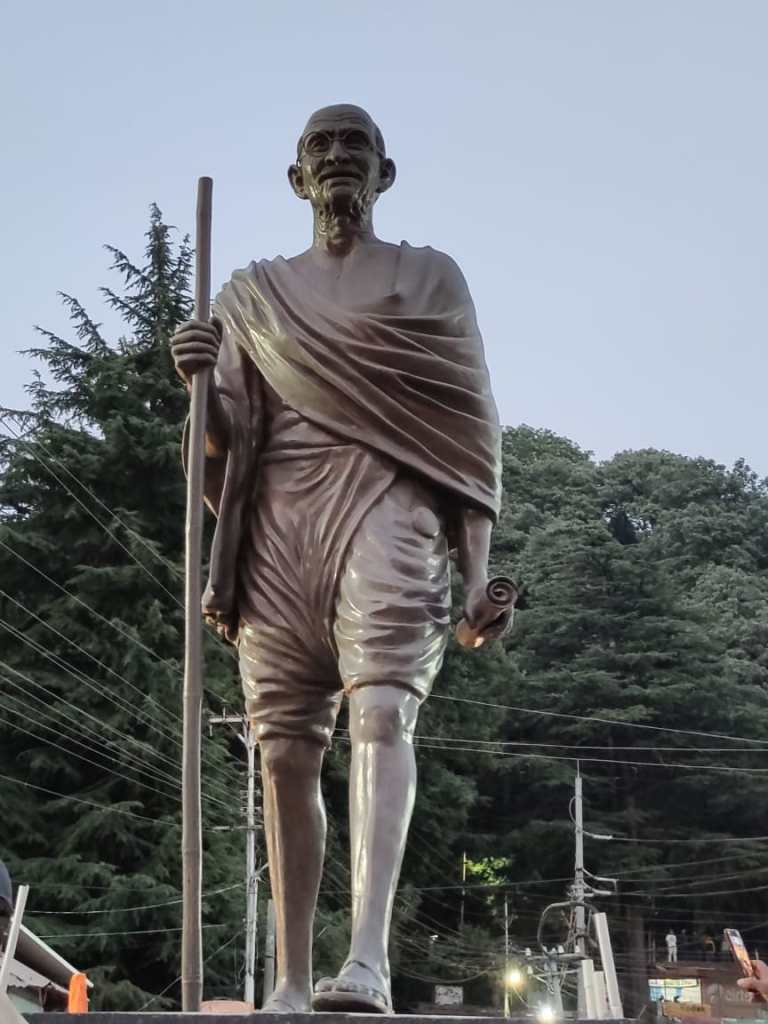
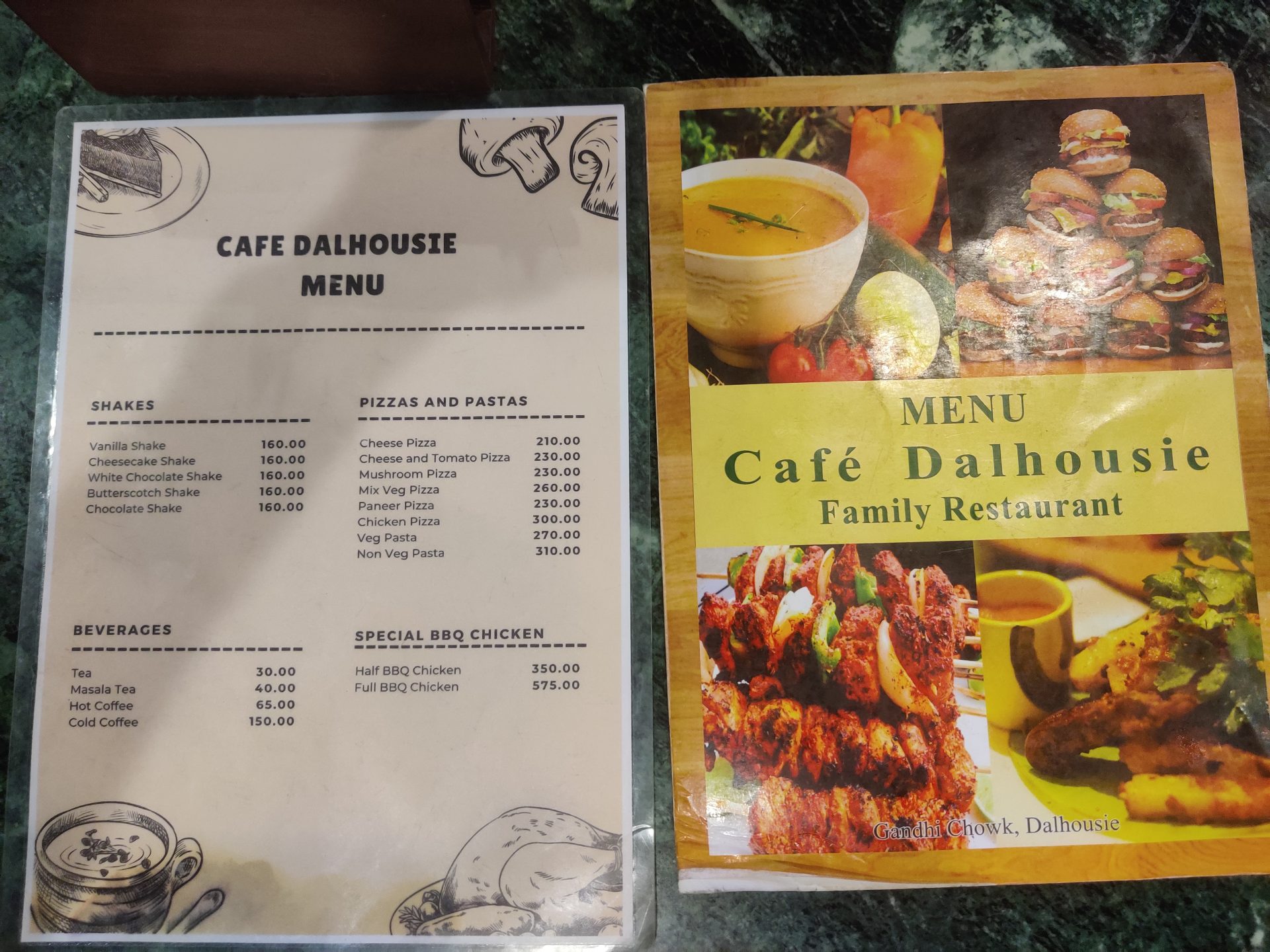
Our resort was a stone’s throw away from the Mall Road. The first evening was spent strolling around Gandhi Chowk leading to the Mall Road.We did a quick peep into the Indo Tibetan Market but found nothing worthwhile to pick up. Moved onto Café Dalhousie for some quick eats. French fries and brownies downed with some coffee and some shakes to go with it. We then came back to the Mall road junction where a group of young Sardars broke into an dance around where the statue of Mahatma Gandhi overlooked the road and balancing what was known as the Ring of Lights. The performance looked impromptu, the way they broke into a jig but looked very pleasing to the eyes.
St.John's Church
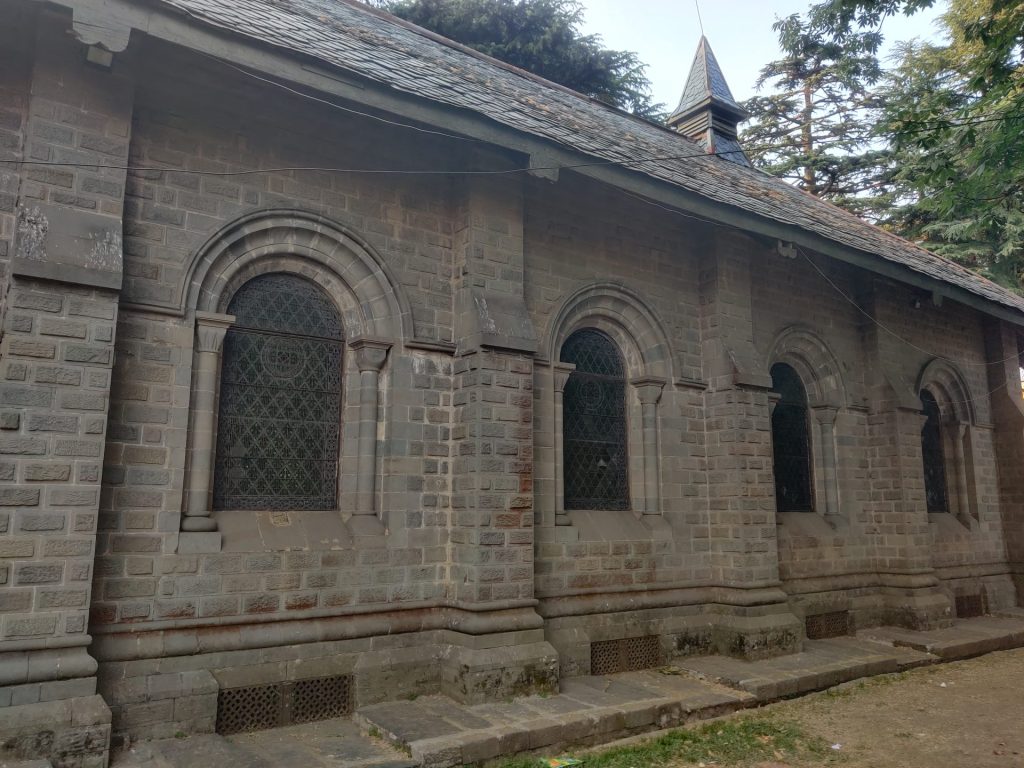
We also visited the oldest Roman Protestant church, the St.John’s Church, built in the year 1863 and at the same spot where a wooden church used to exist.
The building is adorned with some nice paintings in glass of St.John the Baptist and St.Peter and is believed to be the oldest in Dalhousie.
We spent some time at Cafe Dalhousie on Mall road before returning back to our Hotel by around 7 PM. The next day was to be our local sightseeing of places around Dalhousie.
June 12th 2022
Khajjar - Mini Switzerland of India
The next day was to be our local sightseeing of places around Dalhousie.
We left by around 9 from the hotel and made our way to our first pit stop Khajjar, also known as the Mini Switzerland of India. We stopped by for a quick tea break at Green Valley View Point for a quick snap before commencing the 20 odd km drive towards Khajjar.
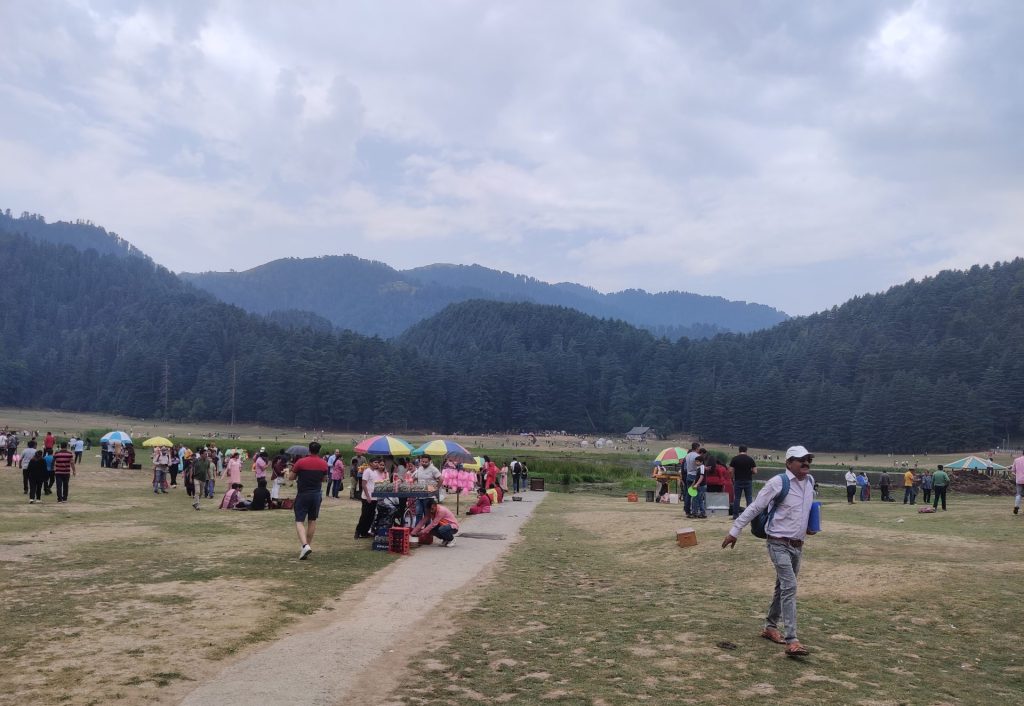
Not sure if we chose the wrong season to come into Dalhousie but compared to what pops out on Google to what we saw before our own eyes was radically different. Tagged as a picturesque saucer shaped plateau in the midst of pine and Deodhar forests with a lake in between, what unfolded before us was quite shocking.
Shorn of grass and looking barren over vast stretches, a very dirty lake stood right in the midst of the so called plateau.
A very commercialized environment and toxic comments on how to reduce weight by innumerable hawkers on the usage of Shilajit and some herbal remedies every now and then did not make for a very pleasant experience. Maybe a visit in winter would not have had us ruing so much.
THE DIRTY LAKE AT KHAJJAR
Kalatop
Anyways, we decided to move on from there after spending around 30 minutes towards Kalatop, which was located around 15 kms away and around 8000 feet above sea level.
A 3 km drive through a wooded forest after a painfully long wait since it was a more or less single lane drive led to what was written as a Wildlife sanctuary but again looked to be a sham. Pretty much nothing around save for a small garden with some eat outs. At best could qualify as a short 3 km trek from where we paid an exorbitant car fee of 250 bucks just to ride upto the spot or maybe one could do a longer trek from Khajjar, but of course with the weather supporting. Place did not have anything great to offer for lunch and after some tea and fritters to support us, we headed back towards the town to Panchphula Waterfalls which was located around 13 to 14 kms away.
Panchpula Waterfalls
Our expectations were anyways at a low ebb and we did not find this place to be anything great for a reco to visit. A memorial erected in memory of the revolutionary Sardar Ajit Singh, a man made kind of artificial and wafer thin waterfall, a picnic spot, a few adventure games like ziplining and a few shops to eat out from. That pretty much summed up Panchphula for us.
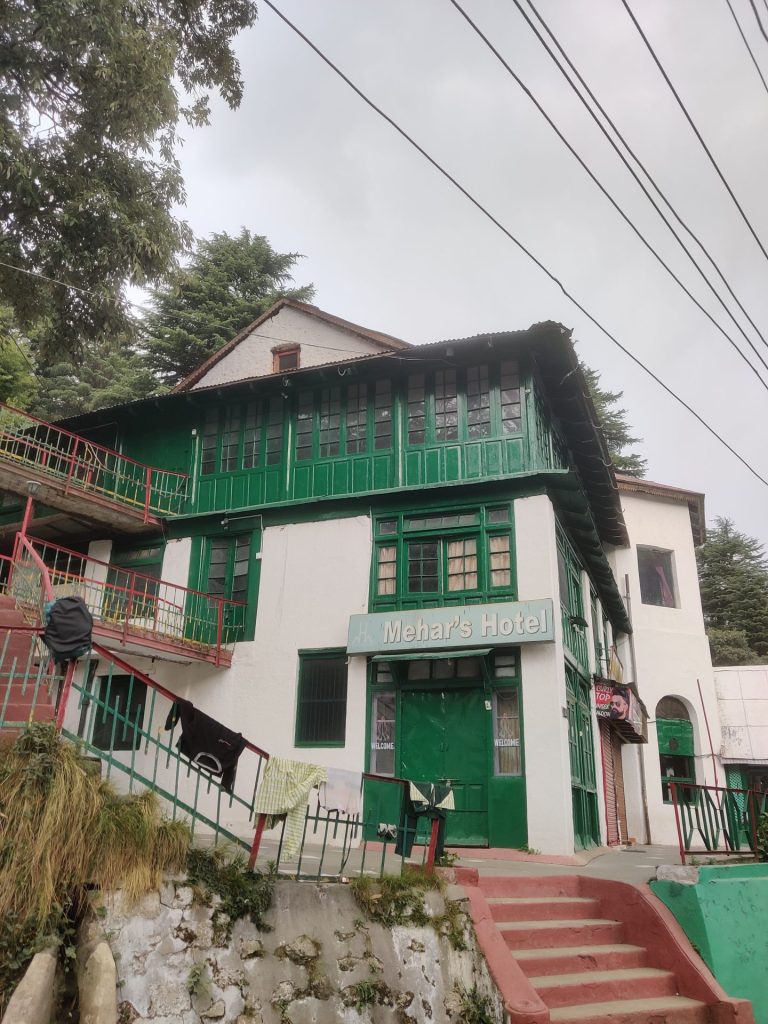
We headed back towards the hotel, stopping for a brief photo shoot at the Chowk where the statue of Netaji was housed and from where, one could get a good view of the valley and then drove past Mehar Hotel which was supposedly the place where Netaji spent quite a few years of his life in hiding from the British.
NETAJI STAYED HERE AT THIS VERY PLACE
Not sure if we drove in to Dalhousie in the wrong months though March to June was a highly recommended period unless of course we were able to master the snow and the cold in December. Except for the lovely resort where we spent a good couple of days, nothing really much to write home about.
June 13th 2022
Day 4 dawned and it was to be the drive to Dharamshala, located around 120 kms away from Dalhousie. Breakfast done, we checked out of our hotel and started the 3 and a half to 4 hour drive, hoping to put our disappointment of Dalhousie behind. Good roads, winding through the Dhauladhar mountains and literally non stop driving save for a tea break brought us to the Little Lhasa of India also popularly known as Dharamshala, a name derived from the fact that it also happens to be the sacred residence of the Dalai Lama.
We reached the town which was not very far away from Kangra Airport by around 2 in the afternoon and headed straight for our hotel. The snow capped mountains in the far distance were indeed beautiful. Dharamshala is actually 500 metres lower in altitude compared to Dalhousie and is nestled in the Kangra Valley.The Kotwali Bazaar and the surrounding markets form what is known as Lower Dharamshala while McLeodganj, a predominantly Tibetan settlement forms part of Upper Dharamshala.
Dharamshala
Set against the majestic backdrop of the snow capped Dhauladhar mountains, the twin towns of Dharamshala and McLeodganj abound in prayer flags hung in every nook and corner of the town.
A great place to unwind, one can enjoy the calmness and serenity as well as get lost in the hustle and bustle of the market place.
Dharamshala happens to be the abode of his Holiness, the 14th Dalai Lama, Dharamshala.
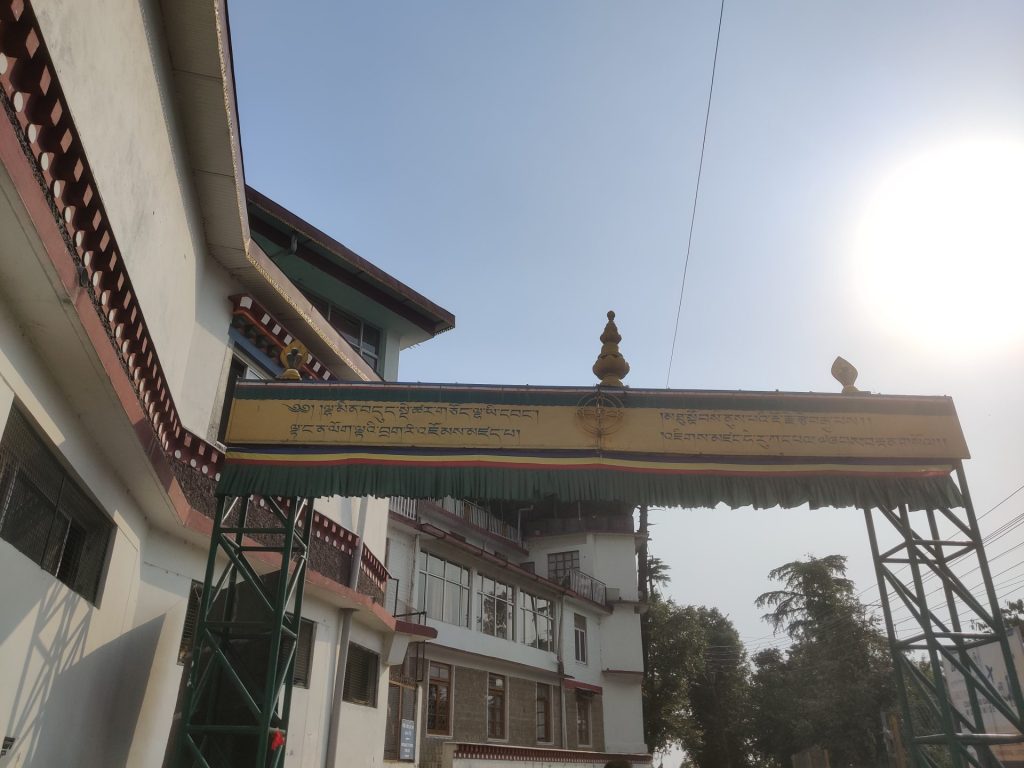
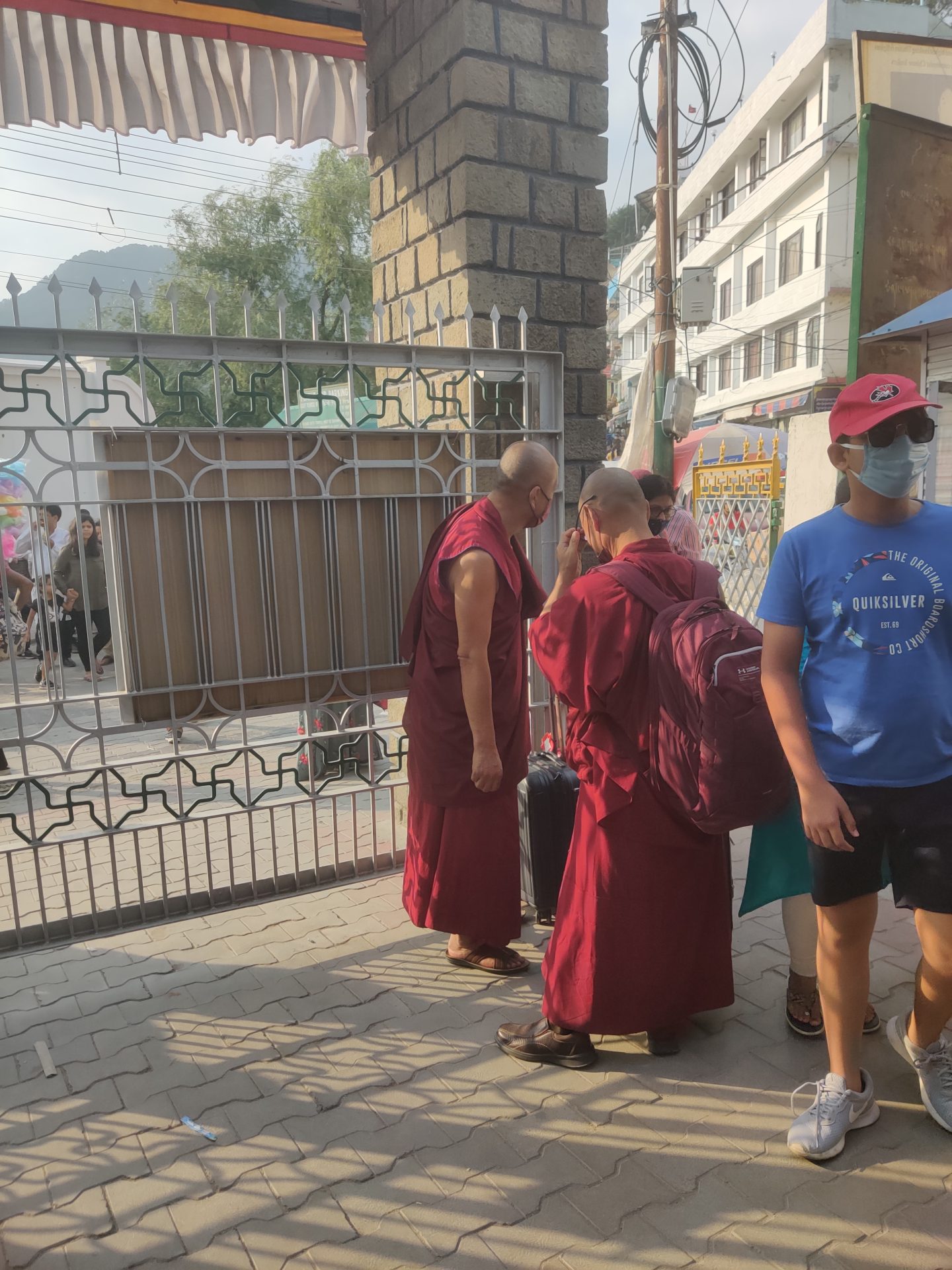
The town is also home to many monks who have settled down here. One cannot miss these Burgundy and Saffron colored robed people moving around the market place and the ancient monasteries that you get a feel of being somewhere out of India.
Quaint cafes, ancient temples, short treks to reach some nice waterfalls, a newly built ropeway connecting the twin towns, a nice cricket stadium, a lovely tea garden and a nice shopping experience is what describes Dharamshala.
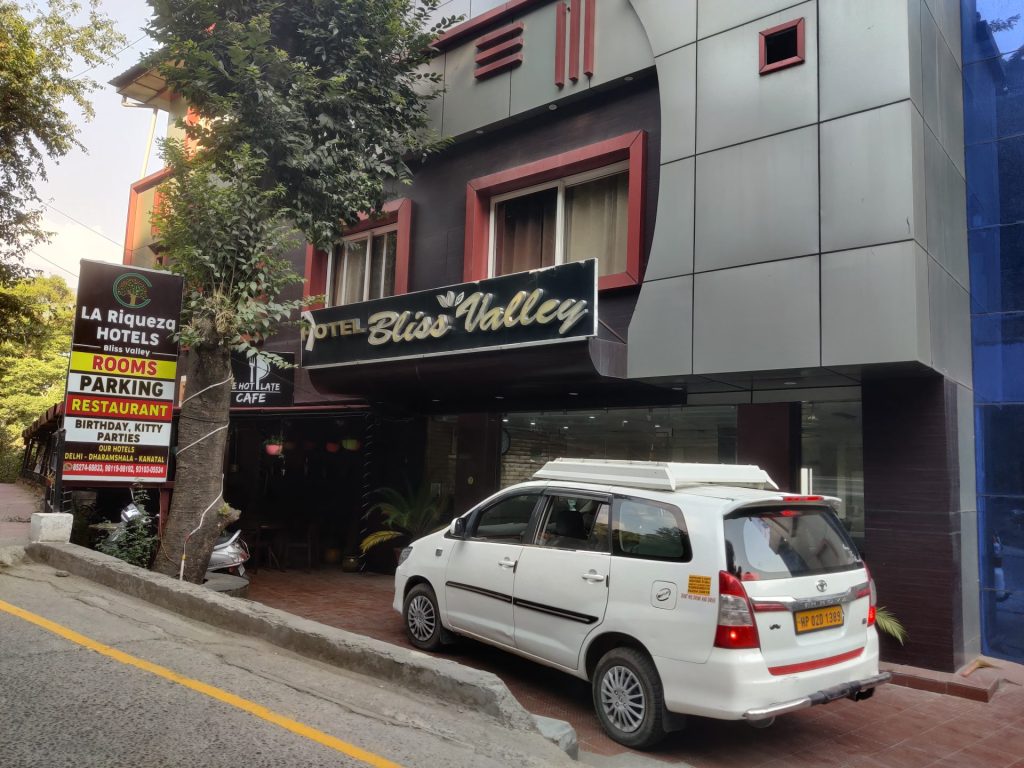
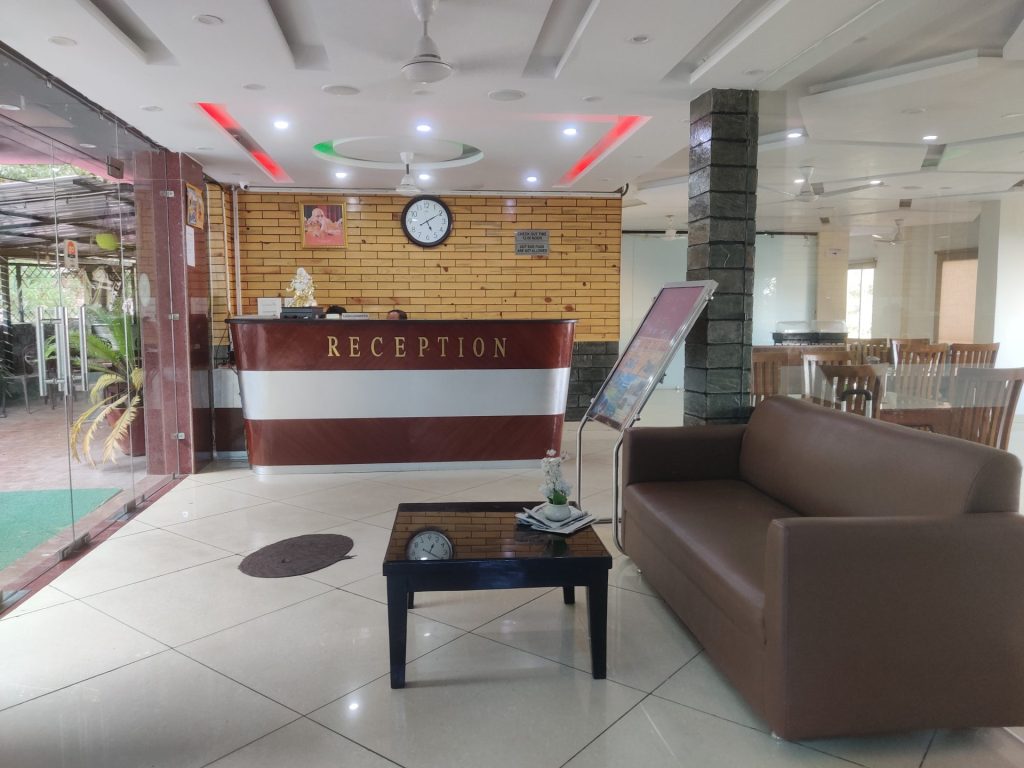
We checked into a no frills hotel Bliss Valley, located a little towards the upper stretch of the Kotwali Market.
This 3 star property was the perfect value for money with impeccable service, good palatable food and nice rooms with good views.
A nice restaurant is also attached with the property which saves people the trouble of walking all the way to the market.
A couple of hours rest followed and we left for the quaint looking Dharamshala Cricket Stadium which was to be our first pit stop. Unfortunately, on account of the Prime Minister’s visit and his reviews with Chief Secretaries scheduled in the stadium premises in a week’s time, the place was out of bounds for commoners. All we could do was see the magnificent stadium with the background of the snow capped peaks from outside and move on.
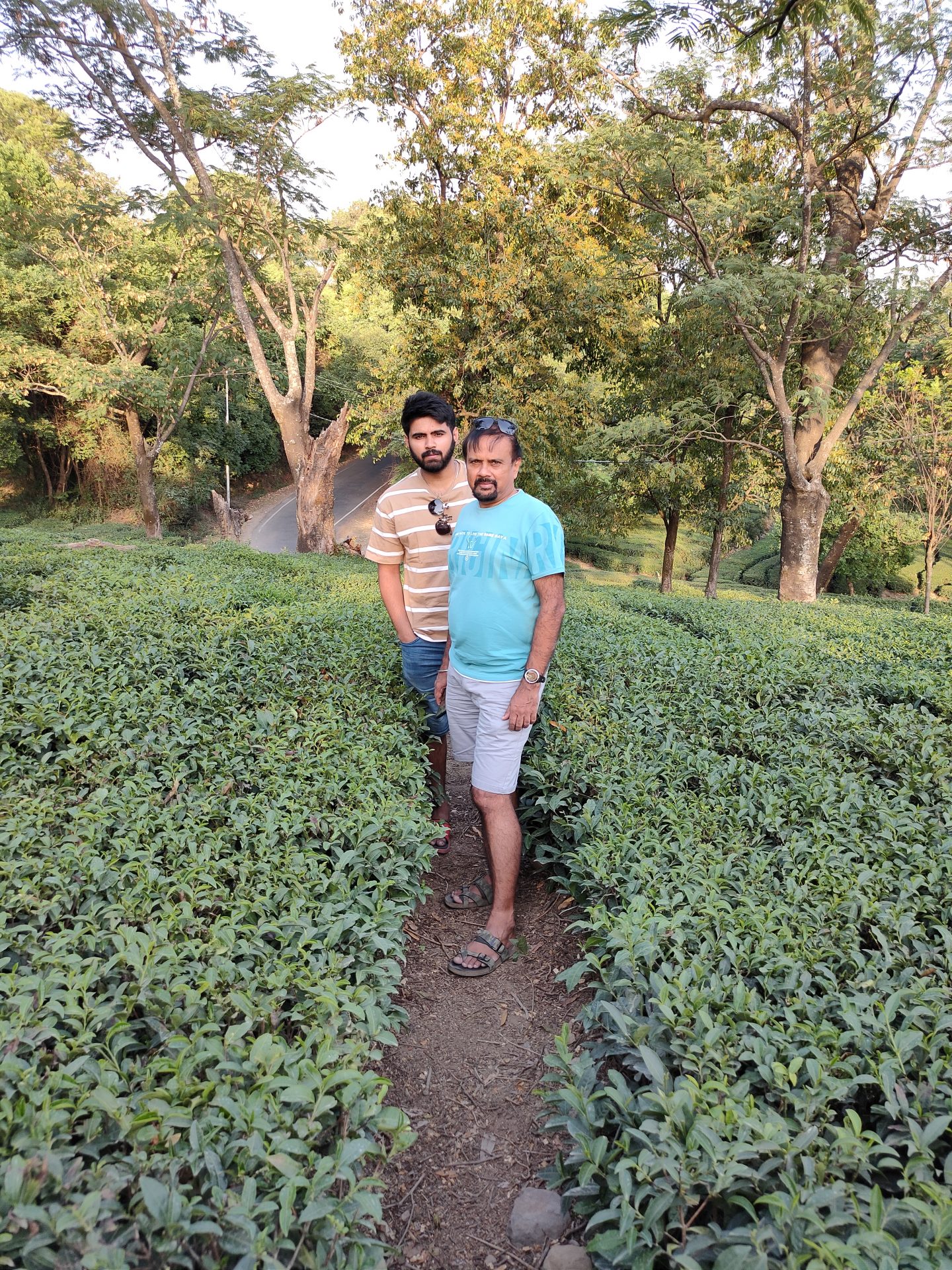
We halted at the Himalayan Brew Tea Garden located around 3 to 4 kms from the stadium.
A vast expanse of greenery in the form of tea gardens greeted us. Before we commenced our walk around the tea gardens, we stopped by at the shop near the entrance of the gardens to have some tea. We also picked up different flavours of tea being sold which were part of the produce of these gardens.
Lovely views from the garden of snow capped mountain peaks in the background could be seen.
After spending almost an hour going around the place and with the photo shoots having been done, we headed back to the hotel by around 8 PM.
It was still daylight and post a light dinner at the restaurant, we chose to retire early.
June 14th 2022
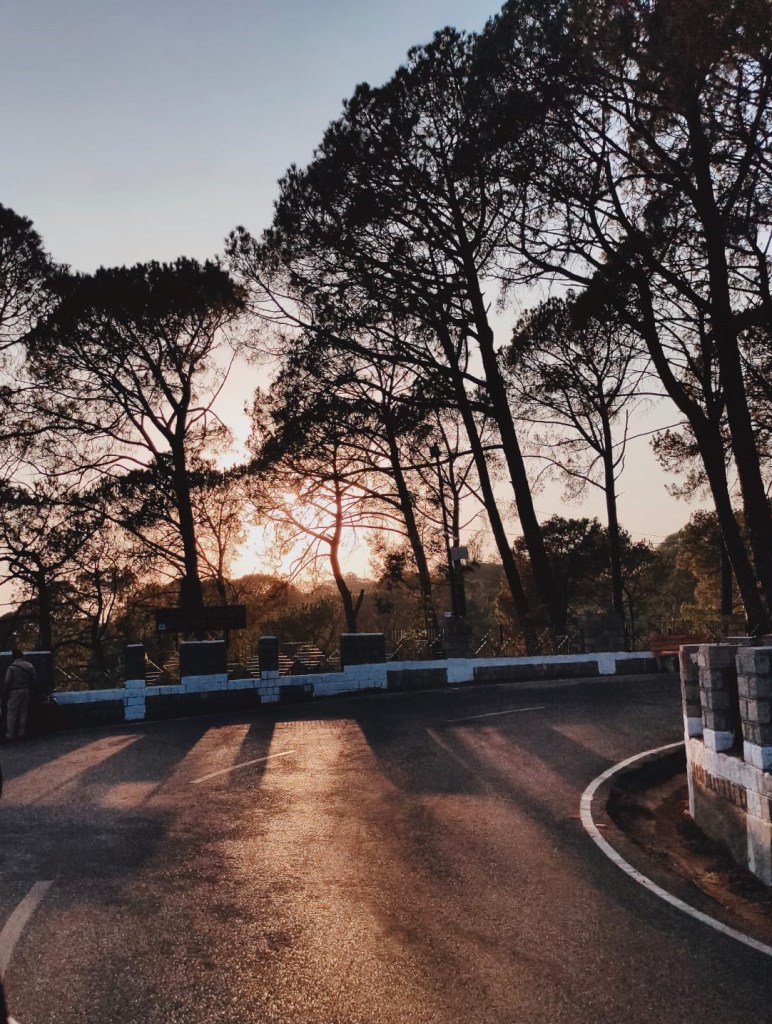
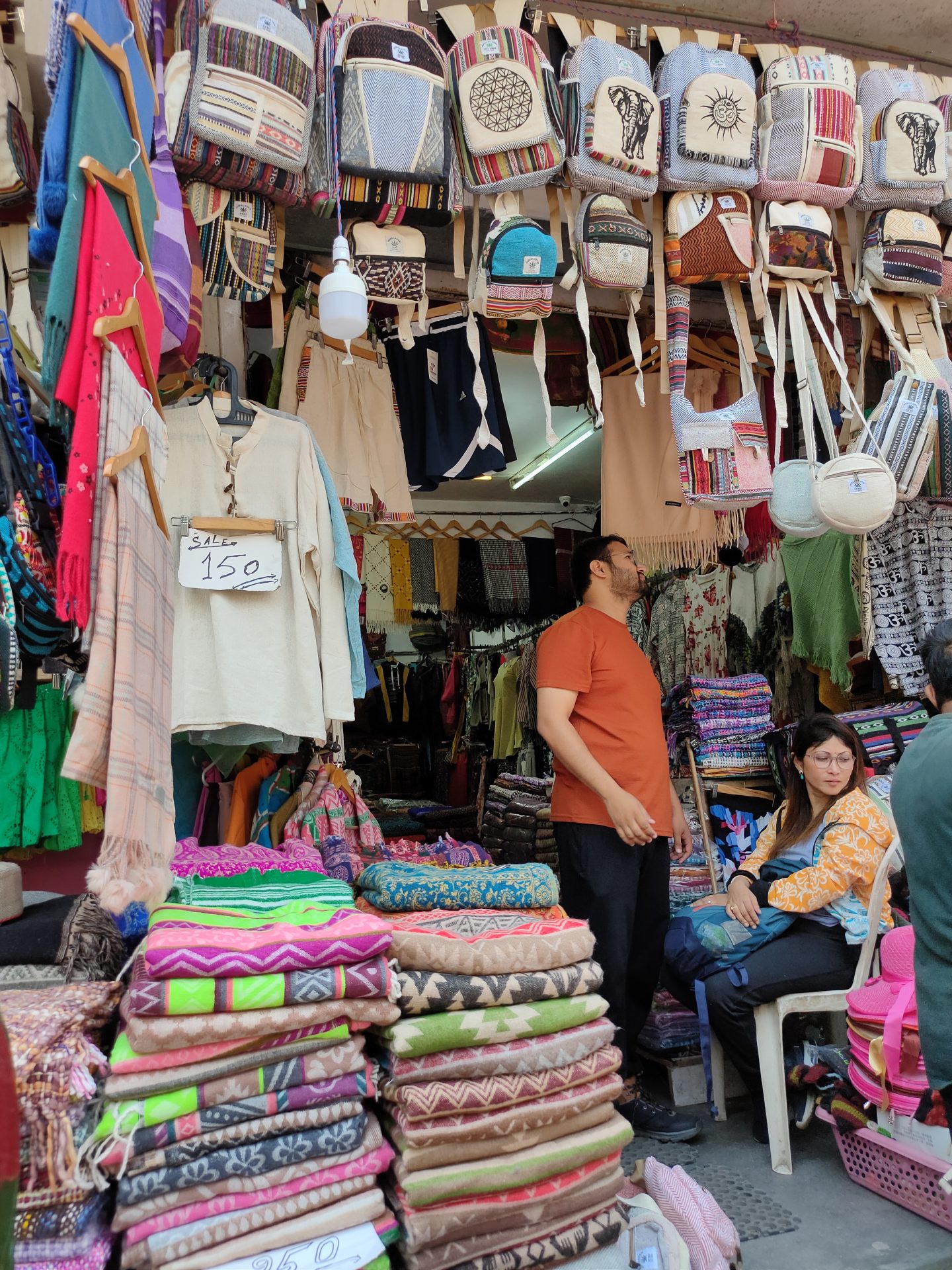
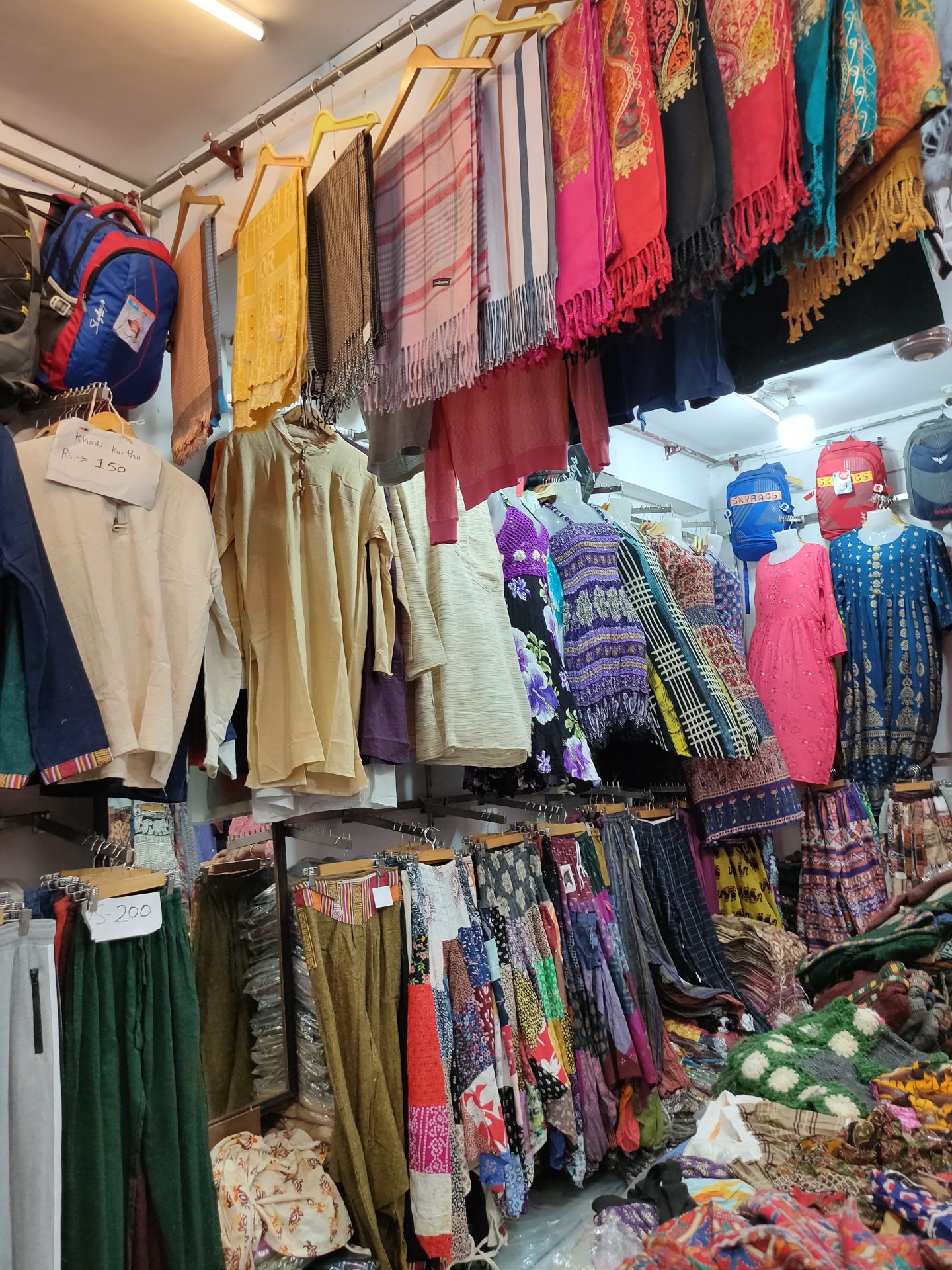
Day 5 was planned for a visit to McLeodganj and a little bit more of sightseeing around Dharmshala. Breakfast done, we started our 8 km drive or rather climb through pretty narrow and steep stretches of road towards Mcleodganj. We got dropped a little before the market from where we started our walk towards the Bhagsunath Temple. There were these clusters of shops leading upto the temple on one side, selling Tibetan Handicrafts to dresses to wall hangings to purses to shawls to scarves to souvenirs and this caught the attention of the ladies but we managed to prioritize our entry to the temple before the shopping.
THE DRIVE UP TO MCLEODGANJ
The Bhagsunag temple
THE DHARAMSHALA MARKETS
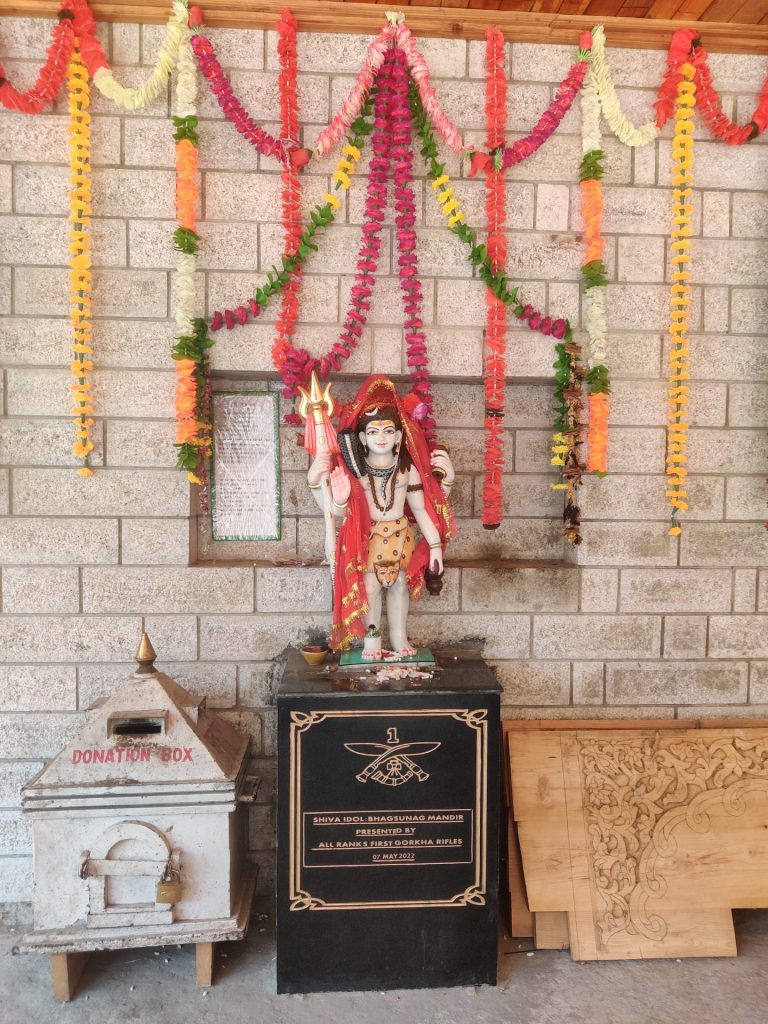
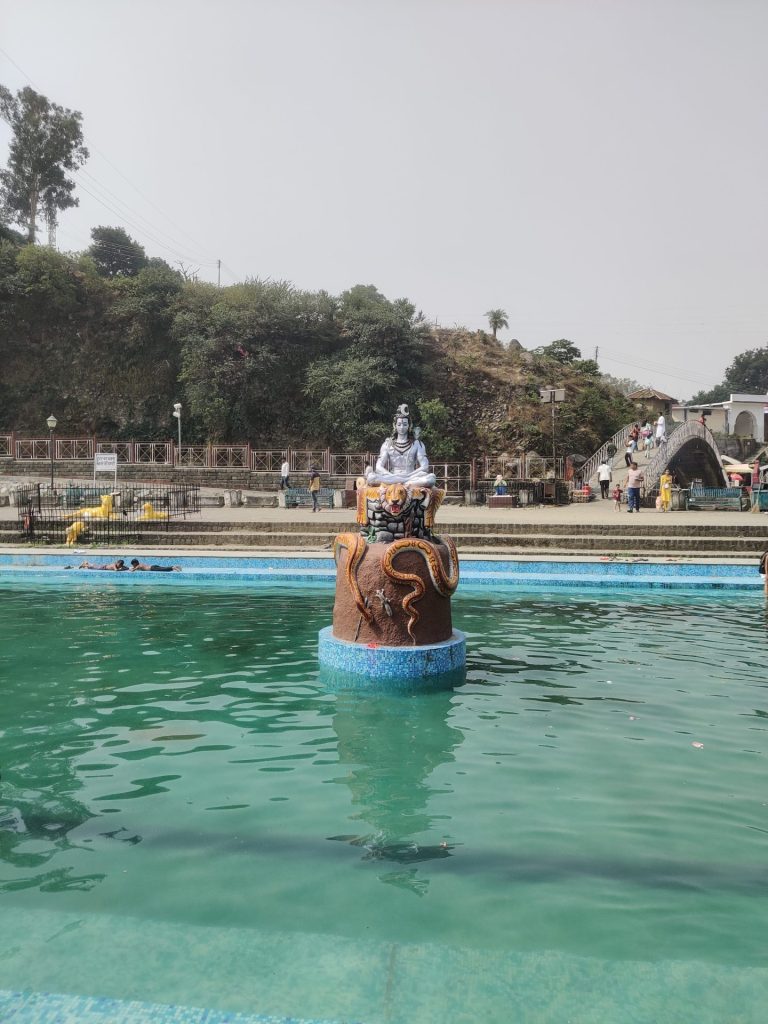
This ancient temple was believed to have been built by King Bhagsu from Rajasthan.
The 1st Gorkha Rifle regiment later on built this temple in the early 19th century.
Around 14 Gorkha platoon villages in and around Dharamshala worship Lord Shiva and the local deity Bhagsu Nath here.
A nice swimming pool open for the public has also been built adjacent to the temple.
Having offered our prayers, we left the ladies to do their shopping while we went on a small trek to the Bhagsunath Waterfall.
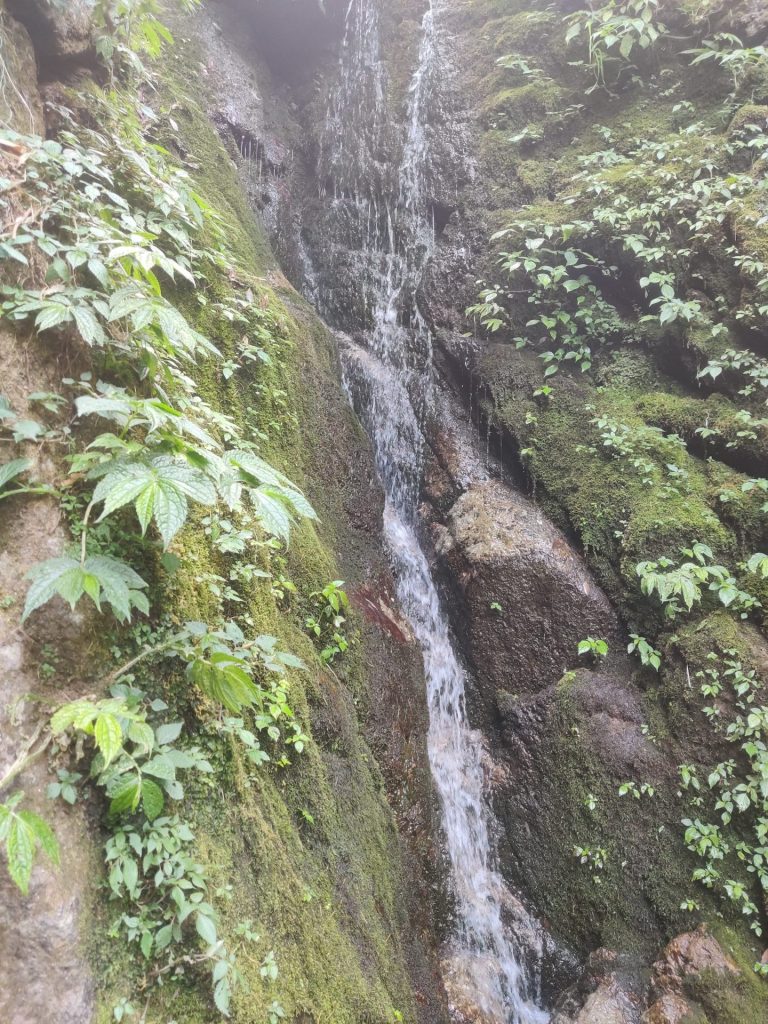
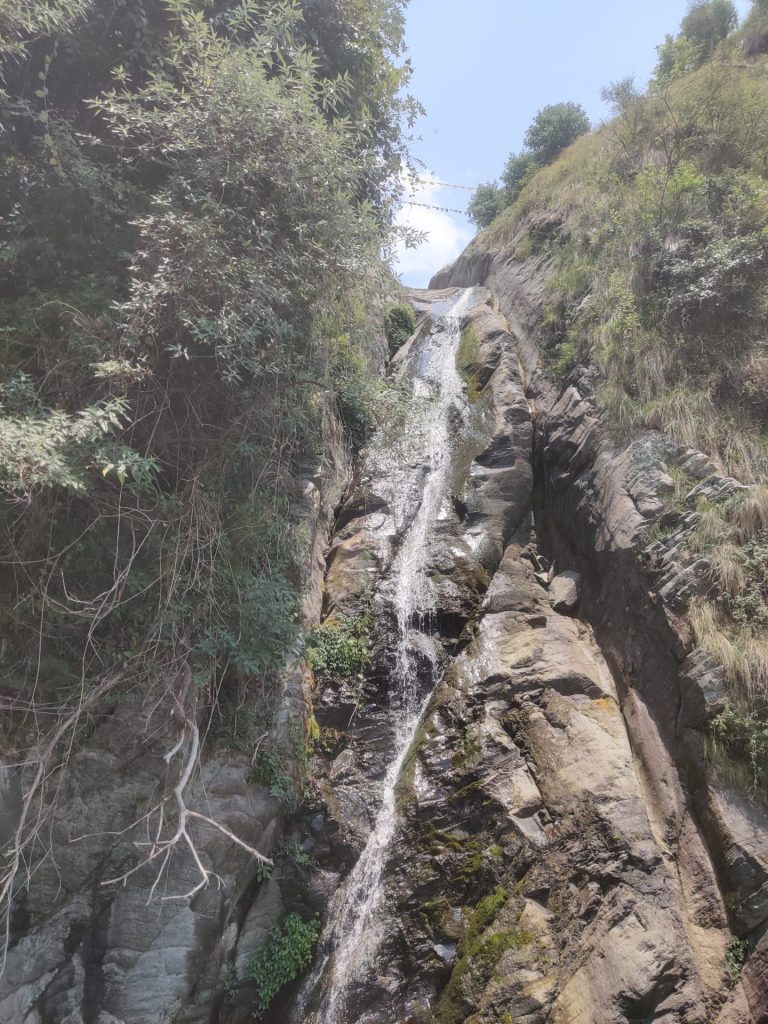
A tough walk maneuvering through steep inclines, uneven flights of stone stairs and partially broken and sometimes non existent roads brought us to the edge of a waterfall where water was literally trickling.
The Bhagsunag Waterfall
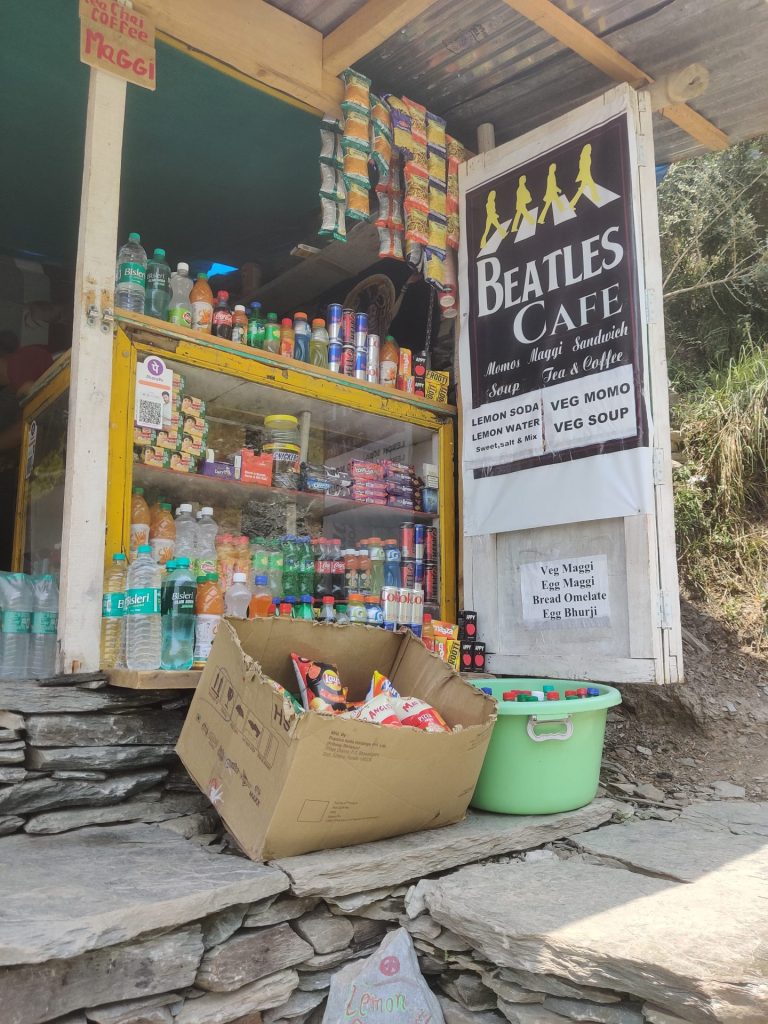
The monsoons or probably the months after that could possibly have been a better time to visit this place as we would have seen copious water flowing around. The climb up and down took us almost 45 minutes as we were caught up for breath on a few occasions and decided to wait and take it easy. Enroute was a Desi Beatles Cafe literally named and playing the latest Punjabi numbers. So much so for some Hindi rock.
DID I HEAR - DON'T LET ME DOWN
THE BHAGSUNAG WATERFALL
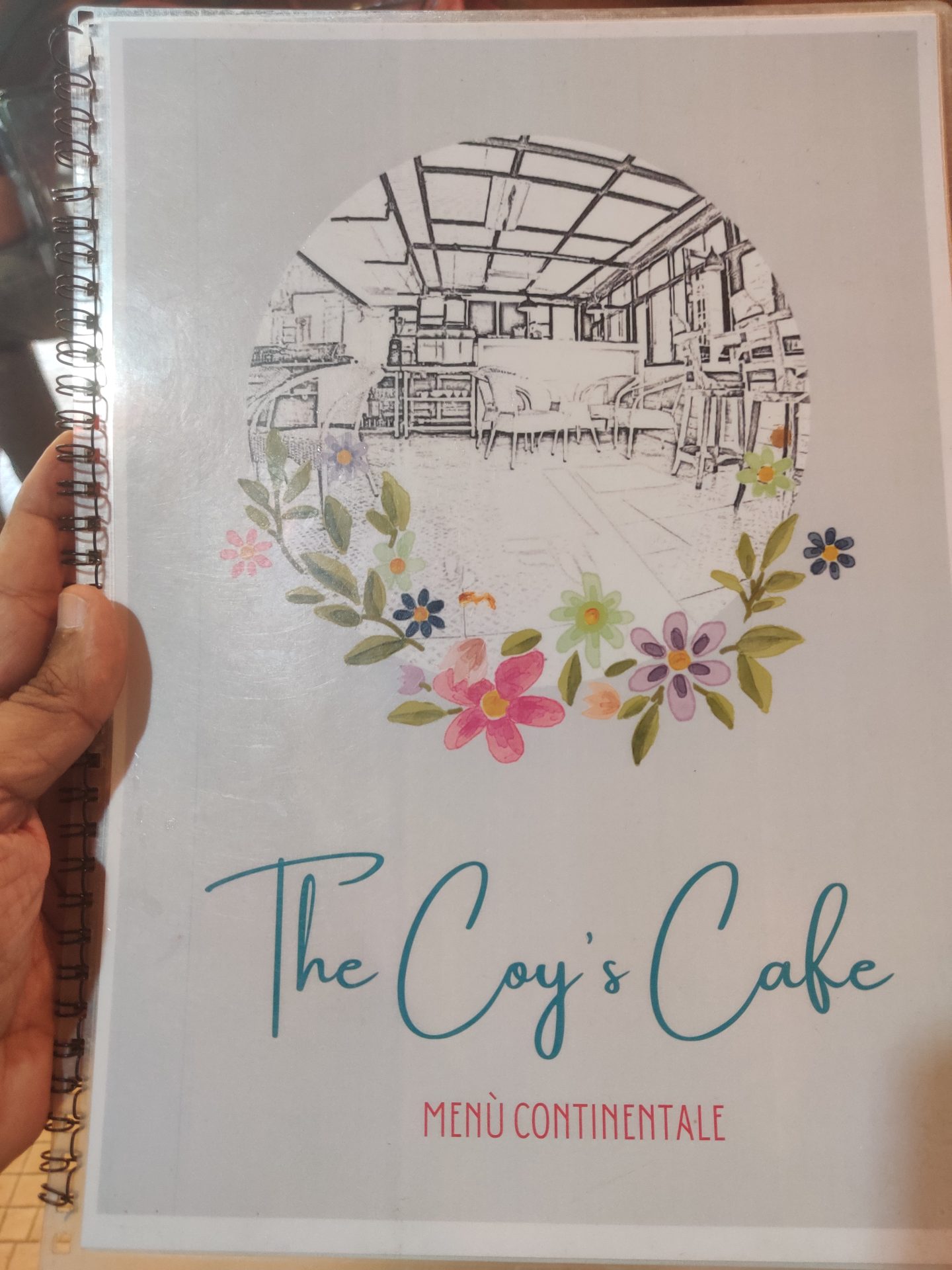
The ladies were done with their bit of shopping and we went into one of those quirky little cafes. There were a number of them lined up on the other side of the road and opposite the market side and we chose The Coys not for any specific reason but just that we found the name a bit catchy.
St. John's Church
Grabbed something light to eat and drove on for around a couple of kms towards a place called Forsyth Ganj.
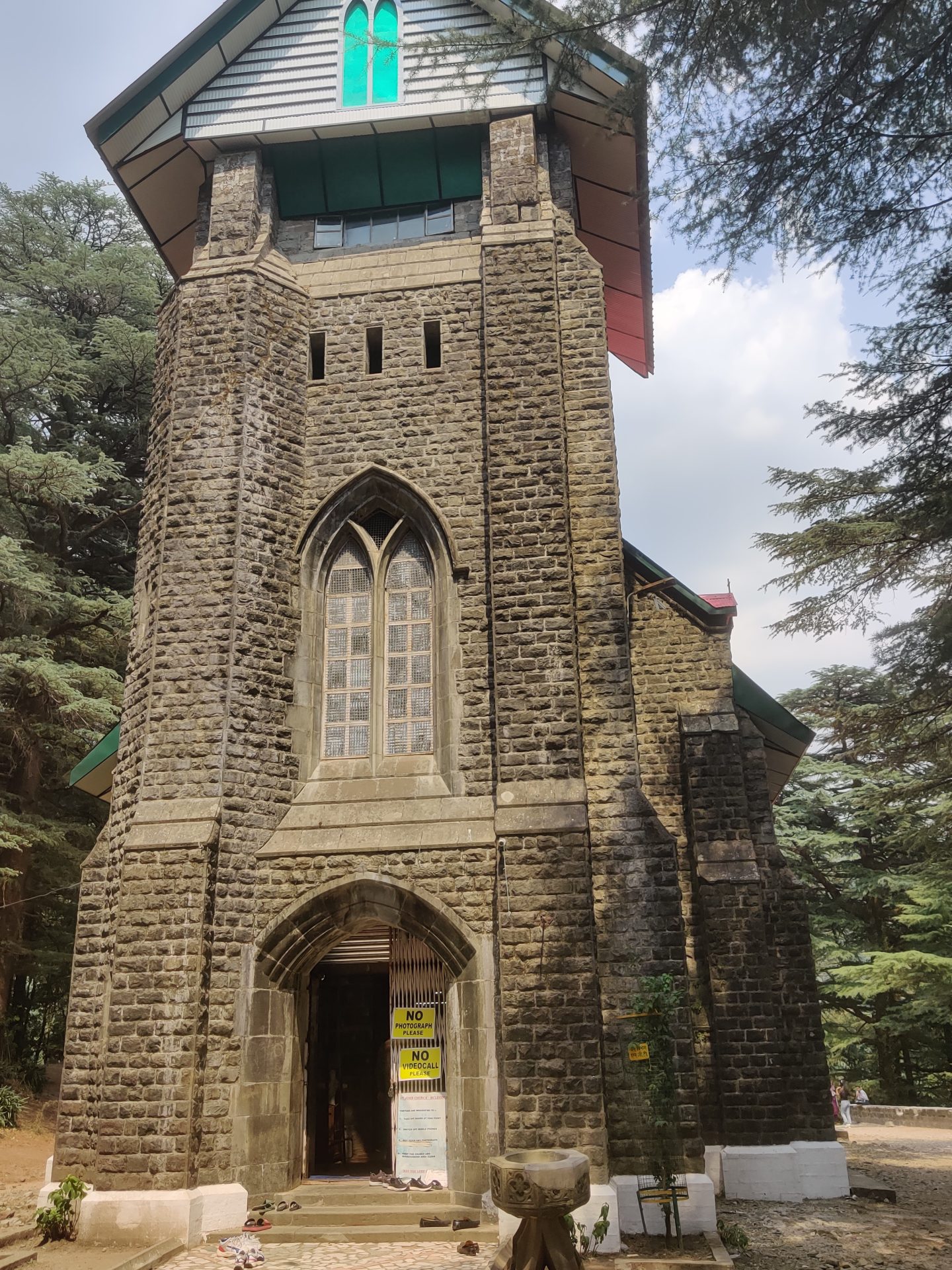
Crossed lot of Deodhar trees and suddenly out of the wilderness, we found this old looking church – The St.John’s Church.
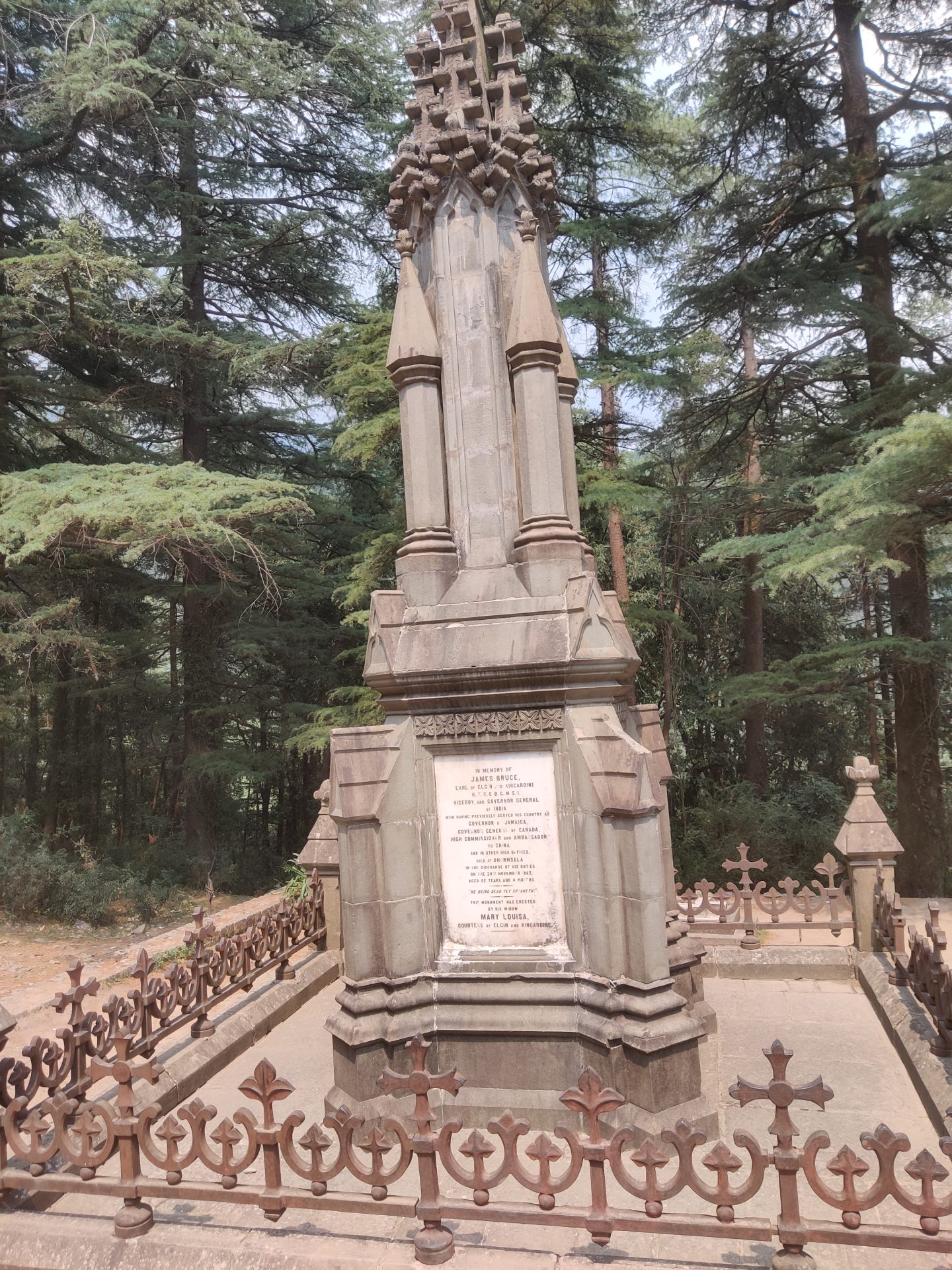
This church was built in 1852 in neo Gothic architecture style and in memory of St John the Baptist.
It also happens to be the final resting place of Lord Ergin, a former Governor General and Viceroy of India during the British Raj.
The church built with grey stone is adorned with Belgian stained glass windows and has an eerie look to it.
Its said that in 1905, an earthquake damaged the bell tower and a new bell had to be brought in from England in 1915 as a replacement.
The bell hangs around 300 feet above the ground from a tower.
The former Lieutenant General of Punjab David McLeod after whom McLeodgang derived its name has also been laid to rest here in this church.
The Naddi View Point
We moved on from there to Naddi View Point, one of those typical touristy spots seen across multiple hill stations from where one gets to see the mountain peaks and valley. If it were snow covered, yes the peaks would have stood out in all it grandeur but nevertheless the greenery around the majestic Dhauladhar ranges stood out.
The Dal Lake
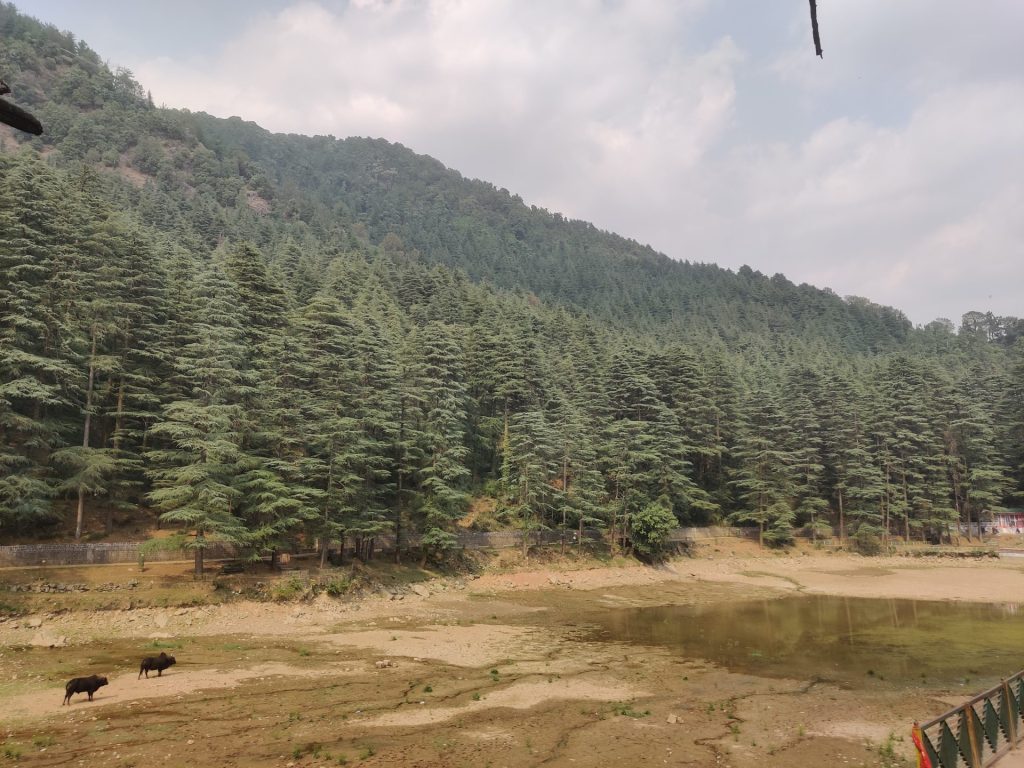
There were a few shops selling Hot Maggi and masala chai and after some tea, we drove back to the Monastery and residence of the revered Dalai Lama. Enroute we stopped by at the Dal Lake which was all but dried up. The deodhar trees had lined up as a backdrop to the lake which would have made for better viewing after the monsoons.
THE NON EXISTENT DAL LAKE
It was a little close to 4 in the evening when we reached the busy market place in the main square of Mcleodganj. We had decided to take the Ropeway on our return and asked our cabbie to wait at the Skyway station in Dharamshala and got dropped at the square.
We were pretty hungry by then and the choice was between a funnily named restaurant The Half Girlfriend or TONI (Taste Of North India) for a quick bite.
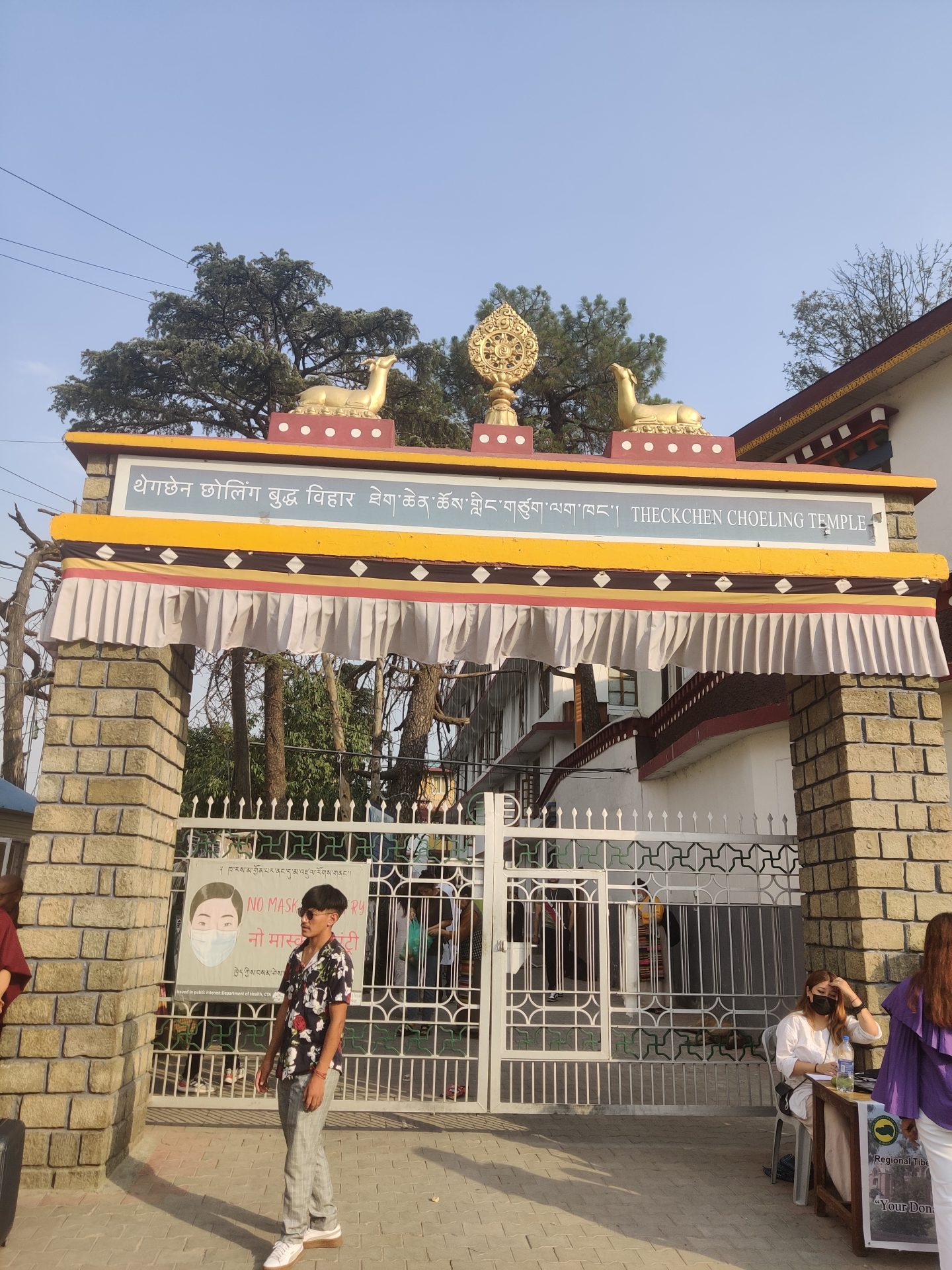
Looking at the crowds, we did our ordering at TONI and knowing that it would at least take them around 15 minutes to deliver, ventured into the Kalachakra temple located very close by.
The unique thing of this Buddhist temple was that it was accessible from both sides of the road as was TONI.
We spent around 15 to 20 minutes inside the temple and picked up our stuff from TONI. We chose to try out some steamed and fried Momos and some chat items. A not very hygienic set up but then this is all about Indian street food and the taste was just unbeatable.
WHATEVER THE NAME WAS MEANT TO SERVE
The Kalachakra temple
It was a little close to 4 in the evening when we reached the busy market place in the main square of Mcleodganj. We had decided to take the Ropeway on our return and asked our cabbie to wait at the Skyway station in Dharamshala and got dropped at the square. While the food was getting ready, we entered the Kalachakra Temple.
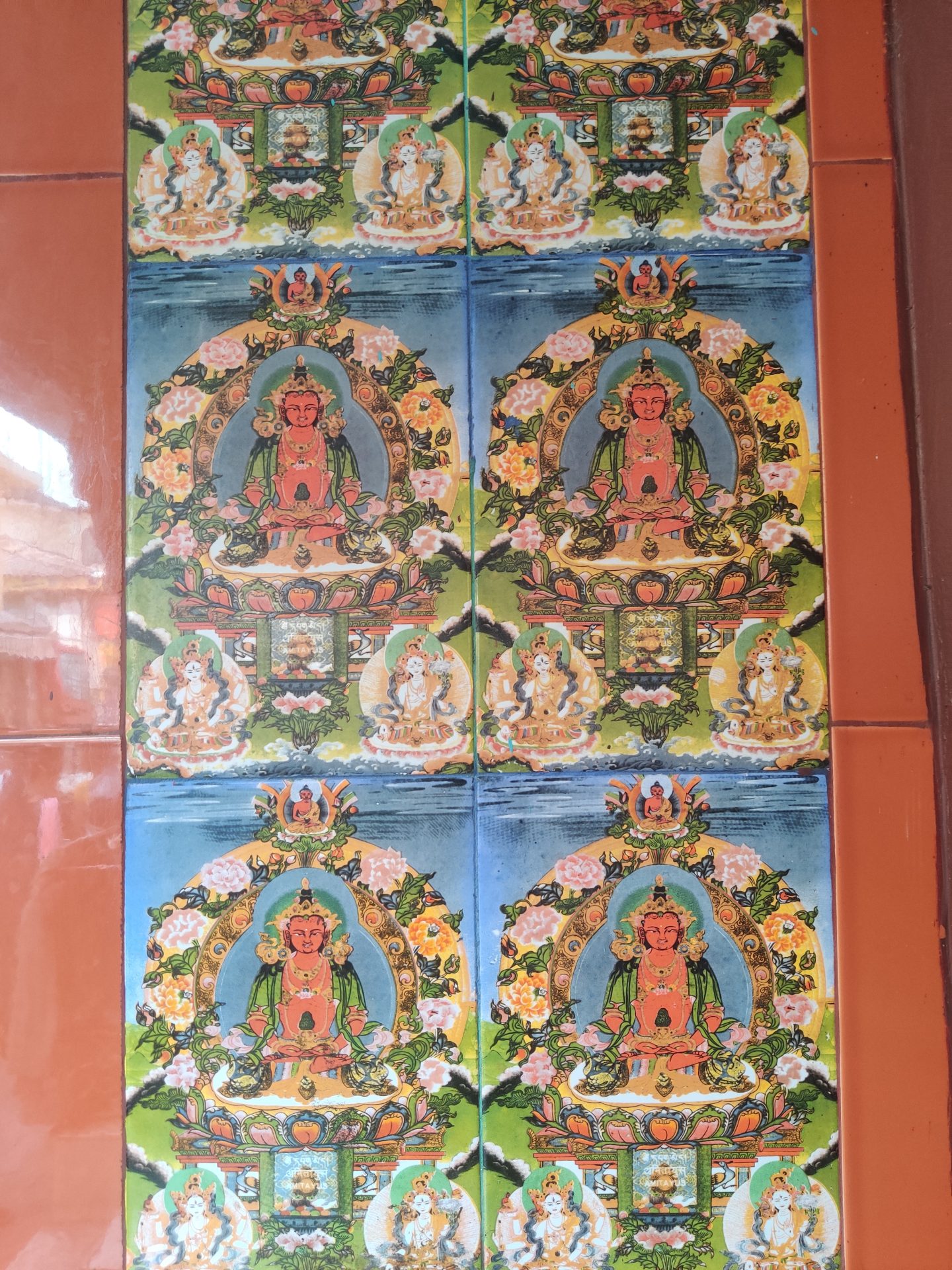
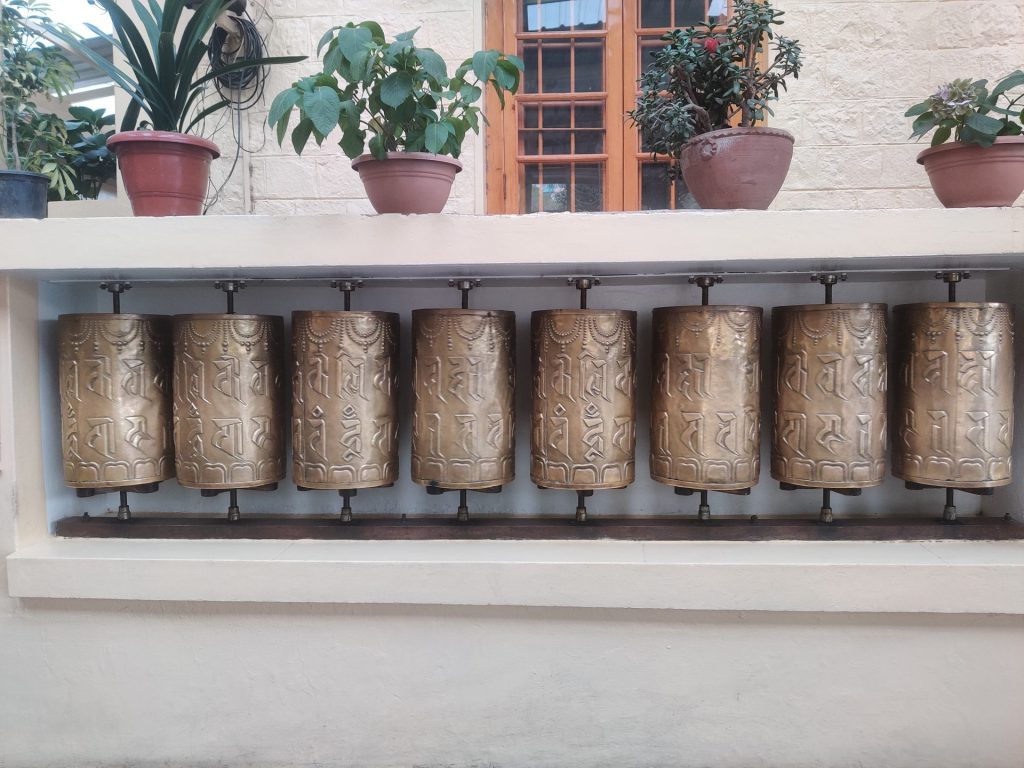
A popular Tibetan temple built in 1992, the Kalachakra shrine is known to house some stunning murals of the Wheel of Time (also known as the Kalachakra). Its said that the Dalai Lama uses this place as a centre for public teaching. The pillars and walls are adorned with beautiful traditional Tibetan paintings and this temple indeed boasts of Tibet’s rich ethnicity and artistic prowess. There was a large prayer wheel and a set of smaller prayer wheels which are said to be rotated while praying. There is a large ornate stupa in one side of the temple.
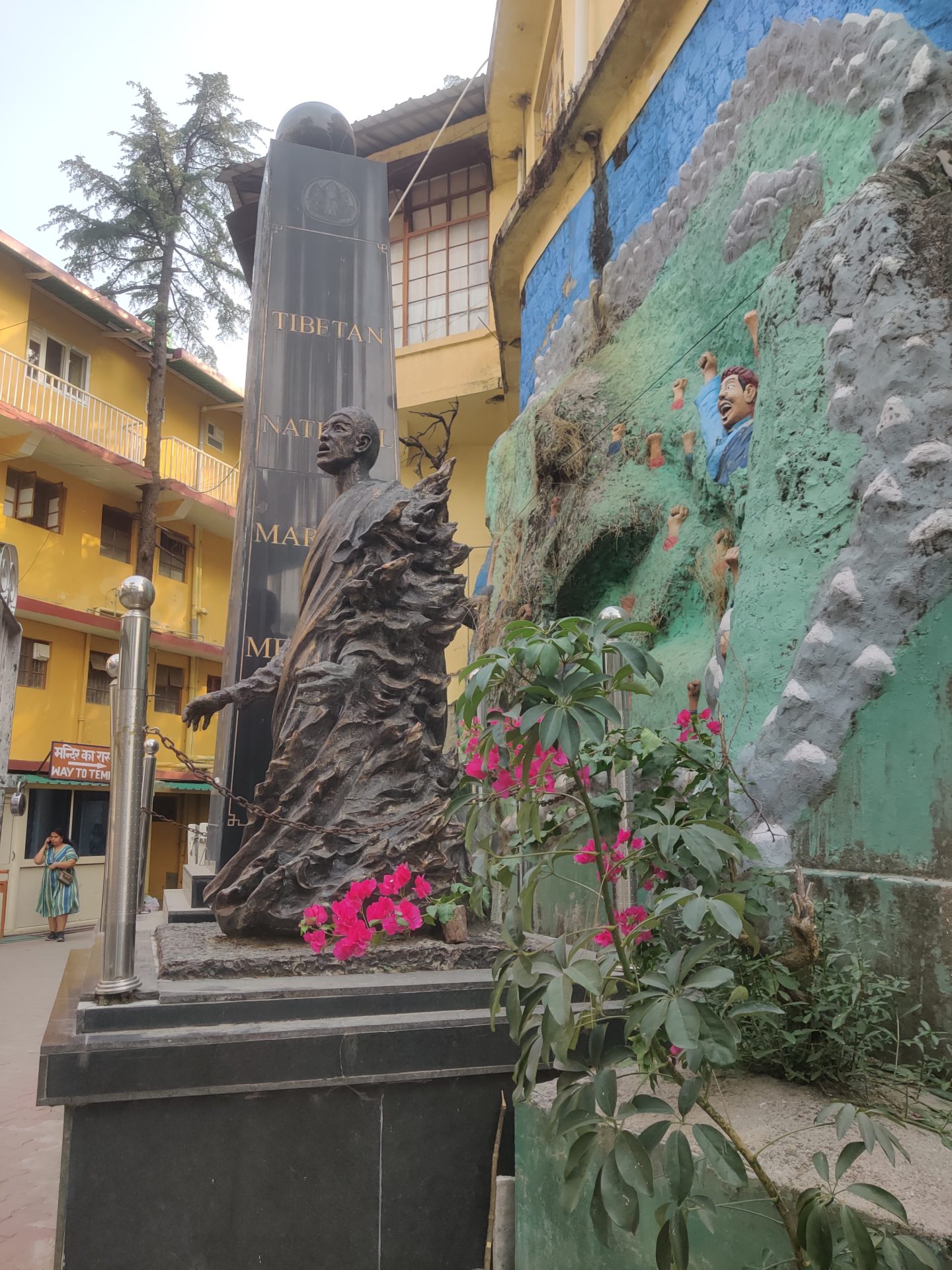
A little away from this temple lay the abode of Dalai Lama. This is the most important landmark in Dharamshala and is a very calm and serene place. Spiritual teachings of Buddhism are imparted here apart from being a place for Tibetan refugees to offer prayers, this temple was built in 1968.
There is a huge statue of Shakyamuni Buddha apart from larger than life statues of Avaloktwshwara and Padmasambhava.
The Dalai Lama Temple
THE DALAI LAMA TEMPLE
The Skyway from Mcleodganj back
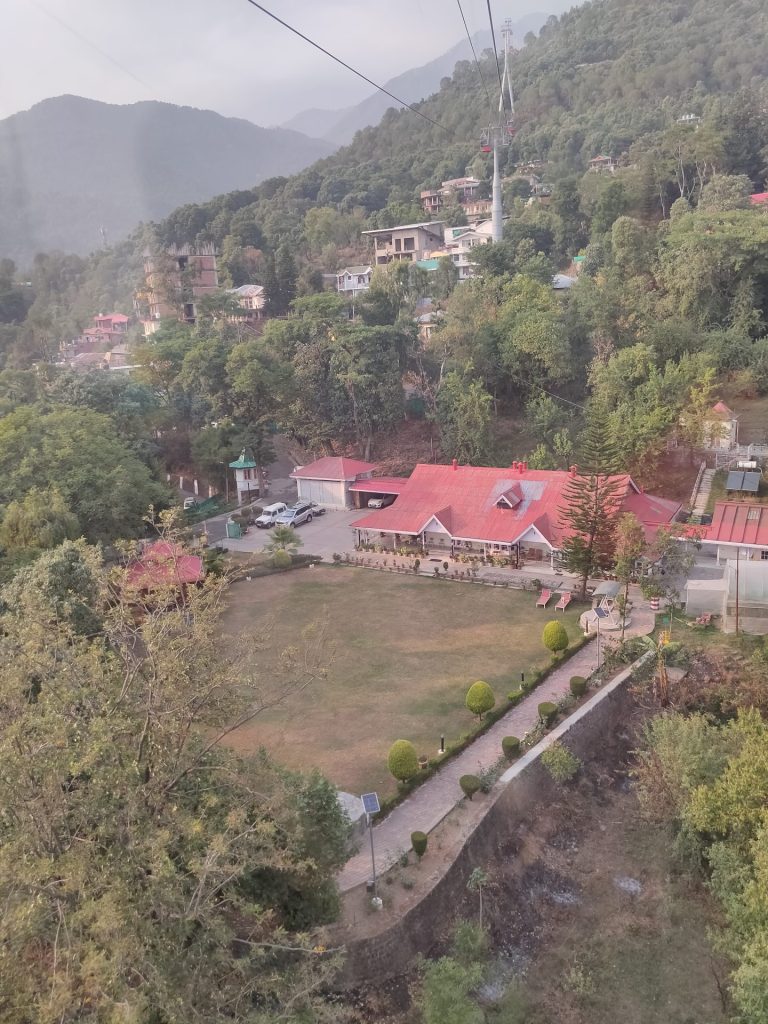
A 5 minute walk from the Dalai Lama temple took us to the Skyway station at Mcleodganj which got inaugurated in the month of March 2022. Built and operated by Tata Enterprise, this is a well maintained and organized ropeway which connects Mcleodganj to Dharamshala. This 1.8 km long ropeway helps reduce the travel time between the two towns from 45 minutes to just around 10-15 minutes and takes one across some picturesque views of the city and the valley.
Tickets are priced at ₹ 300/- per ticket. Our cab was there at the other end of the ropeway station in Dharamshala to ferry us back to the hotel. We were too tired to step out to the restaurant for dinner and did some ordering in the room itself. Crashed in early to catch in the much needed rest for the long drive planned the next day to Manali.
June 15th 2022
Heading off to Manali
The Chamunda Devi Temple
We had requested the hotel folks for some early breakfast and they did lay out a decent spread by 7.30, given the fact that they start their operations only by 8.30 in the morning.
The check out done, we packed in our luggage into the cab and started off on the 7 hour drive to Manali, located around 215 kms away by around 9.
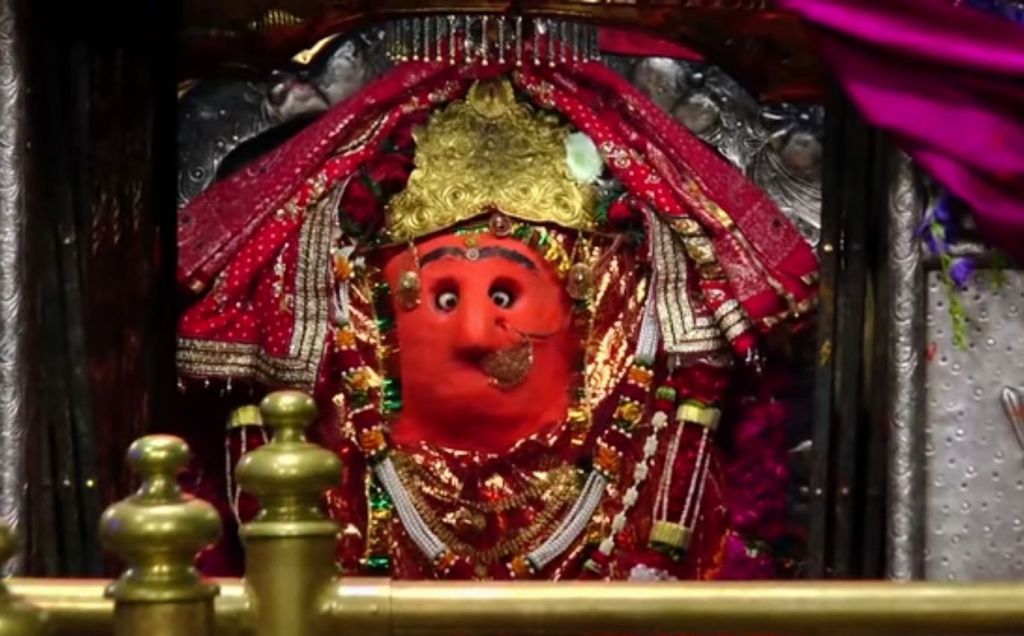
Our first stop enroute was at the Shree Chamunda Devi temple located around 15-17 kms from Dharamshala and also known as the Chamunda Nandikeshwar Dham.
This is one among the 51 Shakti Peeths and is believed to be very powerful. Built in the 16th century during the reign of Raja Umed Singh from Rajasthan this temple is dedicated to Goddess Kali and is believed to also be the abode for Lord Shiva and Mata Shakthi.
Legend has it that Goddess Kali had killed 2 notorious demons Chanda and Munda in a fierce battle and hence the name Chamunda Devi got derived from the demons and Goddess. The temple witnesses a huge influx of crowds during the nine day festival of Navrathri.
The Baijnath temple
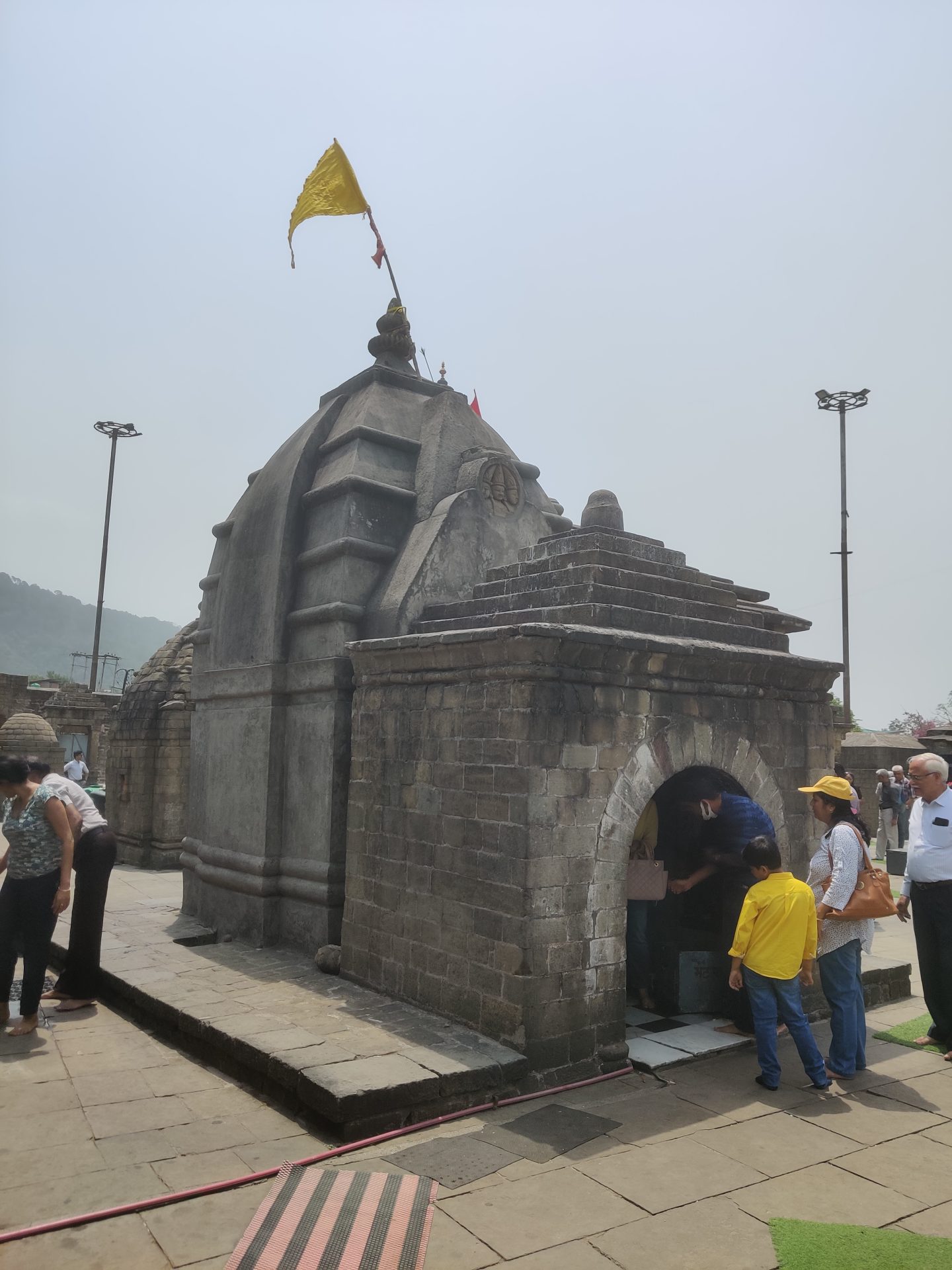
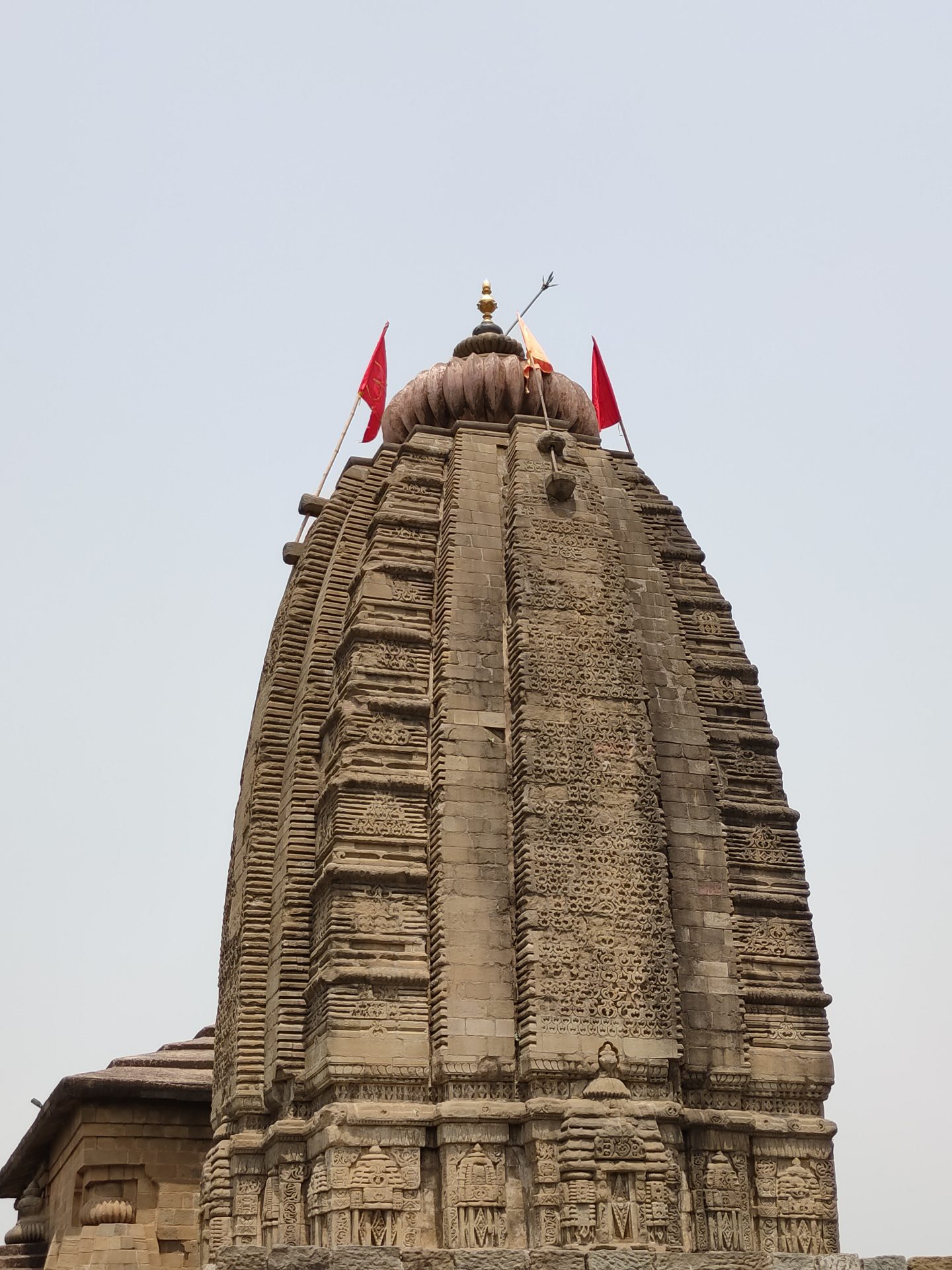
A drive for around 35 kms for around an hour brought us to the small town of Baijnath where a very famous Nagara style temple of Lord Shiva is located. This temple was built in the 8th century by 2 merchants Ahuka and Manyuka.
THE BAIJNATH TEMPLE
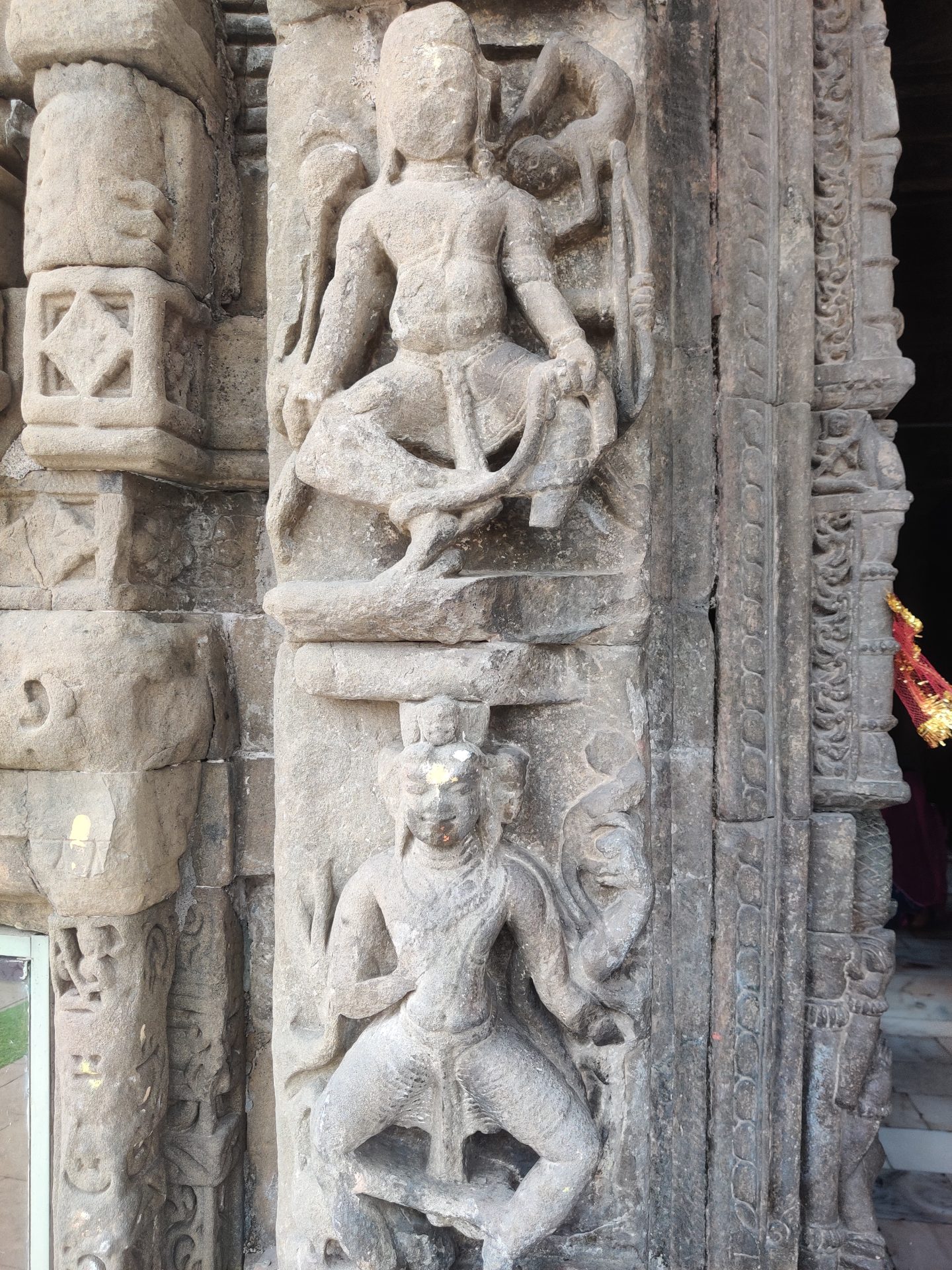
Lord Shiva appears as Vaidyanath or the Lord of Physicians here. The temple has some exquisite carvings and the porch has inscriptions which point to the existence of a shrine of Lord Shiva at the same spot.
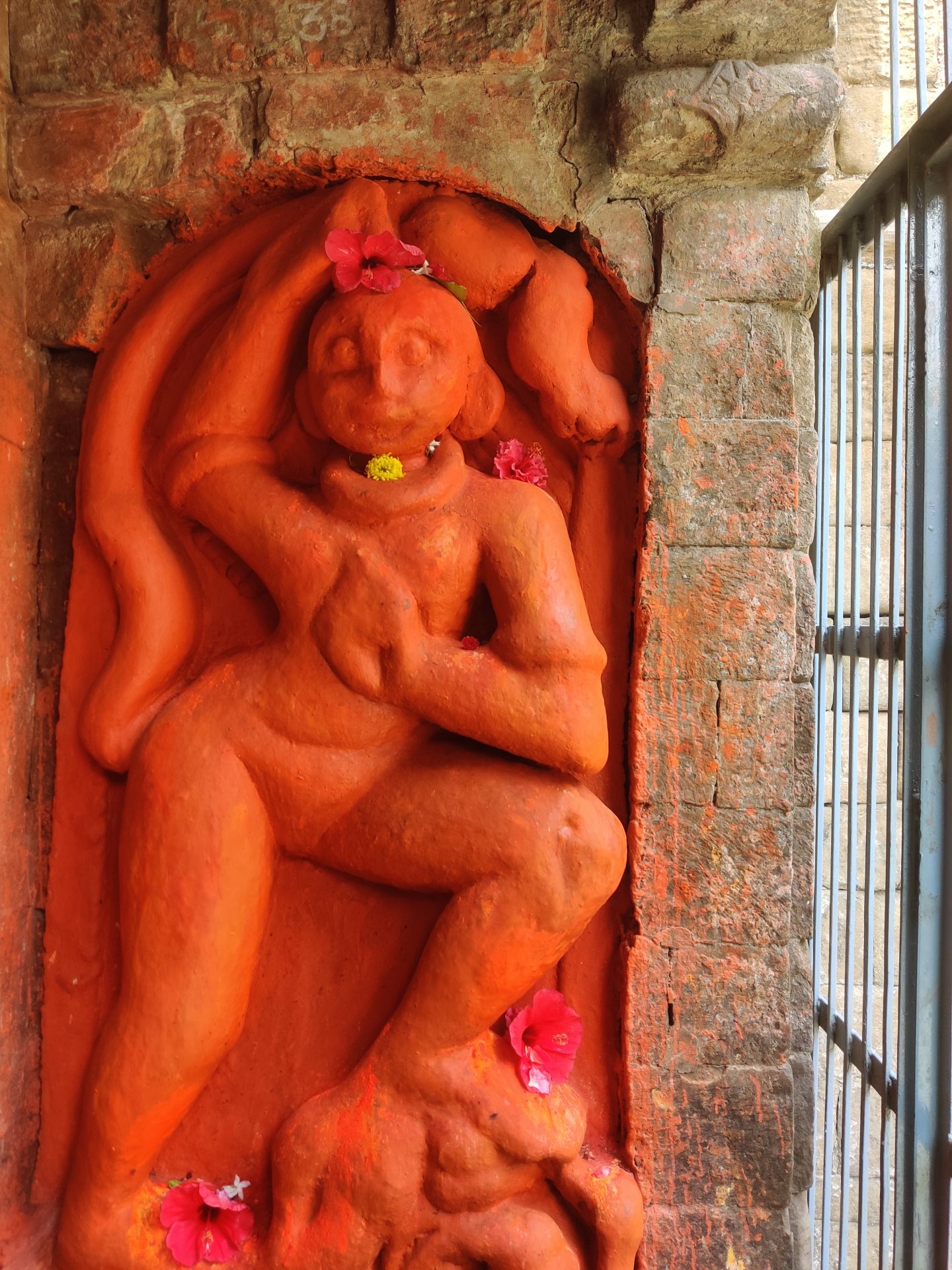
The temple also has idols of Ganesh, Chamunda, Surya and Karthikeya (son of Lord Shiva) besides a large statue of Nandi, the carrier of Lord Shiva.
One of the 12 Jyotirlingas is believed to be located in the sanctum of this temple. According to Hindu mythology, it is believed that Ravana, a very ardent devotee of Lord Shiva started his penance in Kailash and when it did not yield results went to a place called Kurah in present day Manimahesh in Chamba district and intensified his prayers besides started offering his heads as sacrifice.
Another very interesting snippet of this town is that there no goldsmith shops in this town for a strange reason that Lord Shiva did not like gold and Ravana’s Lanka was made of gold. The conflict between the devotee and the Lord is what is believed to have led to this though there are other stories around this. People however believe that a curse would befall them in case they open a goldsmith shop here and hence most go to the nearby town of Paprola for their gold purchases. So much so for folklore.
We crossed the stretch of roads leading to Bir and Billing which are World famous Landing and Take off sites for Paragliding.The 2015 Paragliding world cup was also held here in these twin villages. Said to be the World’s Second Highest take off spot at 8,000 feet and Asia’s Highest, this sport sets the adrenalin rolling and is a much sought after adventure activity for the brave hearted.
WAY TOWARDS BIR & BILLING FOR PARAGLIDING
We continued our drive for the next 2 hours to reach the town Of Kamand where we pulled into a roadside Dhaba The Food Studio for lunch.While there were no choices for pure vegetarian eat outs on the way, we had to make do with whatever veg stuff they could cook us up and it was not too bad either. We left by around 2.45 PM and crossed the picturesque campus of IIT Mandi enroute.
THE PICTURESQUE IIT MANDI CAMPUS
The Rafting Point before Manali
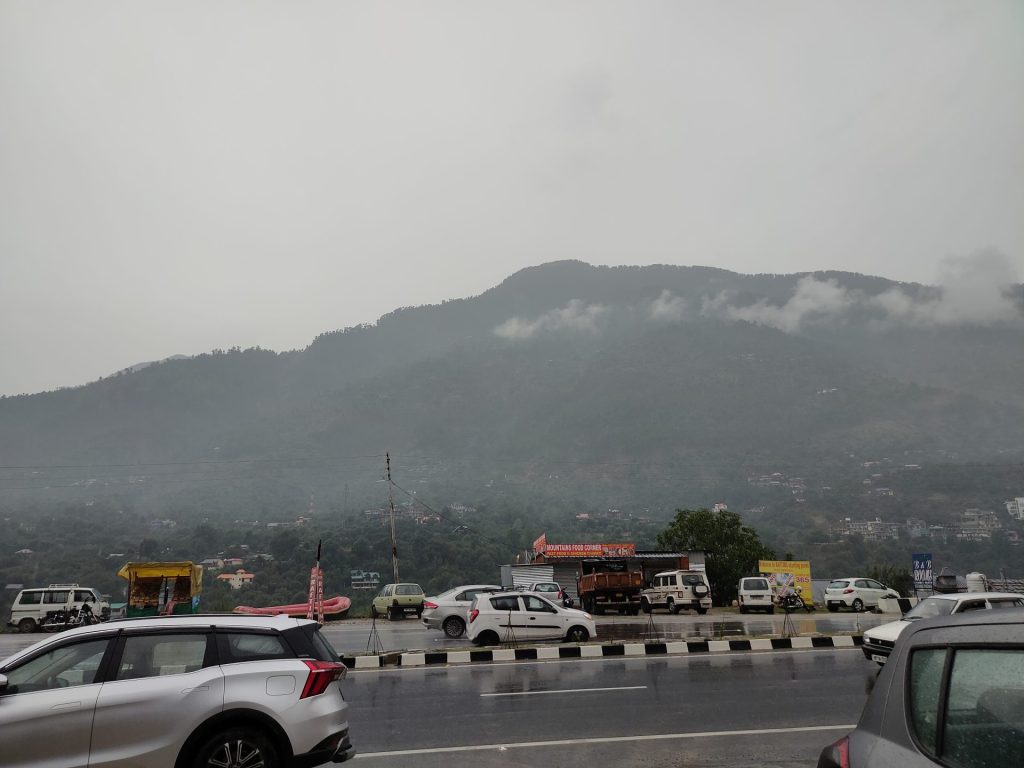
Manali was still a good 90 kms away and in between mild drizzles we drove on non stop till we arrived at the Rafting Point in Kullu across the river Beas for a quick photo shoot. The roads were not too broad but in pretty good shape but were in much better condition that what we had experienced in 2008 when we had driven down from Delhi.
It was around 5 PM and we crossed over the road to a point from where the river rafts were taking off. Spent some time by the river side, watching people breaking into groups for the rollicking ride down the rapids. These short and long rides vary in distance between 4 to 14 kms and can take anywhere between 30 minutes to an hour and a half. The costs could vary anywhere between ₹ 750 to ₹2,000/- depending on the distance and complexity of the course. It was already pretty late in the day and maybe had we arrived earlier in the day, we could have given it a shot.
We parked the idea thinking that maybe if we get some time on the way back from Manali to Kasol, we would attempt it and drove onto Manali which was still another 40 Kms away.
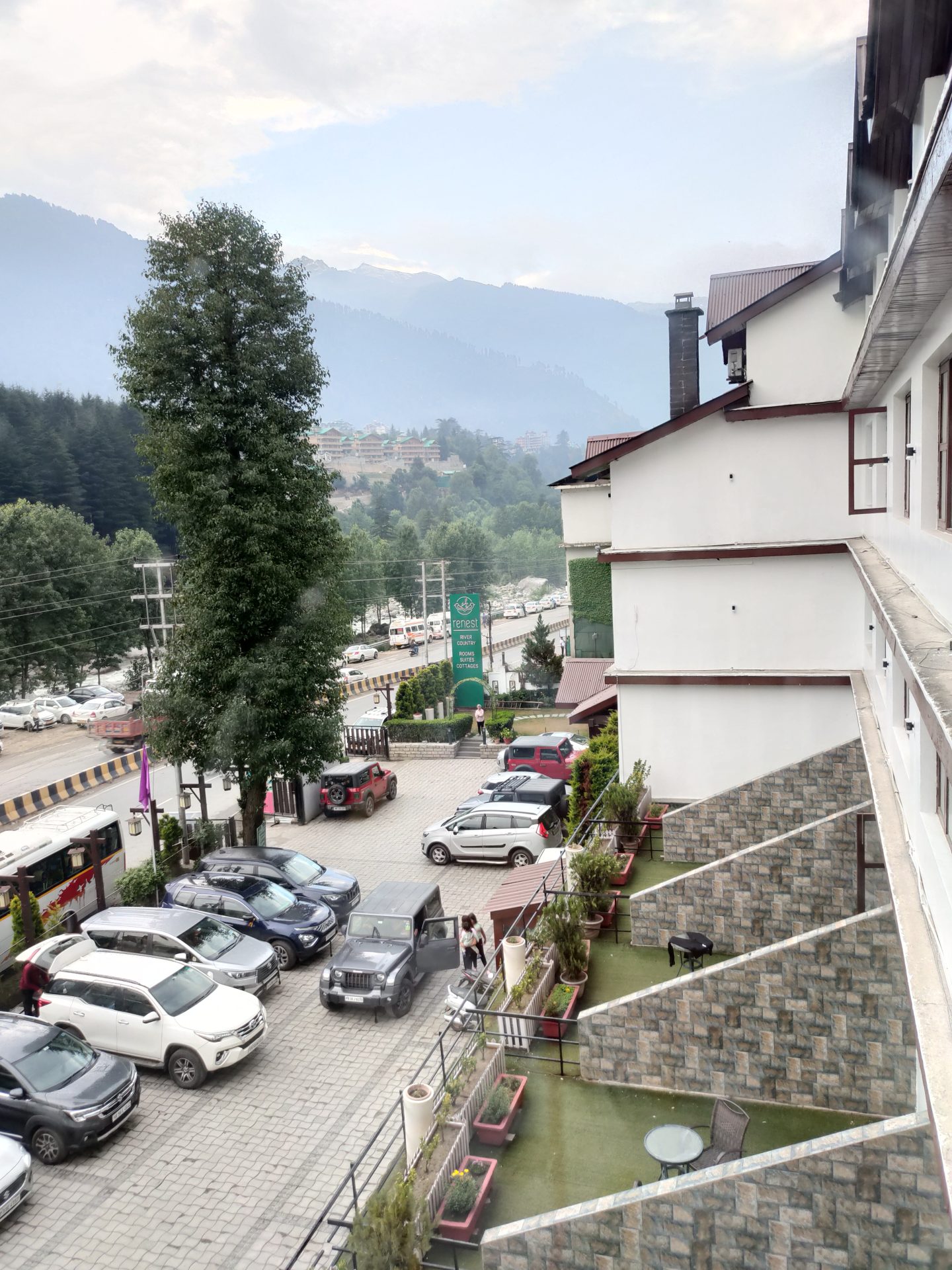
We reached our resort by around 6 in the evening. This was the same lovely place where we had stayed in 2008. All that was different was a name transformation from Quality Inn River Country Resort to Renest River Country Resort while the ambience, service and food was the same.
Manali
If you are an adventure seeker wanting to ski down slopes or rush down rapids or glide down valleys with your adrenalin pumped up or one who just wants to spend some ME time with oneself in the solitude of the mountains watching the beautiful landscape around or just hang around a stream in the company of chirping birds, Kullu and Manali would be the perfect recipe for a holiday.
And if you were to further elevate your travel experience, Rohtang Pass is always there.
The gateway to Lahaul and Spiti, the Pass connects the town of Manali to Leh through a shorter distance via the Atal tunnel, an engineering marvel.
There are some ancient temples and hot water springs also in Manali which should definitely form part of one’s itinerary.
Renest River Country Resort
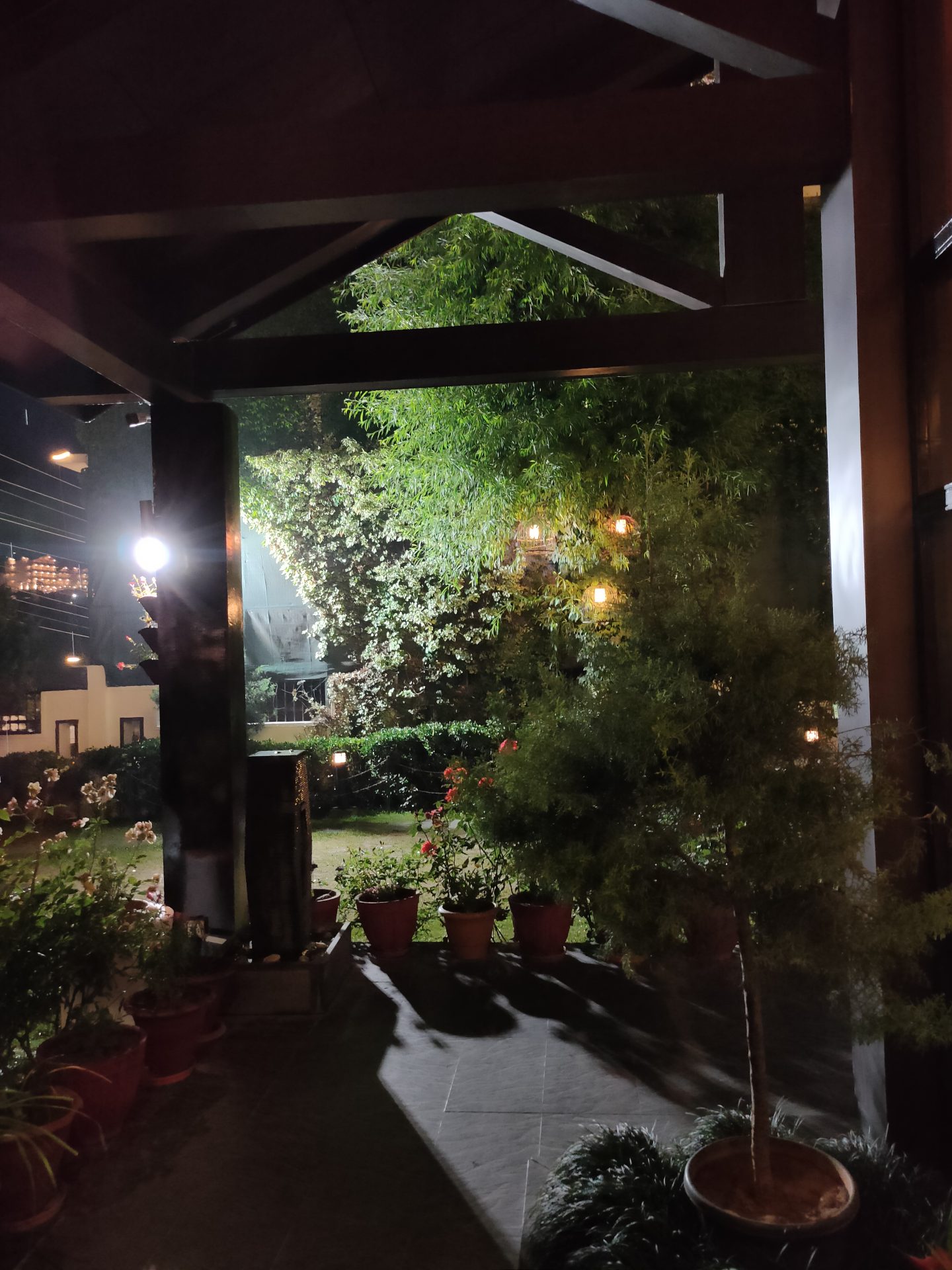
Away from the din and bustle of the main city and around a km before the Mall Road this 58 room resort overlooked the Beas river and had some lovely views of the mountains from the room itself. Went around the resort and the garden reliving our memories and headed for an early dinner to the restaurant as the next day was to be an early start to the most awaited stuff on our itinerary – The Rohtang Pass, located around 50 kms away.
For those planning a visit to Rohtang Pass, a vehicle pass is mandatorily required as they ration the number of vehicles allowed per day. During the peak season, its quite difficult getting one and for all those planning a visit, these passes have to be applied a week in advance online on the Kullu Administration website.
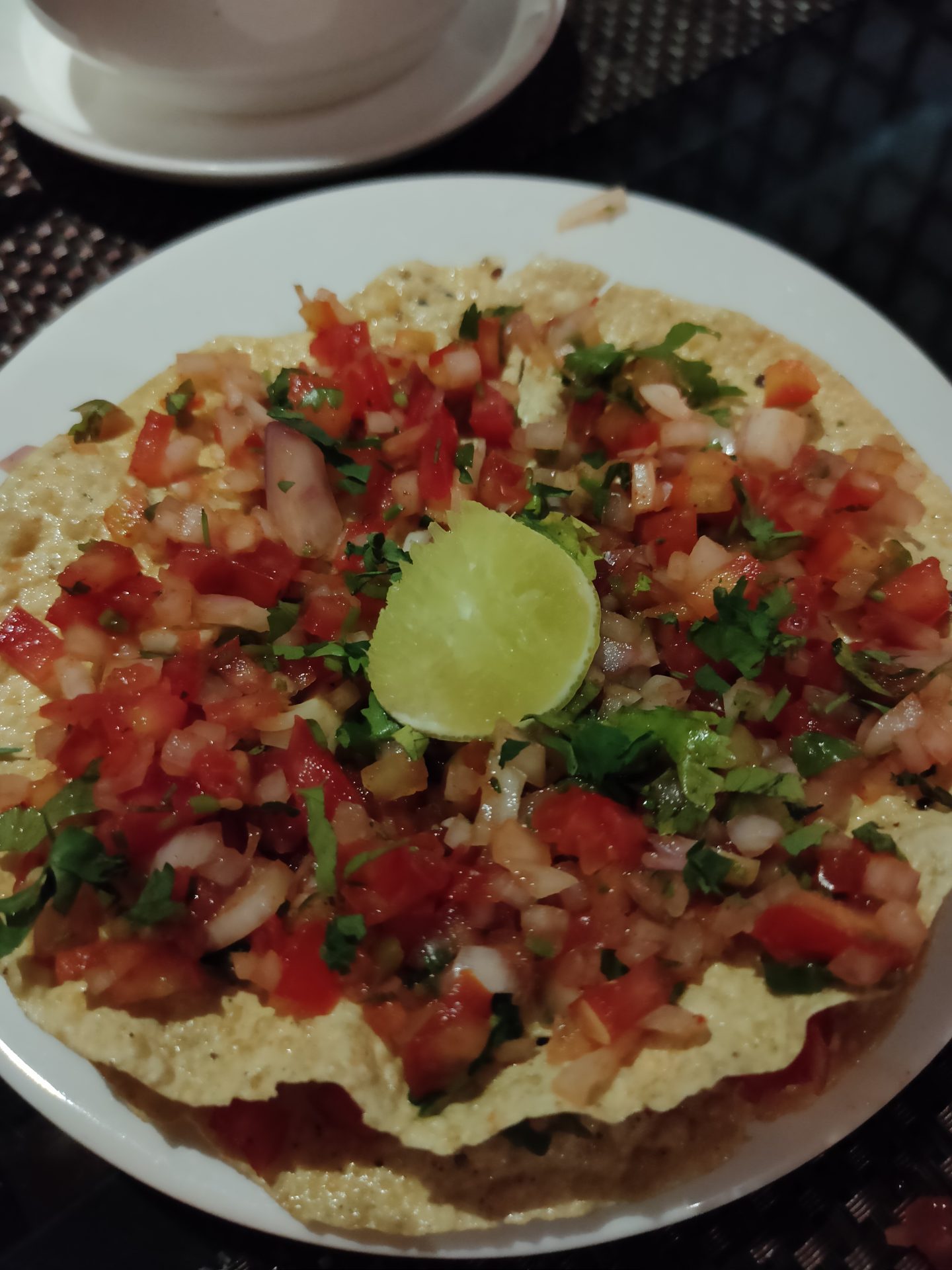
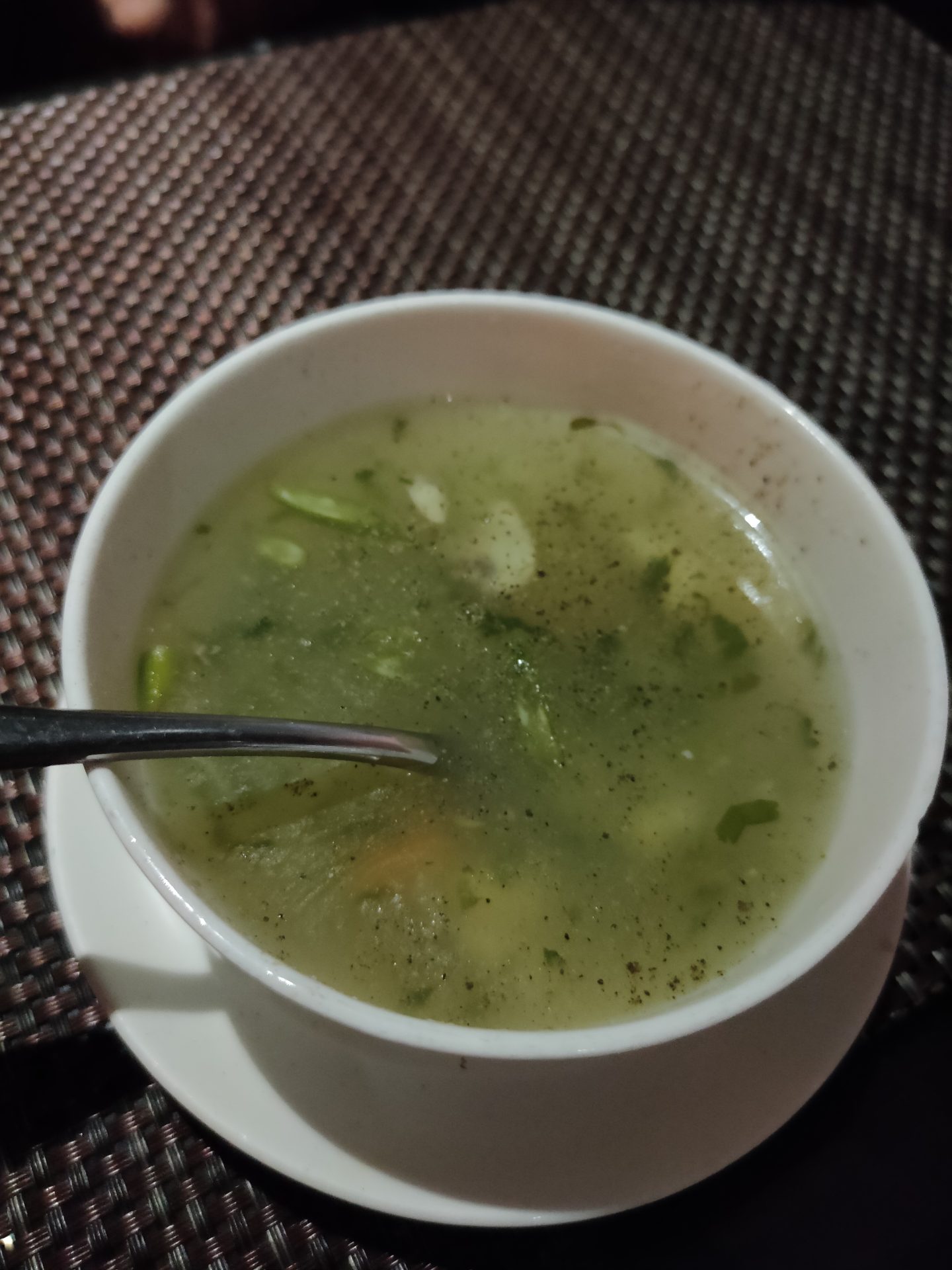
An excellent spread of food over the couple of days we stayed here
If luck befalls you, you are at the mercy of the taxi union folks who can charge you anything upwards of ₹ 8,000/- to ₹ 10,000/- for a visit to Rohtang alone while the cost of the pass is only ₹ 500/-. The number of passes issued per day is also restricted to 1200 vehicles only and beyond Palchan, if you don’t have a pass, you are sent back.We were lucky with our cab operator who managed to get out the pass, 6 days before the date of our visit.
June 16th 2022
In our endeavor to beat the traffic and crowd, we left our hotel at 6.30 in the morning.
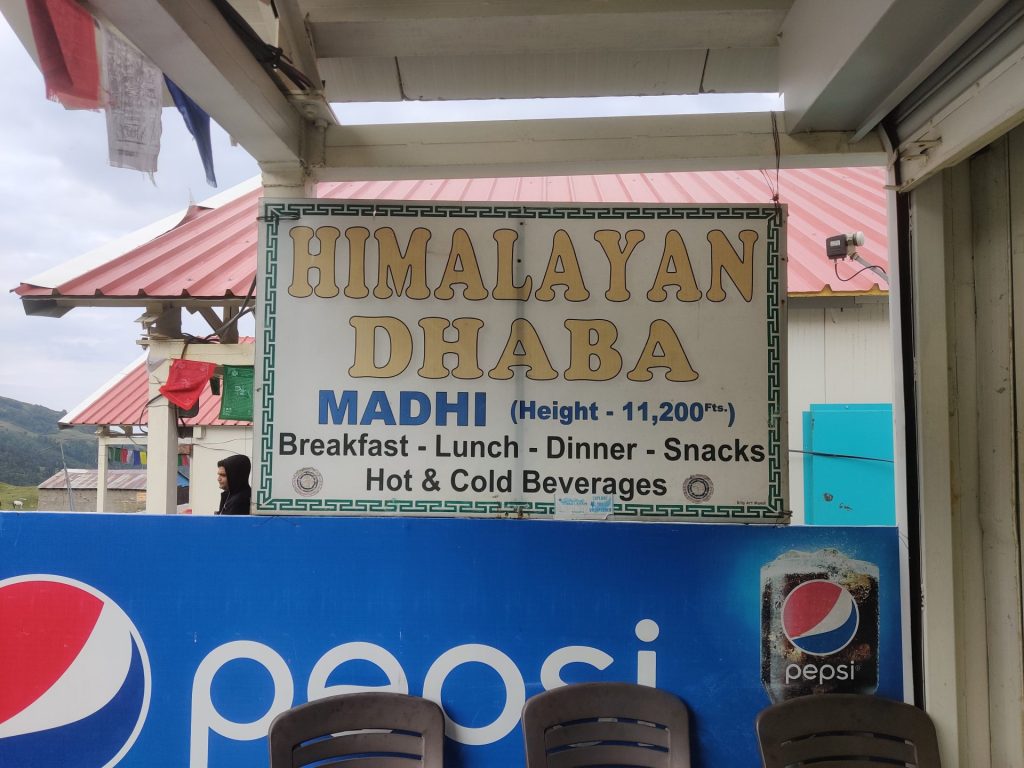
While we forgot to pack ourselves some sandwiches from the hotel which they agreed to do for us, we carried some snacks and biscuits to serve us company. A little ahead of our hotel we stopped at a shop to hire some winter clothing to keep us warm and comfortable. The only hitch was that we had to get into these dresses and sit like zombies in the cab since you require the help of the locals to get into these dresses. Good roads, nice weather and all well till we reached our first break point at Madhi which was around 11,000 feet above sea level.
The Rohtang Pass
The weather had just begun to become a bit cold and the fingers were becoming numb. Good breakfast in the form of piping hot Maggi, bread omelette and masala tea were our saviours and having had our fill, we started off towards the pass, stopping at a couple of picturesque spots for some pictures.
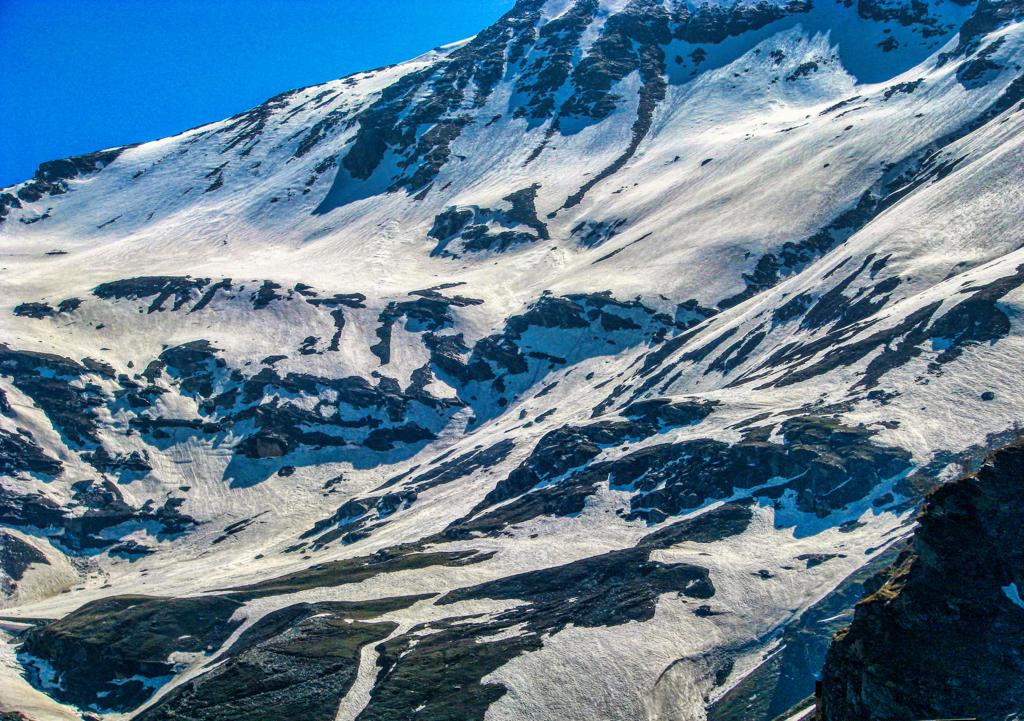
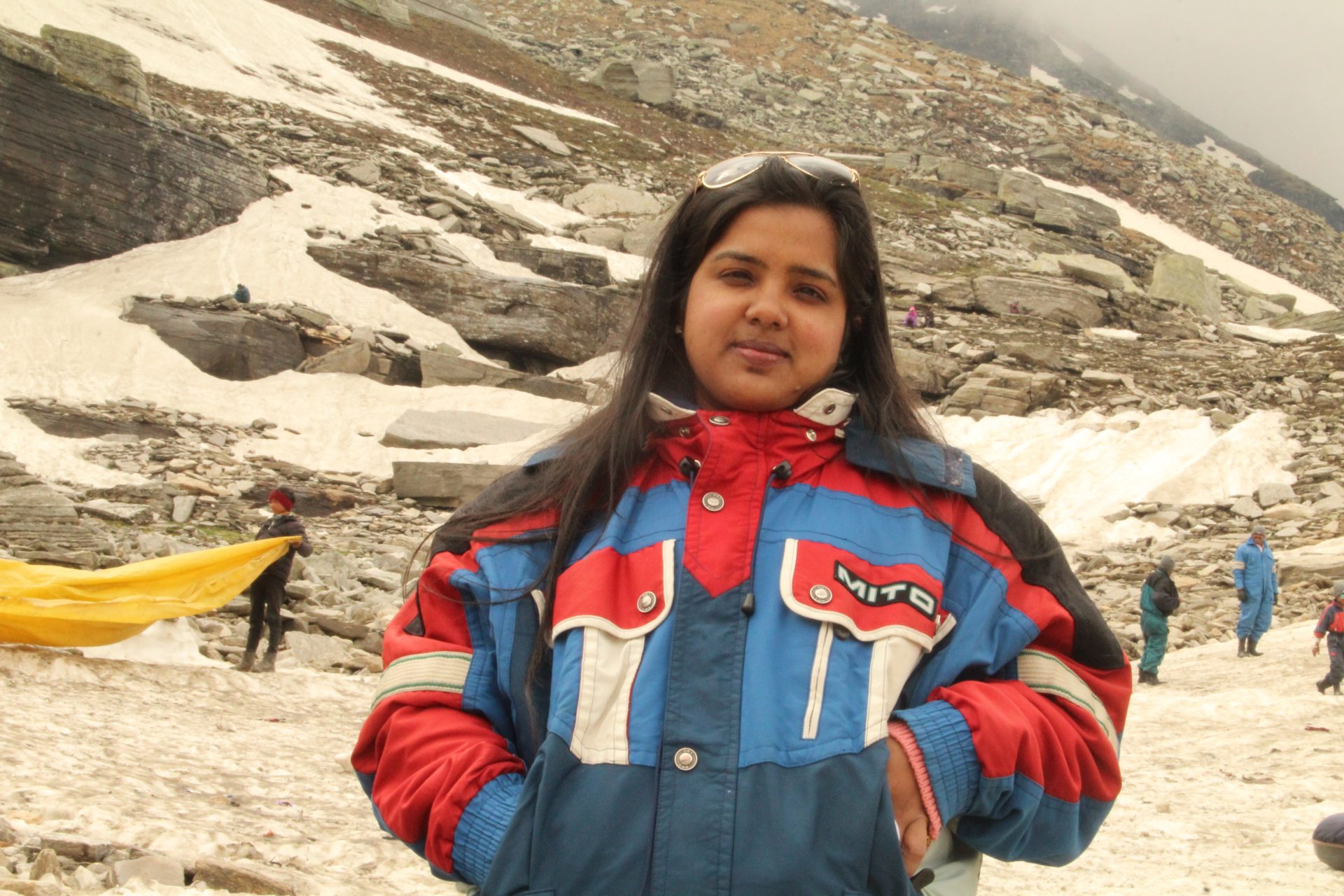
We reached the Rohtang Pass base point, located at around 13,000 feet above sea level by around 9 AM and saw vast stretches of barren land. No signs of snow/ice whatever which is when the cab guy told me that we would travel a little further up to Zero Point where we could see snow.
Maybe because it was the month of June and most of the snow had melted. The only way to reach Zero Point was to ride atop a pony which the ladies point blank refused. The other alternate was to hitch a ride in an All Terrain Vehicle (ATV), the sheer size and look of which really intimidated us. We settled for the latter paying ₹ 5,000/- for a return trip for 2 vehicles. The ride was goddamn scary riding over not just rocks but literally boulders and I was just amazed at the way the vehicle was climbing over these with ease and all with 3 people seated. It was very tough indeed with almost all the bones of the body creaking and we living with the perpetual fear of getting thrown off the contraption.
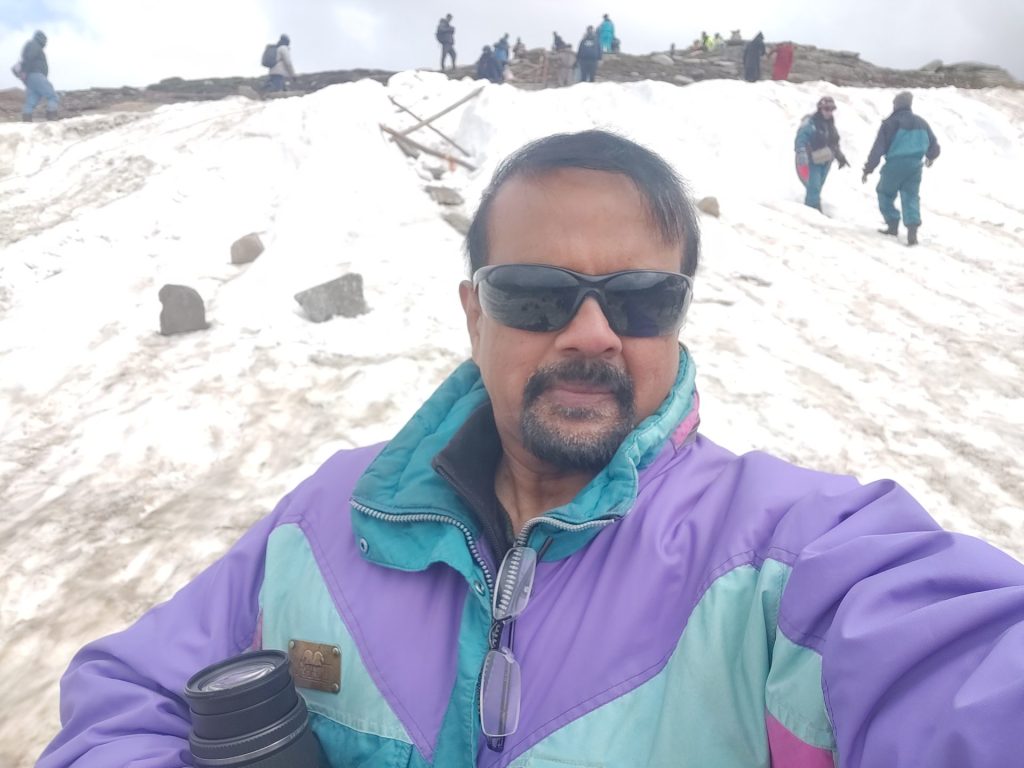
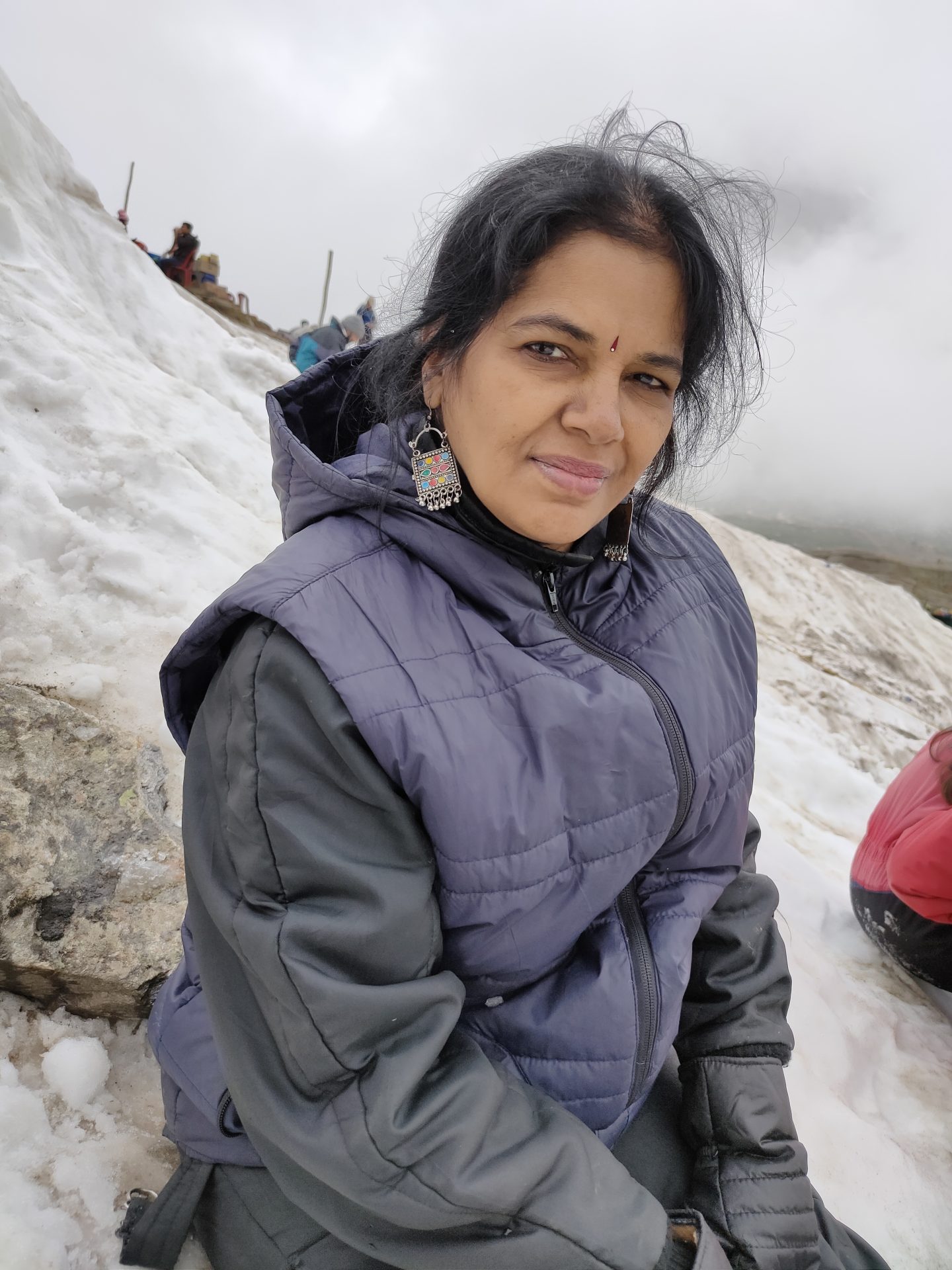
Finally after 30 minutes of a tough climb, white sheets of snow unfolded before our eyes. Spent a good 2 hours playing around in the snow and finally at around 11.30 we started our descent in the same ATV.
We reached in about 15 minutes time, helped ourselves to some hot Maggi, Fritters (Pakoras) and some tea to go with it and commenced our journey back to Manali via the Atal Tunnel through some very well maintained roads.
The drive was downhill through the towns of Gramphu and Kokhsar till we reached the Atal tunnel, located around 32 Kms away. The Chandra river meandered across the road for quite some distance and one could get magnificent views of snow capped mountains enroute.
A feat of engineering marvel, the Atal Tunnel named after our former Prime Minister is a 9.2 km long tunnel which reduces the distance between Manali and Leh by 45 kms which roughly translates to around 4 hours of journey time. Conceived in the year 2000 and finally inaugurated in the year 2020, this tunnel is the world’s longest highway single tube tunnel above 10,000 feet.
The town of Manali was 24 kms away from the South Portal of the Atal Tunnel. On our way back, we skipped the Solang Valley since it was more for paragliding and the unfortunate death of a 20 year old lad and his 24 year old instructor while paragliding a day before in Kullu in inclement weather and harsh conditions kind of rattled us.
The Vashisht Temple
We drove on further and stopped at the 4000 year old historic Vashisht Temple named after the great sage and just around 3 kms from Manali town. There is a hot water sulphurous spring where one can take bath and in the near vicinity of the village are 3 temples built for Lord Shiva, Lord Rama and Sage Vashisht.
The water from the spring is supposed to have lot of healing powers. According to legend, it is believed that Sage Vashisht on hearing that his children were killed by Vishwamitra tried committing suicide by jumping into river Beas but the river refused to kill him. The river which saved the sage was named Vipasha which translates to freedom from bondage and this got renamed to Beas later on.
A black stone carving of the rishi wearing a dhoti can be seen here in the temple which has some intricate and lovely carvings in wood. Having offered our prayers, we reached our Resort by 4 PM.
THE HOT WATER SPRING
We were famished by the time we reached our room and while the kids and wife had their lunch at the hotel, I stepped across to the opposite side of the resort to a restaurant called Indian Flavors to try and sample some local cuisine. Post that walked across to the Mall Road and came back to the resort by around 5.30 in the evening.
Had an opportunity to have a quick tour of the Manali Gompa, a Buddhist monastery built in 1960 by Tibetan refugees and housing a huge statue of Lord Buddha. There was pretty much nothing else to do or see on the Mall road. The usual cluster of shops, eating joints, crowds and nothing really fanciful. We settled for dinner in the room as all of us, needless to say were drained out.
June 17th 2022
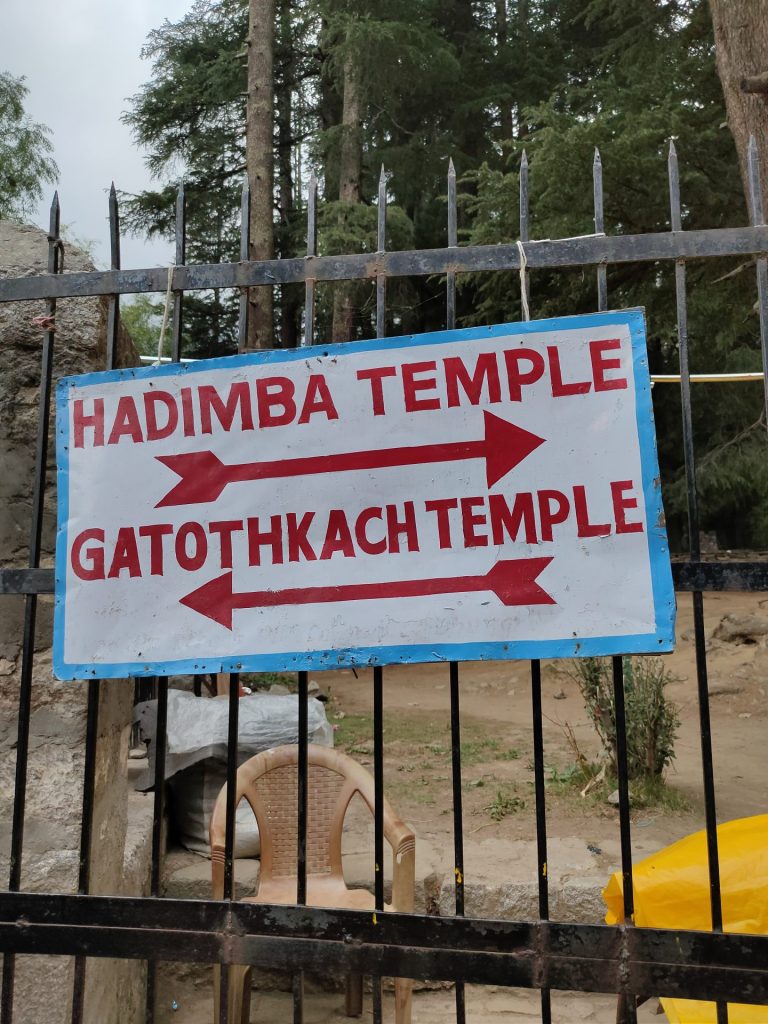
The Hadimba & Gatothkach Temple
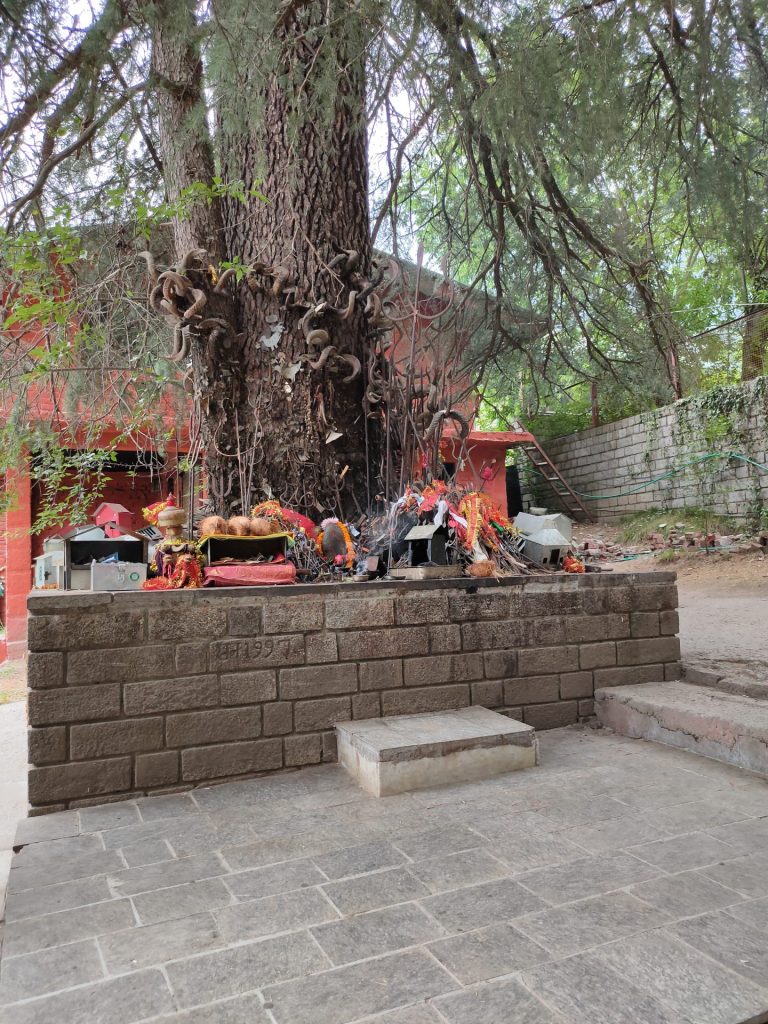
The next day was to be our check out from the resort and a drive to Kasol. 76 kms away. Since it was to be a 2 hour drive only and we had a couple of places to still see, we left the resort by 11.30 in the morning for the Hadimba Devi Temple or the Dhungari Temple. This temple was built in 1553 AD by Maharaj Bahadur Singh and around a cave, dedicated to Hadimba who was the wife of Bhima, one of the five Pandavas in the Mahabharatha.
The temple is a 4 storied structure and while the top conical portion is made out of metal, while the rest of the 3 square shaped floors use timber tile roofing. There is no idol inside the temple but a large stone supporting her footprint. Close by to this temple was the Gatotkach Tree temple, the son of Bhima and Hadimba. Being a mythical warrior from the epic Mahabharat, he is revered as a deity amongst the people in North India.
We finally left the town of Manali by 1.30 in the afternoon for Kasol. A little outside the outskirts of Kullu, we stopped at a roadside fruit shop to pick up some fresh fruits and squashes. This is something which people should not miss. Absolutely fresh fruits and the perfect squashes without the artificial tinge.
A WAYSIDE FRUIT SHOP
Around 45 kms from Manali, we reached the town of Talogi in Kashawri for lunch at Freedom Dhaba. It had started raining by the time we left Kullu and it had settled into a mild drizzle when we reached this place. A pure veg restaurant with some really good variety on offer.By around 4 in the evening, we continued our drive towards Kasol which was still around an hour’s drive away.We unfortunately got stuck in a traffic jam near a place called Sarsadi and which took almost 90 minutes to clear.
The drive to Kasol save for a traffic jam in between, overall was very picturesque and we got to see some lovely views of river Parvati in full flow.
Kasol
Also known as Mini Israel, this small town of Kasol is not very far away from Manali. The influx of tourists especially from Israel is to be seen to be believed. In terms of the scenic splendor around with the dense conifer trees, winding rivers and snow capped mountains, its also gets referred to as the mini Amsterdam of India. Kasol offers tourists lot of options for trekking and camping sites, nestled right in the valleys with the gurgling waters of the Parvati river flowing nearby. Close to Kasol lies the village of Malana which has a very peculiar history of its own with the inhabitants thinking themselves to be descendants of King Sikandar.
Manikaran Gurudwara Sahib
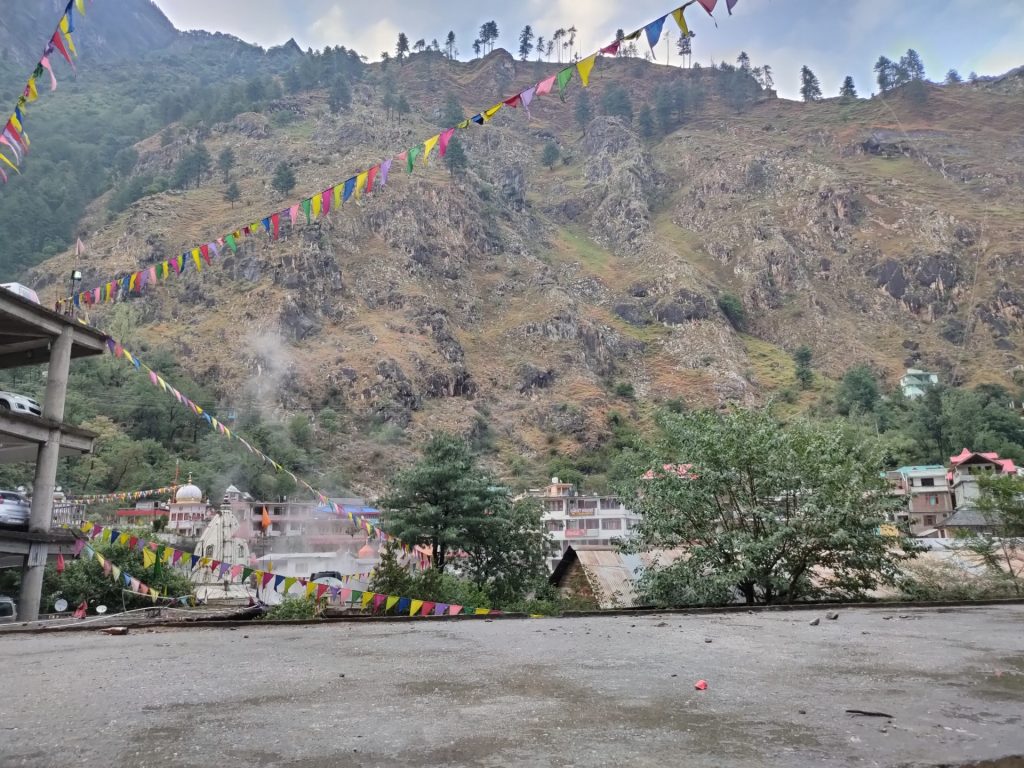
We finally reached the holy place of Manikaran by around 7 in the evening. Fortunately it was still daylight and we could get a clear view of the Gurudwara Sahib and the Parvati river and the steam emanating from the hot water springs. We went around the Gurudwara and a Shiv Mandir inside the complex. The sulphur spring was just outside the Shiva temple and the water out there was bubbling hot.
As an offering to the deity people were buying small cloth bags filled with rice or chickpeas and boiling them in the hot water spring for about 15 to 20 minutes and consuming them as prasad. We left the premises of the Gurudwara and drove through the market area for our hotel by around 8 PM.
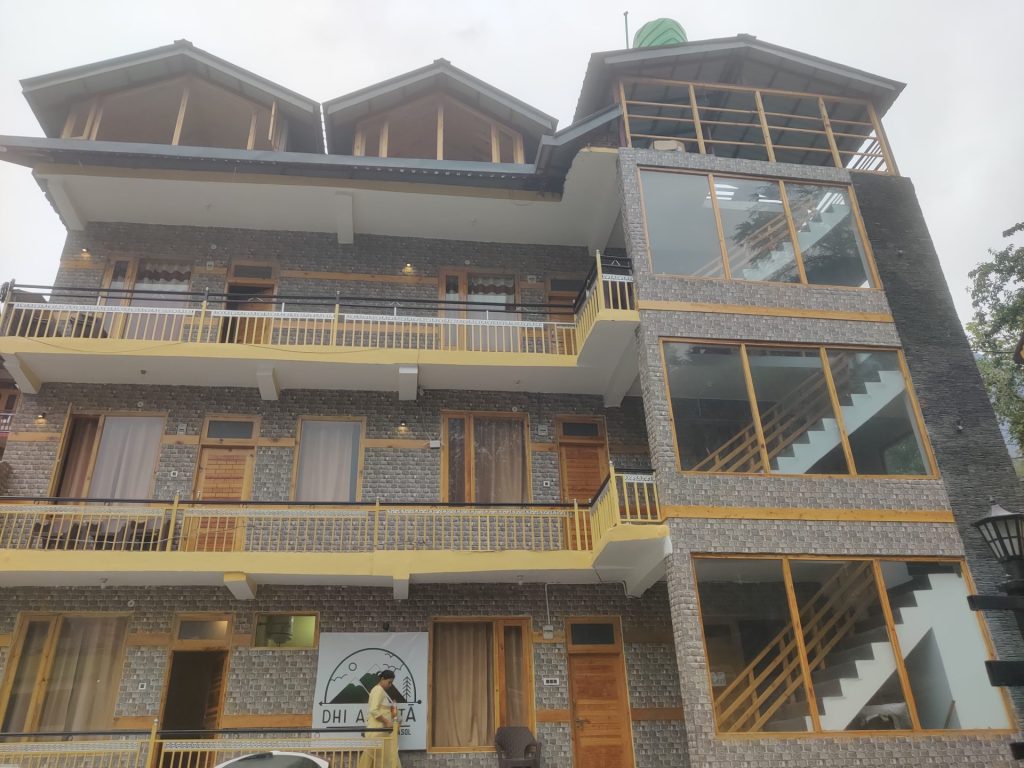
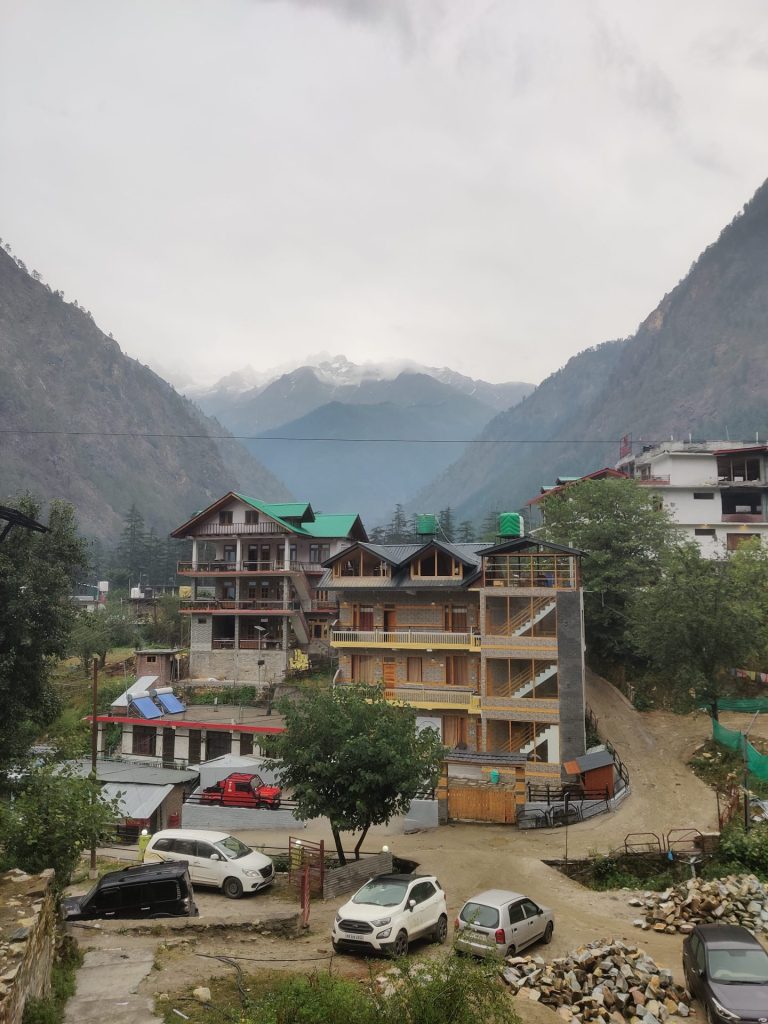
It was already late but we managed to find our way through and reached DHI Ananta Homestay.A very nice property with not much of frills and built a little away from the din and bustle of the market and main road. This was run by a Gujarati couple from Mumbai Ameet and Jesal and while it appeared like a hotel, it was run more like a homestay.
Lovely backdrops of green covered mountains on one side and a dense forest cover on the rear side, this property had excellent reviews on the net and which is what prompted us to settle for this. We got ourselves some nice dinner freshly cooked and sent upto the room.
June 18th 2022
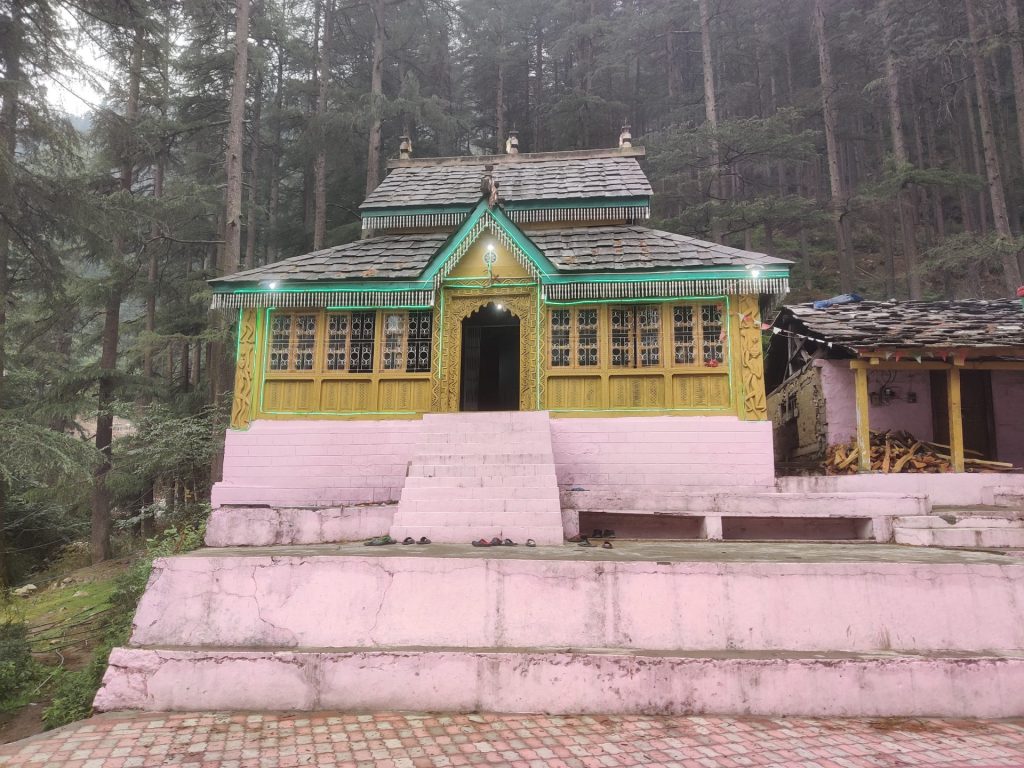
Got up early and walked across to a small Durga Devi temple adjacent to the property. The air was so fresh and nice and the weather perfect with clear blue skies all around.
Ameet was also up early and served me a refreshing cup of tea and until the other folks got ready, got chatting with him. He turned out to be a travel freak like me and shared quite a few of his travel sojourns across India. Kasol as per him was the drug capital at one time until the law caught up with folks.
Pretty famous for the rave parties and for its free growth of cannabis plantations, this place at one time used to be a favourite with foreigners from across the world and folks from Punjab and Delhi especially during weekends.
A sizeable chunk of tourists from Israel visit Kasol which has helped it earn the sobriquet of Mini Israel.
Another interesting snippet of information was on a place called Malana which comes enroute before we enter Kasol.
This village has its own rituals, its own democracy ruled by Jamlu Devta who is considered as the father of Lord Parushram. Though this place comes under the jurisdiction of the state government, the government does not interfere in their internal matters and things get settled through Jayeshthang (Lower House) and Kanisgthang (Upper House).
Every house in the village has one member in the parliament. A visitor to Malana cannot touch people from that village not the articles in the temple and if he does so by mistake, entails a hefty fine.
The people out here consider themselves to be descendants of King Sikander.
CANNABIS PLANTATIONS
Breakfast at our Kasol homestay would have put us back by around 45 minutes and since we had a long drive of around 290 kms ahead of us which we were planning to complete in around 8 to 9 hours, we decided to have it somewhere along the route.
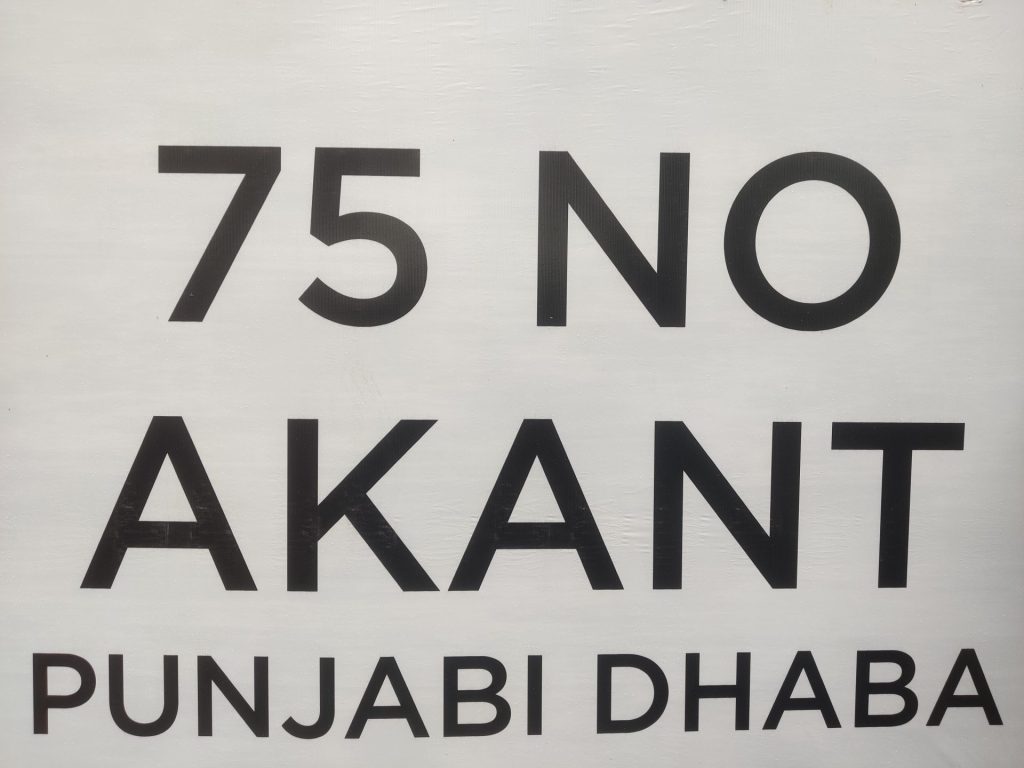
We drove into the town of Panarsa, around 55 kms ahead of Kasol and stopped at 75 No Akant Punjabi Dhaba.
The backside of the dhaba opens out to a view of the river Parvati in full flow and is very picturesque.
We had an assorted variety of Parathas to go with a mild potato gravy, pickles and some yoghurt. Delectable taste indeed.
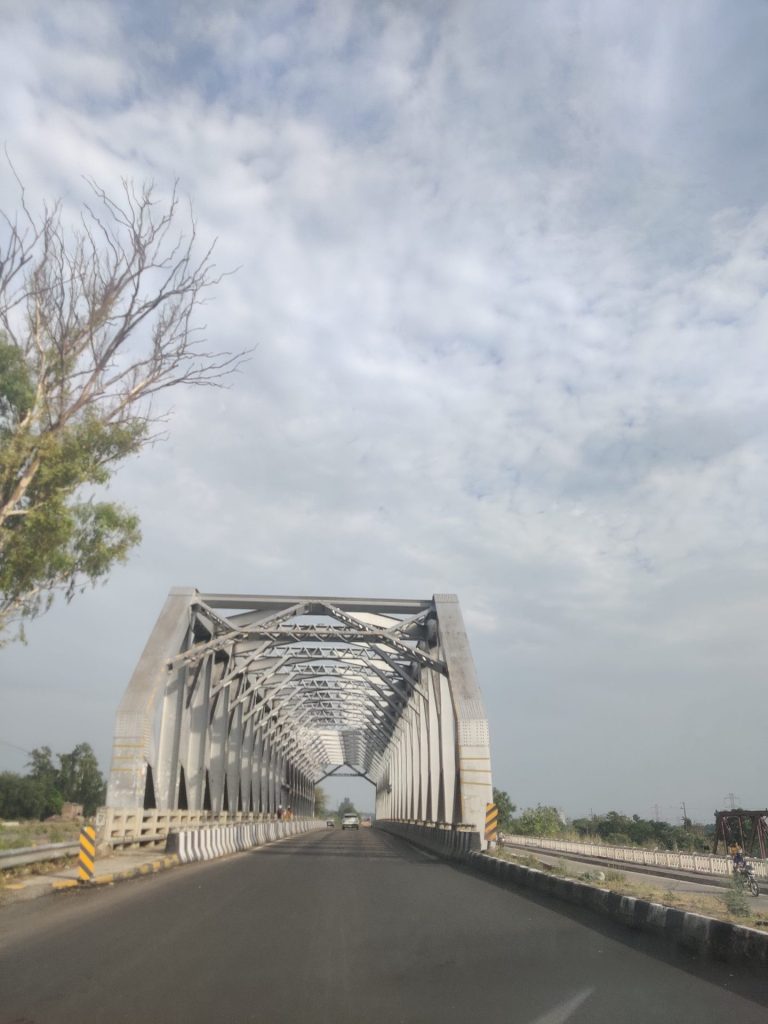
We left this place by around 11.15 in the morning and continued our drive non stop for the next 4 hours. The roads in certain stretches were in very bad shape since they were getting widened and with intermittent rains, it led to lot of traffic snarls on the way. We pulled into a roadside dhaba Shiv Sakthi where we decided to have some lunch.
The place was pretty crowded and the service levels were literally non existent. The fare was very very average but we had no other options around. We finally left from there at 4 in the evening.
Chandigarh
Capital to the states of Punjab and Haryana, this union territory of Chandigarh is one of India’s best planned cities.
Designed by the renowned Swiss French Architect Le Corbusier, Chandigarh is one of the best experiments in urban planning and modern architecture.
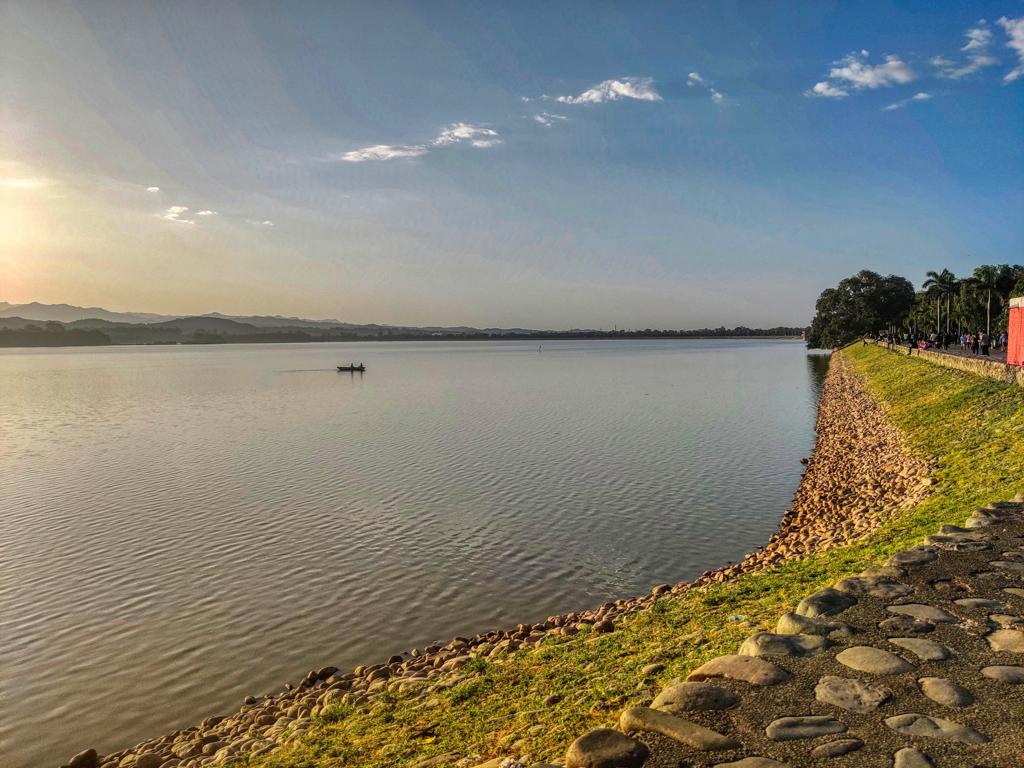
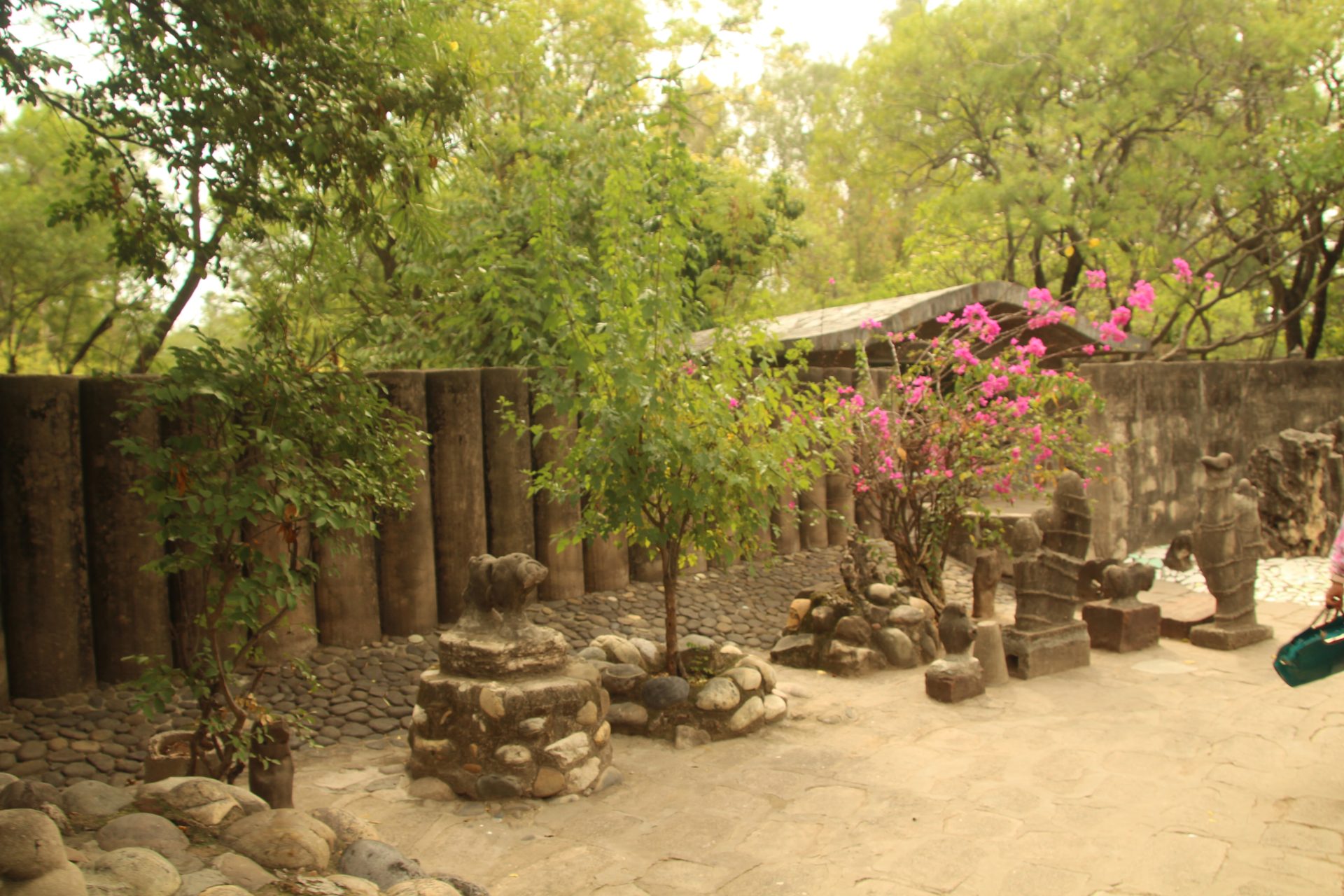
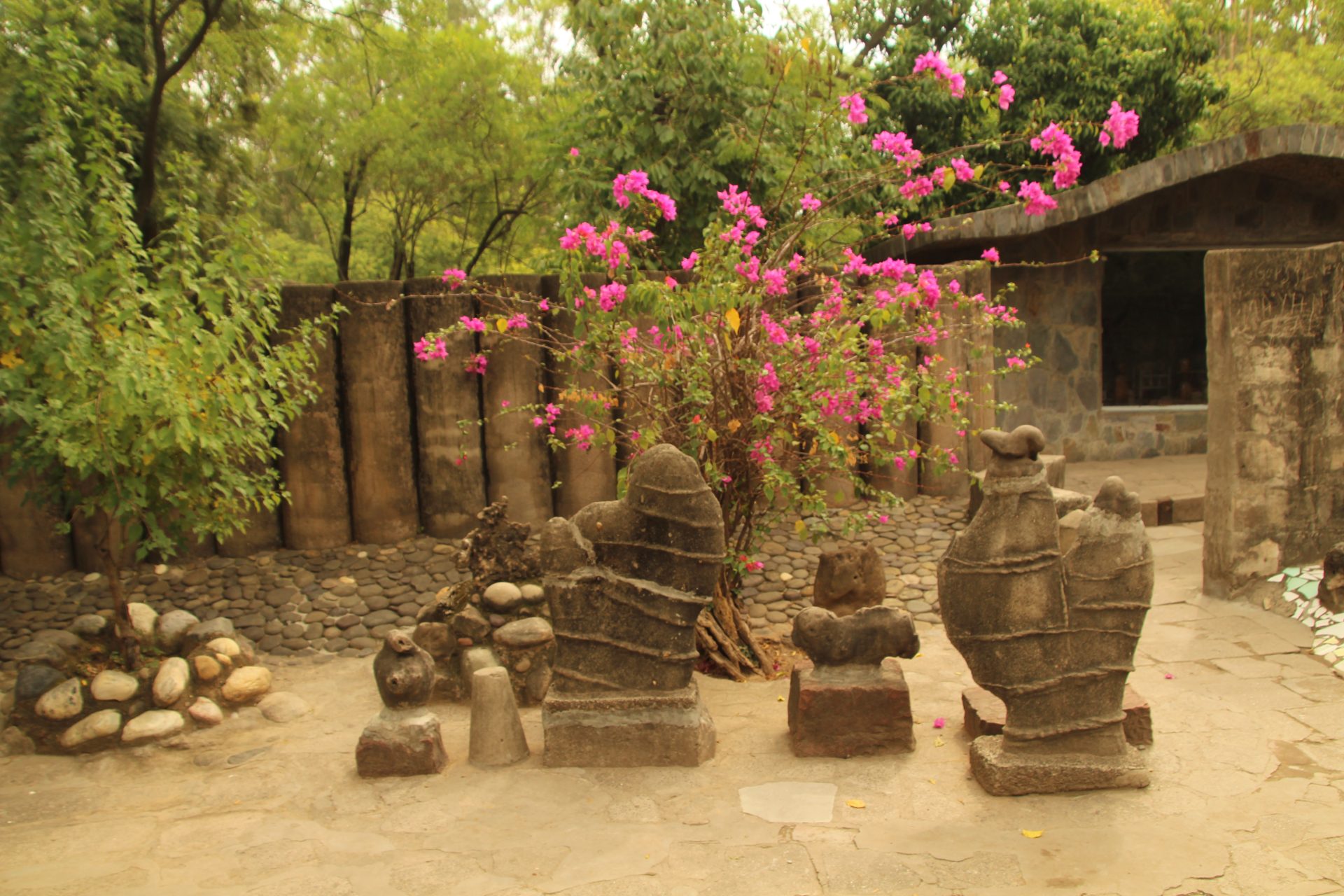
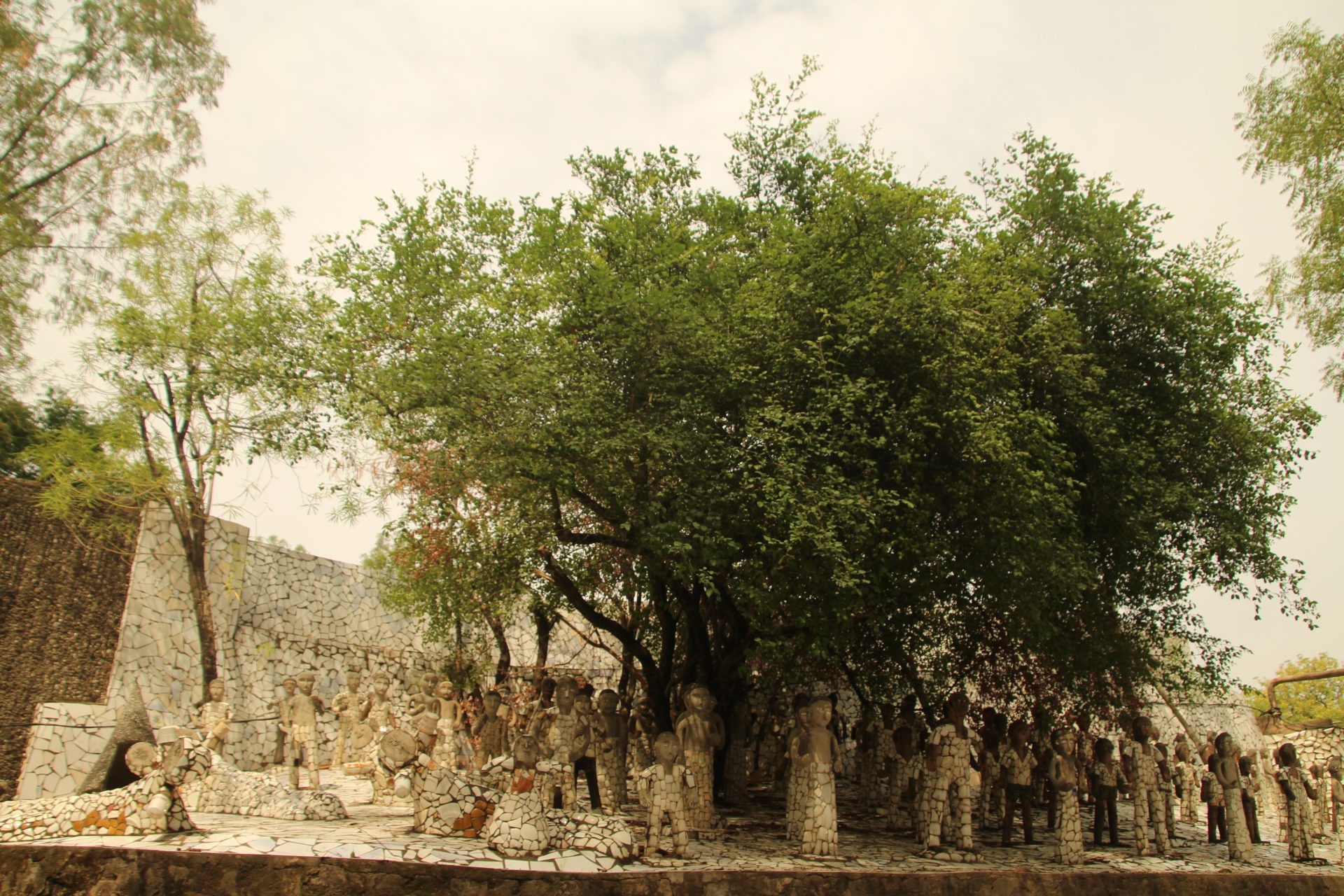
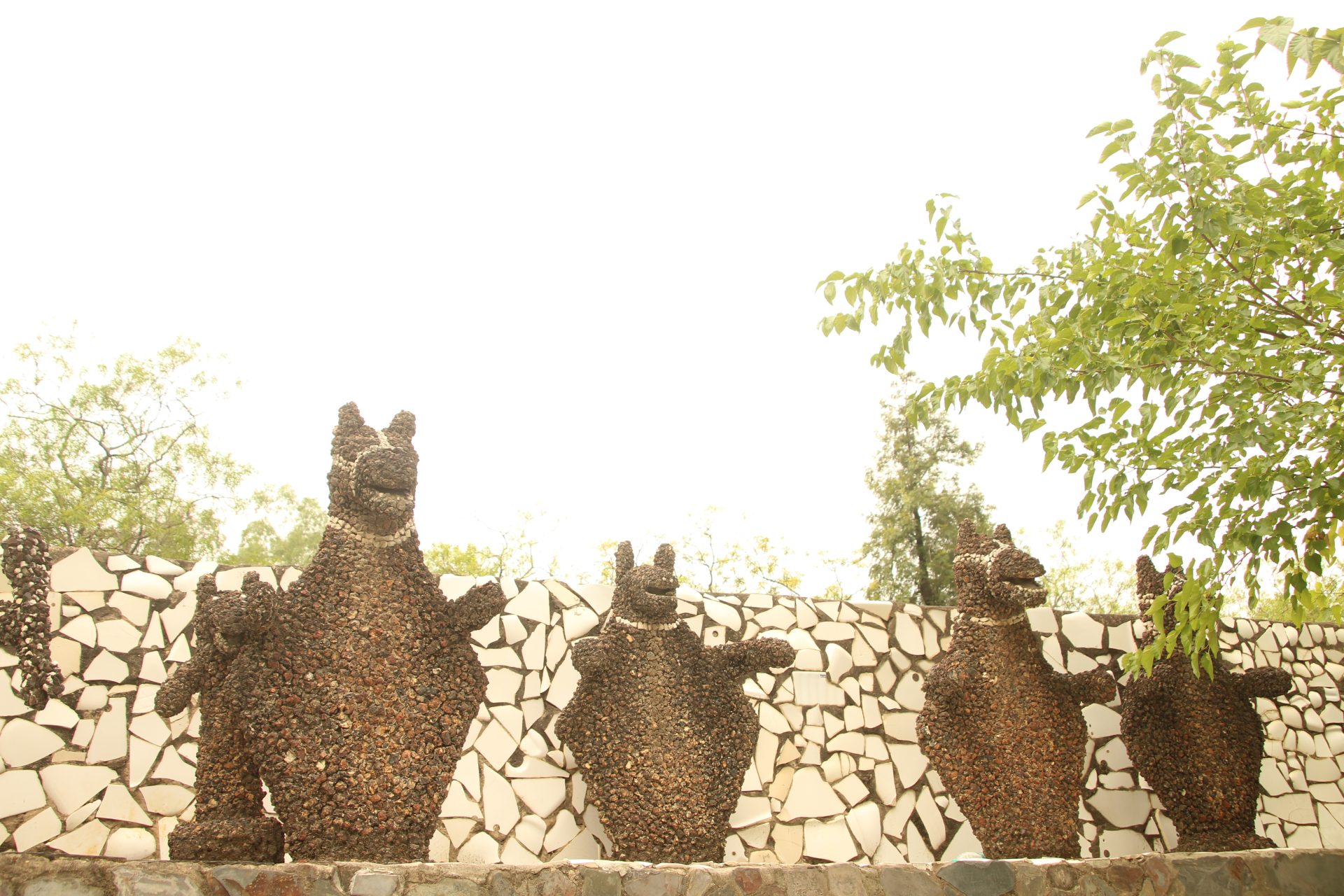
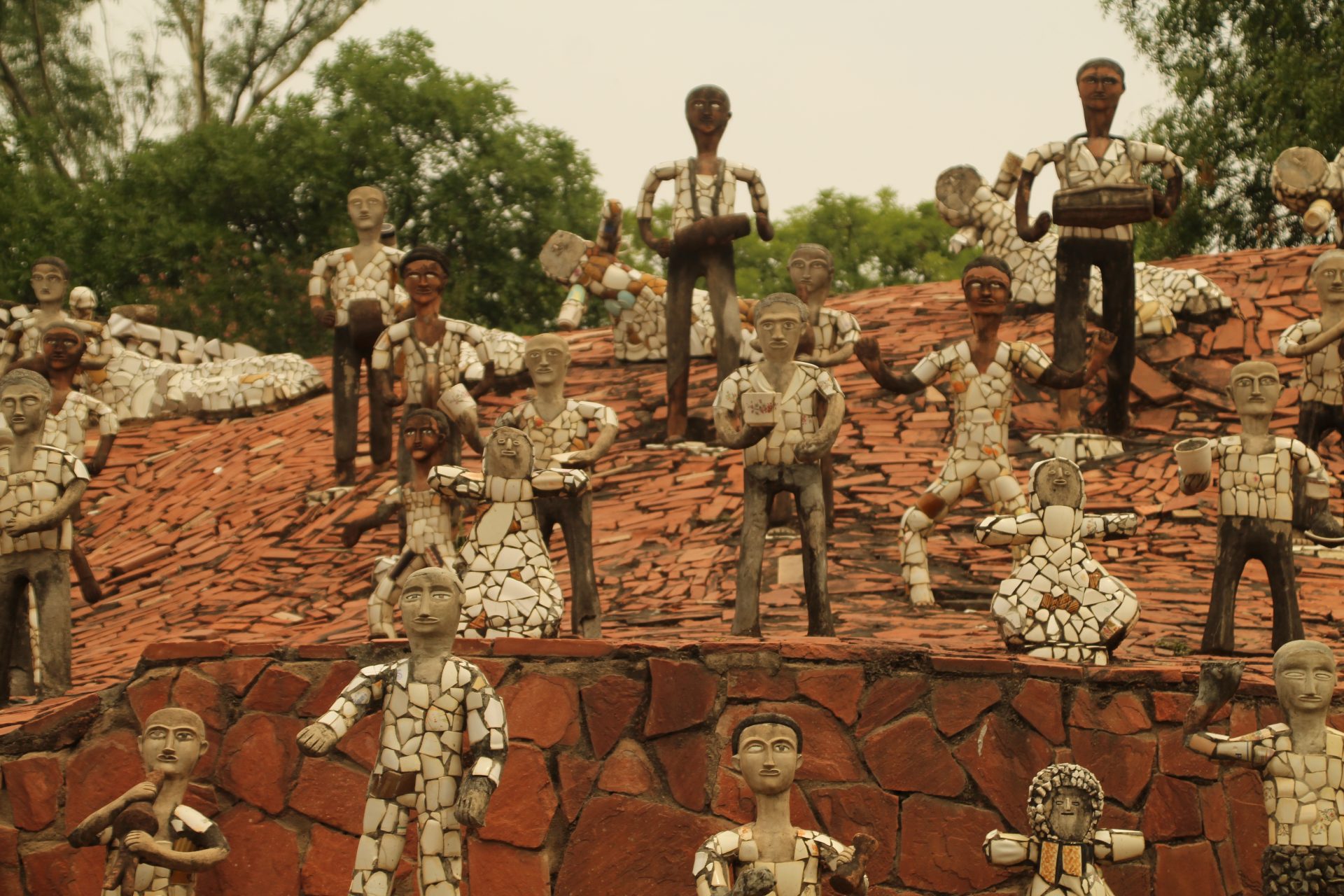
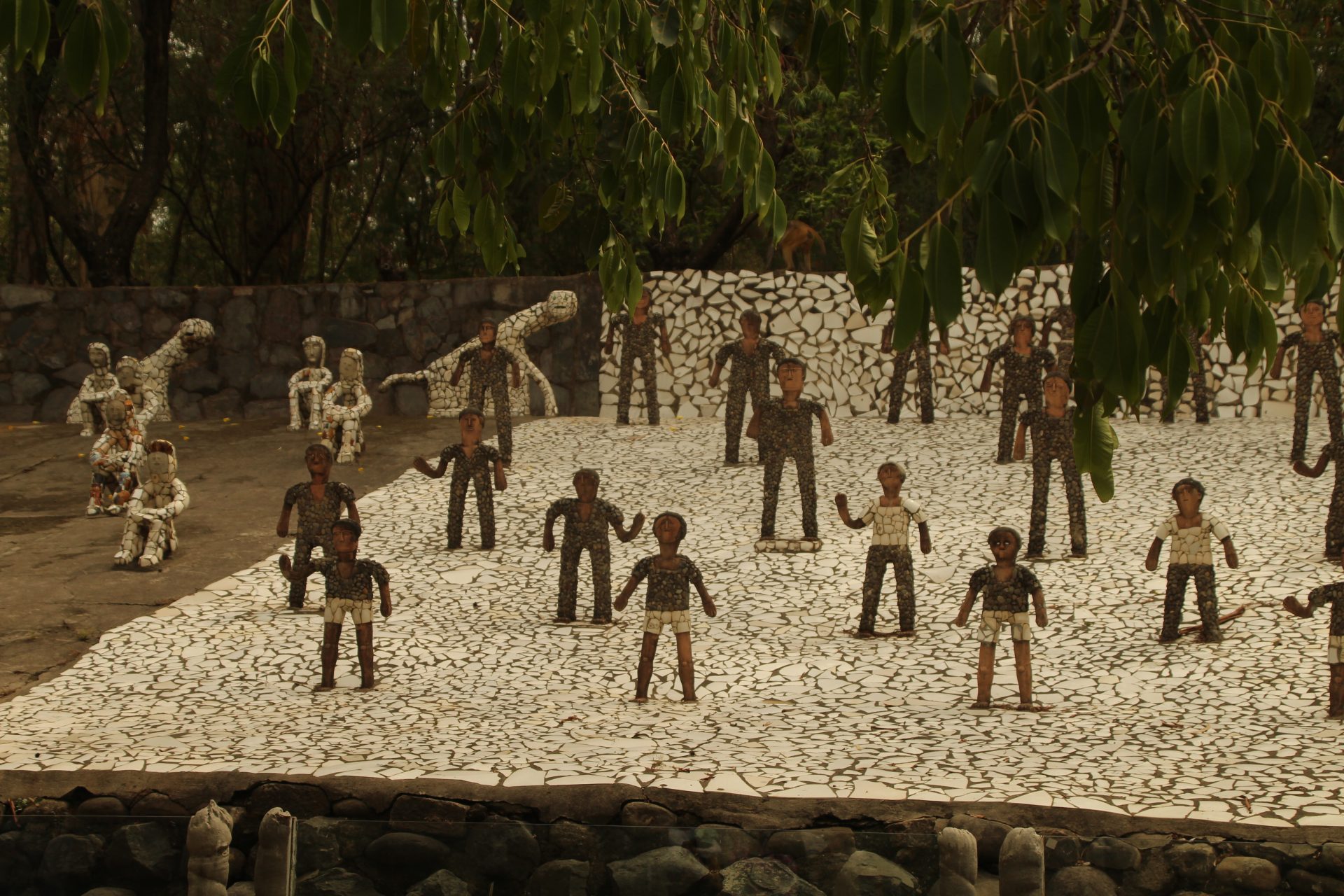
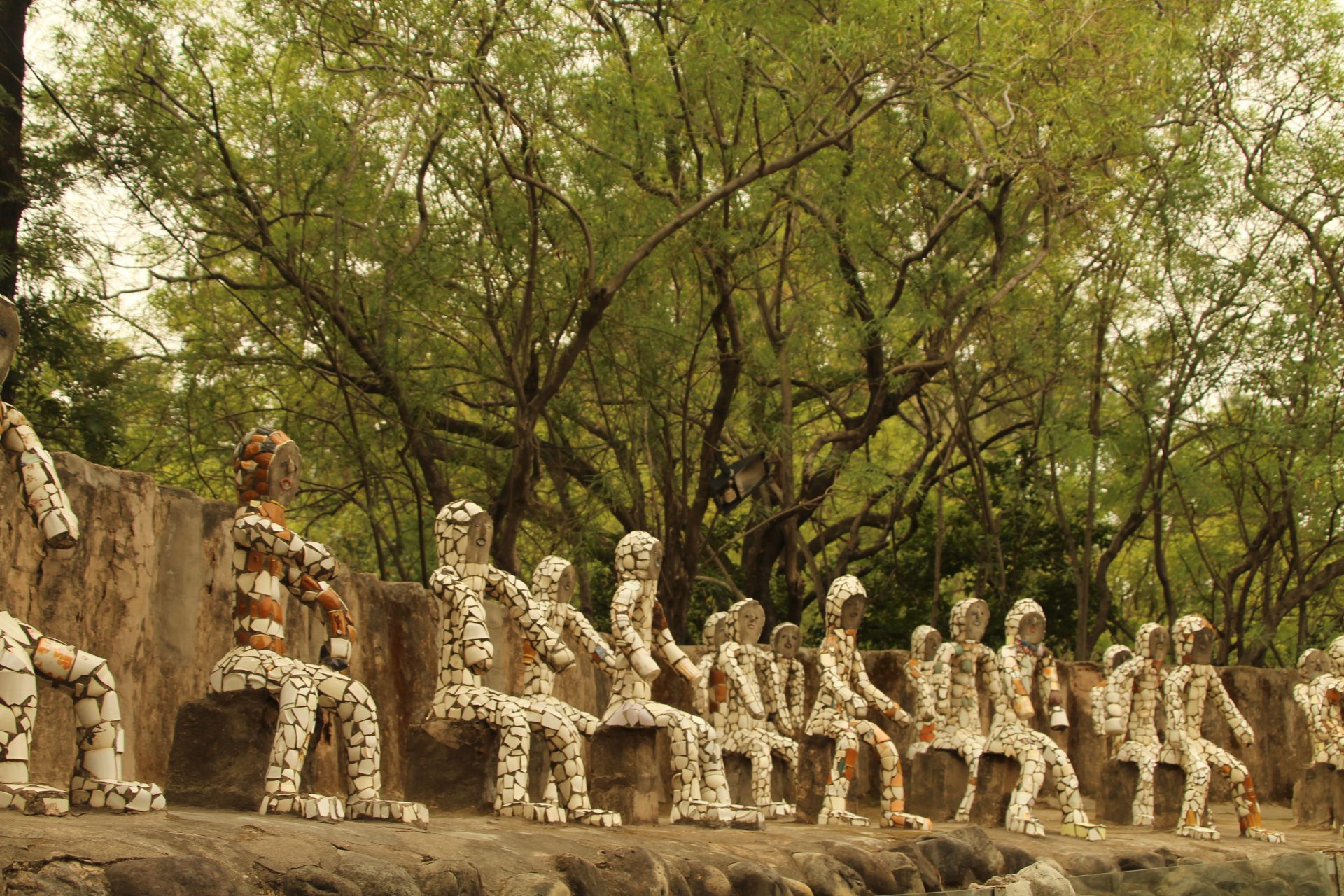
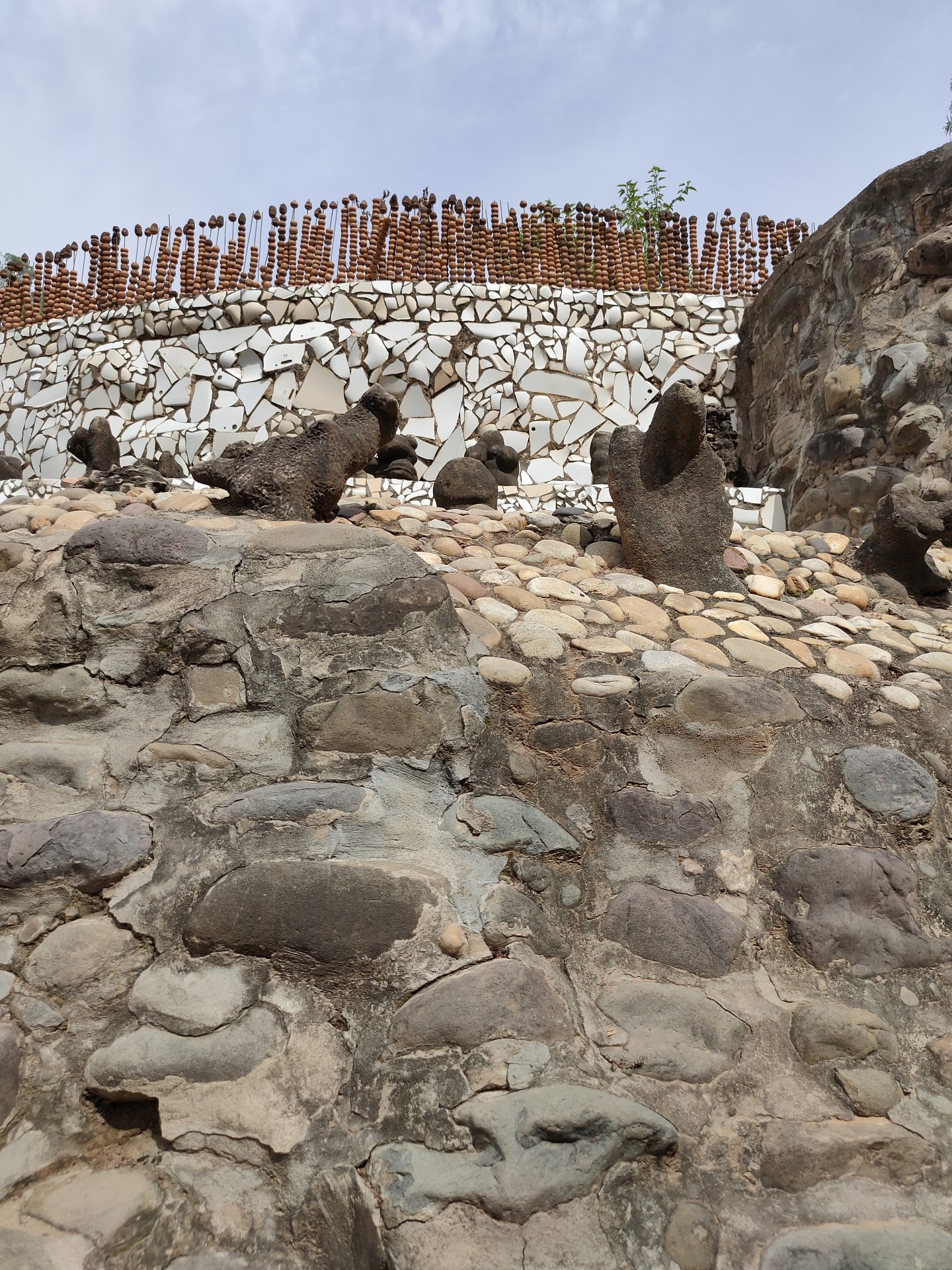
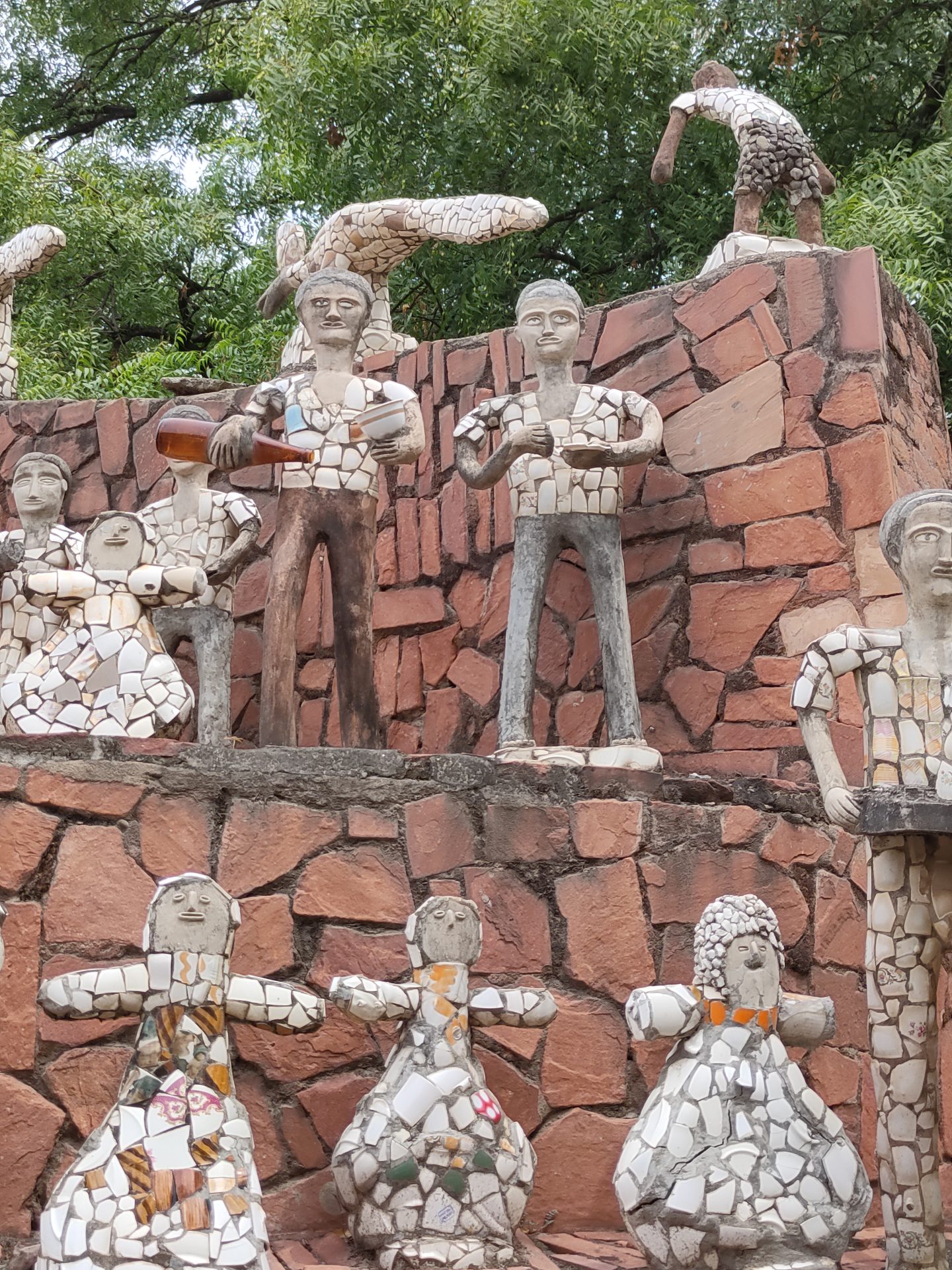
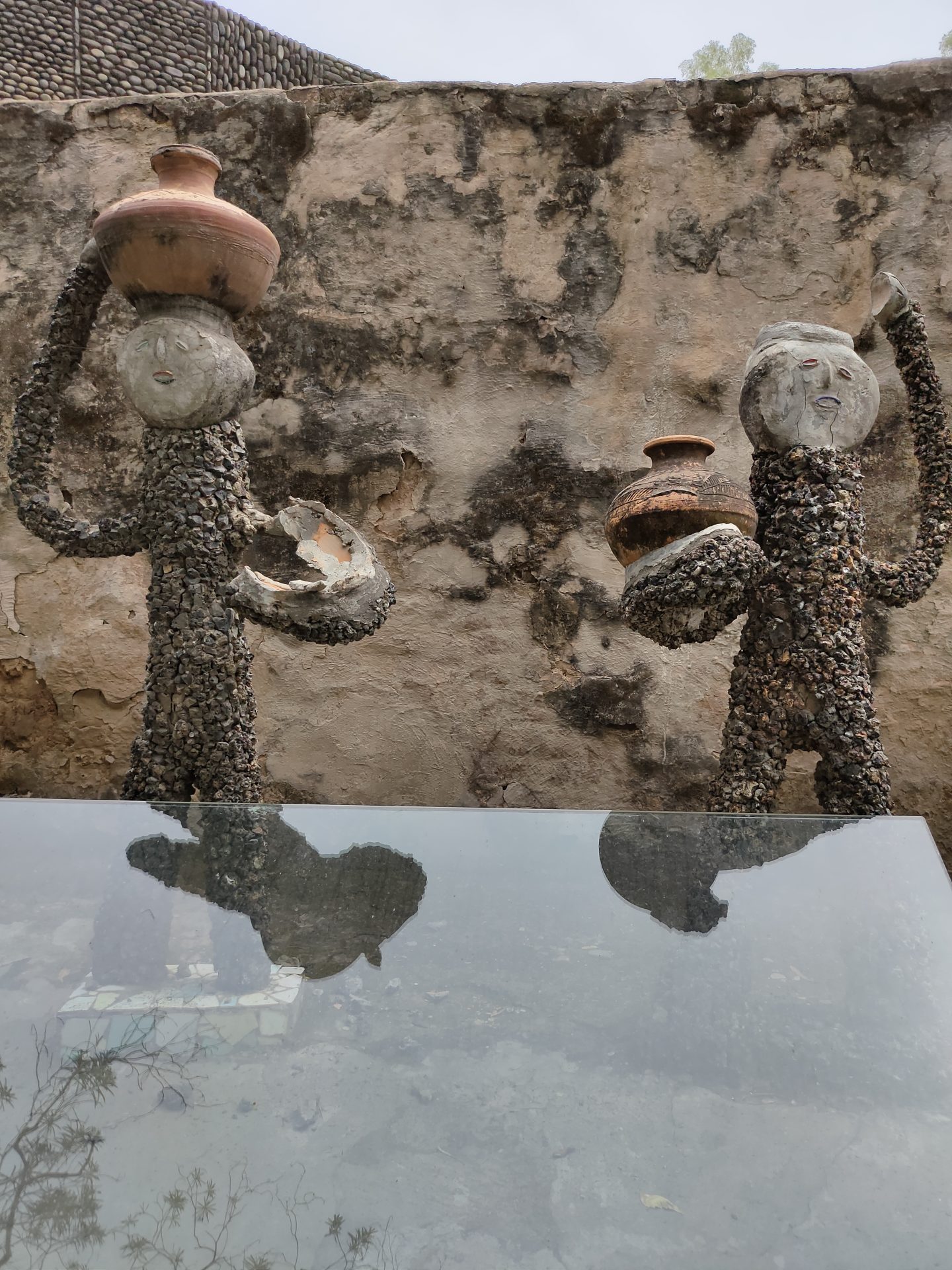
Wide roads, tree lined avenues, a nice artificial water body in Sukhna Lake and the massive open air Rock Garden, designed so very innovatively using waste material add to a few of the important places of interest beside of course the Rose Garden, a number of museums, a nice war memorial, the bird park etc.
There are a number of lovely eat outs as well in and around the various sectors in Chandigarh.
One could also visit the satellite towns of Mohali and Panchkula where there are some nice gardens, war memorials, Gurudwaras etc or plan a trip to the hill station of Kasauli, located around 60 kms away from Chandigarh.
It was a non stop ride after that and we reached our hotel in Chandigarh by around 7.00 pm in the evening. We had booked ourselves in Hotel 7 in Sector 7, a not so very expensive but very well maintained hotel.
The advantage of this hotel was that it was not very far off from the places of tourist interest as well as the Railway Station from where we had planned to reach New Delhi the next day by Shatabdi express.
After completing the check in formalities and freshening ourselves up we walked across to the market area adjoining our Hotel.
We were still feeling full after the afternoon late lunch and had a string of restaurants to choose from for anything between a very light and light dinner.
After having some nice coffee at Third Wave Coffee, we had our dinner in The Sindhi Cake Shop.
Lovely food and a great variety to choose from.
The Sukhna Lake
Woke up early on a Sunday, the last day of our tour which was to culminate today, triangulated between Chandigarh, Delhi and Chennai in the same order.
We had planned to visit the Rock Garden in the morning by around 9 AM, the time it opens for the public.
Went in for an early morning run towards the Sukhna Lake area and took in the sights.
Good to see lot of runners and cyclists going through their motions pretty early in the morning.
Had a tea enroute and reached the hotel by around 8, by which time the folks were getting ready.
After completing a nice breakfast of Aloo Parathas and Poha (Spiced flattened rice), we reached the Rock Garden by around 9.15 A.M.
The Rock Garden
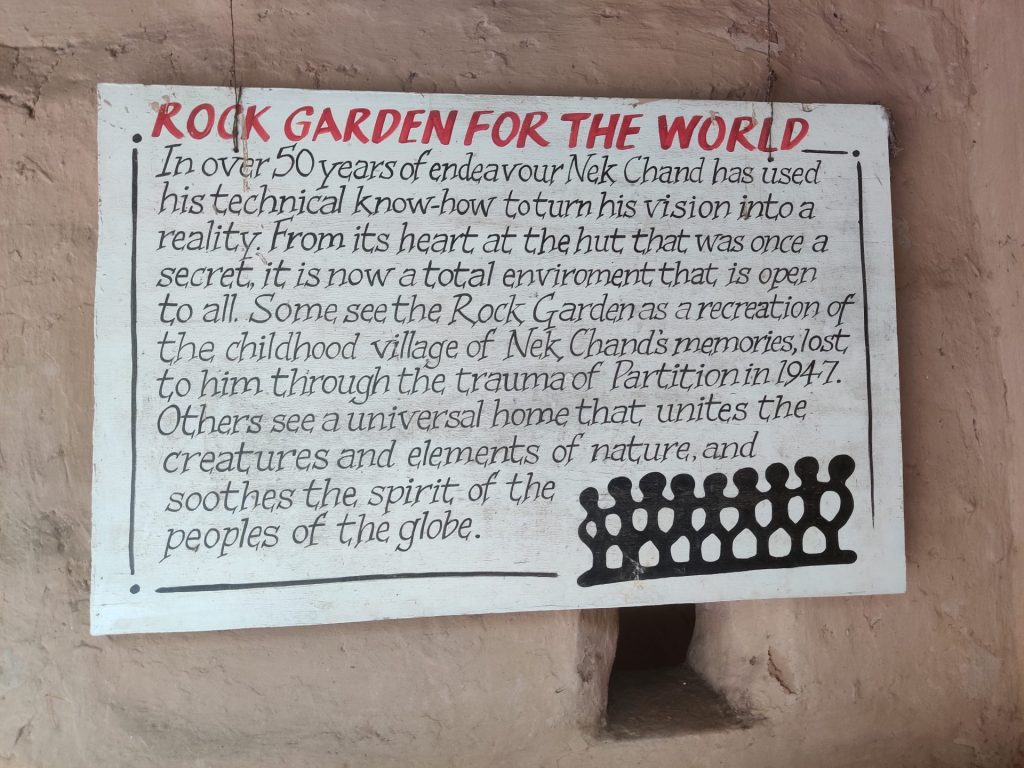
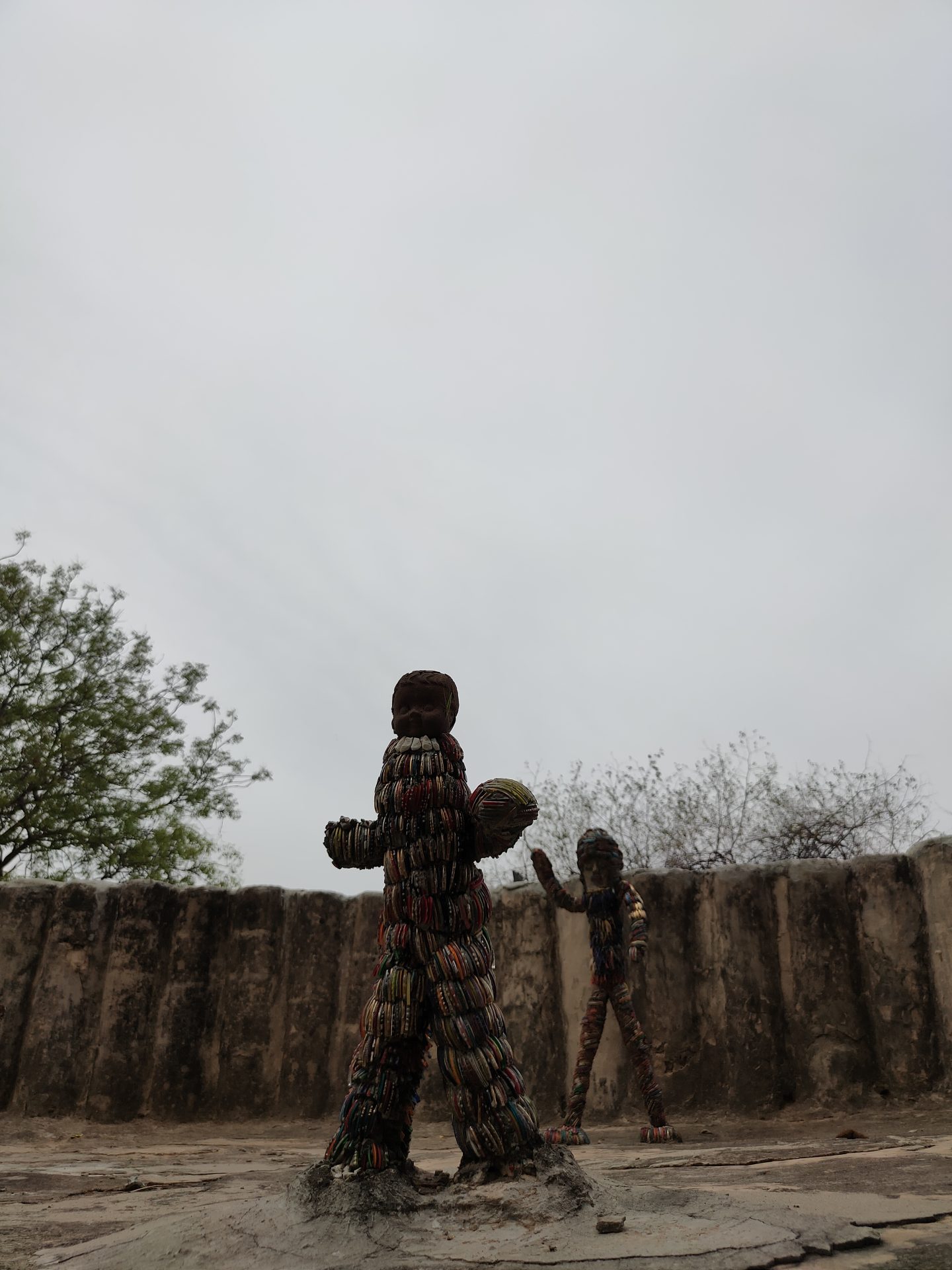
We had visited this place in the year 2008 also and hence were able to navigate our way much faster. This garden built around an area of 40 acres is an open air structure full of sculptures made out of industrial and urban wastes. This colourful mosaic of art and sculptures was conceived and designed by a Road Inspector Nek Chand who has used broken light fixtures, terracotta pots and even broken toilet pots to build over 5000+ pieces of art. An entry fee of ₹ 30.00 is levied here.
We left from the garden by around 11 and reached our hotel in about 15 minutes. Completed the check out formalities and headed for Chandigarh Railway station from where we were to catch Shatabdi express bound for New Delhi.
A short 3 hour journey brought us to New Delhi Station by around 3.30 in the afternoon.
We had a clear 5 hours before our flight to Chennai and went off to Sarojini market for some bit of last minute shopping before heading off for the airport by around 6 in the evening.
We reached Chennai airport by around 11.30 in the night and after the usual wait times of getting out our luggage and getting a cab at that unearthly hour, we reached home by around 1 AM.
Good memories of a nice trip which progressively became better after Dalhousie which however remained a mixed bag of experience for all of us.
Very good to see your high spirit of going voyages.
nikita sridhar
3 years ago
enjoyed all write ups
Sharan Gurunathan
3 years ago
There is so many new things I have learnt about Dalhousie, Dharmasala and Kasol! Thanks for sharing! Picture Perfect and Adding these places to my bucket list!

































































































































Very informative and well written ! You have helped me strike Dalhousie off my visit list 🙂 !!!
Maybe a visit in winter might be better served.
Very good to see your high spirit of going voyages.
enjoyed all write ups
There is so many new things I have learnt about Dalhousie, Dharmasala and Kasol! Thanks for sharing! Picture Perfect and Adding these places to my bucket list!