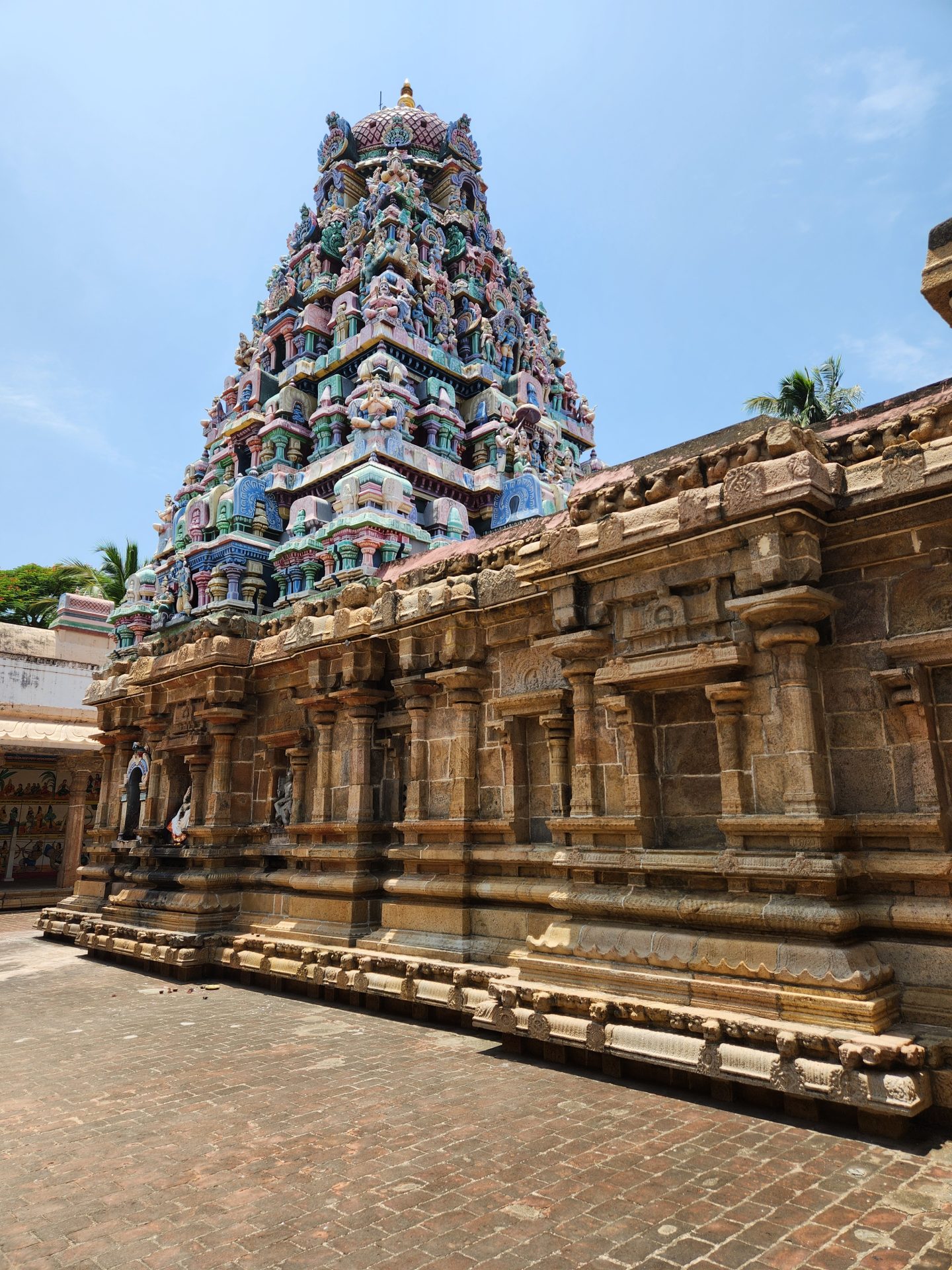
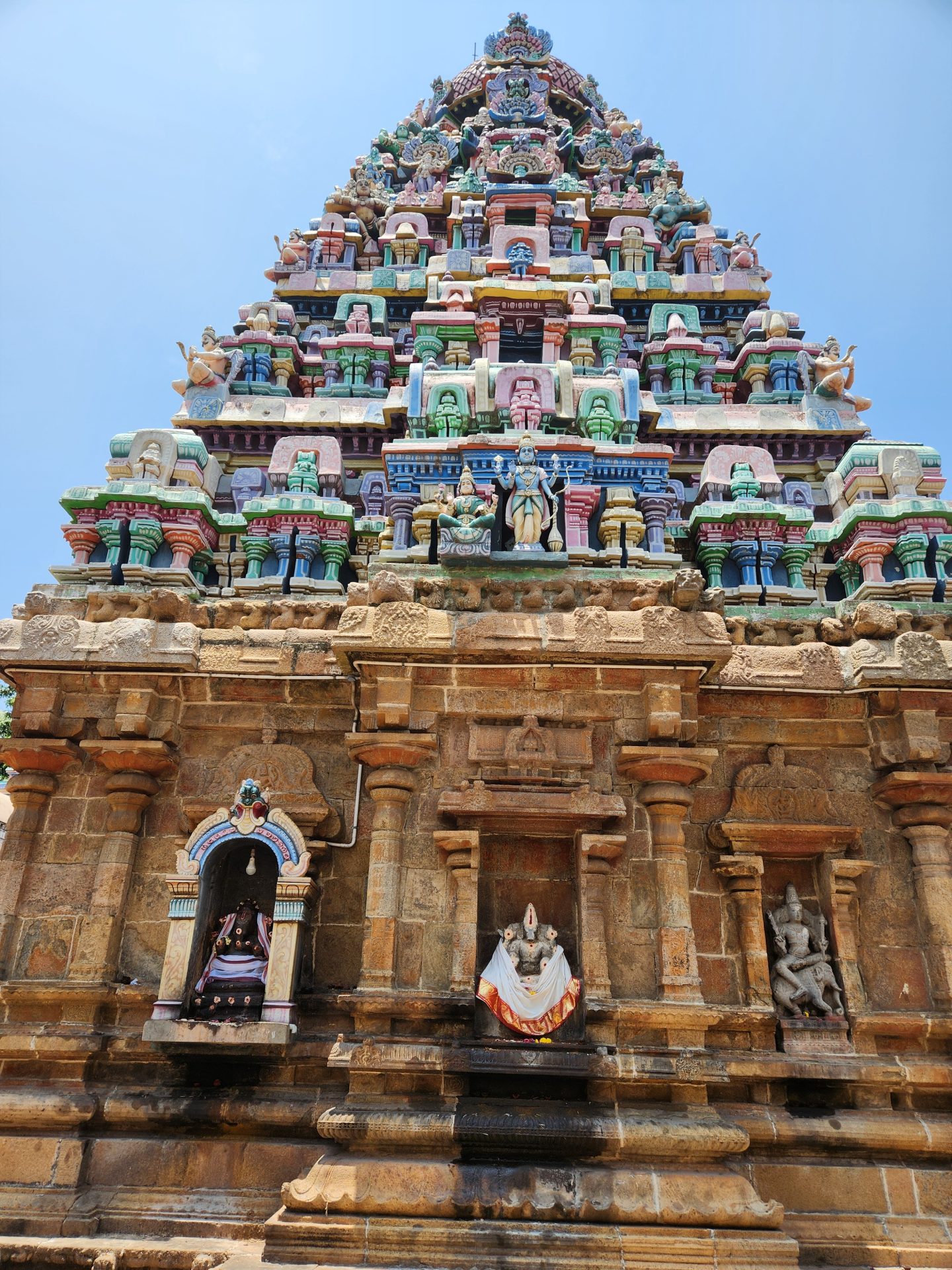
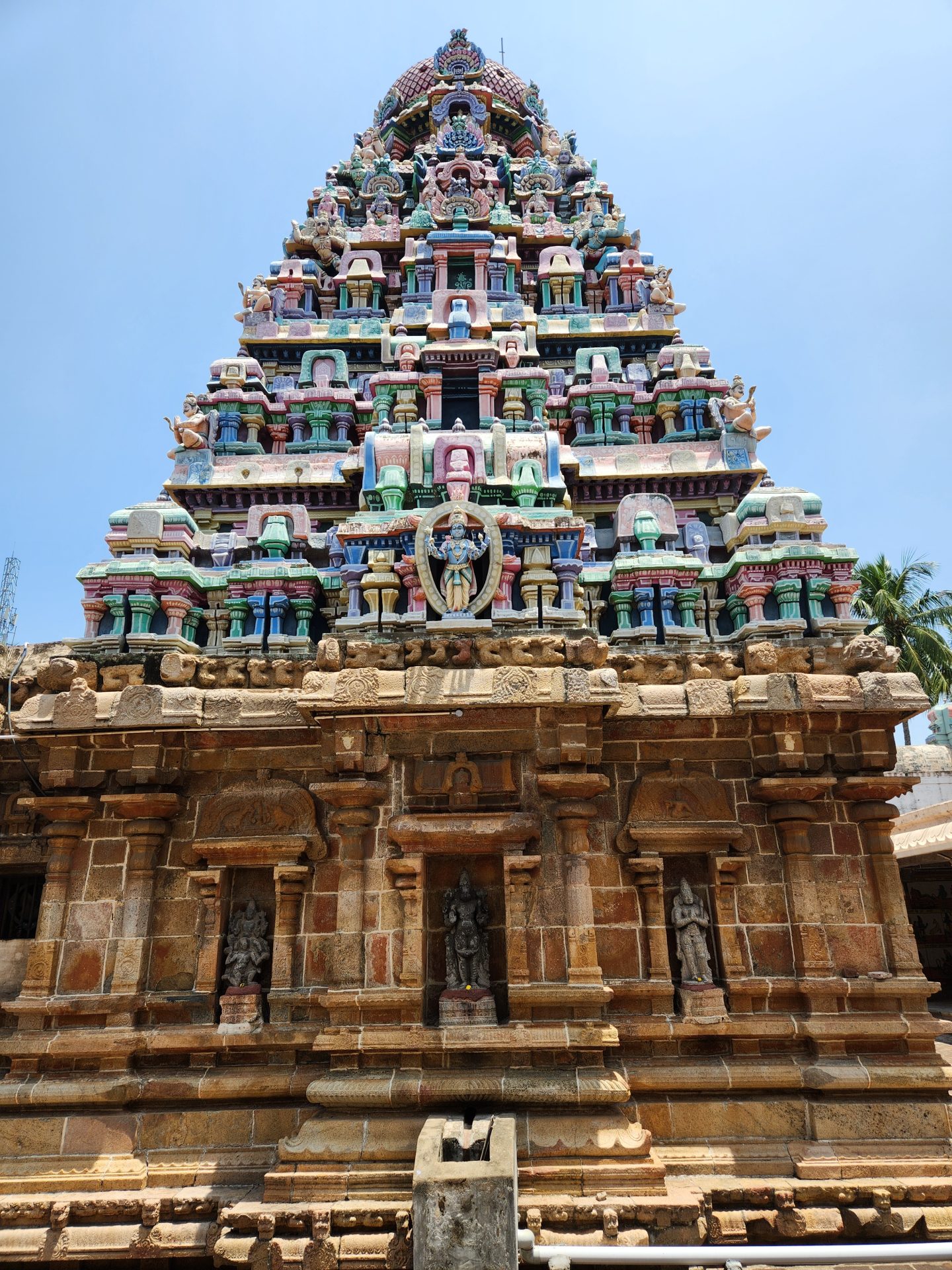
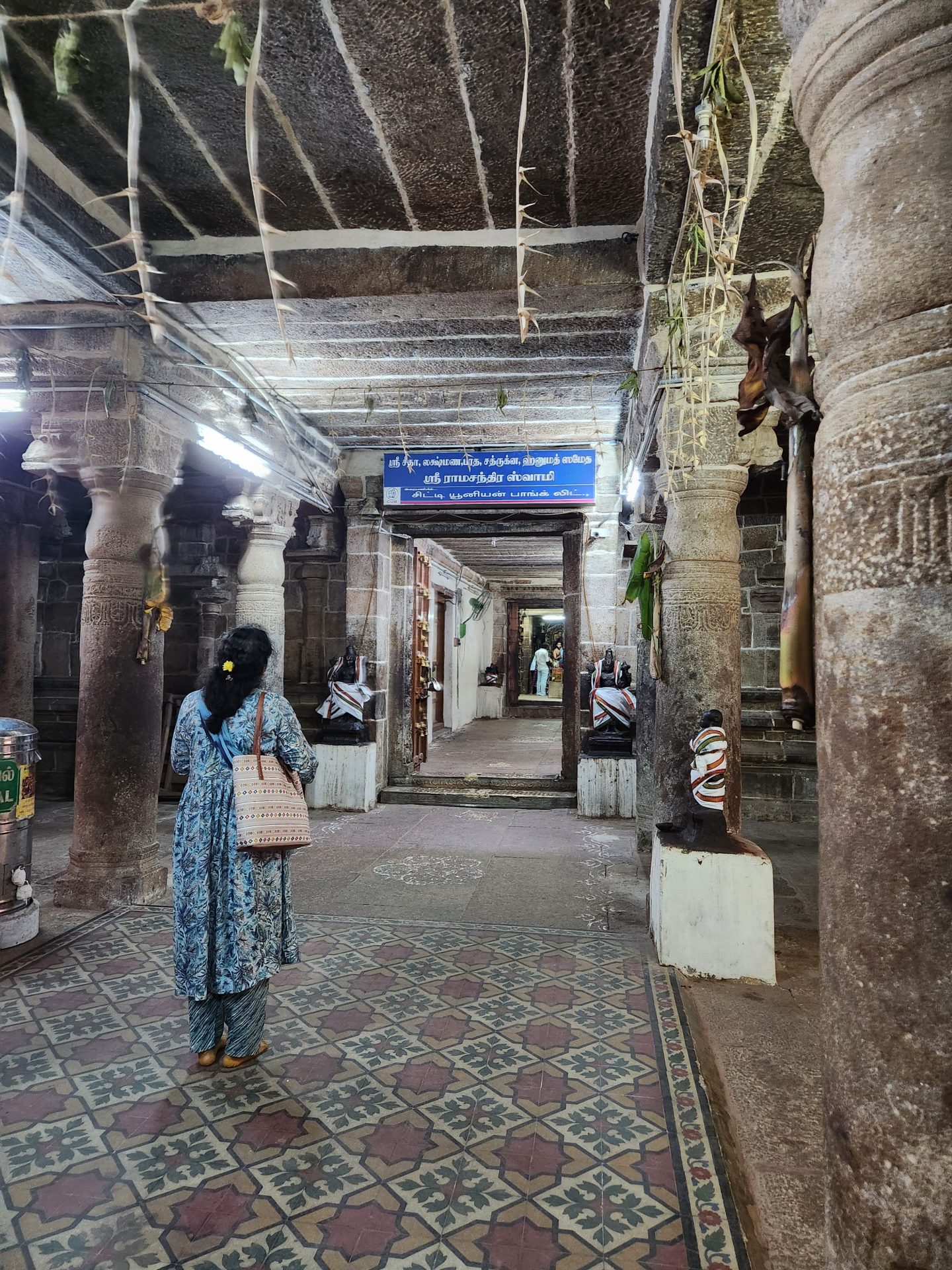
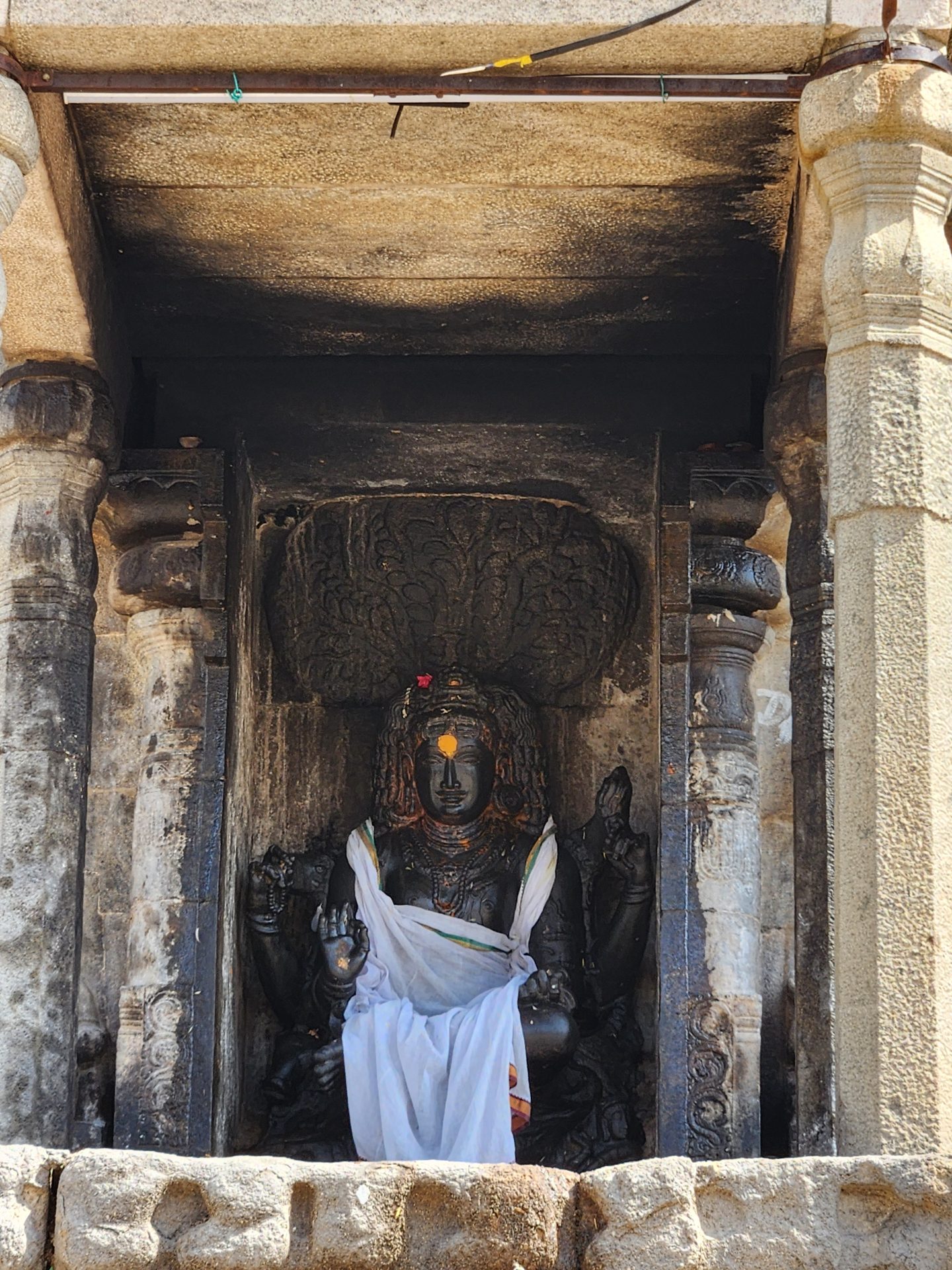
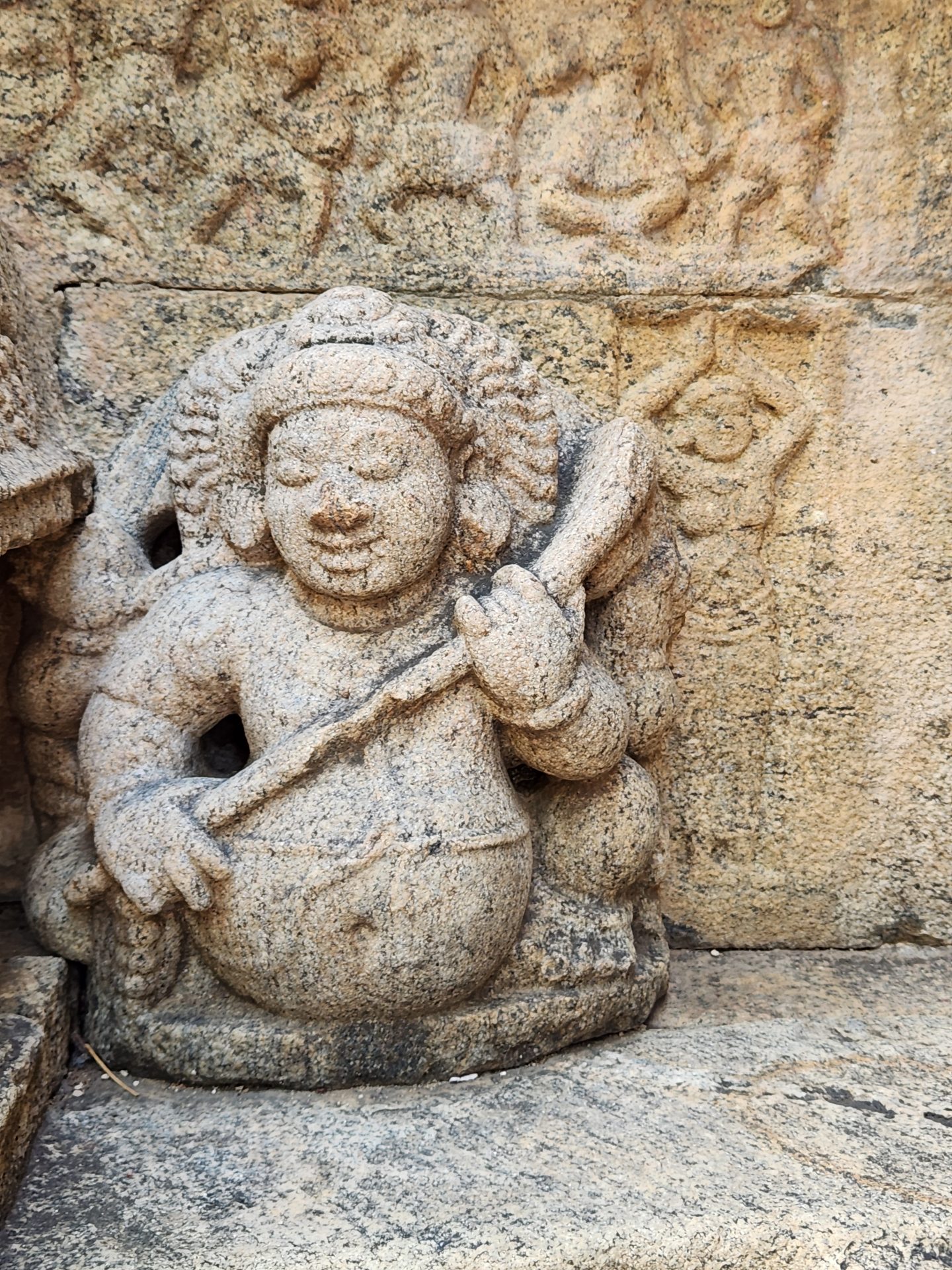
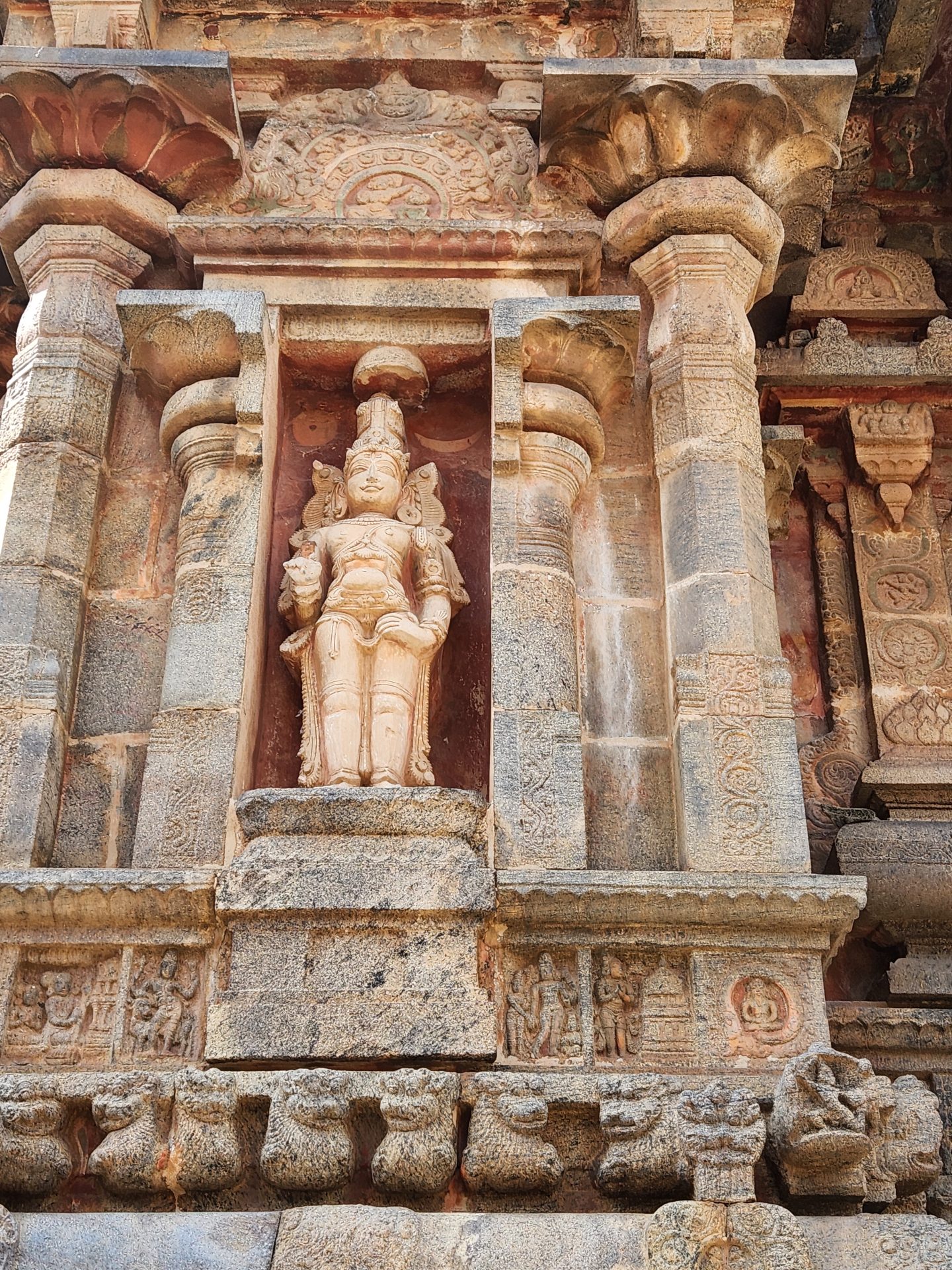
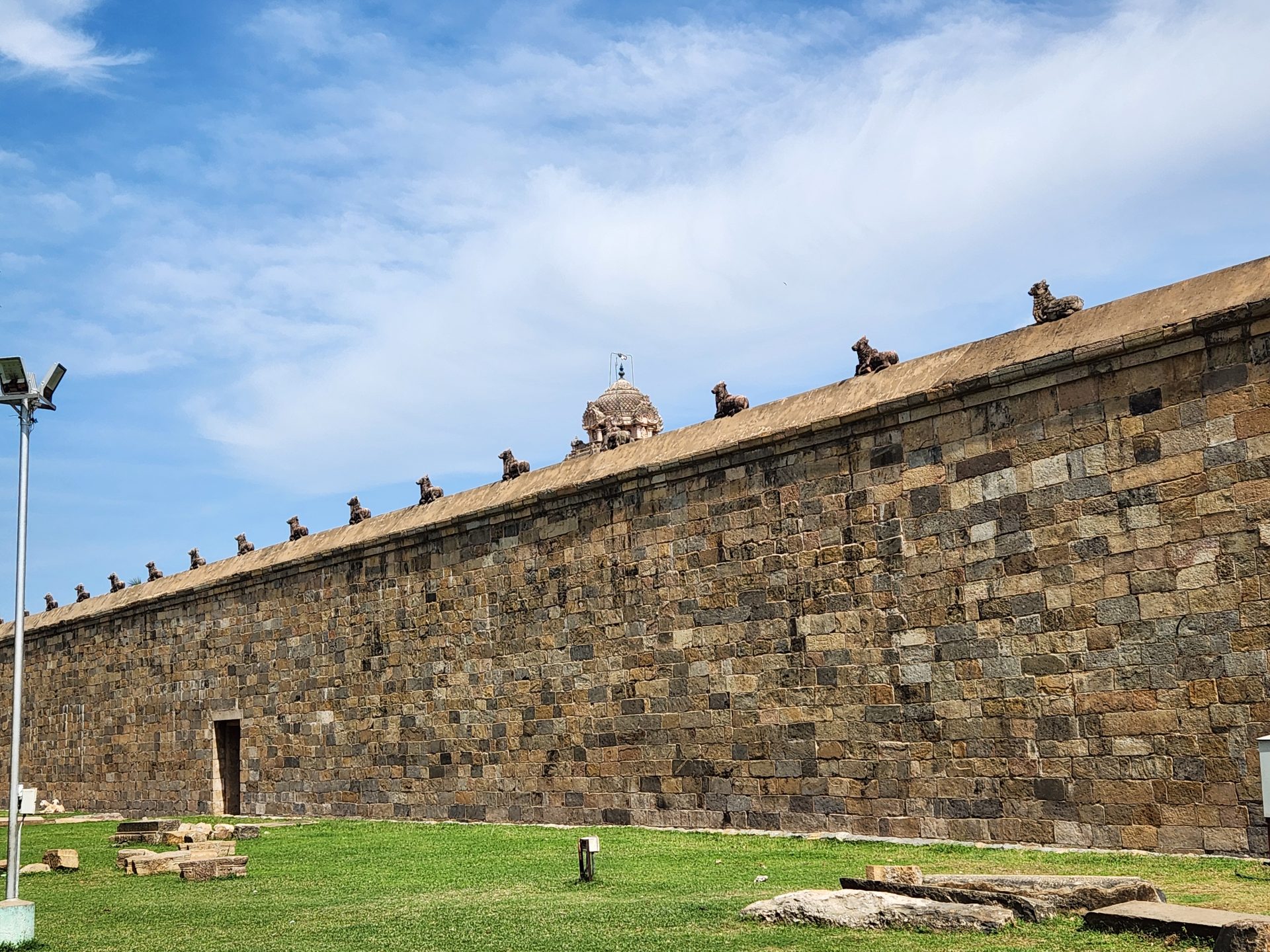
Our first tour of Chidambaram and the Great Chola Living Temples in 2021 got us spending more time in exploring these temples in detail that we had less time for the temples in and around Kumbakonam.
Having also read up about the Prime Minister’s recent visit to partake in the recent celebrations in Gangakondaicholapuram in July 2025 to commemorate the 1000 years anniversary of King Rajendra Chola I’s legendary maritime expedition to South East Asia and the beginning of the temple’s construction, decided to do a revisit to my favorite temples at Darasuram and Gangaikondacholapuram as well cover a few more temples in that region.
Quickly drew up a 3 day itinerary covering Thiru Nallar temple, Vaitheeswaran Temple on the first day before halting at Kumbakonam for the night, doing the temple rounds of Kumbakonam and Thirunageswaran on Day 2 followed by Alangudi, Darasuram and Gangaikondacholapuram in that order before heading back to Chennai.
Sep 13th 2025
Table of Contents
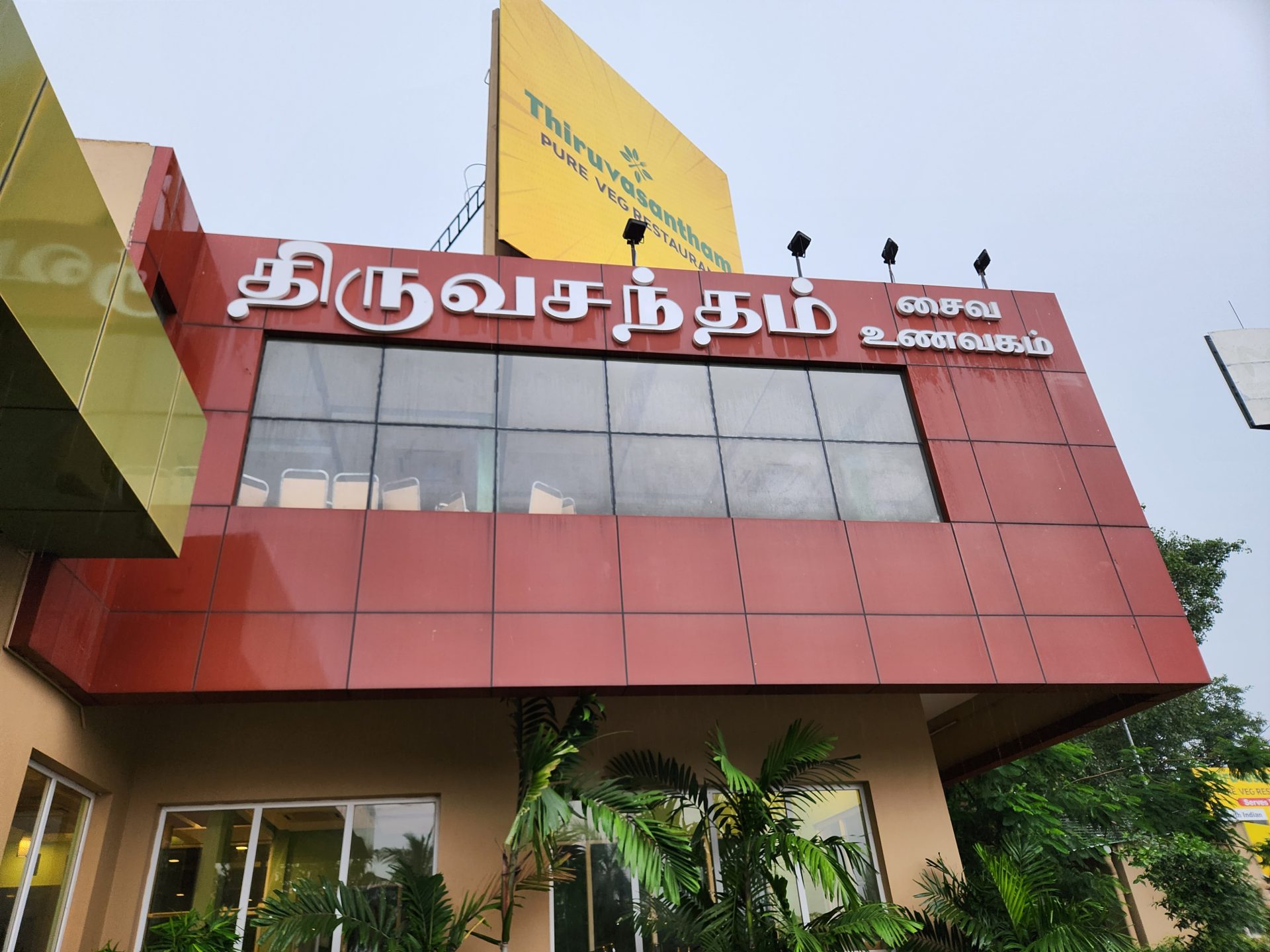
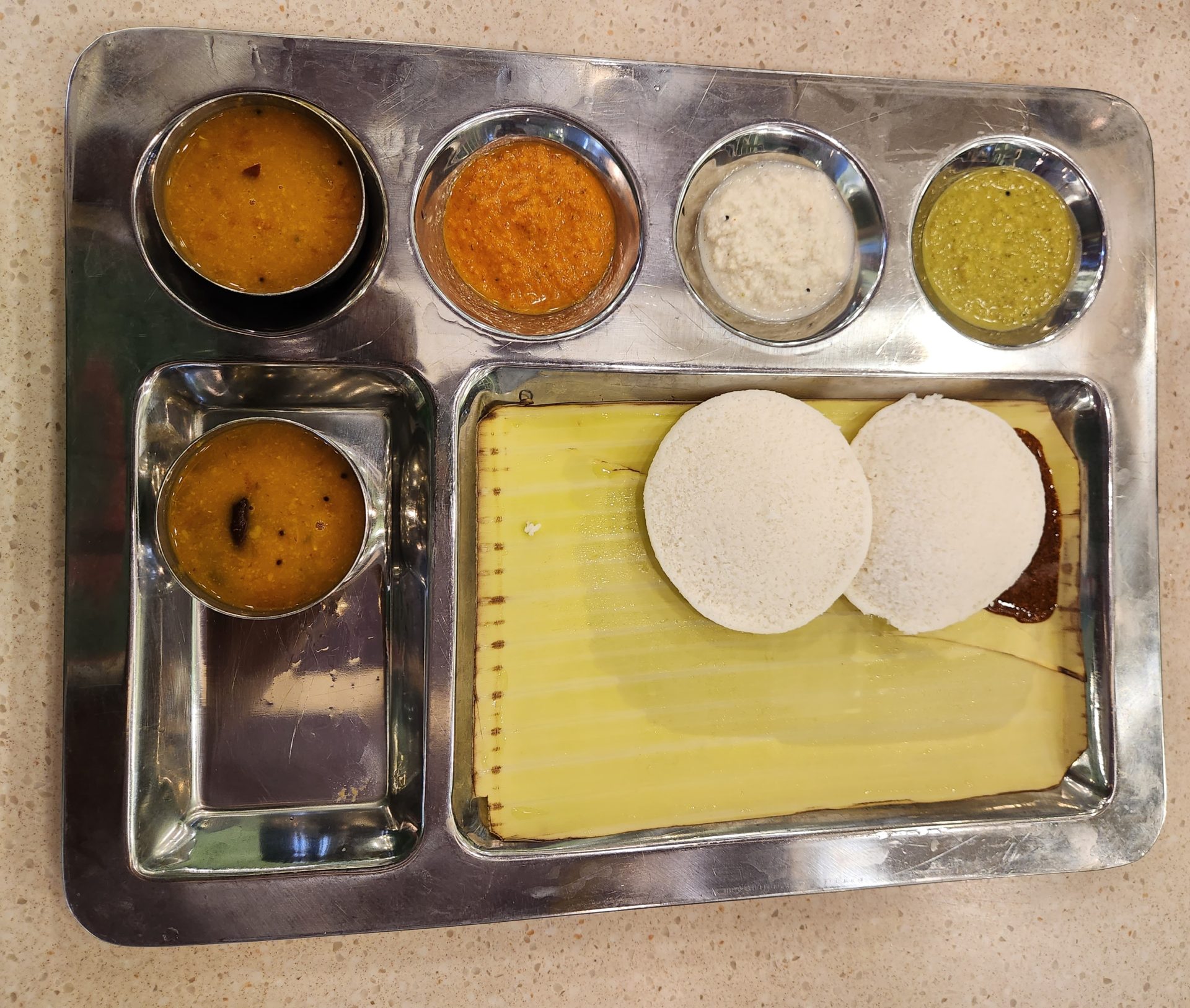
We planned an early start to beat the morning traffic and by 5.30 A.M we hit the roads. Breakfast was planned enroute but after crossing Tambaram, we were suddenly greeted by heavy showers. The rains did not relent as we drove along and instead of continuing our drive, we pulled into a restaurant Thiruvasantham in Vandalur. Piping hot breakfast washed down with strong filter coffee and we resumed after a 30 odd minute break.
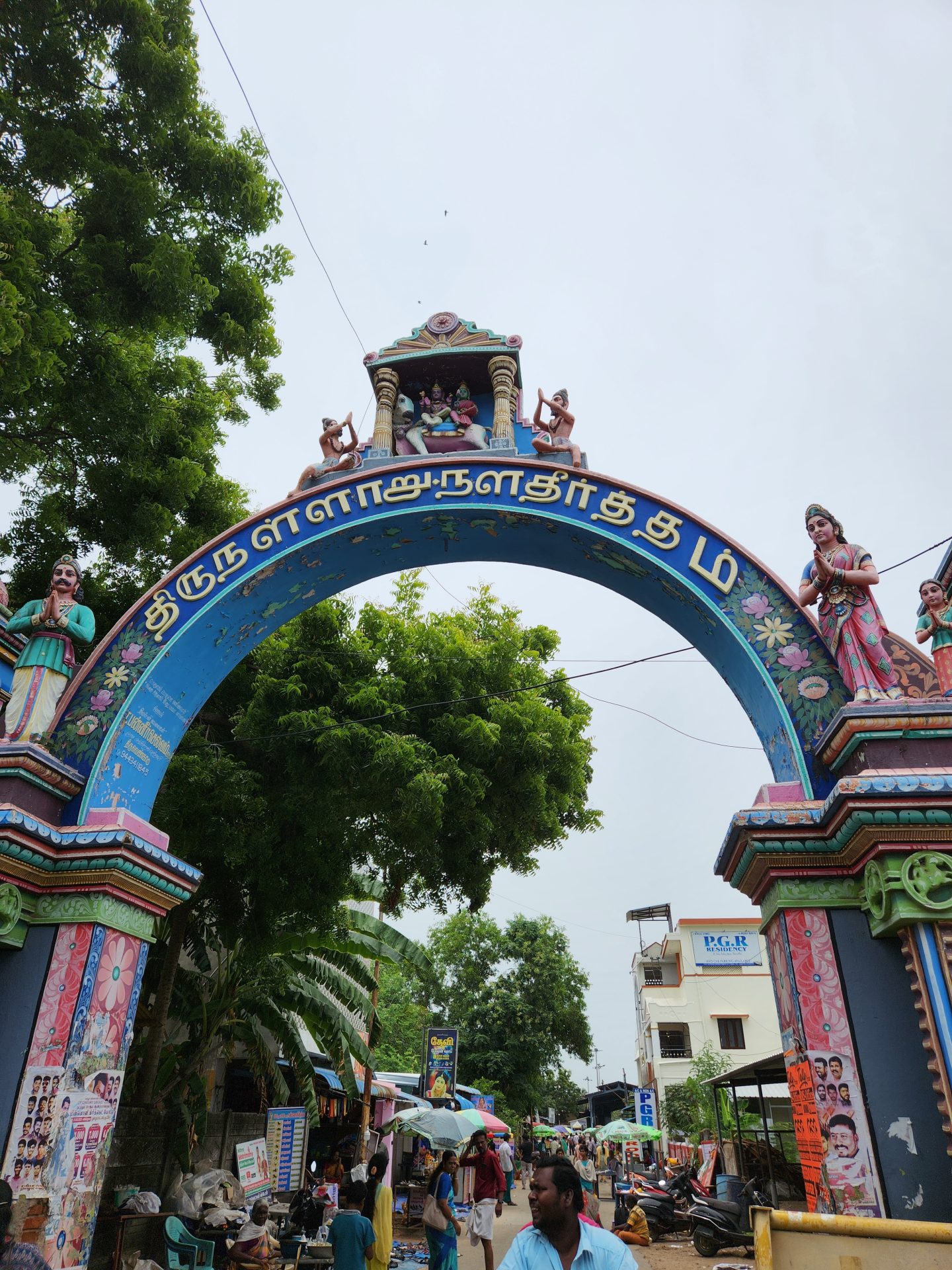
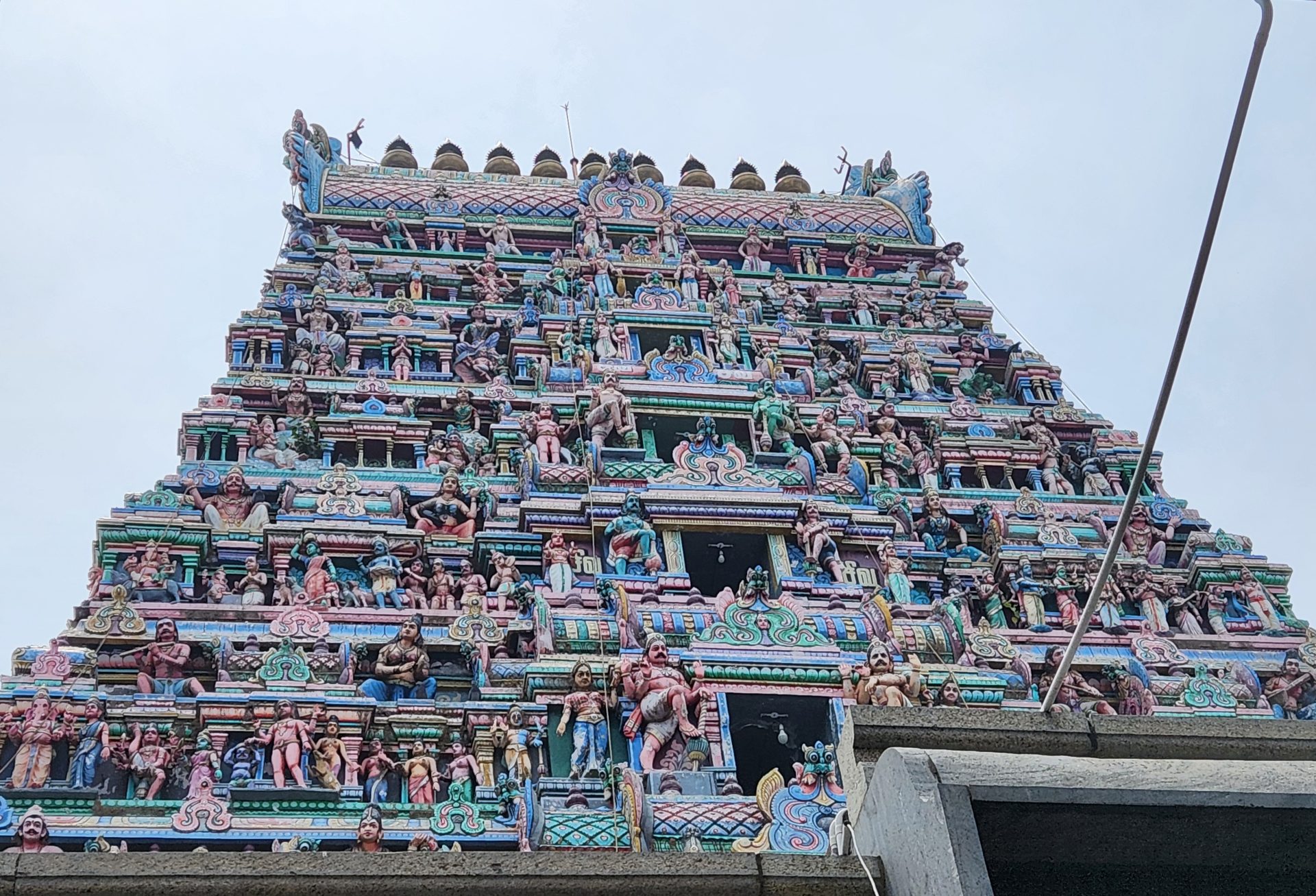
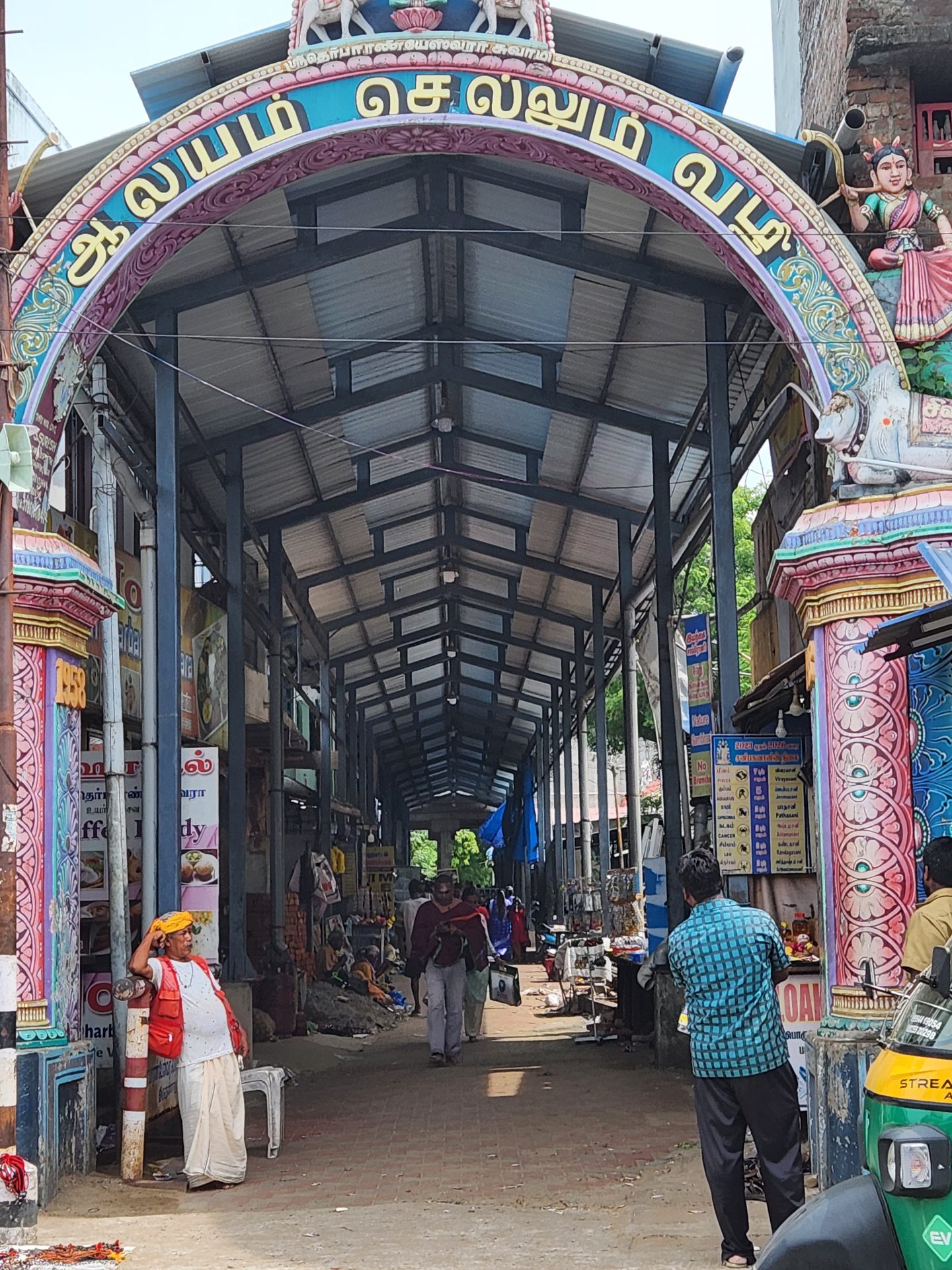
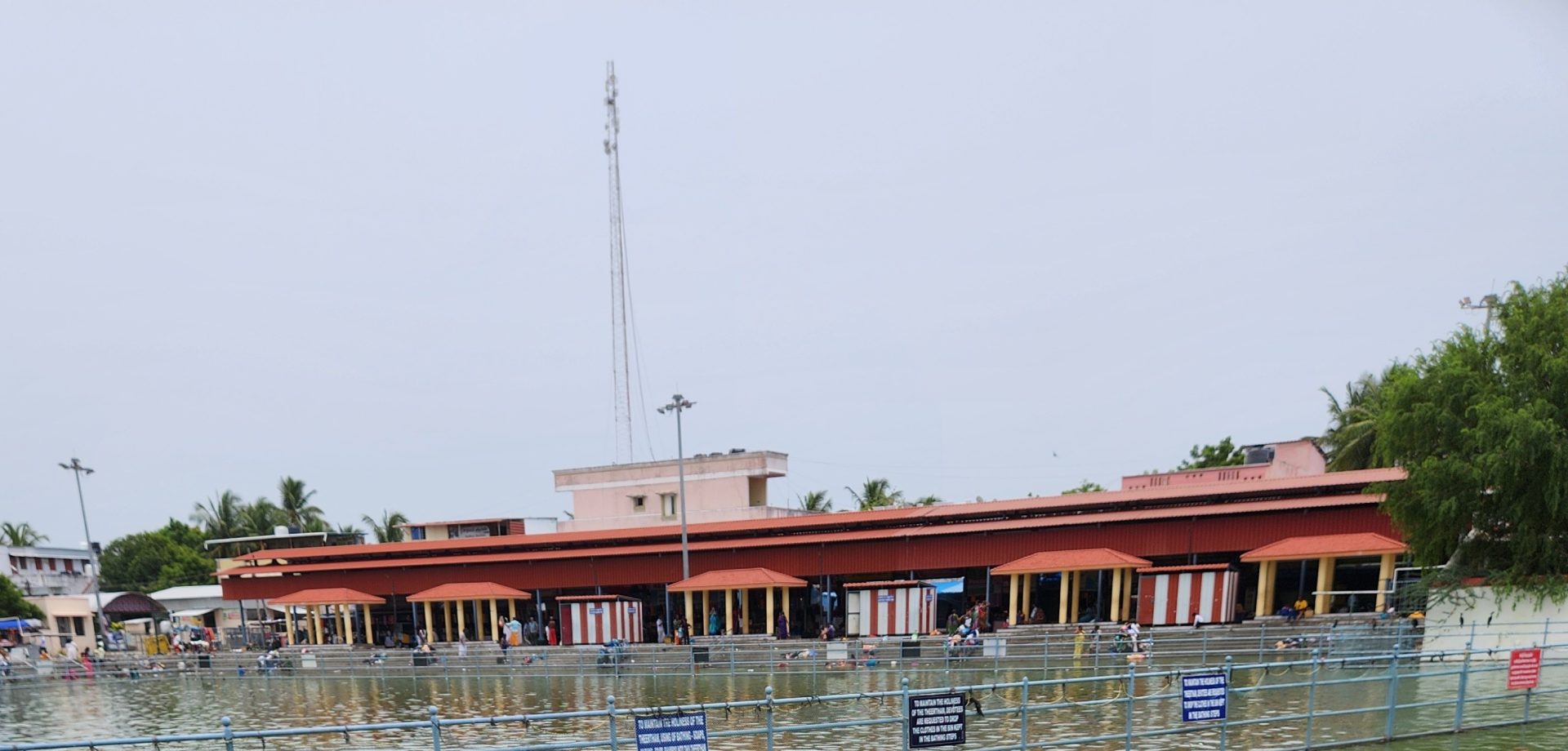
We drove into the town of Thirunallar by around 11.15 AM. The skies had cleaned up and it was bright and sunny when we entered the tank area close to the Saneeswaran Temple.
People come here from far and wide to worship Lord Saneeswaran (the son of Lord Surya and Chaya Devi) to overcome obstacles and difficulties.
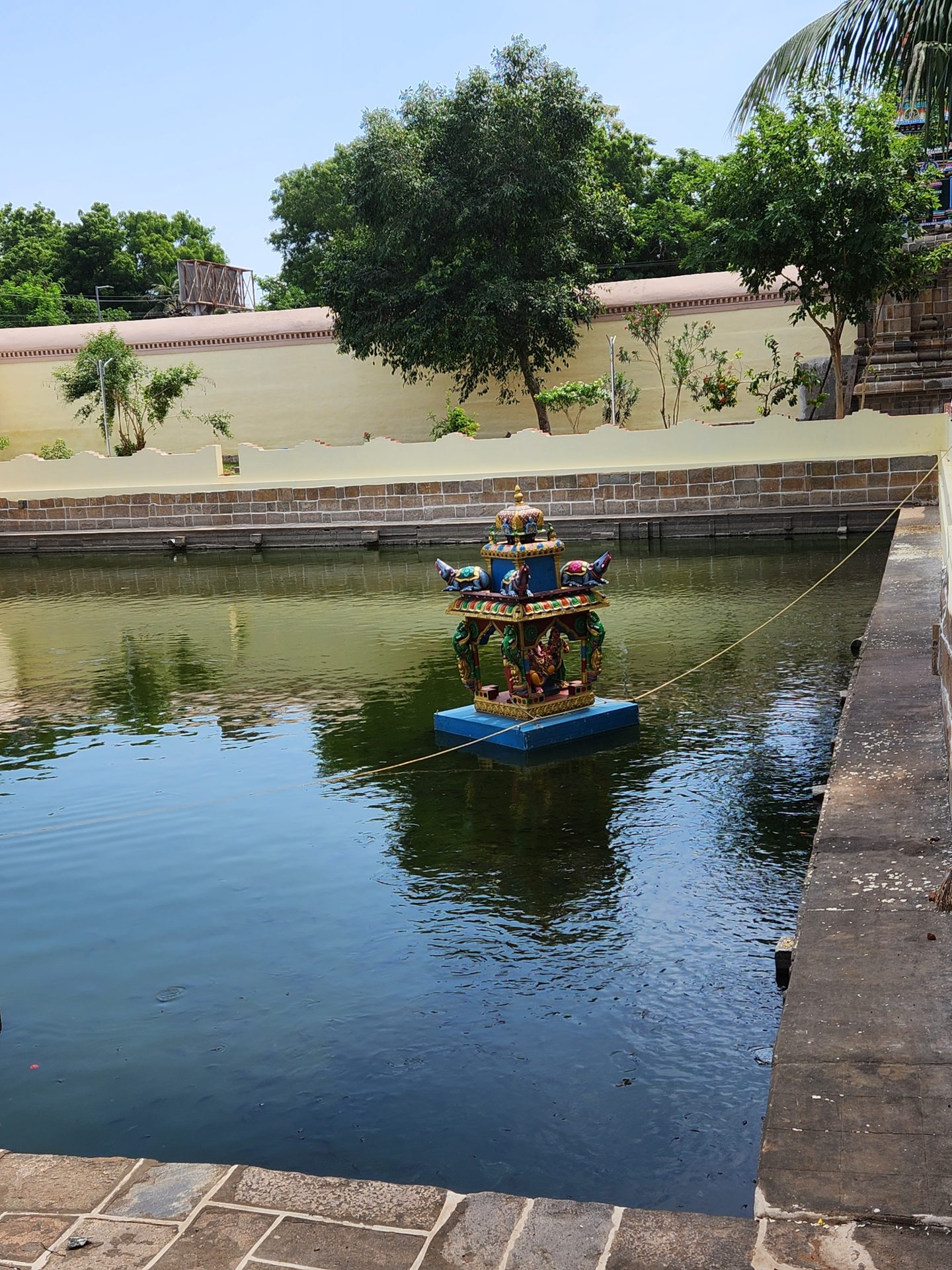
The planet Saturn (associated with Sani Dosha) is supposed to have malefic effects on people and people come here to take a dip in the Nalatheertham Tank before worshipping Lord Saneeswaran to seek relief.
This temple is believed to be a place where Lord Shiva passed on his knowledge of the Vedas and Shastras to Lord Brahma.
This Navagraha temple had its origins in a dense forest of Dharbha grass and probably Lord Shiva was worshipped as Dharbaranyeswarar and has also got an idol of Lord Saneeswaran who was believed to the doorkeeper for Lord Shiva.
People as a practice seek Saneeswaran’s blessings before seeing Lord Shiva. The self manifested Lingam here is worshipped as Swayambhu Lingam which means that its not man made.
Shiva’s idol is depicted as him performing one of his seven dance forms and hence this temple is knows as one of the “Saptha Vidanga Sthalams”. Legend has it that King Nala who was a great ruler and endowed with all happiness in life fell under the influence of Sade Shani (Ezharai Sani) and during that period lost his kingdom, got separated from his wife and children and literally walked on the streets like a beggar. A renowned sage Bharadwaja Minu advised him to visit Thirunallar and worship Dharbaranyeswarar and after he took a dip in the holy tank, he got free from the effects of Saneeswaran.
Saneeswaran is the son of Chaya Devi and Lord Surya, and even a mere sight of him is said to be destructive. As per Hinduism, Saneeswaran is believed to have profound influence in one’s life. There is an interesting legend behind this temple which proves the effects of Saneeswaran, and it goes like this- King Nala who was a great ruler and was gifted with all the happiness in life. At some point of his life he fall under the influence of and lost his kingdom, separated from his children and wife, and walked and wandered on streets like a beggar.
That is when Bharadwaja Muni, a sage asked him to visit. It was only after a dip in the holy tank here that he got free of the effects of Saneeswaran. Sani Peyarchi festival is the most celebrated festival of the Saneeswaran Temple. It is a 2 day long festival conducted every two and half years when Sani [Saturn] changes its Rashi or position.
The sun was beating down and we were in no mood to hunt around for decent places to dine in. We found a non-descript and ordinary hotel close to the temple and finished a quick lunch.
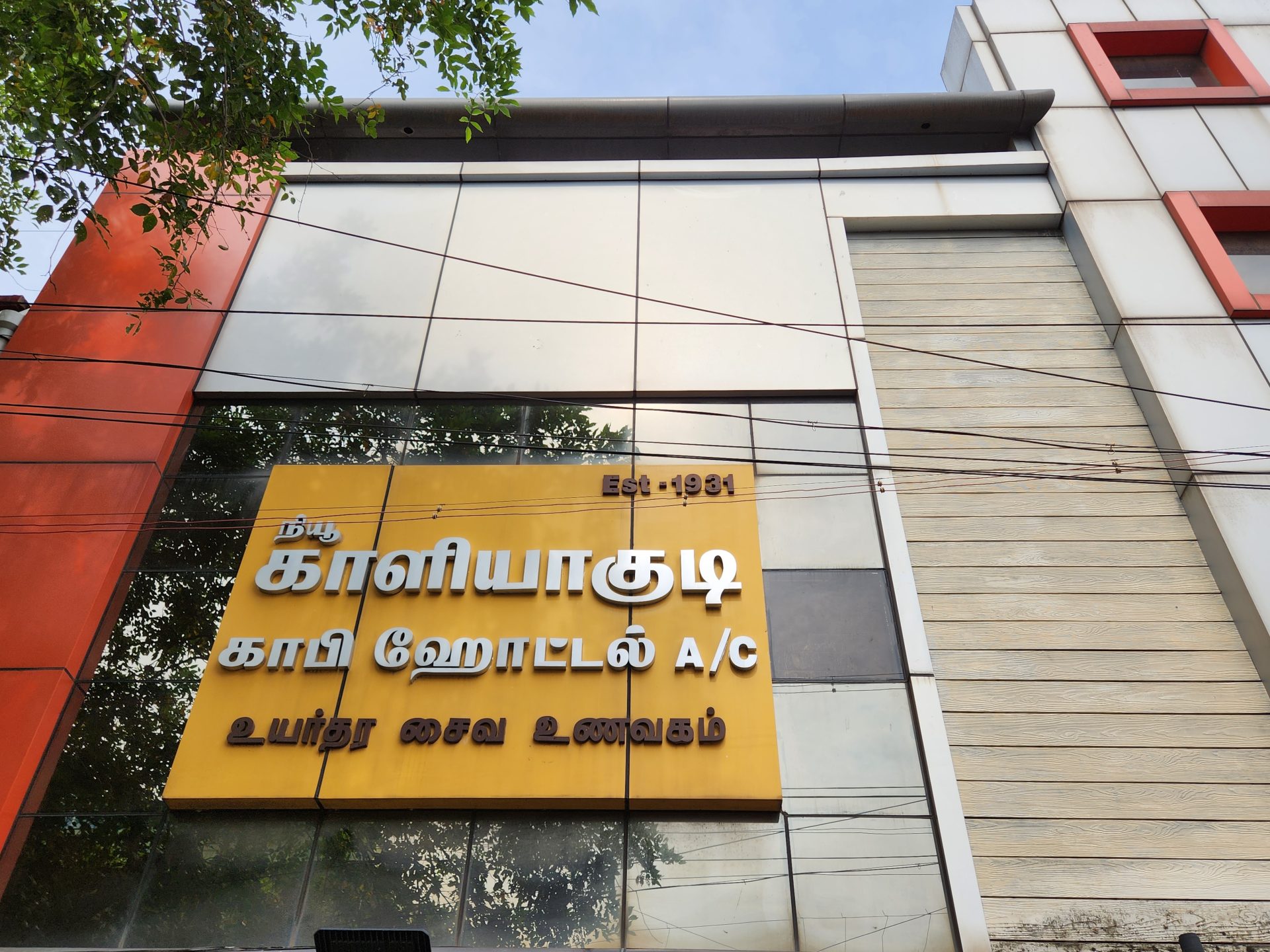
We set off for Vaitheeswaran Koil which was around 48 kms from Thirunallar at around 1.30 in the afternoon and after an hour’s drive, pulled into the town of Mayavaram. Since most temples open around 4 in the evening, we decided to bide our time in New Kaliyakudi Coffee hotel.
This was supposed to be one of those famed coffee shops in the town. Coffee is best had early in the morning when the decoction is brewed fresh and this being lunch time, we could make out that post multiple rounds of dilution, the coffee was insipid.
The Vaitheeswaran Temple
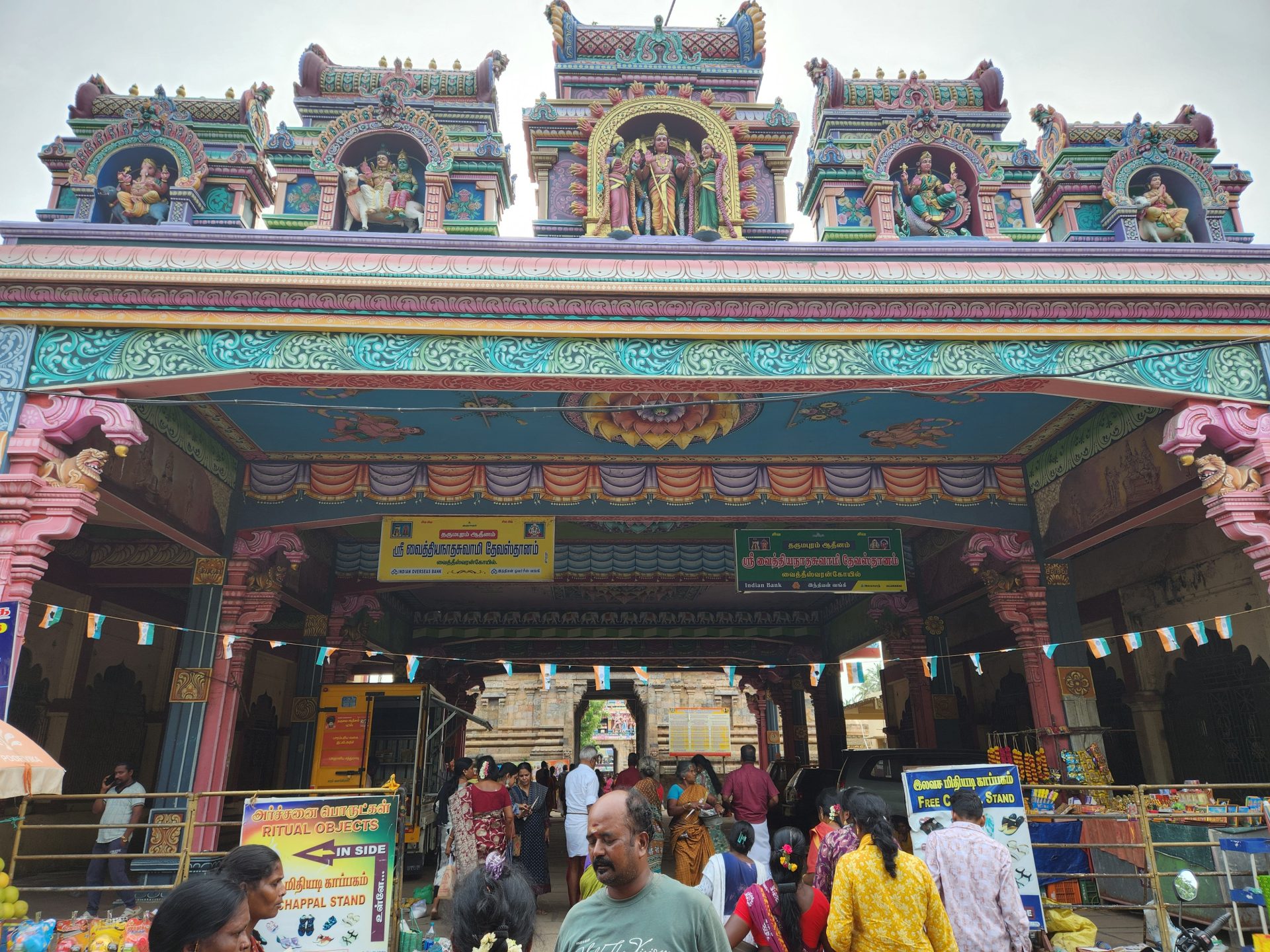
Vaitheeswaran Temple was around 14 kms away from Mayavaram and we started off by around 3.30 PM. We reached the town of Vaitheeswaran Koil by around 4 PM. This small town is famous for Palm Leaf Astrology, also known as Naadi Astrology and people from far and wide come here to check this out. Lord Shiva is worshipped here as Vaidyanathar or Vaitheeswaran, meaning the God of Healing.
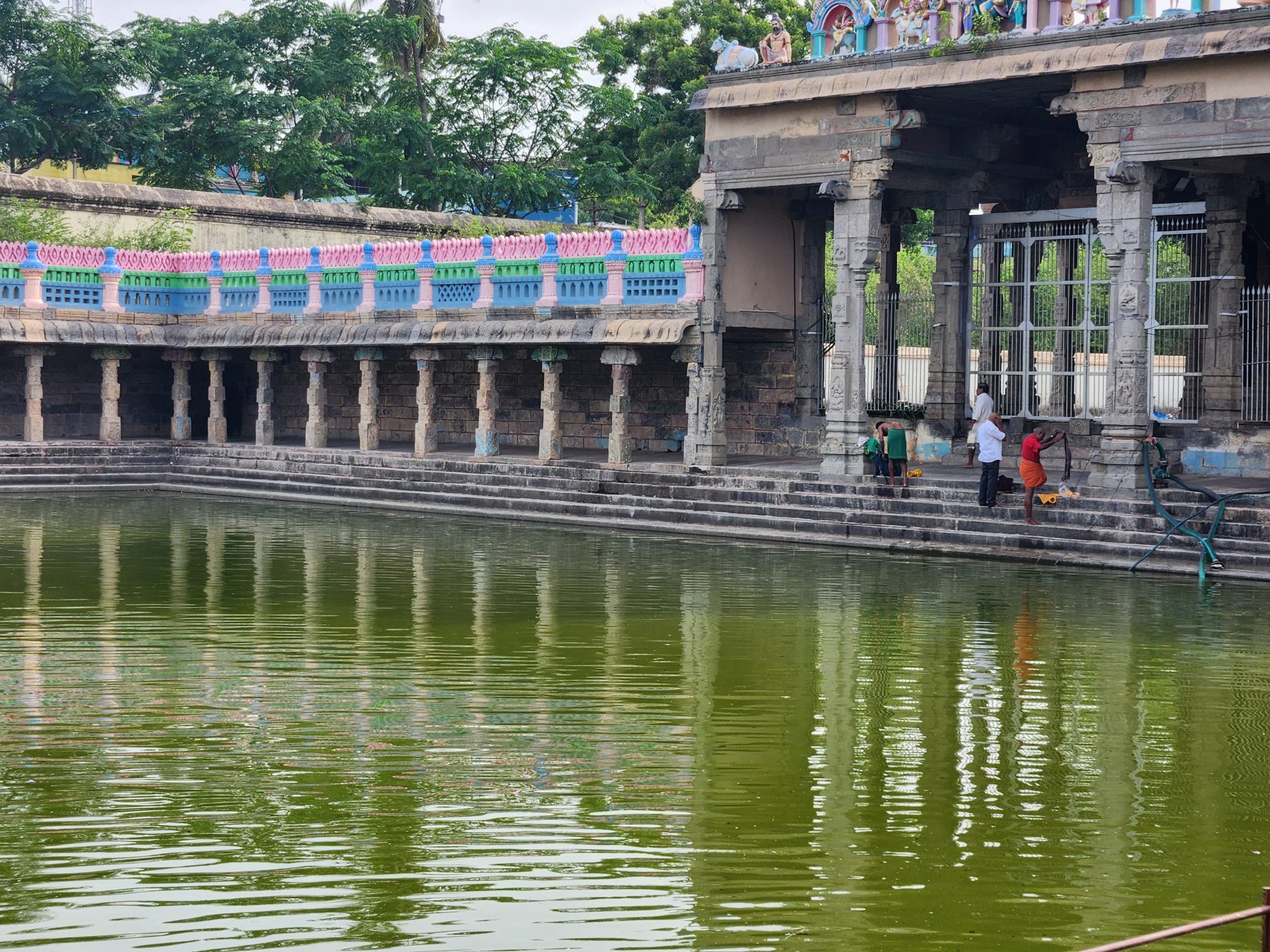
It is believed that prayers to Vaitheeswaran can cure diseases. Associated with Planet Mars, this temple is one among the Nine Navagraha (Nine Planets) temples. Within the temple complex is a pond, the holy waters of which contain Nectar and are believed to cure all diseases, if one takes a dip in it.
This is known as the Siddhamritham Tank or the Jatayu Kunda, (pot of Jatayu having holy ash of Vibhuti) and legend has it that Rama, Lakshmanan and Saptarishi worshipped the deity in this place during the Ramayana period.
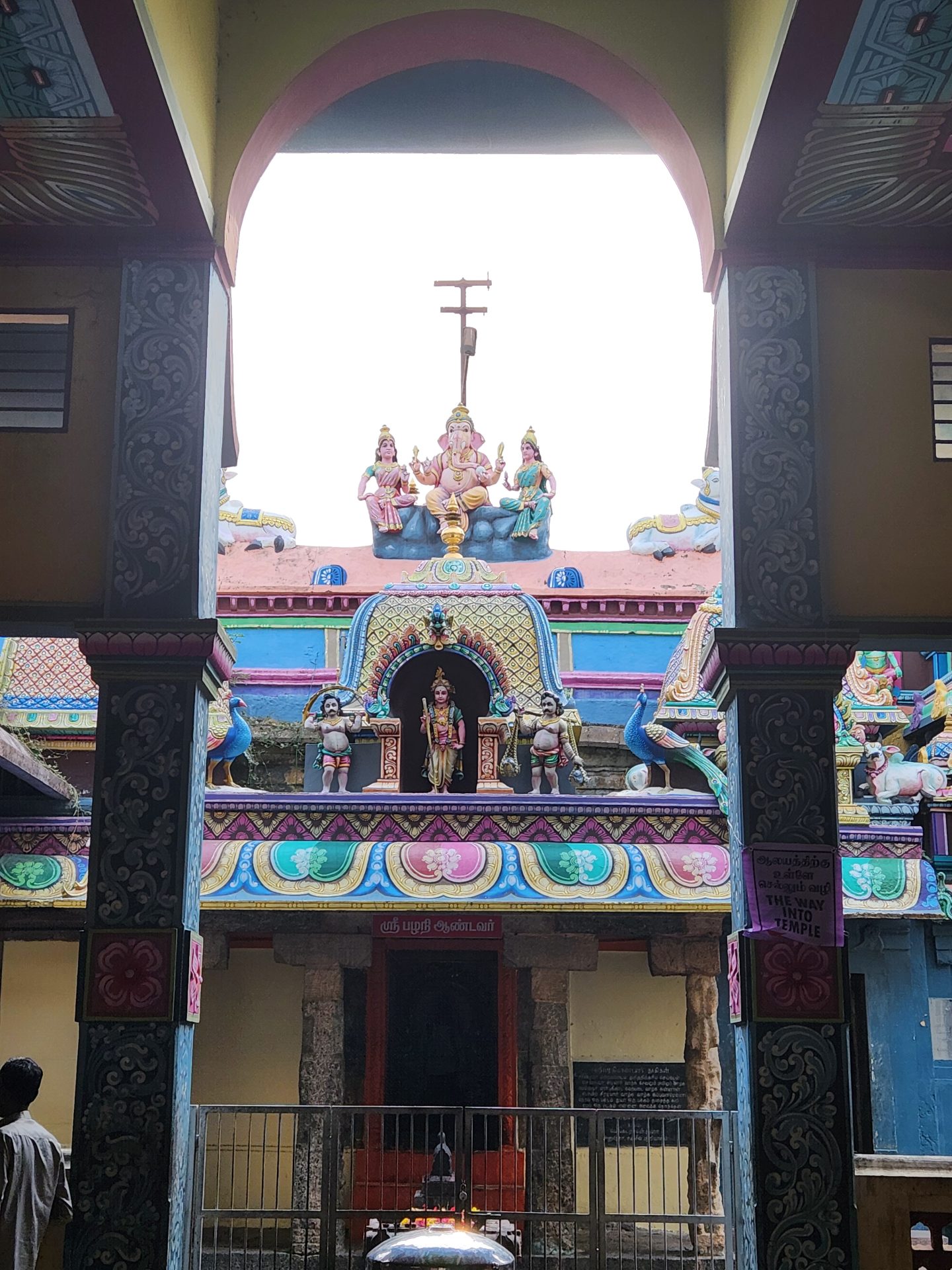
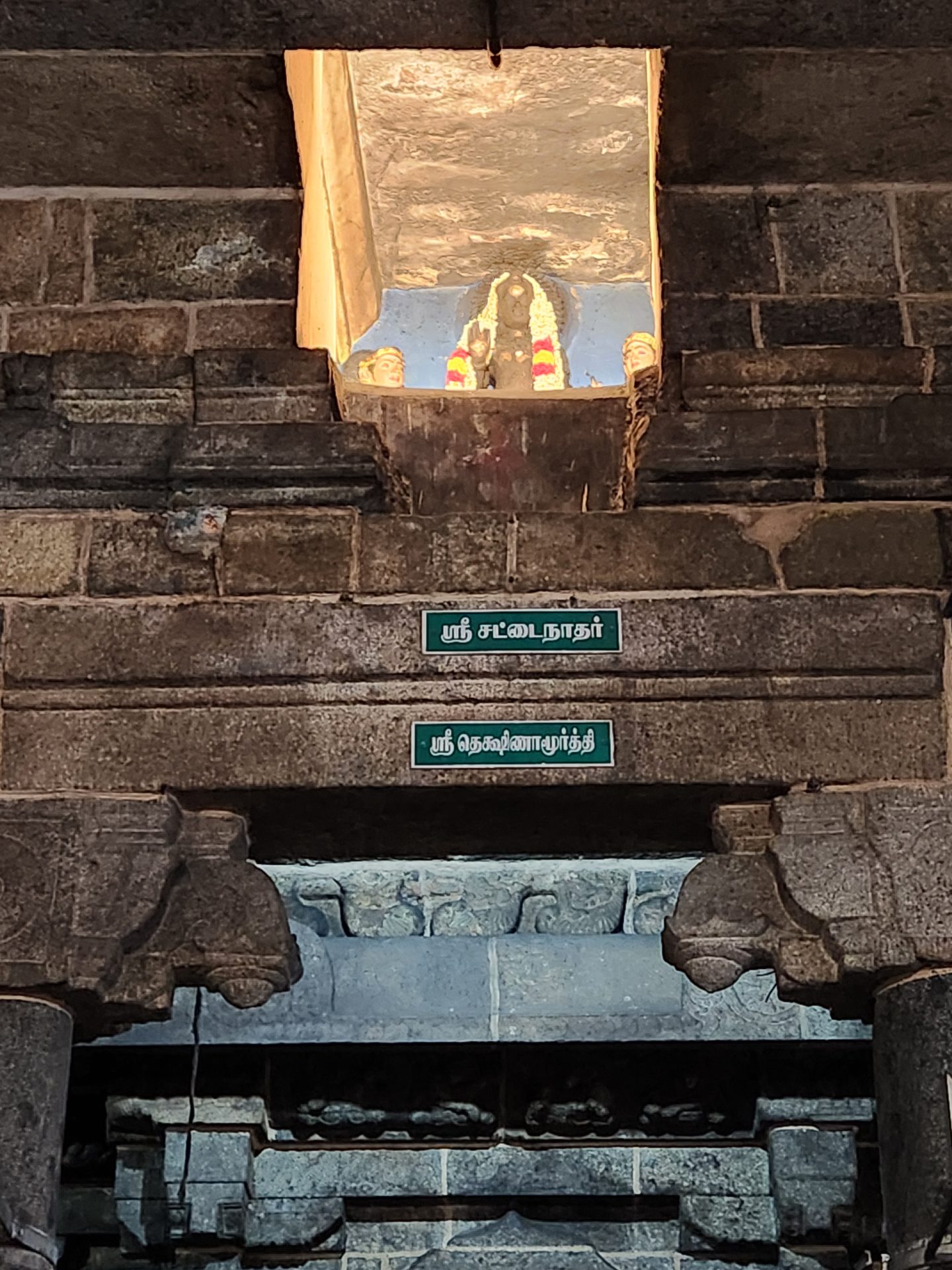
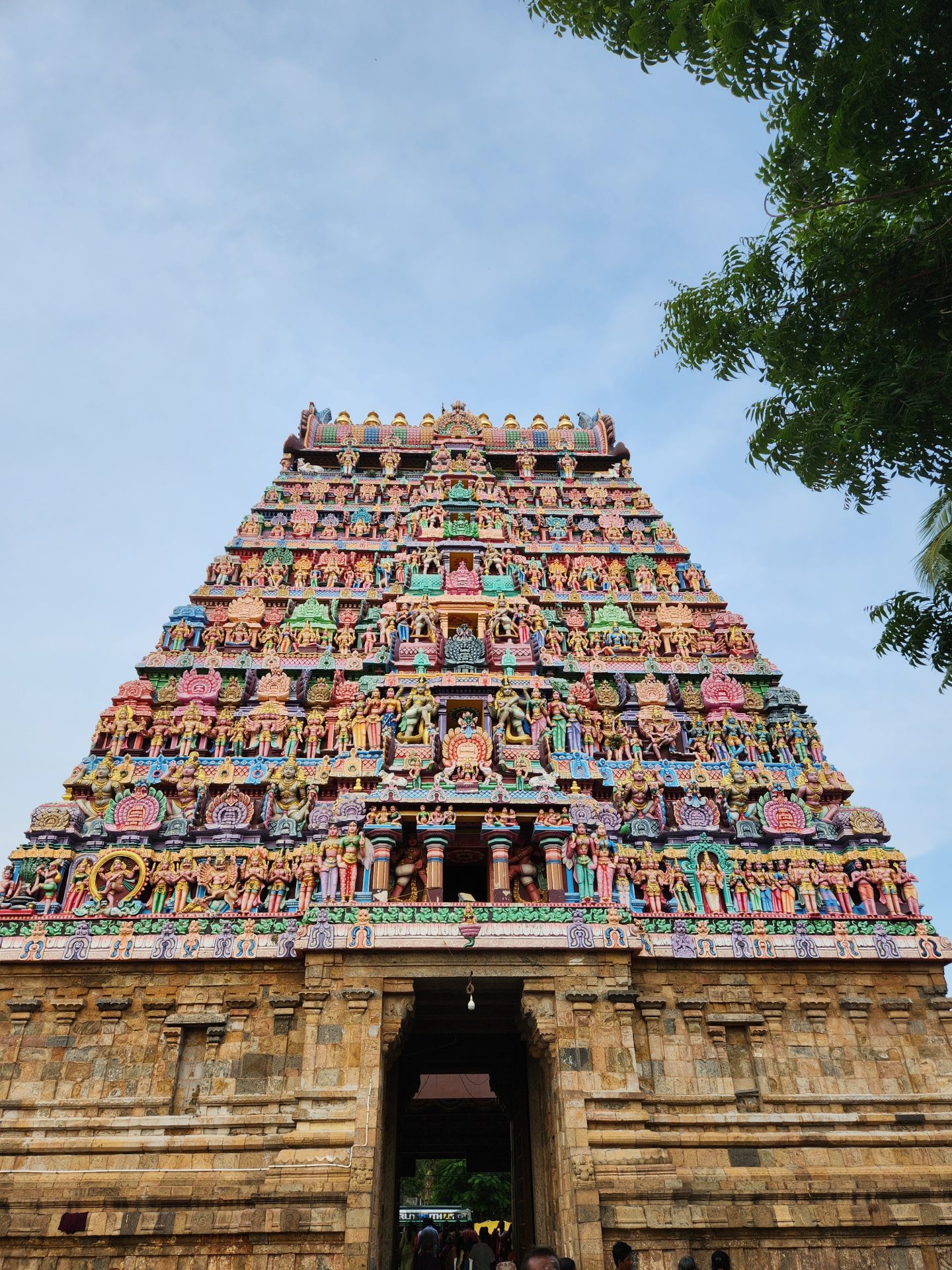
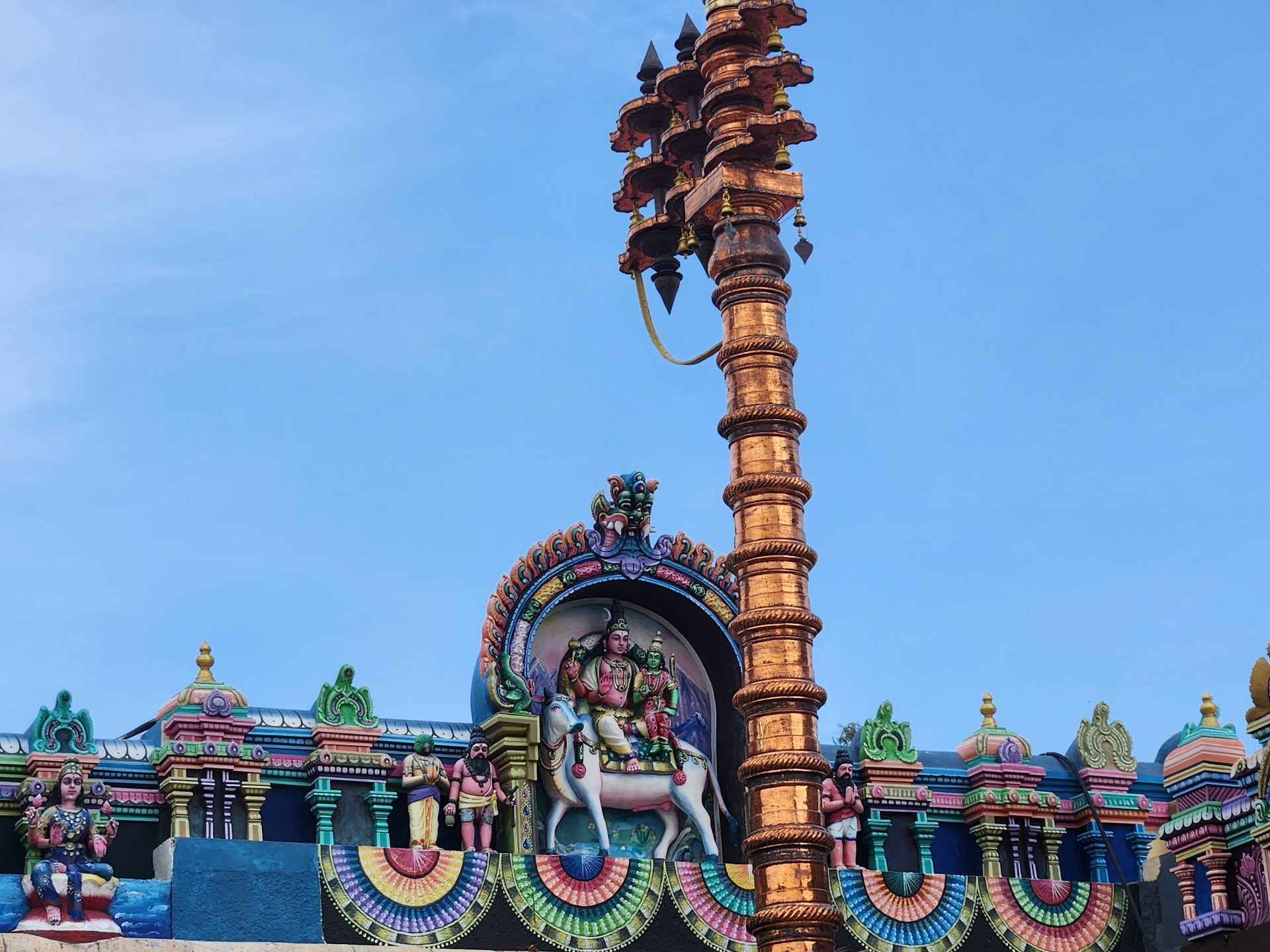
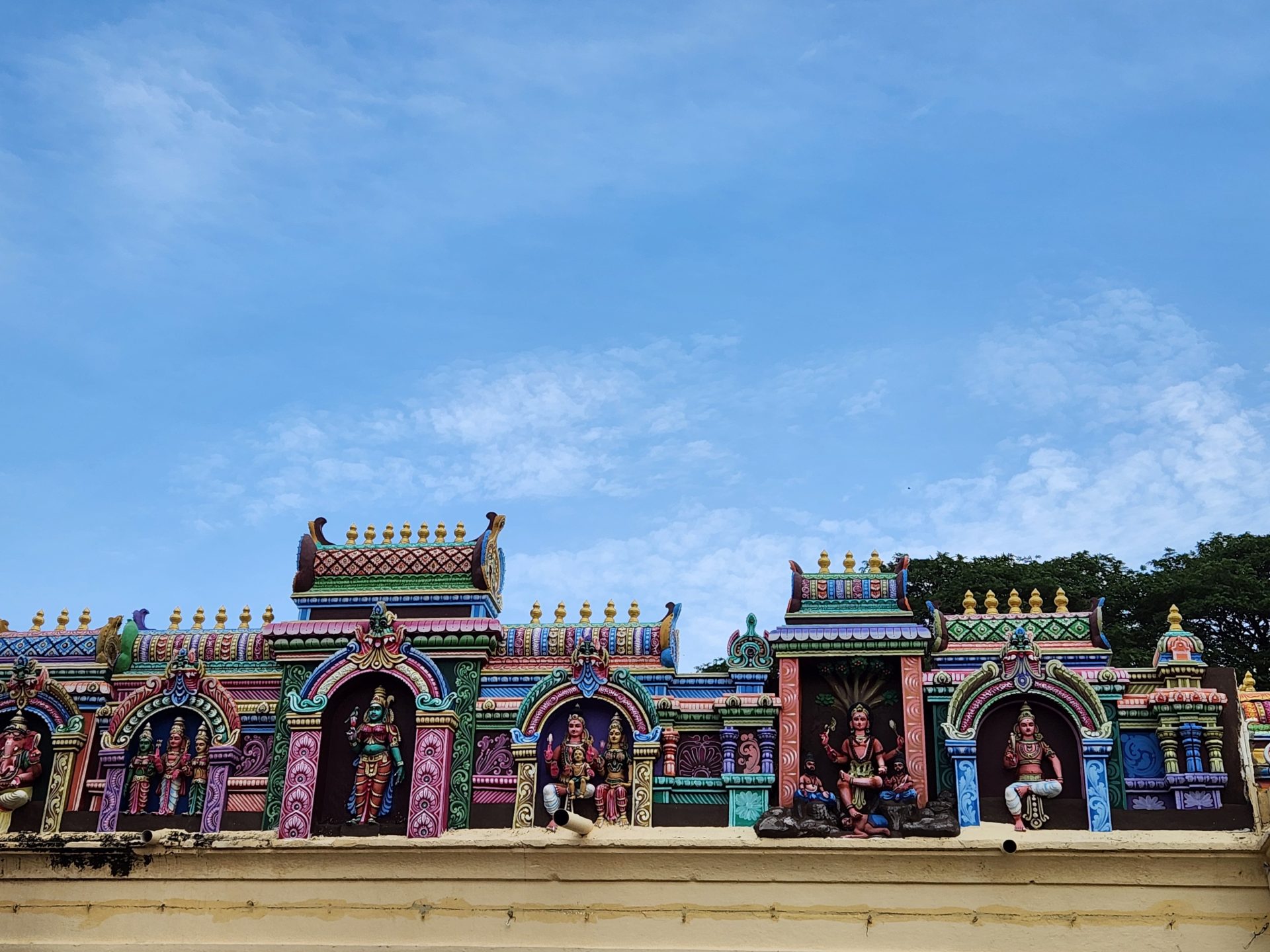
The temple tower is five tiered while there are 2 inner gopurams and large precincts inside. The inner most sanctum which forms part of the central shrine has the statue of Vaitheeswaran in the form of a Lingam while one of the precincts has metal images of Subramanya (worshipped as Muthukumara Swamy), Somaskanda, Nataraja, Angaraka an stone sculptures of Durga, Surya, Jatayu, Dakshinamoorthy and Sampati
The second precicnct houses the shrine of Thaiyalnayaki who is seen in a standing posture with the medicinal oil to cure the diseases. There is also a small shrine of Dhanvantari and Angaraka in stone sculpture. The southern gateway from here leads to the temple tank and directly faces the Thaiyalnayaki shrine. The eastern gateway also has the shrine of Adi (original) temple that has a smaller replica of the main shrines. There is a fine metal image of Gangavisarjanar inside the temple. The shrine of Angaragan (Mars) is present near the Eastern gateway in the third precinct.
The temple has inscriptions from the Chola period while the dynasties of the Pandayas, Nayaks and the Maratha warrior have all contributed to the temple.
We started our drive back towards Kumbakonam around 5.30 in the evening.
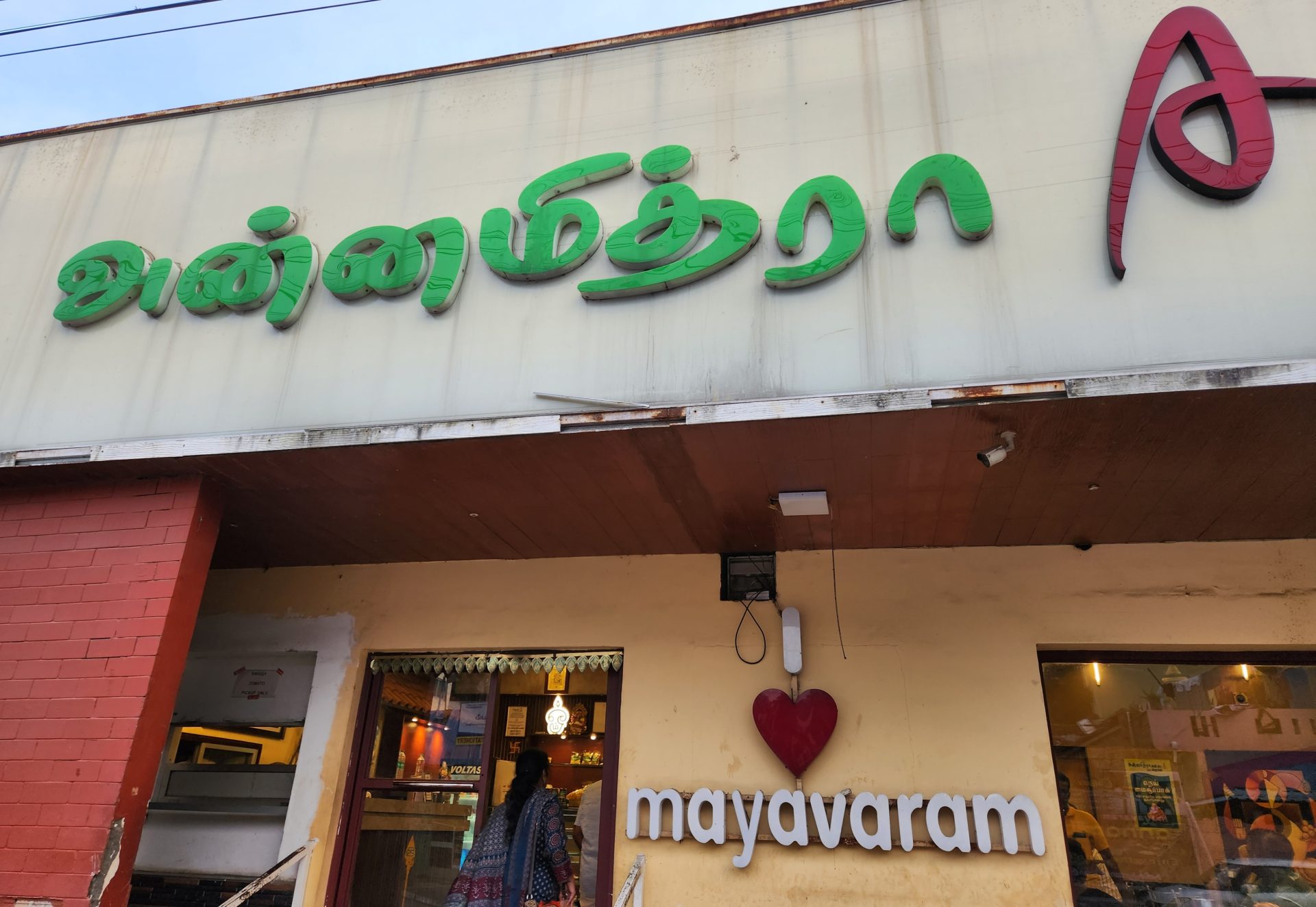
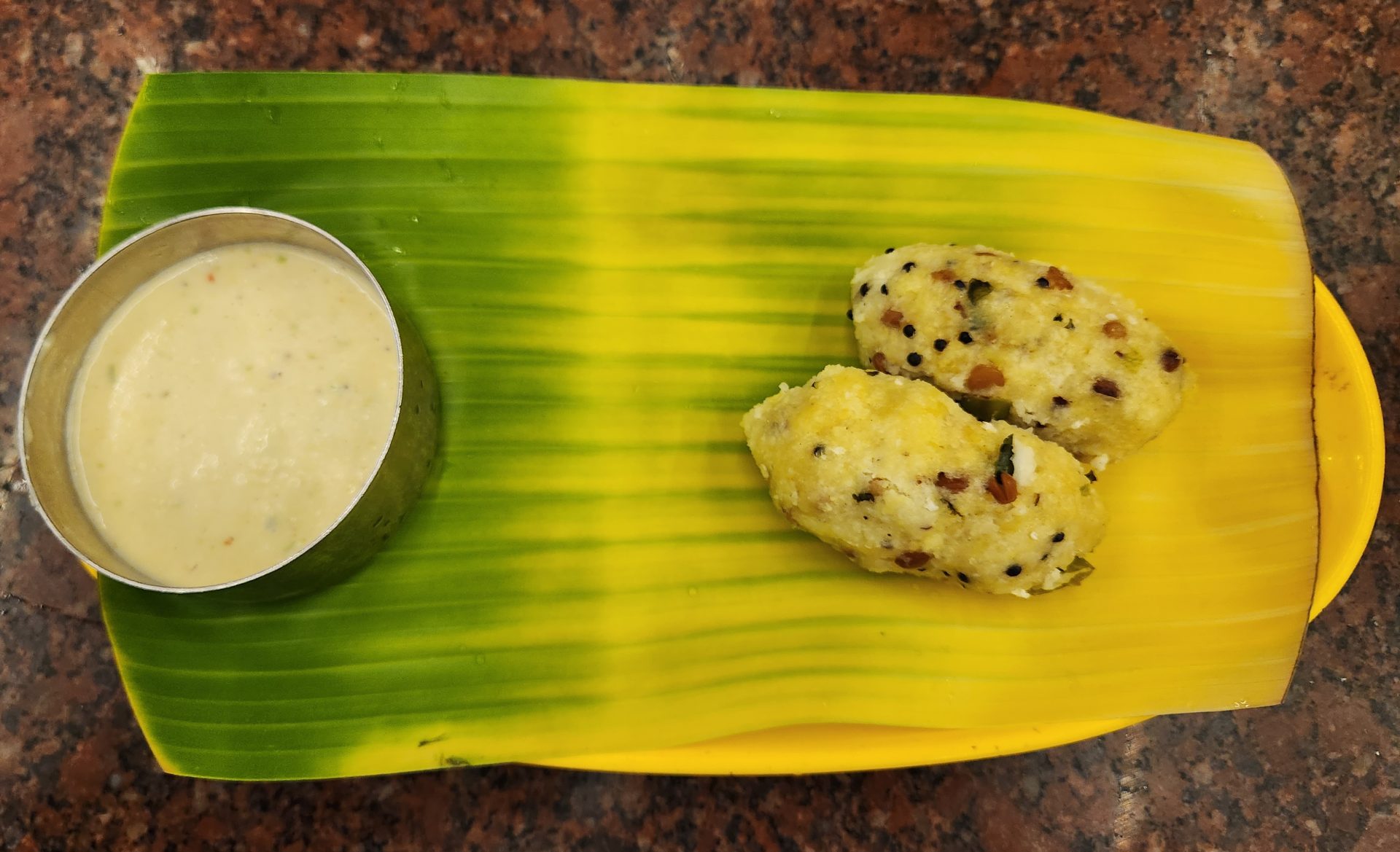
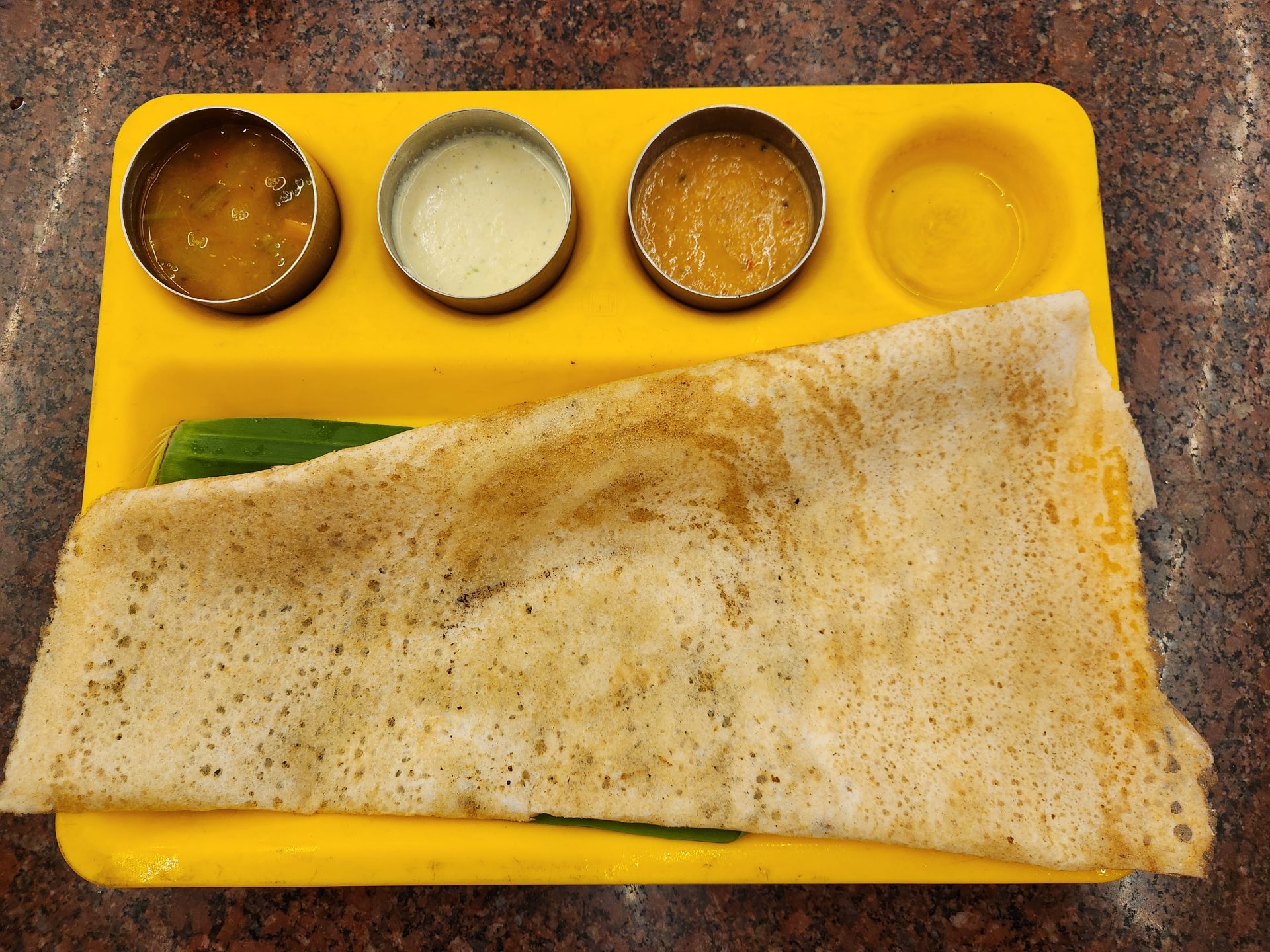
Started feeling a bit hungry and decided to stop by enroute at Annamitra restaurant in Mayavaram for some coffee and snacks.
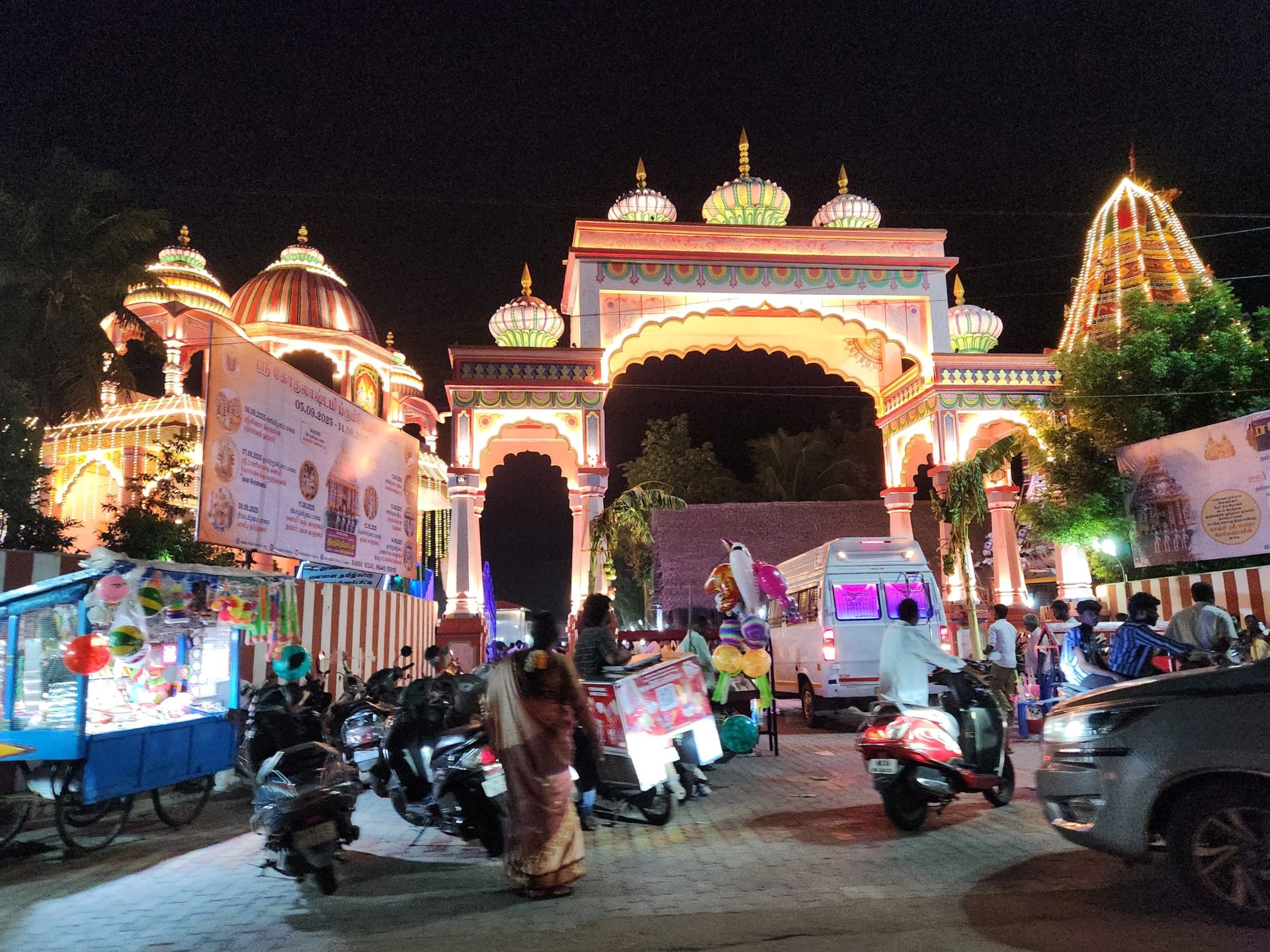
We crossed Govindpuram around 7 PM where the beautiful Vittal Rukmani Sansthan temple was located. It was Janmashtami and there were huge lines outside, waiting to get into the temple. We decided to continue our journey after clicking a picture from outside.
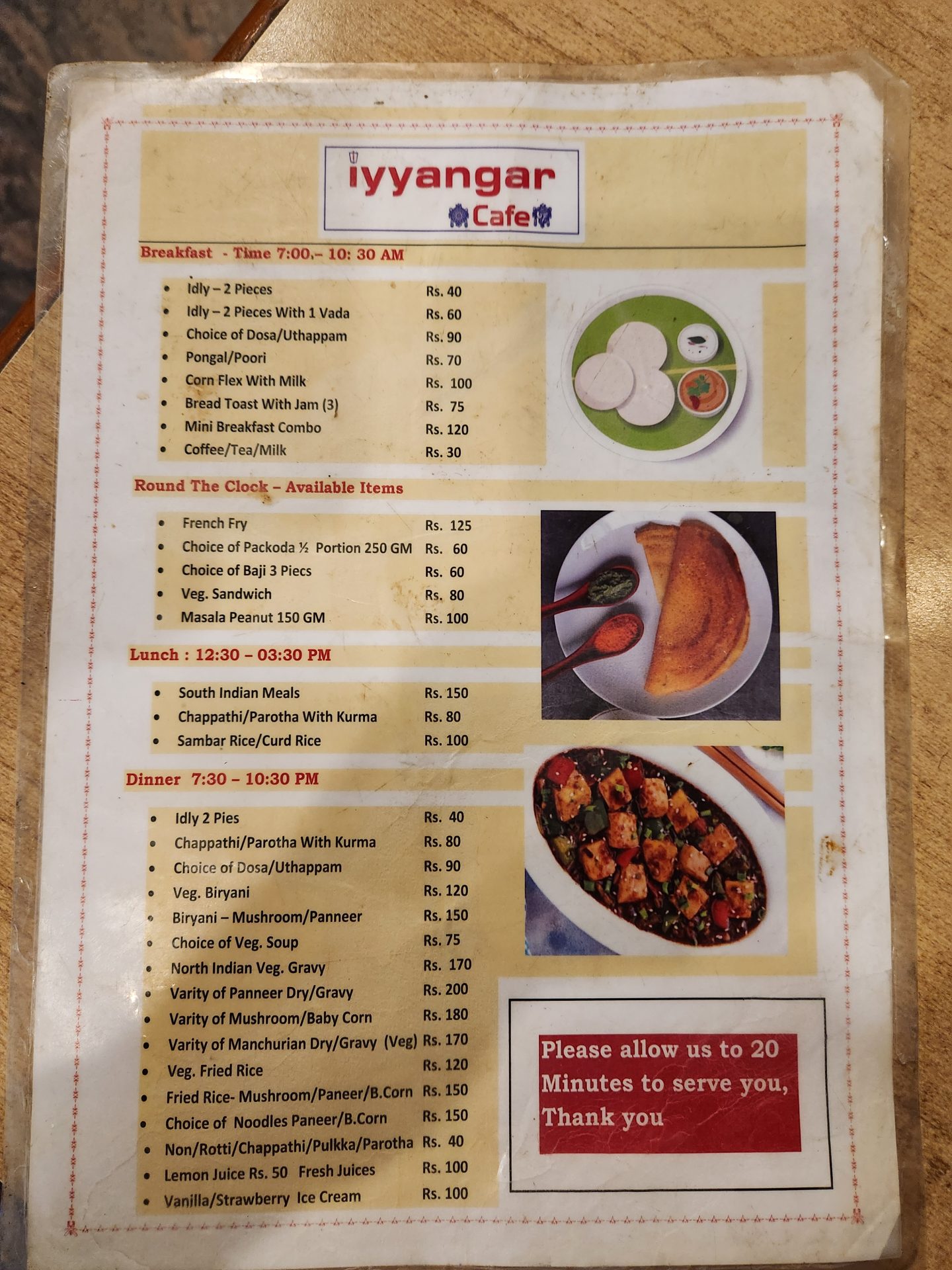
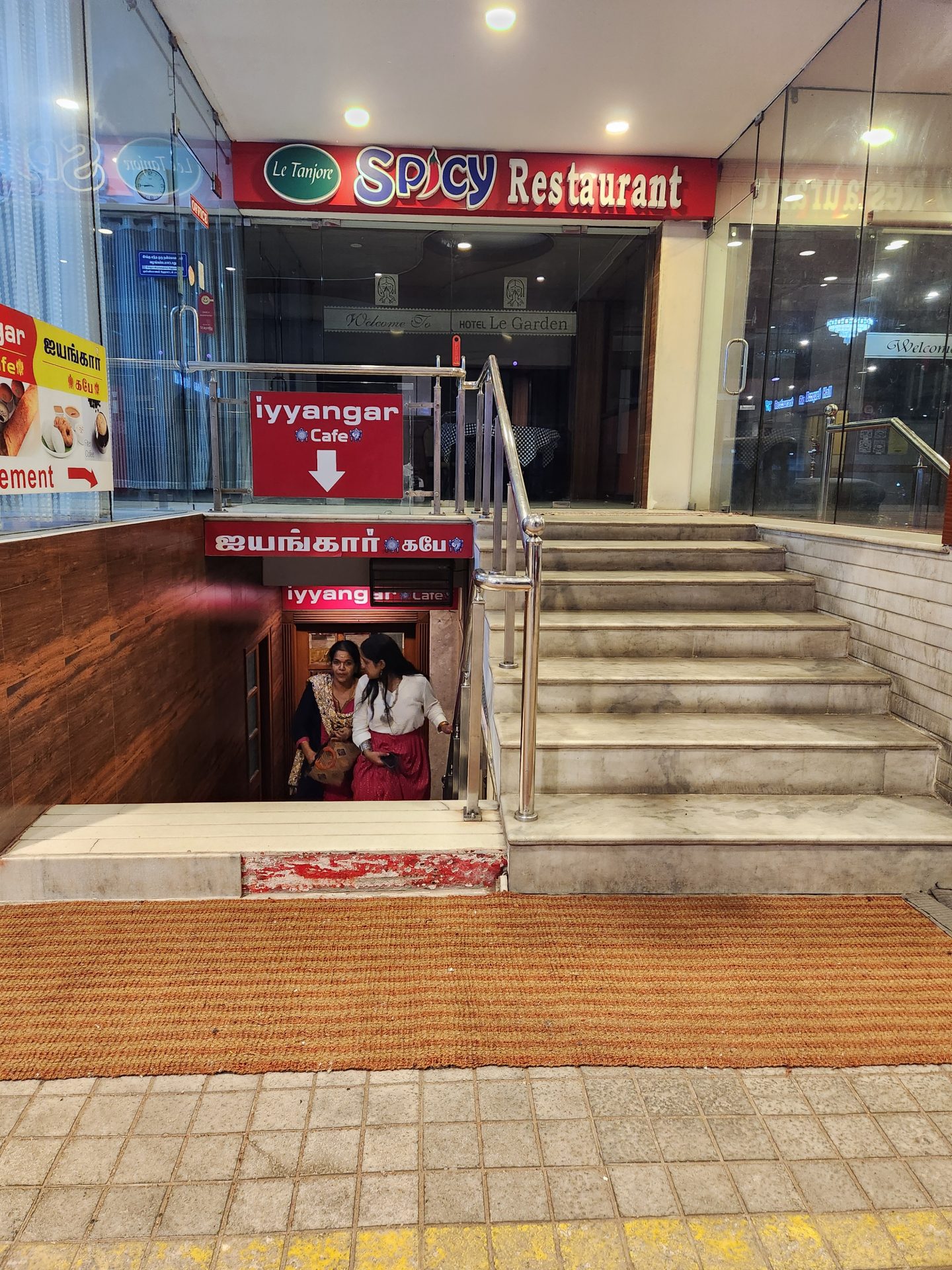
We reached our hotel Jaidarshini Palace (the same as where we had stayed during our last visit) around 8 PM and checked in. The Hotel unfortunately did not have a dine out but thanks to quite a few restaurants nearby, went out and picked up some dinner from a nearby restaurant Iyyangar.
Sep 14th 2025
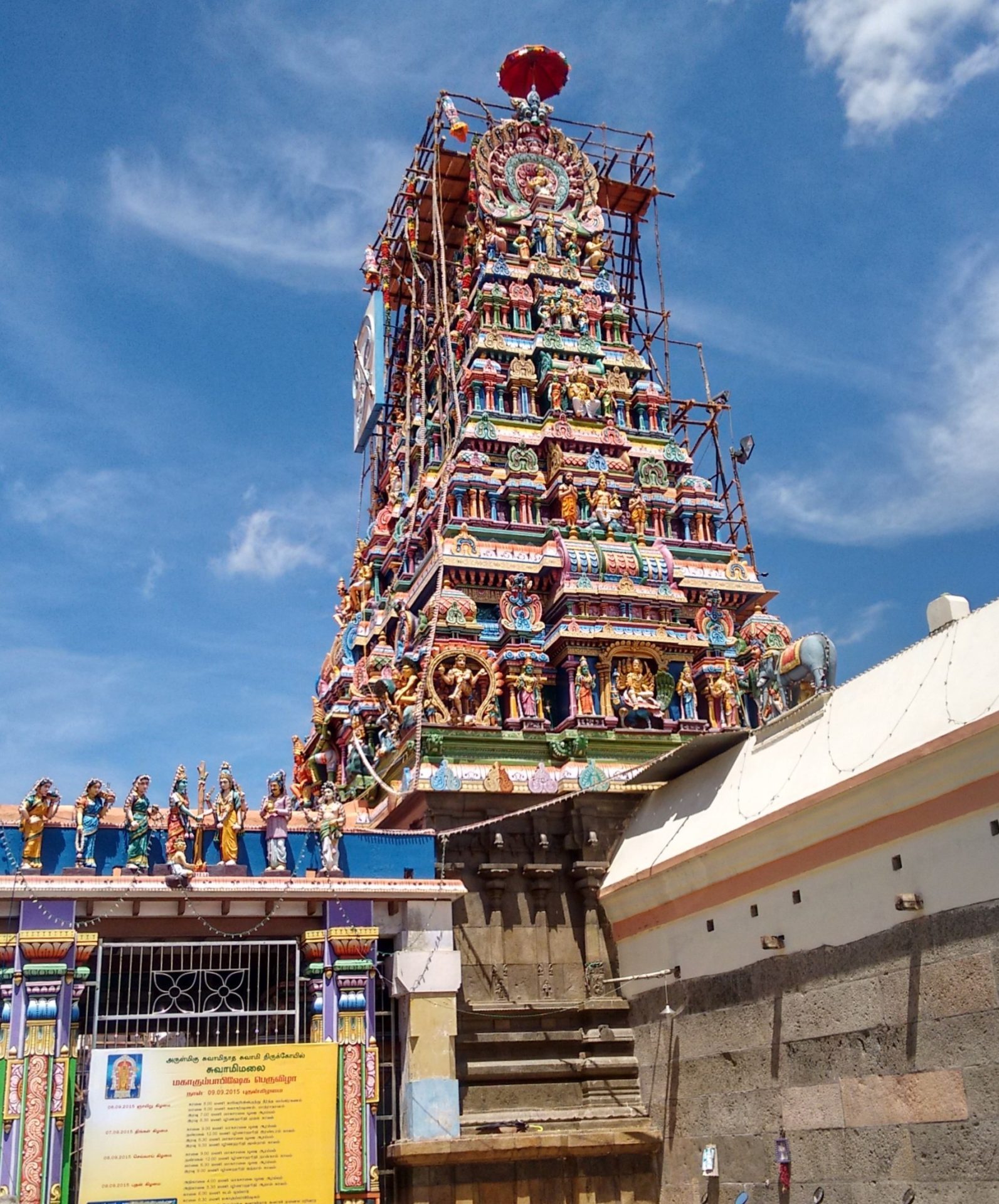
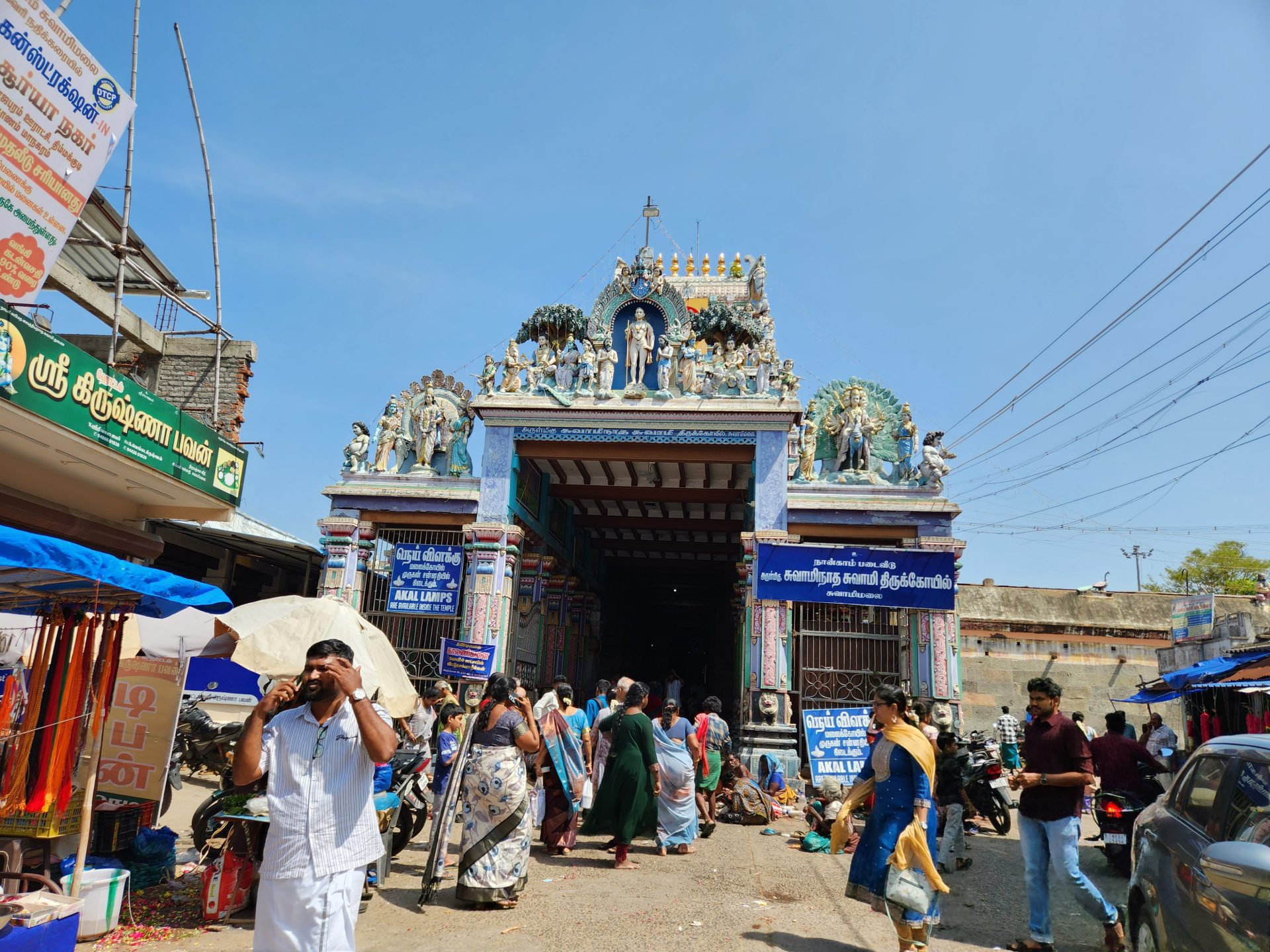
The next day morning was to cover temples in and around Kumbakonam. We stopped at Iyyangars for some nice breakfast and commenced our drive to Swamimalai Temple, located around 8 kms away in the suburbs of Kumbakonam. We reached the temple around 9 and lost almost 15 minutes in searching for a proper parking place.
The Swamimalai Murugan Temple
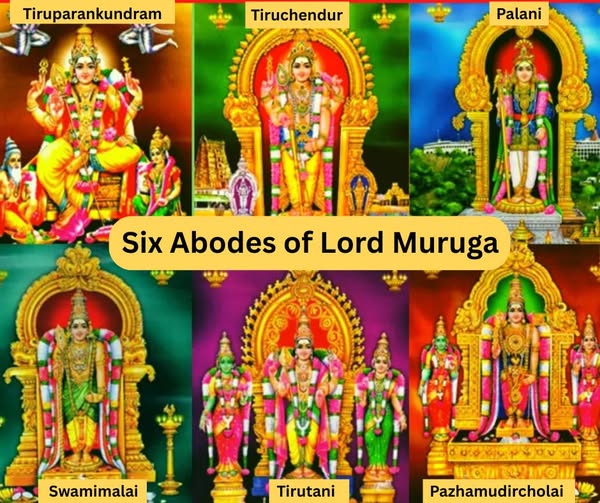
Swamimalai is a panchayat town that is a suburb near Kumbakonam in Thanjavur District. It lies on the banks of river Kaveri and is the site of the fourth of the six abodes of the Hindu deity Murugan (Kartikeya), the other 5 being Pazhani, Tiruttani, Tiruchendur.
The Temple is built on a man made hillock of about 60 feet height and is said to be in existence from 2nd century BC.
There are 60 stone steps leading to the temple, each step representing the Hindu cycle of 60 years. Believed to have been built by Parantaka Chola I, the temple has 3 Gopurams and 3 Paraharams. The templeis normally open from 5 am – 12:00pm and 4.30pm- 8:00pm. Many marriages takes place in this hall and people come all over the state to get married here.
Out of the three praharams, one is at the foothill, the second at midway to the top of the hillock and the third around the sanctum of the Swaminathaswamy shrine.
The shrines of Dakshinamurthy, Durga, Chandikeswarar and the Utsavar of Swaminathaswamy form part of the first praharam while the 2nd praharam leads to a marriage hall and the chariot of the temple. In the first praharam we can see the shrines Dakshinamurthy, Durga, Chandikeswarar and the utsavar of Swaminathaswamy. The second praharam is large and has a marriage hall and the chariot of the temple.
The climb of sixty steps leads one to the main sanctum of the temple where one can see Iravatham (Indra’s white elephant) in front of Lord Muruga.
This is unique to only Swamimalai as all other Murugan temples have a Peacock in front of the Lord.
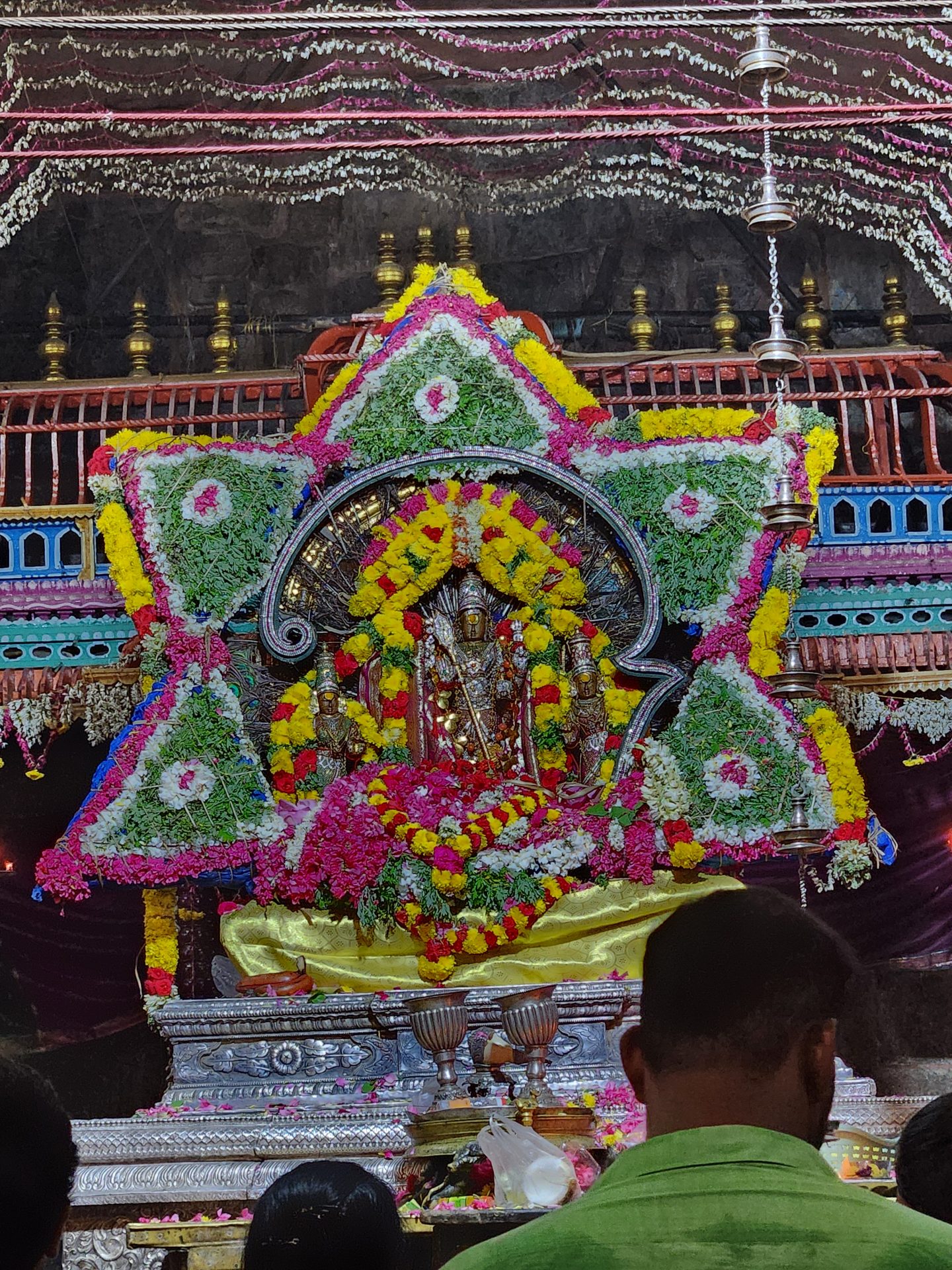
The 6 feet tall idol of Swaminathaswamy, anointed with Sandal and Panchamirtham (a mixture of Honey, Ghee, Jaggery, Milk and Banana) stands majestically with a lance studded with diamonds in his right hand (and other hand on his hips.
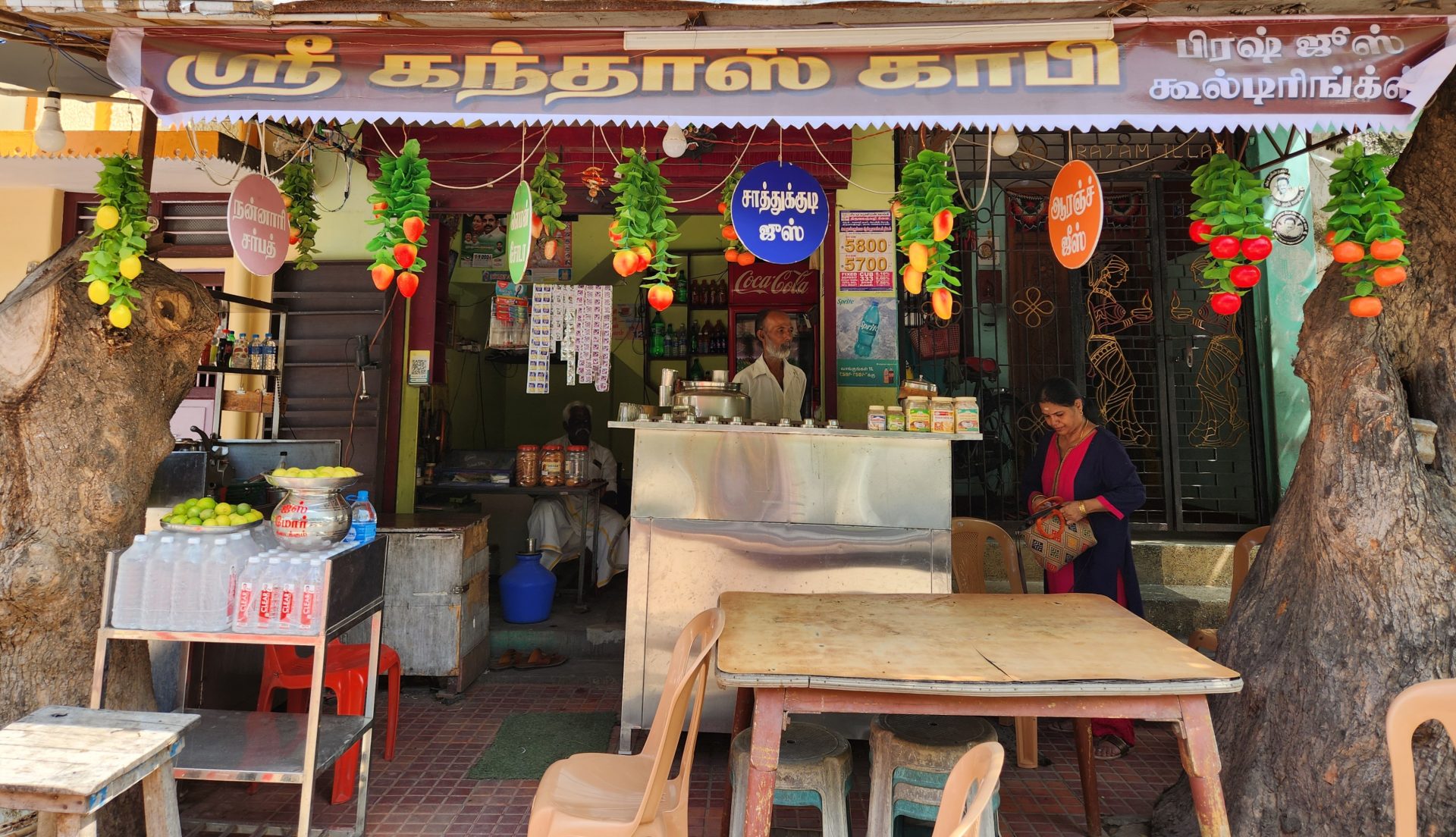
Do not miss the Ginger Tea in this shop
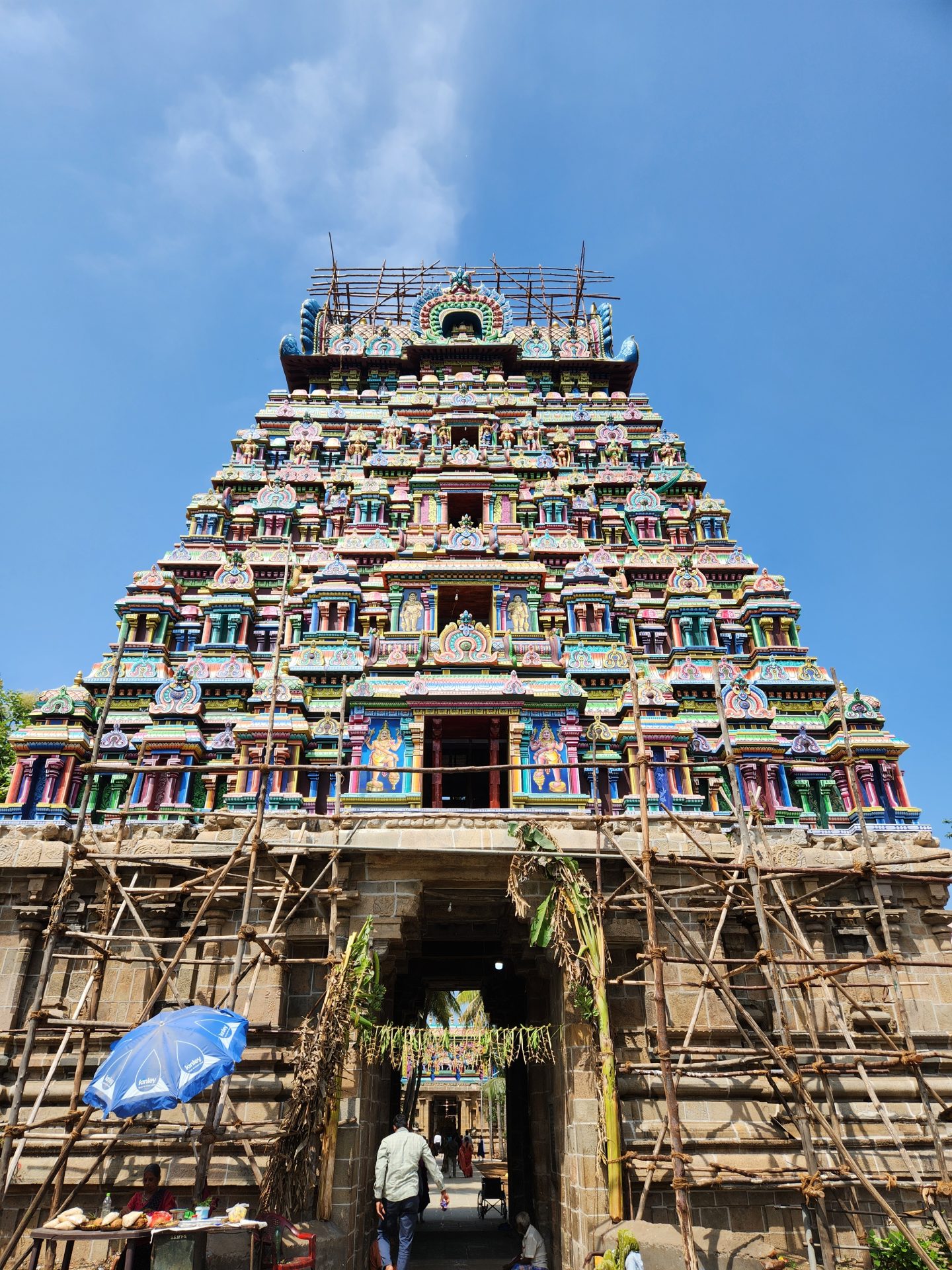
The Thiruvalanchizhi Pillayar Temple
As we started our drive back to the town of Kumbakonam, 2 kms ahead of Swamimalai lay the Thiruvalanchizhi Pillayar temple.
This is an ancient Hindu temple dedicated to Lord Shiva who is worshipped as Sri Kapartheeswarar here alongside Goddess Periyanaki. Among the 276 Paadal Petra Sthalams devoted to Lord Shiva, this temple is ranked 88th among the 276.
This temple is more popular for a White statue (believed to have been made out of sea foam) of Lord Ganesh who can be seen along with Vani and Kamalambigai.The temple has numerous inscriptions highlighting the contributions made by Raja Raja Cholan to it, a donation of gold to the deity by his daughter Kundavai as well as various offerings made by Rajendra I and his queen Valavan Mahadeviar. The earliest sections of the current masonry structure date back to the Chola dynasty. Influence of Buddhism in this region is seen by the presence of Buddhist image from the Chola period in the temple.
The temple’s orientation is towards the West and it features a 7 tiered Gopuram and 3 distinct precincts. The outermost of this comprises a Bhairava Shrine attributed to the Queen of Rajaraja III, Loga Mahadevi and a shrine dedicated to Kshetrapala Devar. The 2nd of the precincts is home to the Swetha Vinayagar where intricately designed pillared halls adorn the shrine. The central shrine houses the image of Kabardeeswarar in the form of Linga.
We started our drive from here around 10.45 A.M since we wanted to cover the stretch of temples in and around Big Street which we had missed seeing during our last visit.
There are 5 Vishnu temples which are connected with Mahamaham festival which happens once in 12 years in Kumbakonam. They are:
Sarangapani Temple, the largest among the 5 and with the tallest temple tower
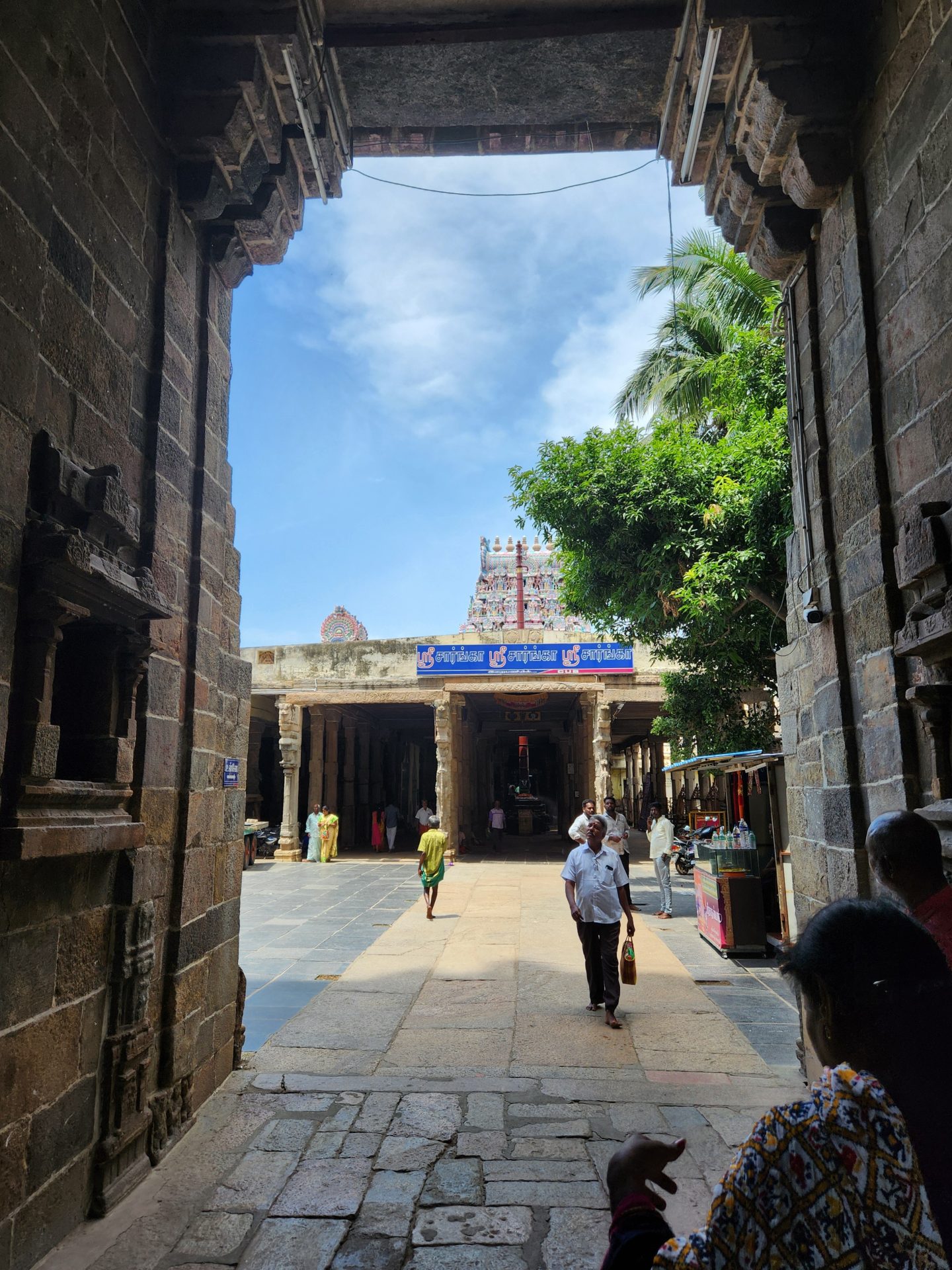
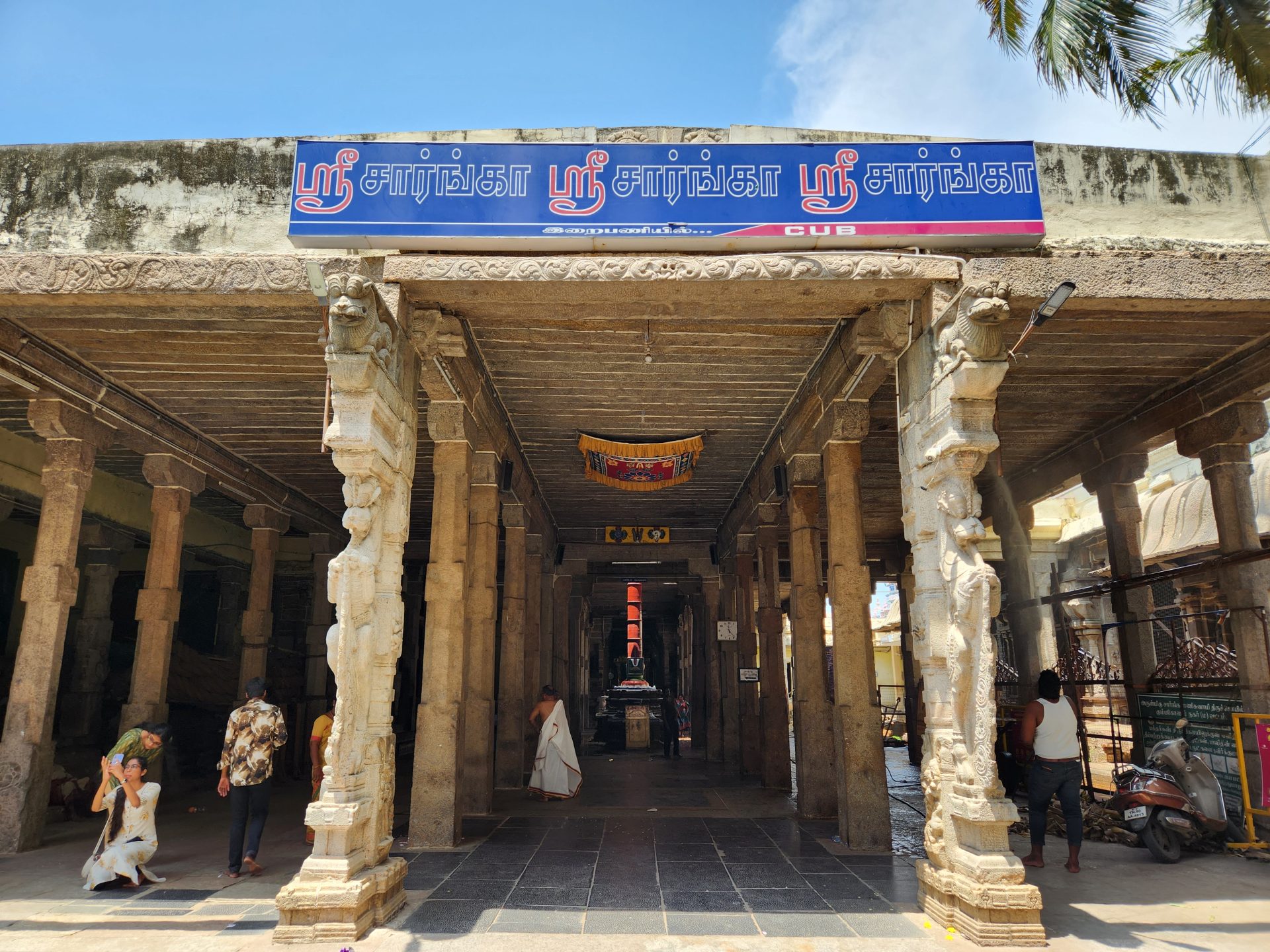
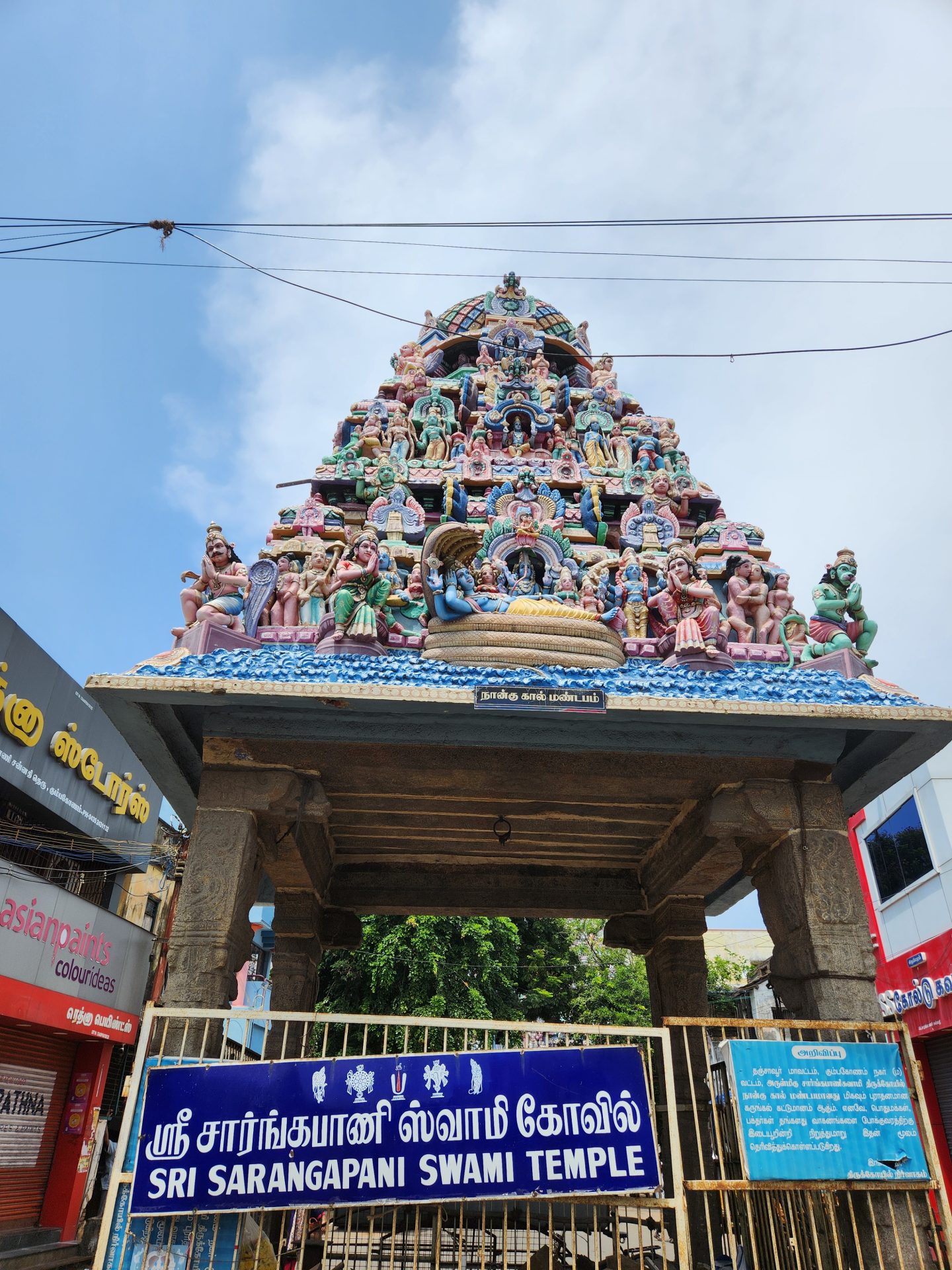
The first of the temples on Big street was the Sarangapani Swamy temple. This temple dedicated to Lord Vishnu is one among the 108 temples, regarded as Divya Desams which are revered by the 12 poet saints or Alwars in Nalavira Divya Prabhandham.
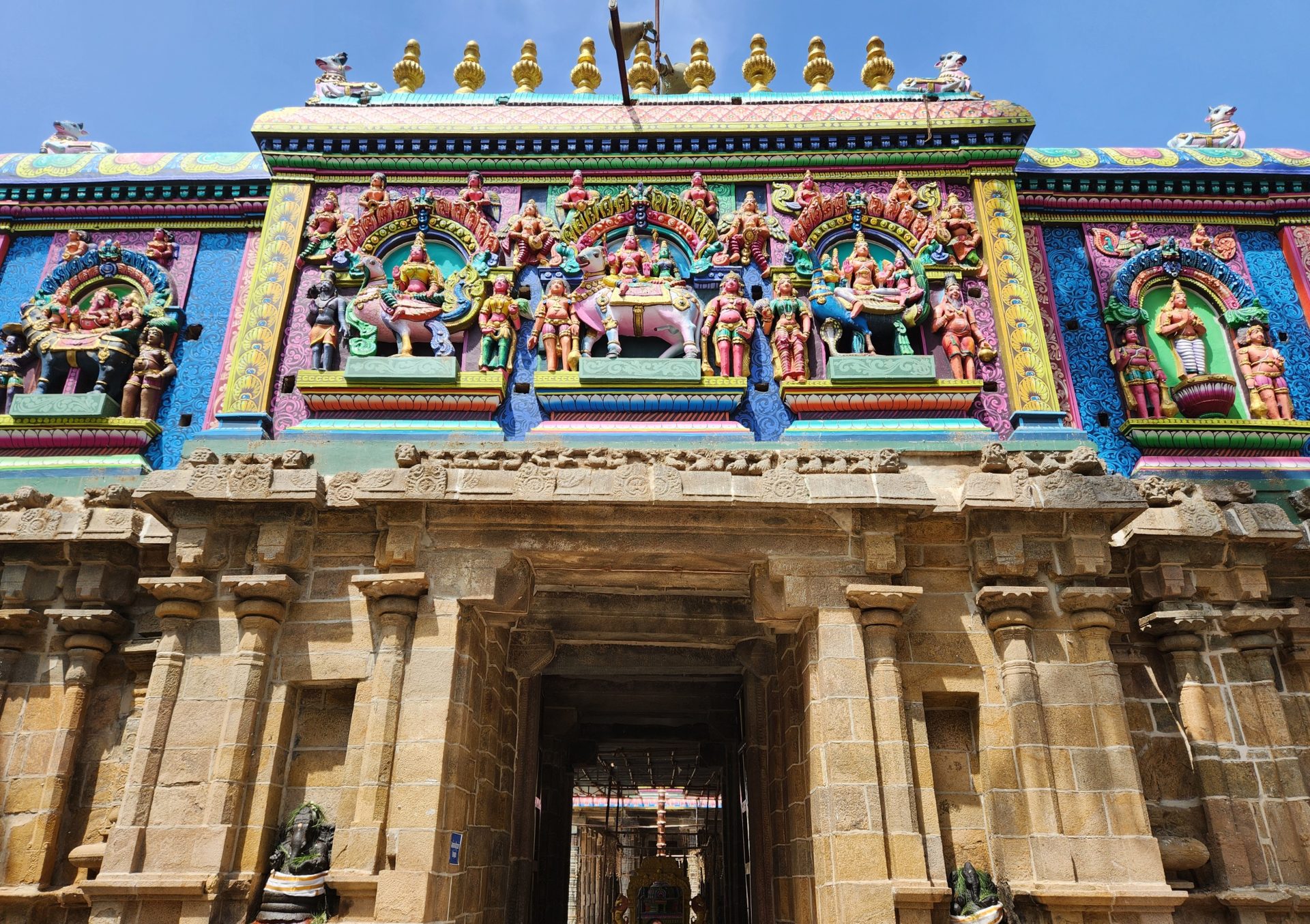
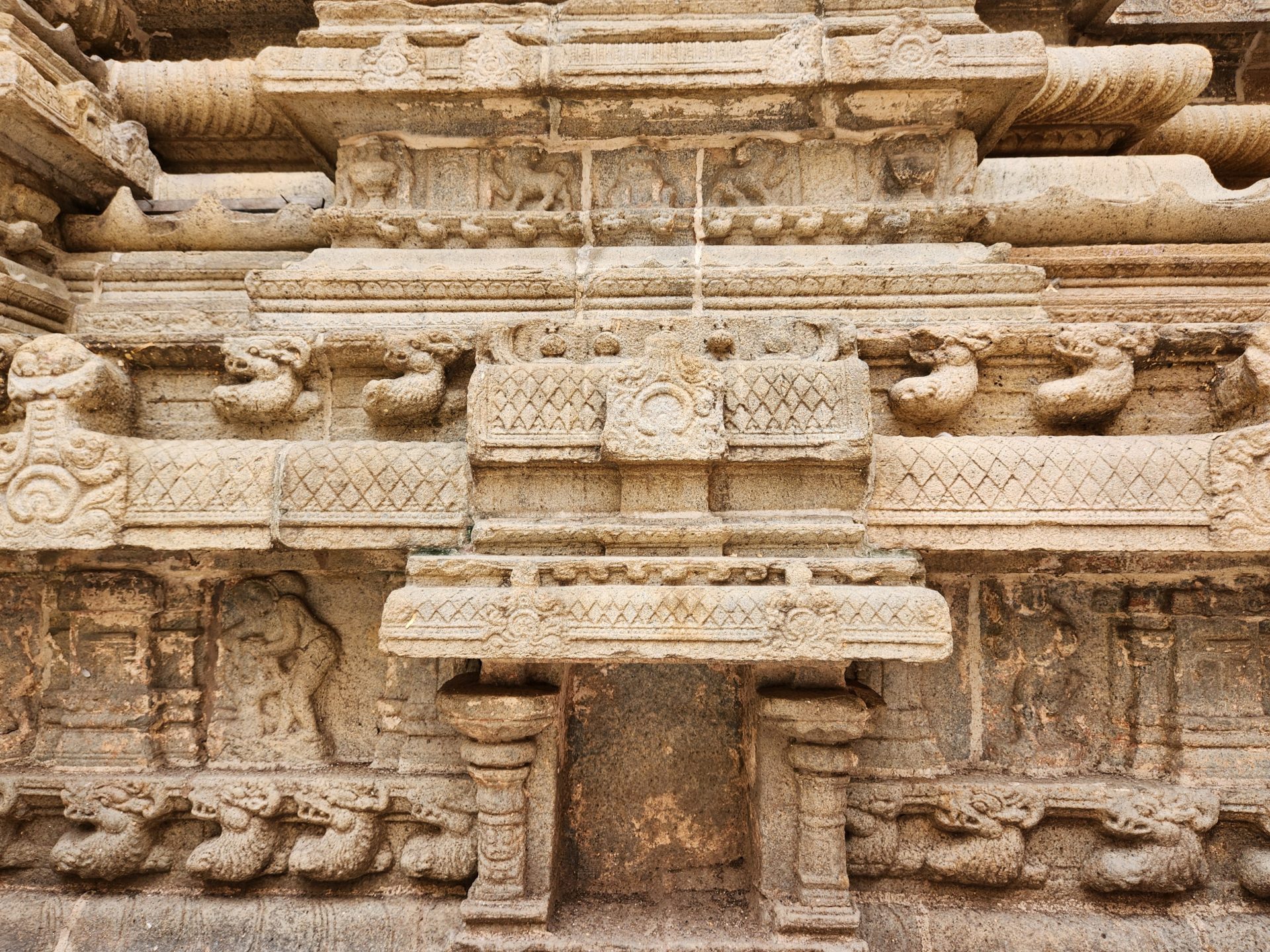
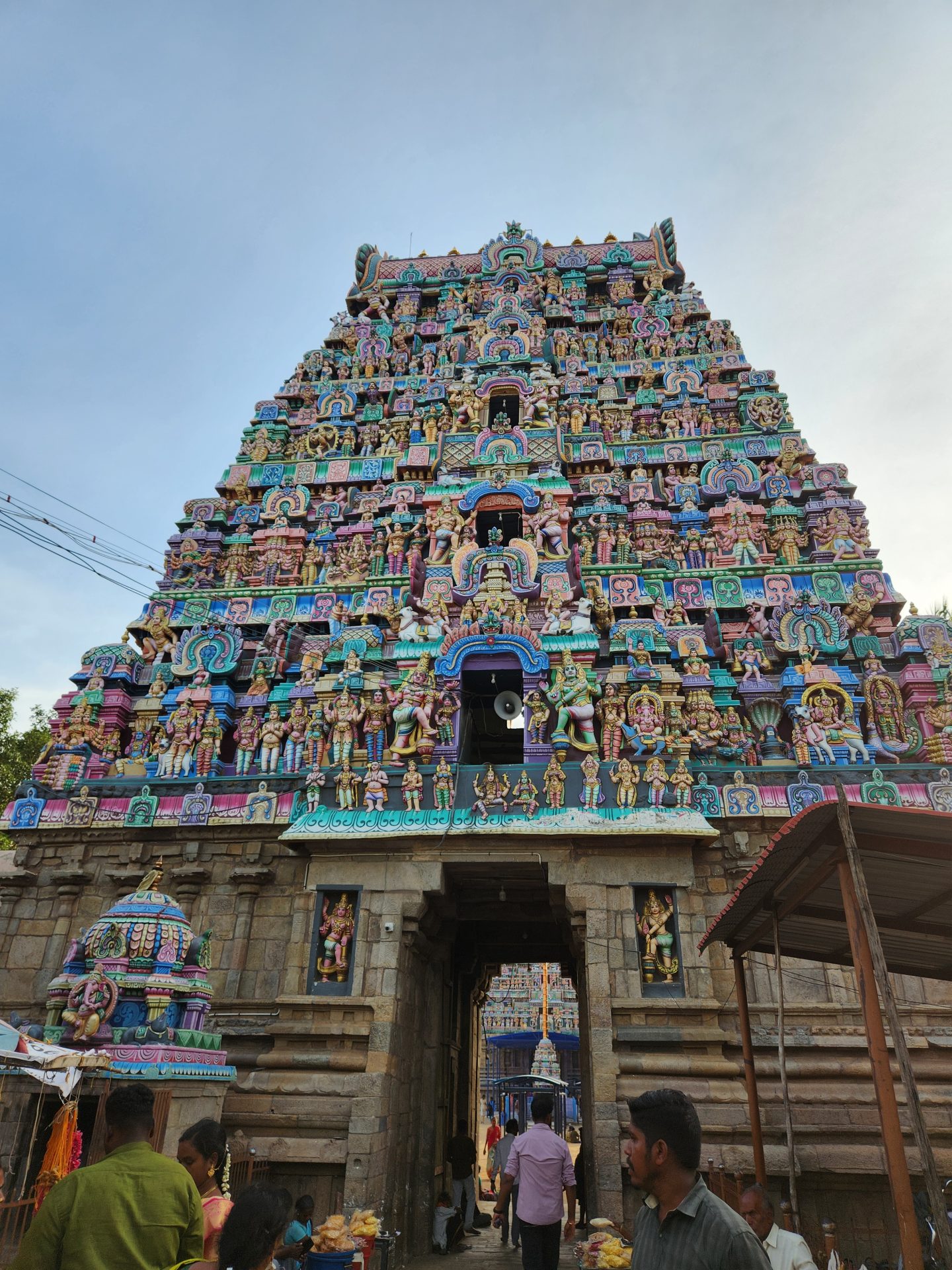
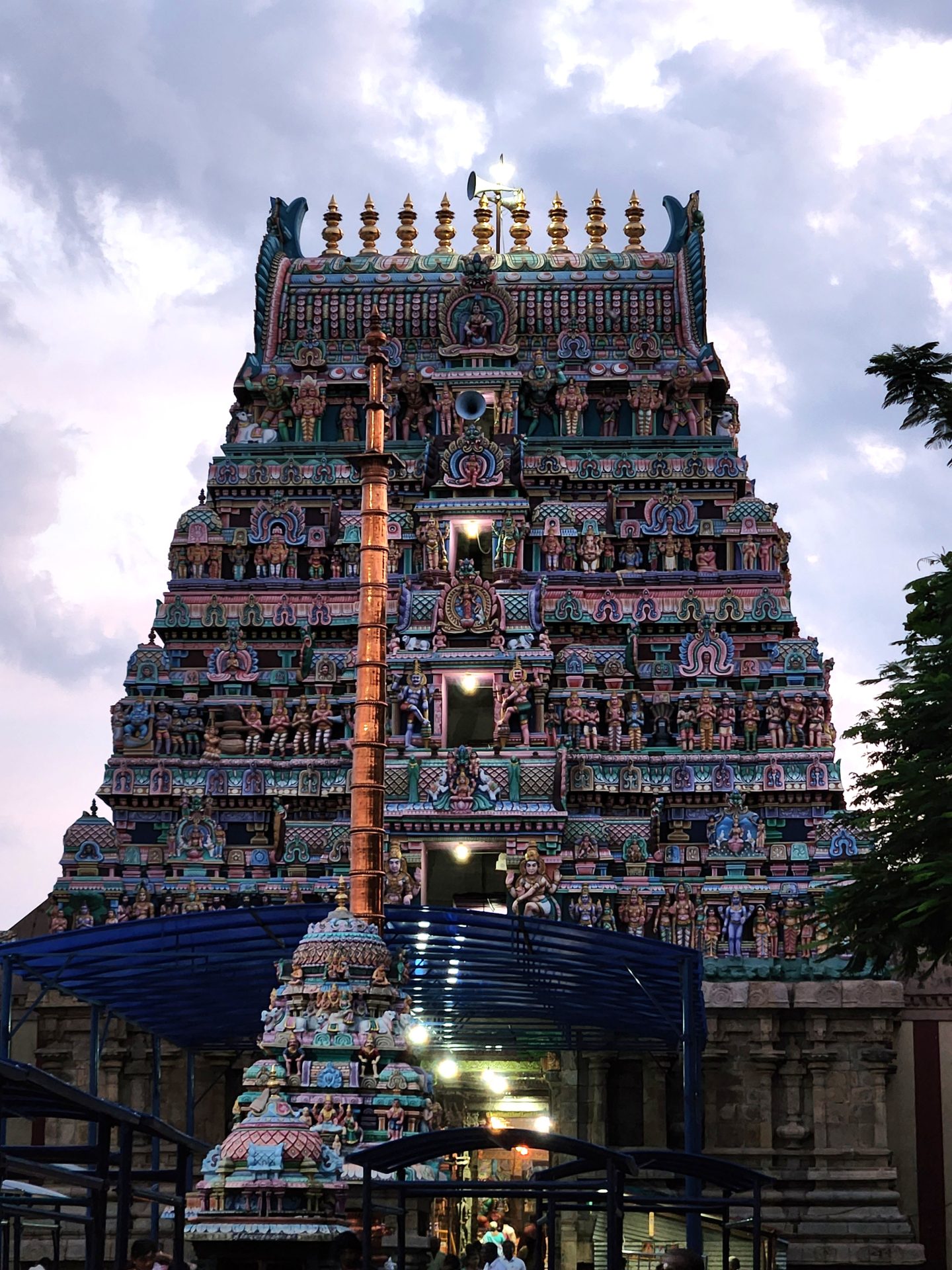
From time immemorial, the East facing temple is believed to be of significant antiquity with contributions coming in from the Medieval Cholas, the Vijaynagar empire and the Nayaks from Madurai. A huge granite wall enshrines the temple which has the water body besides all the shrines. The 170 feet tall Main Gateway also known as the Rajagopuram has 11 tiers and has figures depicting various religious stories. There are 5 smaller Gopurams within the temple.
Opposite the Western entrance lies the Potramarai tank which is the main temple tank. Sarangapani is believed to have appeared for sage Hemarishi. The temple has six daily rituals at various times from 5:30 a.m. to 9 p.m., and twelve yearly festivals on its calendar. The temple chariot festival is the most prominent festival of the temple, celebrated during the Tamil month of Chittirai (March–April). The twin temple chariots are the third largest in Tamil Nadu, each weighing 300 t (660,000 lb).
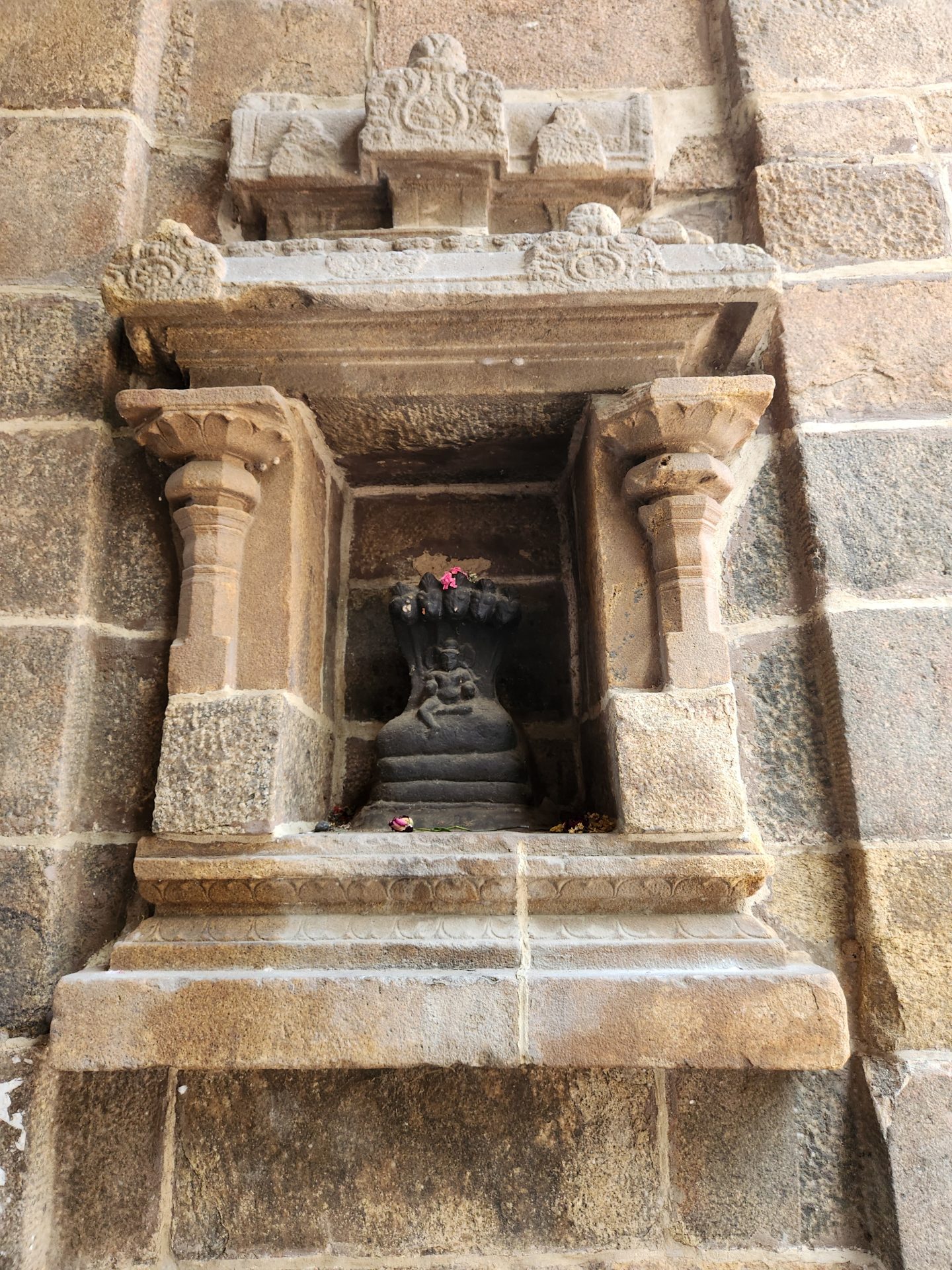
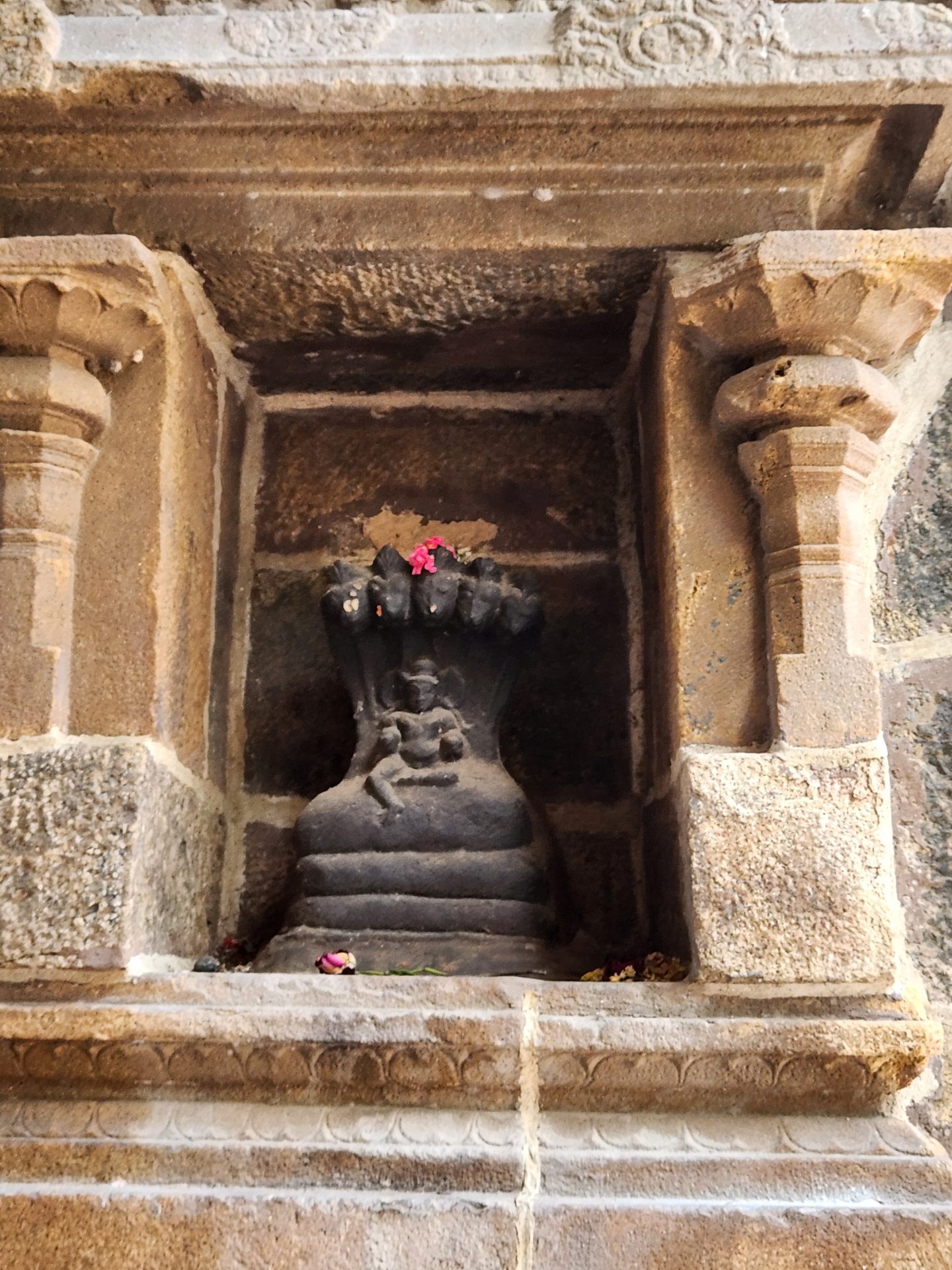
People pray to planet Kethu for excellence in education and family prosperity while those facing some adverse aspects of this planet, pray first to Lord Naganatha.
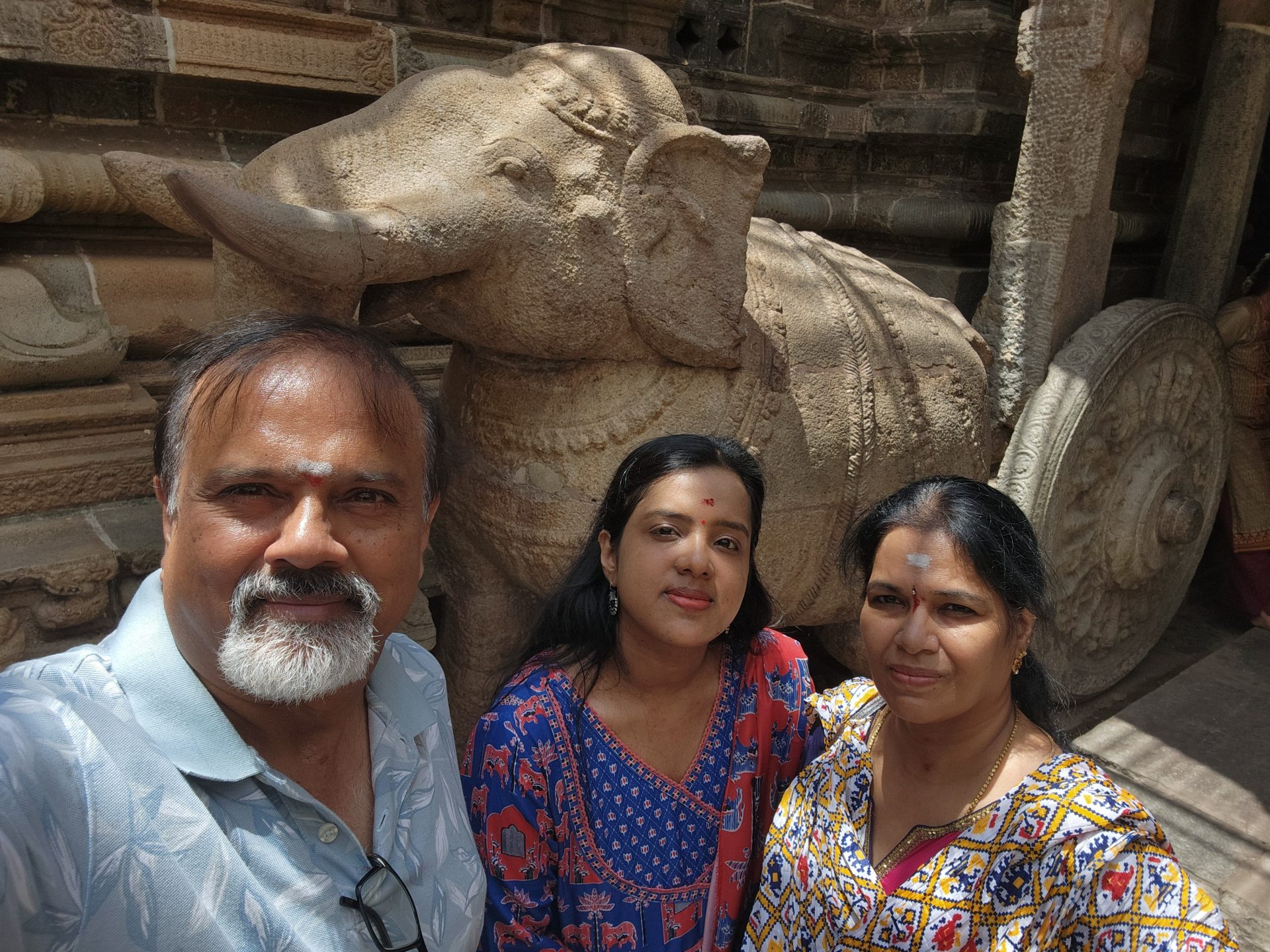
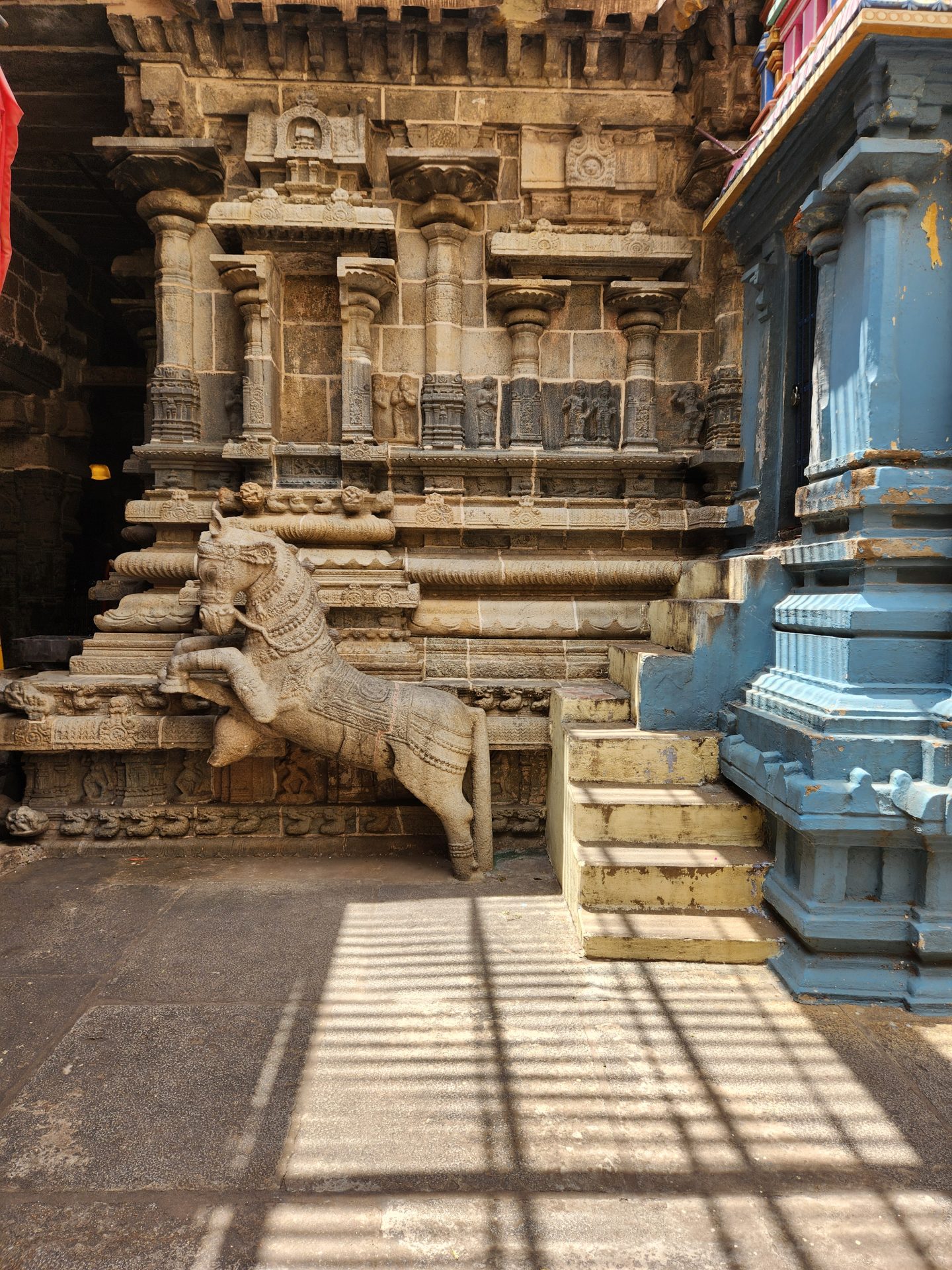
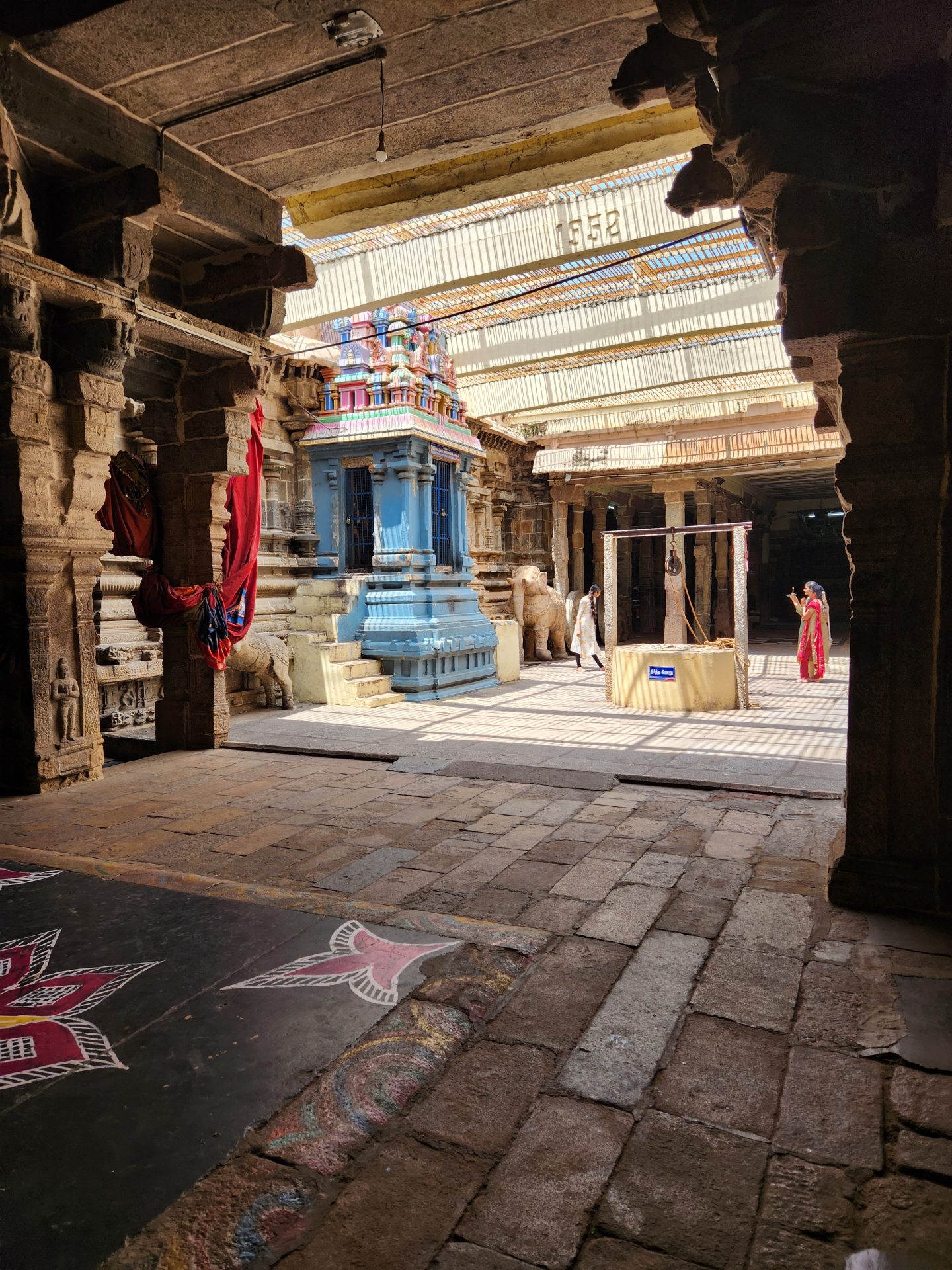
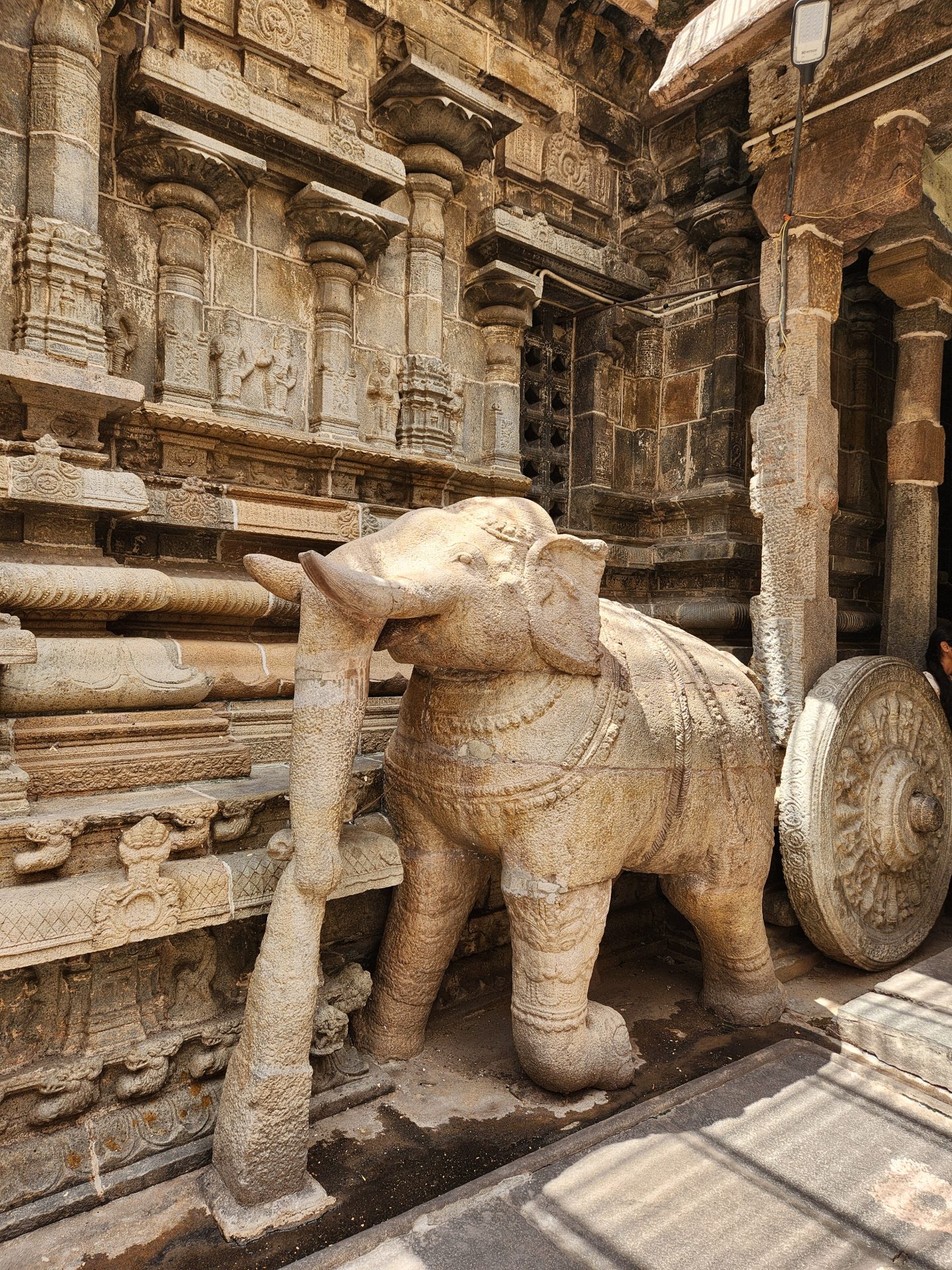
The central shrine of the temple is in the form of a chariot drawn by horses and elephants, with openings on either side, showing the descent of Sarangapani from heaven in the chariot. There is a sculptural representation of the sage Hemarishi in the western part of the temple.
The Chakrapani Temple
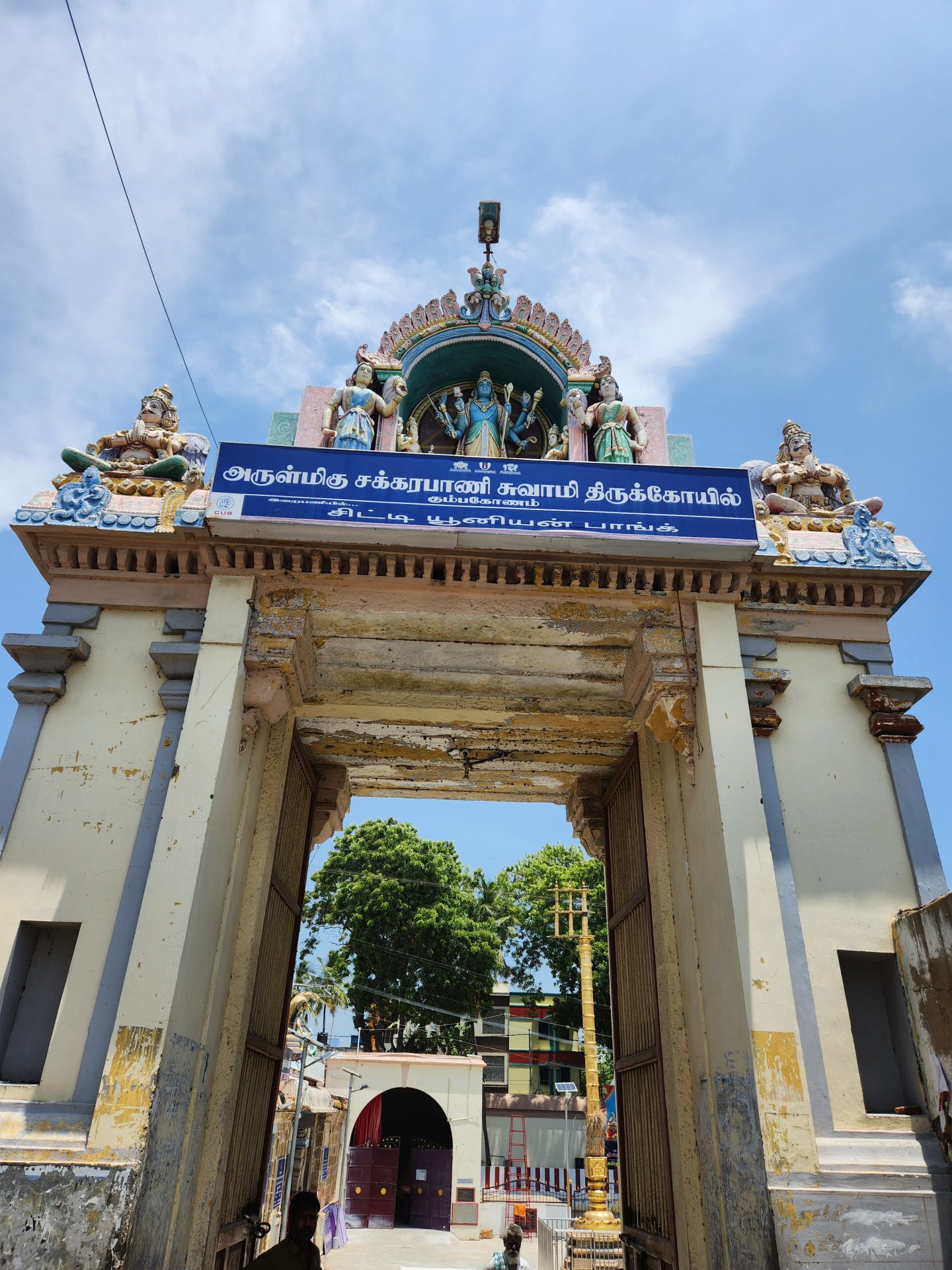
We moved on next to the 15th century Chakrapani Temple built during the reign of the Nayaks. Here Lord Vishnu appears in the form of a discuss or Chakra. This was primarily to put down the pride of Surya (the Sun), who subsequently became his devotee. Like Lord Shiva, The idol of Lord Chakrapani has a third eye on his forehead, similar to Lord Shiva.
Hindu Legend has it that Lord Vishnu had once used his most powerful weapon, the Chakra, by sending it to the nether world through river Kaveri to kill King Jalandasura. God Brahma, who was taking bath in the river, got impressed and installed the image of Sudarshana in the place where the temple is now located.
The Sun god Surya while glowing in his brilliance, had his brightness diminished by the effulgent Sudarshana and had to worship Sudarshana and got his powers restored through his ardent devotion. It was then that Lord Vishnu got the name of Chakrapani and pleased by Lord Surya’s devotion named the town Bhaskara Kshetra after him. One believes that Surya worshiped Chakrathazhwar during Masi Magam and every year Masi Magam festival is celebrated during the day, commemorating the event when the temple car is drawn around the streets of the temple during the day.
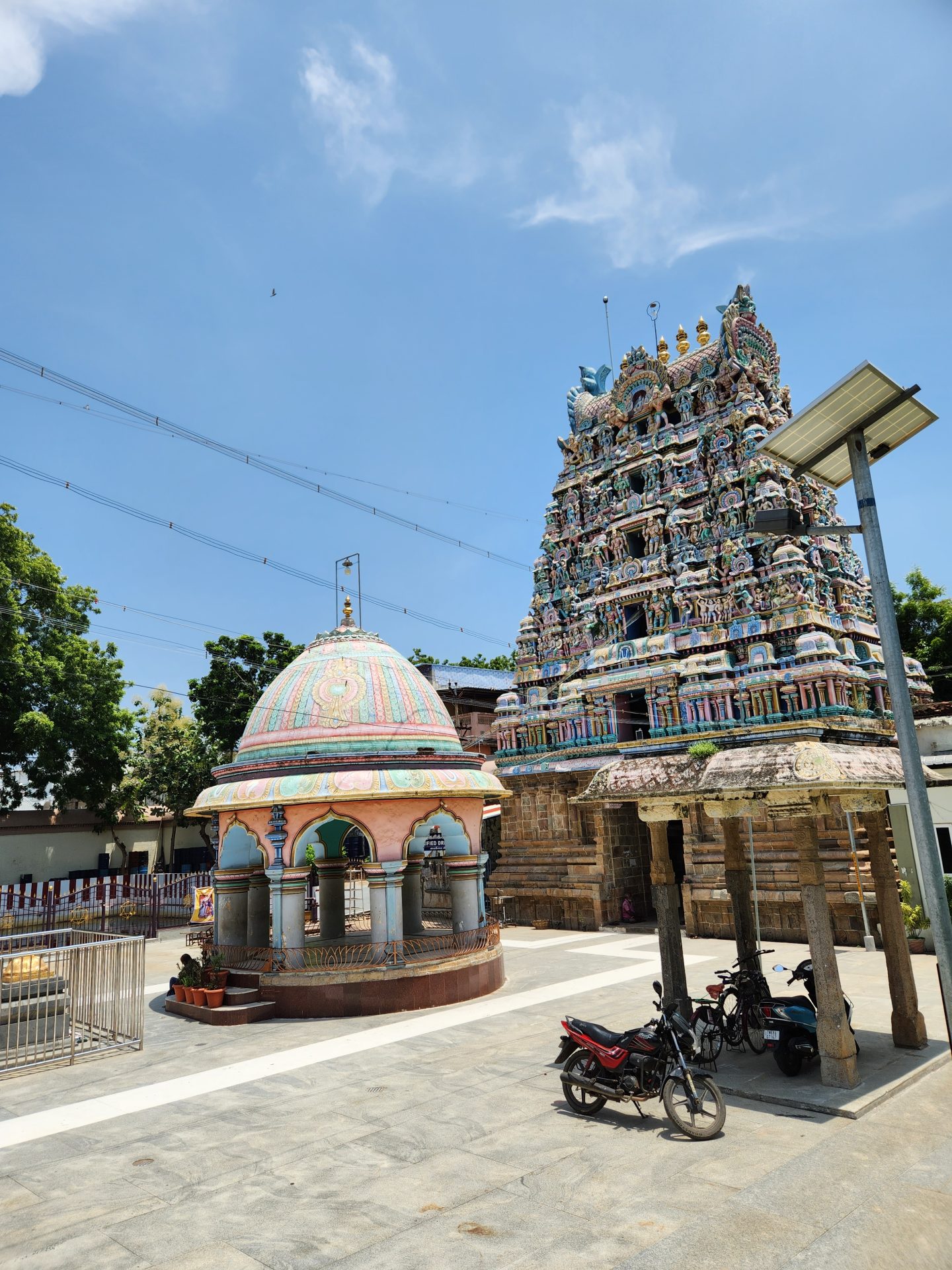
All the shrines are enclosed by granite walls and pierced by a five-tiered Rajagopuram, the gateway tower. Noted for its exquisitely carved pillars, the temple’s presiding deity, Chakrapani is sported with eight arms, each having a weapon and is housed in the central shrine in an elevated structure.
Chakrapani is sported with a third eye on his forehead.
The Eastern and Western entrances of this temple are known as “Thatchinaya Vayil” and “Utharavana Vayil” respectively and outer Prakara of this temple is made in the form of balcony. There is a bronze image of king Serfoji II worshipping the lord as he is said to have been cured an illness by the grace of this God.
A Five-faced Hanuman is erected in the outer precincts of the temple.
The other important idols in the temple are Agampara Vinayakar, Panchamuga Aancheneyar and Vijayavalli.
The Ramaswamy Temple
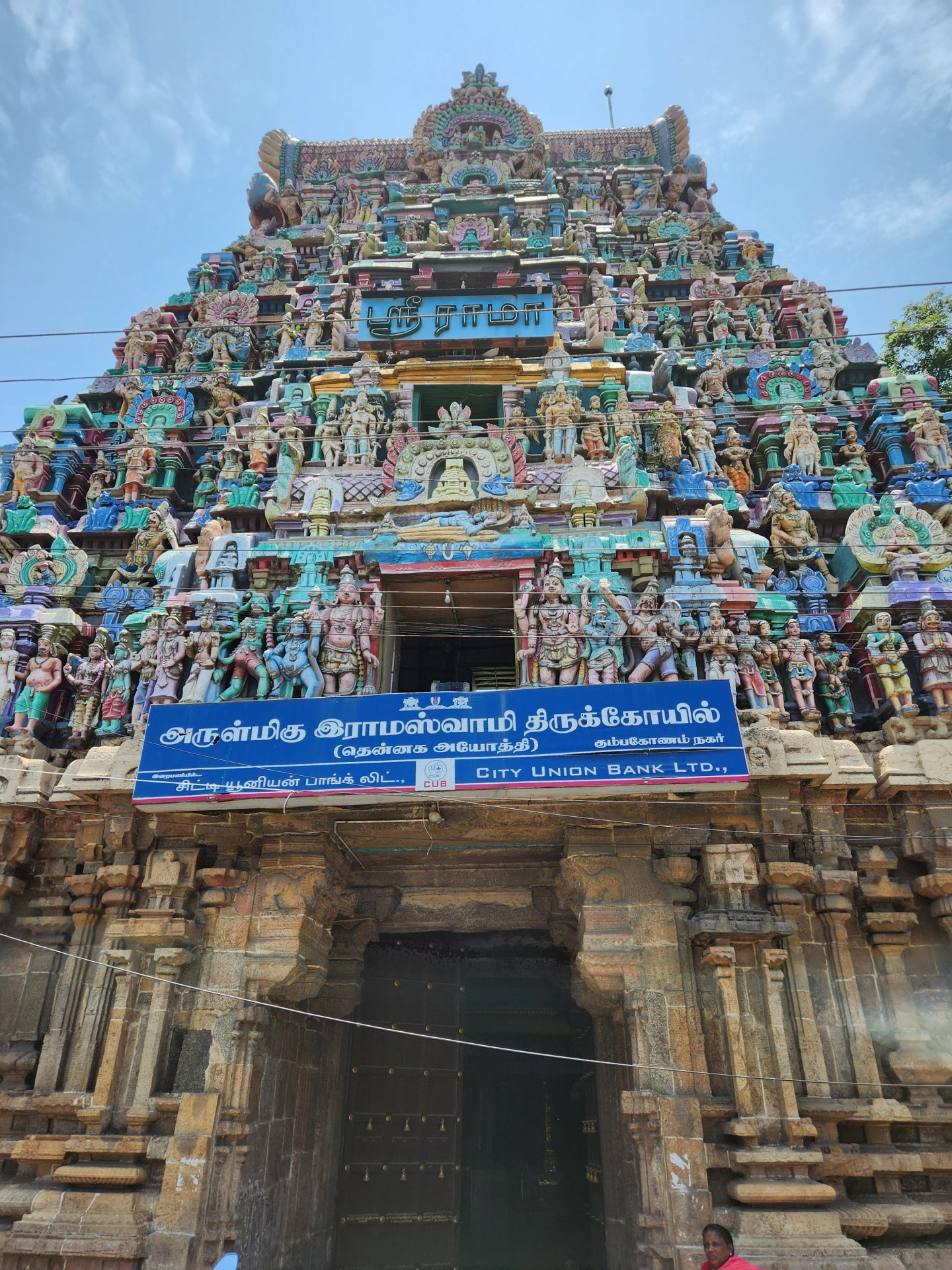
Not very far away from the Chakrapani temple was the Ramaswamy Temple dedicated to Lord Rama, an incarnation of Vishnu.
Built during the period of Thanjavur Nayaks King Achuthappa Nayak (1560–1614) and completed during the reign of Raghunatha Nayak (1600–34), the temple is enshrined within a huge granite wall and the complex contains all the shrines and the water bodies of the temple.
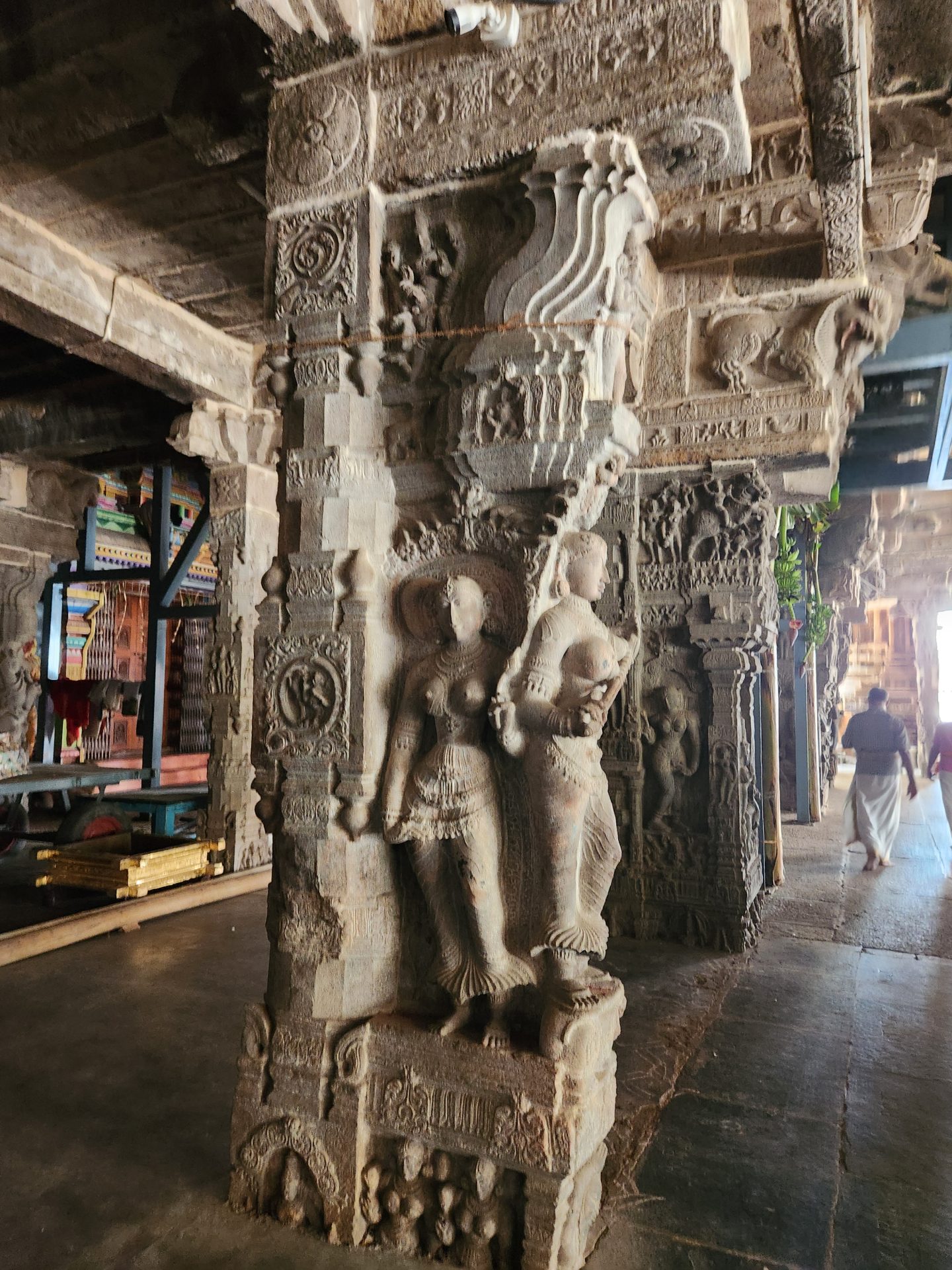
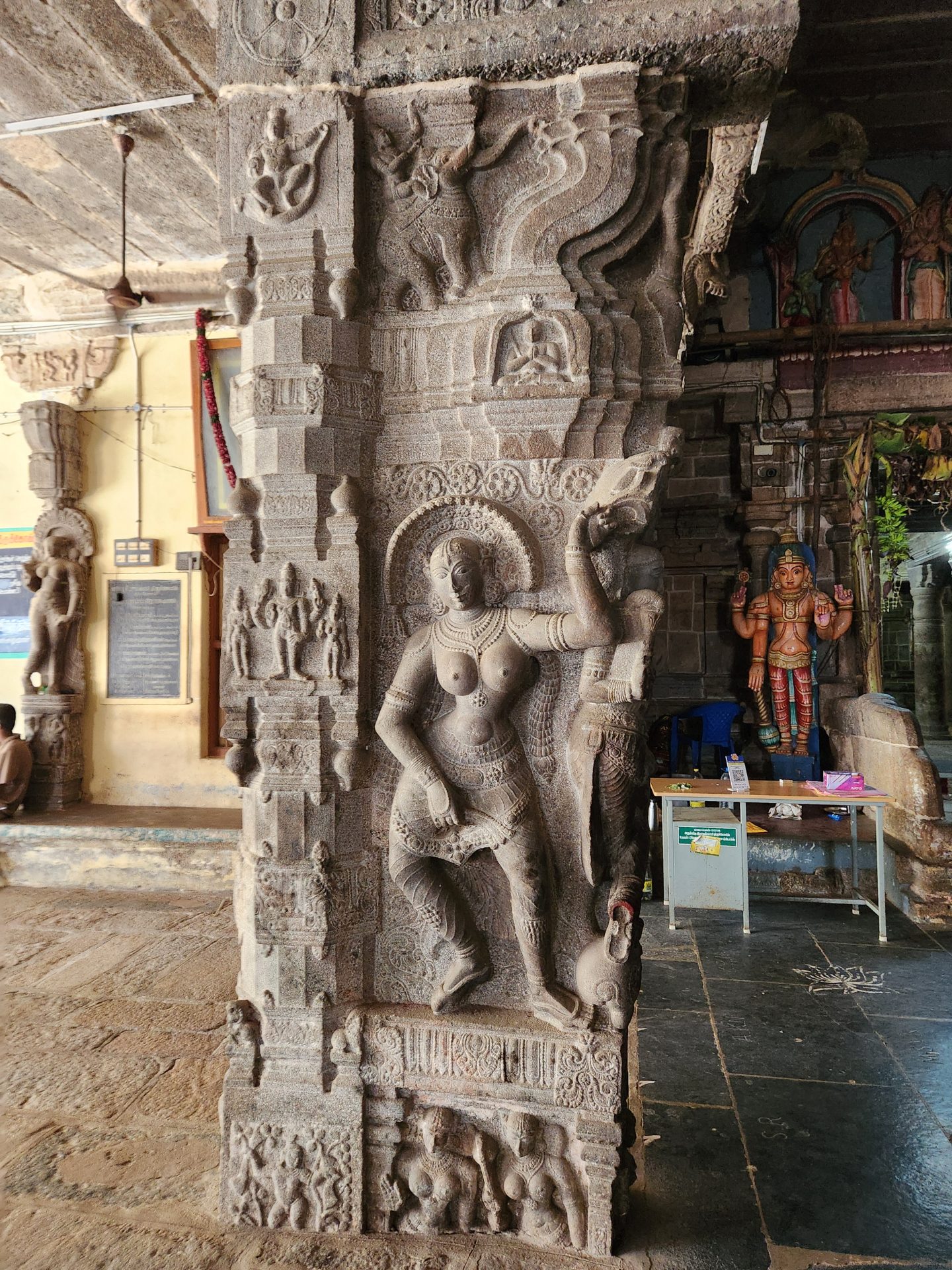
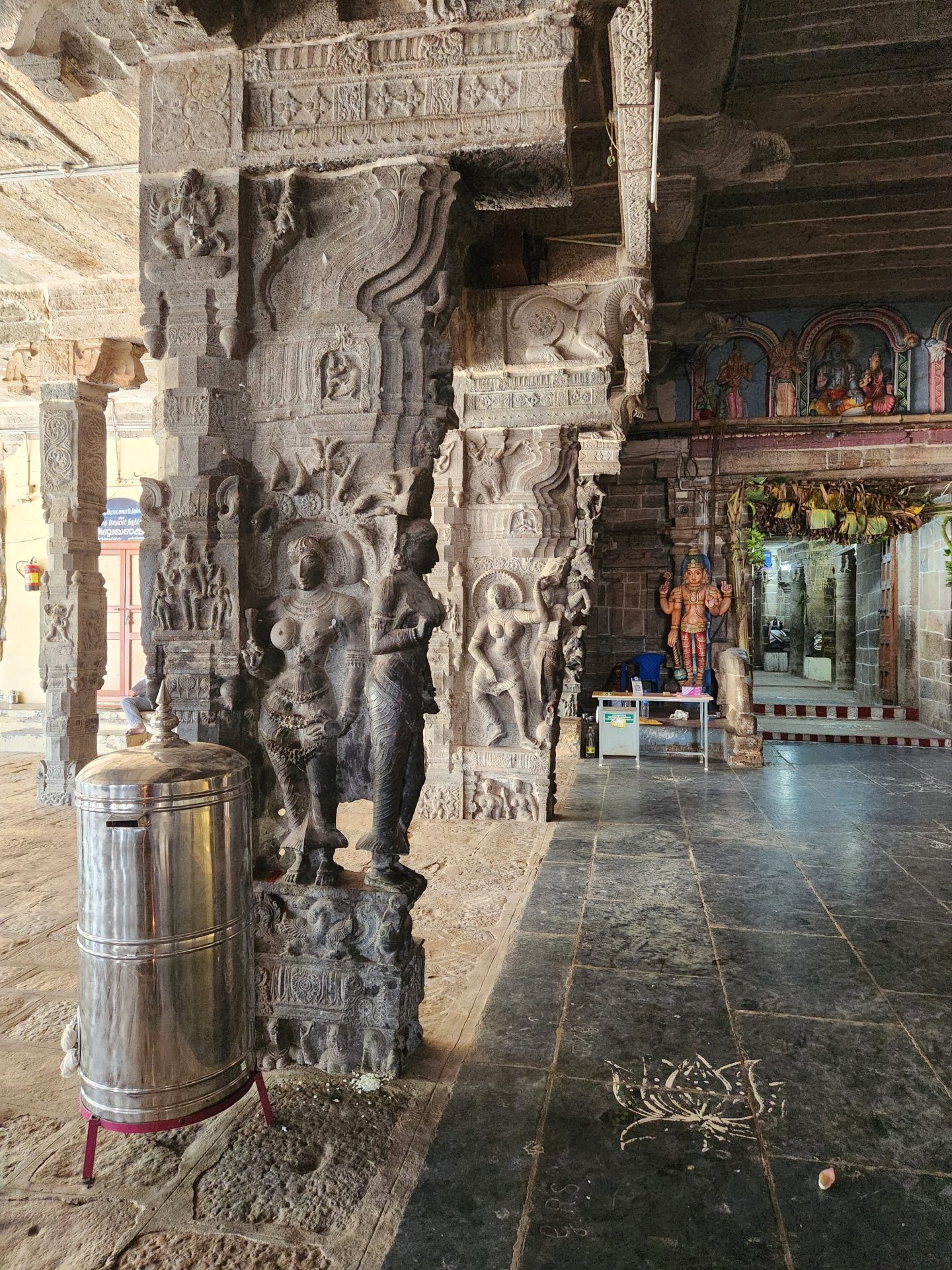
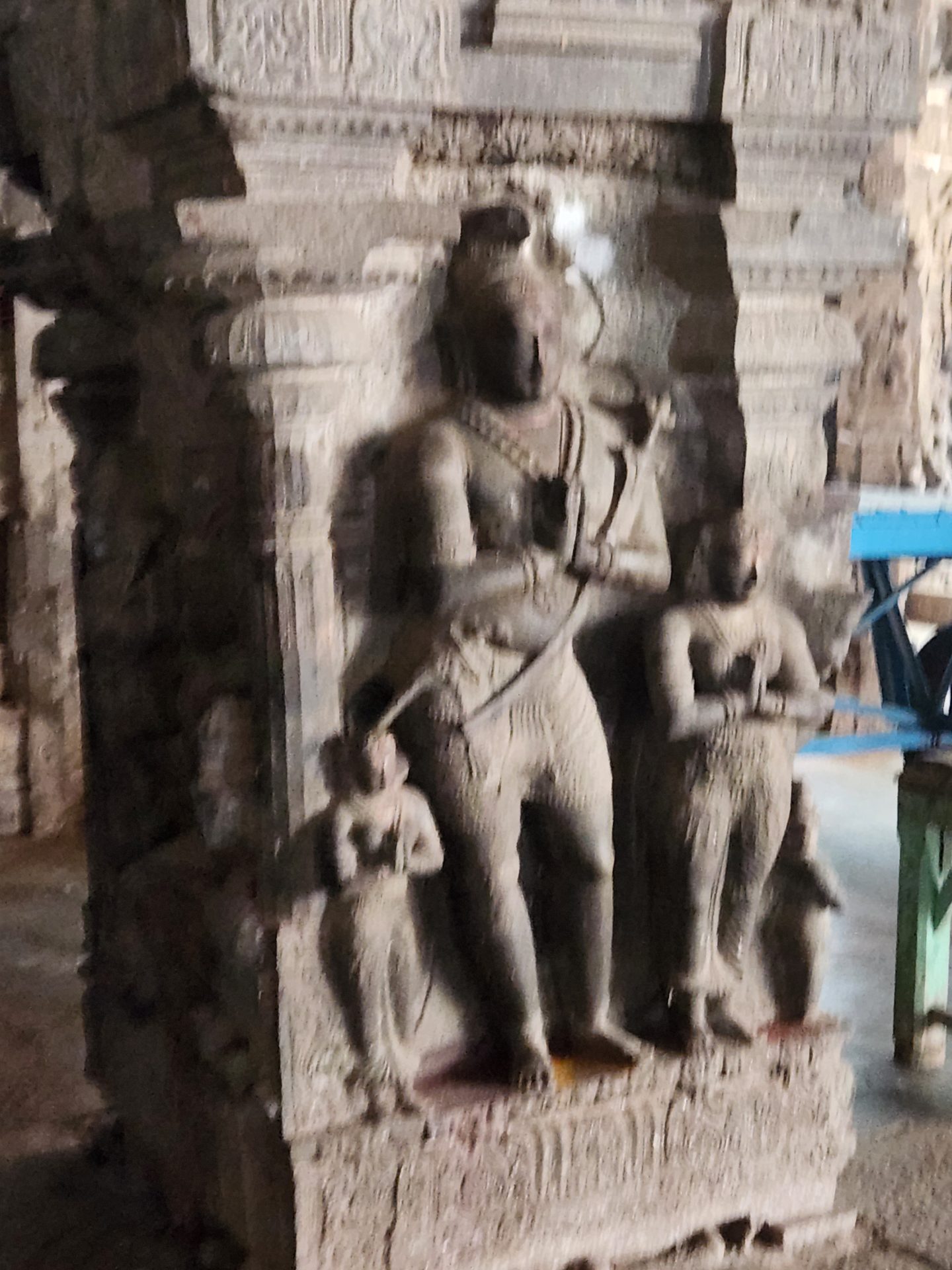
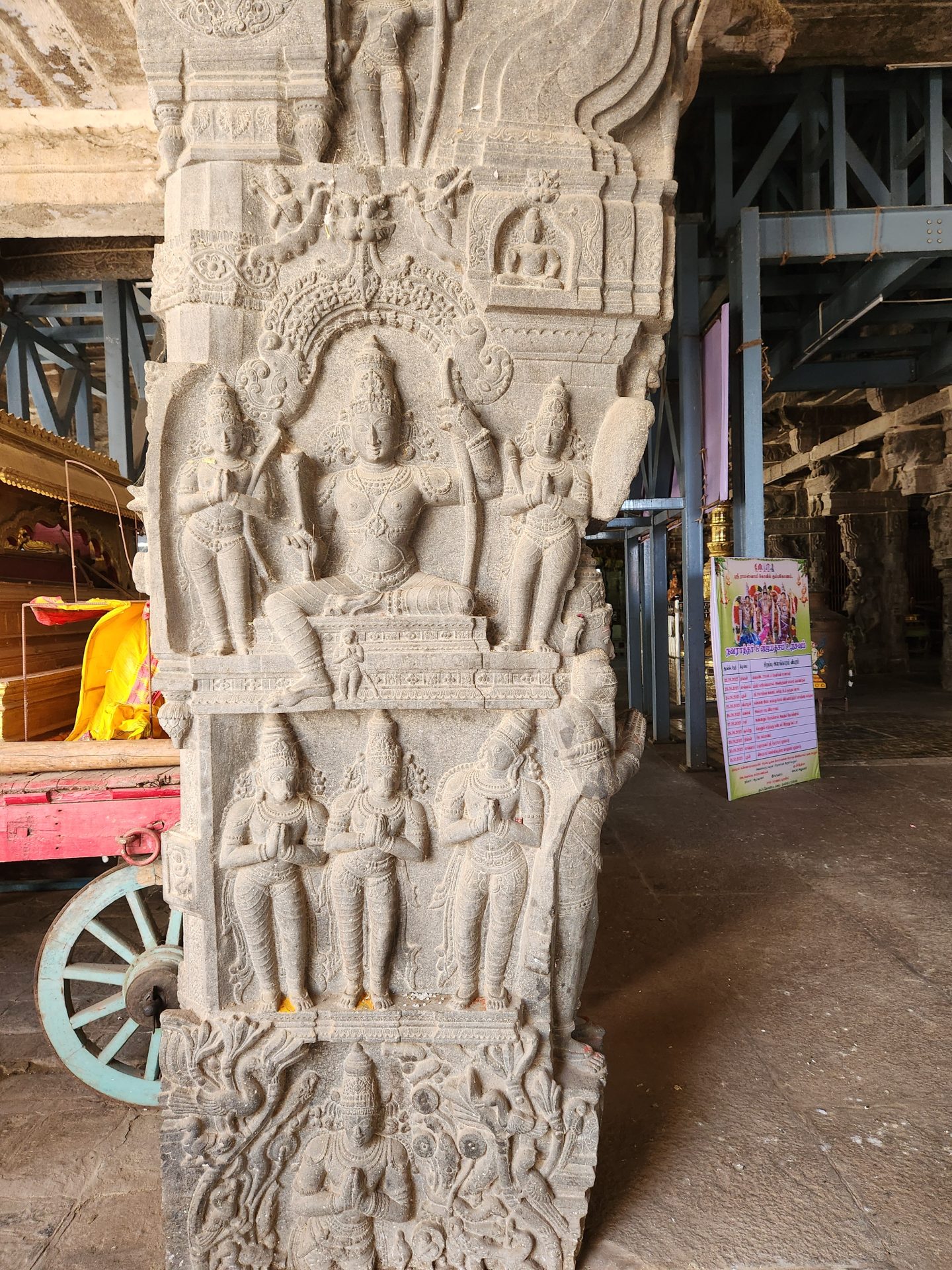
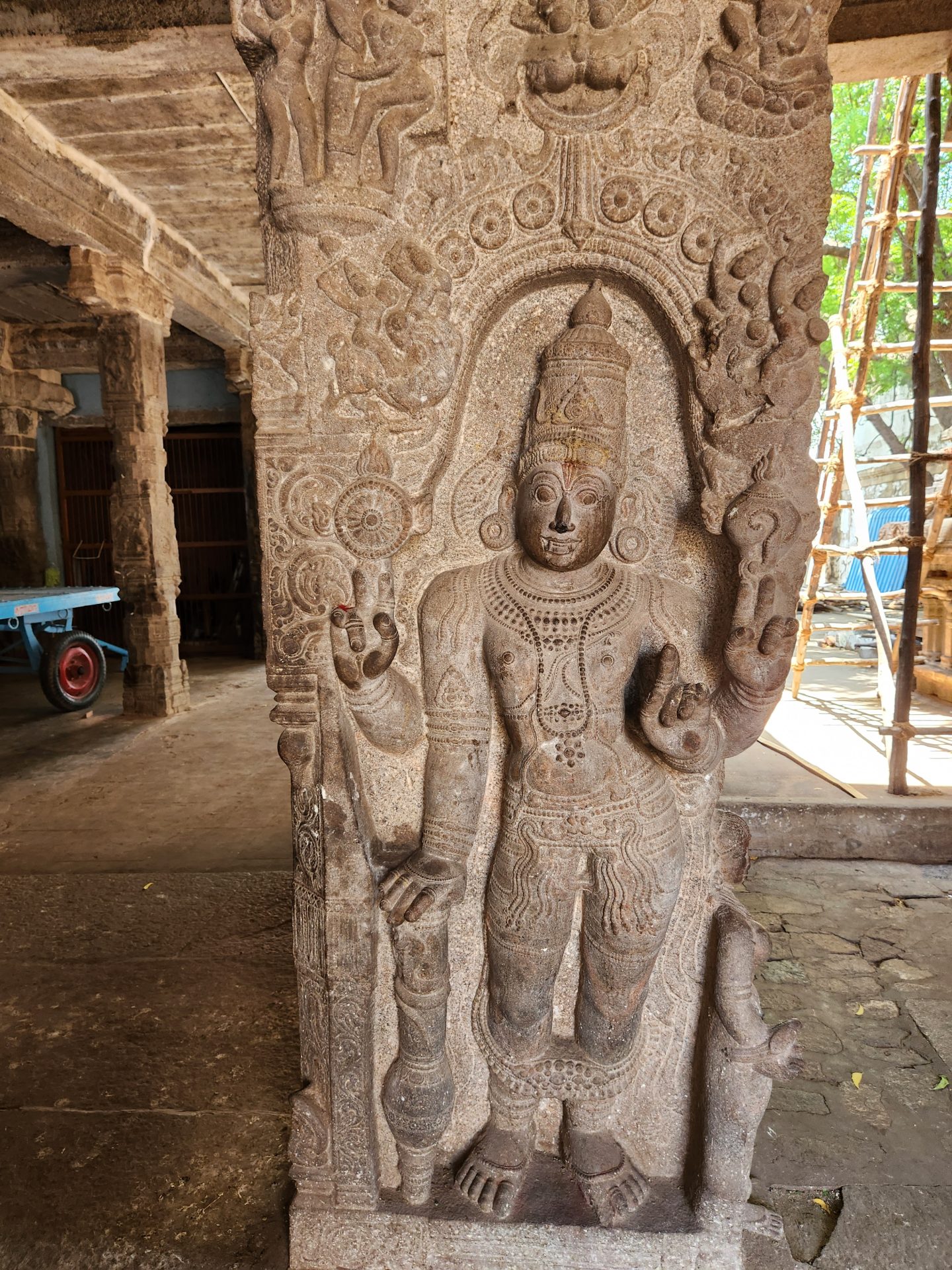
The Main gateway or Rajagopuram has five tiers. There are exquisite sculptures on the pillars of the temple depicting various Hindu legends while Ramayanam is depicted in pictorial format in three segments in the first precinct.
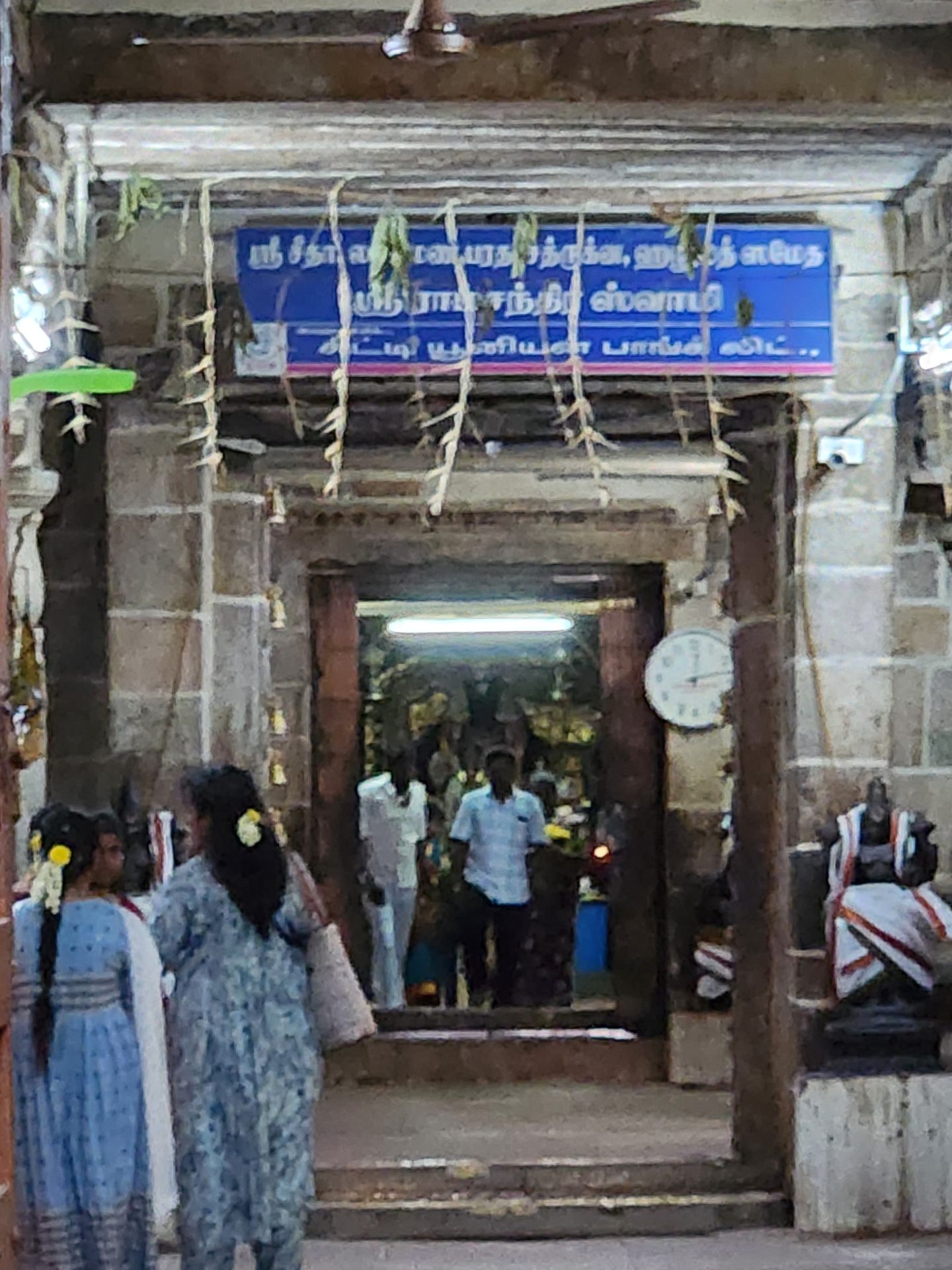
The central shrine houses the image of Rama in a seated posture with his consort Sita. The other images are of his brothers Lakshmana, Bharatha and Chatruguna in standing posture and Hanuman in worship posture.
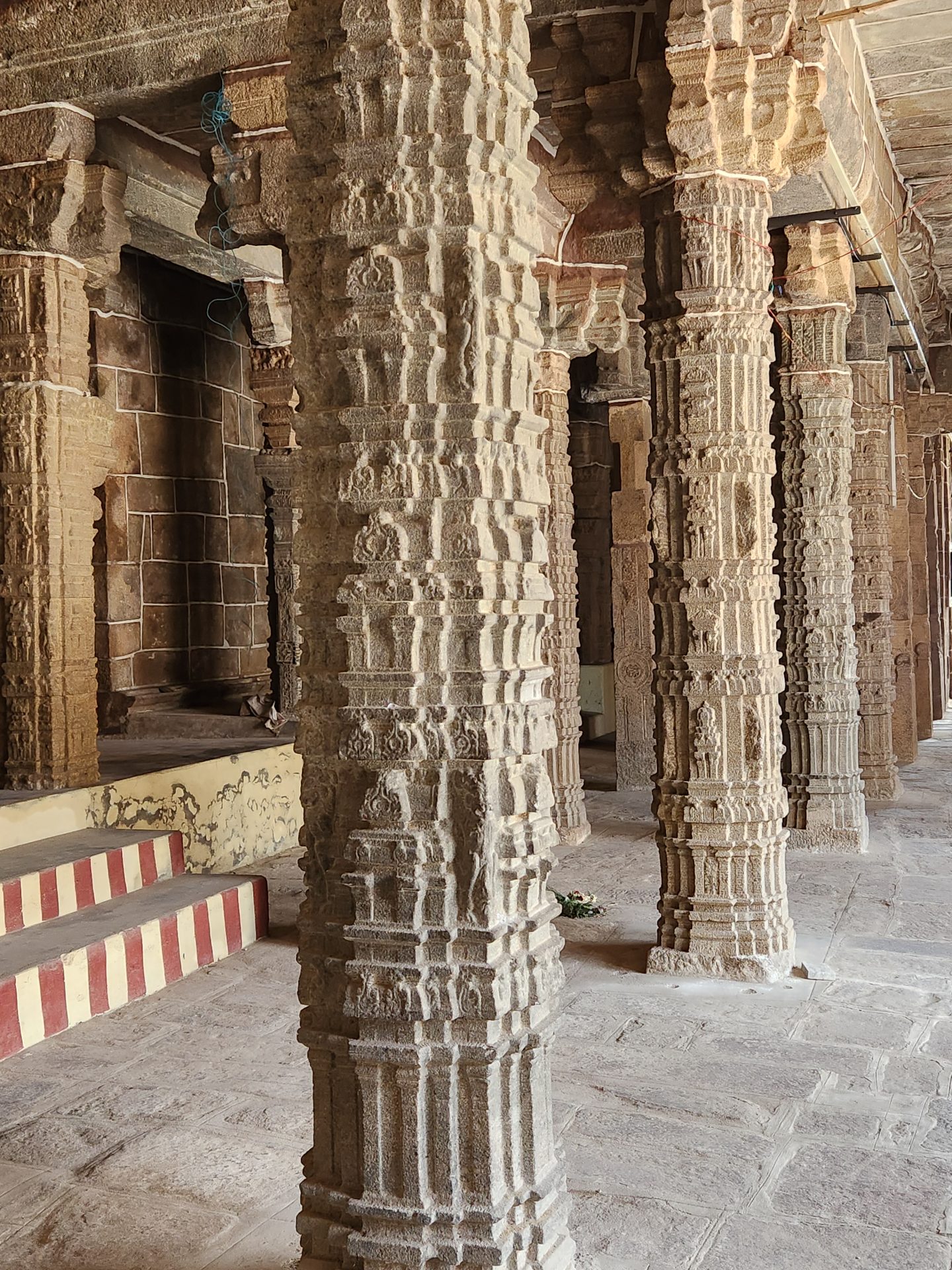
The Sixty Four pillars in the hall near the Gopuram are sculpted with exquisite finesse depicting various episodes of the epic Ramayana. Each pillar is carved out of a single stone and the delicacy is very prominent. Rama in the temple is depicted with Vyakarna Mudra, while Hanuman is depicted holding manuscripts. The other important aspects of the epic like coronation of Vibishana, coronation of Sugriva, relieving Agalya from her curse and Hanuman playing veena.
The temple is atypical of the Nayak style of temples. The paintings are believed to have emerged from the Thanjavur Nayak period and were subsequently enhanced during the Thanjavur Maratha kingdom. The paintings of Ramayana are considered one of the major depictions of the epic in art form in India.
The Kasi Viswanathar Temple
We moved further on to the Kasi Viswanathar also known as the ‘Nava Kanniyar’ (meaning nine rivers) Temple, dedicated to Lord Shiva. While he is worshipped here as Kasi Viswanathar, his consort Parvati is depicted as Visalakshi. The presiding deity is revered in the 7th-century Tamil Saiva canonical work, the Tevaram, written by Tamil saint poets known as the Nayanars and classified as Paadal Petra Sthalam.
Spread over two acres of land, the temple complex is located close to the Mahamaham tank. It houses two gateway towers, the tallest being the western tower, with seven stories and a height of 72 feet (22 m). The temple was built during the regime of the Nayaks in the 16th century.
Numerous shrines can be seen inside the temple, prominent being those of Kasi Viswanathar, Visalakshi and Navakanniyar.
Legend has it that during the Ramayana period, Lord Rama and Lakshmana are said to have worshipped Shiva here during their search for Sita.
They acquired Rudramsam to enable them fight Ravana.
It was around 12.30 by the time we came out of the temple and the sun was beating down in full glory. We had a quick lunch at Iyyangars, located close to our hotel and caught up with some much needed rest before starting our drive for the Thiru Nageswaran Temple, located around 7 to 8 kms from our hotel and in the outskirts of Kumbakonam.
The Thirunageswaram Naganathar Temple
Housed between 4 gateway towers, the Tirunageswaram Naganathar Temple also known as Rahu Stalam, is a Hindu temple dedicated to the deity Shiva. Associated with the nine planet elements, the Navagraha Stalas, and specifically Rahu.
Lord Shiva is worshiped as Naganathar, and is represented by the lingam while His consort Parvati is depicted as Piraisoodi Amman.
There are numerous shrines within the temple complex, the most prominent of them being Naganathar, Rahu and Piraisoodi Amman. The temple complex houses many halls; the most notable is the ornamental entrance hall built during the Nayak period.
The ablution of the image of Rahu during Rahukaalam with milk turning to blue colour in this temple is considered to be a miracle and attracts devotees from distant places.
This is one among the many temple towns in the state which is named after the forests dominated by a particular variety of a tree or shrub and here the same variety of tree or shrub shelters the presiding deity.
The region is believed to have been covered with Chamapaka forest and hence called Chamapakavanam and is also said that many serpents including Adishesha, Takshaka and Karkotaka, worshipped Shiva at this place, leading to the name “Tirunageswaram”.
As per Hindu legend, the king of snakes, Adisesha did penance at this place and pleased with this, Lord Shiva gave him a boon, thus acquiring the name of Naganathar.
Built by Aditya Chola I in the 10th Century AD, this temple is another masterpiece which exhibits the Chola style of architecture. It is believed to have been built by Aditya Chola I in the 10th century A.D. The temple tank is located in the southern side and has a hundred pillared hall.
We were back at the hotel by around 9 PM after finishing off our dinner at a nearby hotel. During the course of dinner, a plan was draw up to visit the Guru temple in Alangudi, located around 18 kms away.
Sep 15th 2025
The Apatsahayesvarar Temple Alangudi
We set off for the town of Alangudi after checking out of our hotel around 7.15 AM after an early breakfast. We reached the Apatsahayesvarar Temple also known as the Guru Sthalam or Tiru Irum Poolai by around 8.00 AM. Located in the Valagaiman Town near Alangudi in Tiruvarur district, Lord Shiva is worshipped as Apathsahyesvarar, and is represented by the lingam. His consort Parvati is depicted as Elavarkuzhali
The temple complex covers around two acres and houses a five tier gateway tower known as gopurams, one facing the Apathsaheswarar shrine and other towards North. It has 2 prakarams or closed precincts.The temple has a number of shrines, with those of Apathsaheswarar and his consort Elavarkuzhali being the most prominent.
The original complex is believed to have been built by Cholas, while the present masonry structure was built during the Nayak during the 16th century.
It is believed that Siva consumed deadly poison, giving rise to the name Alangudi and deity being termed Apatsahayesvarar, indicating saviour during hard times.
The other names of the presiding deity are Aranyeswarar.
This temple is one among the Nine Navagraha temples of Tamil Nadu and is a part of the popular Navagraha pilgrimage circuit.
The image of Guru (Jupiter) is housed here. Hindu customs state that the Navagrahas are believed to provide both good and bad effects for any individual and the bad effects are mitigated by prayers and as a common worship practise, devotees include offerings of cloth, grains, flowers and jewels specific to the planet deity besides lighting a set of lamps.
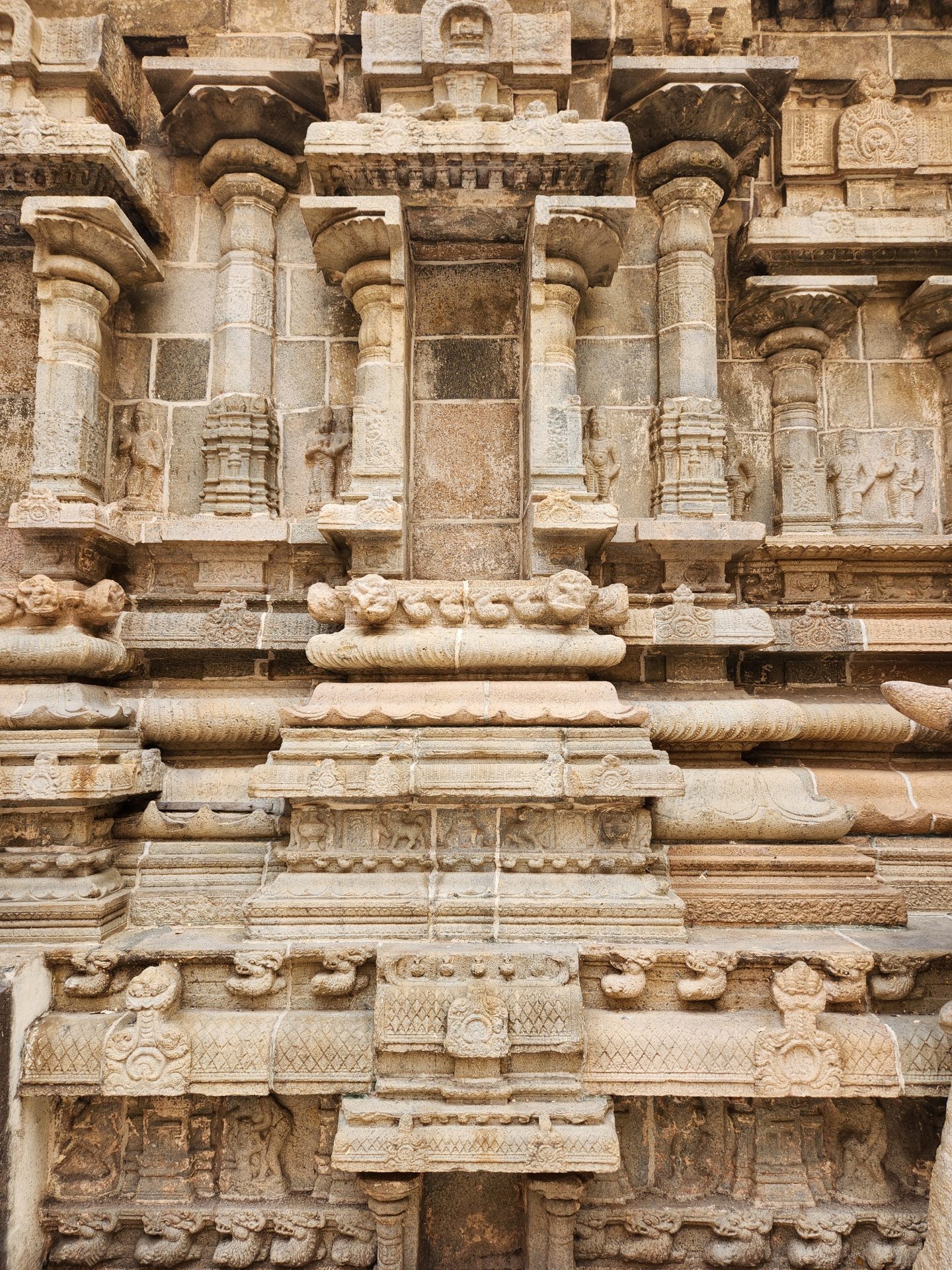
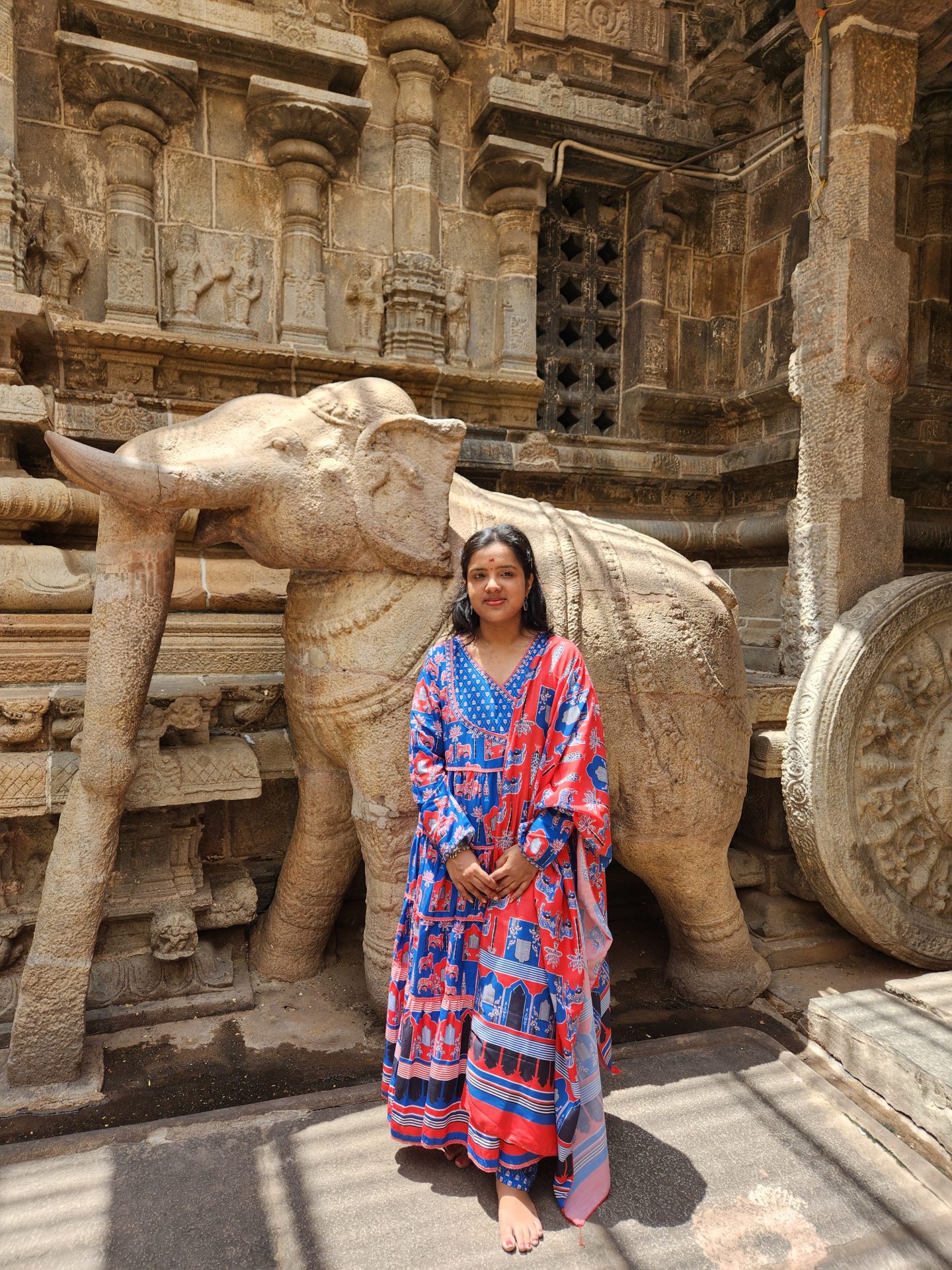
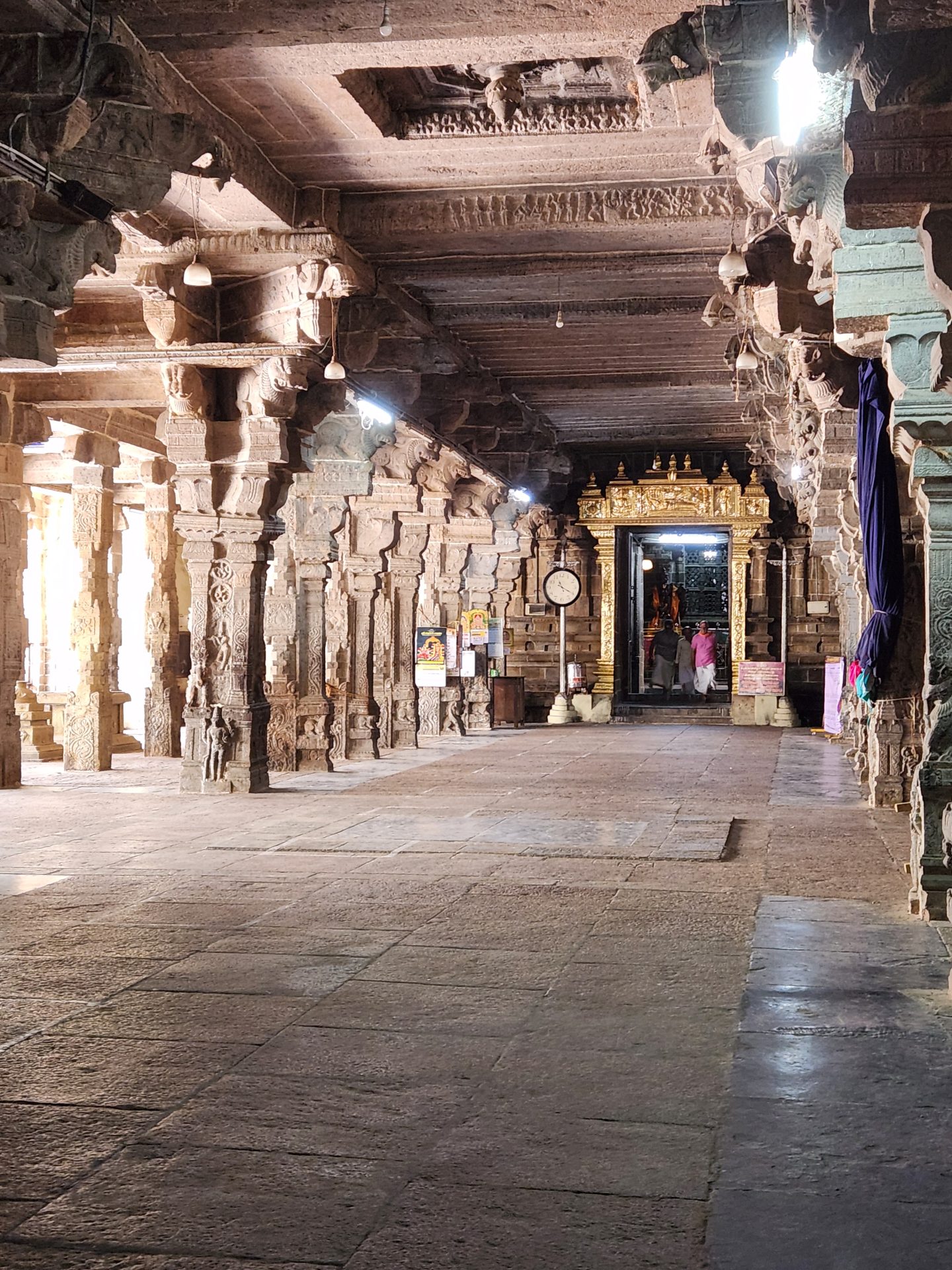
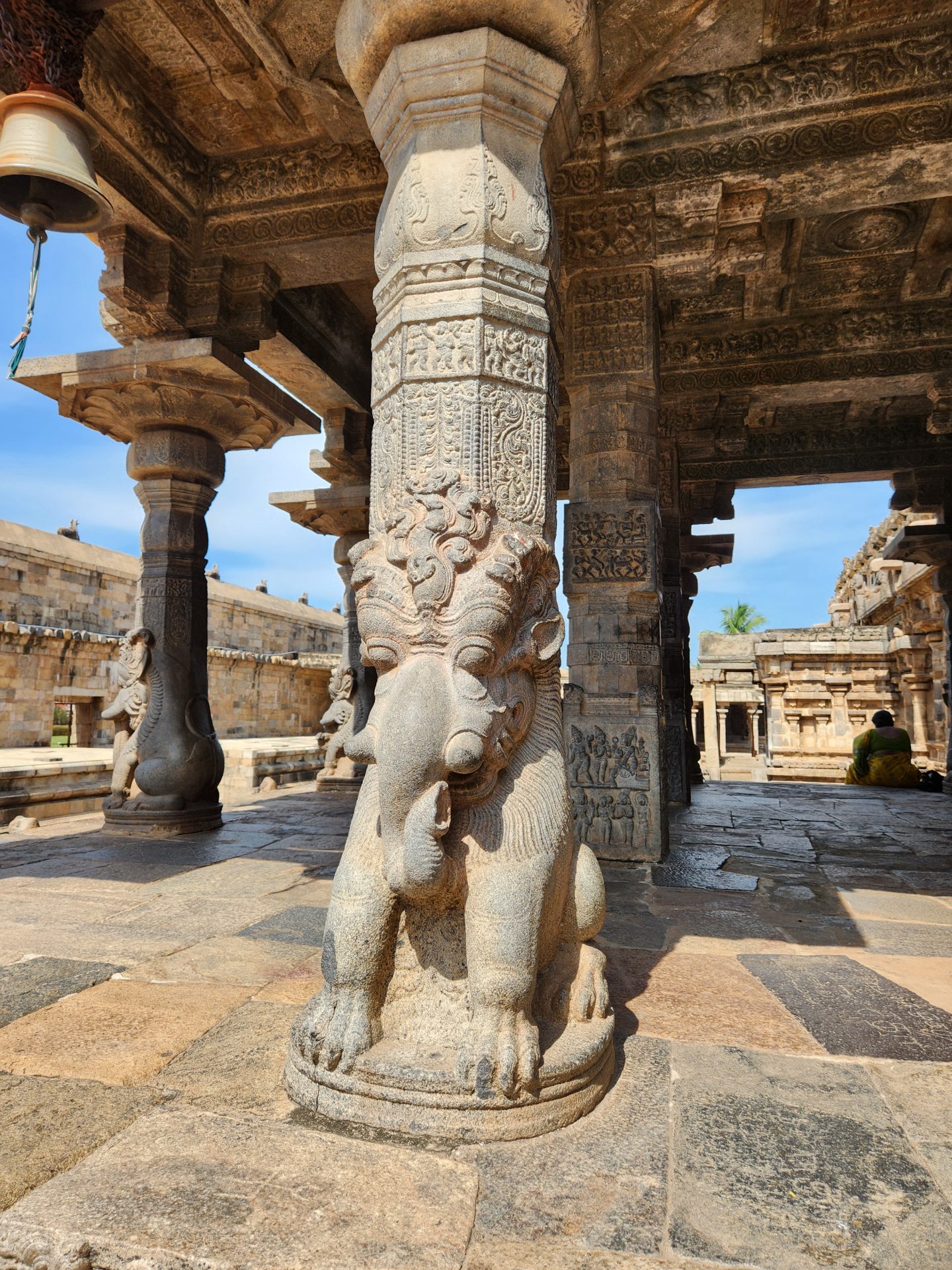
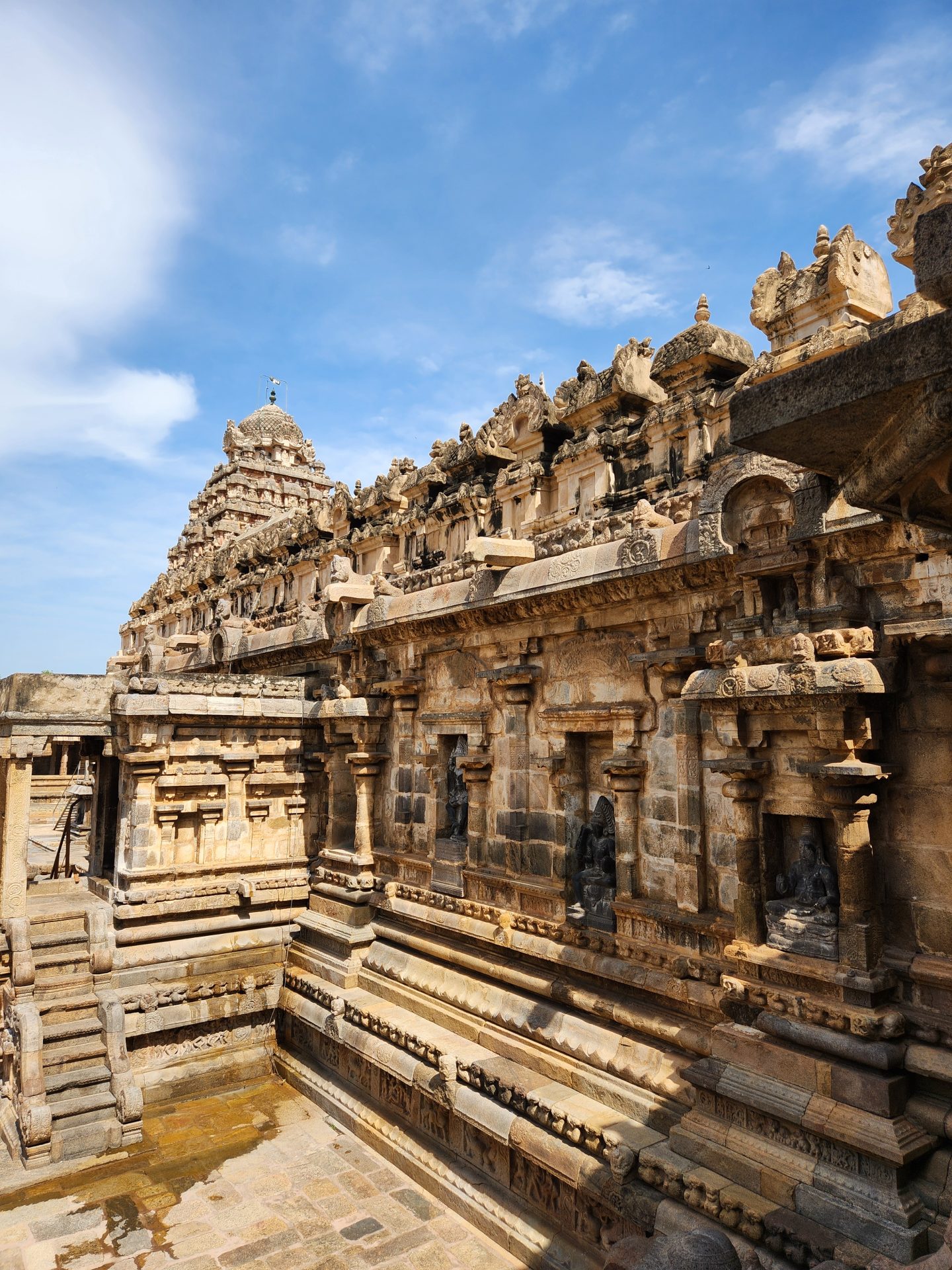
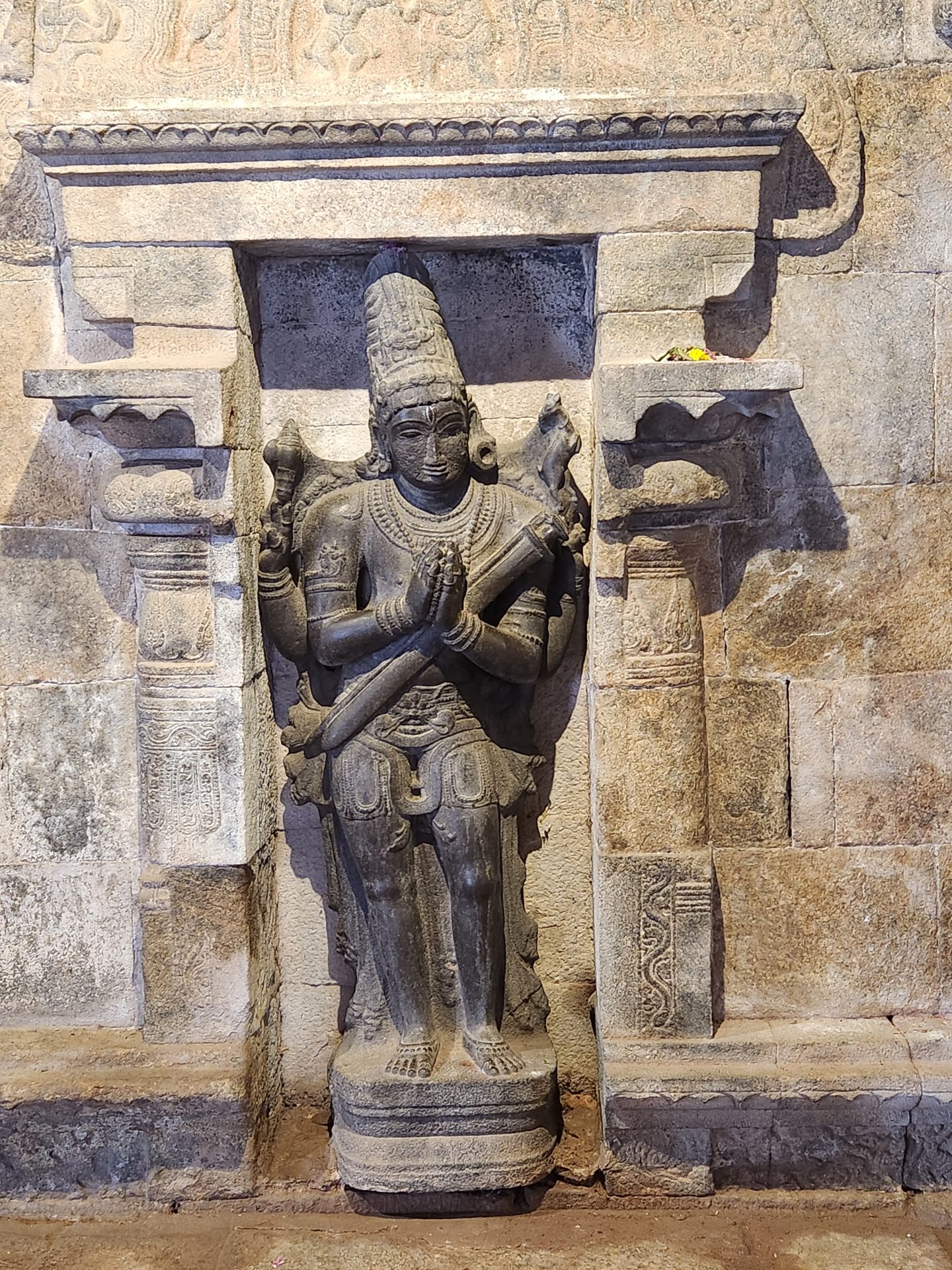
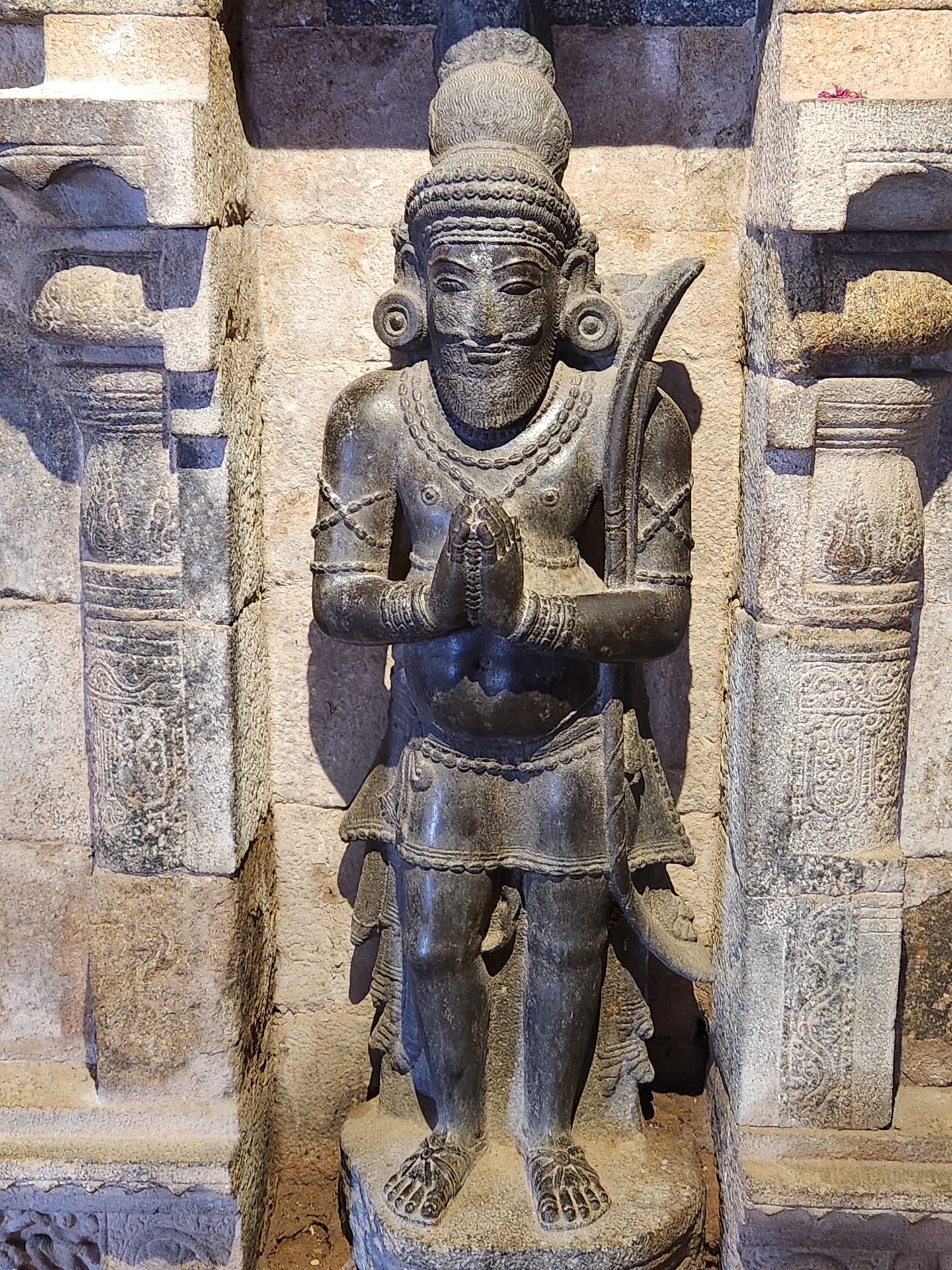
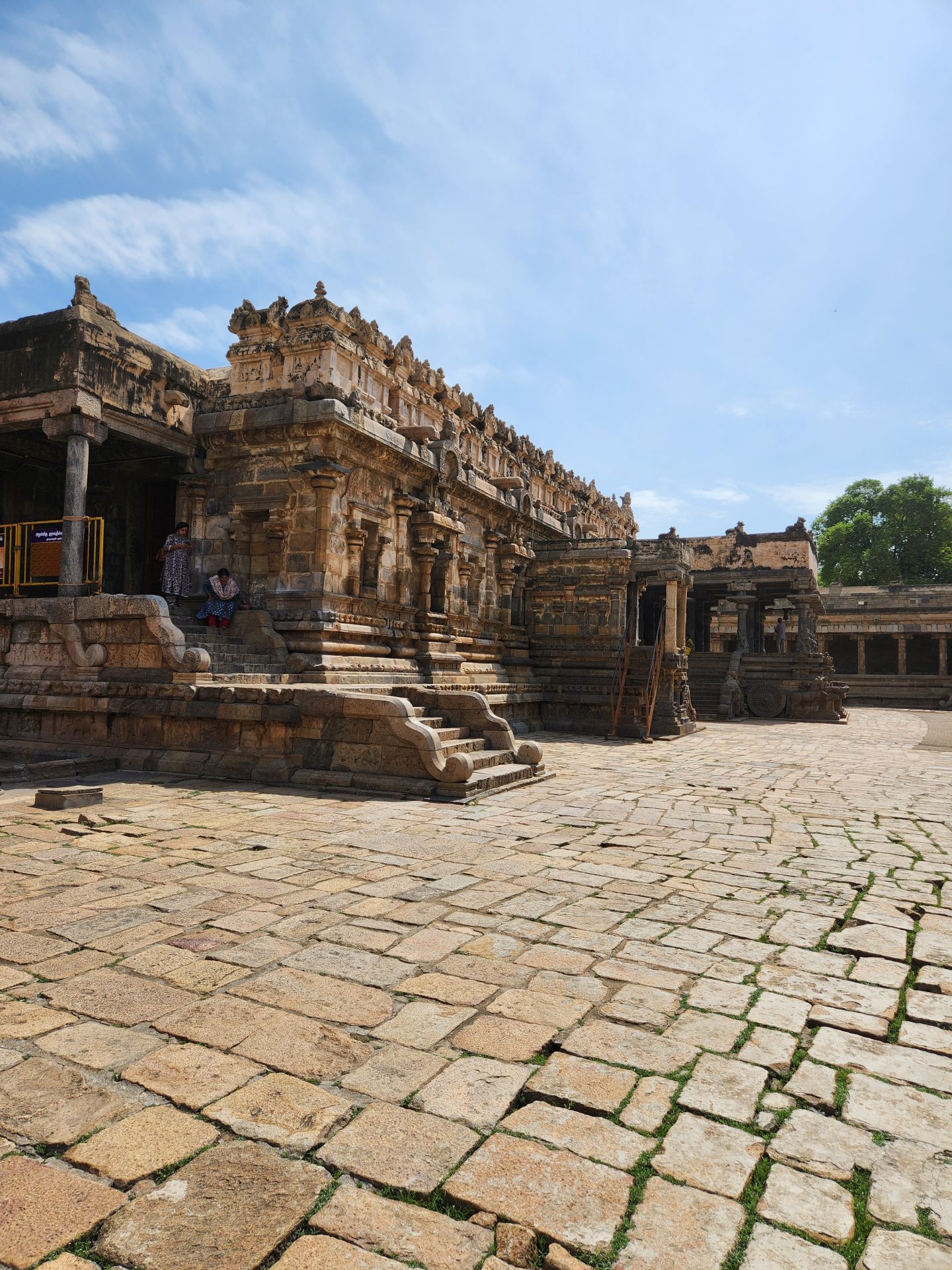
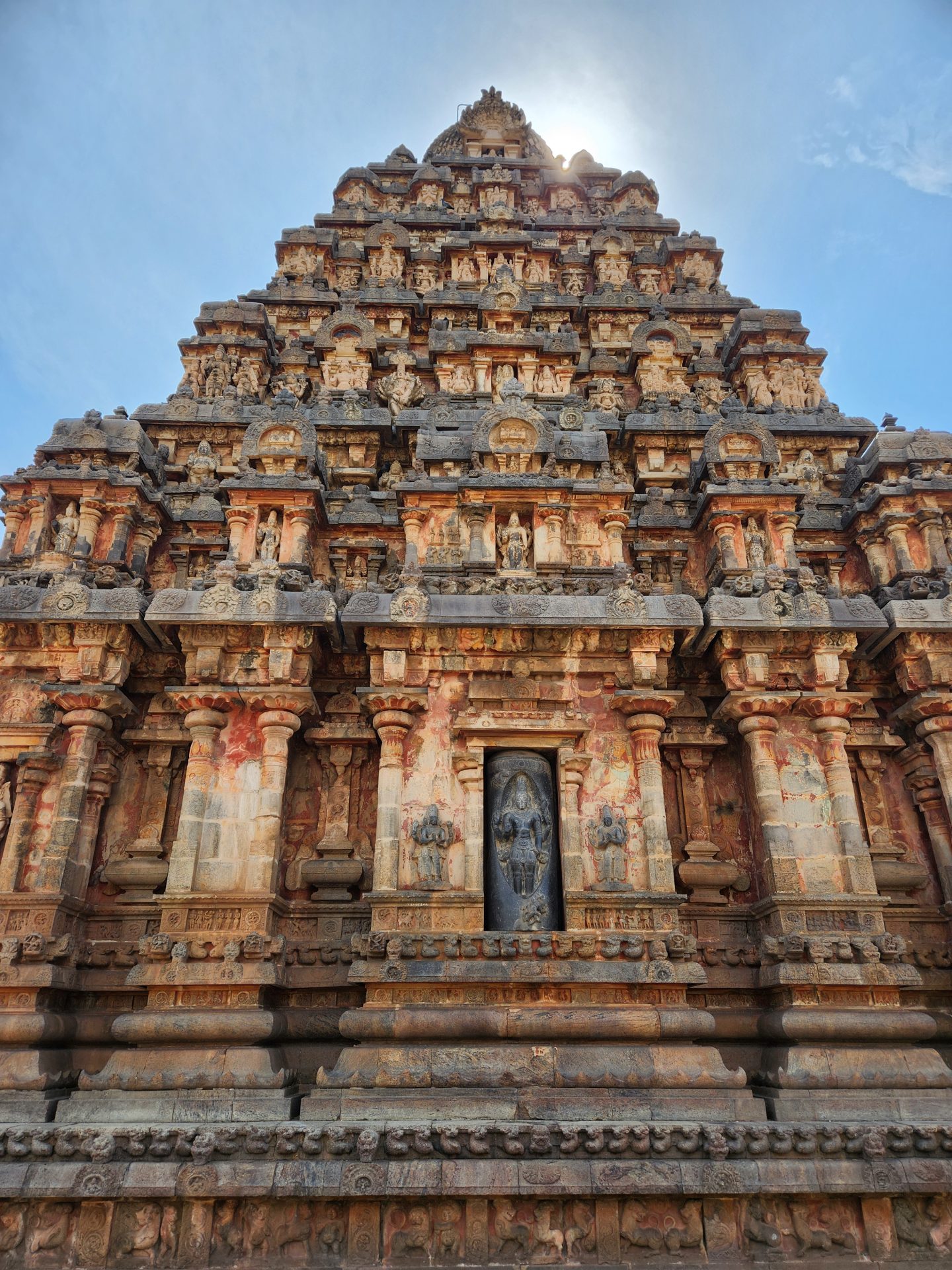
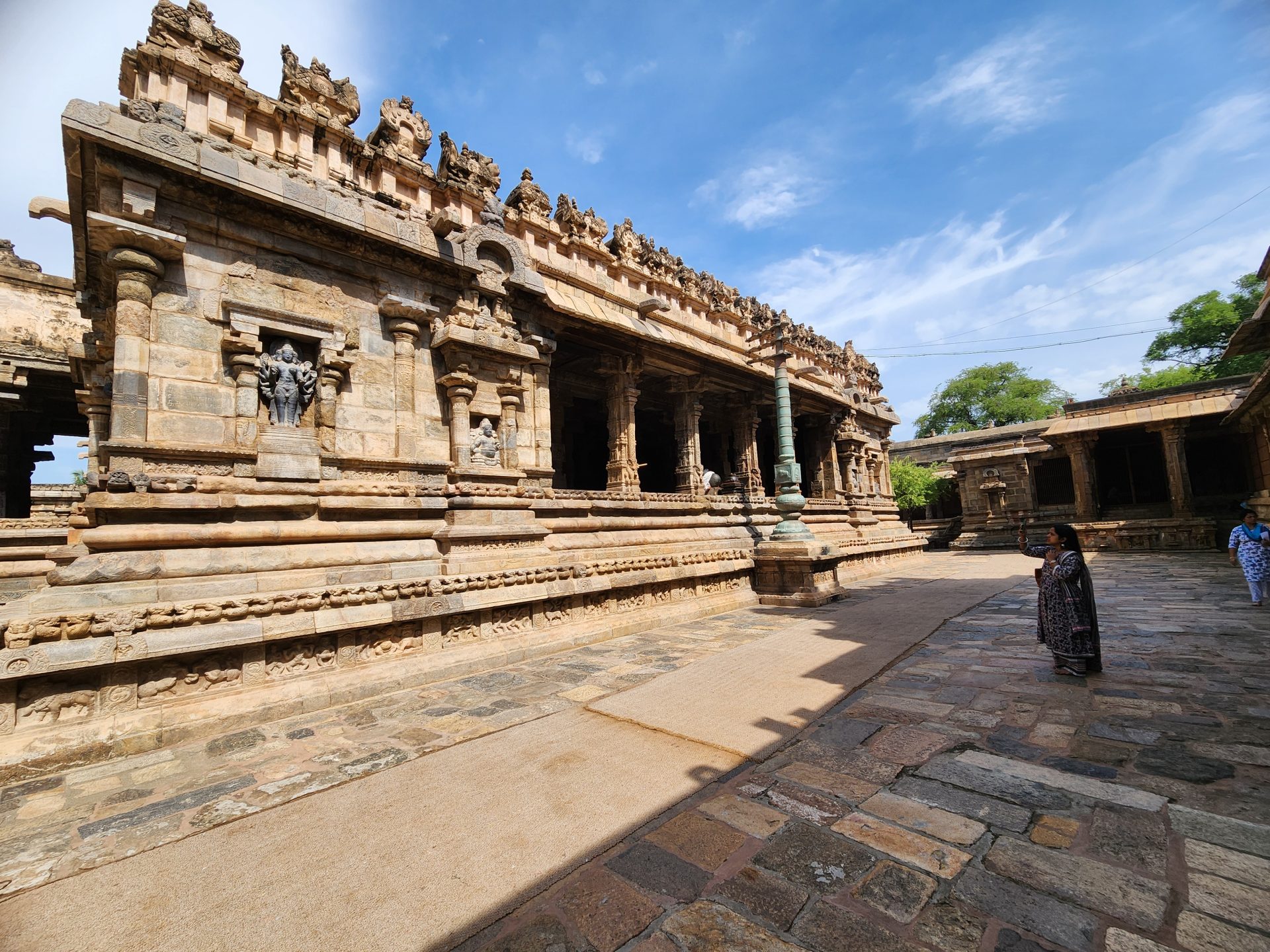
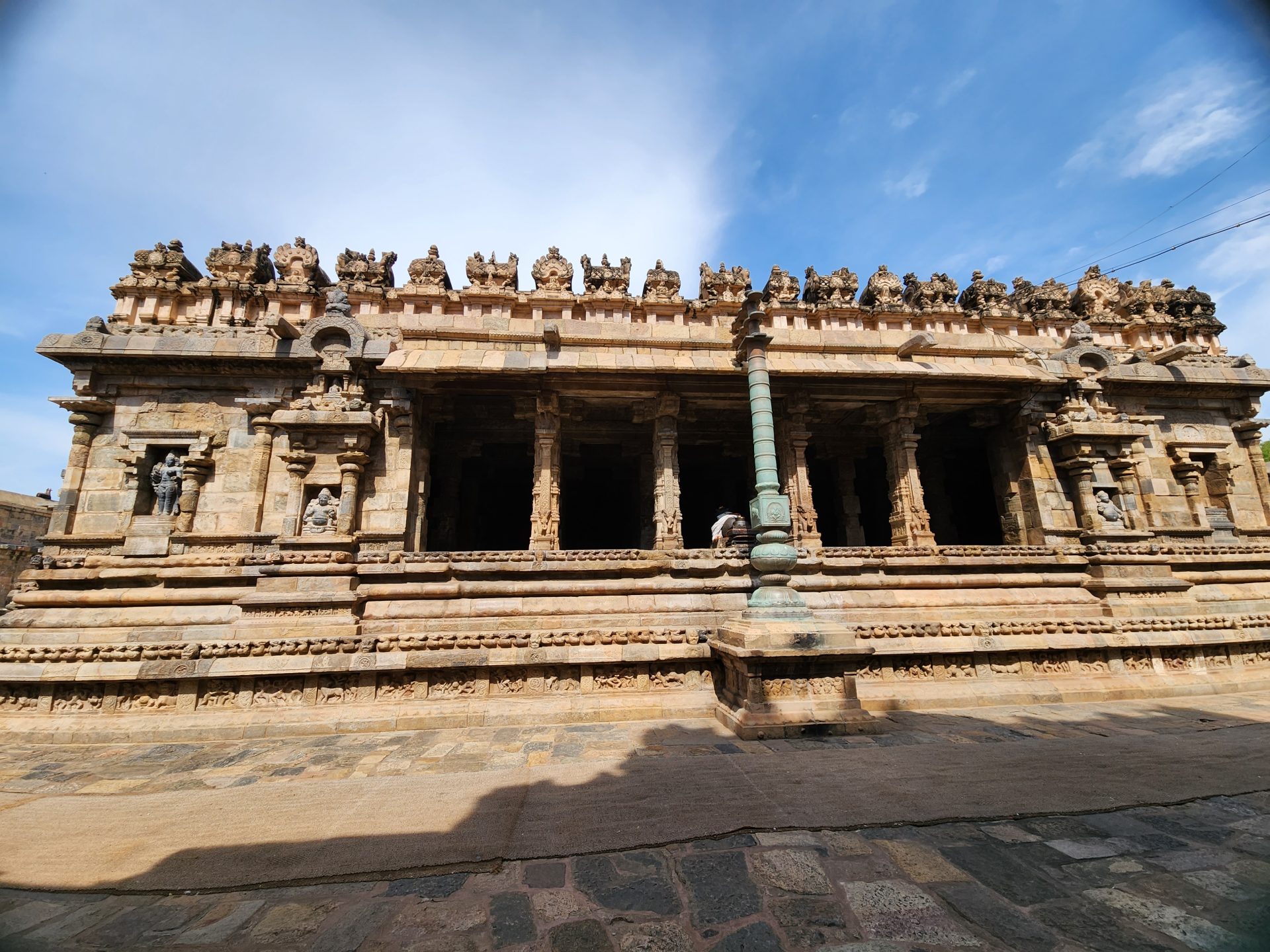
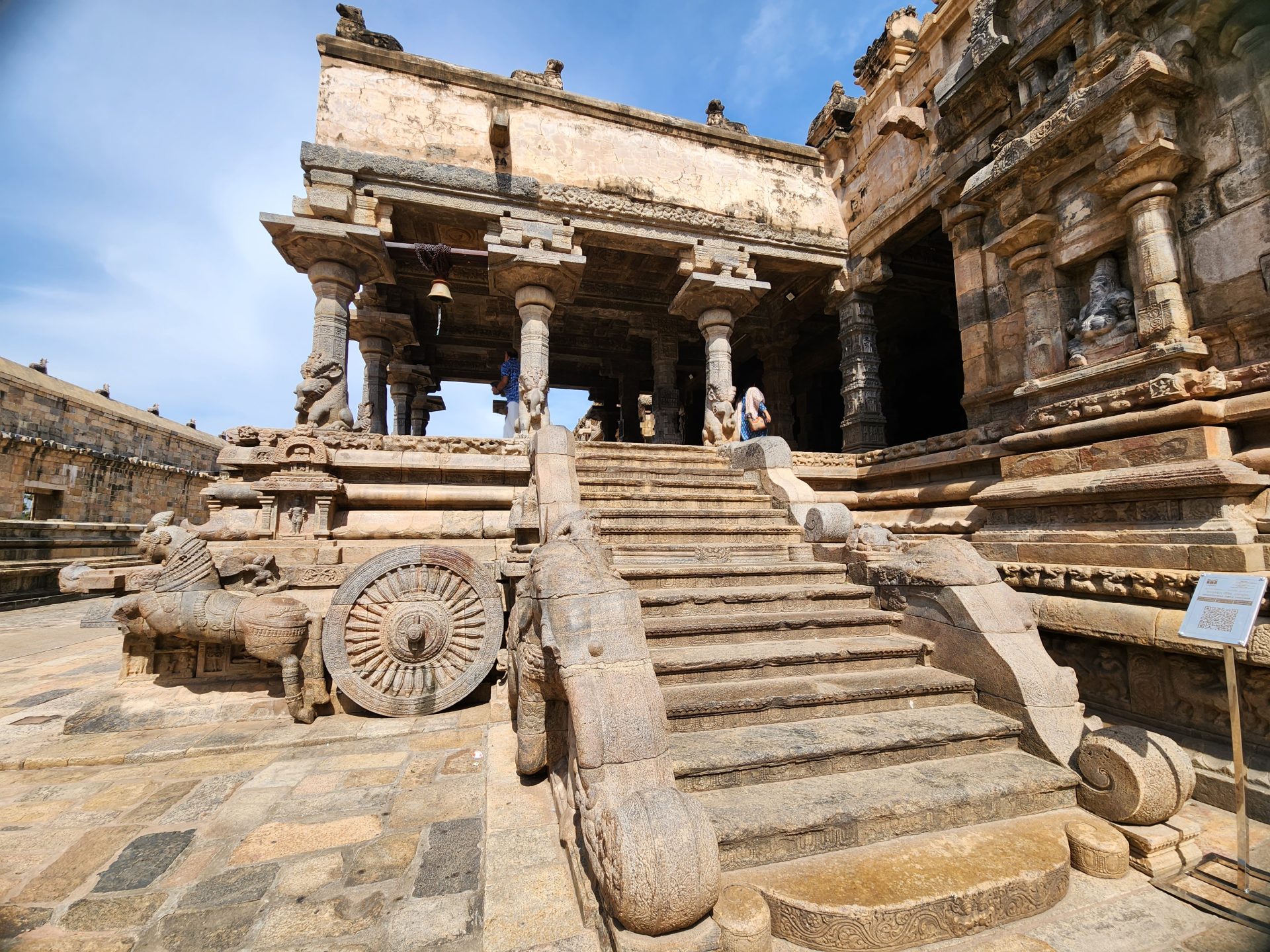
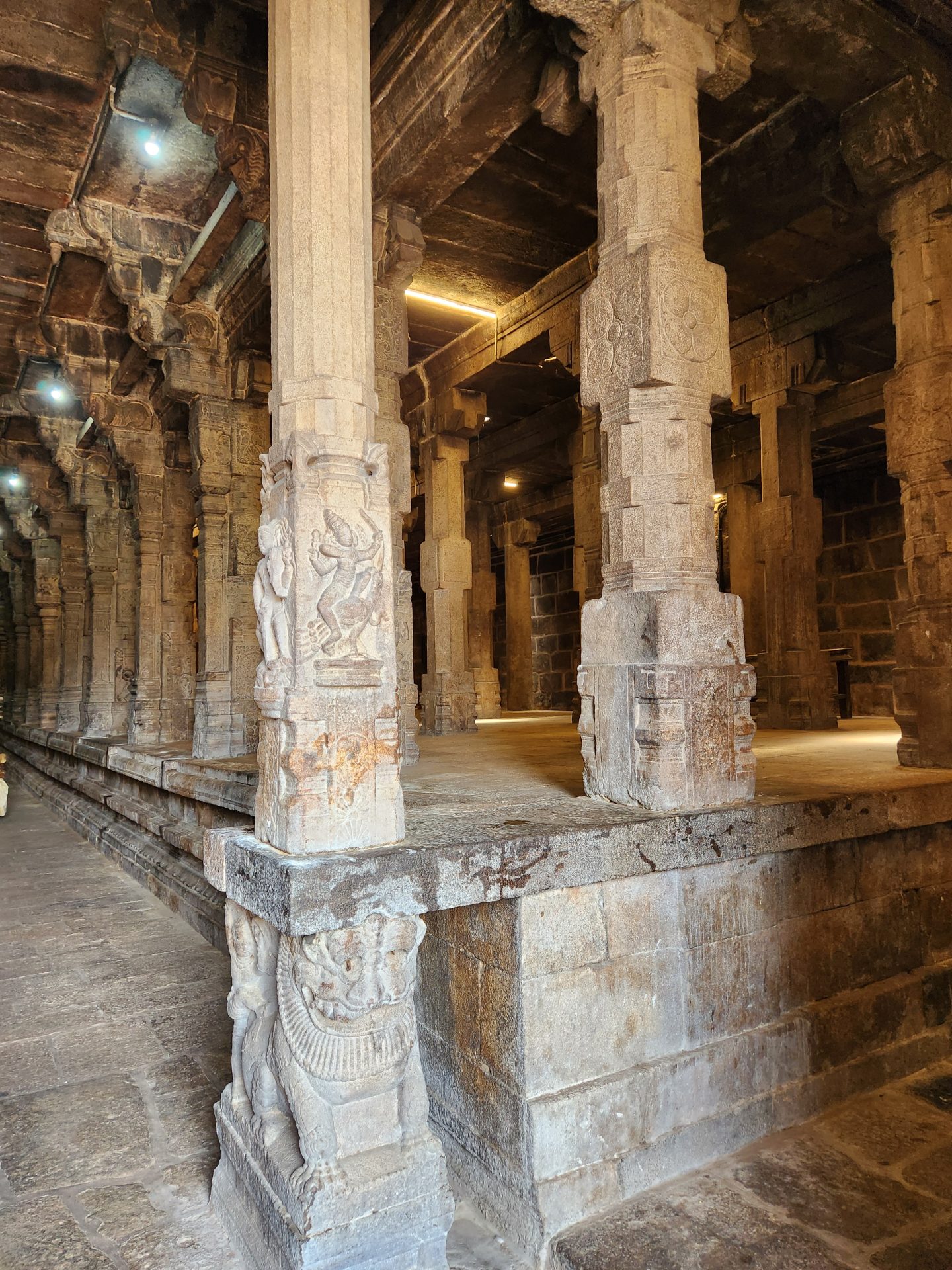
A 45 minute 19 km drive from Alangudi brought us to the Airavatesvara Temple in Darasuram. A quick recap about this Airavatesvara Temple, having covered it during our earlier visit in 2021, and of course with some additional photos.
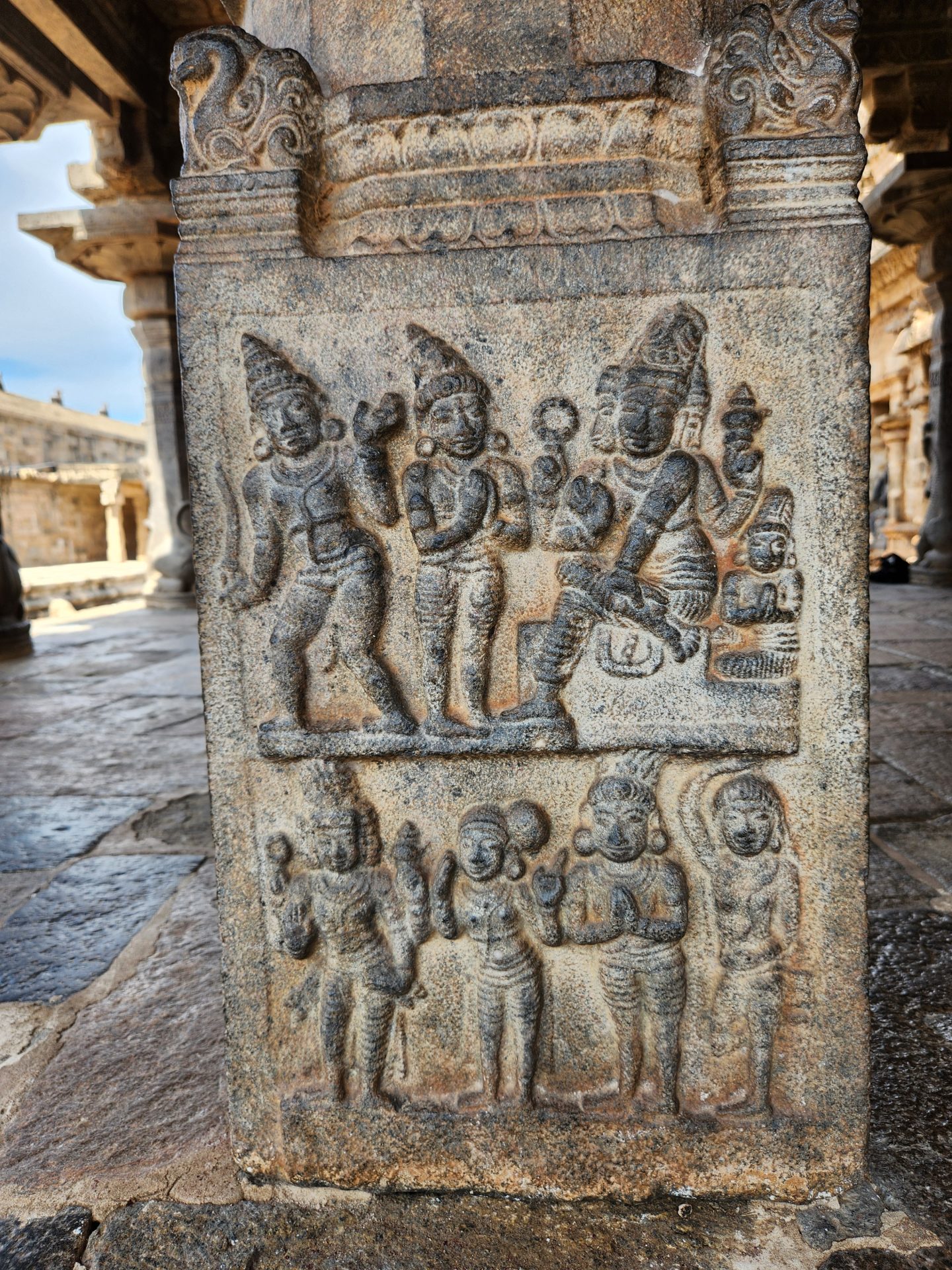
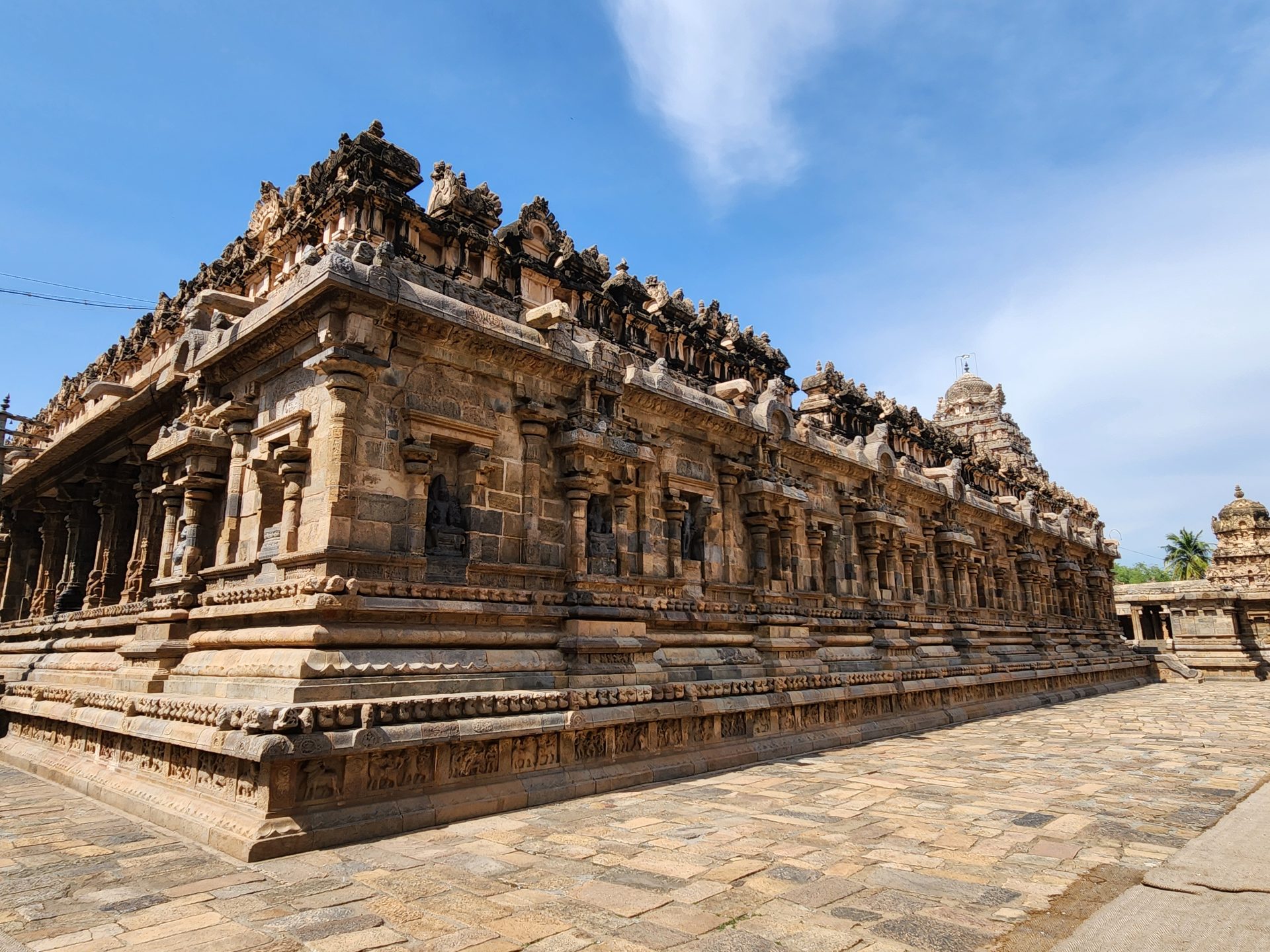
This is one among a cluster of eighteen medieval era large Hindu temples in the Kumbakonam area and reverentially displays Vaishnavism and Shaktism traditions of Hinduism, along with the legends associated with Nayanmars – the Bhakti movement saints of Shaivism.
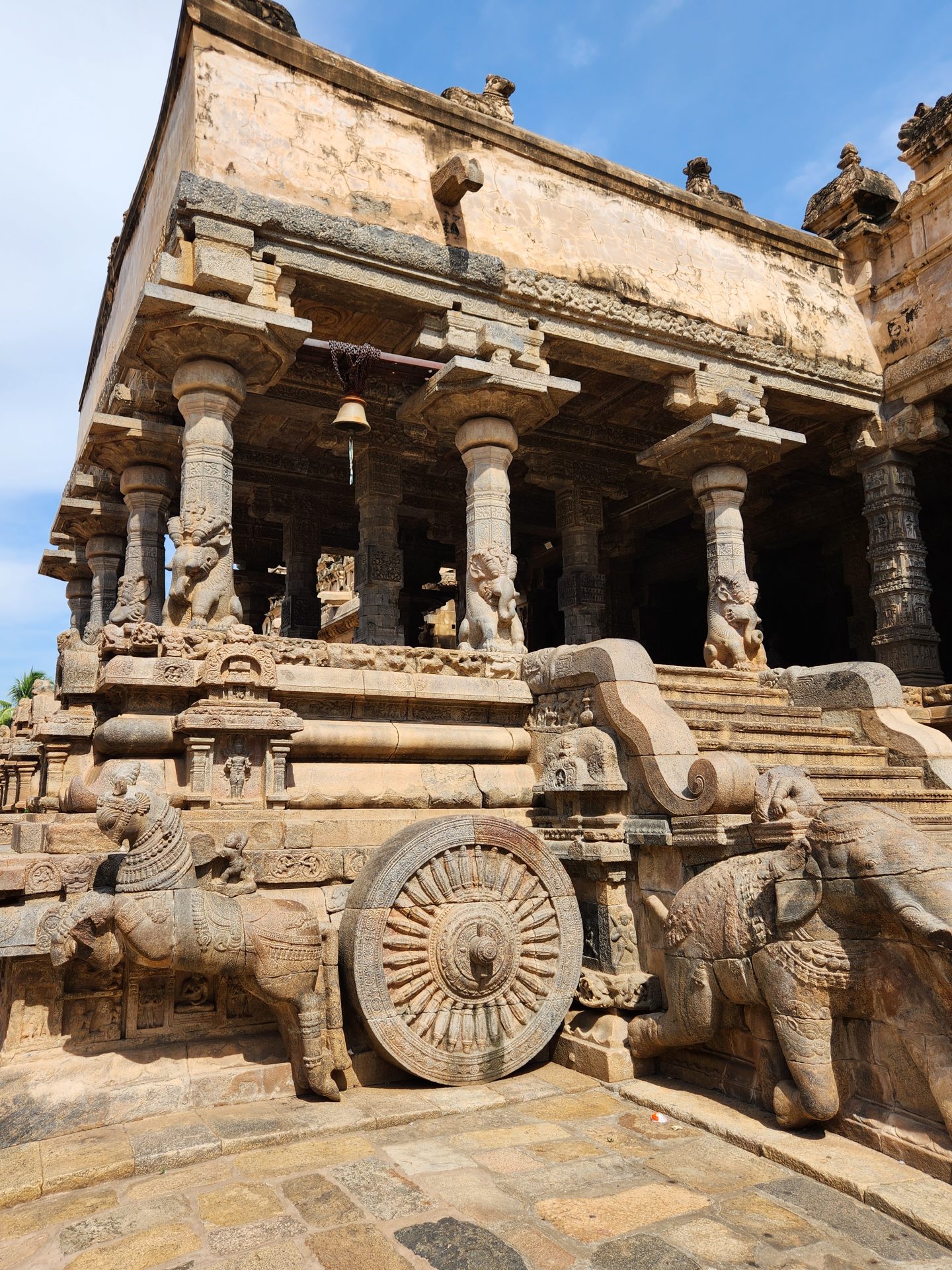
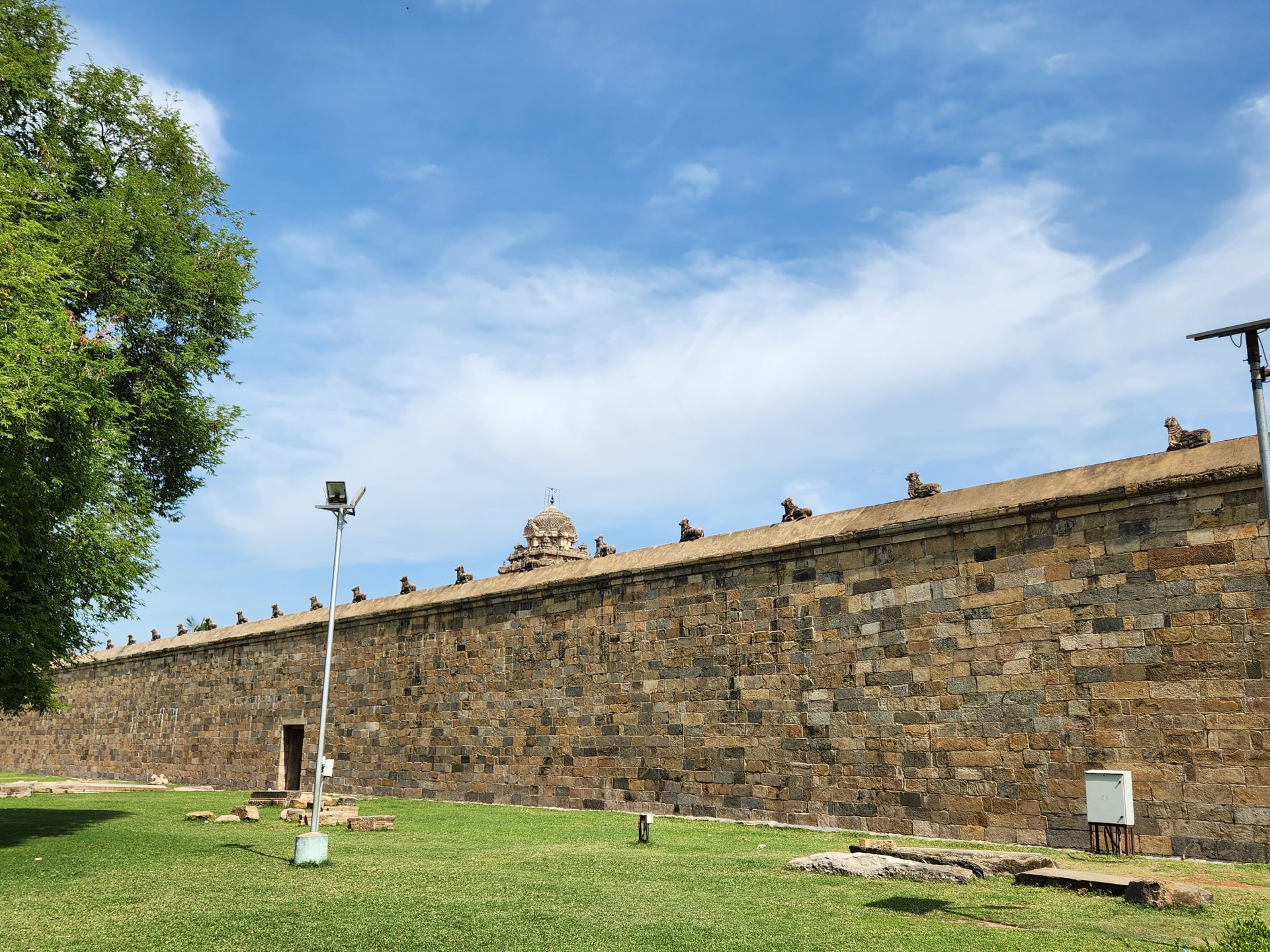
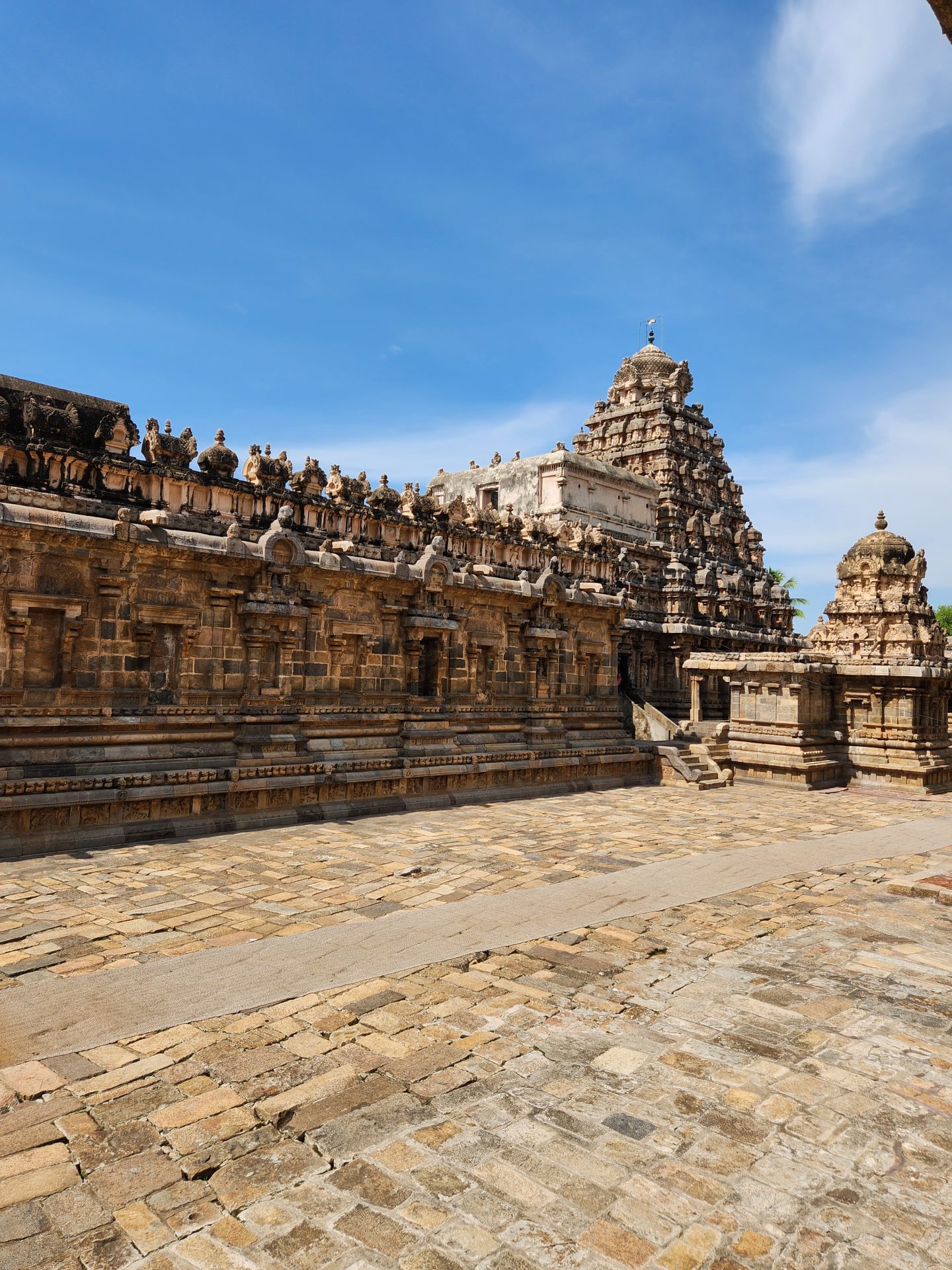
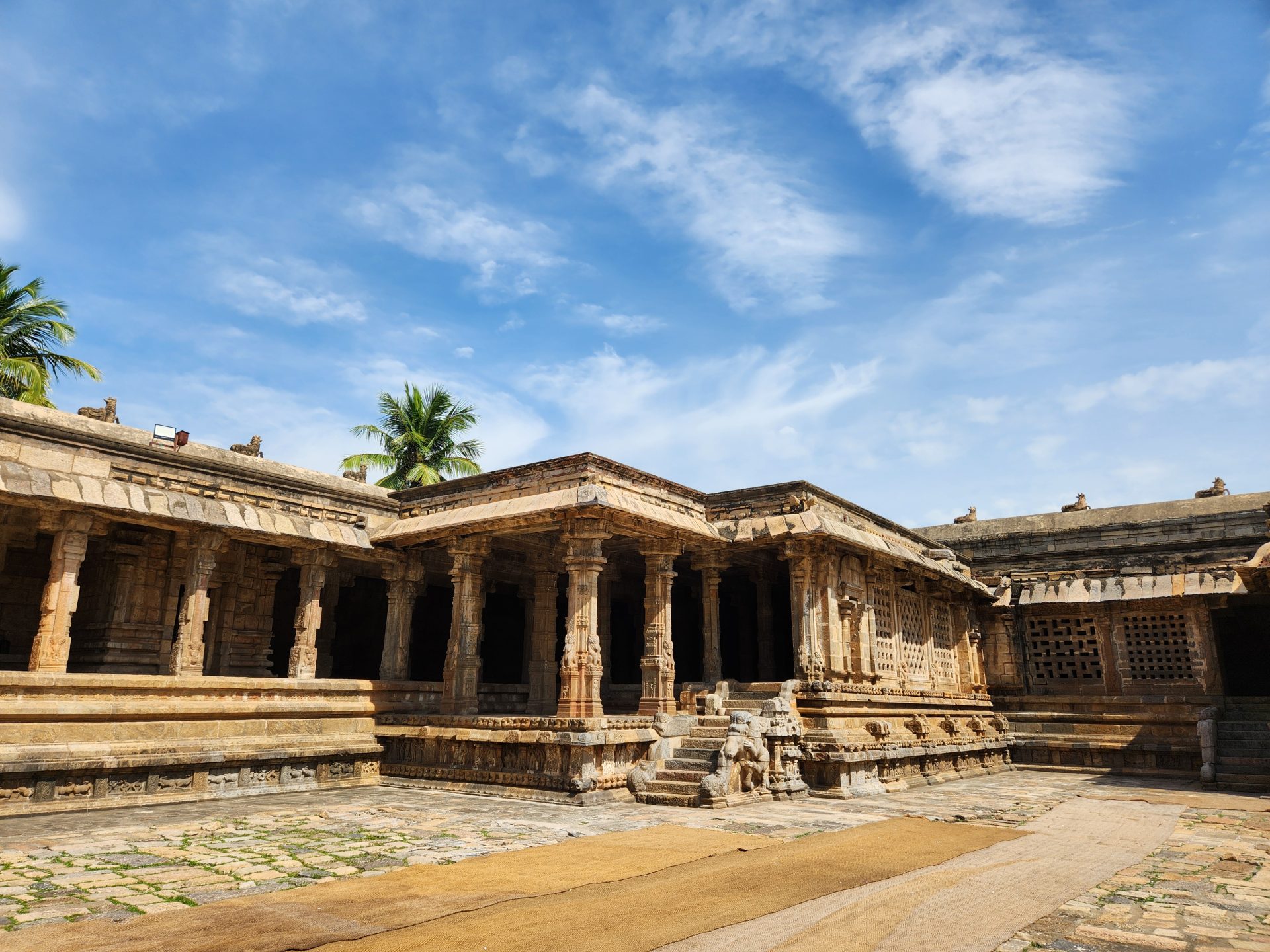
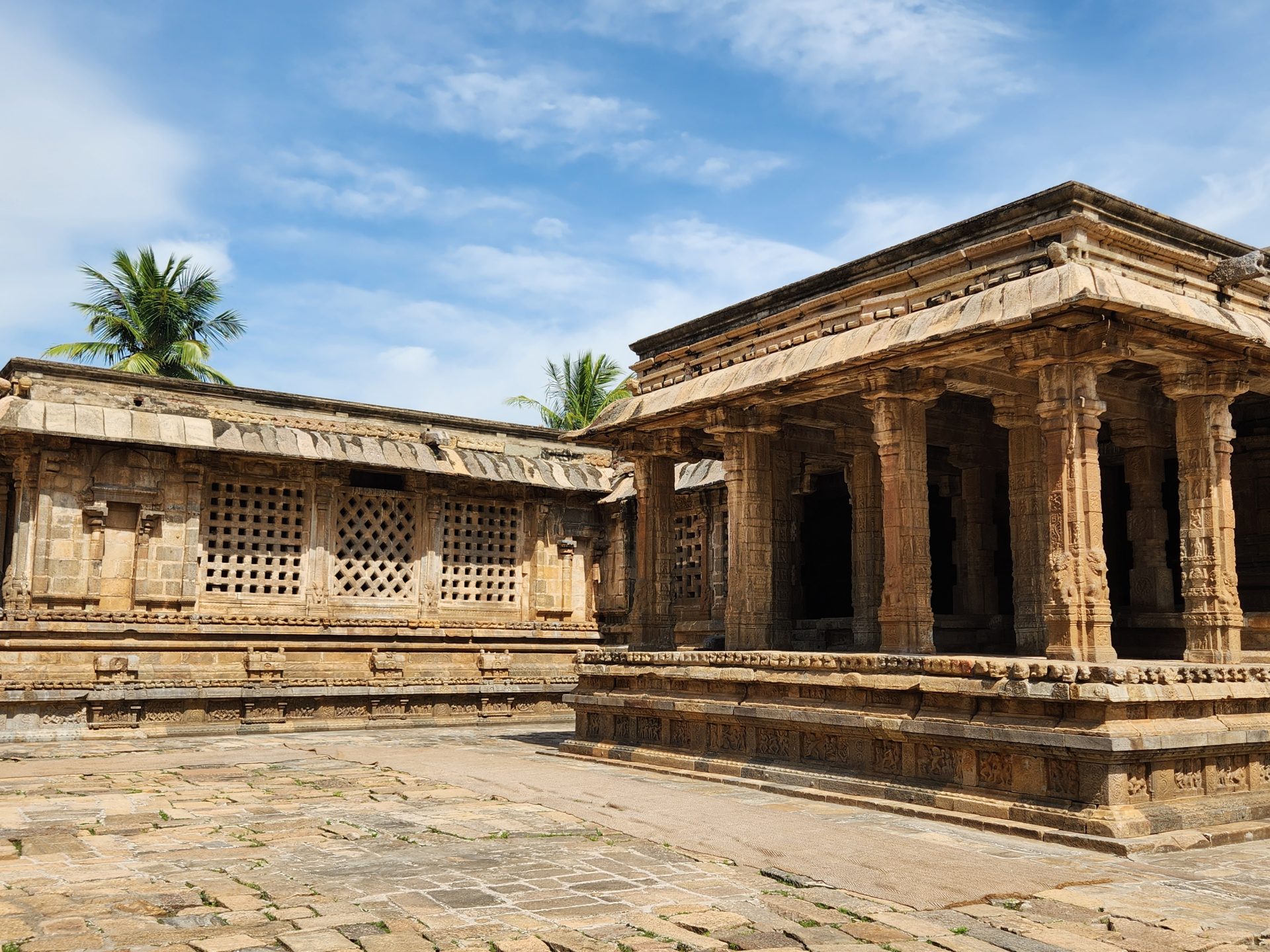
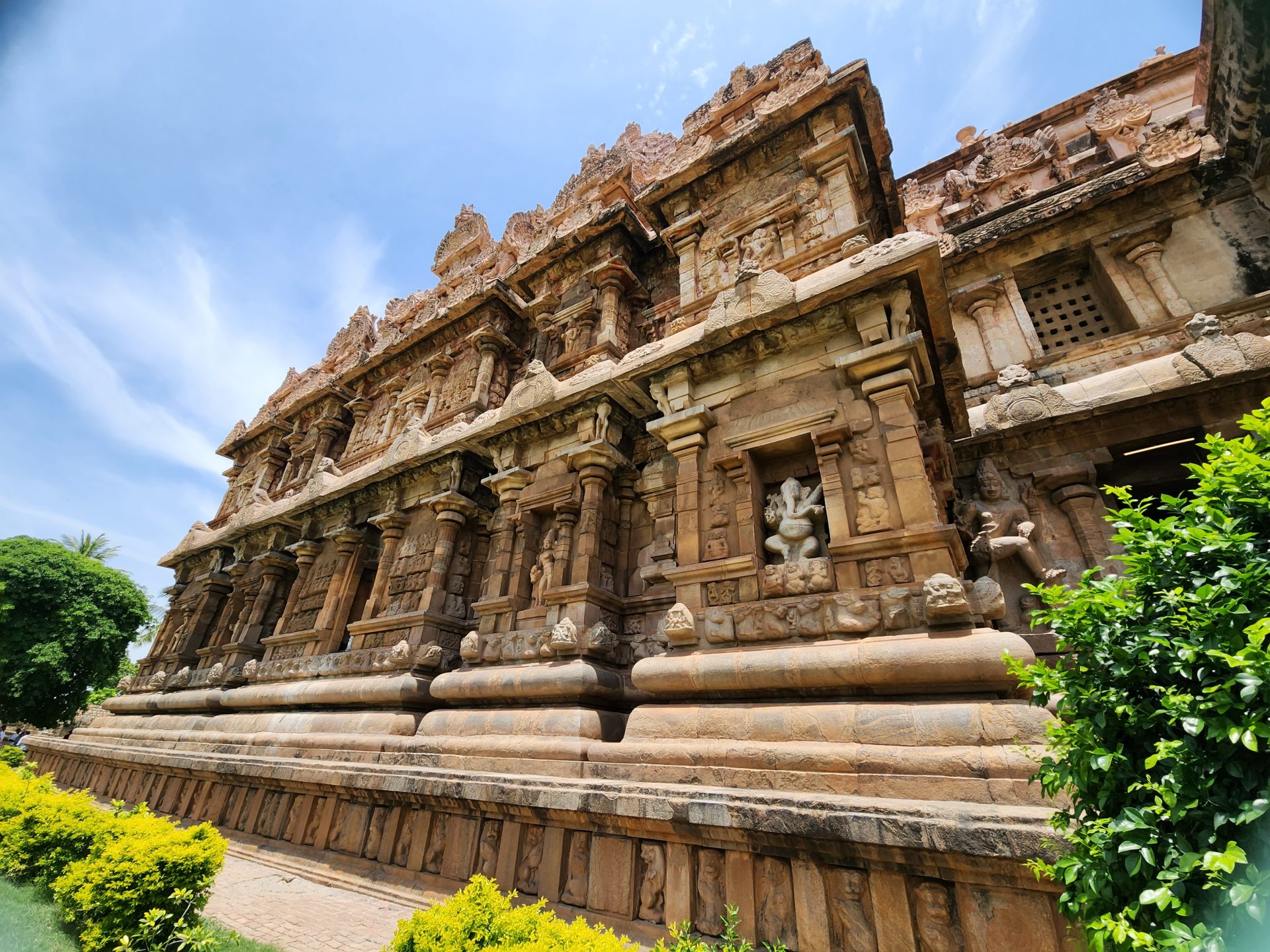
Built around a square plan structure by Chola emperor Rajaraja II who ruled the Chola Empire between 1146 and 1172 CE. A UNESCOWorld Heritage Site, this temple’s construction was completed in 1166 CE. It is believed as per inscriptions that the temple complex had sapta veedhis (seven streets) and seven courts, similar to the Srirangam temple. All are gone, except the one court within the main temple that survives.
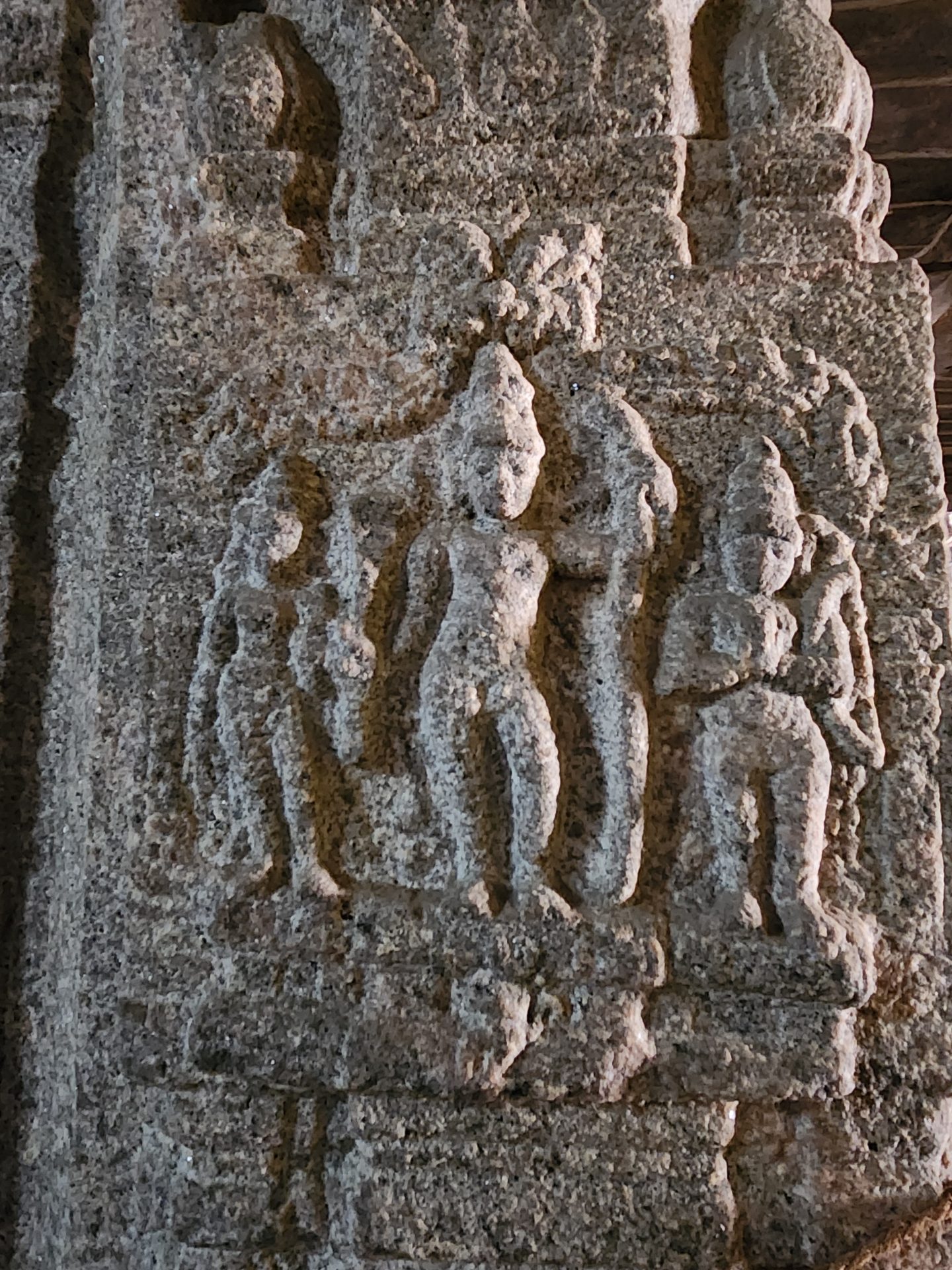
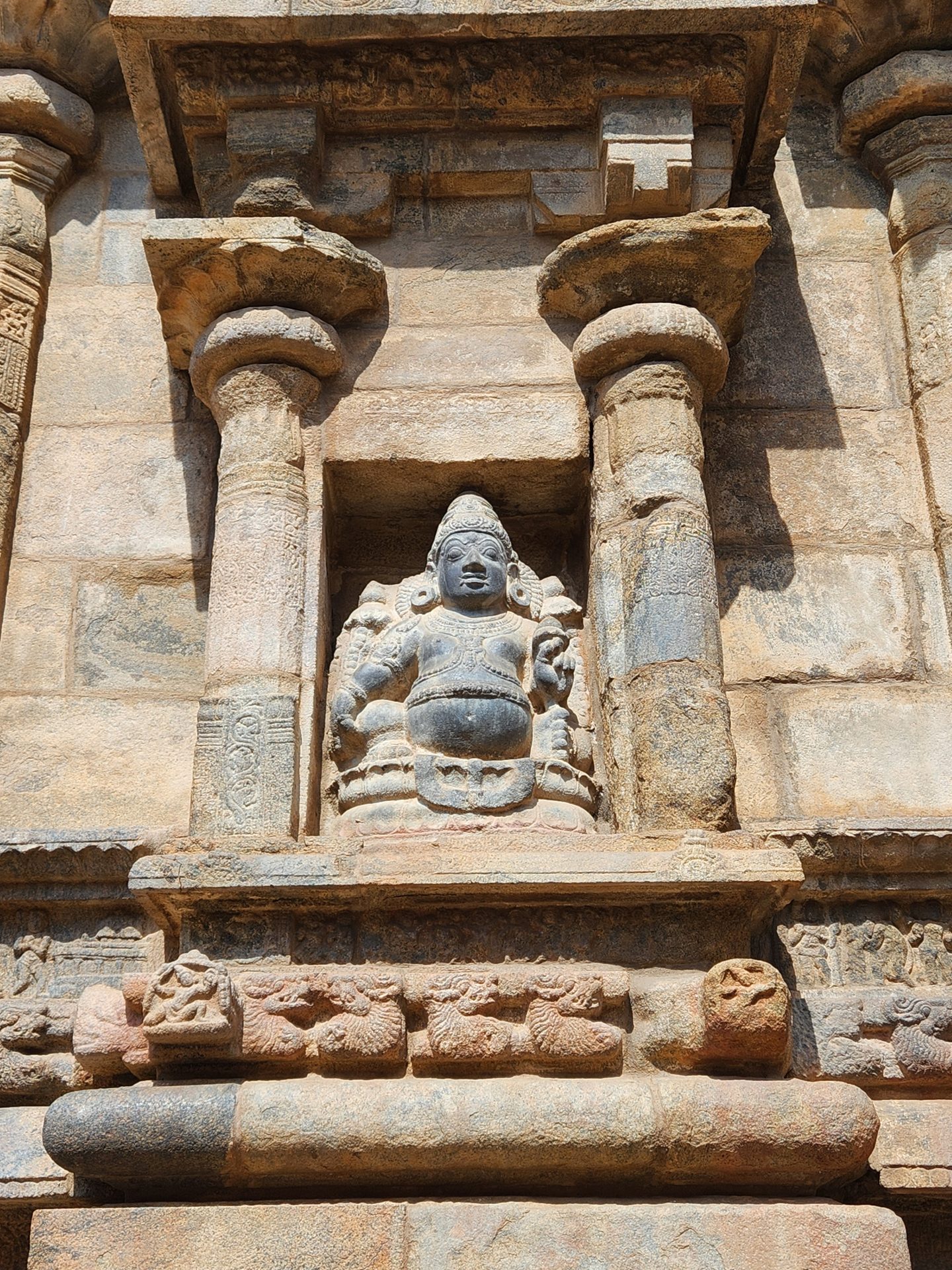
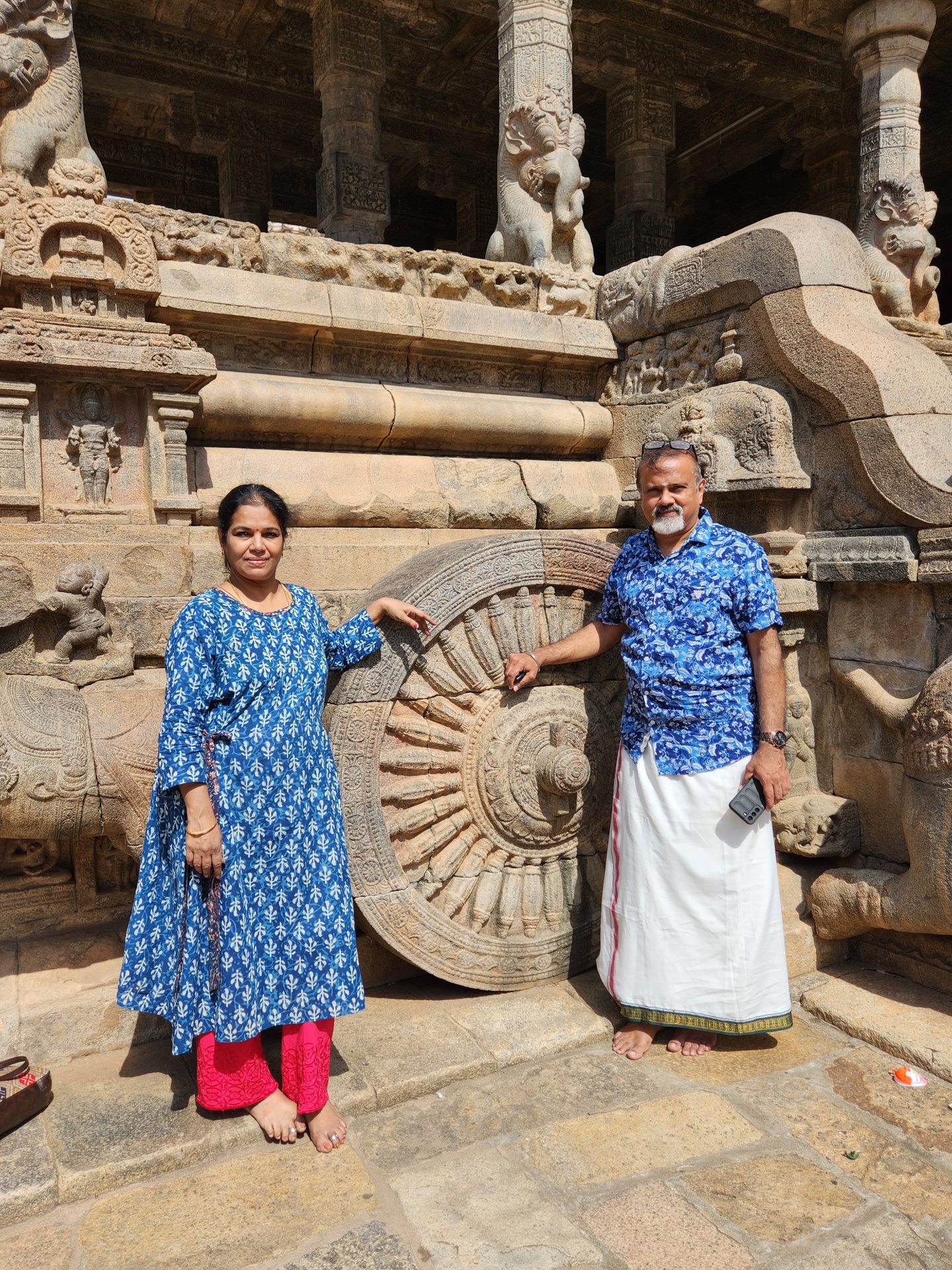
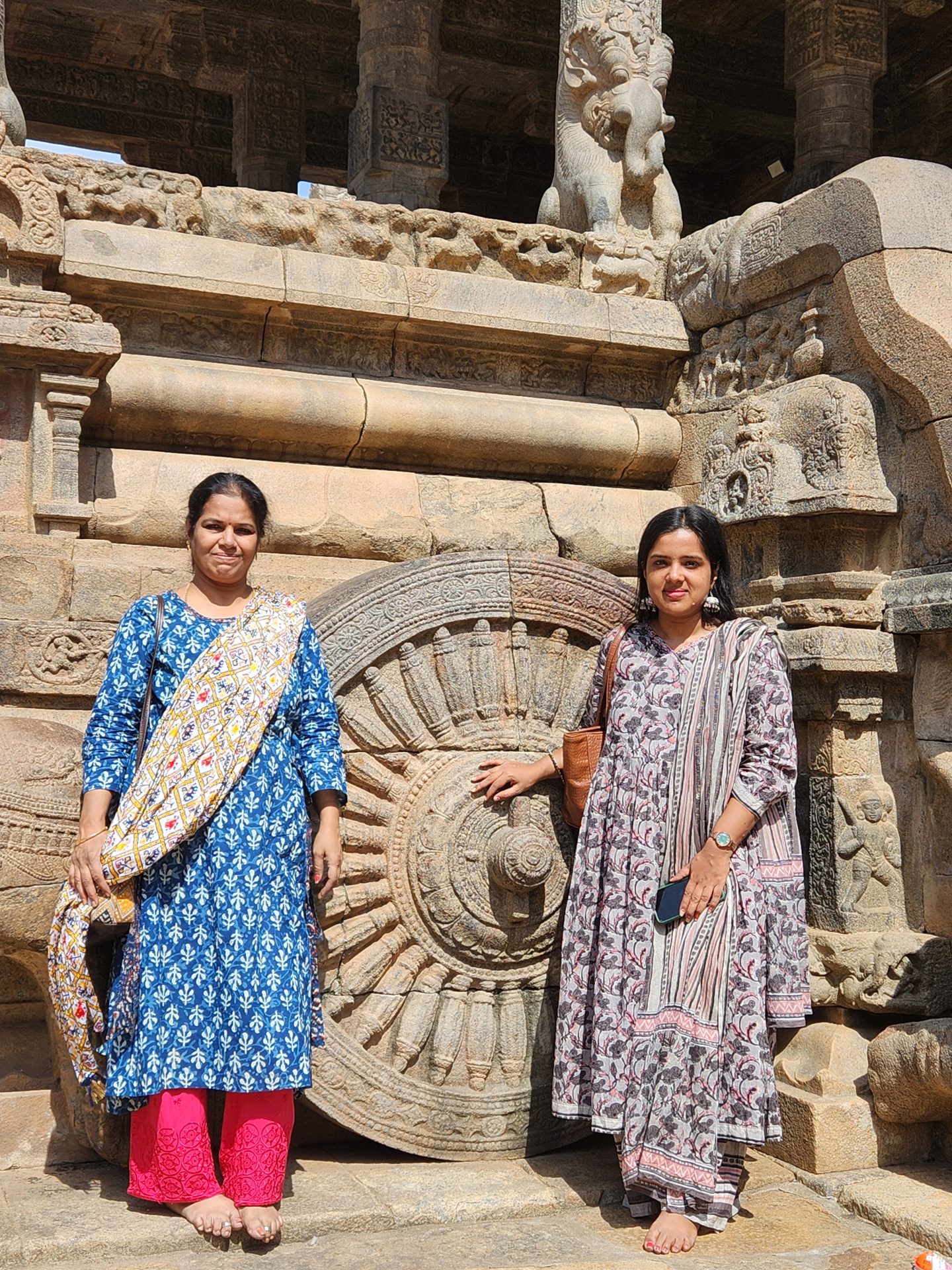
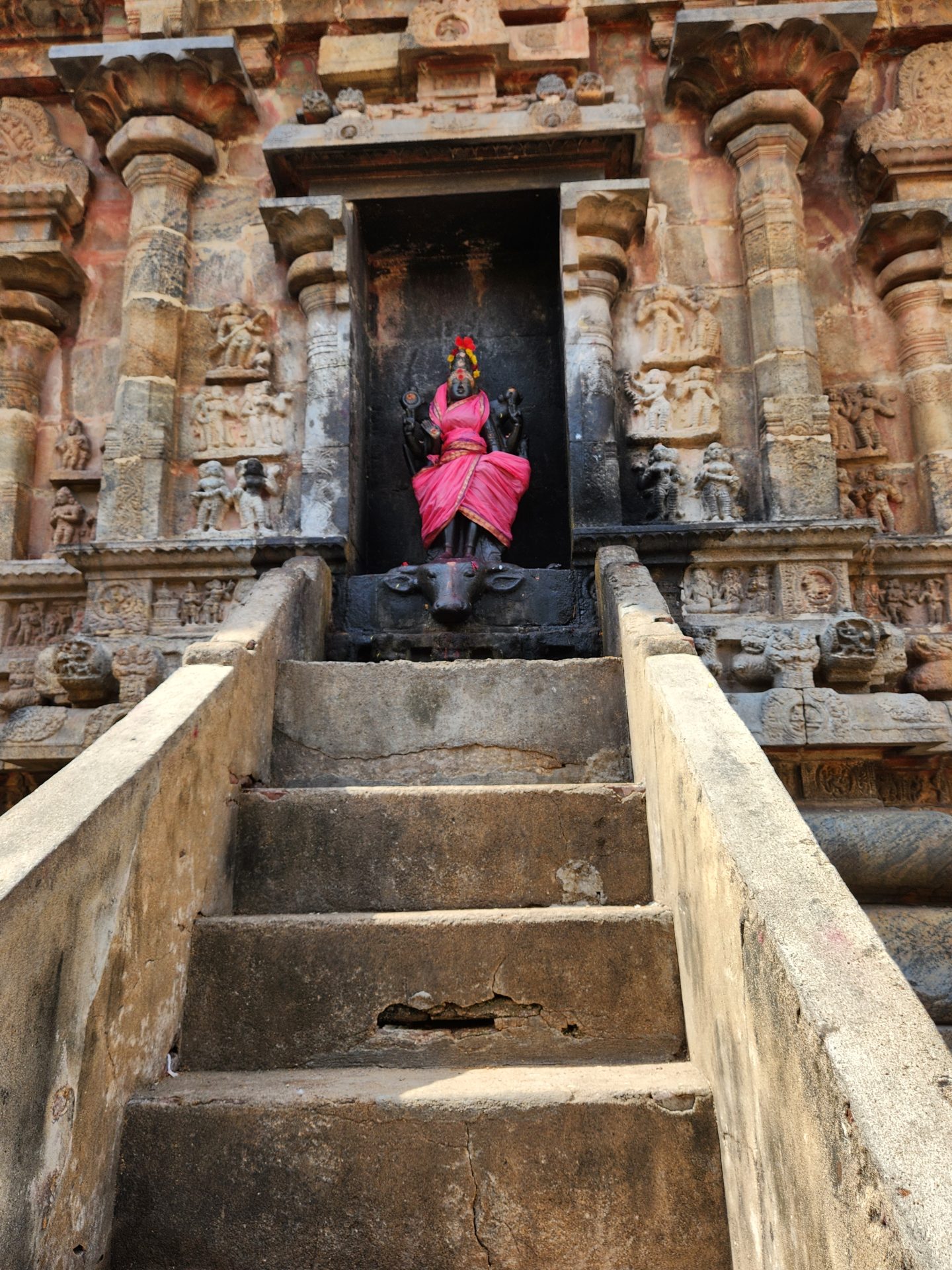
There are 2 Sun Dials near the chariot fir the morning and evening and can be seen as wheels of the chariot. While the stone temple incorporates a chariot structure, and includes major Vedic and Puranic deities such as Indra, Agni, Varuna, Vayu, Brahma, Surya, Vishnu, Saptamatrikas, Durga, Saraswati, Sri Devi (Lakshmi), Ganga, Yamuna, Subrahmanya, Ganesha, Kama, Rati and others, Shiva’s consort has a dedicated shrine called the Periya Nayaki Amman temple.
This is a detached temple situated to the north of the Airavateshvarar temple. This might have been a part of the main temple when the outer courts were complete.
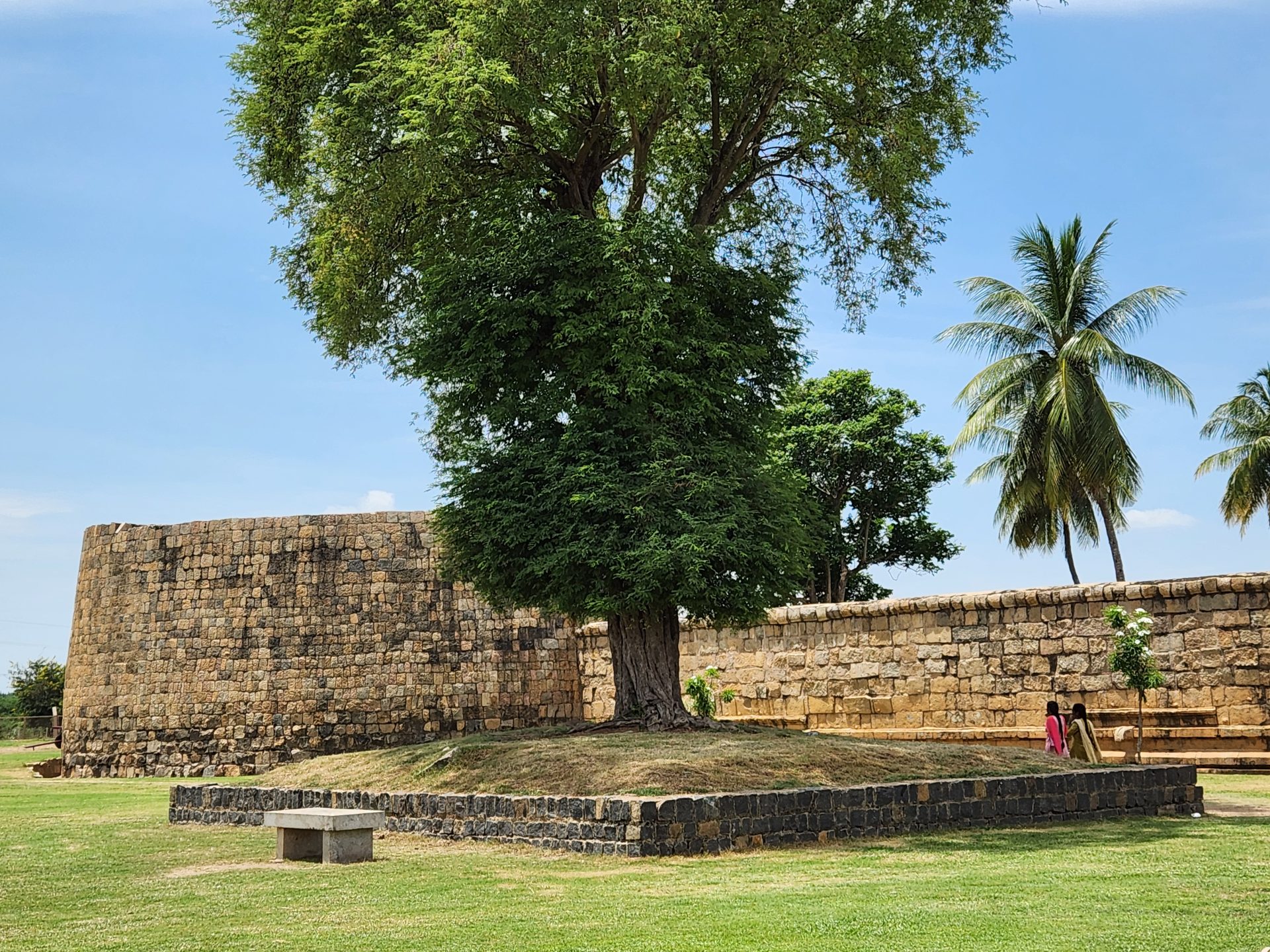
At present, parts of the temple such as the gopuram is in ruins, and the main temple and associated shrines stand alone.
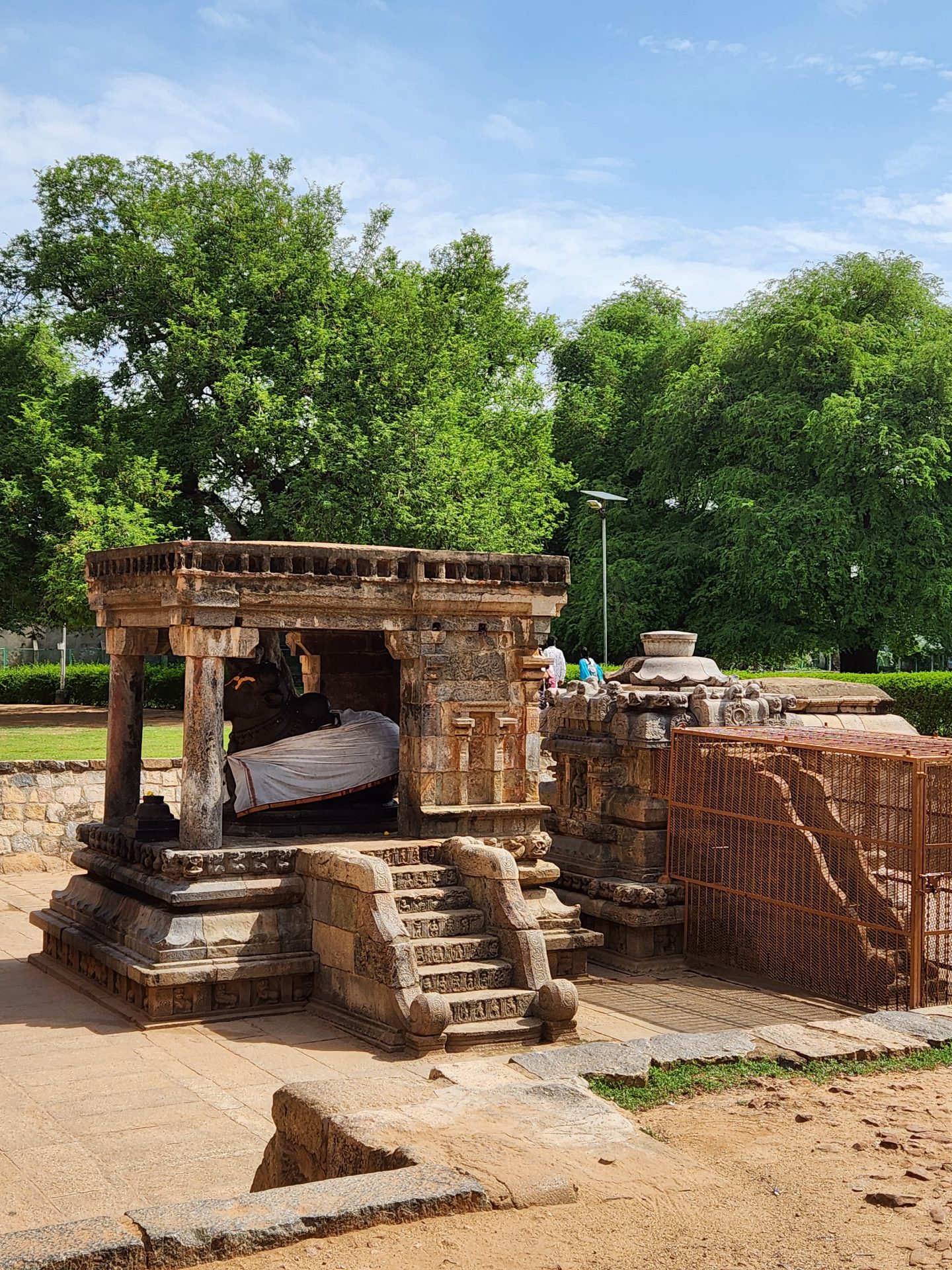
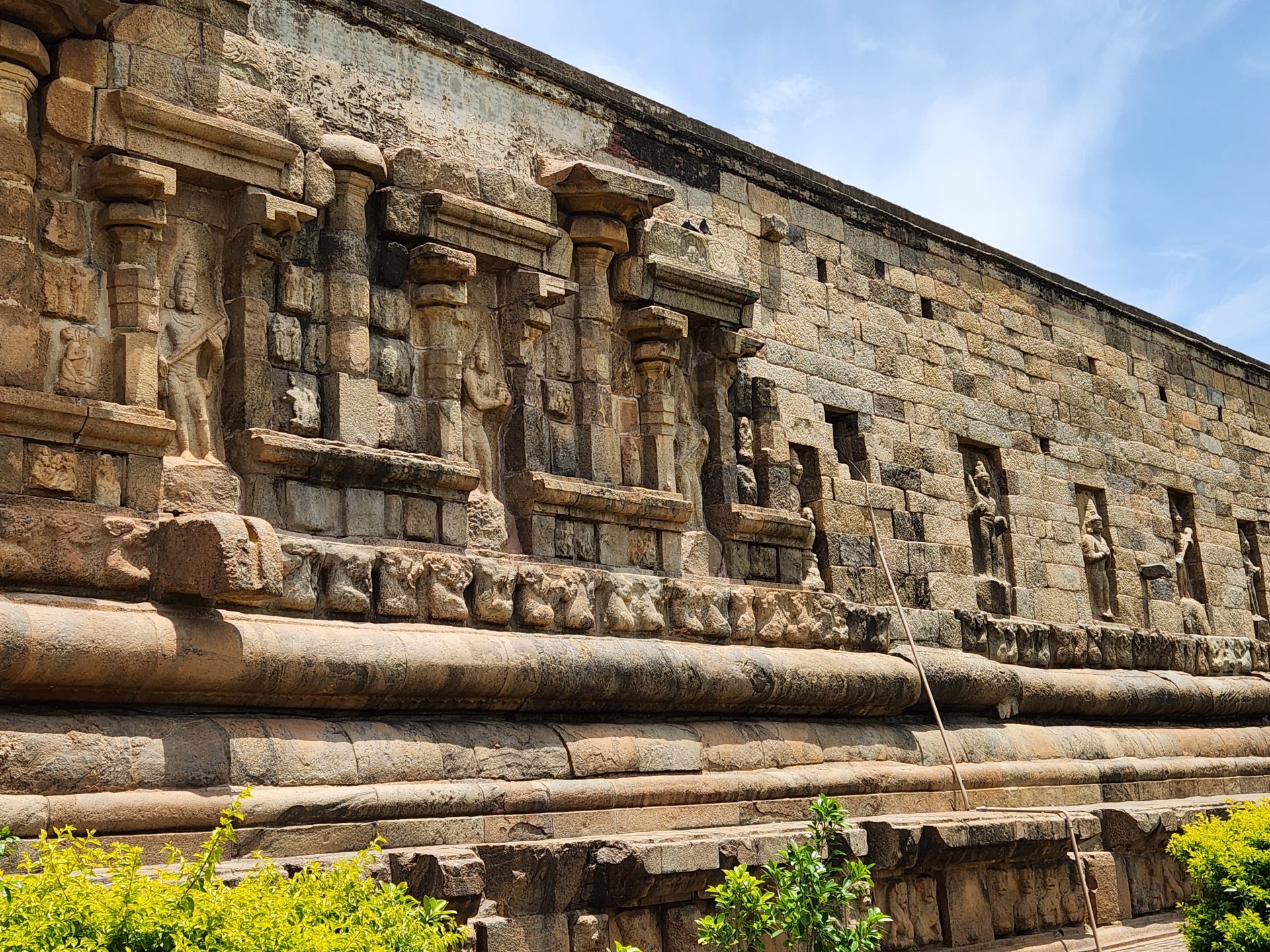
The surviving temple is enclosed by a compound wall that is approximately 107 metres by 70 metres with a Nandi madapa and Dhvajastambha found outside of the wall. The main temple itself sits on a plinth that is 23 meters by 63 meters, and consists of the garbhagriha (inner sanctum), and three mandapas – ardhamandapa, mukhamandapa and agramandapa.
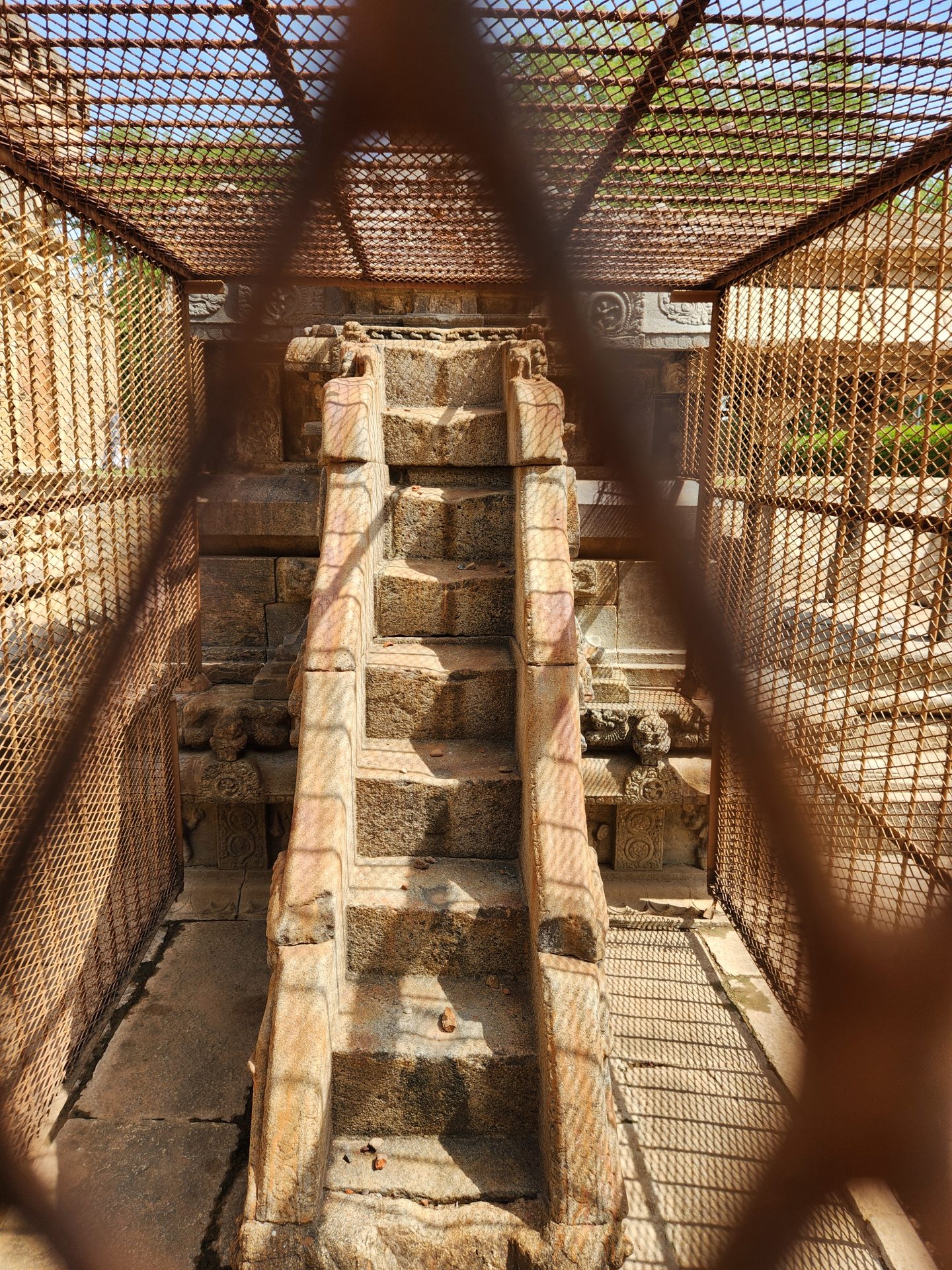
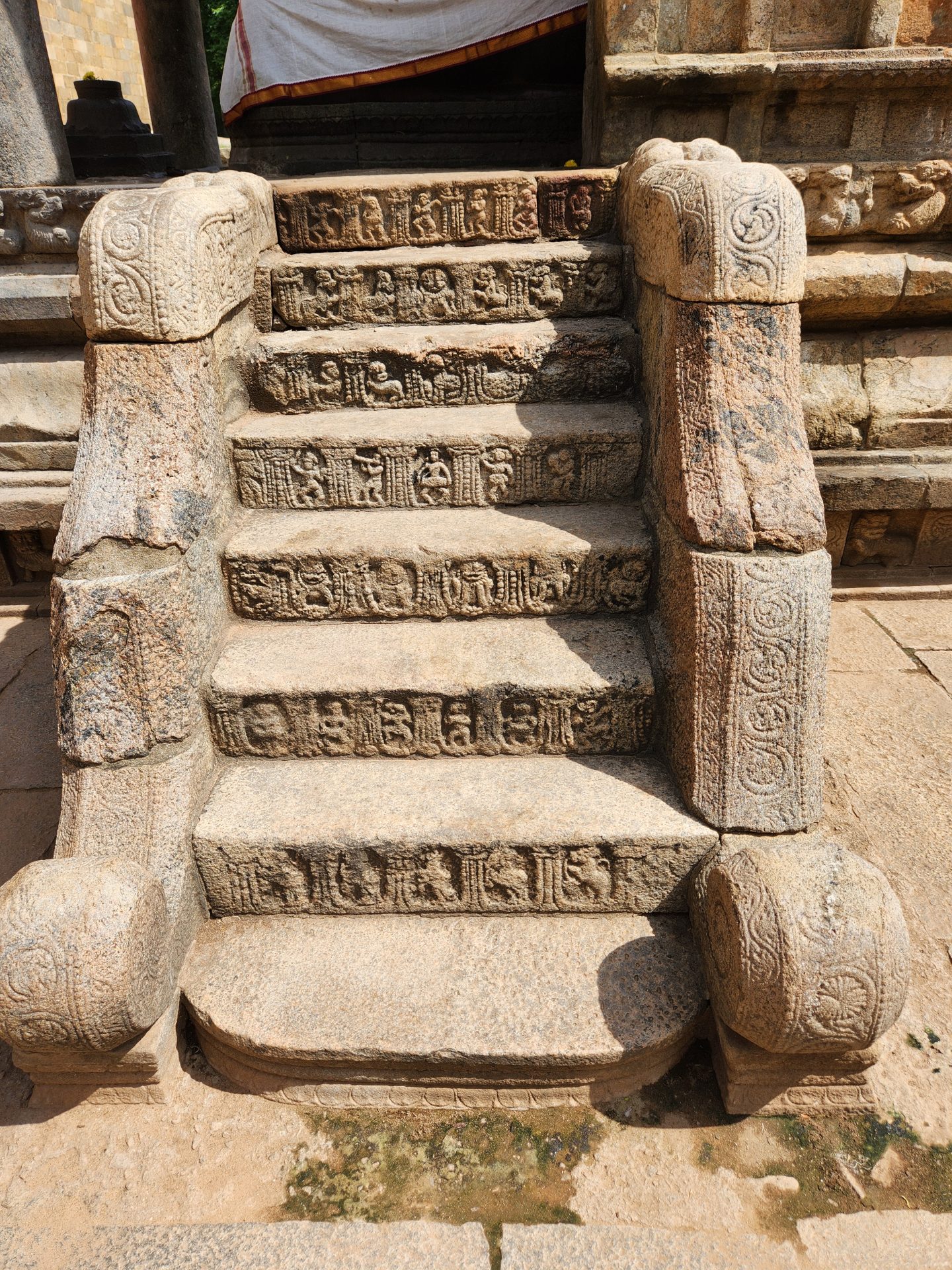
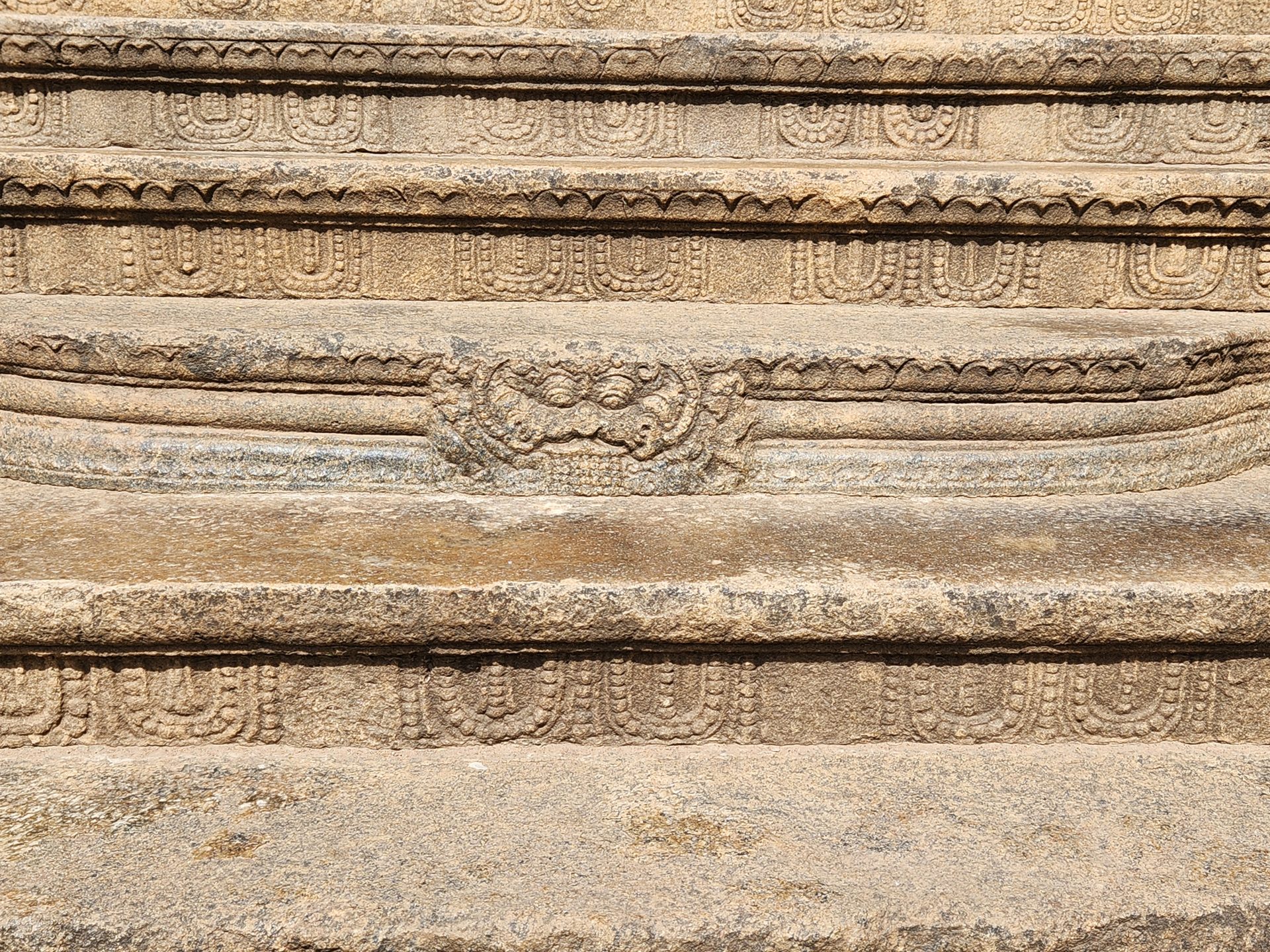
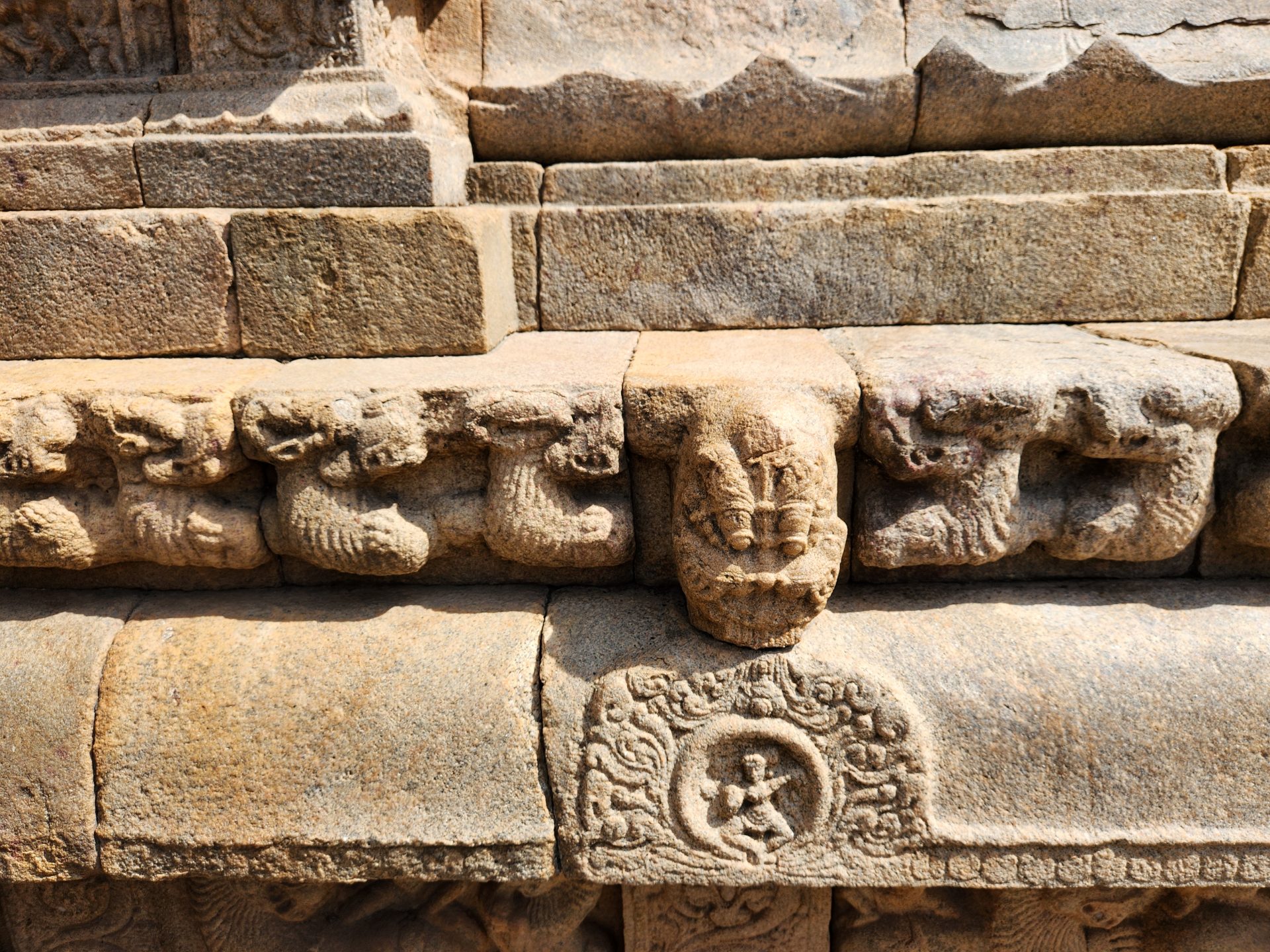
The agra mandapa has an attached square porch of 7 metres (23 ft) side and has ornately carved steps that go from east to west. On its east, outside the main podium, is the bali-pitham. It is unusual, in that it is produced as intricately carved balustraded steps, that produce a musical note. They are therefore called the “singing steps“.
It is believed that the American astronomer Carl Sagan visited the Airavatesvara Temple for his 1980 television documentary series, Cosmos: A Personal Voyage. In the tenth episode titled The Edge of Forever, Sagan talks about the Hindu religion and the Vedas, and narrates the legend of the god Shiva being considered a cosmic deity while displaying ancient Indian art.
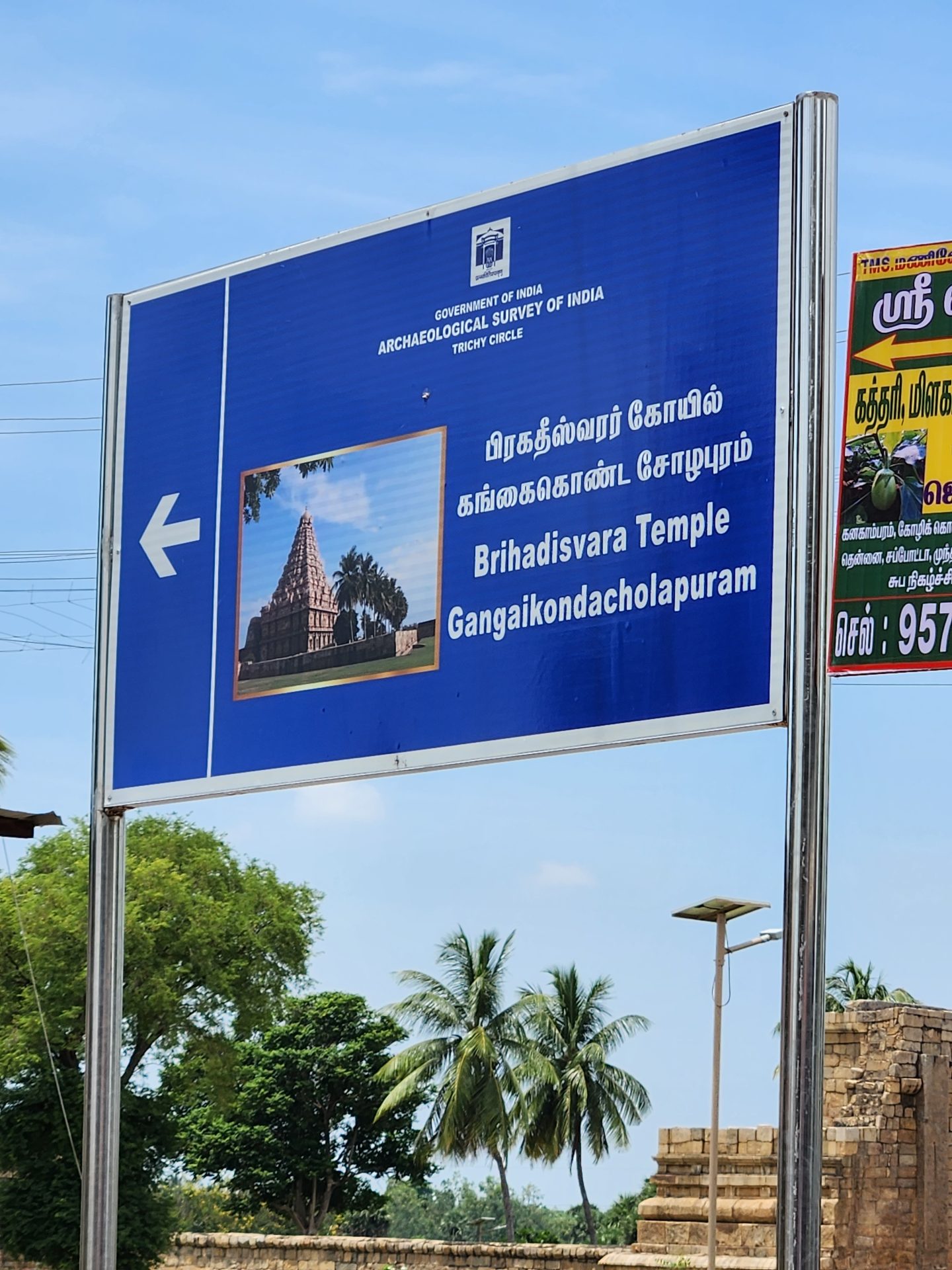
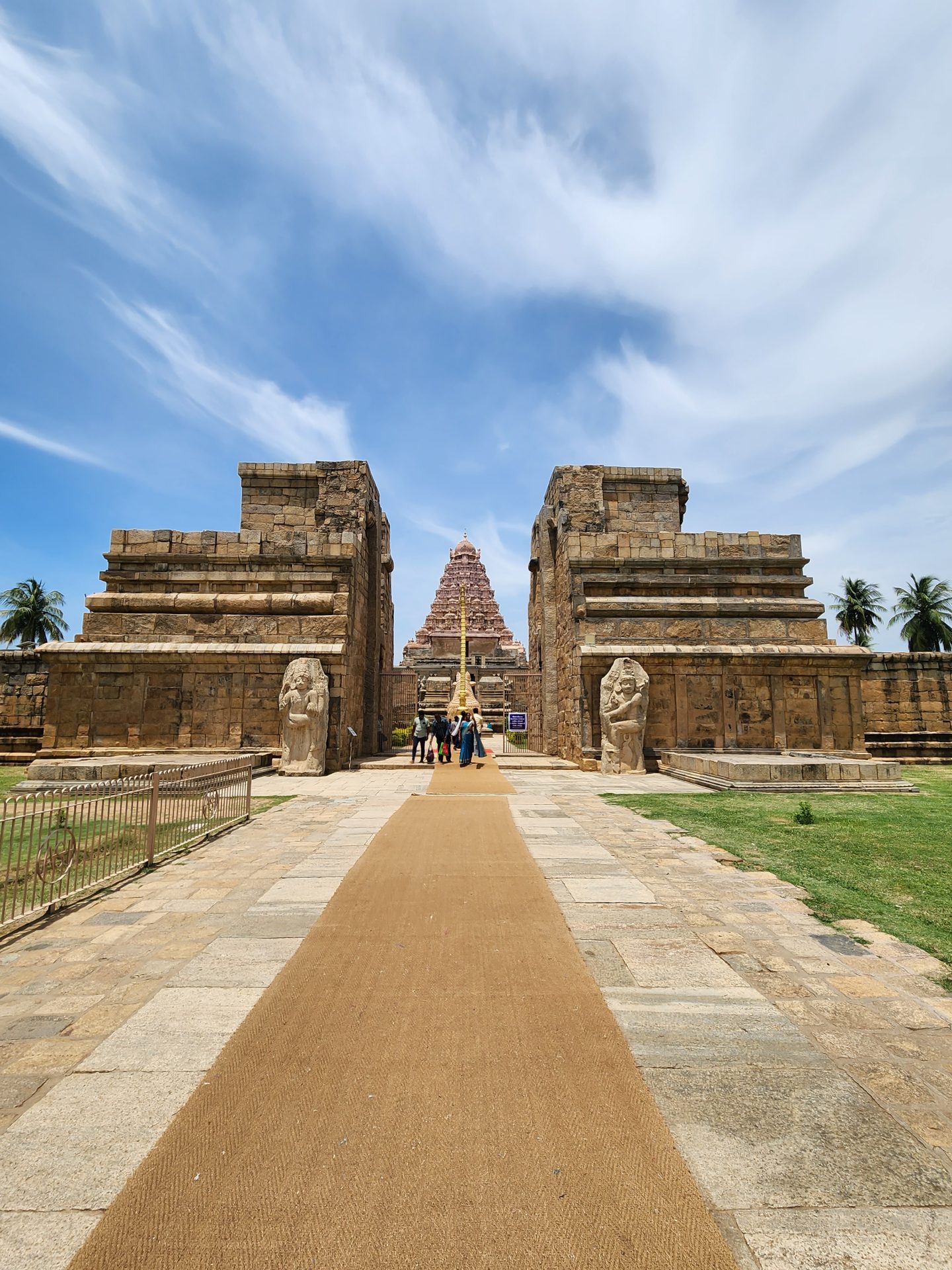
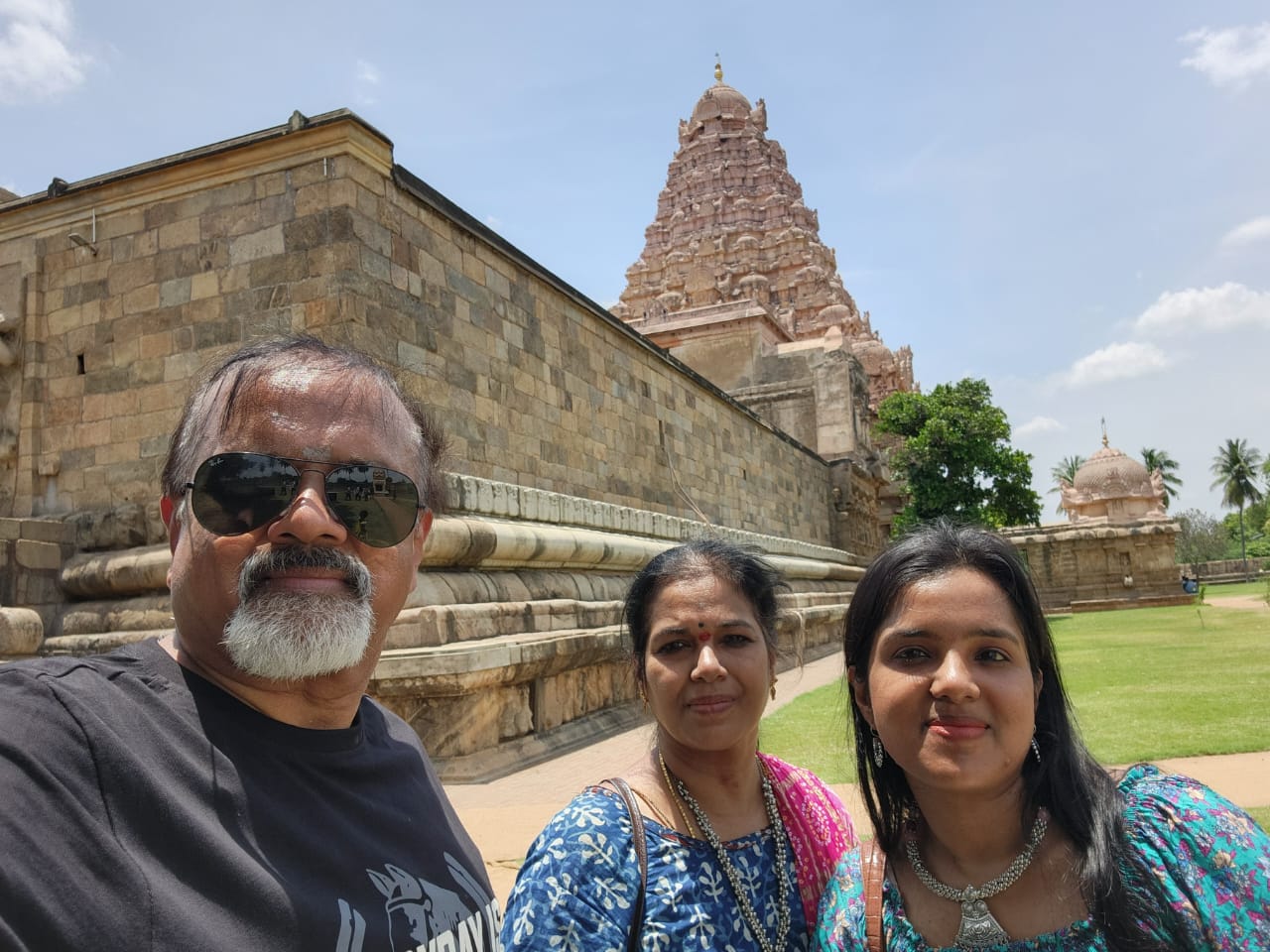
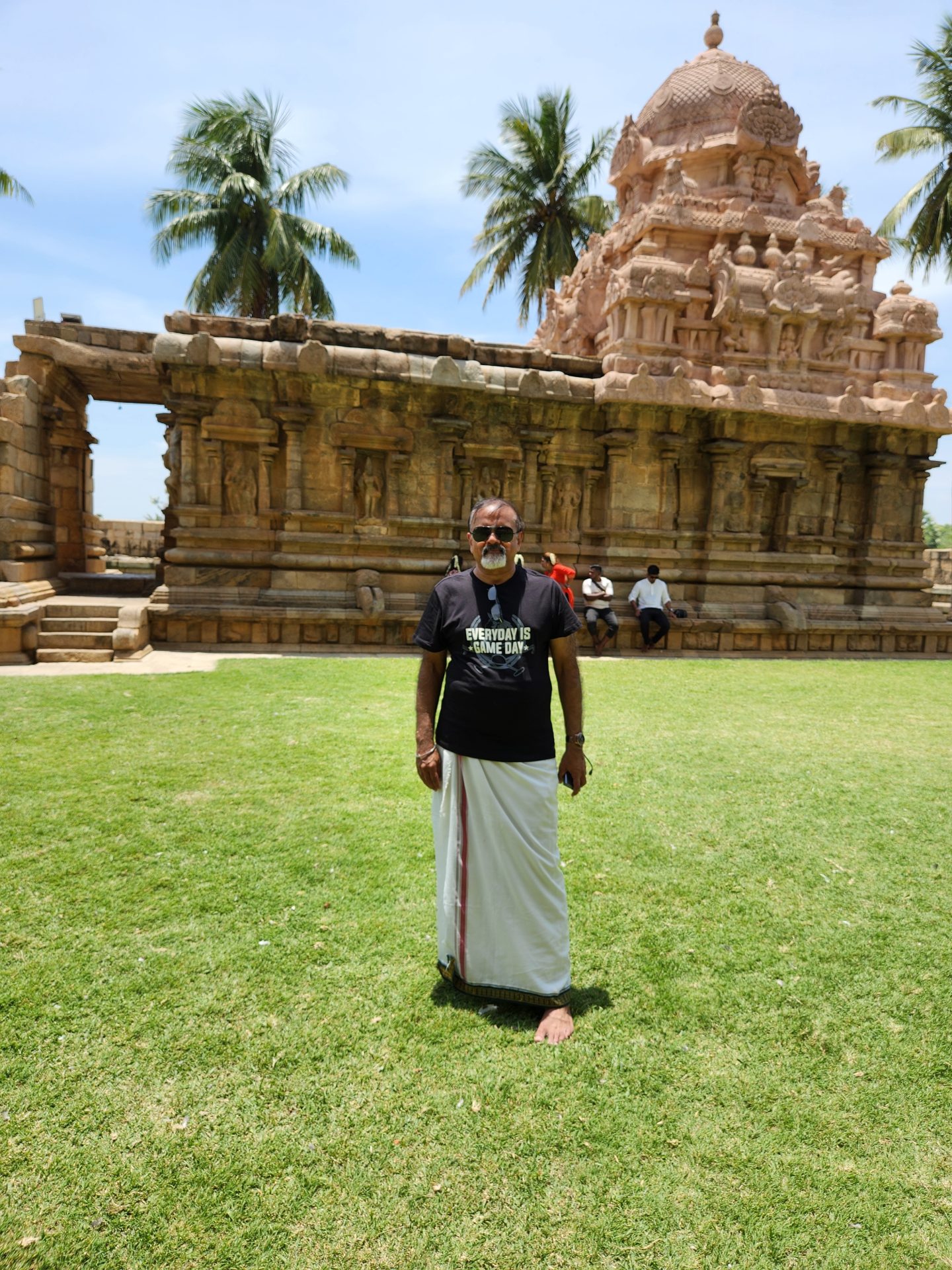
We commenced our 38 Km drive to Gangai Konda Cholapuram by around 10.30 AM and reached by around 11.15 AM. We had covered this temple during our last visit in 2021, but hoped to see a more cleaner version of this temple, given that the Prime Minister had recently visited this temple in the month of July 2025 commemorate the 1,000th Anniversary Emperor Rajendra Chola I’s Maritime expedition to Southeast Asia.
The Gangaikonda Cholapuram Temple
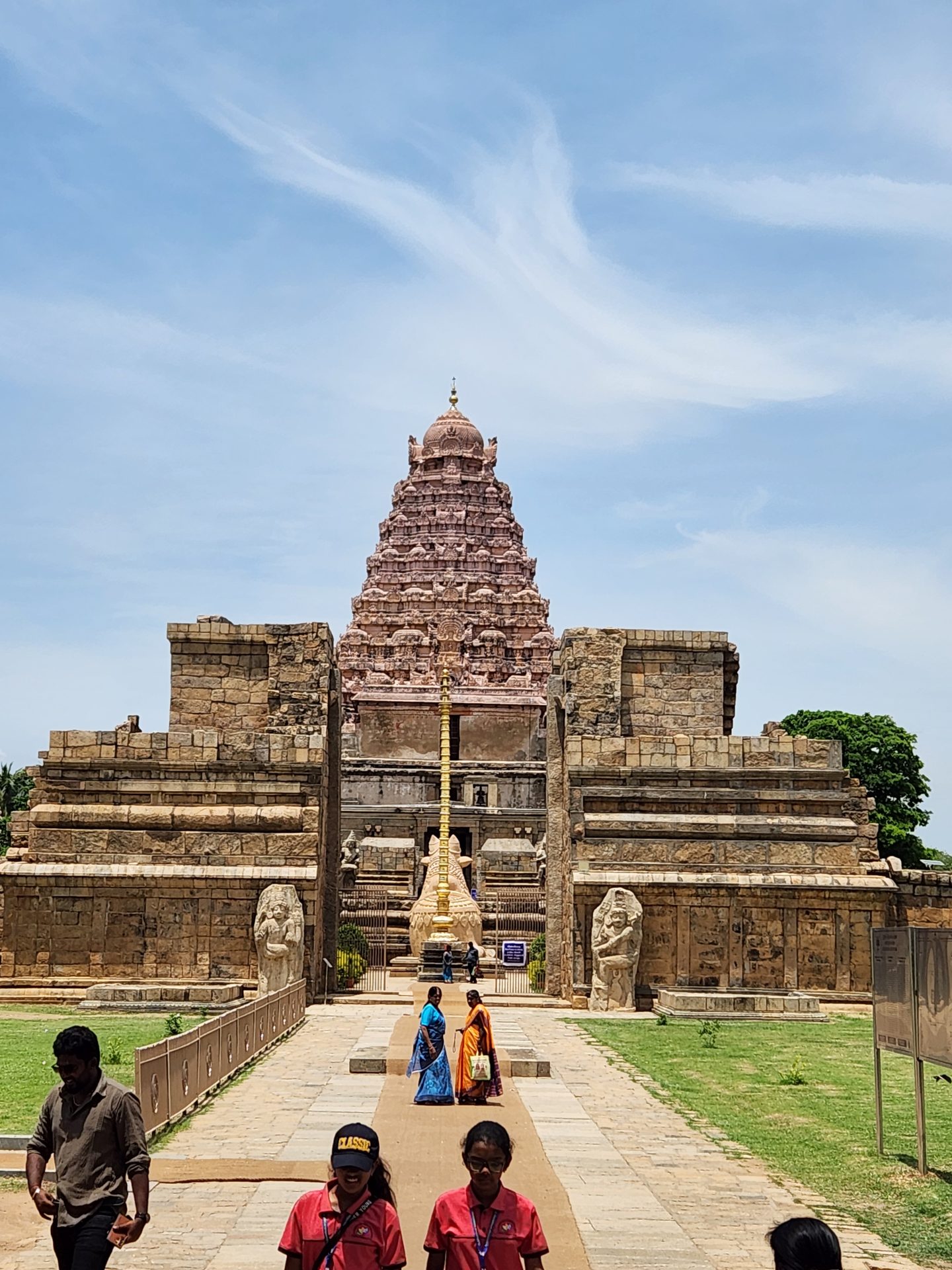
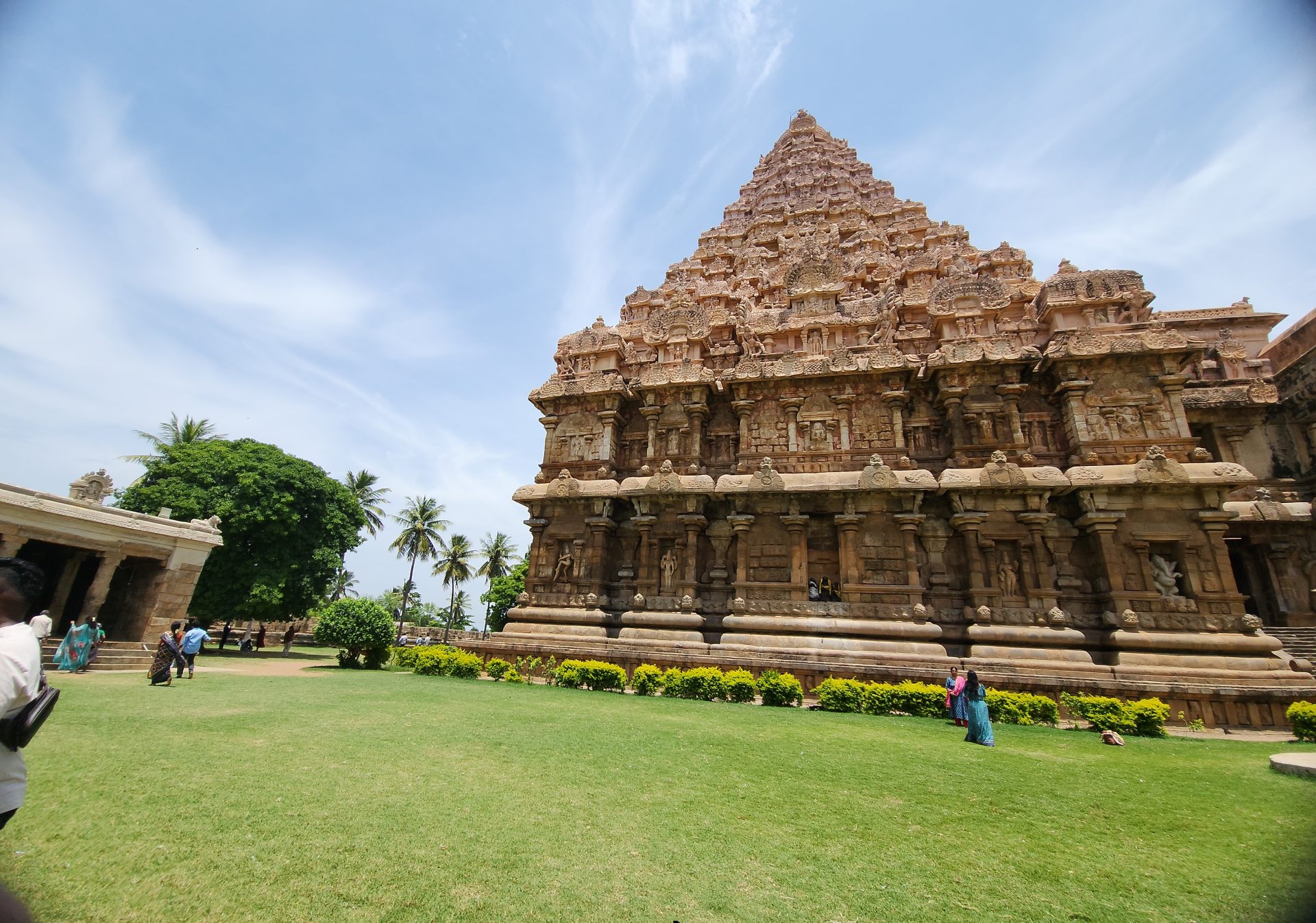
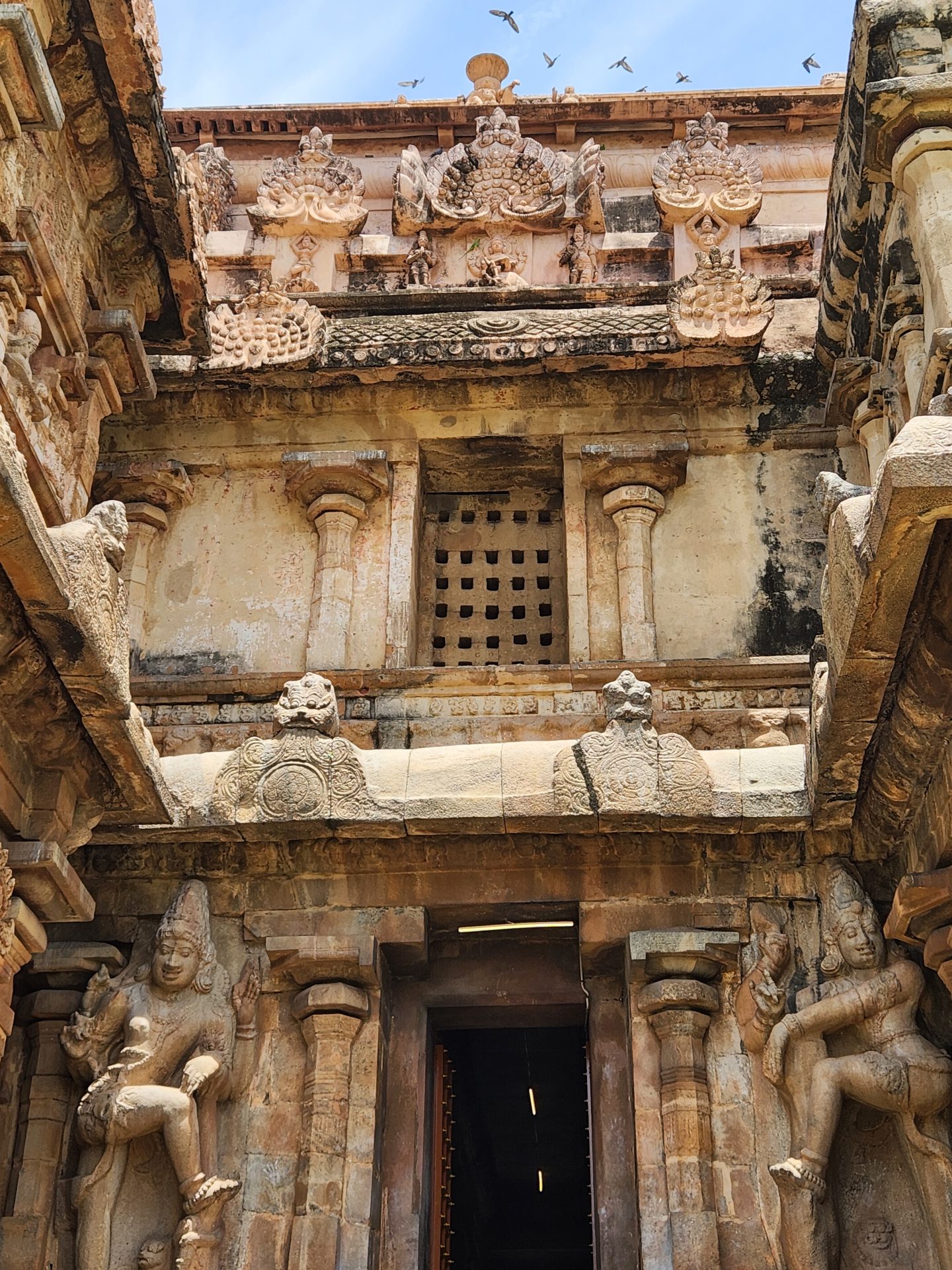
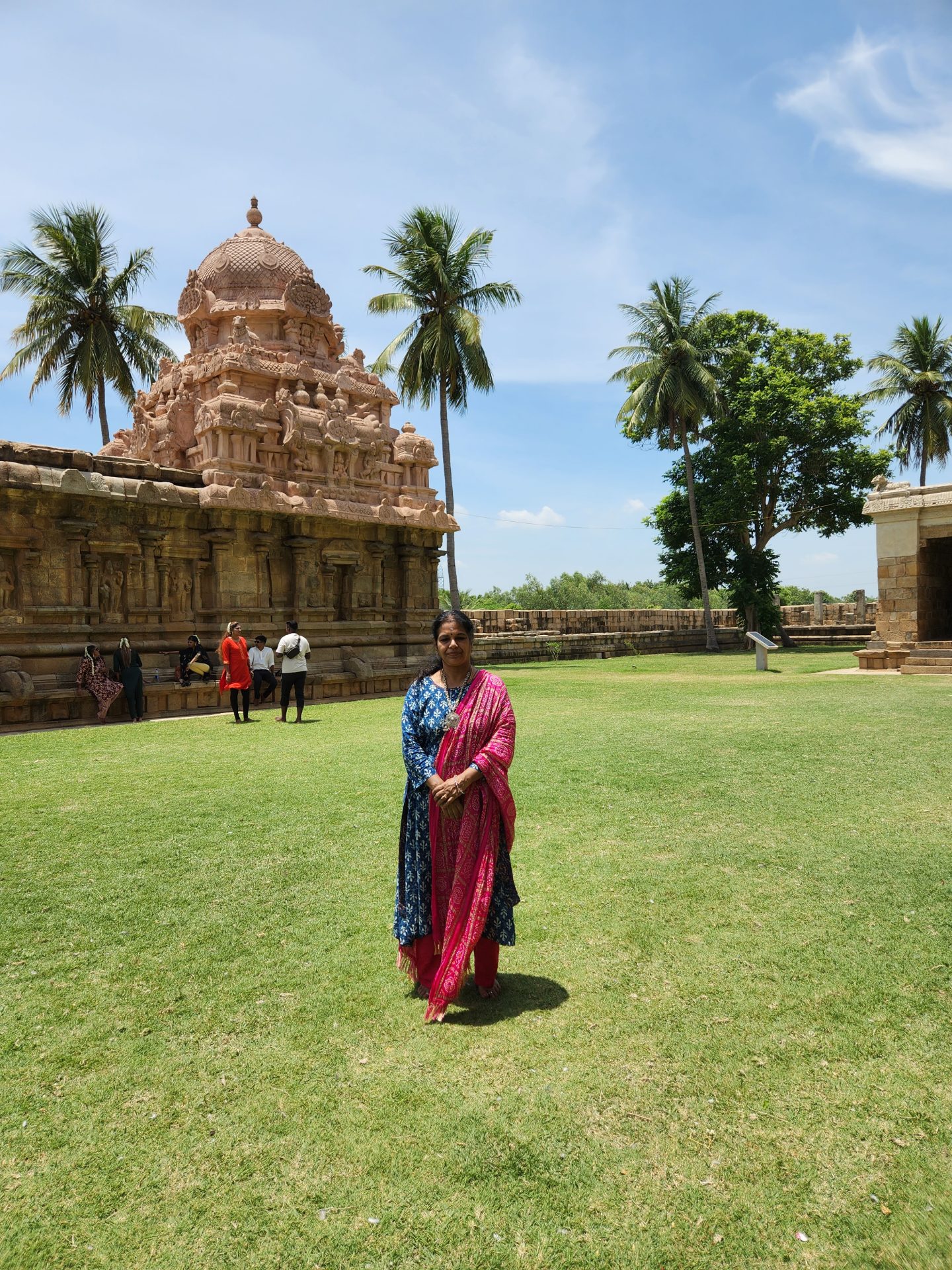
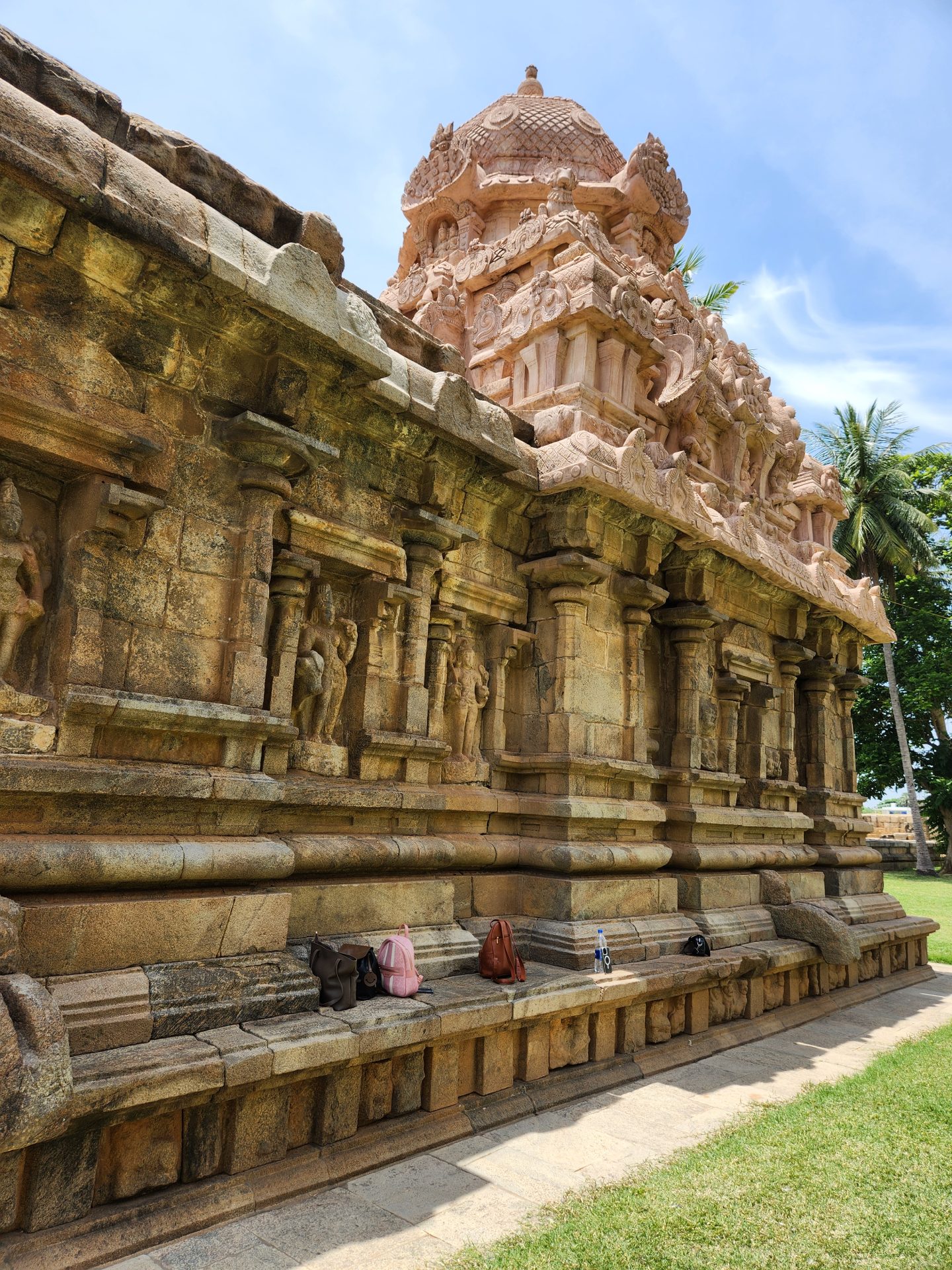
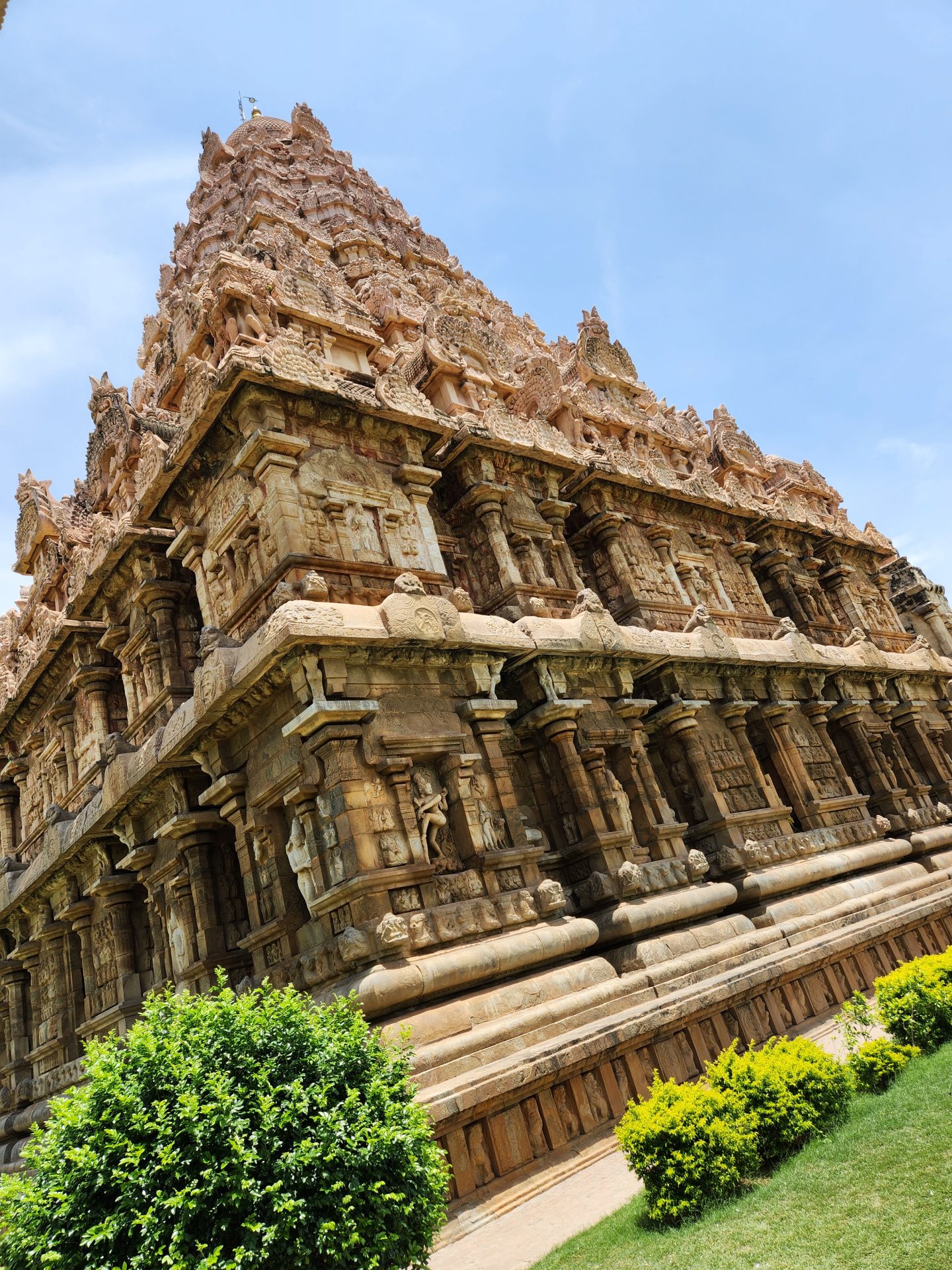
Completed in 1035 CE by Rajendra Chola I as a part of his new capital, the Brihadisvara Temple based on a square plan is a Hindu temple dedicated to Lord Shiva. This Chola dynasty era temple is similar in design, and has a similar name, as the older 11th century, Brihadeeswarar Temple about 70 kilometres to the southwest in Thanjavur.
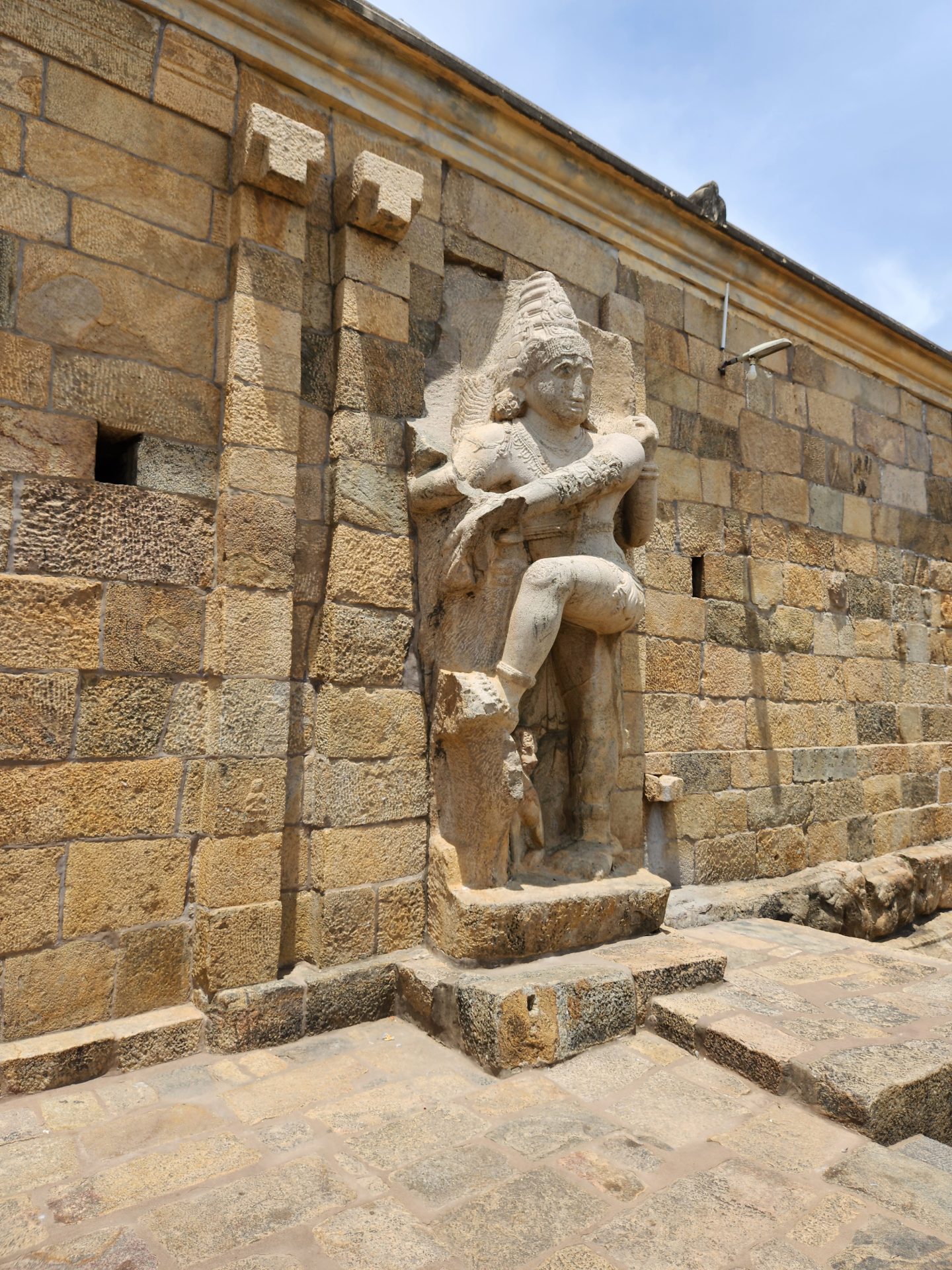
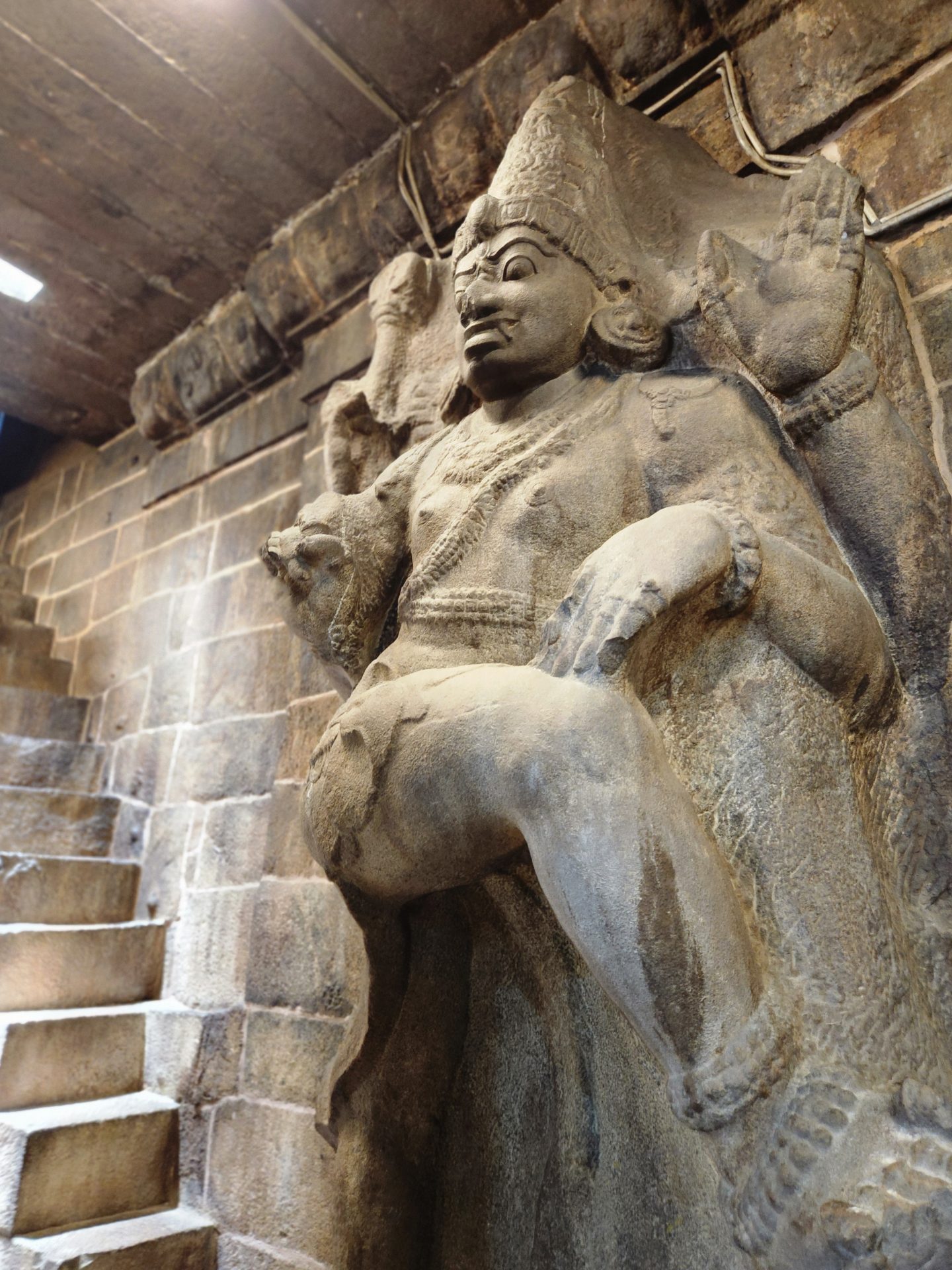
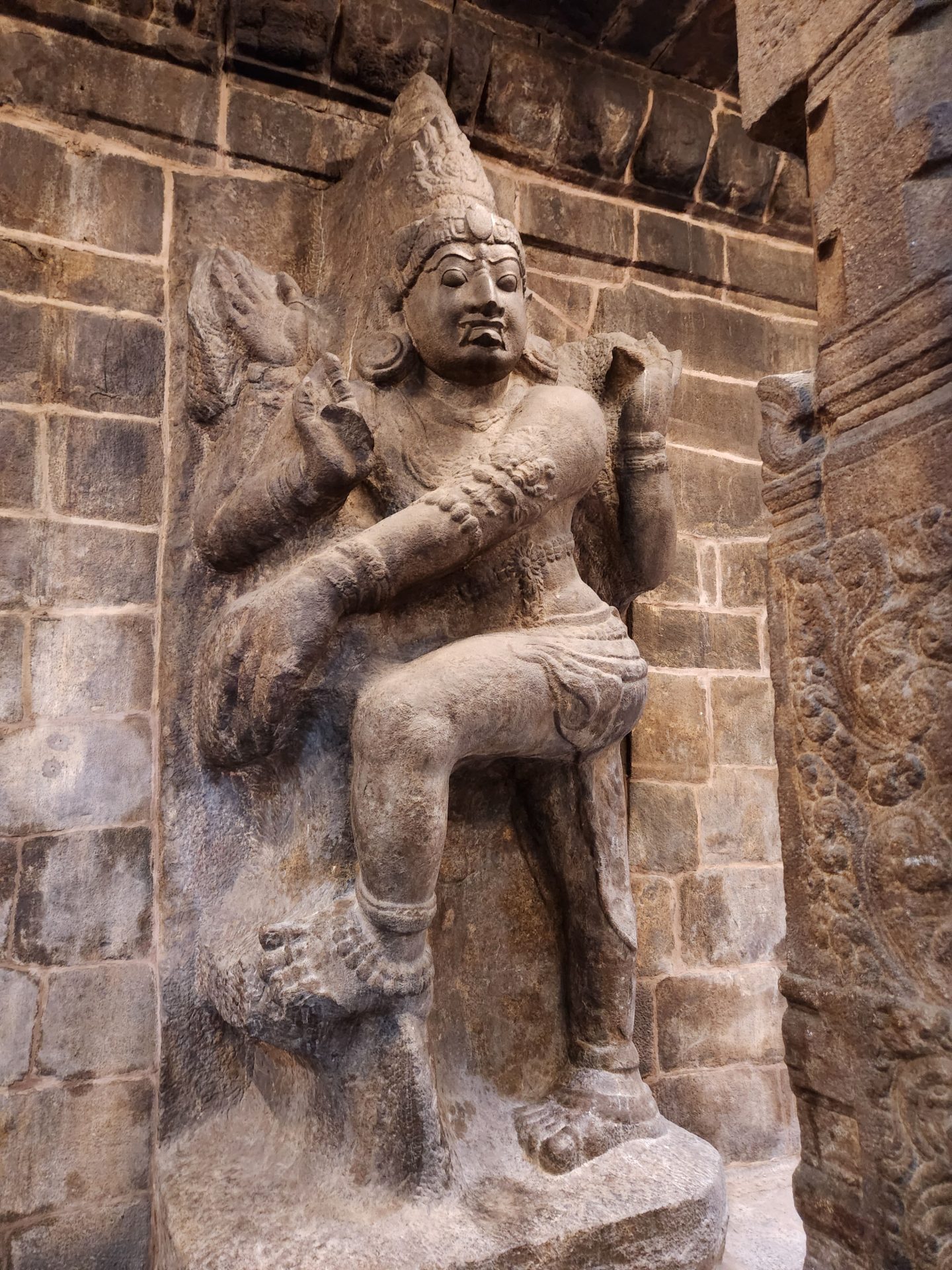
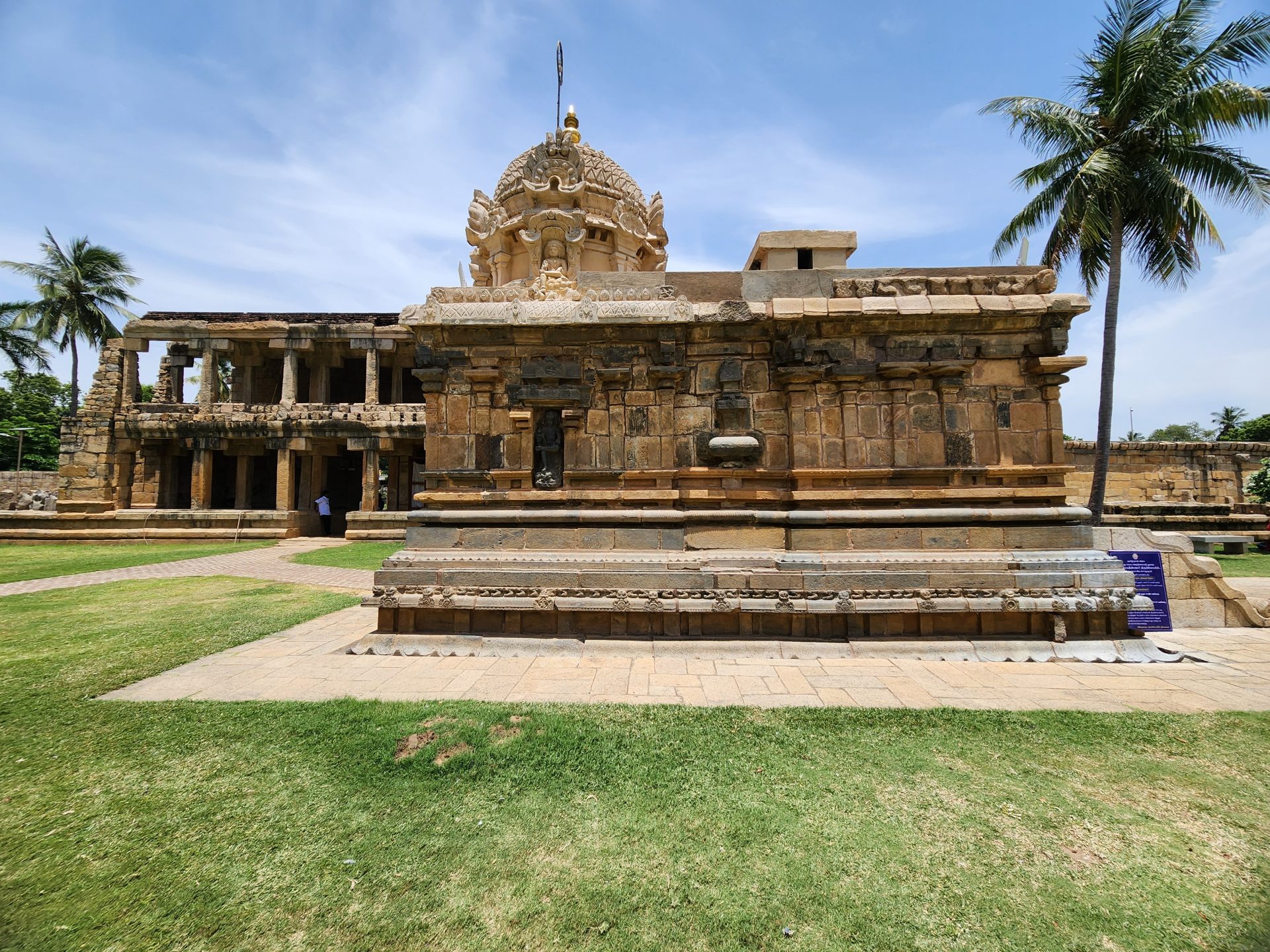
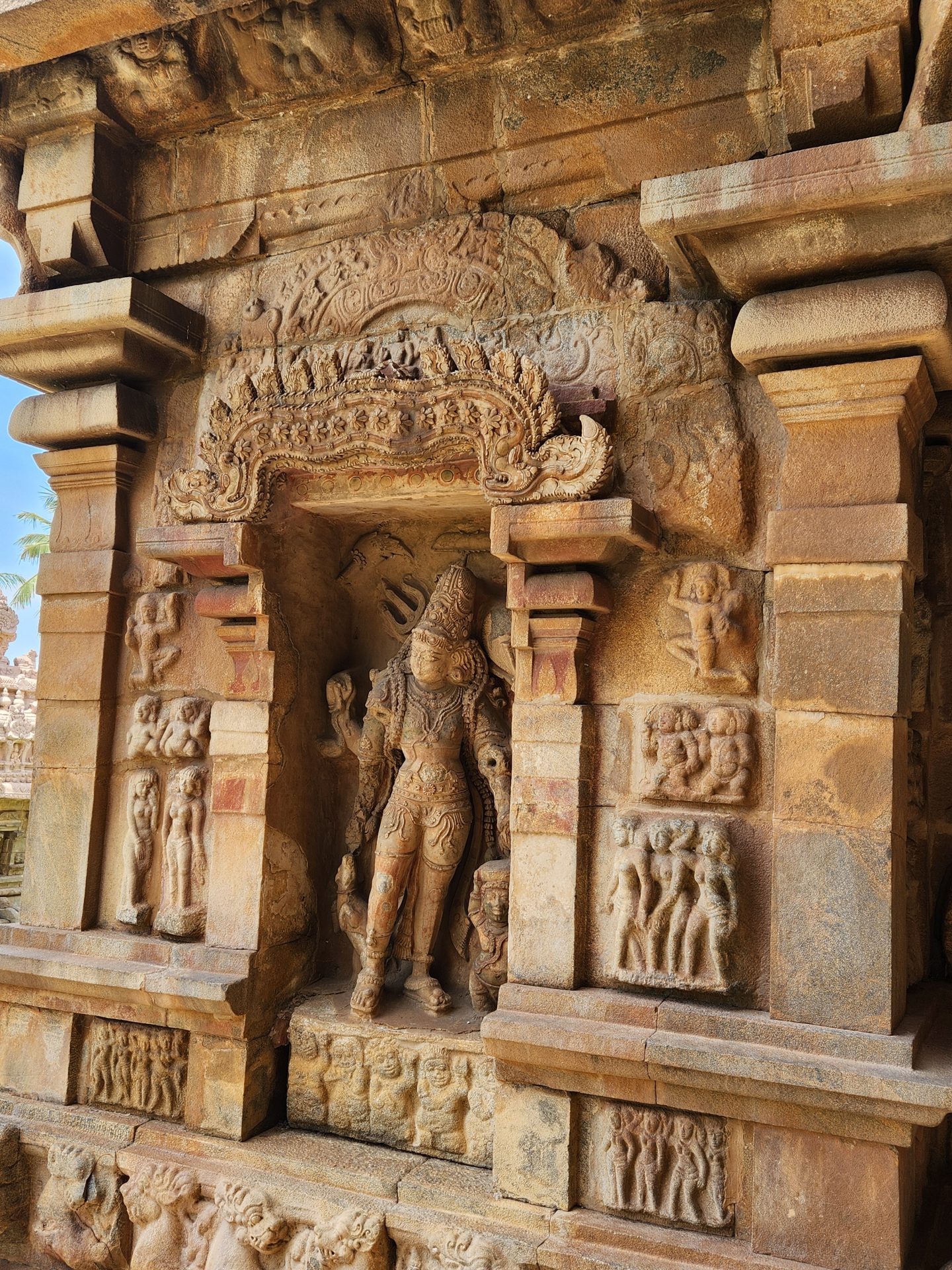
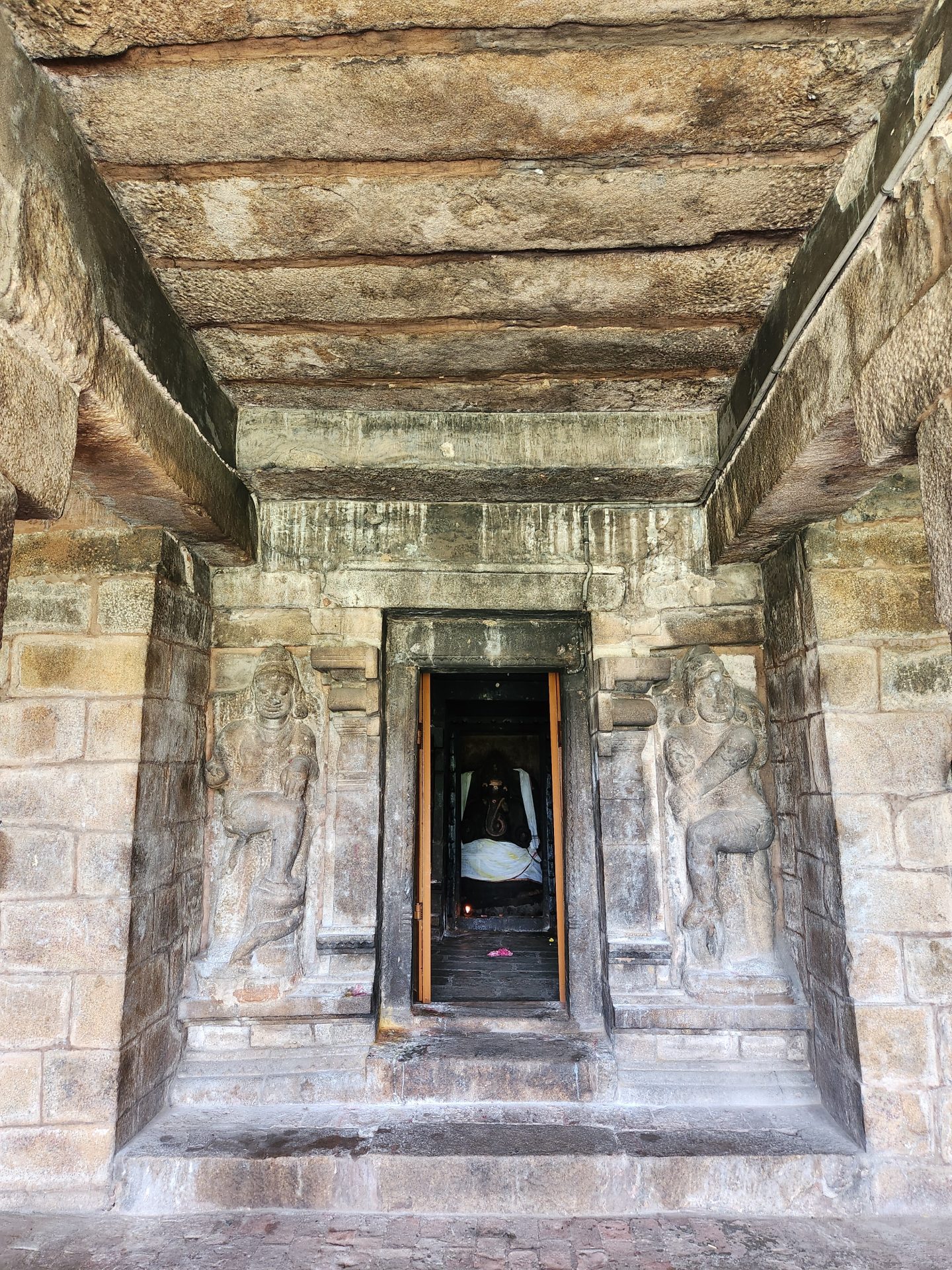
The main temple though dedicated to Lord Shiva displays other Hindu deities such as Vishnu, Durga, Surya, Harihara, Ardhanarishvara, and others. It opens to the sunrise and its sanctum, as well as the mandapas, are aligned on an east–west axis. In addition to the main shrine, the temple complex has a number of smaller shrines, gopura, and other monuments.
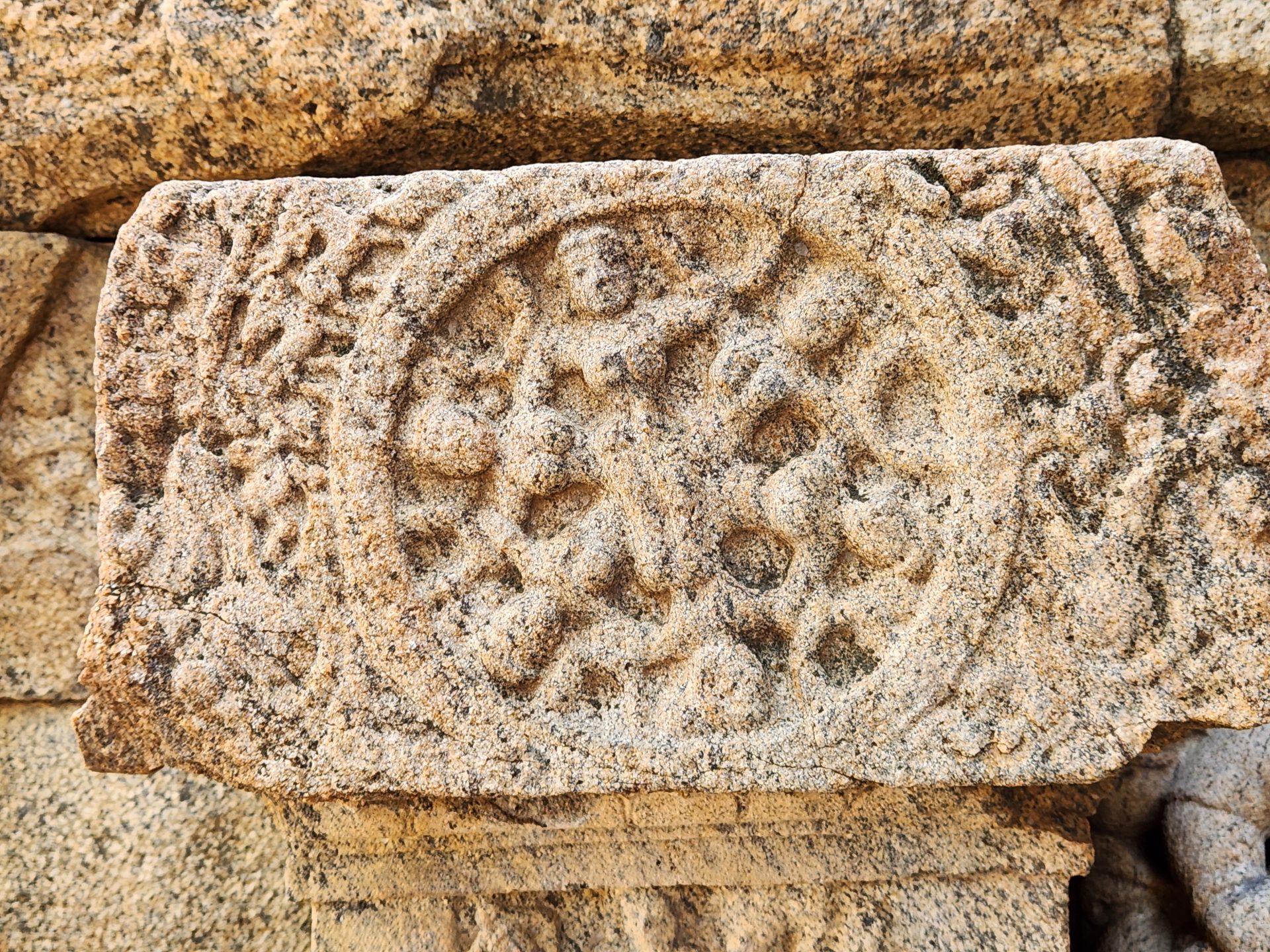
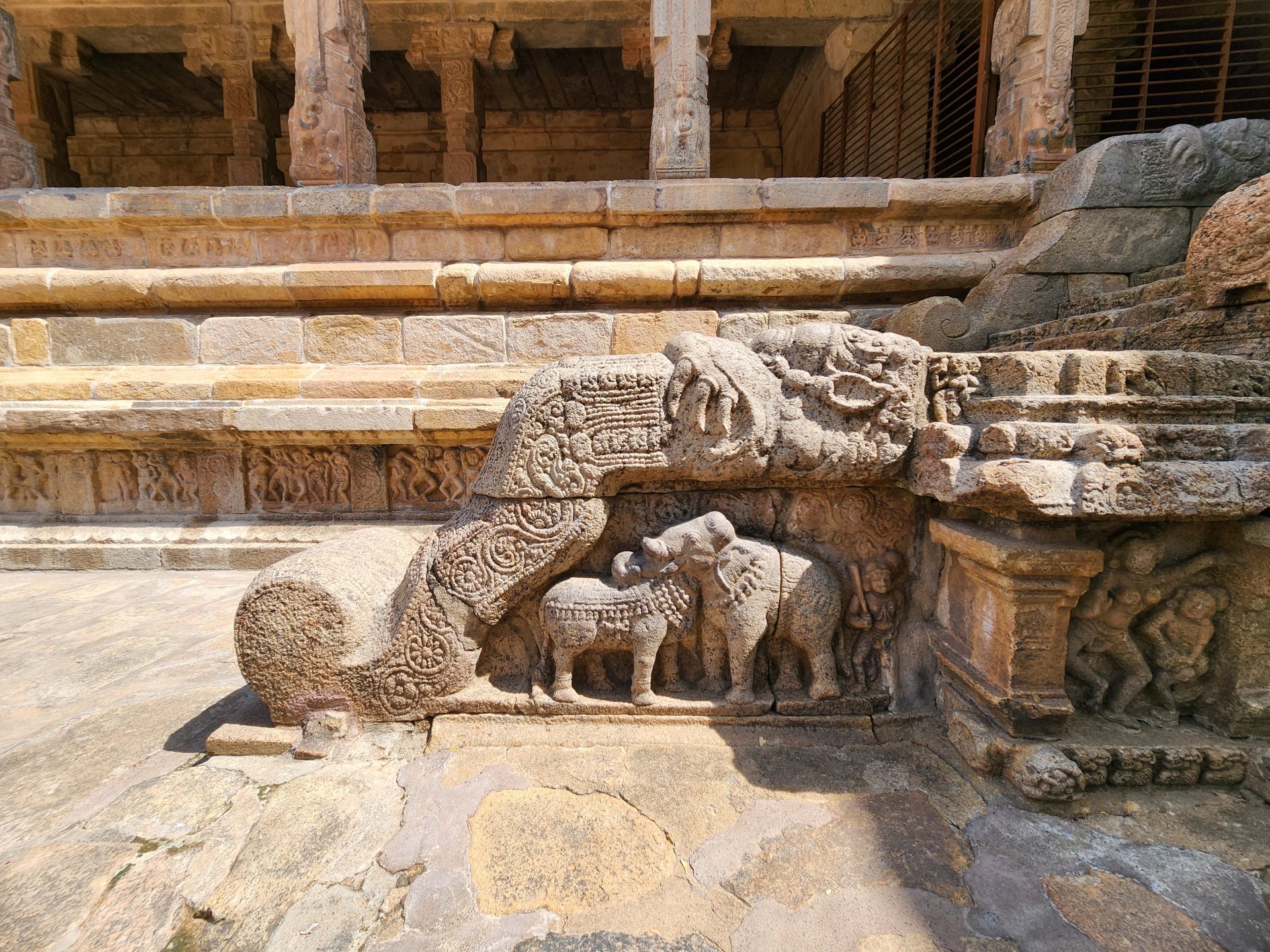
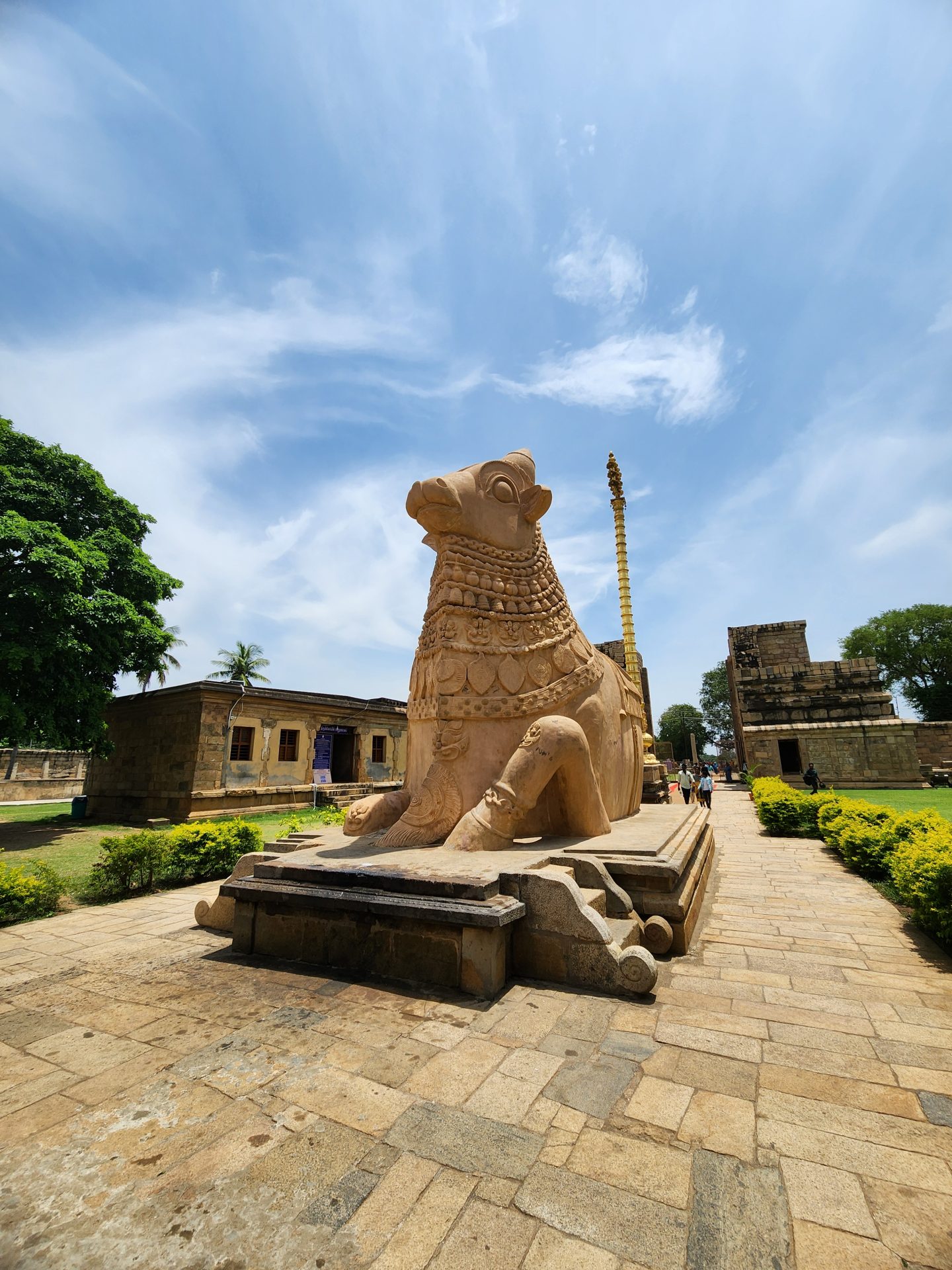
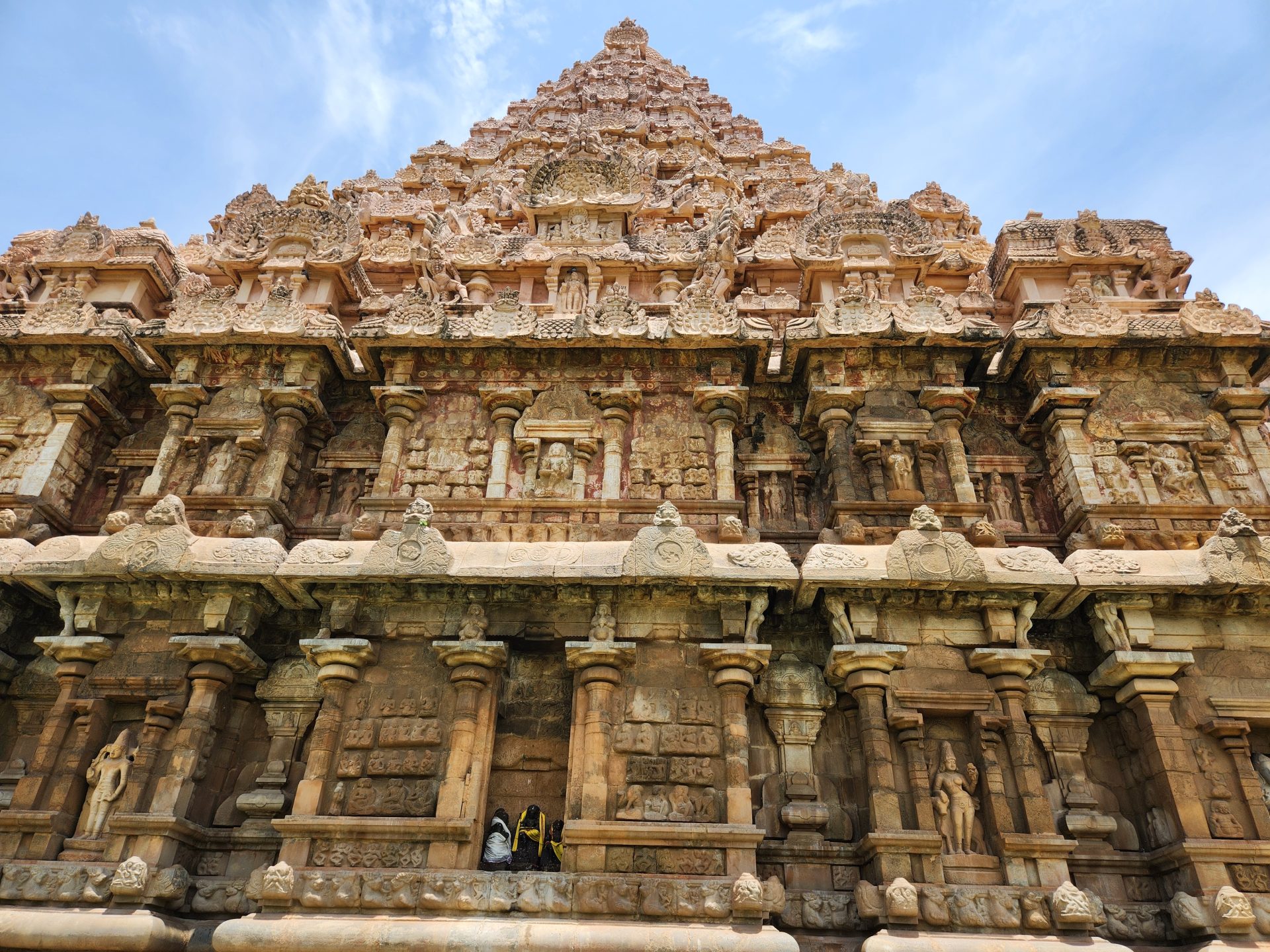
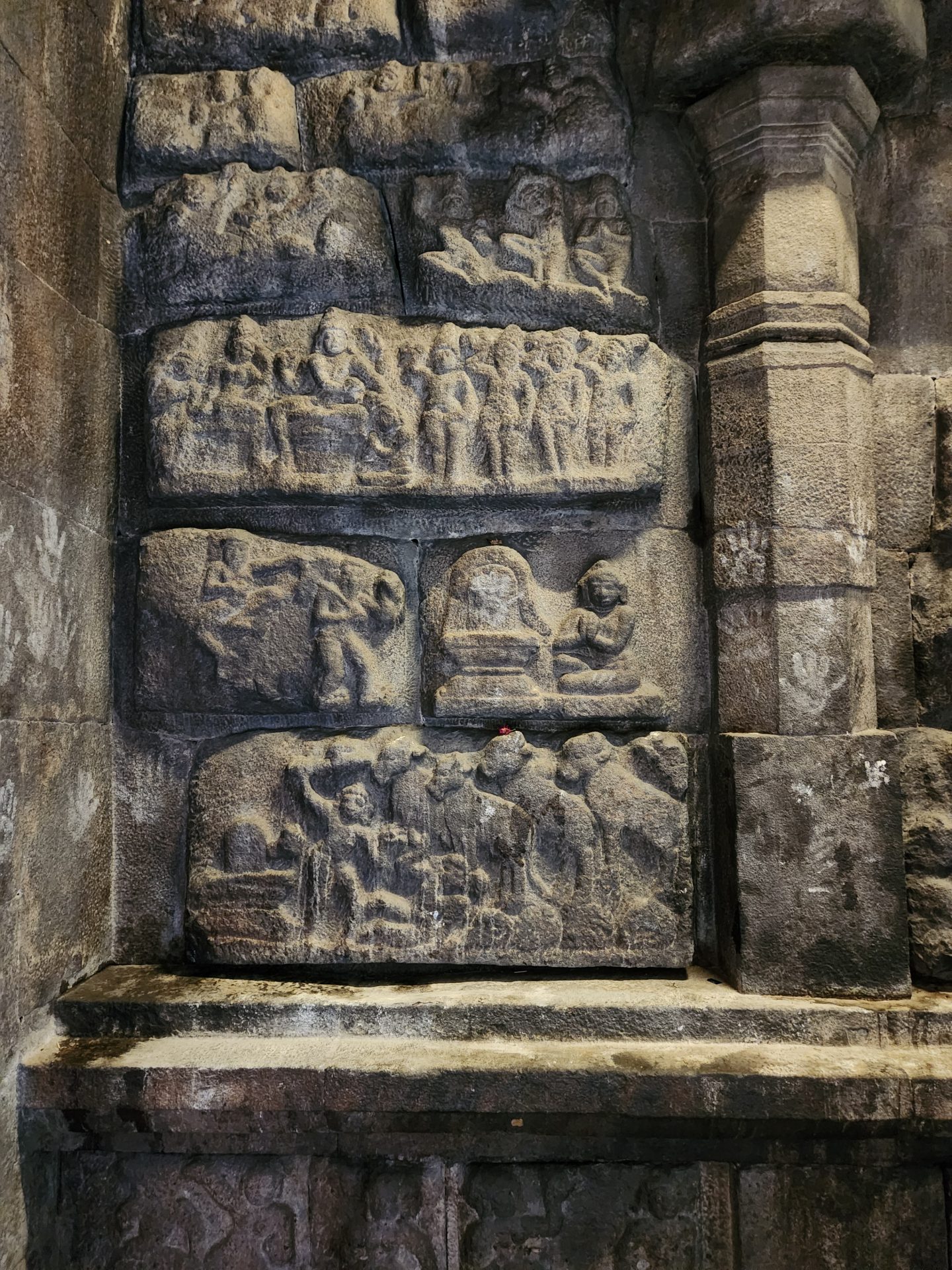
Some among these shrines are partially ruined while some have been restored in later centuries. The temple is famed for its bronze sculptures, artwork on its walls, the depiction of Nandi and the scale of its tower. As well as its notability for having been built by Rajendra I, the temple is also noteworthy for its numerous inscriptions, although none of them are his.
The old city of Gangaikonda Cholapuram – the capital of a powerful Asian empire from around 900 to 1215 or over three centuries along with its other major Chola-era Hindu temples have been completely destroyed, except for this temple which has also remained as an active temple.
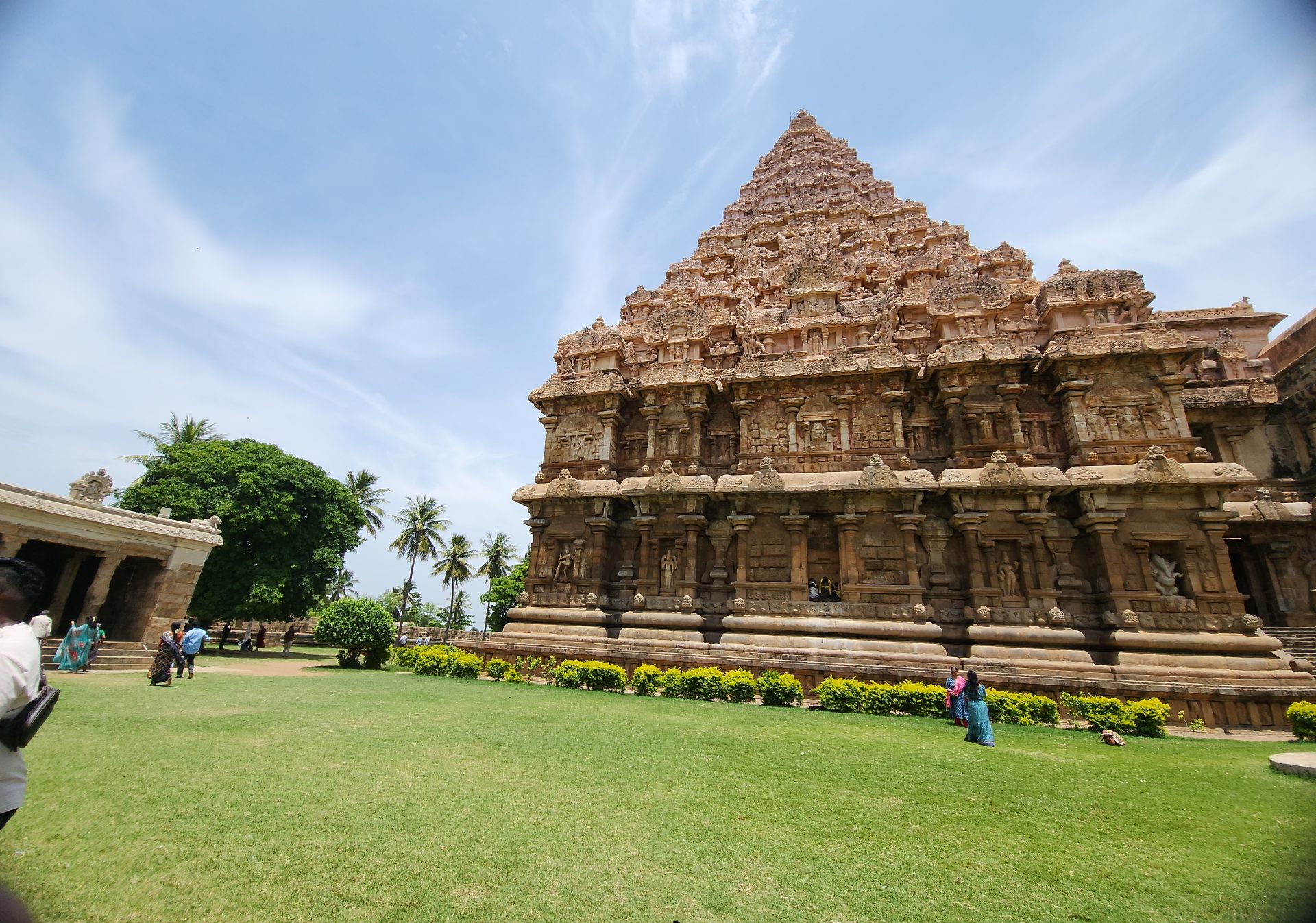
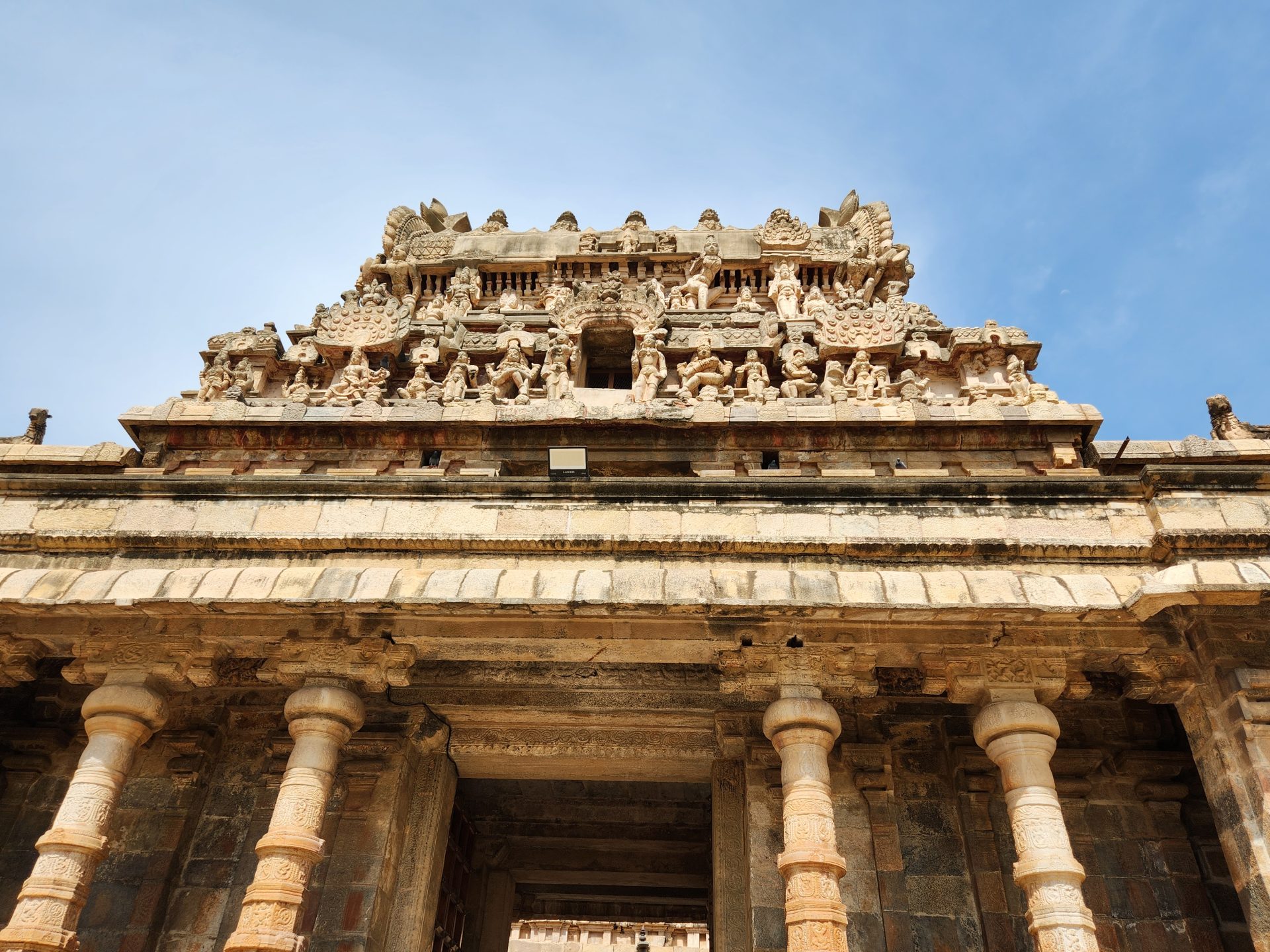
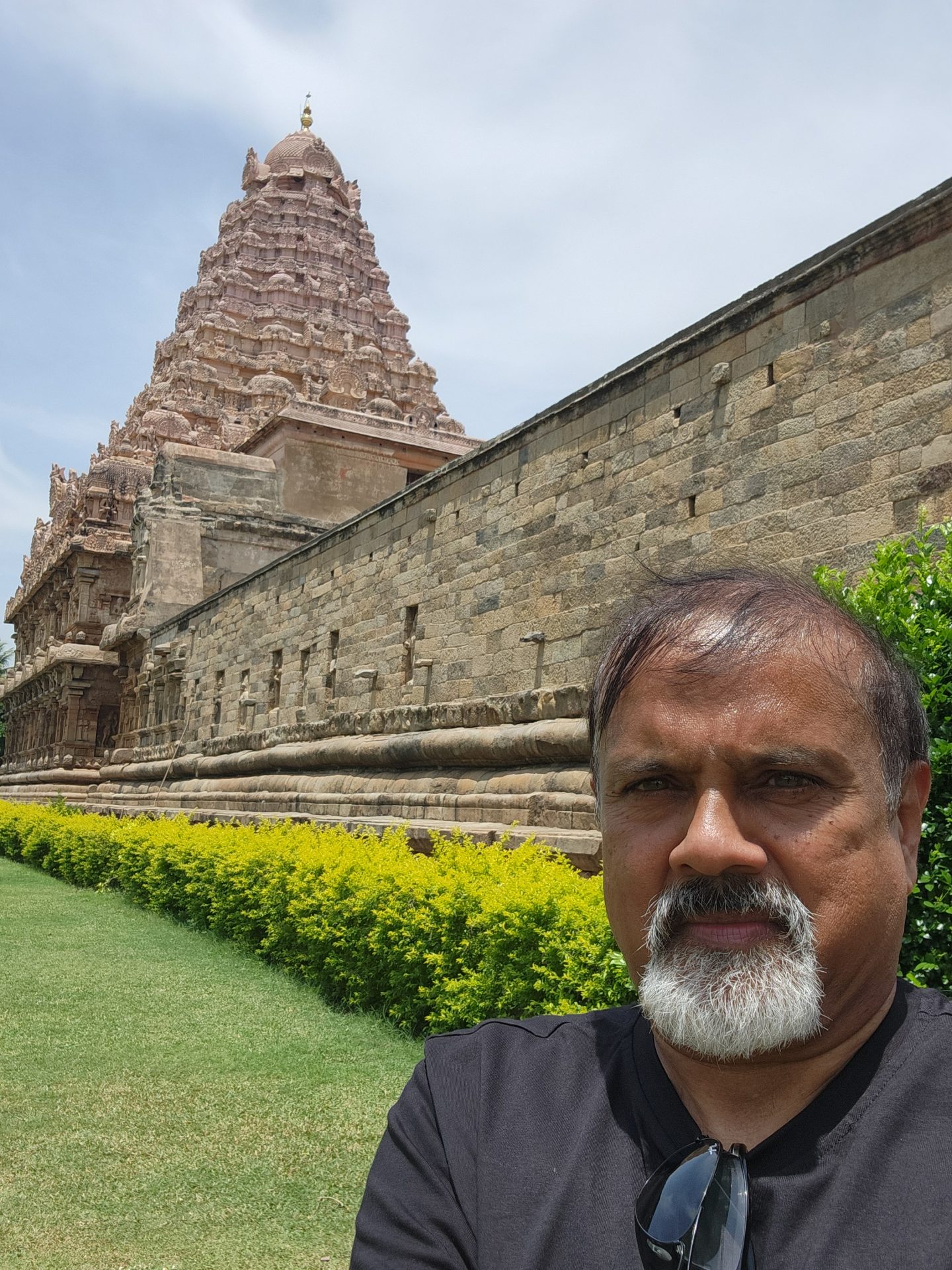
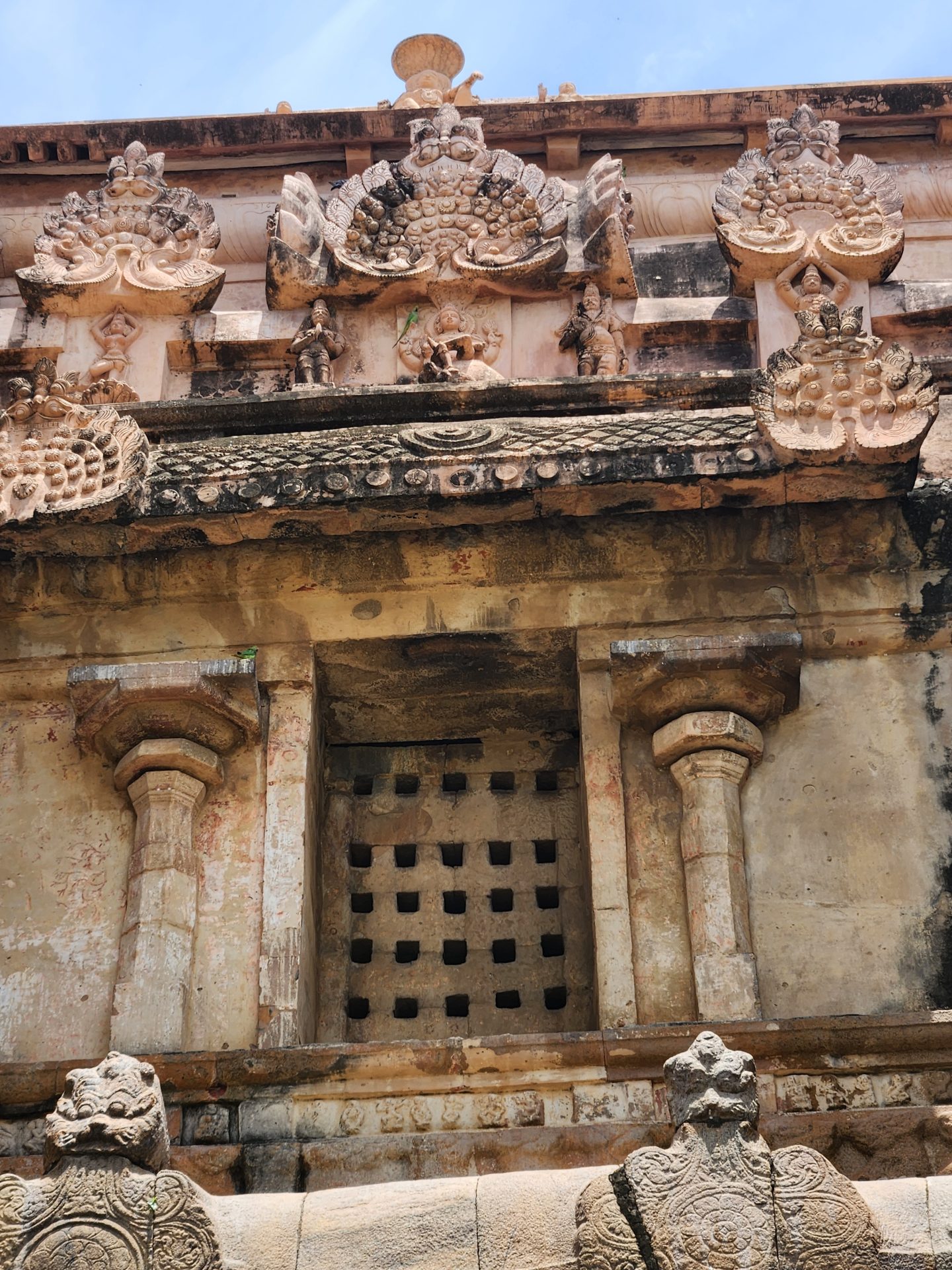
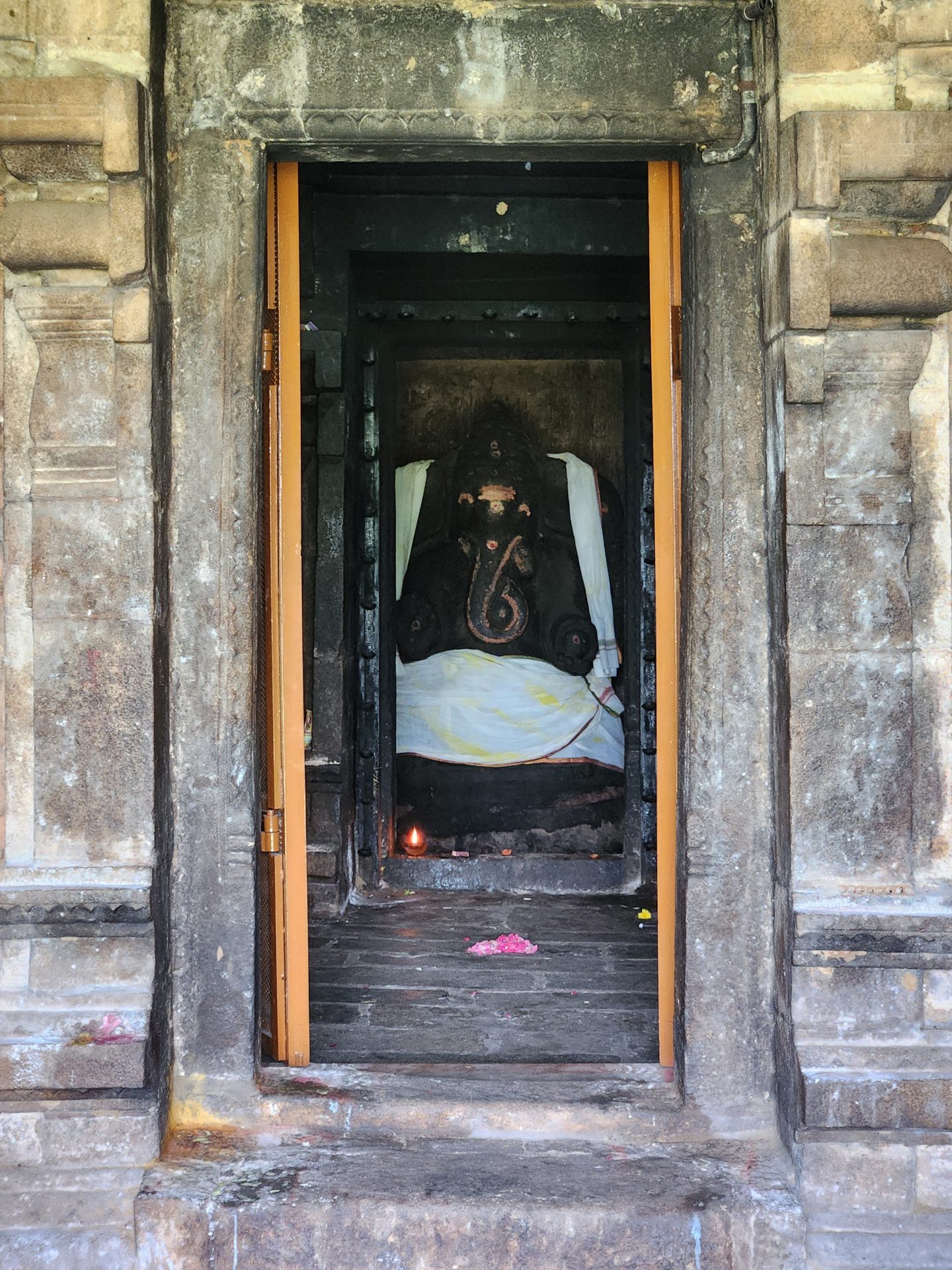
The 9 storey 55 metre tall Vimana or the temple tower traces a parabolic curve, unlike the Thanjavur temple which is pyramidal in appearance with 13 storeys and 3 metres higher. Each storey has a square-circle-oblong artwork. The upper levels repeat the lower level design in a rhythmic shrinking pattern. The symmetry principles are dutifully embedded in, but the rate of shrinking is not linear with height. One also gets to see the Ganesha shrine within the main Shiva temple. The sanctum contains Brihadeeswarar (Shiva) in the form of a 4 feet tall lingam with a circumference of 18 m.
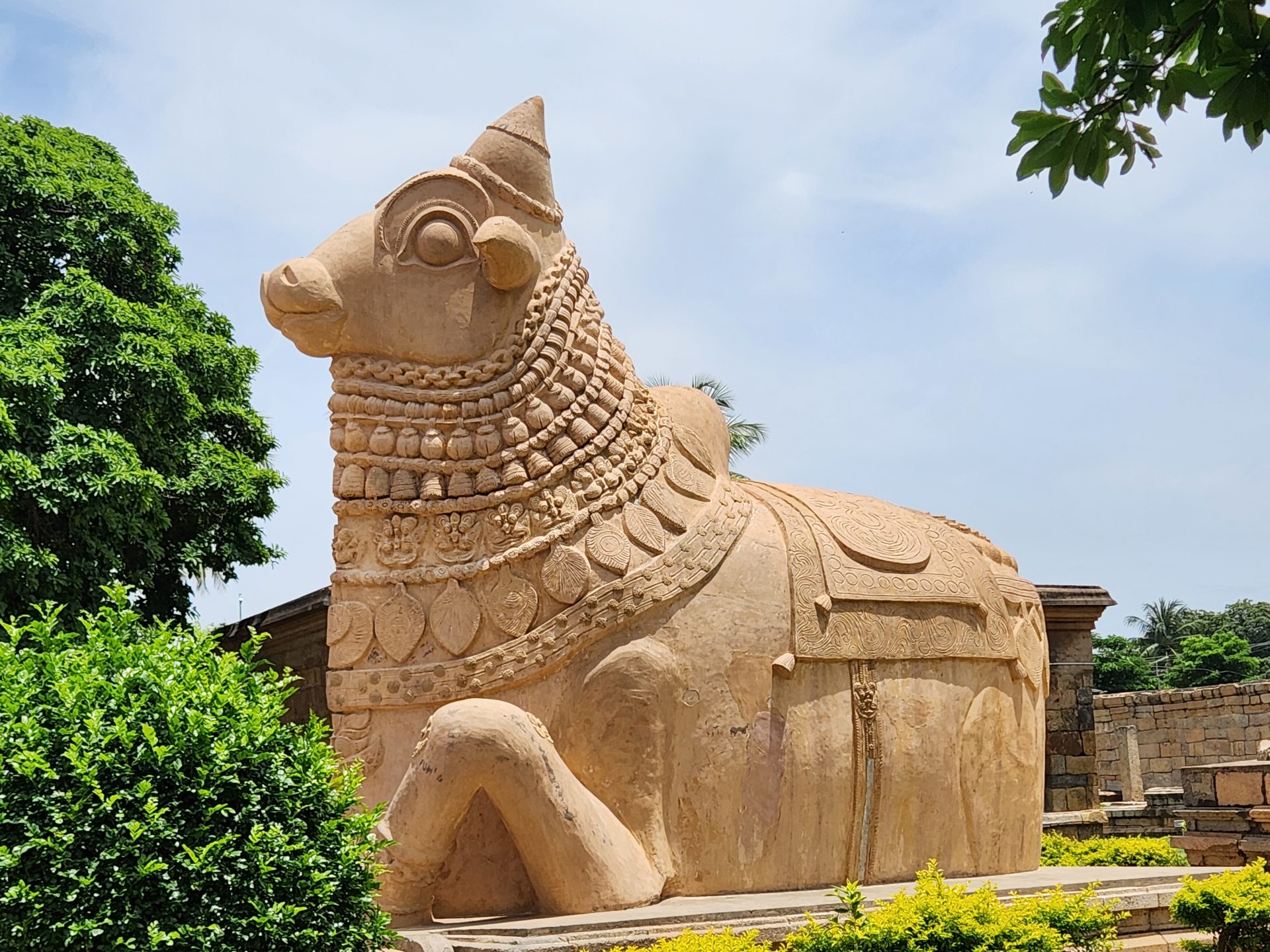
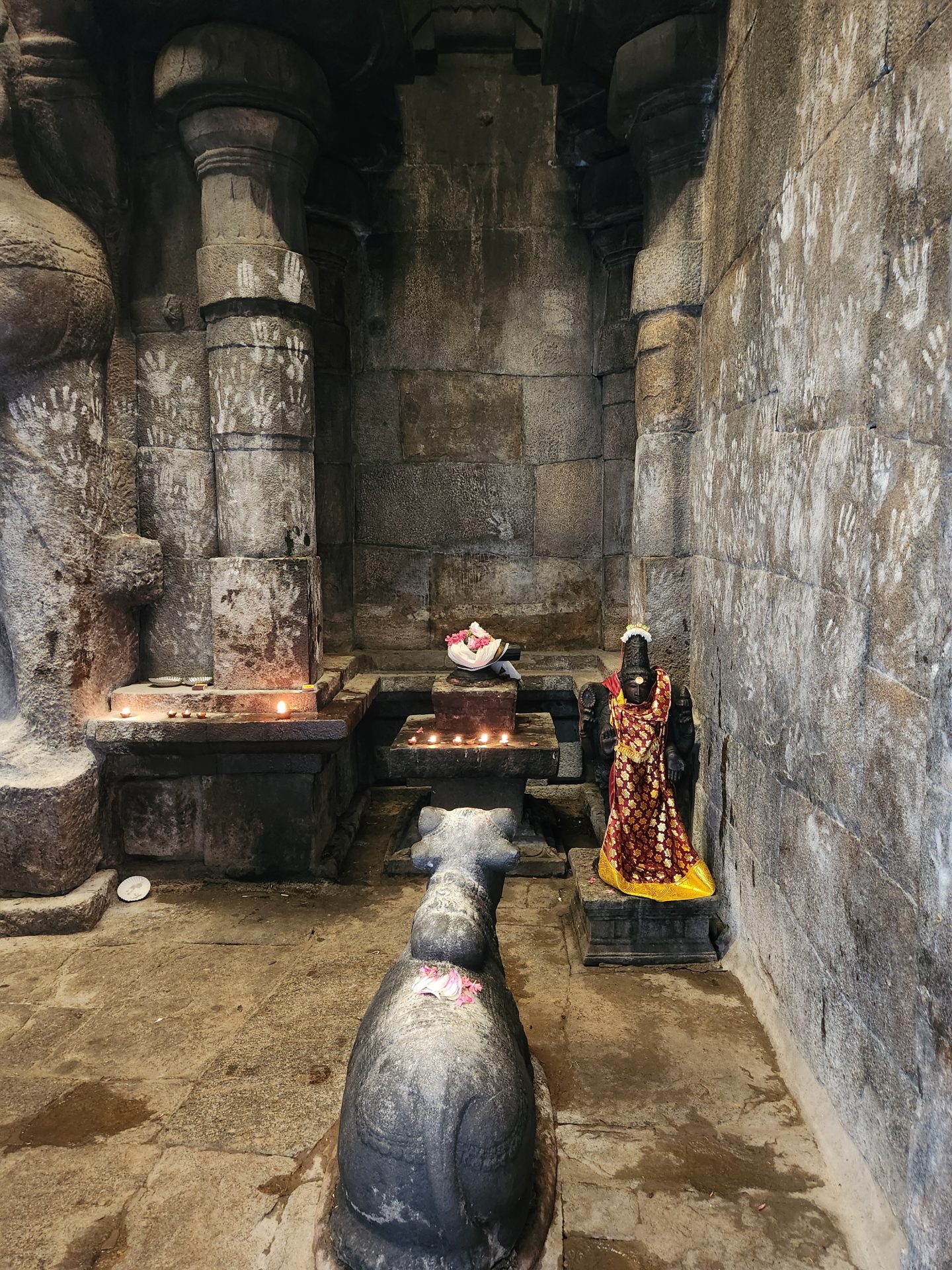
There is an image of a seated Nandi bull in the courtyard, aligned axially and facing the sanctum. There are five shrines around the sanctum and a Lion well, which was added during the 19th century. The temple site has a monolithic representation of Navagrahas, the nine planetary deities. Historians believe that the height of the temple is deliberately kept low in dimensions compared to the Thanjavur temple as a mark of respect of Rajendra to his father’s masterpiece. Compared to the Thanjavur Temple, which has straight contours, this temple has a curvilinear contour, slightly concave towards the top anddivided into eight zones.
By the time we were out of the temple complex by around 12.45 PM, the sun was beating down mercilessly and it took a few bottles of juices and buttermilk to quench our thirst before commencing our drive back to Chennai.
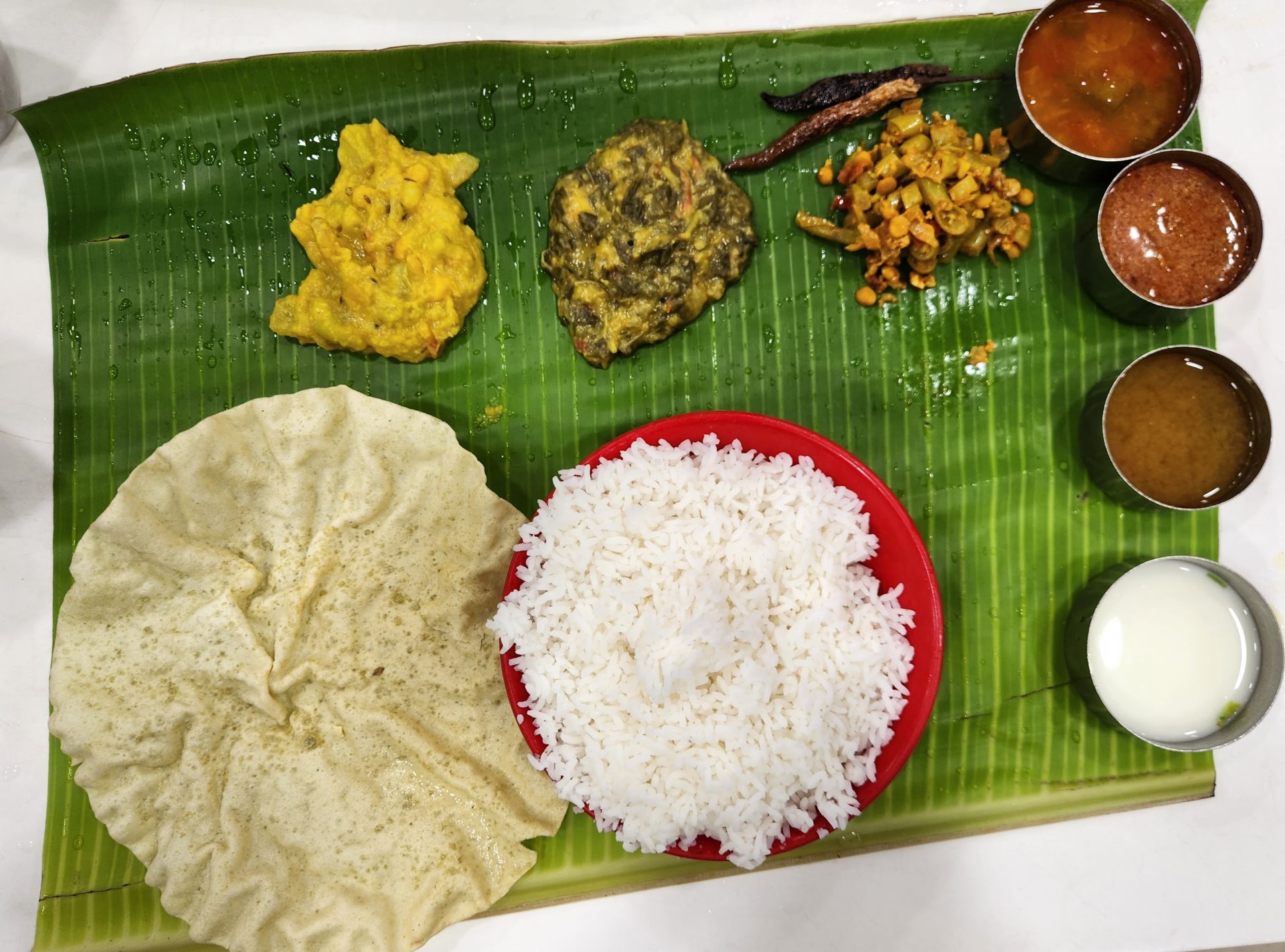
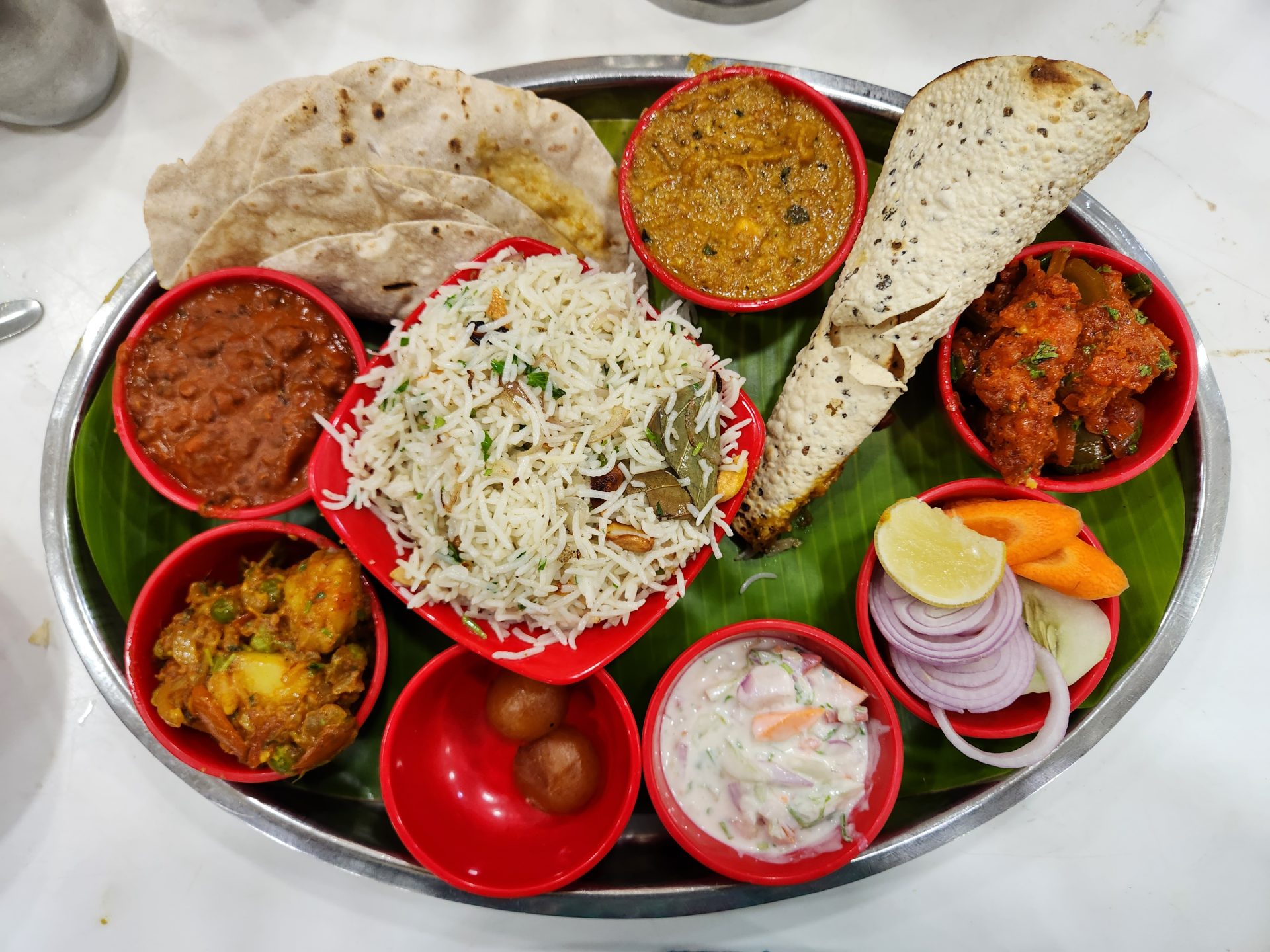
We entered the town of Neyveli and just after having crossed the office of Neyveli Lignite Corporation (NLC), we drove on for around 8 kms and reached the town of Vadalur. Lunch ensued at Krishna Bhavan around 2 PM and we started off at around 2.45 PM.
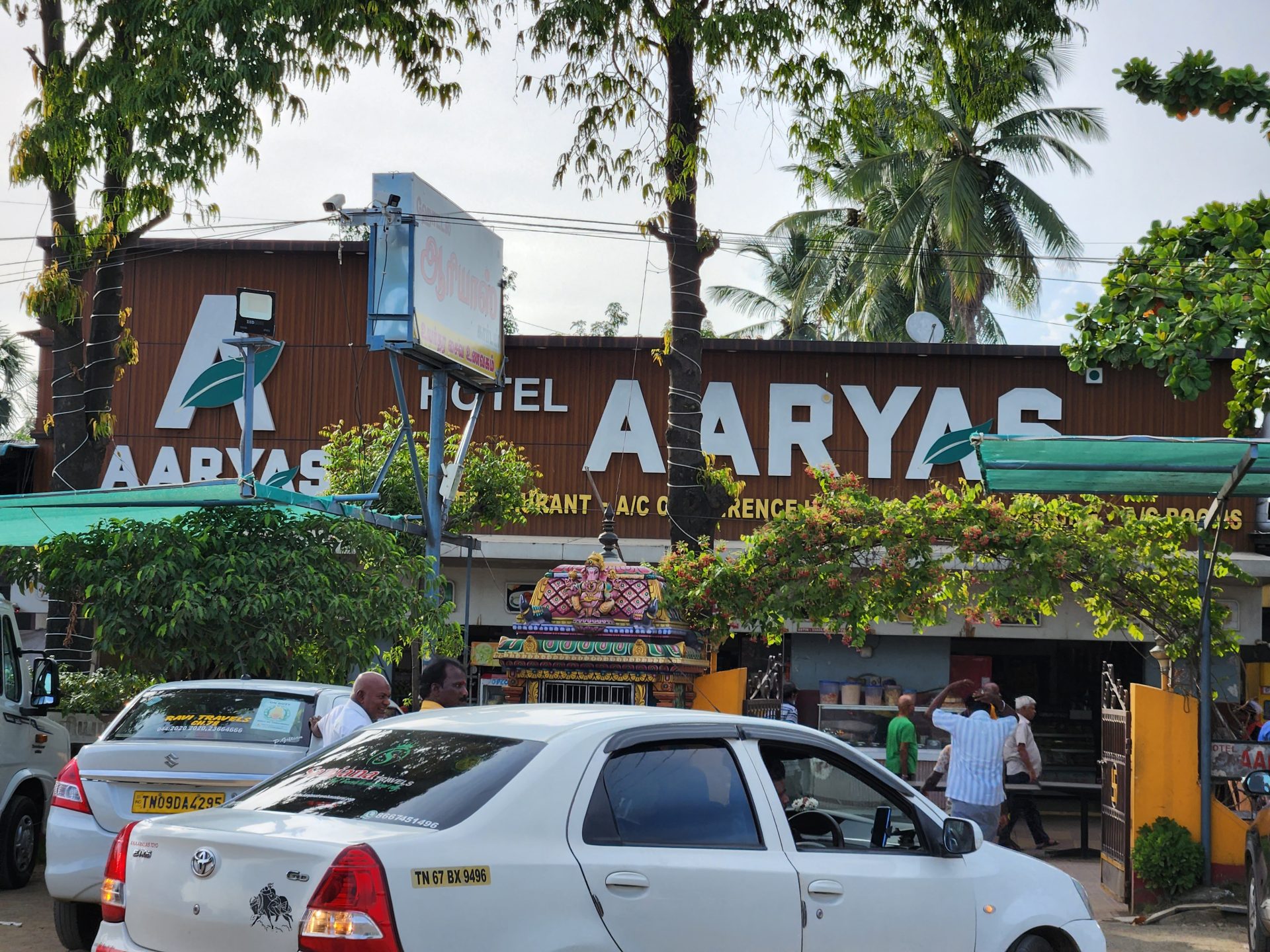
A coffee break at Aryas at 5 PM and we reached home by 19.00 hours.