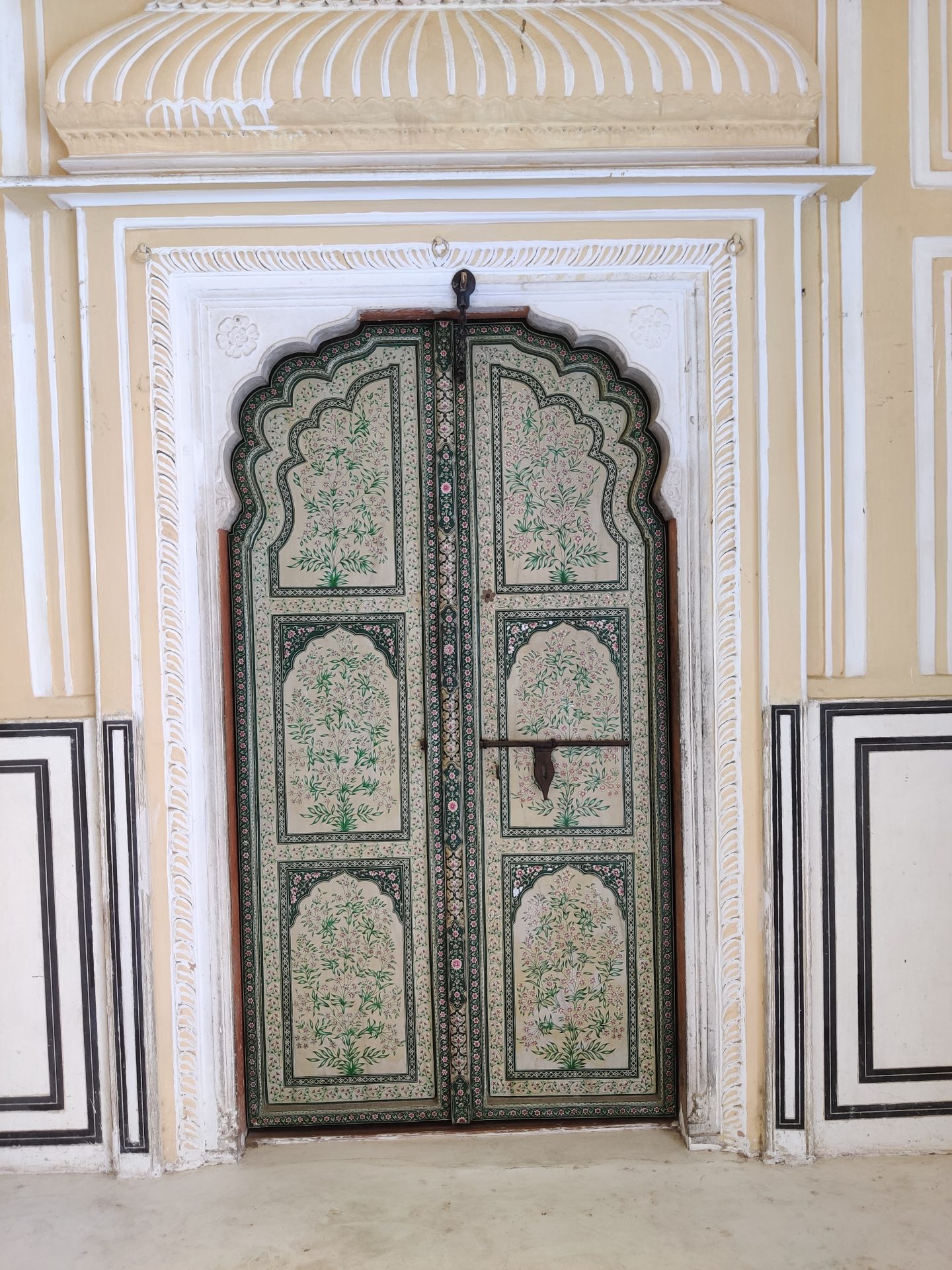
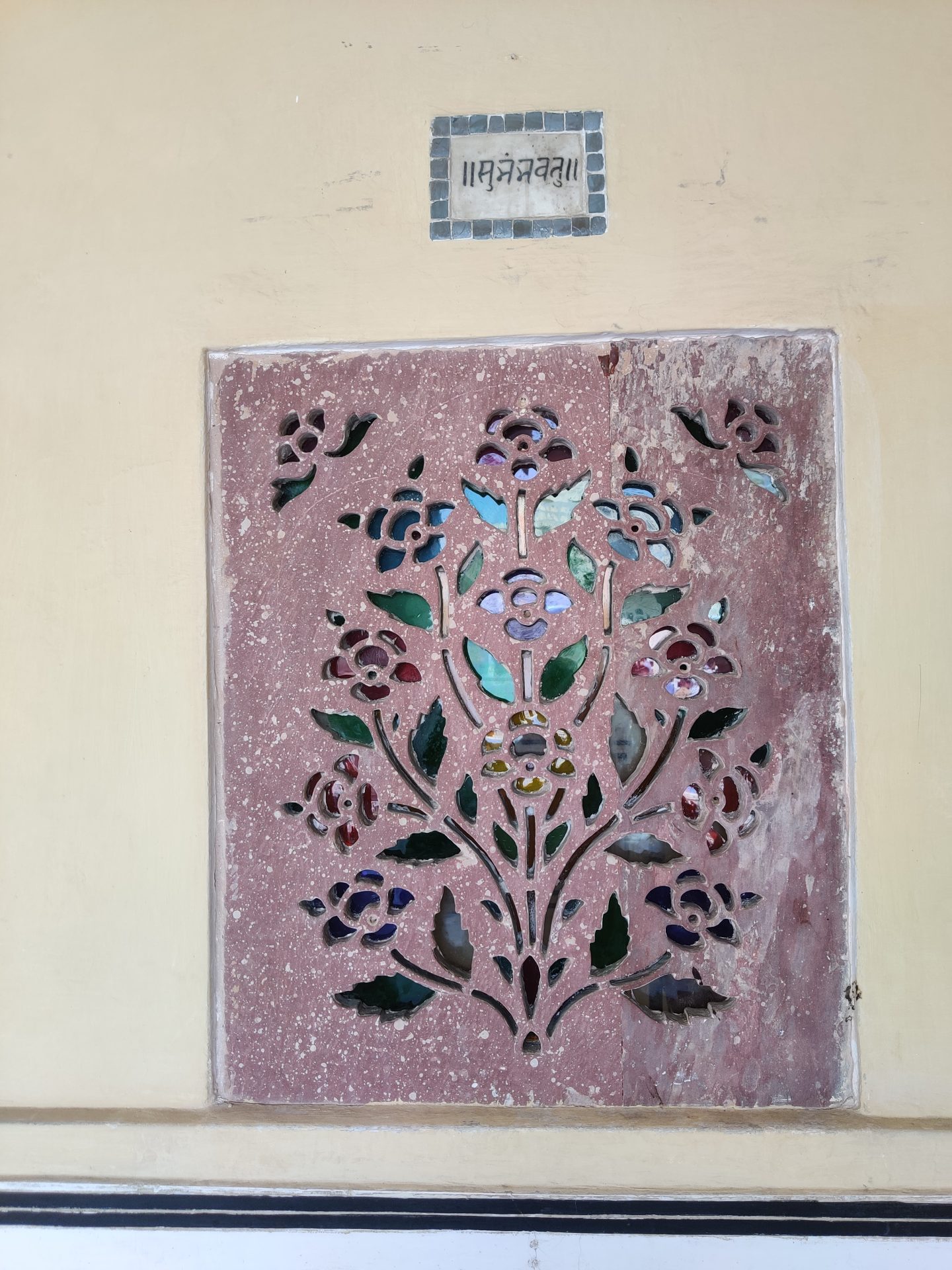
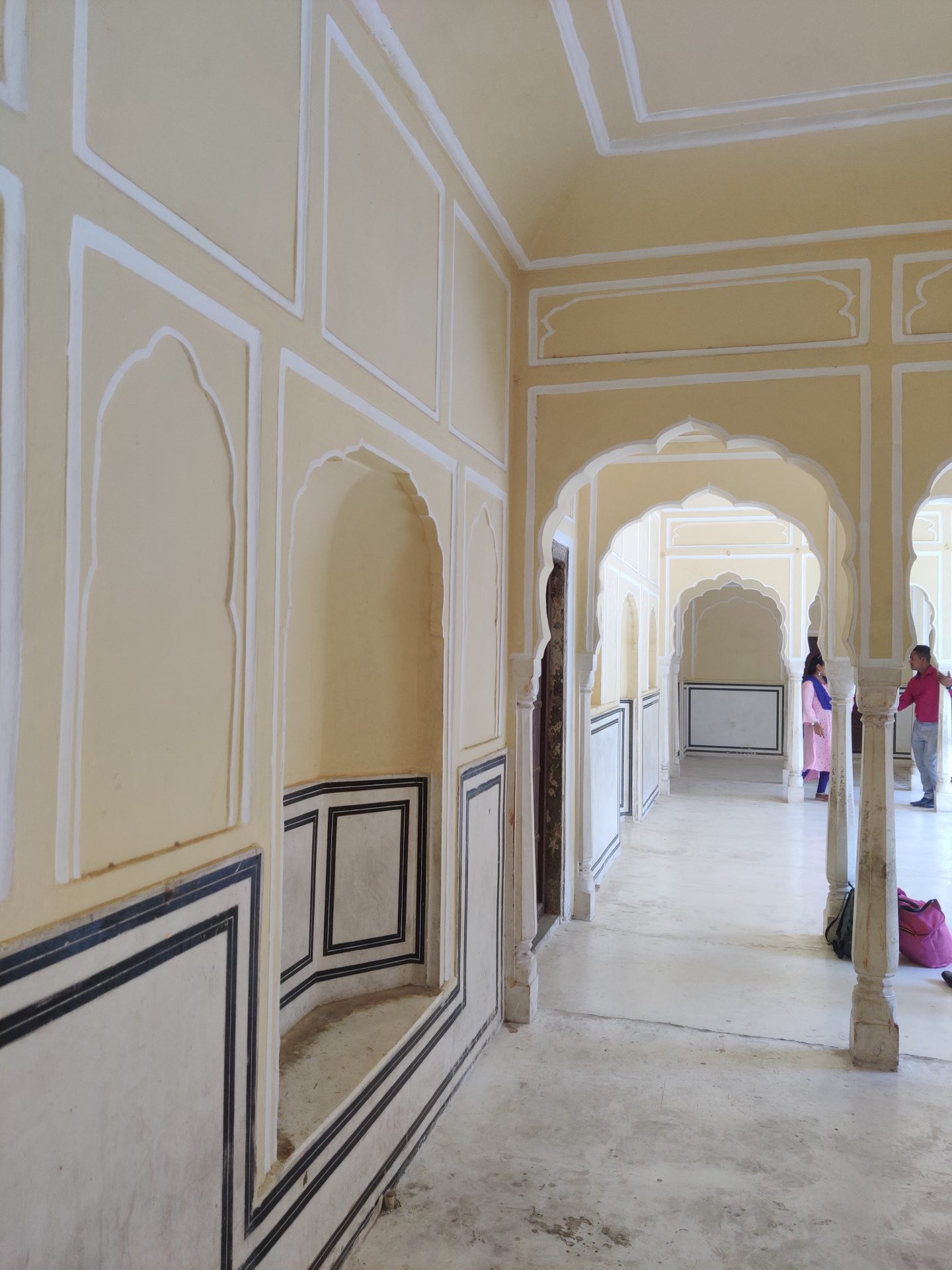
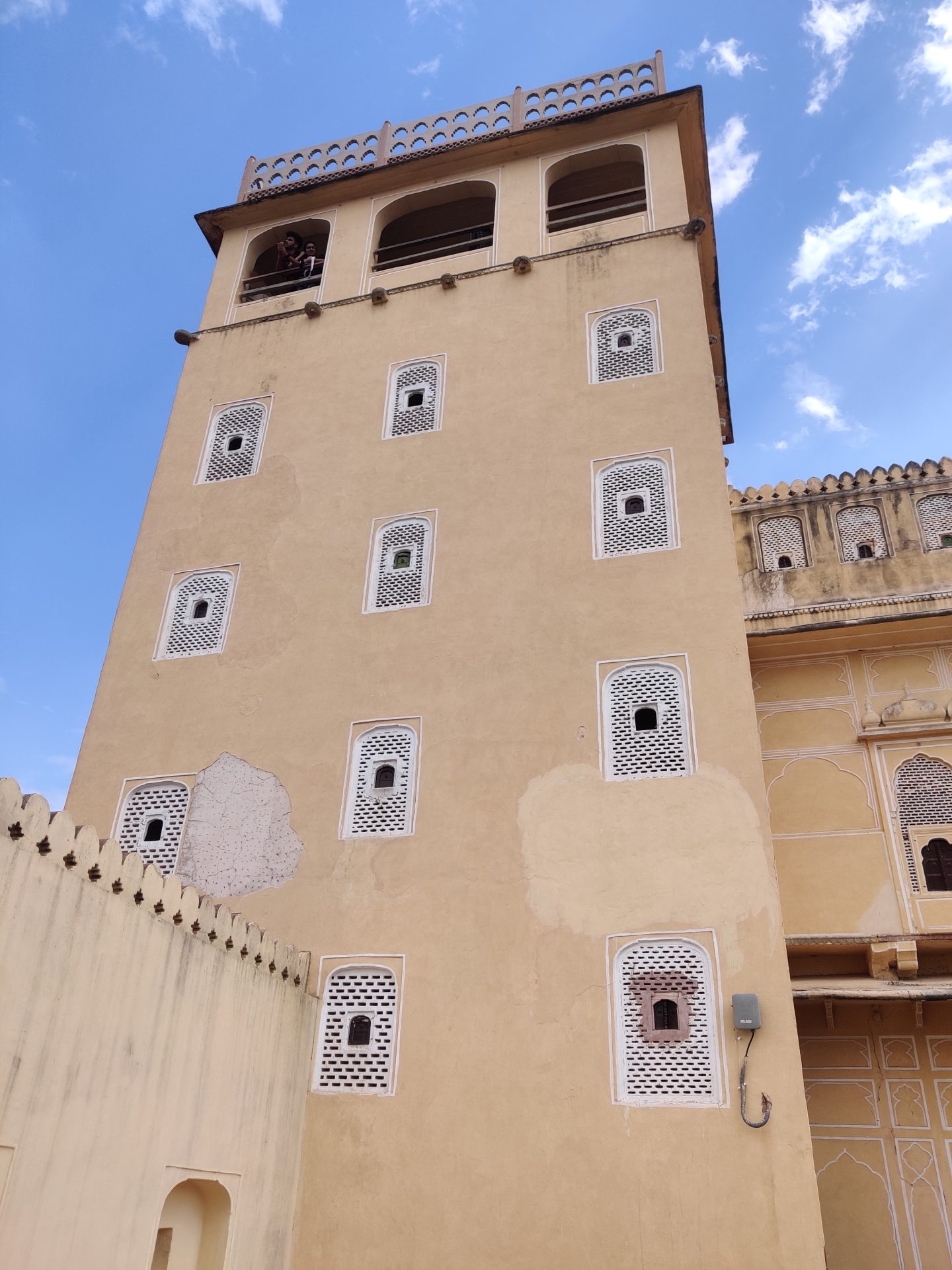
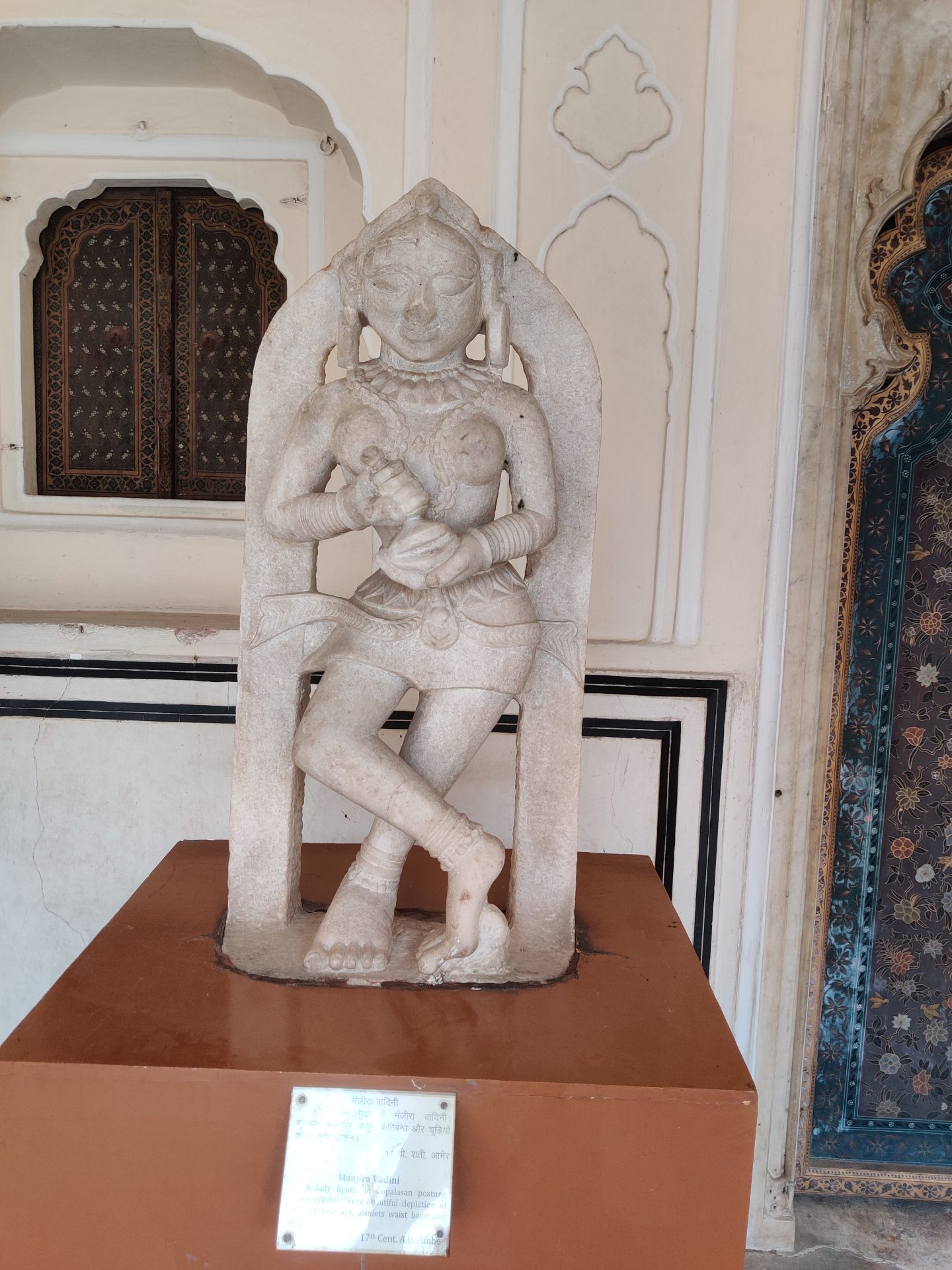
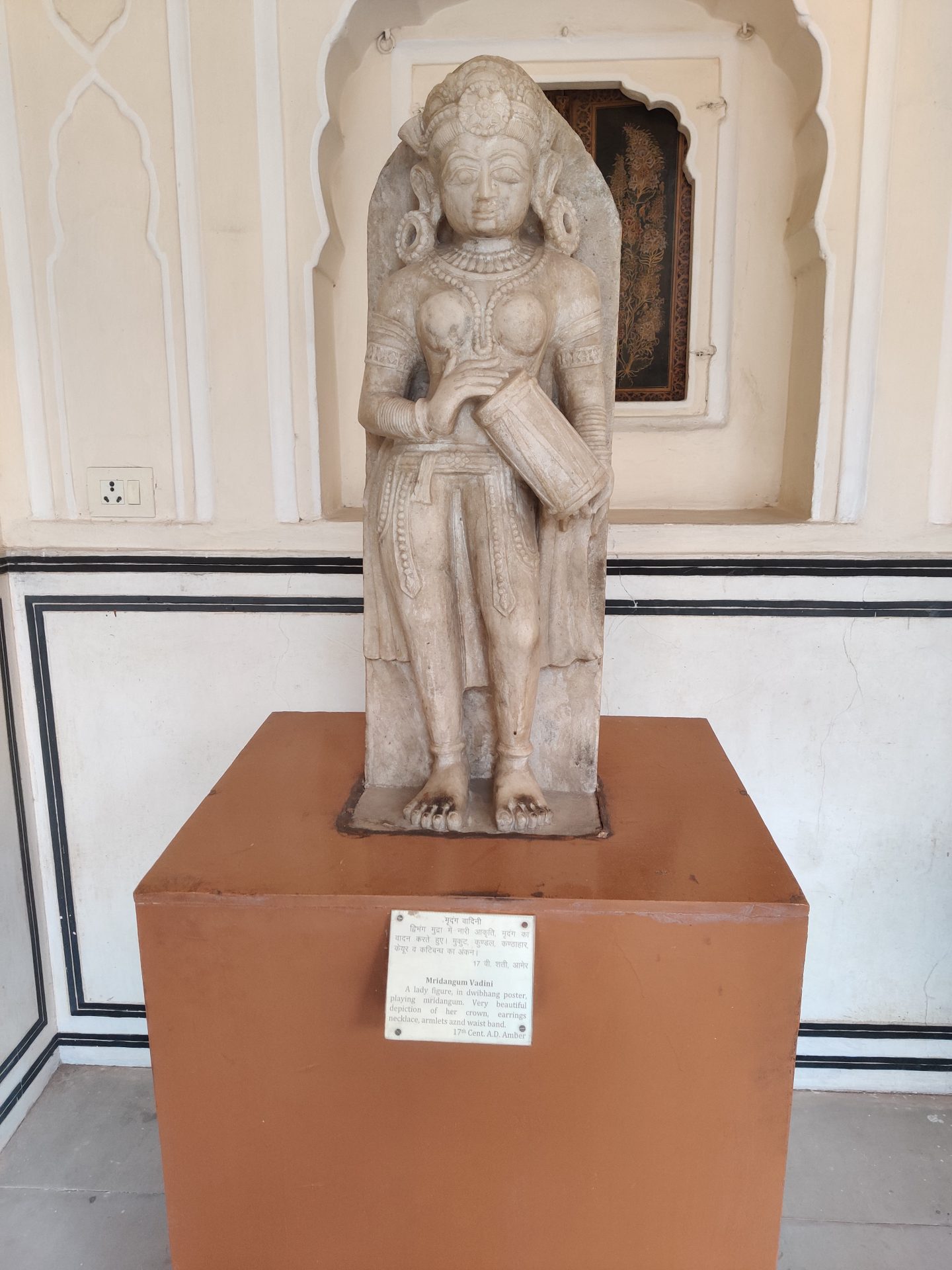
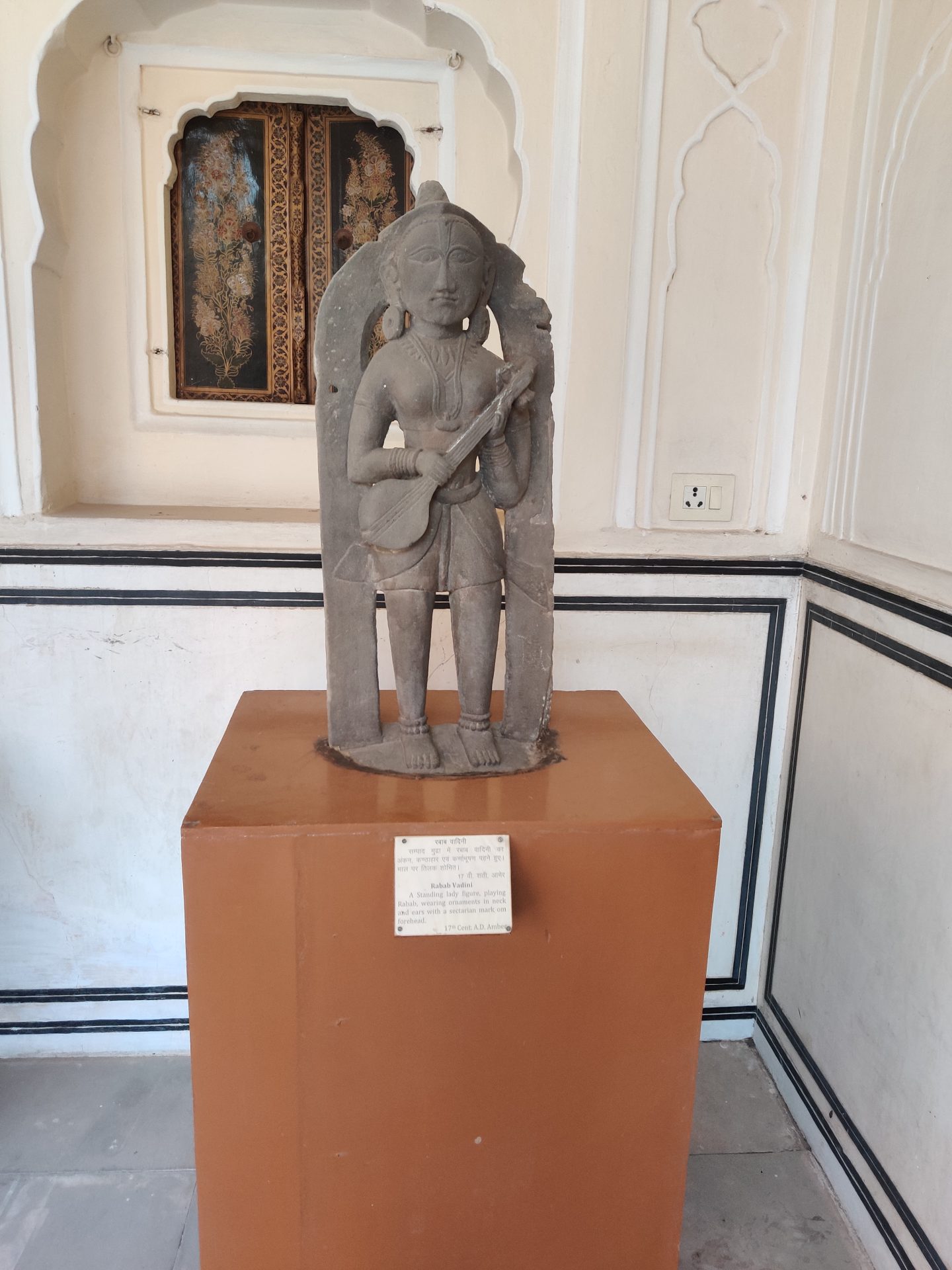
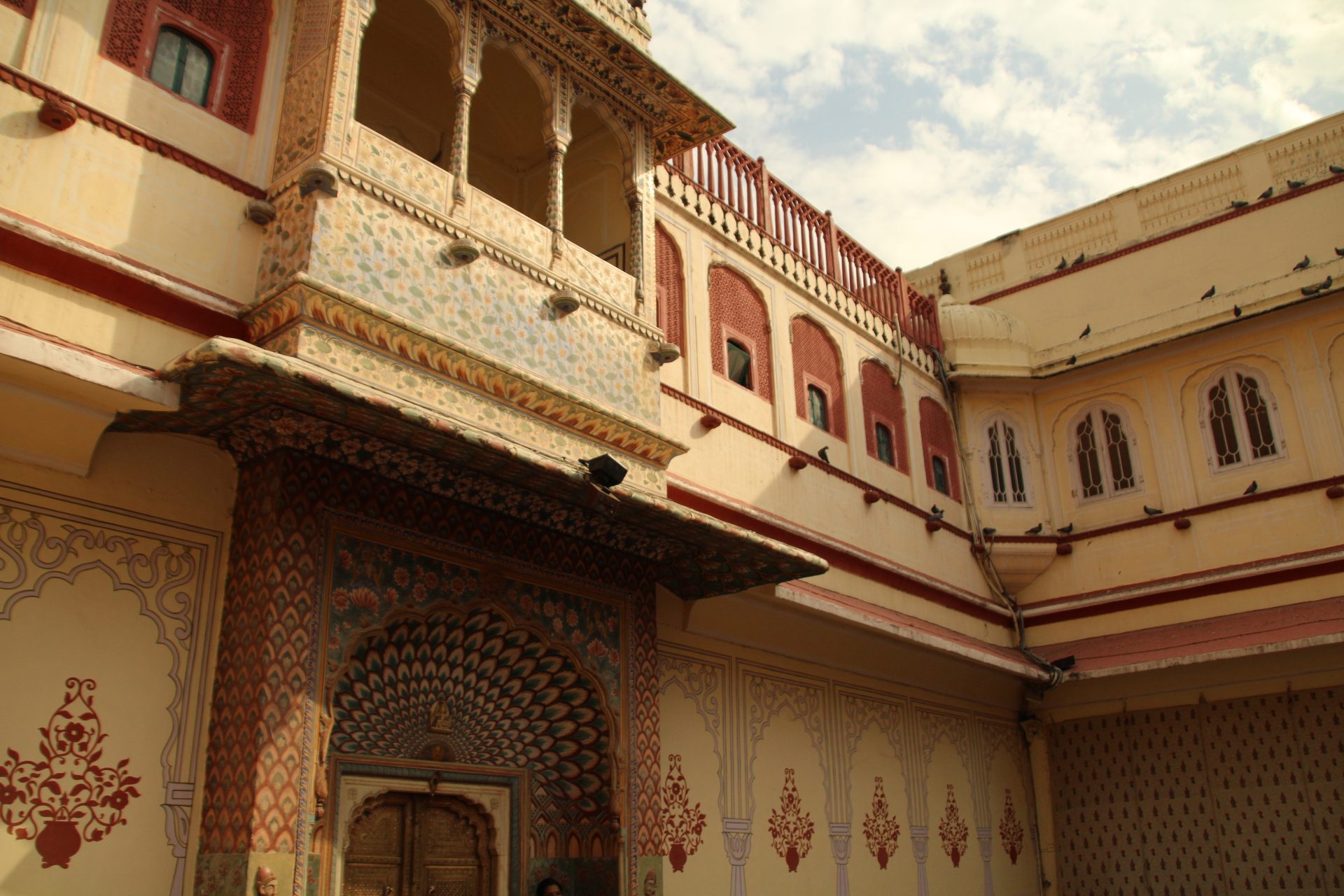
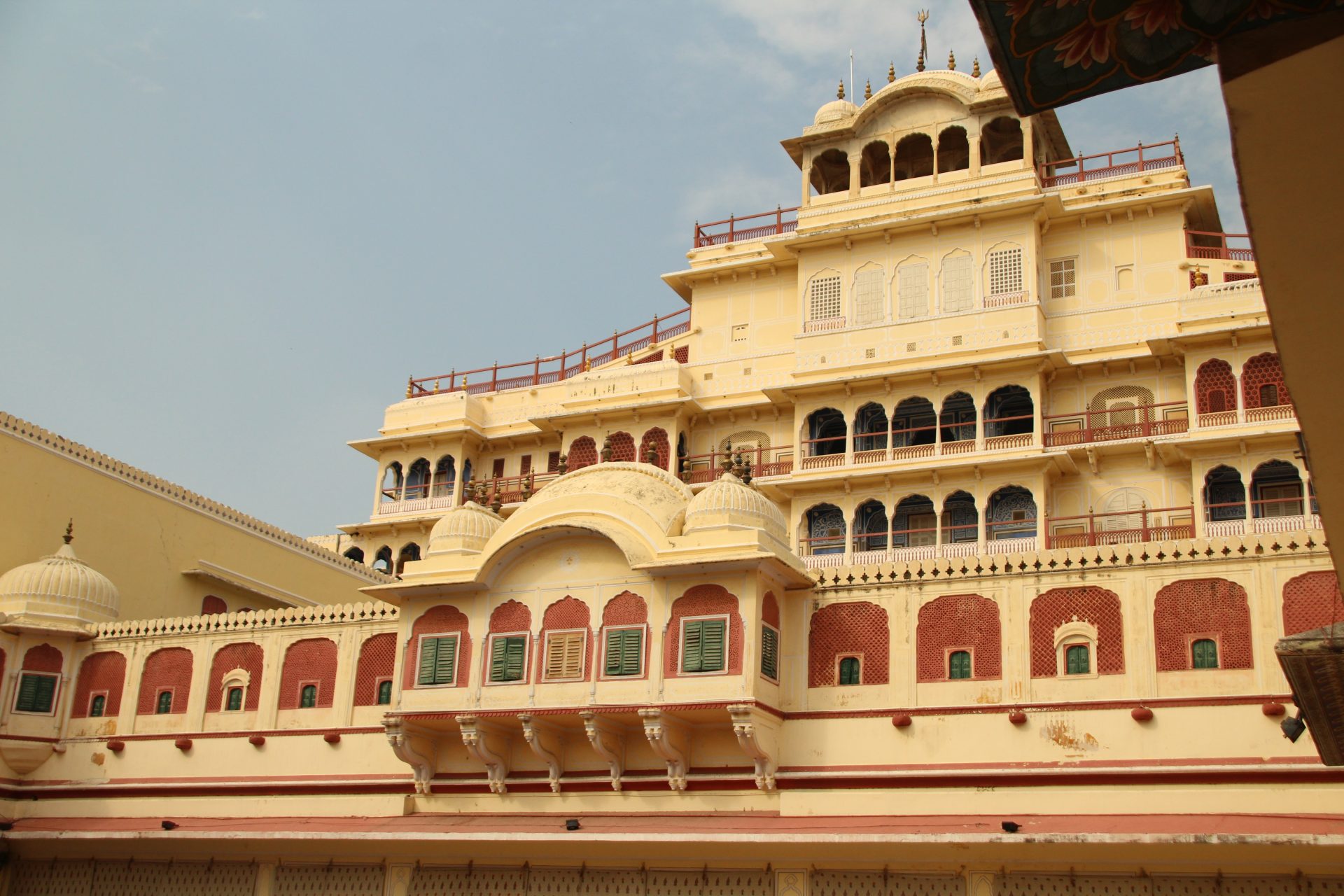
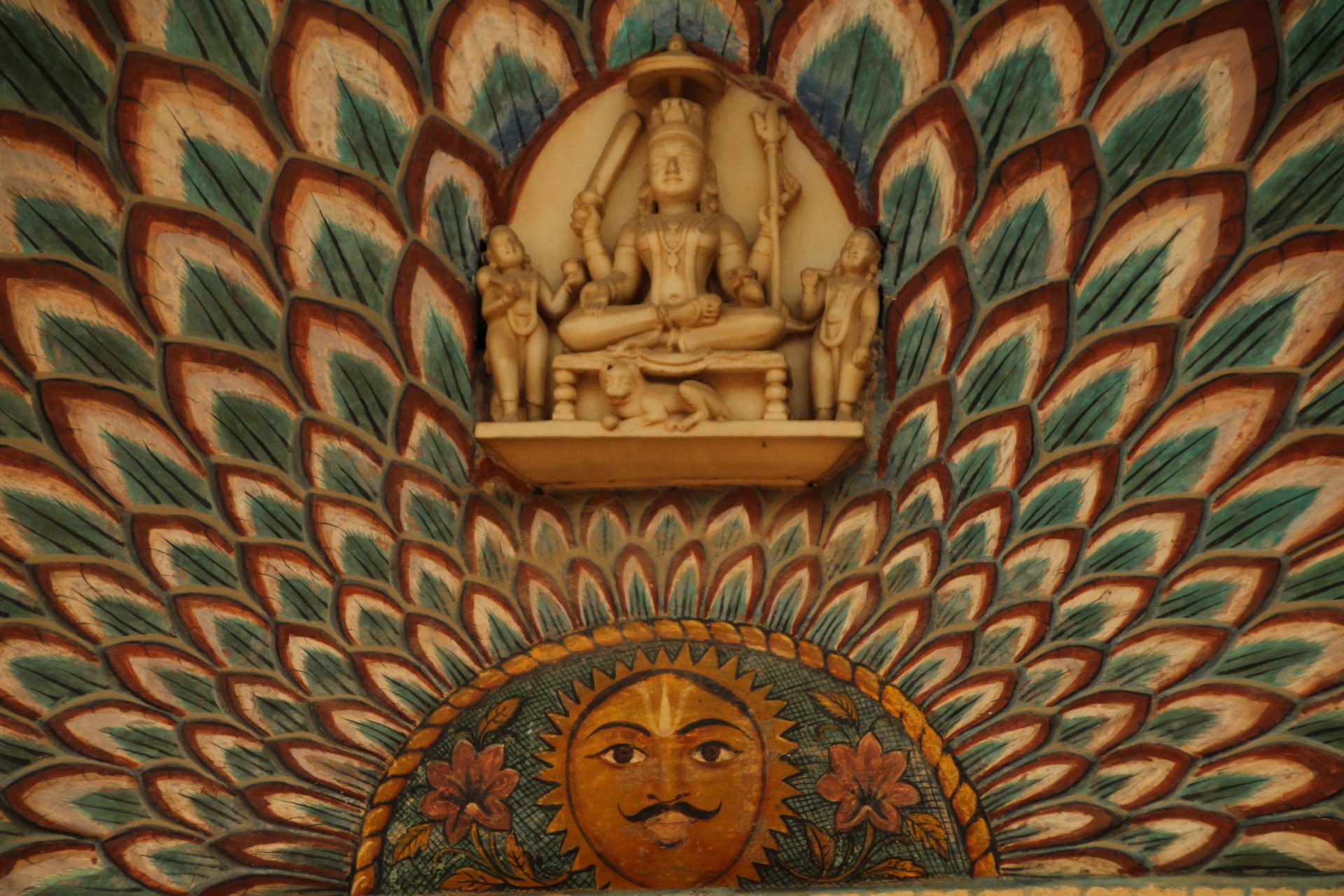
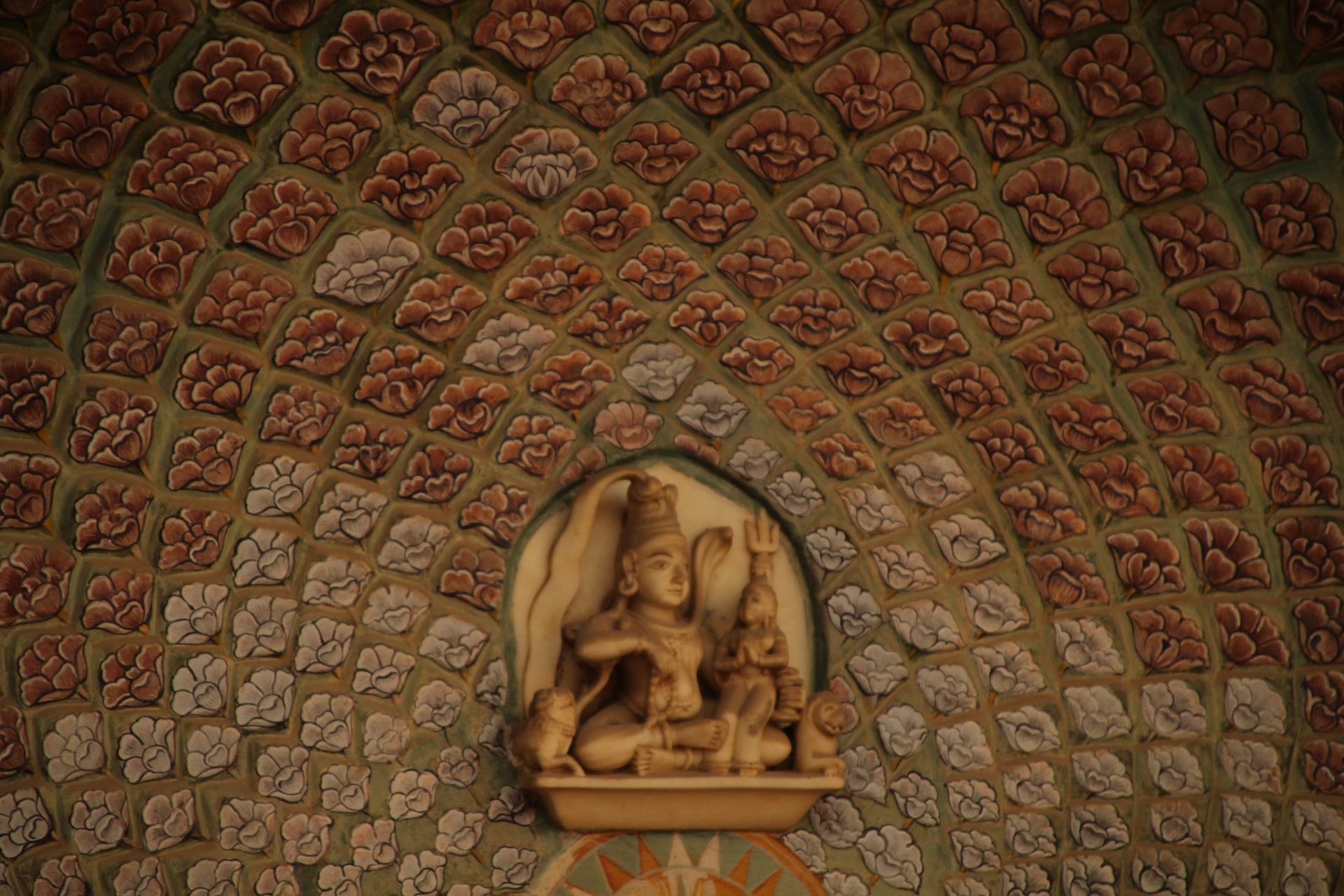
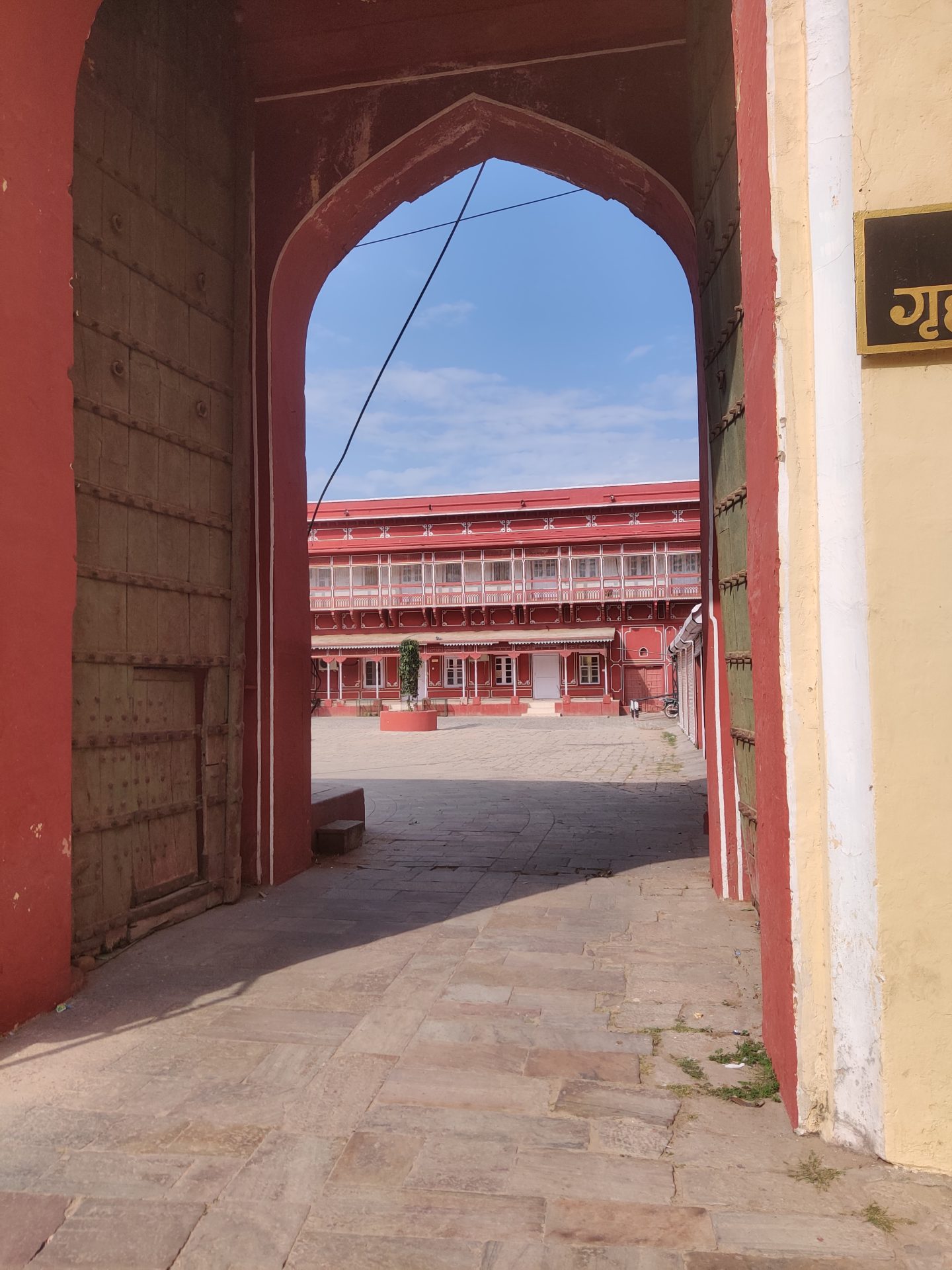
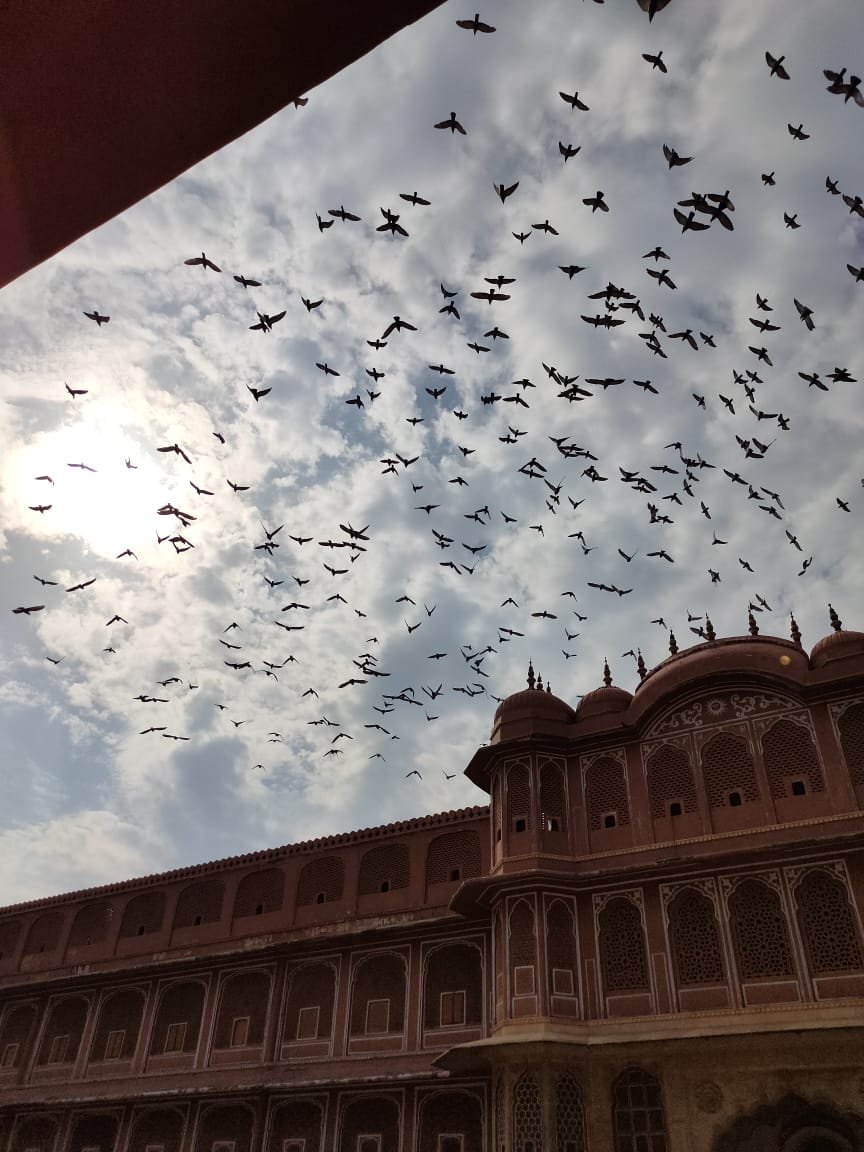
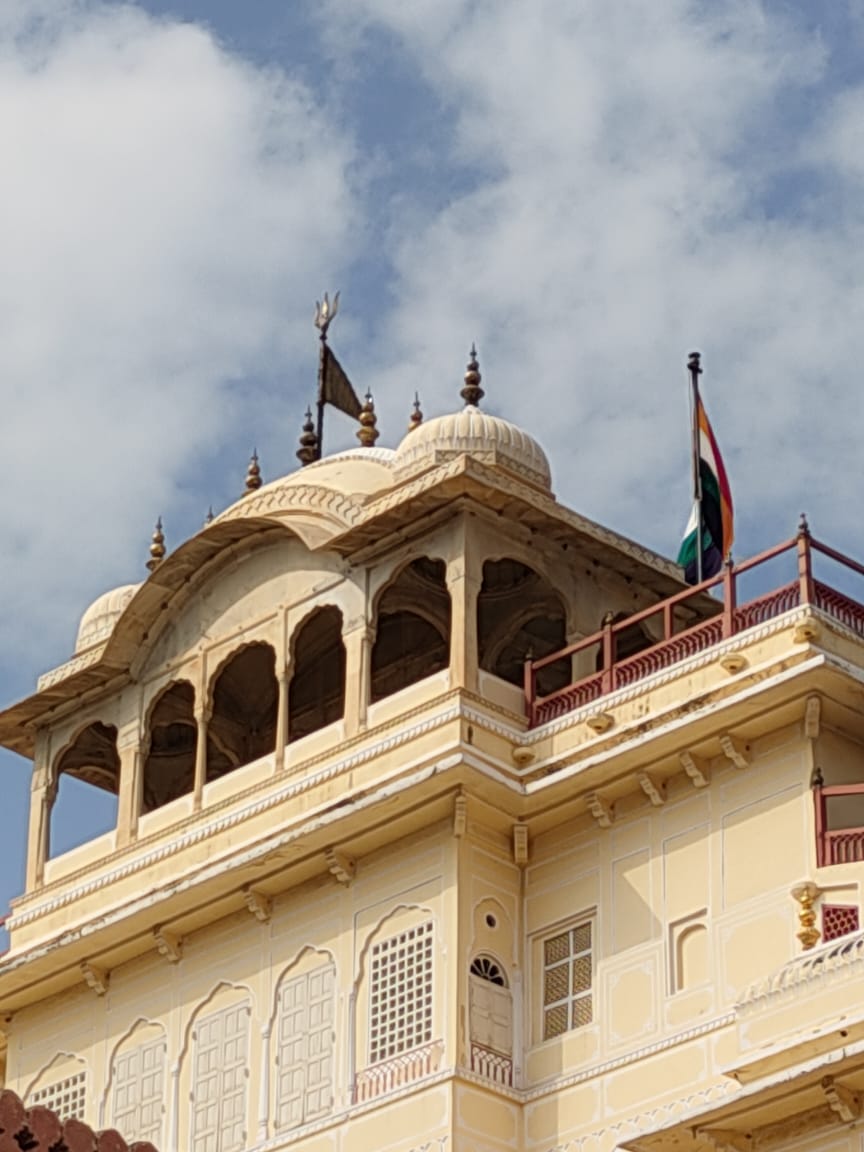
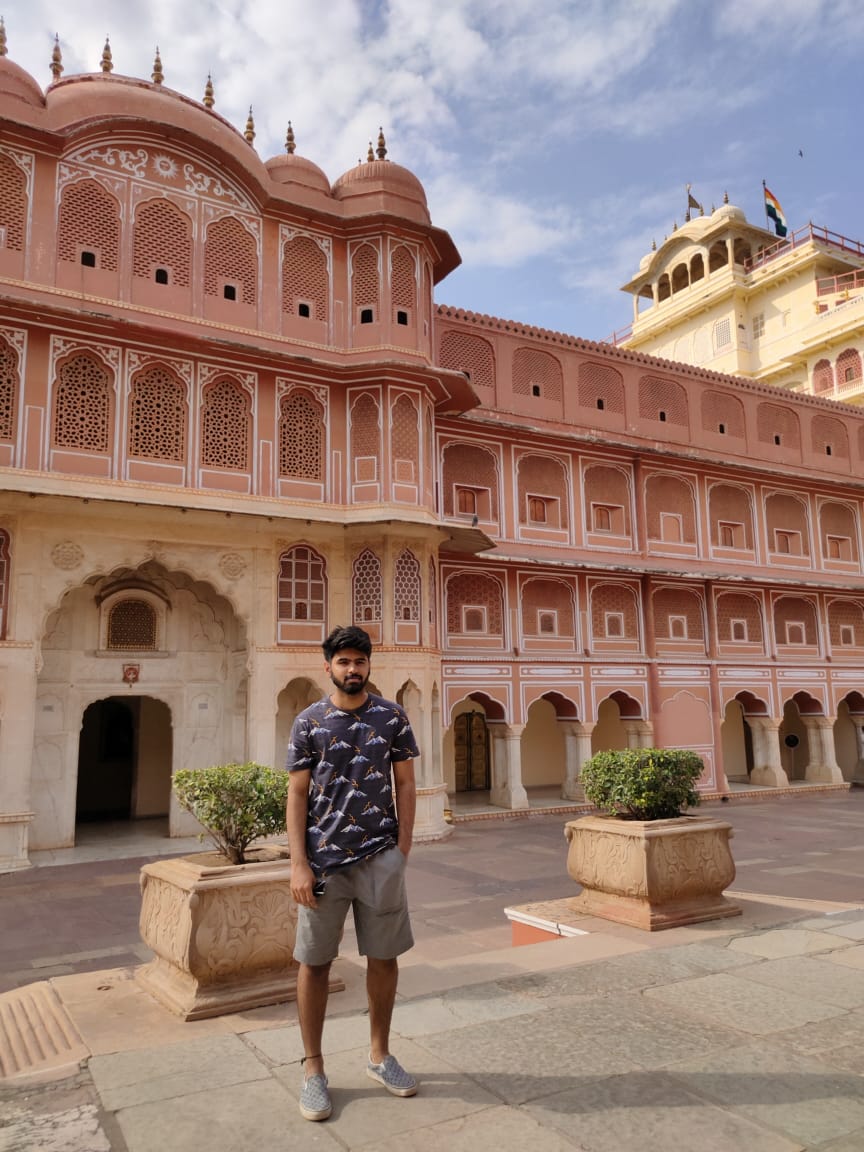
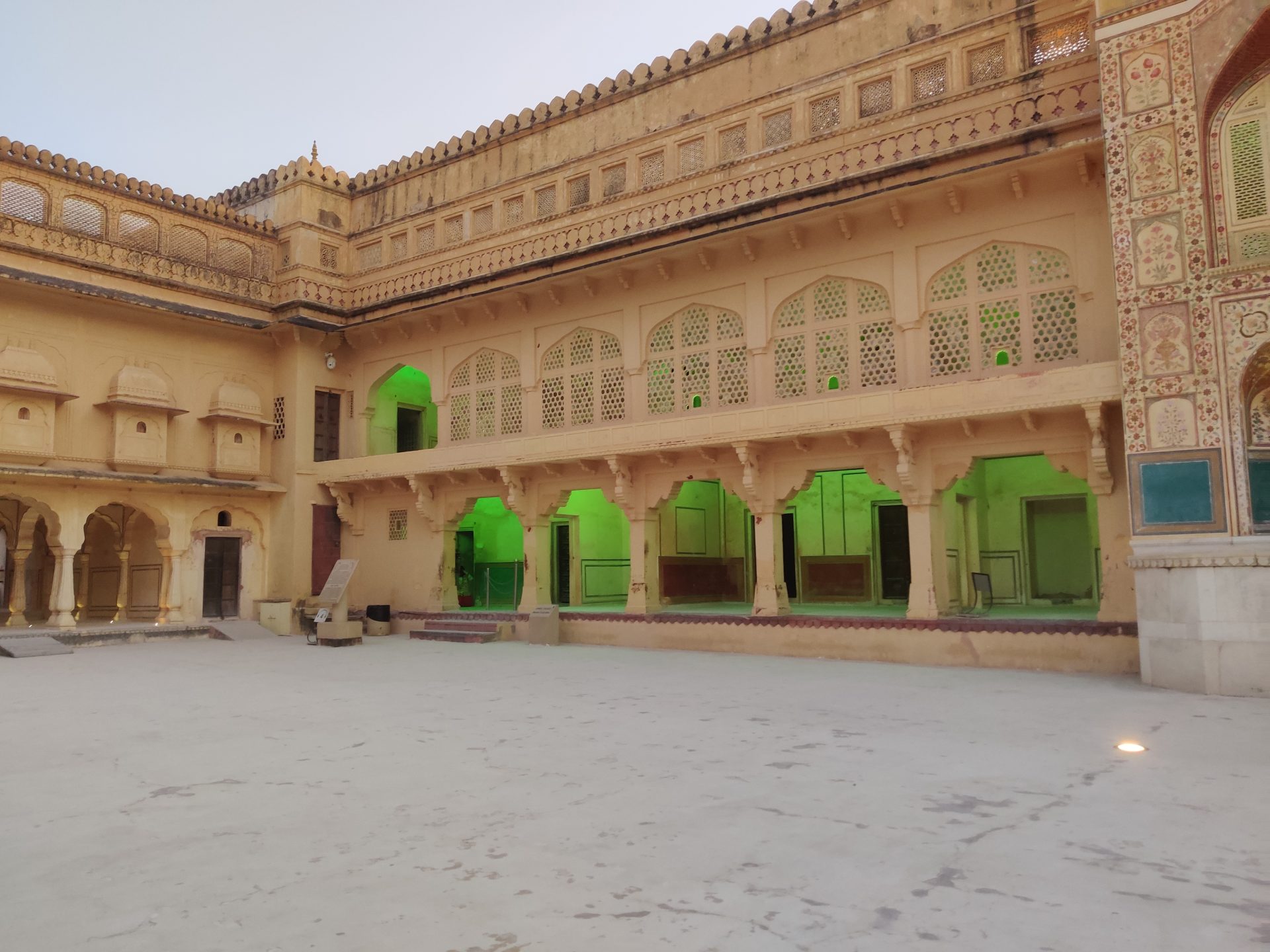
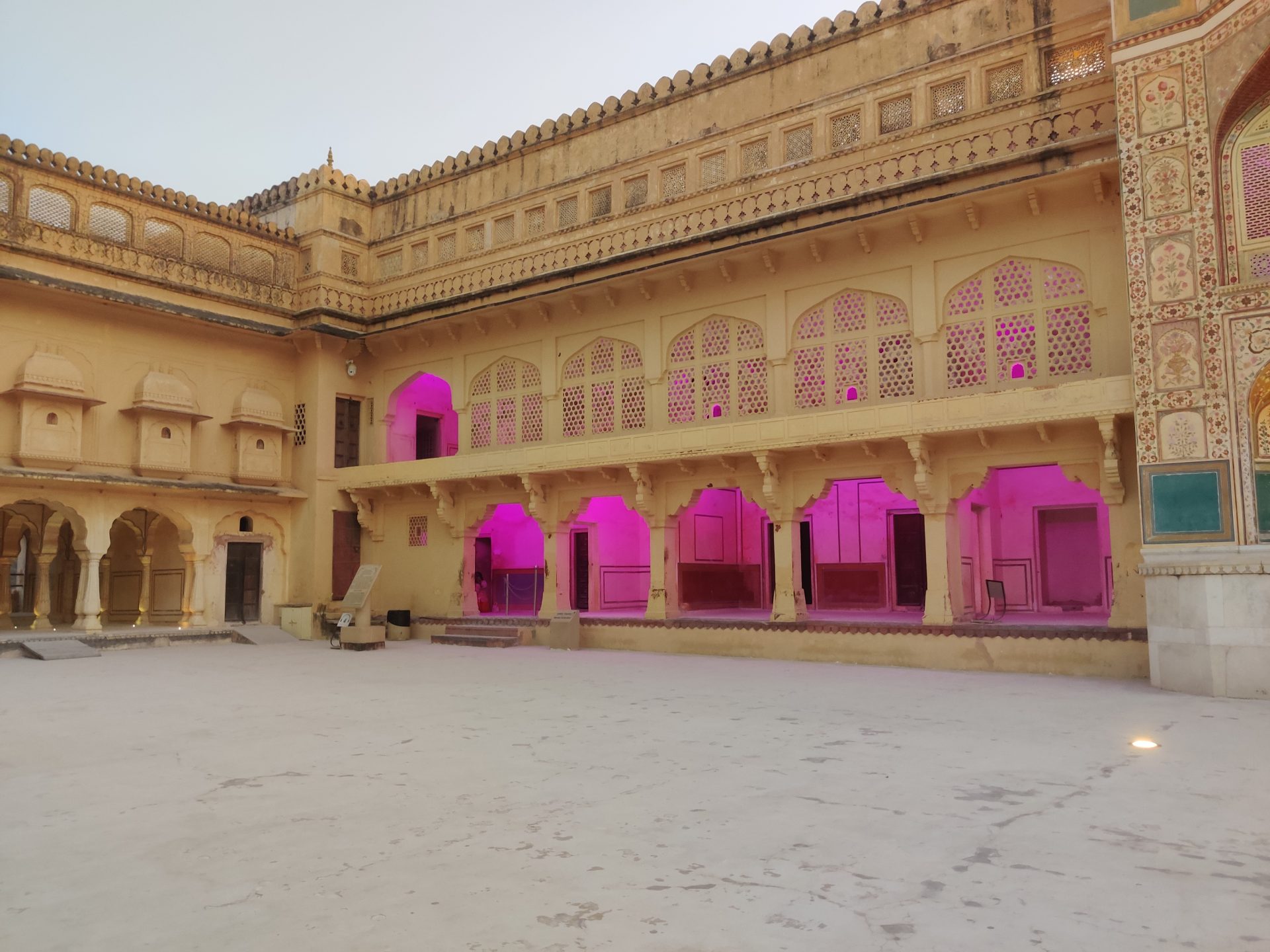
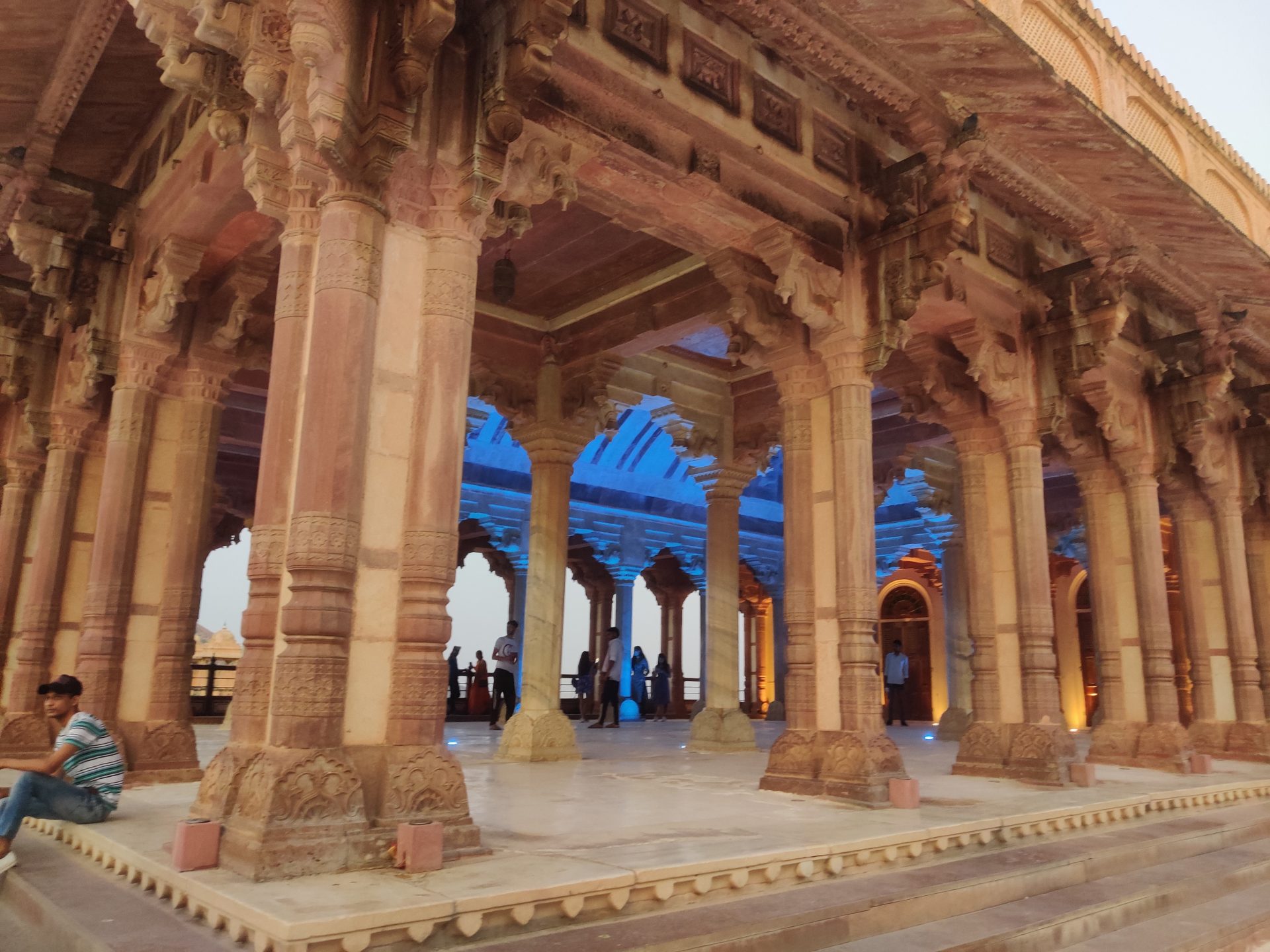
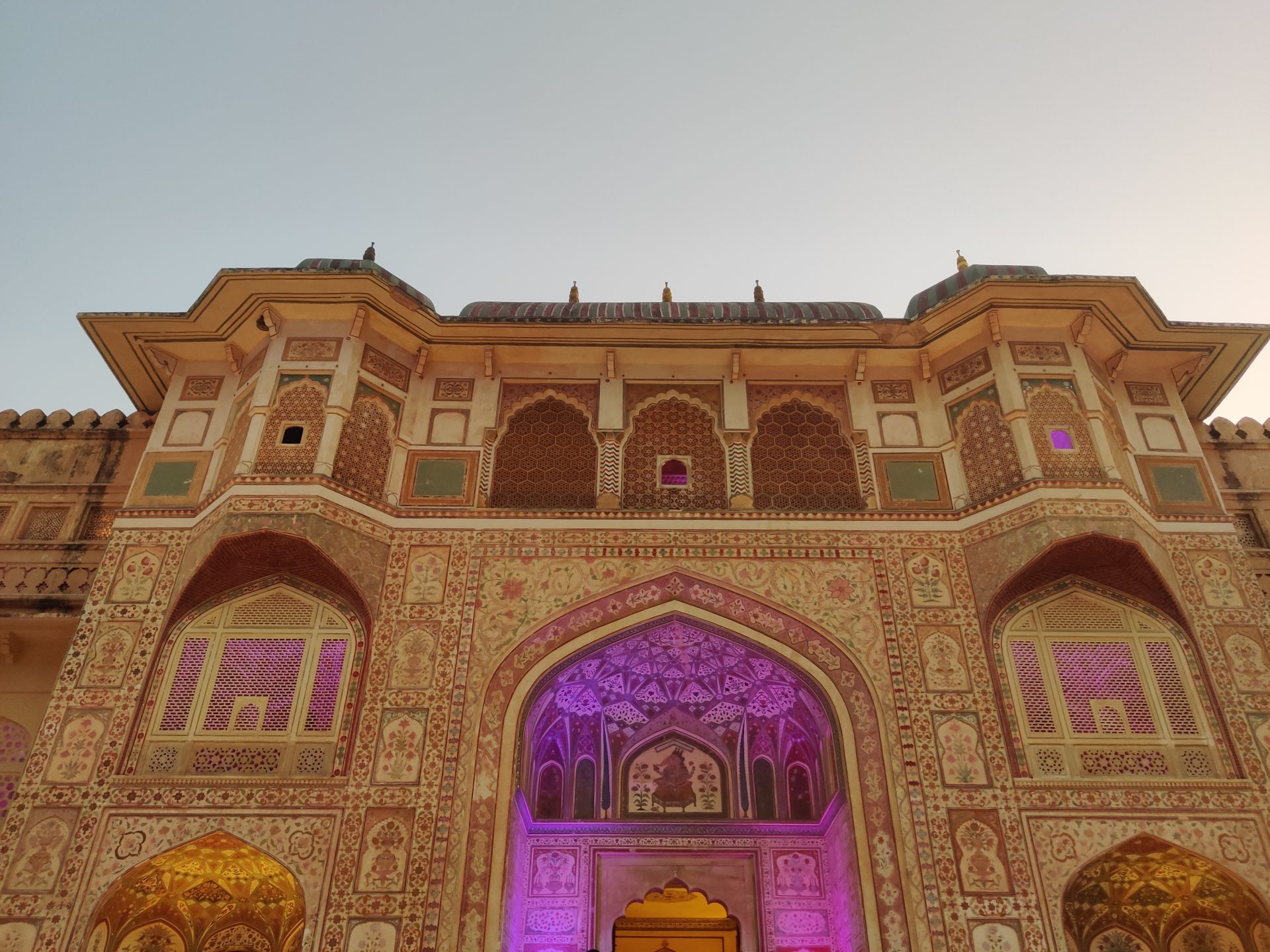
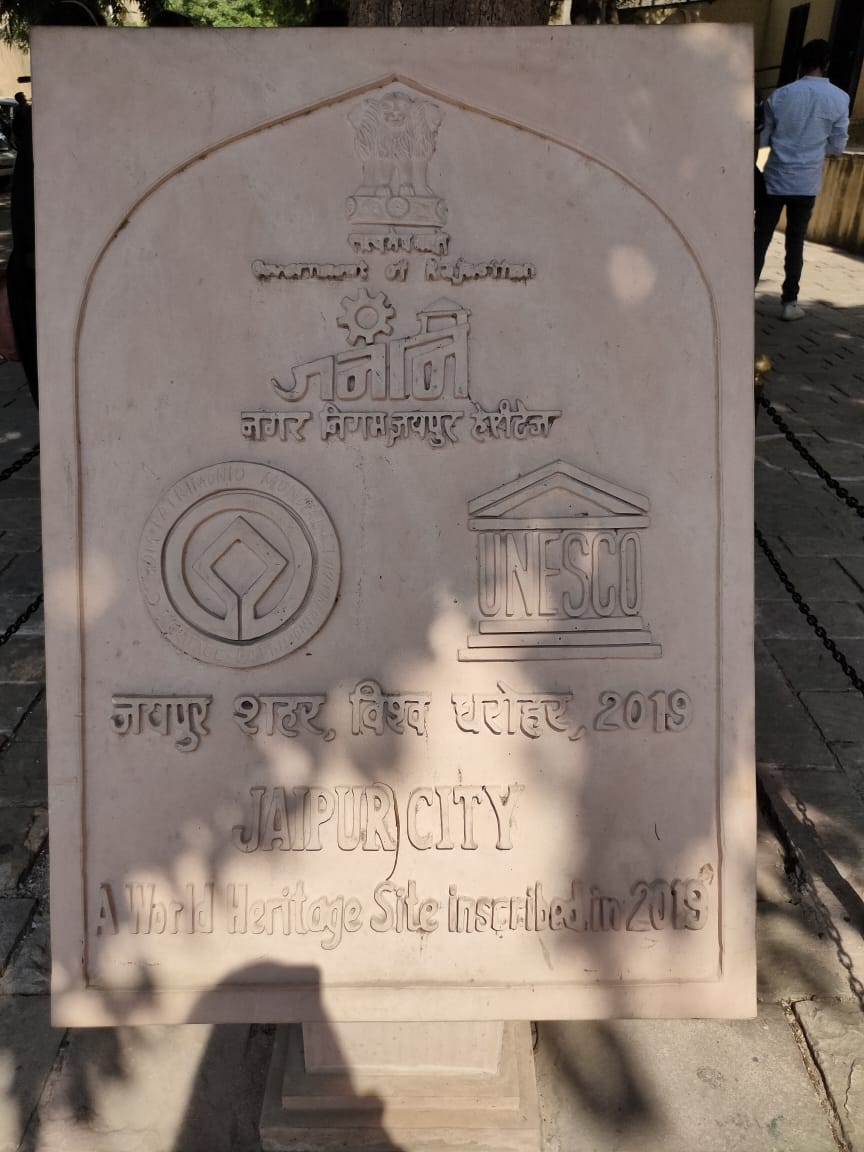
A 720 Km circuit by road, India’s Golden Triangle is a tourist circuit which connects the National capital of Delhi with Agra and Jaipur.The Golden Triangle is so called because of the triangular shape formed by these locations on a map.
A favorite amongst most families visiting the Northern part of India, the triangle connects the national capital of Delhi with Agra which lies in a Southerly direction and then finally culminates in a westward direction towards the Forts and Palaces of Jaipur in Rajasthan
There is a lot to read, learn and visualize about the history of these places ruled by the Mughals, the Rajput Kings and the British and lots of vibrancy to experience in the heritage and culture of these places.
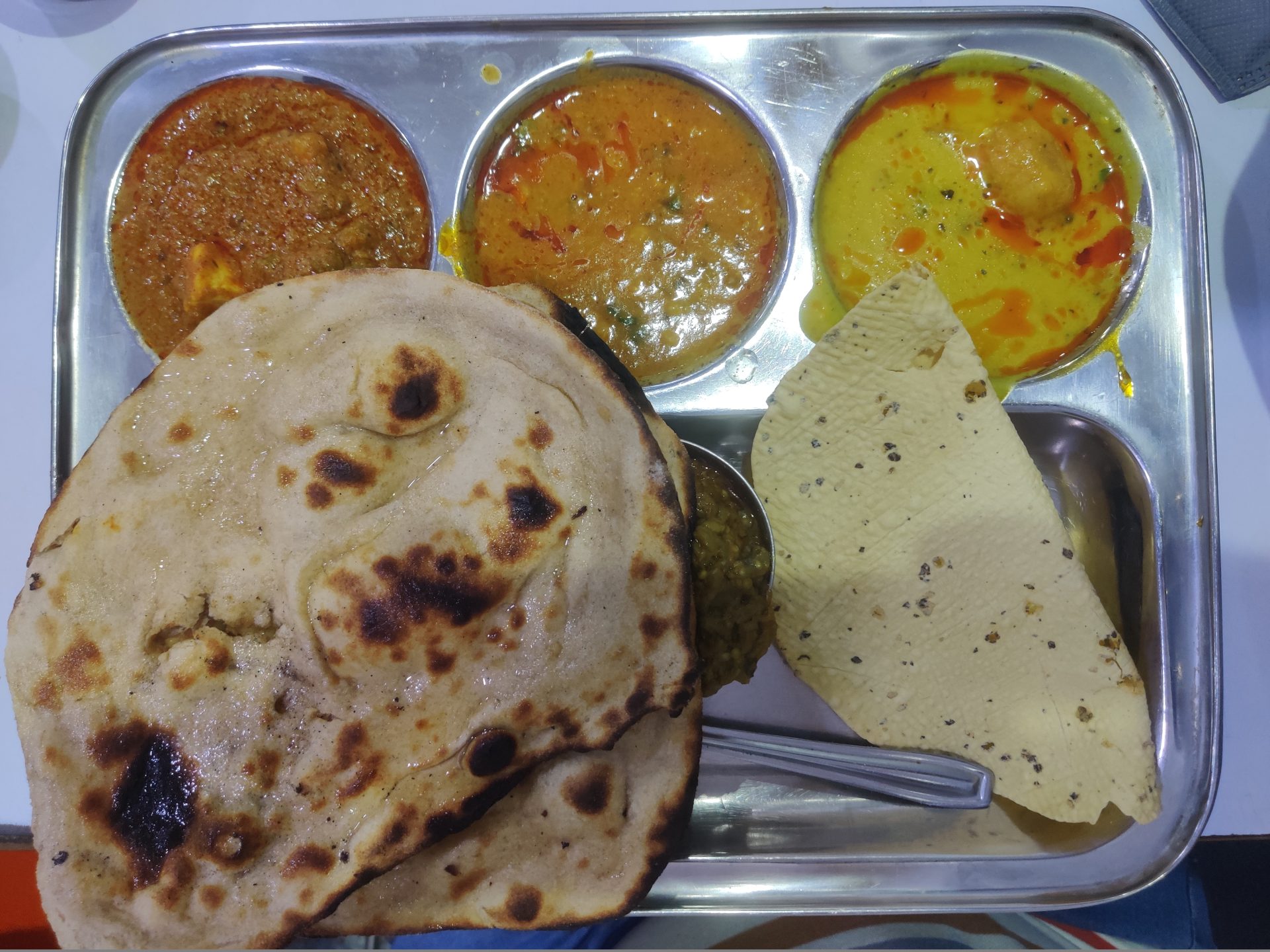
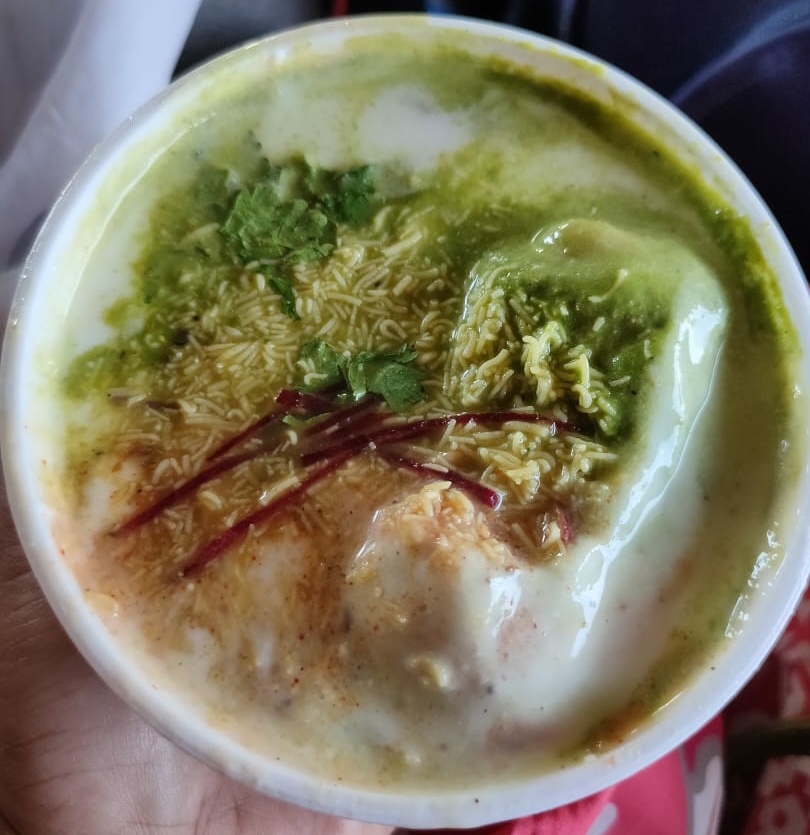
One can also indulge in a gastronomical journey with the sheer abundance of culinary delights on offer between these cities.
Most travel itineraries would pack a tour of these cities in 4 days but depending on what you want to see, how much of a culinary journey you want to indulge in and the kind of shopping you want to splurge your money on, it would be safe to assume that you would need at least a week to do justice to this kind of tour.
The past and the present of India gets so very beautifully meshed between these three cities that it would not be a surprise to figure out that this is one of the most sought after travel itineraries in India.
Table of Contents
Where does one start from
The Golden Triangle can best be approached from either Jaipur or Delhi. While these 2 cities are well connected to most metros across the country by both Air and Rail. the travel time between these 3 cities would just take a few hours. The amount of diversity in each of these places would be so very different for one to experience. While Delhi would showcase historic monuments, lots of greenery, street food, old bazaars etc., Agra would transport you to an eternal symbol of love, the Taj Mahal. Jaipur is where you can get to see Palaces, Havelis and Forts.
The ideal time to plan this vacation
The months between October to March are ideal for landing up here. While it would be pleasant and sunny during the day, the cold during nights progressively increases from December end till mid February. July to September is when the weather remains moderate but one could get inconvenienced with the occasional heavy shower. Avoid the moths of April to June as it becomes pretty hot during this time.
Delhi in 2 Tranches
Our visit to Delhi was planned in 2 phases. One, as part of a plan to visit Amritsar as a last minute inclusion to our itinerary and the second after our return from Srinagar. The objective was manifold. Explore the dusty lanes of Chandni Chowk, binge on street food, indulge in shopping and explore a few heritage sites and monuments which we had missed during our earlier visits to Delhi.
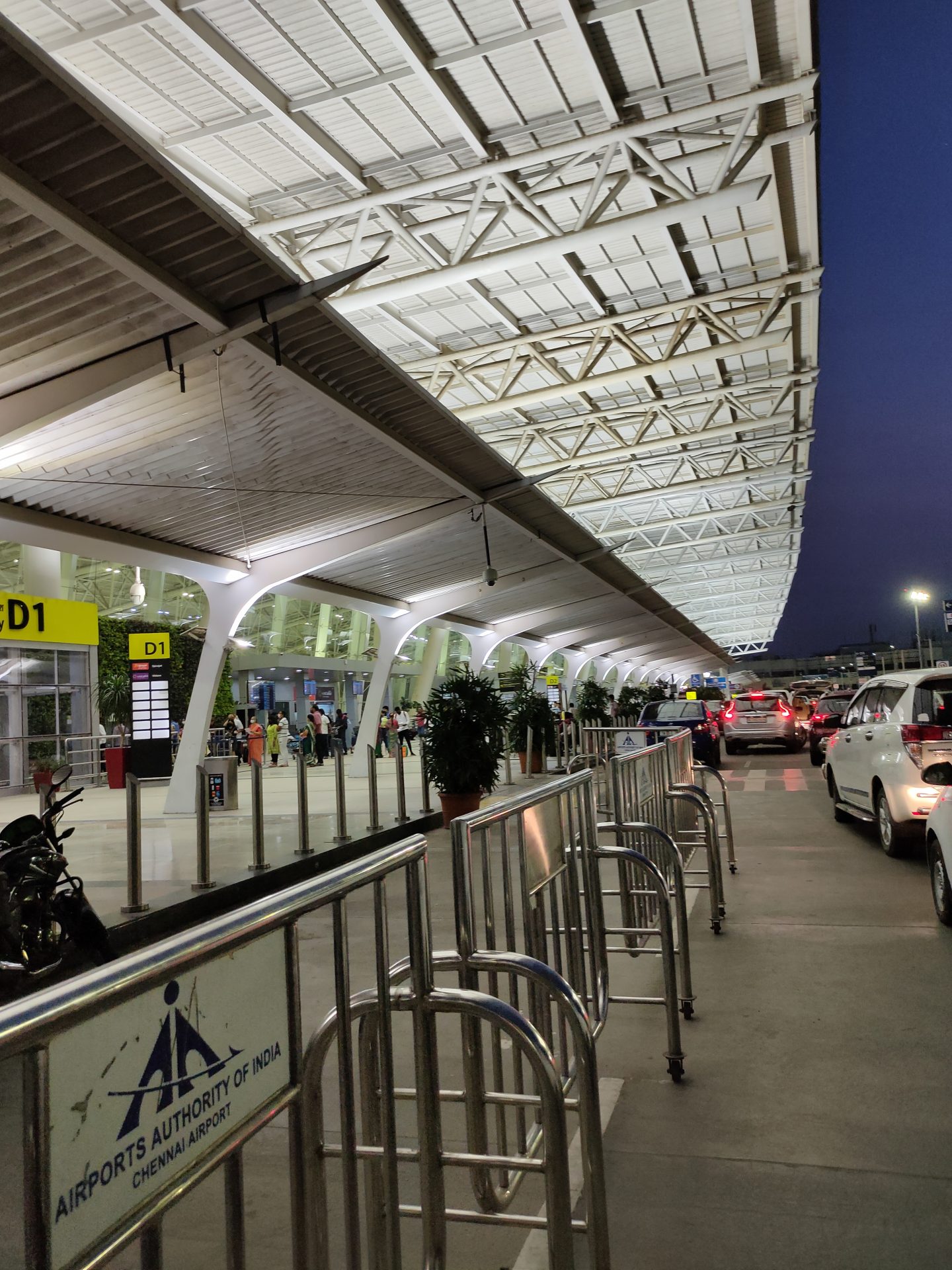
An early morning flight from Chennai touched down after a little over two and a half hours at the T3 International Airport at Delhi. We had booked ourselves close to the New Delhi Railway Station as we had an early morning train to catch for Amritsar the next day and after an uneventful 45 minute ride into the city, we reached our hotel.
What you should not miss in Delhi
Over a century and a decade back, the city of Delhi earned the rights of being the capital of India from the Britishers and has stayed since. A symbol of the country’s rich past and thriving present, Delhi is a city where the ancient and modern blend seamlessly. With a history which dates back to many centuries and also being a seat of many powerful empires in the past, this cosmopolitan Metro completes over 100 years as being the capital of our country.
From the labyrinth of narrow lanes around the Old Delhi area to the broad roads around the embassies and the residences and offices of the who’s who of the political leaders and the maze of the amazing Metro Rail network, this cosmopolitan city combines the charm of its ancient history and culture with all the makings of a modern metropolis.
Apart from being a host to 3 World Heritage Monuments and lots of forts and museums, the city has some amazing local markets where one can indulge in lots of bargain filled shopping and some lip smacking and delectable street food on offer.
Chandni Chowk
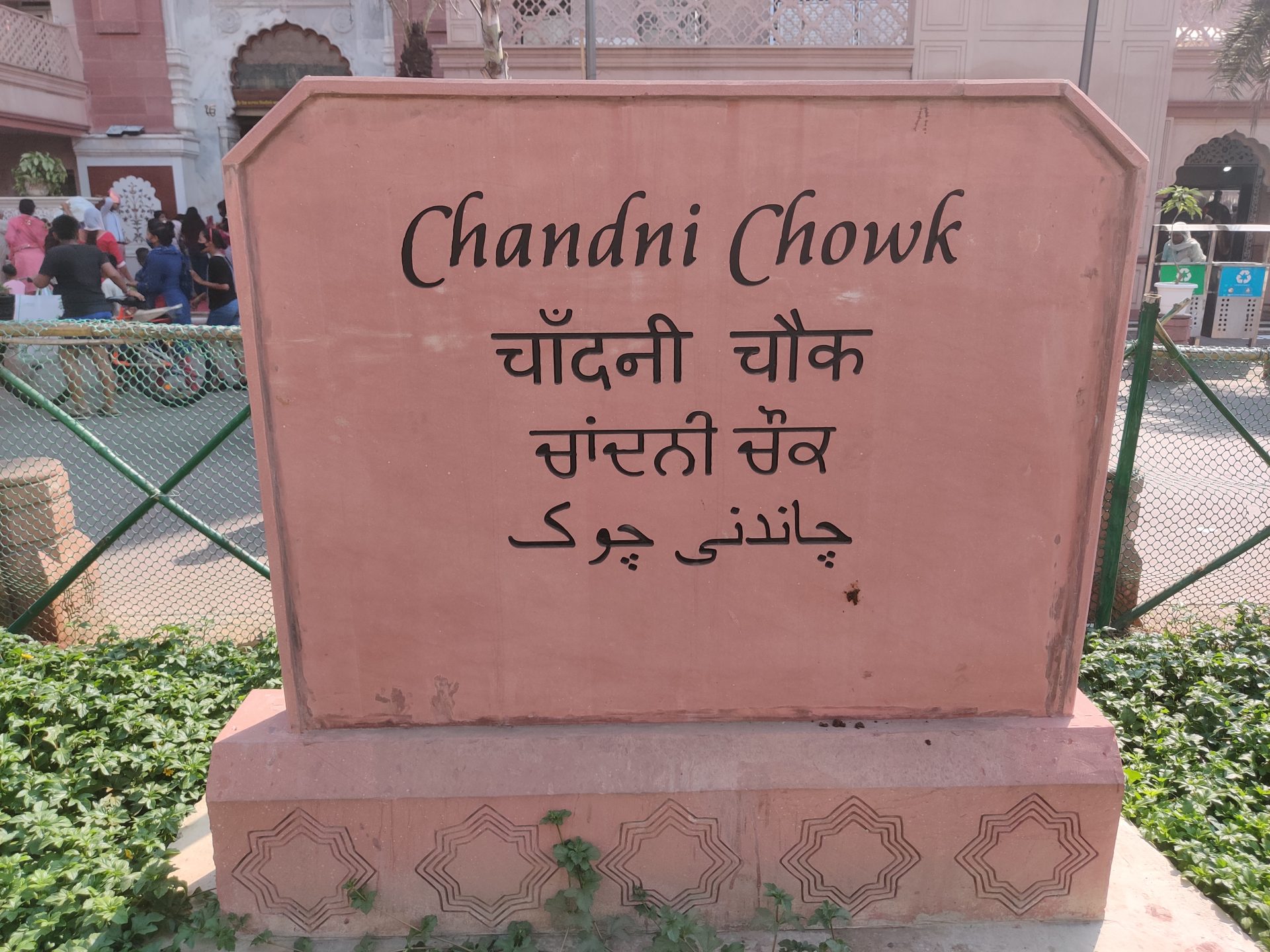
The check-in formalities done and post freshening up, we headed for the old Delhi area of Chandni Chowk for our lunch. Compared to a decade back when we last visited Delhi, while the labyrinth of narrow lanes remained and the place was as dusty as ever, the road leading to the inner parts of Chandni Chowk seemed to have undergone a complete transformation. There was a road divider and traffic was regulated through the entire stretch making it a lot easier to walk around.
Chandni Chowk is a favorite go to place for Delhites and people from nearby cities and towns whenever there are marriages planned in the family. A number of shops abound selling designer bridal wear, jewellery, colourful bangles and many more. Opposite the Red Fort as one makes his way to the Chandni Chowk area, on the left side is the Capital’s oldest Jain temple, the Digambar Lal Jain temple, believed to have been founded in the year 1656.
Parathe Wali Gali (The Flat Bread Street)
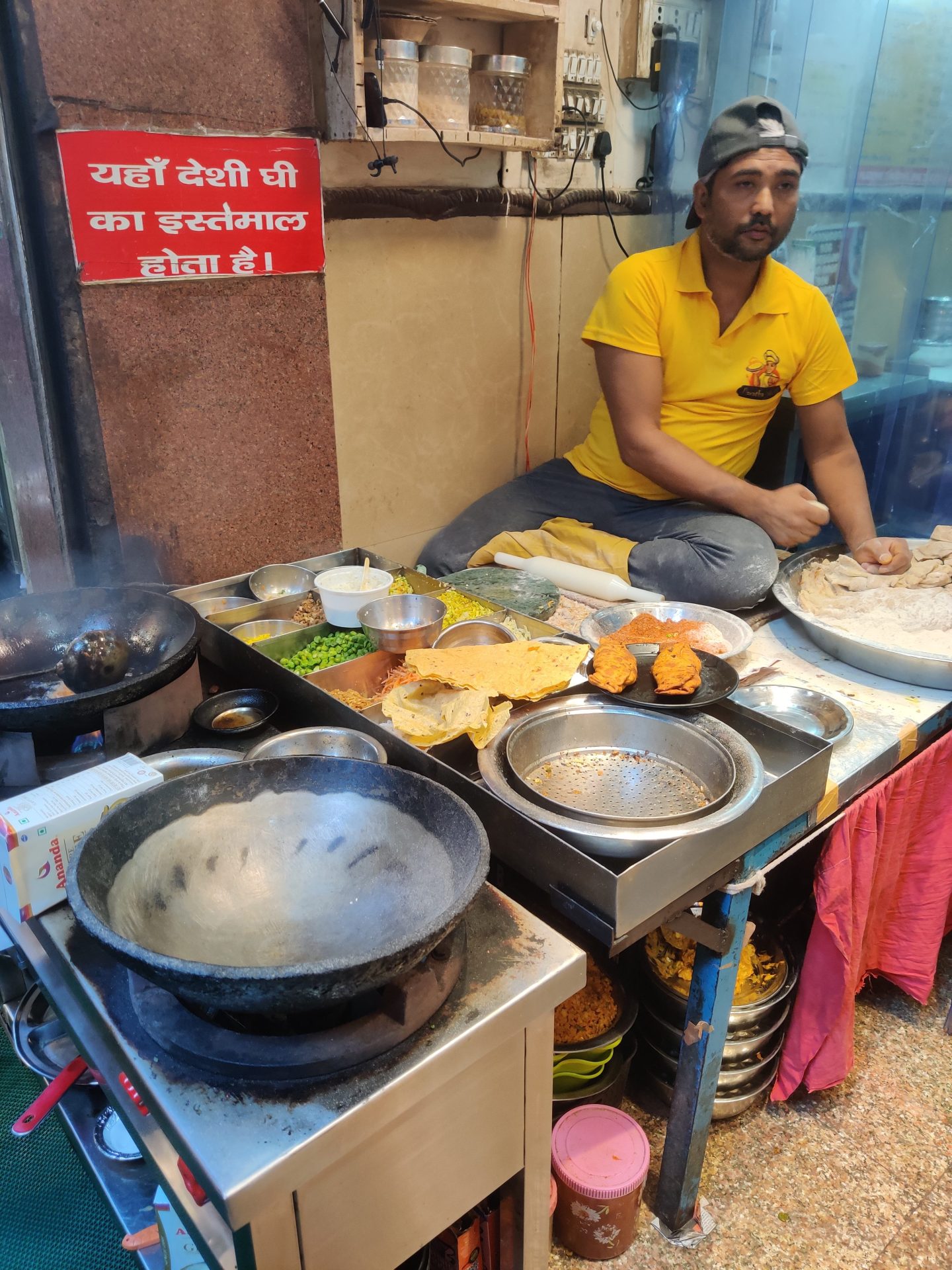
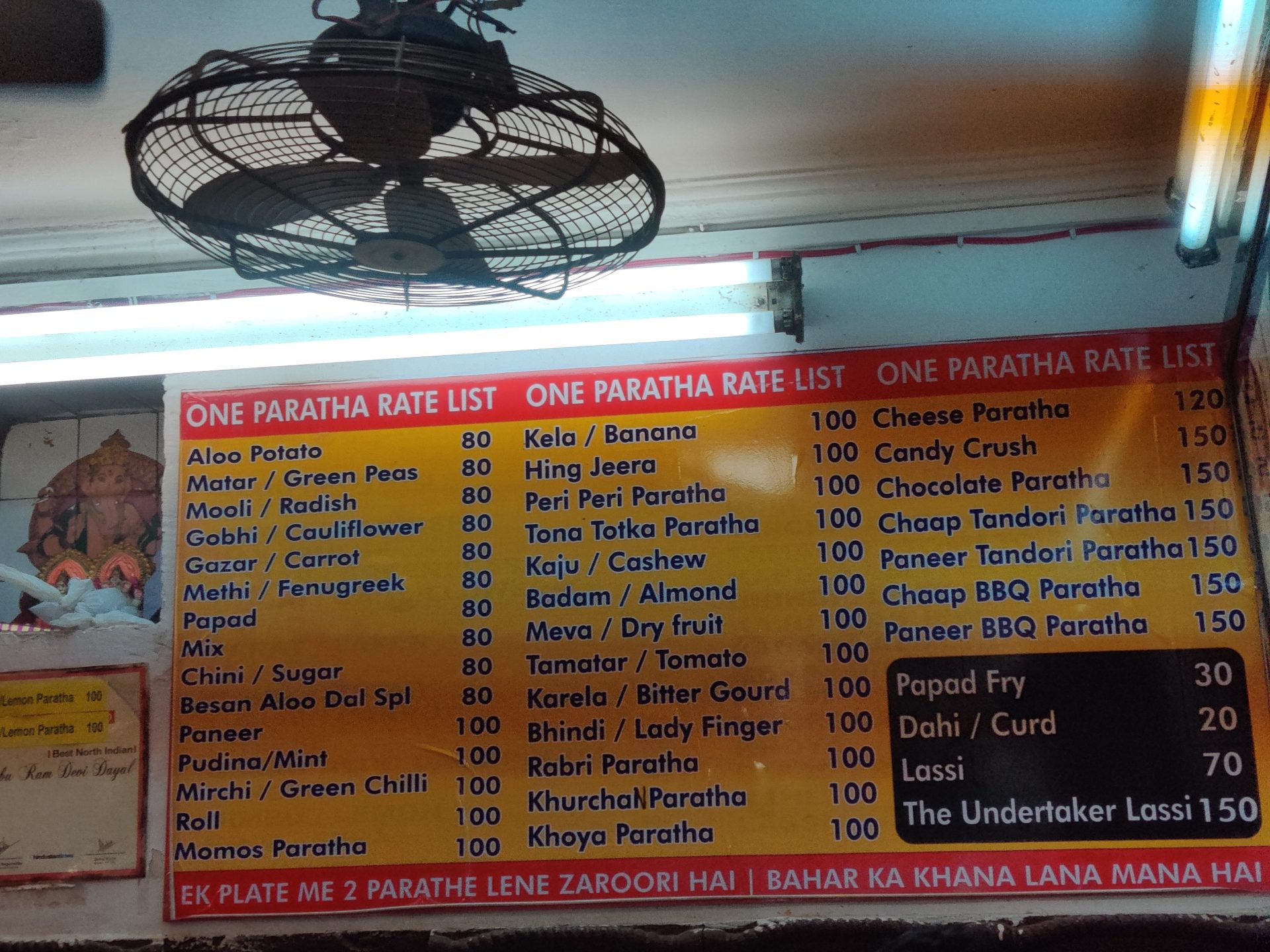
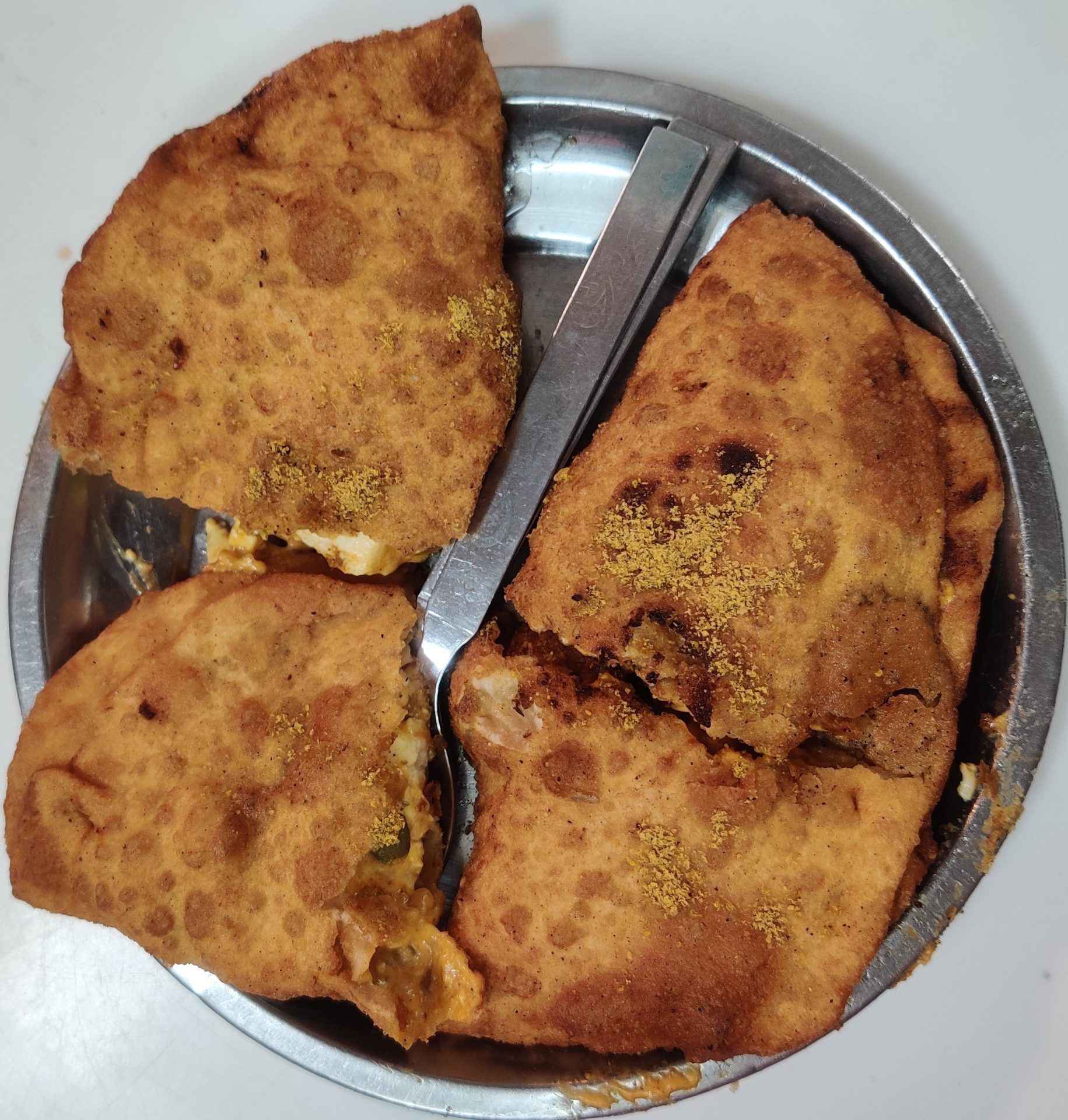
The famous Parathe Wali Gali is where we had planned our afternoon lunch and a 10 minute walk through a congested lane brought us to the string of outlets, serving piping hot varieties of parathas (flat breads) with an assortment of accompaniments.
The Red Fort
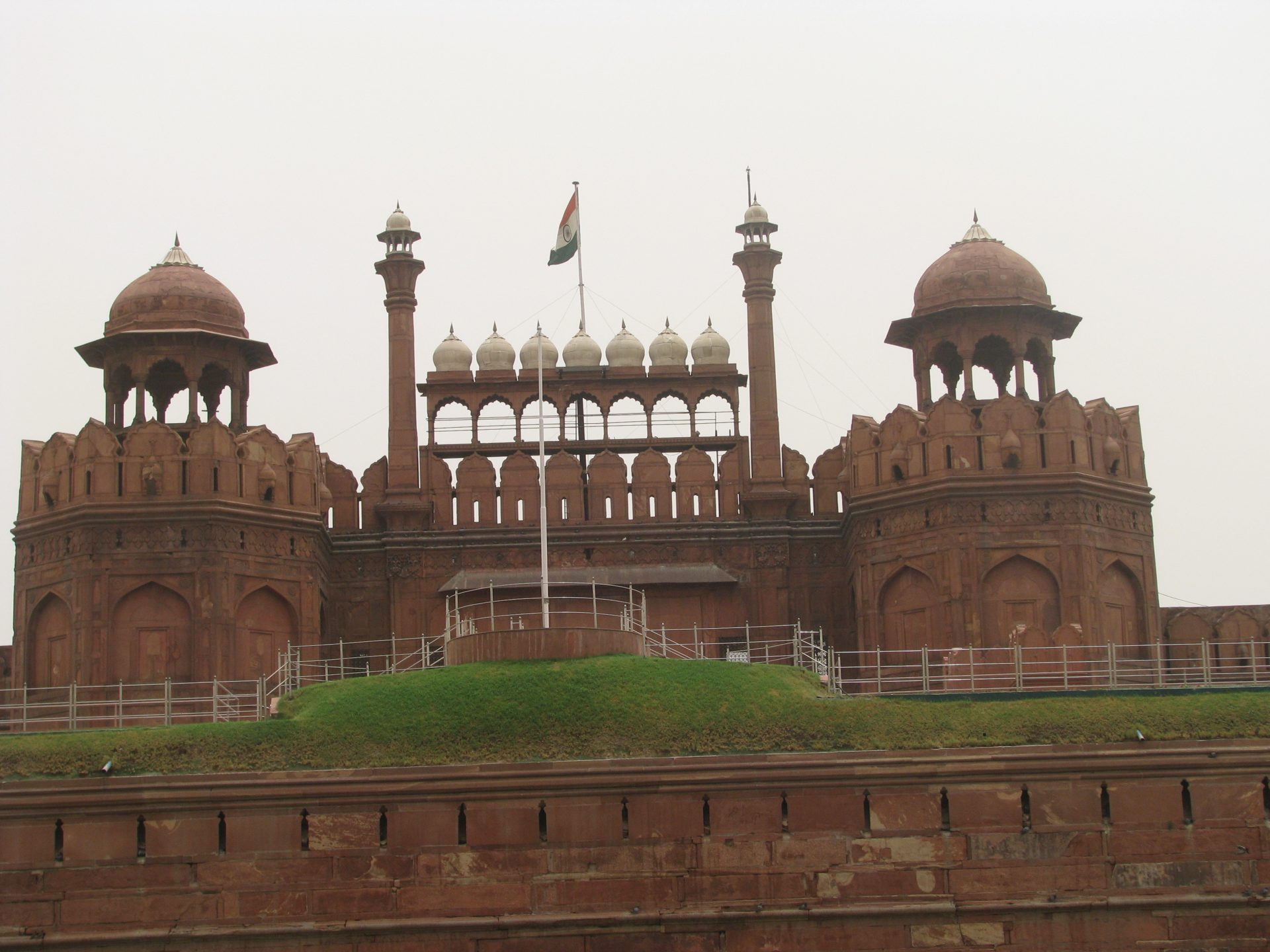
Having spent some time post lunch exploring the colourful bazaars of old Delhi, we walked across to the opposite side of the road where the Red Fort, a magnificent piece of red sandstone architecture unfolded before us.
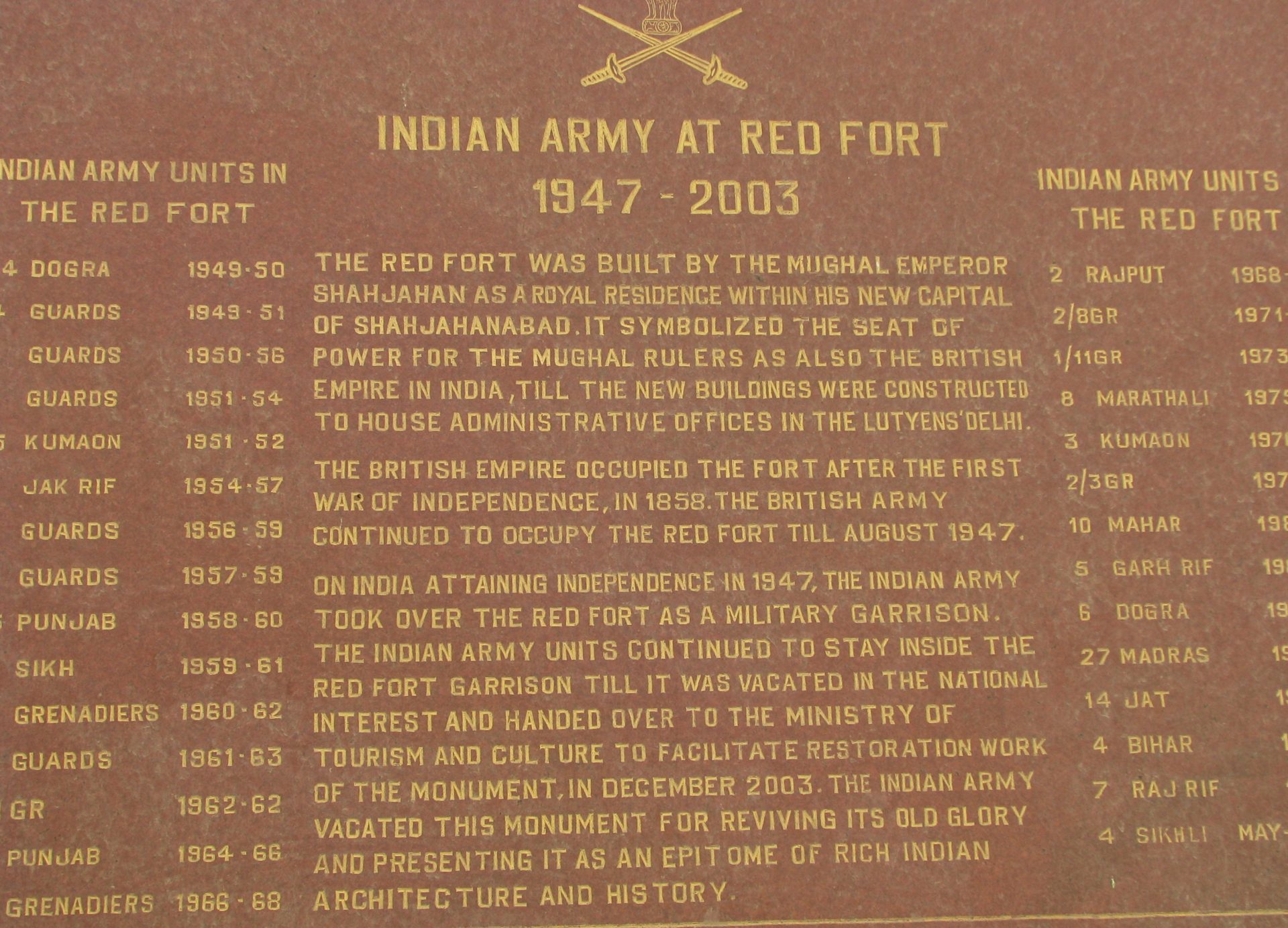
Built between the year 1639 to 1648, this fort was built during the reign of the Mughal emperor Shahjahan when he moved his capital from Agra to Delhi and is spread over 250 acres.
Its believed to be octagonal in shape when seen aerially and attained UNESCO’s World Heritage status in 2007.
Ascribed to be the Zenith of Mughal creativity as per World Heritage conventions, the Red Fort or the Lal Quila as its better known as, is a perfect confluence of Mughal and Persian palace architecture.
While the main entrance to the fort is through the Lahori Gate, on the Southern side of the Fort lies the Delhi Gate.
The Lahori Gate leads one through a domed shopping area which is otherwise known as the Chatta Chowk or the Meena Bazaar where the imperial household used to shop for silks and jewellery.
What exists of this place is a number of shops selling artefacts, jewellery, footwear, bags, silk items, purses and many more.
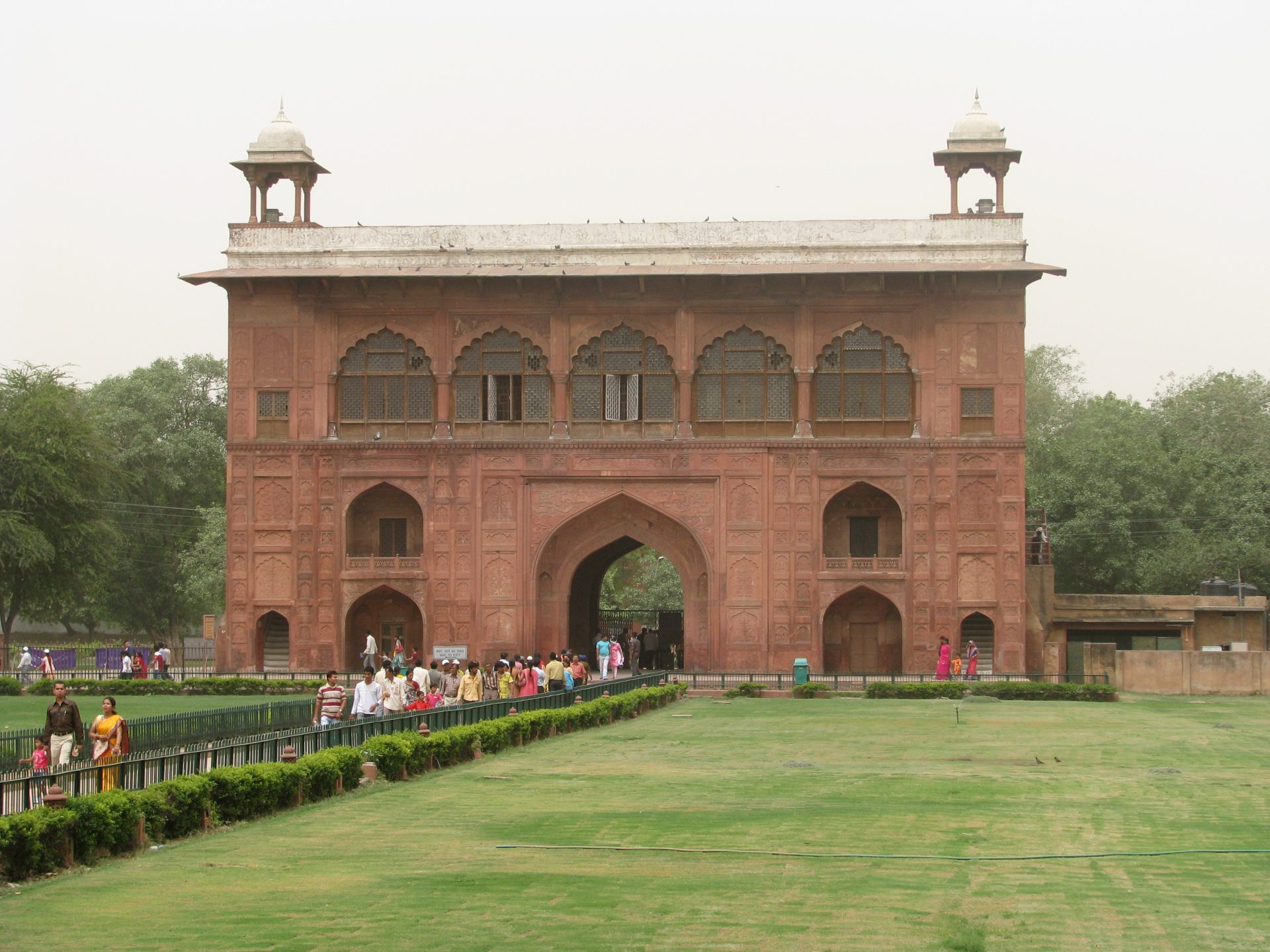
As we walked around the Fort, we got to see many structures of the Mughal period which still exist. The Naubat Khana, translating to the waiting Hall has the Indian War Memorial Museum housed in the 2nd floor. This hall required everyone save the royalty to dismount during the Mughal era and while music used to be played at scheduled times.
NAUBAT KHANA
RANG MAHAL
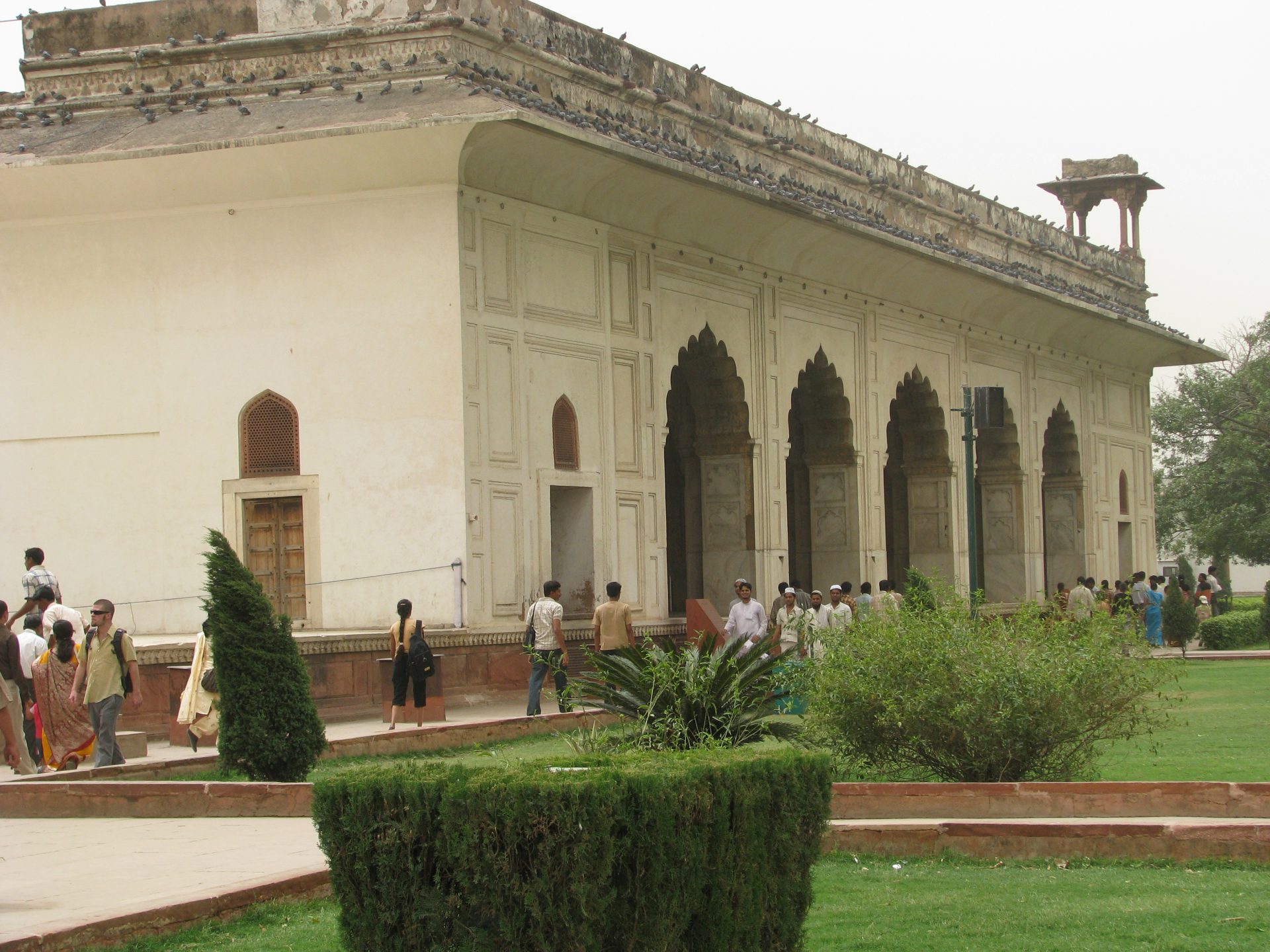
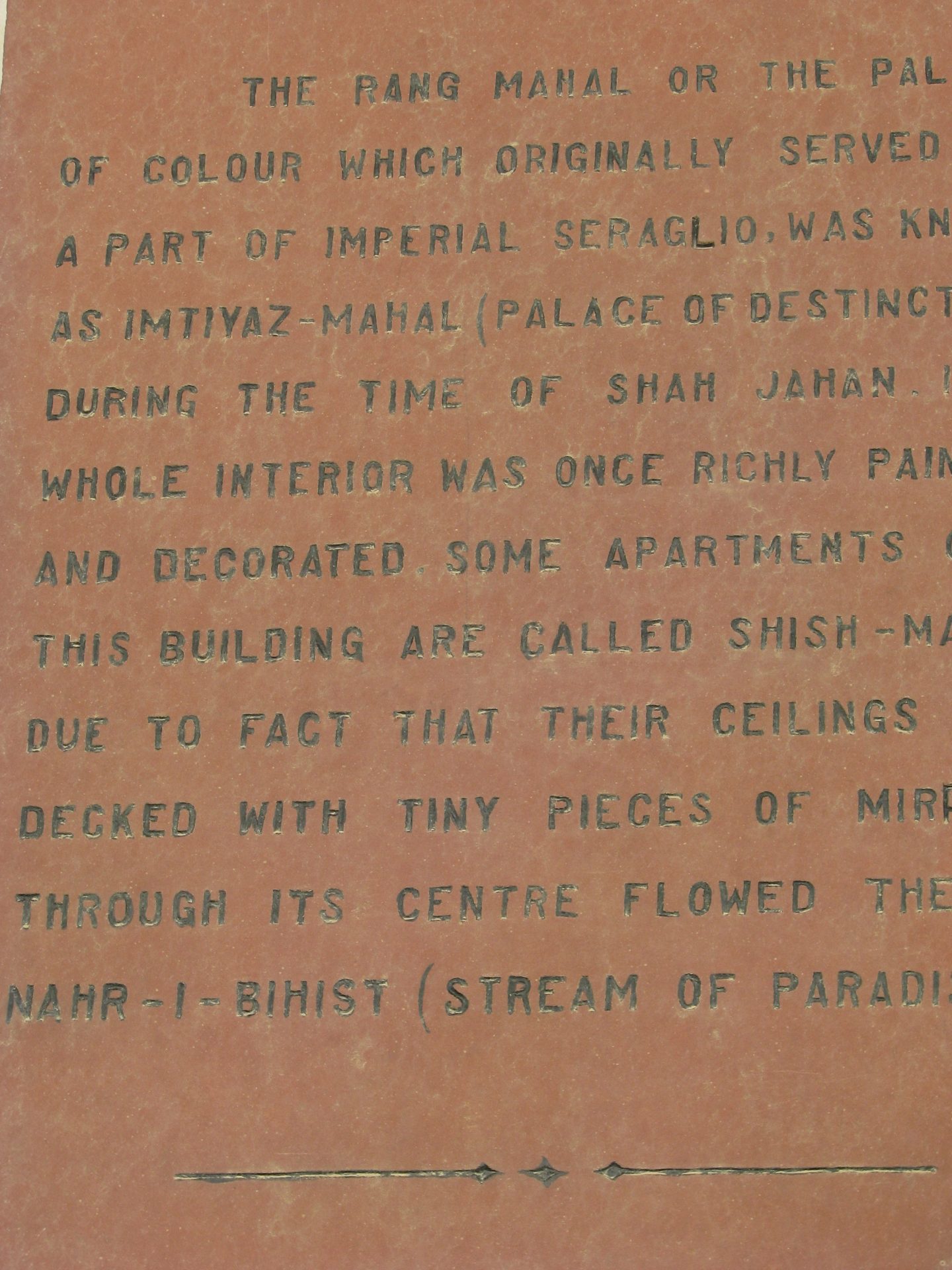
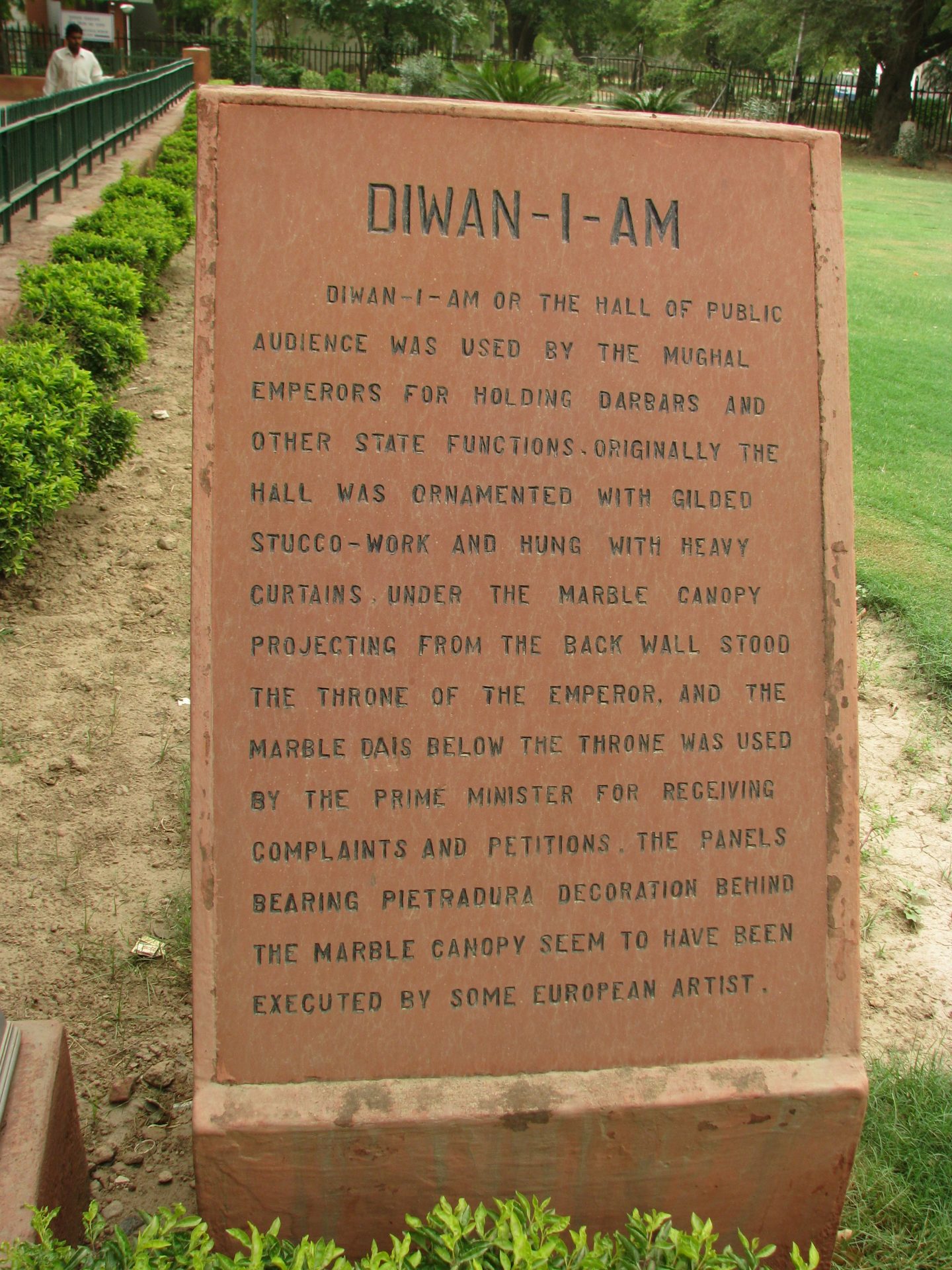
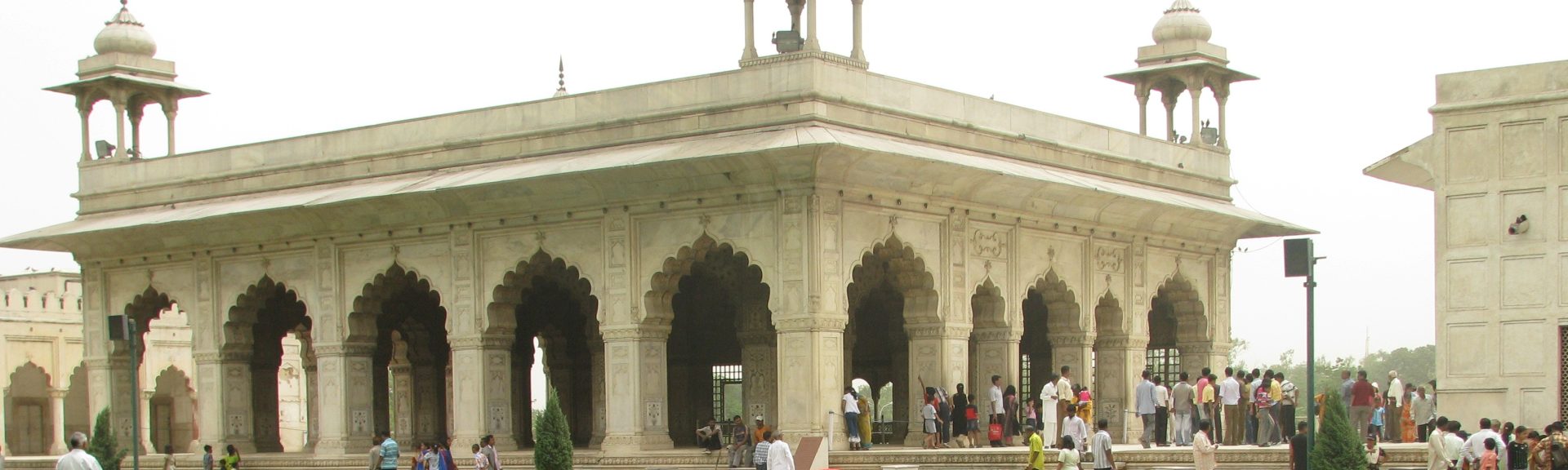
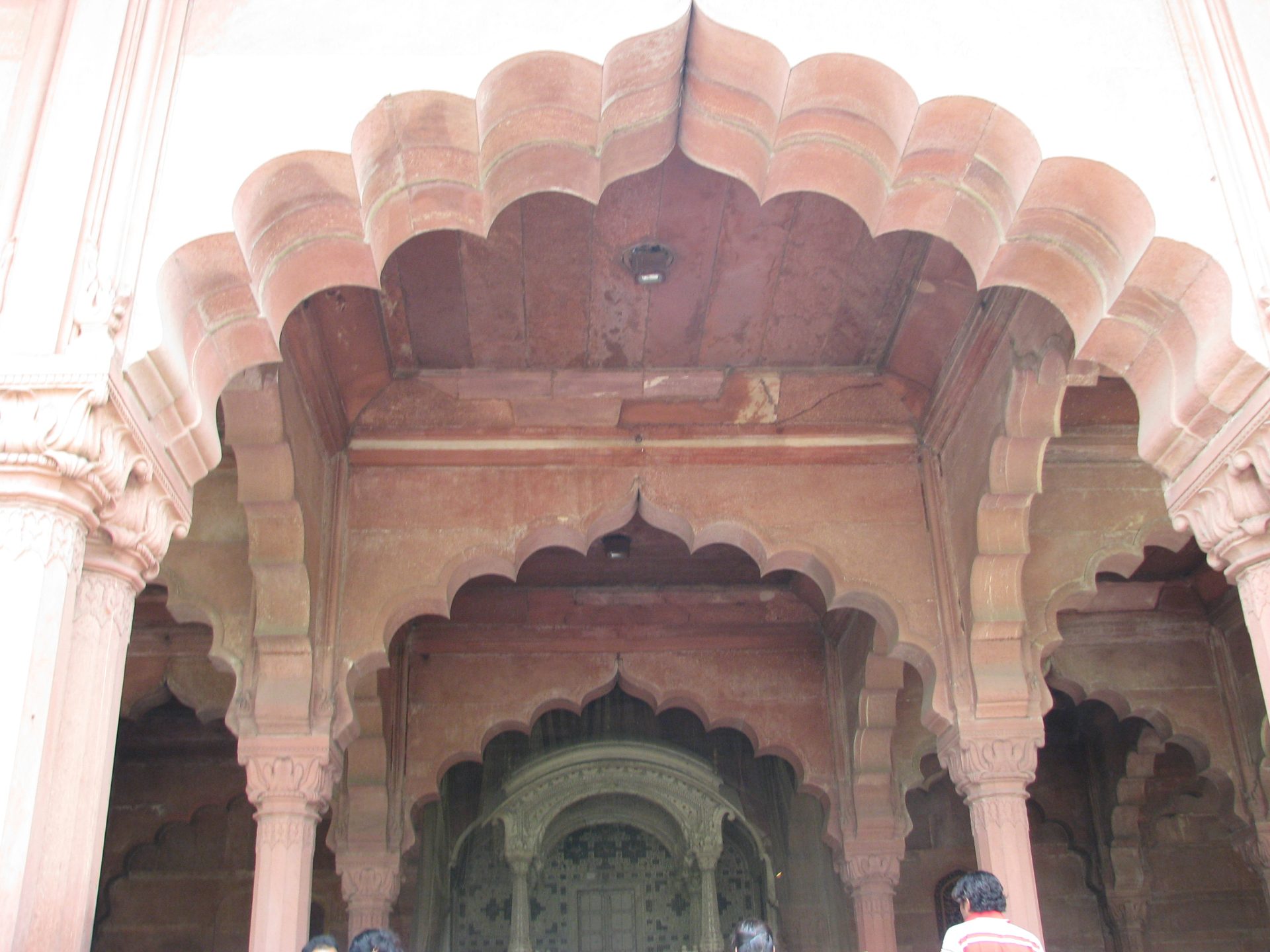
The Diwan-i-Aam or the public audience hall has 60 pillars with a throne canopy atop a platform where the emperor would be seated while a lower marble bench would be occupied by the Chief Minister. Close to this hall, is located the Rang Mahal which used to house the Emperor’s wives and mistresses. Brightly coloured and true to its name, the hall is decorated with a mosaic of mirrors and has an inlaid marble fountain.
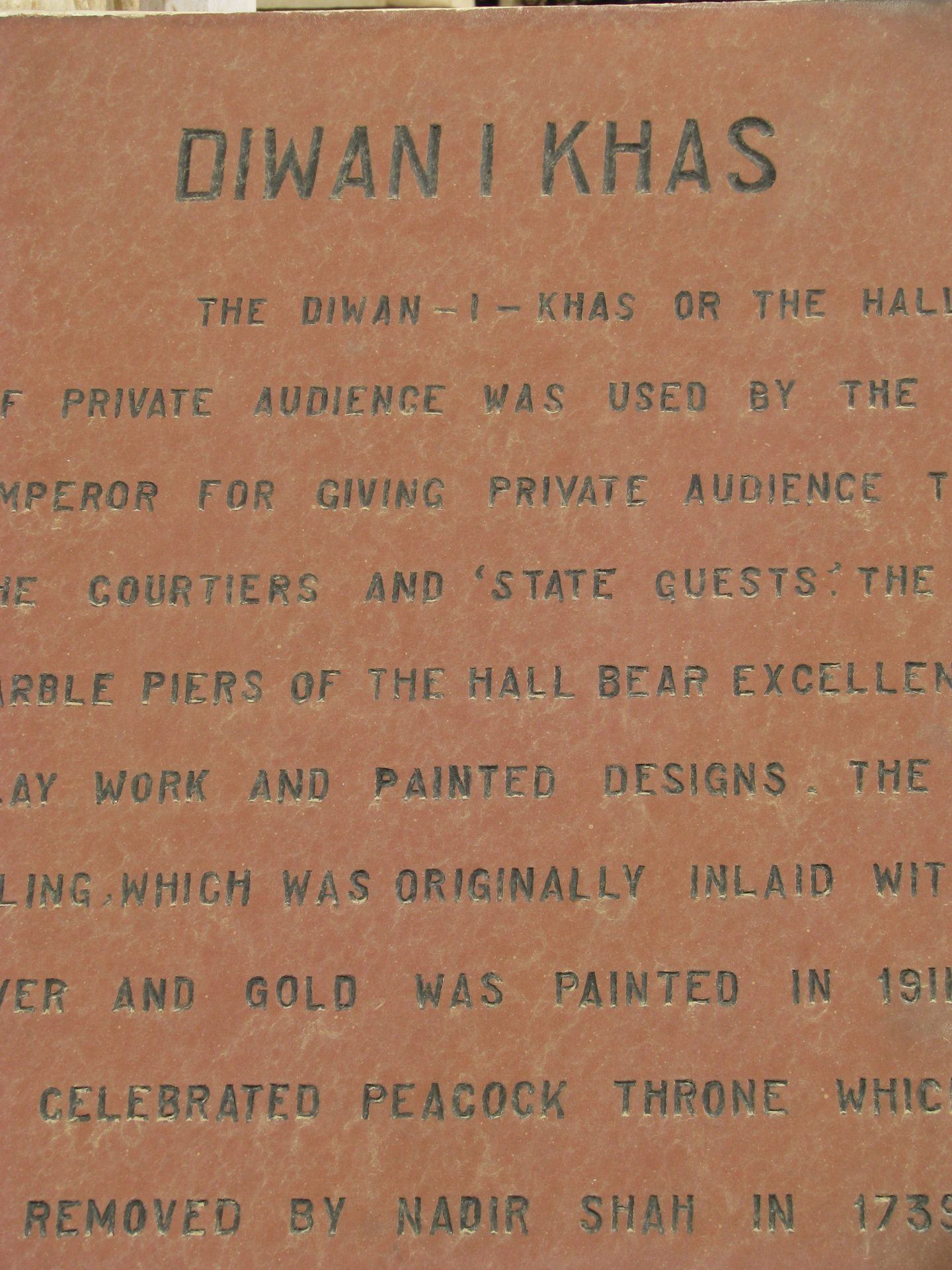
The Diwan-i-Khas or the Hall of Private audience is where Emperor Shah Jahan’s legendary peacock throne was housed at one time. This throne is believed to have been removed by Nadir Shah in 1735. Believed to be the hall where the emperor met his most trusted nobles and state guests, this hall used to be adorned with gems with its silver inlaid ceiling decorated with precious stones.
DIWAN-I-KHAS
THE DIWAN-I-AAM
The India Gate Memorial
We drove along Rajpath to The India Gate, formerly known as The All India war Memorial. Built in the memory of 90,000 soldiers of the British Indian army who died between 1914 to 1921 in the First World War. Designed by Sir Edward Lutyens, this monument bears a close resemblance to the Arc de Triomphe in Paris and the Gateway of India in Mumbai.
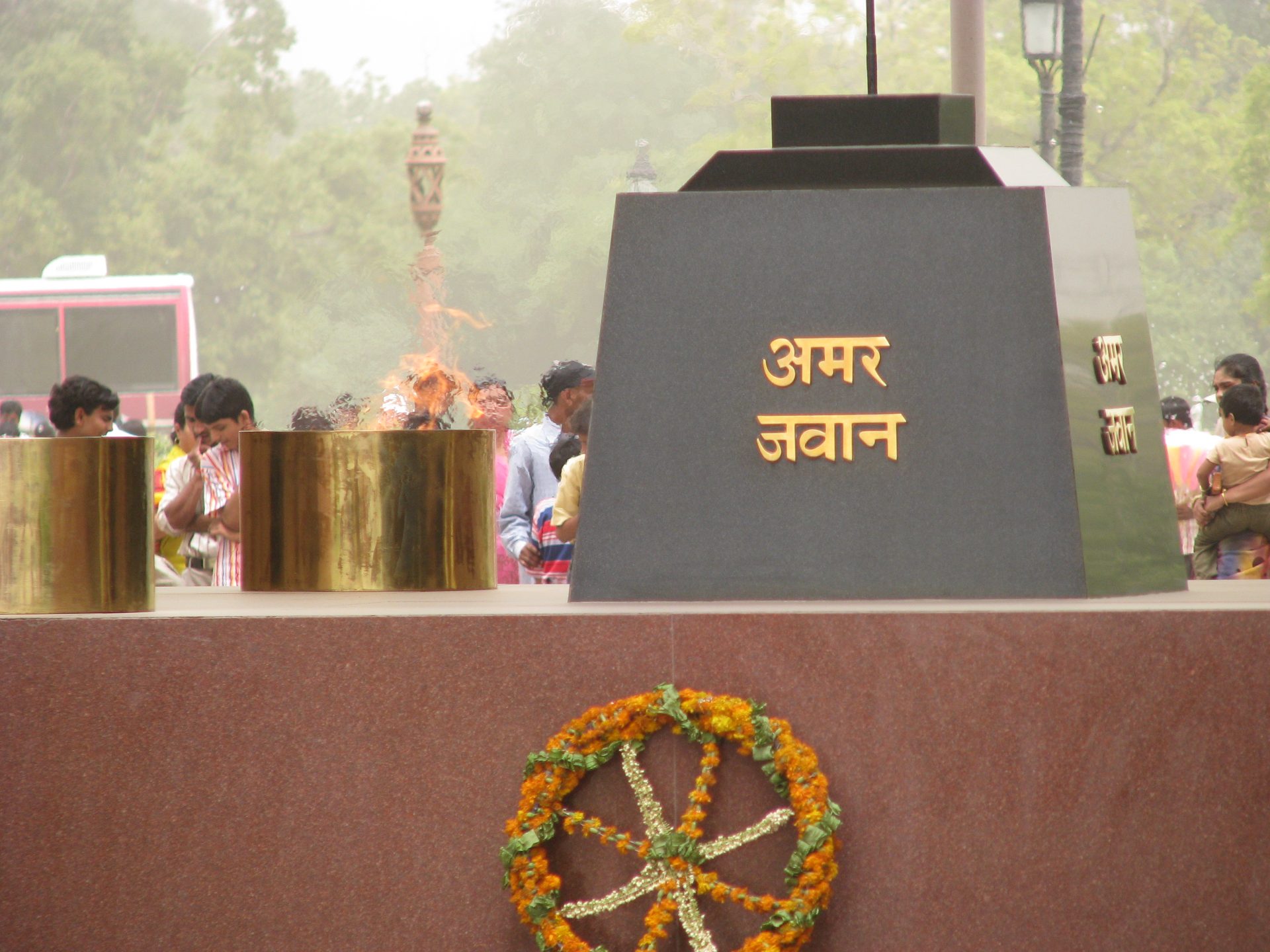
Following the Bangladesh Liberation war in 1972, the Amar Jawan Jyoti, a structure consisting of a black marble plinth with a reversed rifle, capped by a war helmet and bounded by four eternal flames, was built beneath the archway. India’s tomb for the unknown soldier is the largest War Memorial of its kind in India and on every Republic Day, the Prime minister of our country pays a visit to the India Gate to pay his tributes.
Akshardham Temple Complex
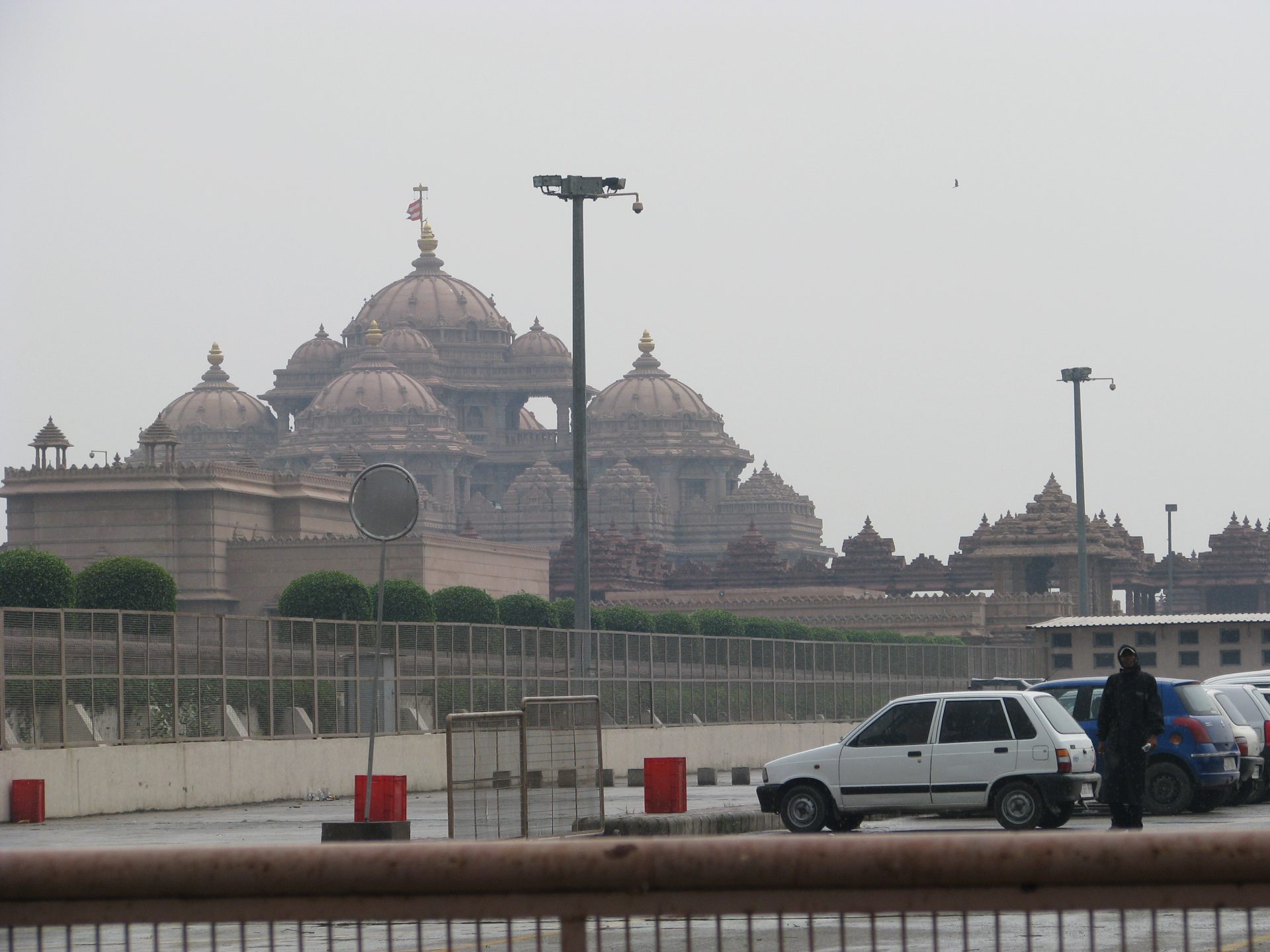
Built out of pink sandstone and Italian marble, this intricately carved temple spans a width of over 90 metres and is a little over 40 metres in height. This temple is designed on similar lines as its predecessor in Gandhinagar in Gujarat.
The complex has 234 Ornate Pillars supporting the 9 domes beside a thematic garden, a water show and a cultural boat ride for around 12 minutes. Besides this, there are 3 exhibition halls with different themes being presented and centred around Hinduism. Photography is an absolute NO here.
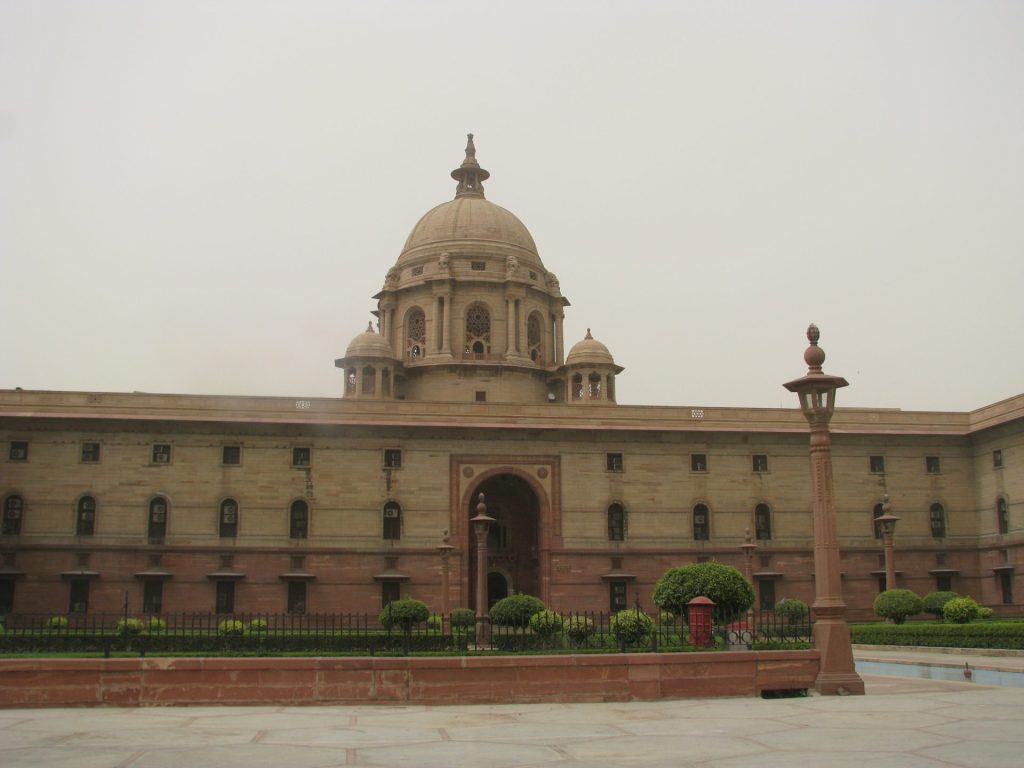
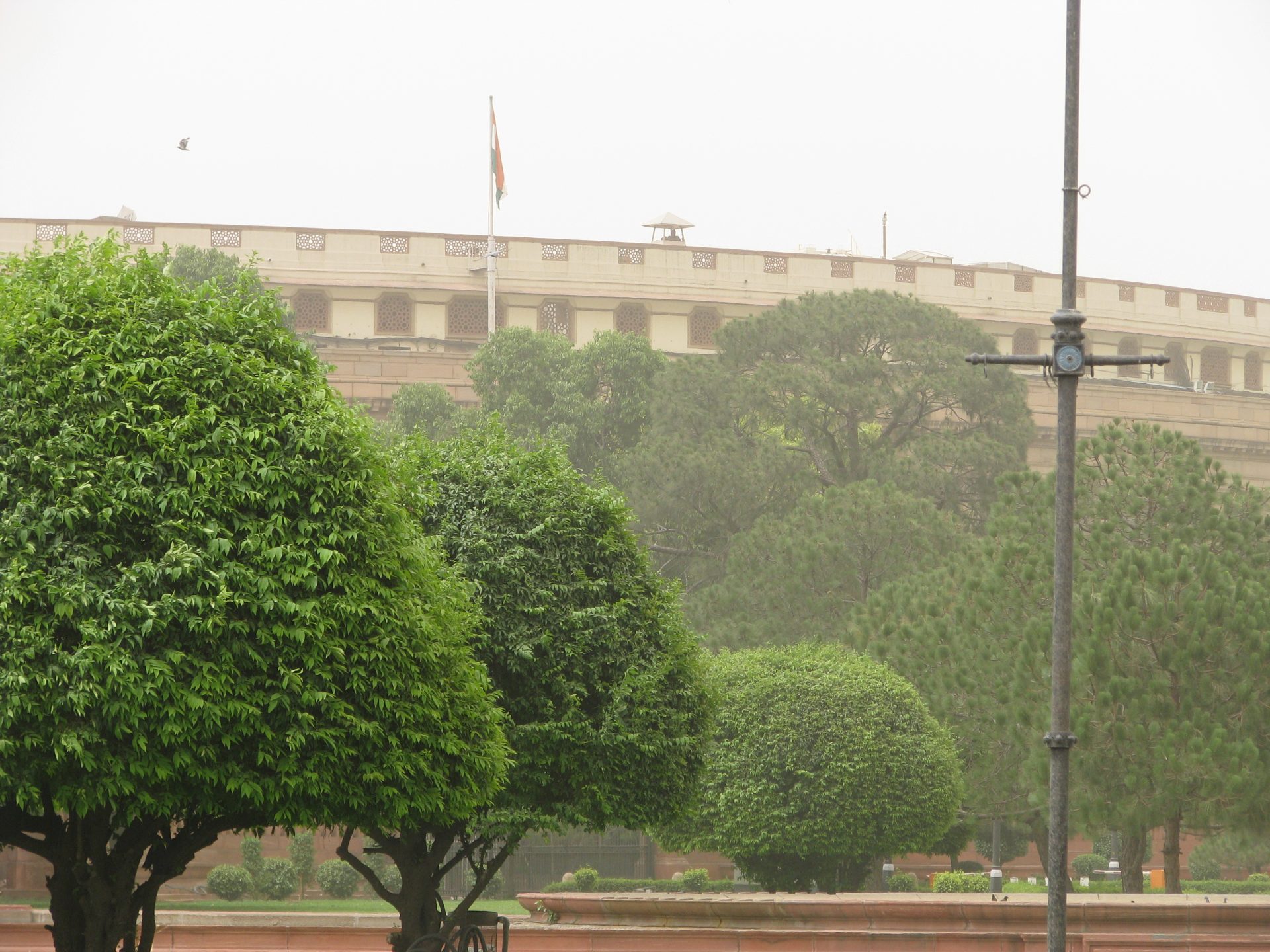
We went around the entire complex in around 2 and a half hours and made our way back to our hotel in New Delhi. On our way back, a quick photo stop at 2 monumental buildings which we had already seen in our earlier trips, the Rashtrapati Bhawan and the Parliament House. A tiring day walking around and since the next day was to be our travel by train to Amritsar post which we were to fly out to Srinagar, we retired pretty early.
The Rashtrapati Bhavan (President's House) & Parliament House
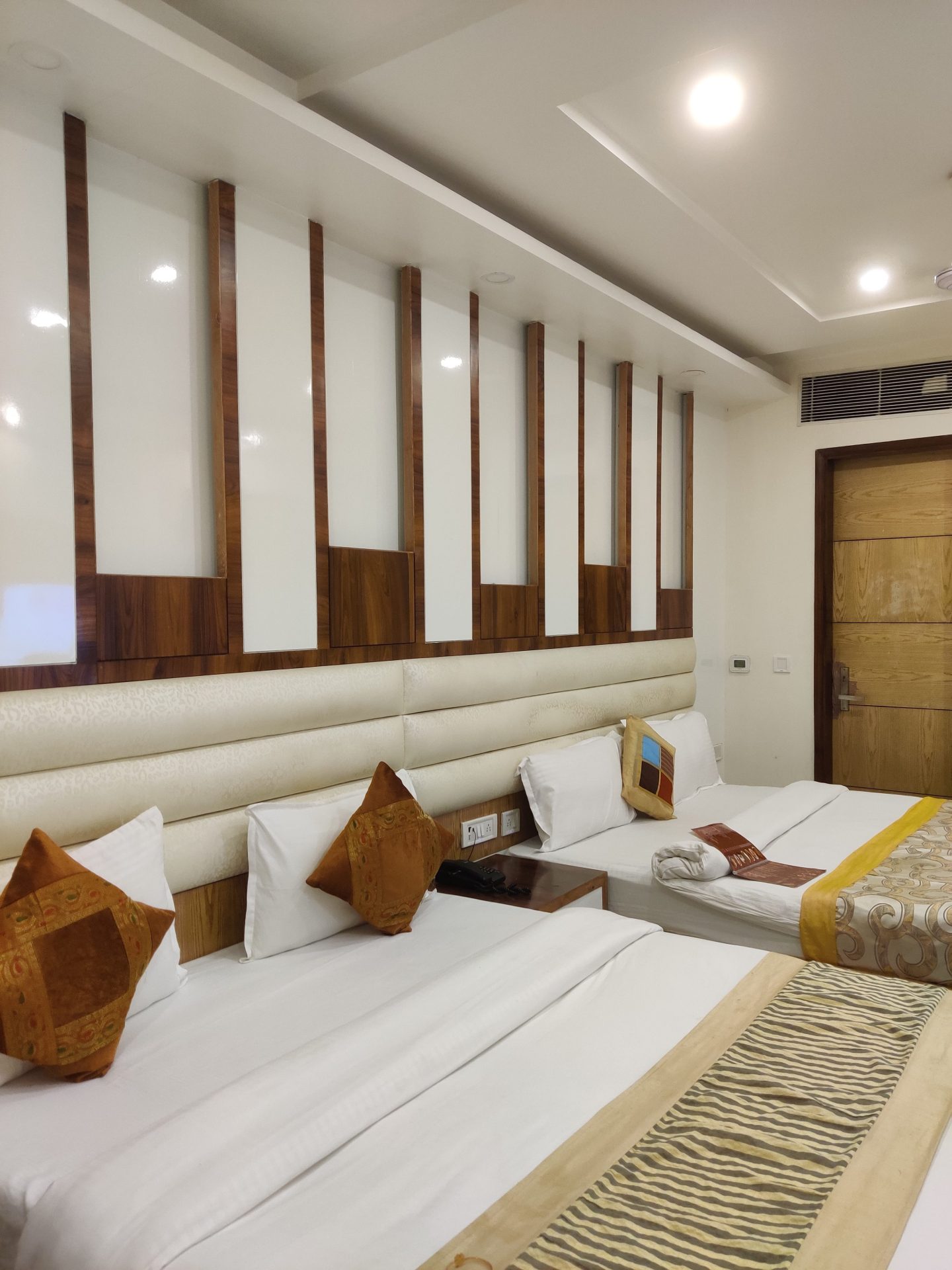
We set foot back in Delhi after a packed but very enjoyable trip to Amritsar and Kashmir after about a week on a late evening. 2 tourist attractions very divergent in terms of their offerings; one endowed with its natural and pristine beauty and the other, equally absorbing in terms of the history, patriotism and religion on offer. We had chose the same hotel York for ease of travel and commuting around. Would definitely not recommend a stay here. The surroundings outside the hotel are dirty and it is located in a very congested lane. Save for its proximity to the station and neat and clean rooms, would never choose to stay here again.
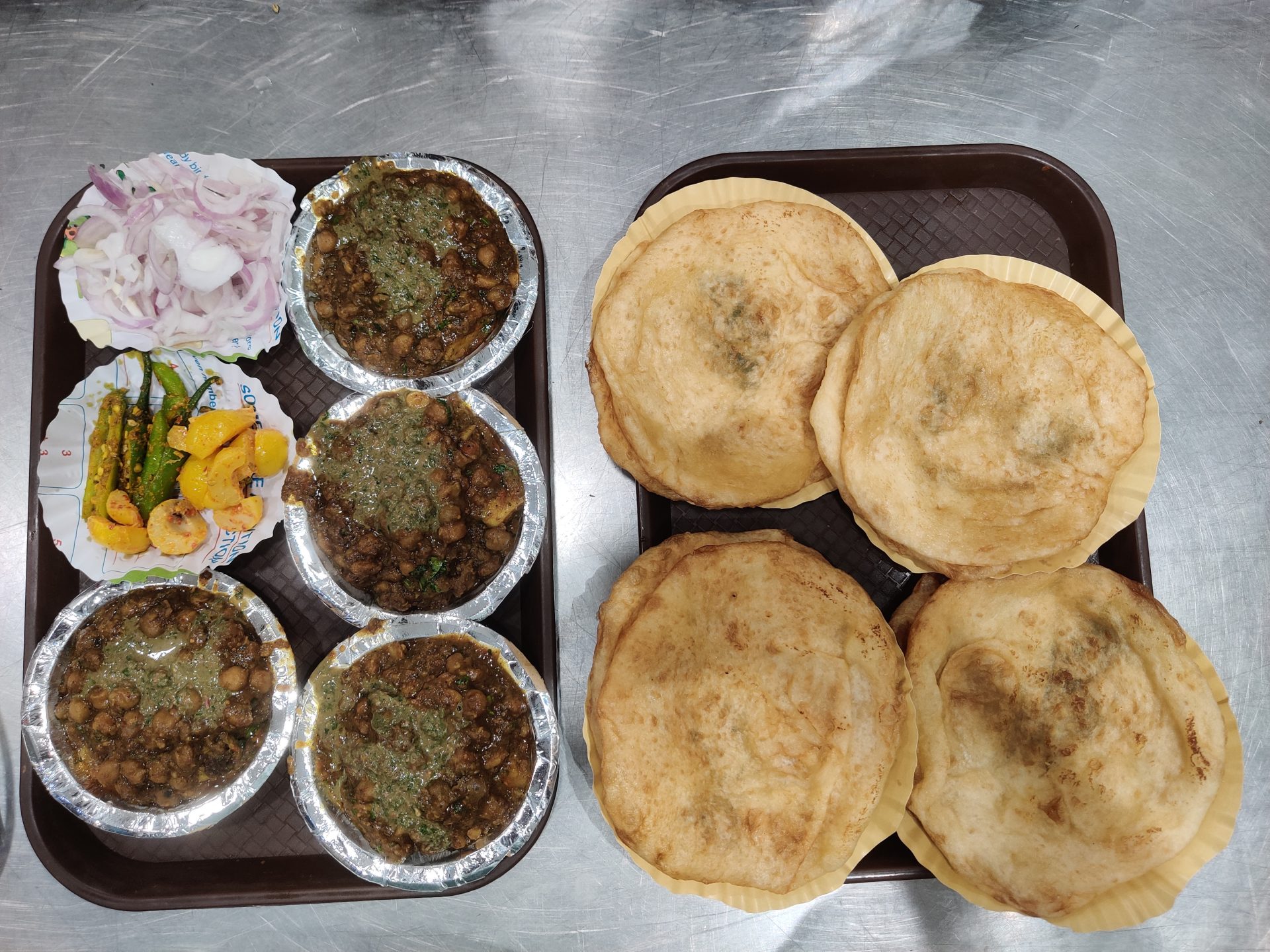
Since we had seen most of Delhi during our earlier visits, we decided to go around a few select monuments and spent the rest of the day shopping. We headed for breakfast to Sitaram Diwanchand in Paharganj area, probably one of Delhi’s best Chole Bature (Spicy Chickpea curry with fried flatbreads) joints. This shop traces its roots to very humble beginnings over a 50 years back when astride a cycle, they used to go around selling this to bystanders and thanks to the consistency in taste, grew manifold in popularity.
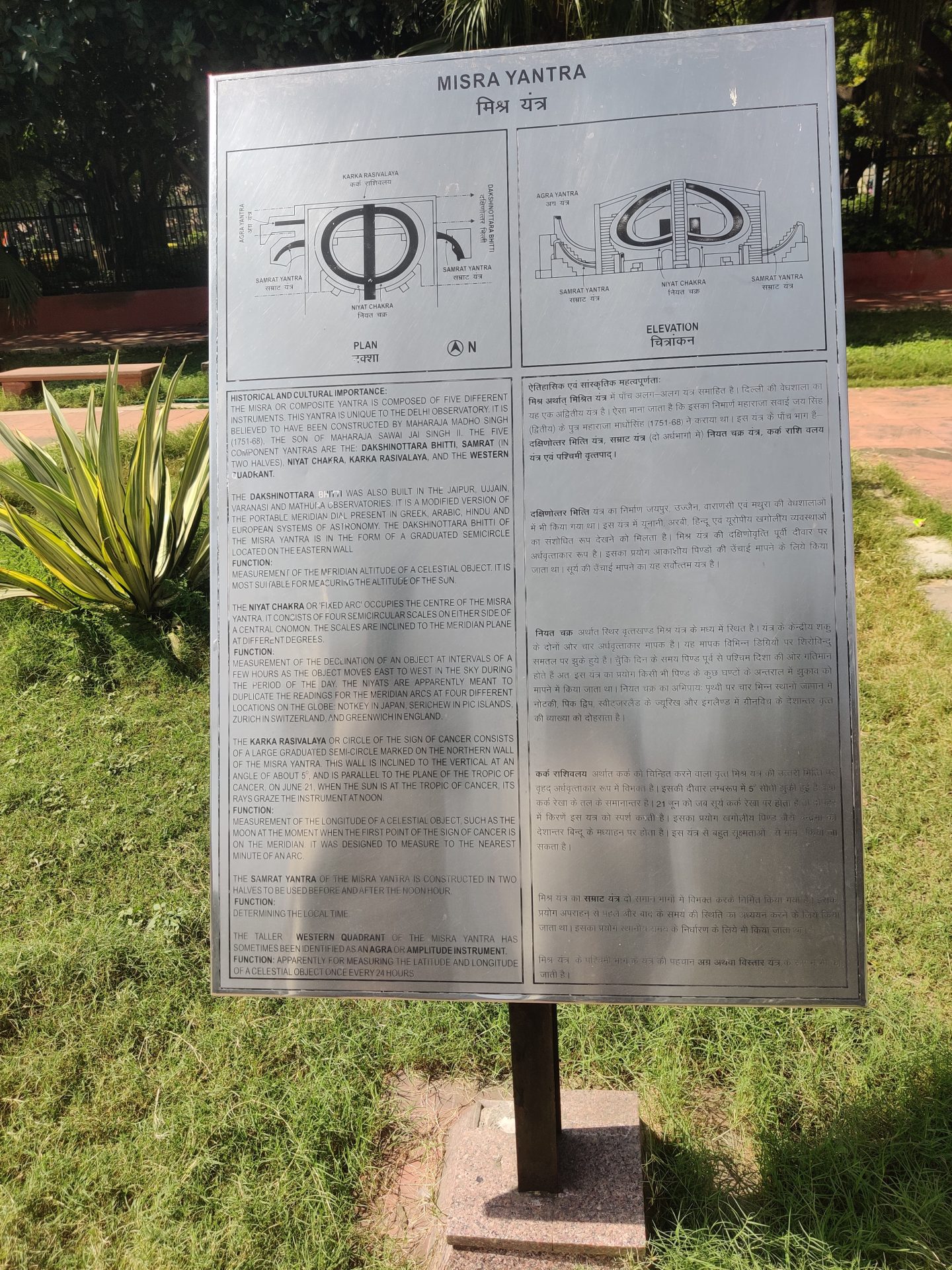
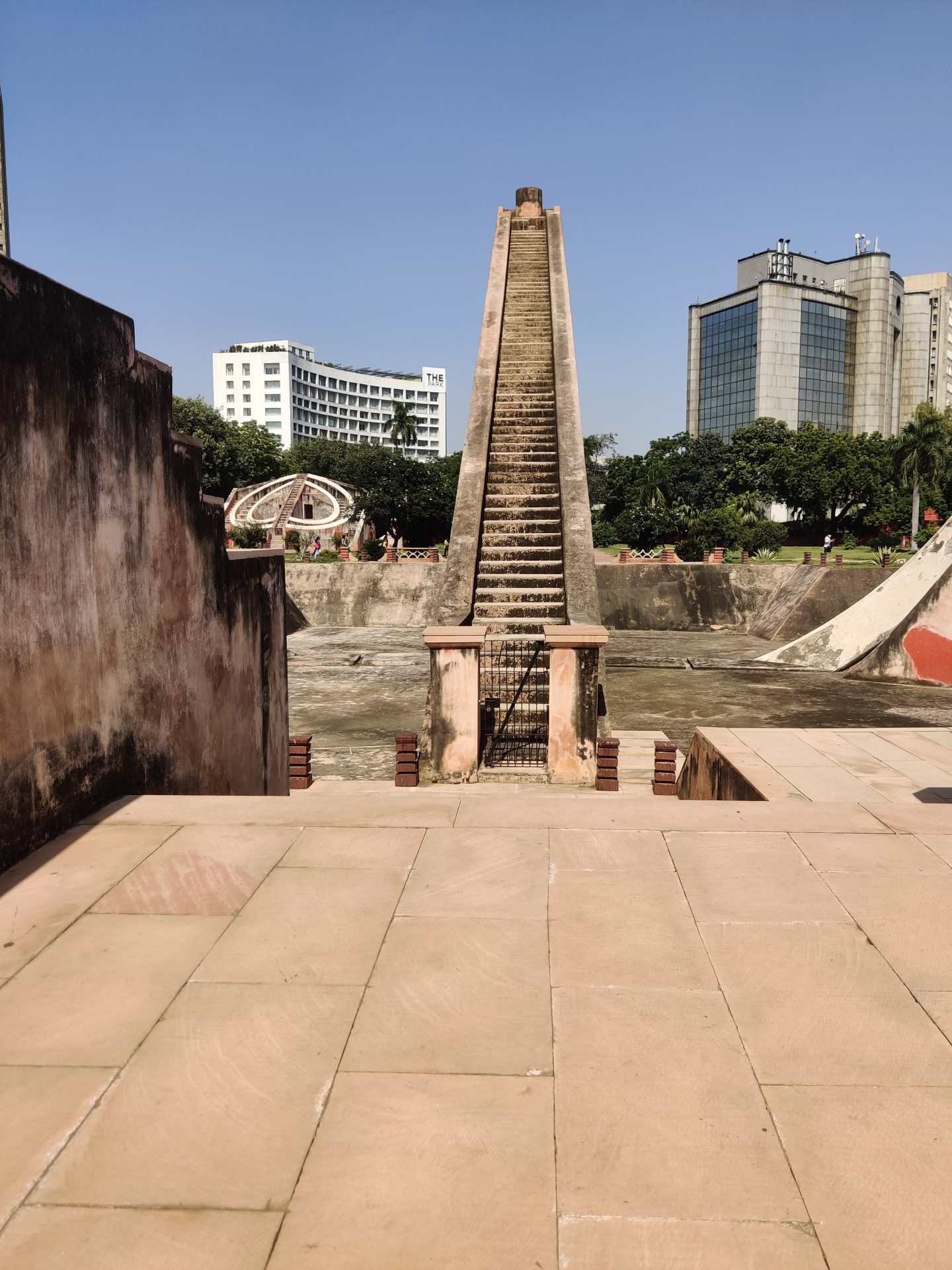
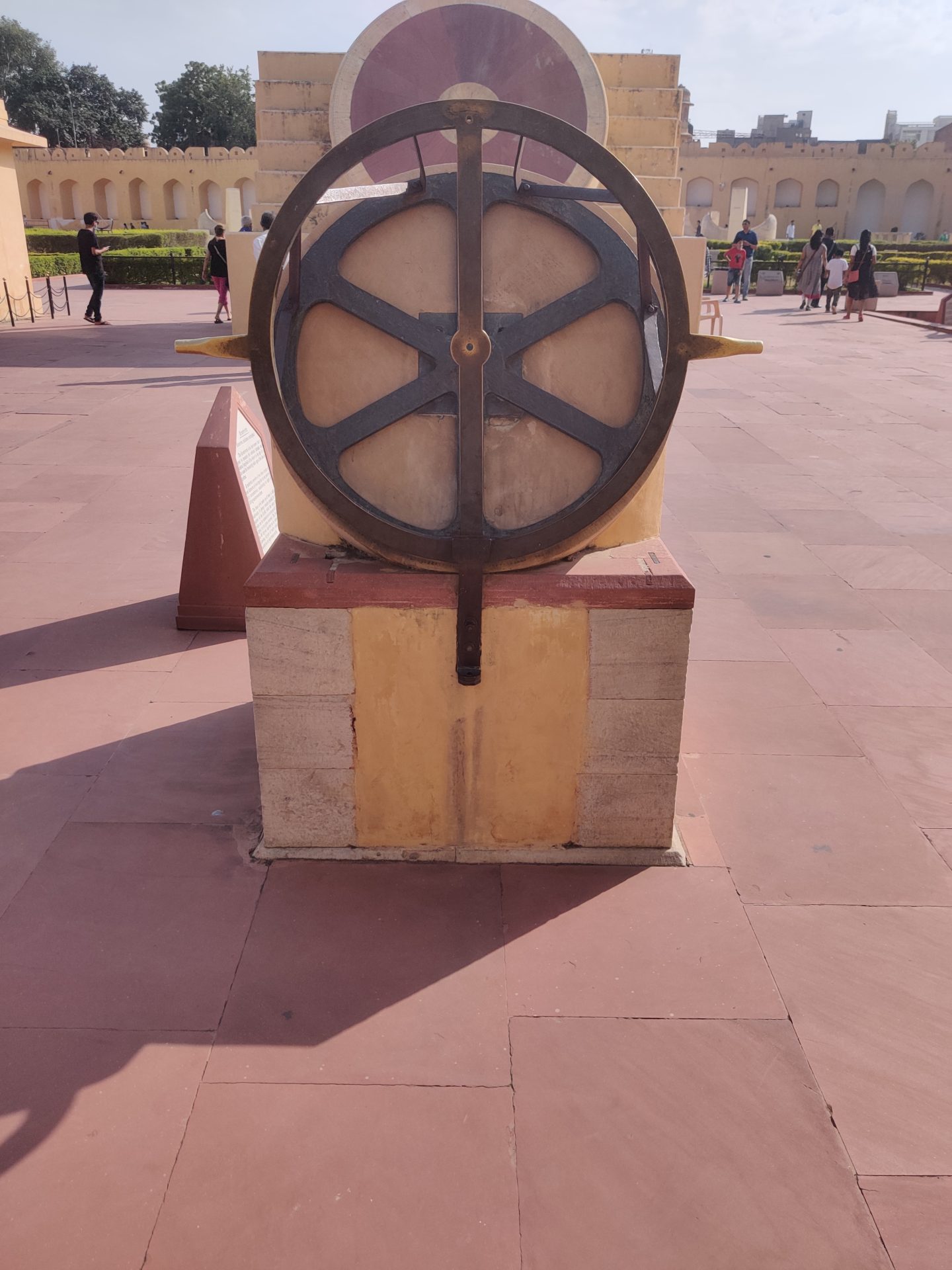
The Jantar Mantar
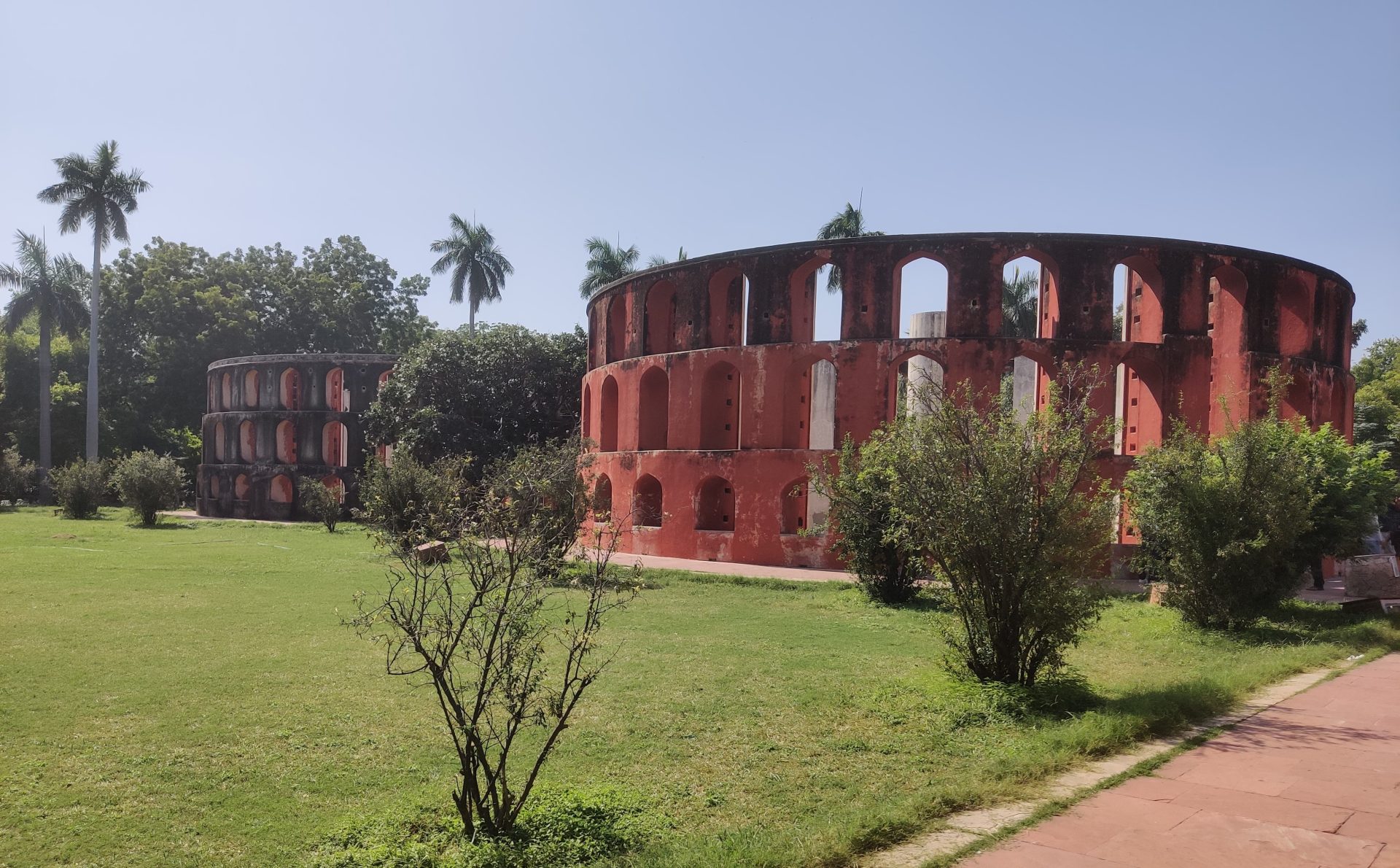
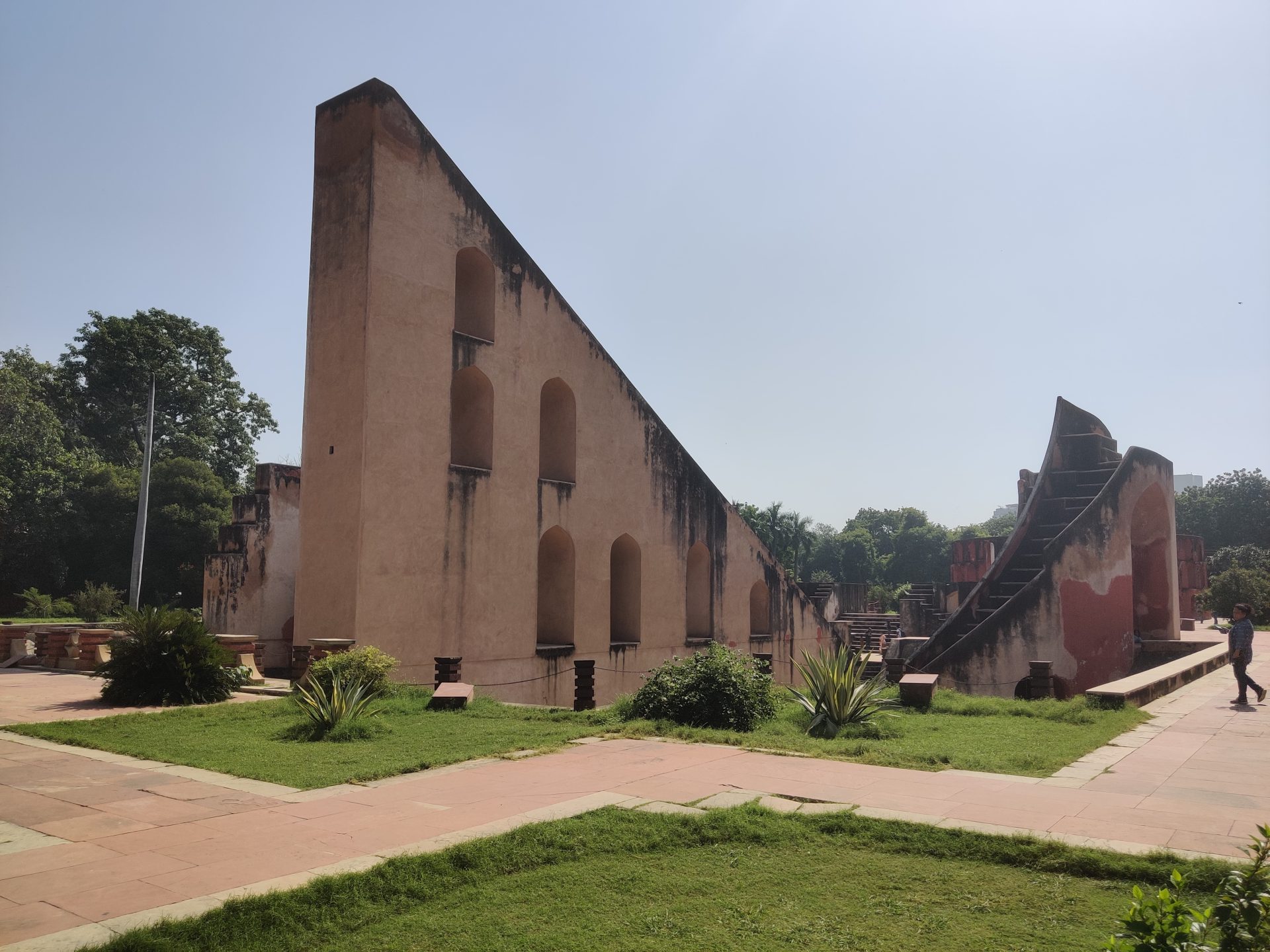
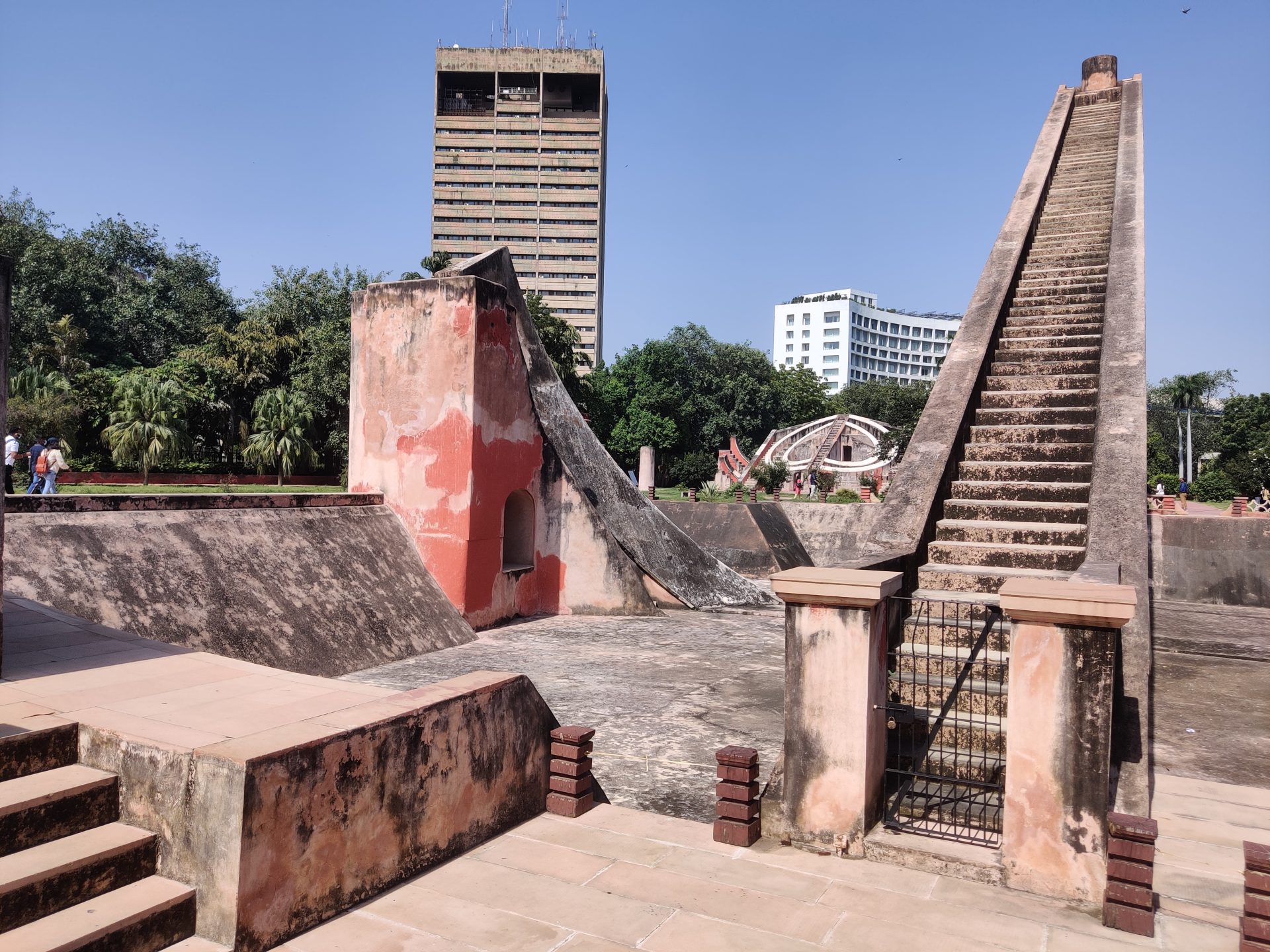
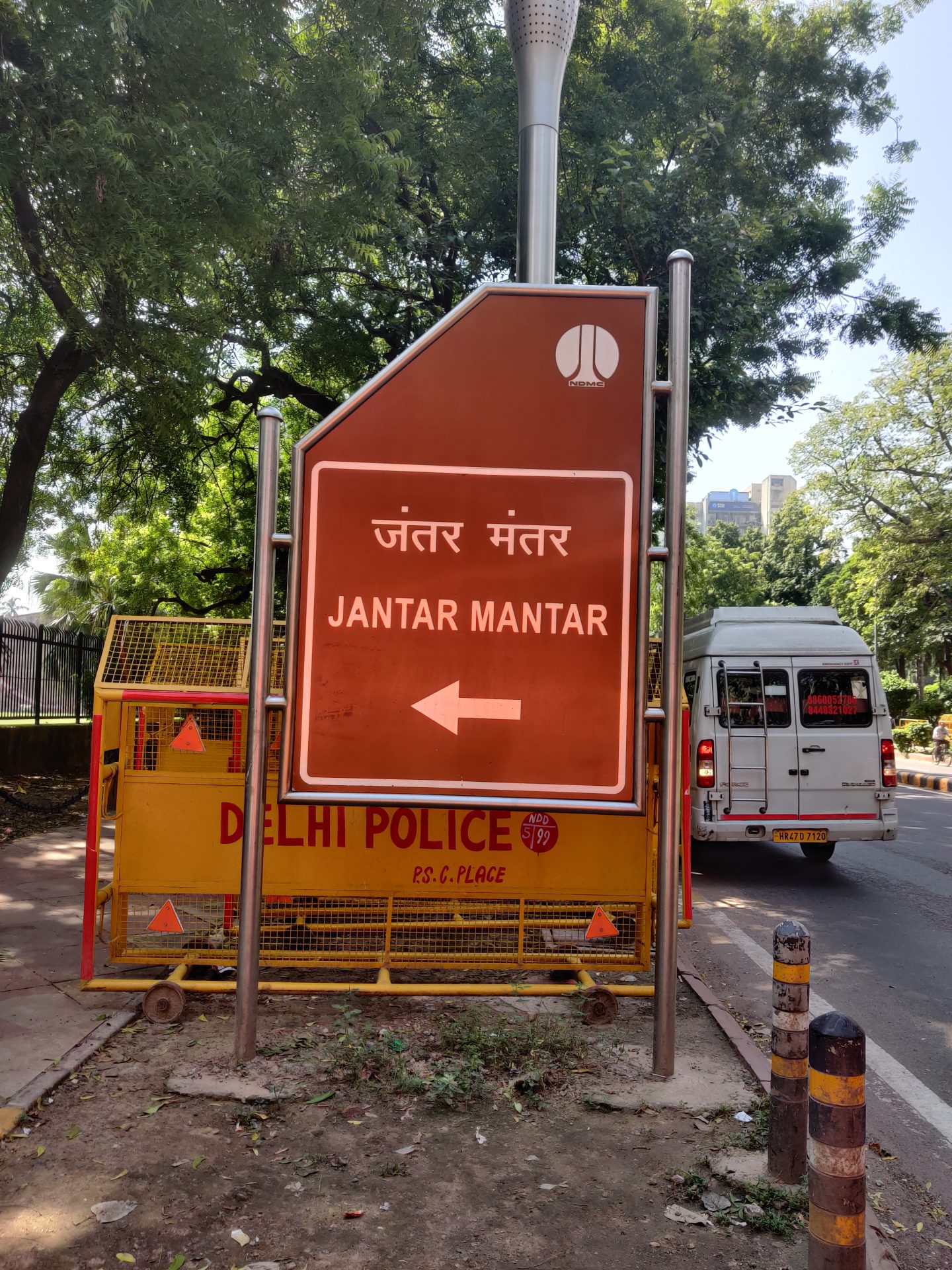
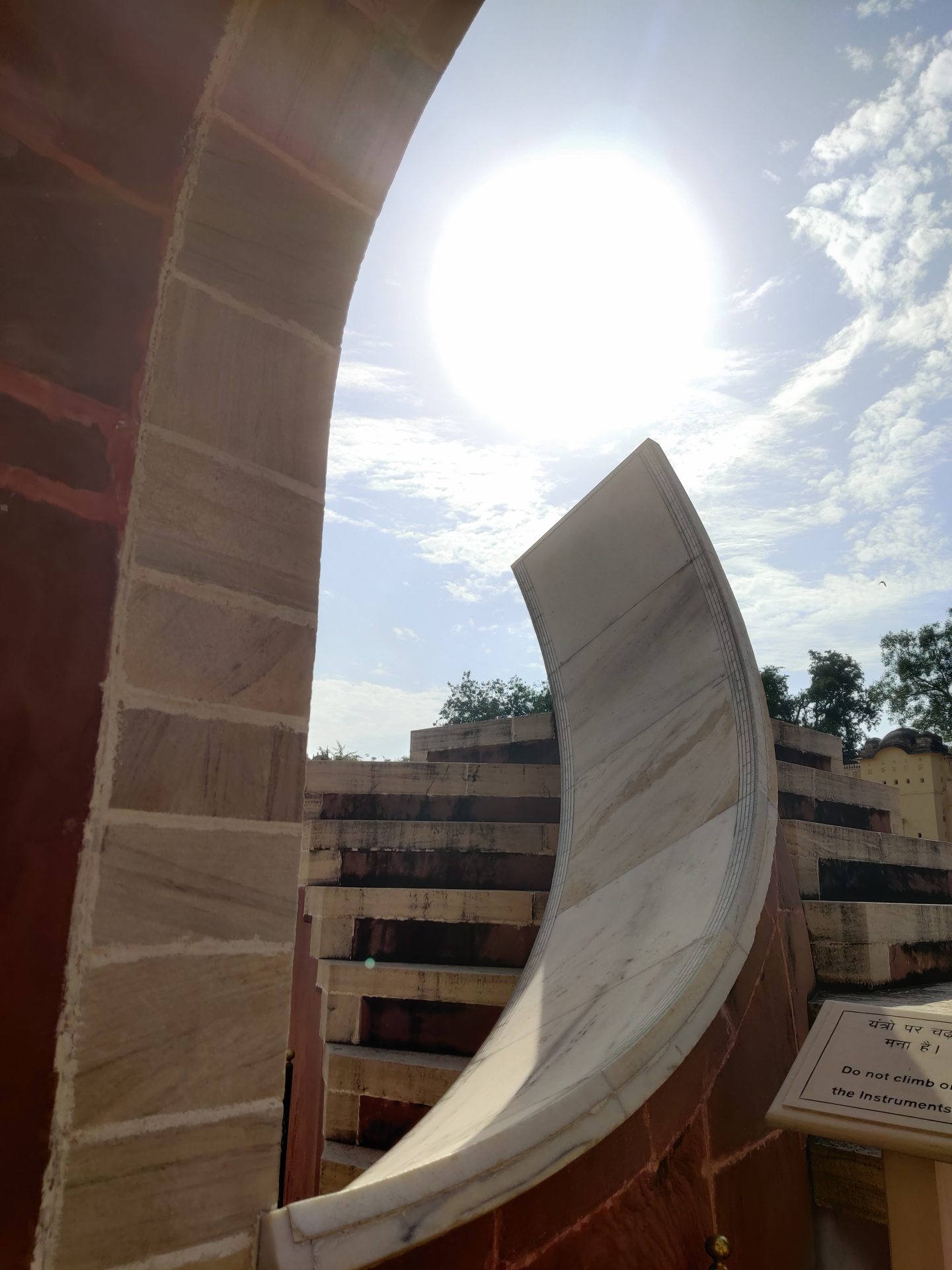
We moved on to Connaught Place post breakfast to visit the Jantar Mantar. One amongst the 5 observatories built by Maharajah Jai Singh II of Jaipur.
The other 4 are at Jaipur, Mathura, Ujjain and Varanasi. These architectural structures are instrumental wonders of astronomy.
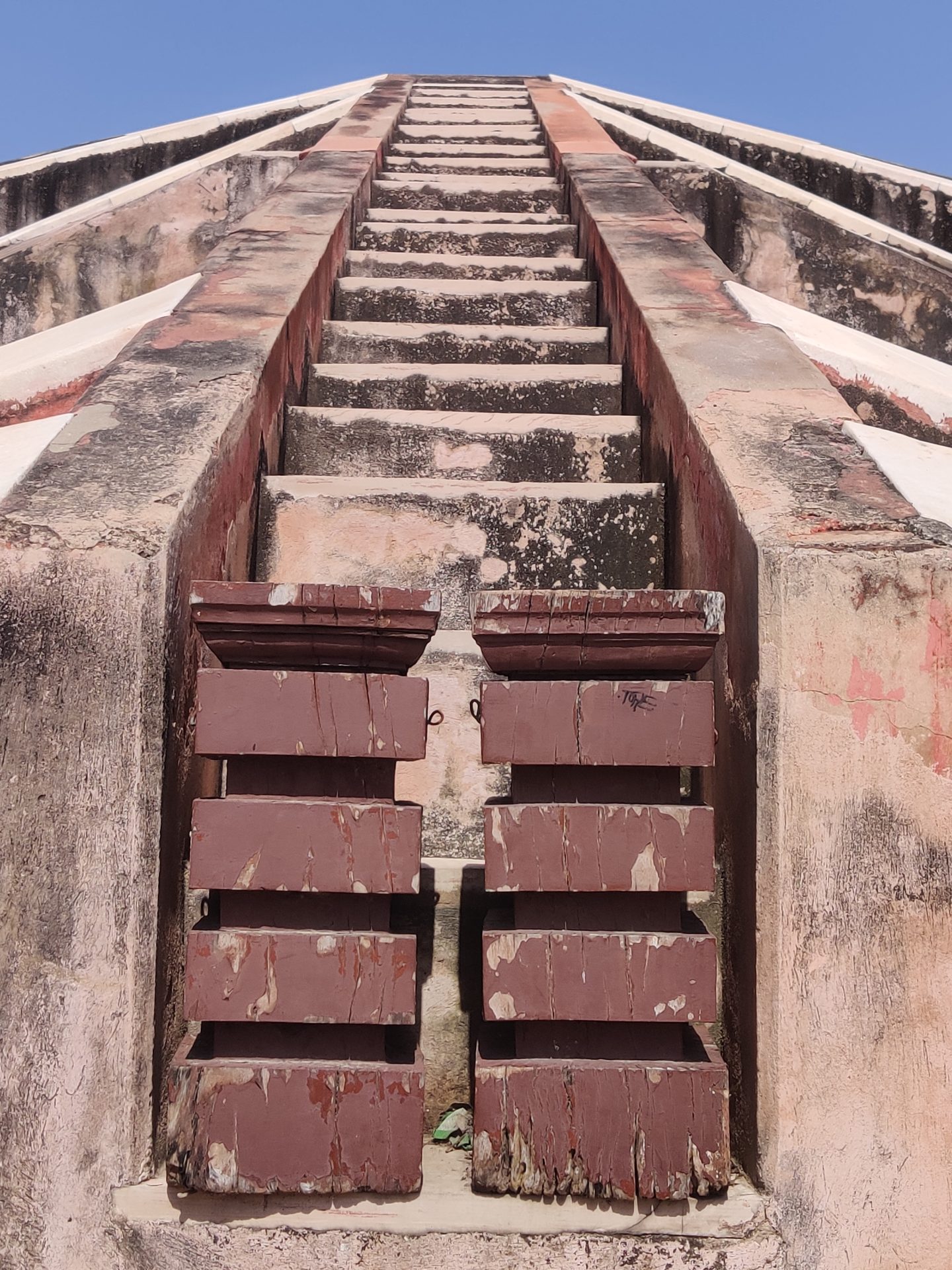
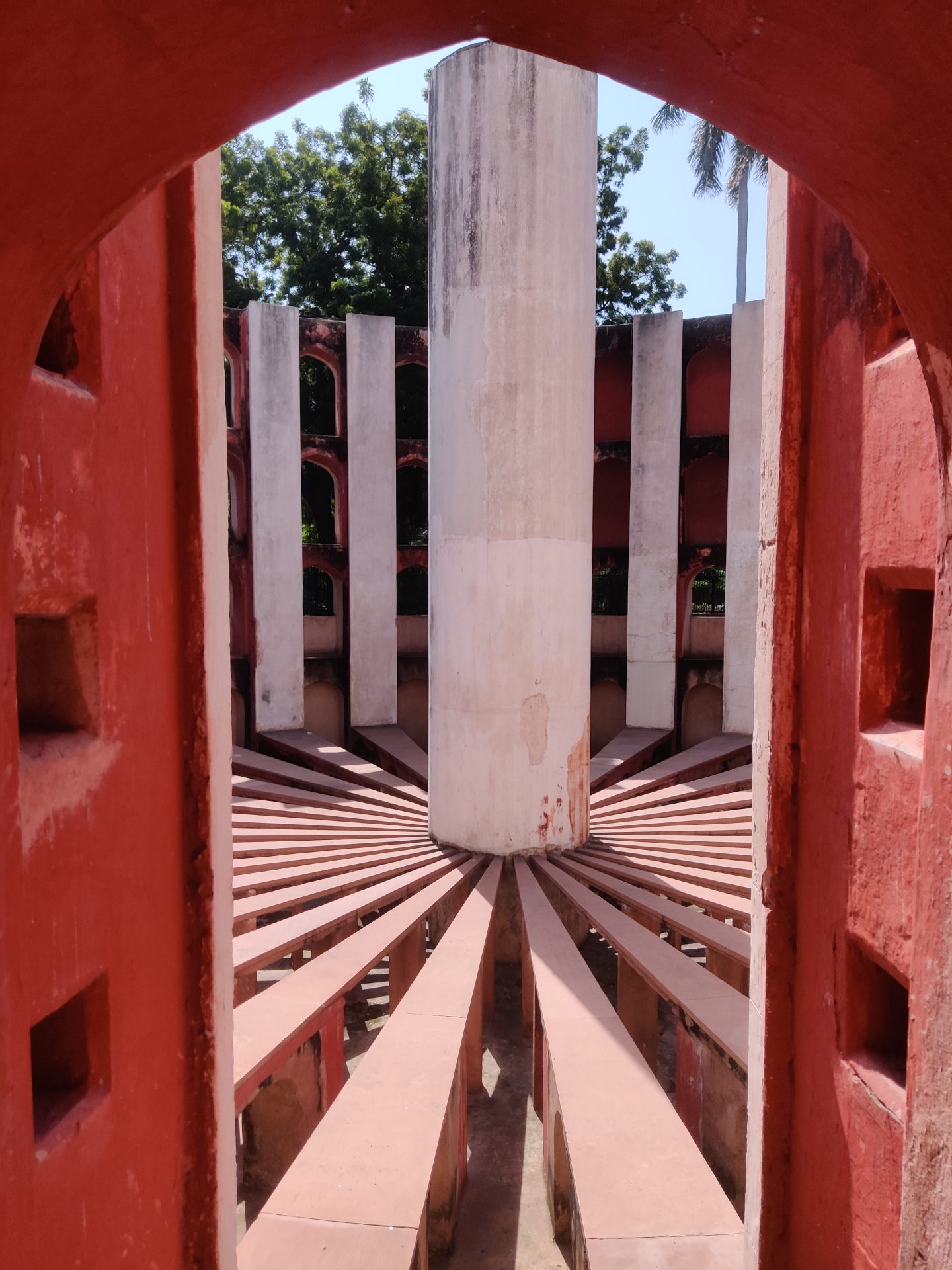
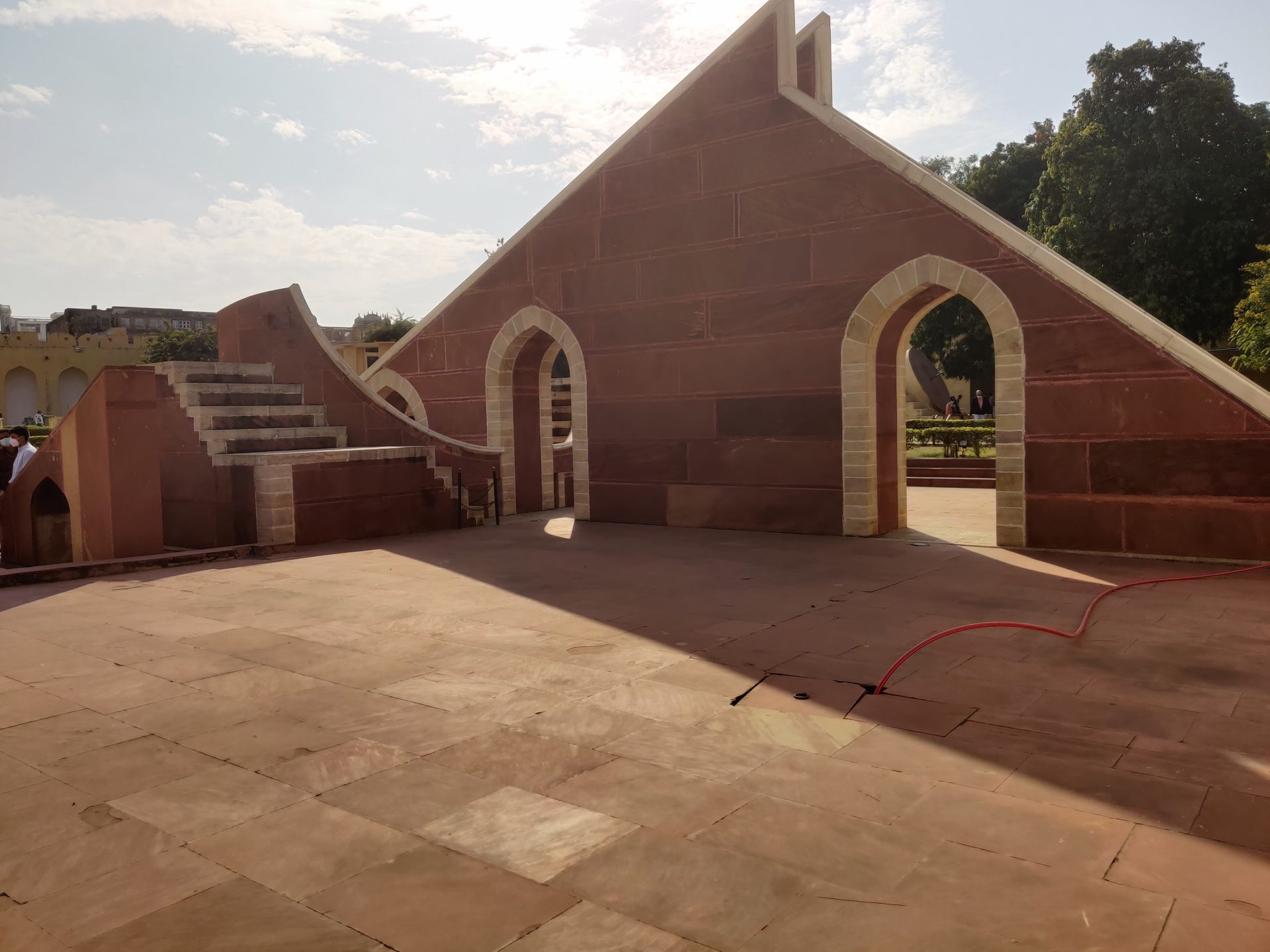
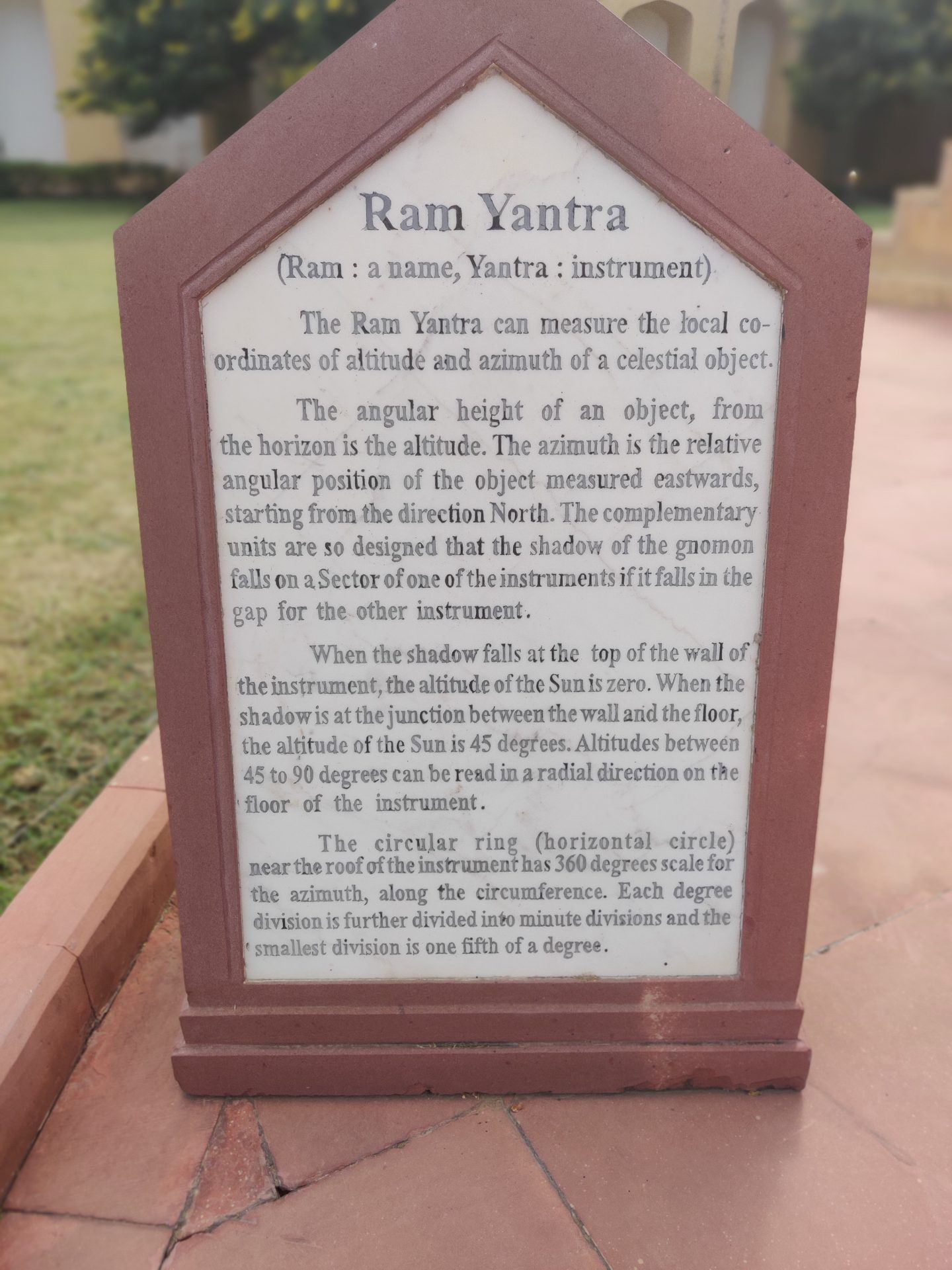
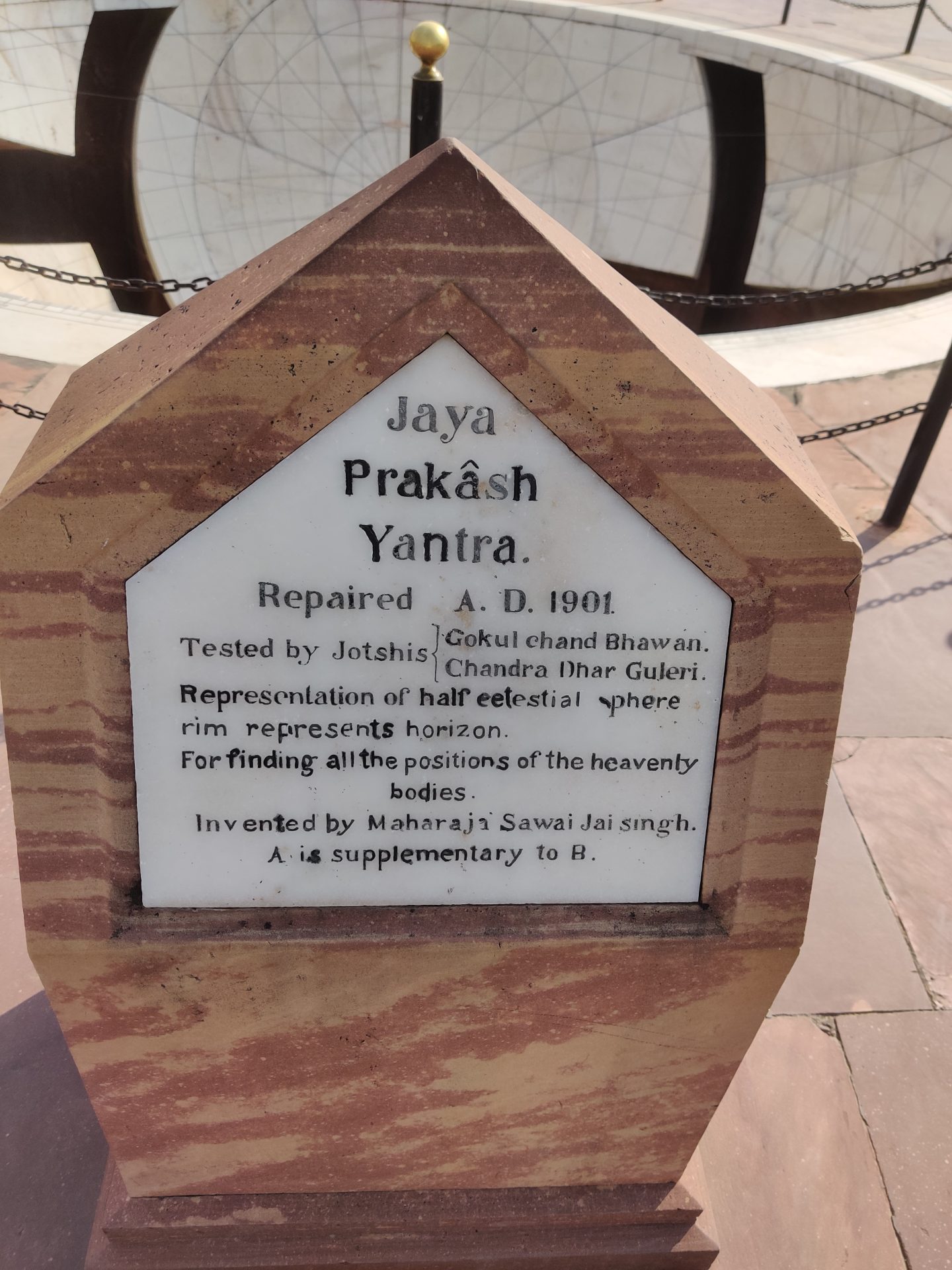
They have helped compile tables in astronomy, predict the time and movement of the planets, the sun and the moon. Built around 300 years back, this observatory had 13 distinct instruments but over the years and after taking a pounding in the 1857 uprising, there are only 4 distinct ones left – The Samrat, The Jayaprakash, The Rama and The Misra Yantra.
There is a small fee of Rs.15/- apiece levied for entering this monument complex.
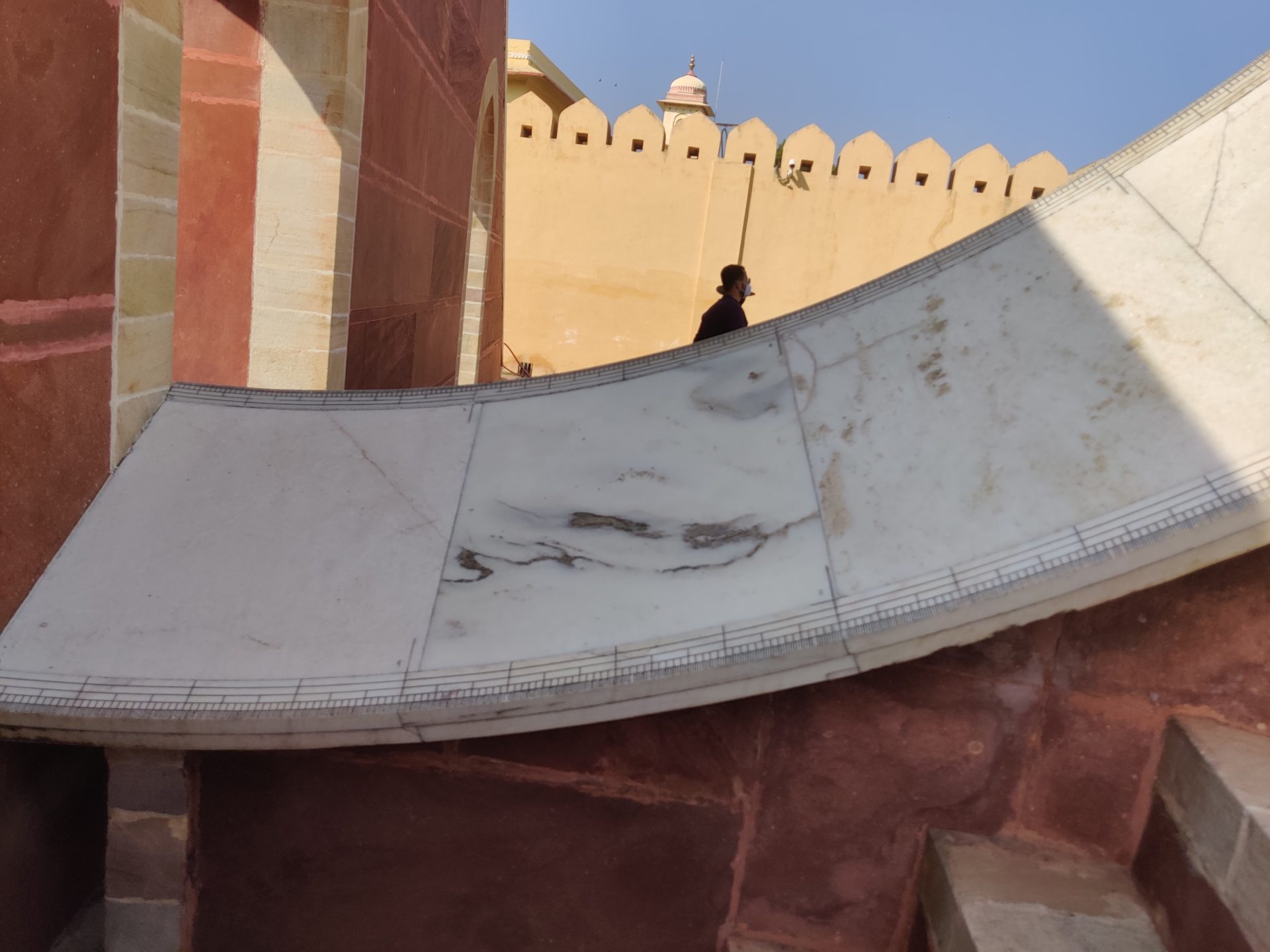
RAMA YANTRA
SAMRAT YANTRA
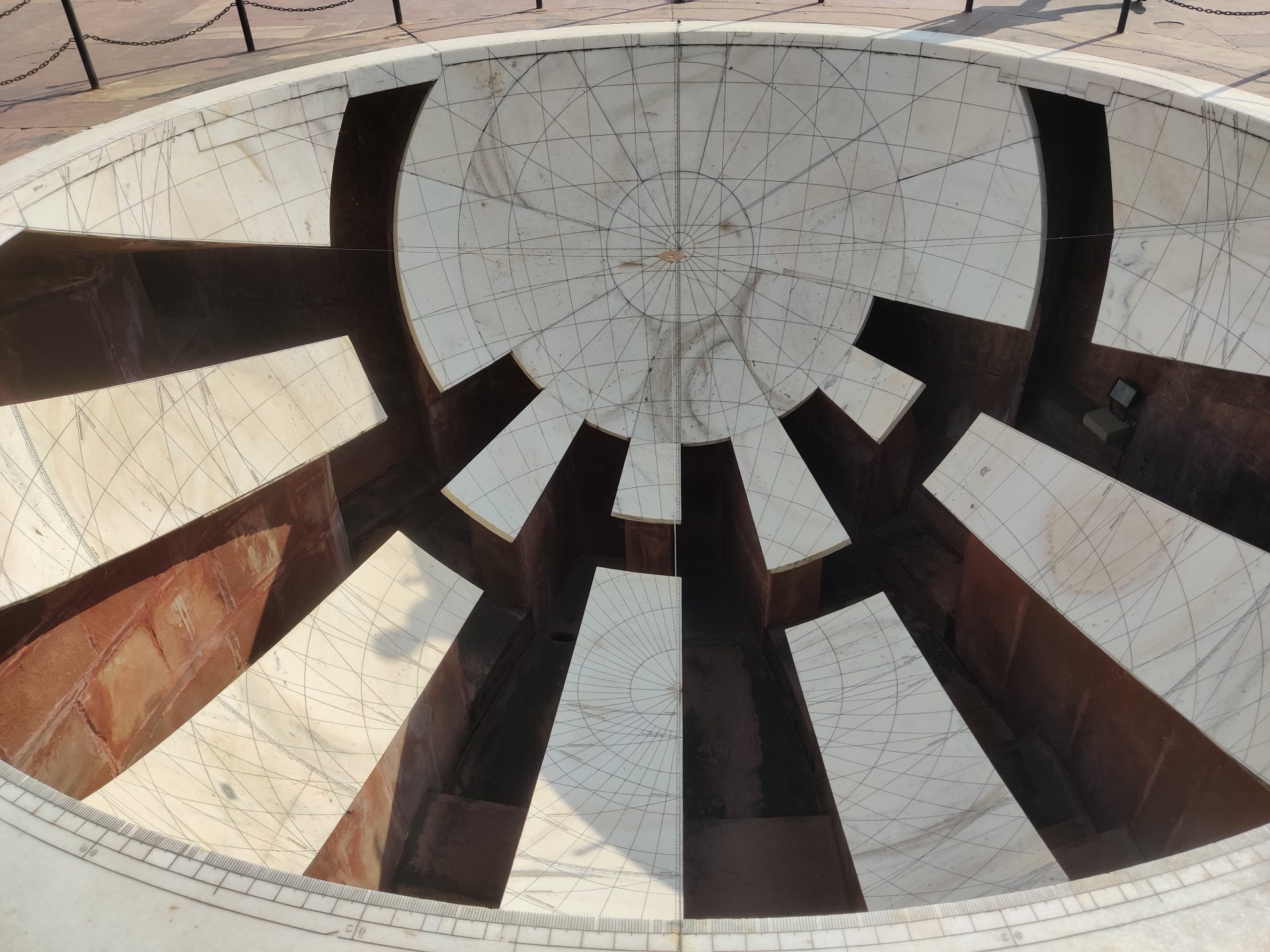
INSIDE VIEW OF THE RAMA YANTRA
Rajghat
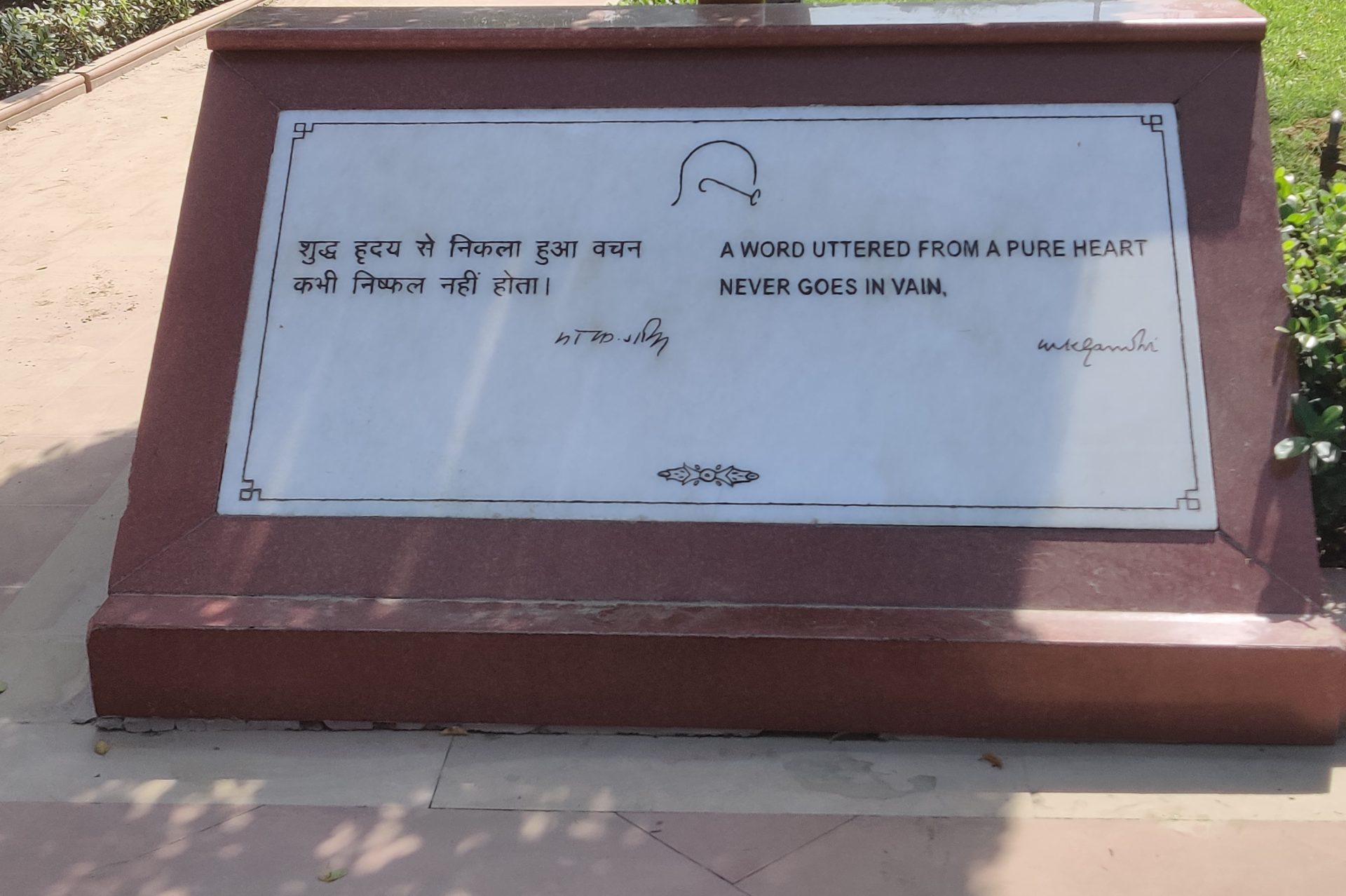
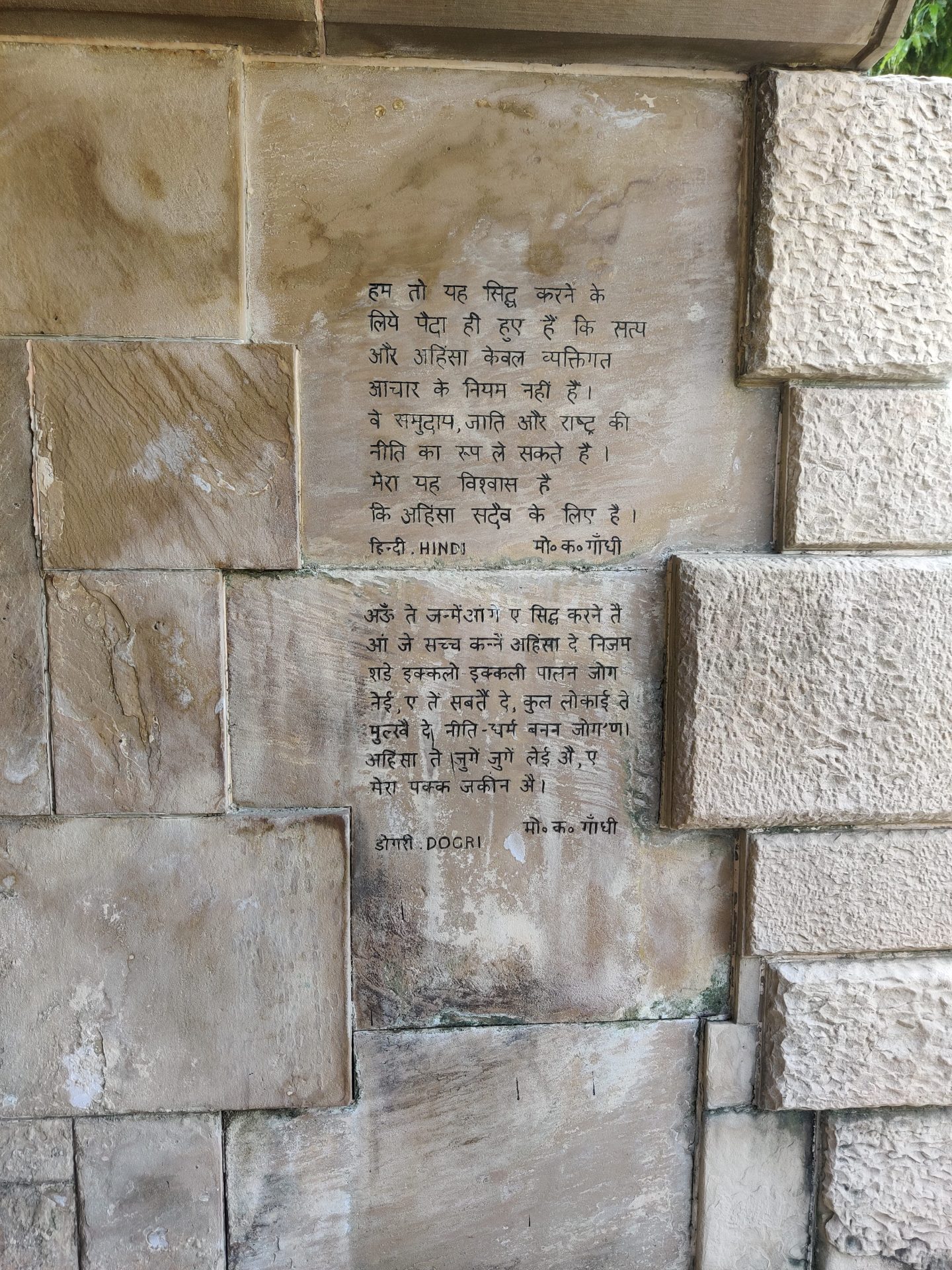
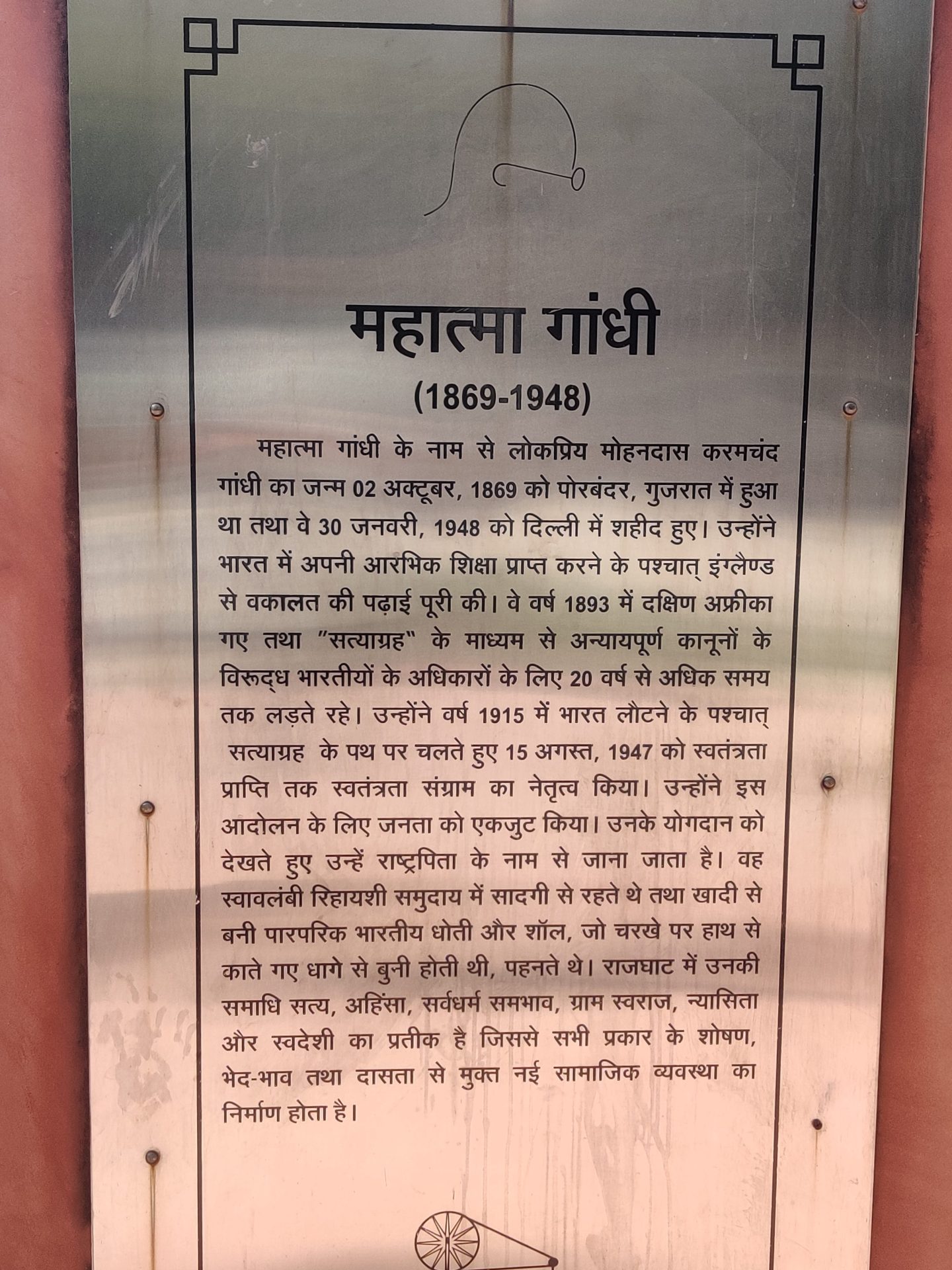
We finished off an early lunch at the Connaught Place area and moved on towards Rajghat which was to be our next stop. A memorial dedicated to the Father of the Nation, Mahatma Gandhi and set amidst lush green parkland, Rajghat has a black stone platform set in an open air complex which marks the spot where the Mahatma was cremated. An eternal flame keeps burning here. While the entrance to the Raj Ghat and the India Gate are free, around the vicinity of the Raj Ghat, there are a few more memorials erected in the memory of a few famous political leaders.
After spending a serene 20 minutes, going around the complex, we moved on towards The Humayun’s Tomb.
.
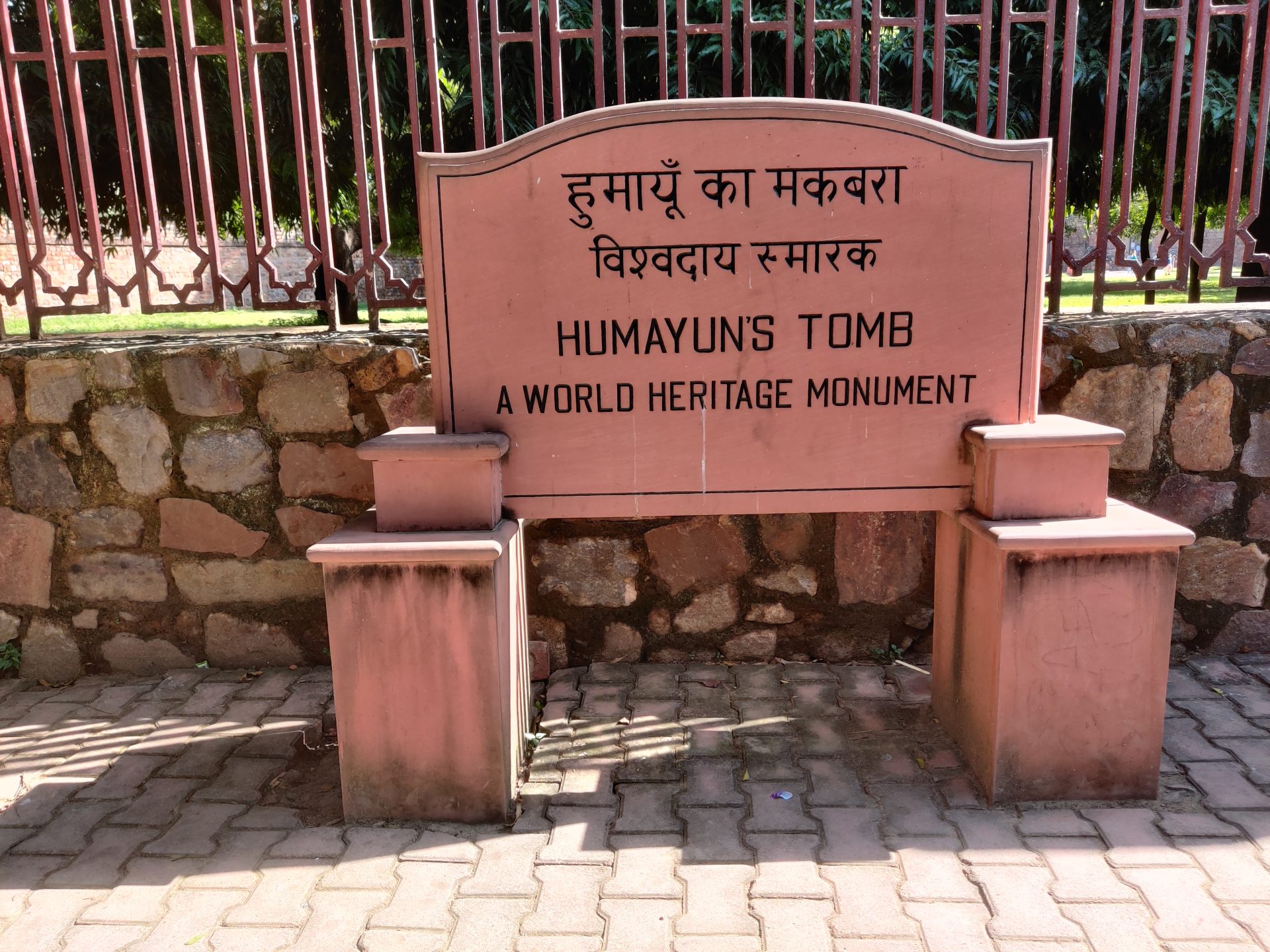
Humayun's Tomb
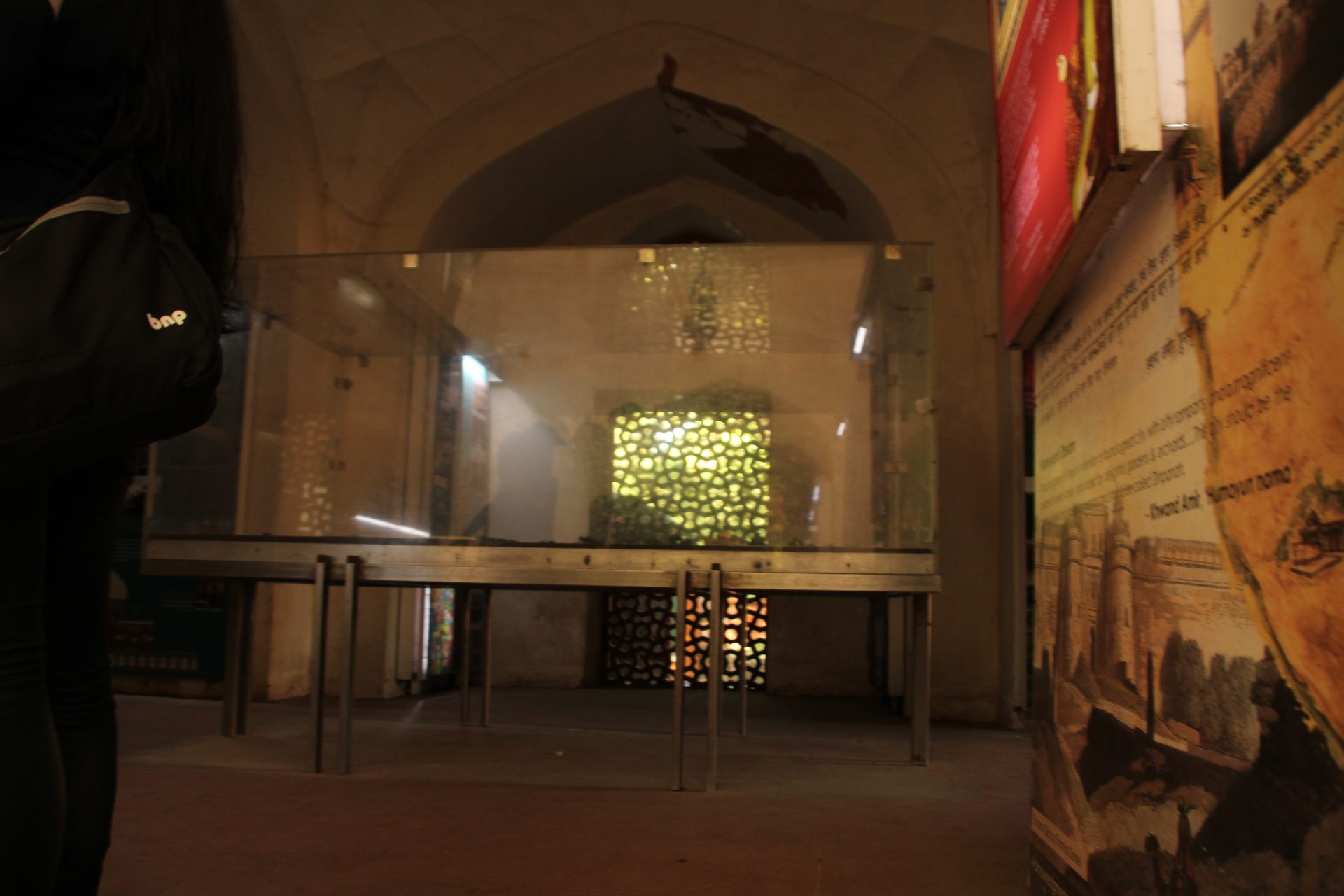
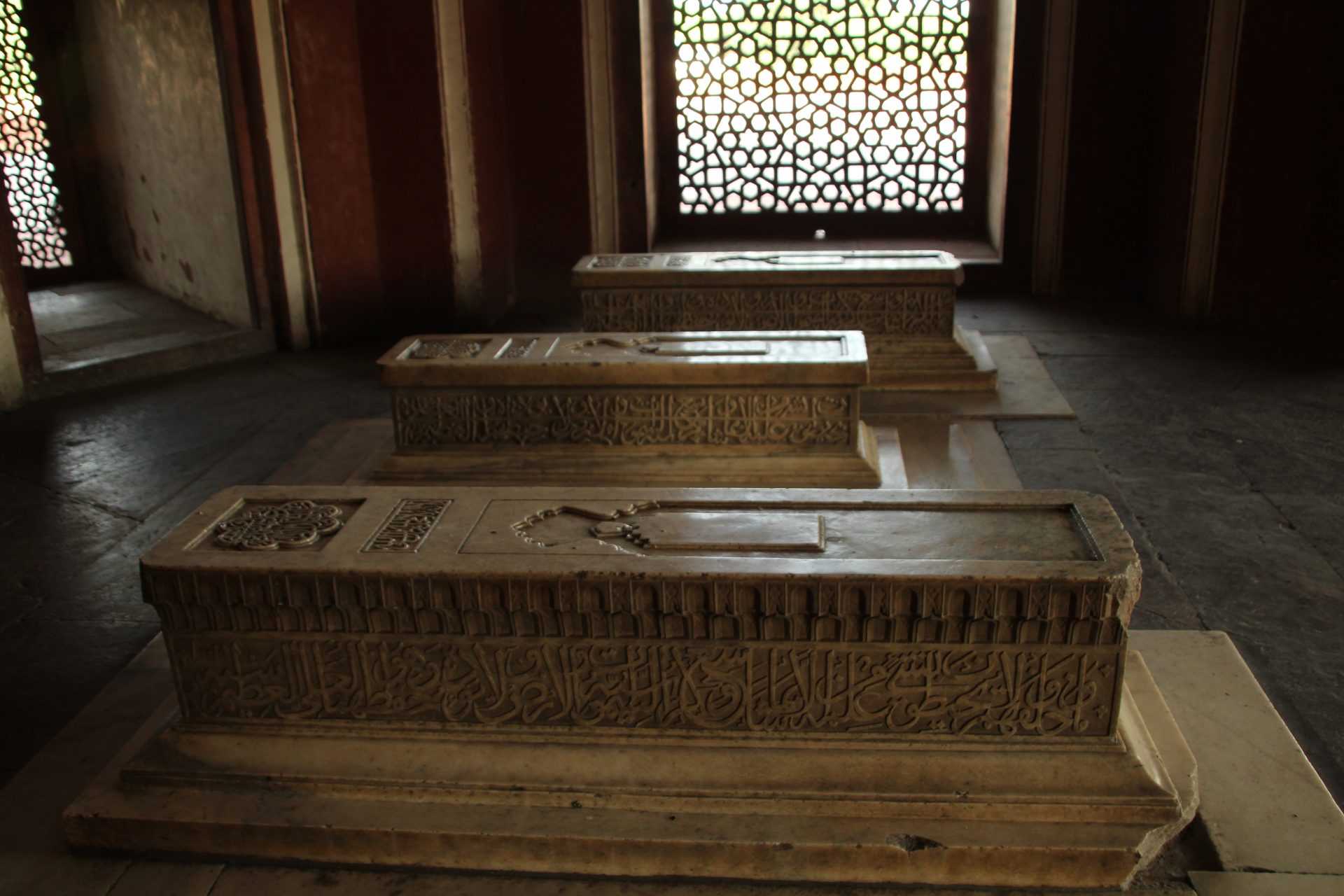
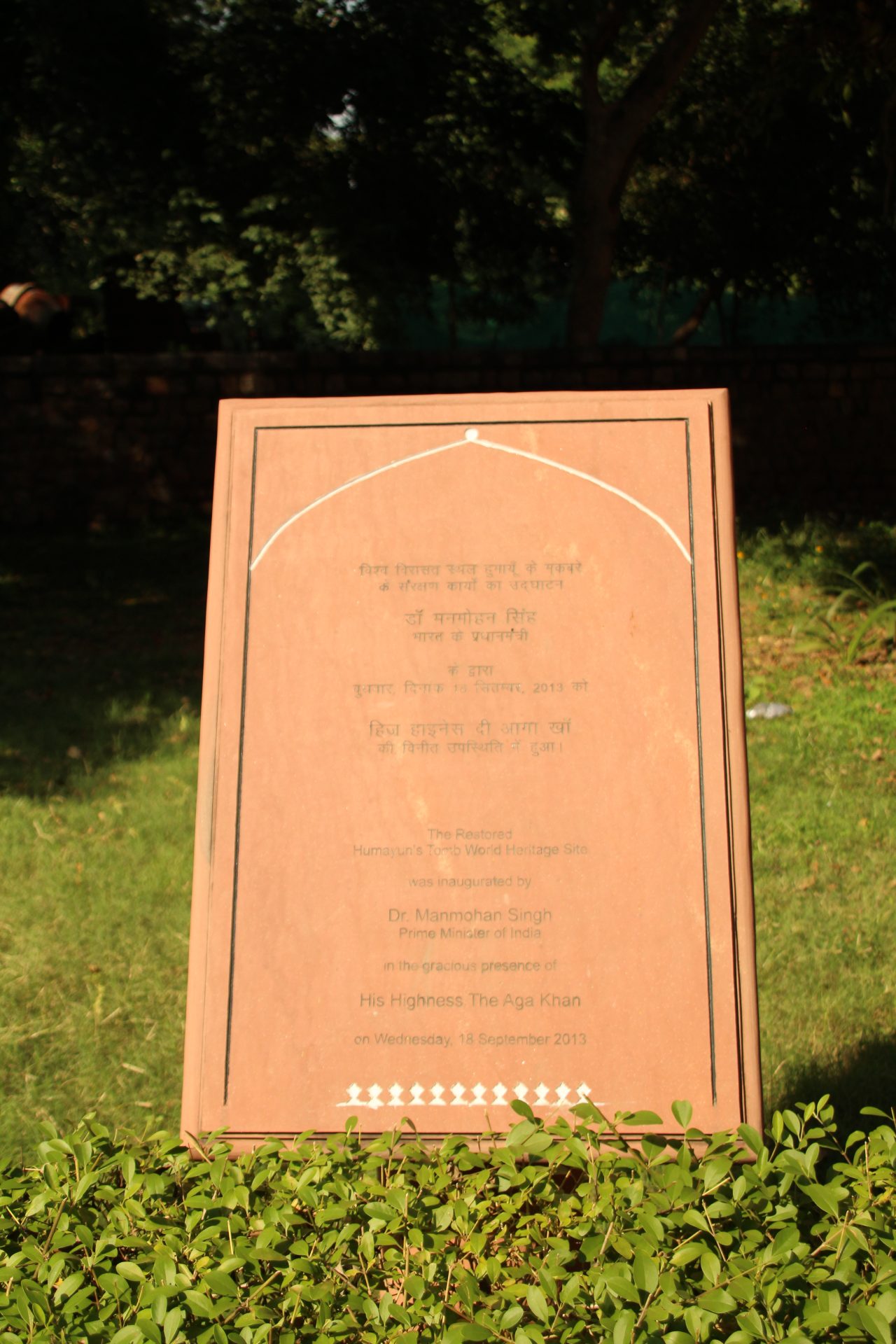
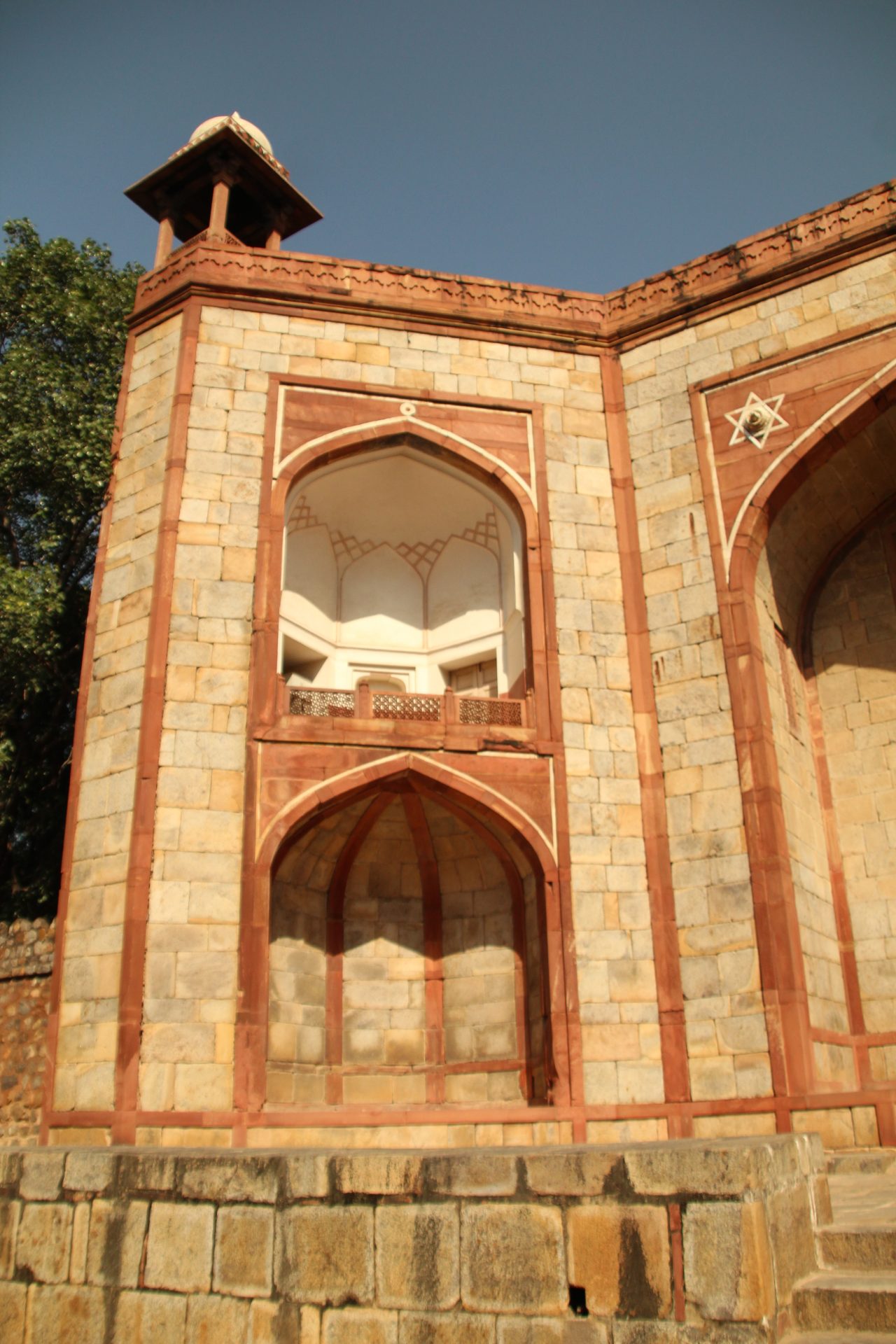
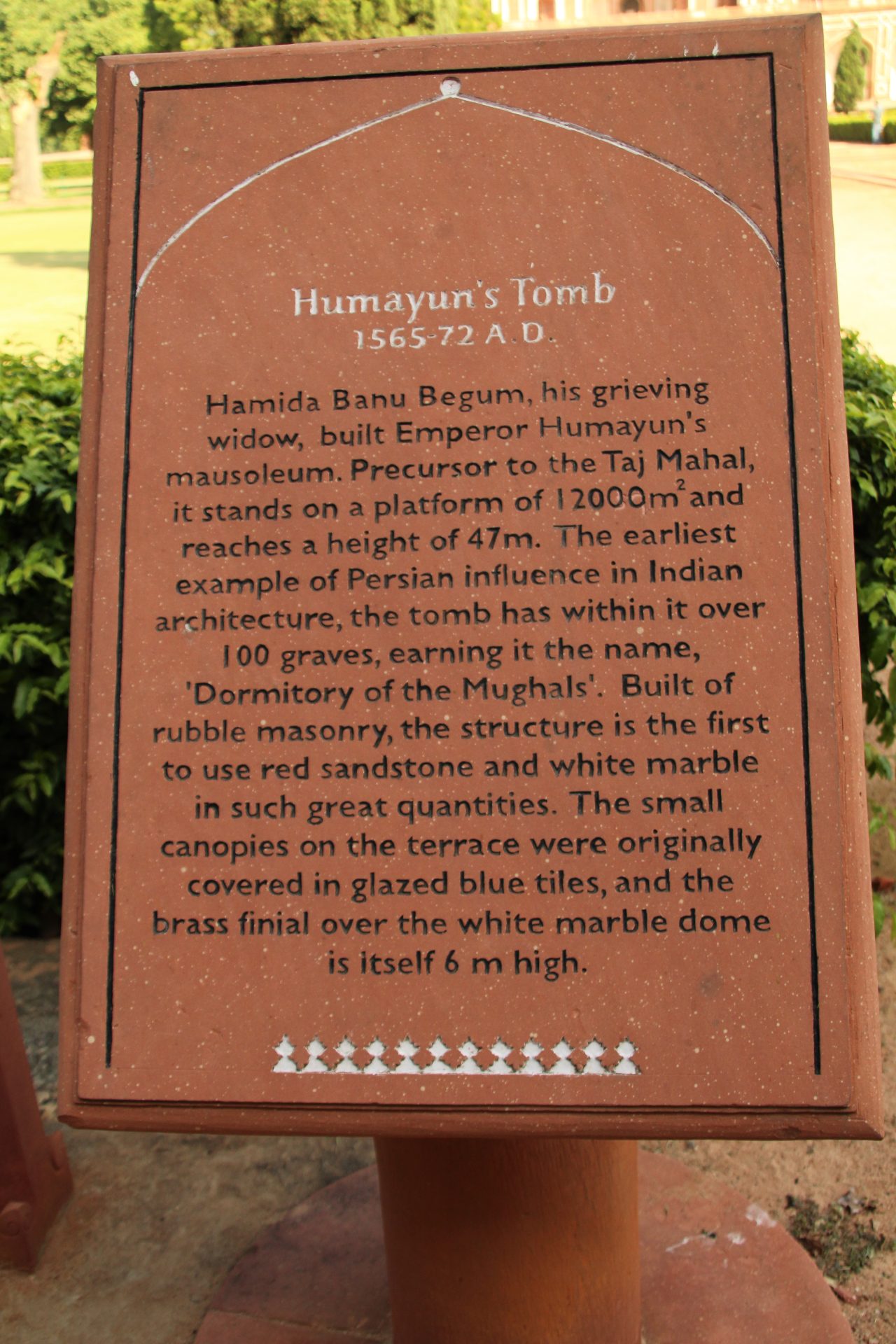
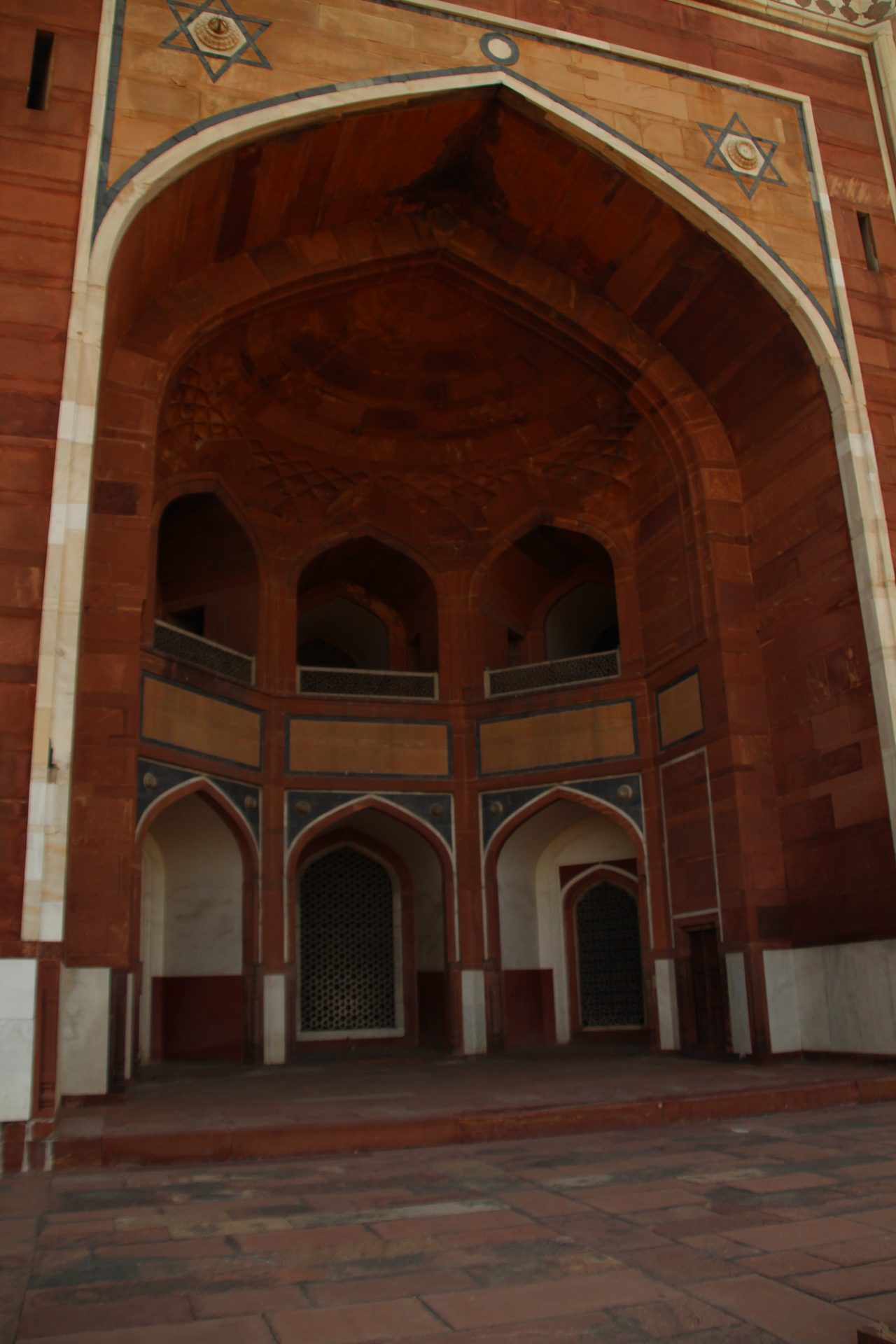
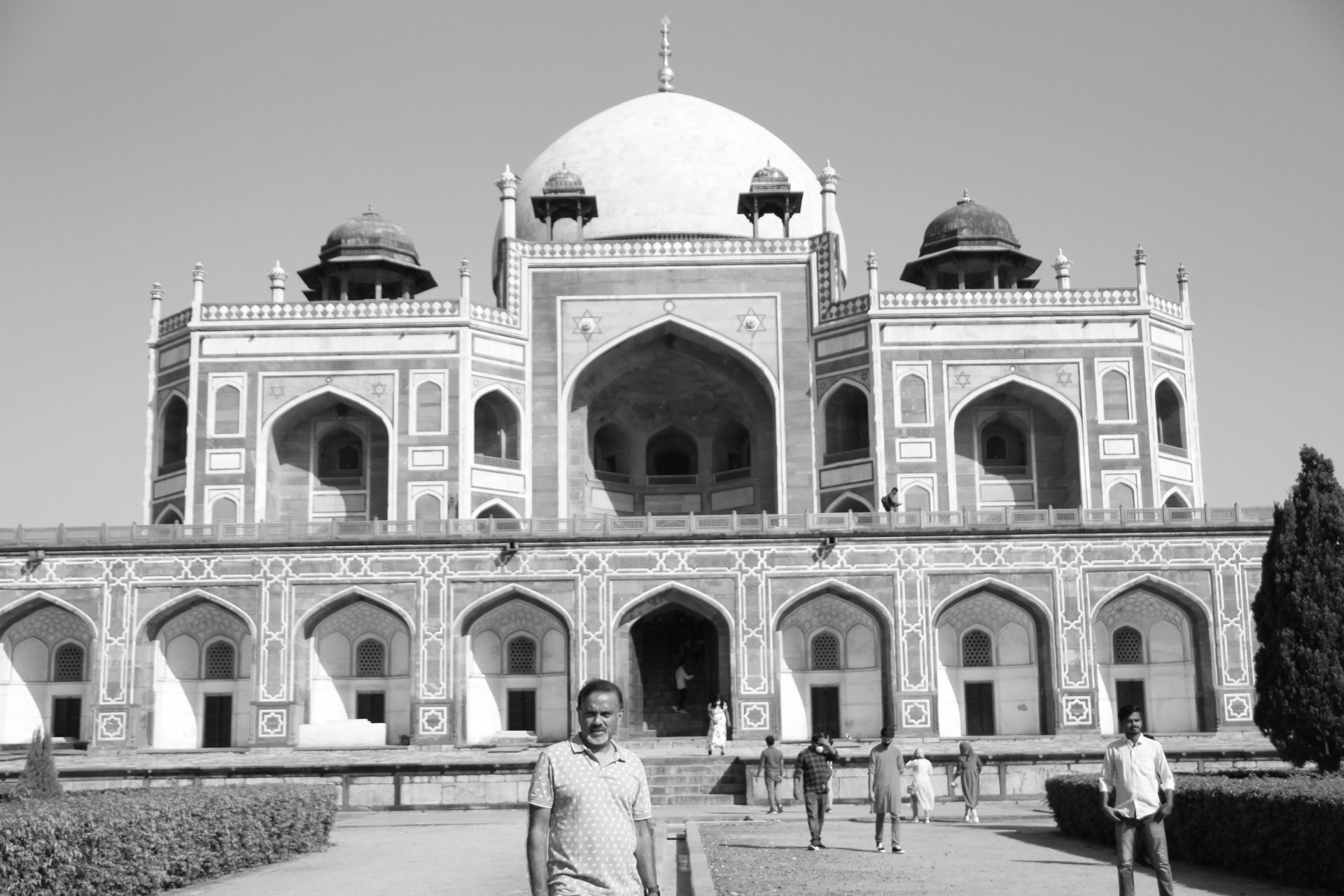
The Humayun’s Tomb, 47 metres in height and 91 metres wide is a grand dynastic Mausoleum built out of red sandstone and black and white Marble. This is a lovely piece of Mughal architecture built around 1570 in memory of Emperor Humayun. Commissioned by his chief consort Empress Bega Begum in 1558 and designed by Persian architects, the construction was patronized by his son Emperor Akbar.
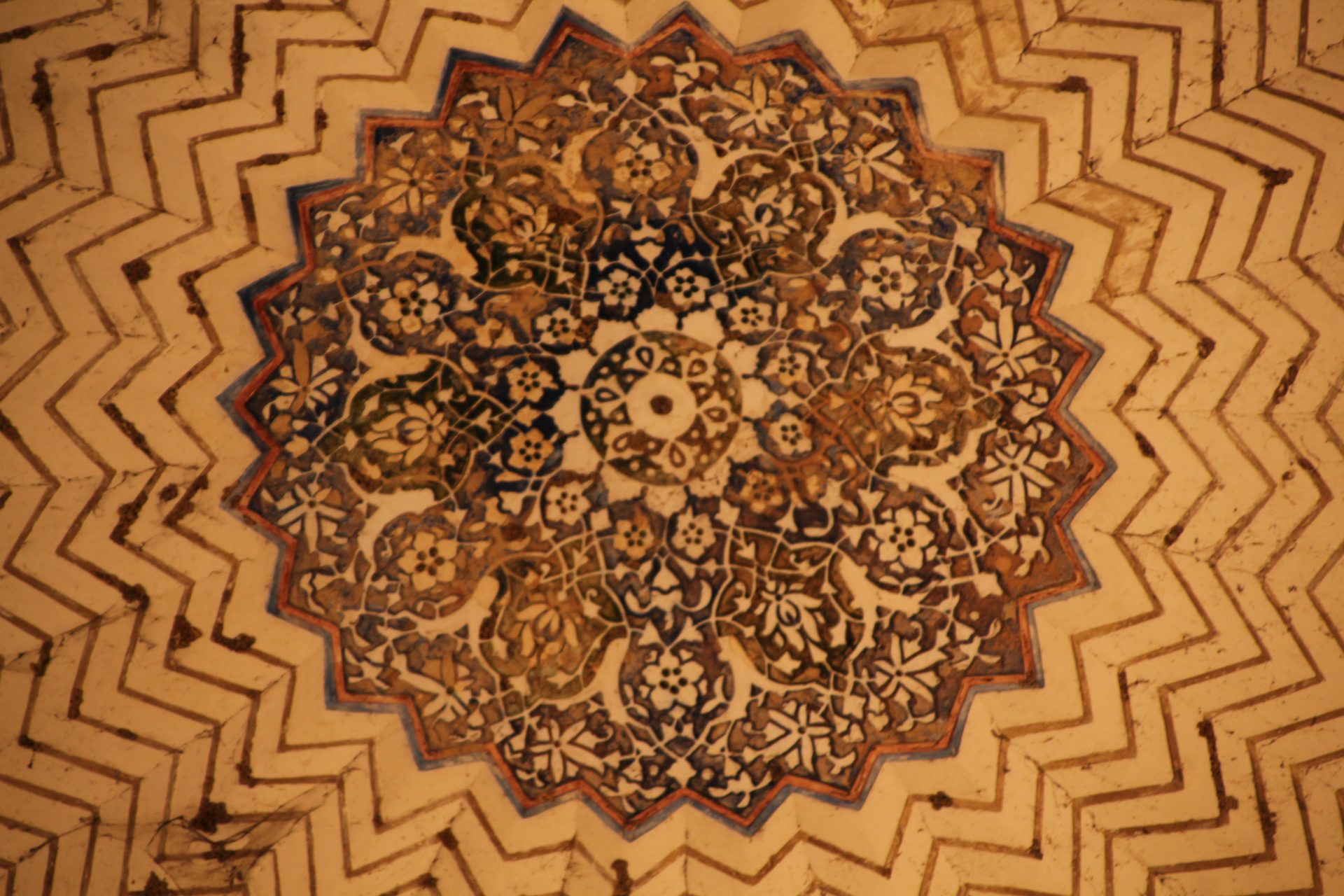
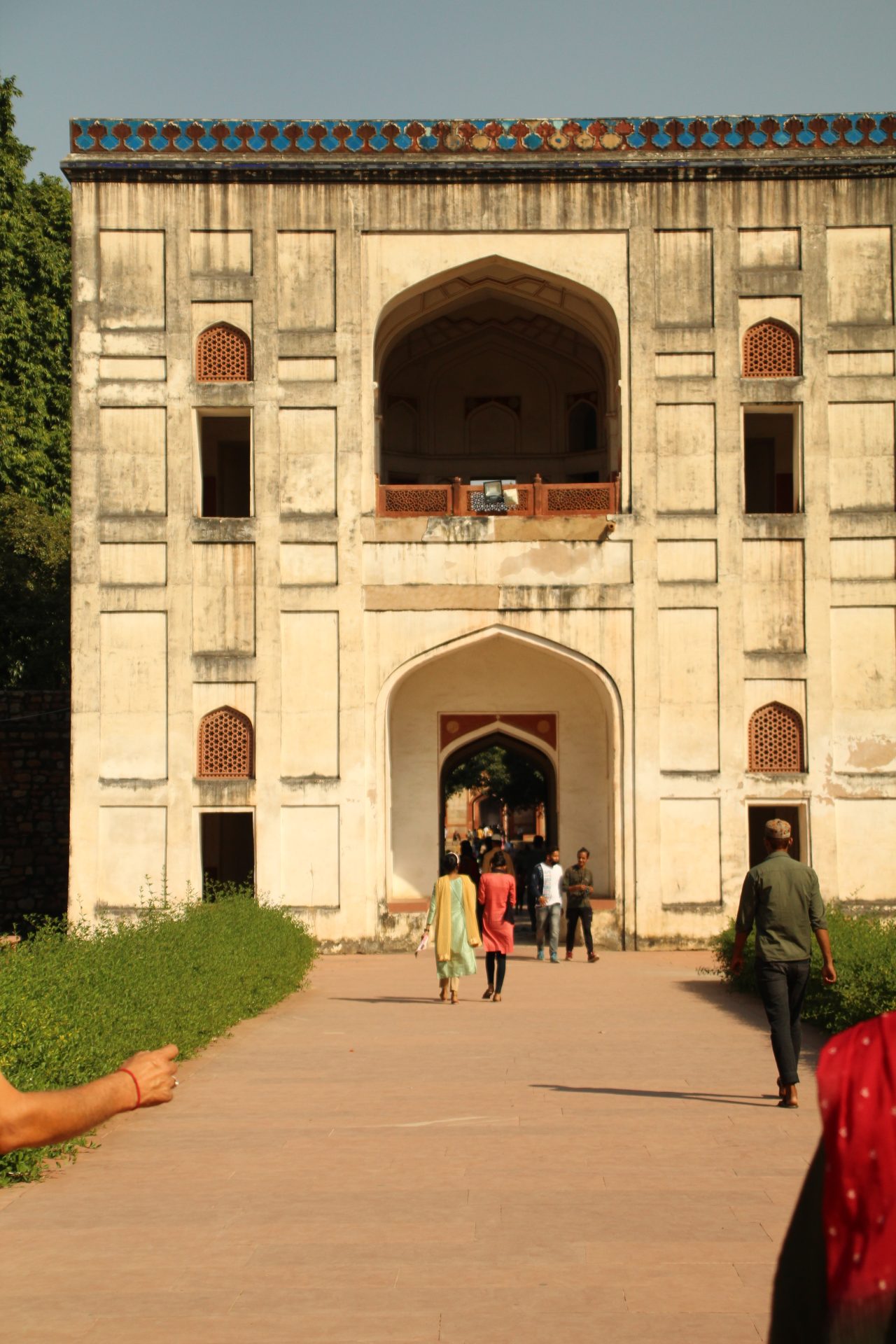
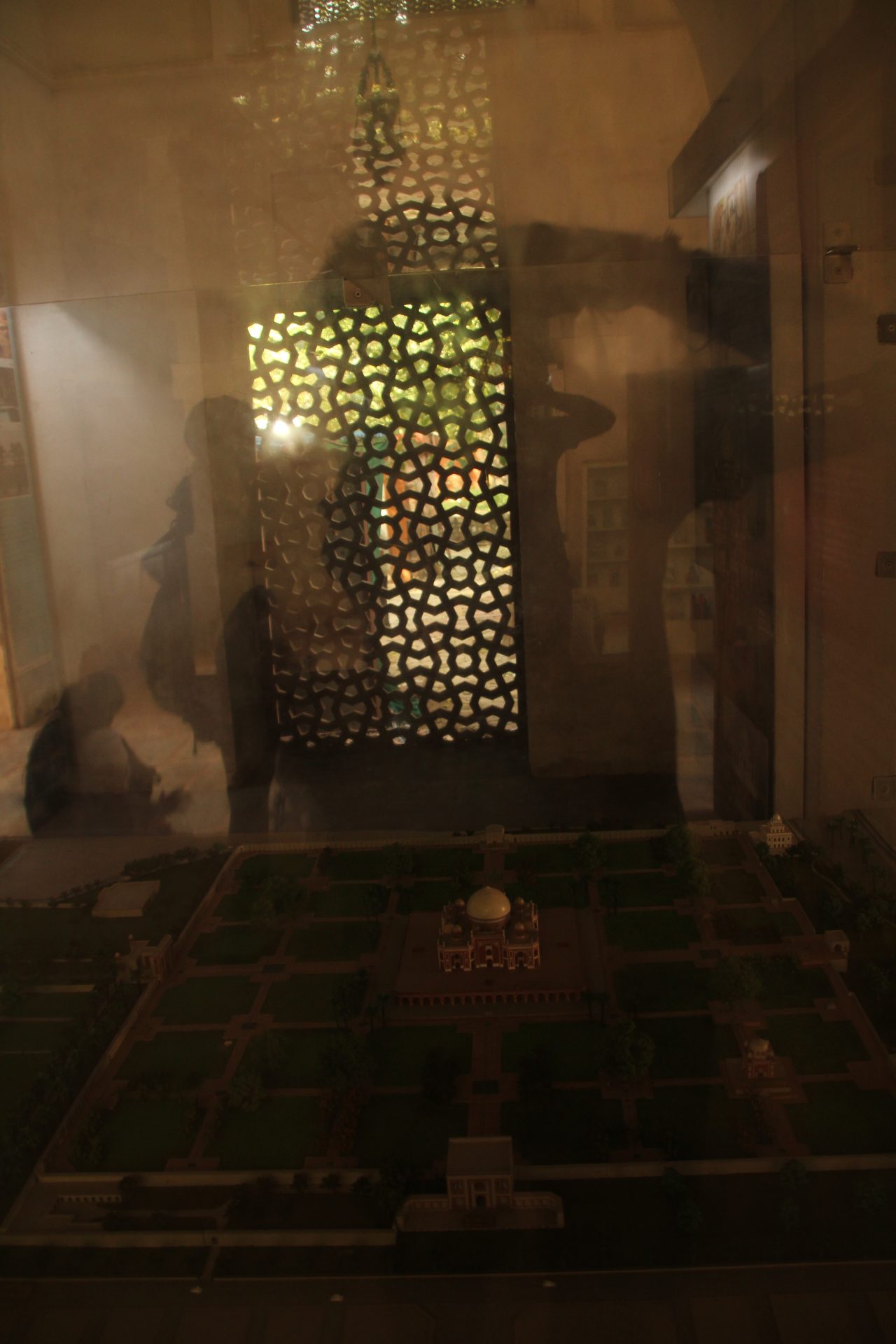
The Tomb stands on a 7 metre high and wide terraced platform, set amidst a large garden which is divided in 4 parts by walkways. The garden has huge gateways on the Southern and Western side with pavilions locate in the midst of the Northern and Eastern walls. The Platform has a 42 odd metre high double dome done in marble and flanked by pillared kiosks. The domes are beautifully adorned with glazed ceramic tiles.
This Necropolis, is known to be a dormitory of the Mughals since the garden gradually got filled with the tombs of Humayun’s descendants and his entourage. UNESCO’S World Heritage Status was accorded to this tomb in 1993 and it remains as one of the well maintained memorials in Delhi.
The Lotus Bahai Temple
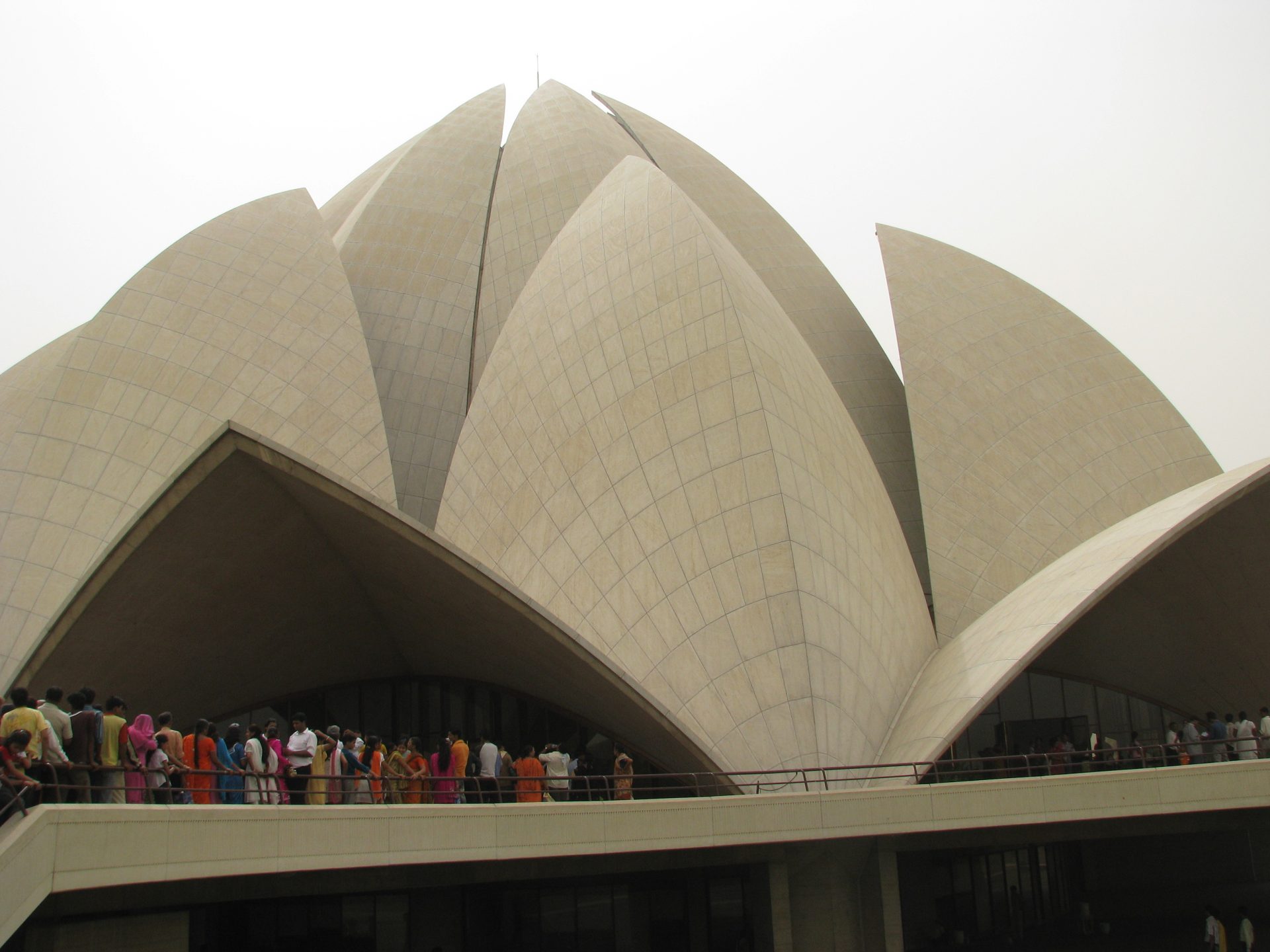
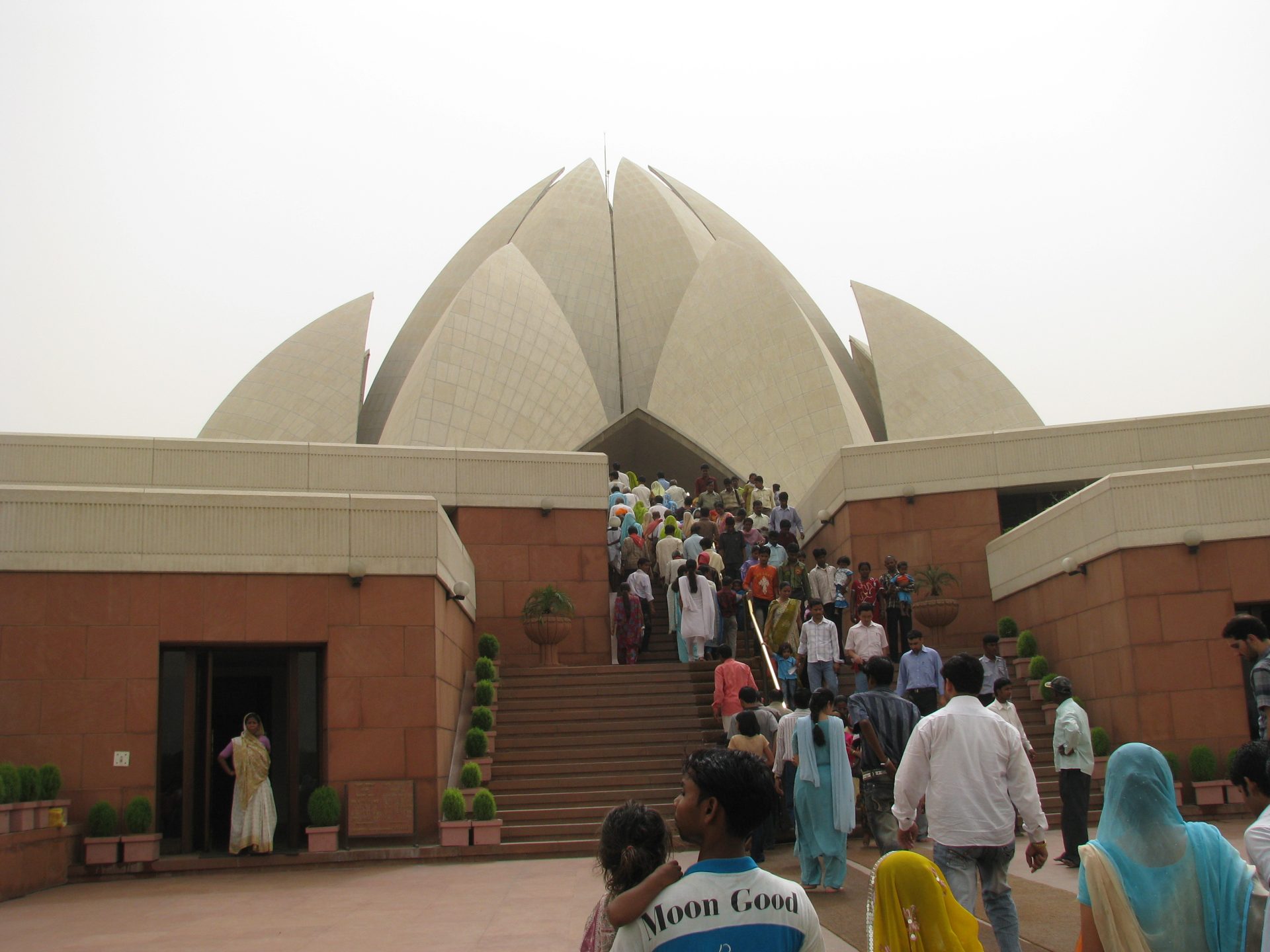
We then headed for the Lotus Bahai Temple in Kalkaji. A beautiful piece of flower like design, this Solar Powered temple, built in 1986 is a Bahai house of worship. It has 27 marble clad petals which are free standing and they are arranged in clusters of 3 to form a total of 9 sides.
Each of these sides have doors which open into a huge 34 metre high hall which can house in 1300 people at a time. People of all faiths and religions are free to congregate here to reflect and worship and with no set patterns.
The Qutub Minar
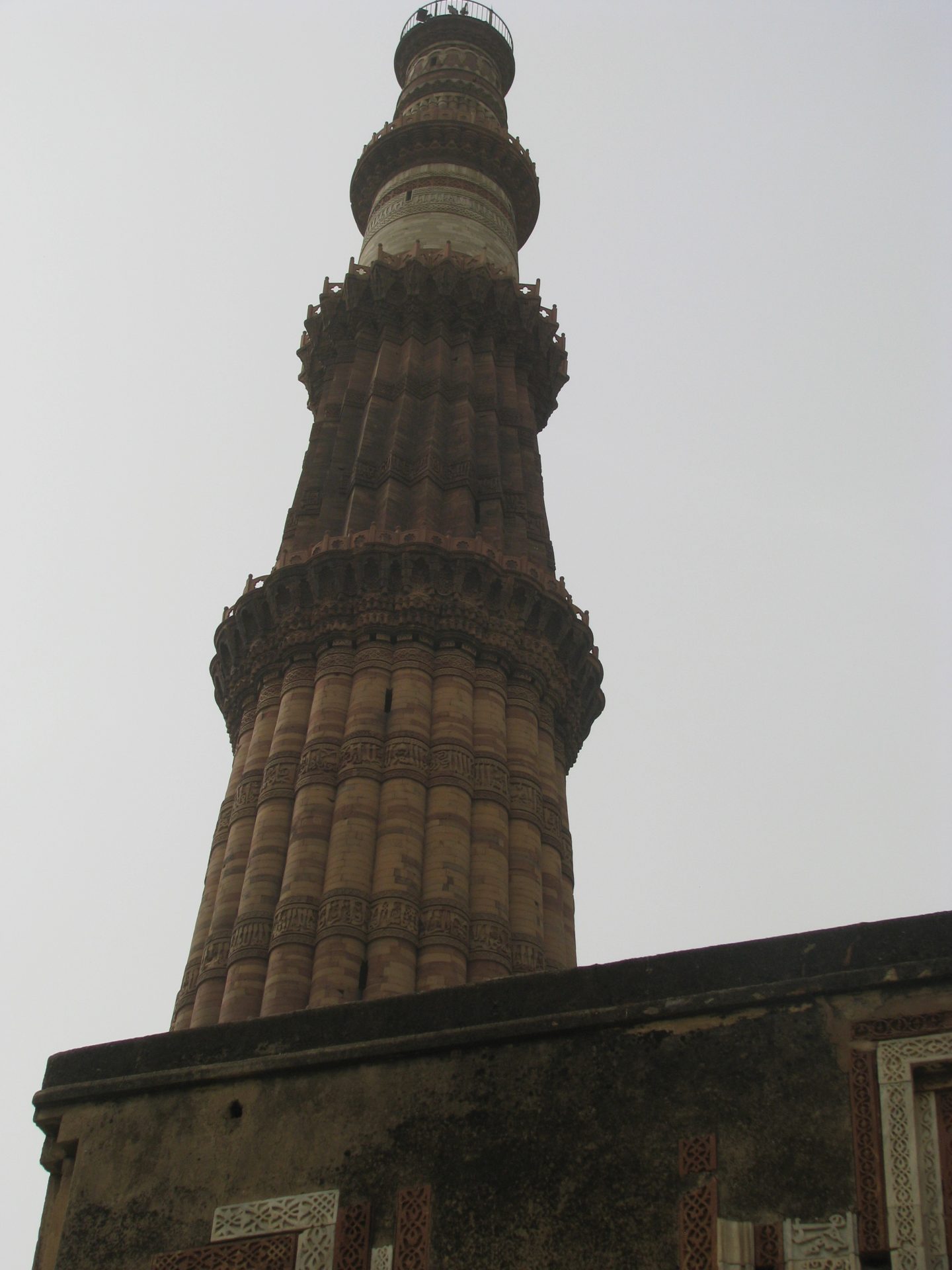
Between 1200 to 1368 when it finally got completed by Firoz Shah Tughlak, the Minaret witnessed addition of storeys to the base tower which was commenced by Qutab-ud-din Aibak, the first Muslim ruler of Delhi.
His successor, Iltutmush, added three more storeys, and in 1368, the fifth and the last storeys were added. In that same year, this 72 metre tower witnessed a lightning strike which ripped through the top and 400 plus years later, an earthquake destroyed a harp shaped cupola built around the 5th storey.
While people have been lucky to walk the 397 steps across the 5 storeys to reach the top, this monument stands closed for over 40 years since a power cut induced stampede led to lots of people dying.
The tomb of Alaudin Khilji is also located within the Qutb complex. The last of the monuments which was in our itinerary was the Qutub Minar. This Victory Tower or Minaret was built in Indo-Islamic architecture almost 750 years back.
Shopping at Dilli Haat & Sarojini Market
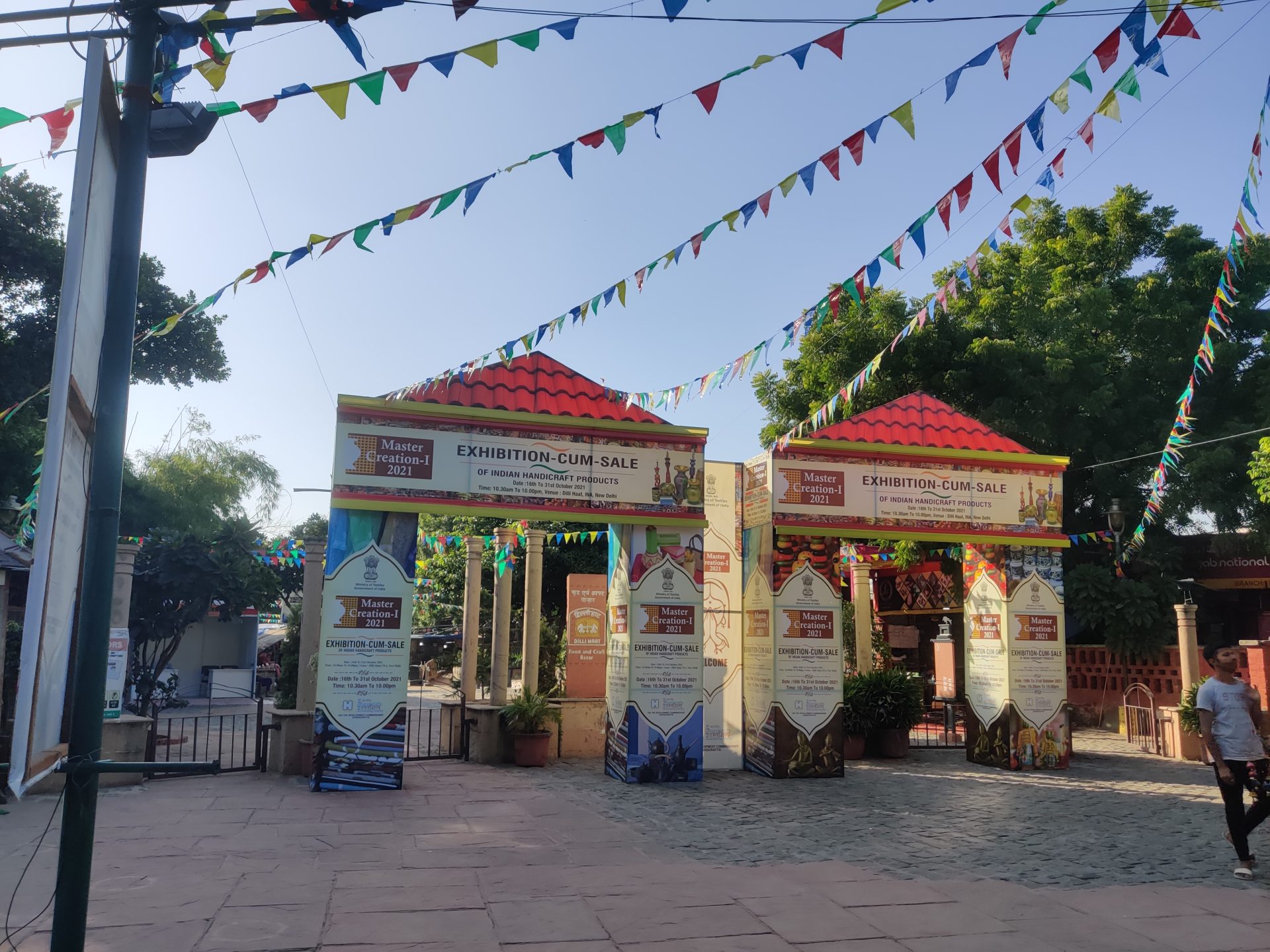
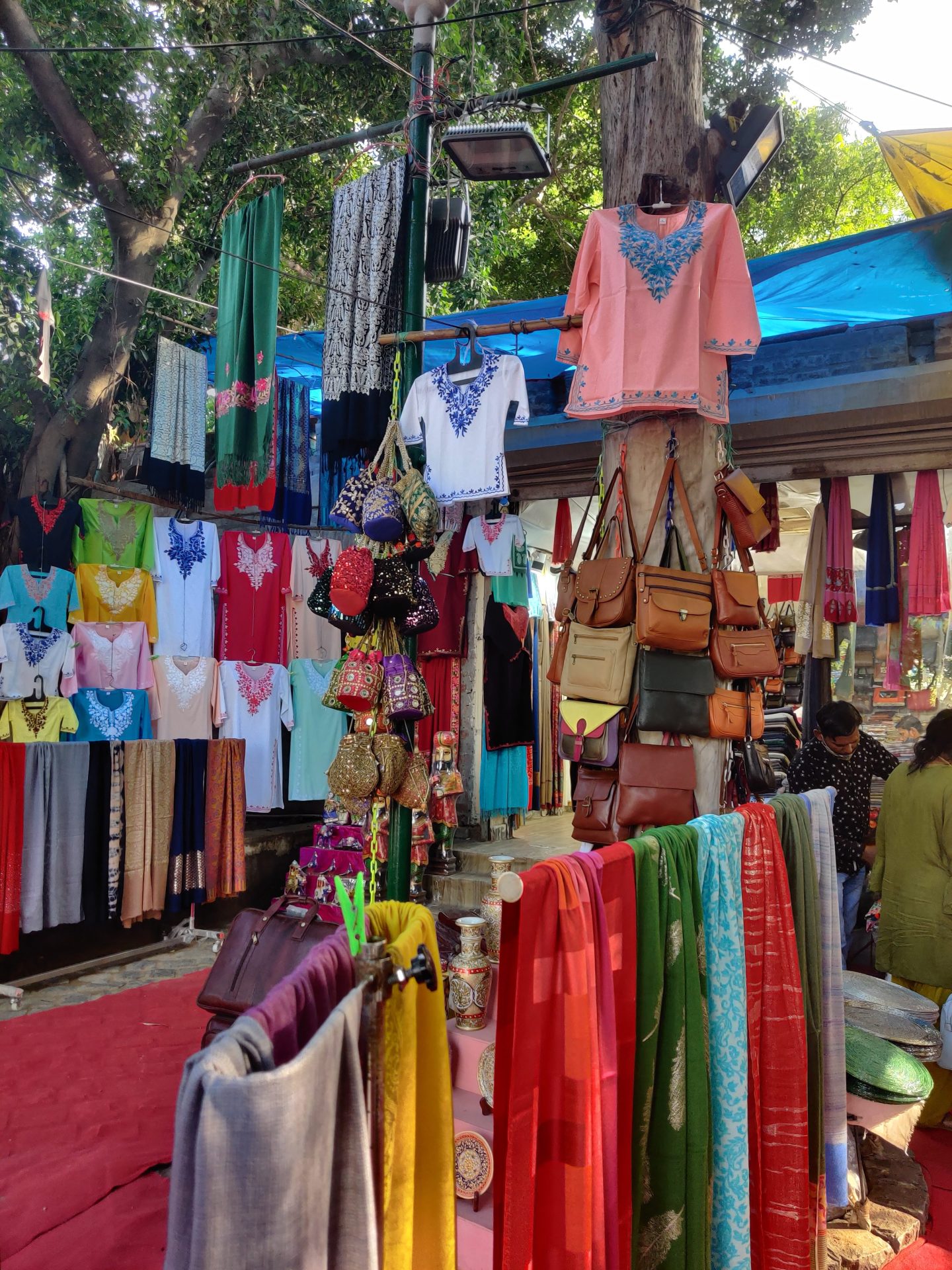
We then headed to the Dilli Haat in INA, a paid open air market and home to artisans from different parts of the country who are leased out shops to sell beautiful pieces of native and ethnic artefacts and handicrafts, carpets, paintings, Bags and purses, dresses etc. A perfect forum for rural and folks art in an urban setting, one can spend hours going around and admiring the amazing work done by the craftsmen. Tickets to enter this market are sold at Rs.20/- apiece.
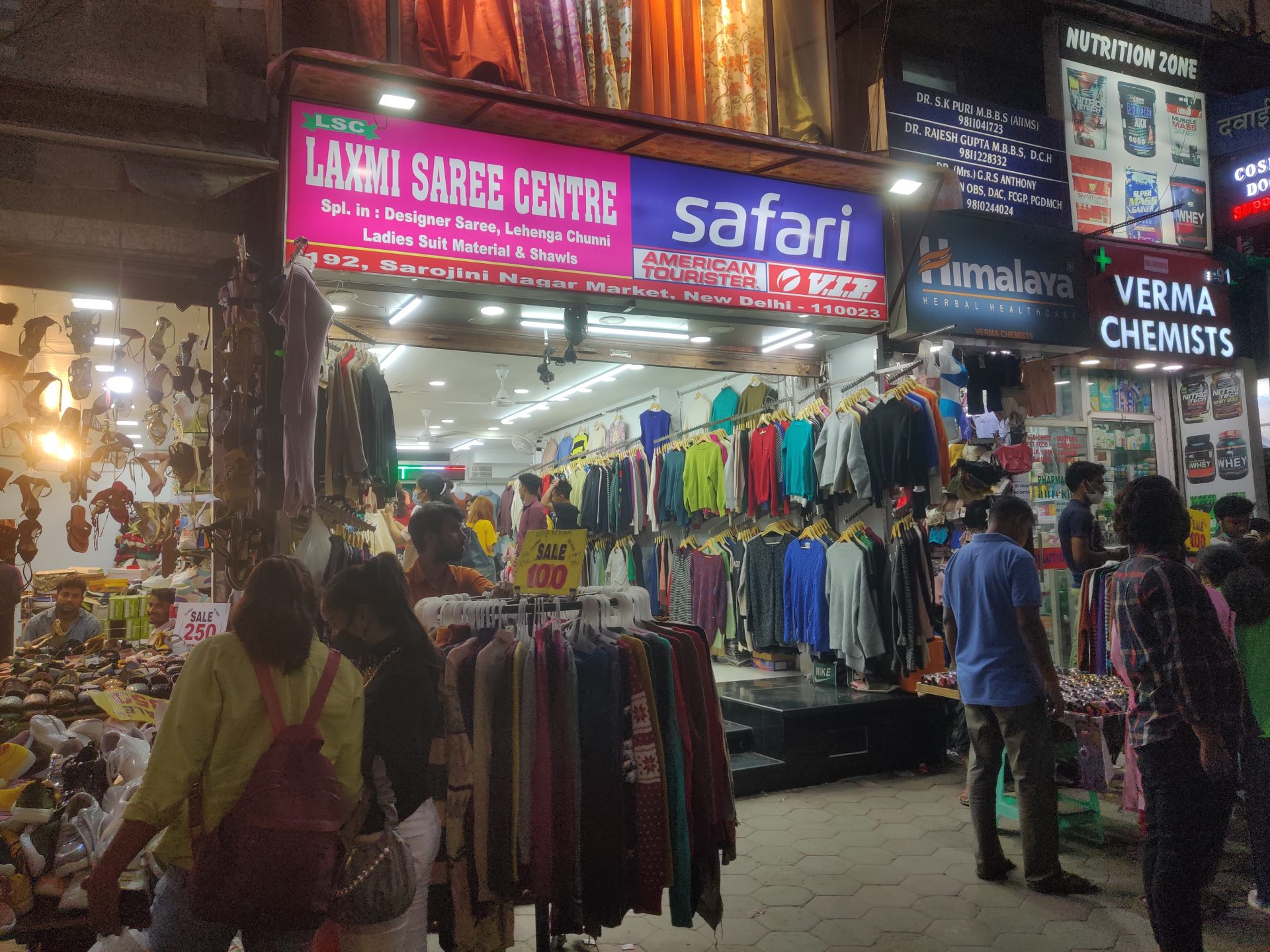
Our last stop was at the Sarojini Market, a flea market with hundreds of shops and street smart sellers on the pavement, trying to peddle their wares. A good place to pick up reasonably good stuff at very attractive prices, this market is pretty big and can take anywhere between an hour to a few hours before you drop dead shopping. An amazing place to shop around, this has been one of my favourite go to markets for all seasons and all occasions.
A pretty tiring day for us walking and we finally chose to leave for the confines of our hotel by around 8 in the night. Having gorged on some mouth watering street food in the lanes of Sarojini Market, we chose to have a light and early dinner at the hotel itself. The next day was our visit to Agra.
Agra - here we come
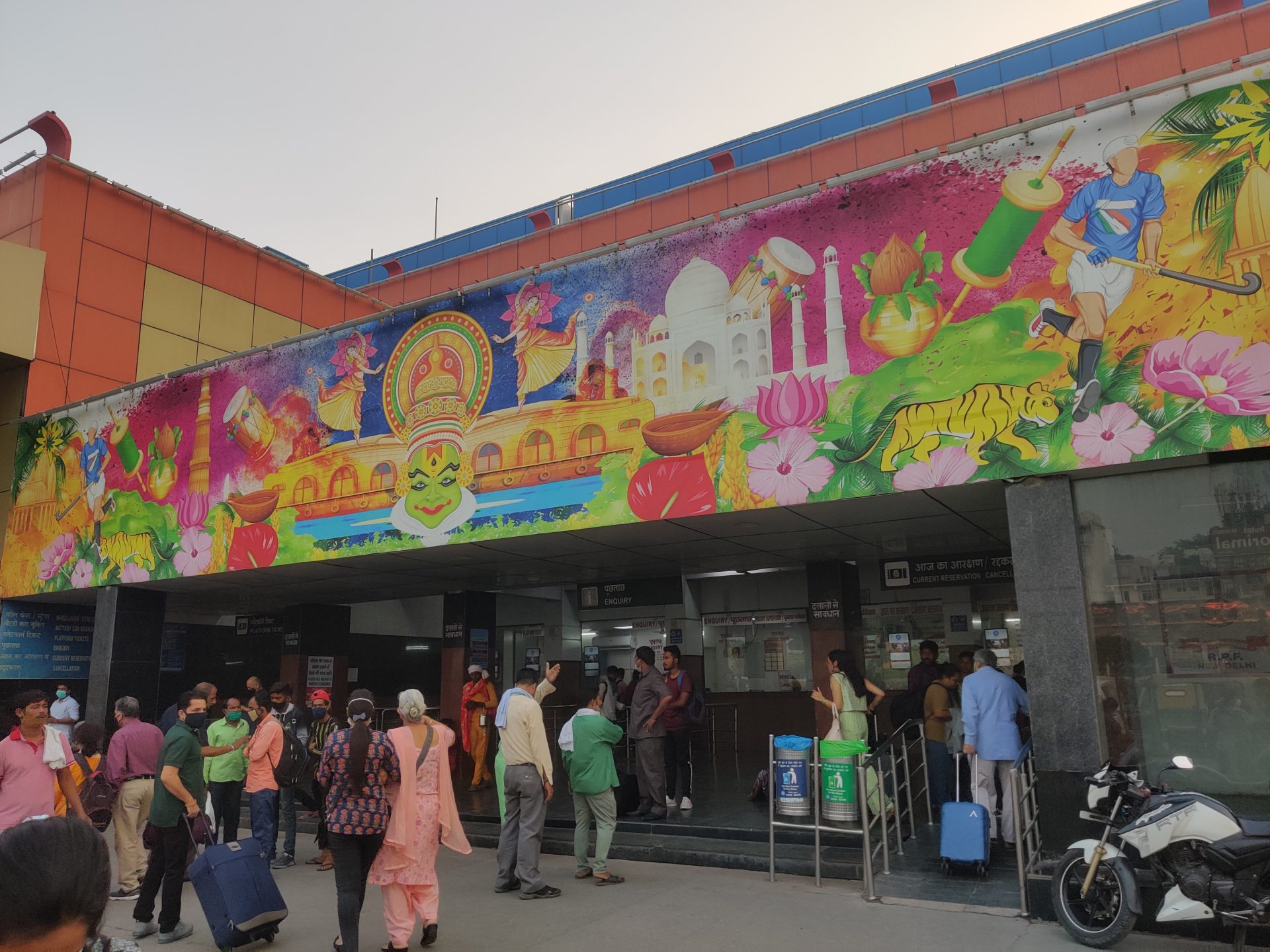
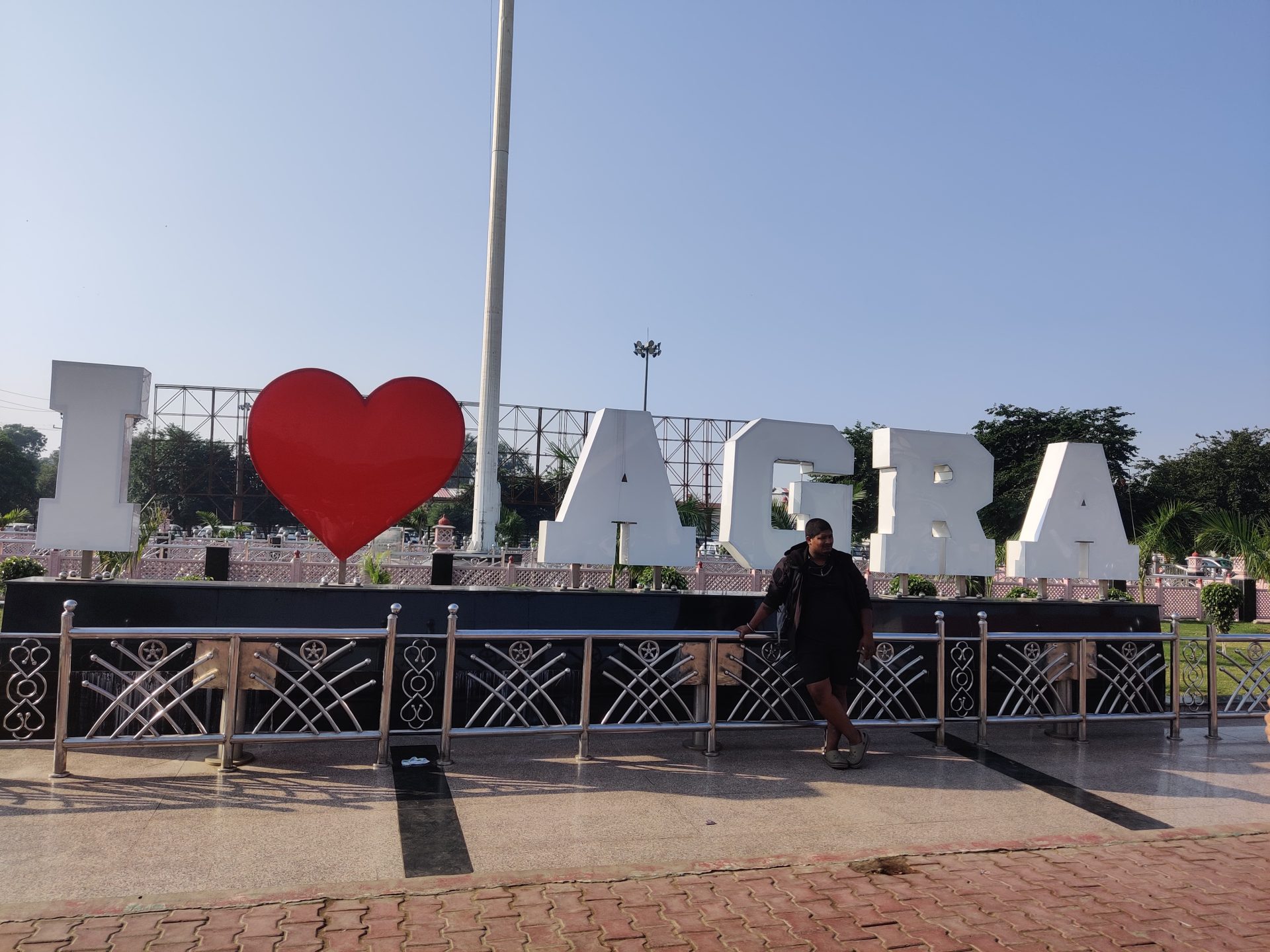
It was an early morning start to the city of Agra by Shatabdi Express. Having checked out of our hotel, we walked up the short distance from our Hotel to the New Delhi Railway station for our sub 2 hour train journey to Agra. We were outside the Agra station by 8 AM and booked a cab from a taxi stand outside the station premises for visiting the Taj Mahal and the Agra Fort.
THE BUSY NEW DELHI STATION
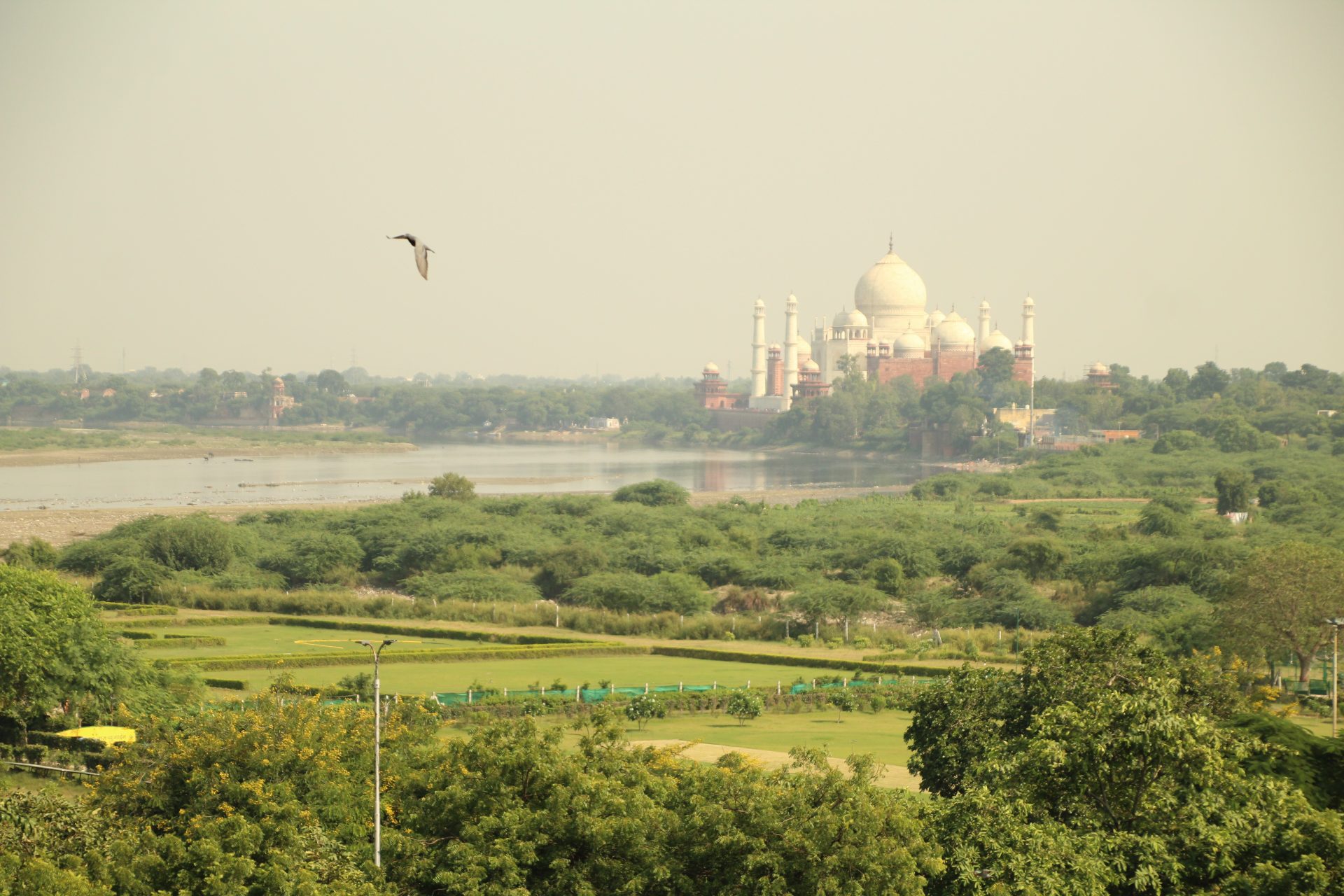
A couple of hours away from Delhi, lies the historic city of Agra, home to One of the 7 Wonders of the World – The Taj Mahal, a 17th Century historic monument built by King Shah Jahan in memory of his departed wife Mumtaz. Built out of marble, this white mausoleum which took more than 20 years to build and with the efforts of over 20,000 laborers.
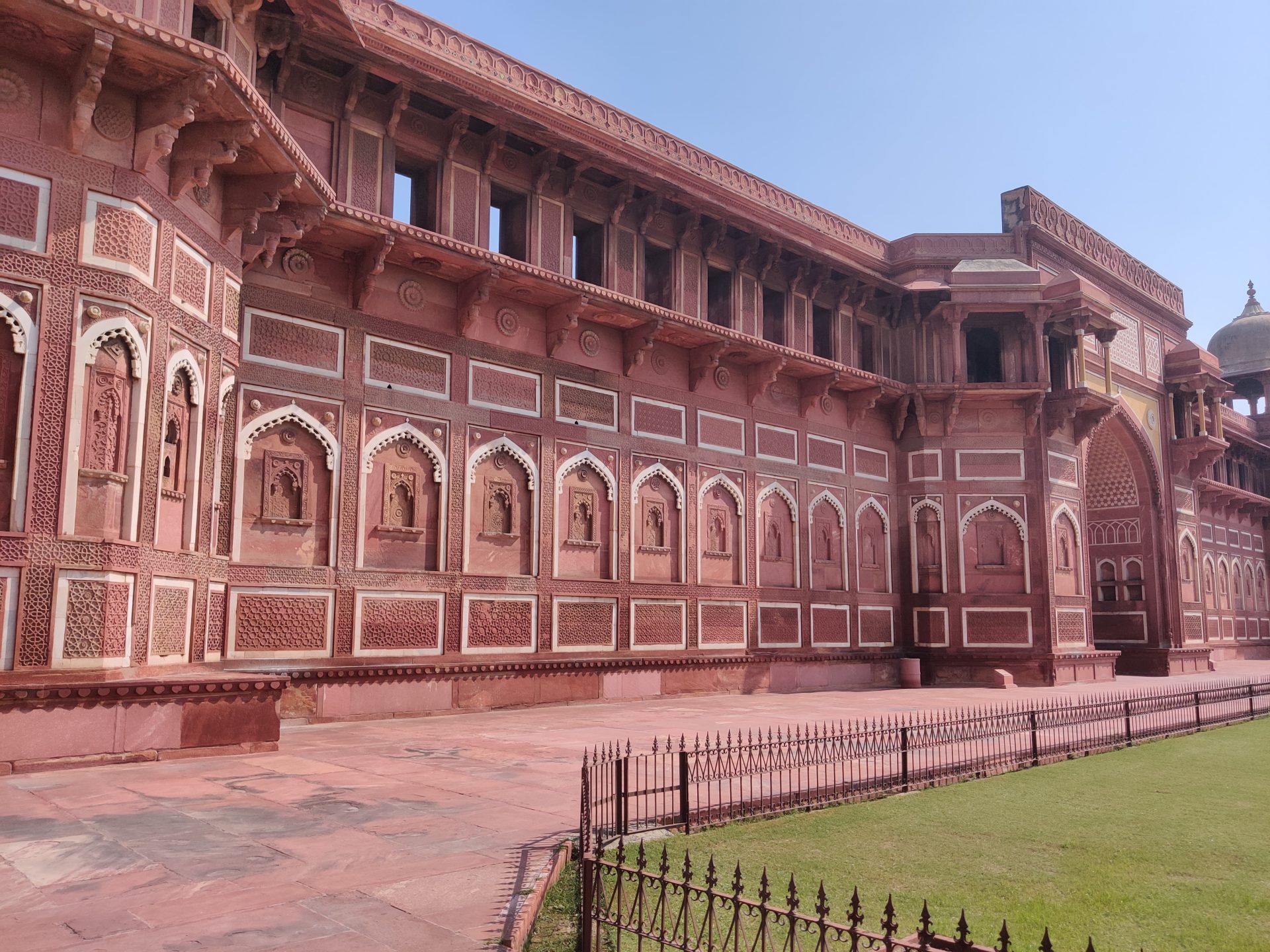
Close to the Taj Mahal lies the red sandstone fortress, popularly known as the Agra Fort which is another of those UNESCO recognized heritage sites, an architectural masterpiece whose construction was started by King Akbar.
The Taj Mahal
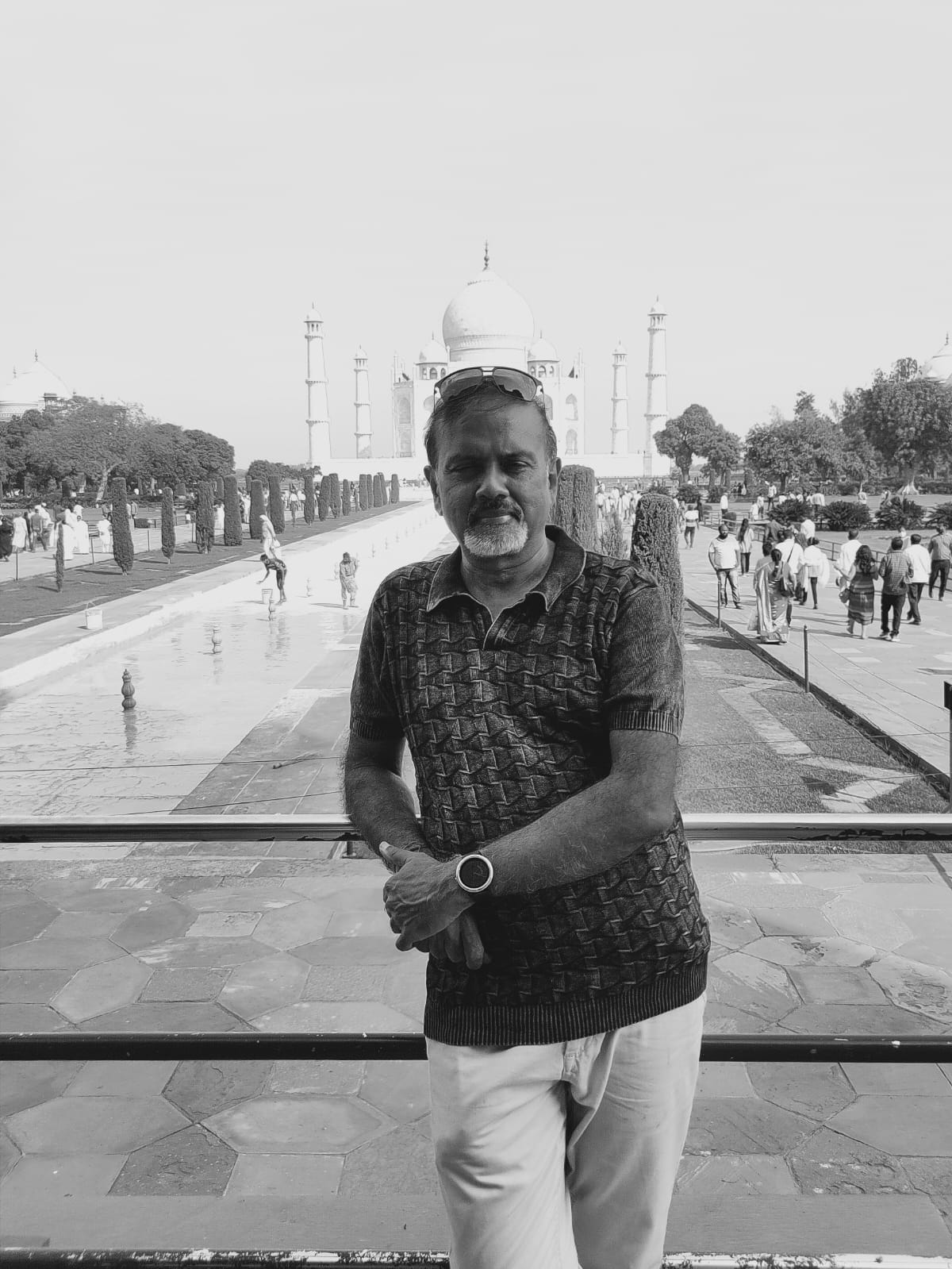
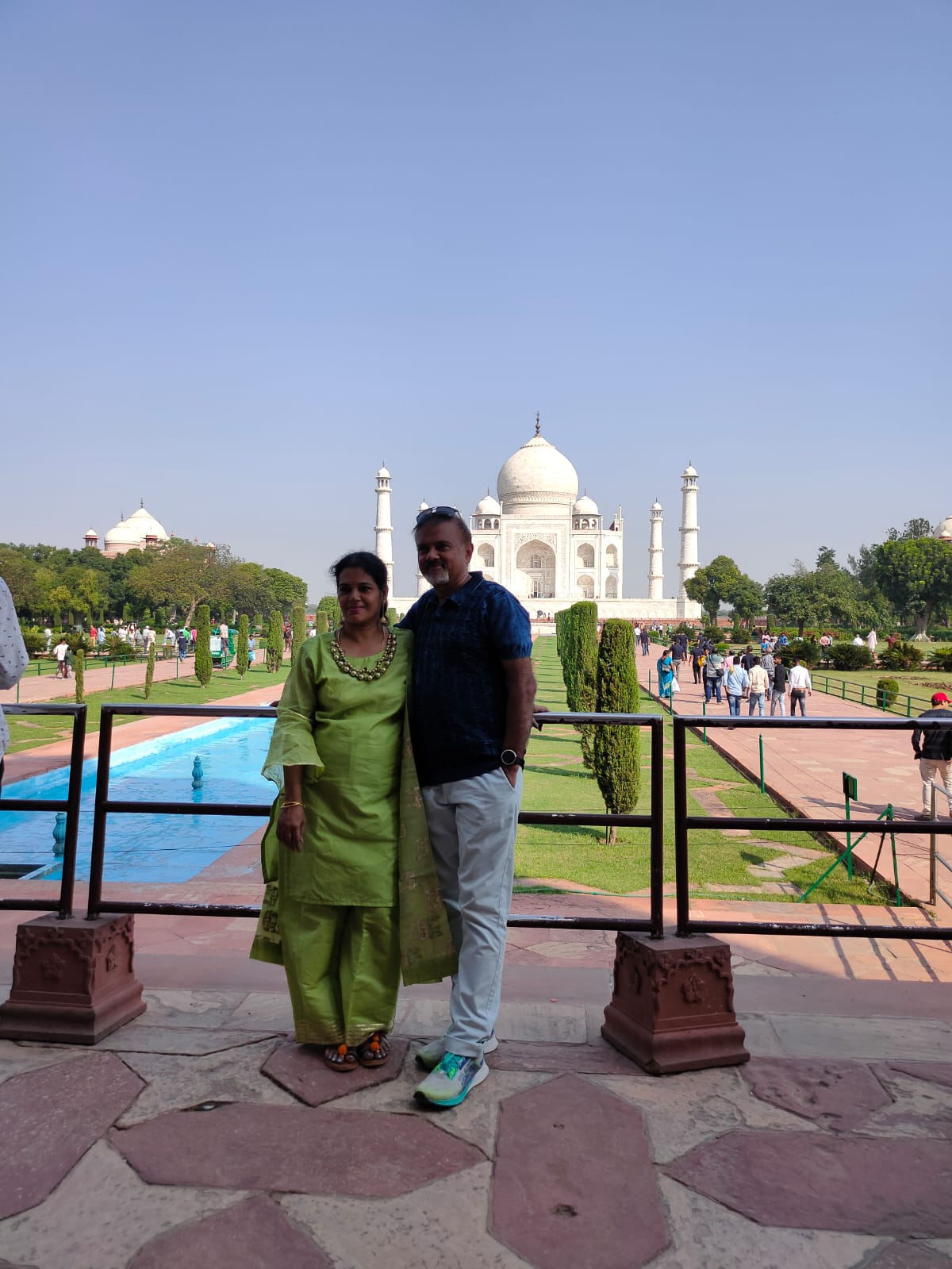
A short ride of 6 Kms from the station brought us to the entrance of one of the Seven Wonders of the World – the Taj Mahal, a symbol of love, wealth and power of Emperor Shah Jahan.
Enroute the journey, based on the advice of our cab driver, we booked the entrance tickets for the Taj Mahal including a visit to the Mausoleum. Tickets are priced at Rs.245/- apiece and can be booked through https://asi.payumoney.com/.
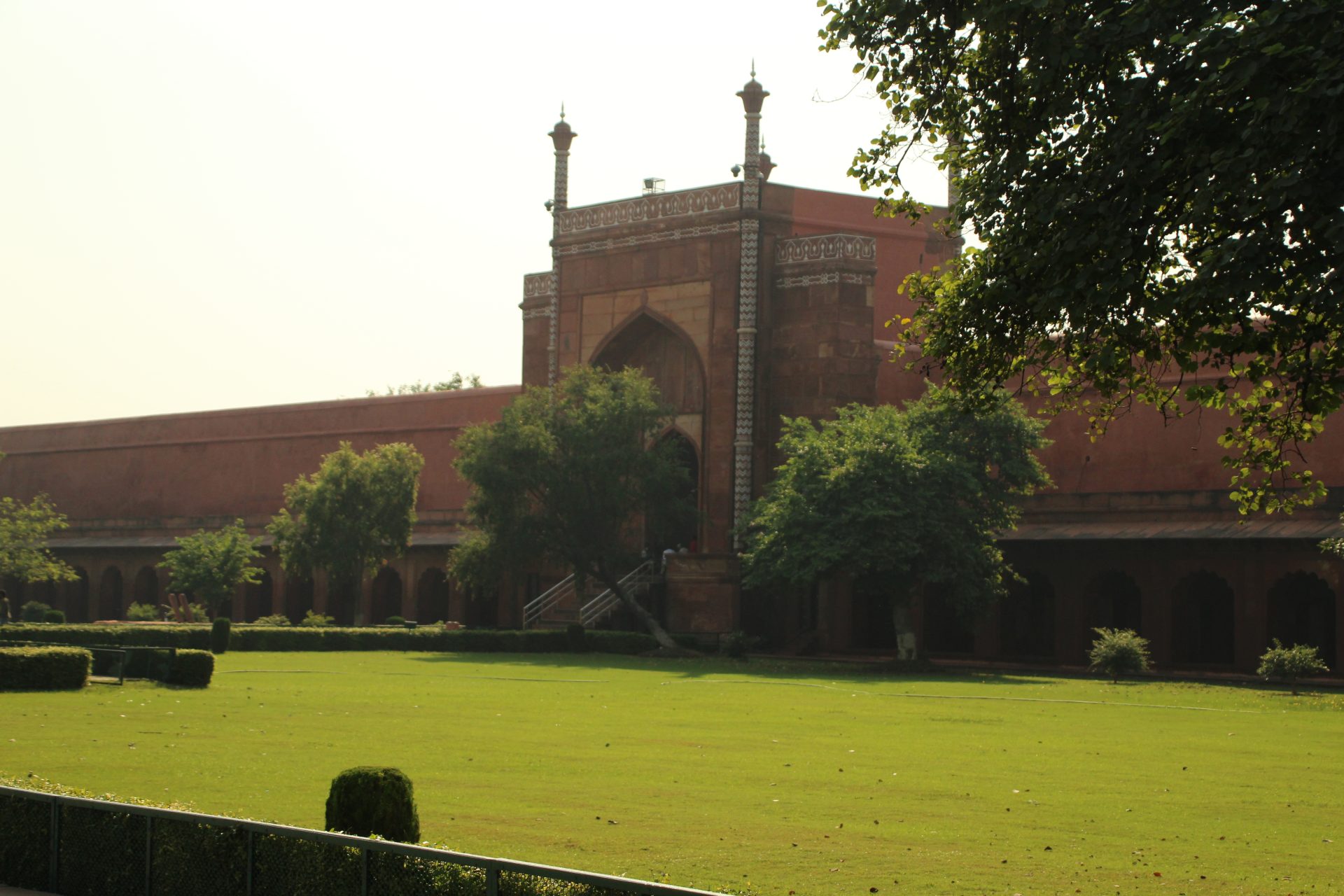
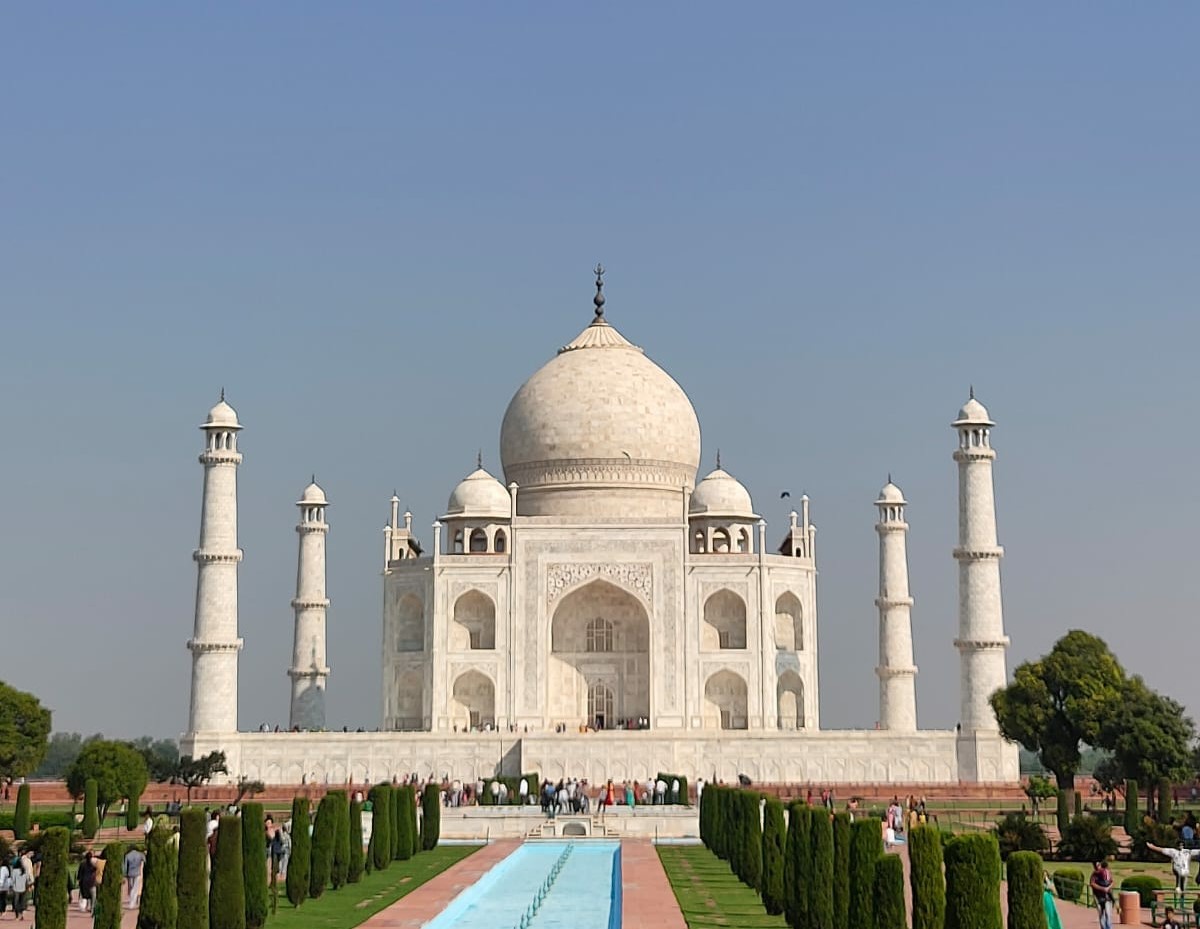
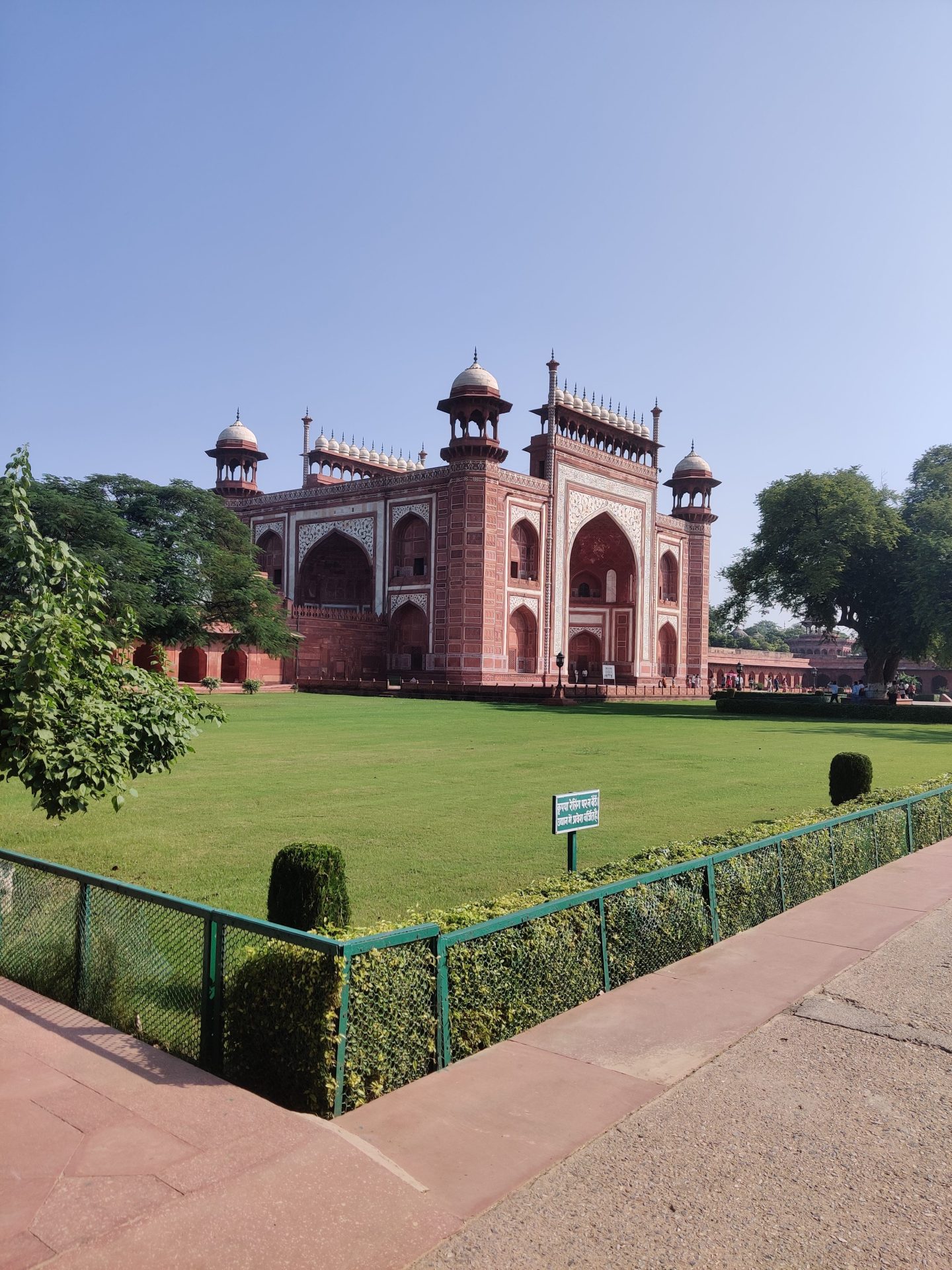
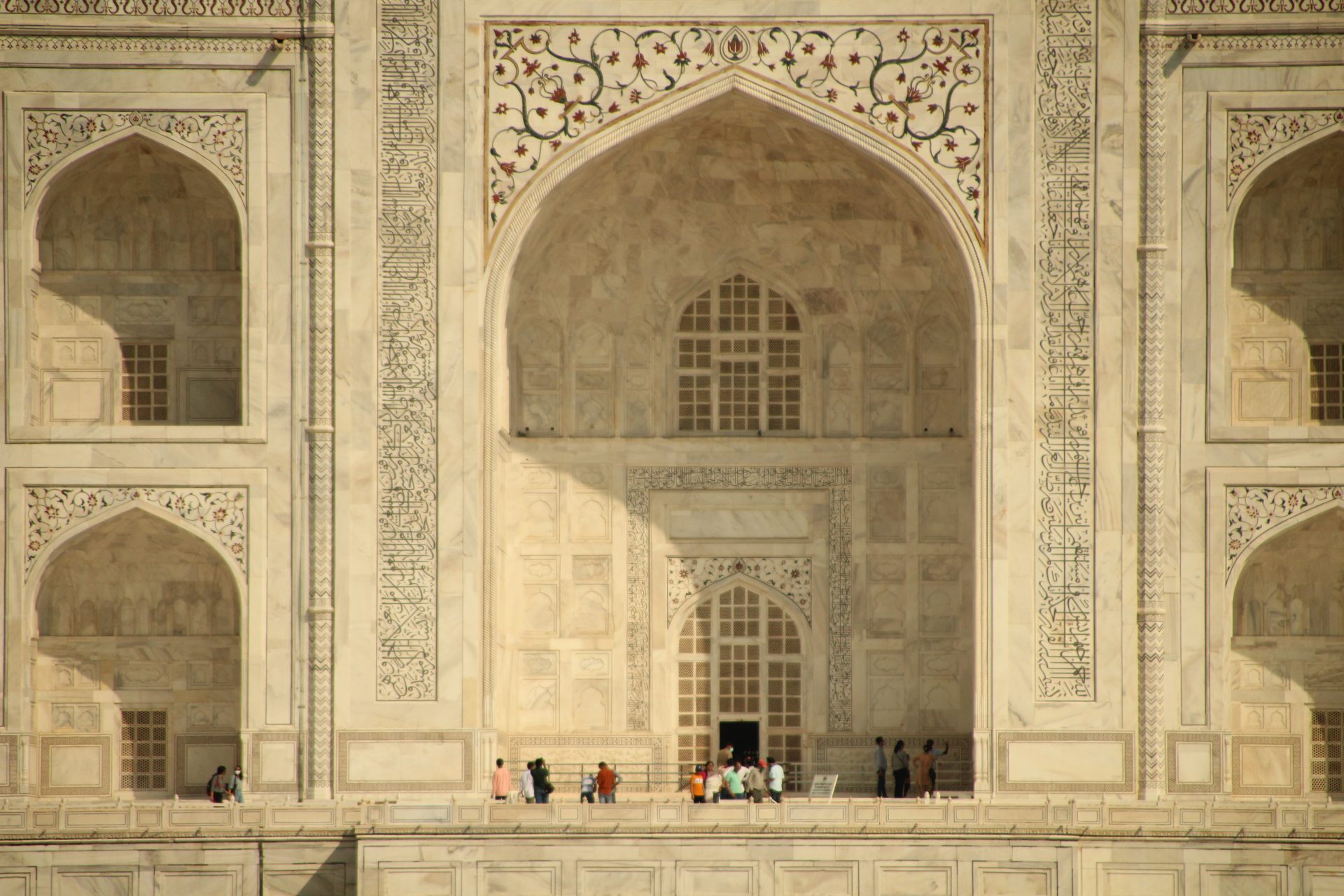
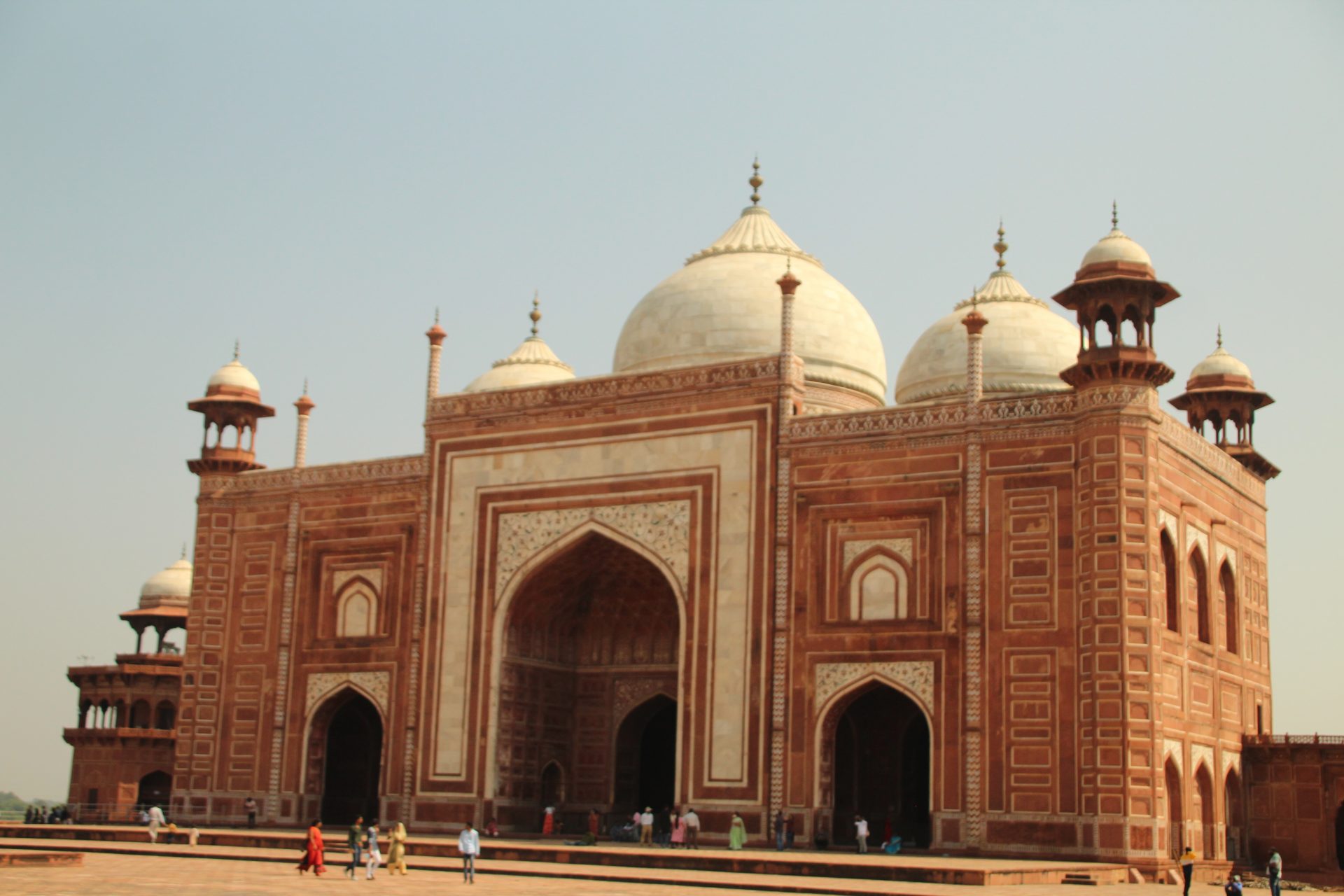
Built by King Shah Jahan in memory of his beloved wife Mumtaz Mahal, this marble white mausoleum stands near the banks of the Yamuna river. The Main gateway to the Taj is in itself a stand out piece of architecture, designed in red sandstone and marble and the sheer magnificence and grandeur of the monument opens up as we pass through this gateway. The Tomb which remains the central focus of the entire complex is a large white structure mounted on a square platform and comprising of a symmetrical building with an Arch shaped doorway.
The construction for this stunning piece of architecture started in the year 1632. it was finally completed in the year 1653 at an estimated cost of 32 million Indian rupees.
Almost 20,000 artisans were involved in the construction and around 1000 elephants deployed in the transportation of the material.
Recognized by UNESCO as a World Heritage Site in 1983, the Taj Mahal is a unique combination of Indo-Islamic and early Mughal architecture.
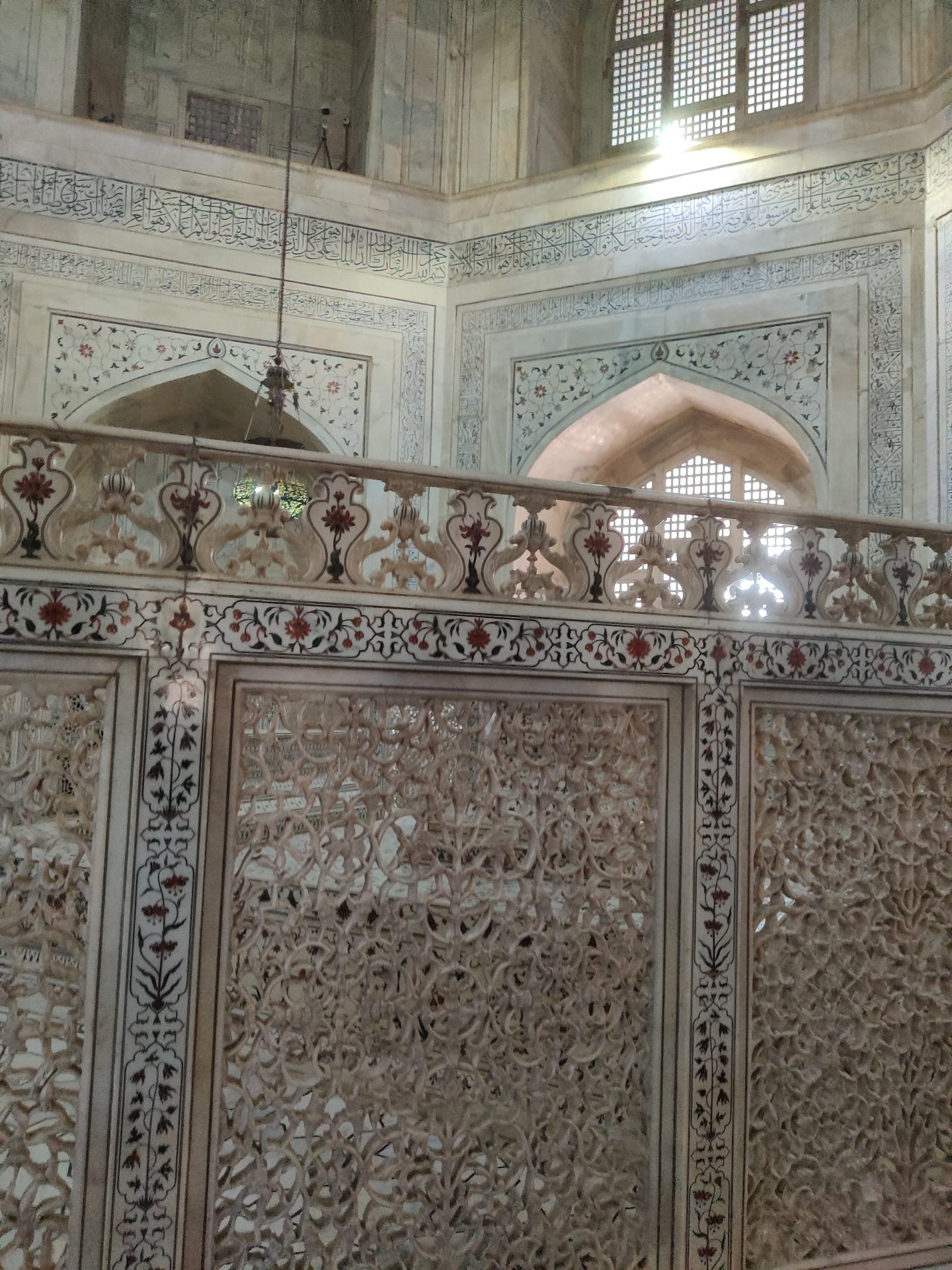
Right on top lies a large dome with a decorative piece in gilded bronze on the top, depicting the apex of the dome and done using a moon at the top. 4 minarets, each of which are more than 40 metres high frame the tomb at each corner of the square. The main chamber houses the false sarcophagi or stone coffin of Mumtaz Mahal and Shah Jahan while their actual graves lie at a lower level.
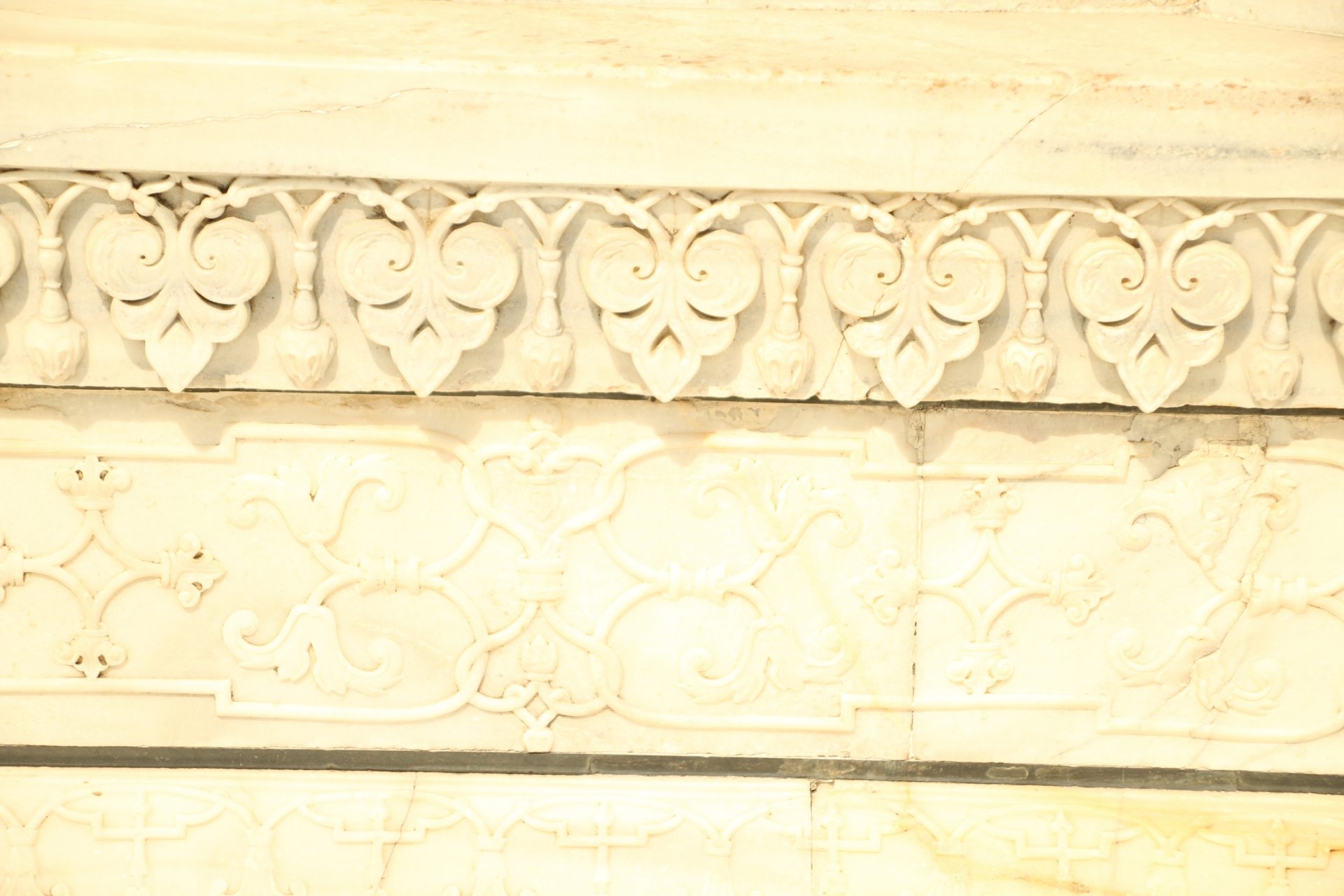
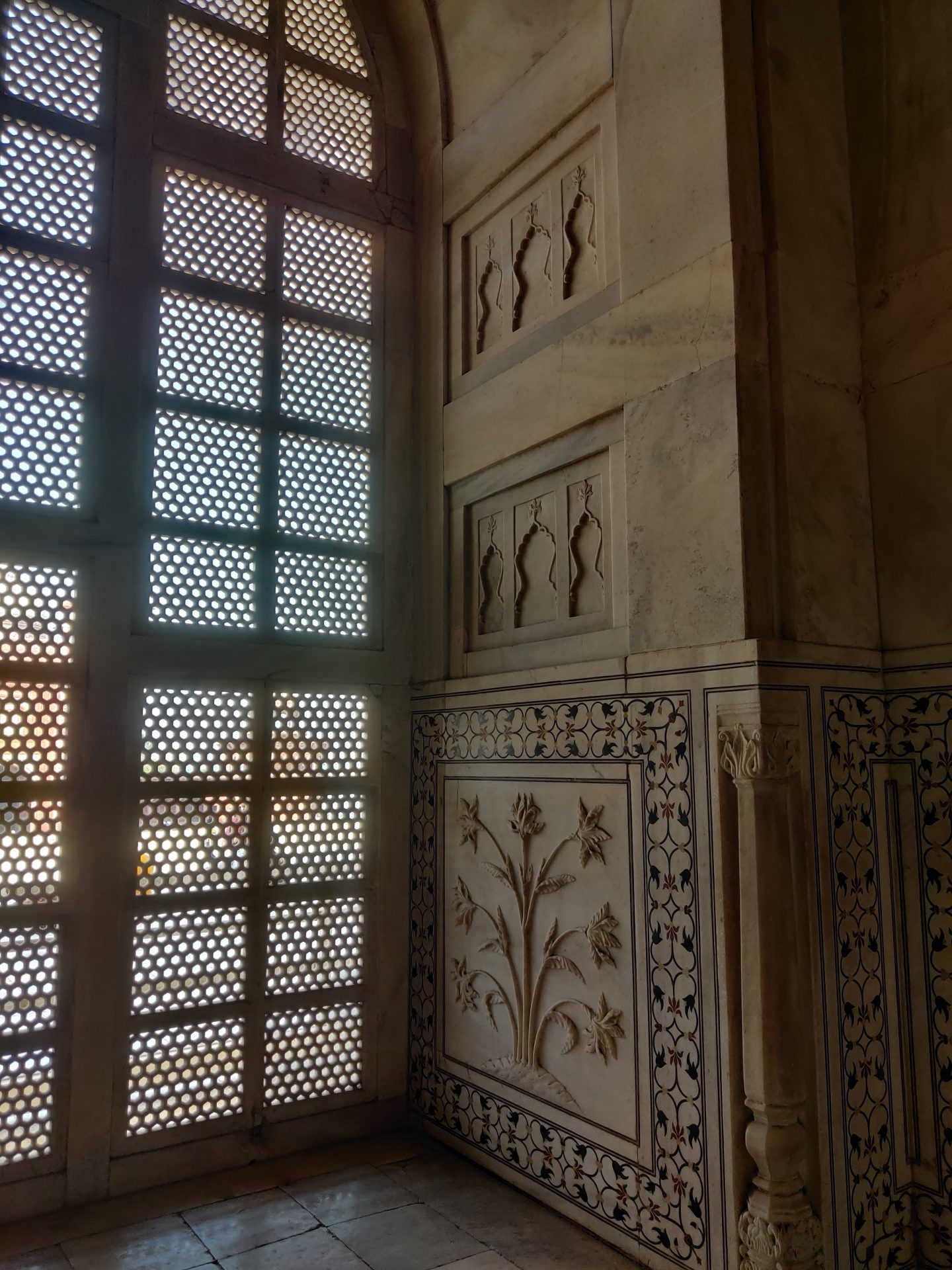
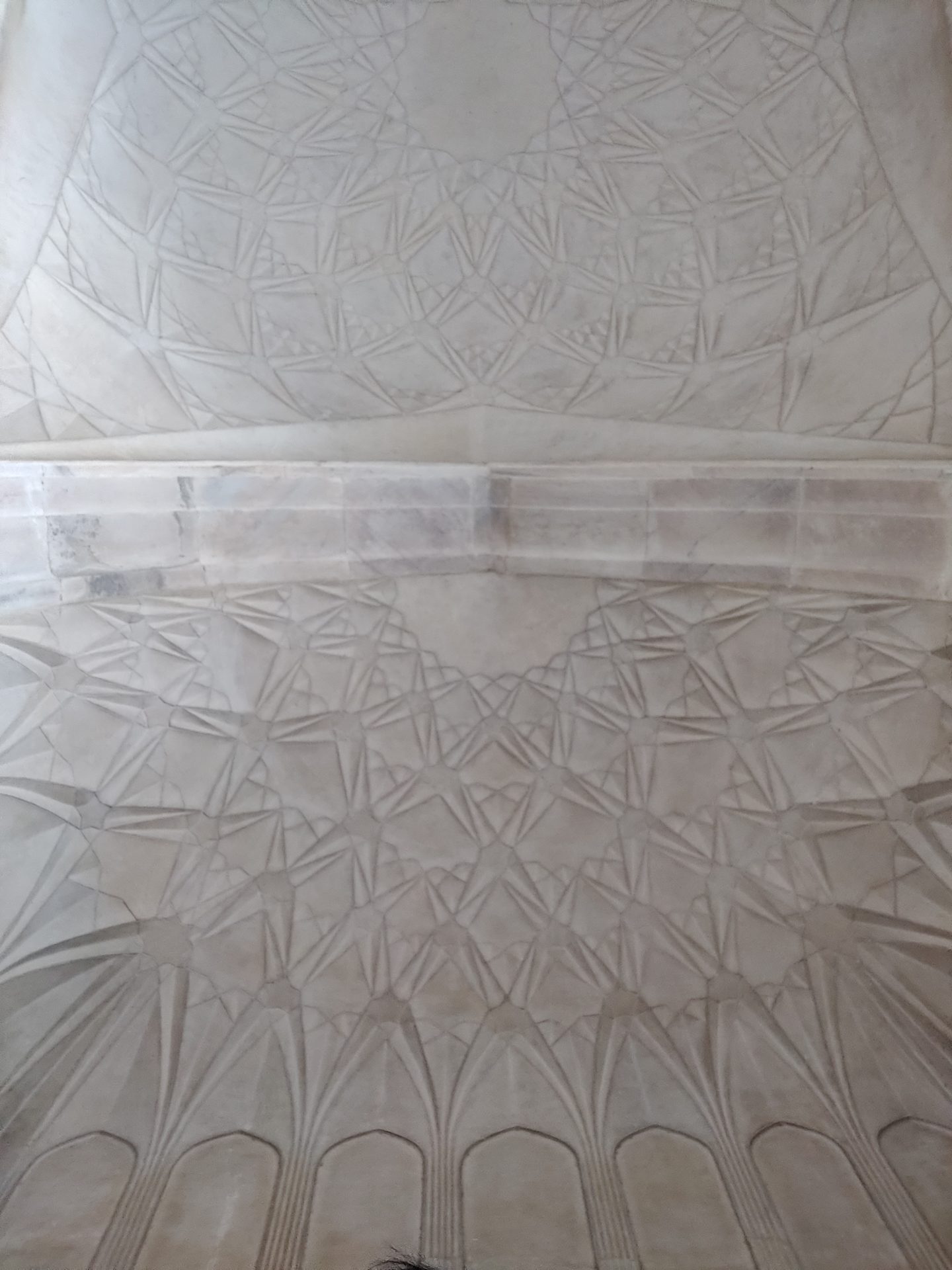
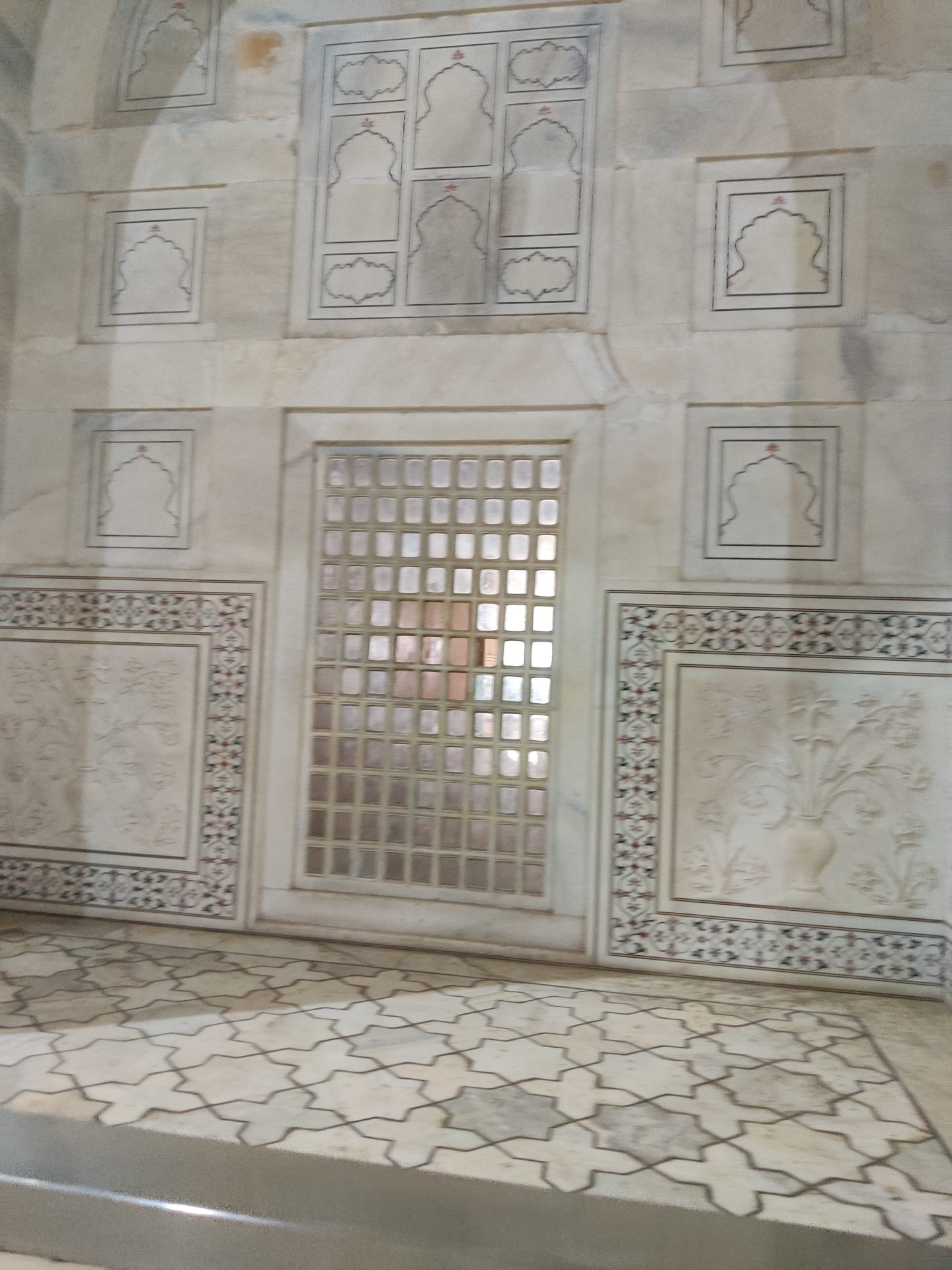
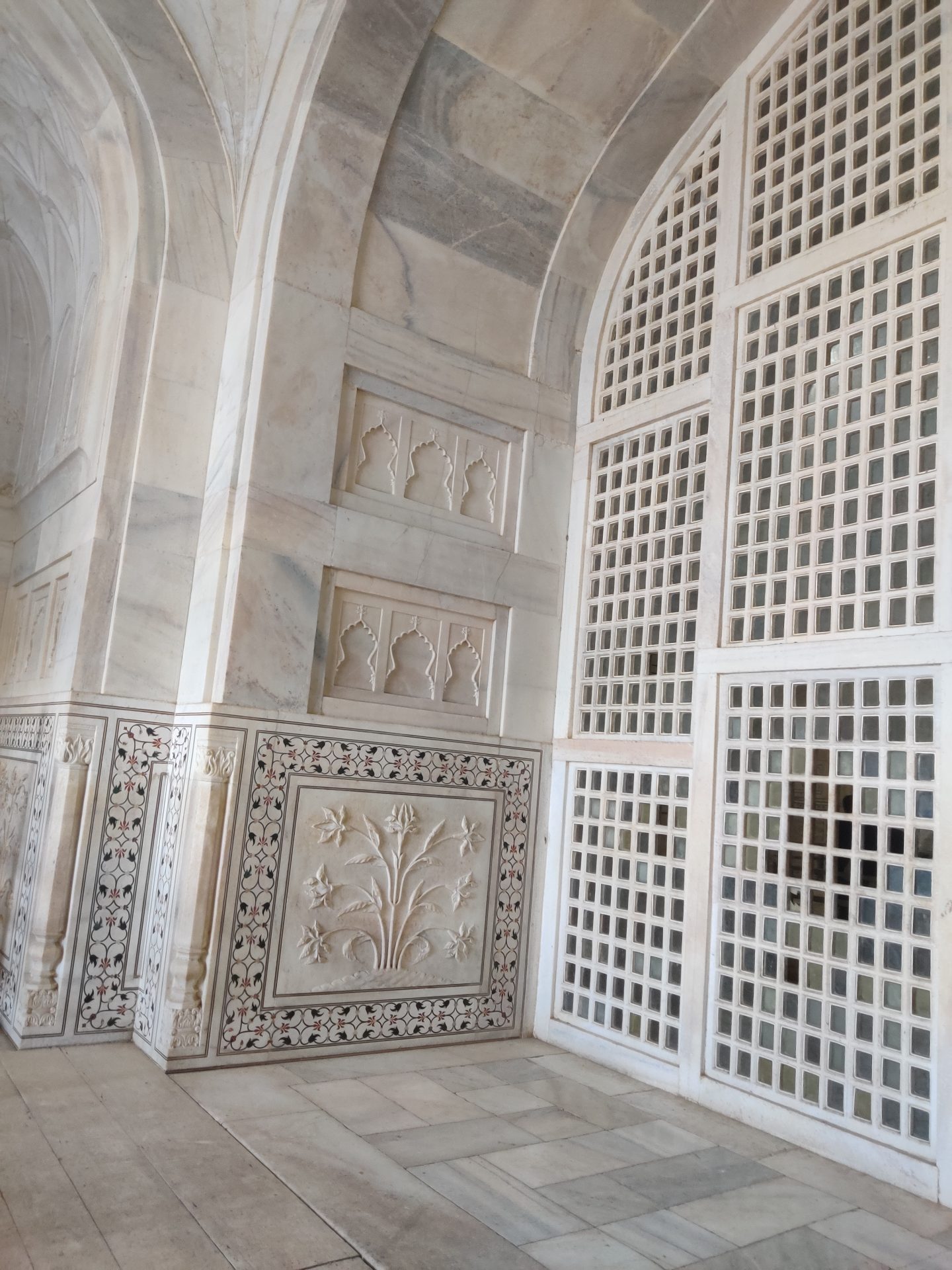
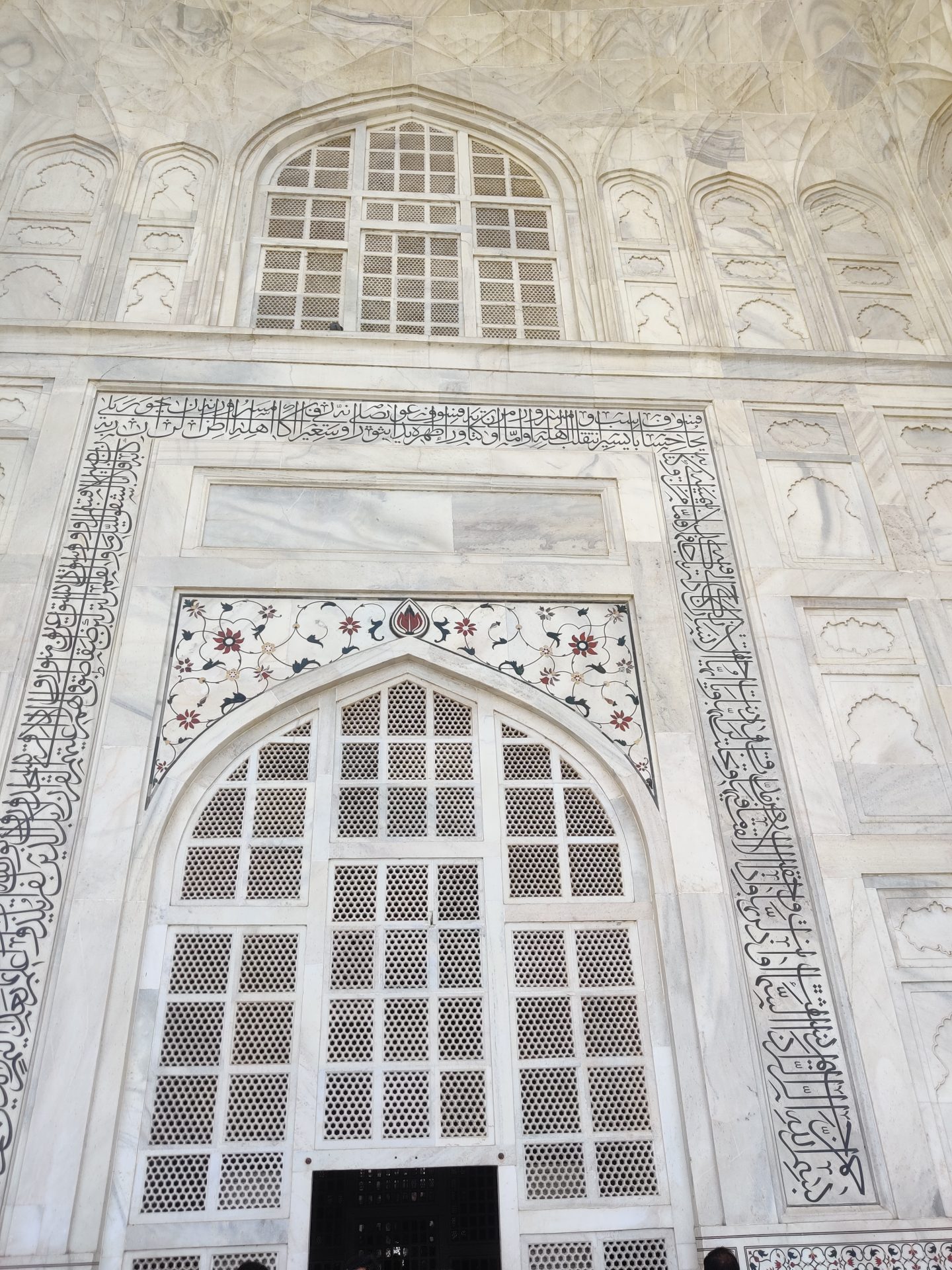
The exteriors of the Taj and the marble cenotaphs have lot of extensive calligraphy used besides abstract forms or vegetative motifs while the lower walls of the tomb have sculpted bas reliefs in marble of flowers and vines.
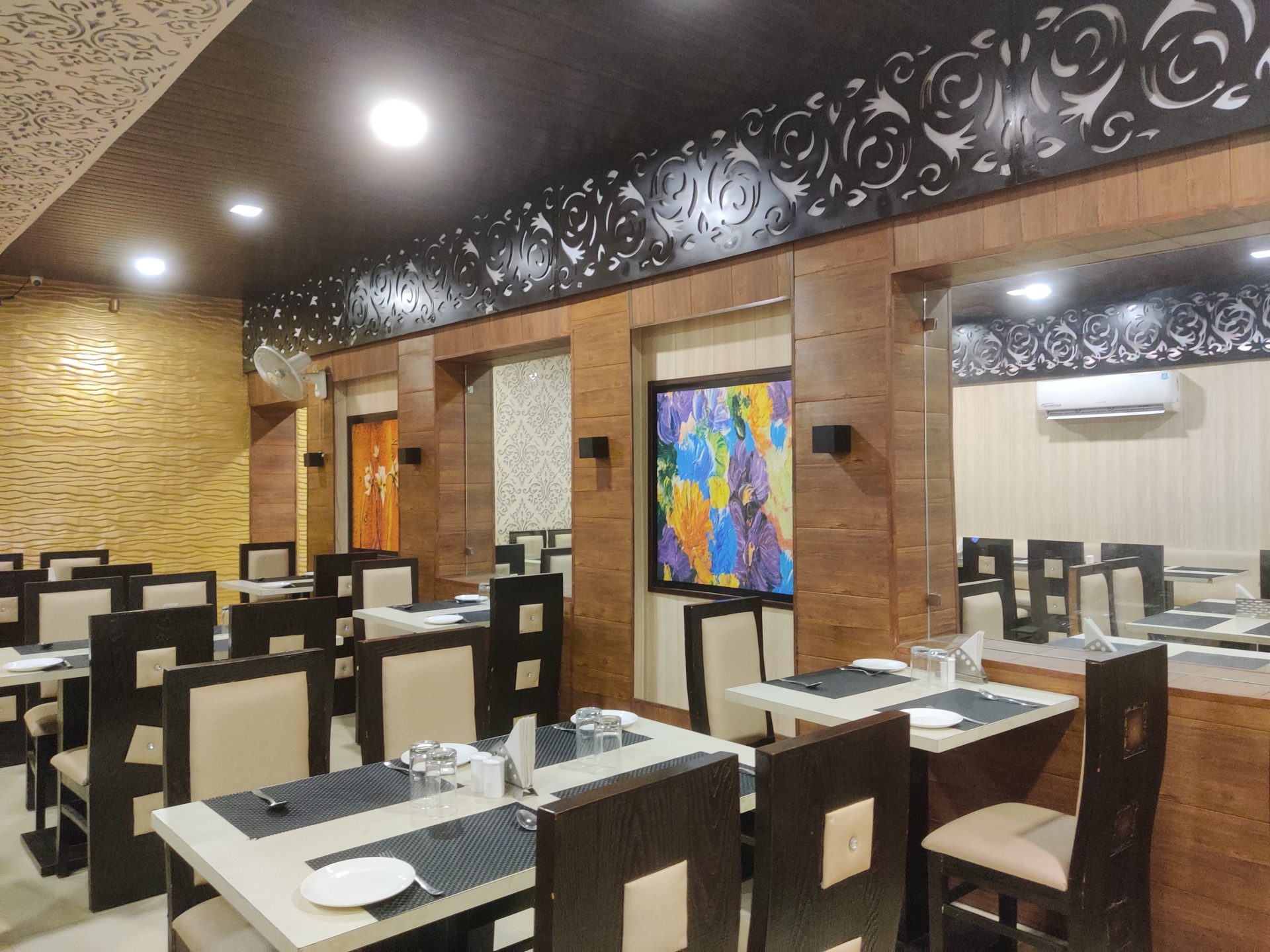
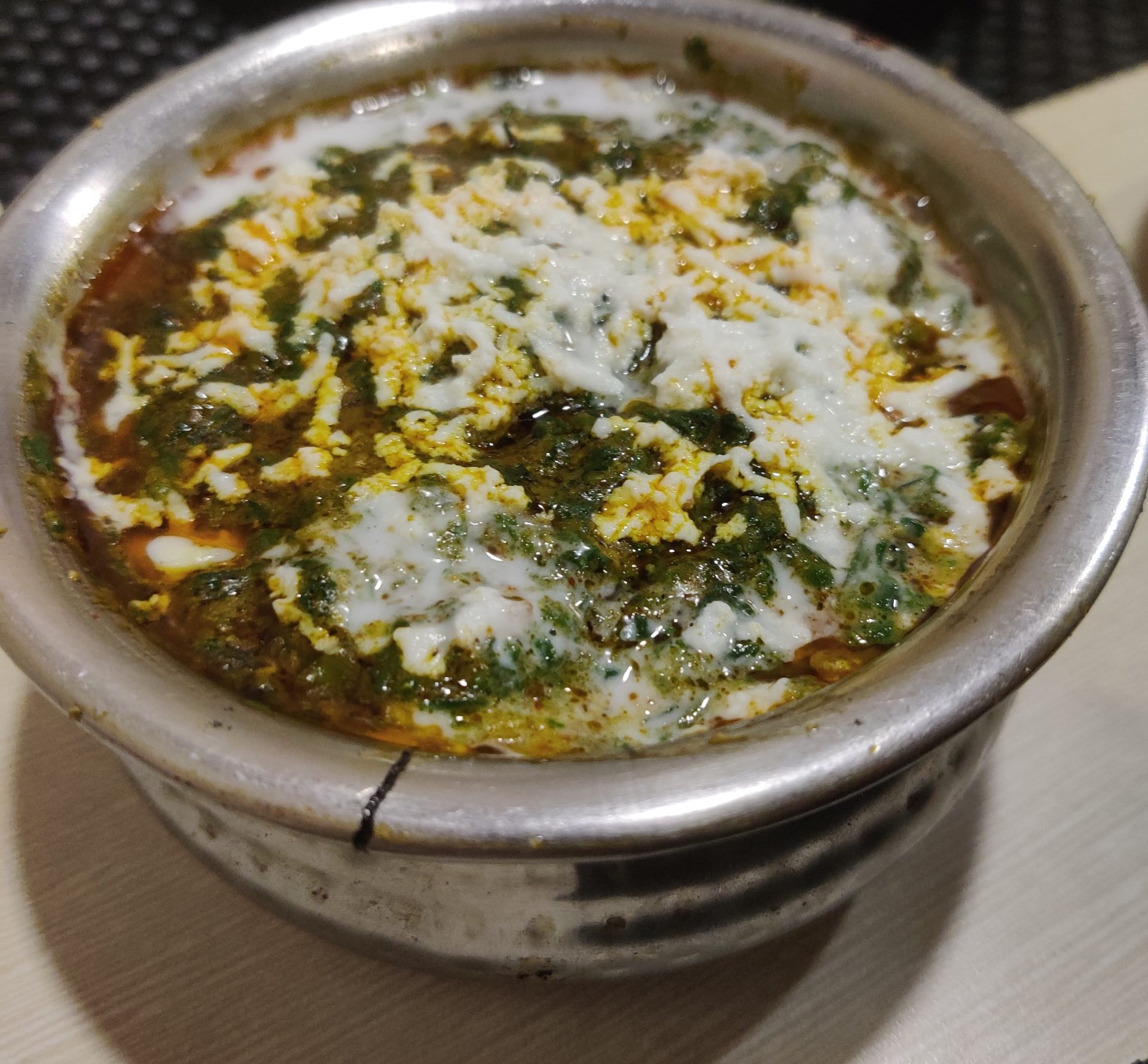
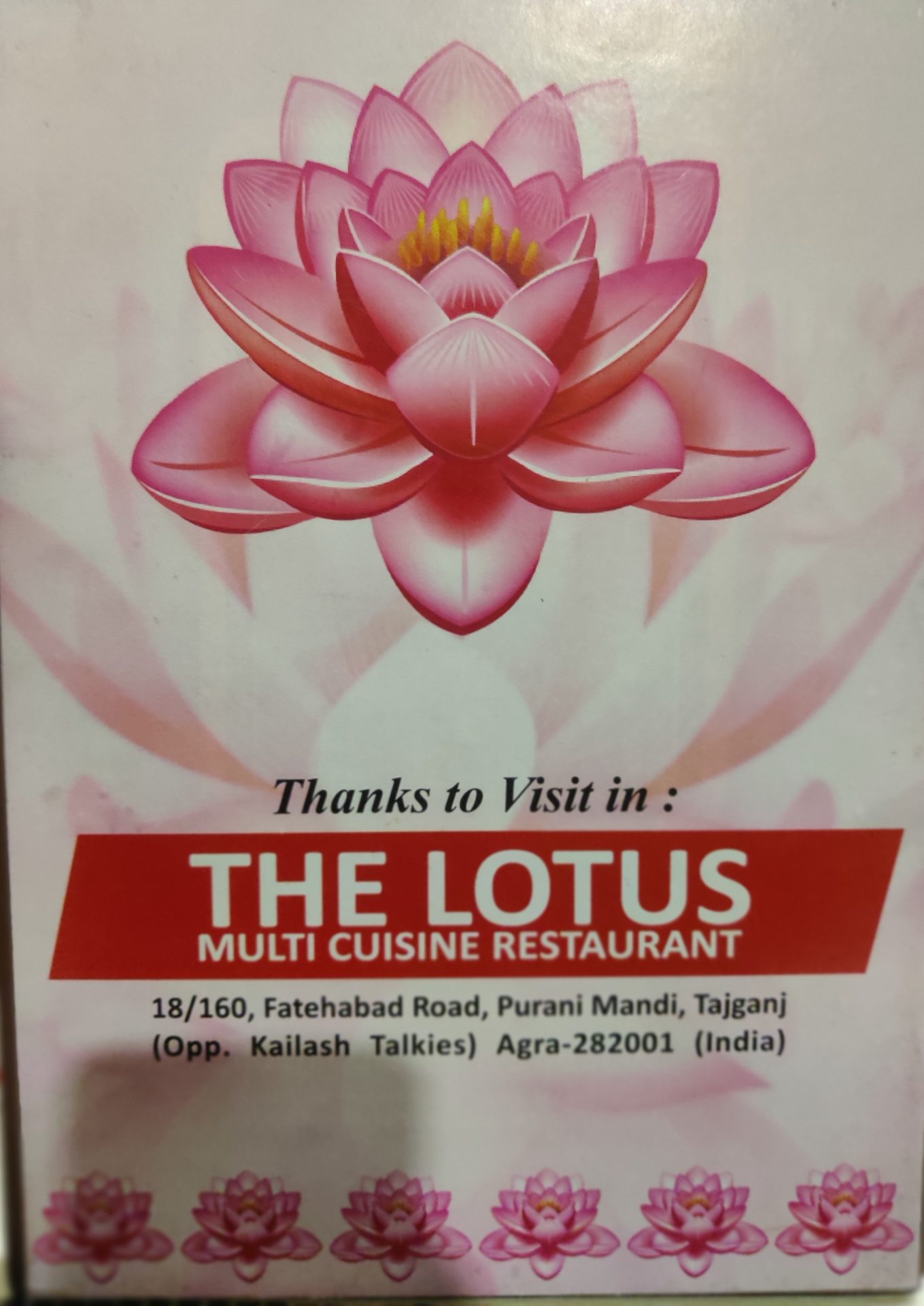
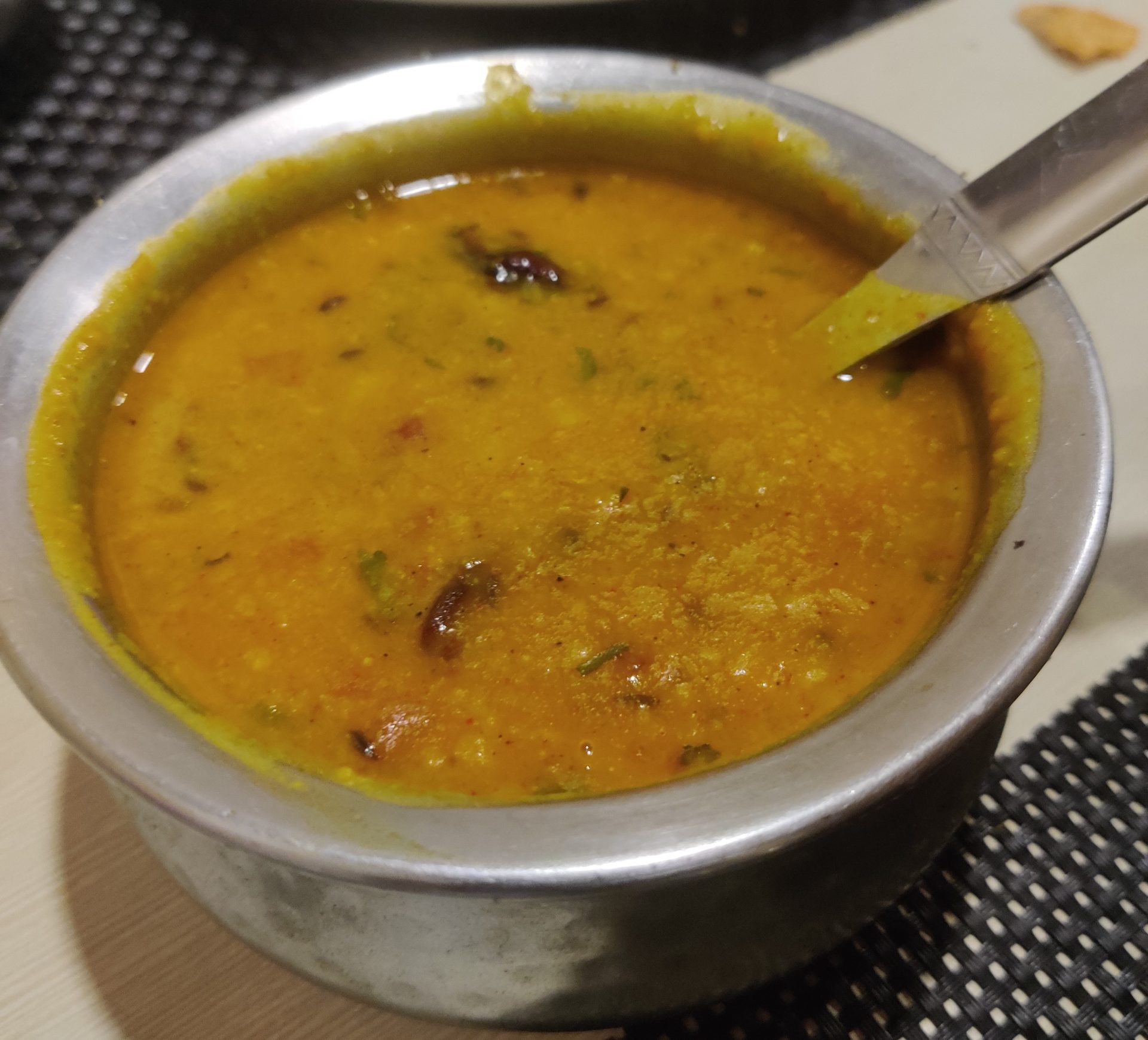
Having spent a good 2 hours within the Taj Mahal complex, we decided to do an early lunch and based on the suggestions of our cab guy, headed for The Lotus, a multi cuisine restaurant in the Taj Ganj area.
Delectable fare and the food did not leave us one bit disappointed. We next drove down to the Agra Fort, the official residence of the Mughal Emperors till 1638 post which they shifted their capital to Delhi.
This lies at a distance of less than 3 kms from the Taj and was to be our last halt at Agra before we were to take a train to Jaipur located around 4 hours away.
The Agra Fort
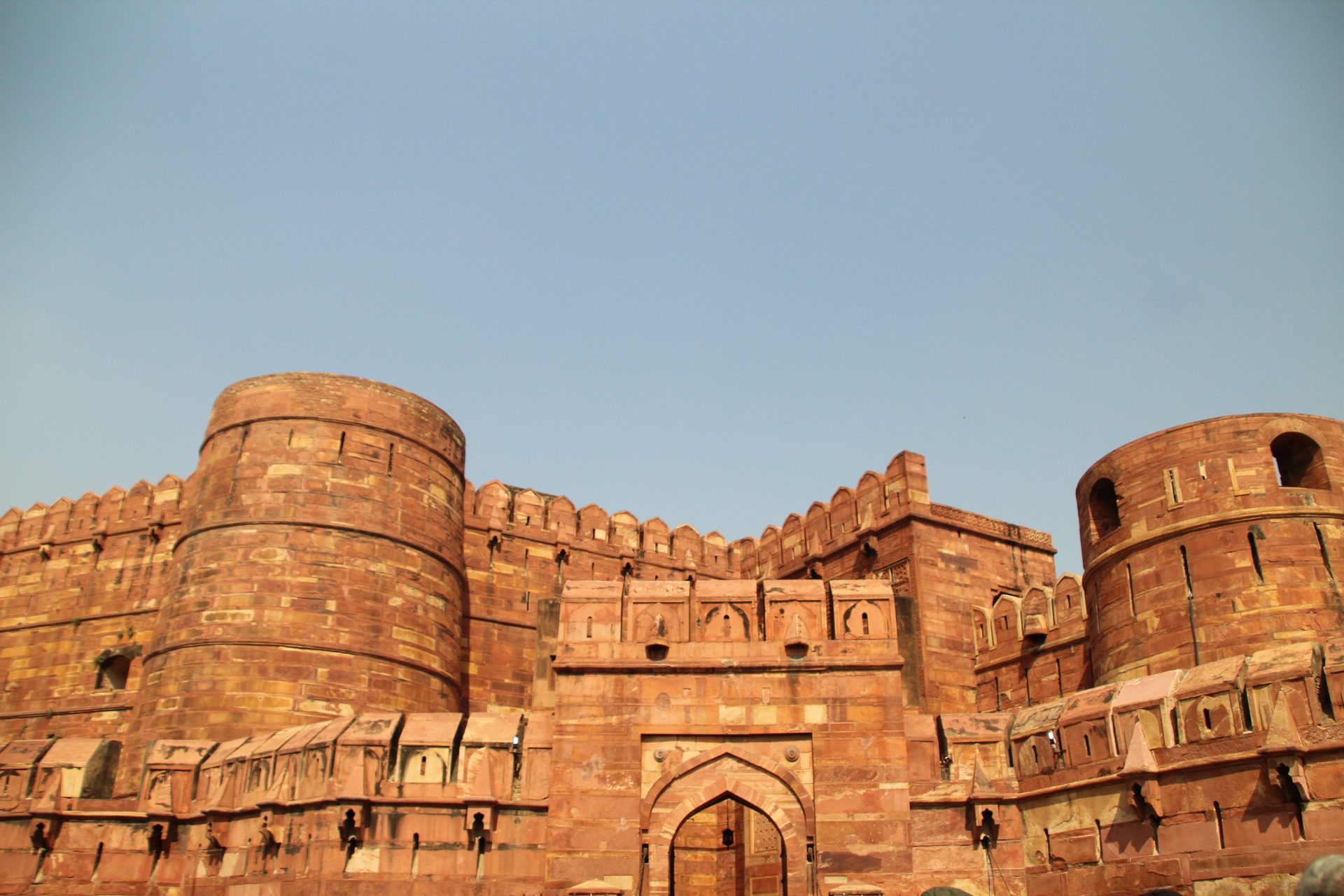
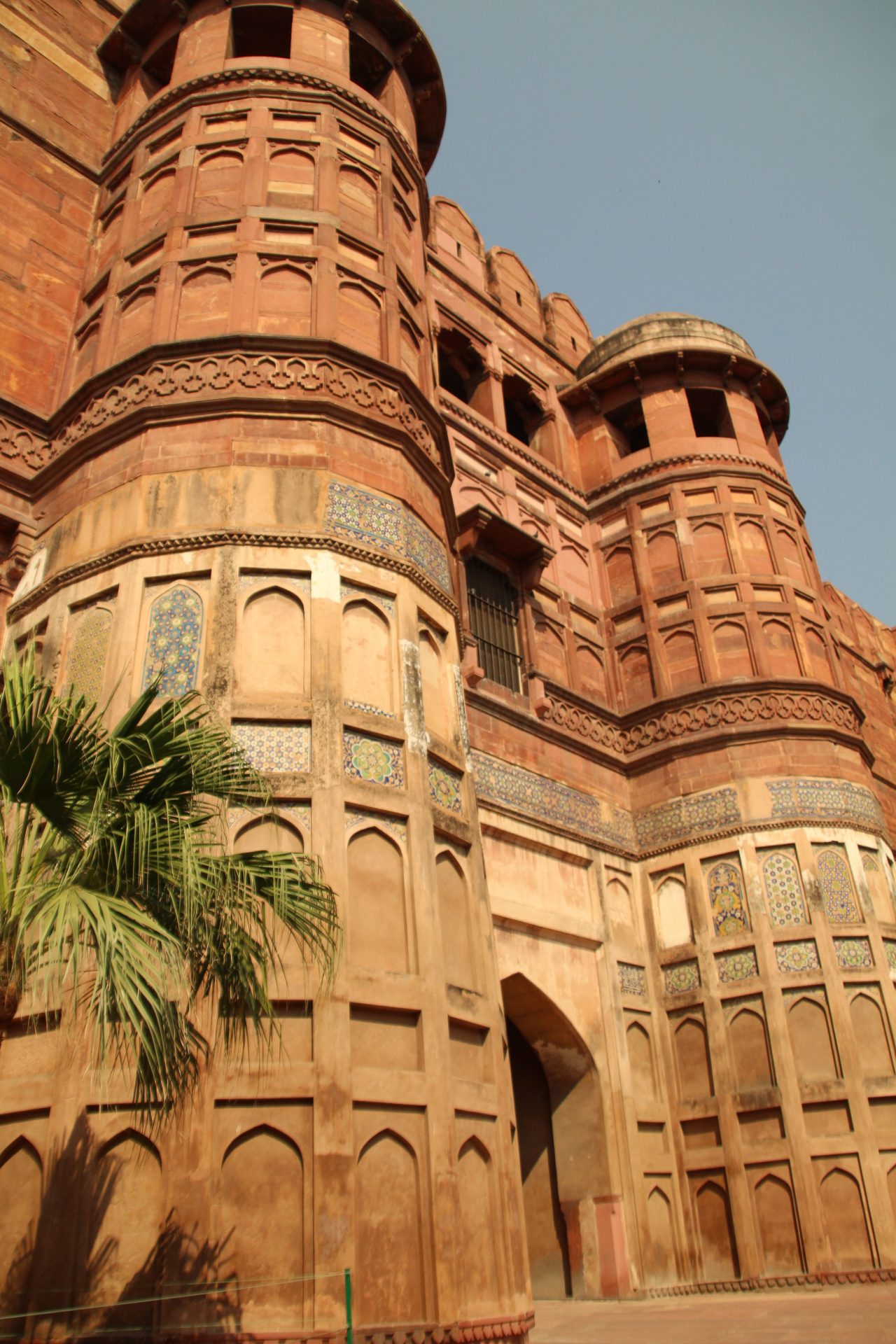
Spread across an area of 94 acres, this semi-circular shaped fort lies parallel to the Yamuna river and has 70 feet high walls.
The fort was Originally believed to have been built by the Rajput kings and who had named it Badalgarh Fort.
This massive complex underwent lot of change in hands between Indian Kings, the Lodi Dynasty, the Persian rulers and finally it was the Mughal emperor Babur who sent his son Humayun to capture the fort, post which he became the king.
It was his son Akbar who finally reclaimed the fort after the 2nd battle of Panipat and he then made Agra his capital, post which he renovated the fort and added lot of structures inside the monument.
This legacy continued with his son Jahangir and grandson Shah Jahan.
The entrance to the fort for tourists is through the Akbar Darwaza, renamed as the Amar Singh Gate as a testimony to his bravery by King Akbar.
While its said that Akbar added around 500 monuments inside the fort, what remains inside for public view are just a handful.
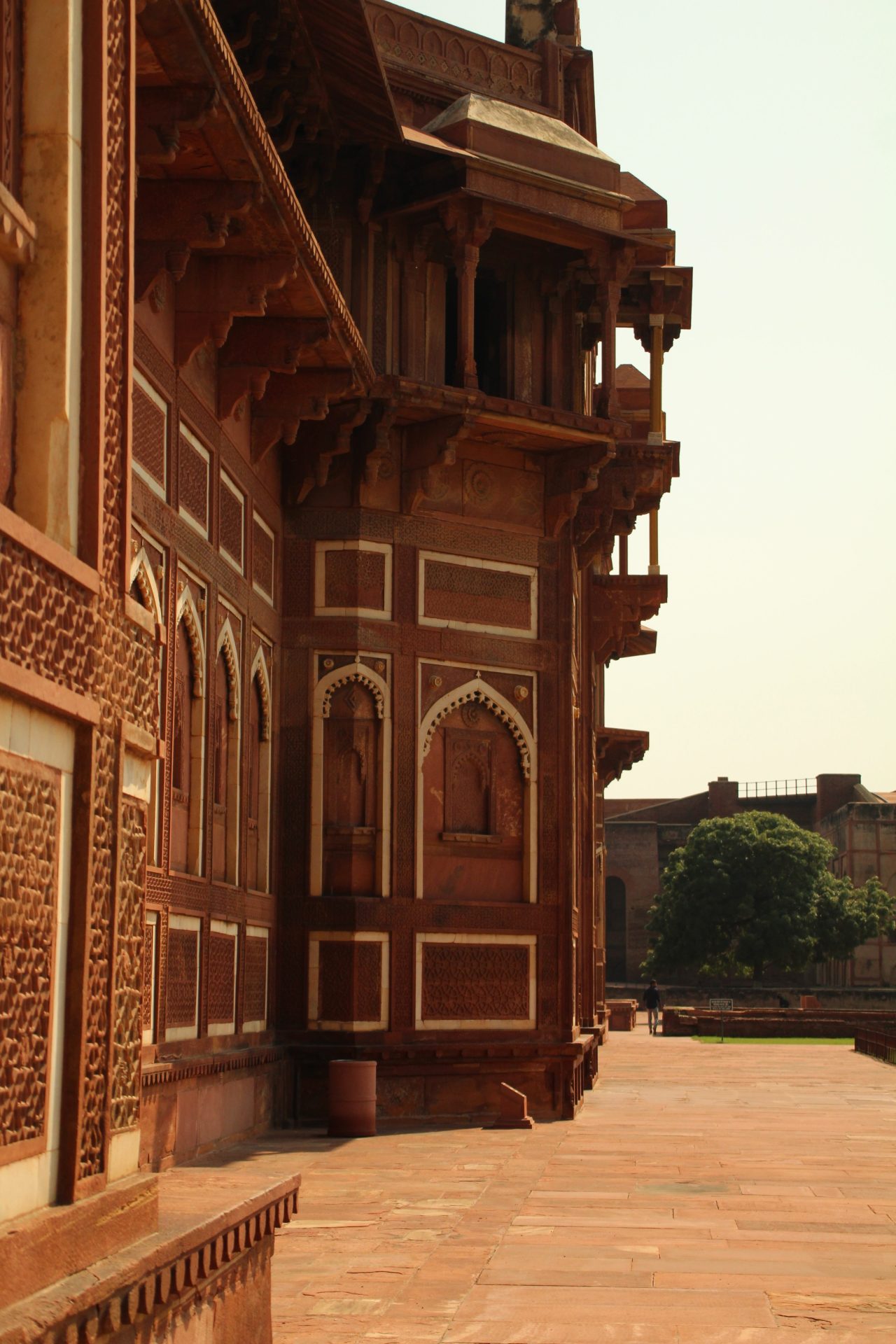
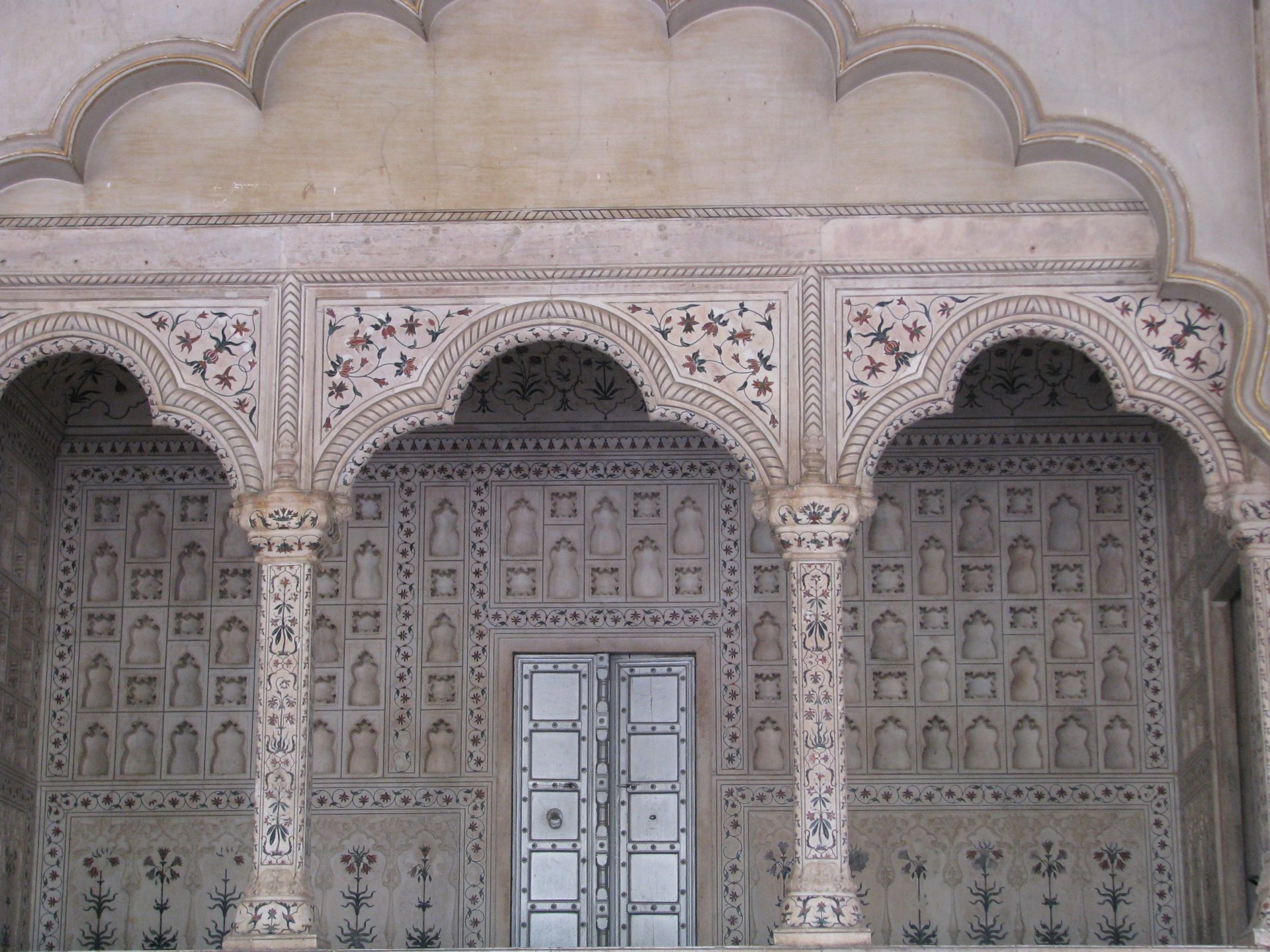
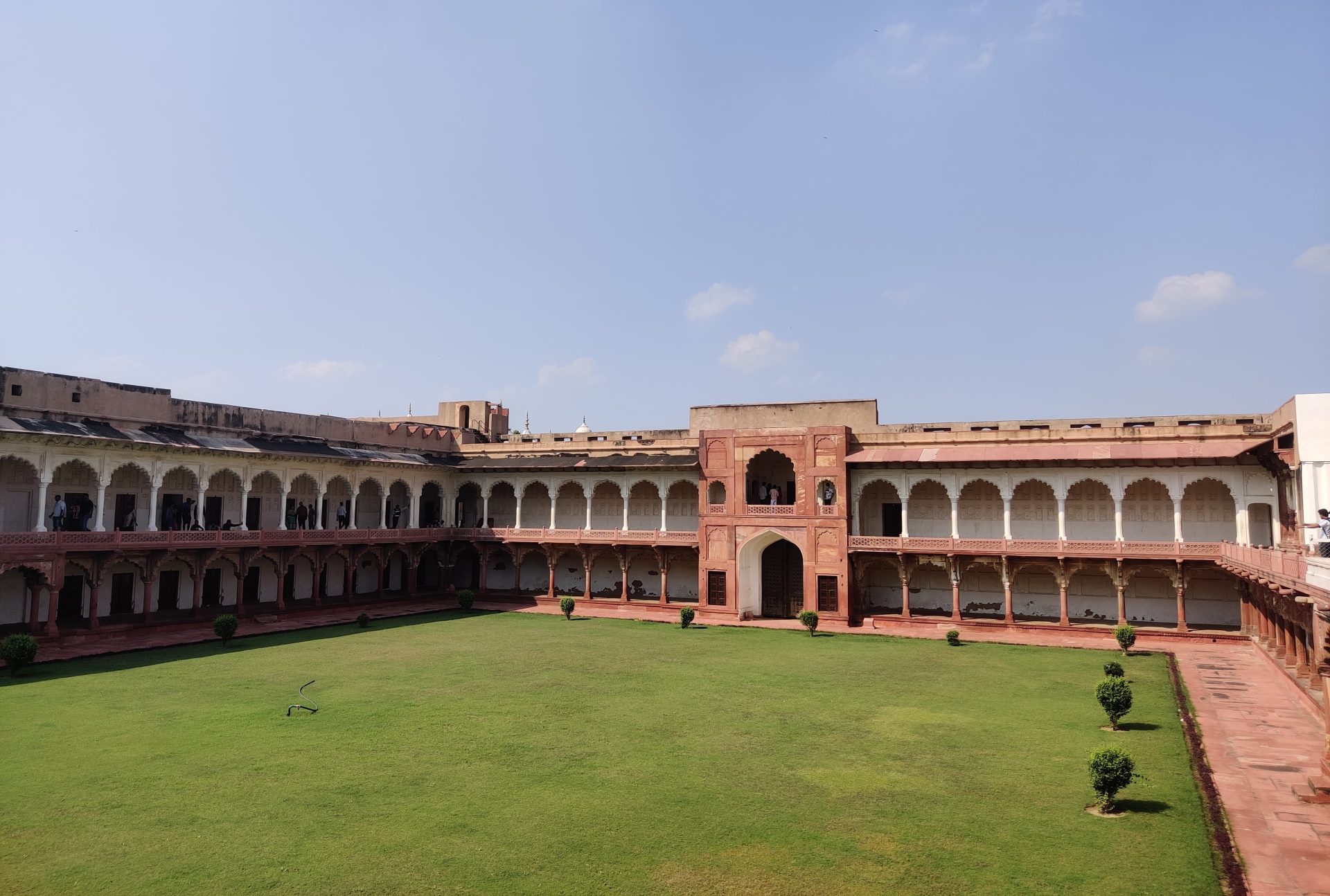
The Jahangir Palace built between 1565 to 1569 has corridors, rooms and verandahs surrounding an expansive courtyard. Said to have been used by Nur Jahan, the wife of Jahangir, this palace was also believed to have a peacock hall built in red sandstone with brackets at each end having a peacock with a snake in its mouth. The balconies and screens were designed to add to the beauty of the building.
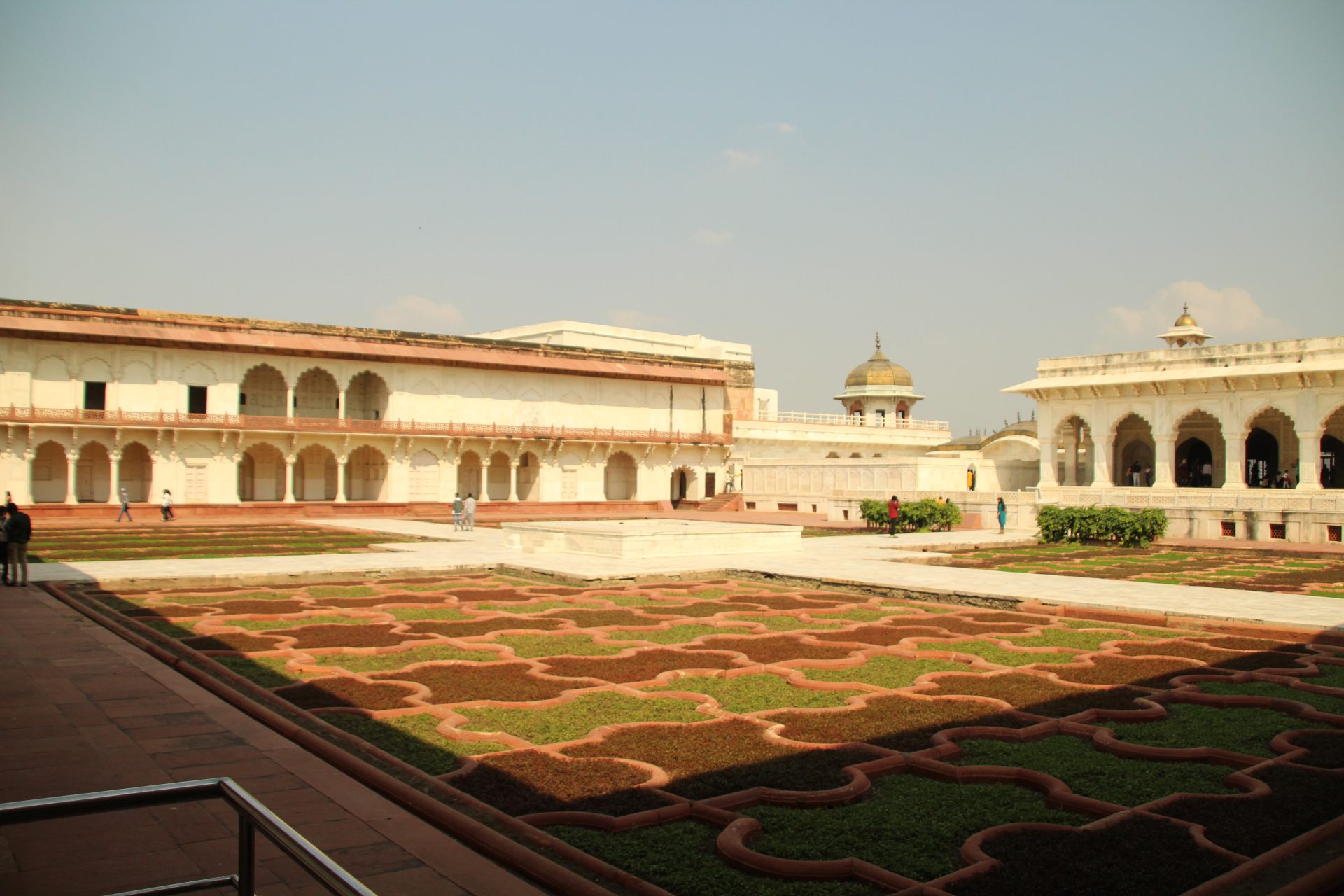
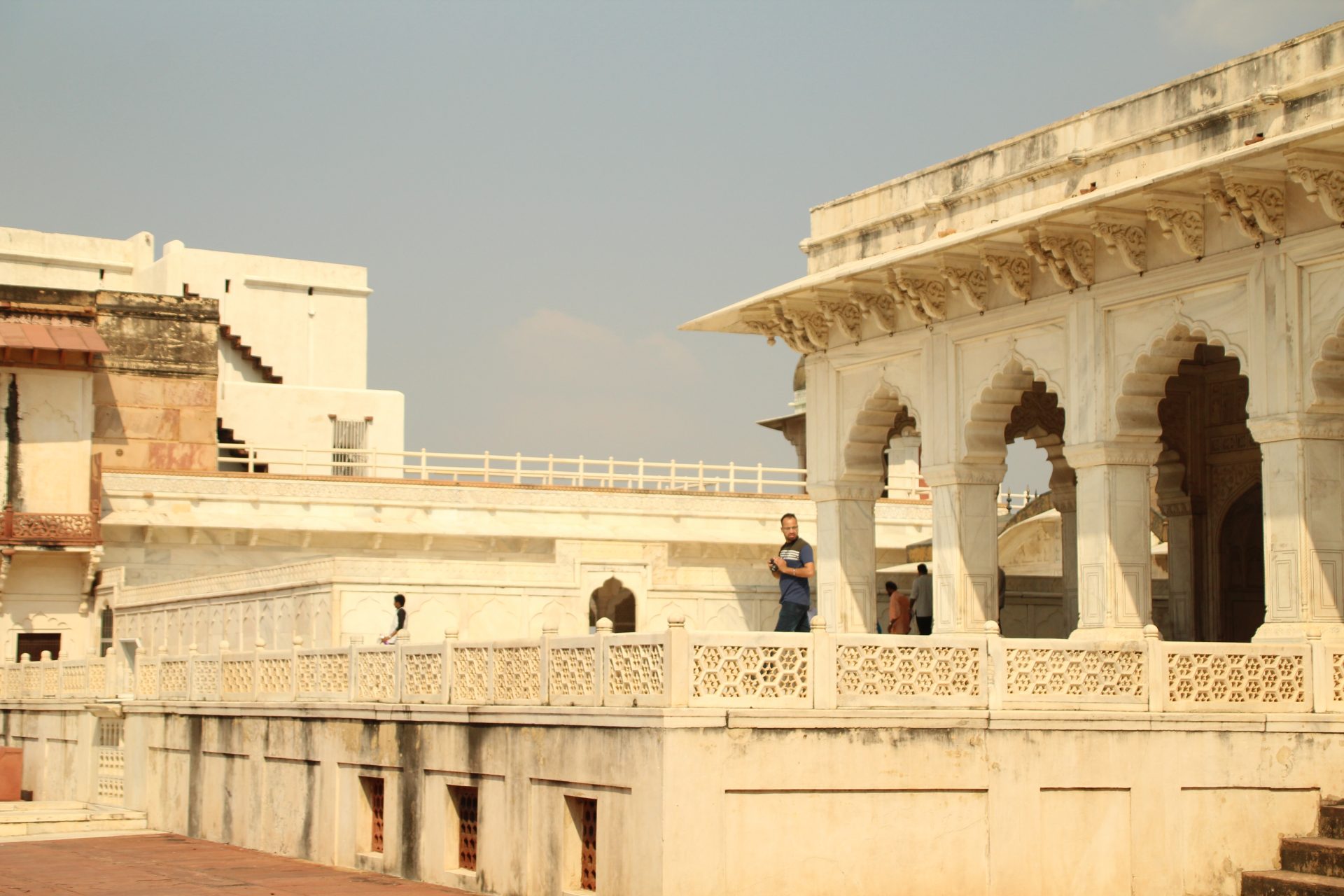
We moved on to the Khas Mahal, which was constructed by Shah Jahan between 1631 to 1640 and had white marbles adorning the pavilions. A garden of grapes known as the Anguri Bagh was built in front of the Mahal with a fountain in between. Intricately carved ceiling add to the beauty of the place.
JAHANGIR PALACE
ANGOORI BAGH (GARDEN OF GRAPES)
KHAS MAHAL
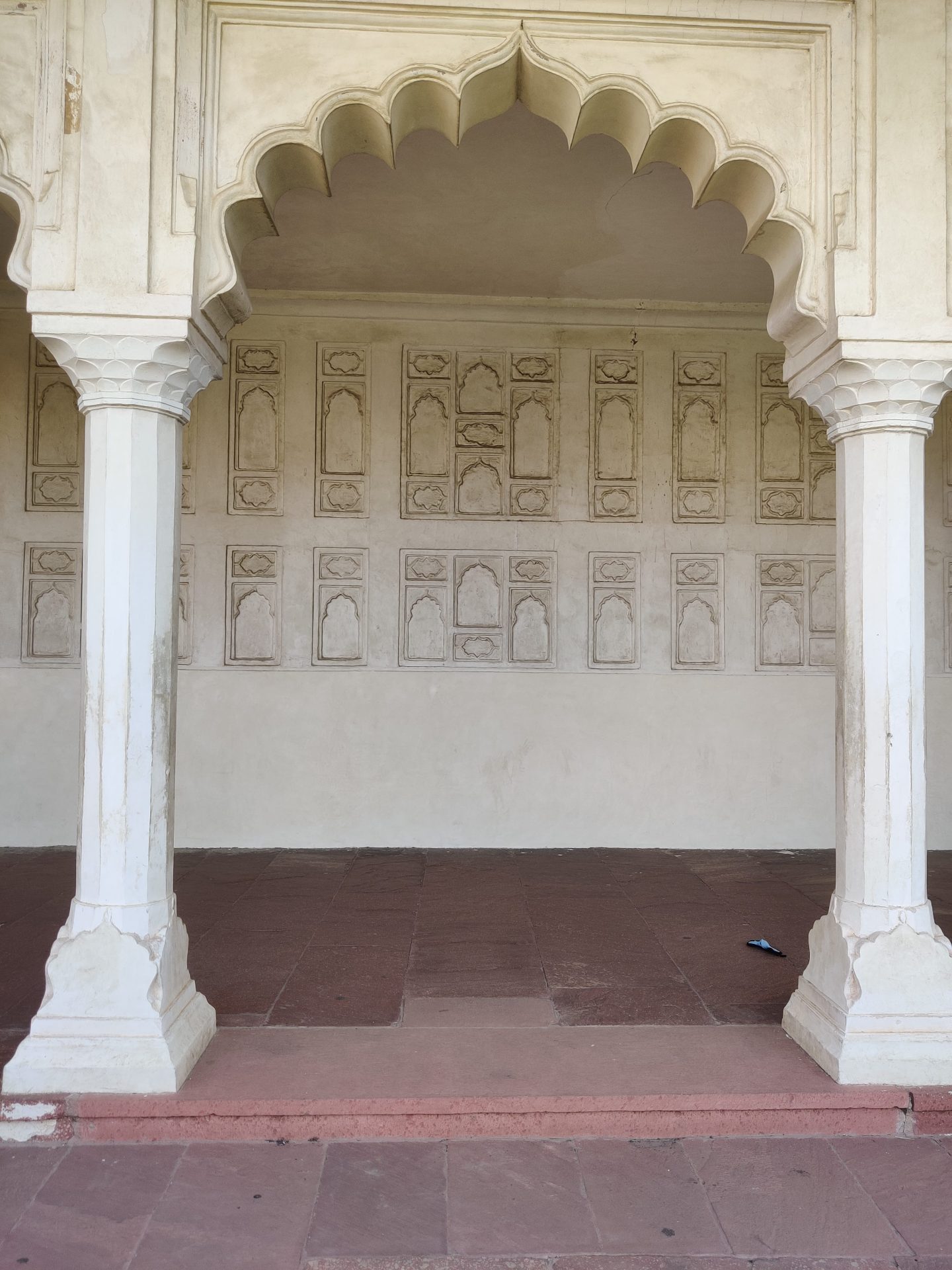
We then passed the Diwan-i-Aam, built around the same time as the Khas Mahal. This is a pretty big hall built with 3 aisles and 9 arches and with gateways made out of red sandstone. This hall primarily served the purpose of addressing the public by the emperor.
The Diwan-e-Khas built in the year 1635 served as a hall where the emperor would meet other kings, ambassadors and royal people from other kingdoms.
THE DIWAN-I-AAM
The ceilings of hall were believed to have been covered with leaves made of gold and silver to resemble the rays of the sun while floral patterns adorn the borders of the chambers.
THE MUSSAMMAN BURJ
The Meena Masjid is one among the few mosques inside the fort. This was built by Shah Jahan for himself and the royal wives to offer prayers.
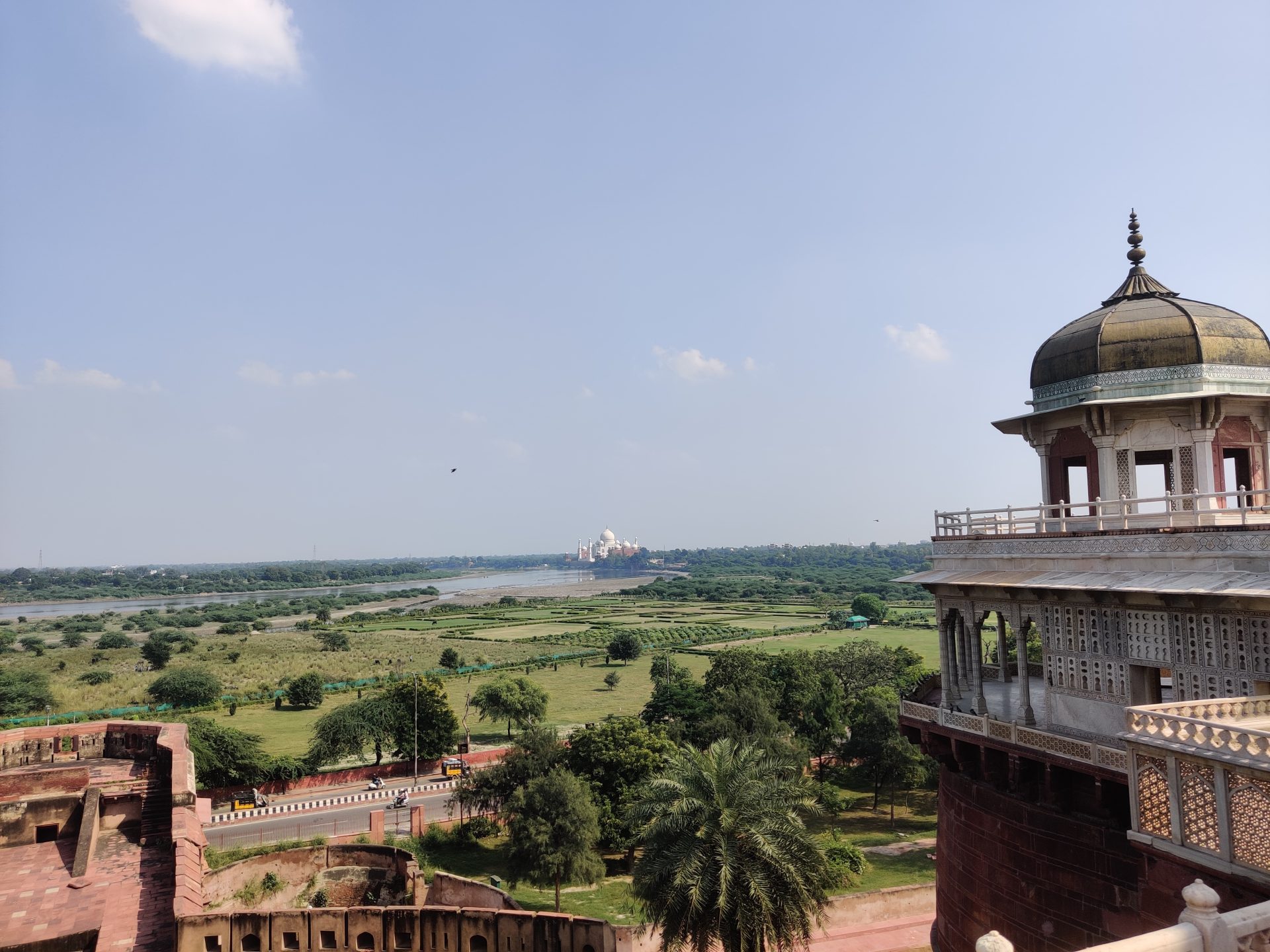
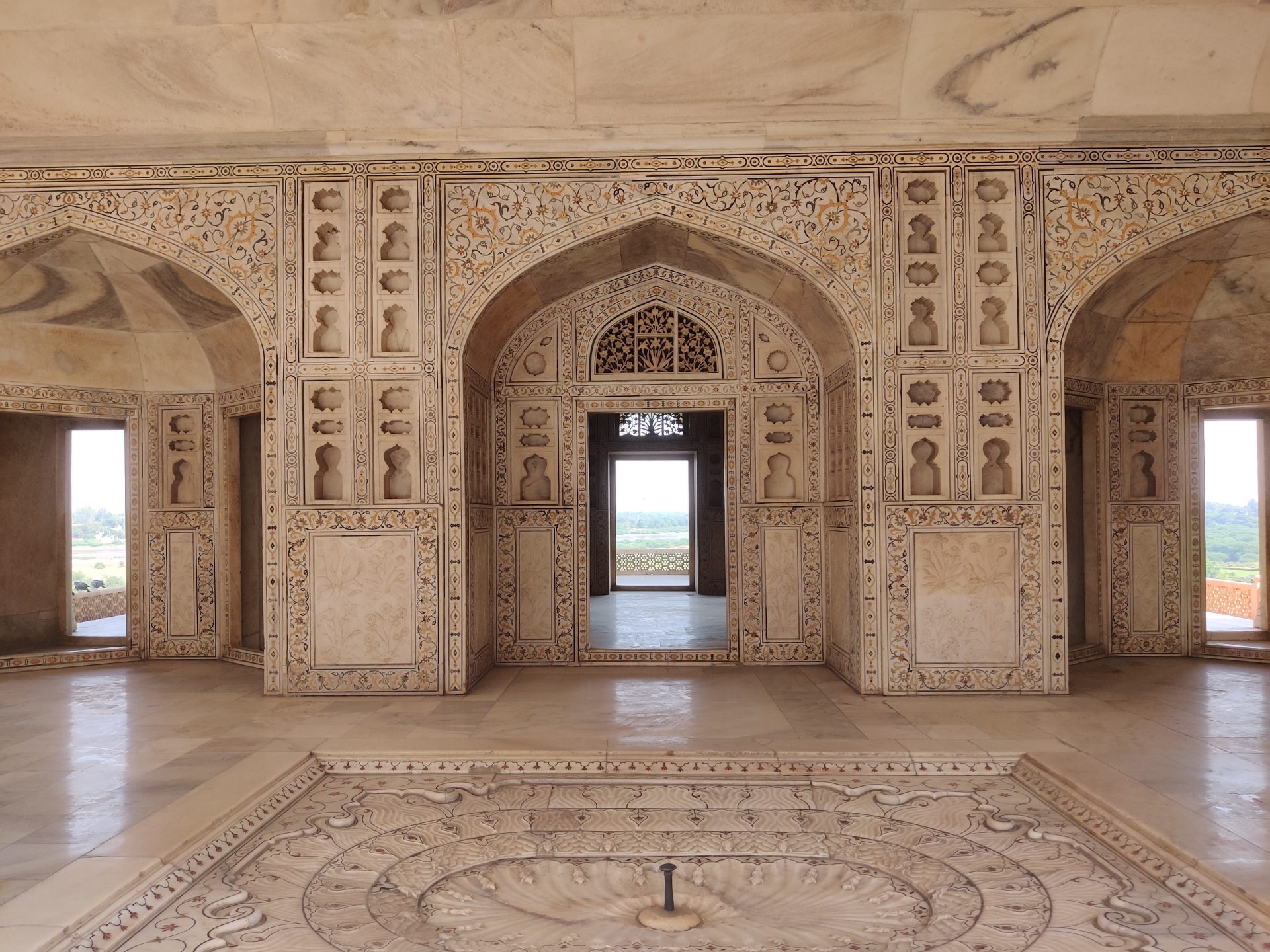
The Musamman Burj is an Octagonal shaped tower built by Shah Jahan near the Diwan-e-khas. This ornately carved palace, originally built of red stone by Akbar was used to worship the sun everyday at sunrise.
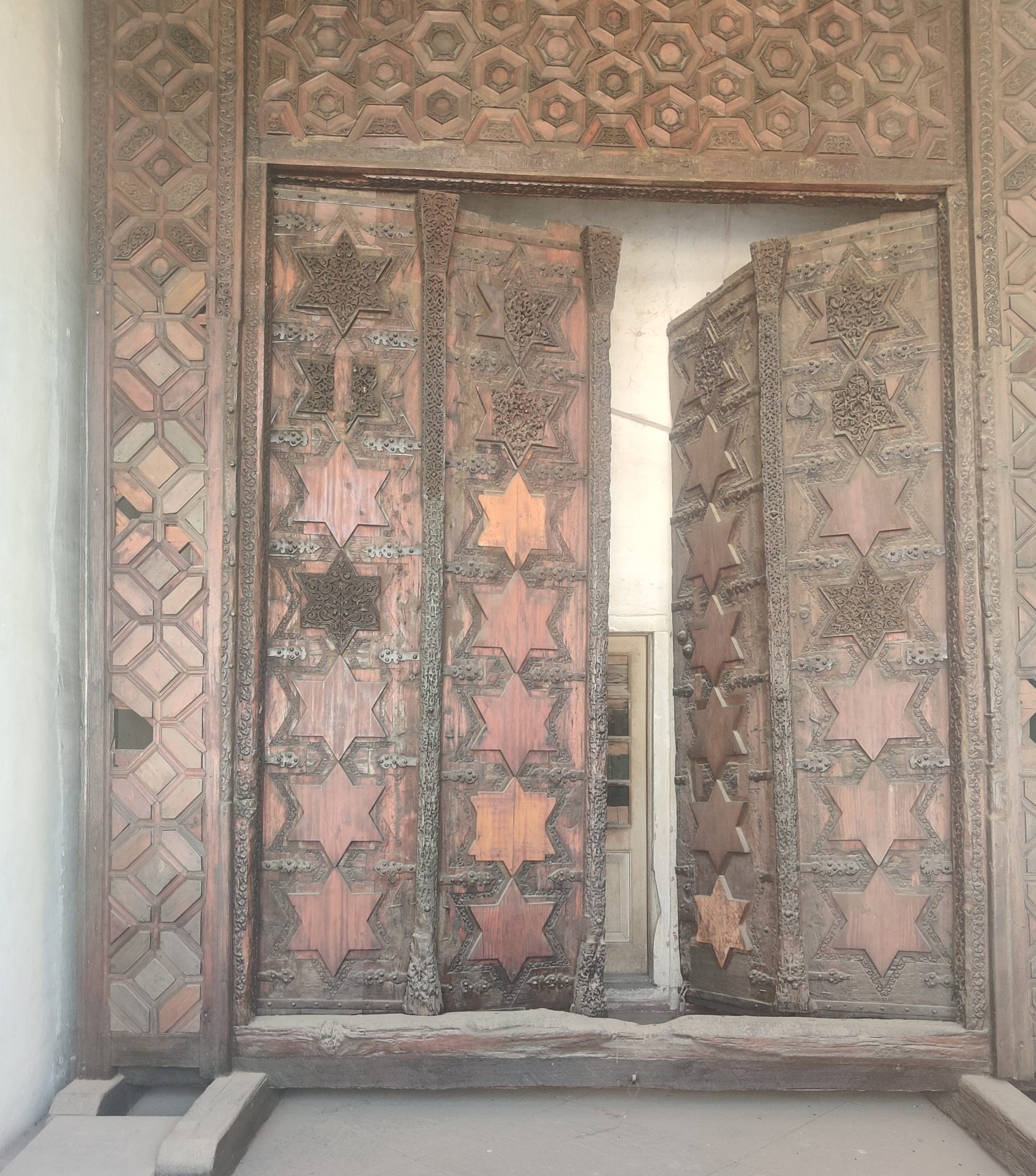
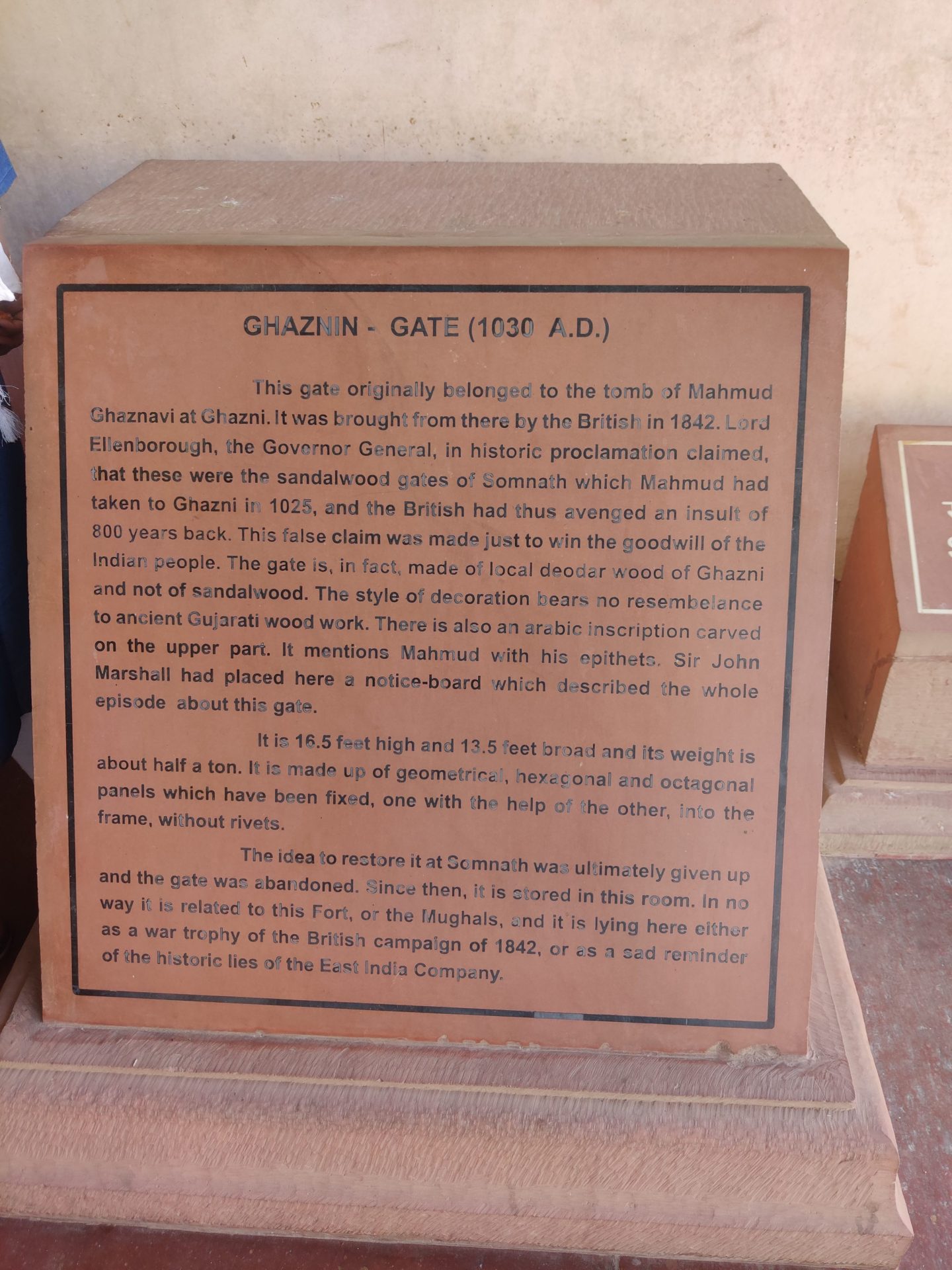
A 1030 AD Gate which belonged to the tomb of Mahmud Ghaznavi can be seen close to the Masjid. Its believed that this gate was carried by the Britishers in 1842 and placed inside the fort. Weighing near abouts half a ton, this gate measures 16.5 x 13.5 feet in dimensions and has no semblance to Mughal architecture.
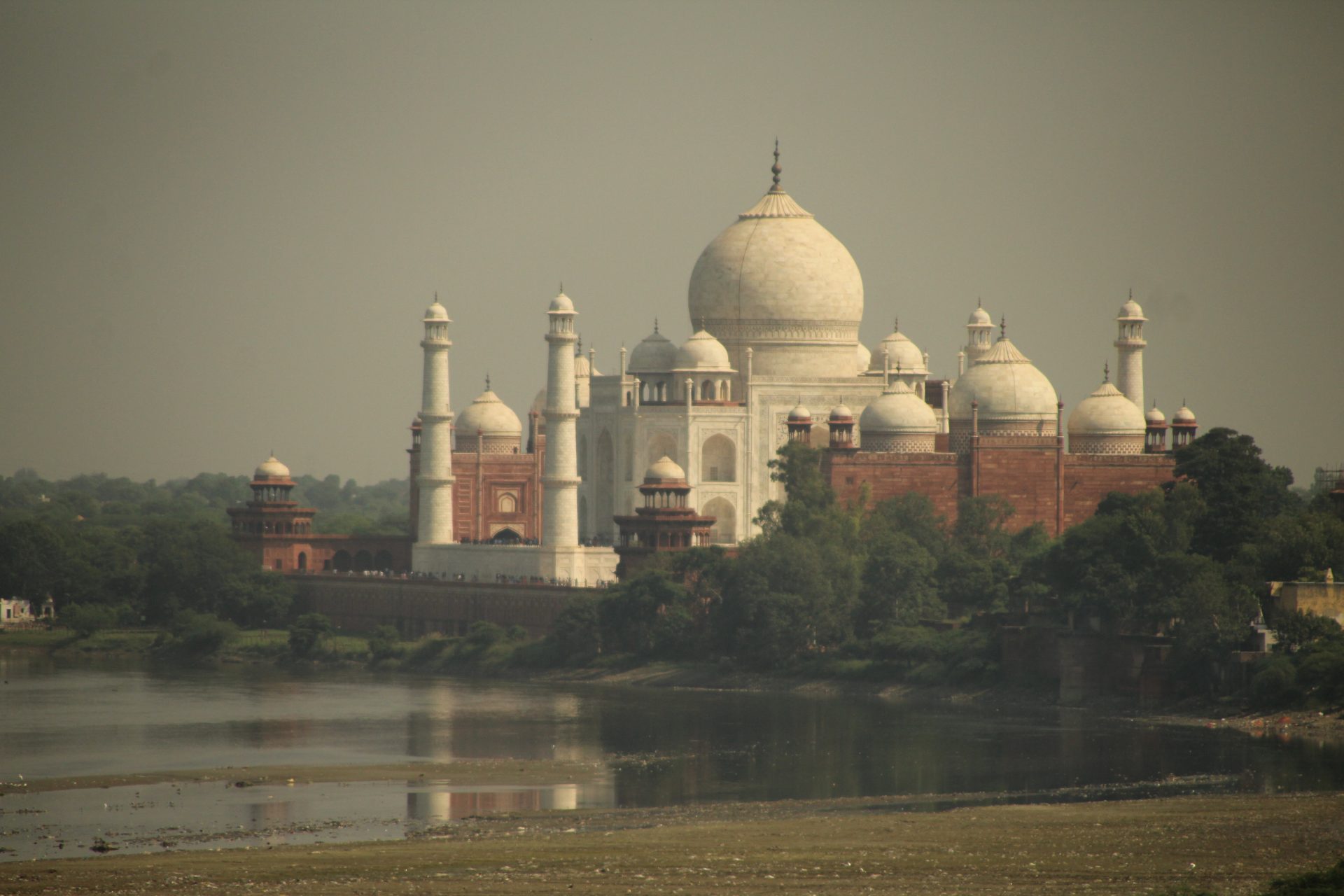
A majestic view of the Taj Mahal can be seen from here and its believed that Shah Jahan spent 8 years of his imprisonment here and is said to have died here, after which his body was taken in a boat to the Taj Mahal and buried there. The price of a ticket to enter this monument is Rs.35/- and can be booked online with the help of this link https://asi.payumoney.com/
Jaipur
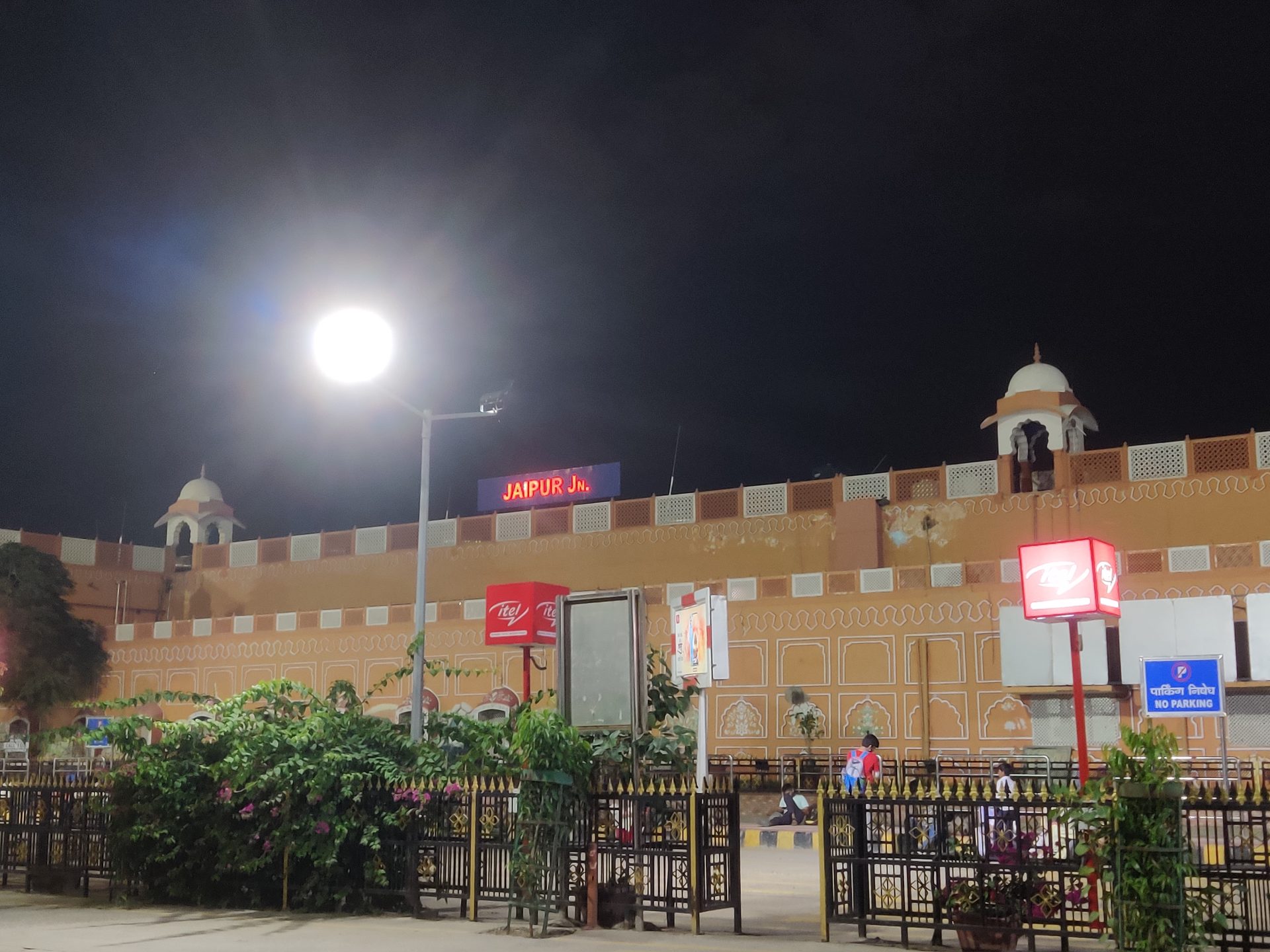
We got dropped by around 2.15 PM in the afternoon at the Agra Fort Railway Station for our onward journey to Jaipur. There are multiple trains running between these 2 cities and the travel time varies between a little less than 4 hours to around six hours. We reached Jaipur station by around 6.30 in the evening and took a taxi from outside the station to Hotel Pandya Nivas, a no non-sense, no frills but decent property, around 4 kms from the station. We negotiated with the same cab guy for a sightseeing tour next day of few of the important landmarks in Jaipur and asked him to come to the hotel by around 9 AM.
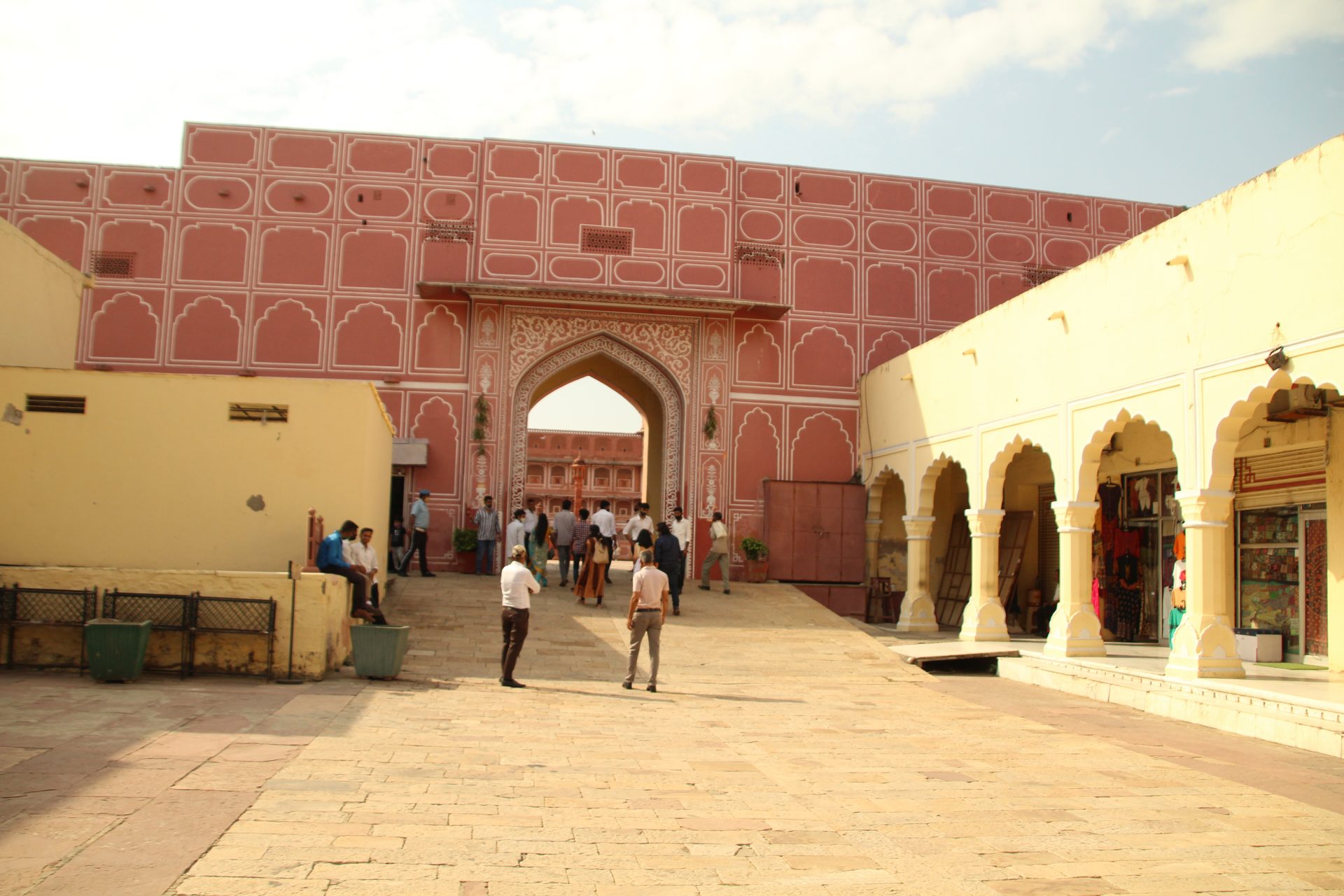
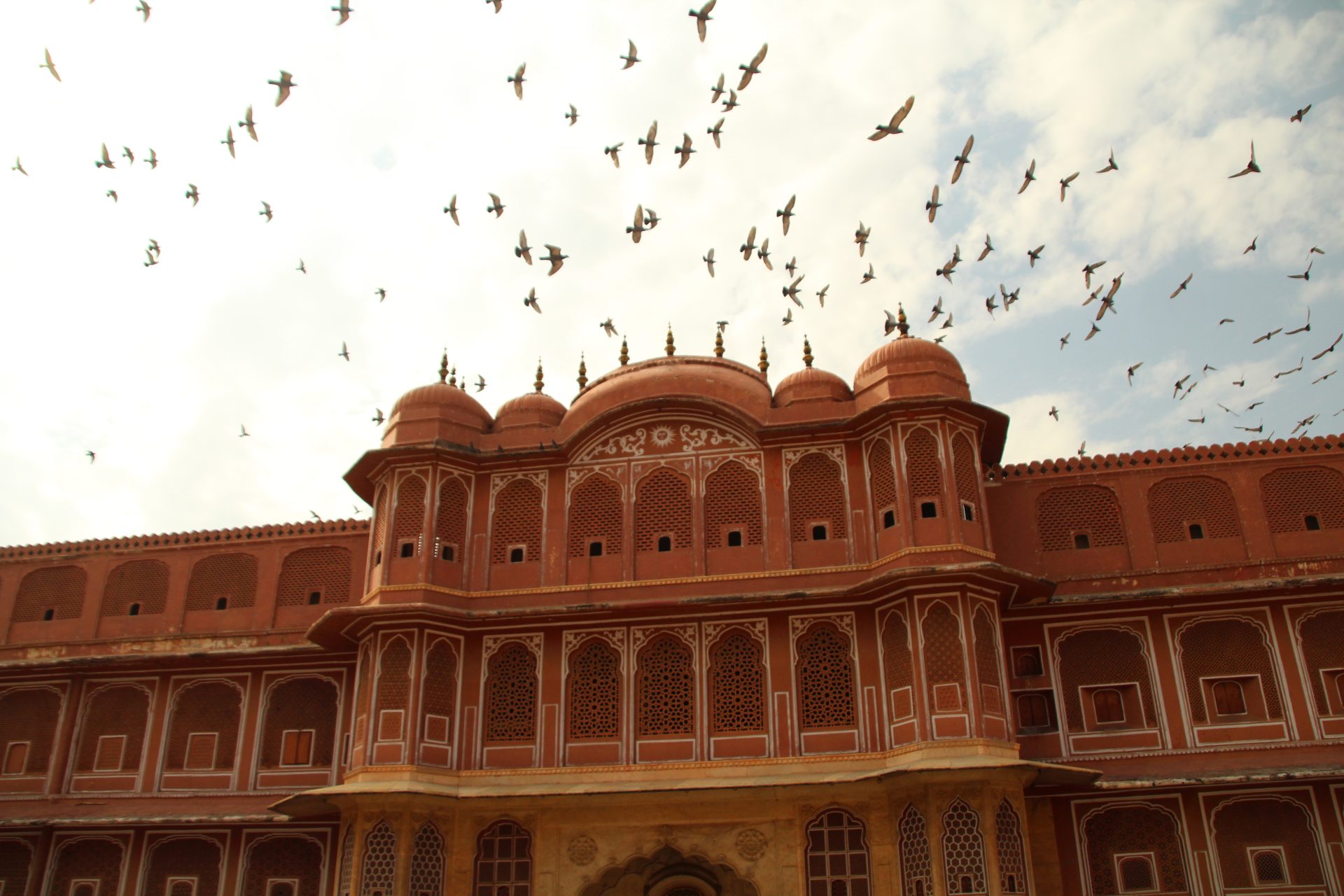
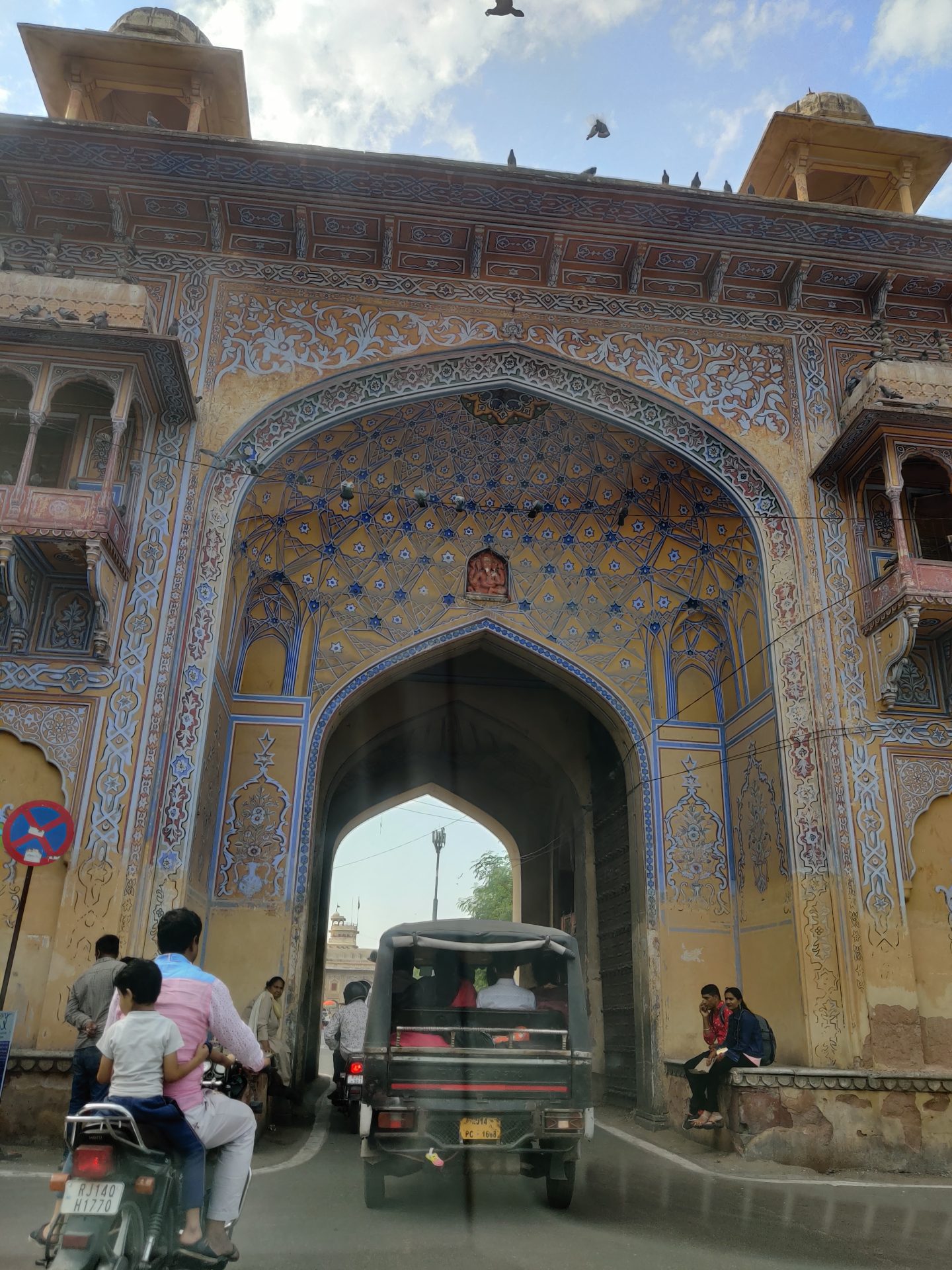
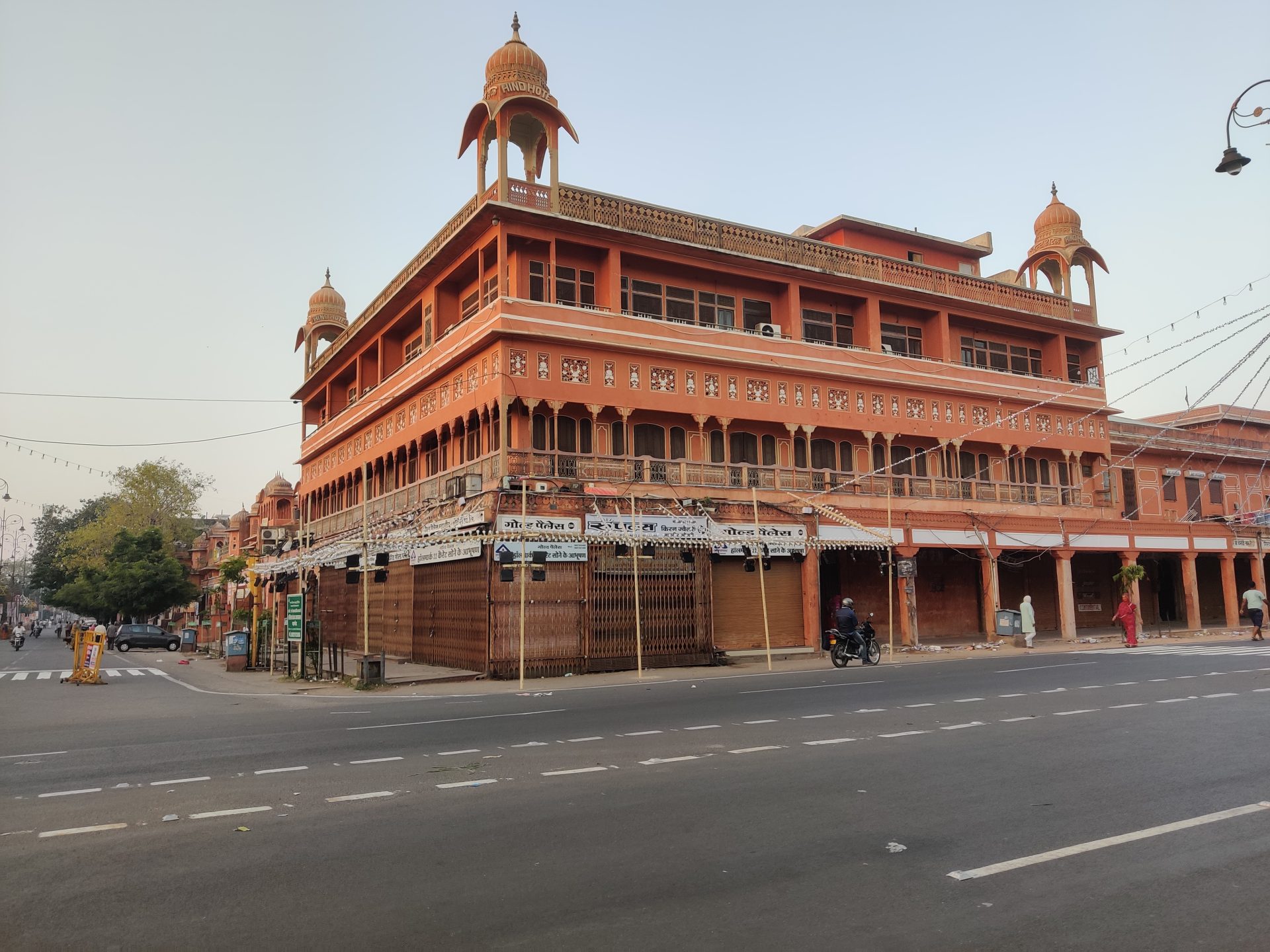
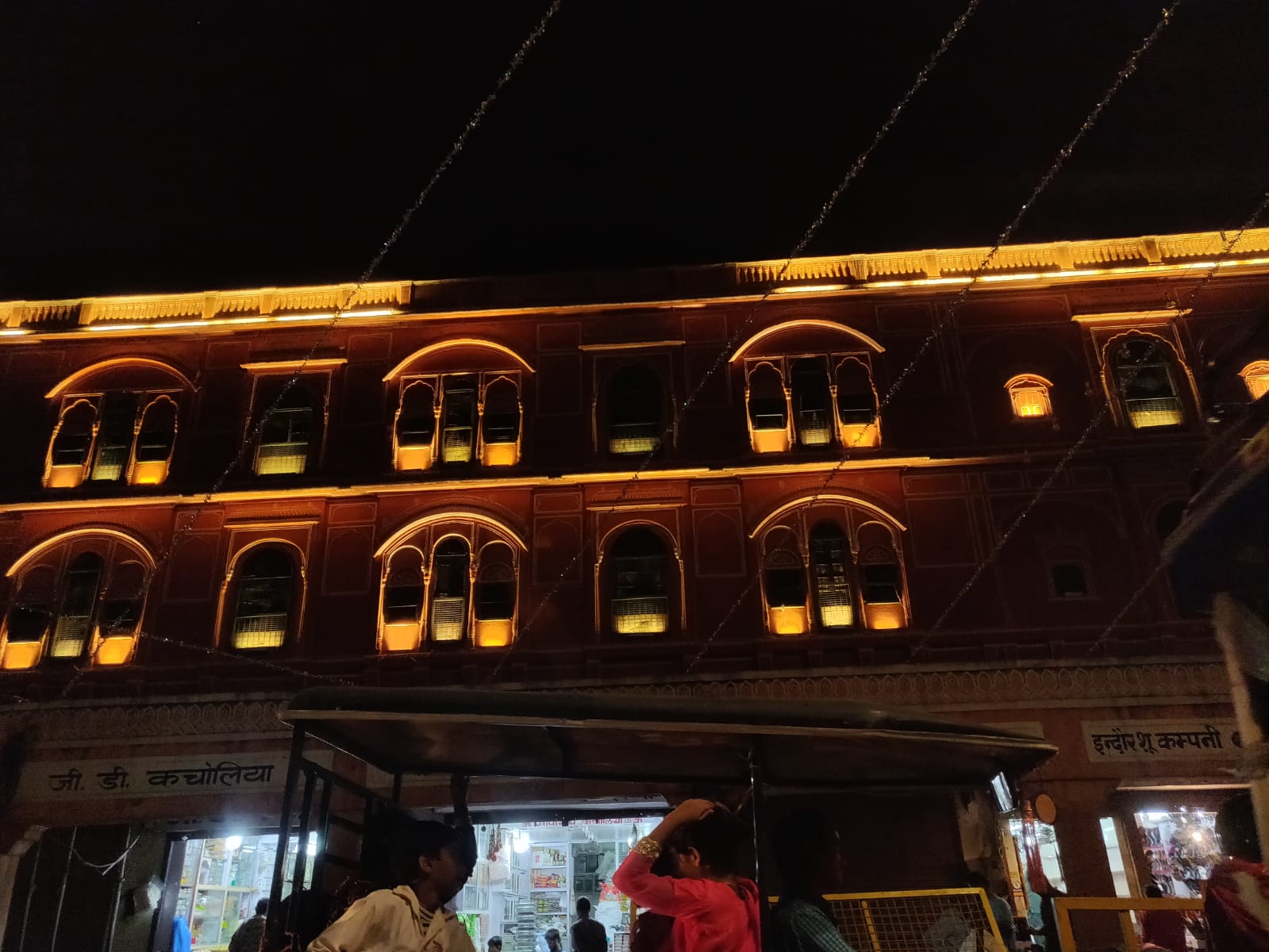
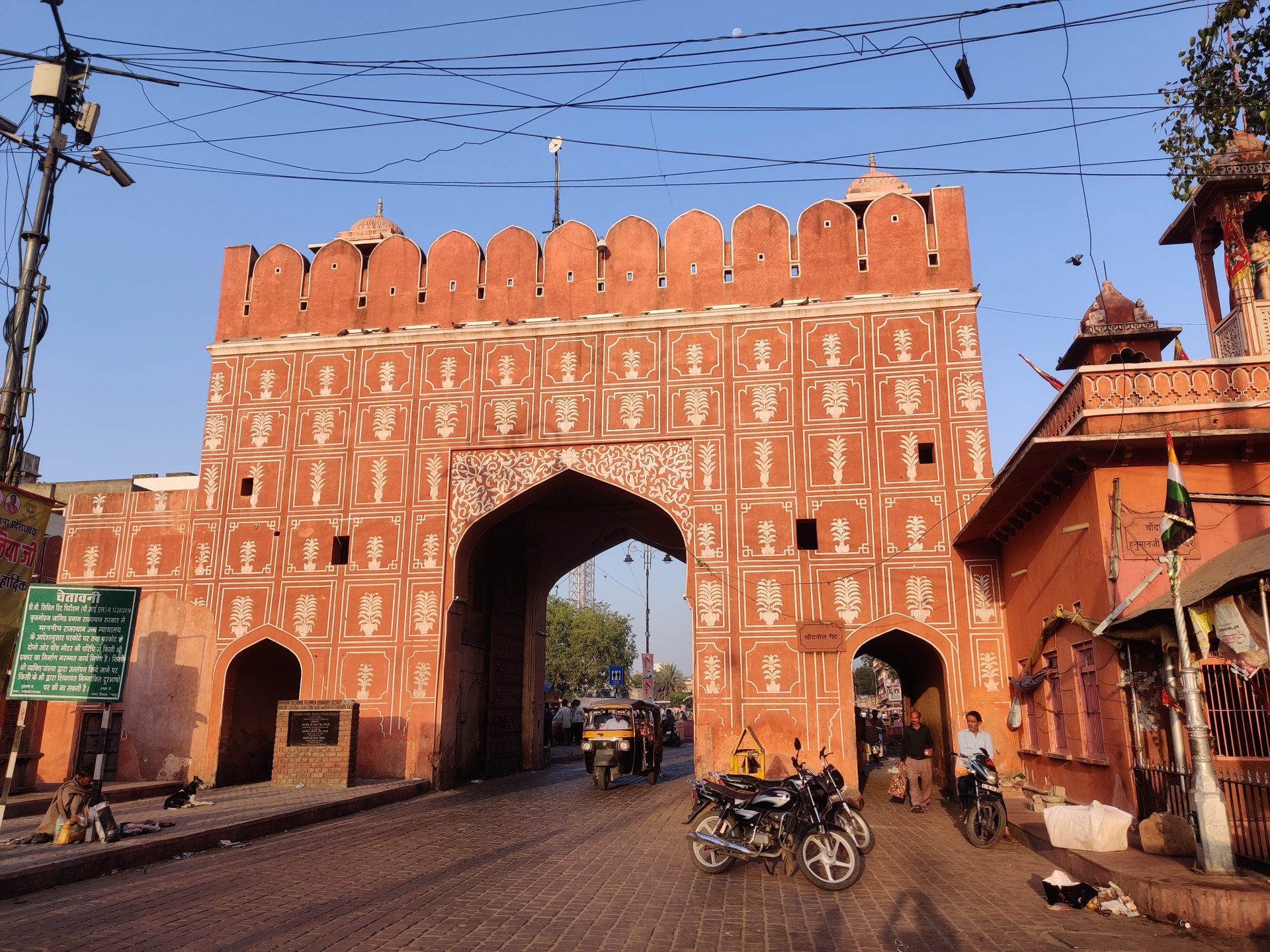
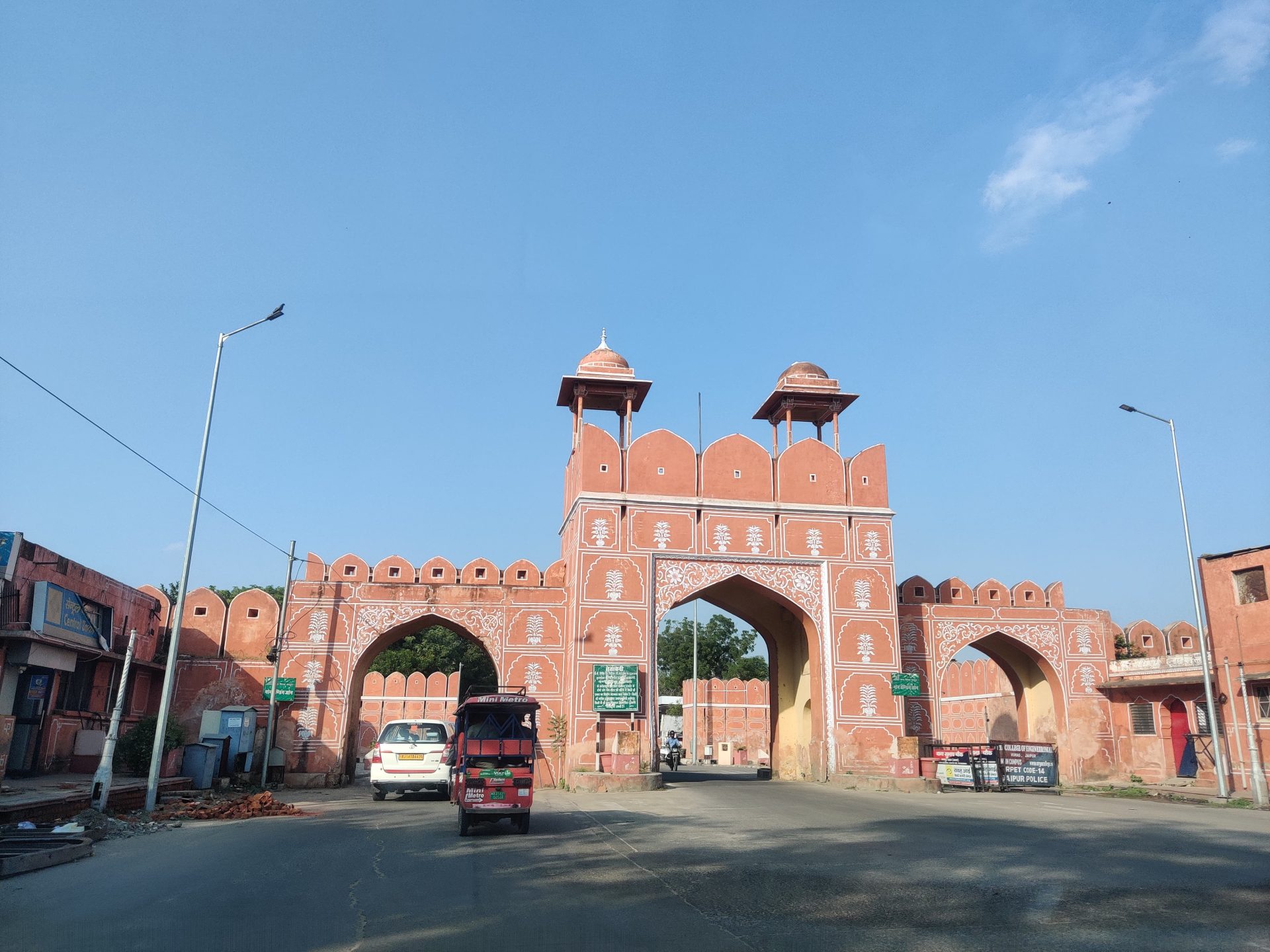
The city of Jaipur is kind of equidistant from both Delhi and Agra and is well connected through flights, trains as well as roads. The first of the planned cities built in India, this city bears a distinct color of pink, a symbol of hospitality which adorns and dominates most of the buildings and walls.
The story behind this color is credited to Maharajah Ram Singh who painted this color across the entire city to welcome the Prince of Wales in 1878.
Majestic forts, opulent palaces, a labyrinth of bustling bazaars offering a plethora of options to choose from traditional handicrafts, jewellery, gems, artefacts and food joints makes Jaipur a most sought after destination amongst tourists.
A perfect amalgam of the Modern alongside the Medieval, the city of Jaipur and around has lot to offer to tourists.
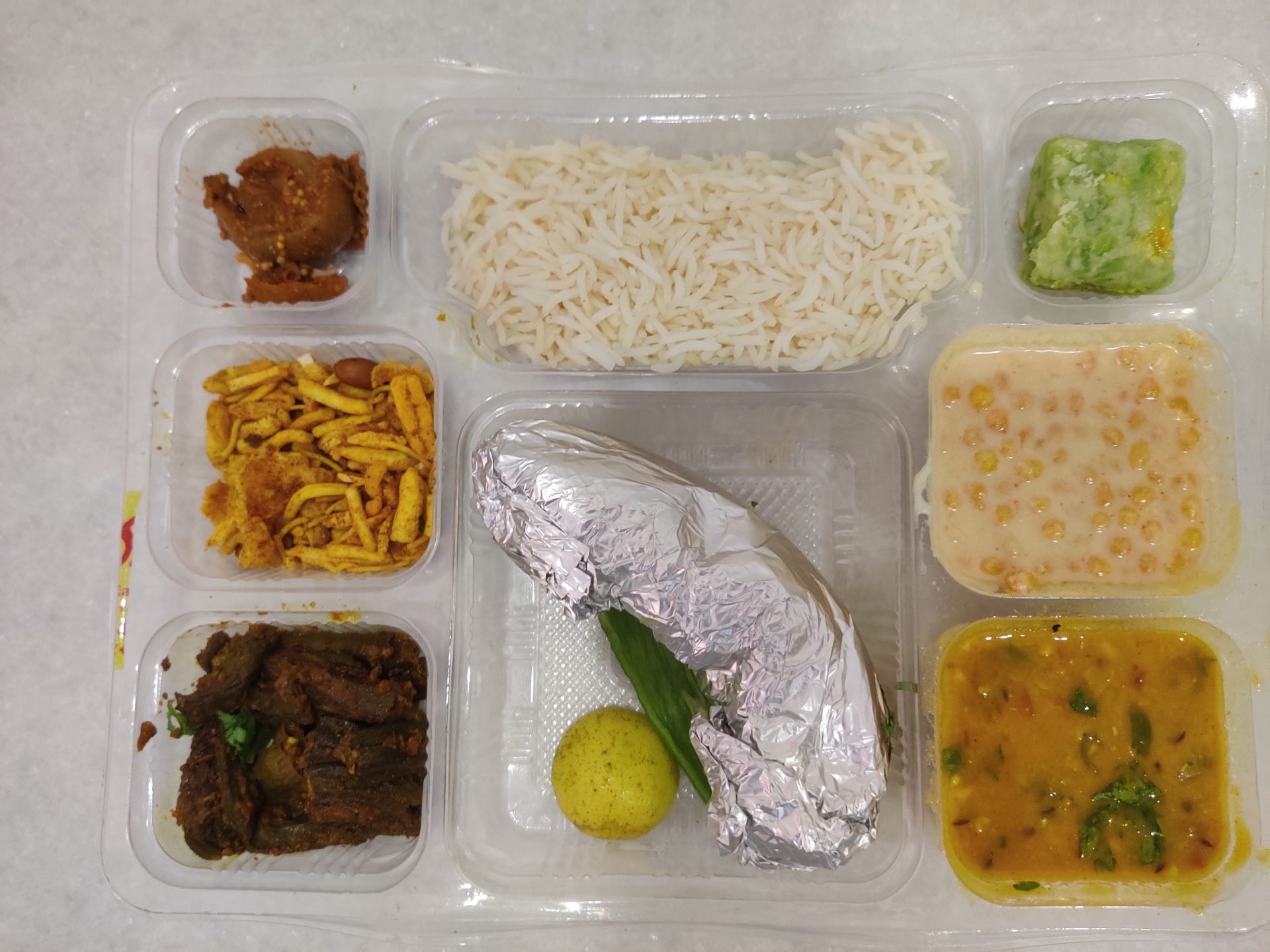
The check-in formalities completed, we ordered a packaged meal for our dinner from Sri Lakshmi Mishtan Bhandar. The restaurant which was supposedly part of the Hotel remained shut coz of Covid and except for the breakfast where the hotel folks made some arrangements of sourcing the food from outside, dining had to be planned from outside.
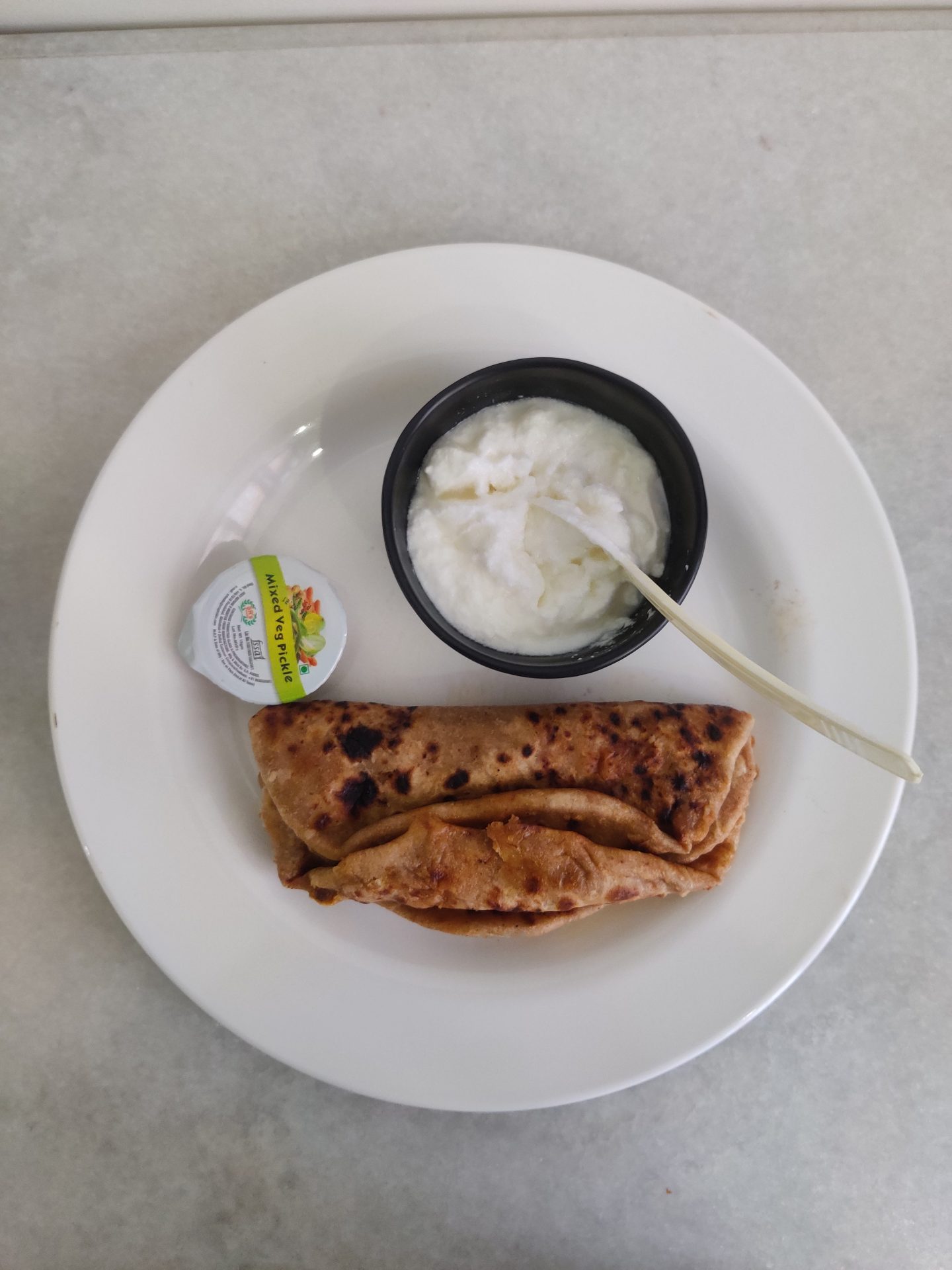
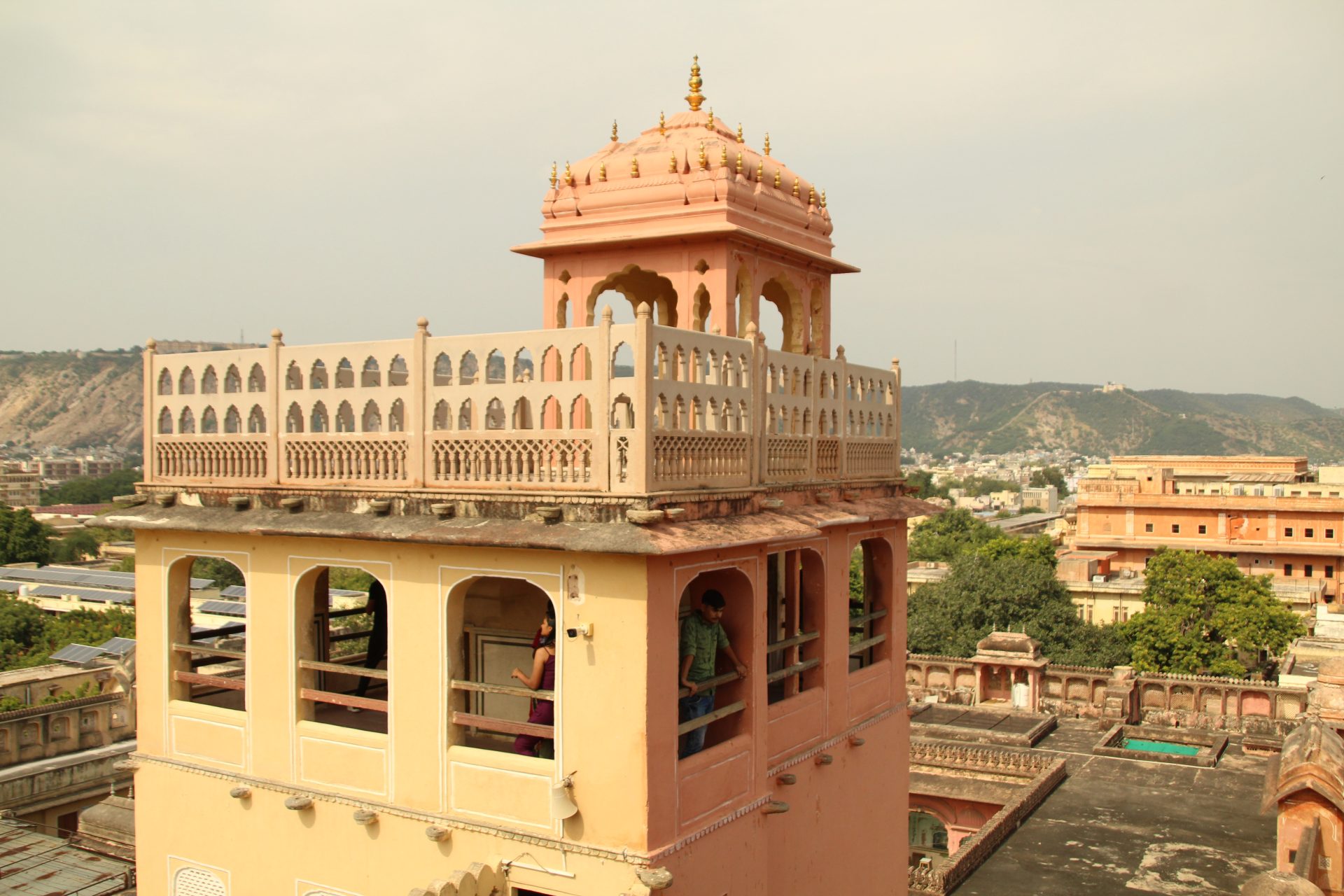
Breakfast was complimentary at the hotel and though there was not much to choose from, we ordered for some Aloo Parathas and Poha. We then headed to Badi Choupad for the first visiting the Hawa Mahal or The Palace of Wind which is iconic to the city of Jaipur. Here tickets are priced at Rs.50/- per person.
The Hawa Mahal
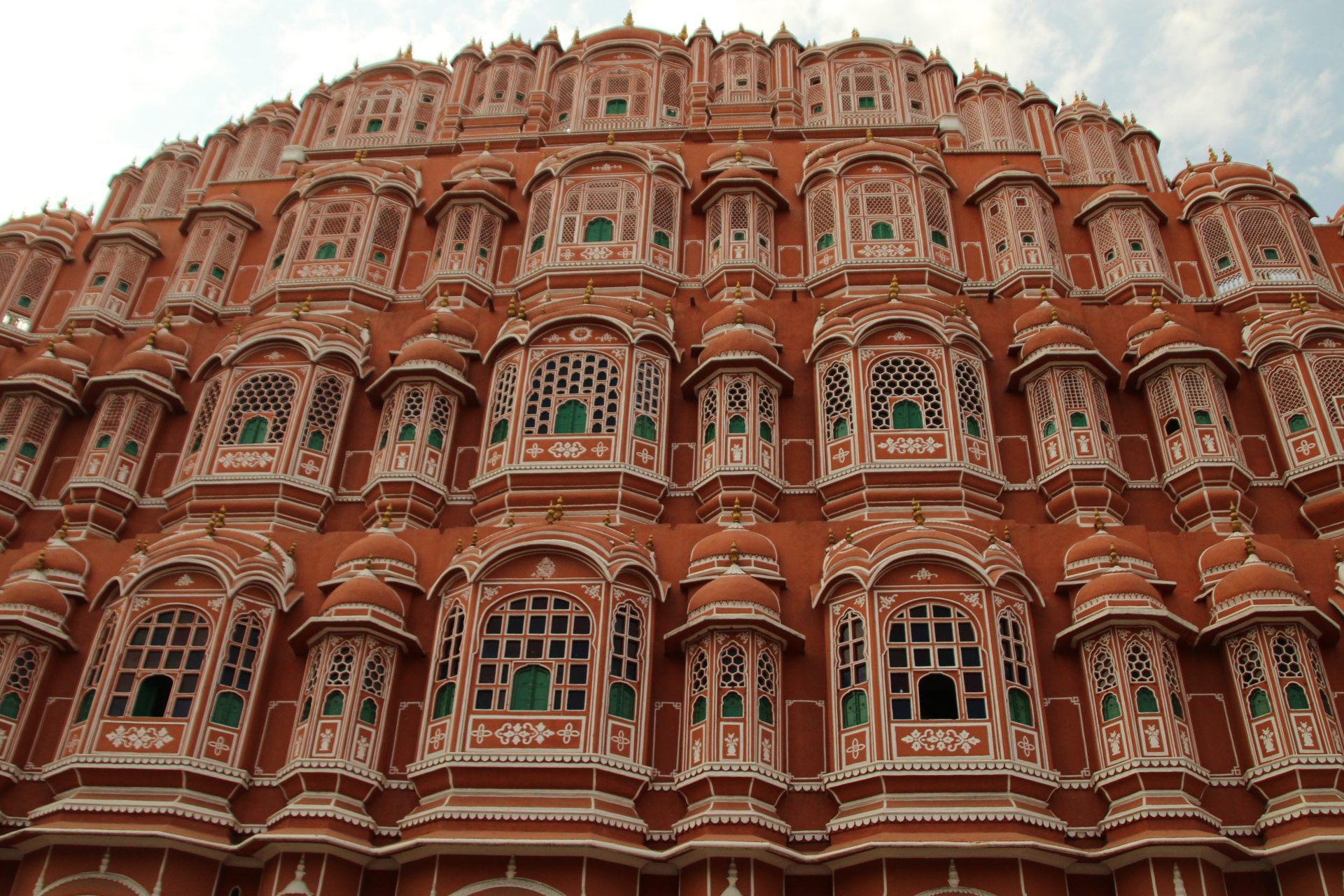
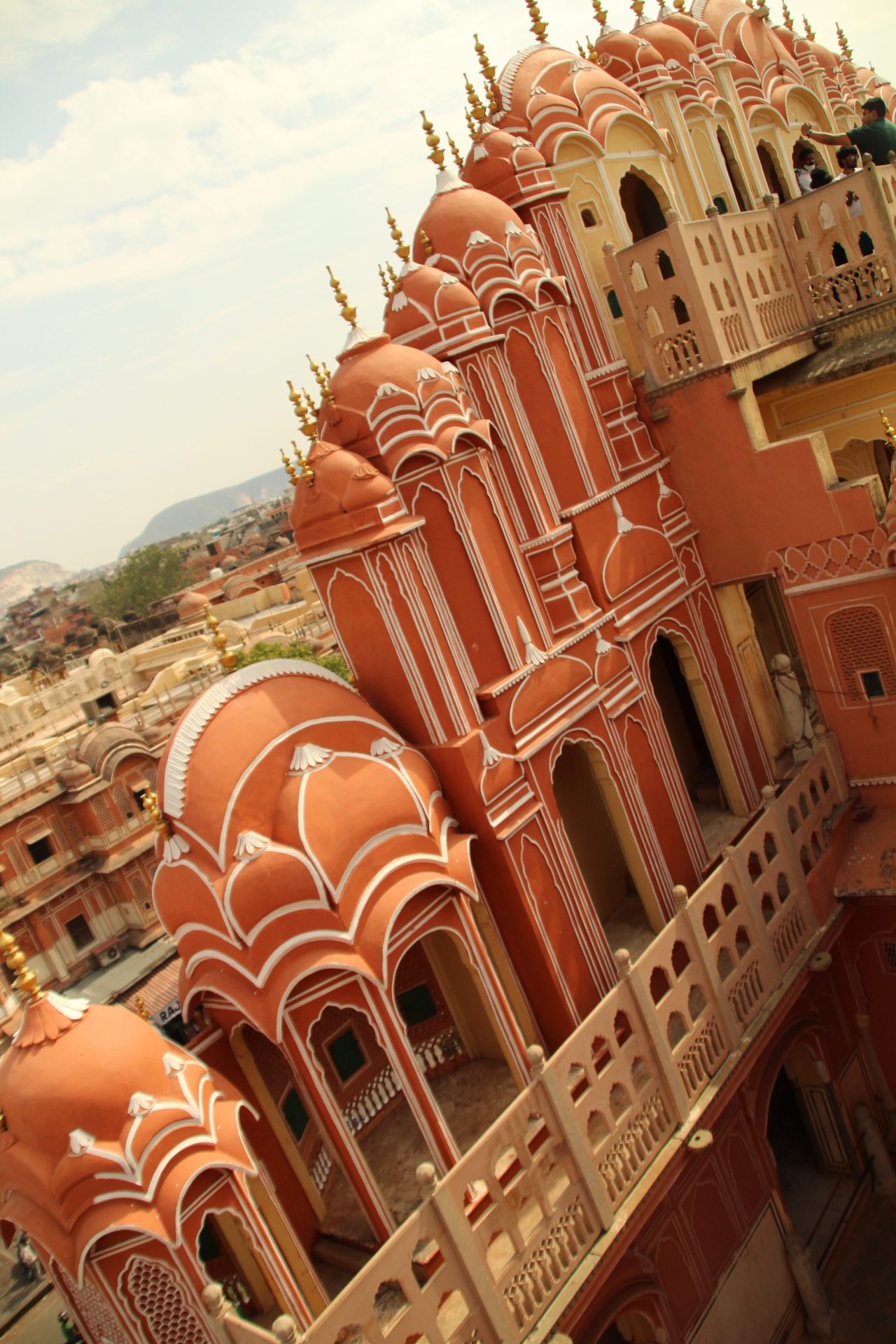
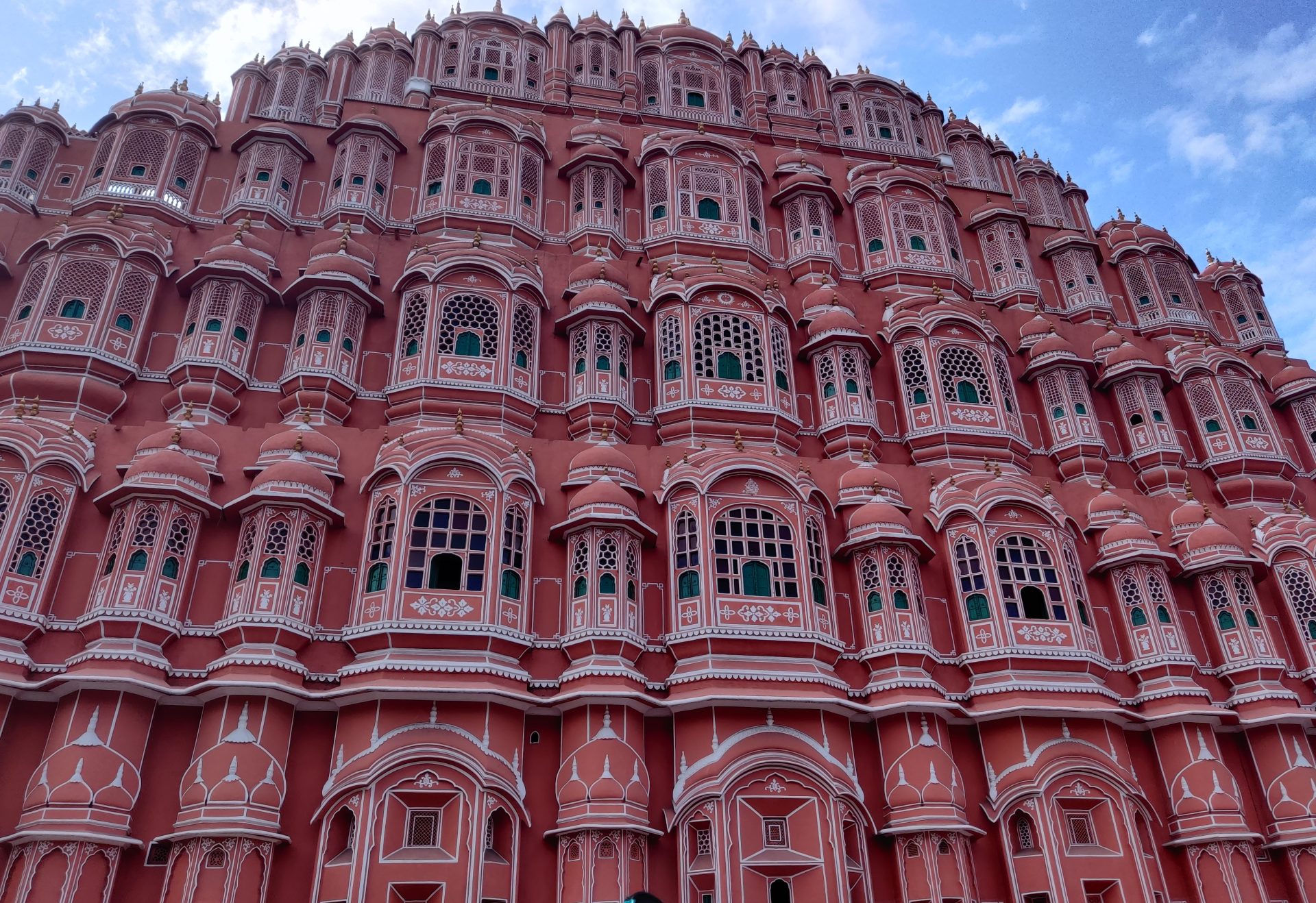
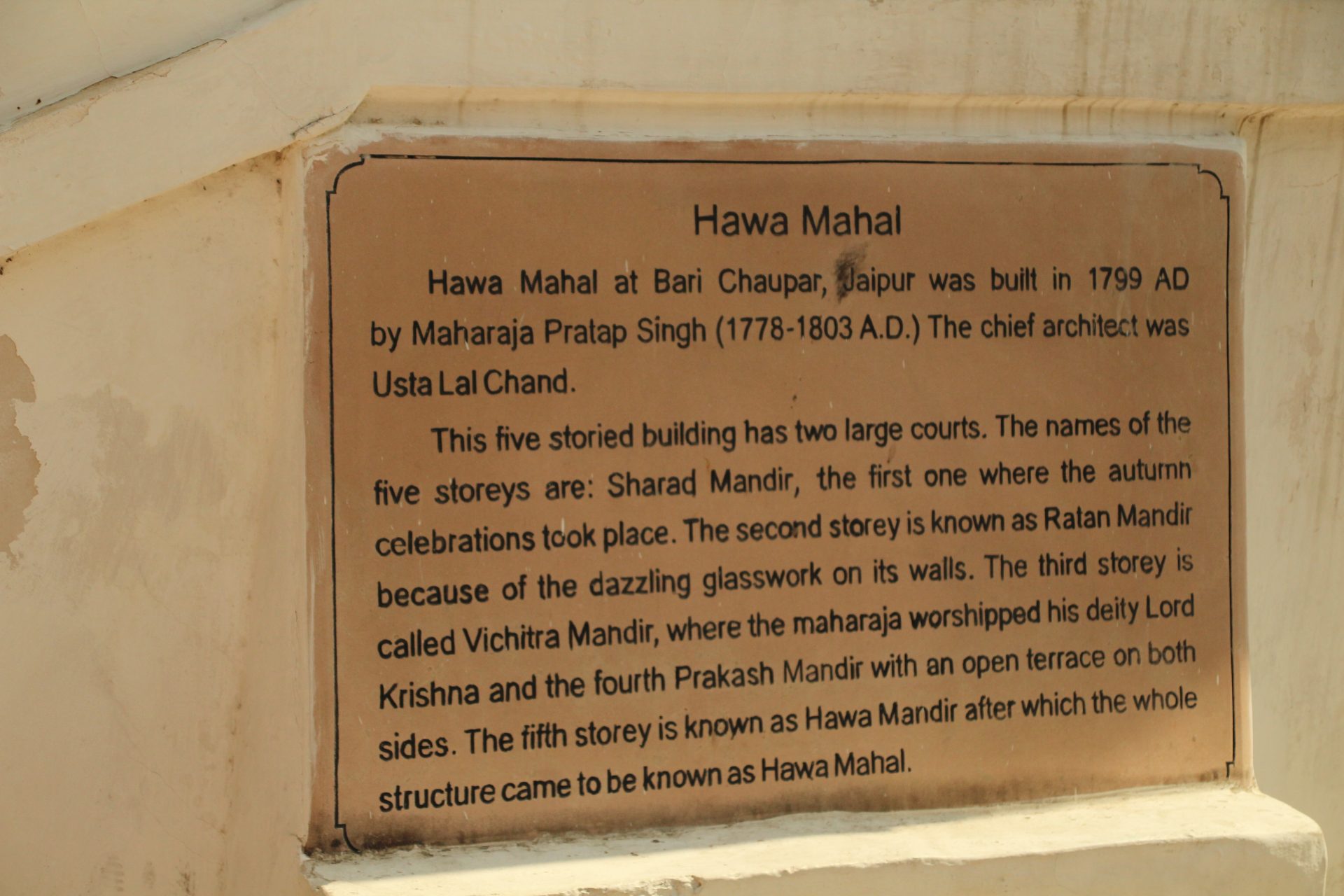
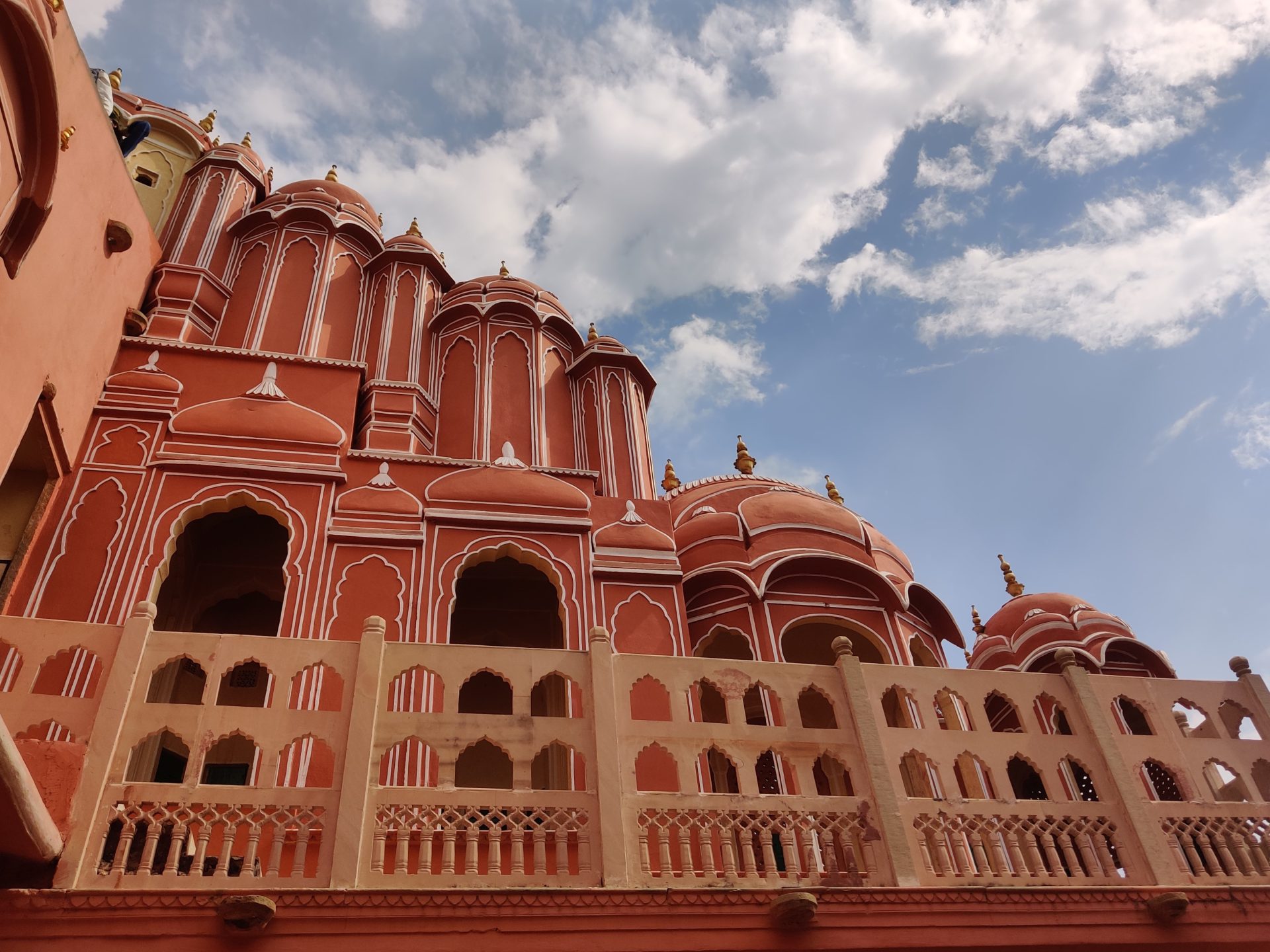
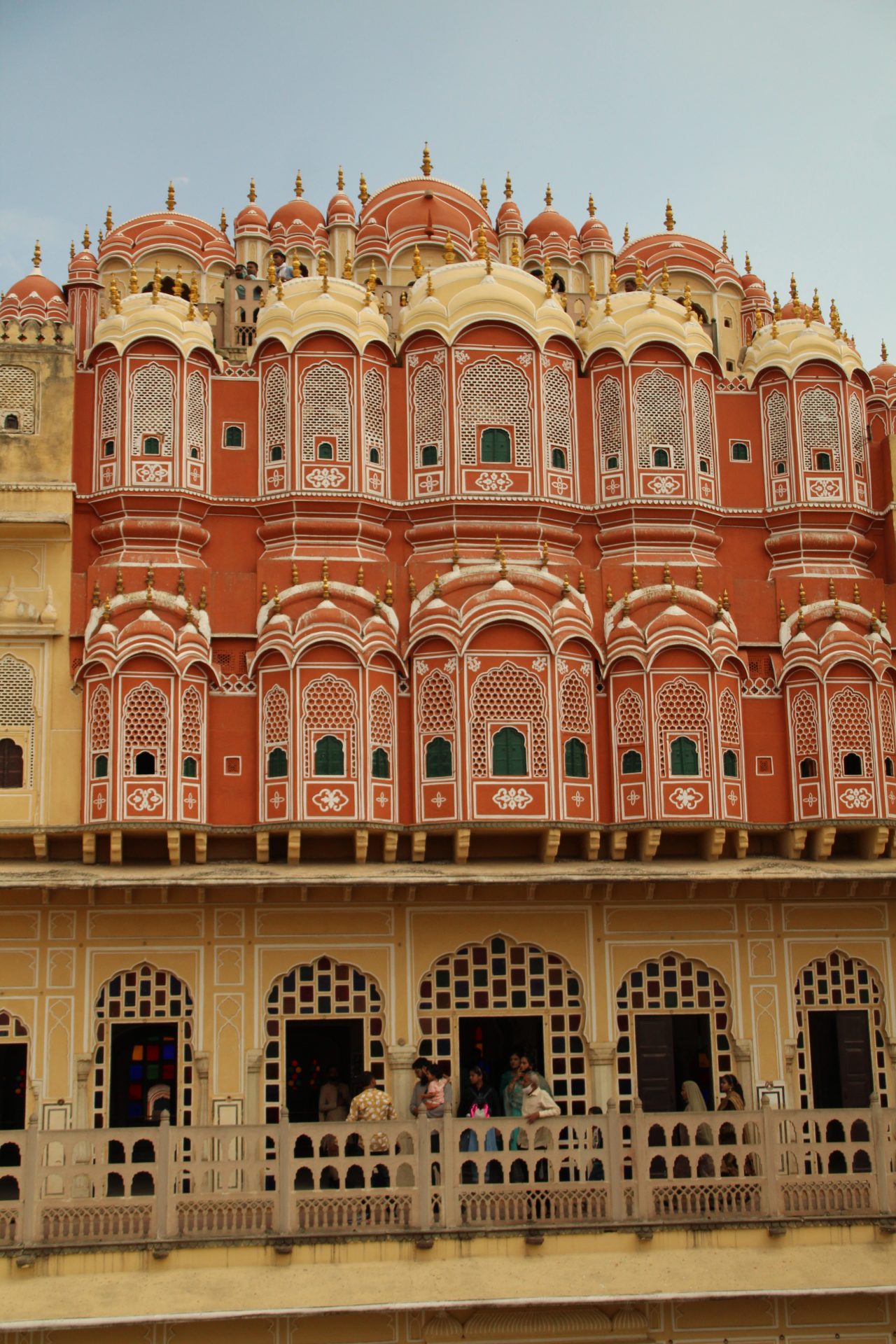
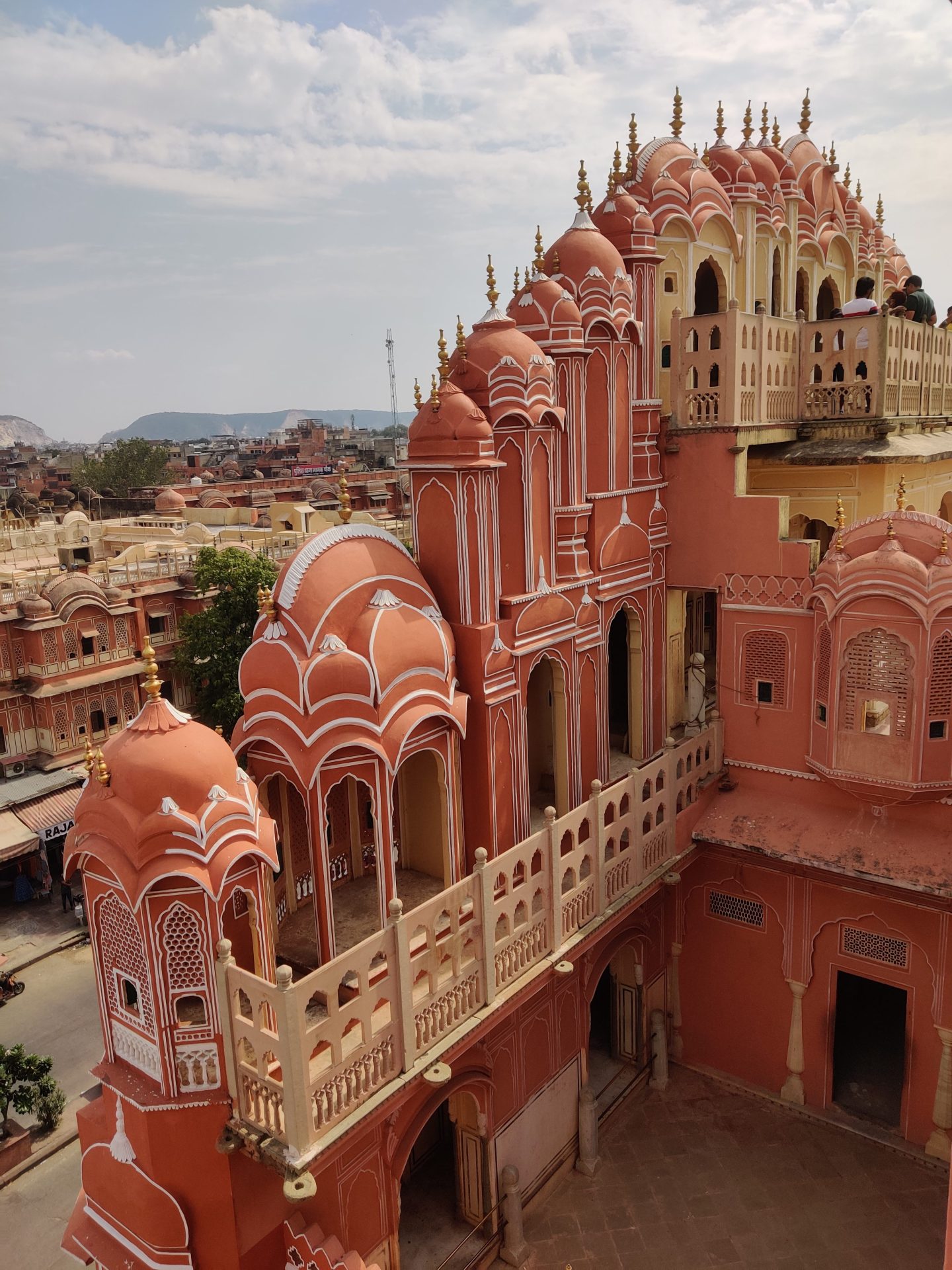
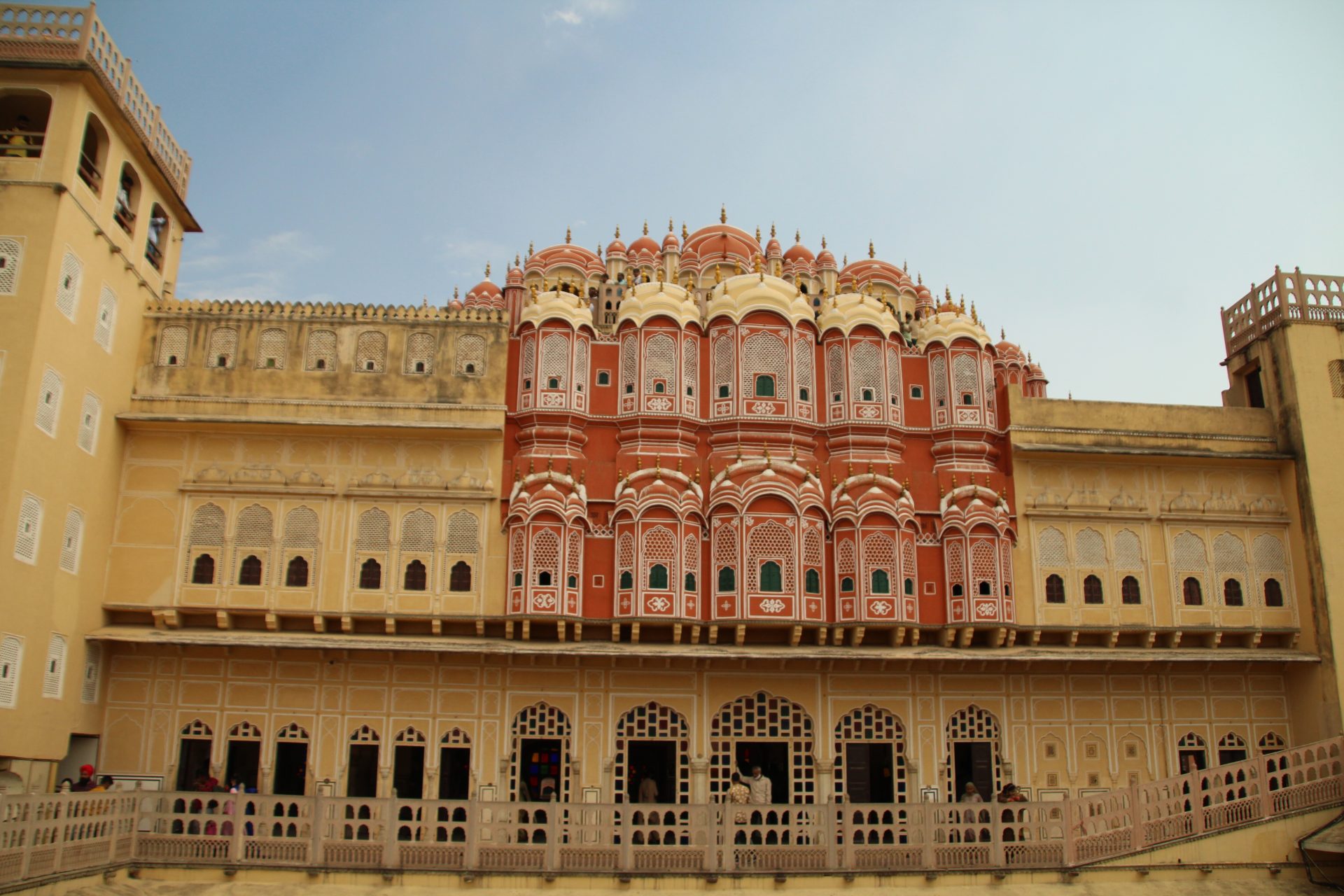
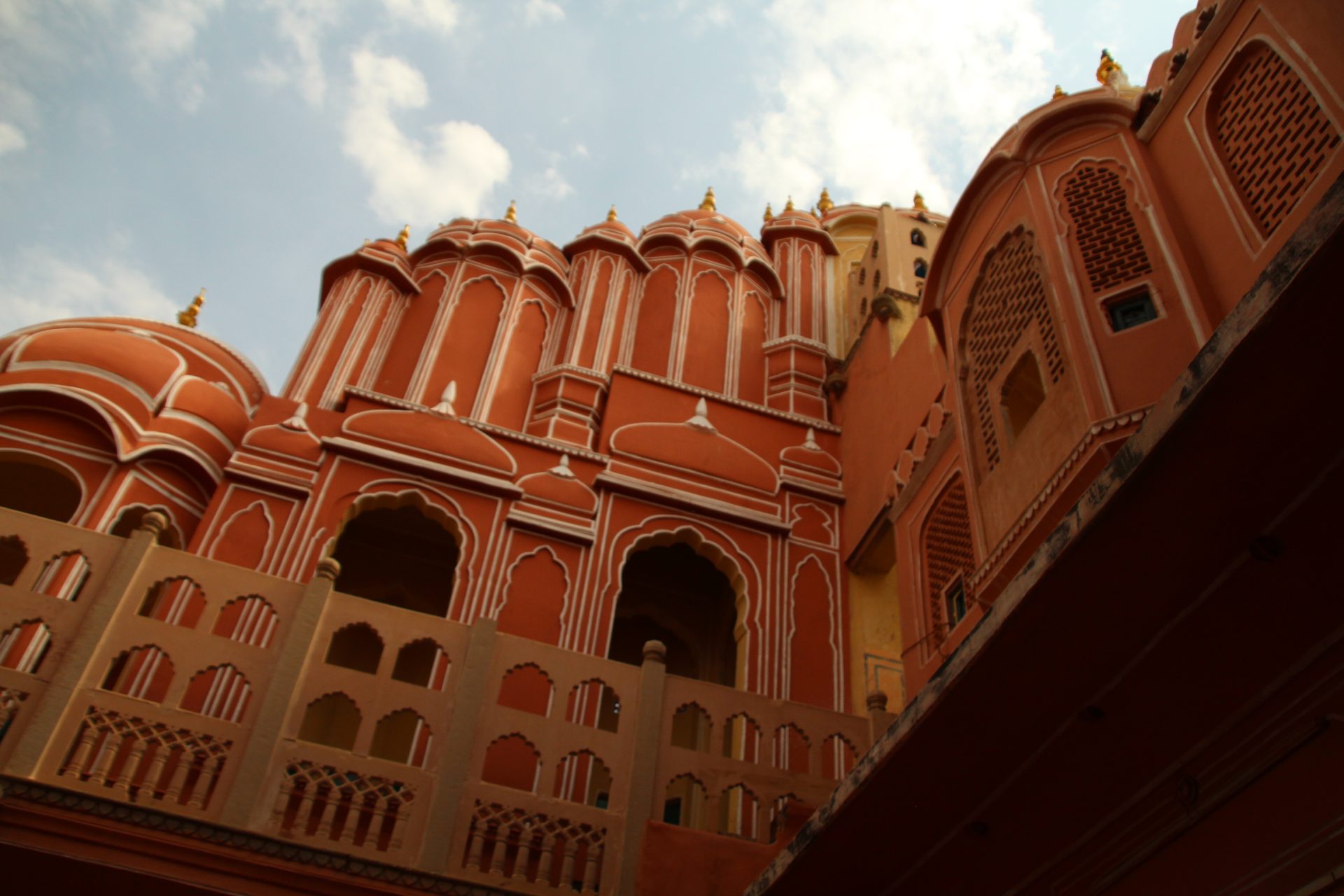
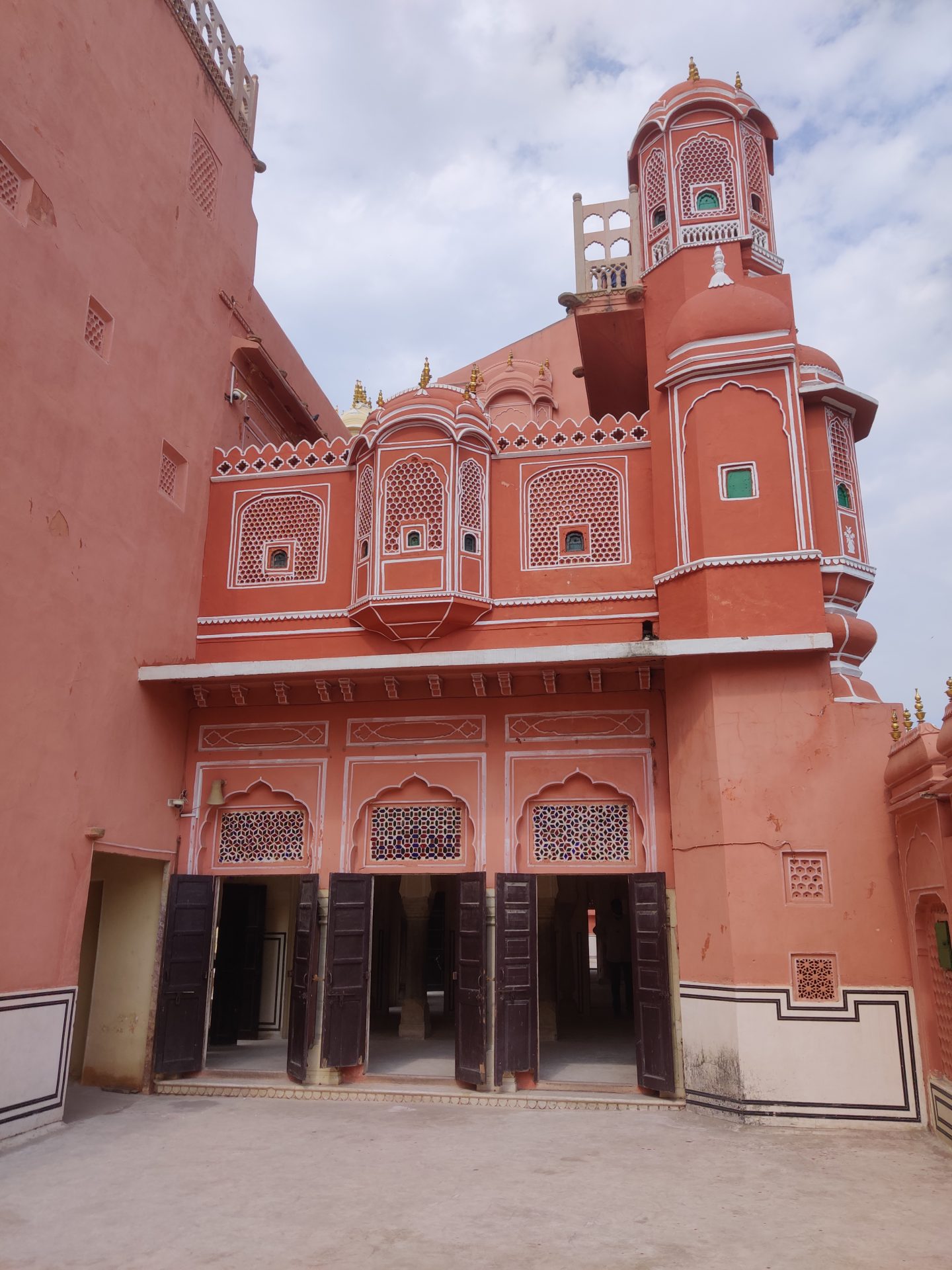
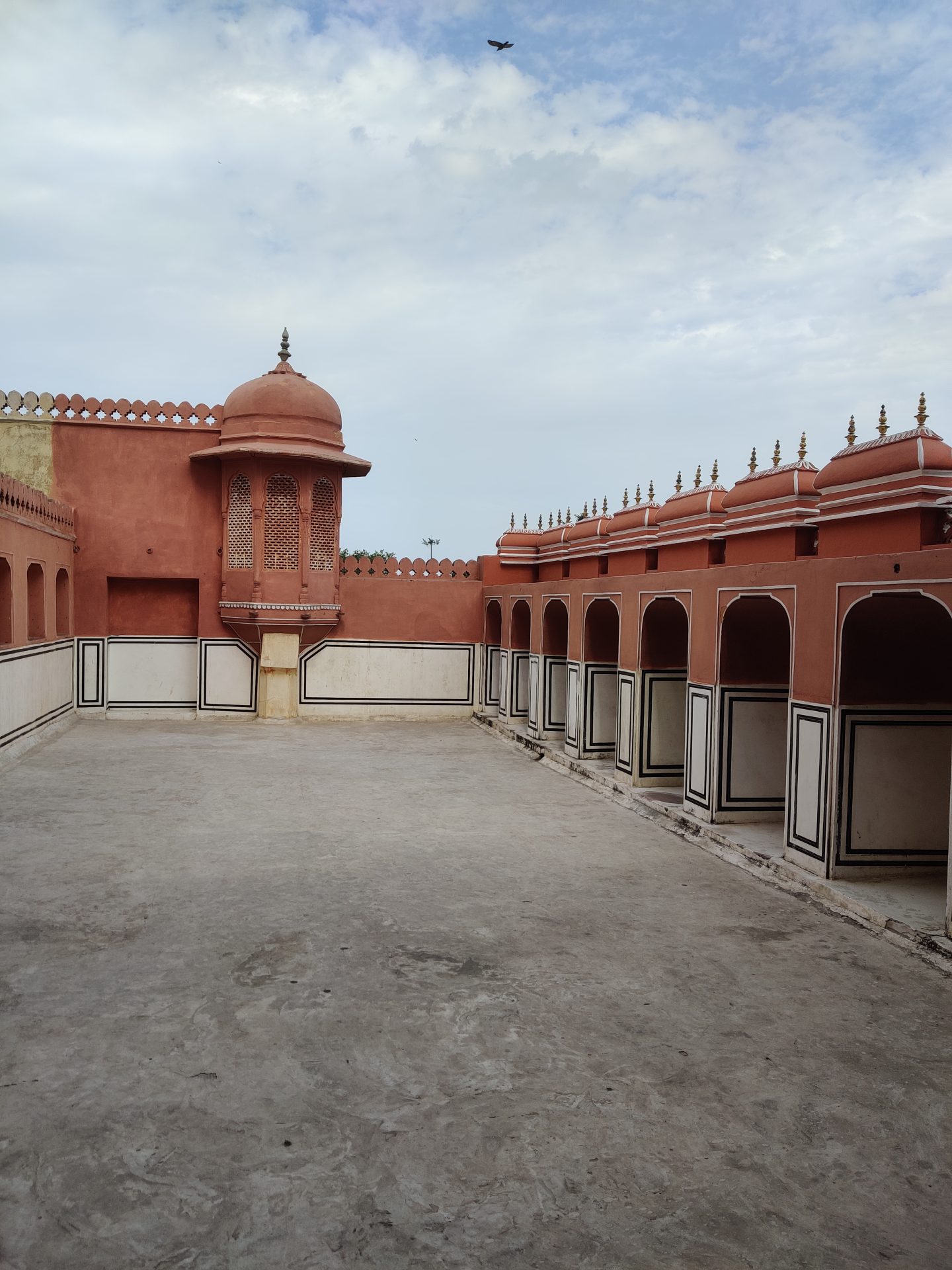
Built in the year 1799 by Maharajah Sawai Pratap Singh, this red and pink sandstone palace is unique in many respects in terms of its architecture.
This 5 storey and 15 metre tall structure has supposedly been constructed without any foundation and as a result of which its tilted at an angle of 87 degrees to support it.
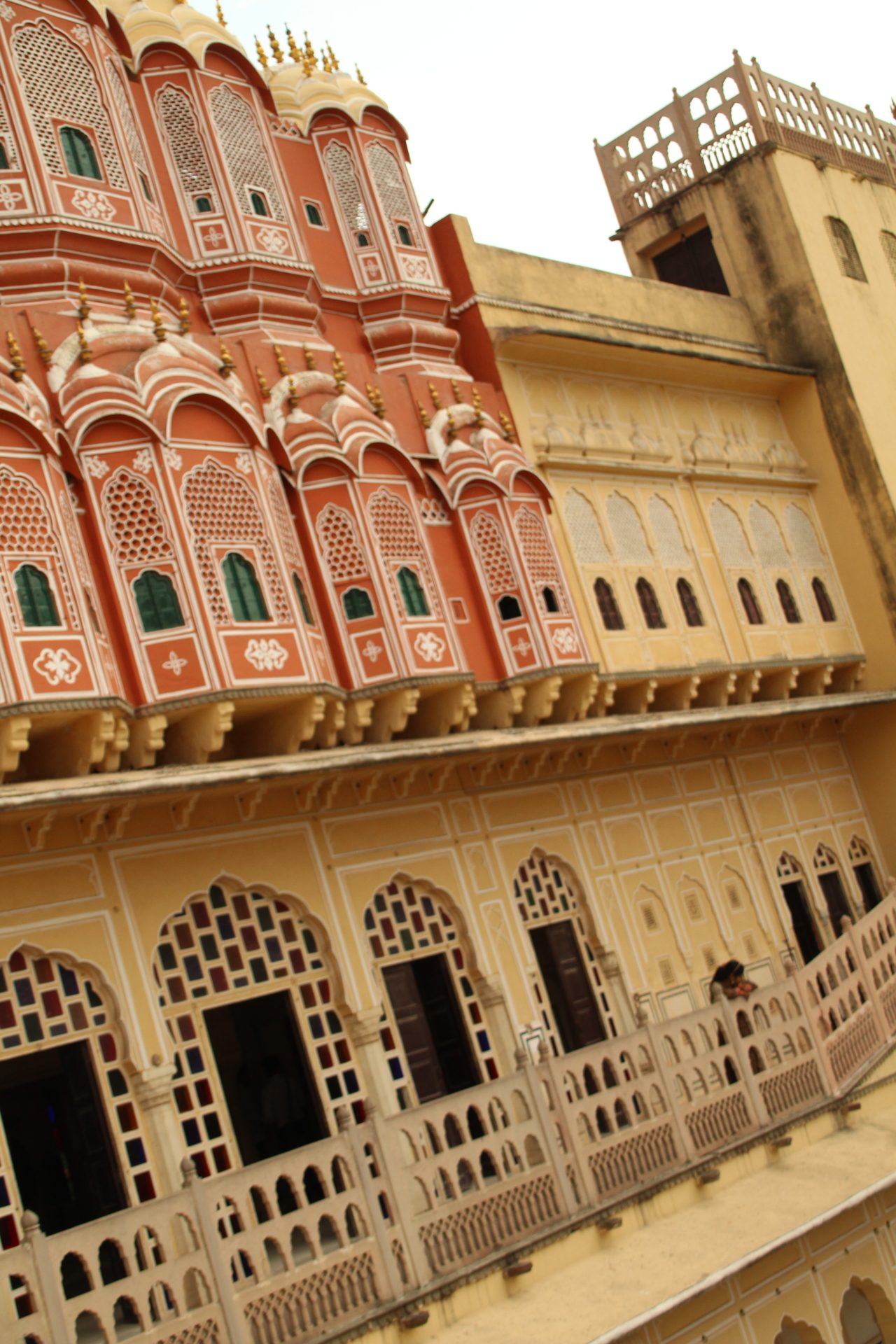
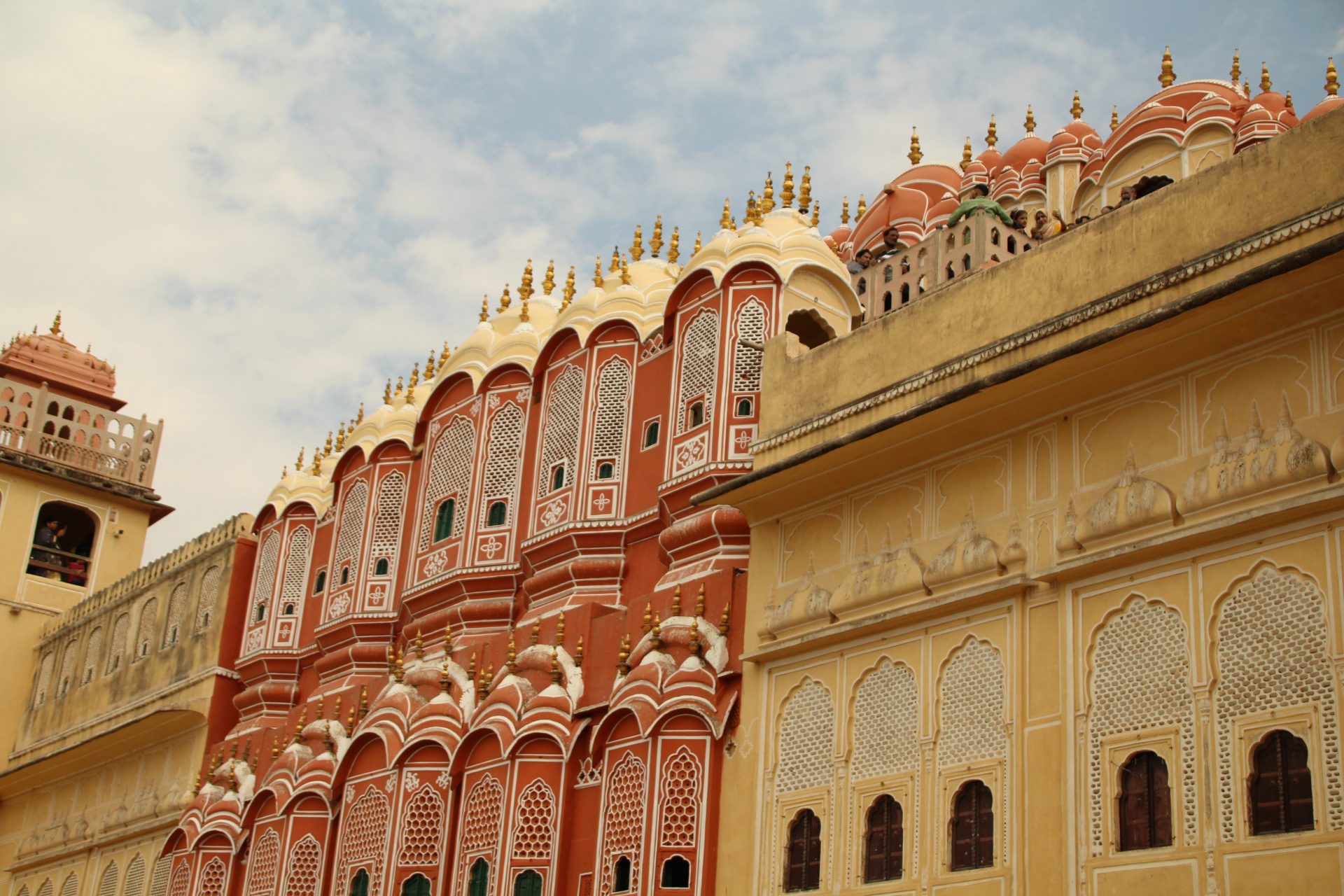
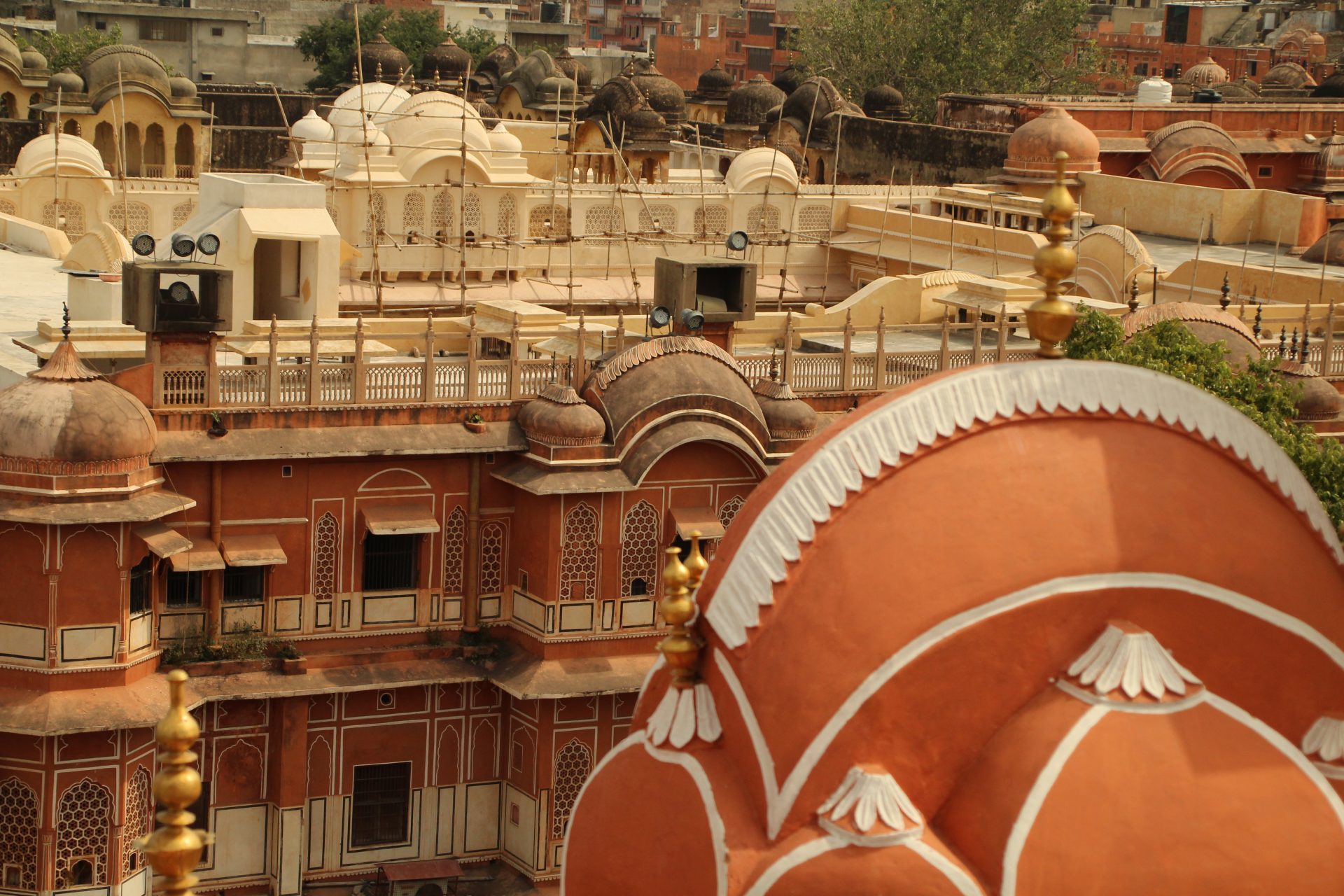
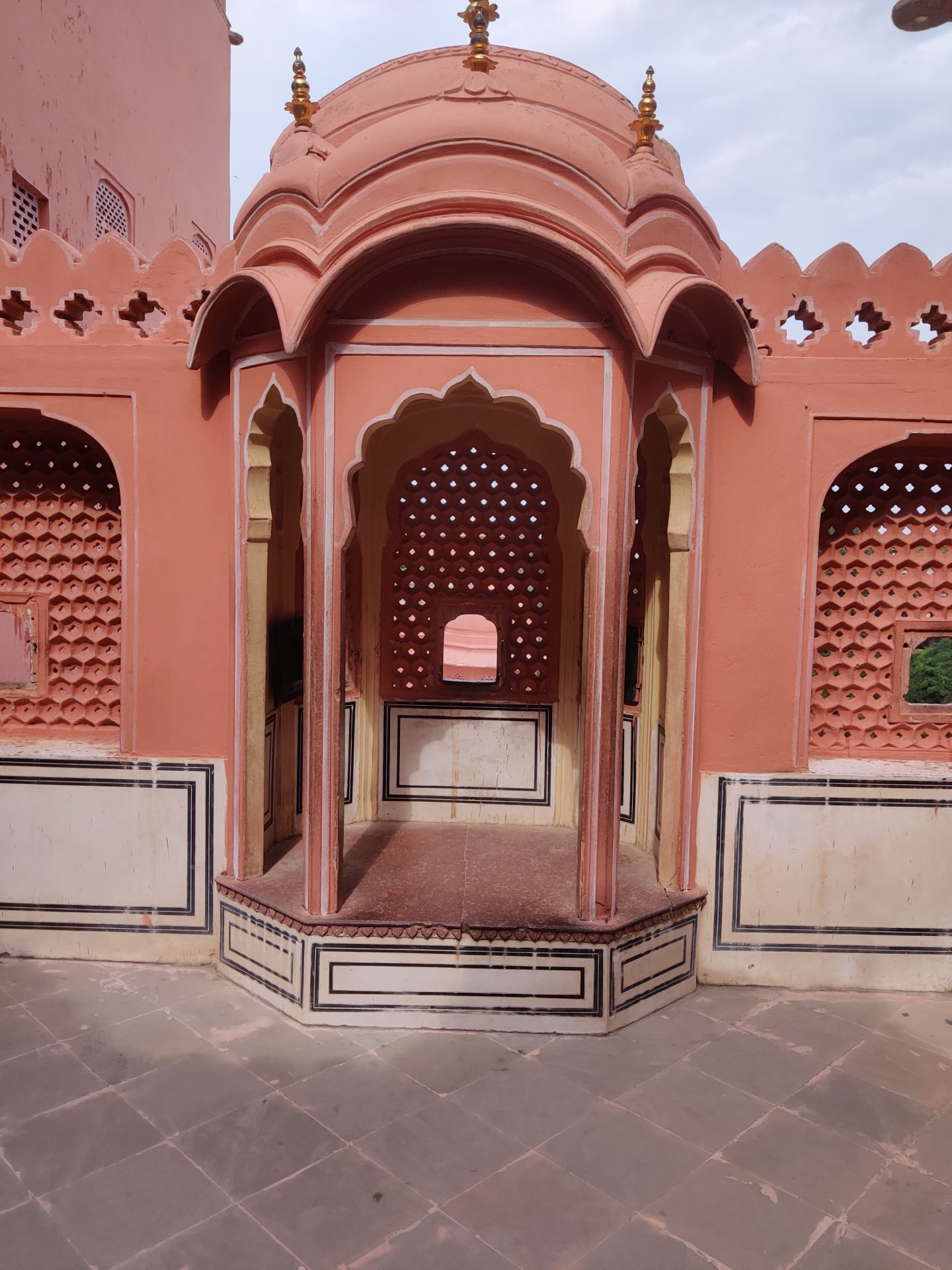
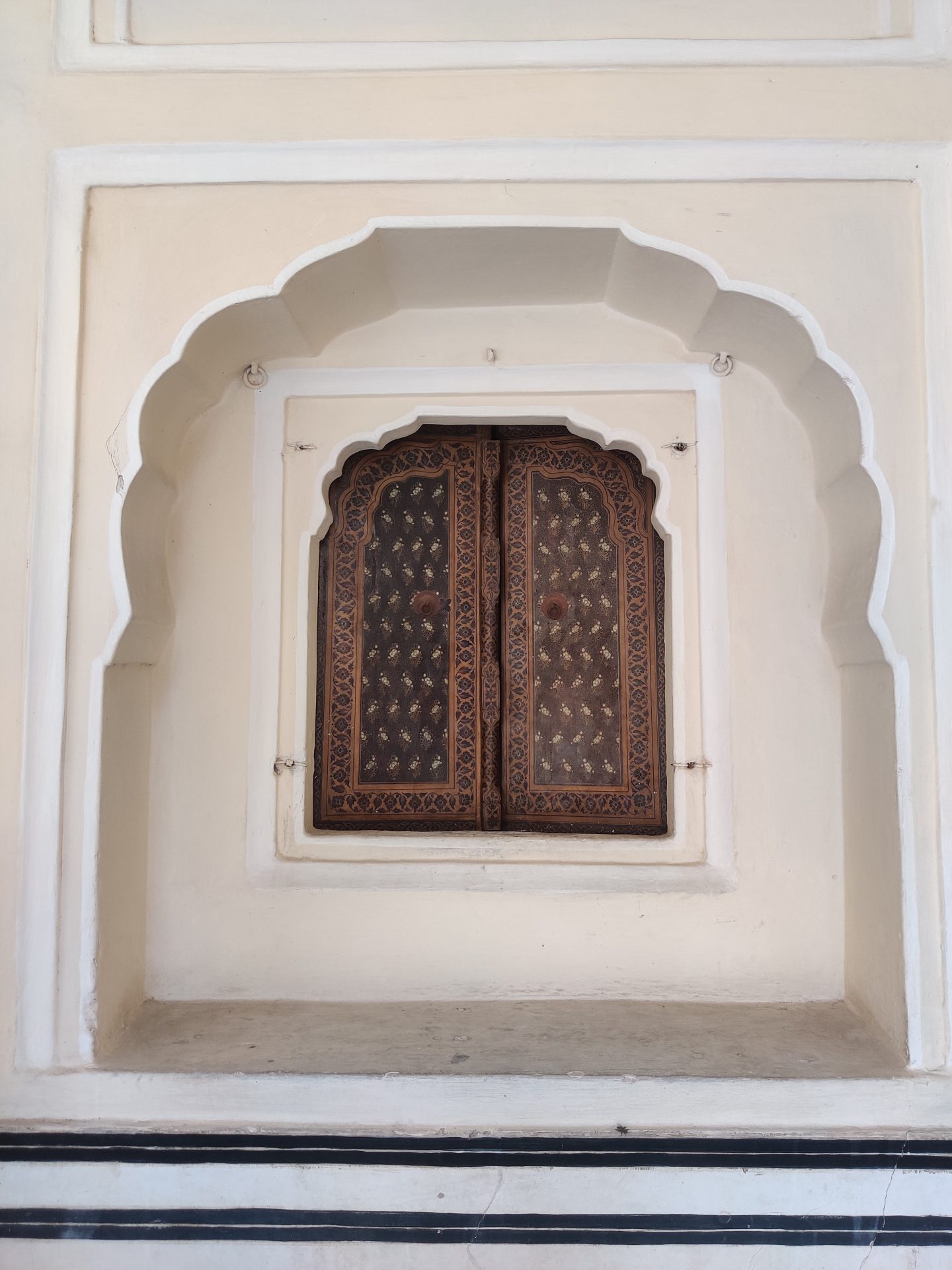
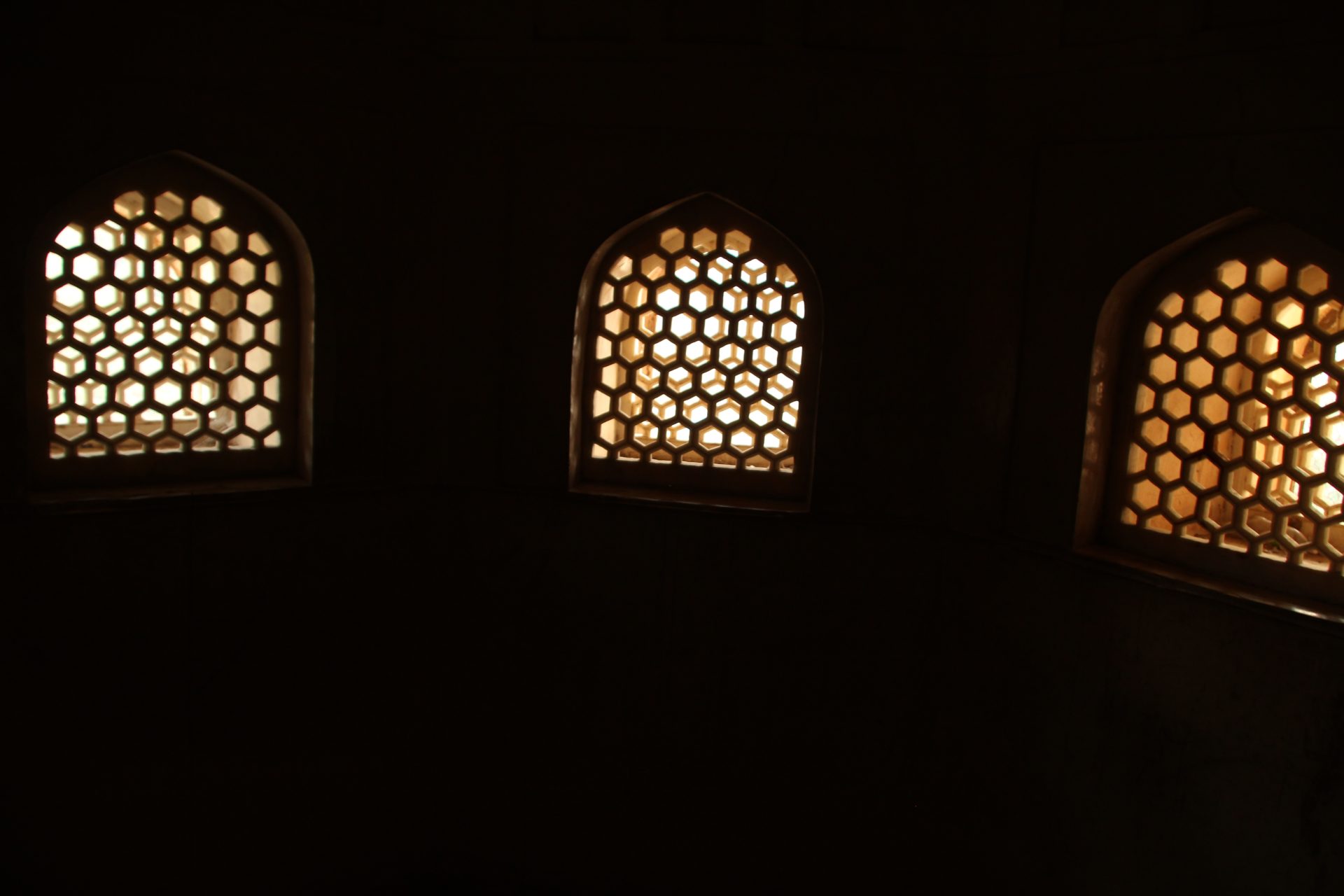
It has 953 windows designed to look like a honeycomb and with some extraordinary latticework.
The reason behind this build was to enable the ladies of the palace to look at ongoing festivities on the streets without being seen from outside and in conformance to the Rajput traditions besides also allowing air to flow in and make the palace cool.
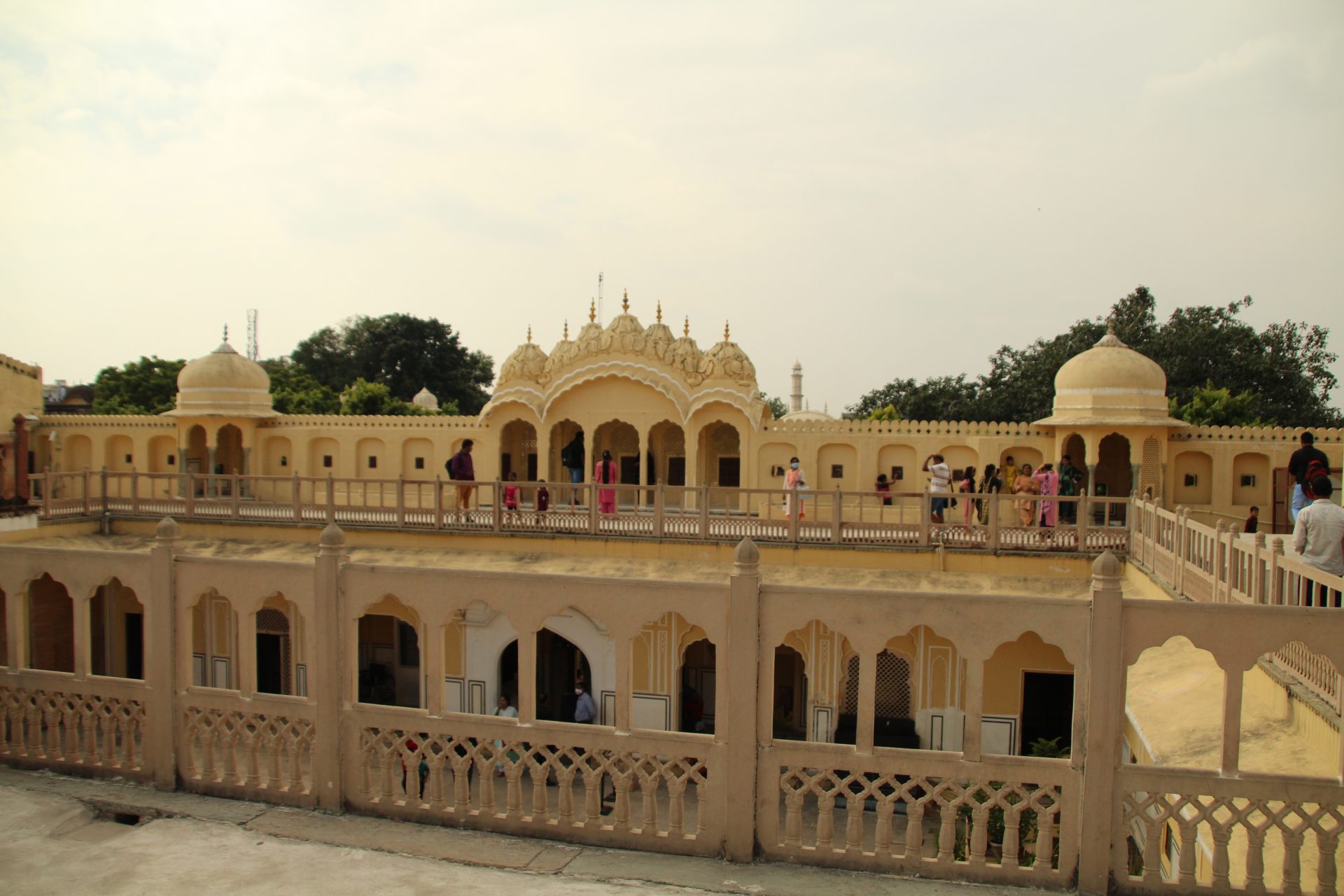
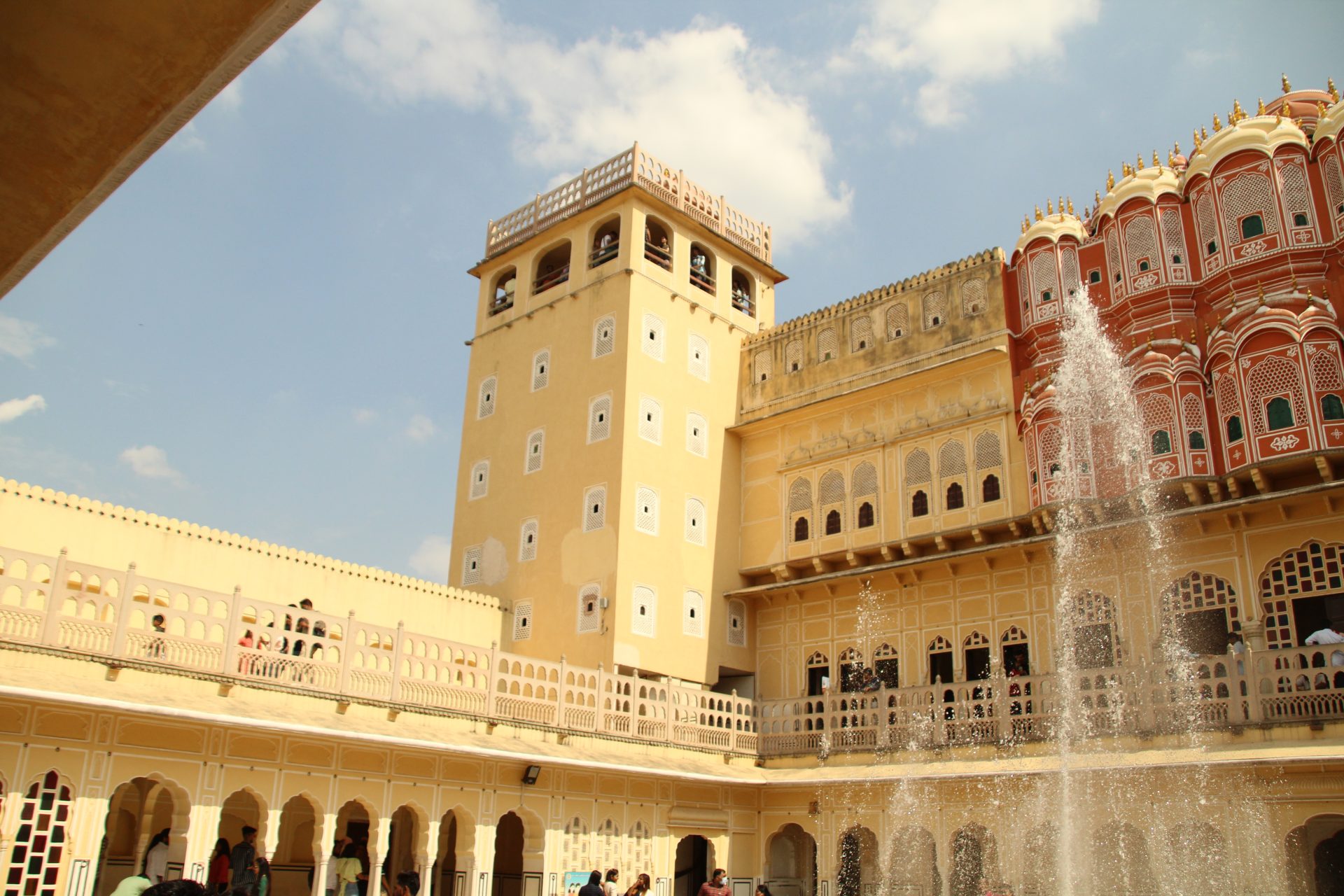
The entrance to the palace is through an imperial door which leads to a courtyard with a large fountain.
Double storey buildings appear on three sides with the Hawa Mahal enclosing it on the eastern side.
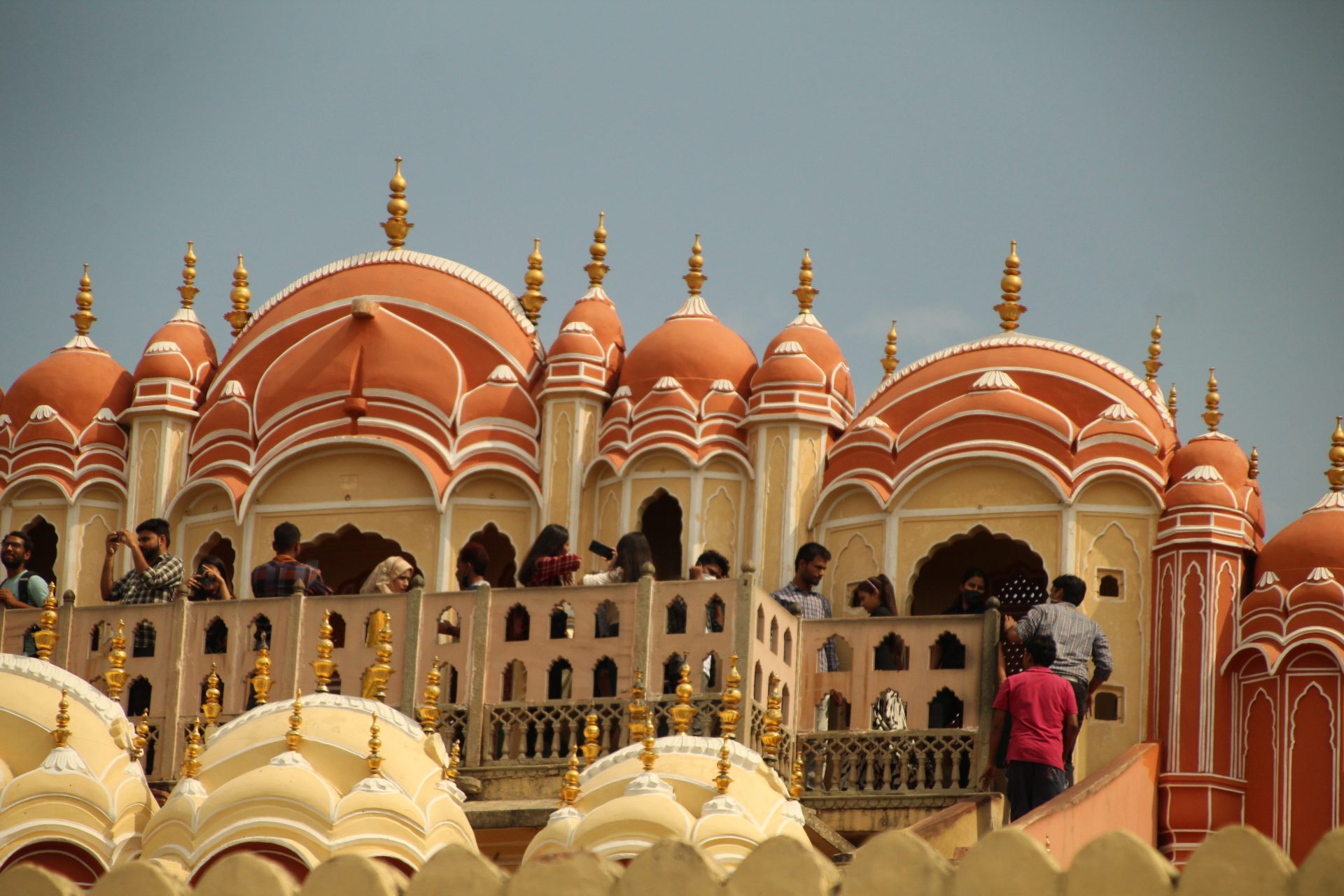
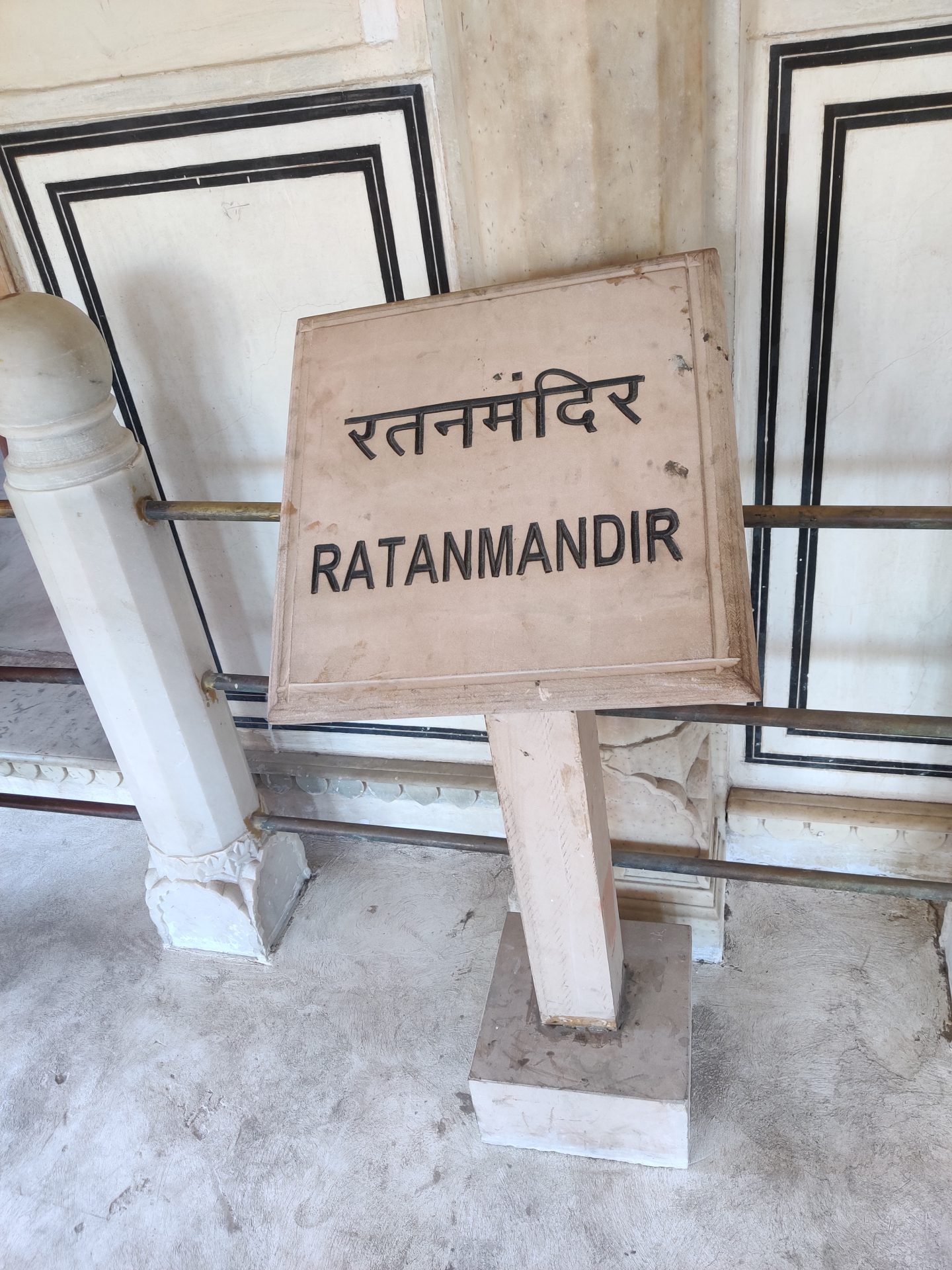
The top three floors of the Palace named the Vichitra, Prakash and Hawa Mandir have the width of a single room and look tapered from outside to resemble the crown of Lord Krishna as the king was a staunch devotee of him. The Lord used to be worshipped by the King at the Vichitra Mandir or temple.
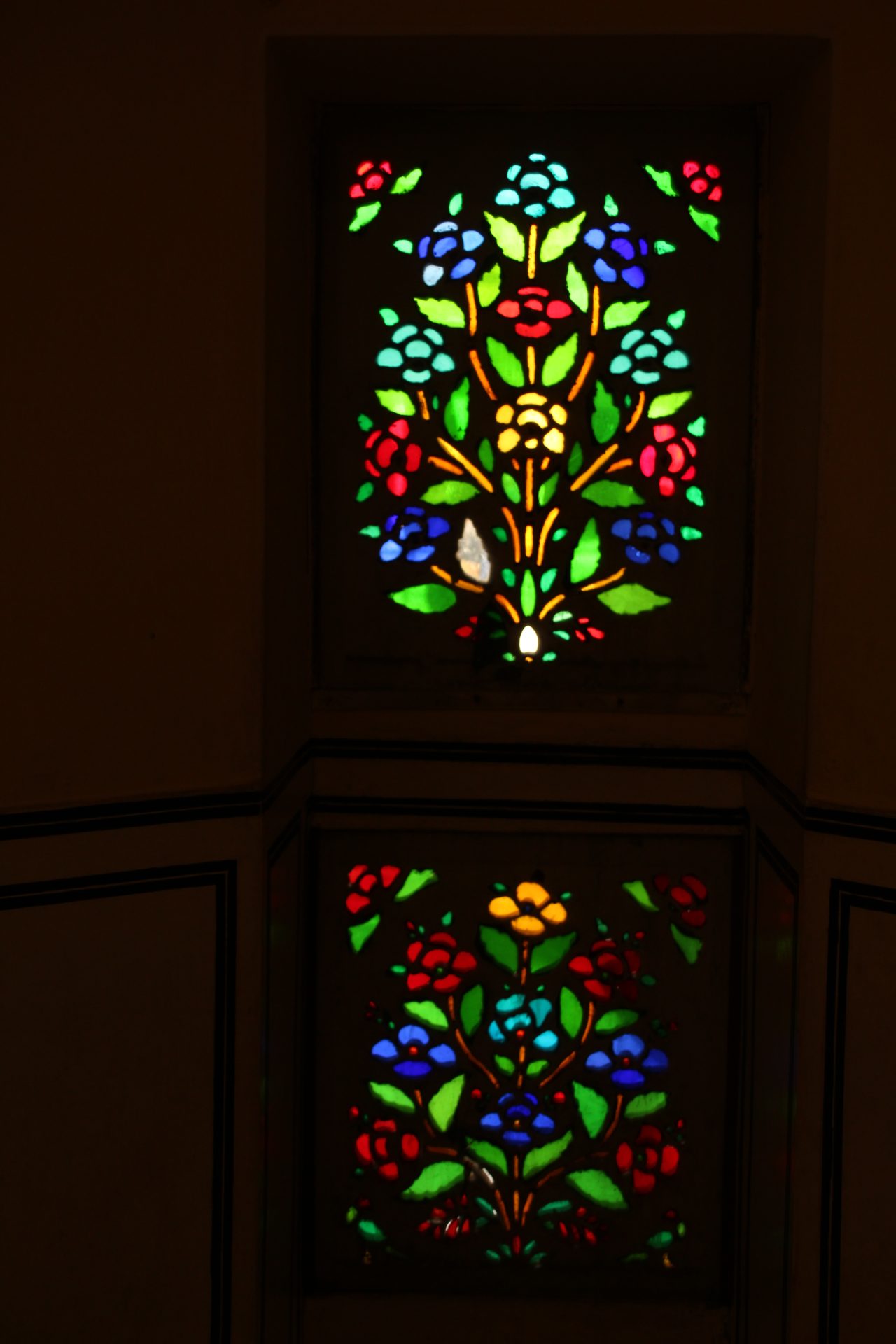
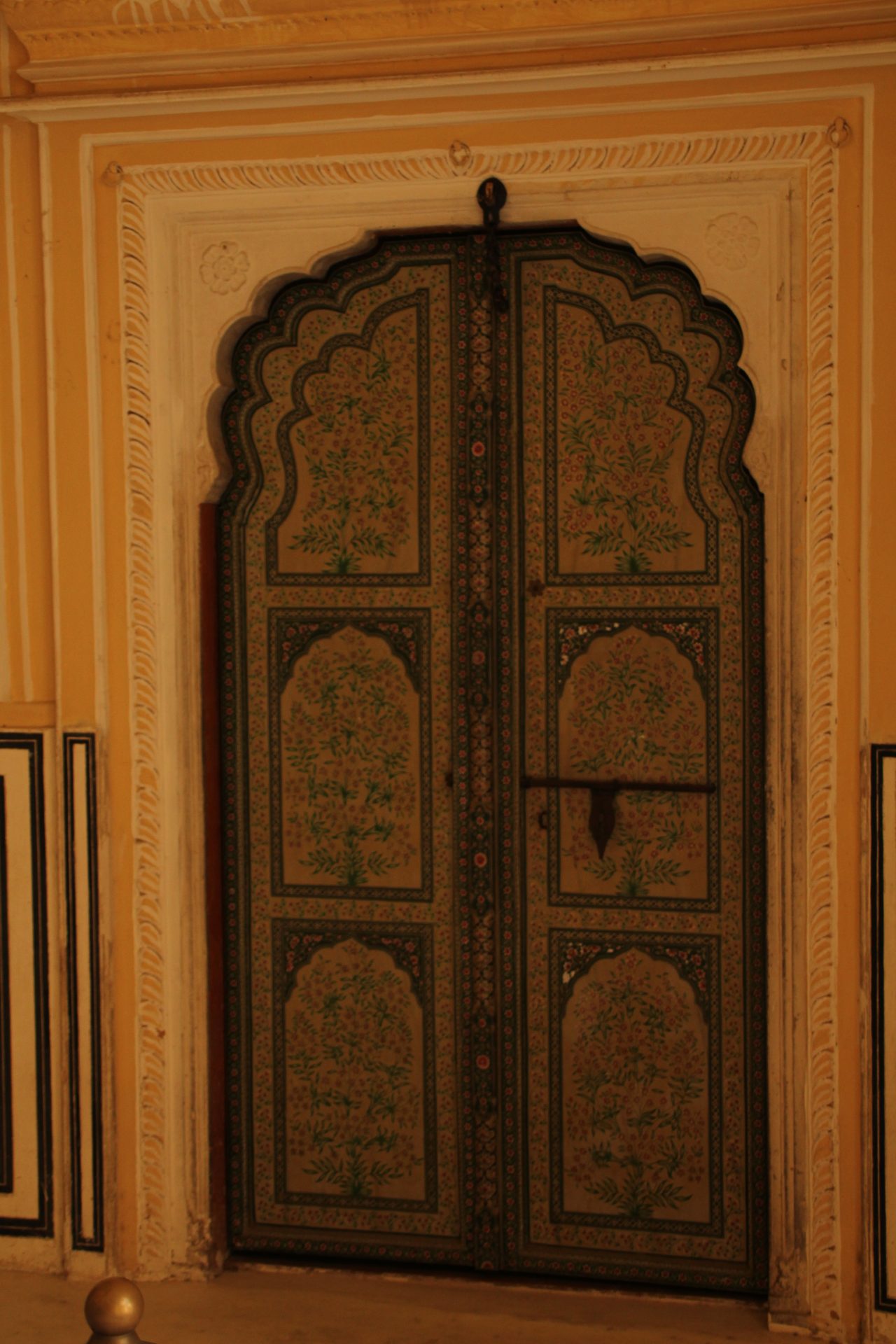
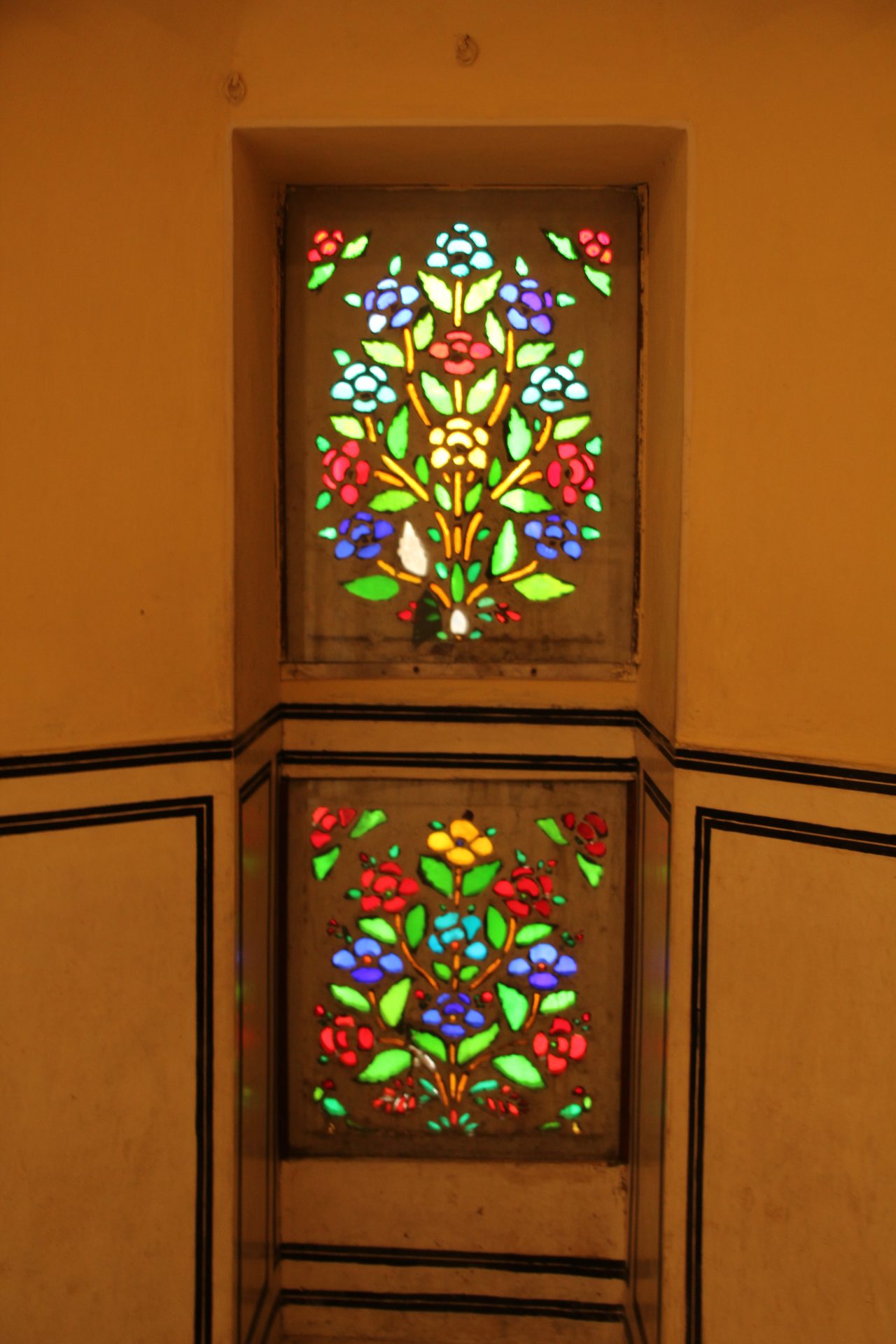
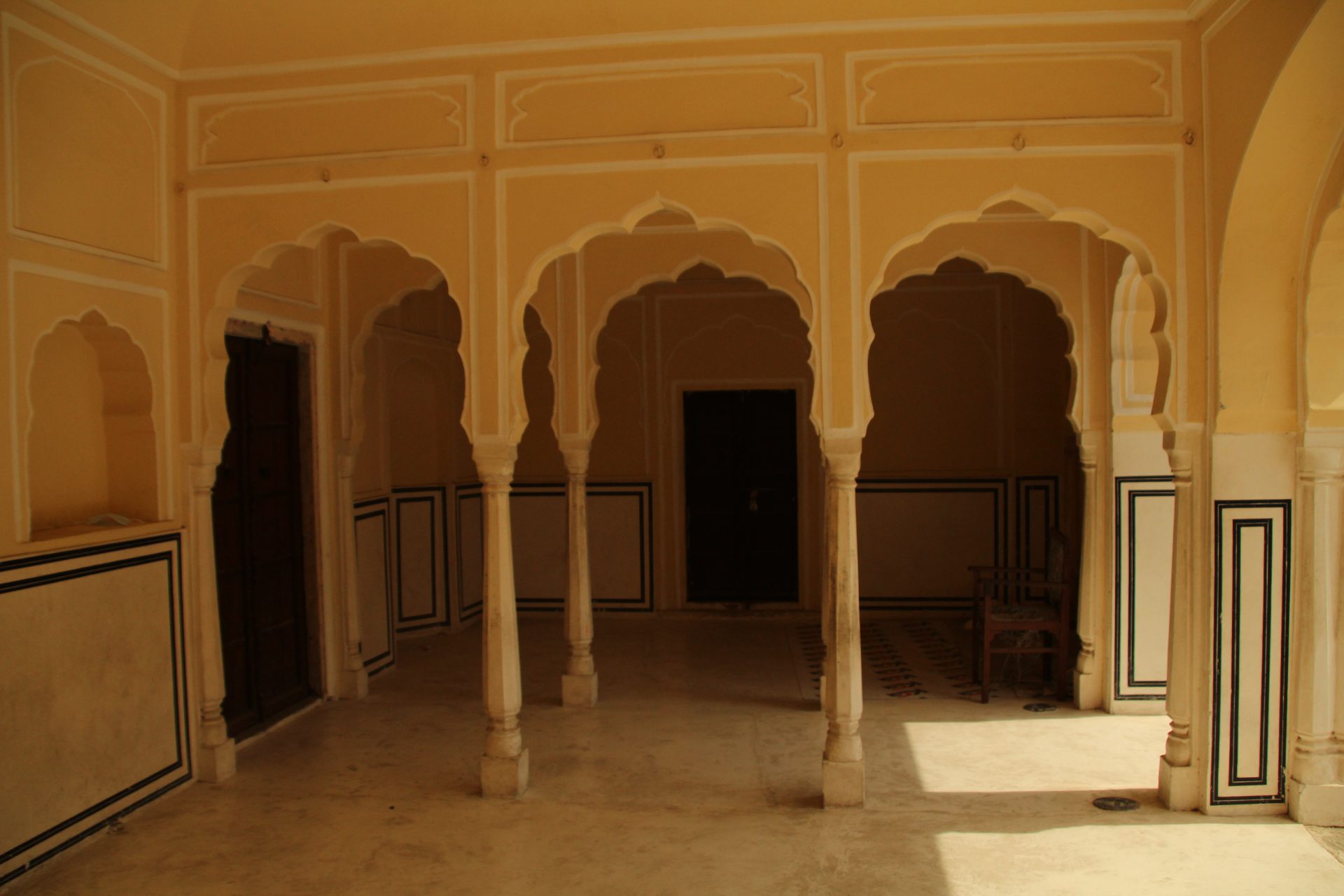
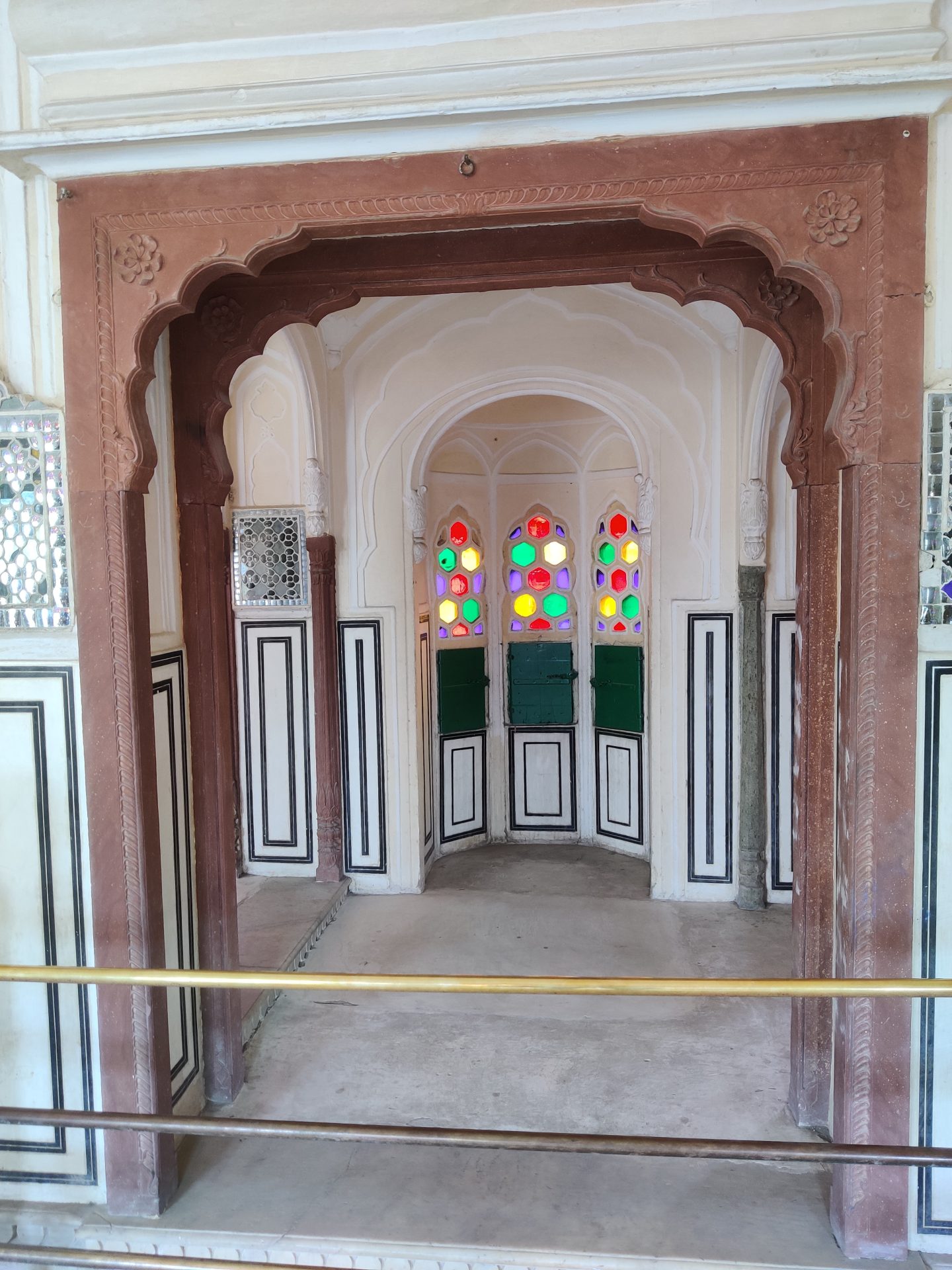
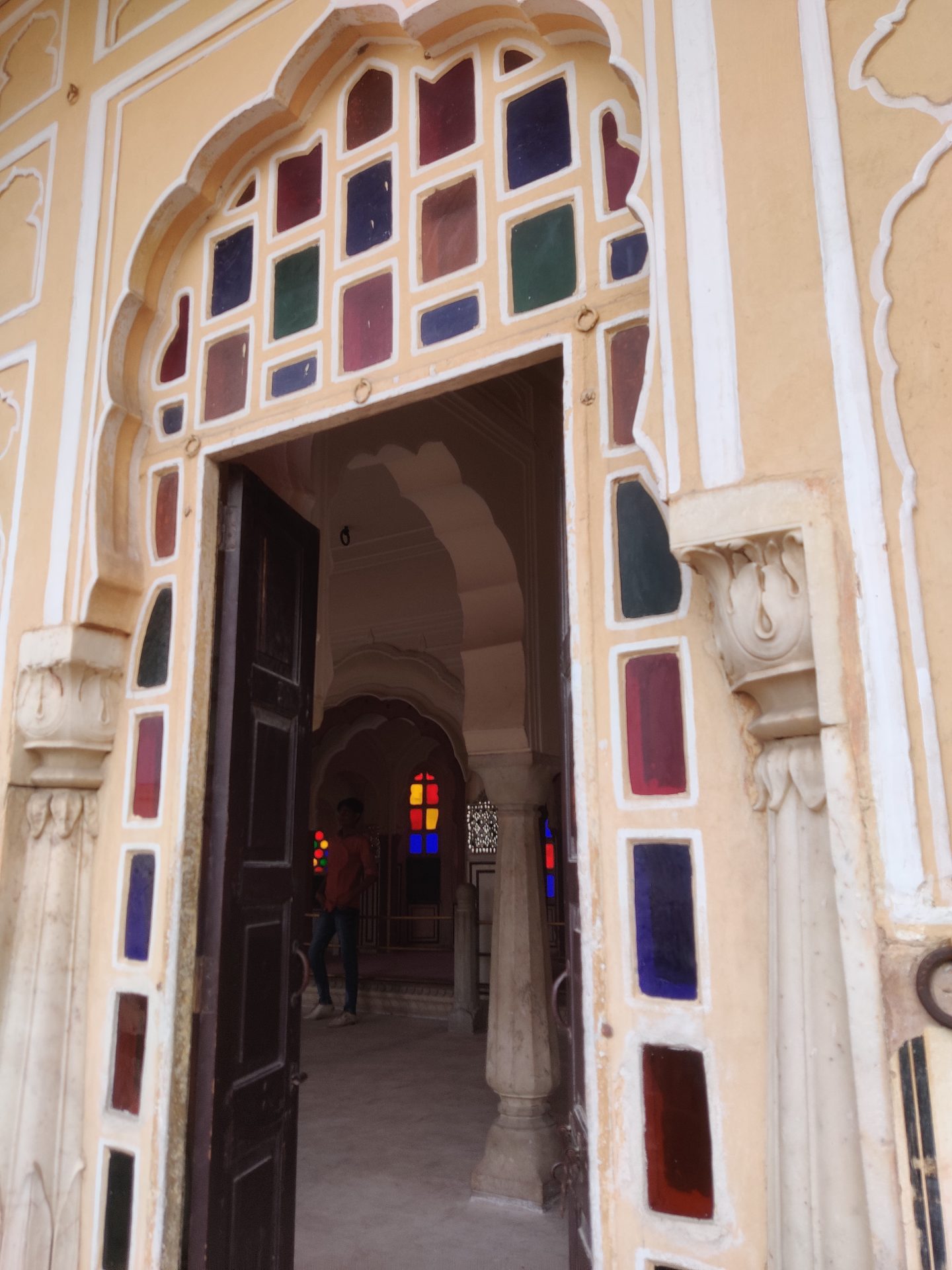
On display as we walk around are lovely stone filigree works of art, carved windows including some made out of wood, fluted pillars, floral patterns and coloured glasswork.
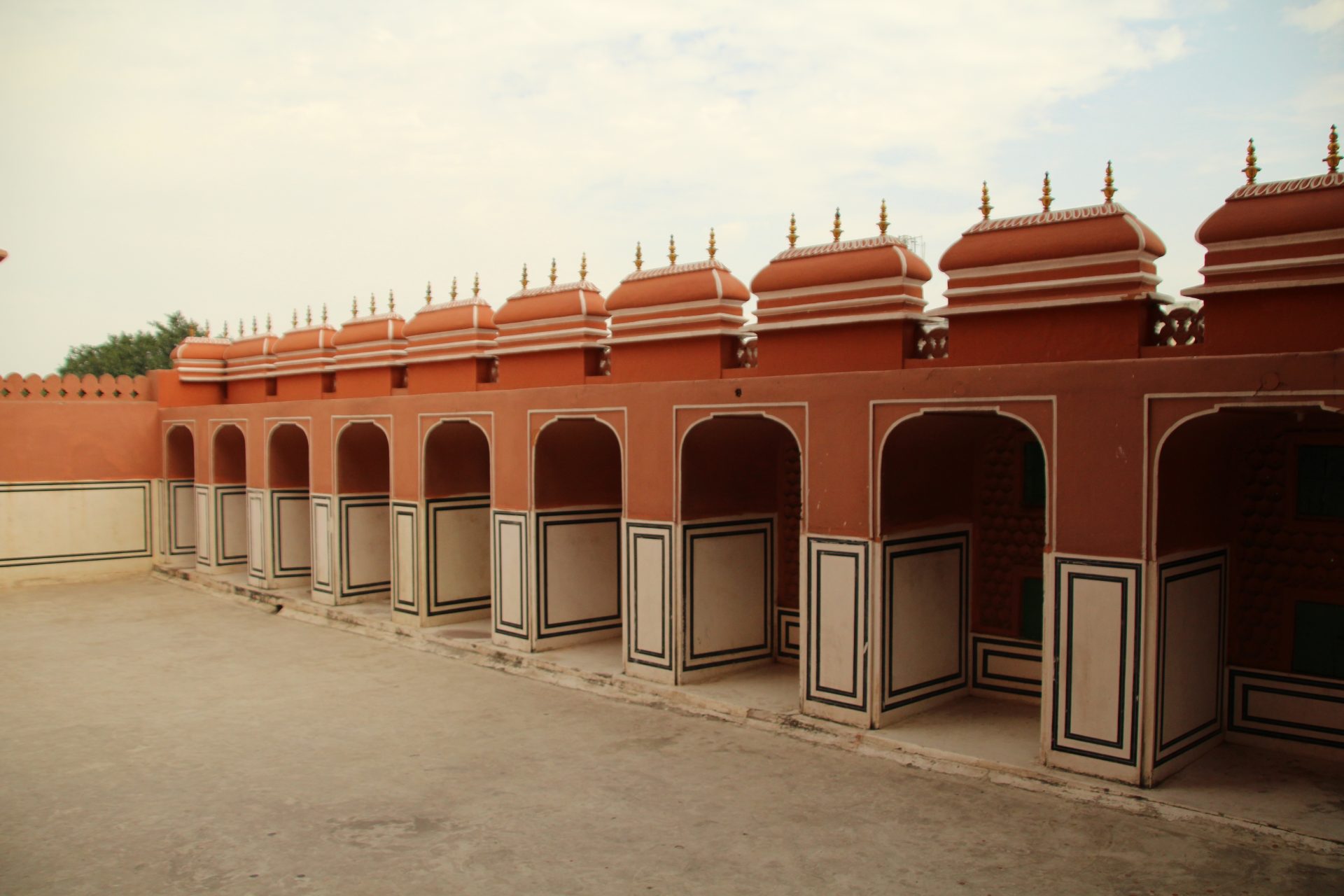
A unique design consideration was the usage of ramps on the top 3 floors to primarily facilitate the passage of palanquins. The first and second floors have patios in front of them and as one goes around the palace, one can see a perfect fusion of Hindu Rajput and Indo-Islamic architecture.
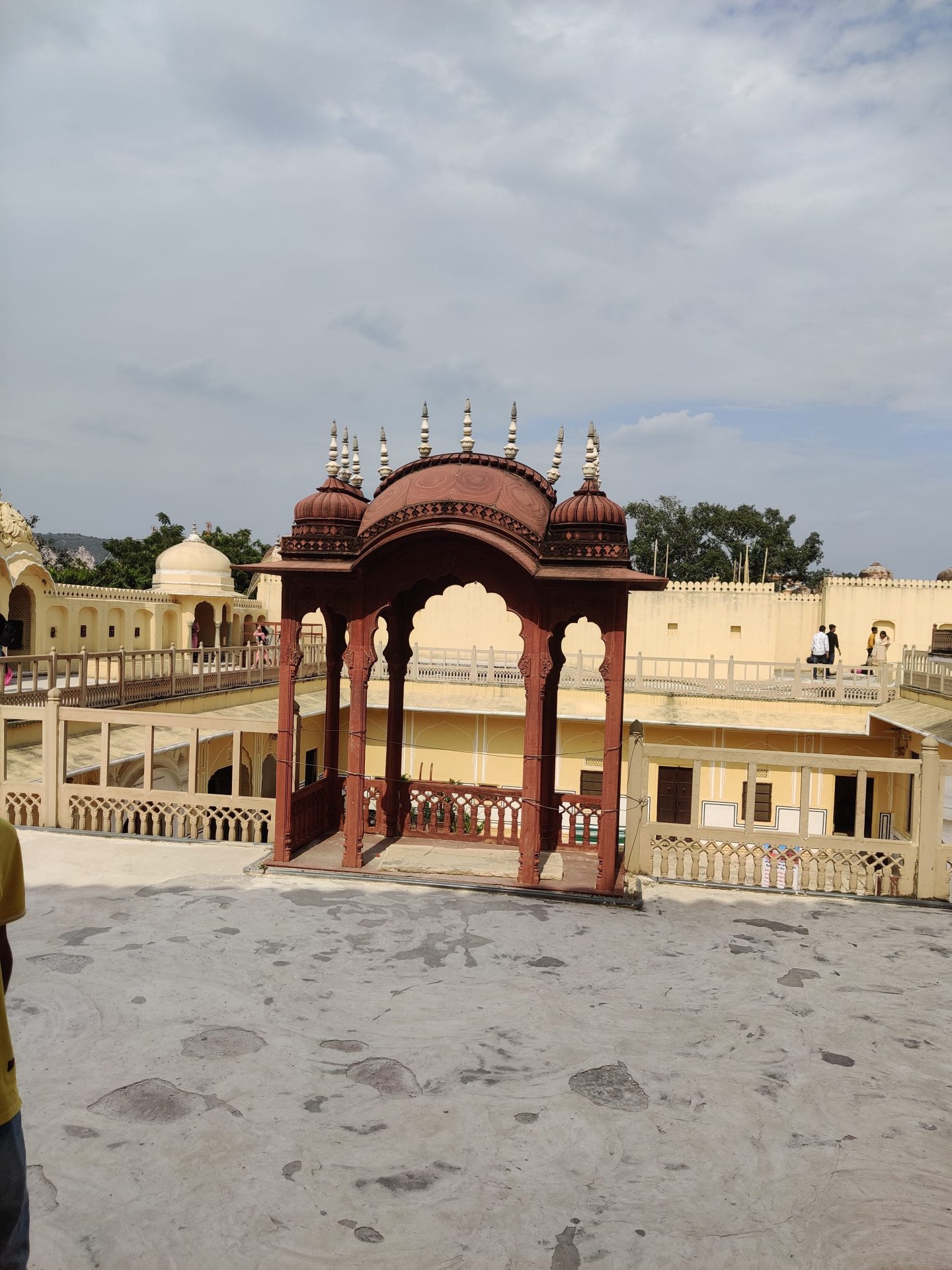
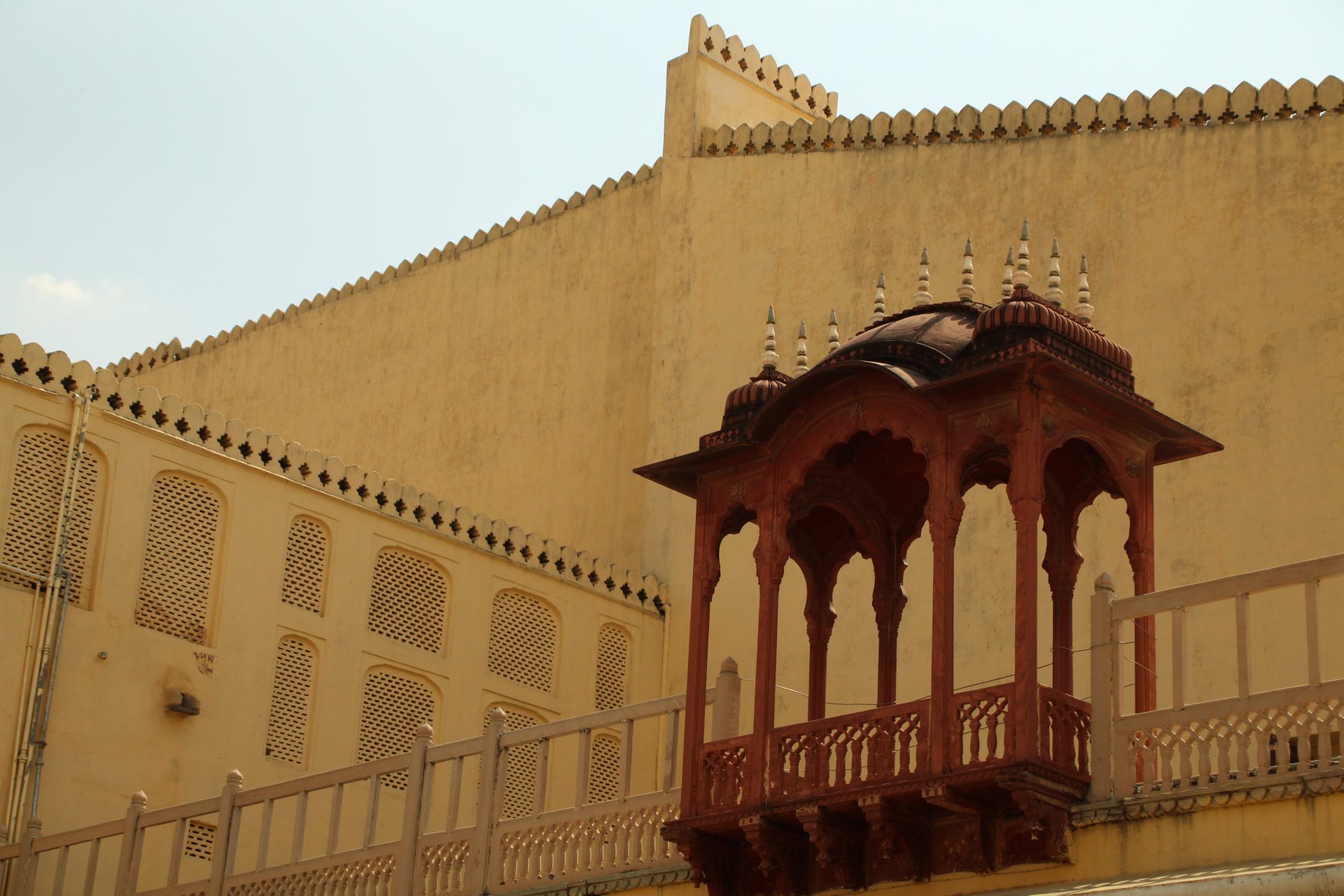
A few random clicks around the Hawa Mahal.
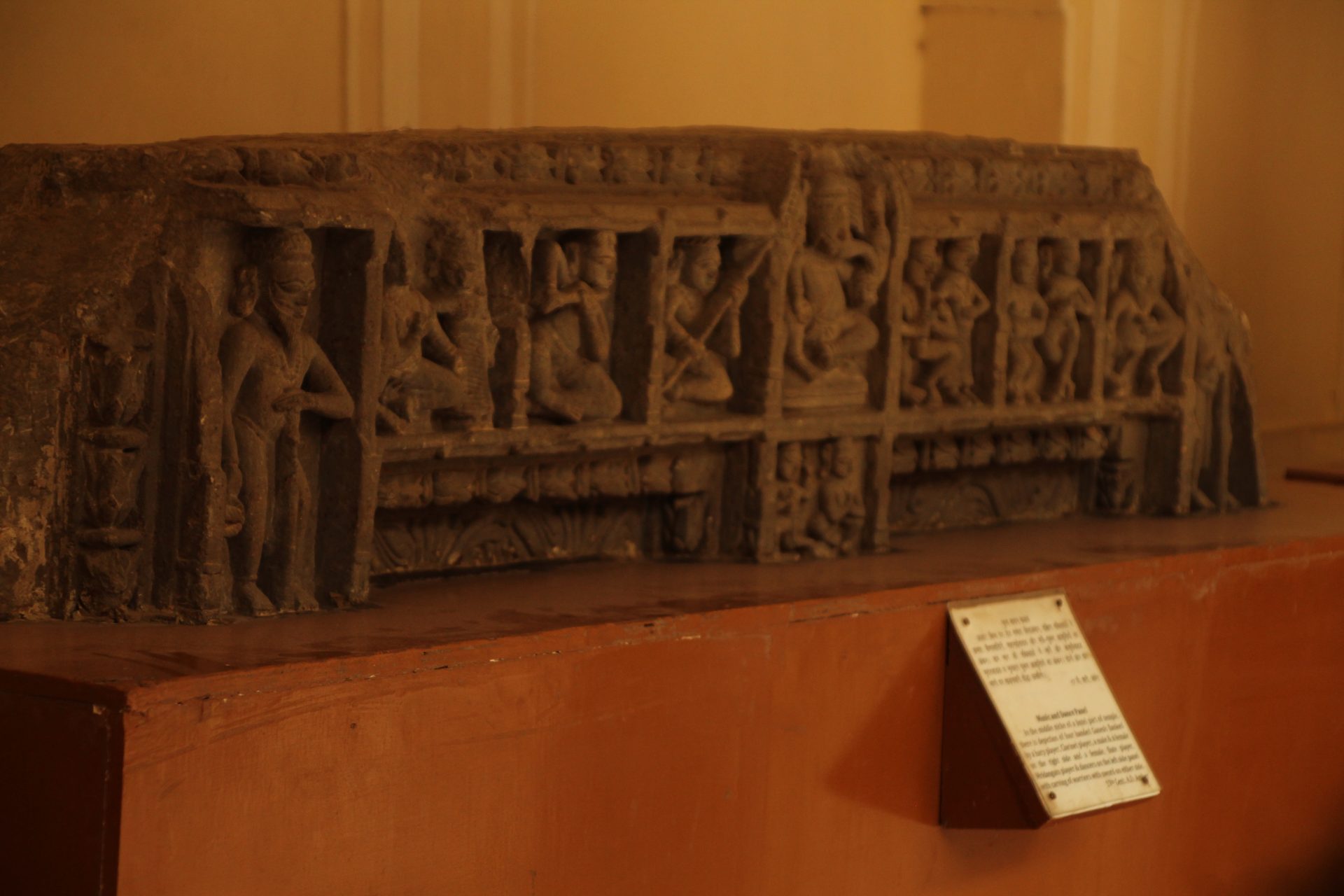
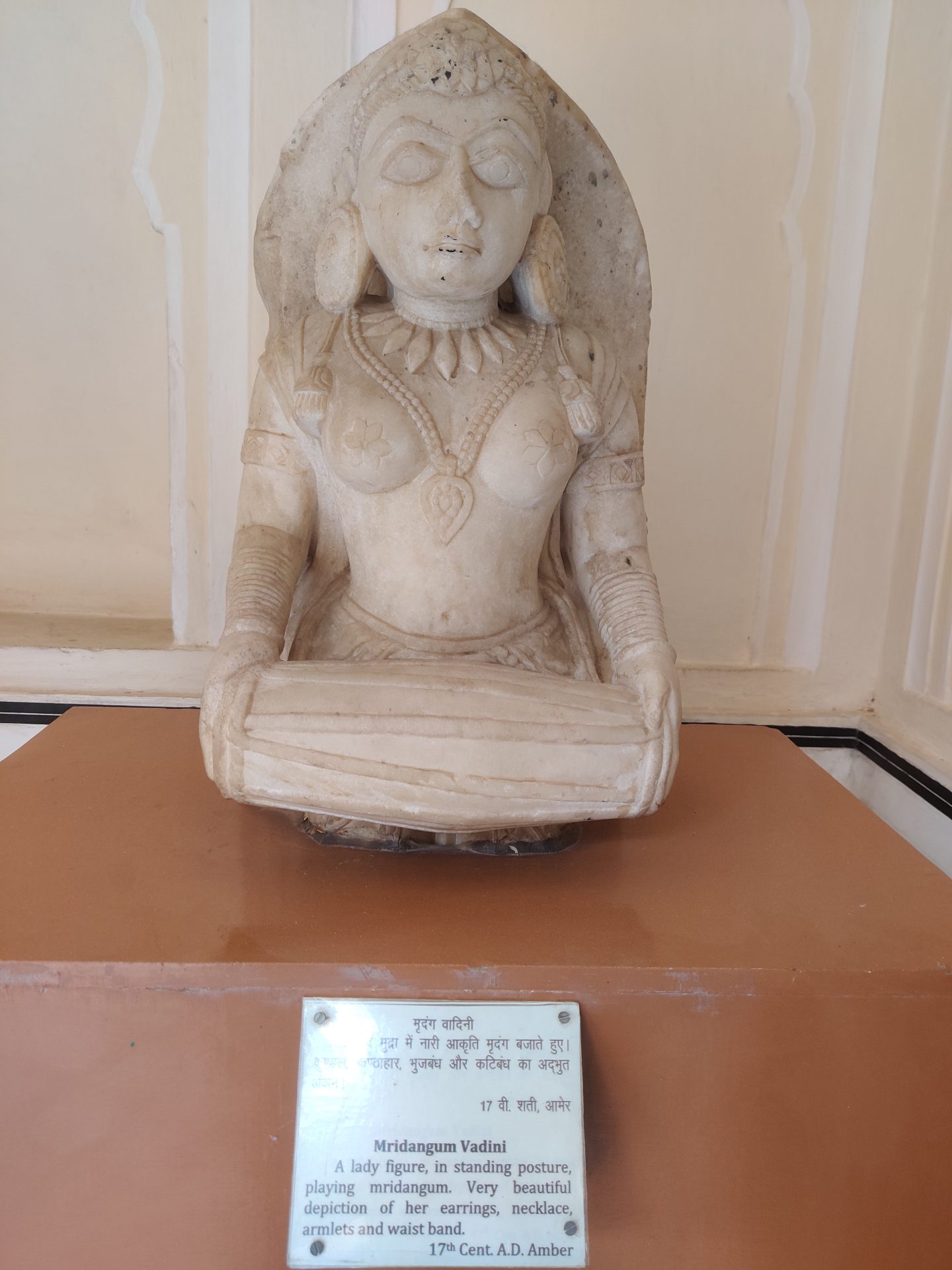
There is a museum right on the ground floor which houses paintings and statues of gods and goddesses. It would easily take anywhere between 45 minutes to an hour to go through the Palace.
The City Palace
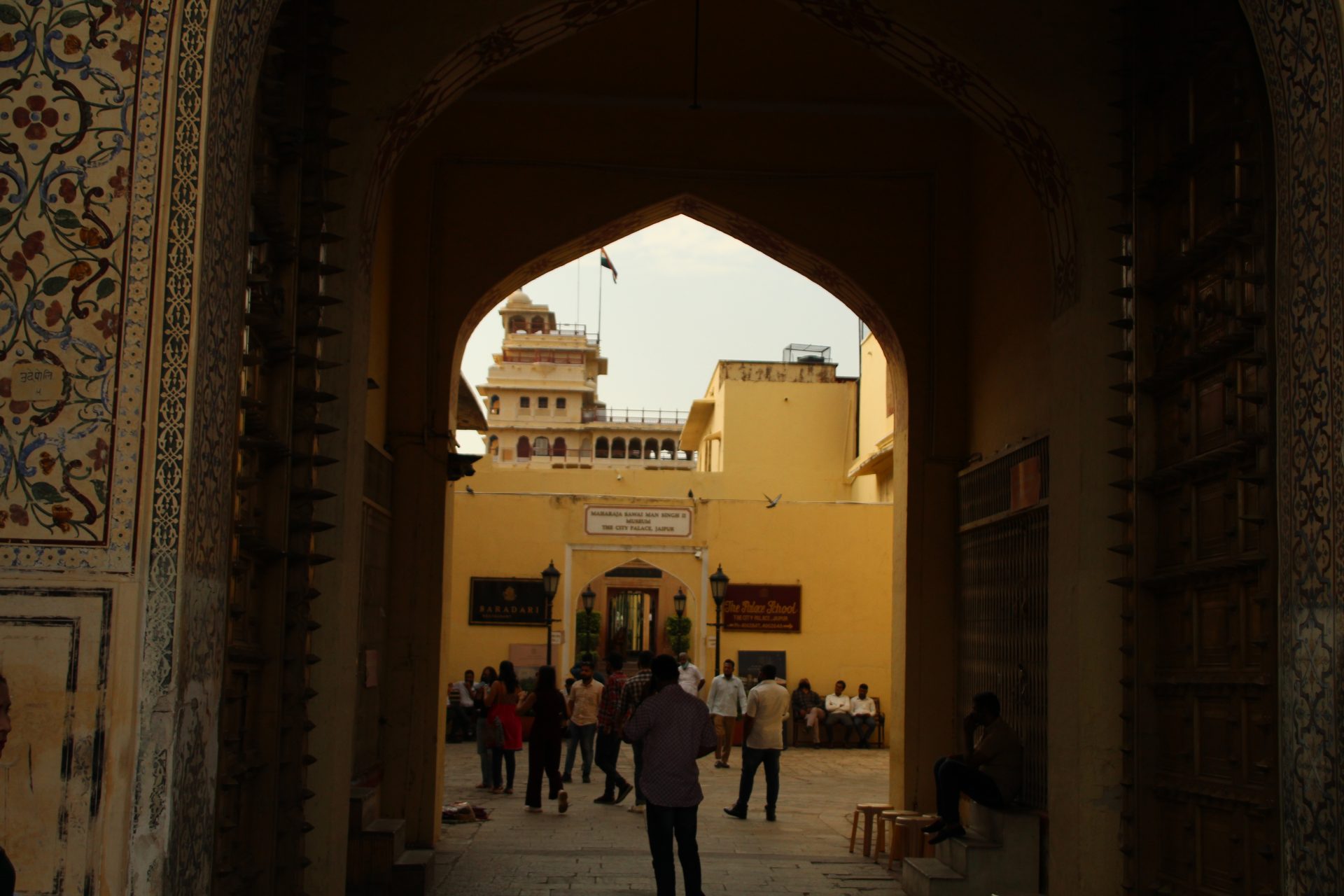
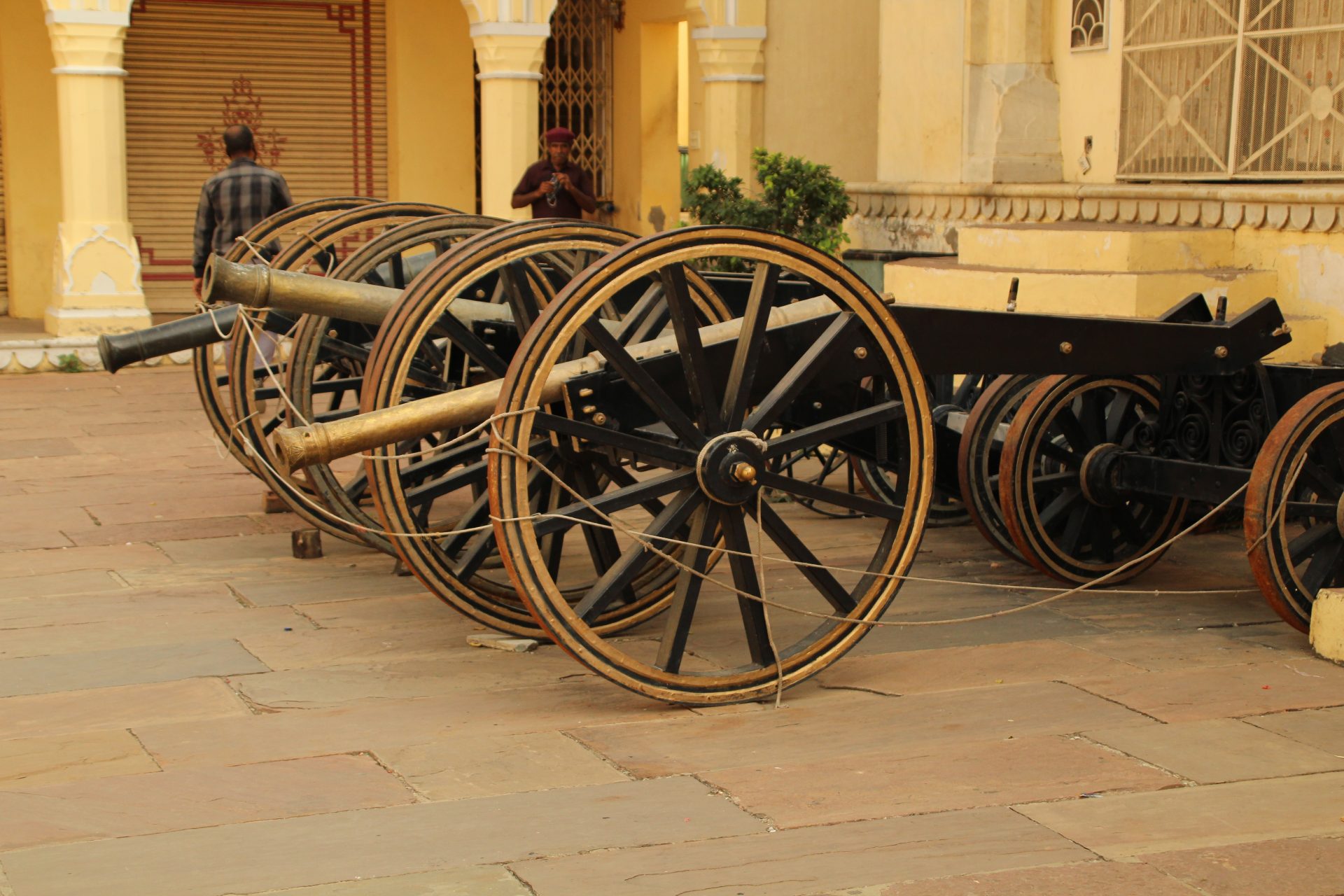
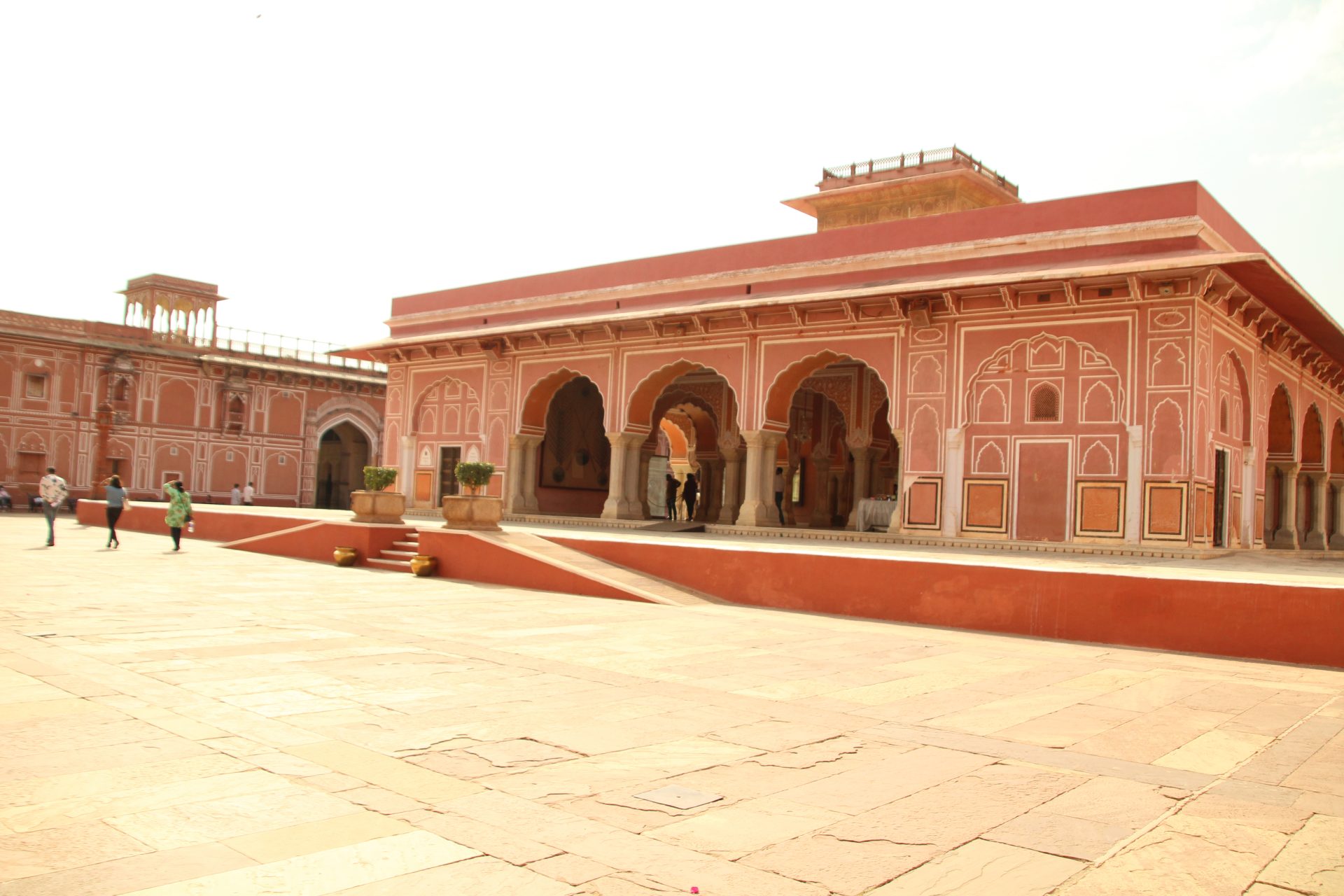
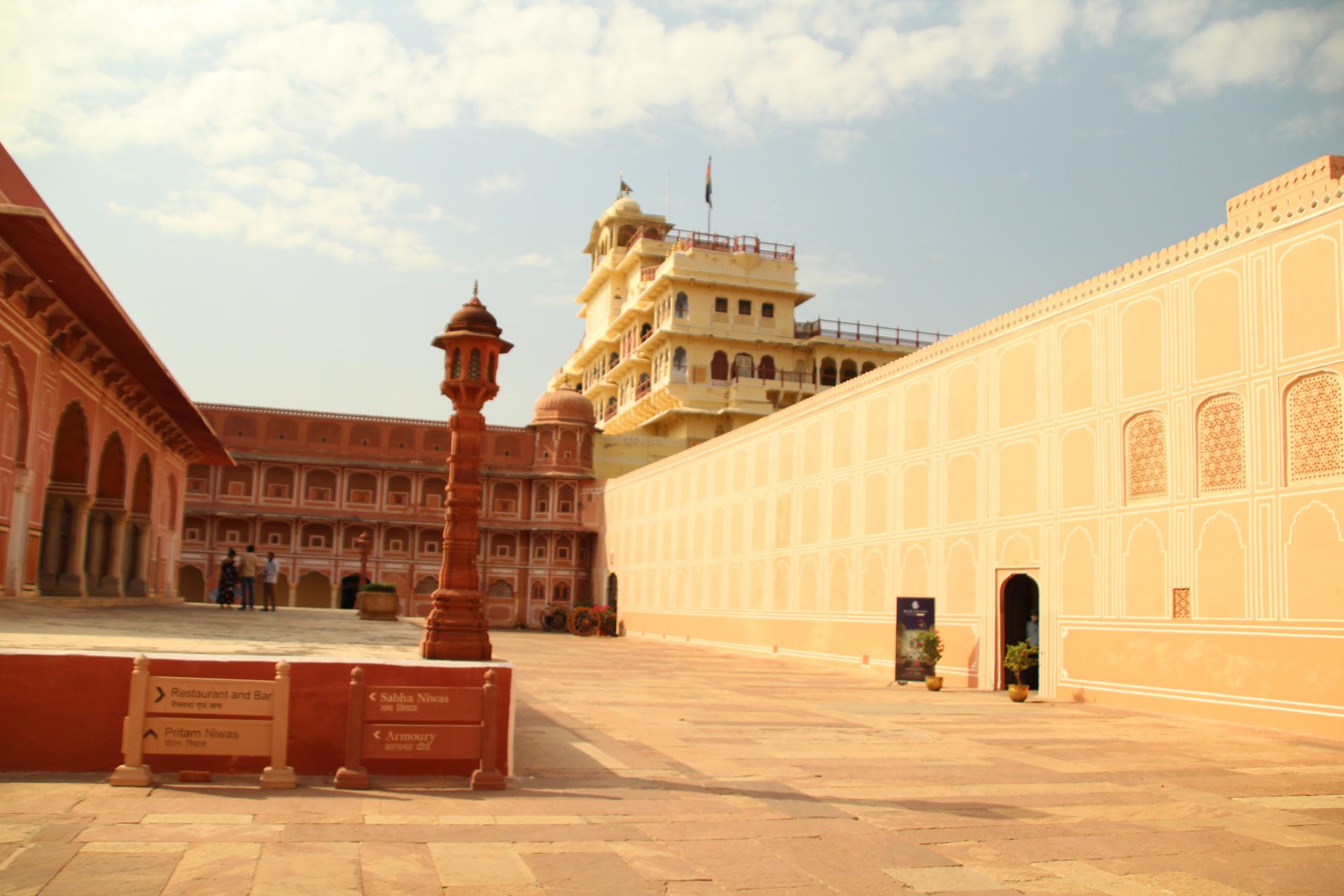
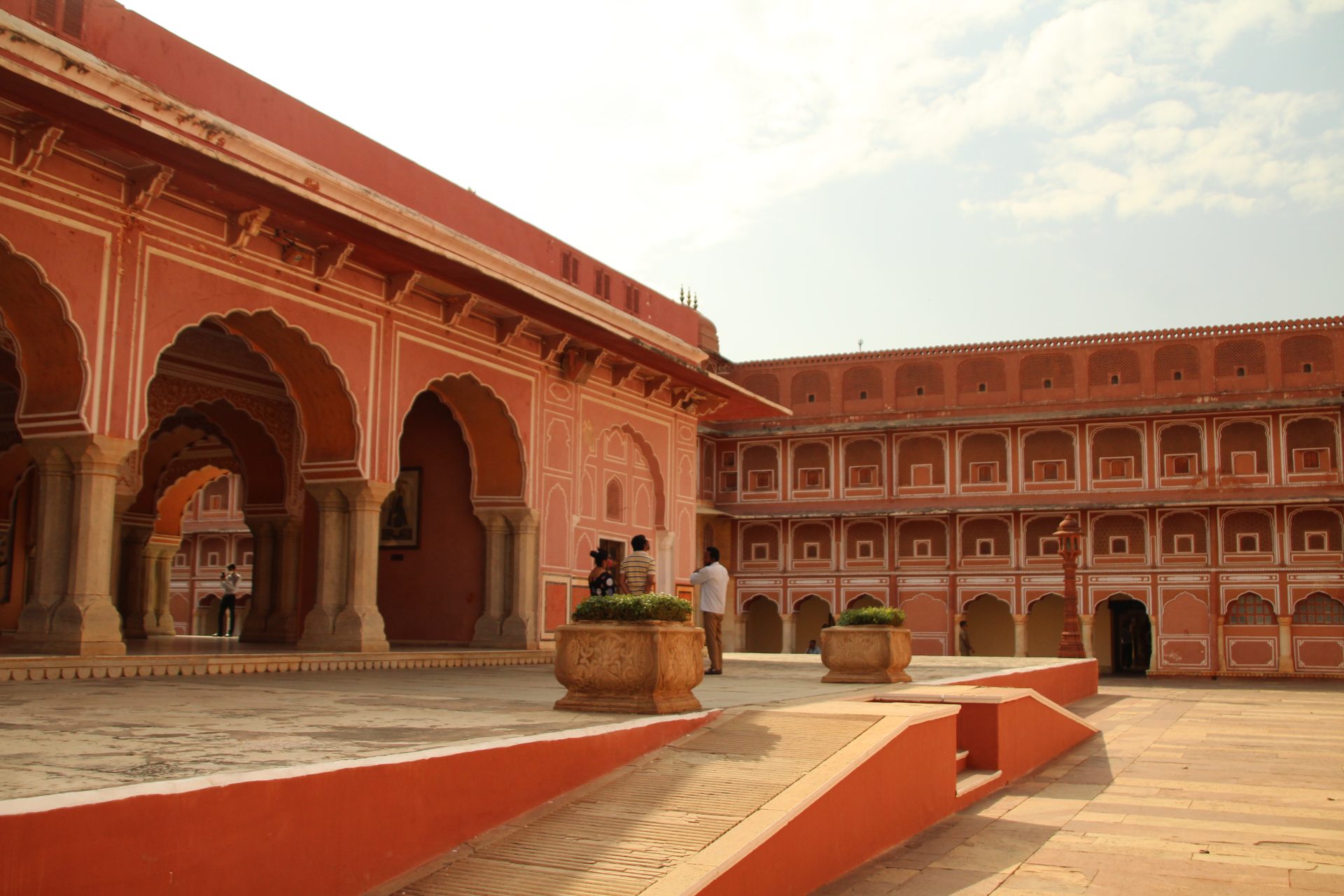
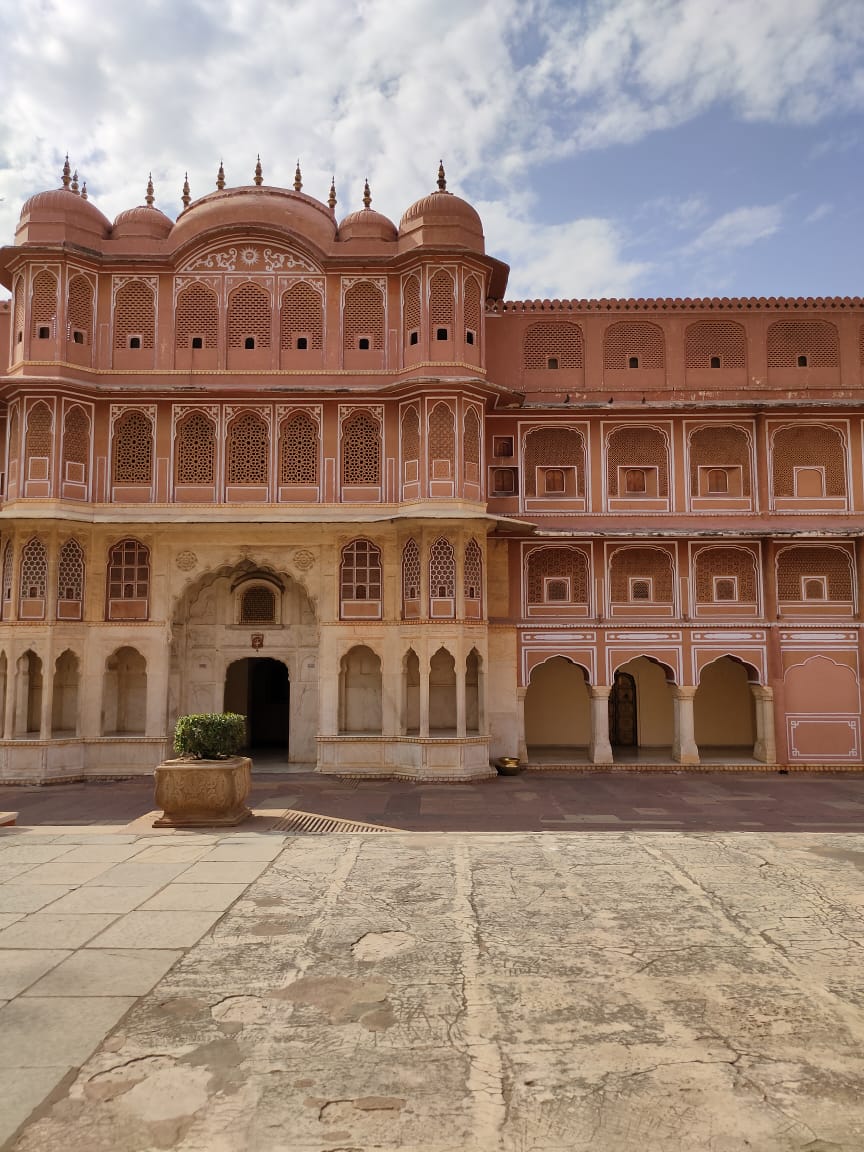
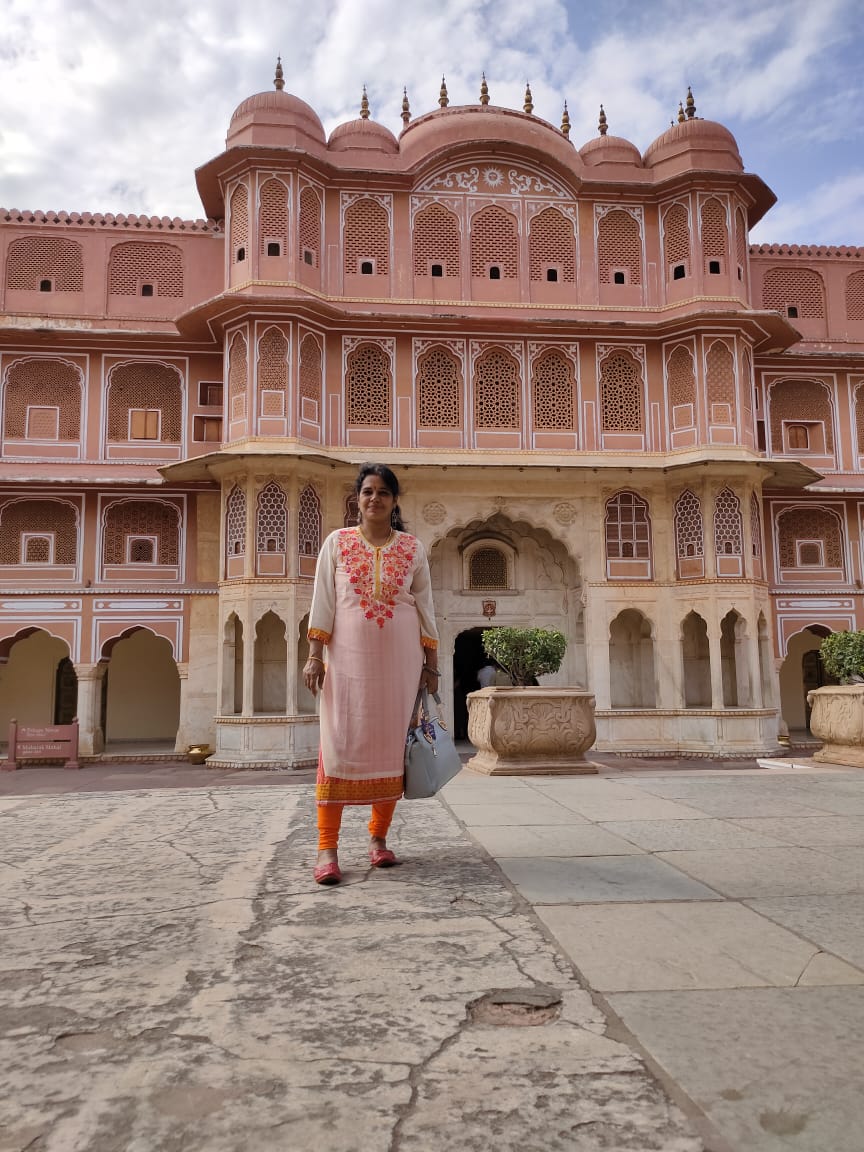
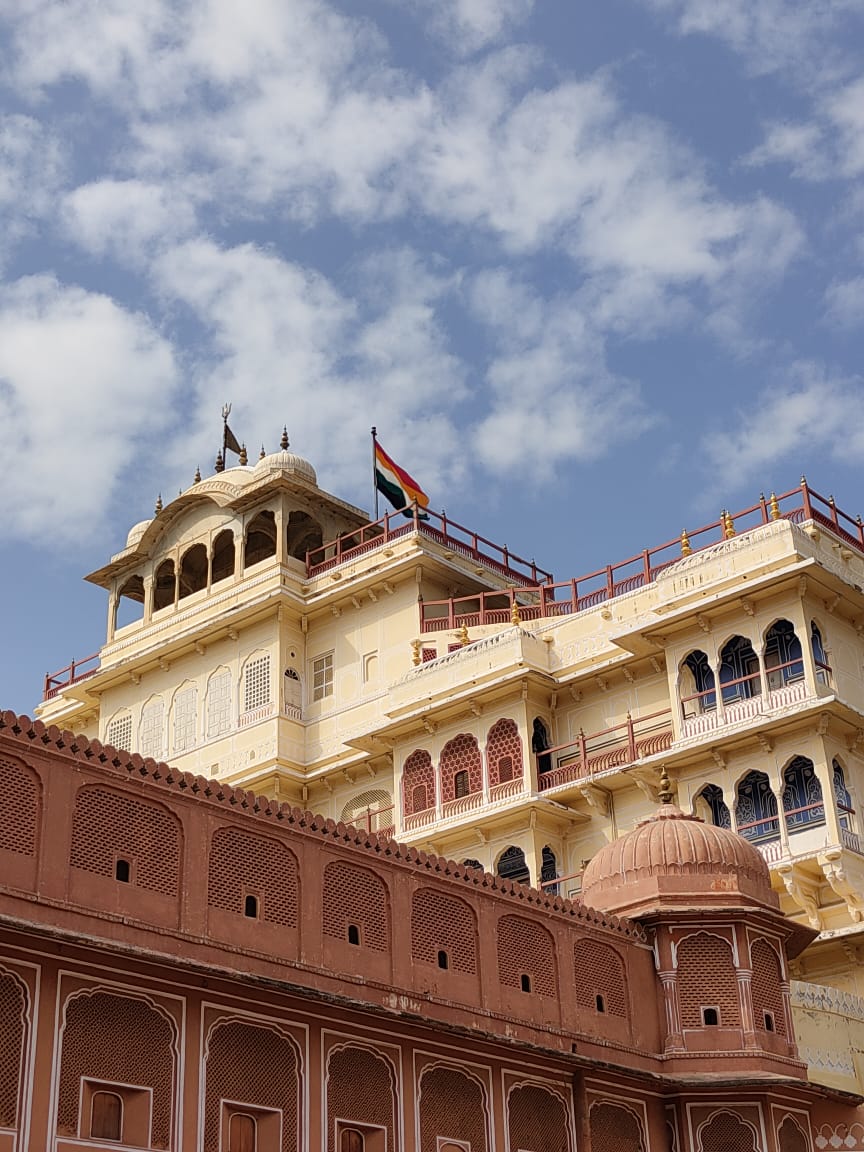
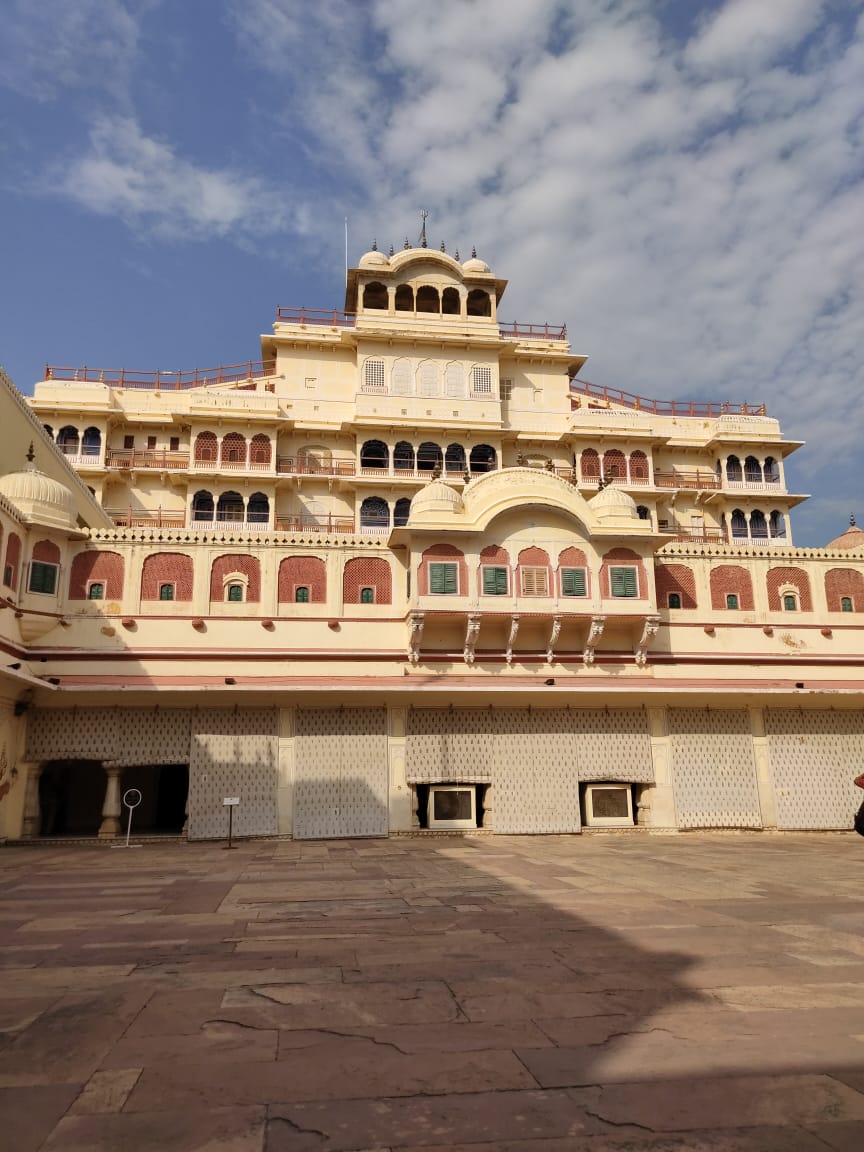
We then headed for the City Palace, located around a km away from Hawa Mahal. While the entire royal family of Jaipur is believed to be staying here, part of the Palace is open for public viewing.
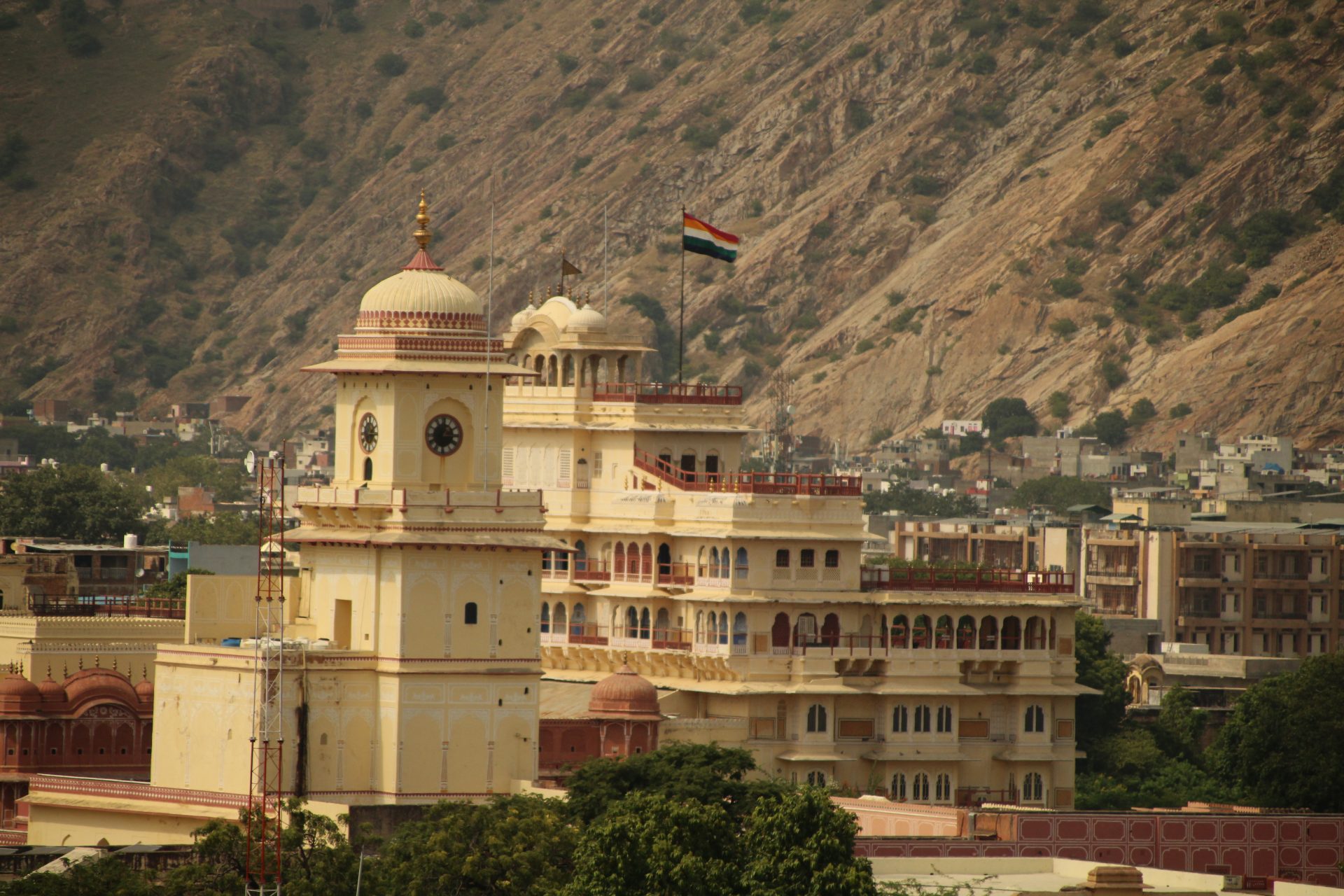
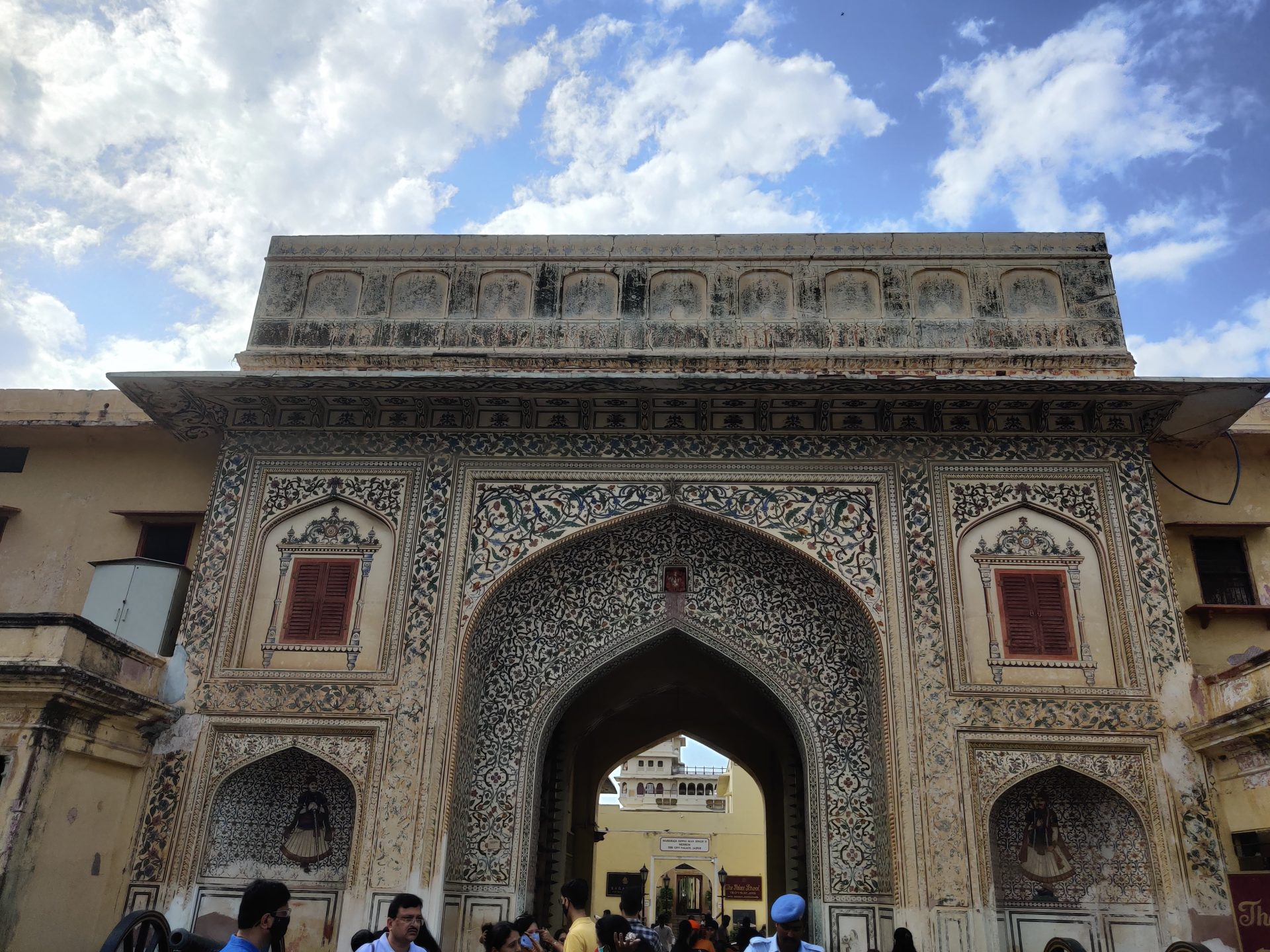
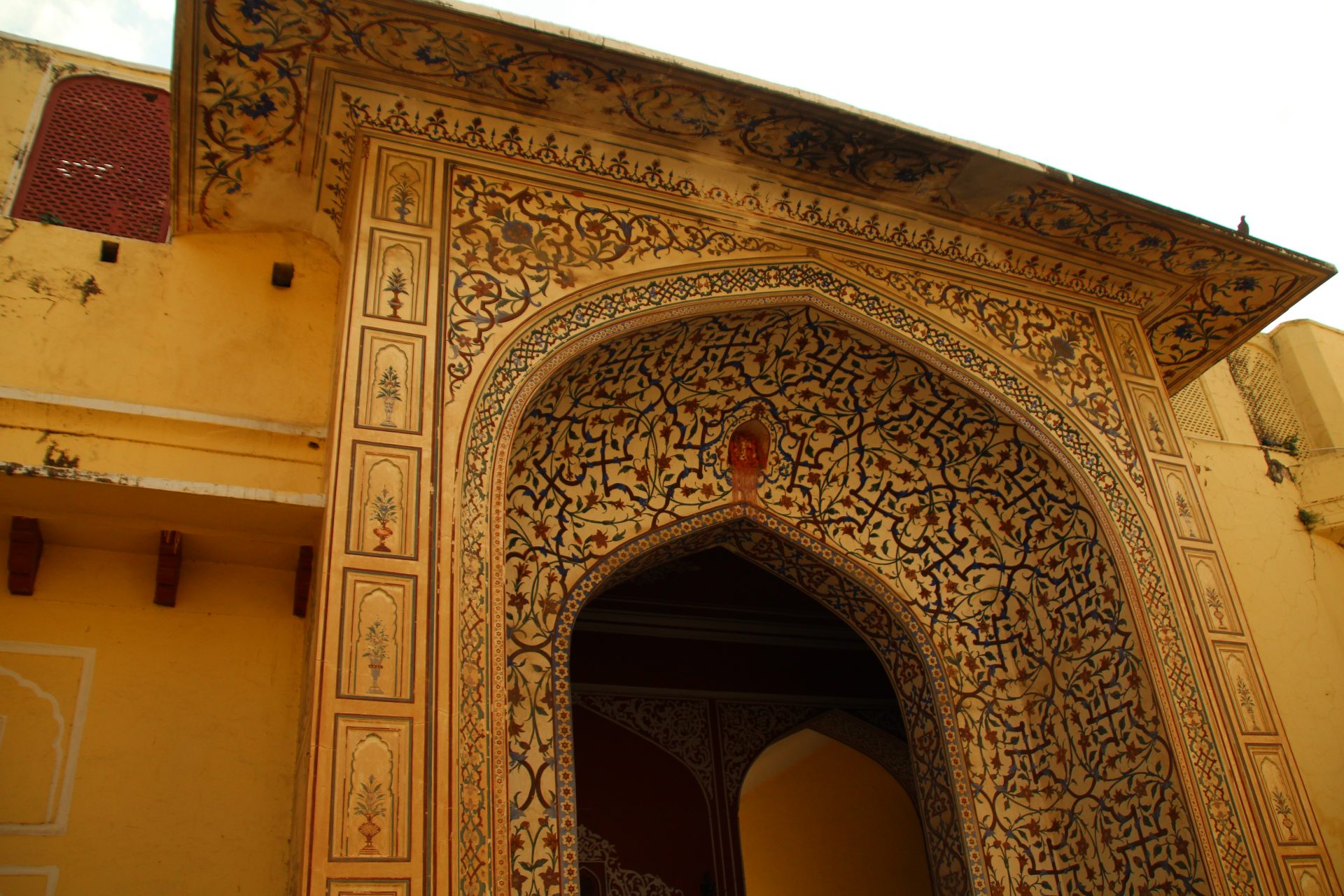
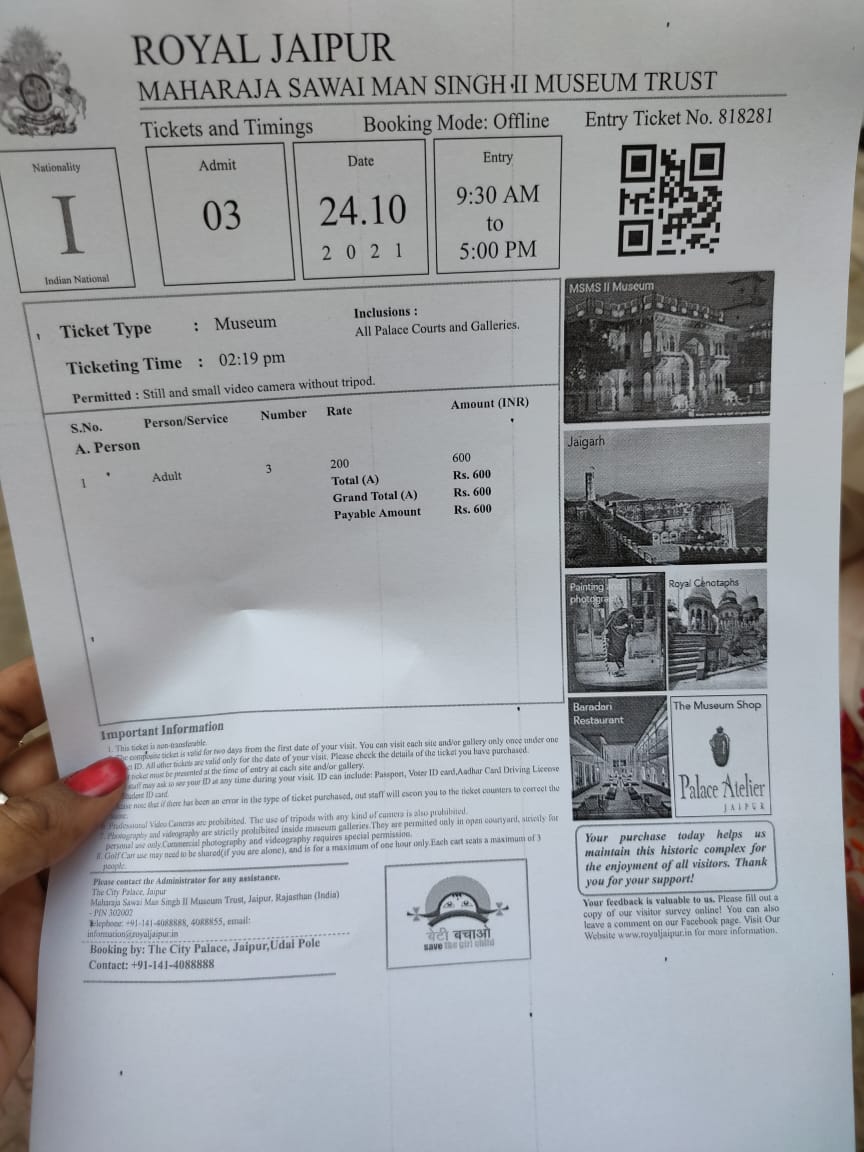
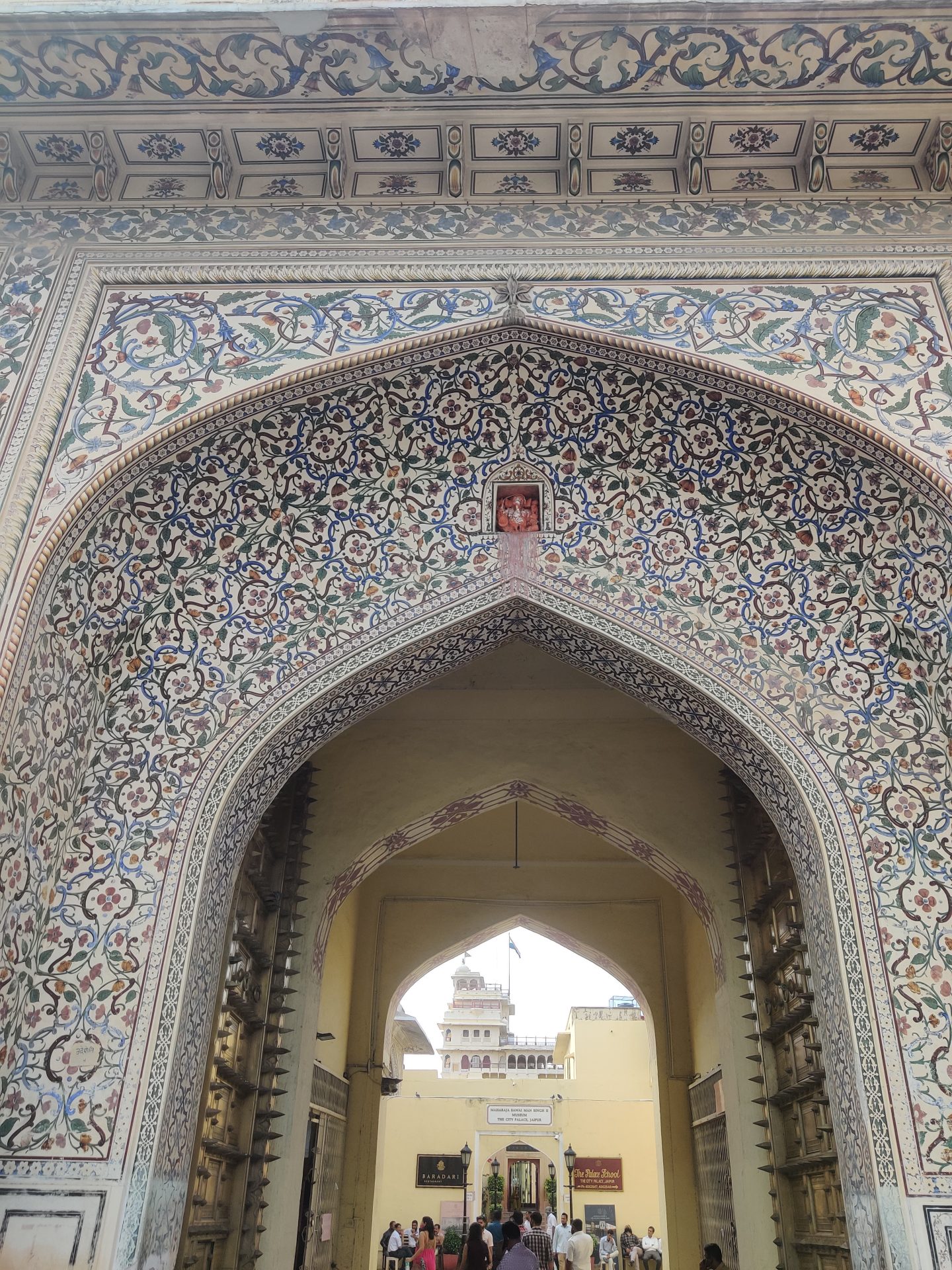
The Palace was conceived and built by Maharaja Sawai Jai Singh II who is credited with being the founder of Jaipur. A perfect mélange of Mughal, Rajput and European architectures has been perfectly blended into this Palace, built out of red sandstone. The palace opens up to vast courtyards with smaller palaces which now stand converted to museums and on display are a huge collection of Royal Costumes, Pashmina Shawls, Silk sarees, folk embroidery and weaponry. Tickets are priced at Rs.200/- per head.
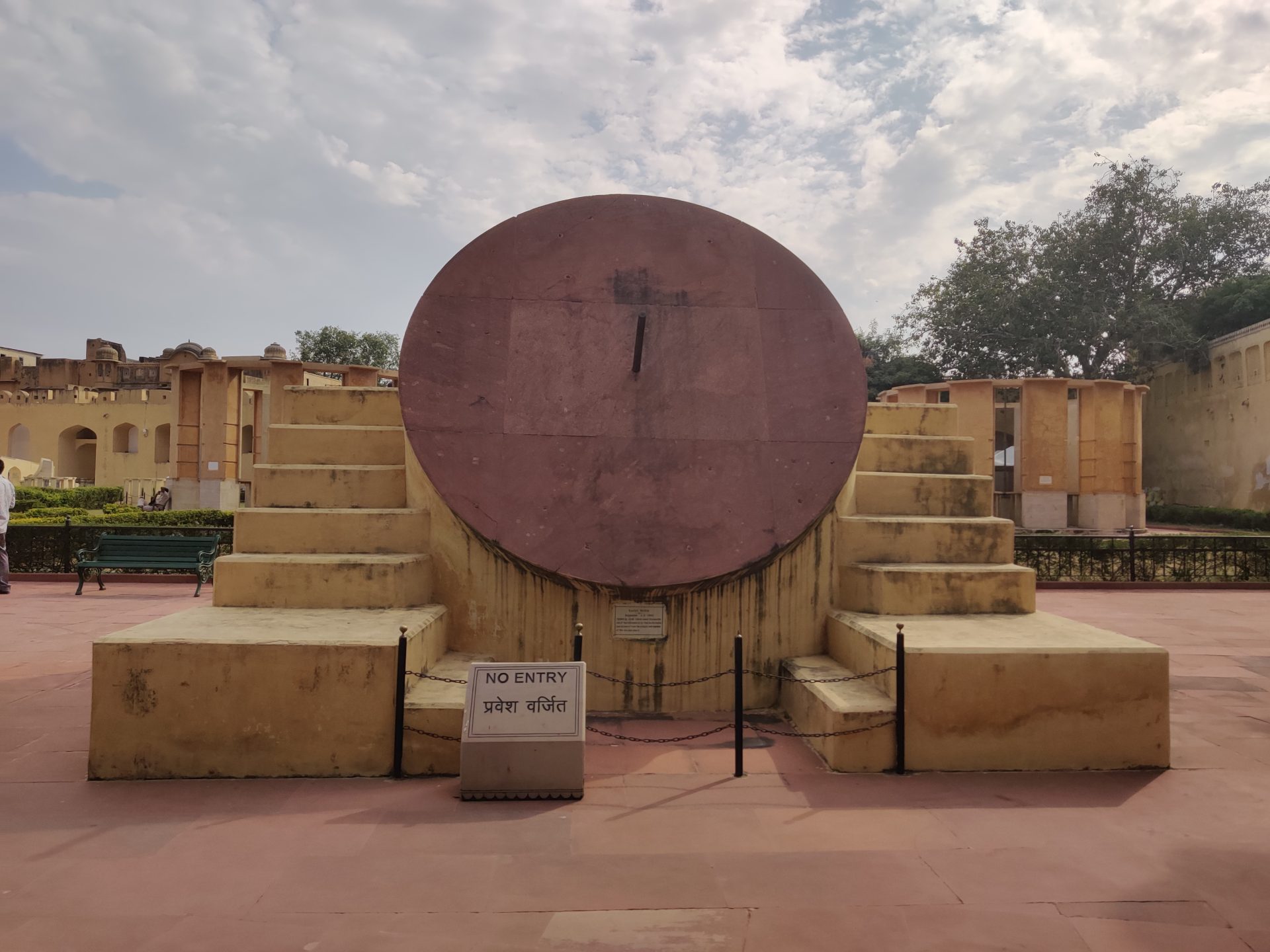
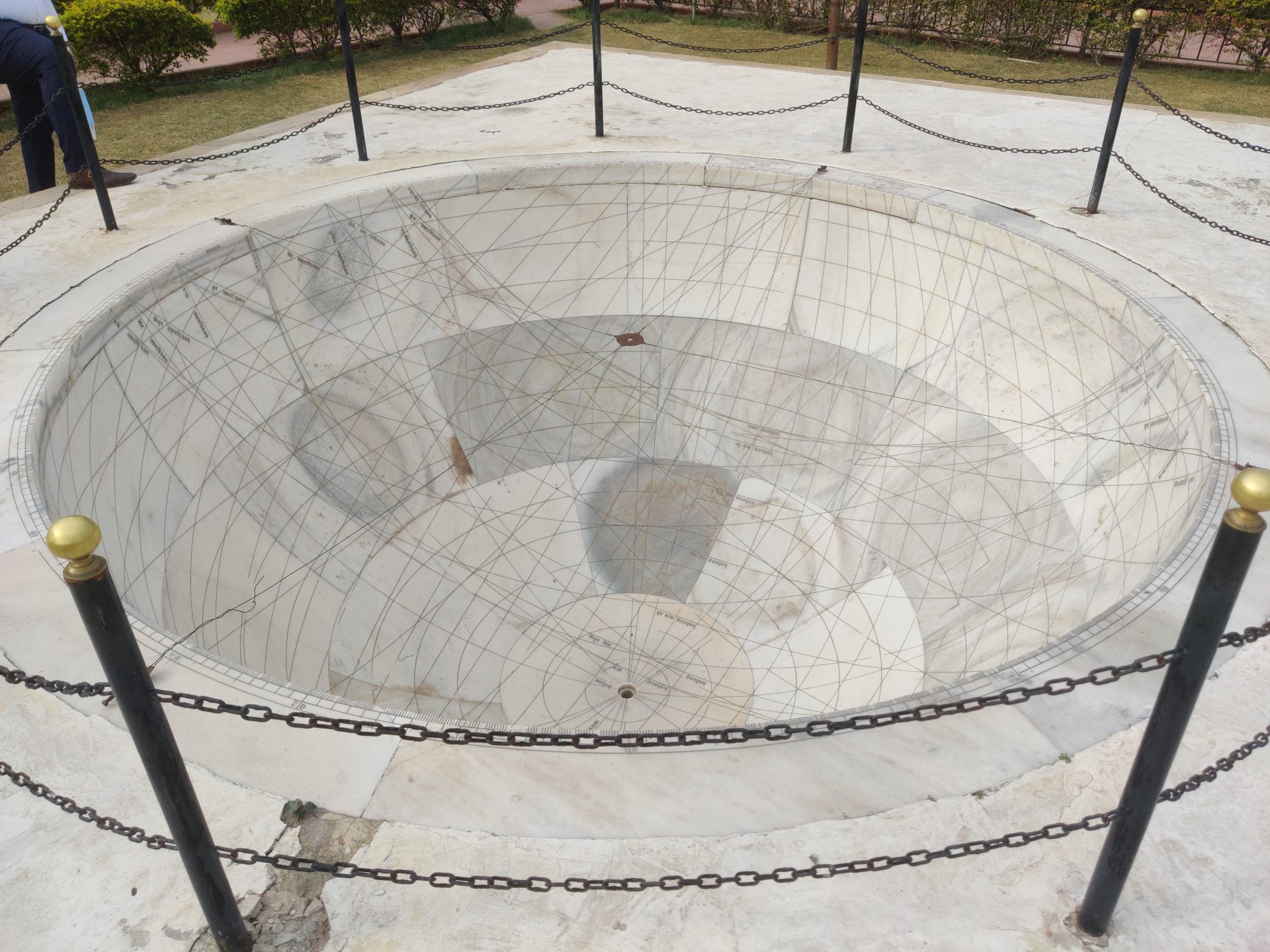
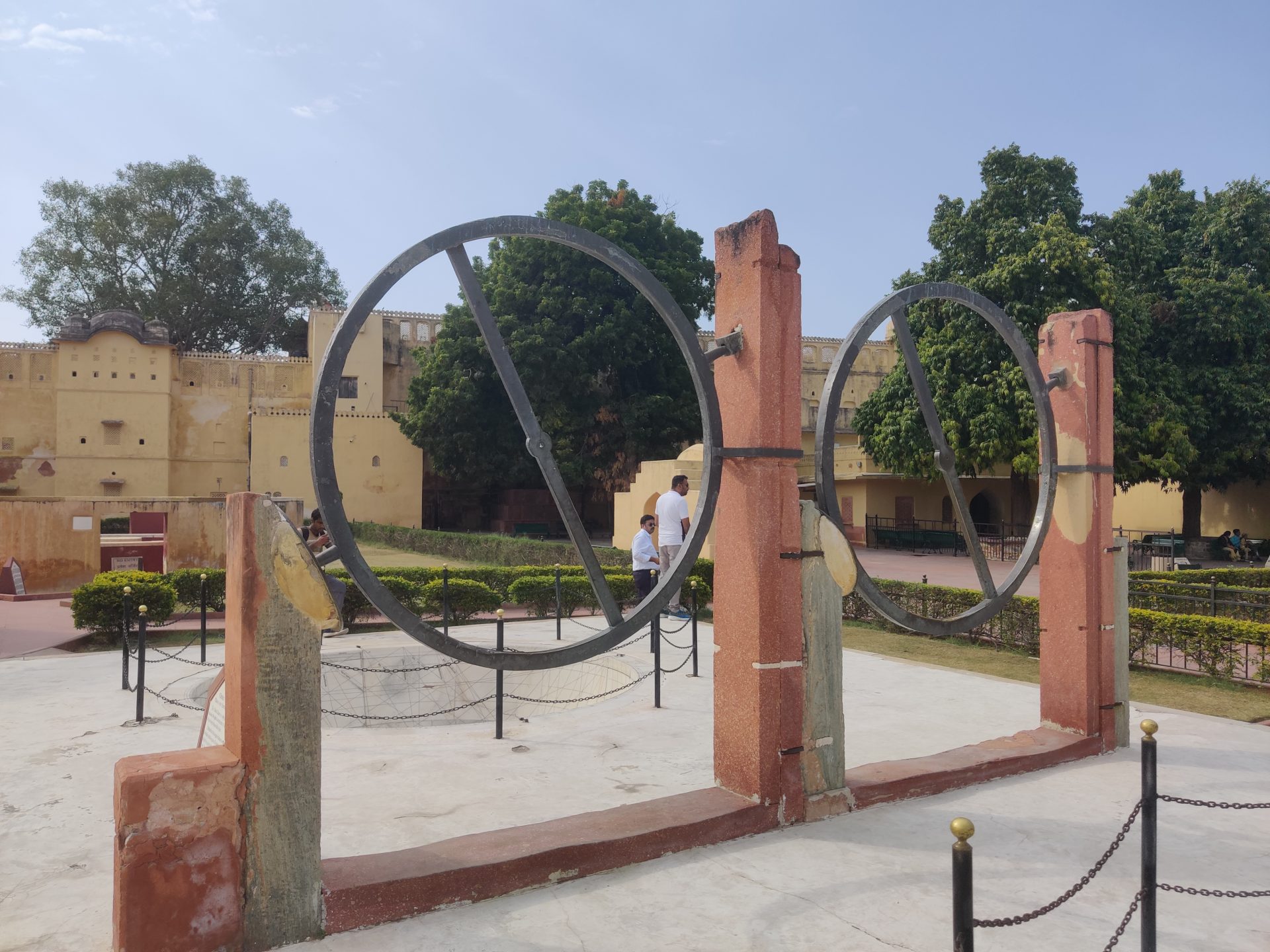
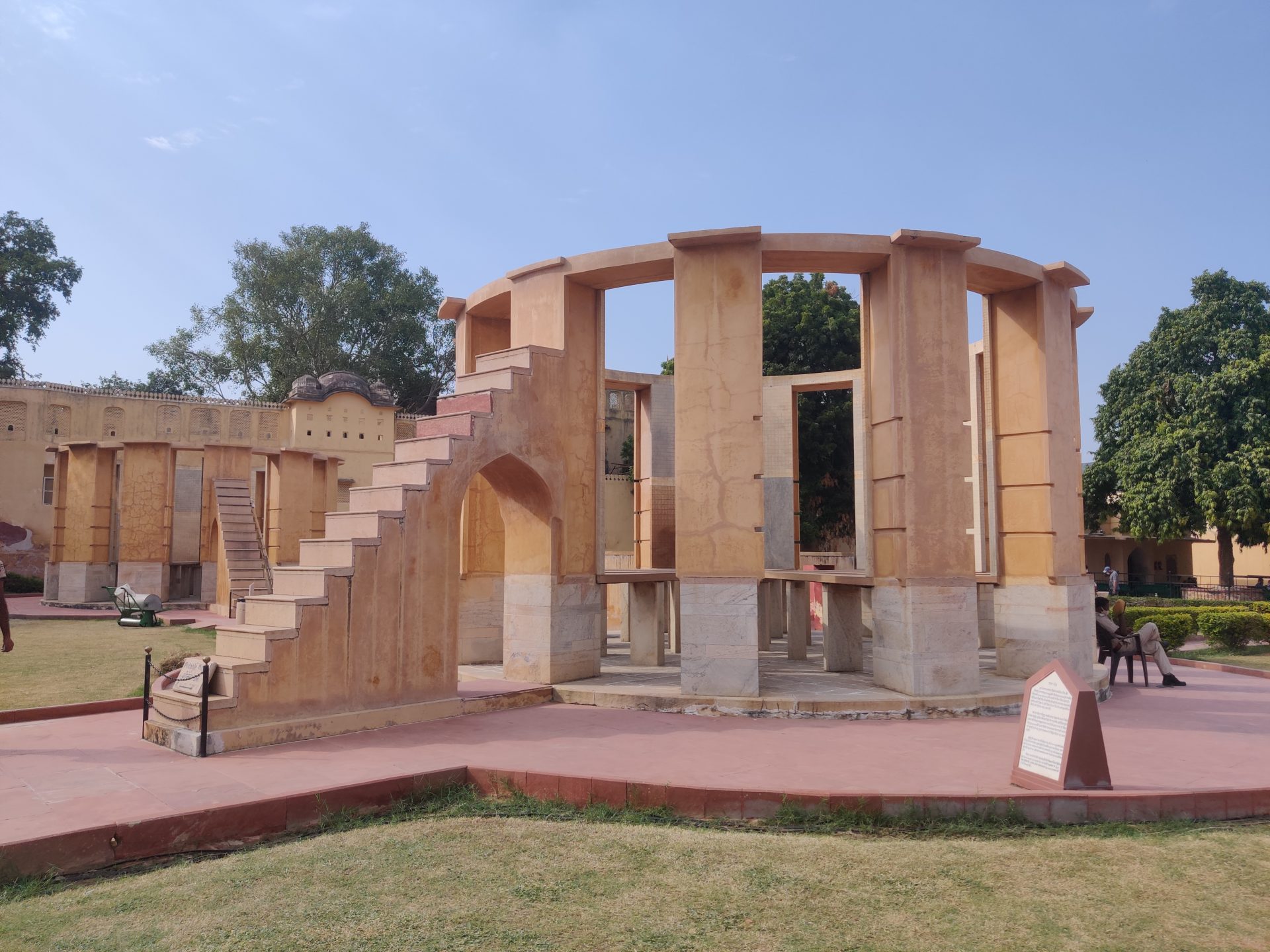
The Jantar Mantar
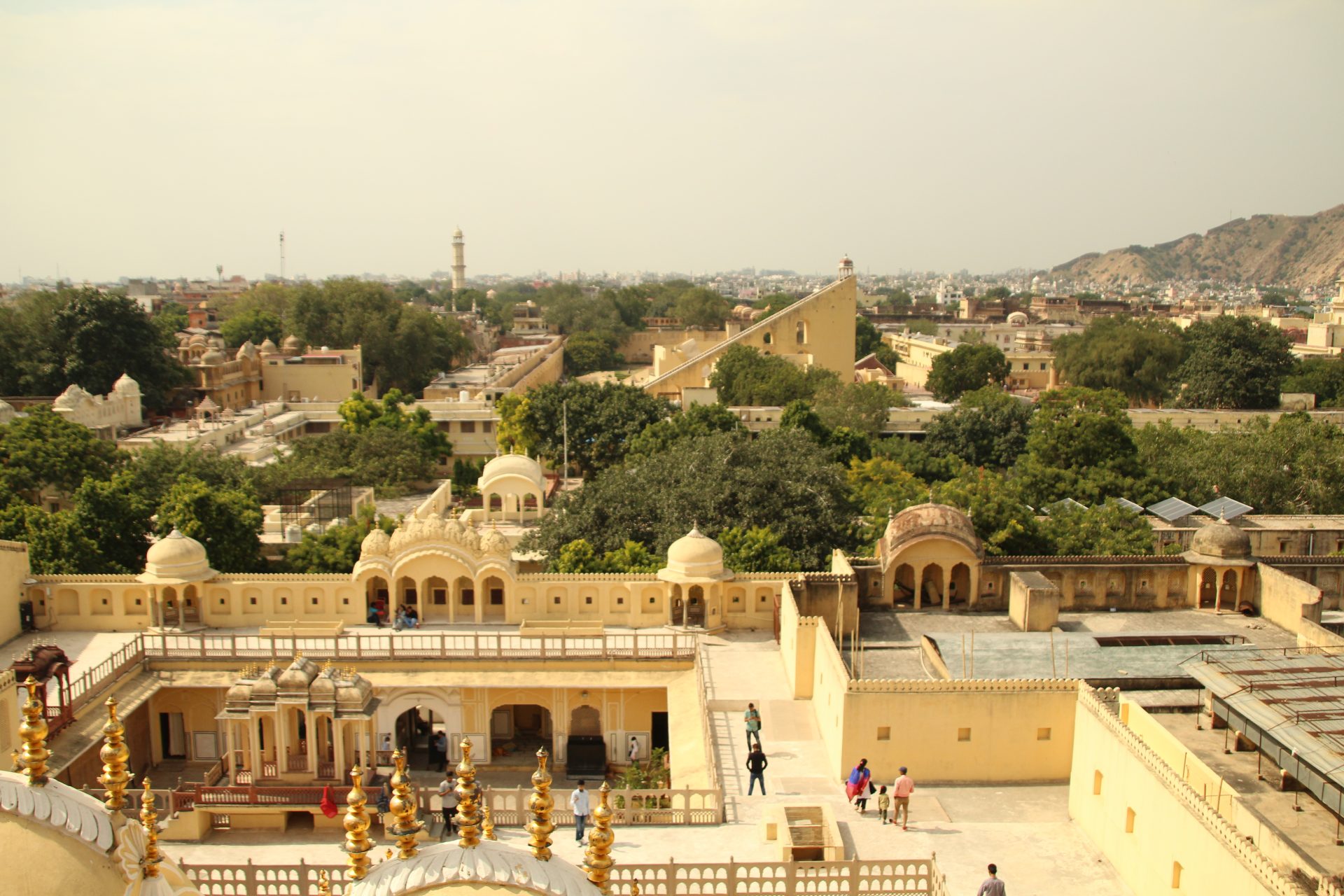
The Open air Astronomical Observatory or the Jantar Mantar was next on our list and it was a short walk away from the City Palace.
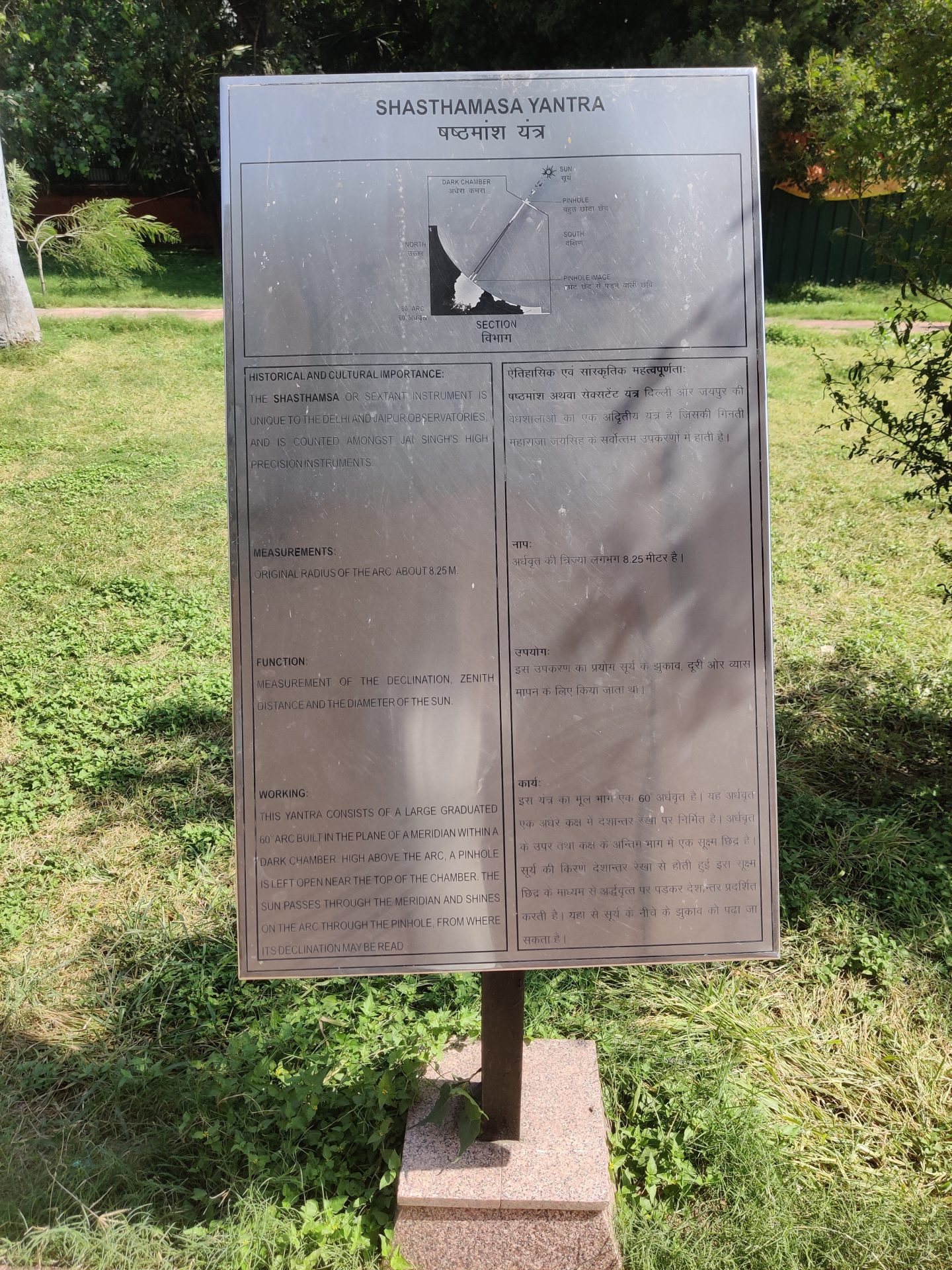
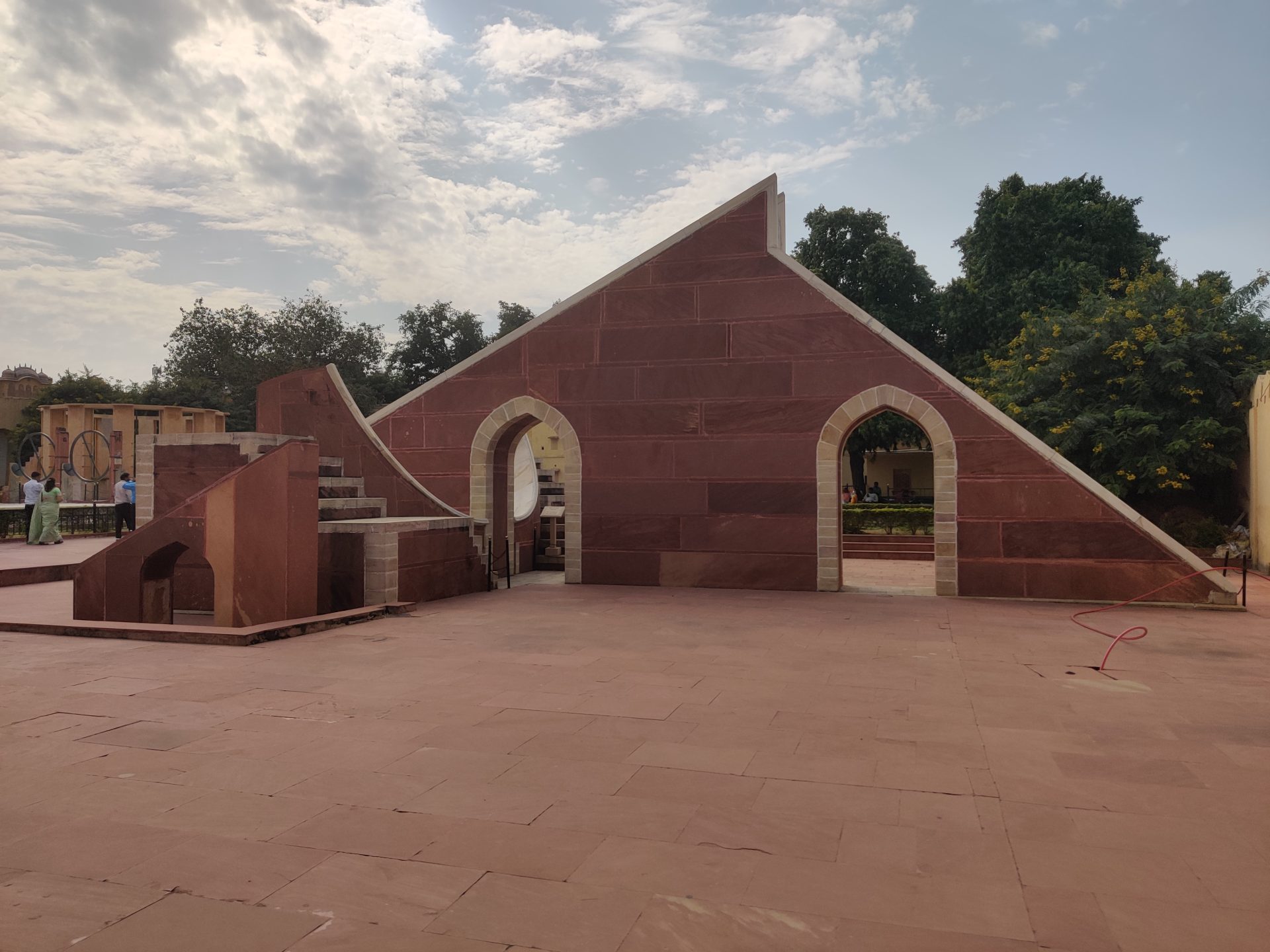
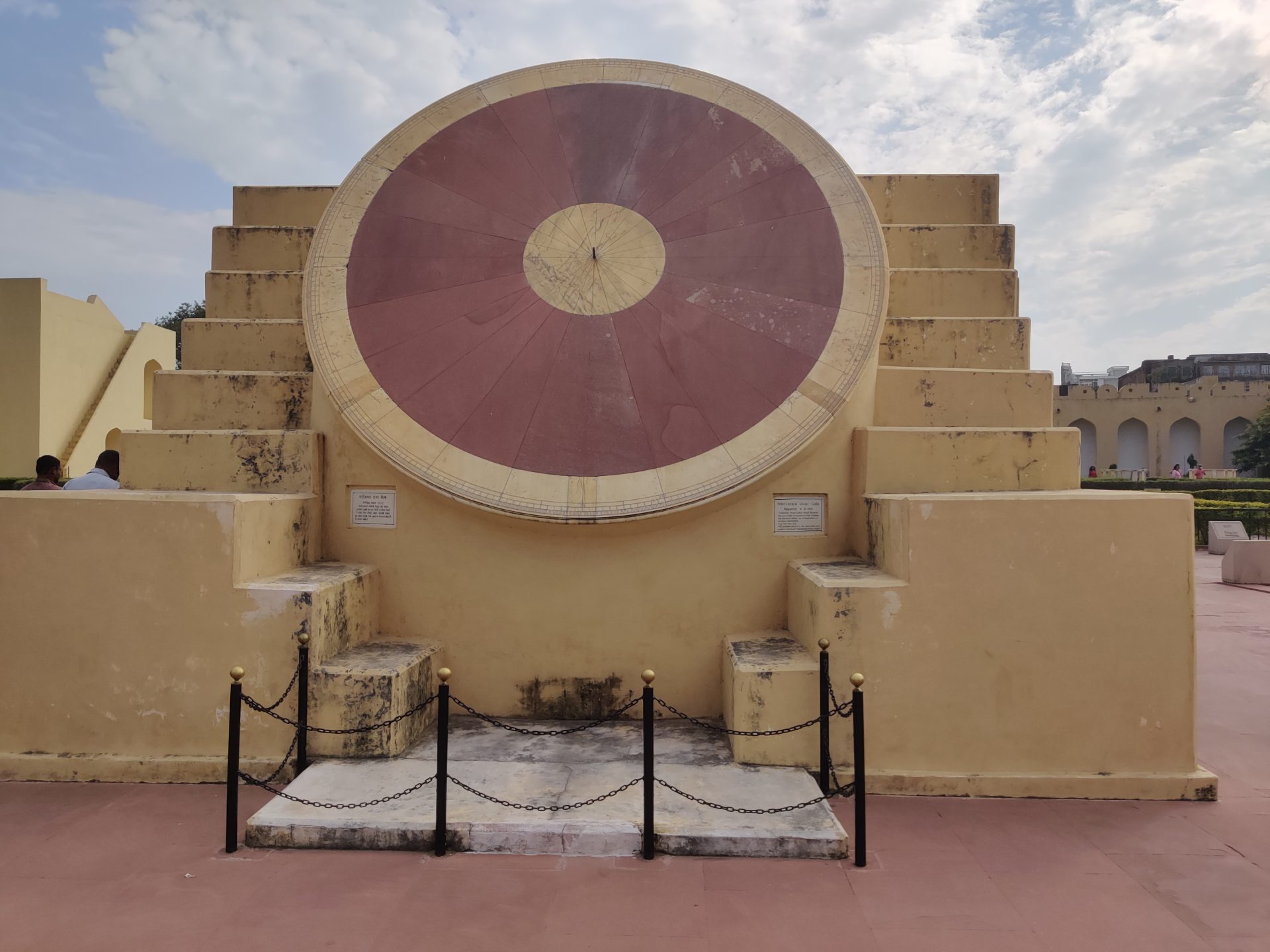
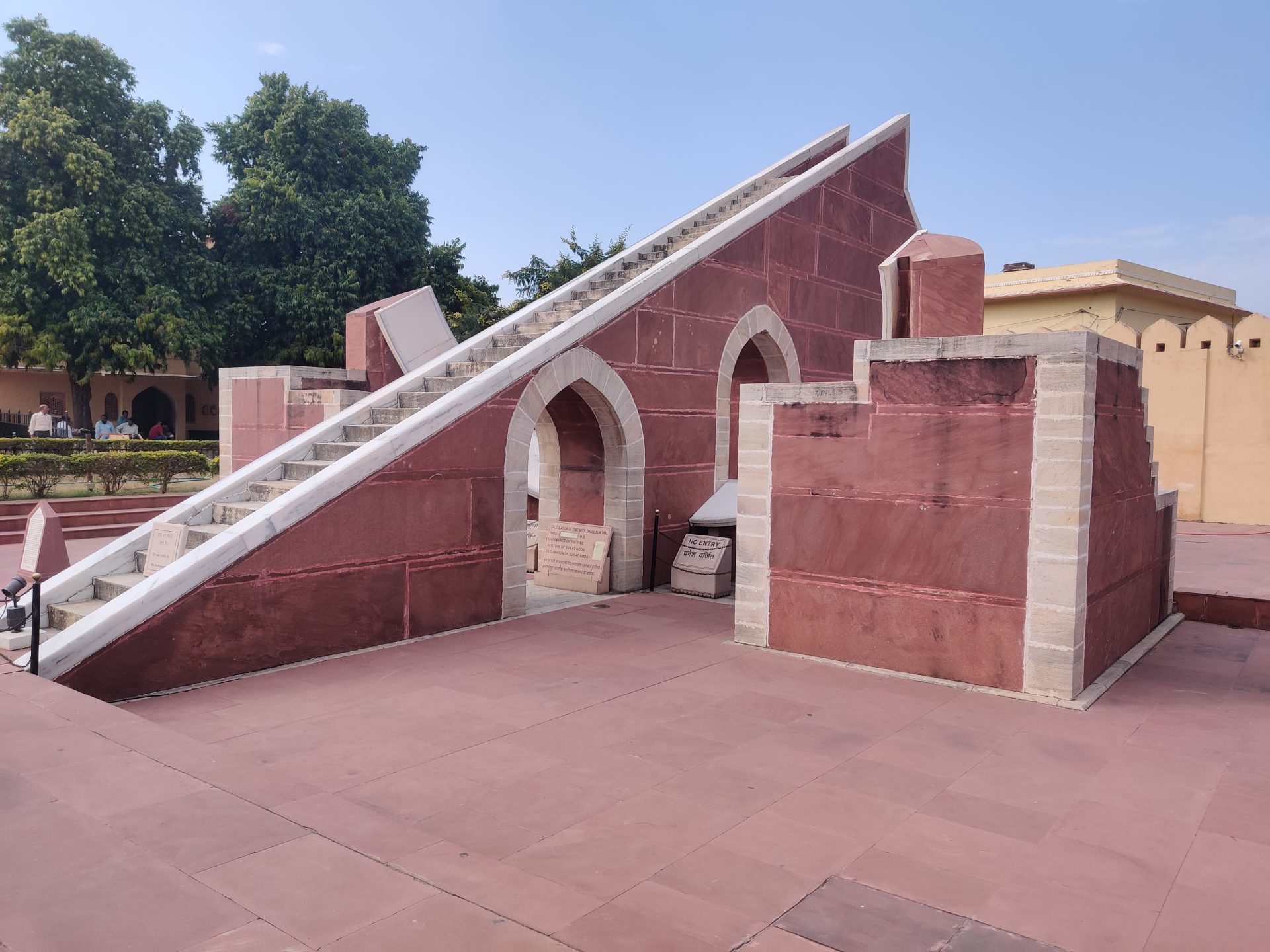
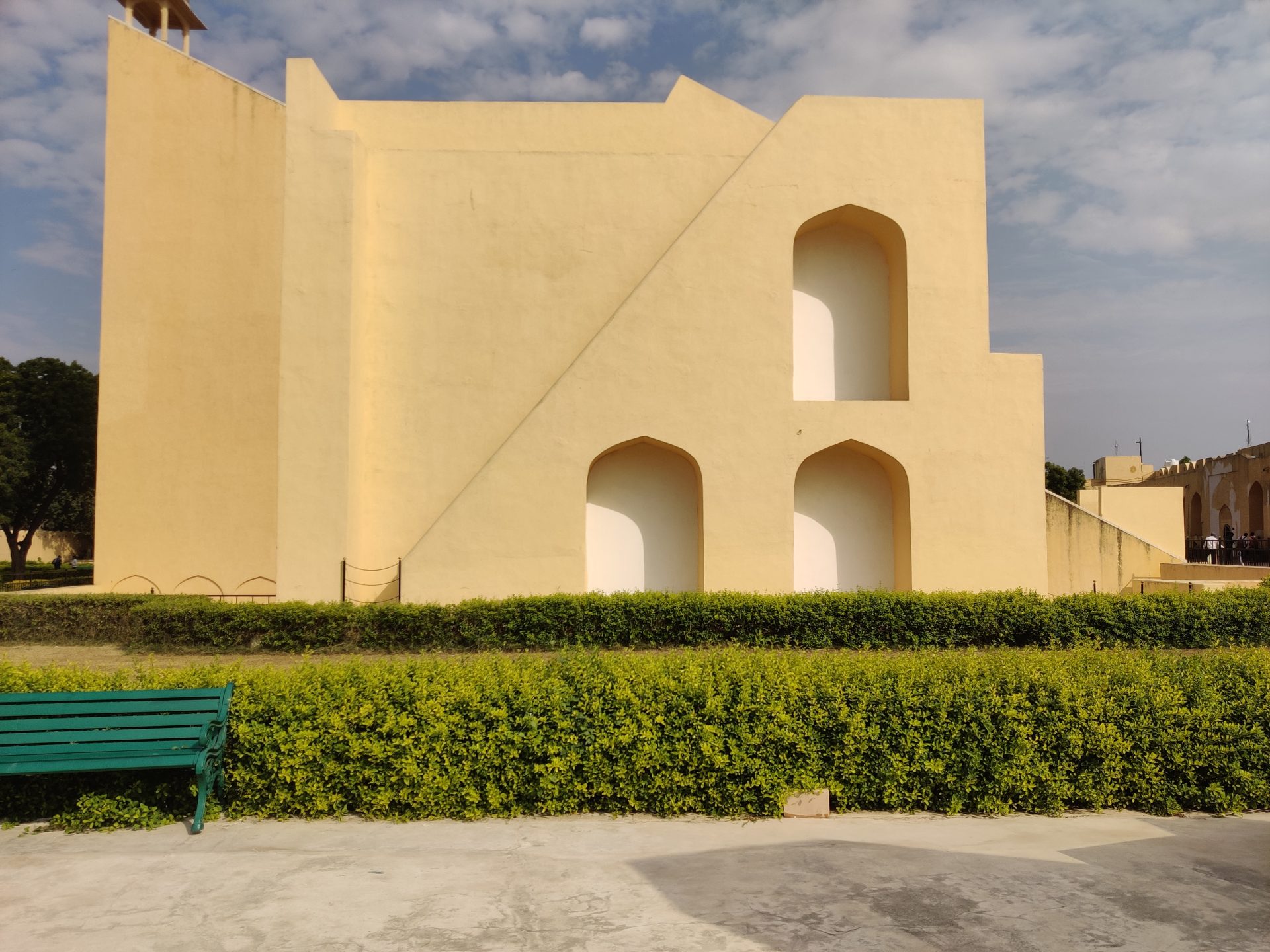
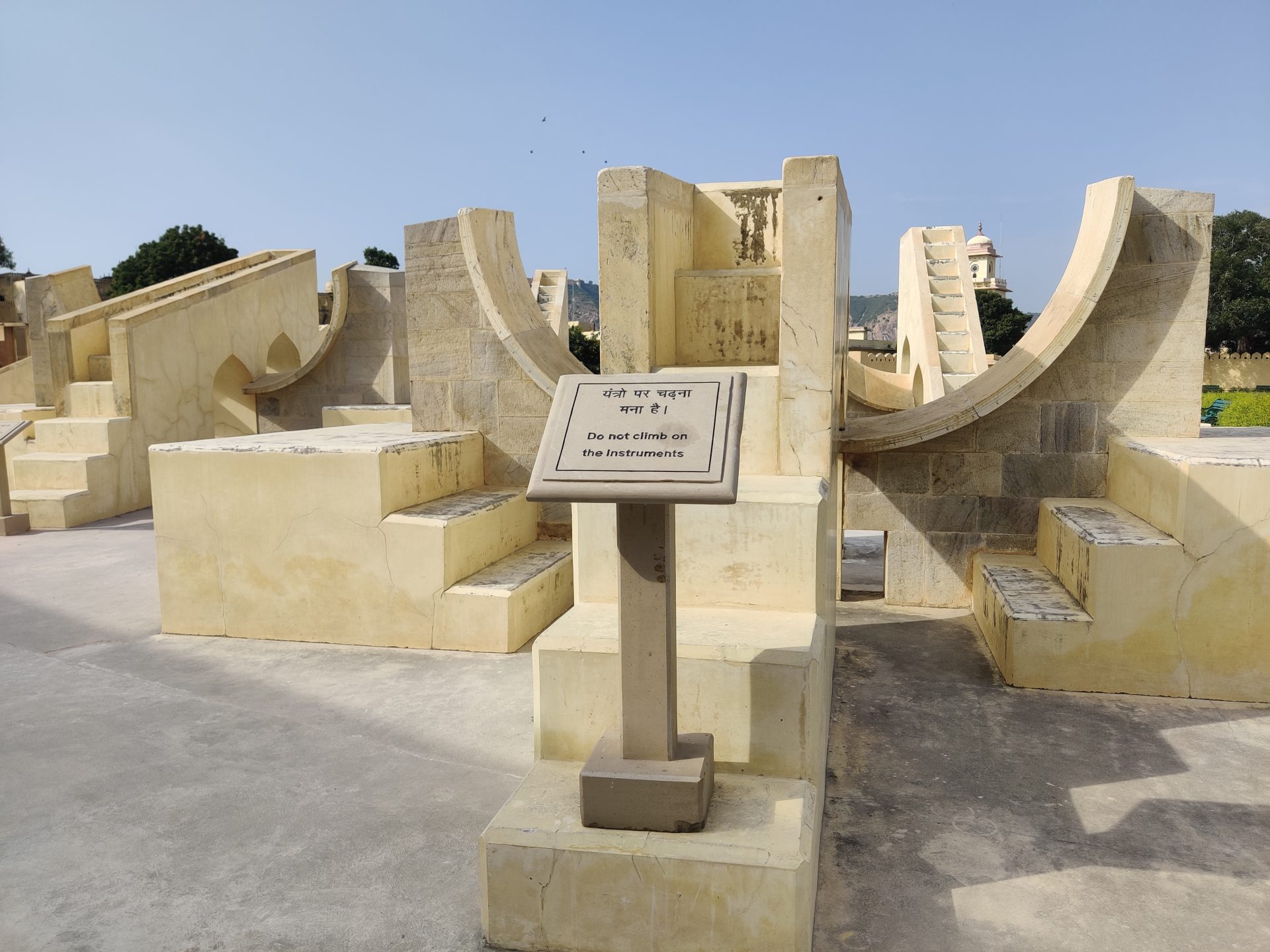
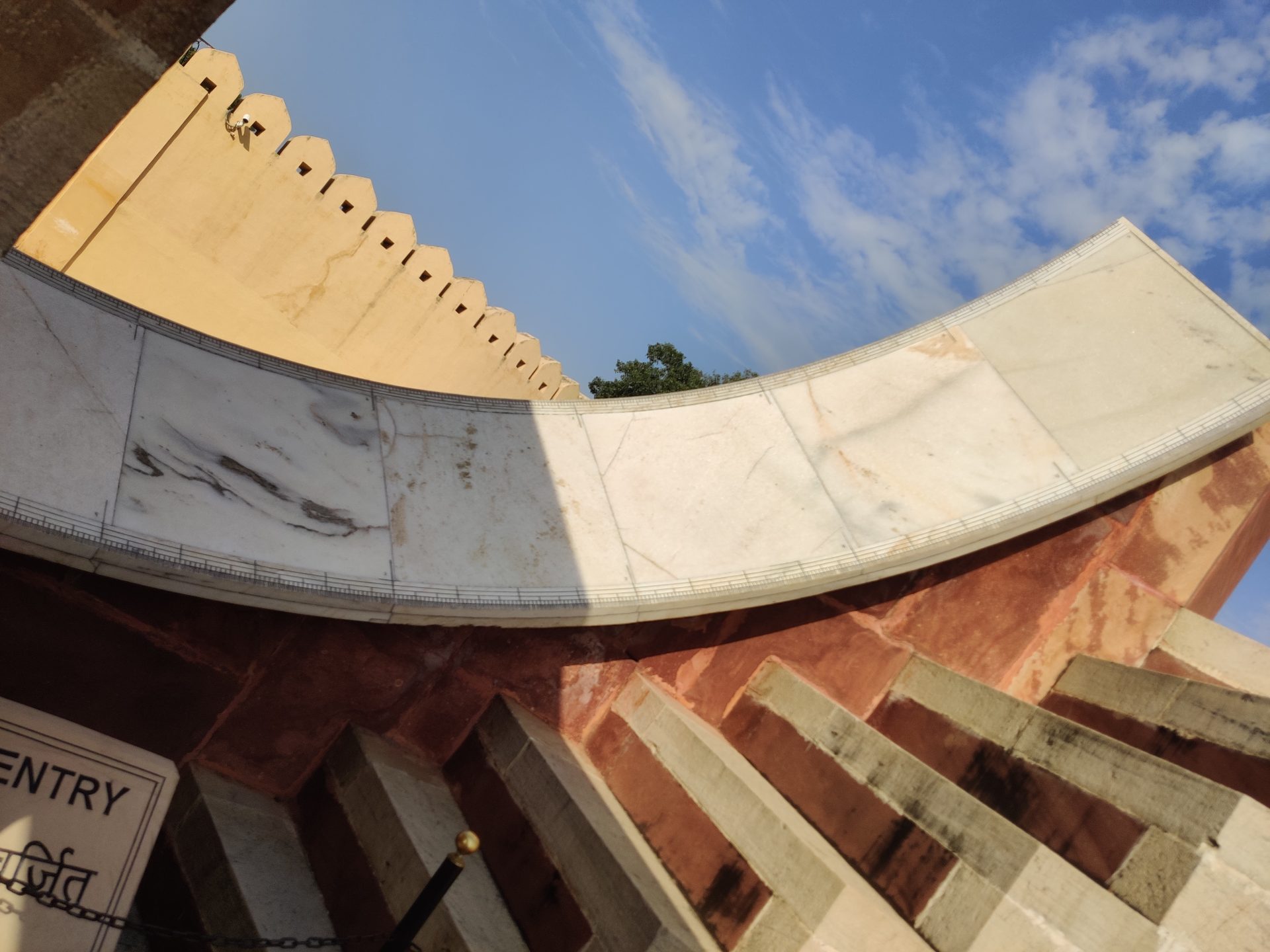
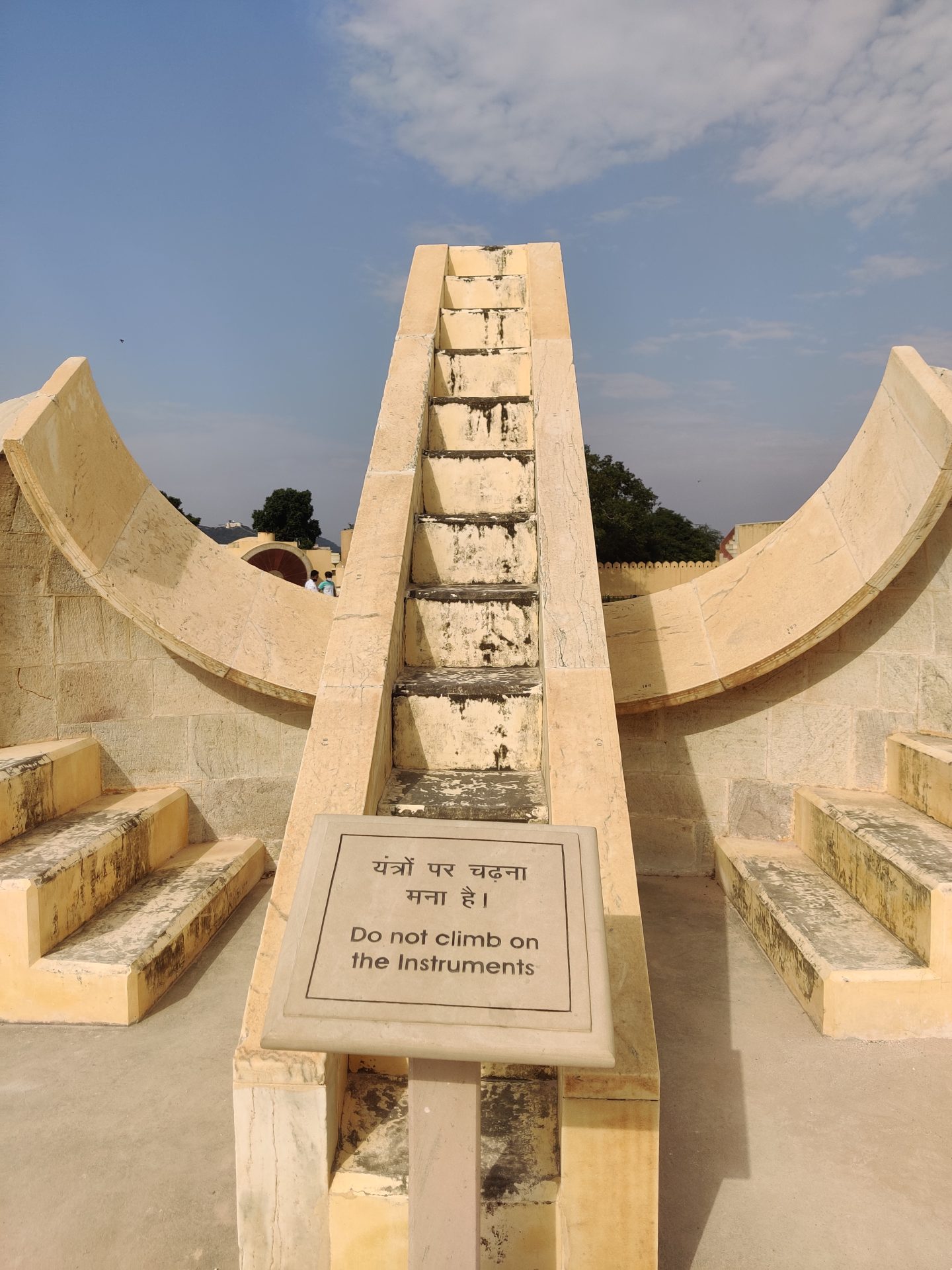
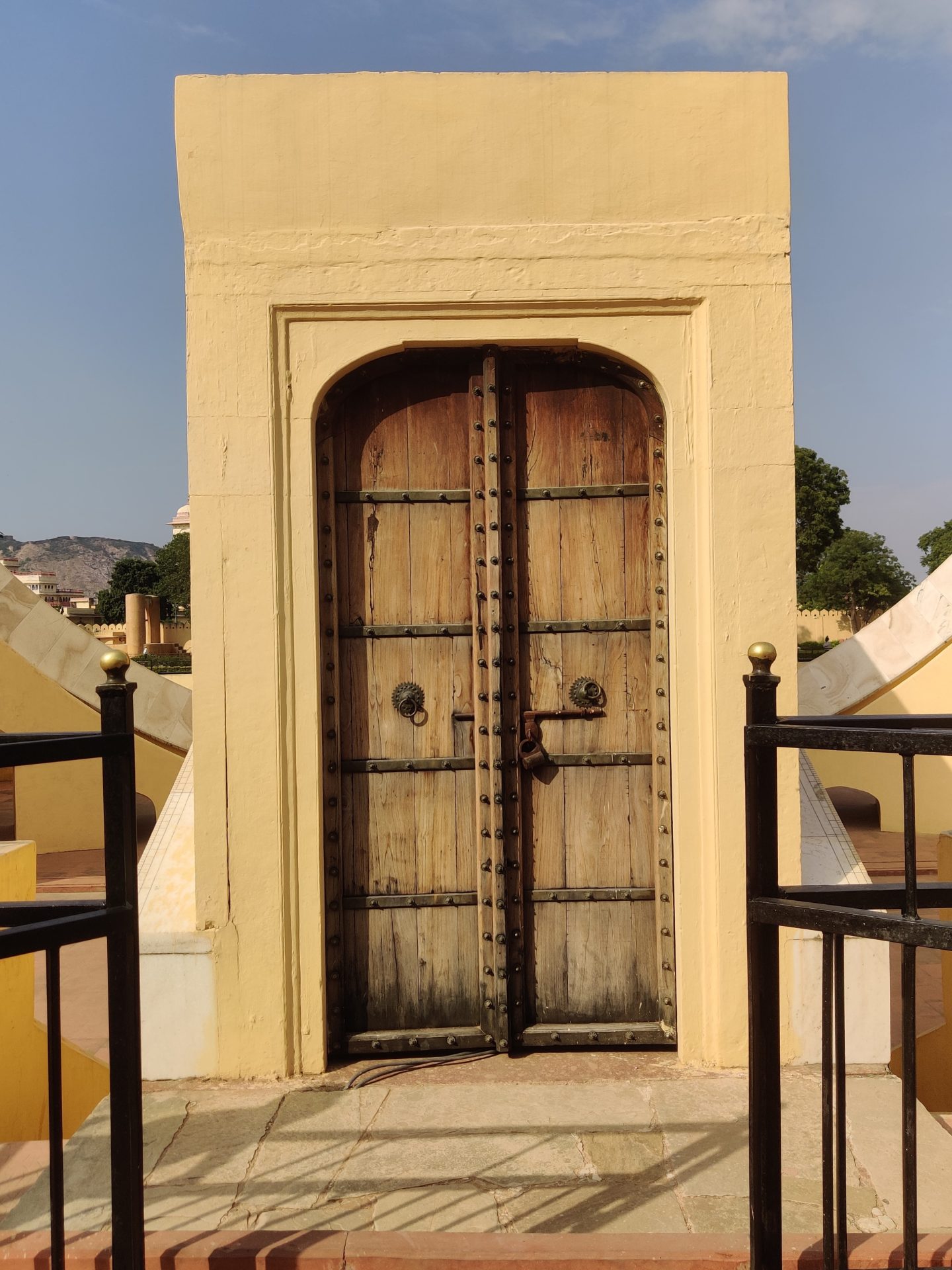
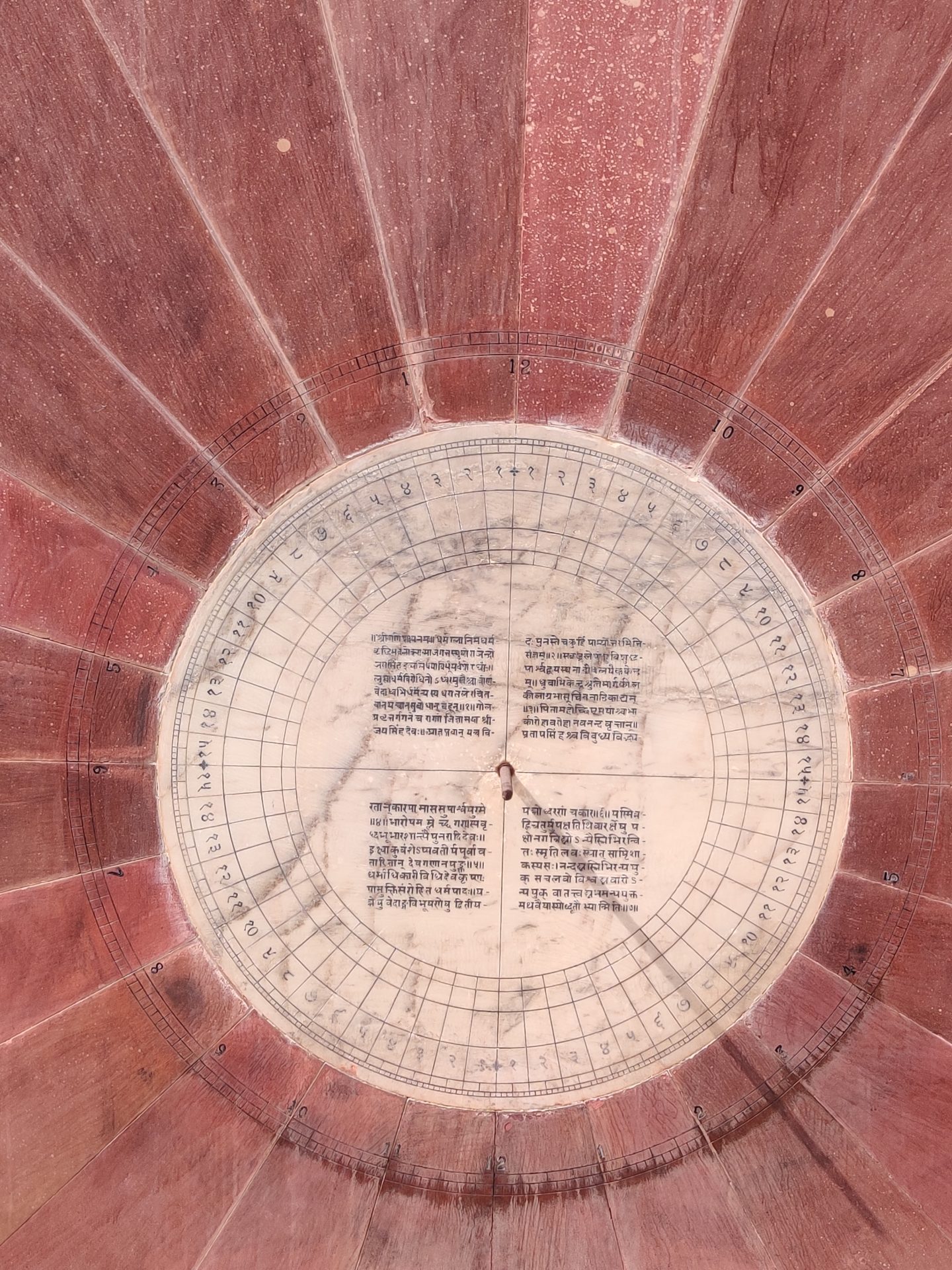
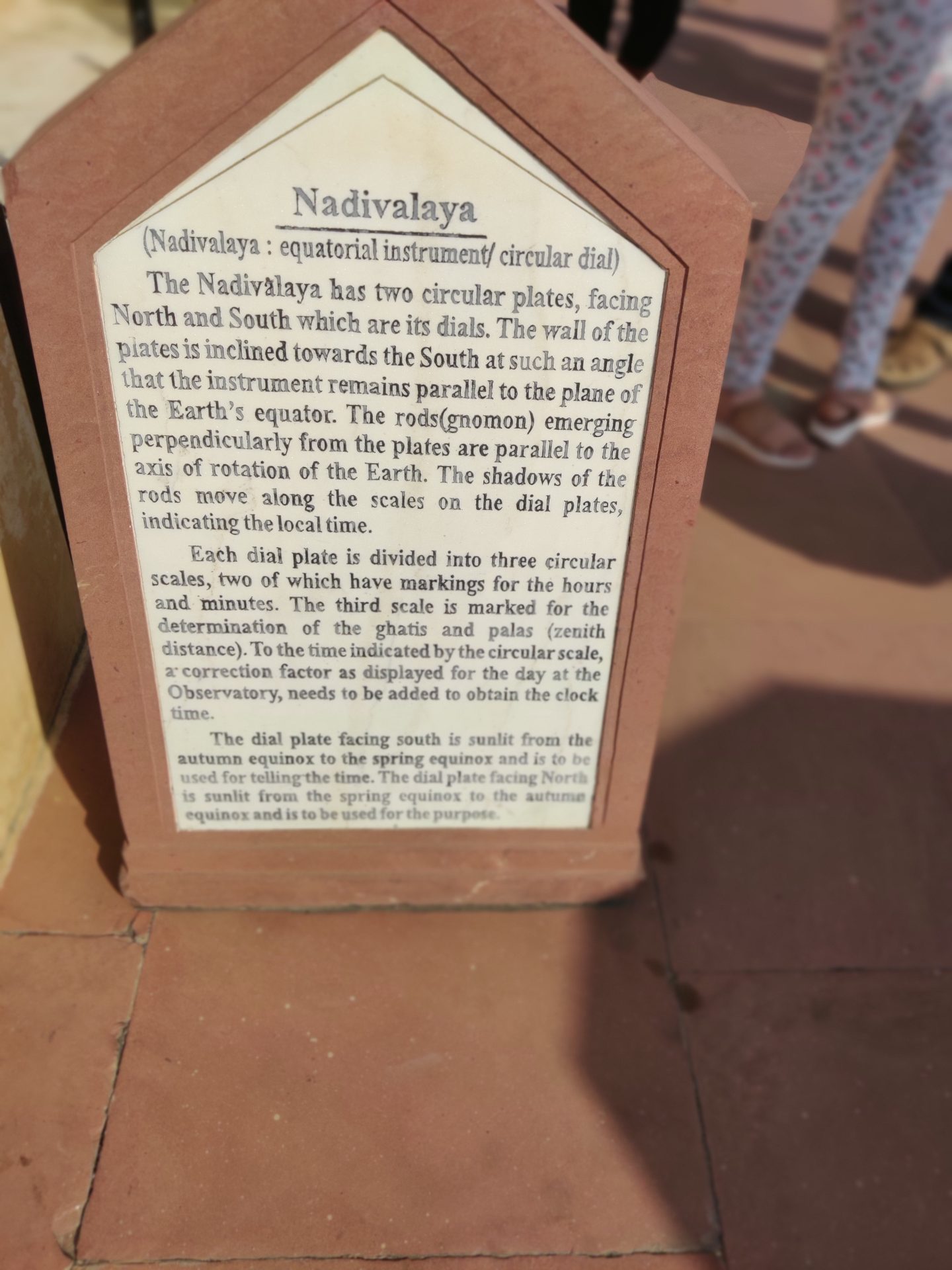
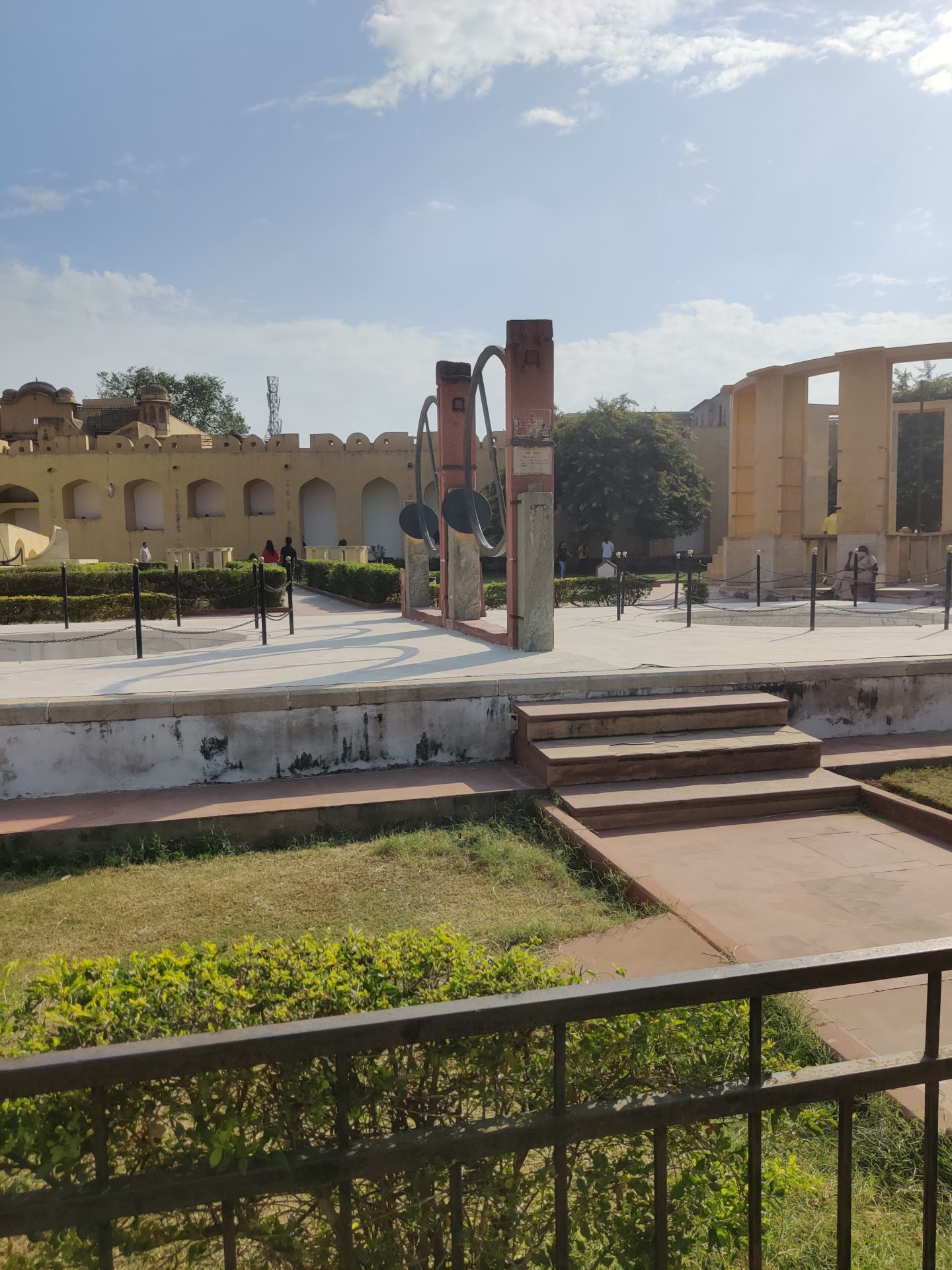
In stark contrast to the monument at Delhi, this complex has been maintained very well, and all the 22 instruments on display look well calibrated and appear functional.
16 of these are masonry in nature while 6 have been created using metal. This observatory was built by Sawai Jai Singh II in 1734.
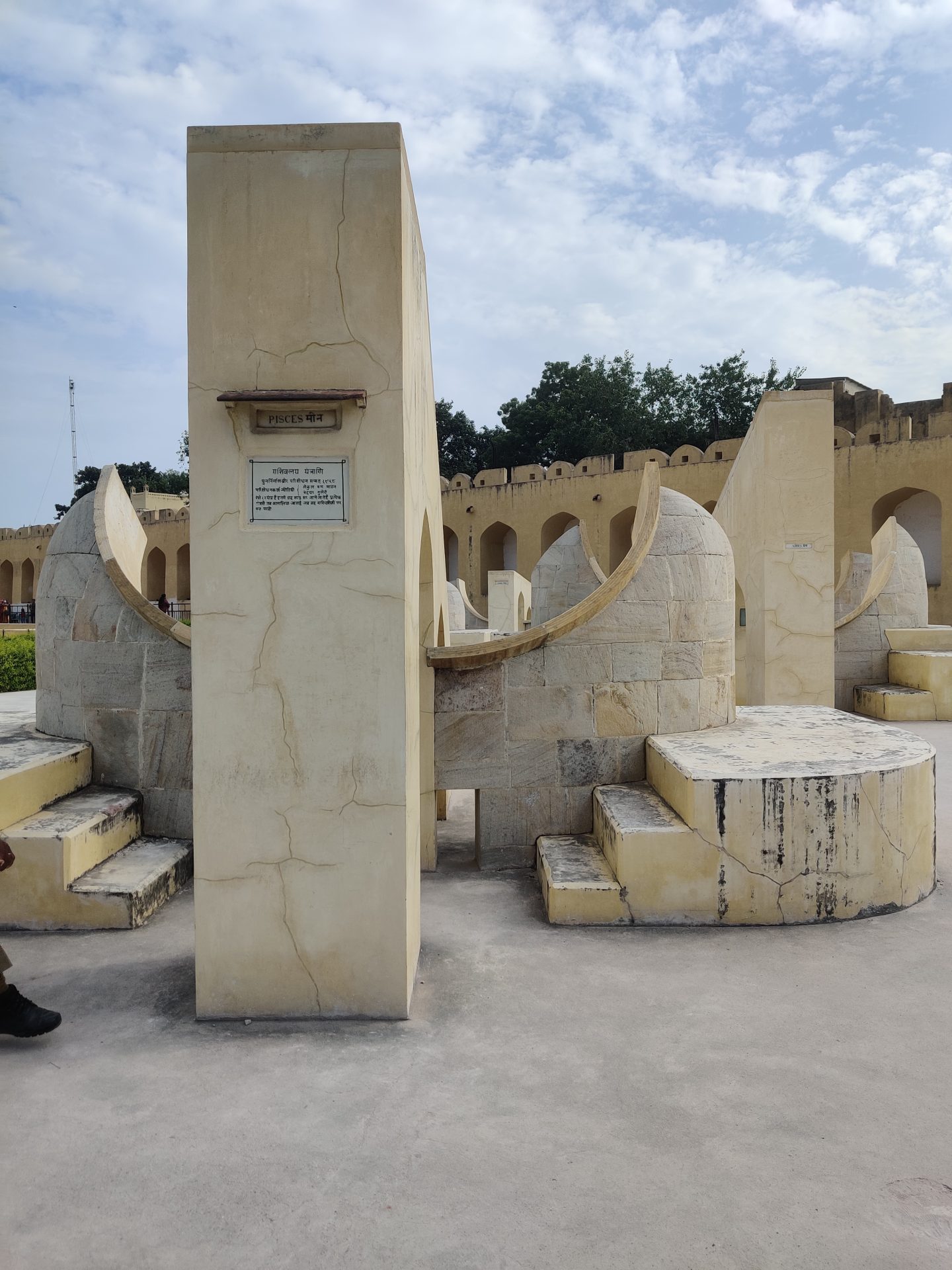
The most elaborate and complete amongst the king’s 5 projects, this observatory has 3 instruments which have not been duplicated elsewhere which are the Kappala Yantra, Rasivalaya Yantras, and Unnatamsha Yantra.
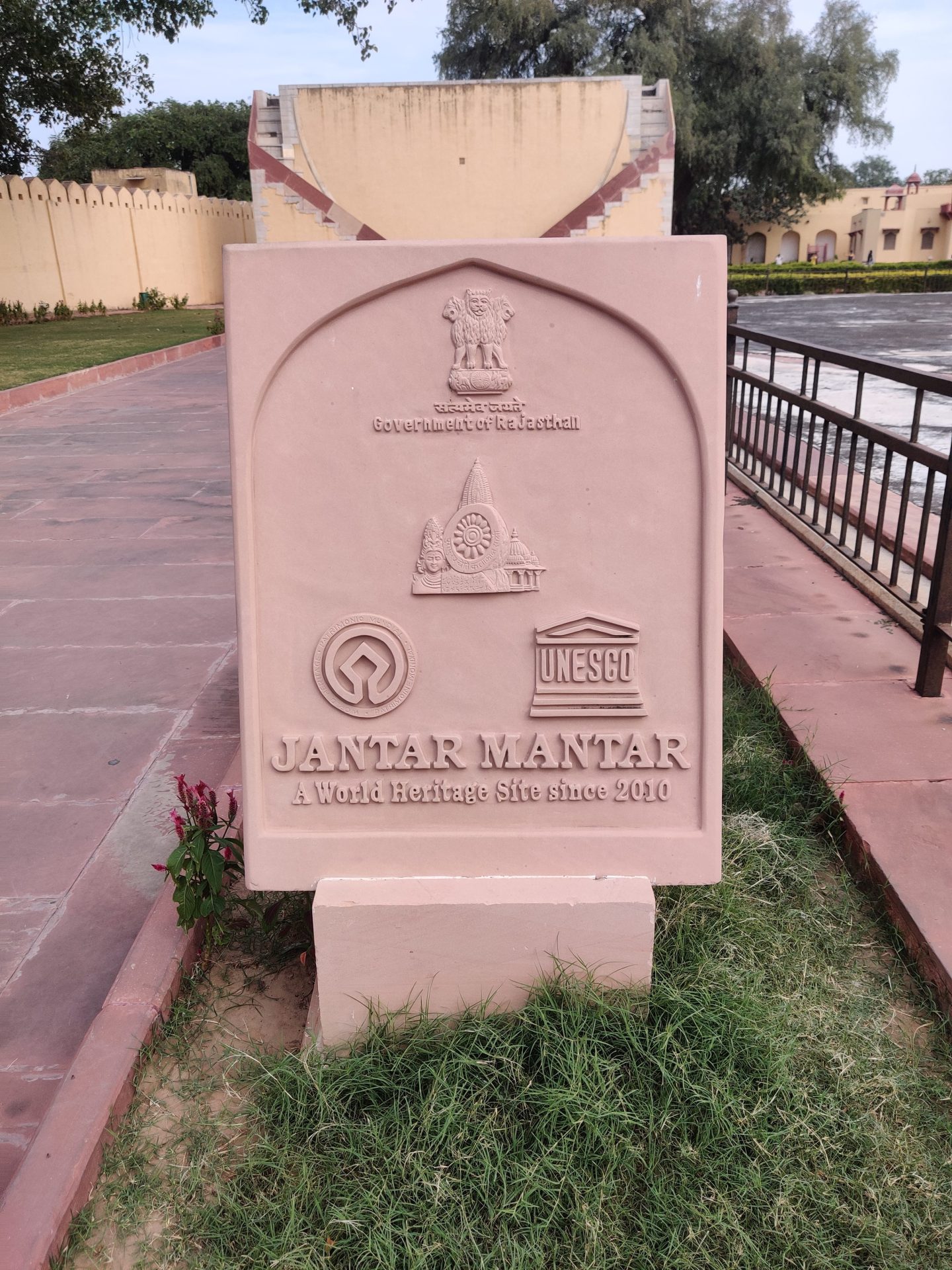
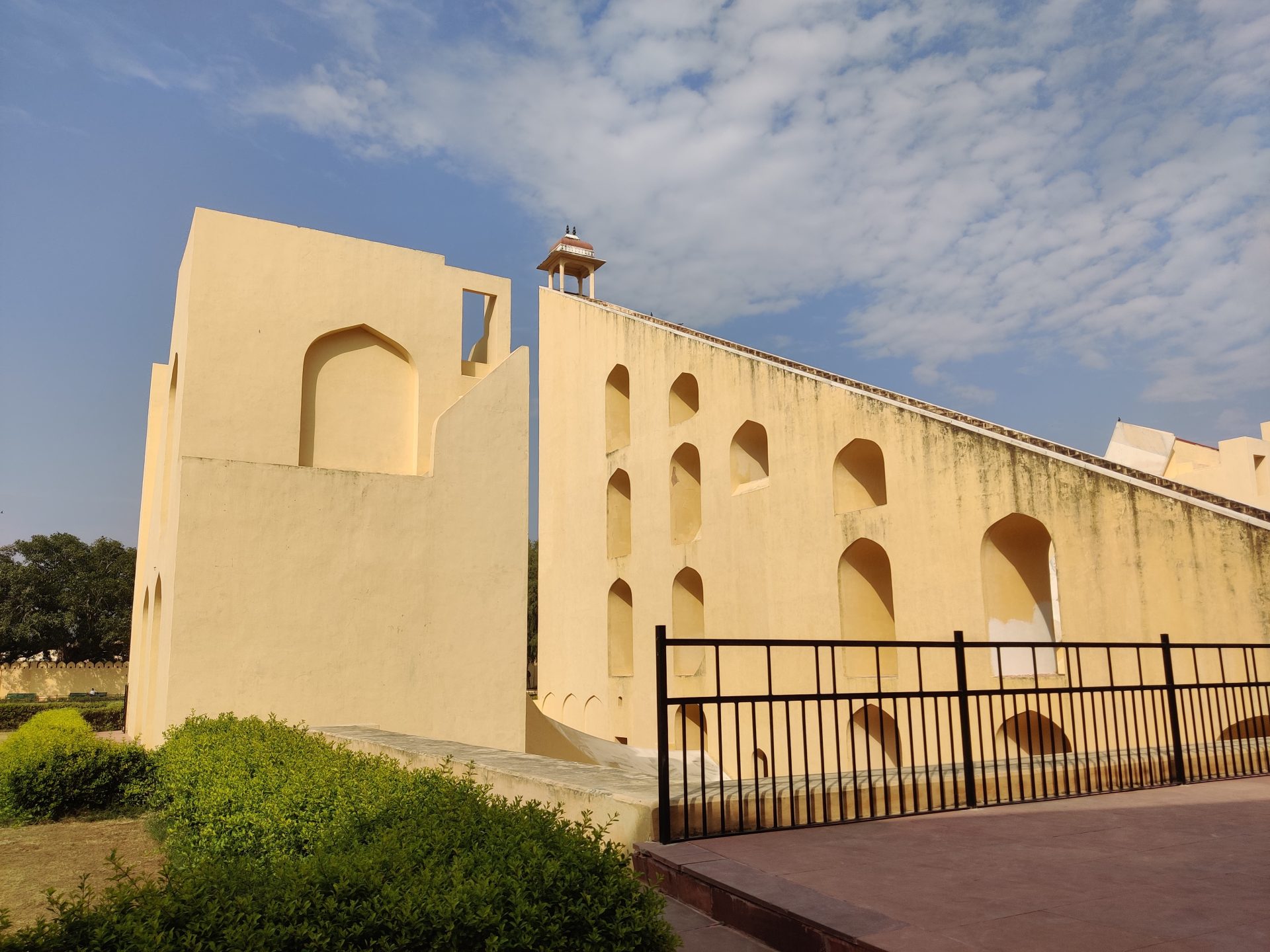
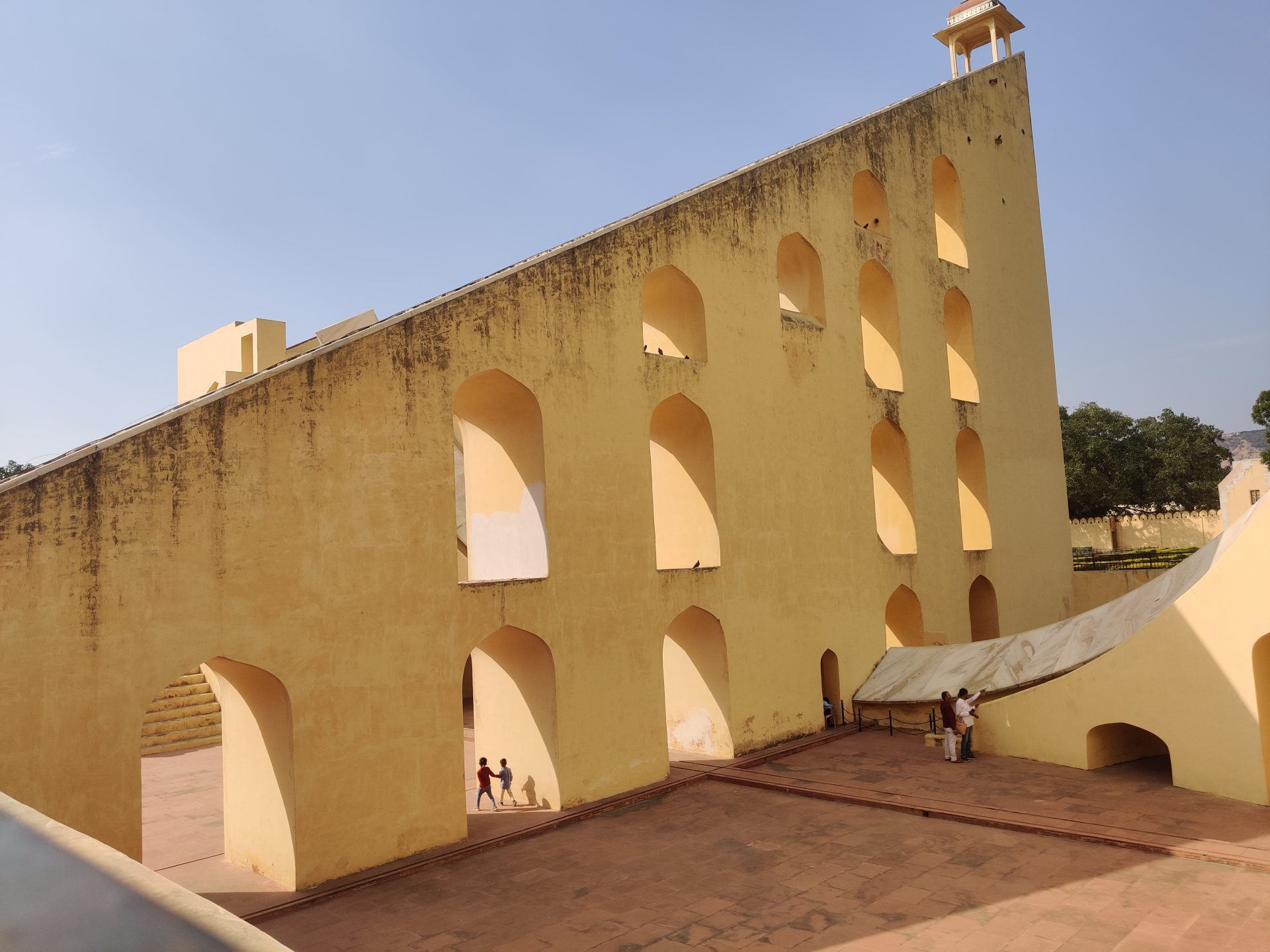
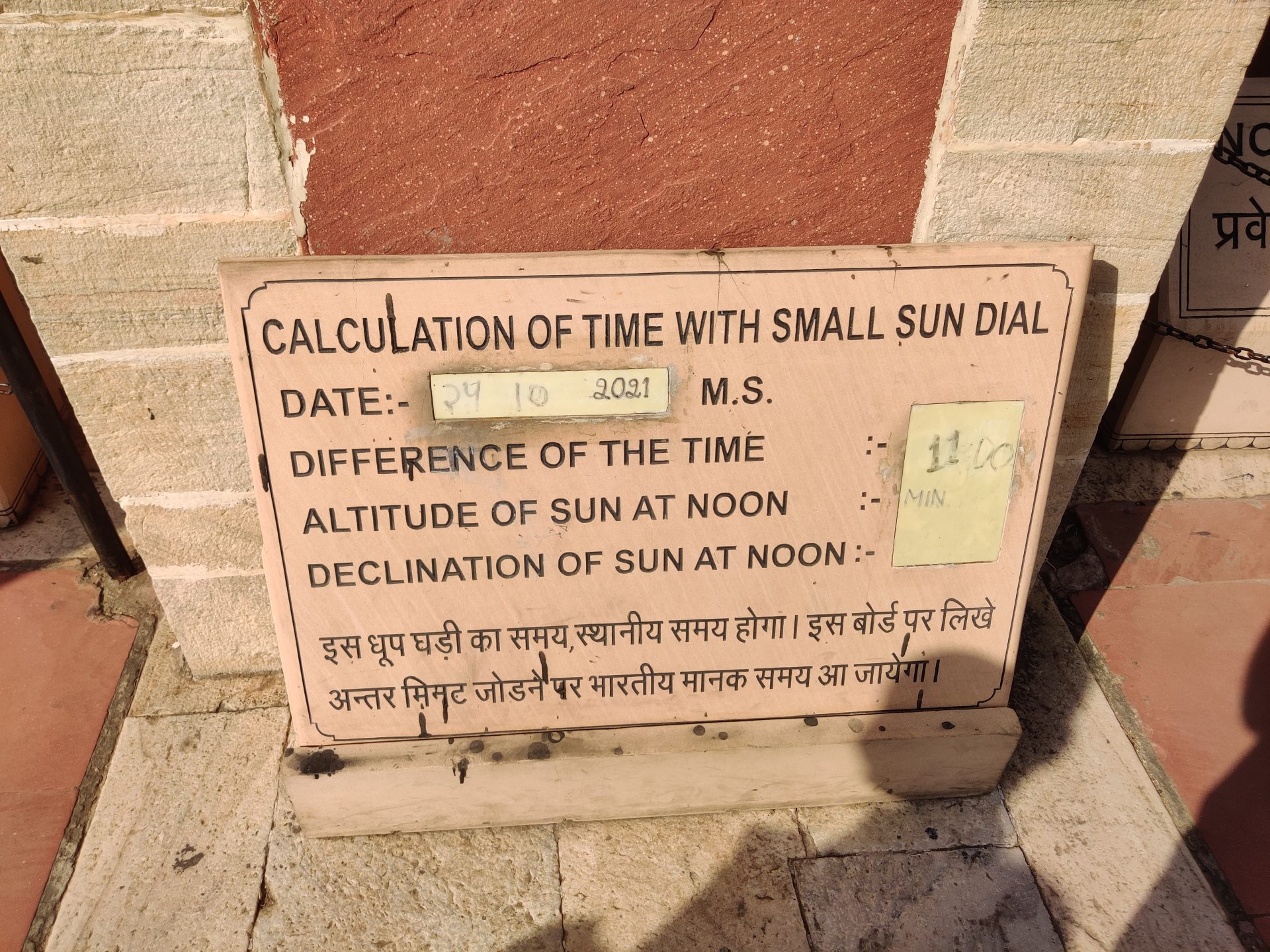
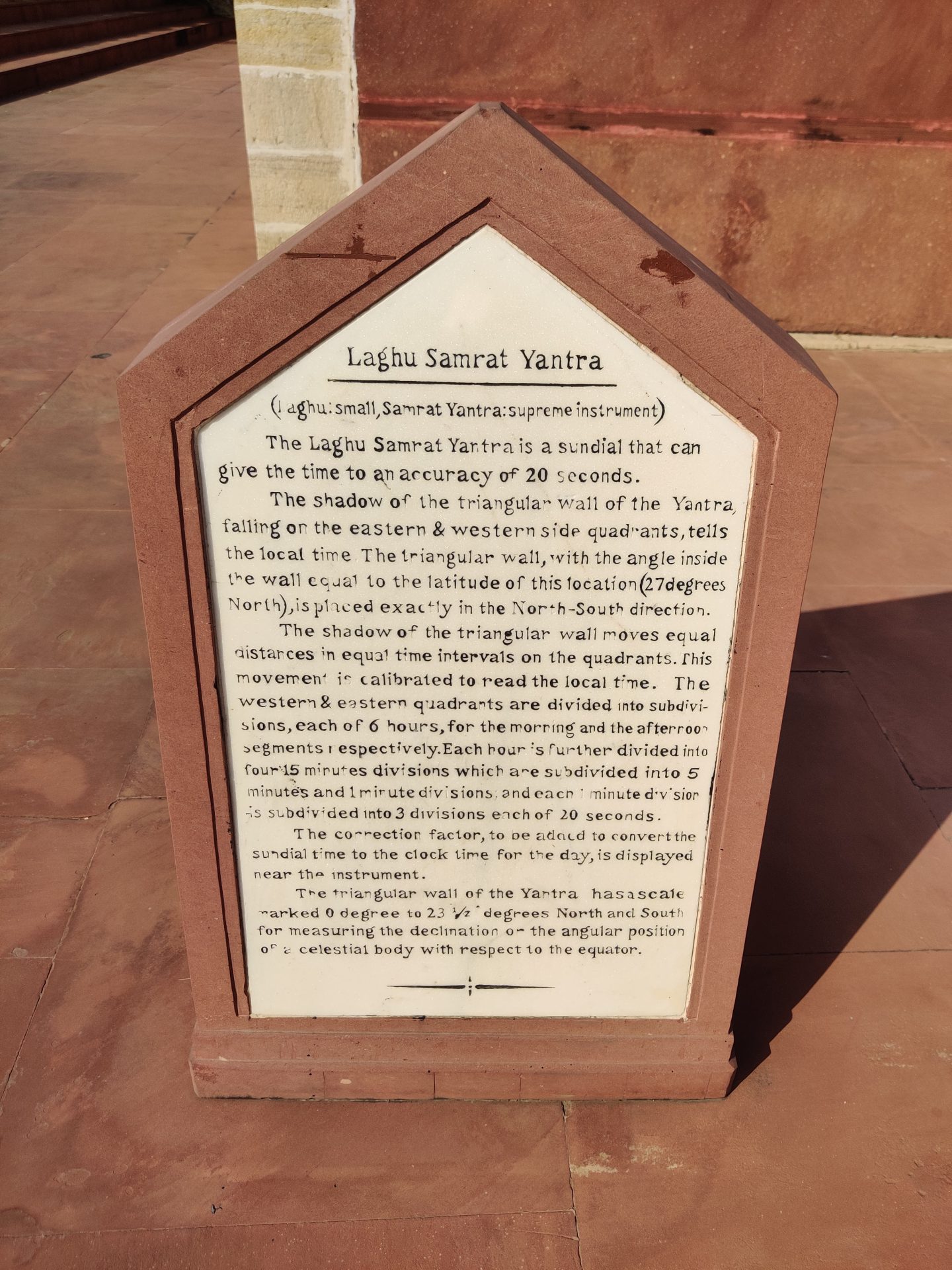
This complex attained UNESCO World Heritage Status in 2010 and is home to the World’s largest Stone Sun Dial.
While local stone and marble have been used to build each instrument, they carry an astronomical scale marked on the inner lining of marble.
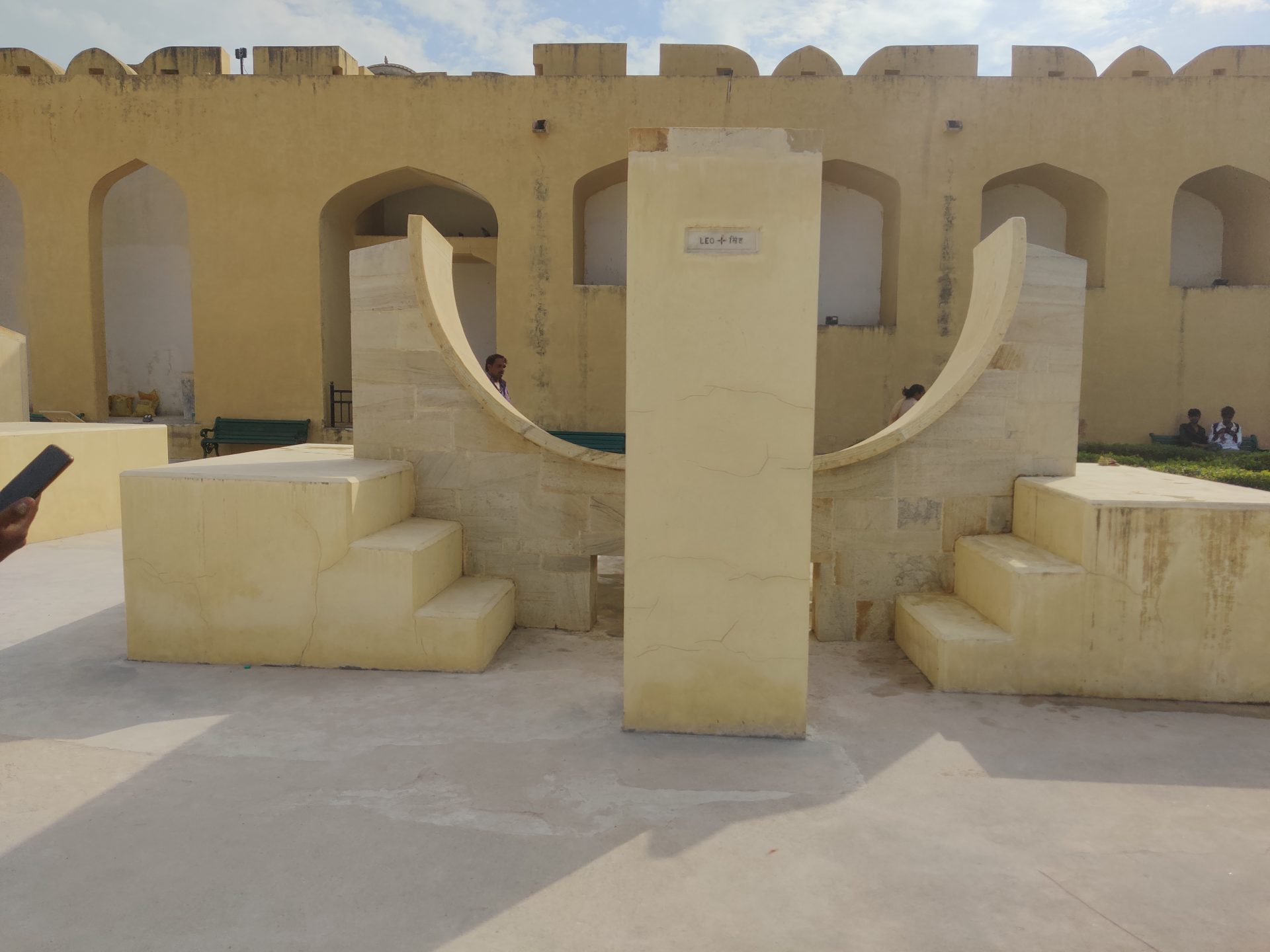
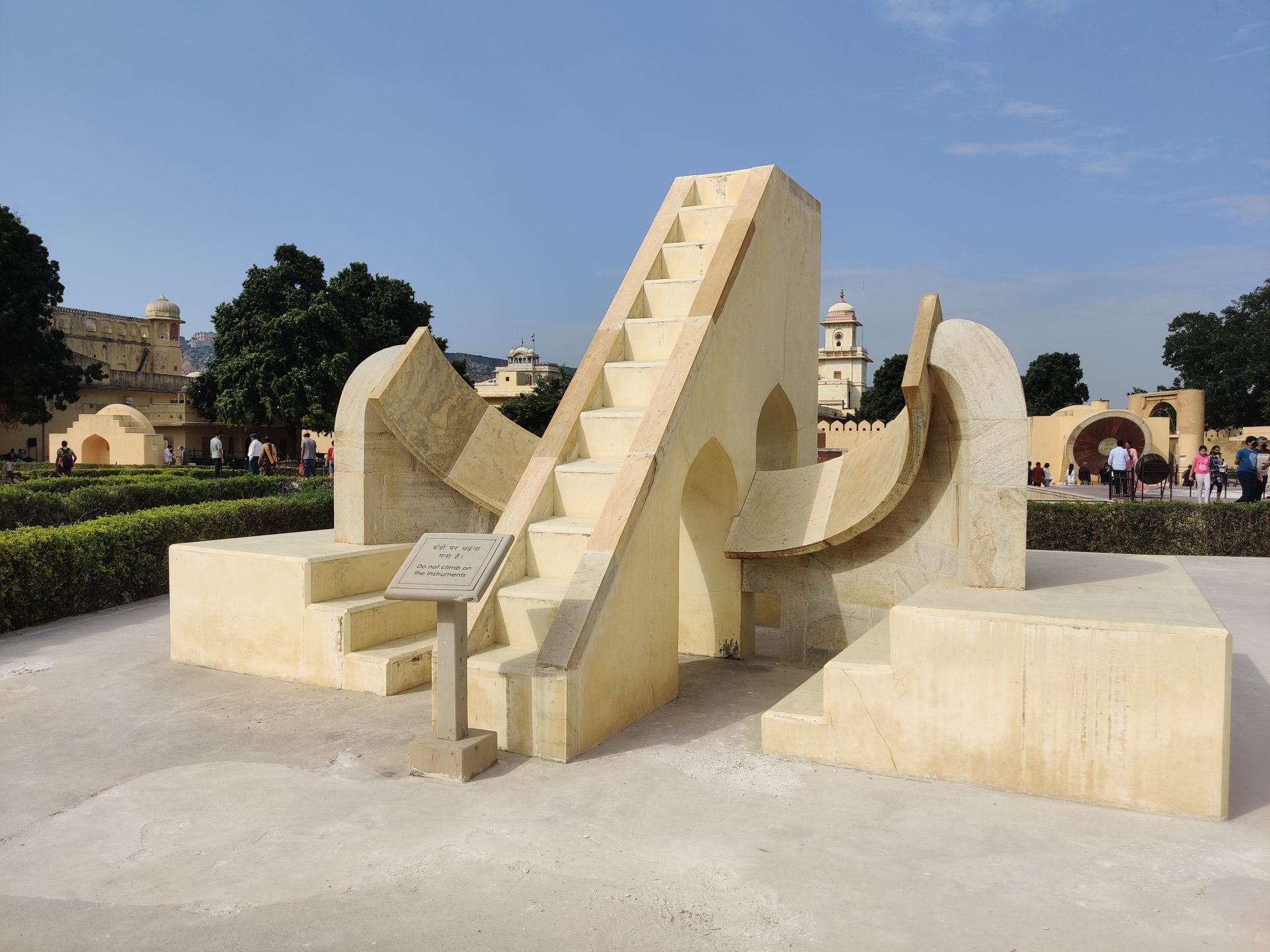
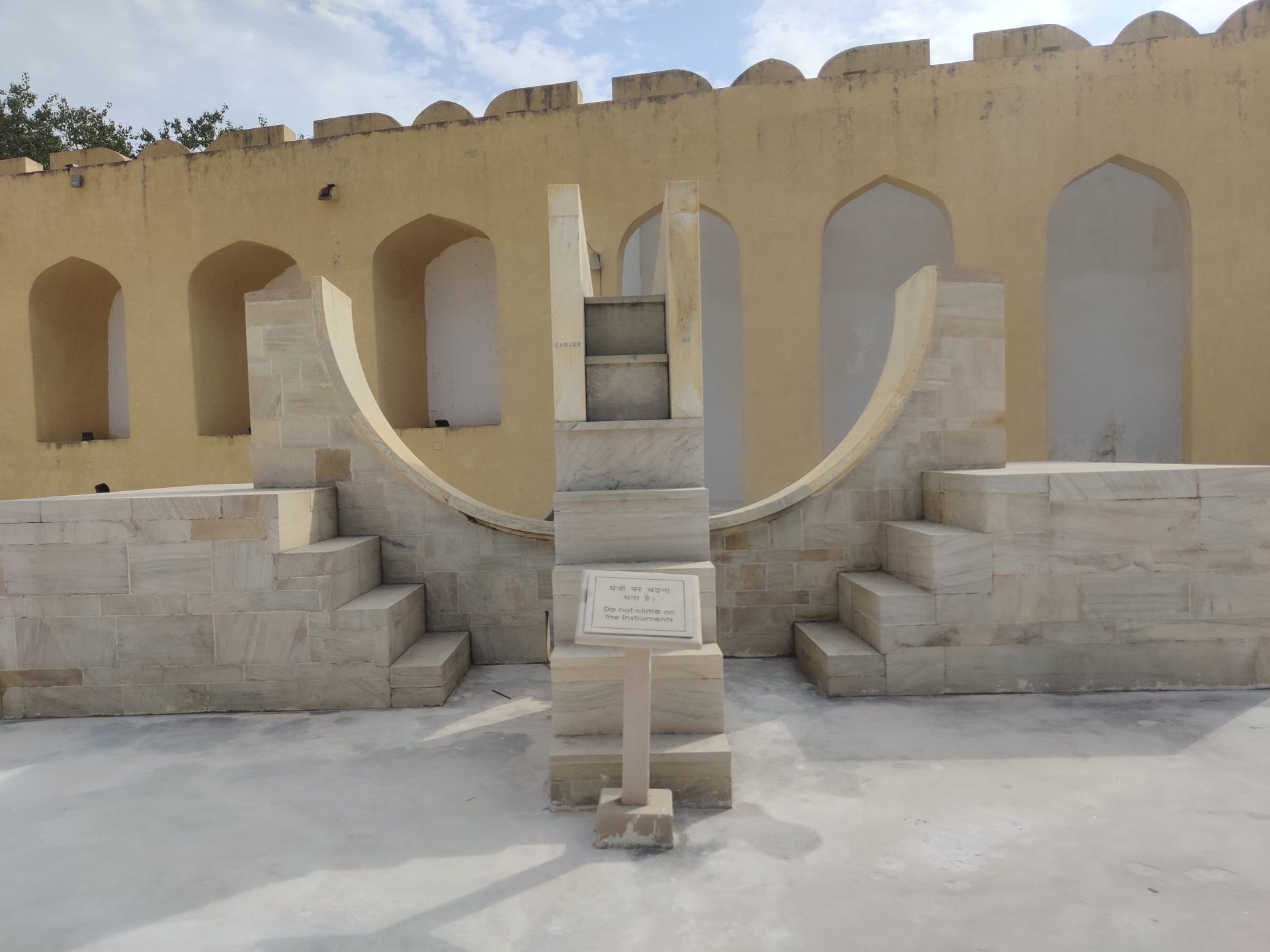
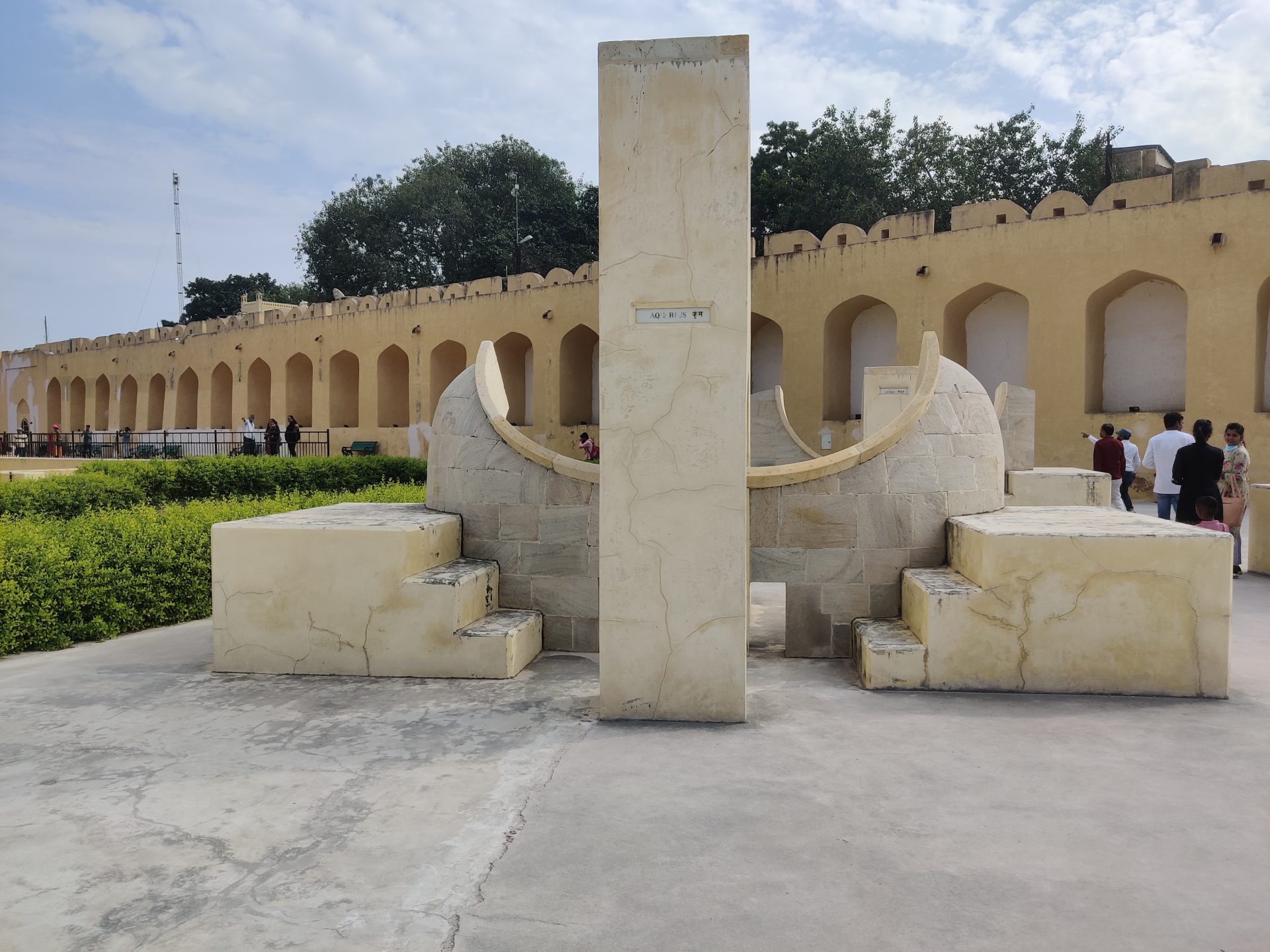
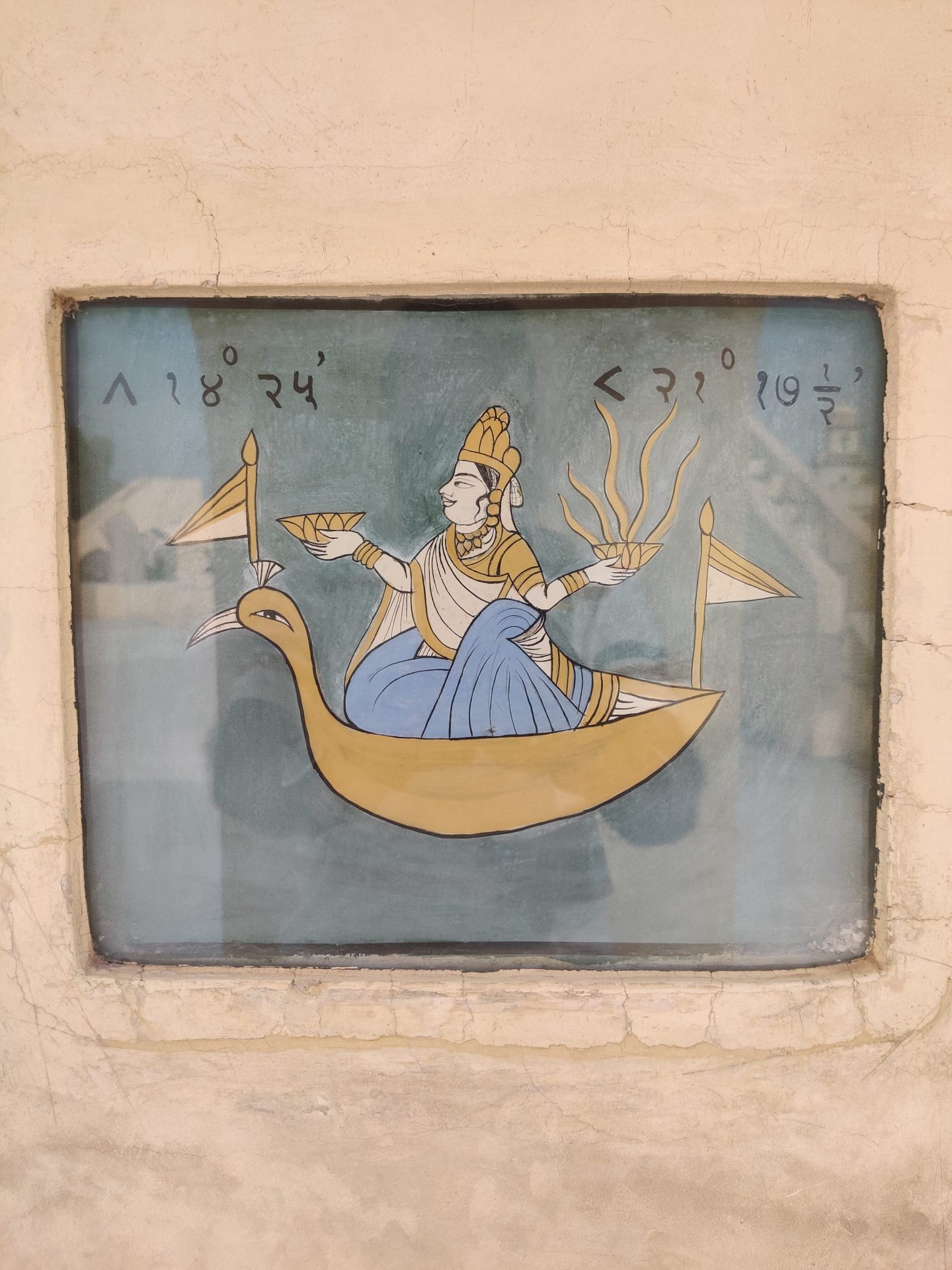
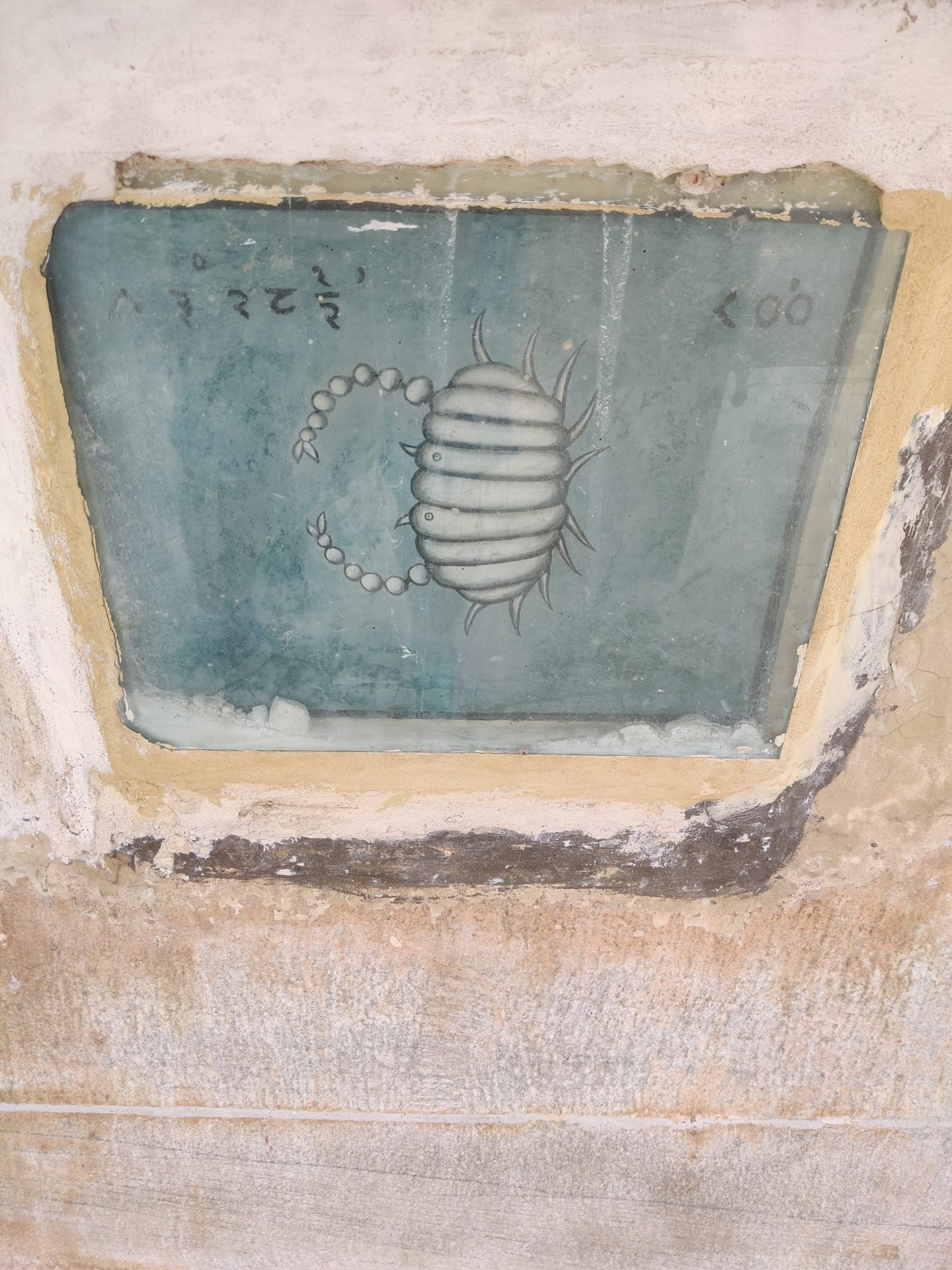
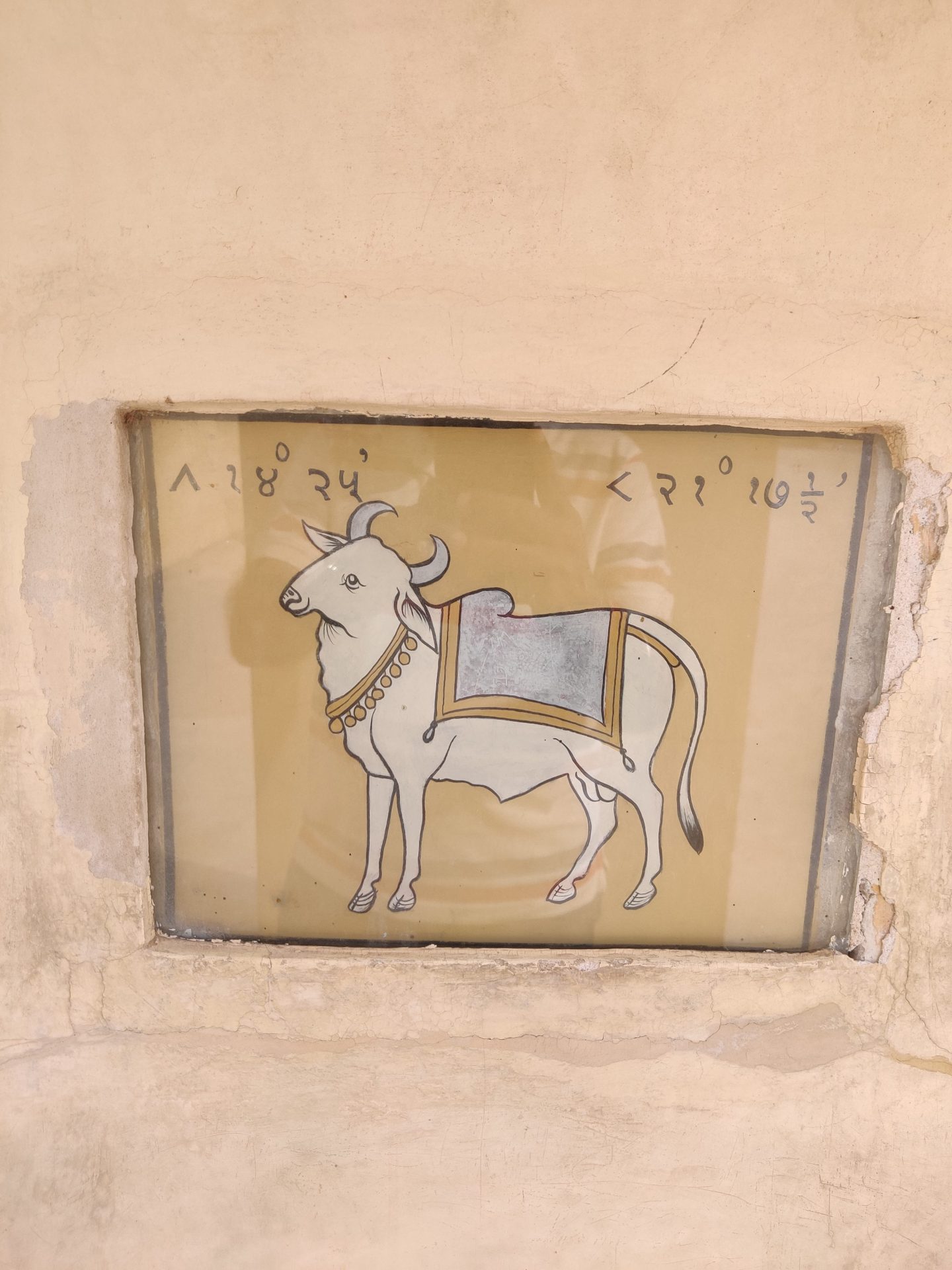
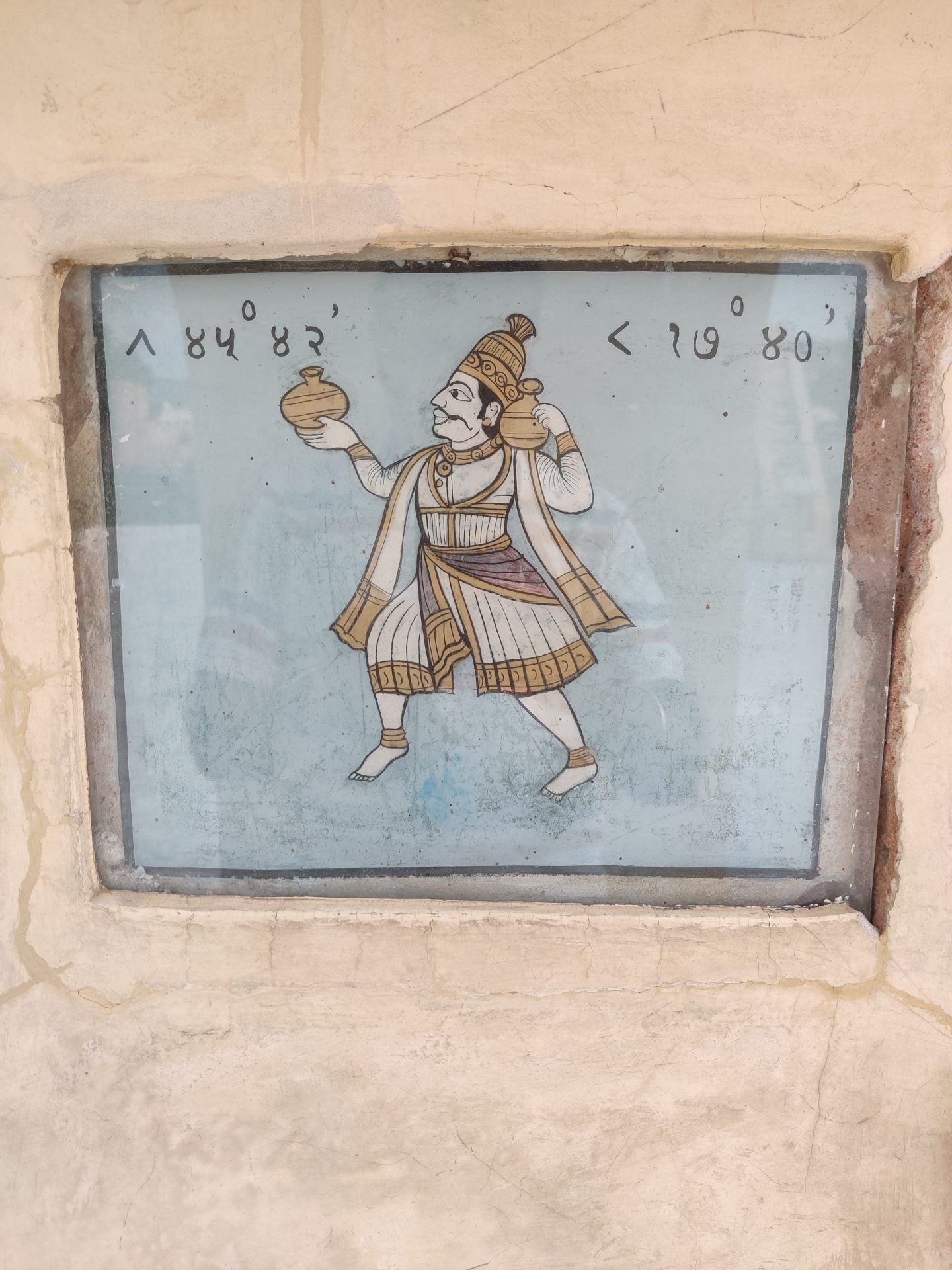
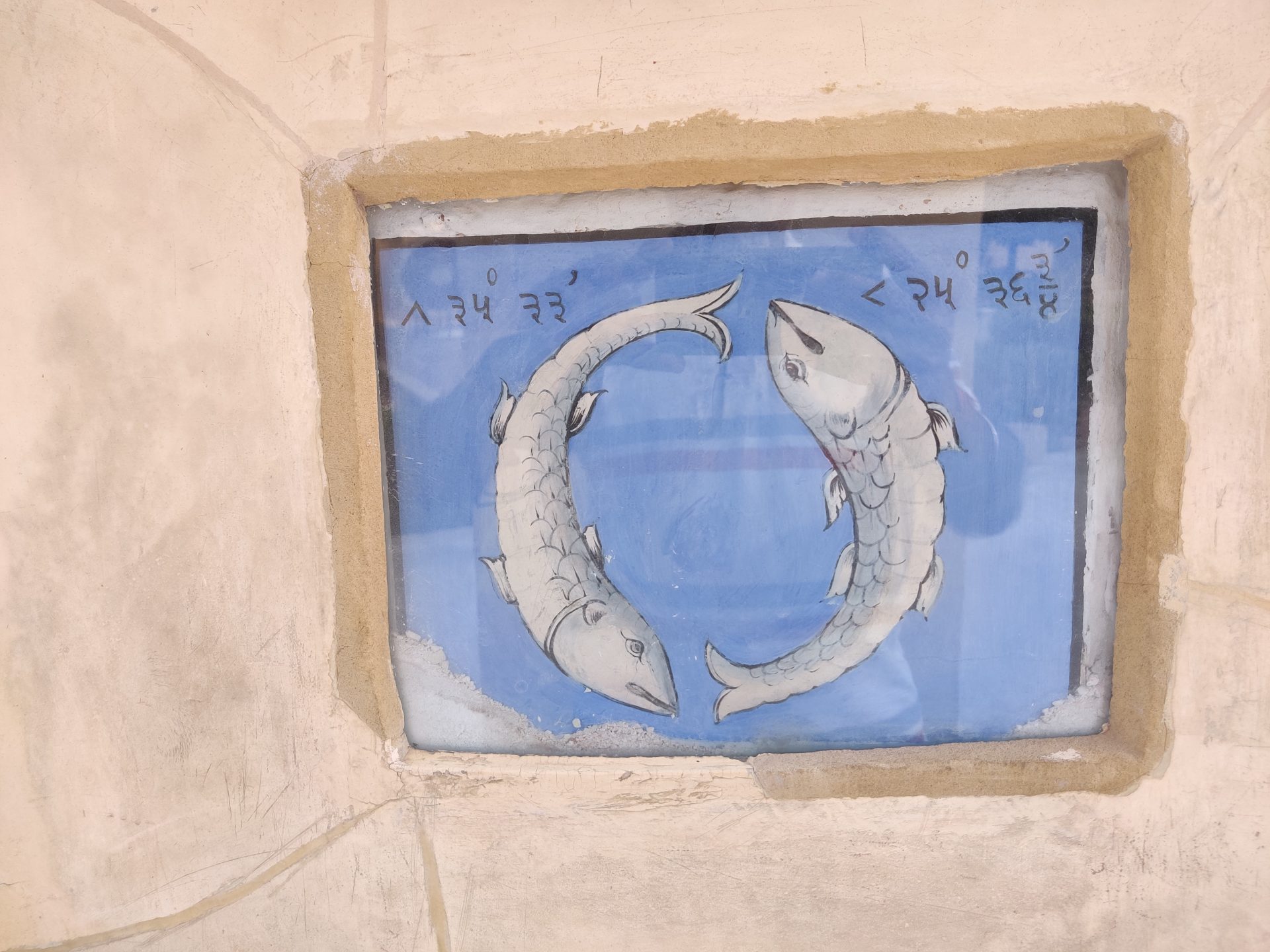
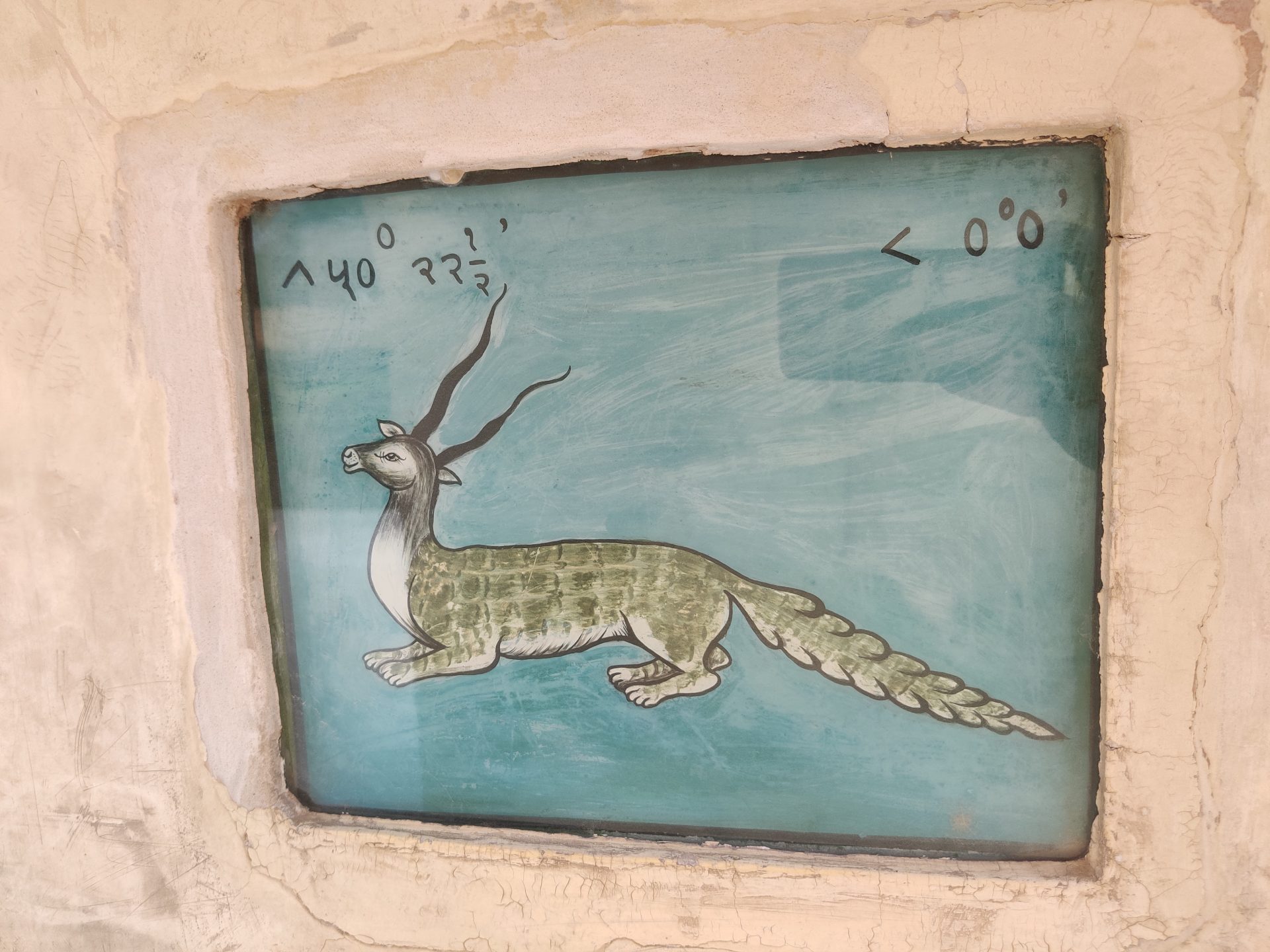
The Rasivalayas Yantra, unique to the this Observatory includes 12 instruments designed to directly measure the latitude and longitude of a celestial object. based on the design of the Samrat Yantra. Each Rasivalaya instrument corresponds to a specific sign of the Zodiac.
Leo
Virgo
Cancer
Taurus
Gemini
Aquarius
Pisces
Aries
Capricorn
Scorpio
Sagittarius
Libra
The Amber Fort
We moved on next to the Amber Fort which was to be our last stop in our itinerary. We stopped by for lunch at Shree New Suraj restaurant, a roadside dhaba and located on the opposite side of Jal Mahal before reaching the Fort.
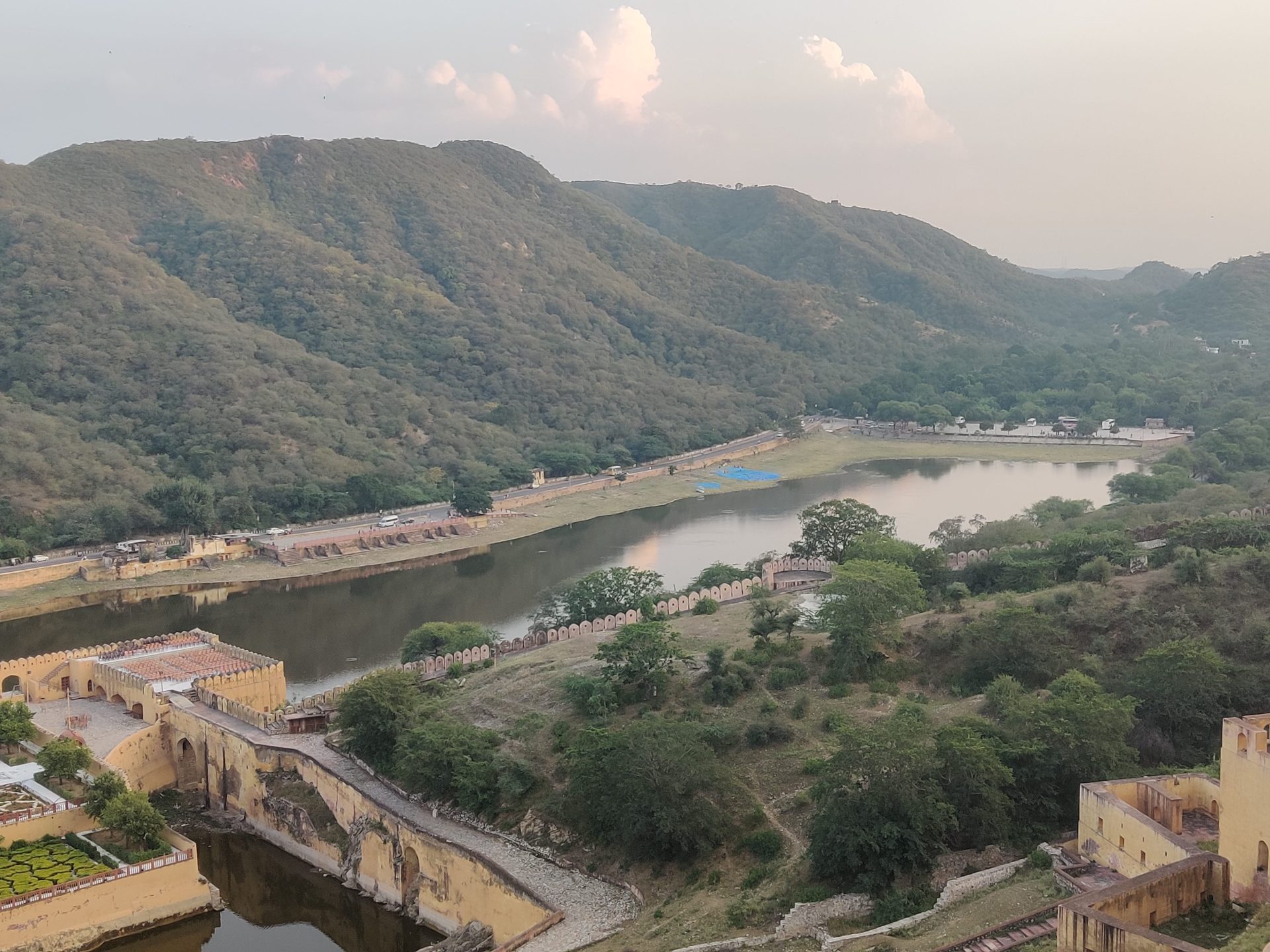
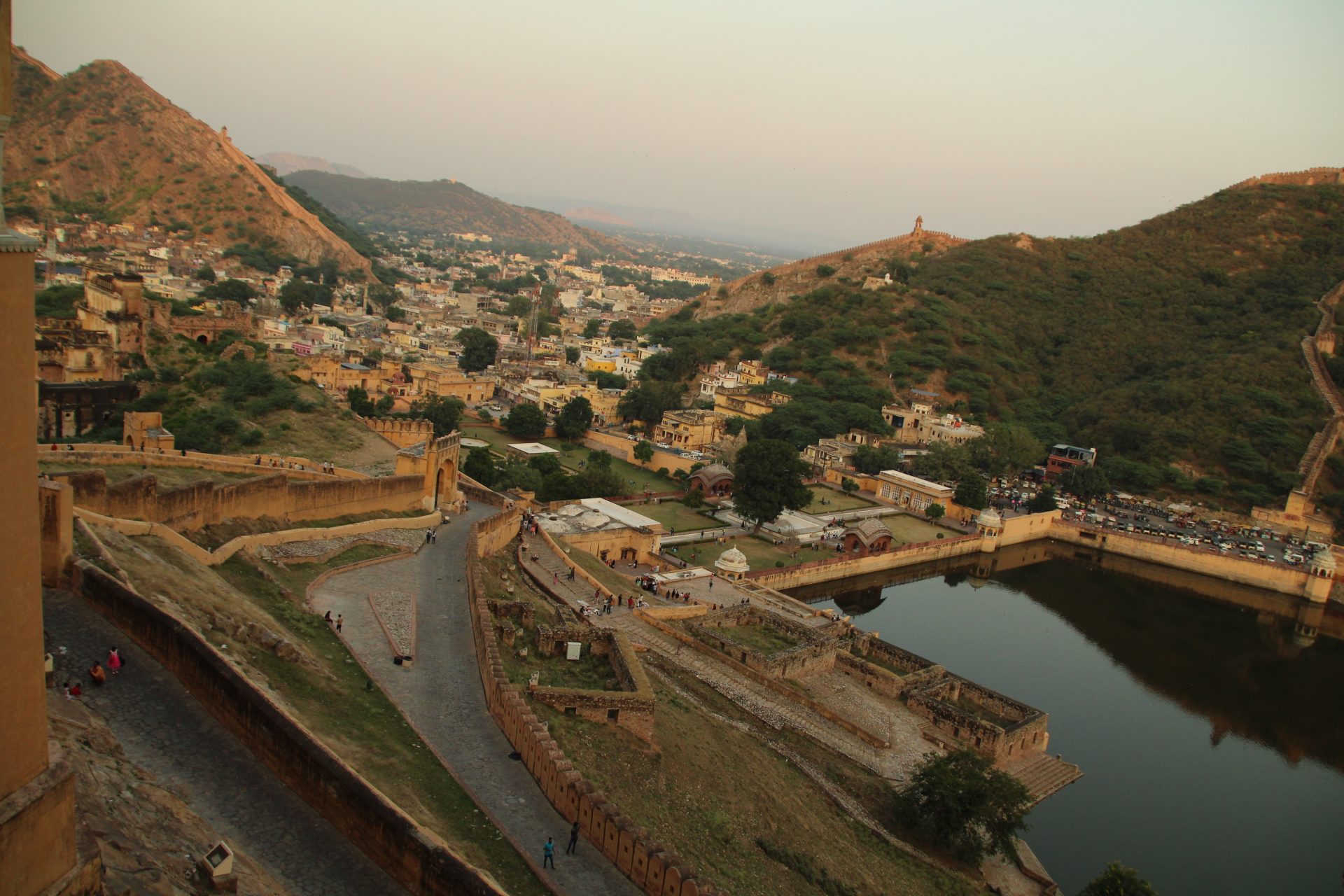
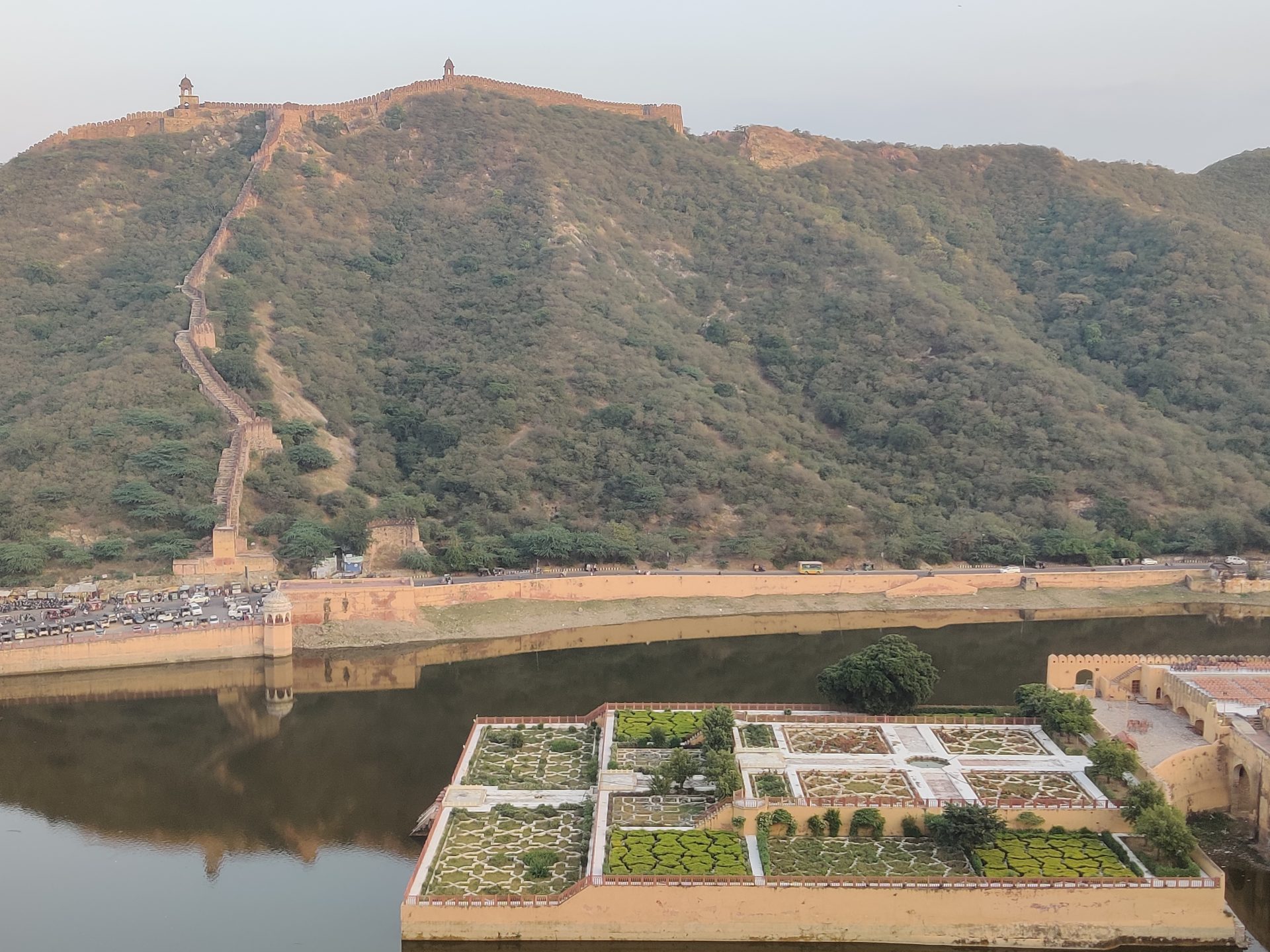
The fort overlooks the Maota lake which is also a source of water to the town.
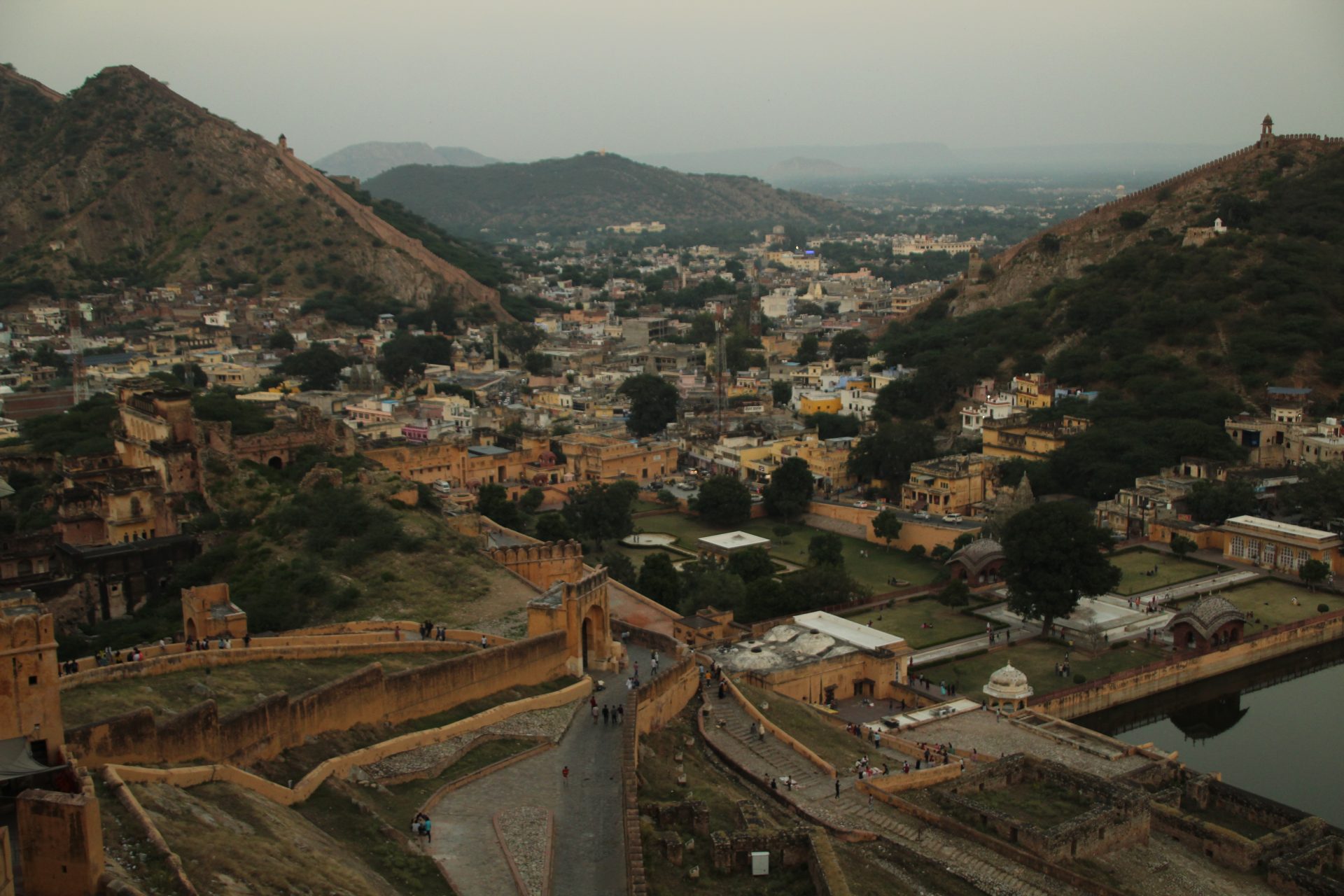
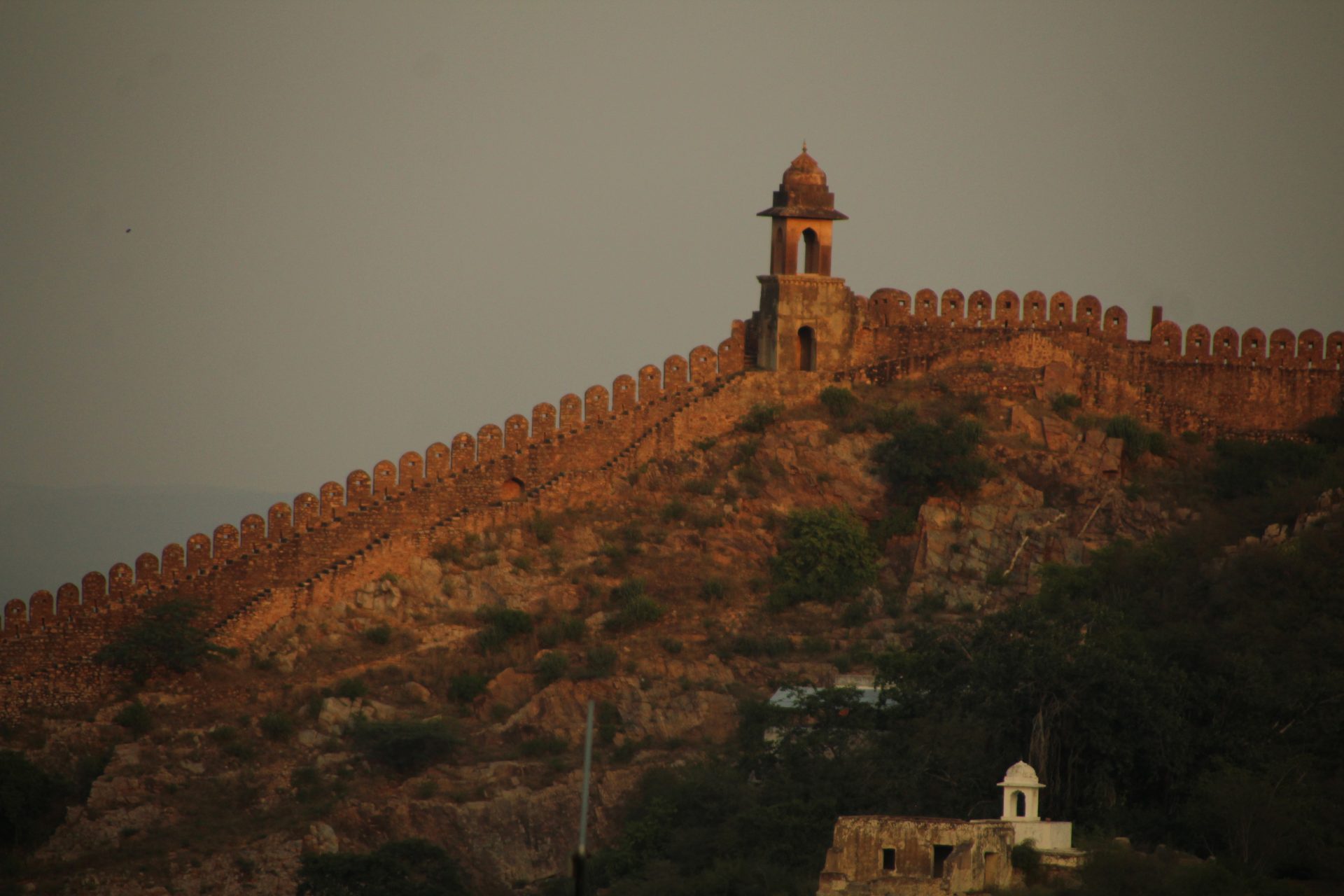
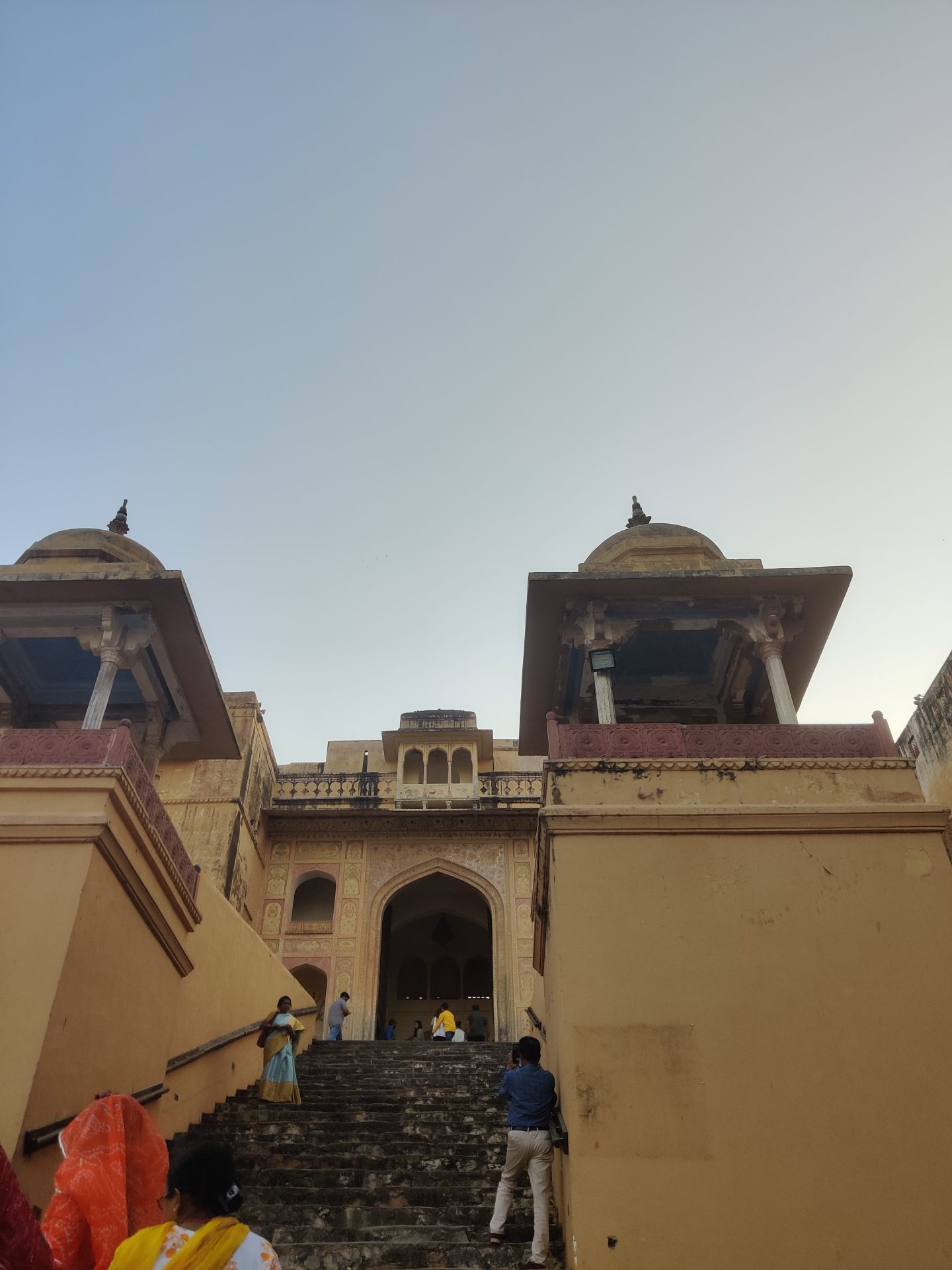
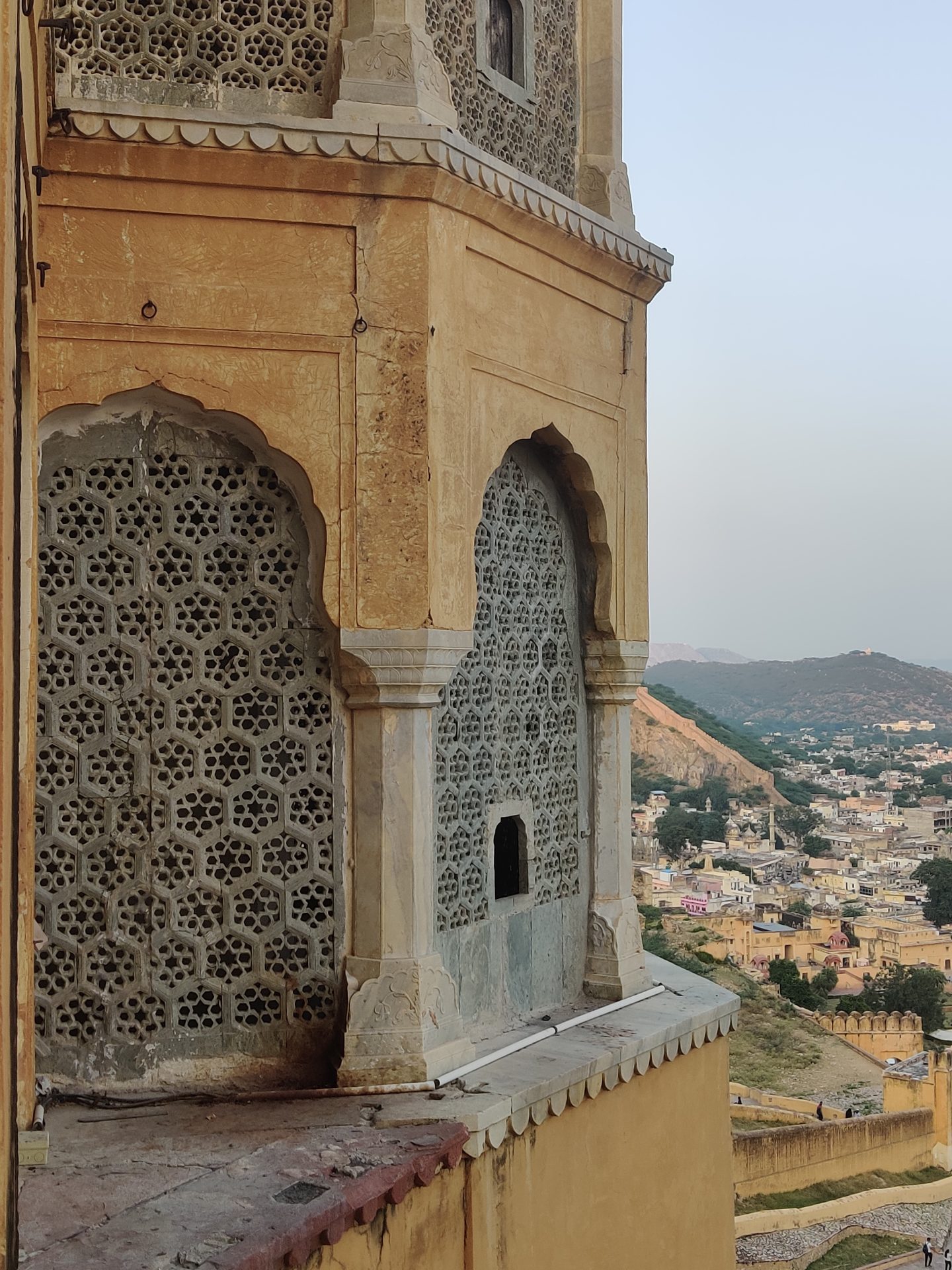
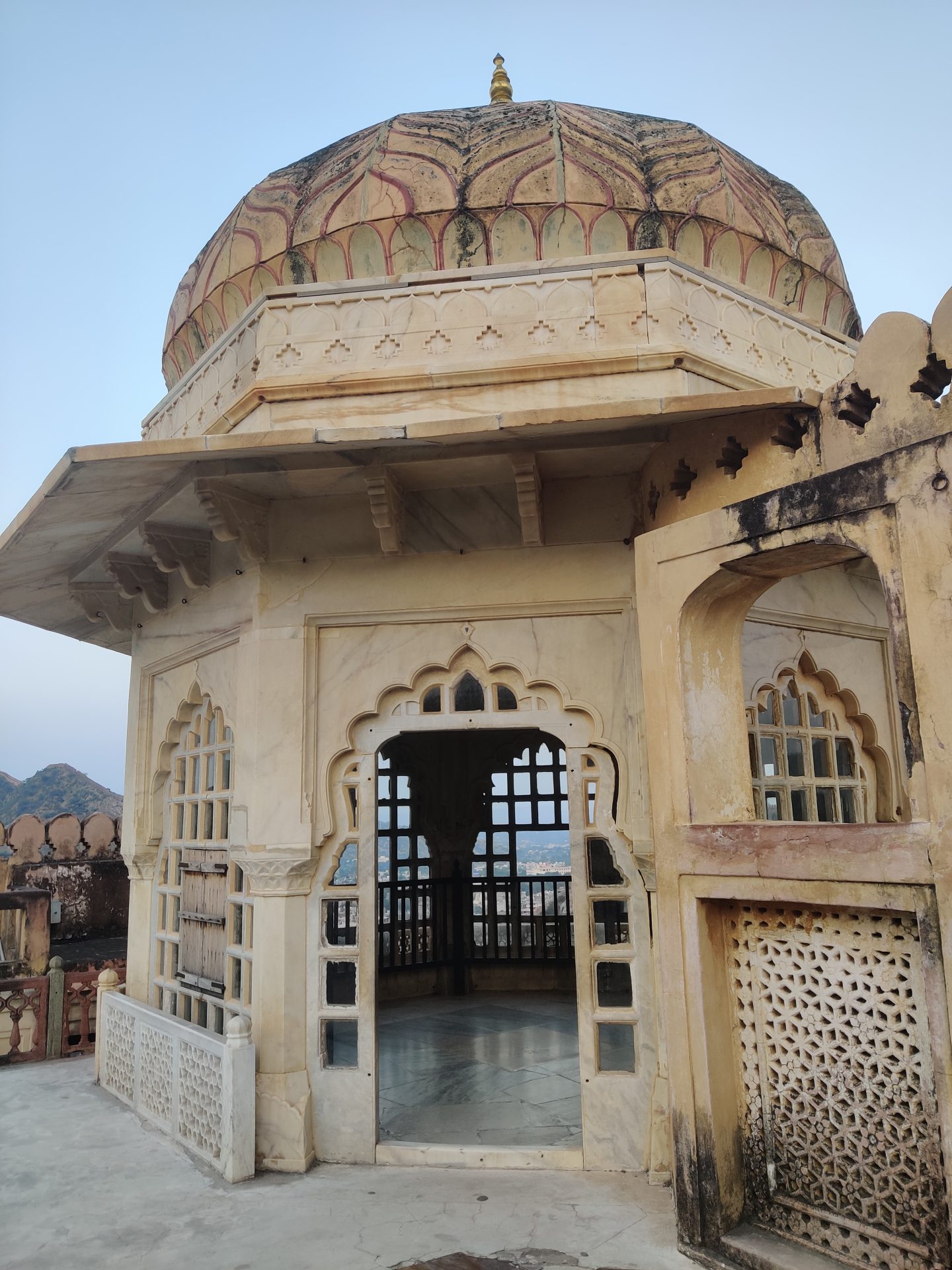
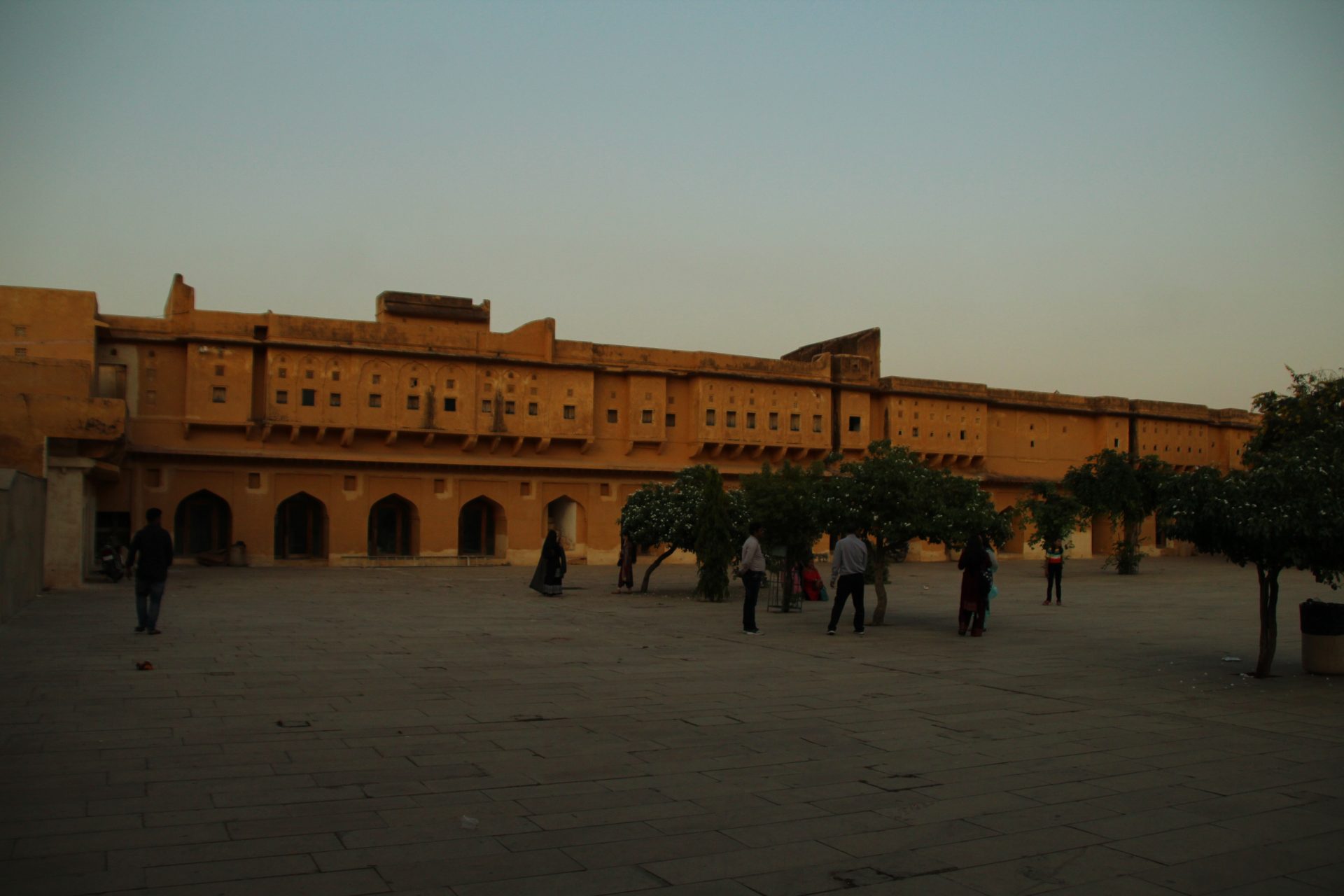
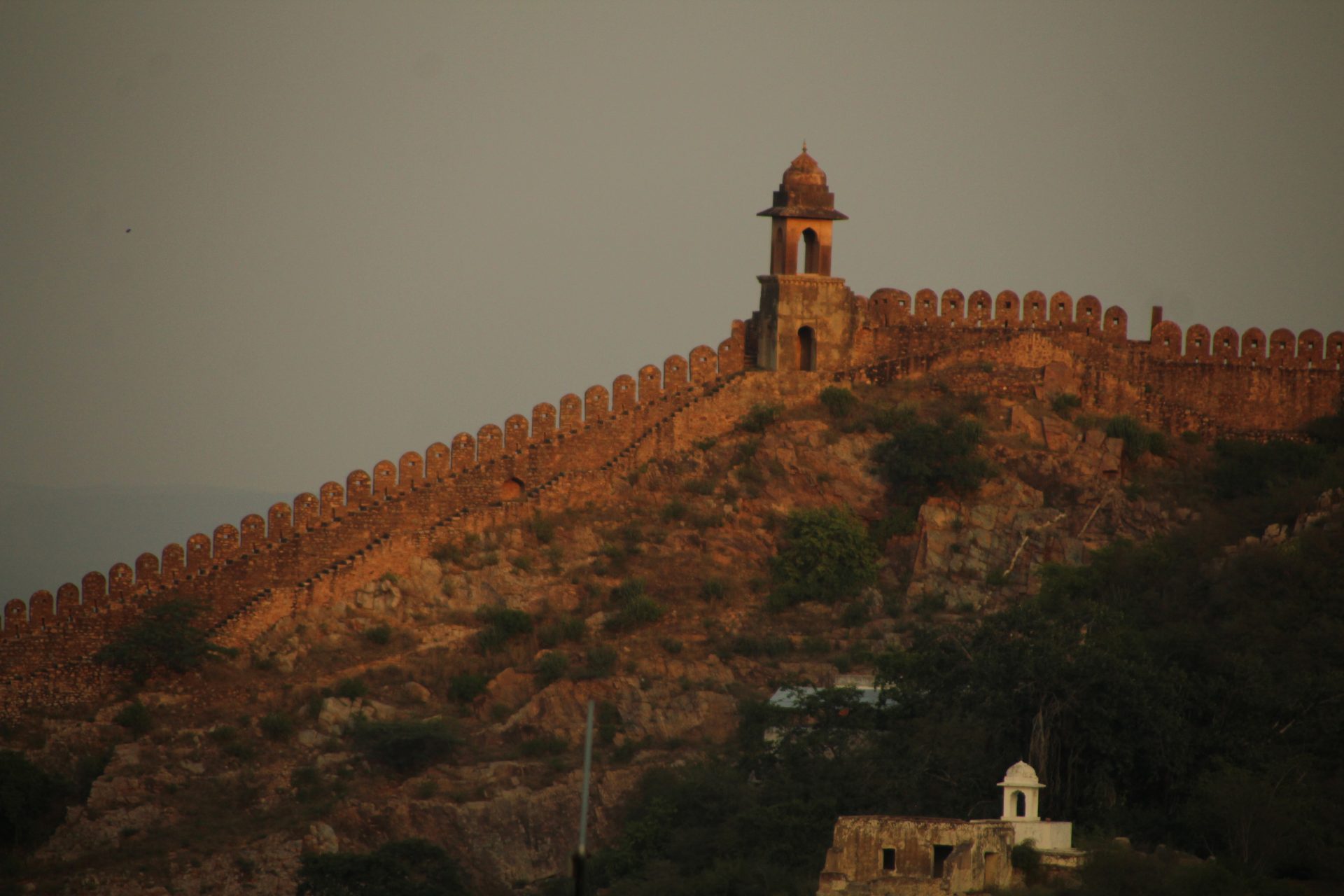
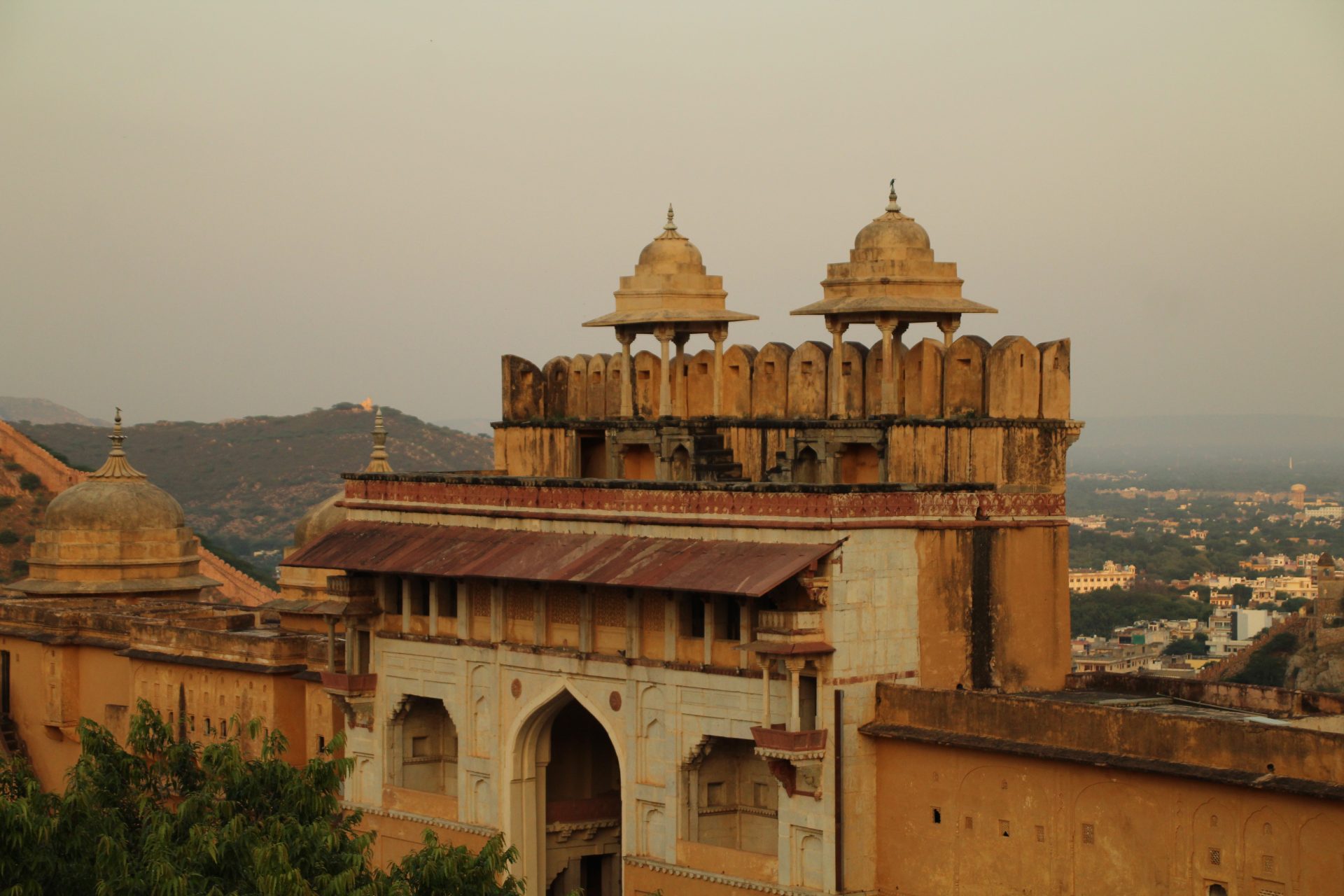
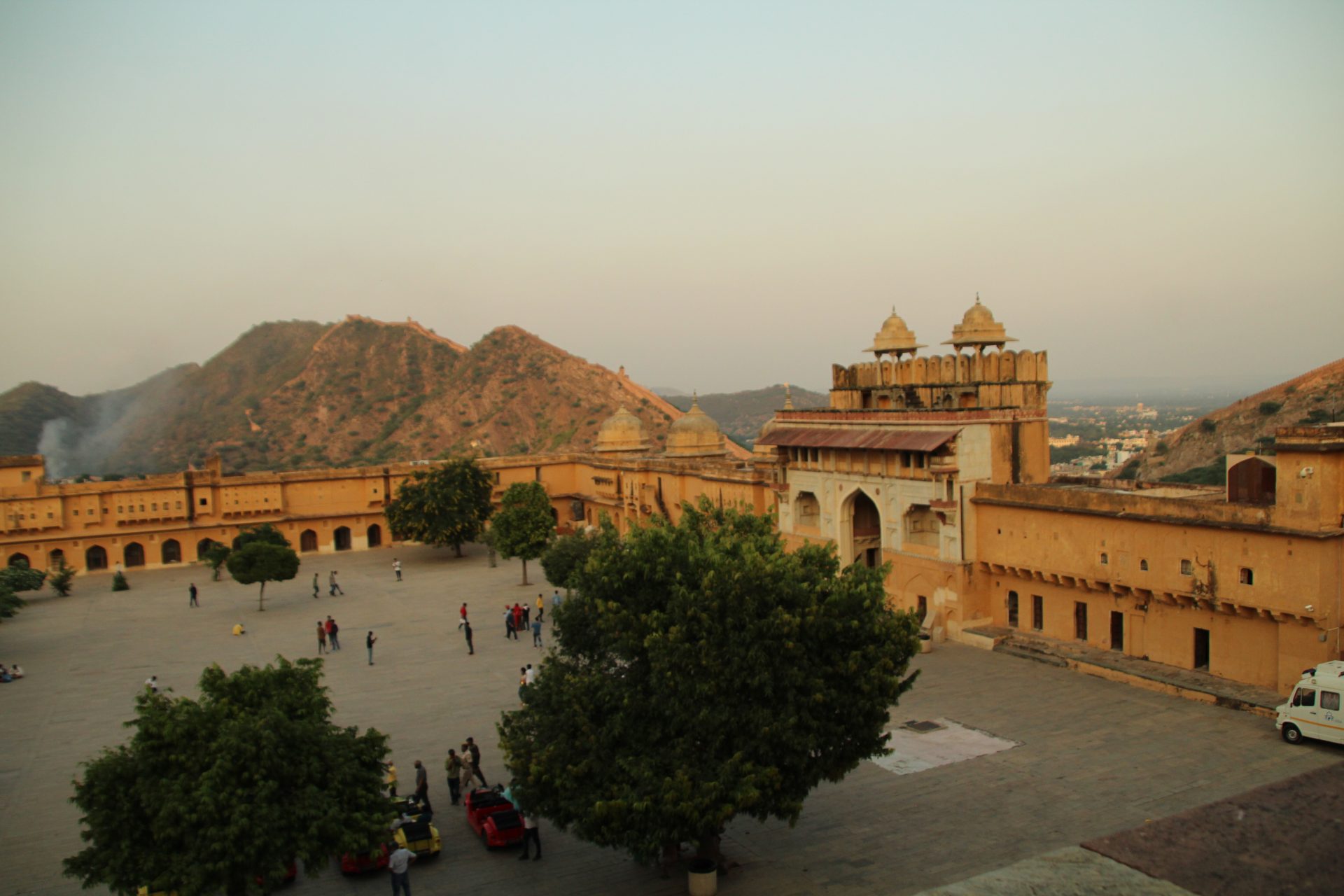
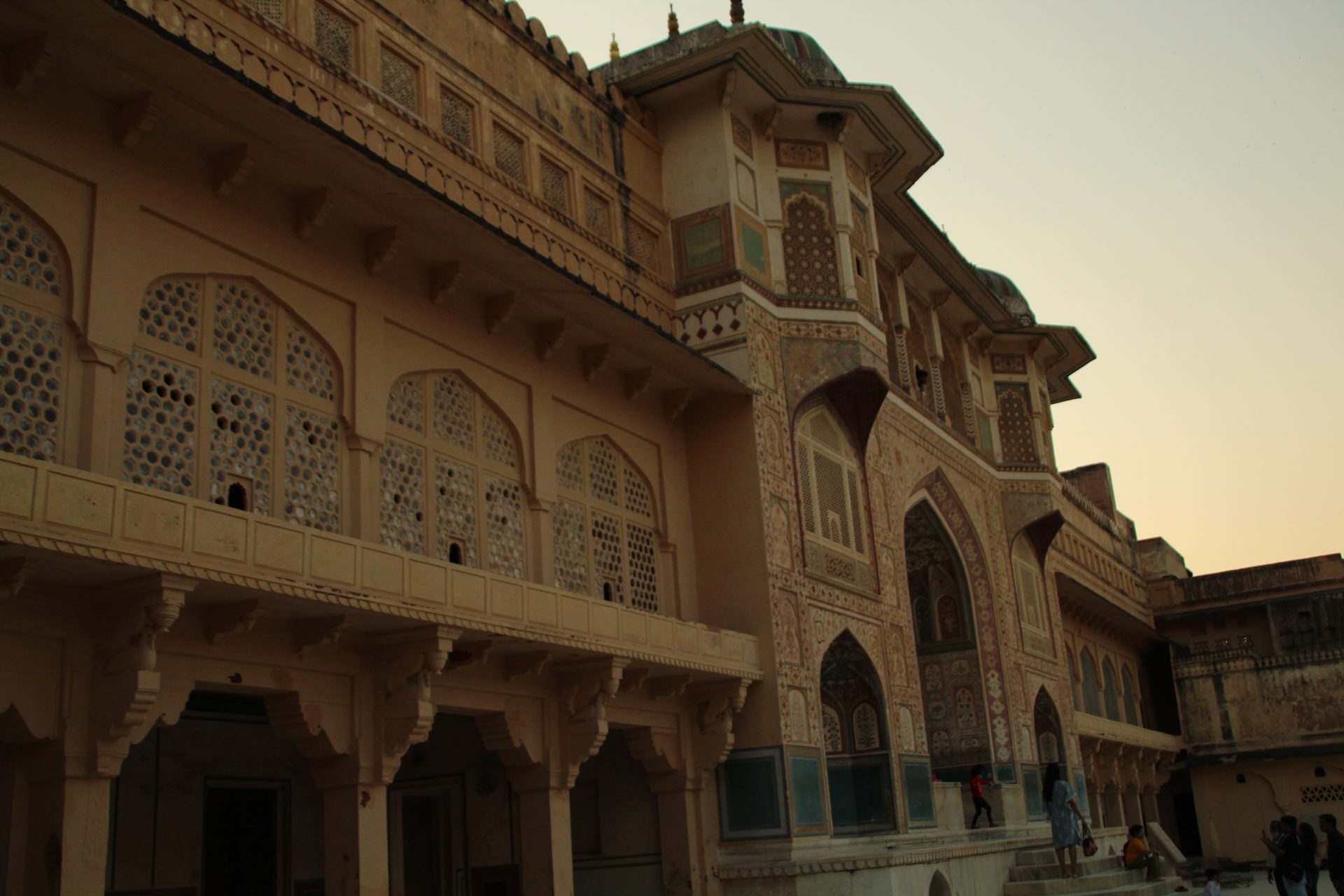
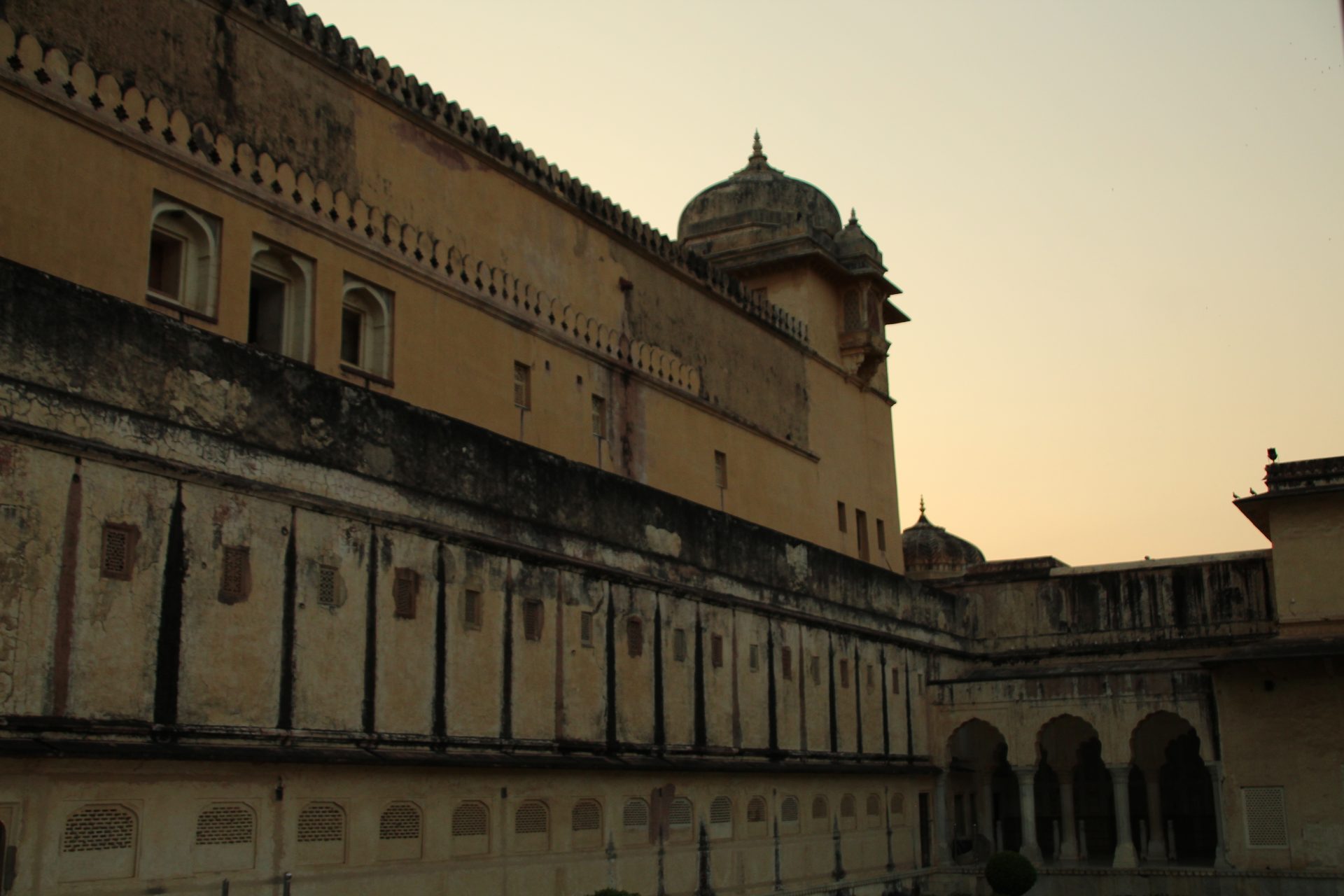
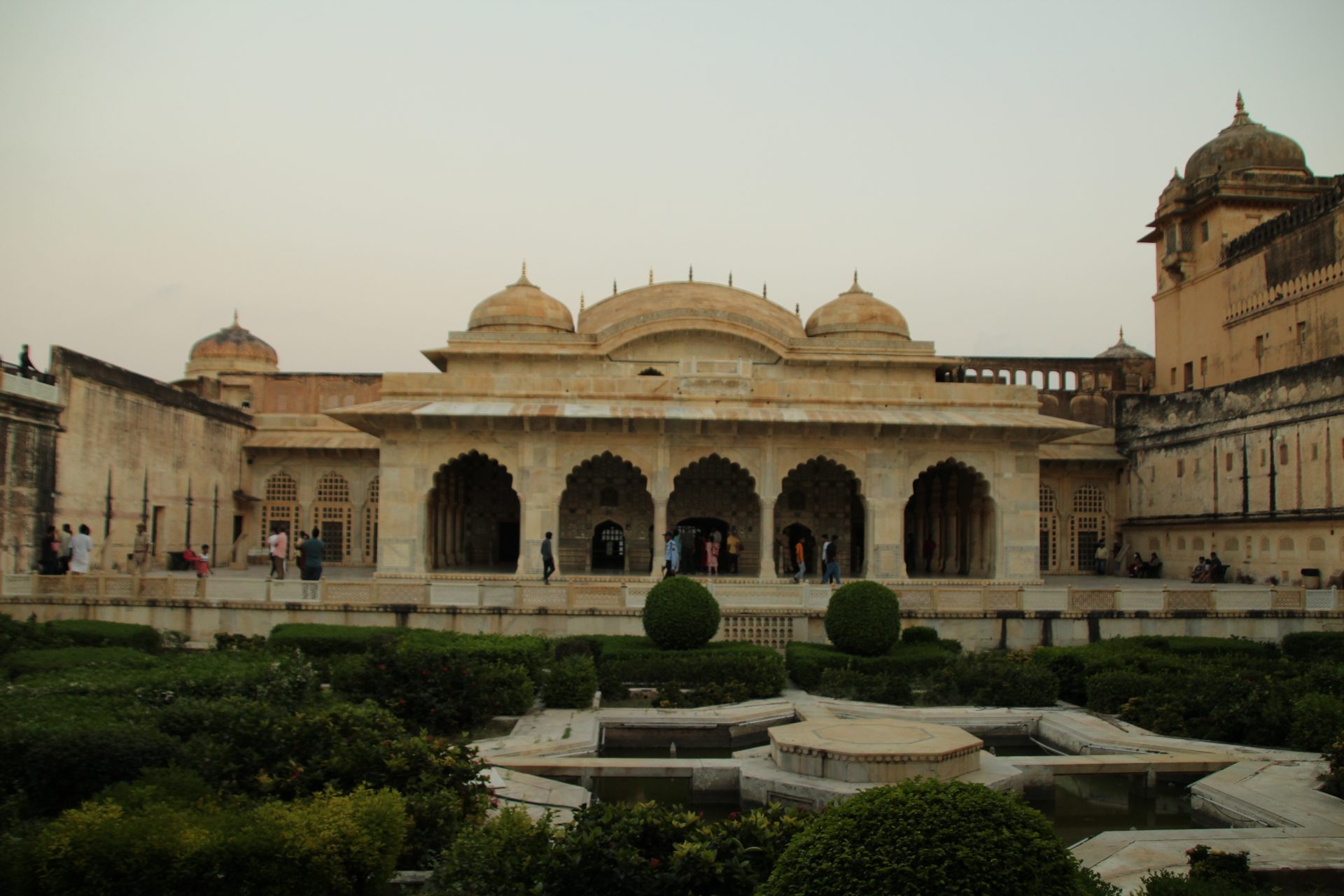
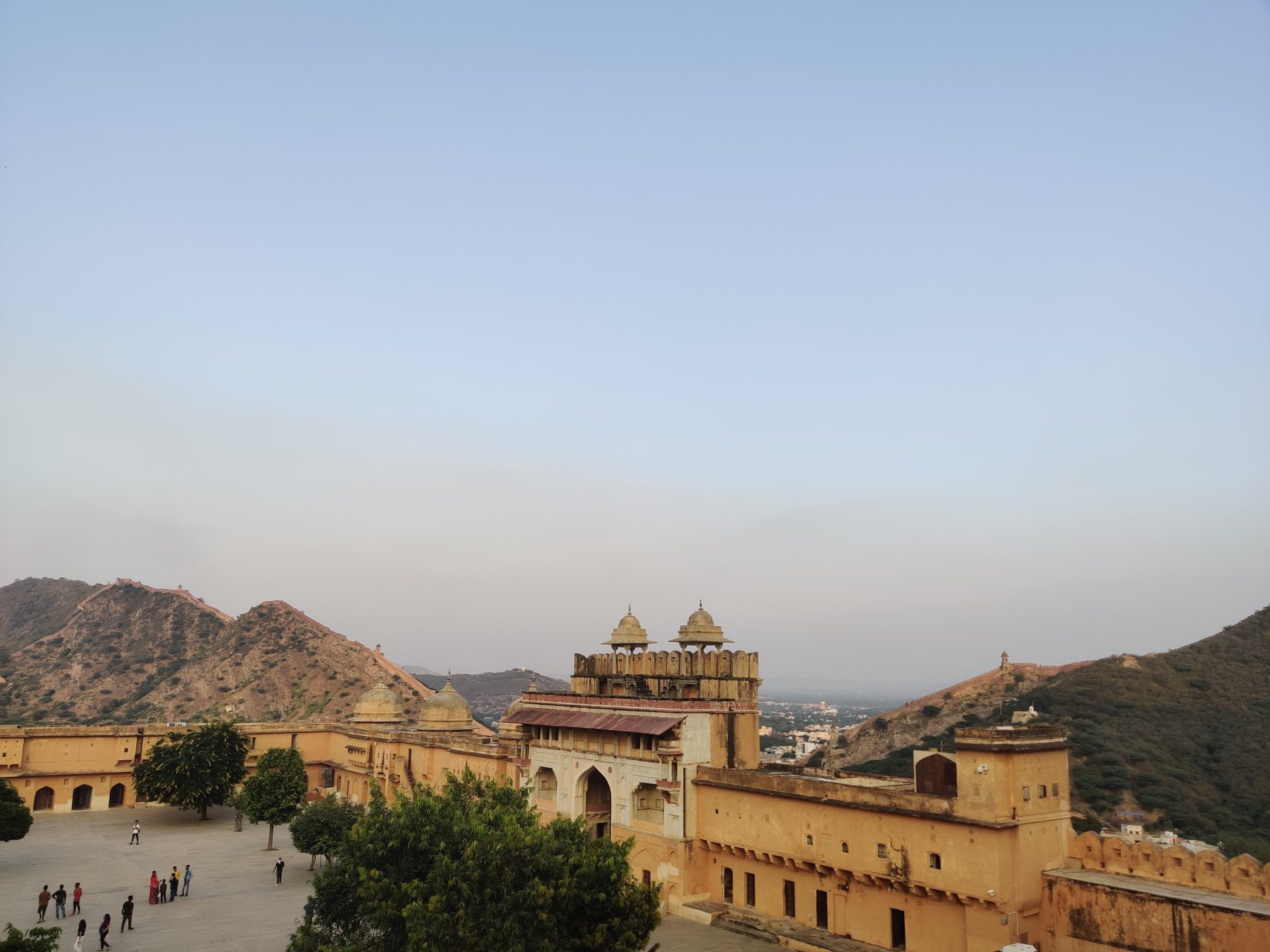
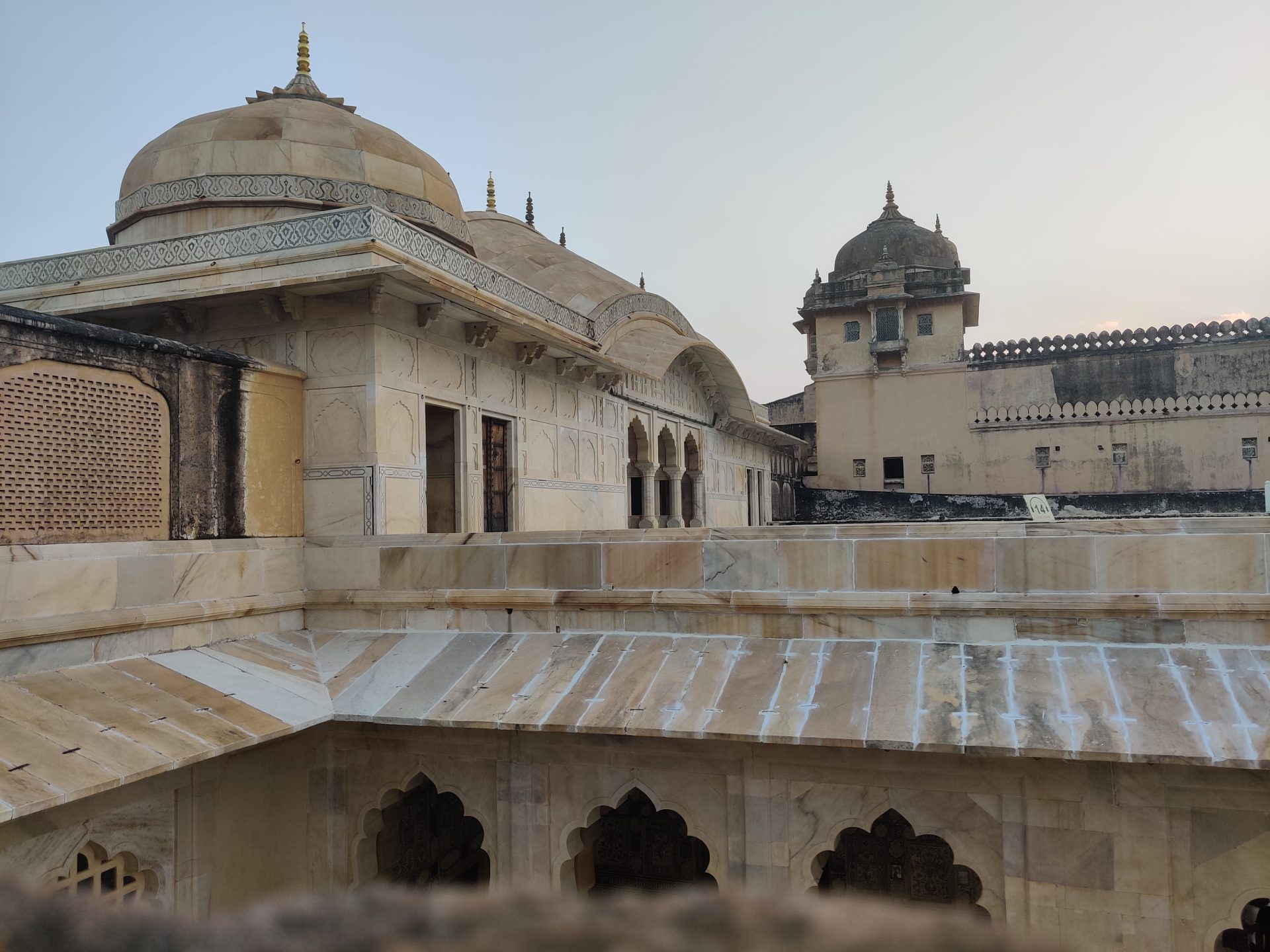
Located within the precincts of the Amer town, this historic fort atop a hill with its large ramparts, cobbled pathways and series of gates this magnificent piece of architecture is constructed out of red sandstone and marble.
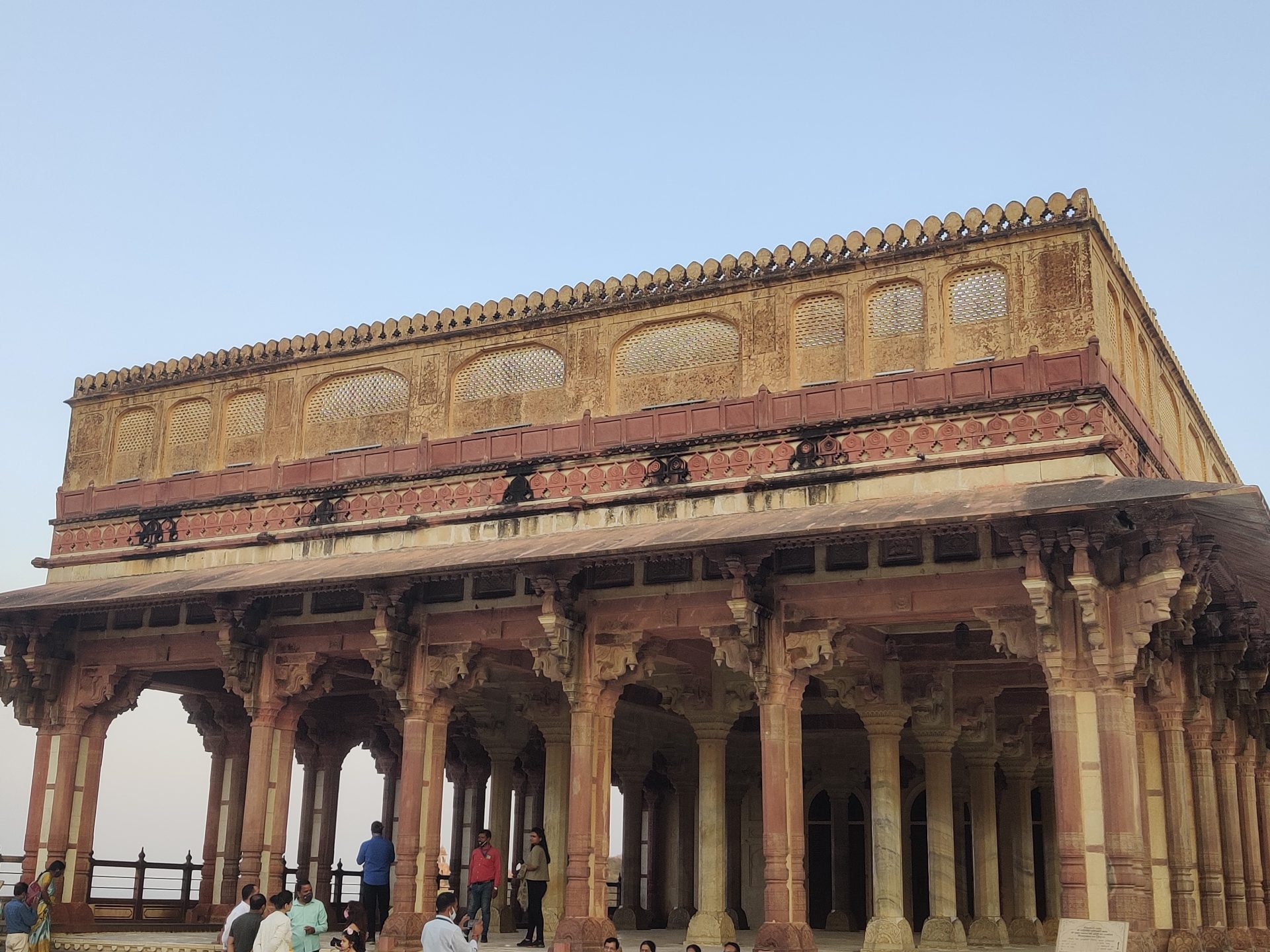
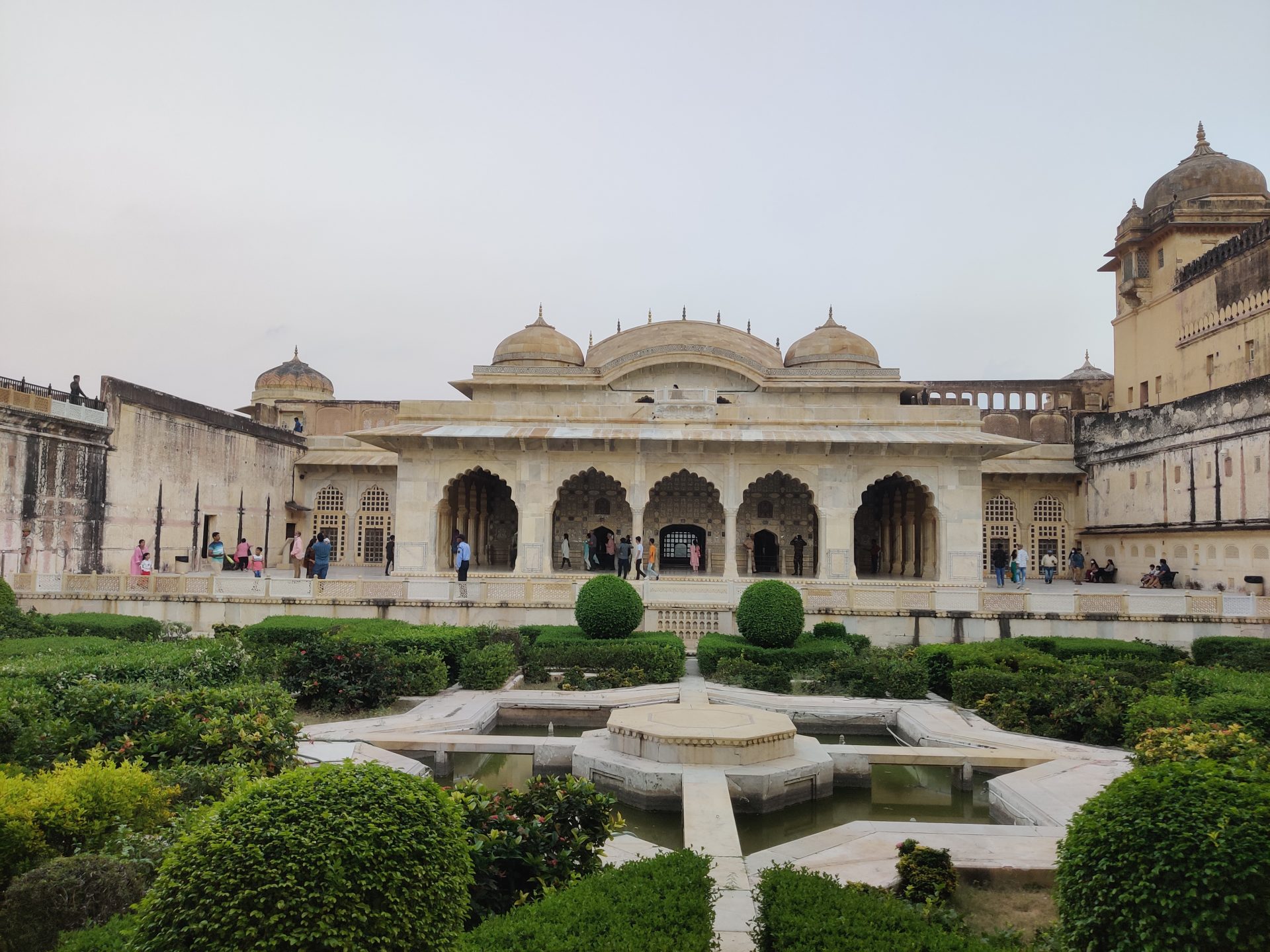
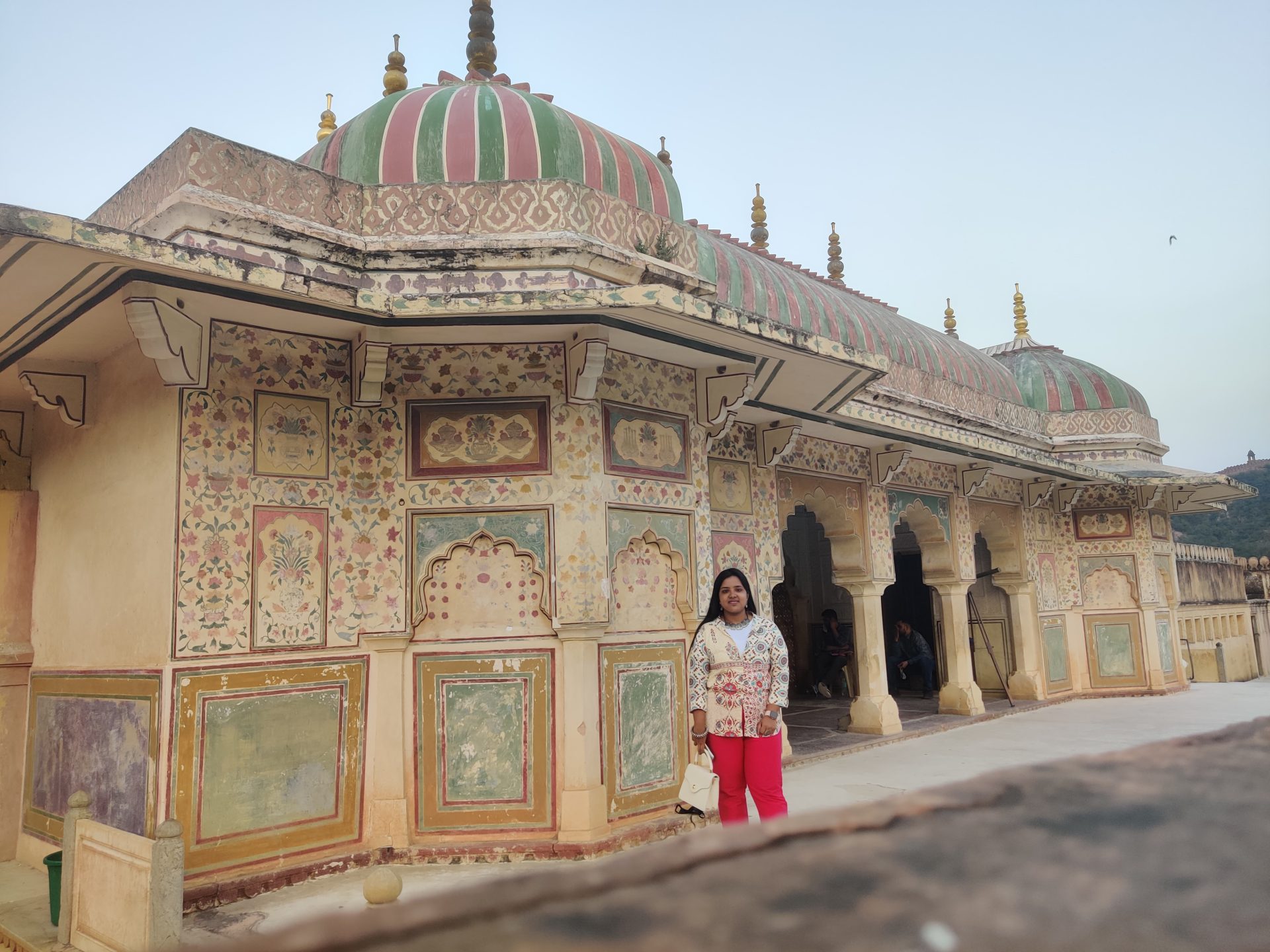
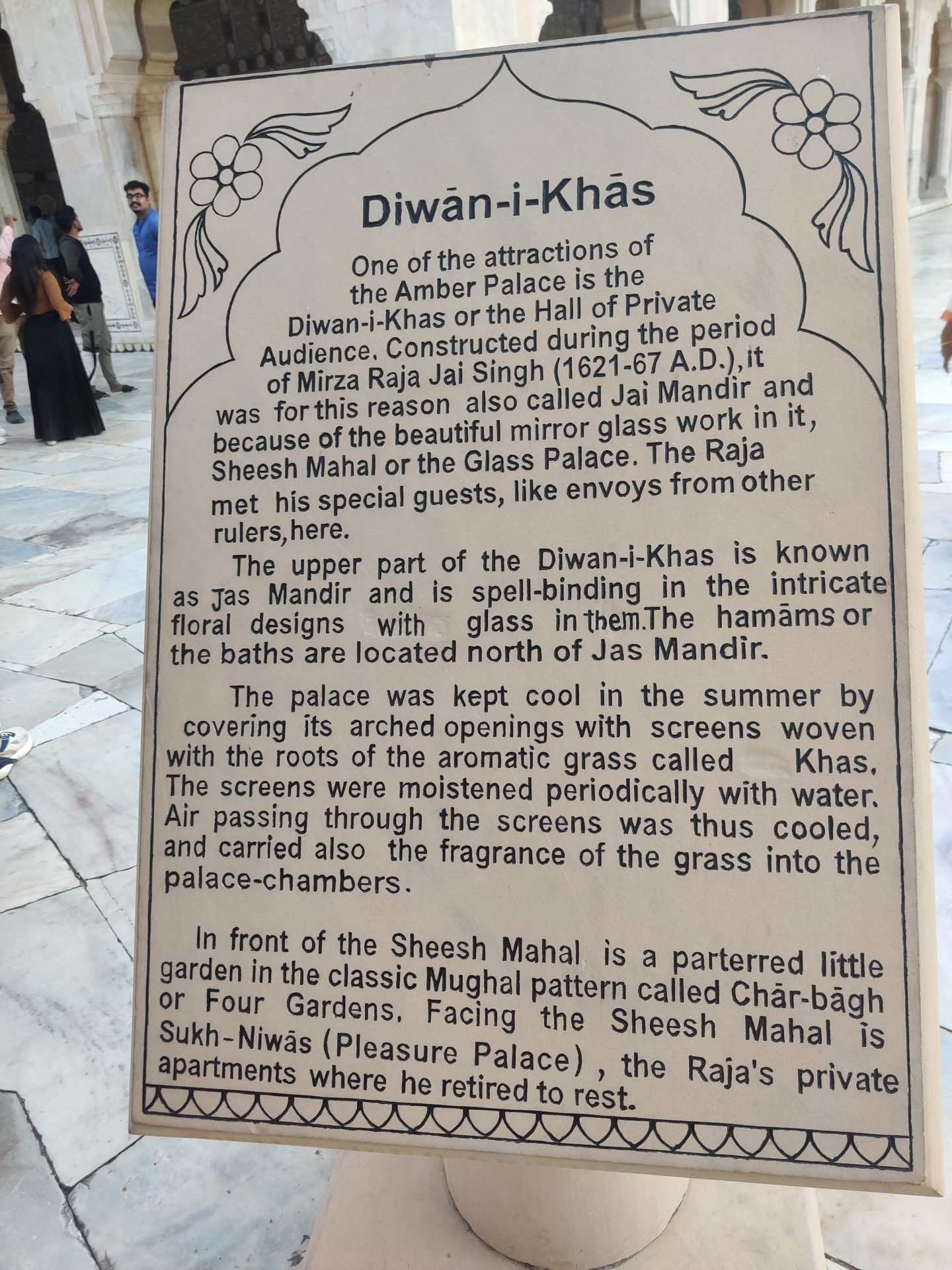
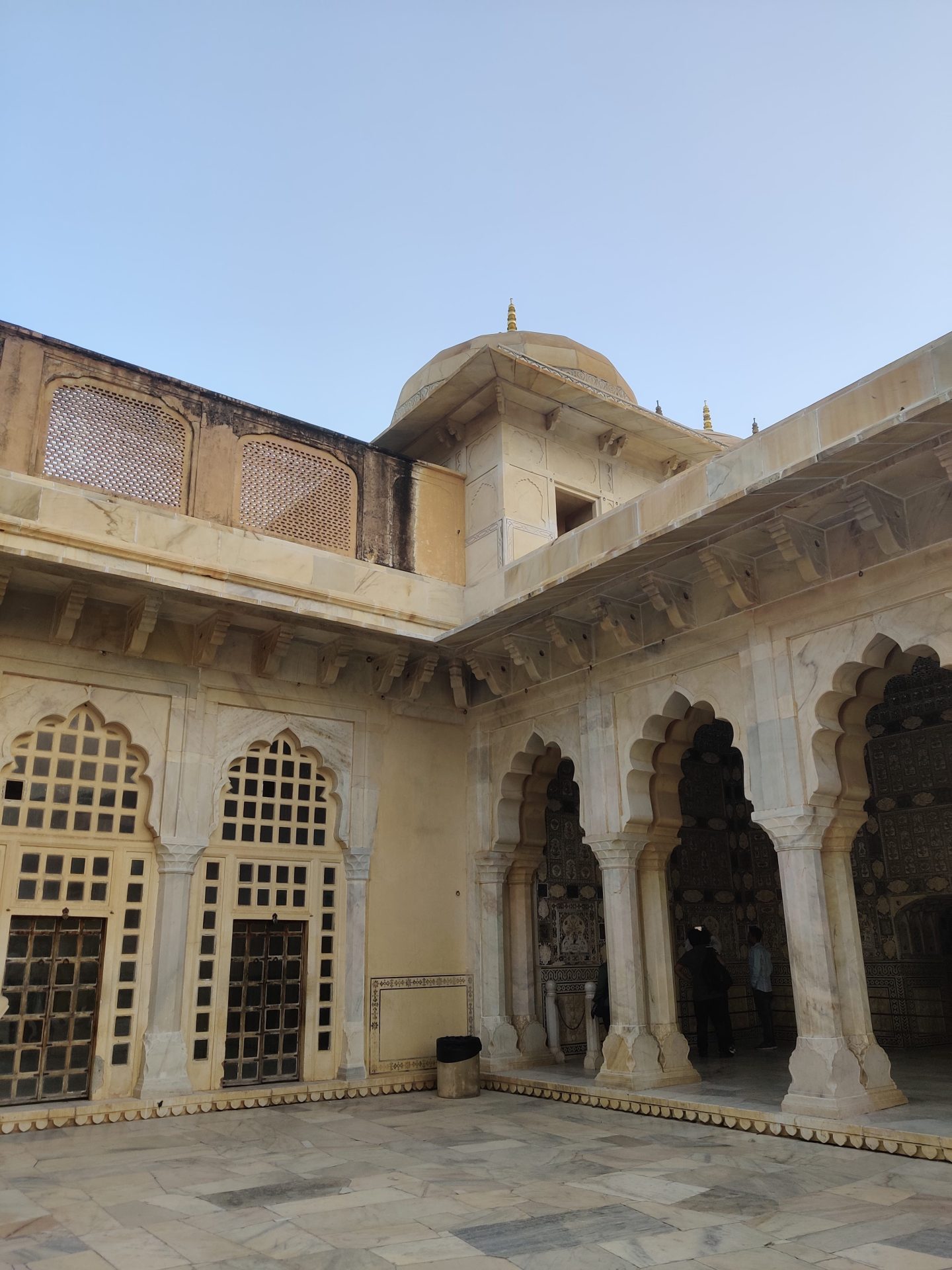
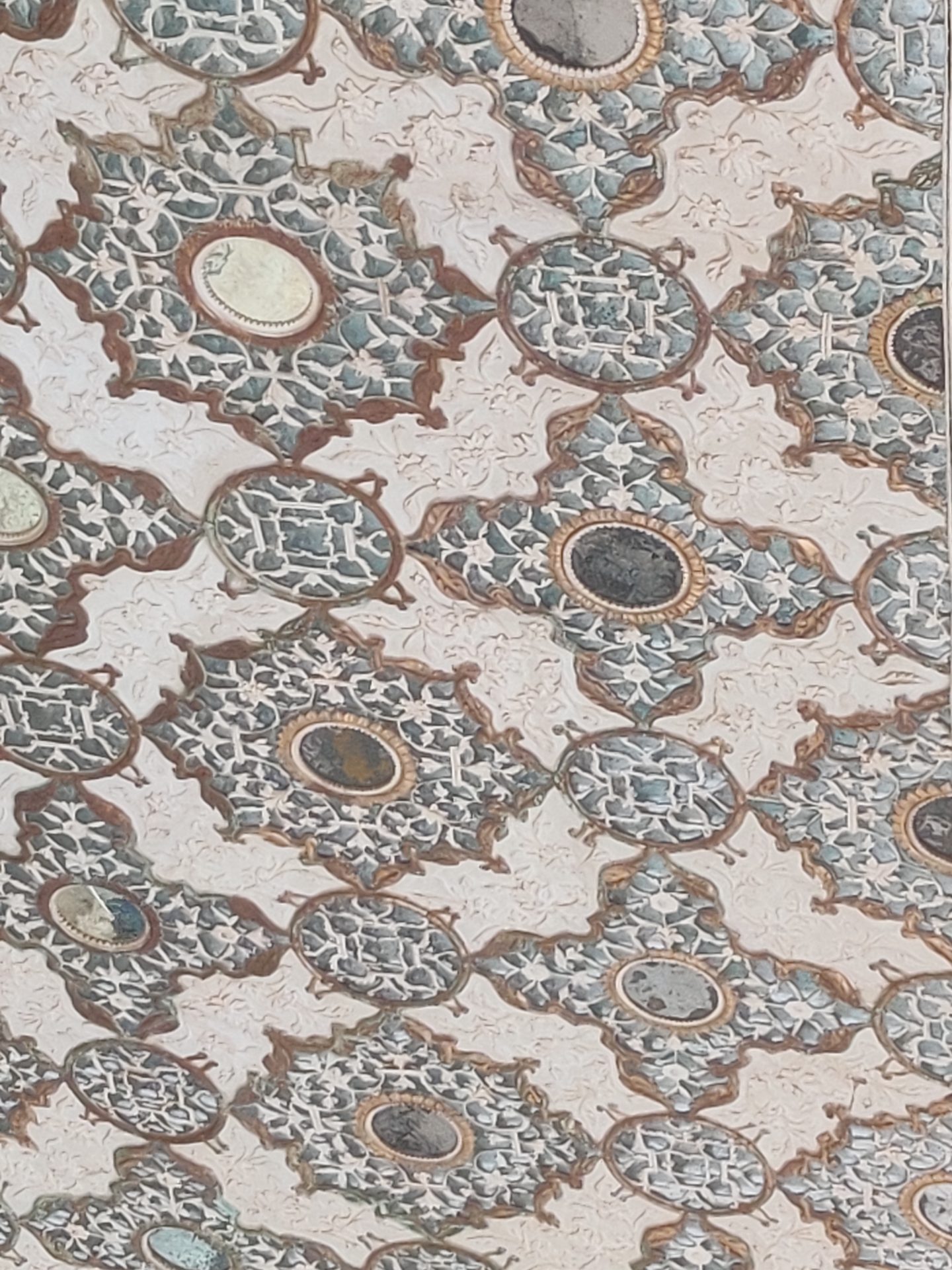
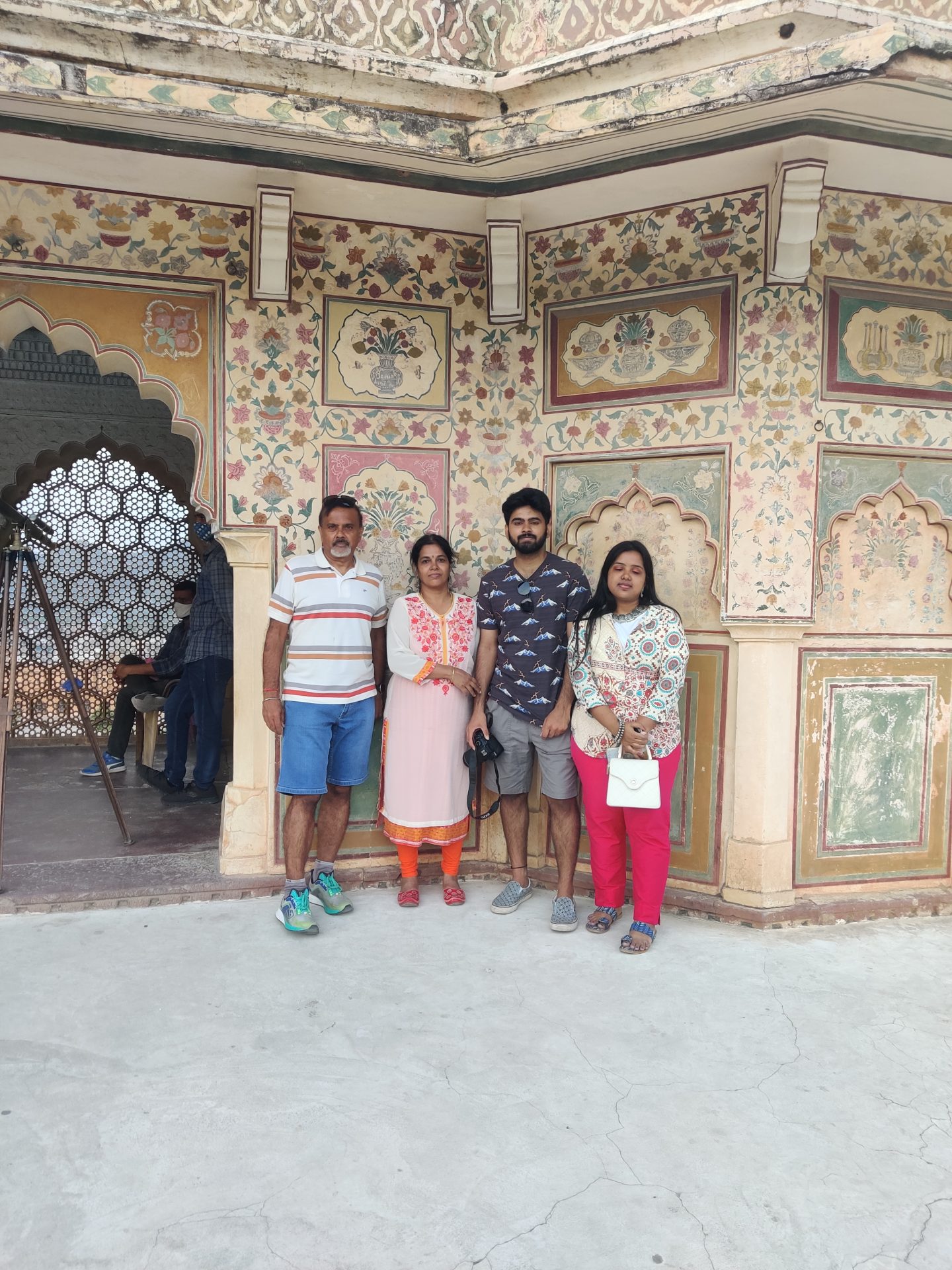
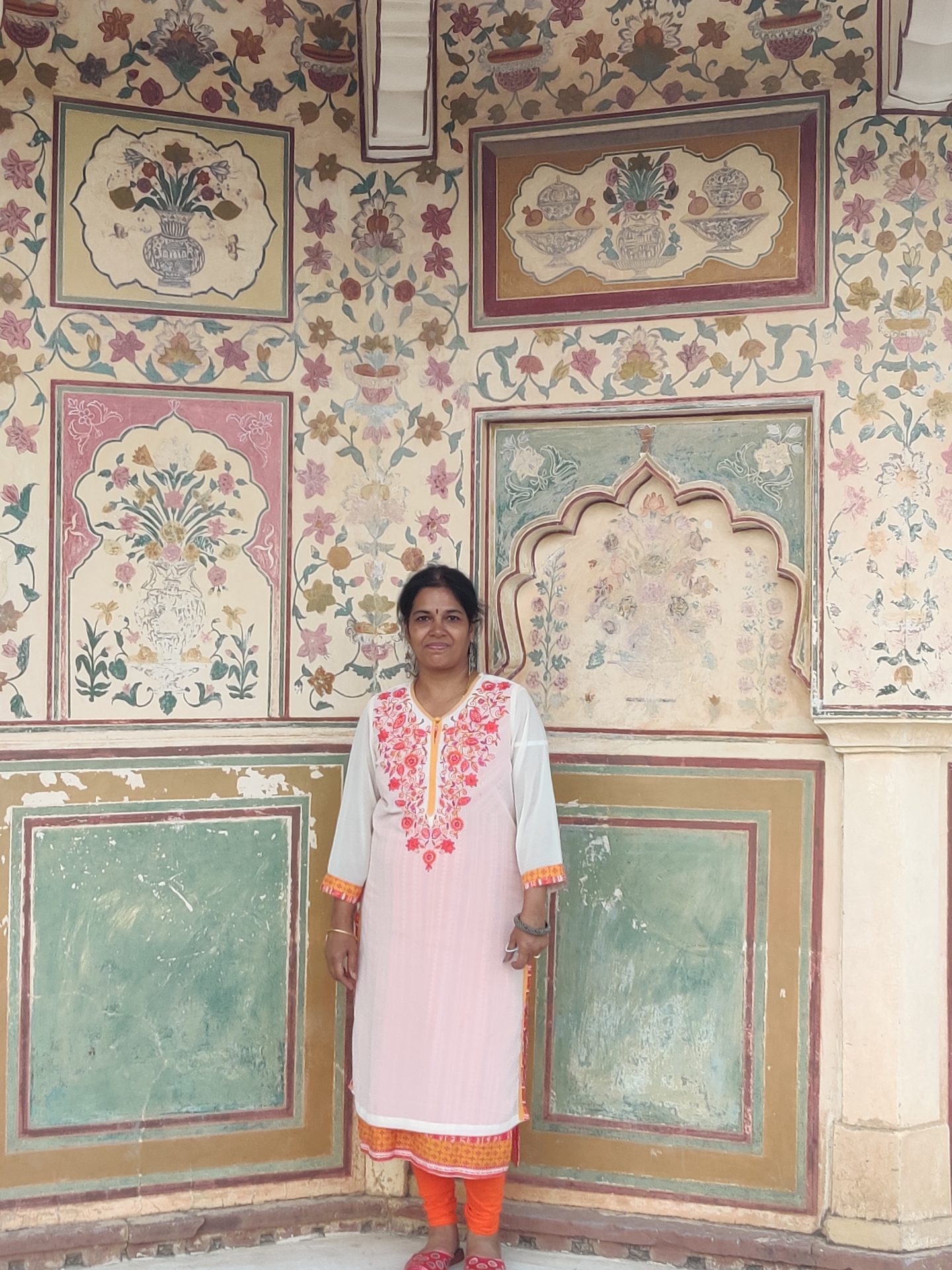
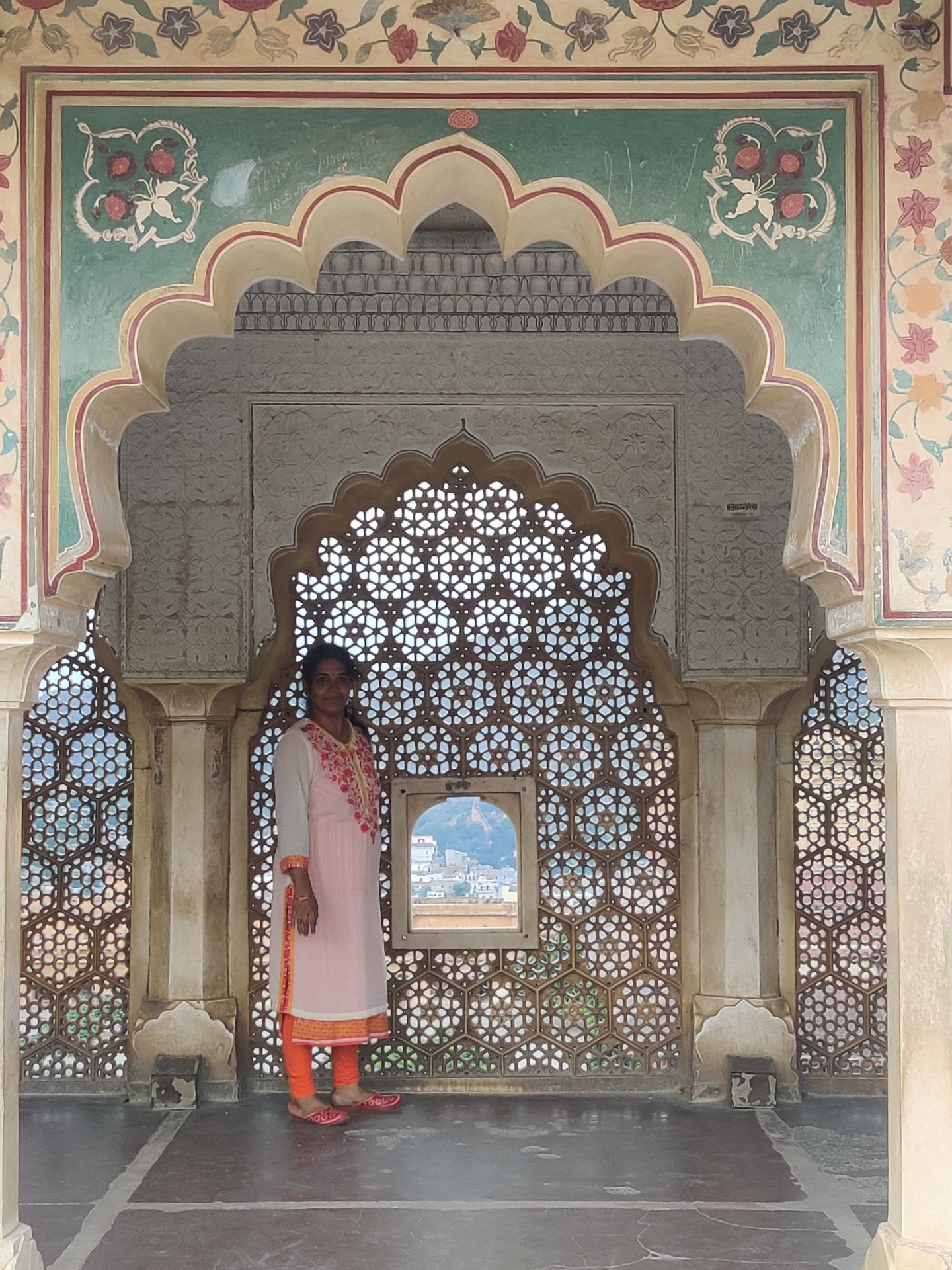
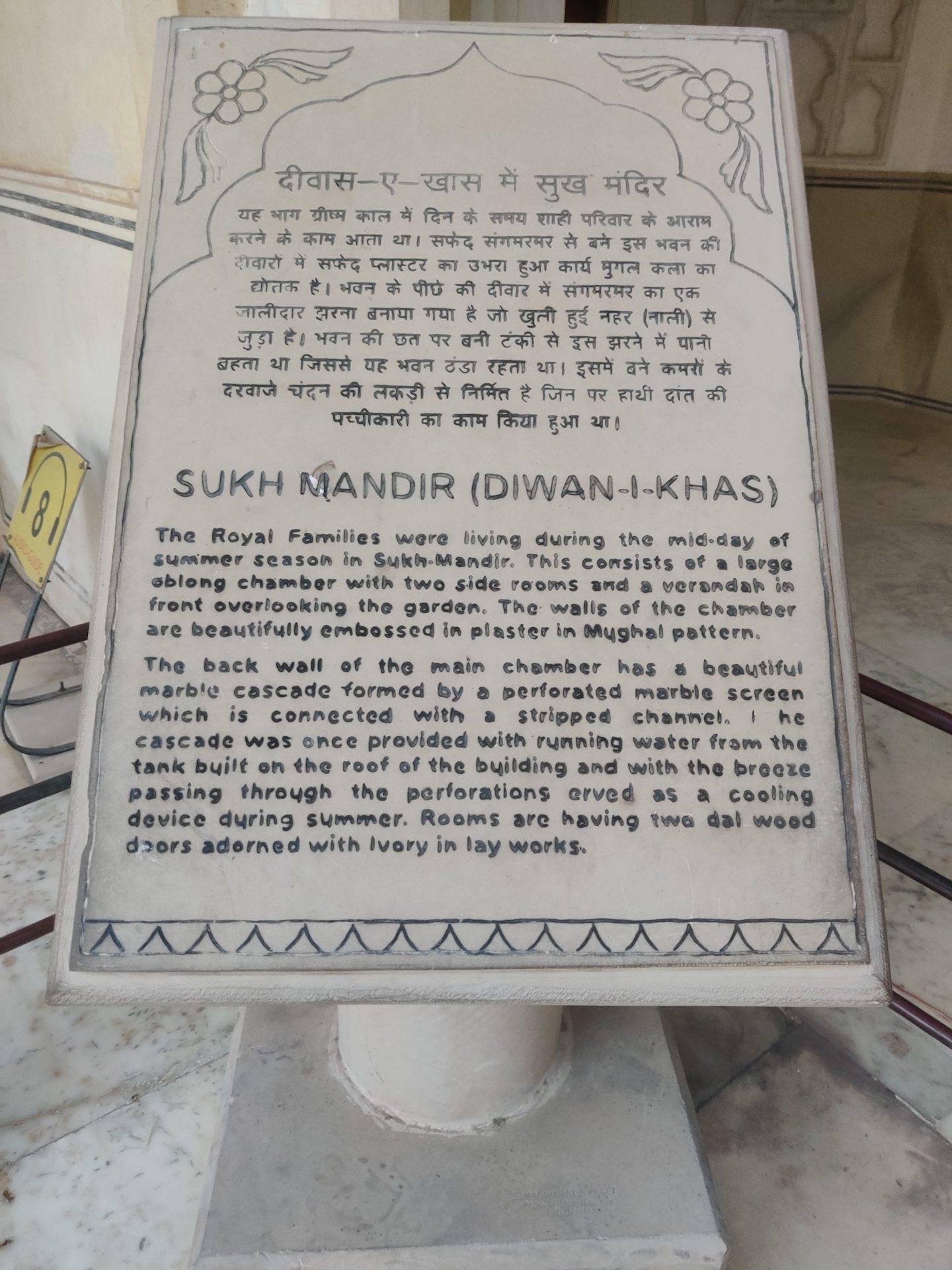
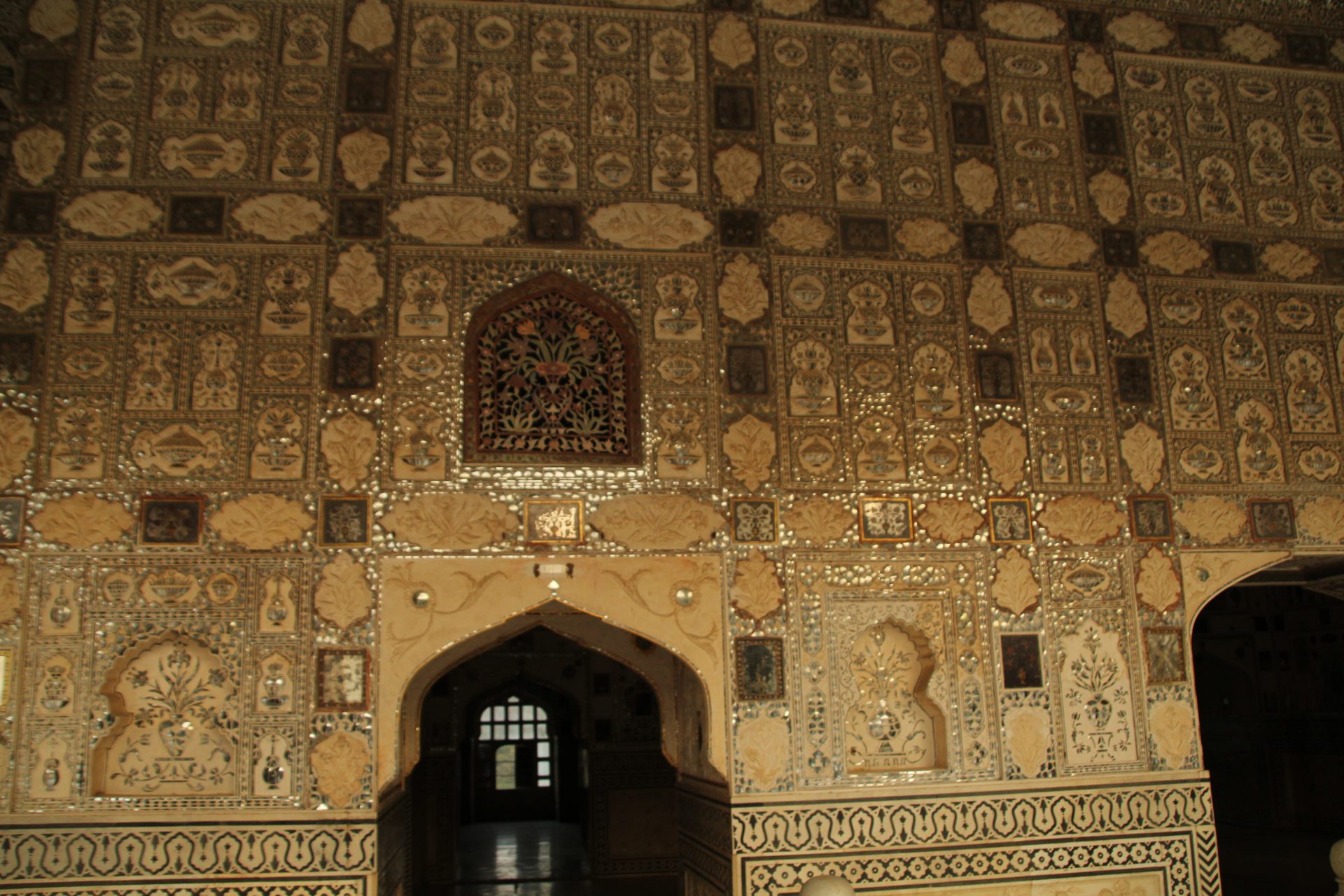
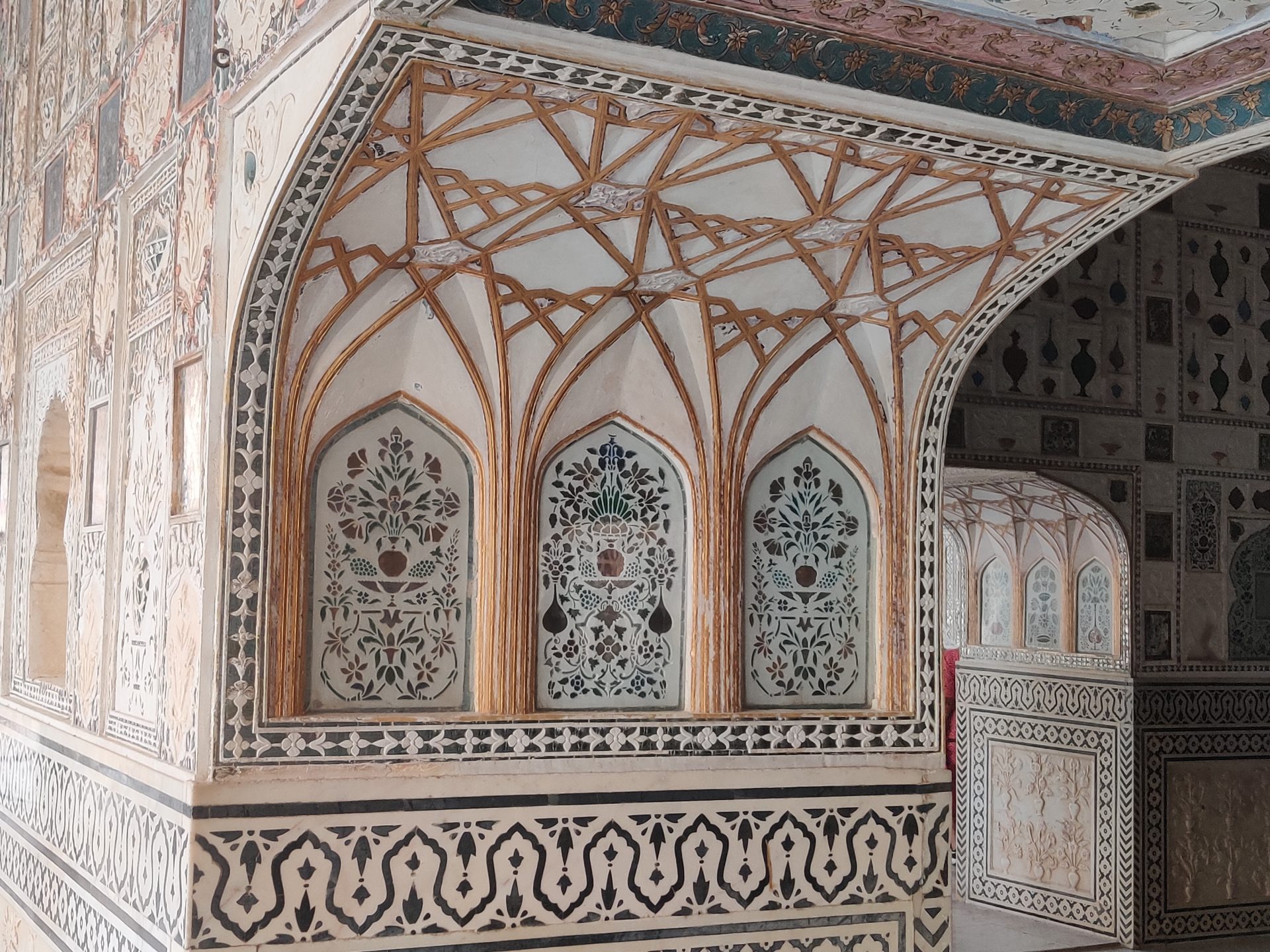
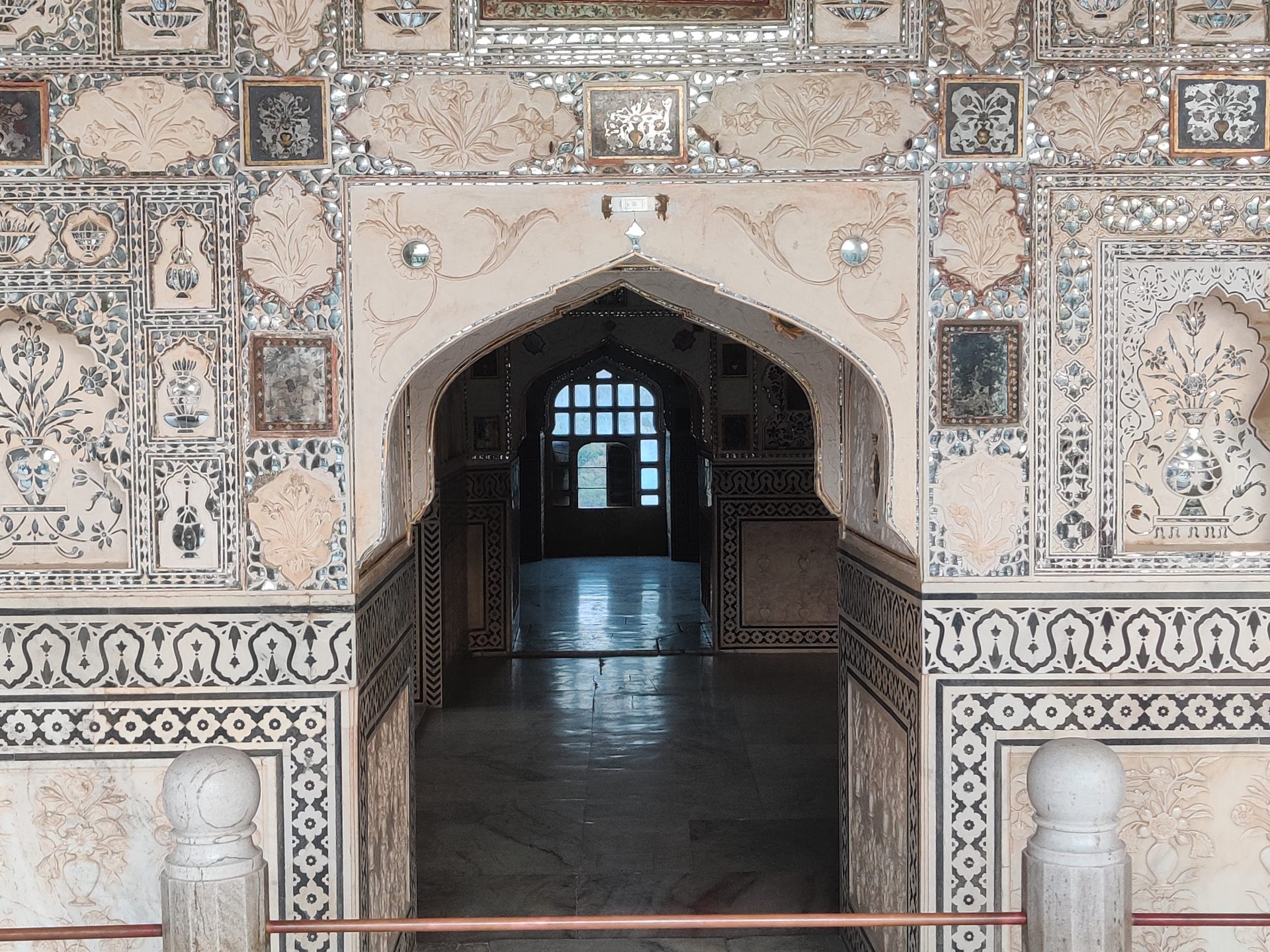
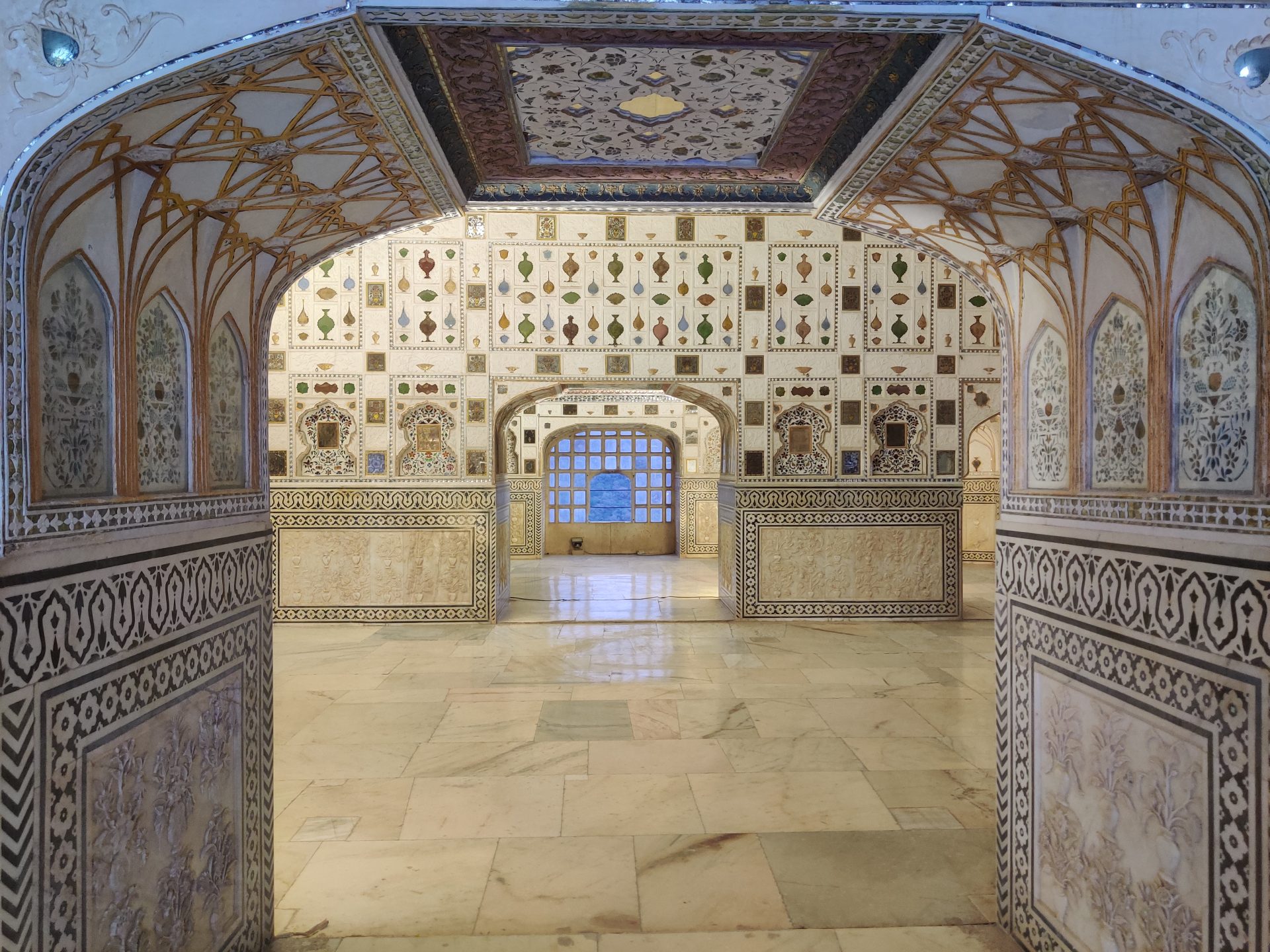
Built over 4 levels, and each with its own courtyard, the palace, influenced by Mughal Architecture has similar buildings found in their monuments like the Diwan-e-Aam which was the hall for holding fort to public audience and the Diwan-e-Khas which was the Hall of private audience for meetings with kings, statesmen, royal family members from other kingdoms etc. There is an intricately designed place of Mirrors known as the Sheesh Mahal or Jai Mandir and the Sukh Mandir.
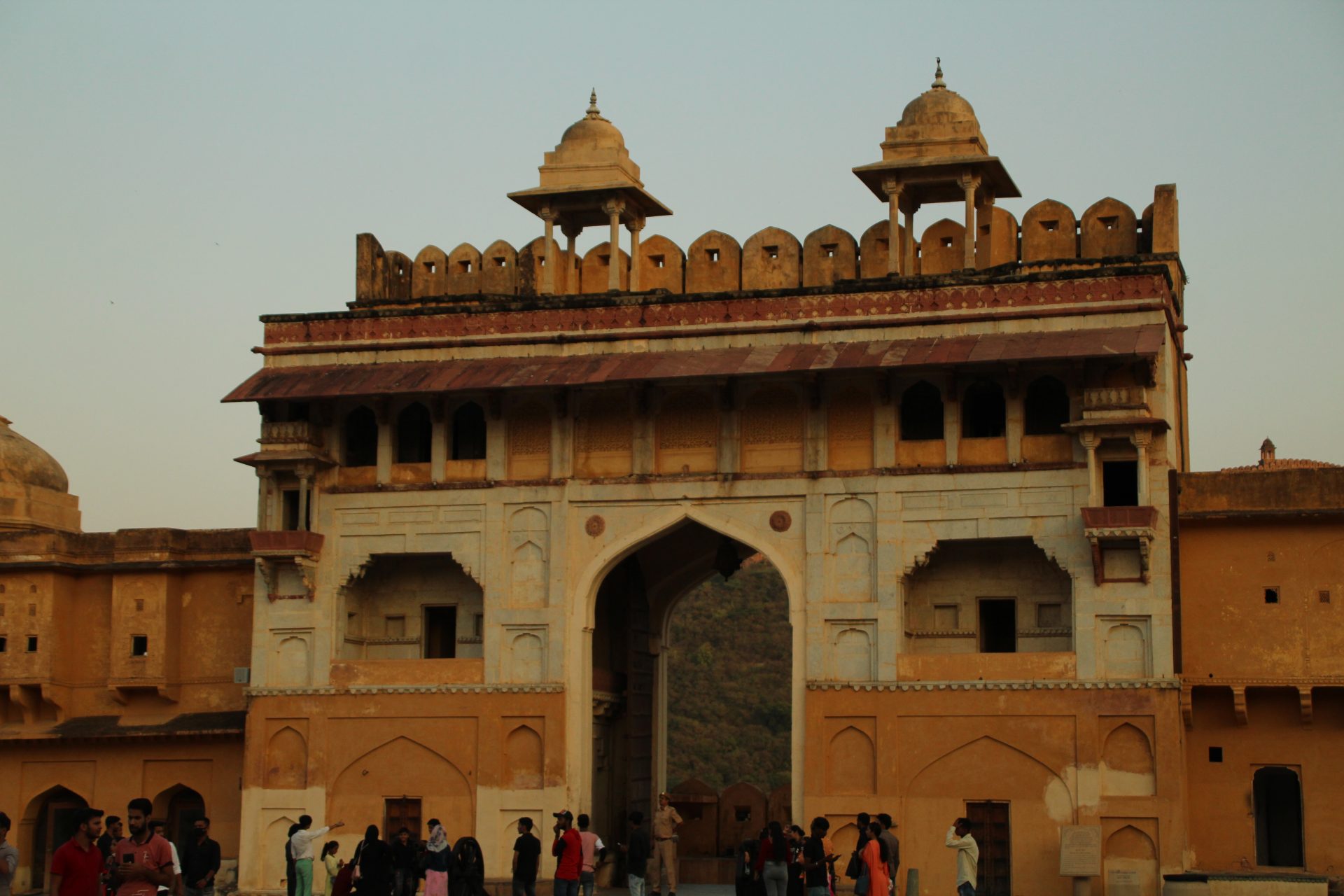
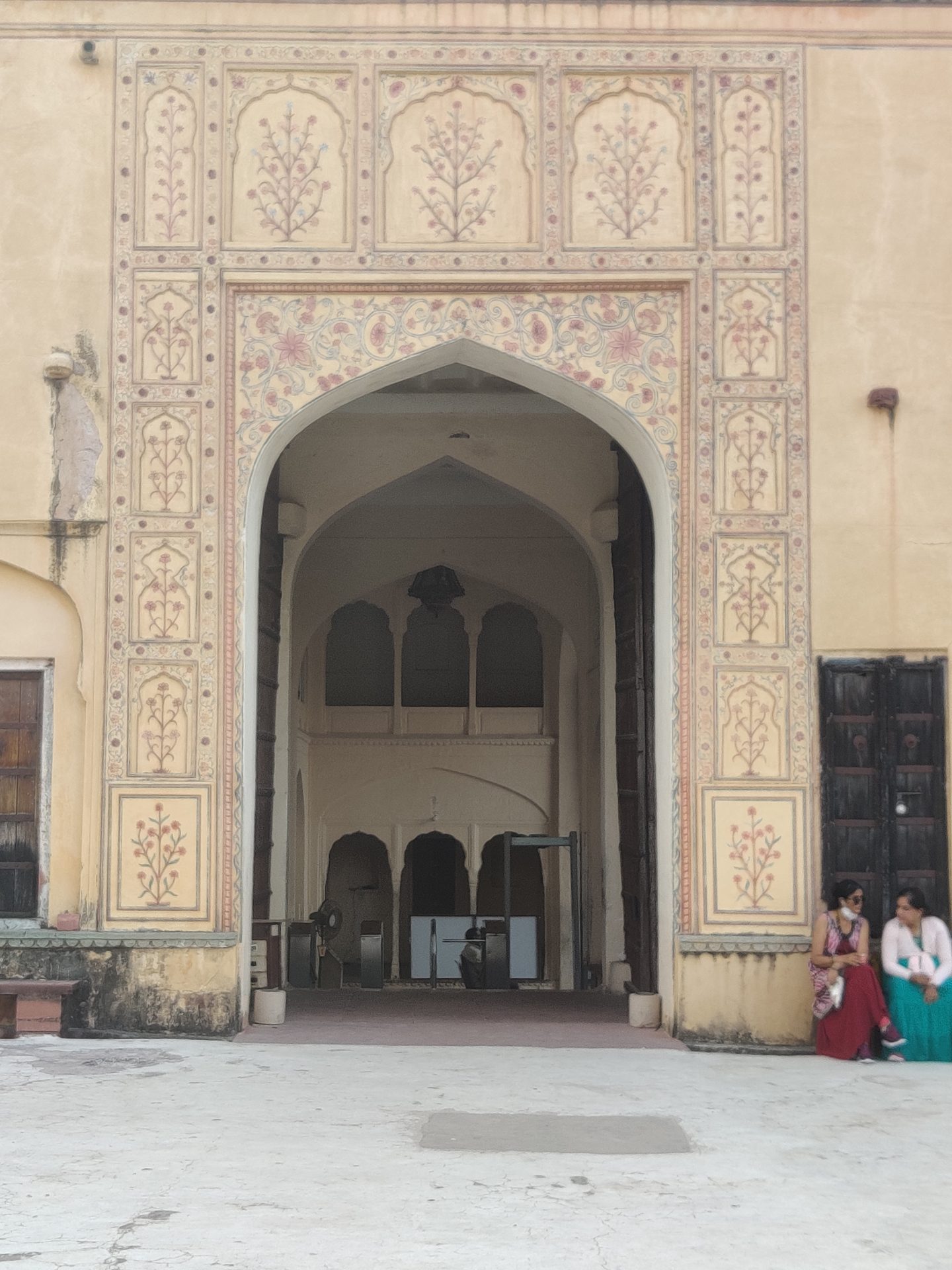
A walk through the cobbled pathway leads one to the Palace grounds where the Lion Gate is located. Here is where one needs to buy the tickets to enter the fort and each ticket is priced at Rs.25/-. A temple dedicated to Shila Devi, a goddess of the Chaitanya cult which was given to Raja Man Singh when he defeated the Raja of Jessore can be seen right next to the steps which takes one to the next higher level. The Lion Gate was once upon a time a guarded gate as through this gate only could one make their way to the private quarters of the kings and the name has been used to suggest strength. This was built during King Sawai Jai Singh’s rule and is aligned in a zigzag formation from a security standpoint of making it easier to attack intruders.
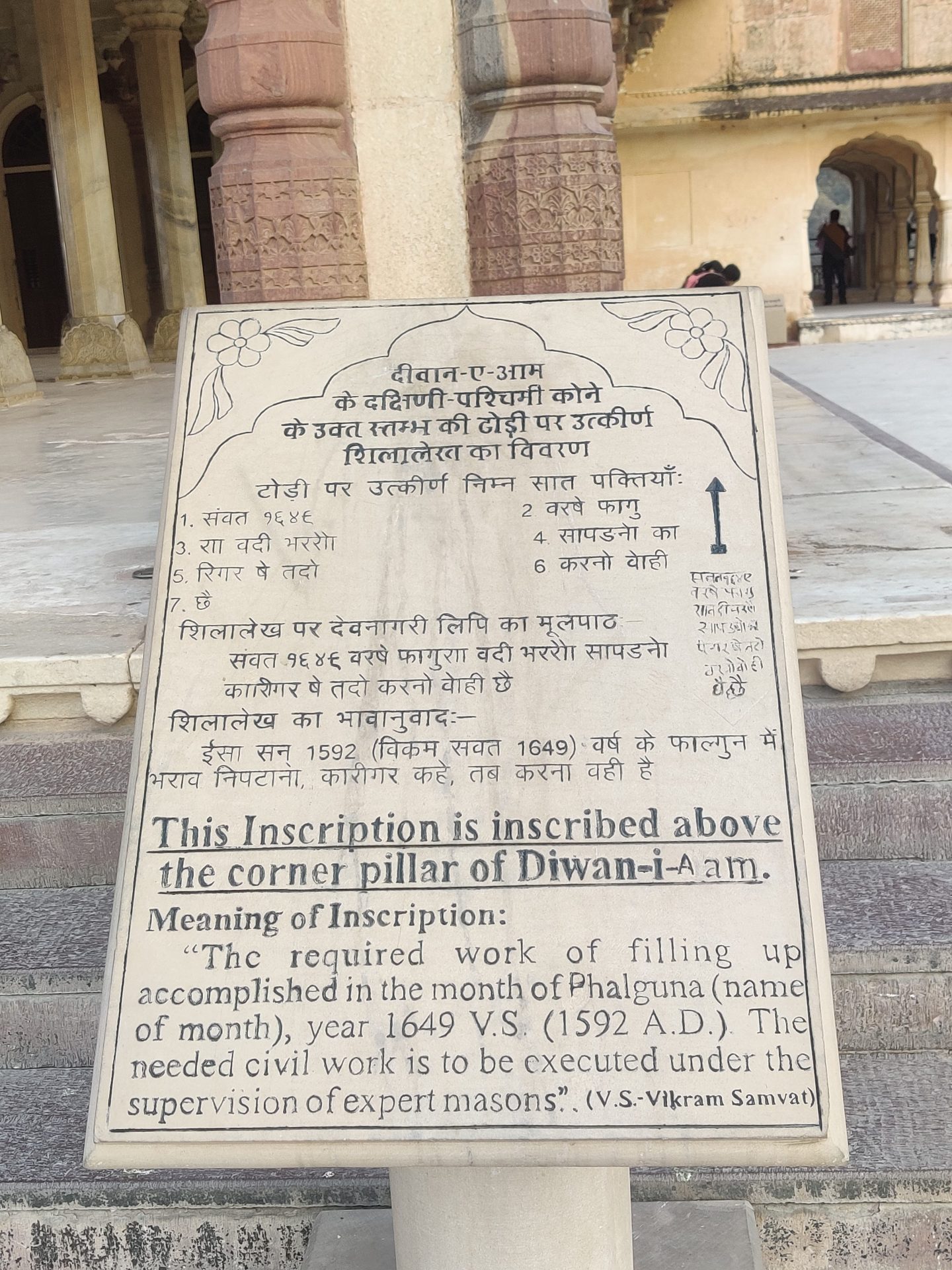
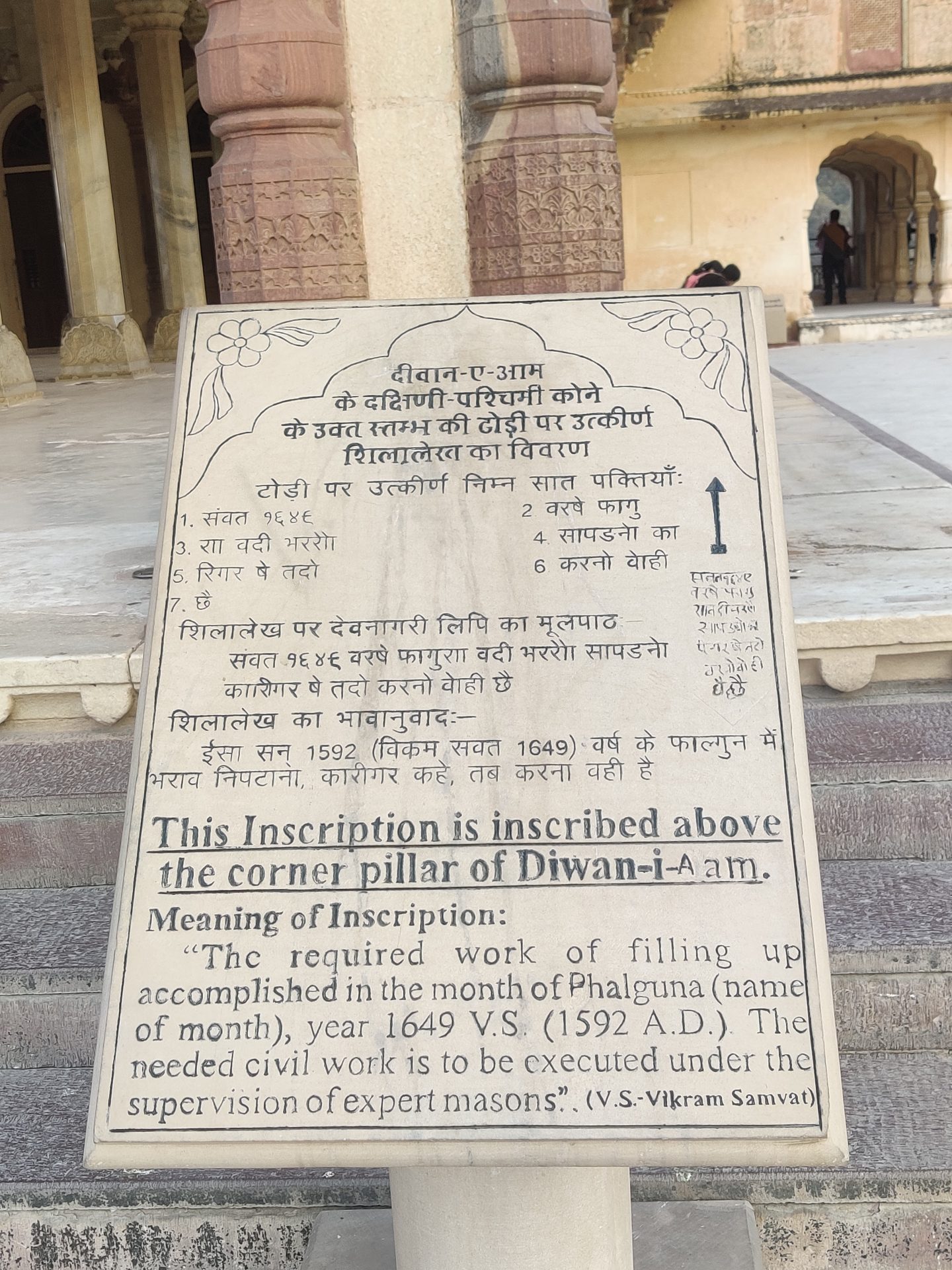
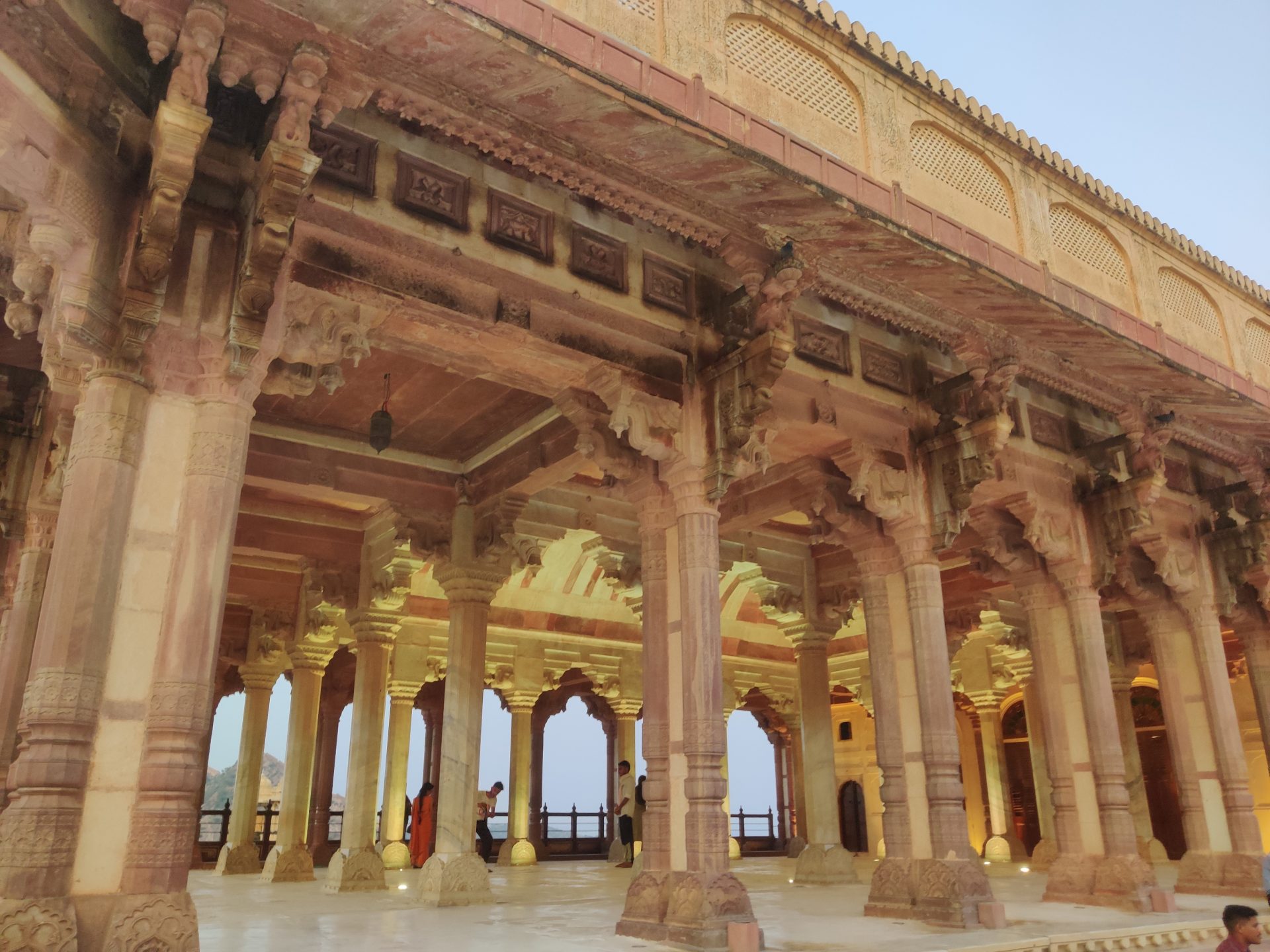
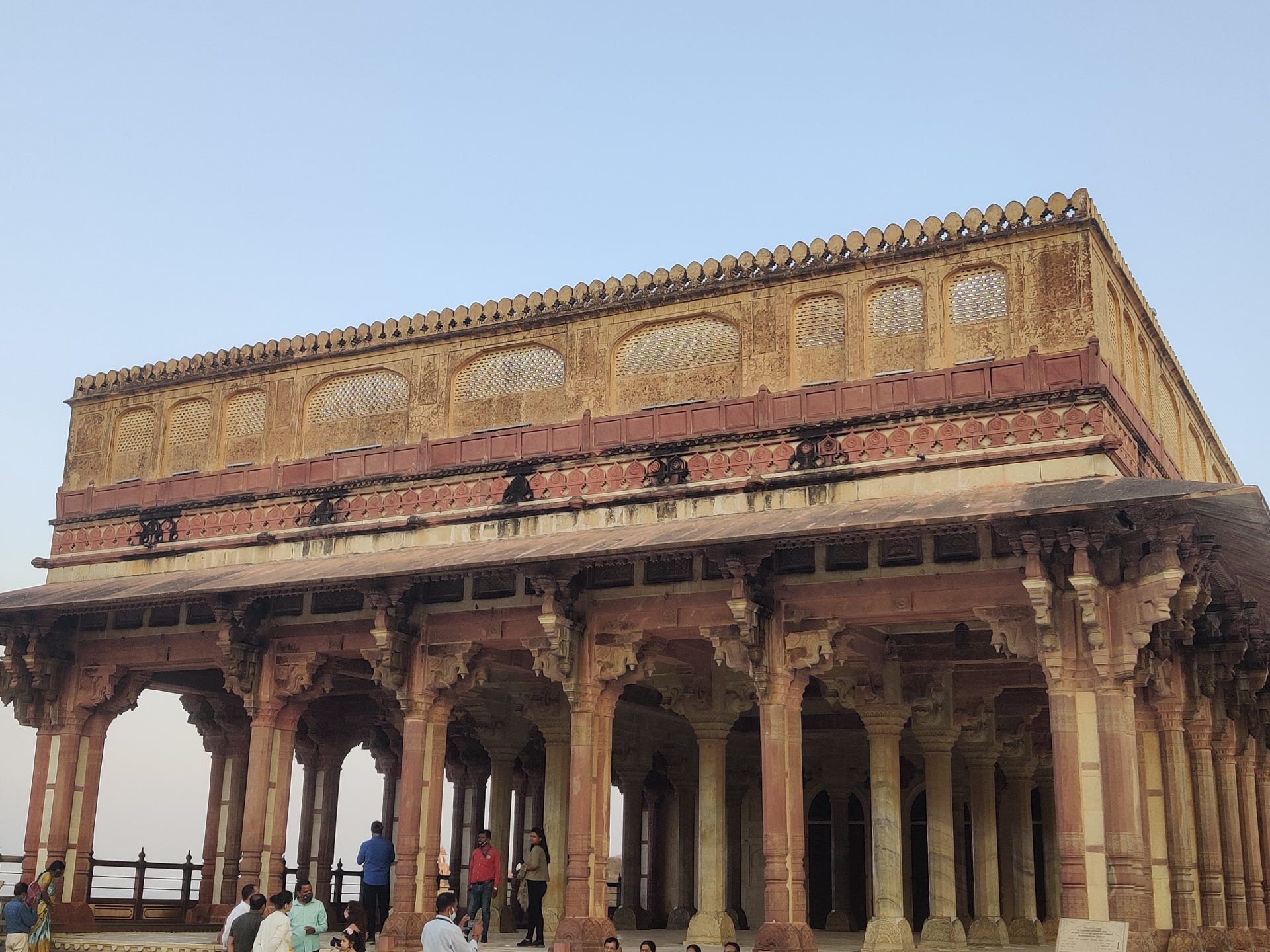
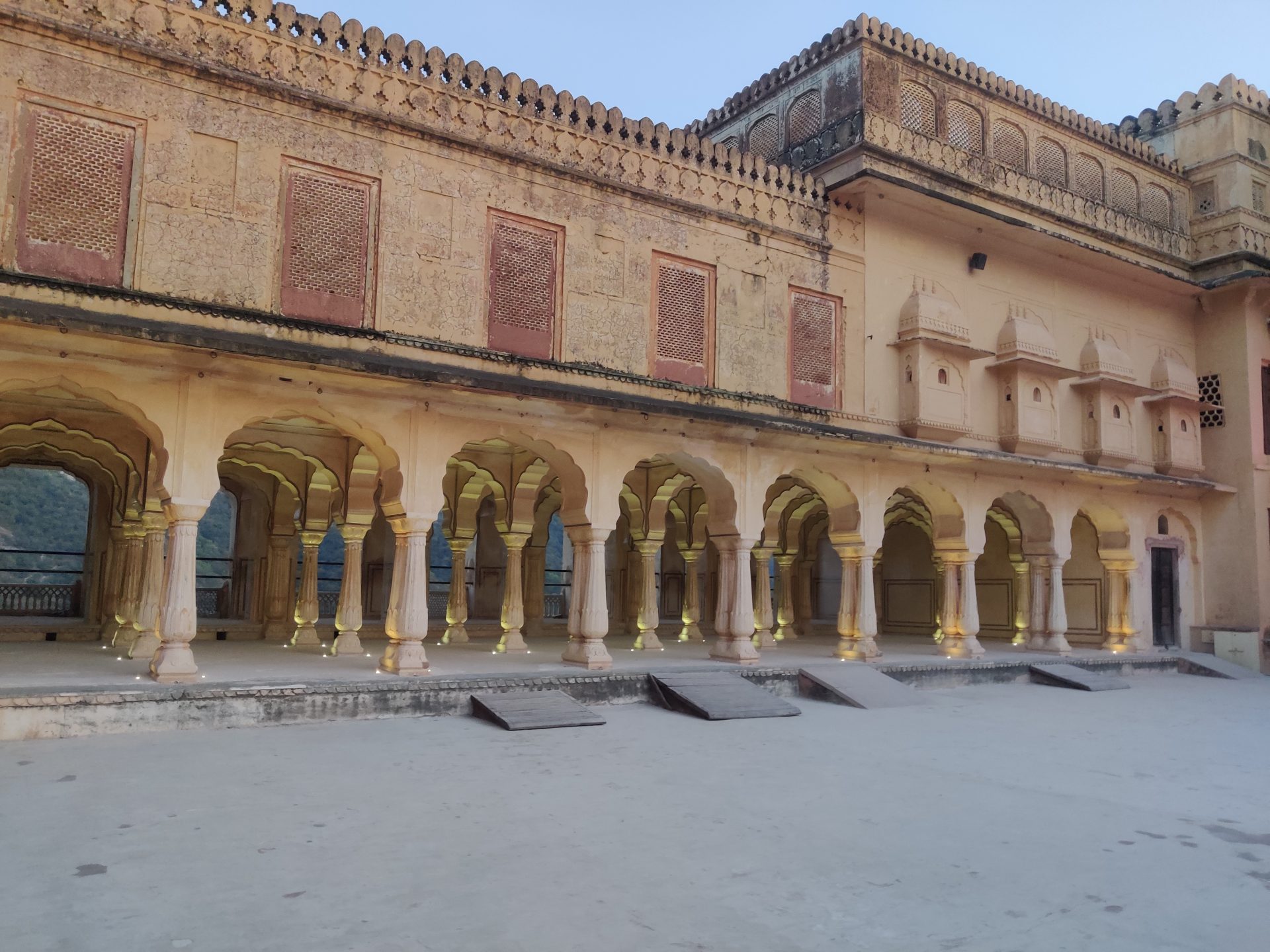
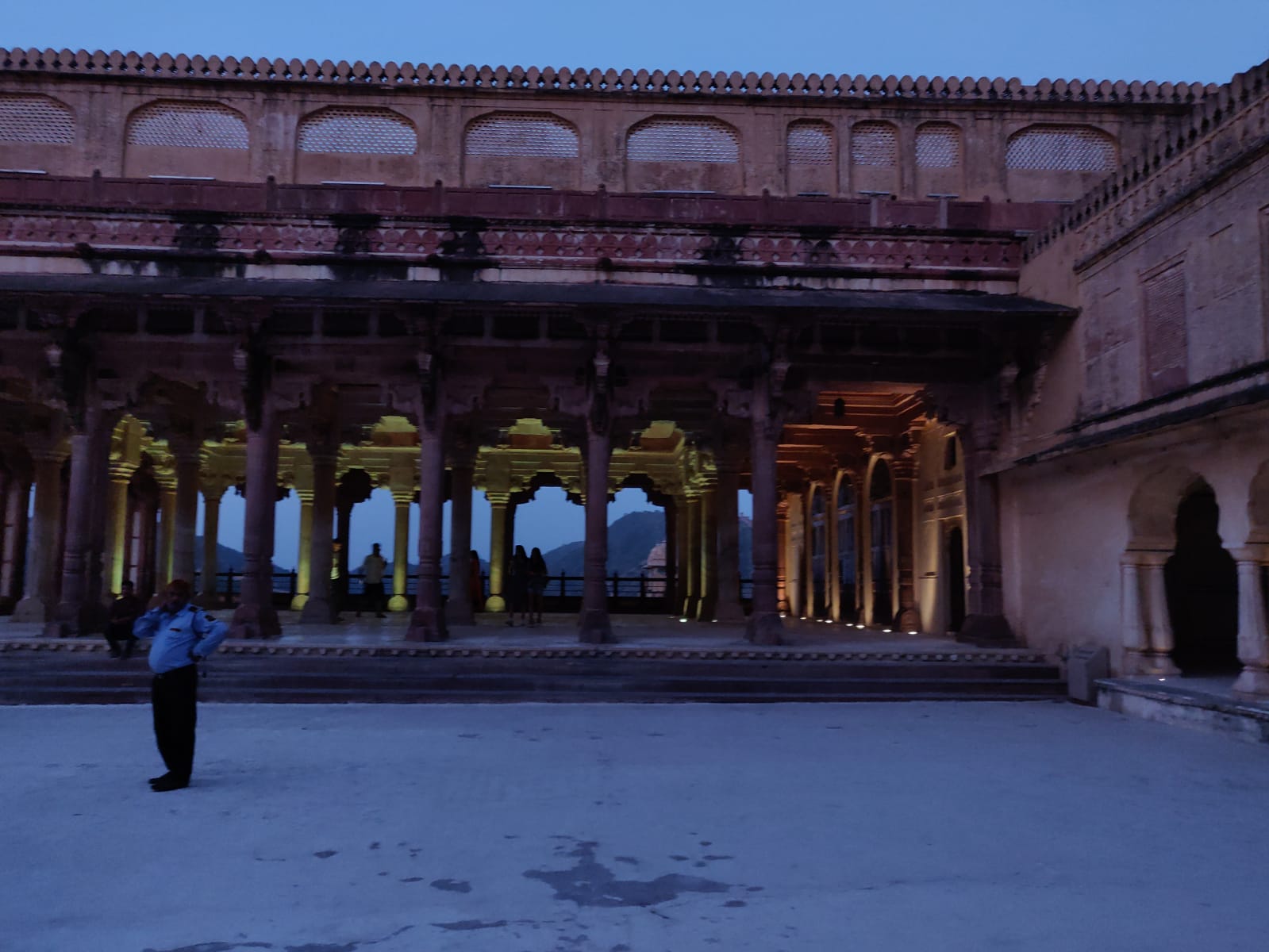
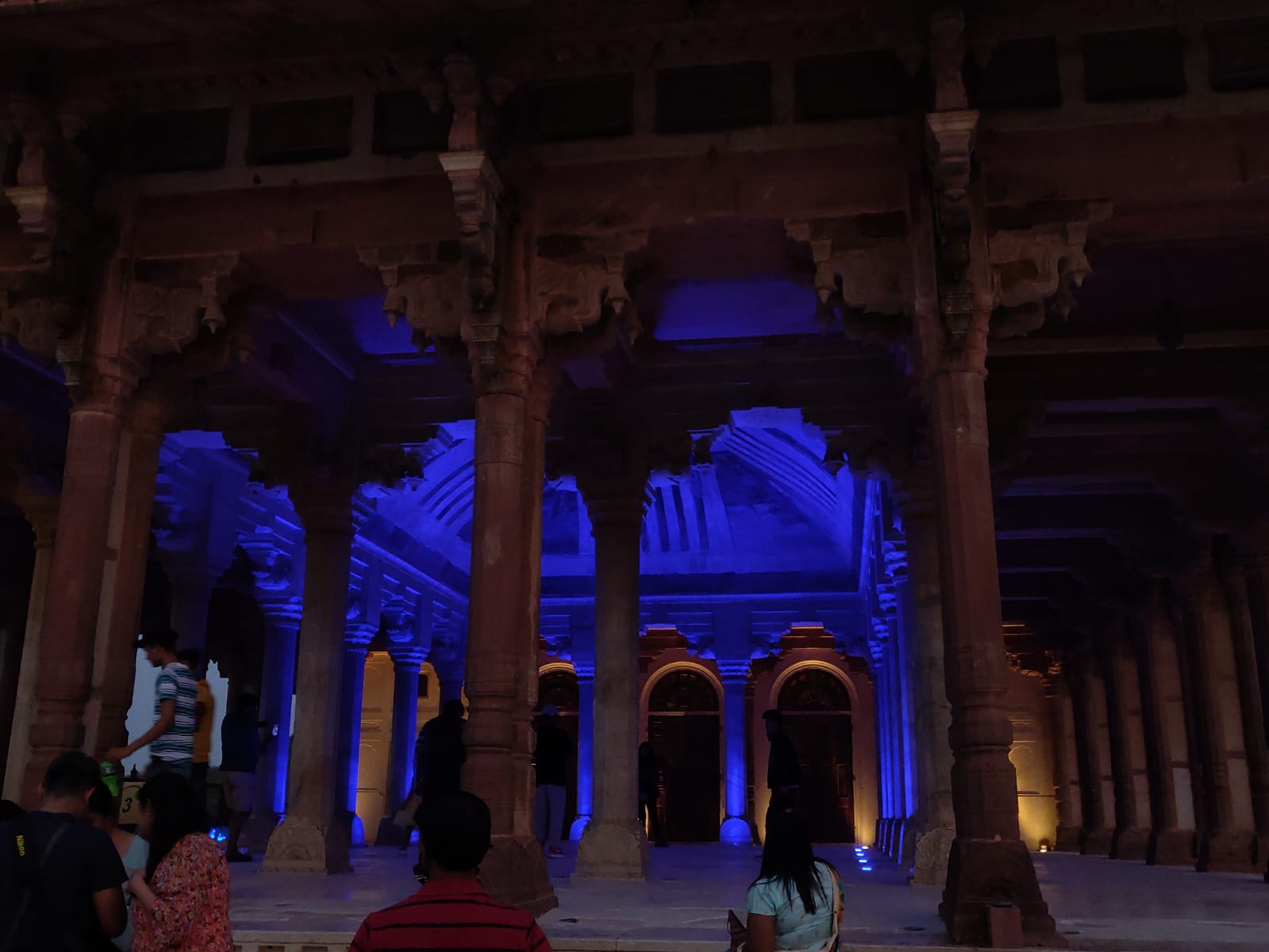
Next up is the second courtyard which leads to the Diwan-i-Aam, the public audience hall. Built on a raised platform with 27 colonnades and each of which is mounted with an elephant shaped capital, this hall has double rows of columns.
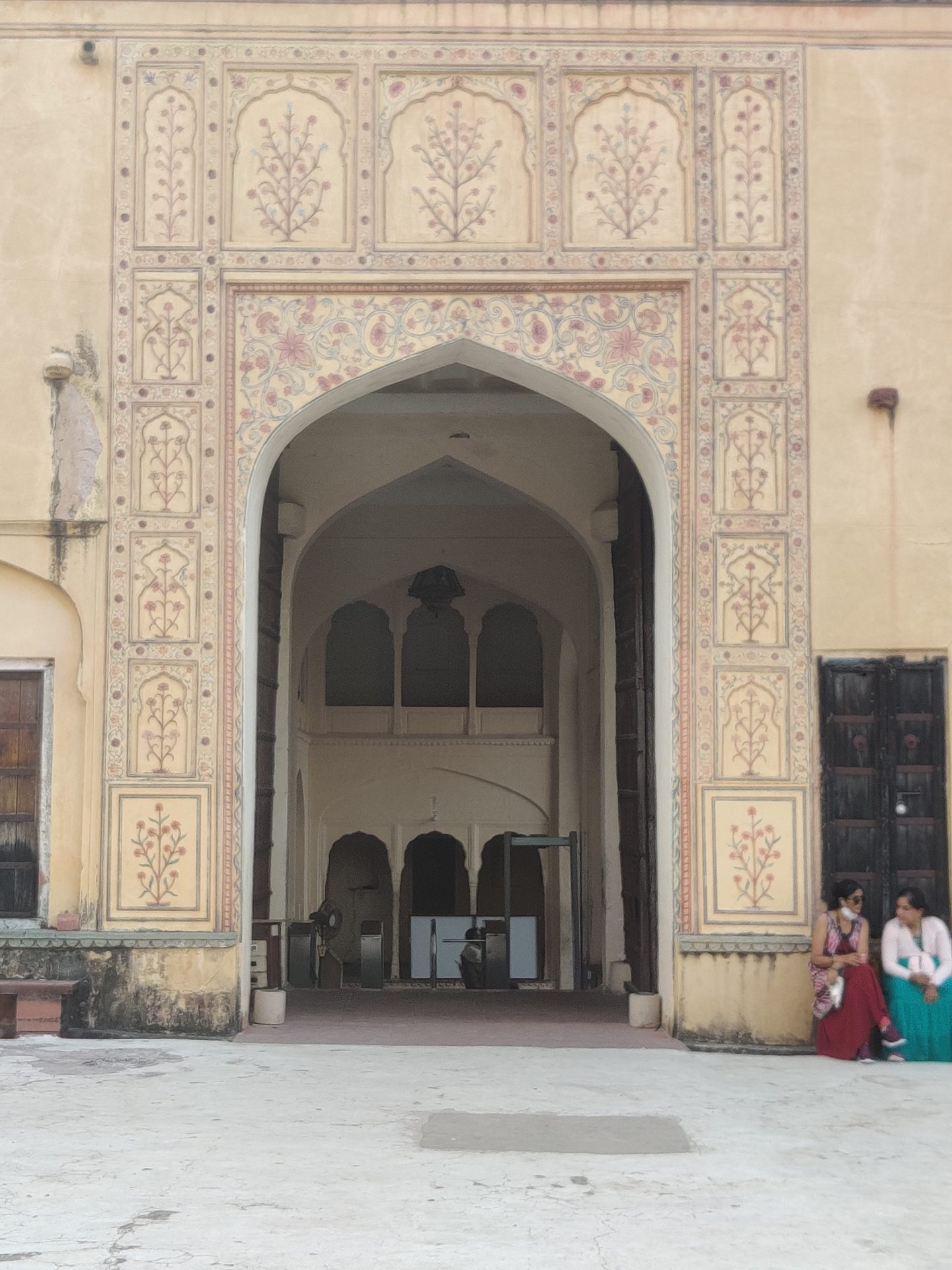
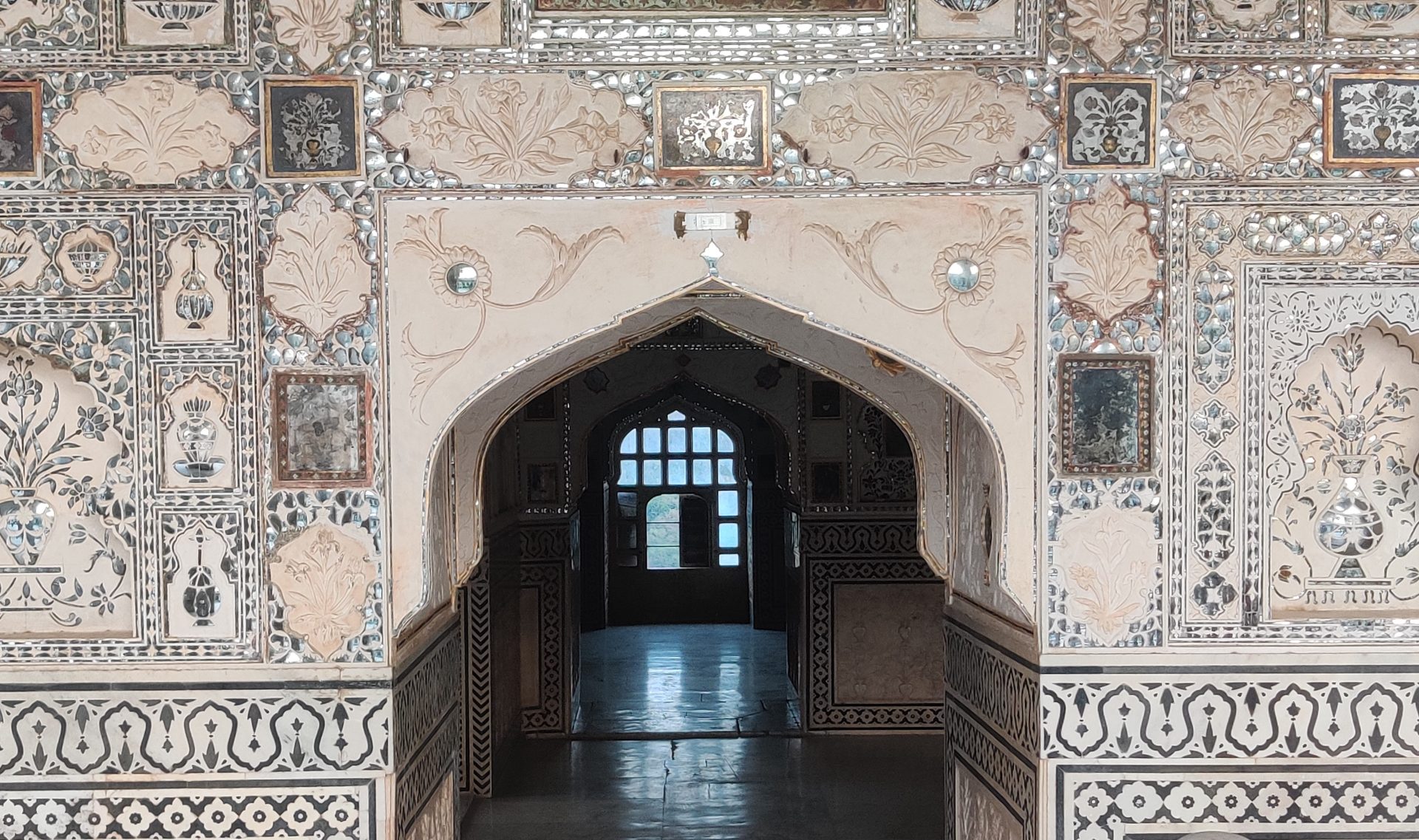
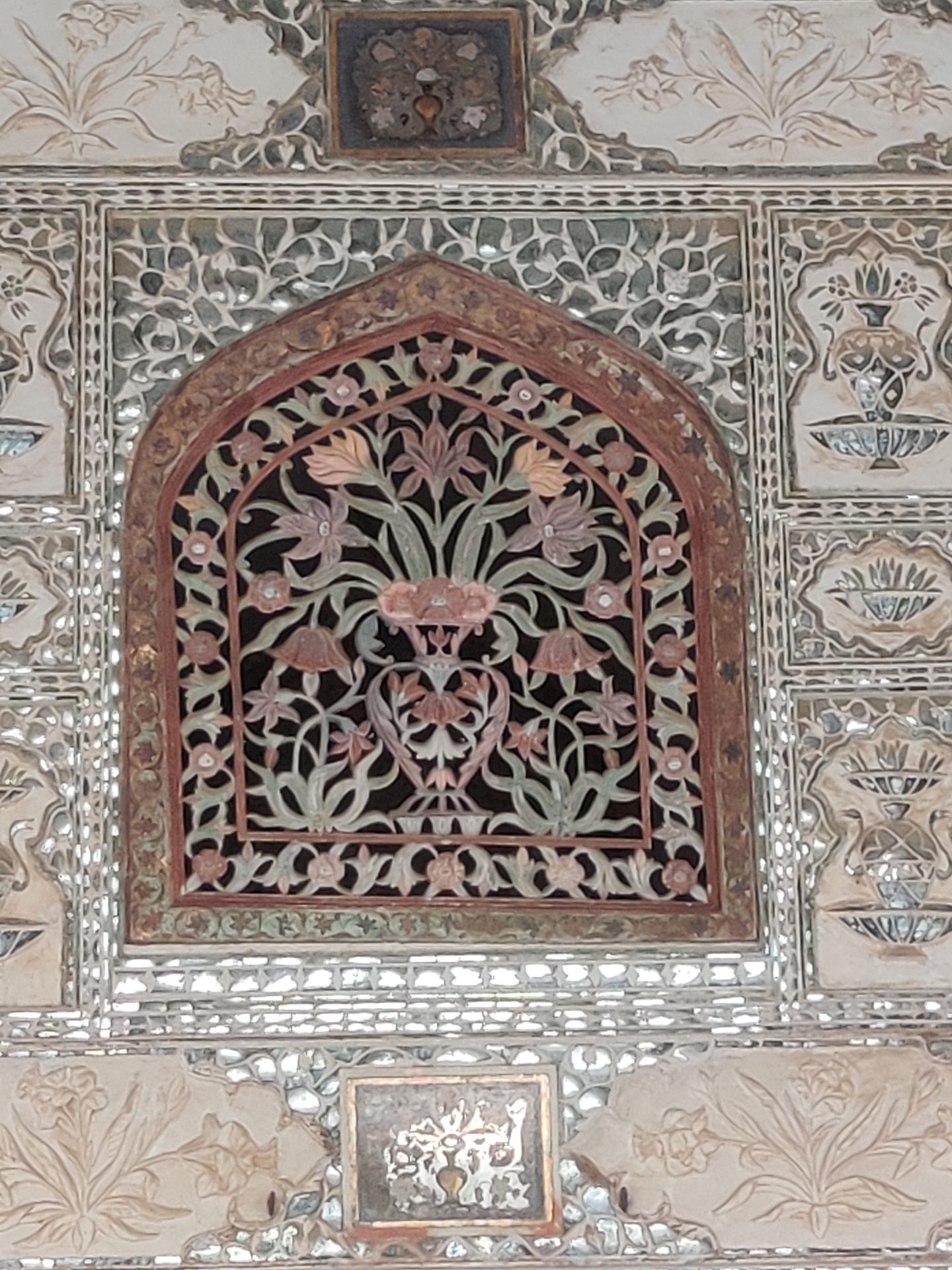
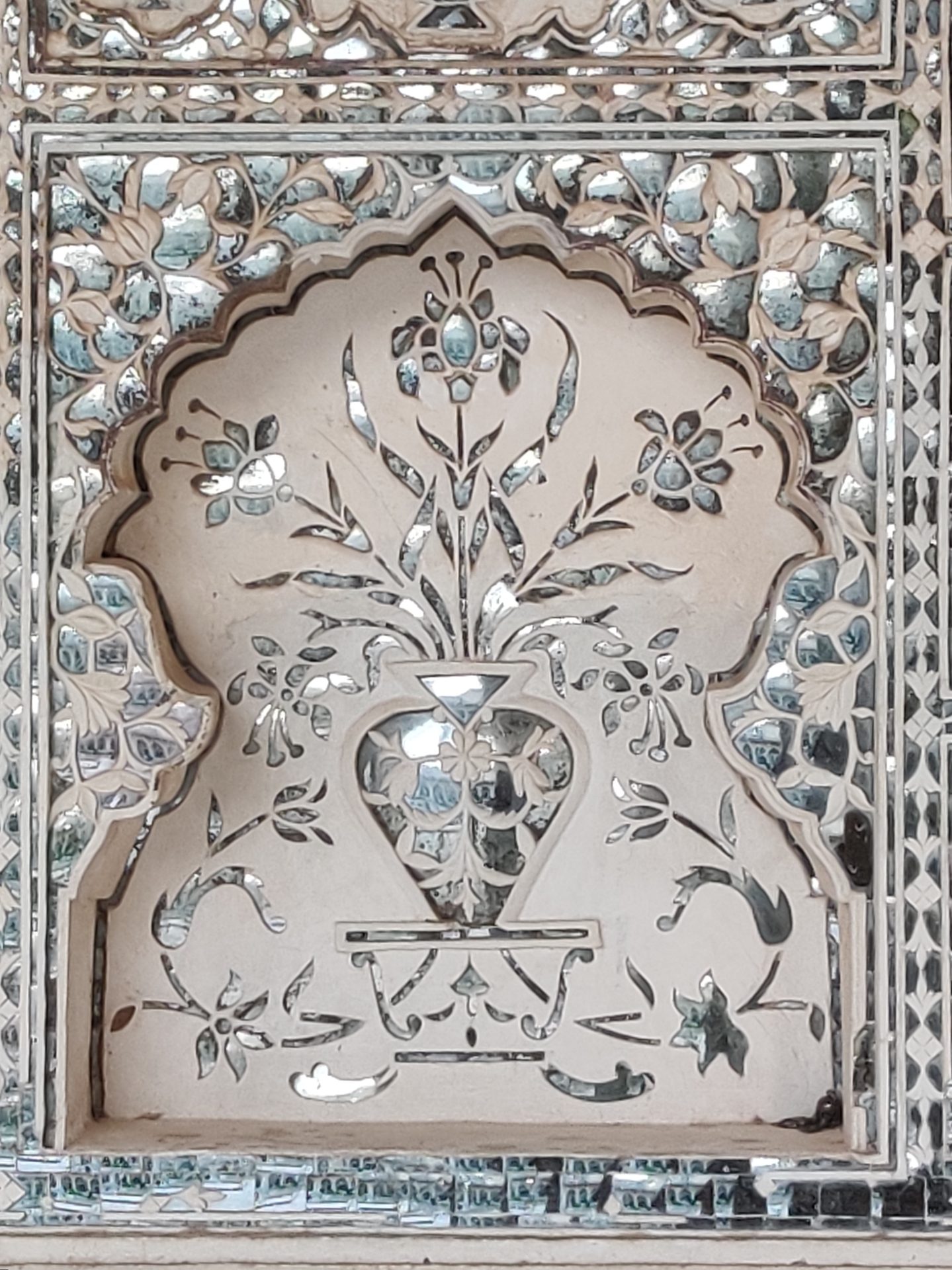
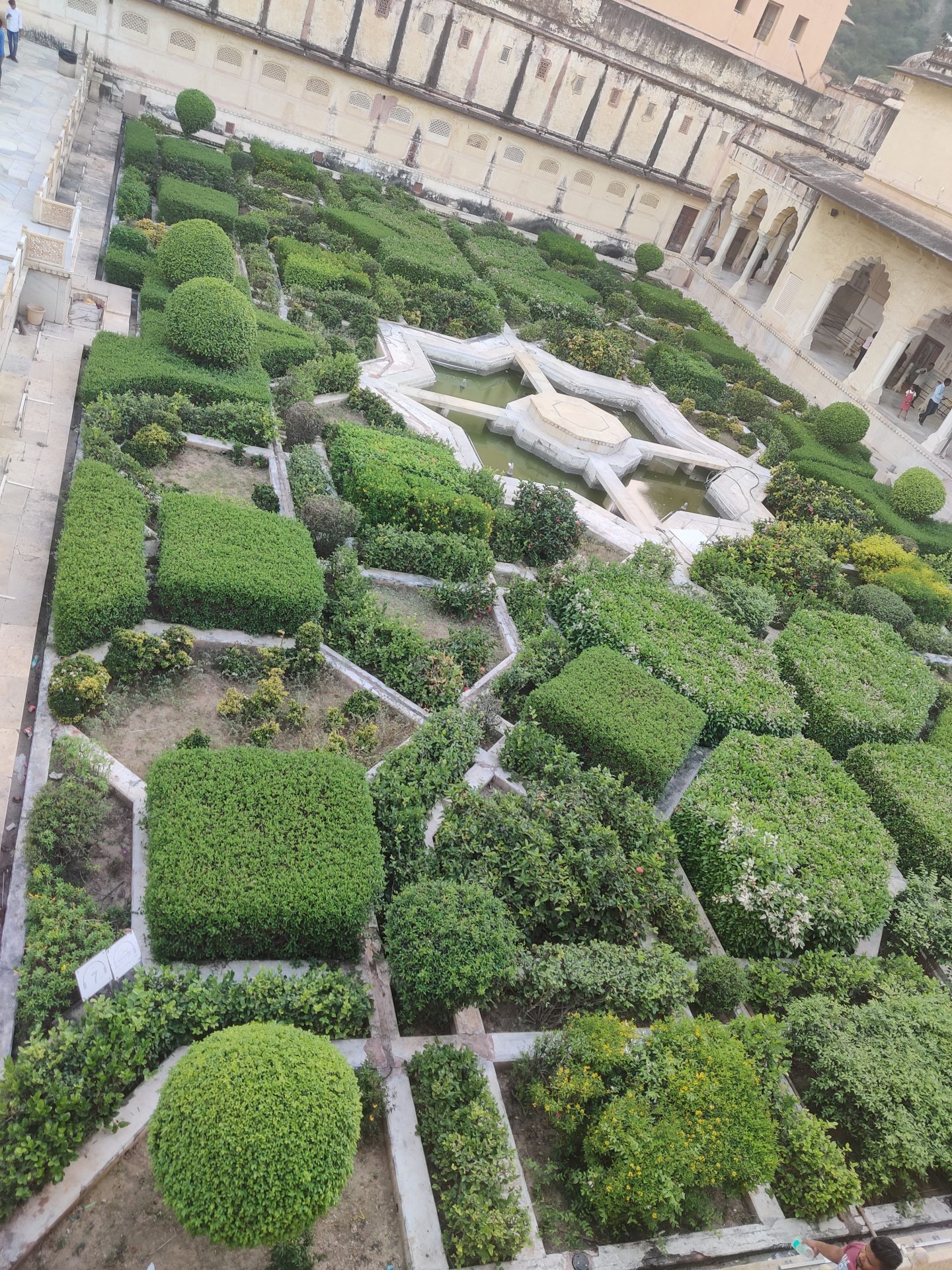
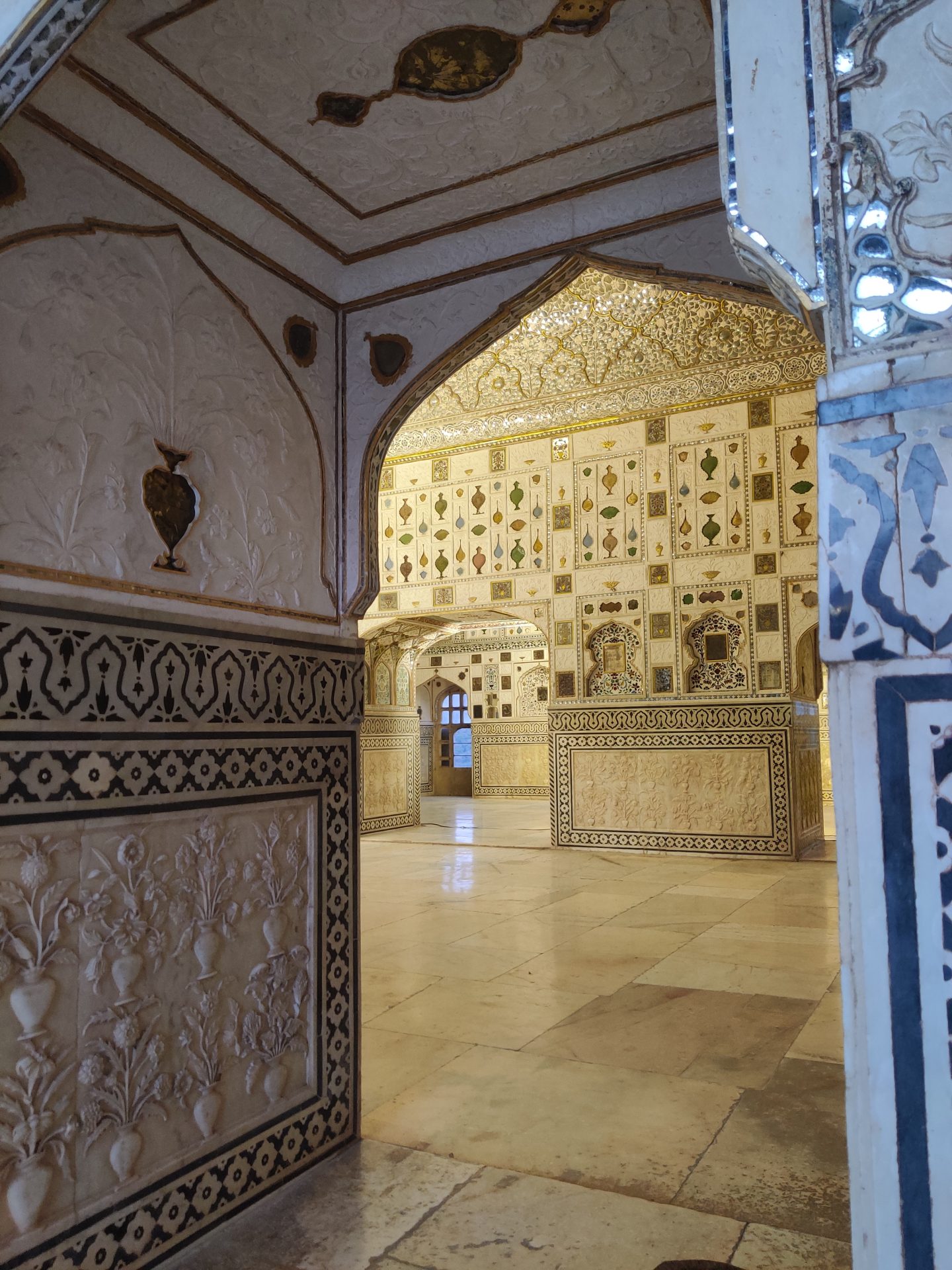
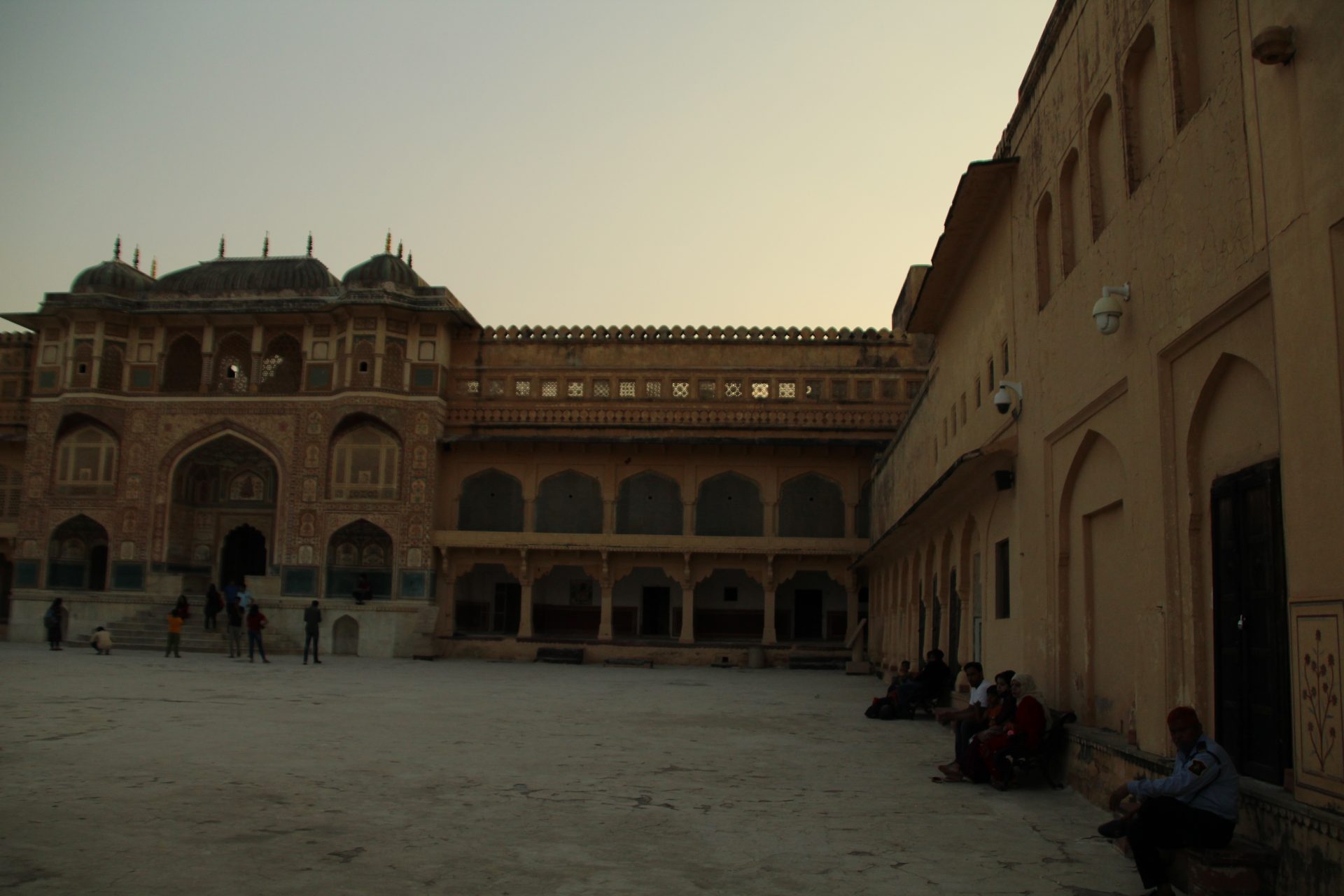
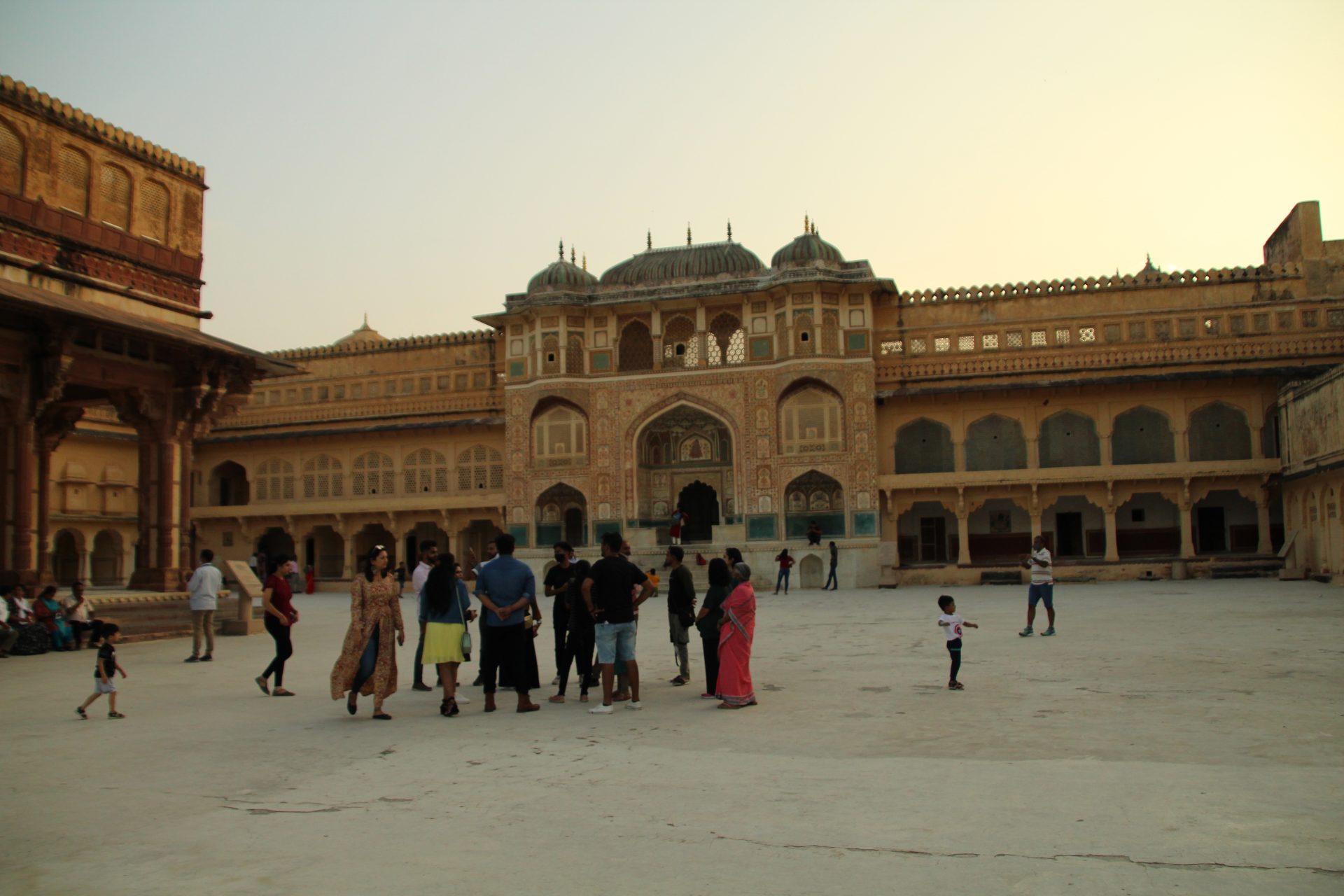
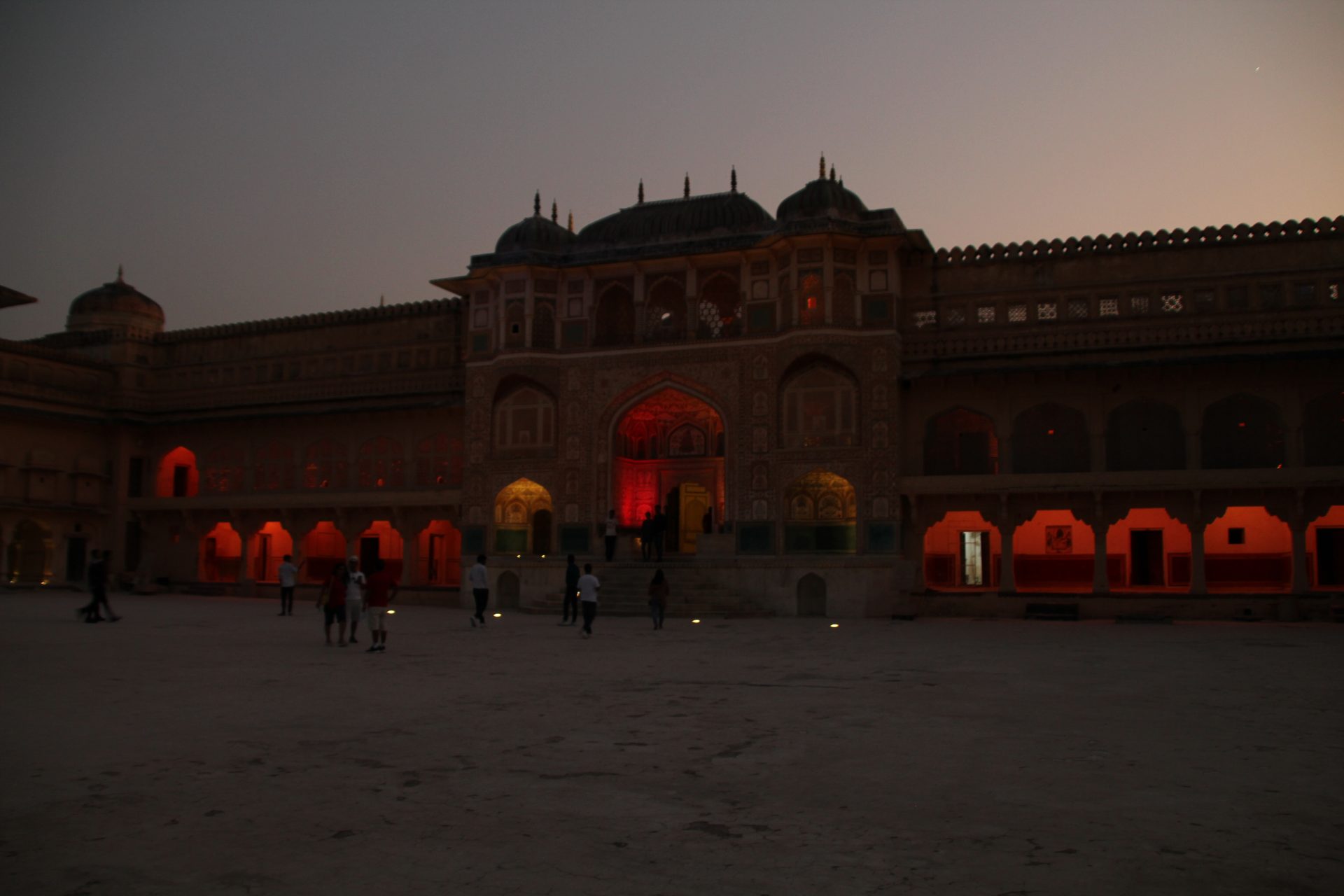
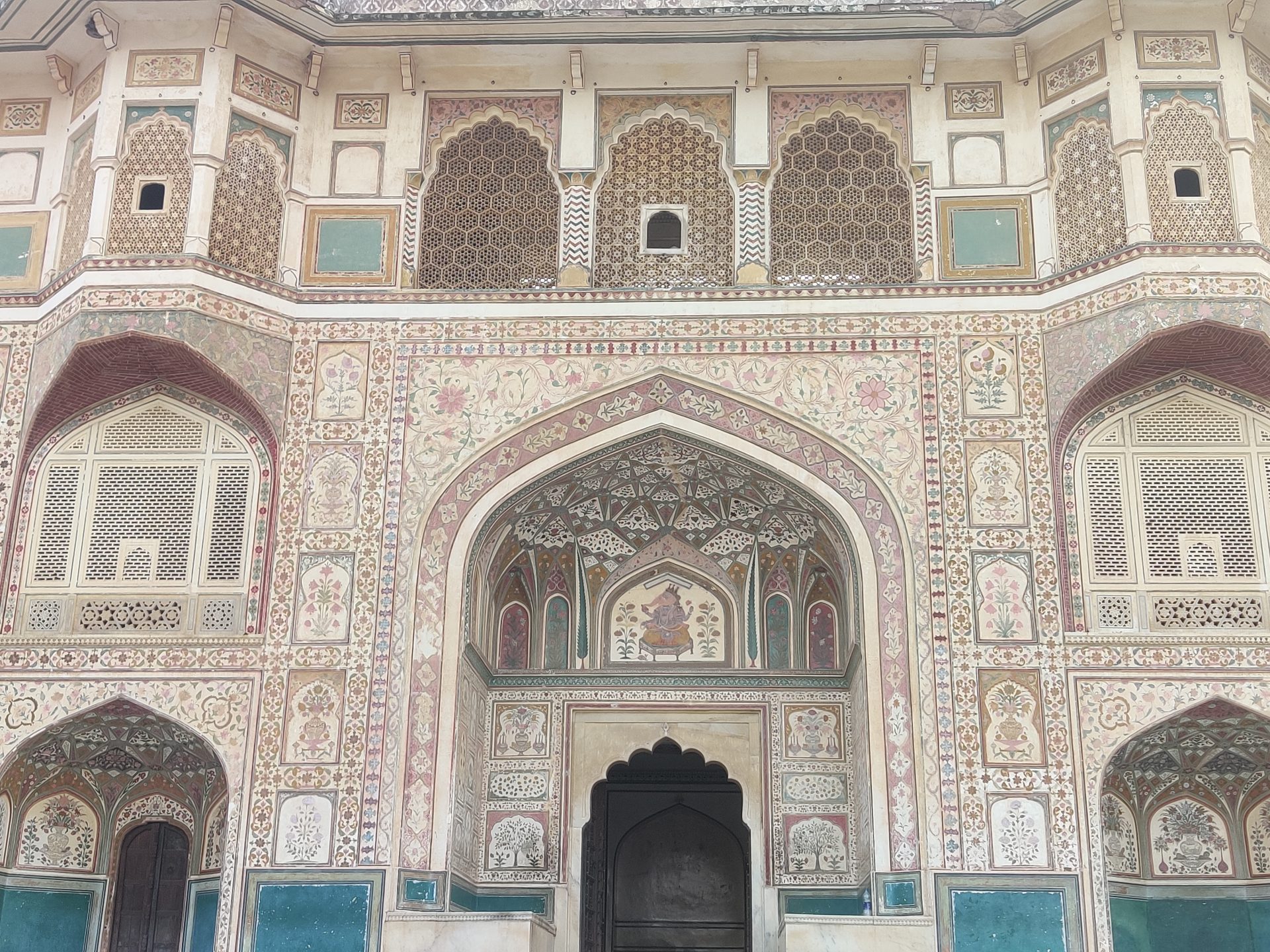
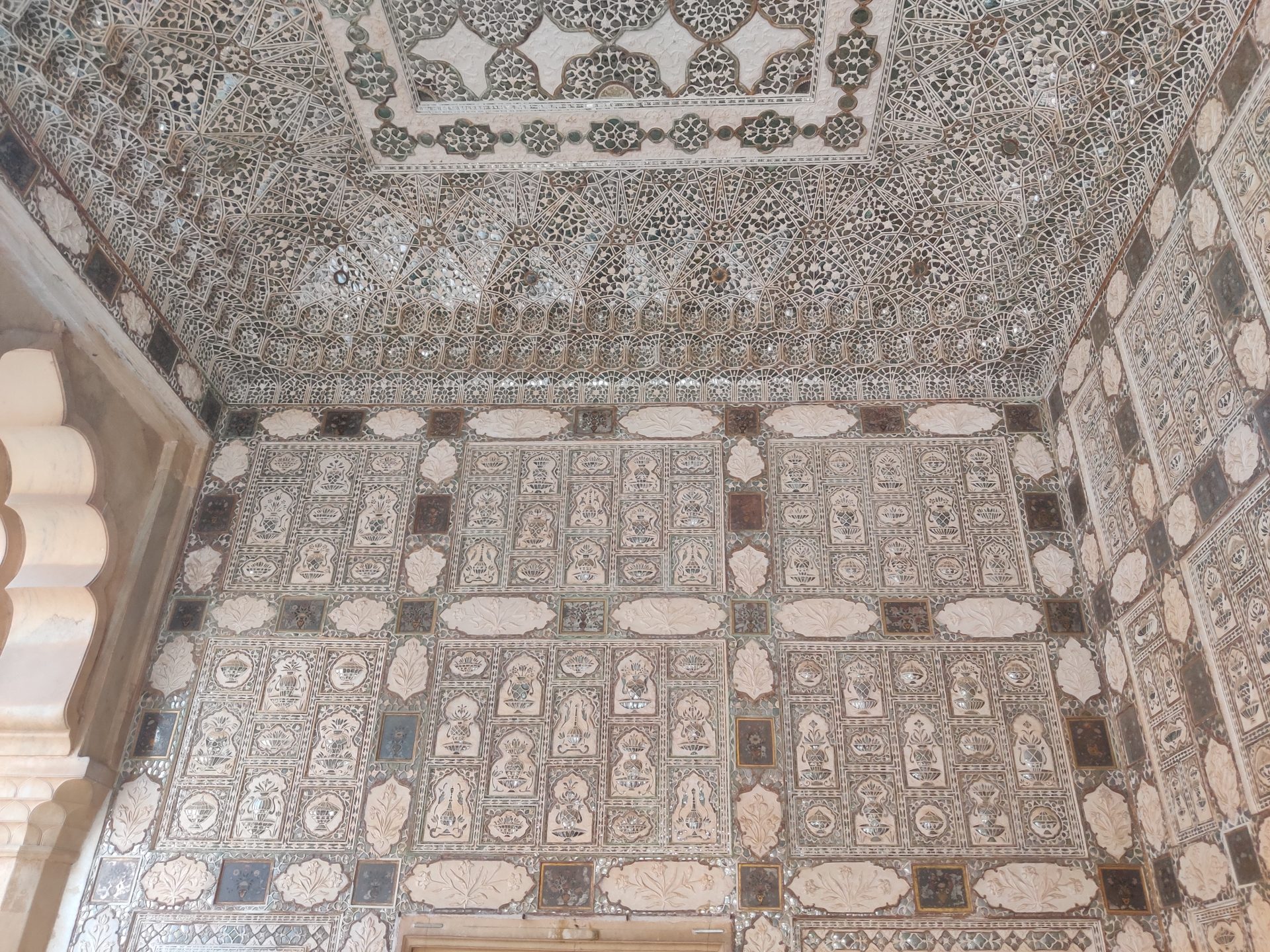
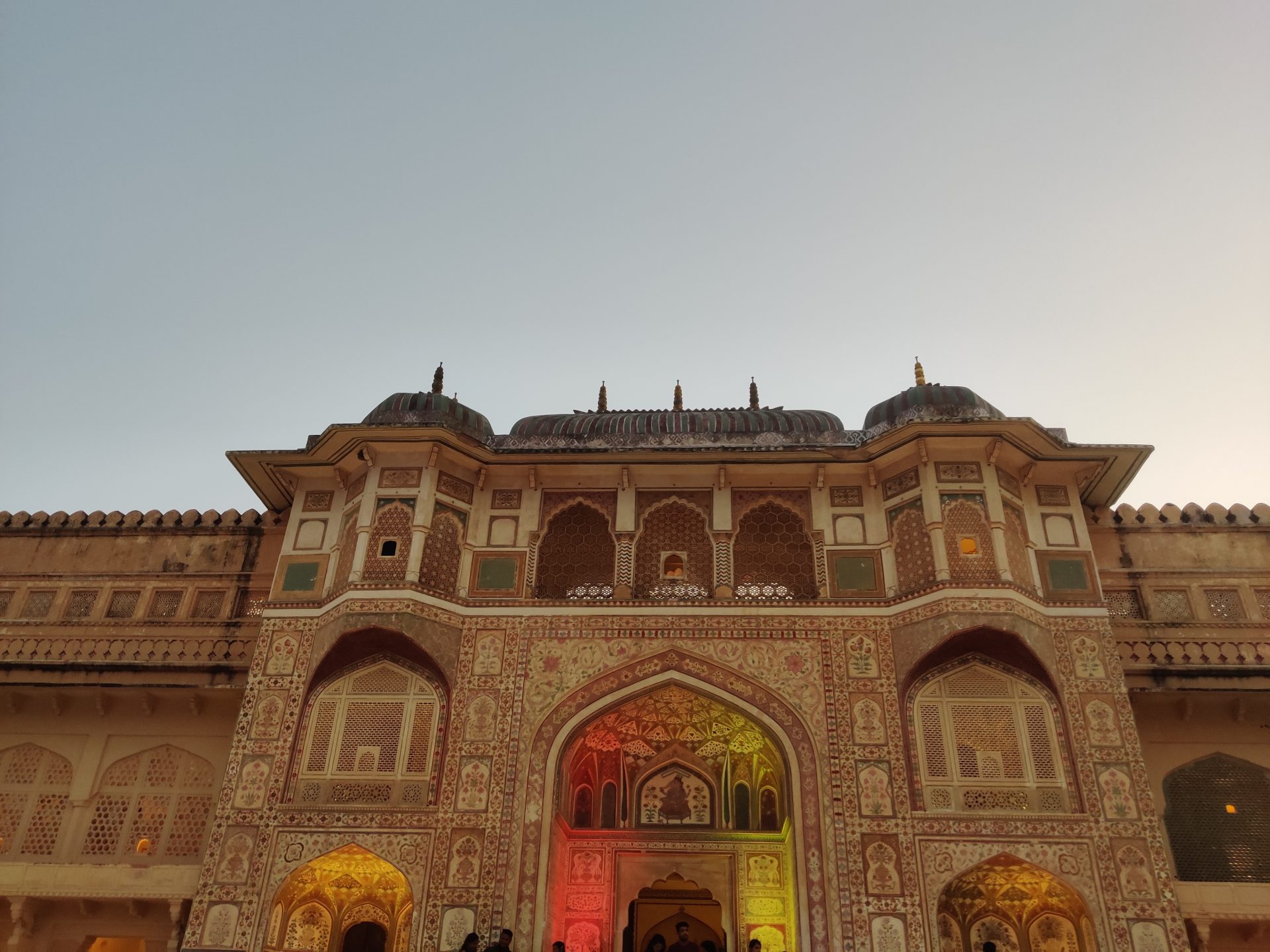
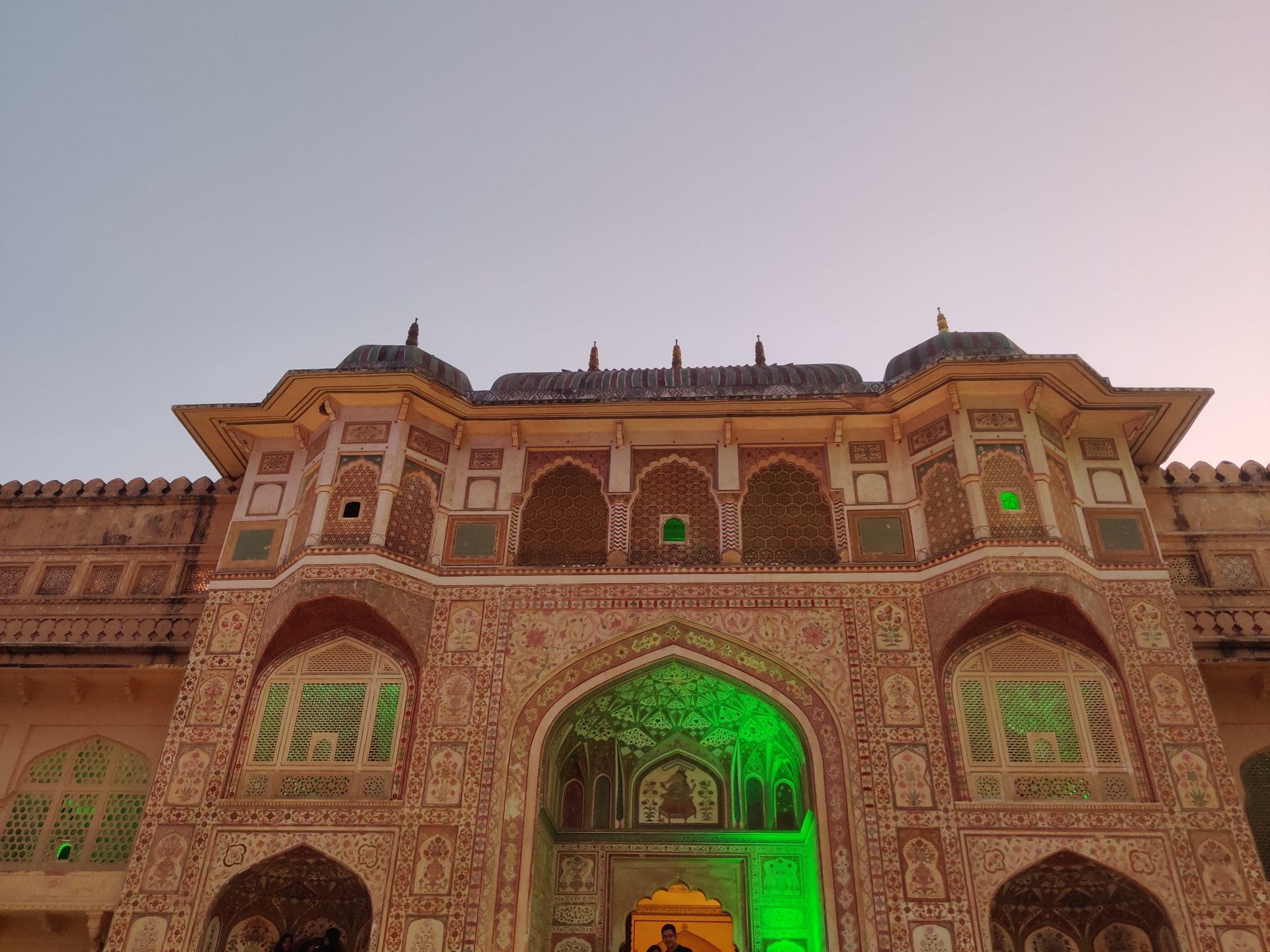
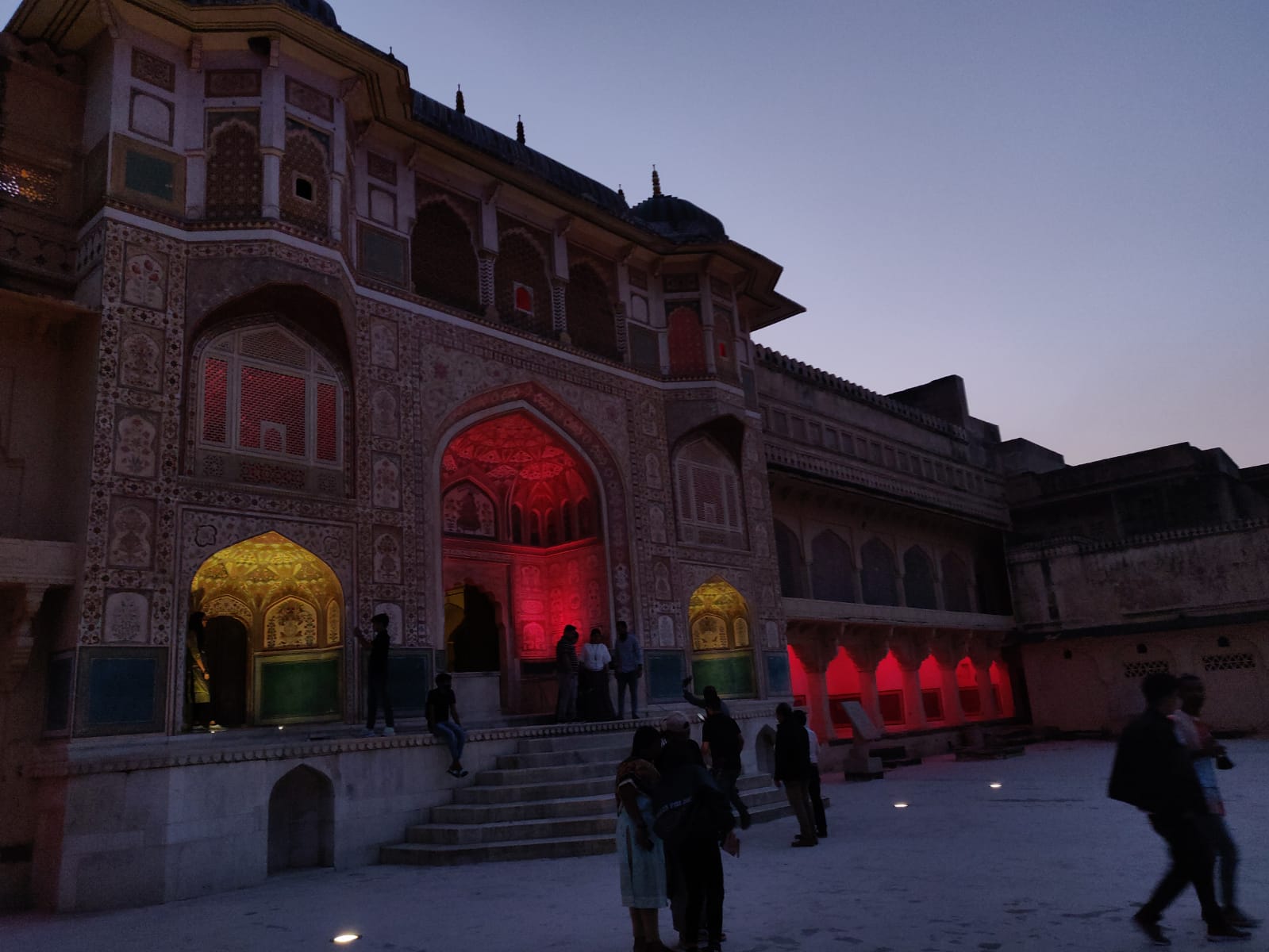
As we walk through the Ganesh Pol or the Ganesh Gate, we enter the courtyard leading to the private quarters of the Maharaja. The Gate stand out in terms of the intricately designed sculptures and mosaic designs over it. A Mughal styled garden separates two buildings present on either side of the courtyard. The Jal Mandir is present on one side which presents itself as an exquisite piece of architecture, all with mirrored ceilings and glass panels. The convex mirrors placed here are designed with paint and colored foil and they would glitter under candlelight at the time of its use.
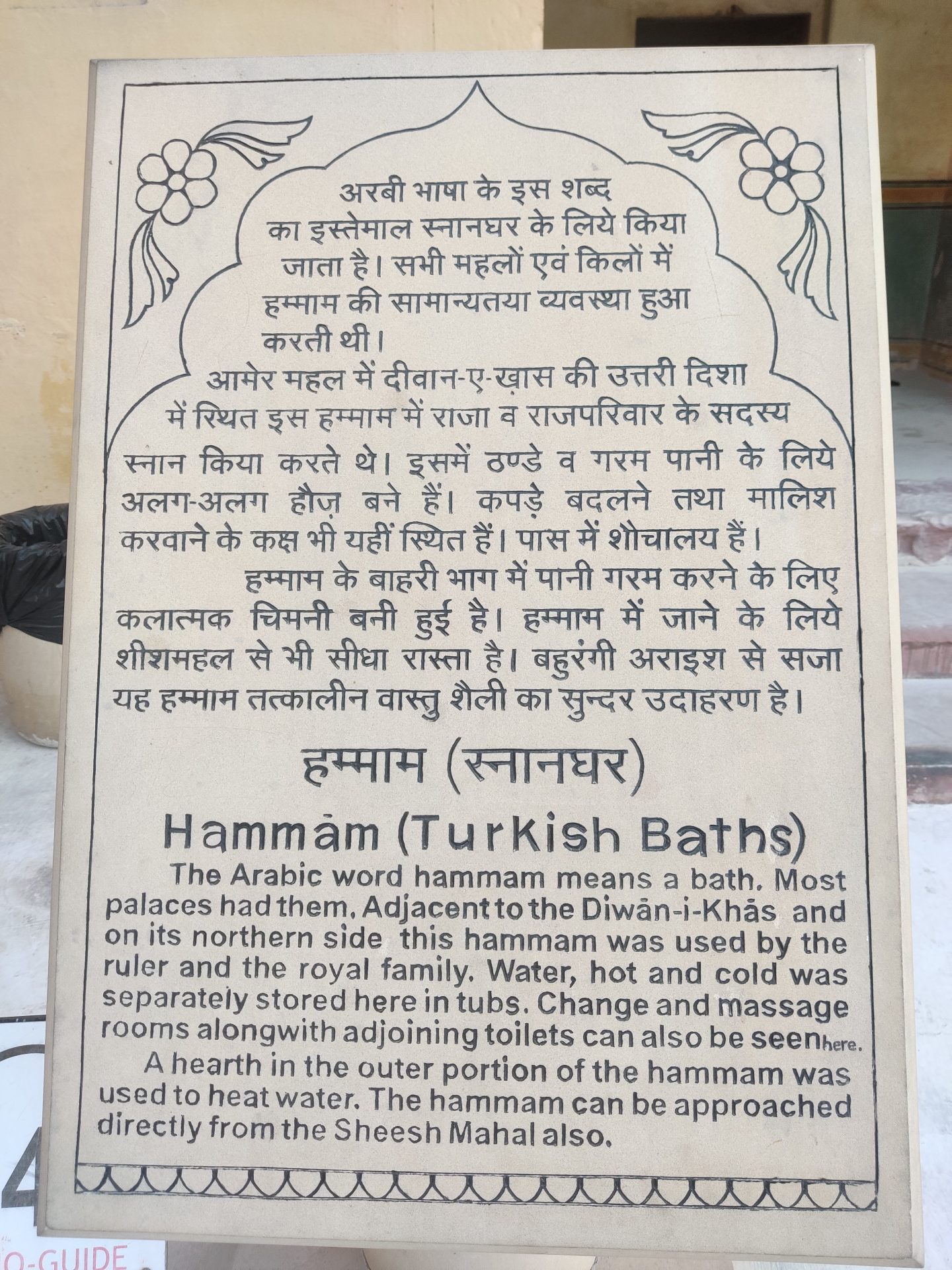
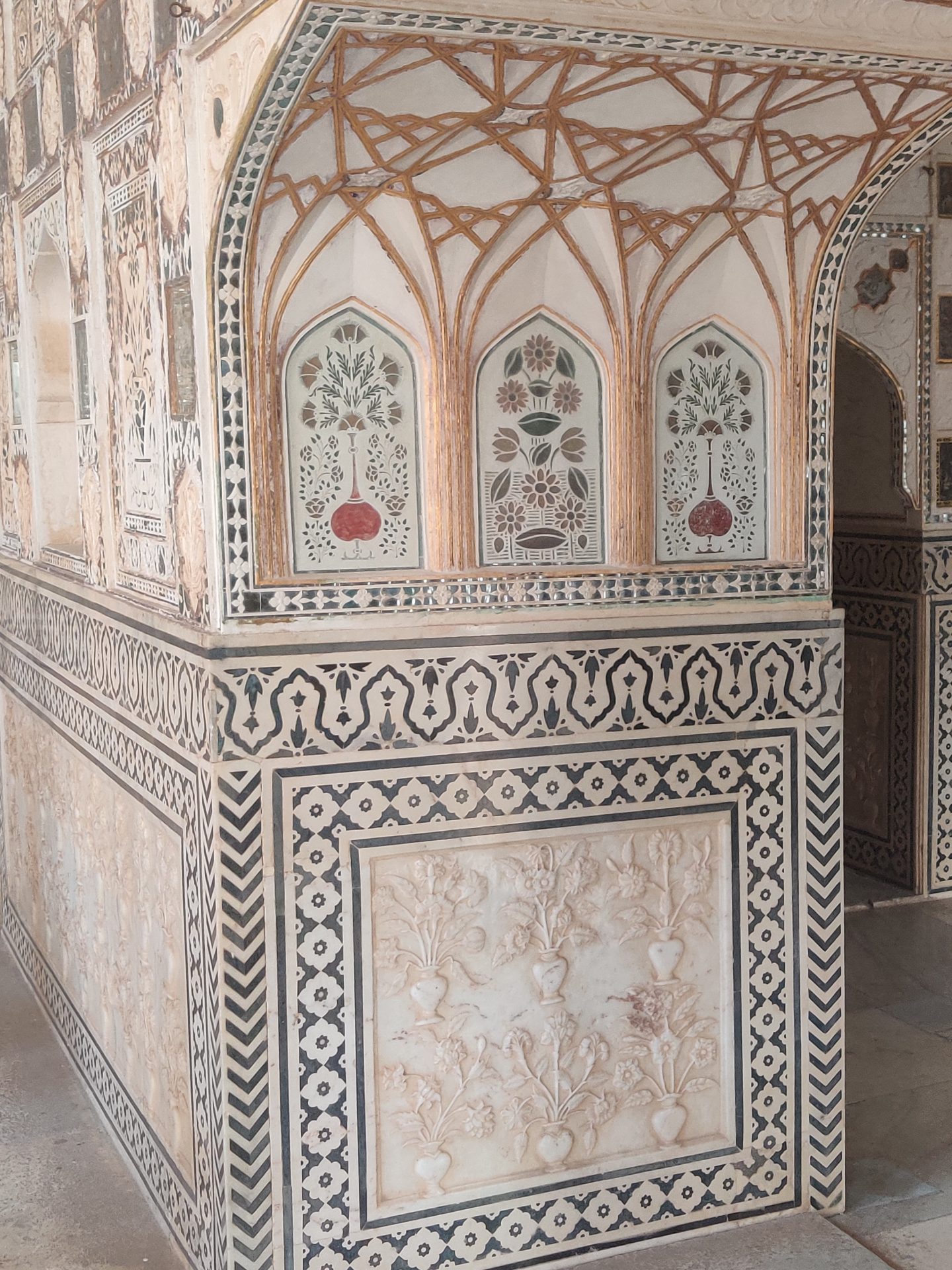
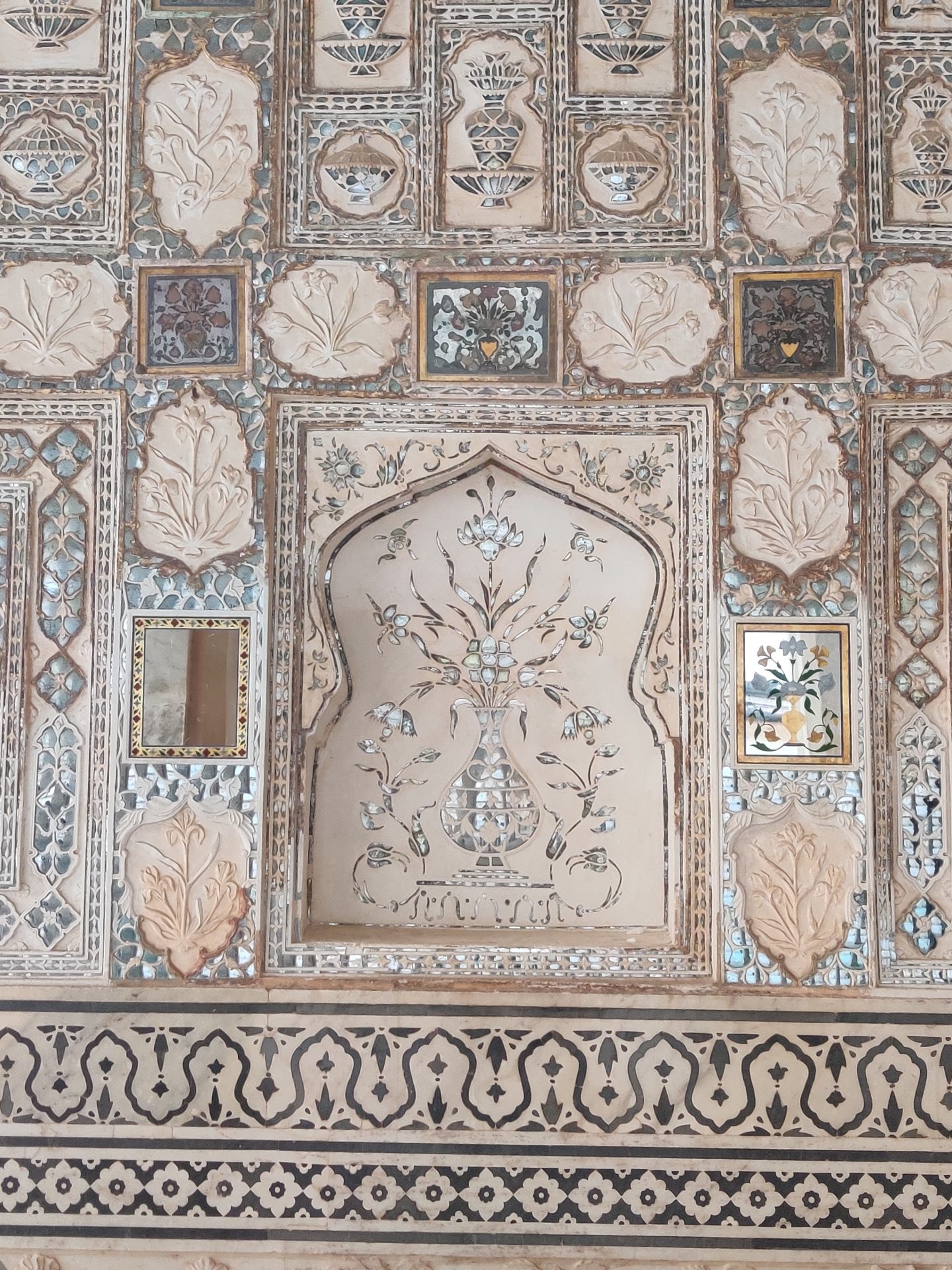
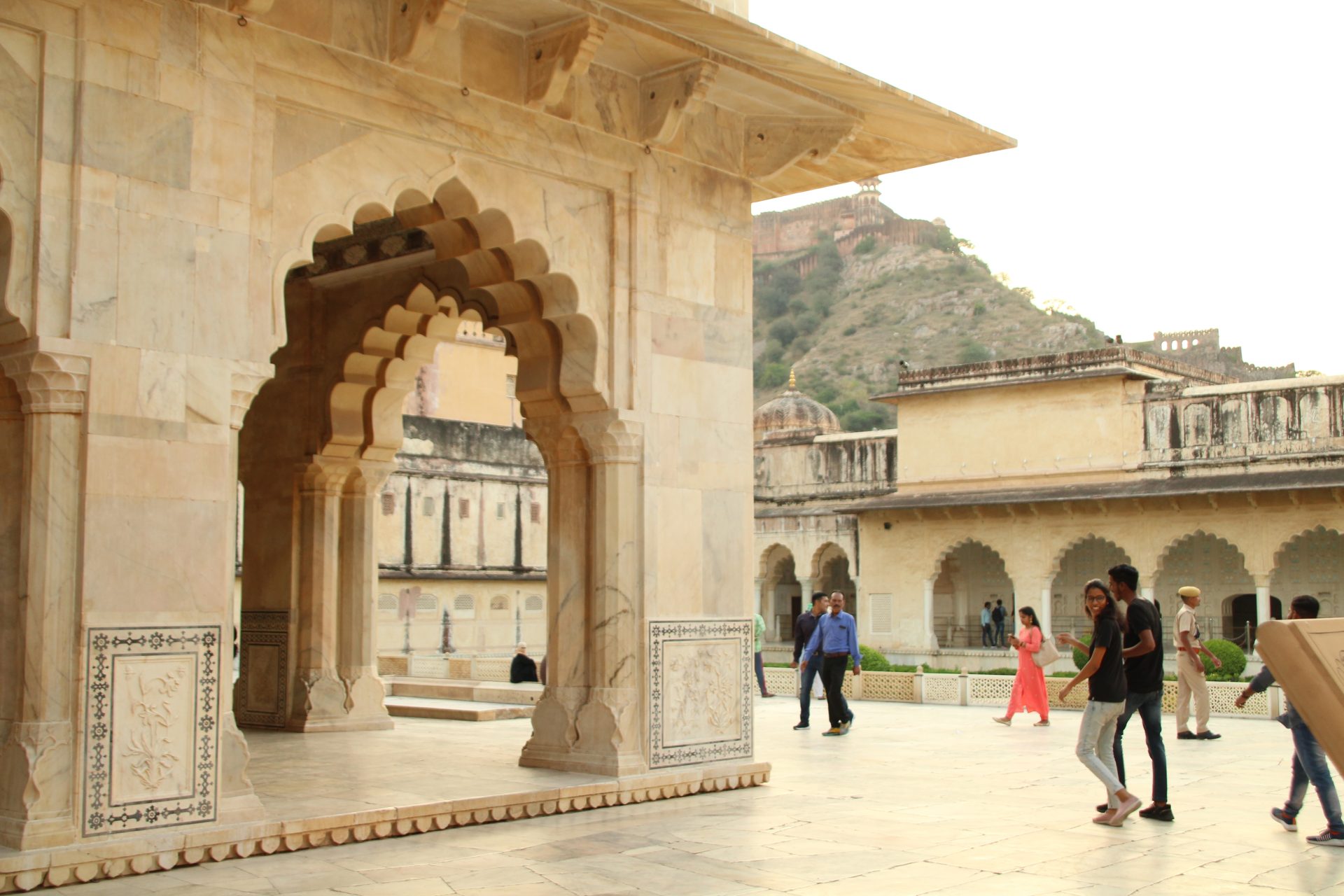
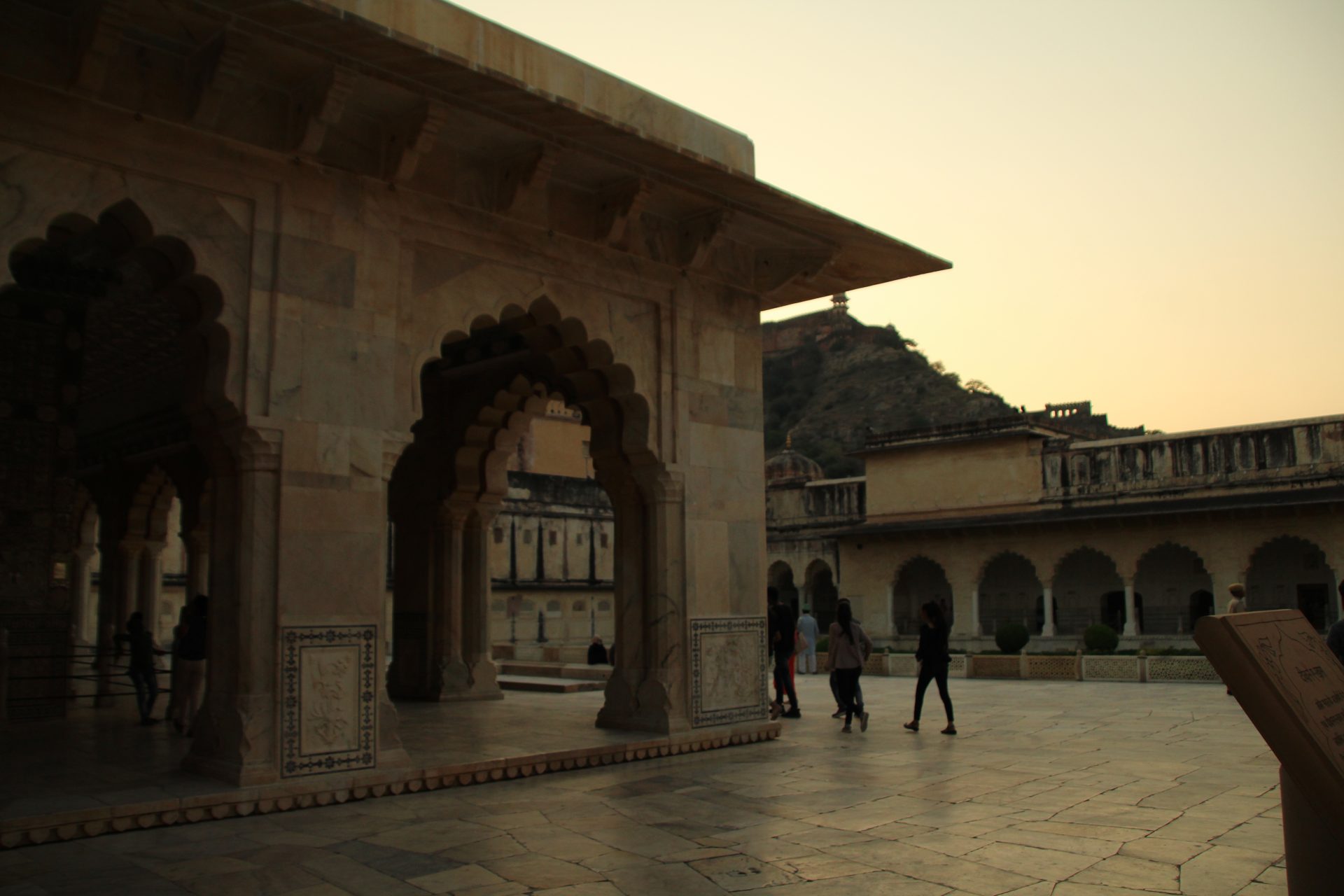
Popularly known as the Sheesh Mahal, the colored glasses and mirror mosaics gave it a feeling of a glittering jewel box in flickering candlelight. The walls around have carved marble relief panels and on top of Jal Mandir is a hall of private audience, the Jas Mandir which has floral glass inlays and alabaster relief work.
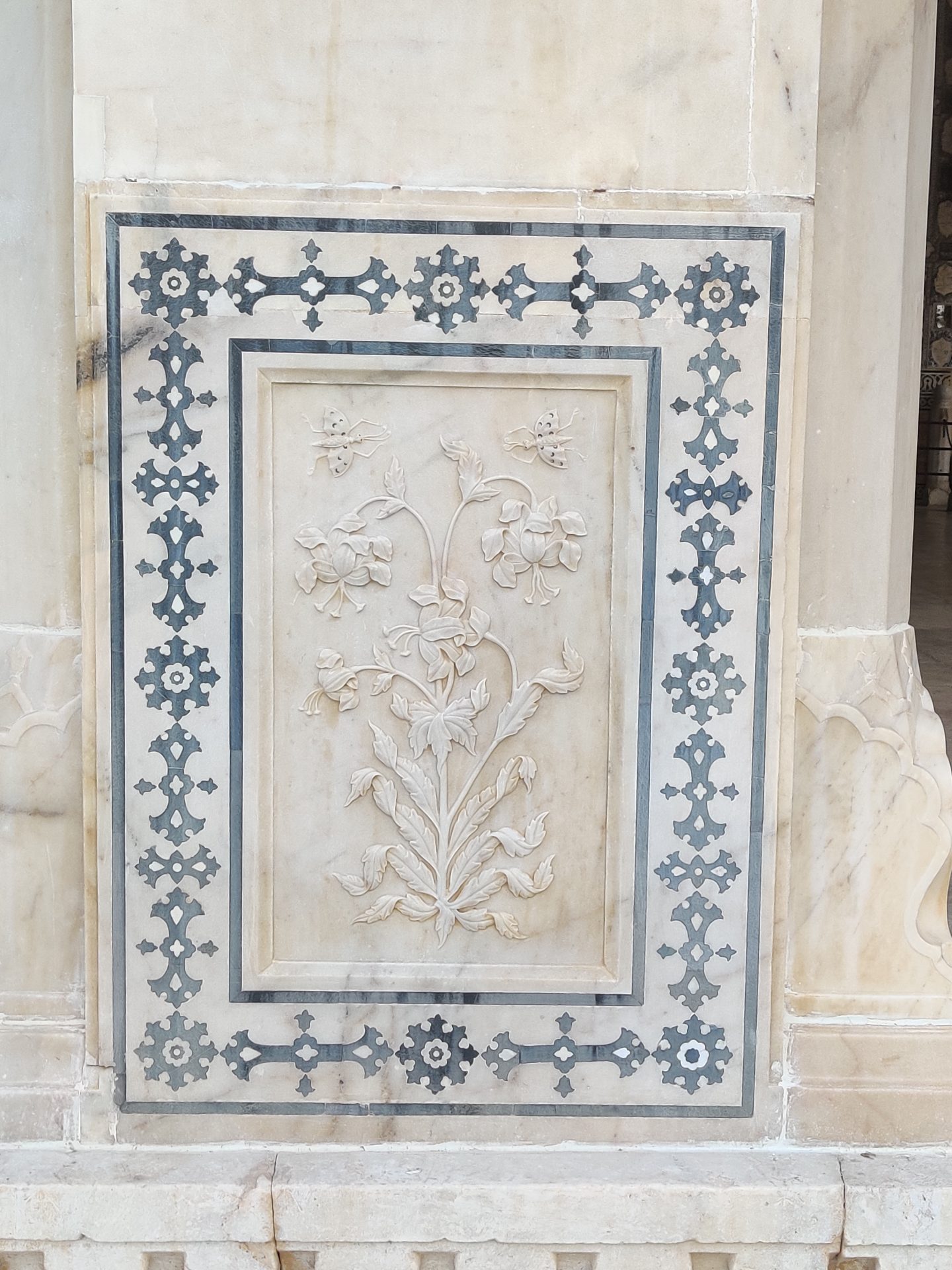
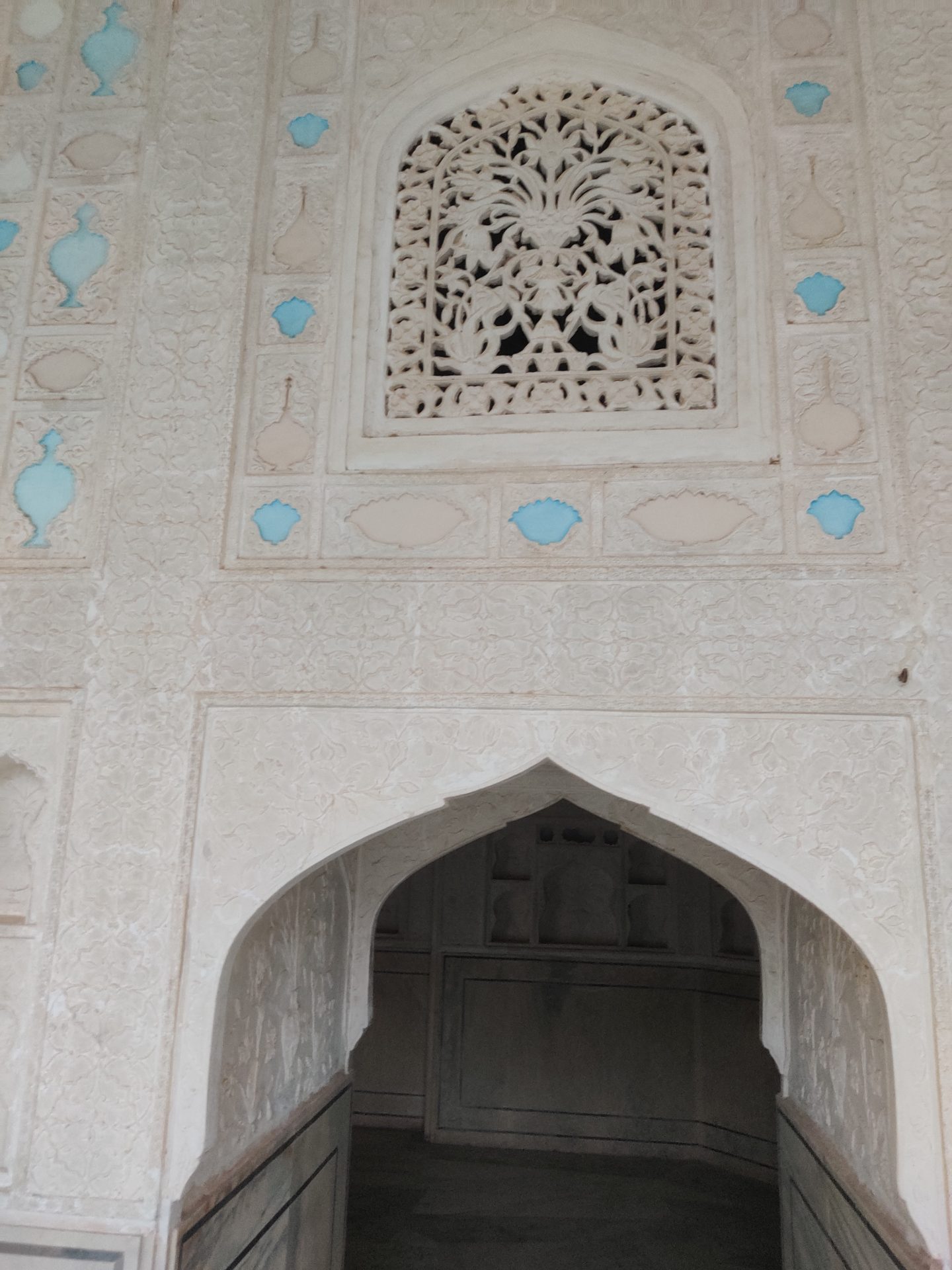
The opposite side of the Jal Mandir leads one to the Diwan-i-Khas or the Sukh Mandir where the walls are decorated through some lovely marble inlay work. UNESCO accorded World Heritage status to this monument in 2013.
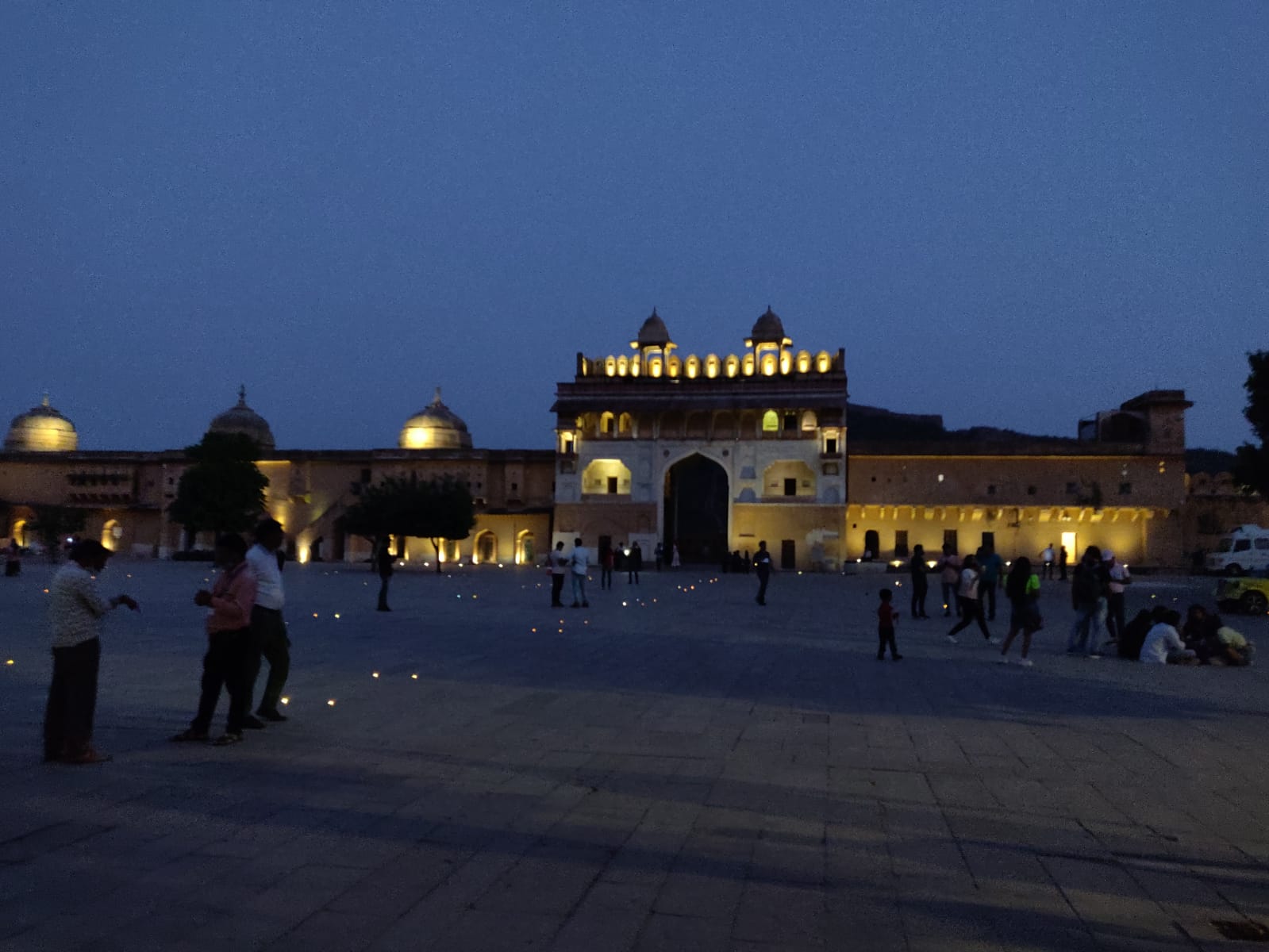
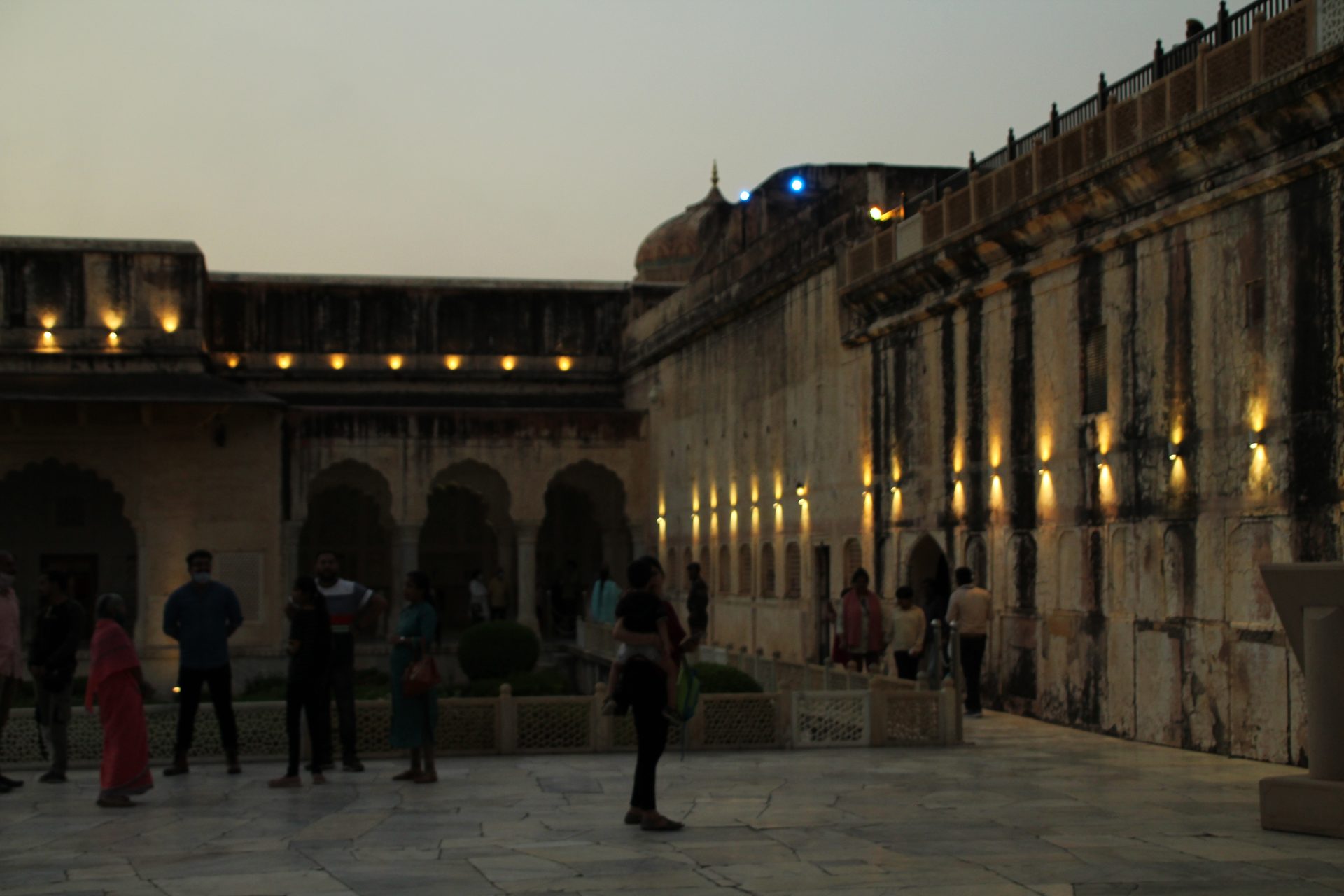
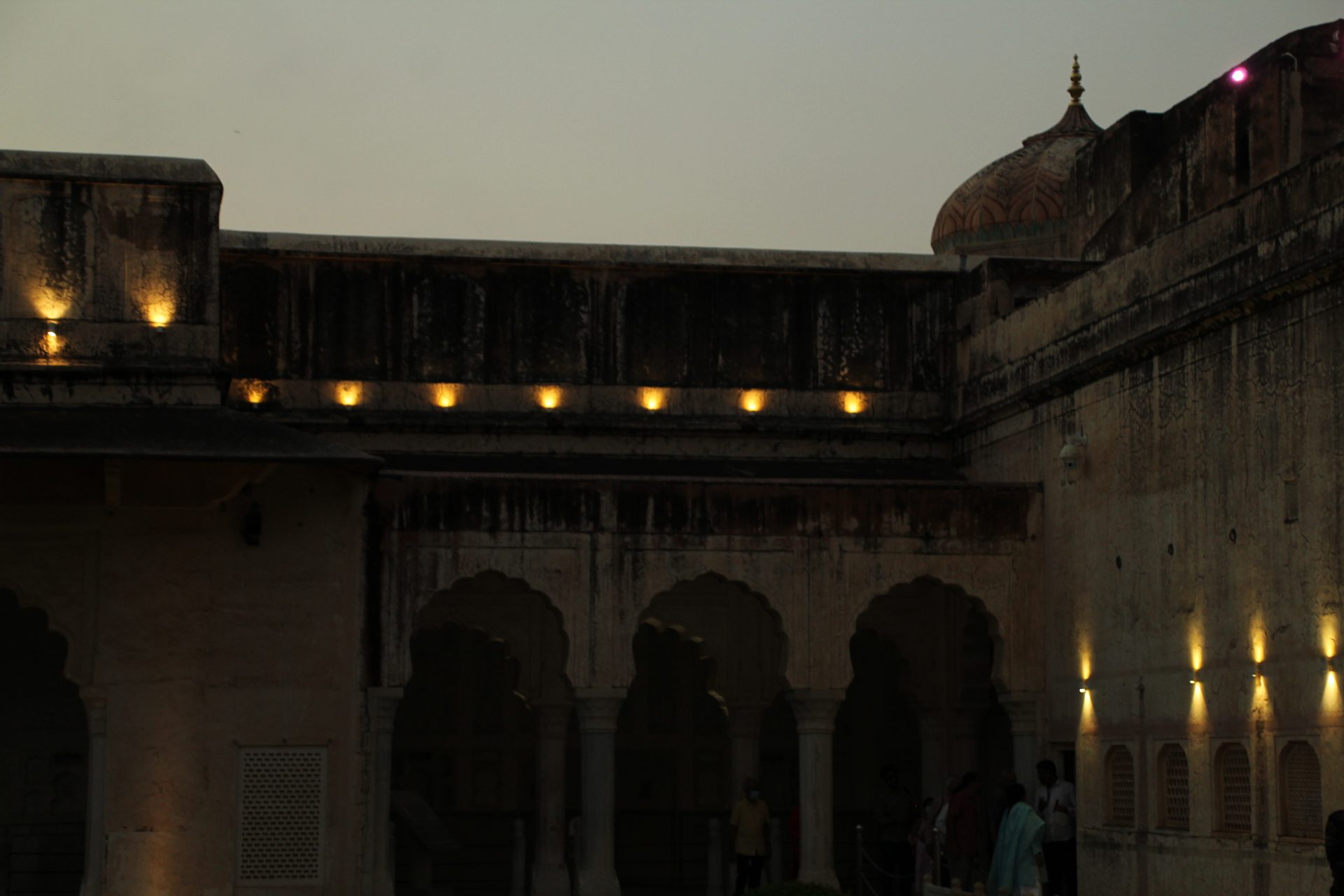
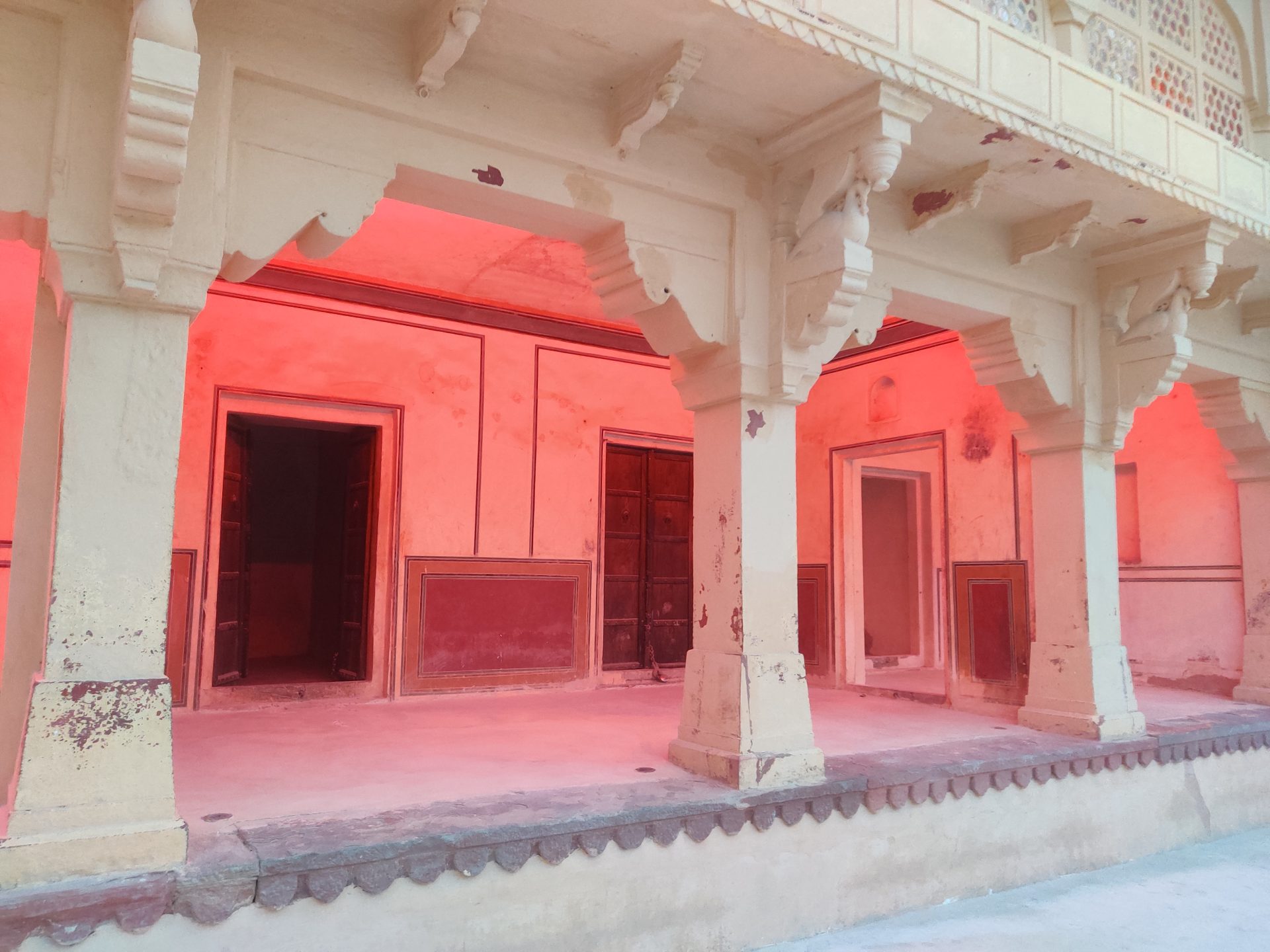
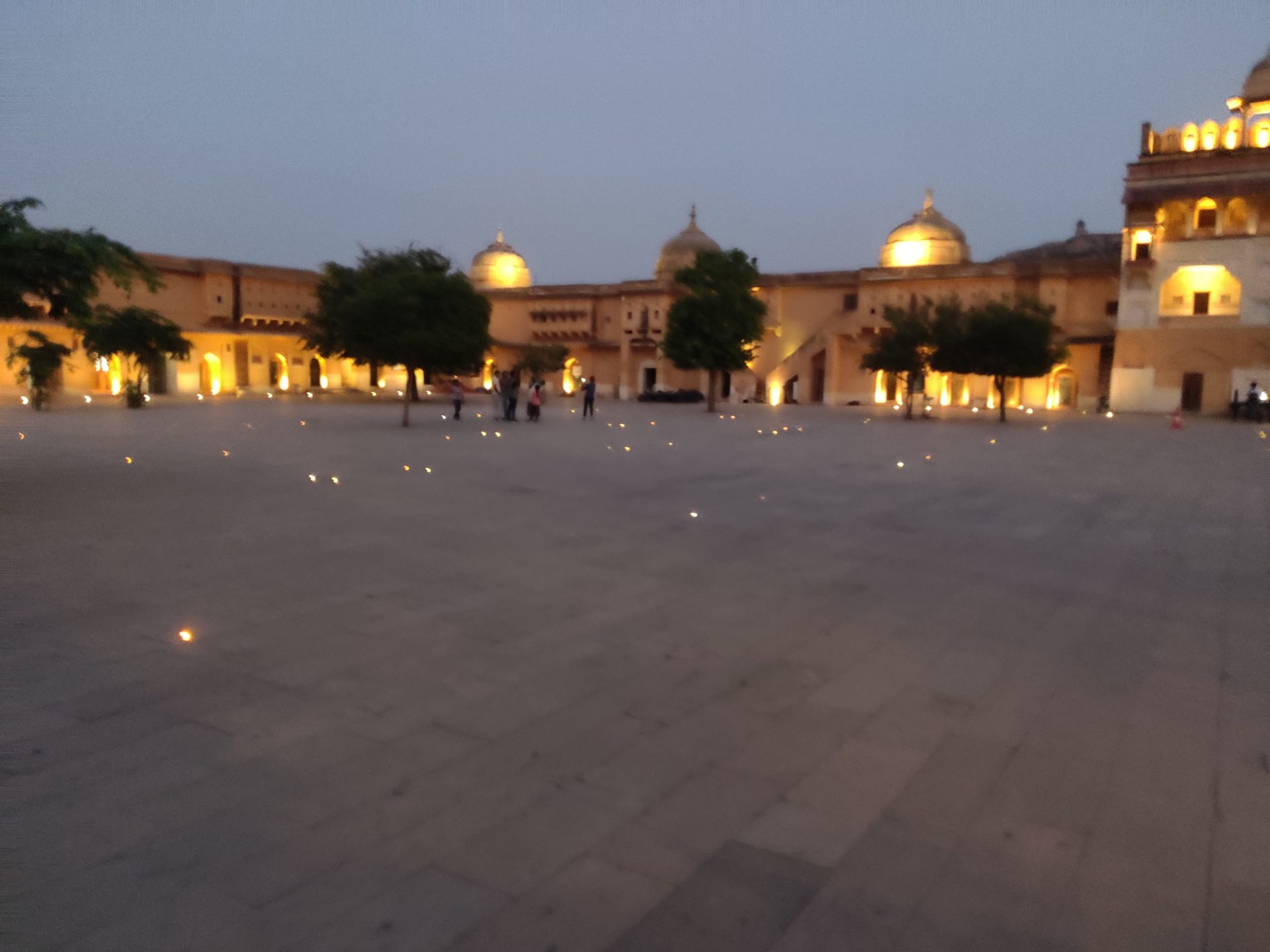
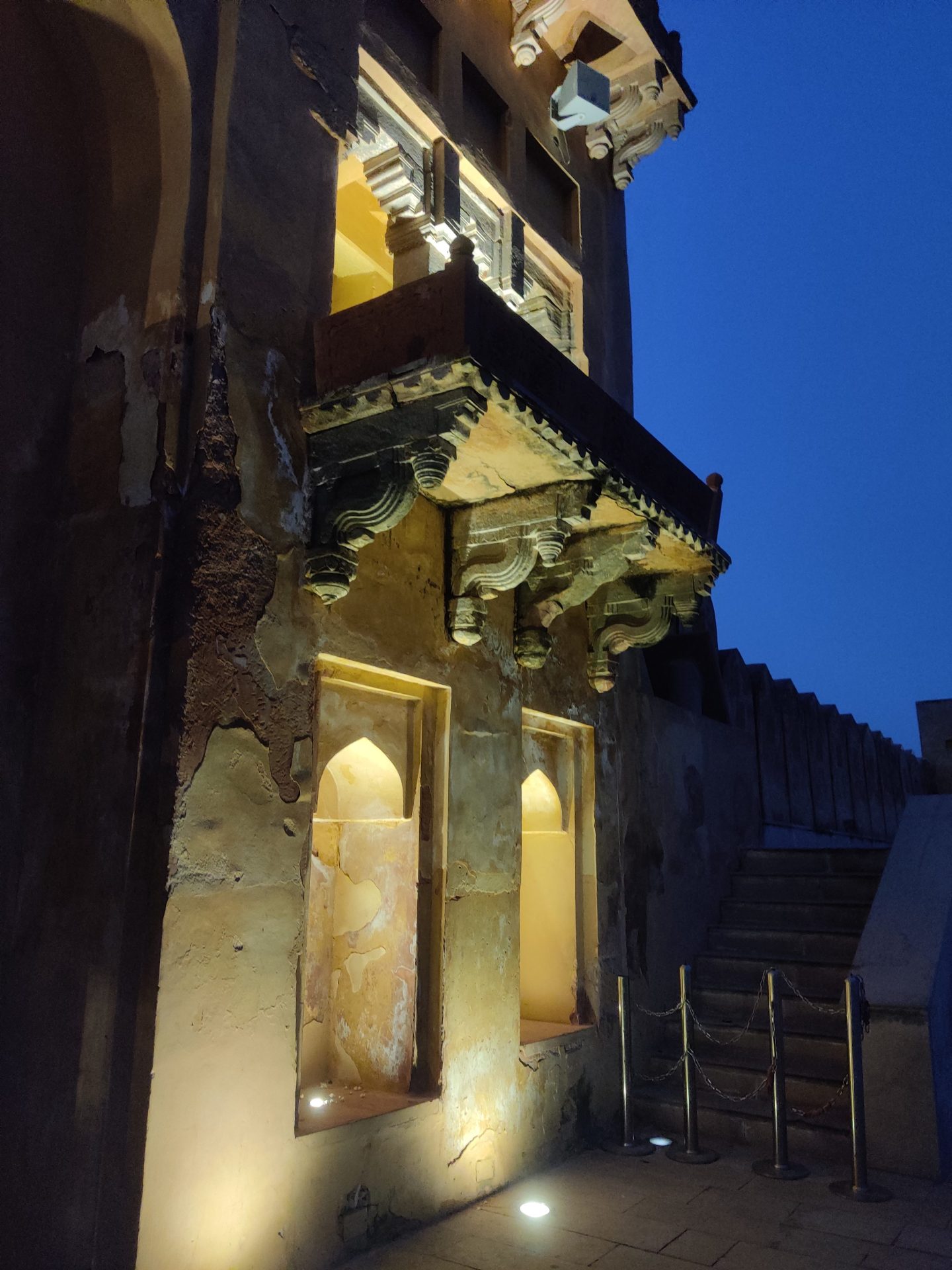
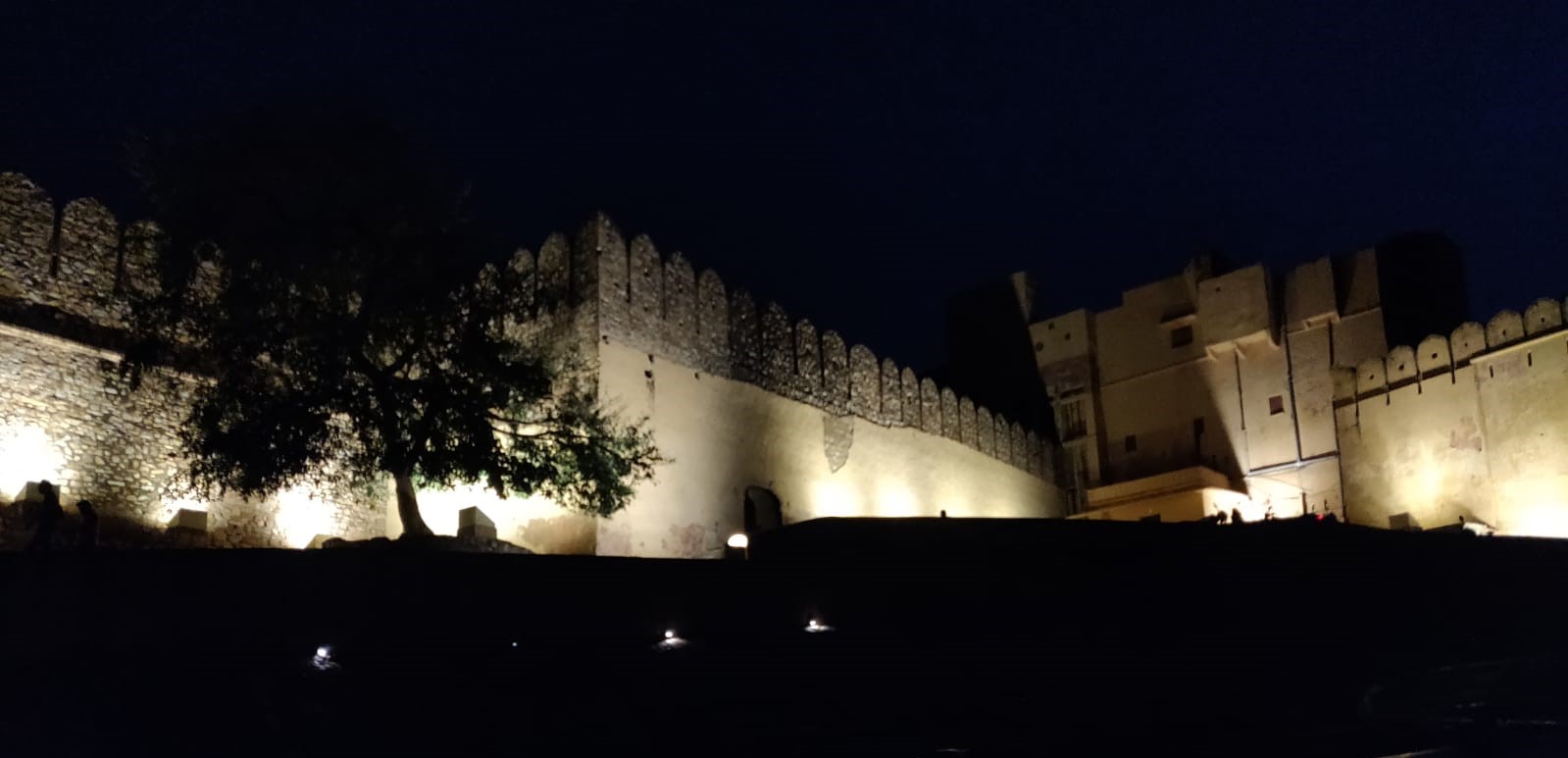
As the sun sets in, the Fort gets beautifully lit in different colors and is a visual treat to the eyes. After spending some time shooting pictures of the fort and the brightly lit up halls, we finally came out of the fort by around 7.30 PM and made our way back to the city.
The Jal Mahal by night
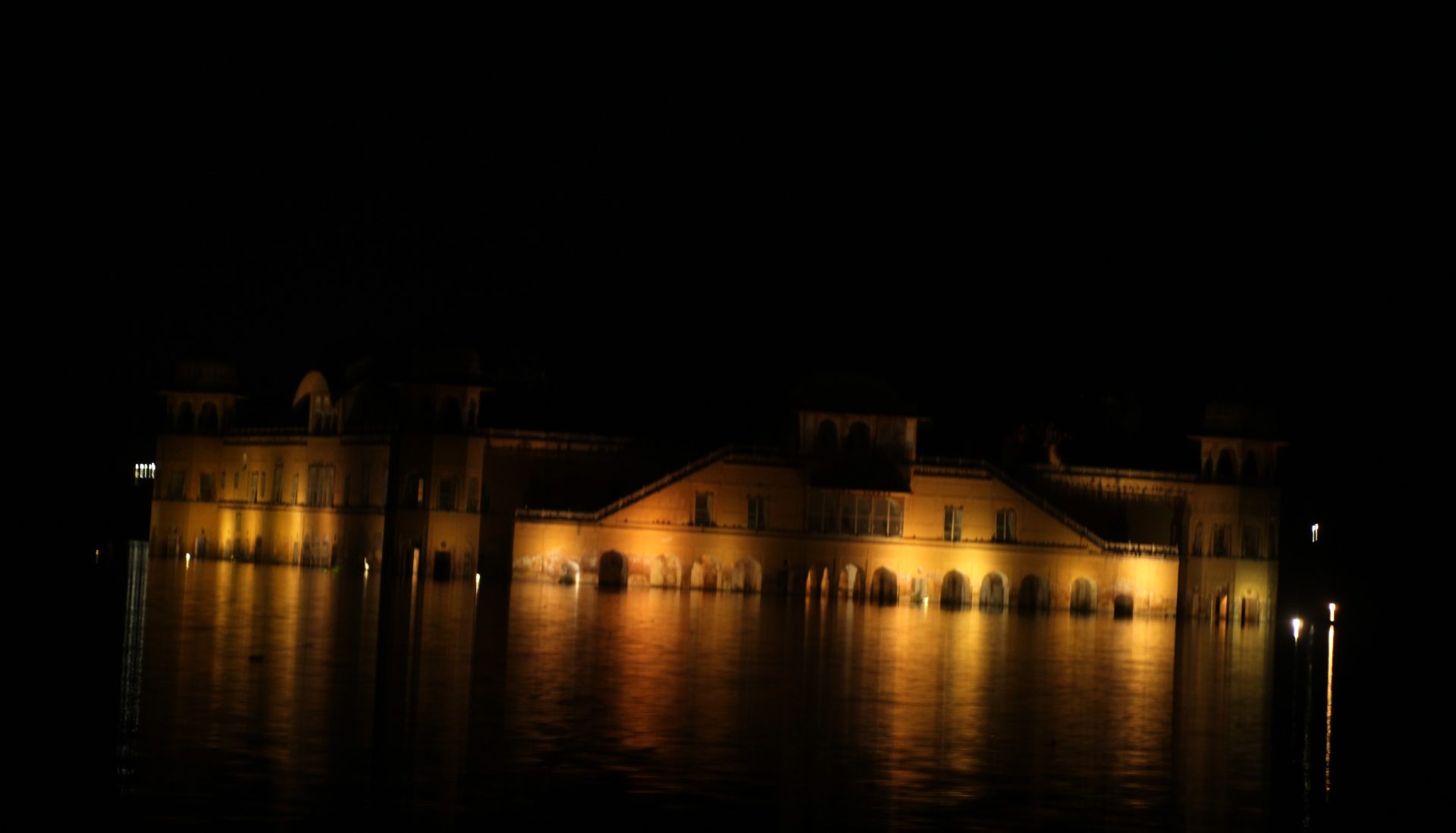
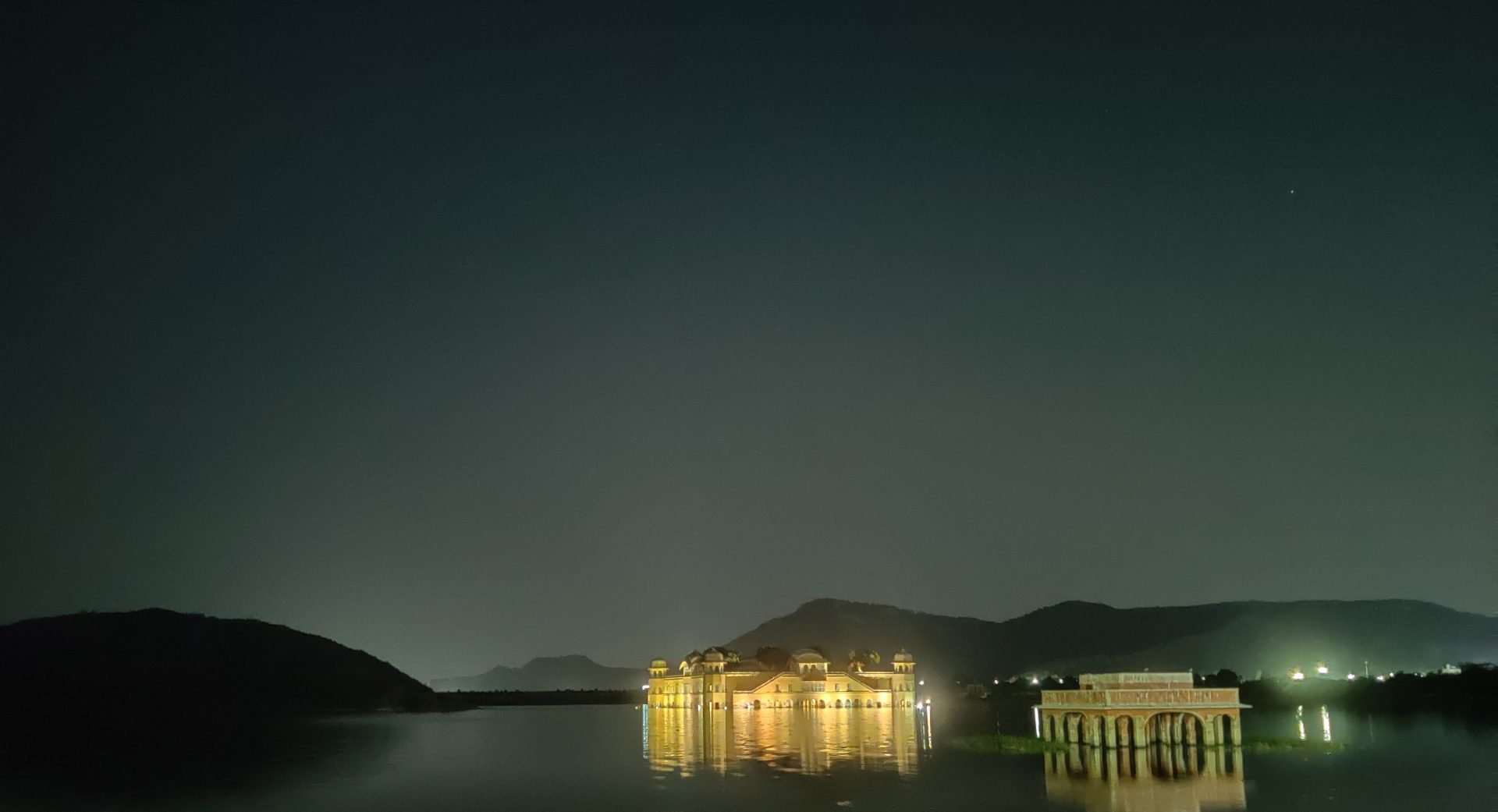
Enroute we stopped for a photo shoot of the Jal Mahal, built right in the middle of the Man Sagar lake. This palace has been closed for public viewership, more out of environmental concerns and was constructed by King Sawai man Singh in 1799. While this was built as a 5 storey palace, only the top storey remains above the water level while the rest are submerged.
We reached our hotel room by around 8.30 after a tiring day and post dinner, got onto complete our packing. The next day was when we were to take a train in the afternoon to Gurgaon and then board a flight to Delhi later in the evening.
Day 2 @ Jaipur
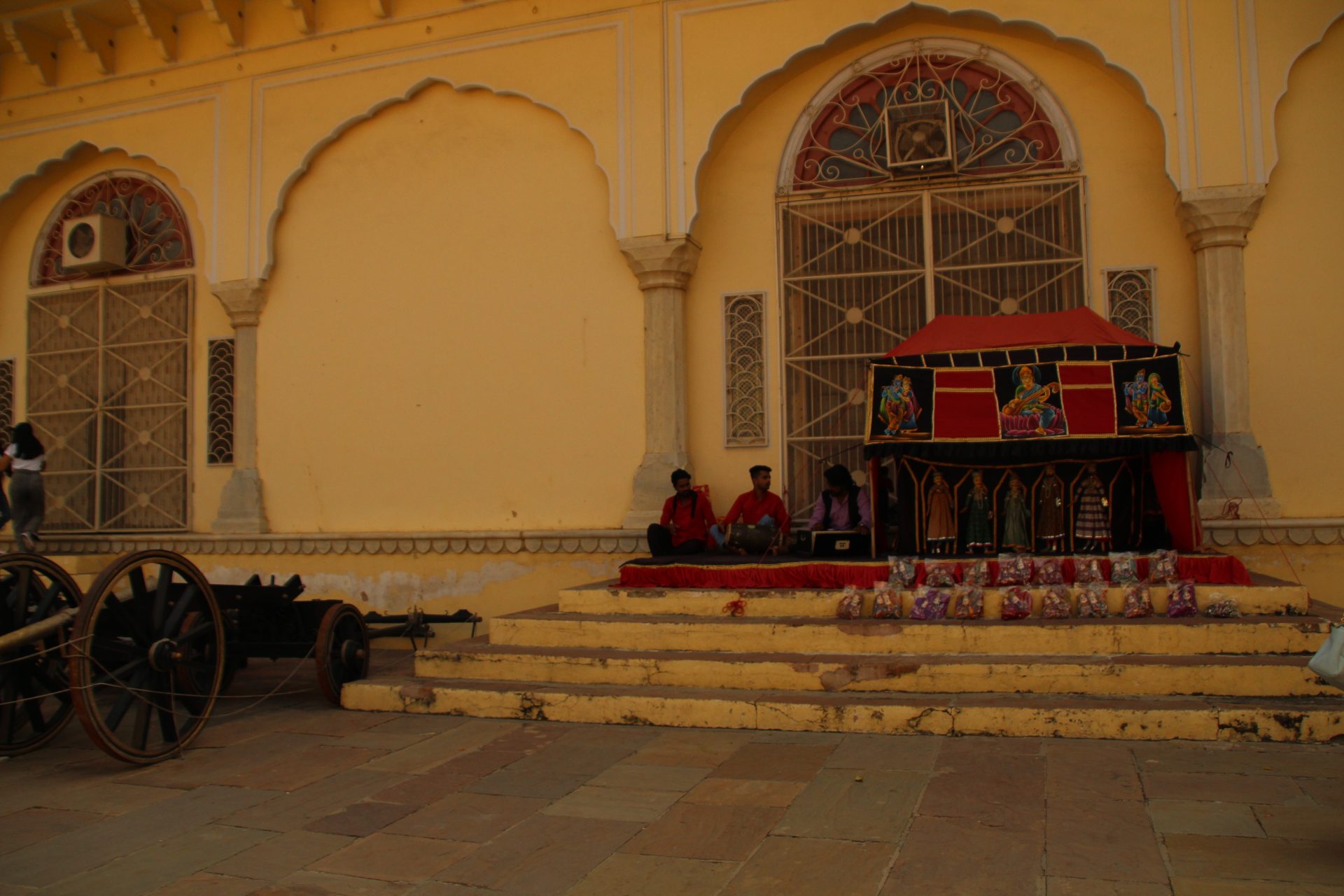
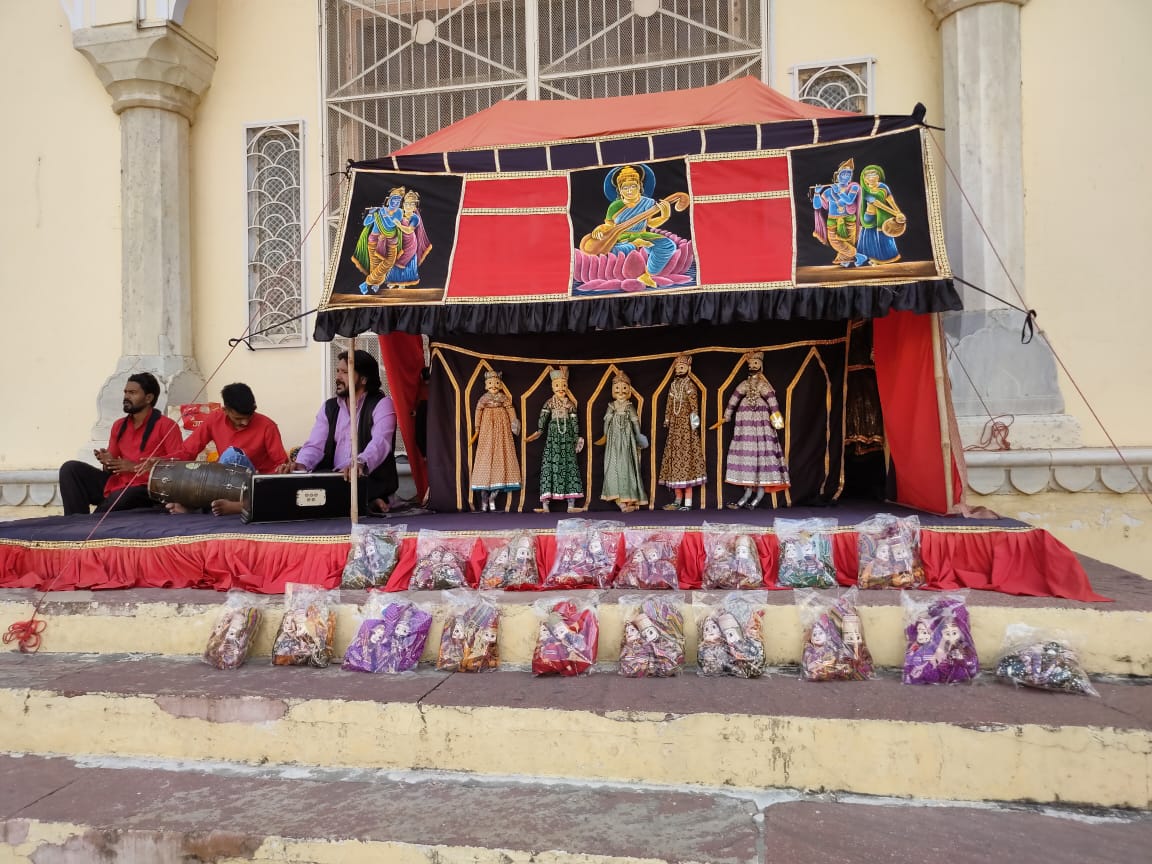
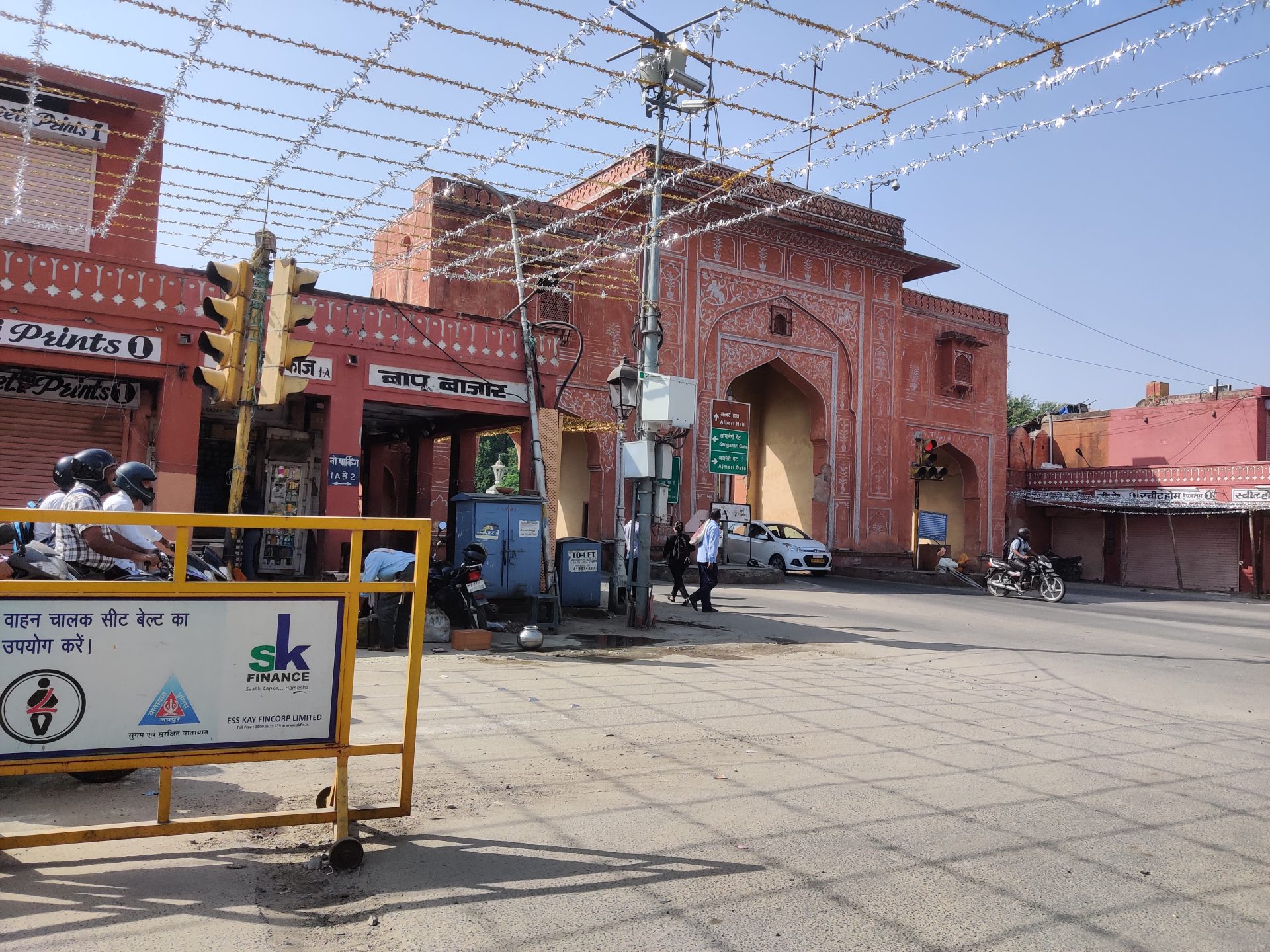
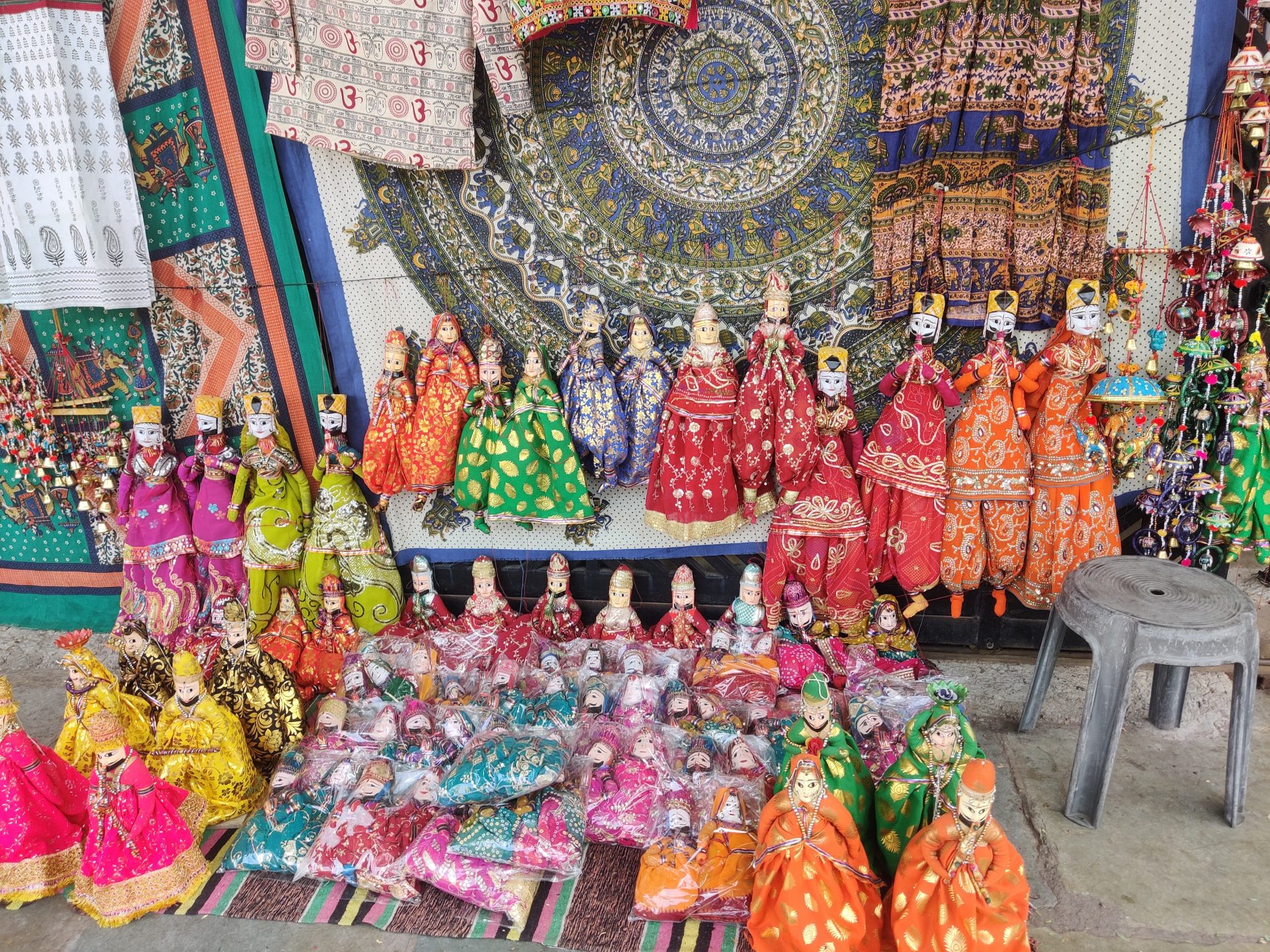
Post breakfast on the last day of our stay at Jaipur, we headed for some shopping to the Bapu Bazaar area. We had a couple of hours at our disposal and roamed around themarkets and picked up a few vibrant and colorful dresses with lot of handwork done on them and good looking jootis (well crafted shoes). On the way back, we stopped by at a few shops around the Hawa Mahal and the City Palace and bought a few hand made puppets to adorn our home and some sets of lac bangles which is believed to be a speciality in Rajasthan.
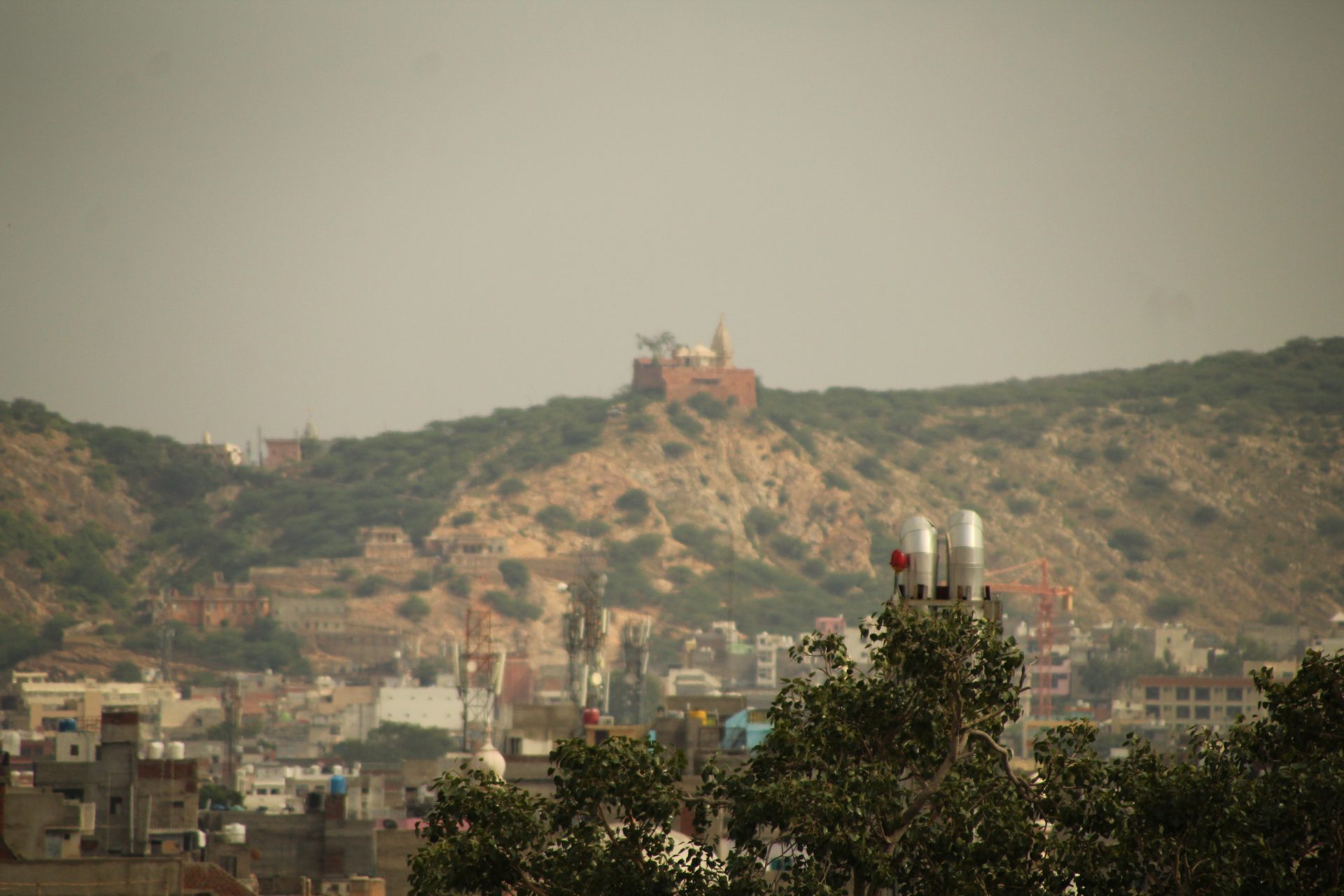
Randomly shot across the Pink City
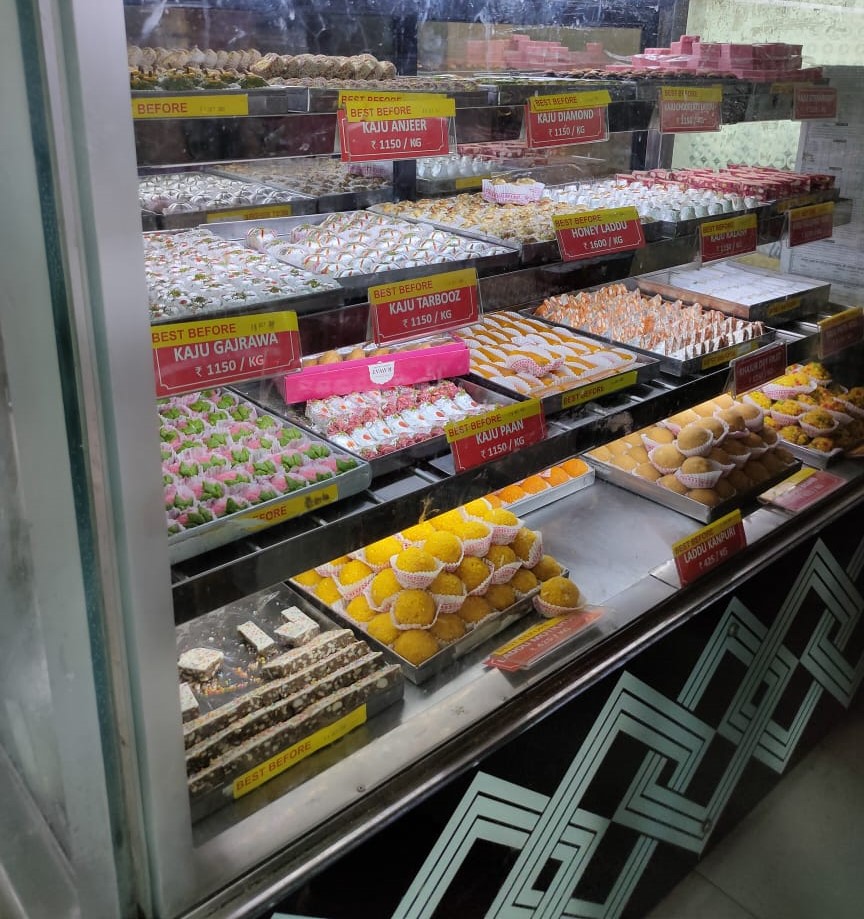
A visit to Jaipur would be incomplete if one does not visit The Rawats and that was to be our stop for a quick bite before heading for the station. An amazing spread of sweets and snacks greeted us at the store and while we gorged on some, we did manage to pack quite a bit of stuff for our onward journey on the train.
We reached Gurgaon station around 6.30 in the evening and hired a cab for the New Delhi airport to catch the late night flight to Chennai.
A well spaced out tour starting from Delhi and moving onto Amritsar, Srinagar, Delhi, Agra and lastly Jaipur came to an end after being on the road for 10 days.
Planning it on our own helped doing or seeing places of interest or shopping the way we wanted to rather than being at the mercy of the tour operators and where we were able to comfortably space out. Having chosen the month of October to do this trip had its added advantage of being exposed to moderate weather all throughout.
These lovely memories would sure remain etched in memory forever.
Do share this with your family and friends on ....