A childhood friend and school mate who lived diagonally opposite my house in the seventies in Durgapur in West Bengal invited me over for his daughter’s marriage on 19th February scheduled at Radisson @ Ghaziabad.
Being a Thursday, I was deliberating whether to go or not go and that too just for a day when an opportunity sprung up in terms of taking part in the Cognizant New Delhi Marathon scheduled the same weekend on 22nd February.
Decided to combine both together and added a day’s sightseeing trip to Gwalior which had been on my radar for years, having last done a mad rush trip in 2004. An early morning flight to Delhi saw me land at Delhi Airport by around 9.30 AM.
Nothing specific planned for the day except to binge on some Chole Kulchas and catch up with some sleep before attending the marriage in the evening.
I had booked myself at a hotel J.S.Residency Luxe close to the Nizamuddin Railway Station in Jangpura area primarily to ease the commute to the station in the early hours and late night, the next day.
Reached the hotel around 12 Noon and post a quick check-in, set off for Paharganj to Sita Ram Diwan Chand and Sons. Since the time of my last visit, had become a big fan of their signature dish – The Chole Kulche. Check this link out for more photos : https://jewelsofasia.in/delhi/
A representative view of the food on offer😋
Amidst some chaotic traffic, reached Radisson in Ghaziabad for the marriage around 7 in the evening and after some good time spent, catching up with my school mates and greeting my school mate’s family members, headed back for the hotel by around 9.30 P.M. Had a bit of the snacks being served since it looked like dinner time was far away and I was to take the Vande Bharat to Gwalior the next day morning at 6 AM. Had a nice Aloo Paratha at the Hotel once I was back at my hotel and crashed.
What is interesting about Gwalior
Having seen a trailer of sorts of Gwalior in the early 2000s, Gwalior remained a city which I always wanted to visit. Known for its historical and cultural significance, the city has the impressive Gwalior Fort built in the 8th Century atop a hill top plateau. Intricate carvings on the fort walls, the rock cut caves featuring huge statues of the Jain Monks stand out. The fort has a long standing lineage of different dynasties as early as the Huns from Central Asia occupying it.
Gwalior has also been tagged by UNESCO as the Creative City of Music. Given its proximity to Delhi, one should definitely visit Gwalior since apart from the Fort, there are impressive temples, palaces and museums to see. The entire city can be covered in a day but if you have an additional day to spare, do visit Orcha also. Heard lots of good things about this historical place but yes maybe some other time.
Had checked on the net for Cab Services in Gwalior, and after reaching out to a couple through Whatsapp and having checked their reviews, ratings and customer feedback, arbitrarily settled for one of them Gwalior Krishna Cabs, though there was little to chose from between them and Gwalior City Cabs including their rates which was Rs.2,000/-.
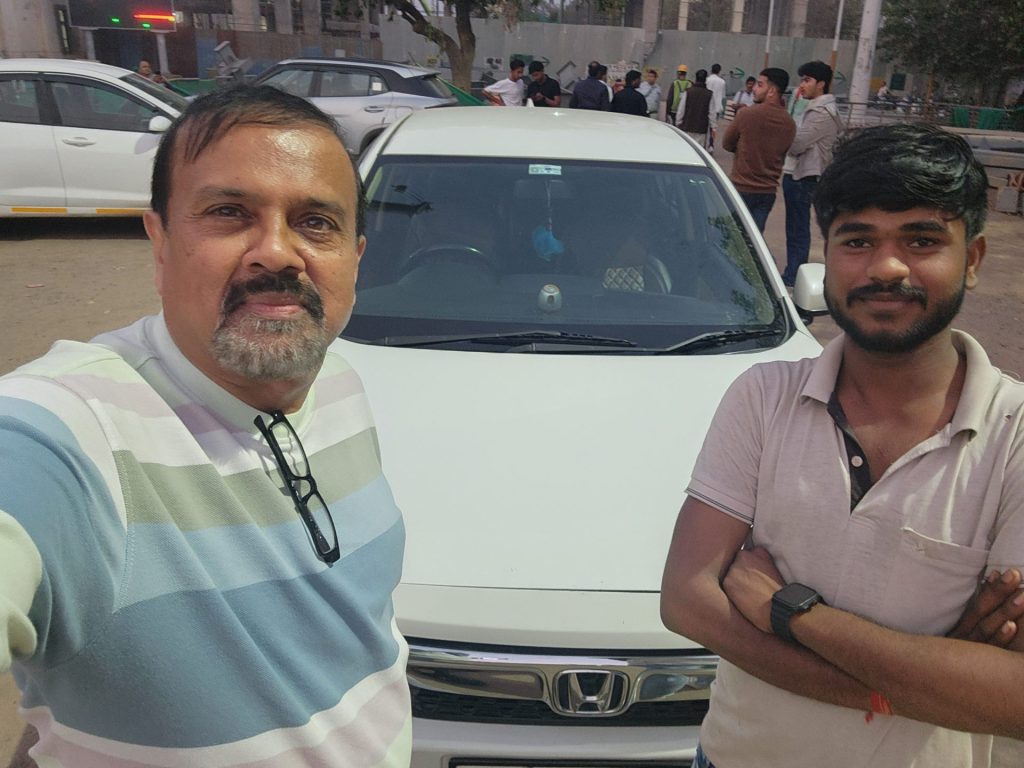
The train pulled into Gwalior station by sharp 9.00 AM. As I made my way out, could see lot of repair work being carried out in the frontage and it was a mess of sorts. After some searching around, I was met by a young lad Dheeraj from Krishna Cabs who was to show me around the city. Thankfully, no luggage to lug along save for my laptop back-pack.
The Siddhachal Parvat
Our first halt was at the Jain Rock-cut Caves, enroute the way to the Gwalior Fort. The premises are overall divided into 5 main areas across the North West, North East, South West, South East and the Urwai Gate road, through which we made our entry.
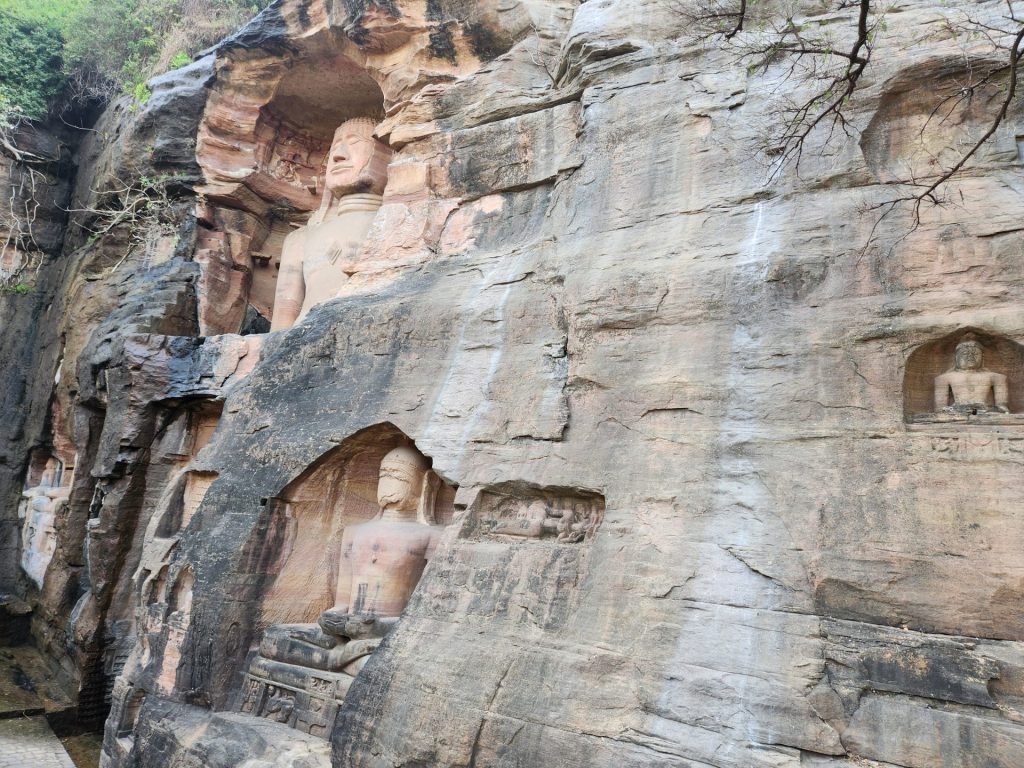
Also known as the Siddhachal Parvat, one cannot miss seeing the huge carvings of Jain monks on the cliffs, both sides of the road while driving, but best would be to take a 20-25 minute pause to see the grandeur of the carvings on the mountain side.
Its believed that there are more than 1,000s of idols ranging from heights of 6 inches to over 57 feet carved into the sandstone based cliffs.
While almost all of them were created between the 7th and 15th century during the reign of the Tomar dynasty. A majority of the construction happened between 1398 to 1536.
Lots of these got defaced by the Mughal emperor Babur and during the 19th century, the Jain community did a lot of restoration around these monuments.
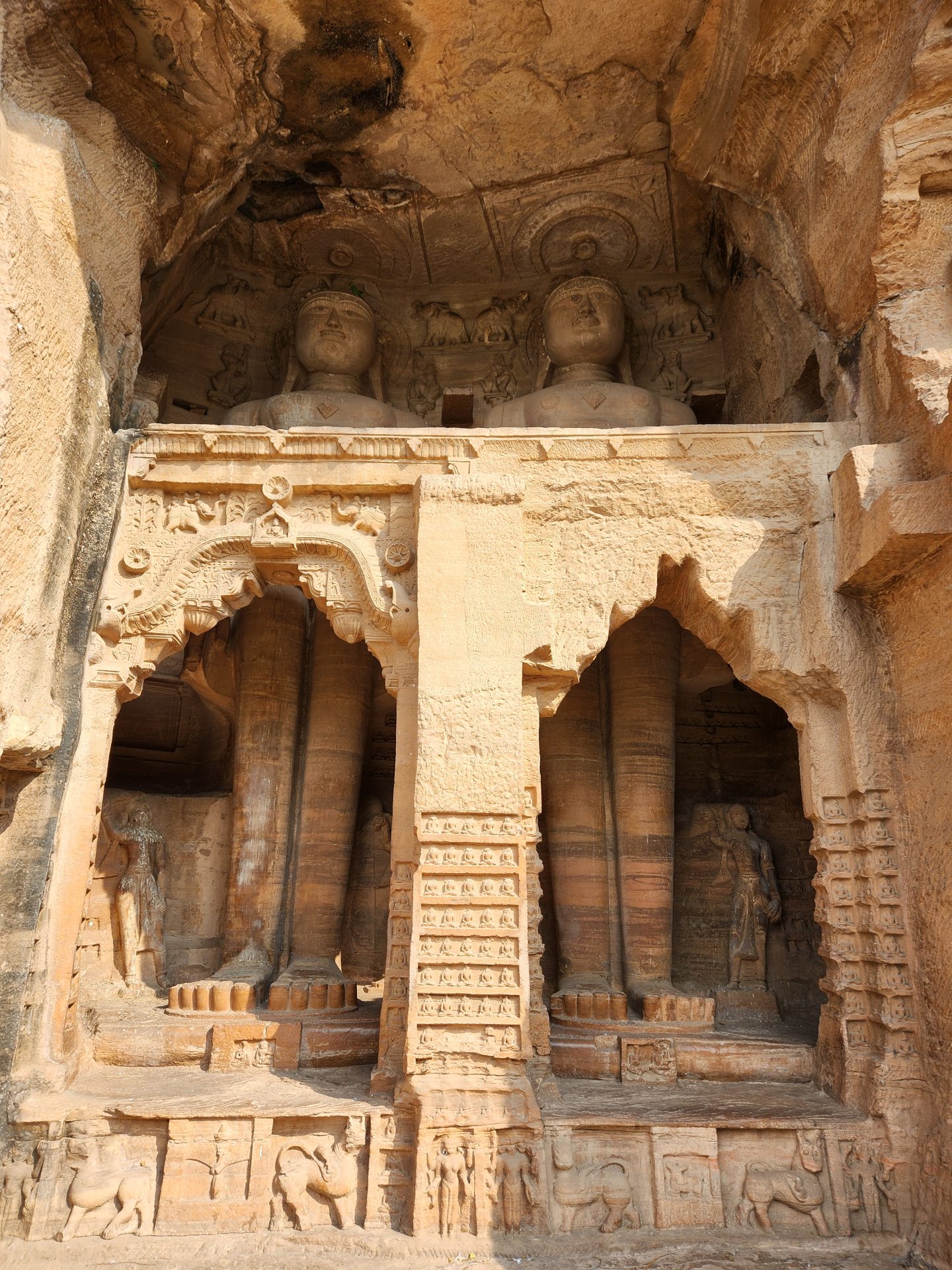
To the left side of the road where the car was parked, one gets to see a pavilion of 5 Jain Monks (Thirthankars) intricately carved out of the rocks.
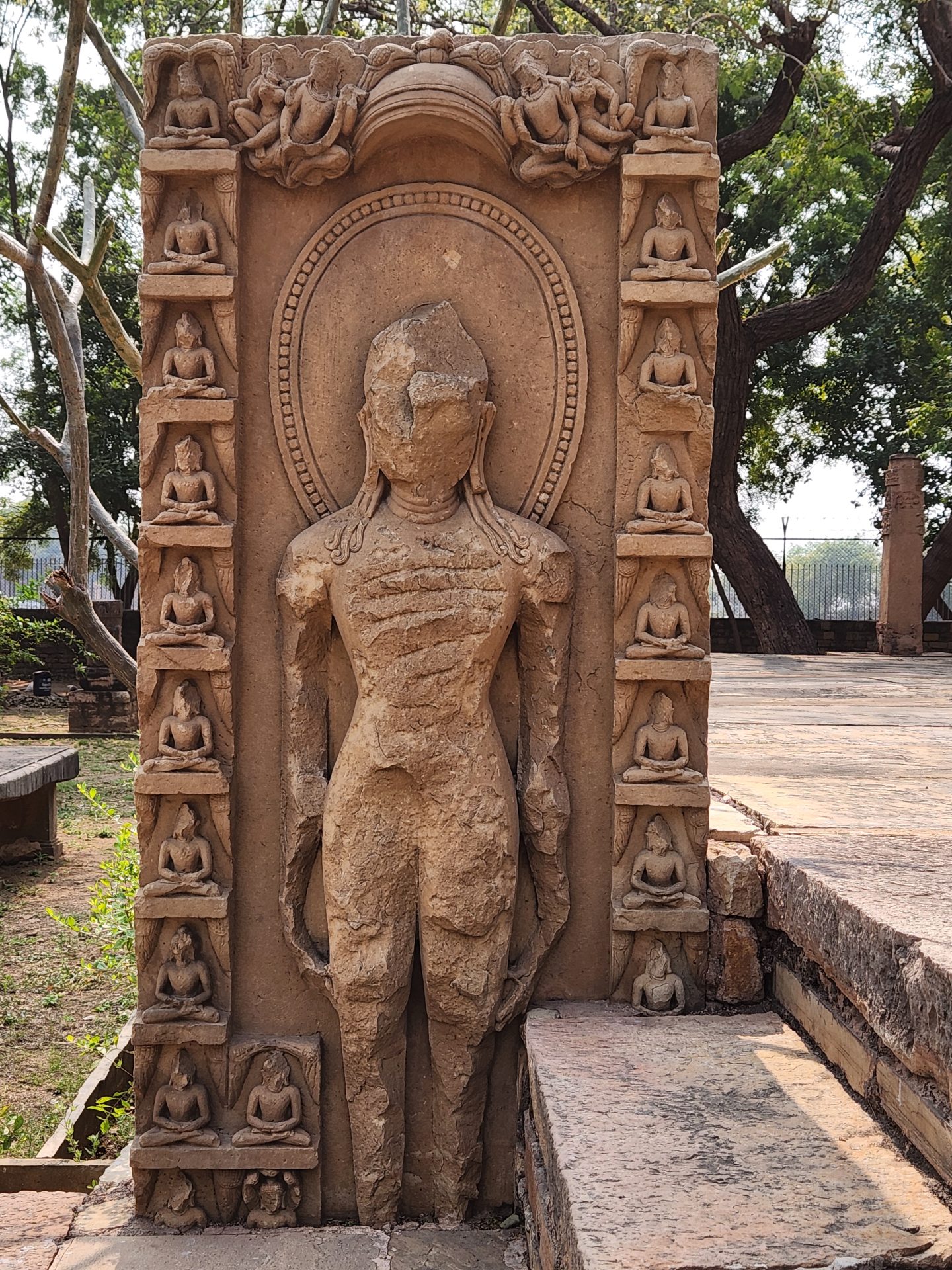
All the 24 Tirthankaras are depicted, either in a seated or standing posture. The tallest statue on the left side pavilion is that of Bhagwan Parsvnath at a height of 47 feet.
The talent of the artisans who sculpted these statues out of the sandstone based cliffs really needs to be admired.
With the limited resources and equipment available during that era, the craftsmanship leaves one spellbound.
A little ahead of this as one climbs a small gradient, the right side of the cliff opens up to a lot many more rock cut monuments of Jain Tirthankaras. The tallest amongst these is that of the 57 feet high Adinatha who is also known as Rishabhanatha while other statues of Neminatha, Mahavira and Parshvanatha can also be seen alongside.
The Gwalior Fort
We drove on from there towards the historic and impressive Gwalior Fort, located around 3 kms away.
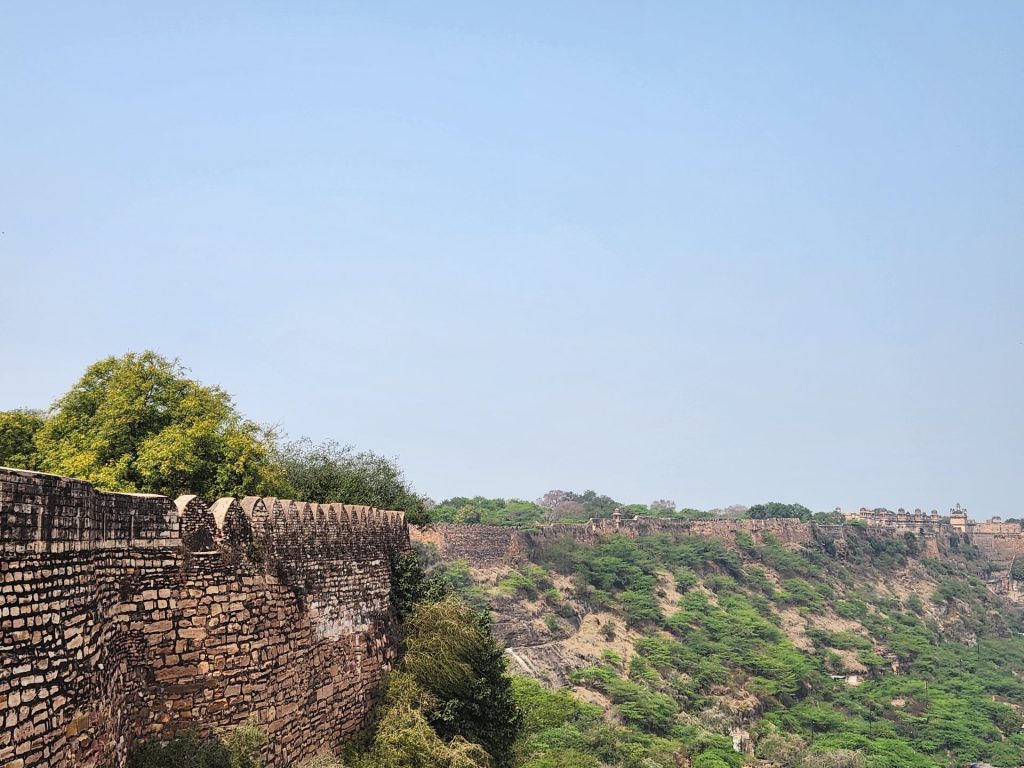
Built over an area of 3 square kms and during the 6th Century, this structure located atop a hill was also known as the Gibraltar of India for its design as an impregnable fortress and defensive structure.
Ancient Sanskrit inscriptions record the name of the fort as Gopagiri based on the Gopagiri hill on which it is located.
The Mughal emperor Babur described it as a Pearl amongst the Fortresses of our country and further added that even the winds could not touch its masts.
The fort was built as a symbol of pride and has been shaped by many powerful dynasties starting with the Tomars, Mughals, Marathas, the Jats, the English and finally the Scindias.
There were 2 sets of tickets to be purchased, each priced at ₹20/-. The first was for the main fort and the 2nd for the Man Mandir Palace. The person at the counter advised me to keep the safe intact since the same could be used for the Teli and Saas Bahu temple close to the fort complex.
There goes a story that the construction of the fort was linked to a local king Suraj Sen who ruled the province around the 3rd Century CE. He was suffering from leprosy, an incurable disease during those days and during one his hunting expeditions in the Gopagiri Mountains, he met up with a sage Gwalipa who helped cure the king of his ailment by asking him to drink water from a sacred pond, atop the hill.
The king got cured and decided to construct a wall around the pond which later got renamed as Suraj Kund. He then constructed a fort on the hill and named it Gwalior to honor the Sage. The records pertaining to the Gupta empire and Sanskrit inscriptions found during later years refer this place as Gop Parvat or Gopadiri meaning Cowherd’s Hill.
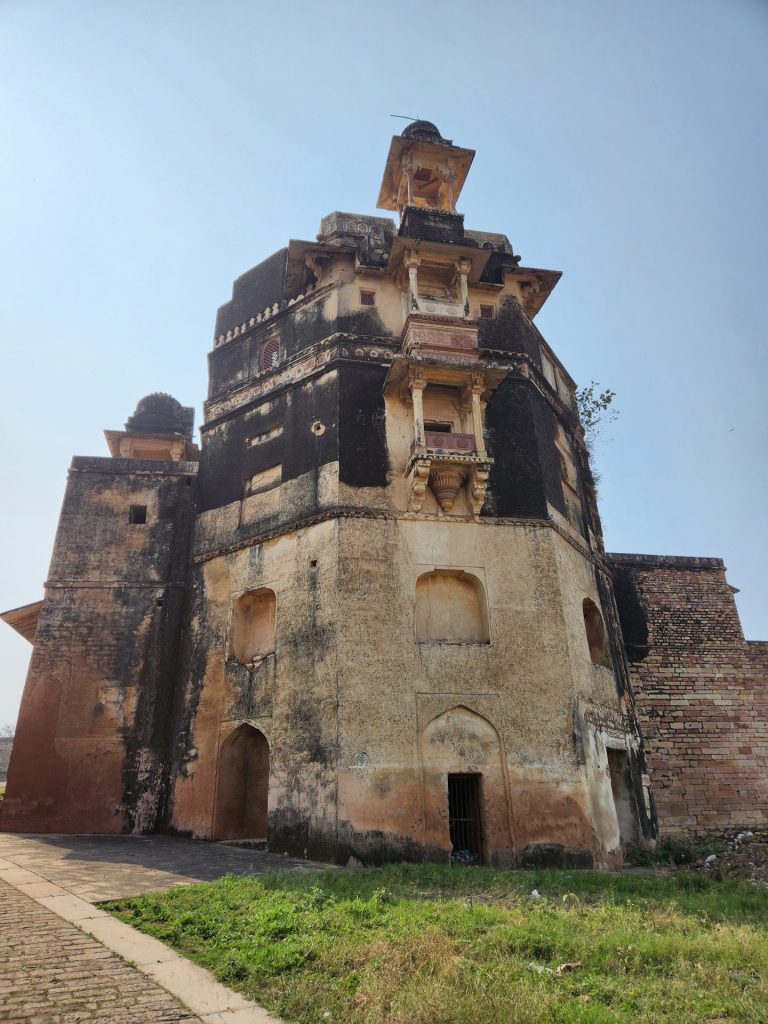
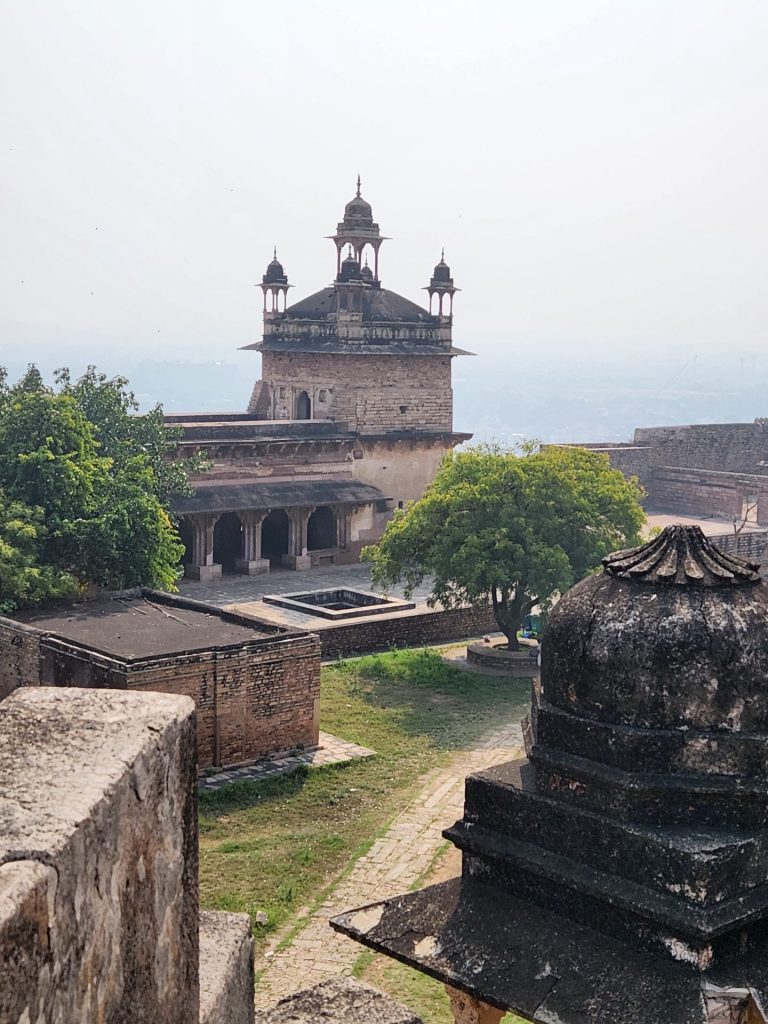
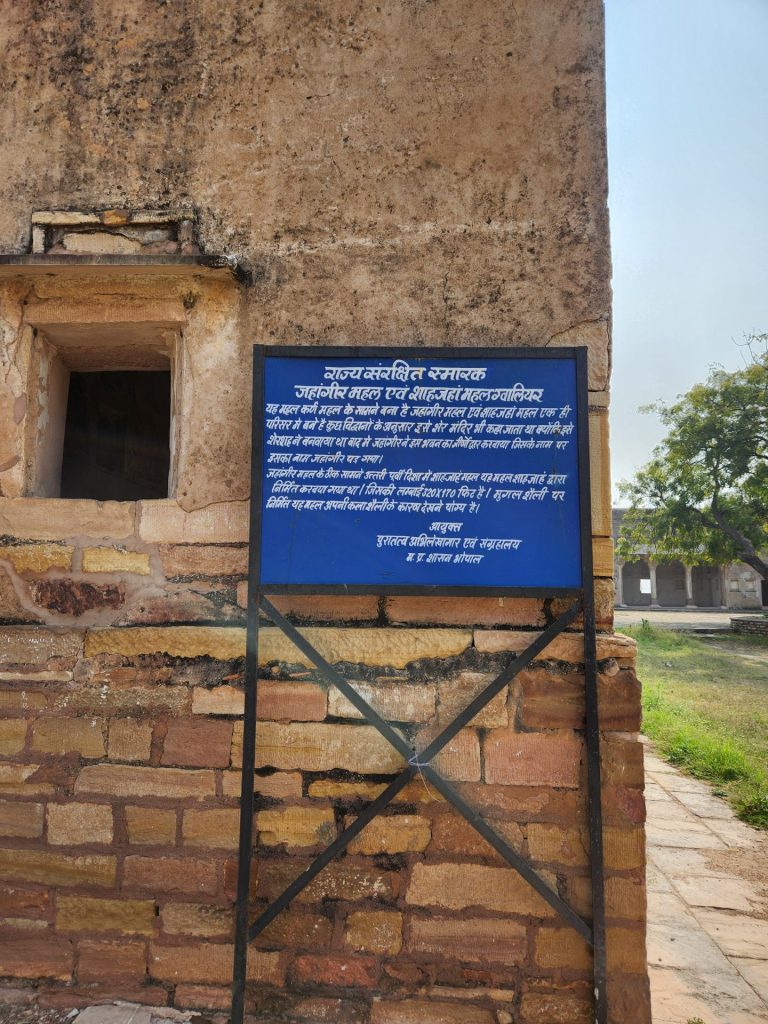
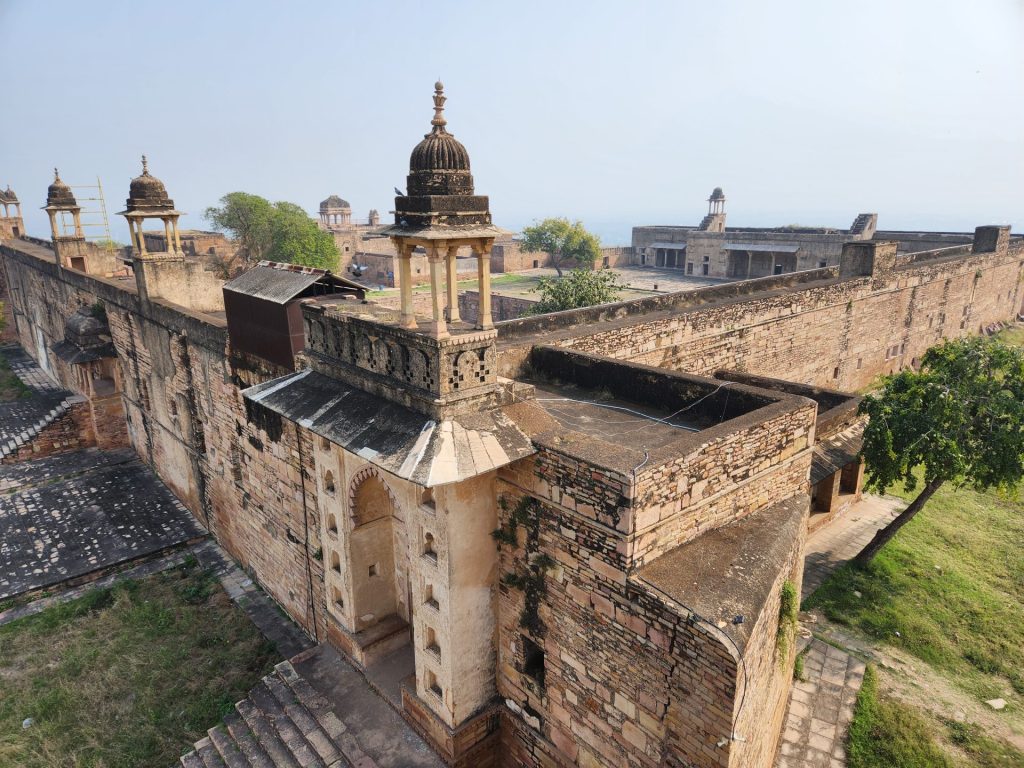
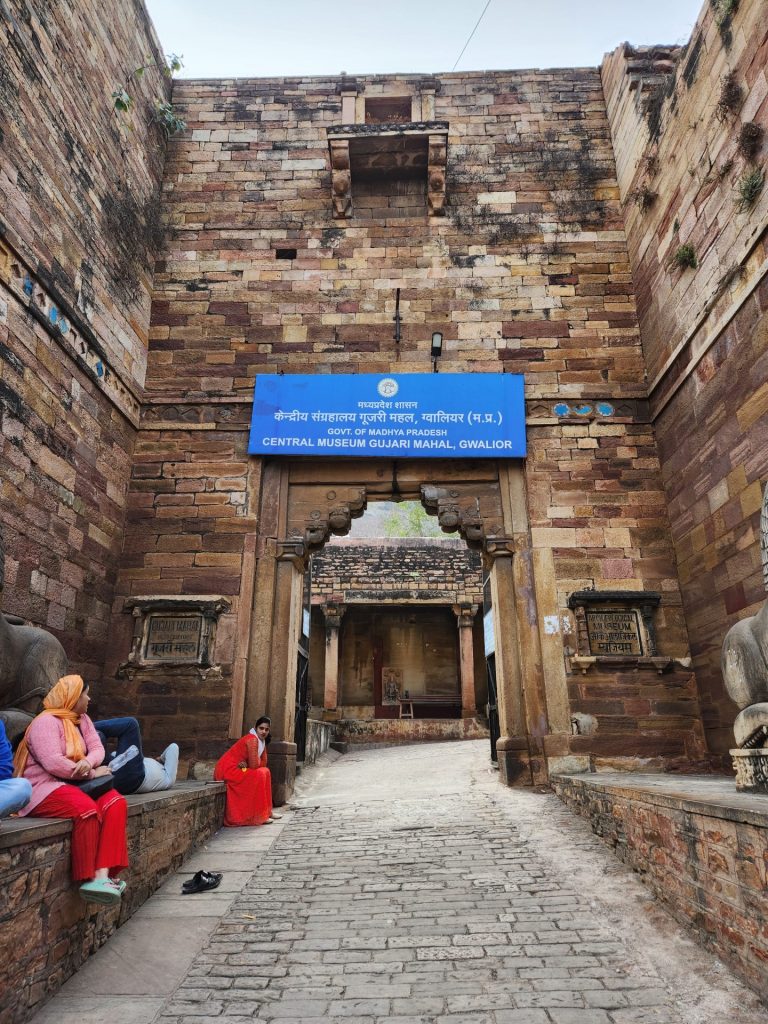
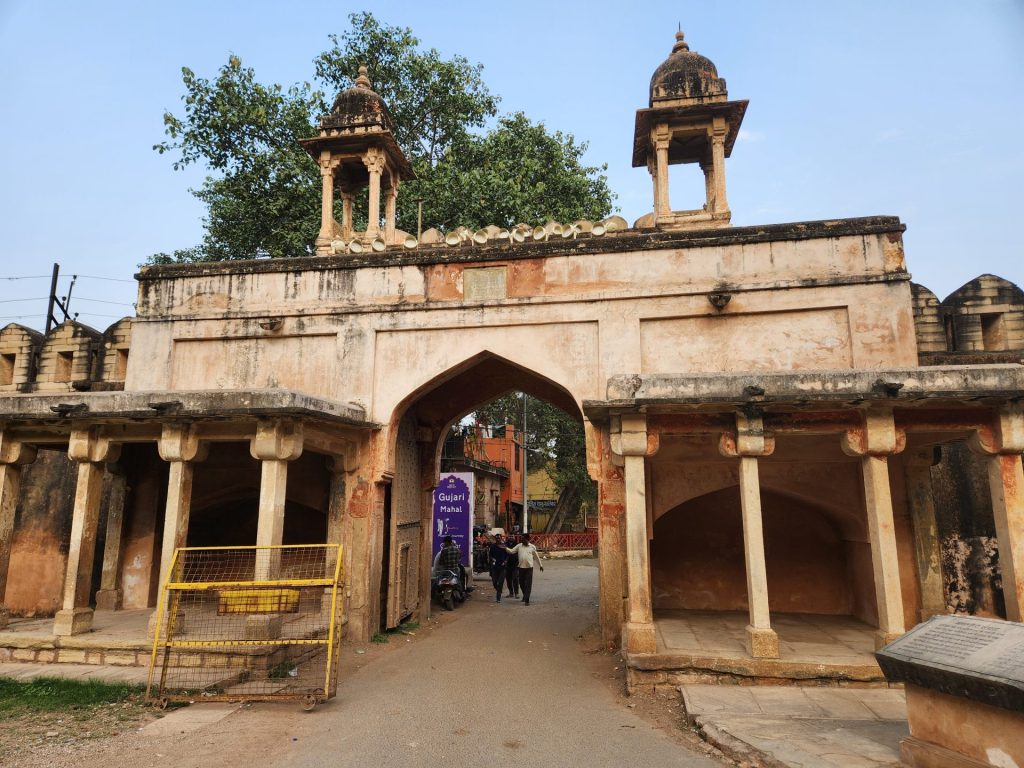
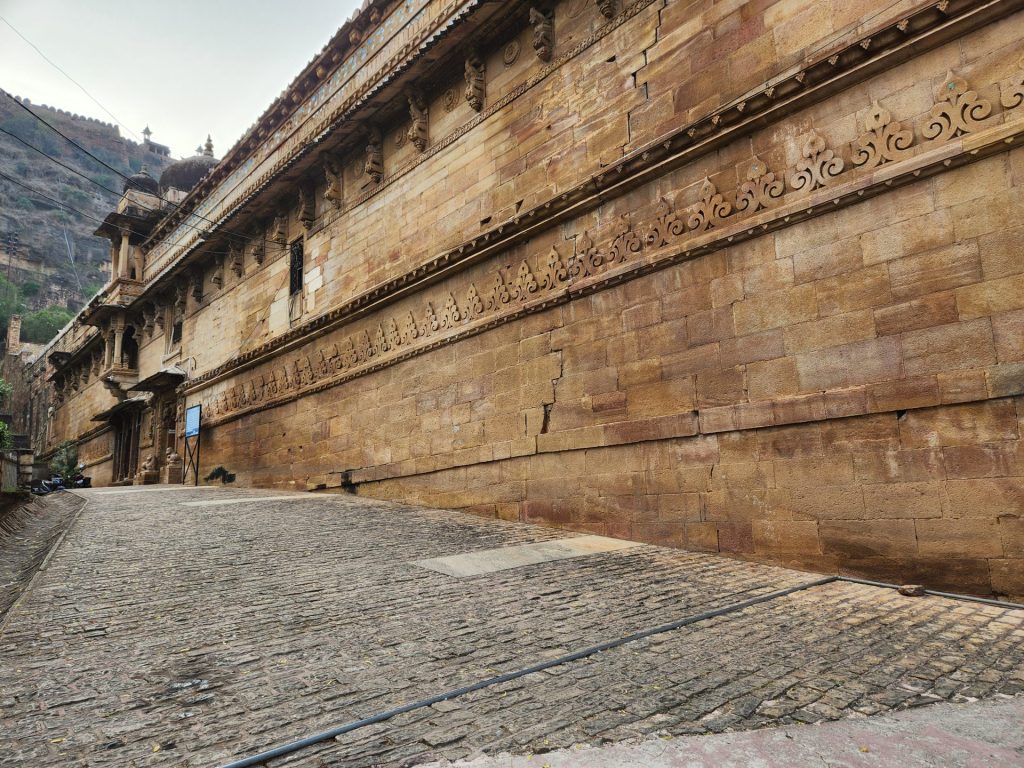
The Fort is home to 6 grand palaces, most of which are in derelict condition except the Gujari Mahal located at the base of the hill which is now converted to an Archaeological Museum and the Man Mandir Palace built by Raja Man Singh Tomar where there has been some element of restoration.
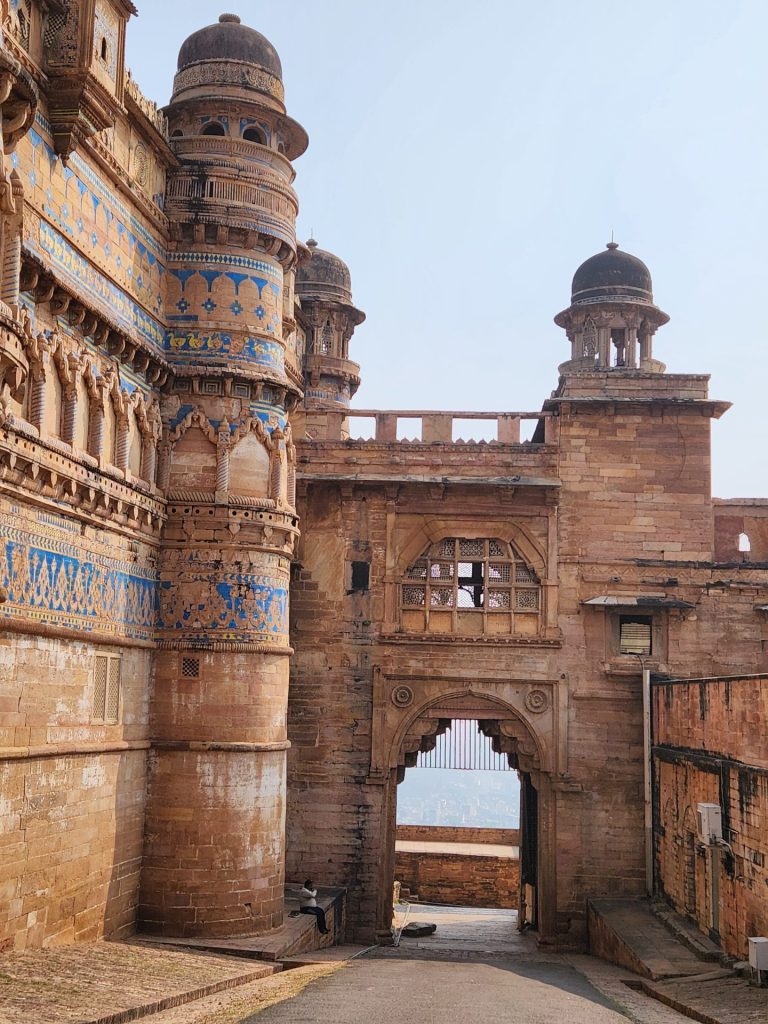
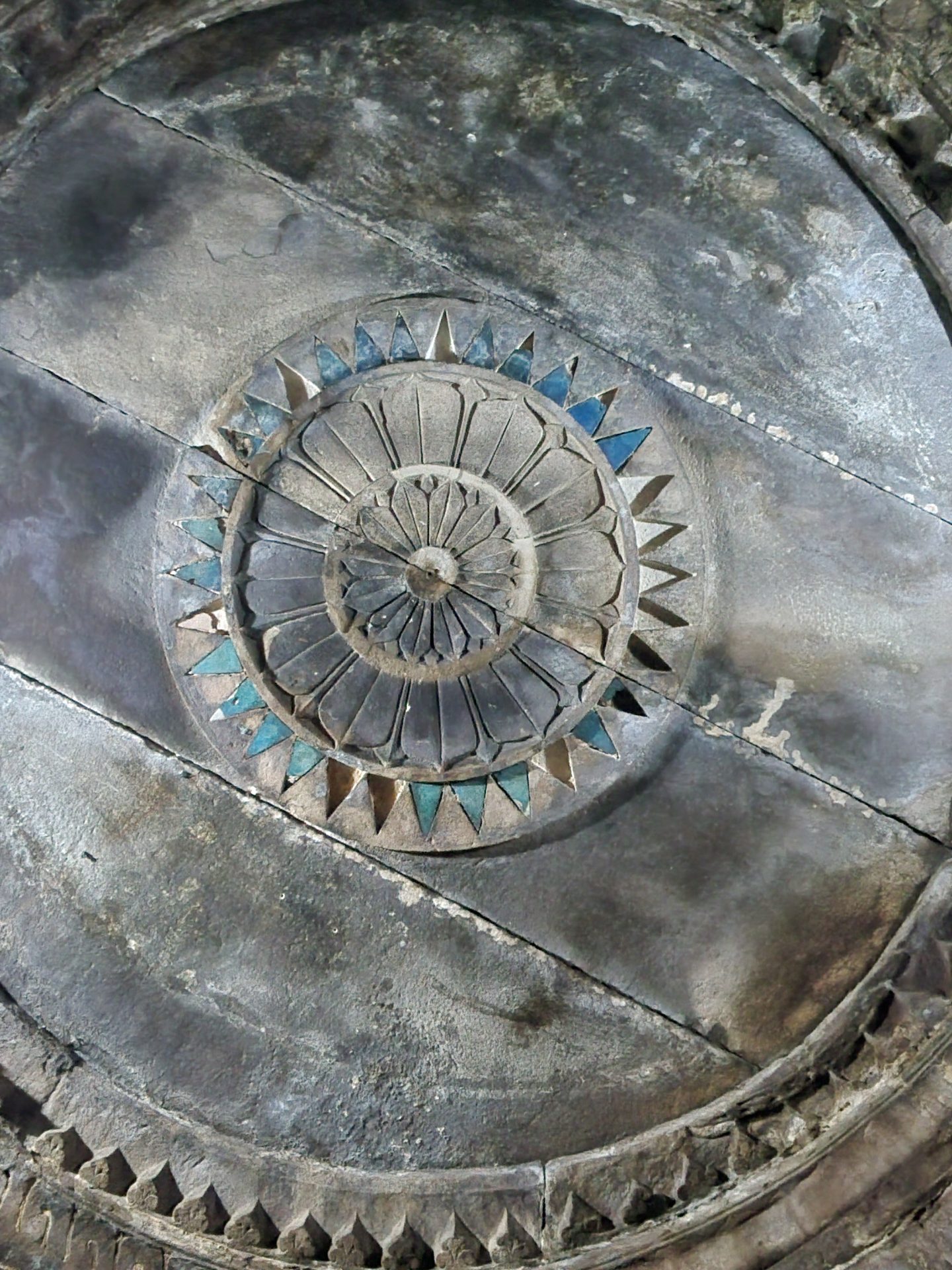
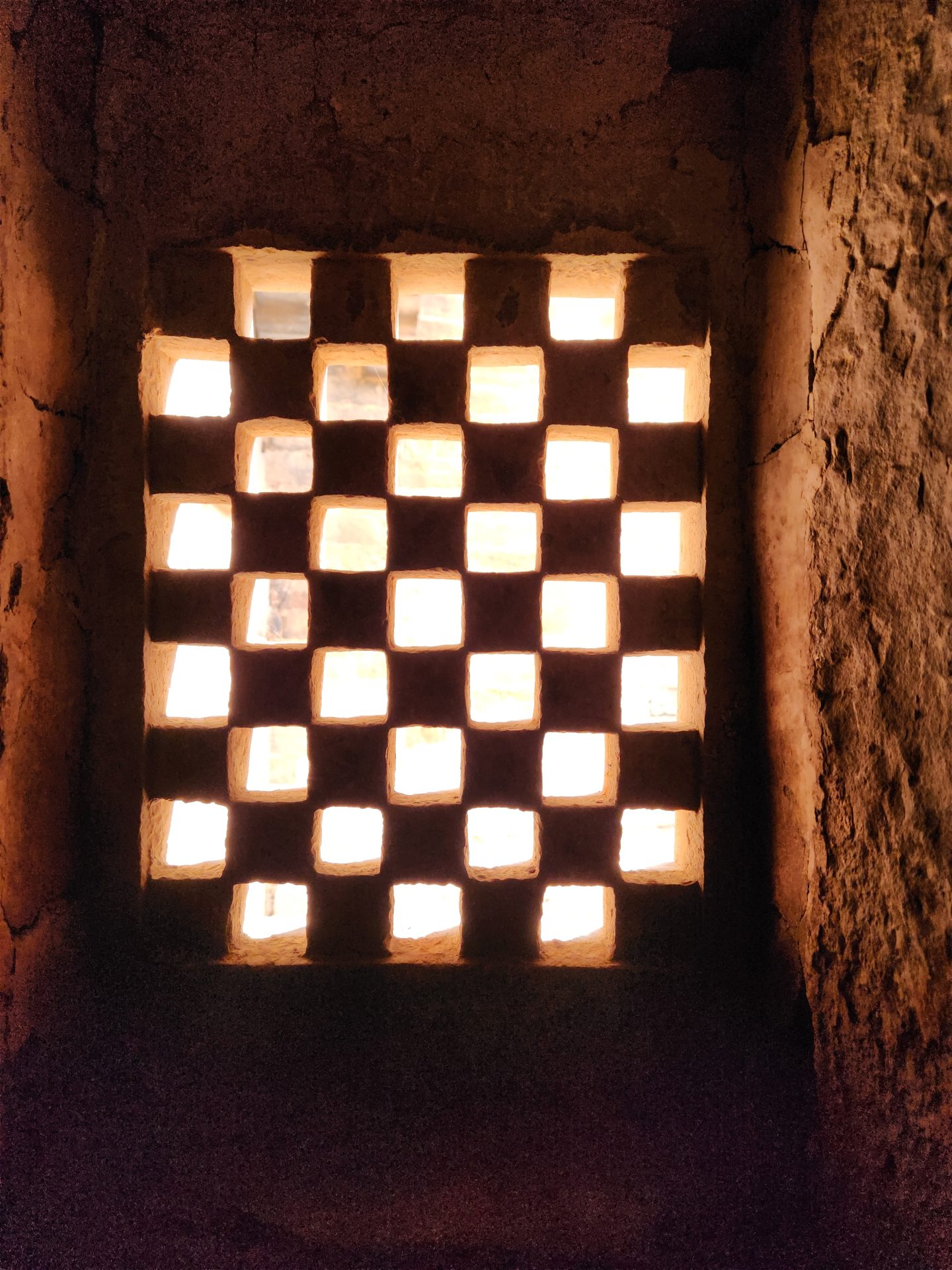
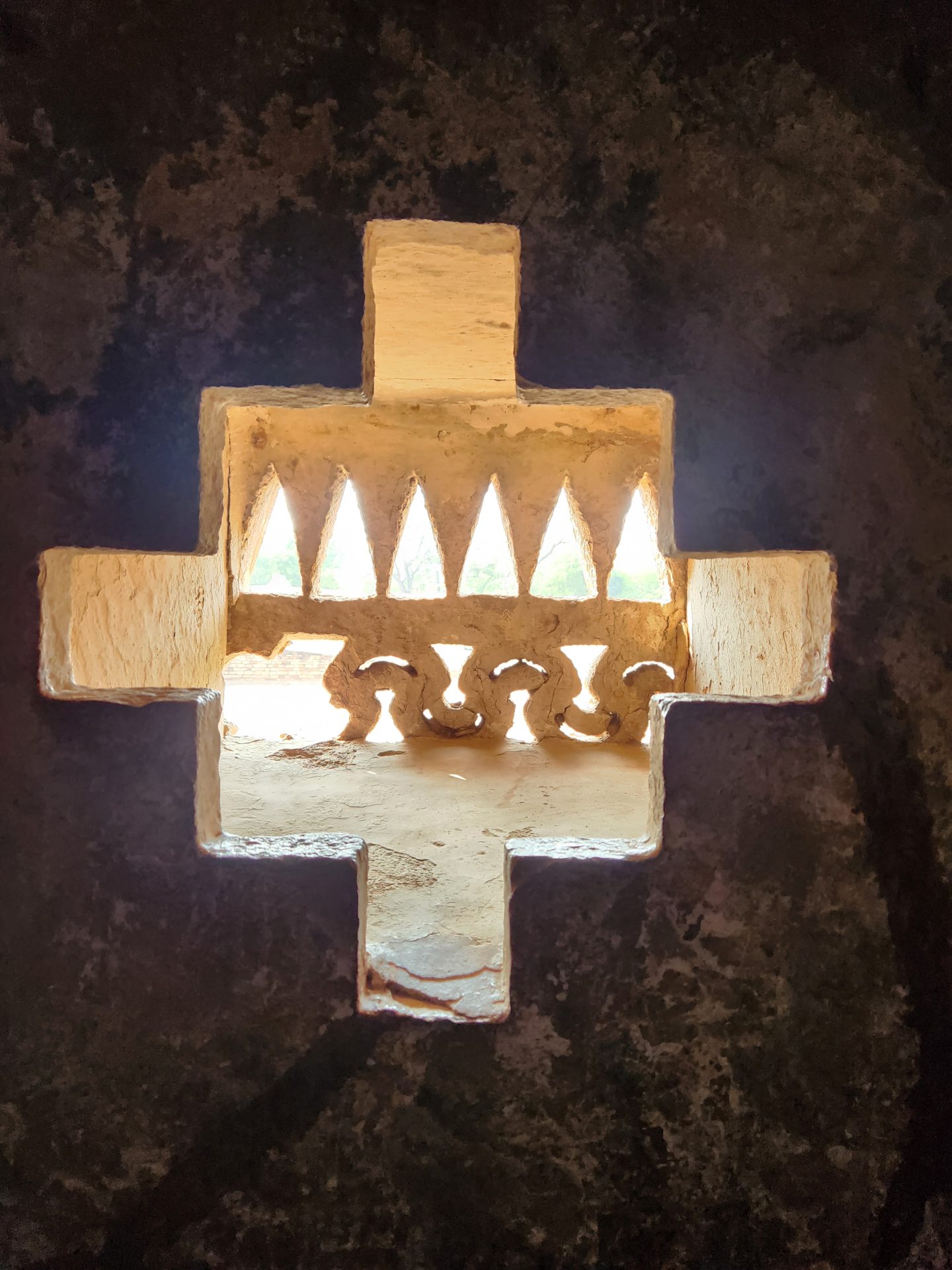
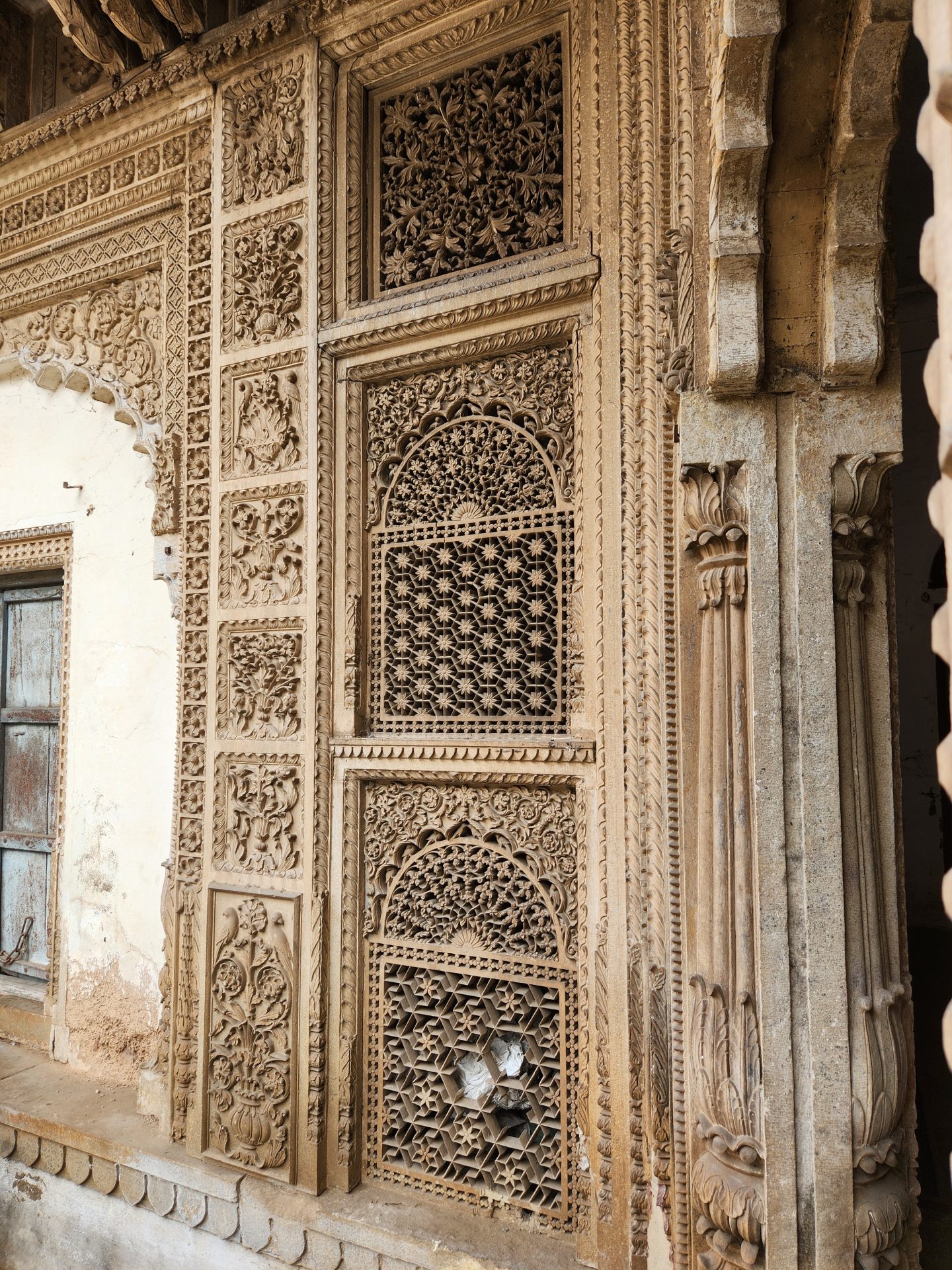
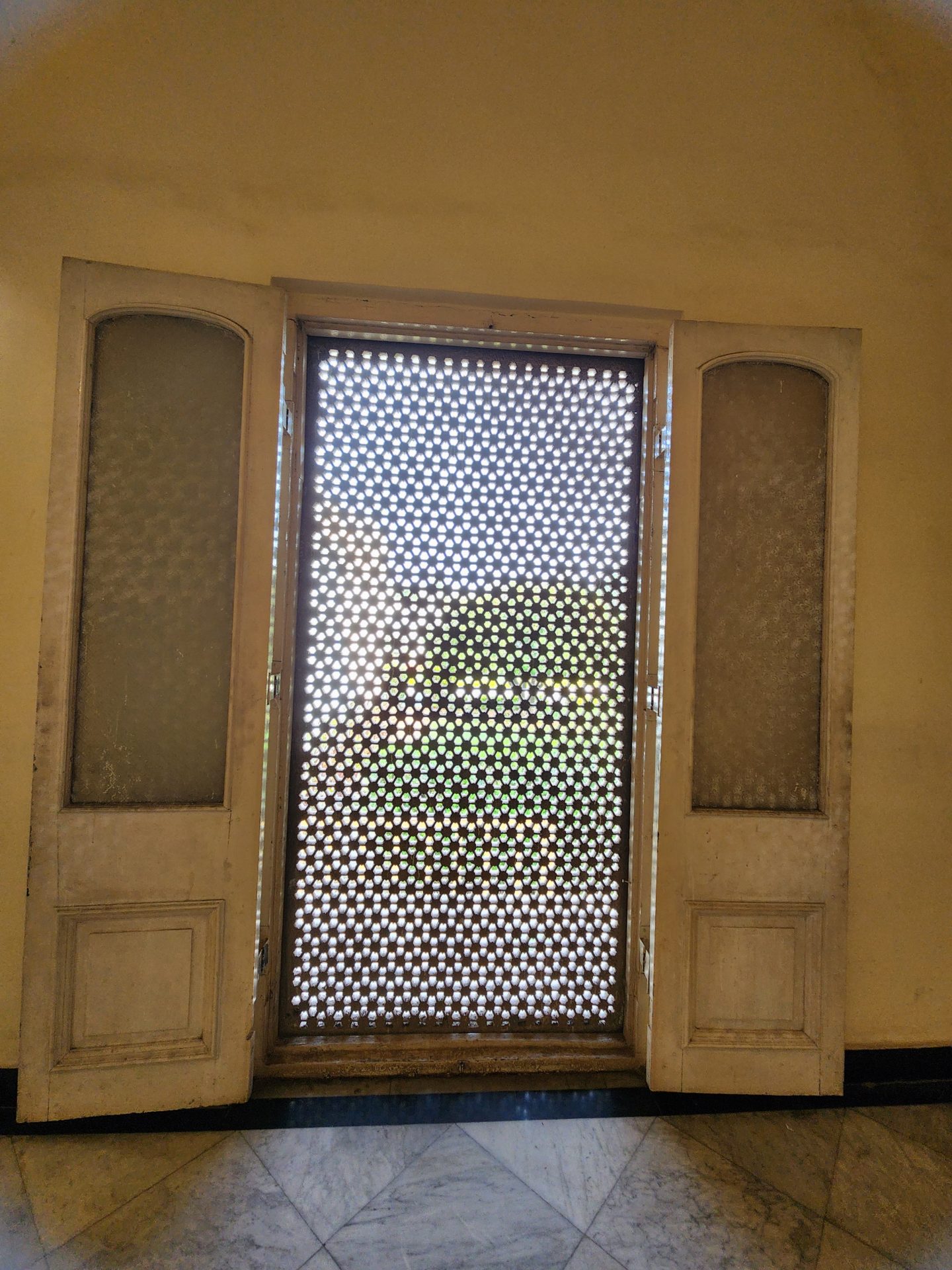
This palace has some lovely and colourful tile work, ornate carvings and aesthetically done up stone windows, also known as Jharokhas. Man Singh’s descendants added the Karan and Vikram Mahals while the Mughals later on added the Shah Jahan and Jahangir Mahals.
The outer walls of the fort have some intricate carvings done up in a tinge of blue and they look very appealing while some of the palaces have elements of Persian elegance thanks to the Mughals which gives the overall fort complex a very regal look.
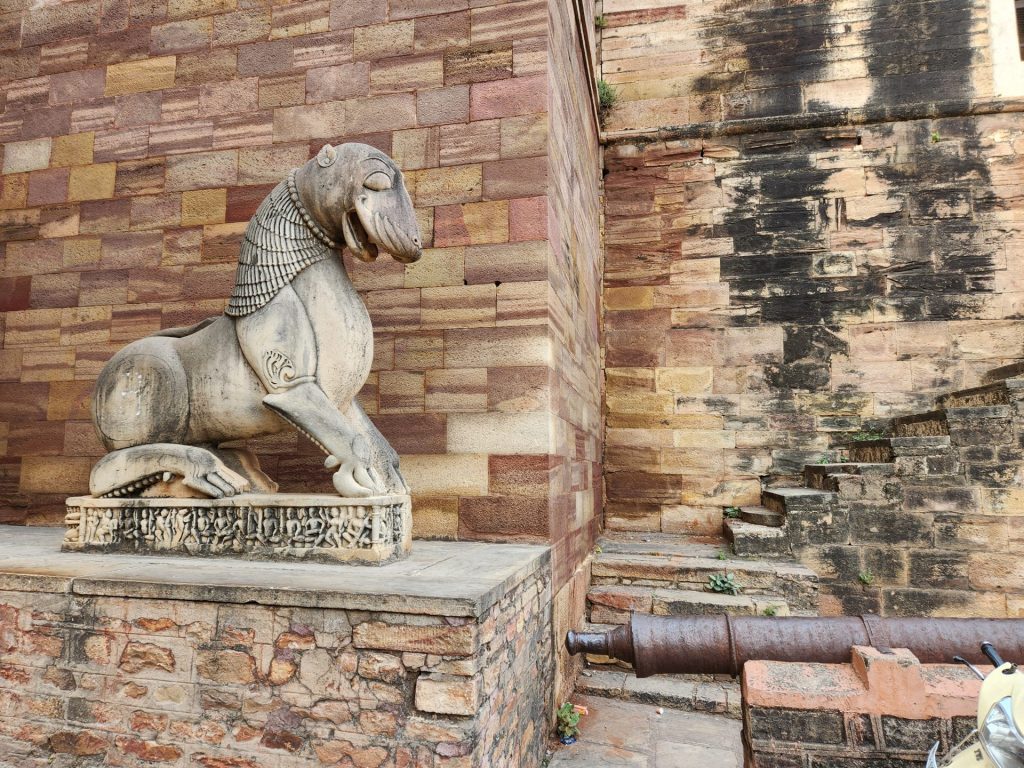
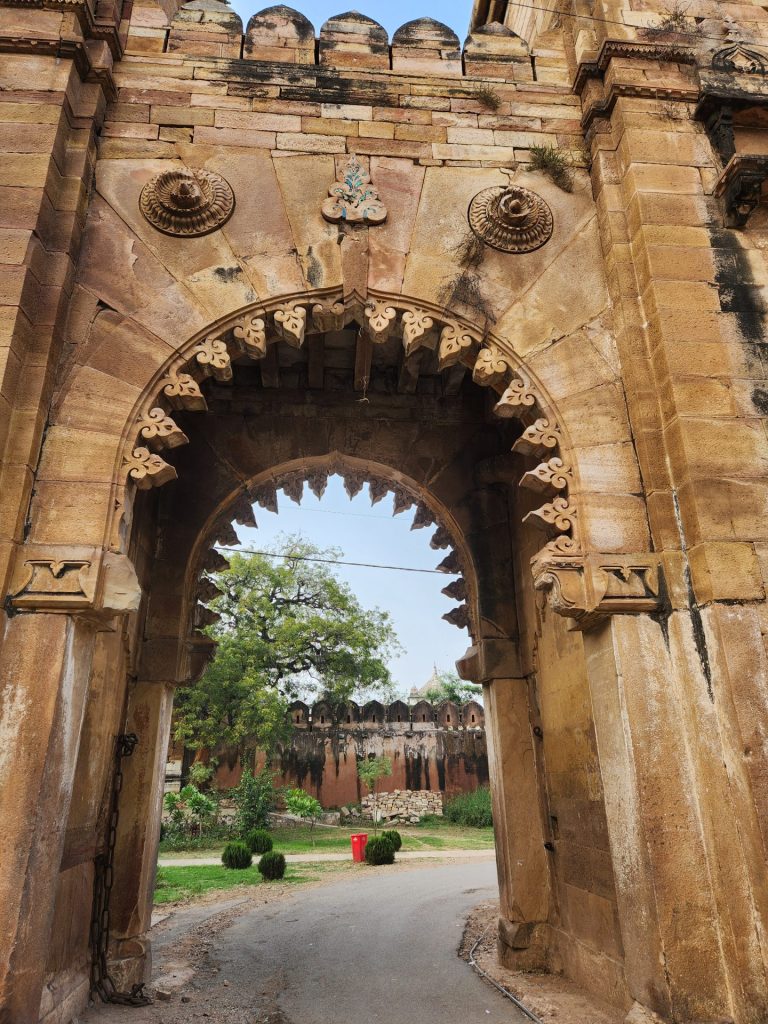
Designed as a military stronghold, the fort had massive ramparts surrounding the hilltop, thus offering a strategic advantage to the then rulers and many grand gateways were built then such as the Hathi Pol or the Elephant Gate, the Badalgarh Gate, the Ganesha Gate and the Hindola Gate to control access and also enhance the security. The fort was capable of supporting a garrison strength of over 15,000 soldiers during prolonged wars.
The Gwalior Fort
The Karan Mahal
The Karan Mahal was built by King Kirti Singh (also known as Karan Singh) between 1480 and 1486 and this Rajput styled architectural splendour was built as a 2 storeyed palace featuring stone paved courtyards and elegantly carved porticos.
The palace had women’s baths, also known as Hamam in the ground floor. An integral part of the magnificent Gwalior Fort complex in Madhya Pradesh, is a testament to the early Rajput architectural style.
The Man Mandir Mahal
The Man Mandir Palace remains the Jewel in the Crown of the Gwalior Fort. Built between 1486 and 1516 by the Tomar ruler Man Singh Tomar, this is located at the North East end of the Fort.
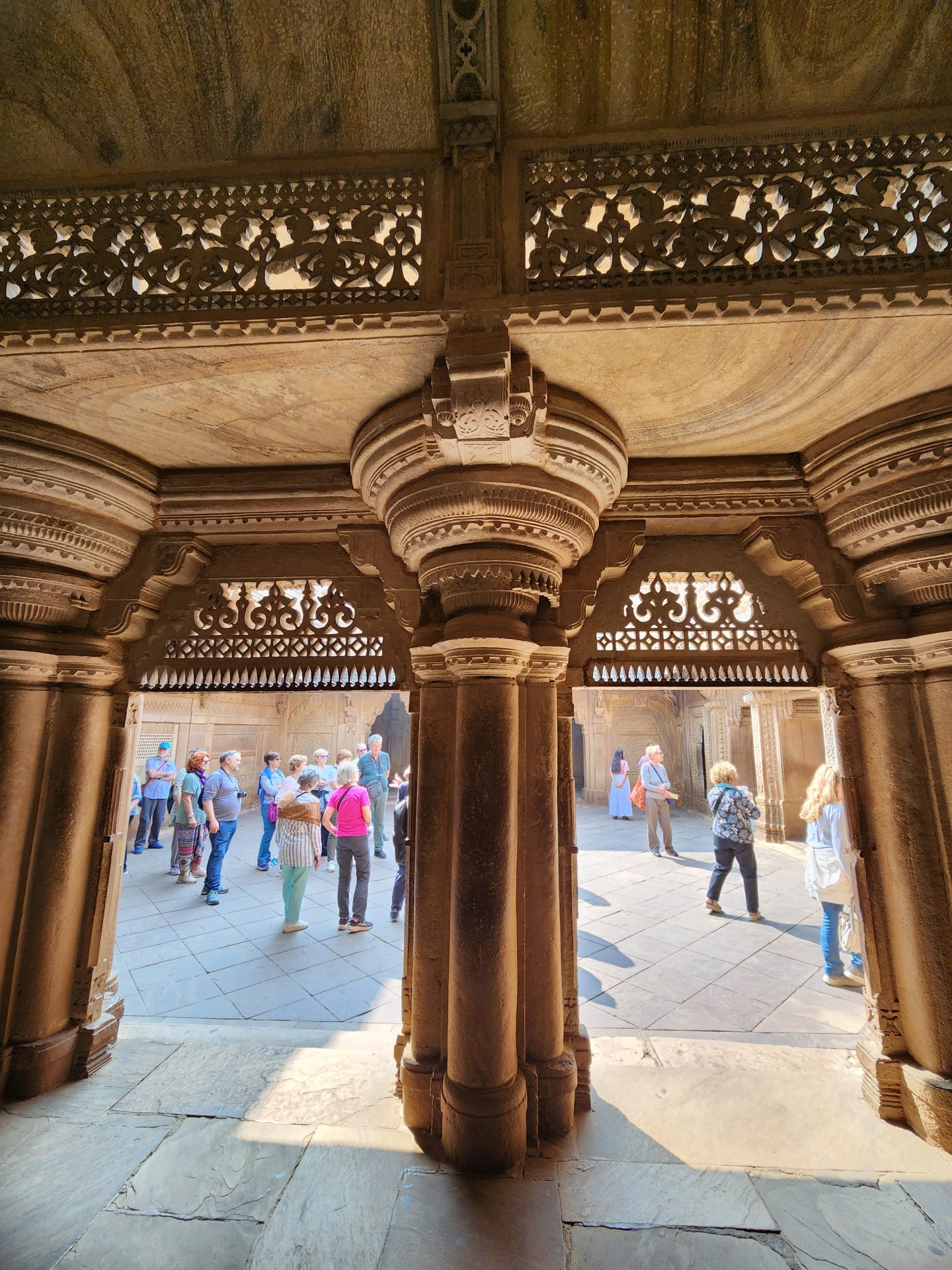
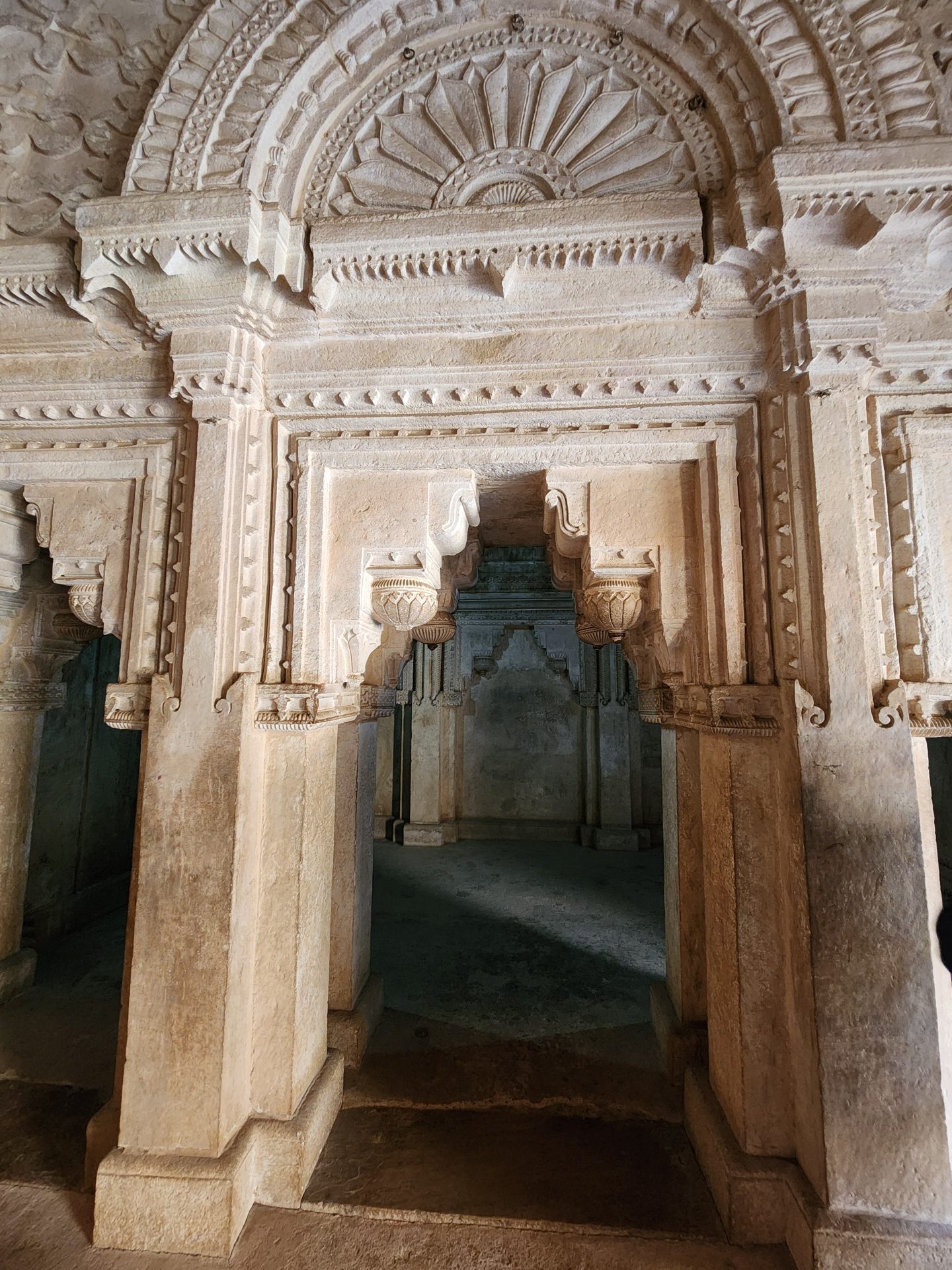
The palace still showcases beautiful carvings and designs of that era. There are 2 open courts in between as we enter the palace with apartments on two levels.
The Vikram Mahal
The eldest son of Raja Man Singh, Tomar Vikramaditya Singh then went on to build the Vikram Mahal between 1516 and 1523.
What was unique about this palace was the use of the Upper Storey as a place of royal worship for Lord Shiva.
One gets to see a 12 doored open air pavilion centrally which was designed with the sole purpose of light and maximum air circulation.
Either sides of the hall had smaller simpler rooms which served as chambers for the Royal Family.
This Palace built entirely out of sandstone features Classic Domed Pavilions also known as Chhatris and sturdy walls though the architecture appears very simple. These Domed structures give it a different silhouette against the skies.
The Jahangir and Shah Jahan Mahal
Close to the Man Mandir palace, one gets to see empty shells of palaces used by the Mughal emperors on their way to and from Delhi while embarking on their hunting trips.
The Jahangir Mahal also known as the Sher Mahal as it was built by Sher Shah and the Shah Jahan Mahal built right across, stand testimony to the prowess of the Rajput and Mughal styles of architecture.
Sher Shah built this in the early 17th century during the reign of Emperor Jahangir and the palace’s design features arched gateways, ornate carvings and intricate Jaali Work.
The Shah Jahan palace was a lot simpler and less ornated though built in the Mughal style. The Mughals later on built underground prison cells within the Man Mandir palace where its believed that Aurangazeb poisoned his brother slowly to death.
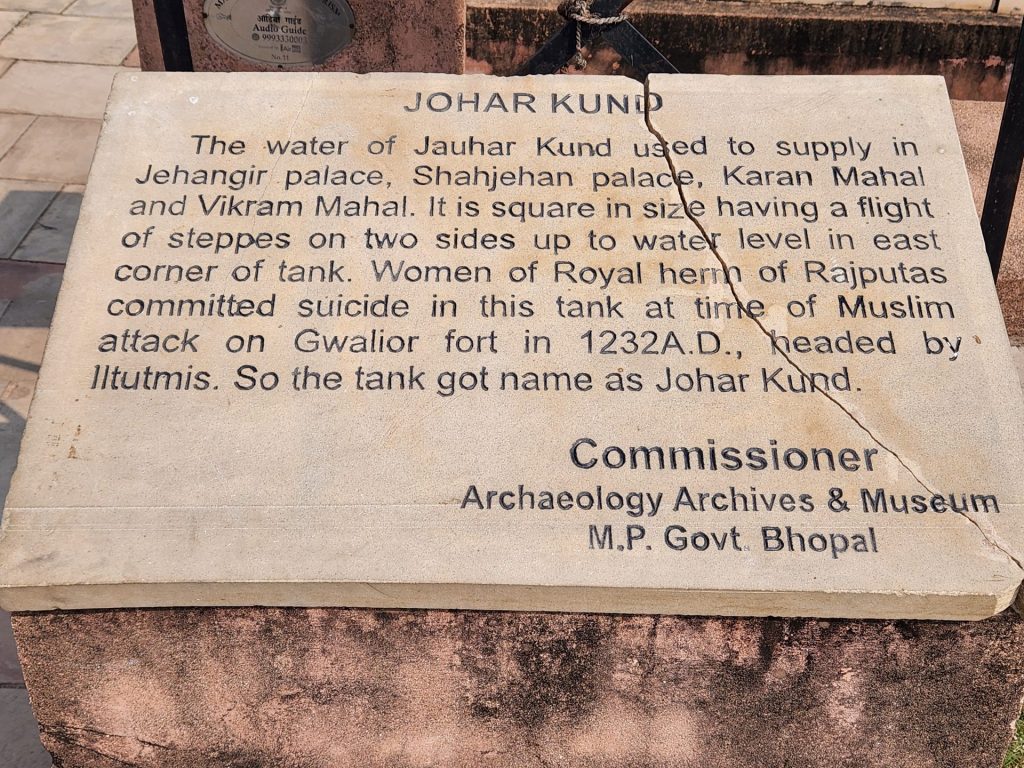
The Jauhar Kund
Close to the Man Mandir Palace lies the Jauhar Kund where various Rajput women committed mass suicide to avoid rapes by the armed forces of Illtutmish who was the King pf Deli during the 13th Century AD. The fort has also been witness to a lot of gruesome wars and killings and which also included descendants of Aurangazeb’s family.
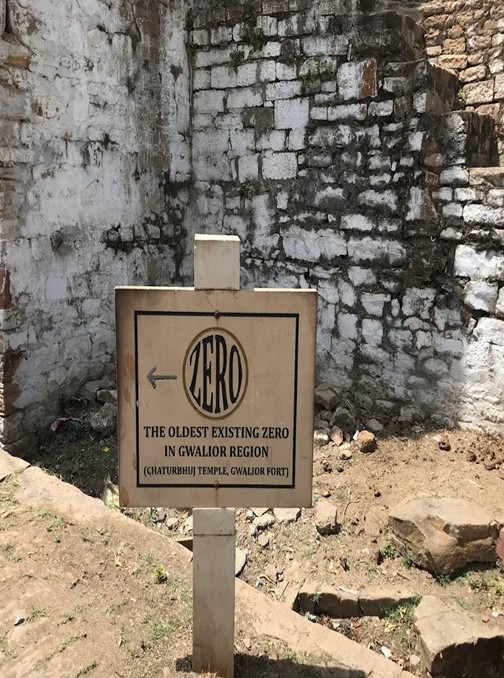
The Chaturbhuj Temple
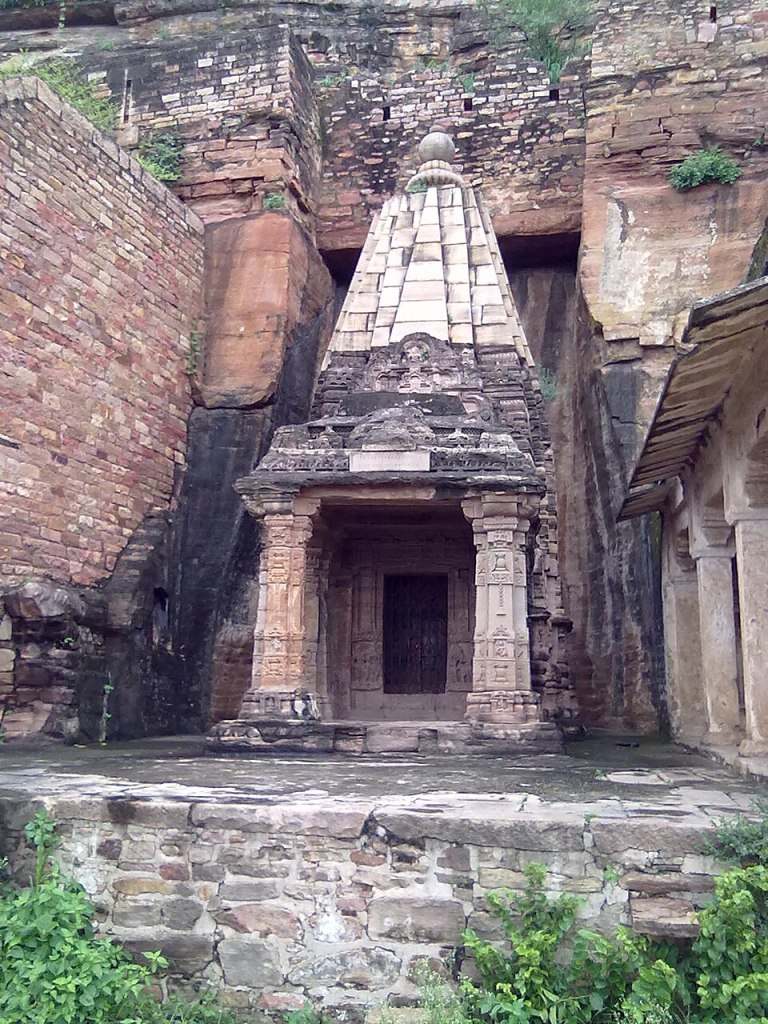
Close to the Man Mandir can be found the Chaturbhuj Temple literally built out of the walls of the cliff. Presumed to be dated back to over 1500 years, the second oldest record of Zero (0) can be seen etched on stone.
Came out of the Fort complex by around 11.30 AM and spent the next 45 minutes indulging in some shopping for memorabilia like Magnets, scarves, Hand bags in a local souvenir shop.
The Saas Bahu Temple
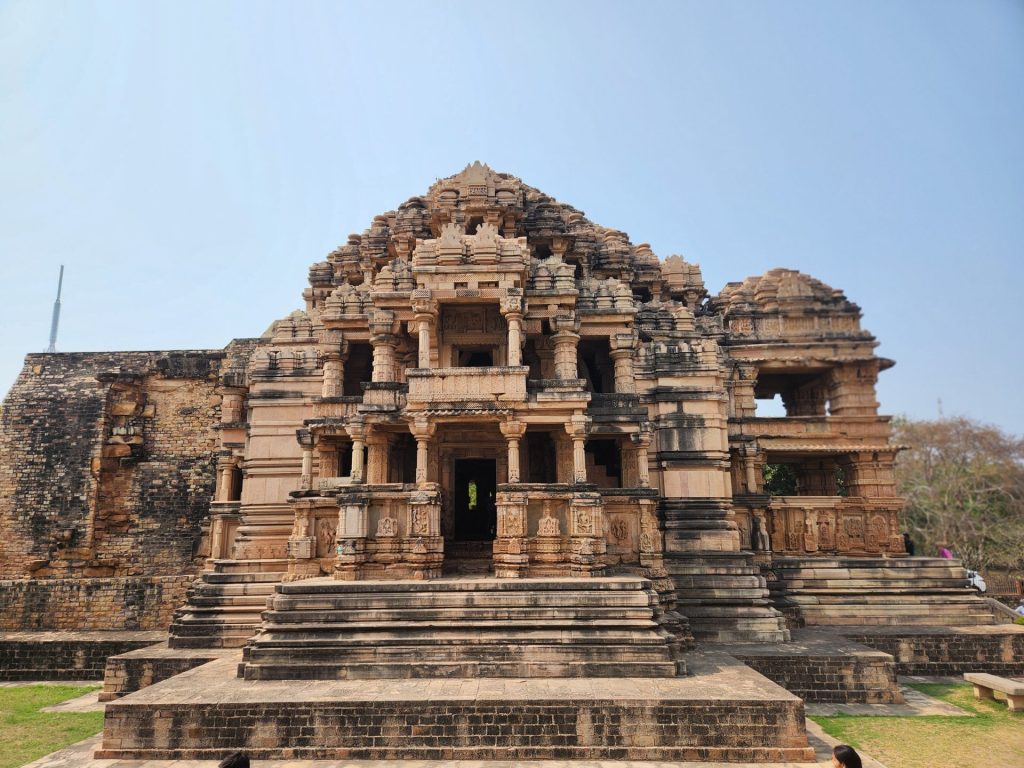
We drove on next to the 11th century built Saas Bahu Temple (literally meaning the Mother-in-law Daughter-in-law temple). In reality this was known as the Sahastrabahu (meaning one with a thousand arms) Temple.
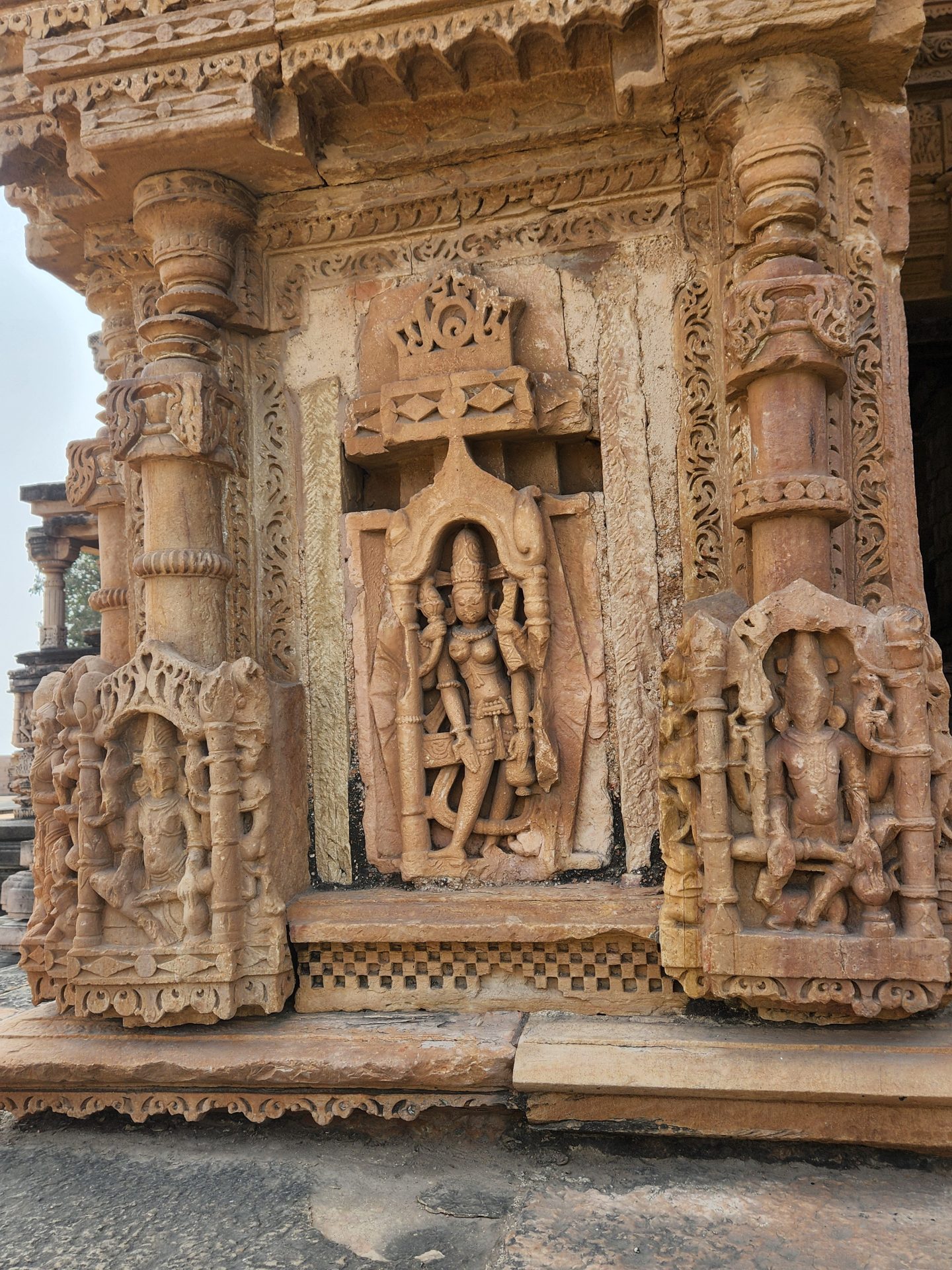
Dedicated to Lord Vishnu. Known for its intricate carvings across pillars, walls and beams and bearing a pyramidical design, this temple was built by King Mahipala of the Kachchhpaghata dynasty in 1093.
The famed Scindia School
A few among the Notable Scindia School Alumni :
Entertainment & Media:Salman Khan (actor), Arbaaz Khan (actor/producer), Anurag Kashyap (director), Sooraj Barjatya (director), Nitin Mukesh (singer), Neil Nitin Mukesh (actor) and Ameen Sayani (radio legend).
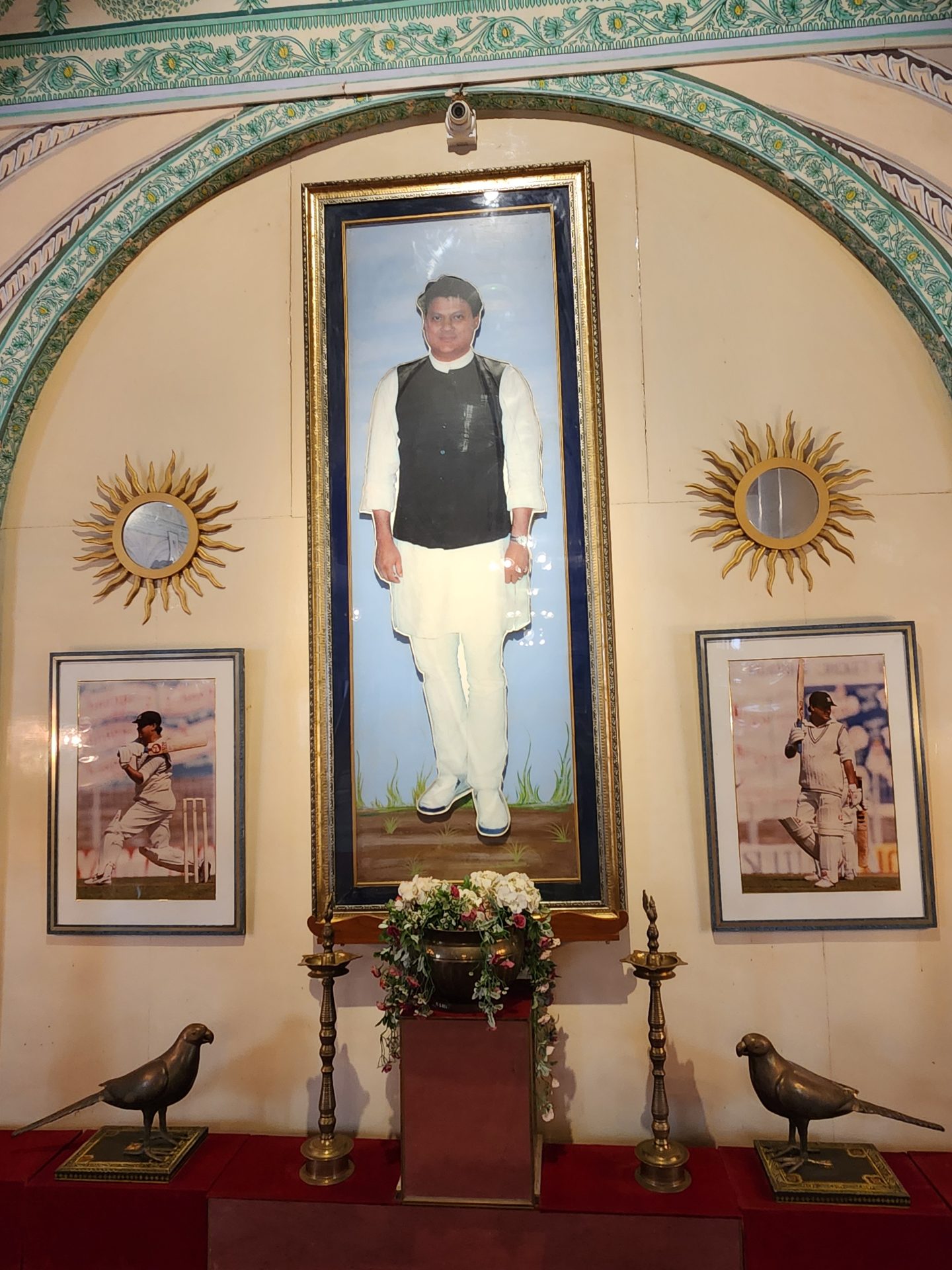
Politics & Administration:Madhavrao Scindia (former Union Minister), Shivshankar Menon (former National Security Advisor) and K. Natwar Singh (former Union Minister)
Teli Ka Mandir
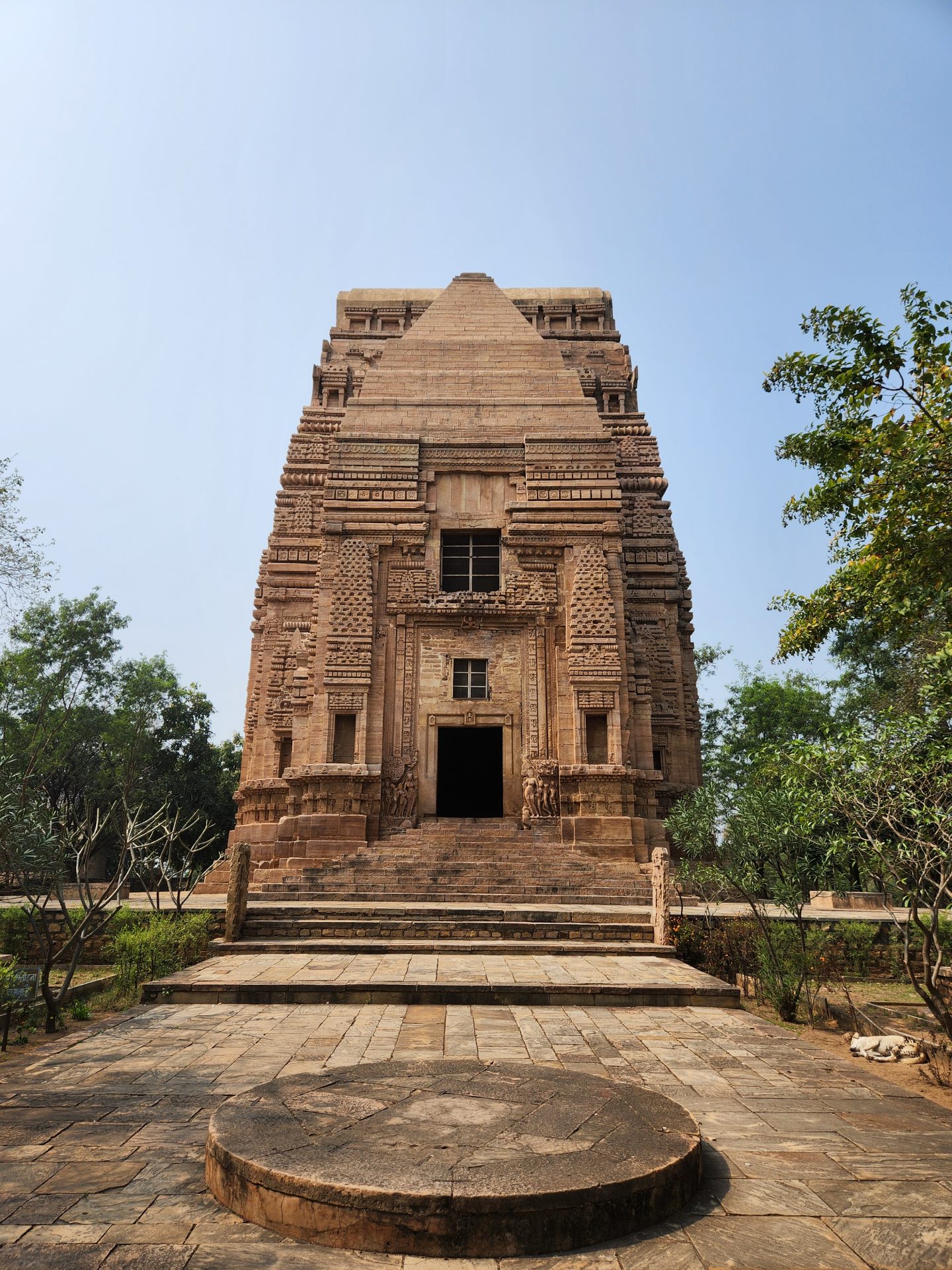
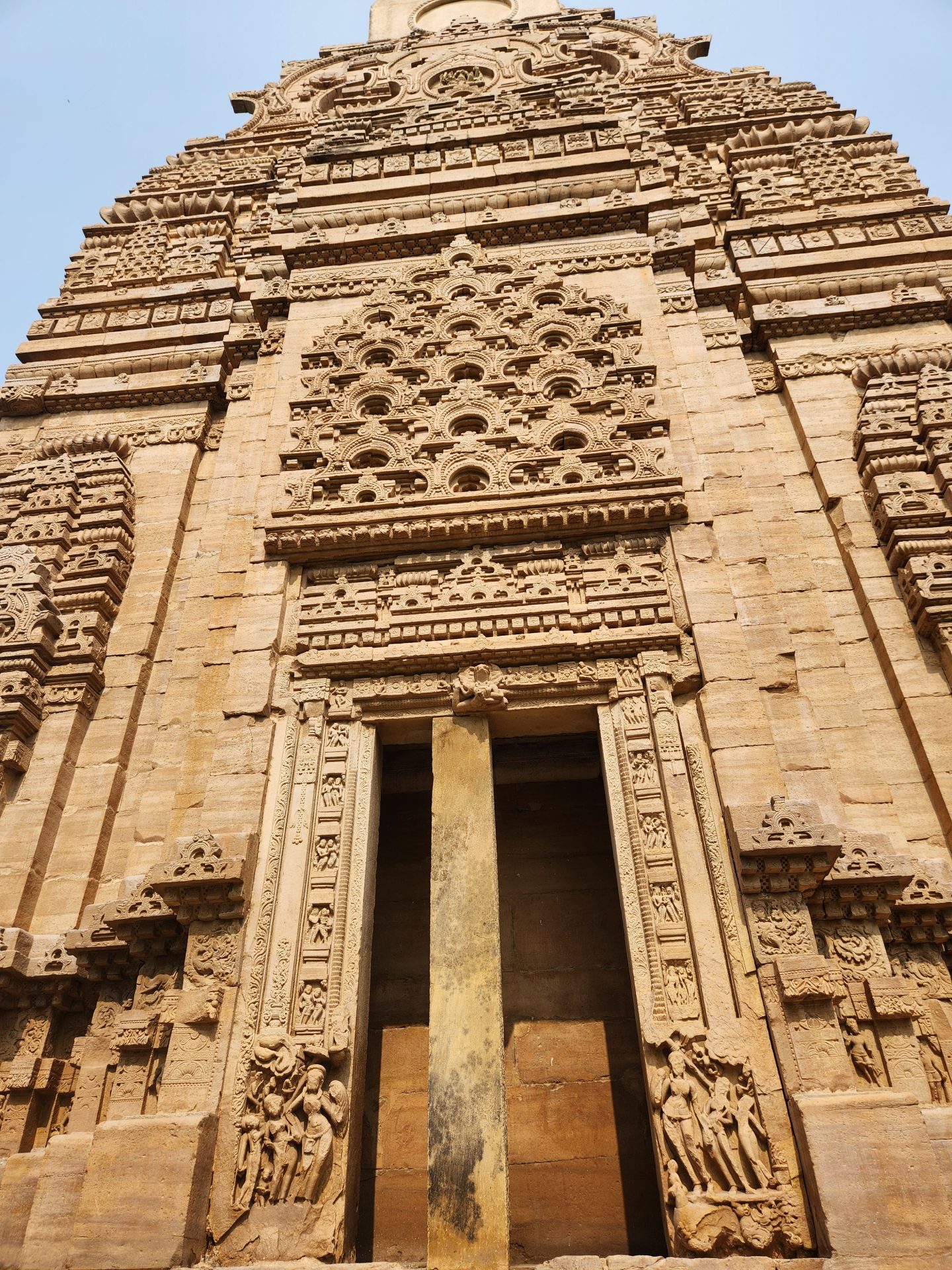
A little ahead of this temple was the Teli ka Mandir. Built between the 8th and 9th centuries during the reign of the Pratihara King Mihir Bhoja, this 30 metre tall temple has a unique fusion of Nagara and Dravidian architectures and is dedicated to Lord Vishnu.
Believed to have been built by the money donated by oil merchants, the temple derives its name from this.
The sanctum has a porch and a doorway through which one can enter the temple and there are a set of stairs on the eastern side to also gain entry into the temple.
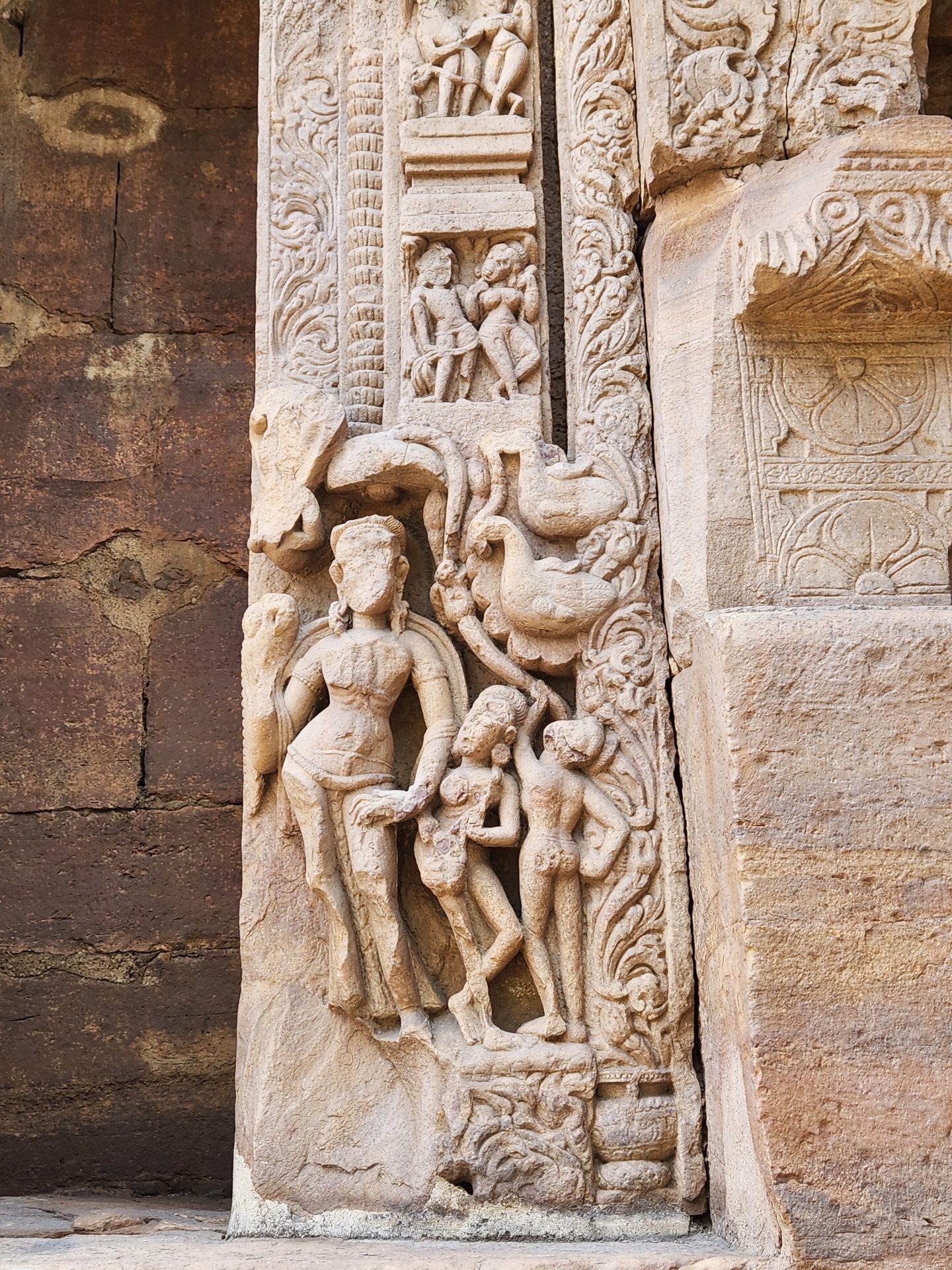
While the arched roof of the temple typically looks like built in South Indian style most carvings around the temple including river goddesses, coiled snakes, amorous couples etc appear to be Indo Aryan.
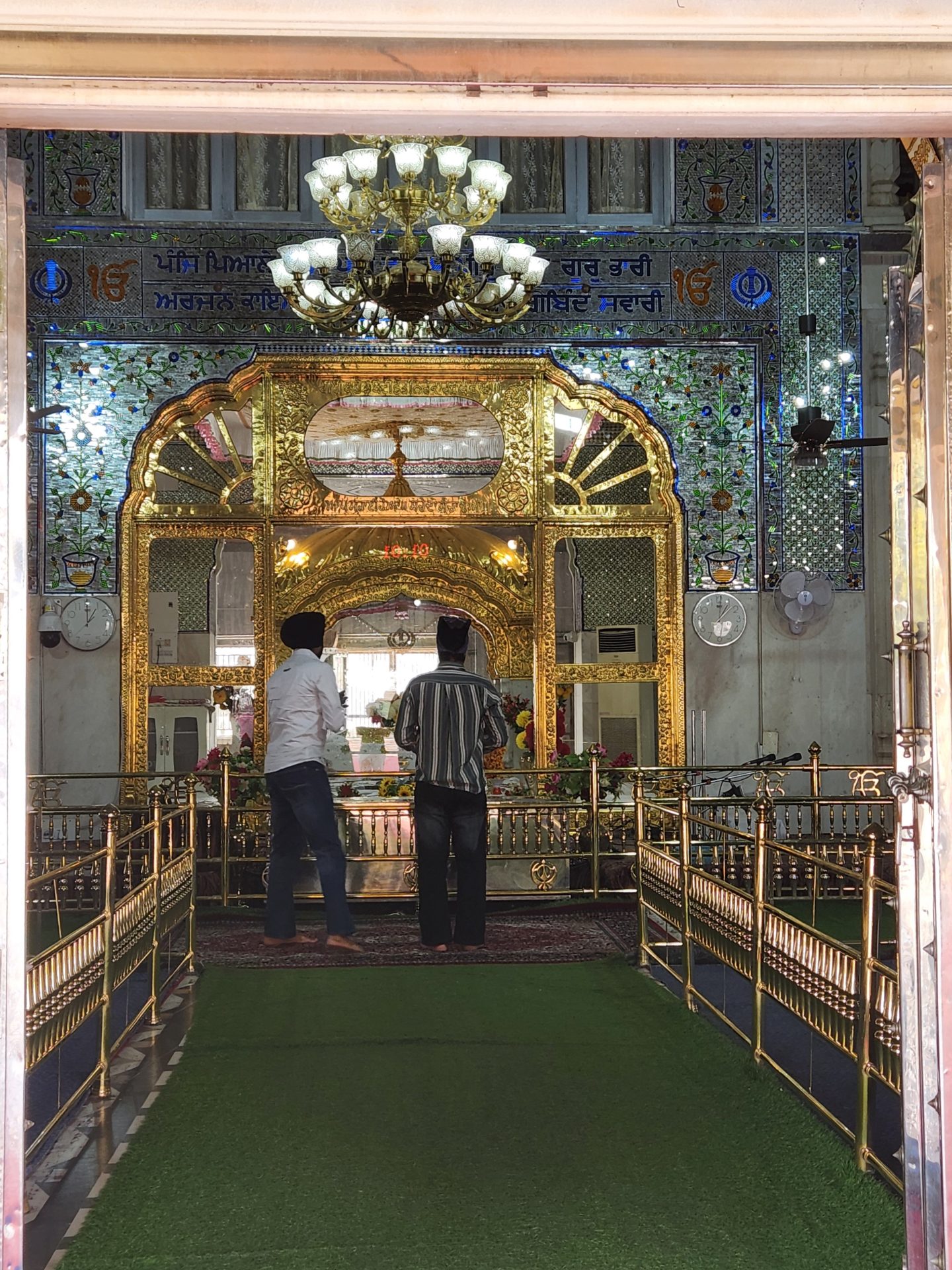
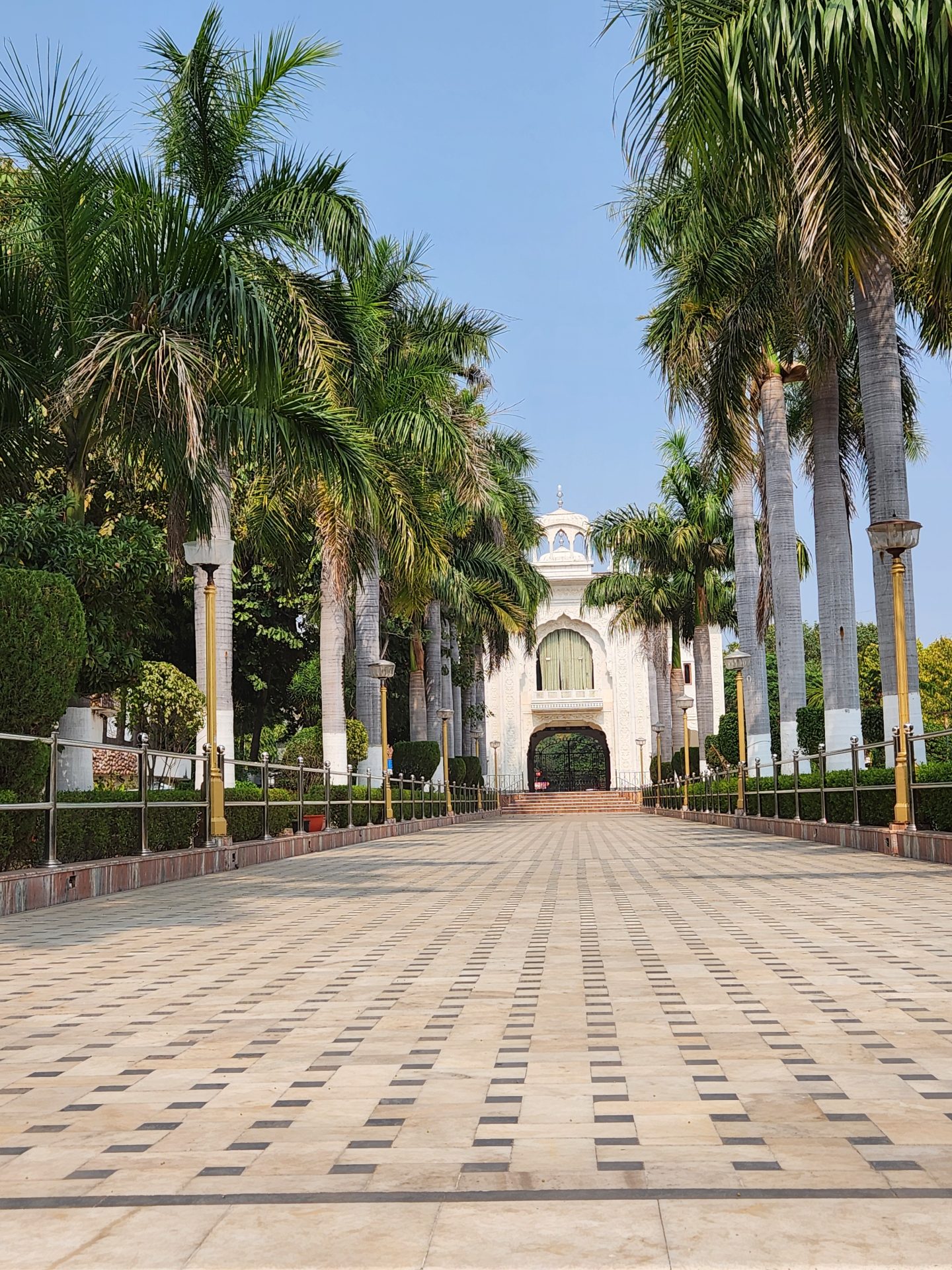
The Gurudwara Data Banti Chor Sahib
We moved on to the next structure located with the Gwalior Fort Complex, the Gurudwara Data Banti Chor Sahib. This was less than a km away and we were there in 5 minutes.
This sacred sanctuary commemorates the imprisonment and release of the 6th Sikh Guru, Har Gobind Singh alongside 52 captive kings and has a rich tapestry of spirituality and history.
The surroundings exude a peaceful ambiance and sereneness and is a great place for those seeking moments of solace. While the option of a communal meal in the form of the Langar was available, chose to eat in one of the restaurants around to sample the Gwalior style of cooking.
Time for a quick bite
We were out of the Gurudwara by around 13.15 hours and decided to have a quick lunch before visiting the other places of interest. A 8 km drive brought us to Patel Nagar where we had lunch at Hotel Classic Restaurant and Banquet Hall. Pretty good and filling food.
The Moti Mahal
Moved onto the Moti Mahal located around 4 kms away in the Lashkar area. A ticket for ₹ 20/- has to be purchased for entry into Moti Mahal.
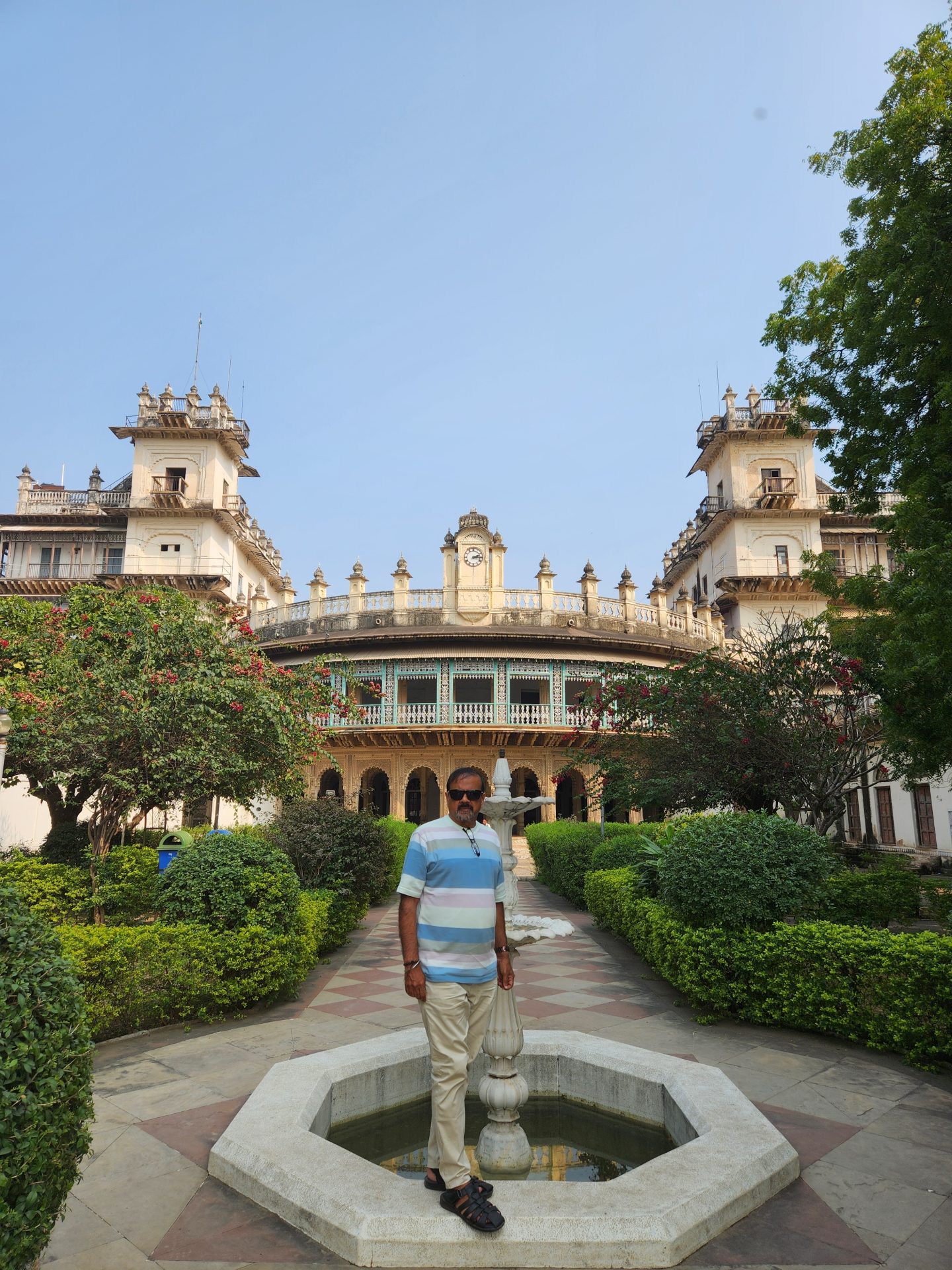
Built in the 19th Century (1877 to be precise) by Maharaja Jayajirao Scindia of the Scindia dynasty, this building served as the Administrative headquarters and Secretariat for the Scindia rulers and later for the Government of MP between 1947 to 1956.
The Mahal features a a mix of Gothic, Bundeli and Maratha architectural styles and was inspired by the Peshwa’s Palace in Pune.
Lot of areas in the Palace had been cordoned off for restoration work including the main darbar hall which is said to house a chandelier weighing 1.5 tonnes and which was made from Belgium Glass. Only 2 of its kind and the other one being in Germany.
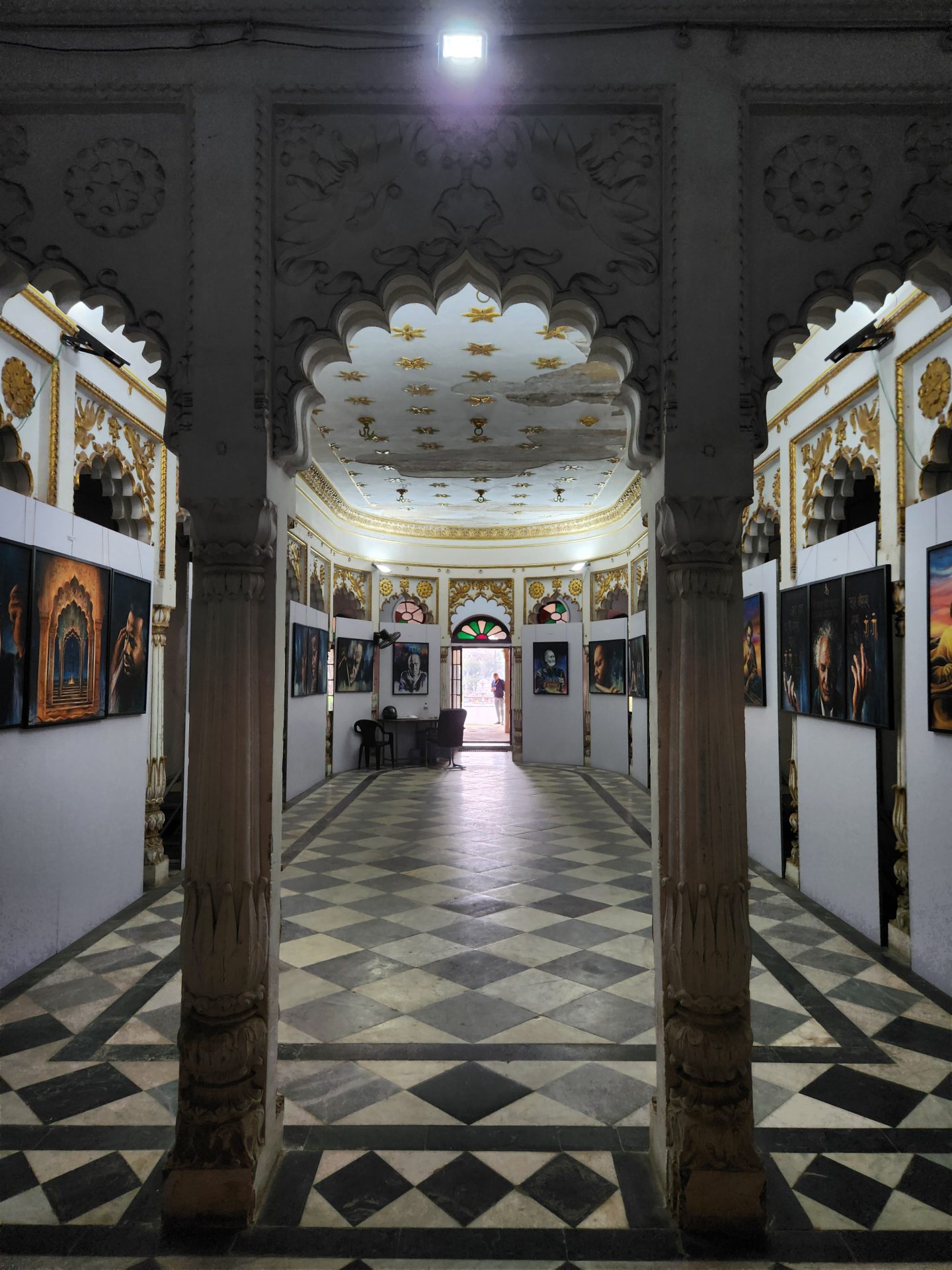
The wall paintings and frescoes in the Palace looked very appealing.
The Jay Vilas Palace
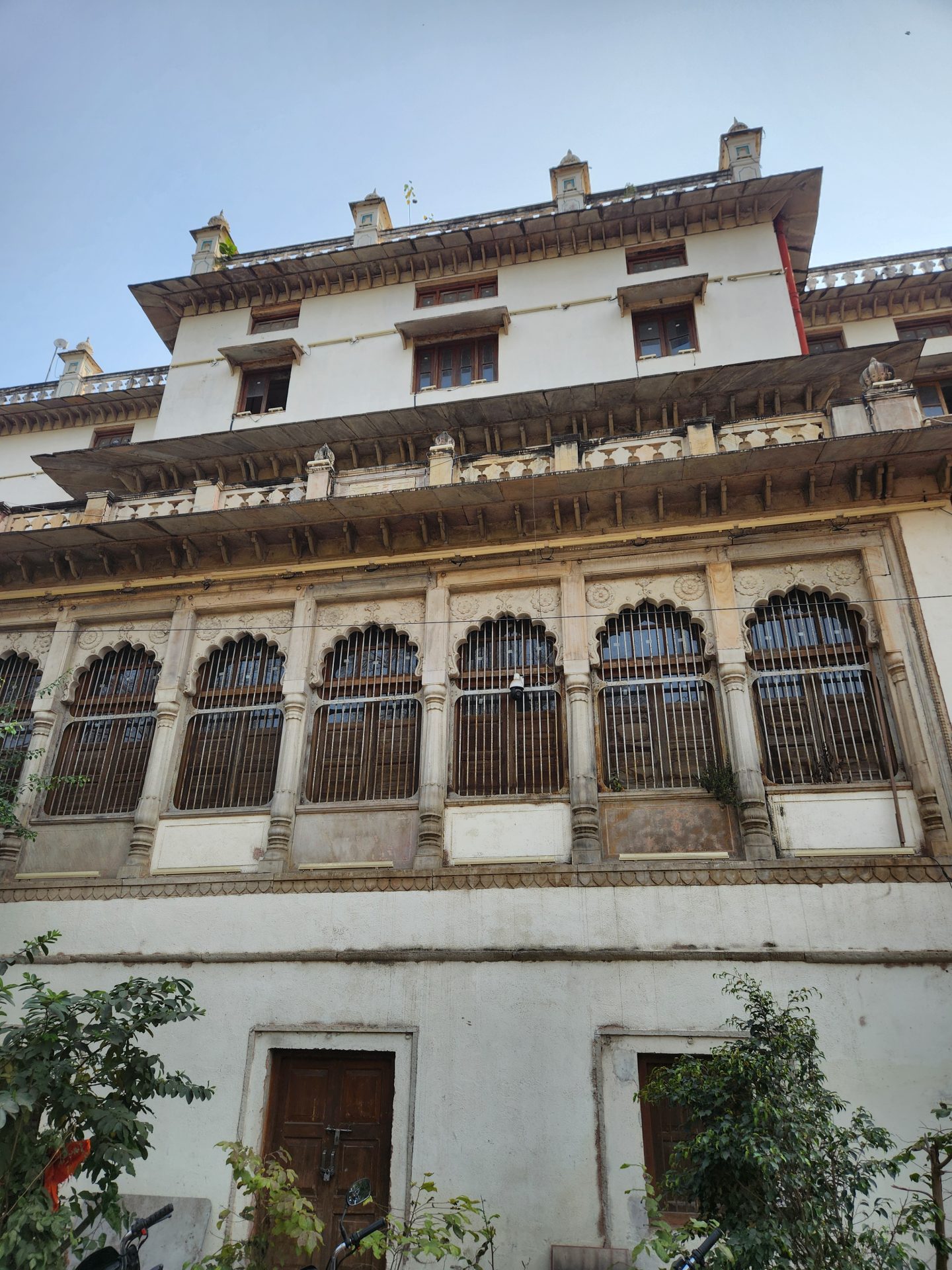
The next stop was at the 19th century 3 storeyed Jay Vilas Palace, an exquisitely designed building blending Tuscan, Italian-Doric and Corinthian columns across the 3 floors. Tickets are priced at ₹ 400 including the charges for ₹ 50 for the mobile in case we want to use it as a camera.
The opulence and sophistication used in crafting this 400 roomed Palace truly places it as a symphony of architectural elegance.
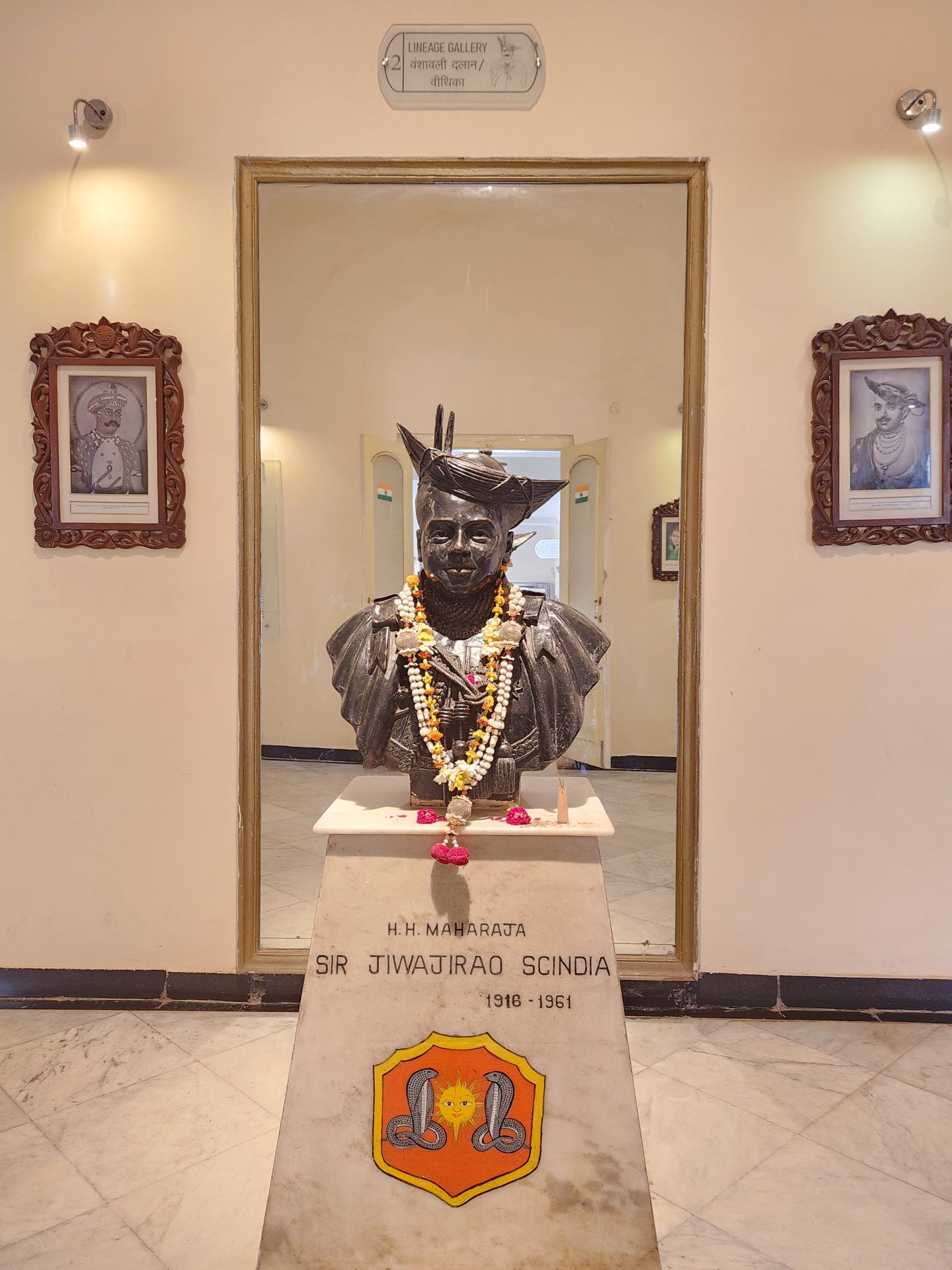
Built in 1874 by Jayajirao Scindia, the Maharaja of Gwalior in the British Raj, the palace was architected by Lt. Col Michael Filose (affectionately known as Mukhel Saheb) who was a descendant of Jean Baptiste, an Italian gentleman who had taken service under Mahadji Scindia. He is also credited with the building of the Moti Mahal besides the Court and the Central Jail.
This palace is currently owned by Jyotiraditya Scindia who is a heir to the Scindia dynasty and is known to be a prominent politician.
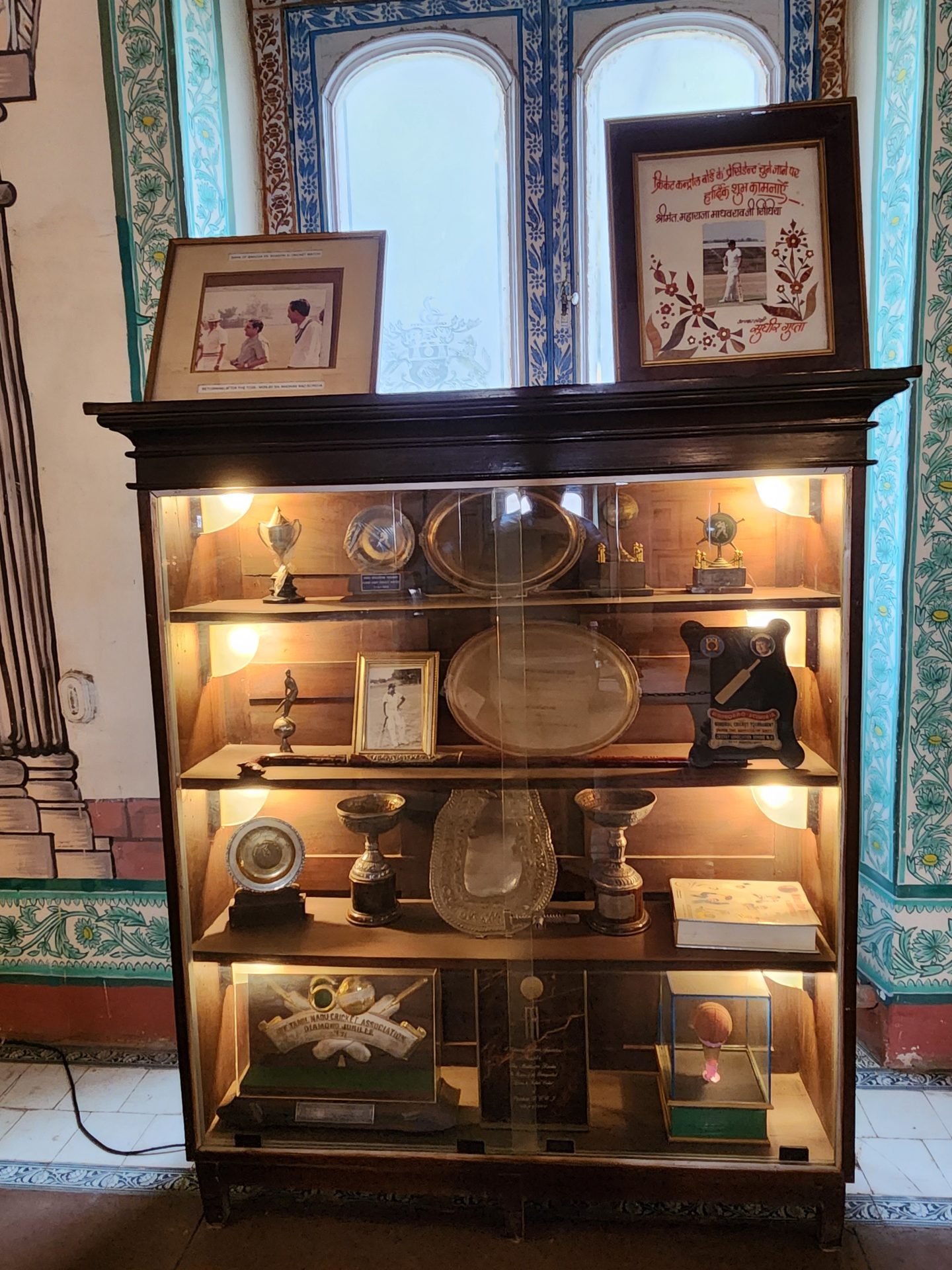
Built out of sandstone and painted in white, the net worth of this palace is over ₹4,000 Crores and it serves as his residence while around 35 to 40 rooms have been converted into the Jiyajirao Scindia Musuem. Inaugurated in 1964, the Museum showcases the art, culture, Maratha history and the lifestyle of the Scindia dynasty dating from the 18th to the 20th centuries.
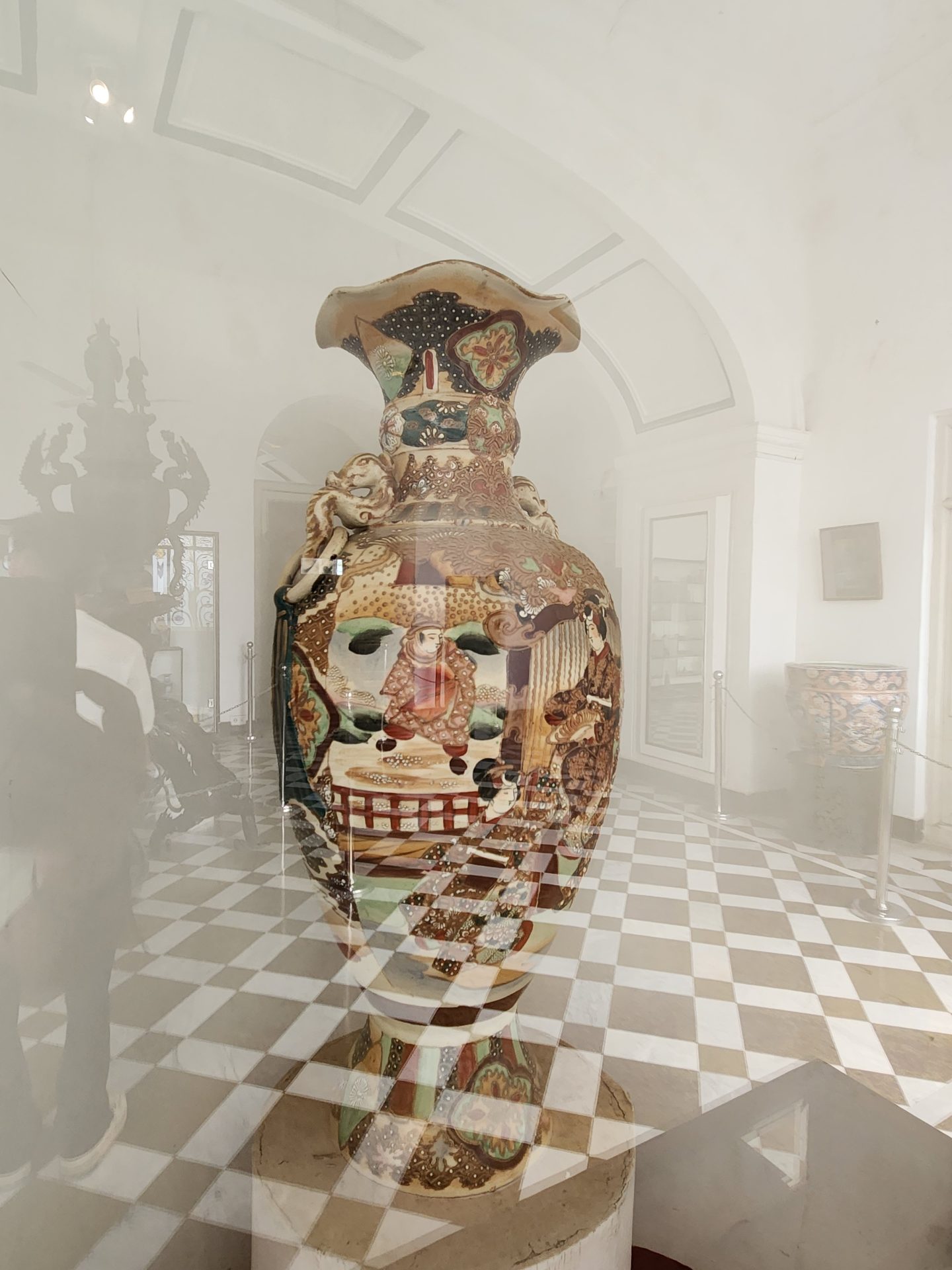
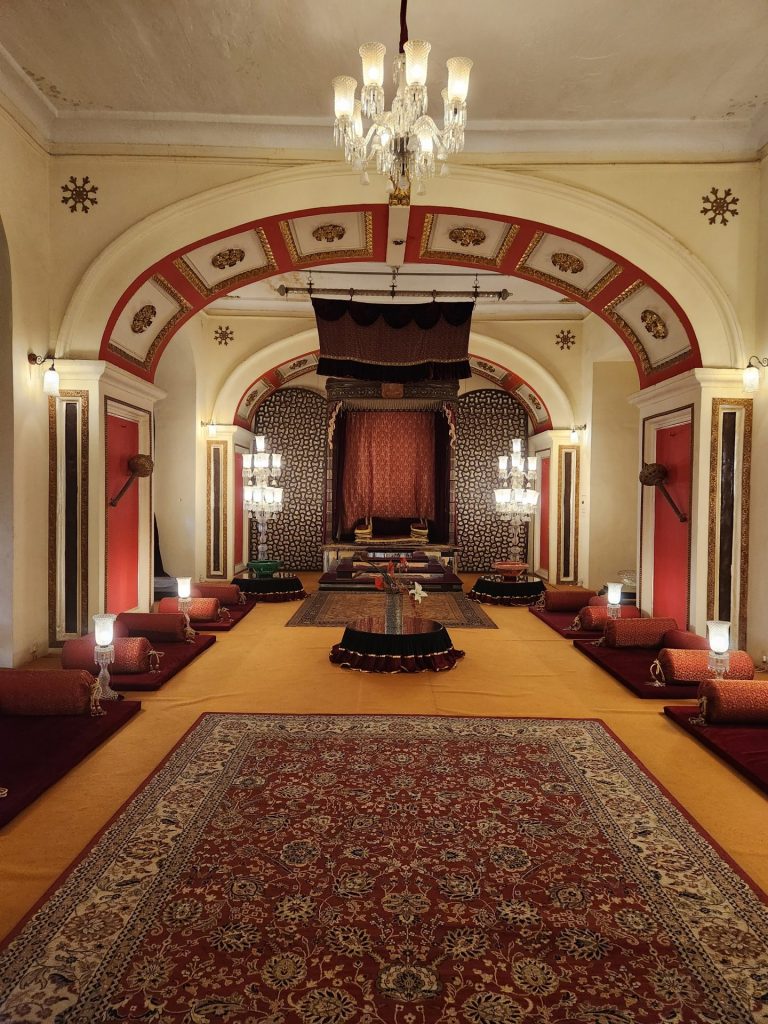
Key highlights include Decorative Art, Rosewood furniture and Sculpture, Photographs, Rare Paintings, Vases, Lithographs and Prints of Manuscripts. The Durbar Hall which features giant Chandeliers also has on display, the Kerman Mashahir carpet.
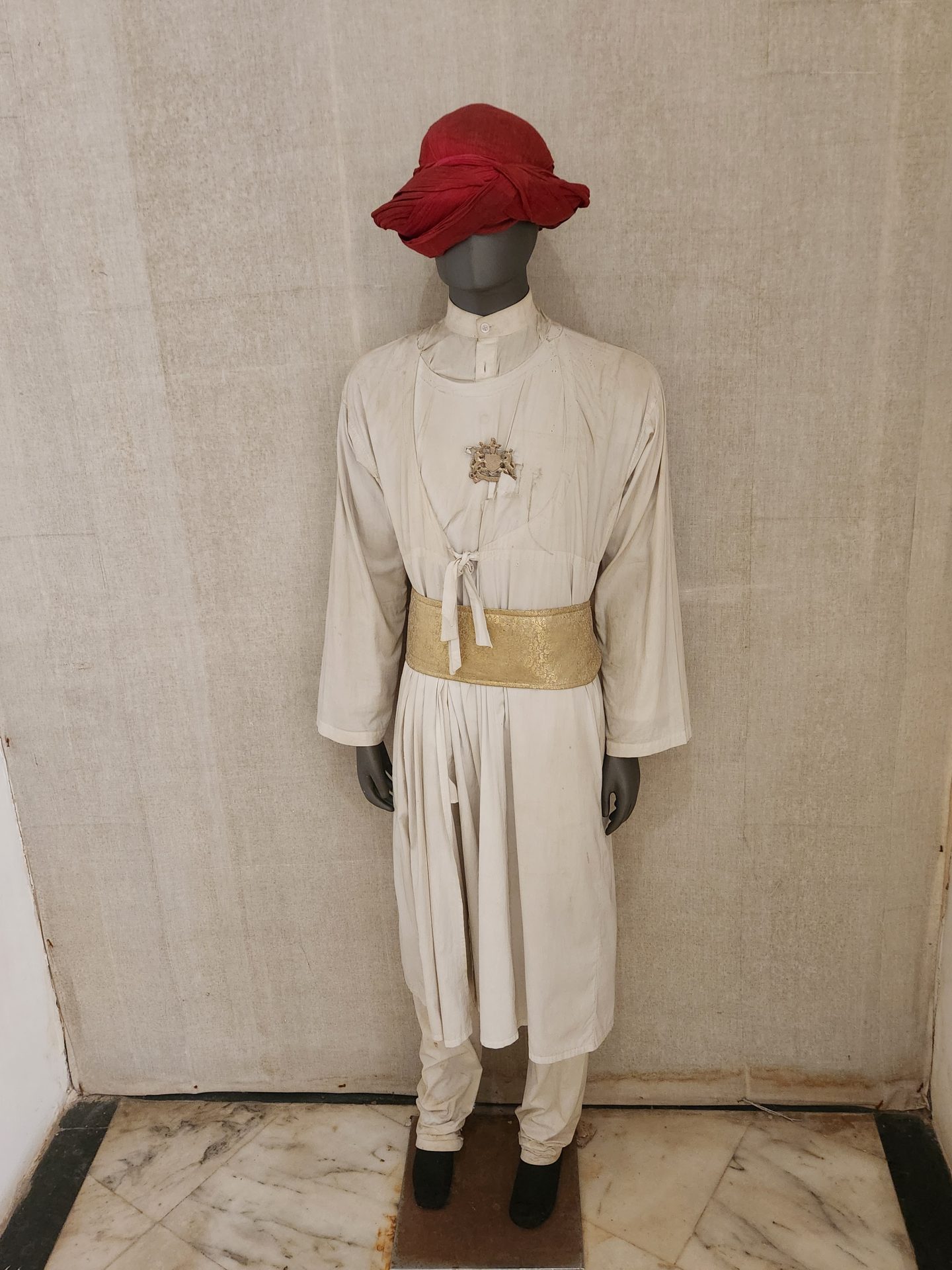
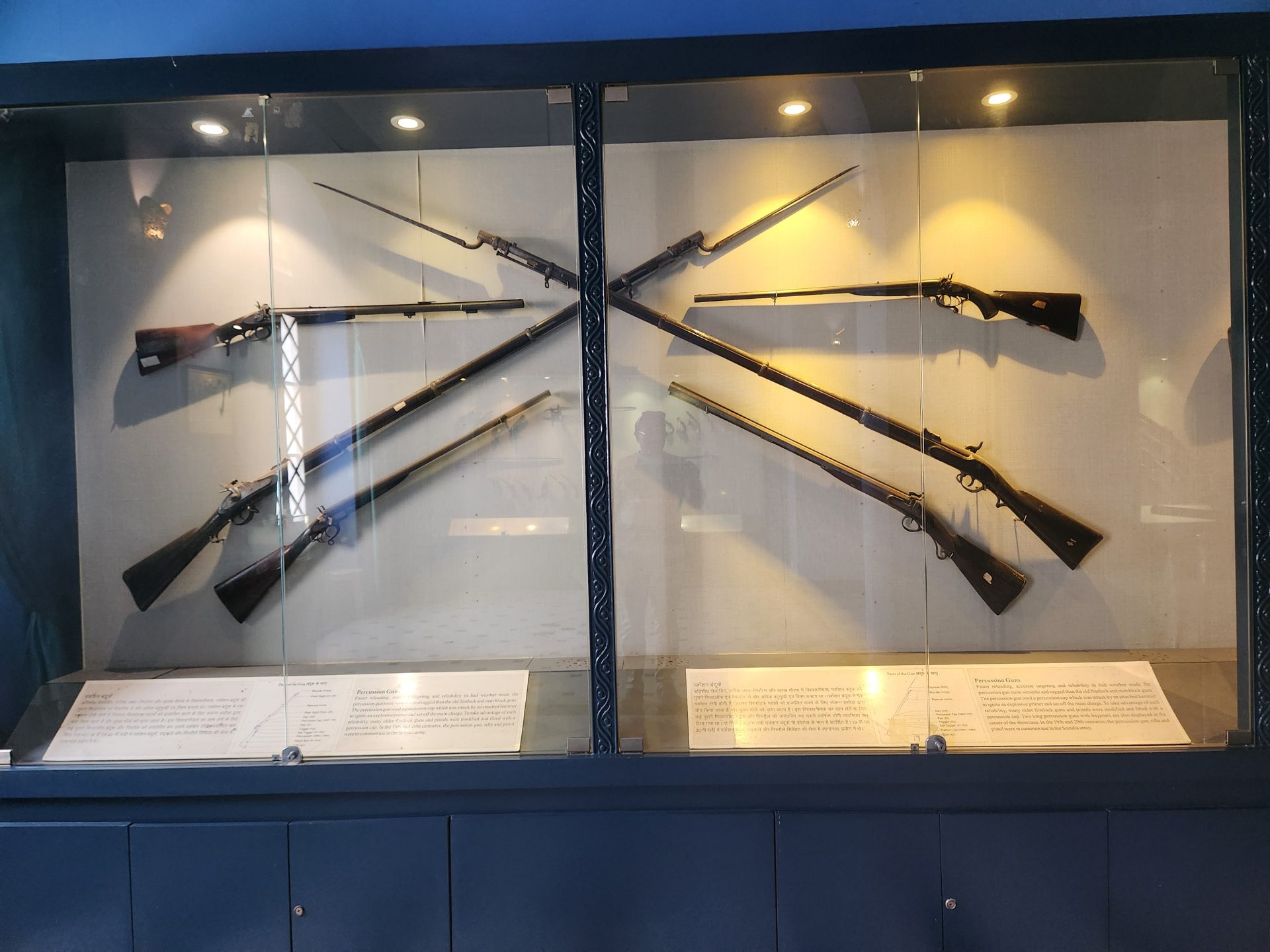
The interiors of the Hall are decorated with gold and gilt furnishings. One also gets to see arms and armour used by the Scindia army, Royal textiles and carriages and South East Asian Art collections.
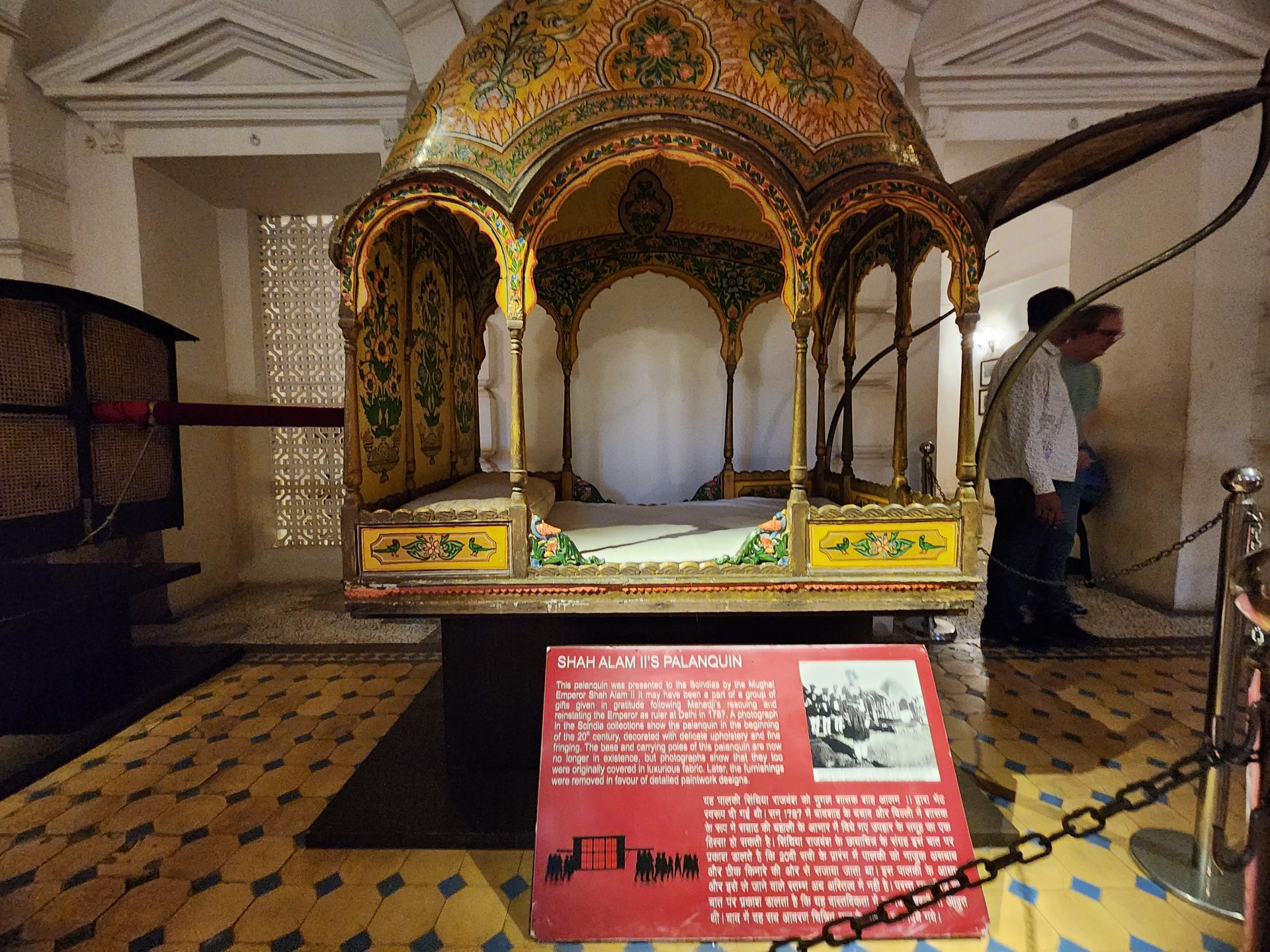
Among the various palanquins on display, a notable historical item is the palanquin gifted by the Mughal Emperor Shah Alam II who was restored to the throne by Mahadaji Scindia in 1787.
The emperor was apparently humiliated and blinded by a Rohilla Courtier Ghulam Qadir and Mahadaji came to his rescue by capturing Ghulam Qadir and going onto become the de factor ruler of Delhi.
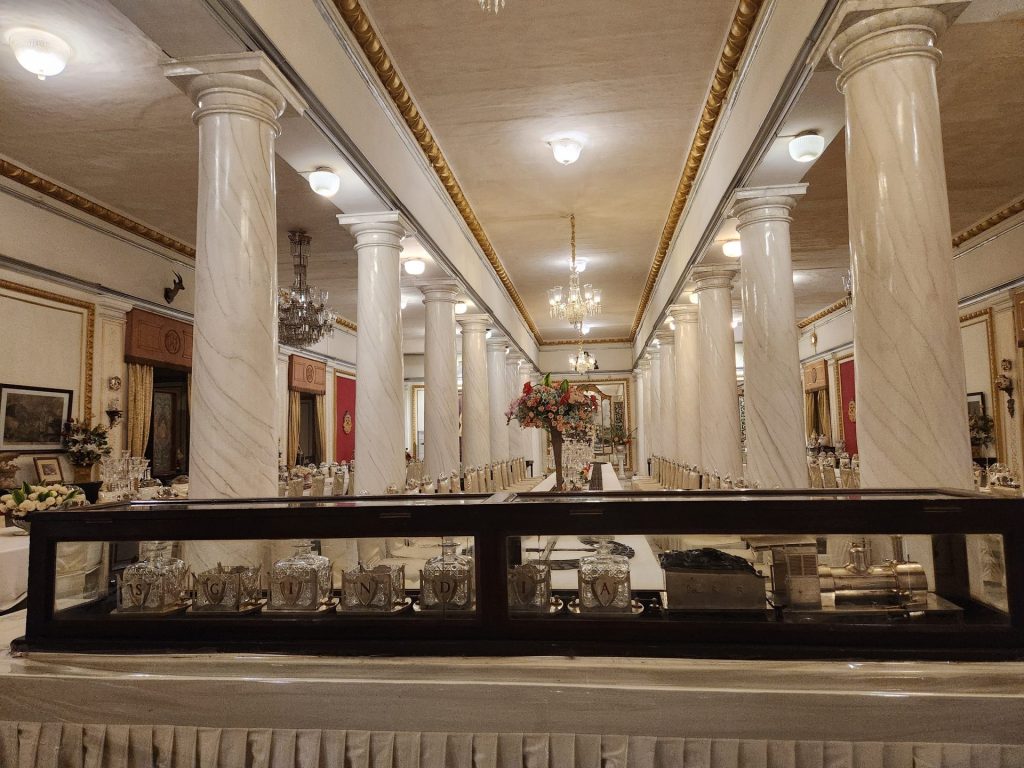
The Western style dining hall is a definite crowd puller where the central table bears the famed Silver Train created for Maharajah Madhav Rao Scindia I who had a fascination for trains.
The cut glass wagons have the name Scindia spelt on them and this train would move around distributing Champagne, Cigars and wine to guests seated alongside.
The dining hall within the living palace museum still remains in use by the Royal Family and can seat 150 people at a time with its 3 long rows of tables.
The Gujari Mahal and the Central Musuem
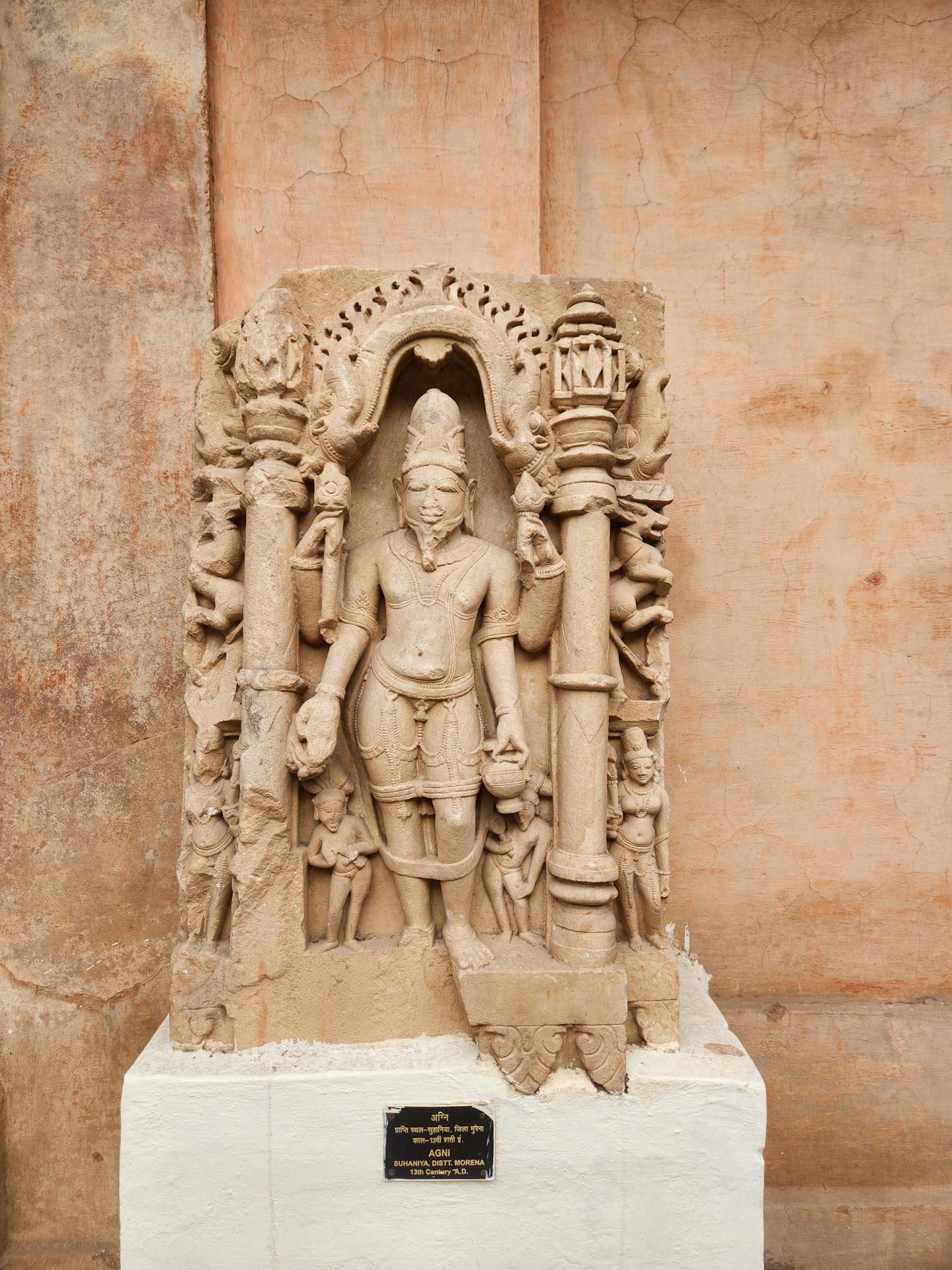
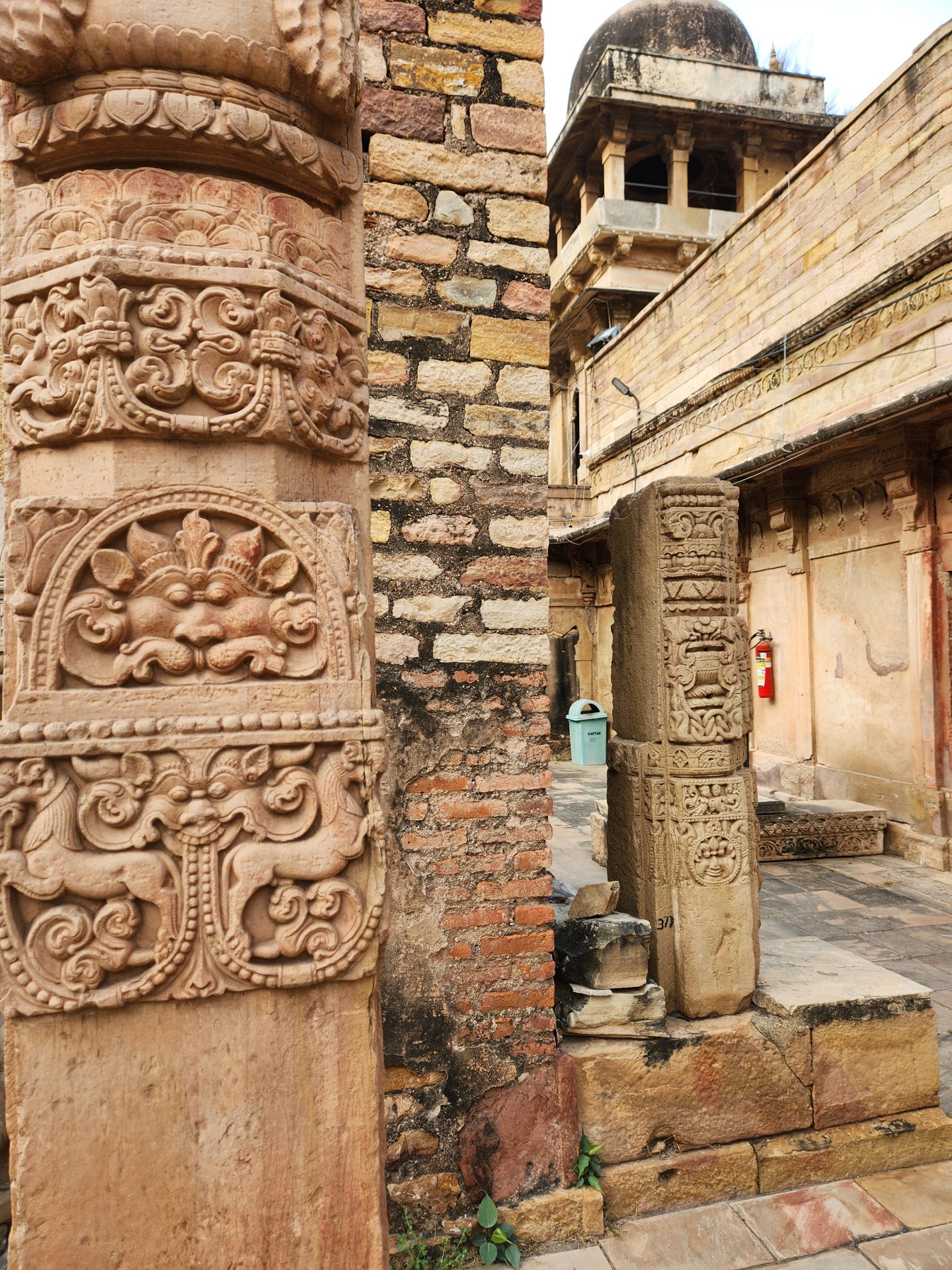
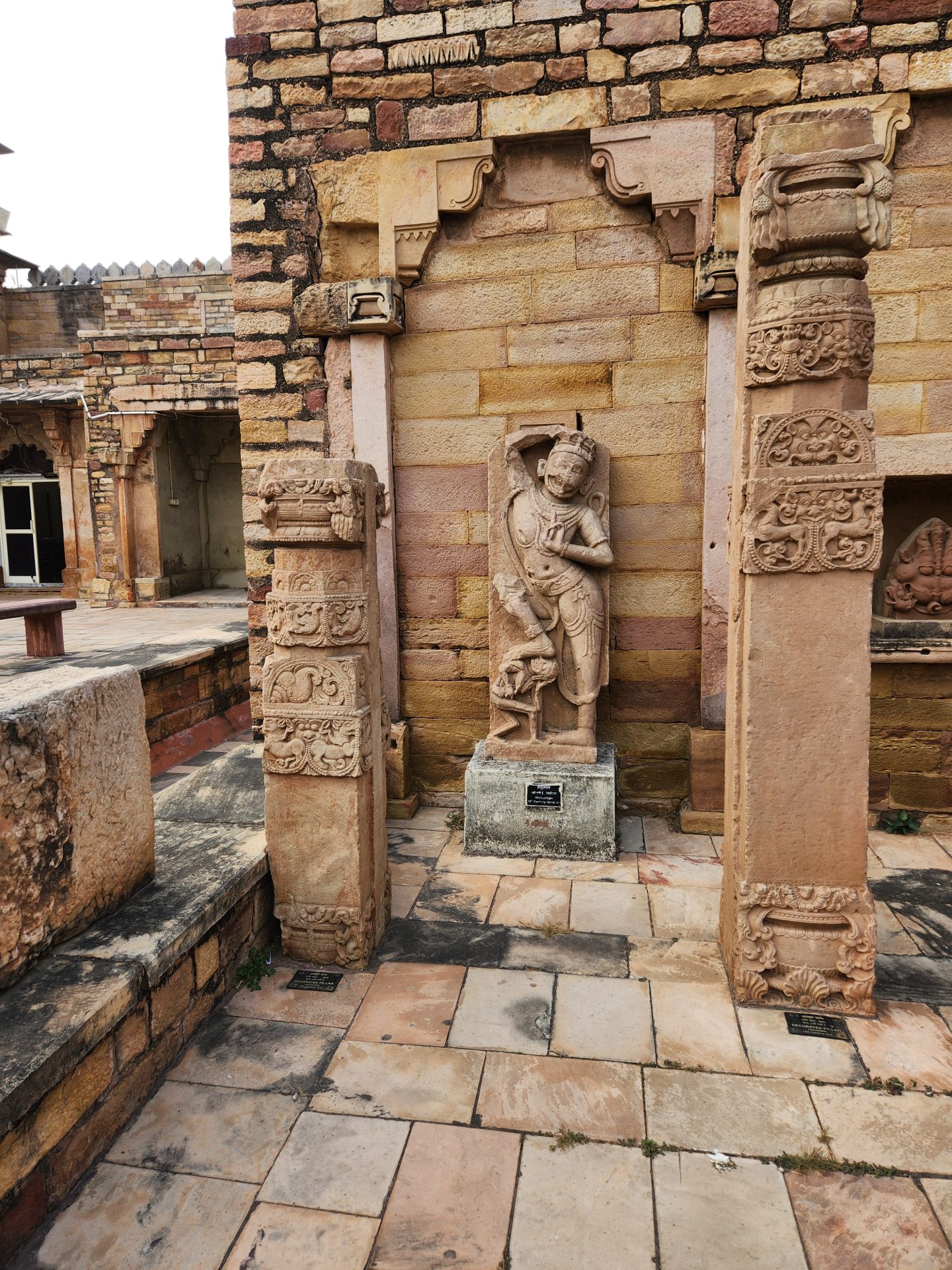
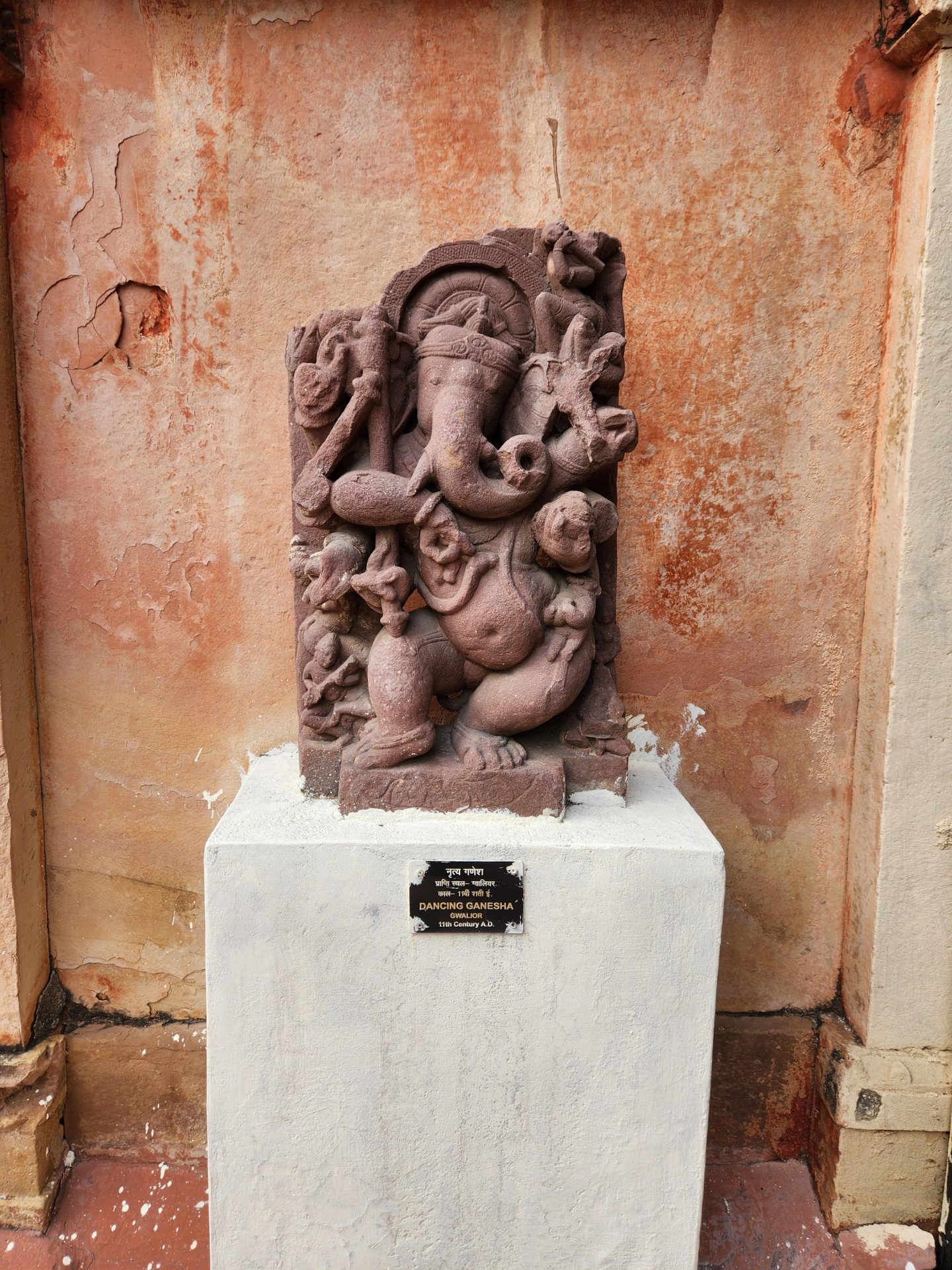
It took me almost an hour to go through the Palace and reached the Central Museum in the Gujari Mahal at around 16.30 hours. Also referred to as the Gwalior Fort Museum, numerous artefacts are on display here.
This 15th Century Palace was built by the Tomar Rajput ruler Man Singh Tomar for his 9th wife Mrignayanai who belonged to the Gujjar Tribe. Her pre-condition for agreeing to marry Man Singh was that he build a separate palace for herself which the king obliged.
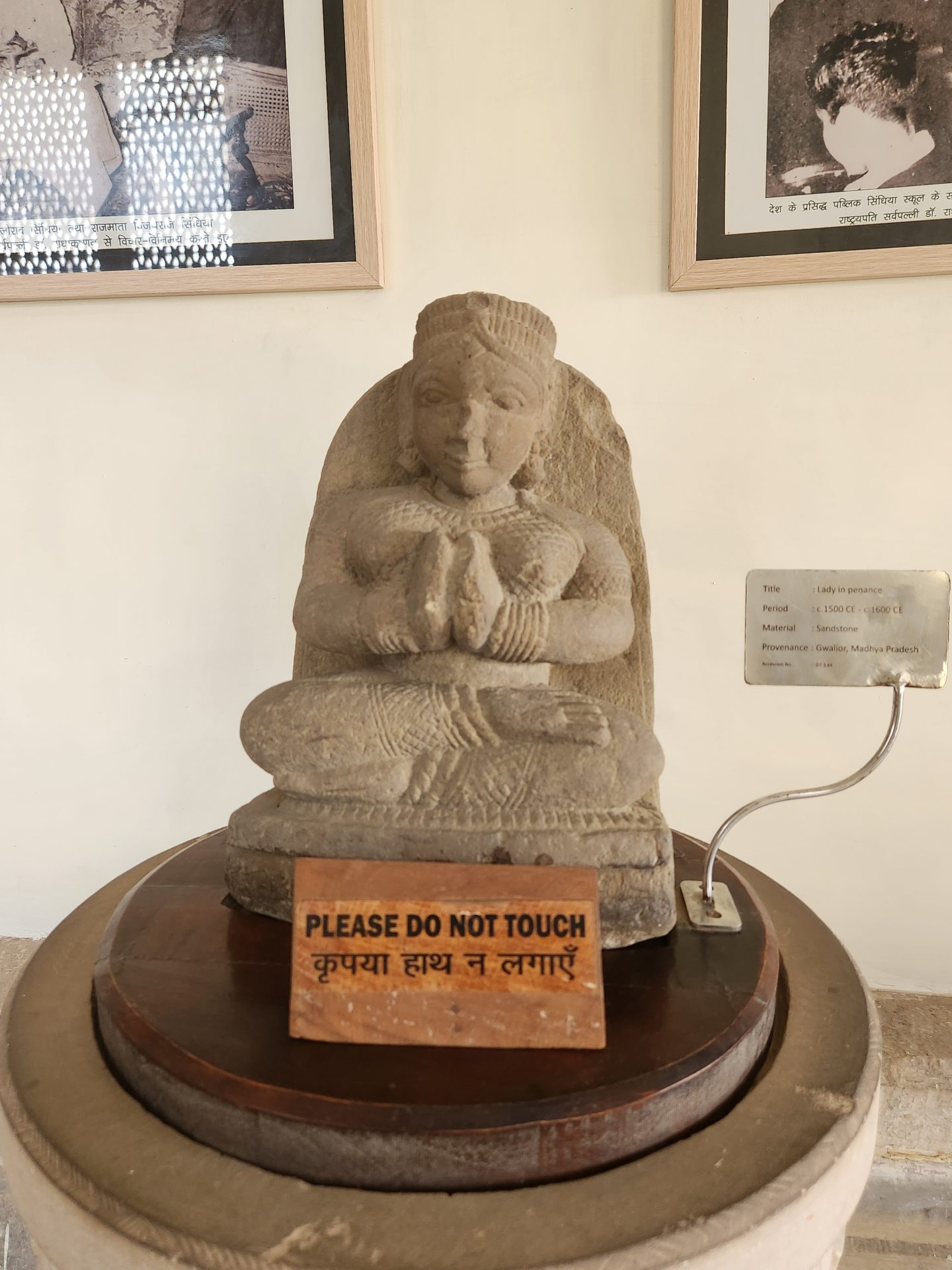
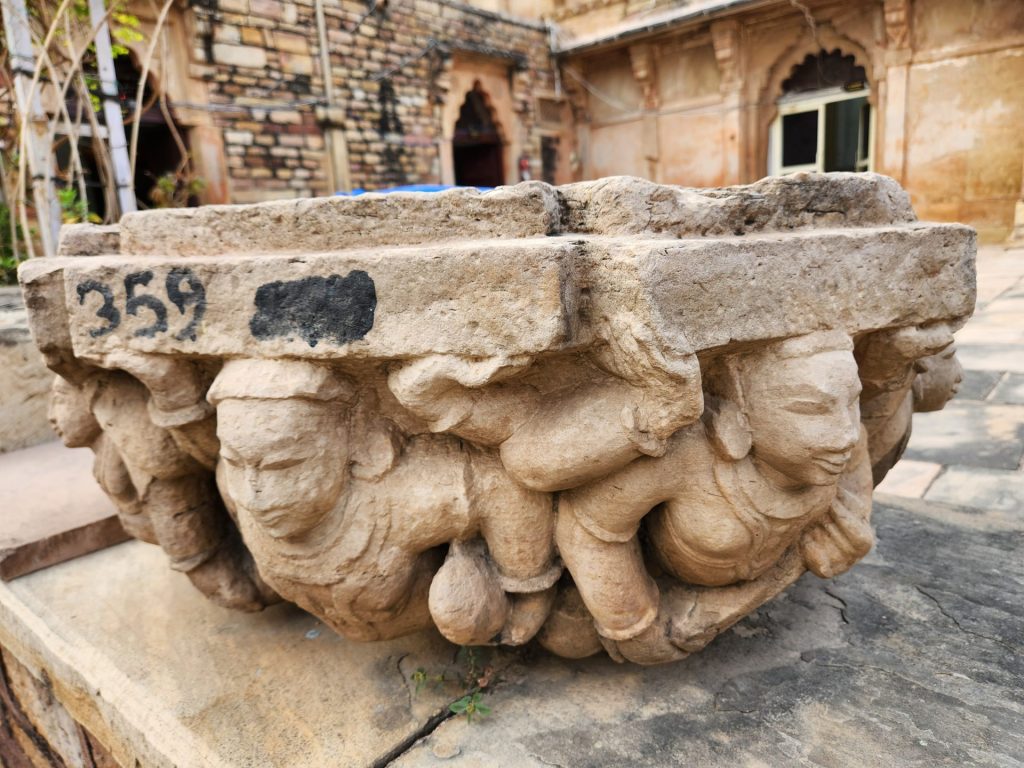
This was later converted to a museum in 1922. This architectural marvel stands out like a jewel, plucked from the annals of history and is home to many Hindu and Jain sculptures which date back to the 1st and 2nd century BCE.
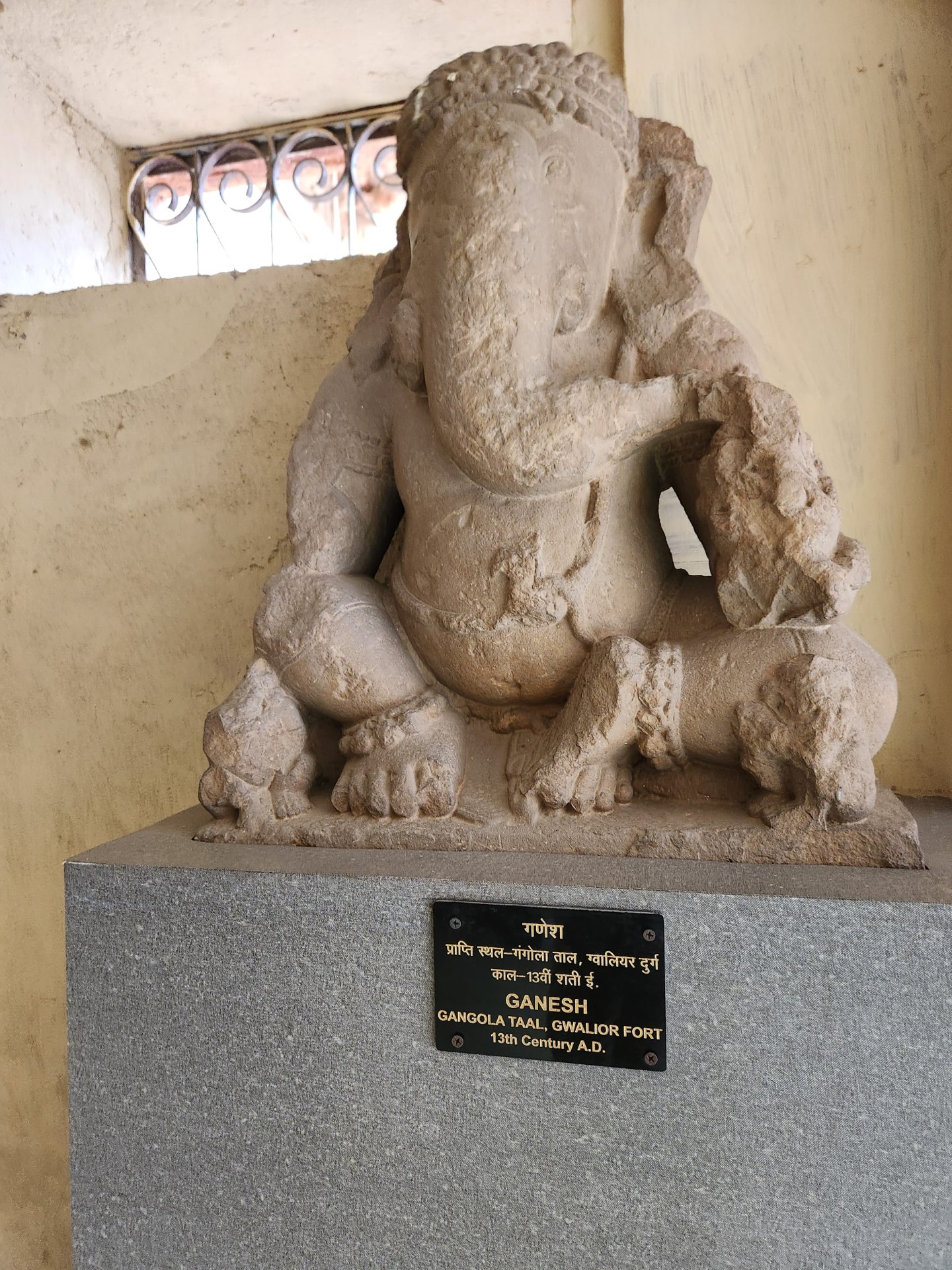
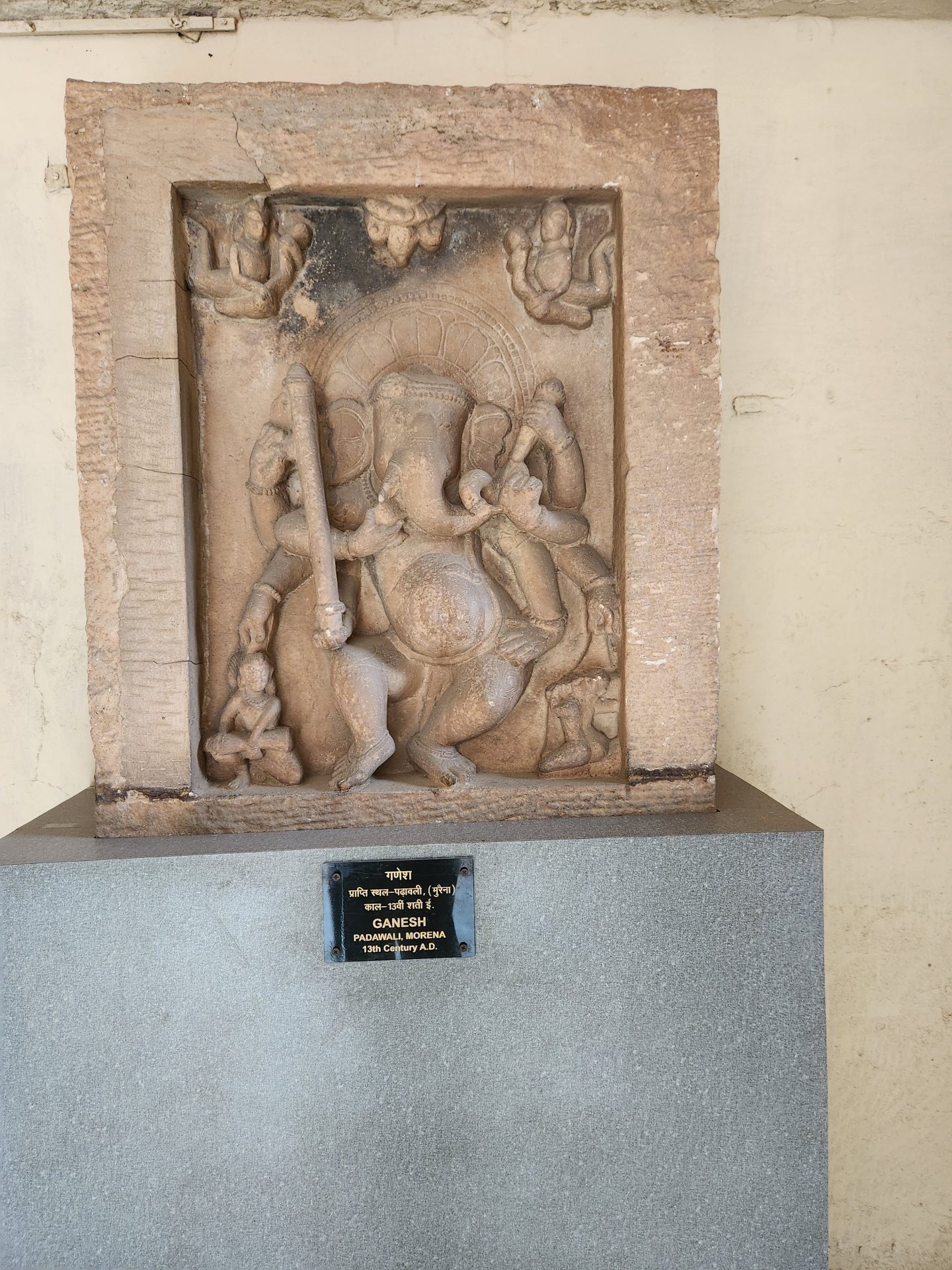
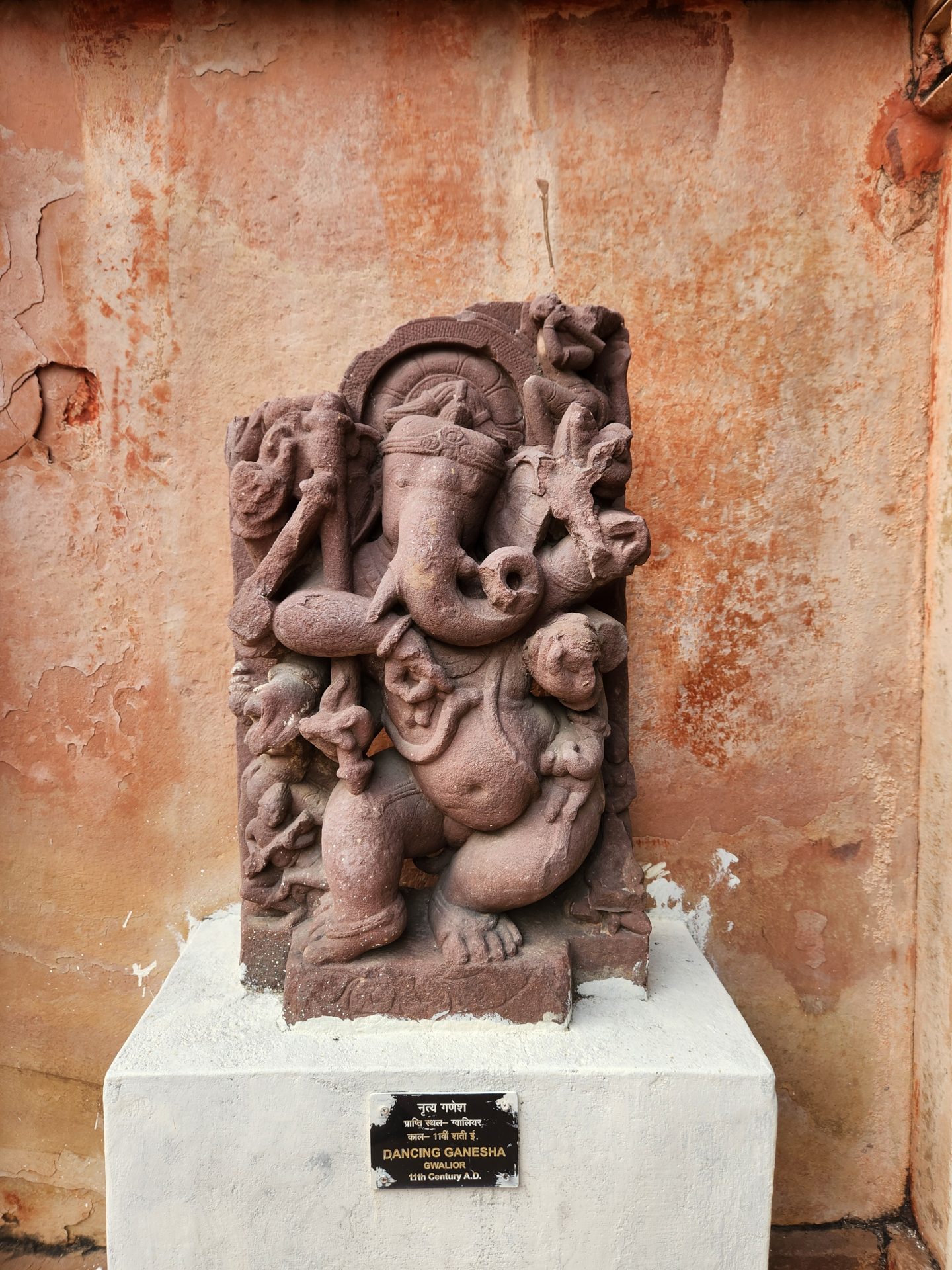
One gets to see the Yaksha Mani Bhadra, a masterpiece from the 1st century, the 6th century idol of Mahisasuramardini, idols of Lord Ram and Sita, Lord Ganesh in different poses, a collection of arms and armaments and lots more.
Terracotta items unearthed from sites of Mohenjodaro and Ujjain, miniature statues and replicas of frescoes seen in the Bagh caves can be seen on display here.
Tombs of Tansen and Mohammed Ghaus
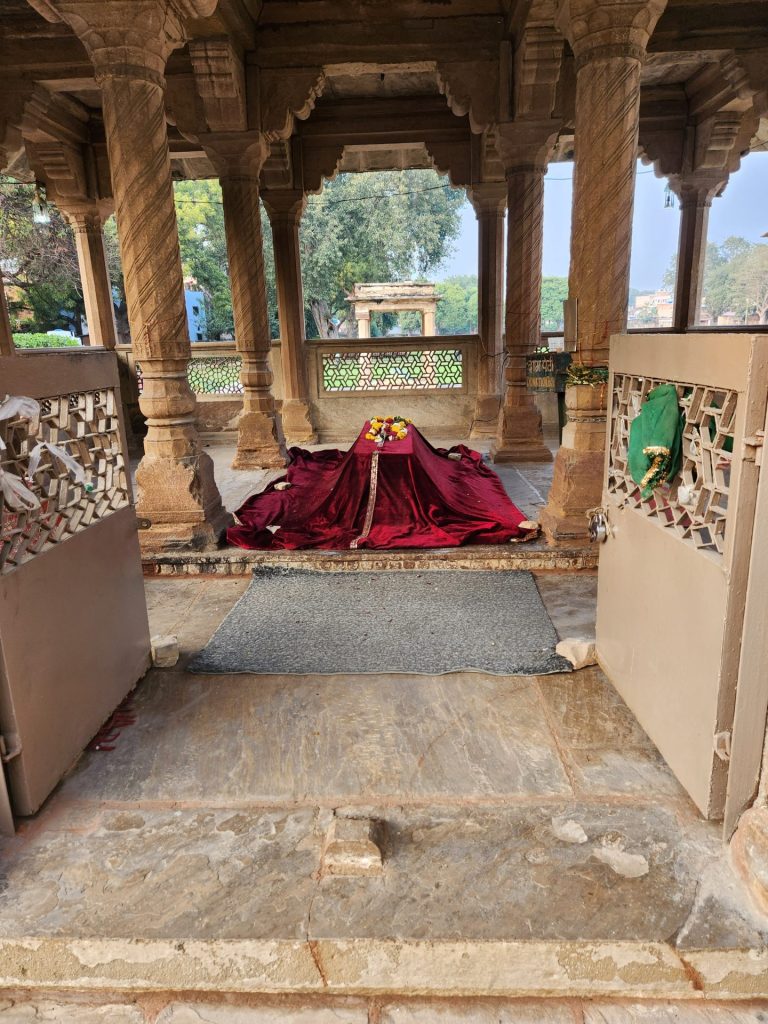
A 10 minute drive from Gujari Mahal brought us to the 16th century Mausoleum of Muhammd Ghaus and Tansen. Akbar built this tomb for the Sufi Saint Muhammad Ghaus in typical Mughal architecture.
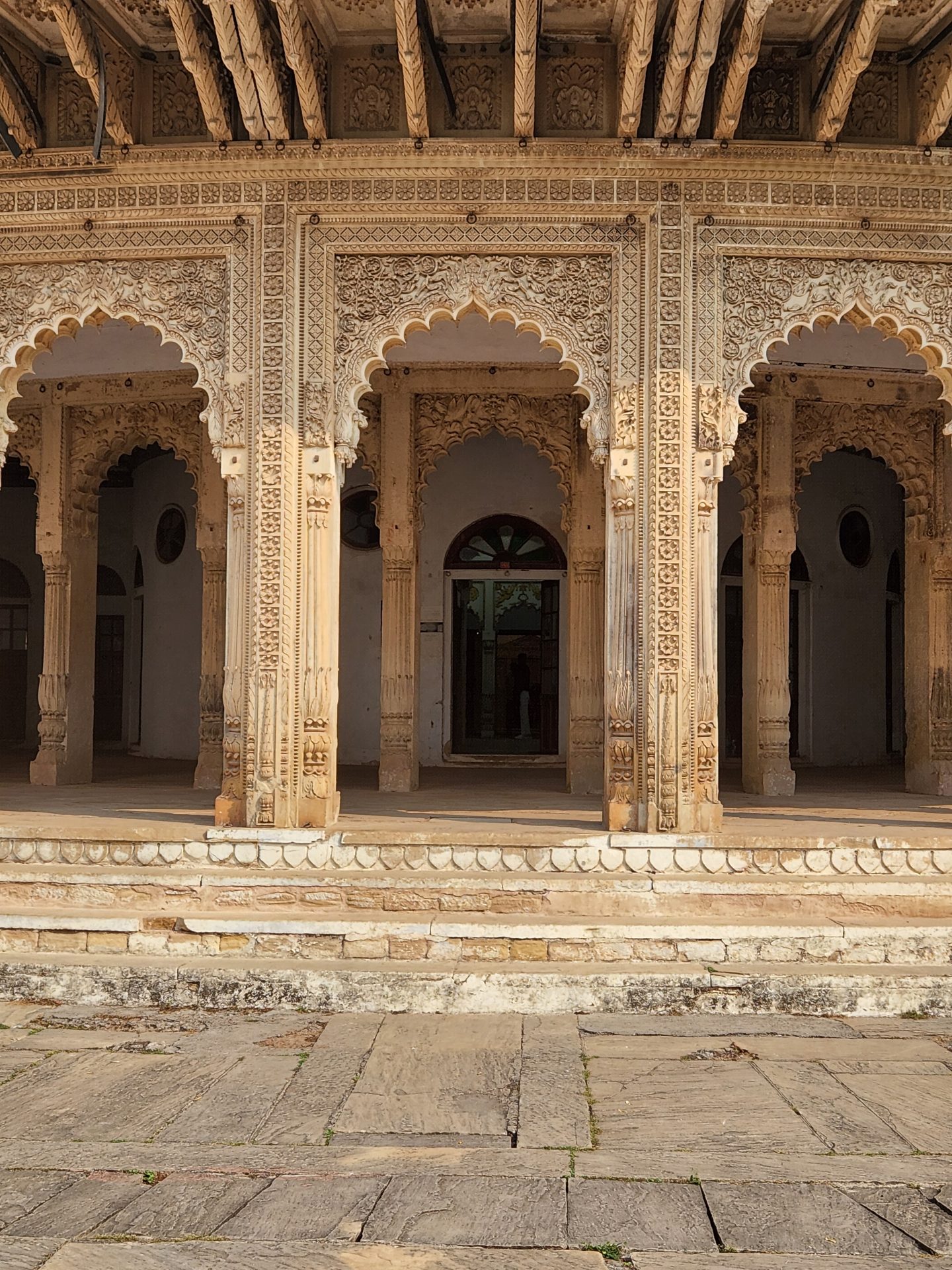
The tomb has a square layout with a large squat dome and flanked by Chatris which gave the entire structure a multi-tiered look. The central chamber is surrounded by a verandah while carved stone screens adorning the walls.
The design elements used here influenced the design of the tomb of Shaikh Salim Chisti built later on.
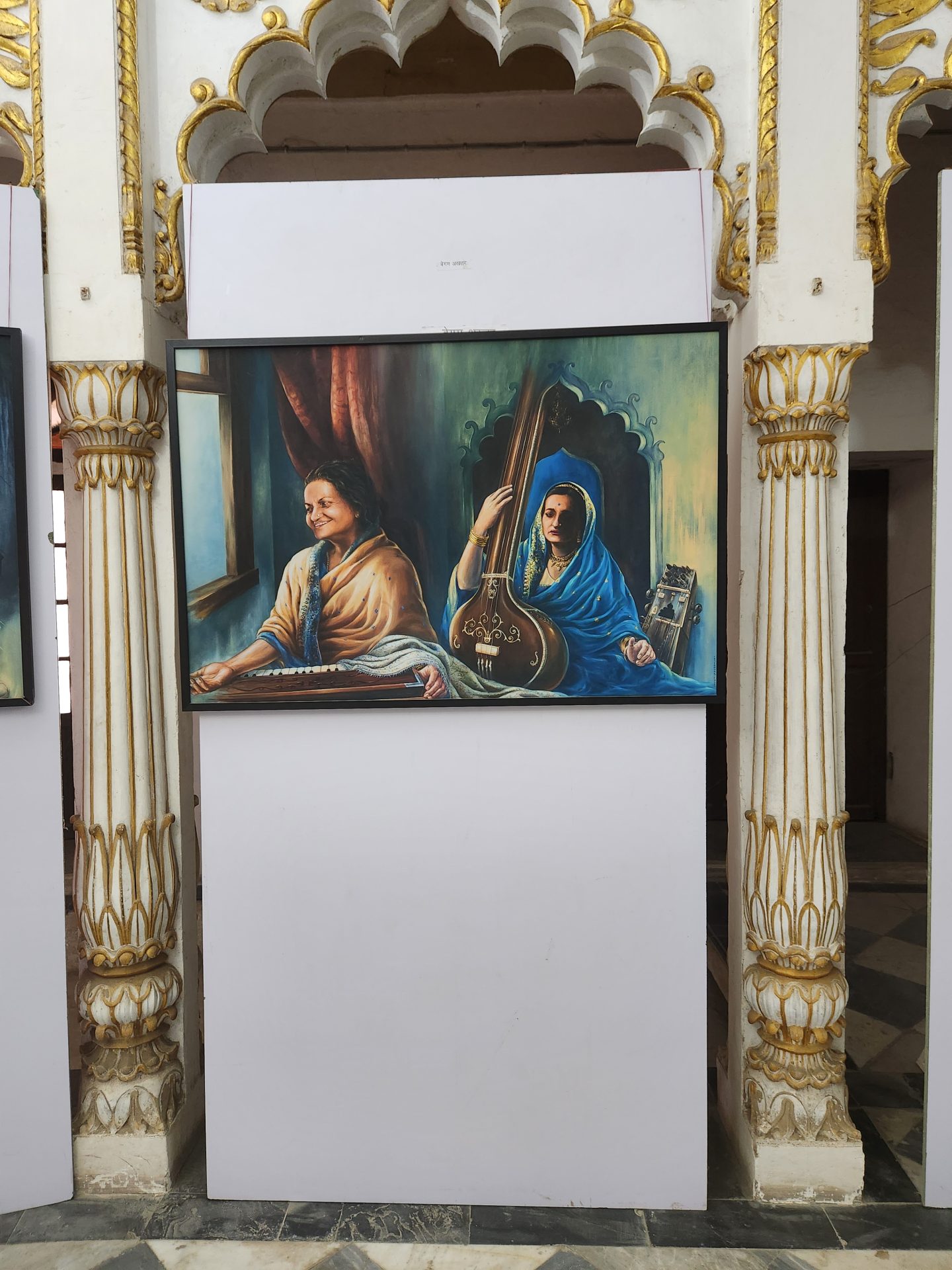
A little away from this tomb can be found the tomb of Tansen who was born in 1500 CE in Gwalior and was a musician in the court of Emperor Akbar. While Sufi tradition attributes Tansen to being a disciple of Muhammad Ghaus, Tansen earned fame for his mastery over Ragas and for his Dhrupad compositions.
It is believed that his singing could calm wild animals and mimic birds and animals. He was counted to be among the celebrated Nine Gems or Navaratnas in Akbar’s court and later went on to earn the title of Mian meaning Master. Tansen died in 1589 and was said to be buried in Gwalior.
The Surya Temple
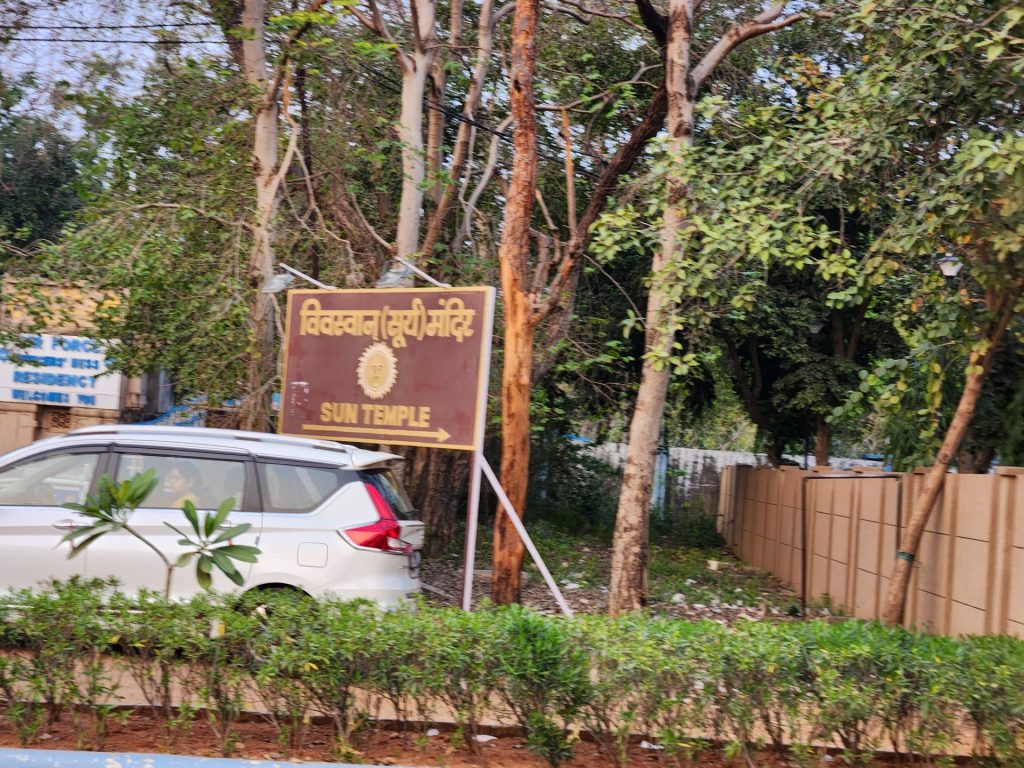
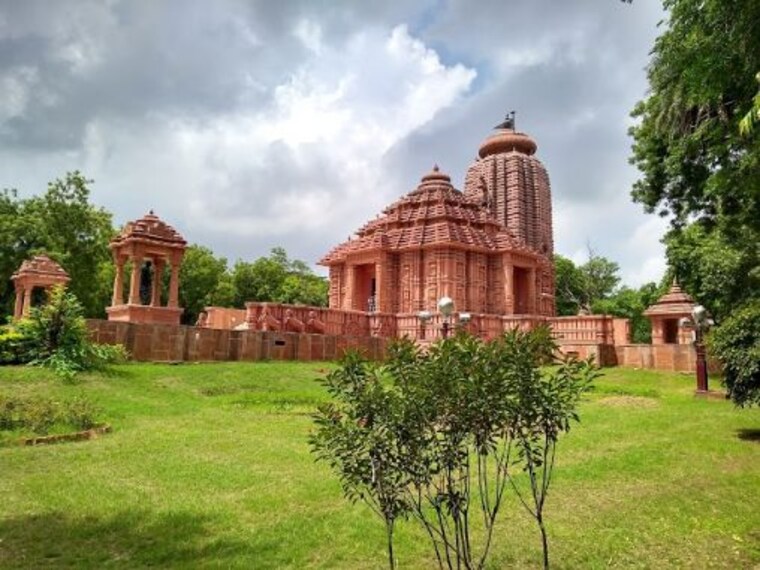
We moved on next to the Vivashwan Sun Temple or the Surya Mandir, located 5 kms away from these tombs. Dedicated to the Sun God as the name suggests, this temple was built by the famous Industrialist GD Birla in the year 1988. Built on the lines of the legendary Sun Temple in Konark, this exquisitely crafted structure is a lovely amalgam of pearly white marble and red sandstone.
The Rani Lakshmibai Memorial
Also known as the warrior queen of Jhansi, Rani Lakshmibai, this memorial has been built in her honor. During the 1857 Sepoy Mutiny, she fought a valiant battle, dressed as a soldier in this very city against the British forces but met her end after being severely wounded.
A 8 metre high metal statue of hers astride a horse can be seen here. In her memory, every year in June, a fair is organized here.
I got dropped by Dheeraj from Krishna Cabs at Gwalior station by around 6.30 PM. Was to take the Vande Bharat train back to Nizamuddin station at 7.30 in the evening and after a short 3 hour journey, was back at the hotel by around 11.15 PM.